
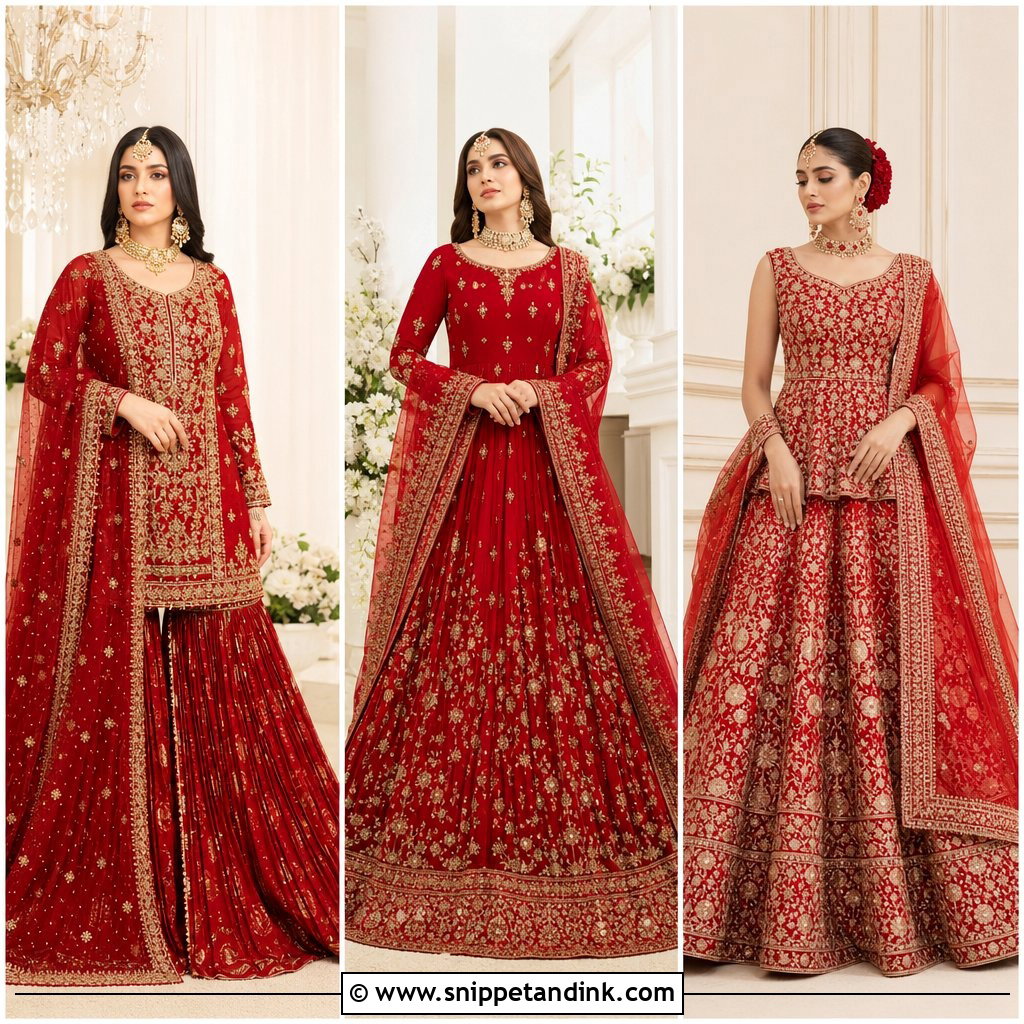
After the weight and red of the baraat, most brides I dress want the walima to feel lighter, and the market has followed them: pastel palettes, luminous embroidery, softer fabrics and silhouettes that look ready for a reception without dragging on the body. Maxi gowns, fusion cuts, sarees and ghararas all sit comfortably here, in blush, mint, champagne, silver and lavender. What I judge each outfit on is simple. Does it hold up under bright hall lighting, read well on stage, and stay comfortable through hours of greetings, portraits and family photos? The 35 looks below run from classic to modern, modest to statement, with my notes on how each one wears.
Walima and Baraat Outfits, Planned Side by Side
I always plan the walima outfit together with the baraat lehenga, never after it. The two are photographed back to back, often with the same family and the same jewelry, so they should look like two chapters rather than two different brides.
- Contrast the weight. If the baraat outfit is heavy red with dense zardozi, a lighter fabric and softer work for the walima gives you, and your photos, a real change.
- Plan the jewelry once. Decide which pieces repeat and which are walima-only. Silver and diamond-style sets suit most pastels; heavy gold kundan suits gold and peach better.
- Order early. Custom embroidery is slow, hand work especially, and designers get busy in peak wedding season, so ask for a realistic timeline before you fix fittings.
- Leave room for two fittings, one with the jewelry and shoes you’ll actually wear.
1. Pastel Pink Walima Maxi Dress
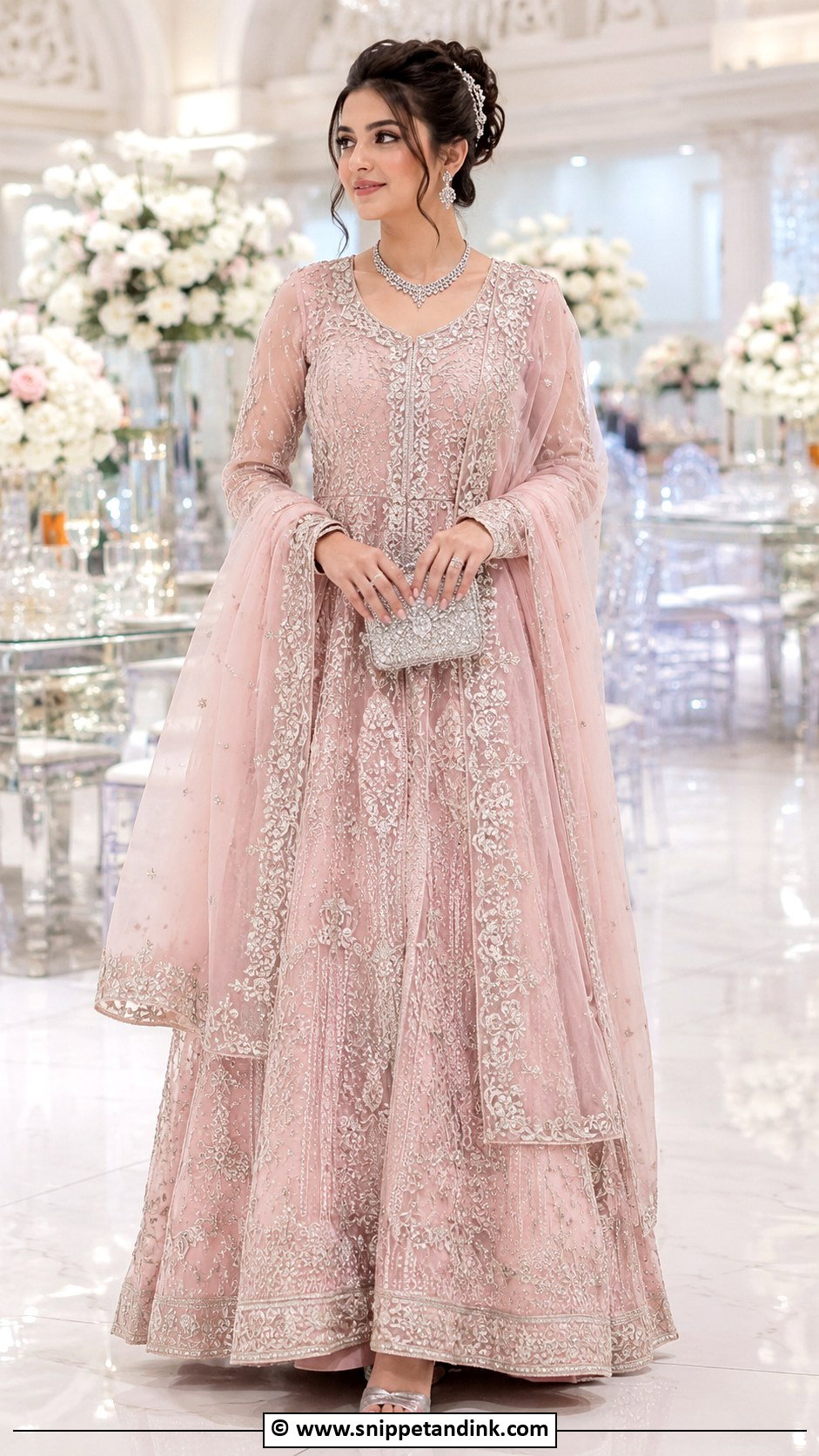
Pastel pink is the walima color I’m asked for most, and the long flared maxi suits it well. A fitted bodice with a flowing skirt gives balance and movement, while silver, pearl or crystal work keeps the pink from going flat under hall lights. Drape a sheer bordered dupatta over one shoulder or lightly over the head. I’d choose diamond-style earrings, a fine choker and soft bangles over a heavy set; pink reads sweeter with less metal. Silver heels, a small clutch and pink-toned makeup finish it.
2. Ivory Walima Lehenga With Long Shirt
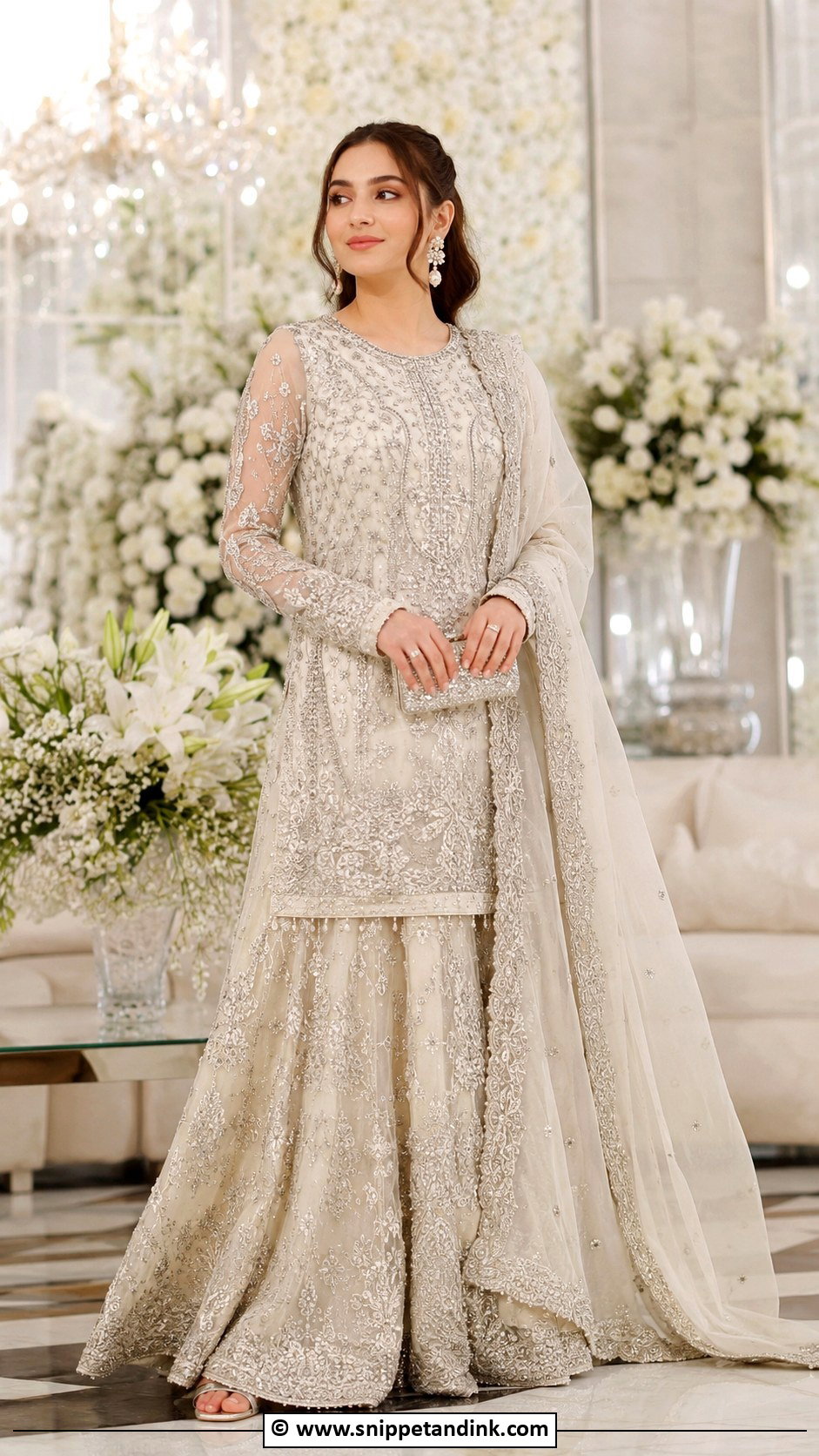
An ivory lehenga under a long shirt gives coverage and traditional volume together, which is why so many brides settle on it. Silver zardozi, pearls, sequins and light threadwork all sit well on ivory, and touches of champagne, blush or pale gold soften it further. Keep the dupatta airy. With this much ivory, a center-parted bun, pearl earrings and a glossy lip are enough. The one thing I watch is the shade of ivory against the skin: some ivories turn grey in banquet lighting, so I hold the fabric up near a bride’s face under warm and cool bulbs before she commits.
3. Silver Walima Gown With Dupatta
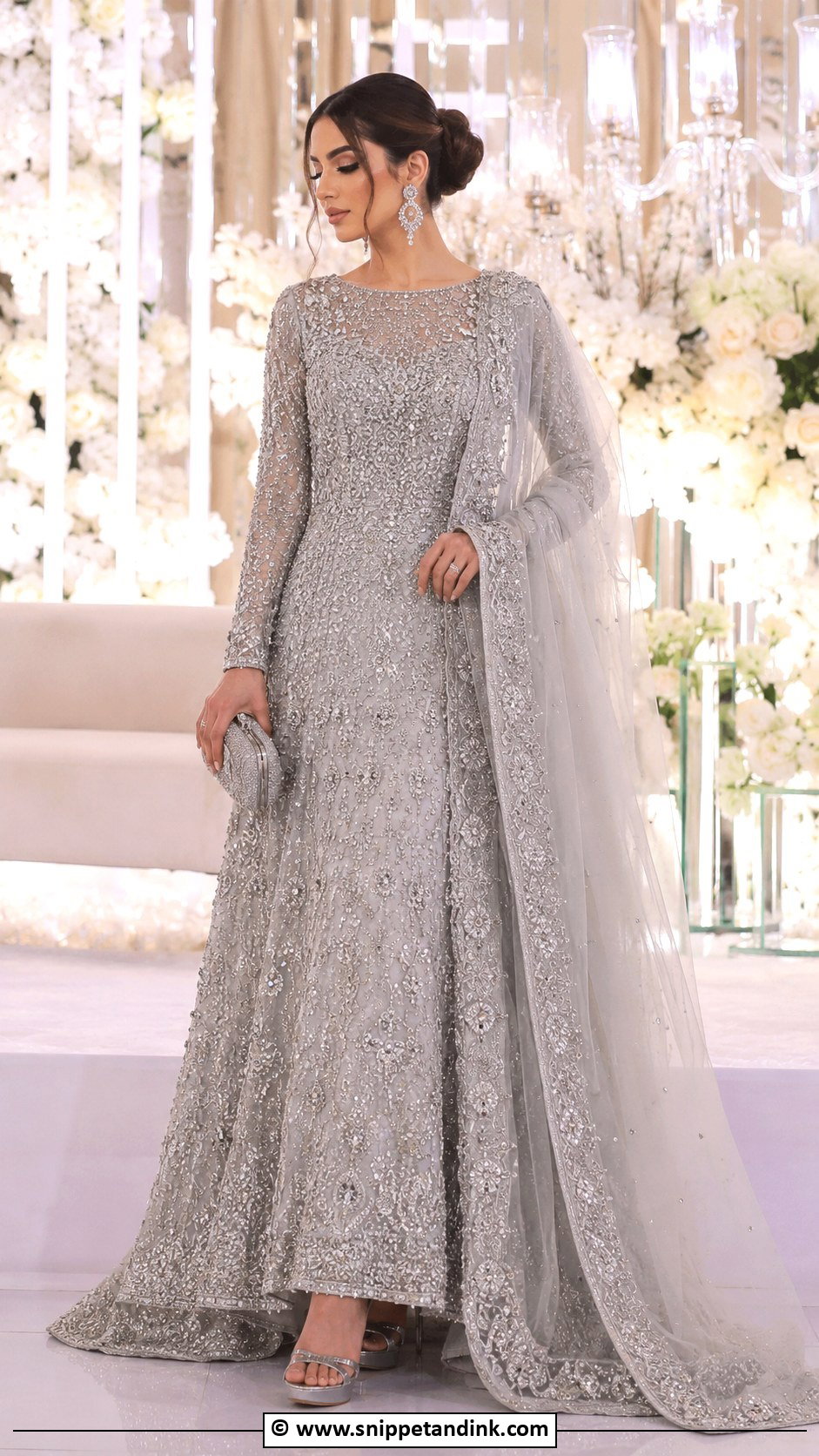
Silver catches light more than any other walima shade, especially with crystal, sequin or mirror detail. A floor-length gown with a gentle flare looks regal without feeling heavily traditional, and a soft net dupatta with a fine border keeps it unmistakably Pakistani bridal. Diamond-style studs, a bracelet, a sleek clutch and silver heels. It suits an evening walima with white florals, candles or cool-toned decor. Mirror work does catch on net, though, so I pin the dupatta clear of the bodice embroidery.
4. Mint Green Walima Sharara Dress
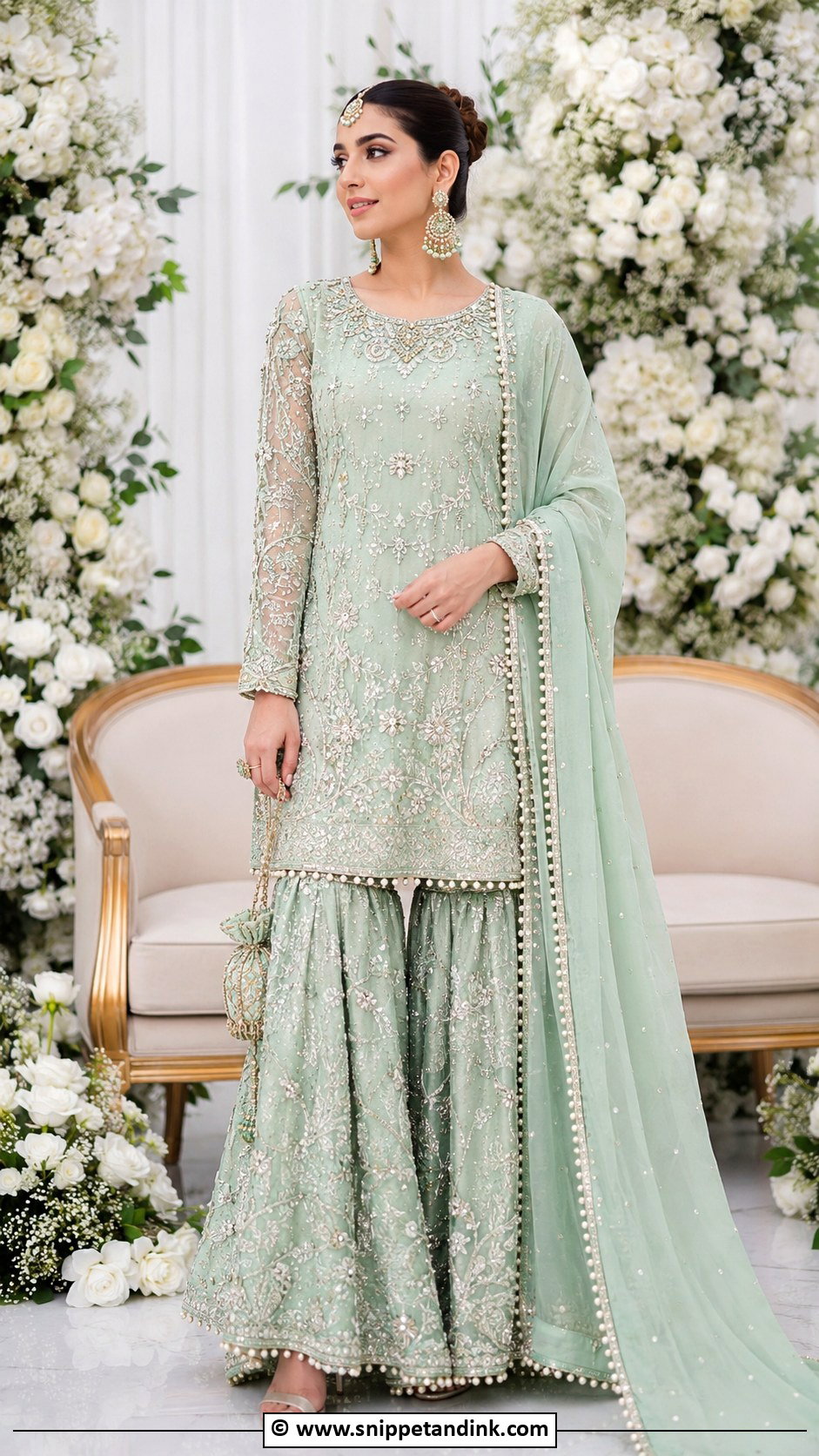
A mint green walima sharara dress gives festive volume without the weight of a full lehenga. The sharara flares from the waist in wide legs, so a short or mid-length kameez keeps the proportions right. Silver, ivory or pale gold embroidery holds the soft reception mood, and a mint dupatta with scalloped or pearl edging polishes it. A passa, statement earrings and dewy makeup suit it. I put brides in silver sandals or embellished khussas for this one; a wide sharara hides the shoe anyway, so comfort wins.
5. Champagne Walima Saree Outfit
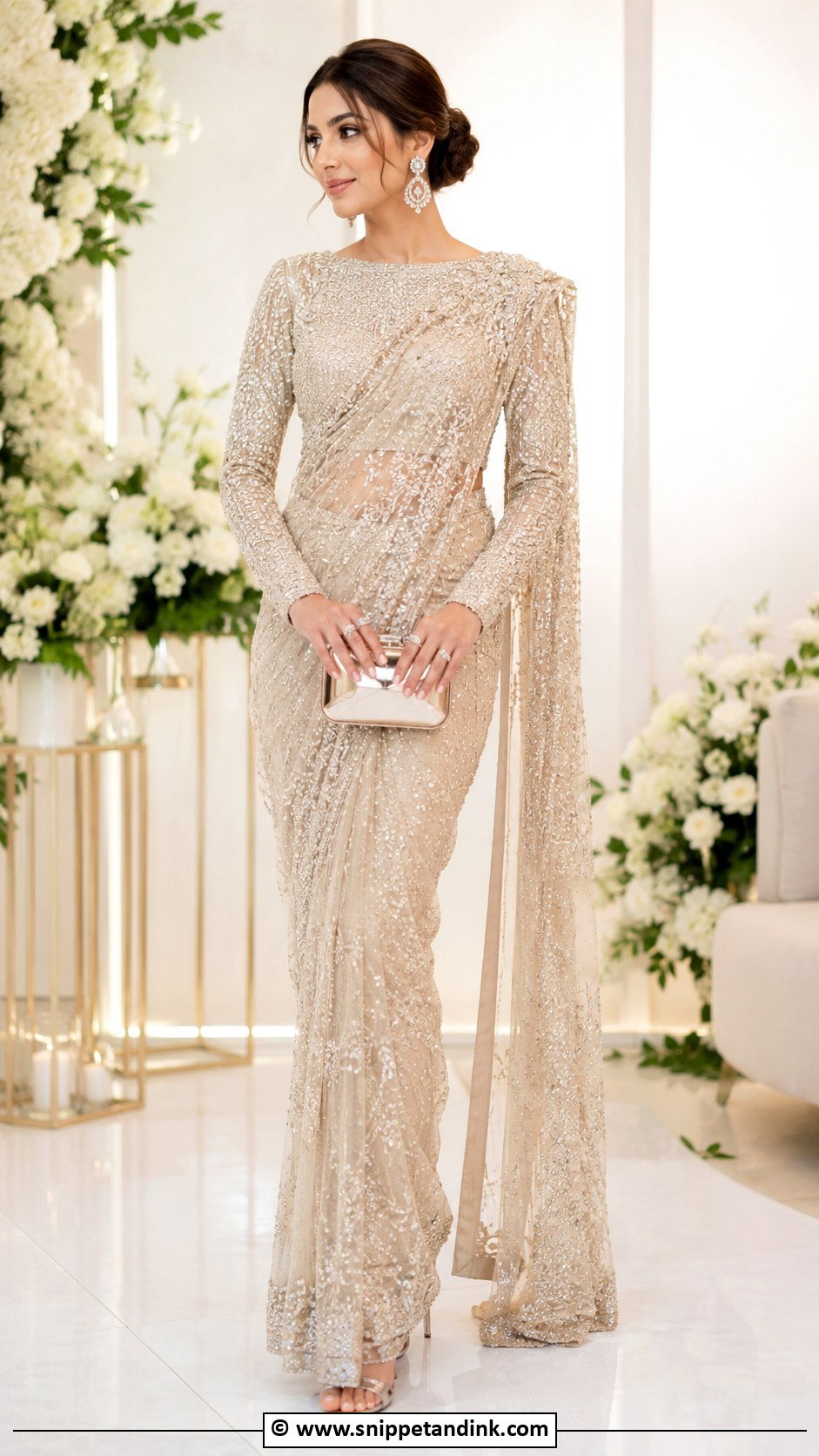
A champagne saree is sleek and a real change from the usual lehenga or maxi. Champagne looks rich without shouting and pairs well with pearl, crystal and antique silver work. For coverage I’d choose a structured blouse with full sleeves, a modest neck, or a longer jacket-style layer. The drape has to be secure for stage photos and getting up and down, so I pleat and pin it on the bride rather than trusting a pre-stitched saree to sit right. Low bun, statement earrings, soft highlighter, metallic heels and a small clutch.
6. Lavender Walima Lehenga Choli
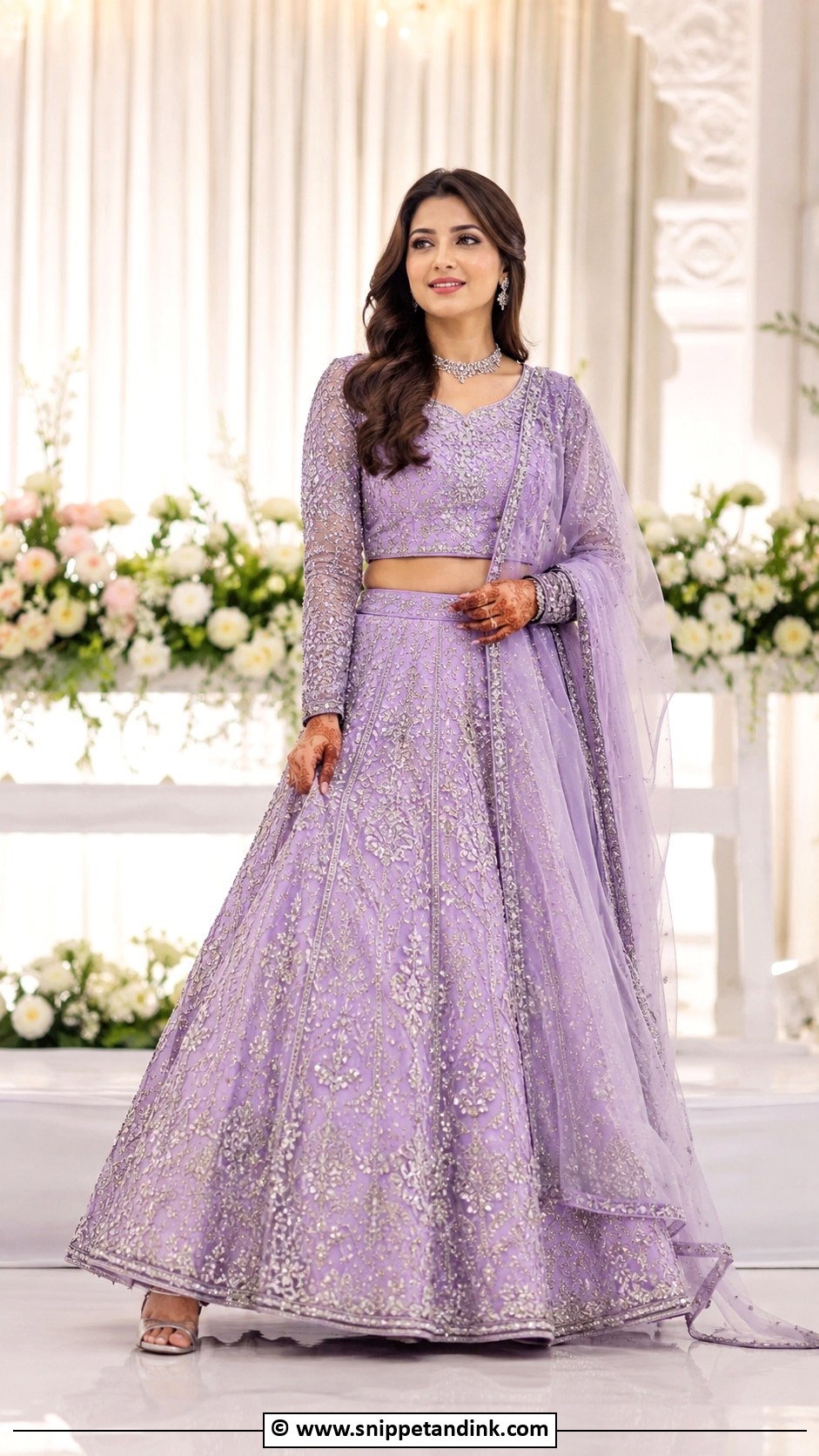
Lavender is soft enough for a walima but less common than pink, and silver embroidery or light crystal work suits it. A slightly high-waisted lehenga lengthens the body, while a fitted choli gives structure. For modesty, add a long organza cape, full sleeves or a heavily bordered dupatta. Cool-toned jewelry, mauve makeup and loose waves, with silver or clear embellished heels. Lavender can wash out very fair or very cool skin, so I’d test the exact shade near your face first.
7. Powder Blue Walima Bridal Maxi
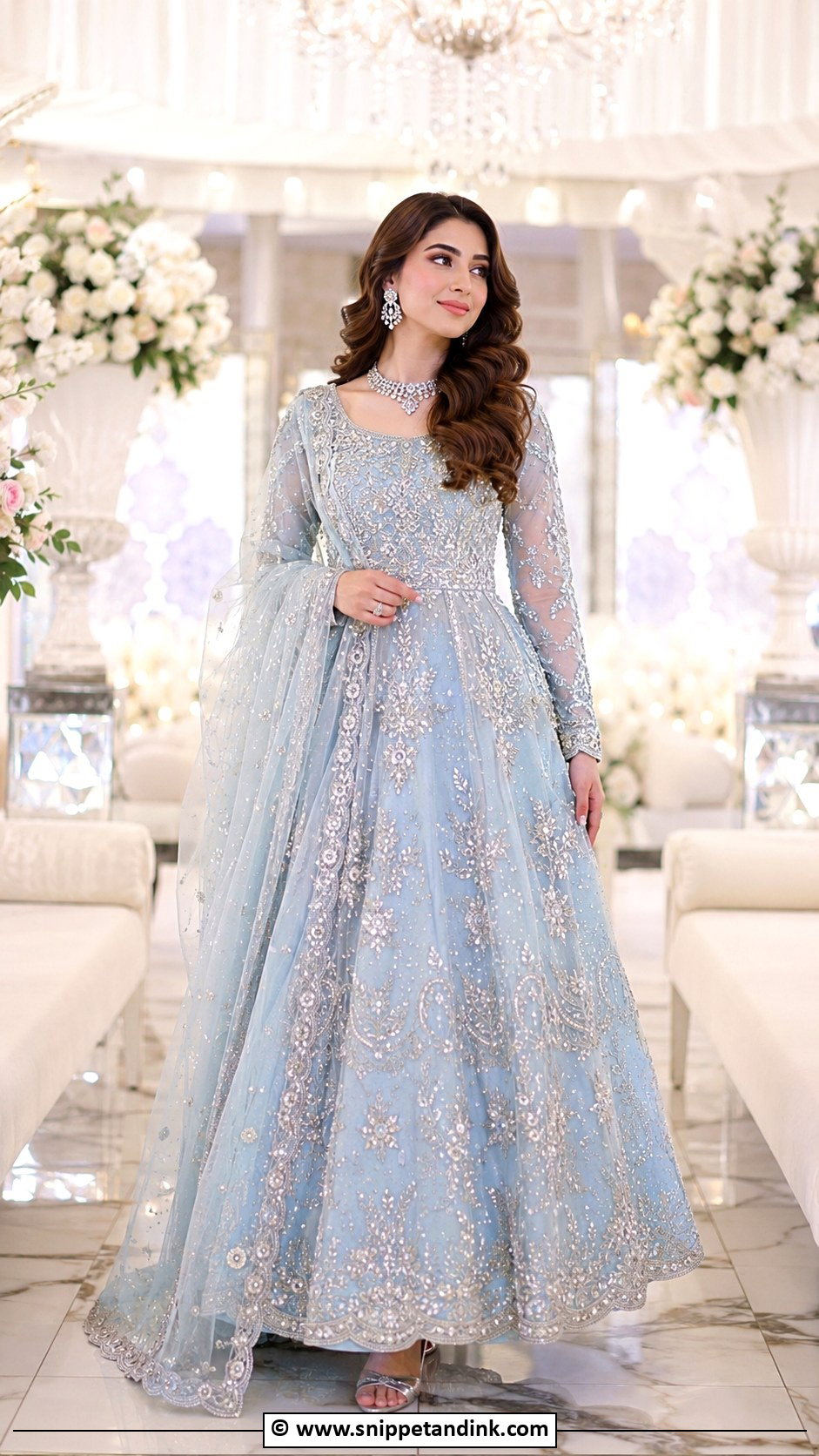
Powder blue is calm and reads well on camera, which makes it a good break from pink and ivory. A maxi with delicate silver embroidery, pearl accents and a light trail is enough. If the dress is busy, keep the dupatta sheer and plain. Diamond-style jewelry, soft smoky eyes and nude-pink lips, with a sleek bun or soft curls. Silver heels and a crystal clutch complete it.
8. Peach Walima Gharara Outfit
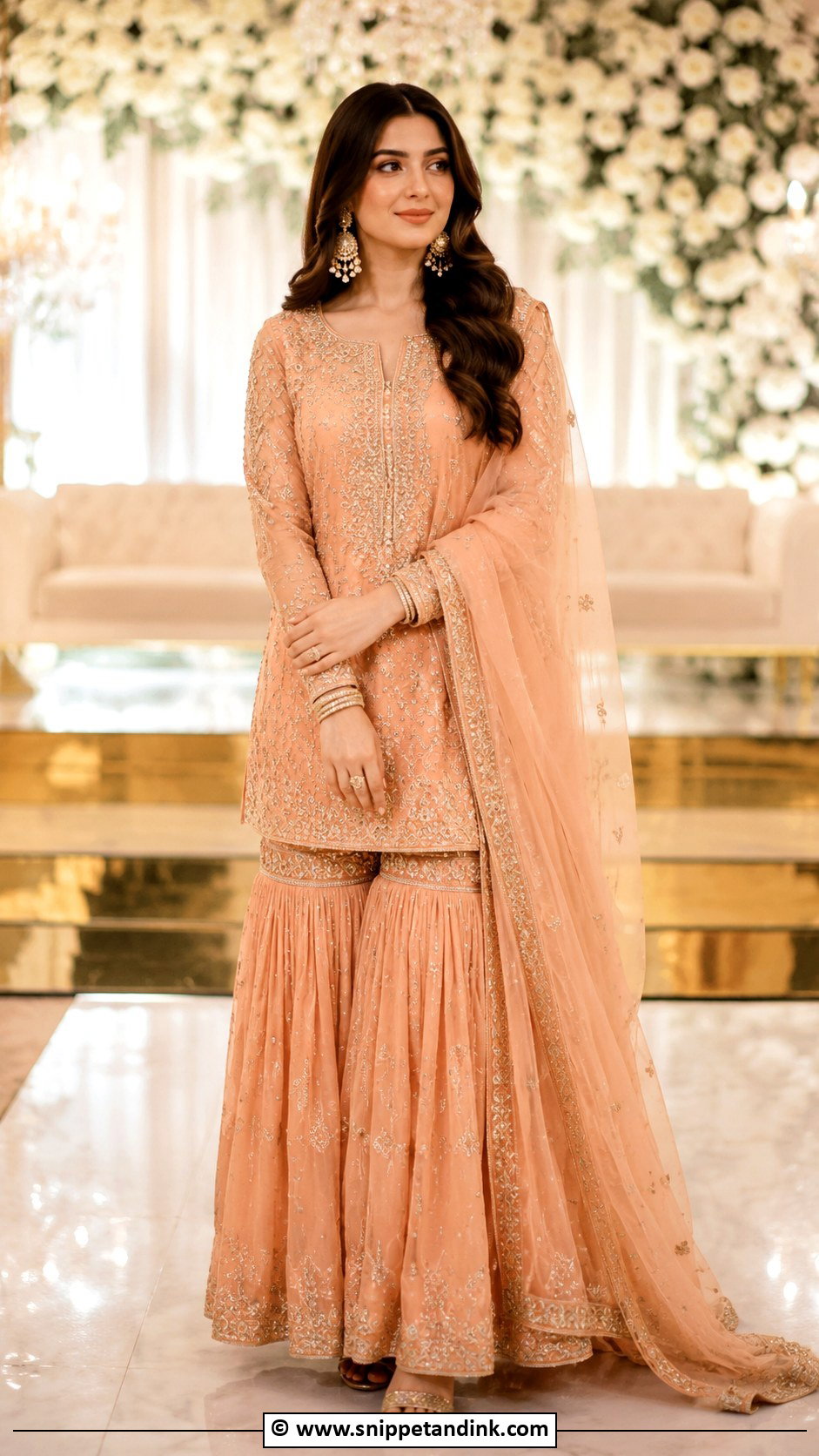
The gharara is the most traditional silhouette here: fitted to the knee, then gathered into a full flare, with the joint usually hidden under embroidered gota or lace. In peach it feels festive and sweet, and brides with warm undertones look particularly good in it. Gold, silver, pearl or multi-tone embroidery shifts it from soft to rich. Jhumkas, a tikka and stacked bangles; peach blush and softly defined eyes. Practice walking and sitting in it, because the knee joint takes a little getting used to on stage steps.
9. Beige Walima Dress With Silver Work
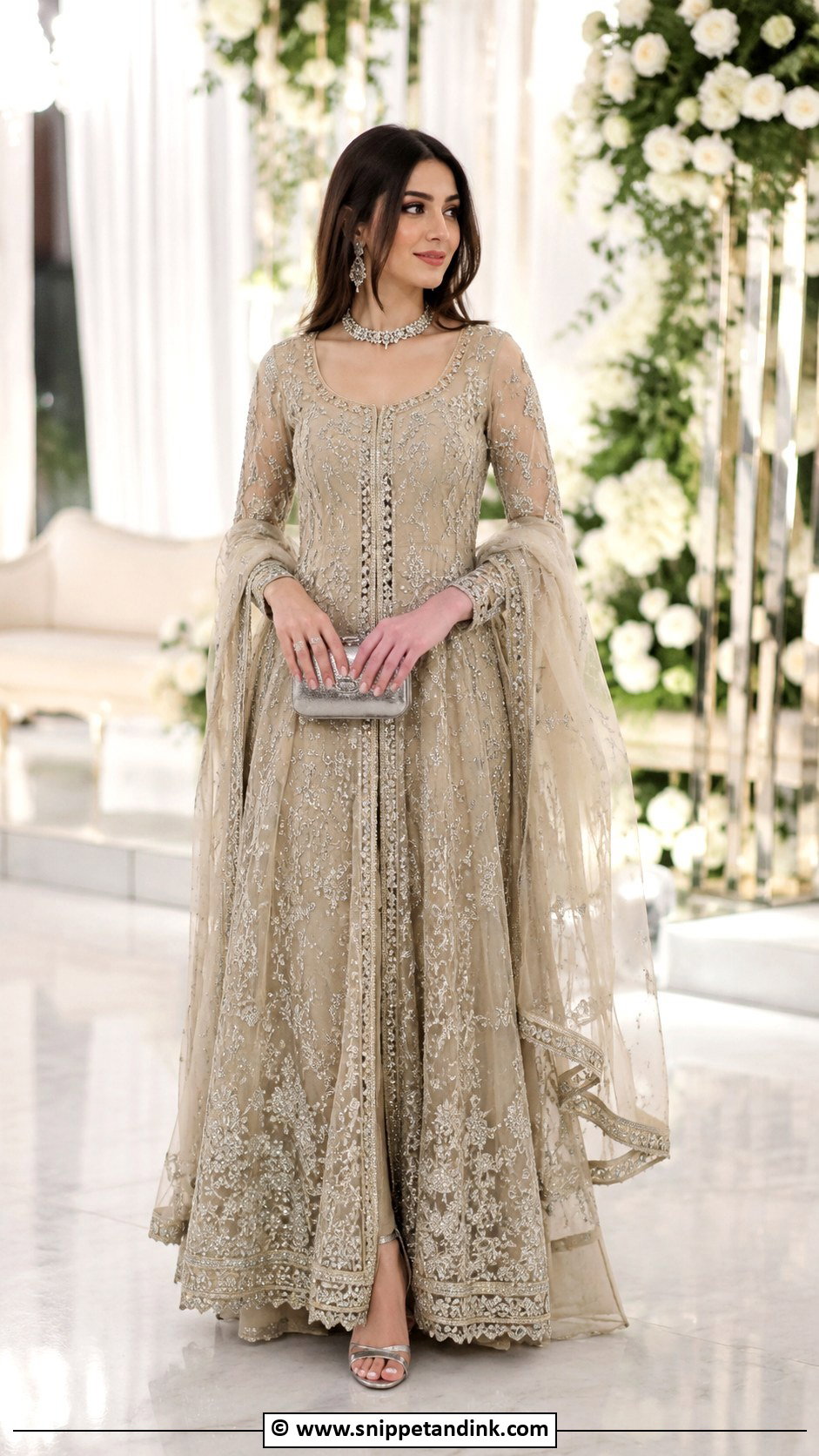
Beige becomes bridal through shine, texture and placement, never through color alone. A maxi, lehenga or long shirt with silver threadwork, pearls and small crystals gives it light. My caution: beige that matches the skin too closely can look like nothing at all in photos, so I lean on strong tailoring and a heavy dupatta border to give it edges. Soft glam makeup, sleek hair, diamond-style jewelry, and a silver clutch and heels. It suits a bride who wants a calm, grown-up presence.
10. Dusty Rose Walima Lehenga
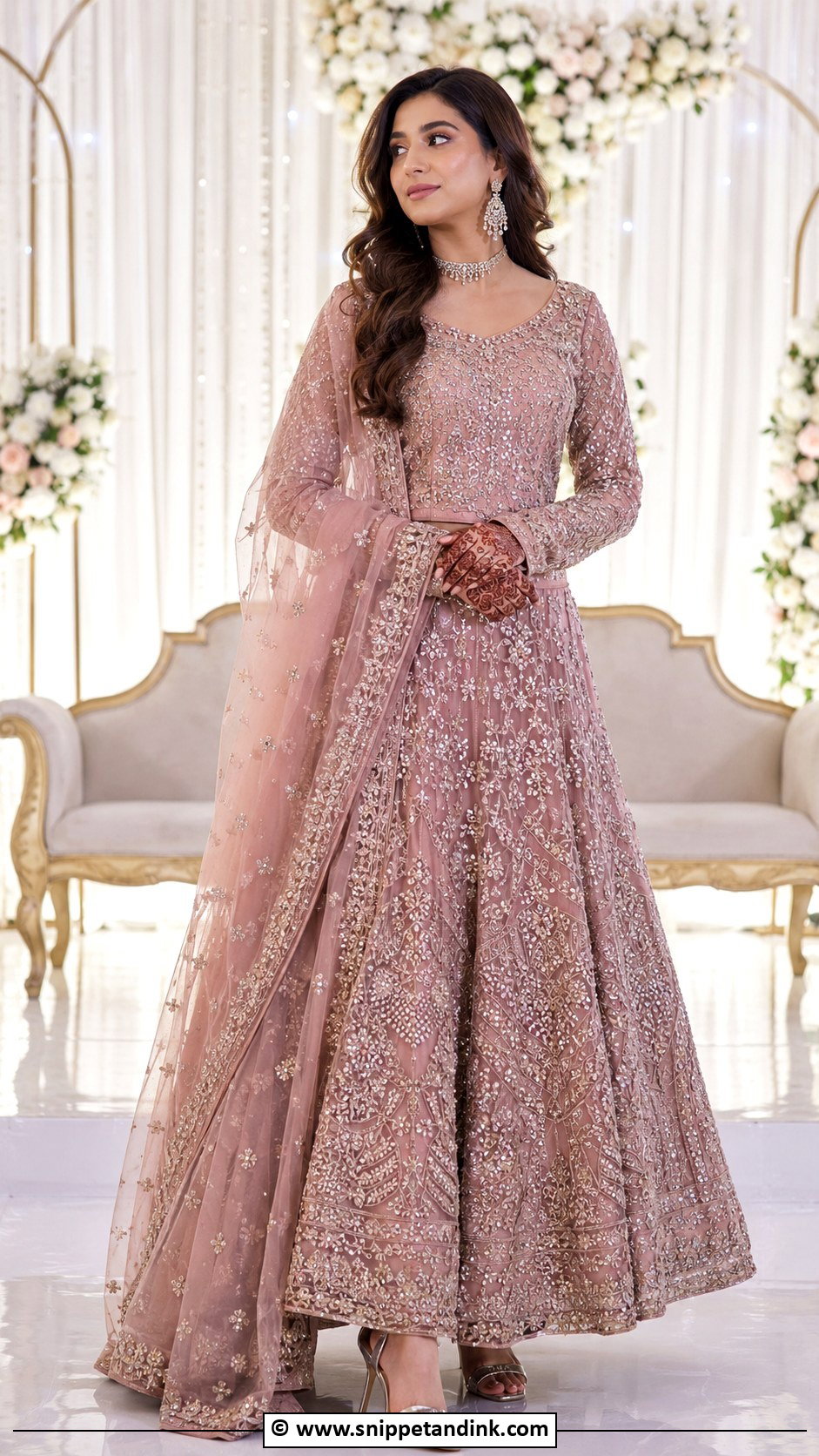
Dusty rose is pink with the brightness taken out, and it suits a wide range of skin tones. Pair the lehenga with a long choli, peplum or short kameez, depending on comfort and body shape. Silver, pearl or pale gold embroidery makes it feel luxurious, and a matching dupatta with a heavier border gives the bridal finish. Jewelry should be delicate but visible: chandelier earrings and a slim choker. Soft waves, rosy makeup and metallic heels.
11. Tea Pink Walima Frock With Lehenga
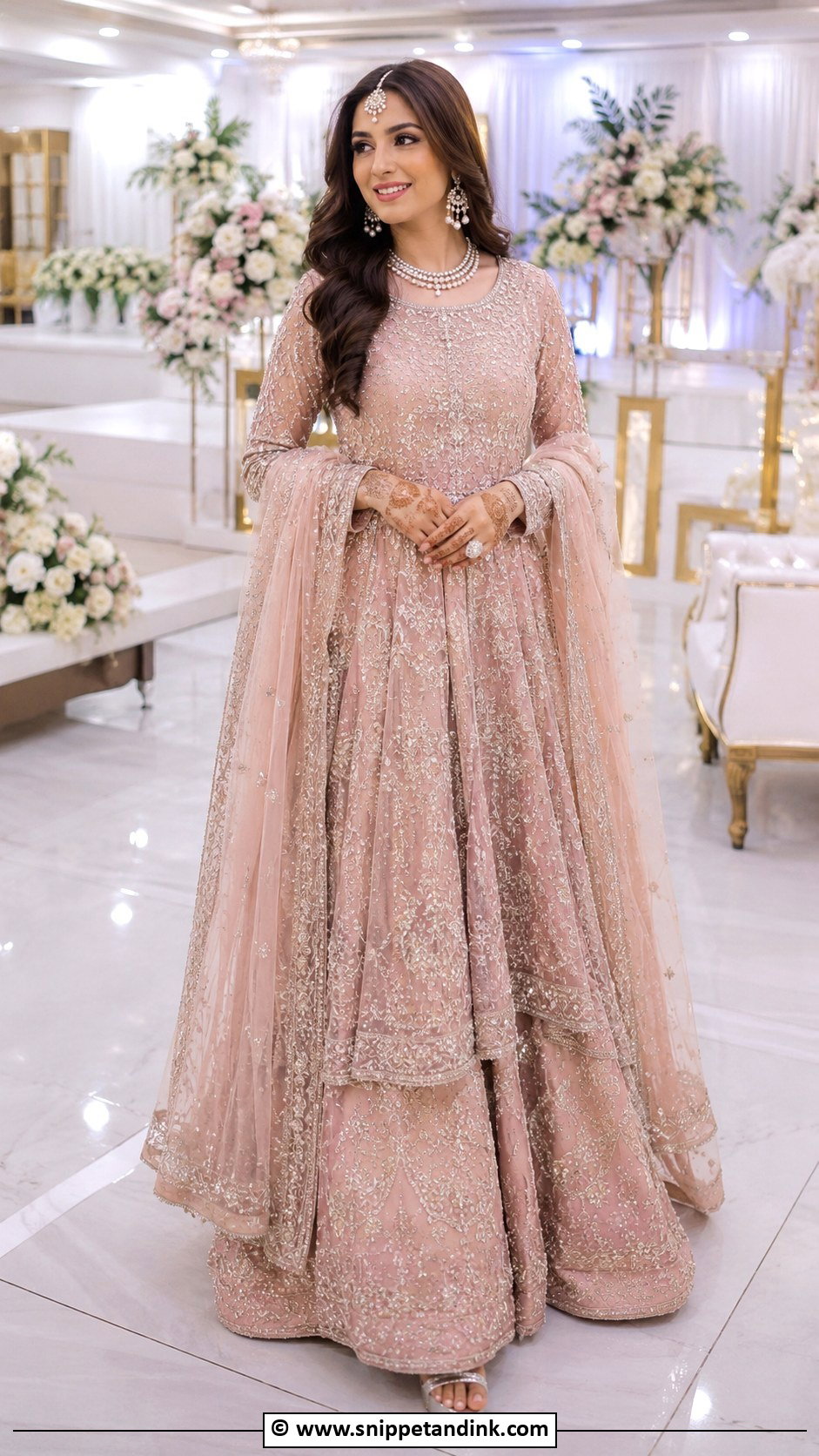
A tea pink walima frock with lehenga is about as classic a Pakistani silhouette as there is. The frock gives coverage and movement; the lehenga underneath creates fullness on stage. Organza, net or tissue with embroidery on the bodice, sleeves and hem all work, though tissue is stiff and can scratch the inner arm, so I ask for a soft lining on the sleeves. A lightly embellished dupatta, pearls, soft curls and pink-toned makeup. Match the heels to the embroidery, silver or pale gold.
12. Ice Blue Walima Gown Dress
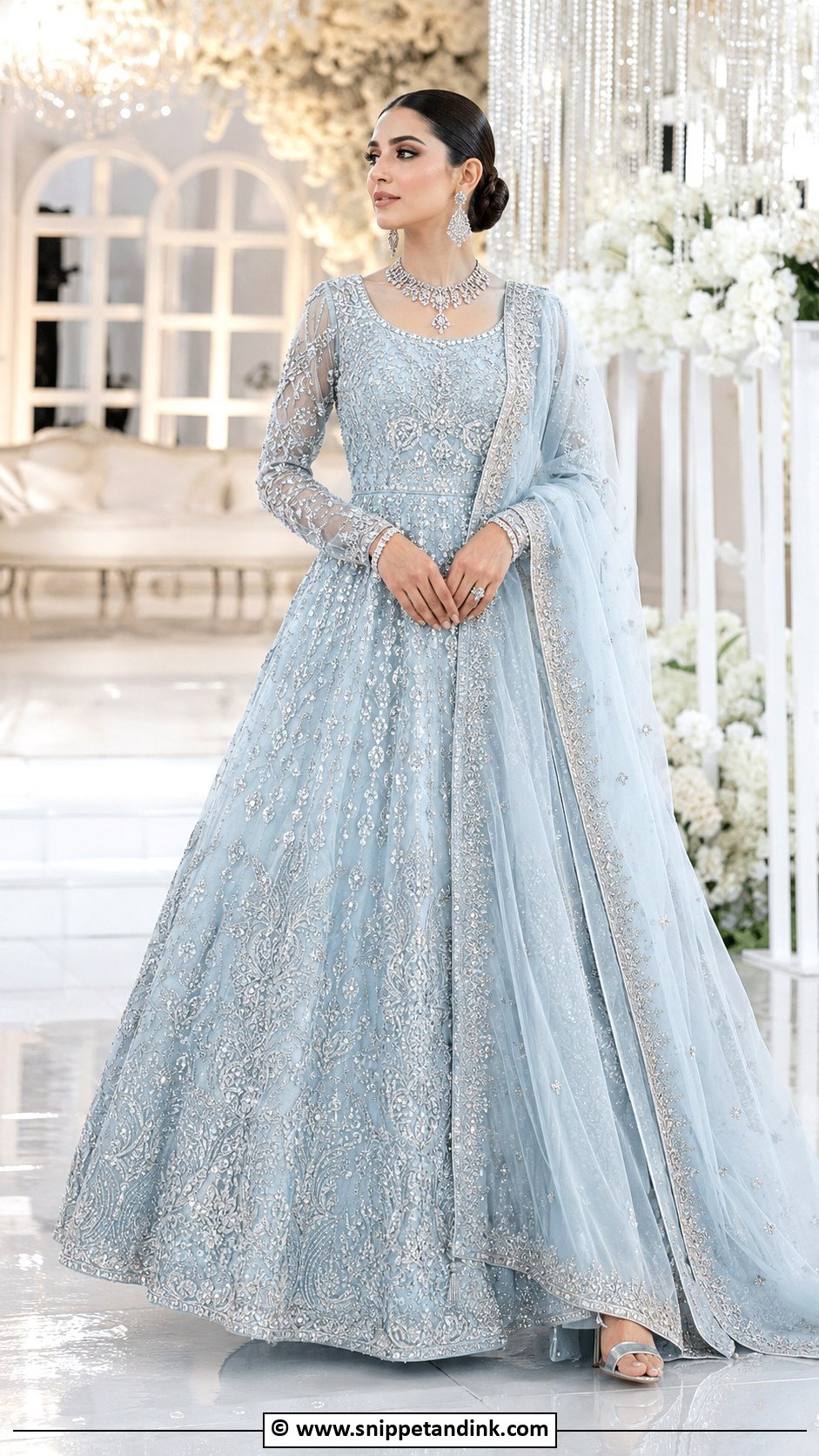
Ice blue reads cool and polished, and crystal, sequin or pearl work shows up well on it. A structured bodice over a flowing skirt gives a modern bridal shape. For coverage, add full sleeves, a high neck or a matching cape-style dupatta. Silver jewelry, glassy makeup and a neat low bun. I’d keep accessories minimal so the color and the embroidery stay in charge.
13. Gold Walima Farshi Lehenga
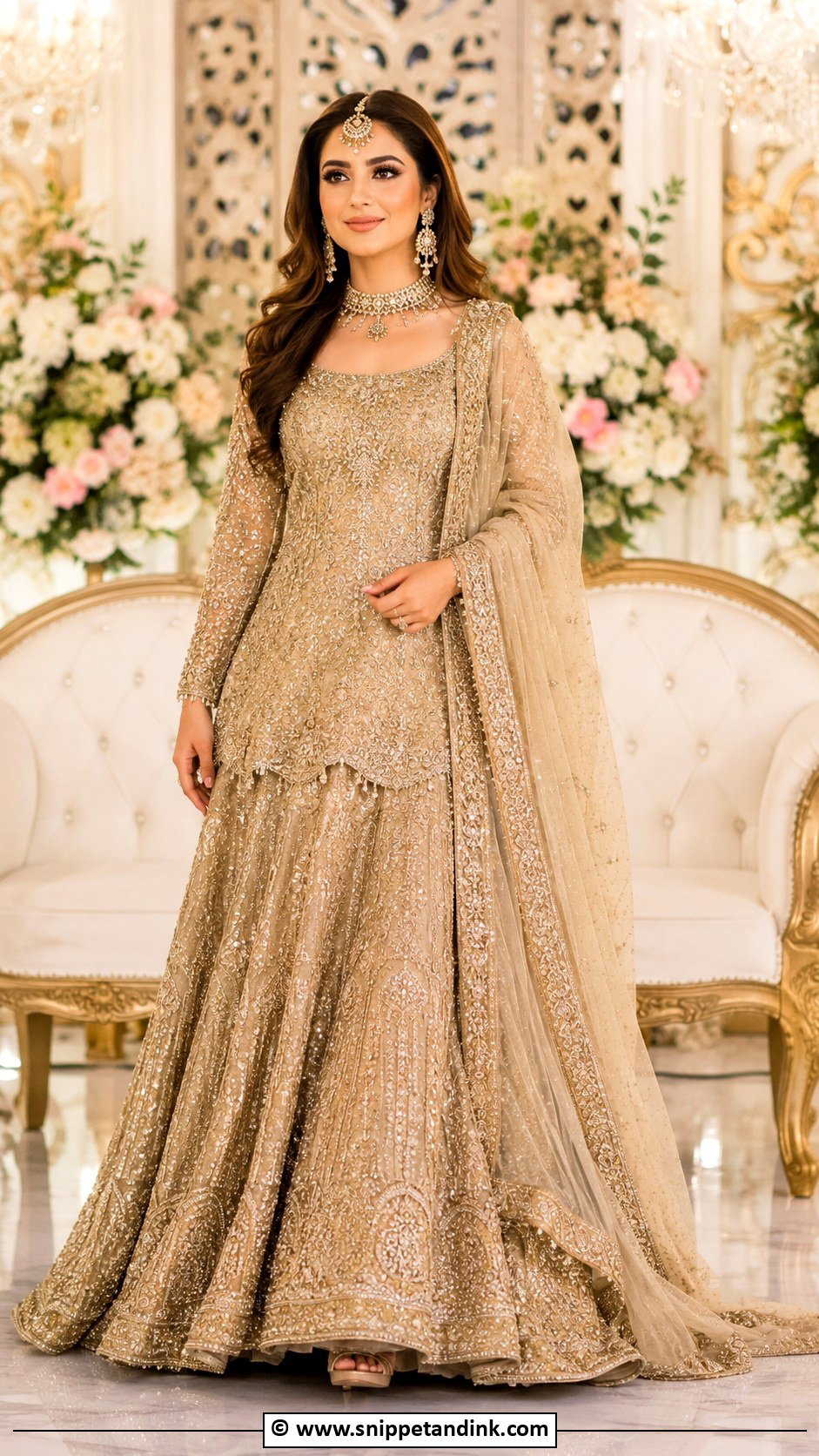
A gold walima farshi lehenga sweeps the floor around you, which is exactly why it suits formal halls and stage photography. I always steer toward soft gold rather than yellow gold; it looks richer and kinder to most complexions. Zardozi, dabka, pearls and sequins make it properly bridal. Balance the heavy skirt with a well-fitted shirt or choli and a sheer dupatta, then traditional jewelry, a bun and classic makeup. A farshi needs someone to lift and arrange the hem every time you move, so assign that job to a sister or cousin before the event.
14. Lilac Walima Peplum With Sharara
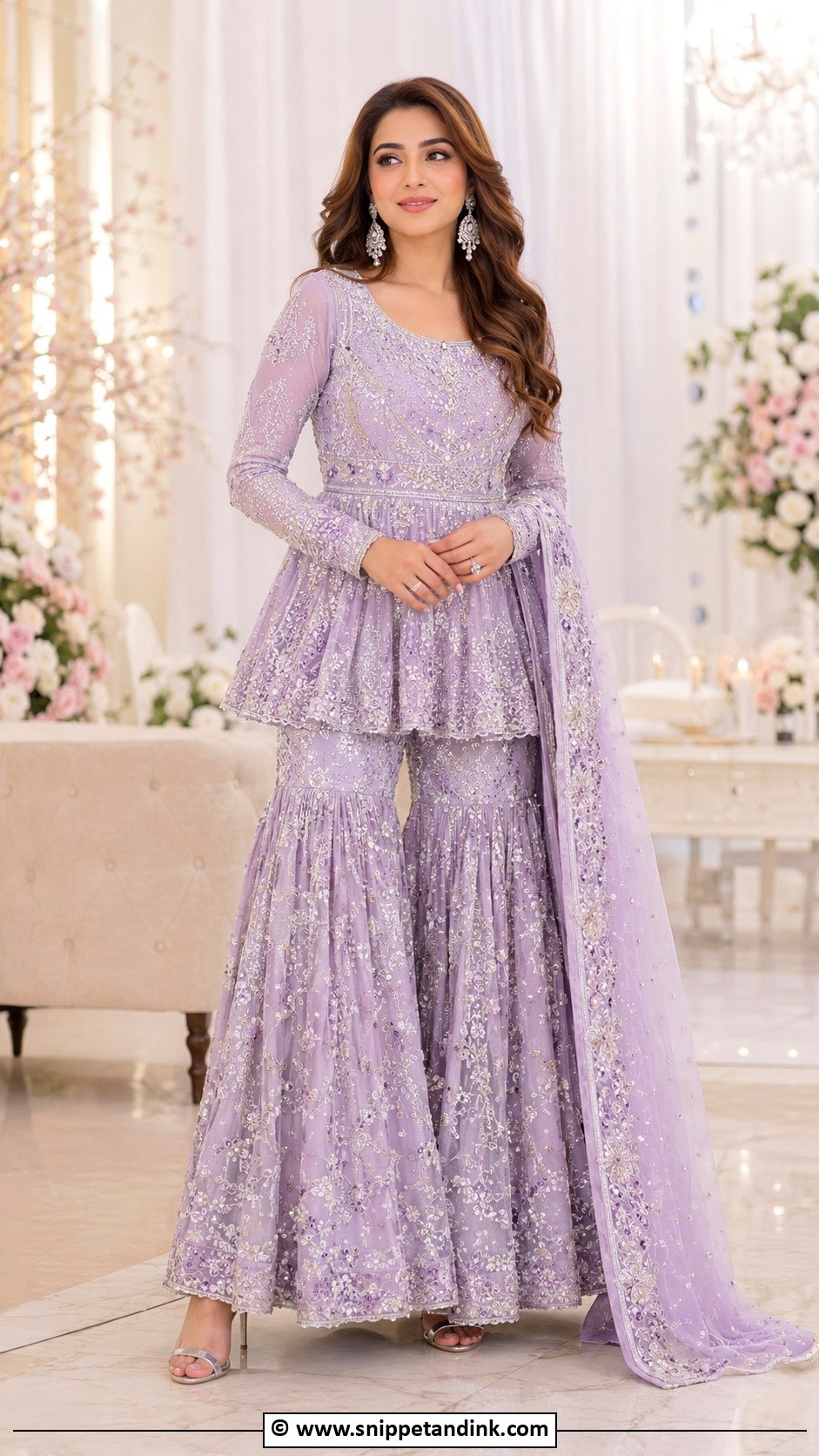
A peplum defines the waist and the sharara adds movement, so this outfit feels playful without losing polish. Lilac takes silver, pearl and white thread embroidery especially well. It’s much easier to carry than a heavy lehenga but still reads as bridal if the fabric and work are rich. A soft net dupatta with a border, chandelier earrings and a delicate bracelet. A half-up style or polished waves and silver heels. Peplums can flare out awkwardly when you sit, so test sitting on a low sofa in it.
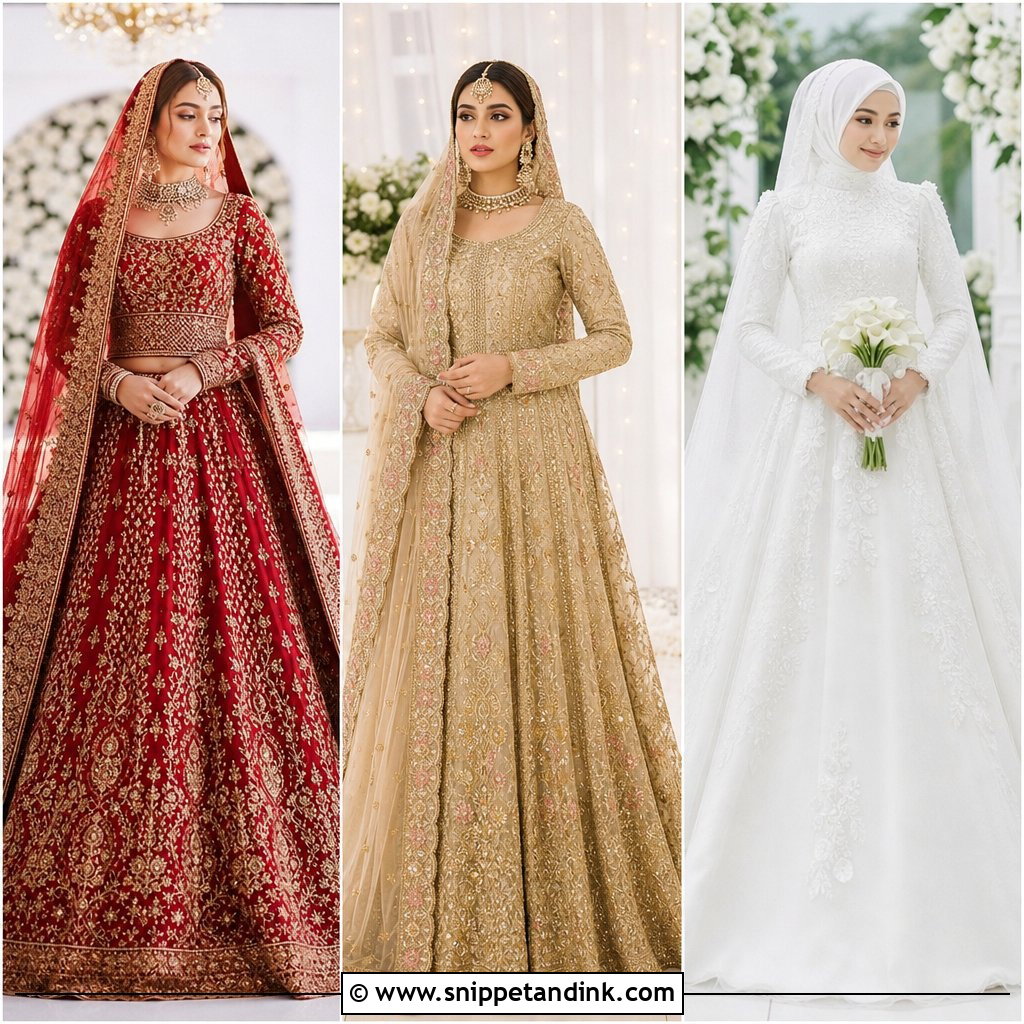
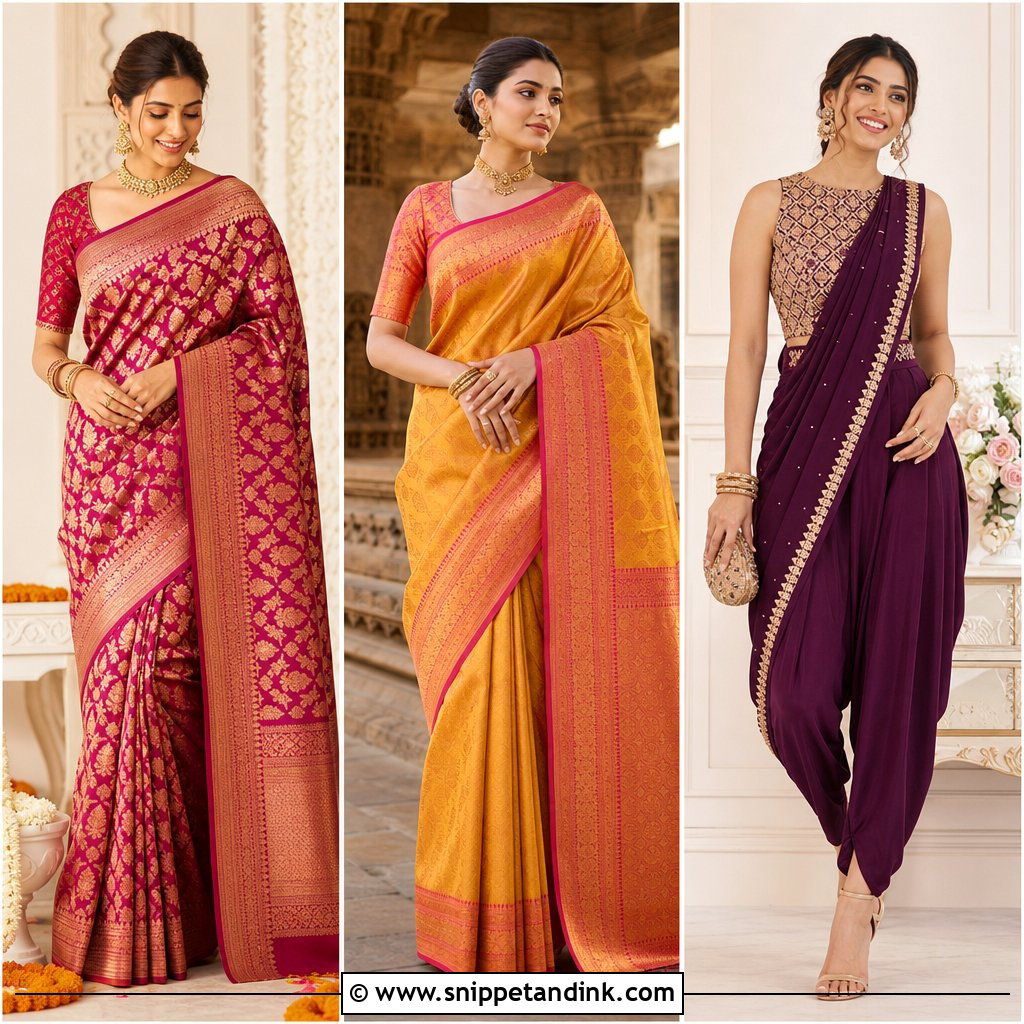
15. White Walima Maxi With Pearl Work
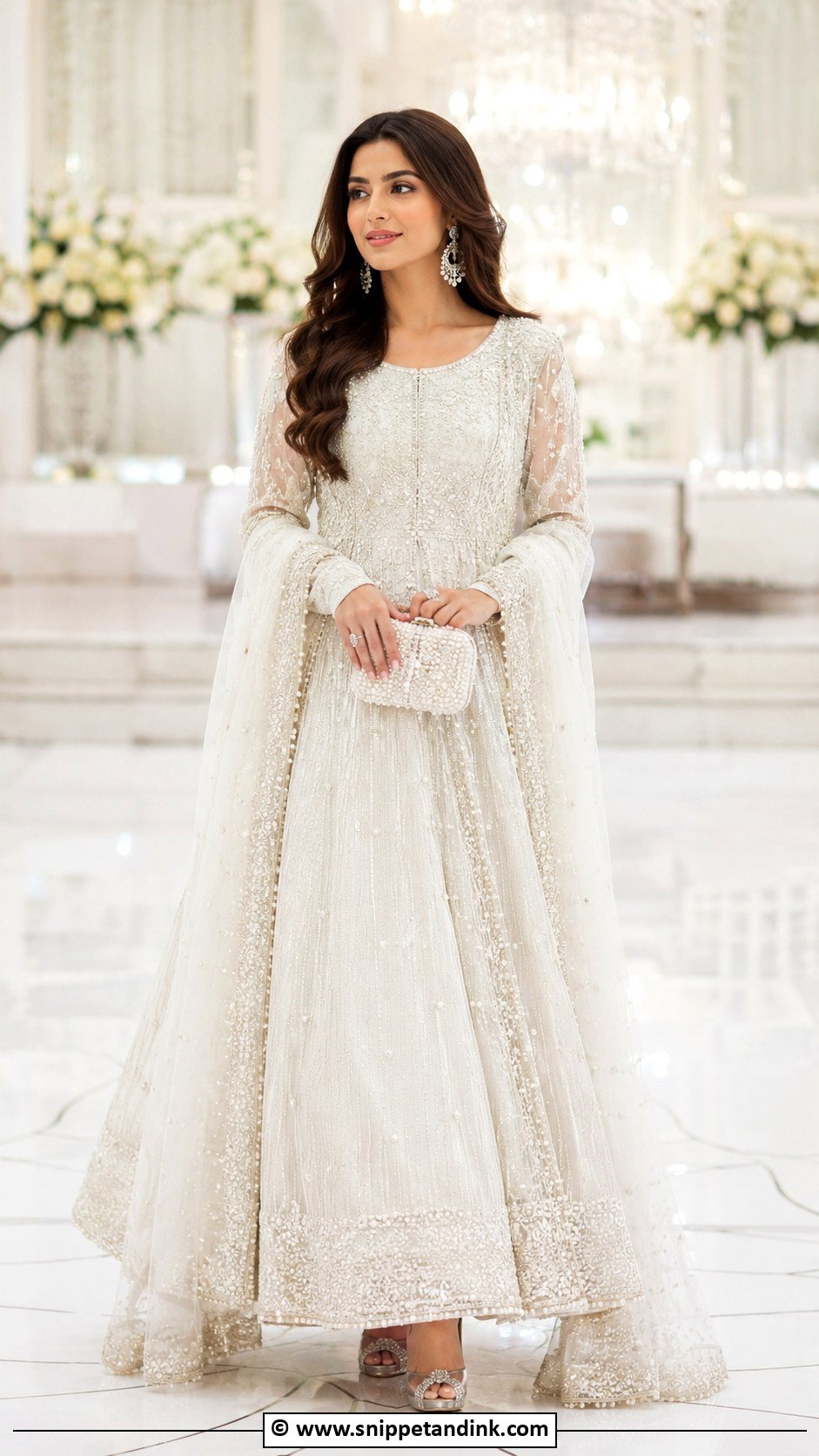
White with pearl work looks clean and almost weightless. Pearls give texture without bulk, and a maxi with a defined waist, full sleeves and a flowing skirt keeps the silhouette balanced. A white or off-white dupatta with pearl edging completes it. All-white can look flat in photos, so I mix textures: organza, net, a silk lining and a little shimmer. Diamond-style jewelry, soft blush and a pink lip add warmth, with silver heels and a pearl clutch.
16. Aqua Walima Lehenga With Short Shirt
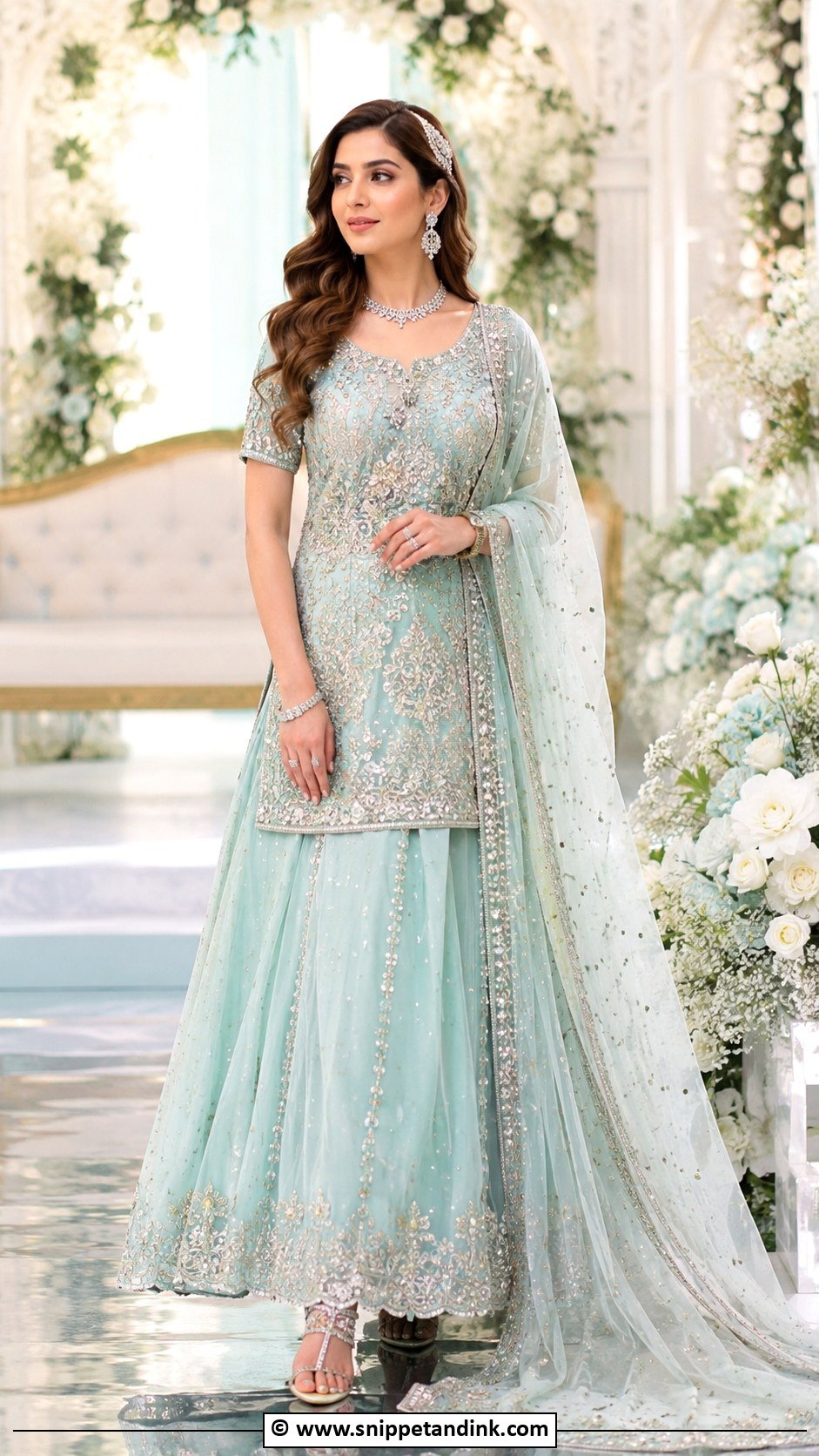
Aqua is for the bride who loves color but wants it soft. Silver embroidery, small crystals and pearl highlights suit it. A short shirt over a lehenga gives the traditional bridal shape and photographs with volume. For modesty, longer sleeves and a higher neck work well. A light dupatta with a wide border over the shoulder or head, silver jewelry, glowing makeup and soft curls. Spring and summer walimas suit it best.
17. Mauve Walima Bridal Dress
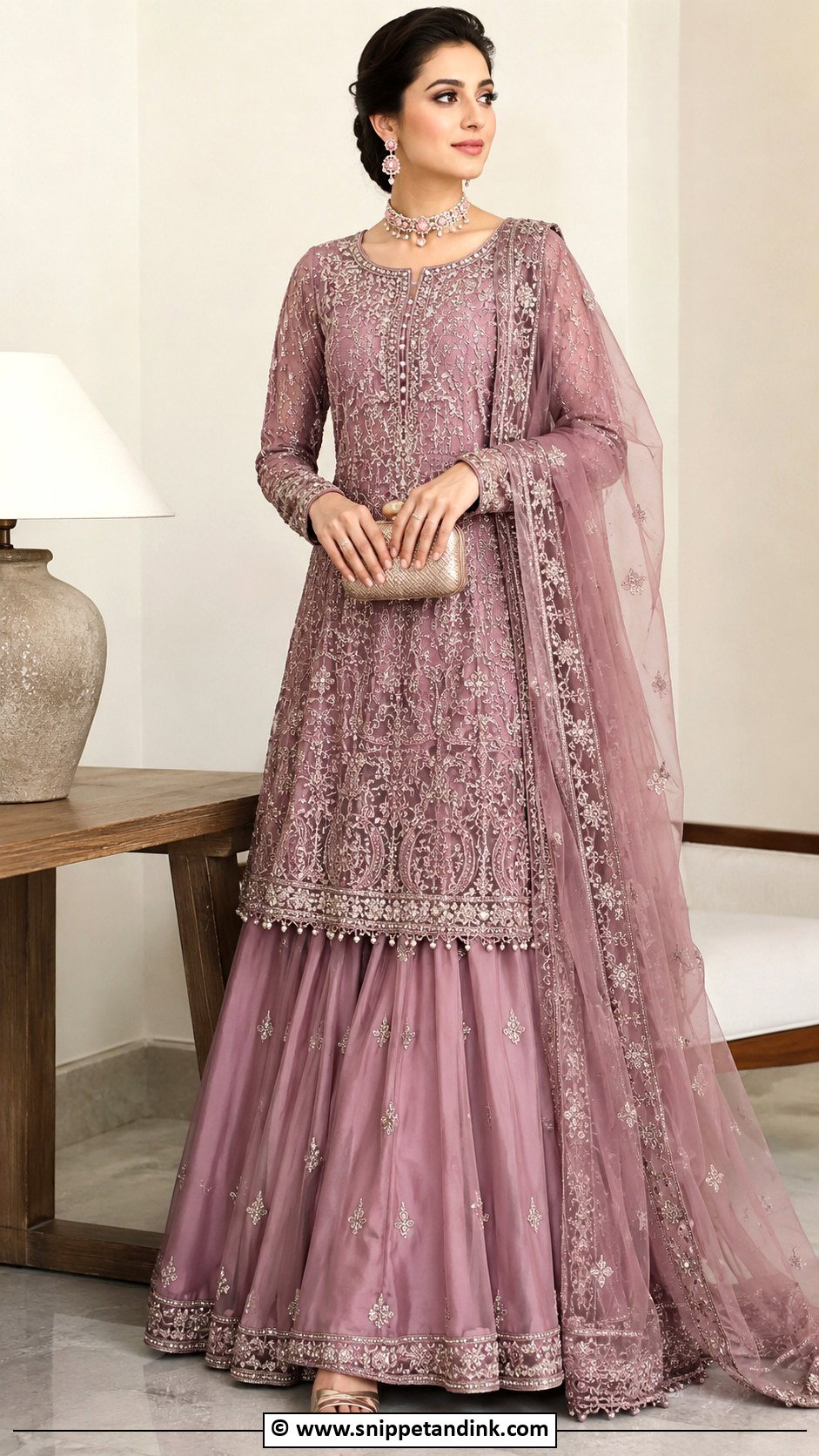
Mauve is a deeper pastel with enough color to stand out. It works as a maxi, lehenga or long shirt with silver, antique gold or pearl embroidery. For a more mature look, I’d pair a long straight shirt with a flared lehenga or sharara. Mauve lips, softly defined eyes and a glowing base echo the dress; jewelry can be silver or rose-toned. Metallic heels and a structured clutch. Mauve shifts with lighting more than most shades, warmer under yellow bulbs and greyer under white LEDs.
18. Blush Walima Pishwas Dress
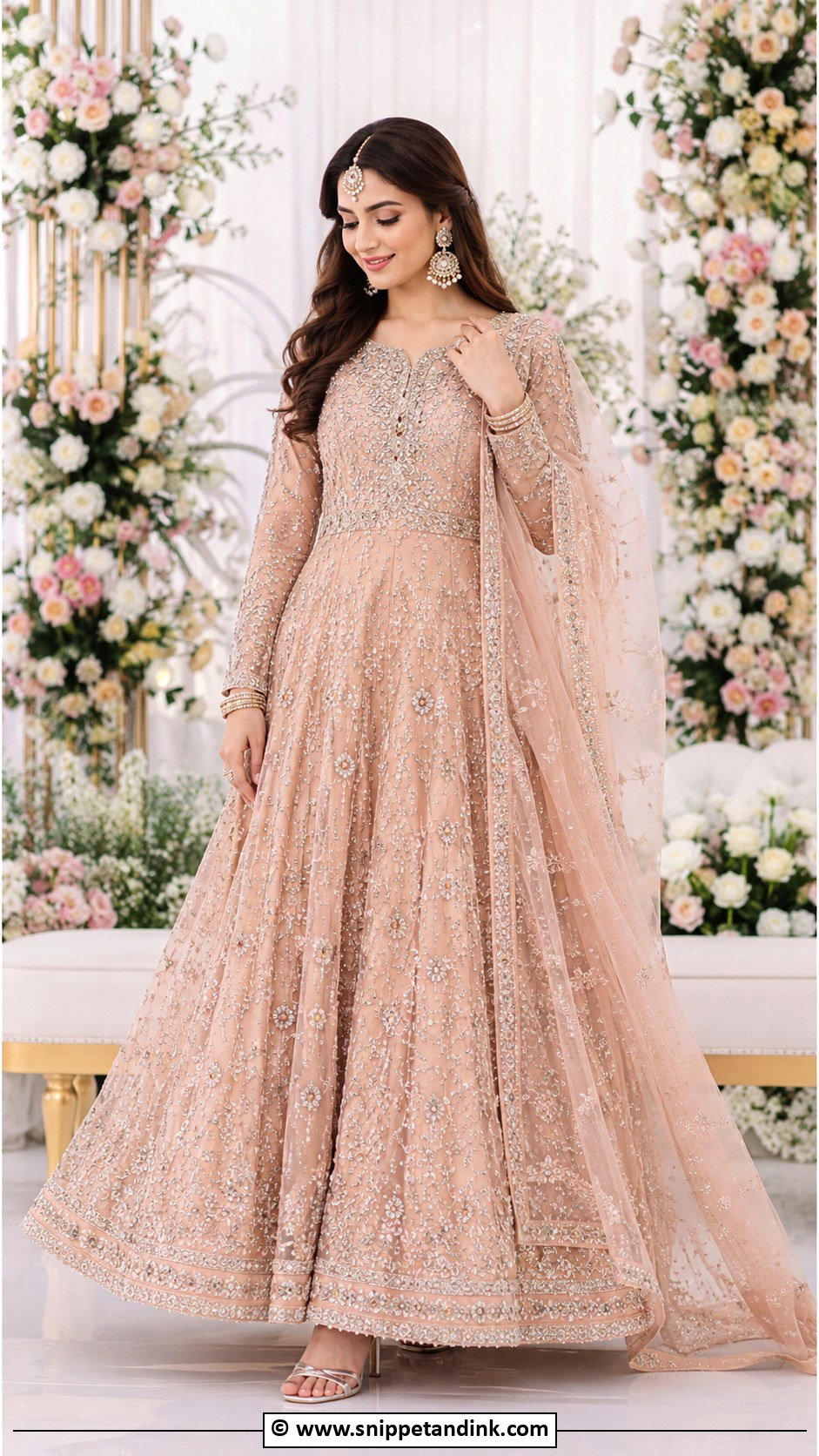
The pishwas is a long frock that flares from the waist and swings as you walk, a silhouette with deep roots in South Asian bridal dress. In blush it’s modest and graceful, especially with silver, pearl and pale gold work on the neck, sleeves and hem. A matching or ivory dupatta softens it further. Jhumkas, a small tikka and delicate bangles, then soft curls, fresh makeup and embellished heels. It gives full coverage without feeling heavy, which is why I suggest it to brides who find lehengas cumbersome.
19. Grey Walima Saree With Embellished Blouse
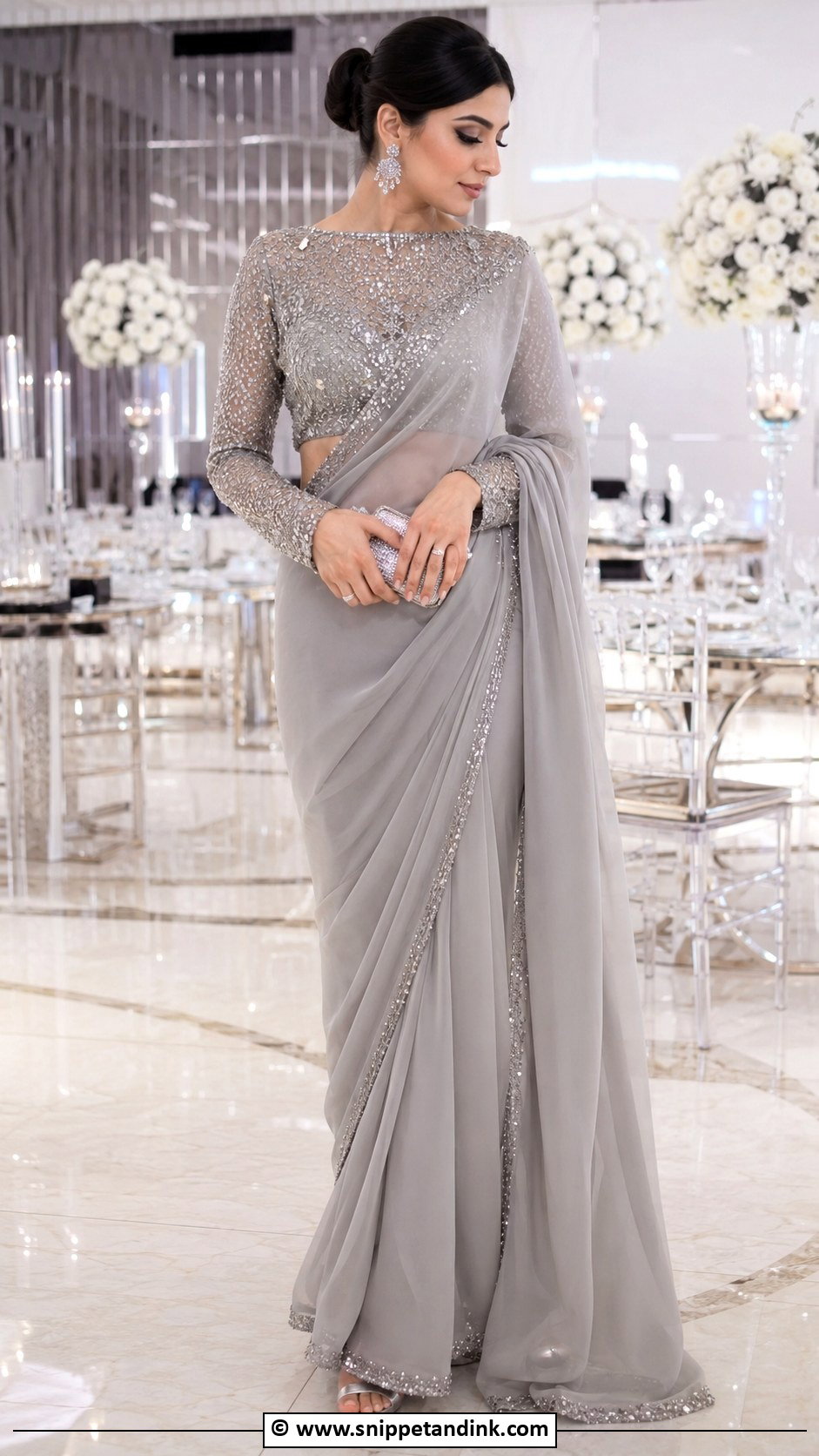
A grey walima saree with an embellished blouse is a calm alternative to silver that still feels formal. Chiffon, net, organza or tissue all work, with a blouse in detailed crystal or pearl. A longer or jacket-style blouse adds structure and coverage. Chiffon drapes softest but slips; net and organza hold pleats better on stage. Diamond-style earrings, a bracelet, a sleek bun, silver heels and a small clutch.
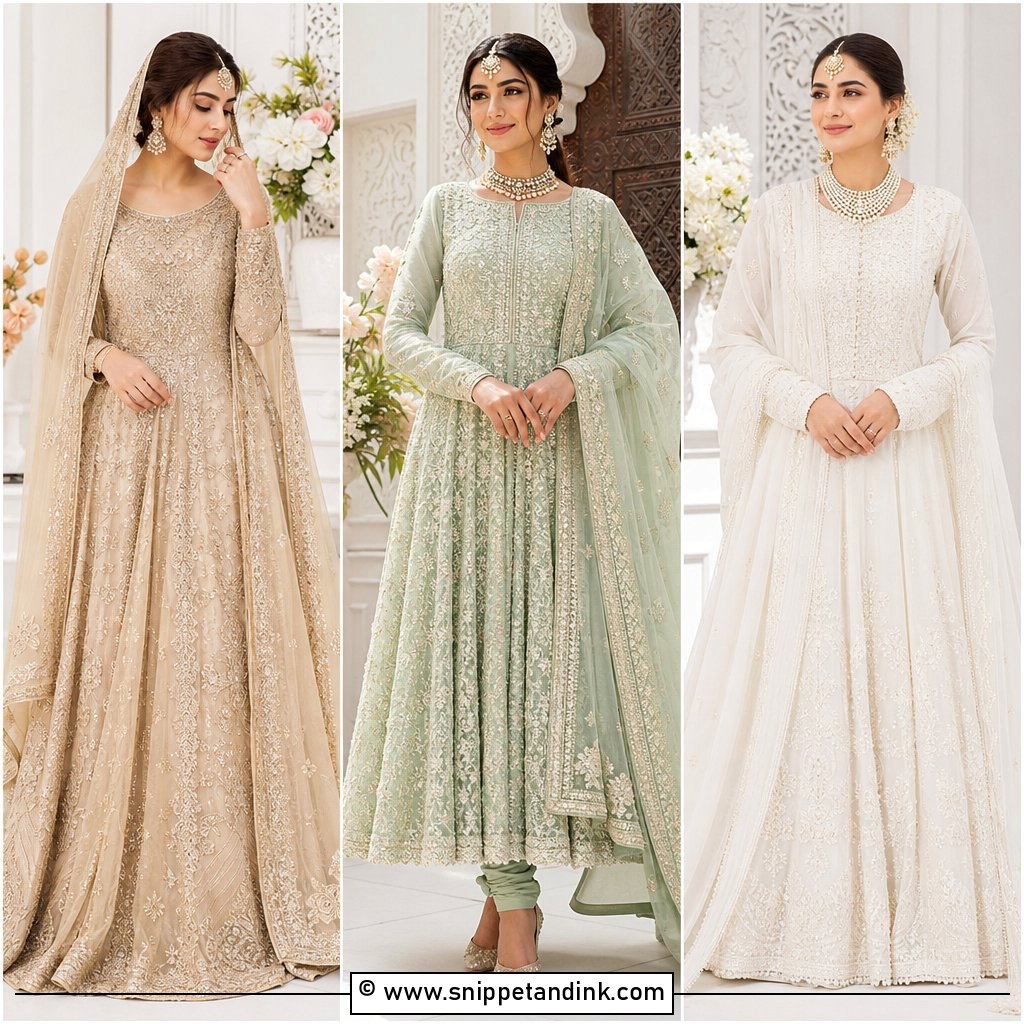


20. Sea Green Walima Lehenga Dress
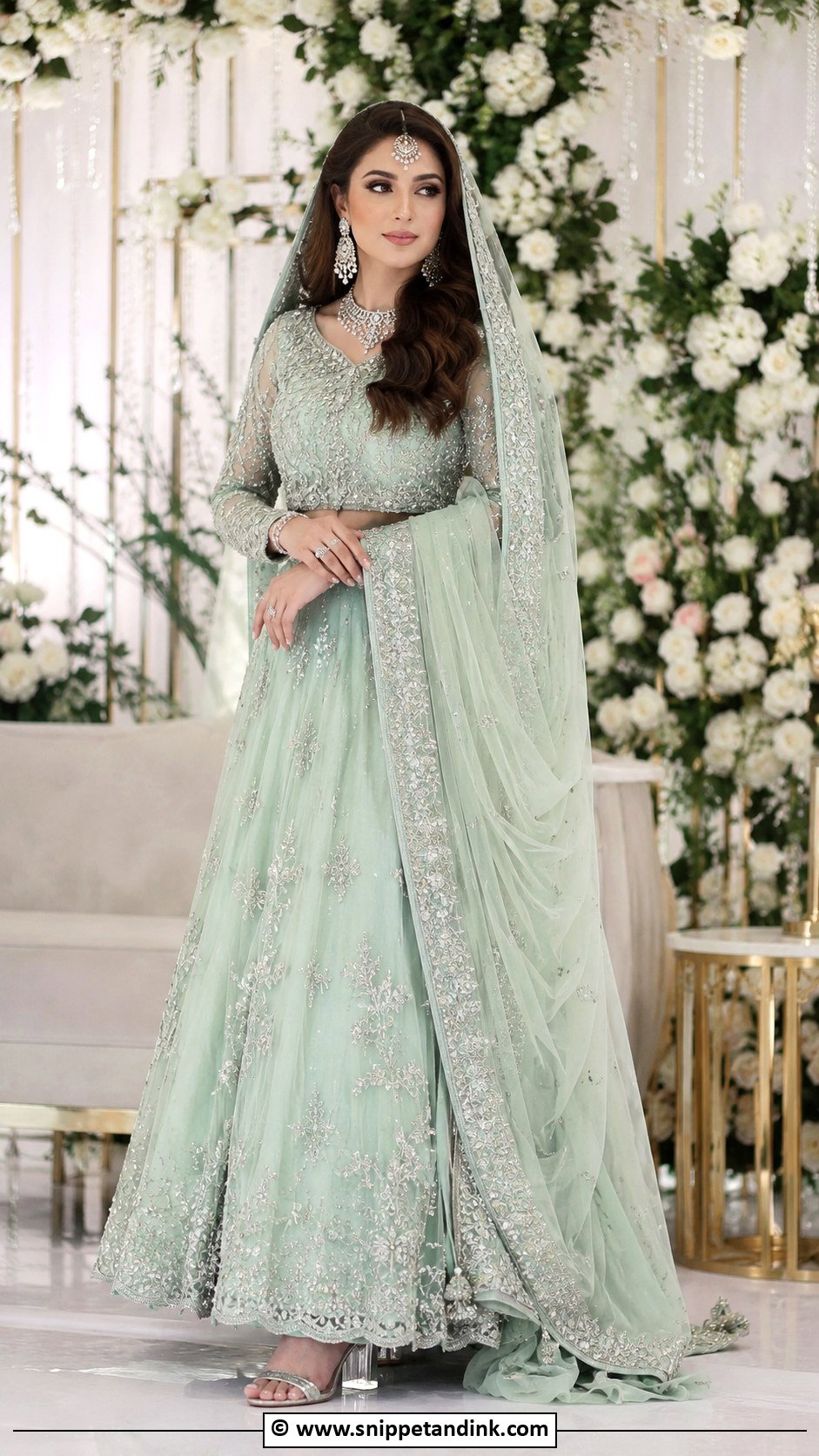
A sea green walima lehenga dress sits between mint and aqua, which makes it flattering without being bold. Silver, white or pearl embroidery suits it. A flared lehenga with a fitted blouse is the classic bridal shape, and a dupatta edged with kiran, scallops or light border work makes it more traditional. Silver jewelry, soft smoky eyes and a nude lip. It holds its color well under bright indoor lighting and with garden-style decor.
21. Nude Pink Walima Gown With Trail
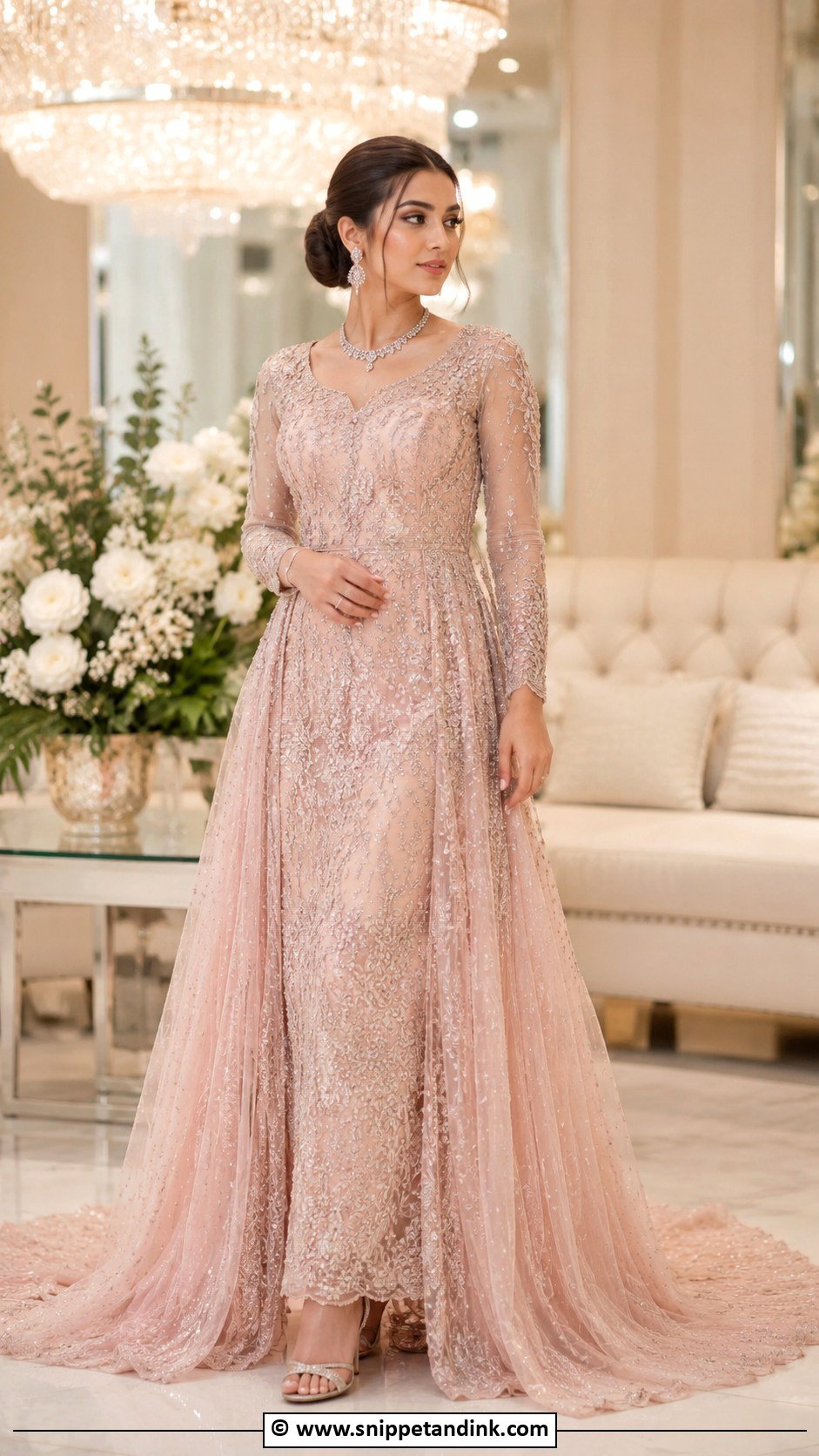
A nude pink gown with a trail is a modern walima look. Ask for embroidery that’s denser on the bodice and fades through the skirt, which keeps weight off the hem and draws the eye up. A detachable trail is the practical choice: drama for portraits, freedom for the rest of the evening. Pin a sheer dupatta lightly so it doesn’t hide the gown’s shape. Diamond-style earrings, a sleek bun, rosy makeup and clear or silver heels.
22. Pastel Green Walima Anarkali Dress
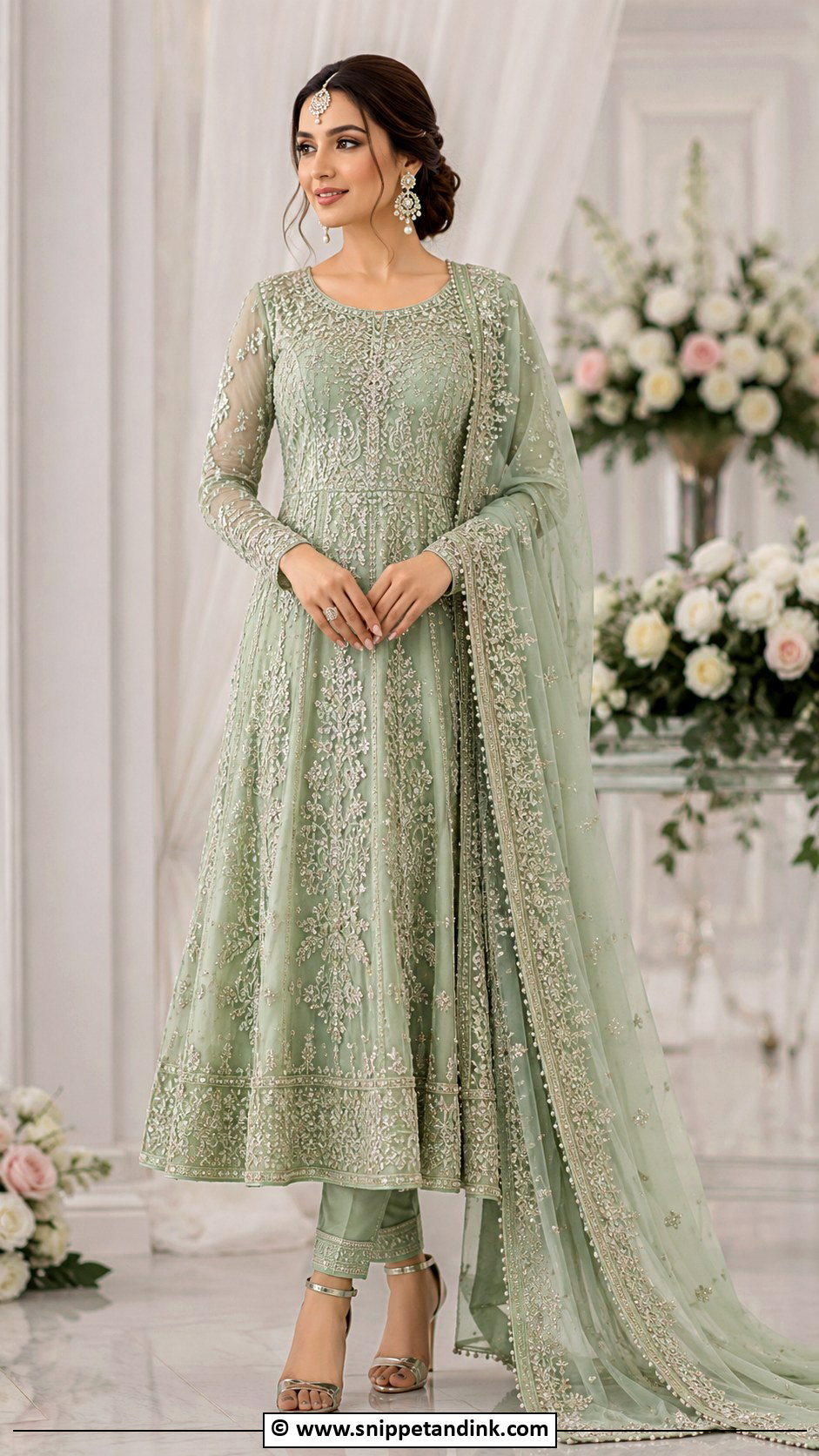
The anarkali is a long, flowing frock that’s easy to carry for hours, which is its main attraction. In pastel green with ivory, silver or pearl embroidery it’s modest and graceful. A churidar, slim trousers or a lehenga-style bottom changes the volume. A soft dupatta with a detailed border makes it bridal. Pearl earrings, a delicate tikka and slim bangles, then soft makeup and metallic heels. Churidar gathers need the right sleeve length on the leg, so wear your shoes at the fitting.
23. Rose Gold Walima Lehenga
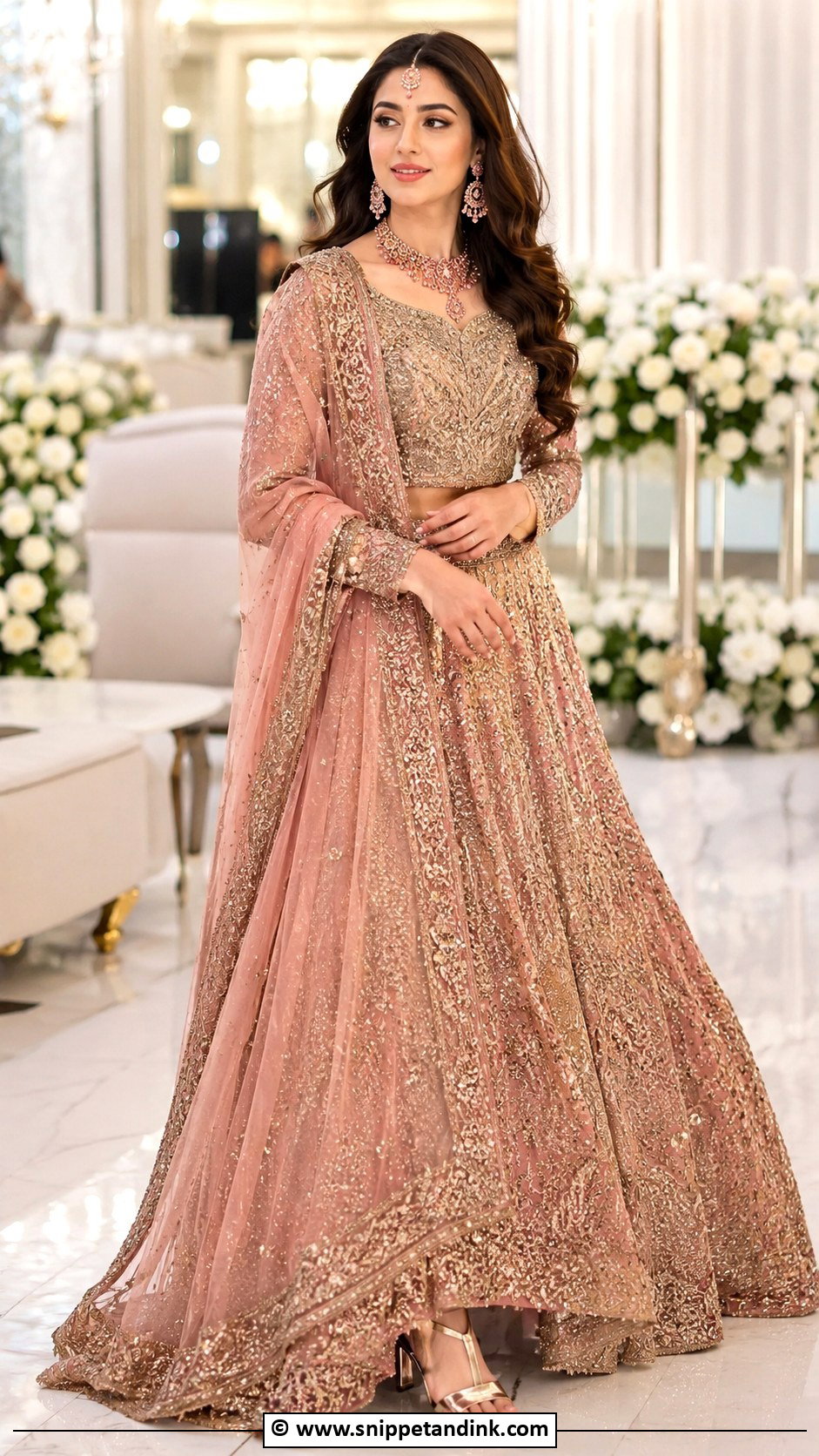
Rose gold has warmth and shine, enough to look bridal without going to red or maroon. Rose gold embroidery on net, tissue or organza glows under reception lights. A matching blouse, or a longer shirt for coverage, and a soft dupatta with light edging. Jewelry follows the embroidery: diamond-style, pearl or rose-toned. Warm makeup with champagne eyes, peachy blush and glossy lips. I’d match metals carefully here, as yellow gold jewelry next to rose gold work can look accidental.
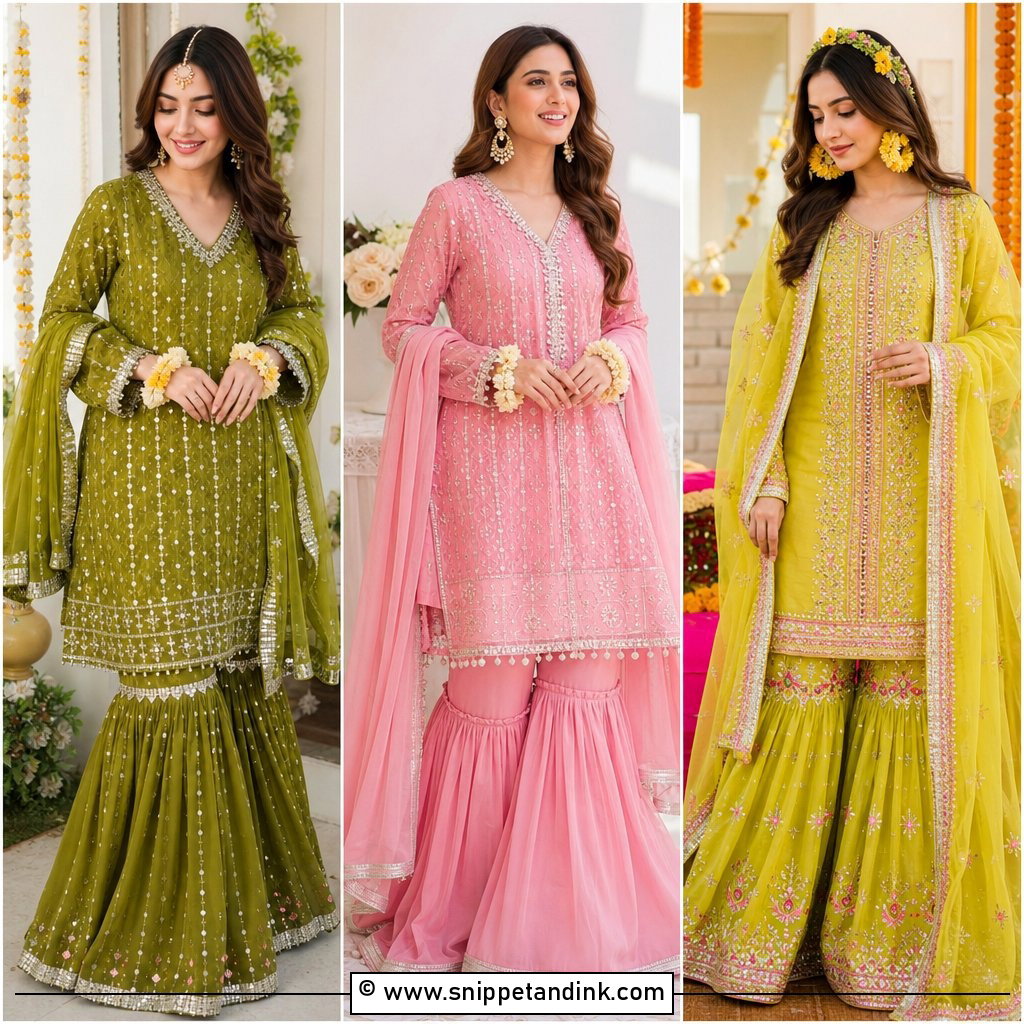
24. Pistachio Walima Sharara Suit
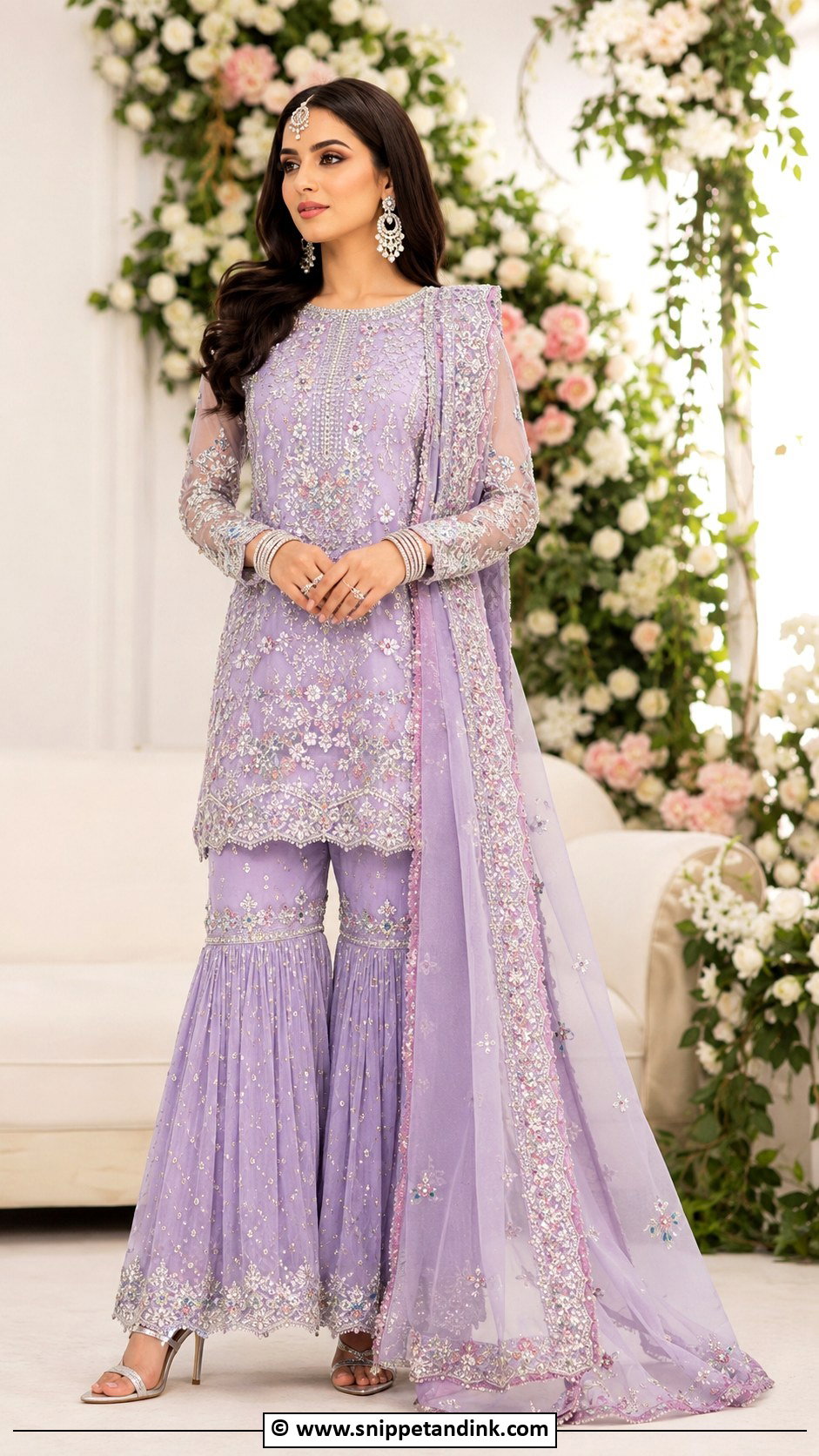
Pistachio is less common than mint, so it feels a little more personal while still sitting in the pastel walima palette. A short kameez with detailed embroidery over a wide sharara gives the festive shape. Silver, ivory or pale gold work keeps it refined, and a sheer dupatta with lace, pearls or an embroidered border lifts the whole outfit. Jhumkas, a neat bun and soft pink makeup. For a long reception, embellished sandals or khussas are the sensible choice under a sharara.


25. Peach Pink Walima Maxi With Cape
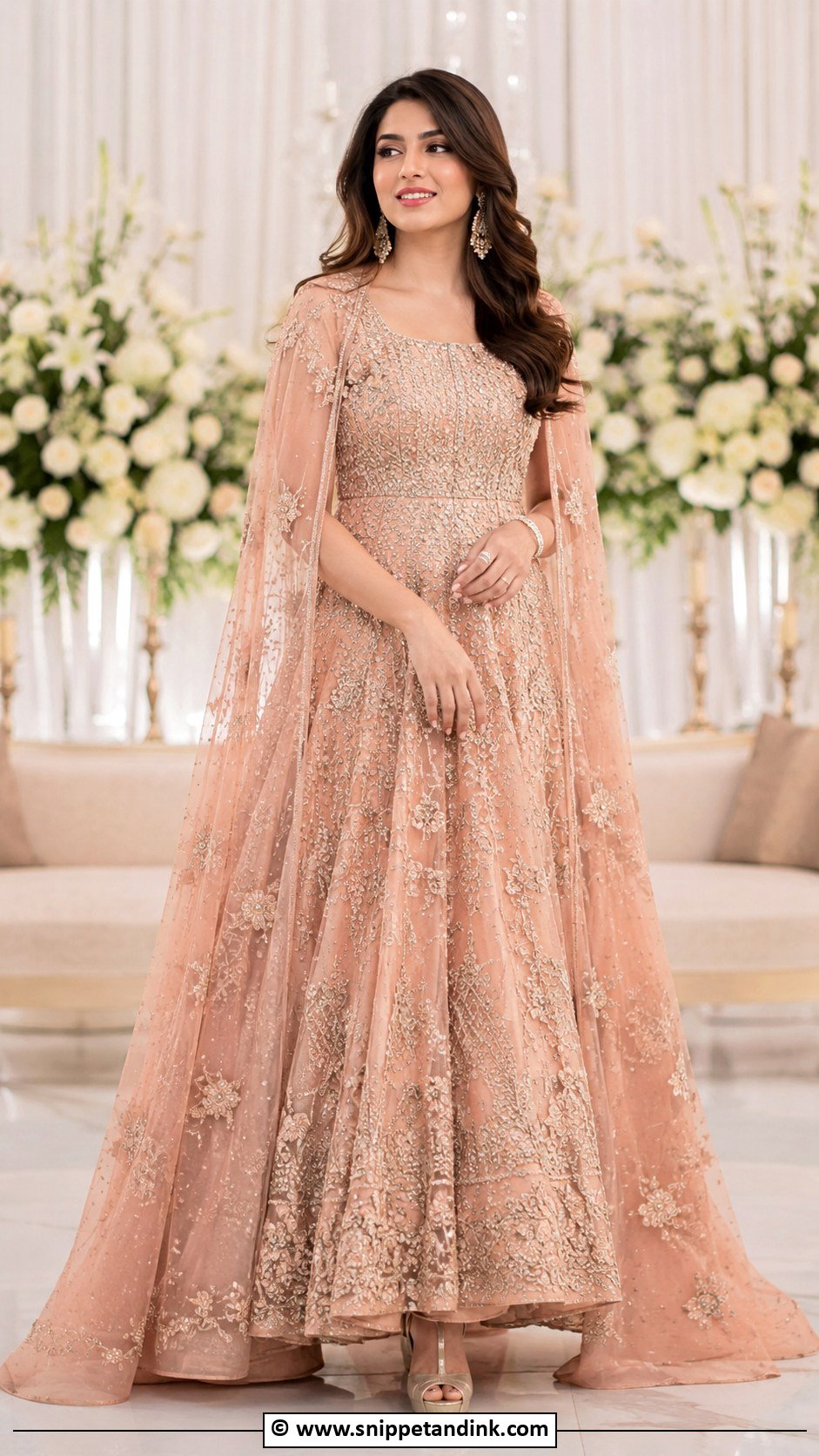
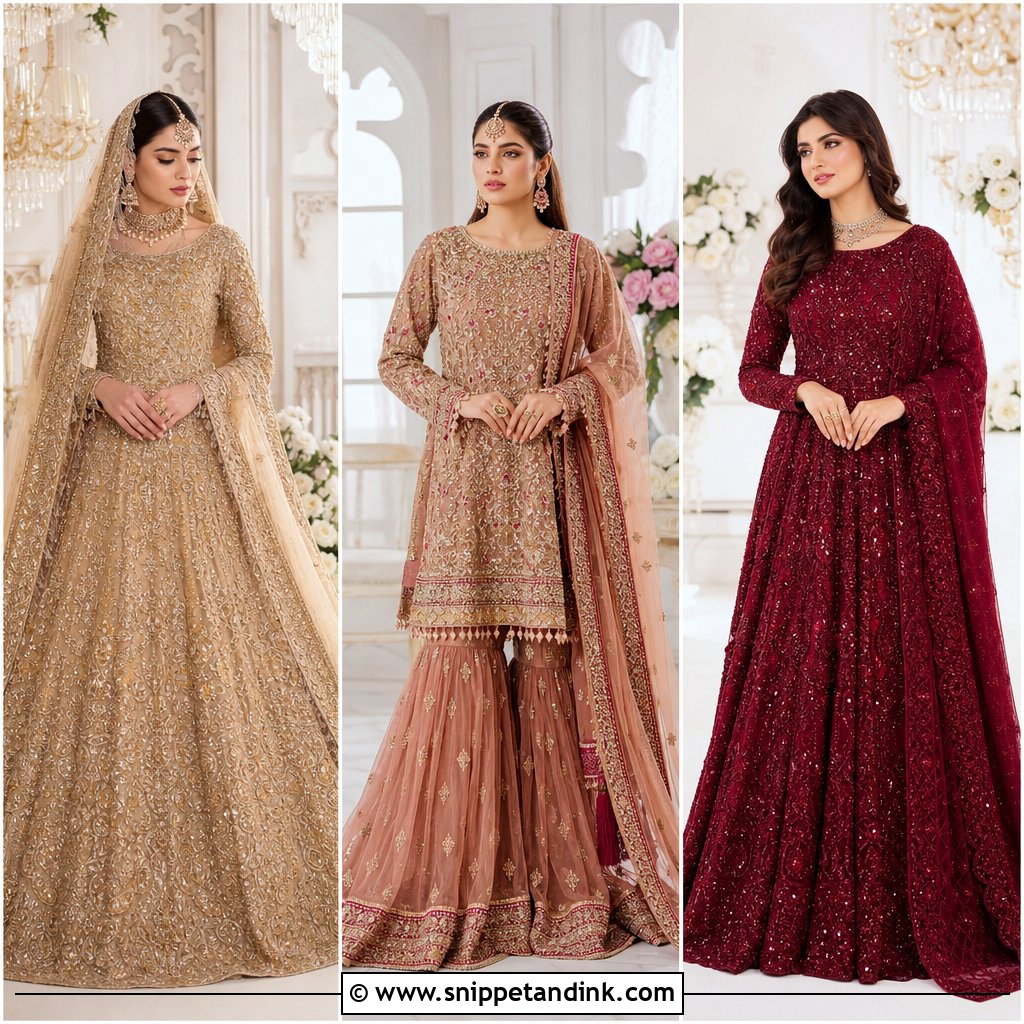
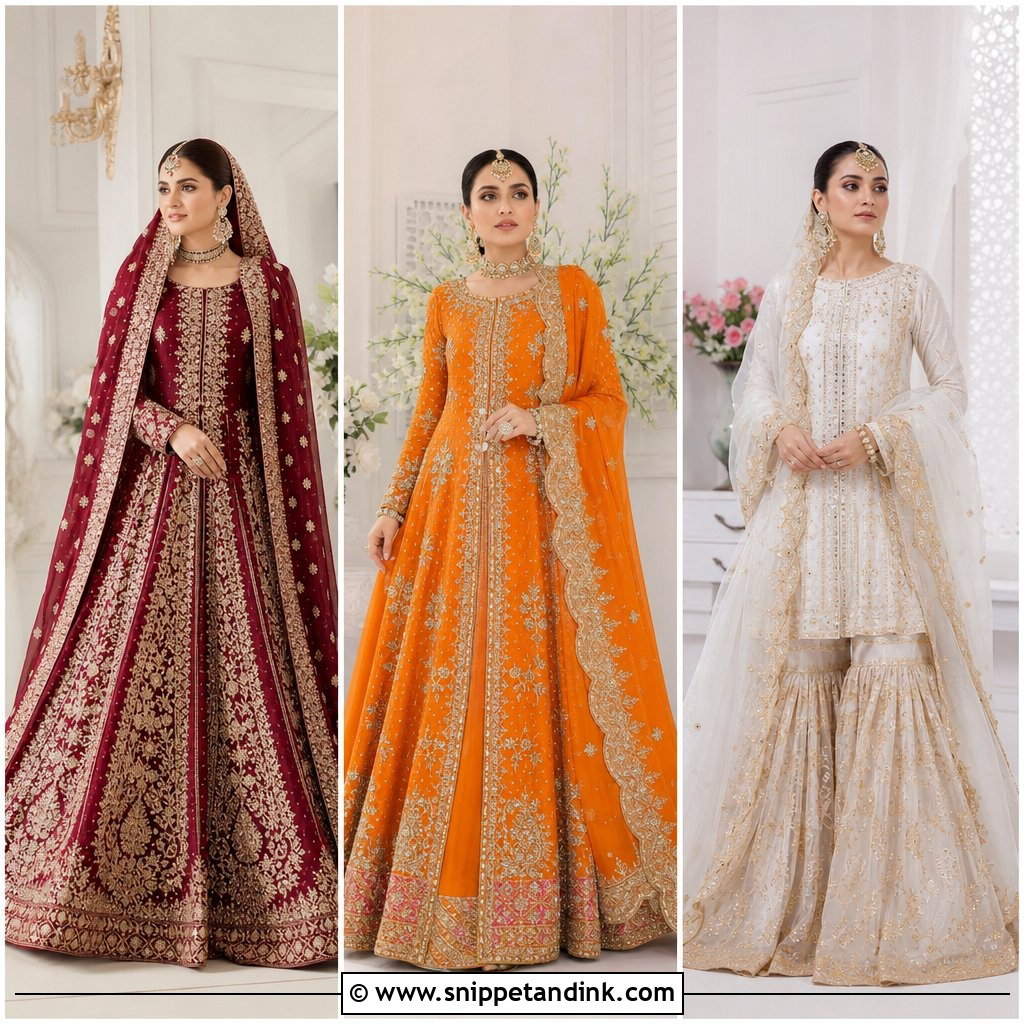
A cape gives coverage and movement without a heavy dupatta, and it suits brides who like modern shapes. Choose a maxi with a structured bodice and flowing skirt, then add a sheer cape edged in crystal or pearl. Peach pink is warm on most skin tones. With the cape already a statement, I’d keep jewelry to drop earrings and a bracelet, with soft waves, metallic heels and a compact clutch. Ask how the cape attaches at the shoulder; a cape stitched into the bodice can’t shift when you hug relatives.
26. Off White Walima Lehenga With Pastel Dupatta
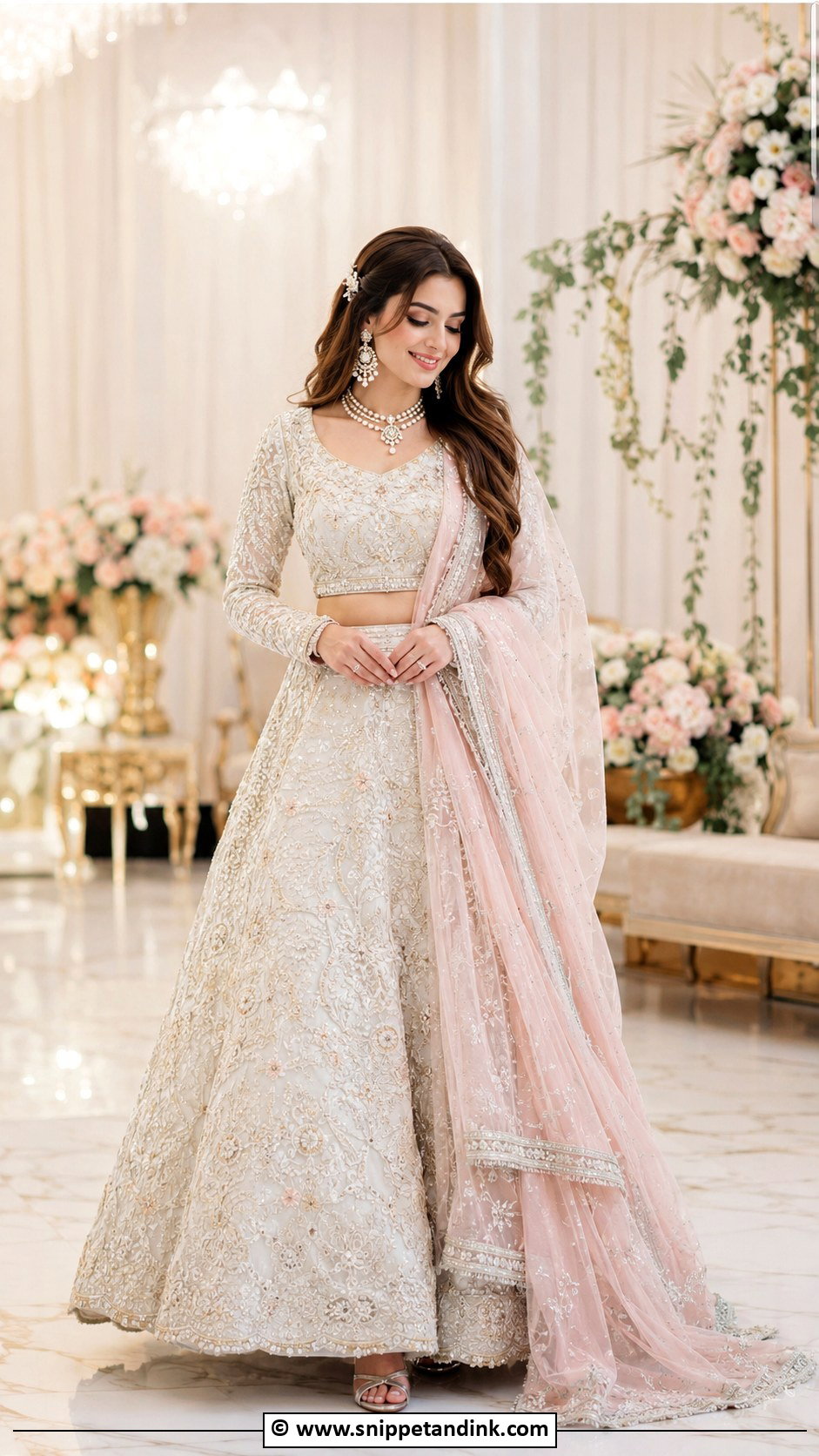
An off white walima lehenga with a pastel dupatta puts color right next to the face, where it does the most for your complexion. Blush, mint, lavender or powder blue dupattas all work with silver or pearl embroidery. It’s a clever answer for a bride who wants a neutral outfit that doesn’t look plain. Pick up the dupatta color in jewelry accents or makeup, then a sleek bun, fresh skin and metallic heels.
27. Lavender Walima Gharara Dress
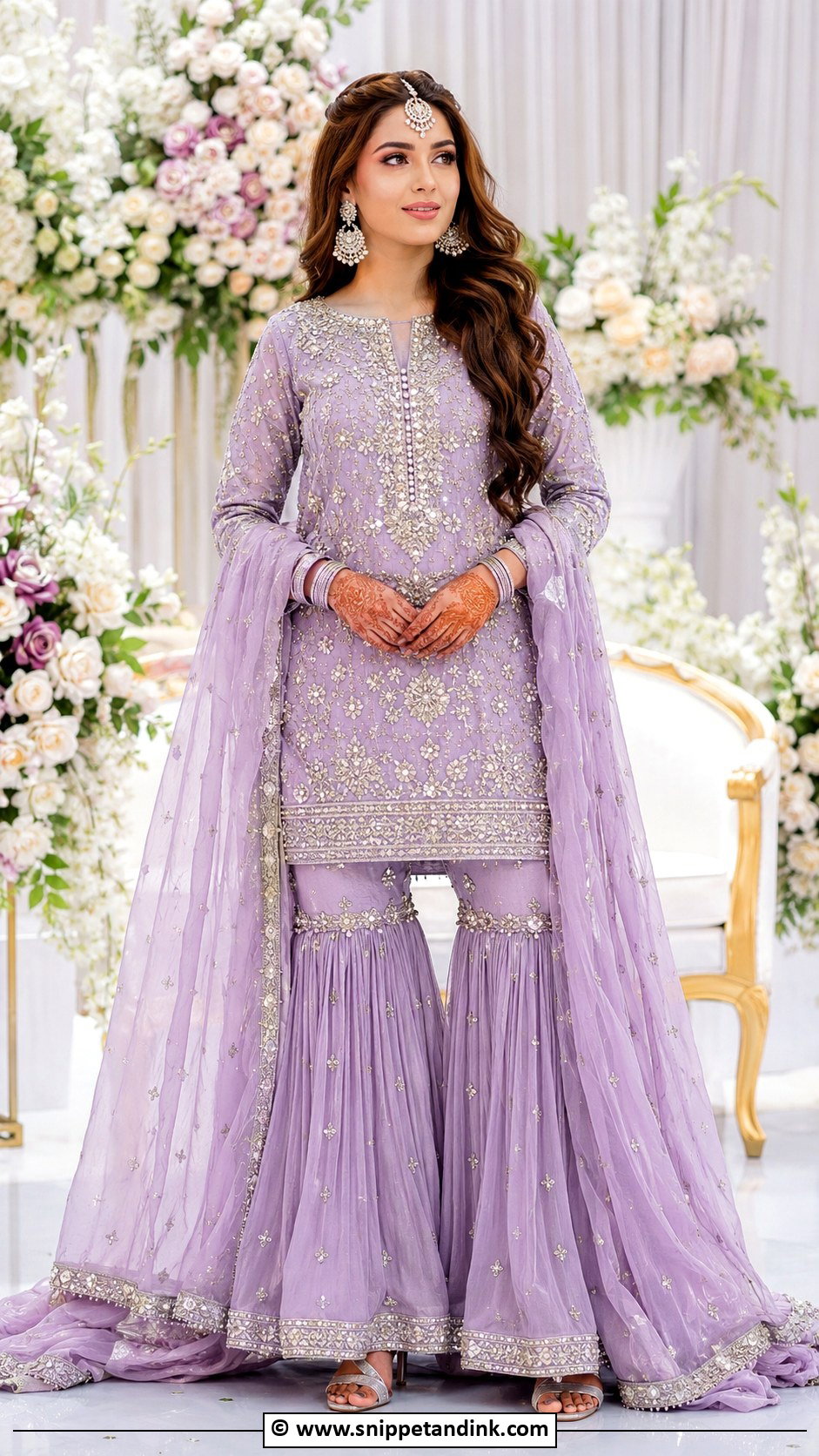
Lavender in a gharara keeps the traditional silhouette but makes it soft enough for the reception. A short kameez with full sleeves, detailed in silver, pearl or white embroidery, looks especially neat. I set the dupatta over the head for portraits and move it to the shoulder for the rest of the event, so pin placement matters. Statement earrings, a delicate tikka and bangles. Soft mauve makeup, silver heels and a small clutch.
28. Silver Grey Walima Maxi Dress
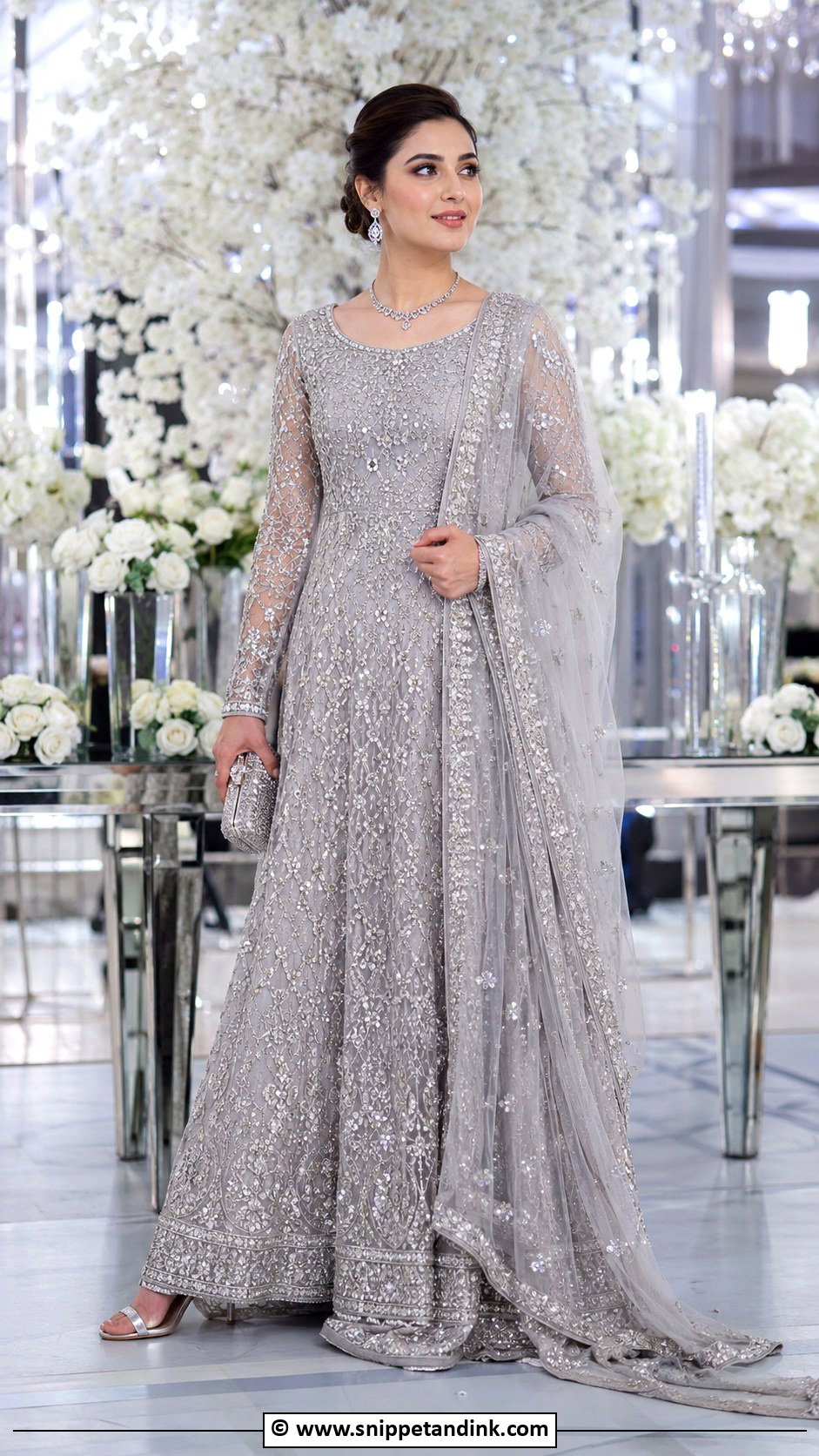
Silver grey is softer than bright silver but still catches light. A maxi with crystal embroidery, subtle sequins and a flared skirt is refined. Full sleeves, a boat neck or a high neck make it modest. A sheer dupatta in matching grey or soft white adds the Pakistani bridal note. Diamond-style jewelry, a sleek updo and glowing makeup keep grey from looking somber, with silver heels and a crystal clutch for an evening reception.
29. Powder Pink Walima Saree Dress
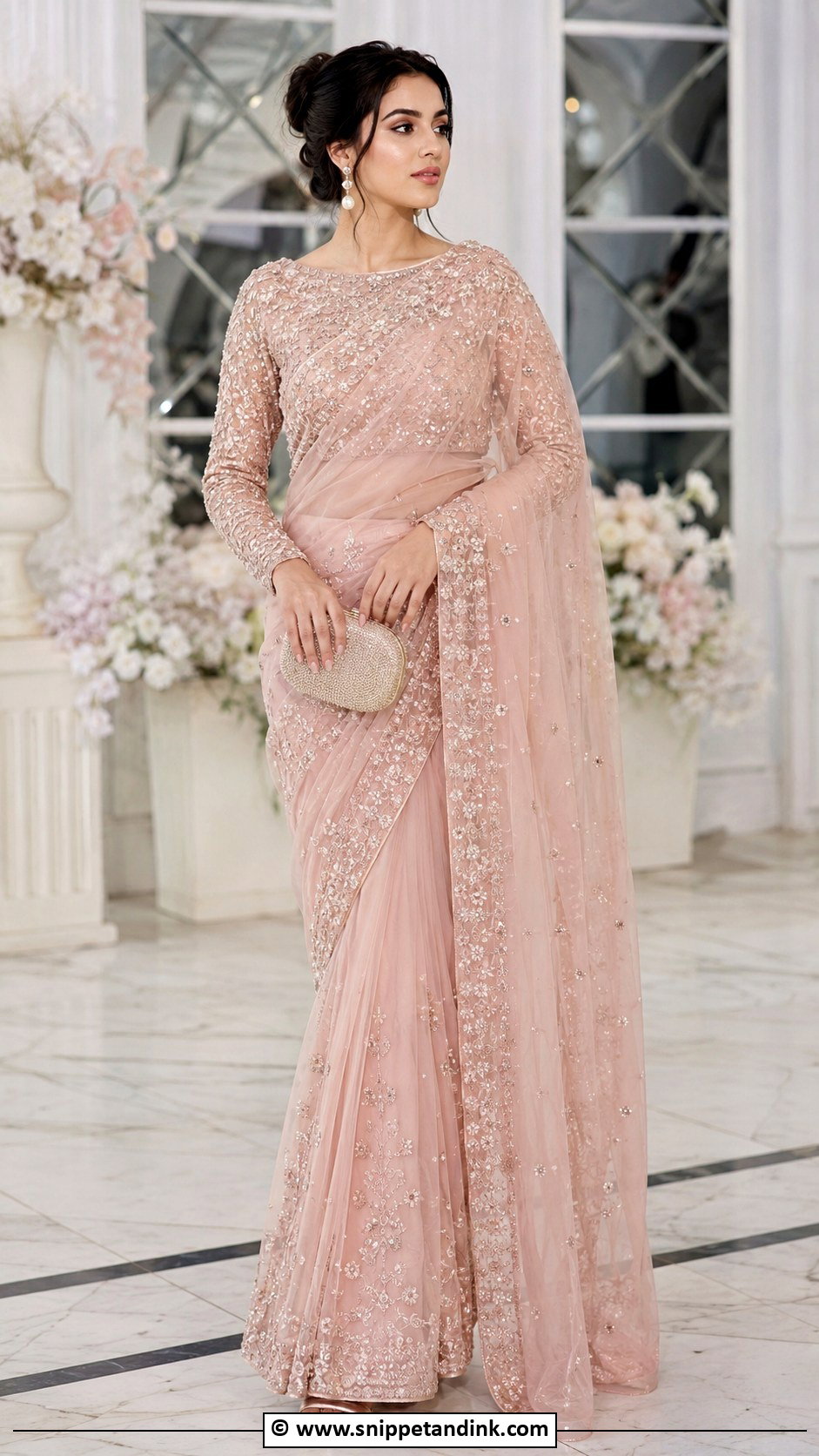
Powder pink in a saree gives a soft draped silhouette. A lightly embellished border and a detailed blouse keep it balanced, while a longer, cape or full-sleeve blouse makes it more modest. Keep the drape clean so it photographs neatly. Pearl earrings, a bracelet and a soft bun with face-framing pieces, then metallic heels and a compact clutch. If you’ve never worn a saree for hours, have a practice run at home; the pallu needs pinning to the blouse at the shoulder.
30. Light Gold Walima Pishwas With Dupatta
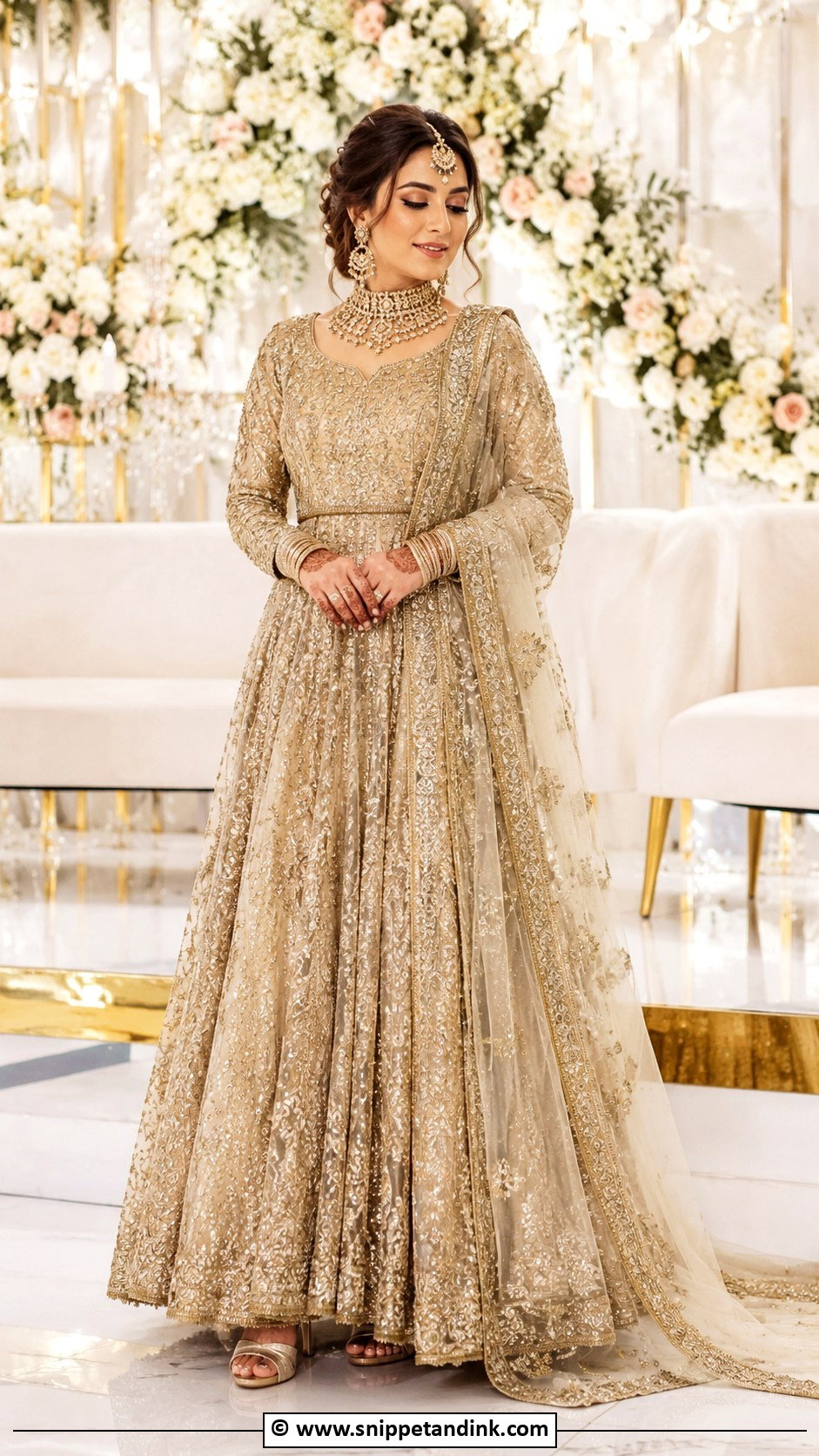
Light gold gives a pishwas warmth and a royal feel without the full weight of a baraat outfit. Zardozi, gota, sequins and pearls all suit it. Drape the matching bordered dupatta over the head for a traditional portrait. Keep jewelry elegant rather than oversized: a choker, earrings and slim bangles are enough. Classic makeup, a smooth bun and gold heels. Gota work is metallic and lightweight, so it’s a good way to get shine without a heavy garment.
31. Pearl White Walima Gown
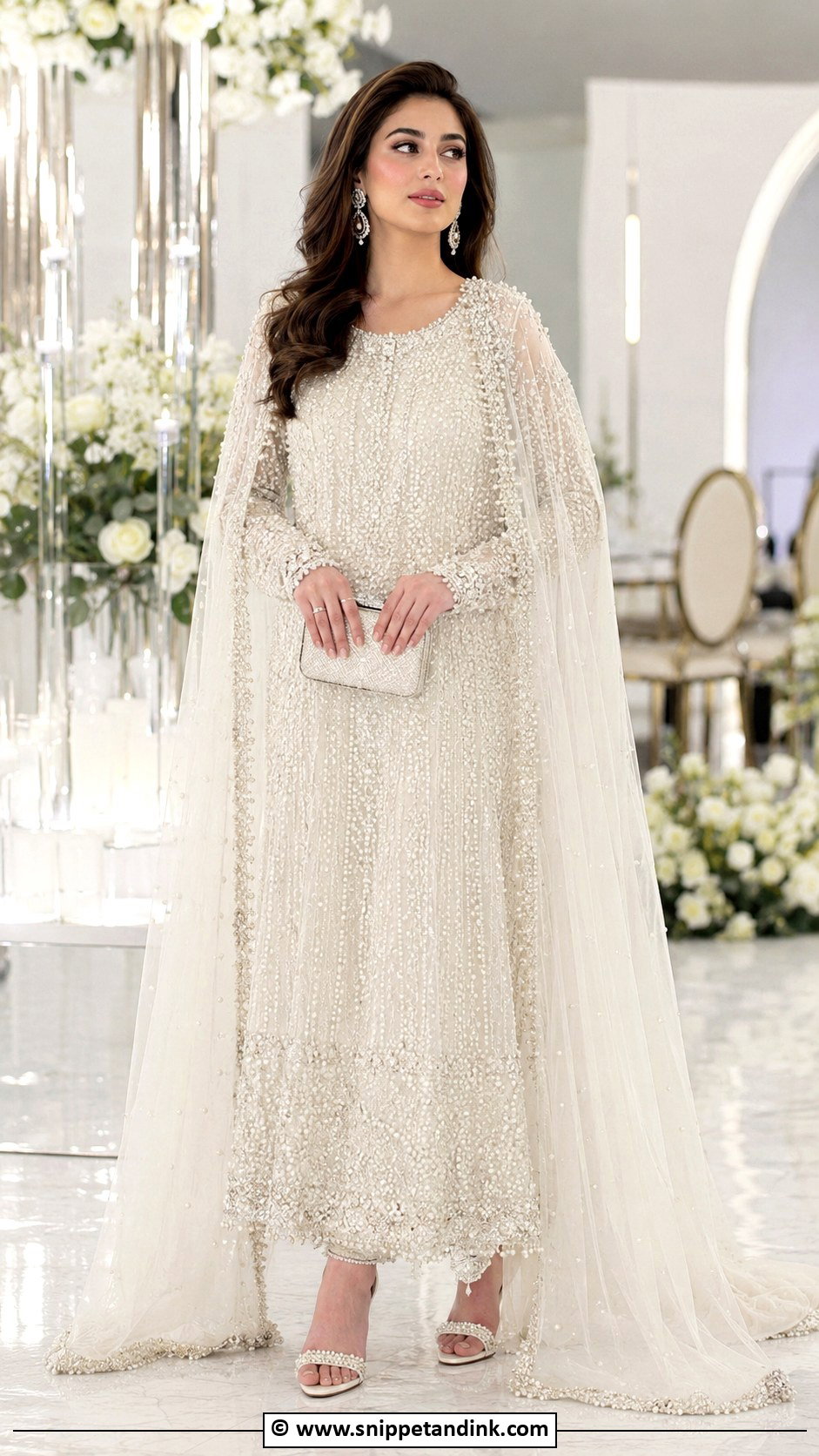
With pearl white, texture and shine do the work that color usually does. Pearl embroidery, soft sequins and a flowing skirt give it life, and a structured bodice with a gentle flare suits many body types. Add a sheer dupatta or cape for a more Pakistani bridal finish. Pearl or diamond-style jewelry. I’d make sure the makeup has enough warmth, rosy cheeks and soft lips, because pale outfits can drain the face on camera. Silver or pearl heels.
32. Pastel Yellow Walima Lehenga
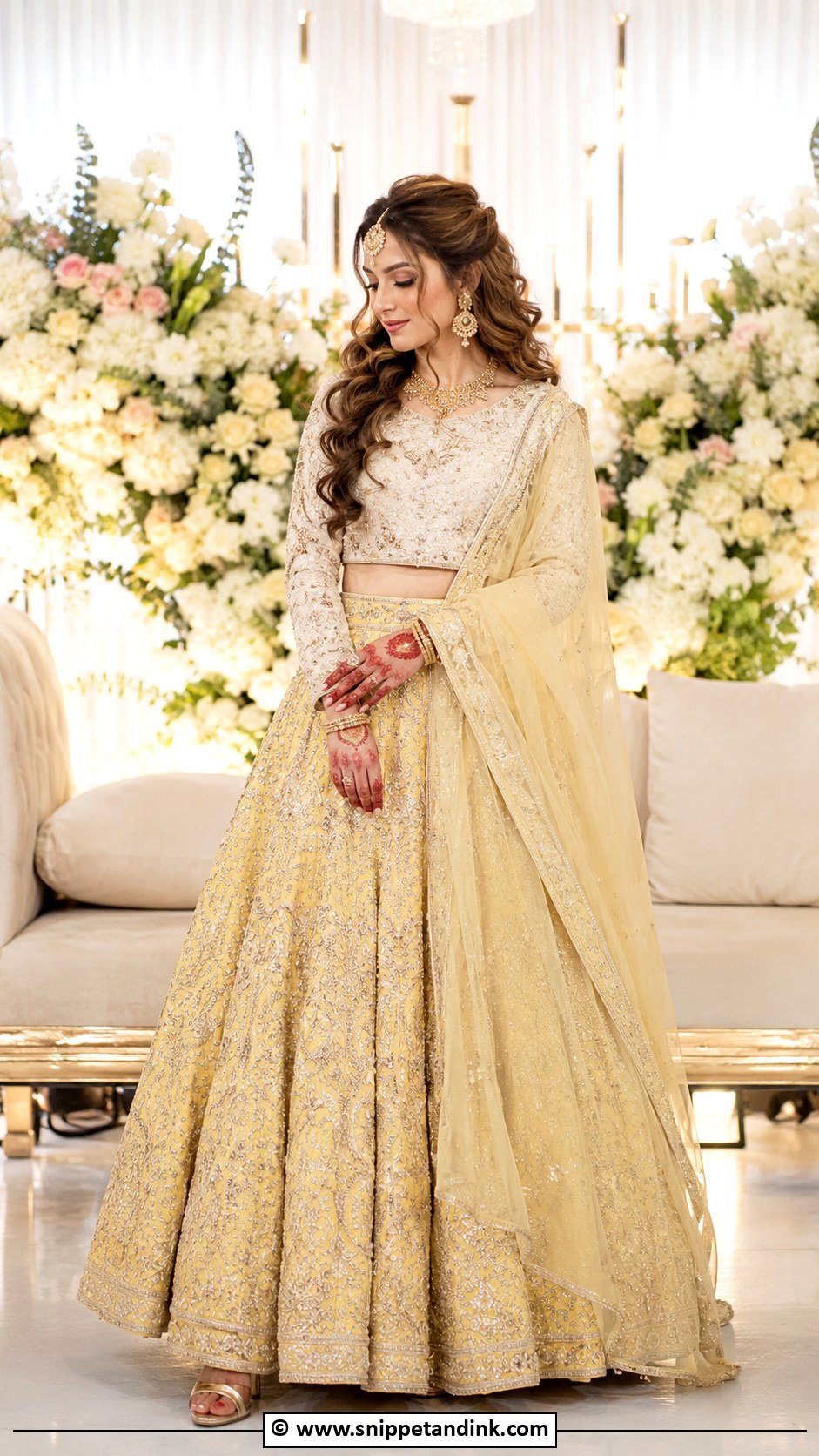
Pastel yellow is cheerful and different, but only if the yellow is muted. A bright mehndi yellow will look like you’re wearing the wrong outfit for the wrong event. Ivory, silver or pearl embroidery keeps it refined, on a flared lehenga with a long blouse or short kameez and a sheer bordered dupatta. Gold-toned jewelry, peachy makeup and soft curls. Daytime and early evening walimas with white flowers and greenery suit it best.
33. Dusty Blue Walima Sharara Dress
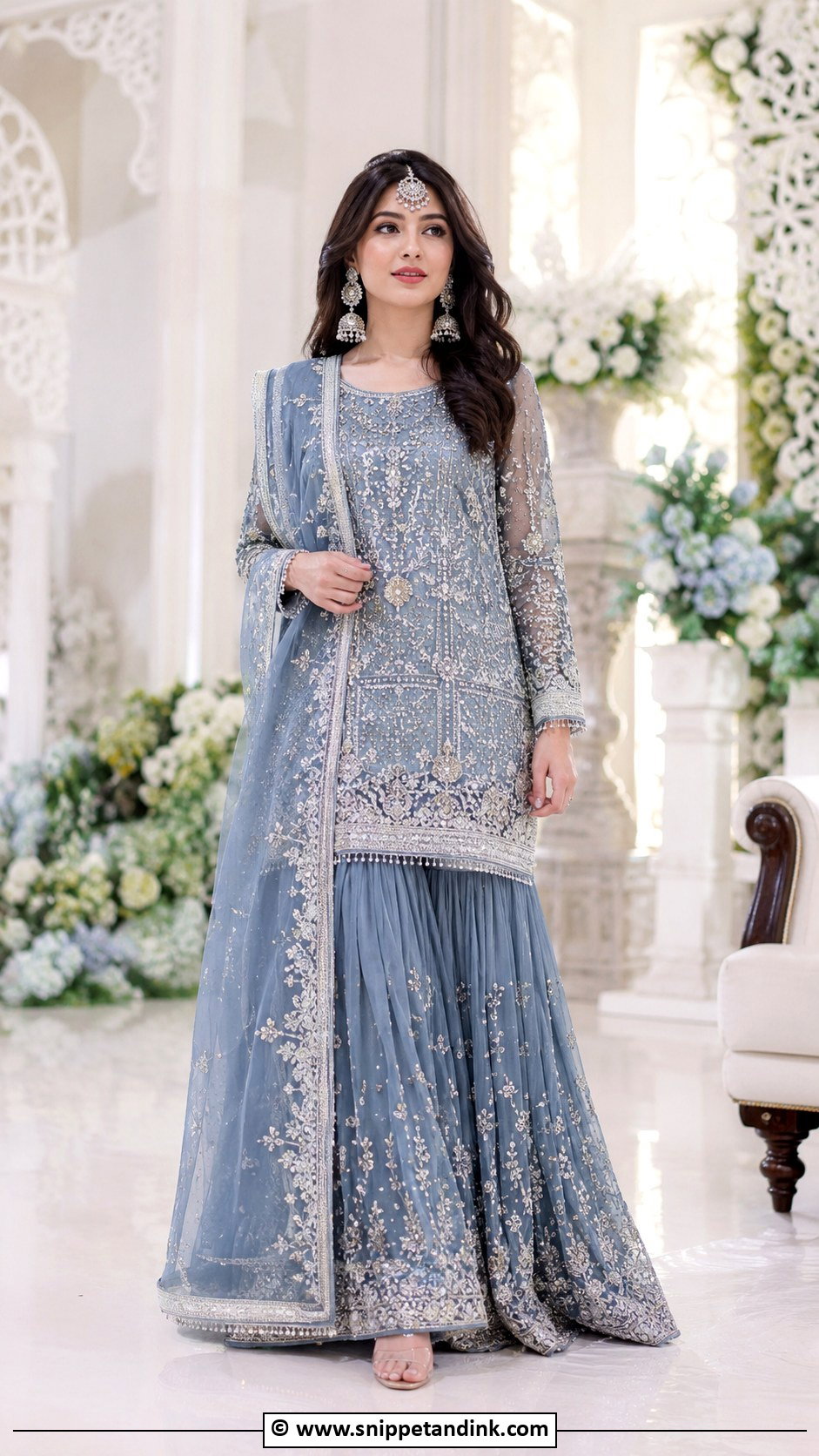
Dusty blue is soft enough for a walima and still distinctive in photos. A short or mid-length kameez with silver embroidery over a flared sharara, with a matching bordered dupatta, completes the traditional shape. It’s comfortable to move in, which matters at long receptions. Silver earrings, a delicate tikka and soft smoky makeup, with clear or metallic heels. I’d pick this for a bride who wants a calm color but still looks clearly like the bride.
34. Mauve Pink Walima Maxi With Jacket
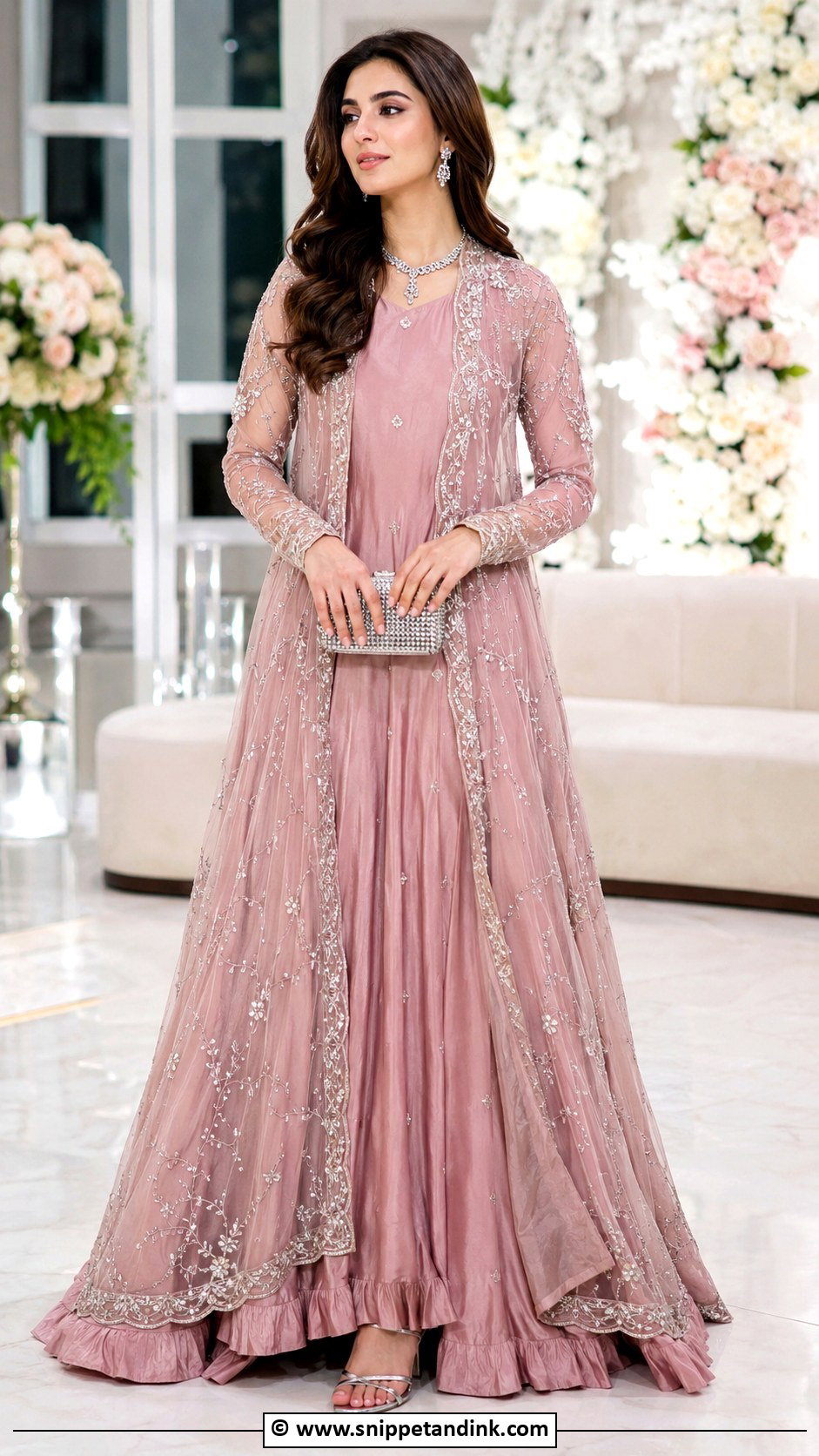
A layered maxi and embroidered jacket gives structure without a heavy dupatta, which many modern brides prefer. The maxi supplies length and flow; a sheer organza or net jacket with silver, pearl or tonal embroidery adds detail and modest coverage. Mauve pink suits soft makeup, loose waves and diamond-style jewelry. Silver heels or embellished sandals. Jackets do get warm on a crowded stage, so I’d choose an unlined net one if the hall runs hot.
35. Champagne Walima Lehenga With Net Dupatta
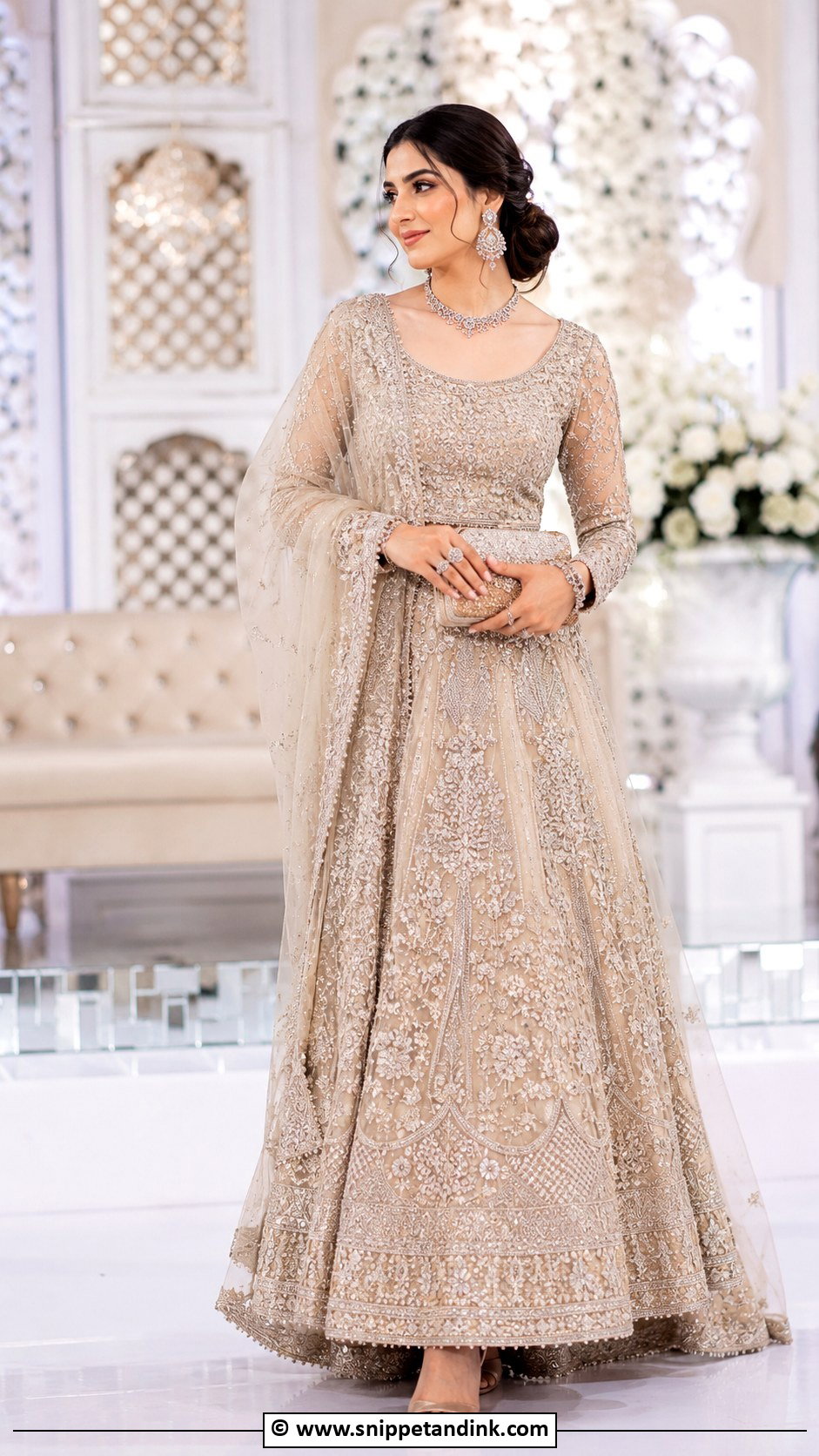
Champagne is one of the most flattering walima shades under reception lighting, warm without being yellow. A lehenga with crystal, pearl or silver embroidery stays refined, with a fitted blouse, long shirt or peplum depending on comfort. The net dupatta should be airy, with a border that frames the outfit. Diamond-style jewelry, a low bun and glowing makeup. Silver or nude heels and a small embellished clutch.
Setting a Net Dupatta So It Stays Put
More walima photos are spoiled by a slipping dupatta than by anything else. Net and organza are light but slippery, so the setting matters as much as the fabric.
For a head drape, I build a small secure bun first and anchor the dupatta to it with bobby pins hidden under the fold, then add a second pin at each side above the ear. A tikka or jhoomar goes on after, sitting over the dupatta edge so it holds it in place. For a shoulder drape, pin the dupatta to the bra strap or blouse seam from the inside with a small safety pin, so the weight hangs from a fixed point. Keep spare pins in the clutch, because hugging relatives will loosen something.
Hours on the Stage Sofa
A walima bride spends most of the event sitting on stage while guests come up for photos. Heavy lehengas pool and crease in that position, and a can-can underneath can lift the front awkwardly, so I test sitting in the outfit at the final fitting. Lighter options such as shararas, ghararas, pishwas and maxis tend to sit more comfortably. Wear khussas or block heels you’ve already broken in, keep a cushion behind the back of a deep stage sofa, and ask someone to straighten the skirt and dupatta before each group photo.
The Outfit Should Carry You Through Every Greeting
A walima outfit is judged as much by how it feels at the end of the night as by its color or embroidery. Pastels, ivory, silver and pearl work, flowing maxis, lehengas, sarees and shararas all belong in modern Pakistani walima dressing. Before you decide, think about your hall’s lighting, the jewelry you already own, your makeup, how you’ll wear the dupatta, and how heavy the whole thing will be after several hours. I’d rather see a bride comfortable and glowing at midnight than perfectly dressed but counting the minutes.
You'll Like These Ideas:





Leave a Reply