
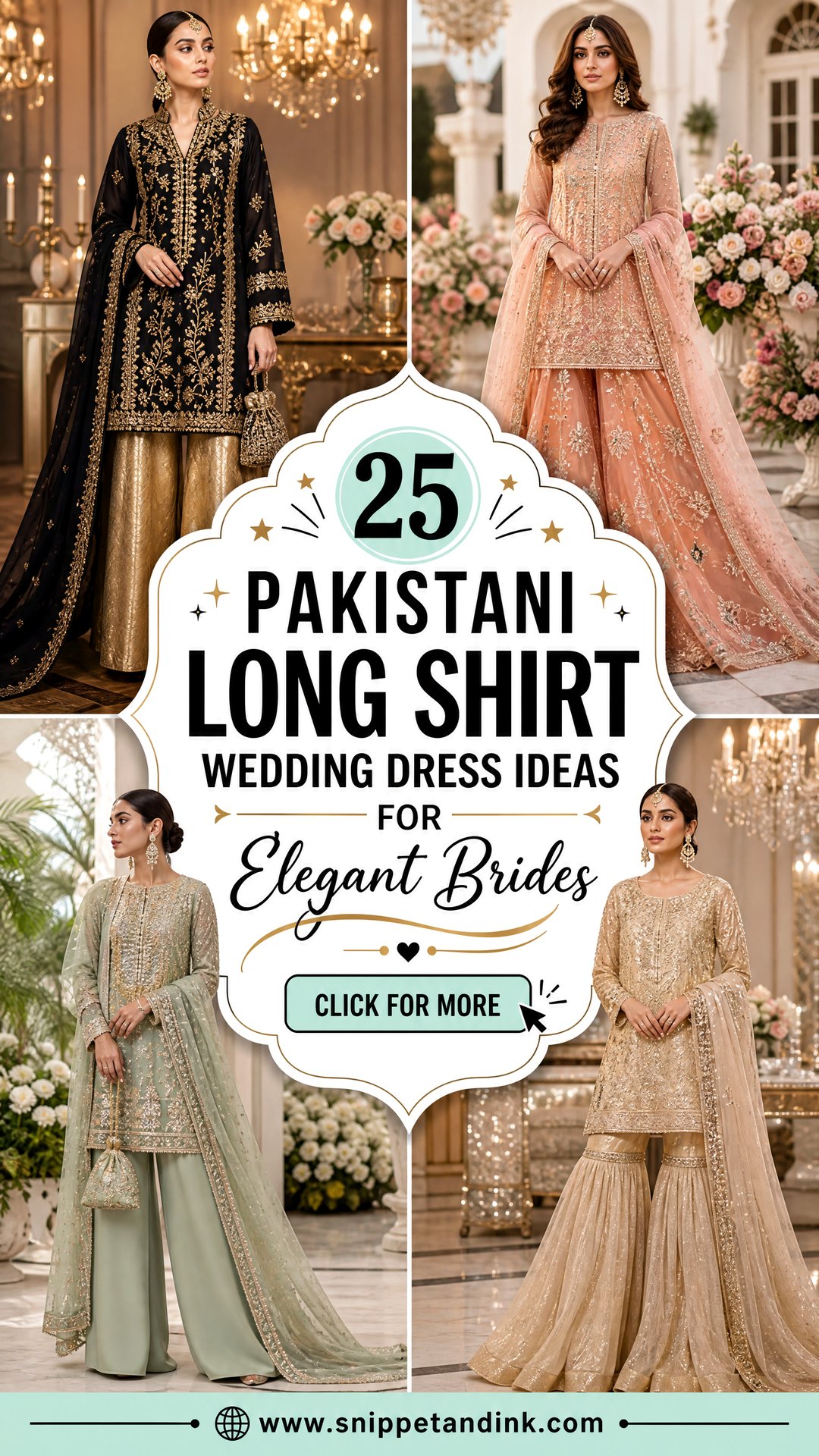
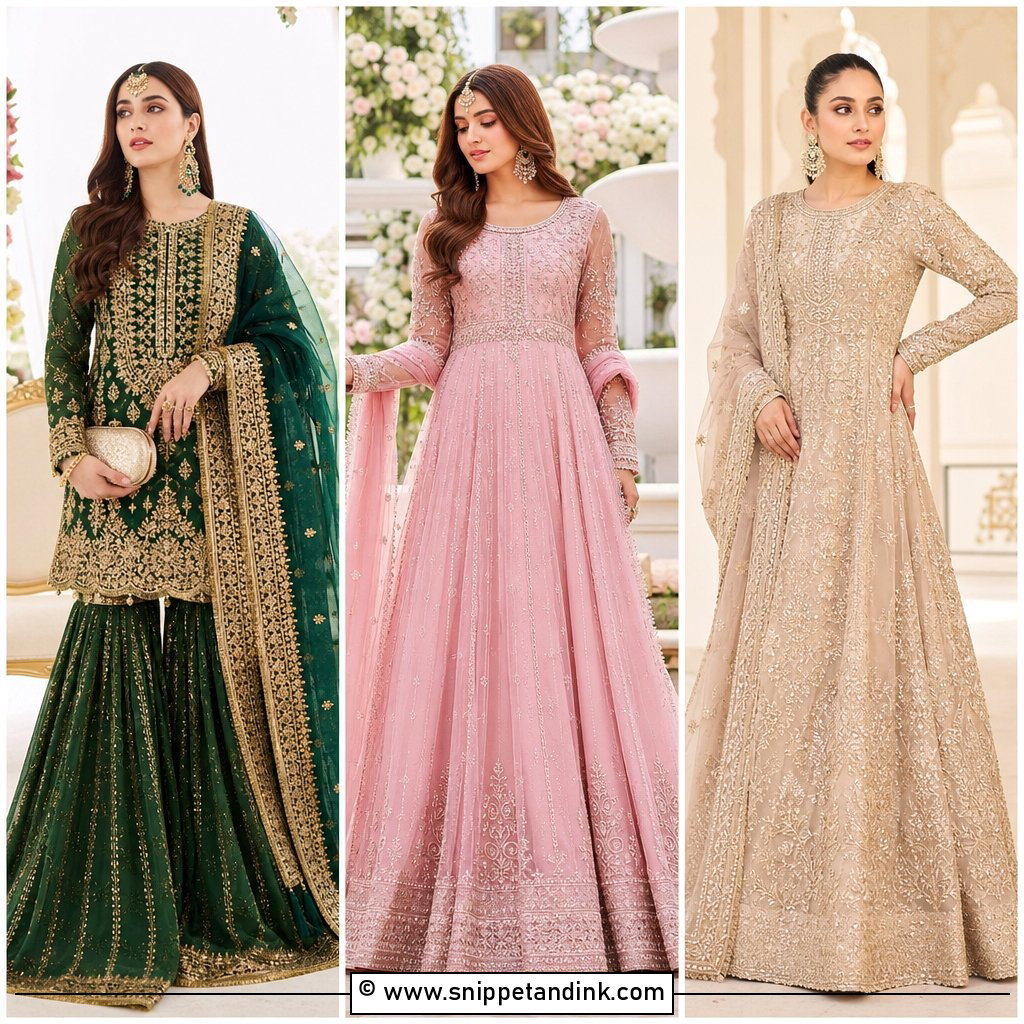
Pakistani long shirt wedding dresses have lasted because the shirt does the hard work: it gives coverage, it carries the embroidery, and it changes character completely depending on what goes underneath. Over a gharara it’s traditional, over a sharara it’s festive, with cigarette pants it’s sharp, and over a heavily worked lehenga it’s fully bridal. I like it for families dressing several people at once, since the bride, her sisters and a formal guest can all wear the same silhouette at different levels of work. The cuts this season lean structured, with rich borders, lighter fabrics underneath and colours from red and maroon through ivory, sage, gold and blush. Below are the pairings I’d actually put together, with what to watch for in each.
Where a Long Shirt Should End on Your Height
Shirt length is the measurement I spend most time on with this silhouette, and it’s the one people copy from a photo without thinking about their own height. A shirt that falls to mid-calf on a tall model can reach the ankle on someone petite, and then the bottom underneath disappears.
- Petite frames: stop the shirt around mid-calf, or just below the knee with a gharara, so there’s enough of the bottom on show to read as a separate piece.
- Tall frames: you can carry a near-ankle shirt over a lehenga or farshi, which looks dramatic and balanced at that height.
- Over a gharara: keep the hem clear of the knee joint, either above or below it, so the embroidered band stays visible.
- With palazzos or cigarette pants: the shirt can be longer, since the pants add no volume to compete with.
Slits matter just as much. I set them by asking the wearer to sit and take a long step at the fitting. Too shallow and the shirt bunches across the lap or rides up over a lehenga; too deep and it opens wider than she’d like on a stage chair.
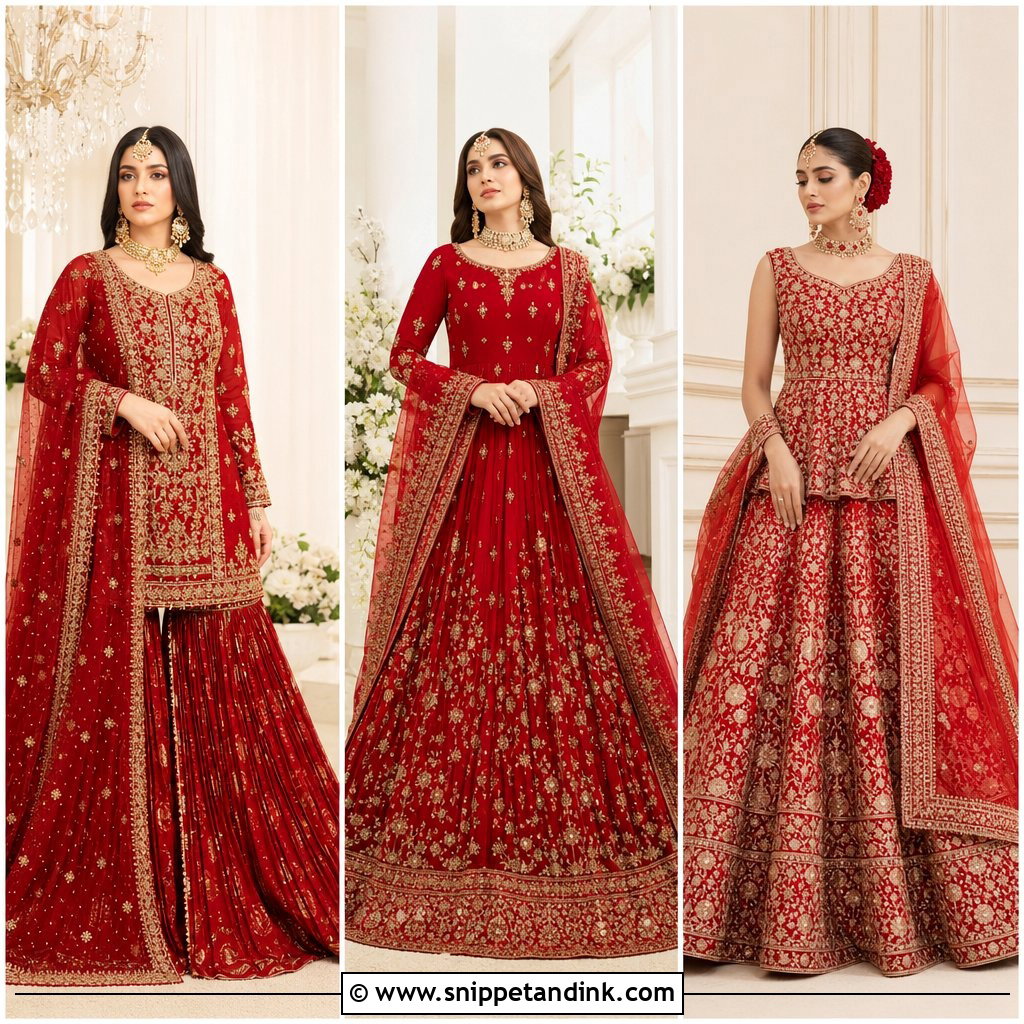
1. Red Long Shirt With Bridal Lehenga
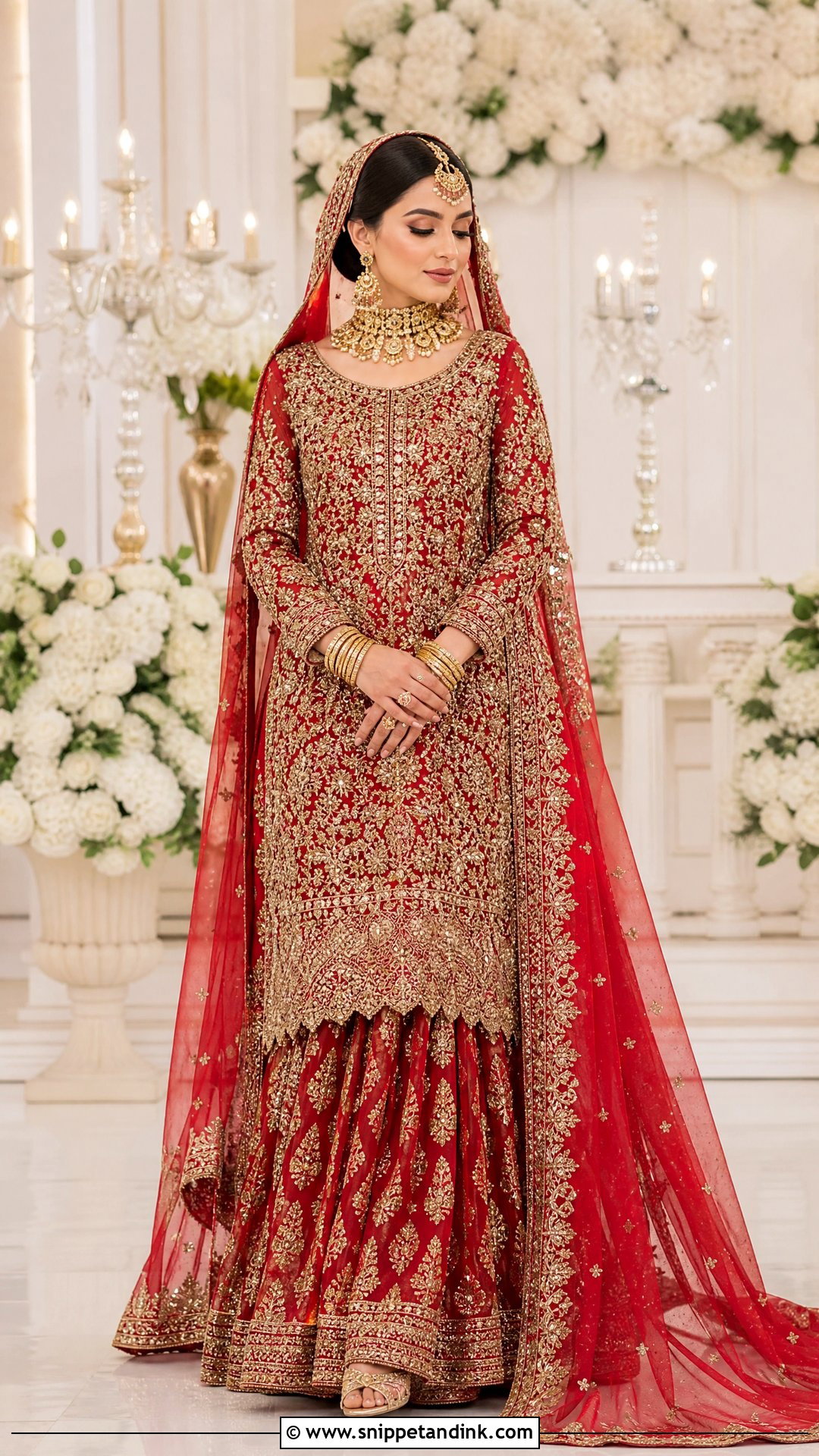
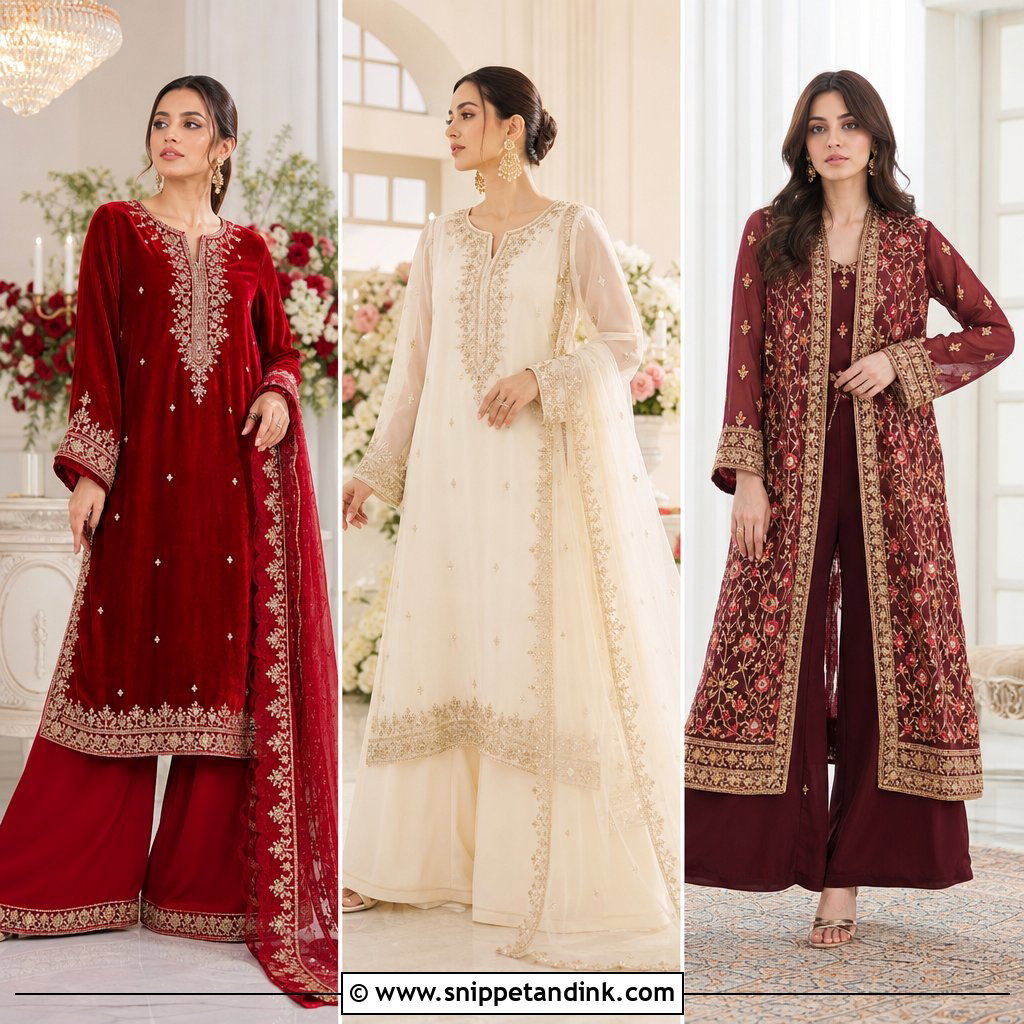
For a baraat, this is the safest bridal pairing there is: a red long shirt over a red lehenga. Keep the shirt straight or slightly A-line, with zardozi, dabka, tilla or resham concentrated on the neckline, sleeves, hem and side slits, and match the lehenga’s broad border to that work so the two pieces read as one. A long shirt over a full lehenga adds bulk at the hip, so I ask for the shirt’s side slits to start a little higher than usual; that lets the skirt flare out instead of pushing the shirt outward. Finish with a sheer organza or net dupatta edged in kiran or a scalloped border, gold jewellery, khussa heels, soft glam makeup and a centre parting.
2. Maroon Long Shirt With Gharara
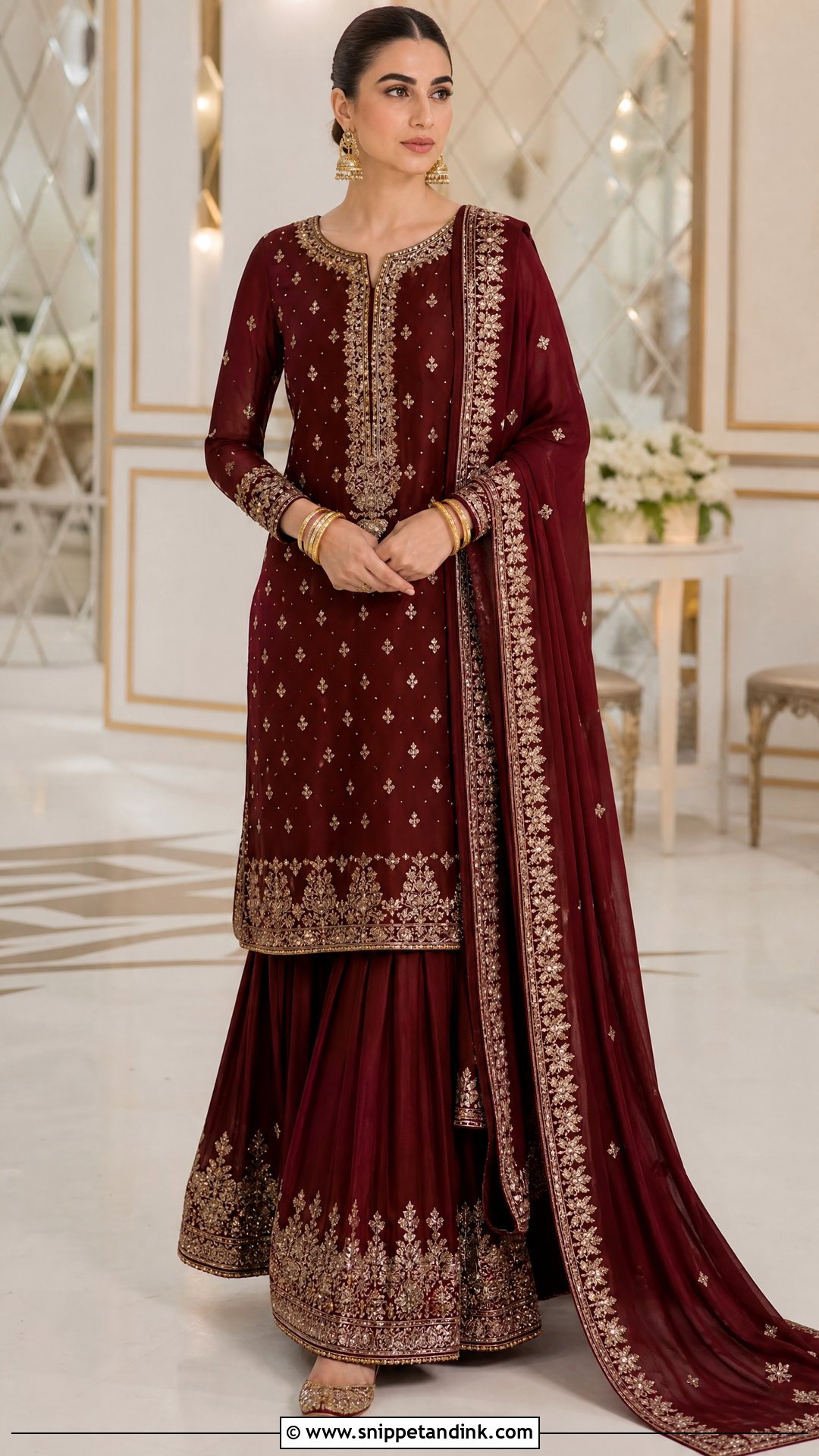
Maroon suits a bride who wants depth without bright red, and it’s equally right on sisters and close family at an evening function. A heavily worked long shirt over a structured gharara balances length against volume, and the knee joint is where the gharara’s detail should sit. Here’s what most people overlook: a long shirt and a gharara joint compete for the same space. If the shirt hem falls right on the joint, the embroidery disappears, so I end the shirt a hand’s width above or below it. A tissue, organza or net dupatta edged in gold, jhumkas, a matha patti, stacked bangles and embroidered heels finish it.
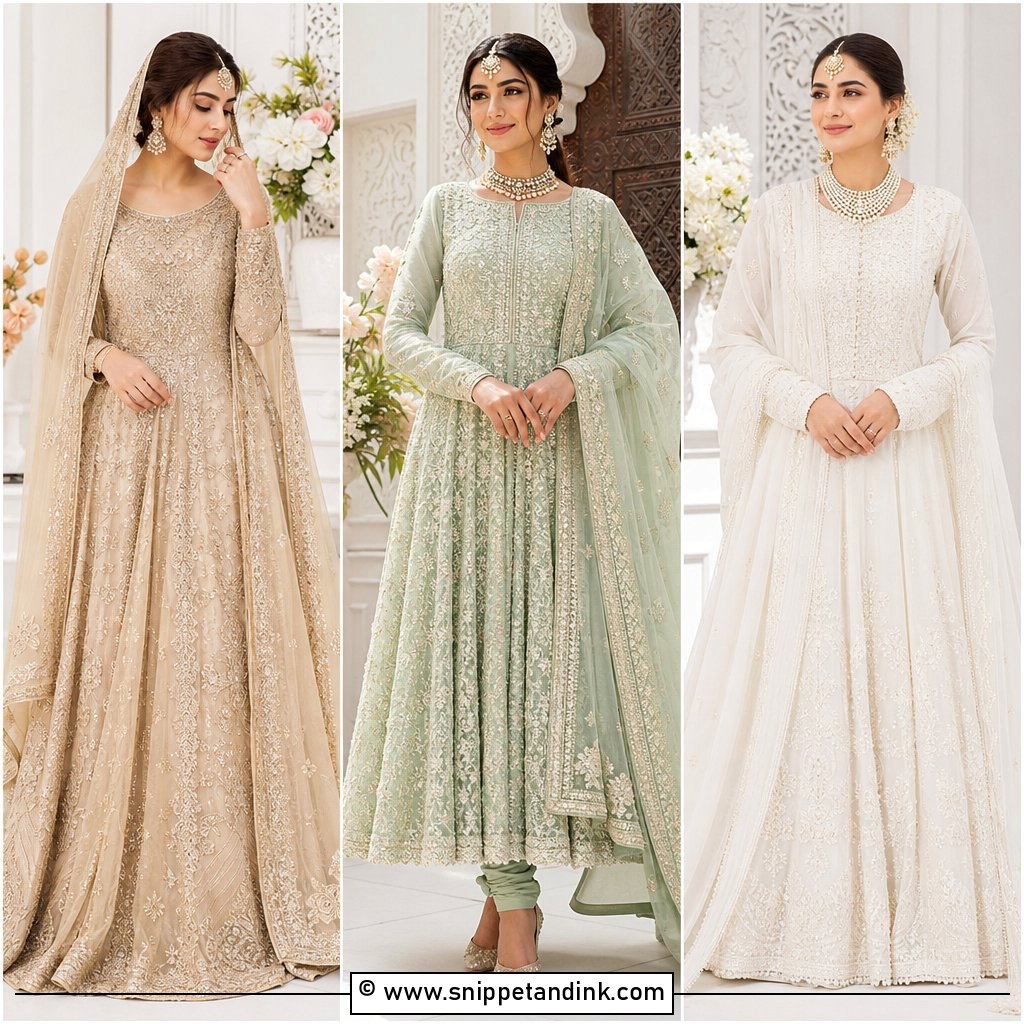
3. Ivory Long Shirt With Gold Sharara
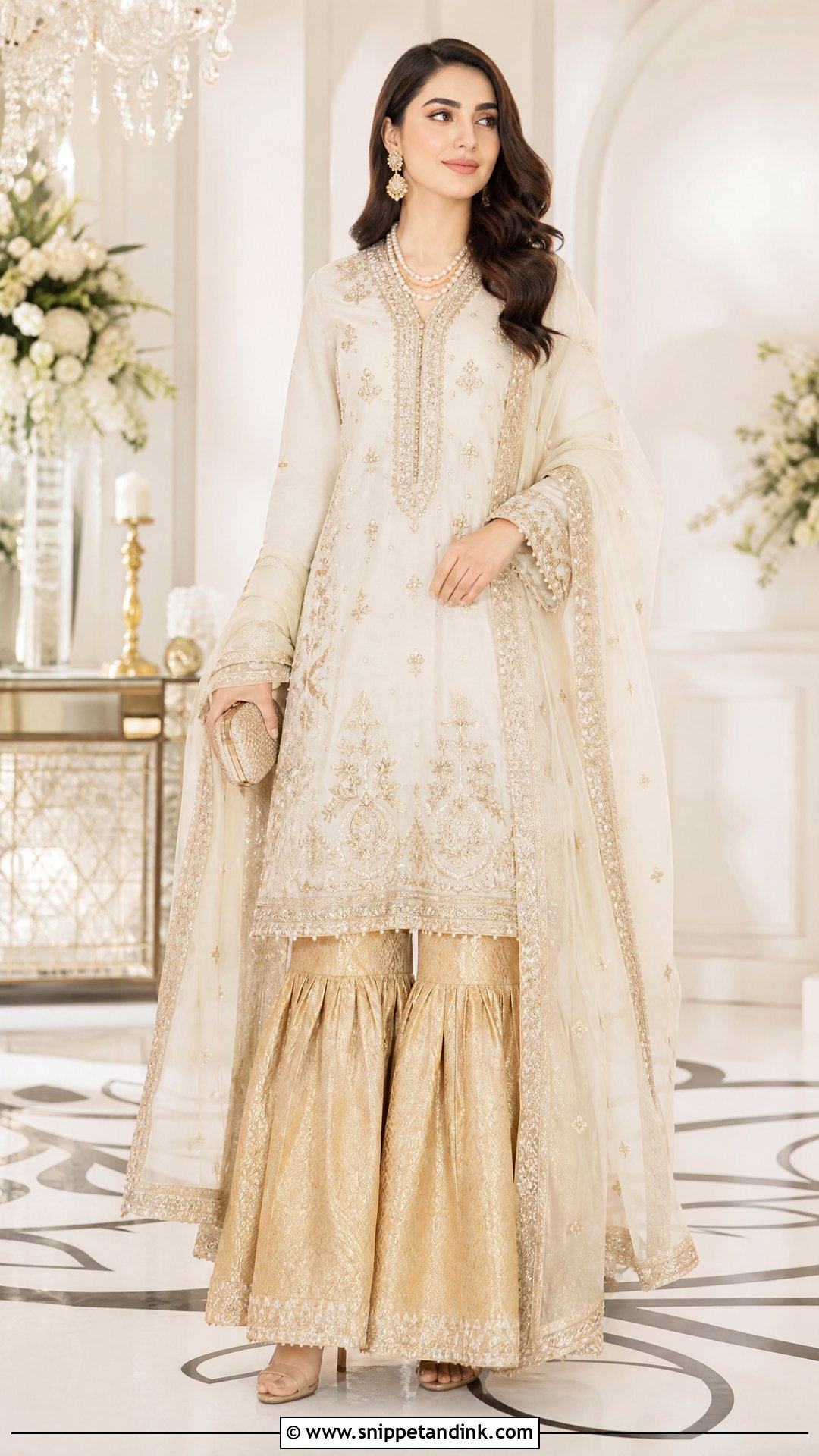
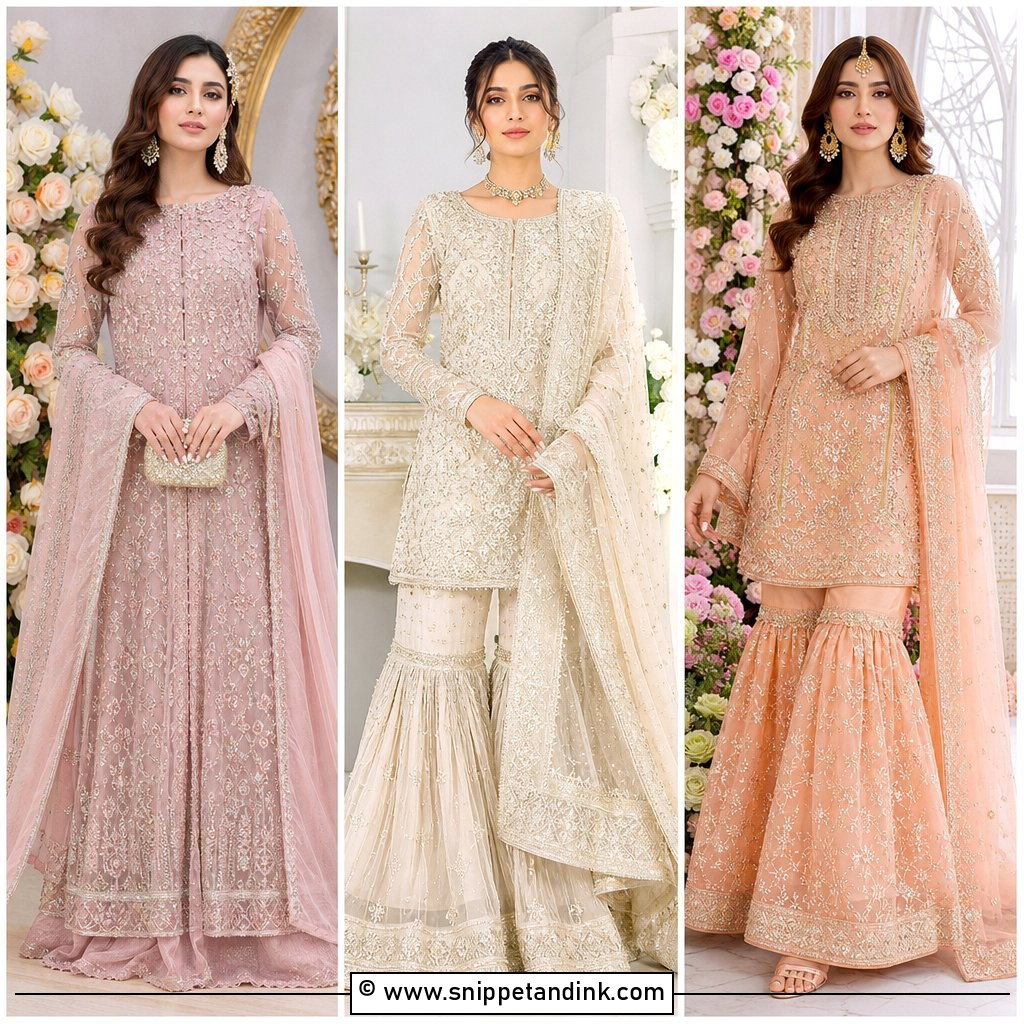
Ivory and gold reads well in daylight, which is why I steer brides towards it for a Nikkah, Walima, or a daytime wedding. The shirt can be raw silk or organza with gold zari, gota, pearls or sequins, and the gold sharara underneath gives it festive movement that plain trousers can’t. Raw silk in ivory shows every mark, so plan the day around that: no dark henna that’s still drying on the hands when you dress, and keep a clean cloth near the mehndi platter. A light ivory organza dupatta with a gold border, pearl jewellery, champagne heels, a sleek clutch and soft makeup complete it.
4. Pastel Pink Long Shirt With Lehenga
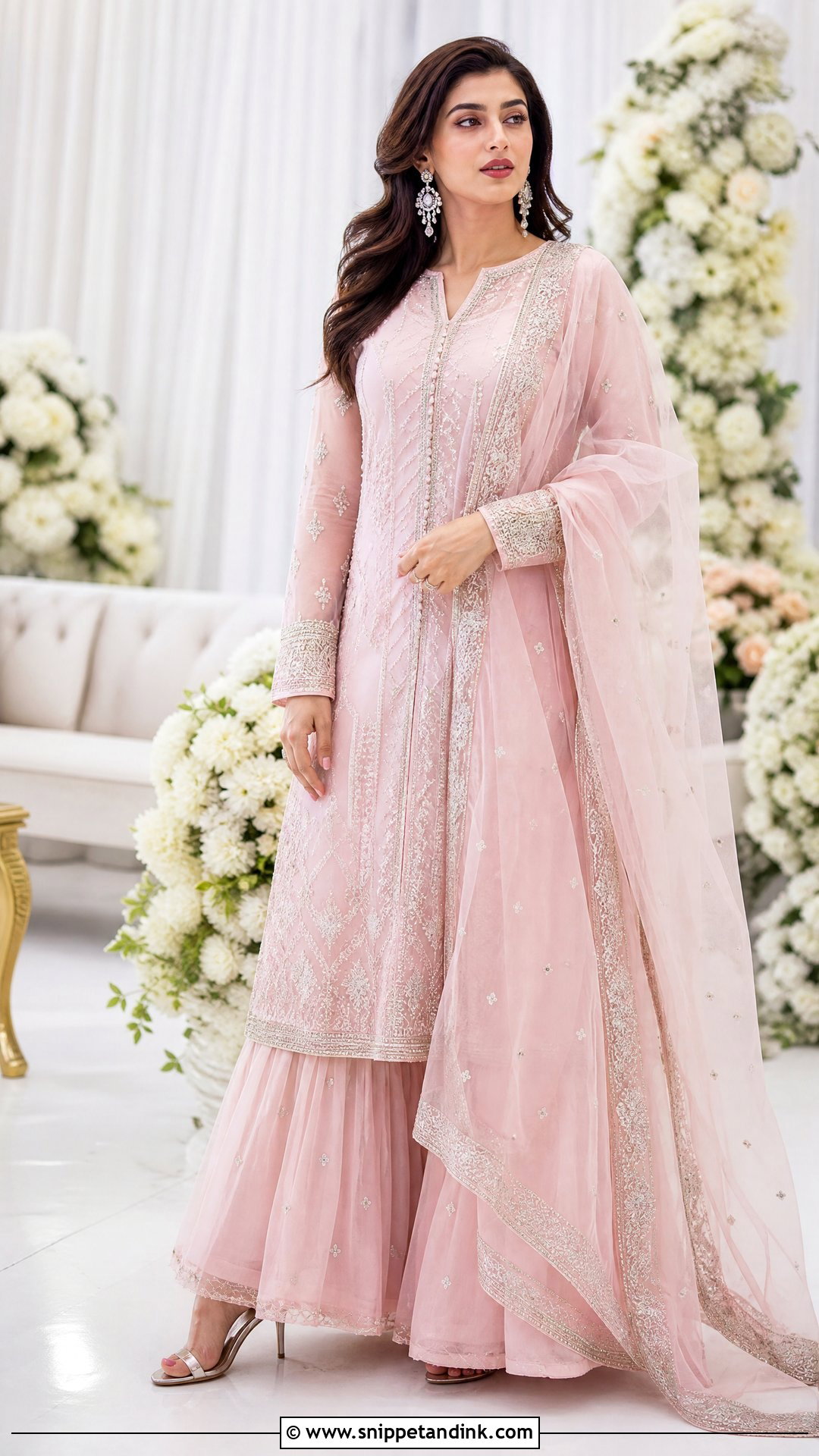
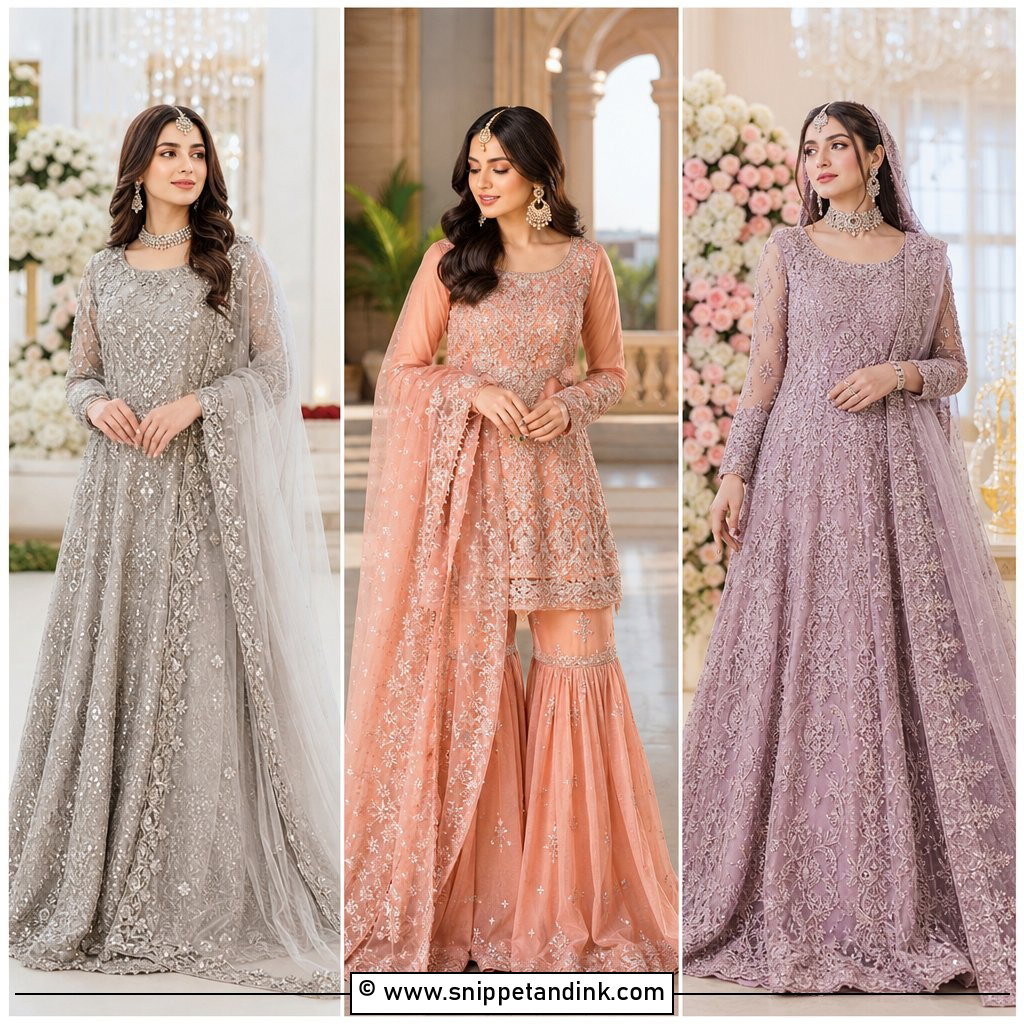
Pastel pink over a lehenga is soft enough for a Walima or engagement and still formal enough for a bride. Silver, pearl or pale gold embroidery on the shirt suits it, and a lehenga one shade deeper adds dimension without a hard contrast. Balance the work: if the shirt is dense, keep the lehenga border detailed but narrower. Pastel pinks can drift towards peach or lilac depending on the dye lot, so if the shirt and lehenga come from different bolts, I compare them side by side in daylight before cutting. A sheer dupatta with scattered embellishment, crystal earrings, pink-toned makeup and metallic heels keep it fresh and modest.
5. Emerald Green Long Shirt With Farshi Gharara
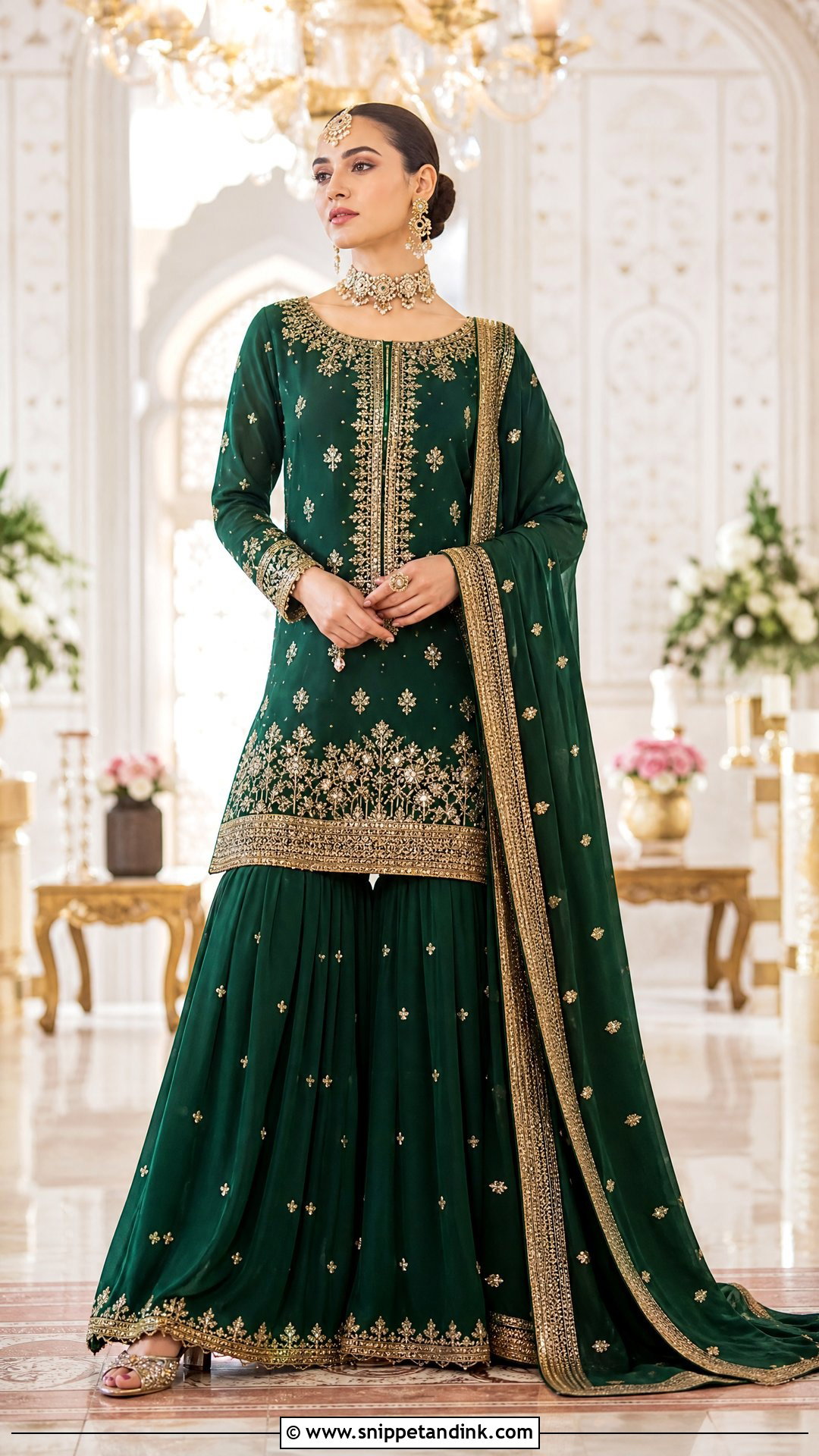
An emerald shirt over a farshi gharara has an old-world grandeur that suits winter baraats and big family celebrations. Deep green and antique gold embroidery are an old pairing for good reason, particularly on velvet, raw silk or jamawar. The farshi pools around the feet, so keep the shirt structured, with side slits and a worked hem that show where the flare begins. In velvet, the shirt can feel heavy by the end of the night; I’d choose jamawar or raw silk for anyone who runs warm. A green, gold or soft beige dupatta, kundan jewellery, statement rings and embellished heels finish it.
6. Mustard Long Shirt With Sharara
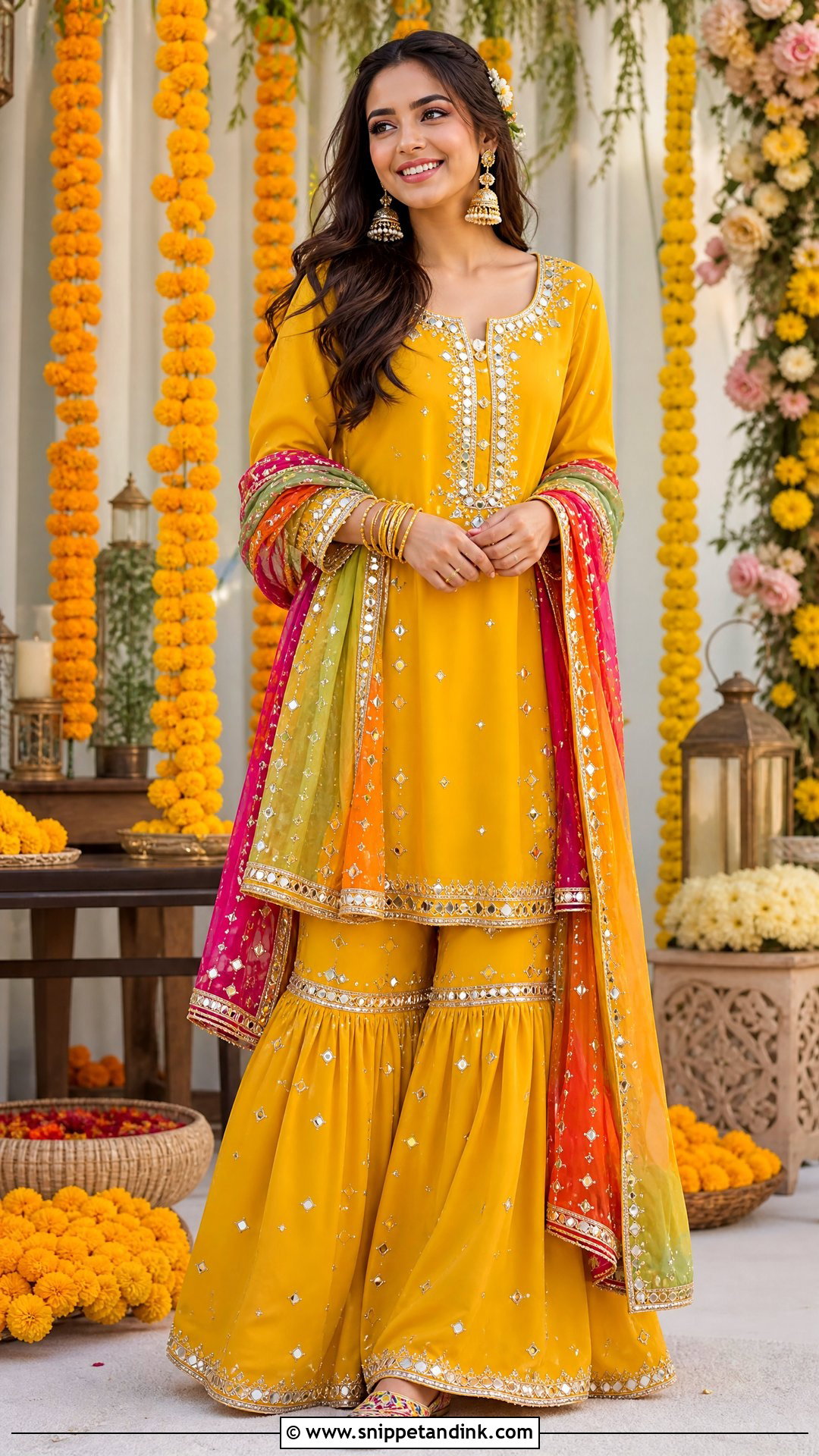
Mustard is the colour of Mehndi and Mayun for a reason: it’s festive and bright without shouting. Put a mustard long shirt with mirror work, gota or thread embroidery over a matching sharara, and you can dance, greet guests and sit on the floor in it all evening. One fitting point: a long shirt over a sharara catches under you when you sit cross-legged, so I keep the slits deep enough that the front panel can fall forward over the knees. A green, pink, orange or turquoise dupatta, traditional jhumkas, colourful bangles and embroidered khussas finish it for cousins, sisters or a bride wanting a playful pre-wedding outfit.
7. White Long Shirt With Churidar Pants
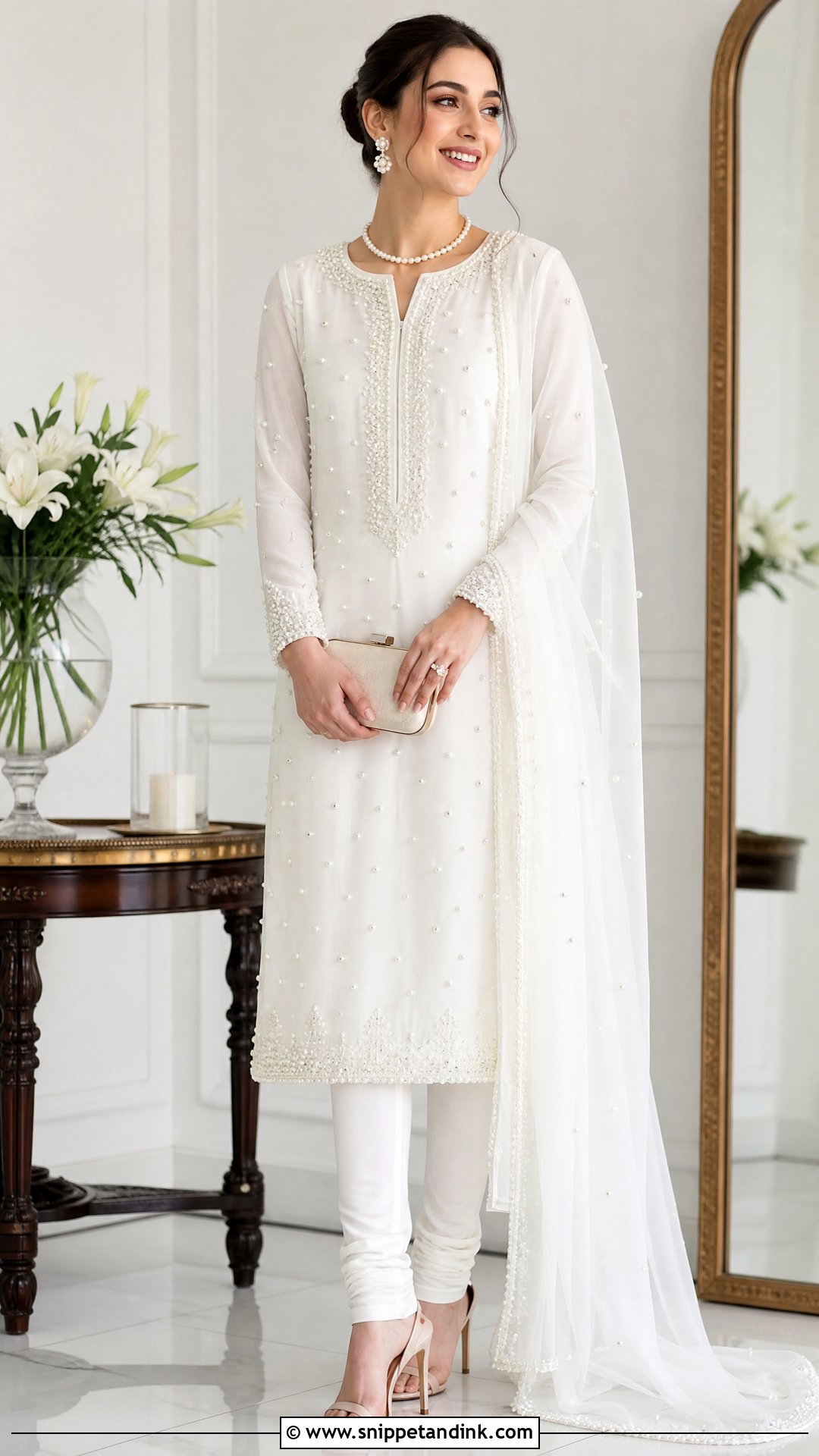
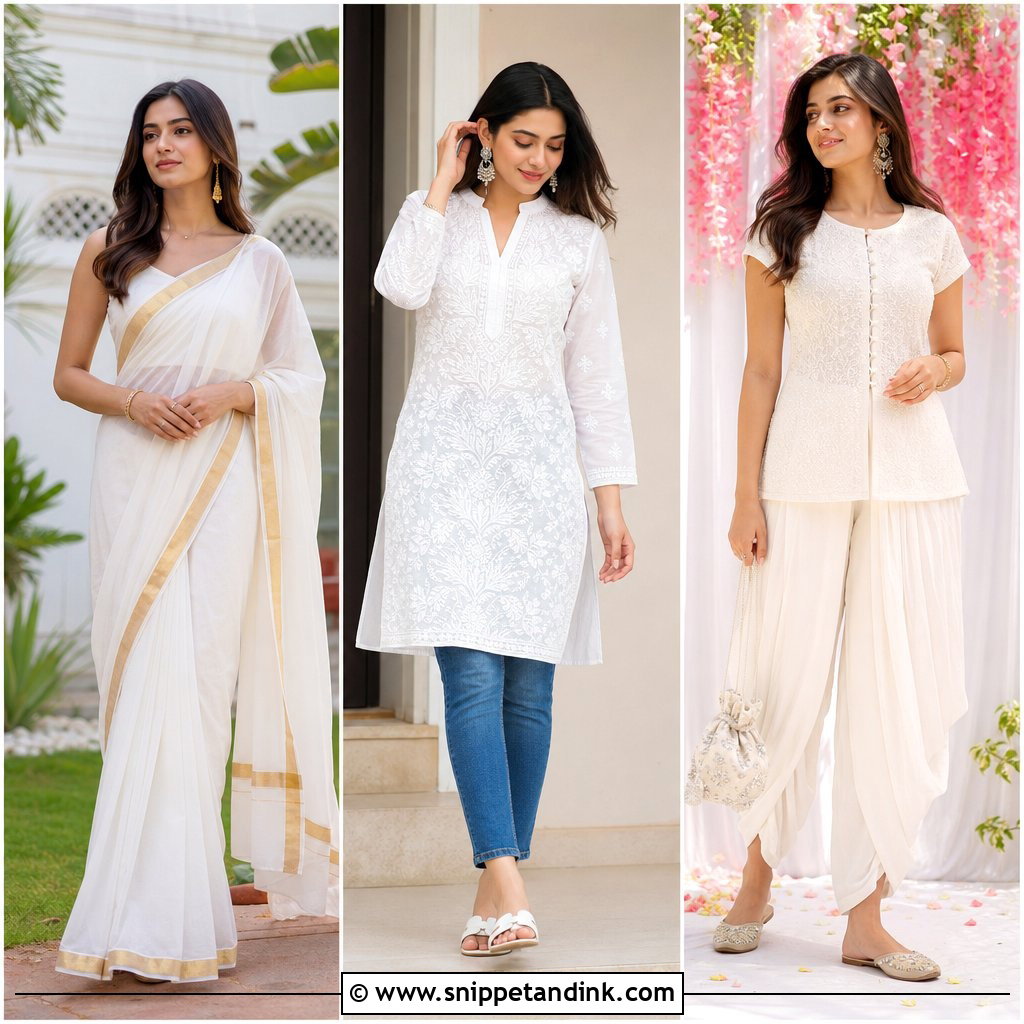
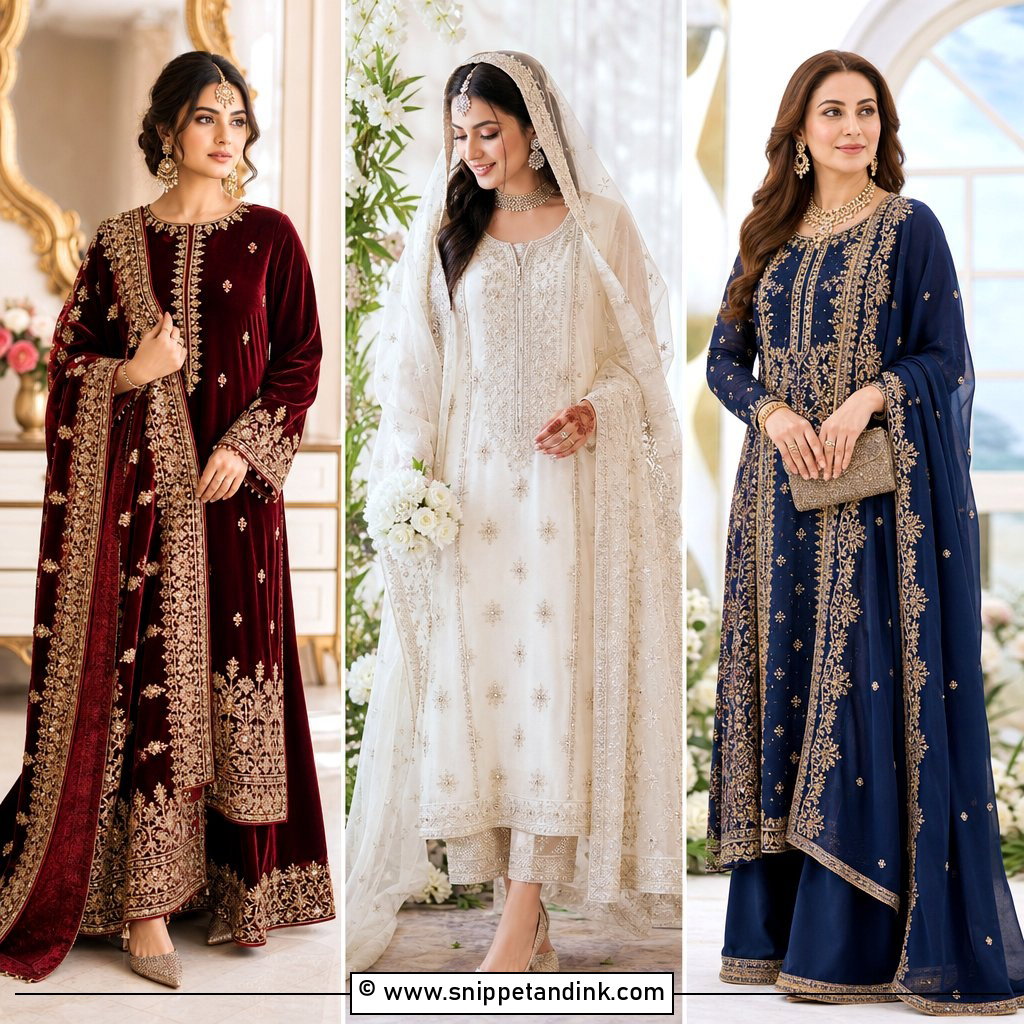
White with churidar is modest and clean for a Nikkah, and it lives or dies on fabric. Organza, chiffon, silk or cotton net all work; what matters is that the lining is opaque, because white shows everything under bright stage lights. Pearl, silver or light gold embellishment keeps it from looking like daywear. Churidar should gather neatly at the ankle without bunching at the knee, so I fit them with the wearer seated as well as standing. A white or ivory dupatta with embroidered borders, pearl jewellery, soft waves, nude heels and a delicate clutch suit a guest. For a bride, a statement dupatta or heavier jewellery takes it up a level.
8. Black Long Shirt With Gold Palazzo
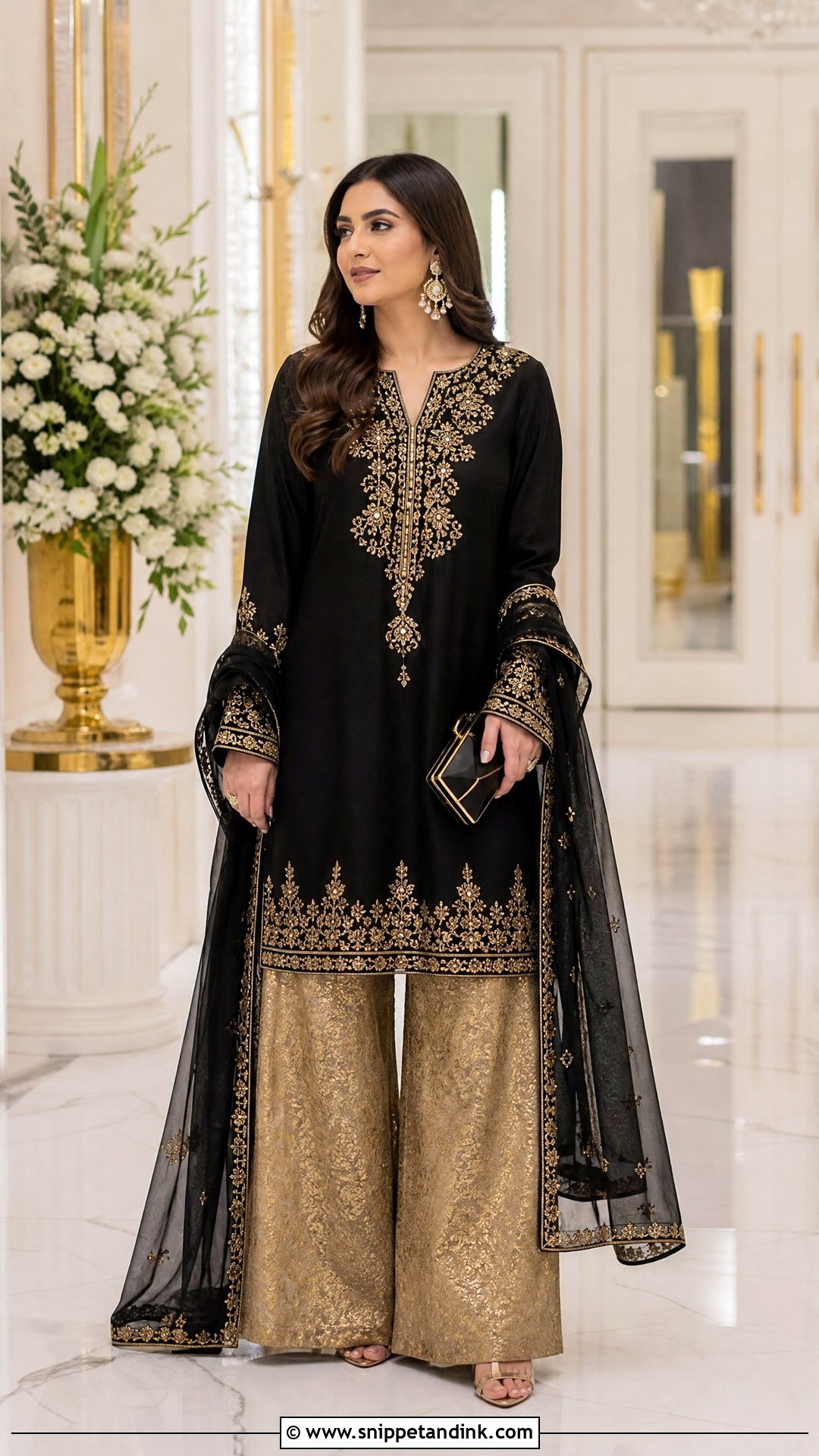
Black with gold palazzos is a guest or family outfit rather than a bridal one, and I’d confirm with the hosts first since some families don’t welcome black at a wedding. When it’s fine, it’s sharp: gold tilla, zari, sequins or dabka on the neckline, cuffs and hem of a long black shirt, over wide gold palazzos that move freely. The long shirt and straight palazzo line make the body look longer. Gold palazzos in tissue can crease badly when you sit, so I’d pick a gold raw silk or a softer metallic blend. A black organza dupatta with gold edging, gold heels, a structured clutch and statement earrings finish it.
9. Navy Blue Long Shirt With Lehenga
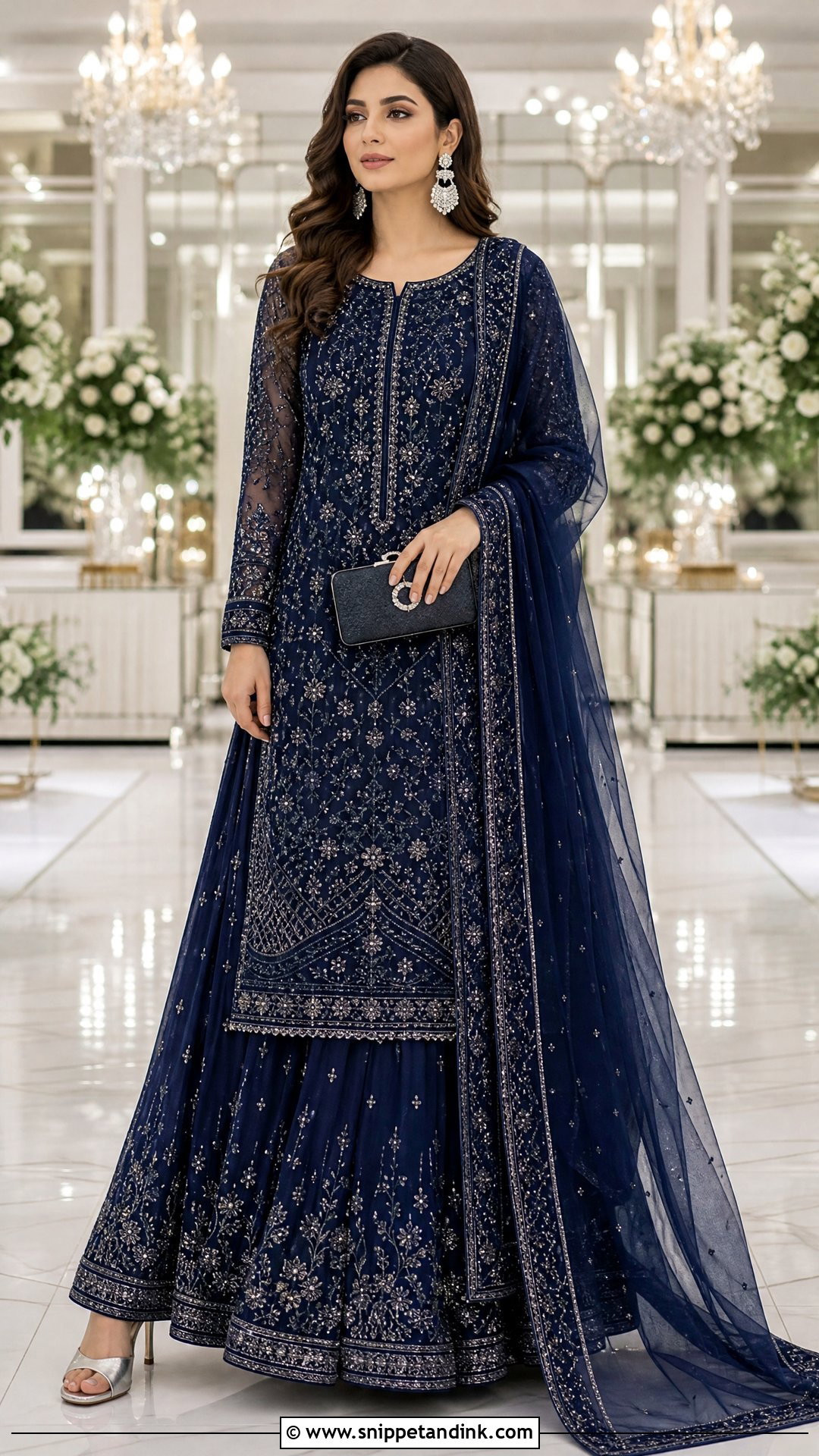
Navy is my usual suggestion when someone wants the richness of black without the question mark over it. Silver, antique gold or champagne embroidery shows up well against it, and detailed sleeves plus a heavily finished hem make the long shirt look graceful over a matching lehenga. For contrast, a dull gold or silver lehenga works. Keep the dupatta sheer so the embroidery stays visible, and add crystal earrings, metallic heels and a sleek hairstyle. Navy can look flat in a very dimly lit hall; a little metallic thread in the embroidery keeps it from reading as a dark block in evening photos.
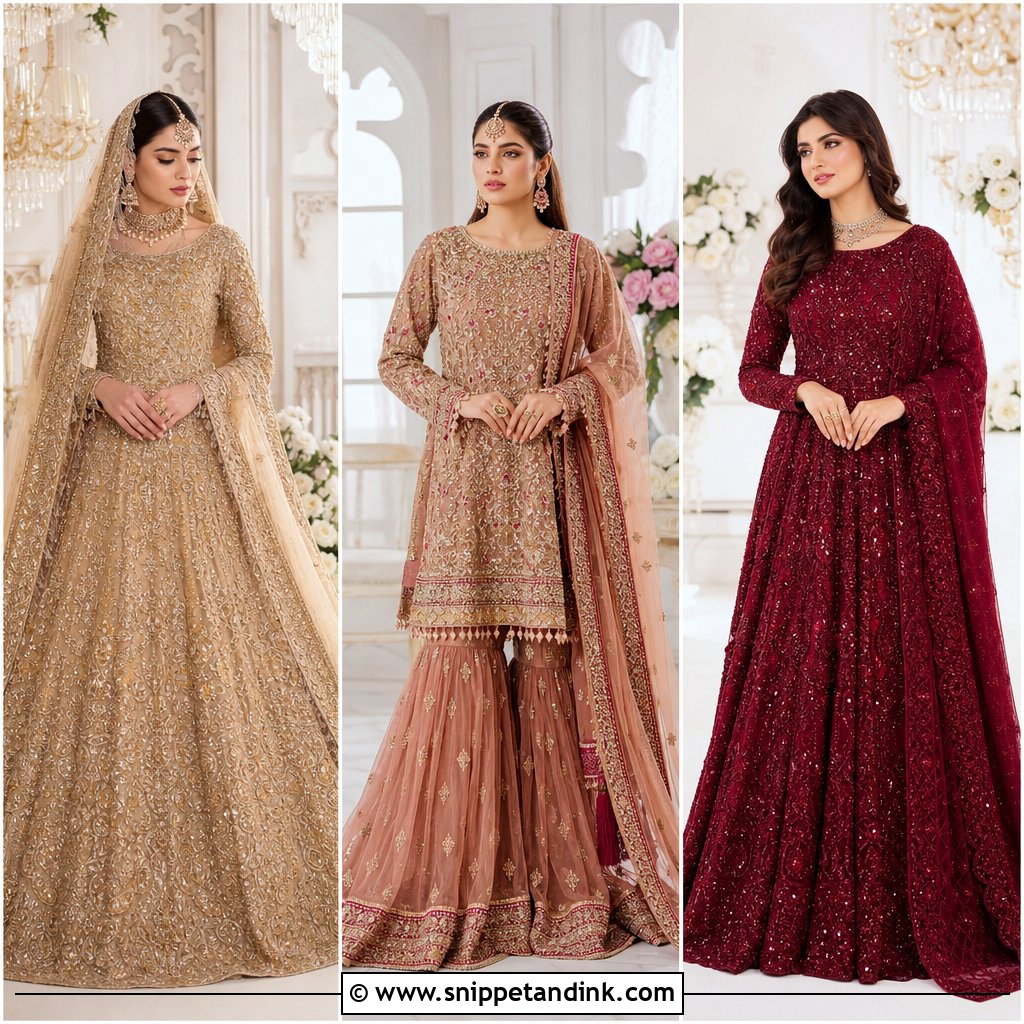
10. Beige Long Shirt With Crushed Sharara
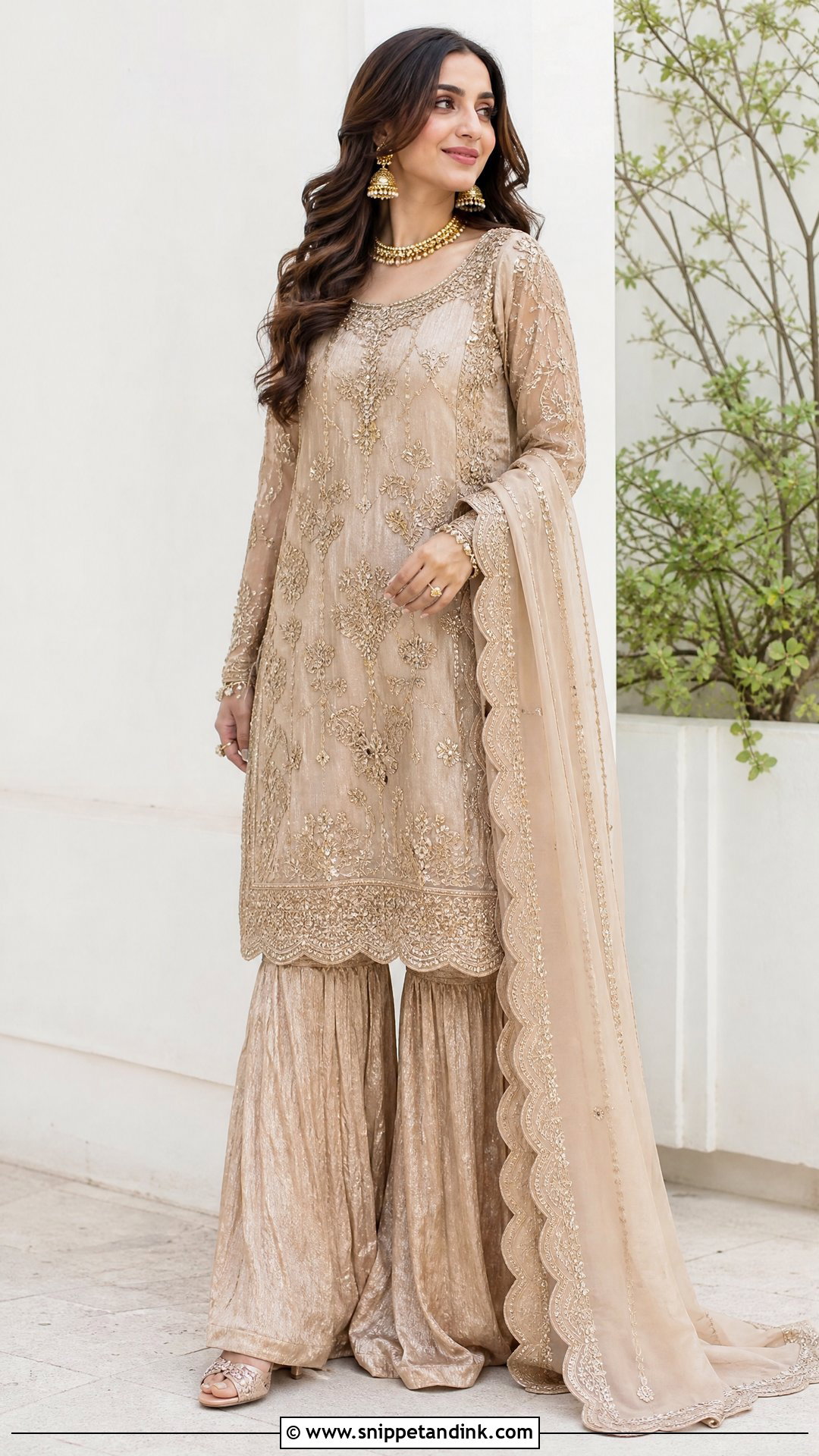
Crushed fabric is the most forgiving thing you can wear to a long wedding, and a beige shirt over a crushed sharara is the outfit I recommend to guests who’ll be travelling with their clothes. The crinkle is set into the fabric, so creases from a suitcase don’t show. Do not iron it flat; steam lightly or just hang it. Beige pairs well with gold, champagne, pearl or pastel embroidery on the neckline, sleeve borders and hem. A matching beige dupatta with scalloped edging, gold-toned jewellery, soft curls and embellished sandals complete it, and the pieces split easily for wearing again afterwards.
11. Teal Long Shirt With Cigarette Pants
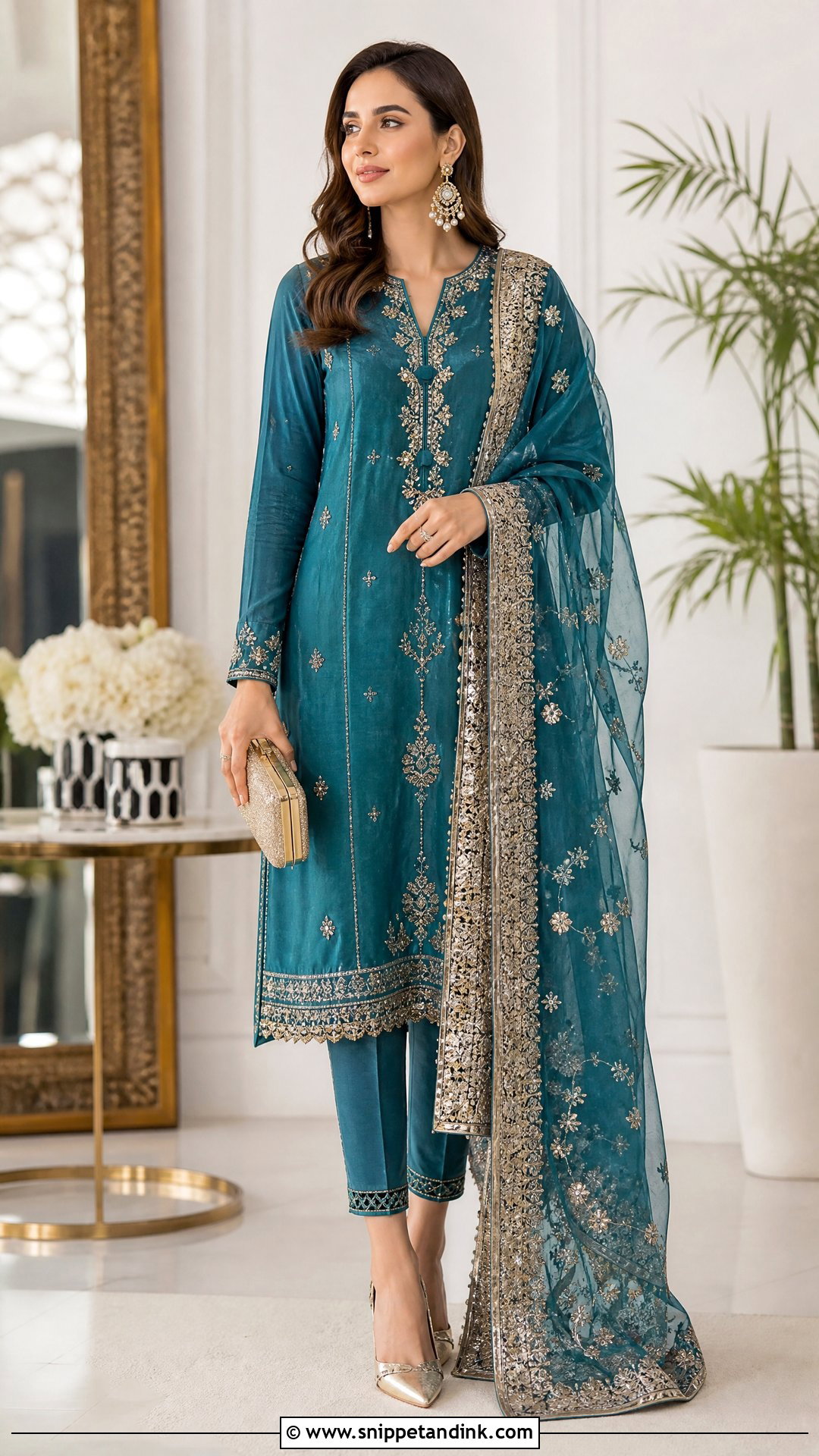
A teal long shirt with cigarette pants is the neatest outfit in this collection. The straight pants keep the line sleek and the long shirt brings traditional coverage, so put the embroidery on the neckline, front panel, sleeves and hem. Silver, dull gold or antique copper all sit well on teal. Since the pants are plain, a heavily bordered organza dupatta can carry extra detail. On petite women this creates a long, clean line, provided the shirt stops around mid-calf; much lower and it swallows the leg. Pointed heels, a box clutch and statement earrings finish it.
12. Peach Long Shirt With Organza Lehenga
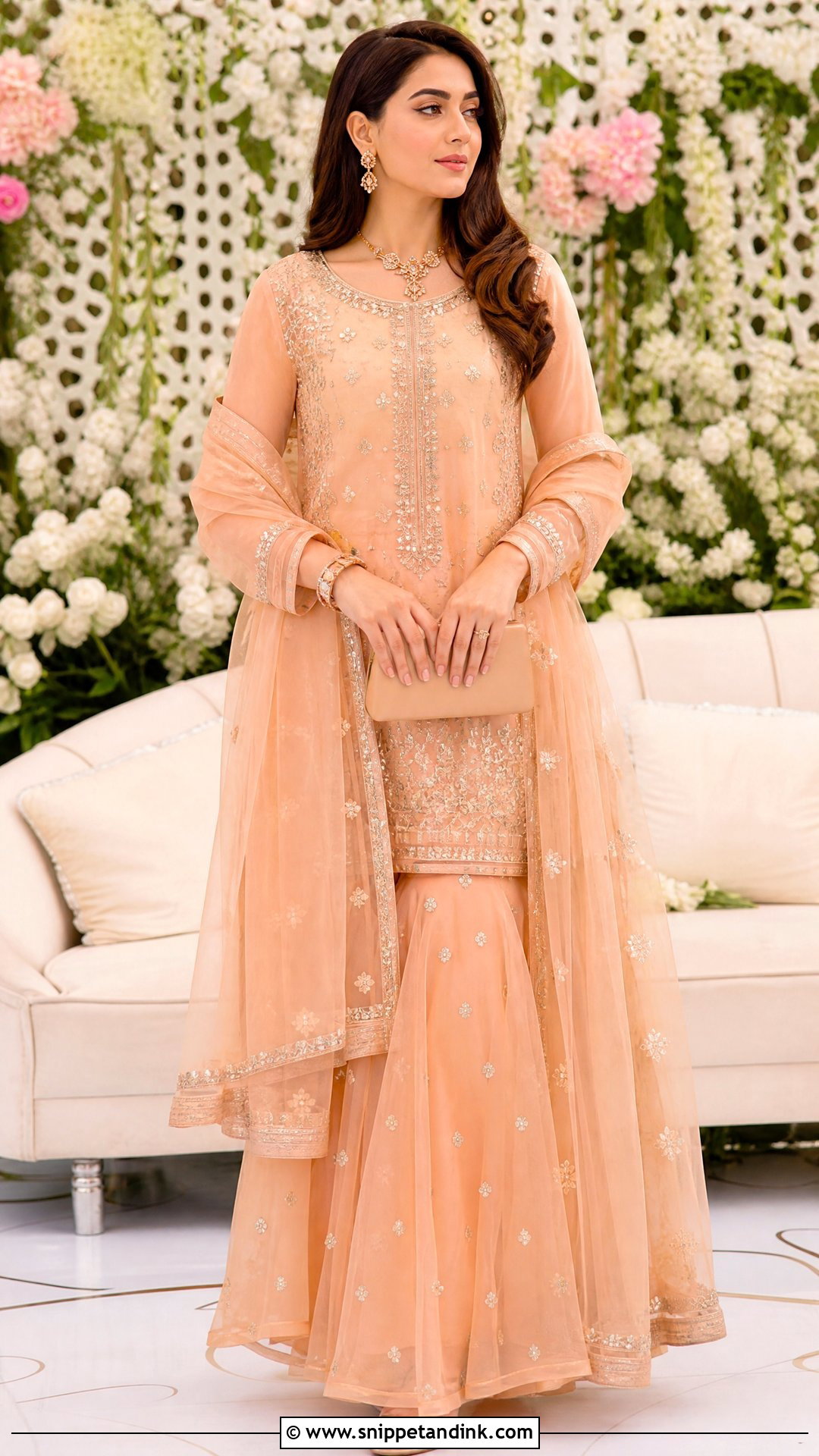
Peach is kind to most skin tones in daylight and doesn’t fight with greenery at outdoor spring or summer events. Pair a shirt with threadwork, pearls, sequins or light zari with an organza lehenga, which gives volume without the weight of raw silk. Organza wrinkles less than chiffon but can feel scratchy, so ask for a soft lining in the lehenga waistband and along the shirt’s underarm seams. Keep the dupatta airy with fine edging or scattered motifs. Rose gold jewellery, soft blush makeup and nude heels match the mood for a Walima, an engagement, a lighter bridal outfit or bridesmaids.
13. Rust Long Shirt With Gharara
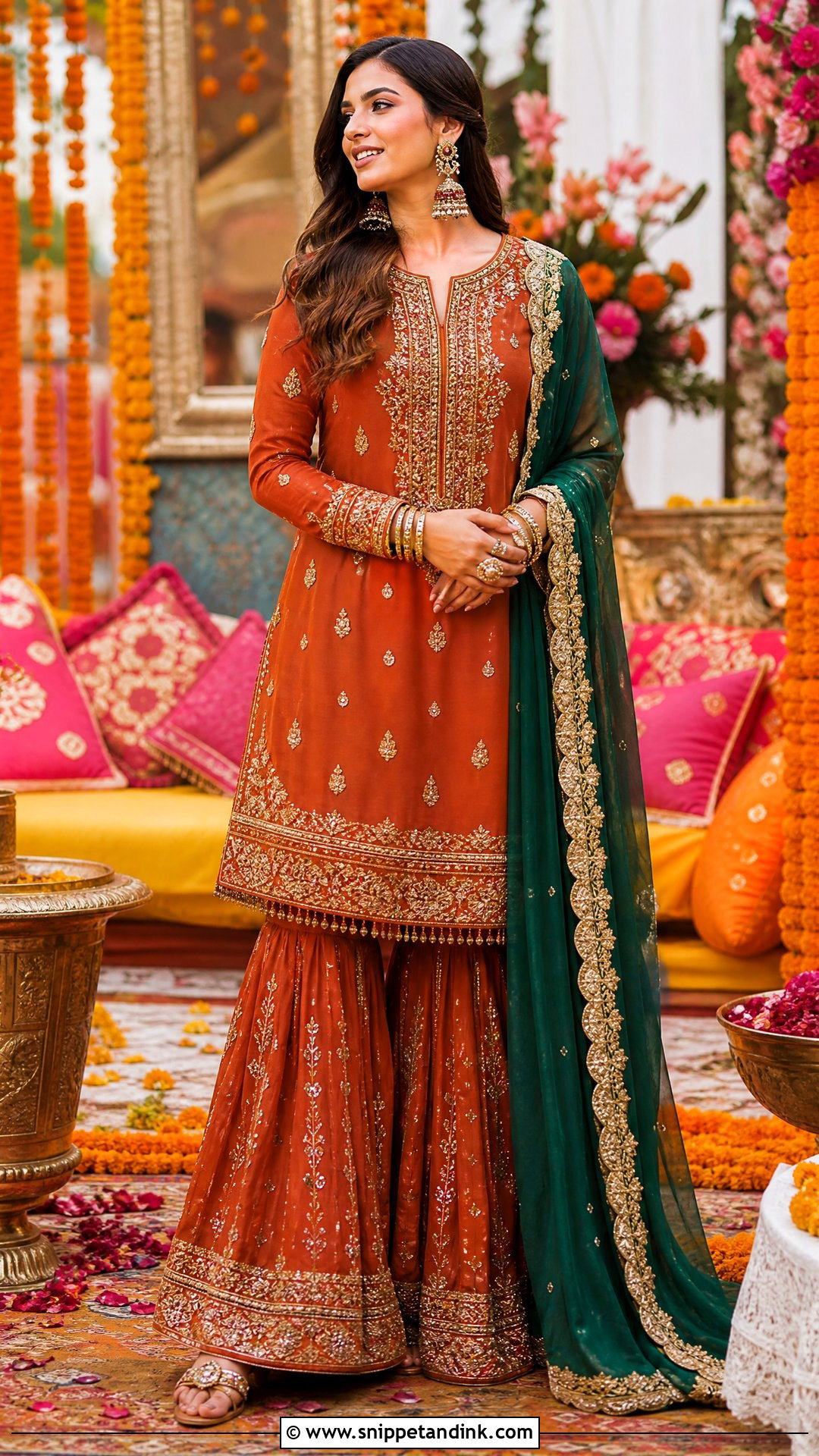
Rust is a good answer for a bride who’s tired of yellow for her Mehndi. It’s warm and traditional and looks especially right at autumn and winter events. A raw silk, chiffon or velvet shirt with gold, copper or multicolour embroidery over a gharara with worked borders gives volume and cultural character. A dupatta with hints of green, pink or gold provides contrast. Rust dyes can bleed when damp, so I’d keep it away from wet henna and test a hidden seam with a damp white cloth if the fabric is new to you. Jhumkas, bangles and embellished sandals keep the accessories traditional.
14. Sage Green Long Shirt With Wide Leg Pants
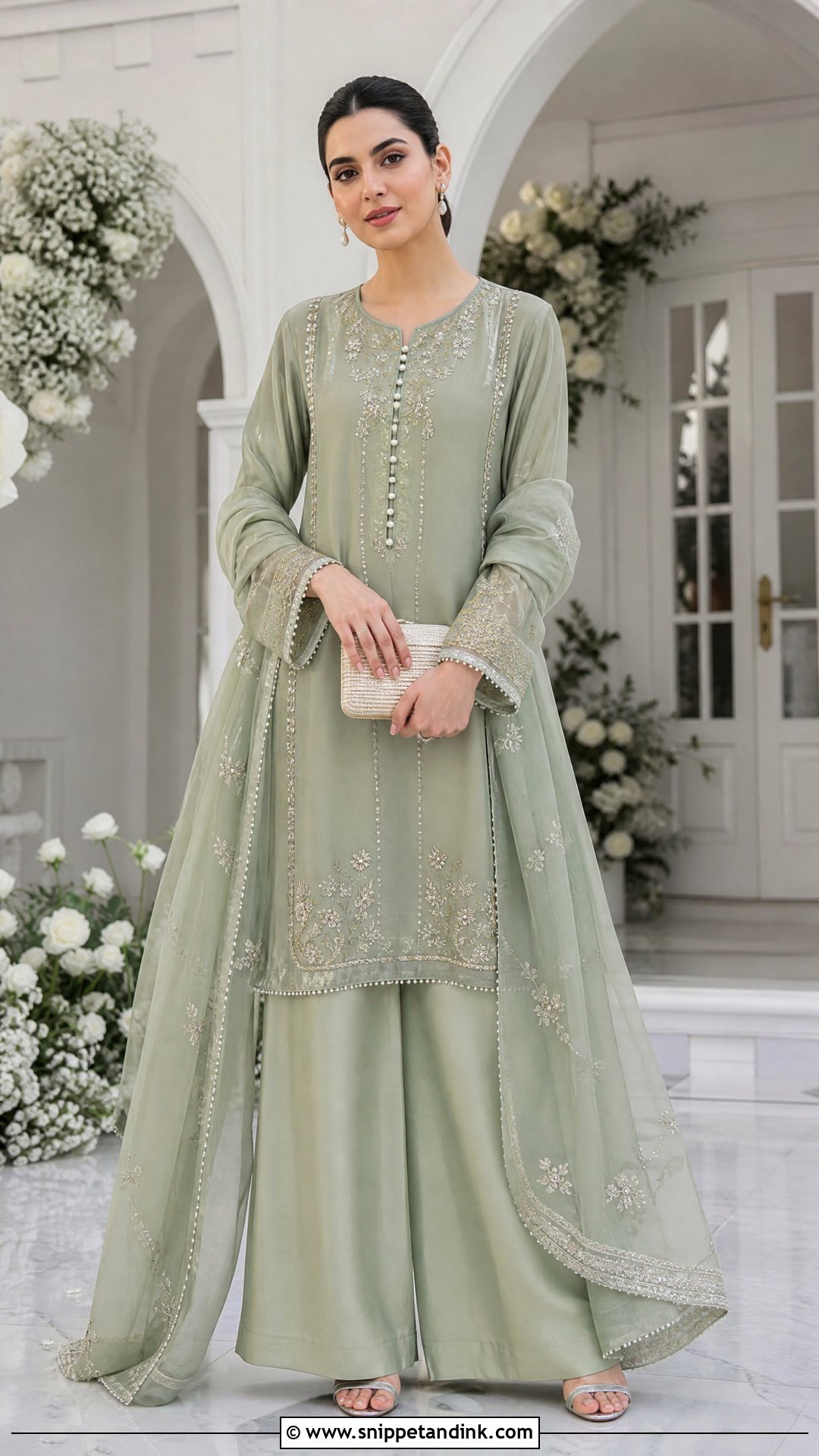
Sage green is the quietest colour on this list and one of the easiest to wear, since it suits most skin tones. Pearl, silver or tone-on-tone embroidery gives it a soft finish. Wide-leg pants keep it comfortable and add flow under the shirt, and a matching organza dupatta with delicate edging completes the set. I’d keep the jewellery minimal here: pearl earrings, silver heels and a small clutch. Sage loses its colour under very warm lighting and can look grey, so it’s at its best at a daytime Walima or Nikkah, or for anyone who prefers understatement to bridal weight.

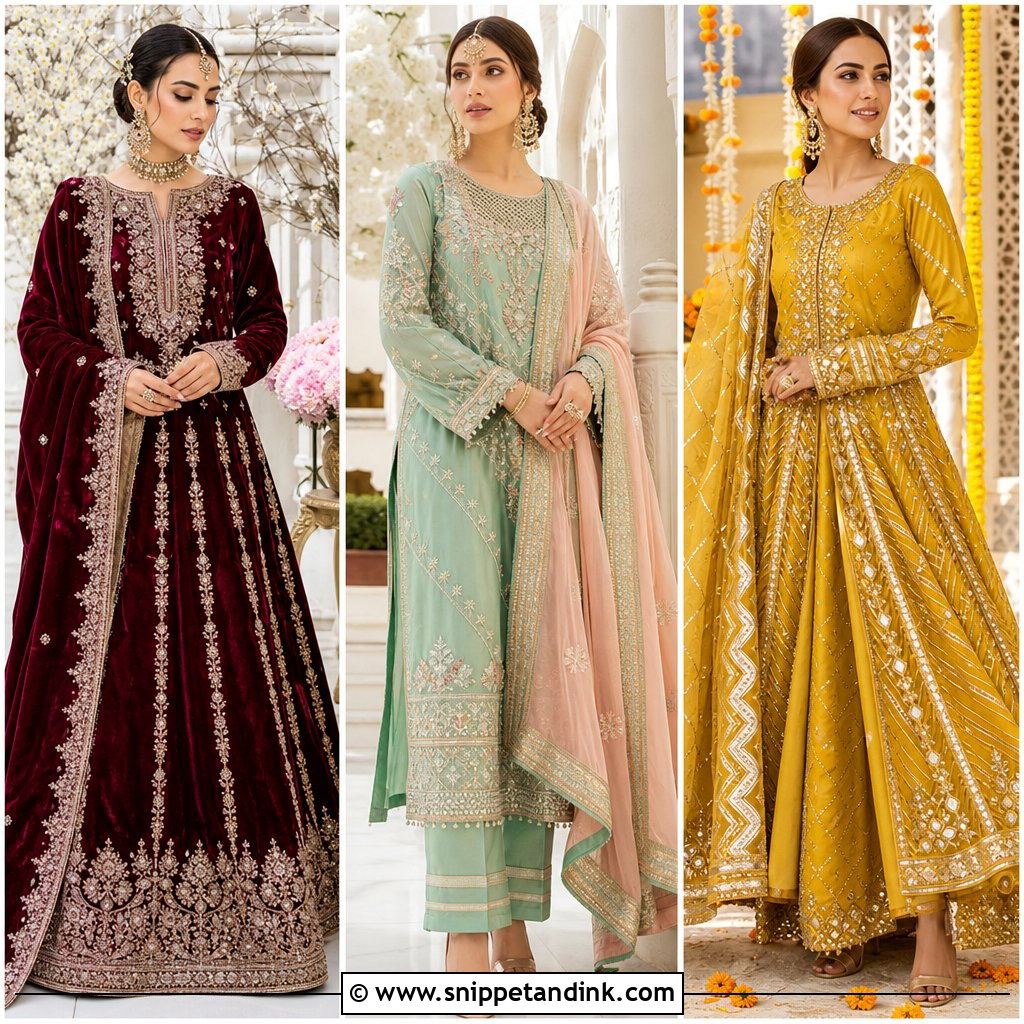
15. Gold Long Shirt With Red Lehenga
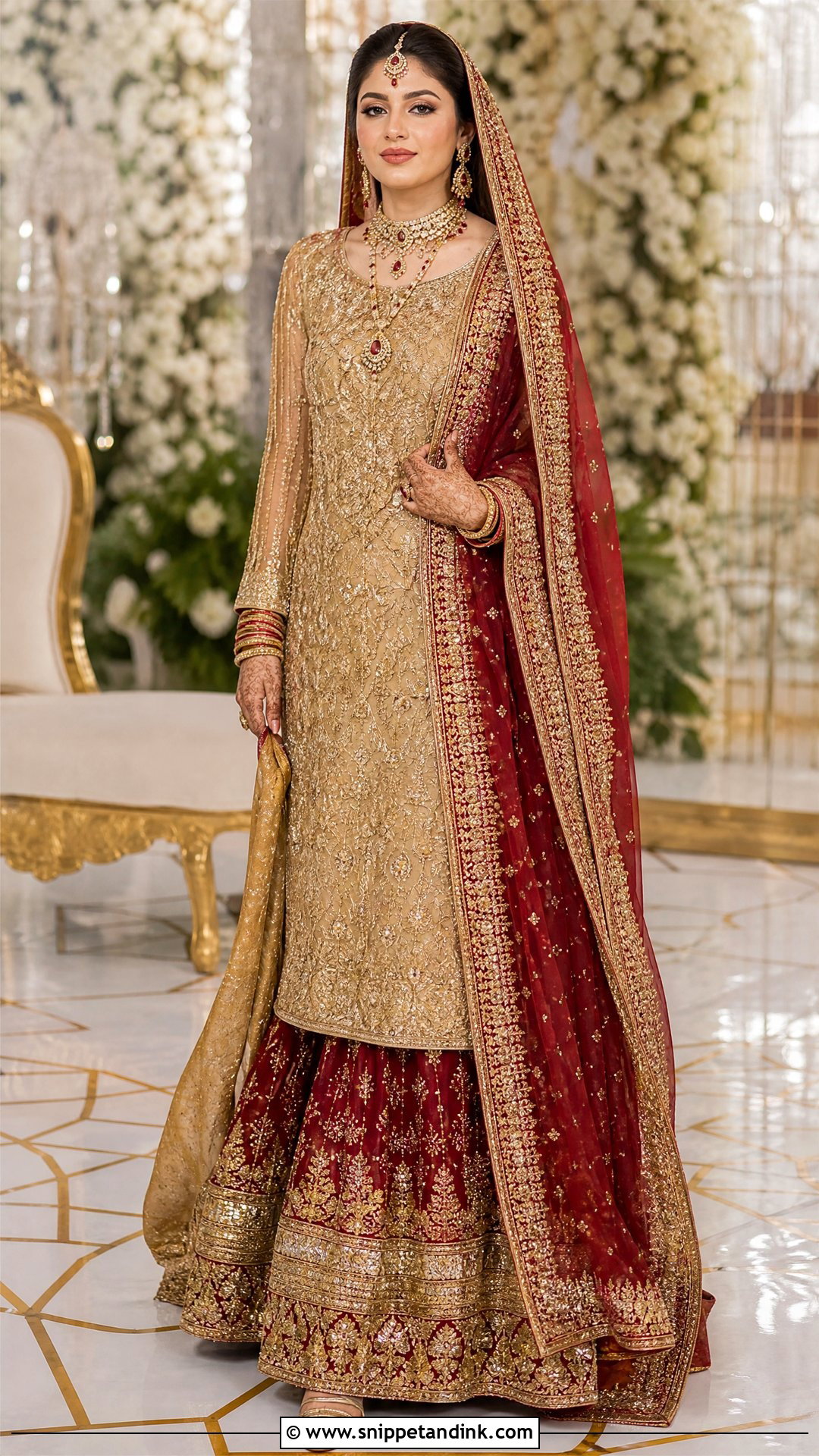
Gold over red flips the usual bridal arrangement, and it works because a gold shirt bounces light onto the face while the red lehenga keeps the traditional colour. Choose detailed zardozi, sequins, dabka or tilla on the shirt and give the red lehenga a gold border that ties back to it. The two-dupatta layering, red on the head and a lighter gold one on the shoulder, needs planning, so I decide which one is pinned to the hair before the hairstylist starts, not after. A jhoomar or matha patti completes the traditional jewellery for a bride who wants strong contrast.
16. Lilac Long Shirt With Silver Sharara
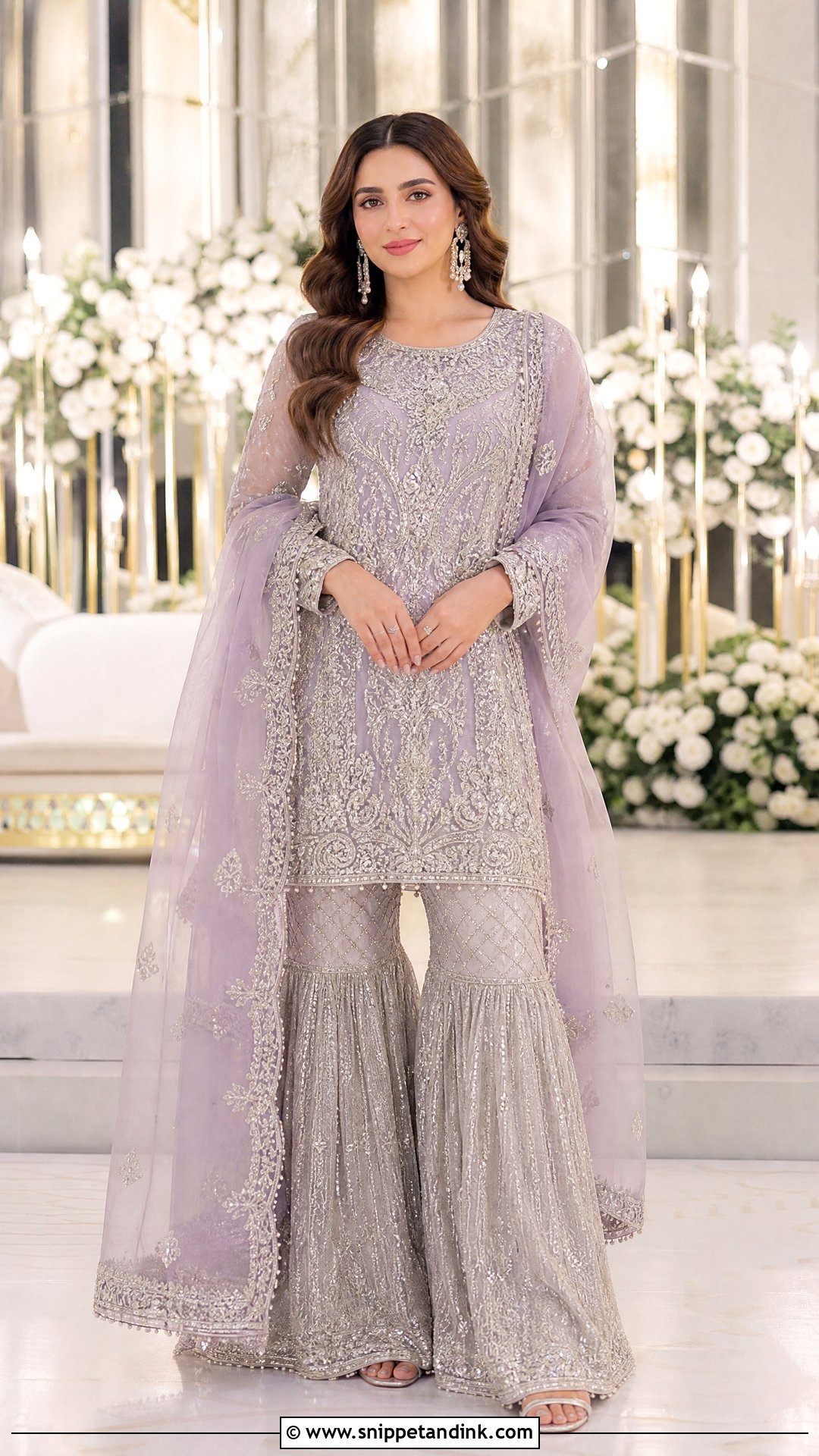
Lilac with silver is soft and modern for a Walima, engagement or formal guest look. Silver sequins, crystals, pearls or resham work suit the colour, and a silver sharara adds shine so the outfit never looks too plain. The shirt needs side slits deep enough to let the sharara’s movement show. Metallic sharara fabric is often stiffer than it looks on the hanger, so walk a few steps in it at the fitting; if it rustles loudly or holds its own shape, ask for a softer lining. A sheer lilac dupatta with a silver border, crystal earrings, silver heels and soft pink makeup finish it.
17. Burgundy Long Shirt With Velvet Lehenga
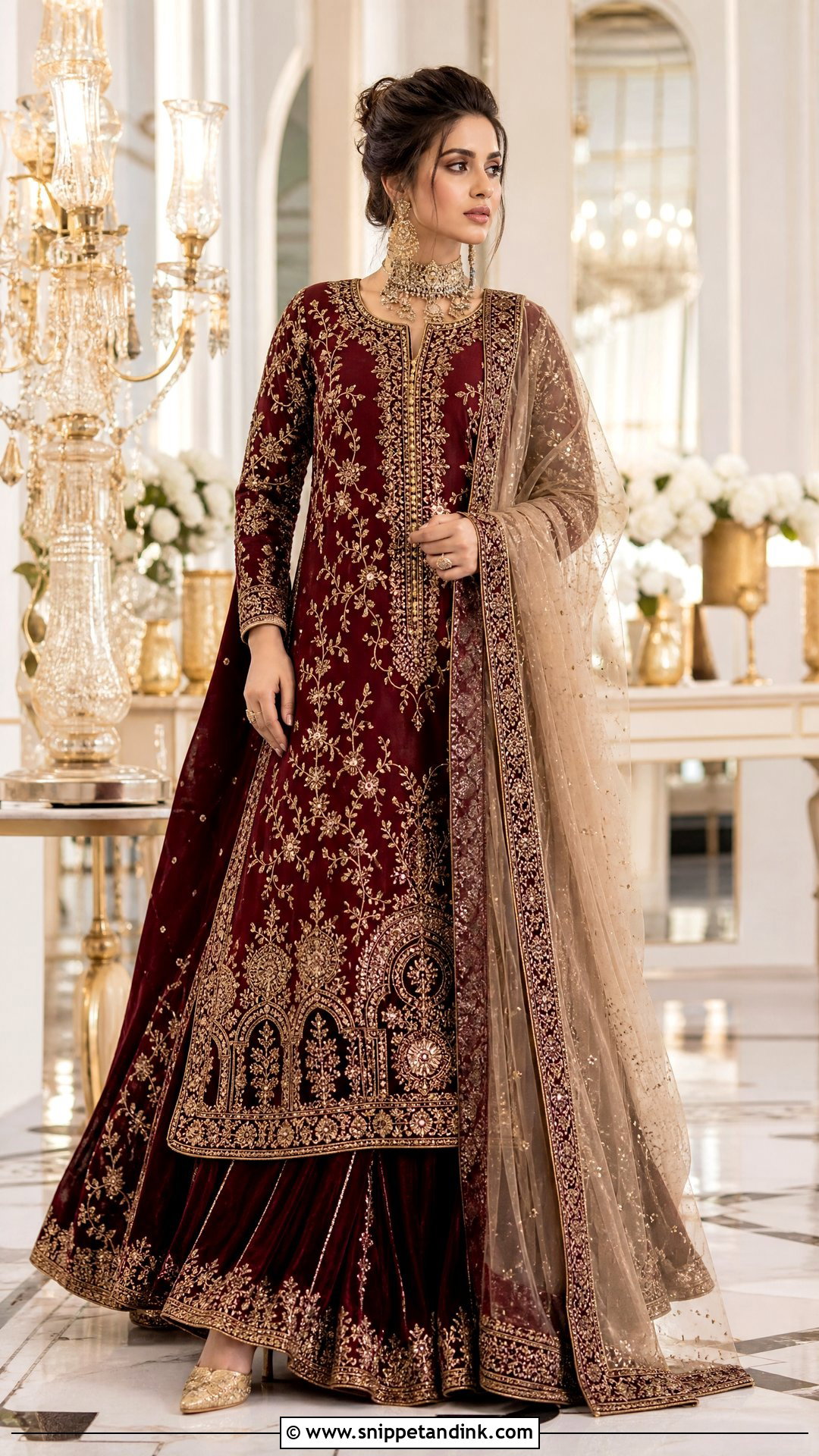
Burgundy has bridal depth without being the expected red, and on velvet it’s at its richest. Antique gold or dull copper embroidery on the long shirt suits the fabric. A velvet lehenga has weight, structure and a heavy, rich fall. Keep the dupatta to net or organza so the whole outfit doesn’t get too heavy. Velvet is warm, so this belongs to cooler weather and evening receptions, and I’d steer anyone with a summer wedding away from it. Velvet also marks easily, so carry a soft clothes brush in the bridal bag. Traditional gold jewellery, a soft updo and embroidered heels complete the regal effect.
18. Powder Blue Long Shirt With Lehenga
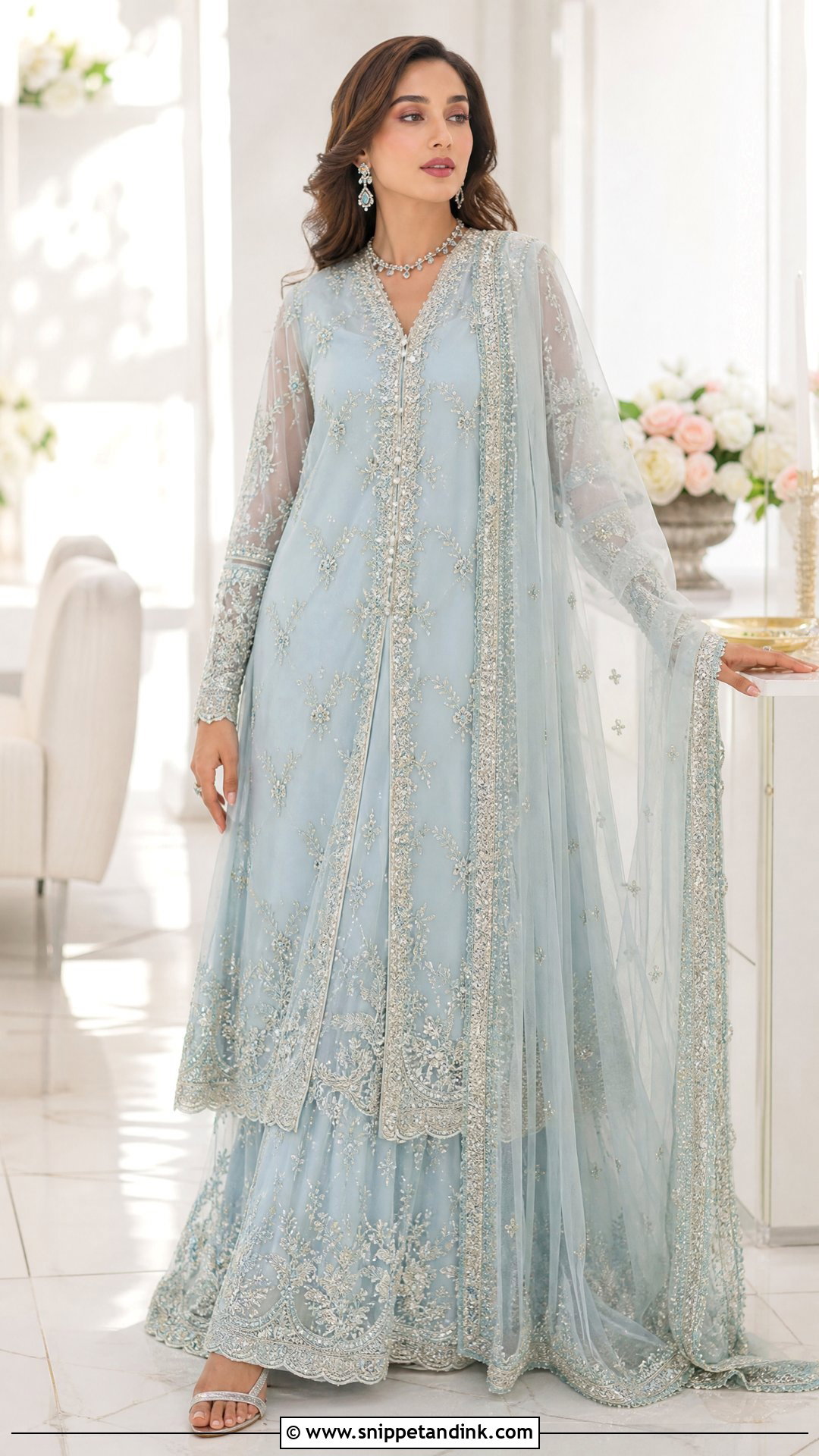
Powder blue is fresh and formal for a Walima or daytime event. Silver, pearl or white embroidery keeps it light. Match the lehenga for a continuous colour, or choose ivory for a gentle contrast. A sheer dupatta with embroidered edging completes the outfit, with soft pink or peach makeup and crystal jewellery. Pale blues can look cold in photos taken under fluorescent lighting, so if your venue uses it, a touch of warm gold in the jewellery helps. It suits brides who want something non-traditional and still formal, and it also works for sisters, cousins and close guests.
19. Fuchsia Long Shirt With Orange Sharara
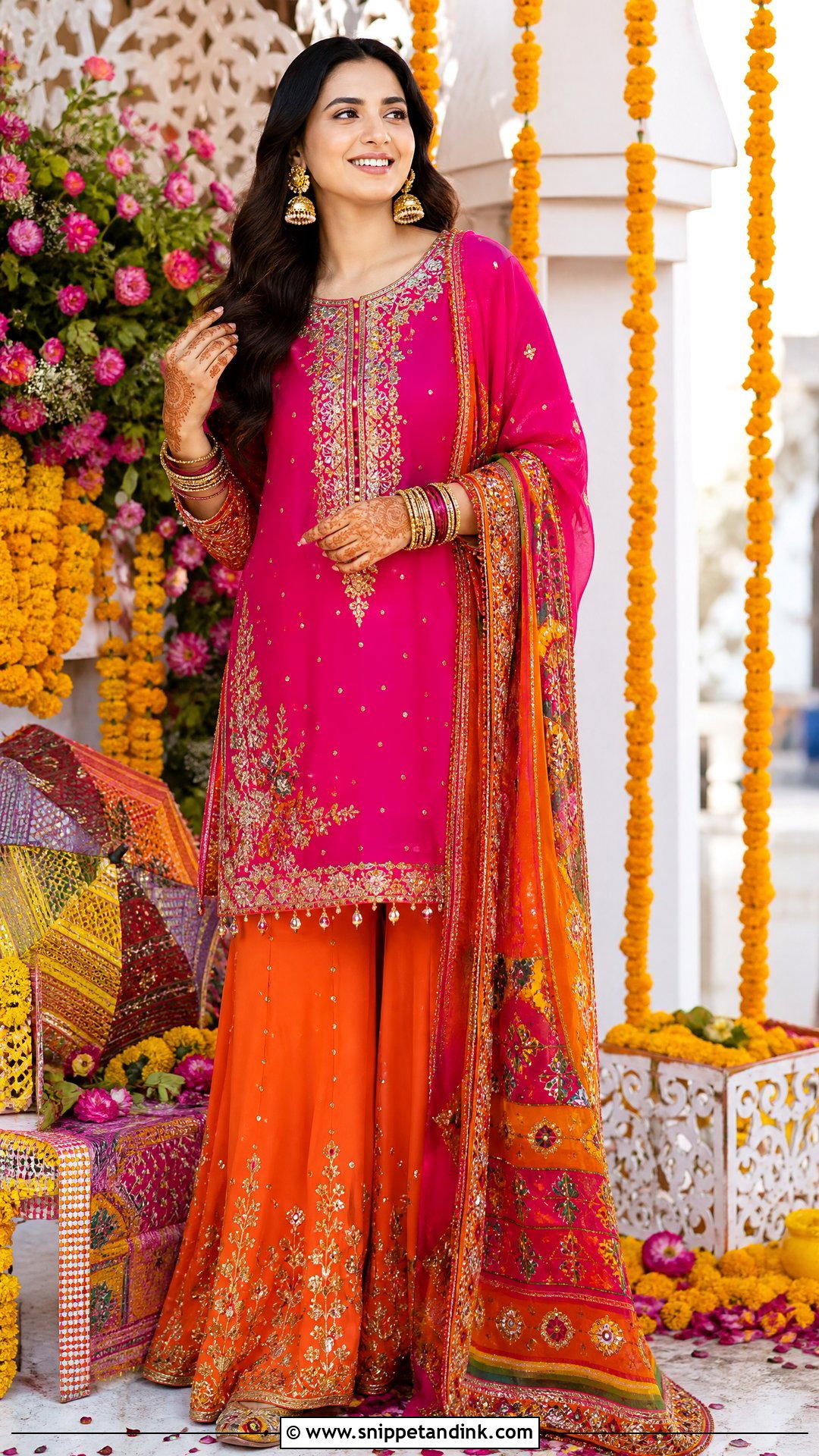
Fuchsia and orange together is a pairing with deep roots in South Asian wedding dressing, and it’s at home at a Mehndi. A long fuchsia shirt with gota, mirror work, thread embroidery or multicolour borders sits over an orange sharara that moves and stands out in photos. The dupatta should carry both shades to tie them together. Two saturated colours side by side can clash on skin tones with a lot of red in them; I hold both swatches under the chin together before committing. Gold jhumkas, colourful bangles, embellished khussas and fresh, glowing makeup let the colour lead.

20. Mint Long Shirt With White Gharara
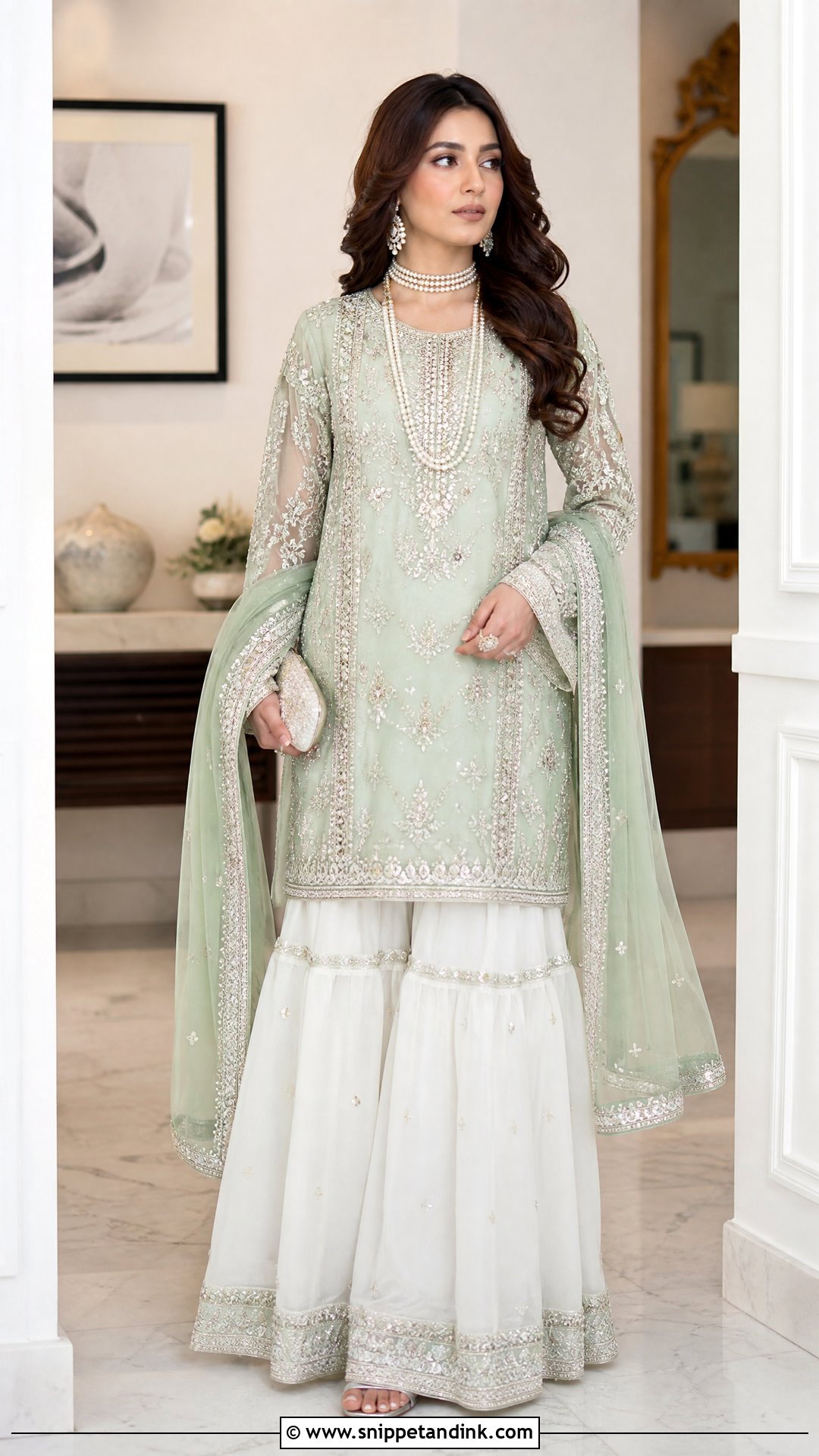
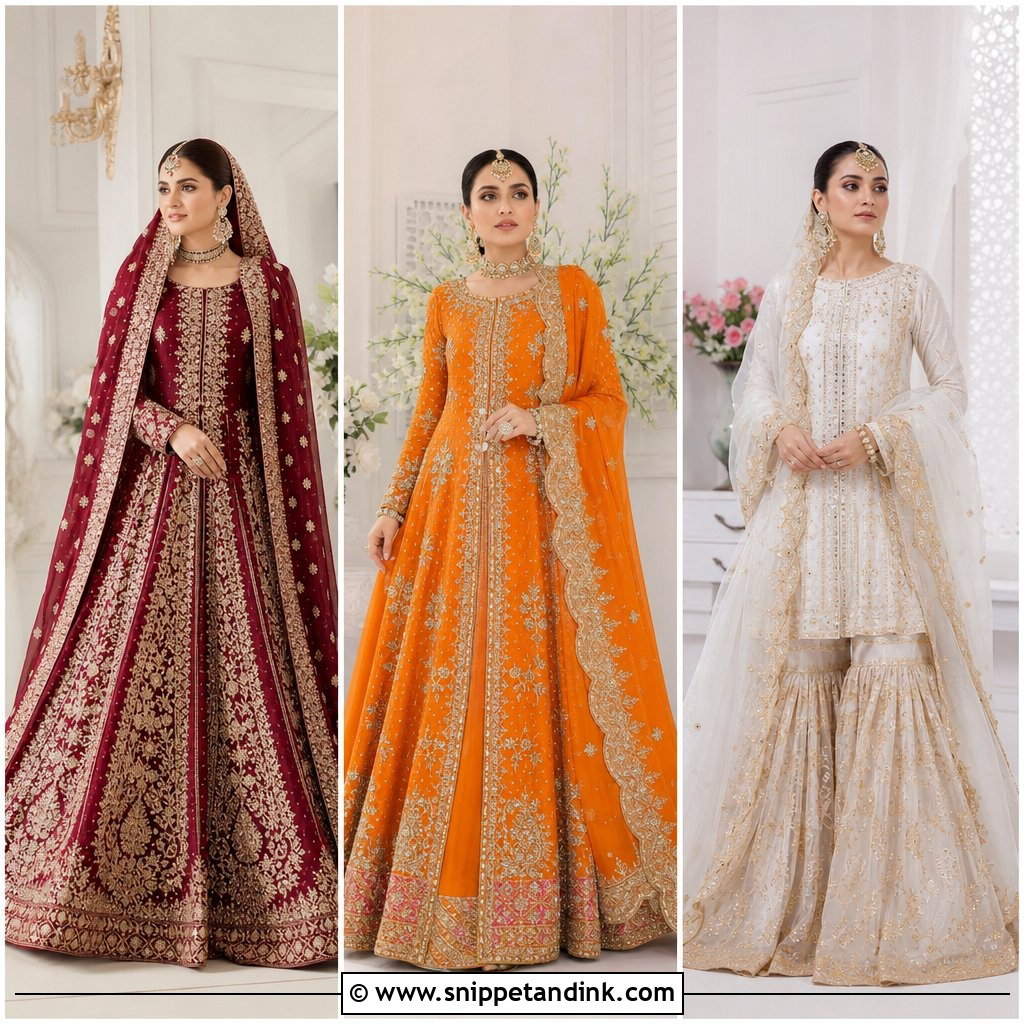
Mint over white is a graceful choice for Nikkah, a daytime Walima or a soft bridal event. Mint is fresh and white keeps it classic. Pearl, silver or pastel embroidery suits the shirt, and a white gharara with an embroidered border adds traditional volume without overpowering it. White ghararas get grubby at the hem fast if the venue has a lawn, so for outdoor functions I’d hem it slightly shorter and keep a stain pen in the clutch. A mint or white dupatta with fine edging, pearl jewellery, soft curls and silver heels finish this modest, light look.
21. Champagne Long Shirt With Tissue Sharara
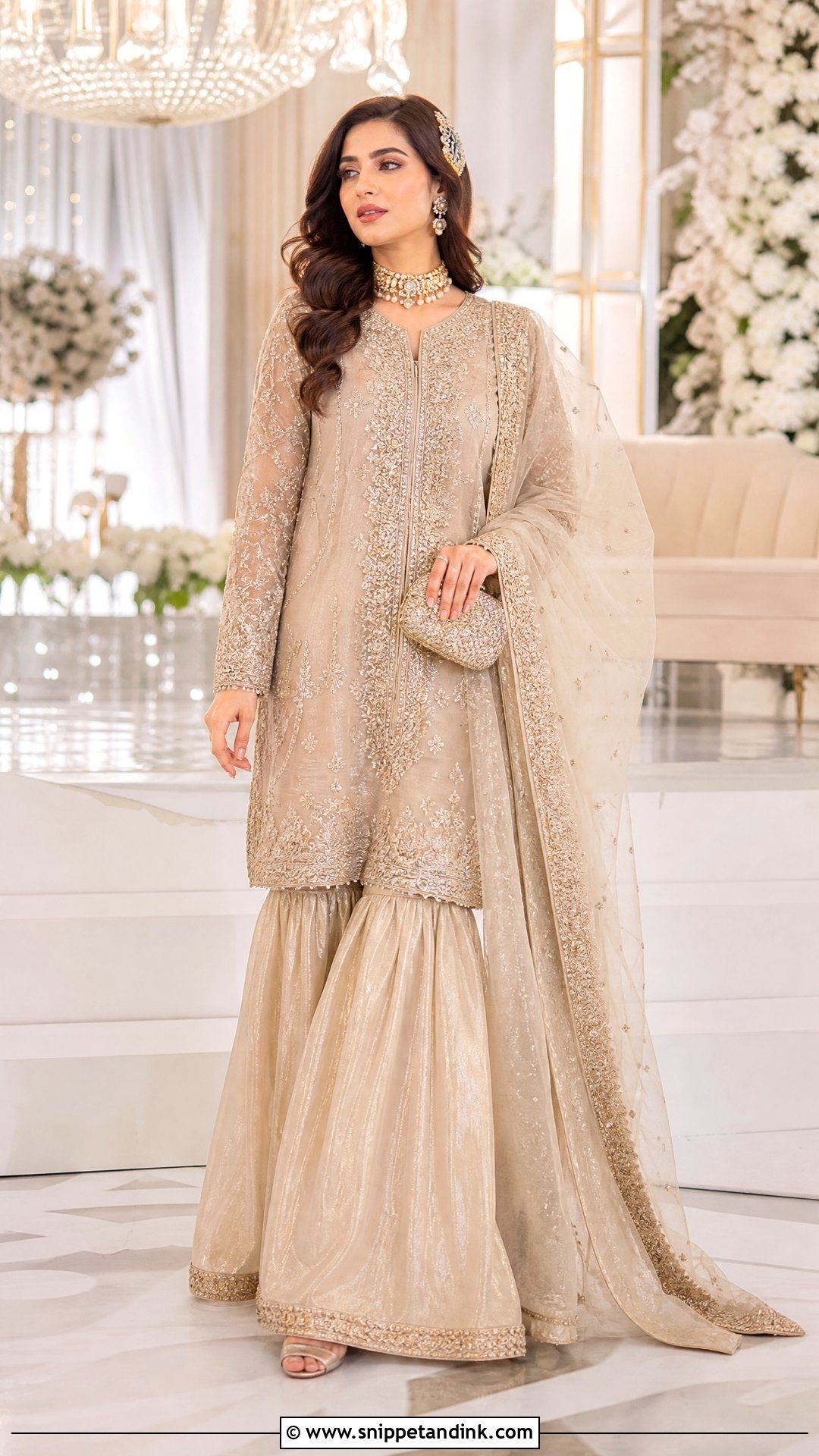
Champagne crosses between day and evening better than most shades. Tone-on-tone embroidery, pearls, sequins or light gold on the shirt, plus a tissue sharara, gives a subtle shine without heavy work. Tissue does crease and can feel stiff against the skin, so I always ask for a soft lining in the sharara and a quick steam the morning of the event. Keep the dupatta sheer with a finished border or scattered motifs. Gold or pearl jewellery, soft glam makeup and metallic heels suit a Walima, reception or formal family dressing that looks expensive without tipping into bridal.
22. Purple Long Shirt With Jamawar Gharara
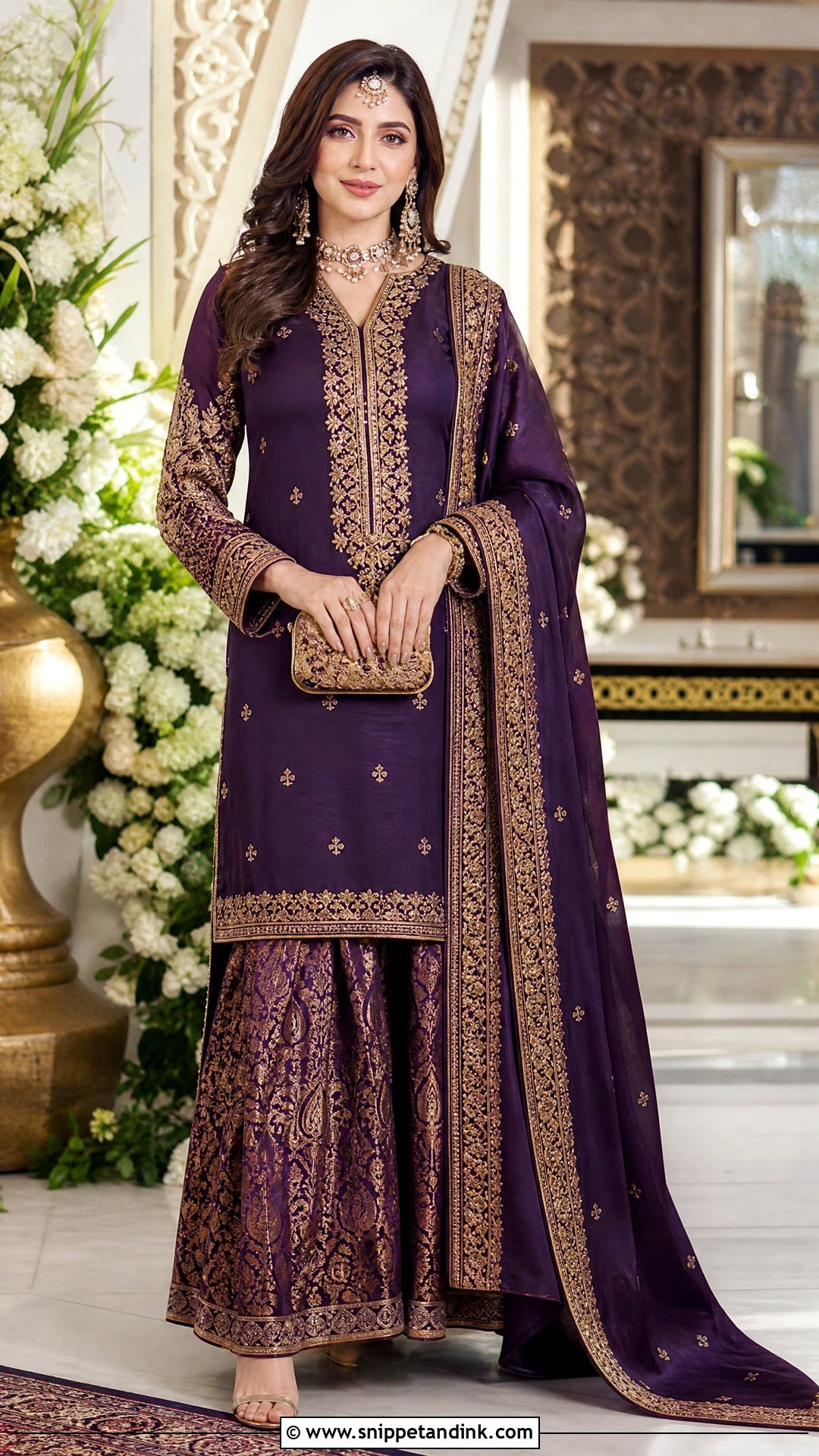
Mothers, aunts and older sisters often ask me for something dignified that still holds its own beside the bride, and a purple shirt over a jamawar gharara is my usual answer. Jamawar is a woven pattern fabric, so the gharara gives texture from every angle without needing embroidery. Purple pairs with gold, antique copper and deep jewel-tone embroidery on a raw silk, chiffon or velvet shirt with a detailed front panel and heavy hem. A plain but bordered dupatta balances the pattern below. Kundan jewellery, gold heels and a neat clutch finish it.
23. Coral Long Shirt With Lehenga
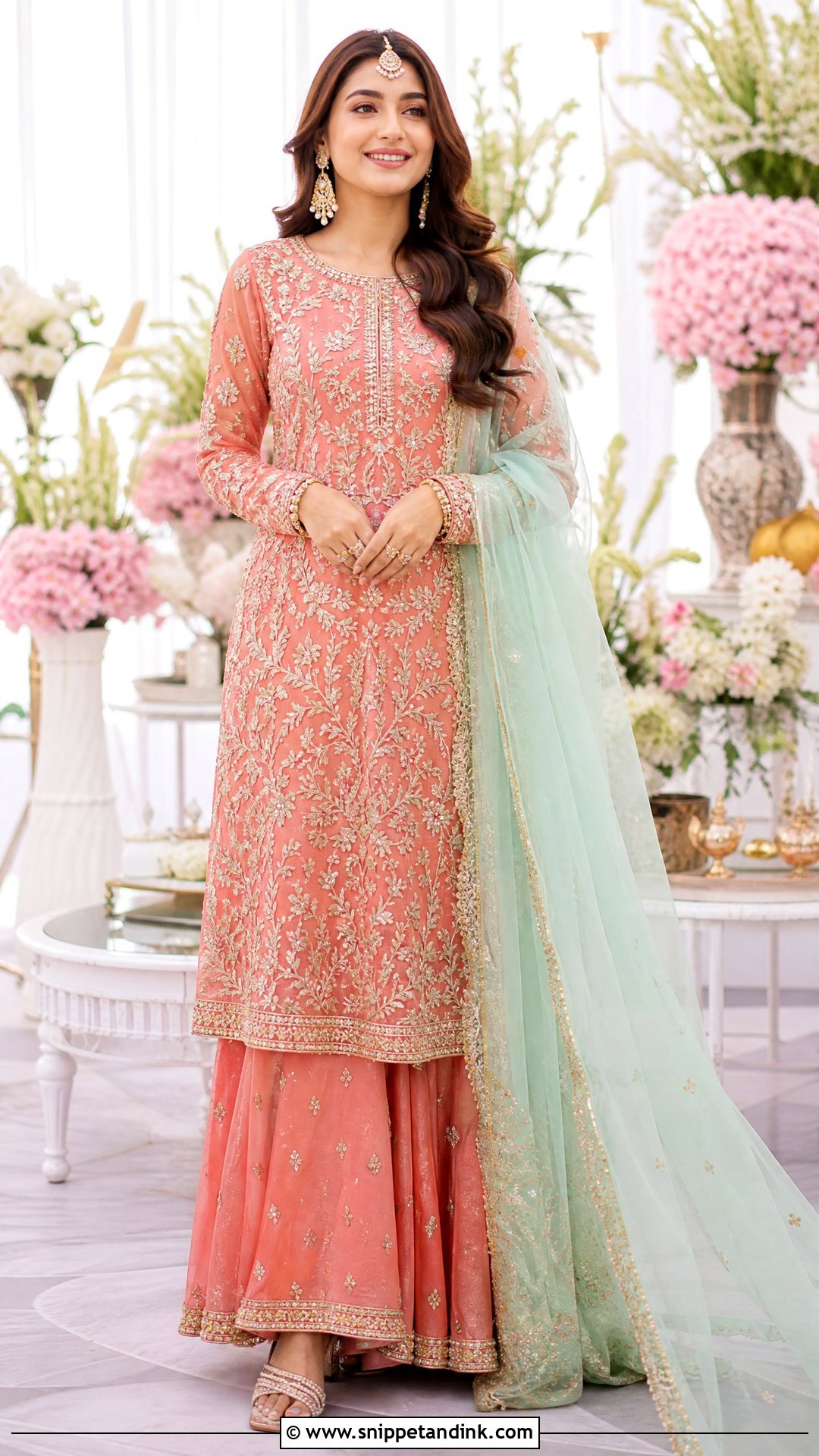
Coral sits between pink and orange: warmer than one, softer than the other. That makes it easy for Mehndi, engagements or daytime events. Gold gota, threadwork, sequins or mirror embellishment on the shirt, with a matching coral lehenga, makes a coordinated set; a contrasting mint or ivory dupatta makes it playful. Bright coral already does a lot, so I keep the gold jewellery traditional and edit it down. Coral also stains easily from henna and turmeric at a Mayun, which is worth knowing before you sit near the haldi bowl. Bridesmaids, cousins and guests who want to move freely do well in it.
24. Silver Long Shirt With White Palazzo
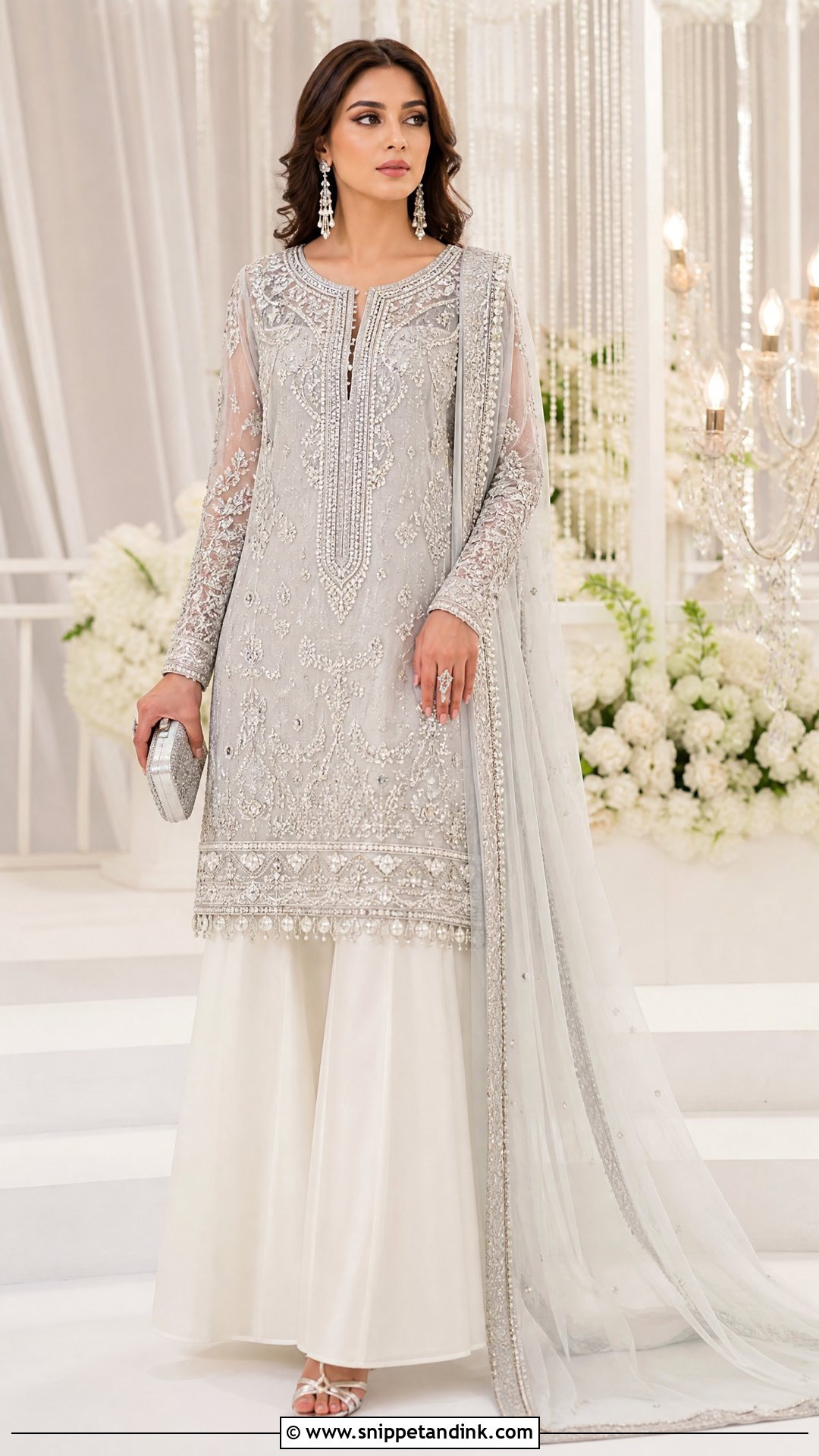
Silver over white palazzos is sleek and cool-toned, made for a Walima or reception. Silver embroidery, sequins, crystals and pearls look sharpest on organza, net or silk. The white palazzos keep the outfit comfortable and give modest coverage with a modern line. White palazzos need an opaque lining, though, and I check them under a bright light at the fitting since stage lights make thin white fabric see-through. A silver or white dupatta with fine borders, crystal earrings, silver heels and a small clutch complete it for anyone who likes clean dressing without heavy colour.

25. Olive Long Shirt With Gold Gharara
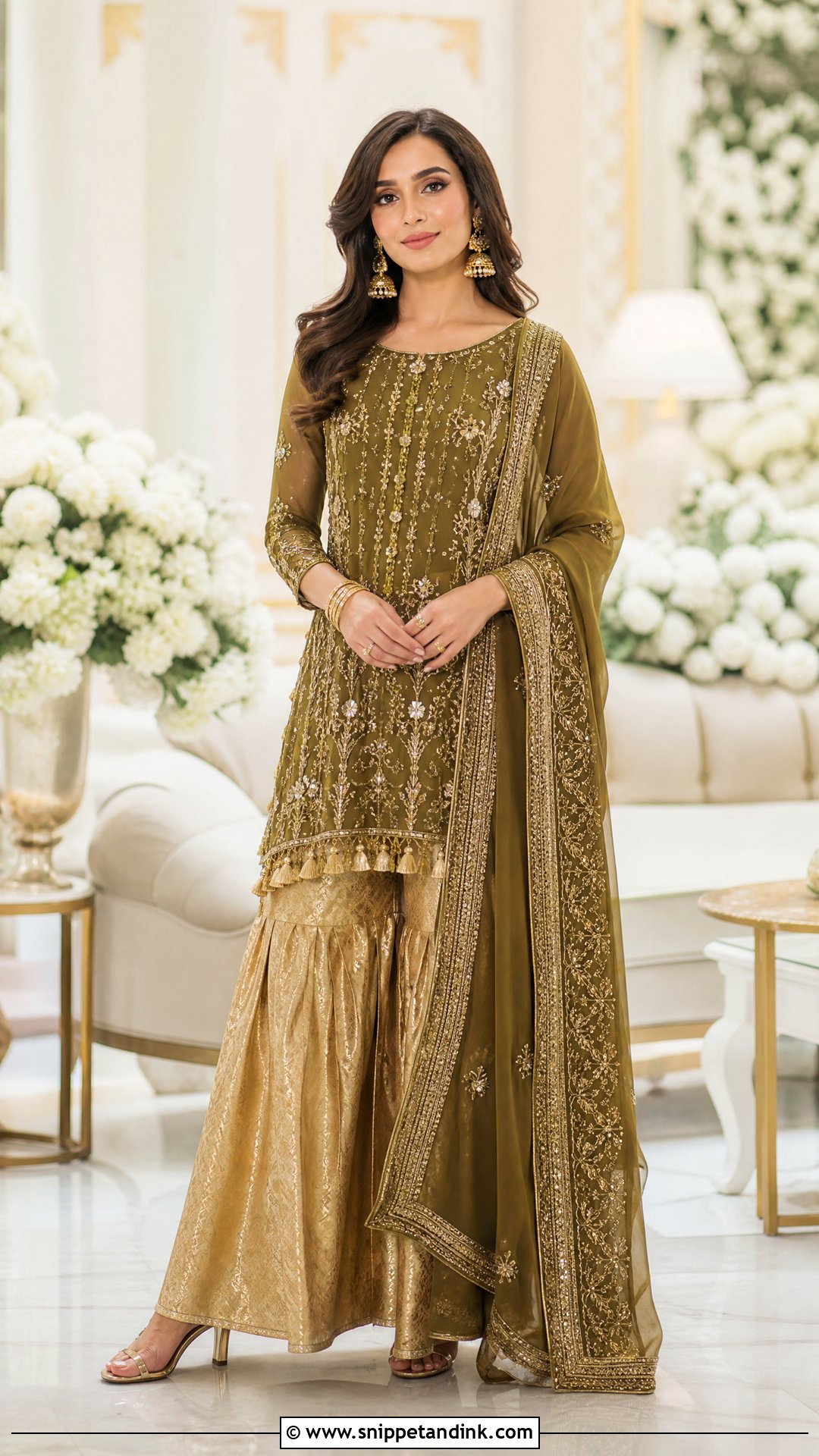
Olive is underrated at weddings, and it surprises people how warm it looks with antique gold. Give the long shirt detailed cuffs, neckline work and a broad embroidered hem, and pair it with a gold gharara that brightens the whole outfit. A matching olive dupatta with gold borders keeps it rich; a soft beige one softens it. Olive can drain colour from the face on some skin tones, so I’d bring the swatch up to the face in daylight before ordering, and use warmer makeup if it’s borderline. Jhumkas, bangles and gold heels suit guests and family who want something traditional but different from the usual wedding colours.
Can You Wear It Again Once the Wedding Is Over?
This is the question I get most from guests, and the long shirt is the best silhouette for it, because the pieces split apart. A heavily worked shirt worn with plain straight trousers becomes a smart Eid or dinner outfit. The sharara or palazzo can go under a simpler kurta. The dupatta can travel to a completely different outfit.
When you’re ordering with rewear in mind, a few choices make a real difference. Keep the shirt’s colour wearable on its own rather than only as half of a contrast pair. Ask for embroidery that’s concentrated at the neckline and hem instead of all over, since that reads less bridal later. And ask the tailor to leave a little seam allowance at the sides, so the shirt can be let out in a year or two.
Store it properly so it’s still worth wearing. Air the outfit for a day after the event, then fold it in clean cotton, not plastic, with tissue in the folds. Zari and tilla tarnish in damp conditions, so keep them somewhere dry and refold them every few months so the creases don’t set.
The Hemline Decides Everything
One silhouette really can cover the whole wedding week. With a lehenga it’s bridal, with a gharara it’s traditional, with a sharara it’s festive and with palazzos or cigarette pants it’s modern. Fabric, colour, embroidery and dupatta are what move it from one function to the next. Rich shades suit the baraat and evening receptions, while pastels, ivory, mint and champagne sit more naturally at a Nikkah or Walima. Before you order, decide where the shirt hem lands against the bottom you’ve chosen, because that single line decides whether the outfit looks planned or borrowed.
You'll Like These Ideas:





Leave a Reply