
A ring ceremony is shorter than a wedding, but it’s watched up close: elders seated a few feet away, cameras on your hands, and a lot of standing, bending for blessings and posing on a stage. So I dress engaged couples for movement first and coordination second. The pairings below cover pastel and ivory lehengas, sherwanis, bandhgalas, sarees and Indo-western gowns, with linked colours rather than identical outfits. Each comes with the practical detail I’d want sorted before the day, from how a fabric behaves under stage lights to whether a drape lets you hold out your hand.
Linking Two Outfits Without Twinning
Couples often ask me whether they should match. My answer is to share one element and let everything else differ. Matched fabric and colour head to toe flattens you both into a single shape on stage.
- Lead with the bride’s outfit, since it usually takes longest to make, and choose his after hers is fixed.
- Take one colour from her embroidery or border, not the base fabric, and use it in his stole, pocket square, buttons or safa.
- Match the level of formality: a heavy velvet lehenga beside a plain cotton kurta looks unplanned, as does a sequin saree beside a casual jacket.
- Keep metals consistent. If her jewellery is antique gold, his buttons and brooch should be warm too, not silver.
Bring a swatch of her fabric to his fitting. Colours on a phone screen are rarely accurate, and a stole ordered from a photo is the most common near-miss I see.
Hands Get the Close-Up at a Ring Exchange
The ring moment is a tight photograph of two hands, so sleeves, bangles and nails all matter more than at most events. Three-quarter or full sleeves with heavy cuffs can cover the ring finger, and a stack of bangles slides down onto the hand when you hold it out.
Keep the ring hand lighter than the other: fewer bangles, a sleeve that ends above the wrist bone, and a neutral manicure that won’t clash with the stone. If mehndi is part of your engagement, apply it a day or two earlier so the colour has deepened by the ceremony. For him, a sherwani cuff with a little room lets the shirt cuff sit back when he slides the ring on.
1. Pastel Lehenga And Ivory Sherwani
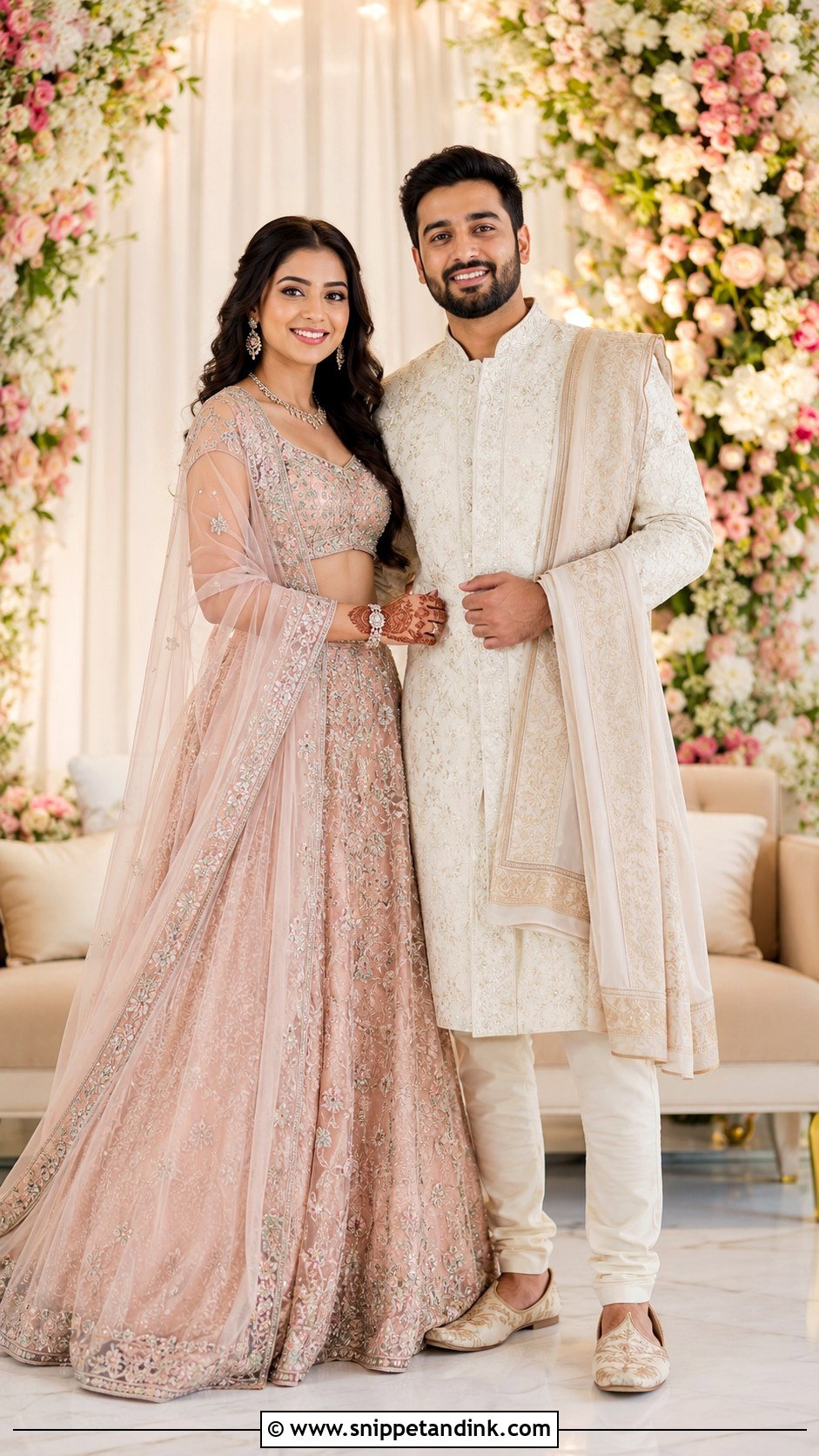
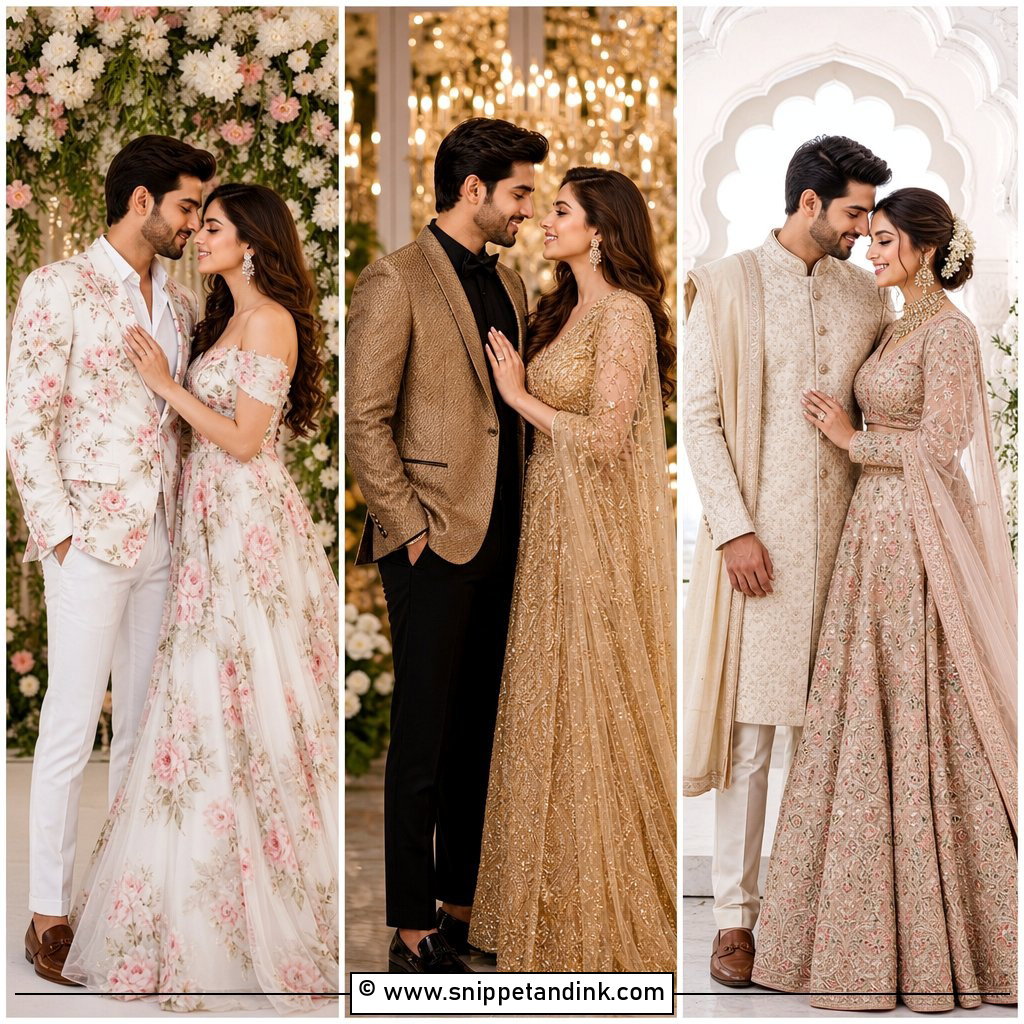
Pastel and ivory is the pairing I’m asked for most, and it’s easy to see why. A blush, mint, powder blue or lavender lehenga with fine sequin, pearl or thread work reads fresh, and an ivory sherwani with slim trousers and embroidered mojaris sits calmly beside it. Tie them with a pocket square cut from her lehenga shade. Pastels can wash out under cool white LED stage lights, so ask the decorator about warm lighting. Kundan earrings, a bracelet and a clean manicure keep attention on the ring.
2. Saree And Bandhgala Suit
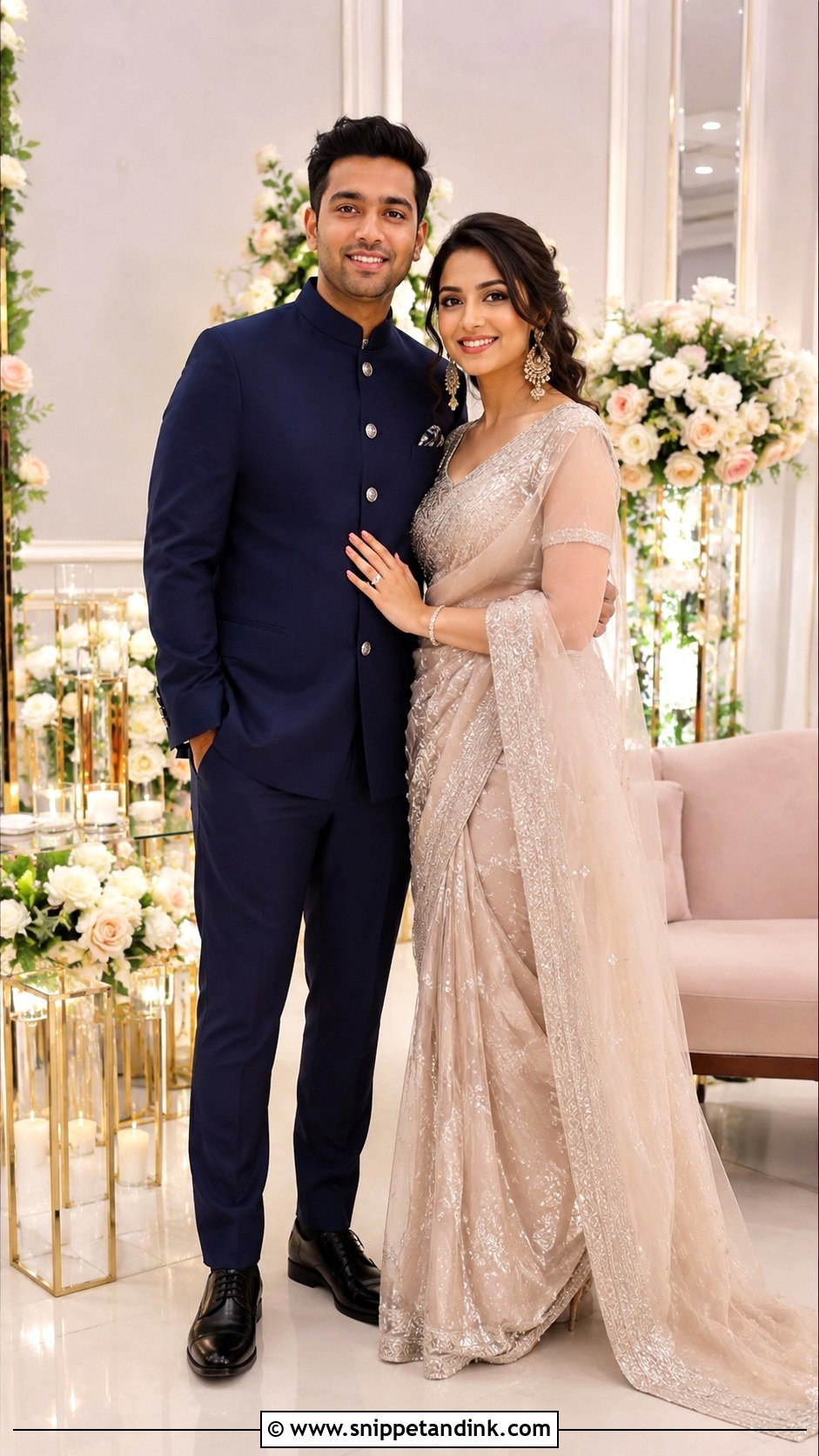
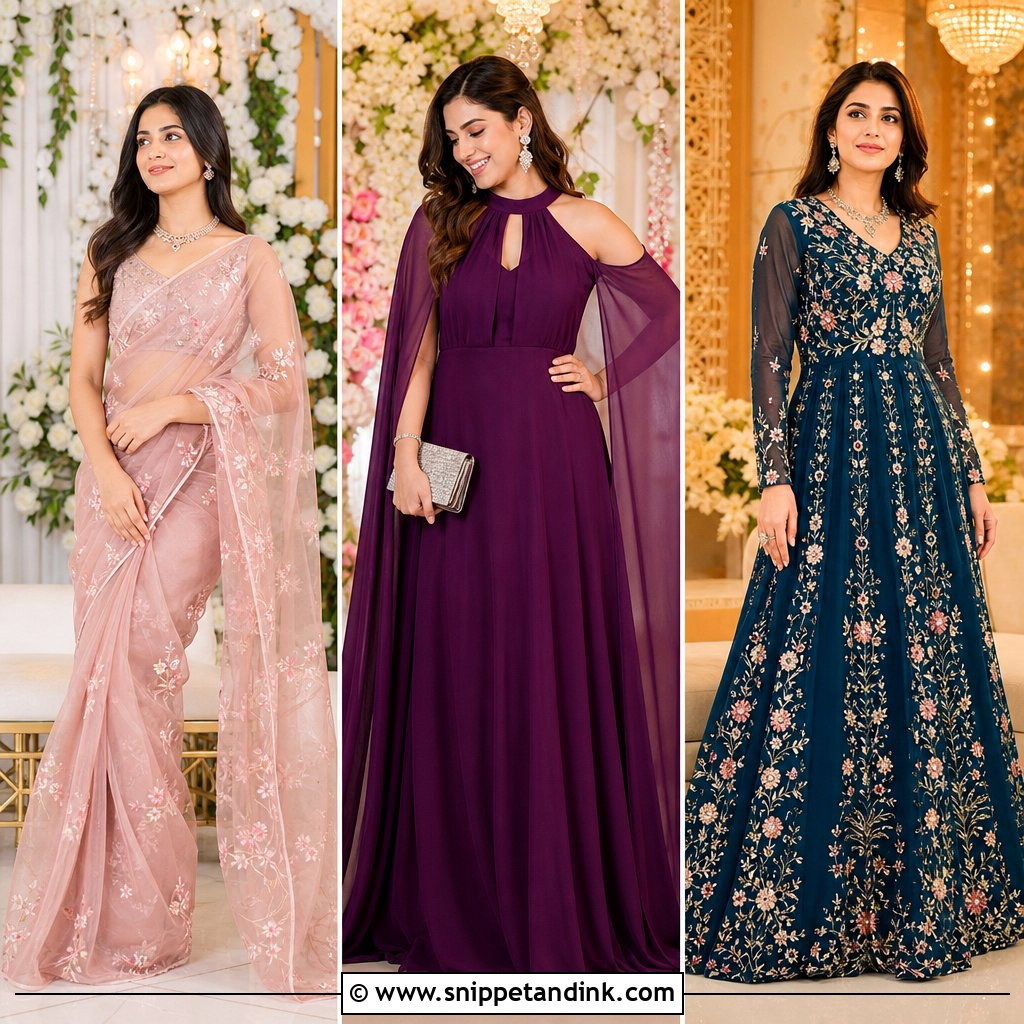
The saree with a bandhgala is the most formal-without-fuss pairing here. Silk, organza, chiffon or georgette in champagne, peach, emerald or rose gold all suit an engagement, and a structured blouse keeps the top crisp. I pin the pallu at the shoulder for this event, not left loose, because the ring exchange means stretching an arm forward and an unpinned pallu slides straight off. He goes in ivory, navy, beige or charcoal with loafers or juttis and a brooch. Banquet halls and home functions both suit it.
3. Gold Lehenga And Cream Sherwani
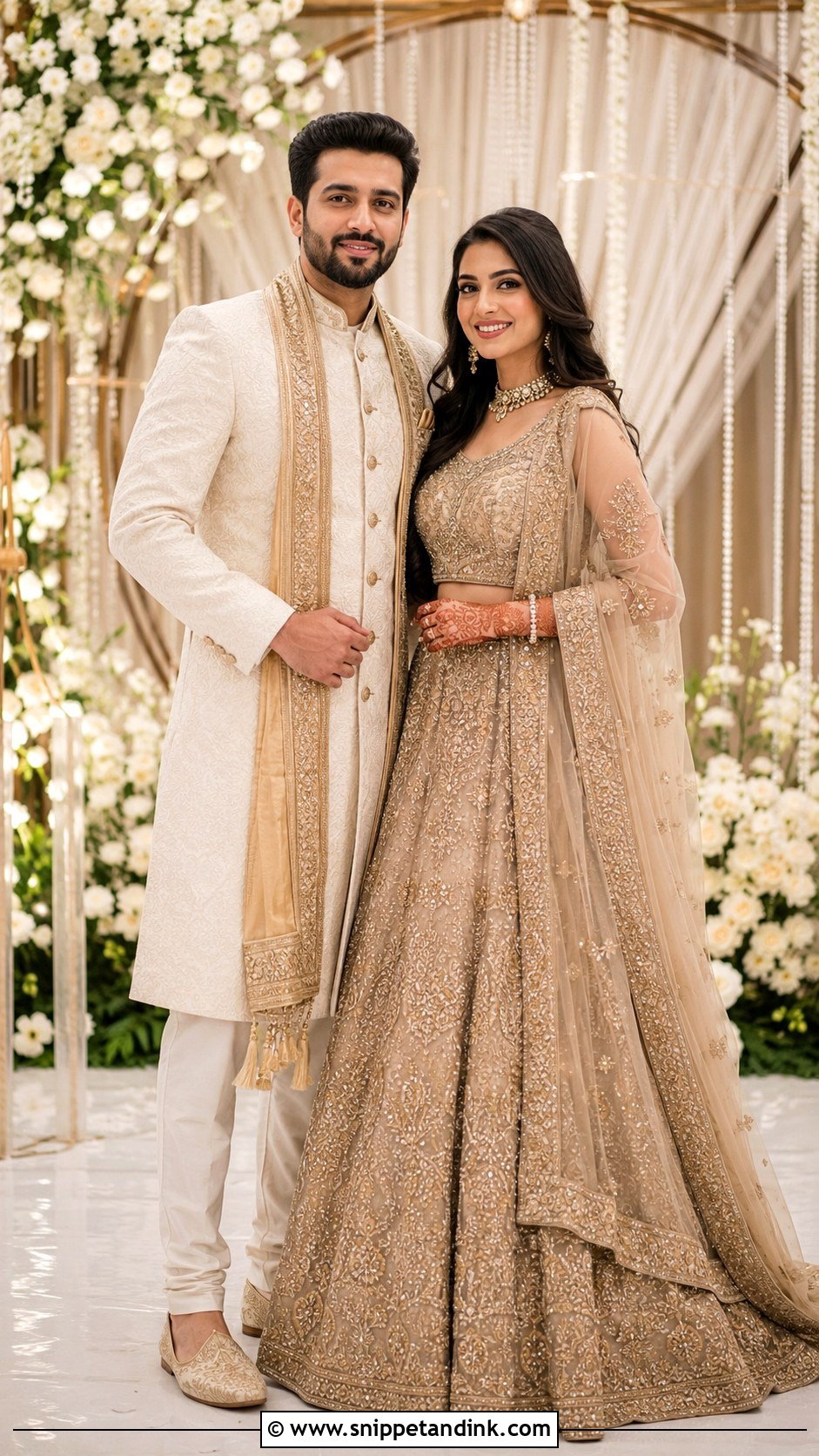
Gold gives you a regal look without the full bridal red. A soft gold lehenga with zardozi, mirror work or metallic embroidery pairs with a cream sherwani, gold buttons and ivory churidars, and a gold-edged stole or safa on him links the two. Keep her dupatta sheer, since heavy metallic dupattas weigh on the shoulder and pull the blouse. Metallic threads glow under warm evening lights and can flatten in harsh daylight, so I save this one for night functions. Warm makeup and traditional jewellery suit it.
4. Matching Anarkali And Kurta Set
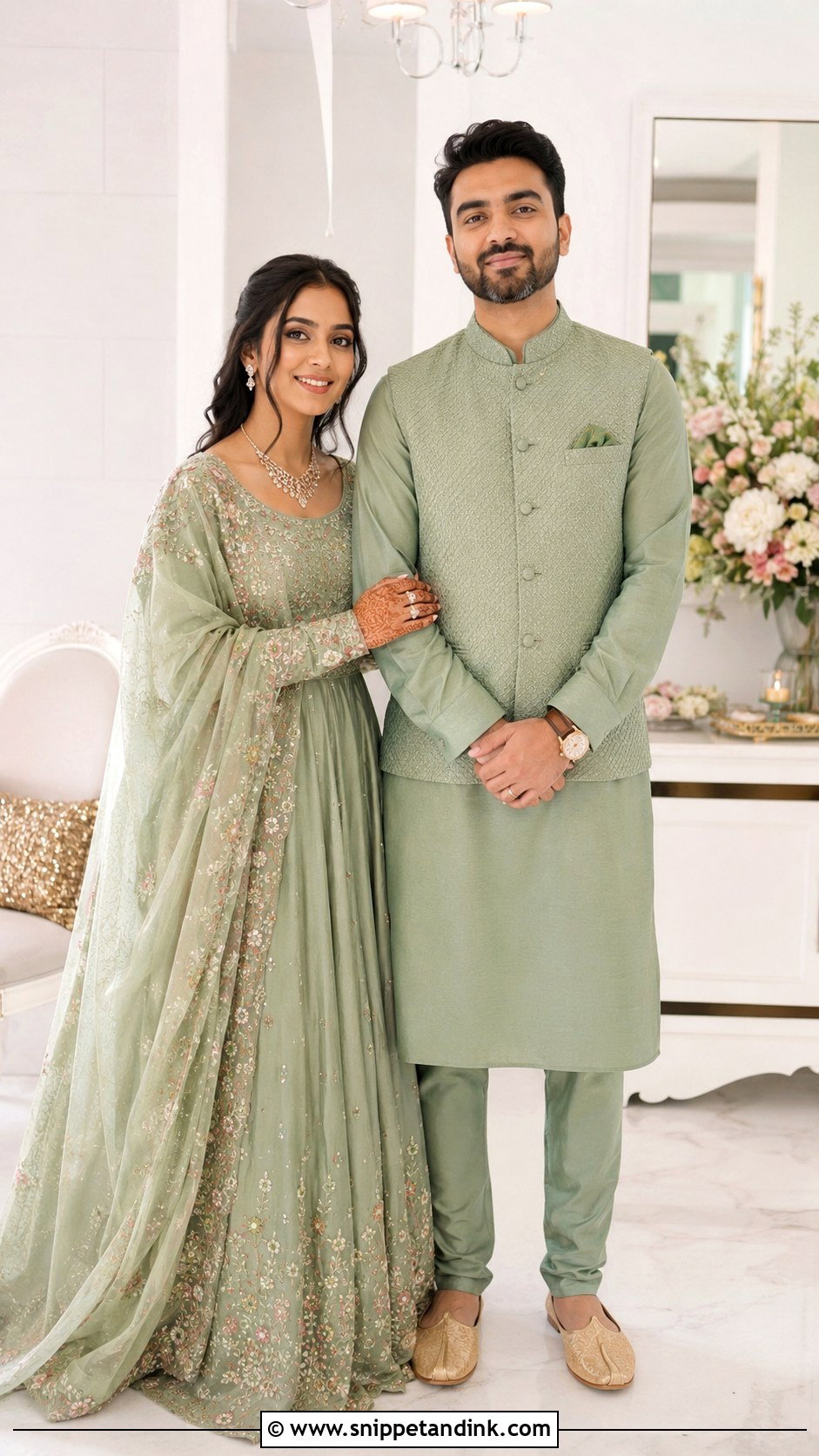
For a small function at home, I’d often choose this over a lehenga. A floor-length anarkali in sage, dusty pink, ivory or lilac with light embroidery lets the bride sit on a low seat or the floor for a puja without managing a heavy skirt. He wears a coordinated kurta set with a Nehru jacket in the same colour family. Check the anarkali’s flare when seated: a very full one bunches awkwardly. Statement earrings for her and classic juttis for him are enough.
5. Velvet Lehenga And Black Bandhgala
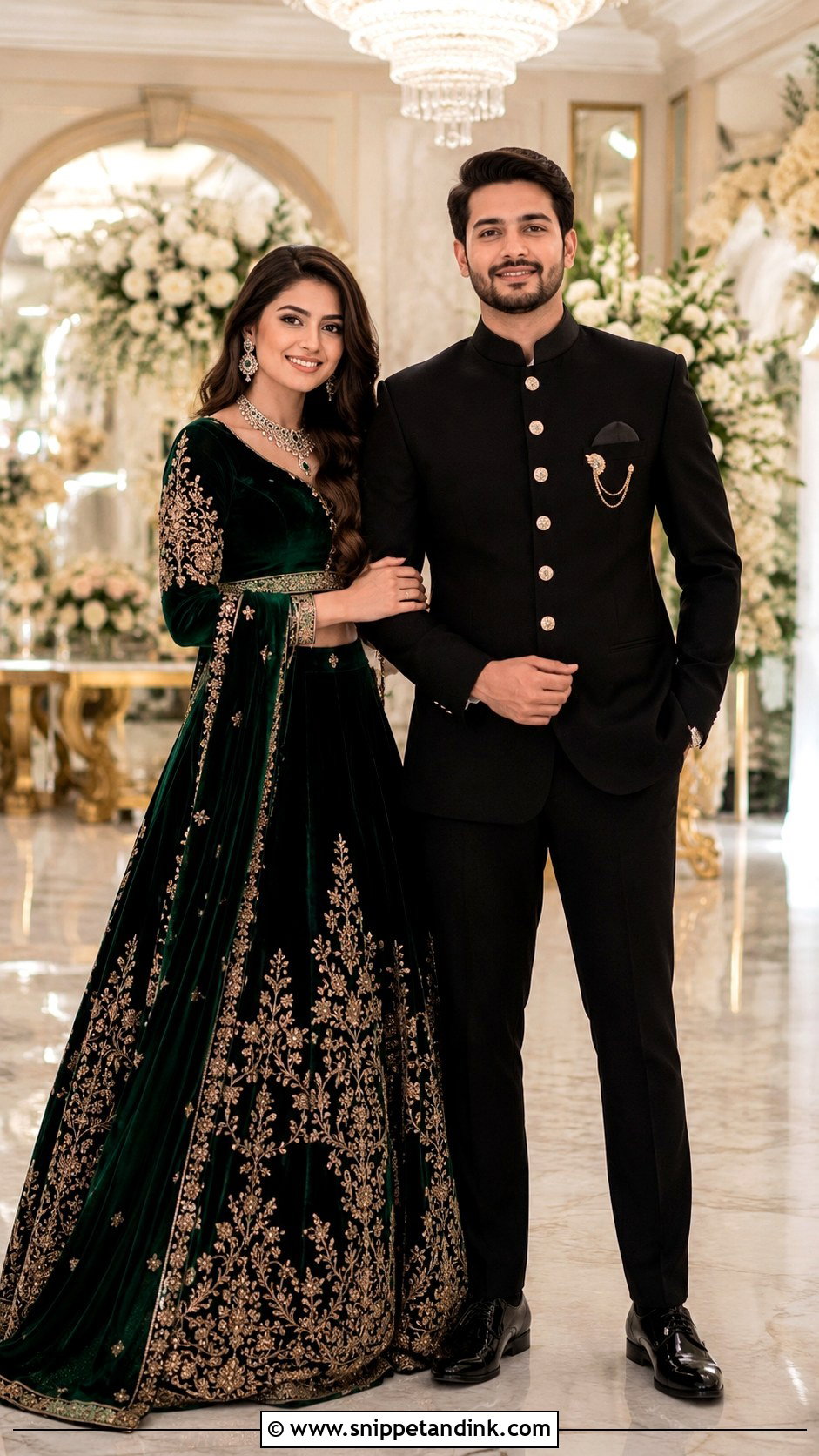
Velvet belongs to winter and evening. A maroon, emerald, navy or wine velvet lehenga with antique gold embroidery is rich enough that the jewellery can stay restrained, and a black bandhgala with tailored trousers and a small brooch holds its own beside it. Pick up her lehenga colour in his pocket square or buttons. Be honest about the venue: velvet is warm and heavy, and in a crowded hall without good air conditioning it becomes tiring within an hour. Under bright stage lighting, though, nothing photographs richer.
6. White Gown And Tuxedo
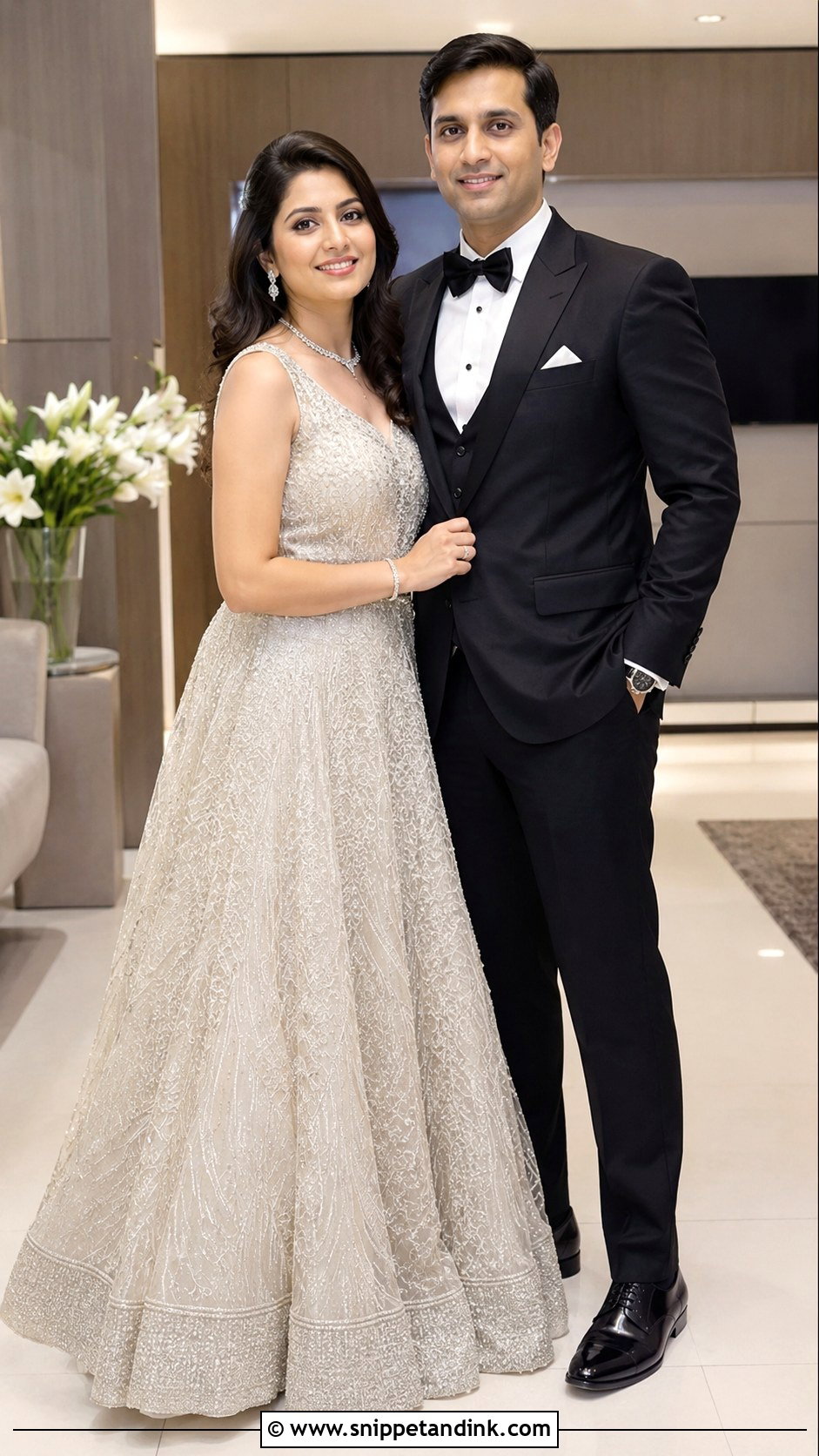
A white gown with a tuxedo suits couples hosting a cocktail-style engagement in a hotel. She wears an embellished white, ivory or champagne gown with soft beadwork; he wears black, navy or ivory with a crisp shirt. Bring in Indian detail through a maang tikka, diamond jewellery, embroidered cuffs or a dupatta-style cape. One thing families sometimes raise is white at an auspicious ceremony, so it’s worth a quiet conversation with elders before you order. With ivory or champagne, that concern usually disappears.
7. Banarasi Saree And Silk Kurta
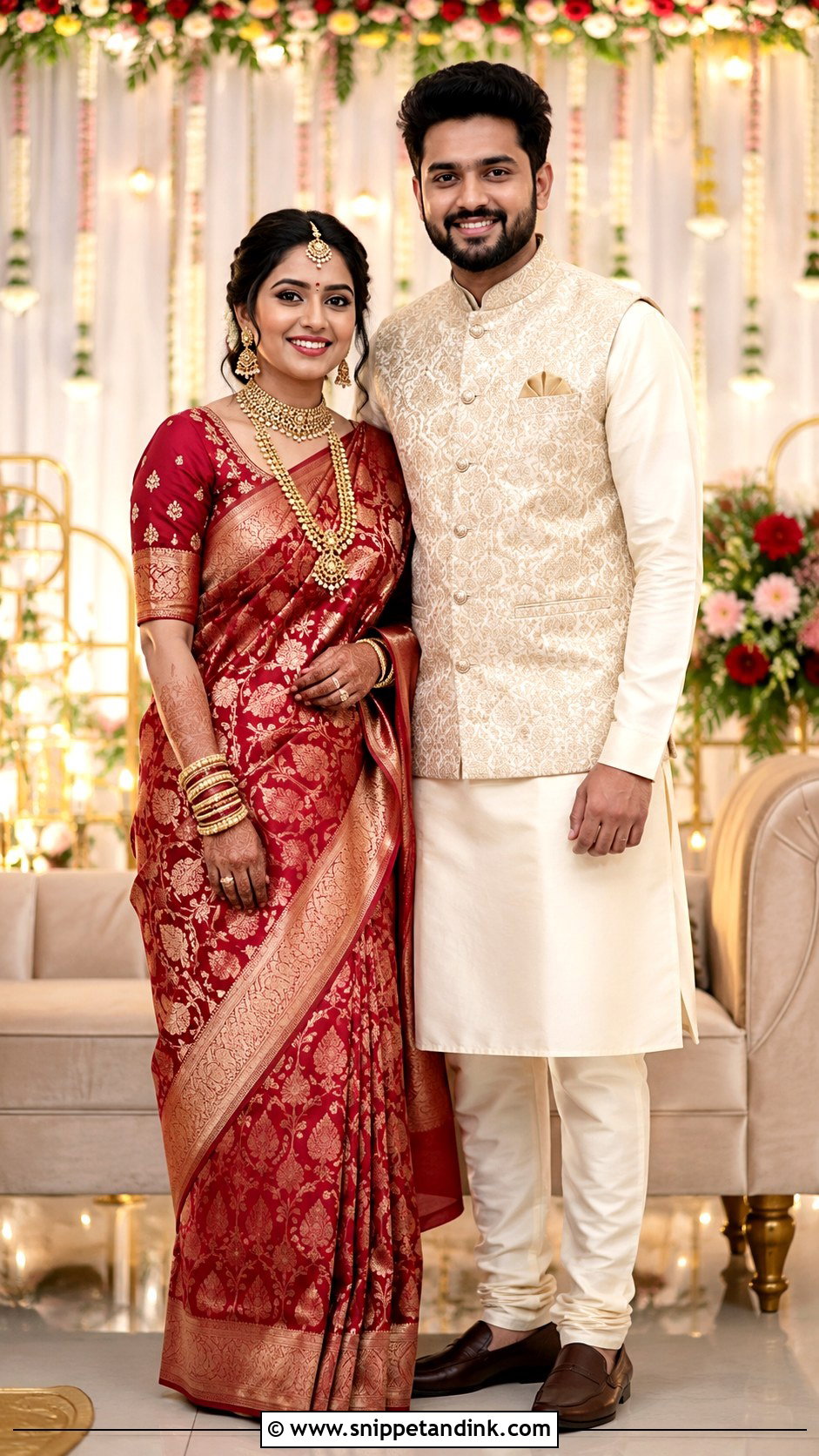
Banarasi weaving is heavy, structured silk, and it pleats crisply, which is what makes it look so ceremonial. A Banarasi saree with a silk kurta in ruby, emerald, royal blue or rani pink, worn with gold jewellery and a sleek bun, is a choice elders tend to love. He matches in a cream, beige or jewel-tone silk kurta with a brocade Nehru jacket. The fabric is stiff for the first wear, so have the saree pre-pleated and box-folded by someone experienced; it saves twenty minutes of struggle on the day.
8. Floral Lehenga And Pastel Nehru Jacket
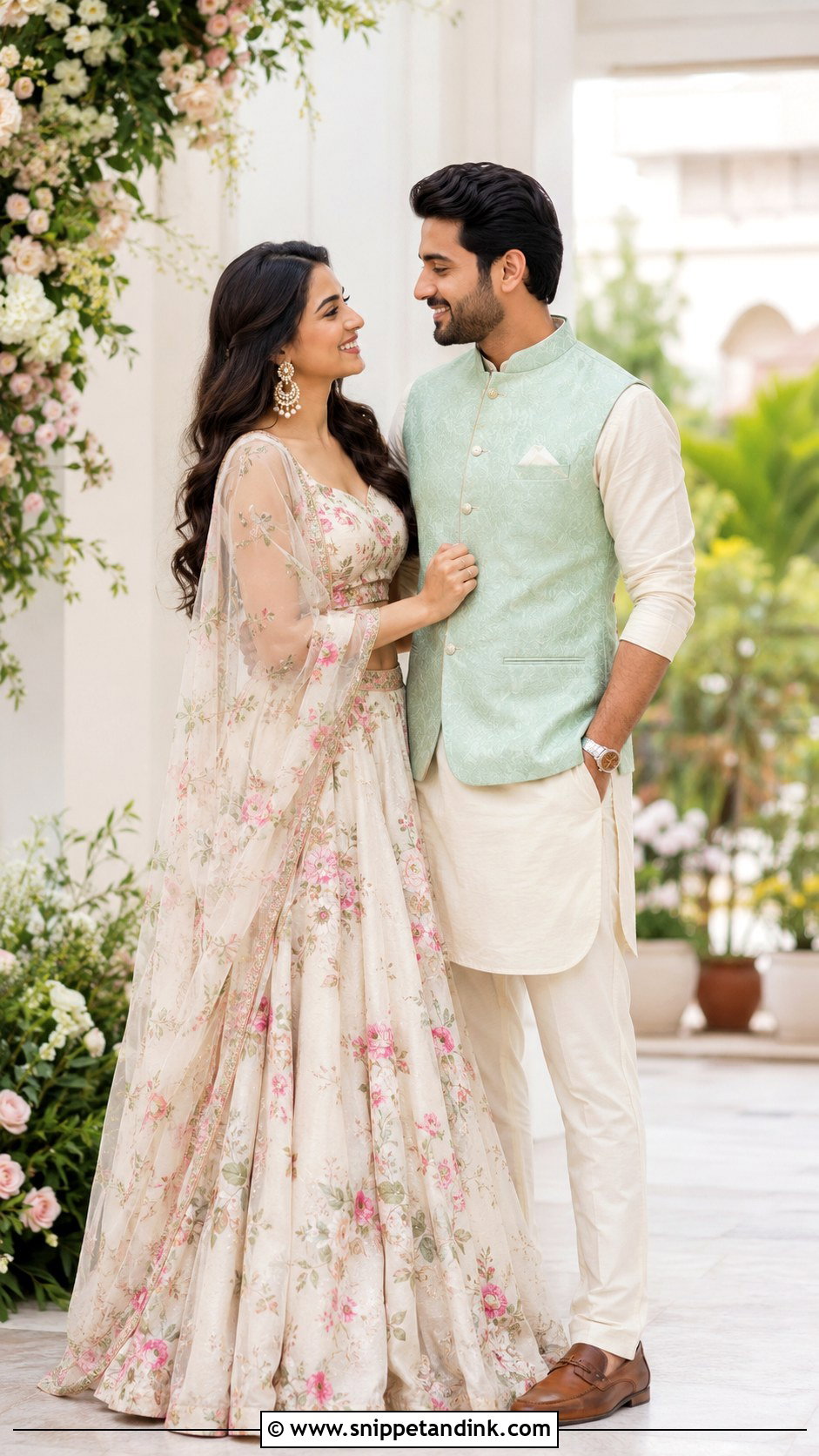
Daytime and gardens call for something lighter. A printed or embroidered floral lehenga in organza, georgette or a silk blend, in peach, mint, ivory or lavender, sits naturally outdoors. His plain kurta pajama gets a pastel Nehru jacket that lifts one colour from her print, never the whole palette. Organza creases quickly when you sit, so steam it at the venue if you can. Pearl earrings or a delicate choker, juttis and a clean watch finish the pair.
9. Sharara Set And Embroidered Kurta
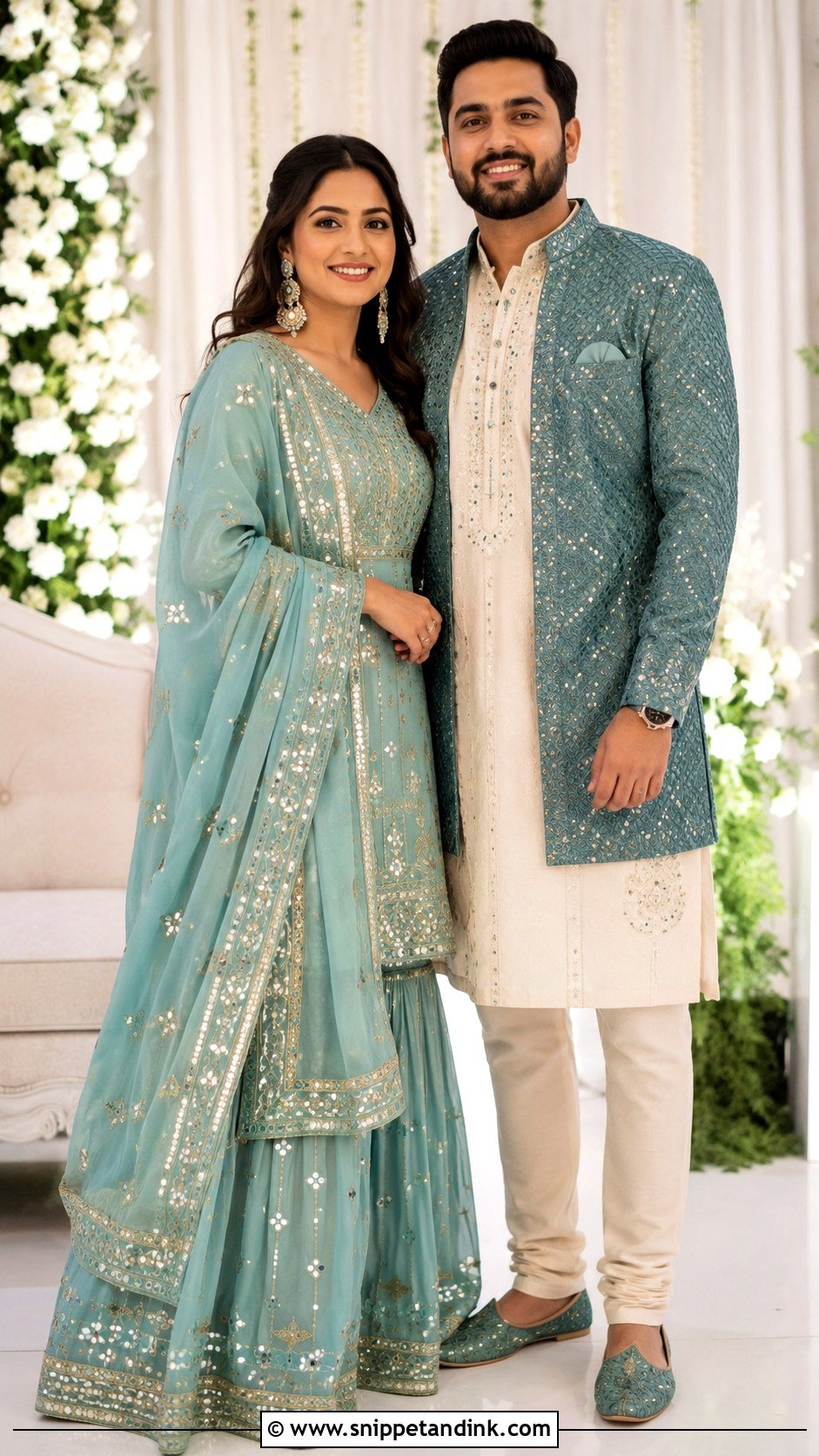
Shararas are the easiest thing on this list to move in. A sharara set and embroidered kurta lets her walk, greet guests and sit for rituals without lifting a skirt. A short kurti, flared pants and a light dupatta in ivory, teal, pink or mustard, with mirror work or gota patti, feels festive but not bridal. He wears an embroidered kurta with straight pants and a jacket in a complementary colour. Have the sharara hemmed to your actual footwear, since an inch too long and it catches under the heel.
10. Red Saree And Beige Sherwani
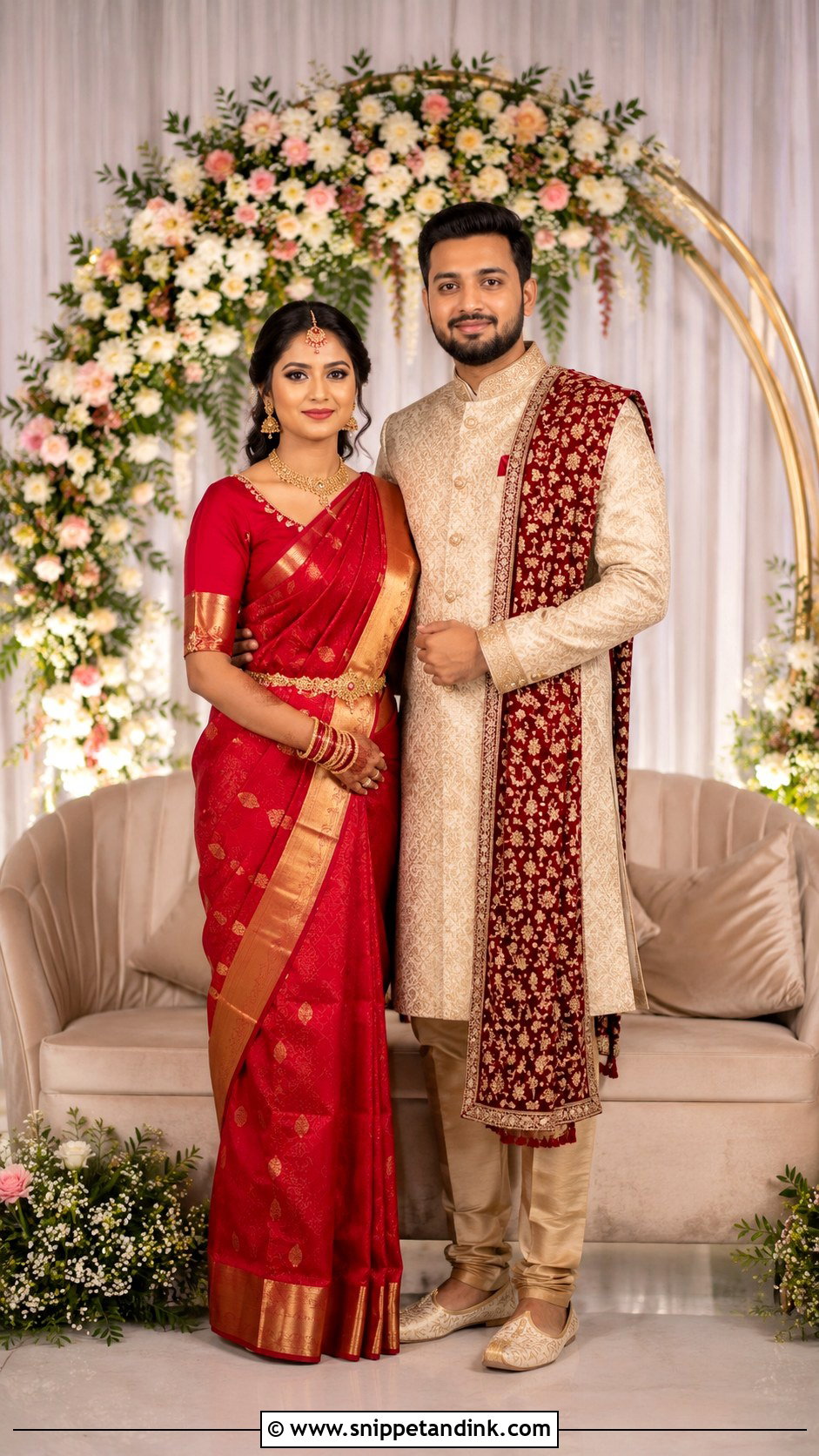
Red is traditional, so I keep the engagement version a step lighter than the wedding look. A red silk, chiffon or georgette saree with a gold border, a statement blouse, gold bangles and kundan jewellery feels festive, while a beige or cream sherwani with a red stole and tan or gold juttis keeps him calmer. Red is bold on camera, so polished but not heavy makeup works best. If your wedding outfit is also red, change the shade here, say a brick or coral red, so the two events don’t look the same in the album.
11. Indo Western Gown And Jodhpuri Suit
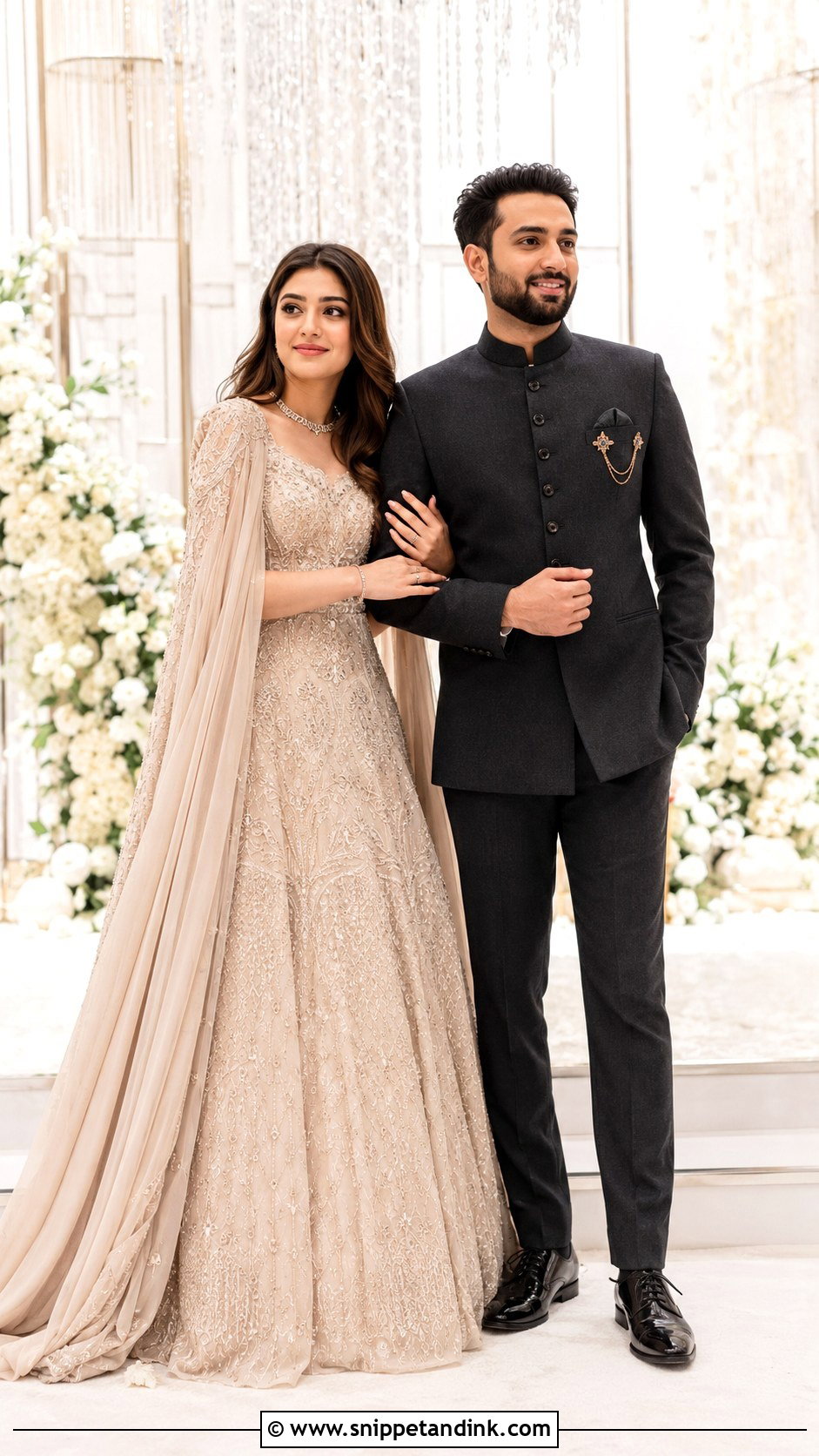
An Indo-western gown with a Jodhpuri suit suits couples somewhere between traditional and modern. Her gown can carry Indian embroidery, a cape sleeve, a draped dupatta or a lehenga-style flare, in champagne, mauve, teal or silver. His Jodhpuri has structured shoulders and a closed neck with slim trousers, a brooch and formal shoes. The Jodhpuri lives or dies on the shoulder fit, so I’d always have it tailored rather than bought off the rail. Both silhouettes are clean, which helps on a stage.
12. Peach Lehenga And Grey Suit
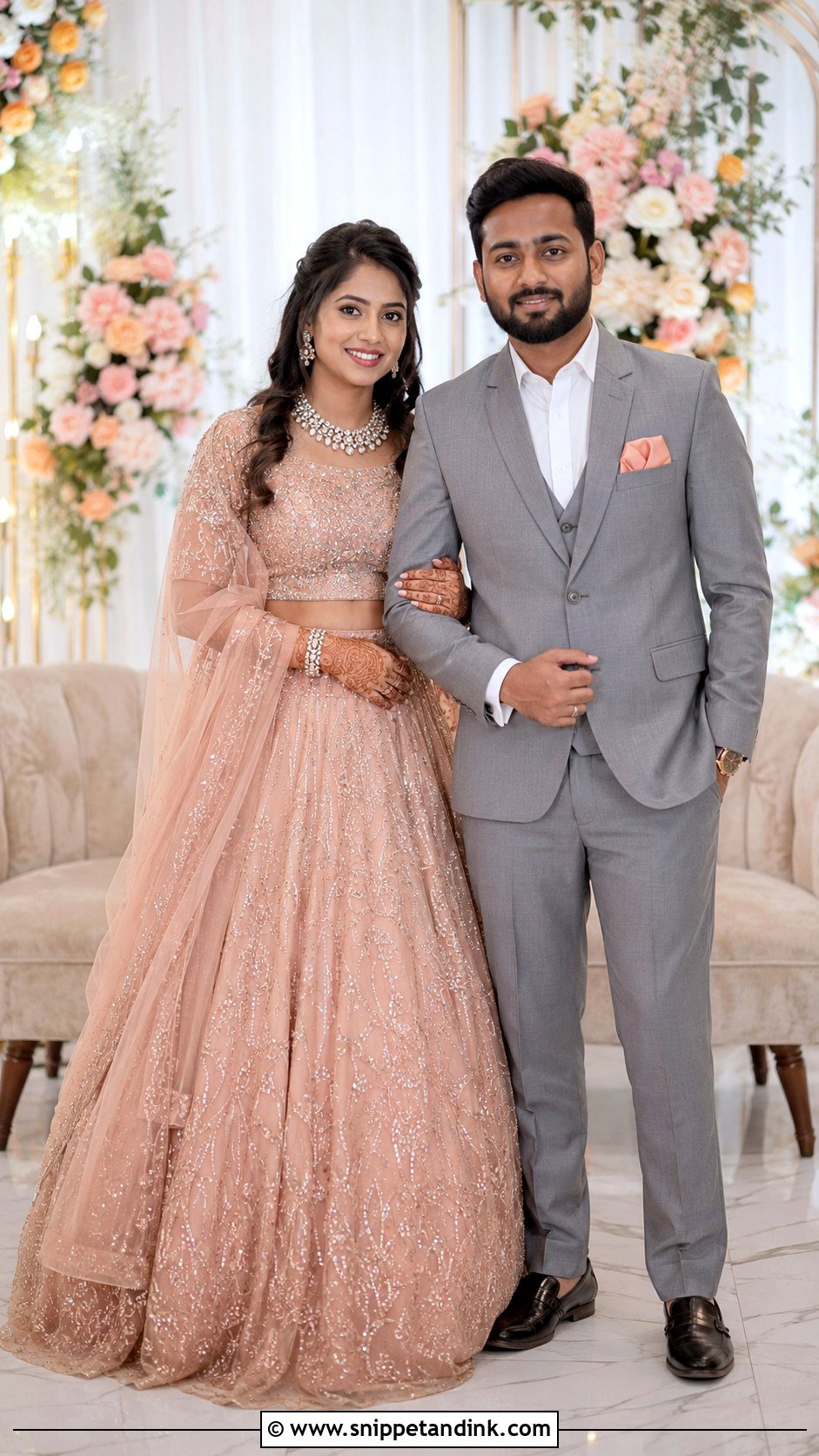
Peach and grey is a quiet, modern colour pairing. Her peach lehenga with sequins, pearls or thread work has a soft glow; his grey suit picks up peach in a tie, pocket square or lapel flower. It reads less heavy than deep traditional colours while staying formal for an engagement, and it sits well against floral decor indoors. Let her embroidery decide the jewellery: pearl work with pearls, sequins with diamonds or polki. Couples who dislike obvious matching tend to be happiest here.
13. Green Lehenga And Ivory Kurta
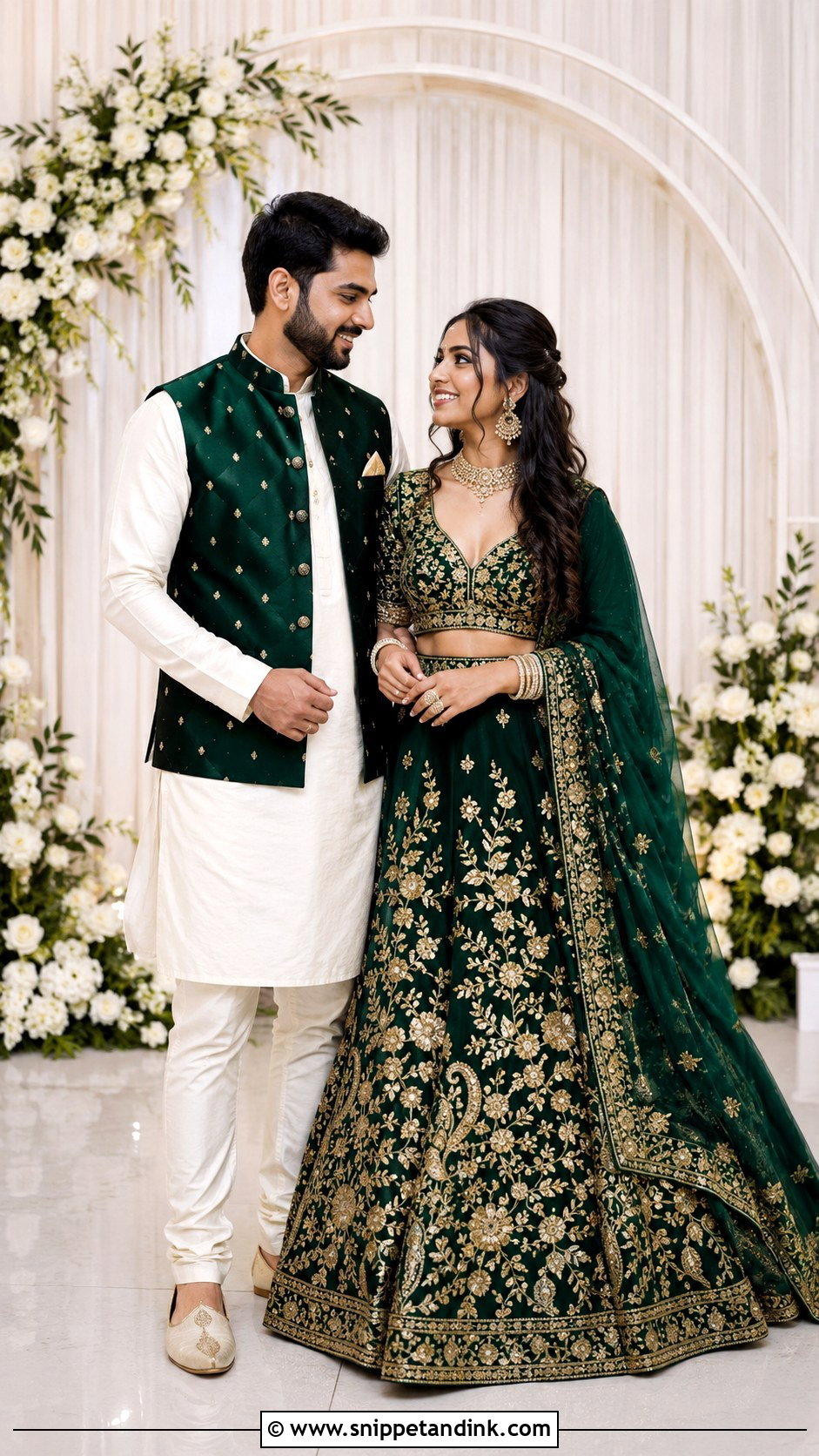
Green is considered auspicious in many families, and the shade matters. Emerald and bottle green belong to evenings with heavier embroidery; sage and pistachio suit daytime with lighter thread work. He wears an ivory kurta pajama with a green Nehru jacket or stole, which links the pair without making them twins. Gold jewellery warms green, and a few pearl details soften it. This pairing adapts easily to both North and South Indian ceremonies.
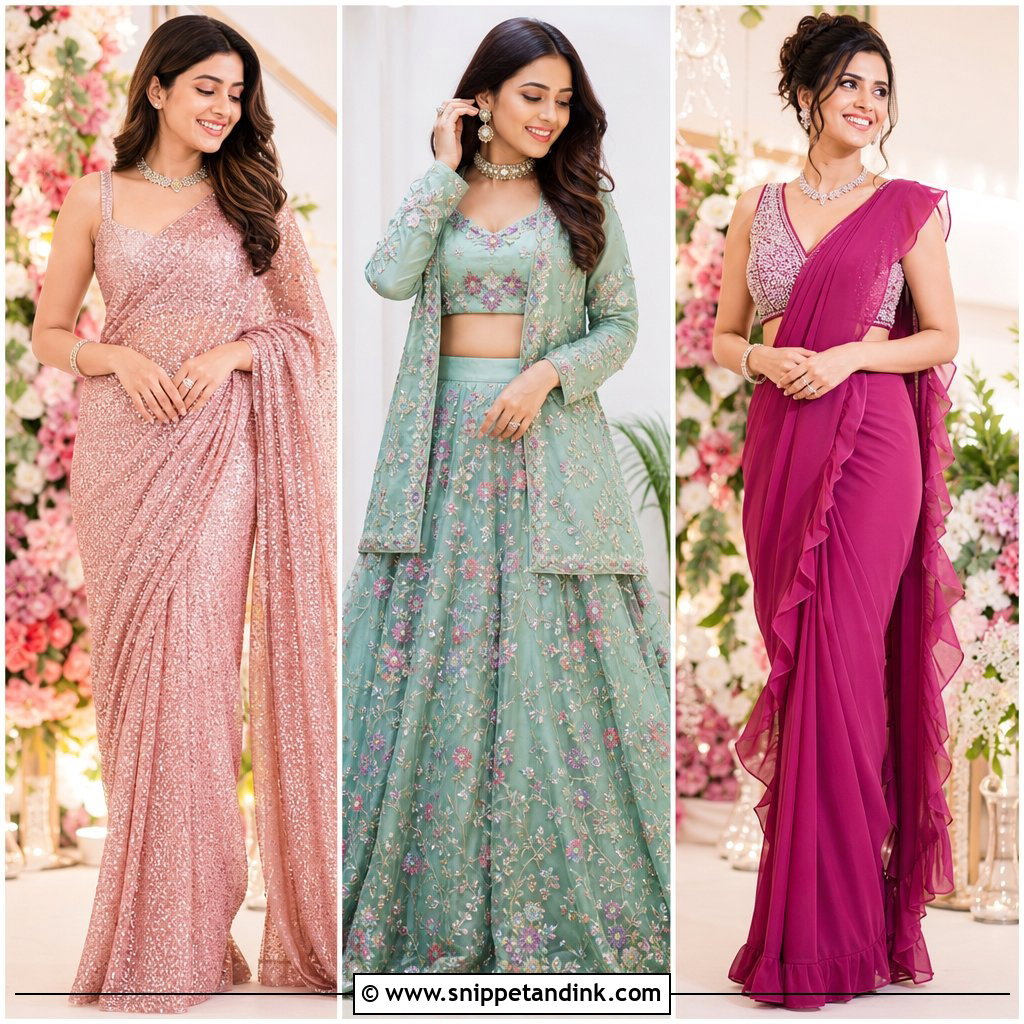
14. Sequin Saree And Classic Suit
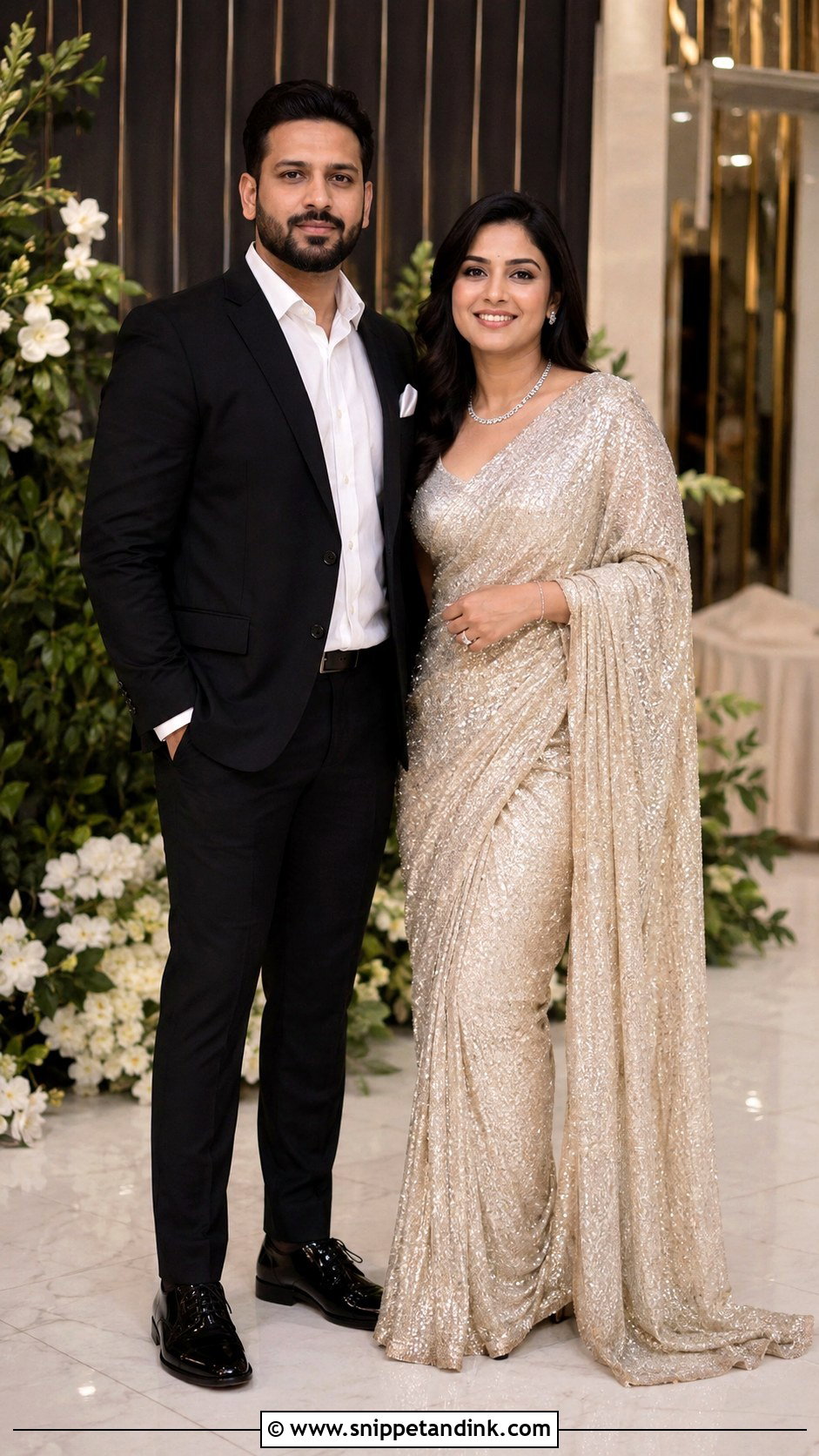
Sequin sarees are for evenings, and they need almost nothing else. Silver, champagne, blush or navy sequins with a sleek blouse, soft curls, a clutch and refined heels are plenty. He wears a well-fitted black, charcoal, navy or ivory suit with a tie or pocket square in her shade. One caution from fittings: sequins scratch the inner arm where the blouse sleeve meets the drape, so a lined blouse with a soft sleeve edge makes a long evening far more comfortable. It suits a cocktail-style engagement.
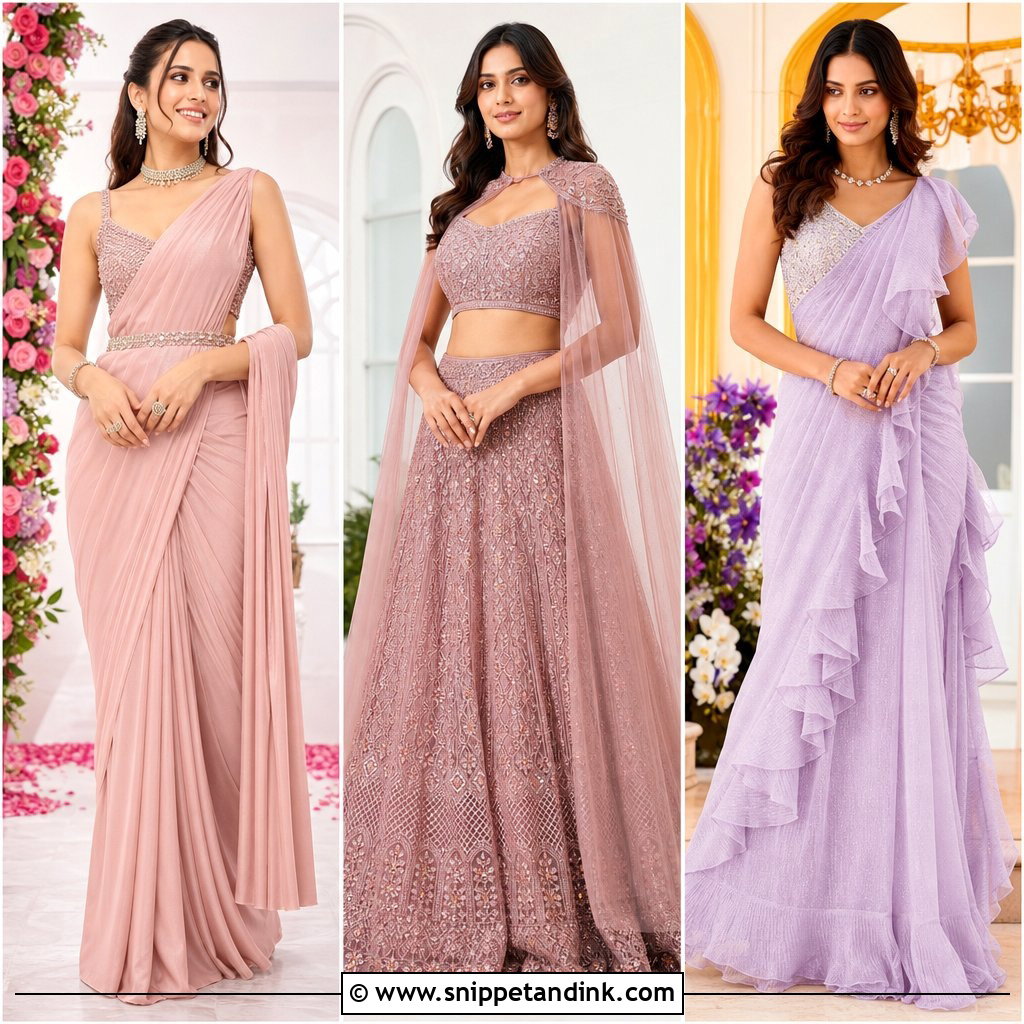
15. Ruffle Saree And Printed Bandhgala
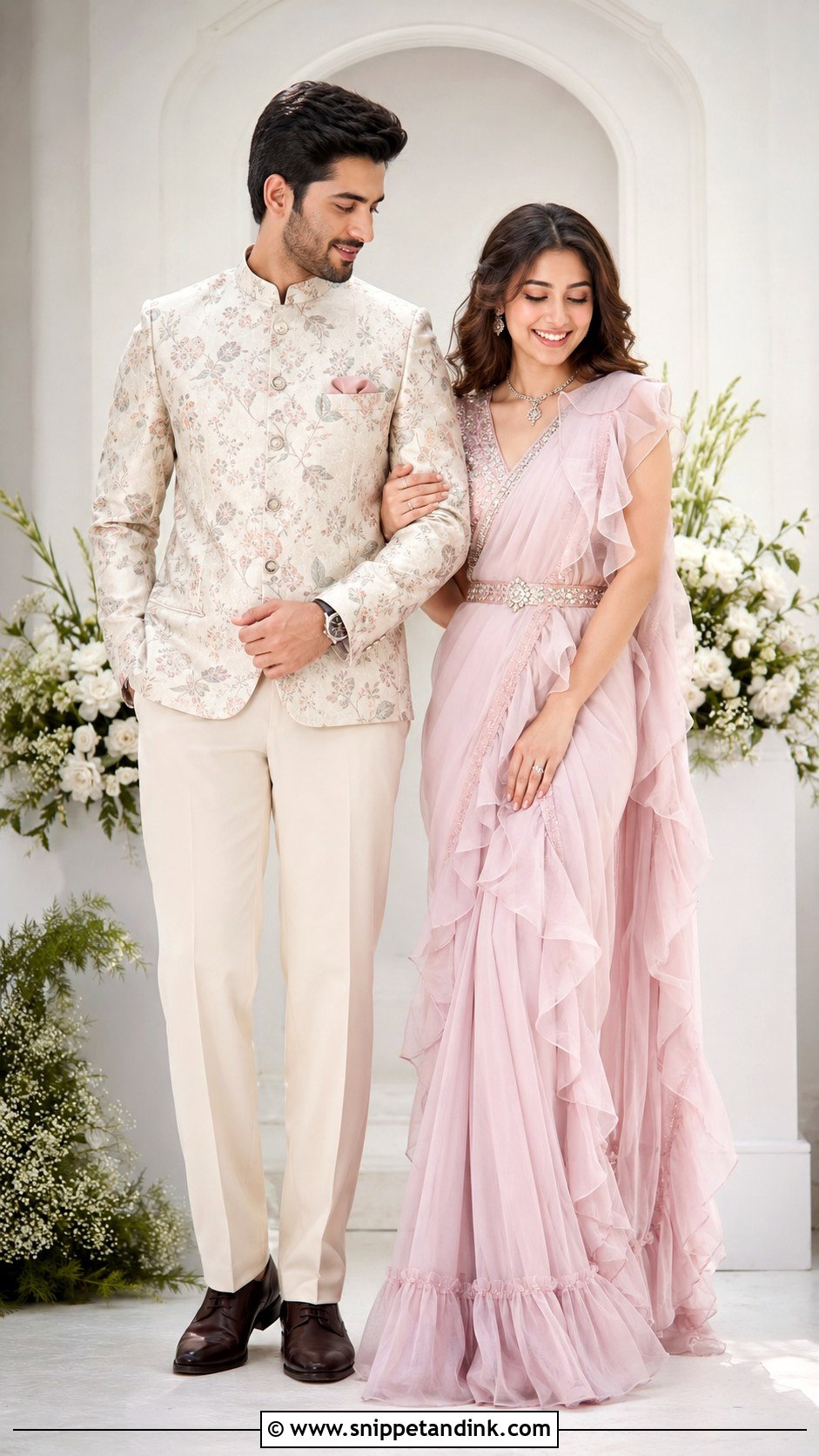
A ruffle saree moves well and drapes faster than a traditional pleated one, which is useful if you’re dressing yourself. Pastel, metallic or jewel tones with an embellished belt or statement blouse keep it fashion-led, and his printed bandhgala should pick up her colour family with solid trousers and formal shoes. The belt does a job too: it holds the ruffles in place when you lean forward for the ring. Keep jewellery contemporary, such as chandelier earrings, a cocktail ring or layered bracelets.
16. South Indian Silk Saree And Veshti Kurta
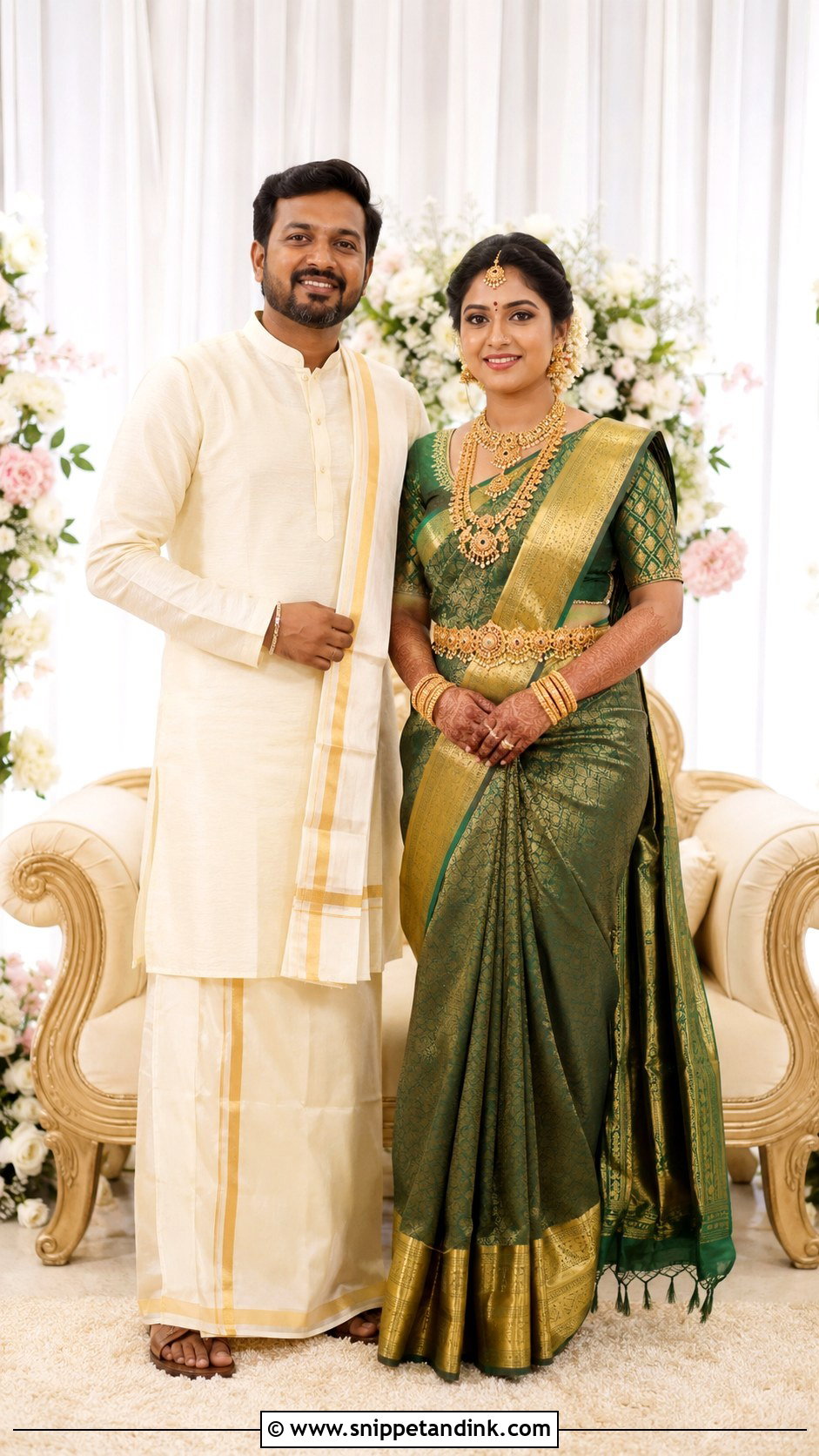
A South Indian silk saree and veshti kurta pairing is the most rooted look here. A Kanjivaram in gold, maroon, green or purple with a temple border, traditional jewellery, glass bangles and jasmine in the hair suits a home or temple setting. He wears a silk kurta with a veshti or dhoti and sandals, with an angavastram that echoes her border colour. Kanjivaram silk is heavy, so pleat and pin it well; it rewards a careful drape with very clean lines.
17. Lavender Lehenga And White Sherwani
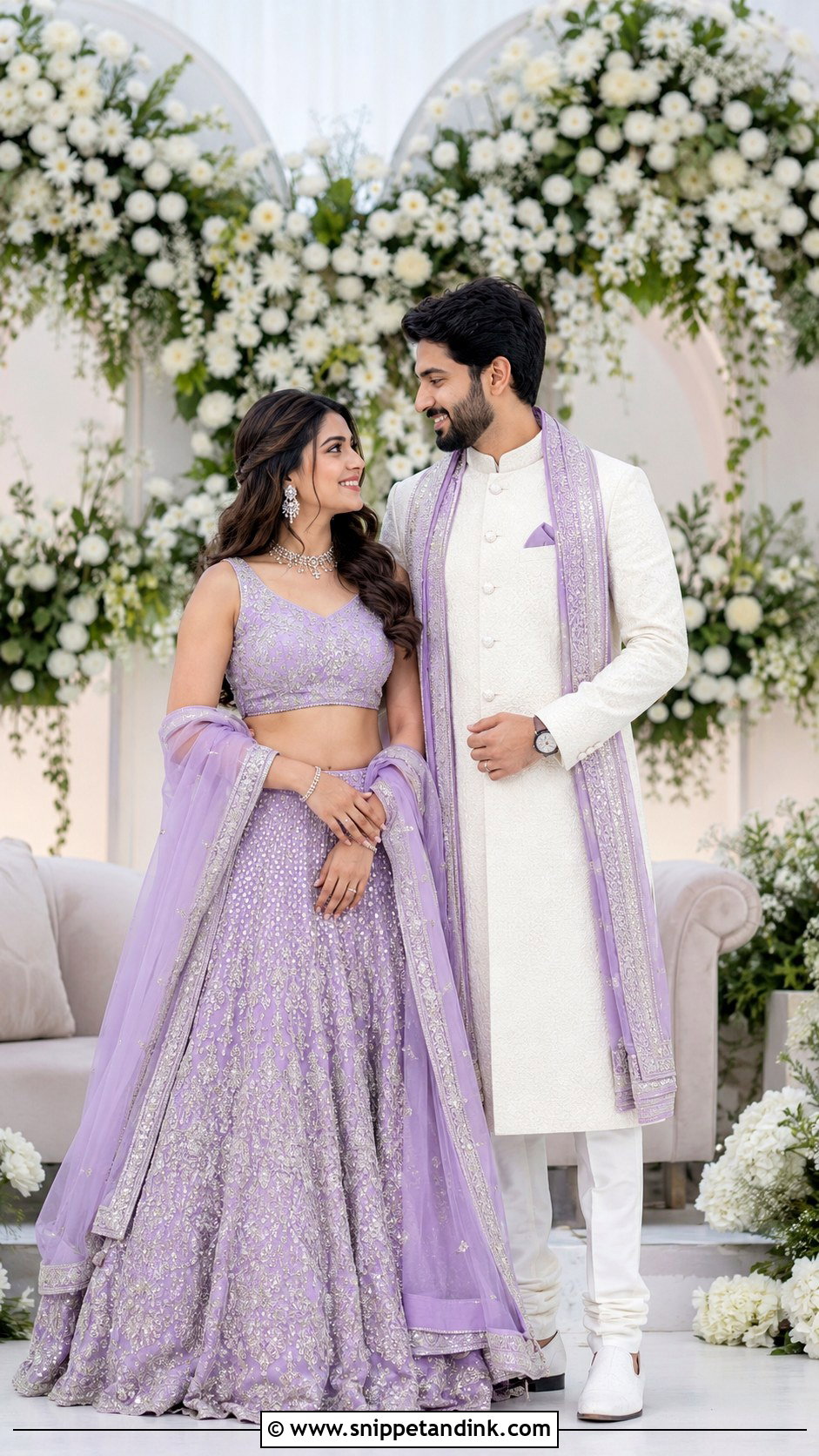
Lavender shifts a lot under different light, from soft lilac to almost grey, so see the fabric in the same kind of light as your venue before ordering. A lavender lehenga with silver, pearl or tone-on-tone embroidery and a sheer dupatta suits spring and summer ring ceremonies. He wears white or ivory with lavender in the stole, buttons, pocket square or safa. White flowers and pastel decor sit well with it. Rosy makeup for her and clean grooming for him keep it fresh.
18. Jacket Lehenga And Layered Kurta
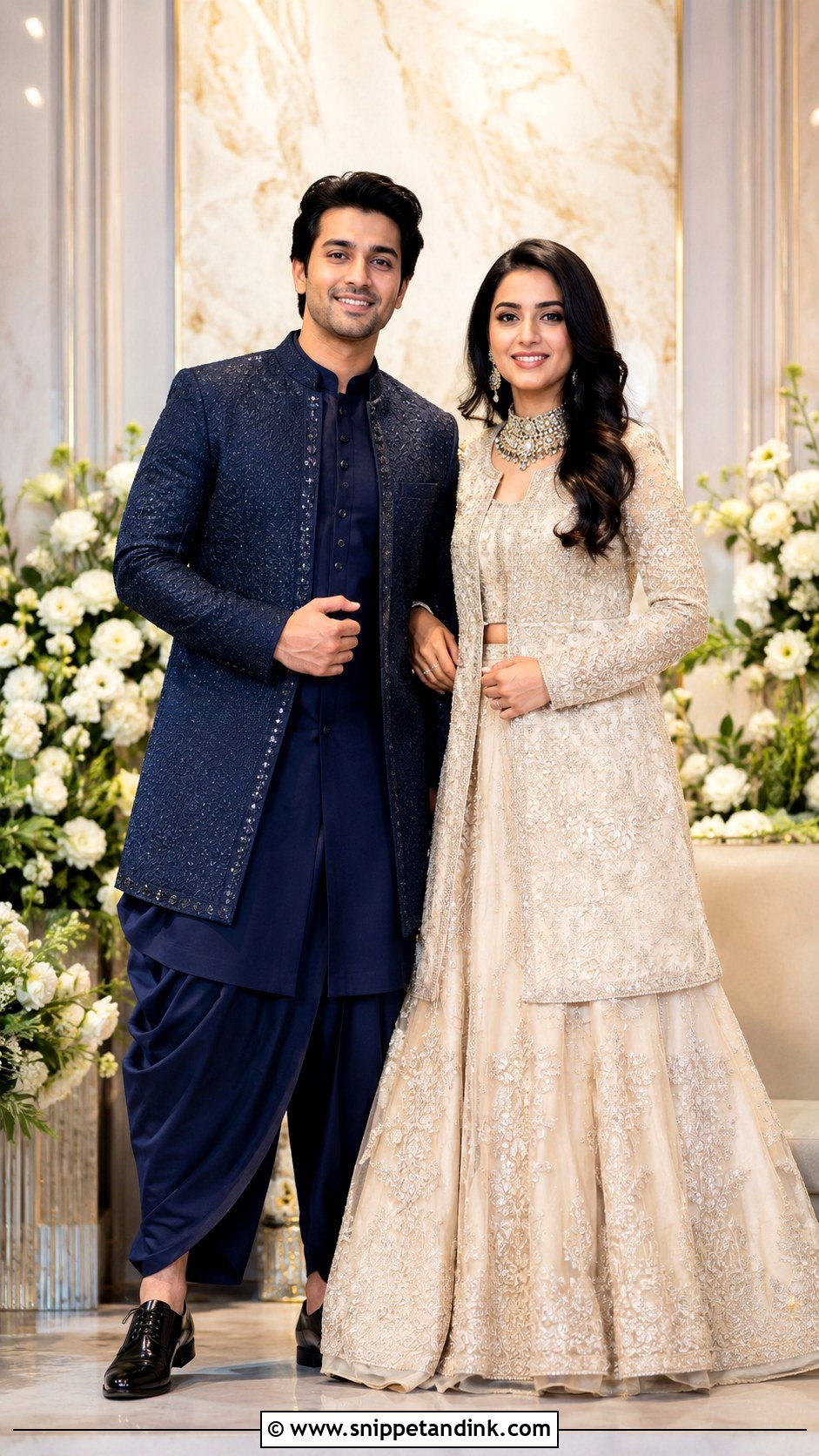
The jacket lehenga solves the dupatta problem. Instead of a drape that slips during greetings, she wears a long embroidered jacket over the lehenga, which gives clean lines and stays put all evening. He wears a layered kurta with a long jacket or open sherwani-style overlay. Ivory with gold, navy with silver, or blush with champagne all balance well. Jackets are warm, so this is a cool-weather or air-conditioned-hall choice rather than a summer garden one.
19. Pink Lehenga And Navy Bandhgala
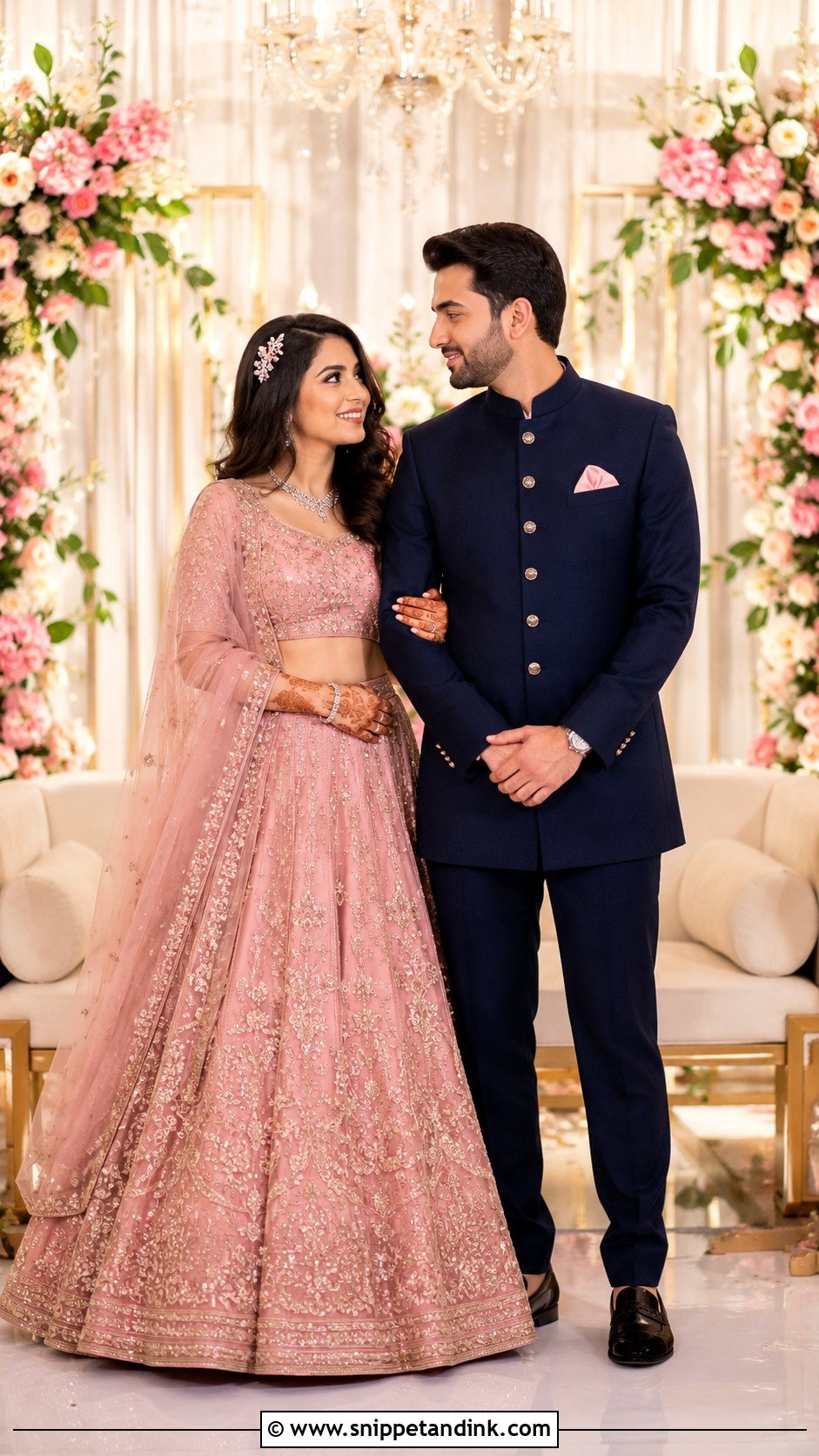
Pink and navy works because one colour is soft and the other sharp. Her rose, fuchsia or blush lehenga carries embroidery suited to how formal the ceremony is; his navy bandhgala grounds a bright pink especially well. Put her shade in his pocket square and stop there. Gold, polki or diamond jewellery follows her embroidery. Against a floral stage at night, the contrast makes the couple easy to pick out in group photos.
20. Anarkali Gown And Sherwani
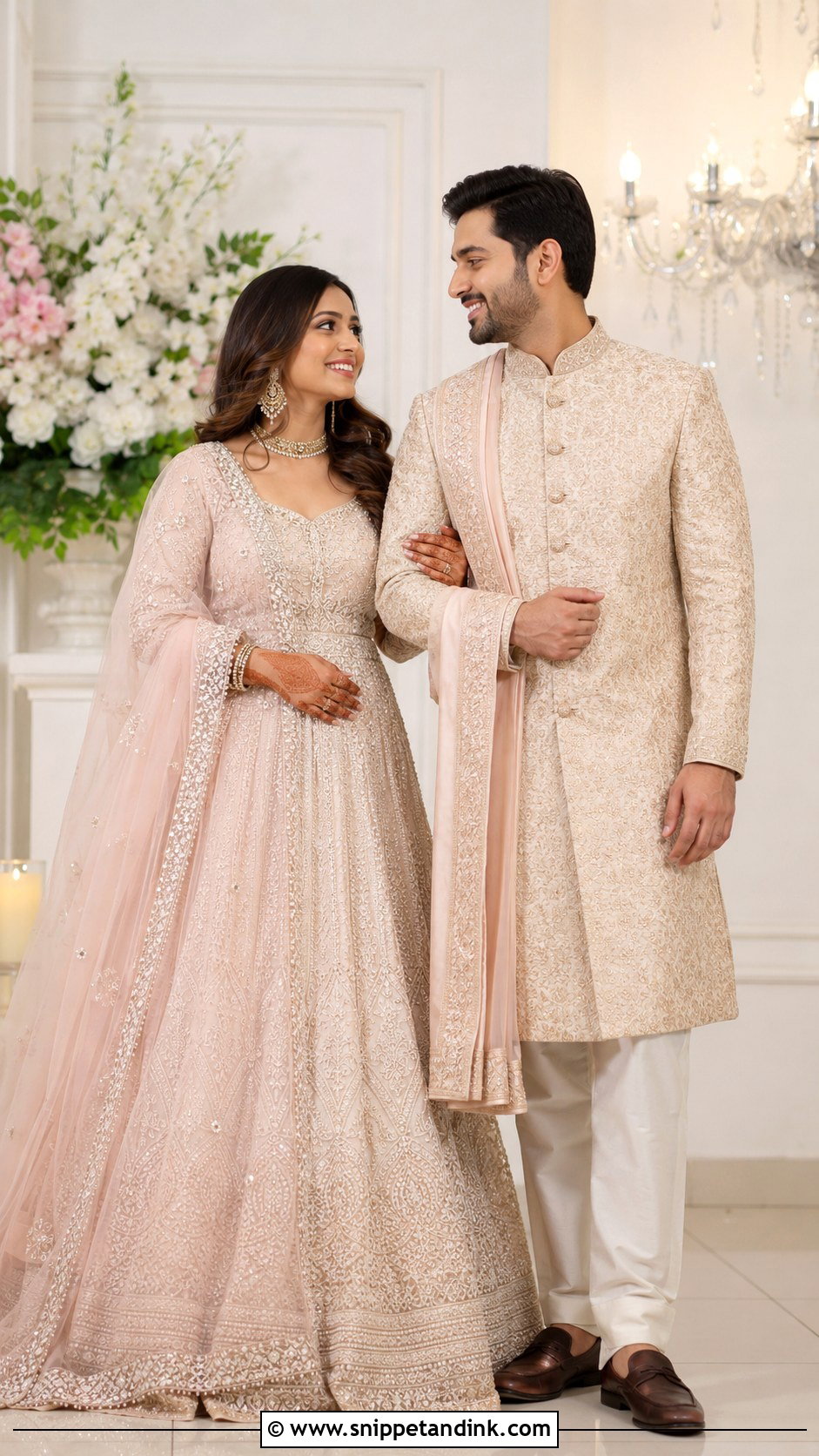
An anarkali gown and sherwani give you a graceful traditional look without the weight of a lehenga. The gown has a fitted bodice, flared skirt and sheer dupatta, with embroidery at the neckline and sleeves. He wears ivory, beige or a shade that complements her. If she’s in pastels, he takes a matching stole; with jewel tones, subtle gold accents. Ask for the bodice to be fitted with the can-can or underskirt you’ll wear, as the flare changes the waist fit.
21. Ivory Lehenga And Pastel Suit
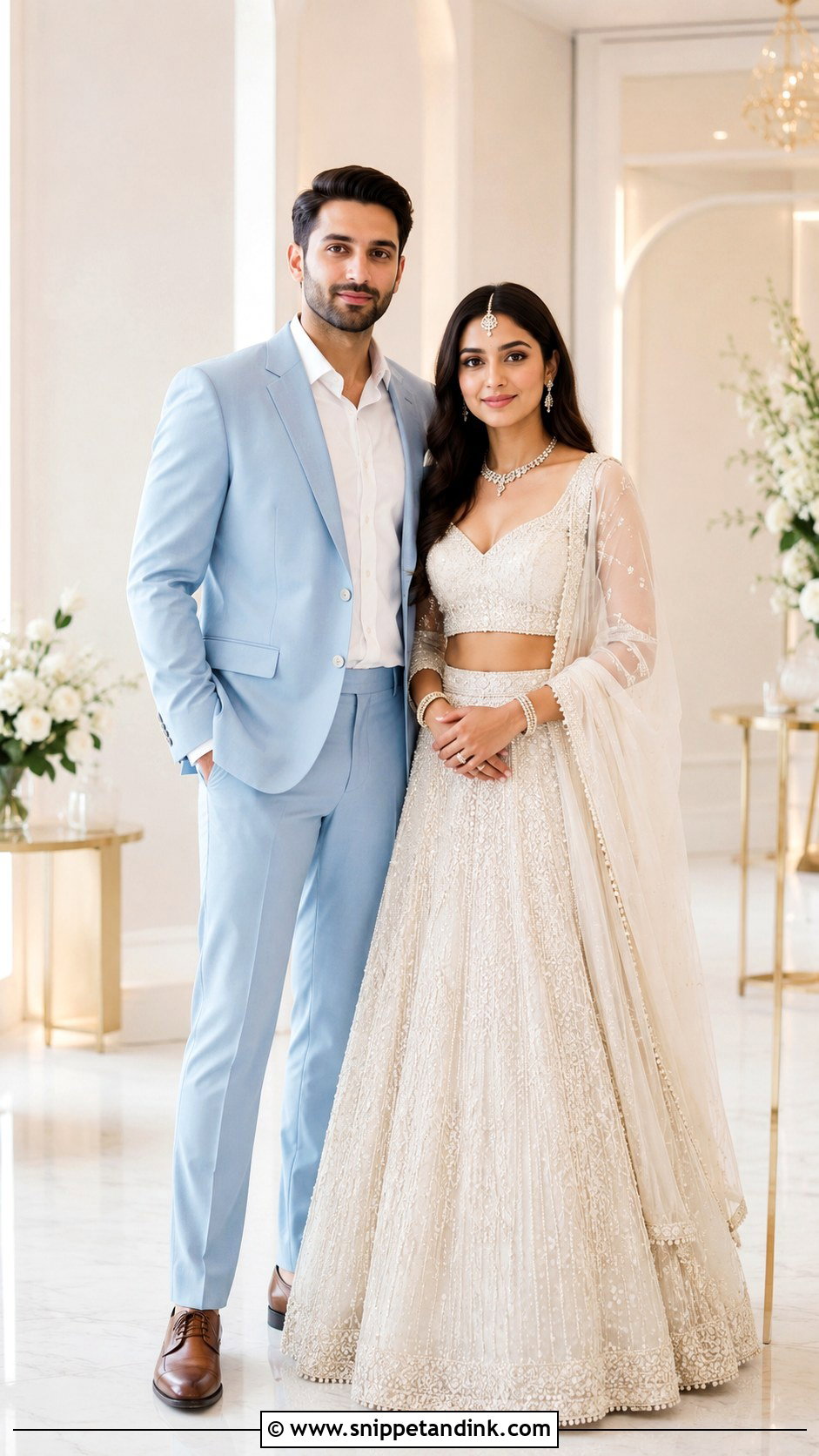
Ivory with pearl, chikankari, mirror or light zardozi work is the cleanest bridal-adjacent choice for an engagement. Chikankari especially is fine hand embroidery that photographs as soft texture rather than shine. He wears a pastel suit in powder blue, sage, blush or beige with an ivory shirt. Pearl jewellery, soft makeup and a neat hairstyle for her; loafers or formal shoes for him. Ivory marks easily, so keep a stain pen in someone’s bag.
22. Mirror Work Lehenga And Kurta Jacket
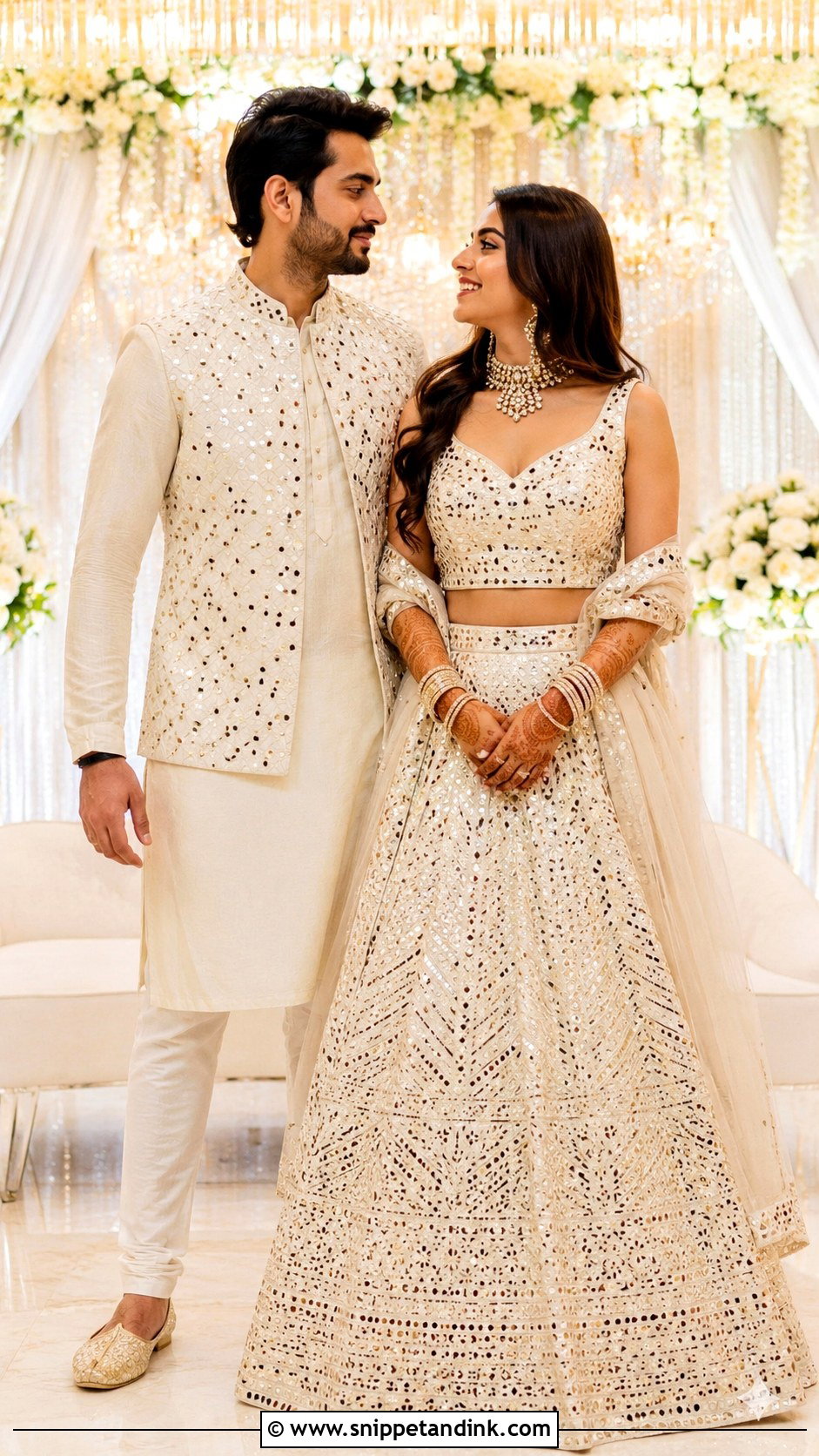
Mirror work gives sparkle without the scratch of sequins, and it suits lively functions with music and family performances. Her lehenga in ivory, yellow, pink, teal or green pairs with a light dupatta; his kurta pajama gets a mirror-work Nehru jacket or embroidered waistcoat. The mirrors are heavy and catch flashes, so balance the accessories: statement earrings and bangles for her, simple juttis for him. Hand-stitched mirror pieces can loosen if snagged, so check the edges before the event.
23. Maroon Lehenga And Cream Bandhgala
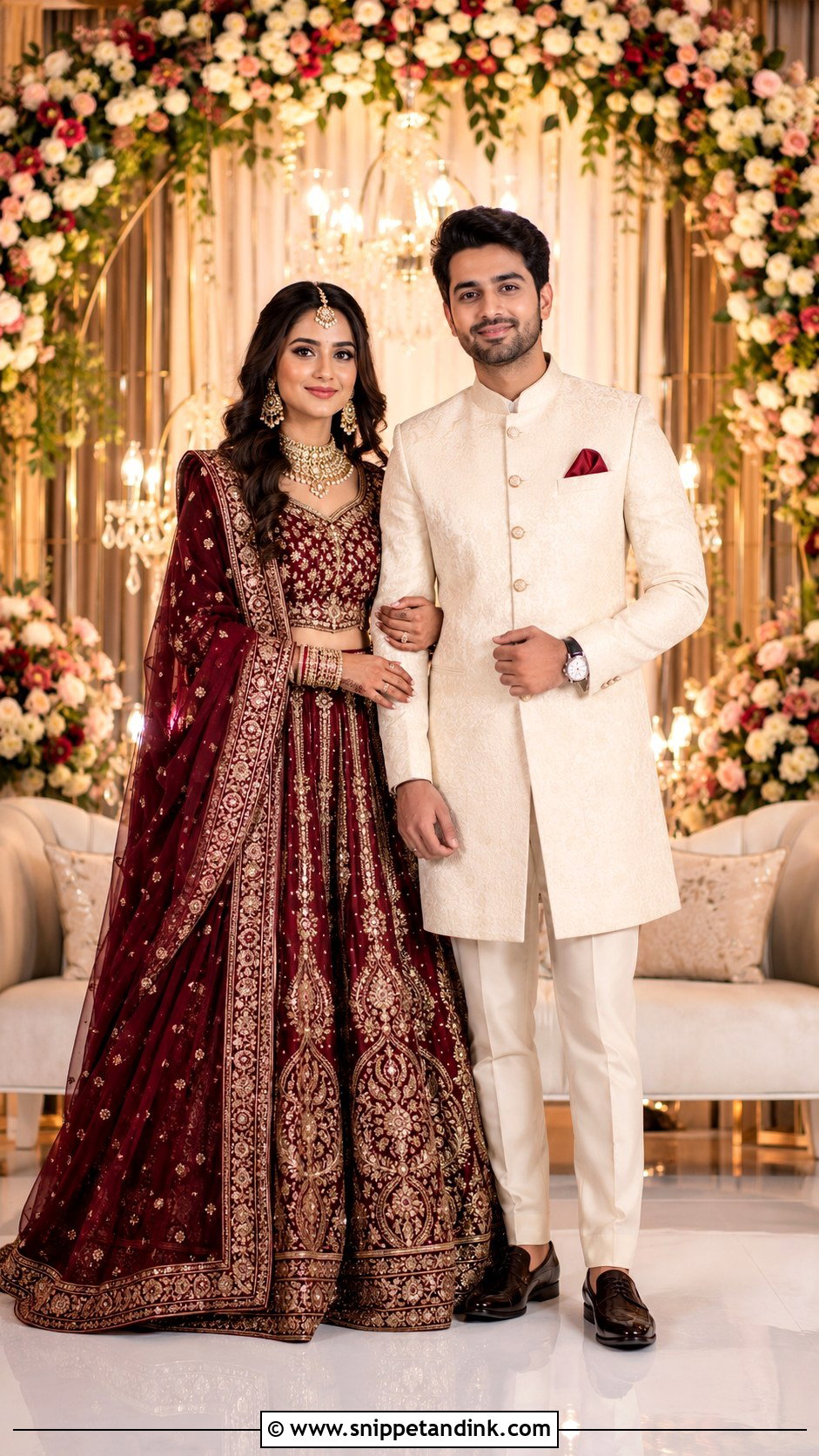
Maroon in velvet, silk or georgette with gold embroidery is a deep, traditional engagement colour that stops just short of wedding-day dressing. He wears a cream bandhgala with a maroon pocket square, brooch or stole. Antique gold jewellery, a sleek bun and defined makeup suit her. The groom’s tailoring matters more here than in lighter pairings: next to a heavy lehenga, a loose bandhgala looks borrowed, so get the shoulders and sleeve length fitted.
24. Cape Lehenga And Minimal Sherwani
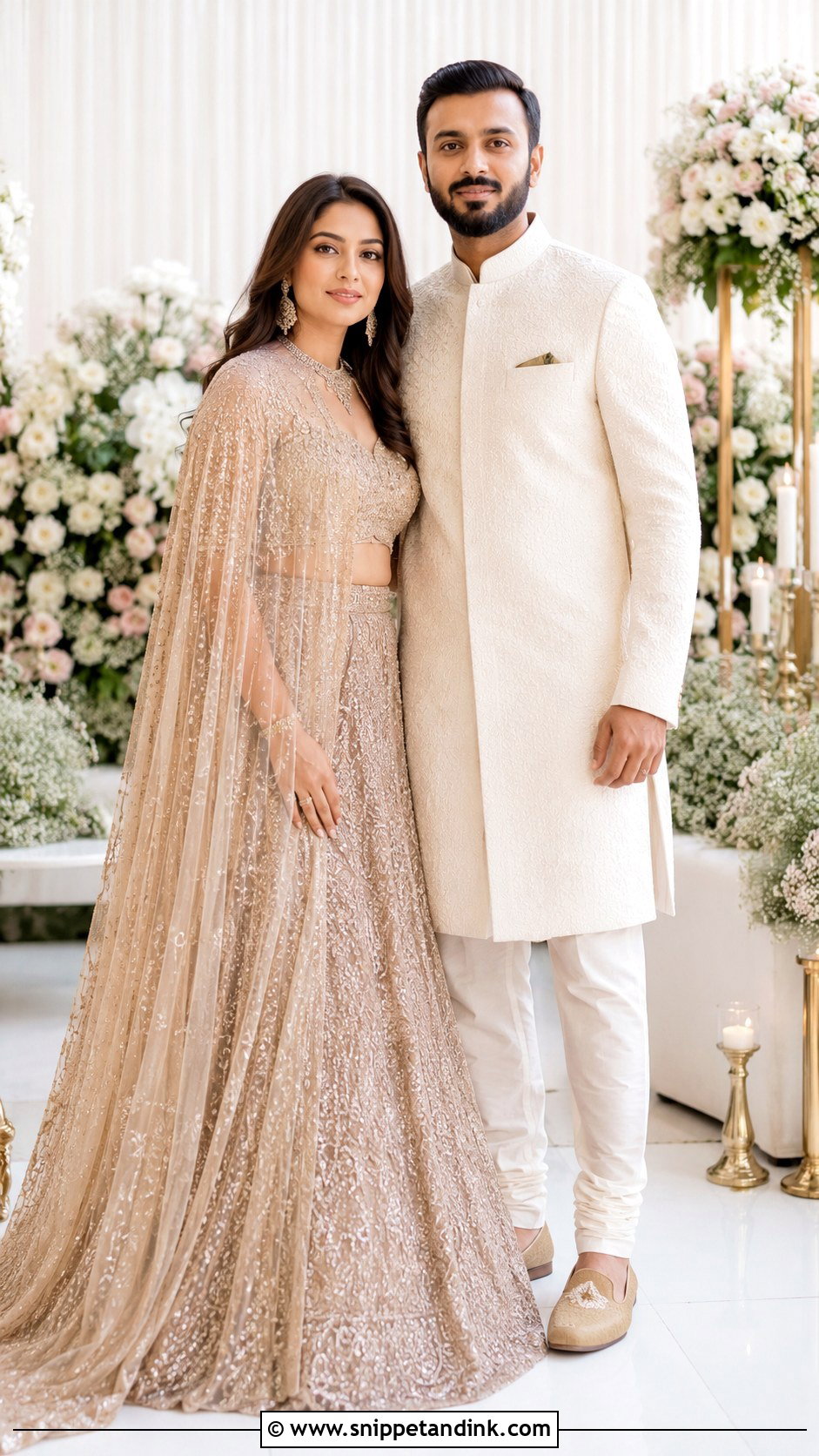
Capes give a lehenga movement and a clean outline in full-length photos. An attached cape, a sheer overlay or a cape-style dupatta replaces the usual drape, and it doesn’t slide off during the ring exchange the way a loose dupatta can. Keep his sherwani minimal, in ivory, beige, grey or pastel, so her silhouette leads, with matching detail in buttons, stole edging or footwear. Walk in it at the fitting to see where the cape falls when you turn.
25. Coordinated Monochrome Couple Outfit
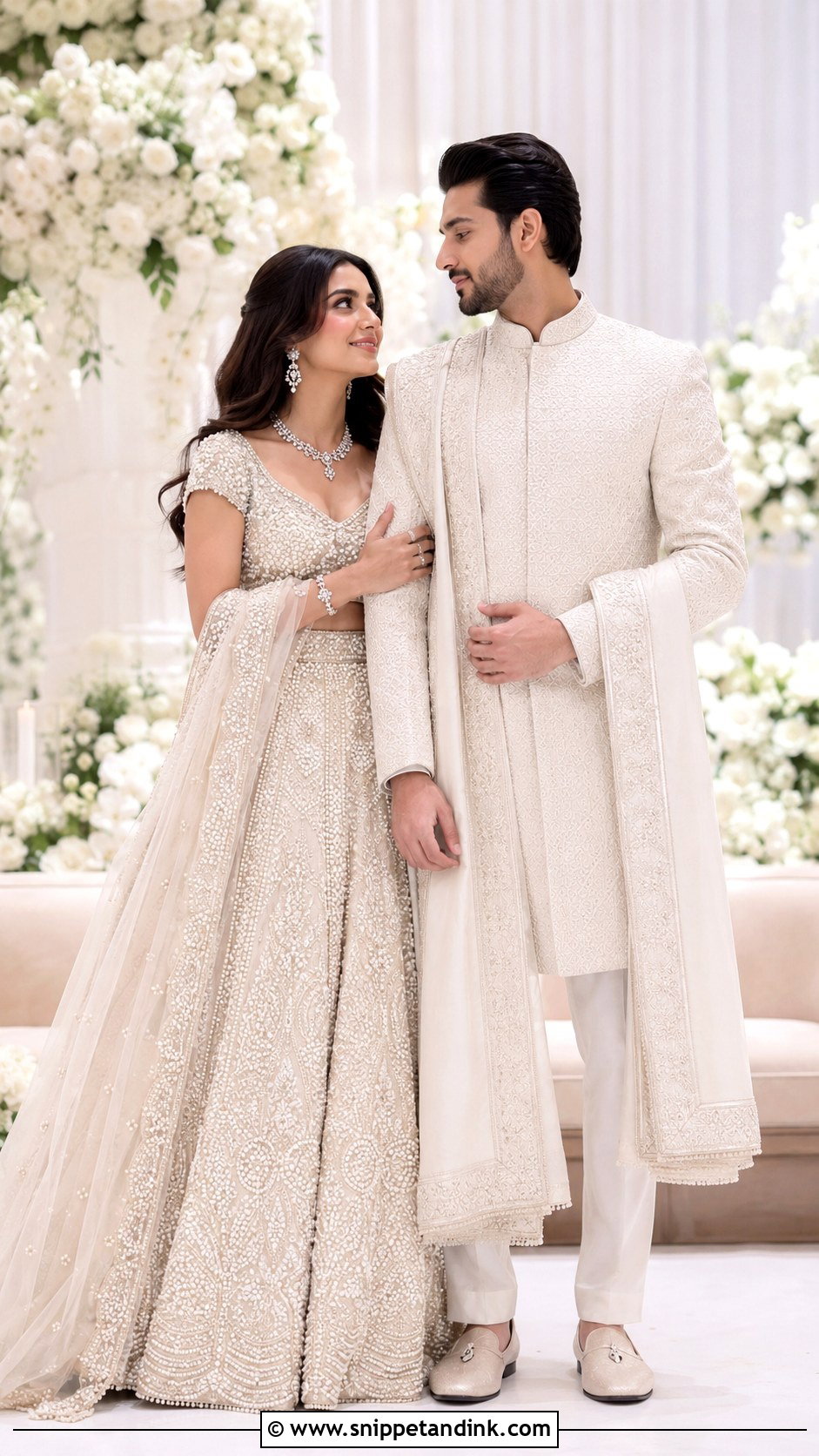
Dressing in one colour family is one of the simplest ways to look like a pair. Pick ivory, sage, champagne, blush, navy or emerald, then build a monochrome couple outfit through different shades and textures: her lehenga, saree, gown or anarkali against his sherwani, bandhgala, kurta jacket or suit. The trap is flatness. Two outfits in exactly the same shade and fabric merge into one block in photos, so vary the texture, say an ivory pearl lehenga beside a textured ivory sherwani.
How Far Ahead to Order a Lehenga or Sherwani
Custom outfits take longer than most couples expect, and engagements are often planned on short notice. Timings vary a lot by designer and season, so treat these as rough guides and ask your tailor directly.
- Heavily embroidered custom lehengas commonly need two to three months, sometimes more during wedding season.
- Sherwanis and bandhgalas made to measure usually need several weeks plus at least one trial fitting.
- Ready-made pieces still need alterations; leave two to three weeks for blouses, hems and sleeve lengths.
- Sarees need fall and pico finishing and a fitted blouse, which can take a couple of weeks on their own.
Collect everything at least a week before the ceremony and try it all on with shoes and jewellery. That leaves time for a loose hook or a long hem, which are the small problems that always seem to surface on the morning itself.
Your Hands, Your Elders and the Photos That Last
Engagement outfits are judged by people sitting very close and by photographs you’ll keep for decades. Pick fabric that lets you stretch out a hand and bend for blessings, a colour link between the two of you rather than a copy, and fit that holds up to an evening of greetings. Talk with your families before you order, especially about colour. Then wear the outfits once at home, together, before the day.
You'll Like These Ideas:


Leave a Reply