
A corset bodice does real work: boning, shaped cups and well-placed seams hold you up and pull in the waist, which is why so many brides feel more secure in one than in a soft gown. Current designs cover satin ball gowns, sheer lace, sleek mermaids and two-piece looks. Which suits you depends on the venue, how much coverage you want and how much drama you’re after. In every fitting I ask brides to sit, walk, lift their arms and take a deep breath, because a bodice that only works standing still doesn’t work. Below are twenty gowns, each with the fit details I’d check.
Taking In Is Easy, Letting Out Isn’t
A corset bodice is harder to alter than a soft gown because the boning, cups and lining all have to move together. Knowing what’s realistic helps you order the right size.
- Taking in at the side seams is routine. Most bodices can come in a size or two.
- Letting out is limited by the seam allowance, which is often small. Order for your largest measurement.
- Shortening the bodice means re-cutting the boning, so it’s possible but slow and costly.
- Cups can be added, moved or changed to a different depth.
- A zip back can be converted to a lace-up back, which adds adjustability if your weight is likely to change.
Most bridal gowns take months to arrive after ordering, and alterations usually start about two to three months before the wedding with two or three fittings. I’d plan the final fitting as close to the day as the seamstress allows. A corset fits closely, so even small changes in weight show more than they would in a loose gown.
1. Strapless Satin Corset Bridal Gown
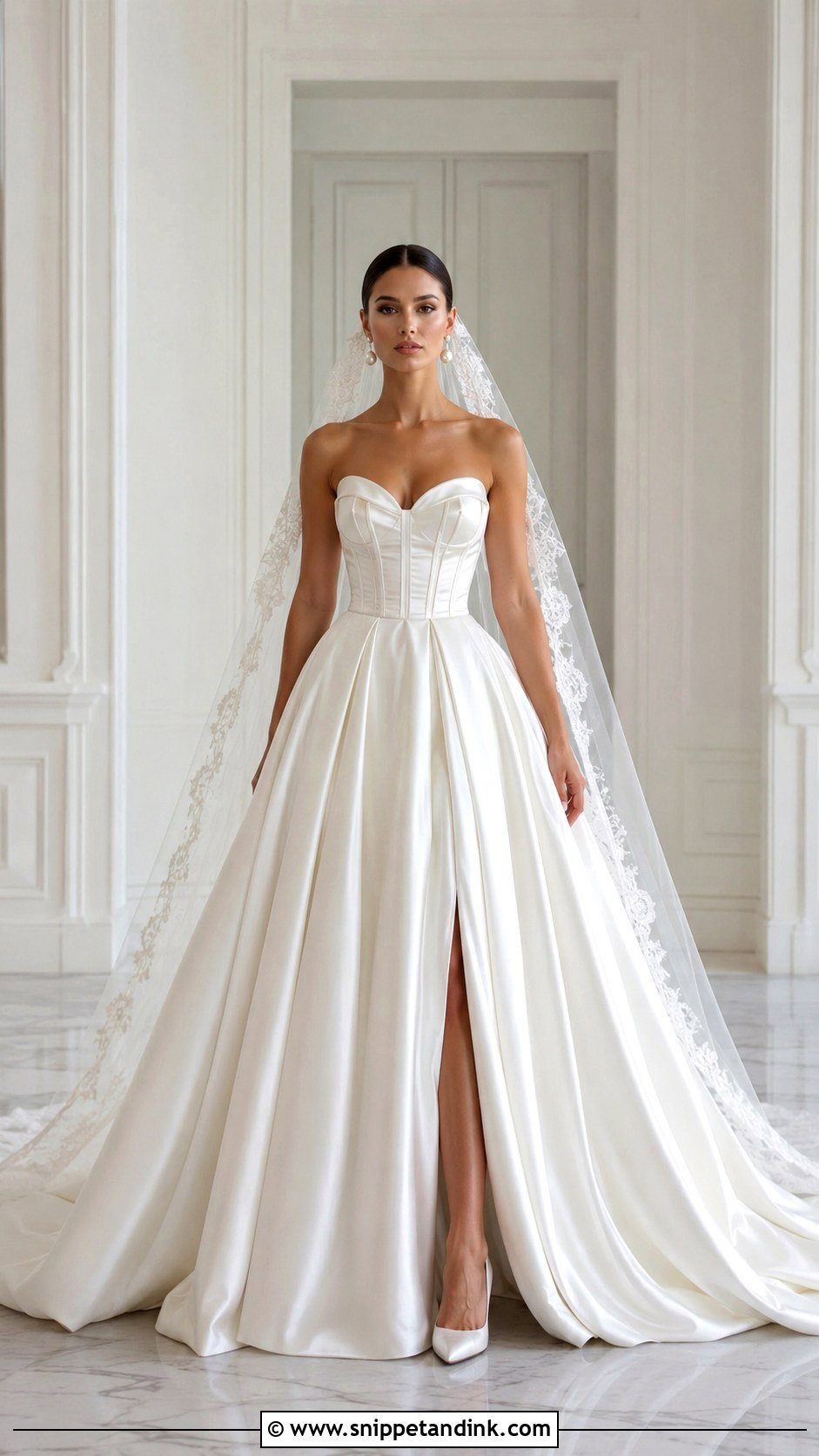
Strapless satin is the plainest corset gown and the one that shows tailoring most clearly. Curved seams and a softly dipped neckline frame the shoulders without exposing too much. A full ball gown skirt is formal; a narrower A-line is easier to move in. Pointed pumps, pearl drops and a cathedral veil complete it. Satin shows every seam and every pull, so I have the bust, waist, back closure and hem checked with the bride in her wedding shoes. Even a small heel change shifts how the skirt falls at the front.
2. Sweetheart Lace Corset Bridal Gown
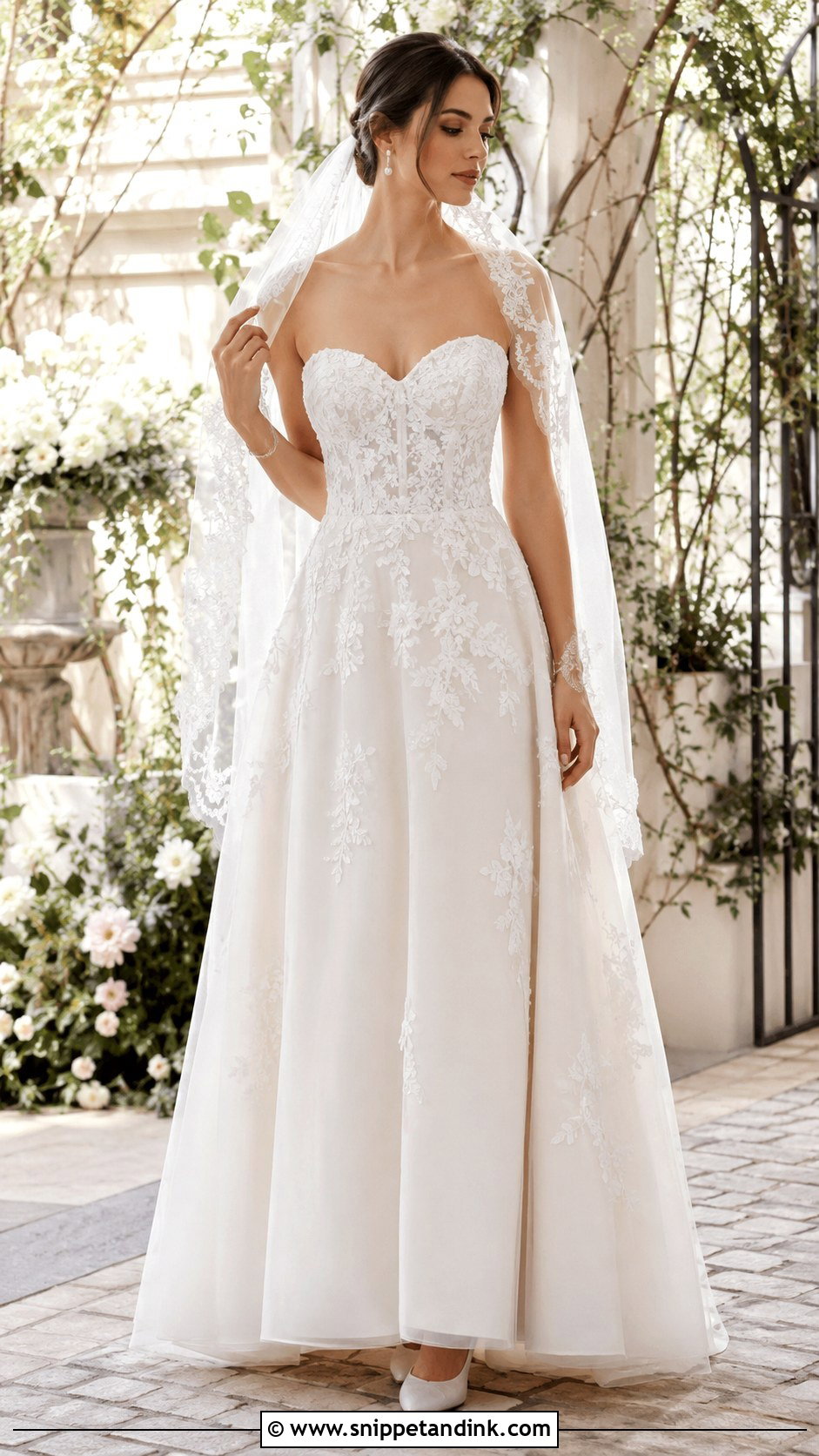
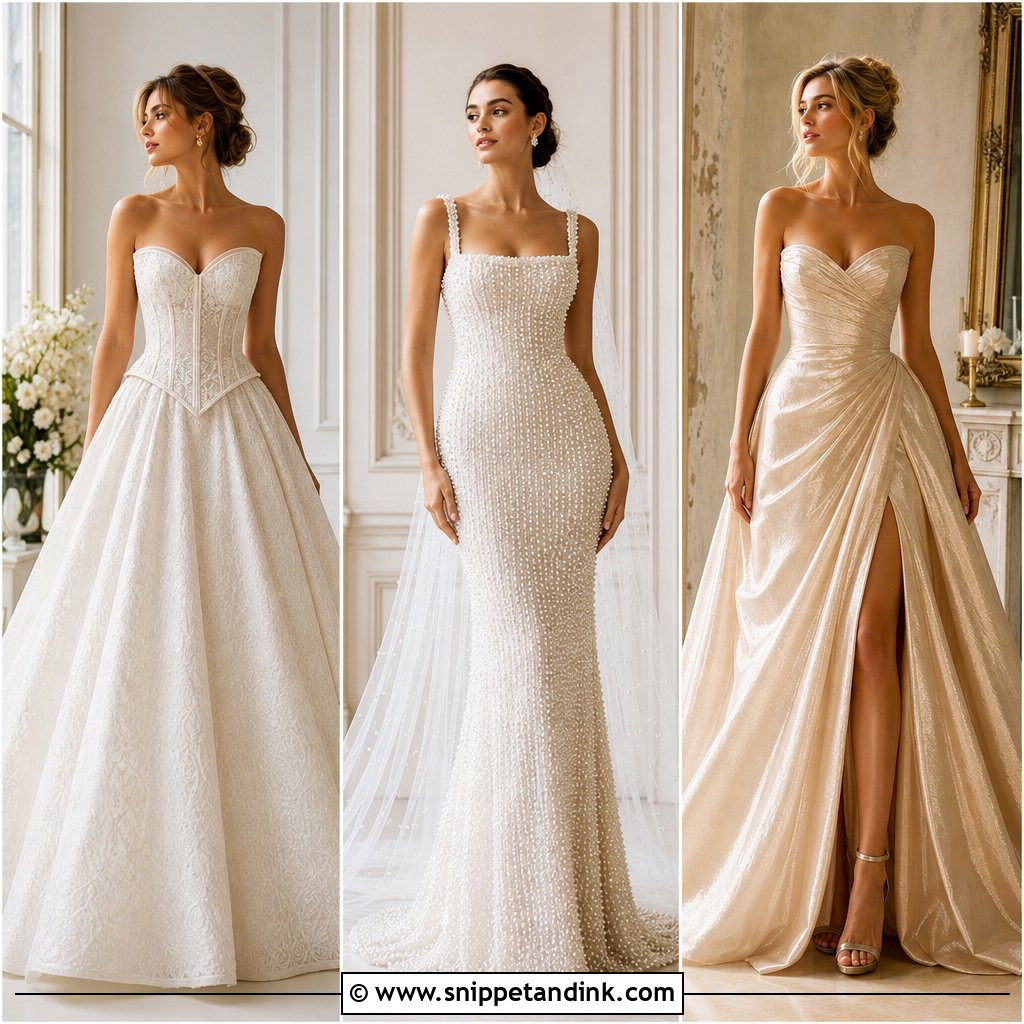
Lace takes the stiffness out of a corset. A sweetheart neckline pulls attention to the face and collarbone, and floral lace can tie the bodice to the skirt. I look for appliqués that carry on past the waist seam rather than stopping dead on it, because a hard line across the waist is what makes lace gowns look cheap. Pearl earrings and a fingertip veil with a thin lace border suit it. If the bodice is partly sheer, choose the lining colour yourself. Ivory and nude look very different against different skin tones.
3. Basque Waist Corset Bridal Ball Gown
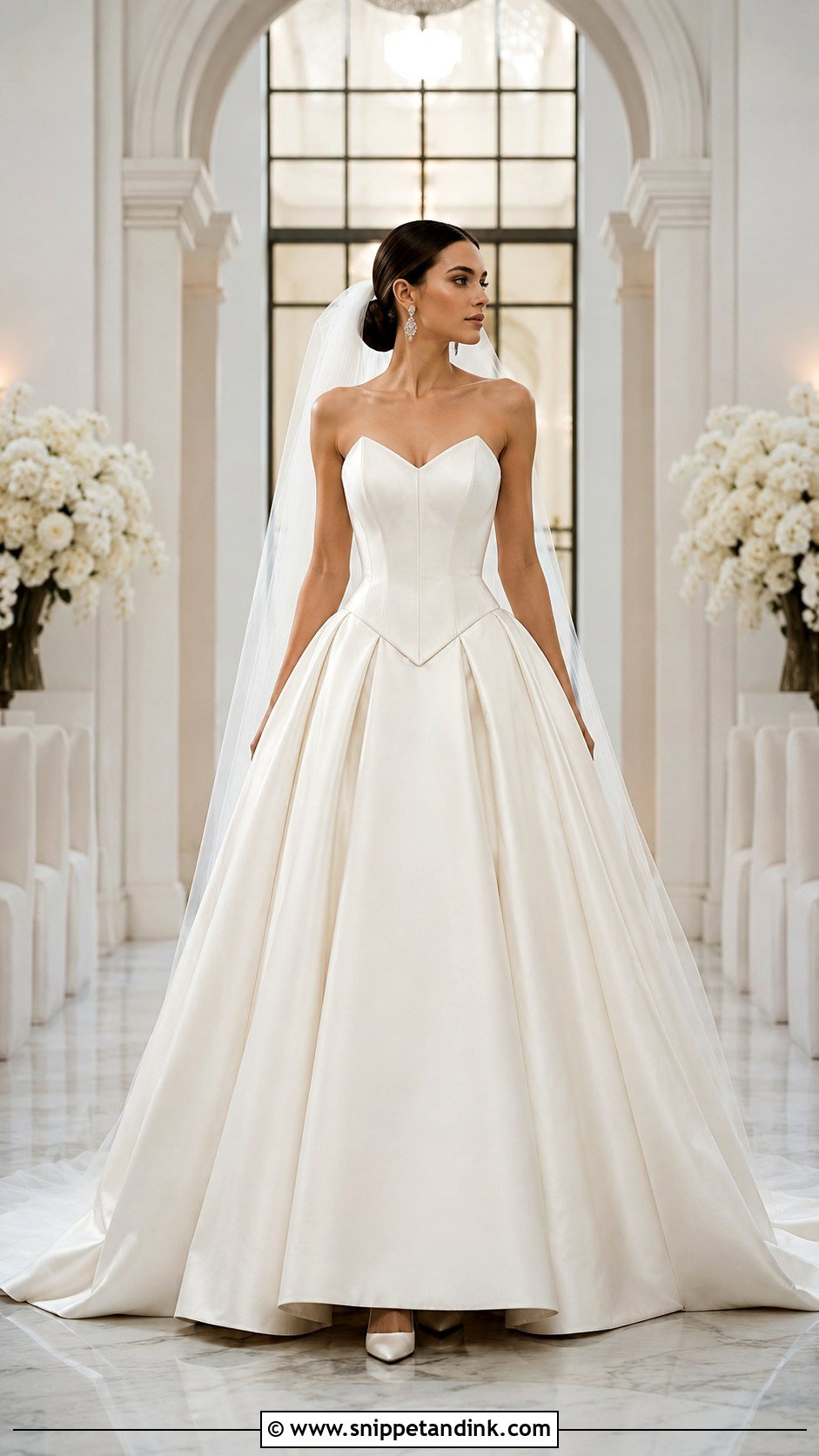
A basque waist drops the waist to a point below its natural line, which makes a ball gown look regal and lengthens the torso. Satin, mikado and silk faille hold the shape best. The bodice stays fitted, then the skirt opens into pleats or controlled volume. A long veil and a neat low bun keep both neckline and waist in view. Two things I check in alterations: that the point lies flat when you sit, and that the bodice isn’t pressing into your ribs or lower stomach. If you feel it when you breathe in, it’s too tight.
4. Sheer Boned Corset Bridal Gown
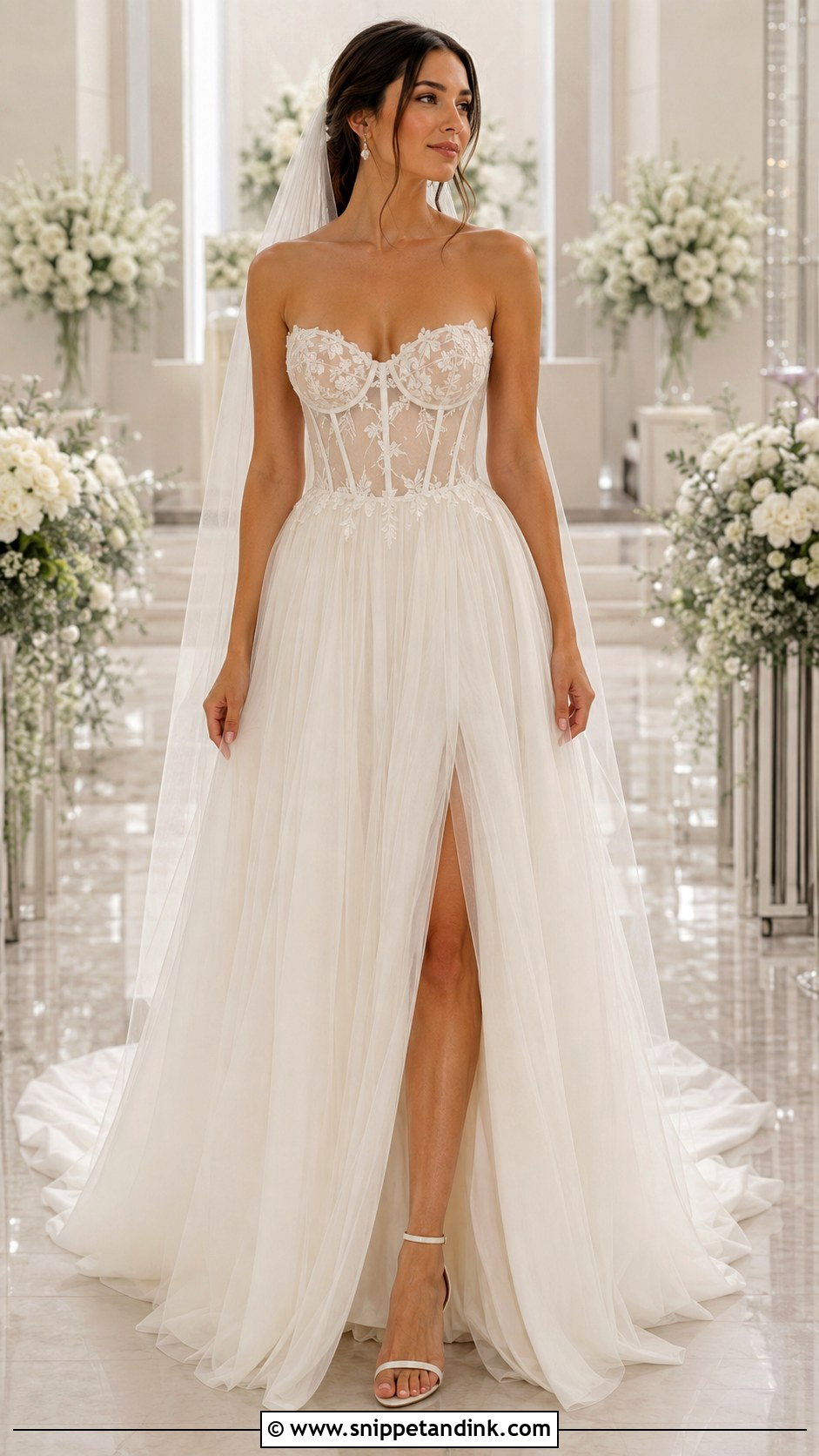
Visible boning looks modern, but only if the coverage suits your ceremony. Embroidered panels, appliqués or a light ivory lining can soften the exposed construction while keeping the structured look. A flowing tulle A-line balances it with movement. Slim ankle straps and a plain chapel veil keep the attention on the bodice. Camera flash can make sheer fabric almost see-through, so I test lining shades with flash photos as well as in daylight. Your phone will show you the problem before the photographer does.
5. Long Sleeve Lace Corset Bridal Gown
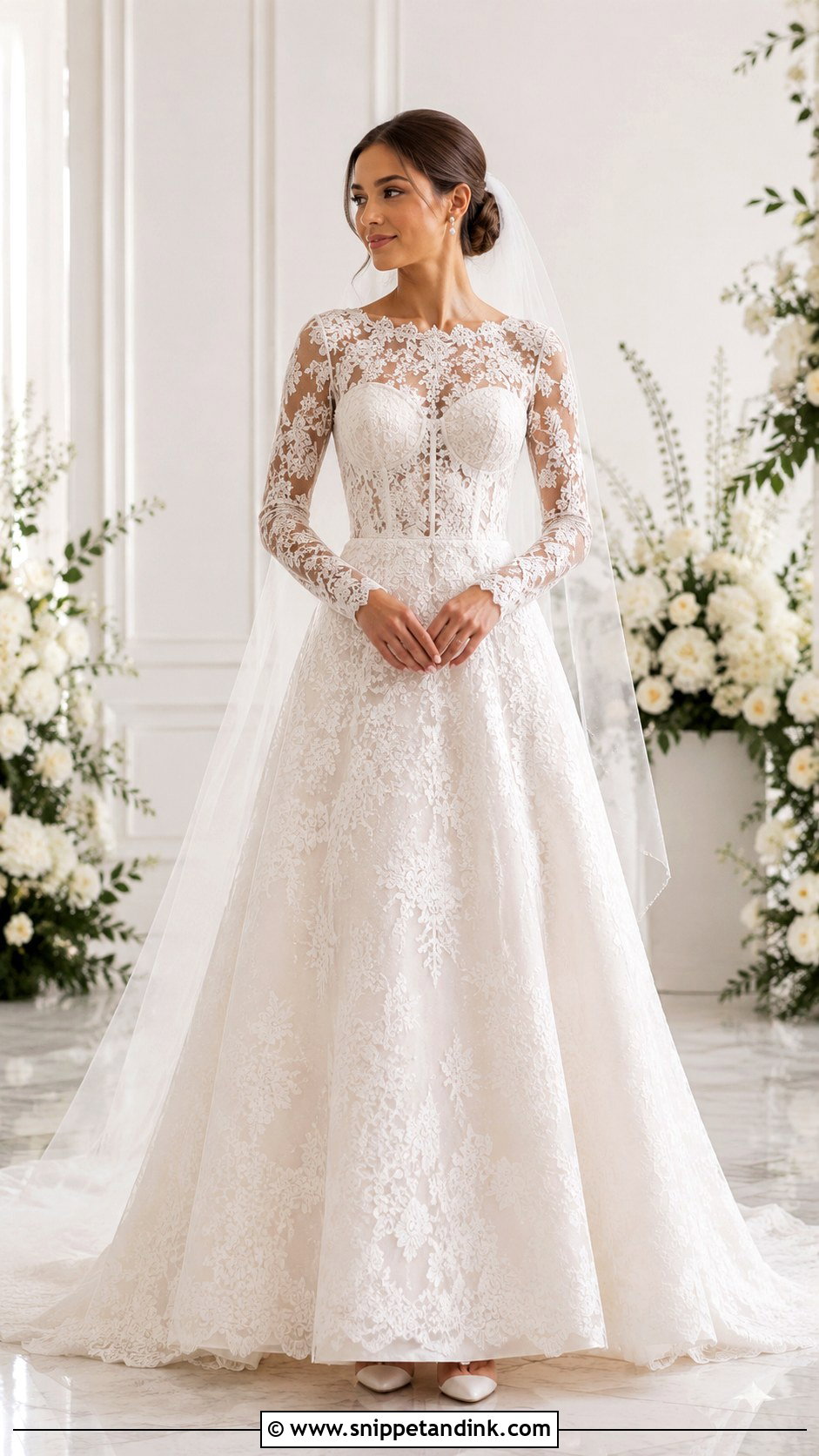
A boned bodice with fitted illusion sleeves gives arm coverage and keeps the waist defined. Lace motifs that run over the shoulders and down the arms make the sleeves look part of the dress. An A-line or gently flared skirt balances it. Closed-toe heels and pearl studs suit it, with a veil under a low bun. Before alterations are finished, hug someone, lift your arms and bend your elbows. Lace sleeves fitted too tightly pull the whole bodice up when you raise your arms. Covered buttons at the cuff can echo buttons down the back.
6. Off The Shoulder Corset Bridal Gown
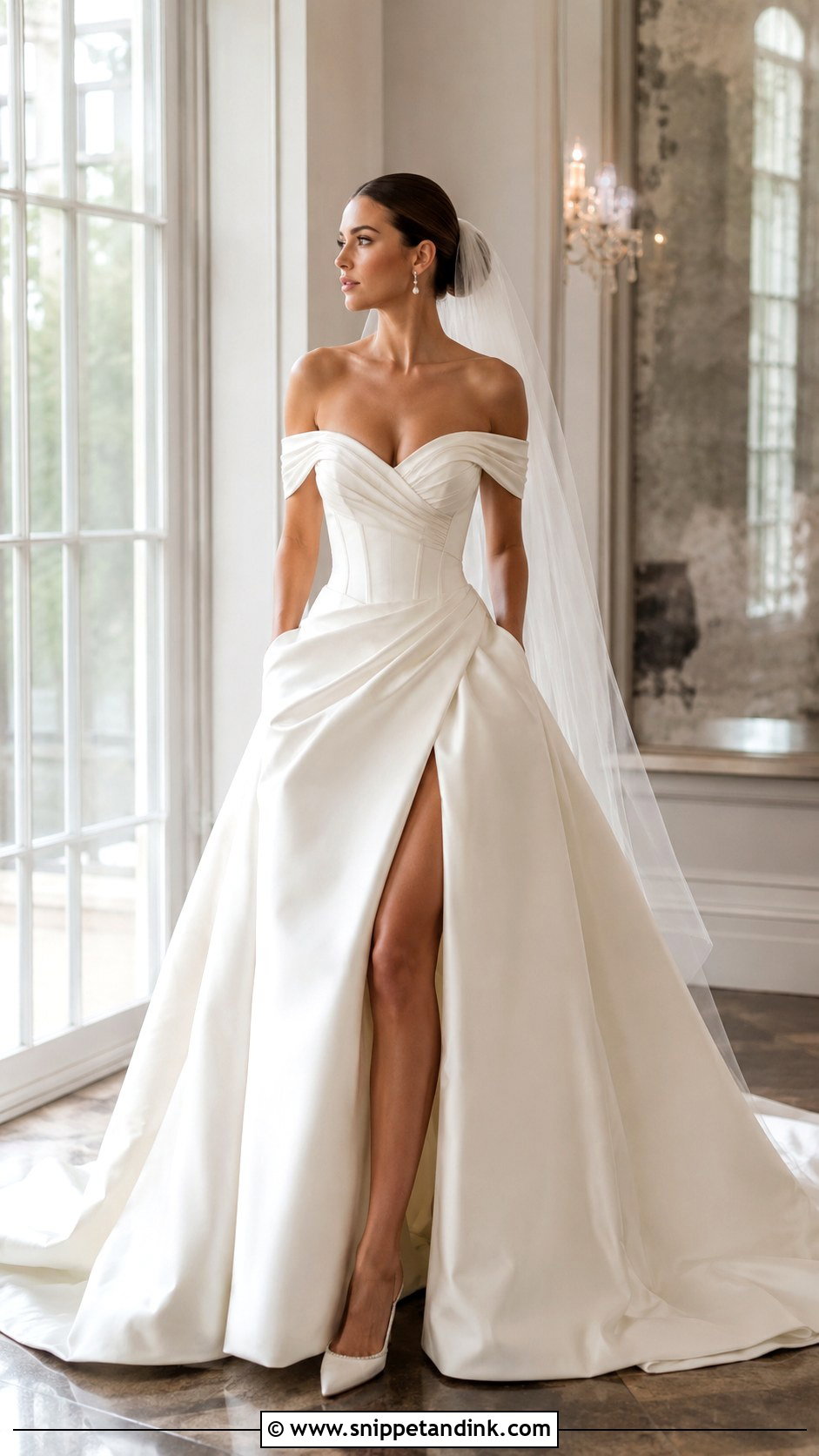
Off-shoulder bands show the collarbone while the bodice does the holding. Draped satin bands look sculptural; lace sleeves look softer and more traditional. A full mikado skirt suits formal weddings; a flowing A-line is more relaxed. Drop earrings and a sheer veil without a heavy border are enough, and if the neckline is folded, skip the necklace. My test: reach forward and up. If the bands drag the bodice down when you move, they need repositioning, otherwise you’ll be hitching the dress up through dinner.
7. Square Neck Corset Bridal Gown
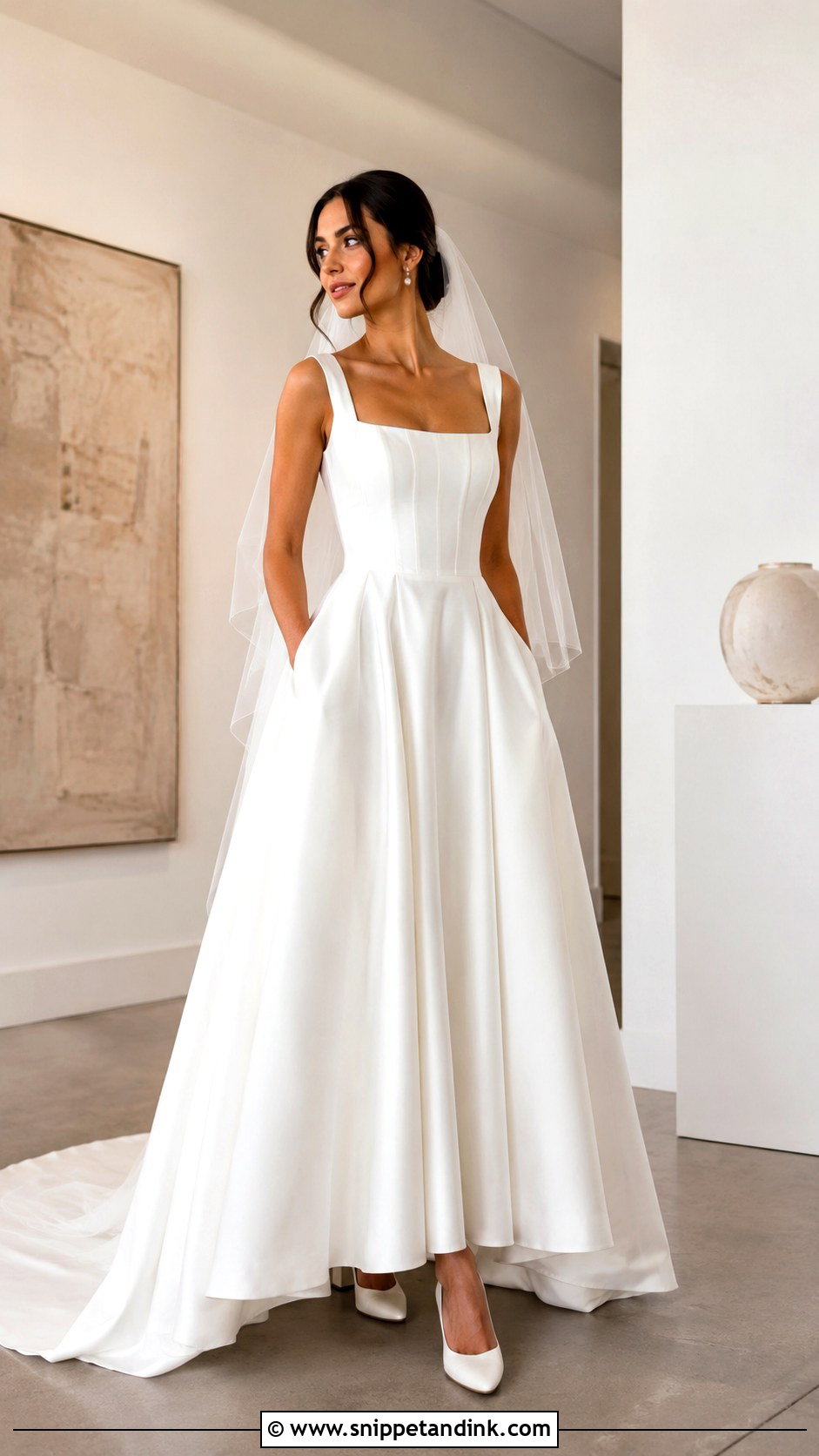
A square neckline is a clean alternative to the sweetheart, and wide straps add security without sleeves. Smooth satin keeps it minimal; embroidery makes it decorative. A softly pleated A-line skirt continues the structured feel without looking severe. Block heels, small pearl earrings and a medium veil work well, with a chignon to keep the neckline clear. Square necks often gape at the corners when you lean. I’d check that the edge lies flat on the chest and that the straps don’t dig in once the weight of the skirt is hanging from the bodice.
8. Draped Scoop Neck Corset Bridal Gown
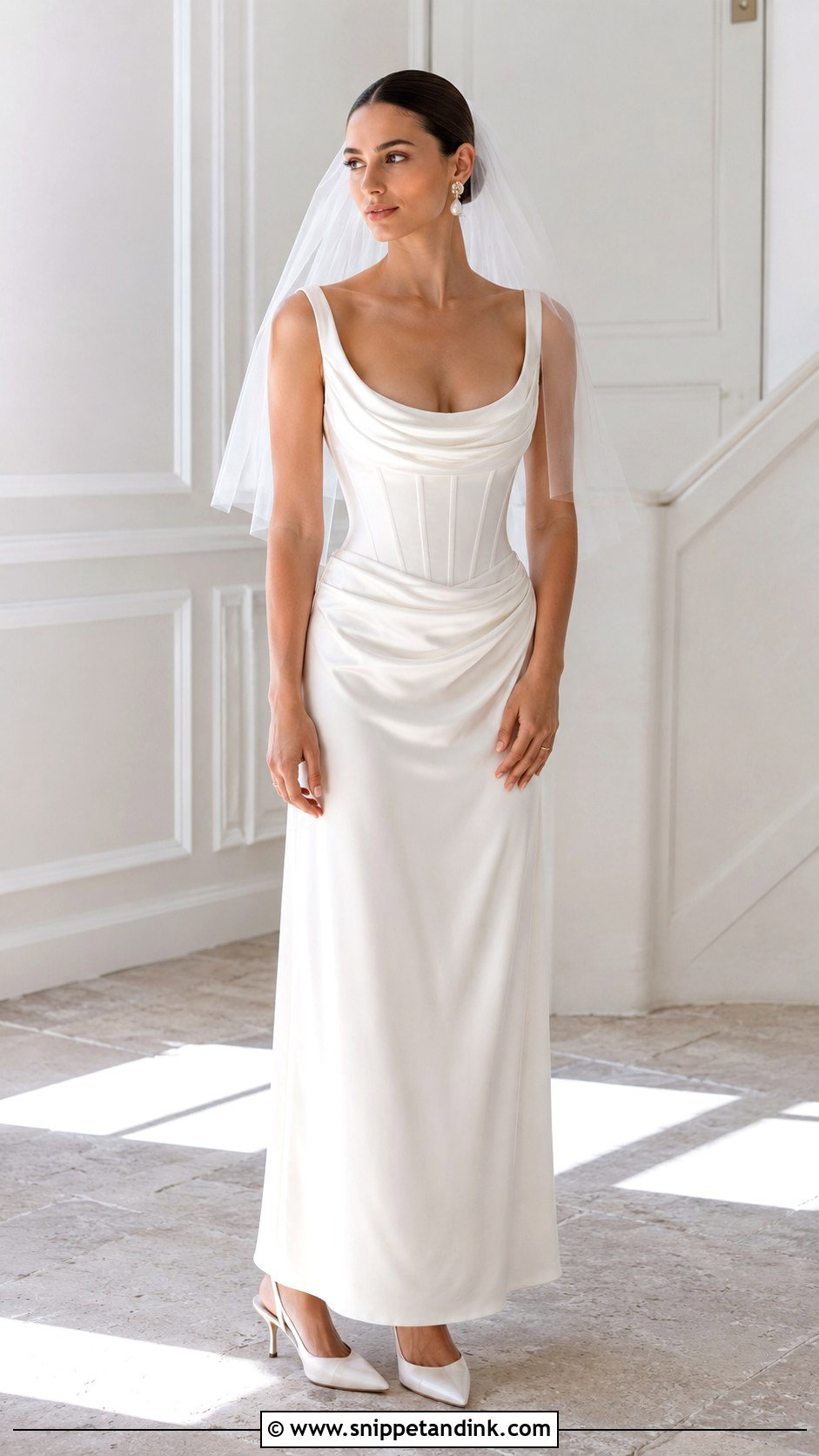
Draping is how you make a corset look relaxed. Soft satin folds over a scoop neck frame the bust and hide much of the structure underneath. It suits a column or soft A-line skirt, and works in modern venues or small weddings. Slingbacks, sculptural pearl earrings and a shoulder veil complete it; keep the hair simple. The drape must sit smoothly without twisting, and the corset underneath should do the actual supporting. If the drape is being asked to hold anything up, it will slide by evening.
9. Mermaid Corset Bridal Gown
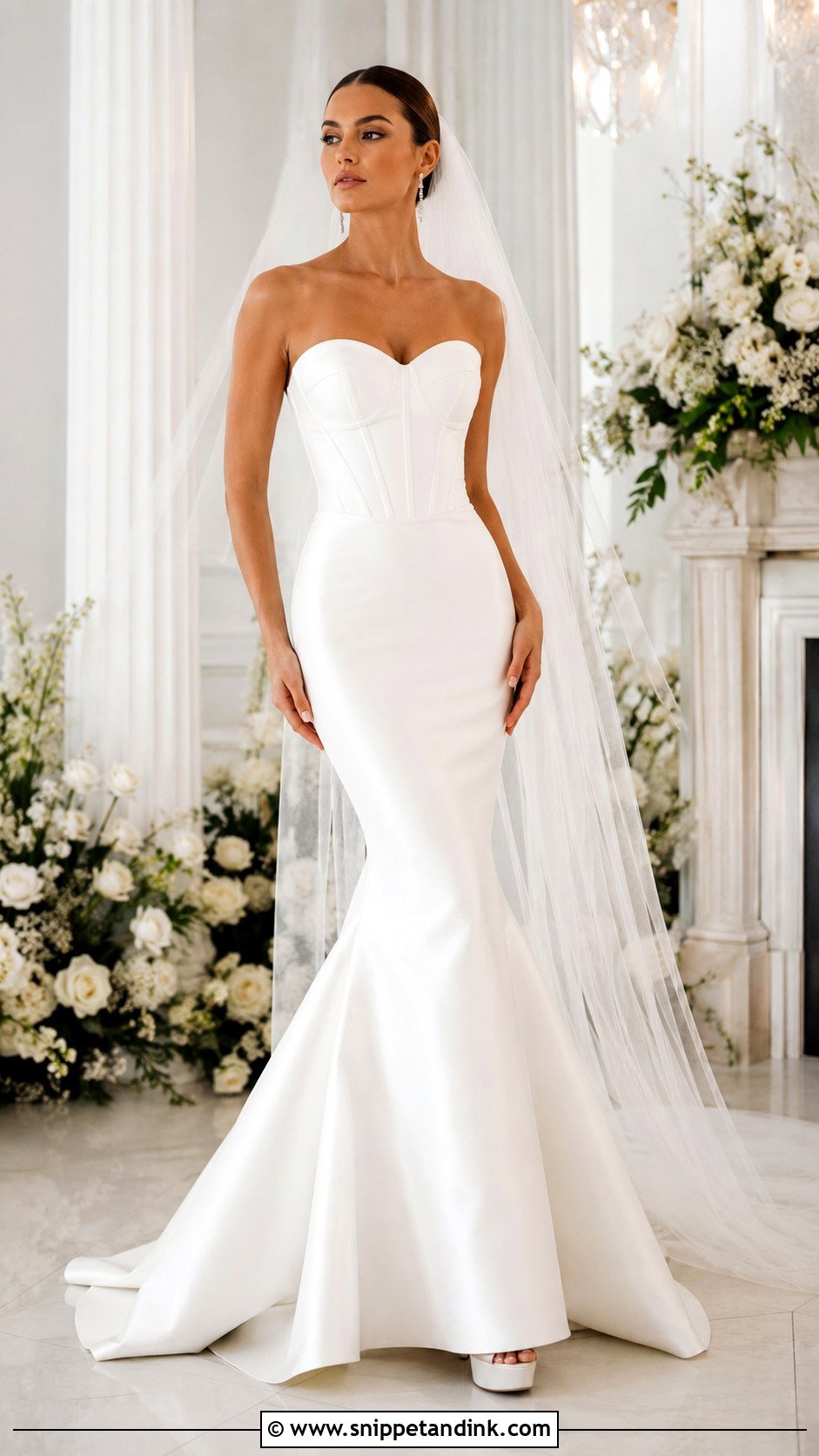
A mermaid corset gown is fitted from the bodice through the hips and flares near the knees. Structured crepe, satin or lace holds the shape while letting you move. A sweetheart or soft curved neckline keeps it romantic. Add slim platform heels, a long plain veil and a bustle or train loop for the reception. I make every mermaid bride sit, climb steps and walk at her normal pace in the fitting room. The skirt should skim the hips and thighs, not squeeze them; stretch panels or a flexible lining can help without changing the line.
10. Drop Waist Corset Bridal Gown
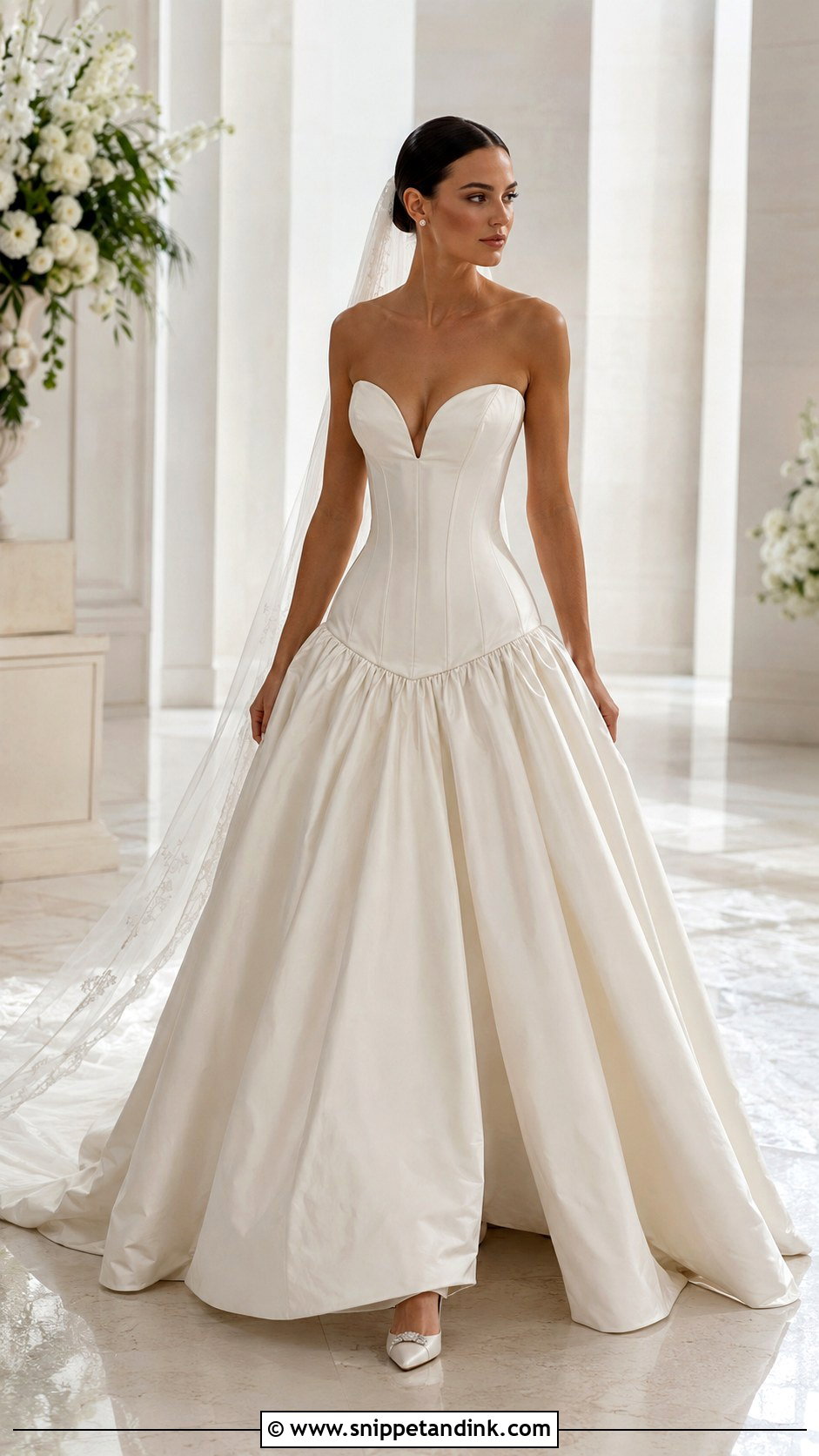
A drop waist carries the fitted bodice below the natural waist before the skirt begins, giving a long, sculpted, couture-style line. A rounded or softly pointed waist is easier to wear than a very low seam. A full satin skirt is dramatic; tulle moves more. Pointed pumps and a long veil under a sleek bun suit it. Proportion is everything here. I’d ask whether the bodice length can be adjusted to your torso, because the skirt has to start at a flattering point without stopping you bending or sitting.
11. Floral Applique Corset Bridal Gown
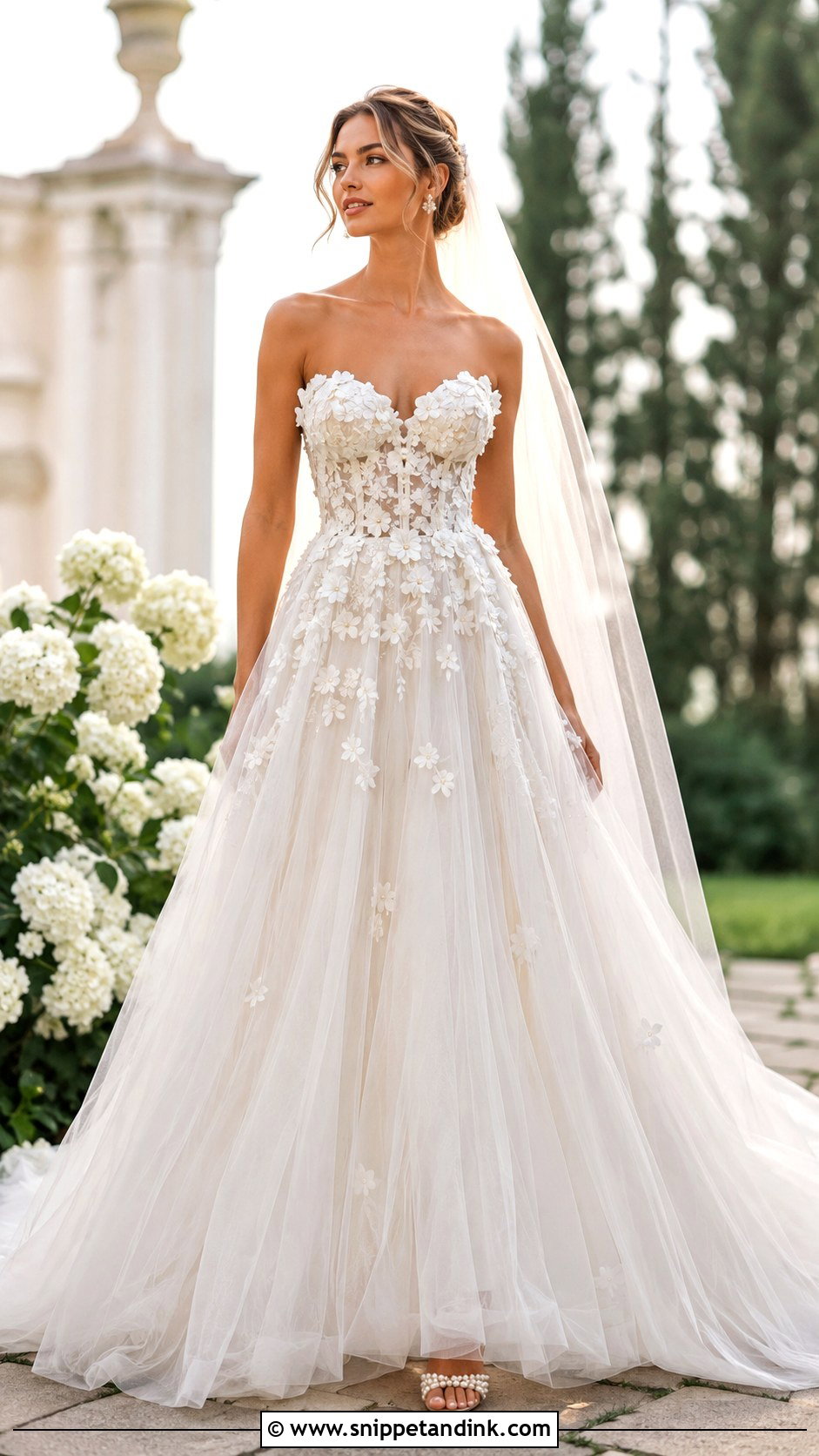
3D floral appliqués give a corset gown texture and depth. Flowers across the bodice that scatter gradually onto the skirt make the join between structure and softness feel natural. A light tulle A-line keeps it romantic without weight. Pearl-accented shoes and a plain veil let the appliqués show, so skip floral earrings, floral hairpins and floral shoes all together. I check that every flower near the neckline and waist is stitched down firmly, and that those near the arms are soft enough not to rub or catch.
12. Pearl Beaded Corset Bridal Gown
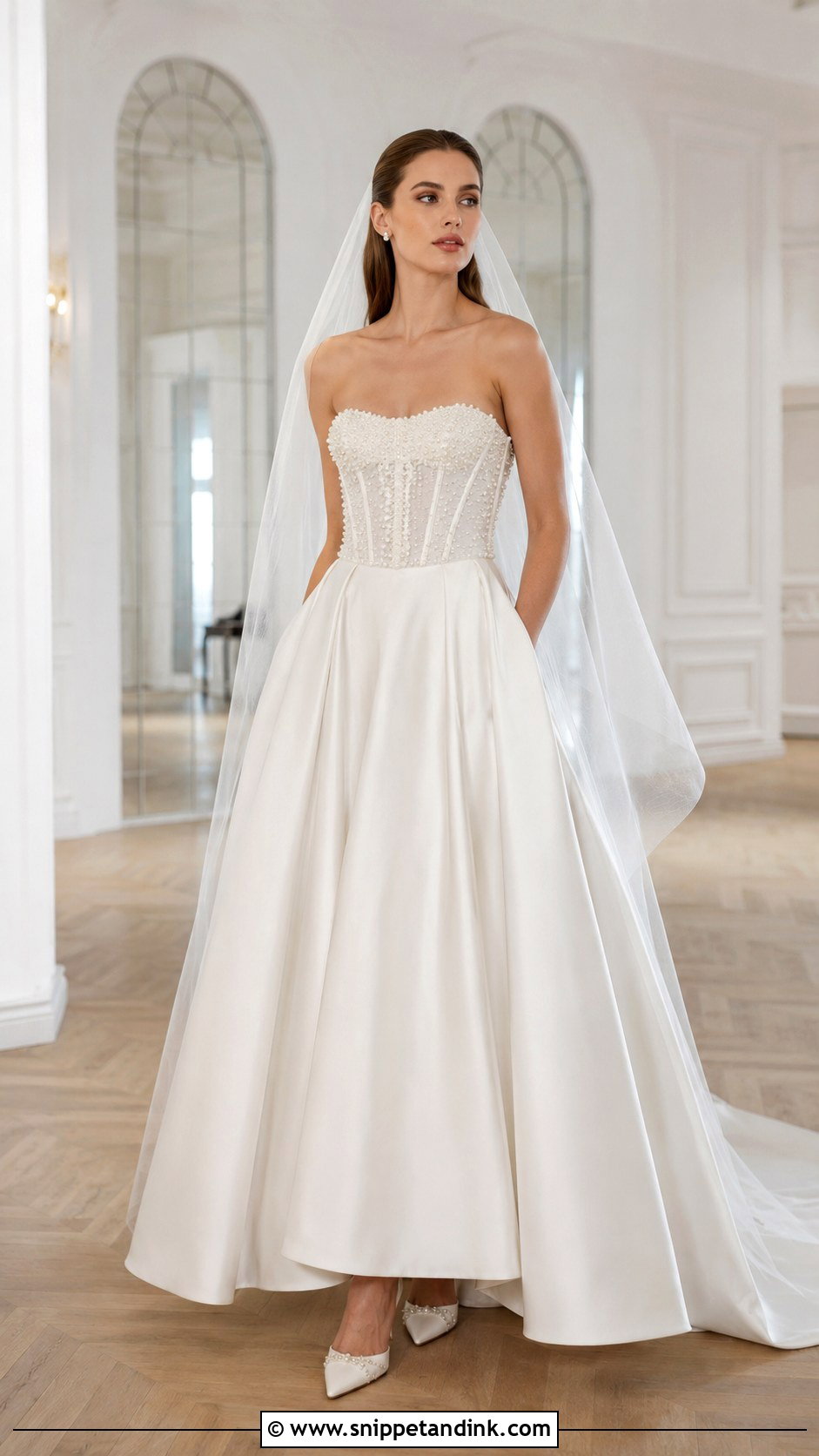
Pearl beading gives a corset glow rather than sparkle. Scattered pearls look lovely against matte satin, crepe or fine tulle. A plain A-line or column keeps it refined. Pearl studs, ivory pumps and a clean chapel veil are enough, and leave the beaded bag at home; it catches on delicate fabric. Pearl-covered bodices are heavier than they look, so the corset has to spread that weight evenly. I ask brides to sit for several minutes at the appointment and then check the underarm edges, where heavy beading most often rubs.
13. Minimal Crepe Corset Bridal Gown
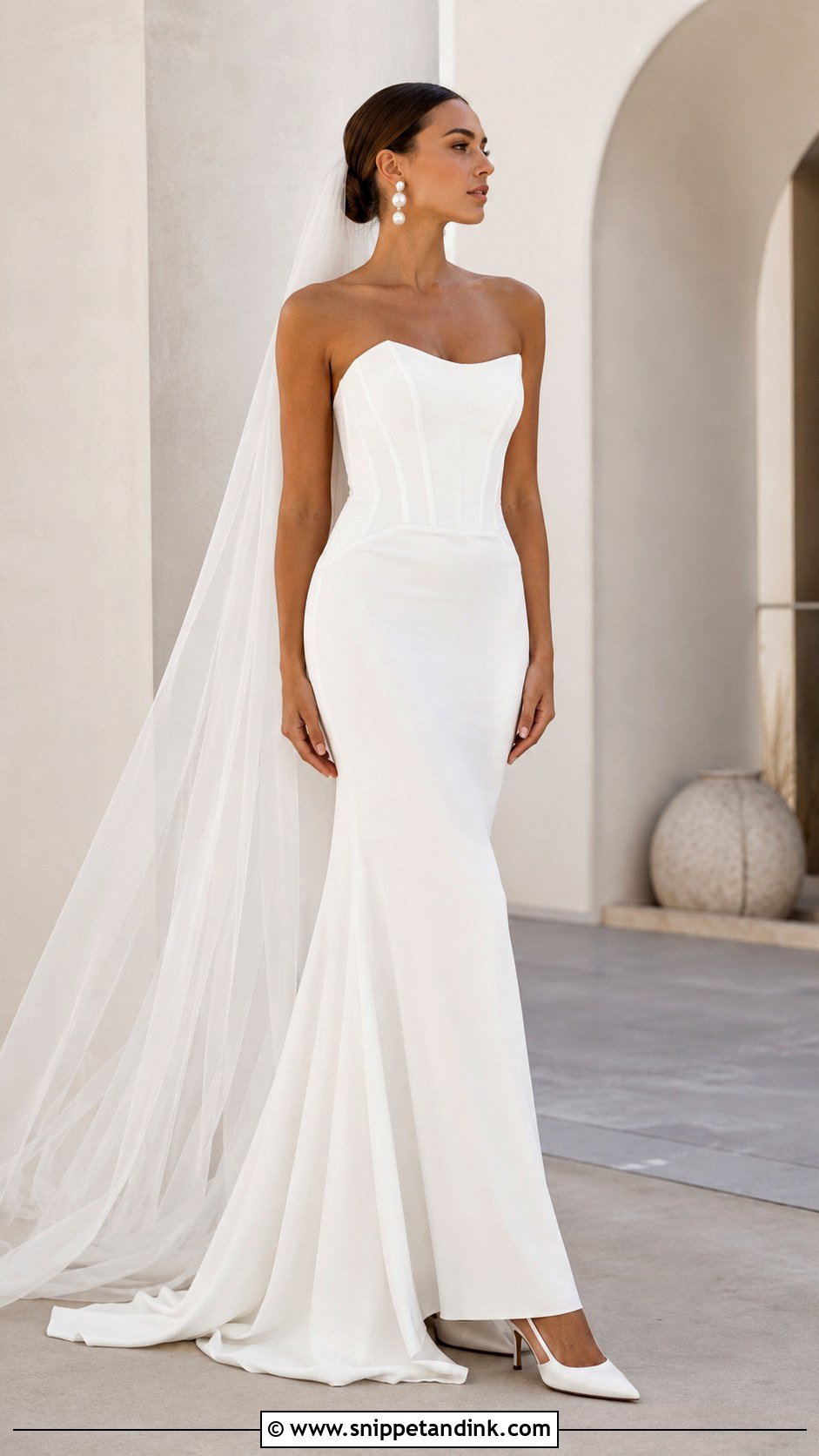
Plain crepe lets the corset do the shaping with no lace, beads or flowers to soften anything. It’s a modern look and easy to personalise with accessories: pointed slingbacks, bold pearl earrings and a long veil. A structured bouquet repeats its precise lines. Crepe shows fit problems more than textured fabric does, so look at the waist, side seams, zip and hips in daylight. Smooth nude underwear and properly finished cups keep the fabric flat. Any ridge from underwear shows straight through crepe in photos.
14. Tulle Princess Corset Bridal Gown
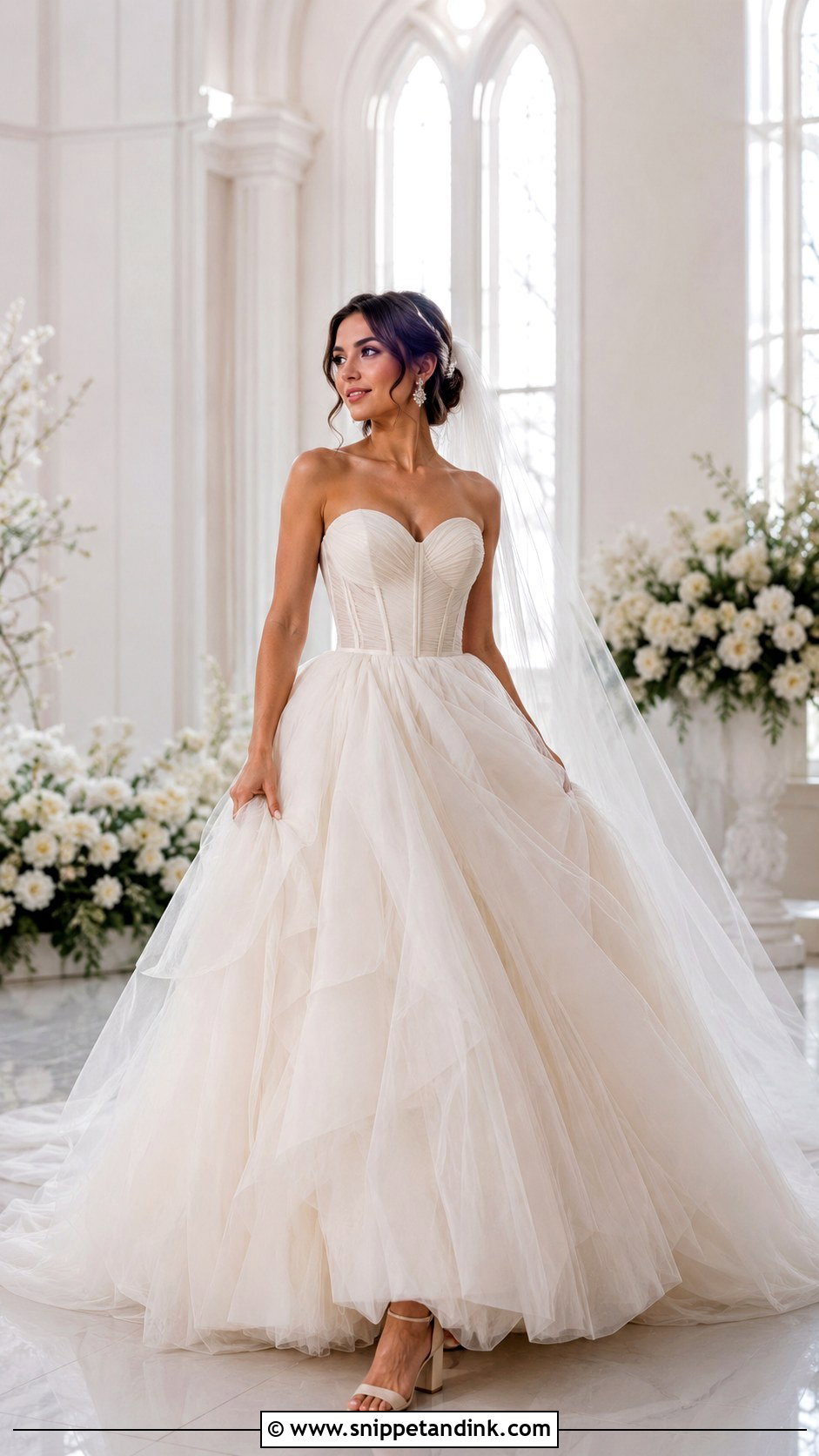
Soft tulle over a structured bodice gives a princess silhouette without the stiffness of satin. A sweetheart neck, defined waist and full skirt make it formal. Choose tulle that moves and doesn’t scratch your legs. Block heels and a cathedral veil suit it; if the tulle is glittered, keep jewellery small. Ask whether the skirt has enough lining for strong daylight, since thin tulle can turn see-through outdoors. The bodice should sit firmly without the skirt pushing it upward, which happens when a full skirt is heavier than the bodice can anchor.
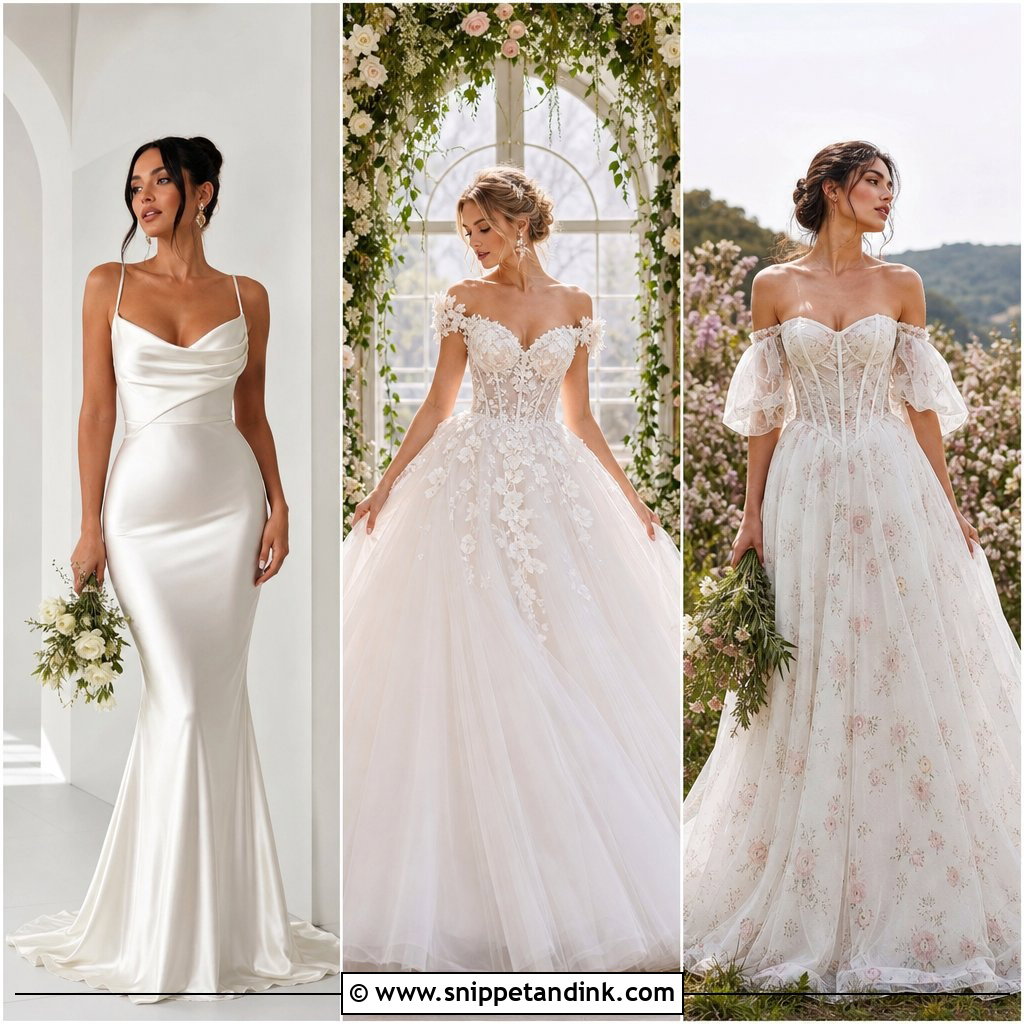
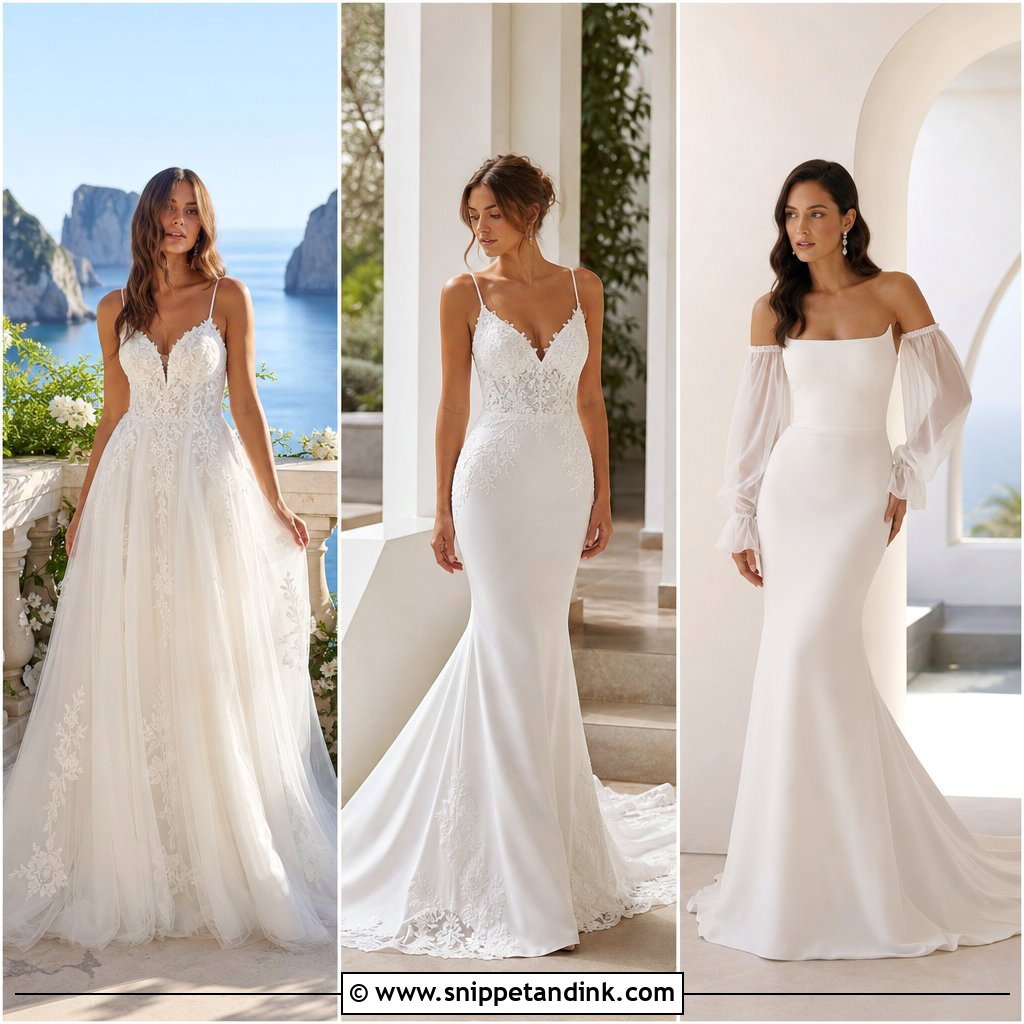
15. Detachable Overskirt Corset Bridal Gown
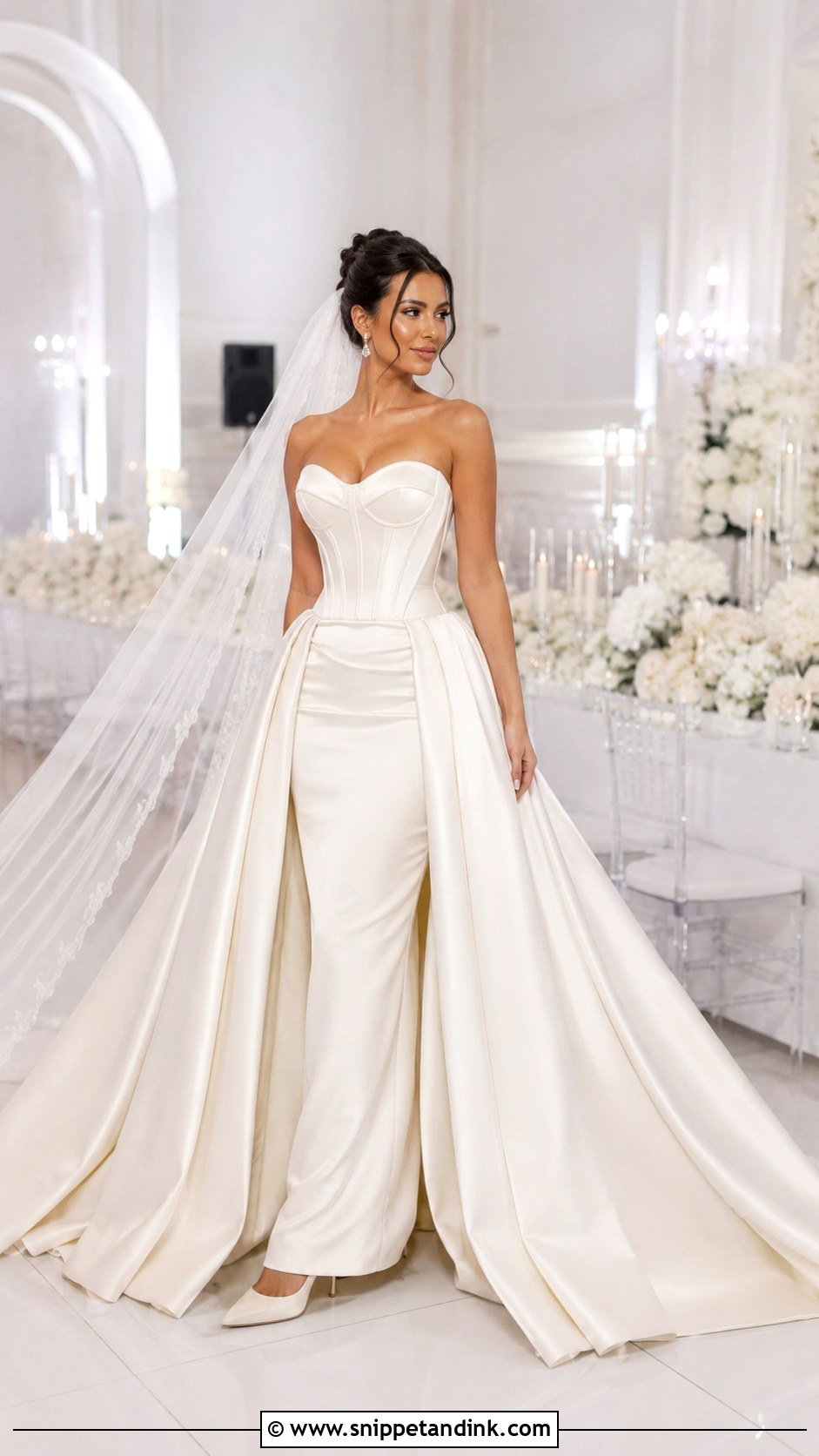
A detachable overskirt gives one corset gown two silhouettes: a ball gown for the ceremony, then a column, mermaid or mini for the reception. Matching fabrics and a consistent waist placement keep both versions intentional. A long veil and classic pumps suit the first look; statement earrings and comfortable shoes the second. Test the fastenings before the day and choose one helper to manage them. Hooks or concealed zips should sit flat under the corset without bulk, and the base gown must look complete alone.
16. Corset Bridal Gown With Cape
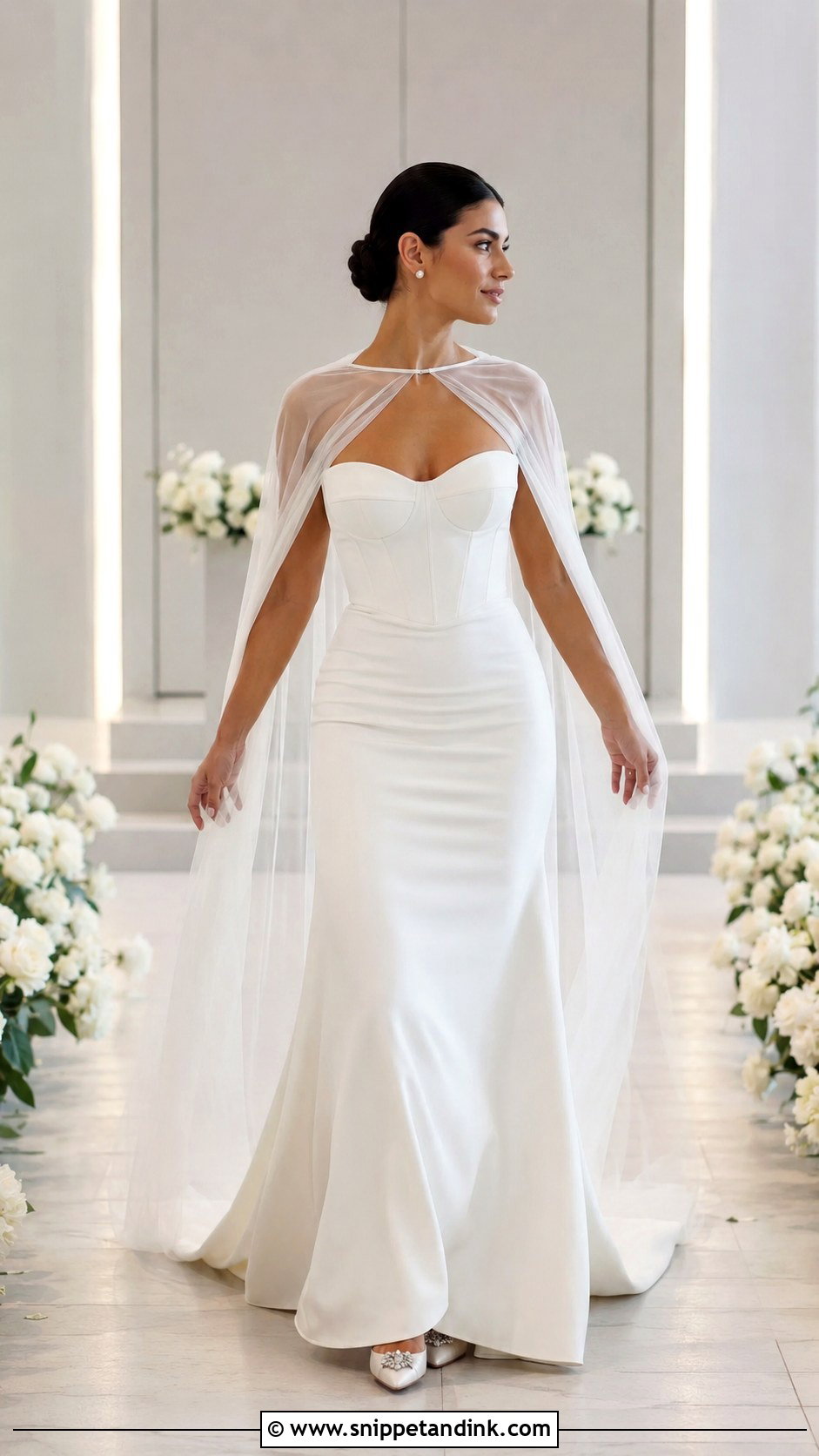
A cape adds movement and can replace a veil entirely. A sheer floor-length cape fixed at the shoulders or neckline suits a plain satin or crepe corset gown. Light tulle or chiffon is best, because a heavy cape pulls on the bodice from behind and drags the neckline back. Pointed heels and a low bun finish it. Practise walking and turning in both pieces, and look at the fastening points from the front and back. Removable fastenings let you take the cape off after the ceremony.
17. Tea Length Corset Bridal Gown
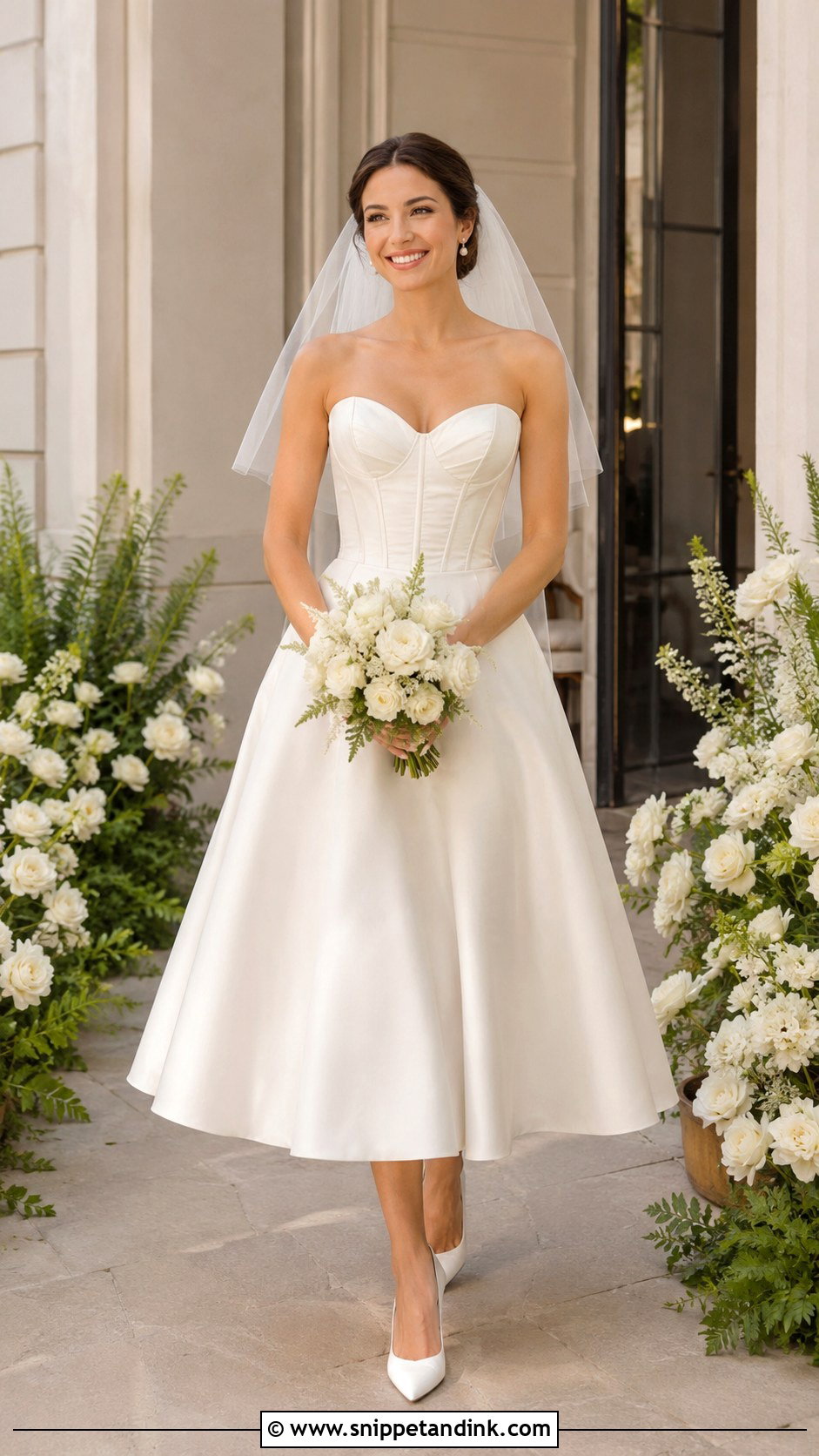
A tea-length corset gown falls between the knee and the ankle, so it’s lighter and your shoes become part of the look. A satin bodice with a softly flared skirt and a short veil is the classic version. A narrow belt can define the waist if it blends with the gown rather than cutting it in two. It suits courthouse ceremonies, gardens and reception changes. I mark tea-length hems with the bride walking, not just standing, because the swing of the skirt changes where the hem lands on the calf. Pick shoes you can stand in for hours.
18. Plus Size Lace Corset Bridal Gown
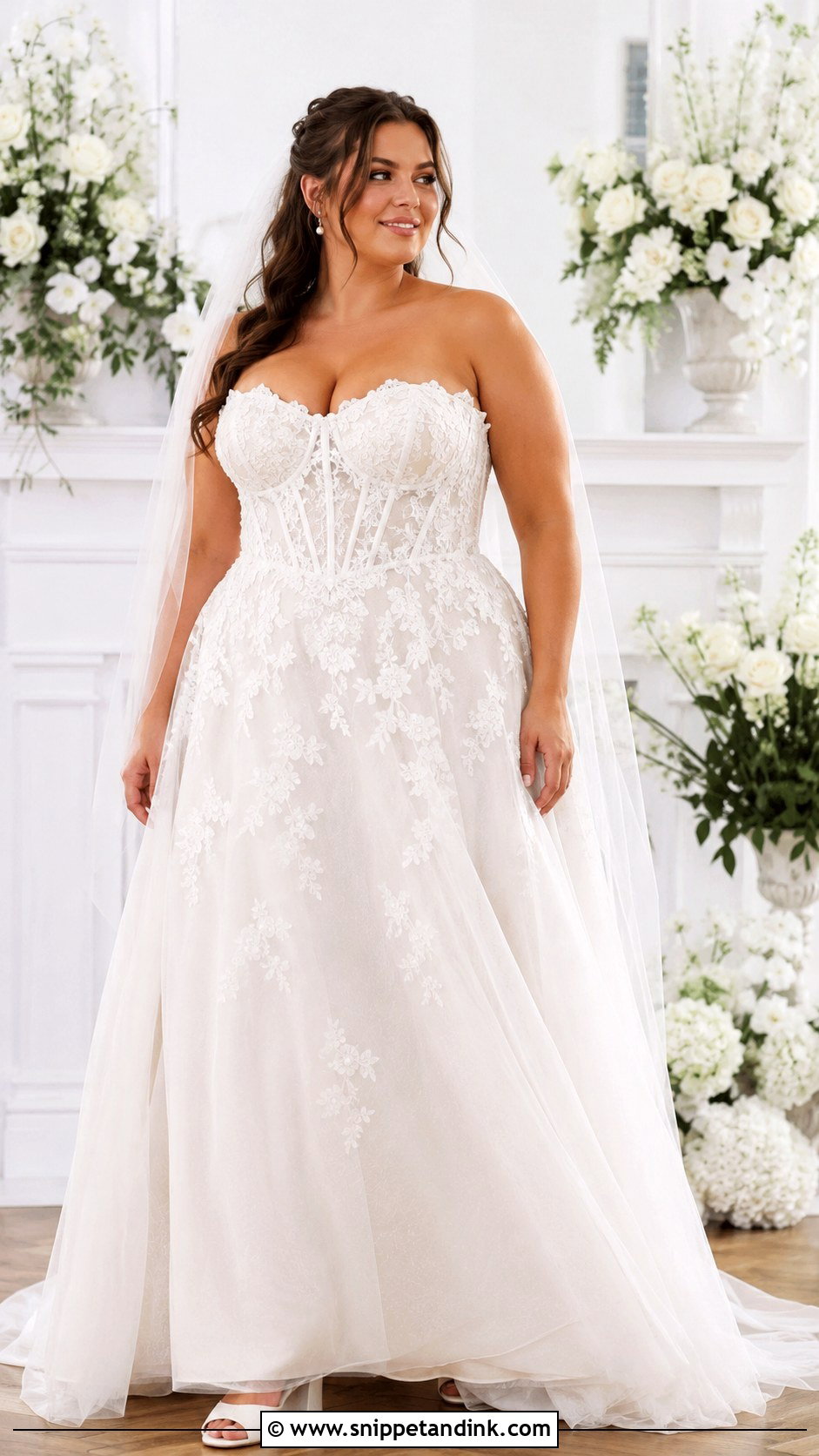
A plus-size corset gown should support you without stopping you breathing or moving. Look for flexible boning, substantial cups, smooth side panels and a back closure that adjusts precisely; a lace-up back is ideal. Lace over a lined bodice adds coverage and softens the structure. An A-line or ball gown balances proportions. Bridal sizing varies widely, so ignore the label. Order for your largest measurement and have the rest tailored. A good alterations specialist can adjust bust, waist, straps, hem and back without forcing a fit.
19. High Neck Corset Bridal Gown
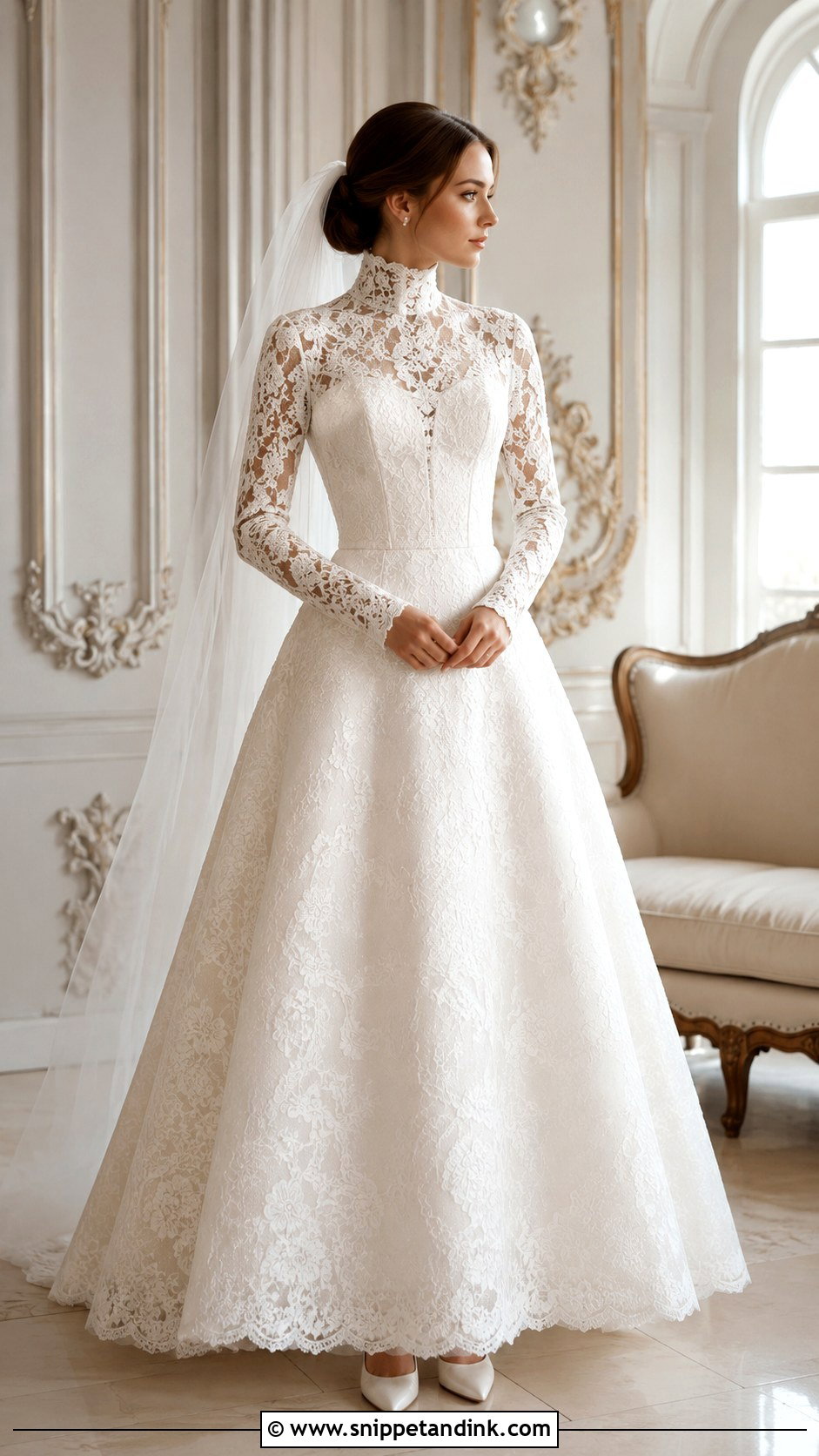
A high neck hides the corset inside: fine lace or illusion fabric covers the neckline and shoulders while the boned foundation underneath does the shaping. Long sleeves look formal; a sleeveless high neckline looks clean and modern. Closed-toe pumps, small earrings and a low bun show the neckline; a plain veil keeps the top from looking busy. Turn your head side to side at the fitting. If the collar rubs, it’ll leave a red mark by evening. The inner corset and outer lace must move together, with no pulling at the shoulders or armholes.
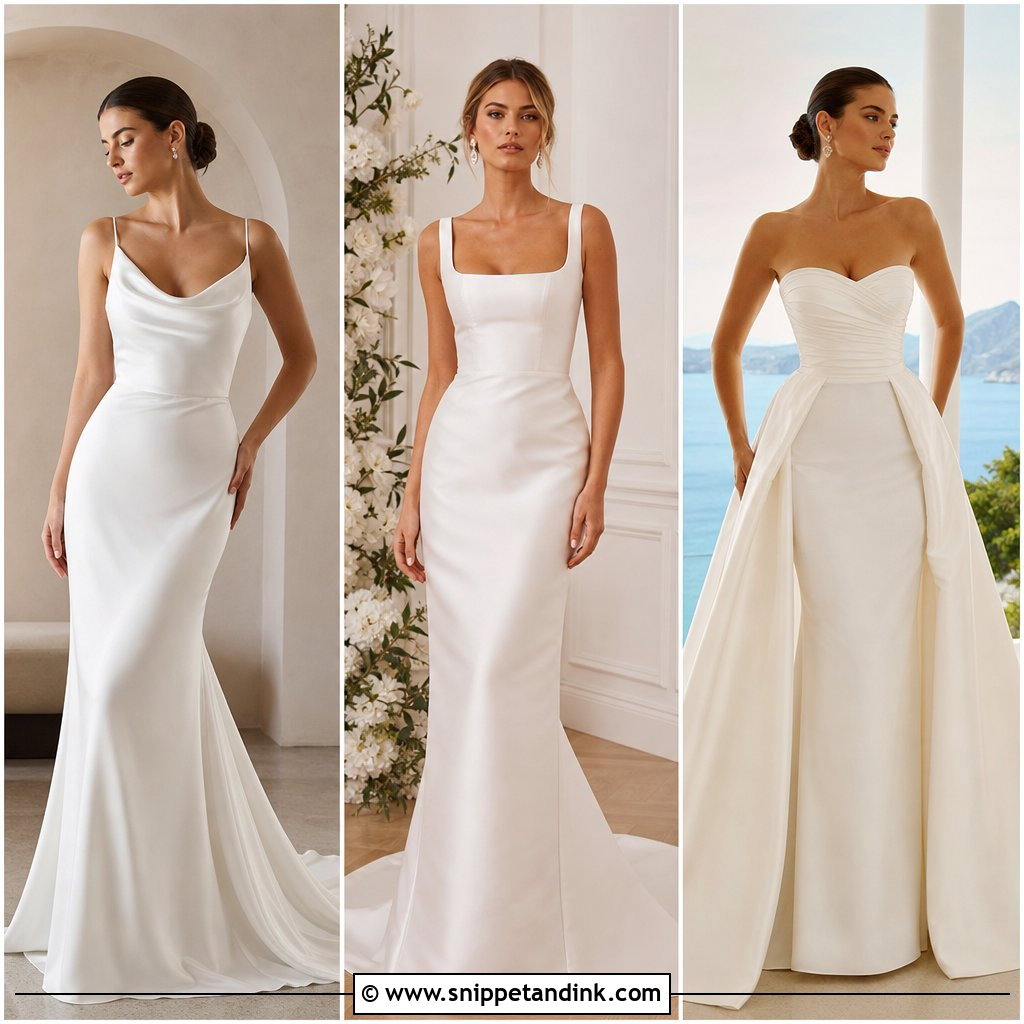


20. Blush Corset Bridal Gown
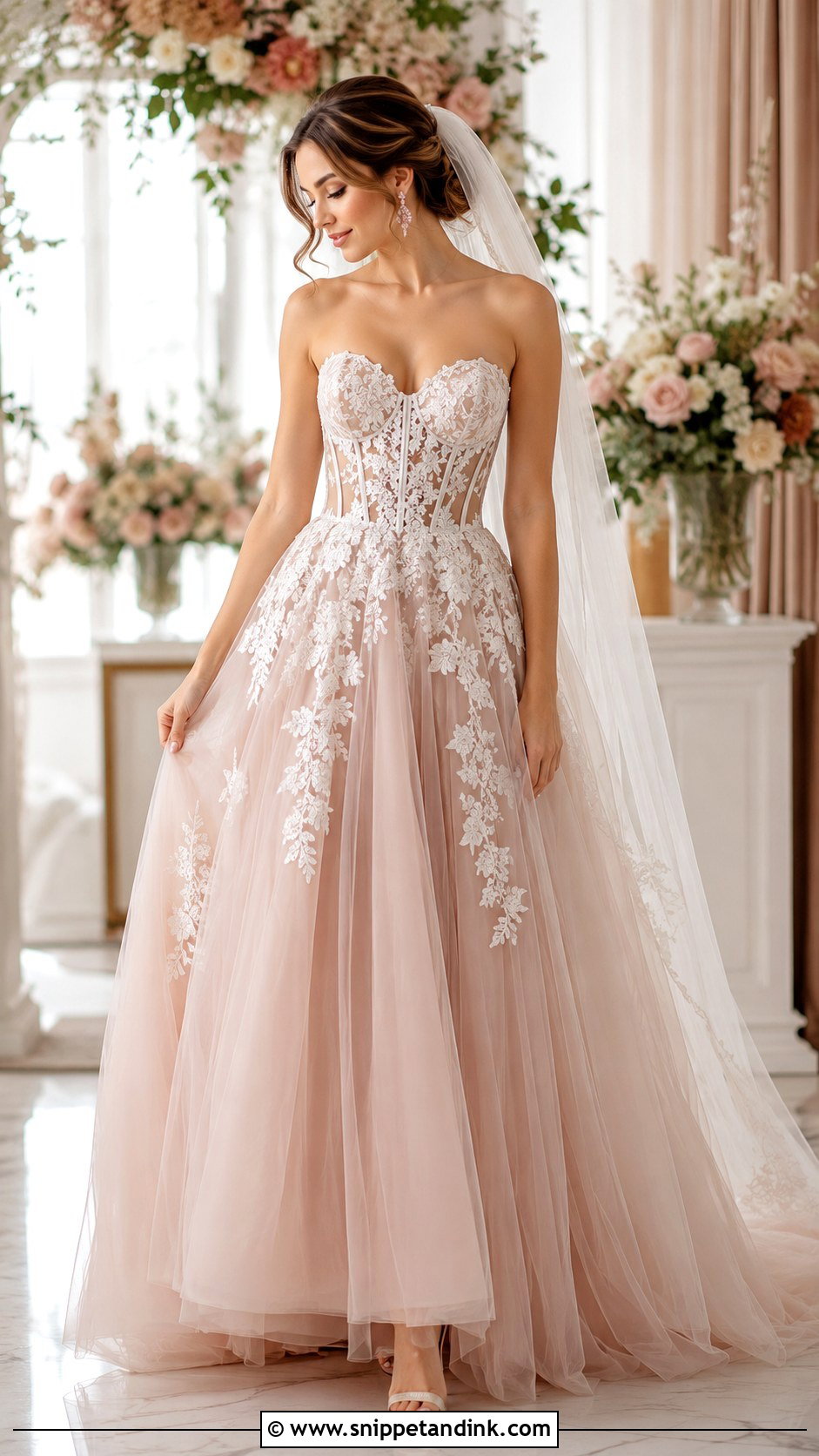
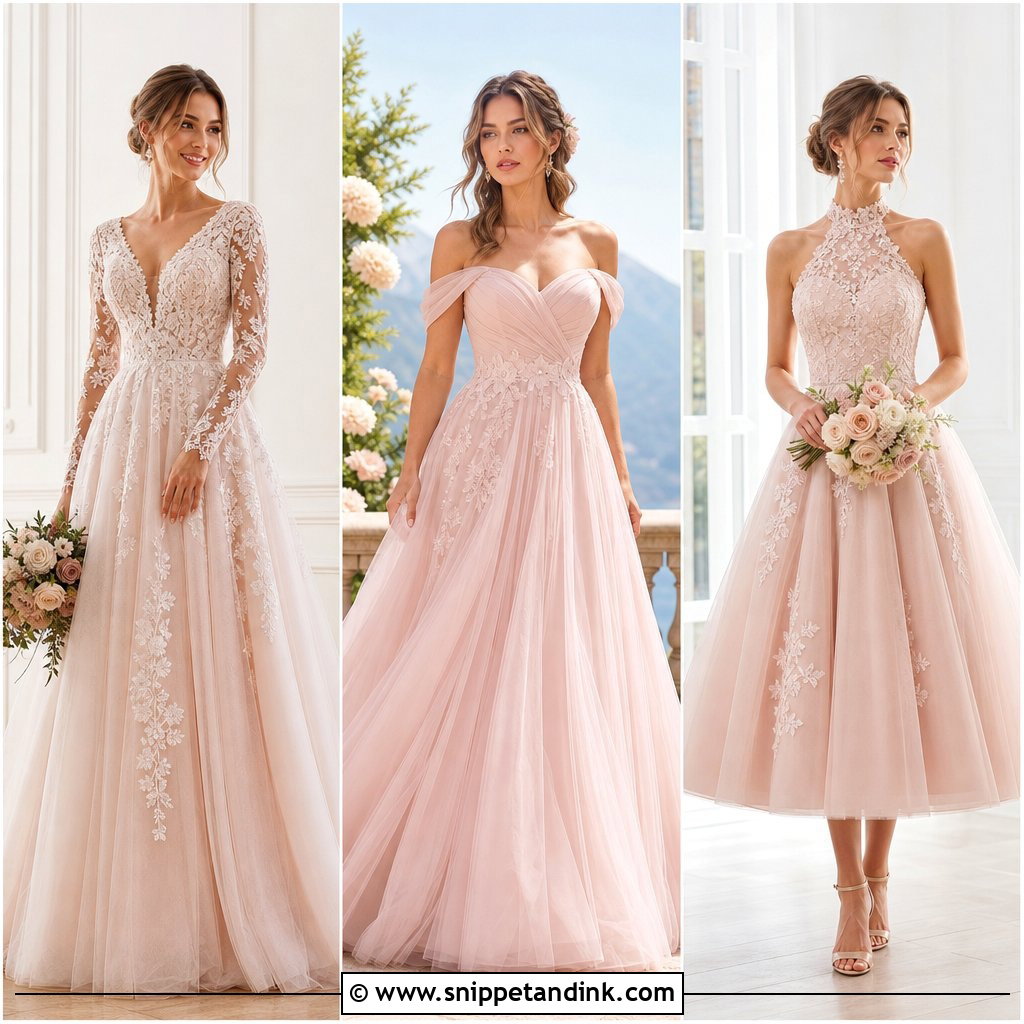
Blush adds a wash of colour while still reading clearly as bridal. Pale pink, champagne blush or a rose lining under ivory lace gives a subtle effect; full blush satin is bolder. A structured sweetheart bodice with a flowing tulle skirt is the romantic version. Neutral ivory heels and a veil that matches the lace rather than the lining work best. Blush shifts under indoor lighting and on camera, so compare swatches in daylight and against your skin. Keep the undertones of every accessory consistent.
Do You Need a Bra Under a Built-In Corset?
Usually not. Most corset gowns have cups built in, and adding a strapless bra doubles the layers and can push the bust up too far. If the built-in support isn’t enough, ask your seamstress to add or deepen the cups rather than wearing a bra underneath.
Shapewear is the other question I get. Firm shapewear under a corset often fights the boning and creates a ridge where they overlap. Smooth, nude, laser-cut underwear is normally all you need. Whatever you plan to wear, bring it to every fitting, since even a different pair of knickers can change how a fitted skirt lies at the hip. If your skin is sensitive, a thin slip under the bodice stops the boning channels rubbing over a long day.
If a Bone Pokes Through on the Day
It’s rare, but a bone can wear through its channel, usually at the top edge or the waist. Pack a small piece of moleskin or a folded plaster and a few safety pins. Cover the end from the inside so it stops scratching, and have it repaired properly after the wedding rather than cutting it.
Structure You Can Still Breathe In
A corset gown should give you structure and still let you breathe. Satin, lace, visible boning, a basque waist or a detachable overskirt can all work, as long as you look at the whole outfit together. Think about the venue, season, coverage, skirt weight, shoes and alterations before deciding. At every fitting, walk, sit, breathe deeply and move your arms. Good tailoring makes the biggest difference around the cups, waist, back and hem, and it’s what turns a sample-size gown into one that fits you.
You'll Like These Ideas:










Leave a Reply