
Suits are what most people at a mehendi actually wear: the bride’s sisters, her friends, the aunts who’ll be dancing by nine. They cost less than a lehenga, travel well and are easy to wear again. Greens, yellows, oranges, pinks and jewel tones all suit the function, and the cut can be anything from an Anarkali or sharara to a palazzo, straight-cut or long Pakistani kameez. What I’d decide first is your role. The bride needs bare arms and room to sit for hours; a guest getting a small palm design mostly needs shoes she can dance in. The twenty looks below cover both, with the adjustments I’d make for each.
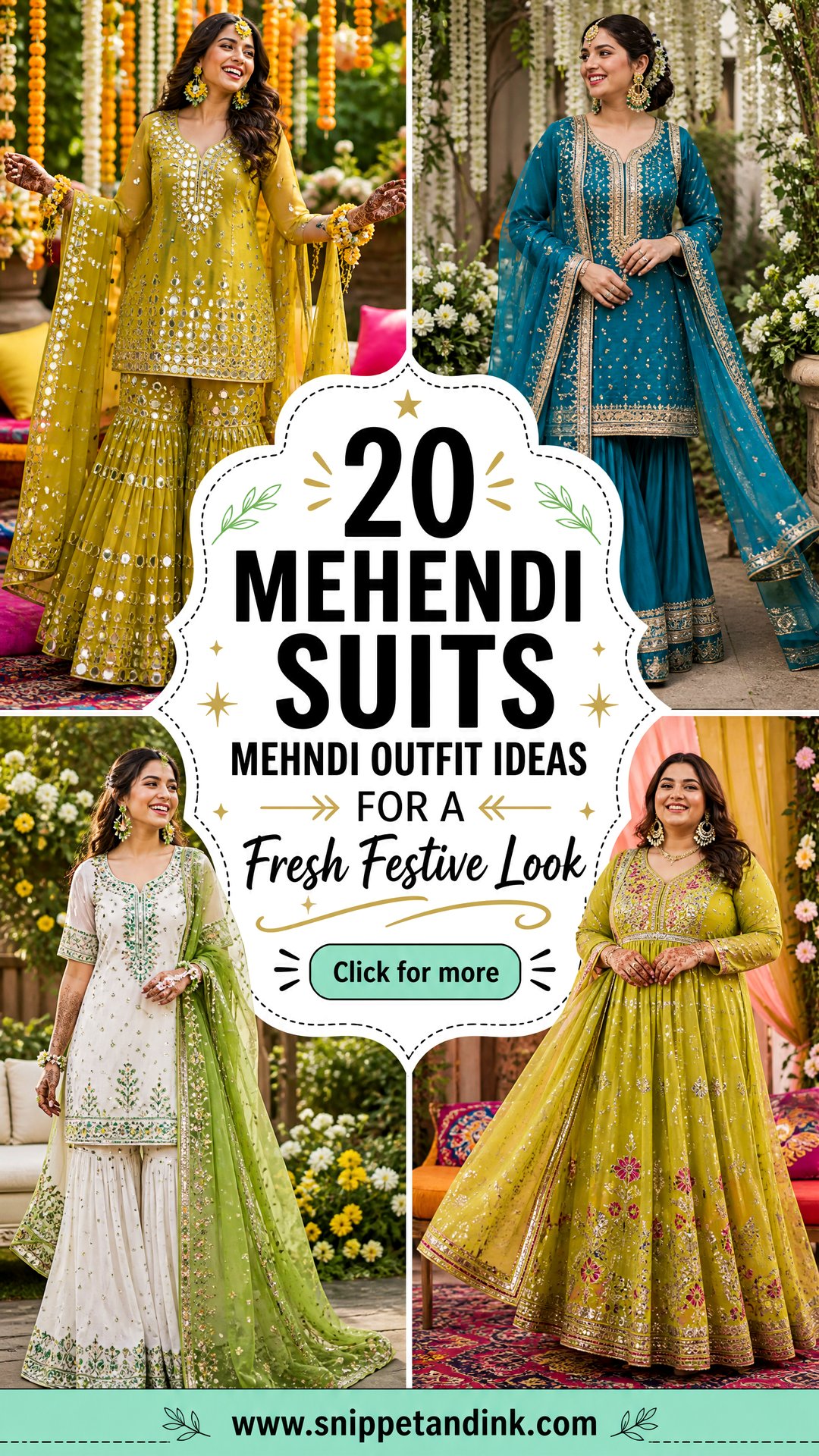
Bride, Sister or Guest? Dress for Your Part
The same suit can be right for one person and wrong for another at this function, simply because of what each person is doing.
The bride
She’ll be seated for a long application, often with both arms and feet covered. I’d give her sleeveless or short sleeves, a waistband that doesn’t dig in when she sits, and nothing that hangs forward. Her suit can carry the heaviest embroidery of the evening.
Sisters and close friends
They’re often performing a dance, running errands and posing for every group photo. Shararas, dhoti pants and Patialas suit them because there’s room to move. Coordinate colours with each other if you like, but steer clear of the bride’s exact shade.
Guests
Most guests who get henna have a small design on one palm, so sleeve length barely matters. Comfortable shoes and a light dupatta matter more. Prints, cotton, Chanderi and straight-cut suits look right without competing with the family.
1. Green Anarkali Mehendi Suit
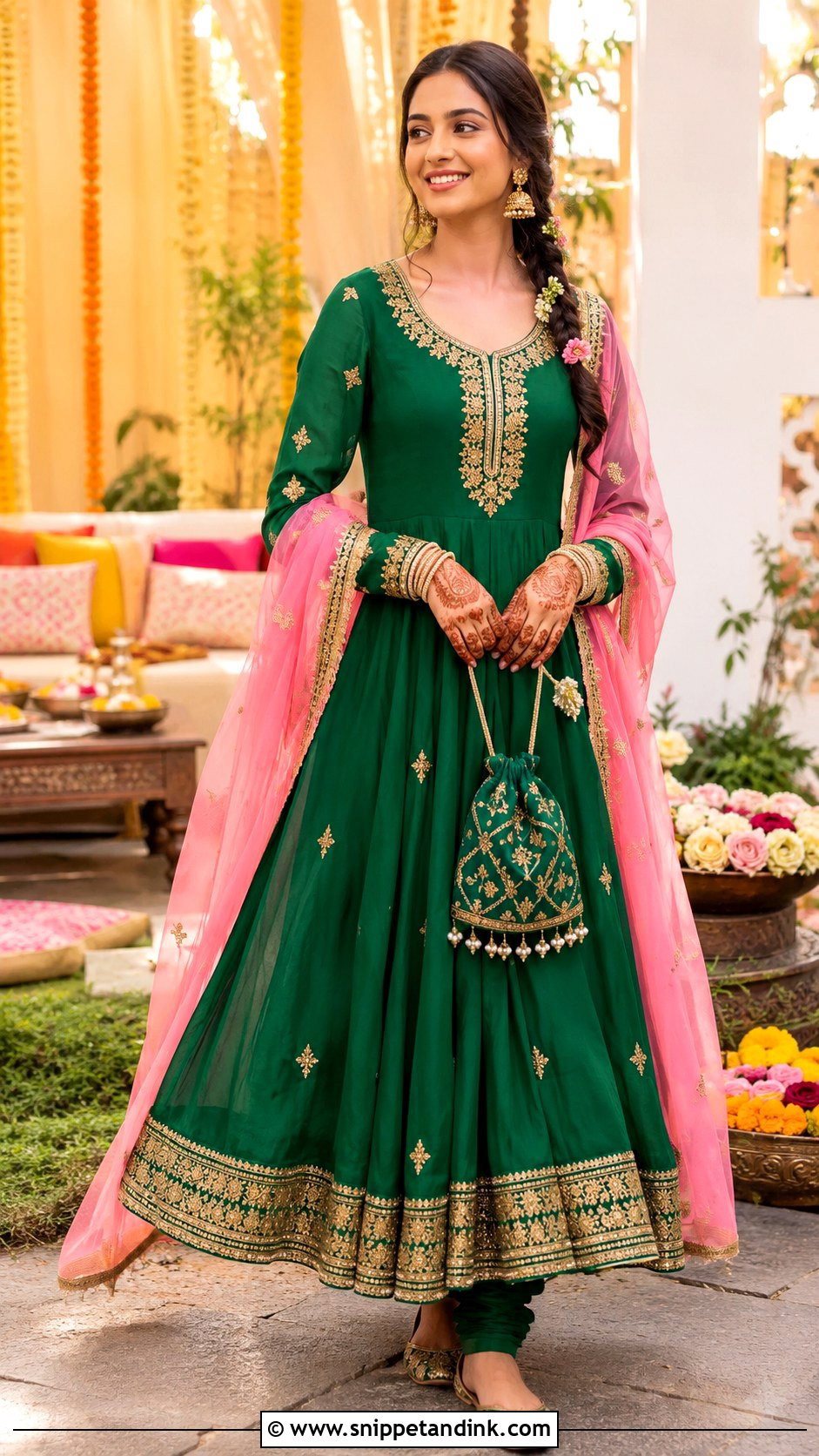
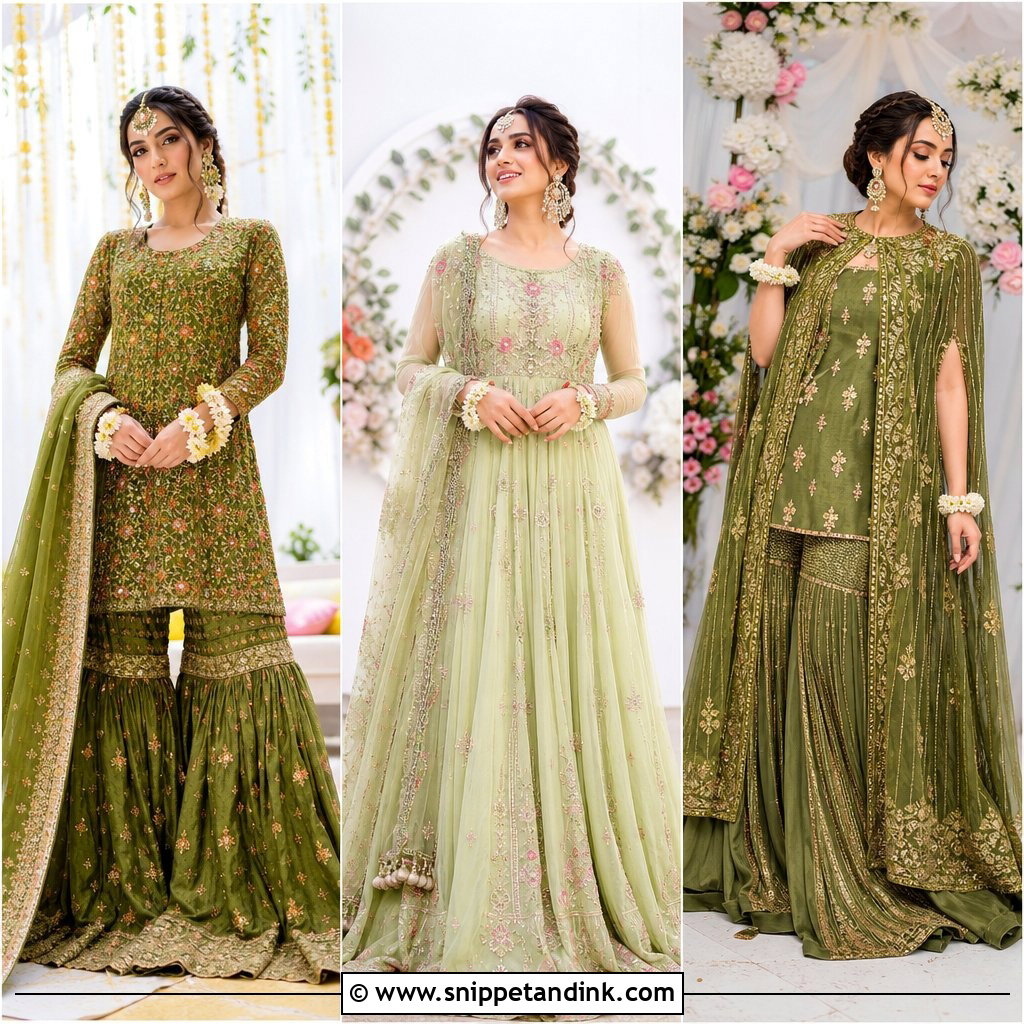
The Anarkali is the easiest way into the classic mehendi green, because it’s one flowing piece and needs very little styling. Georgette or chiffon keeps it light; a stiff net Anarkali looks good standing but crumples once you sit. Gold threadwork or small mirrors give enough shine. A pink or yellow dupatta keeps the colours lively, and gold jhumkas with a small potli complete it. I’d pick juttis over narrow heels for a long evening. Short or elbow sleeves let your henna show, and a braid with tiny fresh flowers suits a bride or bridesmaid alike.
2. Yellow Sharara Mehendi Suit
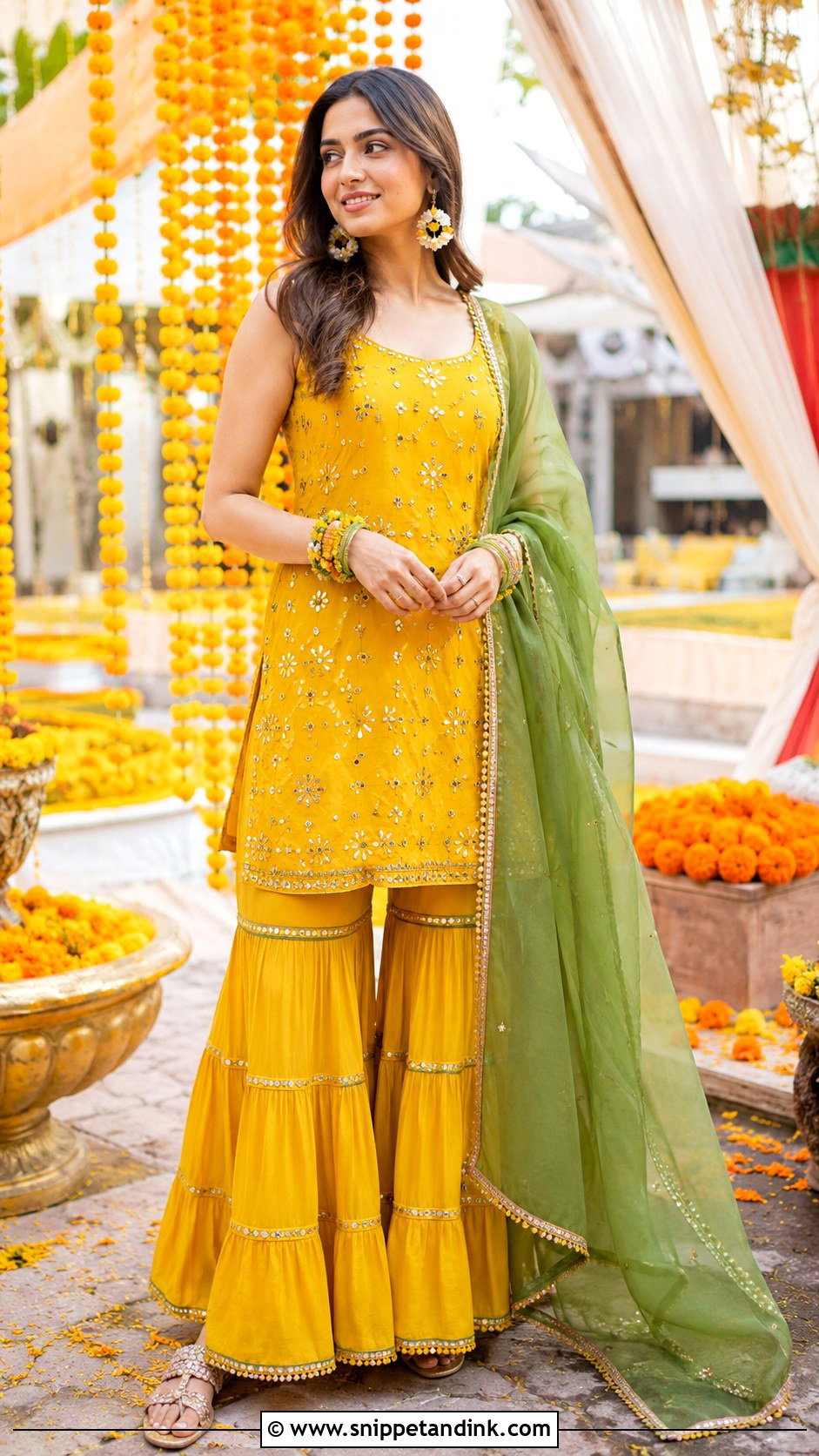
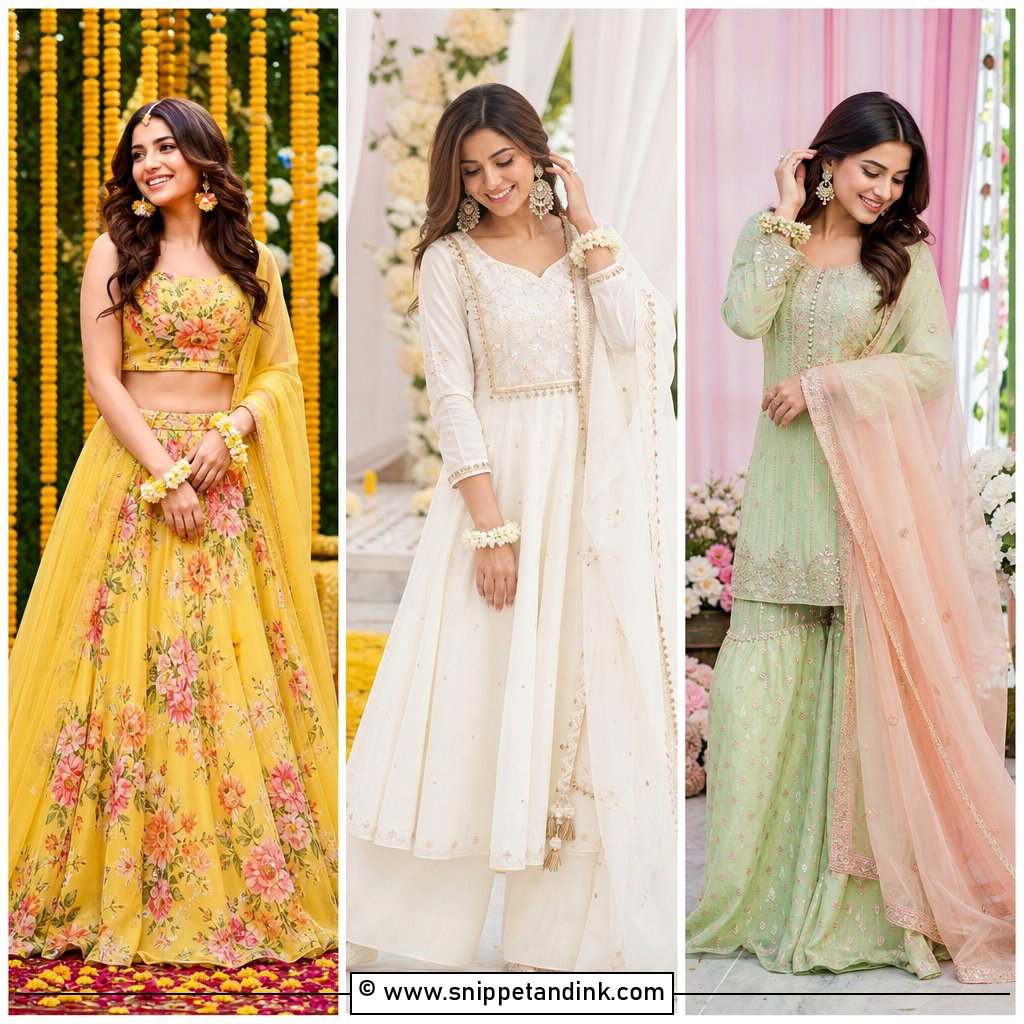
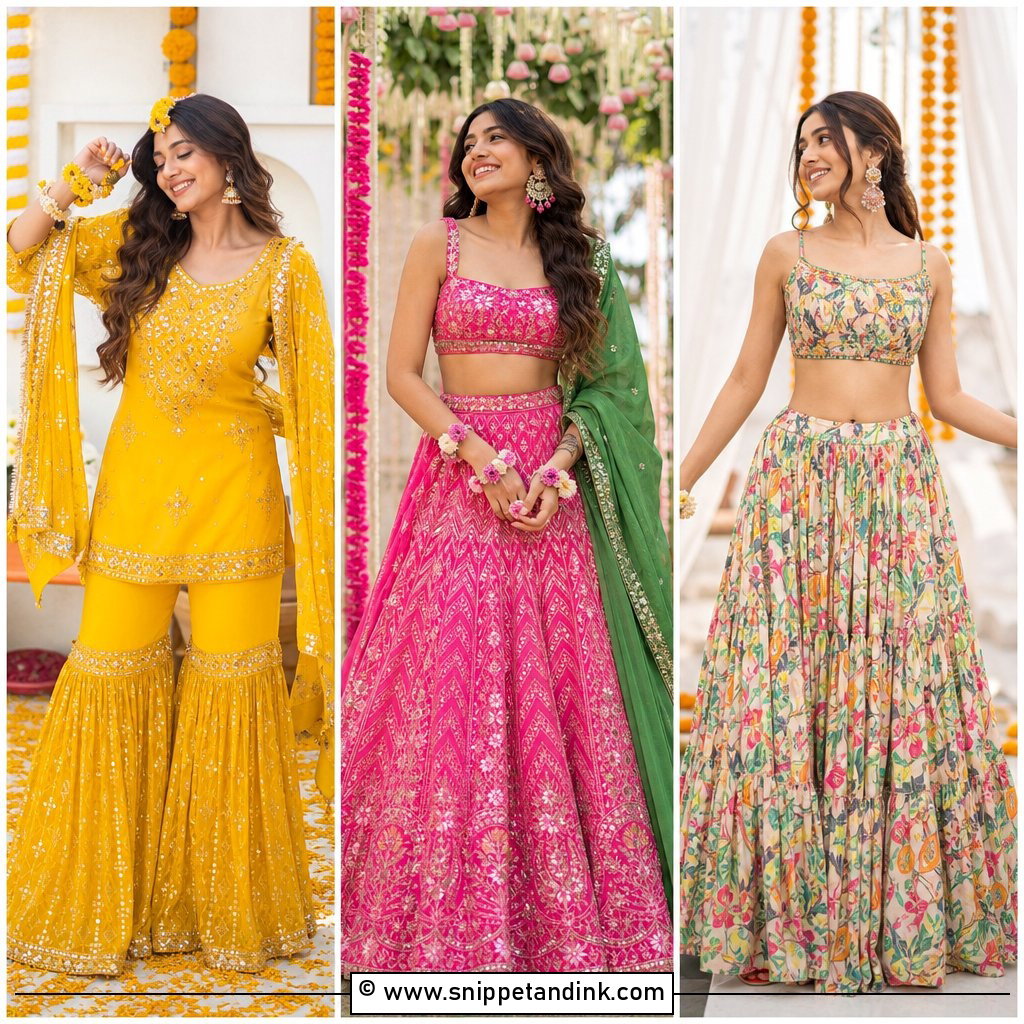
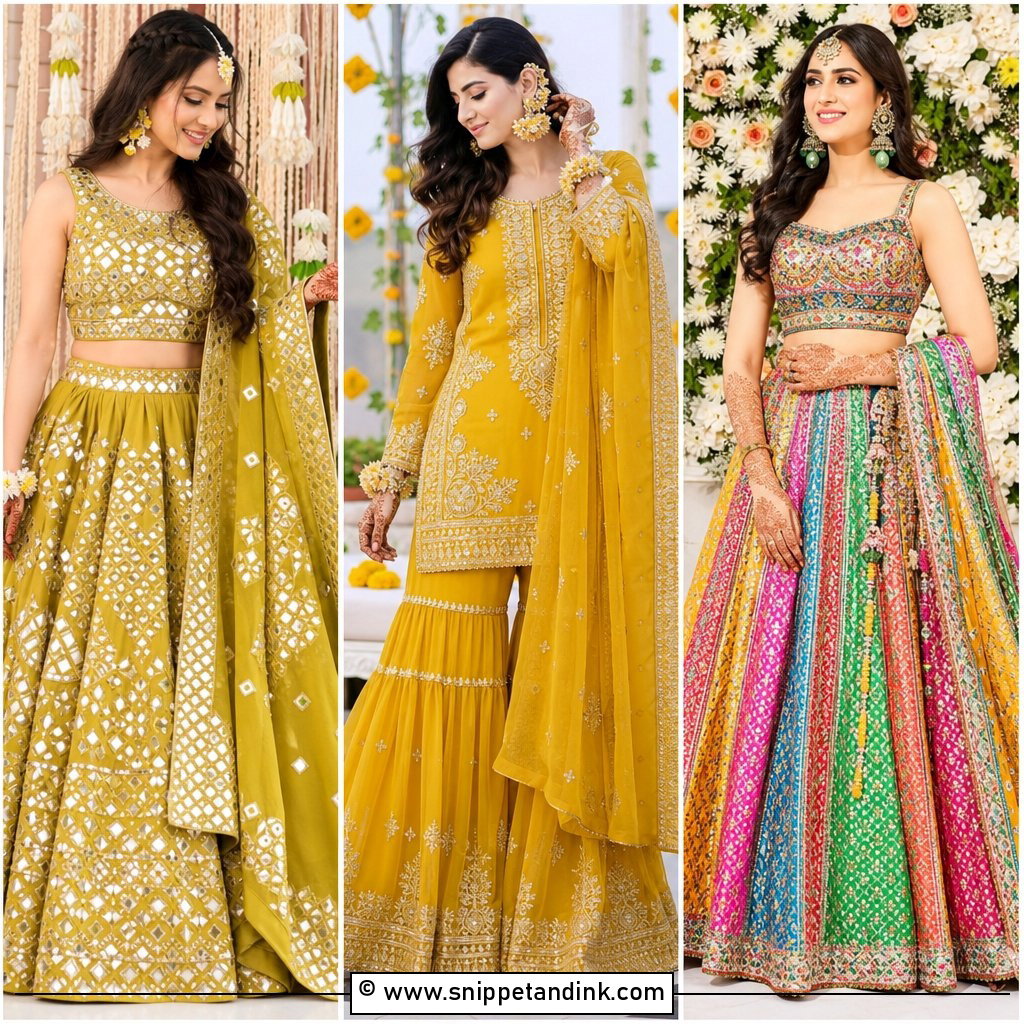
Tiered sharara pants have the most swing of any bottom here, and they’re the reason this look works on a dance floor. Pair them with a short embroidered kurti in marigold, mustard or lemon. Lemon looks crisp in daylight but can go pale on camera; marigold and mustard hold their depth under warm indoor lighting. Mirror work at the neckline and sharara border is enough decoration. A green organza dupatta over one shoulder adds contrast. Floral earrings, slim bangles and flat sandals keep you steady, with a low ponytail.
3. Floral Palazzo Mehendi Suit
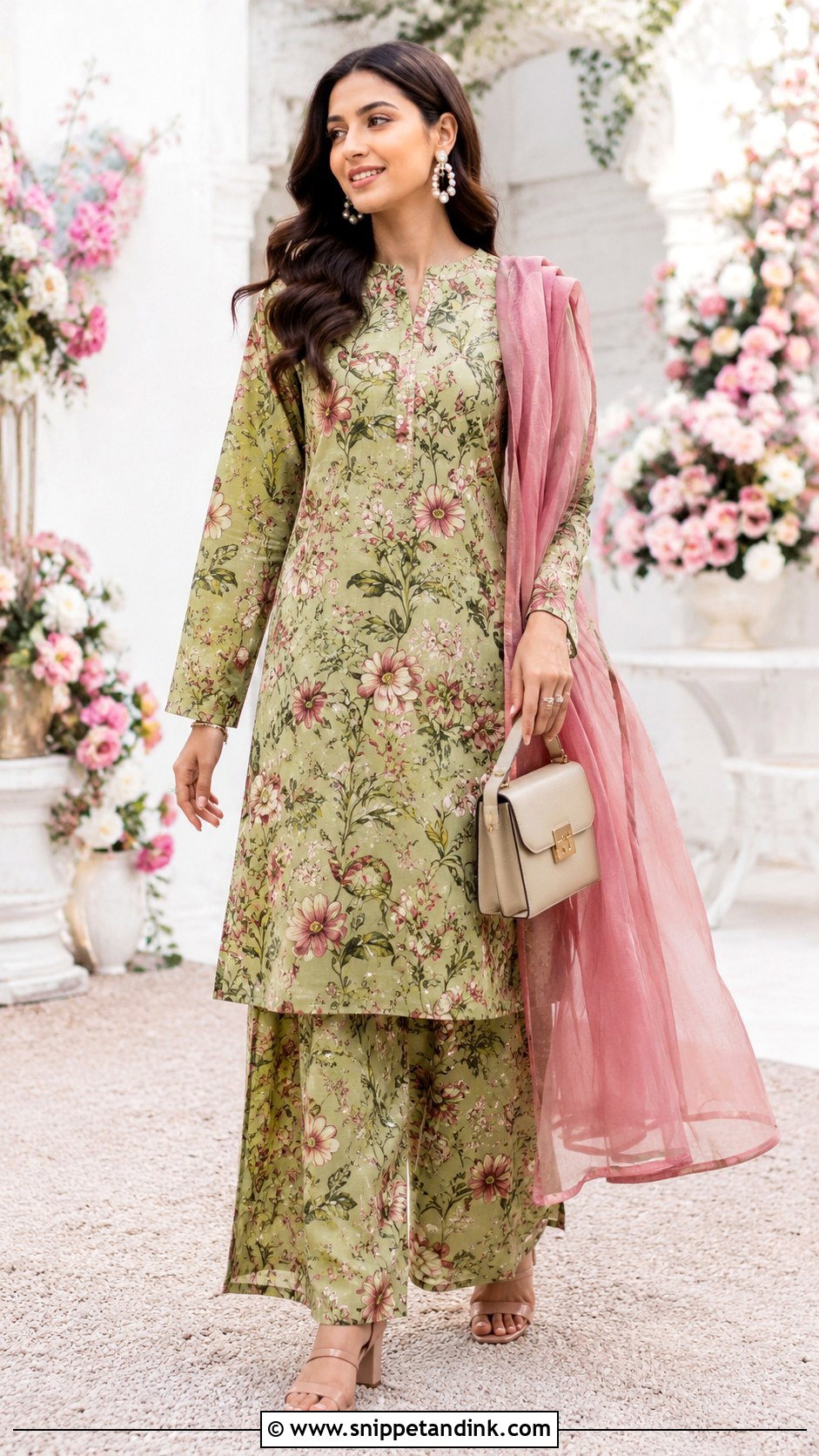
A floral palazzo suit is the one I hand to someone who’s worried about the heat. Wide legs let air move, and a printed kurta looks festive without heavy work. Pick a straight or fitted kurta with botanical prints and matching palazzos, then a chiffon dupatta in one accent colour from the print. If the event is a little more formal, look for embroidery at the neckline. Pearl drops and colourful bangles suit it. Wear block heels on a solid floor and flats on a lawn, where heels sink into the grass.
4. Mirror Work Gharara Mehendi Suit
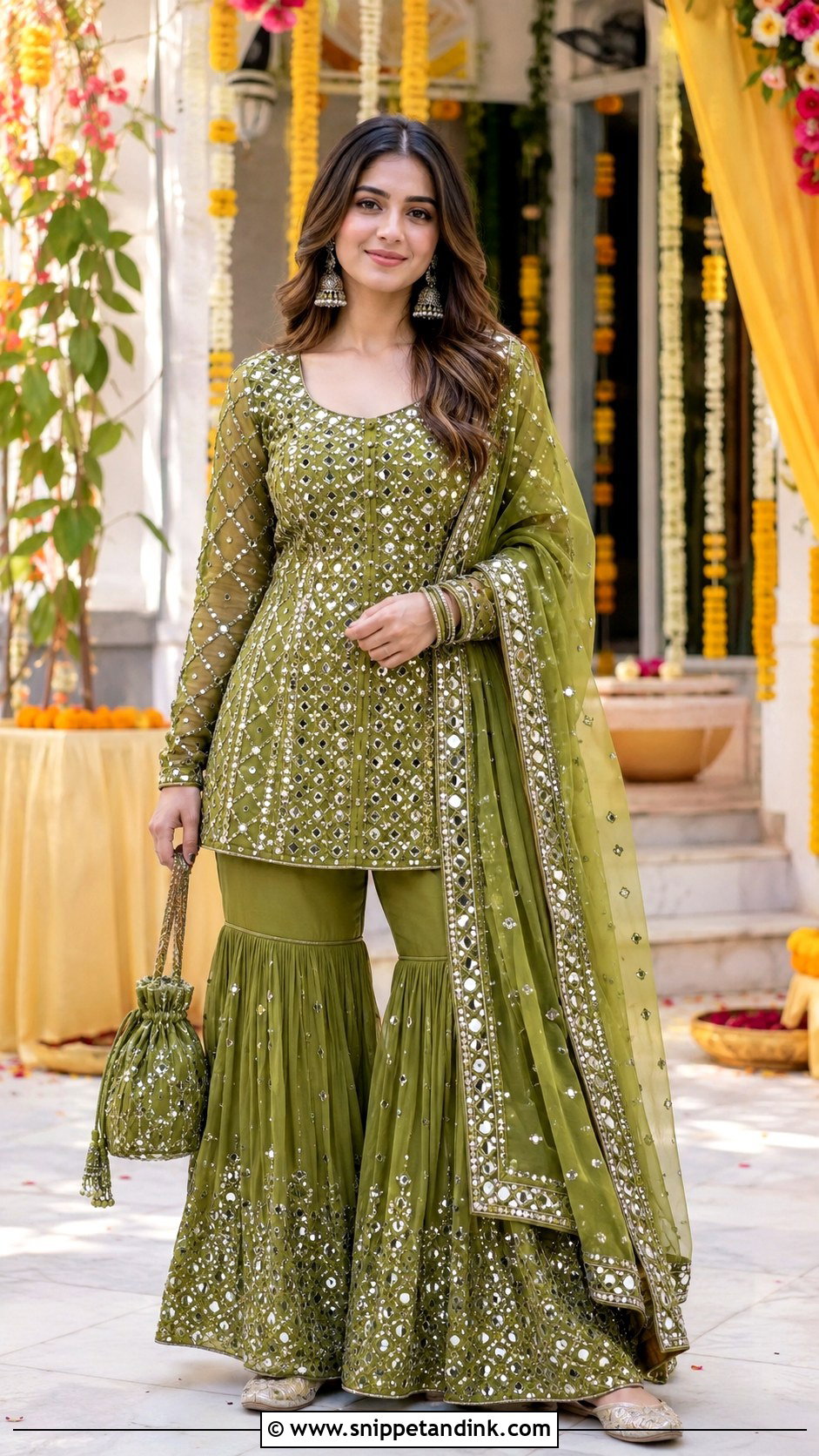
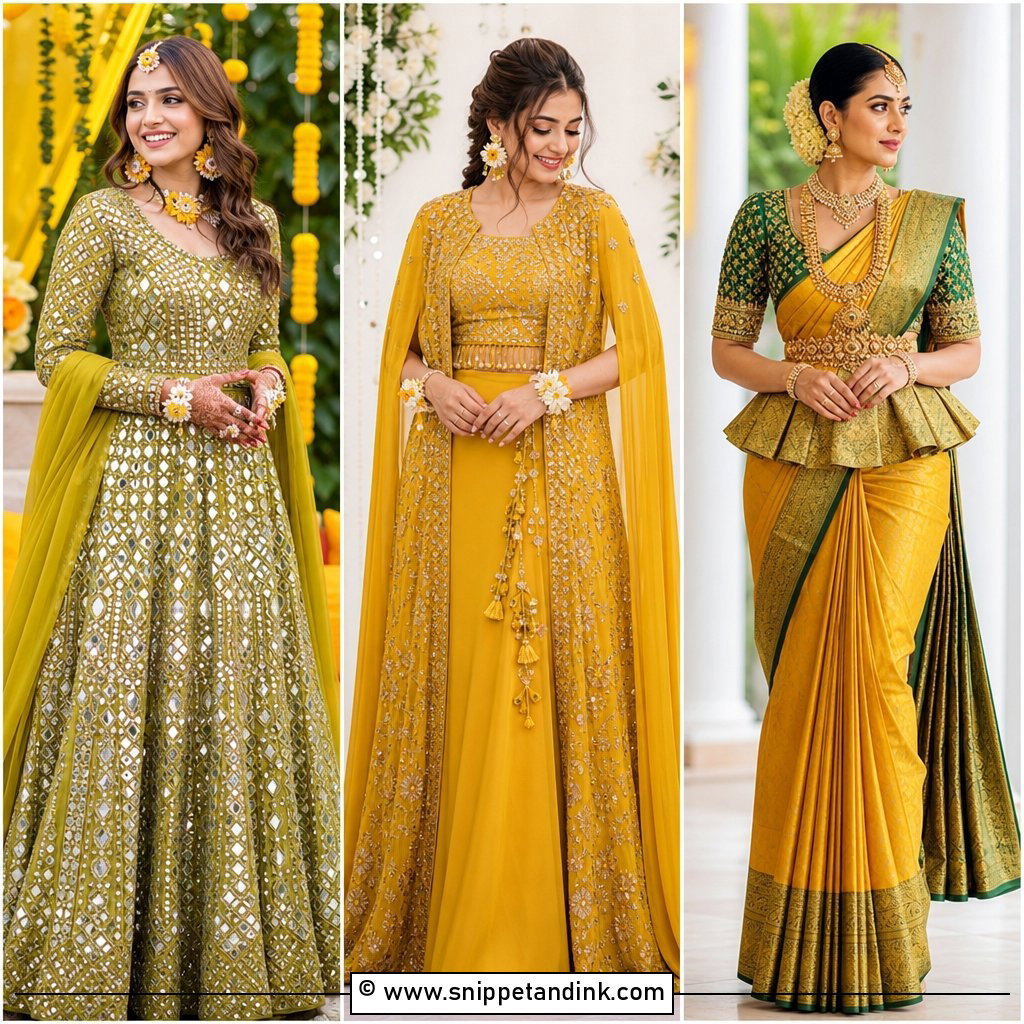
Placement is what separates good mirror work from busy mirror work. On a gharara suit, I like the mirrors gathered at the neckline, sleeves and knee panels, with plain stretches between, so the outfit looks deliberate under bright daytime light. Choose a short structured kurti in emerald, lime or turquoise over flared gharara pants, and a sheer dupatta with a narrow mirror edge. Silver jhumkas suit the reflective finish. Metallic juttis and a sleek bun or centre-parted braid keep the head-to-toe look tidy.
5. Lime Green Straight Pant Mehendi Suit
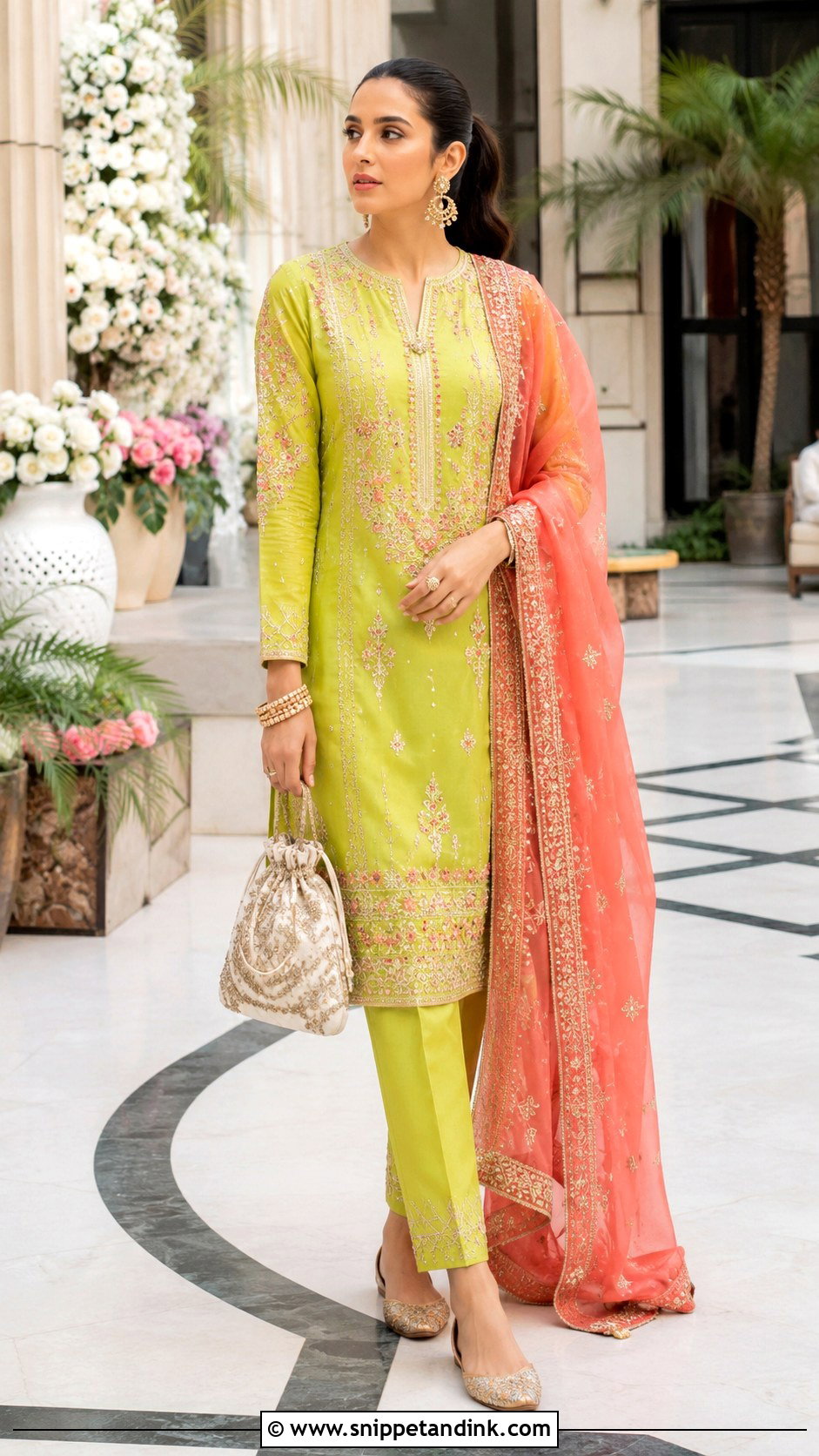
A lime green straight-pant suit is the simplest silhouette on this list, which is exactly why guests like it. A knee-length kurta with side slits lets you sit and walk easily; slim straight pants keep the shape clean. Put the embroidery at the neckline or hem only. A sheer pink, coral or multicolour dupatta adds the festive contrast. Statement earrings, a few gold bangles and pointed juttis are enough. Lime is unforgiving if it’s too acidic for your skin, so hold the fabric to your face in daylight before you buy.
6. Pink Angrakha Mehendi Suit
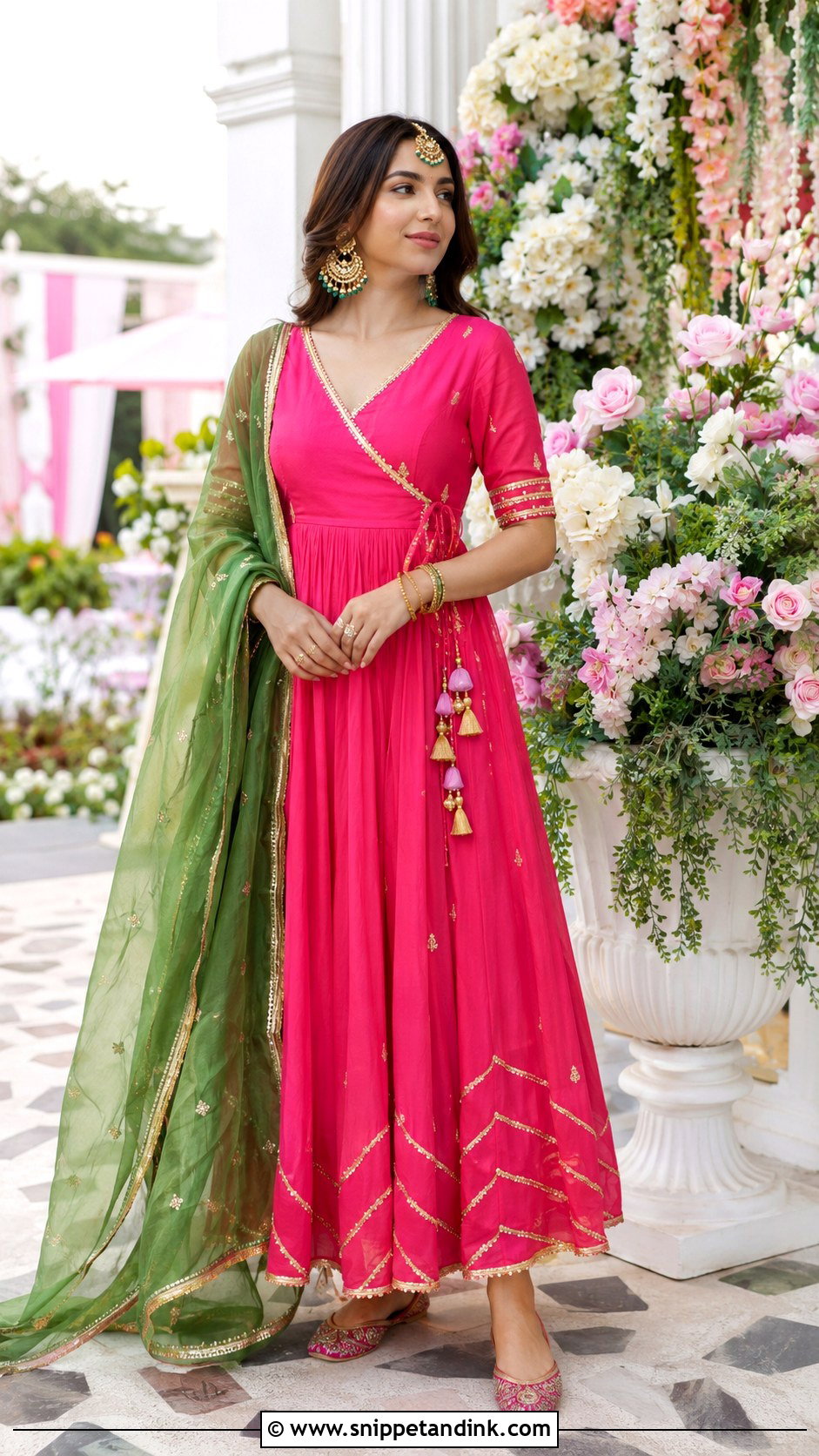
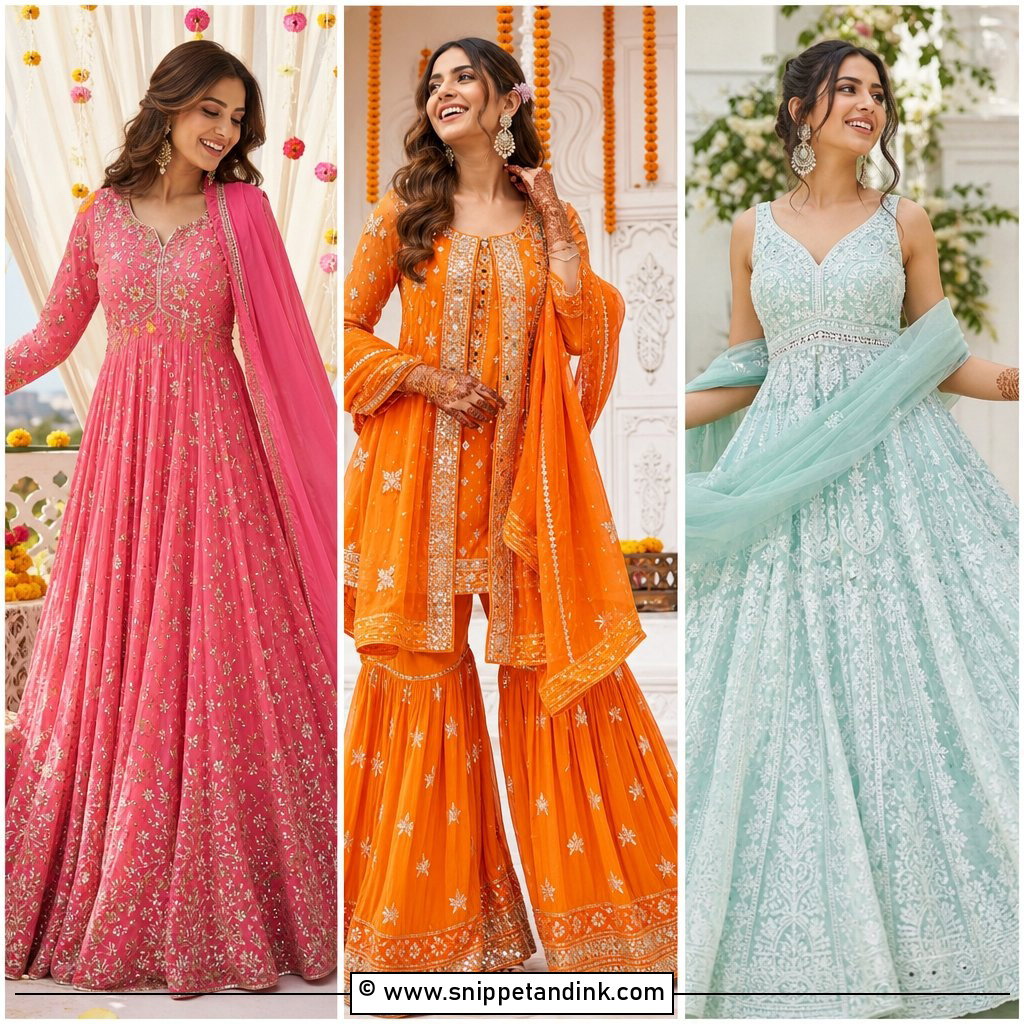
Angrakha means the bodice wraps and ties across the body, which gives a soft waist without a tight seam. It’s flattering on most figures, though very large busts may find the overlap gapes; ask for a hidden hook at the crossover point. Fuchsia suits a lively party, dusty rose a quieter one. Gota trim and tassel ties highlight the wrap. A green or orange dupatta adds contrast. Chandbalis, a fine maang tikka and juttis complete it, and because the neckline is already layered, I leave the necklace off.
7. Orange Bandhani Mehendi Suit
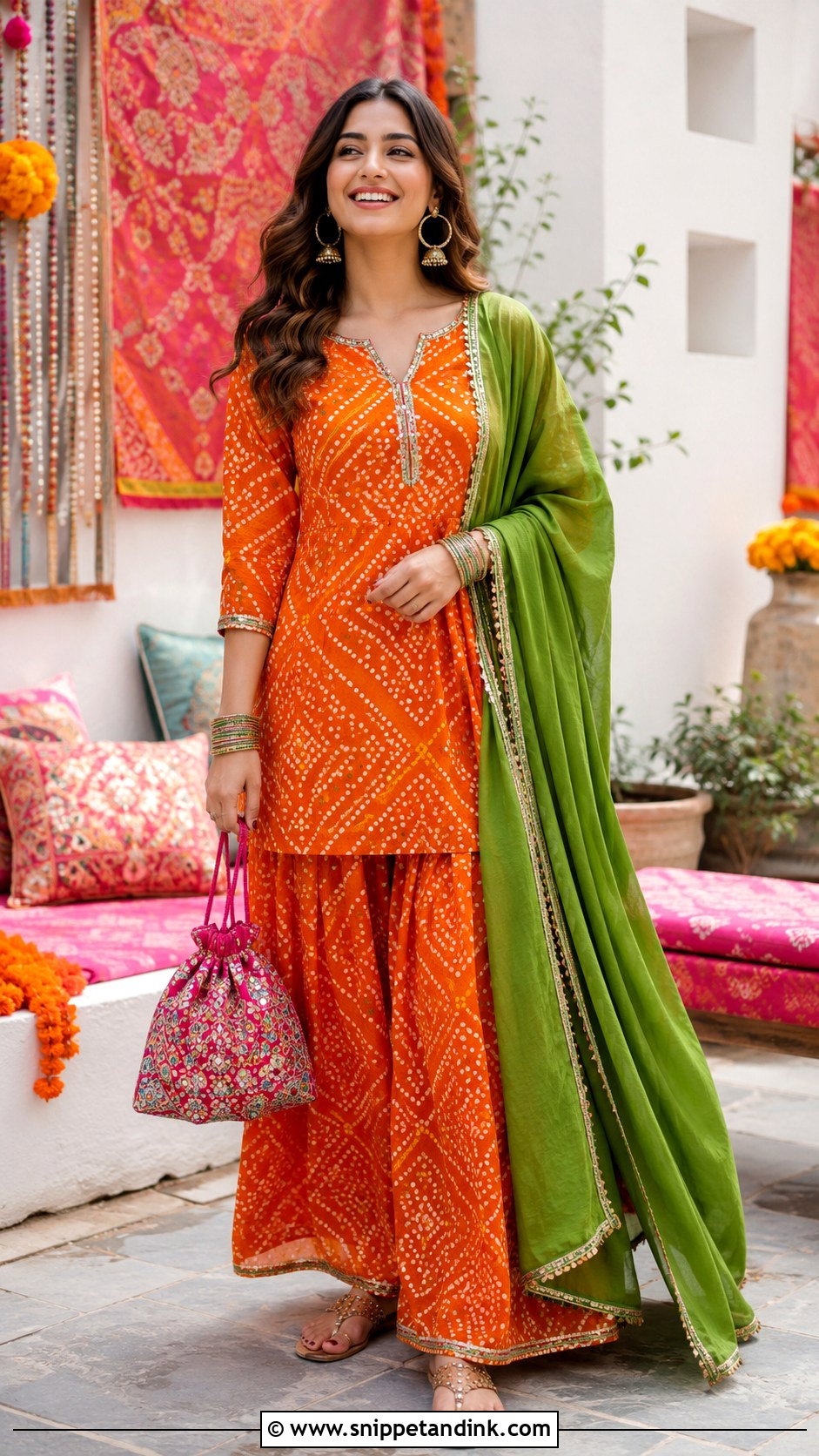
Bandhani is hand tie-dyed, and real bandhani often bleeds in its first wash, so keep it away from light fabrics after the event and wash it alone. On the day, an orange bandhani kurta with salwar or a gently flared sharara is cheerful and traditional. Green piping or pink tassels add more colour. Because the pattern is busy, choose a plain dupatta with a narrow edge. Gold hoop jhumkas, glass bangles and a potli suit it. A bun with a gajra looks traditional; loose waves feel more current. It’s a good pick for sisters and bridesmaids.
8. Teal Pakistani Mehendi Suit
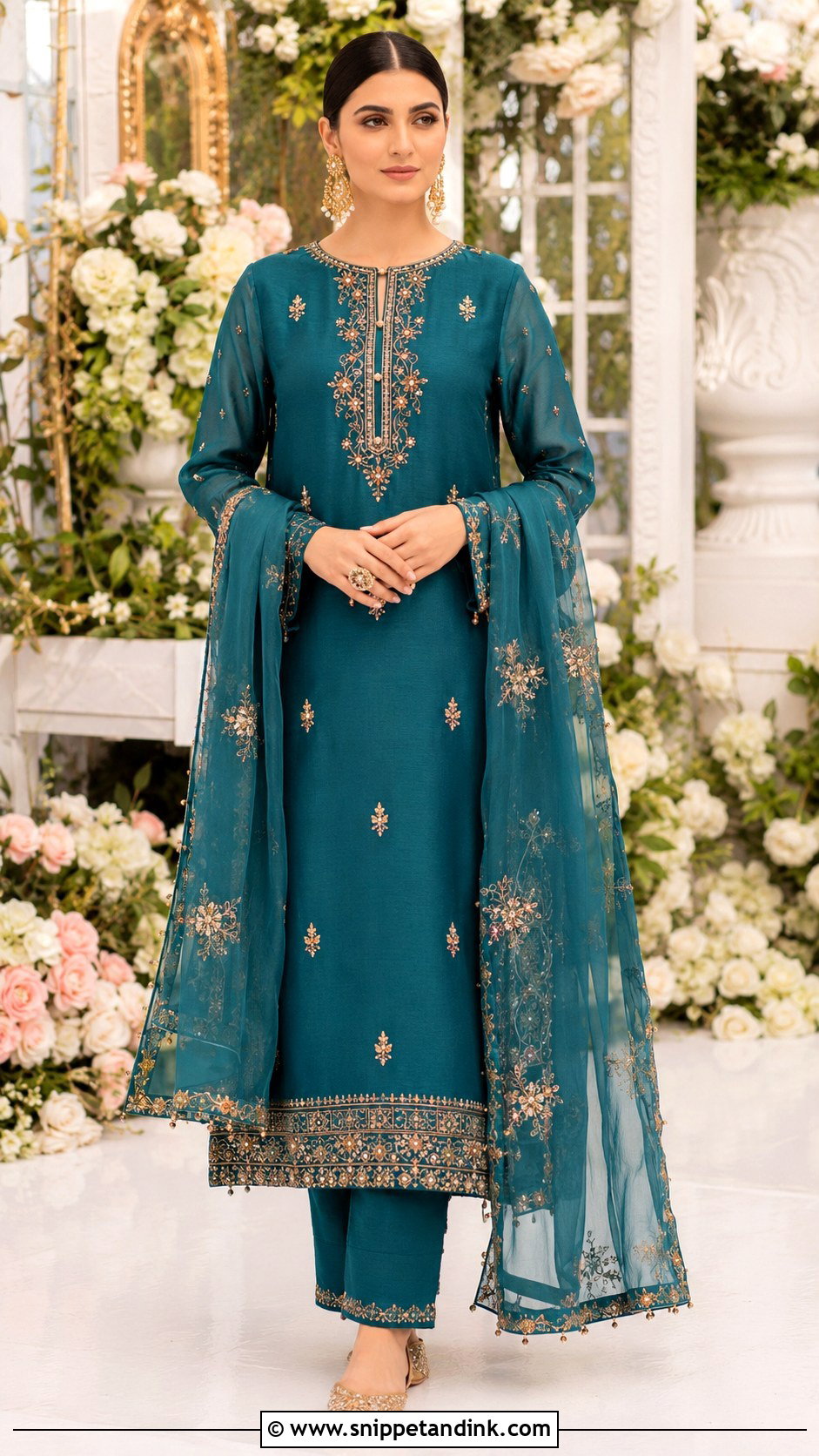
A long Pakistani kameez gives the most coverage of any suit here, and it reads as quietly formal. Look for a straight kameez with side slits, worked cuffs and embroidery at the neck. Straight trousers keep it slim; a gathered farshi-style bottom pools at the floor for drama, but needs someone to watch the hem on stairs. A matching organza dupatta with an embroidered border completes it. Antique gold earrings warm the teal. Low block heels or mules suit the longer hem. Deep colour and a little shimmer work well at an evening mehendi.
9. Mustard Peplum Sharara Mehendi Suit
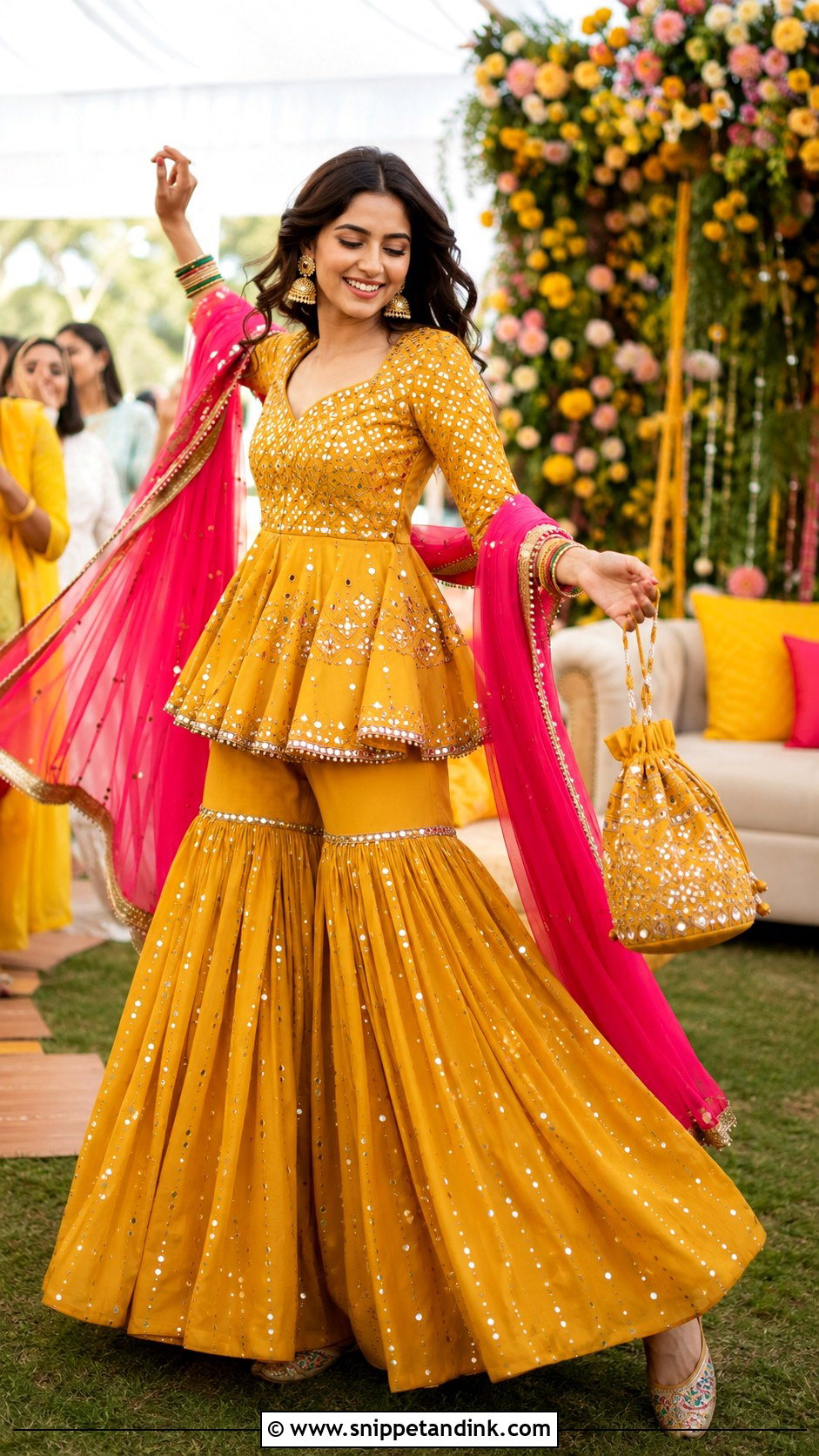
Peplum and sharara both add volume, so the pairing works best when the peplum is fitted at the waist and flares only slightly. Too much flare on both, and the shape gets lost. A mustard peplum kurti with mirrors or gota at the bodice suits it, with a green or hot-pink dupatta to lift the earthy base. Medium jhumkas and a bucket potli are enough. Flat sandals stop the hem from catching on a thin heel. Keep hair simple so the peplum shows. It’s a youthful pick for cousins and bridesmaids.
10. Ivory Floral Dupatta Mehendi Suit
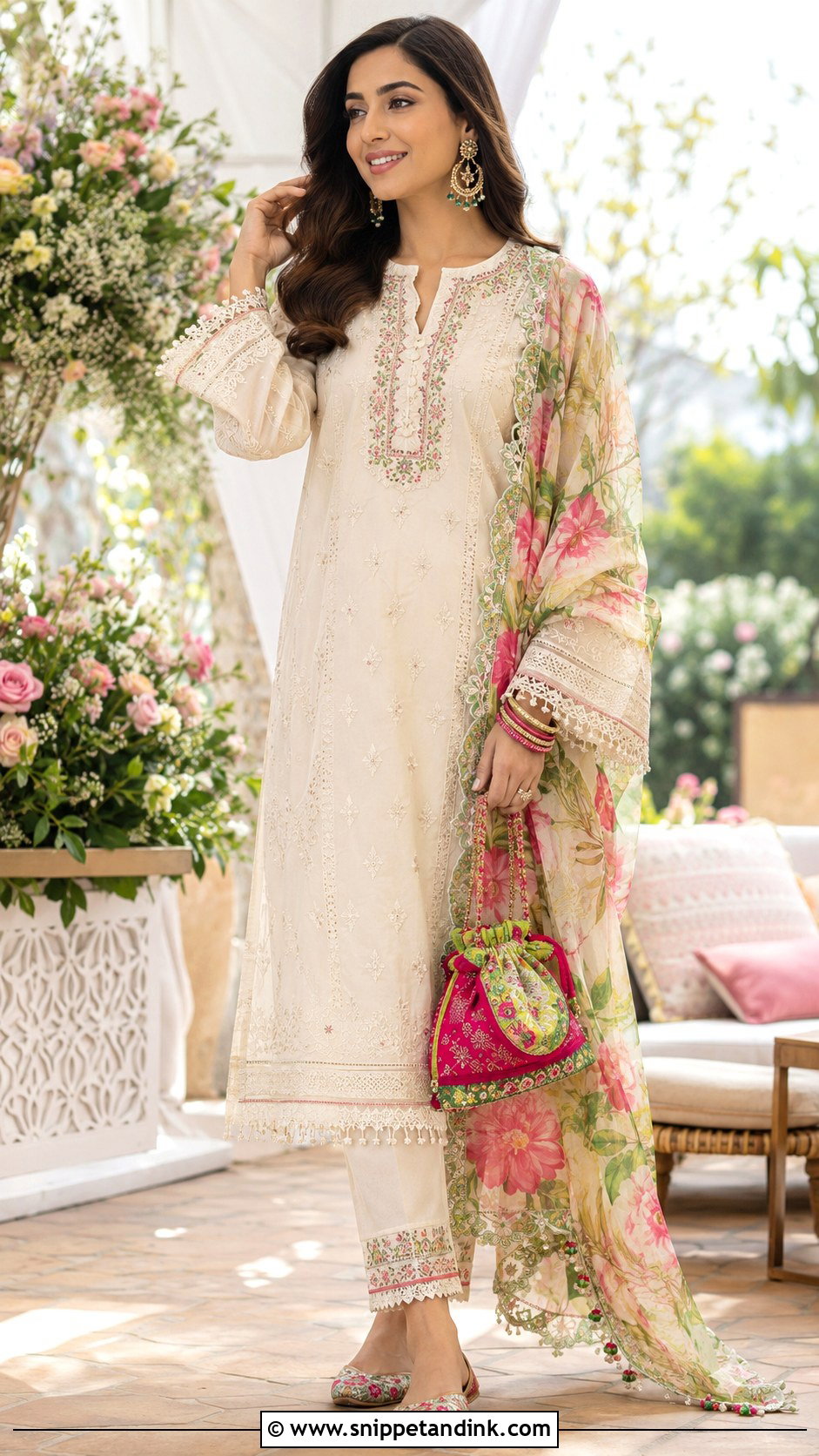
An ivory base lets the dupatta do all the work, which is a smart way to look festive without a loud outfit. Choose a simple ivory kurta and straight pants with minimal gold embroidery, then a floral-print dupatta in green, yellow, coral or pink. Repeat one colour from the print in your earrings or juttis. If you’re getting henna, be careful: ivory takes a paste stain fast, so keep the dupatta, not the kurta, nearest your hands. Soft curls and fresh makeup keep it light for daytime.
11. Multicolor Jacket Mehendi Suit
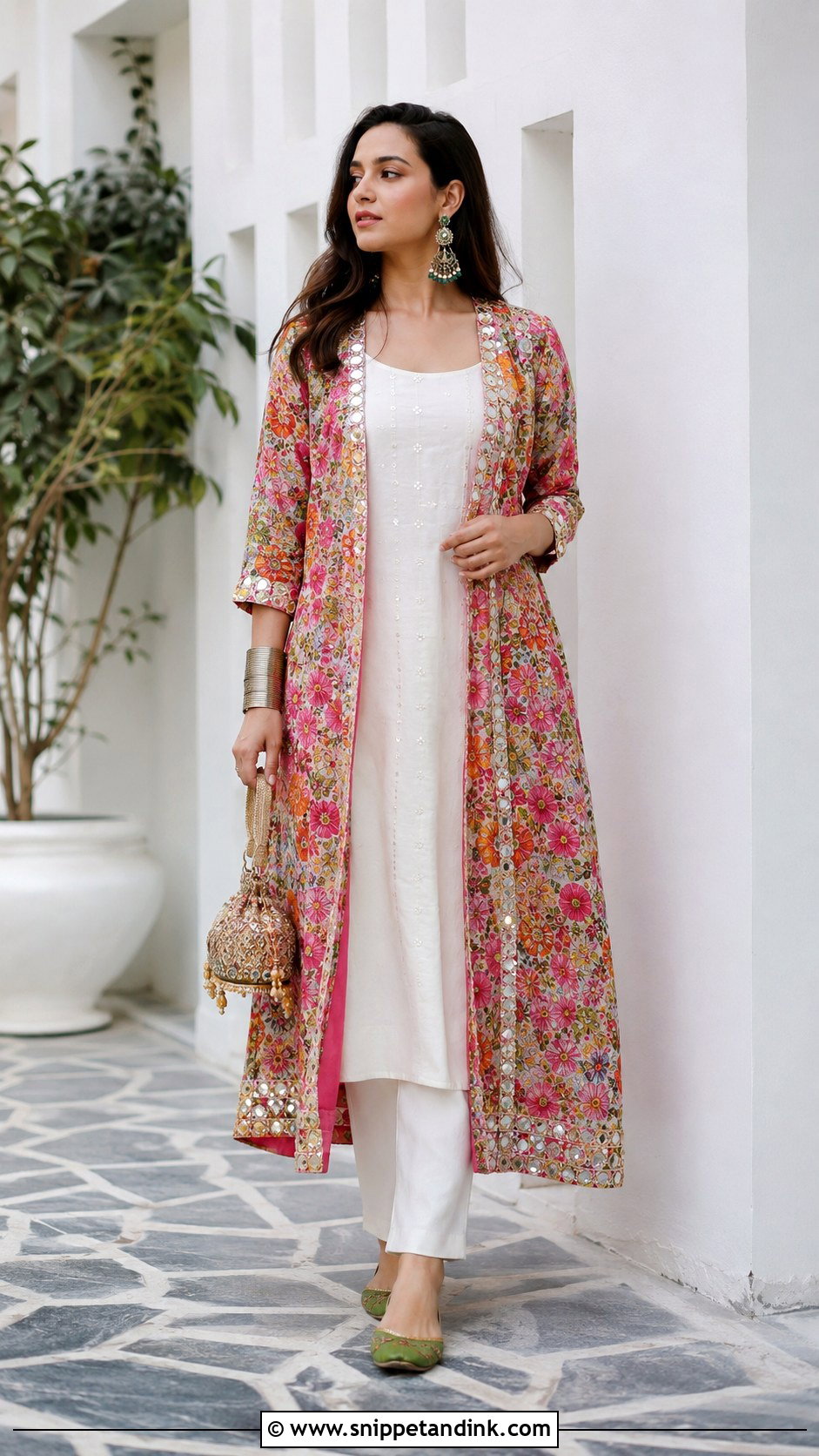
The jacket is the decoration here, so everything under it stays plain. Start with a solid sleeveless kurta and straight pants in white, yellow or green, then add a long printed or embroidered jacket that falls below the knee. Florals, geometrics and mirror work all work. Skip the dupatta or carry a very light one on one shoulder. Statement earrings and metallic bangles finish it. I like this for an active evening because there’s nothing to keep re-pinning; the jacket stays put while you walk, dance and greet people.
12. Sage Green Chanderi Mehendi Suit
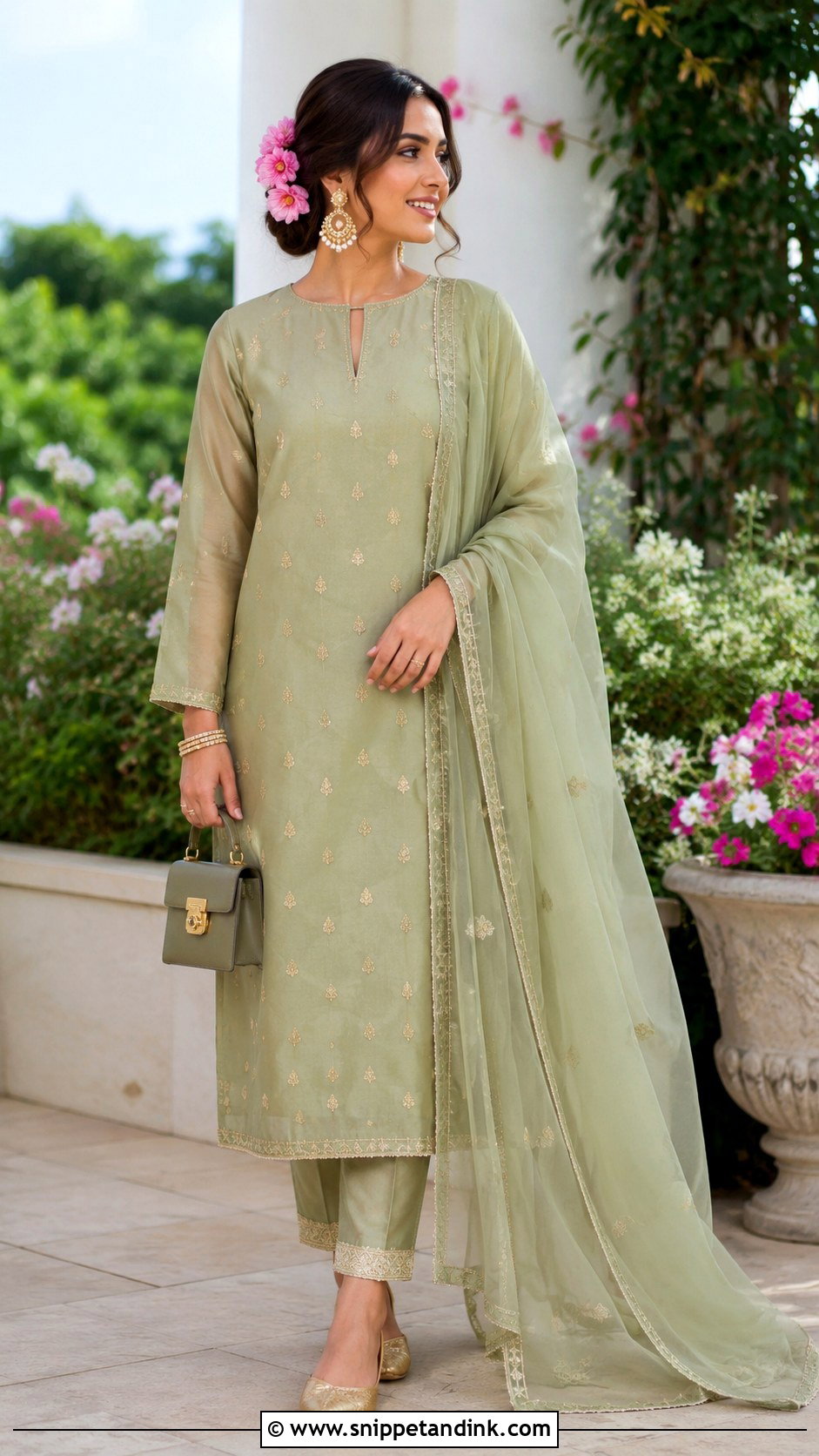
Chanderi is a fine handwoven silk-cotton fabric with a slight sheen, which is why it looks polished while still breathing in daytime heat. In sage green, a calf-length straight kurta with small gold motifs or scalloped sleeves suits a refined venue. Chanderi is semi-sheer, so ask for a lining in the kurta. Pair it with narrow pants and an organza dupatta in sage, ivory or pink. Pearl-and-gold earrings and a structured bag suit the quiet palette. If you want more colour, add pink flowers to your hair.
13. Rani Pink Salwar Mehendi Suit
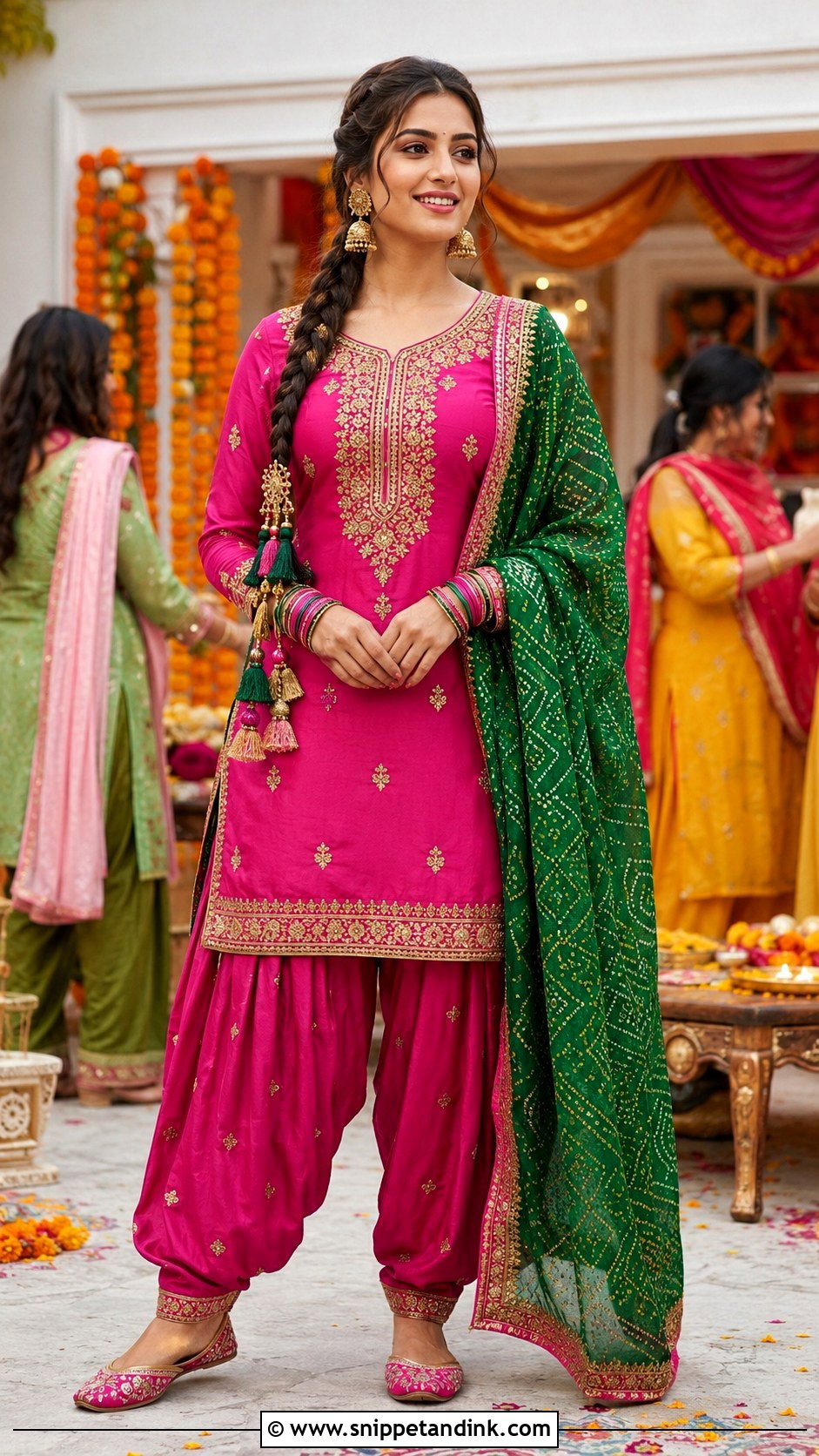
Rani pink pops against green and yellow decor in every photo. Pair a medium-length kameez with gold threadwork or mirrors with a Patiala salwar, whose deep pleats give you plenty of room to dance. A Patiala uses a lot of fabric, so on a petite frame I’d ask for slightly fewer pleats. A green bandhani or yellow dupatta adds contrast. Gold jhumkas, glass bangles and pink juttis finish it. A paranda braid leans traditional; a smooth ponytail makes it feel more modern. Do a defined eye or a pink lip, not both.
14. Purple Velvet Mehendi Suit
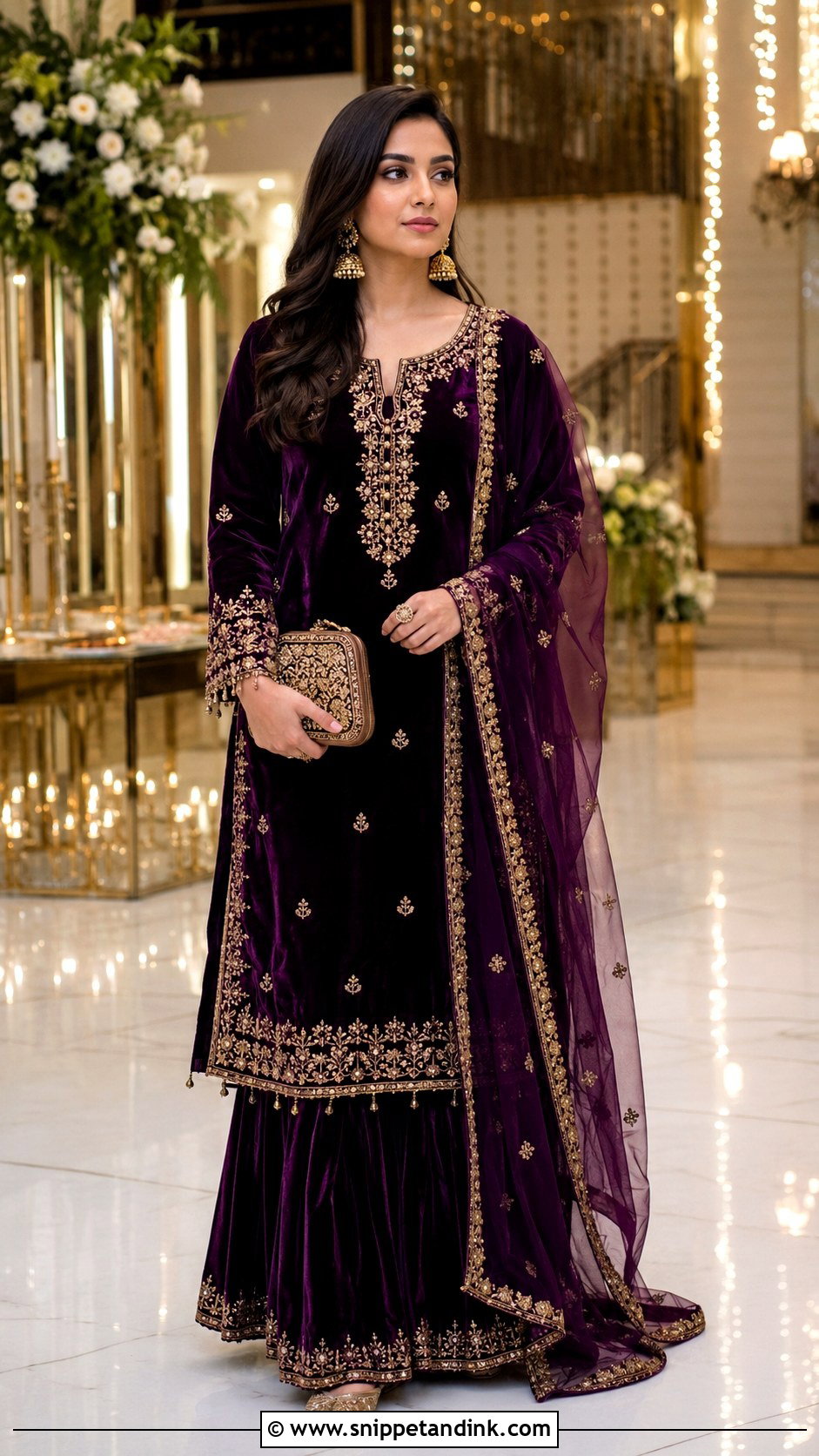
Velvet only makes sense at a cool-weather or evening mehendi; in a warm tent it becomes unbearable within an hour. When the season is right, a straight or slightly flared purple velvet kurta with gold embroidery at the cuffs, neckline and hem looks rich with very little jewellery. Pair it with silk trousers or a gharara and an organza dupatta to lighten the weight. Antique gold earrings and a statement ring are enough. Closed juttis keep your feet warm. Plum, aubergine and grape all suit a later start.
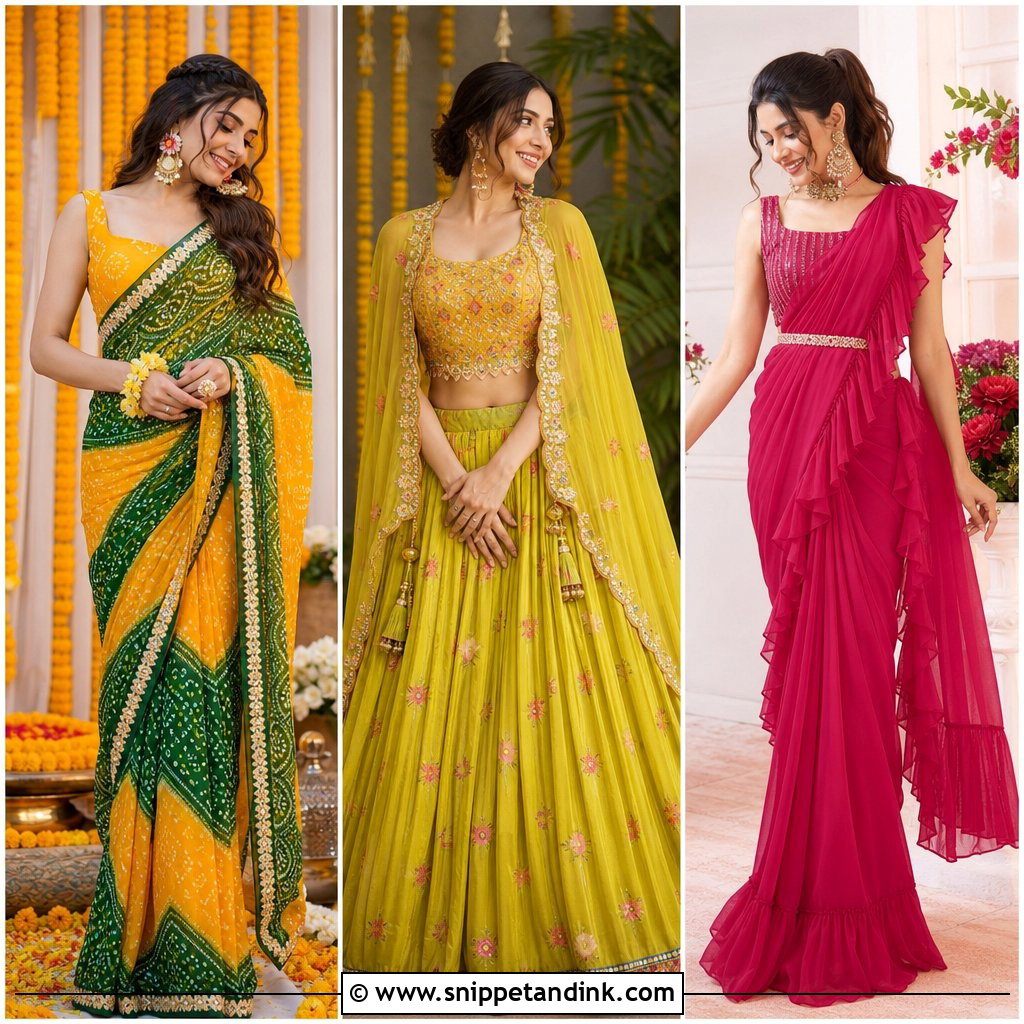
15. Blue Asymmetrical Mehendi Suit
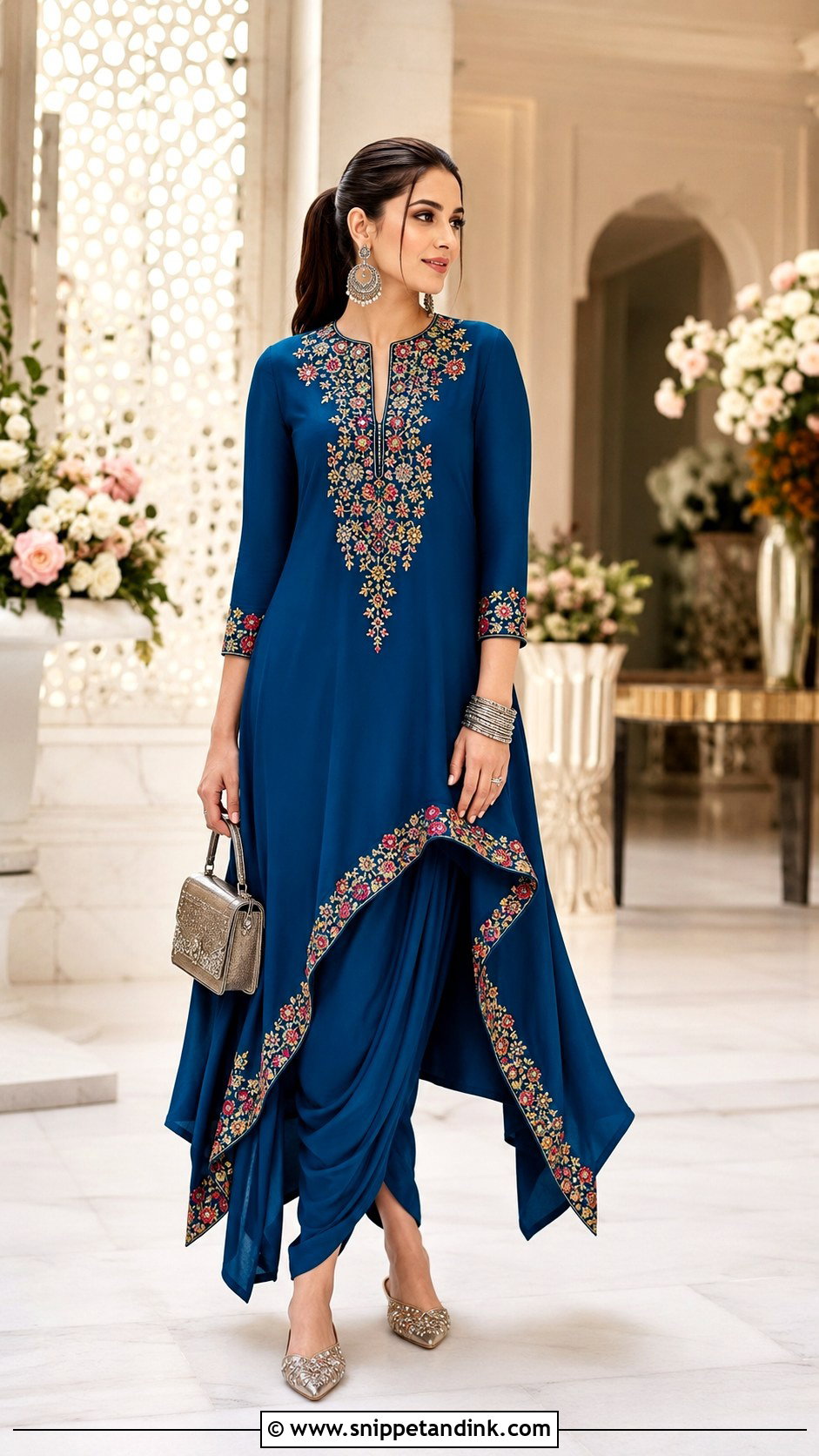
An asymmetric hem only works if you can see it, so keep everything around it slim. Choose a turquoise or peacock-blue kurta with a high-low hem, a diagonal drape or one longer panel, over fitted pants or slim dhoti trousers. Multicolour embroidery at the bodice brings in green, yellow and pink. Add a dupatta only if it doesn’t hide the cut. Silver earrings and metallic heels suit an indoor venue; switch to pointed flats outdoors. It’s a good middle ground for guests who like fusion but still want a recognisable suit.
16. Coral Dhoti Pant Mehendi Suit
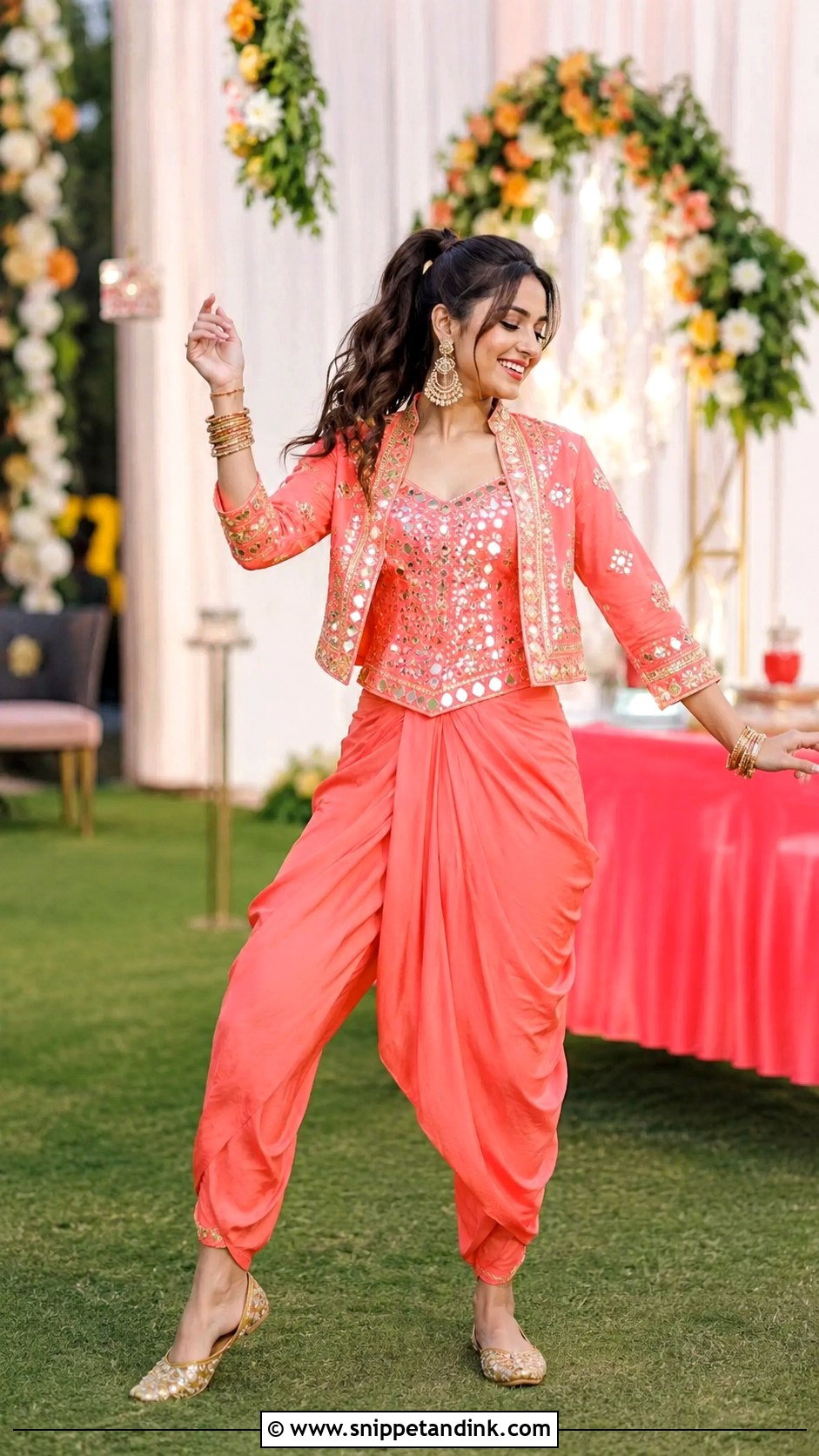
Dhoti pants are full and draped, so the kurti on top has to be fitted, or the whole outfit looks oversized. Coral in one colour, top and bottom, keeps it clean. Gold edging, mirrors or small green motifs give festive detail. Add a cropped jacket or a narrow dupatta round the neck if you want another layer. Chandbalis and stacked bangles are enough. I’d choose gold juttis or low wedges to keep the proportions balanced. A high braid suits the energetic, dance-ready mood, especially at an outdoor lawn party.
17. White And Green Mehendi Suit
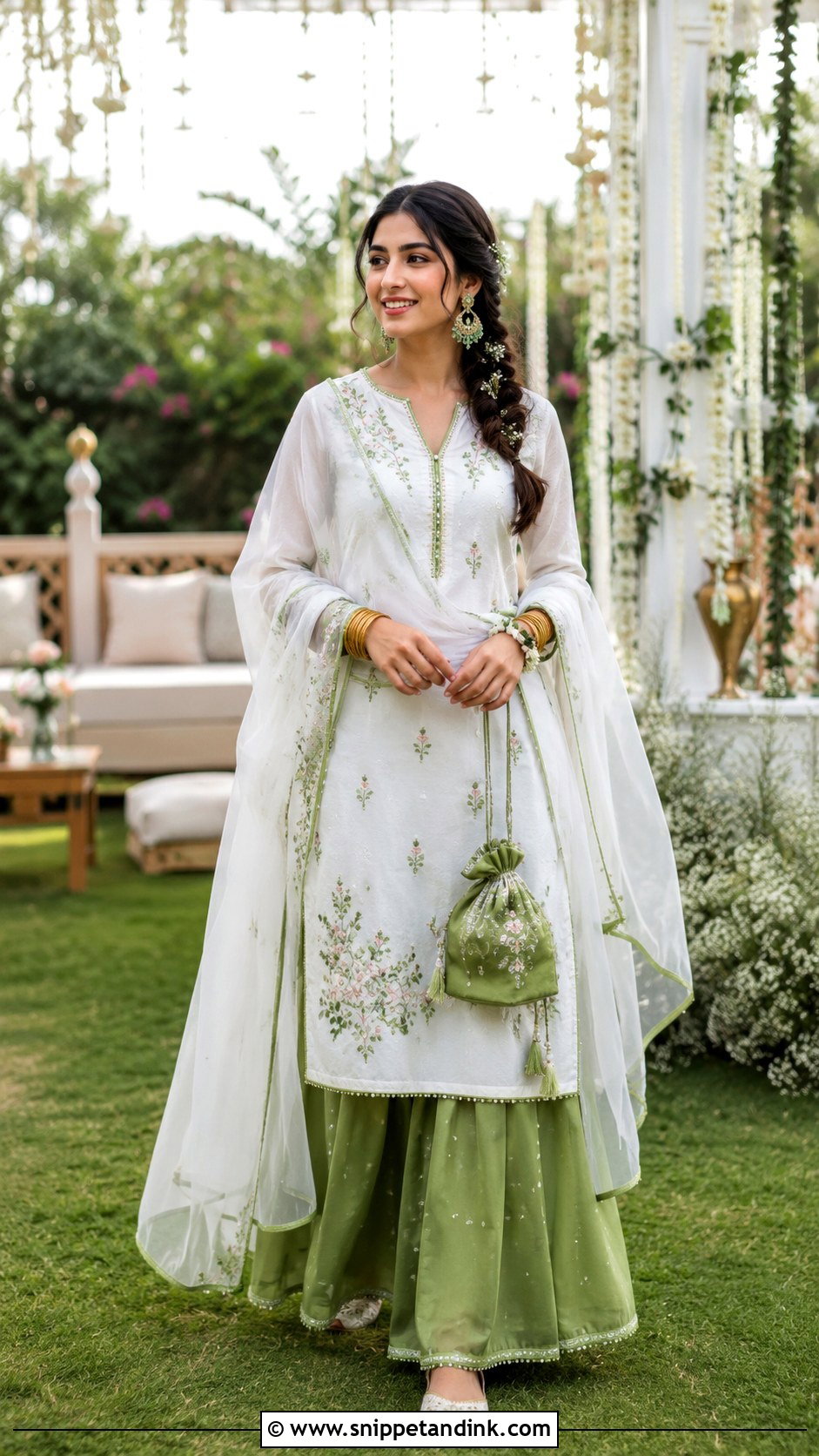
White and green looks fresh in daylight, and it’s a clever choice for guests who want the mehendi colour without wearing the bride’s bright green. Start with a white cotton-silk or georgette kurta with green floral embroidery, and add straight green trousers or a flowing palazzo for contrast. A white organza dupatta edged in green links the two. Green enamel earrings, slim gold bangles and white juttis suit it. White shows every mark, so keep a stain pen in your bag. A loose braid with small white flowers finishes it.
18. Plus Size Empire Waist Mehendi Suit
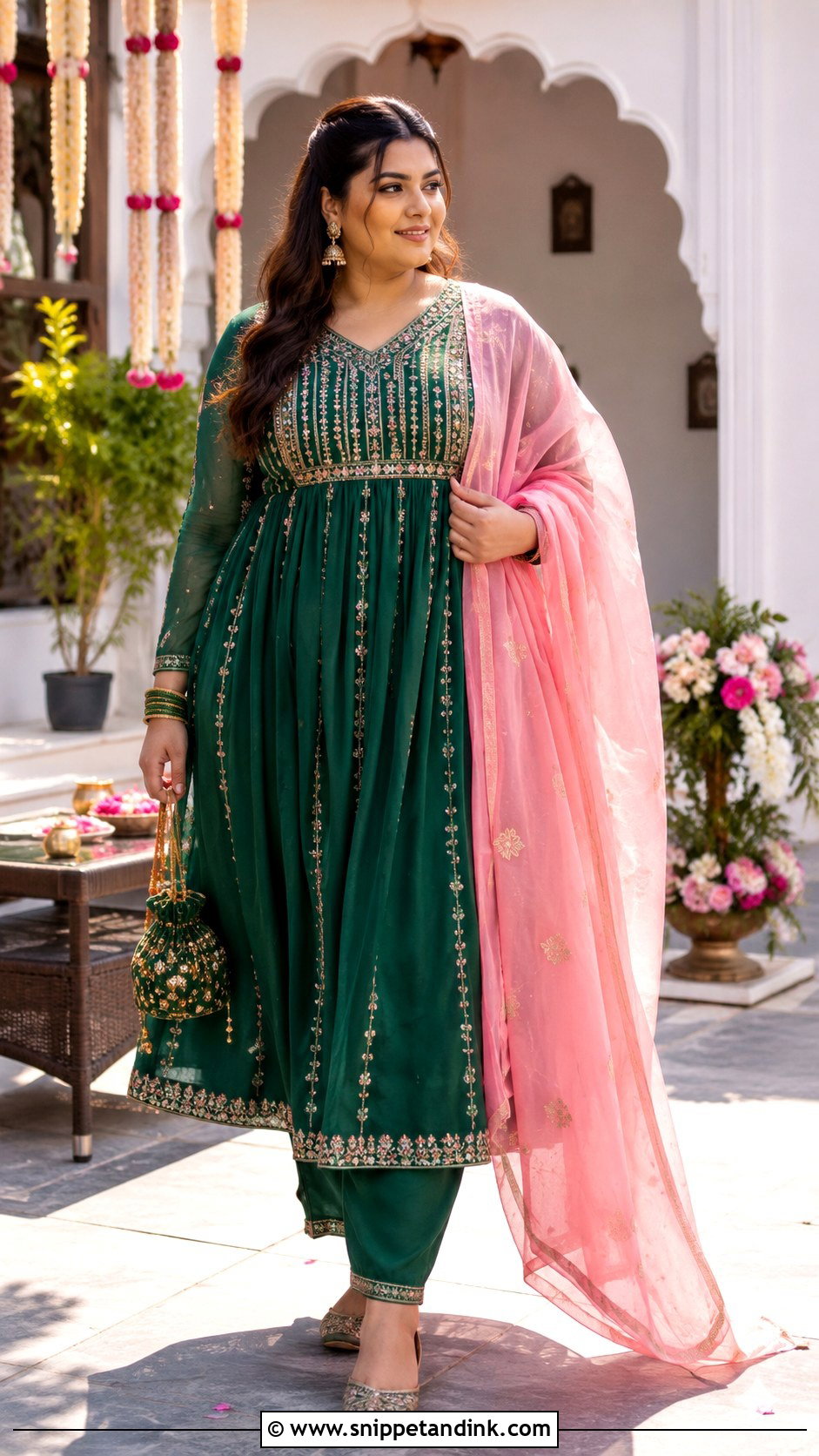
An empire waist puts the seam just under the bust, so the kurta skims rather than clings through the middle. Choose an Anarkali-style cut with a fitted upper panel and a gentle flare from below the bust. A V-neck, vertical embroidery and three-quarter sleeves give a long, balanced line. Emerald, magenta and teal look festive, and smaller motifs keep it polished. The fit check I care most about is the shoulders and upper arm: if you can’t raise your arms to dance, it’s too tight there. Supportive flats and a half-up style finish it.
19. Simple Cotton Mehendi Suit
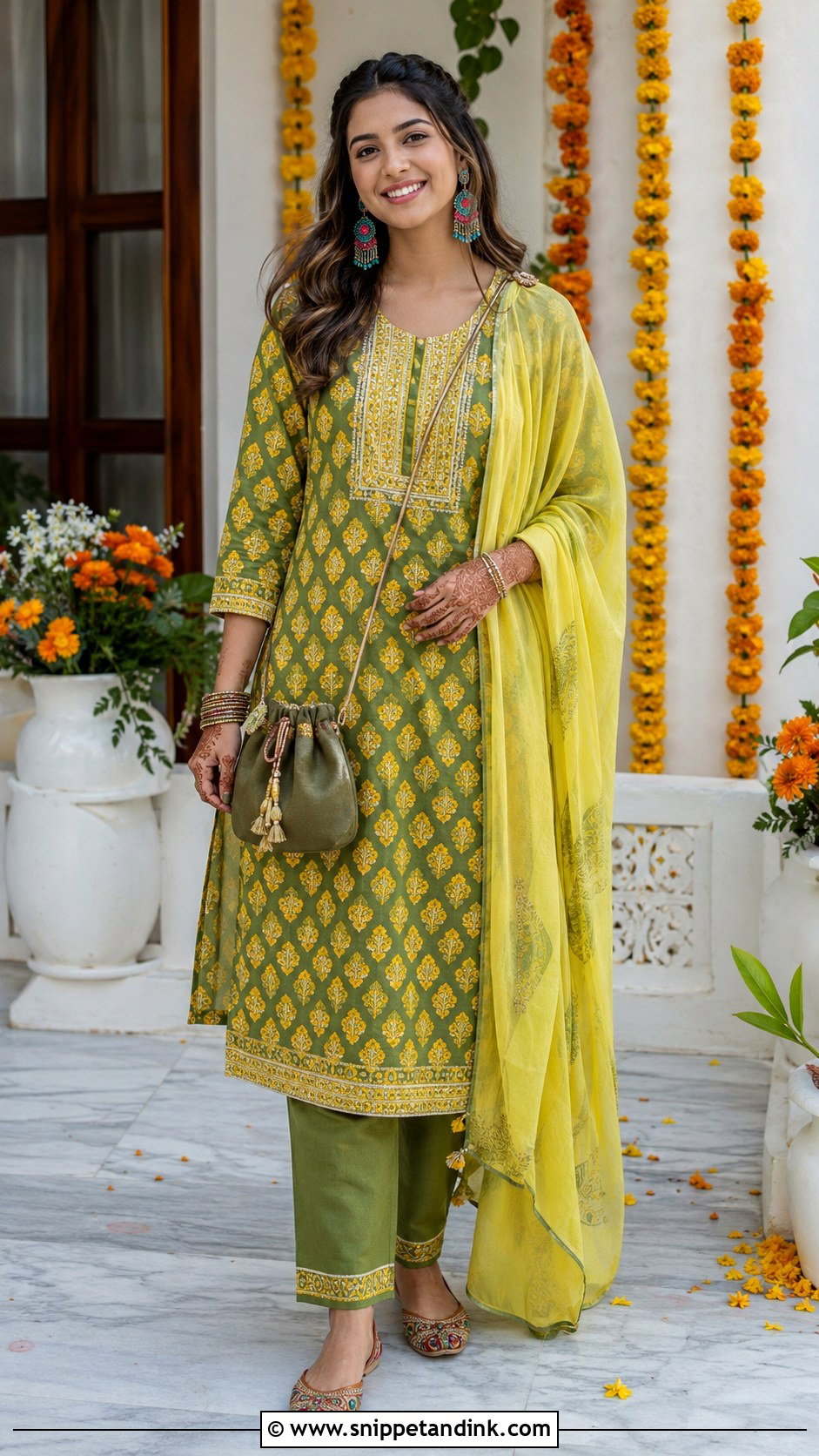
A simple cotton suit suits a casual home mehendi or a long day in warm weather better than anything embellished. Choose a printed kurta in green, yellow, pink or orange with straight pants. Block prints and a little gota keep it interesting. Hand block-printed cotton can shrink and bleed, so wash it cold and separately afterward. Pin a cotton or chiffon dupatta to one shoulder to keep hands free. Light earrings, colourful bangles and cushioned juttis are plenty, and a crossbody potli keeps your phone handy without using your hands.
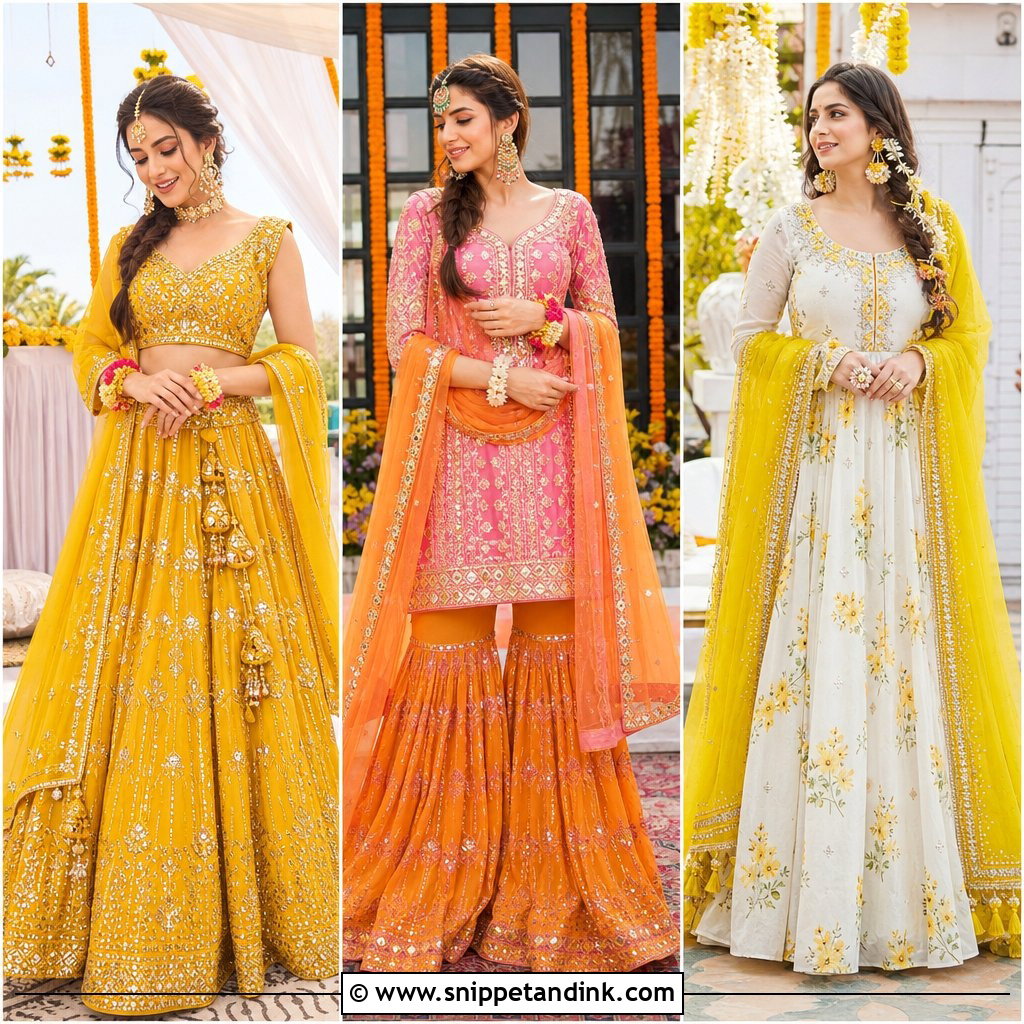
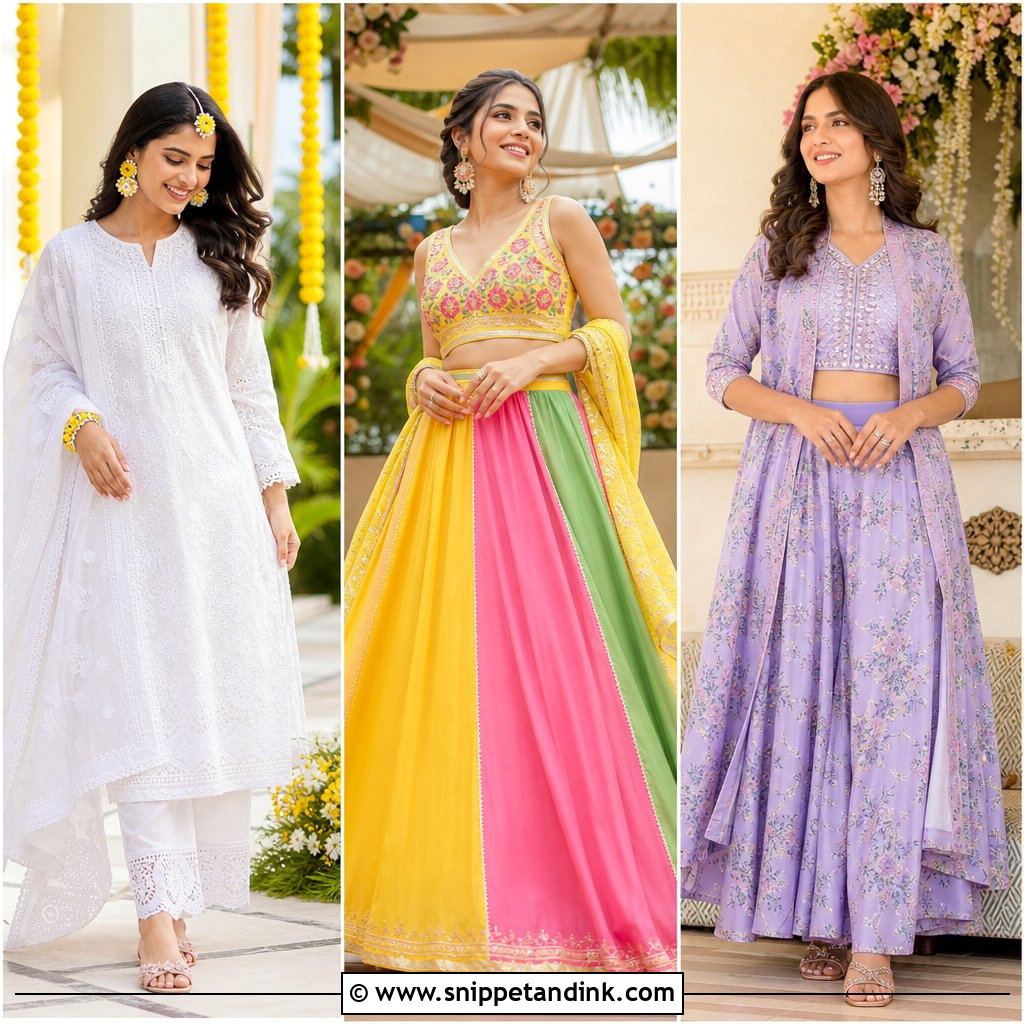
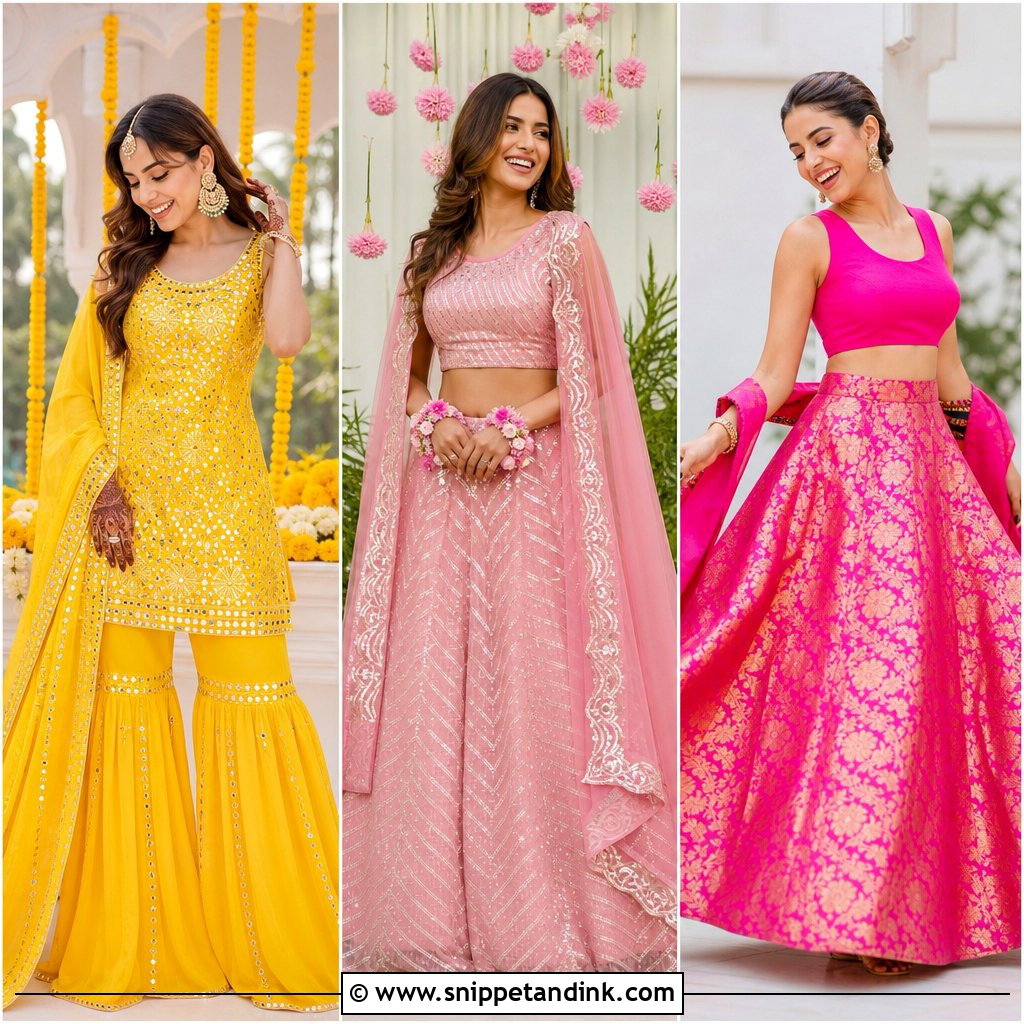
20. Bridal Heavy Embroidered Mehendi Suit
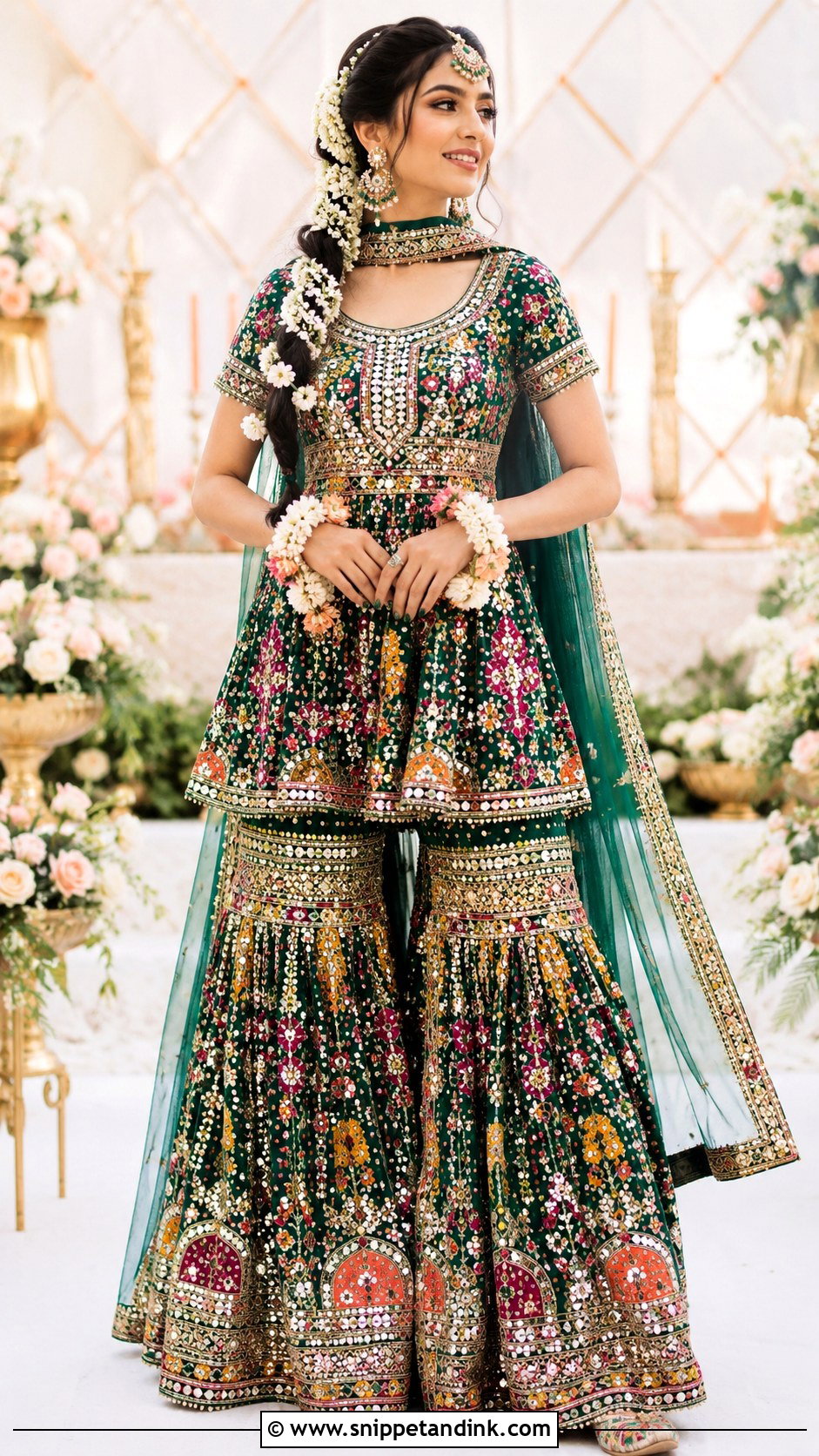
A bridal Mehendi suit has to look special and still leave the artist room to work for hours. Consider an emerald, lime or multicolour Anarkali, sharara or gharara with embroidery concentrated on the bodice and lower borders. Short sleeves and an open neckline give the artist more skin. Secure a light dupatta away from your hands. A maang tikka, statement earrings, floral bangles and comfortable juttis complete it. A braid with fresh flowers stays in place all evening. I’d pick one colour palette and stick to it rather than adding every accessory you own.
Having a Suit Stitched From Unstitched Fabric
A lot of mehendi suits are bought as unstitched three-piece sets: kurta fabric, bottom fabric and a dupatta. It’s usually the cheapest way to get good fabric, but the result depends on what you tell the tailor.
- Bring a suit that already fits you well. It’s more reliable than a fresh set of measurements.
- Decide the kurta length and sleeve length yourself; tailors default to their own idea of standard.
- Ask for a lining on sheer fabrics like Chanderi, organza and fine georgette.
- Leave a seam allowance inside so the kurta can be let out later.
- Sit, raise your arms and bend at the trial. Pulling across the back or under the arm needs fixing before the event.
Tailors get very busy in wedding season, so I’d hand the fabric over several weeks before the function, leaving time for one trial and one round of alterations. If a hand-dyed fabric like bandhani or block print is going to shrink, it’s better that happens before cutting, so ask whether the tailor pre-washes it.
One Suit, Four Ways to Wear It Again
Green Anarkalis and yellow shararas give you the traditional mehendi look, while jacket suits, dhoti pants and asymmetric kurtas lean modern. Think about venue, weather and how formal the evening is before you pick fabric. Short sleeves, a pinned dupatta and comfortable shoes matter during henna and dancing alike. Brides can go for richer embroidery; guests usually look better in prints, light mirror work or clean tailoring. The best part of a suit is what happens afterward: swap the dupatta, change the bottoms, and it comes back for Eid, Diwali or the next family wedding.
You'll Like These Ideas:


Leave a Reply