
A mehendi is the one wedding event where your outfit has to cope with wet paste, a lot of sitting cross-legged and then hours of dancing, so I dress clients for the henna chair first and the photos second. Mirror work, gota patti, tassels and a playful dupatta all earn their place, but only once the sleeves, the weight and the hem are sorted. Brides, sisters and guests each have slightly different jobs on the day, and I’ve noted below which outfits suit which role. The shapes I’m reaching for most right now are light lehengas, sharara sets and Indo-western separates, in fresh shades like lime, mustard, coral, pink, mint and ivory. Here are thirty looks, with what I’d watch for in each.
Dressing for Four Hours in the Henna Chair
A bride’s mehendi is mostly spent sitting still. A full bridal design on hands and feet can take several hours, and then the paste stays on for as long as possible because the longer it sits, the deeper the stain. So before I think about colour, I check four things in any outfit a bride shows me.
- Sleeves that end above the elbow, or no sleeves at all. Henna on the forearm needs bare skin, and a sleeve pushed up will slide back into wet paste.
- A bottom you can lift above the ankle without crushing it. Sharara, gharara and loose lehenga skirts gather up easily for foot designs; fitted churidars do not.
- Light weight. Heavy embroidery on a skirt you sit on for hours creases deeply and makes you hot under a canopy.
- A dupatta you can pin, or no dupatta. A loose one will find the paste within minutes.
For guests, the rules are gentler, but anyone planning to have even a small design done should follow the sleeve rule. I’d also have the bride change into a second, lighter outfit for the application itself if her mehendi lehenga is heavy, then change back once the paste is dry enough to scrape.
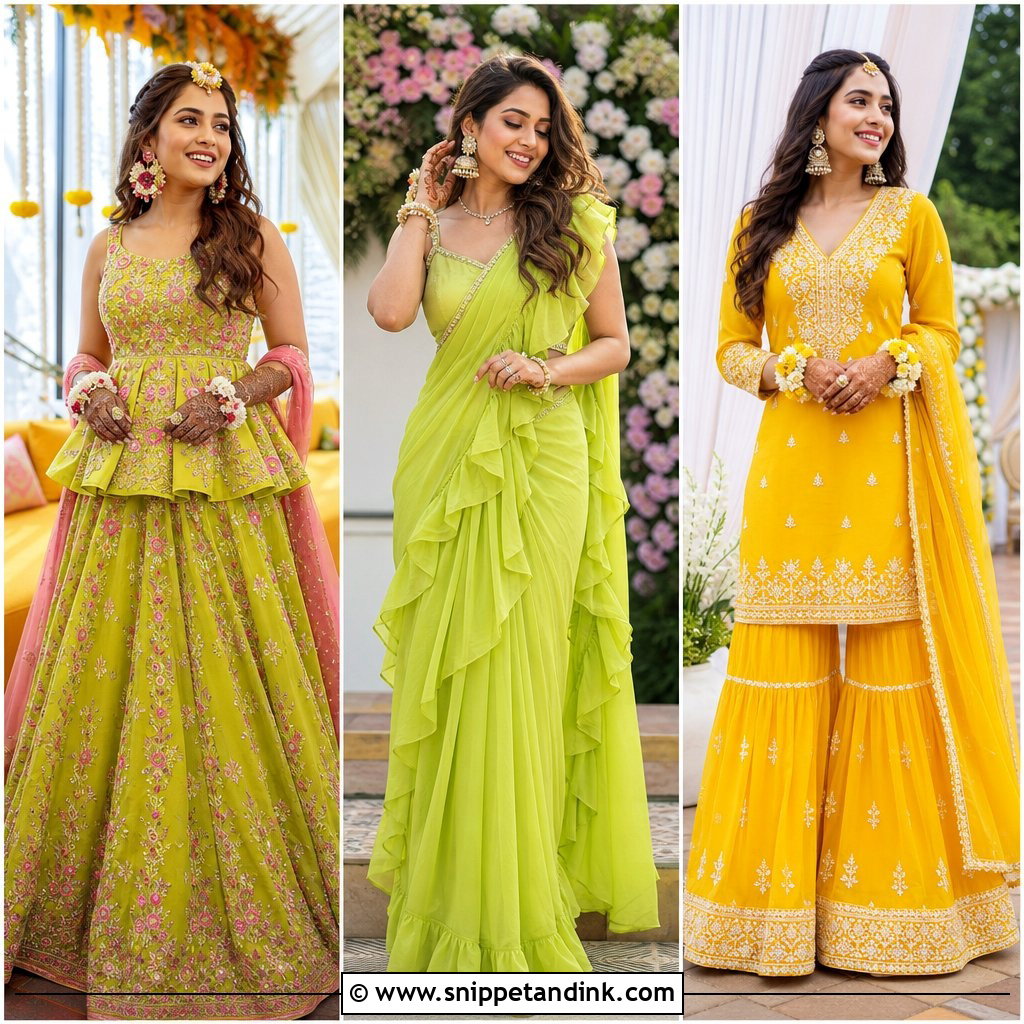
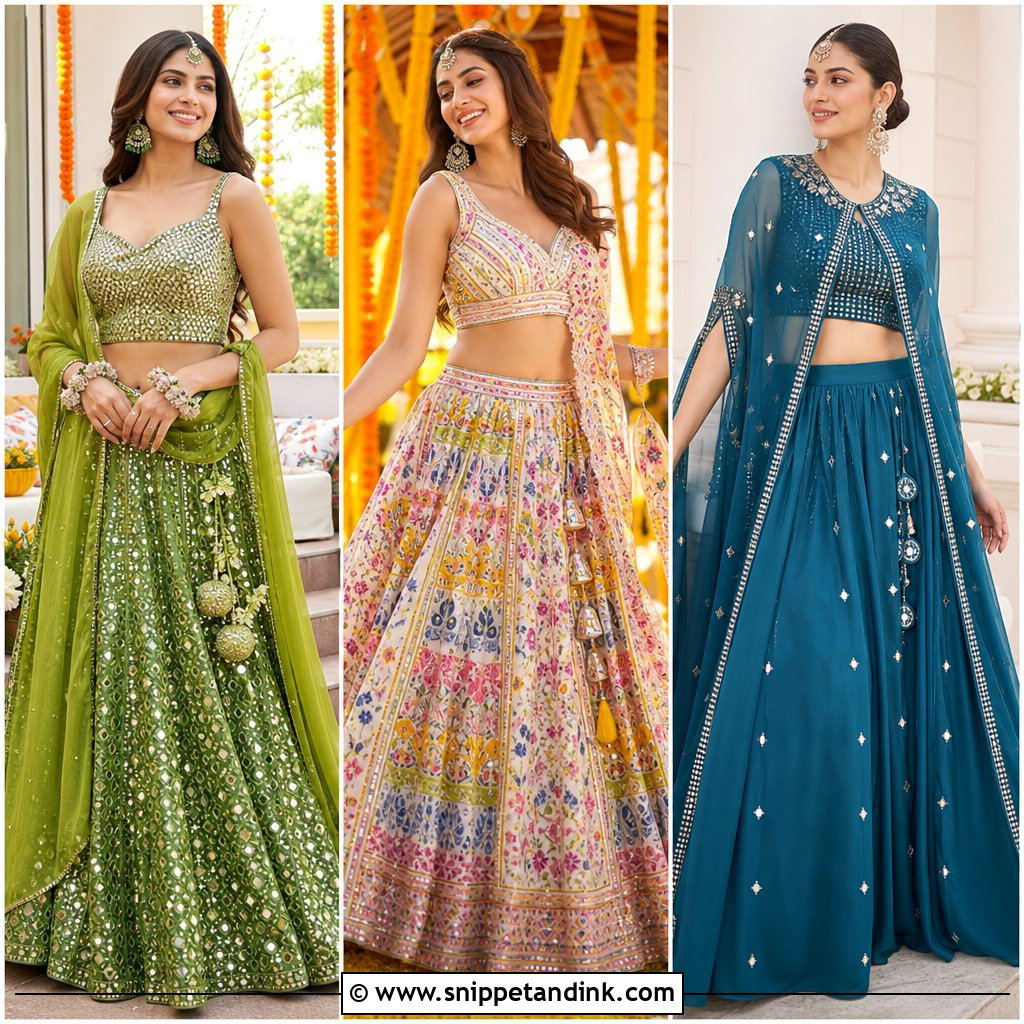
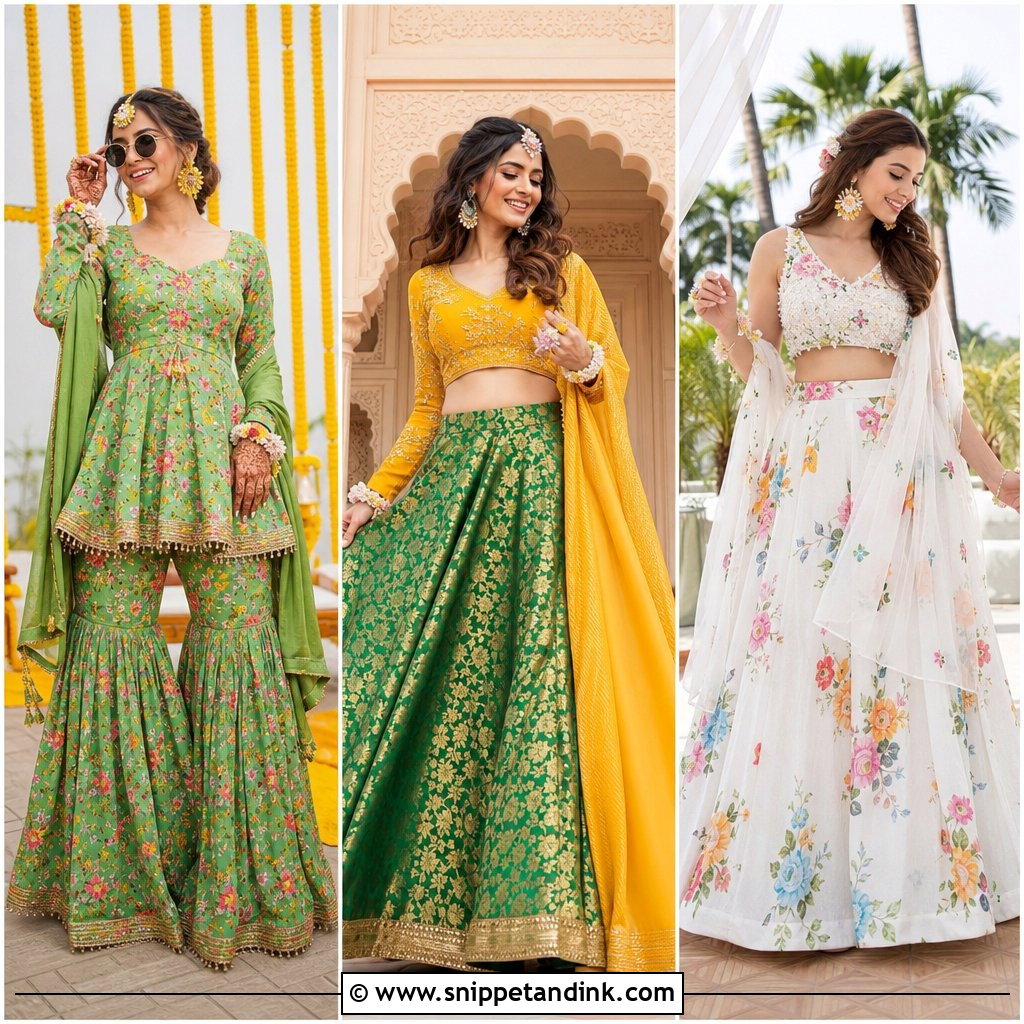
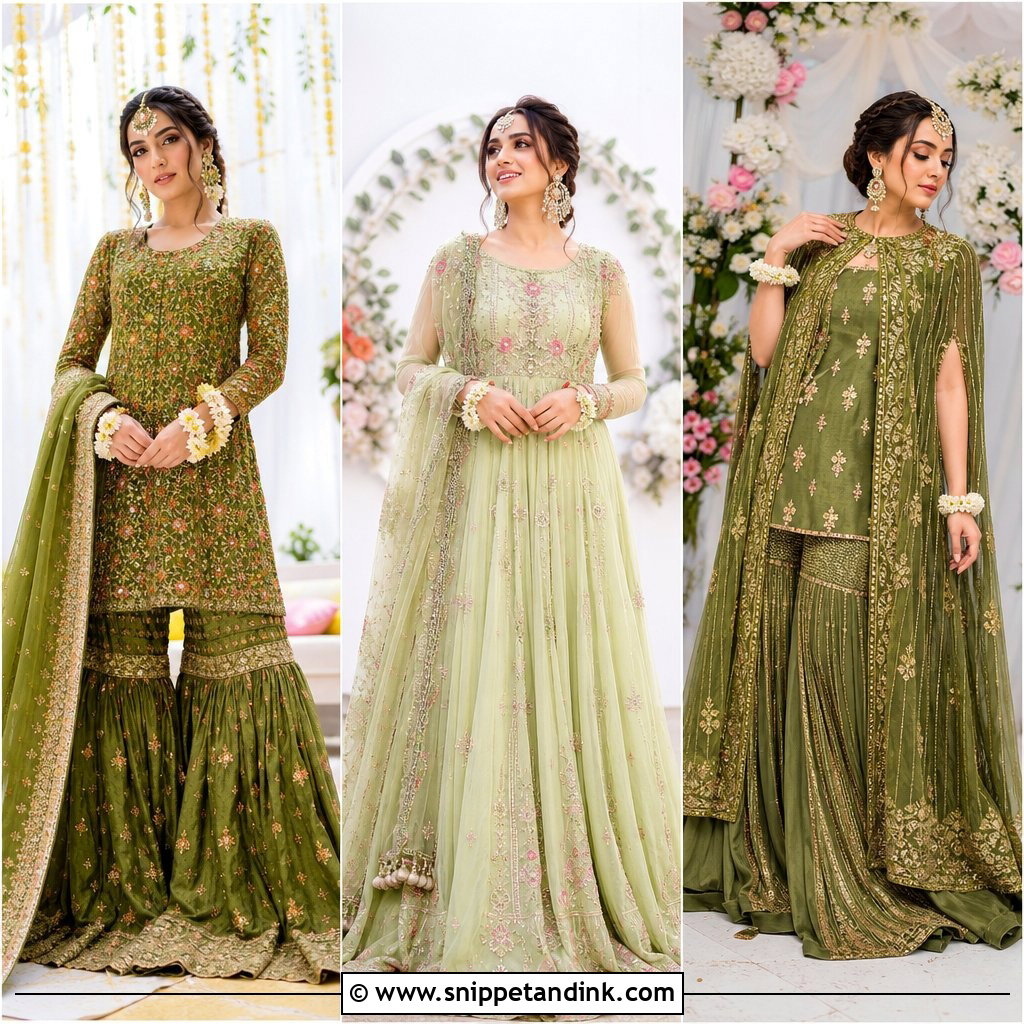
1. Green Lehenga Choli For Mehendi
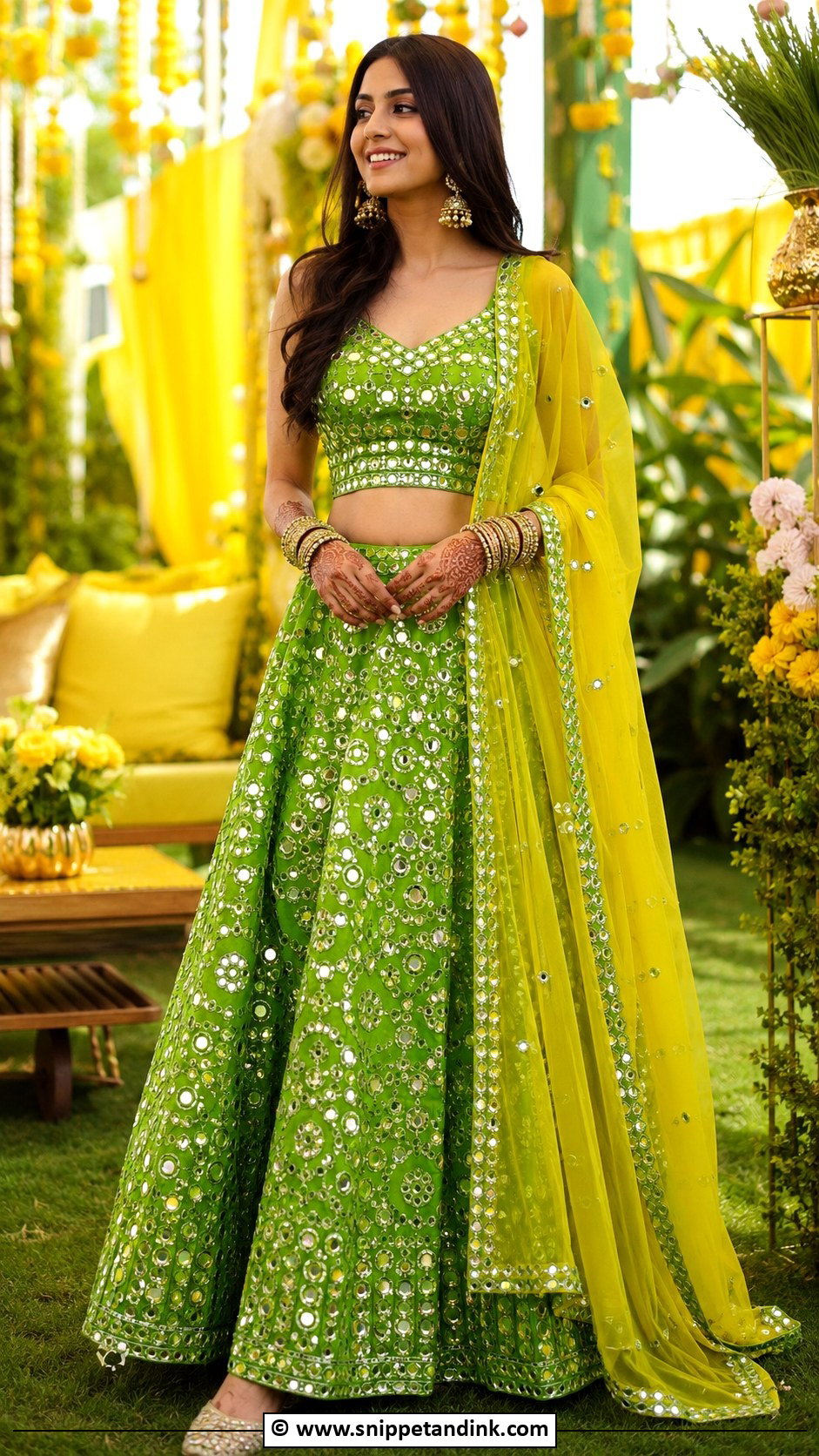
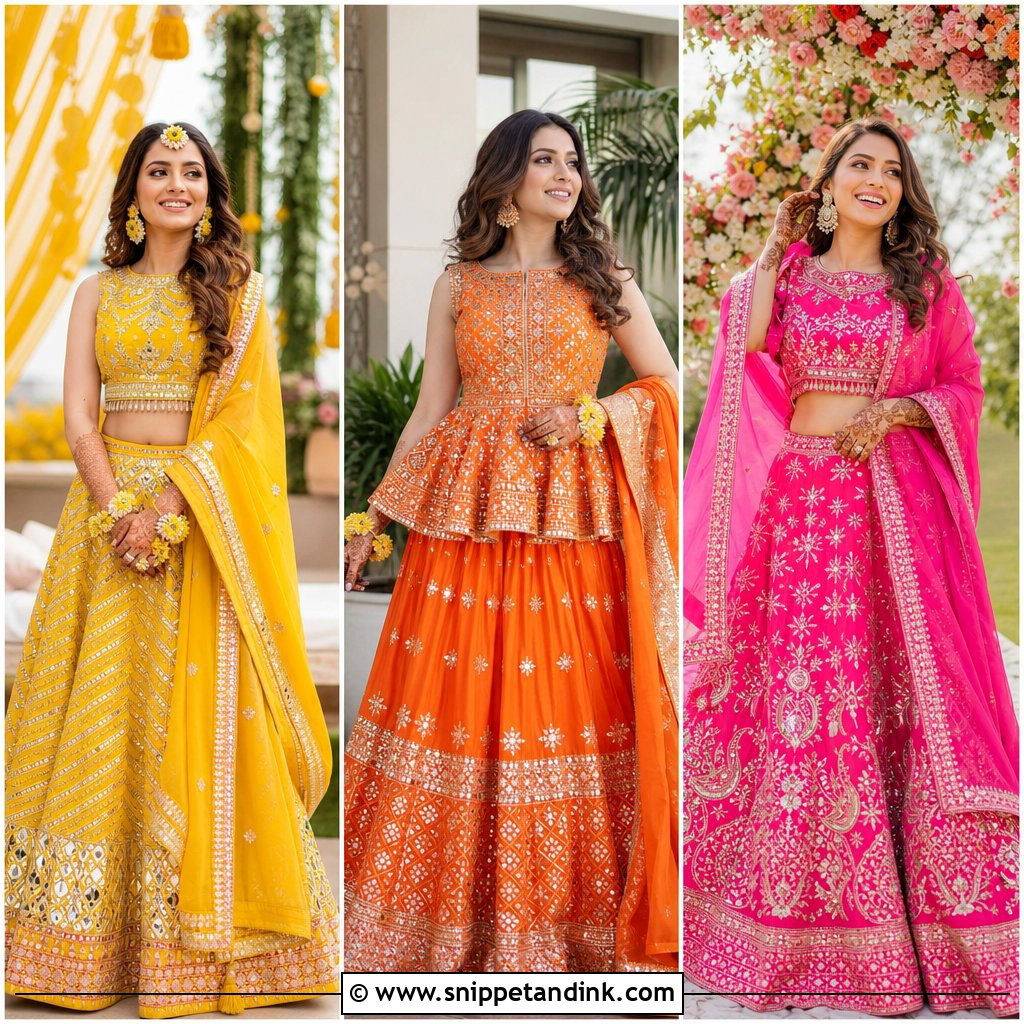
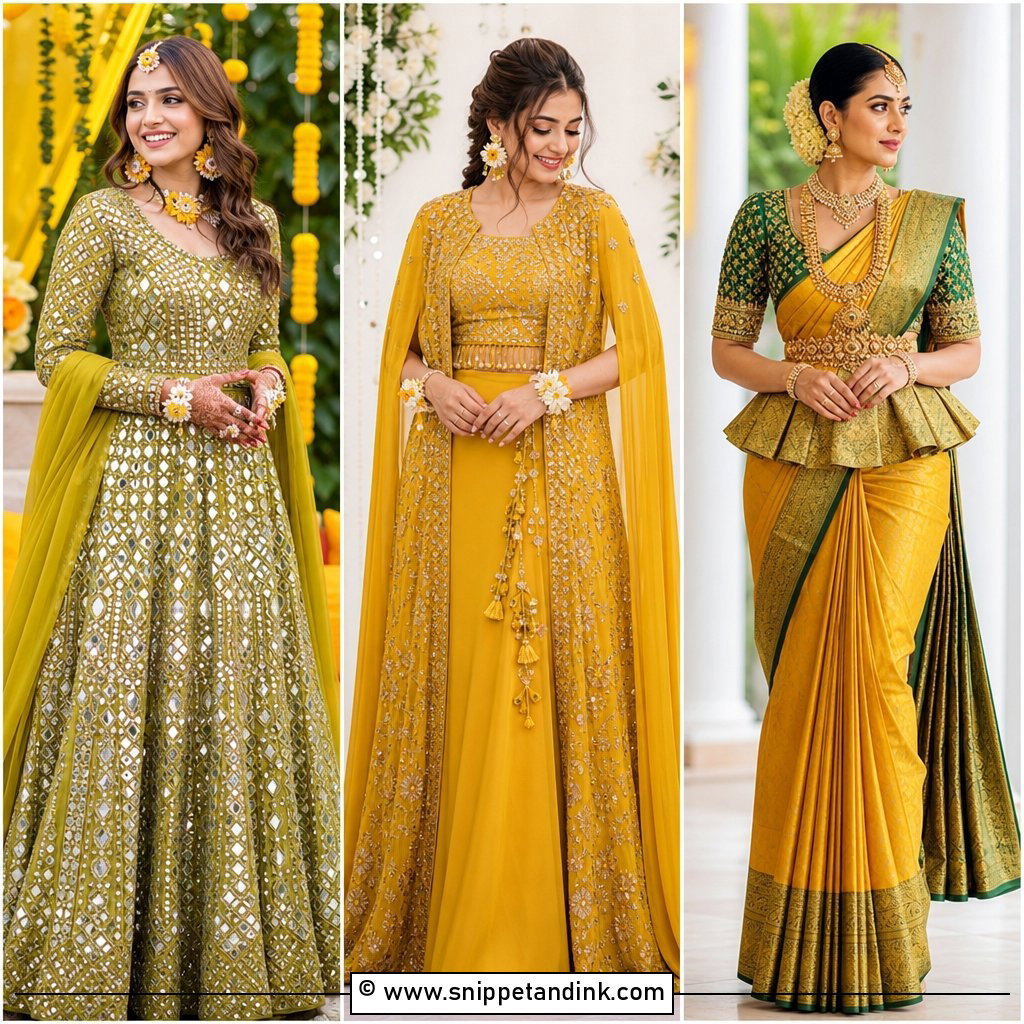
Green sits right next to the henna stain on the colour wheel of the day, which is why it has stayed the classic for a mehendi function. I’d keep the lehenga light, with mirror or gota detailing rather than dense zardozi, because you will be sitting on it for a long time and heavy embroidery leaves deep creases. Go sleeveless or cap-sleeved so the artist can reach your elbows. A yellow or pink dupatta lifts the green, then jhumkas, bangles and embellished juttis finish it.
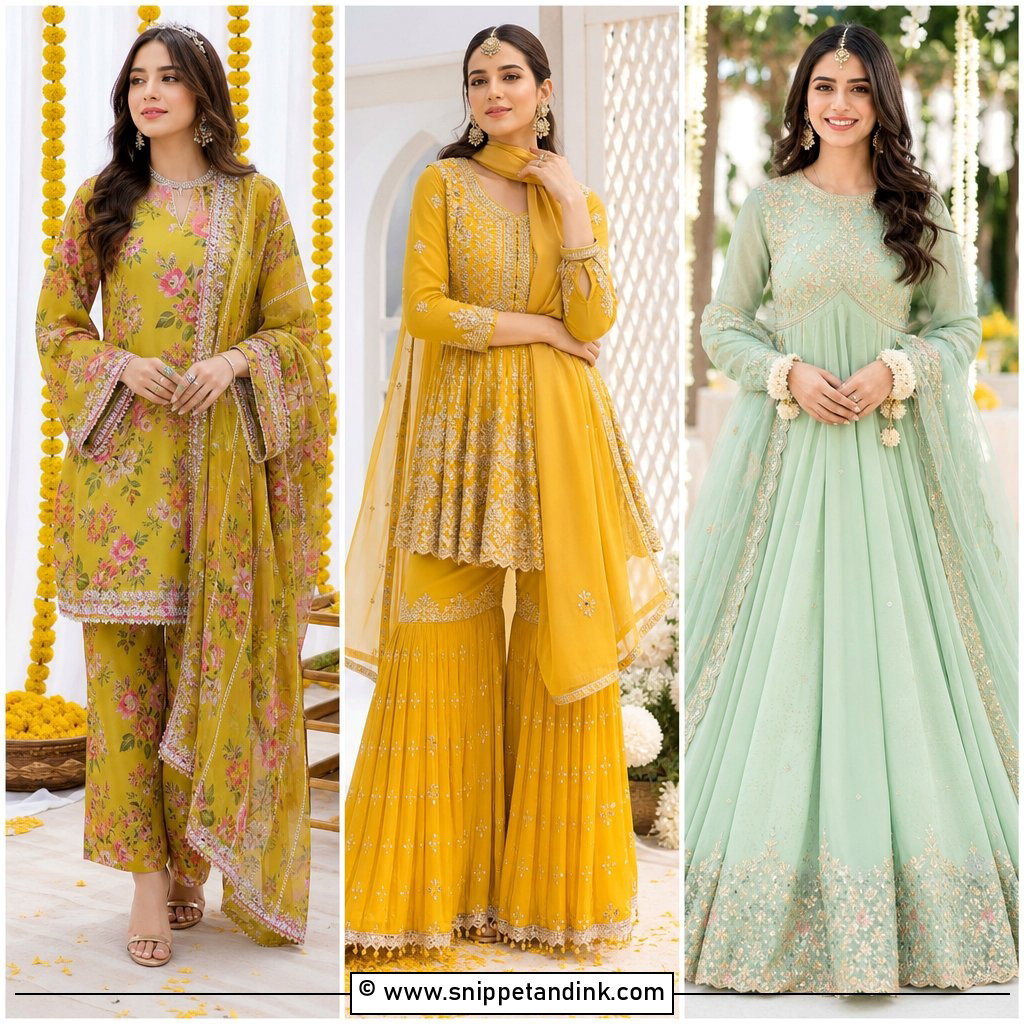
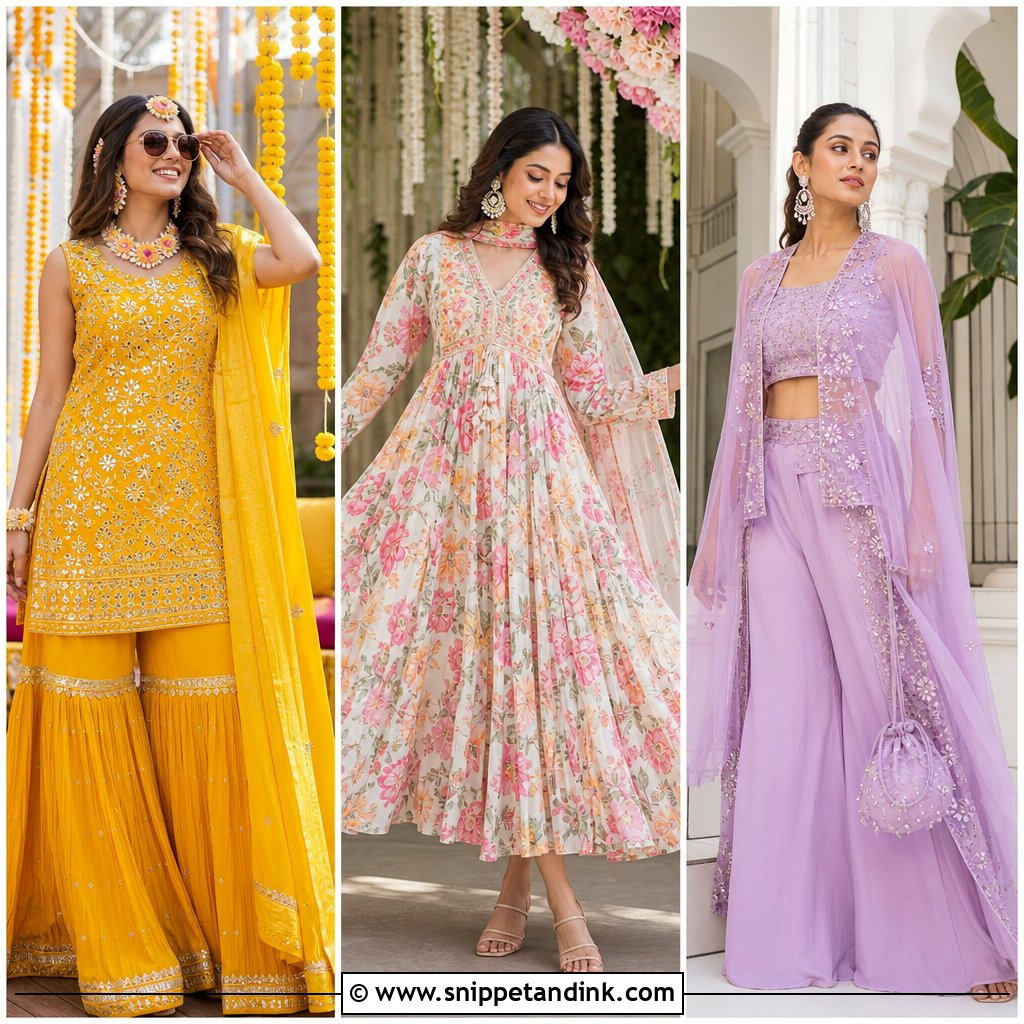
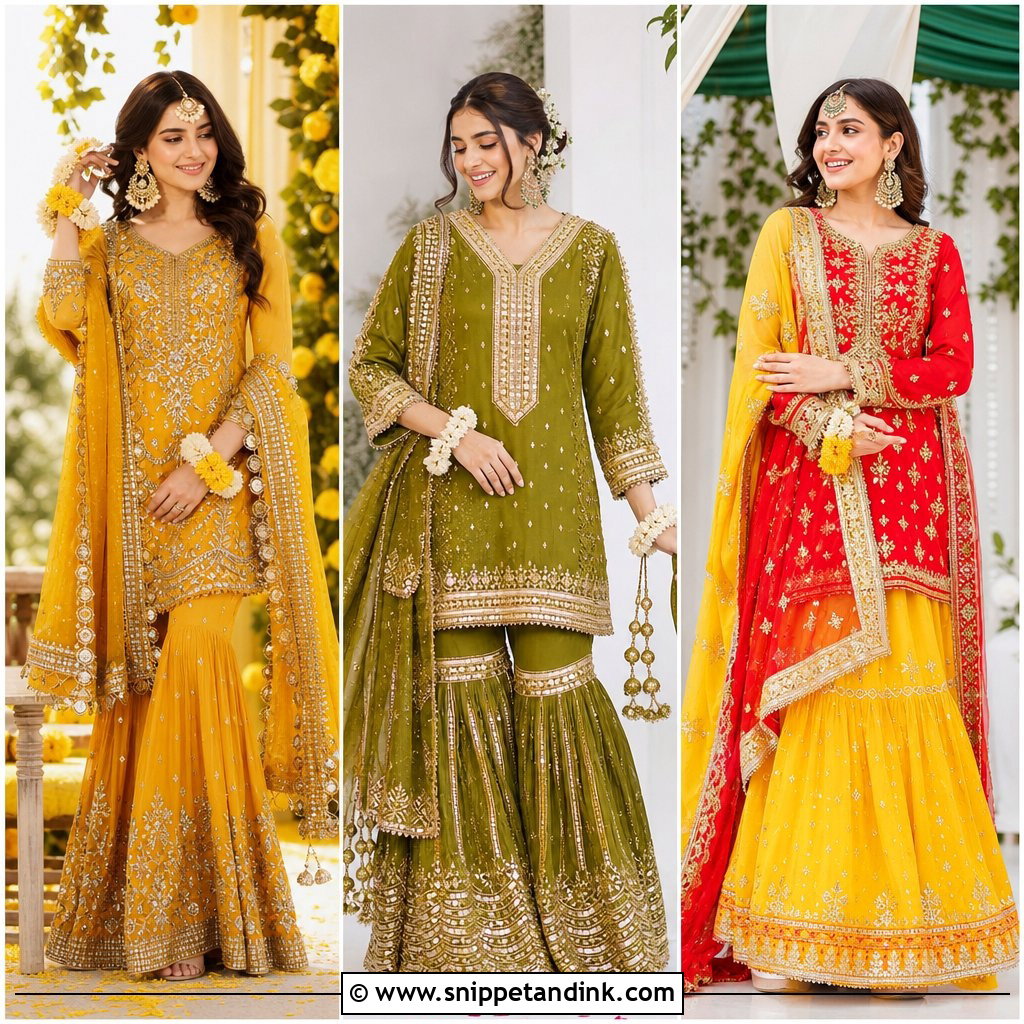
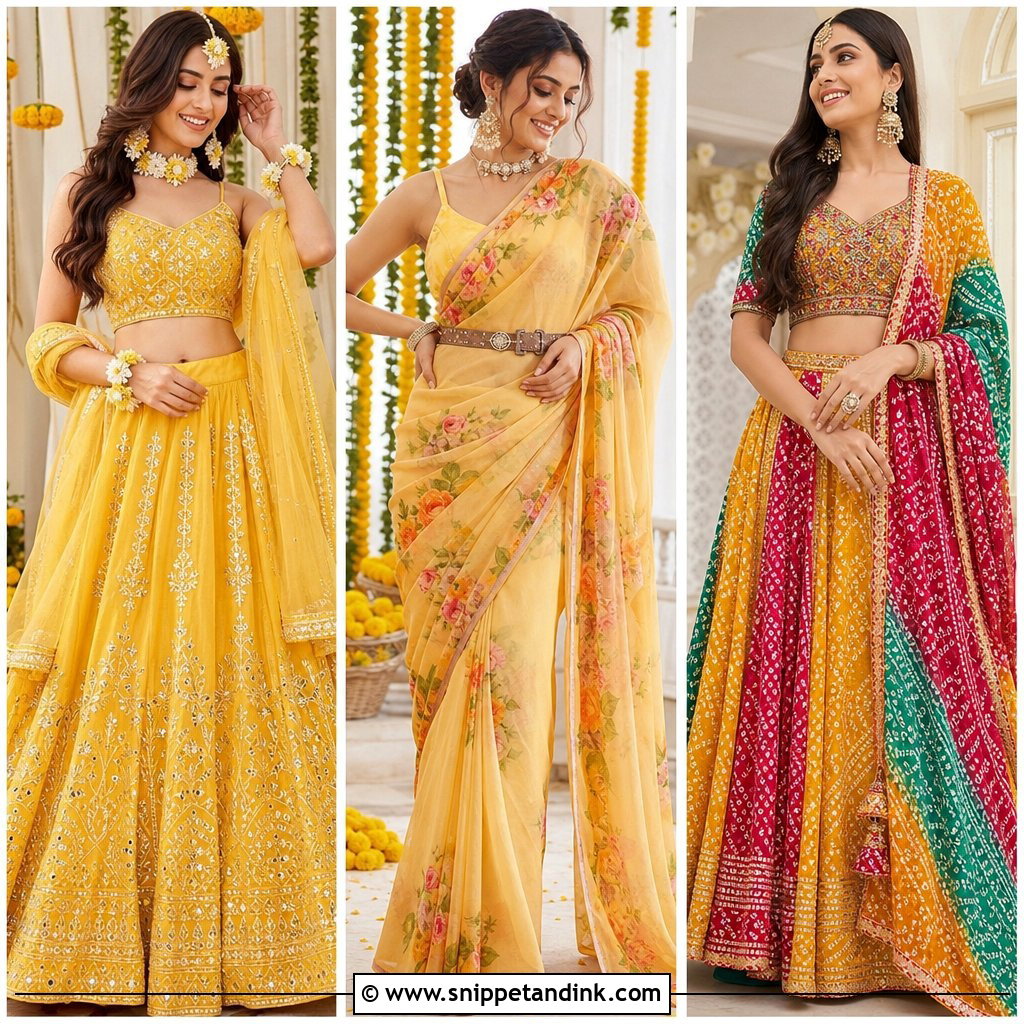
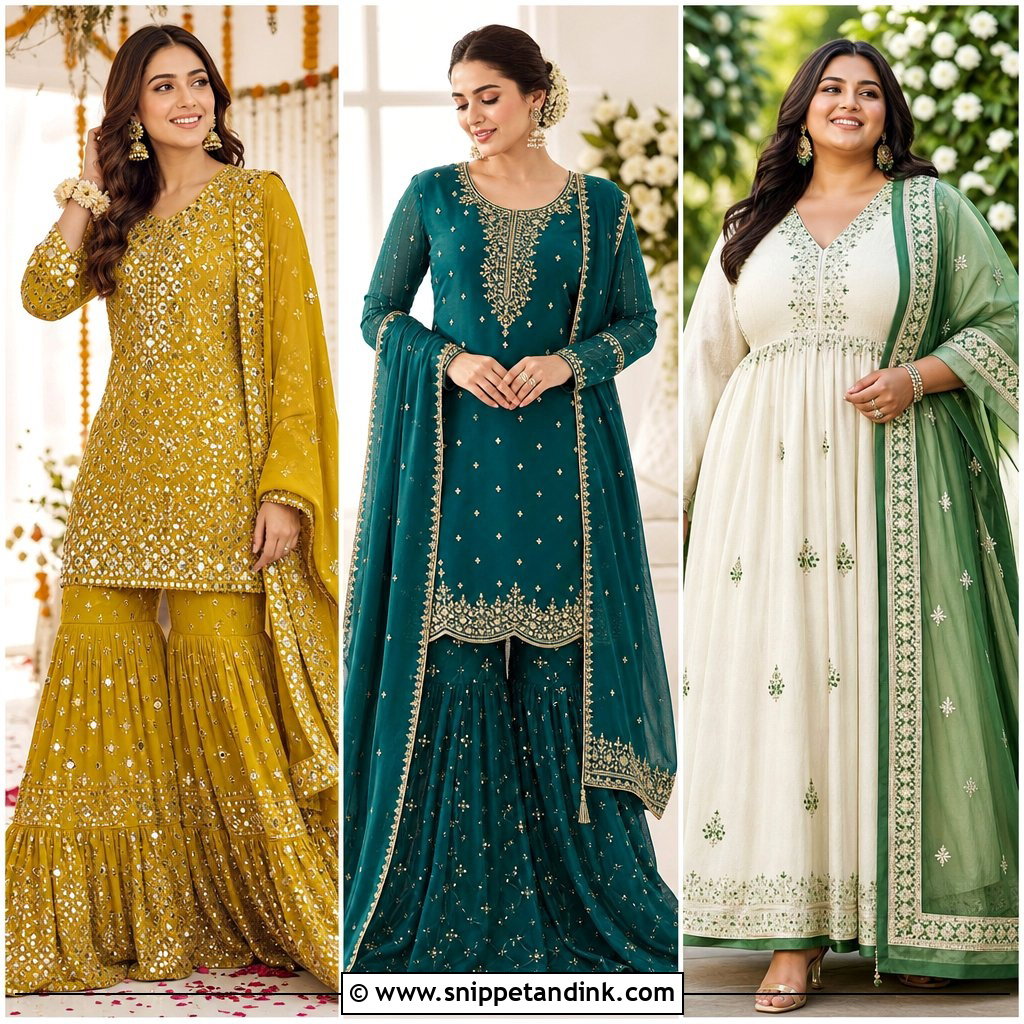
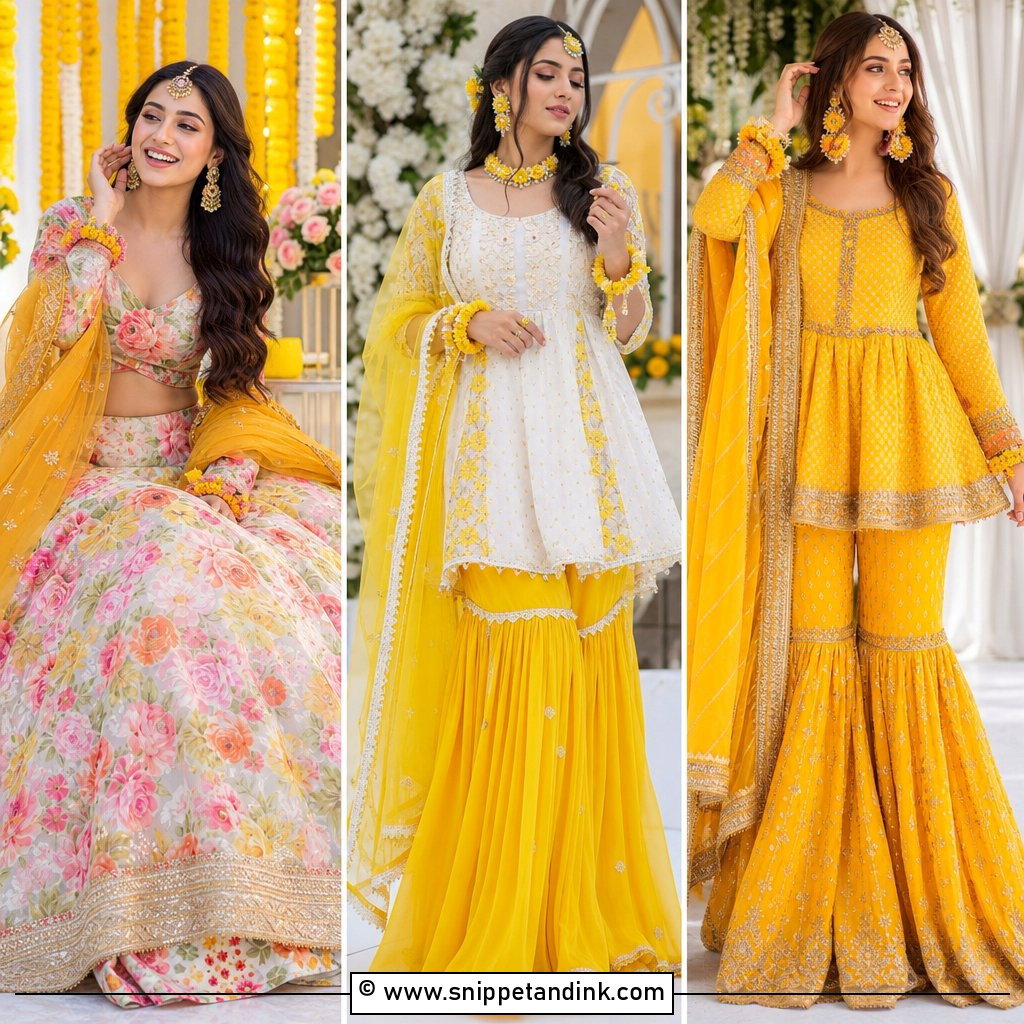
2. Yellow Sharara Set For Mehendi
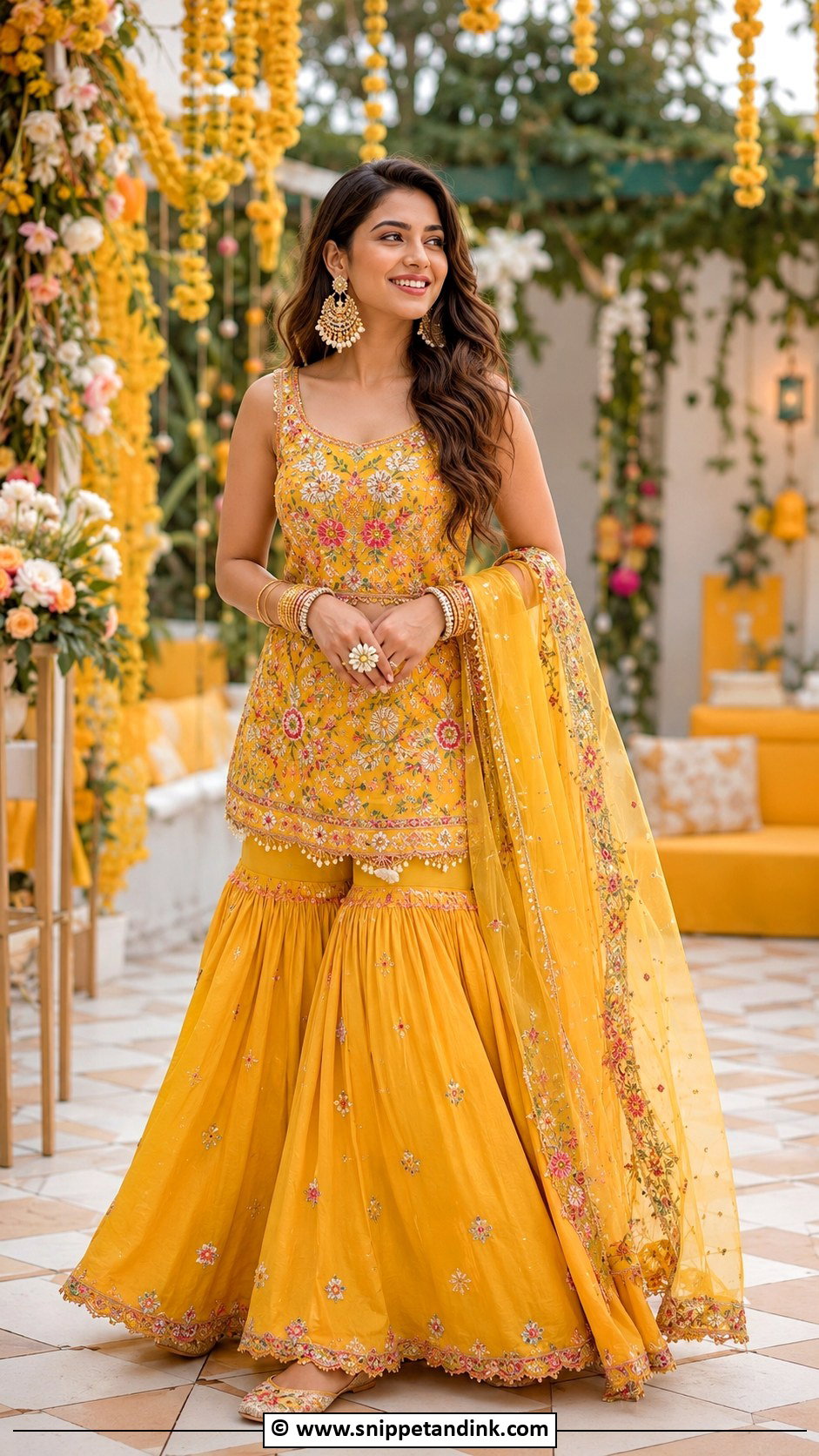
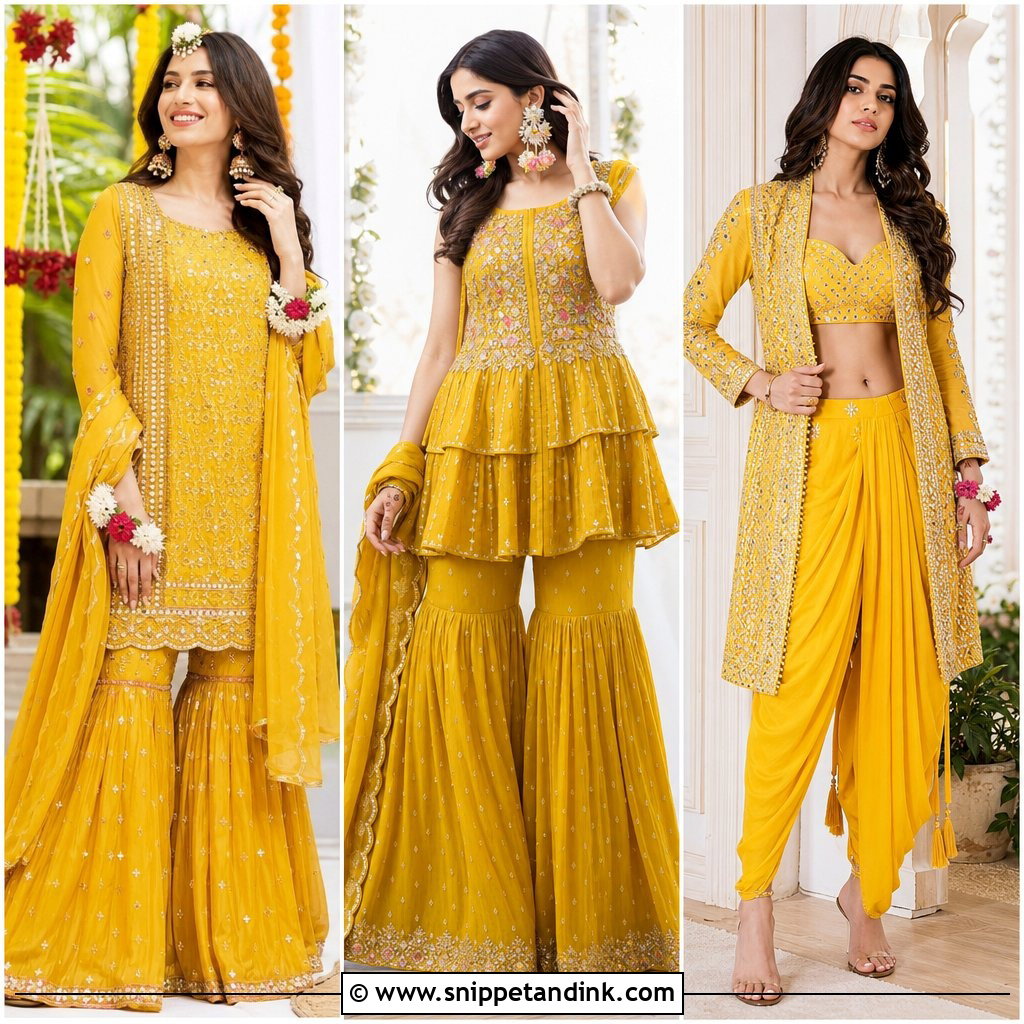
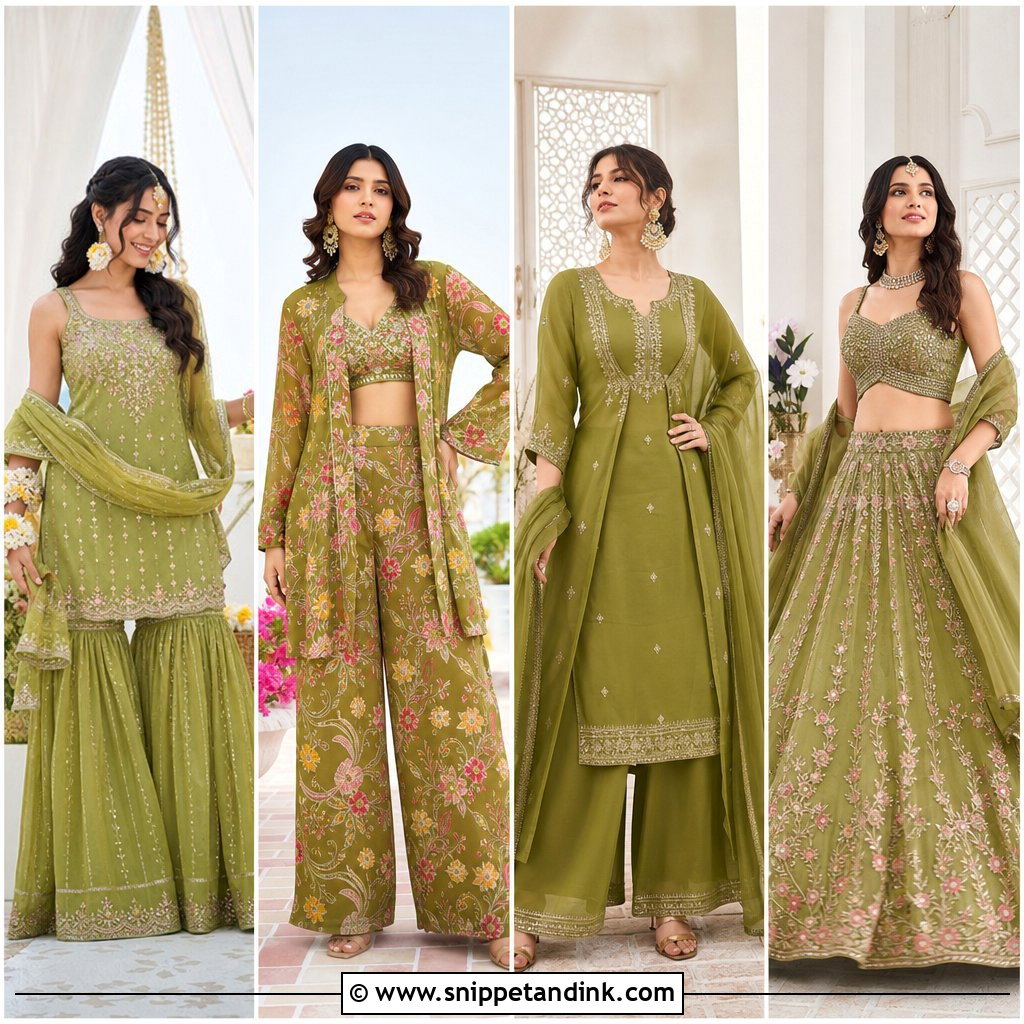
Yellow is my first suggestion for a daytime mehendi, because it reads warm in natural light and doesn’t go flat the way some pinks do in shade. The wide sharara legs let you sit on the floor with your knees up and still get up gracefully. Pick between a short kurti, which looks younger, and a longer one that covers more when you’re seated. Gota lace or mirror borders give the festive finish; chandbalis and stacked bangles do the rest. It’s my go-to suggestion for sisters and cousins who will be on their feet all evening.
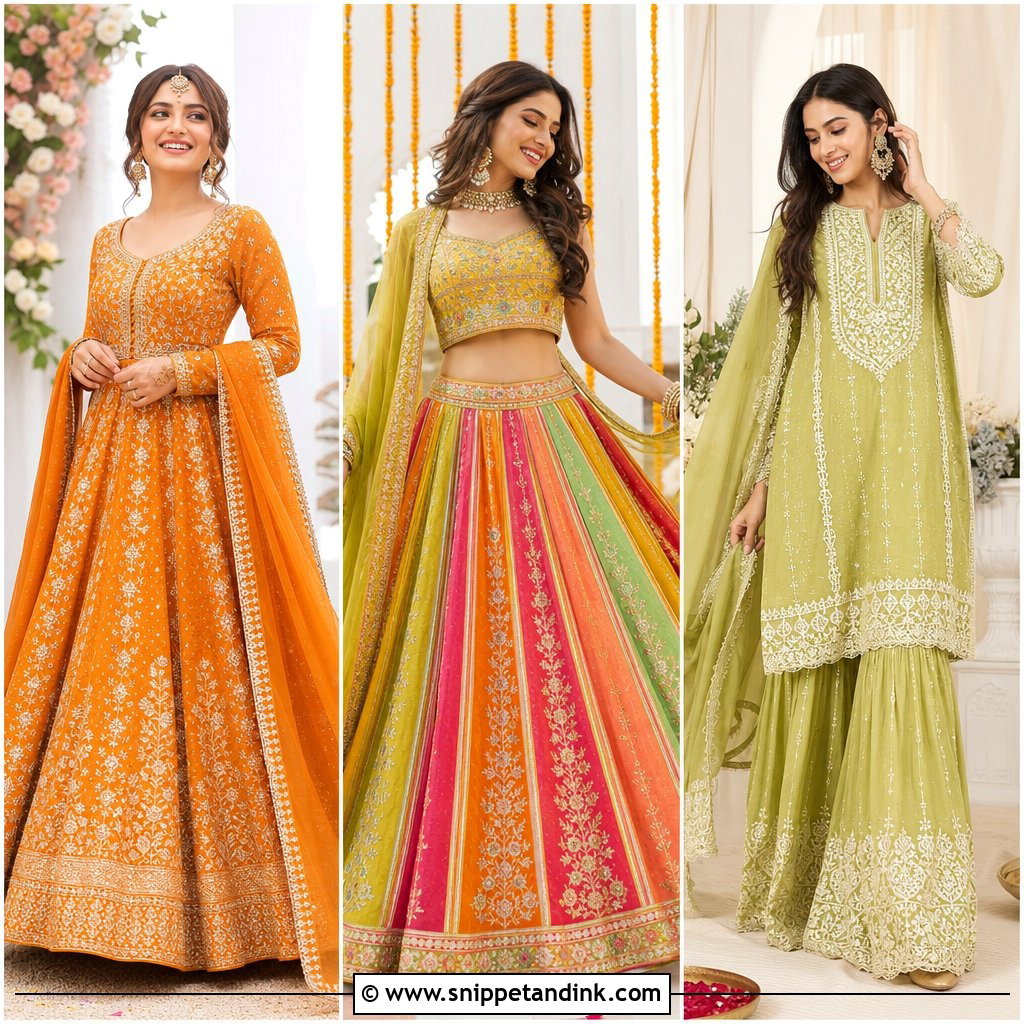
3. Floral Anarkali Suit For Mehendi
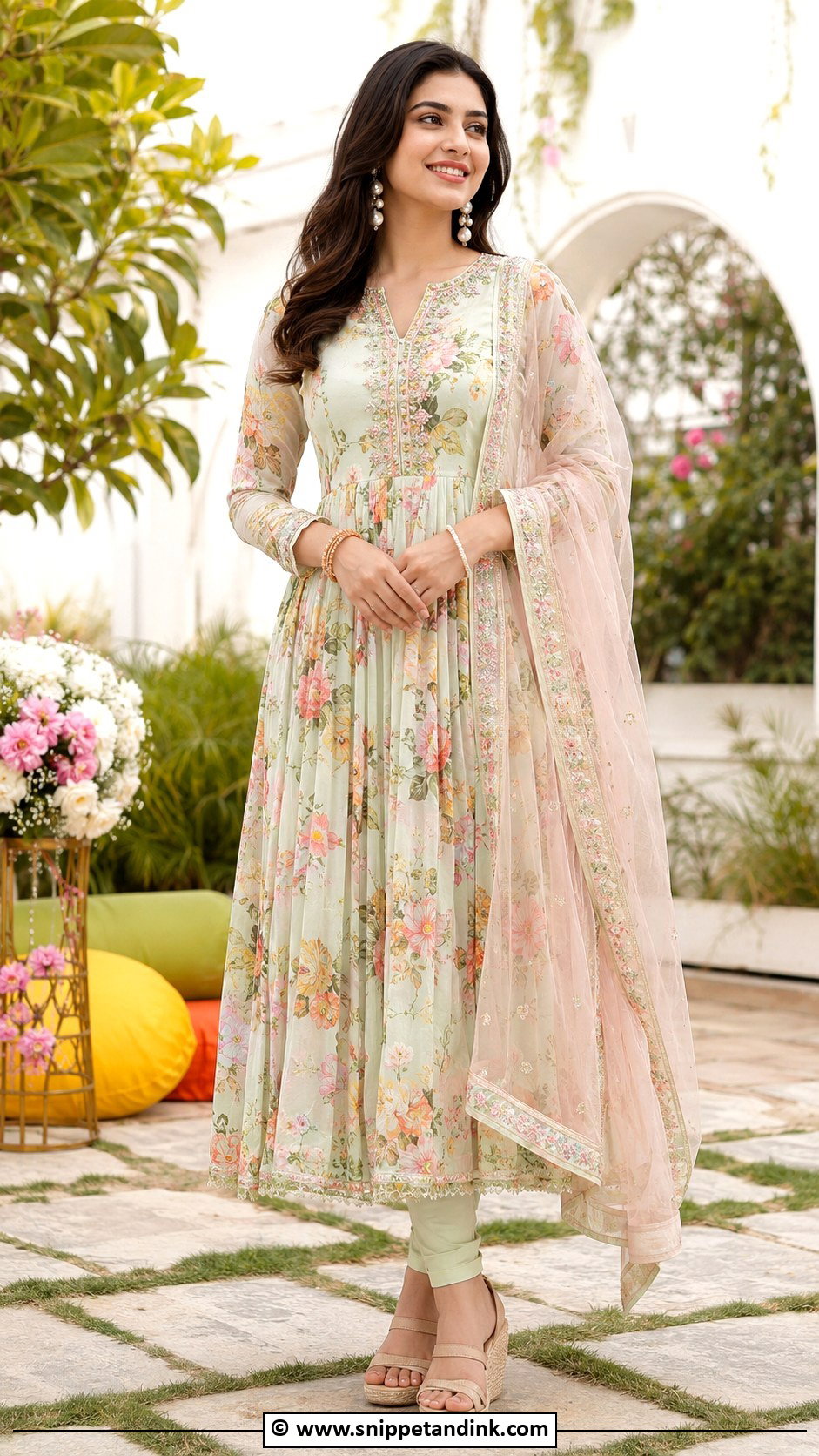
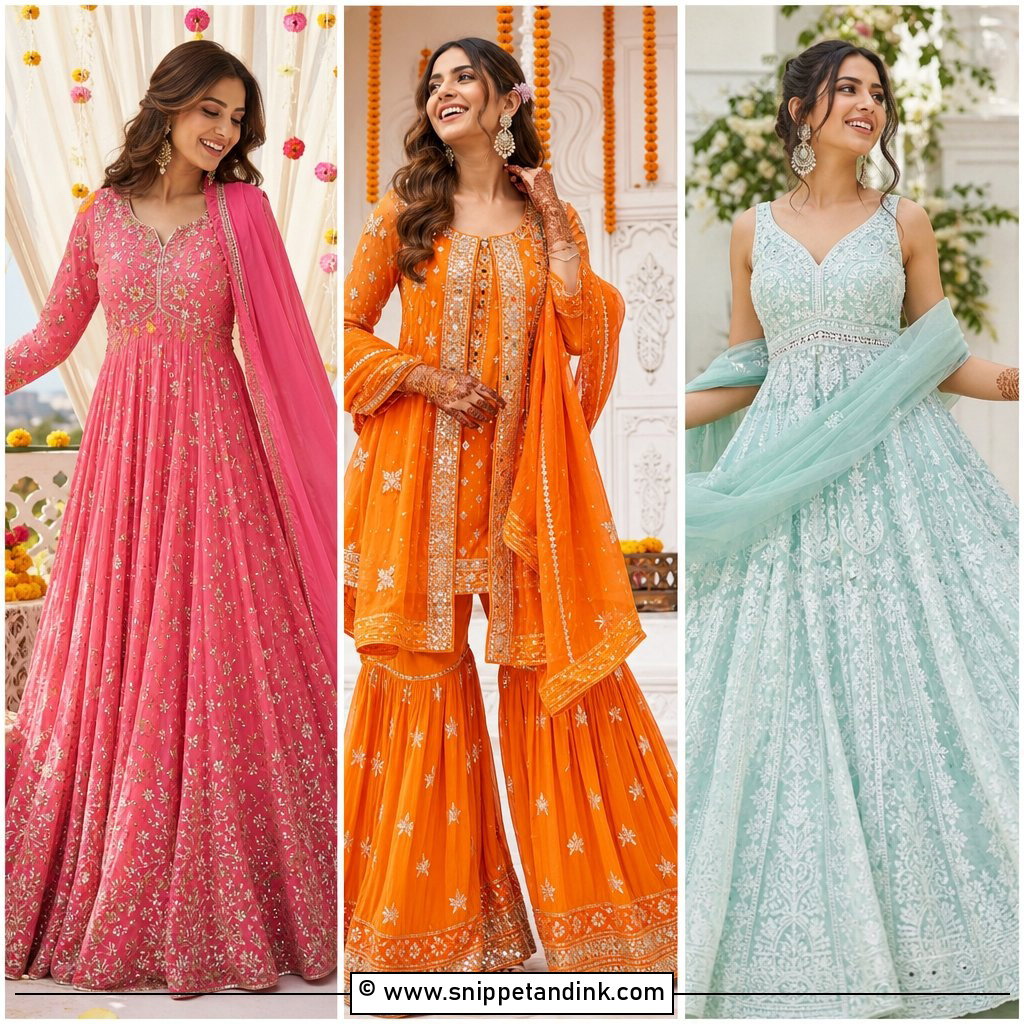
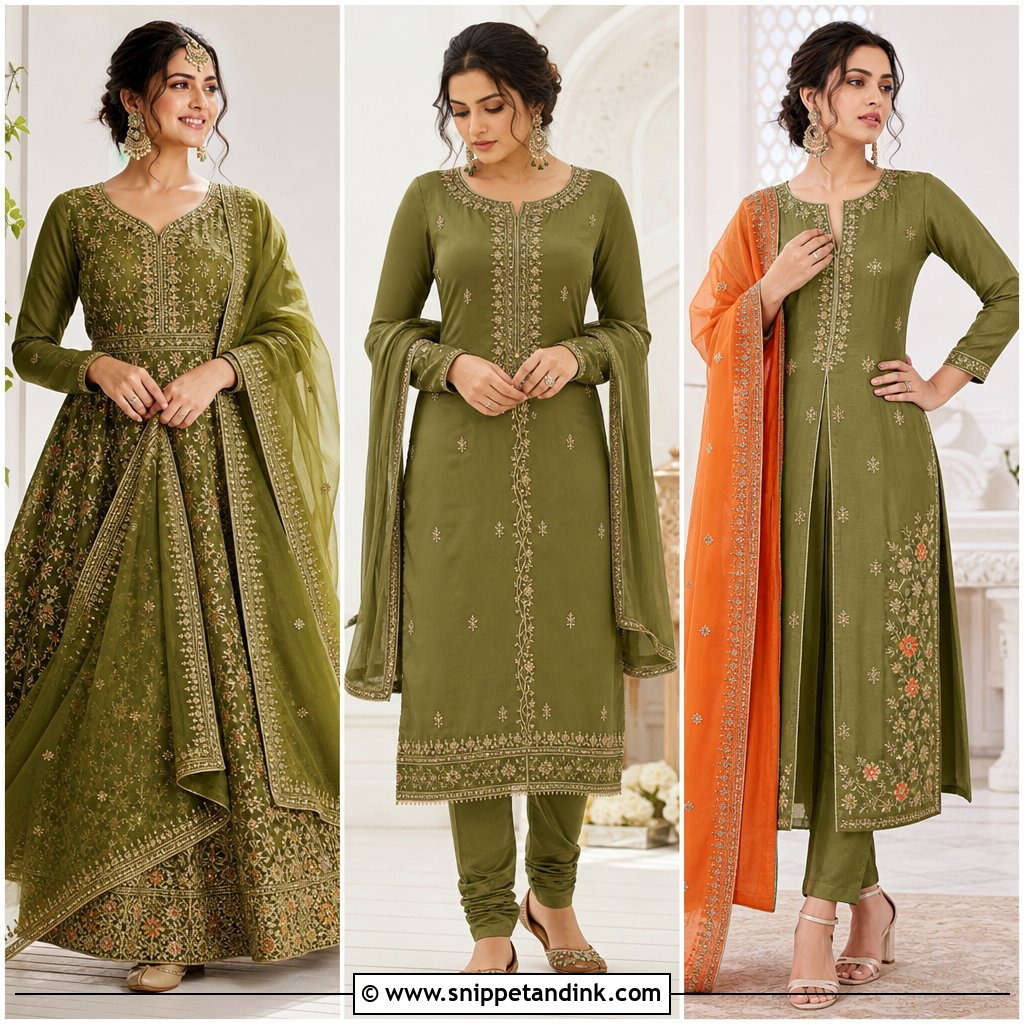
An Anarkali gives the swirl of a lehenga with less fabric to manage, so I often suggest it to mothers and guests who want coverage. Floor length looks more formal; calf length is easier on stairs and lawns and won’t drag through spilled paste. Mint, peach and ivory floral prints suit daylight. One caution: a fitted churidar under it can’t be pushed up easily, so if you’re having your feet done, swap to a looser pant. Pearl earrings, a light dupatta and juttis keep it gentle.
4. Mirror Work Co Ord Set For Mehendi
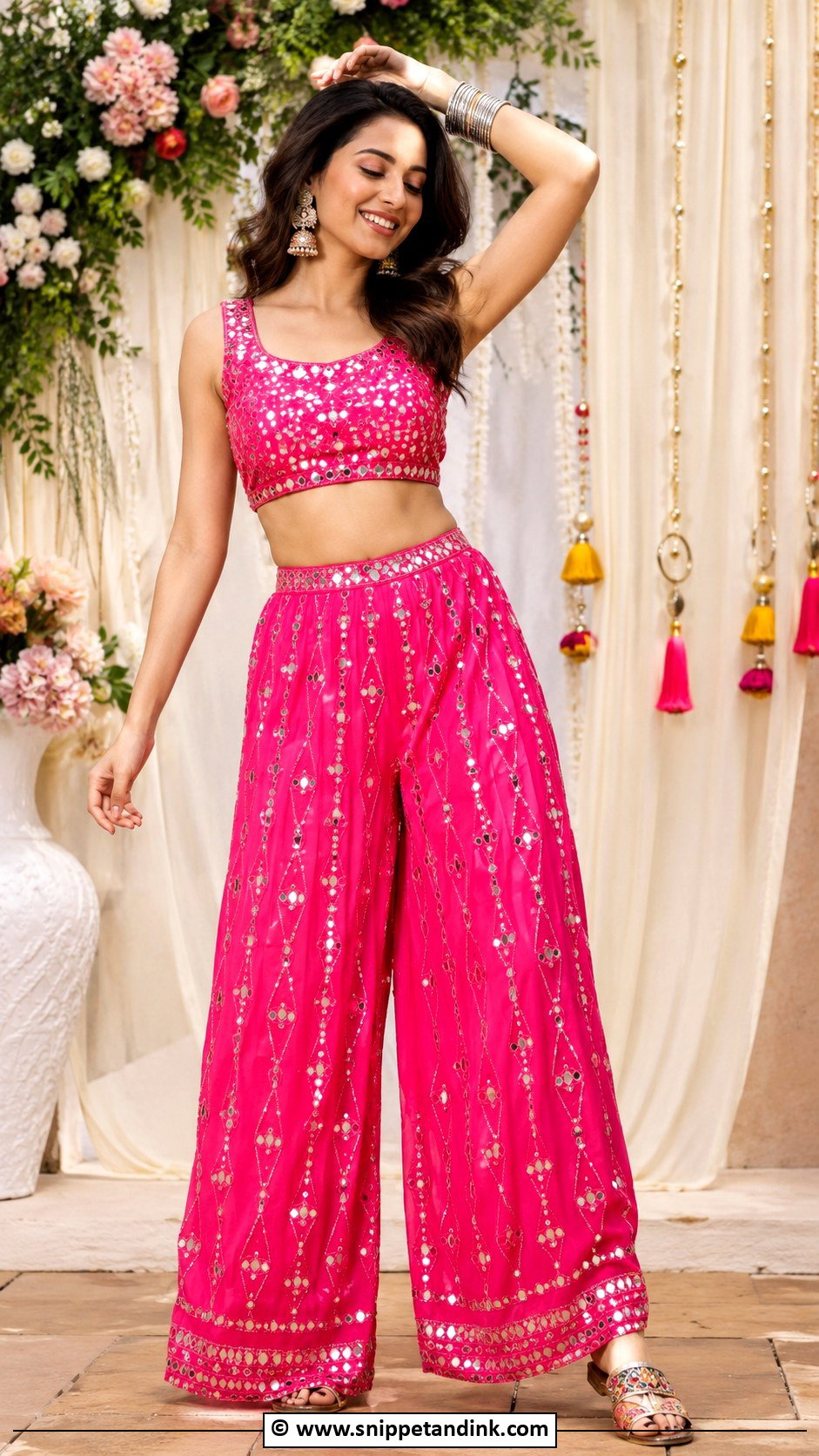
Co-ord sets solve the dupatta problem entirely, which is why I like them for bridesmaids who will be dancing. A crop top with palazzos, a skirt set or a kurta with pants all work, as long as the mirrors are stitched flat and not on the inner arm, where they snag the henna cone. Lime, fuchsia, orange and turquoise all carry well. Because the mirrors already throw light in photos, I keep jewellery to statement earrings and a few metal bangles.
5. Mustard Kurta Palazzo Set For Mehendi
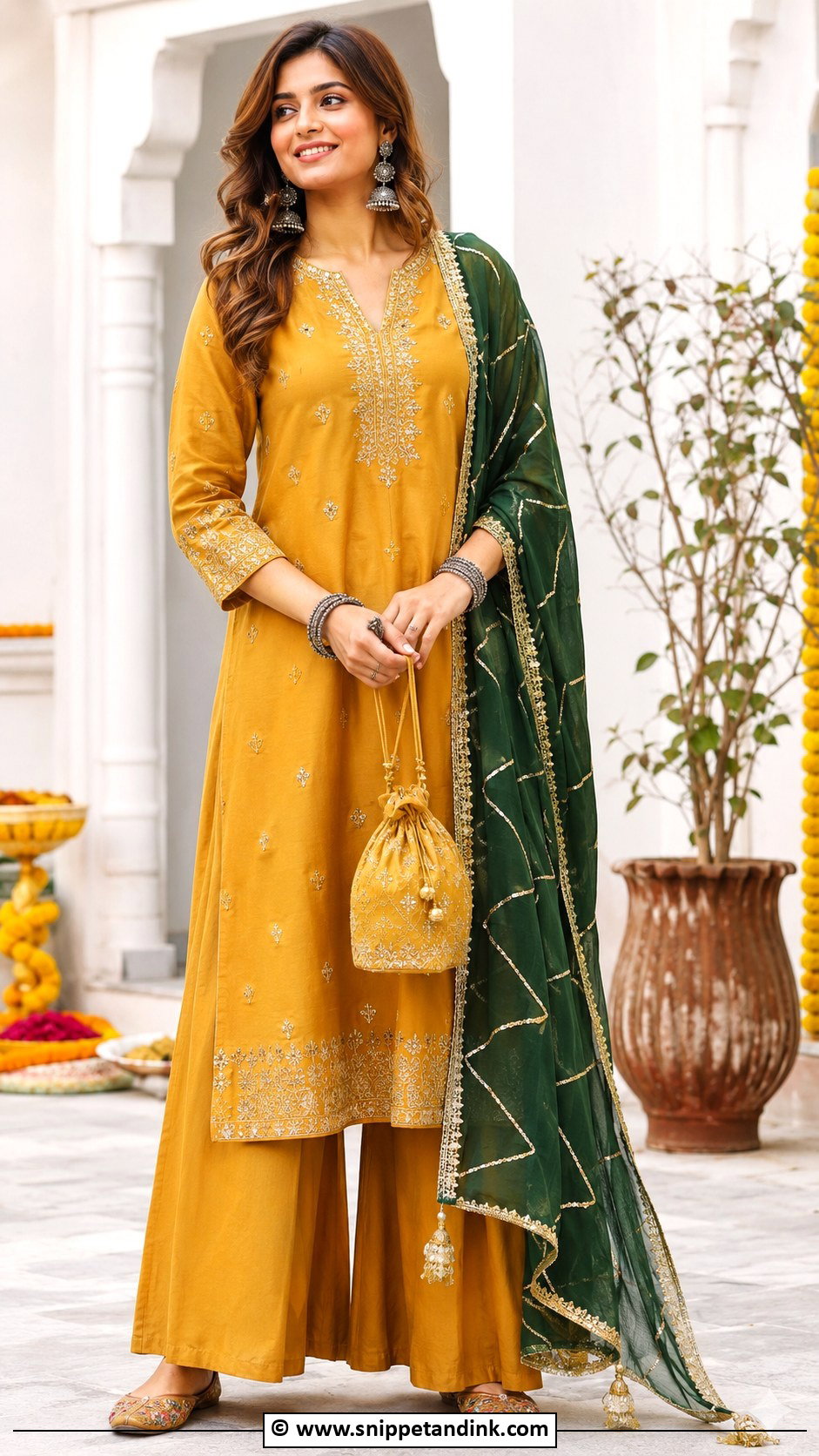
Mustard is the colour I give clients who find bright yellow too loud. It sits beautifully against green and pink, and it hides turmeric and henna marks better than ivory ever will. Choose a kurta with embroidered cuffs or block print, and wide palazzos for a long evening. I’d drape the dupatta over one shoulder and pin it at the back so both hands stay free. Oxidised earrings and a small potli suit the relaxed shape.
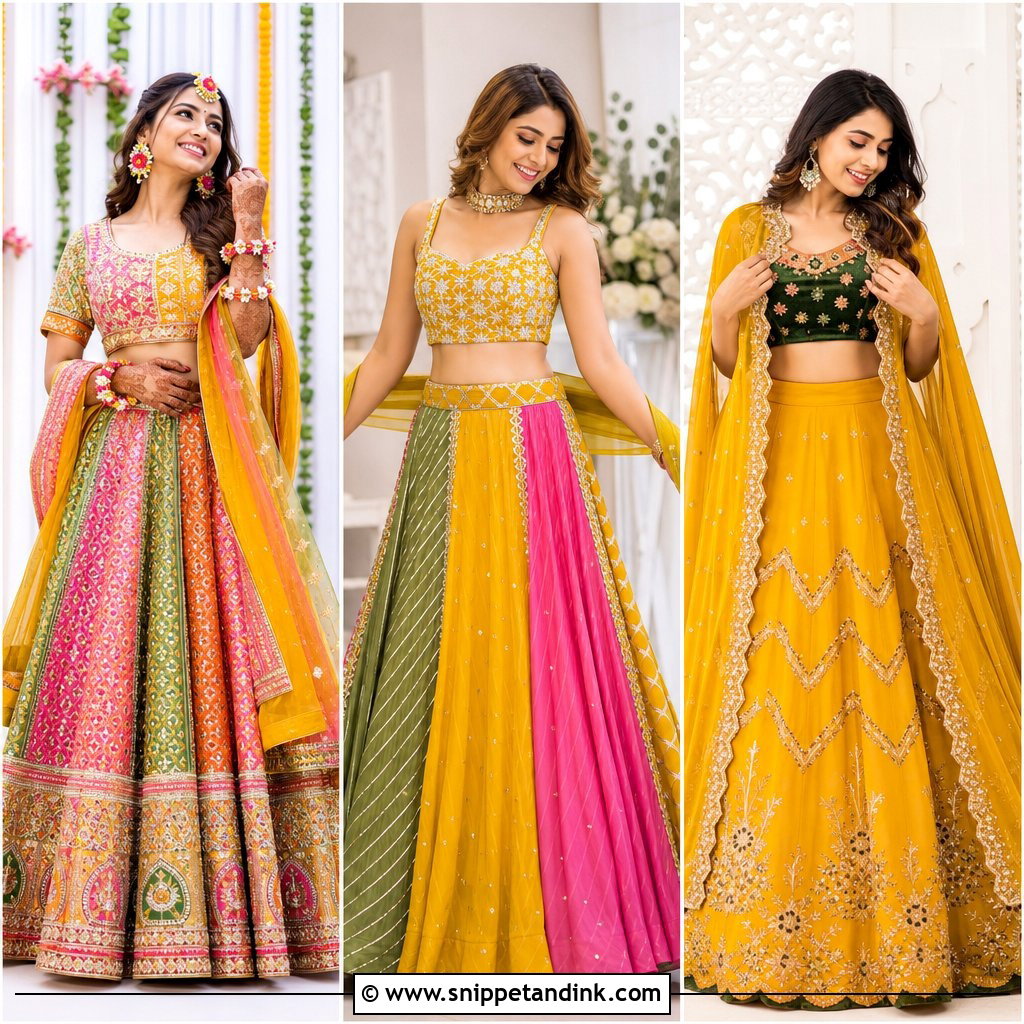
6. Pink Lehenga With Green Dupatta For Mehendi
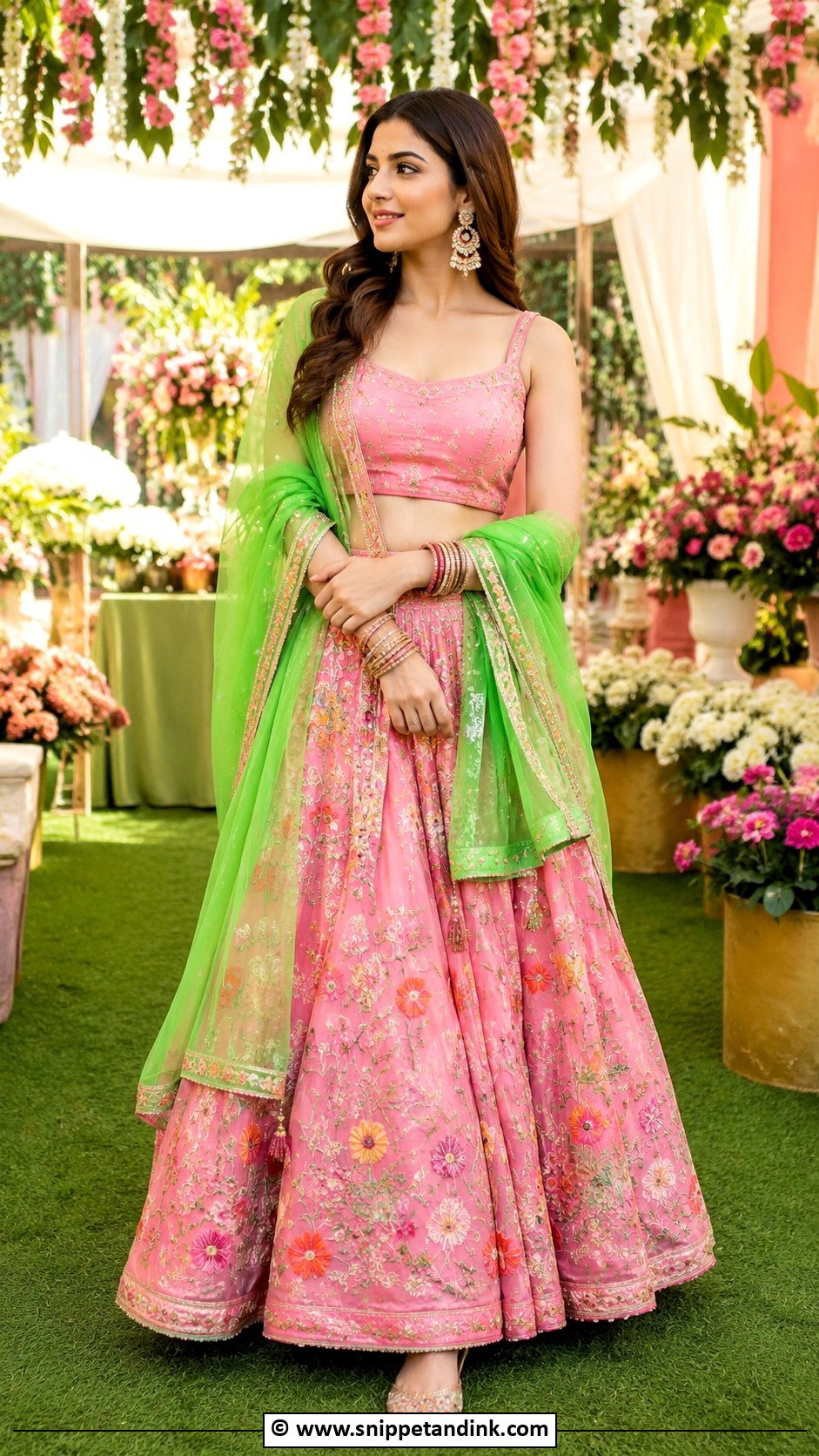
Pink and green is a contrast I trust, because the green dupatta ties you to the theme while the pink keeps the outfit from looking like a uniform. Keep the blouse simple so the two colours don’t fight. The dupatta is where this look goes wrong: left loose, it swings straight into wet paste, so I pin it neatly across one shoulder before the artist starts. Kundan earrings and soft waves suit it, and it gives a bride an alternative to all-green.
7. Orange Gharara Set For Mehendi
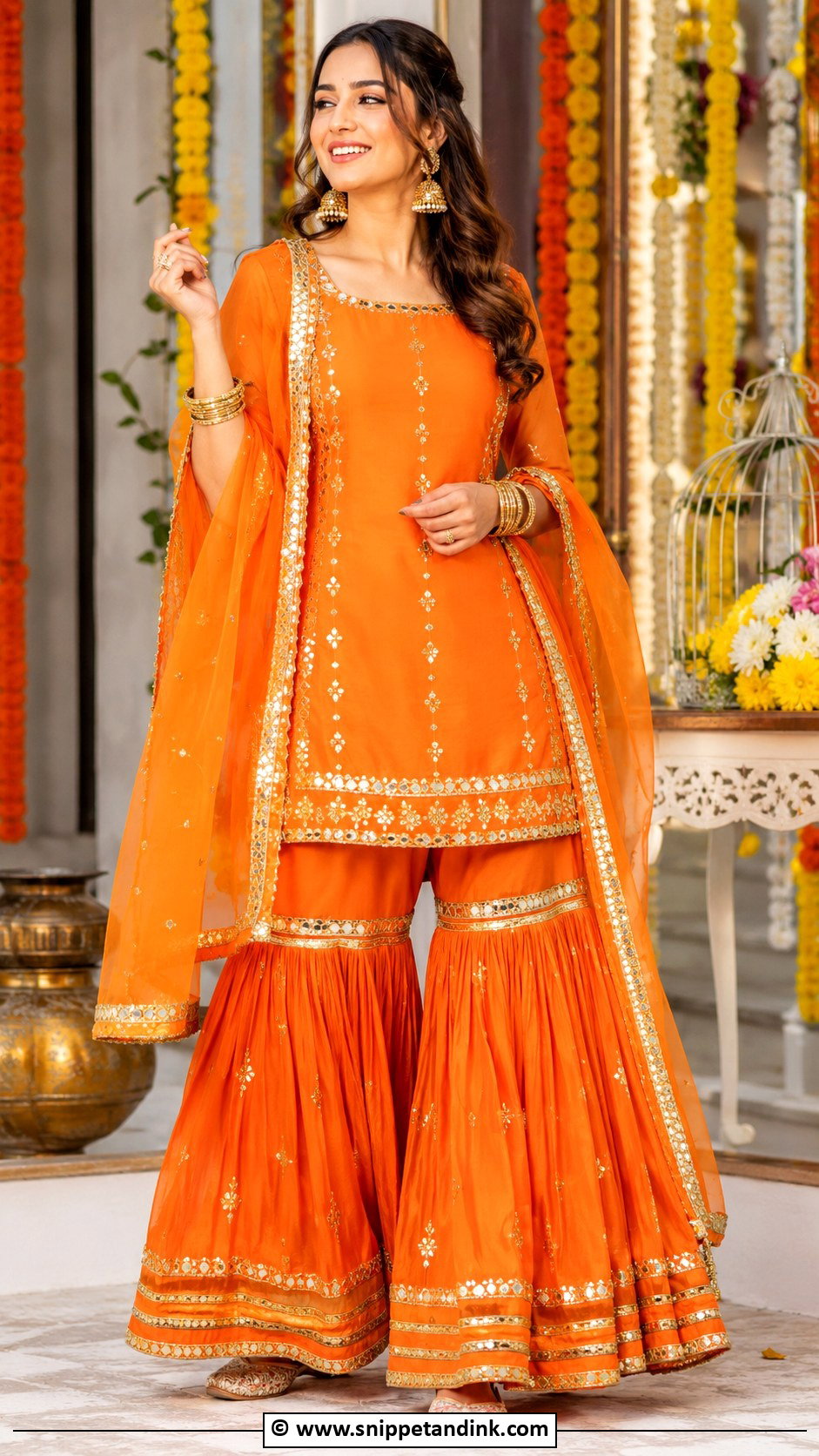
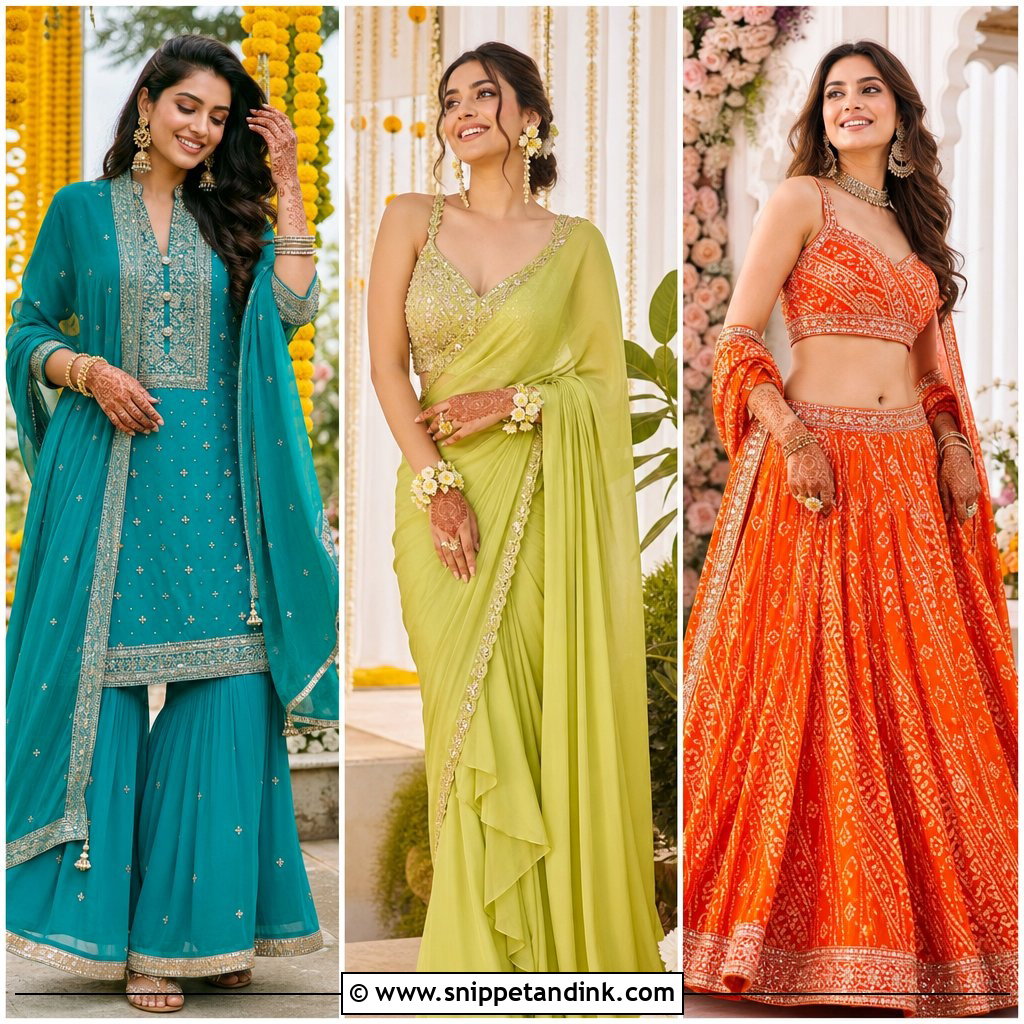
A gharara is cut to flare from the knee, so the drama happens at the hem, and a short kurti is what lets people actually see it. Orange carries that warmth mehendi is known for and photographs well under evening fairy lights. Look for gota borders around the hem rather than all over, which keeps the weight down when you’re sitting. My one warning is about length: ghararas pool on the floor, so try them with the exact flats you’ll wear. Add a sheer dupatta and jhumkas.
8. Indo Western Dhoti Set For Mehendi
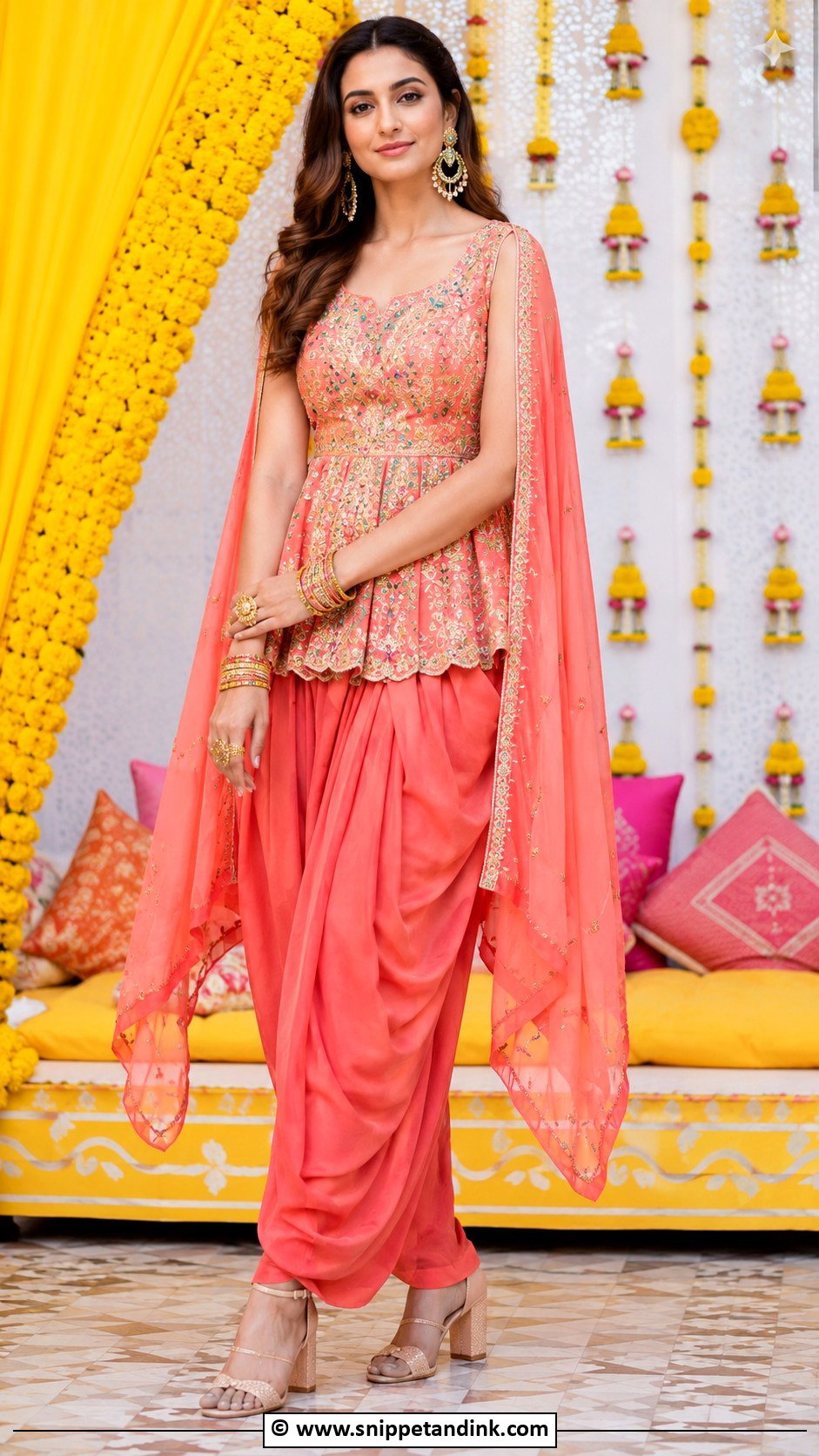
An Indo western dhoti set is the outfit I suggest to the cousin who wants to dance hardest. The draped dhoti moves without wrapping round your legs, and a crop or peplum top keeps the proportions sharp. Parrot green, coral and turquoise suit it. Before you buy, sit down in it: some dhoti cuts pull tight across the seat. Tassels or a cape layer add occasion, then block heels or juttis.
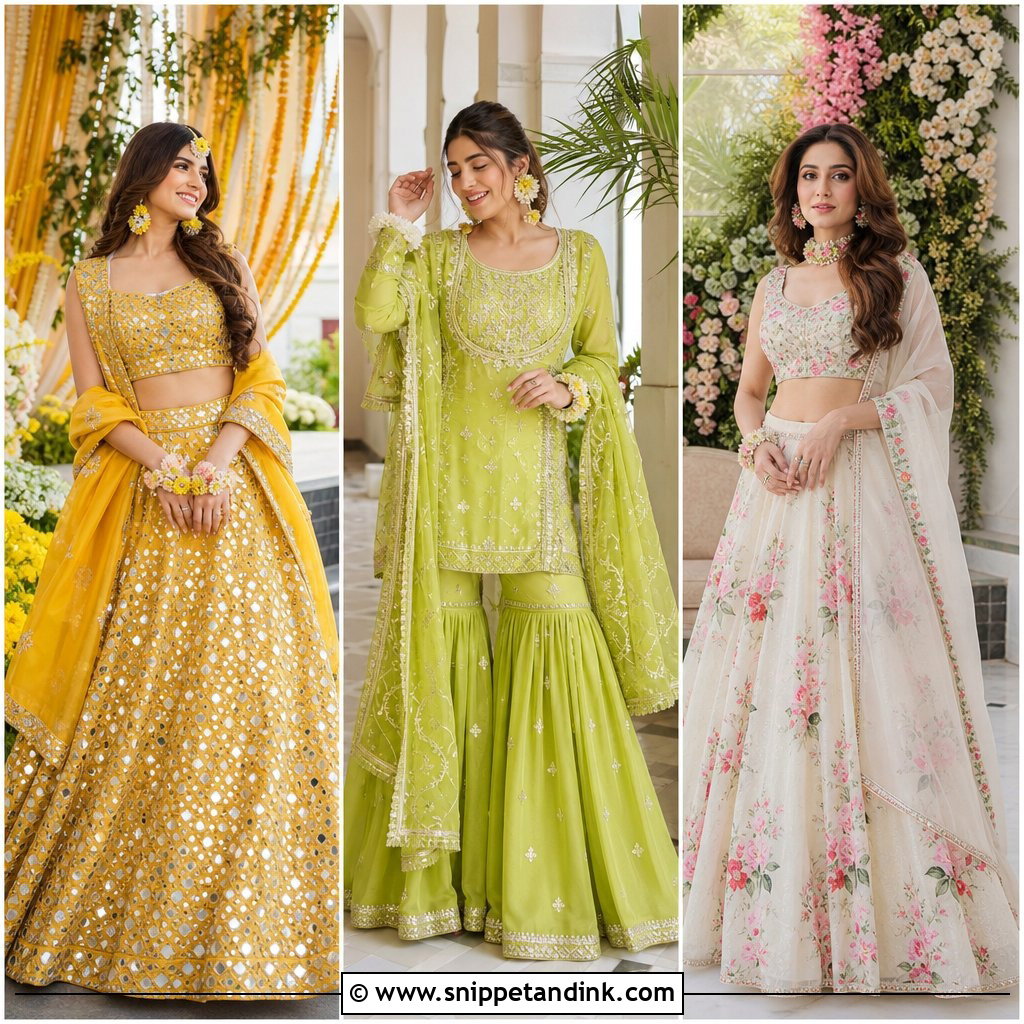
9. White Lehenga With Colorful Embroidery For Mehendi
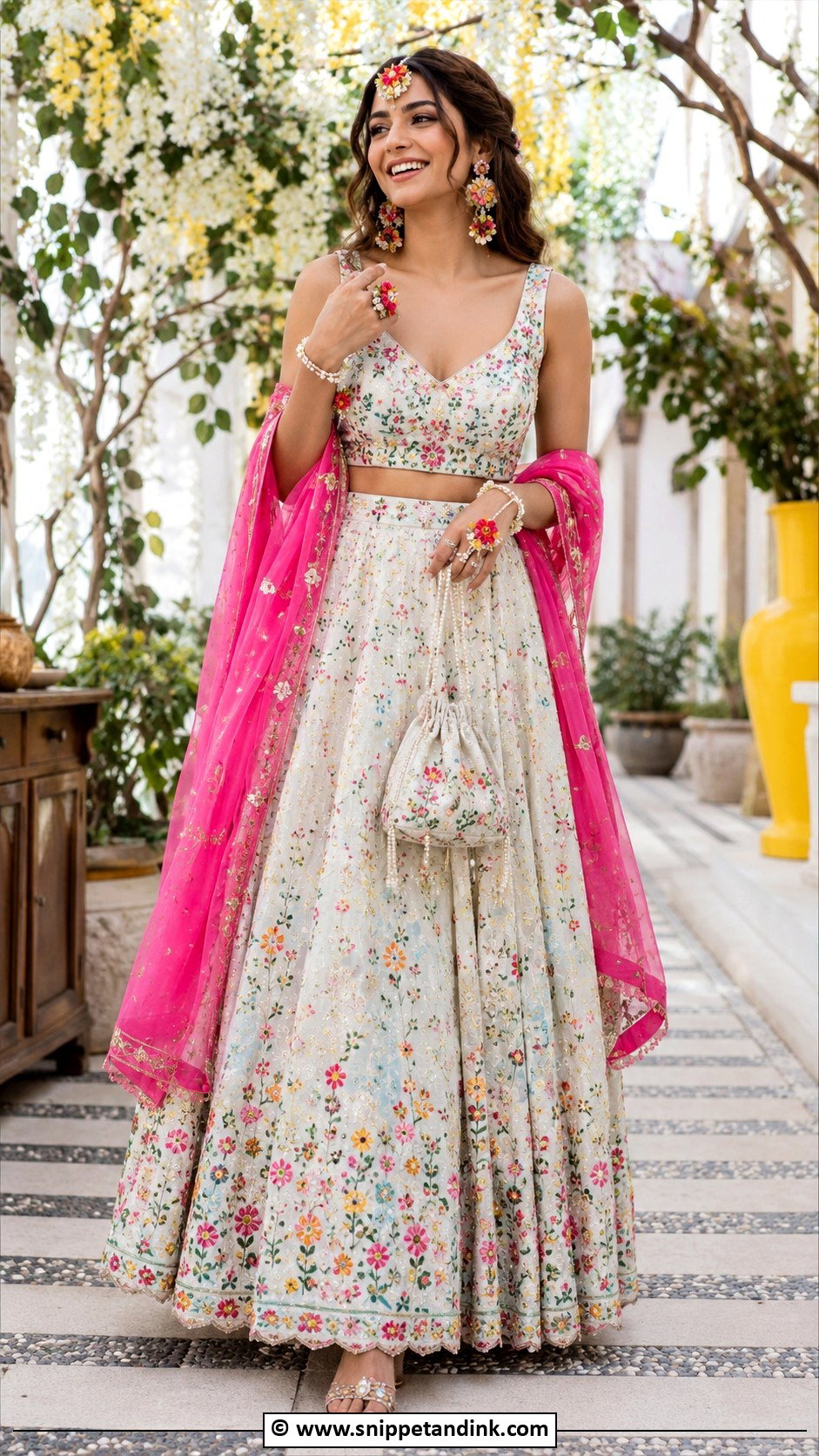
White with multicolour embroidery is the outfit I worry about most at a mehendi. Henna paste stains pale fabric quickly, and the orange mark on white cotton or silk rarely comes out completely. If you love it, wear it for the evening after your own application has dried and been scraped, or keep it for guests who aren’t being hennaed. A coloured dupatta in green or pink brings back festive colour, and floral or pearl jewellery suits the fresh base.
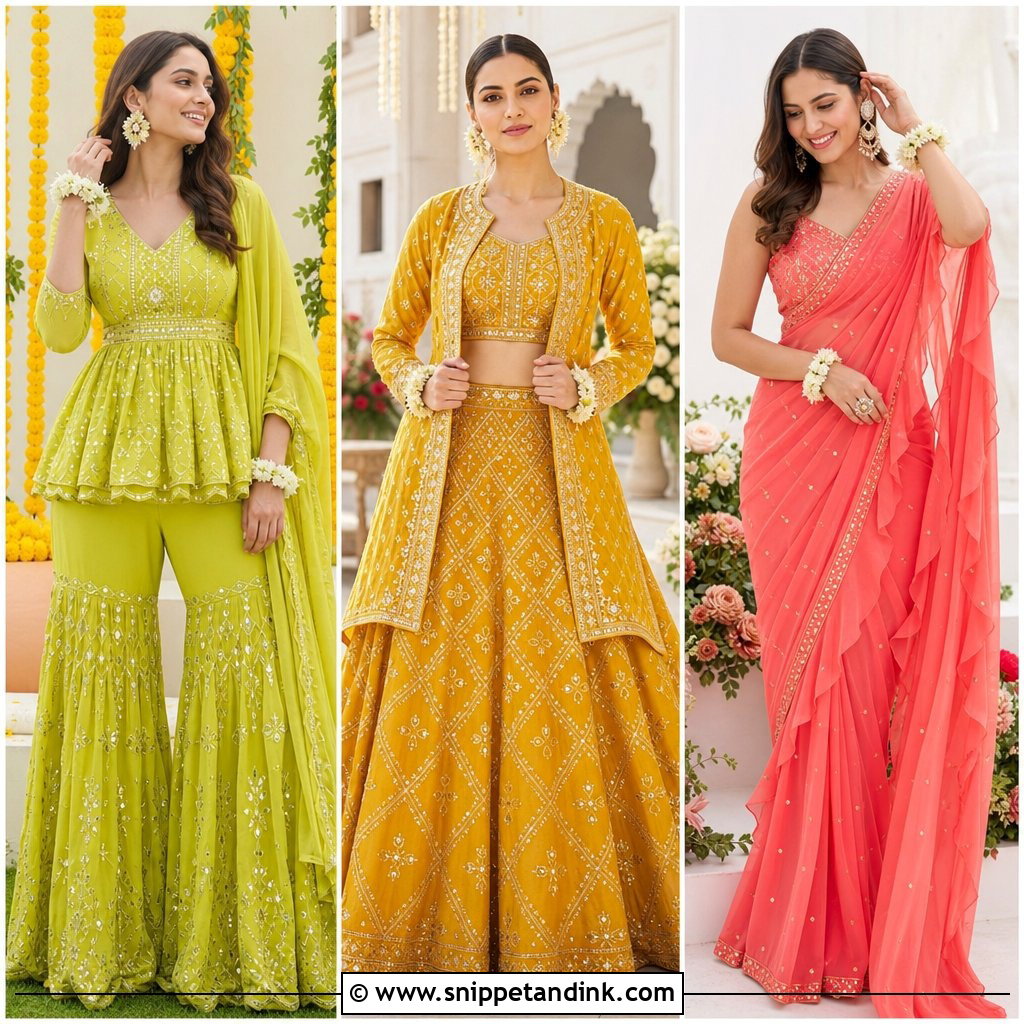
10. Lime Green Saree For Mehendi
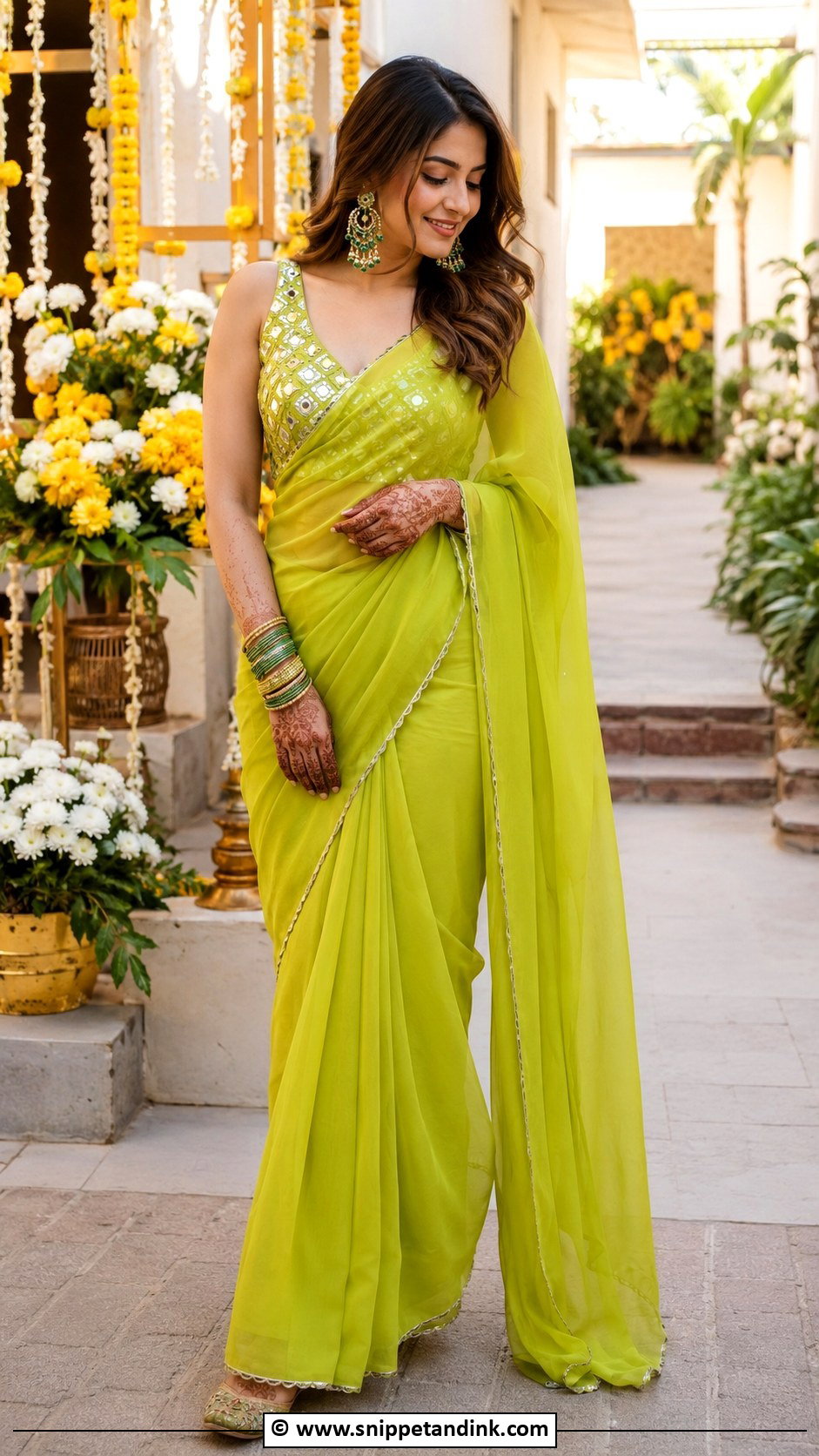
Lime green looks bright in daylight without the heaviness of emerald. I’d only put someone in a saree for mehendi if it’s a light georgette, chiffon or organza, or better still a pre-draped one, because a hand-tied pallu needs adjusting and your hands won’t be free to do it. A mirror or sleeveless blouse keeps it festive. Pin the pleats firmly if you plan to sit on the floor; they shift as soon as you cross your legs.
11. Printed Skirt And Crop Top For Mehendi
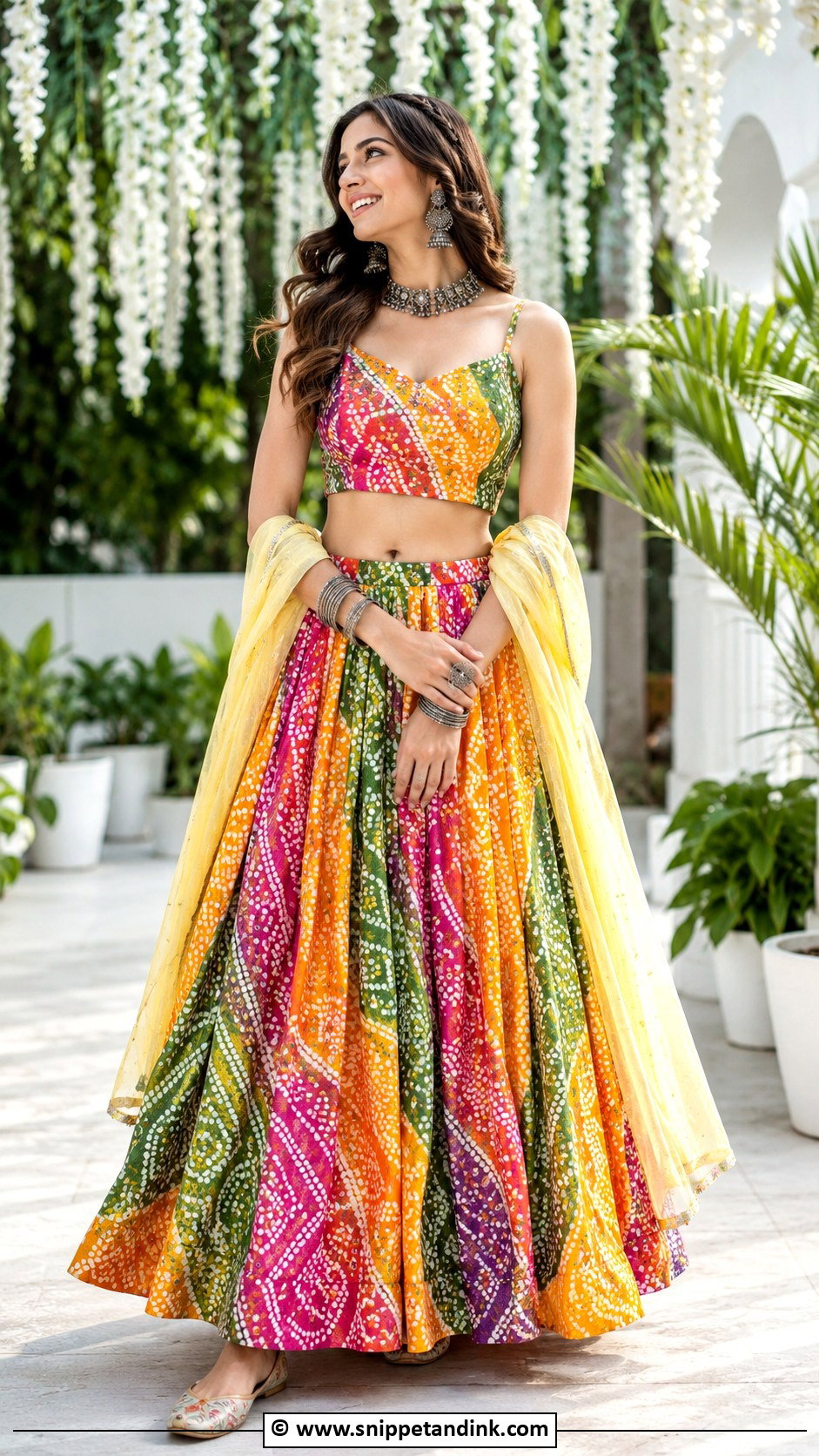
A printed skirt and crop top gets colour onto a guest without the cost or weight of embroidery. Bandhani, leheriya and folk prints all suit the occasion. The flare is what reads in dance photos, so choose a skirt with real circle cut rather than a straight A-line. Wear it with or without a dupatta. It’s the outfit I see re-worn most afterwards, which matters when there are several functions to dress for.
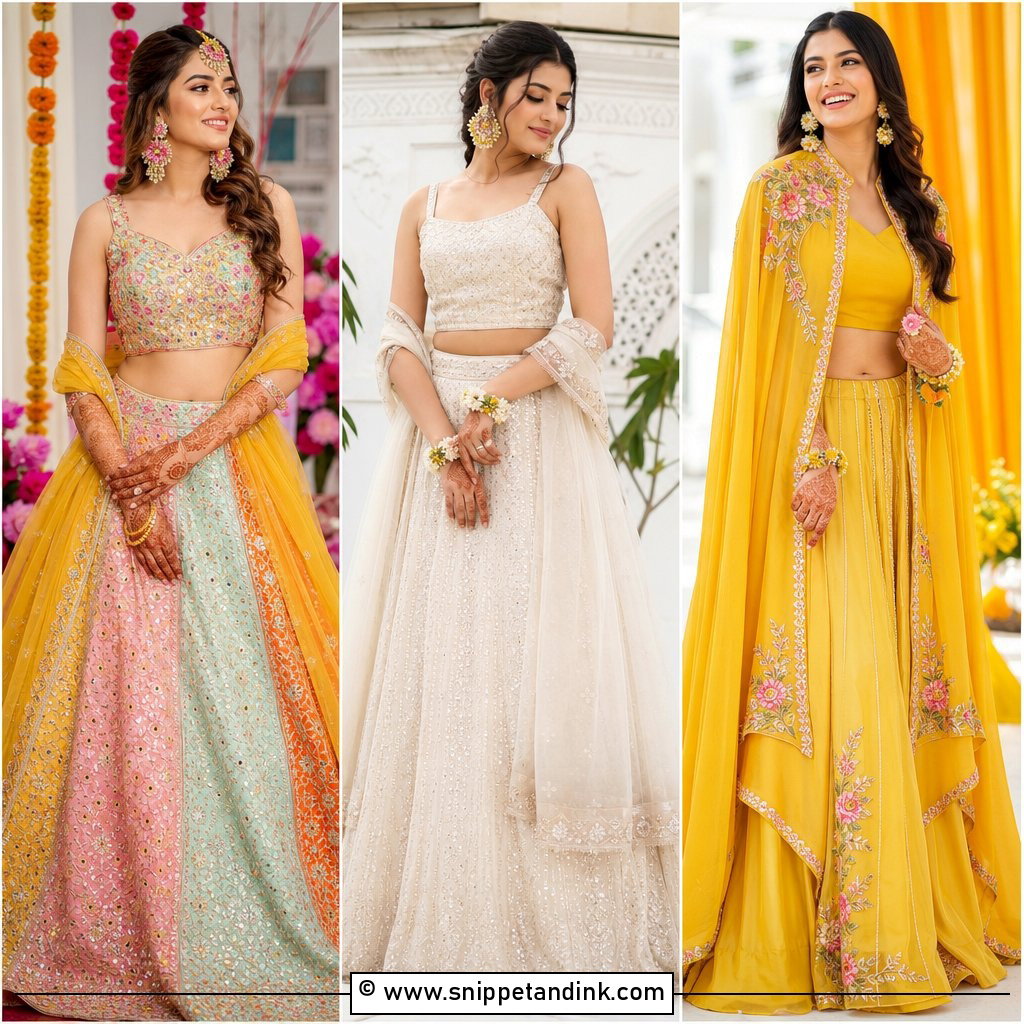
12. Pastel Lehenga For Mehendi
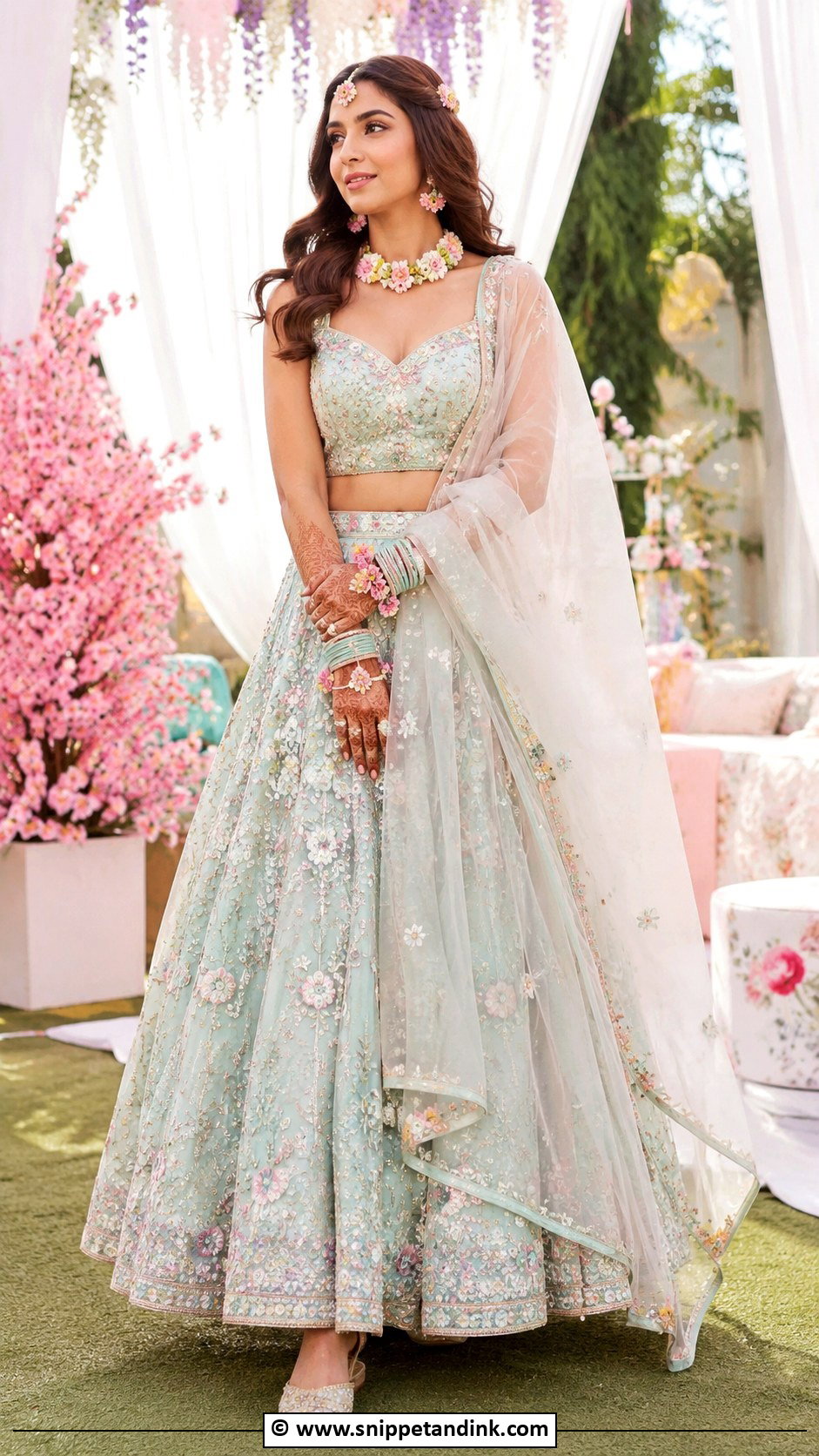
Pastels need the right light. Mint, blush and powder blue glow at a garden mehendi in daylight but can look washed out under warm indoor bulbs, so I ask clients where and when the event is before I agree to one. Mirror, pearl or delicate gota work keeps a pastel from looking like a day suit. Loose waves or a low bun and floral jewellery suit the softness. A good choice for a bride who wants a modern look and bridesmaids who don’t suit neon.
13. Multicolor Lehenga For Mehendi
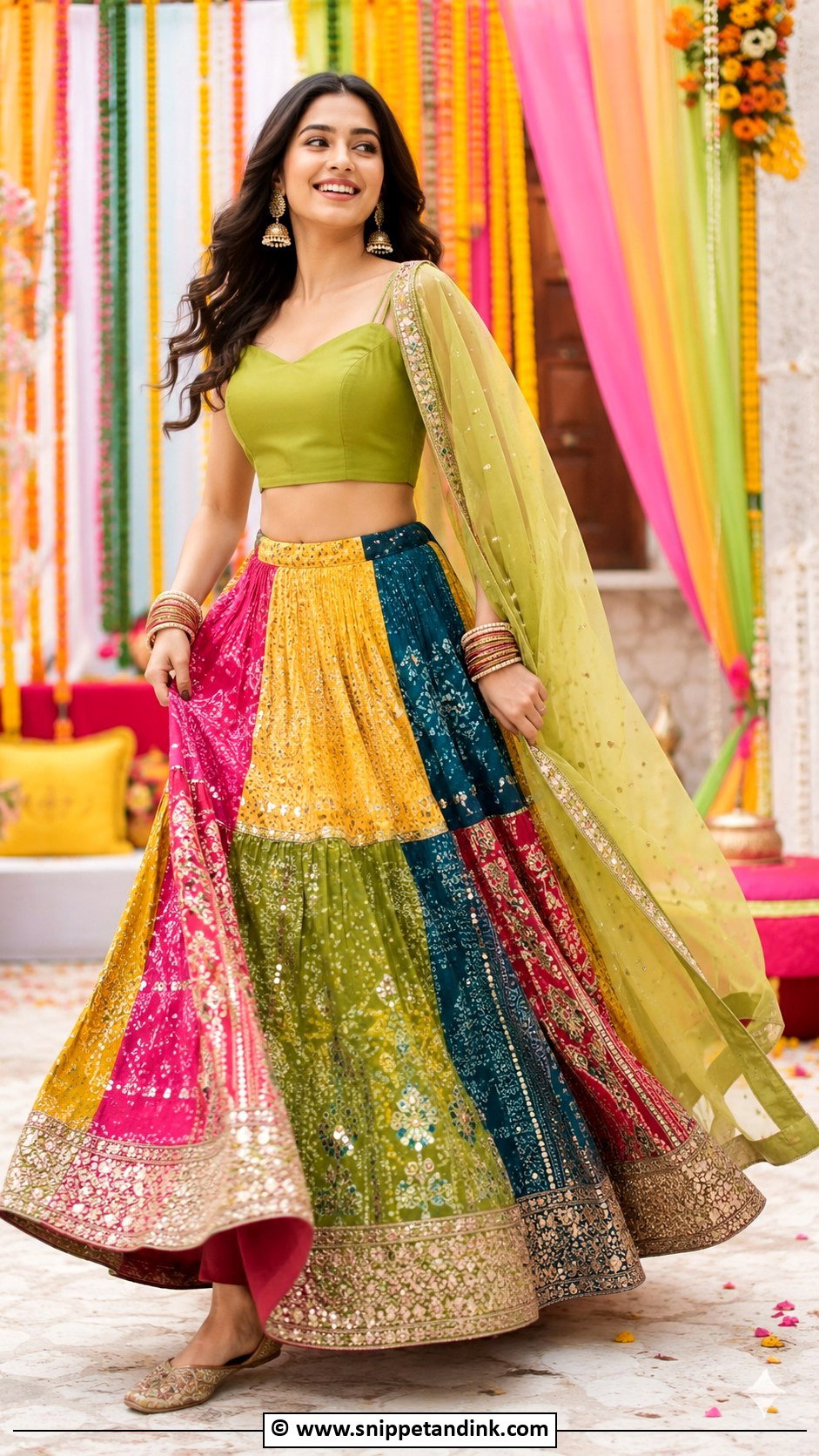
Patchwork and multicolour panels match the noise of a mehendi, but there’s a trick to wearing them: lift one solid colour out of the skirt and use it for both blouse and dupatta. That gives the eye somewhere to rest. Skip heavy jewellery; simple jhumkas and bangles are enough. In group photos against busy floral backdrops this is the outfit that still holds its own, so I often suggest it for cousins.
14. Peplum Top With Sharara For Mehendi
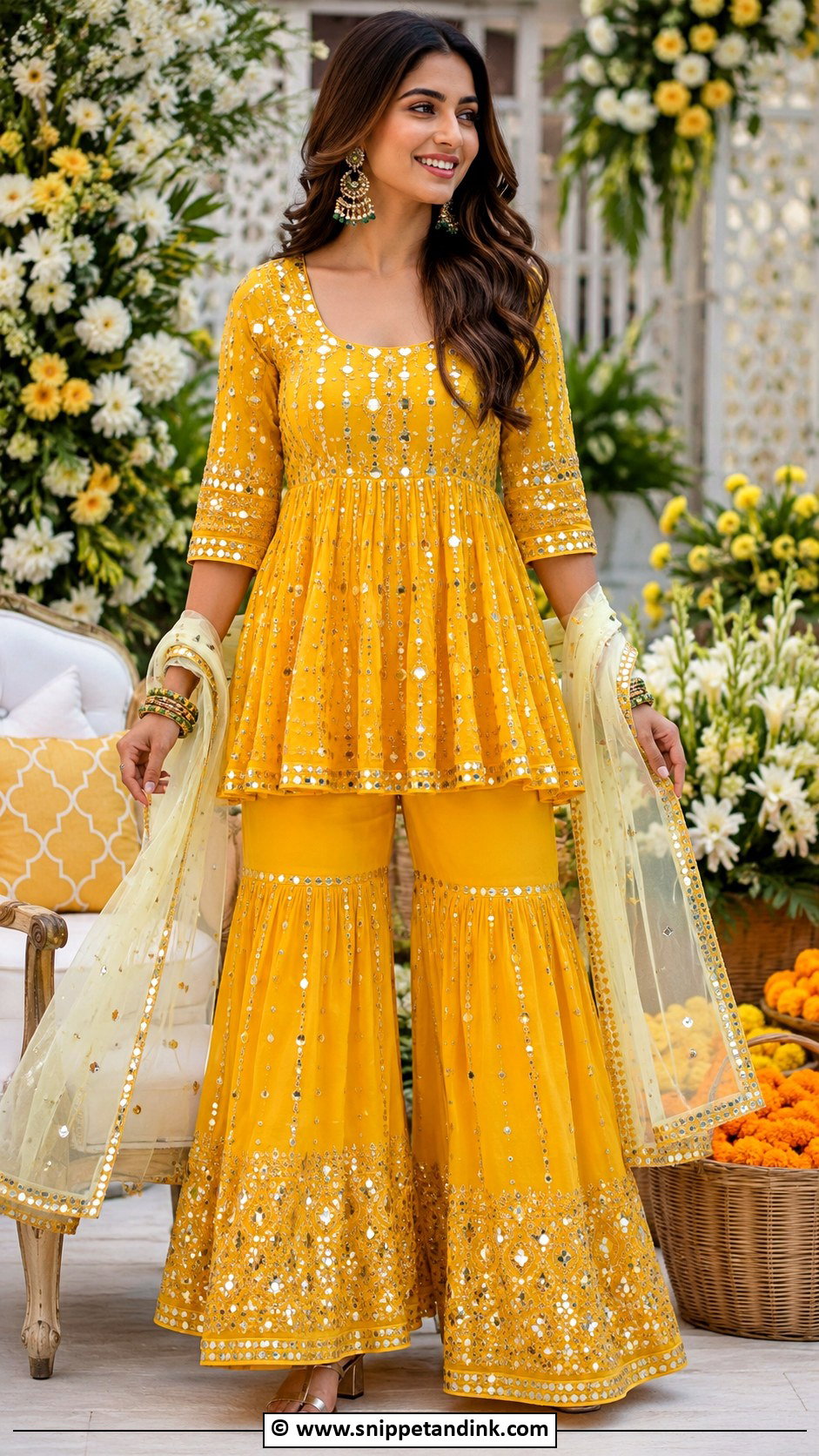
A peplum top with sharara pants defines the waist, which suits clients who feel lost in a long kurta. Mirror or gota detailing on the peplum gives the festive finish. Yellow, hot pink and aqua carry well. If you dislike managing a dupatta, a cape-style peplum removes it altogether. I’d check that the peplum ends at the high hip; any lower and it bunches when you sit.
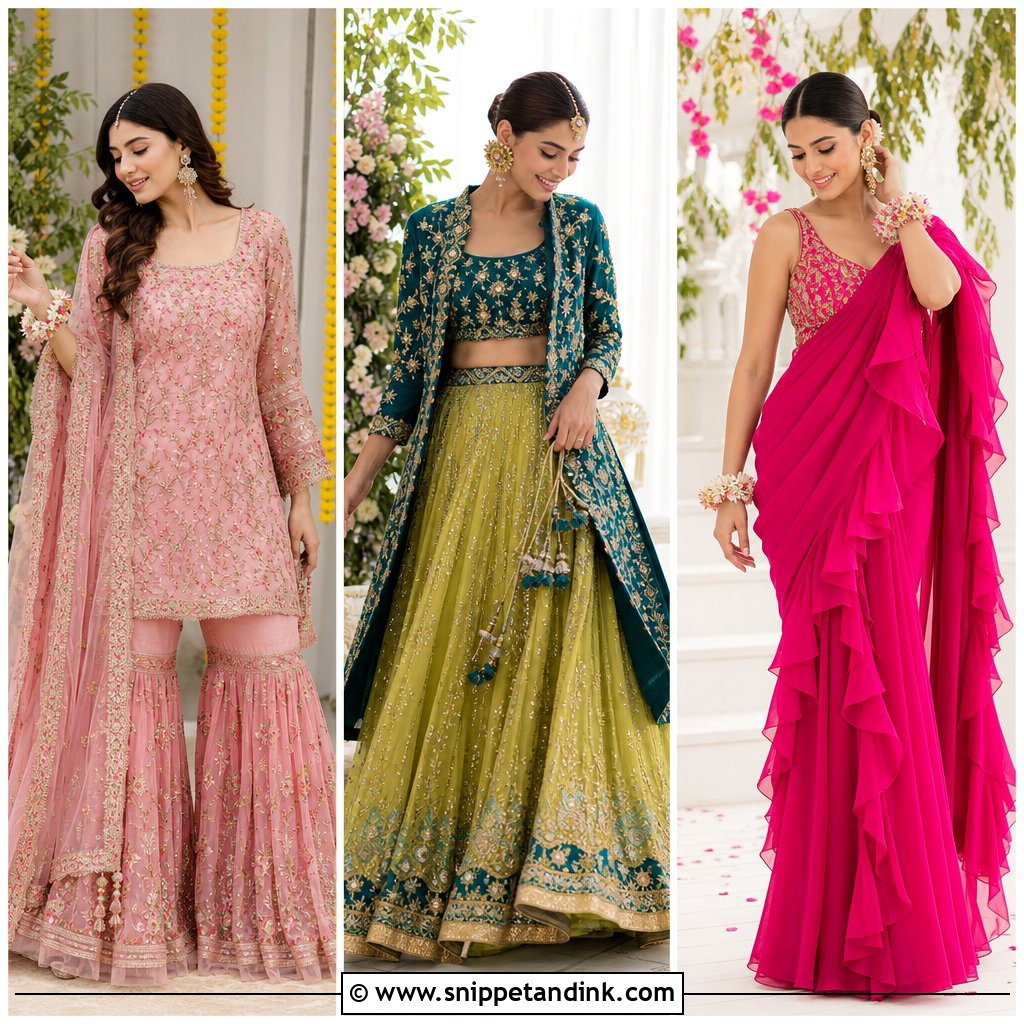
15. Bandhani Lehenga For Mehendi
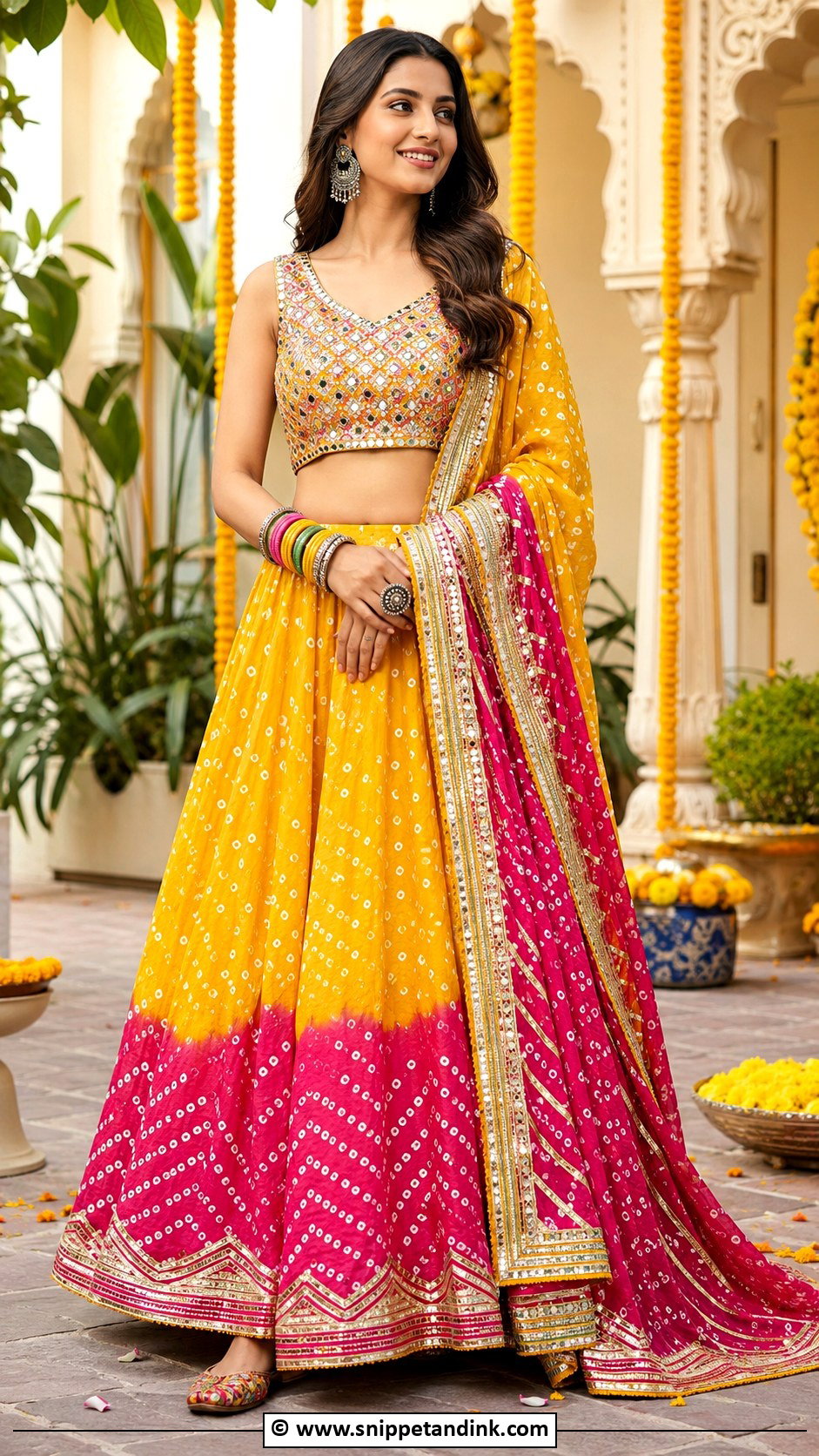
Bandhani is tie-dyed by hand, so every piece has small irregularities, and I think that’s part of its charm for a mehendi. Red with yellow, or green with pink, are the classic two-tone pairings. A plain blouse keeps it light, a mirror blouse adds sparkle, and a gota-trimmed dupatta makes it feel bridal. Do a wash-test on a hidden seam or ask the seller: some bandhani dyes bleed when damp, and a sweaty evening is enough to do it.
16. Ruffle Saree For Mehendi
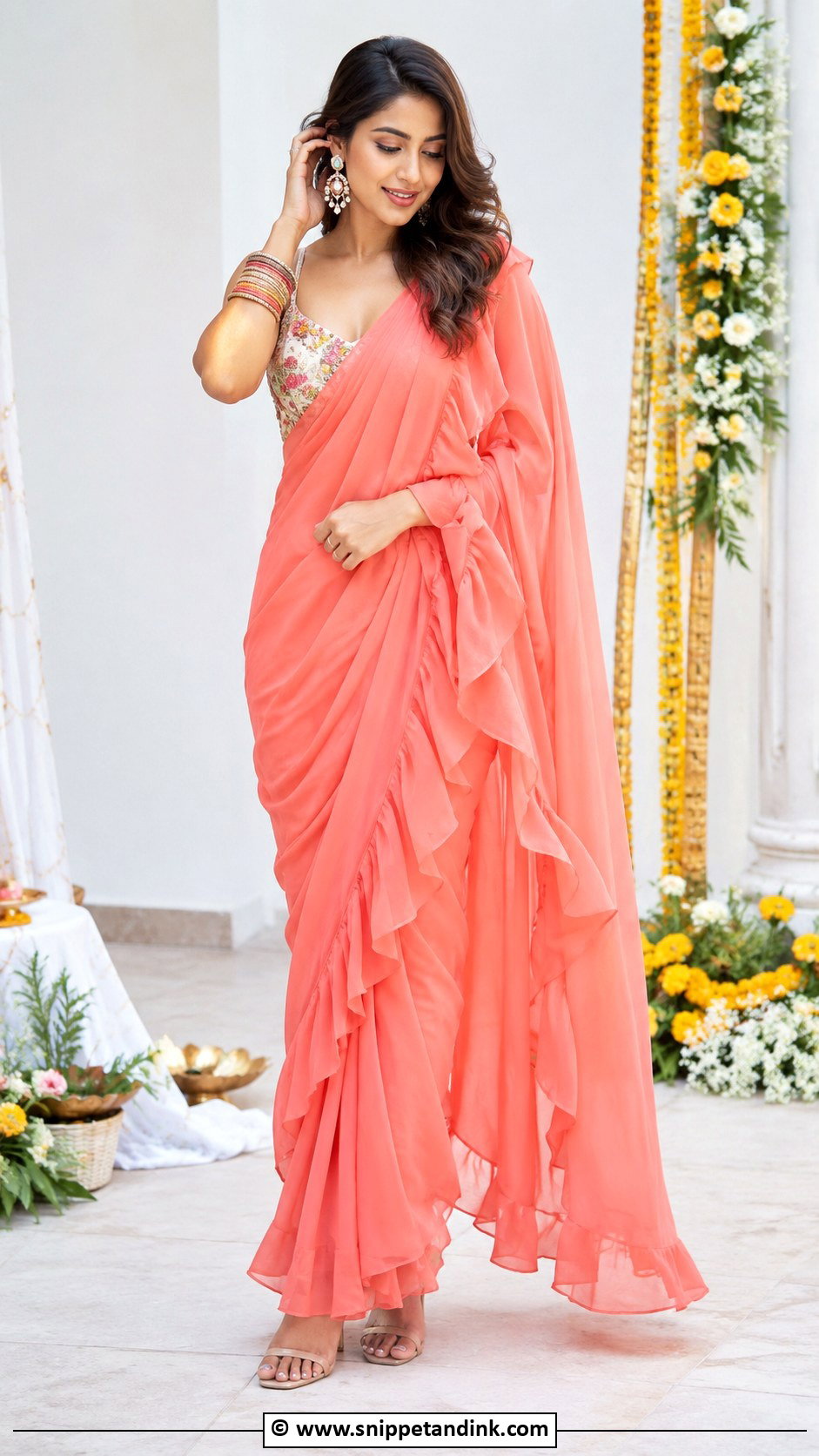
Ruffles give a saree movement without heavy fabric, which suits the playful mood. In practice, though, I only recommend a pre-stitched ruffle saree for anyone planning to dance, because the loose kind needs re-pinning every hour. Coral, turquoise or a floral print suit an outdoor event. A mirror blouse or a structured crop top keeps the shape modern. Comfortable heels, since ruffled hems catch on spikes.
17. Jacket Lehenga For Mehendi
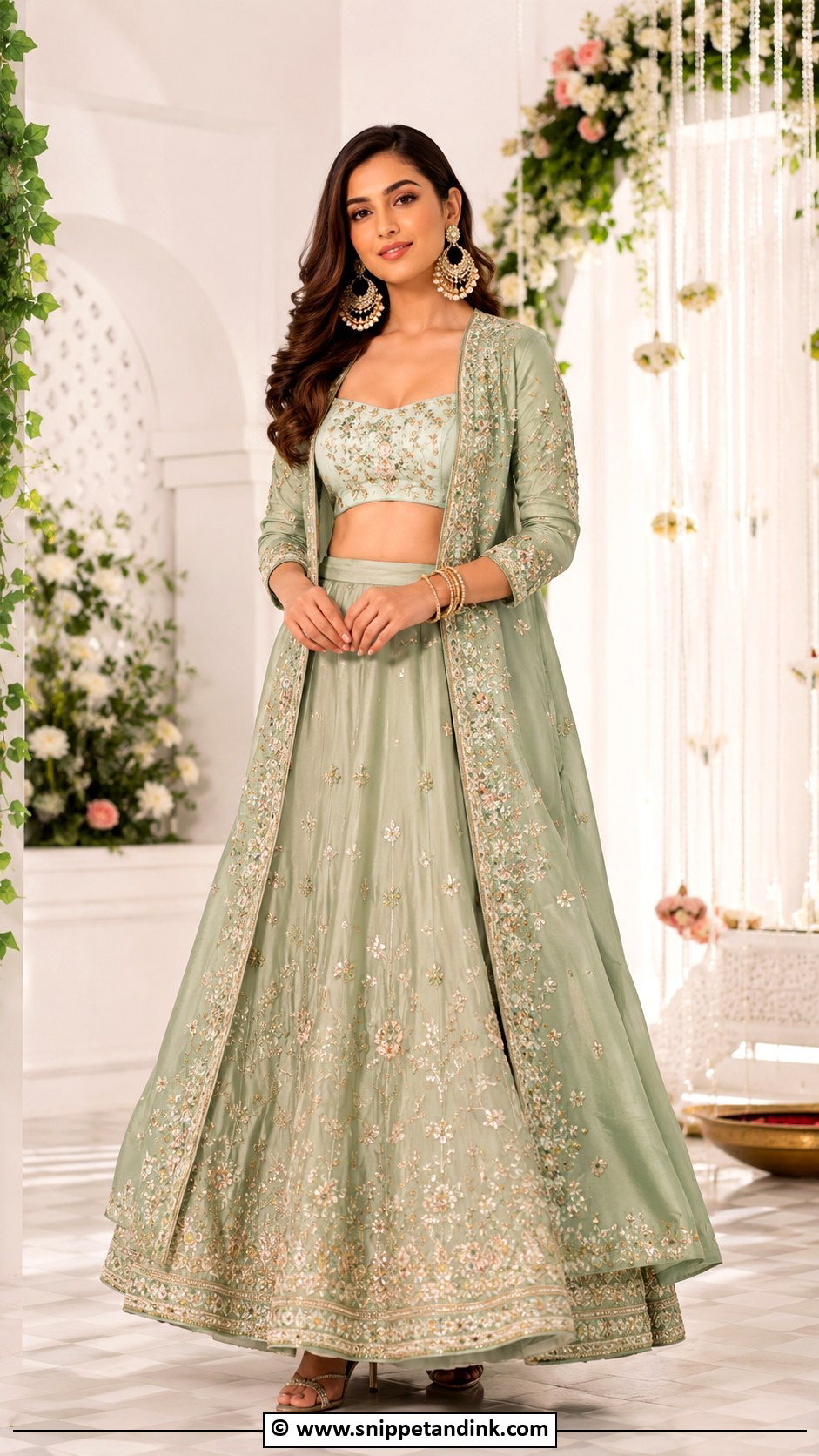
A jacket lehenga is my answer to the evening mehendi that turns chilly once the sun goes down. The jacket can be cropped, waist length or flowing; the longer it is, the more coverage you get without a dupatta. Wear a light lehenga and blouse underneath so you can take the jacket off while your hands are being done. A sleek hairstyle shows off the collar. Good for brides and guests who want something modest that still looks dressed.
18. Palazzo Suit With Dupatta For Mehendi
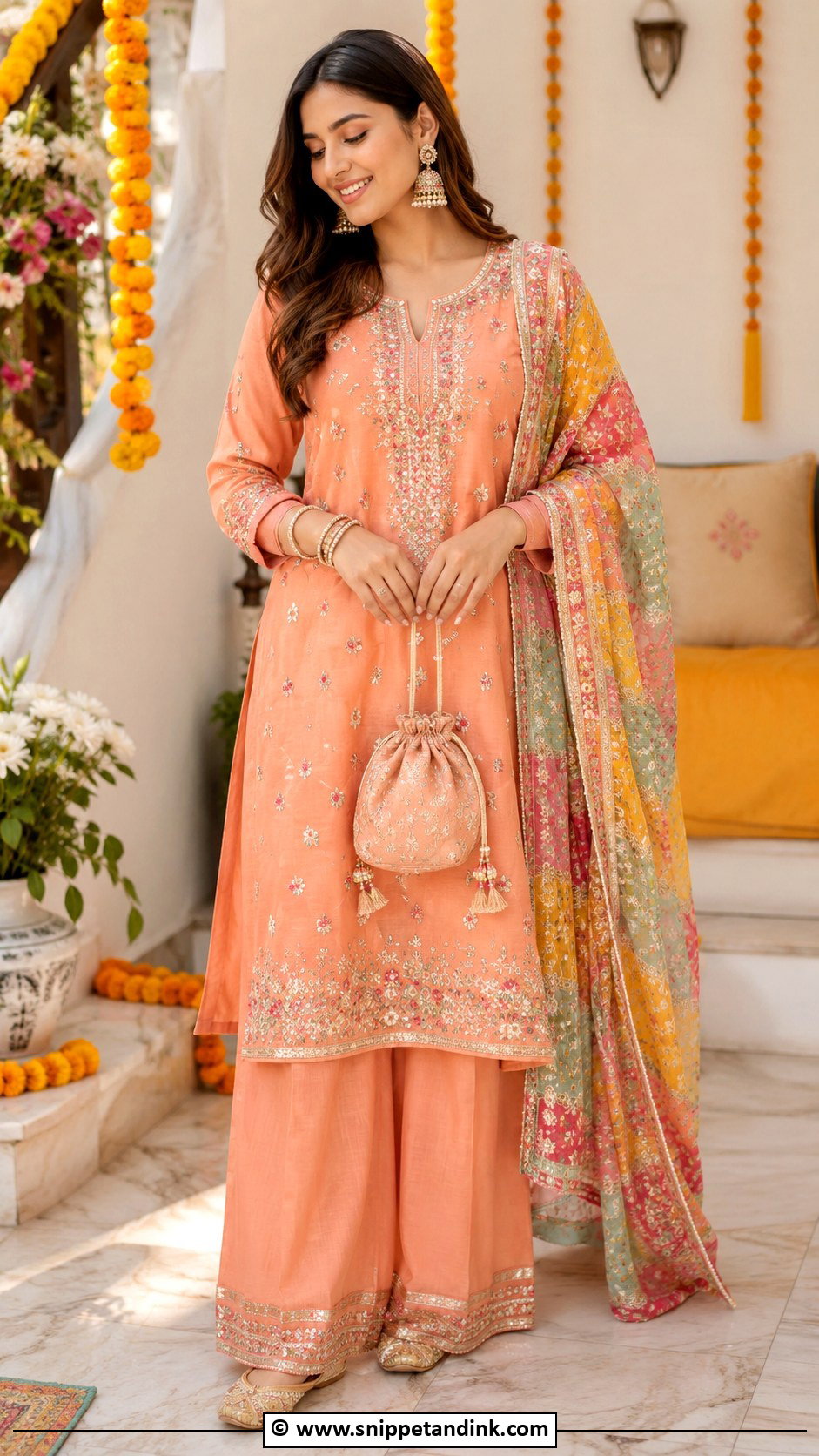
A palazzo suit is the most comfortable thing on this list. Wide legs let you sit for henna for hours without anything cutting in at the knee, and you won’t spend the night tugging at your outfit. A kurta with zari borders or mirror work, plus a bright dupatta, makes even a simple suit look festive. Green, peach and ivory suit daytime events. I’d hand this one to mothers and aunts who will be hosting all day.
19. Cape Lehenga For Mehendi
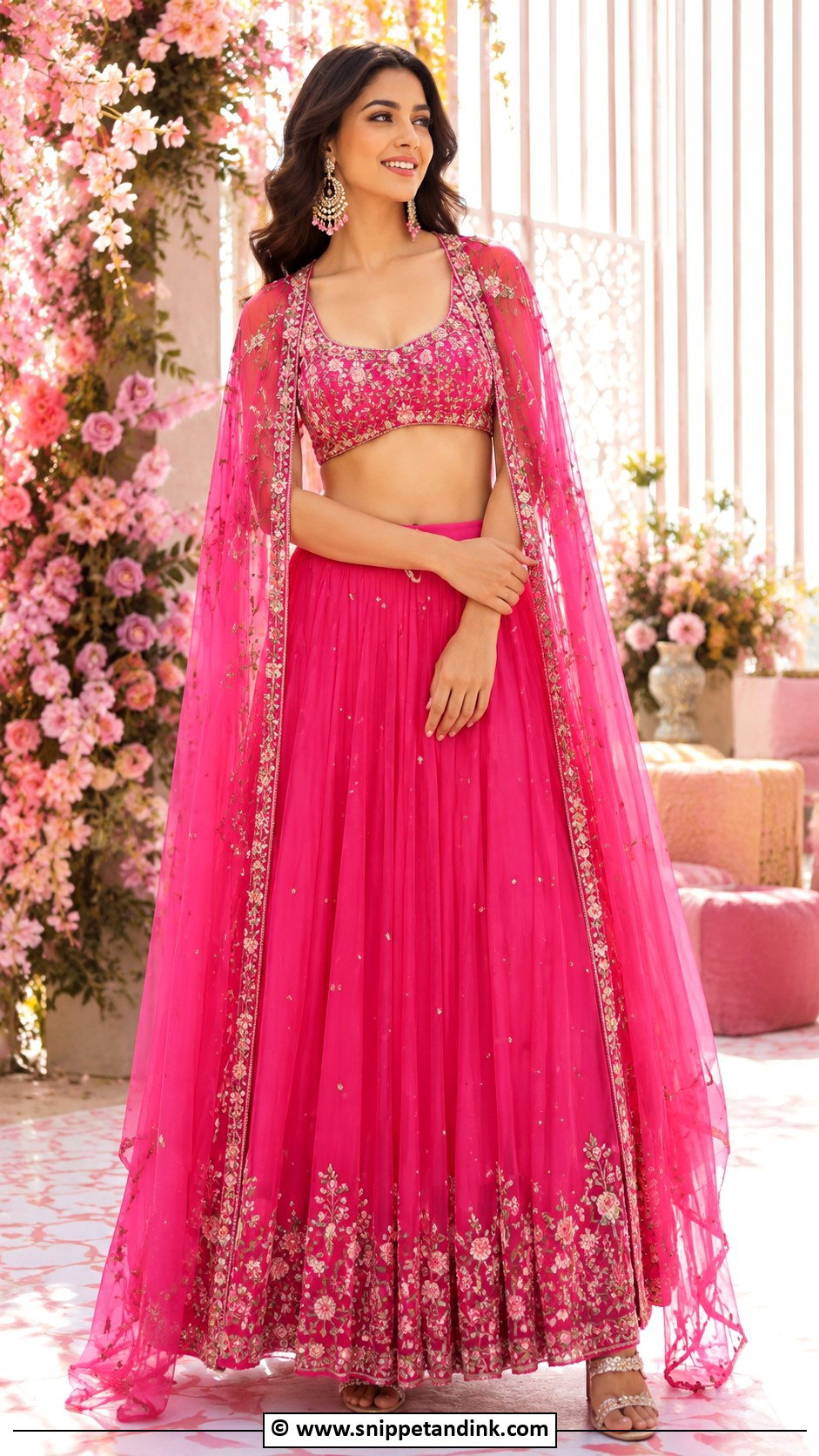
The cape replaces the dupatta, so there’s nothing to slide into wet paste or catch on a chair. That alone makes cape lehengas worth considering for a bride being hennaed. Mirror, tassel or sheer embroidery on the cape gives it presence, so I keep jewellery to earrings and a few bangles. Check the cape’s armholes before buying: some are cut close and pull at the elbows when you hold your hands out for the artist.
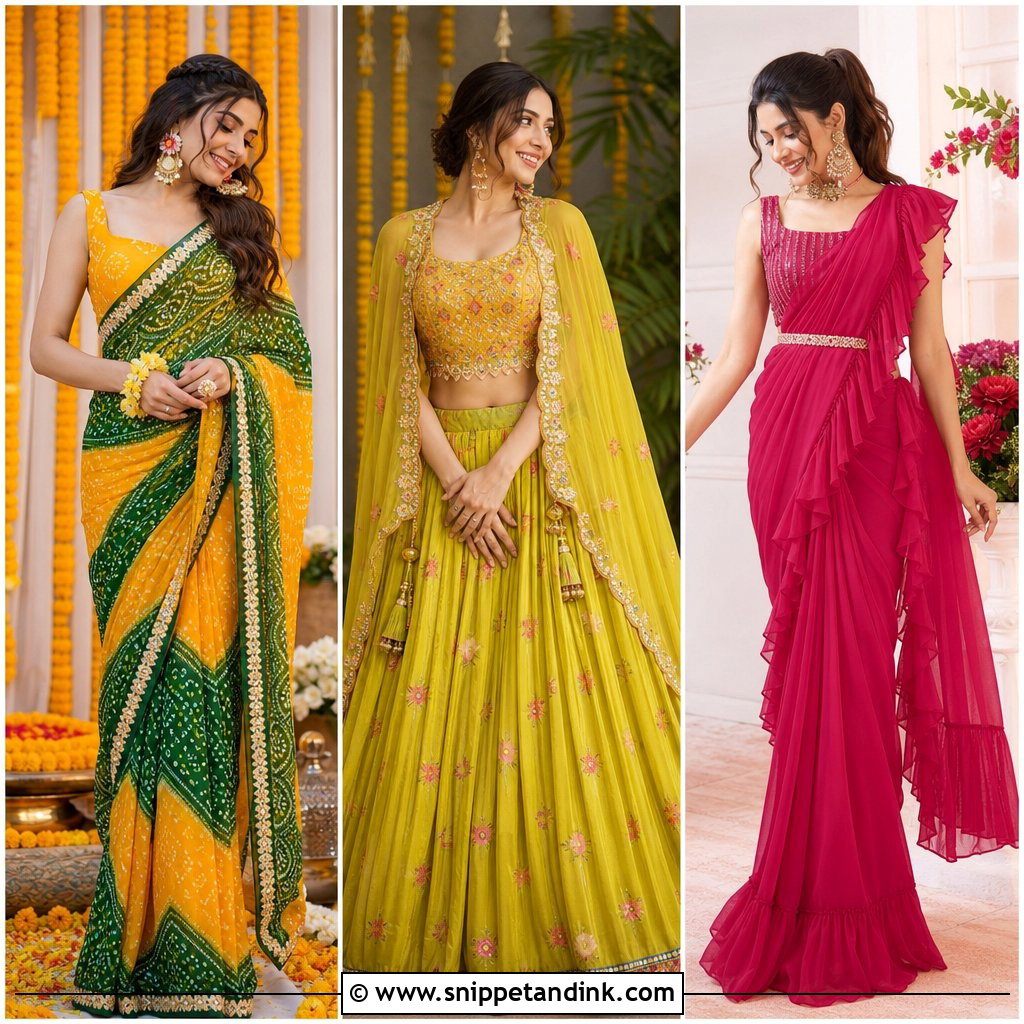
20. Leheriya Saree For Mehendi
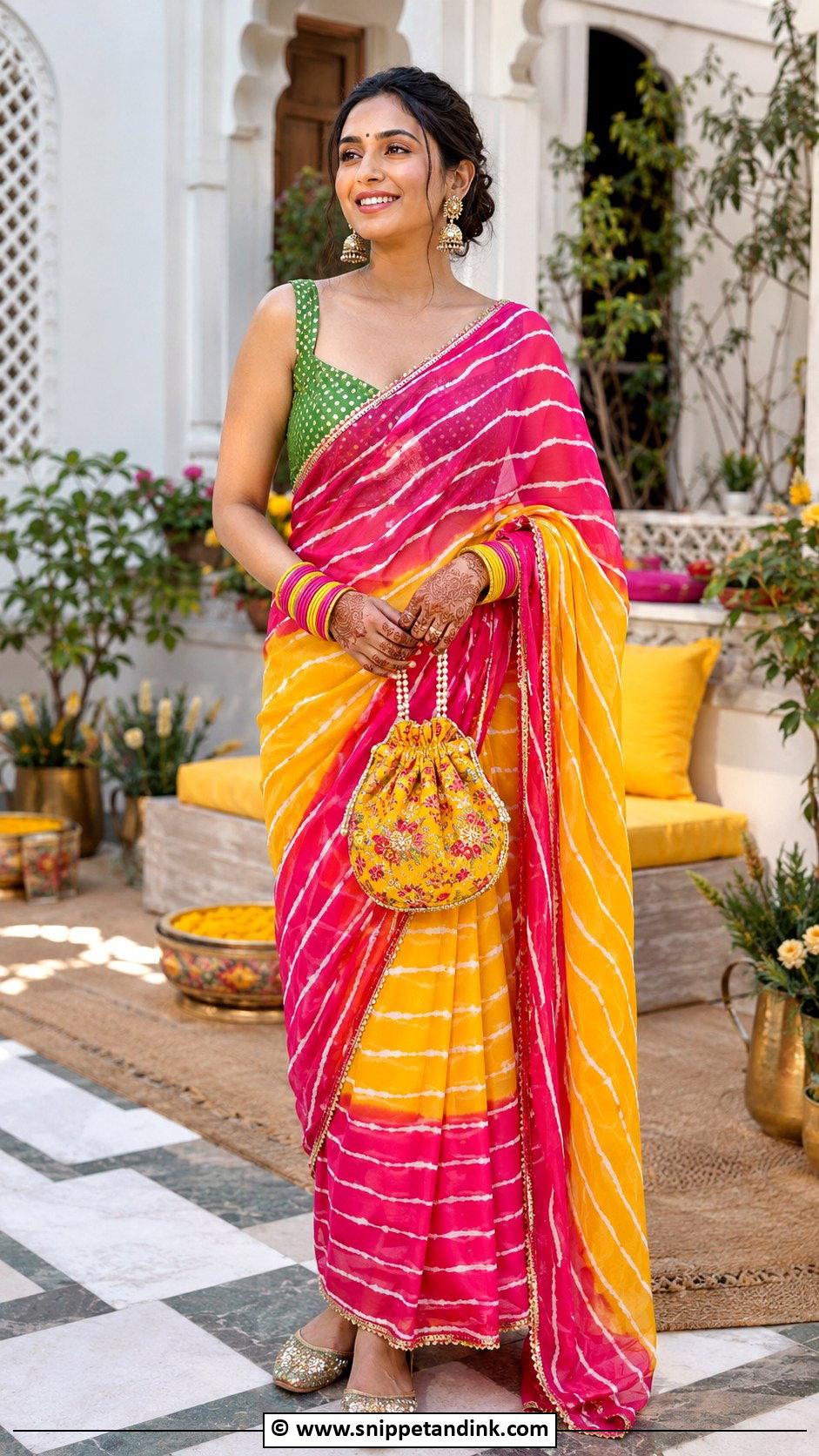
Leheriya is the wave print, dyed by rolling and tying fabric on the diagonal, and it carries a lot of movement for very little weight. Yellow, pink and blue look bright and traditional. Choose a soft drape so it doesn’t stand away from the body after hours of wear. A sleeveless or contrast blouse makes it younger. I always tell guests in sarees to bring a couple of extra safety pins; greeting people and dancing loosen the pleats faster than you’d think.
21. Short Kurti With Skirt For Mehendi
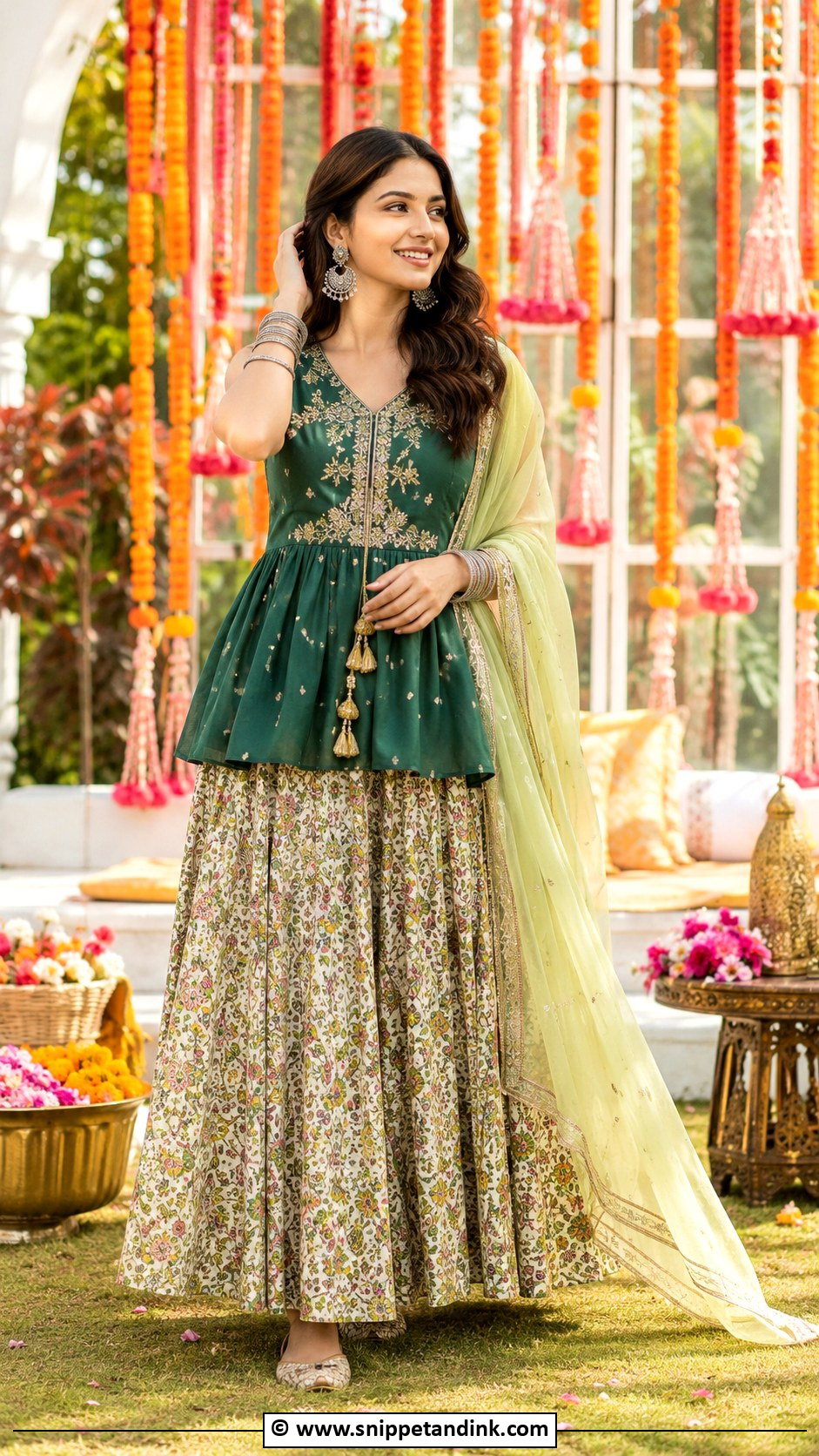
A short kurti over a flared skirt flatters a wide range of body shapes because it marks the waist and then lets the skirt do the work. Block print, bandhani or gota borders on the skirt keep it festive. Add a contrast dupatta for a traditional finish, or skip it if the event is mainly dancing. I find this pairing works best at home mehendis and garden events, where formality is lower and comfort counts.
22. Embroidered Jumpsuit For Mehendi
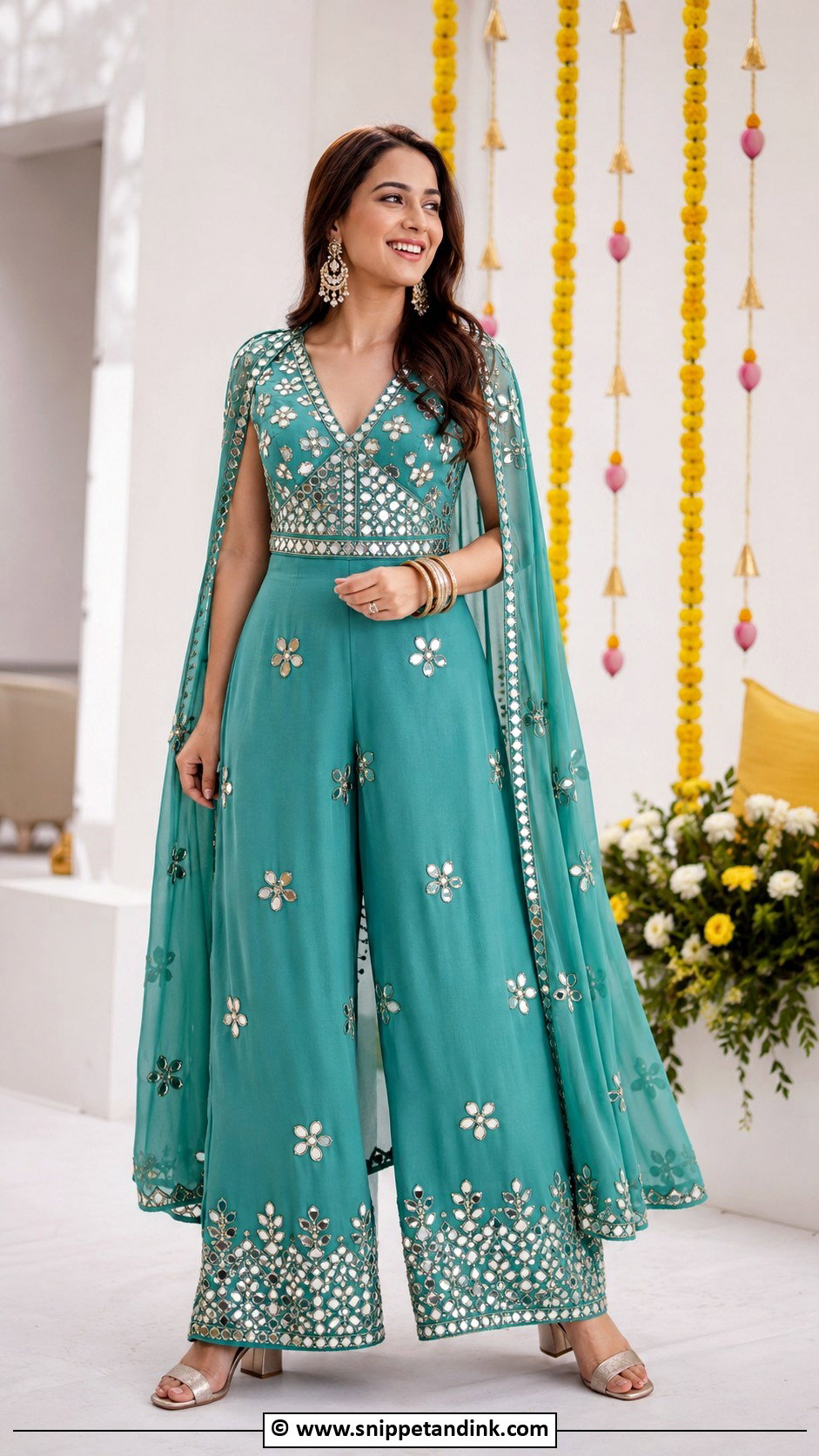
Jumpsuits get you the ease of trousers with the polish of occasion wear. Look for a defined waist, wide legs and embroidery at the neckline or bodice. A cape or attached drape gives a traditional nod without a dupatta. The practical catch is the bathroom: a one-piece jumpsuit is awkward once your hands are covered in paste, so I’d only suggest it to guests who aren’t being hennaed, or choose a style with a back zip someone can help with.
23. Ivory Anarkali With Bright Dupatta For Mehendi
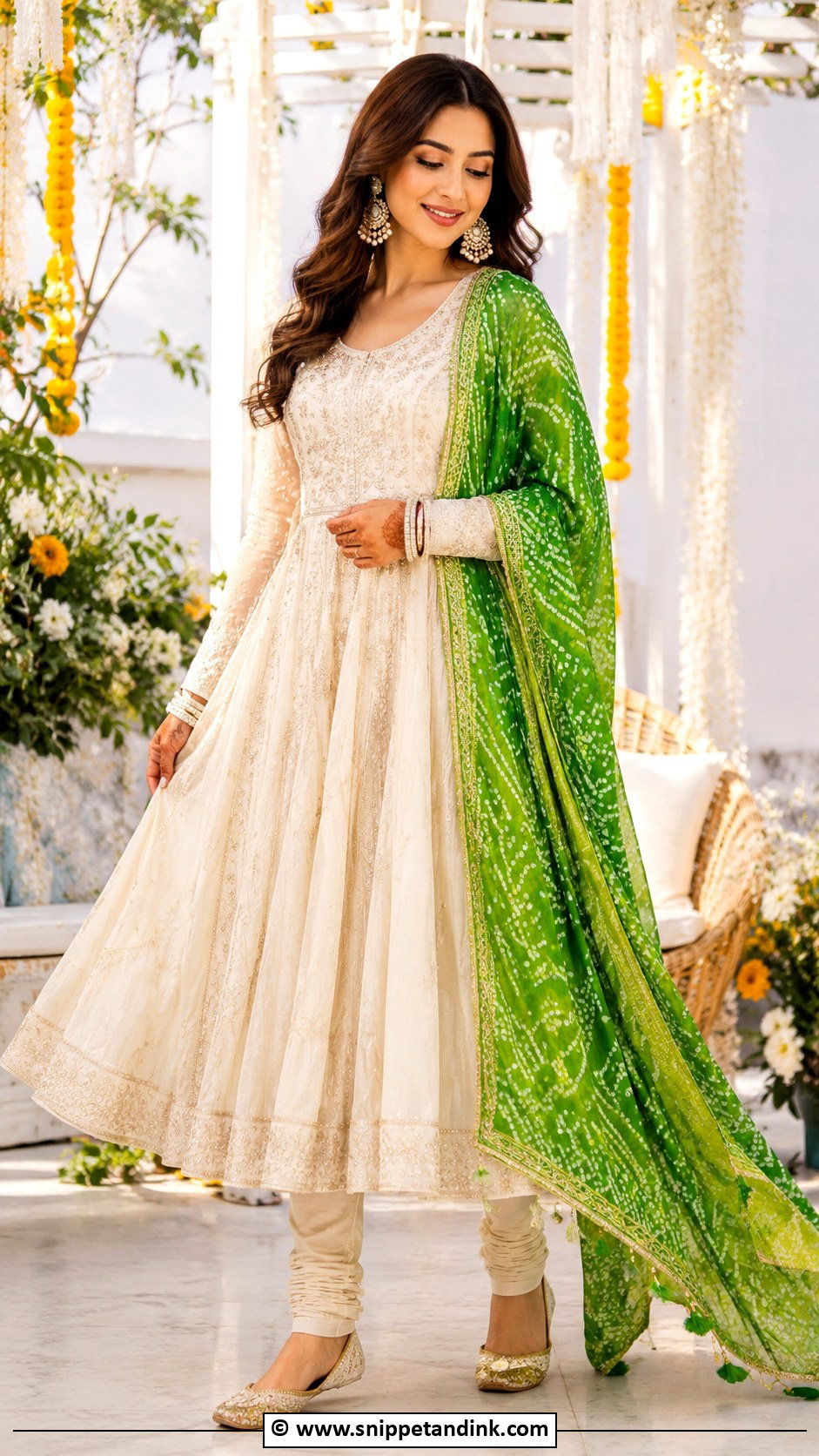
An ivory Anarkali with a bright dupatta lets the colour come from one piece you can easily take off. Chikankari, gota borders or a little mirror work keep the ivory refined. Pick a dupatta in multicolour bandhani or a strong green. The same rule as any pale base applies: keep it away from wet paste. Pearls or light kundan suit it. In a sea of bright outfits, this is the one that stands out by being calm.
24. Green Sharara With Mirror Work For Mehendi
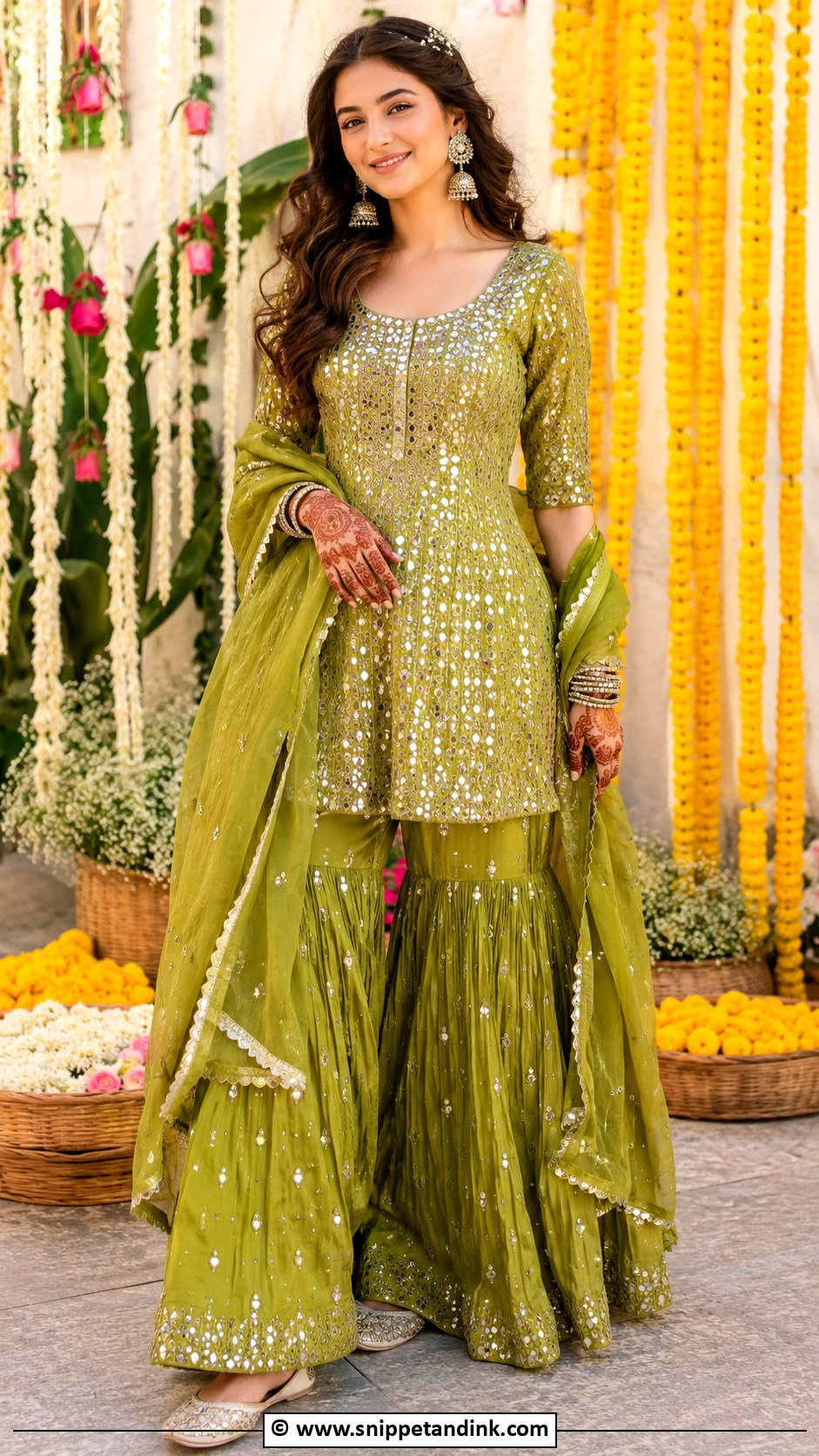
Mirror work earns its keep at a mehendi because it catches every string of lights. A green sharara with a short kurti or peplum shows off the flare, and a dupatta with a mirror border repeats the sparkle without extra weight. I recommend sharara bottoms for anyone sitting for henna because there’s room to fold your legs and reach your feet. Jhumkas and embellished flats keep it wearable. A dependable classic for brides and close family.
25. Crop Top With Palazzo Pants For Mehendi
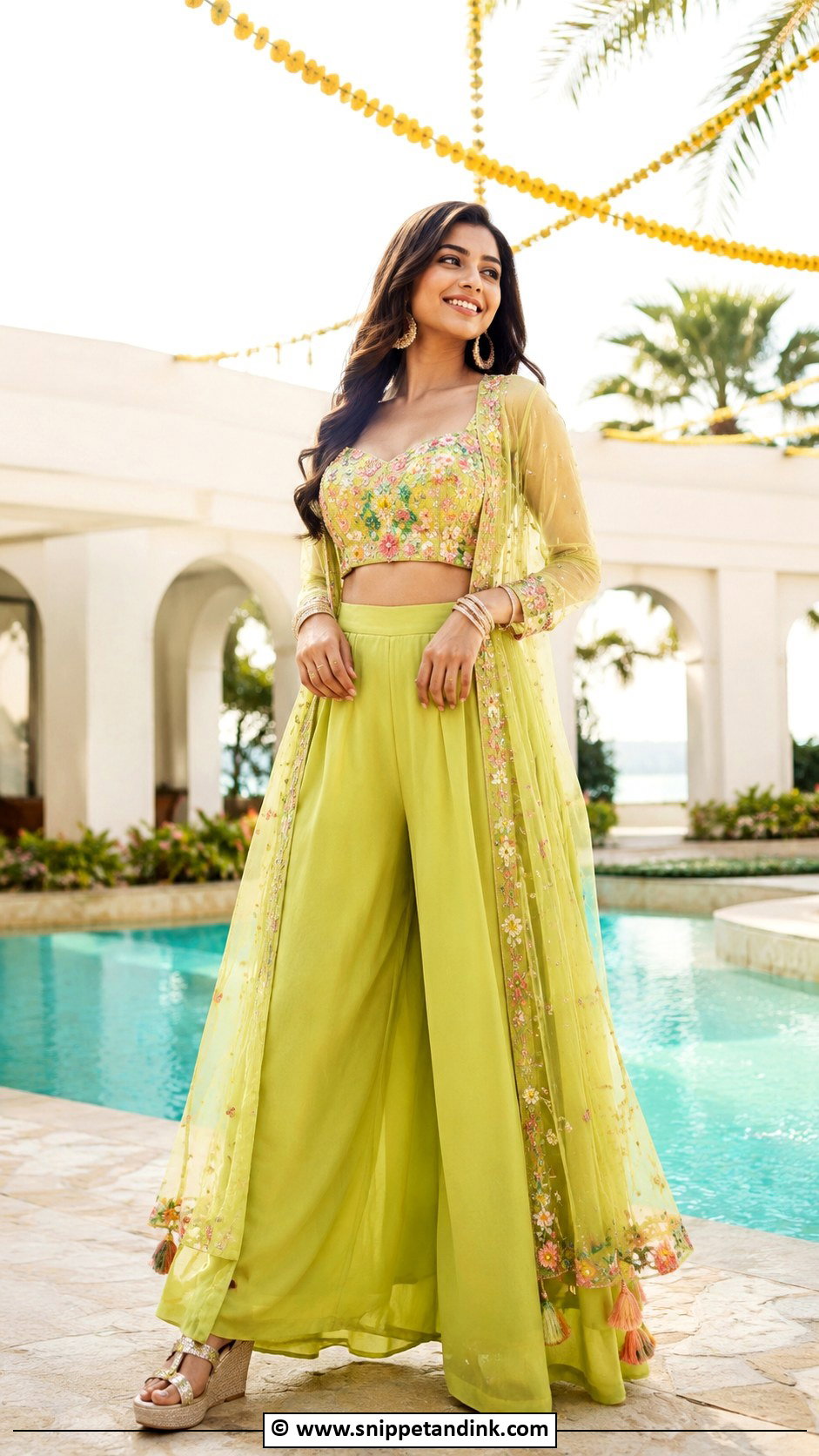
A crop top with palazzos is the easiest Indo-western pairing to pull together from pieces you may already own. Print or embroidery on the palazzos and a solid crop top, or the reverse, keeps it balanced. Teal, coral and hot pink suit destination weddings and outdoor lawns. If the crowd is traditional, add a long shrug or a light dupatta for coverage. Comfortable wedges help on grass.
26. Gota Patti Suit For Mehendi
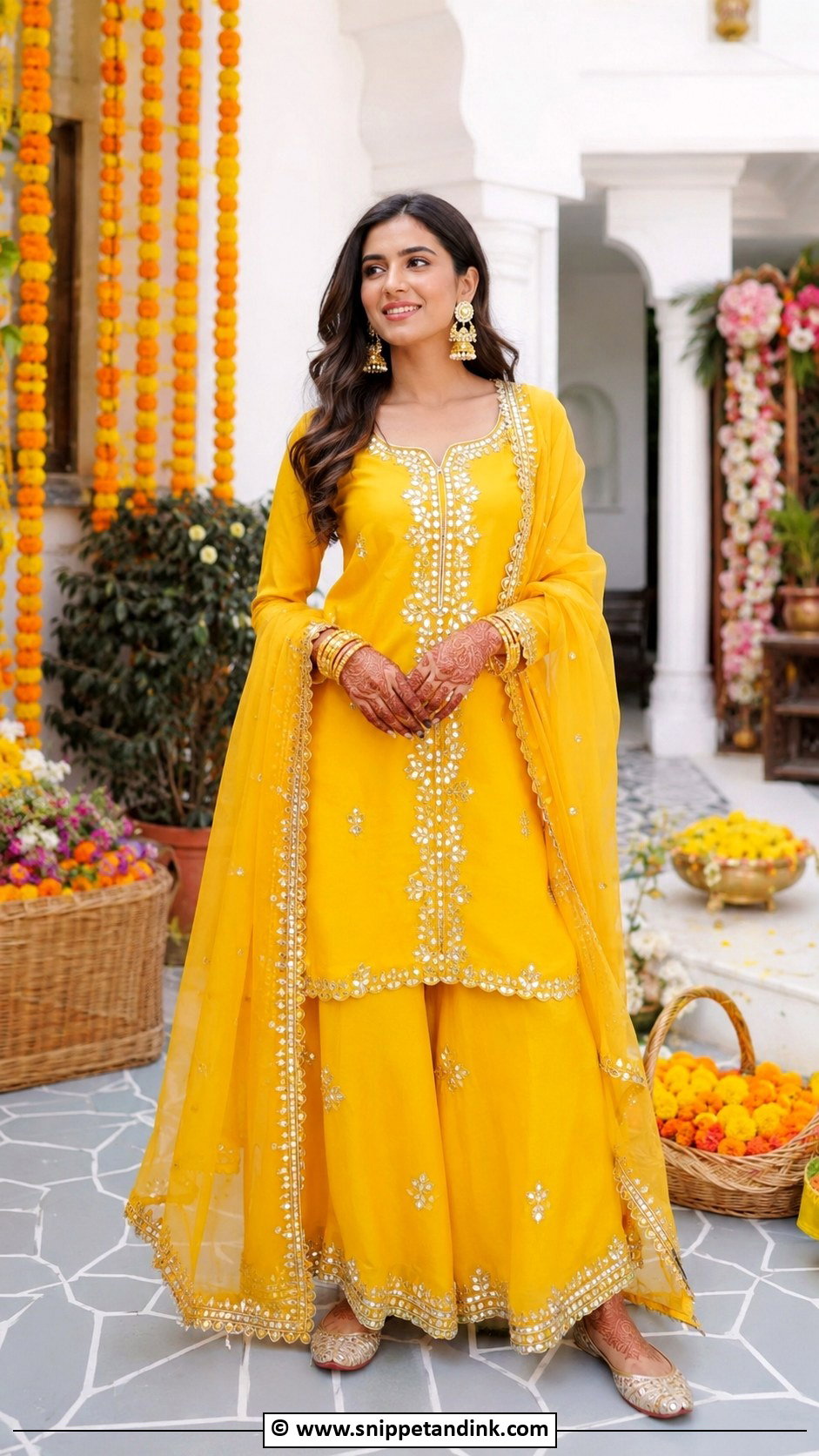
Gota patti is metallic ribbon appliqued onto the fabric, so it gives that festive gleam at a fraction of the weight of heavy embroidery. Put it on a straight kurta, an Anarkali or a short kurti with sharara bottoms. Yellow, pink and orange are the traditional grounds for it. Real gota can tarnish if stored damp, so I tell clients to air the outfit after the event before packing it away. It suits nearly every role, morning or evening.
27. Floral Lehenga For Mehendi
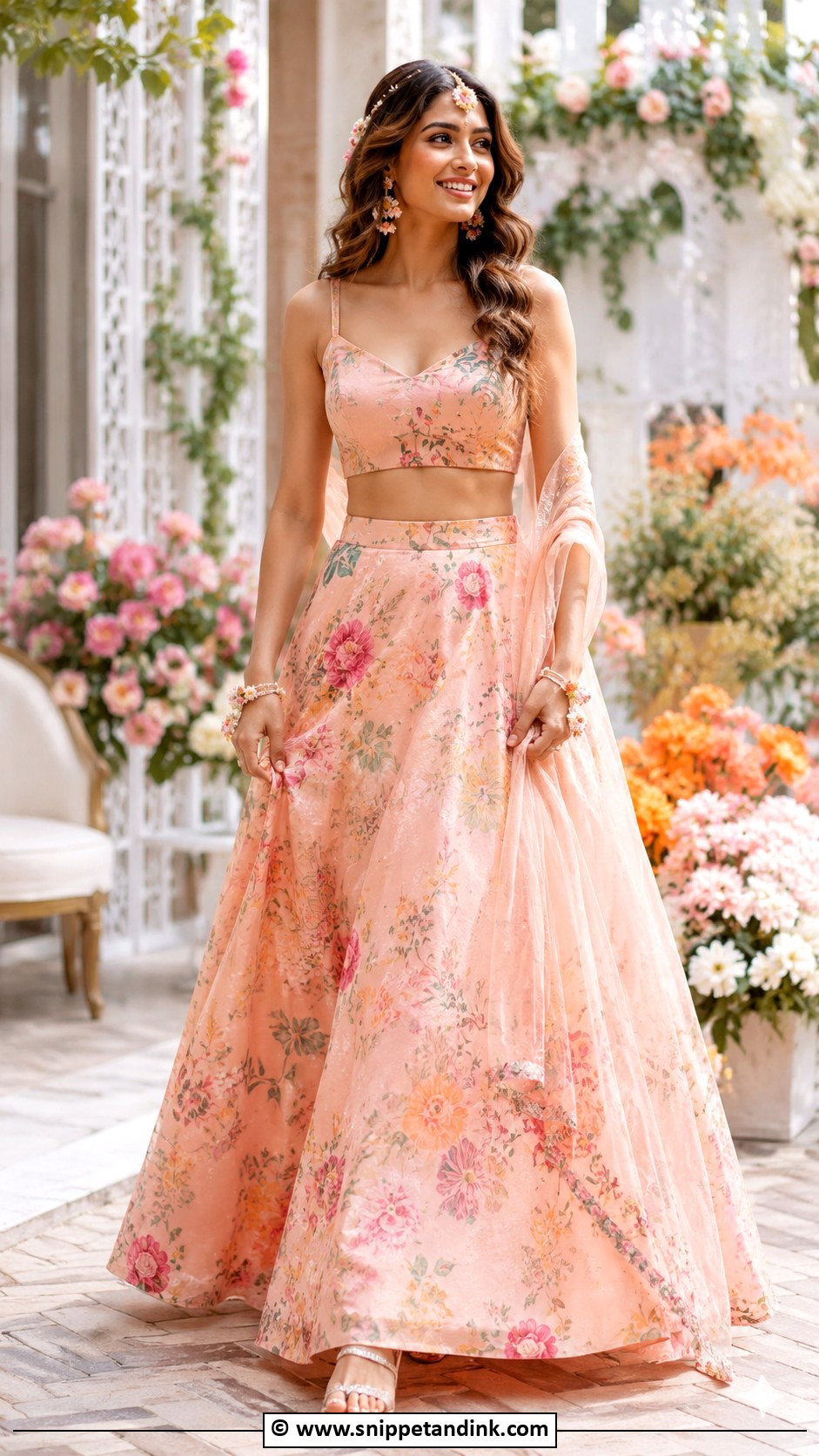
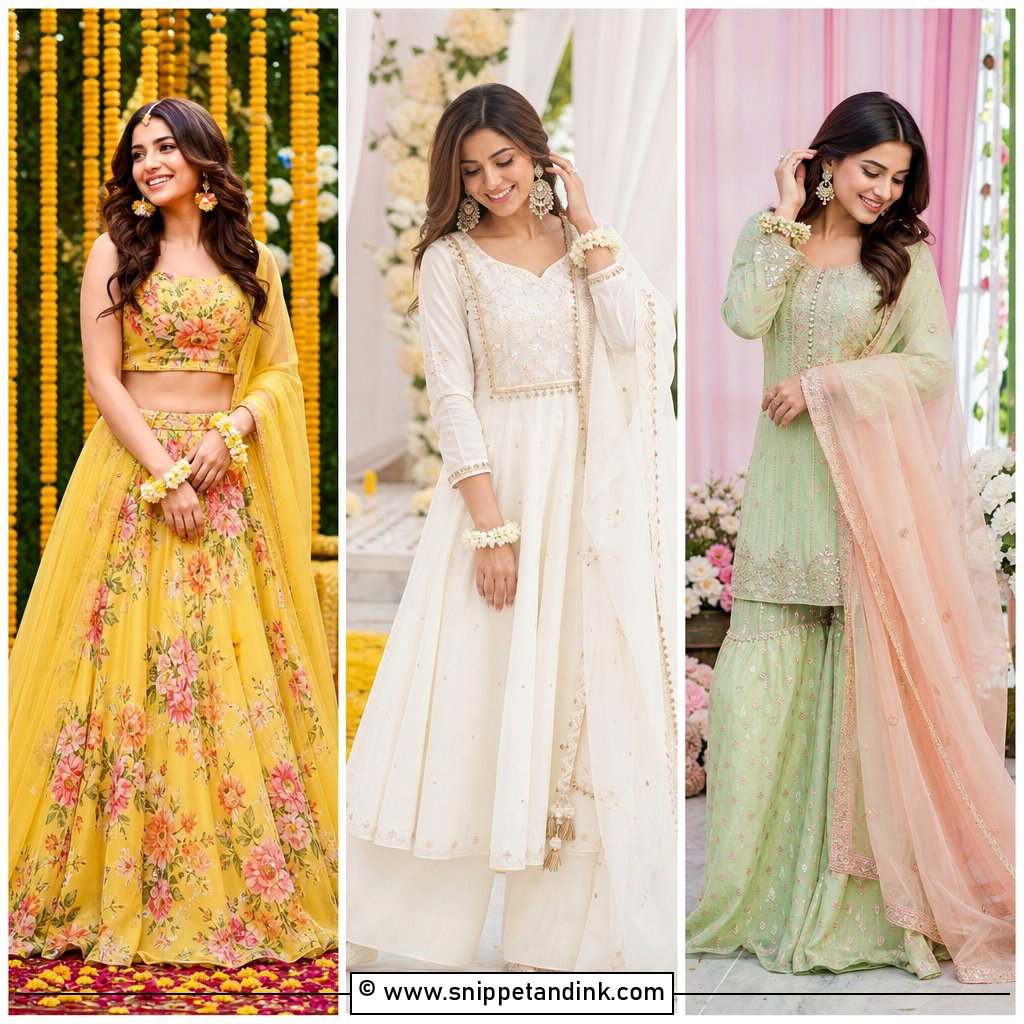
Florals belong at a garden or spring mehendi, and I pair them with a breezy fabric such as georgette, organza or cotton silk so the print can move. A simple blouse and sheer dupatta keep a busy print in check. If the florals are large, keep jewellery small; if they’re small and scattered, you can wear a maang tikka or floral jewellery and look more bridal. Bold prints hide the odd henna smudge better than solid pastels.
28. Kaftan Dress For Mehendi
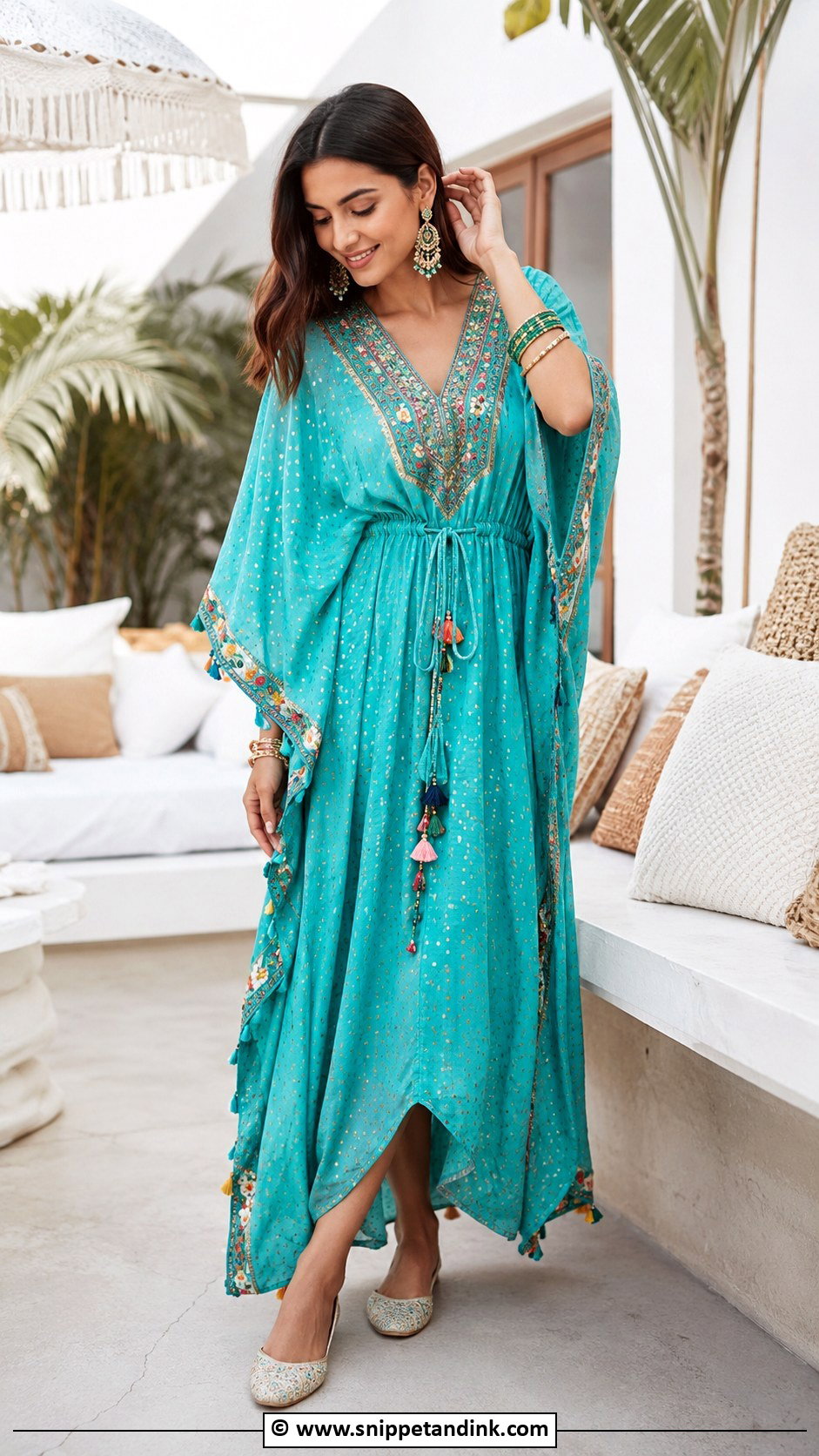
A kaftan is the most relaxed outfit here and suits home events, resort weddings and small gatherings. It needs one point of definition to look dressed, so I look for embroidery at the neckline, mirror accents or a cinched waist, or add a belt. Wide kaftan sleeves are the downside: they hang right where the artist works, so roll them or choose a version with a cuff. Statement earrings and embellished flats complete it.
29. Chikankari Sharara Set For Mehendi
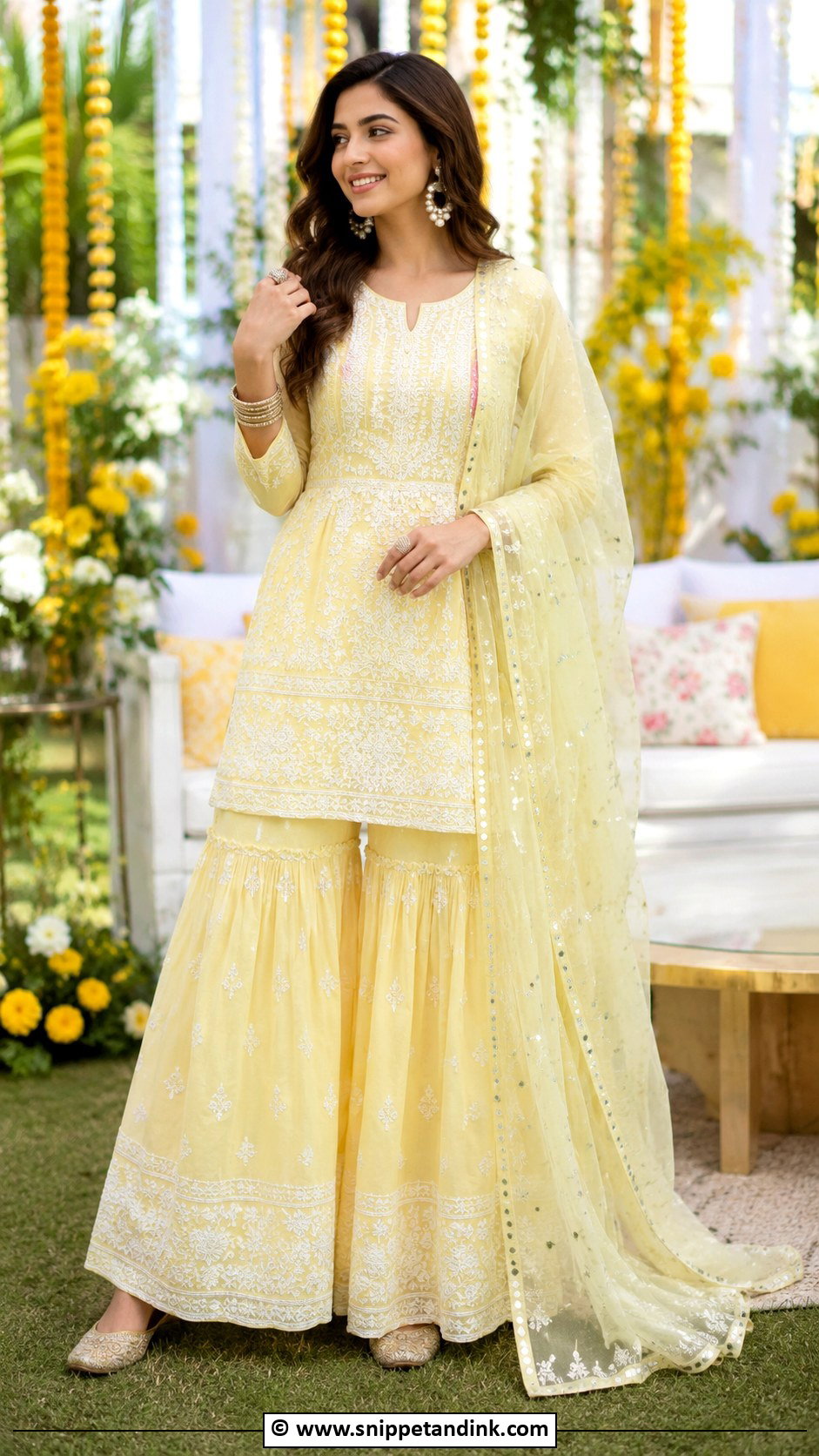
Chikankari is fine hand embroidery from Lucknow, usually worked on light cotton or georgette, which makes it one of the most breathable options for a long daytime event. A sharara set in pastel yellow, mint or ivory feels fresh. Mukaish or mirror highlights, or a brighter dupatta, push it toward celebration. Pale chikankari shows henna marks easily, so give your hands time to dry before you sit back against it. Pearls and low block heels suit the delicacy.
30. Bridal Mehendi Lehenga With Floral Jewelry
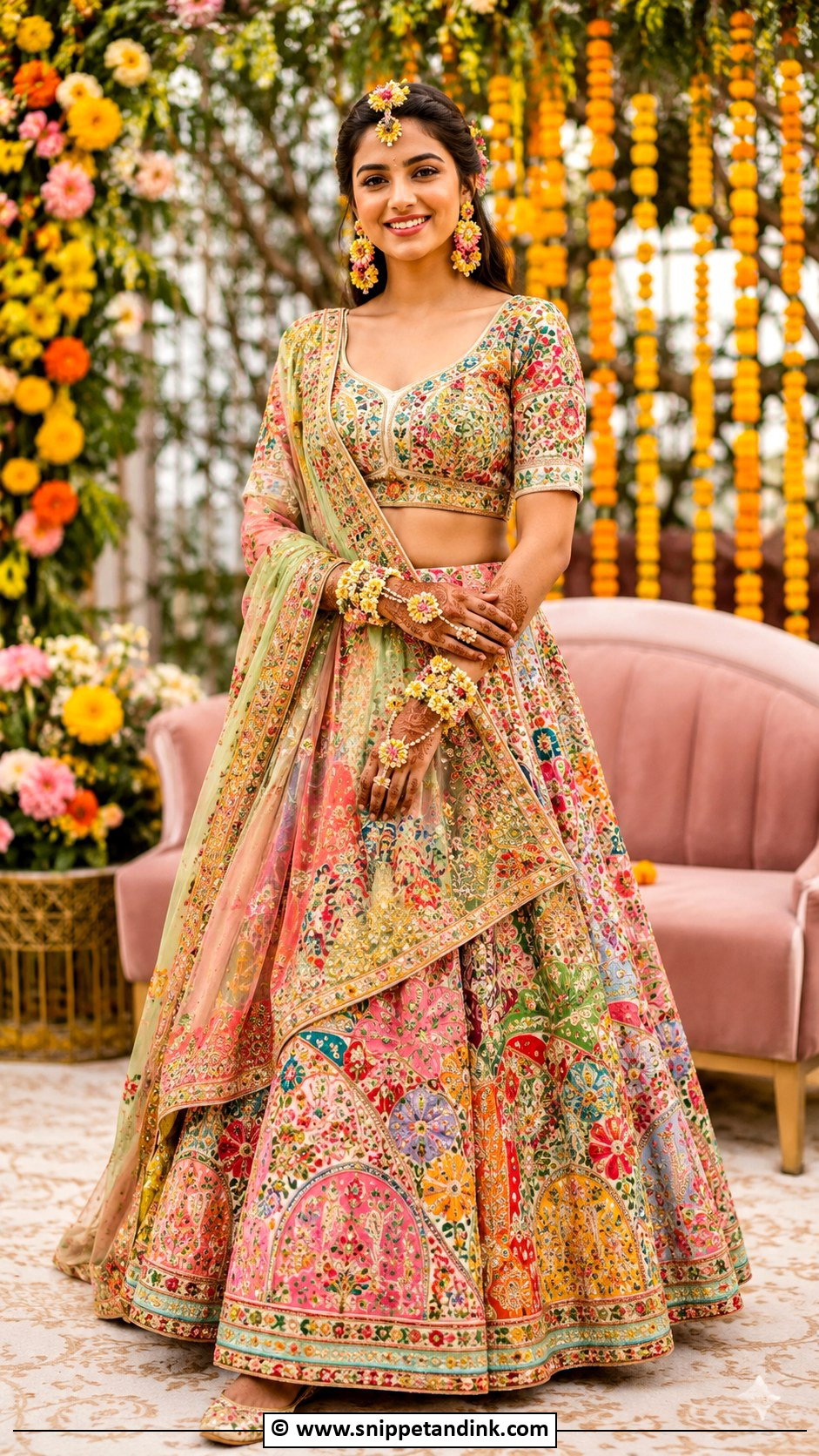
For the bride, I pick a bridal mehendi lehenga that is noticeably lighter than the wedding outfit, because she may sit for several hours while hands and feet are done. Green, yellow, pink or multicolour with mirror work or gota patti all suit. A sleeveless or short-sleeved blouse keeps the arms clear. Floral jewellery, including haath phool and a maang tikka, weighs almost nothing and won’t scratch fresh paste the way metal can. Secure the dupatta drape before the artist begins.
If Wet Paste Lands on Your Lehenga
It happens at almost every mehendi. Henna is a dye, and the same thing that colours skin will colour fibre, especially cotton, silk and anything pale. How you react in the first few minutes decides whether the mark fades or sets.
- Don’t rub it. Rubbing pushes the paste into the weave and spreads the stain.
- Let it dry, then lift it off with a blunt edge such as a spoon or a credit card.
- Rinse the spot from the back of the fabric with cold water only. Hot water helps the dye bond.
- For anything embroidered, beaded or silk, stop there and take it to a dry cleaner, telling them it’s henna.
Be honest with yourself about pale outfits: an orange mark on ivory is often permanent. That’s one reason I steer brides toward green, mustard, orange and busy prints for the application hours.
Bride, Sisters and Guests on the Same Lawn
The mehendi is the most relaxed function, so I don’t push matching outfits. What I do suggest is a loose palette. The bride picks her colour first, the sisters choose from two or three tones that sit beside it, and guests are simply told the mood, bright and festive or soft pastel. That way the bride doesn’t disappear into a crowd wearing her exact shade, and the photos still look planned.
Give the bride the heaviest detail, even if her outfit is light overall. A floral jewellery set or a bolder dupatta is usually enough to mark her out. If a sister is also having a full design, she needs the same practical outfit rules as the bride.
Sit Down in It Before You Say Yes
Every outfit here passes one test before I sign off on it: can you sit on the floor in it for an hour, hold your arms out, then get up and dance? Colour and mirror work matter for photos, but sleeves, hem length and fabric weight decide whether you enjoy the evening. From green lehengas and yellow shararas to ruffle sarees and jumpsuits, there’s a shape here for every role and comfort level. Try the shortlist on at home with your actual shoes and sit in it before you commit.
You'll Like These Ideas:


Leave a Reply