
I see the mehndi outfit from about twelve inches away, while I am doing the bride’s face, and from there you notice things a mood board never shows: which yellows make skin look tired, which necklines leave room for jewelry, which dupattas will be dragged across fresh lipstick all night. Pakistani mehndi bridal wear has moved toward joyful colors and lighter fabrics, with mirror work, gota, floral embroidery and a contrasting dupatta doing the decorating. Below are twenty outfits, from lehengas and ghararas to capes and jackets, and for each one I note the hair and makeup I would pair with it and why.
How Outfit Color Changes Your Skin on Camera
Fabric near the face acts like a reflector. Strong yellow pushes yellow onto the jaw, lime green can make some skin look sallow, and white bounces so much light that features flatten. None of that means you cannot wear the color. It means the makeup and the dupatta need to work with it.
A quick test you can do in the shop
- Stand by a window and hold the blouse fabric just under your chin. Check whether your skin looks brighter or duller.
- Repeat under a warm yellow bulb, because most evening mehndis are lit that way.
- Take a phone photo of both. The camera exaggerates color cast, which is a fair preview of your photographer’s shots.
- If the main color drags you down, keep it on the skirt and bring a flattering shade up to the face with the blouse or dupatta.
When you book your makeup trial, wear or bring the outfit. Matching foundation in daylight and seeing it against the actual fabric avoids the grey or orange face that turns up in so many mehndi photos.
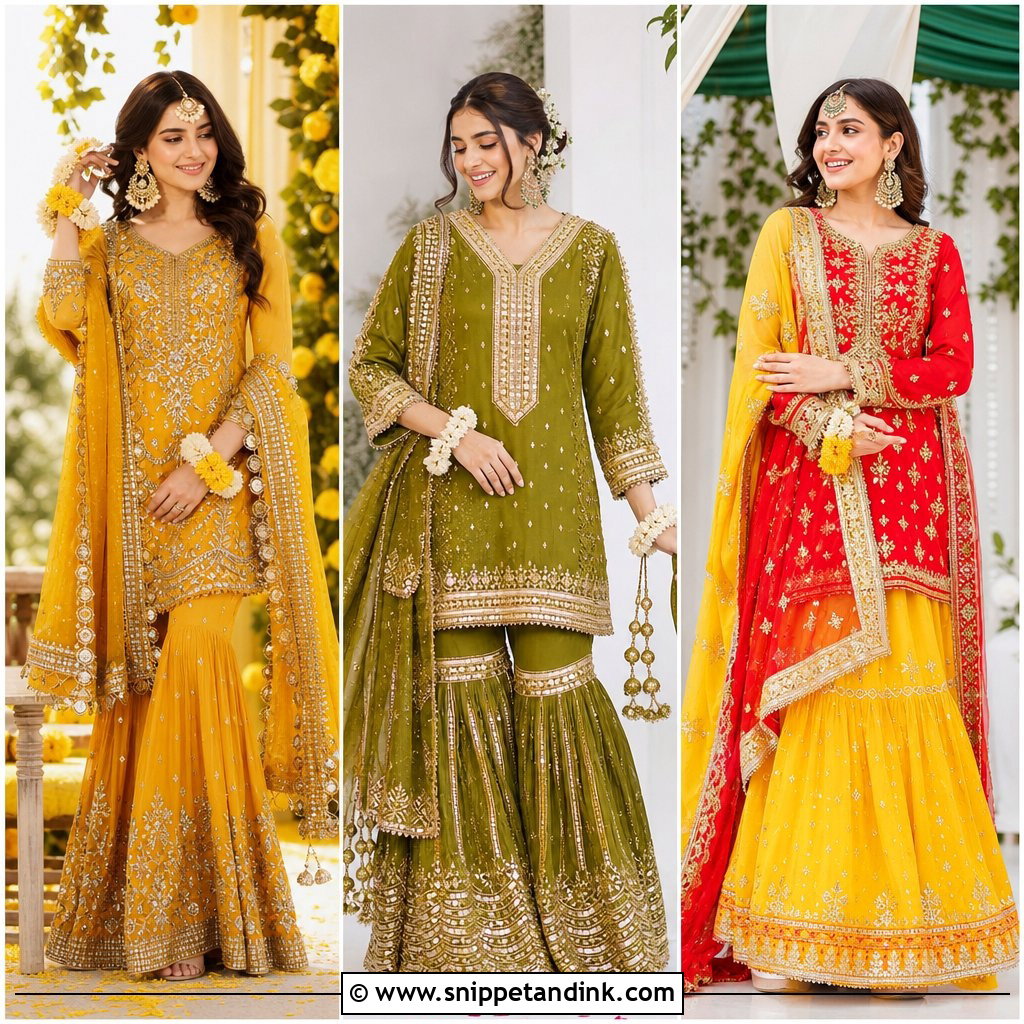
1. Yellow Mehndi Bridal Lehenga
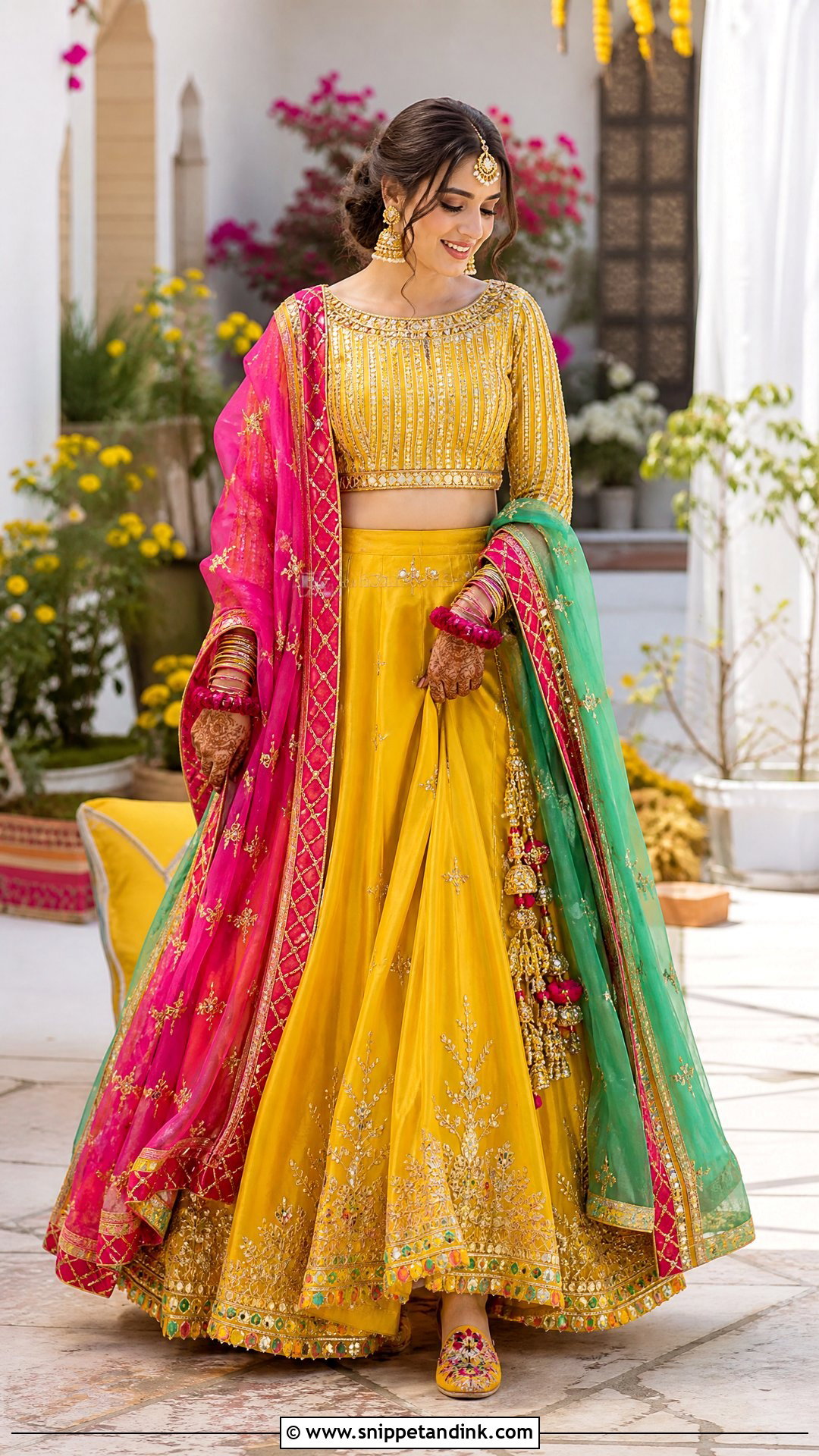
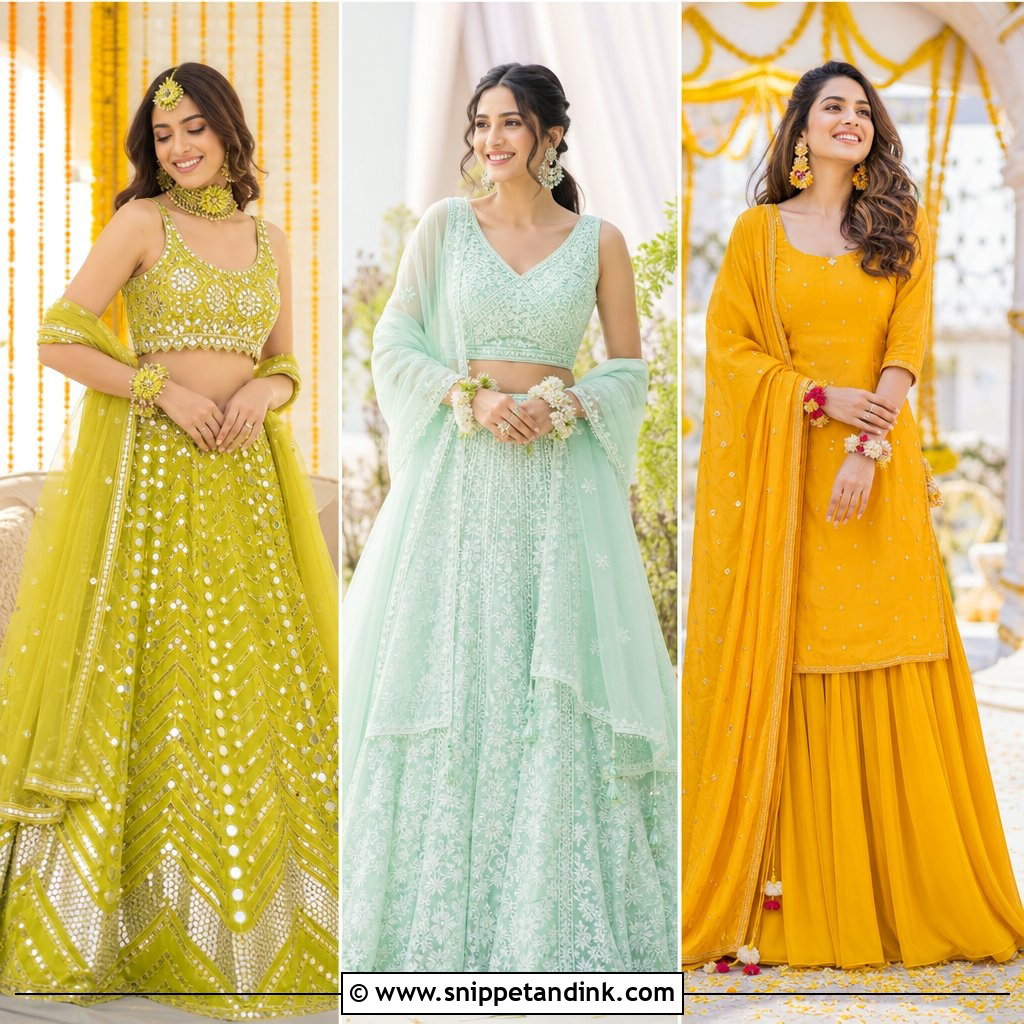
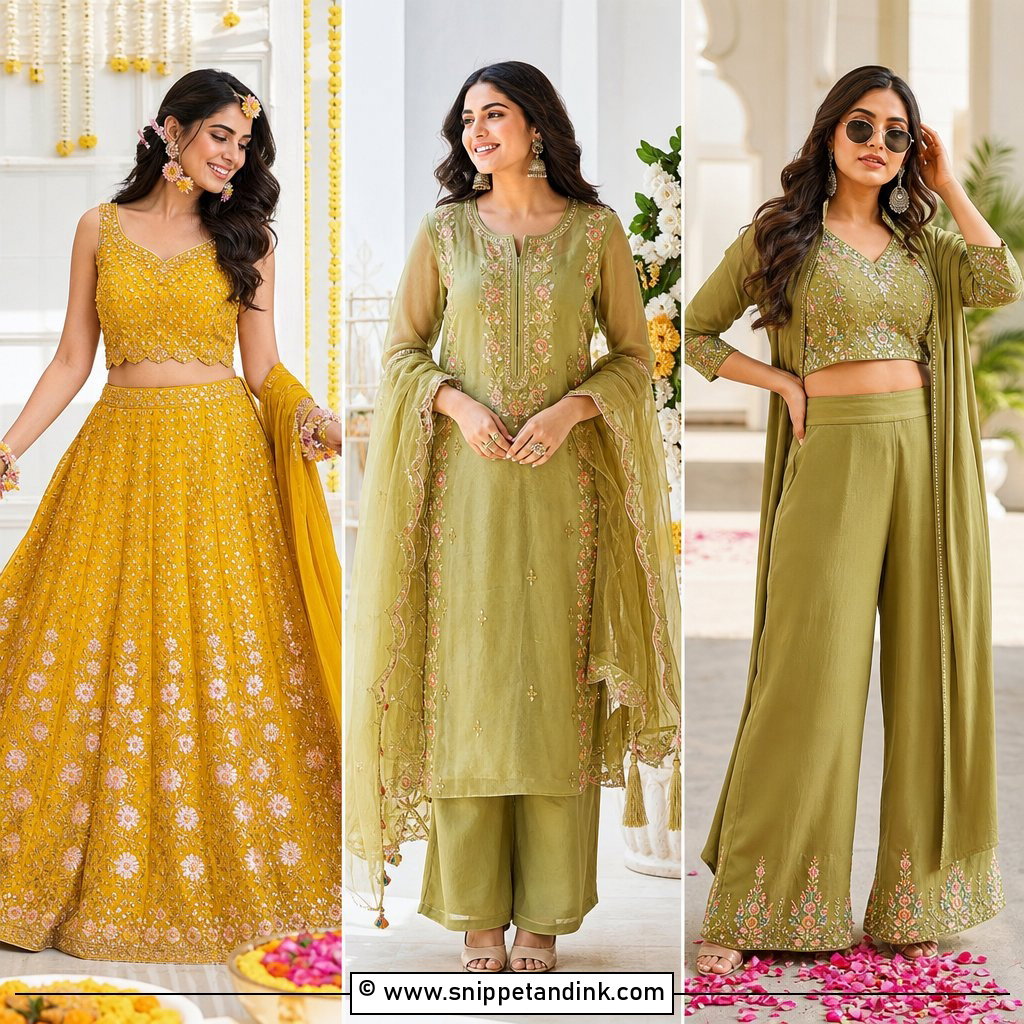
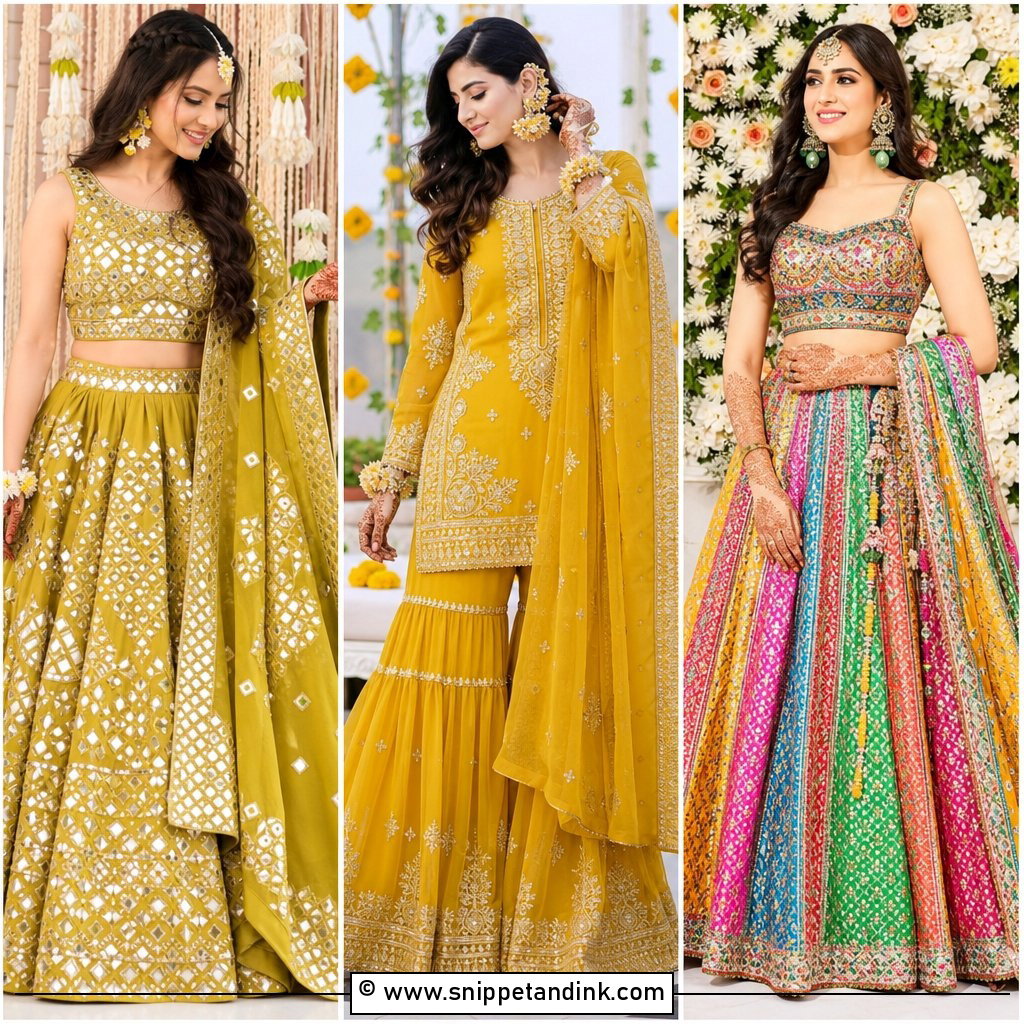
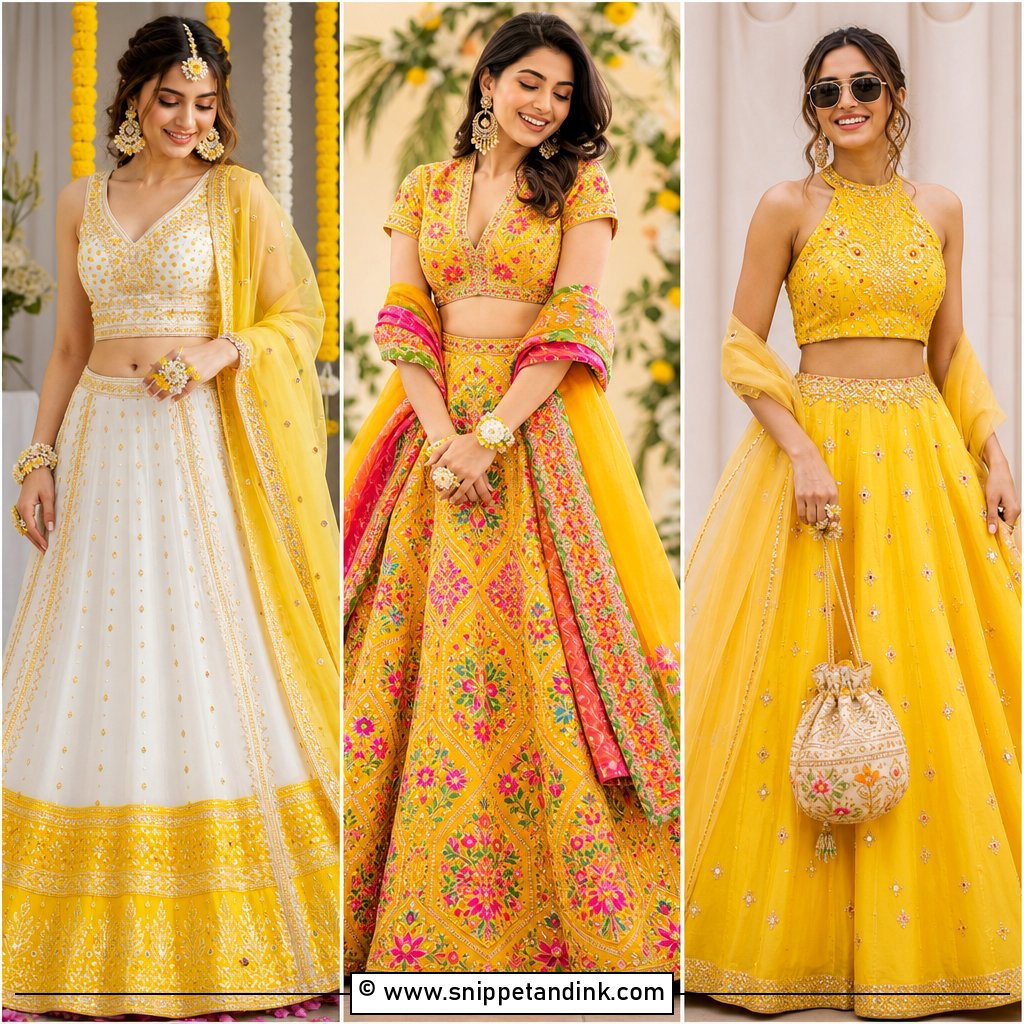
Bright yellow reflects onto the chin and throat, so a bride in a yellow lehenga can look sallow in close-ups if her base is too yellow as well. I keep foundation true to her neck and warm the face with peach blush instead. Raw silk, chiffon or organza with gota patti and kiran borders, a matching short blouse and a green or hot-pink dupatta make the classic version. Gold jhumkas, a tikka and fresh flower jewelry suit daytime better than heavy metal sets. A loose braid keeps hair off the blouse while she sits for henna.
2. Green Mirror Work Mehndi Lehenga
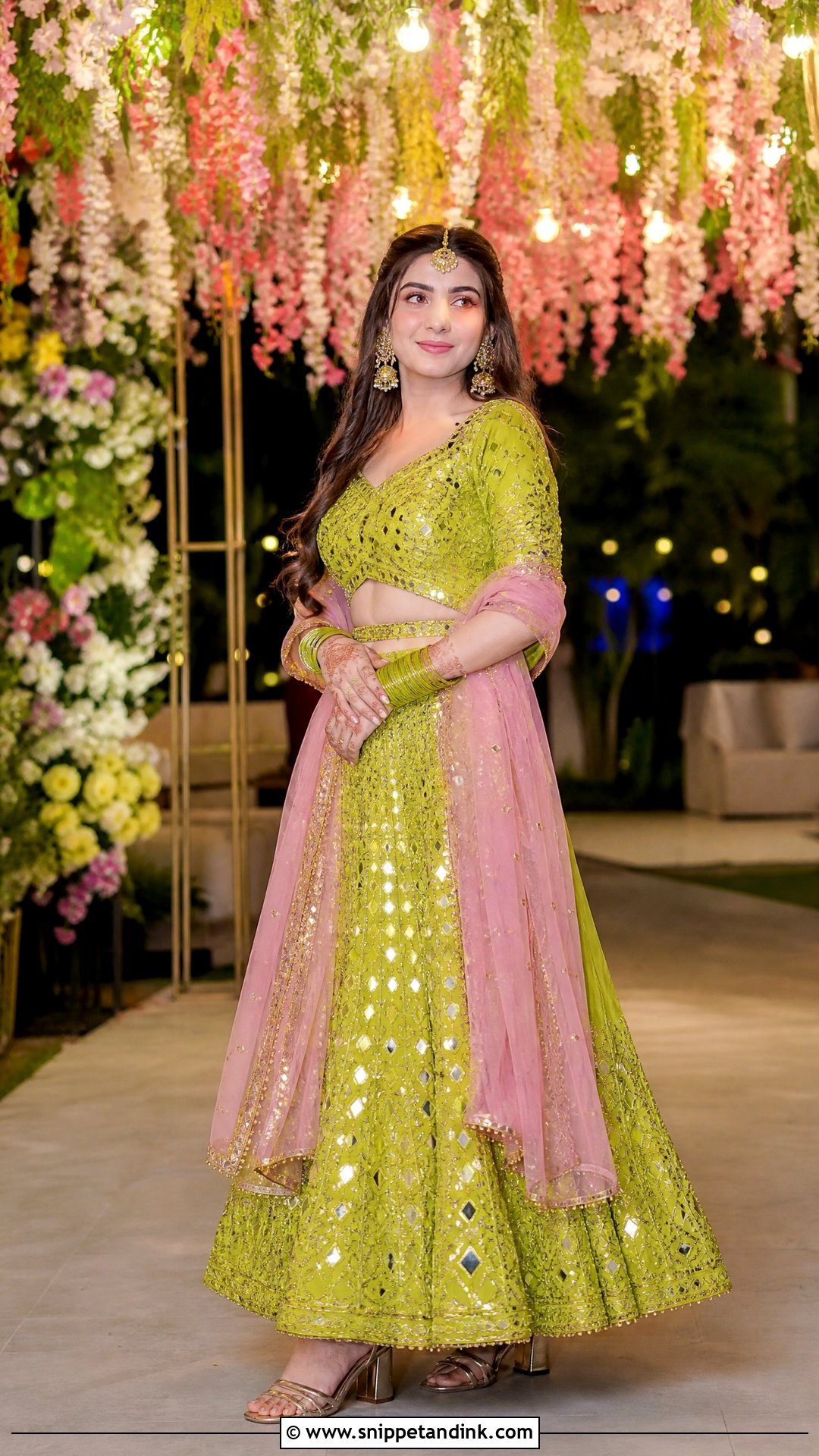
Green reads very differently by shade. Lime suits warm, deeper skin; emerald flatters almost everyone at night; leaf green sits between them. Hold the fabric under your chin before deciding. A mirror-work choli, a light pink dupatta and a slim waist belt keep the layers distinct. The mirrors will throw light up onto the face, so I go softer on highlighter than usual and keep the eyes defined, the lip a muted rose. Choose a small tikka rather than a large set, and a low ponytail with small flowers.
3. Pink And Orange Mehndi Bridal Gharara
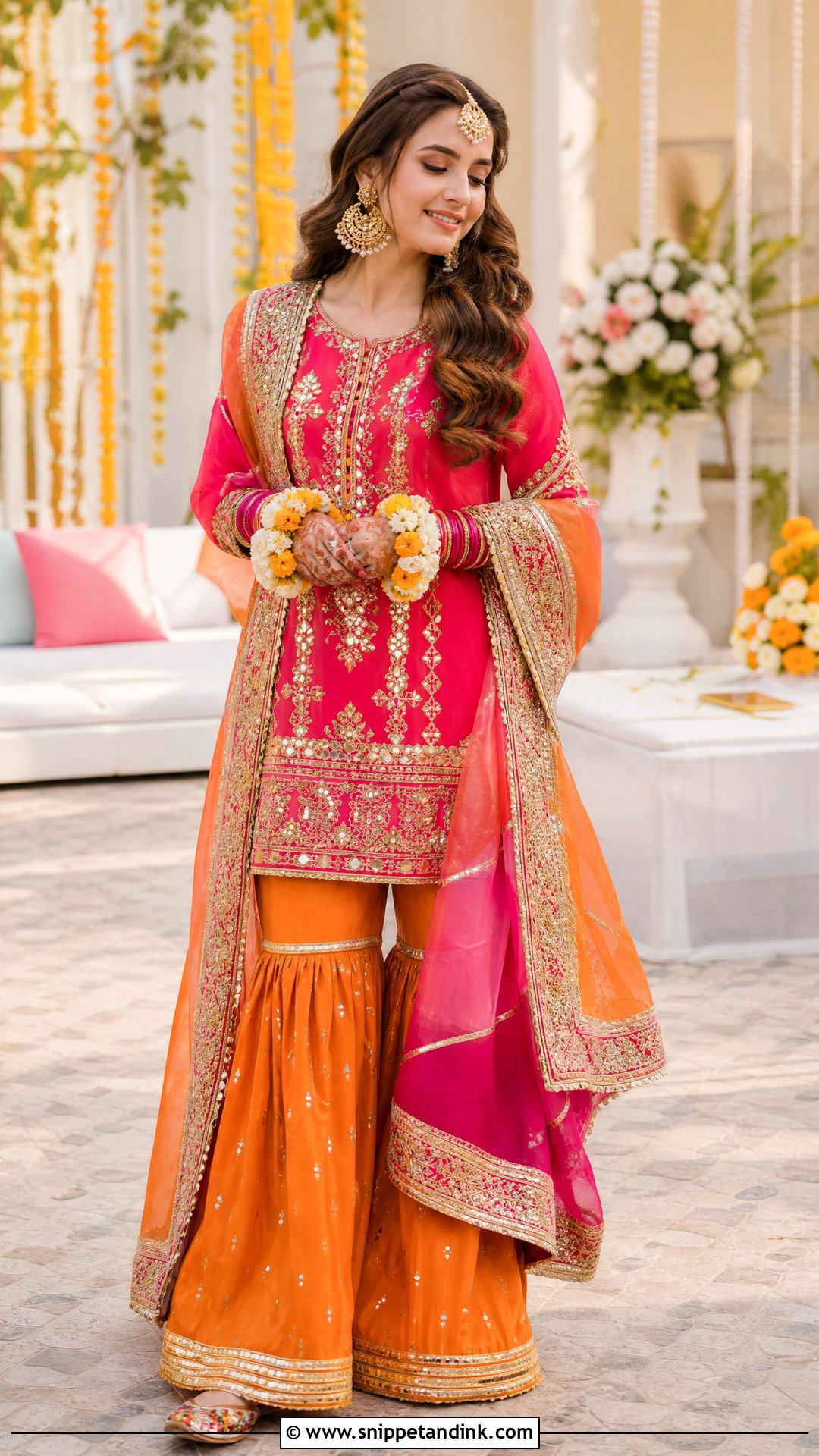
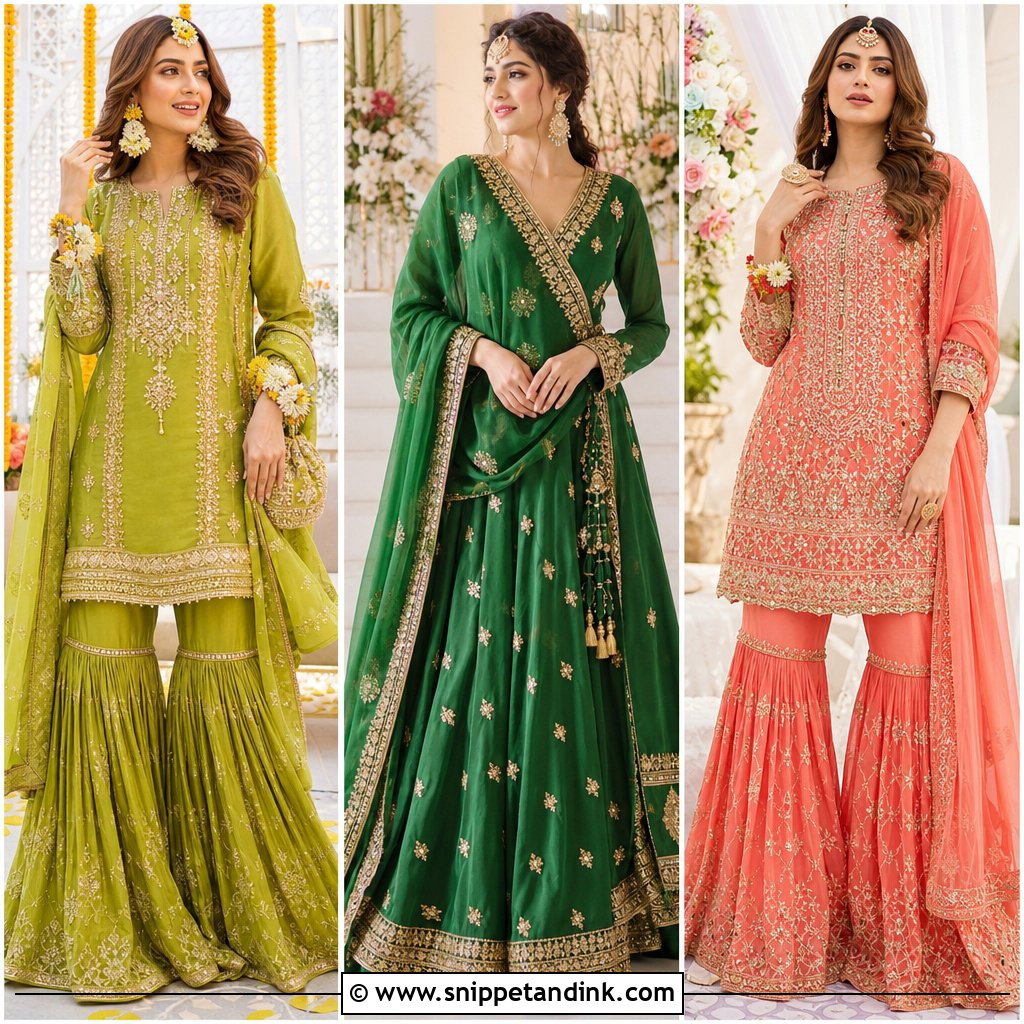
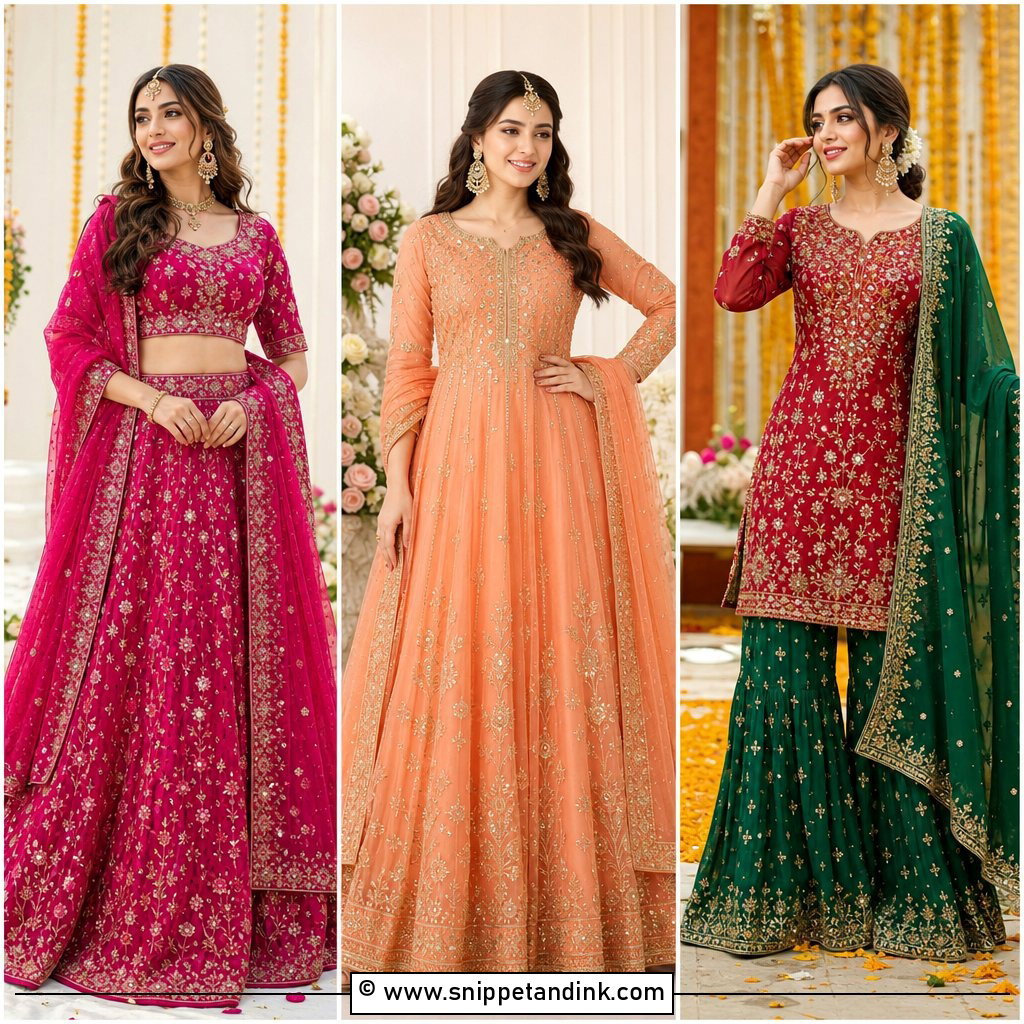
Pink and orange side by side are loud, which is the point. A fitted short kameez in bright pink over an orange gharara gathered just above the knee, with gota and dabka shared across both, makes the pairing feel planned. I drape the two-tone organza dupatta over one shoulder so the hands are free for henna and nothing brushes the face. For makeup, soft gold on the lid and a pink lip pick up the outfit without adding a fourth color. A middle part or floral braid suits the traditional shape.
4. Mustard Mehndi Bridal Sharara
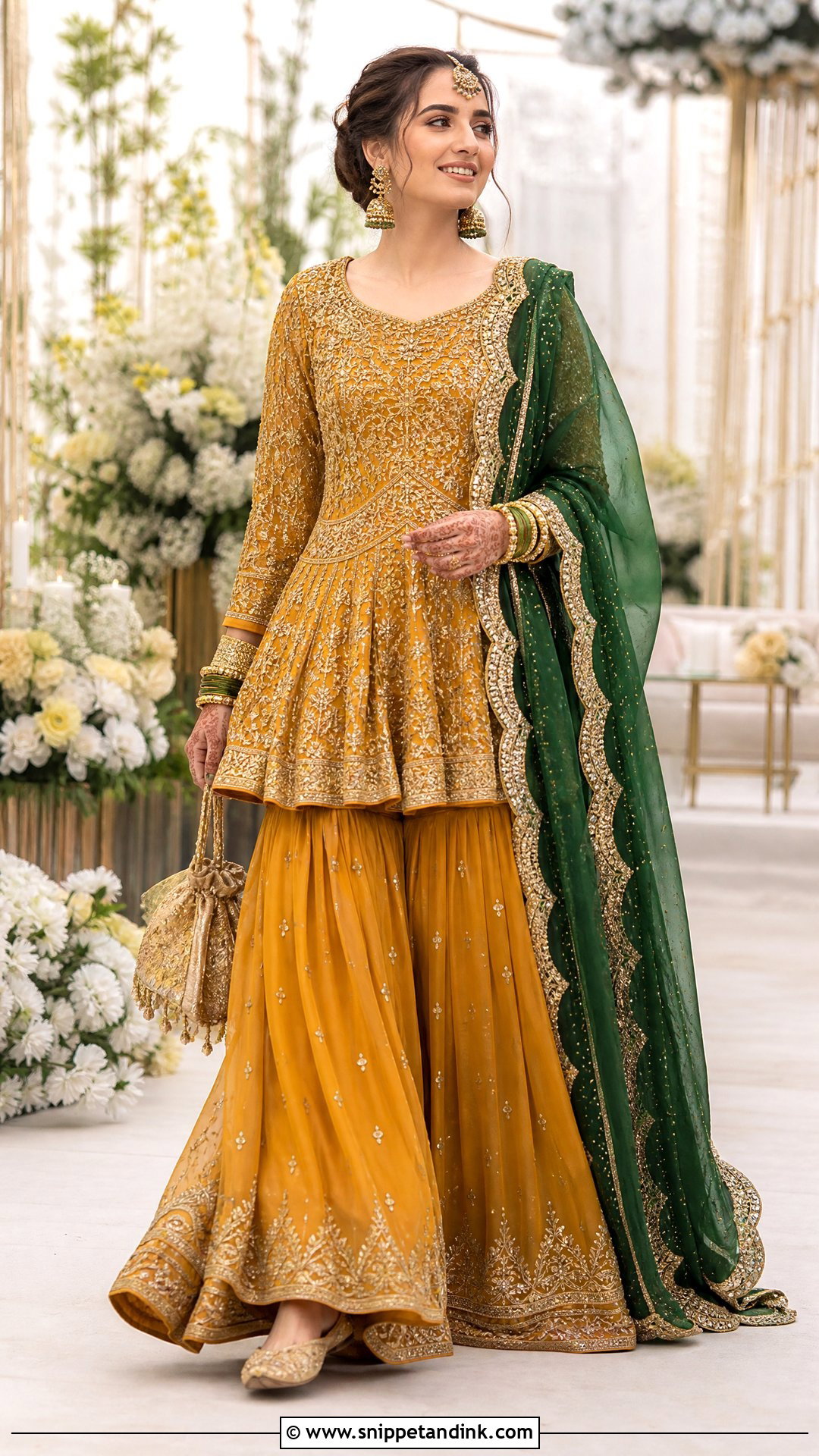
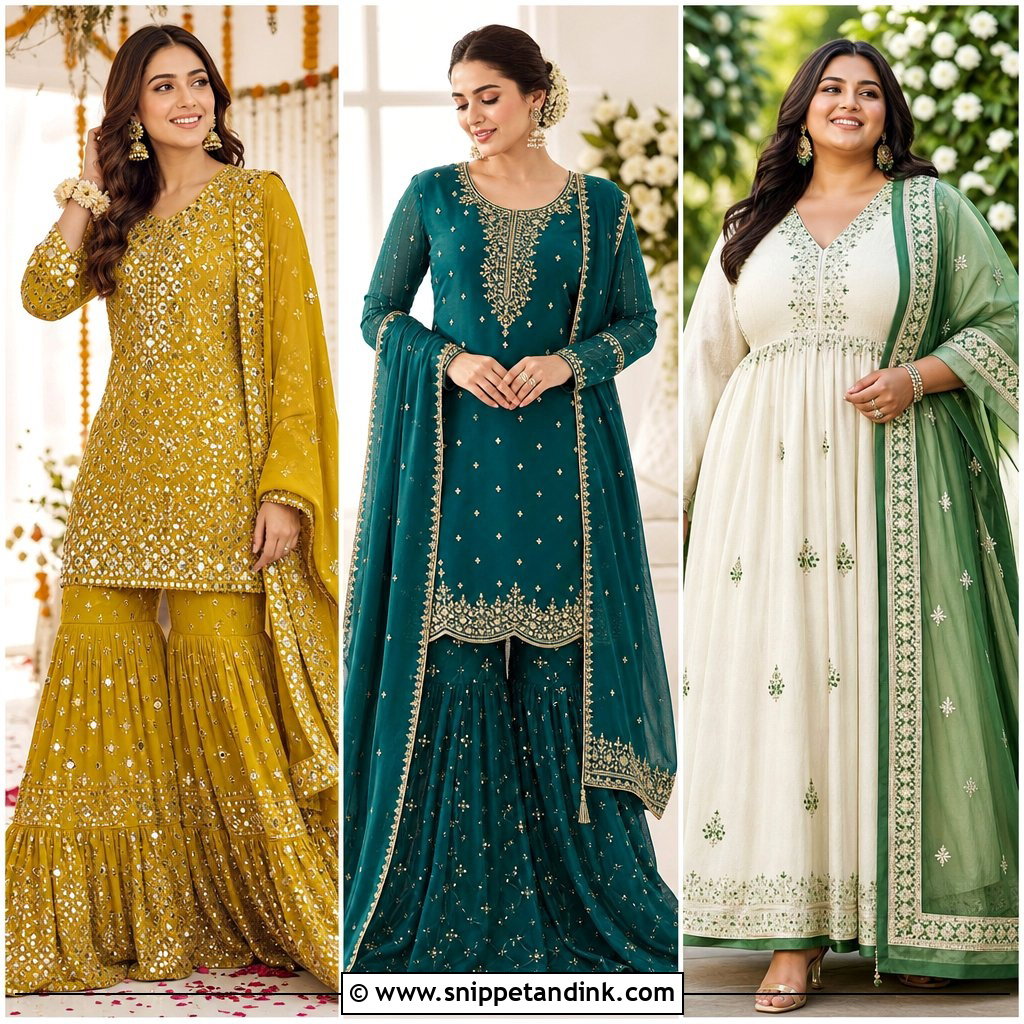
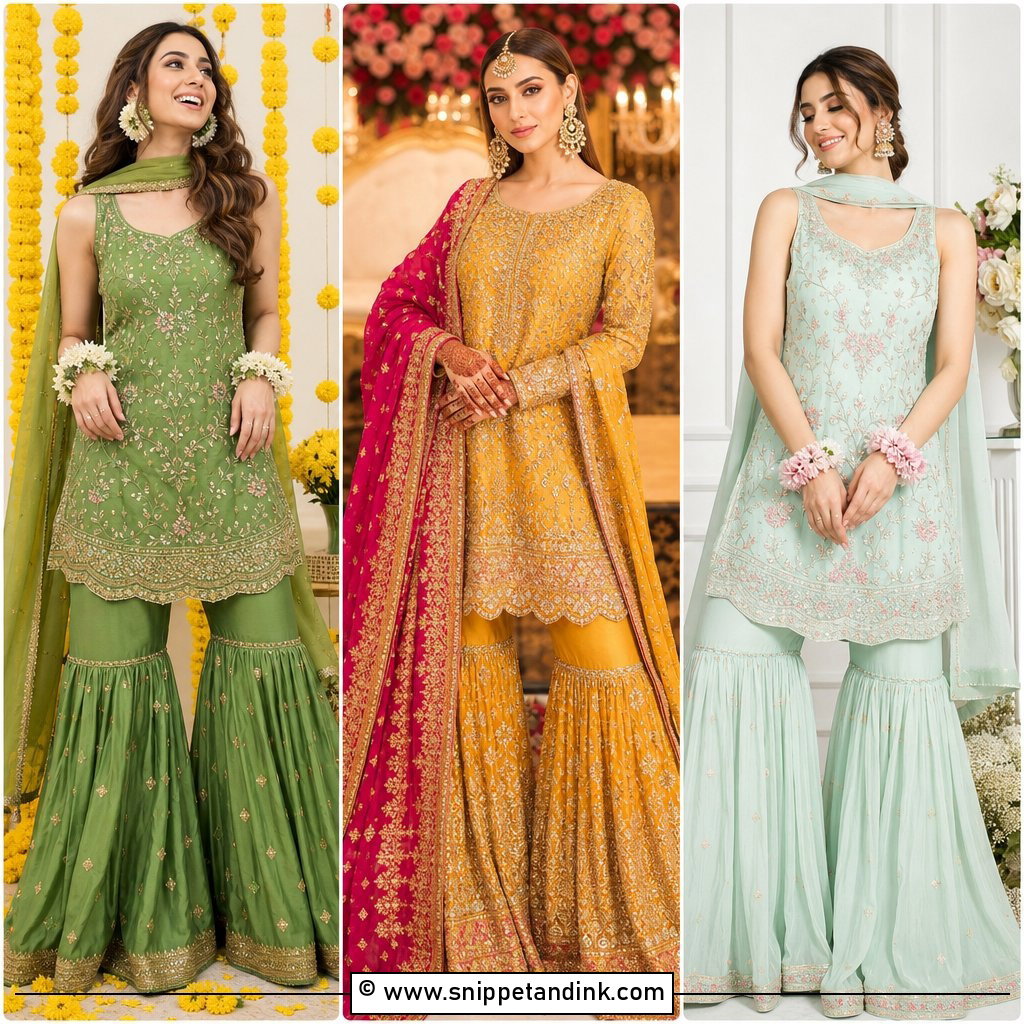
Mustard is easier on most complexions than lemon yellow, especially deeper and olive skin, because it does not bounce as much color onto the face. A short peplum-style kurti over a flared chiffon or georgette sharara, with antique gold embroidery and a deep green dupatta, looks rich without being heavy. A passa sits on one side of the head, so I part the hair on the opposite side and finish with a soft side braid. Bronzed skin, brown liner and a terracotta lip match the warmth of the fabric.
5. Multicolor Mehndi Bridal Lehenga
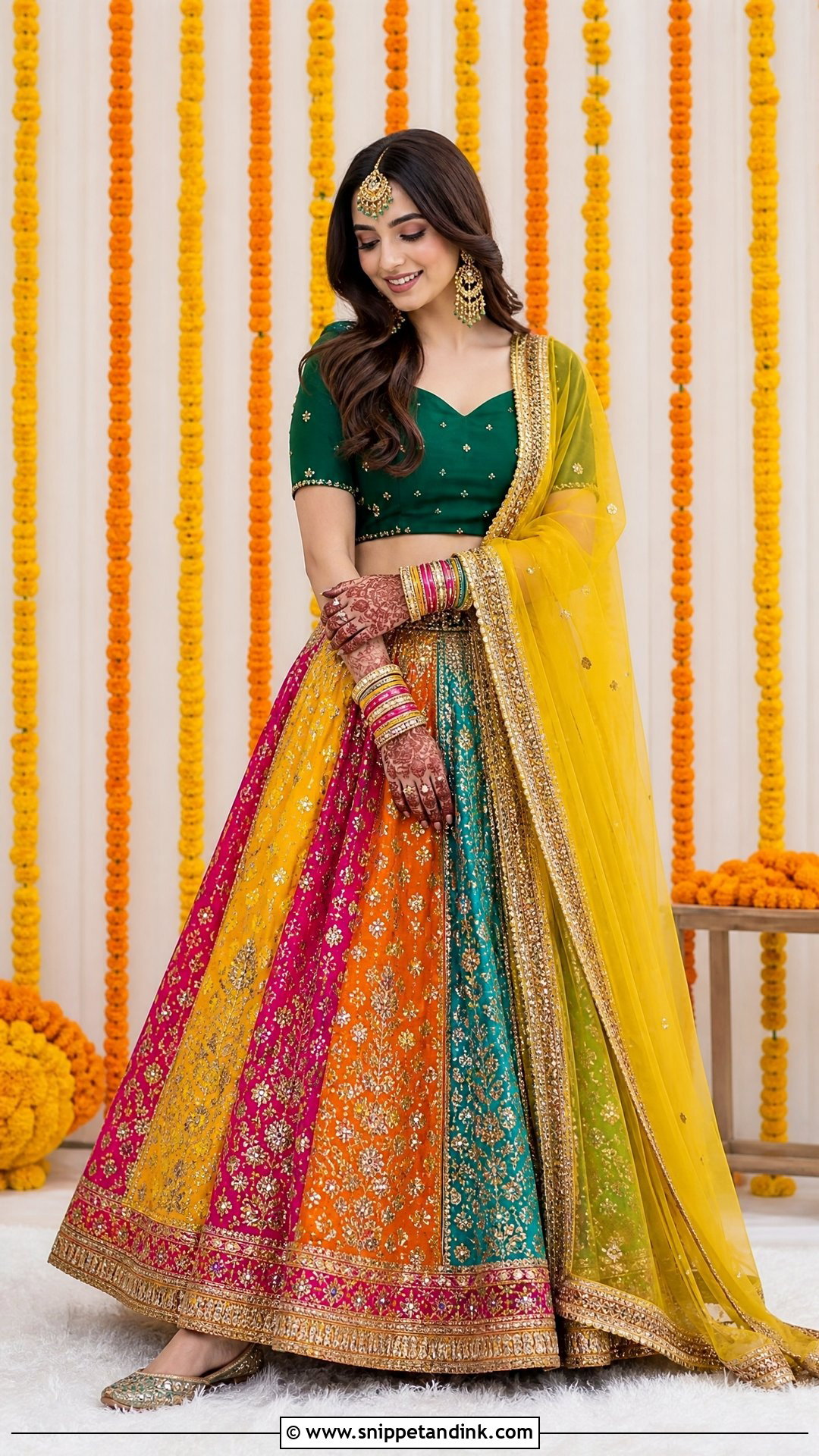
A multicolor skirt already gives the eye a lot to look at, so I keep the face clean: luminous skin, a sleek braid, one fresh pink lip. Look for color-blocked panels or motifs spread evenly so no single shade dominates. Then pair a solid fuchsia or emerald blouse to give the outfit a focal point, and a sheer yellow dupatta with a narrow multicolor border. Too many large accessories tip this look into costume; one tikka and mixed bangles are enough.
6. Floral Mehndi Bridal Pishwas
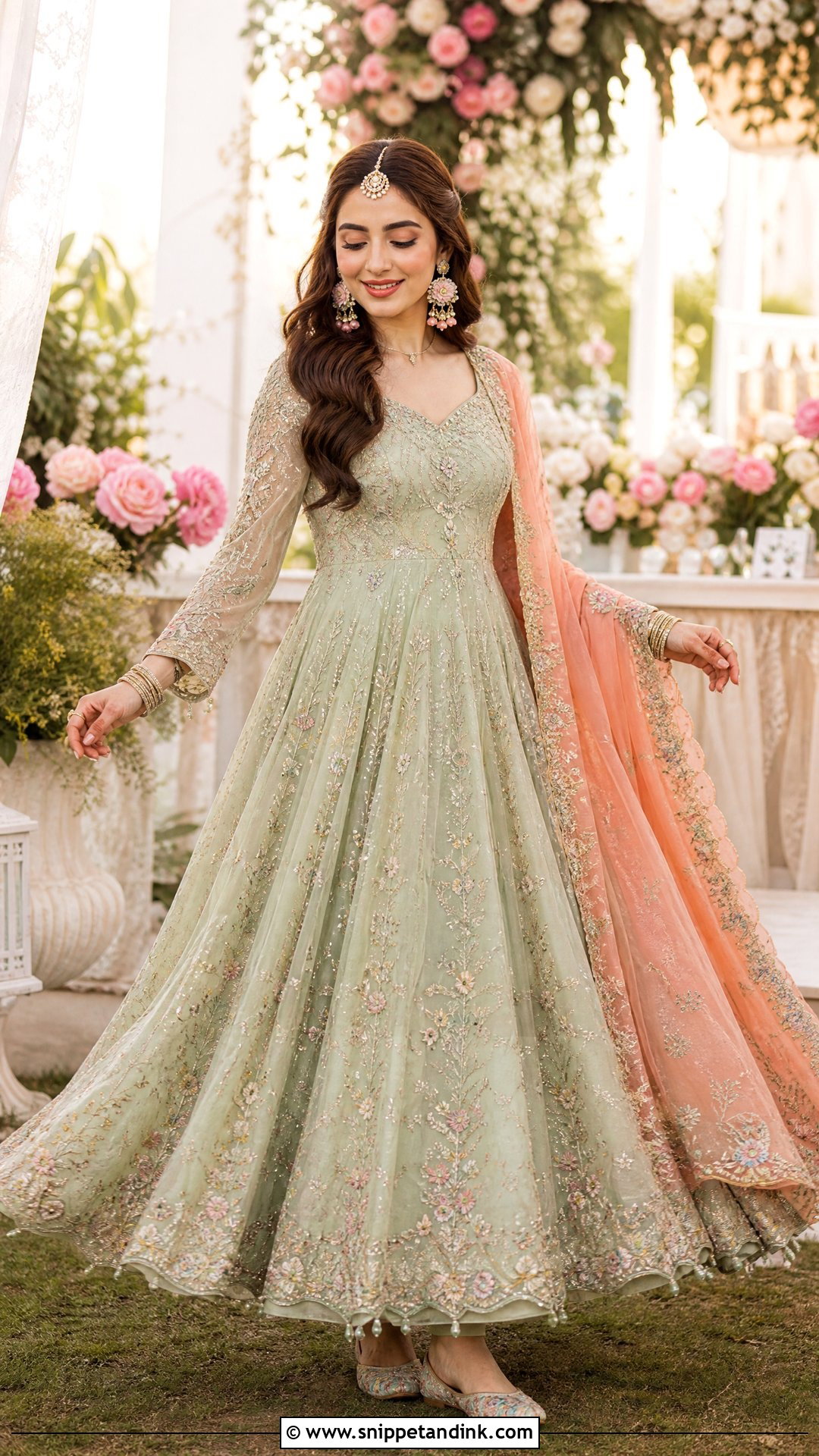
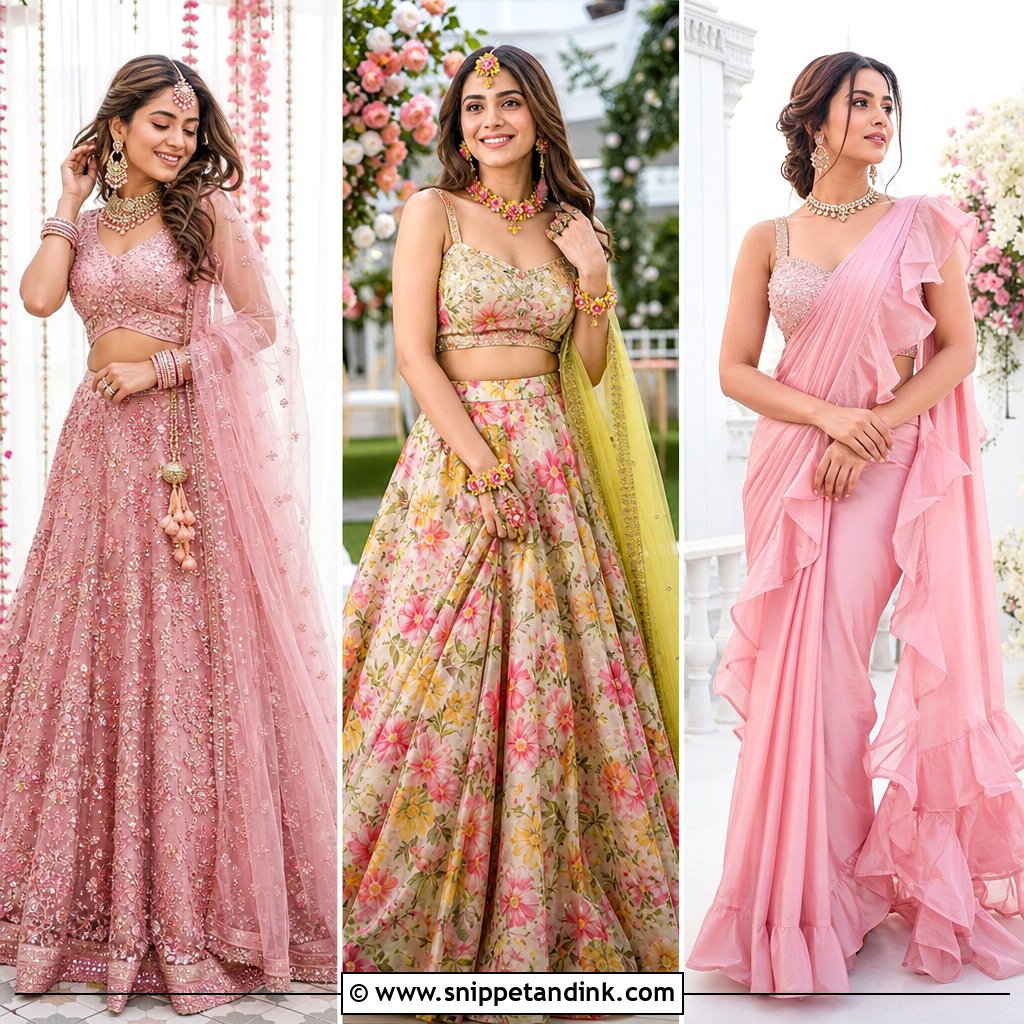
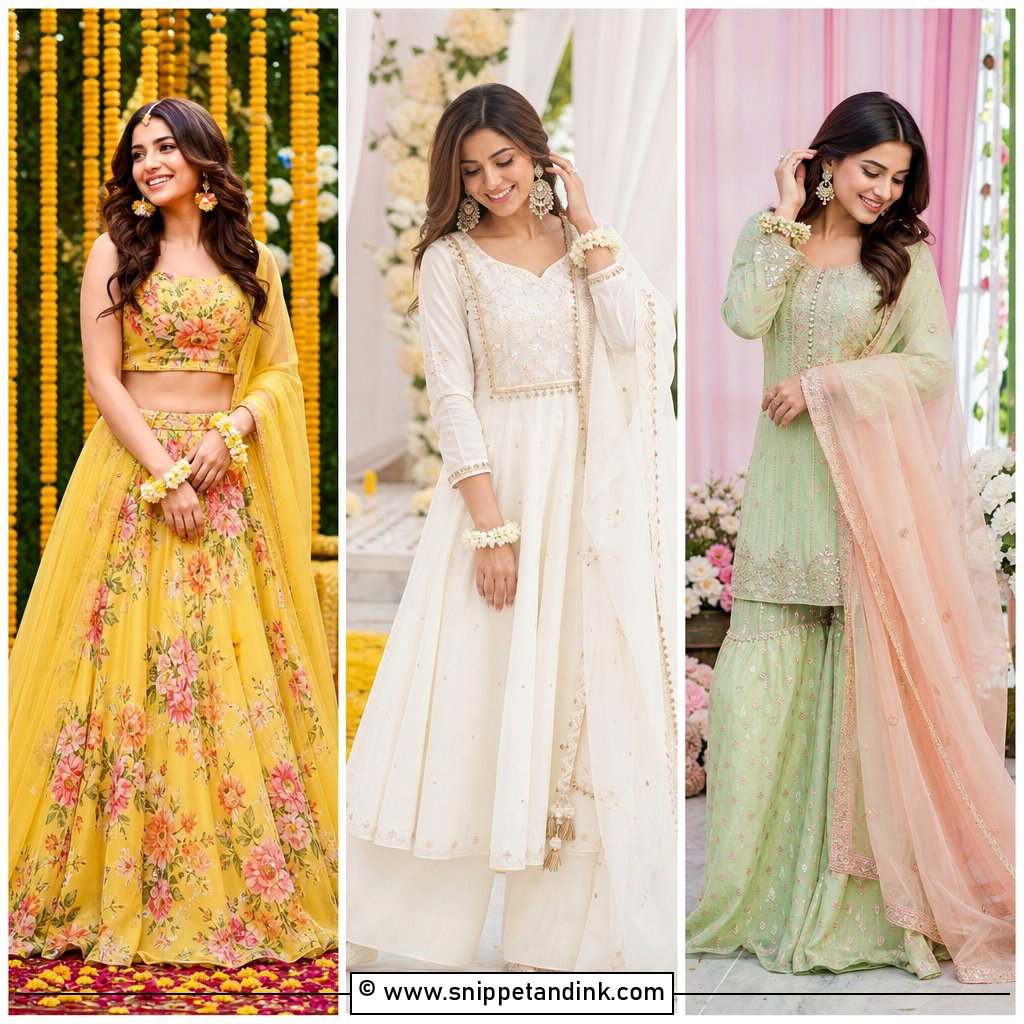
Garden mehndis tend to be hot and bright, which is hard on both a stiff underskirt and a heavy base. A floral pishwas in pistachio, lemon, peach or blush has a fitted bodice and a long flare that moves easily, and I would skip the stiff petticoat if you will sit for henna. Pin the organza dupatta at one shoulder and catch it at the wrist. Daylight is unforgiving of heavy foundation, so I use a thin layer, rosy cheeks and softly defined eyes. A low floral bun keeps the neck cool.
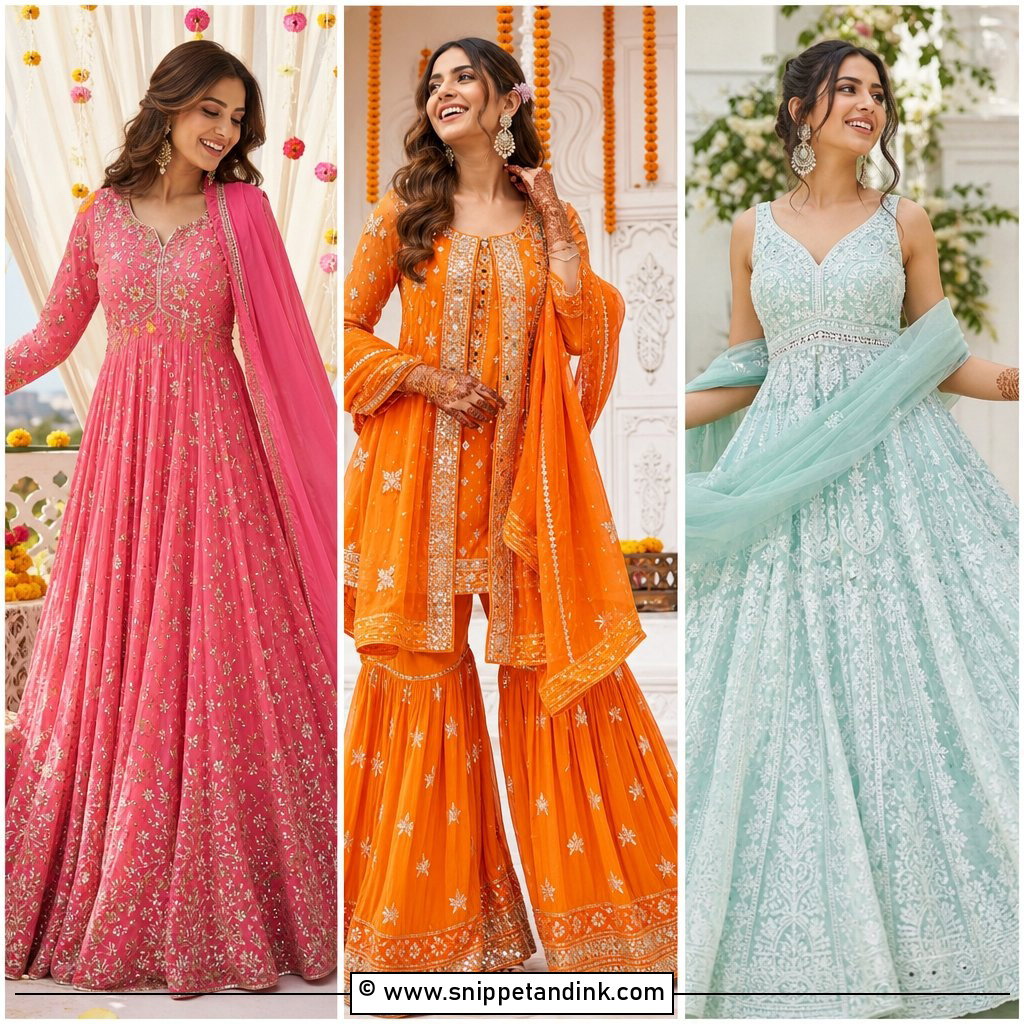
7. White And Yellow Mehndi Bridal Anarkali
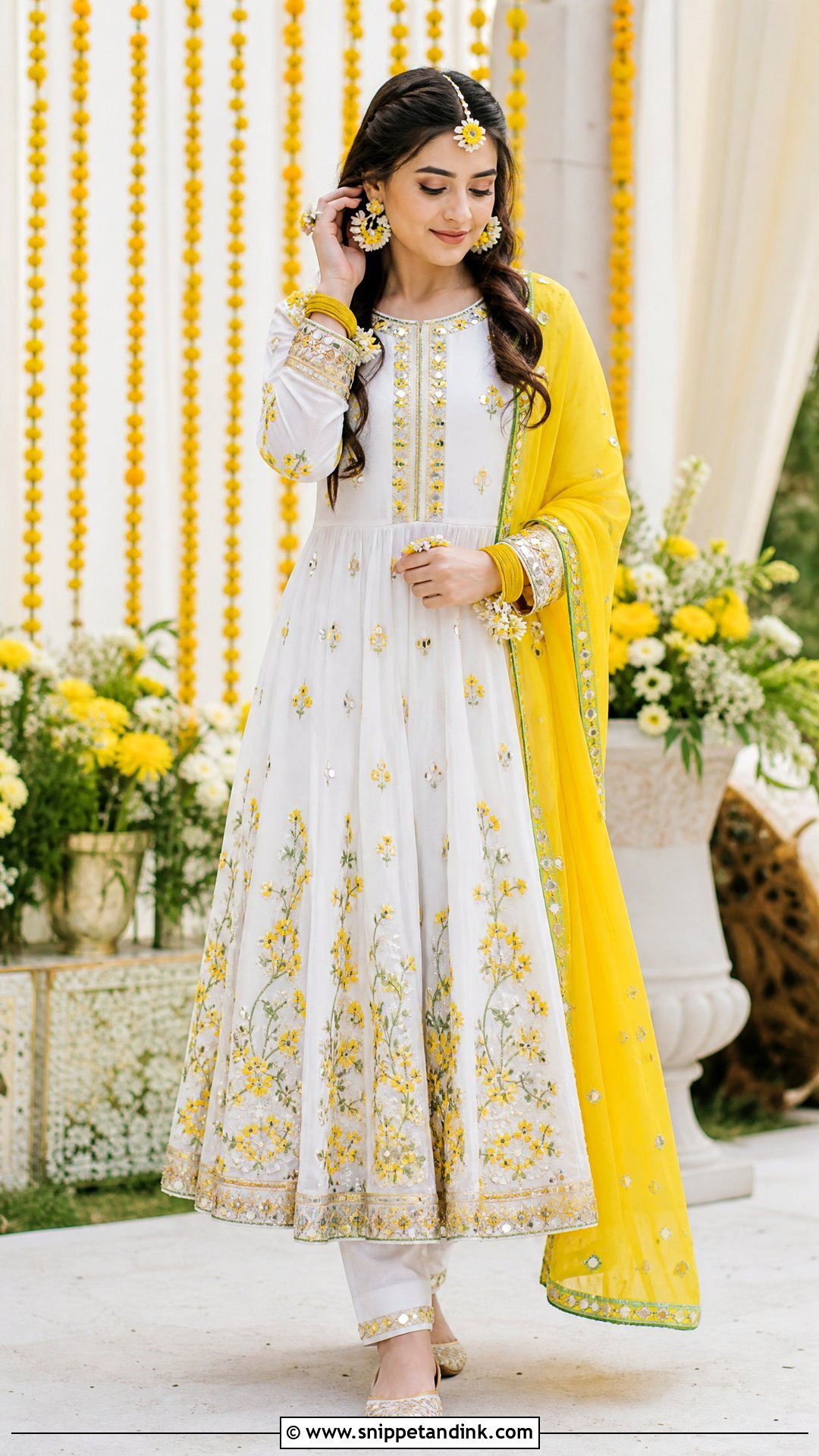
White near the face is the hardest thing I work with in daylight photography. It bounces light that can wash out the skin, so a bride in white needs a little more definition at the brows and lashes than she would in yellow. A white Anarkali with yellow floral embroidery, mirror accents and gota, over fitted trousers, gets its color from a yellow dupatta edged in green or pink. Make sure the neckline and cuffs carry visible craft, because plain white looks unfinished in wide shots. A braided ponytail with yellow flowers and a soft pink lip finish it.
8. Fuchsia Mehndi Bridal Lehenga
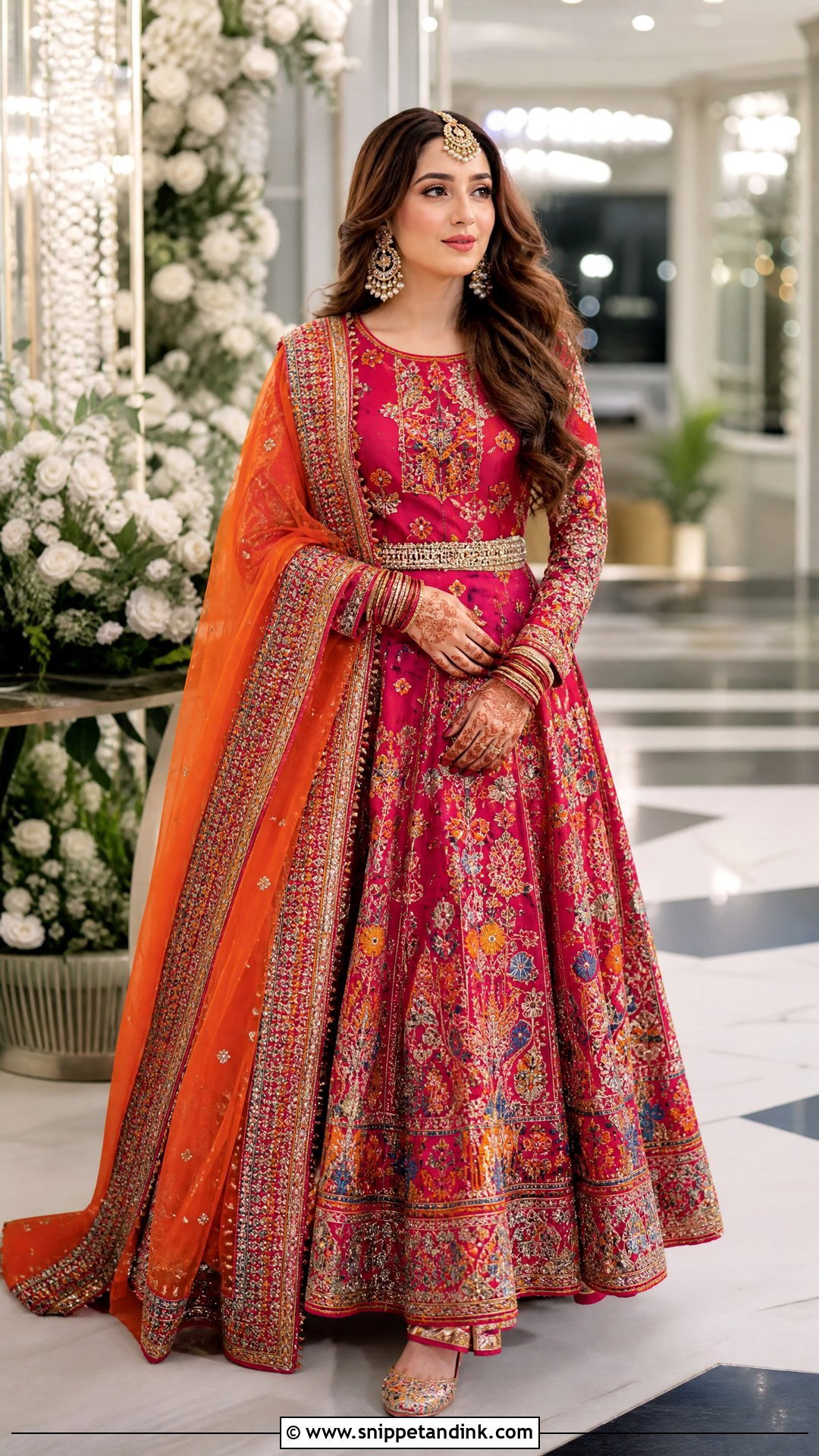
Fuchsia is intense enough to make lipstick choices tricky. A matching fuchsia lip fights it; a rose-nude lip lets the dress lead. Pair a full lehenga with gold embroidery and scattered mirrors with a fitted fuchsia blouse and an orange or lime dupatta for a traditional mehndi finish. Keep the neckline comfortable; a tight embellished blouse plus heavy jewelry becomes restrictive by the third dance. A waist belt can hold the dupatta in place. Sleek waves or a center-parted braid frame the face.
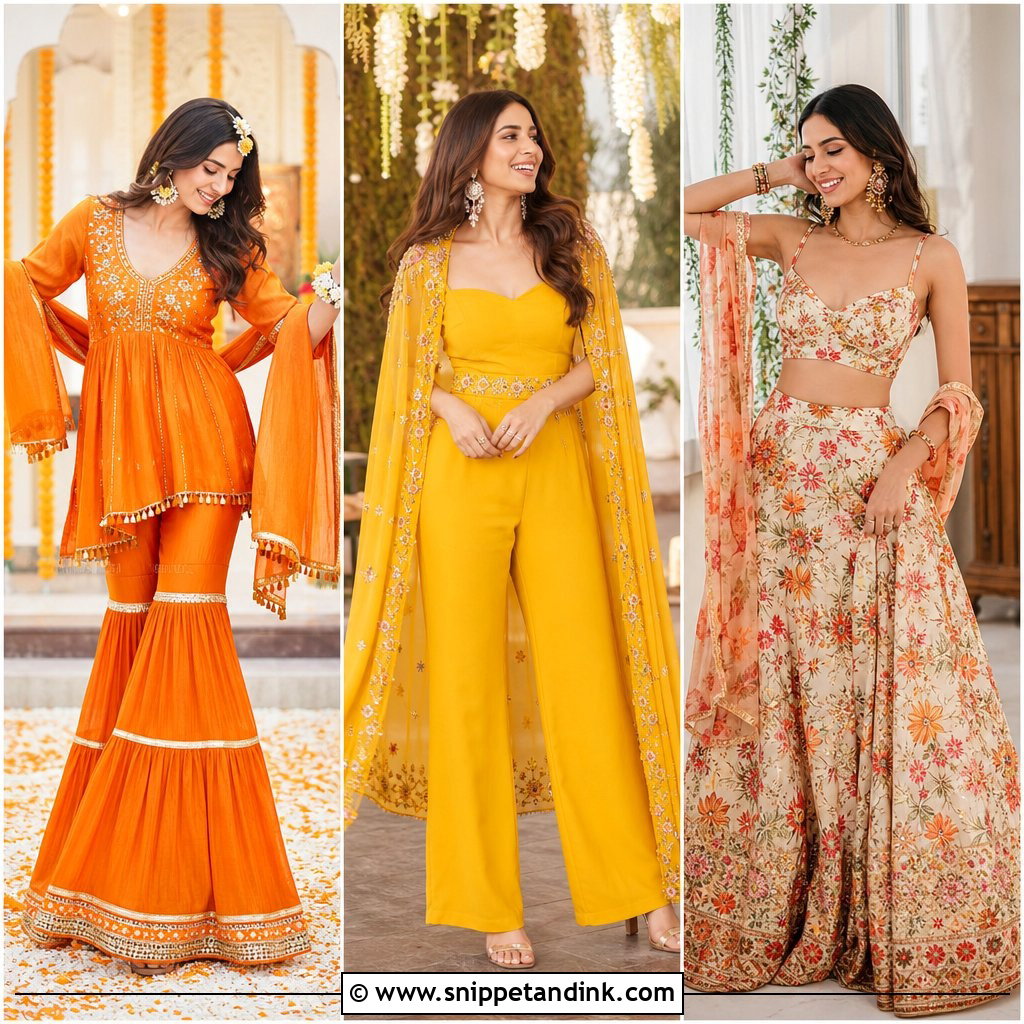
9. Orange Mehndi Bridal Gharara
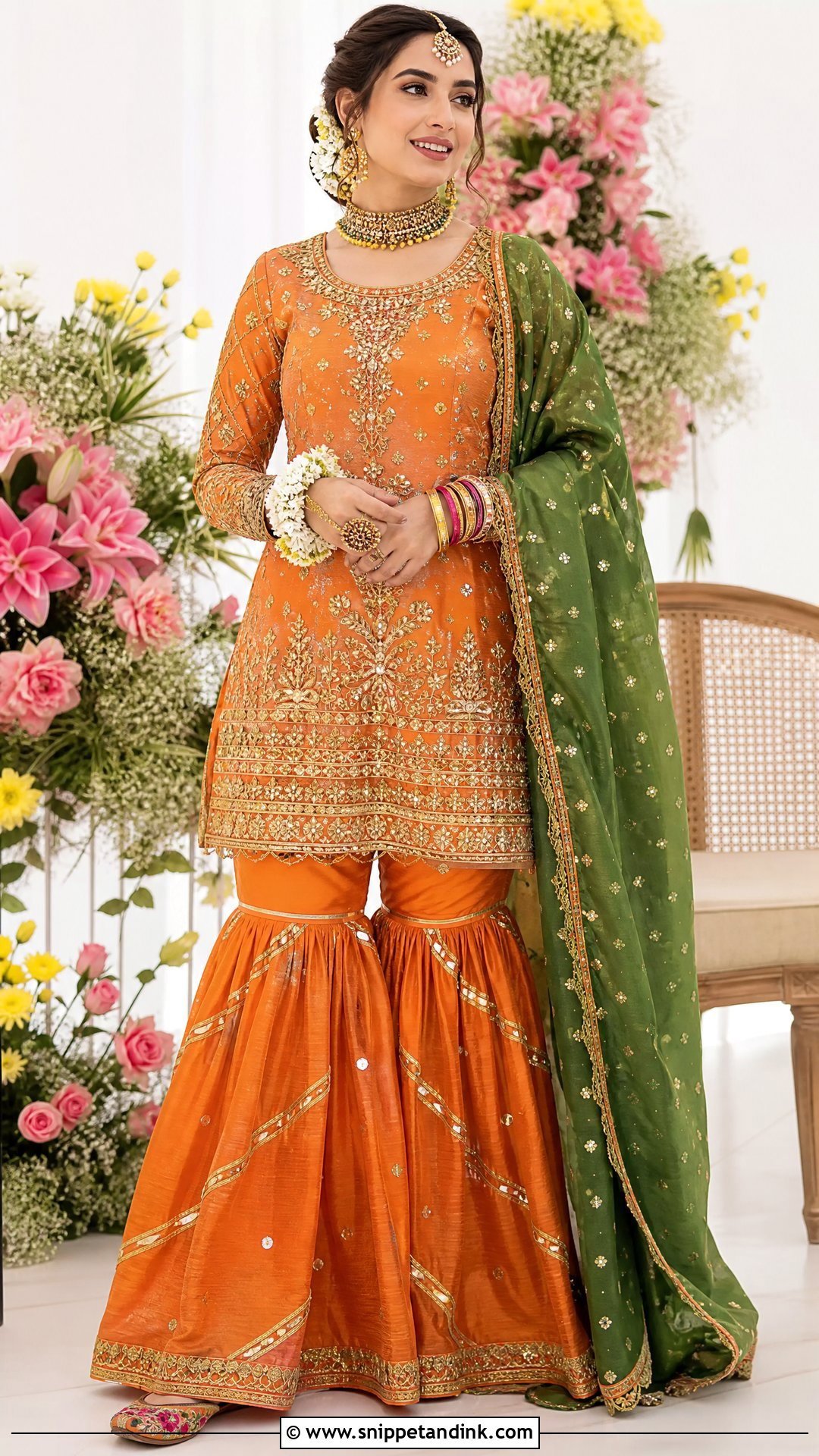
Orange glows against marigolds and is warmer on the skin than bright yellow. Build the look around a gharara gathered at the knee with gota edging, a matching short kameez with a structured neckline, and a pink or green dupatta draped diagonally to break up the single color. A slightly longer kameez adds coverage without spoiling the proportions. I go warm on the face here: bronze eyes, peach cheeks and a muted coral lip, with a low braid tucked with small pink flowers.
10. Turquoise Mehndi Bridal Sharara
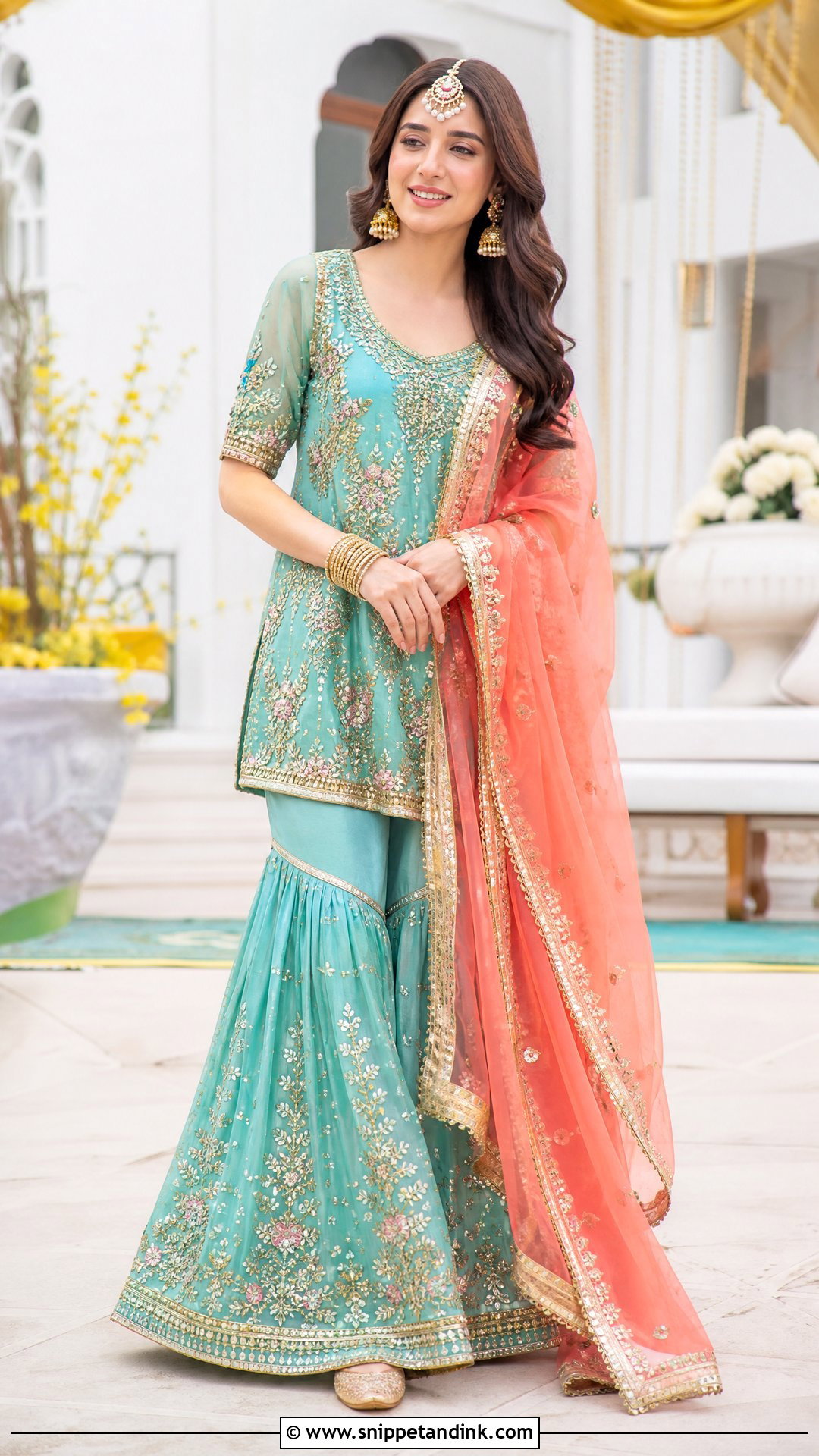
Turquoise is cool, so it contrasts with the warm decor rather than blending into it, and it tends to make whites of the eyes look brighter. Pair a short turquoise kurti with a soft, flowing sharara decorated with gold gota, resham flowers or small mirrors, then add warmth through a mustard or coral dupatta. For outdoor summer events, choose a breathable lining and skip extra layers under the sharara. Pin the dupatta at one shoulder and the wrist during henna. Champagne eyeshadow and a rosy nude lip keep the face fresh.
11. Purple Mehndi Bridal Lehenga
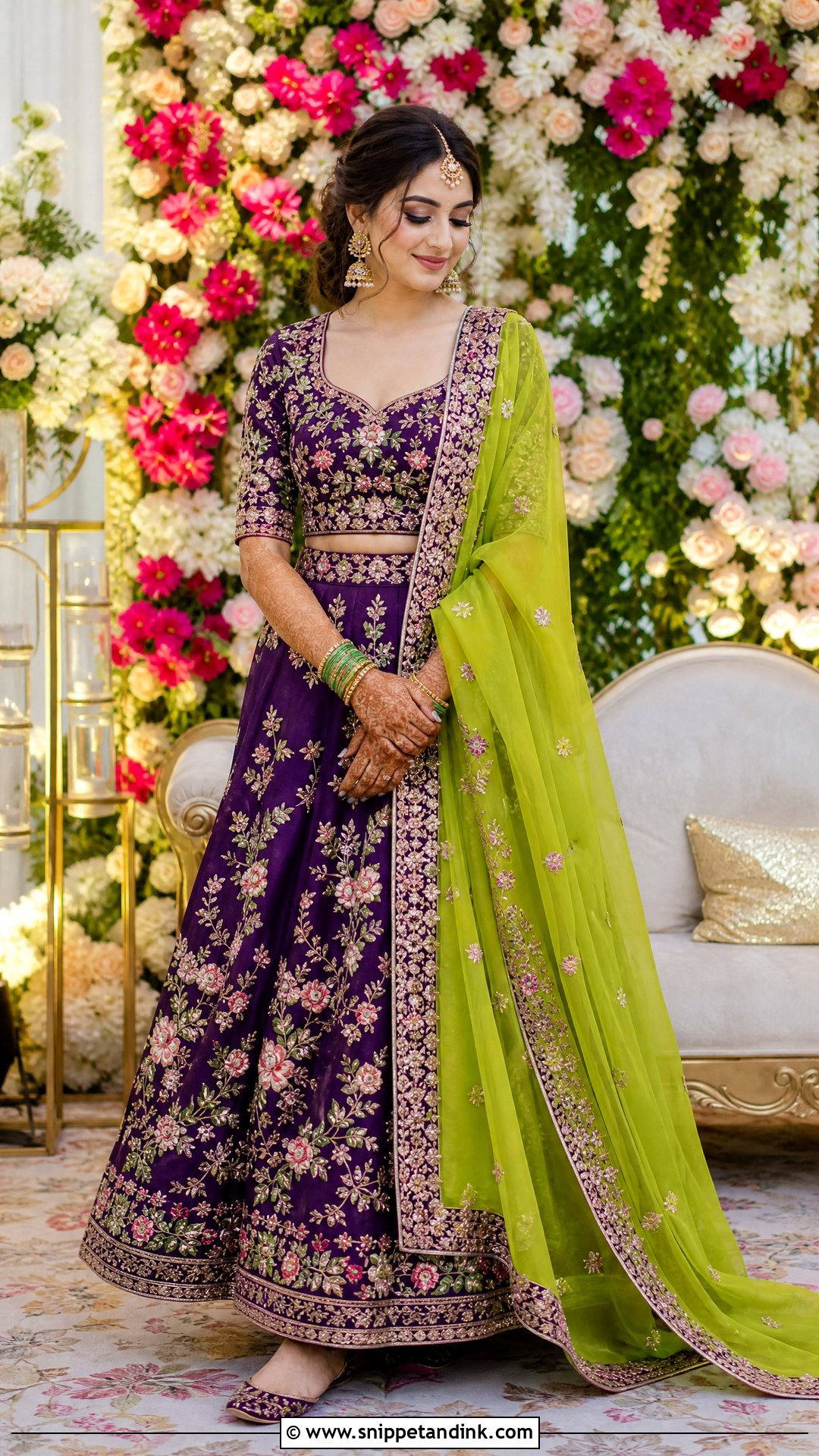
Purple is the most evening-friendly color on this list and gives me room to deepen the makeup: bronze eyes and a berry lip. A plum, violet or grape lehenga with floral threadwork placed strategically, a matching blouse and a lime dupatta give it clear mehndi character. Gold jhumkas and green bangles bridge the two colors. Elbow-length sleeves and a slightly longer blouse add coverage. Keep the hem practical for lawns and dance floors, and pull the hair into a center-parted low bun.
12. Pastel Mehndi Bridal Gharara
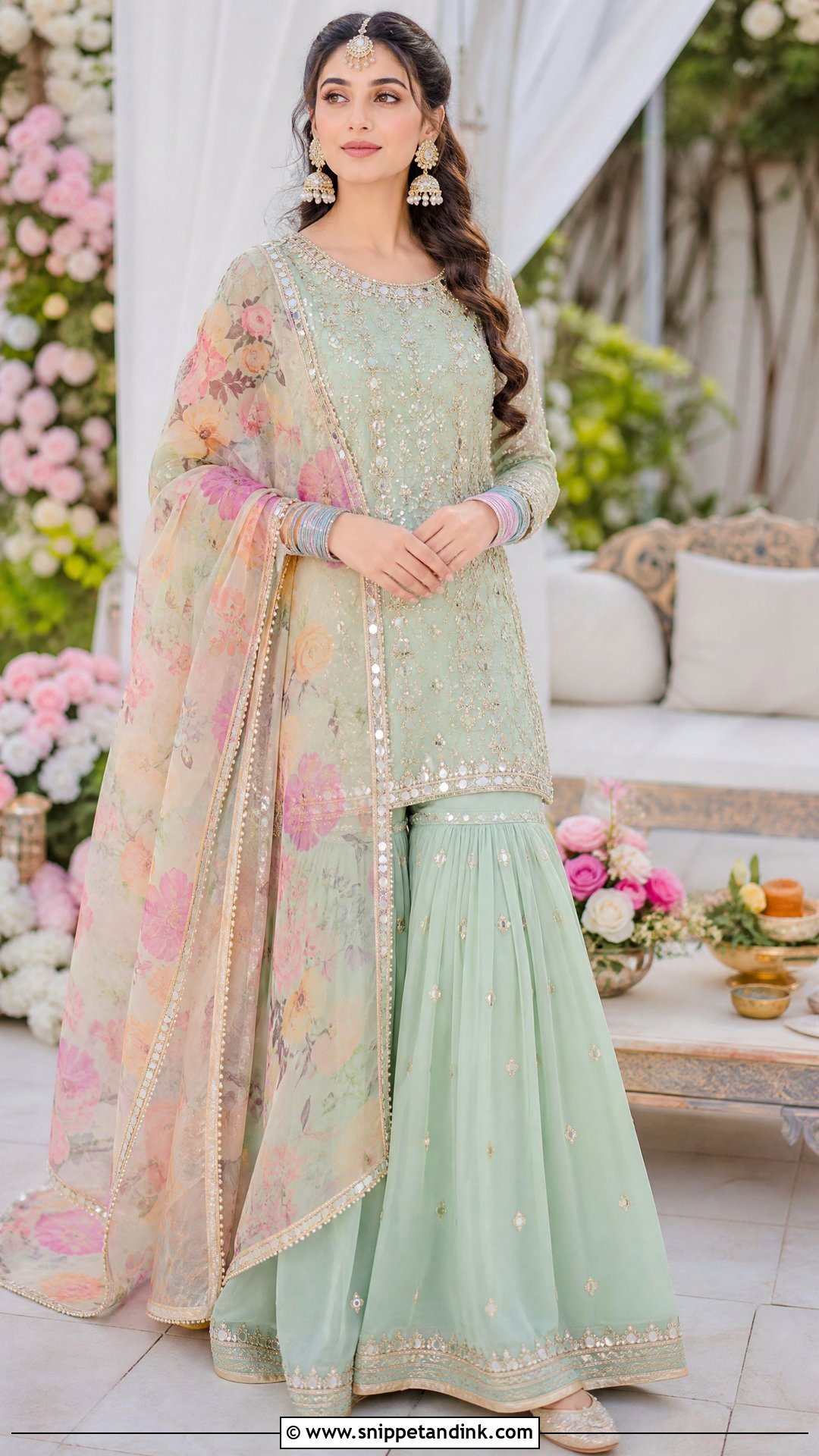
Pastels can disappear on a mehndi stage unless the cut and embroidery carry real weight. A mint, lavender, blush or powder-blue gharara with a short embroidered kameez and a contrasting pastel dupatta needs mirror work, pearls or silver-gold borders to hold up. A multicolor floral dupatta is the easiest way to tie it back to the decor. Pastels also wash out deeper skin if the makeup stays too pale, so I keep a warm blush and a pink-nude lip with definition, never a chalky nude.
13. Green Peplum Mehndi Bridal Sharara
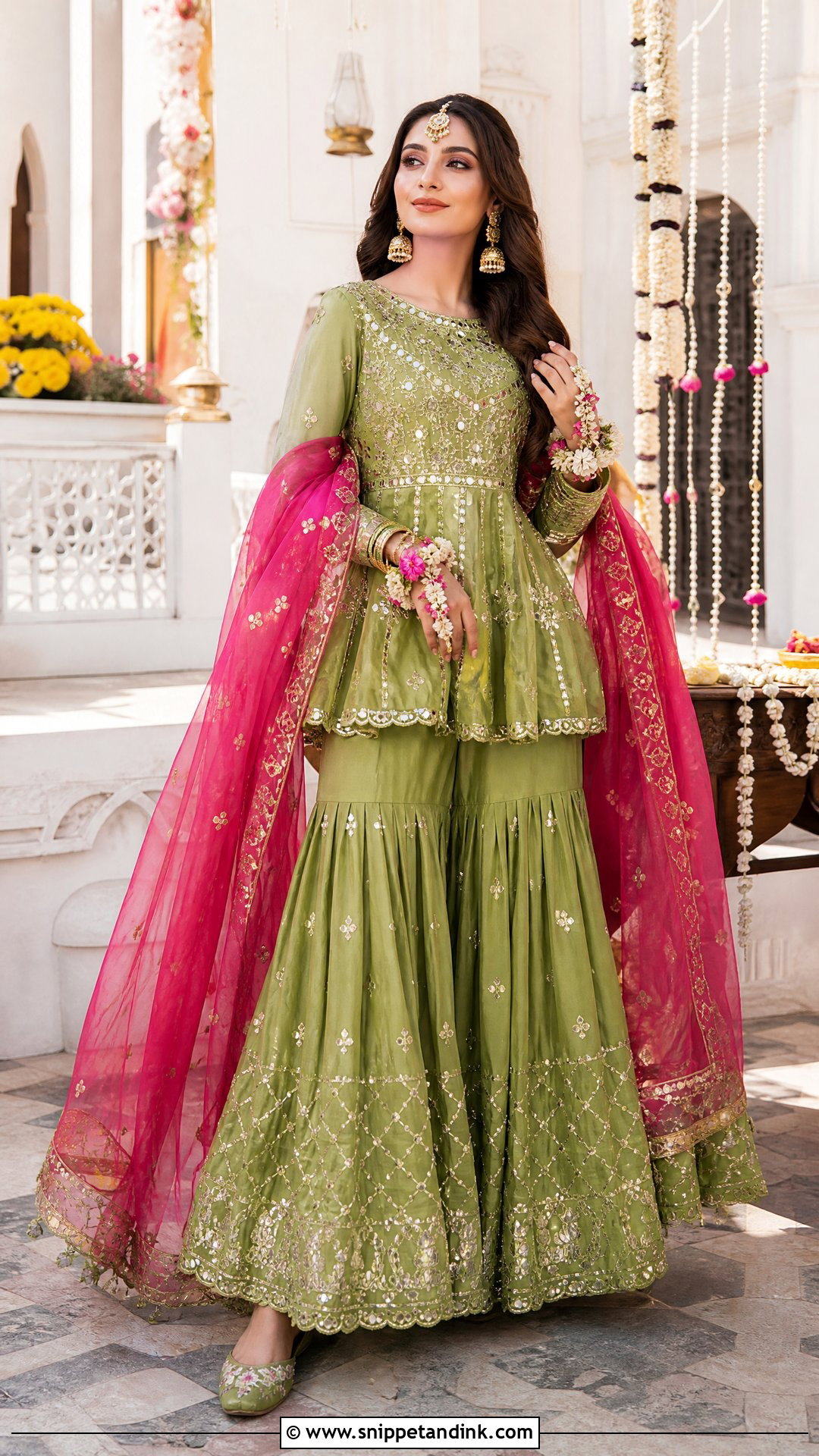
The peplum flares just below the natural waist, so where its border lands matters. I always ask brides to avoid a heavy border sitting exactly at the widest point of the hips. A green peplum tailored through the shoulders and bust, with mirror embroidery and gota patti, over a lighter sharara, keeps the volume under control. A hot-pink organza dupatta and floral hand jewelry add color. A high textured braid shows off the peplum shape; gold eyeliner and a rose lip keep the face bright.
14. Yellow Angrakha Mehndi Bridal Dress
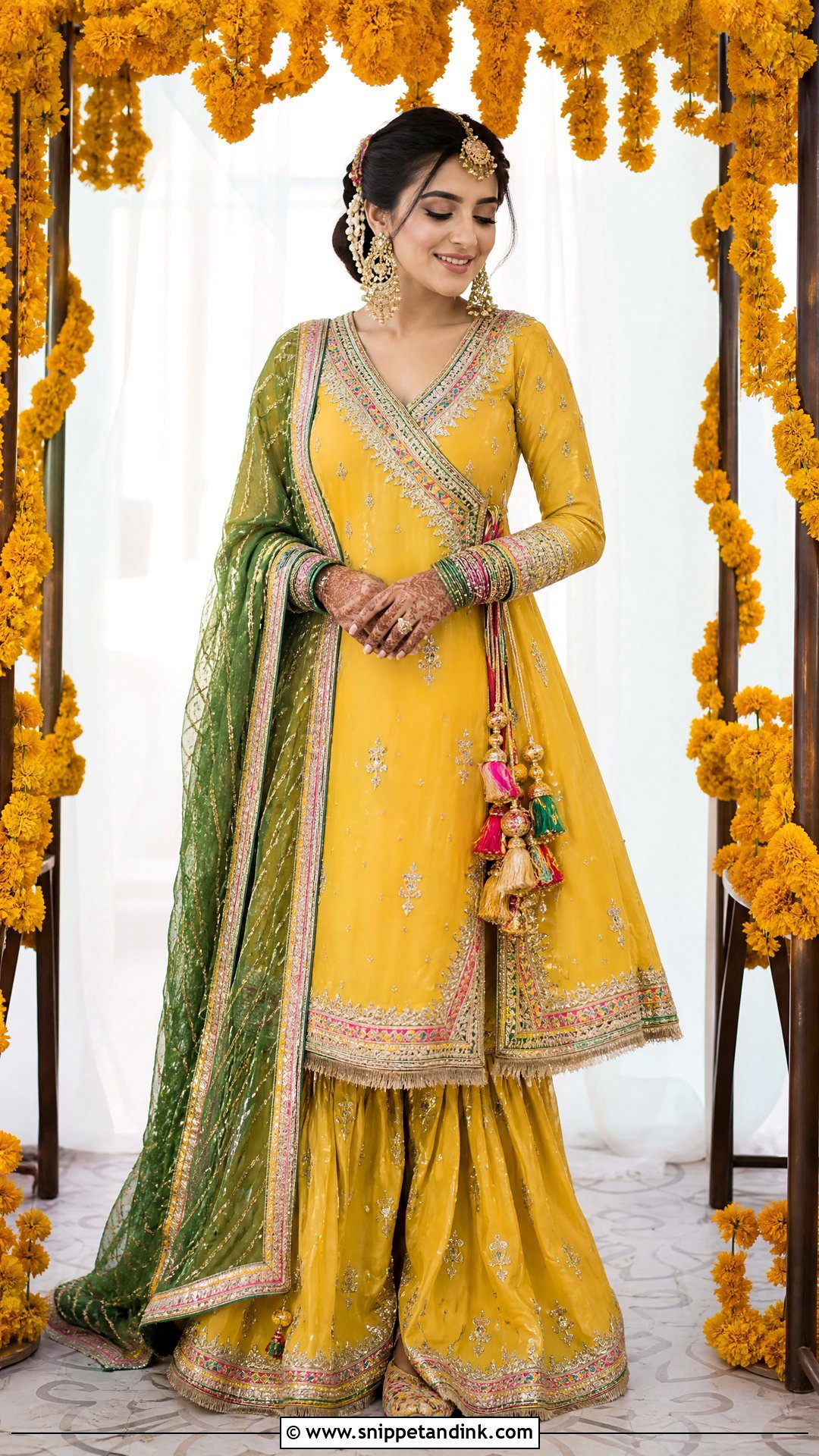
The angrakha’s wrap neckline runs on a diagonal, which pairs well with asymmetric hair. I usually do a side-parted braid falling on the open side of the neckline. Choose knee or floor length with ties, gota borders and colorful motifs, over a sharara or slim trousers. Pin a green or pink dupatta behind one shoulder so the neckline stays visible. Keep the waist tassels lightweight; heavy ones swing into your hands during henna. Glowing skin, soft brown smoked eyes and a natural pink lip suit its relaxed character.
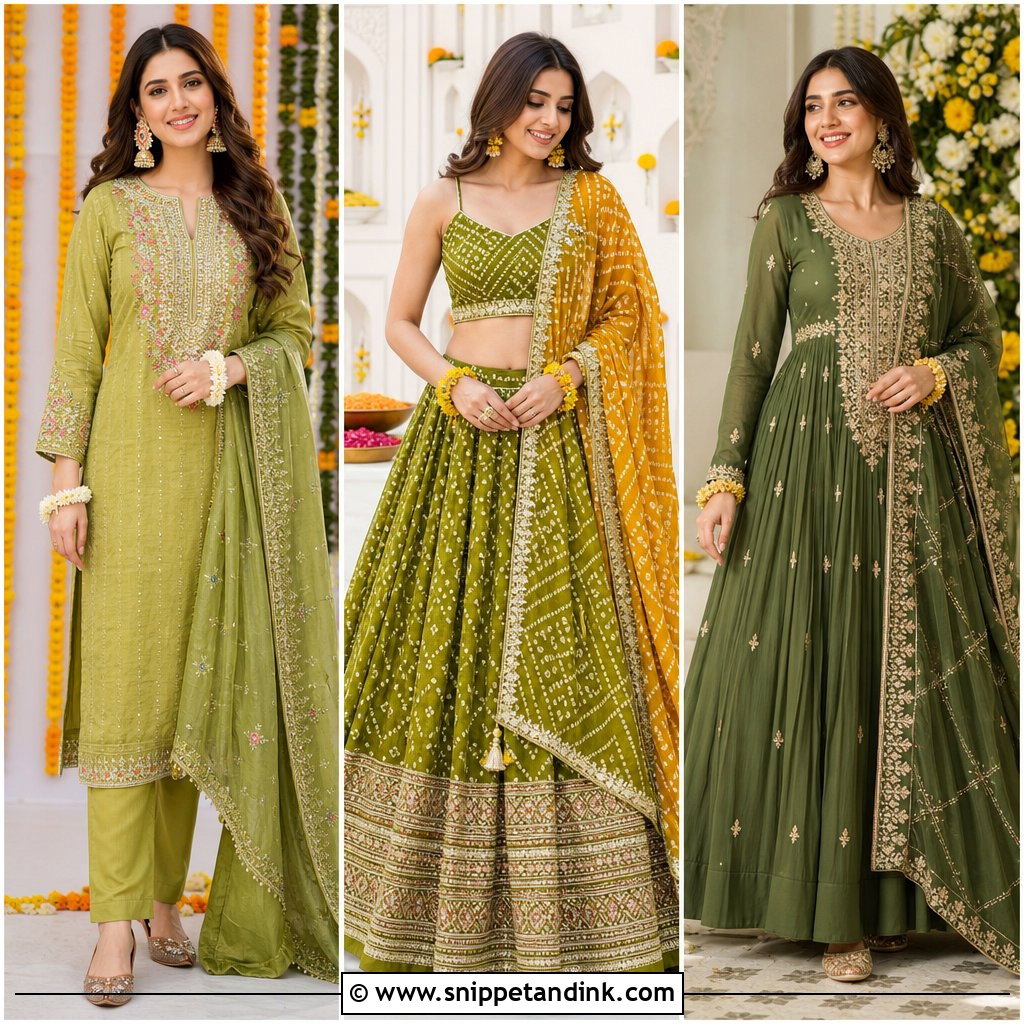
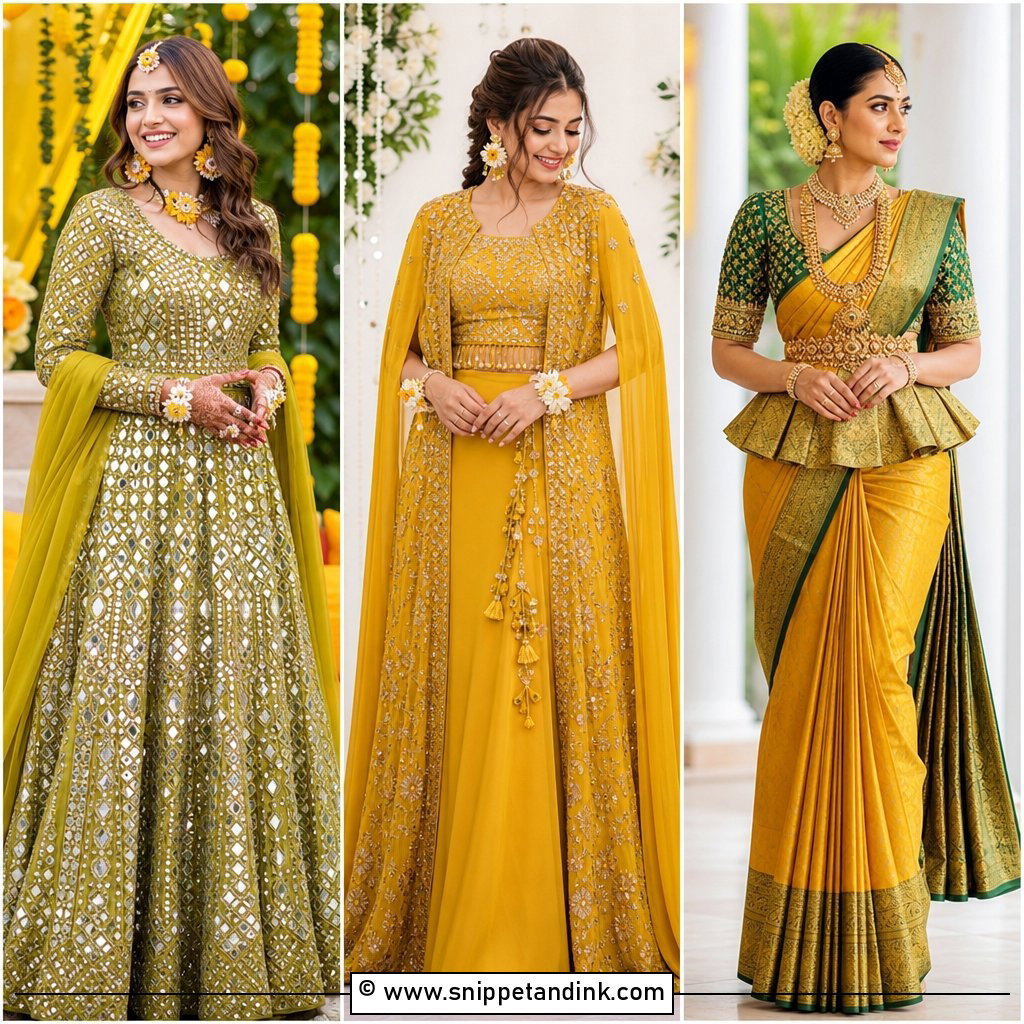
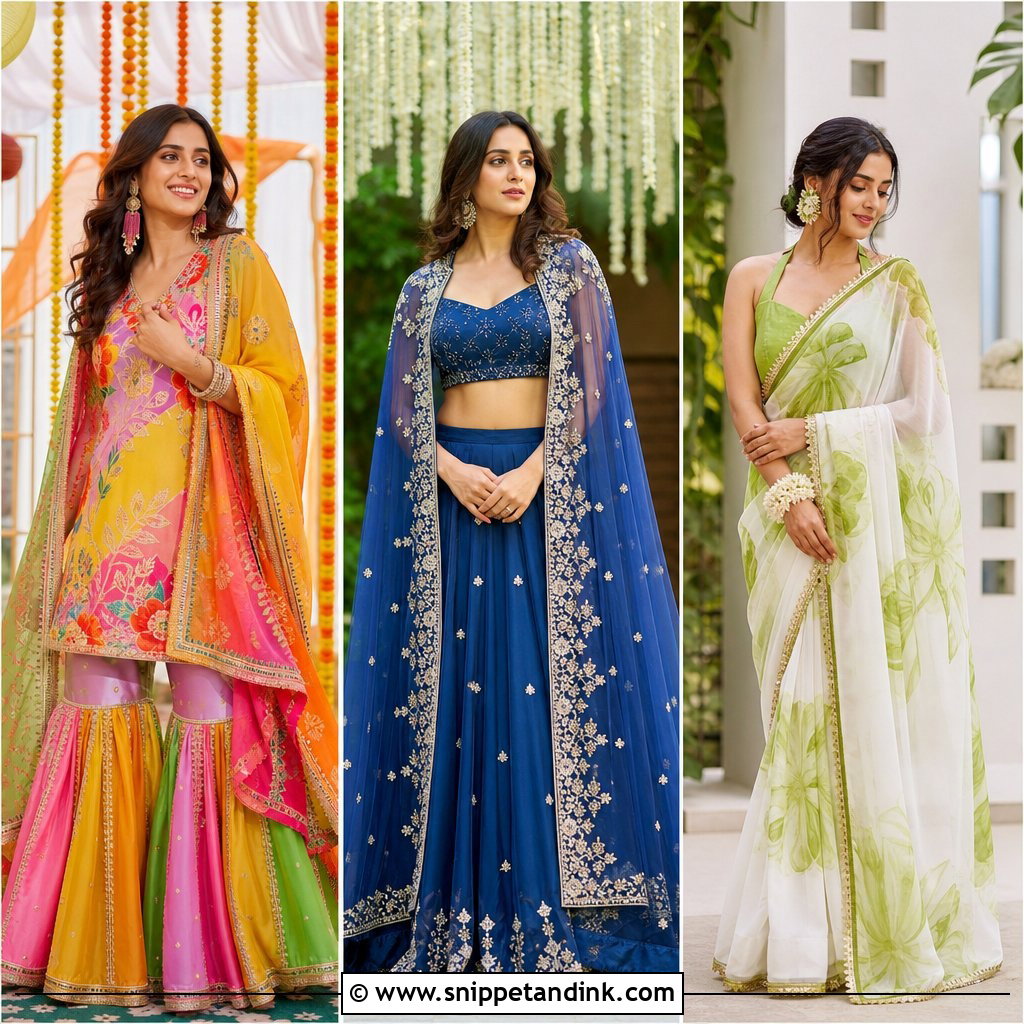
15. Color Block Mehndi Bridal Lehenga
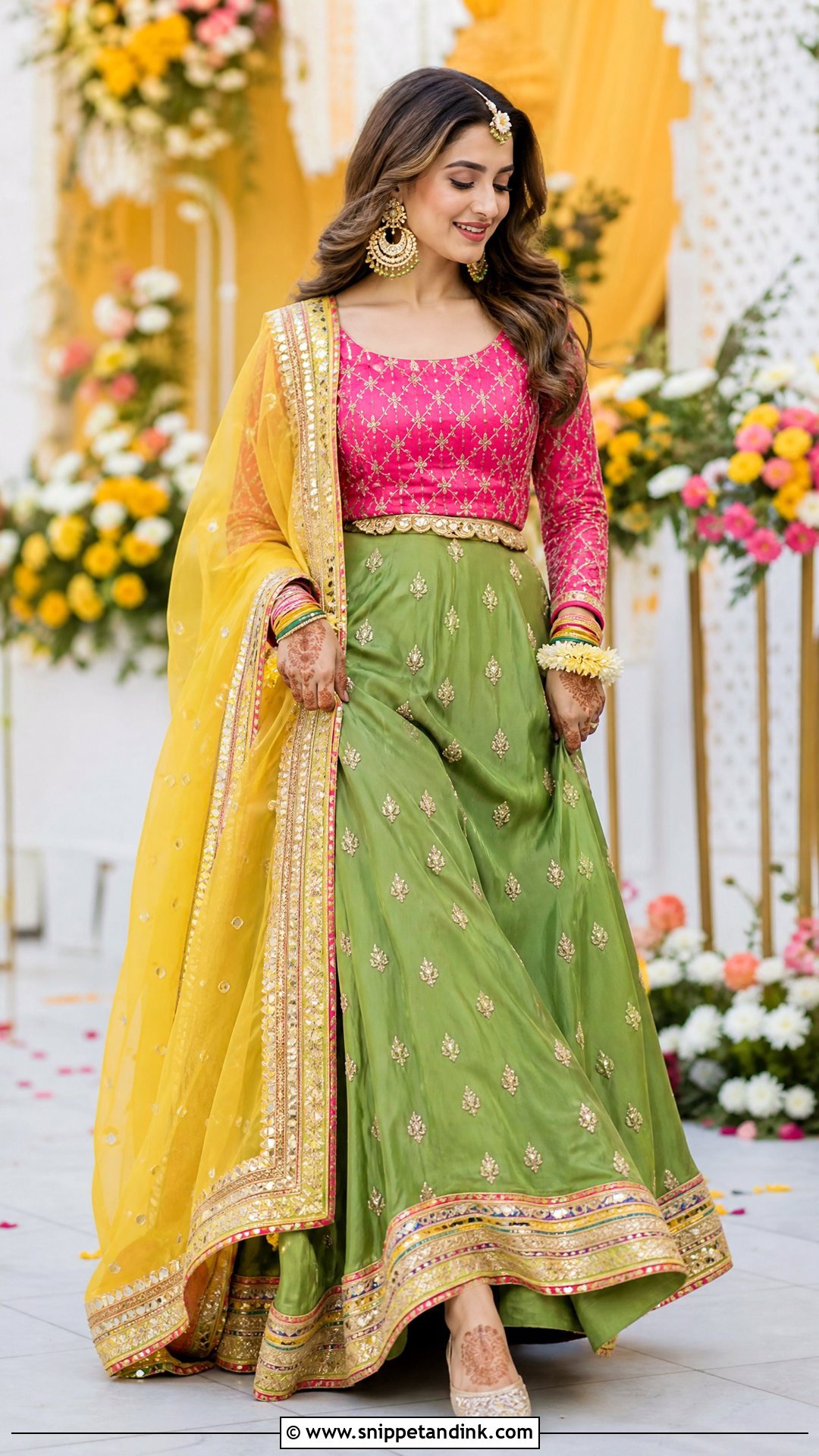
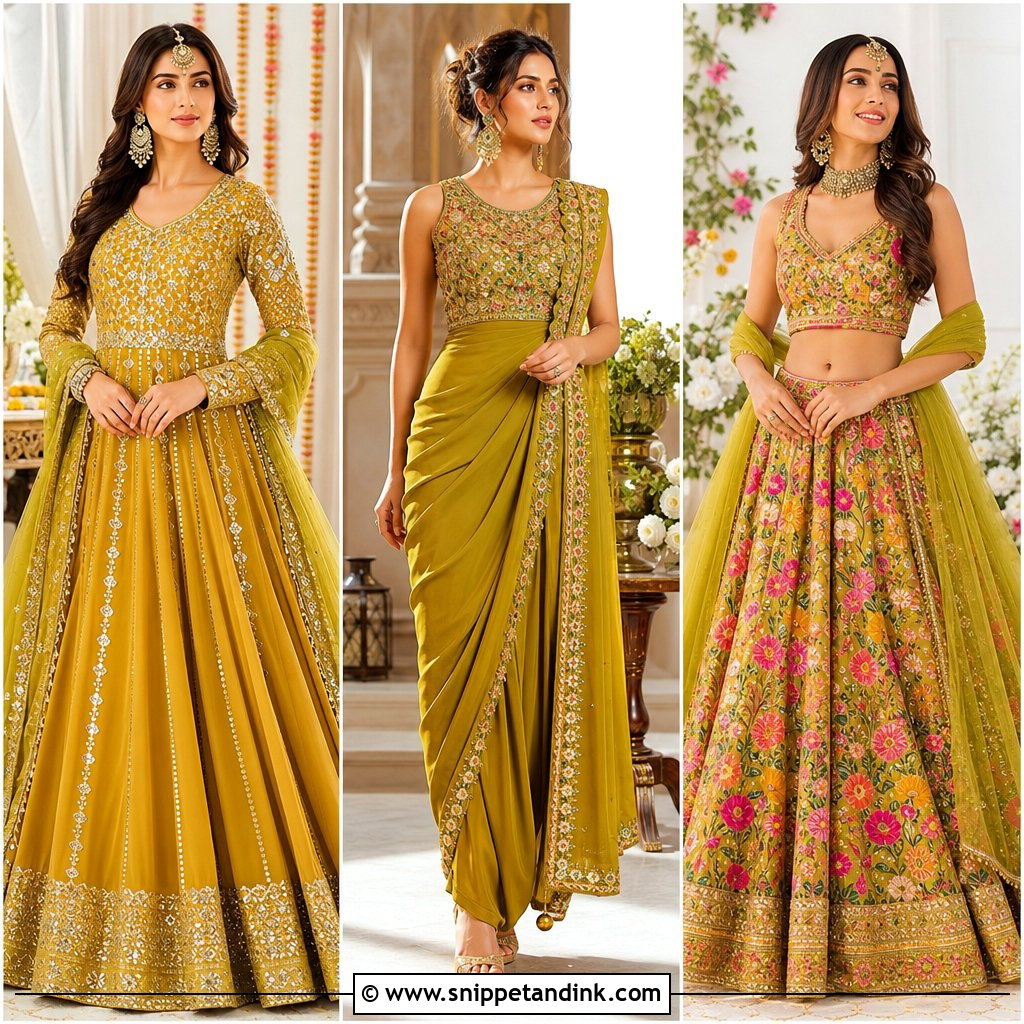
Color blocking works when the craft ties the blocks together. A green skirt, pink blouse and yellow dupatta, or paneled orange, turquoise and fuchsia, should share one gota border or floral motif across every piece. Choose one statement accessory, large chandbalis or a decorative tikka, and keep the rest lighter. A narrow belt secures the dupatta for dancing. My makeup rule with color blocking: match the lip to one of the smaller accent shades, never the dominant one, and keep the hair in a smooth ponytail.
16. Jacket Lehenga Mehndi Bridal Outfit
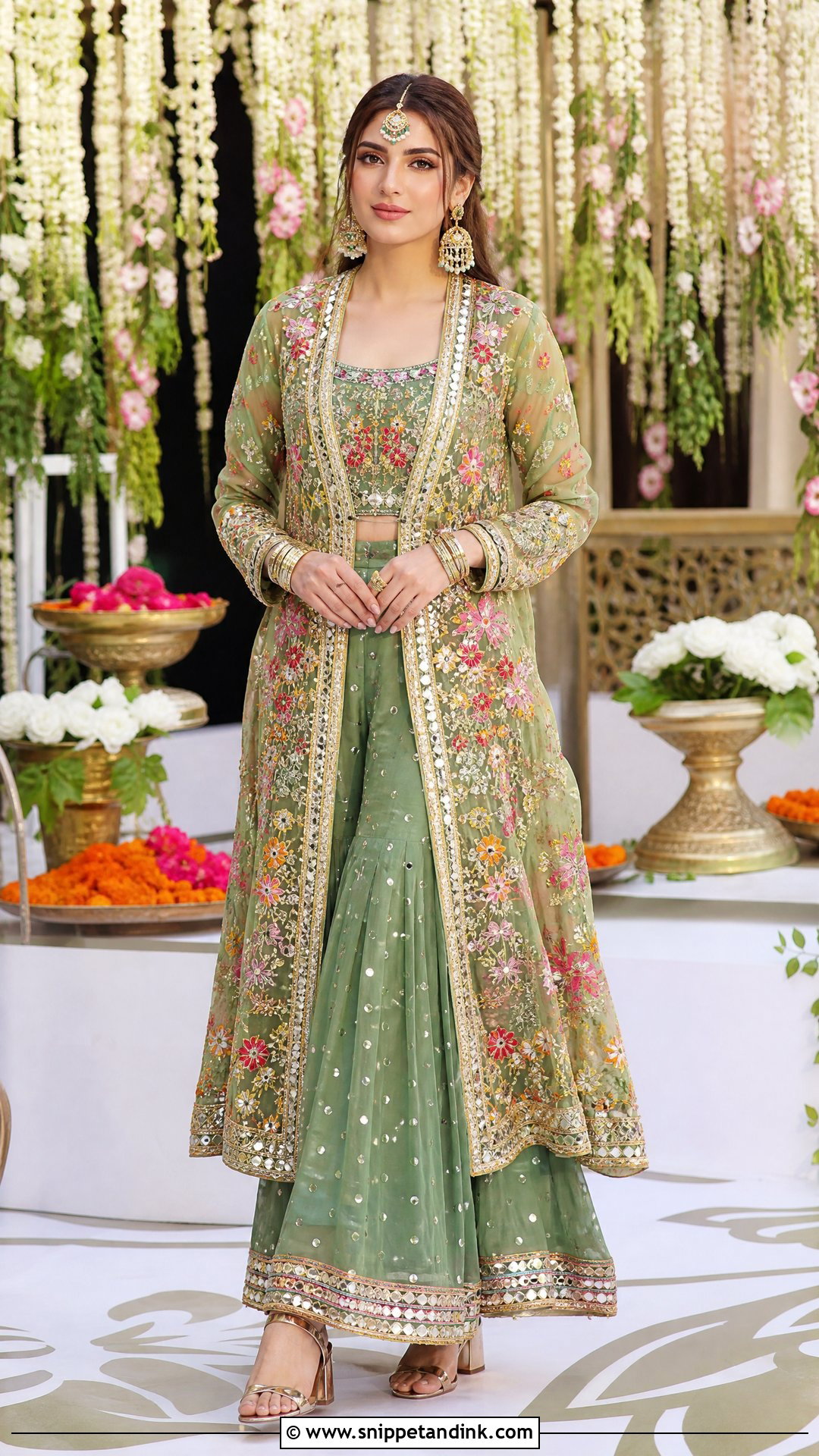
A long embroidered jacket gives drama and coverage at once, and it changes how the neckline reads, so I plan jewelry around it. A solid green, yellow or pink skirt with a fitted inner top goes under a front-open organza jacket with threadwork, mirrors and gota. The jacket should end clearly above or below the widest part of the skirt, not at it. Add a dupatta only if it does not hide the jacket. A sleek bun or long braid keeps the neckline visible, and neutral makeup with gold accents lets the outer layer lead.
17. Cape Sharara Mehndi Bridal Outfit
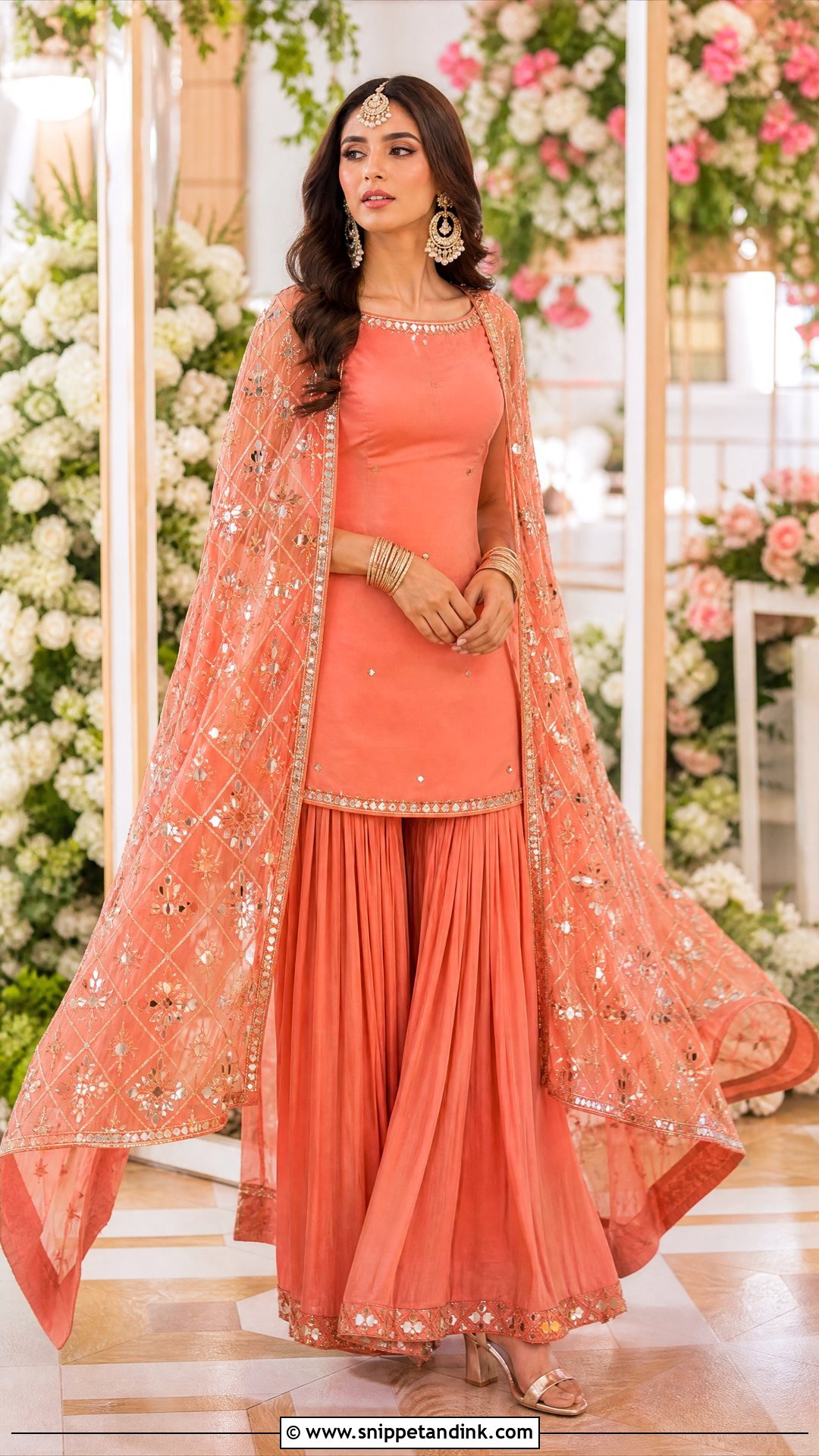
A cape sits across the shoulders and collarbone, which is exactly where long open hair would tangle in it, so a high ponytail is the practical choice as much as the stylish one. Pair a fitted sleeveless or short-sleeved kurti and a light embroidered cape with a fluid sharara in lime, turquoise, coral or fuchsia. Fine gota and mirrors keep the cape from going stiff. With the cape replacing the shoulder drape, a narrow dupatta over one arm is optional. Luminous skin, defined lashes and a pink or peach lip suit its modern feel.
18. Velvet Mehndi Bridal Lehenga
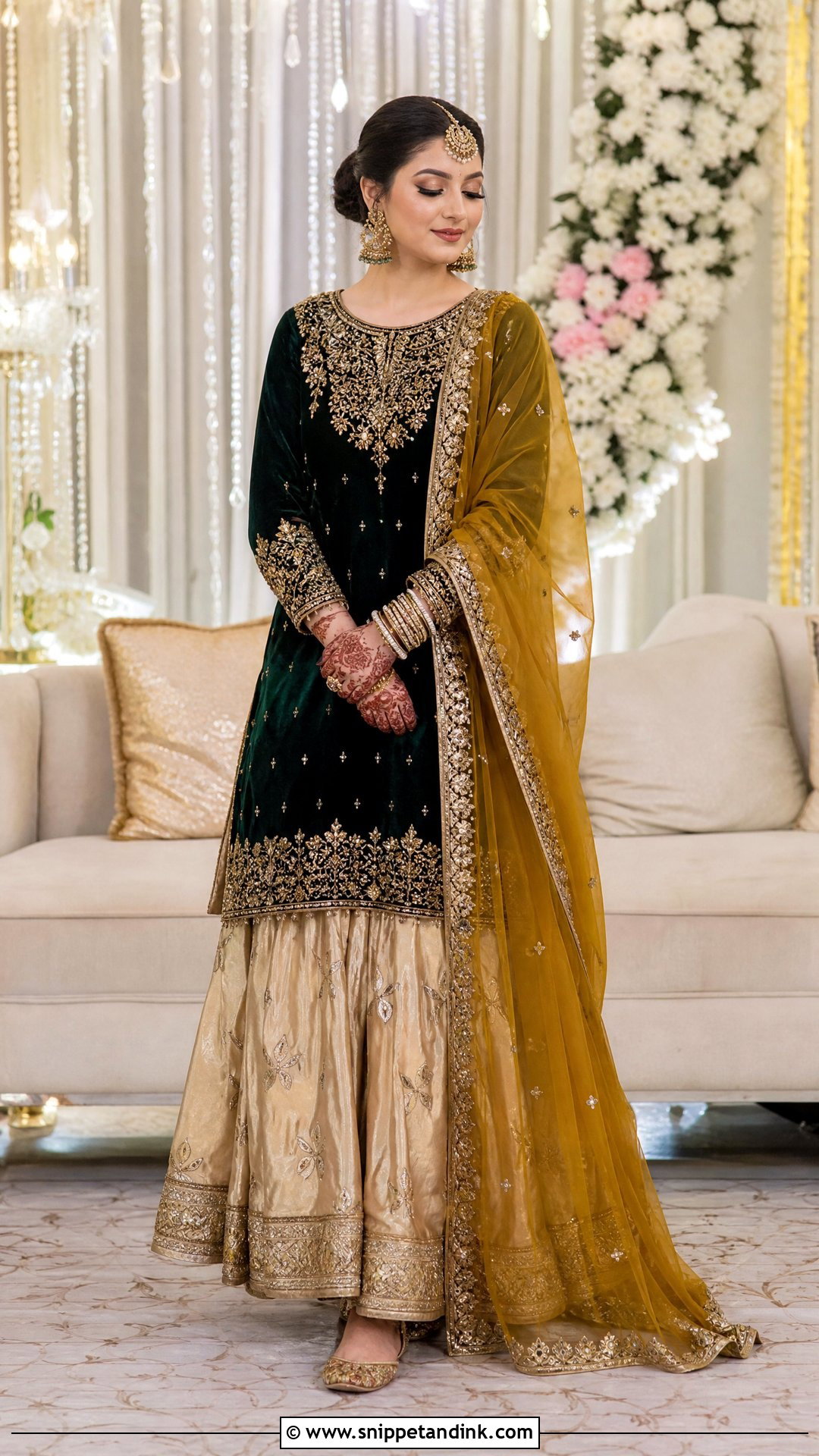
Velvet is warm, and a hot face is the fastest way to lose a base. For winter functions I like a bottle-green, mustard, plum or deep fuchsia velvet blouse over a lighter silk or organza lehenga, never a full velvet skirt in a heated indoor hall. Repeat the antique gold embroidery from bodice to hem. Long sleeves look regal but keep the henna off the wrists. I set the base more firmly than usual with velvet and finish with a low bun, softly smoked eyes and a muted berry lip.
19. Floral Print Mehndi Bridal Lehenga
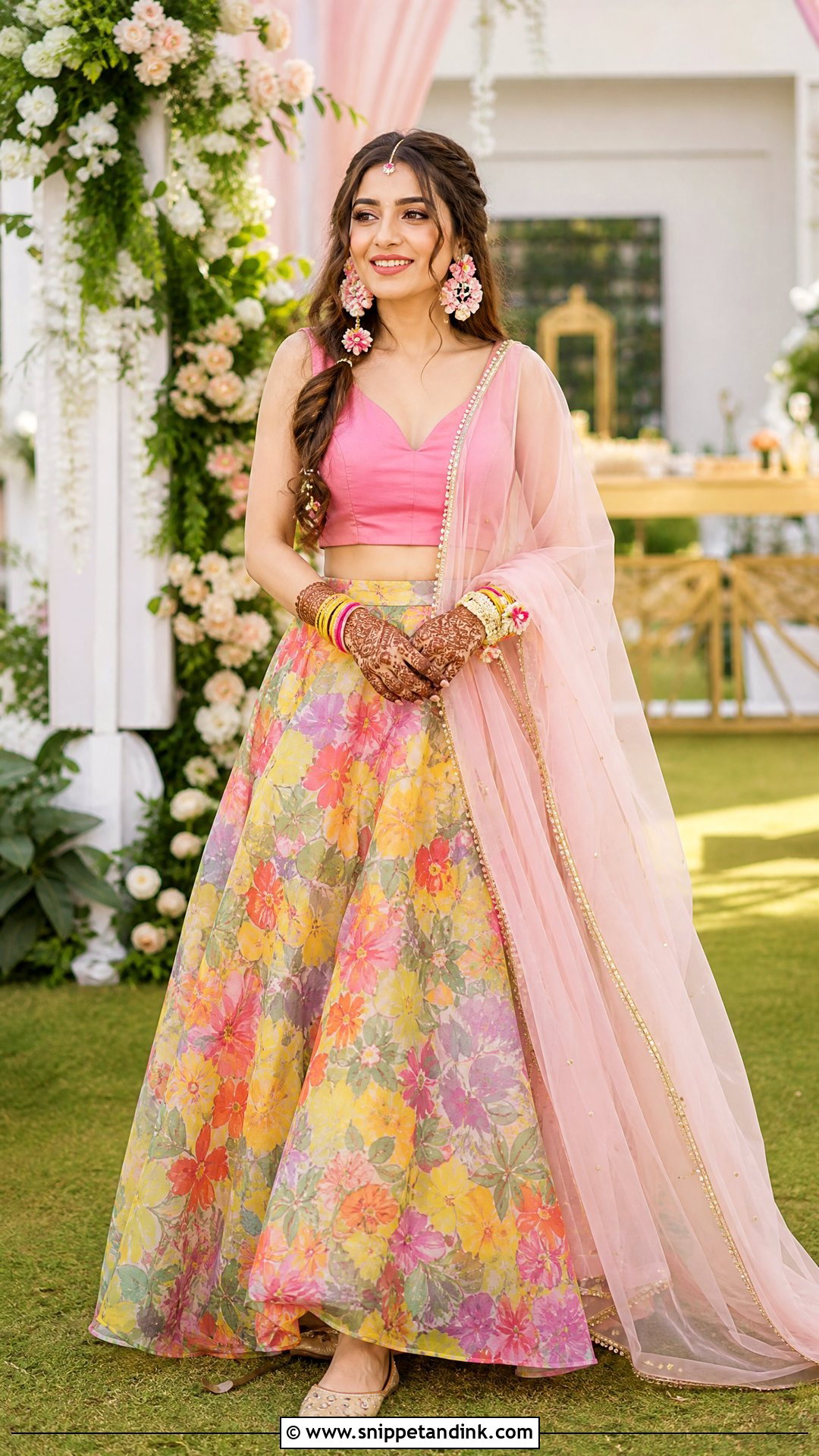
Prints carry color without the weight of embroidery, and that lightness counts on a long night. Look for a silk or organza lehenga with large, well-spaced flowers in yellow, pink, green and orange, and match the blouse to one shade from the print. Gota edging or a decorated waistband makes it bridal. Keep every other pattern off the outfit, including a busy dupatta. Daylight print photos favor fresh pink makeup and defined lashes over heavy contour, with loose waves or a soft braid.
20. Gold And Green Mehndi Bridal Pishwas
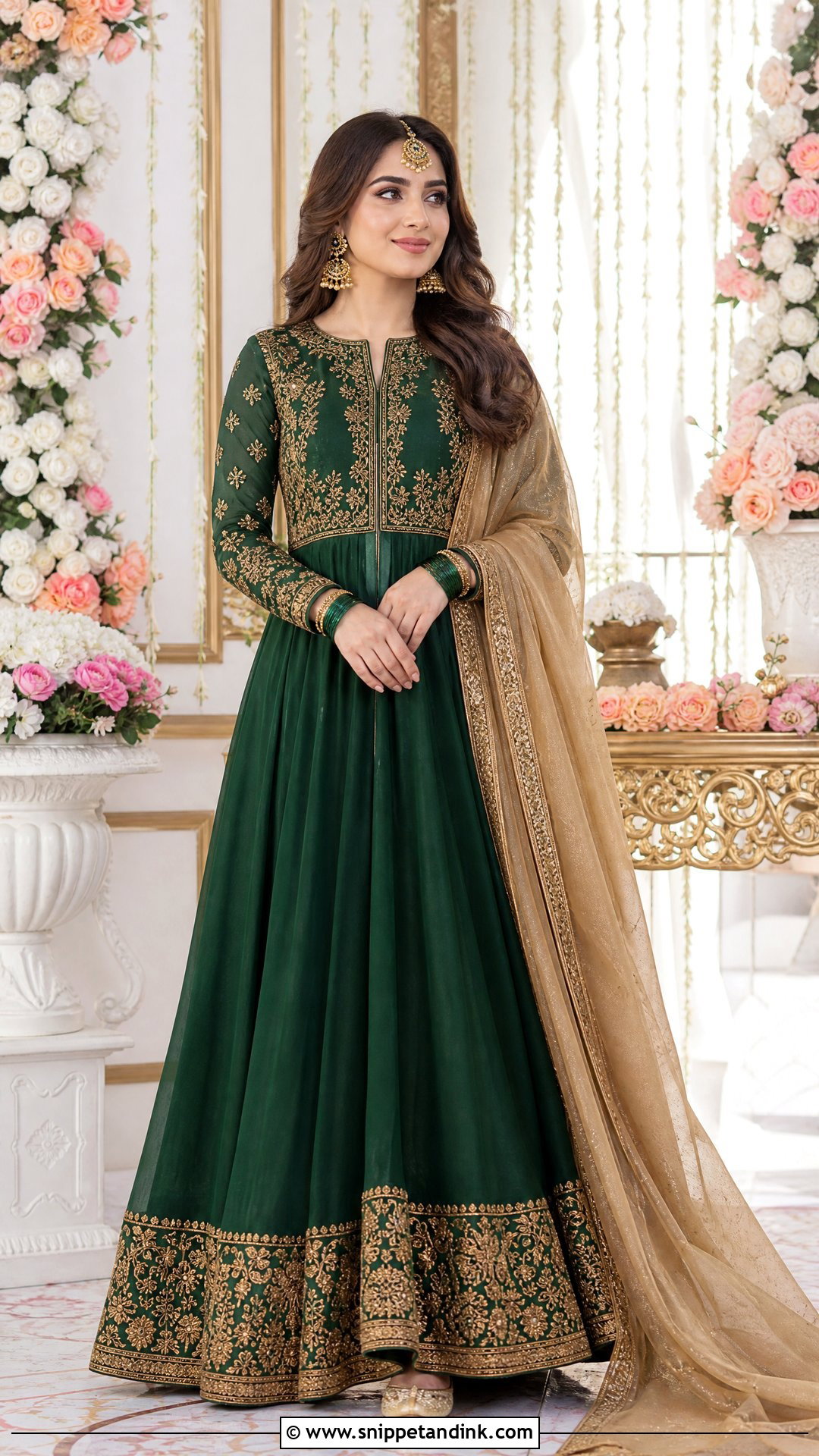
Gold and green is the quietest outfit here, and the one I would choose for a bride who dislikes multicolor. A bottle or leaf-green pishwas with antique gold embroidery at the bodice, sleeves and hem, plus a mustard or muted gold dupatta, looks rich and calm. Three-quarter sleeves balance coverage and leave the wrists clear for bangles and henna. Keep the skirt layers few enough that you can sit comfortably. Bronze eyes, warm blush and a soft brown-pink lip suit the palette, with a center-parted low bun.
Makeup That Outlasts Henna, Heat and the Dholki
A mehndi is often the longest and hottest evening of the wedding week, and the bride cannot touch her face for hours once the henna is on. I prepare the skin with that in mind: a light, mattifying primer where she gets oily, thin layers of base, waterproof liner and mascara, and a setting spray between layers. Heavy powder on top looks fine at the start and cakey by the end.
Because her hands are out of action, someone else carries the touch-up kit. Keep it small:
- Blotting papers, which lift oil without adding more powder
- Her lipstick and a lip liner
- Cotton buds for smudged liner
- A tiny pressed powder for the nose only
- Bobby pins for flowers that slip out of the braid
Ask whoever is helping to blot, not wipe, and to check her face before every round of photos. Also keep moisturizer and face products off her hands before the henna goes on, since a film of lotion on the skin can stop the stain from taking properly.
Start With the Color Closest to Your Face
Decide the silhouette first: a lehenga gives the most movement, while a gharara, sharara or pishwas gives comfort and coverage. Then judge the color by the piece that will sit nearest your face, usually the blouse or dupatta, and how it looks on your skin in daylight. Yellow and green remain the tradition, yet fuchsia, turquoise, purple, pastels and prints all hold their own. Build hair, jewelry and makeup as one decision with the outfit, not three separate ones. Then make sure the fabric breathes, the dupatta is secured and the shoes are comfortable, because the best mehndi look is the one you can dance in.
You'll Like These Ideas:


Leave a Reply