
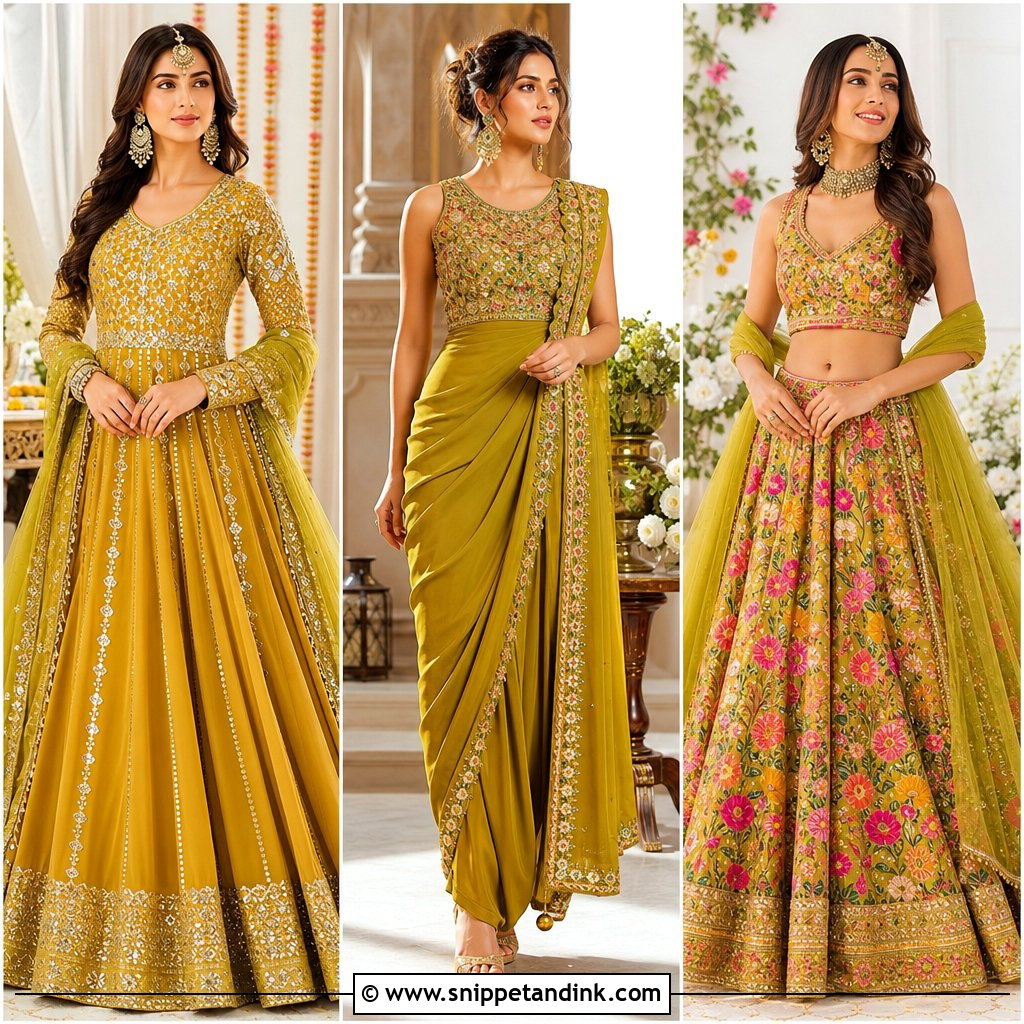
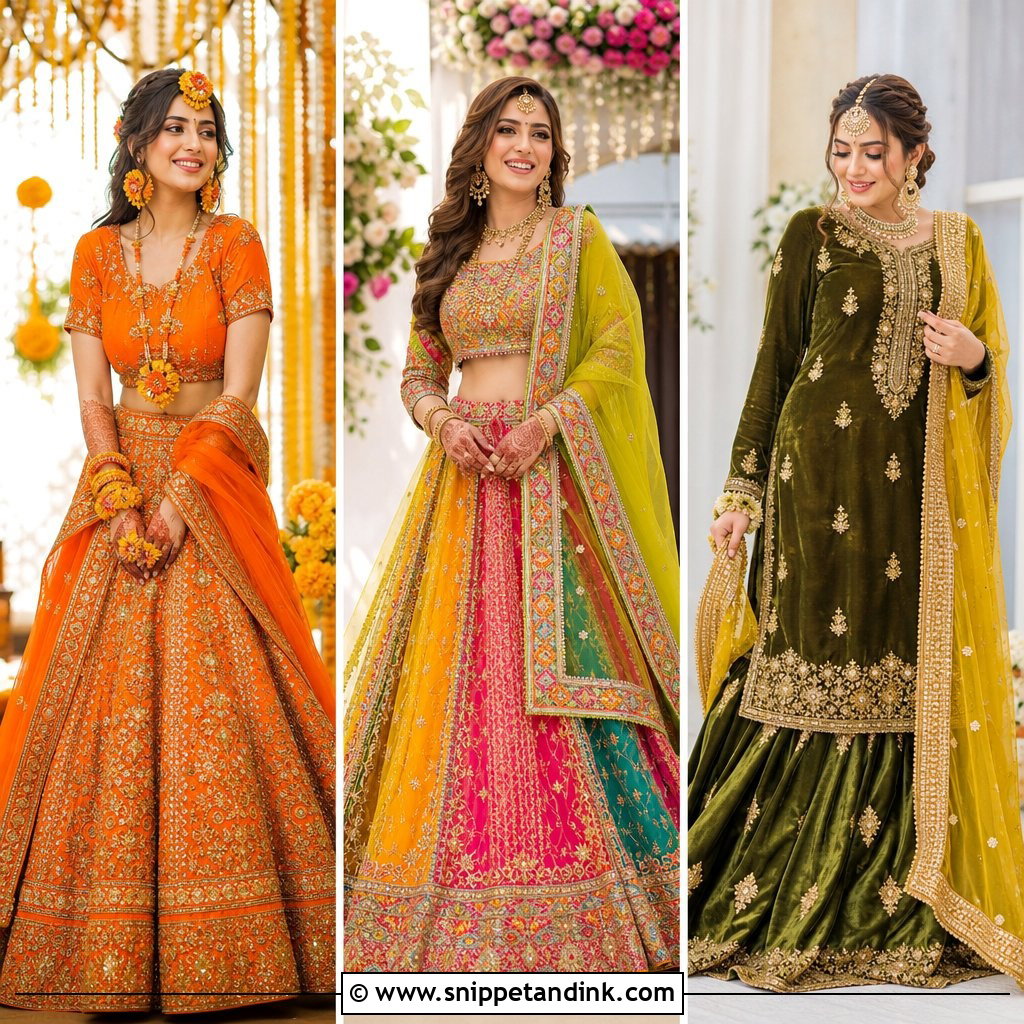
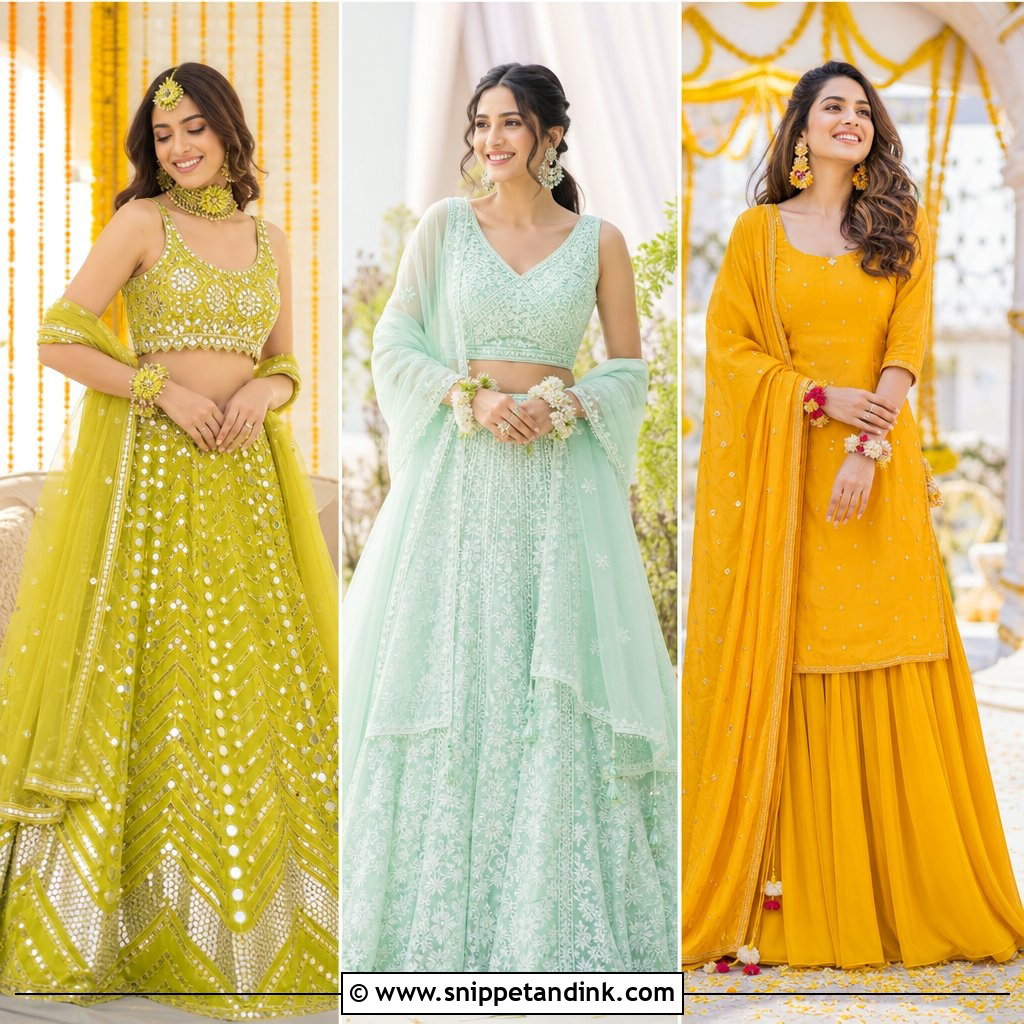
Mehndi green is the colour I reach for most when a client tells me she has three functions in one week and wants at least one outfit she’ll wear again. It sits between olive and leaf green, so it reads traditional next to marigolds and still looks fresh at an Eid lunch or a cousin’s dholki. It also takes almost any accent: gold, ivory, mustard, rani pink, orange, and mirror work all sit comfortably against it. The cut matters more than the colour, though. An anarkali, a sharara and a straight kurta set each behave very differently once you’re sitting cross-legged on a floor cushion or dancing at midnight, so the 25 looks below come with the practical notes I’d give you at a fitting.
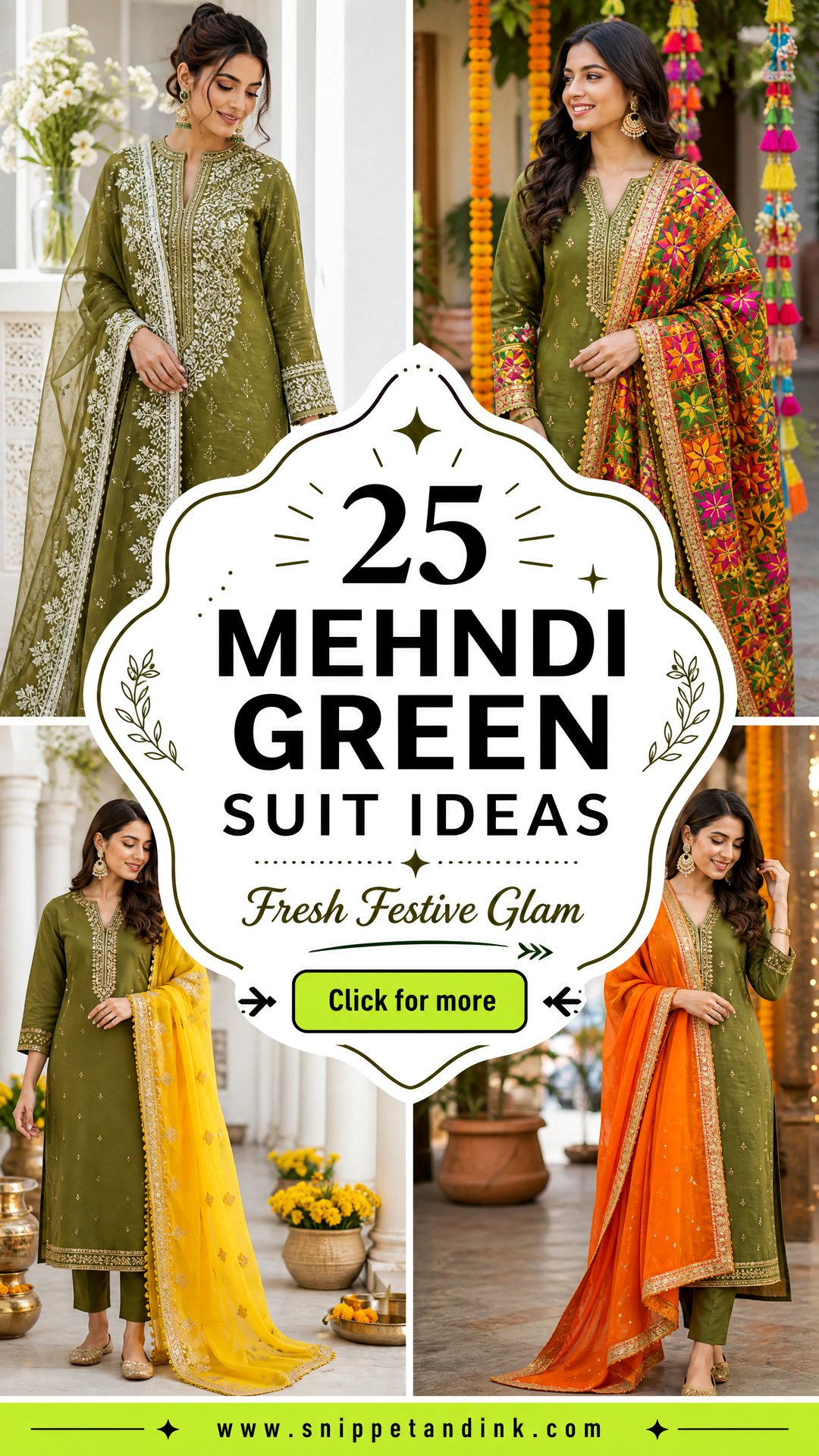
Which Mehndi Green Suits Your Skin, and the Lights at the Venue
Mehndi green isn’t one colour. Shops use the name for everything from a dusty olive to a bright parrot-leaning green, and the difference shows up clearly on skin and in photos. Before buying, I hold the fabric under the chin in daylight by a window, not under the shop’s white lights.
- Warm, olive or golden skin usually looks brighter in the yellower, henna-leaf version of the shade.
- Very fair skin with pink undertones can look ruddy next to olive green; a slightly cleaner, brighter green is kinder.
- Deep skin tones carry both versions well, but the dull olive can flatten in photos, so add a bright dupatta near the face.
- Evening mehndis are often lit with warm fairy lights and tungsten bulbs, which push green toward brown. If your event is at night, pick a shade a touch brighter than you’d choose for daytime.
Also ask what the bride is wearing. Many brides choose green or yellow for their own mehndi, and a guest in the exact same shade standing next to her is the kind of thing families remember. If she’s in green, move toward a lighter, sage-leaning tone or let a contrast dupatta dominate your look.
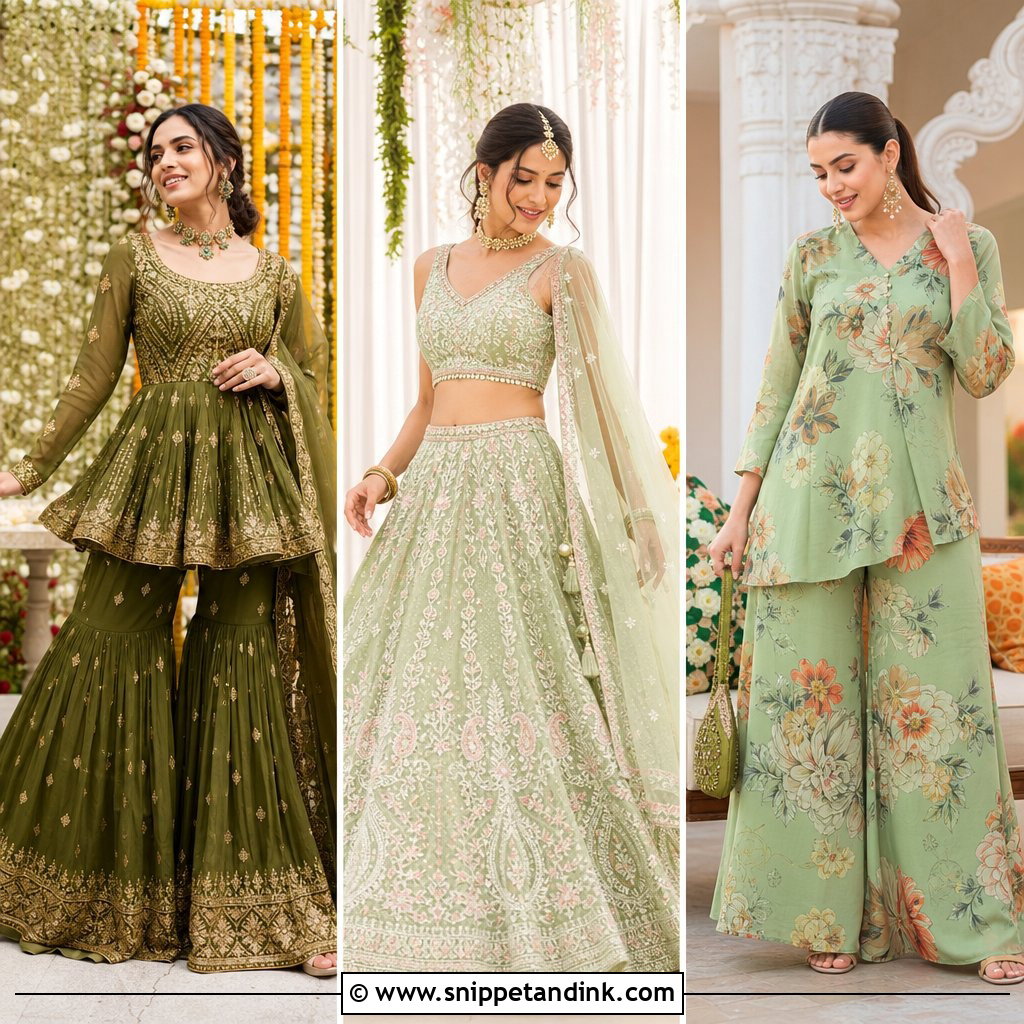
1. Mehndi Green Anarkali Suit
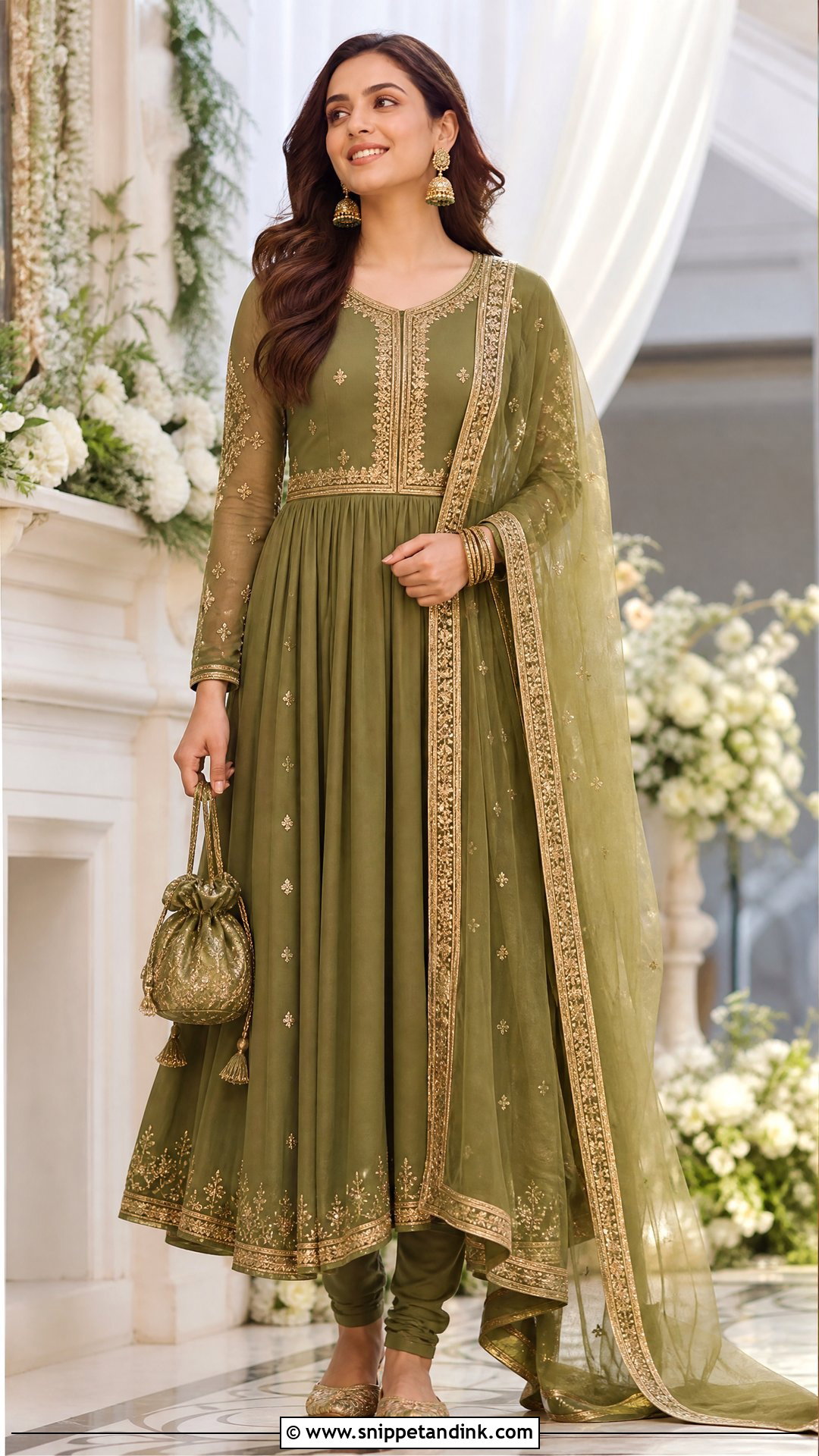
The anarkali is the safest silhouette in this list because the flare starts high and hides how you’re sitting. Calf length is easier than floor length at a mehndi, where the floor is often covered in rugs and you’ll be stepping over trays and dholak players. Gold zari or a few mirror details on the yoke are enough. Slim churidar underneath keeps the flare as the main shape, and a chiffon or organza dupatta stops the whole thing from feeling heavy. I’d only warn you about kalidar panels in stiff fabric: they balloon when you sit, and you’ll spend the evening pushing them down.
2. Mehndi Green Sharara Suit
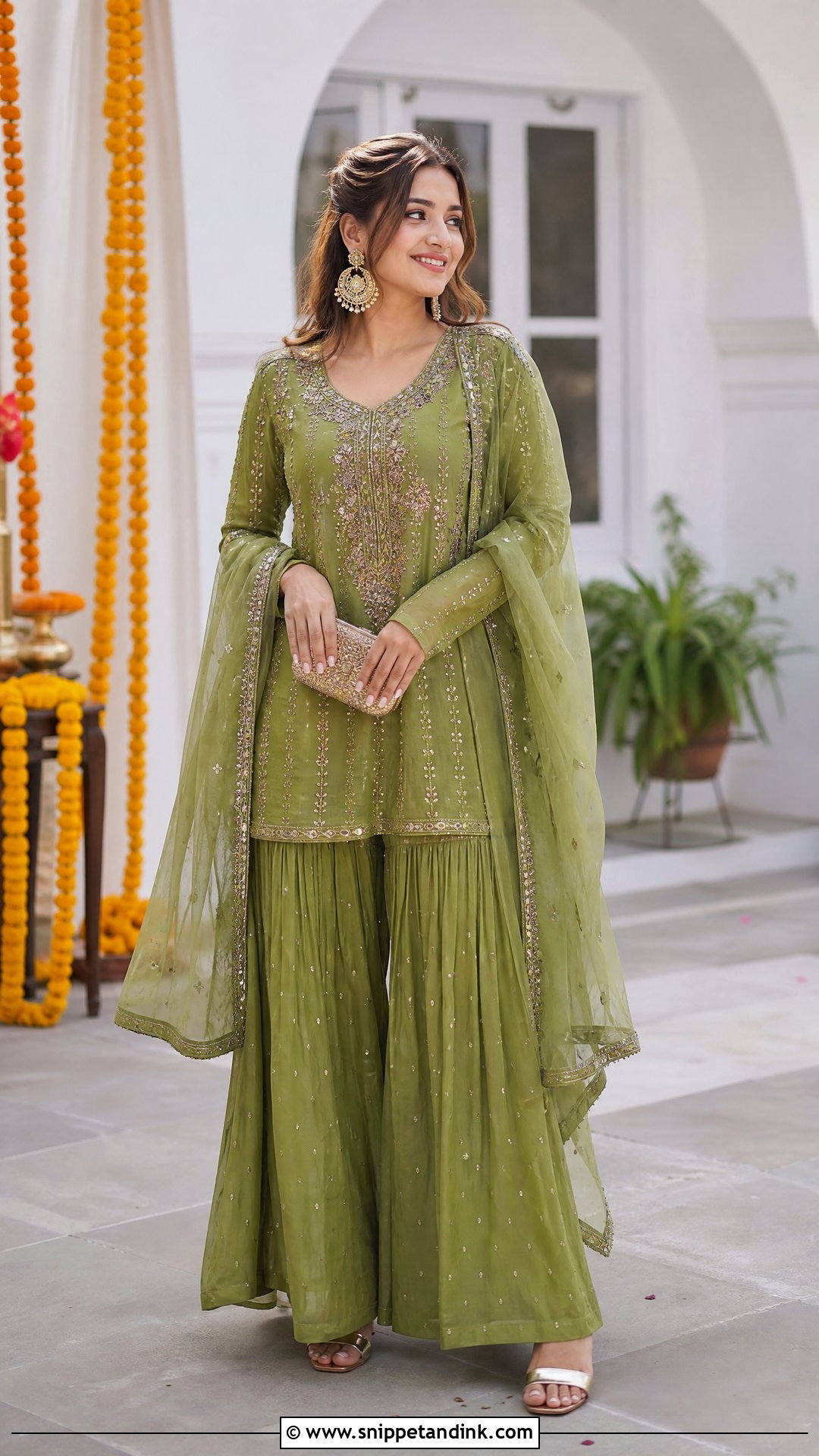
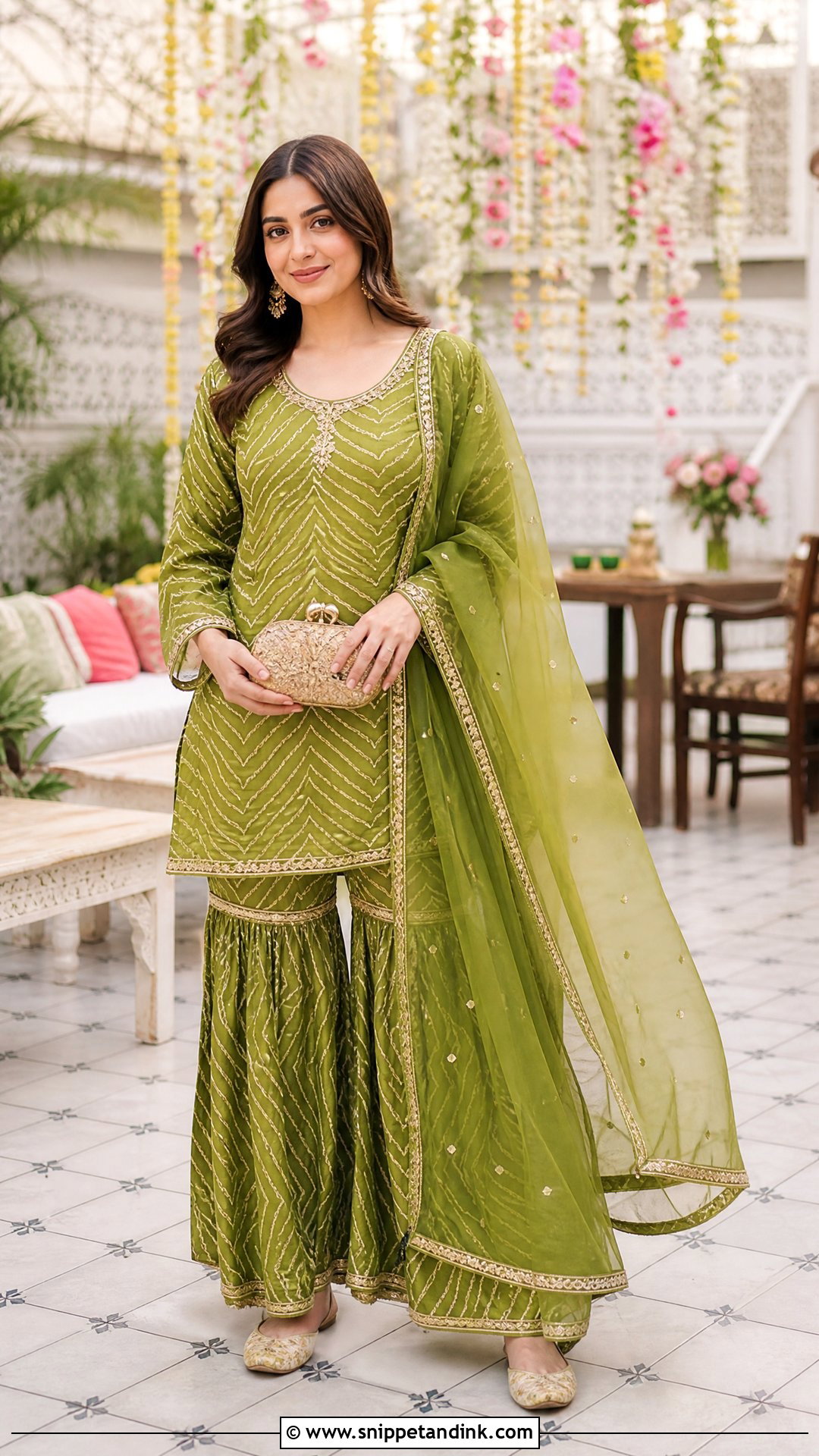
A mehndi green sharara suit is my first suggestion for anyone who plans to dance. The wide legs move with you, and a short or mid-length kurta keeps the proportions balanced. Gota patti, mirror work or a little sequin on the kurta suits a mehndi night. One thing to check at the trial: the sharara hem should just clear the floor in the shoes you’ll actually wear, because an inch too long and it collects henna, petals and the edge of every chair. A peach or yellow dupatta gives a cheerful contrast; chandbalis and a round clutch finish it.
3. Mehndi Green Palazzo Suit
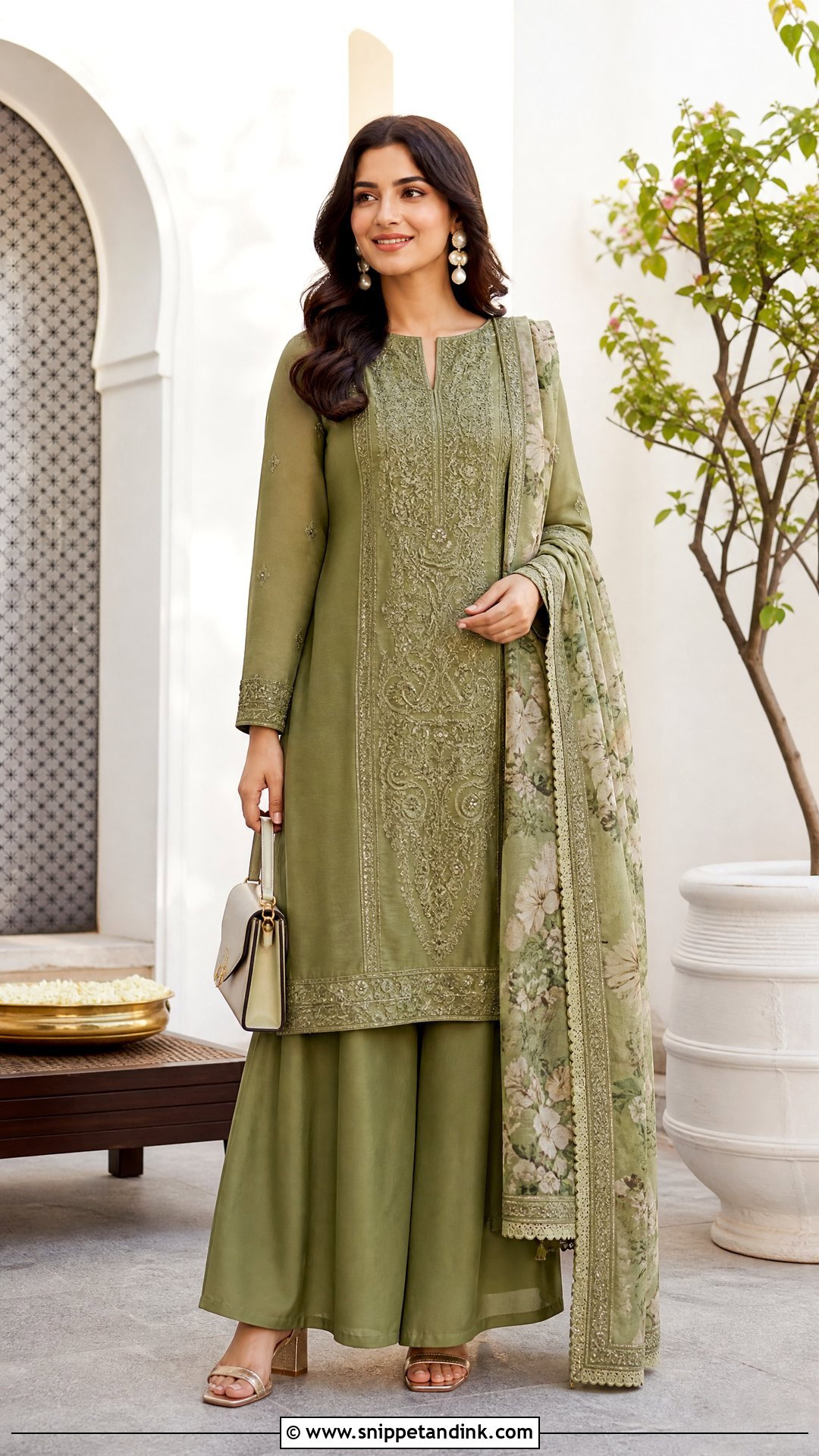
Palazzos are the most forgiving option for a hot afternoon. Air moves through them, and they don’t cling the way churidar does once you’ve been sitting for an hour. Pair them with a straight kurta that has side slits high enough to let you walk freely, otherwise the kurta pulls across the thighs with each step. Keep the embroidery to the neckline, cuffs or hem, add an embroidered or printed dupatta, and wear block heels if the event is on grass. It’s an easy set to rewear for office Eid lunches afterwards.
4. Mehndi Green Gharara Suit
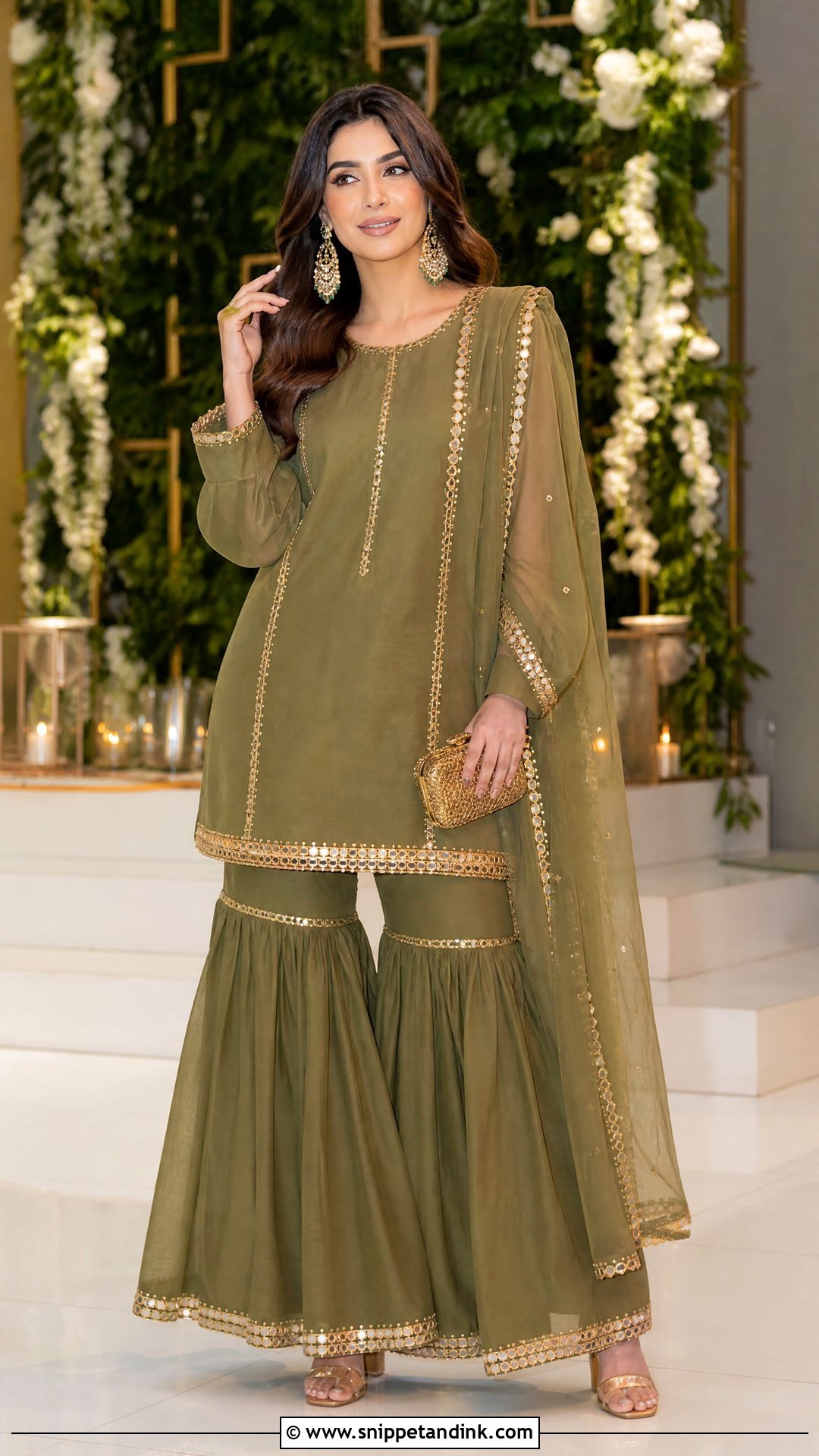
The mehndi green gharara suit is all about the knee joint, where the fitted upper leg breaks into the flared lower panels. A kurta that’s too long covers that join, so I usually ask for it to stop around mid-thigh. Gota or zari lace at the join and hem gives you richness without adding jewellery. Ghararas are heavier than they look, especially in raw silk, so plan on sitting more than dancing. A net dupatta with a border, statement earrings and a small tikka (only if the bride’s family is fine with it) suit a sister or close cousin.
5. Mehndi Green Churidar Suit
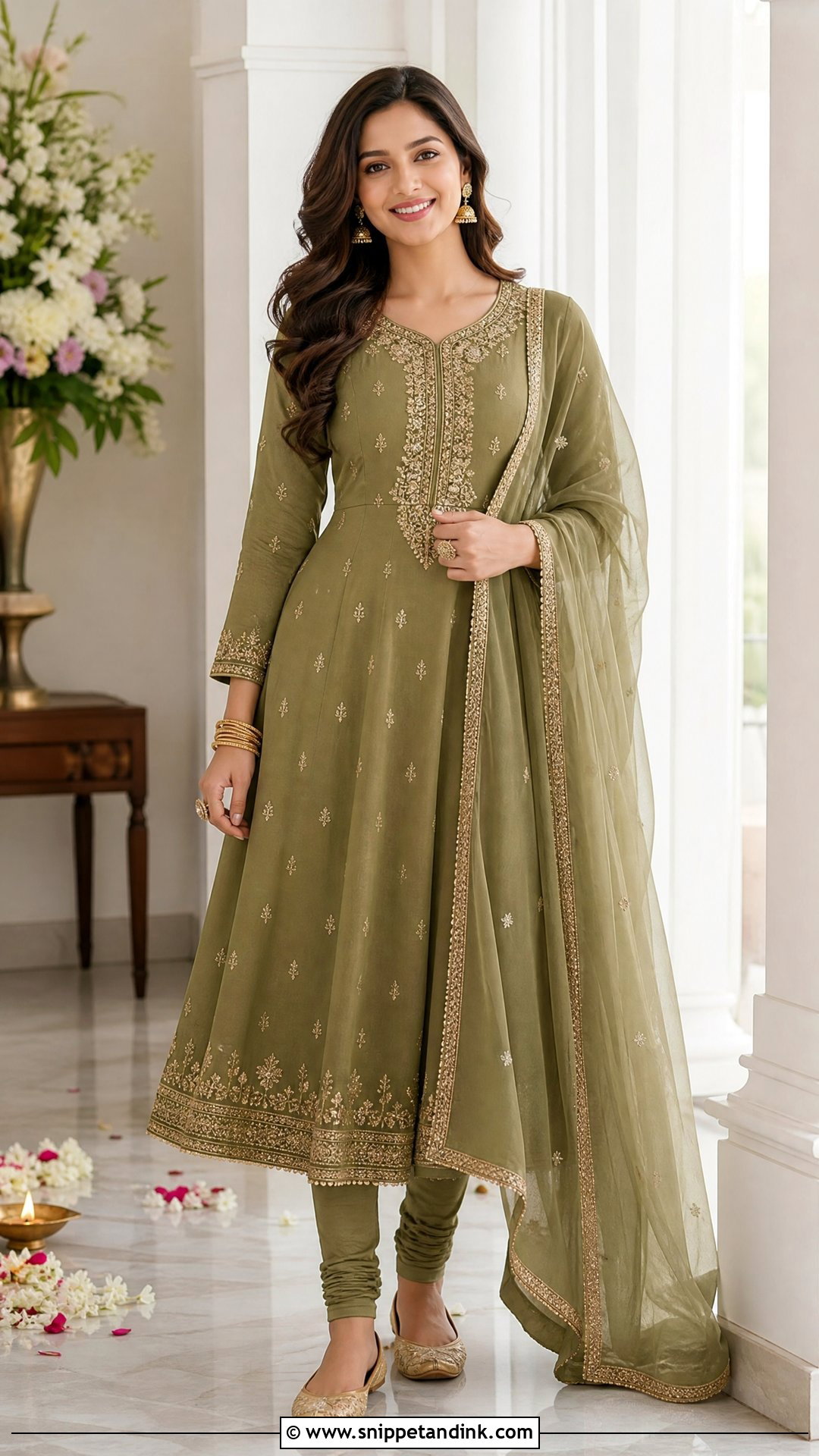
Churidar is the most classic cut here and the least forgiving to fit. The gathers at the ankle should be soft folds, not a tight tube, and if you’re between sizes go up and have the tailor take in the calf. A silk or georgette kurta with embroidery at the neck and sleeves dresses it up; cotton silk with a printed dupatta works for smaller family events. Pointed juttis and small gold earrings keep it modest and neat. If you have long legs it’s very flattering; on petite frames I’d keep the kurta at knee length so it doesn’t cut you in half.
6. Mehndi Green Straight Pant Suit
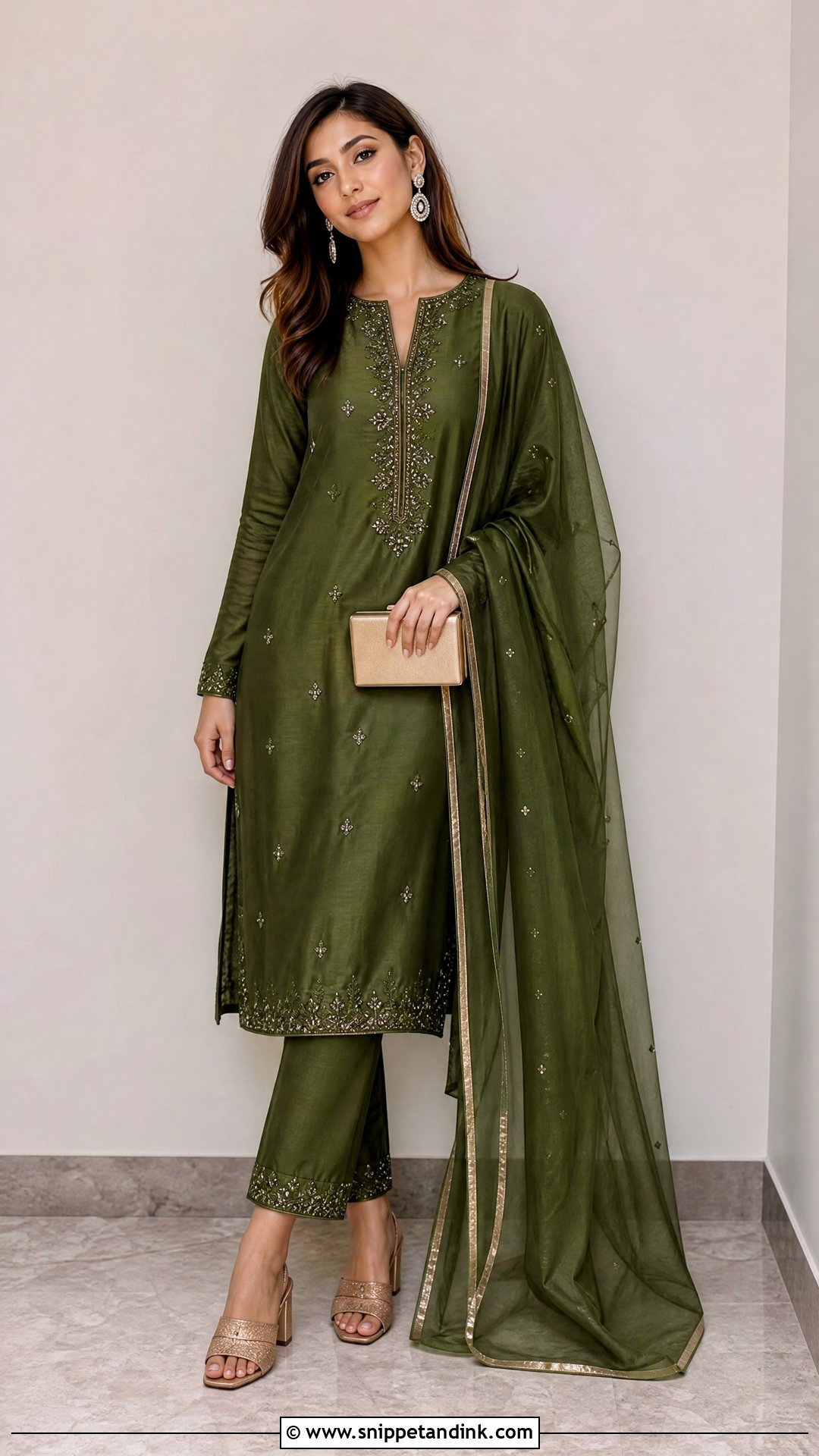
Straight pants and a straight kurta give one long vertical line, which is why this set looks modern without trying. The fabric has to be weighty enough to hang, though. Thin crepe in this cut shows every crease from the car seat. Put the embroidery at the neckline or down the front placket, choose a sheer dupatta with a fine gold border, and add block heels and a box clutch. I like it for office festive events and family dinners where a sharara would feel like too much.
7. Mehndi Green Mirror Work Suit
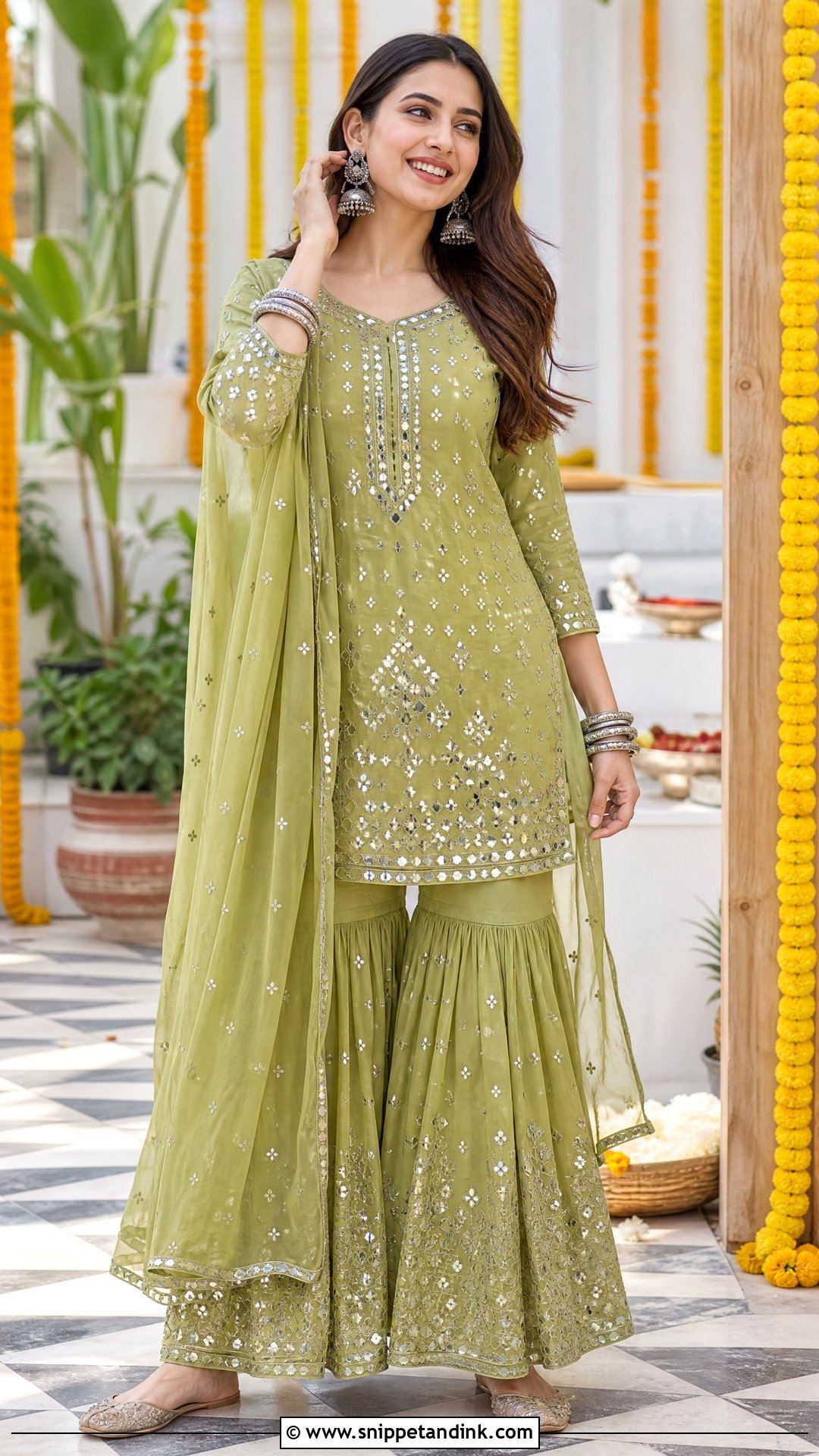
Mirror work gives sparkle in daylight in a way sequins don’t, because each little disc throws a flash rather than a glitter. That’s also its weakness: under strong flash photography, heavily mirrored panels can blow out into white spots. I’d keep the mirrors on the kurta and leave the dupatta plain, or the reverse. A short kurta with sharara is playful; a straight kurta with pants is cleaner. Silver or oxidised jewellery suits it better than yellow gold. Check the inside of the kurta too, since the stitching behind mirrors can scratch bare arms.
8. Mehndi Green Gota Patti Suit
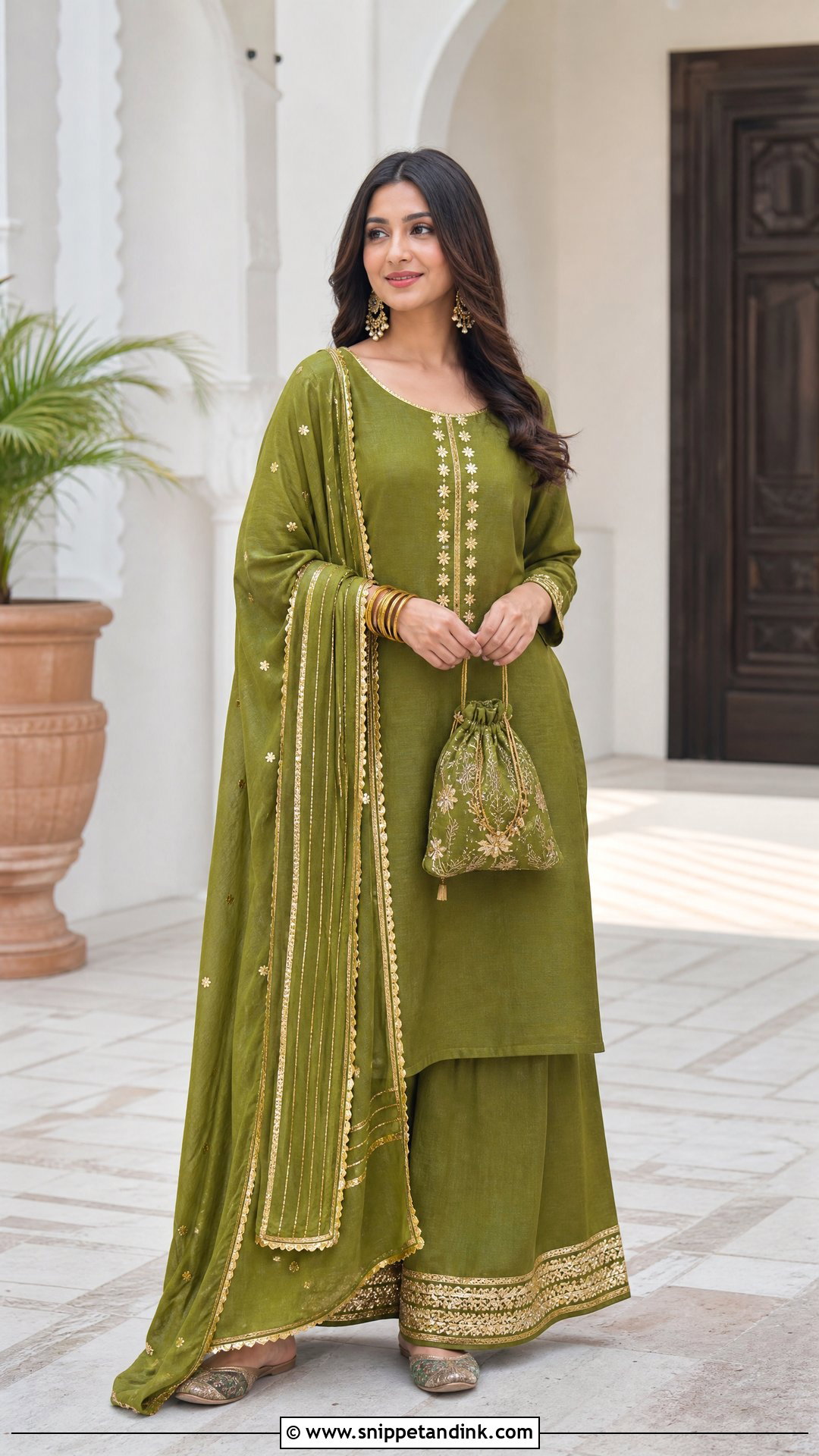
Gota patti is woven metallic ribbon, appliquéd onto borders, sleeves and dupattas, and it gives that warm flat shine you see at Rajasthani and Pakistani mehndis. Pair it with a straight kurta and palazzos, or a flared anarkali with a light dupatta. Keep the accessories gold-toned so the trim isn’t fighting silver. Real gota is lighter than the plastic-backed imitation, which can crack along the folds after a few wears. For outdoor events choose georgette, organza or cotton silk underneath it, because gota on heavy silk gets warm quickly.
9. Mehndi Green Embroidered Suit
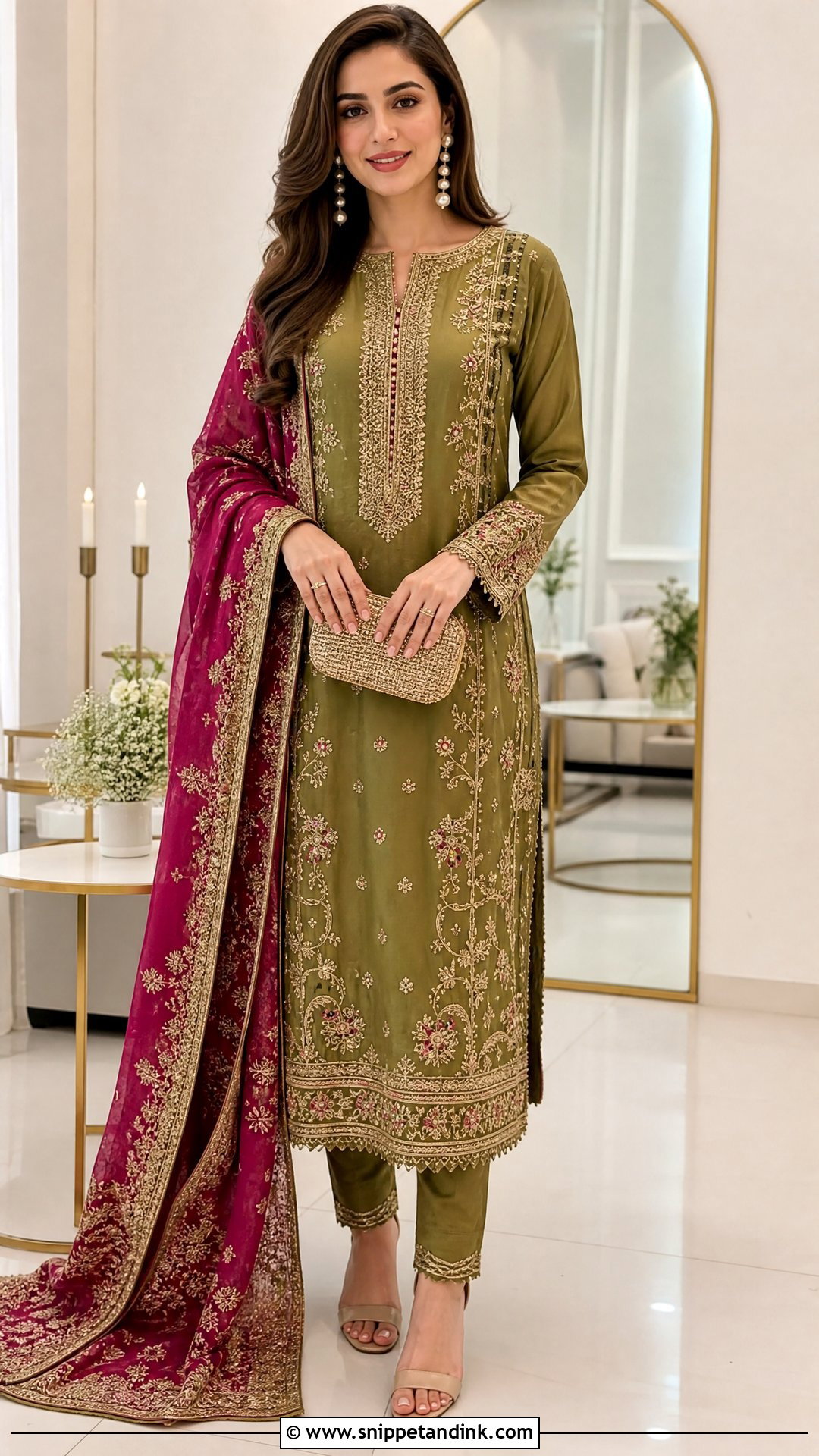
Plain embroidered suits live or die by matching the embroidery to the hour. Fine threadwork reads well in daylight; zari, sequins and beads only start to shine once the lights are low. If you can only buy one, pick resham threadwork with a little zari mixed in, since it holds up at both. A straight kurta with pants is the calm version, a sharara set the party version, and the dupatta can be matching or a contrast depending on how much colour you want. Chandbalis or pearl studs both suit it.
10. Mehndi Green Silk Suit
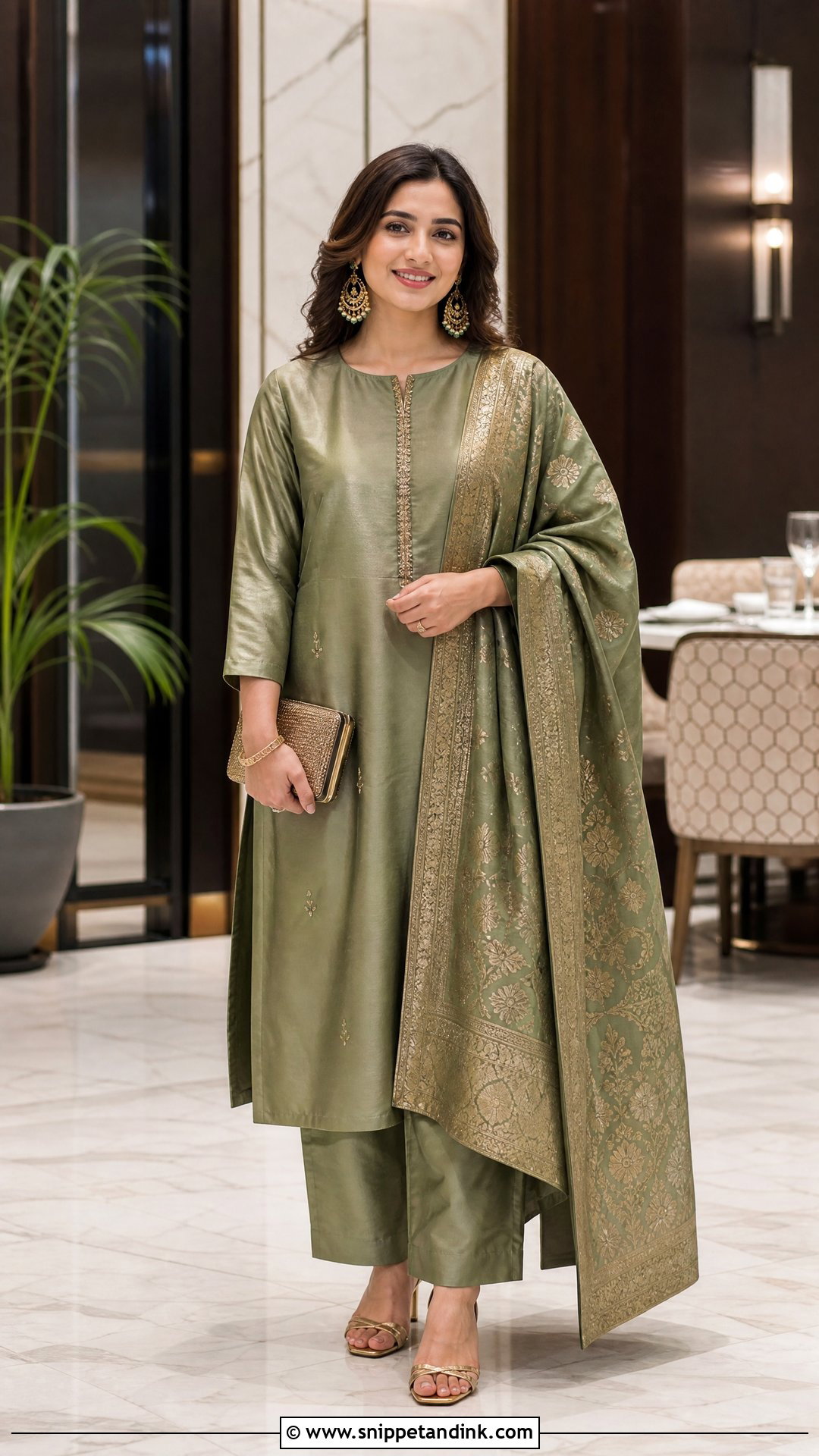
Silk does half the work here because of its sheen, so I hold back on the embroidery. A silk straight kurta with matching pants looks composed; a silk anarkali feels more regal. The catch with silk is creasing: it shows every fold from sitting, and pure silk doesn’t bounce back the way a silk blend does. A Banarasi dupatta, or organza with a gold border, adds richness without competing. Kundan earrings, metallic heels and a slim clutch complete it, and it suits formal dinners and evening functions better than a daytime mehndi in the heat.
11. Mehndi Green Cotton Suit
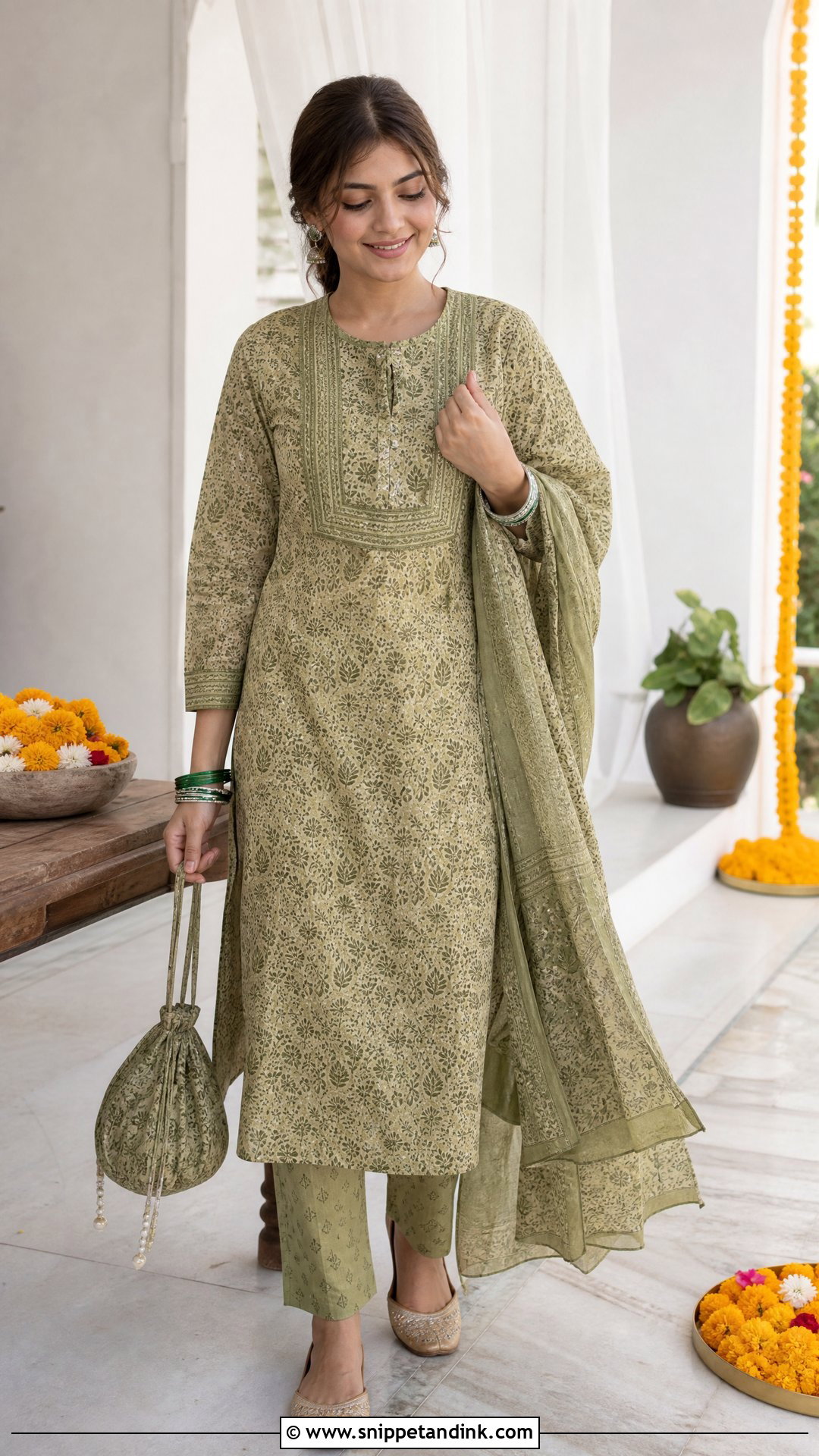
Cotton is the honest choice for summer daytime events and home functions, where you’ll be serving food, lifting nieces and sitting on the floor. Mulmul and cambric breathe; anything with a starched finish softens after one wash, so try it on post-wash if you can. A printed kurta with straight pants, or a lightly embroidered one with a soft dupatta, keeps it festive enough. White, beige, mustard or pink accents freshen the green. Glass bangles, juttis and a crossbody potli let you keep your hands free.
12. Mehndi Green Chikankari Suit
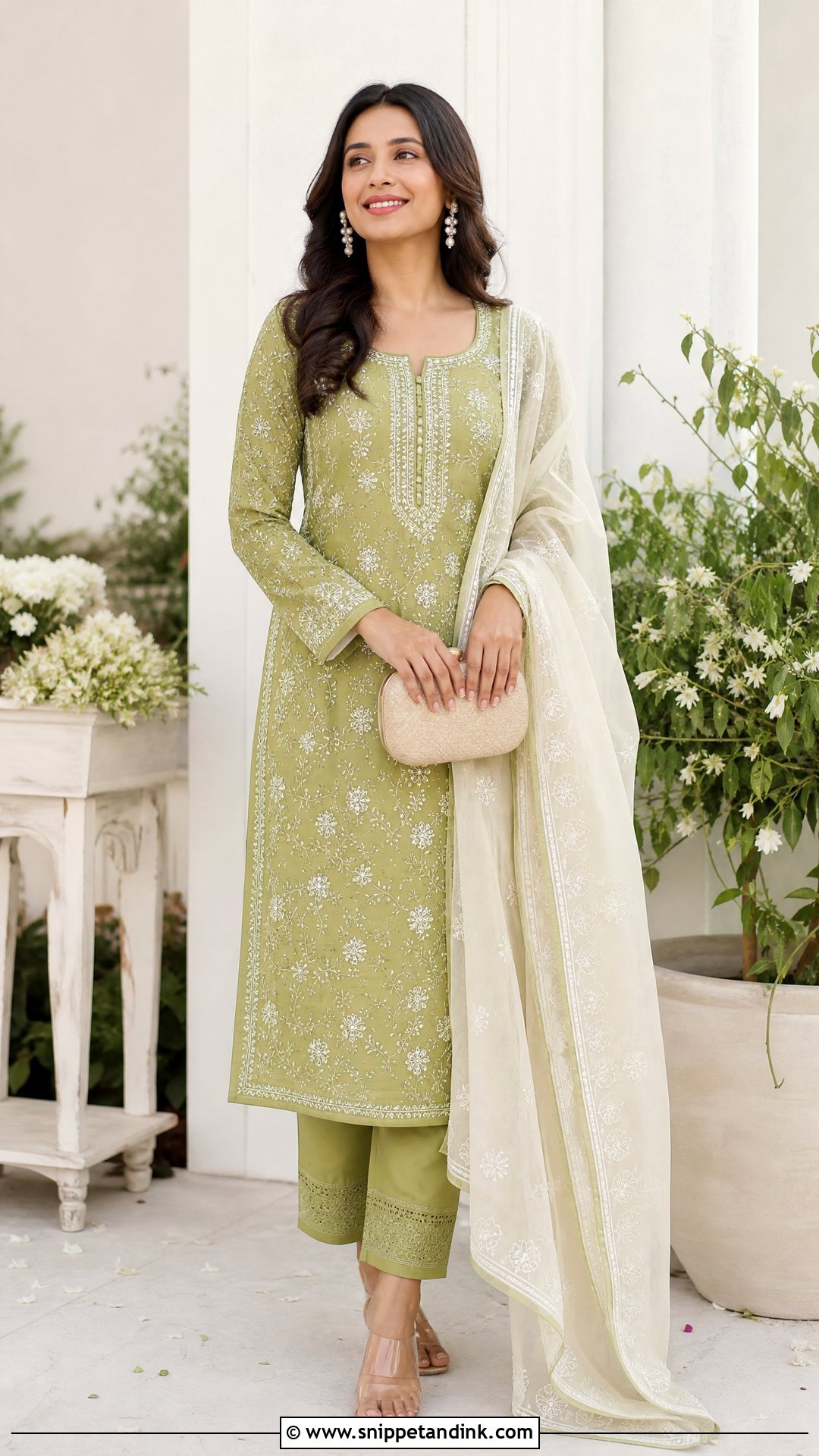
Chikankari is shadow work and fine white or tonal stitching on a light fabric, so it never looks loud. On mehndi green the tonal version is more striking than white thread, which can look a bit busy against such a saturated base. A straight chikankari kurta with matching pants suits daytime; a chikankari anarkali feels dressier. Wear a slip underneath if the georgette is sheer. Pearls, nude sandals and a soft gold or ivory dupatta keep it refined. Hand chikankari should be hand washed; the machine pulls the knots.
13. Mehndi Green Phulkari Dupatta Suit
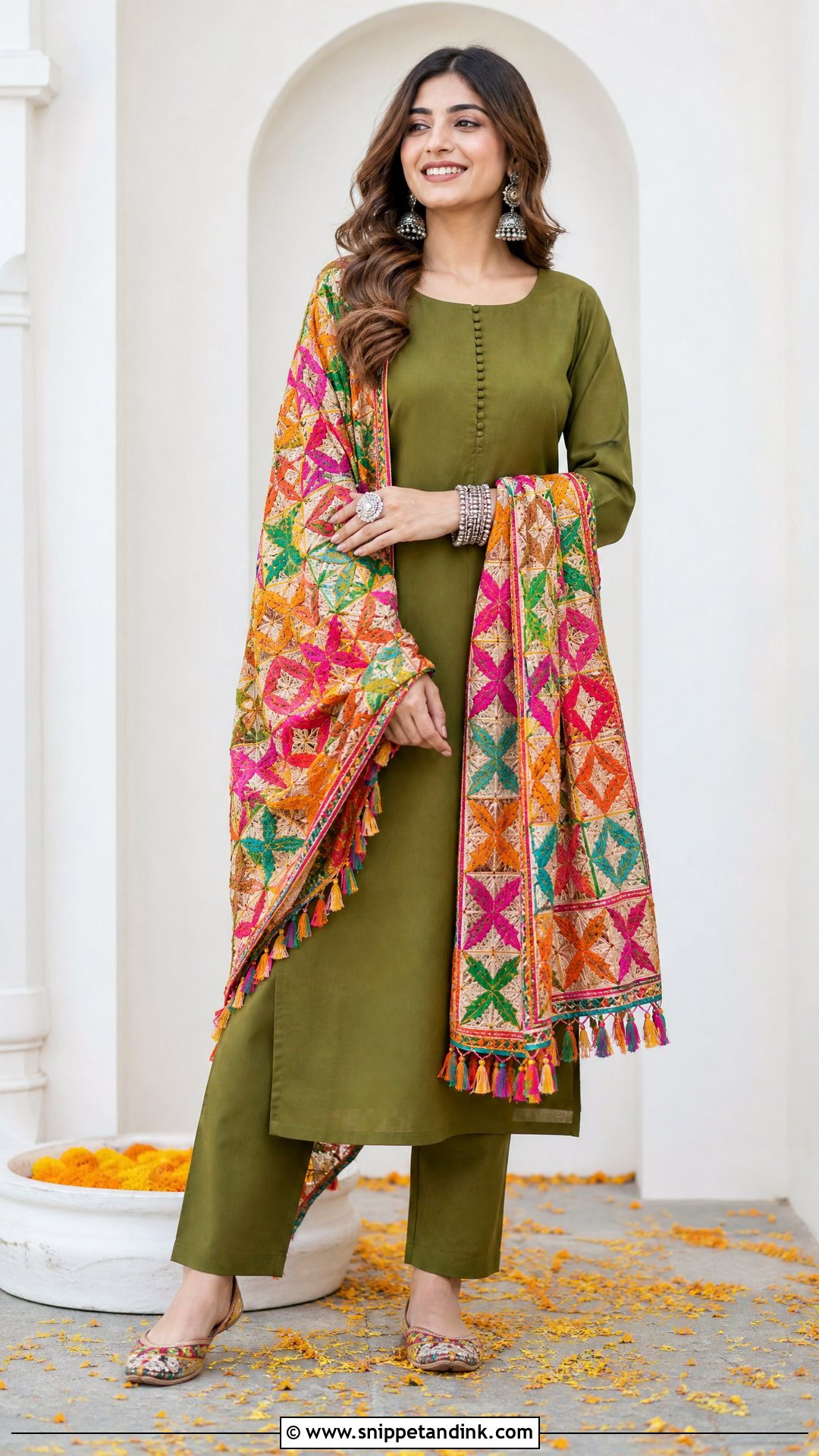
With a phulkari dupatta, the suit becomes the background, so keep the kurta and pants plain and let the threadwork carry the colour. A straight or A-line kurta works. Look for pink, orange, mustard or ivory thread, which all sit happily on green. Phulkari dupattas are heavier than chiffon, so drape them over both shoulders rather than one, or they’ll slide off every time you lean forward. Juttis, oxidised earrings and a few bangles finish it. You’ll get years out of the dupatta with other suits.
14. Mehndi Green Leheriya Suit
Leheriya is resist-dyed in diagonal waves, so the fabric looks like it’s moving even when the cut is simple. A leheriya kurta with sharara pants is playful; a leheriya dupatta over a plain suit is the quieter version. Yellow, orange, pink and ivory all suit it. The pattern is already busy, so I’d keep to small jhumkas, a few bangles and embroidered flats. Hand-dyed leheriya can bleed in the first wash, so wash it alone in cold water.
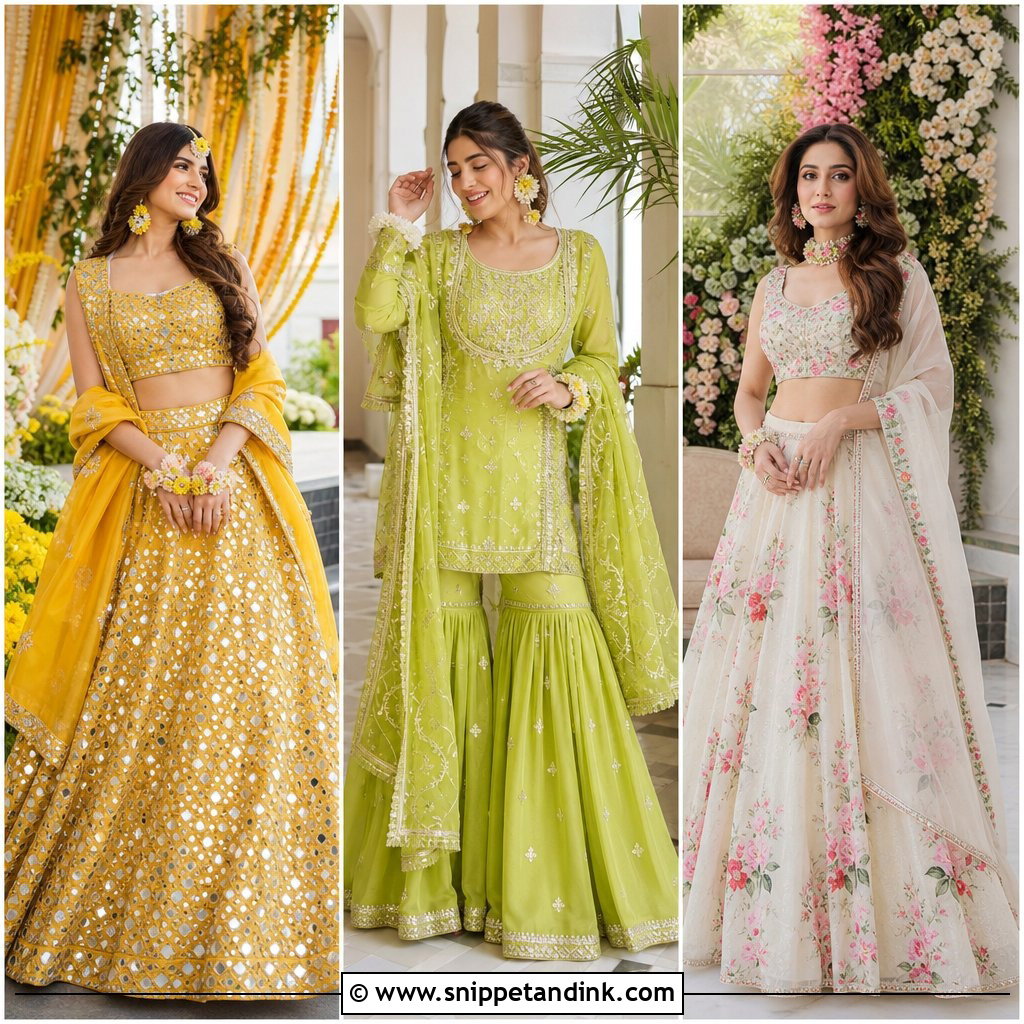
15. Mehndi Green Bandhani Suit
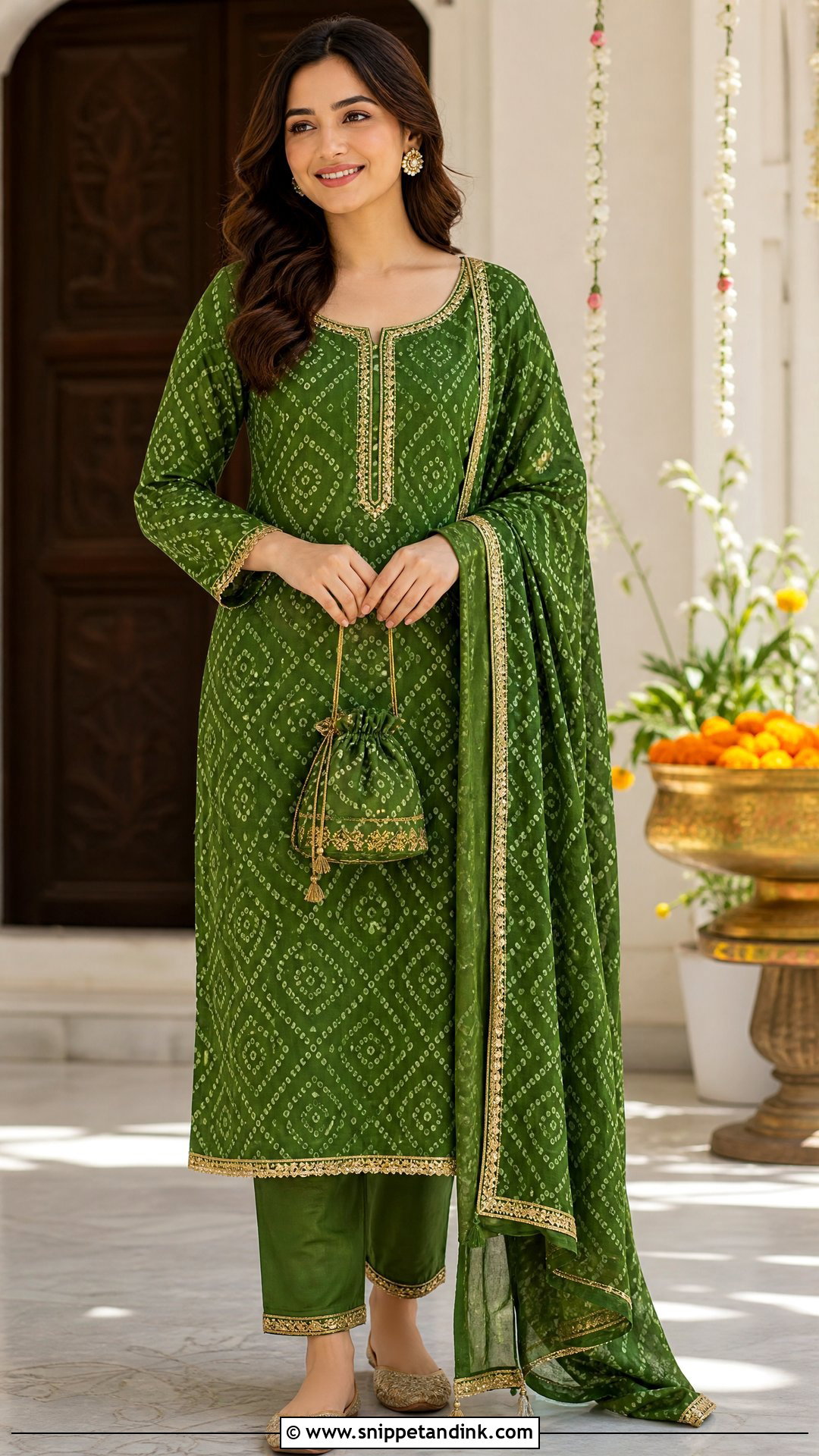
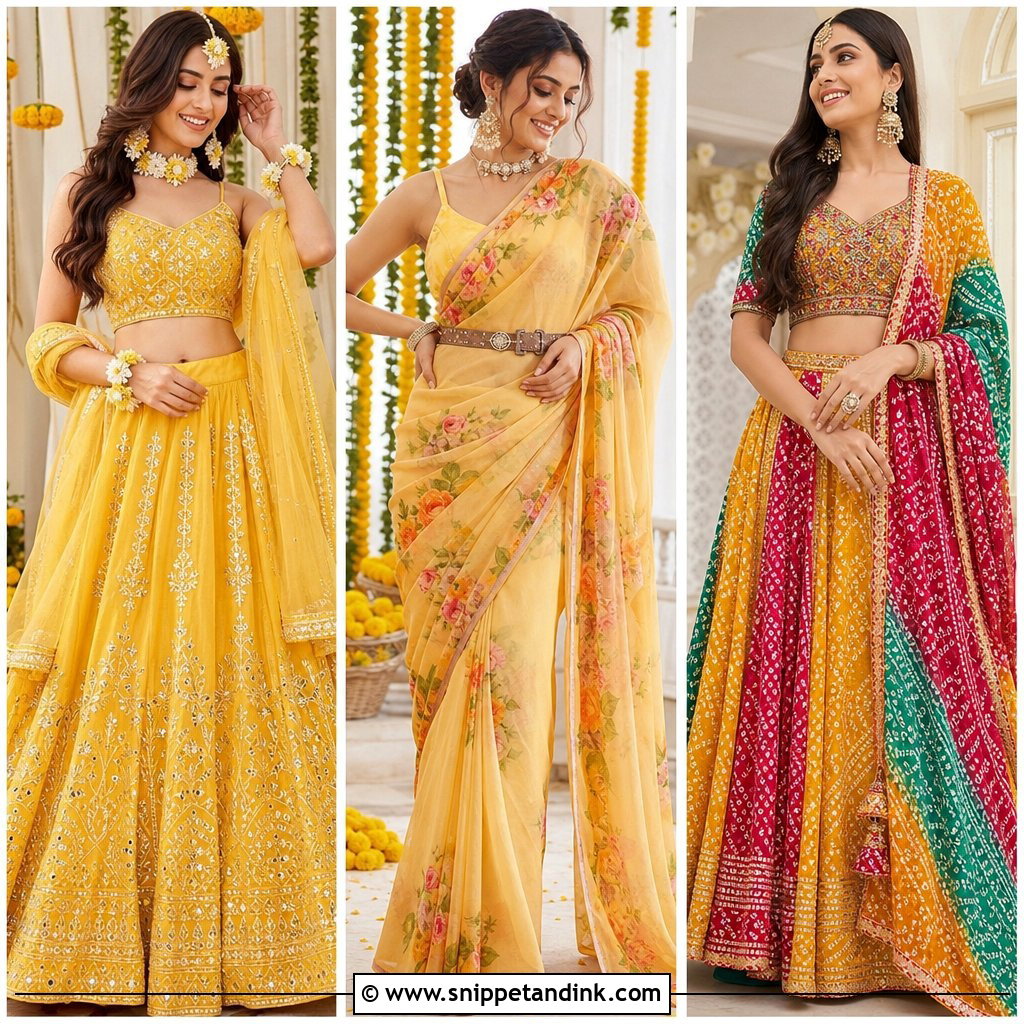
Bandhani’s tiny tied dots add texture from across the room, which is why it reads so well in group photos. The easy version is a plain mehndi green kurta and pants with a bandhani dupatta; the bolder one is a full bandhani kurta set finished with gold trim. Genuine bandhani has slightly irregular dots and a crinkled feel, while printed imitations look flat. Pair it with juttis, kundan studs and a small potli. It’s a natural fit for combined haldi and mehndi events and festive lunches.
16. Mehndi Green Cape Suit
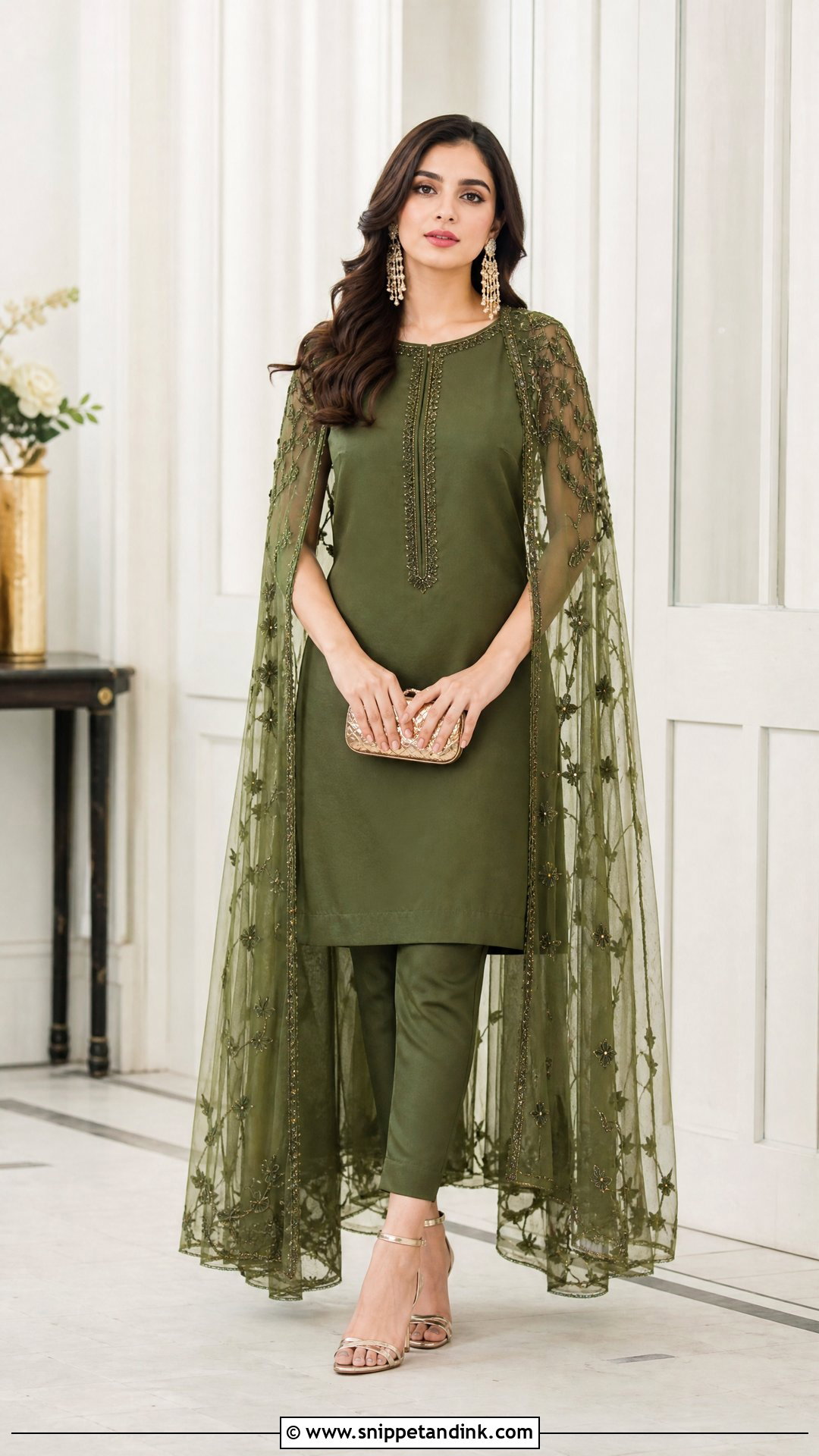
The cape replaces the dupatta, and that’s the real advantage: nothing to pin, nothing slipping off while you dance or hug relatives. A sheer embroidered cape over a straight kurta and pants is the elegant version; a crop kurta with palazzos and a cape is more contemporary. Ask for the cape to be tacked at the shoulder seams so it doesn’t drag backwards when you lift your arms. Keep the jewellery sleek, add long earrings and heels, and it suits younger guests and bridesmaids who want something fresher than the classic set.
17. Mehndi Green Jacket Suit
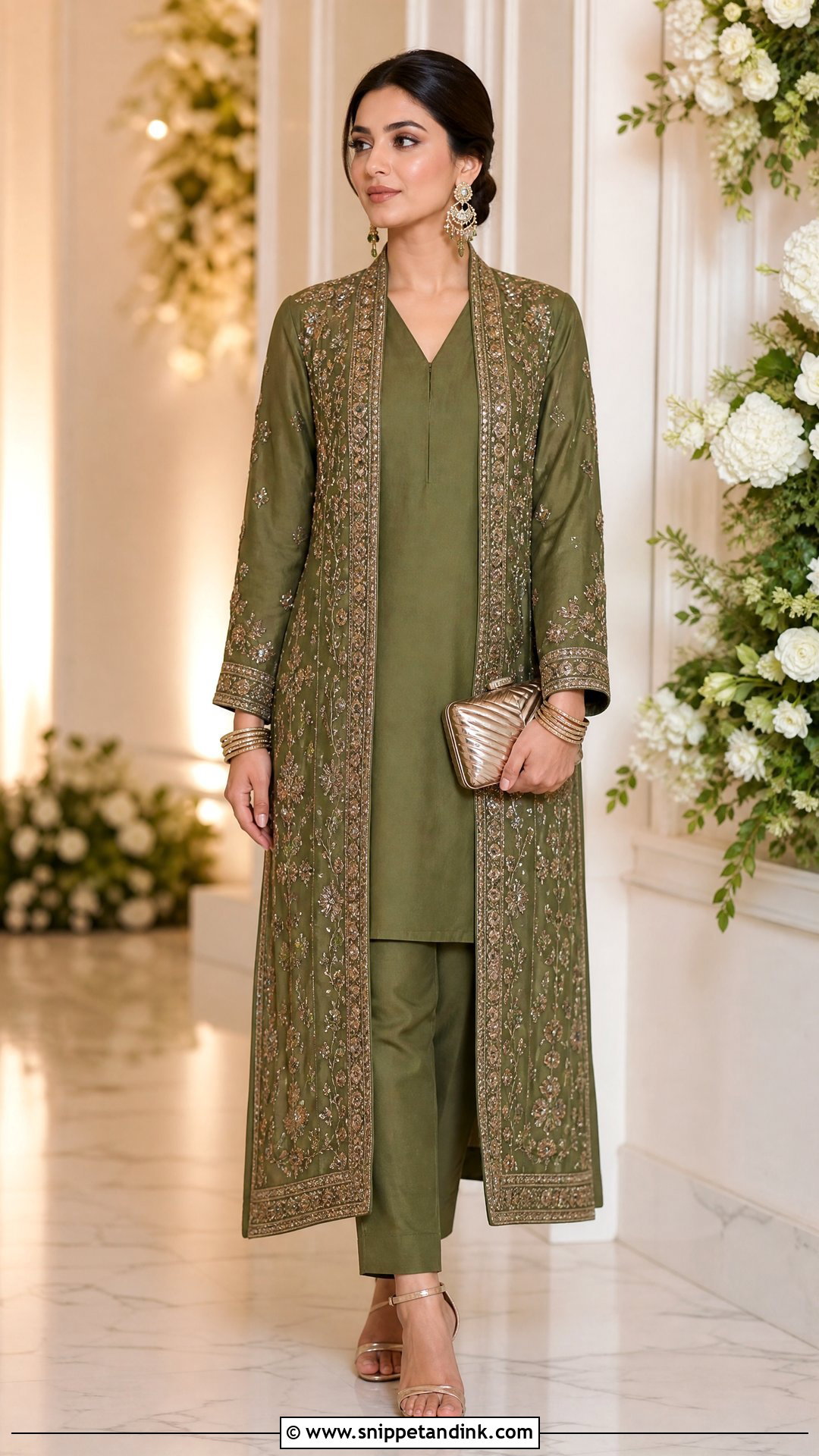
A jacket layer lets the inner kurta and pants stay simple while the embroidery, print or mirror work sits on top. A long jacket gives a graceful line, a short one feels more playful, and either can go over straight pants, palazzos or a sharara. The practical bonus is warmth: for a winter mehndi in a marquee, a jacket is far easier than a shawl. Make sure the armholes are cut generously so you can still raise your arms to clap. Statement earrings, stacked bangles and neutral heels finish it.
18. Mehndi Green Peplum Suit
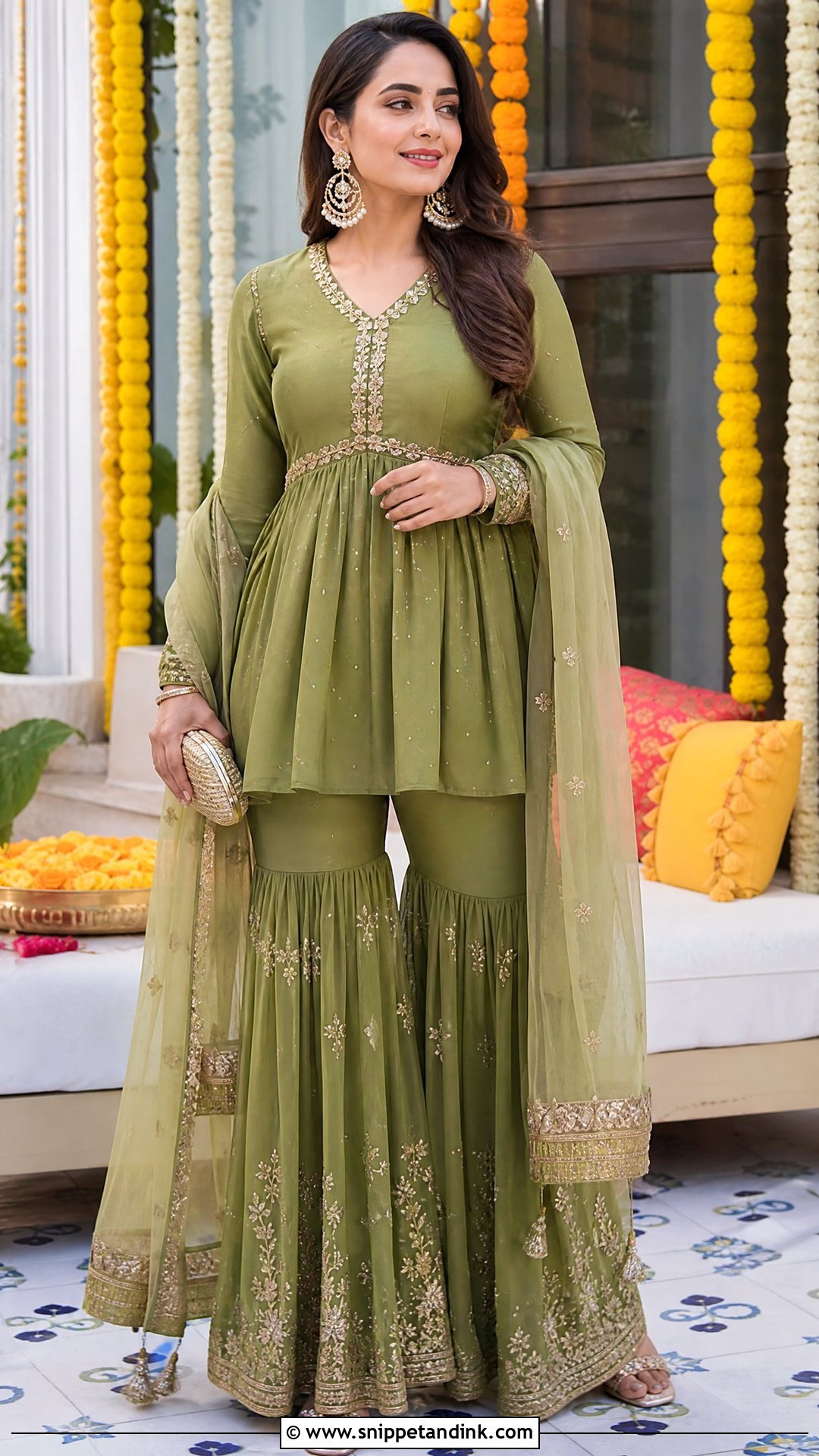
A peplum top defines the waist, then sharara, gharara or flared pants add volume below, and that waist-to-flare contrast suits a lot of figures. Watch where the peplum seam sits: it should land at your natural waist, not below, or it shortens the torso. Embroidery on the peplum hem, neckline or sleeves is enough. A light dupatta pinned on one shoulder keeps your hands free. Chandbalis and embellished sandals complete a modern ethnic look that still belongs at a traditional function.
19. Mehndi Green Dhoti Suit
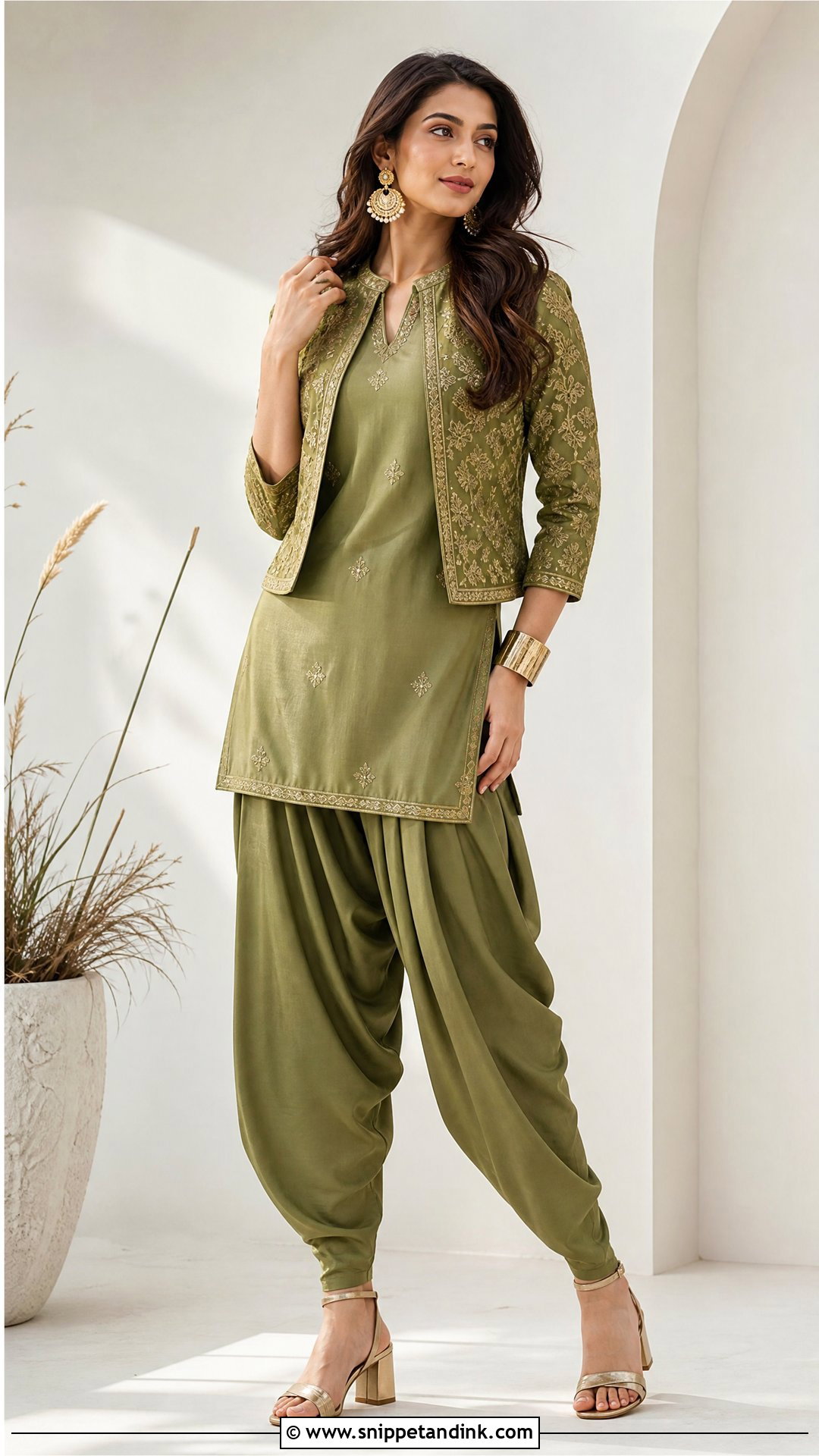
Dhoti pants are draped and pleated at the front, so they move with you and feel lighter than a lehenga. They need a fabric that falls: crepe, georgette or a silk blend. Stiff cotton dhotis stick out at the hips. A short kurta or tunic balances the drape, and a jacket or cape adds coverage. Statement earrings, a cuff and block heels suit it. It’s a sensible pick for a sangeet-heavy evening and for guests who like Indo-western styling.
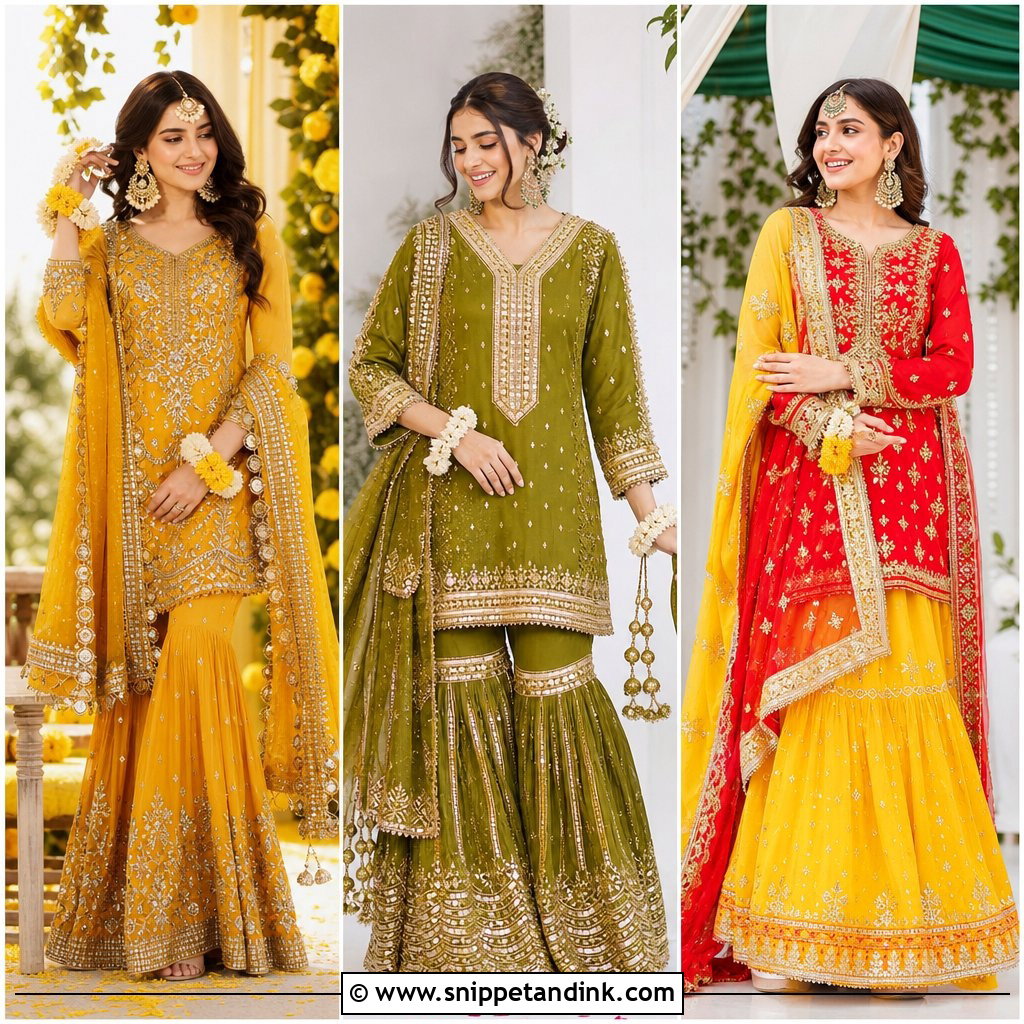
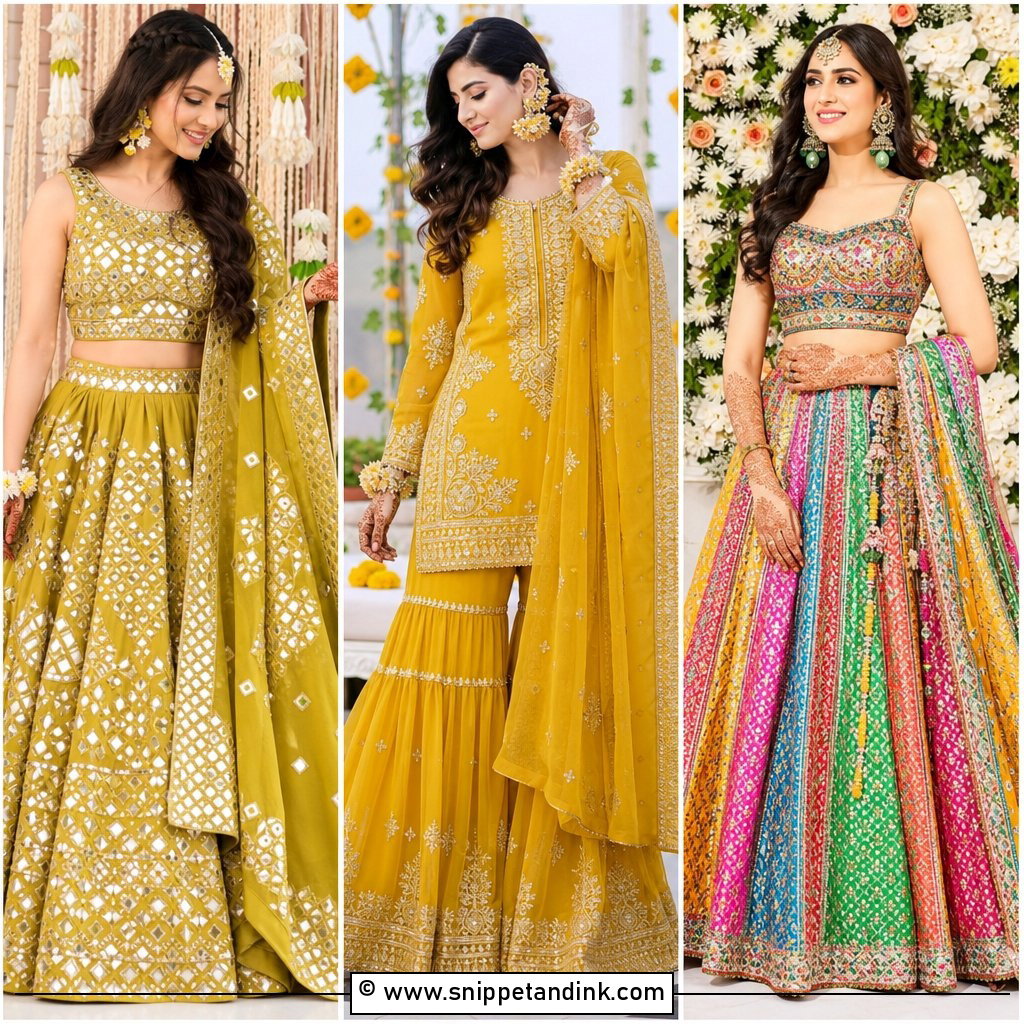
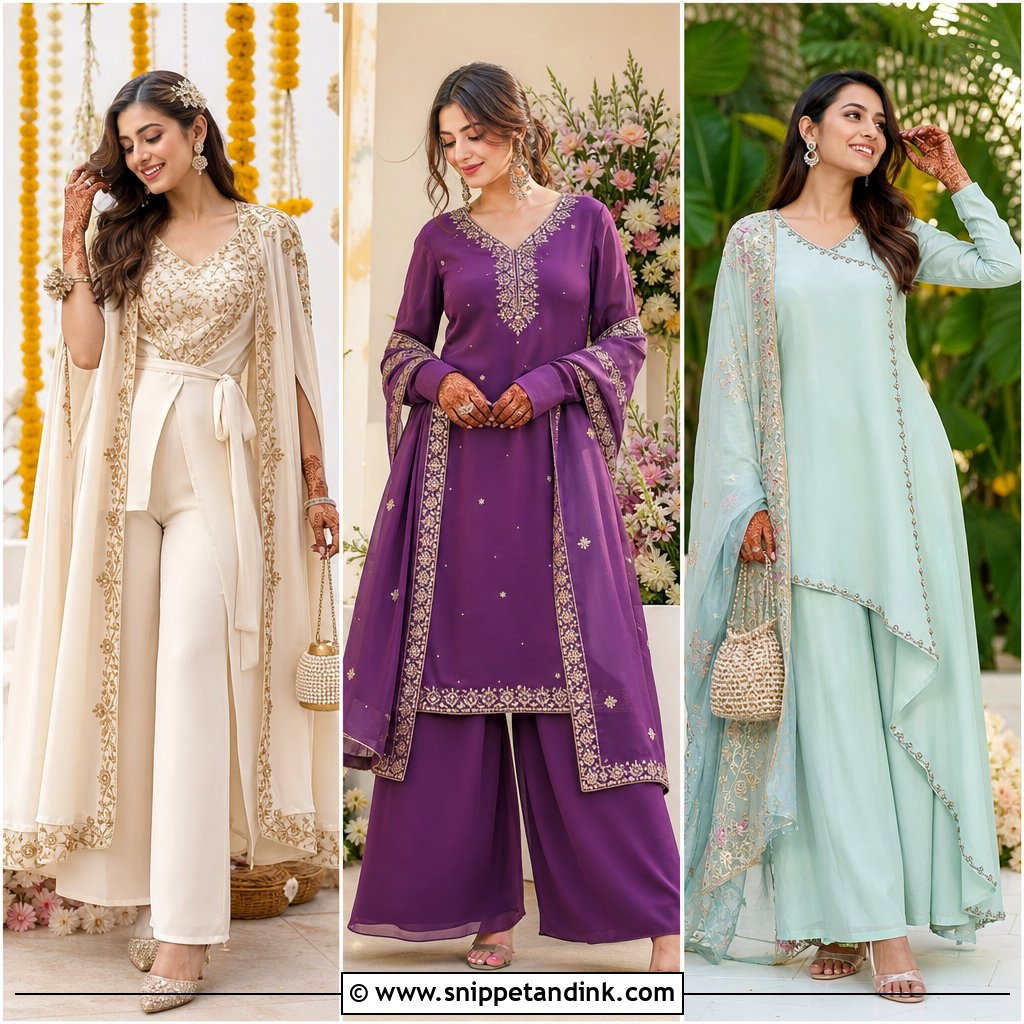
20. Mehndi Green Front Slit Suit
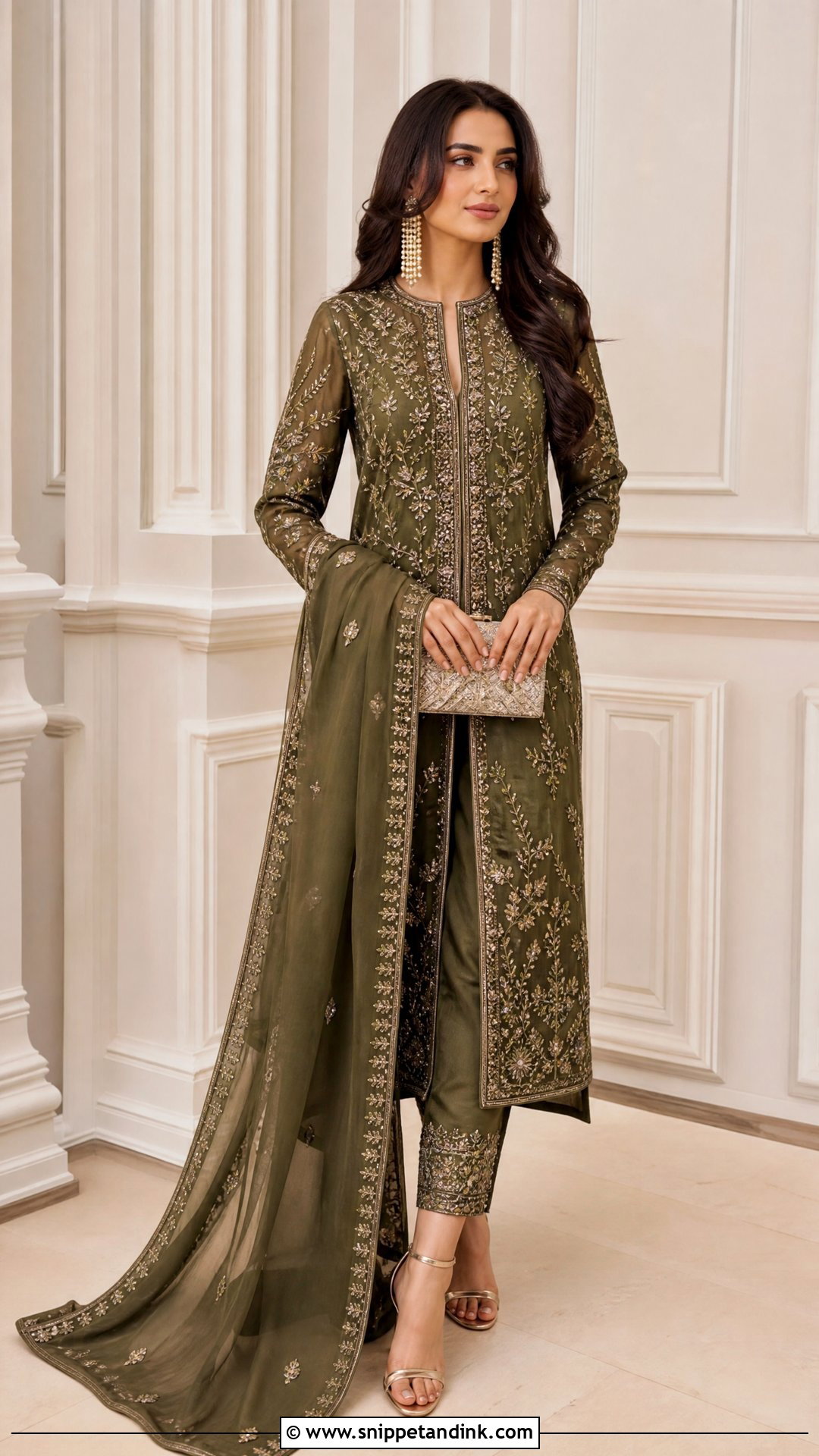
The front slit shows whatever you wear underneath, so the pants have to look intentional: cigarette pants, palazzos or embroidered trousers, never leggings. I check the slit height while the client sits, because a slit that looks right standing can open to the hip once you’re seated. Embroidery along the neckline, slit and hem gives detail. Drape a soft dupatta around the shoulders, add heels to lengthen the line, and keep the hair clean. It suits evening events and guests who prefer a less traditional suit.
21. Mehndi Green Organza Dupatta Suit
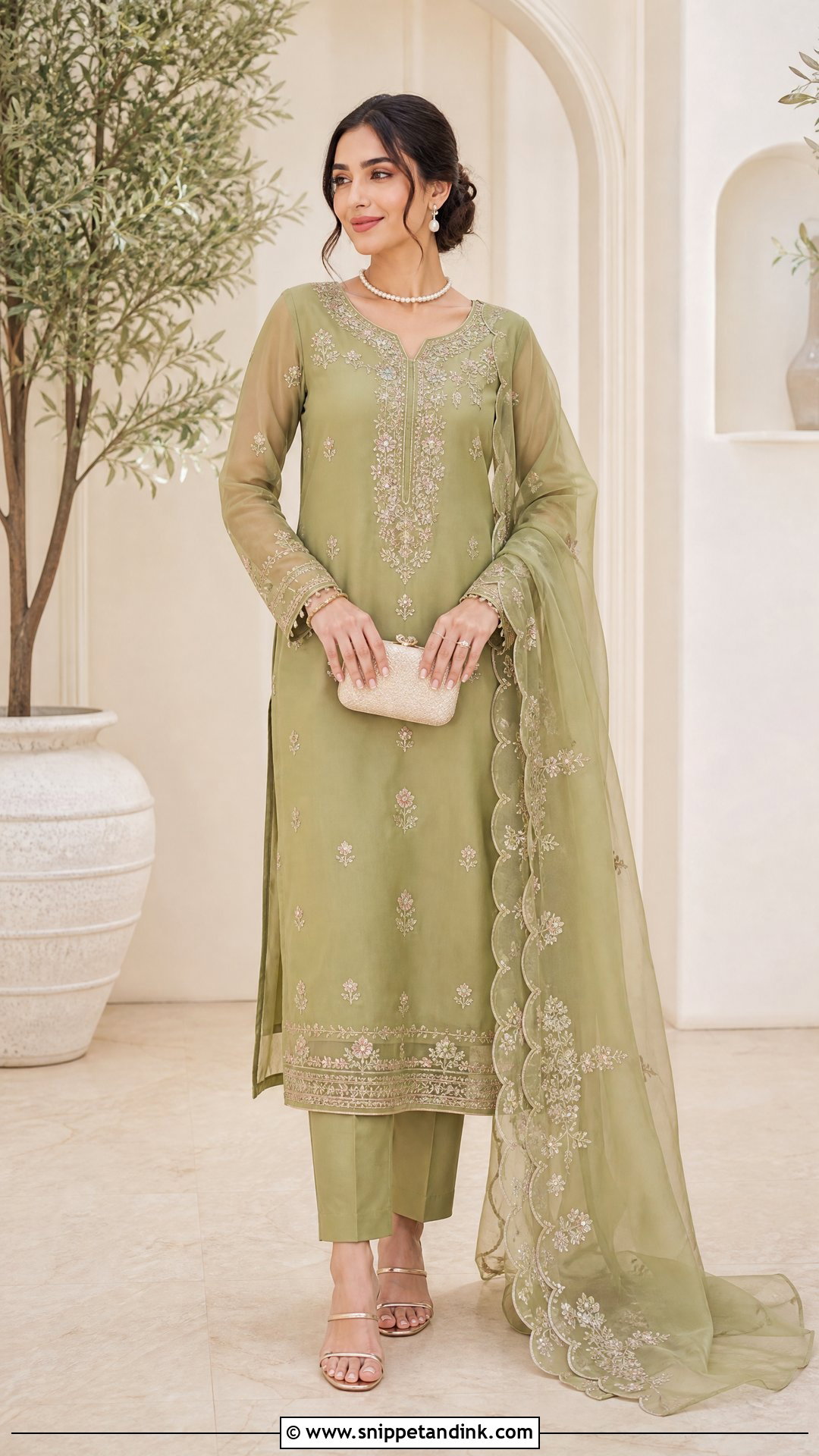
Organza adds volume without weight, which is why an organza dupatta can lift a plain straight suit so quickly. Look for scalloped edges, scattered sequins or a gold border, and keep the kurta embroidery delicate so the two don’t compete. The one drawback is that organza is crisp and slippery, so it needs a pin at the shoulder or it slides off. Pearls, metallic sandals and a neat clutch suit it. It works across engagements, mehndi events, Eid gatherings and formal family dinners.
22. Mehndi Green Suit With Yellow Dupatta
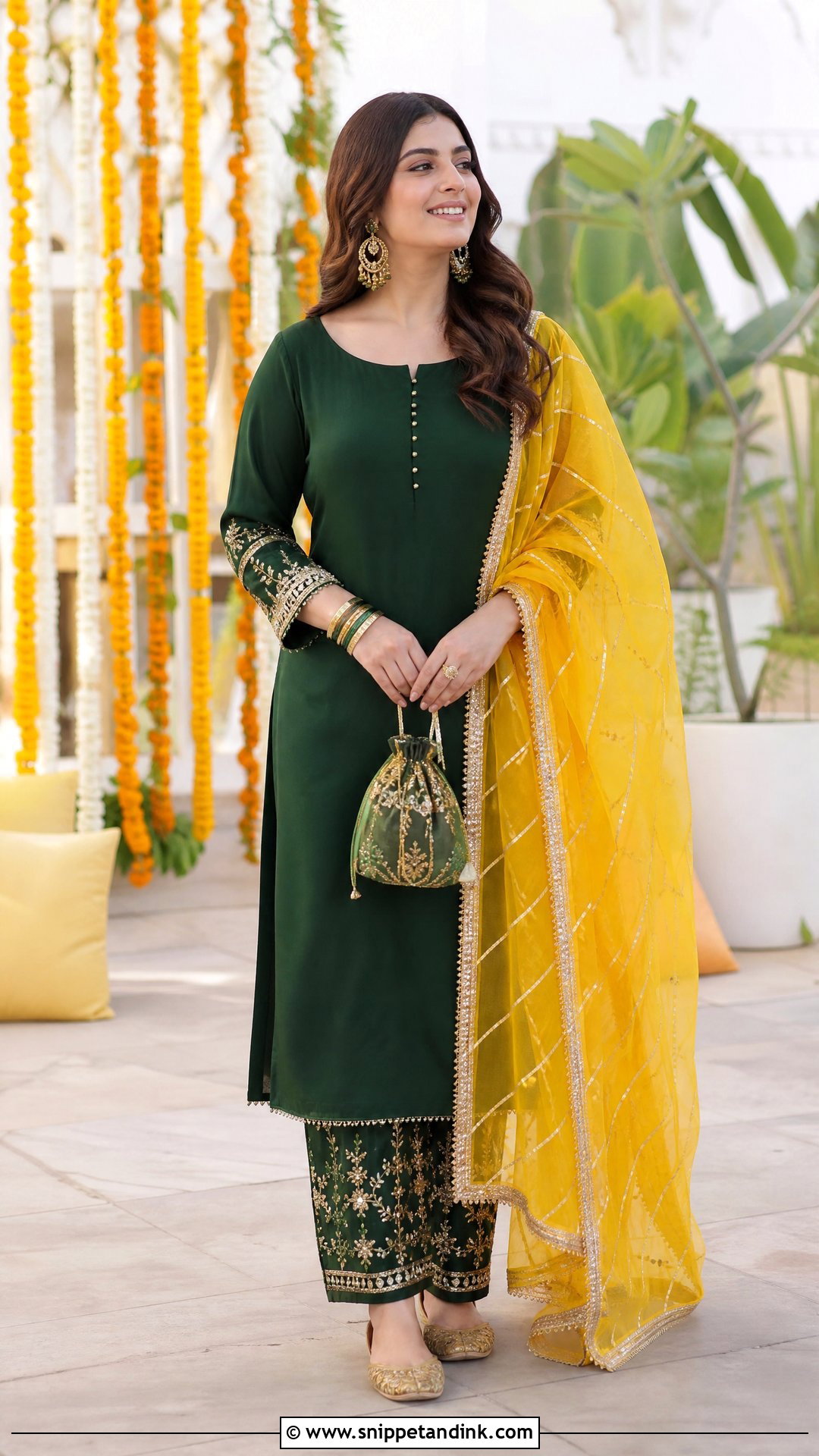
Green with yellow is the classic mehndi pairing, and a mehndi green suit with a yellow dupatta is the easiest way to wear it. A plain green kurta with embroidered pants works with mustard, lemon or marigold. Mustard is the most forgiving on warmer skin; lemon can wash out deeper complexions under fluorescent light. Gota patti, mirror work or printed borders add detail. Gold earrings, bangles and juttis complete it, and the pairing looks especially fresh in natural daylight.
23. Mehndi Green Suit With Pink Dupatta
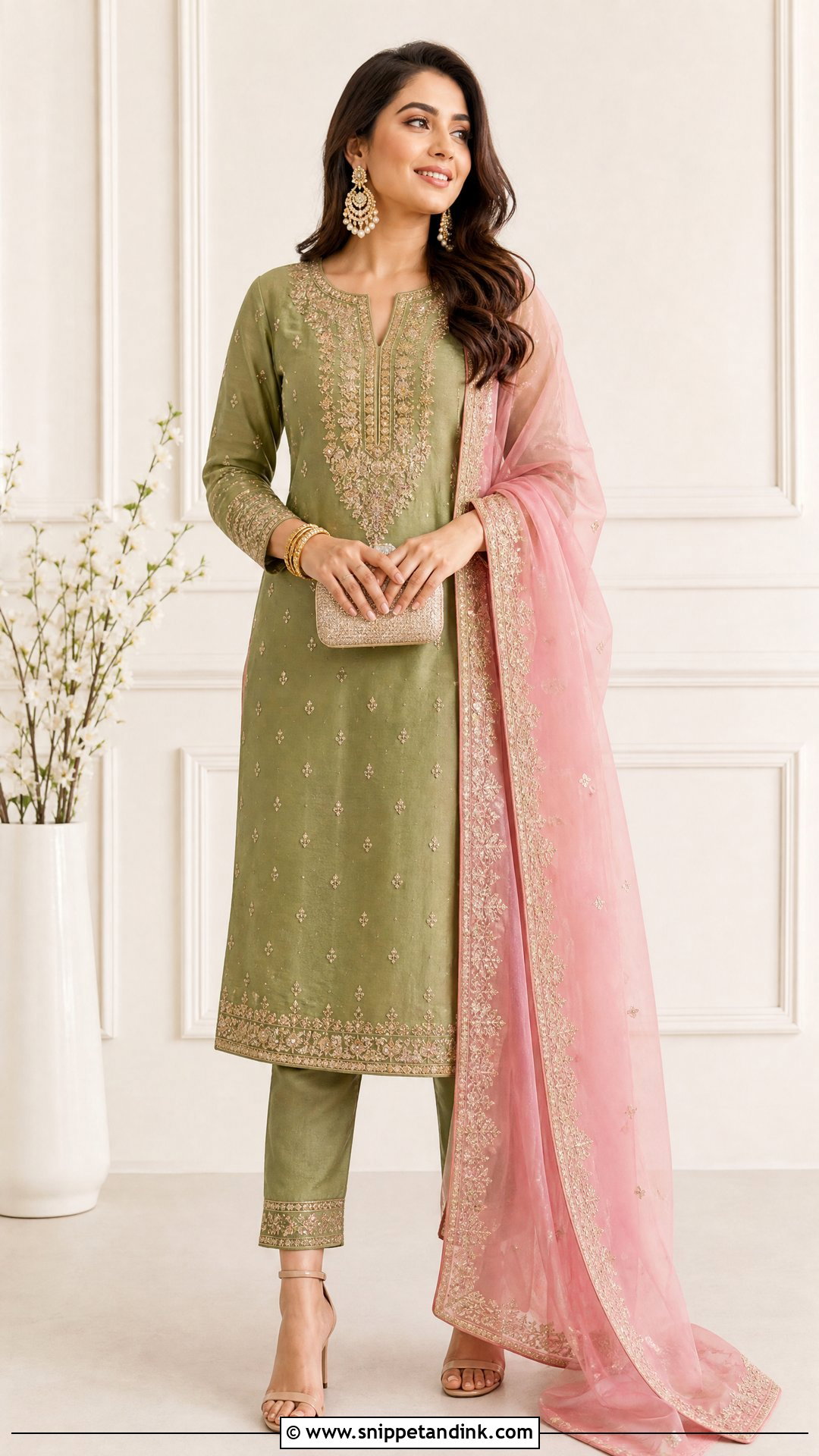
Pink and green sit opposite each other on the colour wheel, so the contrast is strong but balanced. Blush gives a soft effect, rani pink and fuchsia a bolder one. A straight green kurta with a pink dupatta and a little pink embroidery repeated on the kurta ties the two together; without that repeat, the dupatta can look borrowed. For a dressier evening, try a green sharara with a pink organza dupatta. Kundan earrings, gold bangles and neutral heels suit it, and it’s a reliable choice for bridesmaids and cousins.
24. Mehndi Green Suit With Orange Dupatta
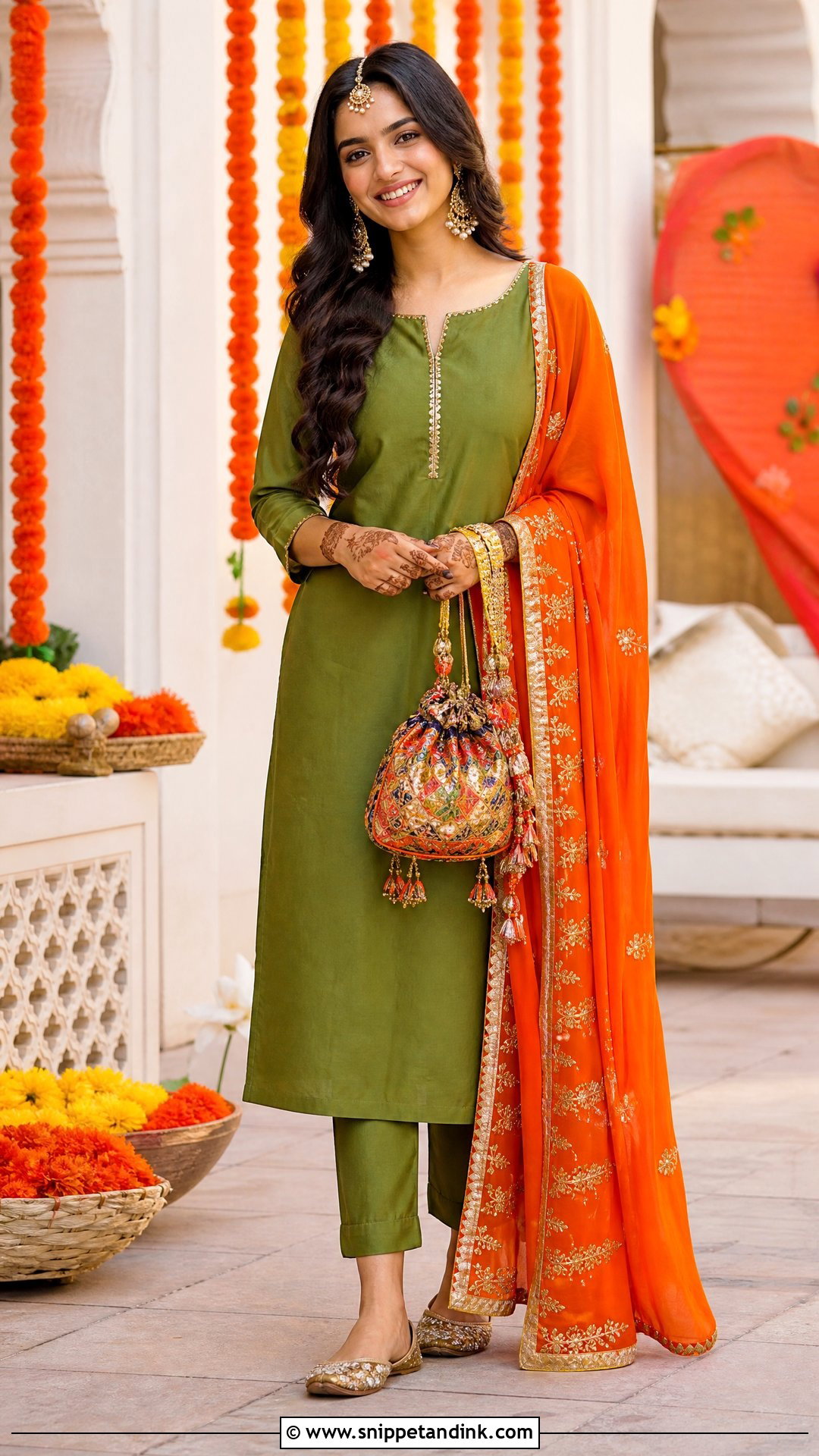
Orange and mehndi green together are about as warm as a festive palette gets. If the dupatta carries heavy embroidery or gota borders, keep the kurta and pants plain; if the suit is plain, a printed orange dupatta does the decorating. Burnt orange is easier to wear than bright tangerine, which can make green look slightly muddy in photos taken under warm tent lights. Gold jewellery, embroidered juttis and a colourful potli finish it. It’s well suited to mehndi, haldi and daytime cultural events.
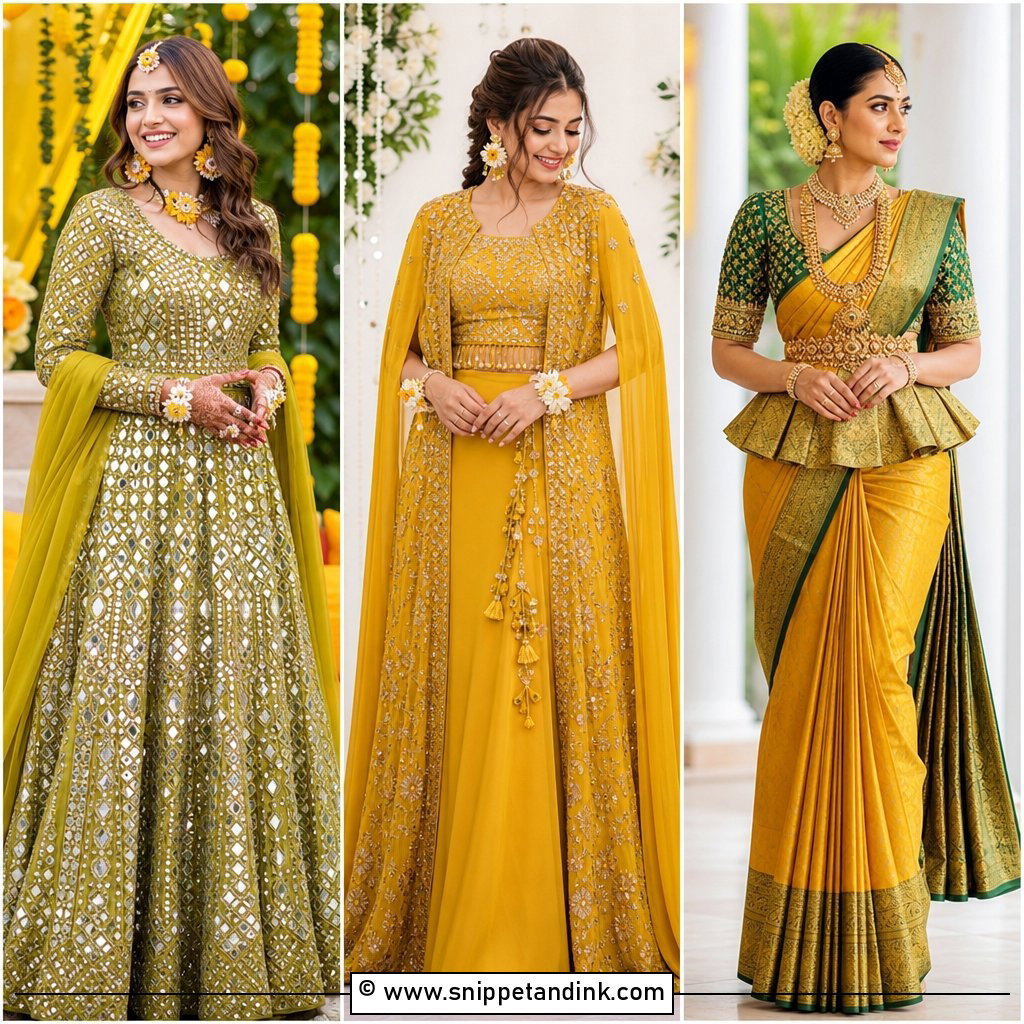
25. Mehndi Green Suit With Gold Accessories
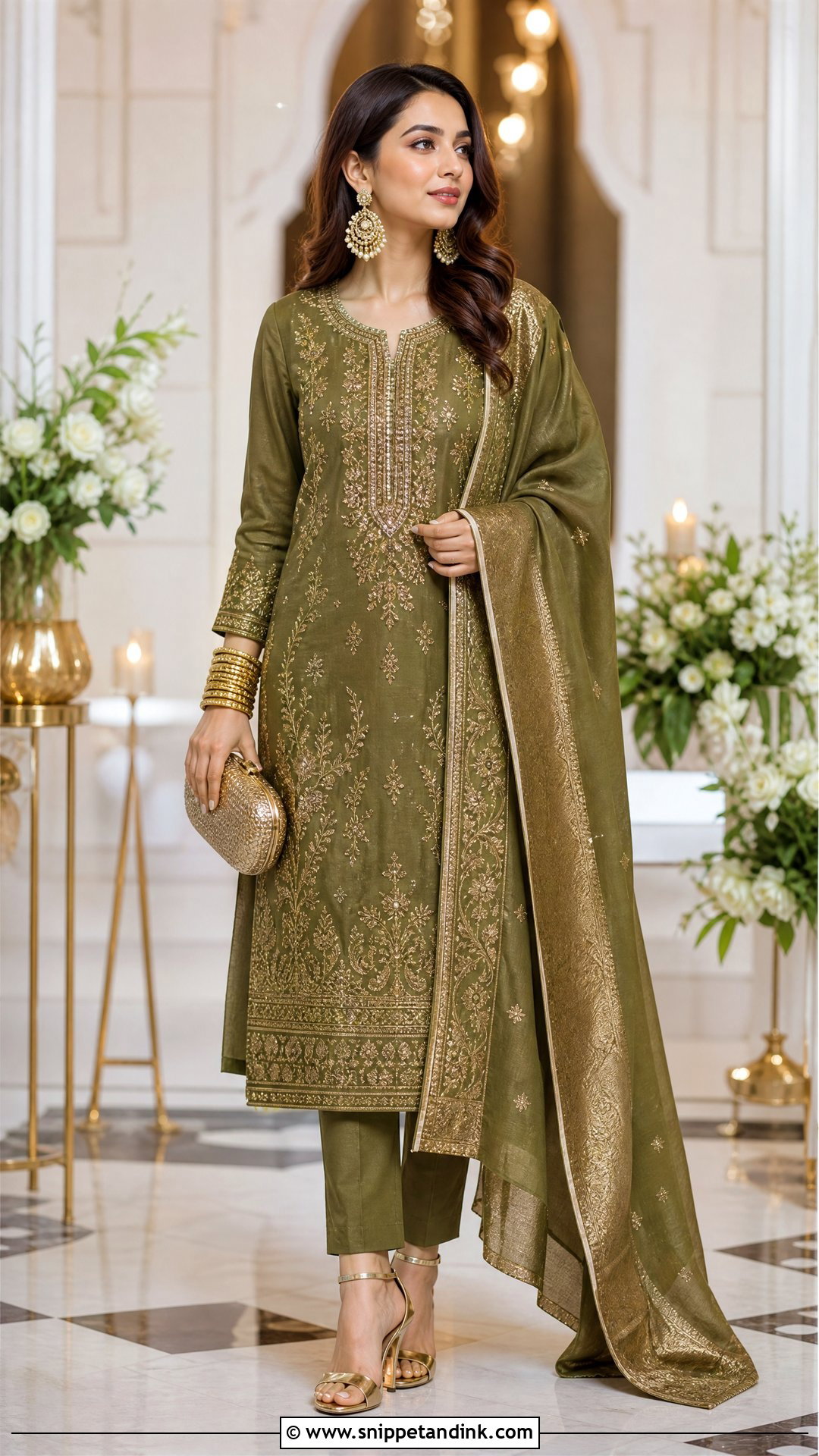
Gold warms the green and makes a simple suit look dressed up. The rule I use is inverse balance: the heavier the embroidery, the smaller the jewellery. A plain suit can carry larger earrings and layered bangles; an embroidered one needs studs and a single bangle. An embroidered kurta with straight pants, a silk dupatta, kundan earrings, metallic heels and a gold clutch make a complete evening outfit. Antique or matte gold sits better on olive-toned greens than shiny yellow gold.
After the Function: Henna Stains, Gota and Storage
Mehndi functions are hard on clothes. Fresh henna paste, oil from the hands and turmeric from a combined haldi will all mark a green suit, and some of those marks are permanent if you treat them the wrong way.
Dealing with marks the same night
Henna paste that’s still wet should be lifted off with a dry tissue, never rubbed, because rubbing pushes the dye into the weave. Don’t put hot water on a henna or turmeric mark; heat sets it. Embroidered, silk or gota pieces should go to a dry cleaner who handles ethnic wear, and tell them what the stain is.
Storing it so it’s ready for the next wedding
- Wrap gota and zari pieces in a soft muslin cloth rather than plastic, which traps moisture and tarnishes metallic threads.
- Fold heavily mirrored kurtas with tissue between the layers so the mirrors don’t scratch or snag the fabric facing them.
- Refold silk every few months along different lines; long-held creases in silk can turn into permanent breaks.
- Store sharara and gharara pants folded, not on hangers, so the weight of the flare doesn’t stretch the waistband.
A suit cared for this way will happily come out for the next Eid, and a good phulkari or leheriya dupatta often outlasts the suit it was bought with.
One Green, Many Functions
The reason I keep recommending this shade is how far it stretches. A cotton set covers a home dholki, silk handles a formal dinner, and a sharara or cape suit takes you through a dancing-heavy mehndi. Swap ivory and pearls for a quiet look, yellow or orange for a joyful one, and gold for the evening. Decide on the event, the fabric and how much you’ll be sitting before you fall for an embroidery, then let the dupatta, shoes and jewellery do the finishing.
You'll Like These Ideas:


Leave a Reply