
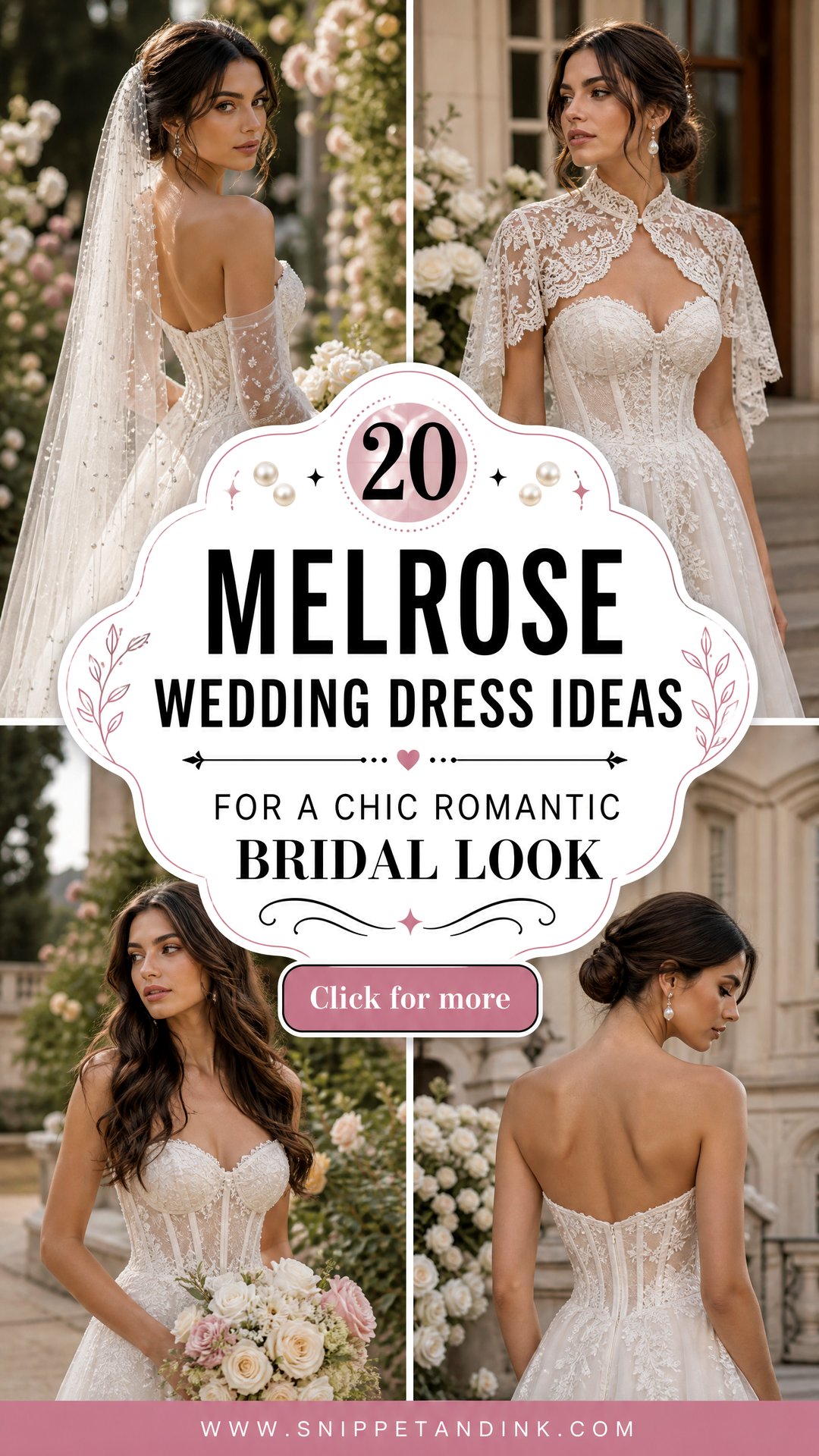
The Milla Nova Melrose is a full A-line gown with a straight neckline, slim straps and a sheer, structured drop-waist bodice, finished in Chantilly lace that runs into a soft train. It also comes with an optional long-sleeve lace underdress that turns it into a different dress entirely. When a bride brings me this gown, I don’t start with the veil. I start with the bodice, because every accessory either respects that clean horizontal neckline or fights it. The looks below are built around that rule, with notes on the venue, season and hairstyle each one needs.
Getting the Drop Waist to Sit on Your Hips Before Any Accessory
Before we talk veils or gloves, the bodice has to be right. The Melrose is fitted through a structured bodice into a drop waist, and that seam needs to land on the top of your hips. Too high and the skirt seems to start at your ribs. Too low and the bodice buckles every time you sit.
What I ask brides to bring to the first fitting
- The actual wedding shoes, or a pair with the same heel height, since the hem is measured on them.
- The underwear you’ll wear on the day, in your skin tone. The bodice is sheer, so anything white or trimmed will show.
- The long-sleeve underdress, if you’re still deciding on it, so both versions are fitted at once.
- Your veil or a stand-in of the same length, to judge where it falls against the skirt.
Most gowns like this need two or three fittings, and I’d book the first one around two to three months before the date. A lace hem on a full skirt usually can’t just be cut; the lace edge is often lifted and reattached higher, which takes longer than a plain hem.
Straps and that straight neckline
Slim straps carry very little weight, so the bodice should hold itself up. If the neckline gapes when you lean forward, or the straps leave red marks after an hour, the fix is taking the bodice in at the side seams. Shortening the straps alone just pulls the neckline up and out of line.
1. Melrose Wedding Dress With Cathedral Veil
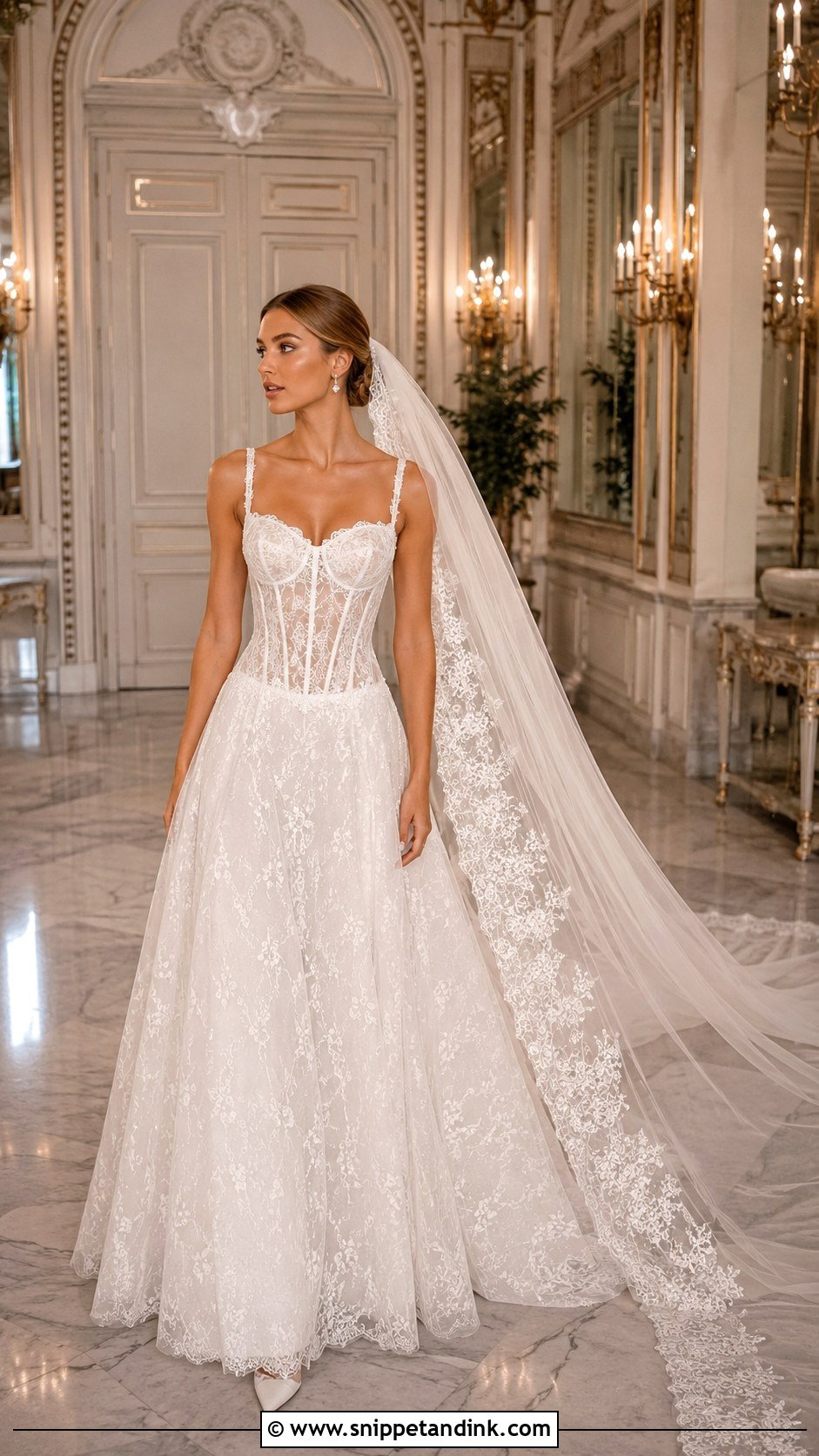
I put a cathedral veil with the Melrose when the room is big enough to carry it: a ballroom, an estate staircase, a long church aisle. Go single-layer, ivory, with a cut edge. A trimmed edge adds a second outline that crosses the lace skirt and muddies it in photos. I anchor the comb under a polished low bun so the veil drops from the nape instead of adding height, then leave the neck bare and let pearl drops and a slim bracelet handle the jewelry. Pointed ivory pumps, a pale rose lip and defined lashes finish it. One thing I insist on: plan the bustle for veil and train together, because a cathedral veil over an unbustled lace train is how hems get stepped on.
2. Melrose Wedding Dress With Lace Mantilla Veil
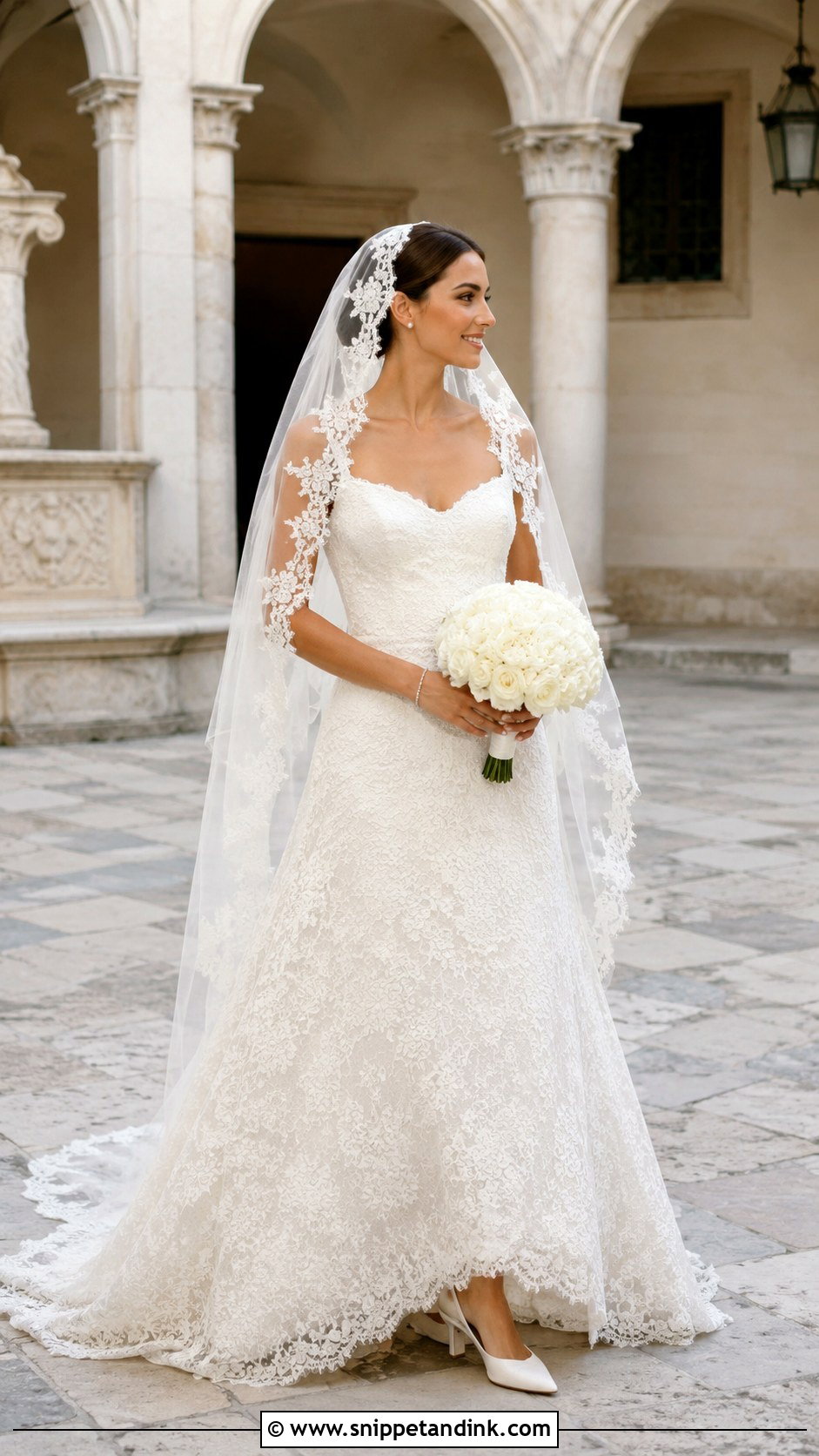
A traditional mantilla veil is the riskiest pairing here, because you’re putting two laces side by side. The trick is matching scale, not pattern. The Melrose florals are fine and open, so the mantilla border should be narrow and equally fine; a heavy corded border makes the dress look thin beside it. Set the comb near the crown so the lace frames the shoulders, keep the hair in a smooth center-parted bun, and wear small pearl studs with ivory slingbacks. Then hold the veil against the actual gown by a window. Two ivories that match under boutique lights can split into cream and grey in daylight.
3. Melrose Wedding Dress With Long Sleeve Underdress
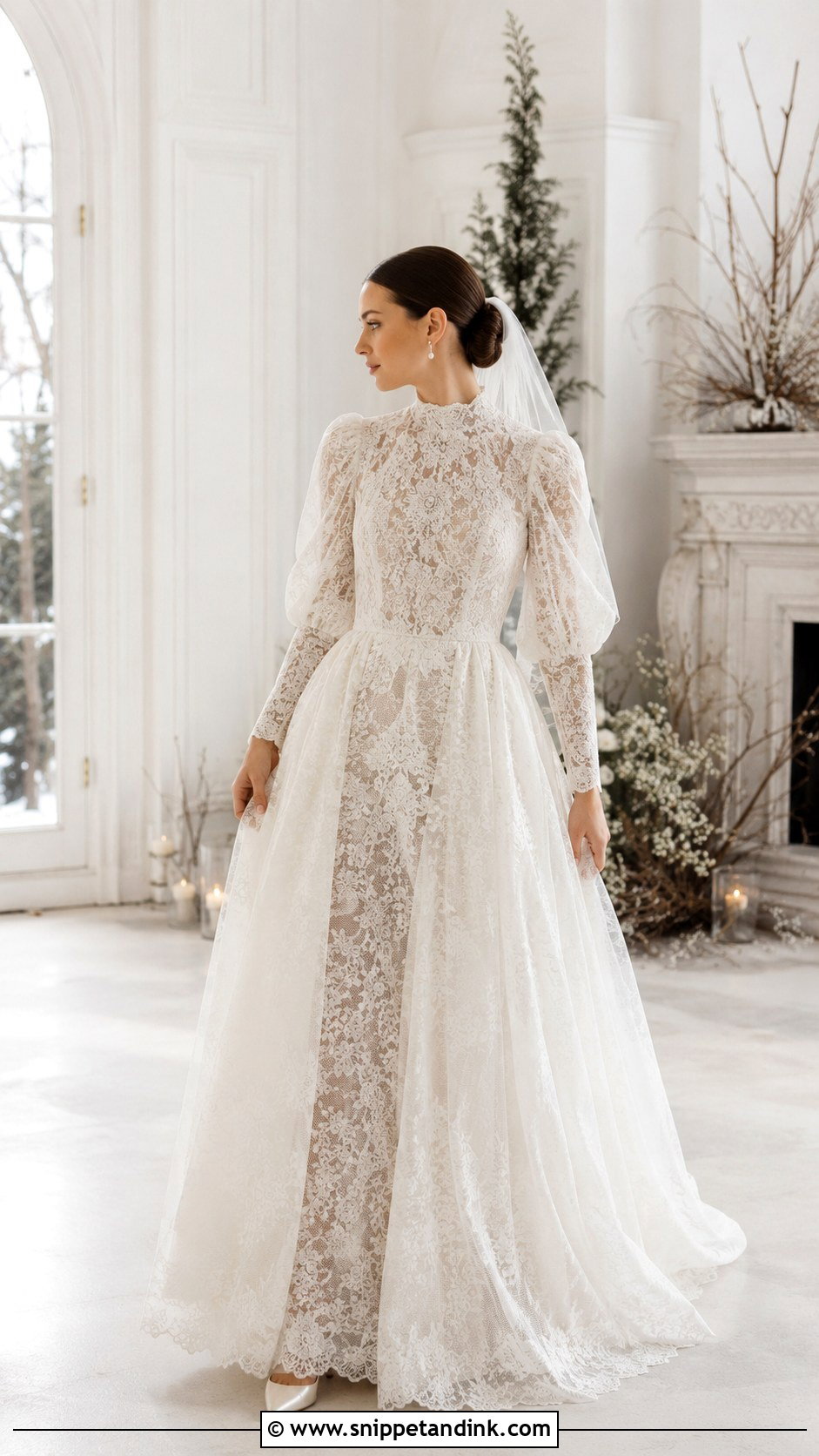
The long-sleeve underdress is the Melrose’s own cold-weather version, and it’s the one I’d reach for in a chilly church or for a bride who wants her arms covered. The sheer puffed sleeves add volume up top, so I keep everything else small: a low chignon, pearl button earrings, closed-toe ivory heels and a short plain veil. Underwear matters more here than anywhere else on this list. Anything with a visible band or lace trim shows straight through two sheer layers, so bring smooth, skin-tone pieces to the fitting and check the back under bright light. White garden roses with trailing greenery suit fall and winter without adding a new color.
4. Melrose Wedding Dress With Pearl Veil
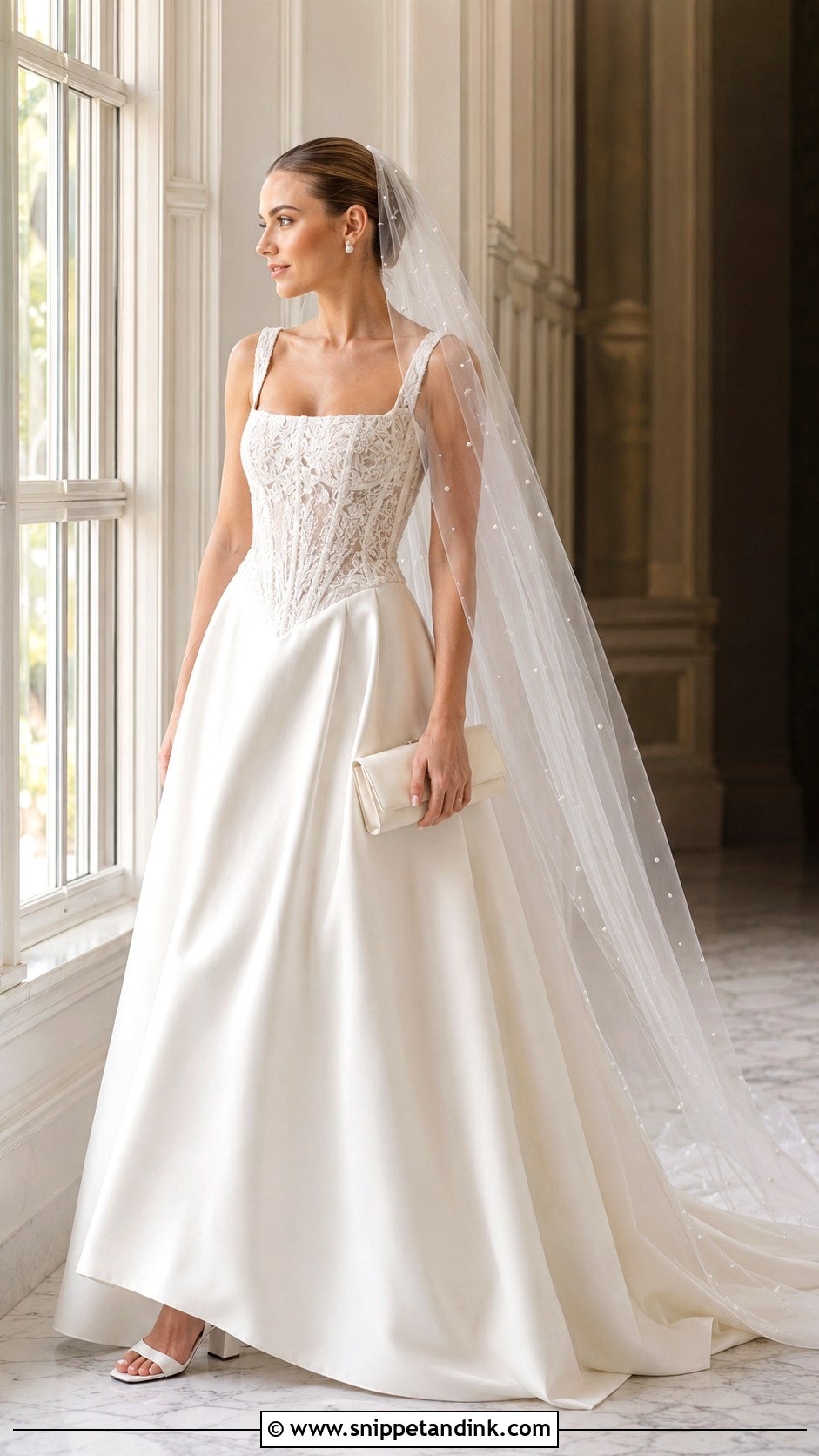
Pearl-scattered tulle works with this gown only when the pearls are sparse. Clusters read as polka dots from across a room and fight the lace. I prefer a chapel length with widely spaced pearls, secured under a relaxed low bun or soft twist, with pearl studs, an ivory clutch and satin block heels that steady you against the weight of the skirt. No other jewelry. At the fitting, drag the veil across the skirt and train on purpose. Pearls sewn on with exposed thread loops are the ones that catch lace, so look at the backing before you buy.
5. Melrose Wedding Dress With Blusher Veil
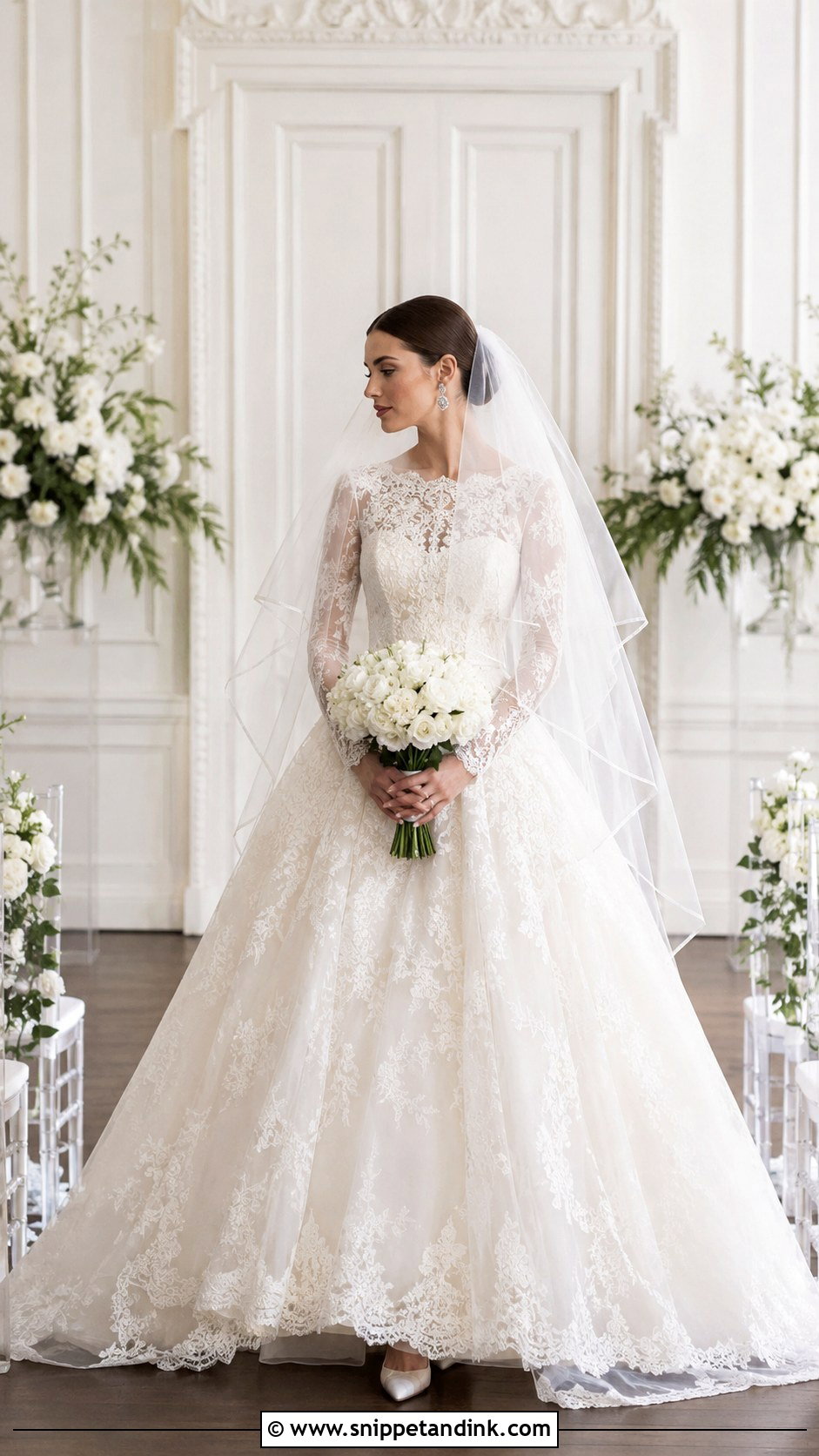
If you want the lift-the-veil moment, a two-tier ivory blusher with a plain edge keeps it traditional without hiding the bodice construction. The front layer should end just below where you’ll hold the bouquet; any longer and it covers half the lace skirt in every aisle photo. Place the comb near the crown, not the nape, or the blusher won’t flip back cleanly. Understated crystal earrings, pointed kitten heels, no necklace. Waterproof mascara is non-negotiable under tulle, and whoever lifts it should rehearse the movement the night before.
6. Melrose Wedding Dress With Fingertip Veil
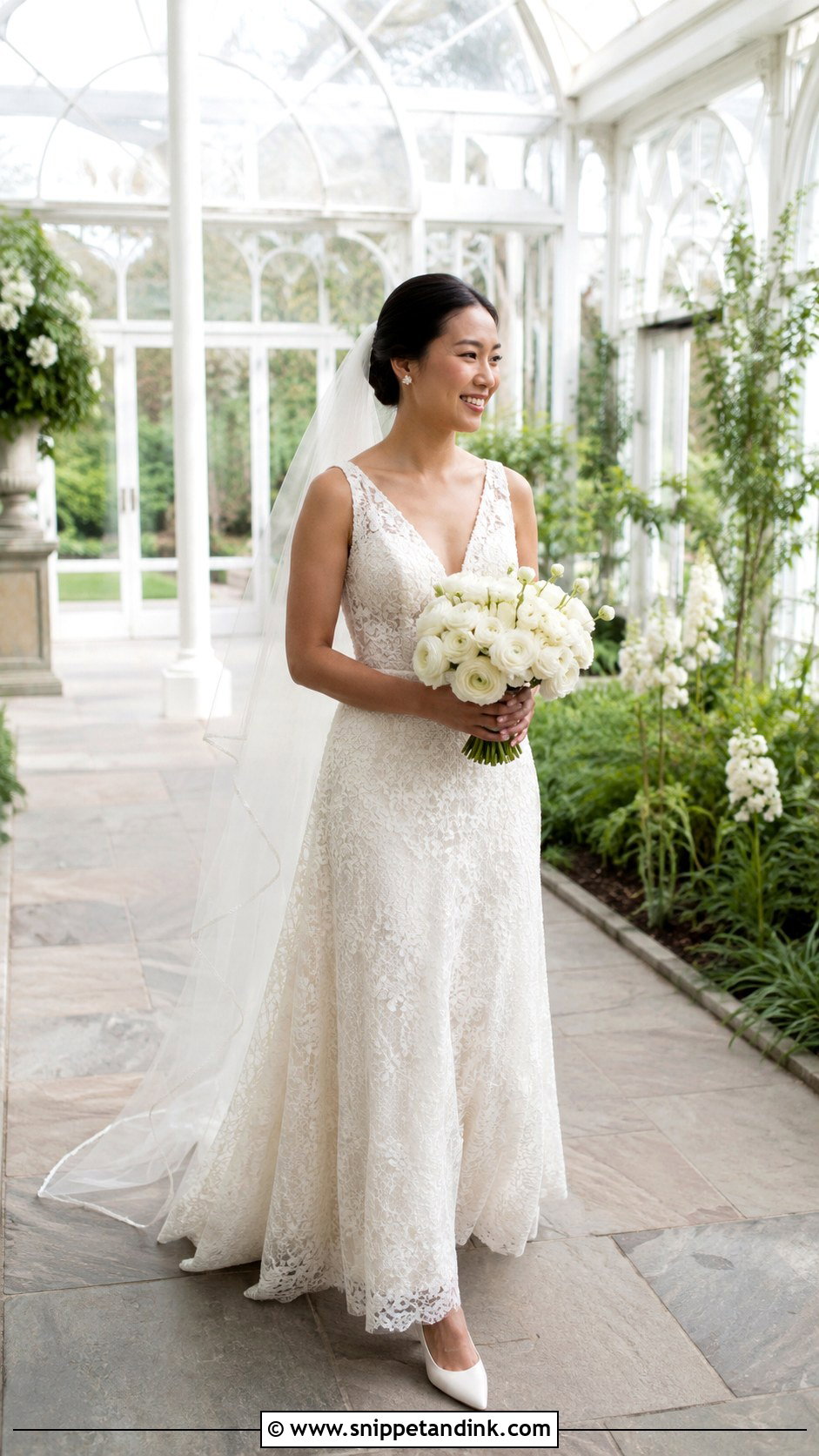
Fingertip is my default for a bride who doesn’t want to manage a second train. It frames the bodice, stays out of the way at the reception and suits gardens, conservatories and smaller rooms. The common length mistake is a veil that stops right at the widest point of the A-line skirt, which draws a horizontal line exactly where you don’t want one, so I have it end a hand’s width above or below that point. Fine ivory tulle with a narrow raw edge, a textured low bun, floral studs, pointed pumps and a small ranunculus bouquet. Outdoors, cross two bobby pins over the comb teeth. Tulle acts like a sail.
7. Melrose Wedding Dress With Bow Veil
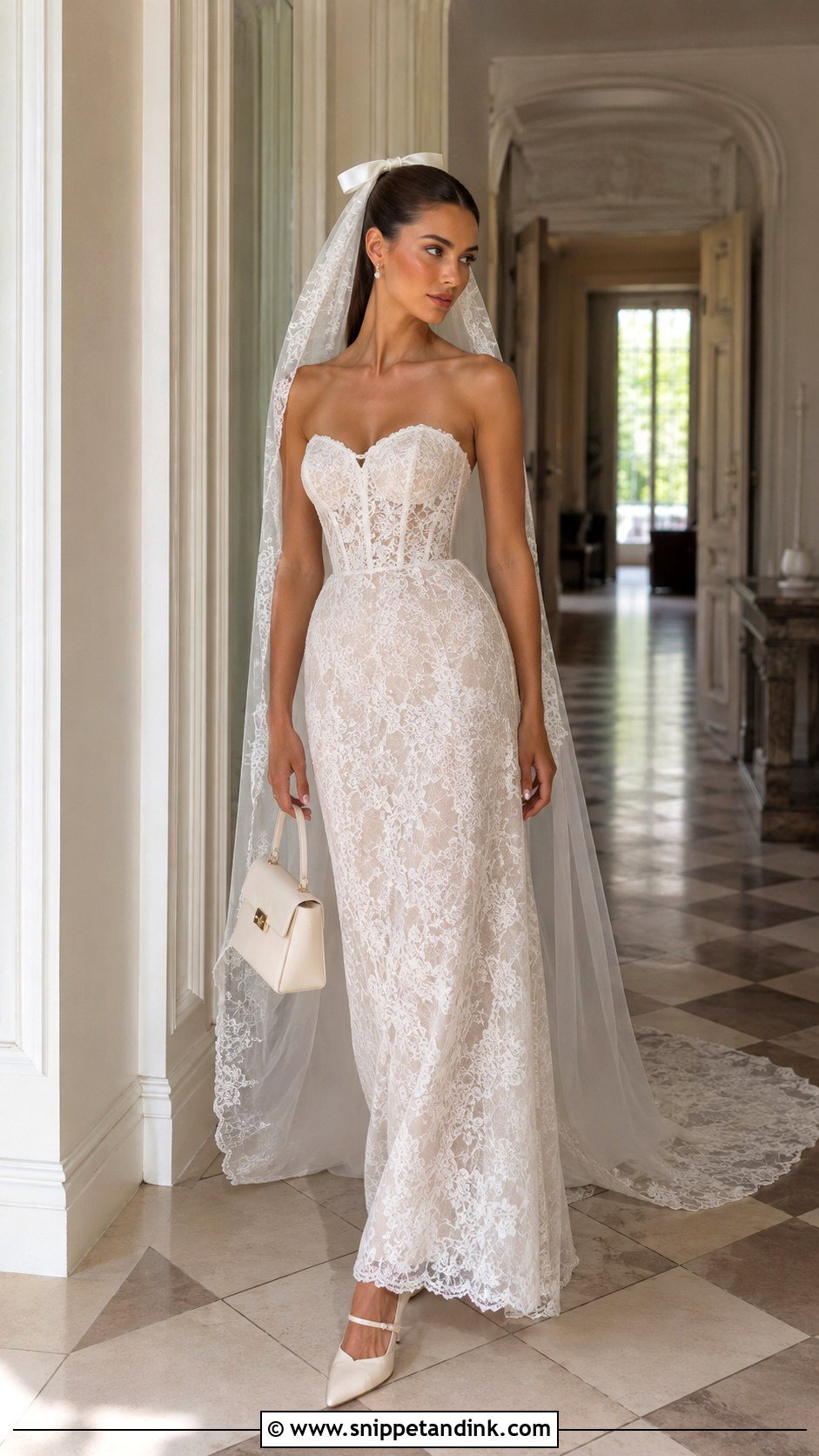
A small satin bow at the comb gives the Melrose a vintage wink. Keep it slim. An oversized bow on top of lace, sheer panels and a full skirt is one element too many. Wear a single-layer chapel veil, put the hair in a sleek low ponytail or compact bun so the bow shows from behind, and add pearl earrings, ivory Mary Jane heels and a structured mini bag. I repeat the satin in exactly three places: bow, shoes, bag. Add more and the lace starts to look like the secondary fabric.
8. Melrose Wedding Dress With Sheer Tulle Gloves
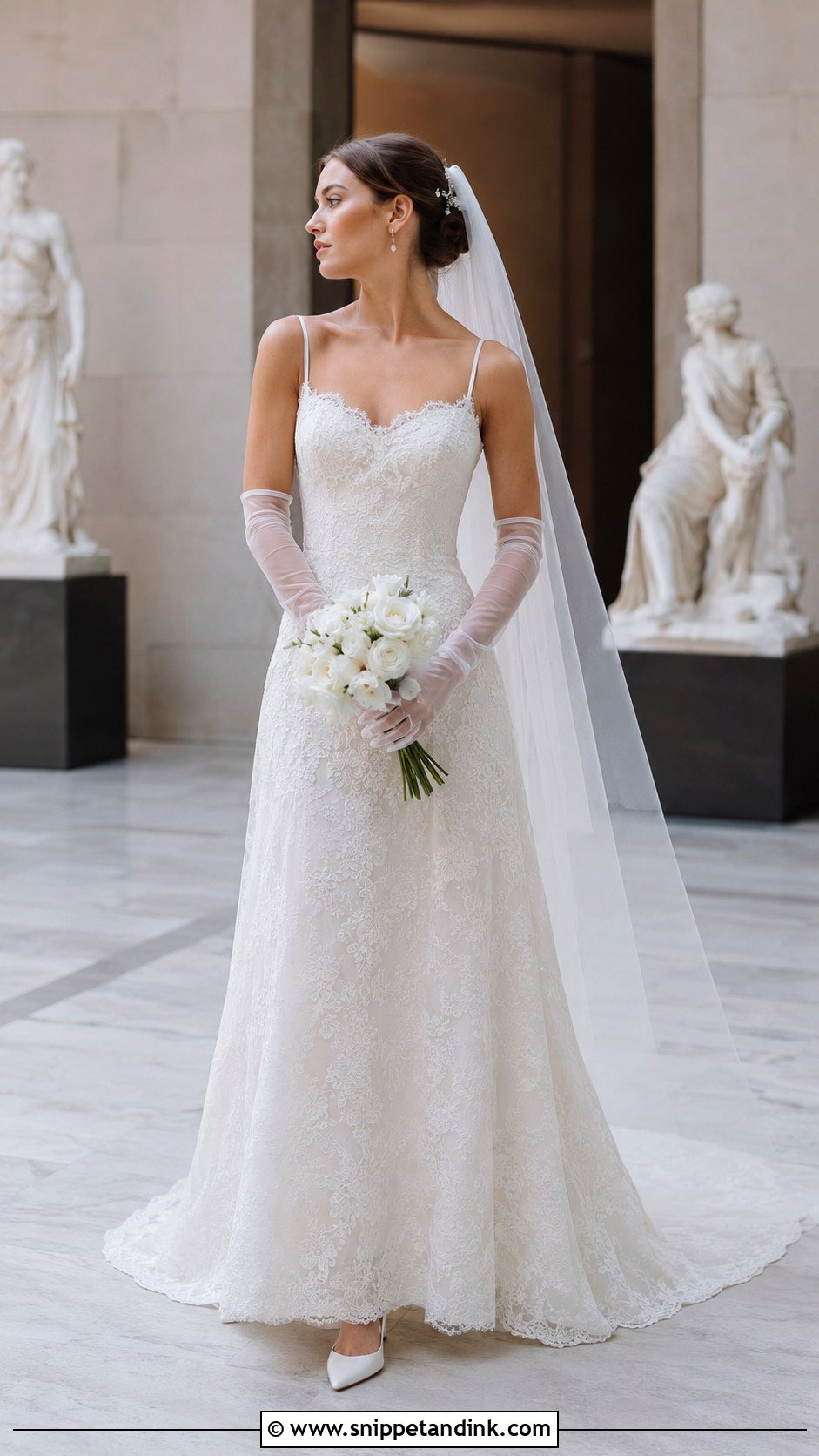
Sheer tulle gloves give a refined editorial look because they echo the transparency of the Melrose bodice. Pick elbow-length, plain ivory, no embroidery, so the Chantilly stays the strongest texture. A smooth bun with a few crystal pins, minimal drop earrings and satin pumps are all it needs, and nothing goes over the gloves except the wedding ring. Two things I check: the fingertips shouldn’t wrinkle when you grip the bouquet, and the color has to hold under flash, since some ivory tulles turn noticeably yellow on camera. I’d save this one for a museum, a stone-floored city hall or a modern ballroom.
9. Melrose Wedding Dress With Lace Gloves
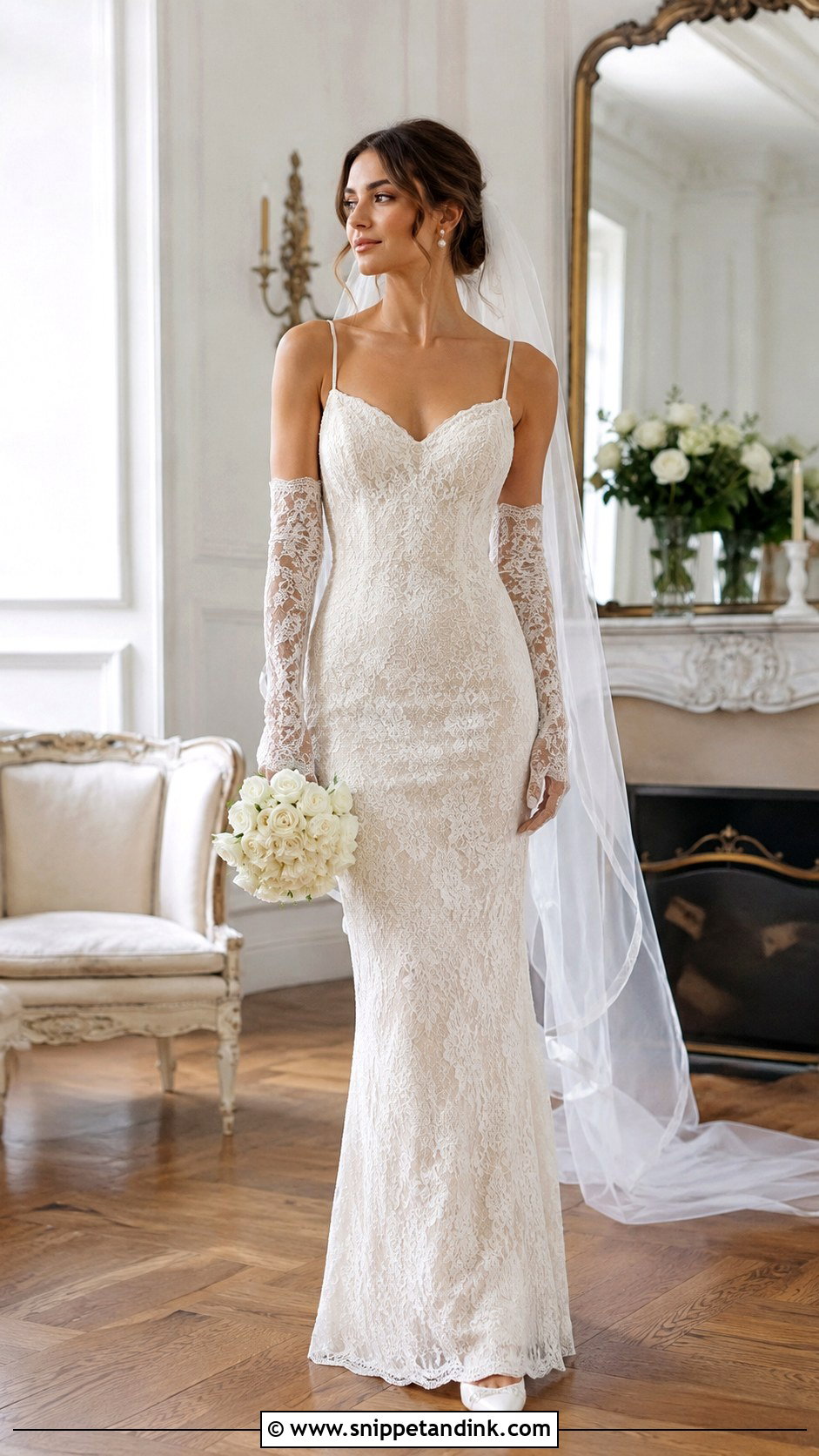
Lace gloves push the gown further into vintage, and there’s a fine line before it tips into costume. Choose fine, open lace at wrist or elbow length rather than dense appliqué, so the skin of the hand still shows. Pair them with a soft updo, pearl studs, low ivory slingbacks and a plain tulle veil, plus short, neatly wrapped white roses. At your fitting, do the ring exchange with the gloves on. If they have to come off, you want a glove that slides off in one pull or has an opening at the ring finger, not a row of tiny wrist buttons nobody can undo with shaking hands.
10. Melrose Wedding Dress With Bridal Cape
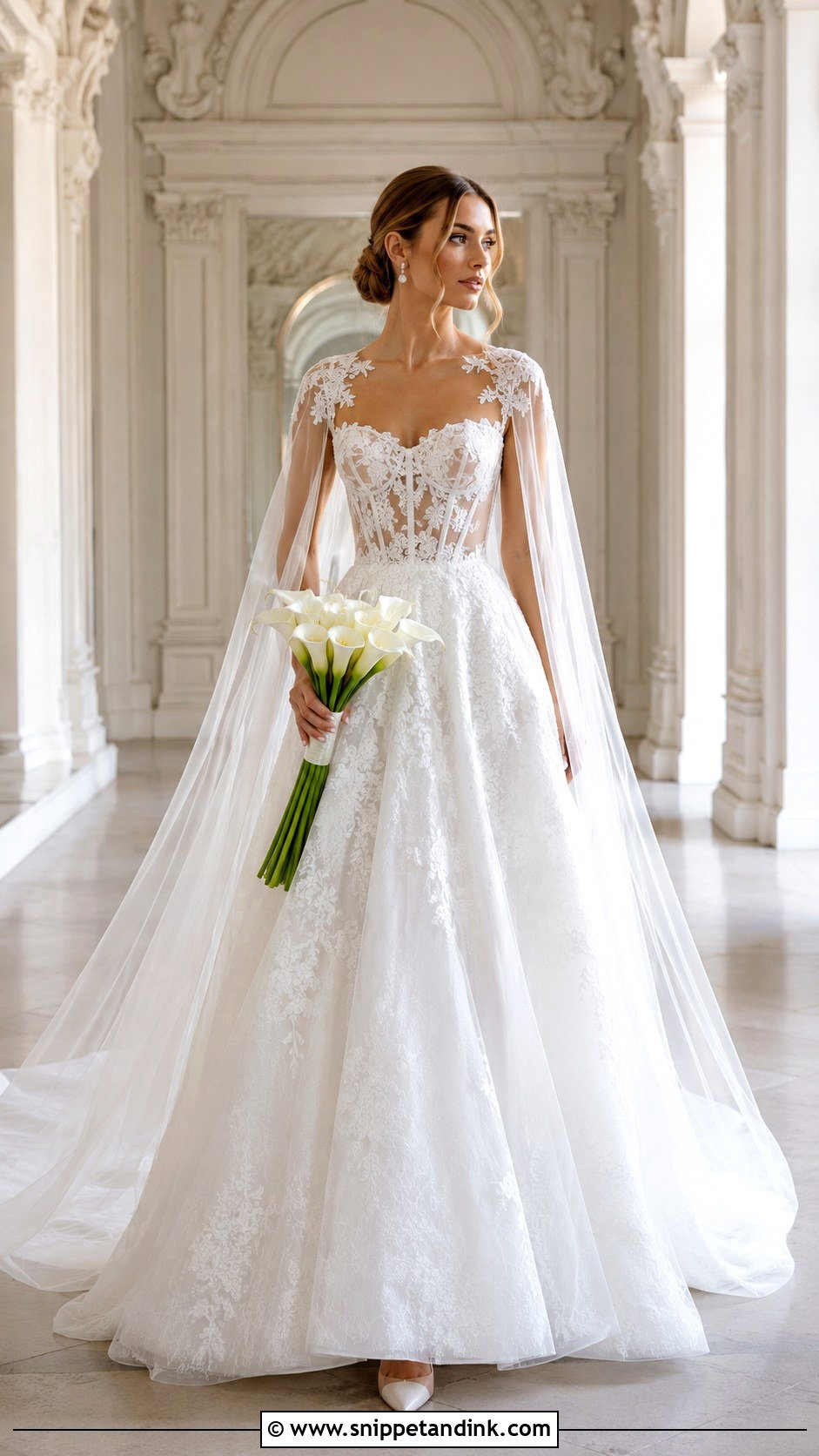
A sheer cape gives you the entrance of a long veil with nothing on your head. For the Melrose I’d choose a lightweight chapel-length cape in plain ivory tulle, since beaded edges compete with the lace and add weight. Weight is the real issue. Those slim straps weren’t built to carry fabric, so I have a tailor attach the cape at the back bodice or with discreet loops that spread the load, never hanging from the straps alone. A sculpted low bun, pearl earrings, pointed satin heels and calla lilies suit its long lines. Take it off after portraits and the straight neckline gets its moment.
11. Melrose Wedding Dress With Lace Bolero
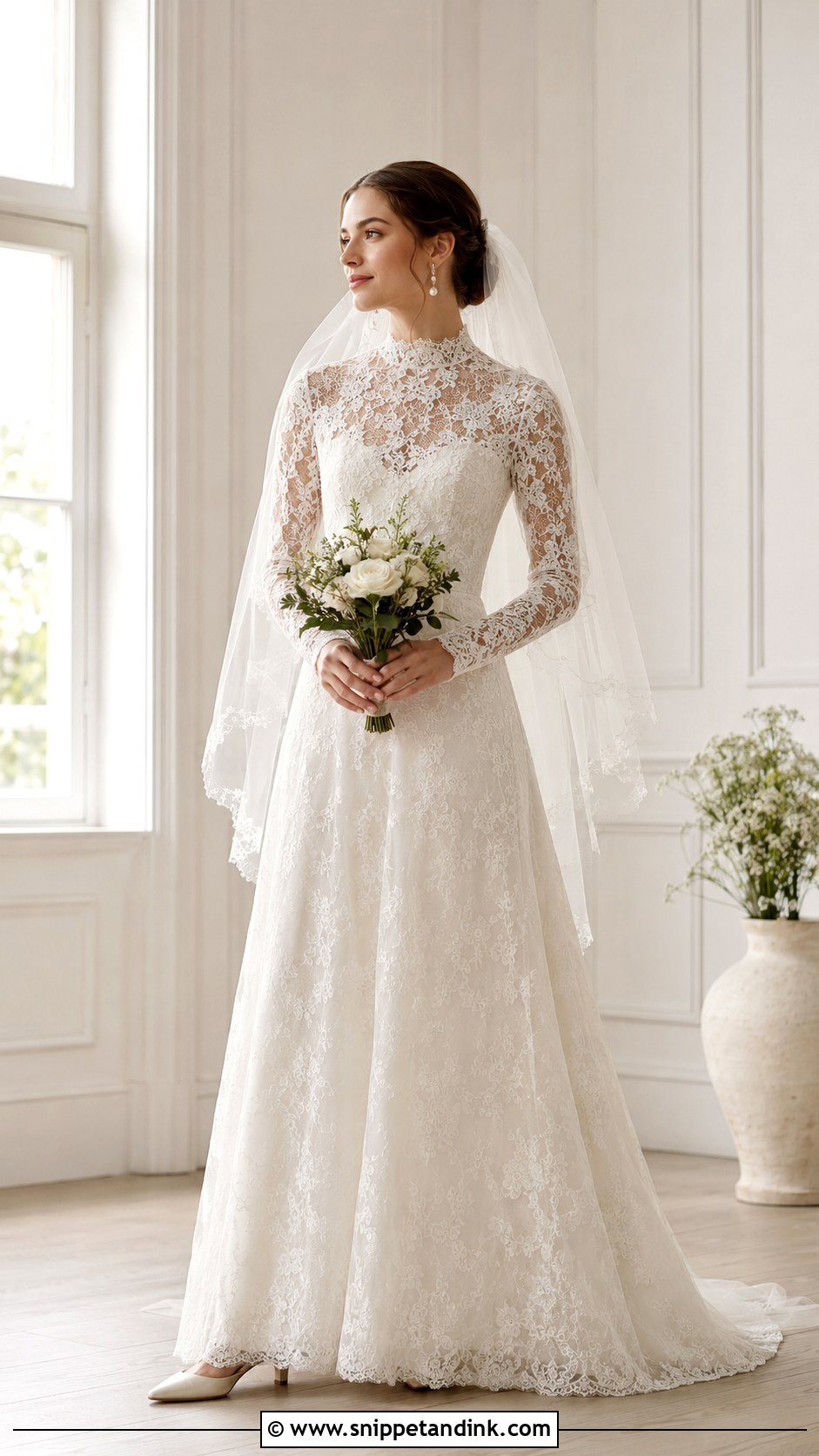
A lace bolero is the easiest way to give this gown a second look between ceremony and dancing. It should be fitted and high-necked with slim sleeves, and it must stop at the natural waist. Any longer and it covers the drop waist, which is what gives the Melrose its shape. Wear it with a neat chignon, pearl drops, kitten heels and a plain fingertip veil, and keep the bouquet small so nothing piles up around the chest. Never order the bolero from a product photo. White, ivory and nude-lined ivory look interchangeable online and completely different side by side.
12. Melrose Wedding Dress With Off The Shoulder Sleeves
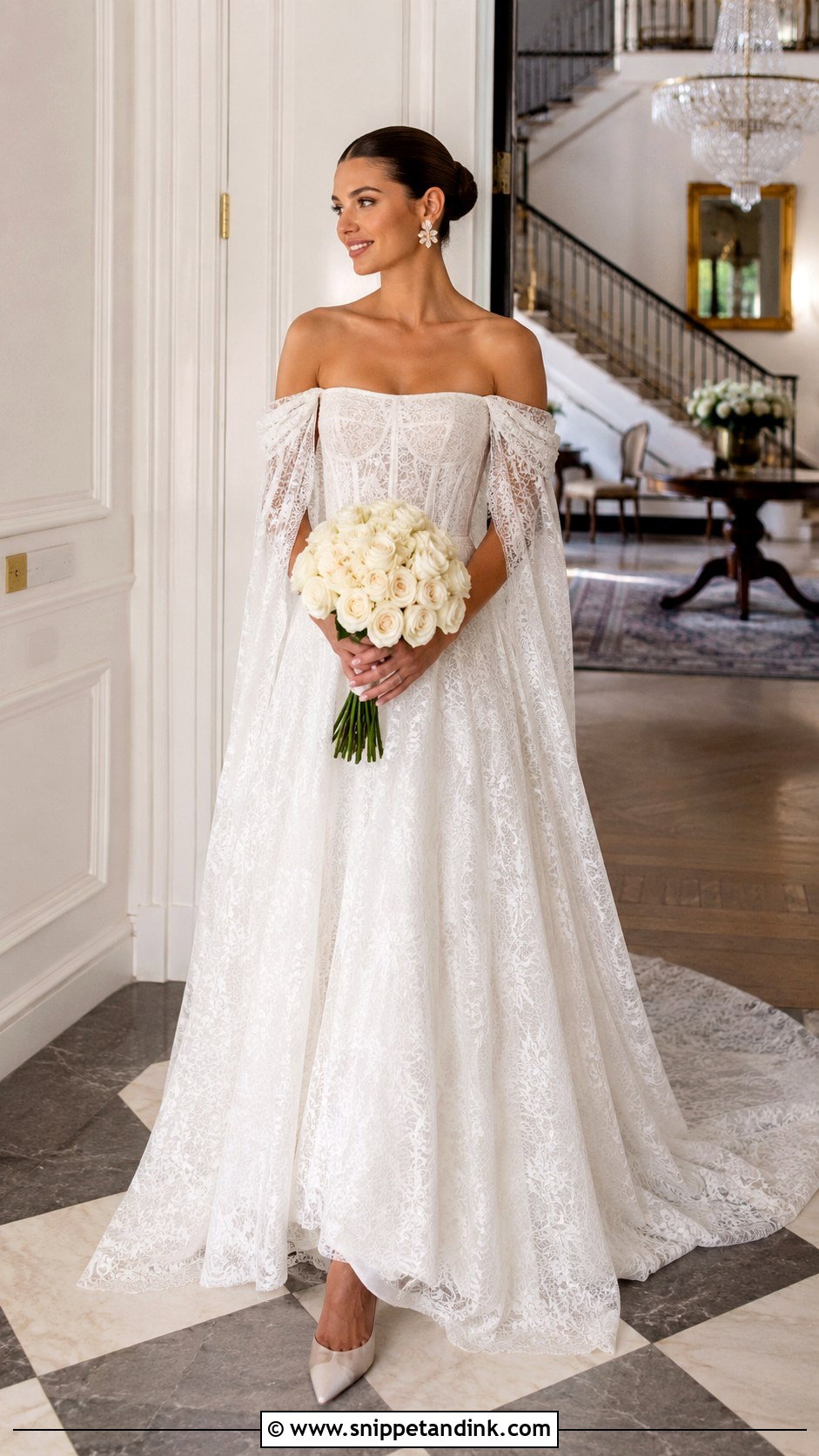
Detachable off-the-shoulder sleeves soften the straight neckline, and they’re a custom job for an alterations specialist, not something to buy separately and hope for the best. Ask for lightweight lace or tulle in a loose drape; a heavily embellished sleeve fights the volume of the skirt. A low twisted updo, small floral earrings, classic ivory pumps and white roses tied with ribbon finish it, with a cathedral veil for a formal room or none at all. The limit of this look is arm movement. Hidden elastic at the upper arm is what lets you hug people, so raise both arms during the fitting. If the sleeves ride up or drag on the straps, they need recutting.
13. Melrose Wedding Dress With Pearl Choker
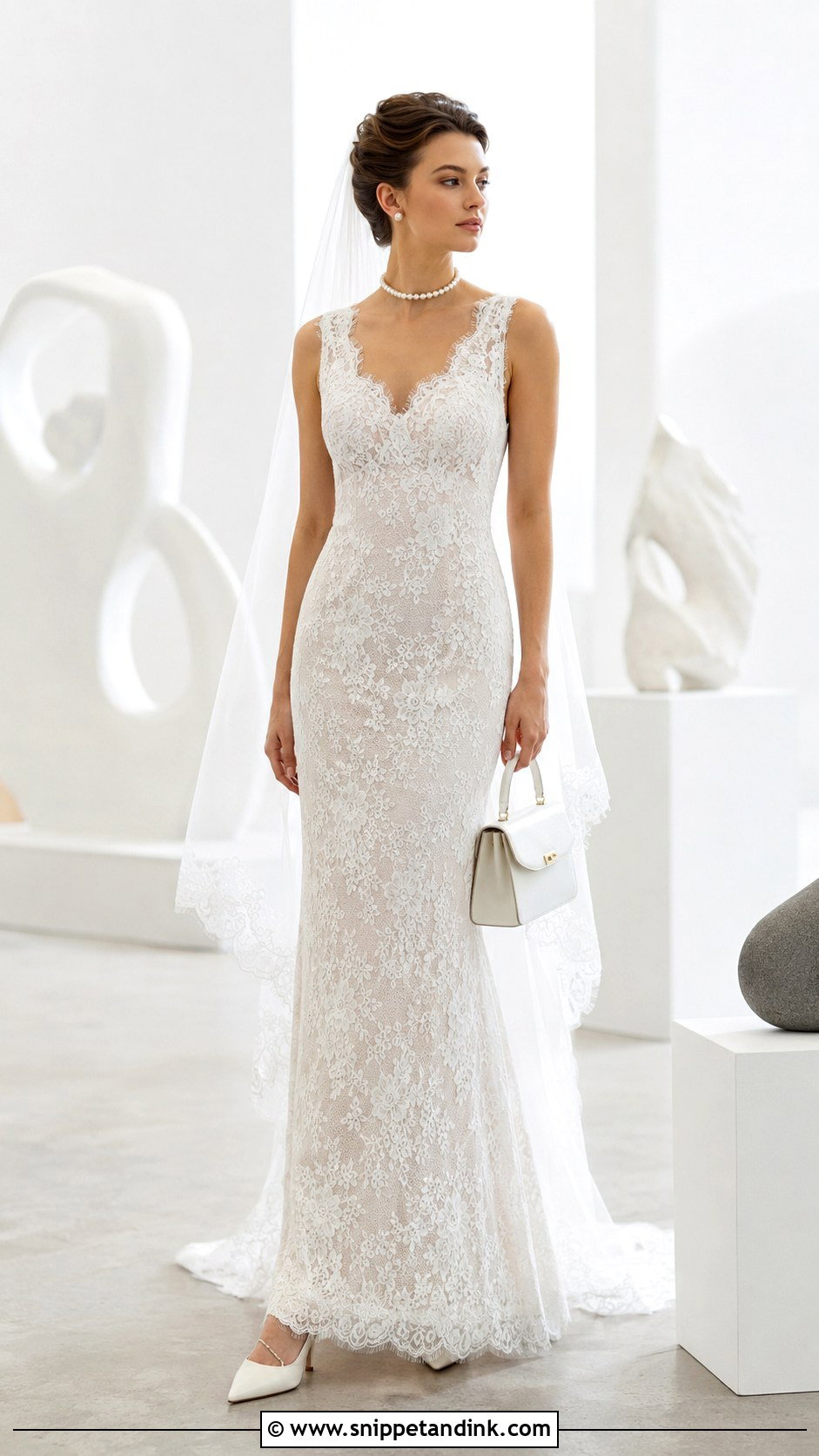
A single row of small pearls at the throat fills the open space above the straight neckline, and it’s the one necklace I’d allow with this dress. Keep clear skin between the choker and the bodice. Pearl studs only, a smooth French twist or center-parted bun, a plain chapel veil, satin slingbacks and a small top-handle bag. Try it on with the gown and turn your head both ways. A choker that’s slightly too long slides down toward the strap line, and the whole idea falls apart.
14. Melrose Wedding Dress With Floral Headpiece
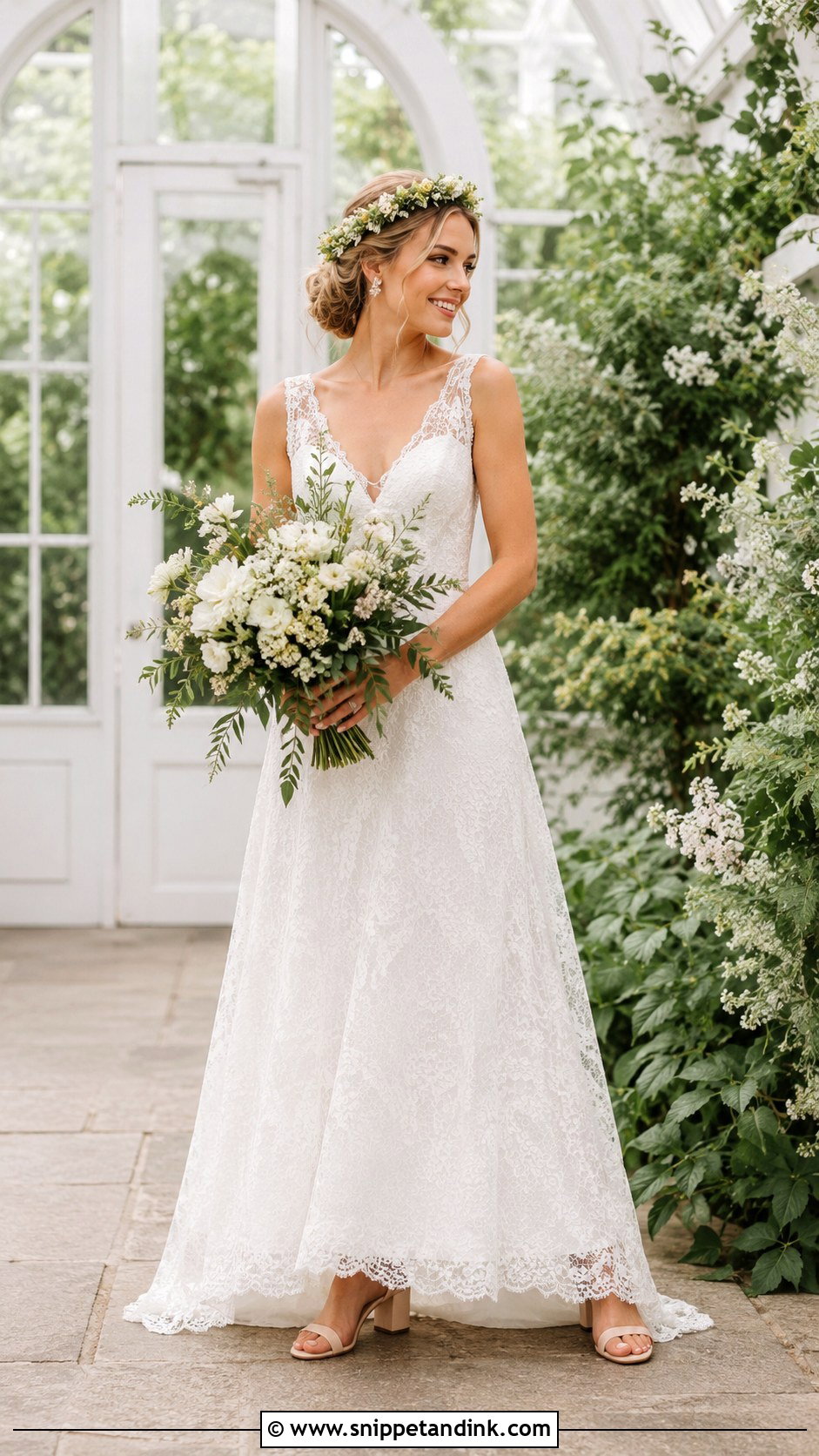
For a garden version, I’d pick a narrow headpiece featuring small white blooms on flexible wire over a full crown, which looks heavy above a dress this detailed. Set it above a loose low bun or along one side of a textured updo; slip a fingertip veil underneath or skip the veil for a relaxed feel. Floral studs, ivory block-heel sandals and a bouquet in the same flowers keep it coherent. If the piece is fresh, ask your florist for blooms that tolerate hours out of water, such as spray roses or waxflower, and a spare kept cool for portraits. Every wire end should be taped, because one stray tip will pull a thread out of the lace.
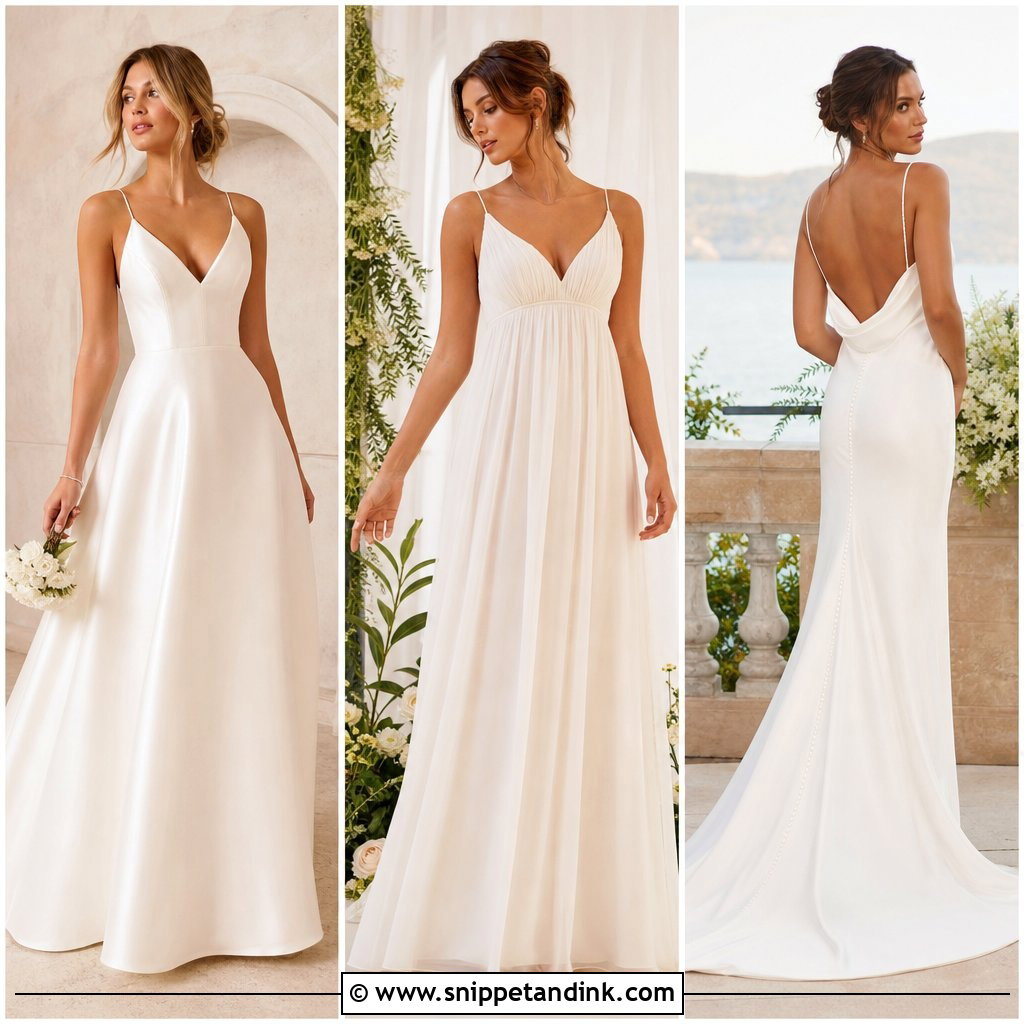
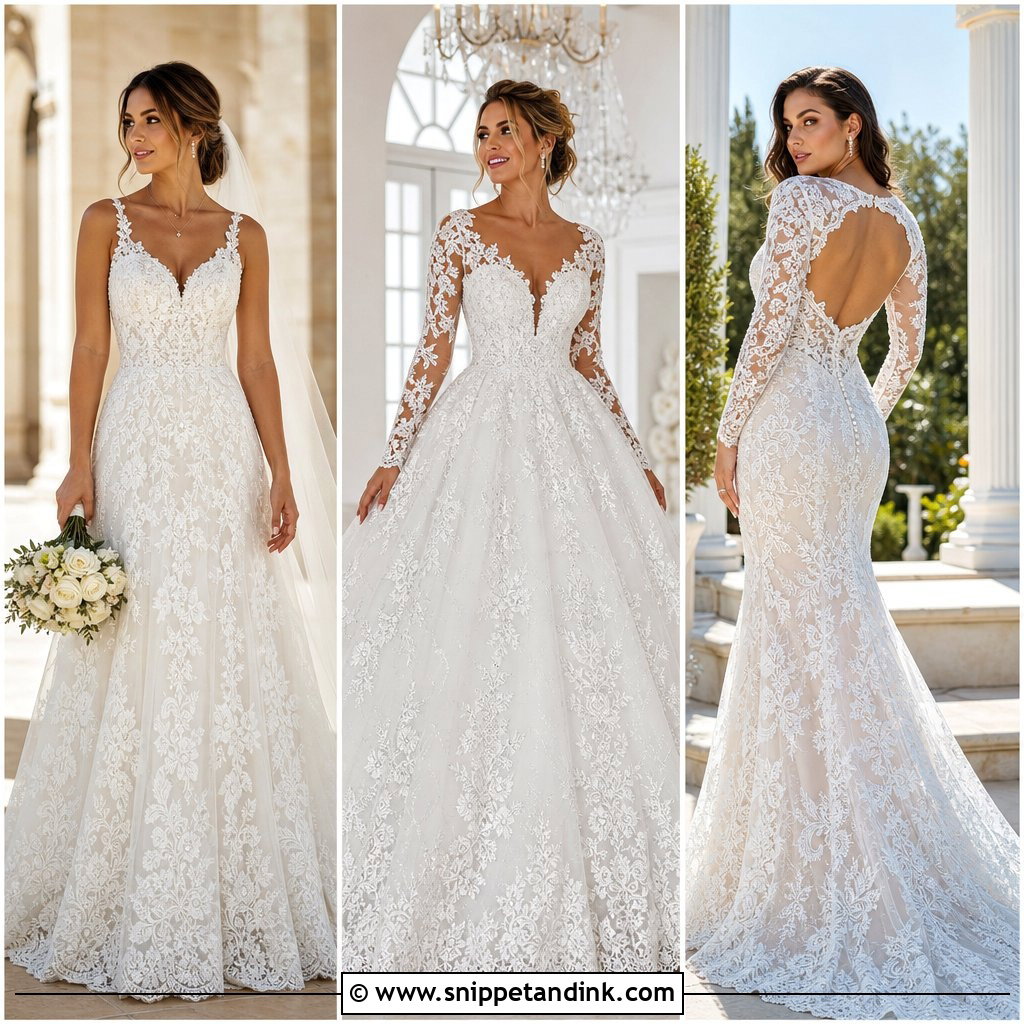
15. Melrose Wedding Dress With Bridal Tiara
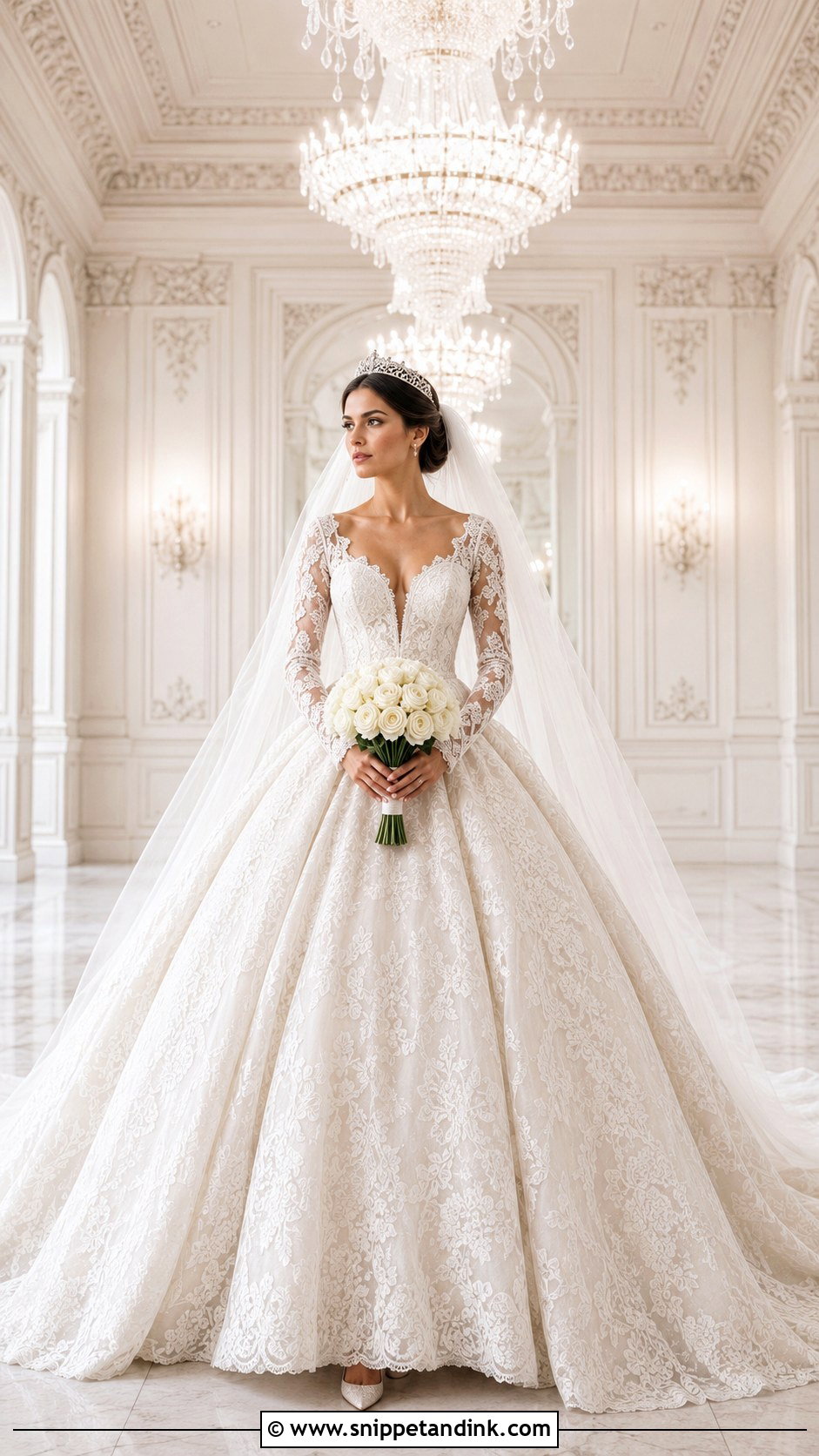
A delicate tiara plays up the princess outline of the full skirt without hardening the lace. Low-profile crystals or pearls, never a tall crown. It sits behind a softly lifted style with a plain cathedral veil tucked below the updo, and I’d add matching studs, pointed ivory pumps and white roses, with no necklace. It belongs in a ballroom or grand hotel. Wear it through a full hair trial for a few hours, not ten minutes. A band that feels fine at first can press behind the ears by dinner, and hidden loops pinned into the hair stop it from tilting forward.
16. Melrose Wedding Dress With Loose Waves
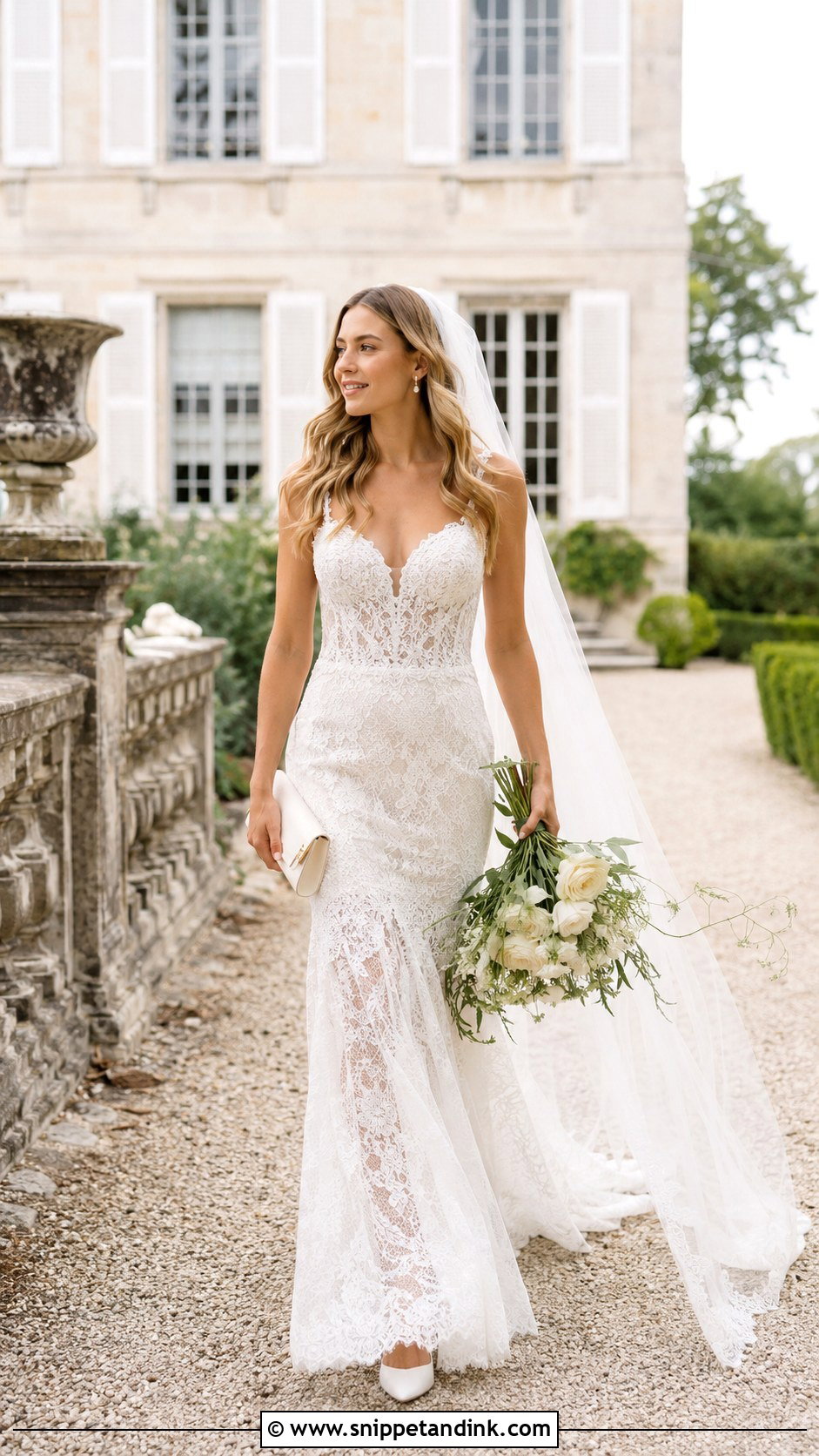
Loose waves suit the Melrose in a relaxed setting, but they need planning. I pin the front sections back so hair doesn’t sit on the straps, where curls tangle in the lace edge all day. Ask for polished bends rather than tight curls, and set a single-layer chapel veil at the back of the head so it lifts off without disturbing the style. Small pearl drops, an ivory clutch, low pointed heels for grass or stone, and a loose bouquet of garden roses and sweet peas. Humidity is the main enemy. Fine hair curled on the morning of an outdoor wedding can drop by the speeches, so ask your stylist to pin each curl while it cools.
17. Melrose Wedding Dress With Sleek Low Bun
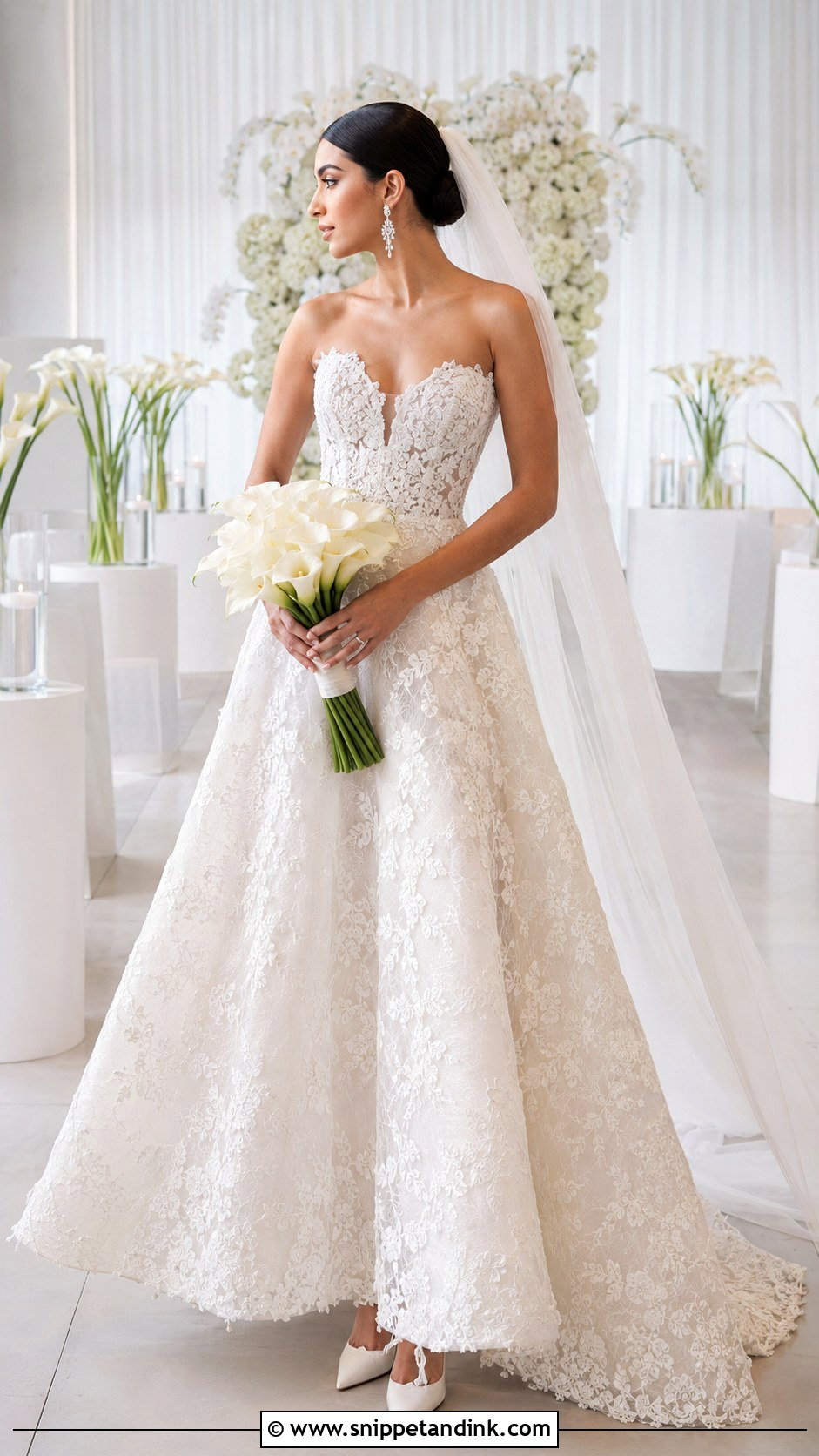
A sleek center-parted low bun is the cleanest contrast to romantic lace. I place the veil underneath it so the neckline stays fully visible, then add long crystal earrings for a controlled bit of shine and pointed ivory pumps. Calla lilies or tulips in a structured bouquet match sculpted hair better than a loose arrangement. The veil is optional: a plain cathedral length suits a formal ceremony, but this outfit holds up without one. Check the bun from the side at your trial, because next to a skirt this full, an oversized bun becomes a second shape competing at the back of your head.
18. Melrose Wedding Dress With Bridal Flats
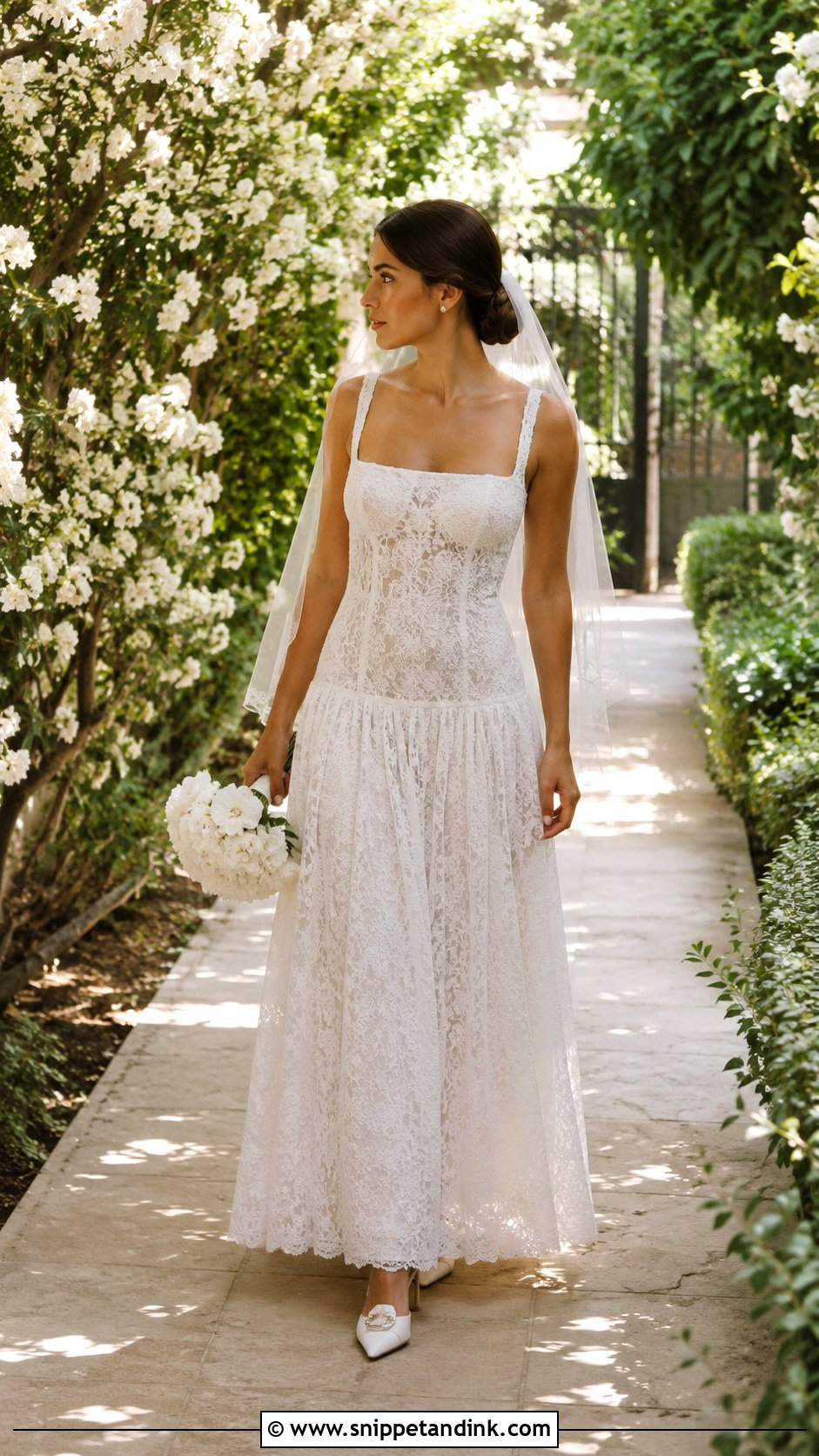
Flats make sense for a long day on your feet, garden paths or venues with stairs, and they don’t cheapen the gown if they’re pointed and ivory in satin or smooth leather, with a small pearl buckle at most. The detail that matters is hem length. Get the gown hemmed with the exact flats on, because a full lace skirt measured for heels will puddle and drag once you lose a few inches. Pair them with a fingertip veil, pearl studs, a soft low bun and a compact white bouquet. Break them in at home, add cushioned inserts if needed, and keep a clean spare pair for wet grass.
19. Melrose Wedding Dress With Block Heel Sandals
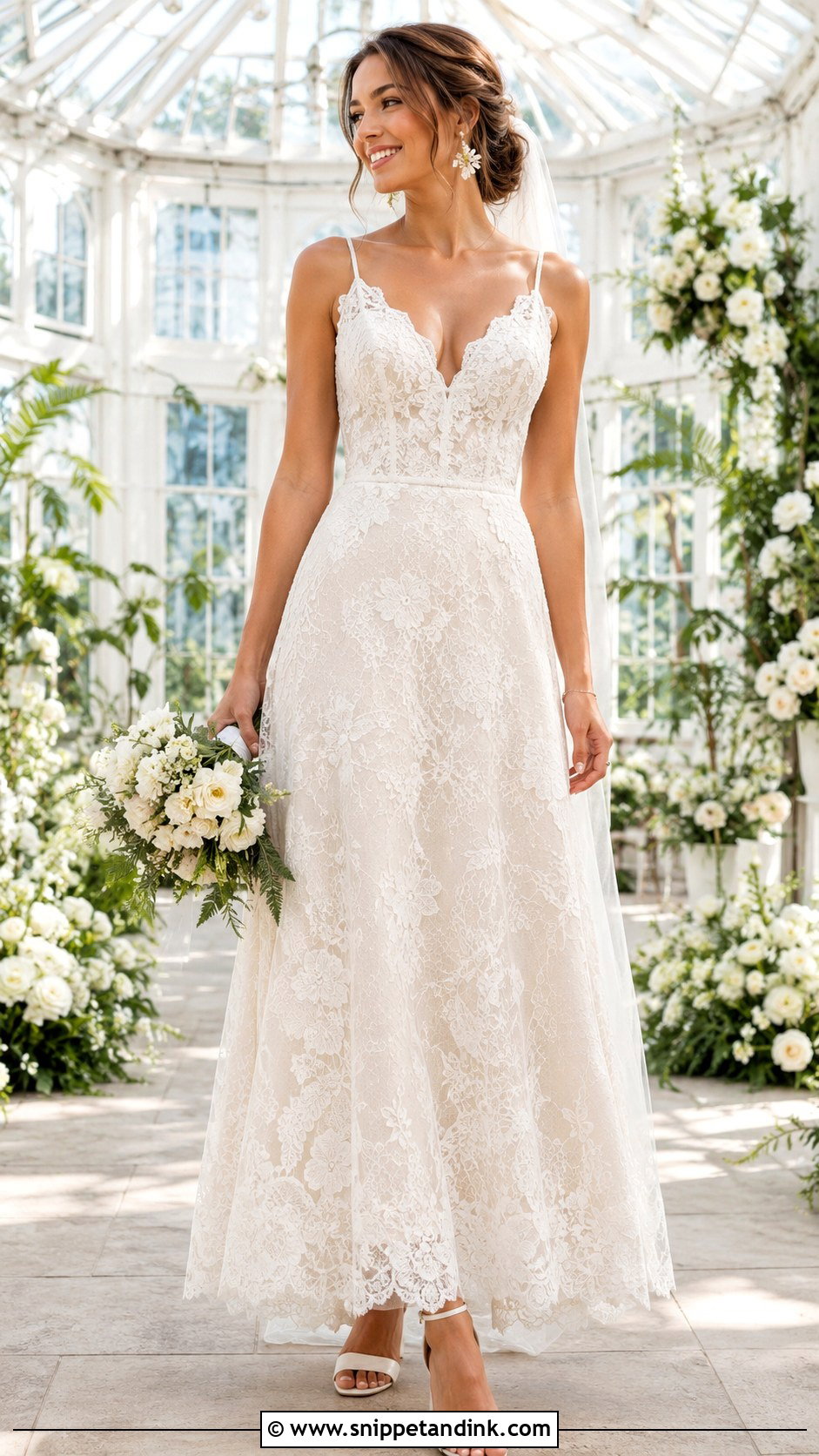
Block heels give you height without sinking into the lawn, which is why I suggest them for spring and summer outdoor weddings. Plain ivory, secure ankle straps, a heel you’ve actually walked in. Skip jeweled sandals; crystal settings at the toe catch the lace hem every time you sit. Style them with a light fingertip veil, floral earrings, a loose low updo and seasonal white flowers with pale green. Have your seamstress check the length from every side while you’re in the shoes, and pack heel stoppers if the ground is soft.

20. Melrose Wedding Dress With Reception Bustle
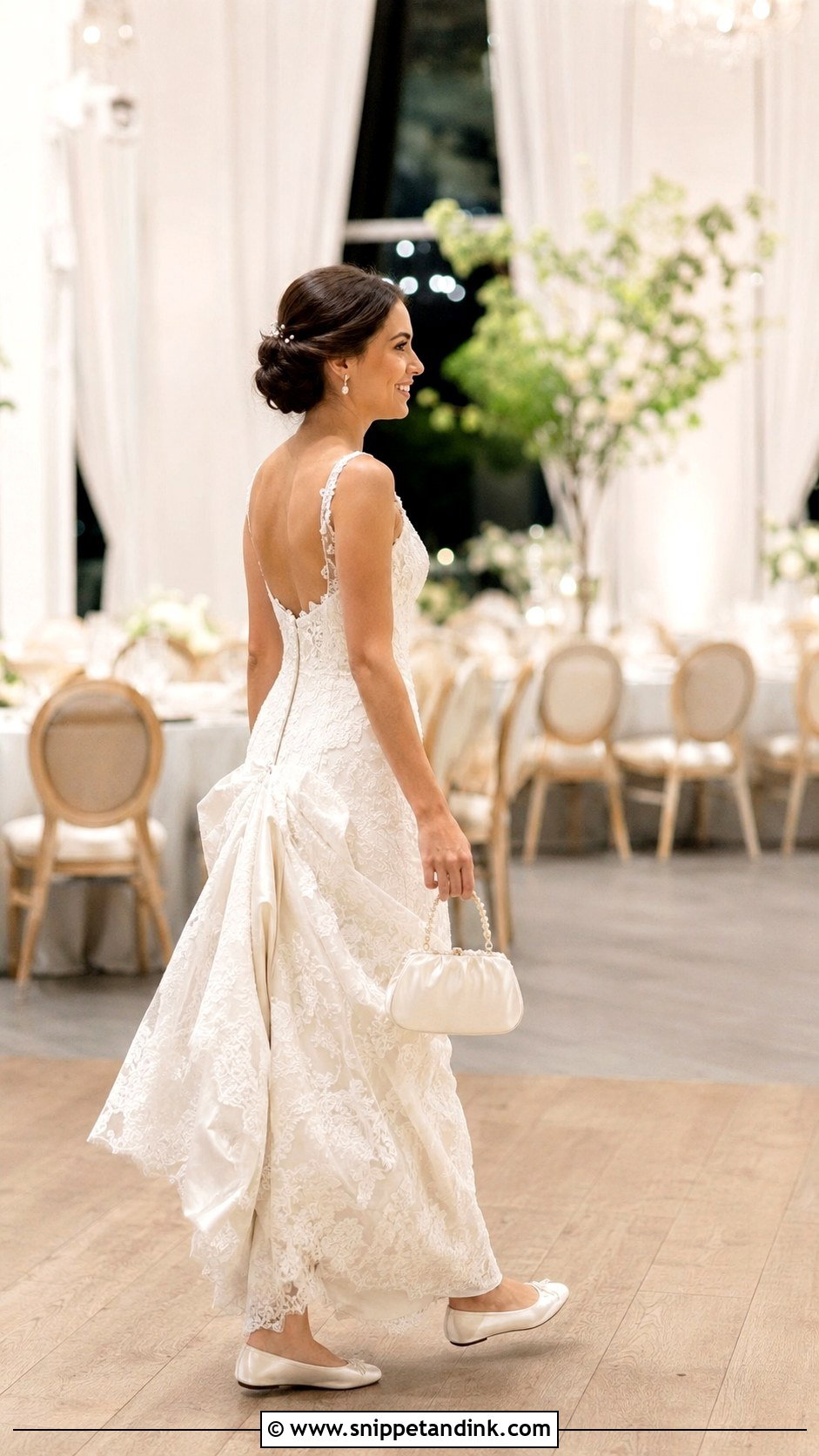
The reception look is mostly about the bustle. Ask an experienced seamstress for one that lifts the lace evenly and keeps the A-line shape; on lace, small hooks or ribbon loops are kinder than heavy buttons. Photograph each fastening point and teach one trusted person to do it, because whoever volunteers on the night has usually never bustled a gown. Then take off the veil, switch to pearl hairpins and satin flats, and carry a small ivory bag while keeping the same earrings and hair. A wrist loop is fine for portraits but not for dancing. Before you sign off, practice turning, sitting and climbing stairs in the bustled dress.
Where Fine Lace Catches, and What to Do When It Does
Chantilly is a fine net lace with thinly outlined flowers. That’s why it drapes so softly, and it’s also why it snags. Over a long day the damage nearly always comes from the same few places:
- Prong-set engagement rings and bracelet clasps when you gather the skirt to walk.
- Bouquet wire and pins at the stem wrap, which brush the bodice every time you hold the flowers low.
- Jeweled shoes and heel tips catching the hem on stairs.
- Cufflinks and watch clasps during the first dance and every hug in the receiving line.
- Hook-and-loop fastenings on bags and some cape closures.
If a thread pulls on the day
Don’t cut it and don’t tug. Ease the loop back through to the wrong side with a blunt needle, or leave it for your seamstress afterward. I keep small scissors, safety pins and white thread in my kit for hems, but I never put clear nail polish near this lace. It stiffens the net and can yellow it.
Once the dancing is over
Get the gown to a cleaner who handles lace within a few weeks, before spilled drinks or frosting have time to oxidize into brown marks that weren’t visible on the night. Store it in acid-free tissue inside a breathable box, away from plastic bags and wire hangers, and refold the skirt now and then so the lace doesn’t set along the same creases.
Accessorize Around the Bodice, Not Over It
One lace gown can carry a formal princess look with a cathedral veil and tiara, or something softer with flats and a fingertip veil. Sleeves, gloves, capes and boleros add coverage and shift it with the season, while pearls, flowers and hair give you smaller ways to make it yours. Whichever way you go, keep two things in view: the Chantilly lace and the drop-waist bodice. Bring every major accessory to your fittings, wear all the layers together at least once, and plan the hours after the ceremony as carefully as the walk down the aisle.
You'll Like These Ideas:





Leave a Reply