
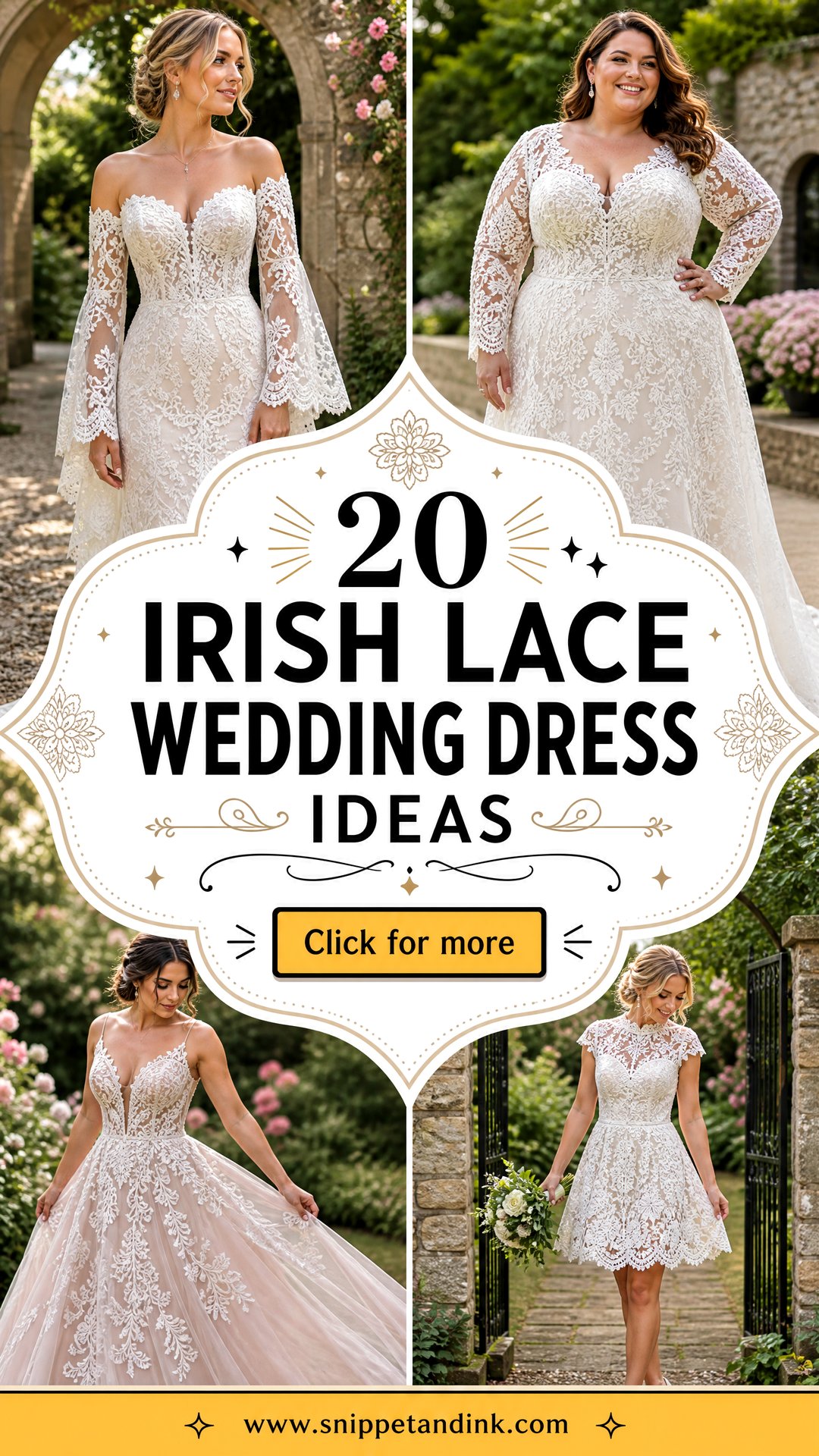
Irish lace is one of the few bridal fabrics where the technique itself is the selling point. Net appliqué, raised crochet motifs, floral needlework and heritage patterns each behave differently on the body, and the silhouette decides whether they look classic, relaxed, regal or modern. In fittings I spend as much time on the supporting cast as on the dress: a soft veil, shoes you can stand in, restrained jewelry and a seasonal bouquet keep the lace in charge. If handmade work matters to you, ask the designer about the technique, materials and origin before you order. The twenty gowns below start with the classic shapes and move toward the more unusual.
Telling Handmade Irish Lace From Machine Copies
Plenty of gowns are sold as Irish lace when they’re really machine lace in an Irish-style pattern. That’s not a problem if you know what you’re buying and pay accordingly. Handmade work takes a very long time, so it often appears as panels, cuffs or a veil edge rather than a whole dress. These are the three types I’m asked about most:
Carrickmacross
Fabric shapes stitched onto fine net with the surplus cut away. Look for slightly irregular hand-stitched outlines; machine copies have perfectly even edges.
Limerick
Embroidery worked directly into net, either with a hook or a needle. Handmade versions show small variations in the stitch tension from motif to motif.
Irish crochet
Raised motifs made separately, then joined with a crocheted mesh. Turn a piece over: real crochet has a back that looks worked by hand, with little knots and thread ends neatly hidden.
Ask the seller three questions: who made the lace, by hand or by machine, and whether you can see the reverse side. A good seller will answer all three without hesitating.
1. A-Line Irish Lace Wedding Dress
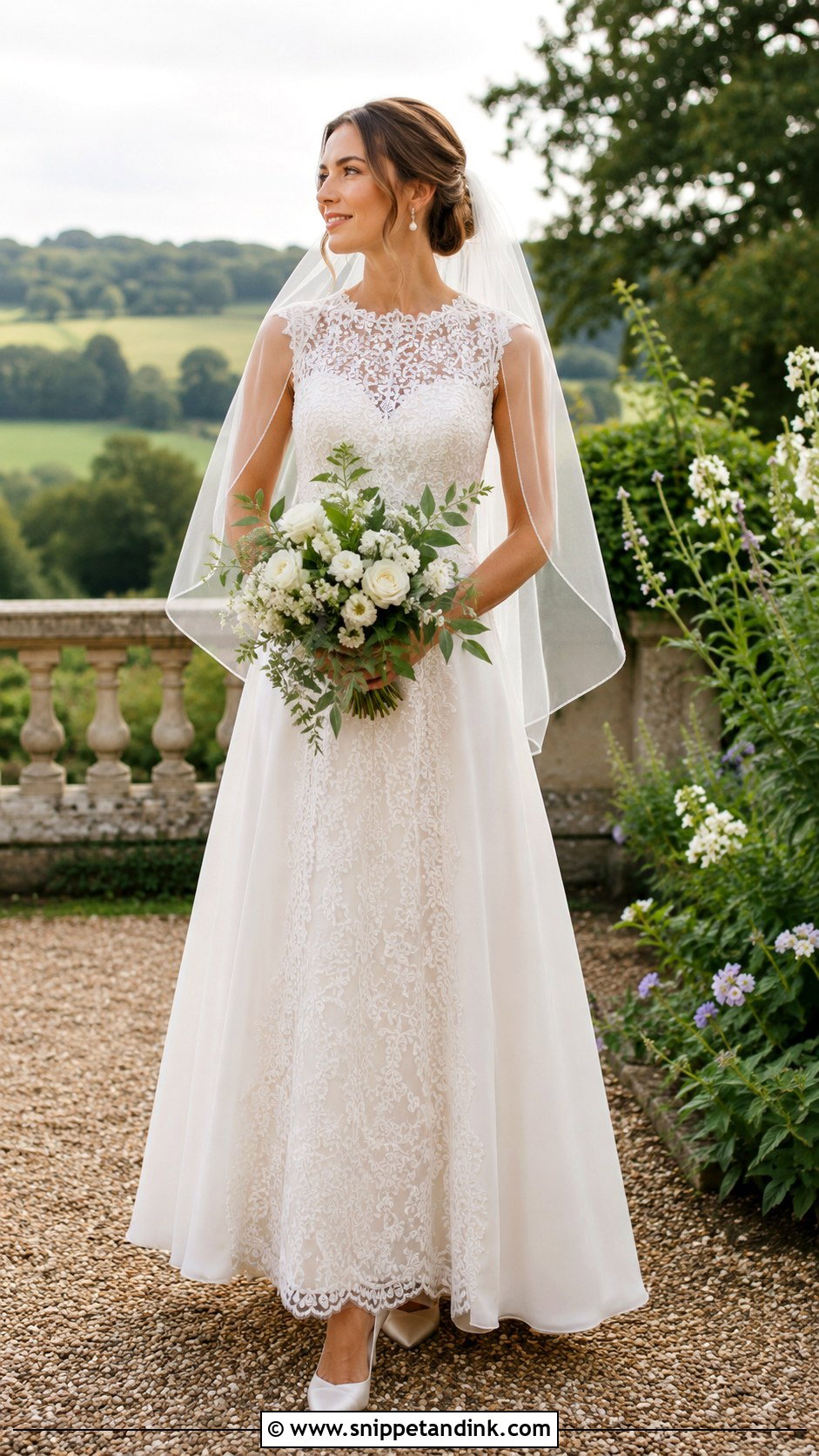
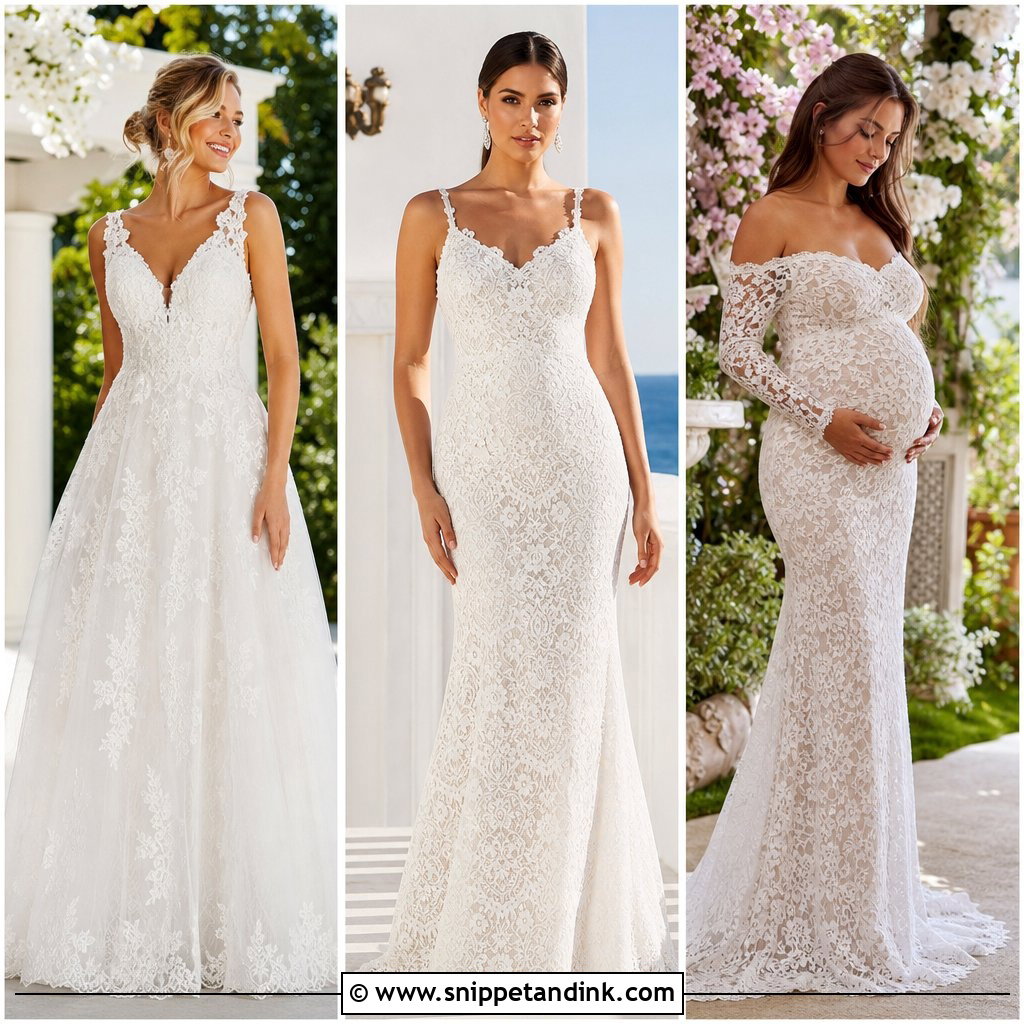
If you’re unsure where to start, start here. An A-line puts the lace on a fitted bodice and lets it release from the natural waist into a flowing silk, chiffon or soft tulle skirt, so it defines the upper body without clinging through the hips. It’s the shape I see brides sit, walk and dance in most comfortably. Lace bodices stretch slightly as they warm up, which is why I fit them a touch firmer than feels natural on the hanger. An ivory fingertip veil, pearl drops, pointed satin pumps and a sweep or chapel train for outdoor photographs suit it in a formal hall or a garden alike.
2. Long Sleeve Irish Lace Wedding Dress
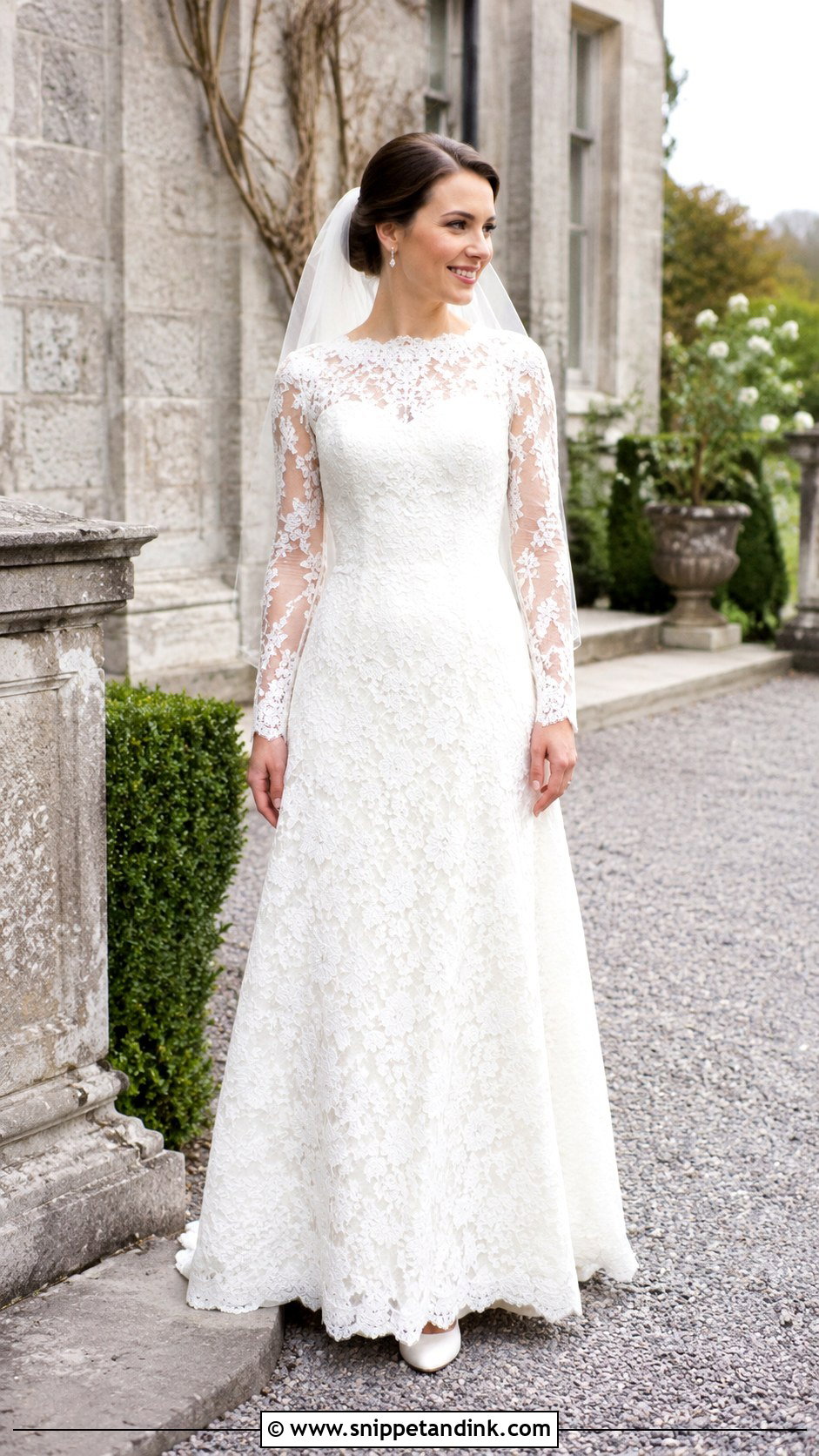
Long lace sleeves give coverage while letting skin show softly through the pattern. Pair them with a lightly structured bodice and a fluid floor-length skirt, with scalloped cuffs or covered buttons at the wrist. The underarm is where long lace sleeves fail. Raw lace rubs there over a long day, so ask for a soft lining or a small gusset at that point. A low chignon keeps the sleeves and neckline visible, and pearl studs, a quiet veil and closed-toe ivory heels keep it refined. For a cool-weather wedding, a white wool wrap covers you outside without hiding the gown all day.
3. High Neck Irish Lace Wedding Dress
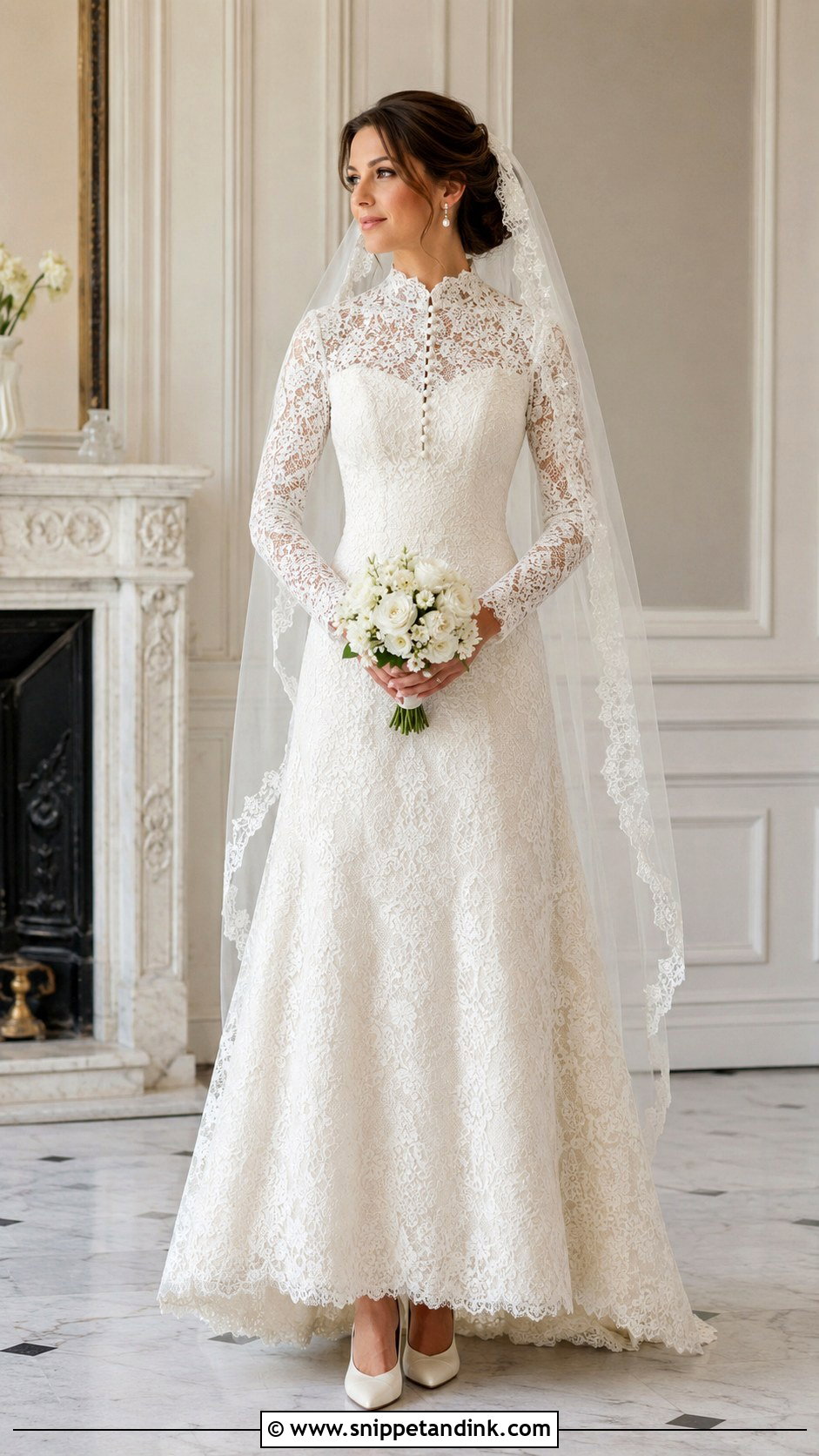
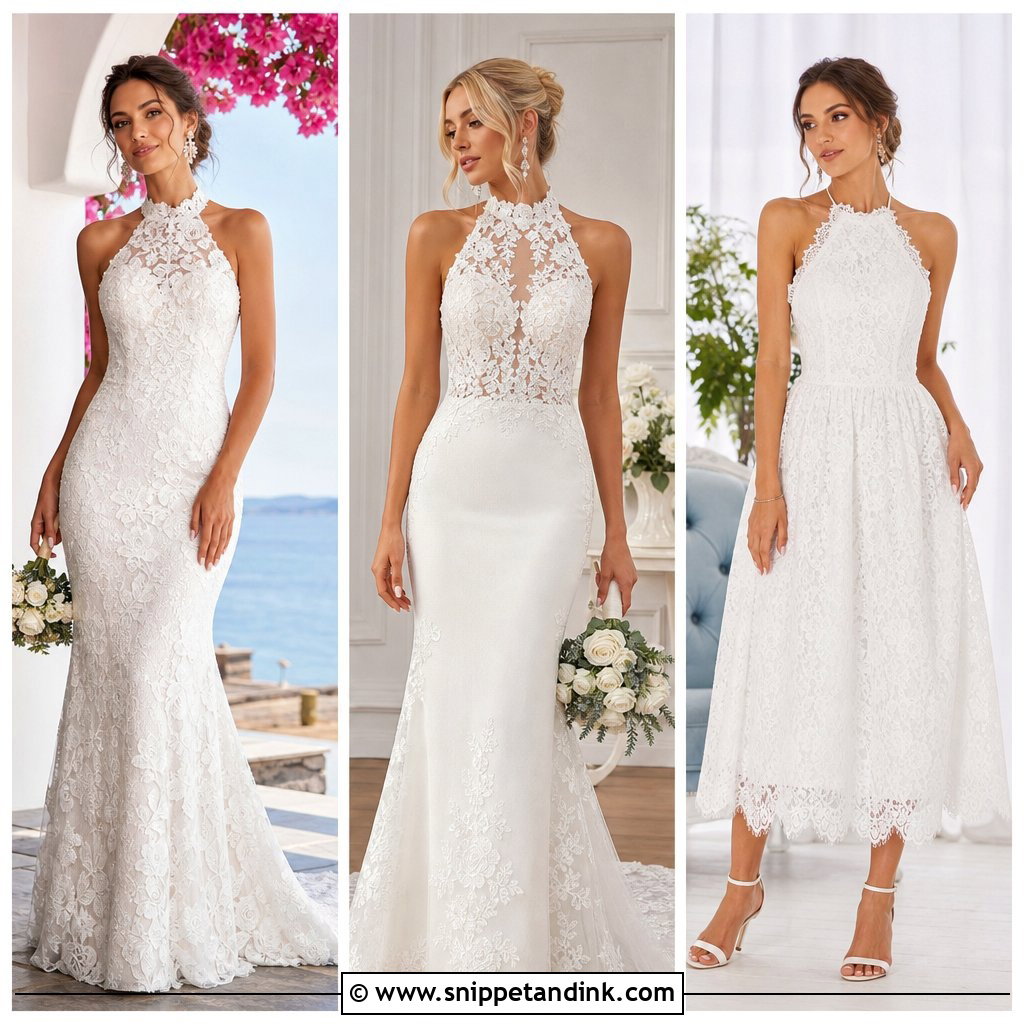
A high lace neckline reads vintage, but the lining underneath makes it modern. Look for a sweetheart or bateau-shaped lining beneath the sheer upper lace, so the pattern looks delicate rather than heavy, with a defined waist and softly flared skirt. Skip the necklace; pearl or crystal earrings are enough. A smooth low bun and a narrow lace-edged veil finish it. High necks get warm, so insist on breathable lining even in winter, and consider a keyhole or buttoned lace back to stop the coverage looking too buttoned-up from behind.
4. Off Shoulder Irish Lace Wedding Dress
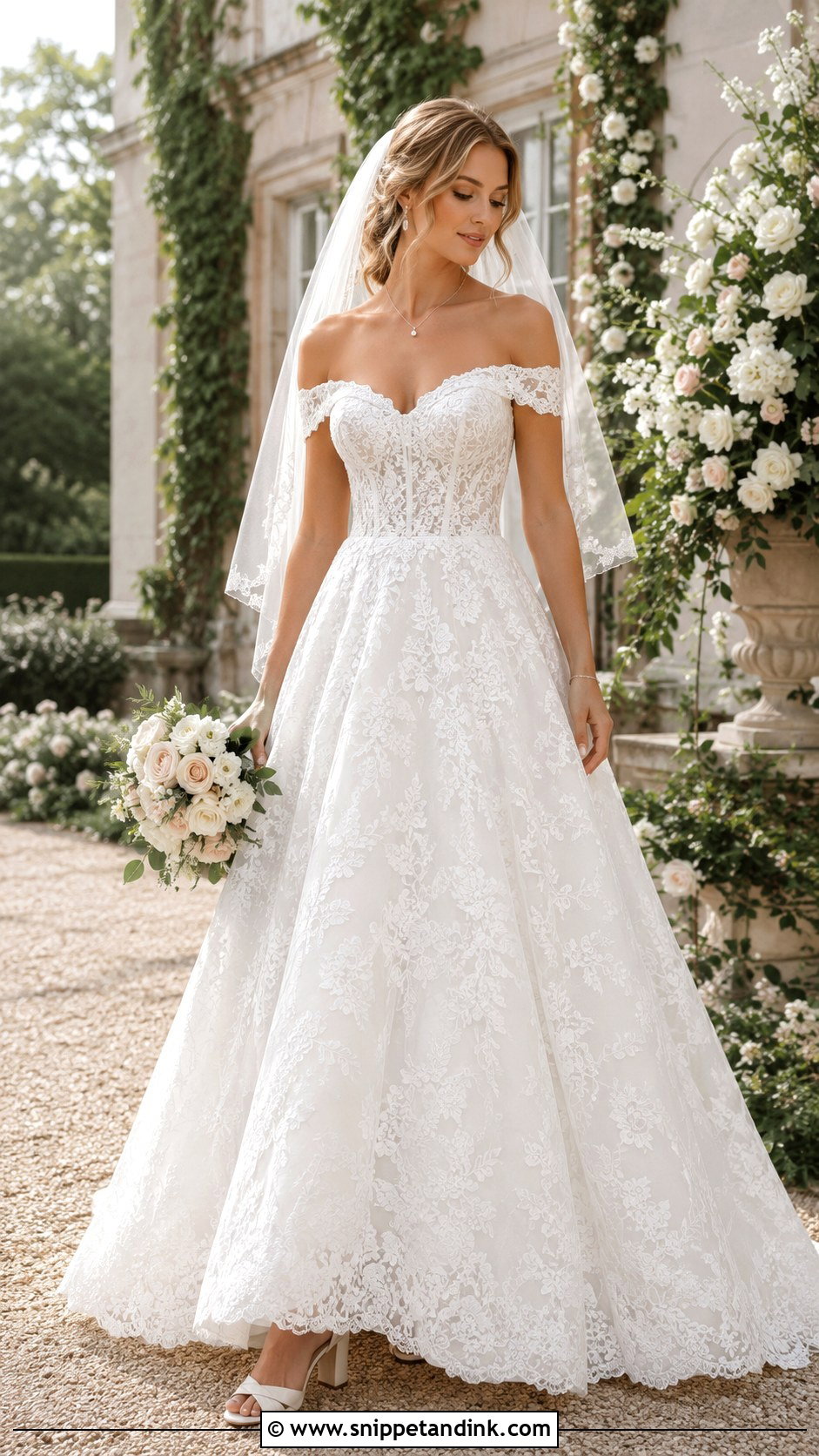
Off-the-shoulder lace frames the collarbones, but only if the gown holds up without the lace’s help. Choose a supportive internal bodice with lace straps or a folded lace neckline anchored to it, a fitted waist and a full A-line skirt. During alterations, raise your arms and sit down several times; a neckline that slips at the fitting will slip all evening. A delicate pendant, small drops and a relaxed low bun keep it soft. Block heels suit a garden or estate, and a shoulder-length veil keeps fabric off the neckline.
5. Square Neck Irish Lace Wedding Dress
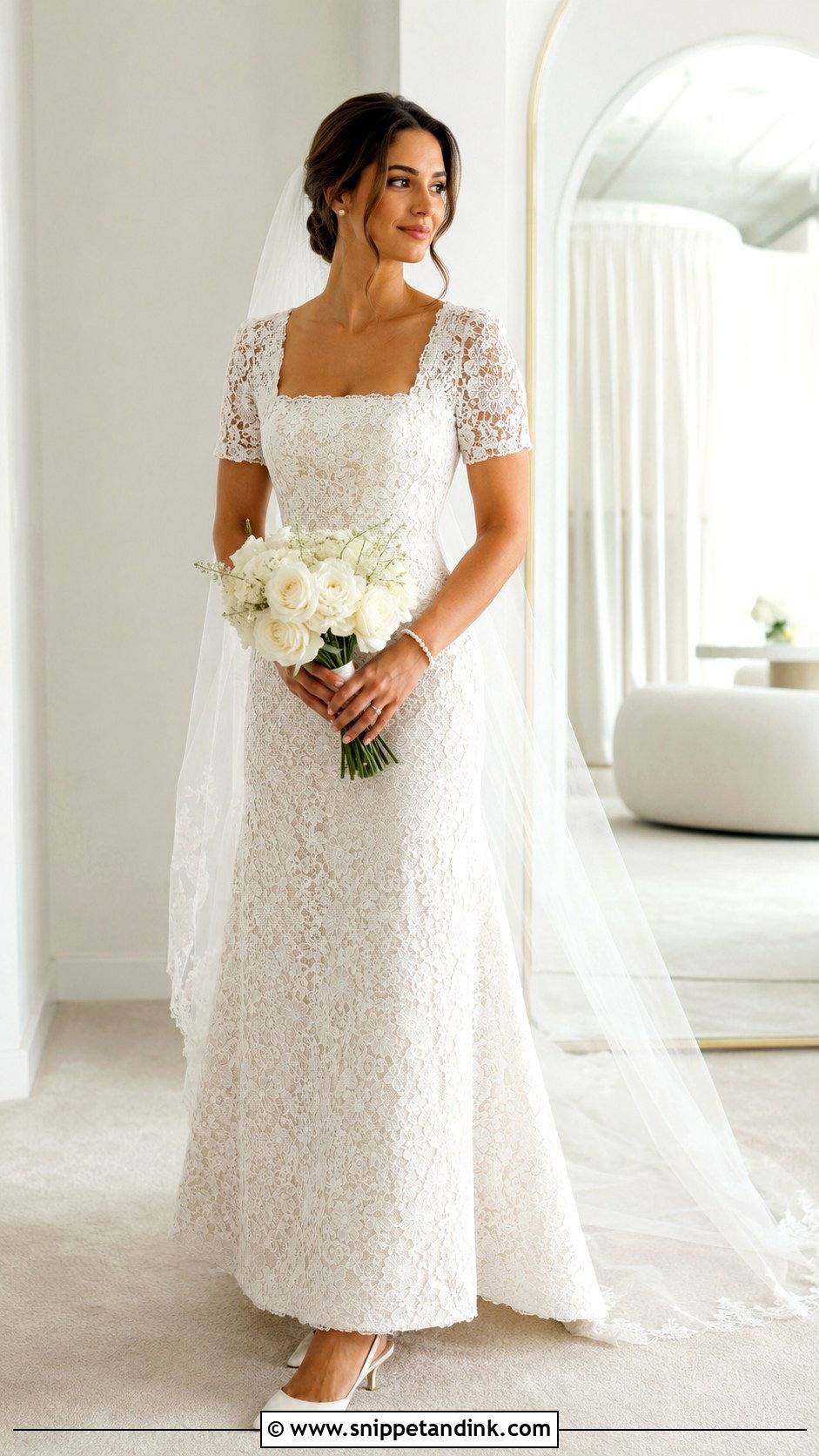
A square neckline gives detailed lace a clean, architectural frame. It sits well with a fitted bodice, short lace sleeves and a gently flared skirt. The lining choice changes the whole dress: a lining close to your skin tone makes the lace pattern pop, while ivory lining gives a more traditional, solid look. I always pin a scrap of each behind the lace before deciding. A neat bun, pearl studs and a simple tulle veil keep it tidy. Pointed flats or low kitten heels are easy to wear all day, and a structured bouquet of ranunculus and roses echoes the straight lines.
6. V-Neck Irish Lace Wedding Dress
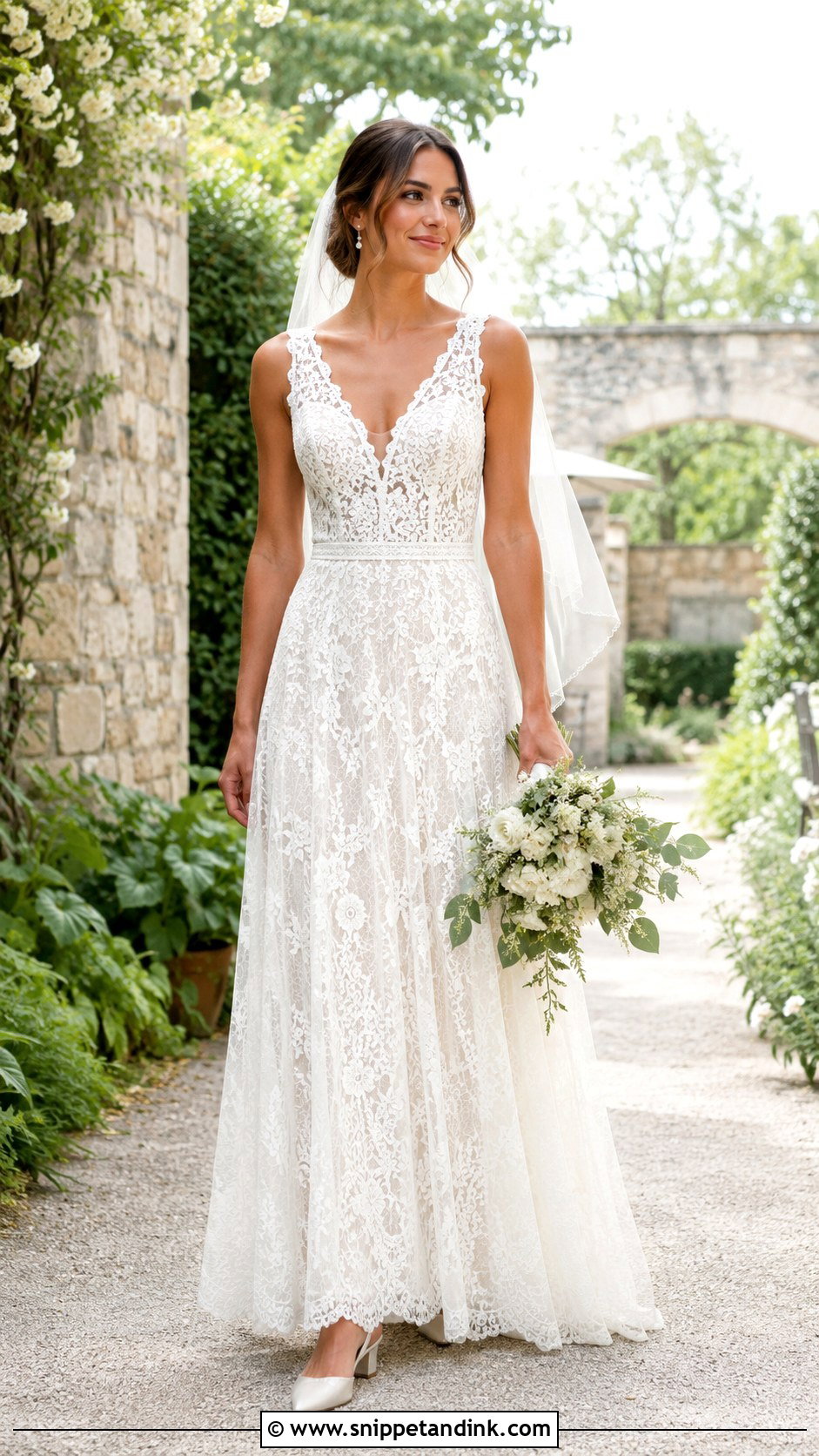
A V-neck lightens an ornate lace bodice and lengthens the upper body. Pick a depth that feels secure for your ceremony, with illusion mesh inside if you need support, and pair it with a defined waistband and a floor-length A-line or fit-and-flare skirt. Detailed lace usually looks better with earrings alone than with a pendant fighting the pattern. If the back is also a deep V, the bra question comes up at the first fitting: built-in cups sewn into the bodice are far more reliable than adhesive ones over a long day. Wear the hair up or swept to one side to show the back.
7. Mermaid Irish Lace Wedding Dress
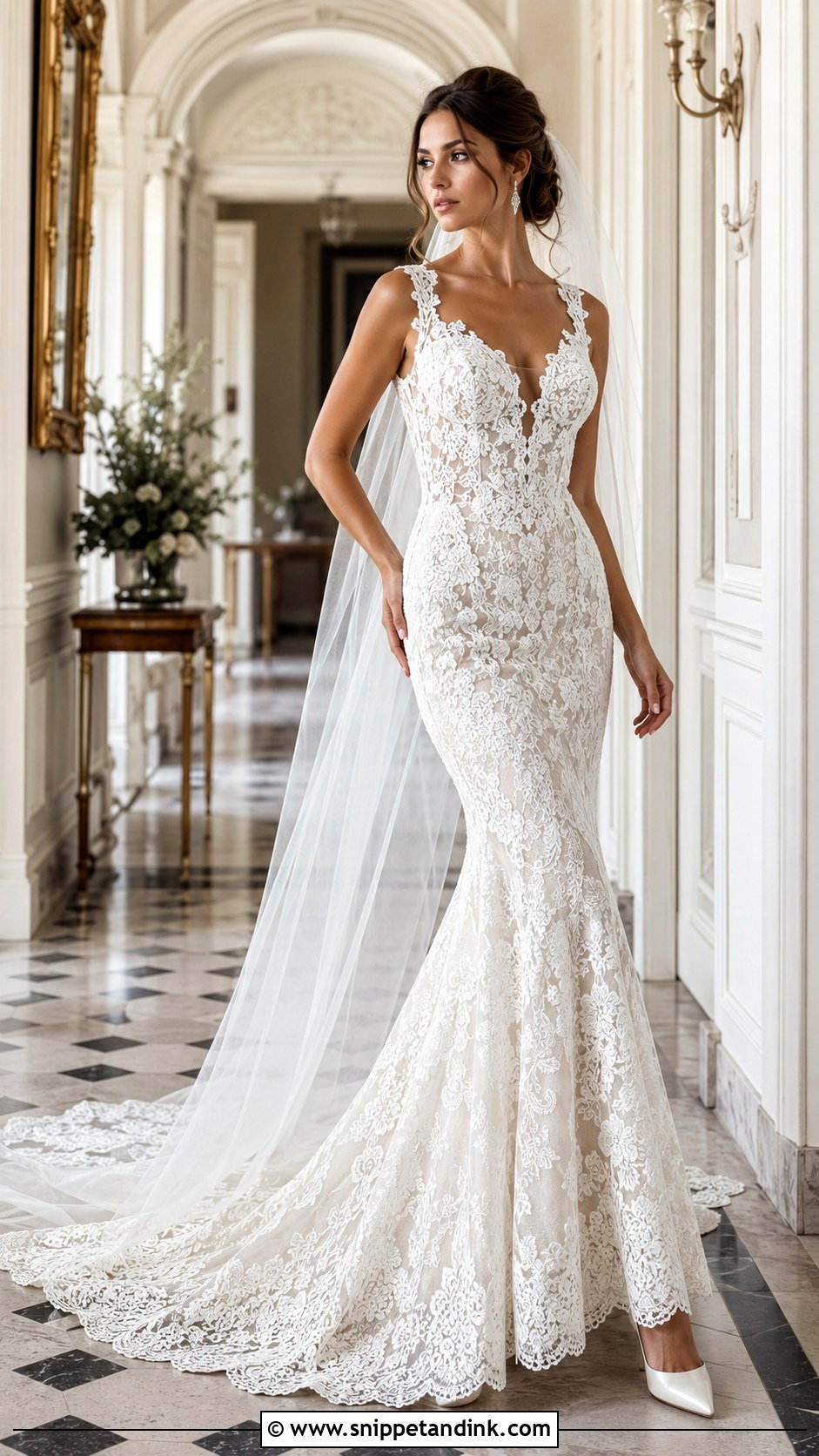
The mermaid follows the body to the knee and then flares, and raised floral motifs running from bodice into train make the shape dramatic. It also limits your stride, so at fittings I have brides walk, sit and climb a few steps before anything is finalised. Where the flare starts makes a big difference; raising it a few inches into a fit-and-flare gives far more movement. Stretch lining and good internal structure help it stay wearable for hours. Keep the veil plain and sheer, the bouquet narrow, and add drop earrings with a sleek updo.
8. Ball Gown Irish Lace Wedding Dress
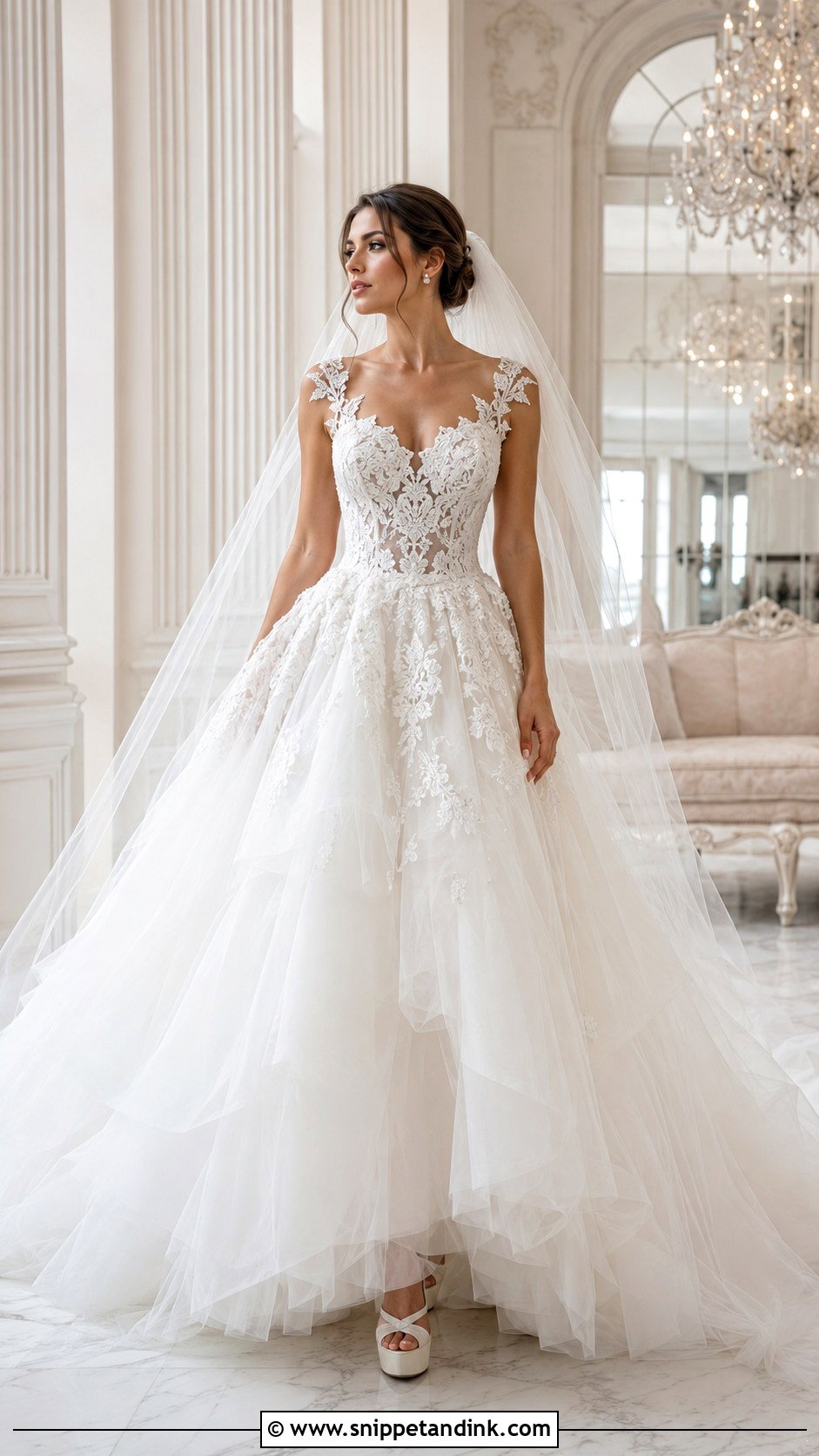
Grand, and demanding. A ball gown with an Irish lace bodice and voluminous skirt looks best when appliqué spills gradually over the waist onto the tulle layers, so there’s no sharp line where the lace stops. A structured bodice and a full petticoat hold the shape. Before ordering, measure the aisle, the car and the reception chairs, because this much skirt needs room everywhere. Platform heels hidden under the hem add comfort and stop the hem dragging. A long sheer veil, pearl earrings and a medium bouquet that won’t vanish against the skirt finish it.
9. Boho Irish Crochet Lace Wedding Dress
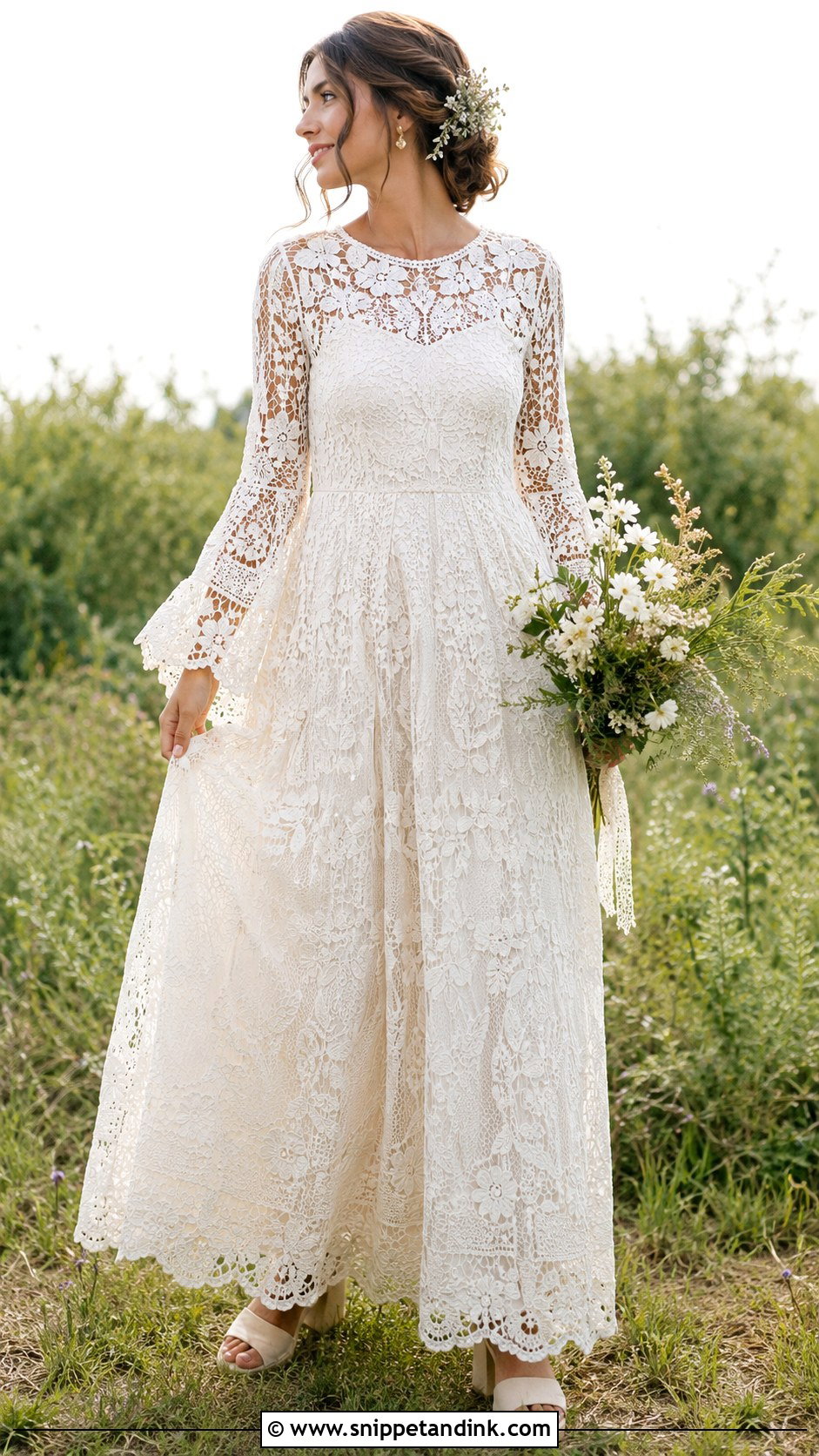
Irish crochet gives a relaxed, handmade texture, and it is the lace I inspect most closely. Look at the joins between motifs; on good work they’re neat and even, while poor joins show gaps once the dress is on a body. Choose a lined bodice, defined waist and flowing skirt so the openwork stays supportive. Bell sleeves, scalloped edges or botanical motifs push the bohemian character without becoming costume. Loose waves, small gold earrings, a floral comb and cream leather sandals or low block heels on grass suit it, with ferns and trailing greenery in the bouquet.
10. Tea Length Irish Lace Wedding Dress
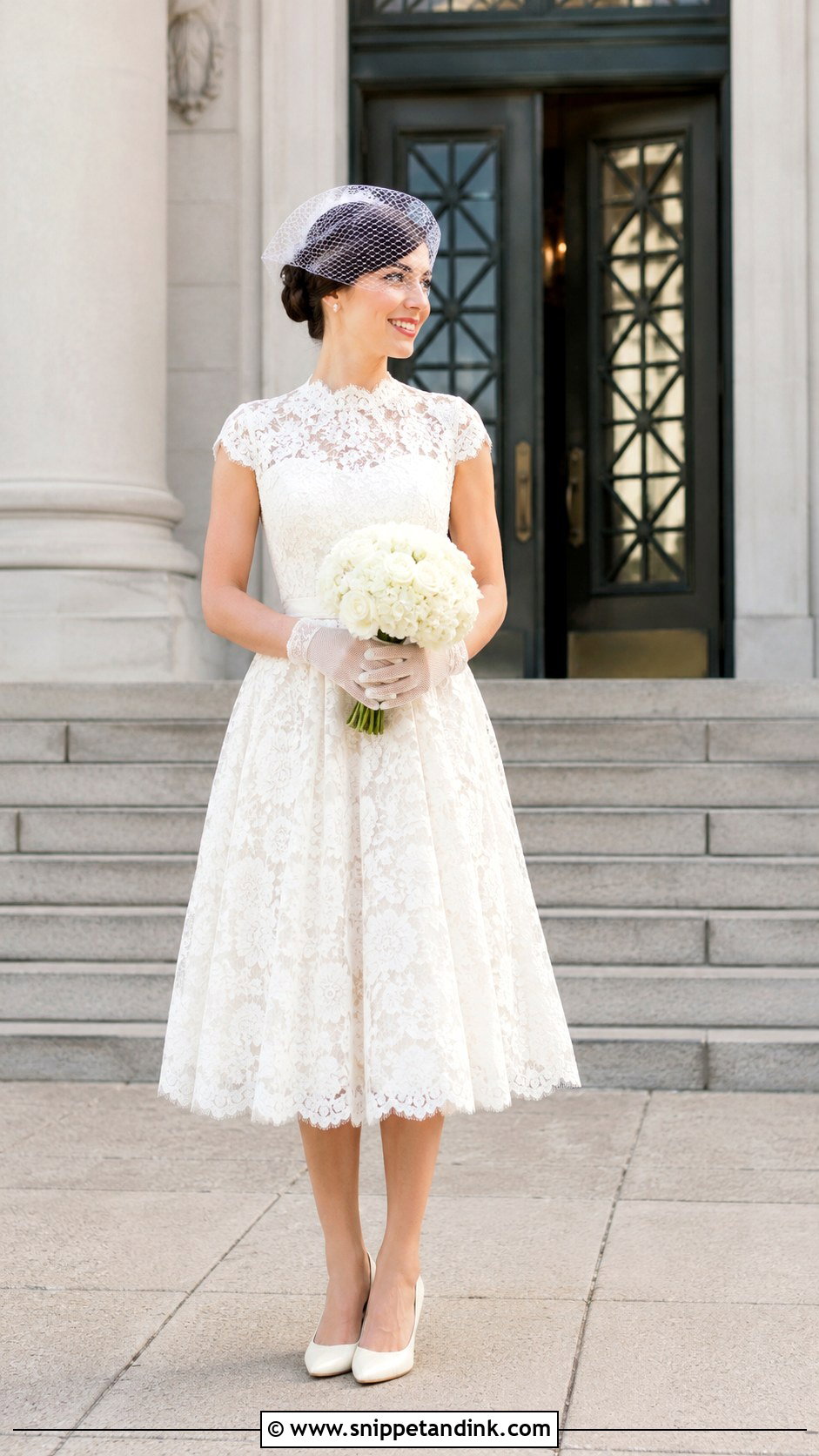
Tea length is playful and easy to move in. The hem falls between knee and ankle, so the shoes become part of the outfit; ivory slingbacks, embellished flats or low block heels all work. Choose a fitted lace bodice with a softly gathered or structured skirt. Pearl earrings, short gloves and a birdcage veil lean retro, but pick one or two, not all three. Have the hem adjusted while you’re wearing the exact wedding shoes, since even half an inch of heel changes where it lands. It suits a courthouse ceremony, a small celebration or a reception change.
11. Carrickmacross Lace Wedding Dress
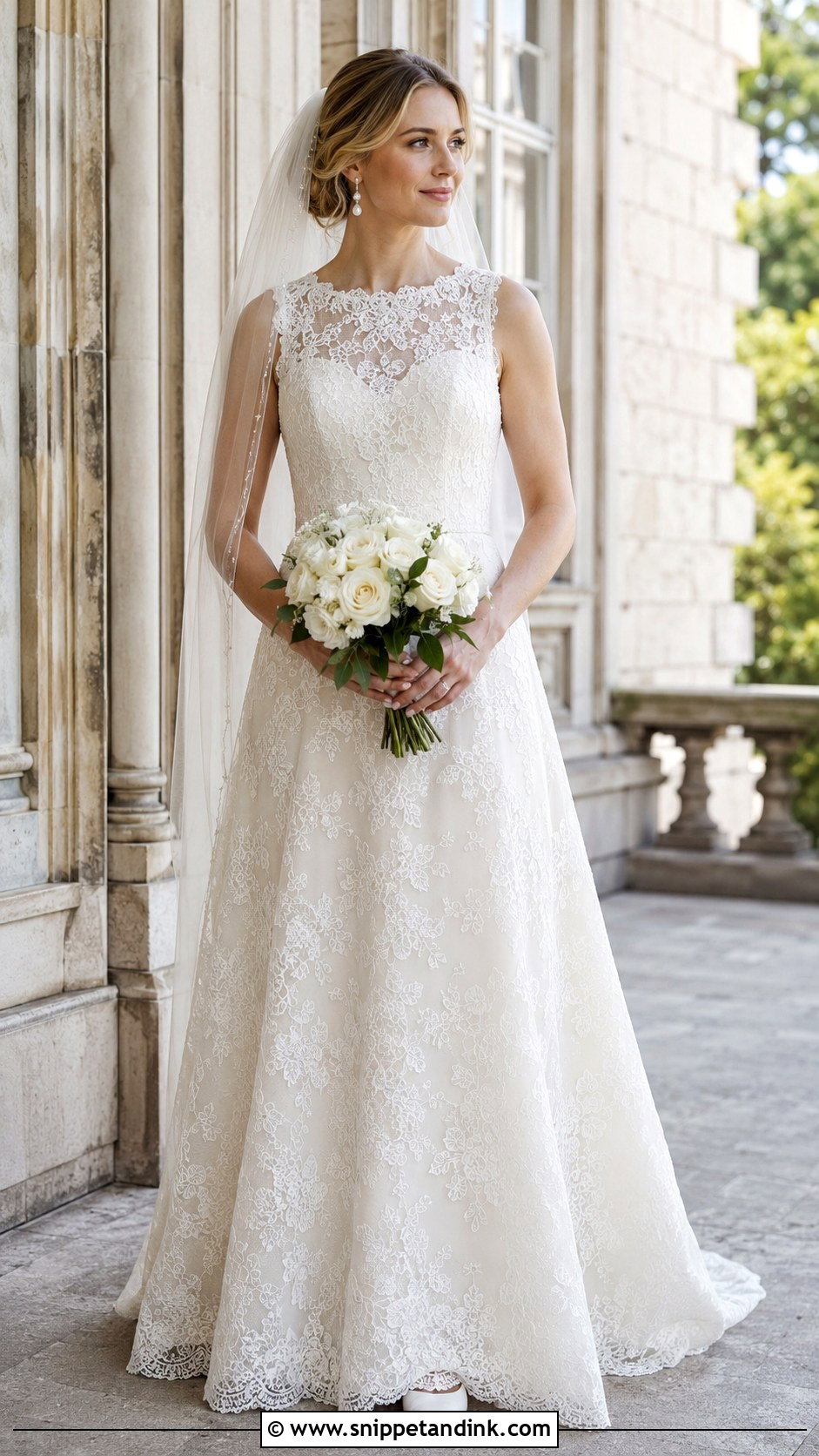
Carrickmacross lace is made by appliquéing fine fabric onto net and cutting away the excess, so flowers, leaves and borders seem to float across the gown. It’s a traditional Irish technique, and the clean cut edges are what give it that crisp look. Let a simple A-line carry it so the workmanship leads, over a smooth silk lining in ivory or soft cream. If you’re commissioning handmade lace, agree motif placement before construction begins; positioning the densest work at the neckline, waist, sleeves and train flatters the body and shows off the best of the maker’s hand. A narrow veil, pearl drops and white roses keep the rest quiet.
12. Limerick Lace Wedding Dress
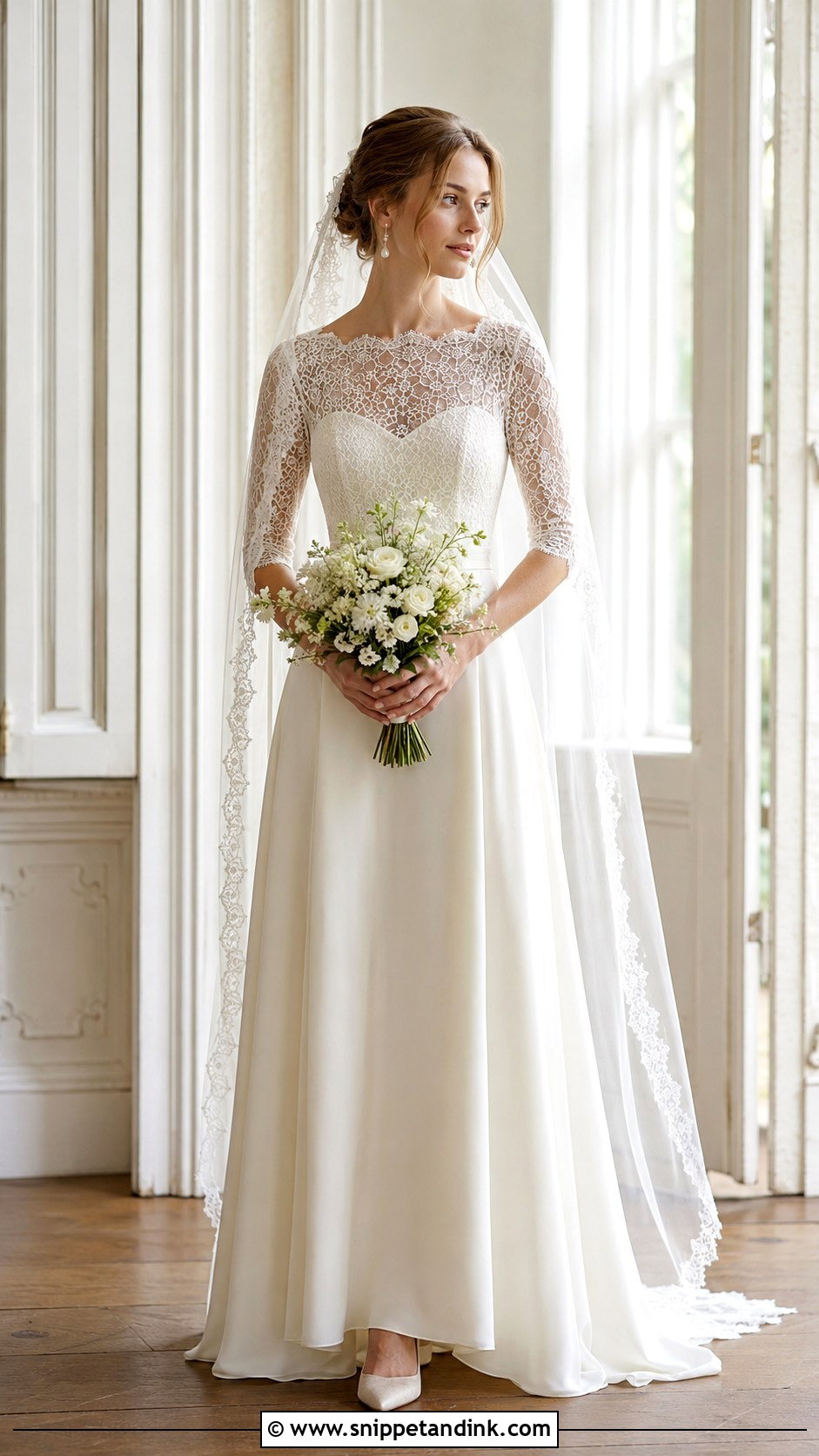
Limerick lace is worked as embroidery on fine net, so it looks airy and almost drawn. A softly fitted bodice with elbow-length sleeves and a fluid skirt over silk or lightweight satin lets every floral and geometric detail show; keep the lining plain. A lace-edged fingertip veil, a low twisted bun, small pearls and ivory kitten heels suit its scale, with sweet peas and roses in the bouquet. If you’re using vintage or heirloom lace, have a specialist look at it before any alteration. Old net often needs stabilising, gentle cleaning and a supportive backing before it can take the strain of being worn.
13. Irish Lace Wedding Dress With Cape
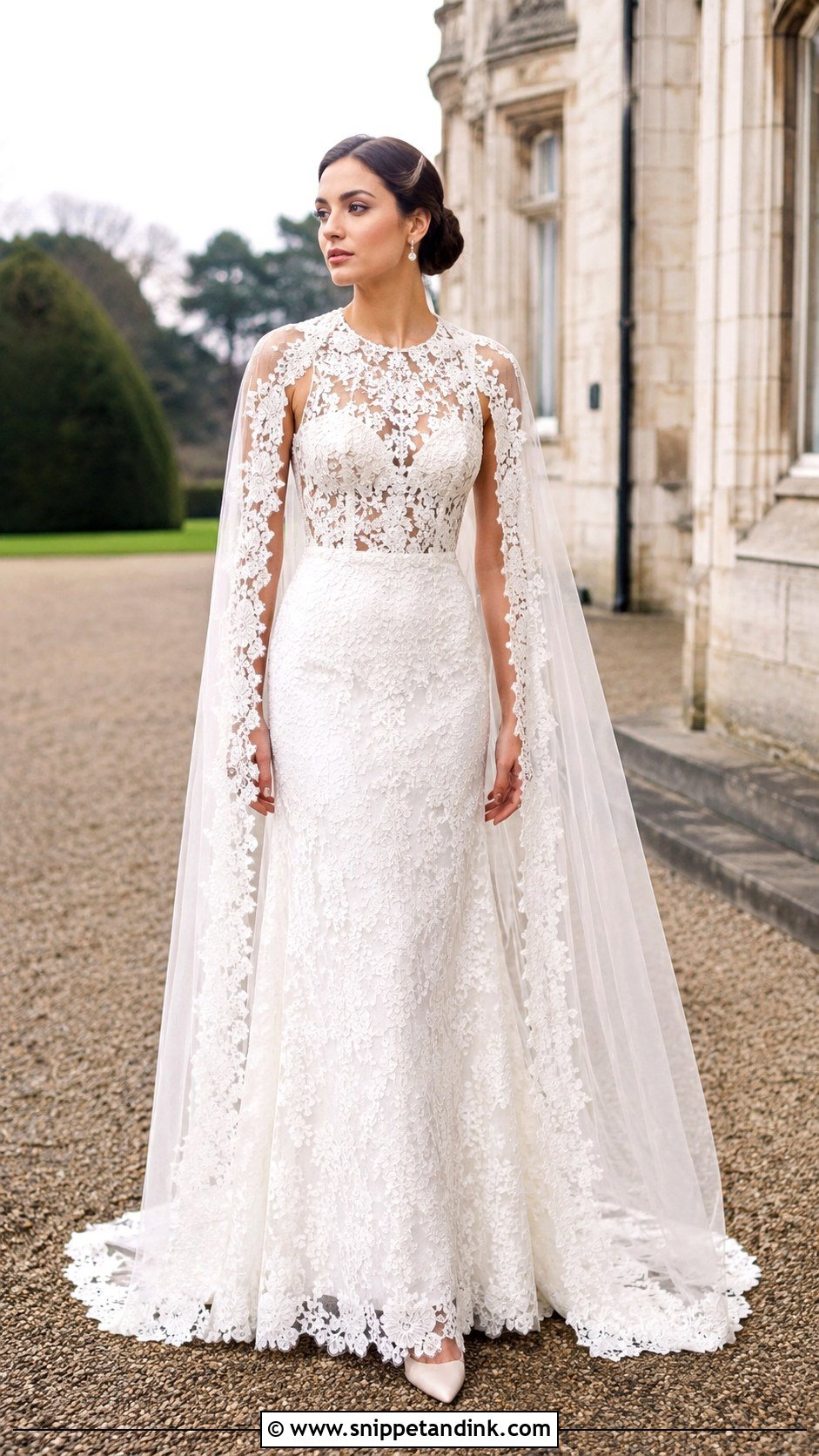
A sheer cape is a modern alternative to a veil and adds movement behind you as you walk. Plain tulle with a narrow lace border, or scattered motifs that match the dress, both work, attached at the shoulders so the bodice and waist stay visible from the front. Underneath, a sleeveless or cap-sleeve lace gown in a slim A-line. Heavy embellishment makes a cape pull backward on the shoulders, so I keep it light. Make it detachable and you get a full ceremony look, then a lighter outfit for the evening.
14. Irish Lace Wedding Dress With Detachable Sleeves
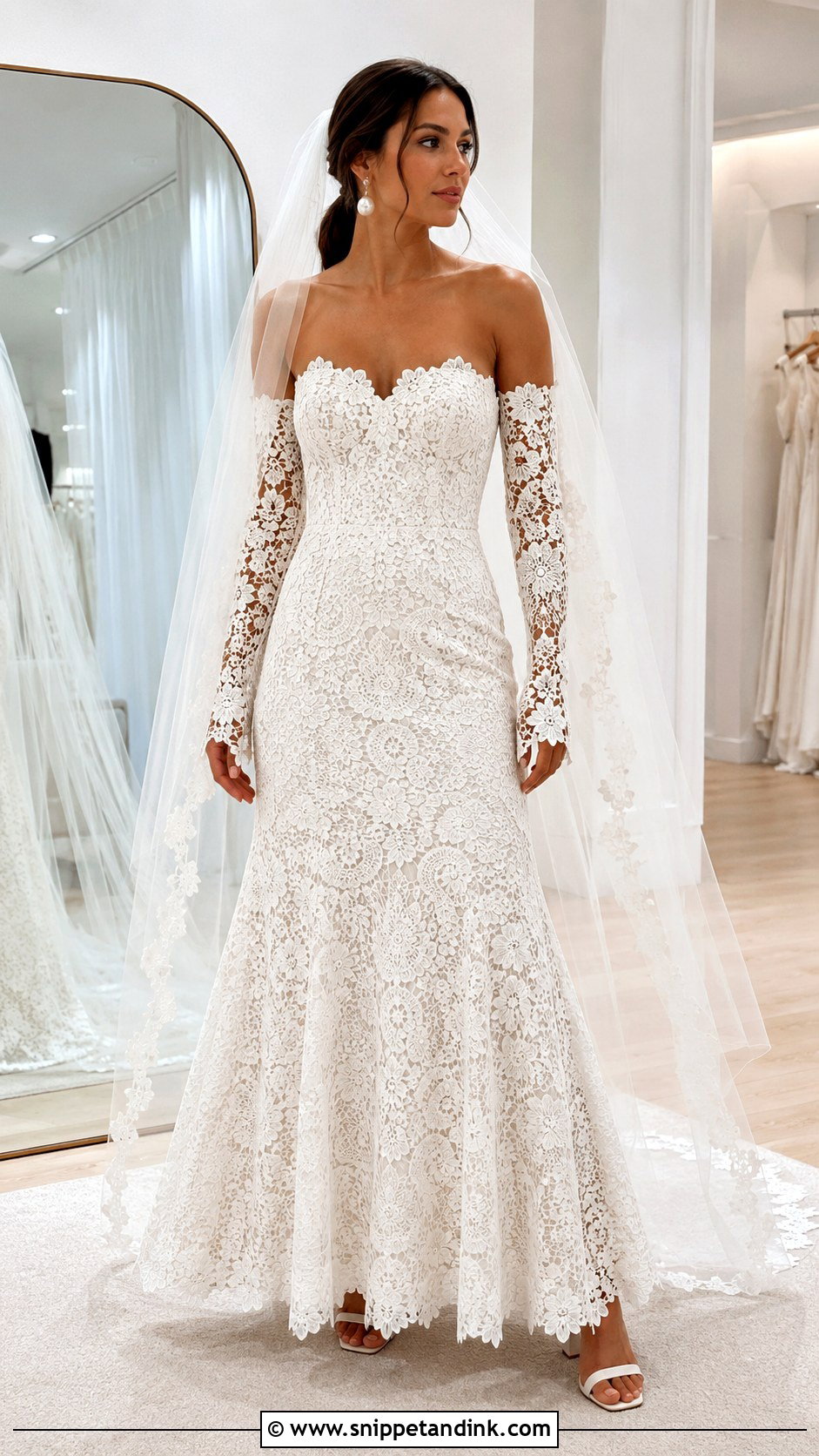
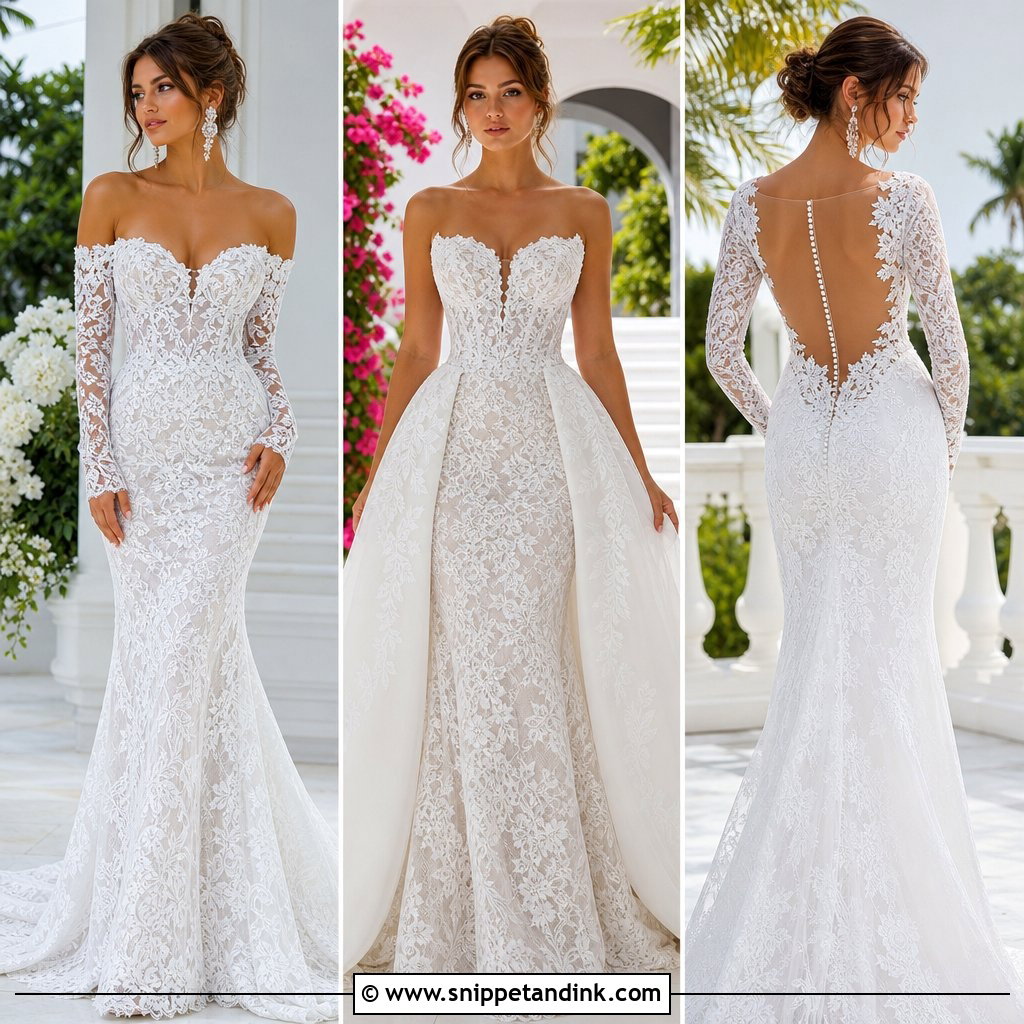
Detachable sleeves give you two looks from one gown. Start with a strapless or sleeveless lace dress with a structured bodice and softly flared skirt, add fitted sleeves for the entrance, and remove them for dancing. The attachment should hide under the neckline or fasten with discreet loops so nothing shifts. Check that the sleeve motifs line up with the bodice lace; mismatched patterns make the sleeves look borrowed. At fittings, I assess both versions in the mirror separately. Each has to look finished on its own.
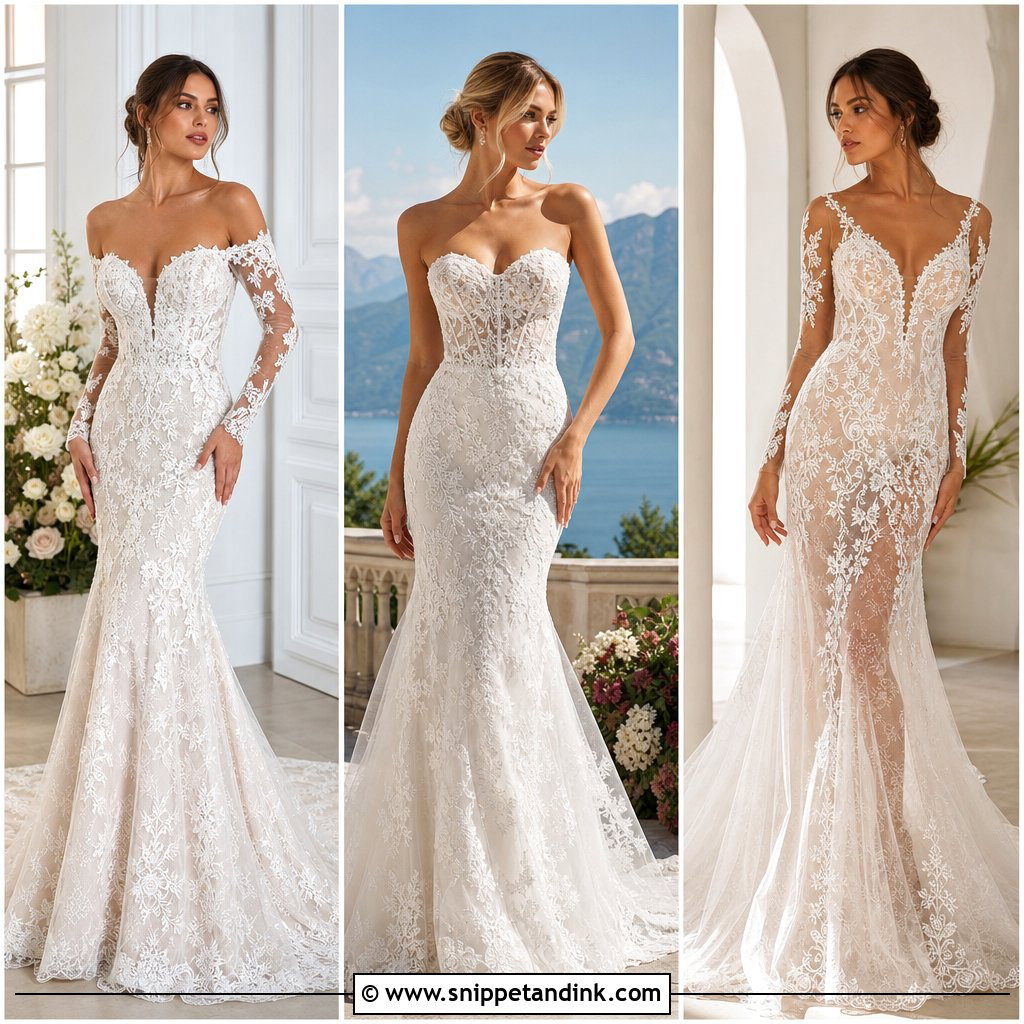
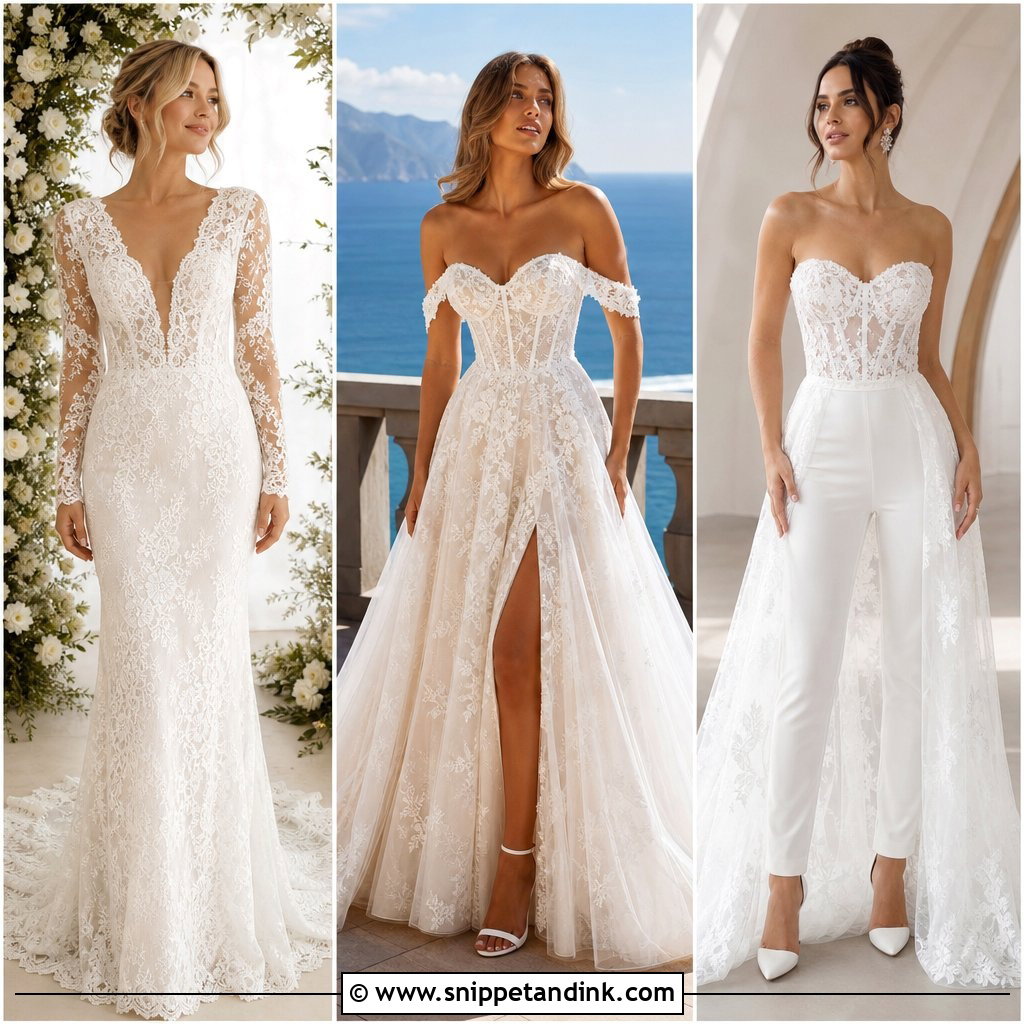
15. Corset Irish Lace Wedding Dress
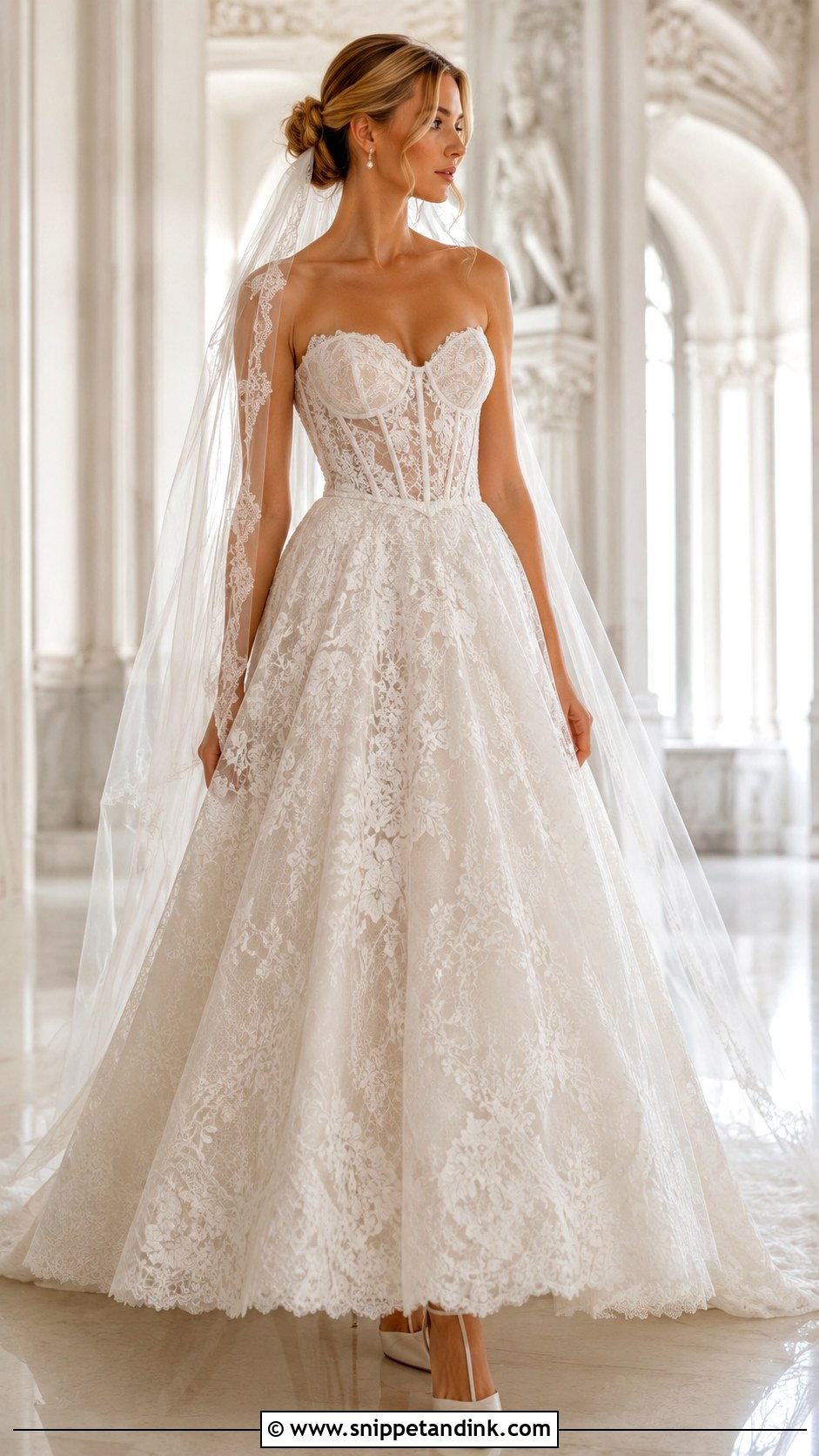
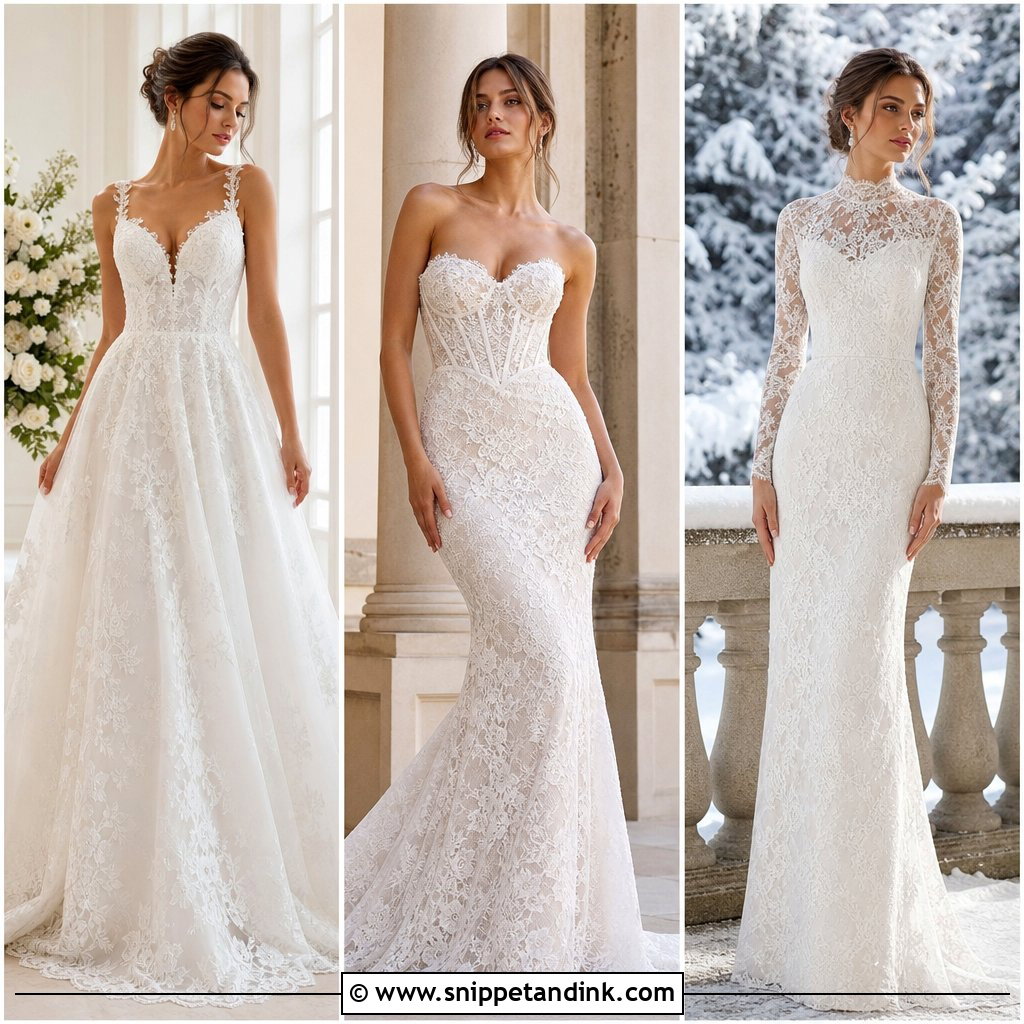
A corset bodice gives soft lace a defined foundation. Visible boning looks fashion-forward; boning hidden beneath the lace looks traditional. Either can sit over a full A-line, a fitted skirt or a gentle fit-and-flare. The test is simple: it should support you without pinching, gaping or making it hard to breathe, and you should be able to eat a meal in it. Custom corsets need several fittings close to the date because a small change in weight shows immediately. Pearl drops, a sheer veil, satin heels and a loose bun complete it.
16. Plus Size Irish Lace Wedding Dress
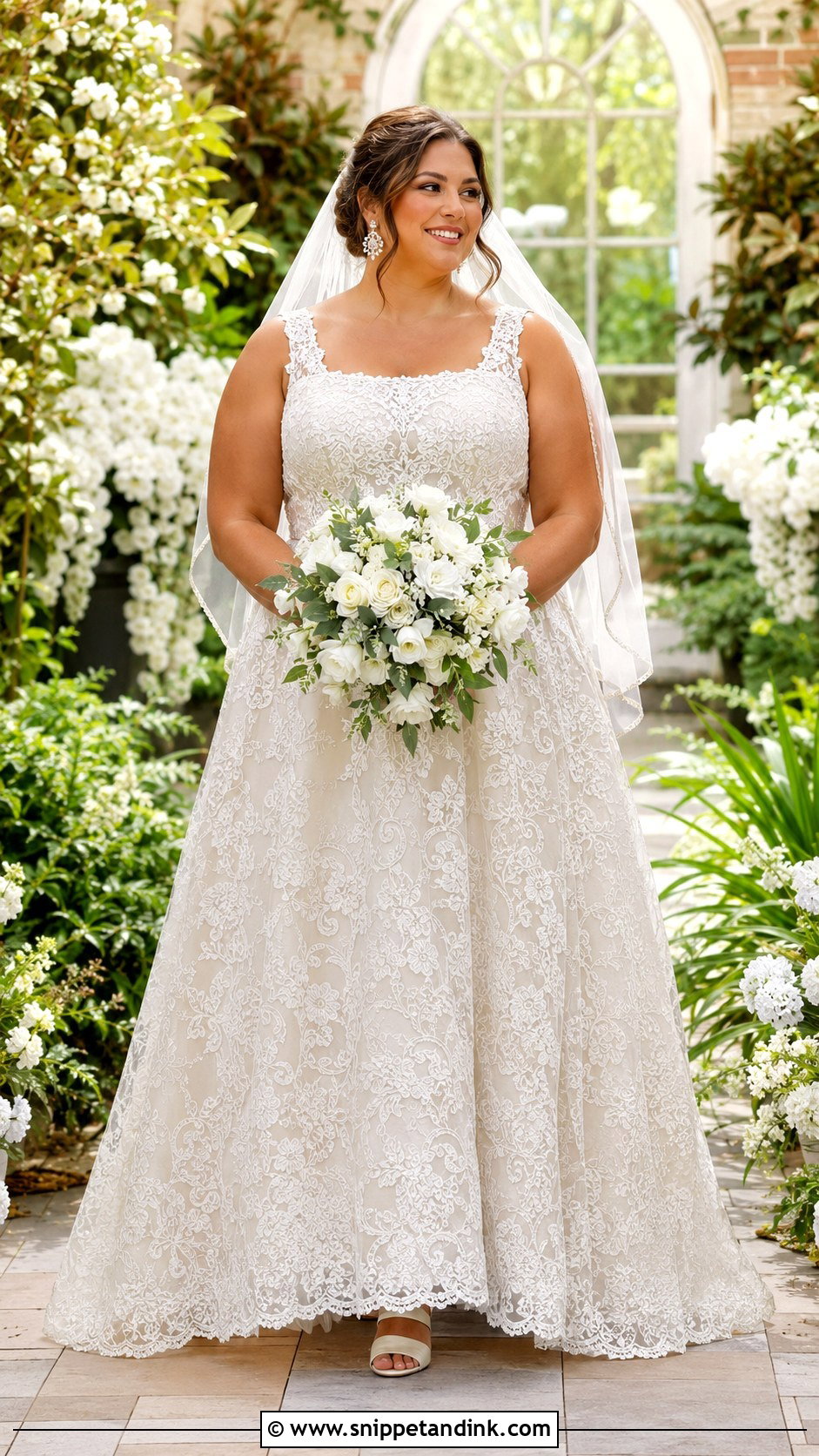
For a plus-size lace gown I build the shape with construction, not extra fabric. A structured V-neck or square-neck bodice over an A-line skirt gives definition and easy movement, with lace motifs placed at the neckline and waist and a smooth lining that won’t irritate. Wider straps, internal cups and good boning mean you need far fewer complicated undergarments. Find a boutique with a real range of sample sizes and an experienced alterations team; trying on a sample that doesn’t close tells you very little. Statement earrings, a fingertip veil and stable block heels finish it.
17. Satin And Irish Lace Wedding Dress
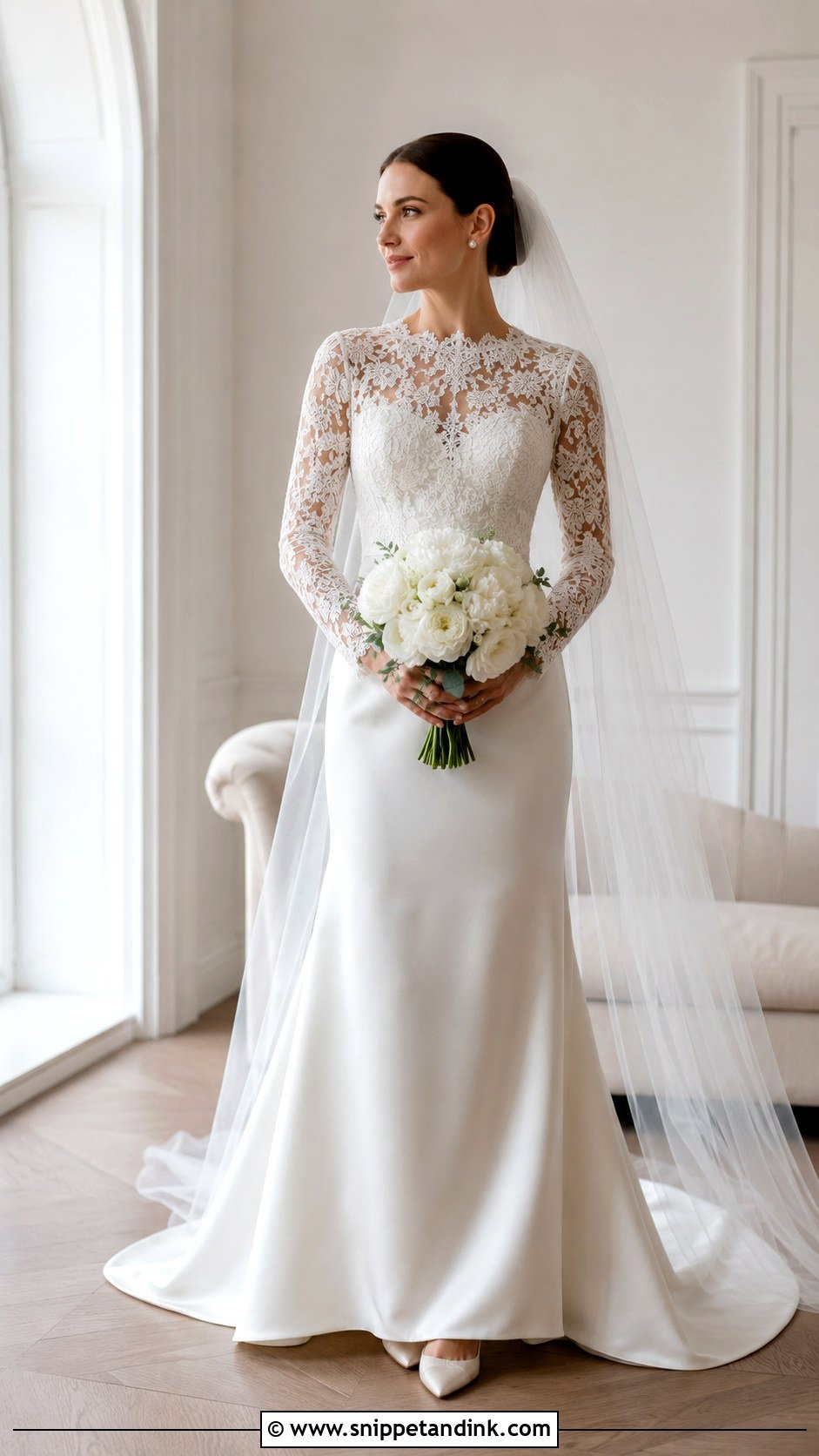
Satin and lace together give contrast without fuss. Try a clean satin A-line with lace sleeves, a lace back panel or appliqué at the neckline, or reverse it with a fitted lace bodice over a luminous satin skirt. The risk is colour. One ivory can look yellow or grey next to another, so I always view the two fabrics together in daylight before approving them, and again with the lining behind the lace. Pearl studs, a plain tulle veil, satin pumps, a sleek bun and a structured white bouquet keep it crisp.
18. Blush Irish Lace Wedding Dress
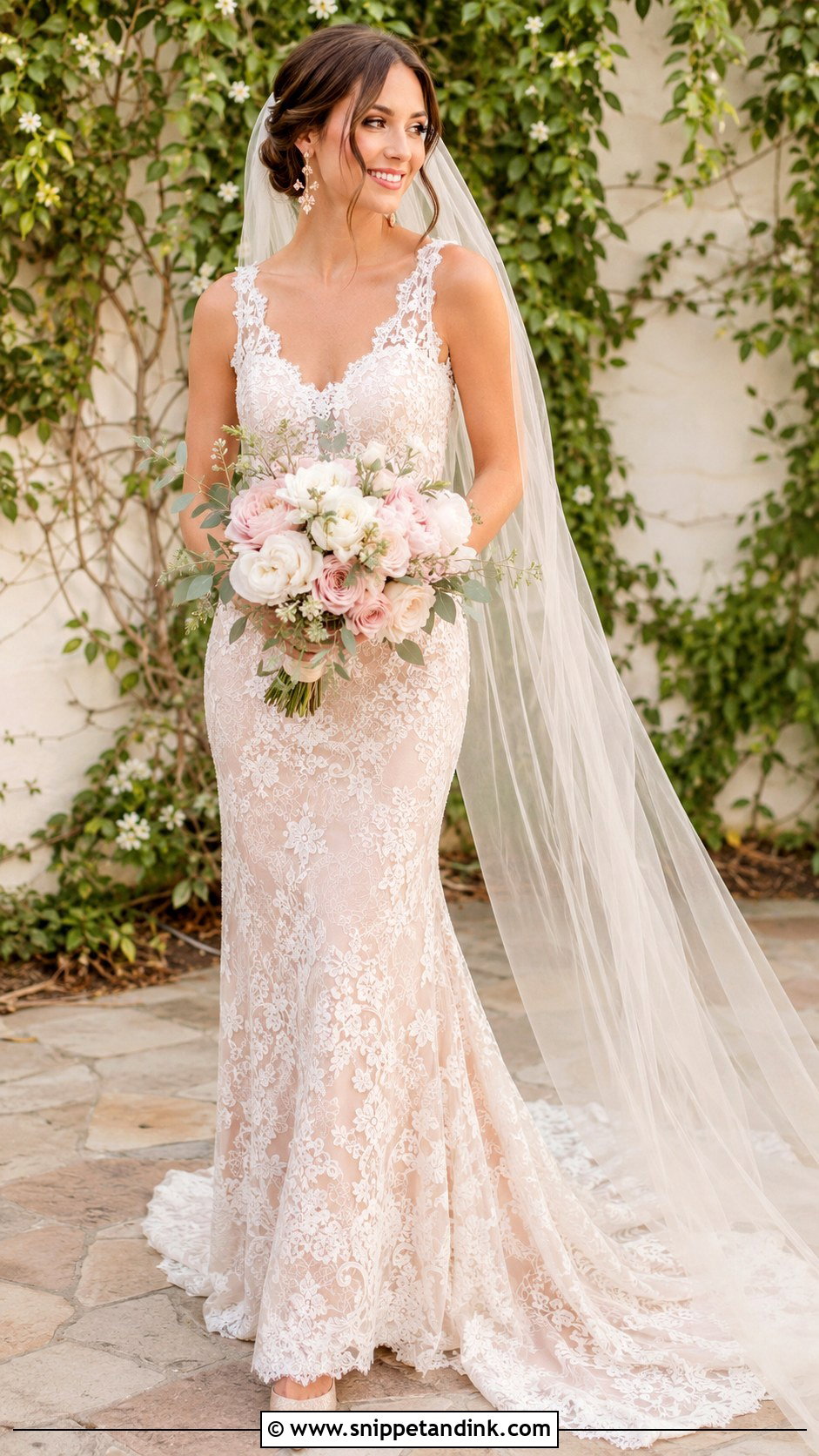
A blush lining under white or ivory lace makes the floral motifs easier to see while keeping the dress clearly bridal. Choose a subtle nude-pink that suits your skin rather than contrasting with it. A soft A-line or fit-and-flare lets the colour show evenly from bodice to hem. View it under both daylight and indoor lighting at fittings; blush can turn peachy under warm bulbs or almost disappear under flash. Rose-gold earrings, ivory heels, a plain-edged veil and a white and pale pink bouquet tie it together.
19. Irish Lace Wedding Dress With Cathedral Train
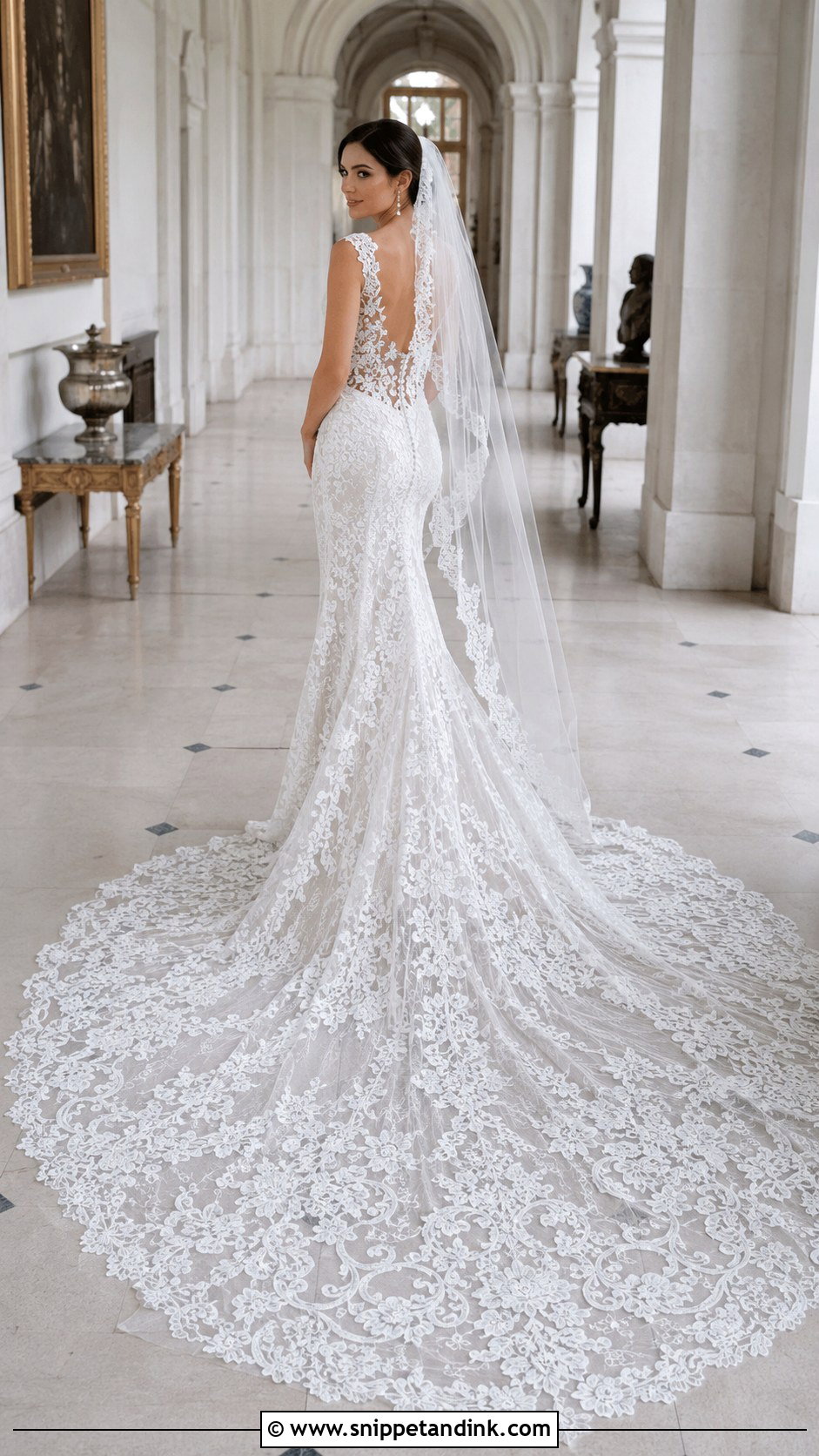
A cathedral train makes the biggest impression from behind, especially when the lace becomes more detailed toward the hem and spreads out on the floor. Keep the bodice fitted and the skirt streamlined so the length doesn’t overwhelm you. The veil should end above the train or just beyond it. A good bustle is essential, and lace bustles need extra care, because hooks pulled through lace tear it. Ask for loops sewn to a solid seam, and have a bridesmaid practise fastening it before the day. Heels with an ankle strap keep you steady while the train drags behind.



20. Short Irish Lace Wedding Dress
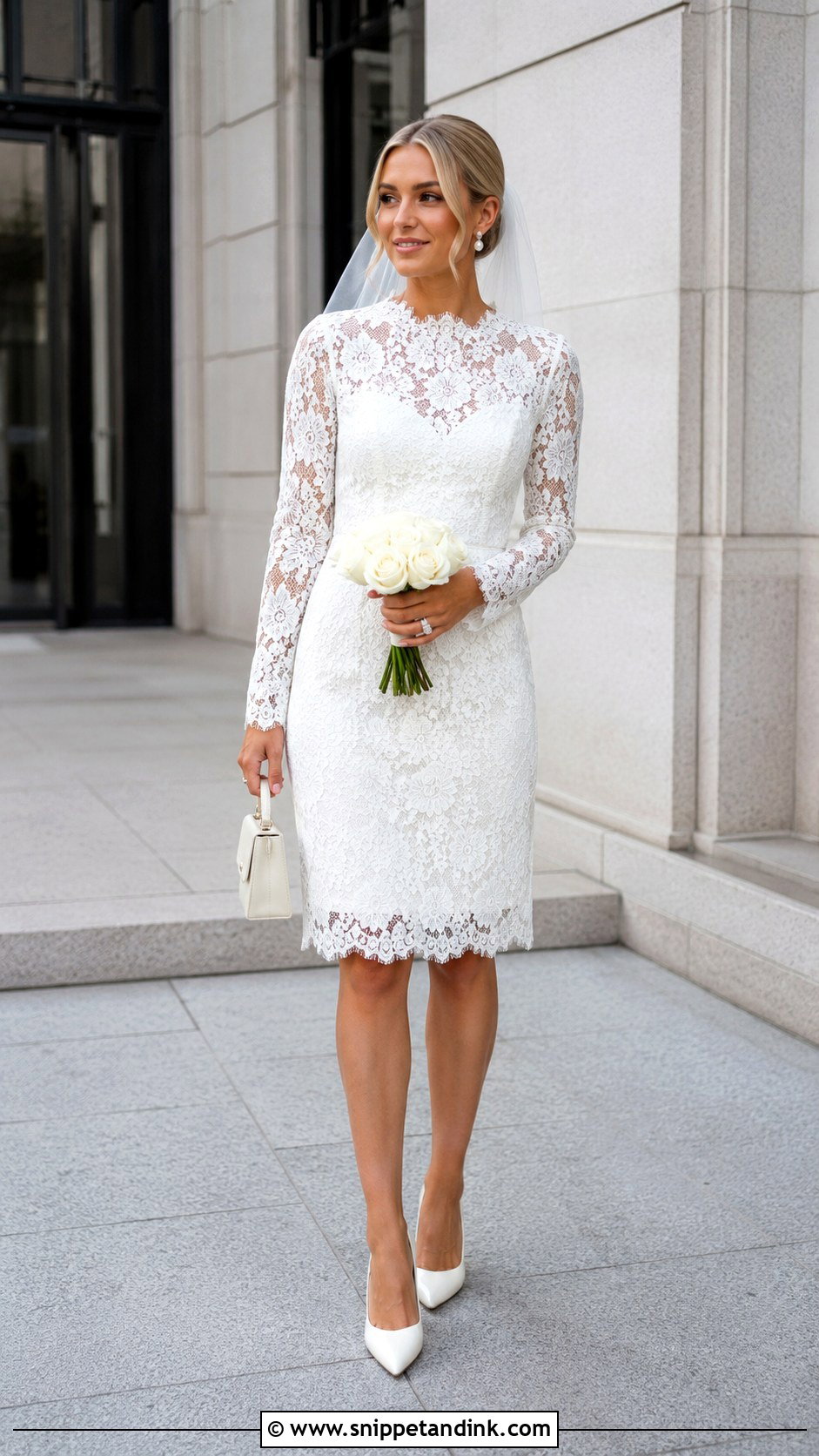
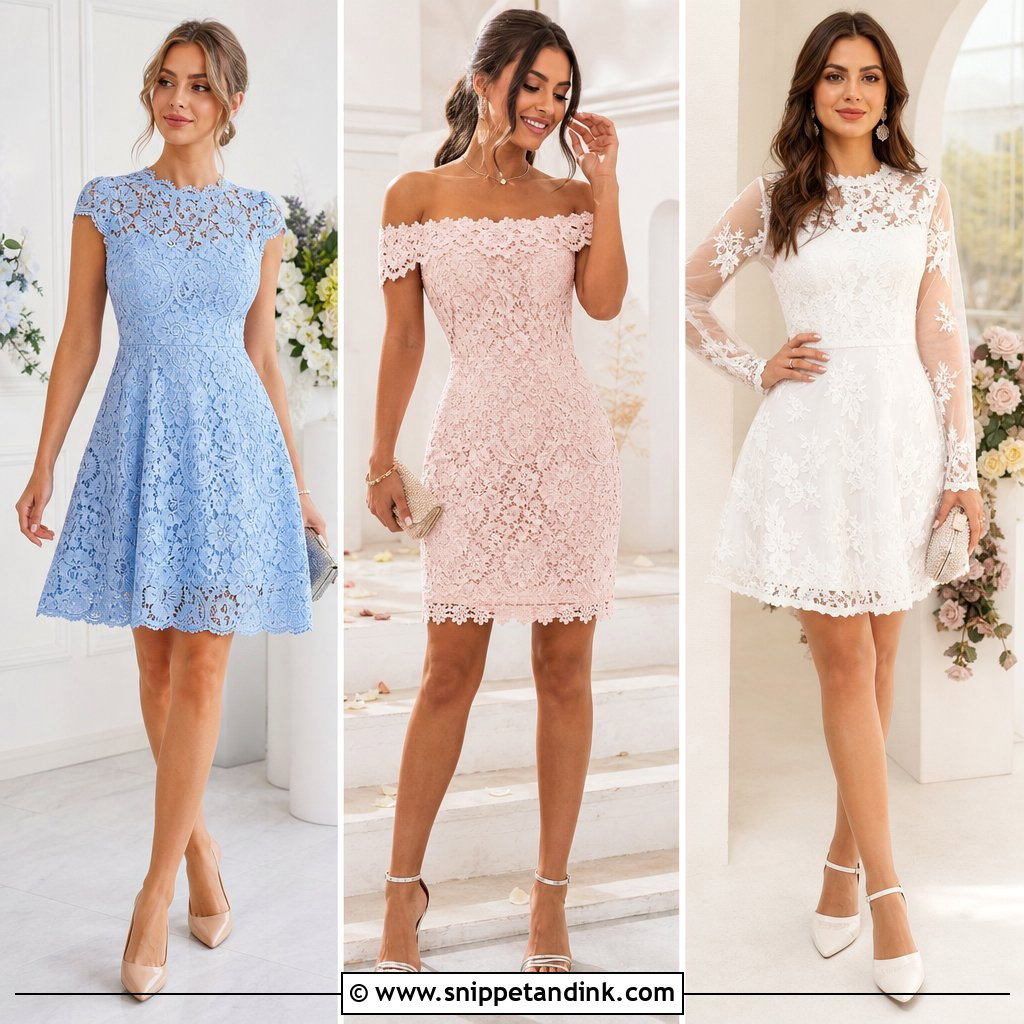
Short lace suits a courthouse ceremony, a destination wedding, a reception change or a relaxed day. Choose a tailored mini or knee-length shape with enough lining to keep the openwork polished; long lace sleeves balance a short hem, while a sleeveless shift looks cleaner. Pointed pumps, slingbacks or embellished flats depend on where you’ll be standing. A short dress shows its finishing more than any other, so check the hem from every angle and sit down in front of a mirror. Pearl earrings, a structured handbag, a short veil or a neat bow complete it.
Why Lace Yellows in a Wardrobe, and How to Stop It
Most of the damage to a lace gown happens after the wedding, not during it. Spilled champagne, sugary drinks and body oils can dry invisible and then turn brown months later. Have the dress cleaned by a specialist in wedding gowns within a few weeks, and point out every spill you remember, even the ones you can’t see.
- Store it folded in acid-free tissue paper in an acid-free box, not hanging; heavy skirts pull lace bodices out of shape on a hanger.
- Skip plastic garment bags. They trap moisture, and moisture yellows fabric.
- Keep it somewhere dark, dry and at a steady temperature, so not a loft or a basement.
- Refold it along different lines every year or so to stop permanent creases.
- Handle the lace with clean, dry hands; oils from skin mark it over time.
If you hope a daughter or niece might wear the lace one day, keep a note in the box of what it is, who made it and when it was cleaned. That small record saves the next bride a lot of guessing.
Lace Looks Best When Everything Around It Is Quiet
Pick the lace you love first, then the silhouette that shows it off. Heritage appliqué, raised crochet motifs, delicate sleeves, a long train or a small lace accent on smooth satin all work, but the veil, shoes, jewelry, hairstyle, bouquet, lining colour and undergarments decide how it actually looks. Ask for fabric samples, look closely at the joins and edges, and move the way you’ll move on the day at every fitting. A gown that passes those tests will feel as good at midnight as it did at the ceremony.
You'll Like These Ideas:





Leave a Reply