
Parisian bridal fashion works by subtraction. Instead of piling on beading, it leans on a good cut, a fabric that moves well and one or two details chosen with care. Silk slips, fine French lace, clean crepe and smart civil-ceremony outfits all follow that rule, usually with a relaxed skirt, a modest train or an open back. In my fittings, the brides who carry this look best are the ones willing to take something off before they leave the mirror: an earring, a hairpiece, a second layer of tulle. What stays is simple, such as pearl earrings, a sculptural heel, a fine veil and loosely styled hair. Below are twenty dresses built on that idea, for city hall, a garden or a château, with notes on how each one actually behaves on the day.
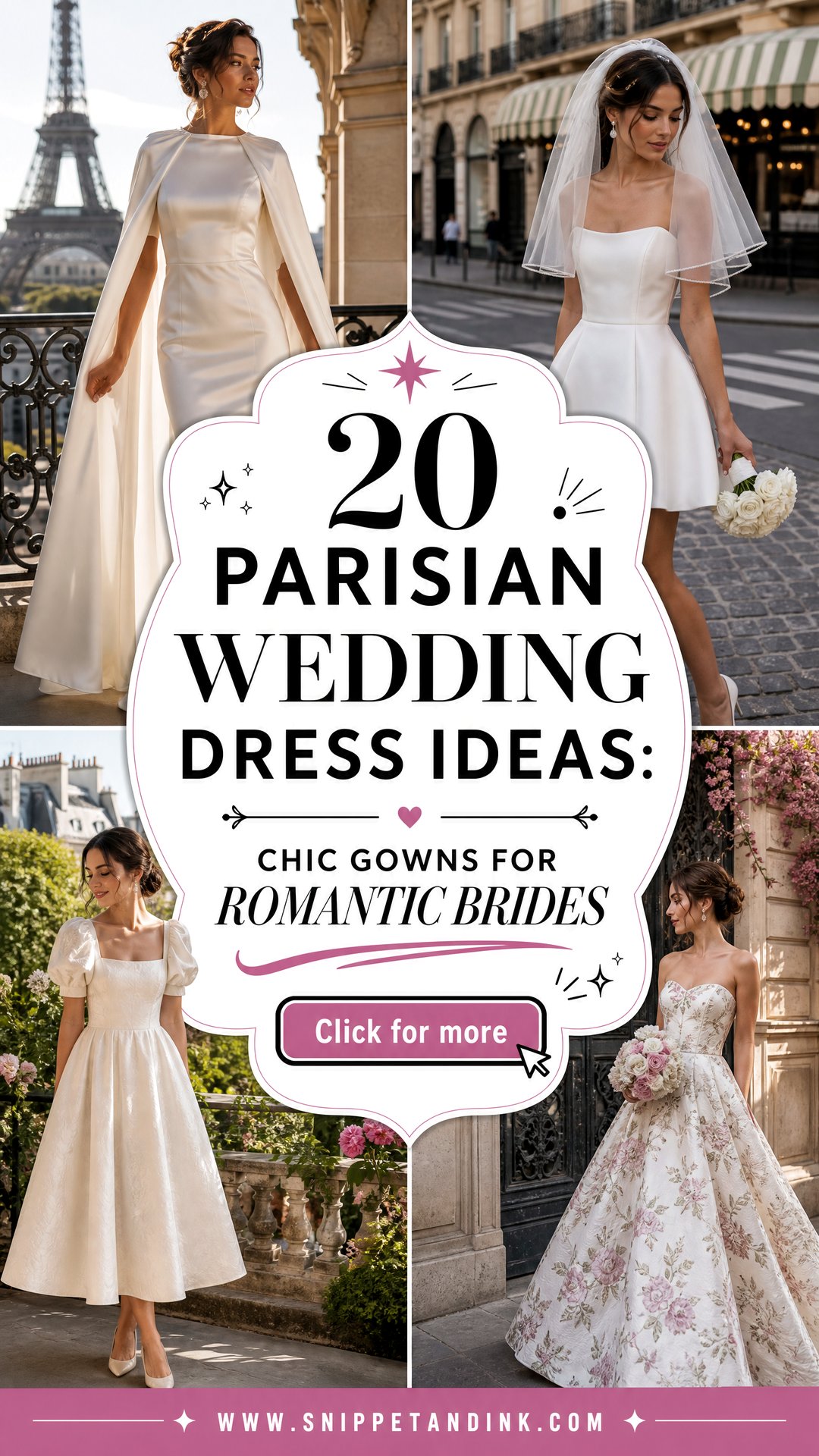
Two Outfits for One Day, the Way French Couples Often Plan It
In France only the civil ceremony at the town hall makes a marriage legal, and many couples hold it separately from a religious or symbolic ceremony, sometimes on a different day. That’s why so many Parisian looks come in pairs: something short or tailored for the mairie, then a longer gown for the evening. It’s a useful model even if you’re marrying somewhere else.
Planning a daytime look and an evening look
- Make the daytime piece the one you’d wear again. A midi, a blazer dress or a short crepe shift can come back out for anniversaries.
- Let the two outfits share one element, such as the same earrings, the same shoes or the same veil fabric, so the photos read as one story.
- Book alterations for both together. Seamstresses get busy in the spring and summer, and a second piece is easy to forget until it’s too late.
- Check the change itself: who helps, where, and how long. Buttons and hidden hooks slow it down; a zip speeds it up.
If one dress is all you want, choose one of the convertible ideas below, such as a detachable train or a cape, and get two looks from a single garment.
1. Parisian Silk Slip Wedding Dress With Veil
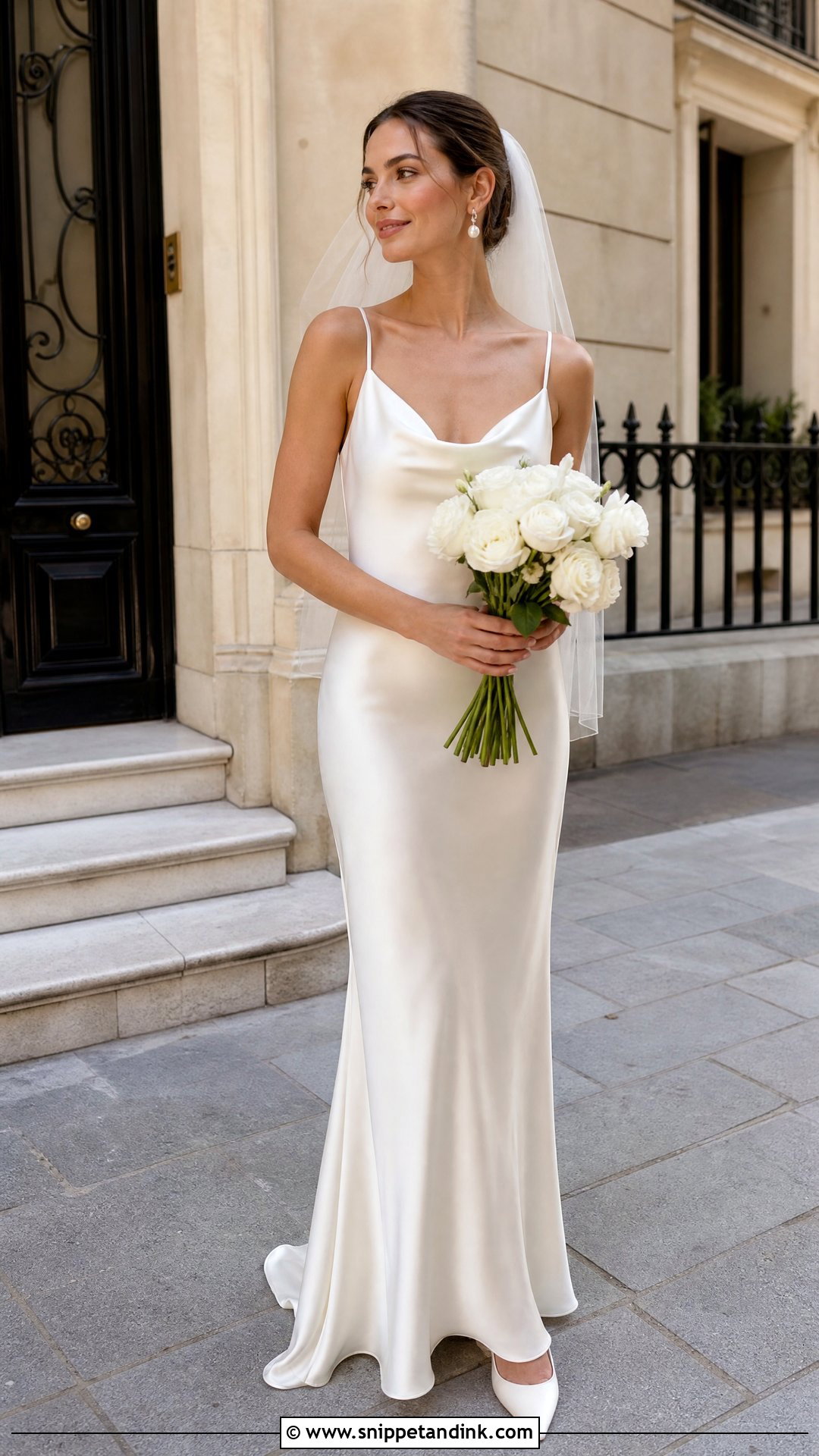
Bias-cut silk is the purest version of the Parisian look, and the least forgiving. Choose slim straps, a softly draped neckline and a hem that just kisses the floor without pooling into a heavy train. Ivory reads warmer and softer on skin than bright white. Because the bias makes silk cling and stretch, it will show every seam, every line of underwear and any twist in the side seam, so I only recommend it with a seamstress who has altered bias cuts before. Pointed satin pumps, pearl drops, a fingertip tulle veil and a smooth low bun complete it, with a small handful of white roses. A small ceremony, a restaurant dinner or a city wedding is where it looks most at home.
2. Parisian Lace Wedding Dress With Long Sleeves
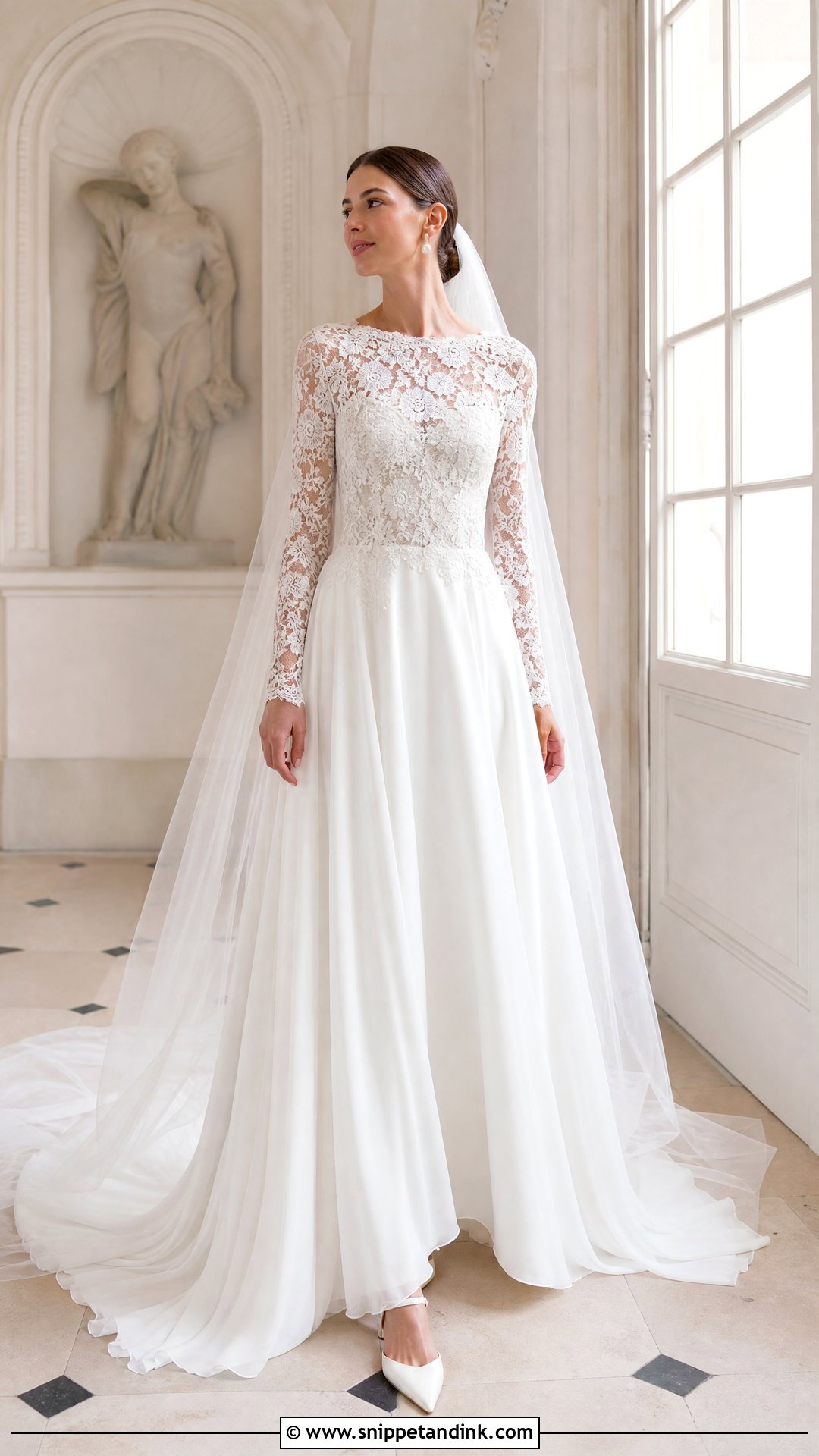
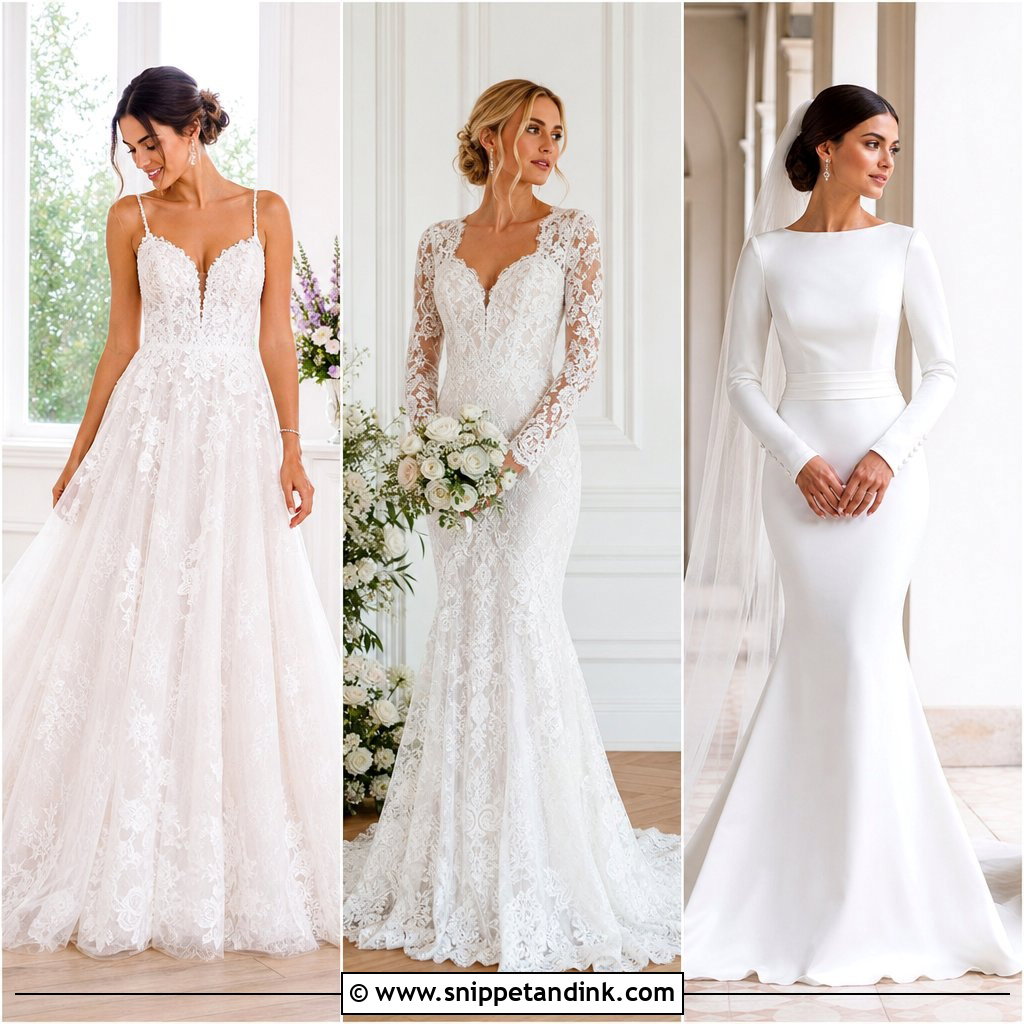
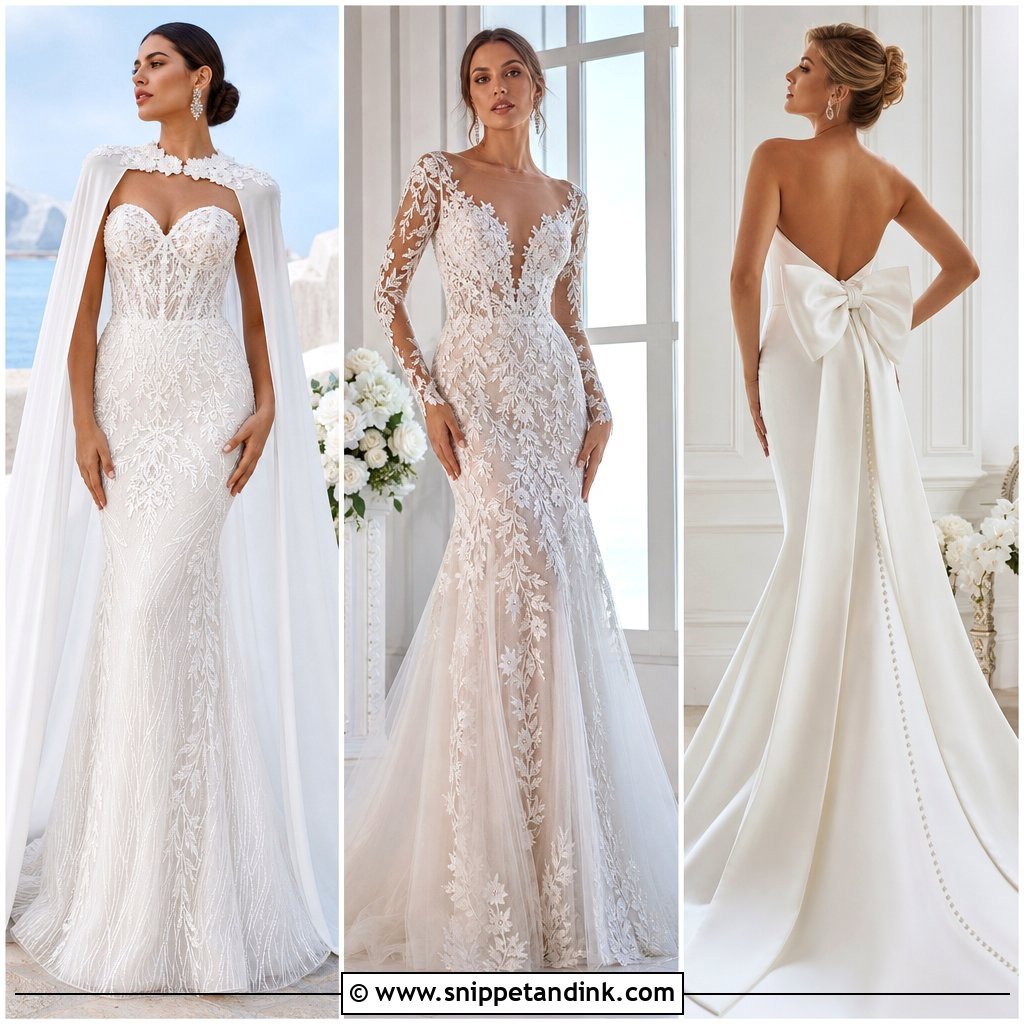
Lace looks most French when the shape underneath it stays relaxed. I’d look for sheer long sleeves, a fitted lace bodice with a lined front and a soft A-line skirt, finished with a bateau or modest V-neck. Ask to see where the lace pattern sits on the sleeve before alterations: shortening a sleeve can cut straight through a scalloped edge, and a good atelier will move the scallop up rather than lose it. Ivory slingbacks, small pearl studs and a fine-edged cathedral veil suit a formal ceremony, while a shoulder-length veil lightens it. Soft waves or a loose chignon sit happily next to the texture. Keep the bouquet to garden roses, a little greenery and a narrow silk ribbon.
3. Parisian Square Neck Midi Wedding Dress
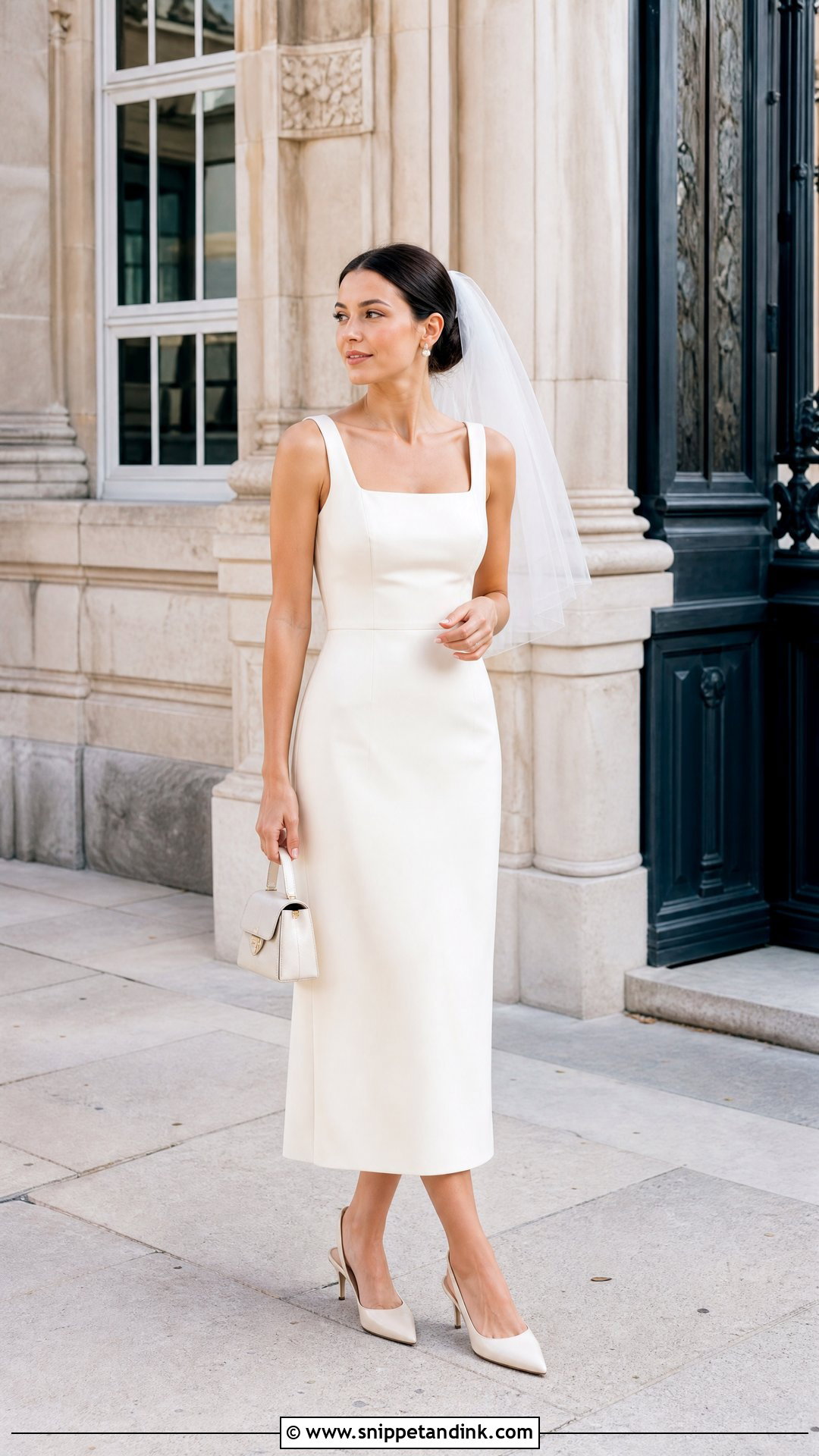
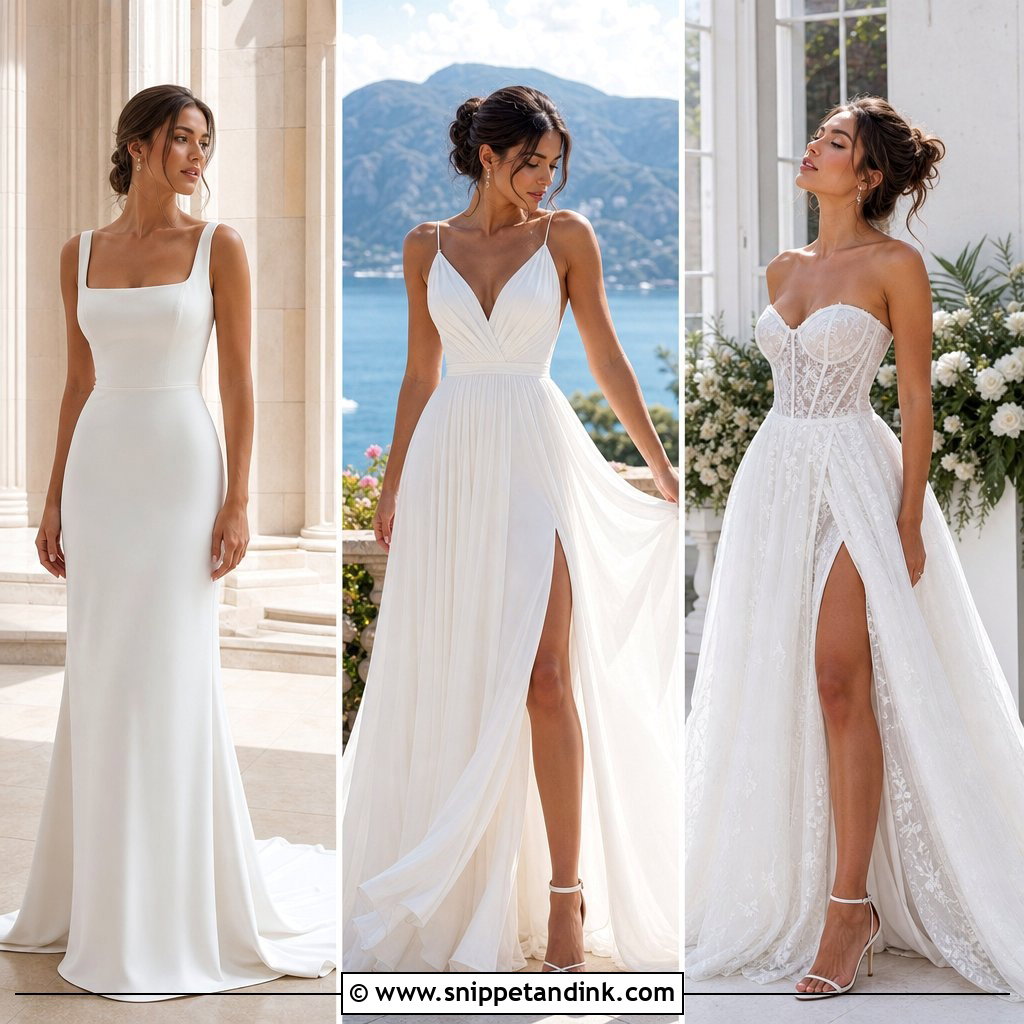
Walking between a town hall and a lunch table is where a square-neck midi dress earns its keep. Structured crepe, silk faille or matte satin will hold the neckline and keep the shape crisp; thin fabrics let the corners of a square neck sag by mid-afternoon. A fitted waist and gently flared skirt give classic proportion without bulk. Cream slingbacks, pearl earrings and a compact top-handle bag suit it, with a short tulle veil or a small hair bow. Since the hem shows your shoes, this is the place for a sculptural heel or a subtle blue pump. Finish with a clean bun and a small seasonal bouquet.
4. Parisian Tea Length Lace Wedding Dress
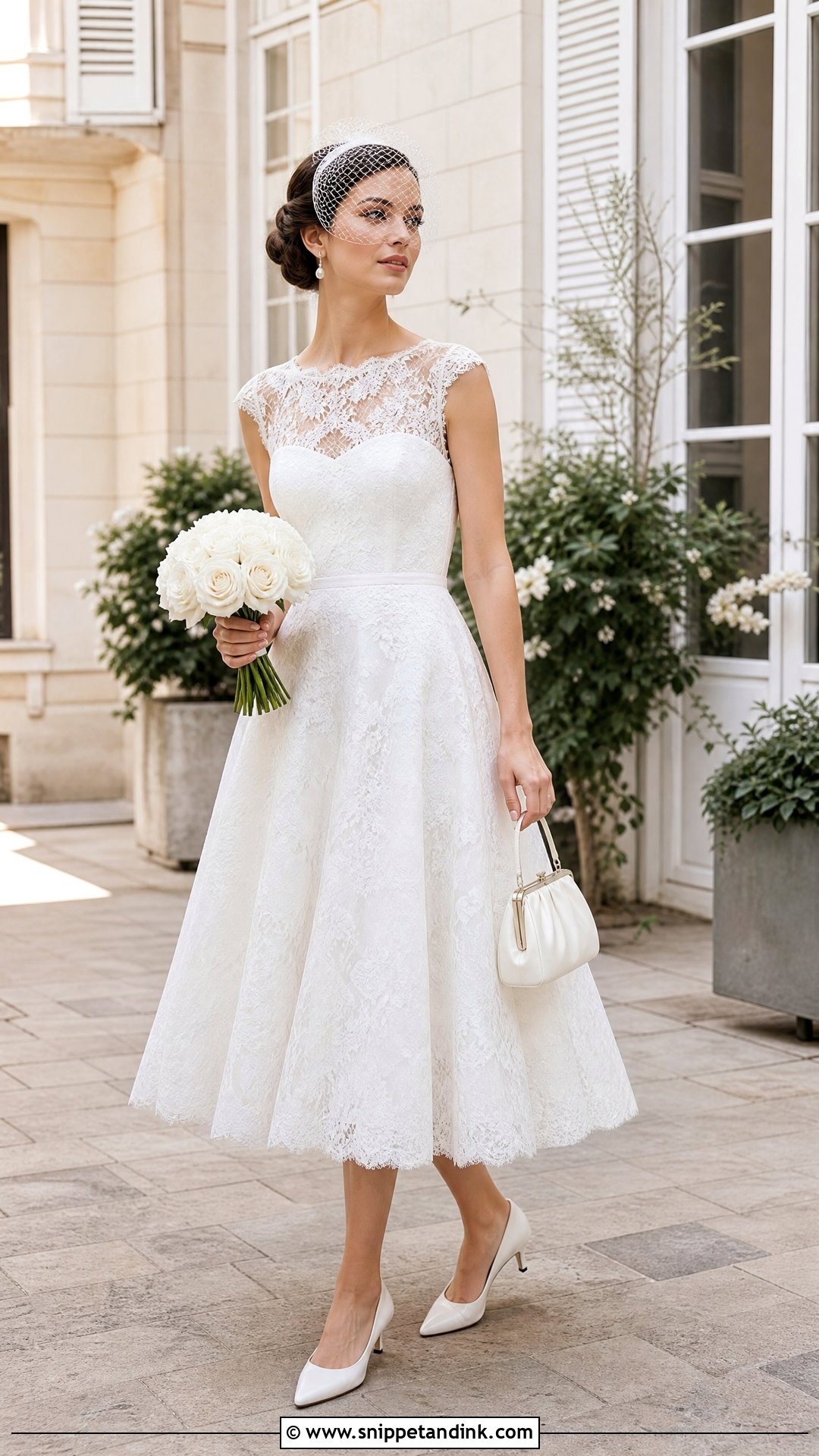
Tea length gives you vintage romance without the weight of a full gown. A fitted bodice, a defined natural waist and a skirt that ends between knee and ankle form the base, in fine floral lace over a light lining that stops the skirt from turning stiff. With a shorter hem, the shoes are suddenly half the outfit, so I treat pointed kitten heels or delicate ankle-strap pumps as part of the dress, matched in tone and fitted at the same appointment. A birdcage veil, pearl studs and a petite structured bag hint at the era without tipping into costume. A soft red lip adds a French note. City hall, a garden lunch or a stylish second outfit all suit this length.
5. Parisian Bateau Neck Column Wedding Dress
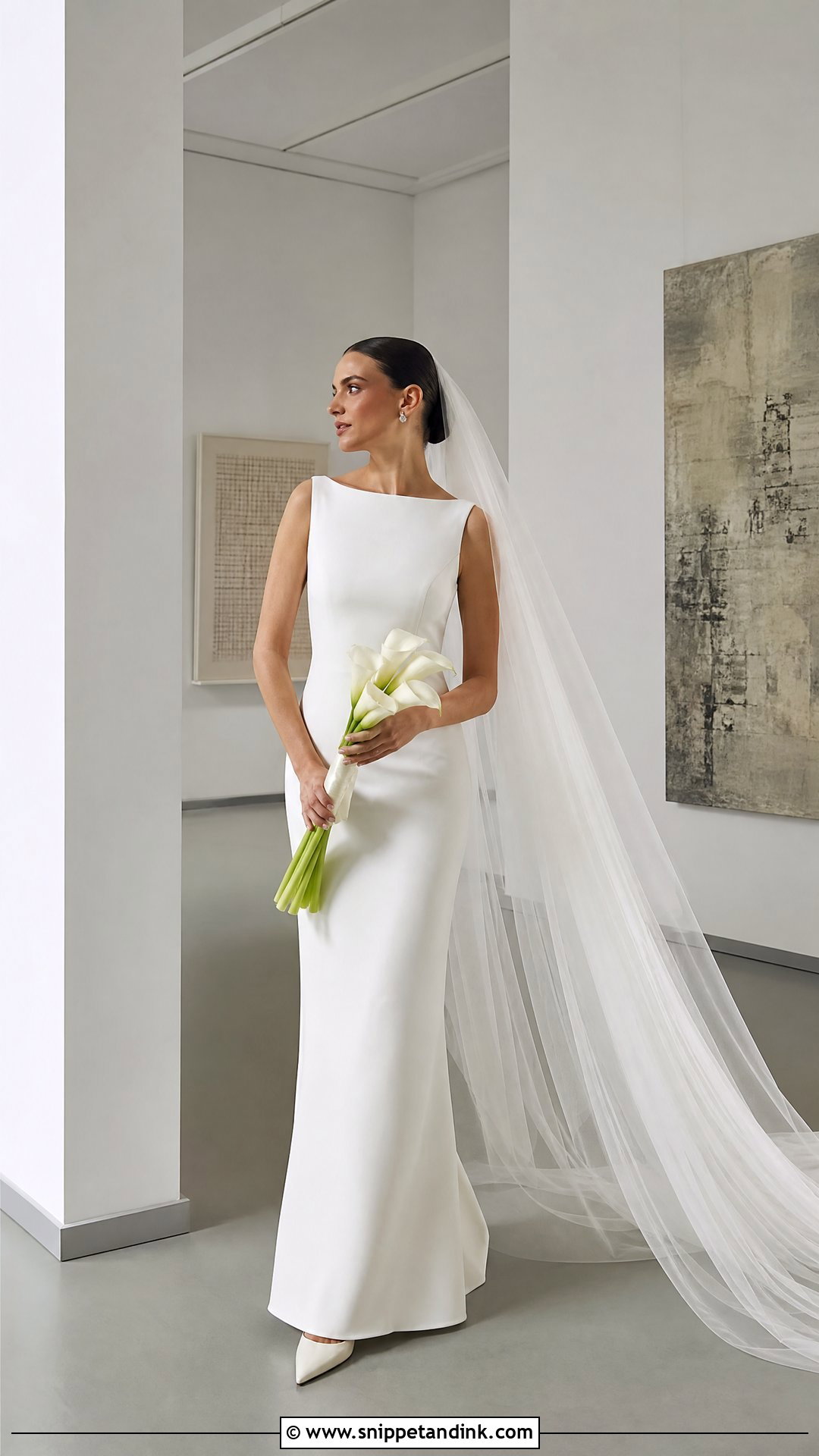
There’s nothing to hide behind in a bateau-neck column, which is exactly its appeal. The wide neckline sits across the collarbones and a slim crepe skirt lengthens the whole body, so the quality has to live in the construction through the waist and hips. When I check a column on a bride, I watch the side seams as she walks: if they twist toward the front, the skirt was cut off grain and no amount of pressing will fix it. Covered buttons down the back are enough detail. Pointed ivory pumps, diamond or crystal studs and a long plain veil complete it, with a neat French twist and a compact bouquet of calla lilies. Galleries, city venues and old buildings suit it well.
6. Parisian Backless Silk Wedding Dress
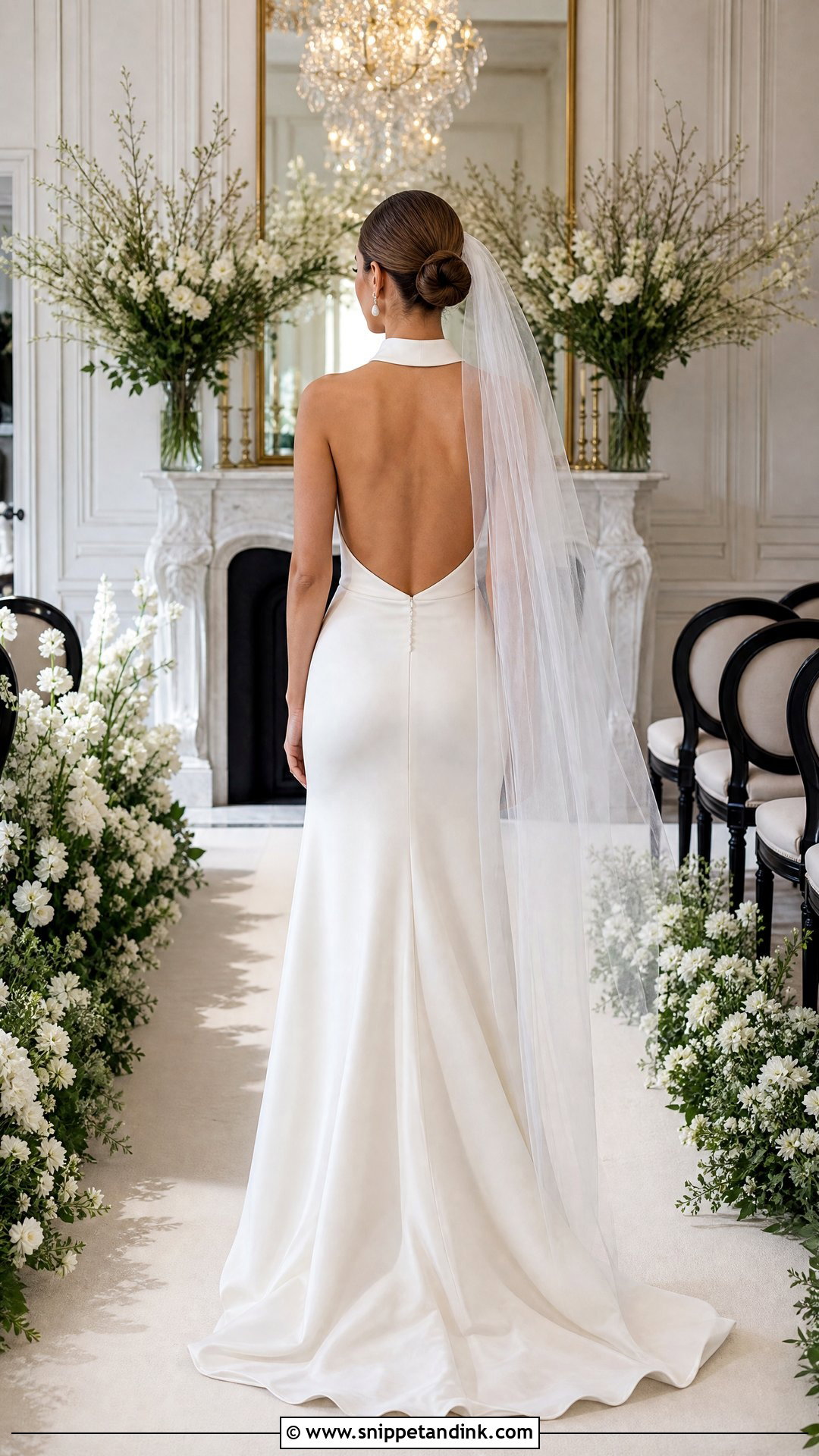
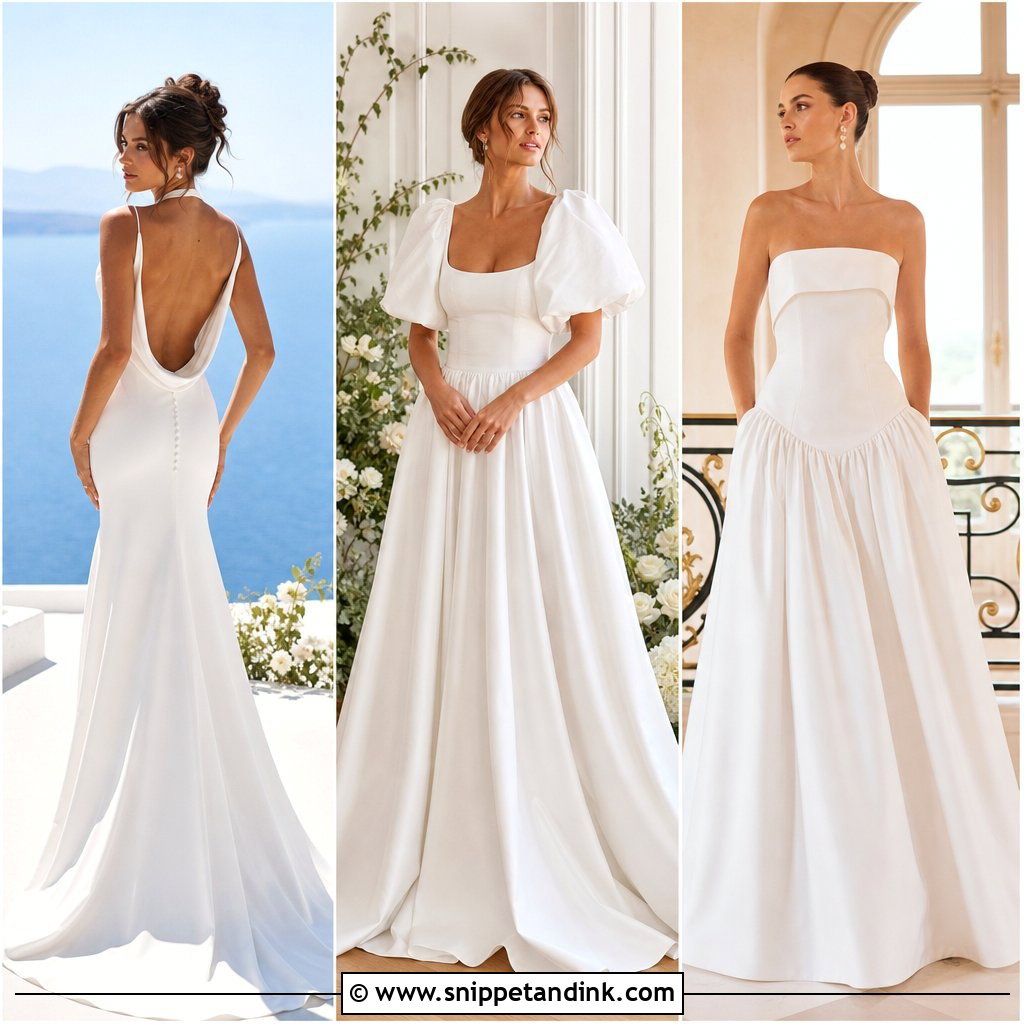
Drama here comes from shape, not sparkle. A backless silk gown needs a high front or a simple boat neck to balance the open back, with soft silk crepe or satin falling from the waist into a lightly flared skirt and short train. Support is the real question. Without straps across the back, a fuller bust usually needs cups sewn into the bodice or a discreet clear-strap system, and I’d sort that at the first fitting rather than the last. Add drop earrings, pointed heels and a sheer veil attached beneath a low bun so the back stays on view. Skip the necklace and wear a slim bracelet instead. An evening ceremony or a candlelit reception shows the back best, especially on the walk up the aisle.
7. Parisian Satin Wedding Dress With Cape
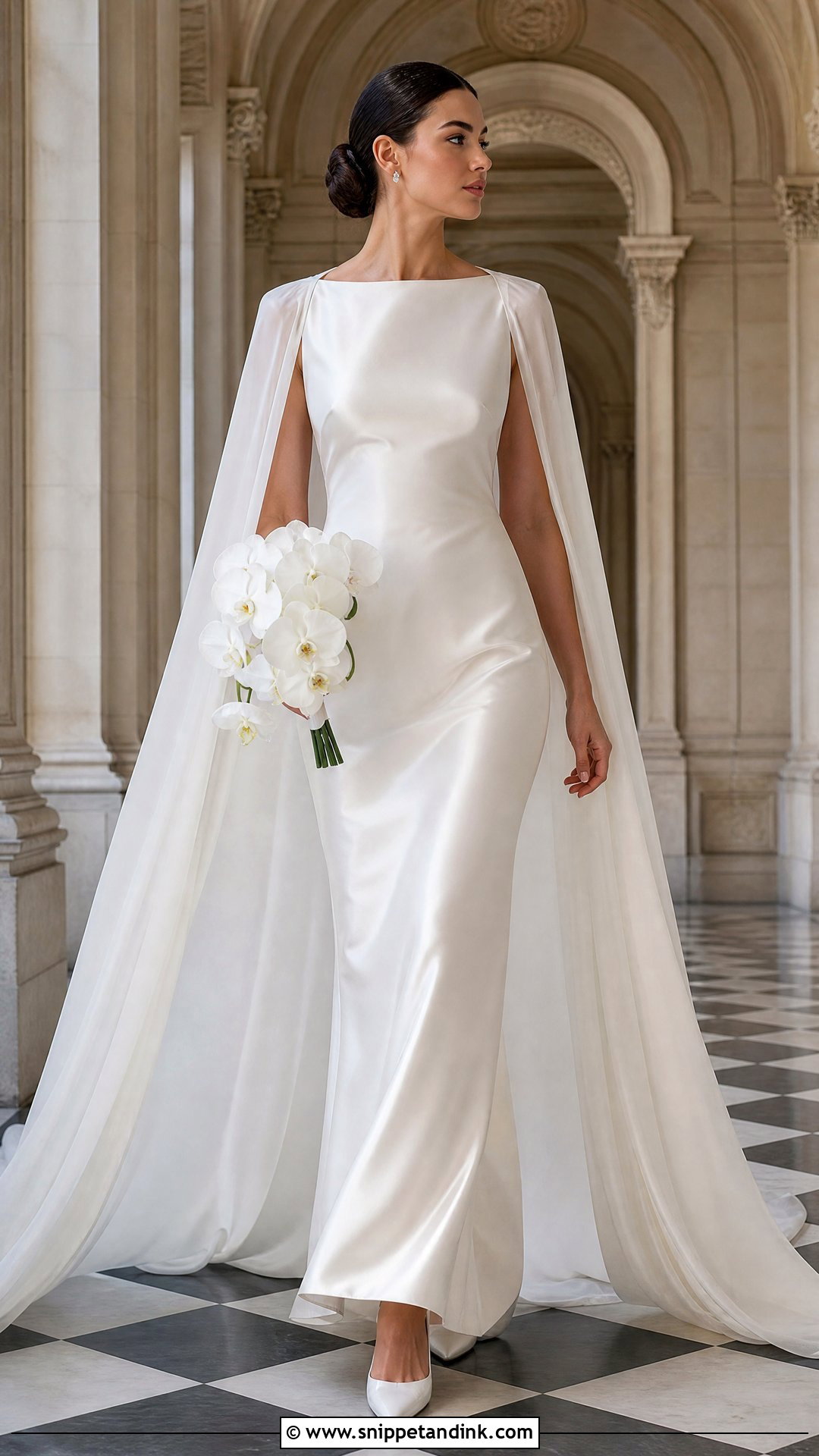
Why bother with a veil when a cape gives you length and movement? Start with a slim column or softly fitted A-line in satin, with a clean neckline and very little seaming, then add a light chiffon, silk organza or tulle cape that falls from the shoulders and runs slightly past the hem. Chiffon floats; organza holds a crisper line and catches the wind more. I’d choose by venue: organza for indoors, chiffon if there’s any breeze. Satin pumps, crystal studs and a polished low chignon keep the rest quiet, and a sleek bunch of white orchids suits the clean shape. Cool weather and a grand entrance are where this one comes into its own.
8. Parisian Mini Wedding Dress With Short Veil
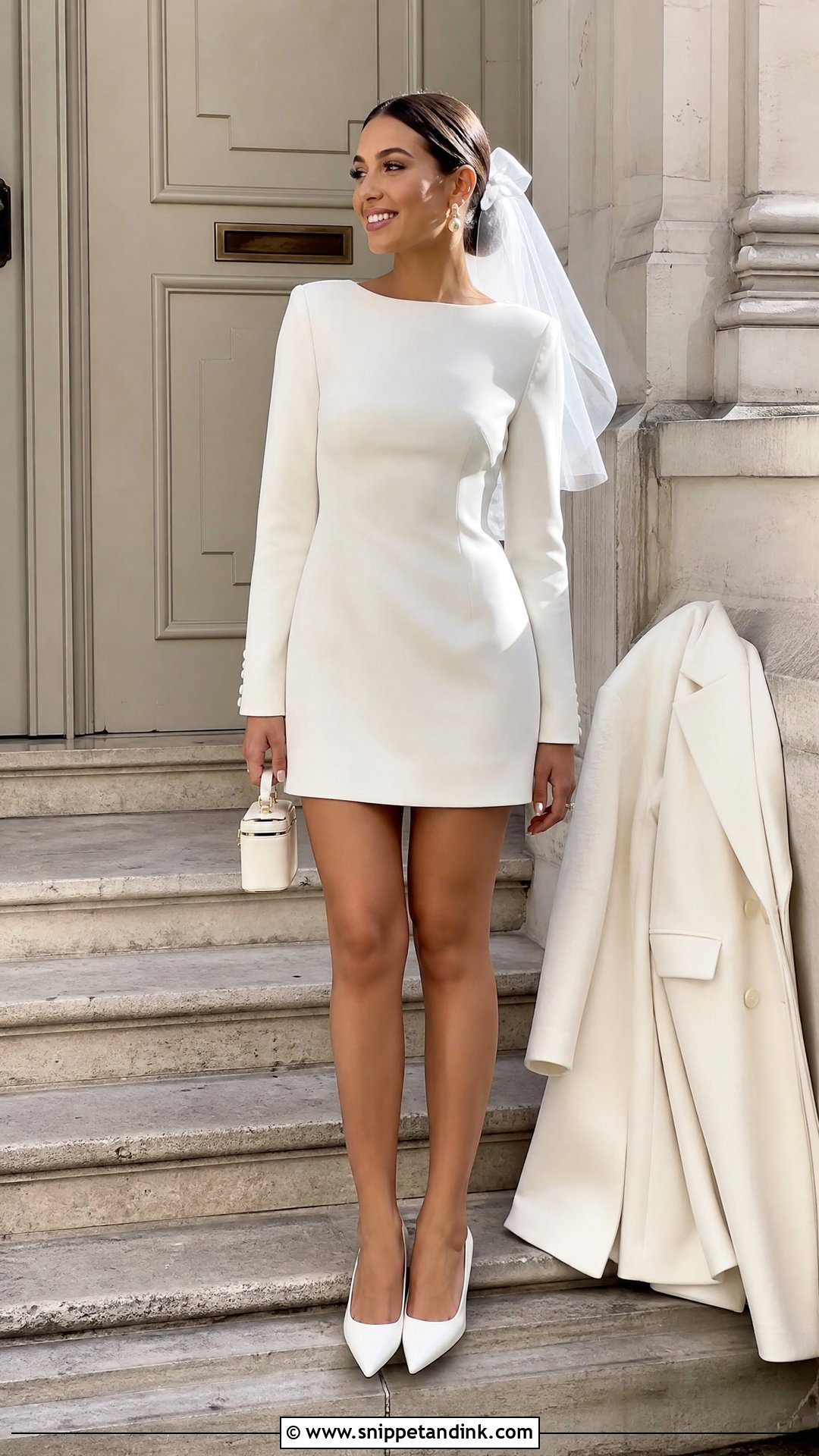
A short dress only looks bridal if the fabric has weight. Substantial crepe, satin or jacquard does it; thin fabric in a short cut just looks like a party dress. Balance the hem with a bateau neck, long sleeves or a gently tailored shift. In cooler months I suggest sheer tights in a shade matched to your skin, because bare legs in winter photos read pink and cold. Pointed pumps, a short veil ending near the shoulders, pearl earrings and a small box bag complete it, and a long ivory coat can cover you for the ceremony and come off indoors. Keep the bouquet compact. It moves easily from the mairie steps to dinner and dancing.
9. Parisian Mikado A Line Wedding Dress
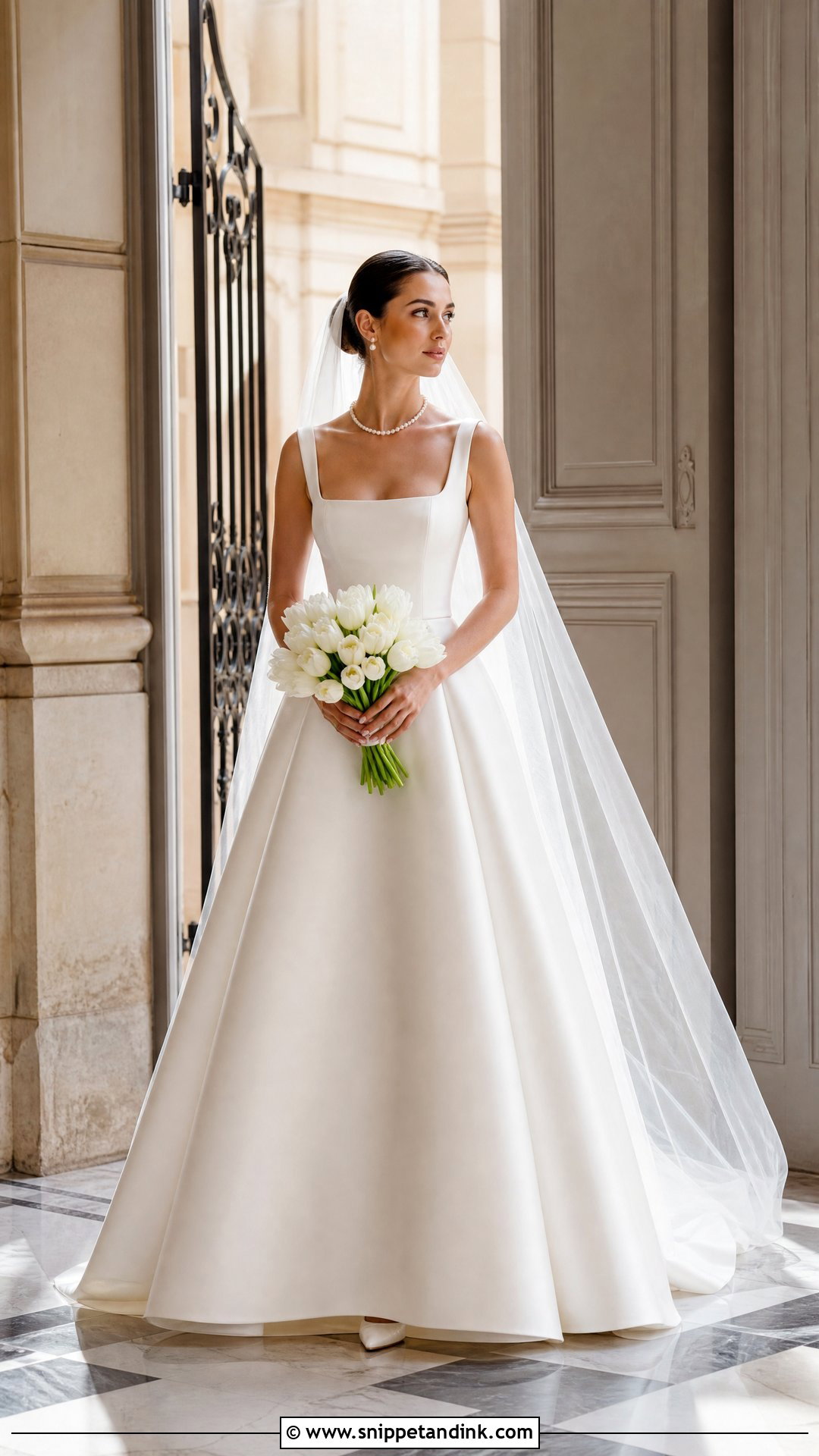
Mikado has a crisp hand and a soft sheen, so it holds an A-line without needing layers of petticoat. Select a fitted bodice, a defined waist and a controlled skirt, nowhere near ball-gown volume, with a straight, square or gently curved neckline to keep the refined Parisian mood. Its stiffness is both strength and weakness. Mikado keeps its shape all day, but it creases sharply rather than softly, so sitting in a car for an hour leaves visible folds; I ask brides to stand for the journey’s last stretch if they can, or bring a steamer to the venue. Pointed satin heels, a single strand of pearls, a fine tulle veil and a smooth bun complete it, with a slim bouquet of white roses. A château, a ballroom or a formal garden suits it.
10. Parisian High Neck Lace Wedding Dress
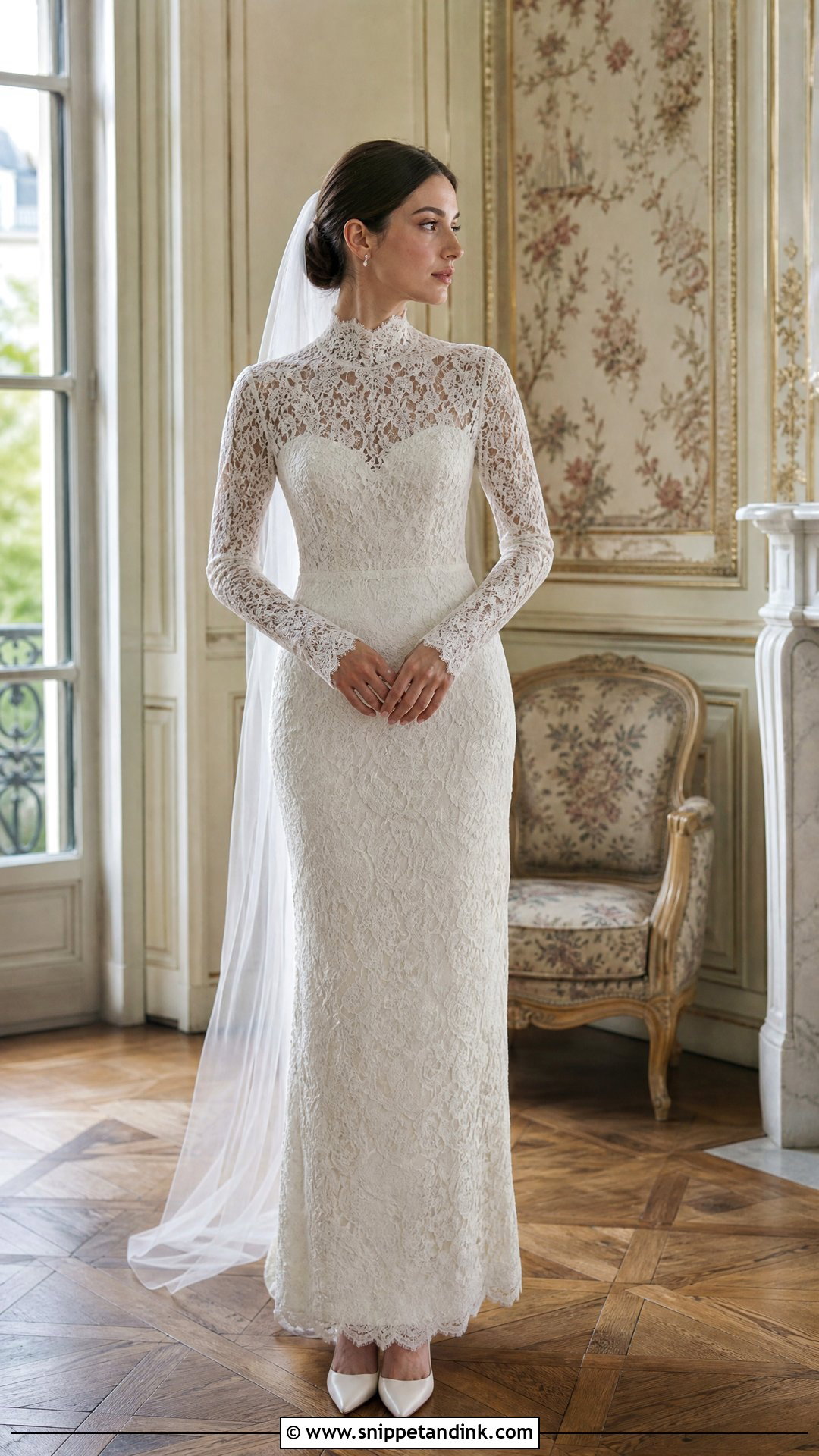
Coverage and texture together: that’s the case for a high-neck lace gown. Fine lace over a smooth lining, with sheer panels at the neck and sleeves, keeps the dress from looking heavy, and the skirt can be a narrow A-line or a relaxed sheath depending on how formal the day is. Lace at the throat can itch. I always have a bride wear the collar for at least twenty minutes at a fitting, and if it scratches, a fine silk tulle backing along the edge usually solves it. Simple ivory pumps, pearl buttons and small diamond earrings suit it, with a low bun and a narrow tulle veil fixed below the hairstyle. A fine bracelet replaces any necklace. Autumn and indoor ceremonies are where this gown makes sense.
11. Parisian Off Shoulder Crepe Wedding Dress
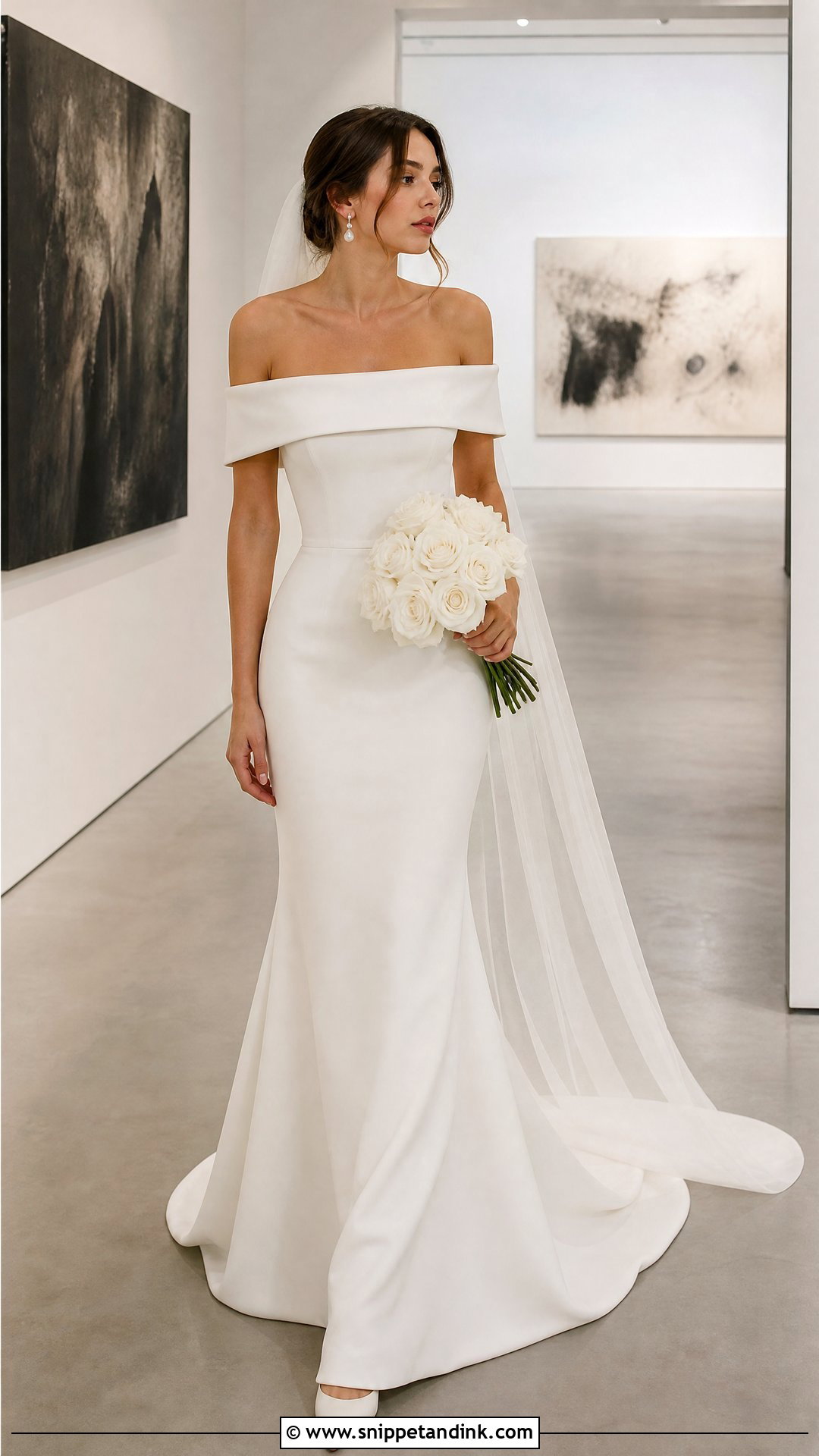
Off-the-shoulder necklines live or die by the inner bodice. A folded band or soft drape across the arms needs a properly boned corset underneath, because the band itself holds nothing up; without that structure you spend the evening hitching it. Choose crepe with a fitted waist and a gently flared skirt, and accept that your arms will be partly held down by the band. Raise them at the fitting to check you can hug and dance. Pearl drops, pointed pumps and a long plain veil complete it, with a low chignon or side-parted waves that leave the shoulders clear. Carry white roses with a little greenery. An evening hotel wedding or a gallery suits its clean lines.
12. Parisian Halter Neck Satin Wedding Dress
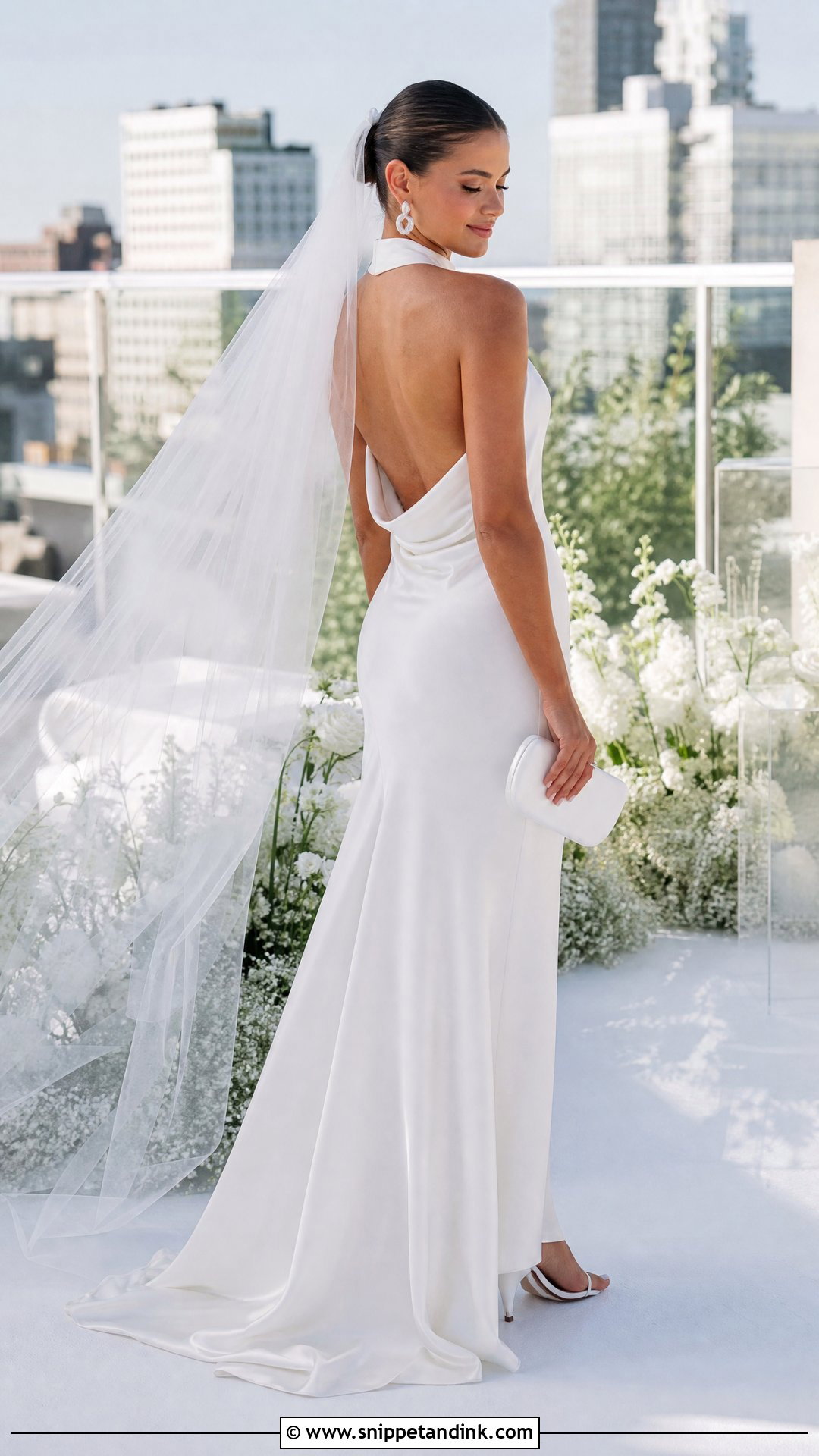
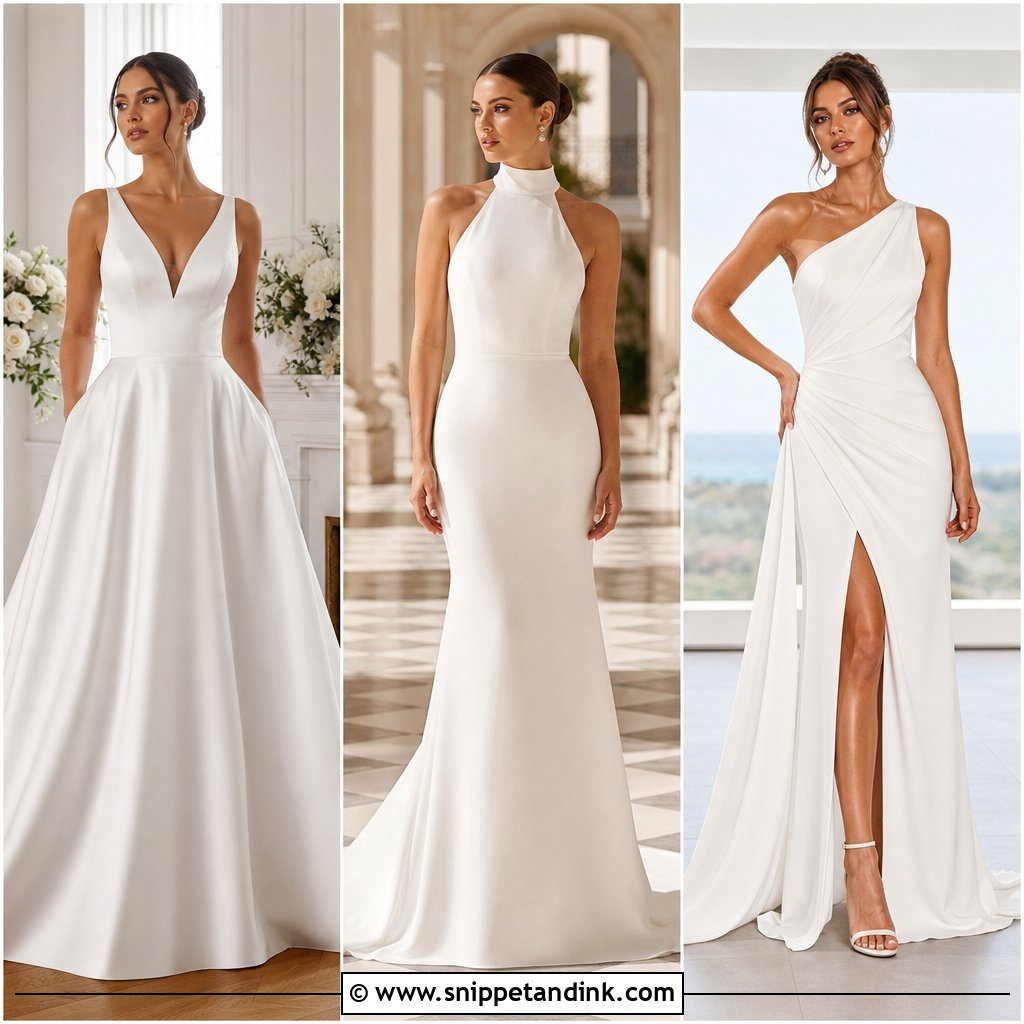
Satin halters bring a little 1990s minimalism into the Parisian look. Pick a neckline that sits comfortably around the neck and defines the shoulders, then a fluid skirt and gently fitted waist, with a low or draped back for interest. Satin is unforgiving on a halter, because the bias pull of the strap shows as diagonal ripples across the bust if the fit is even slightly off. Sit, reach and dance at your final fitting before signing it off. Sculptural earrings, a sleek bun and narrow-strap heels suit it; wear a fine bracelet in place of a necklace. A long tulle veil softens it for the ceremony and a small satin clutch carries you through the evening. Summer rooftops and evening restaurants show off the sheen.
13. Parisian Puff Sleeve Midi Wedding Dress
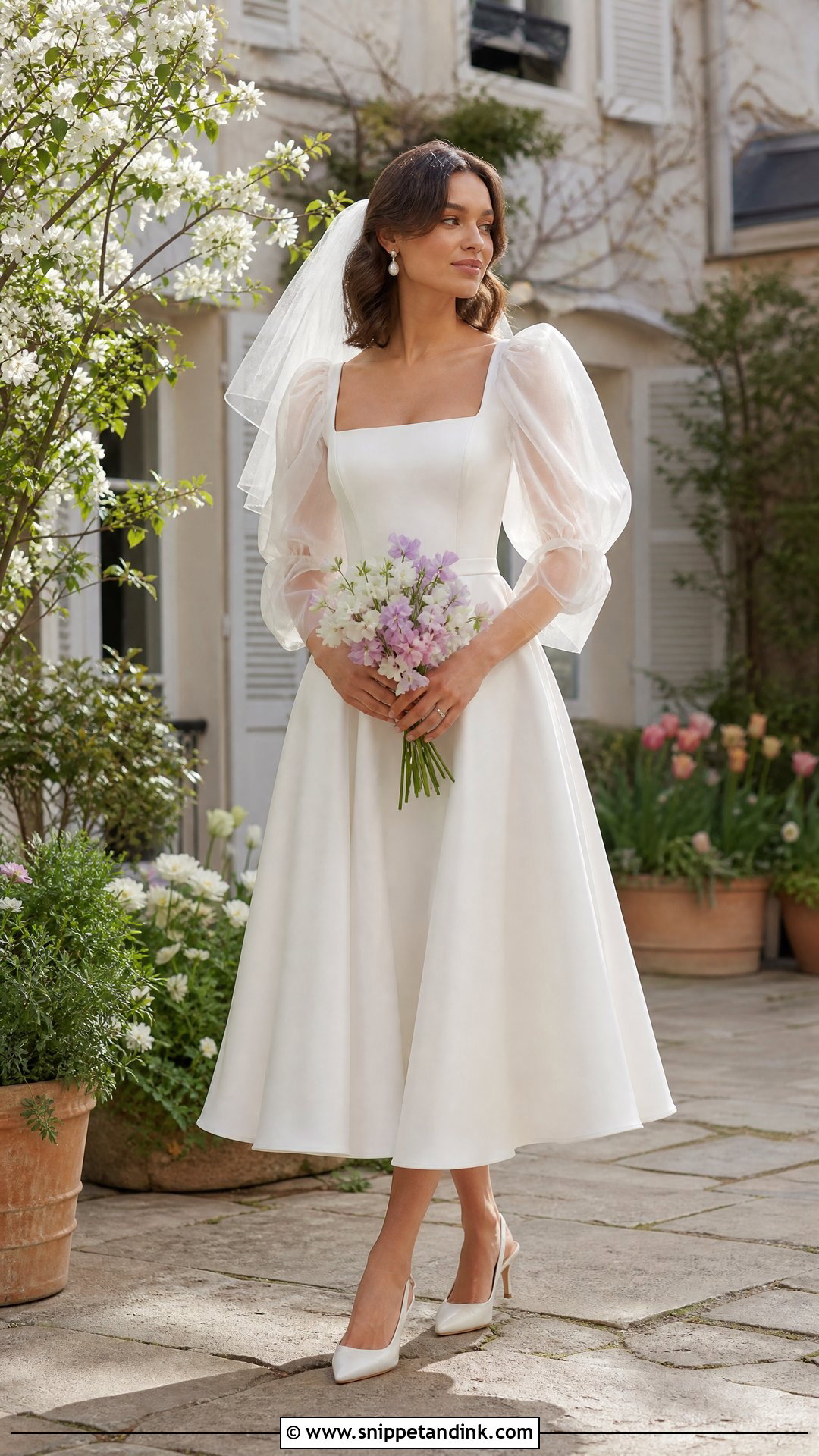
Puff sleeves give a midi romance without asking for a big skirt. Sheer organza, chiffon or dotted tulle sleeves work best against a clean crepe or satin bodice, with a square neck, a defined waist and a gently flared midi skirt. The sleeve fabric decides how it ages through the day. Organza keeps its puff for hours, while chiffon droops by the evening, especially in humid weather, so I’d steer you to organza for an outdoor summer ceremony. Slingback heels, pearl earrings and a shoulder-length veil finish a civil look, and a ribbon-tied low ponytail suits the sleeves. Carry sweet peas or seasonal white flowers. Spring gardens and city hall weddings suit it best.
14. Parisian Embroidered Organza Wedding Dress
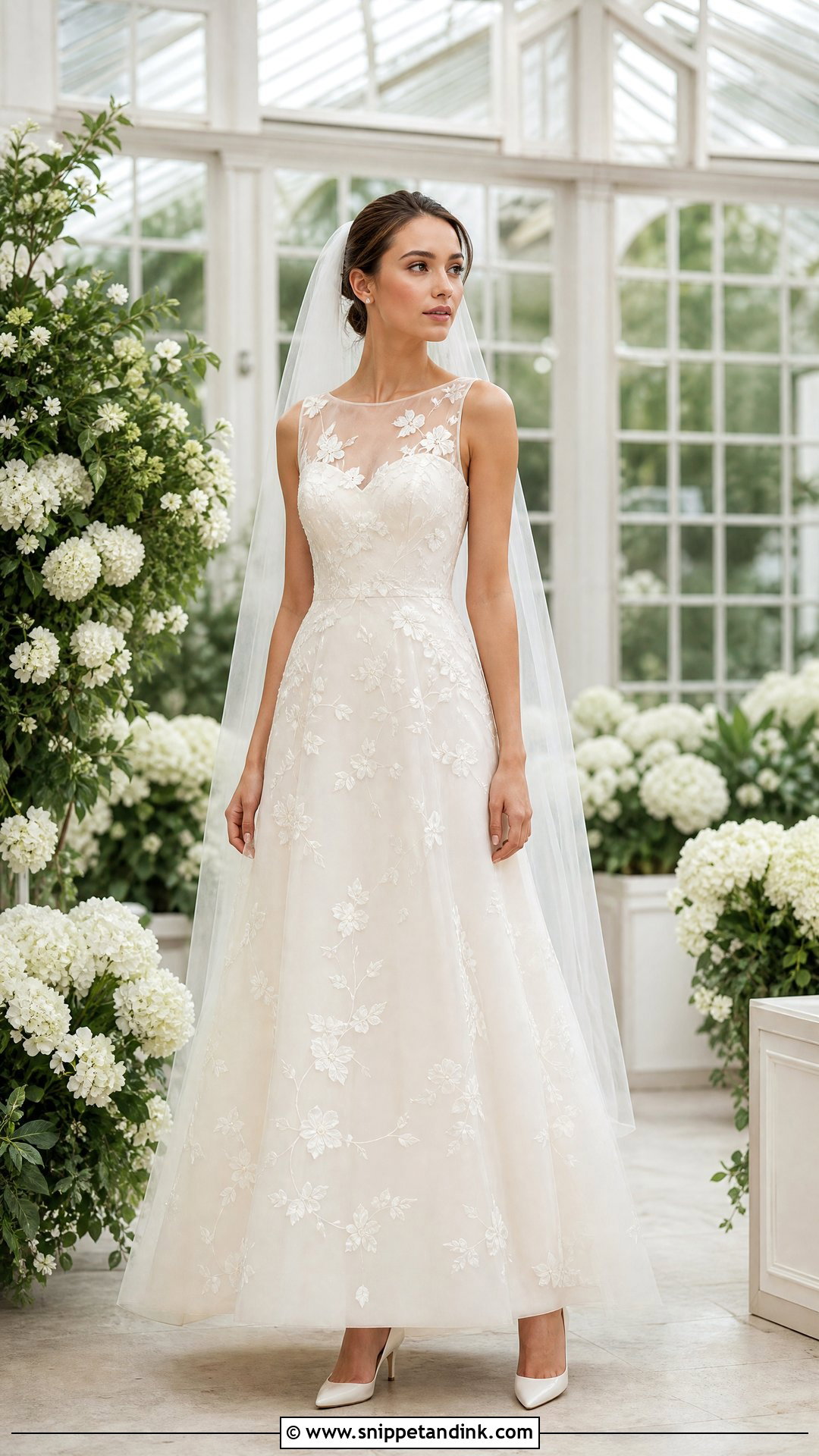
Embroidered organza has more texture than plain silk and far less weight than lace. Select scattered floral embroidery on a translucent top layer over a simple ivory lining, with a fitted bodice and a flowing A-line skirt so the fabric stays the focus. Embroidery is raised, which means it catches. Watch out for beaded or crystal bracelets, a groom’s cufflinks and the clasps of a clutch; one snag pulls a thread right through the motif. Understated satin pumps, tiny crystal studs and a plain tulle veil keep everything quiet, with softly pinned waves or a loose chignon. Keep gloves, jewellery and bags plain, and carry white garden flowers. Courtyards, conservatories and spring destination weddings let the light layers move.

15. Parisian Blazer Wedding Dress With Heels
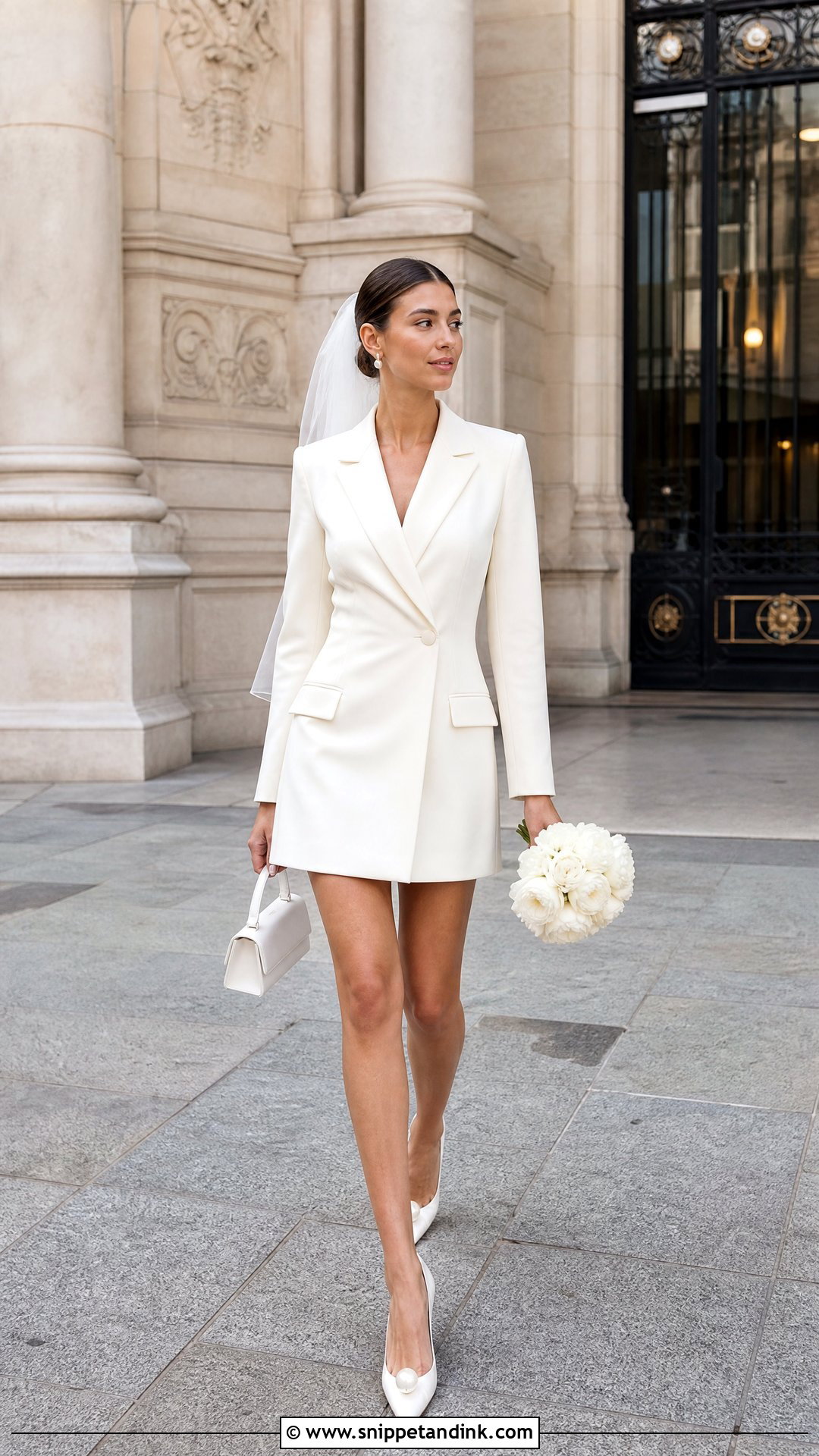
For a civil ceremony, a tailored blazer dress is a confident alternative to a gown. Look for ivory crepe or a wool blend, a defined waist and a hem that still looks right when you sit, with strong shoulders, covered buttons, a clean lapel and an interior fastening so the wrap never gapes. The sitting test matters most: a blazer dress that is perfect standing often shows thigh when seated at a signing table. Pointed satin heels, sheer tights if the season calls for them, a short veil or sculptural bow, pearl studs and a small structured bag soften the tailoring. Bridal suits and tailored alternatives sit comfortably beside midi dresses and minimalist gowns for a town hall wedding. A sleek bun and a compact bouquet finish it, ready for city hall or an intimate lunch.
16. Parisian Lace Top And Silk Skirt Wedding Dress
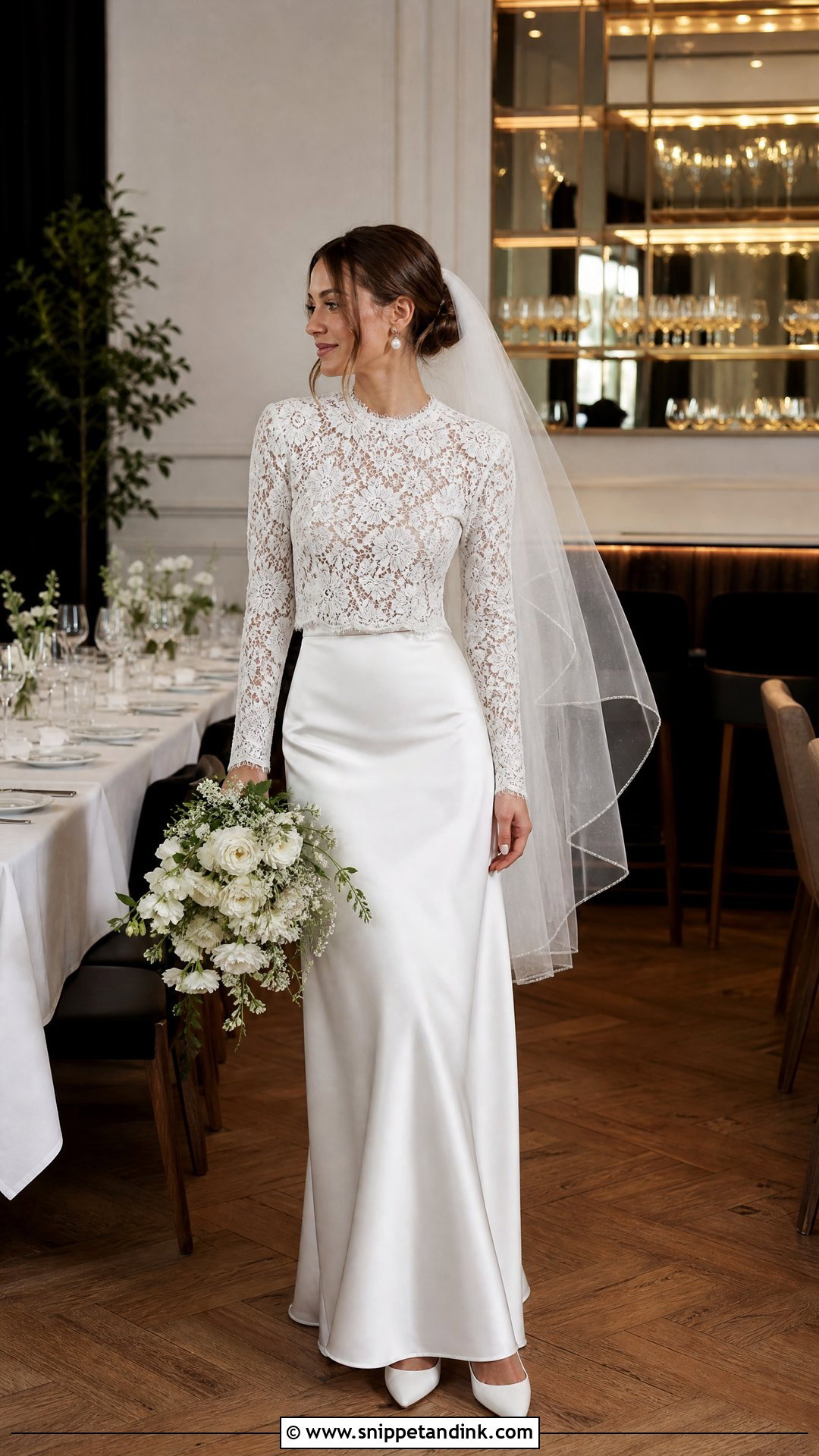
Separates let you mix texture and movement without a complicated dress. A fitted lace top over a high-waisted silk or satin skirt that falls to the floor is the classic pairing, with long sleeves, a bateau neck or a modest open back on the top and a fluid, plain skirt below. The join is where separates fail. I have the waistband of the skirt sit slightly over the hem of the top and add a small hook or button between the two, so raising your arms for a hug never shows a strip of lining or skin. Pointed pumps, pearl earrings and a simple fingertip veil complete it, with a low bun and a loose bouquet. Separates also suit different top and bottom sizes far better than a single gown.
17. Parisian Drop Waist Wedding Dress
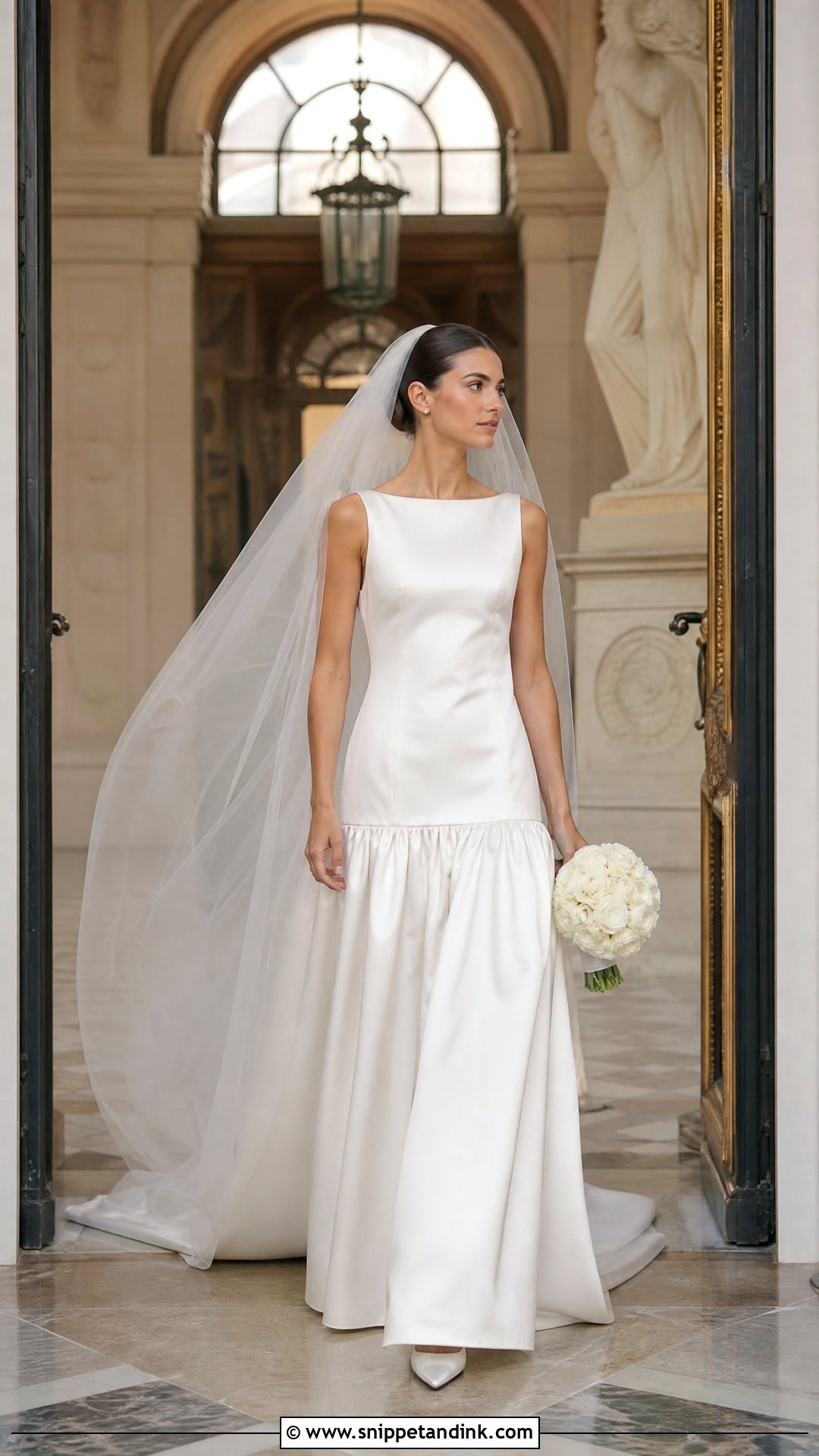
A dropped waist lengthens the torso and looks more fashion-led than a natural waistline. The bodice extends a little below the waist before releasing into a full or softly gathered skirt, and matte satin, silk faille or structured crepe keep that seam crisp. This shape suits a longer torso; on a short one it can make the legs look shorter, so I’d try one on before committing to it from a photo. Fitting through the torso has to be precise, as any wrinkle sits right where the eye lands. A scoop, straight or square neck works with it, along with pointed pumps, small studs and a plain cathedral veil. Keep the hair smooth and the bouquet compact so the skirt carries the volume.
18. Parisian Basque Waist Wedding Dress
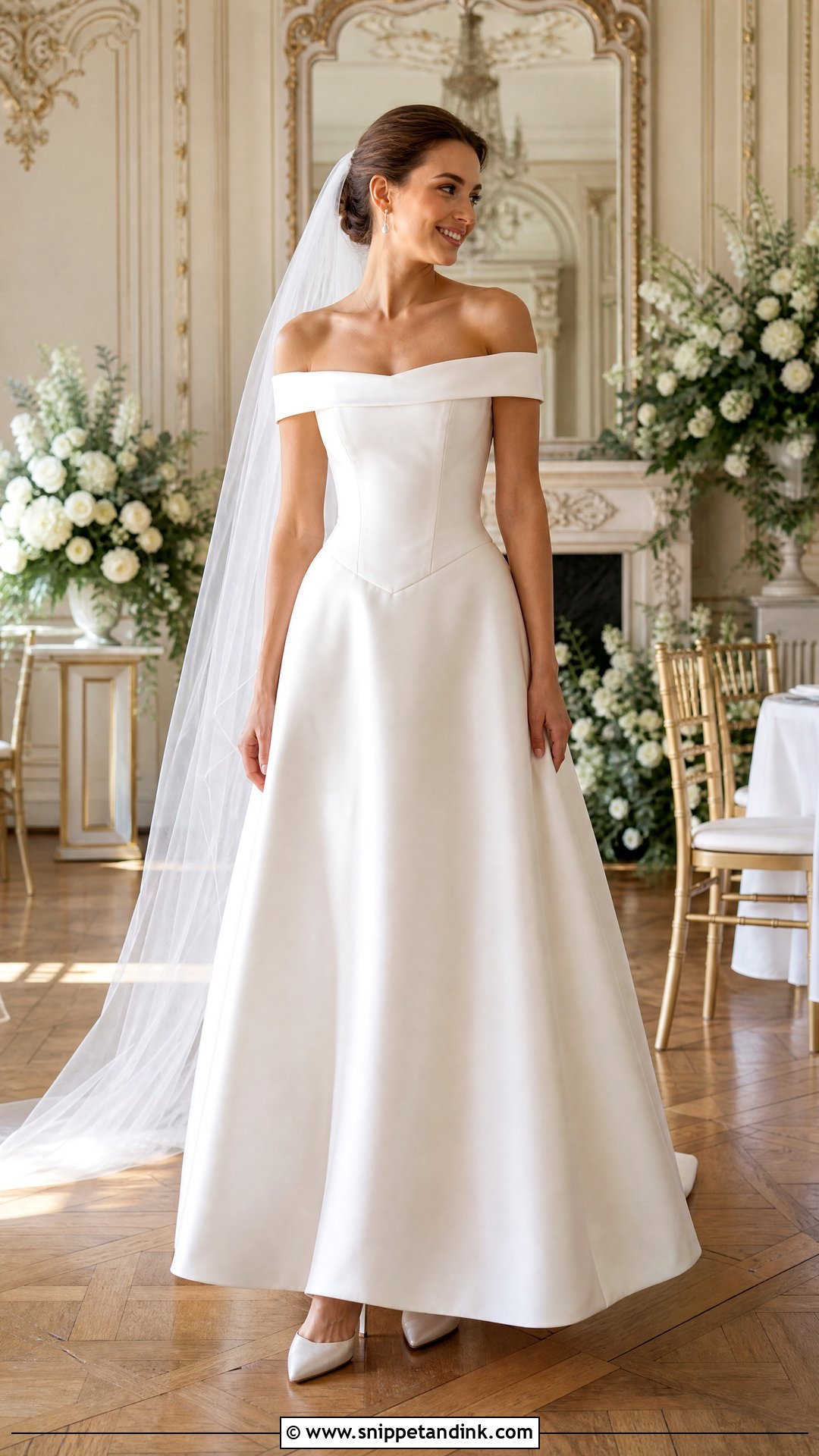
The Basque waist dips into a point at the front, which pulls the eye down and gives a lovely transition into the skirt. For the Parisian take, use smooth satin or Mikado with almost no embellishment and a controlled A-line. Light boning keeps that point flat. Without it, the tip curls up when you sit, and it’s one of the details I press out with a hand steamer at nearly every wedding. A scoop or off-the-shoulder neck suits the fitted bodice. Pearl earrings, pointed satin heels and a sheer veil that falls past the train complete it, with a soft updo and white roses or ranunculus. Grand halls and evening ceremonies suit its structure.
19. Parisian Floral Jacquard Wedding Dress
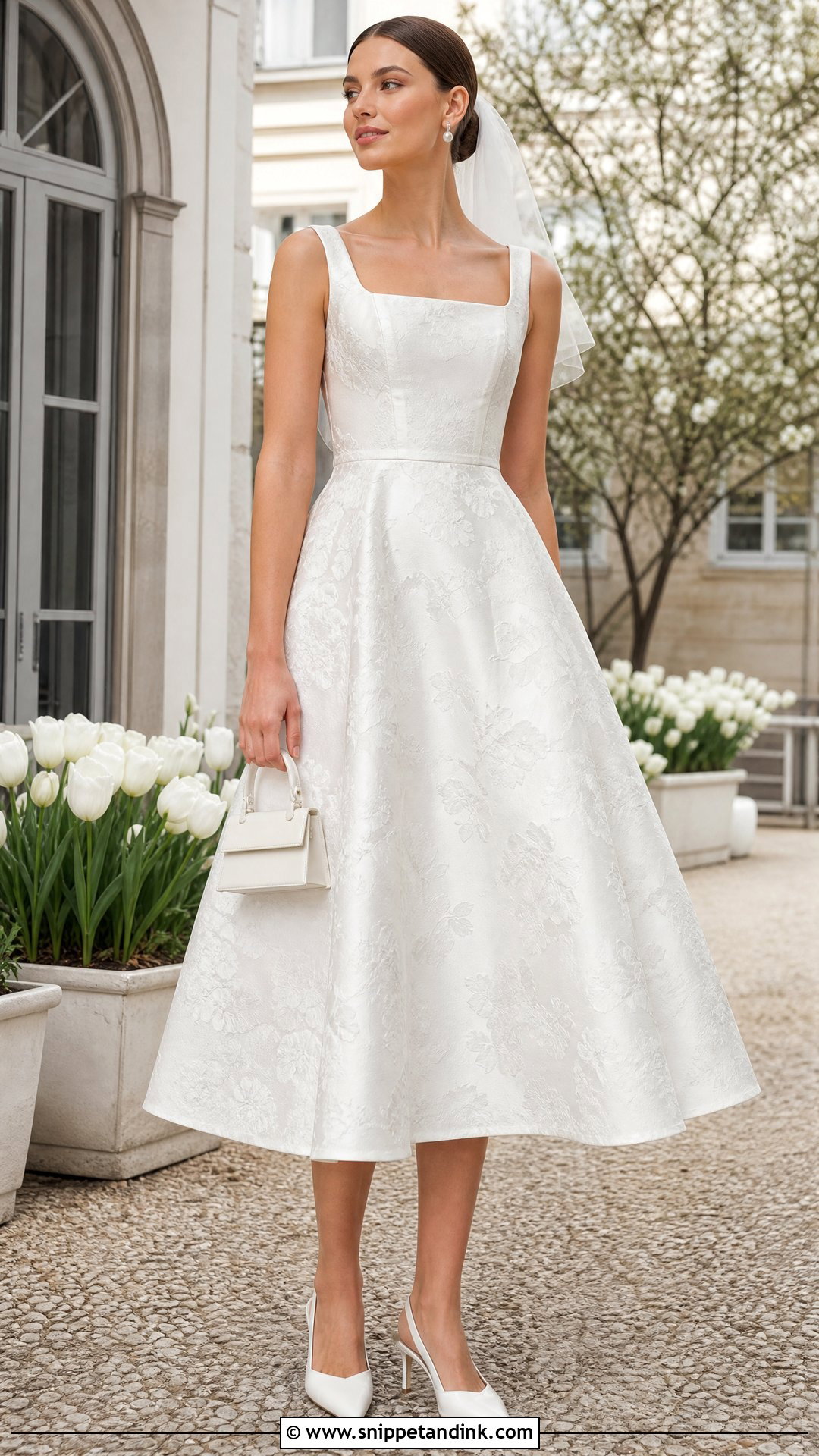
Floral jacquard gets its interest from the weave rather than anything sewn on, so the pattern only appears as light moves across it. Select an ivory midi or full-length A-line with a defined waist and a clean neckline. In a fitting room under flat light, jacquard can look almost plain; take it near a window before deciding, because that’s how it will look outdoors and in photos. Satin slingbacks, pearl earrings and a short plain veil suit it, with a structured mini bag for a city ceremony. A low bun with a side part keeps it polished. Choose tulips or white roses rather than a patterned mixed bouquet, which competes with the weave.

20. Parisian Wedding Dress With Detachable Train
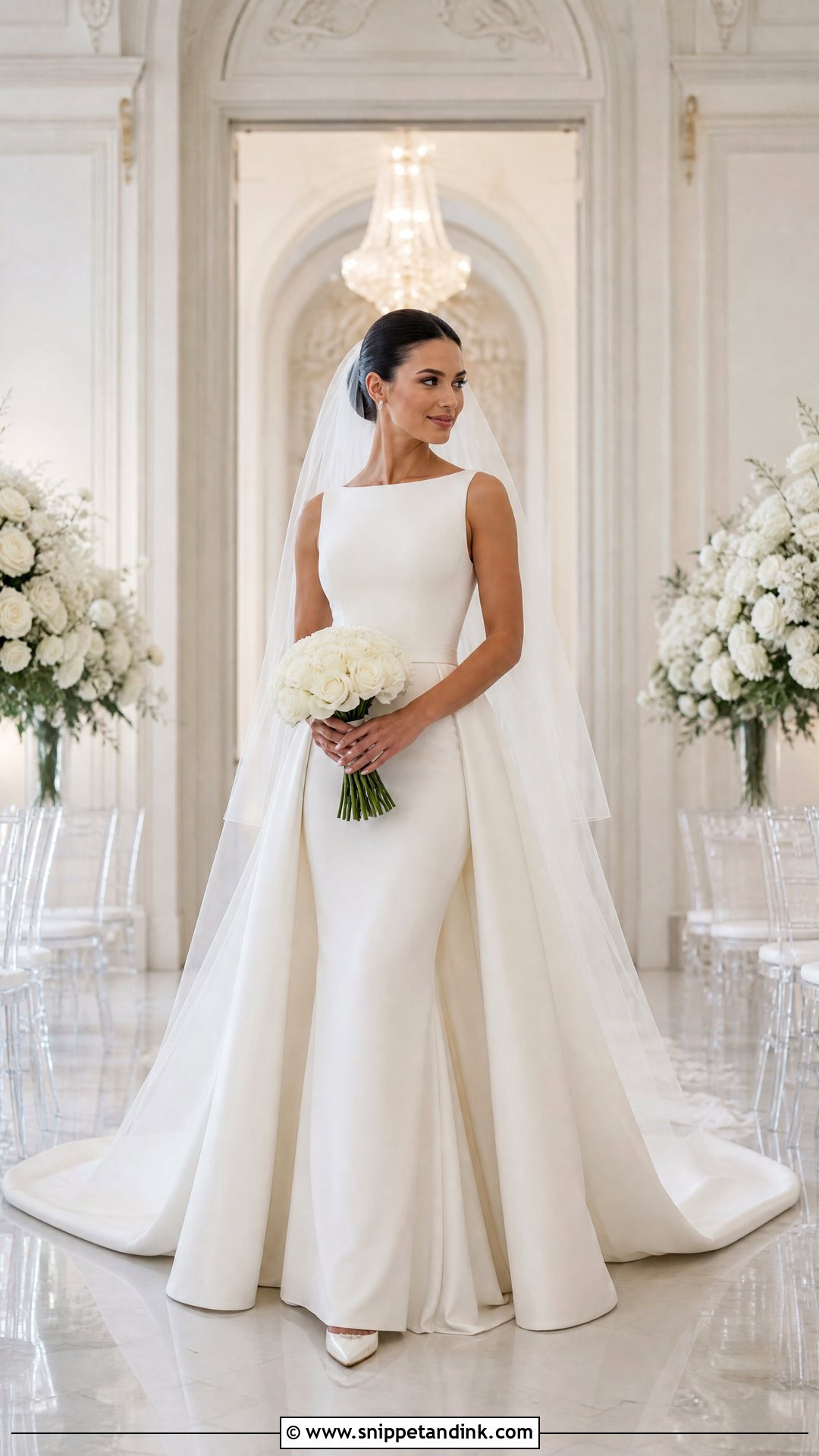
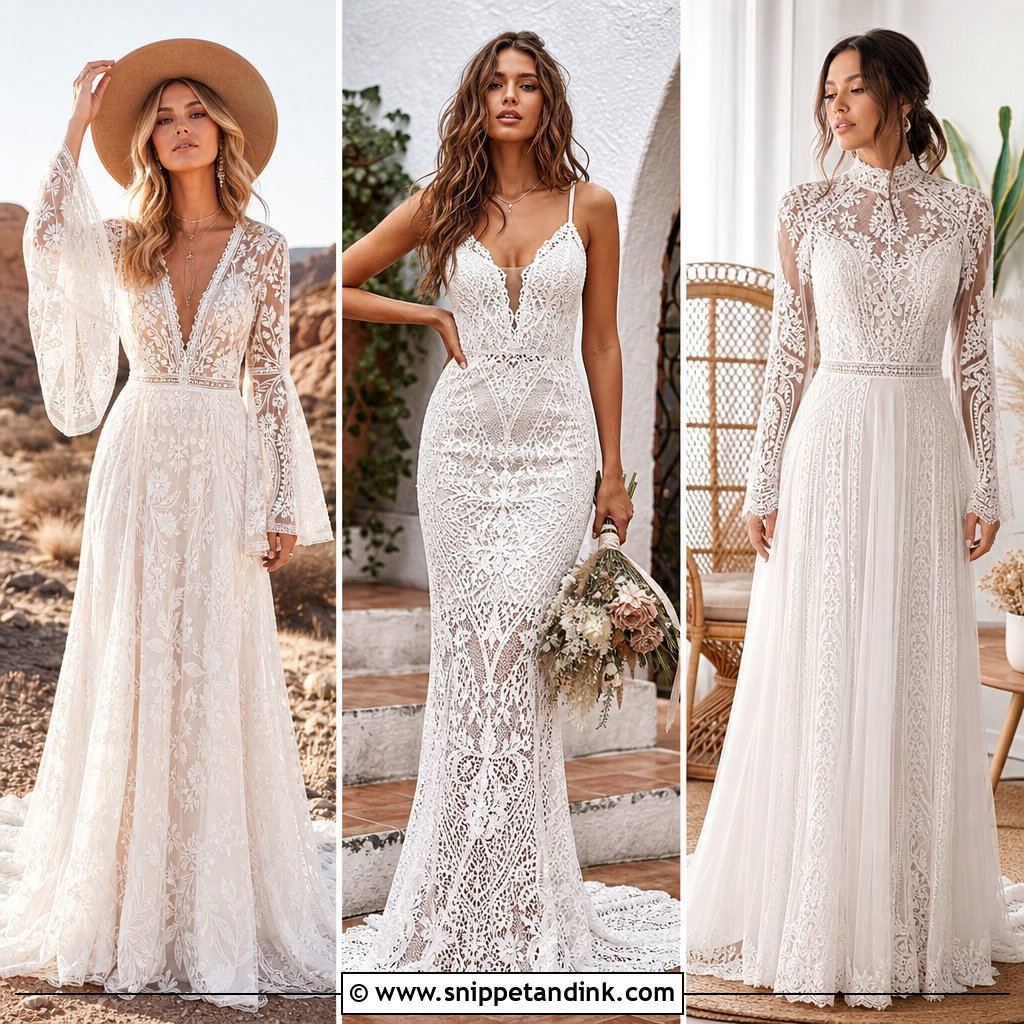
Two looks, one dress: that’s the promise of a detachable train. Start with a fitted crepe, satin or silk gown in a column or gentle fit-and-flare, then fasten a light overskirt or chapel-length train at the waist for the ceremony. Ask your seamstress to show you how it comes off, and have your helper practise once at the final fitting. Hooks hidden under a waistband are quicker than buttons, and a train that needs ten minutes and two people to remove will eat into your reception. Pair the ceremony version with a long veil, crystal studs and pointed satin pumps, then remove both after photos and switch to slingbacks if your feet need it. A polished bun works for both halves of the day.
How Silk, Crepe and Mikado Hold Up Over a Long Day
Fabric decides how a Parisian dress looks at nine in the evening far more than its cut does. Here’s what I tell brides at the last fitting.
Silk and satin
Silk wrinkles easily and shows water marks, including perspiration. Use dress shields in a fitted bodice, keep a white cotton cloth for blotting, and never dab a drink spill with coloured napkins, which can transfer dye. Steam silk from the inside, at a distance, rather than ironing it.
Crepe
Crepe is the most forgiving of the three. It sheds light creases on its own after hanging for a few hours, which makes it the safest choice if you’re travelling with the dress.
Mikado and faille
These hold their shape beautifully but crease in sharp lines, especially across the lap. A handheld steamer at the venue fixes most of it in minutes.
Travelling and afterwards
On a plane, carry the gown on in a breathable garment bag and ask for it to be hung or laid flat. After the wedding, have it cleaned by a specialist within a few weeks, before sugar from champagne or cake can oxidise into yellow marks, then store it in acid-free tissue, away from light, not in plastic.
The French Habit Worth Borrowing for Your Own Day
Every dress above shares one habit: it knows where to stop. A silk slip moves, lace sleeves and jacquard give texture, Mikado and crepe give shape, and short dresses and blazers handle a civil ceremony with ease. Capes, veils and detachable trains add drama only where the venue calls for it. Start from the silhouette that resembles what you’d wear on a good day anyway, then spend your effort on tailoring and shoes you can walk in. Jewellery and flowers should follow the dress, never lead it. If you’ve edited it properly, people should remember your face before the gown.
You'll Like These Ideas:



Leave a Reply