
Of all the shapes I put brides in, the lace A-line gown is the one that fits the widest range of bodies and venues. It skims the waist and widens gradually, so it doesn’t need the heavy petticoats of a ball gown or the precision tailoring of a mermaid. What changes its character is everything layered on top: the neckline, the lace, the sleeves and the skirt fabric. Corset bodices, raised flowers, detachable pieces and layered skirts are all showing up on this shape right now. Below are twenty versions, each with a note on what I check at the fitting and who it suits, from a grand ballroom to a small garden ceremony.
Ordering a Lace Gown on a Realistic Timeline
Most lace wedding dresses are made to order after you choose them, not taken off a rail. Production times vary by designer and season, and many shops suggest ordering somewhere around eight to ten months before the wedding to leave room for delivery and alterations. Lace slows things down at both ends, because the pattern has to be matched across seams and anything altered has to be re-appliquéd by hand.
When you shop, ask three things before you fall for a dress: how long it takes to arrive, whether rush ordering is possible and what it costs, and who does the alterations. A bridal shop with an in-house seamstress who works on lace every week is worth more than a slightly cheaper dress.
Short on time? Buying a sample or an off-the-rack gown skips the production wait entirely. Inspect sample lace closely in daylight, though. Try-ons leave make-up marks at the neckline and small pulls in the appliqués, and both need cleaning or repair before the wedding.
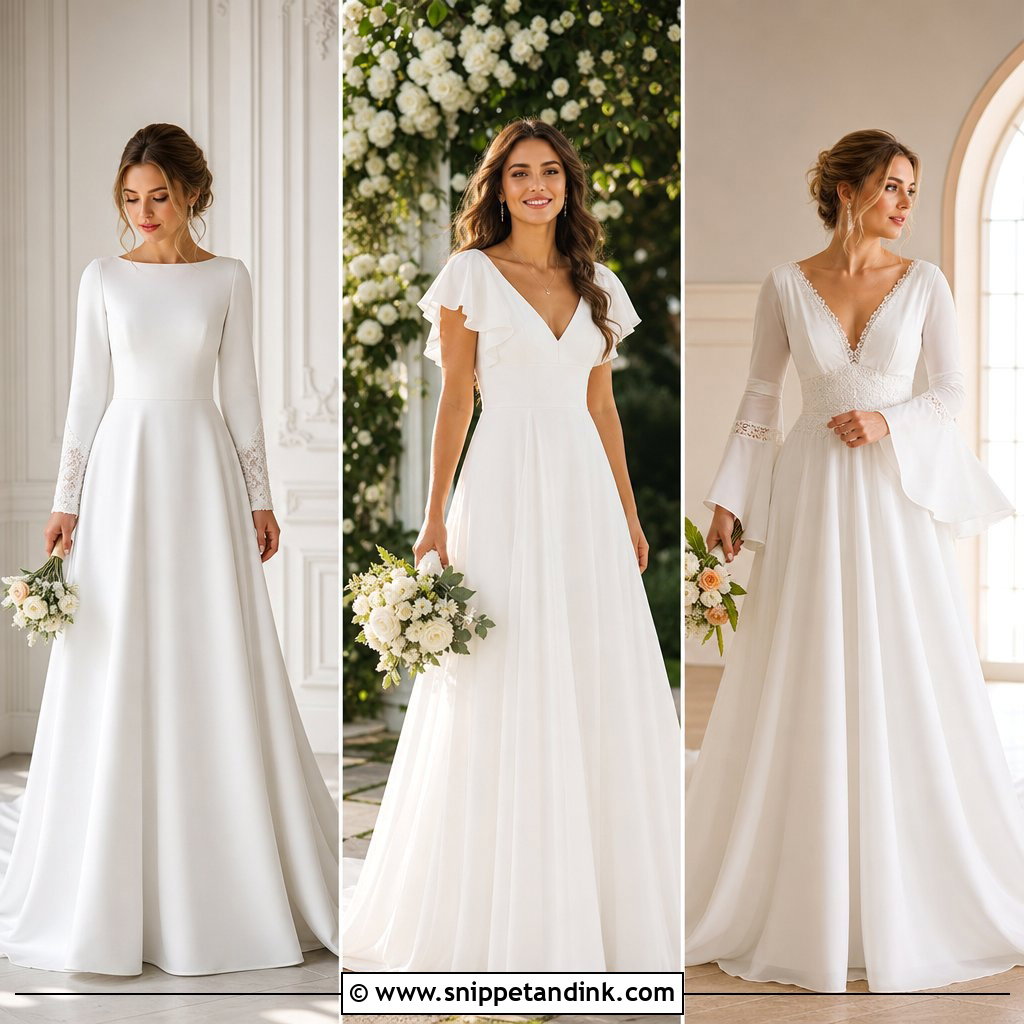
1. Long Sleeve Lace A-Line Wedding Dress
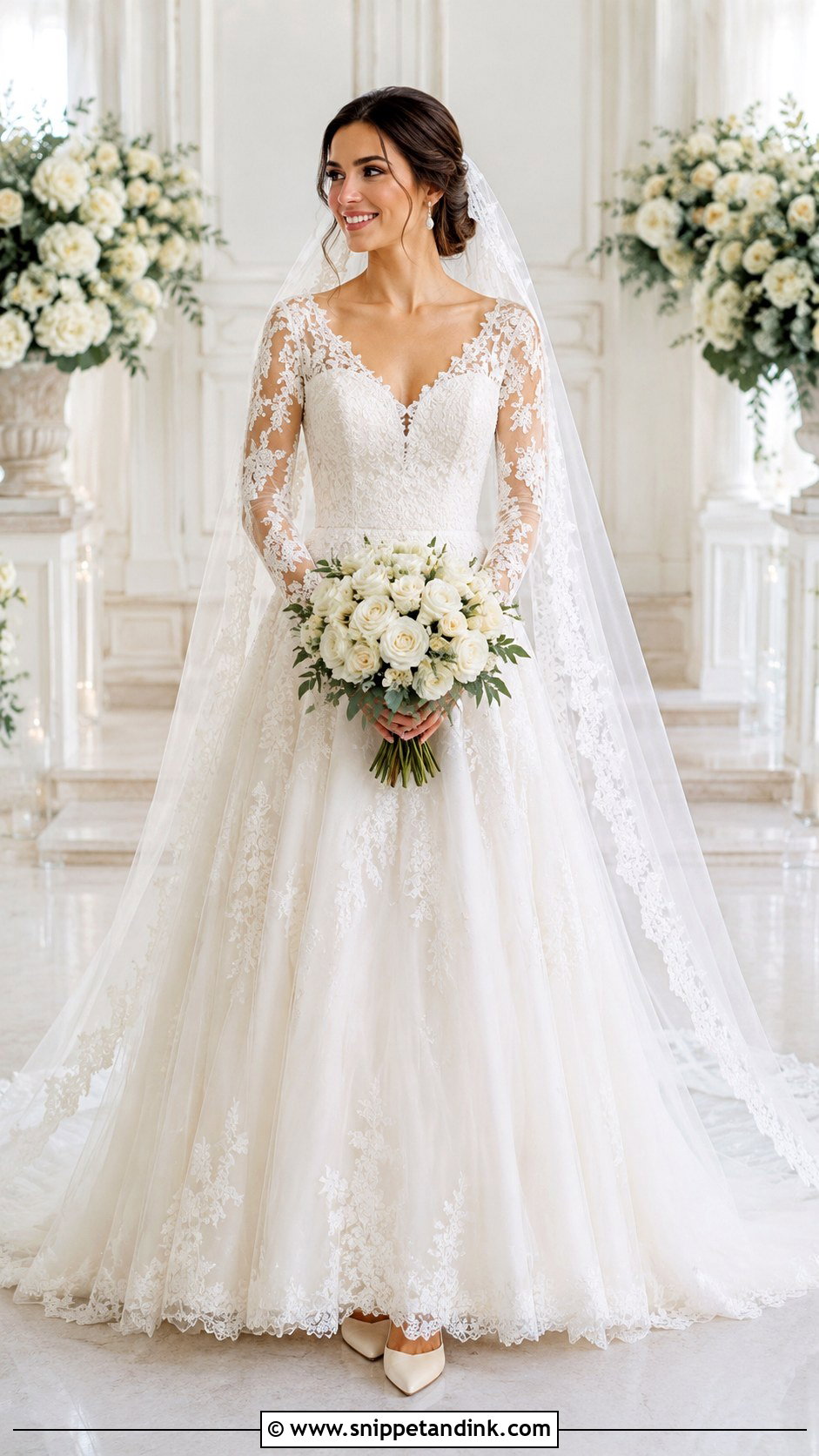
Long lace sleeves on an A-line give cover without hiding your shape, because the fitted bodice still shows the waist. Look for illusion sleeves where the appliqués run on from the bodice and fade out into the tulle skirt. Covered buttons at the wrist and back suit a bateau or shallow V neck. The sleeve is the part I test hardest. Fitted lace has almost no stretch, so ask for the sleeve to be cut with enough room at the elbow and underarm that you can lift a glass and hug your grandmother. Pearl drops and a chapel veil with a narrow lace edge finish it. Fall, winter and early spring are its seasons.
2. Off The Shoulder Lace A-Line Wedding Dress
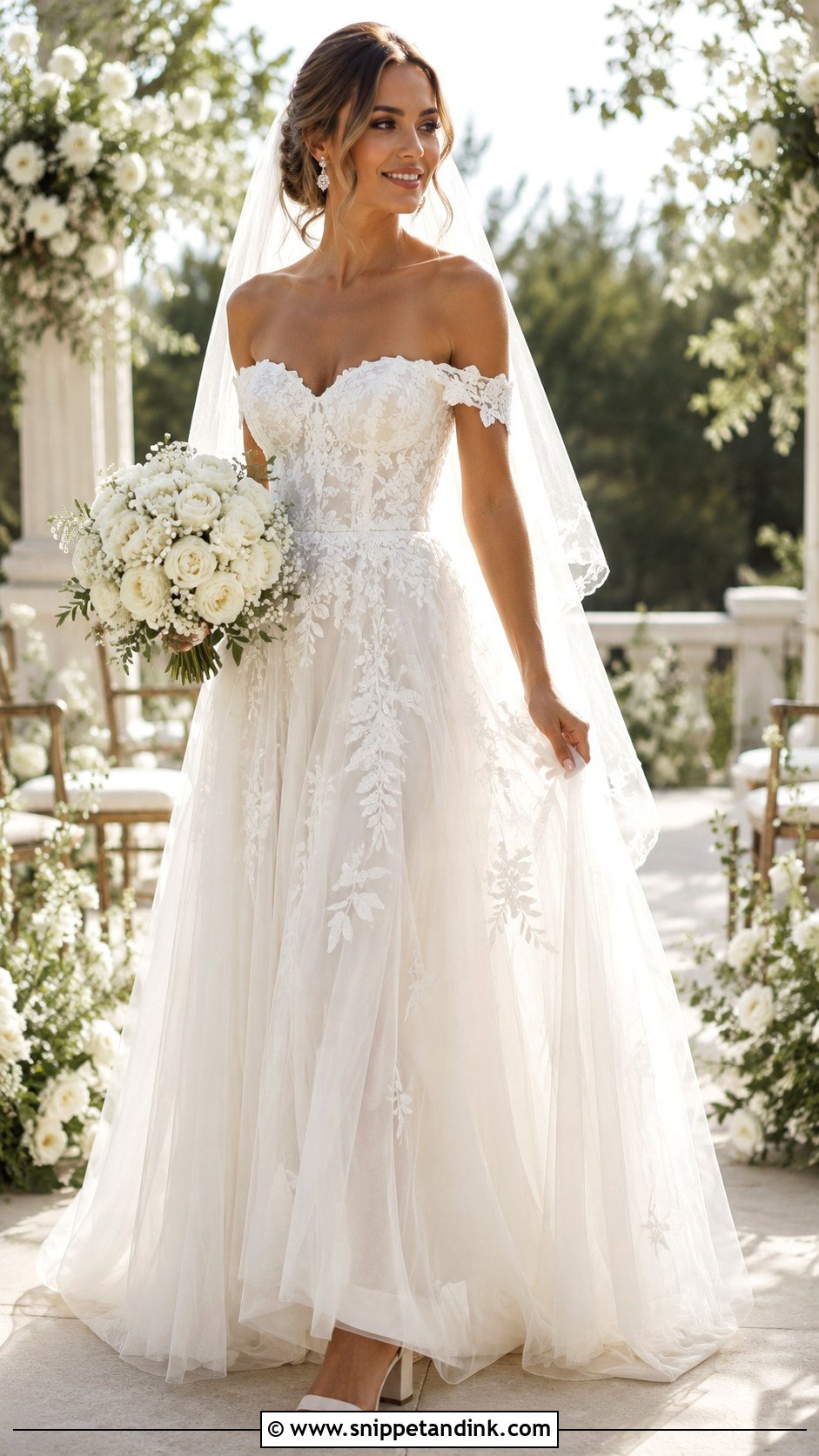
Off-the-shoulder lace looks relaxed, but the bodice beneath it does all the work. A sweetheart bodice with proper boning keeps the dress in place; the shoulder straps only frame. If you’re dancing, ask whether the straps can be made detachable, which gives you a strapless look for the reception without a second dress. Block-heel sandals are the sensible shoe for outdoor portraits on grass. A low chignon shows the shoulders, and a fine pendant fits only if the neckline leaves real space for it.
3. V-Neck Lace A-Line Wedding Dress
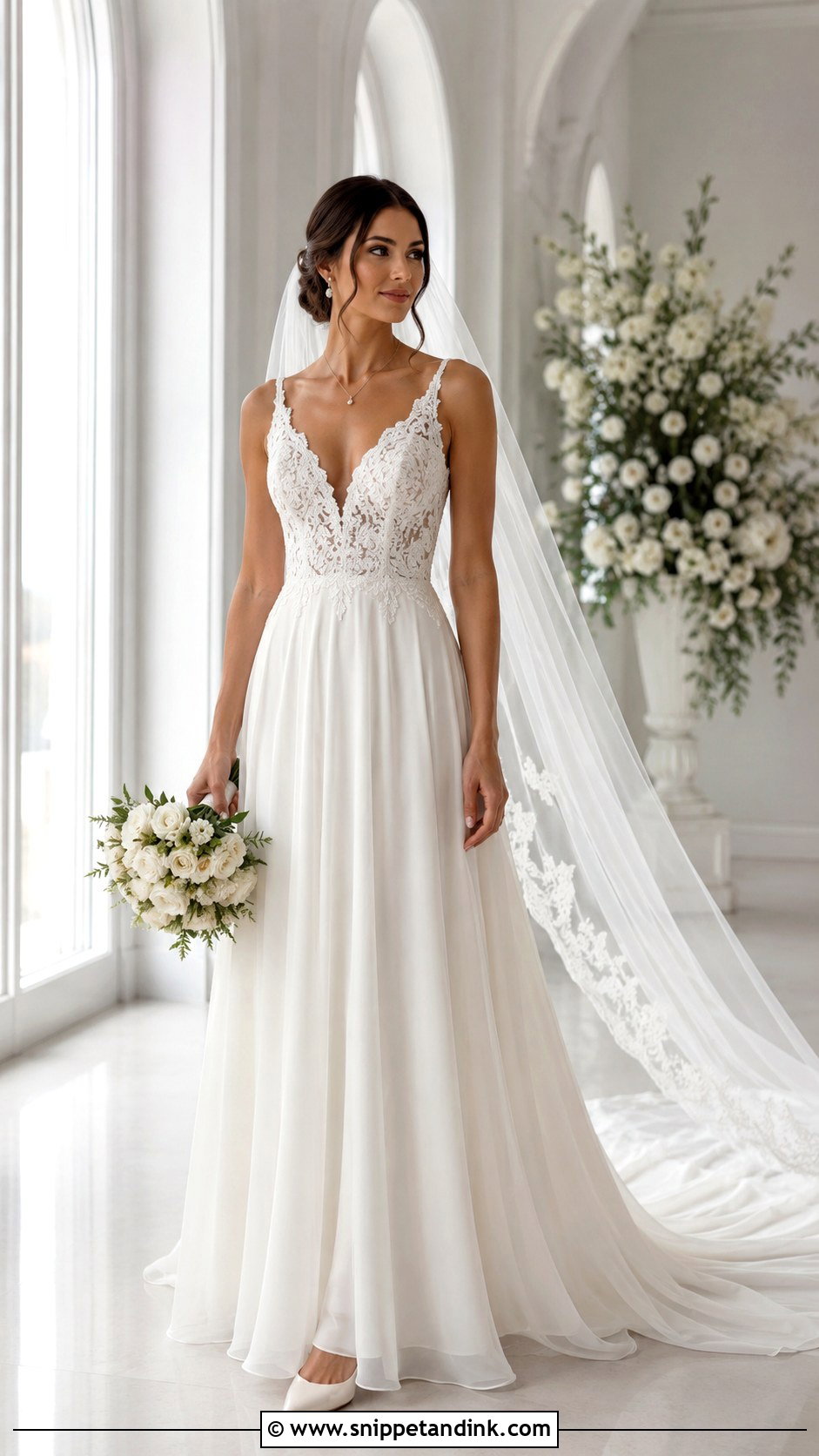
A V neck draws the eye downward and lengthens the neck, and on an A-line it keeps the top half feeling light. Supportive straps and a lined bodice matter, and the appliqués should sit symmetrically on both sides of the V; uneven placement is one of the first things I notice on a cheaply made gown. A chiffon or tulle skirt moves naturally as you walk. If the V is deeper than you’d like, an illusion panel can be added. Ask your seamstress to cut lace motifs from the hem or train to cover the join so it looks original rather than patched.
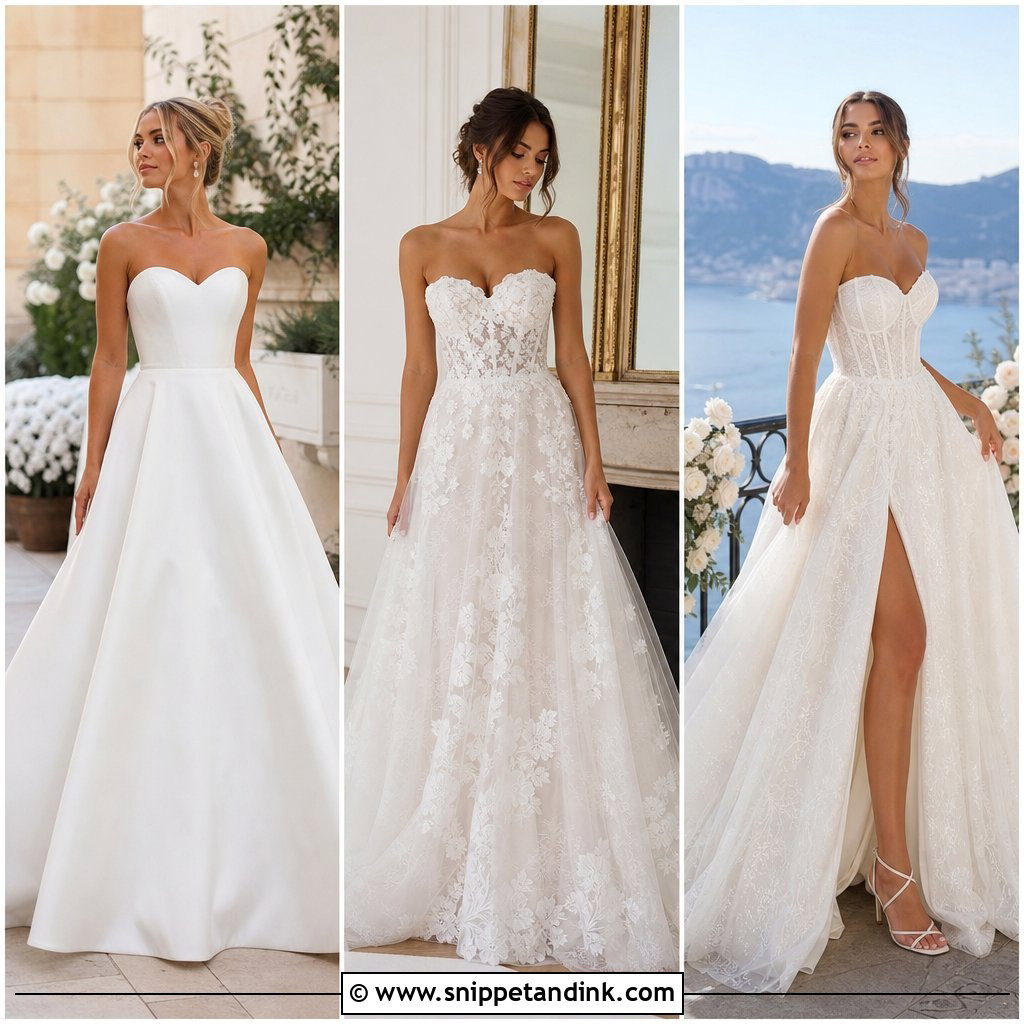
4. Sweetheart Lace A-Line Wedding Dress
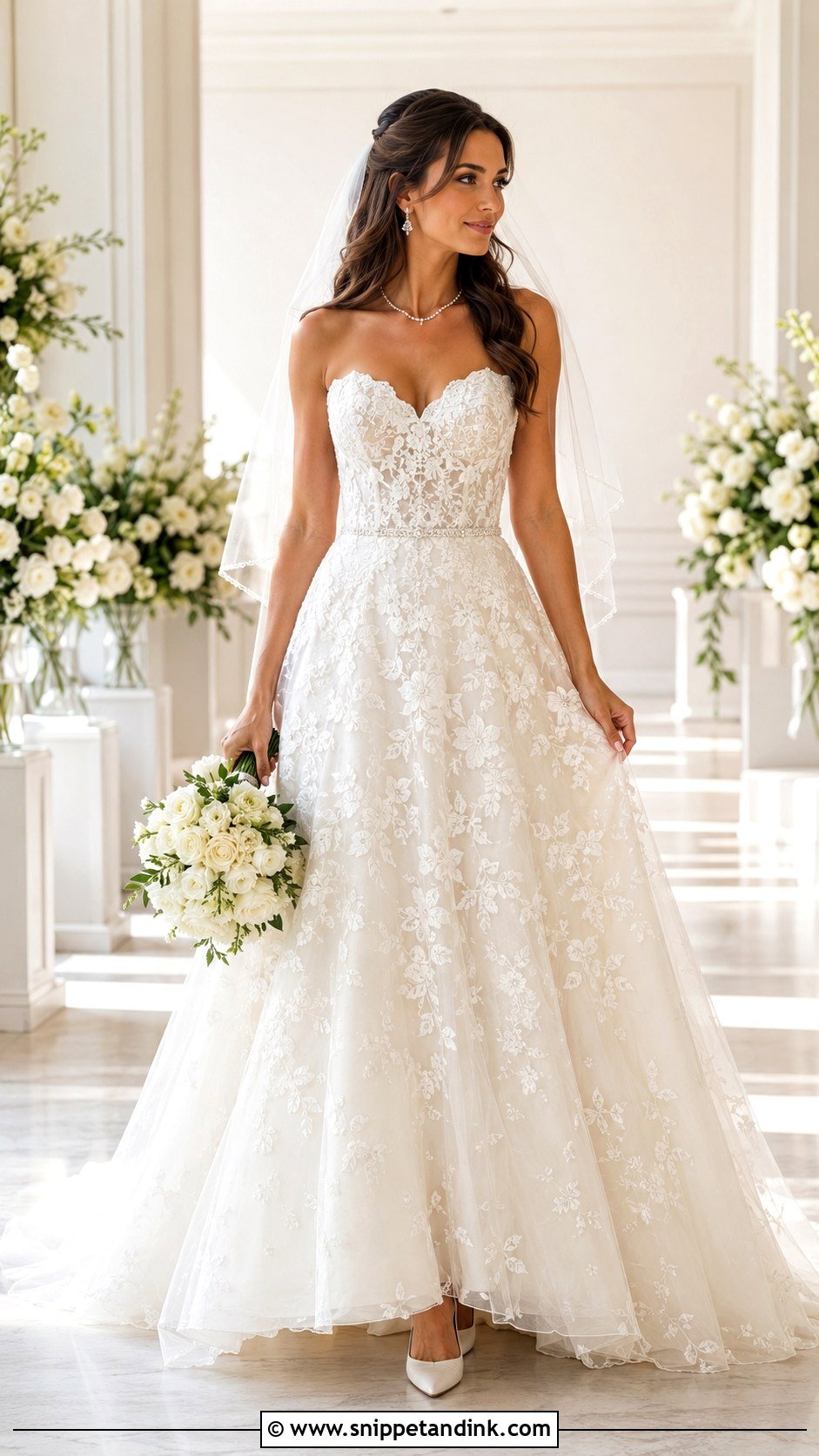
Sweetheart necklines and lace A-lines have been paired for decades because the curve frames the collarbone and the waist does the rest. Here’s a detail that changes the whole dress: the colour of the lining. Embroidered lace over a nude or champagne underlay makes the pattern pop, while ivory lace over ivory lining reads softer and more traditional. Try both if the shop has them. A delicate tennis necklace and a half-up style suit it, and a mid-length veil keeps the bodice visible. If you’d like more support, discreet straps or internal cups can be added without changing the neckline’s shape.
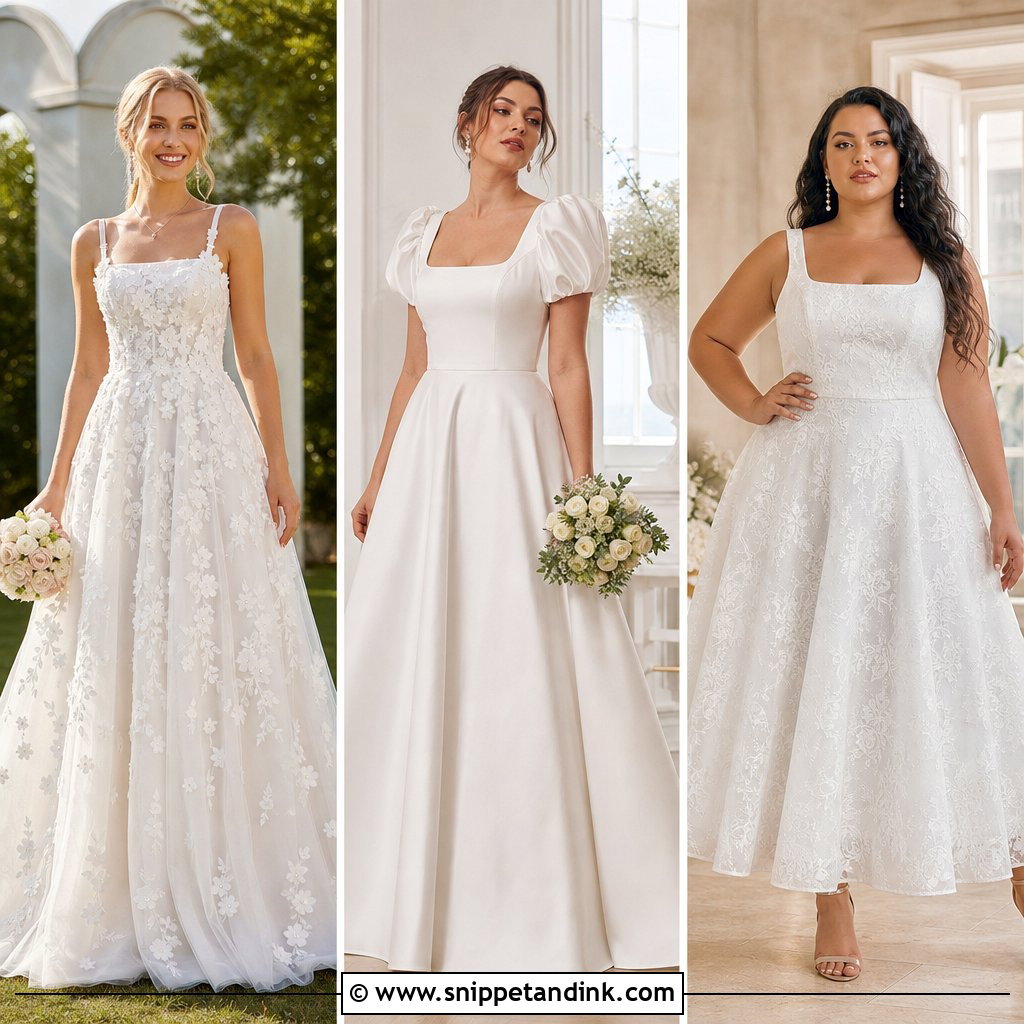
5. Square Neck Lace A-Line Wedding Dress
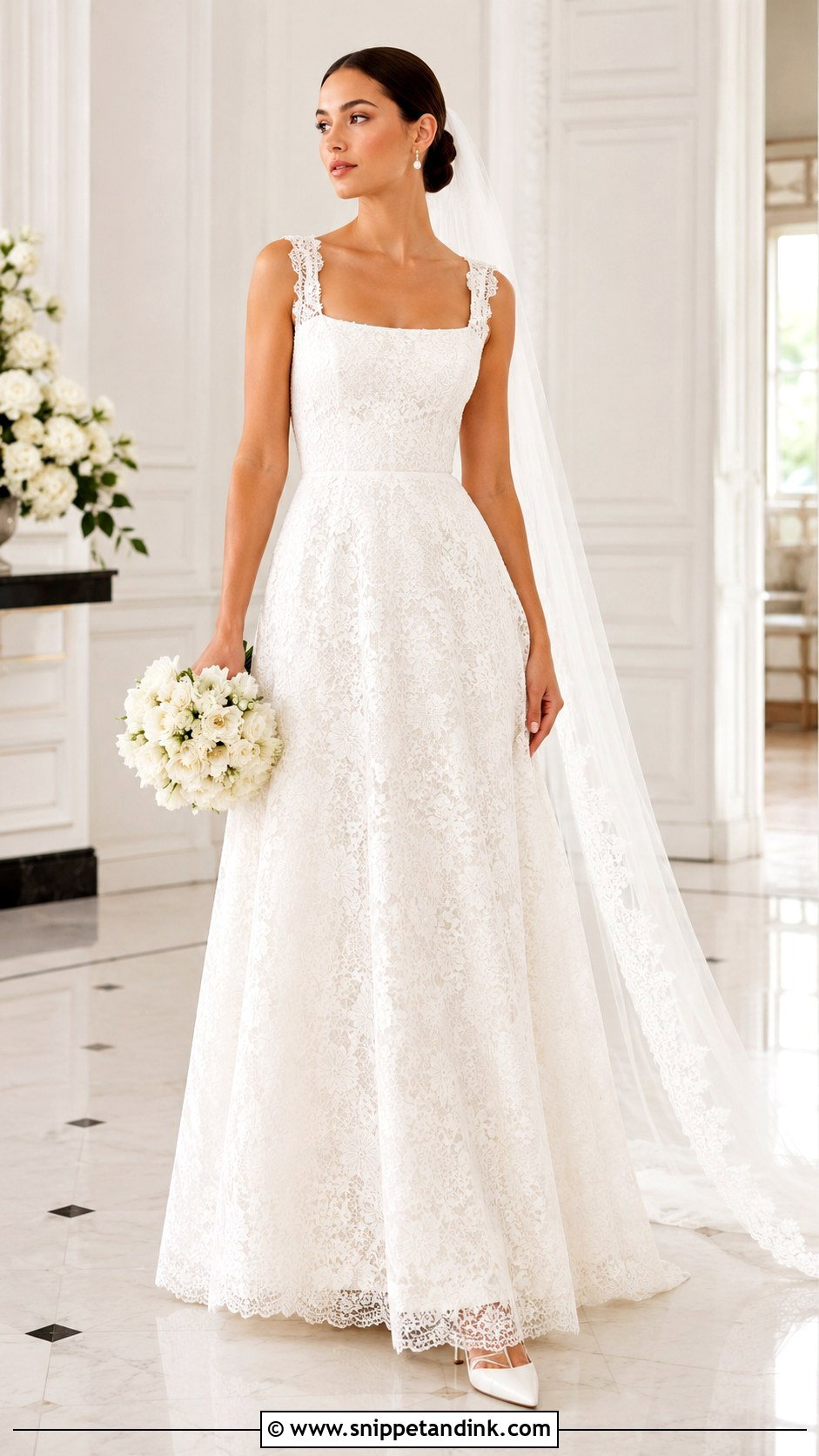
A square neck brings a straight edge to flowing vine or floral lace, and that contrast is what keeps the dress looking current. Wide straps help hold the neckline flat. I always watch the square while the bride turns and lifts her arms: on some figures the corners lift away from the chest, and that’s an easy alteration if it’s caught early. Pearl button earrings and a sleek bun suit the clean lines. Skip the necklace or wear the finest chain you own.
6. High Neck Lace A-Line Wedding Dress
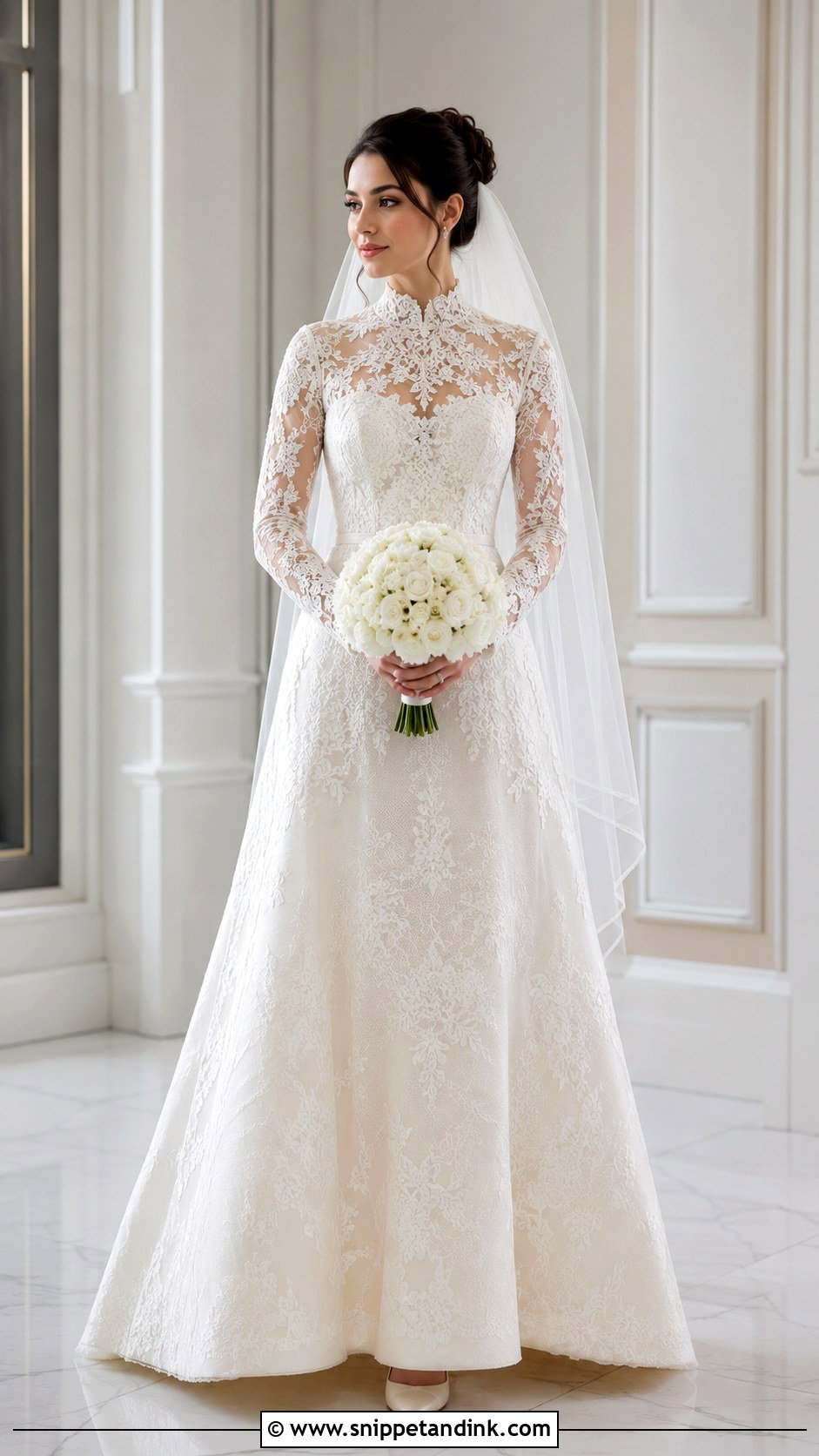
On a high neck A-line wedding dress, the lace collar is the jewellery, so wear none at the neck. A fitted illusion bodice over a lined panel, with lace continuing into cap or long sleeves, keeps it delicate, and the flared skirt stops the covered top from looking heavy. Collars are where comfort slips. After a few hours, a high neck can feel tight, especially in a warm room, so sit, turn your head and look down at the fitting. Ask for a soft binding inside the neckline. Rough lace edges or beading at the throat will irritate sensitive skin.
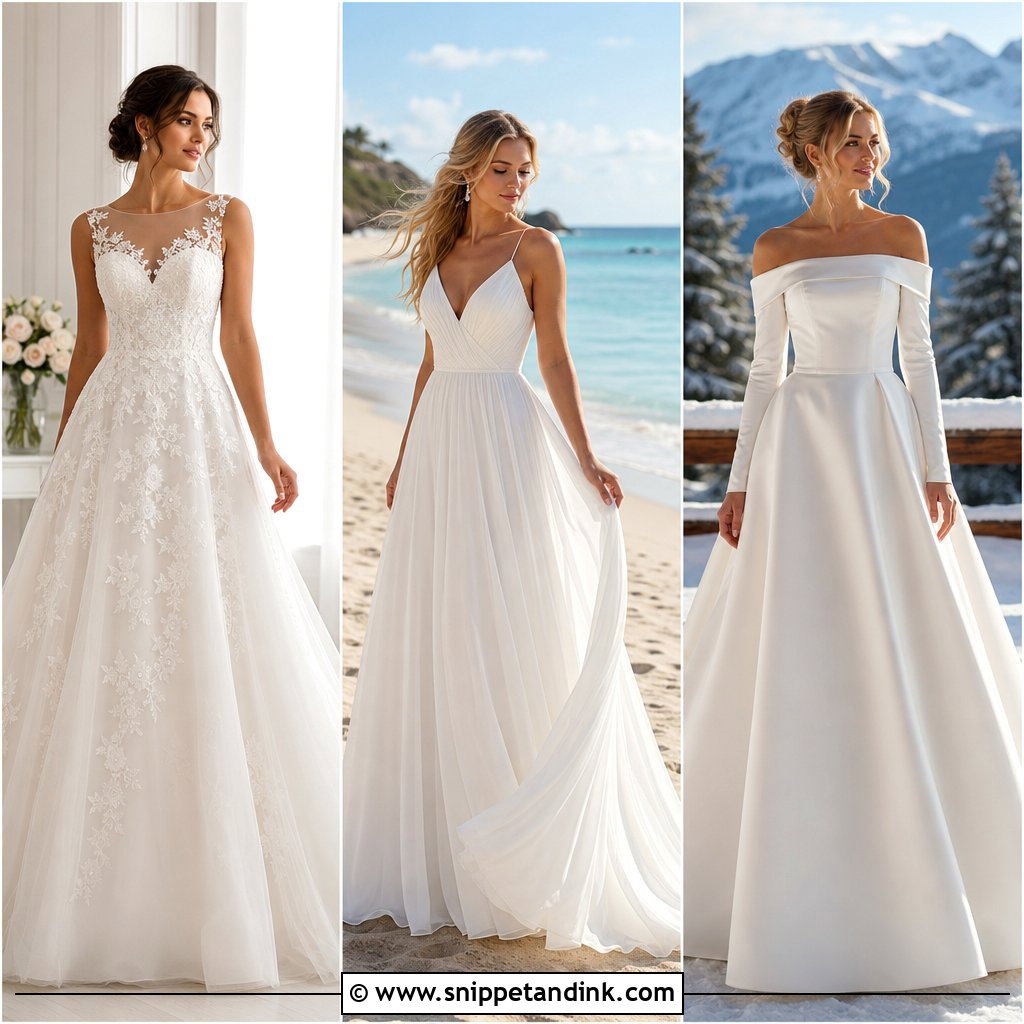
7. Illusion Neckline Lace A-Line Wedding Dress
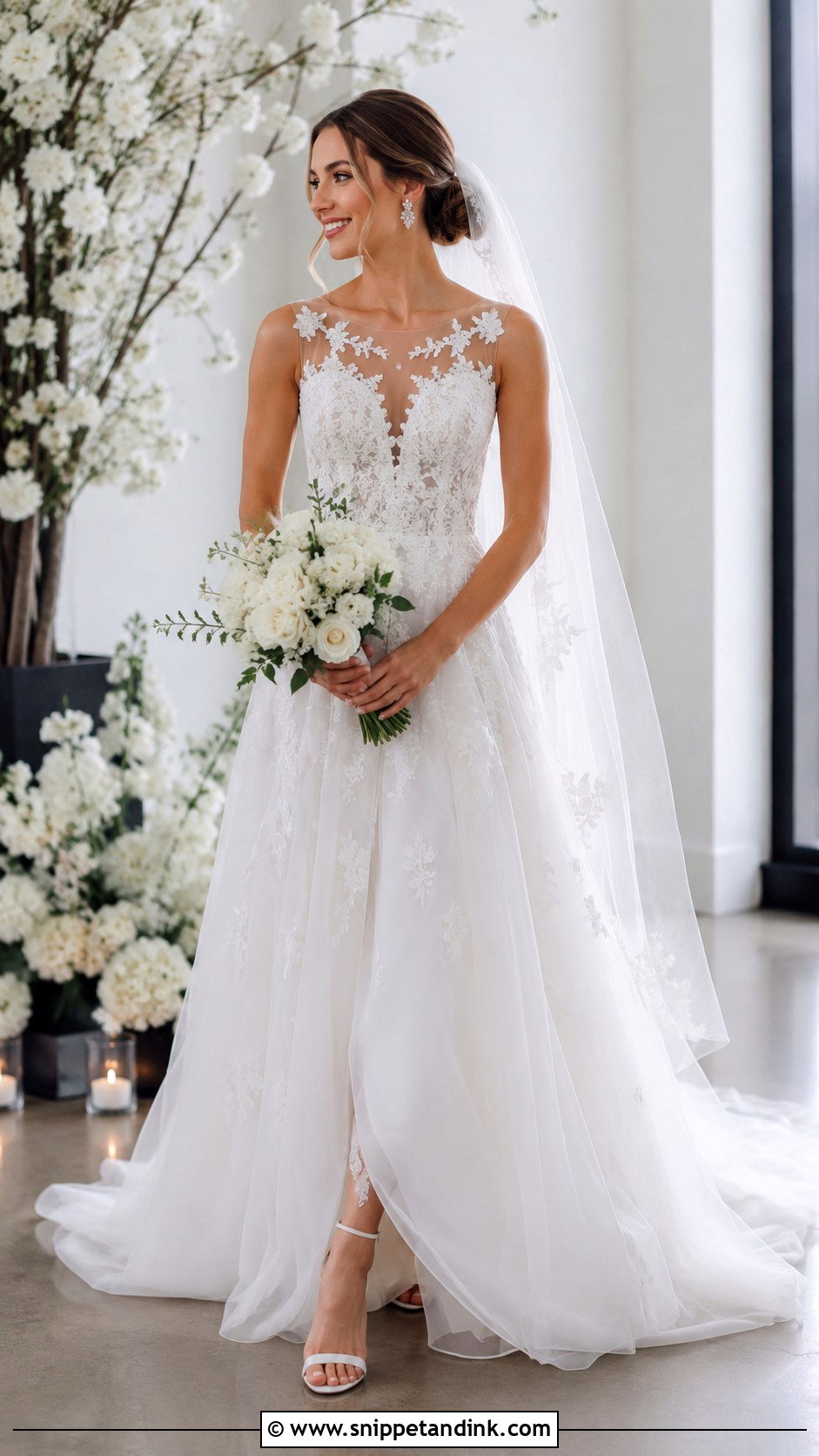
An illusion neckline only works when the mesh disappears. That means it has to match your skin, not the shop mannequin, and it has to lie flat without wrinkling at the shoulder seam. Check it under natural light and with a phone camera flash, since a poor match shows as a band of colour in photos. Appliqués over the mesh should be repeated along the bodice so the design feels planned. A tulle or organza A-line keeps the airy look. A sheer fingertip veil echoes the transparency without hiding the lace.
8. Corset Lace A-Line Wedding Dress
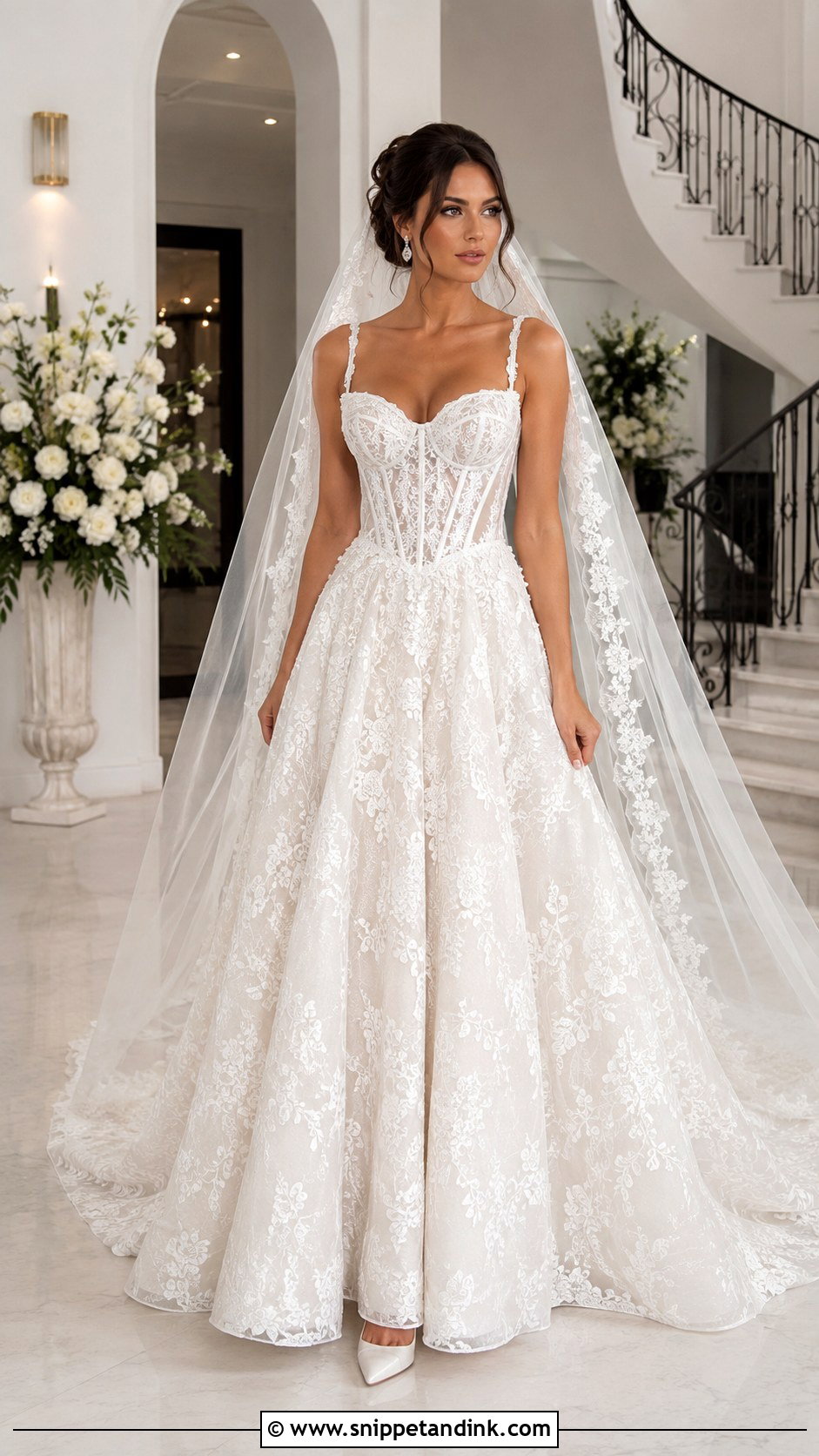
A corset bodice on an A-line gives you visible structure above a sweeping skirt, and the boning should follow your body rather than fighting it. I check that the lace is laid over the corset lines in a deliberate pattern; scattered lace over obvious boning looks unfinished. A slightly dipped basque waist adds definition. Lace-up backs are forgiving because the fit can be loosened after dinner, so leave enough ribbon. A zip closure needs exact tailoring. Either way, you should be able to breathe deeply and sit comfortably. Don’t add heavy shapewear underneath; it fights the gown’s own support.
9. 3D Floral Lace A-Line Wedding Dress
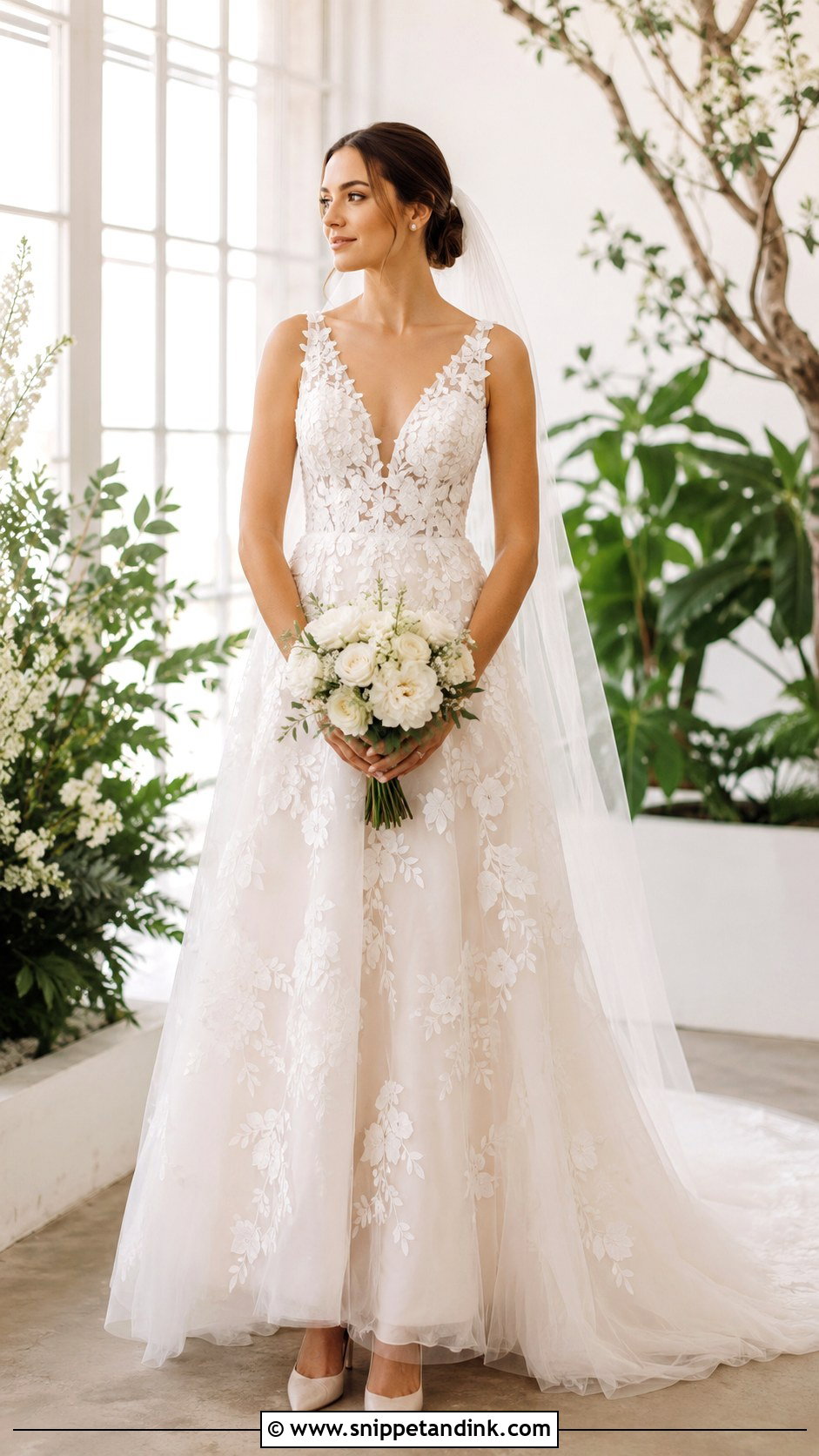
Raised flowers give an A-line real depth, and the placement is what stops them looking heavy. They’re best clustered at the bodice and waist and then sprinkled more sparsely over the tulle. These petals catch on almost everything, from veil netting to charm bracelets, so I’d choose a plain raw-edge veil with no trim to hook onto. Go over every appliqué at the last fitting and have loose ones stitched down. When your helper practises the bustle, show her where the flowers sit so she doesn’t crush them when lifting the train.
10. Chantilly Lace A-Line Wedding Dress
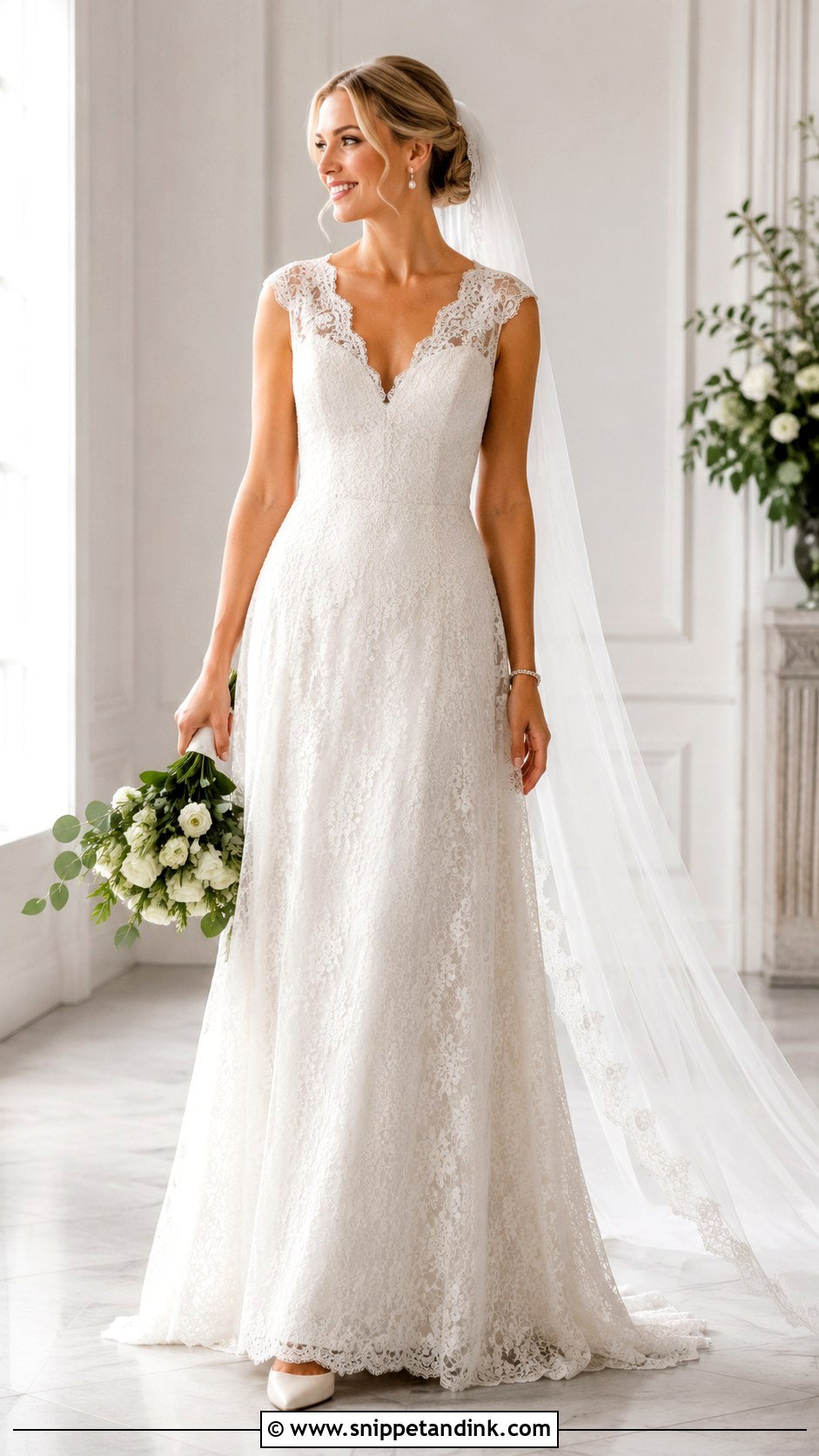
Chantilly is fine and flat, with a net ground and delicate outlined motifs, and an A-line skirt is long enough to show the pattern properly. Fine Chantilly lace often comes with a scalloped eyelash edge, which is lovely at a V neckline, sleeves or the hem. That edge is also an alterations question. Ask how they’ll shorten the dress before you buy it, since cutting the hem removes the scallop and the border usually has to be lifted and re-applied. Avoid prong-set rings and bracelets with exposed clasps; both snag. Kitten heels and a relaxed chignon suit it.
11. Boho Lace A-Line Wedding Dress
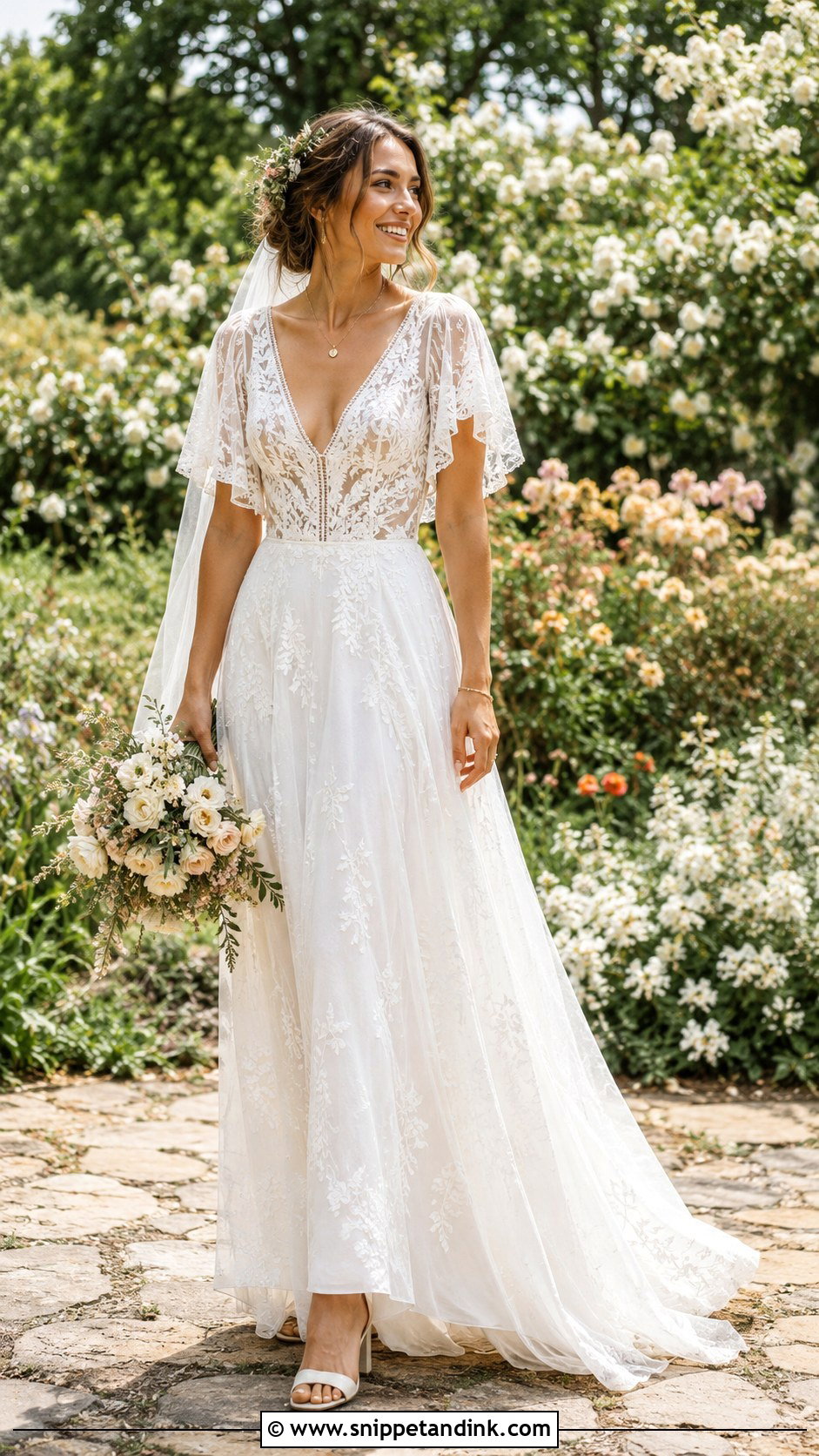
Outdoor weddings change how a dress behaves. Botanical lace, a V neck and flutter sleeves over a light chiffon-lined skirt give a boho A-line that moves easily on uneven ground. In bright sunlight, lace that looked opaque indoors can turn surprisingly see-through, so step outside the shop with it on if you possibly can. A nude or sand lining brings the lace pattern forward; ivory keeps it traditional. Loose waves, a small floral hairpiece and low block heels or ankle boots suit grass and gravel. Keep the bouquet organic but controlled.
12. Vintage Tea Length Lace A-Line Wedding Dress
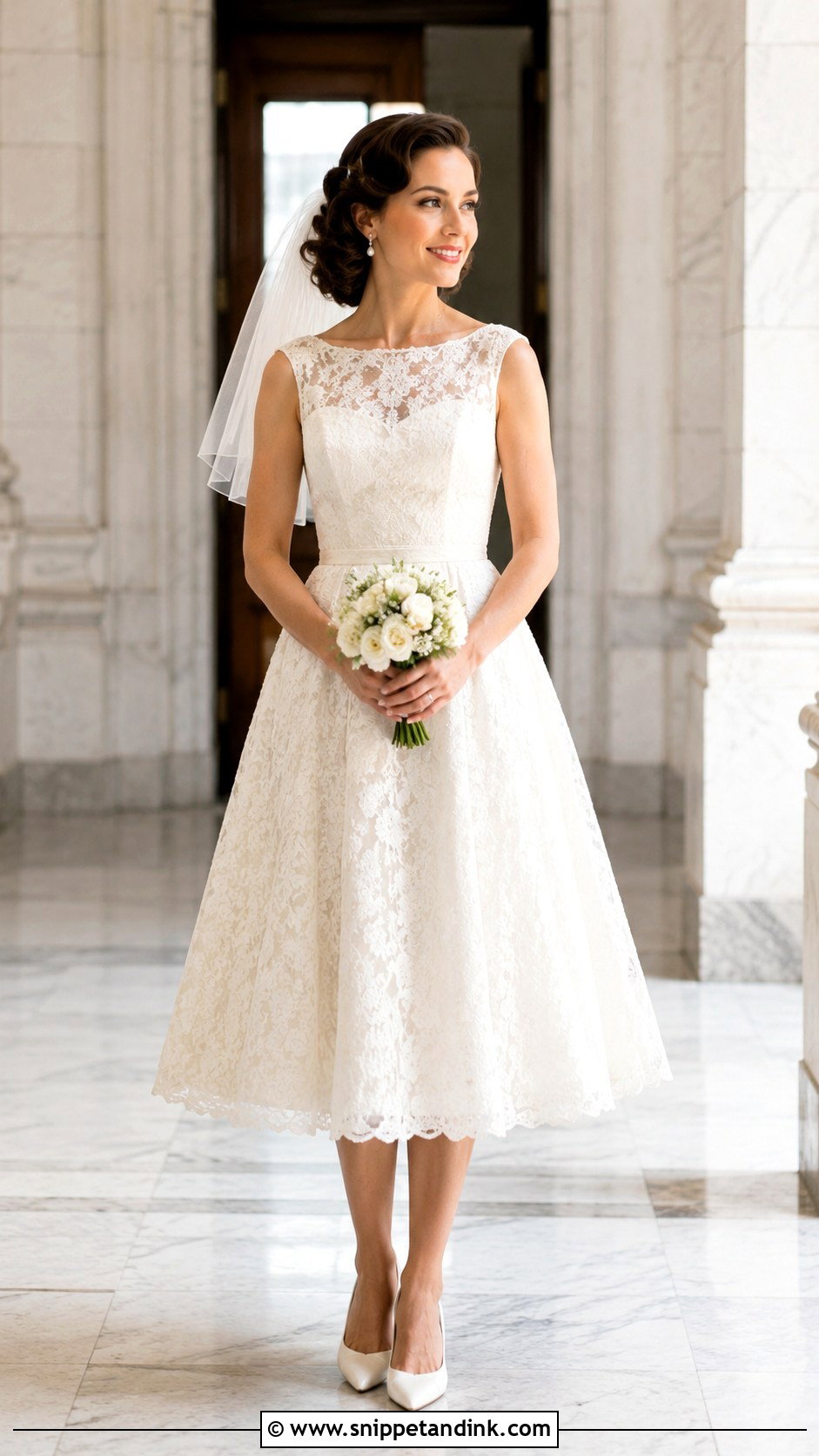
Tea length ends between the lower calf and the ankle, which makes the shoes part of the outfit. That’s the fun of it, and also the risk: the hem has to be set with the exact shoes on, because a centimetre of heel difference changes the proportions visibly. A fitted waist and structured bodice give the retro shape, with a bateau, scoop or sweetheart neckline. Pointed pumps, pearl earrings and a birdcage or short veil keep it period without tipping into costume. It’s a natural fit for a courthouse ceremony, a smaller wedding or a reception change.
13. Cathedral Train Lace A-Line Wedding Dress
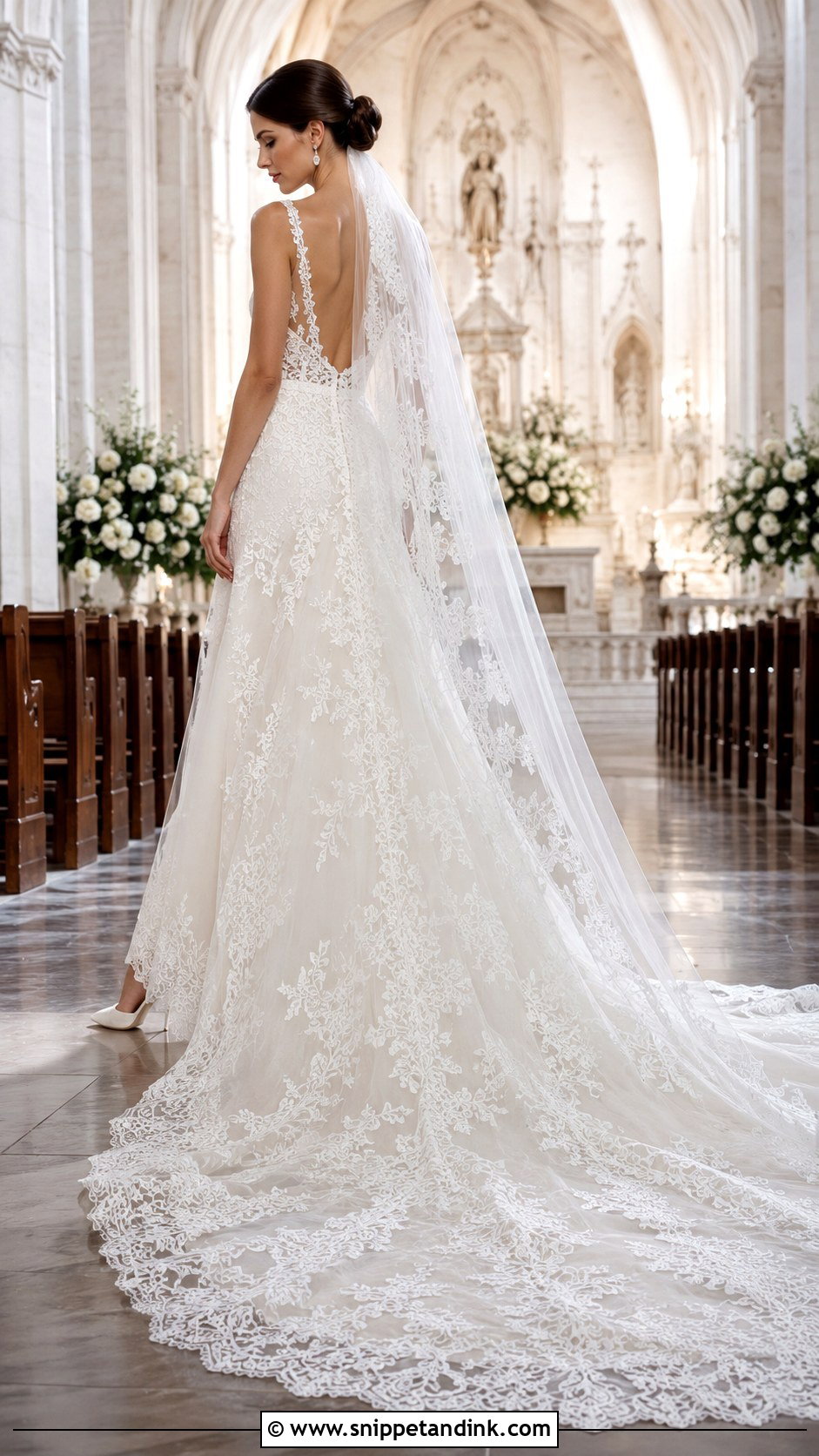
A cathedral train on an A-line gives you ceremony drama while the front stays easy to walk in. The lace should carry down the back and spread across the train, because that’s the view guests see while you stand at the altar. If the train is busy, choose a short plain veil rather than a cathedral one, or the two layers of lace muddle each other. A long train needs several bustle points to spread its weight, and they have to be strong. Get the bustle sewn and practised well before the day, and have a bridesmaid carry a needle, thread and safety pins.
14. Detachable Sleeve Lace A-Line Wedding Dress
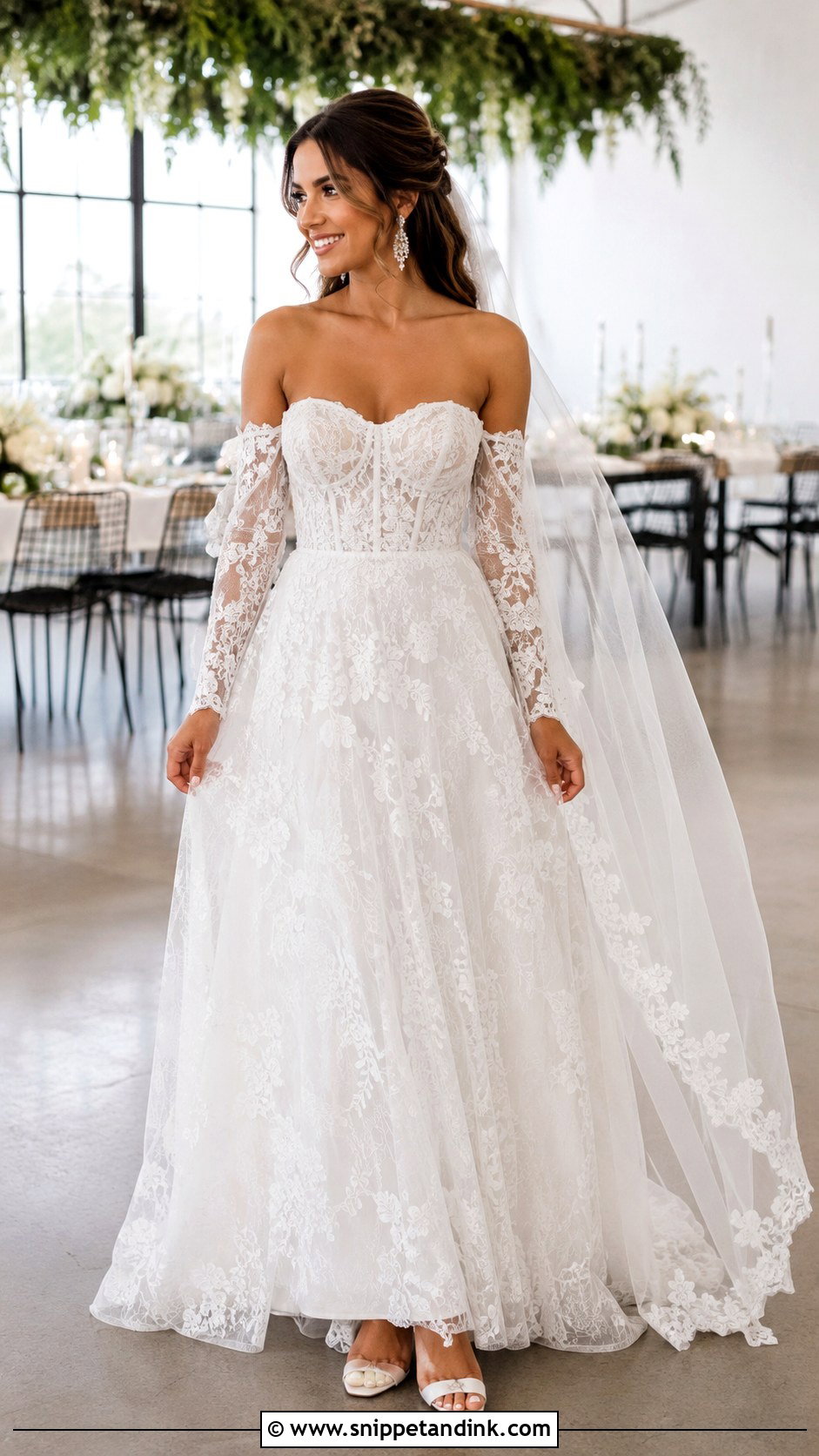
Detachable sleeves turn one A-line into two looks. A strapless or sleeveless bodice takes sheer lace sleeves for the ceremony, then sheds them for a lighter reception. Fitted sleeves are classic; puffed or draped ones add softness. The hidden fastenings should hold firmly when you lift your arms but come off in a minute in a helper’s hands. Once they’re off, put them straight into a labeled garment bag. Sleeves stuffed into a clutch come out creased, snagged or missing a hook. A polished half-up style works with both versions.
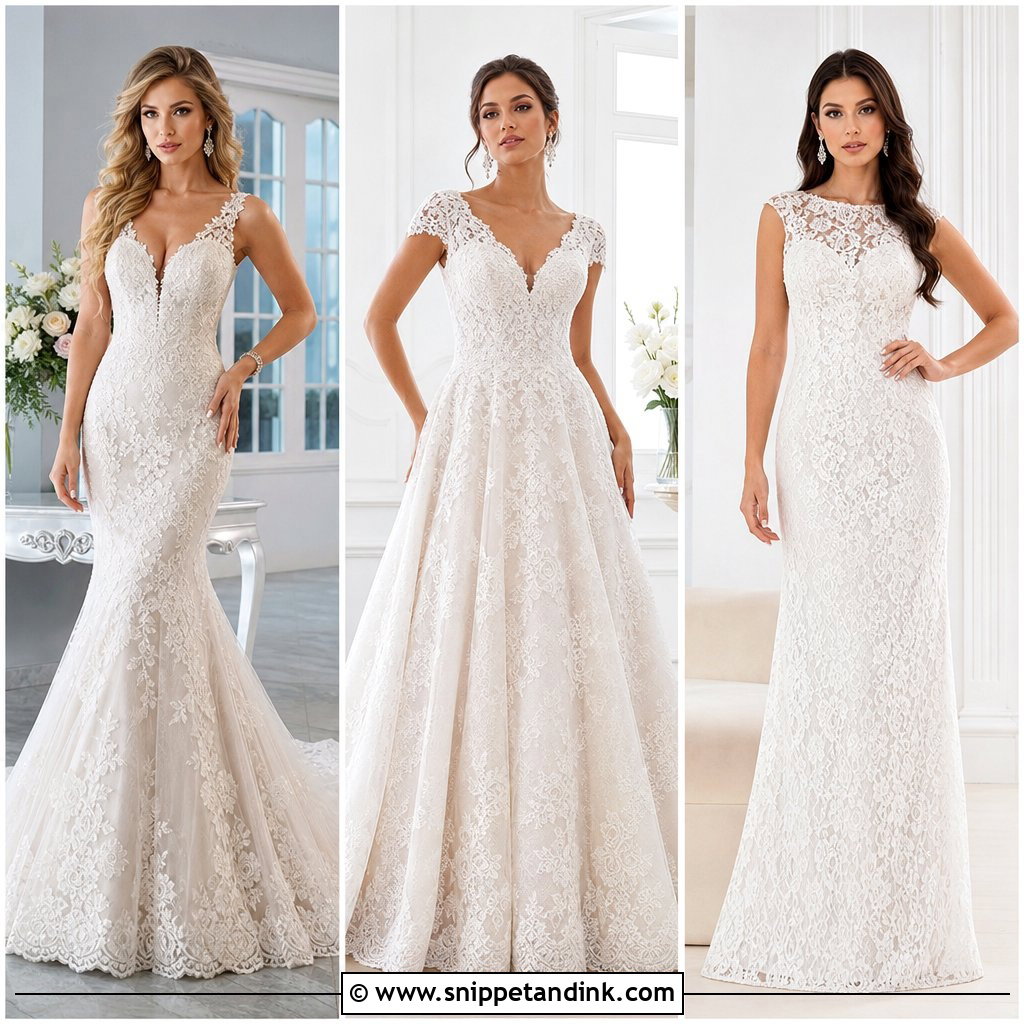


15. Blush Lace A-Line Wedding Dress
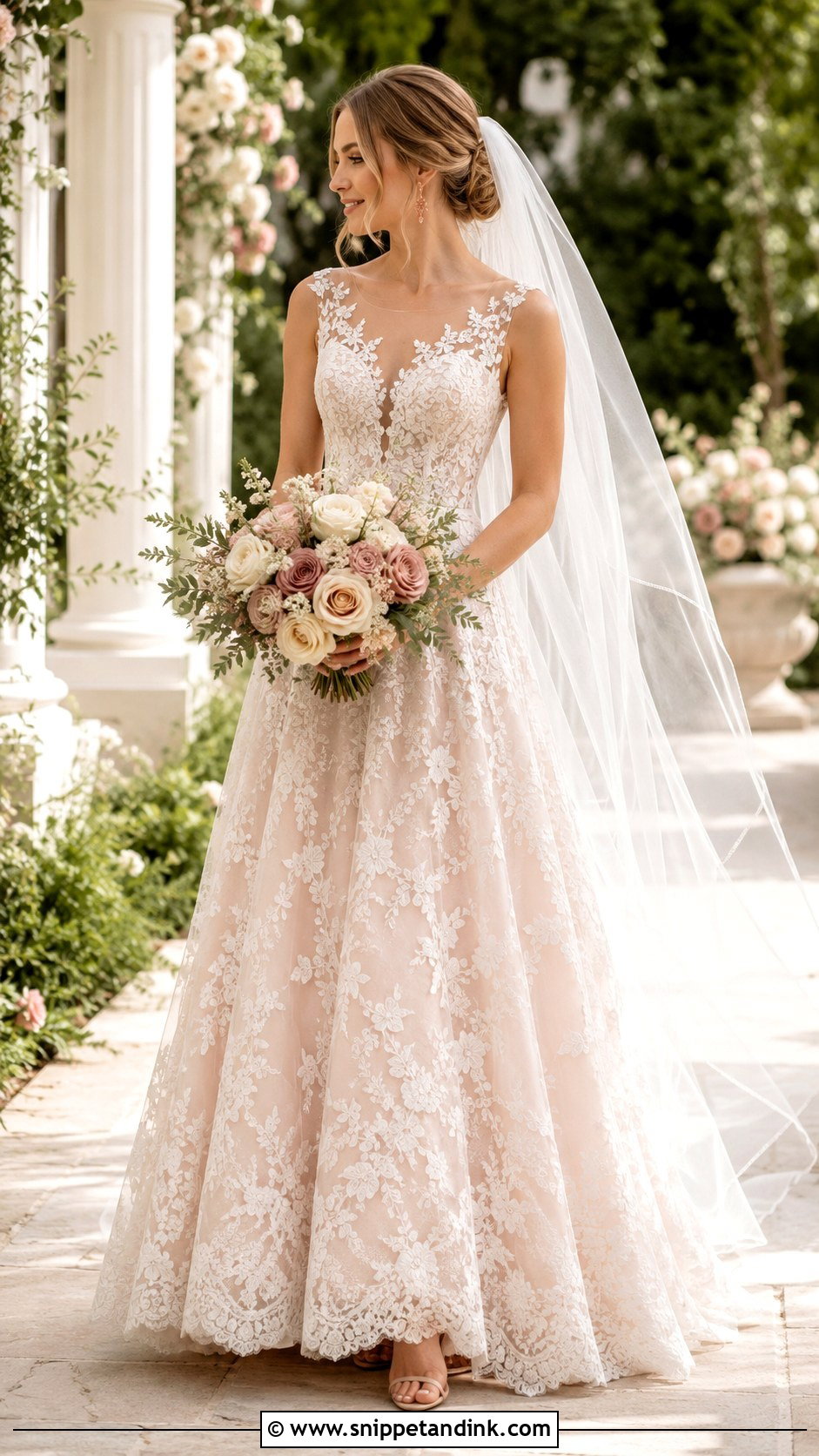
Ivory lace over a blush lining adds warmth and makes floral motifs much easier to see, which is why I suggest it to brides who find stark white draining. Hold the lining against your face in daylight. Pink-based blush suits some complexions; others look better with champagne or a soft beige underneath, and the difference is obvious once you compare them side by side. Blush also photographs differently indoors and out, so see it in both. Rose-gold earrings and neutral heels keep the palette quiet, with white, cream and dusty pink in the bouquet.
16. Plus Size Lace A-Line Wedding Dress
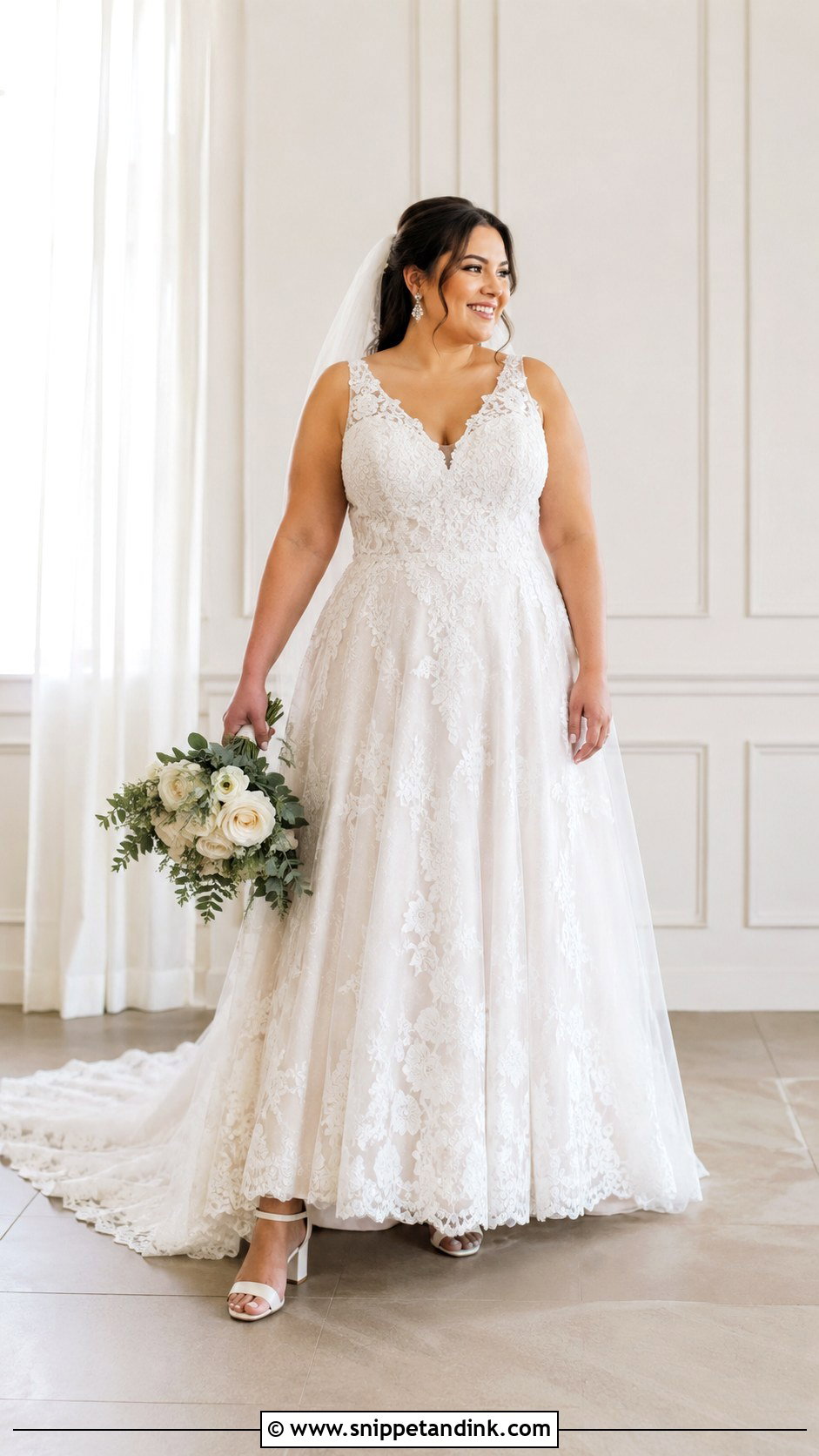
For plus size brides, I start with the bodice before anything else. Internal boning, secure straps and real cup depth mean the dress fits the bust properly rather than relying on heavy alterations to make it work. Don’t size up for the bust if the waist and hips then need taking in by several sizes; it’s harder to tailor and rarely hangs right. Ask to try sample dresses close to your measurements, so you’re judging the real shape. A skirt starting at the natural waist moves smoothly over the hips. Sit, bend and dance at every fitting.
17. Modest Lace A-Line Wedding Dress
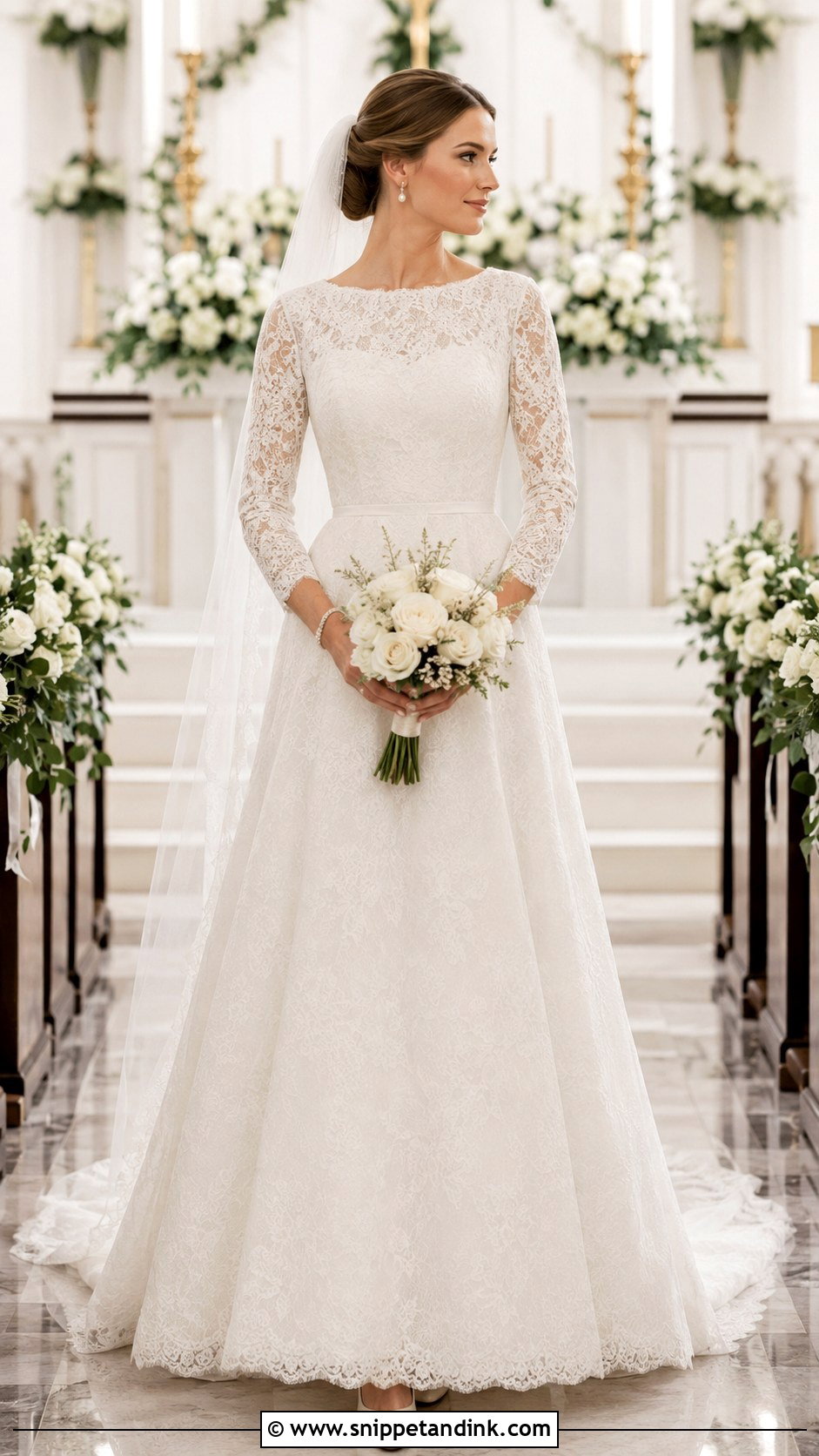
Full coverage doesn’t have to look heavy. A lined bodice with a bateau or jewel neckline, fitted lace sleeves and a back that sits above the bra line gives a modest lace A-line, and a defined waist keeps it from looking oversized. Check every lining panel in sunlight and under flash, because lace that is opaque under shop lights can show skin in photographs. Where the gown has illusion sections, a seamstress can usually add a matching lining. If the neckline or sleeves are altered, ask for the lace to be re-placed so the pattern still reads as one continuous design.
18. Open Back Lace A-Line Wedding Dress
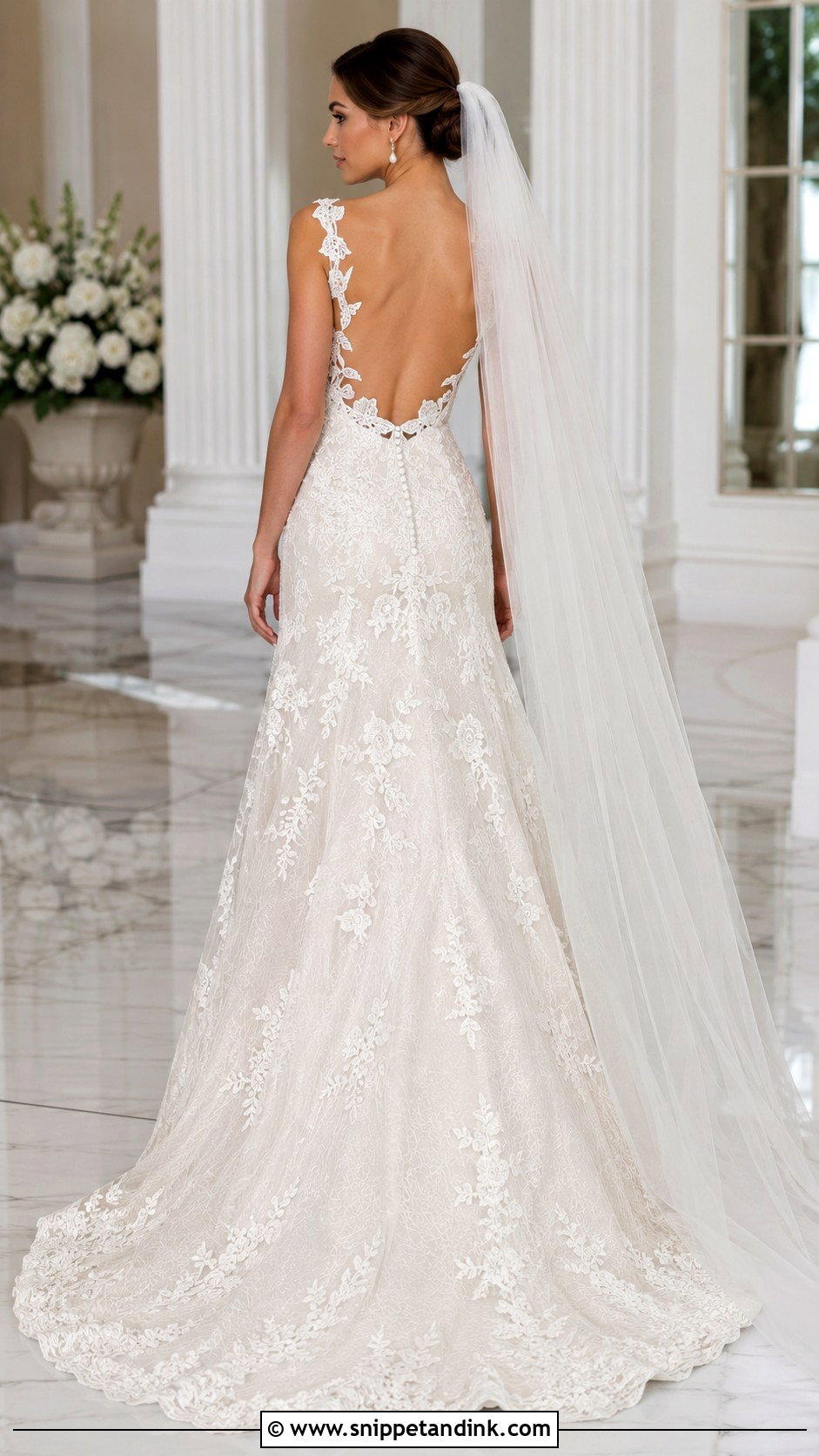
An open back makes the walk away from your guests as memorable as the walk toward them. It depends on strong side panels and secure straps; without them the opening gapes when you sit or reach forward. Test both at the fitting. A standard bra won’t work, so rely on the built-in cups or a professionally fitted low-back solution. Covered buttons down the lower back lead neatly into the skirt. Here’s a small thing that ruins lace: body lotion and self-tan. Apply them well before you dress, and let them dry fully, or they’ll mark the lace edges.
19. Lace Bodice And Tulle A-Line Wedding Dress
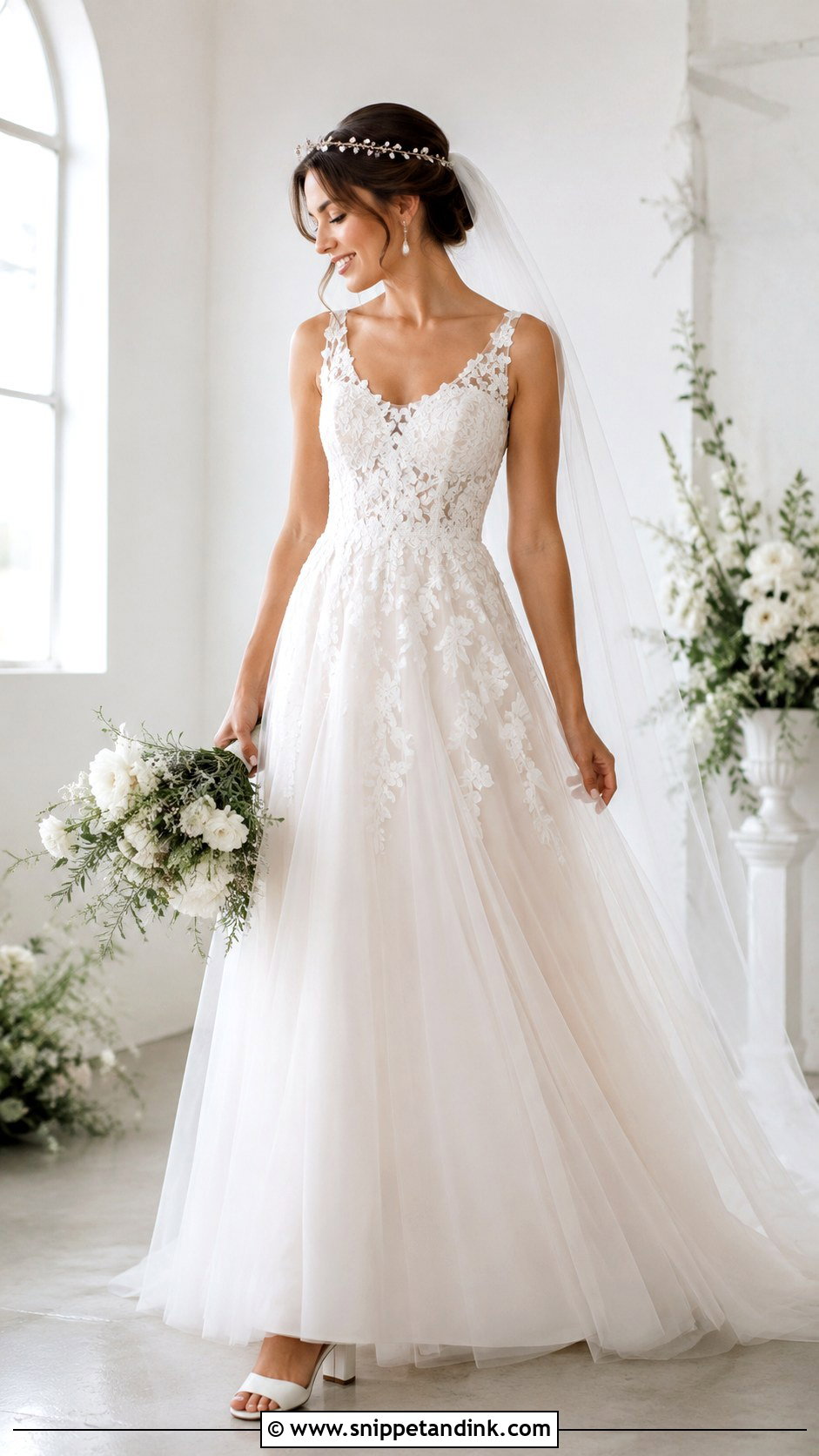
Texture above, softness below. A lace bodice with appliqués drifting just past the waist into a tulle A-line skirt is the most forgiving version of this shape, and it suits almost any neckline. Ask how many tulle layers the skirt has. More layers mean more fullness but also more warmth, and removing some during alterations changes how the skirt hangs. If layers come out, make sure the lining still gives full coverage. A slim hair vine and satin block heels keep it light, and a veil with a narrow finished edge floats over the tulle without dragging.


20. Lace Bodice And Satin A-Line Wedding Dress
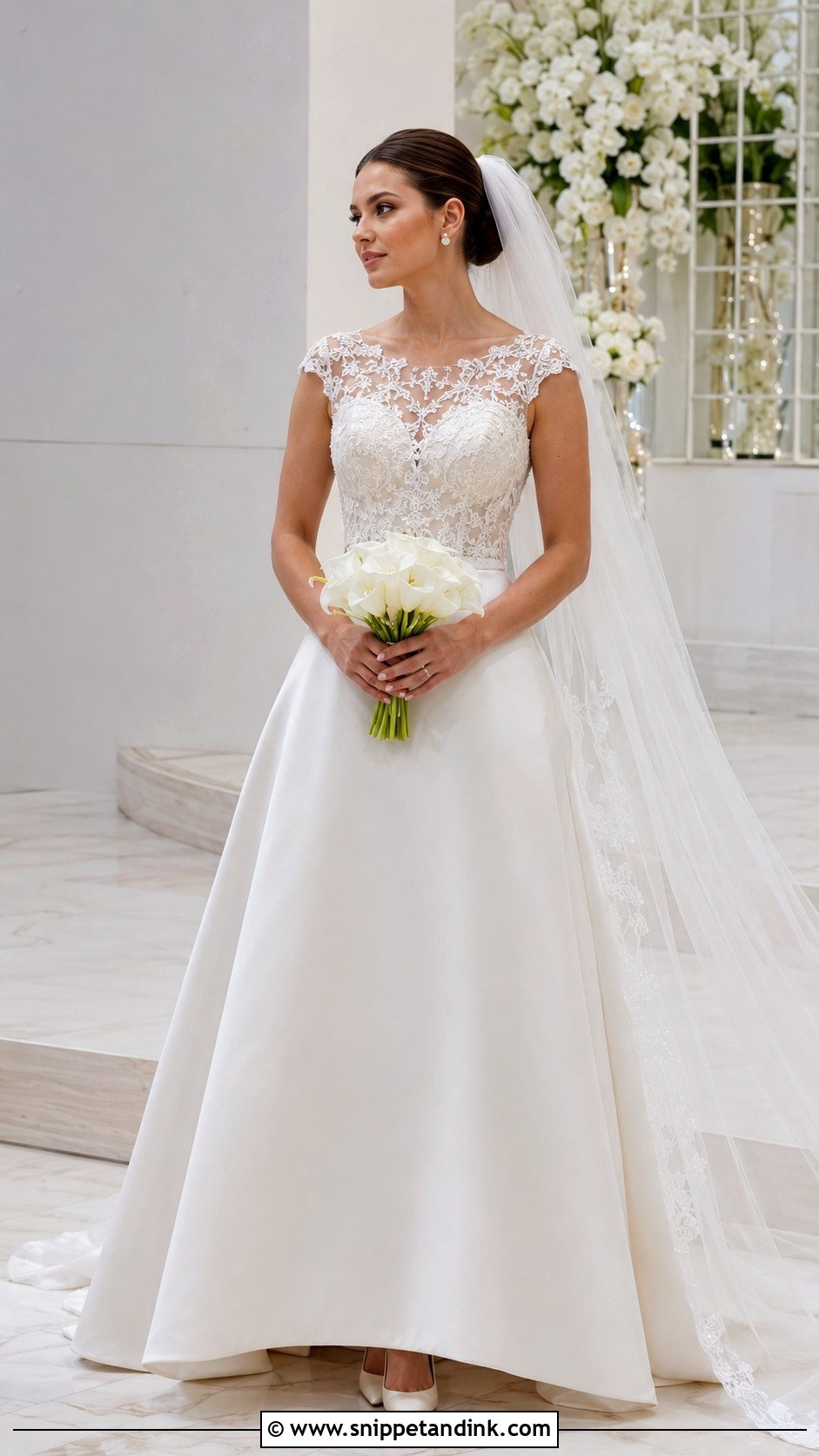
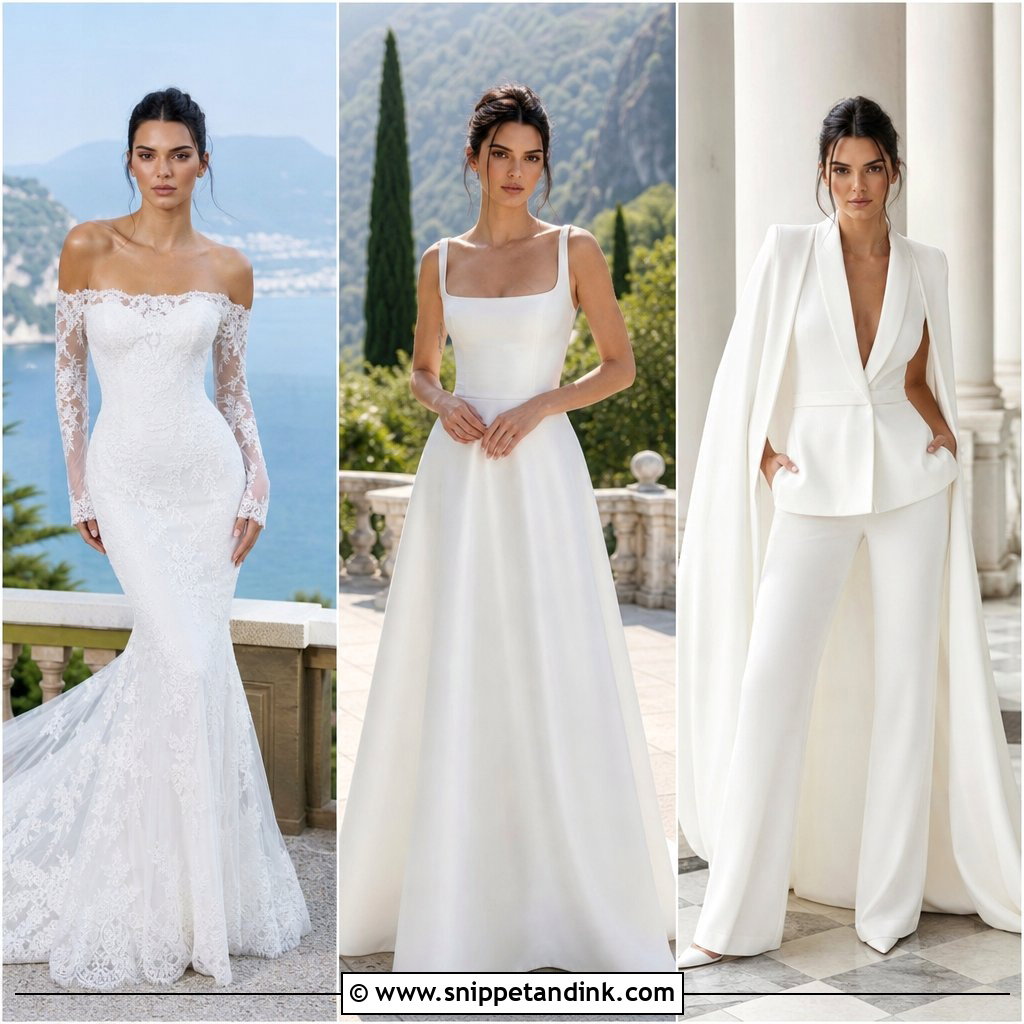
Satin under a lace bodice gives a clean, formal finish, with the detail kept up near the face. Satin is honest fabric, though. It shows every crease from the car and every line of the underwear beneath, so wear smooth, line-free foundations and have it steamed shortly before the ceremony. Some satins carry a strong sheen that can look shiny in flash photography; see it in different lighting before choosing. The lace should end neatly at the waist seam or trail lightly onto the skirt. A structured cathedral veil and a sleek chignon suit the polish, and a firm bustle keeps the hem off the dance floor.
Three Fittings and What Happens at Each
Alterations on a lace A-line usually take two or three fittings, often starting roughly two to three months before the wedding. Each one has a different job, and bringing the right things saves an extra trip.
- First fitting: the seamstress pins the bodice, straps and length. Bring your actual wedding shoes and the undergarments you’ll wear, because both change where the hem and waist sit.
- Second fitting: the main changes are sewn, and you check how the gown moves. Sit, walk, raise your arms and try a few dance steps. This is also when lace hems, illusion panels and added sleeves are reviewed.
- Final fitting: usually a couple of weeks out. Everything should feel finished. Bring the person who’ll help you dress so they can learn the closures and the bustle, and try the veil and jewellery with the gown.
Why lace hems cost more
On a plain skirt the hem is simply cut and stitched. On a scalloped or appliquéd lace border, cutting would throw away the edge, so the lace is lifted off, the skirt shortened, and the border sewn back on by hand. It takes longer and costs more, which is worth knowing before you choose a gown that is much too long for you.
Why Lace and the A-Line Keep Ending Up Together
The lace A-line covers an enormous range: sleeves and high necks for coverage, open backs and illusion for lightness, corsets for definition, and tulle or satin to change the movement and formality. When you’re comparing gowns, judge them moving, not standing on a podium. Sit, walk, turn and raise your arms. Look at the lace in daylight, make sure the bodice holds you, and talk through realistic alterations before you order. Then choose the shoes, jewellery, veil and bouquet to support the dress rather than compete with it. You should feel comfortable and entirely yourself in it.
You'll Like These Ideas:


Leave a Reply