
A bow is one of the oldest bridal details and one of the easiest to get wrong. Placed well, it pulls in the waist, frames an open back, finishes a neckline or trails into the train. Placed badly, or made from a fabric too soft to hold it, it looks like gift wrap by the end of the night. The twenty gowns below range from ball gowns and slim columns to lace, minis and shapes for different figures, each with the veil, shoes, jewelry and hair I’d put with it. As you look, notice where your eye lands first on each one. That’s usually where your own bow should sit, whether you want a narrow ribbon or something enormous.
Why Some Bows Droop by Evening
A bow that looked crisp in the shop can be limp by the first dance. It comes down to fabric, construction and how it’s attached, and all three are worth asking about before you order.
- Fabric weight. Mikado, faille and heavy satin hold loops on their own. Chiffon, crepe and thin satin need support inside or they fold flat.
- Interfacing. Ask whether the loops are interfaced or lined with something stiffer. A well-made bow feels firm when you squeeze a loop.
- Tied or sewn. A real tied bow looks softer but loosens with movement. A constructed bow, made as separate loops, knot and tails, keeps its shape all day.
- Attachment. Large bows should be stitched or hooked at several points. One central attachment lets the bow tilt and sag under its own weight.
If you love a gown but the bow is floppy, a good seamstress can usually add interfacing or rebuild the loops in matching fabric. Ask at the first alteration appointment, not the last.
1. Satin Ball Gown Wedding Dress with Back Bow
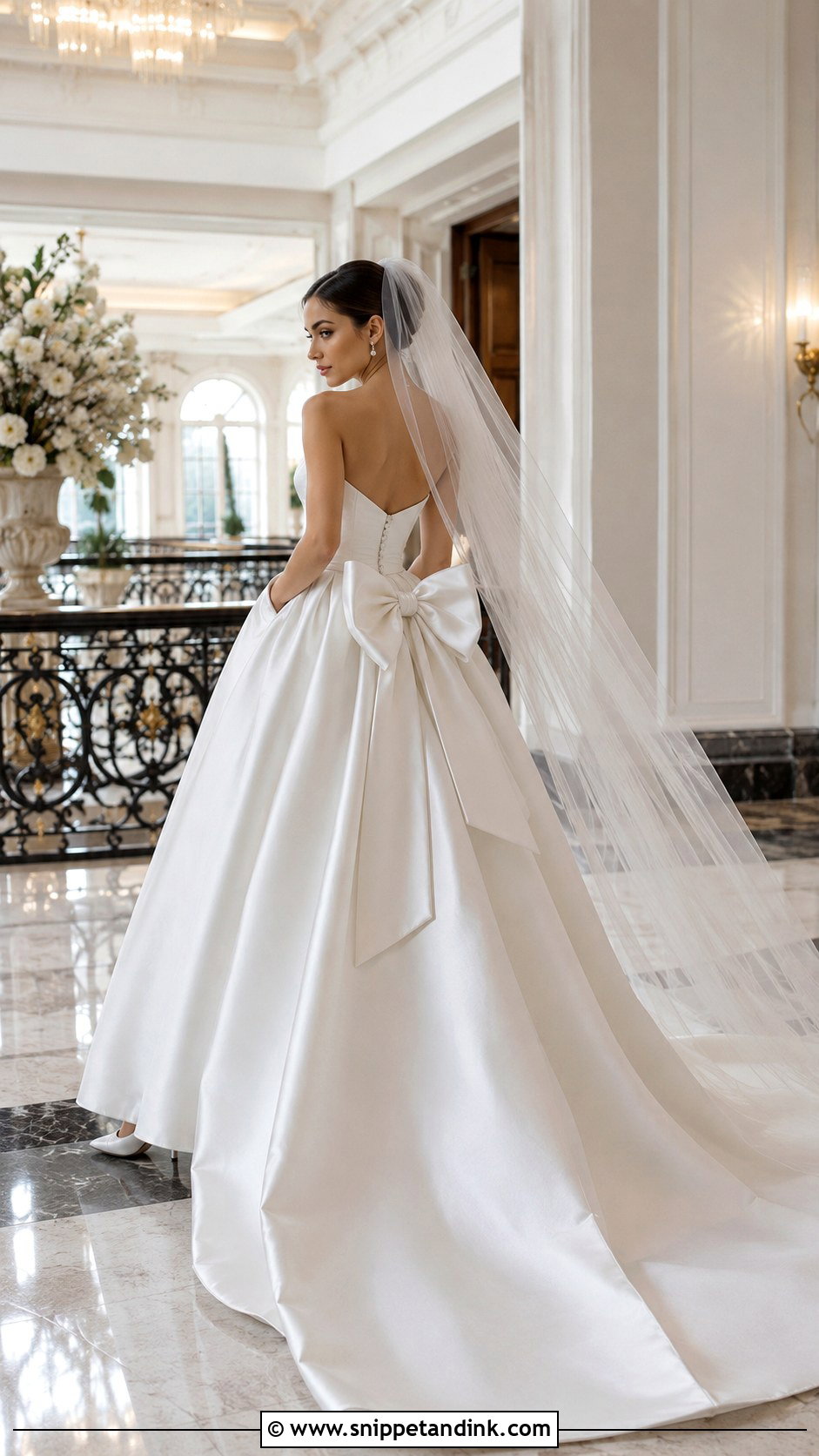
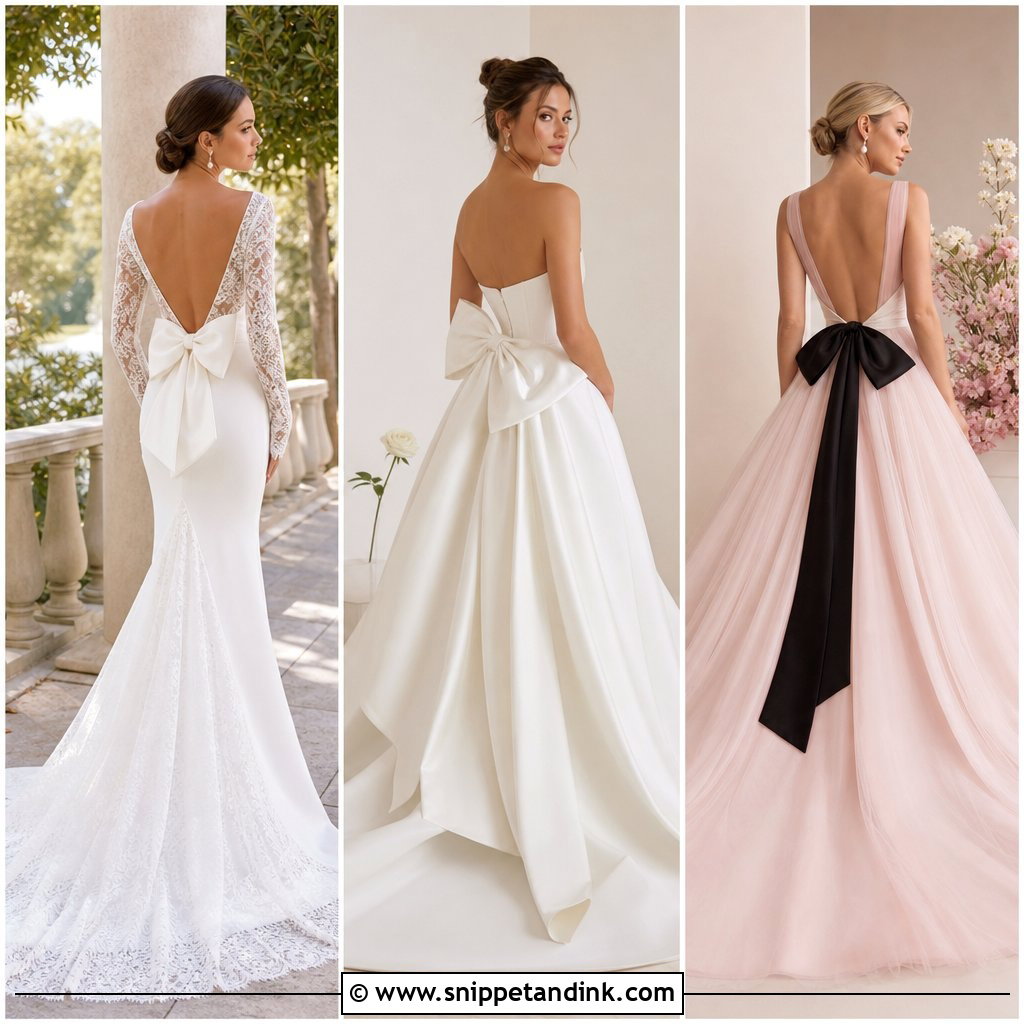
An oversized bow on a satin ball gown is the classic version, and fabric is everything here. Silk mikado or a heavy duchess satin holds crisp loops for hours; a thin satin collapses. Pair it with a structured bodice with a clean scoop, sweetheart or strapless neckline, and keep the front plain so the back does the talking. Pointed satin pumps, pearl studs and a cathedral veil that comes off after the ceremony suit it, with a smooth low bun. In a ballroom or hotel with a long aisle, this one earns its moment.
2. A-Line Wedding Dress with Detachable Bow Train
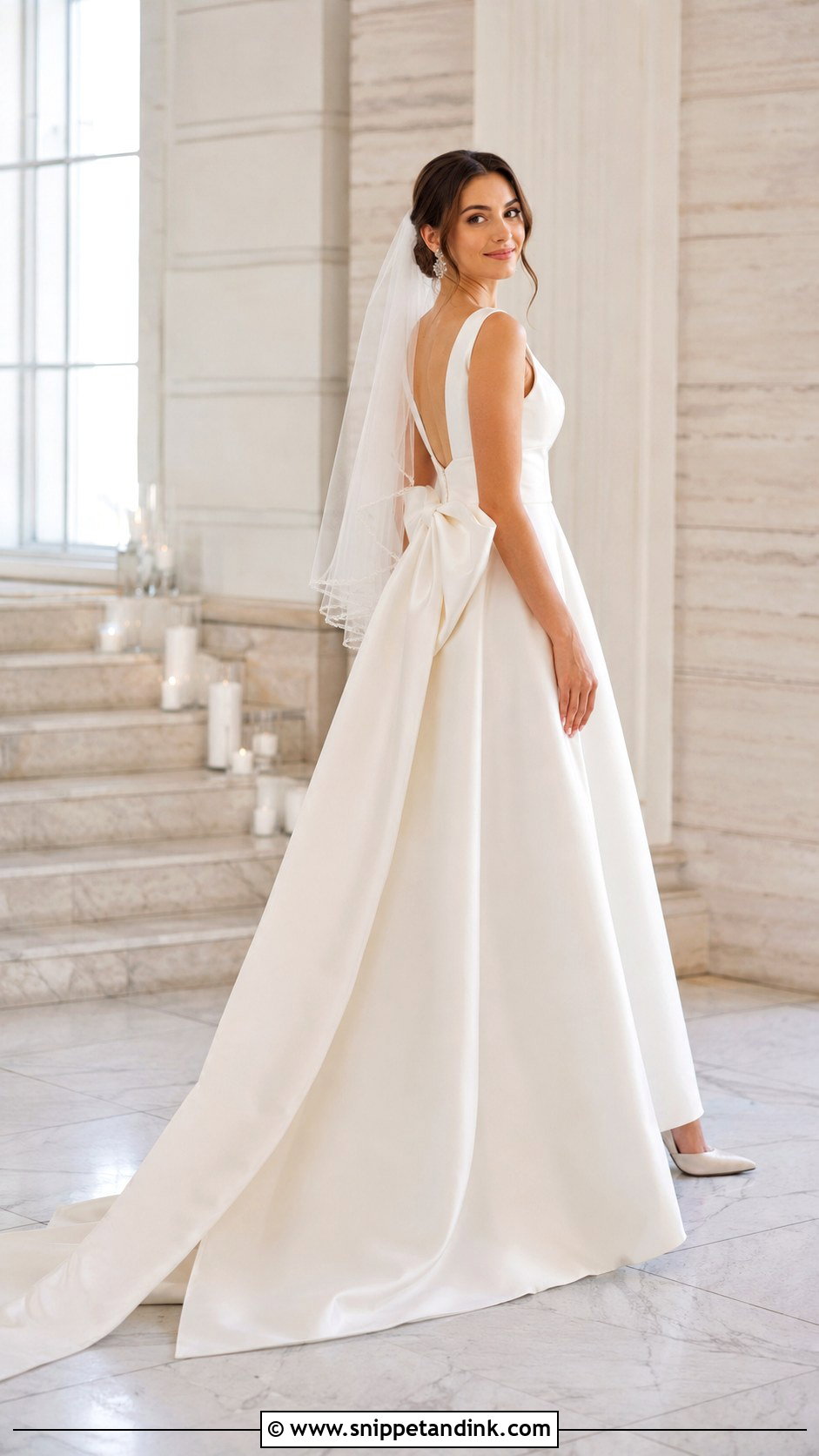
A detachable bow train gives you two looks from one A-line gown. During the ceremony, long tails from the bow fall into the train; afterwards the whole bow unhooks and the dress is lighter for dinner and dancing. The fitted bodice and gradual flare suit almost every figure. I’d style it with crystal drops, a fingertip veil and pointed ivory heels, plus a half-up wave that stays clear of the bow. Ask how the bow fastens. Hooks hidden under the loops are neater than a visible button, but your helper needs to know where they are.
3. Mermaid Wedding Dress with Hip Bow
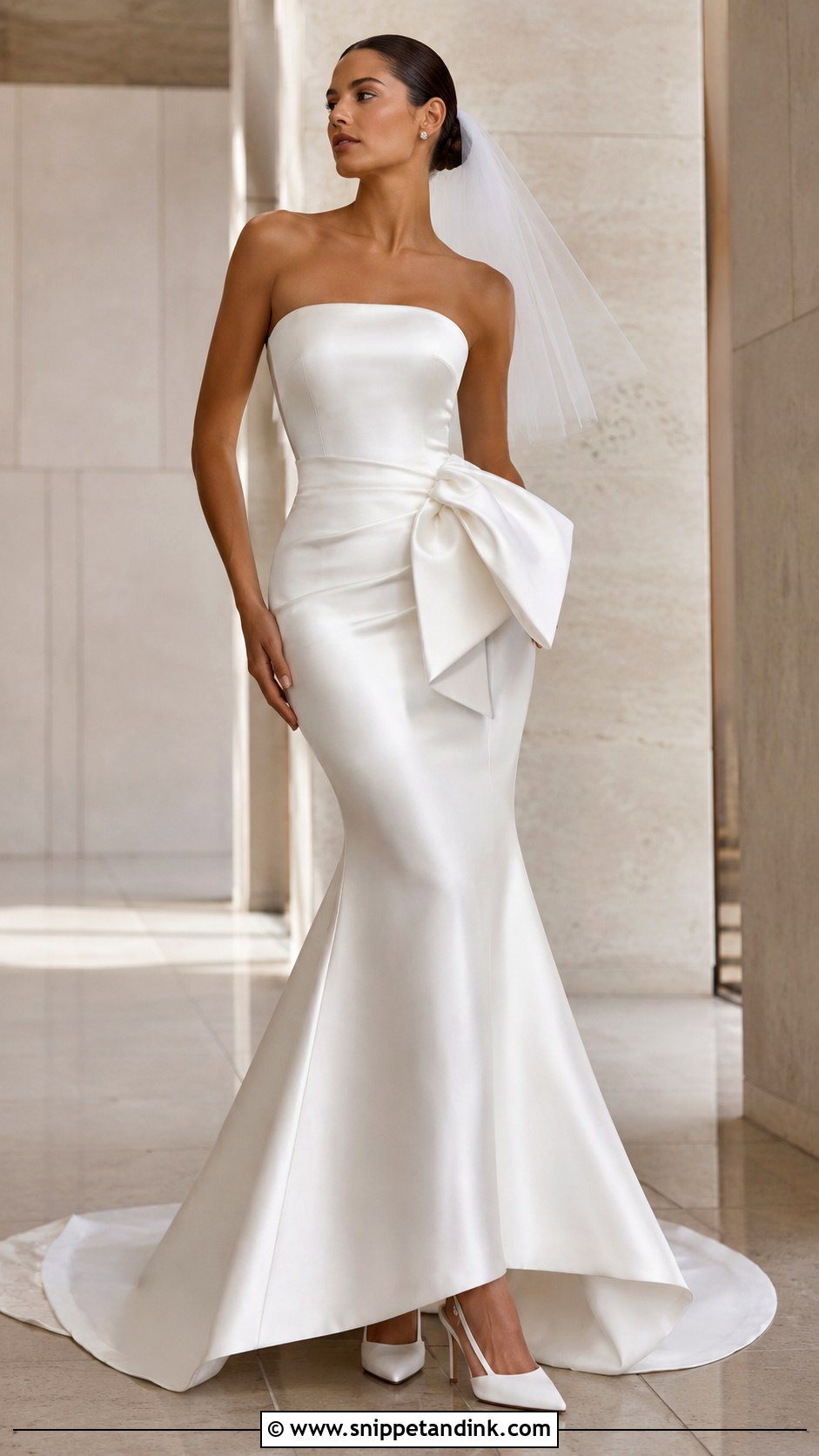
A bow at one hip makes a mermaid asymmetric and very modern, but it also adds width exactly where the gown is most fitted. If your hips are your widest point, try it on before ordering; on straighter figures it creates a curve. Smooth crepe, satin or mikado keeps the bow structured. Strapless or one-shoulder necklines balance it. Sleek slingbacks, small diamond earrings and a short tulle veil are enough, with hair swept to the opposite side from the bow. Skip any embellished belt.
4. Column Wedding Dress with Shoulder Bows
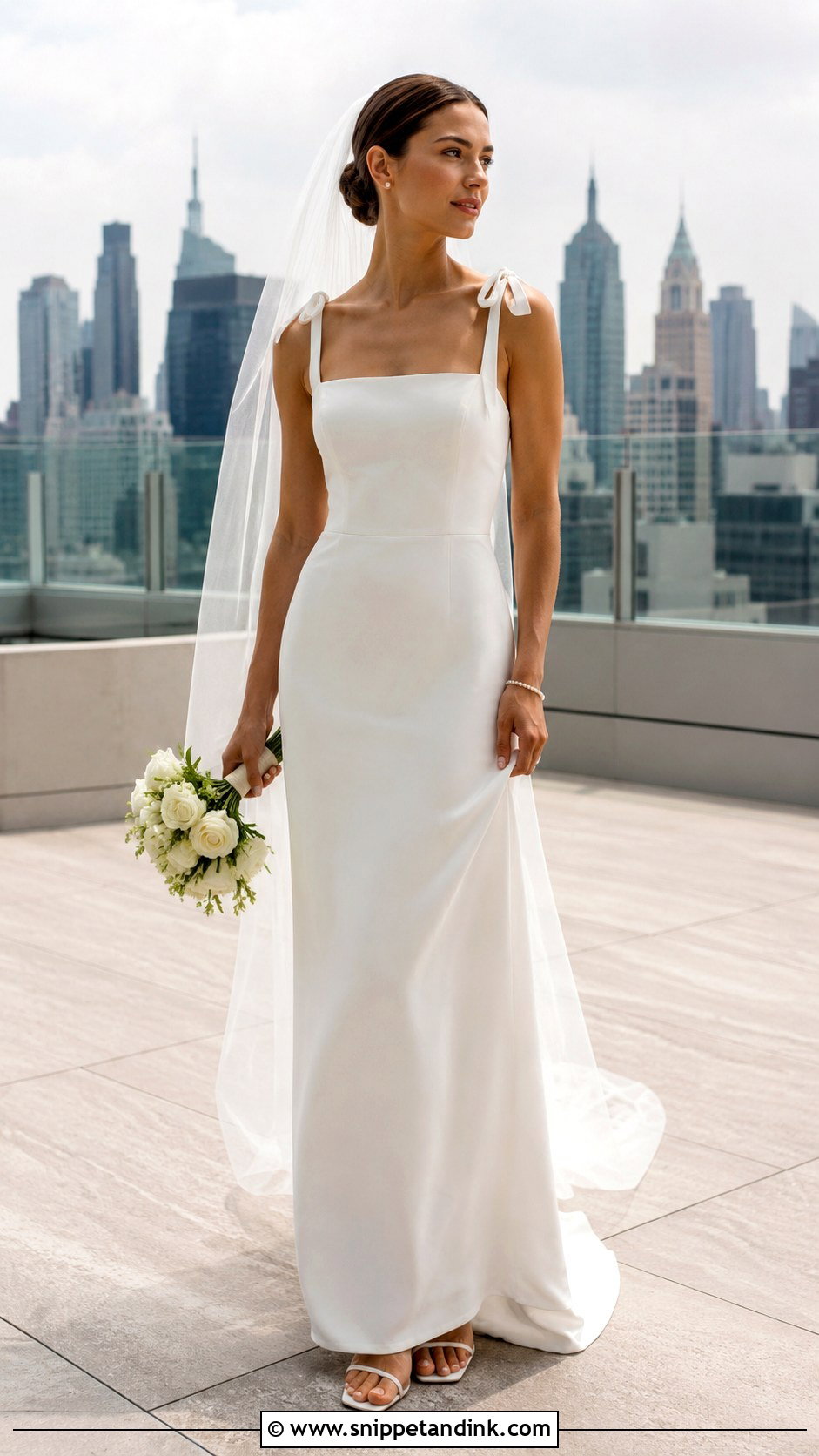
Shoulder bows soften a column dress without adding bulk. Narrow ribbon ties look delicate on a square or softly draped neck; wider bows add more romance and width at the shoulder, which can help balance a pear-shaped figure. Silk crepe or satin that falls cleanly from the waist keeps walking easy. Thin-strap heels, a pearl bracelet and small studs are plenty, with a sheer chapel veil and a low ponytail or bun so the bows stay visible. Tied bows loosen as you hug people, so I ask the seamstress to tack the knot underneath and leave only the loops free.
5. Lace A-Line Wedding Dress with Waist Bow
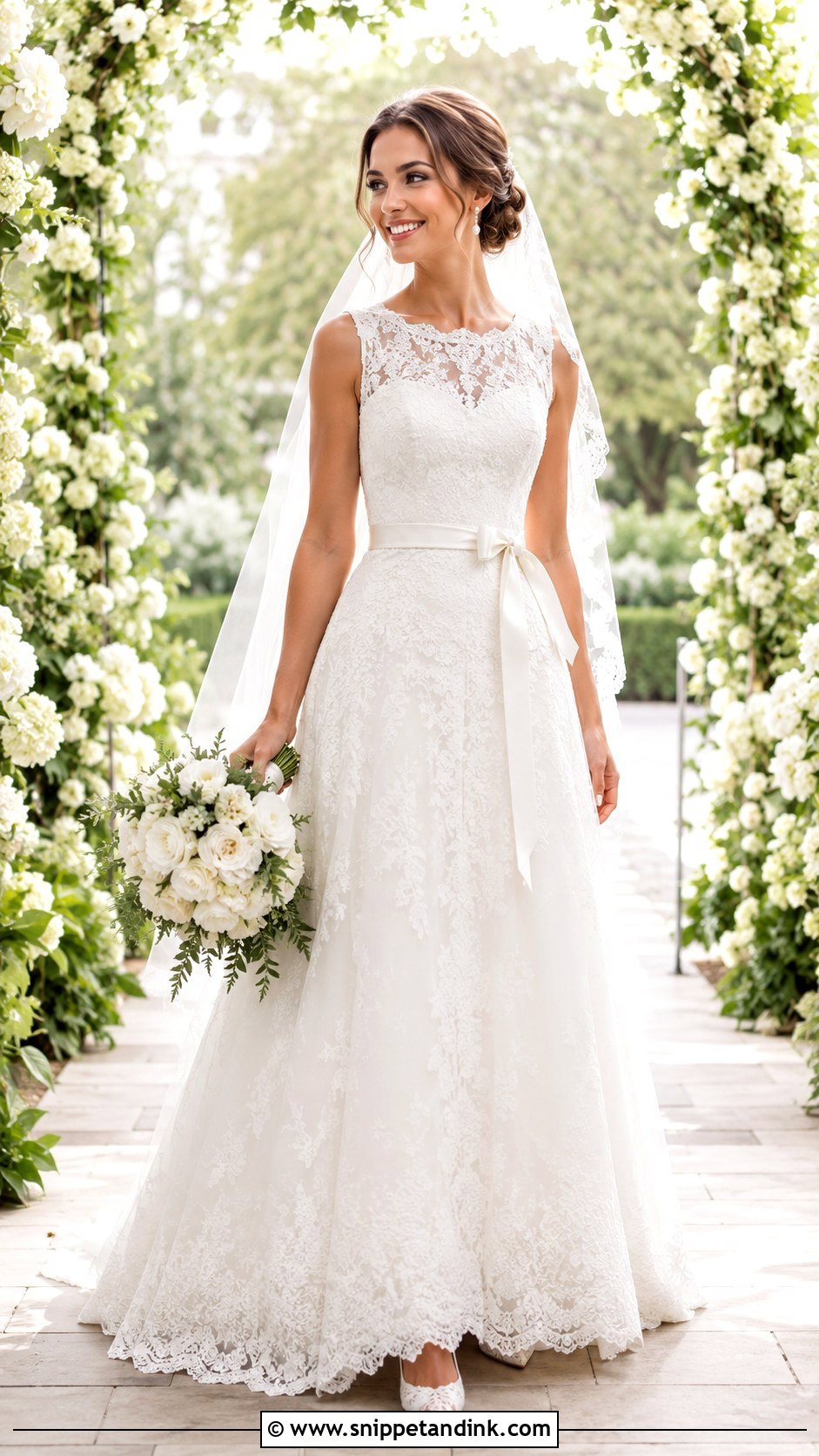
Can lace feel traditional and playful at once? A narrow satin bow at the waist does it, because the smooth ribbon contrasts with the floral texture. Choose an A-line with a lined bodice and a soft tulle or lace skirt. The bow can match the ivory gown or go a shade warmer in champagne. Lace-covered pumps, pearl drops, a lightly scalloped veil and a loose chignon with a few face-framing pieces suit it. Keep flowers and jewelry modest; the combination of lace and ribbon already gives the eye plenty to look at.
6. Basque Waist Wedding Dress with Back Bow
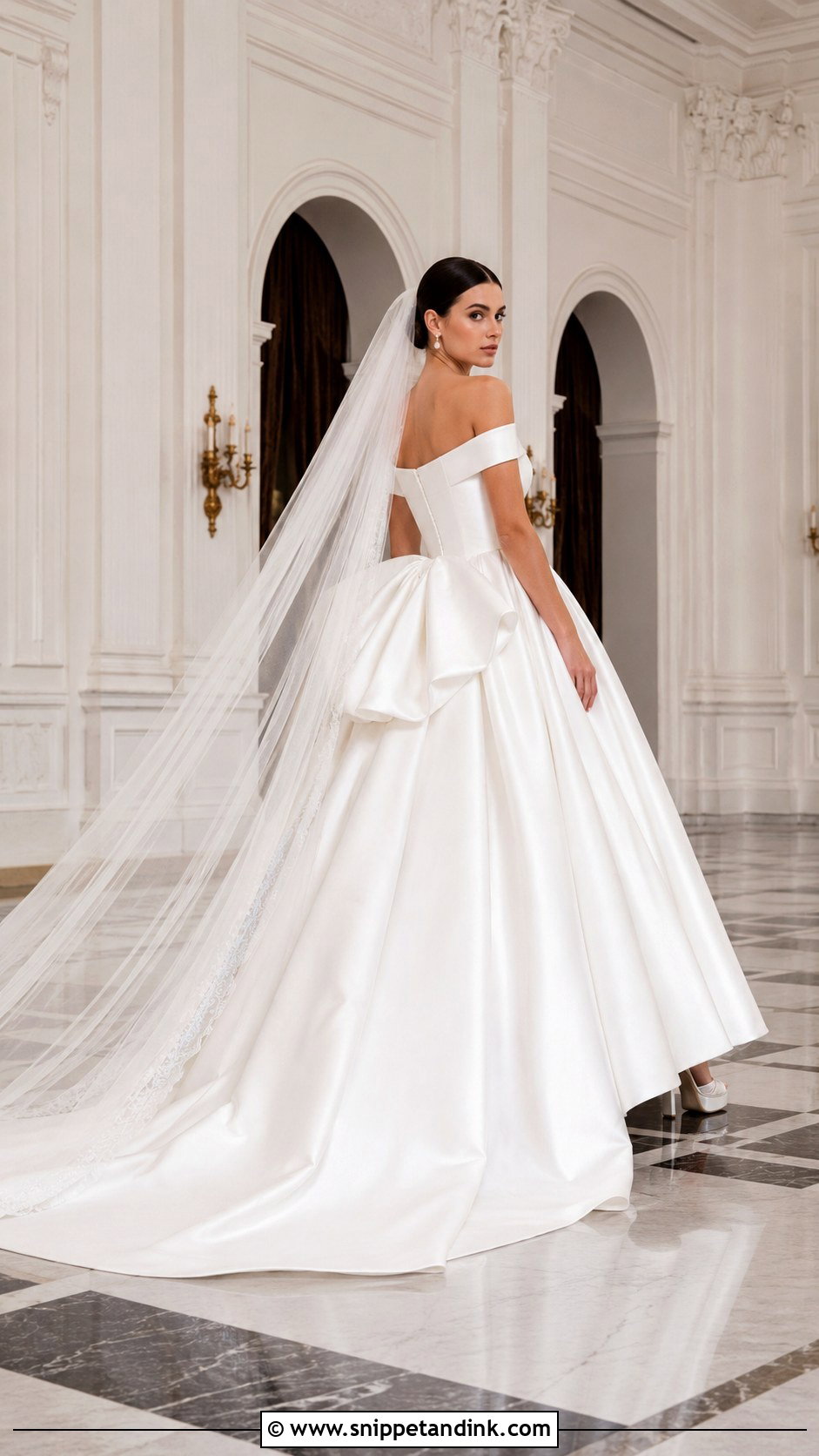
Basque waists dip into a point at the front, and a bow at the back mirrors that emphasis on the waist from behind. Silk mikado suits both: it holds the pointed bodice and the crisp loops. An off-the-shoulder or strapless neckline continues the long line. A plain cathedral veil, satin platform heels and small pearls are all I’d add, with a sleek centre-parted bun. One fitting check: the bow sits right where you’ll lean against a chair back, so sit for a few minutes and see whether the loops crush.
7. High Neck Wedding Dress with Front Bow
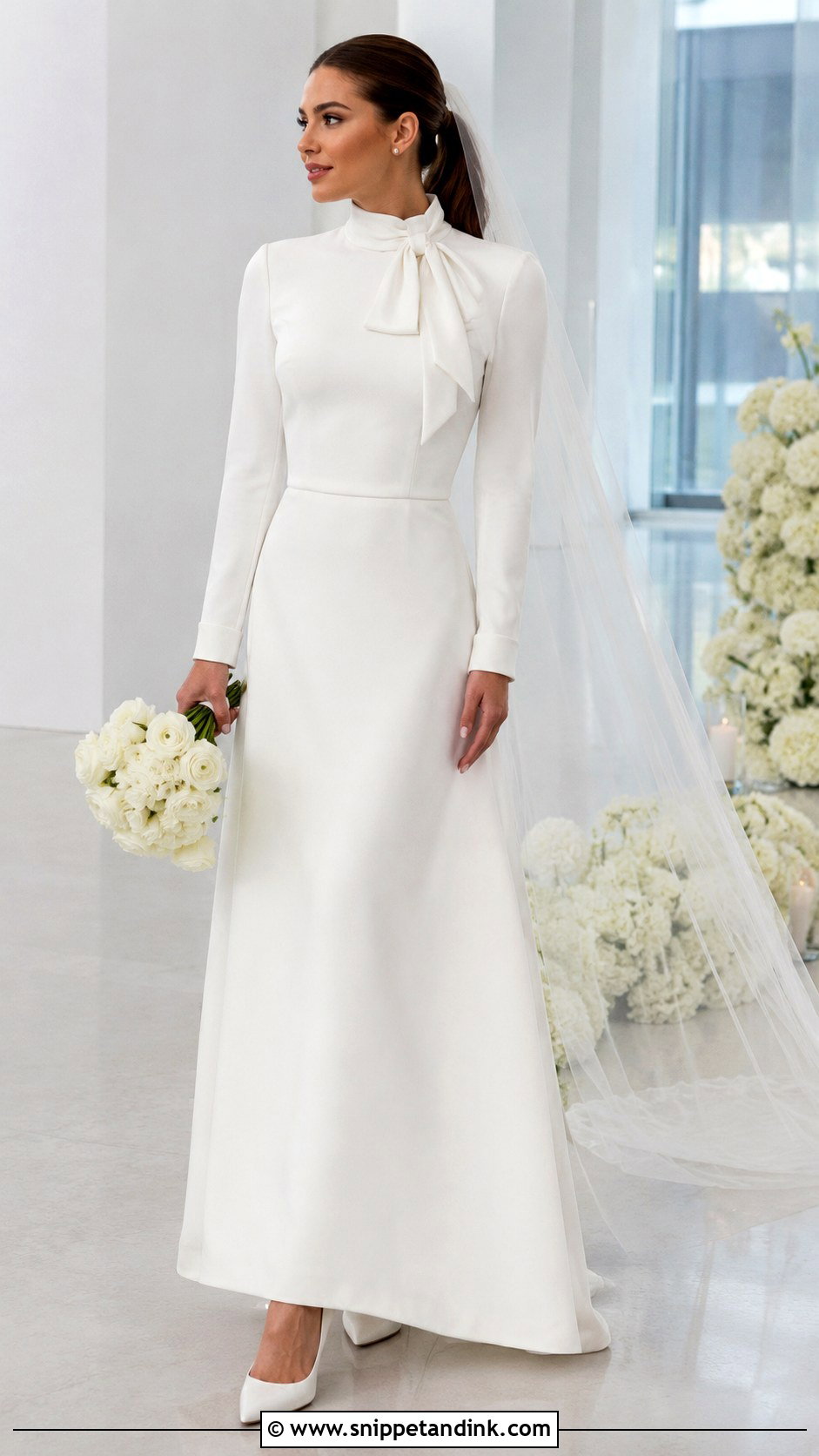
Front bows are less common and more noticeable, which is why I like them on high necks. A narrow neck tie, a structured bow collar or a soft ribbon near the collarbone all work. Keep the skirt slim, a sheath or gentle A-line, so the covered neckline doesn’t feel heavy. Matte crepe, silk or light satin looks polished. Wear pointed pumps, pearl or crystal studs and a simple comb rather than a necklace, with hair up in a ponytail or neat updo. If you add a veil, keep it plain and chapel length, set below the hair. Watch that a neck bow doesn’t sit in the way of a bouquet held high.
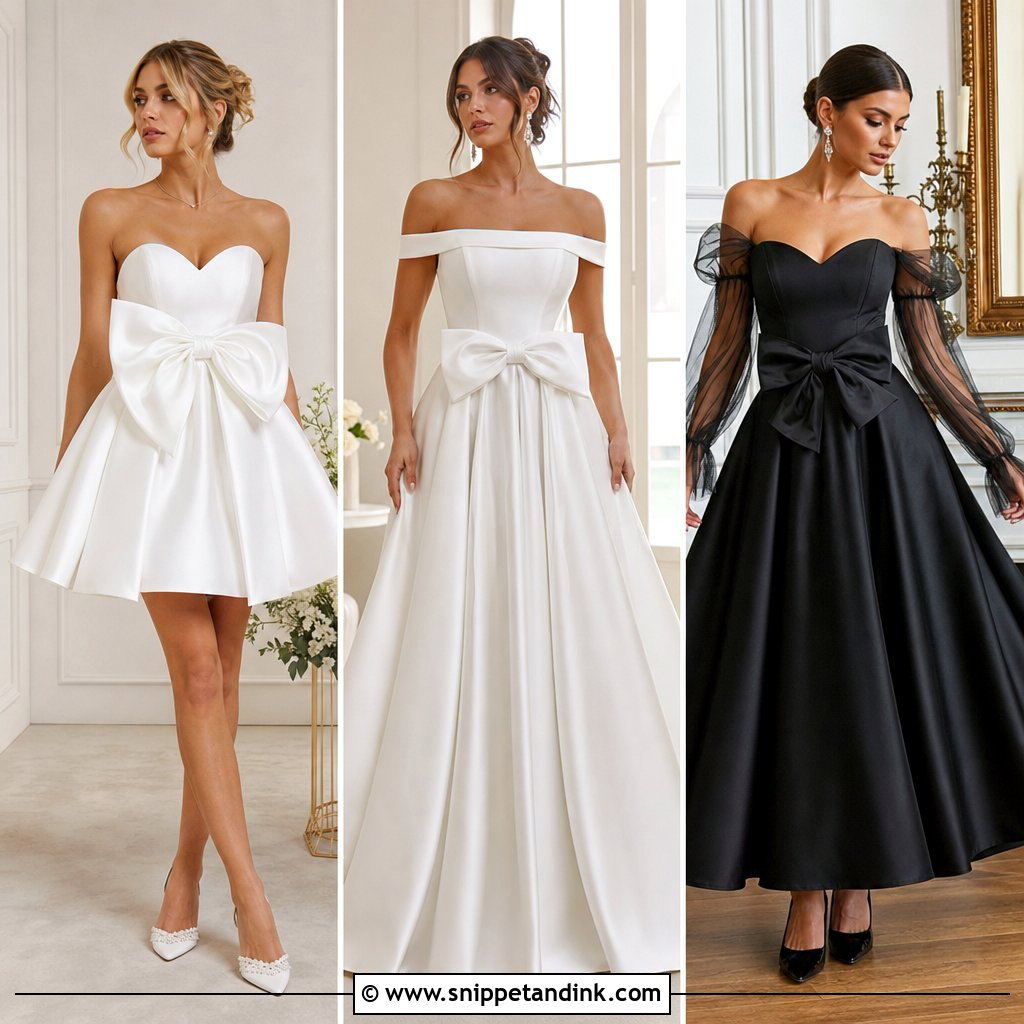
8. Mini Wedding Dress with Oversized Back Bow
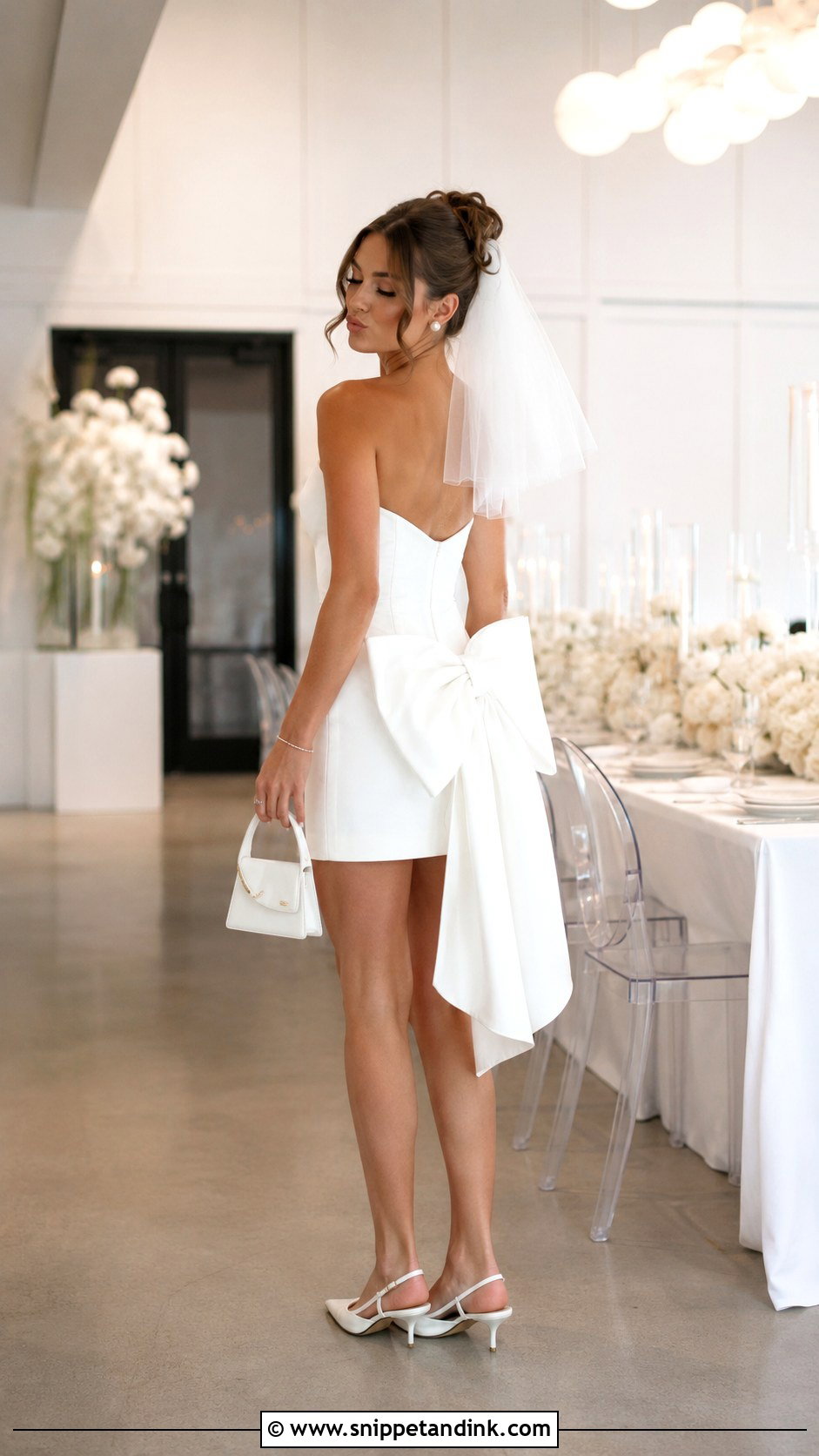
An oversized bow on a mini is pure fun, and it suits civil ceremonies and reception changes. A fitted shift, structured A-line mini or strapless shape makes a clean base. The bow can sit at the waist or stretch across the upper back with long tails. Pointed slingbacks, pearl earrings and a small top-handle bag finish it. A short veil or a crisp bow clip in the hair repeats the theme, but stop at one extra bow or it tips into costume. Swap heels for embellished flats once the formal photos are done.
9. Tea Length Wedding Dress with Sash Bow
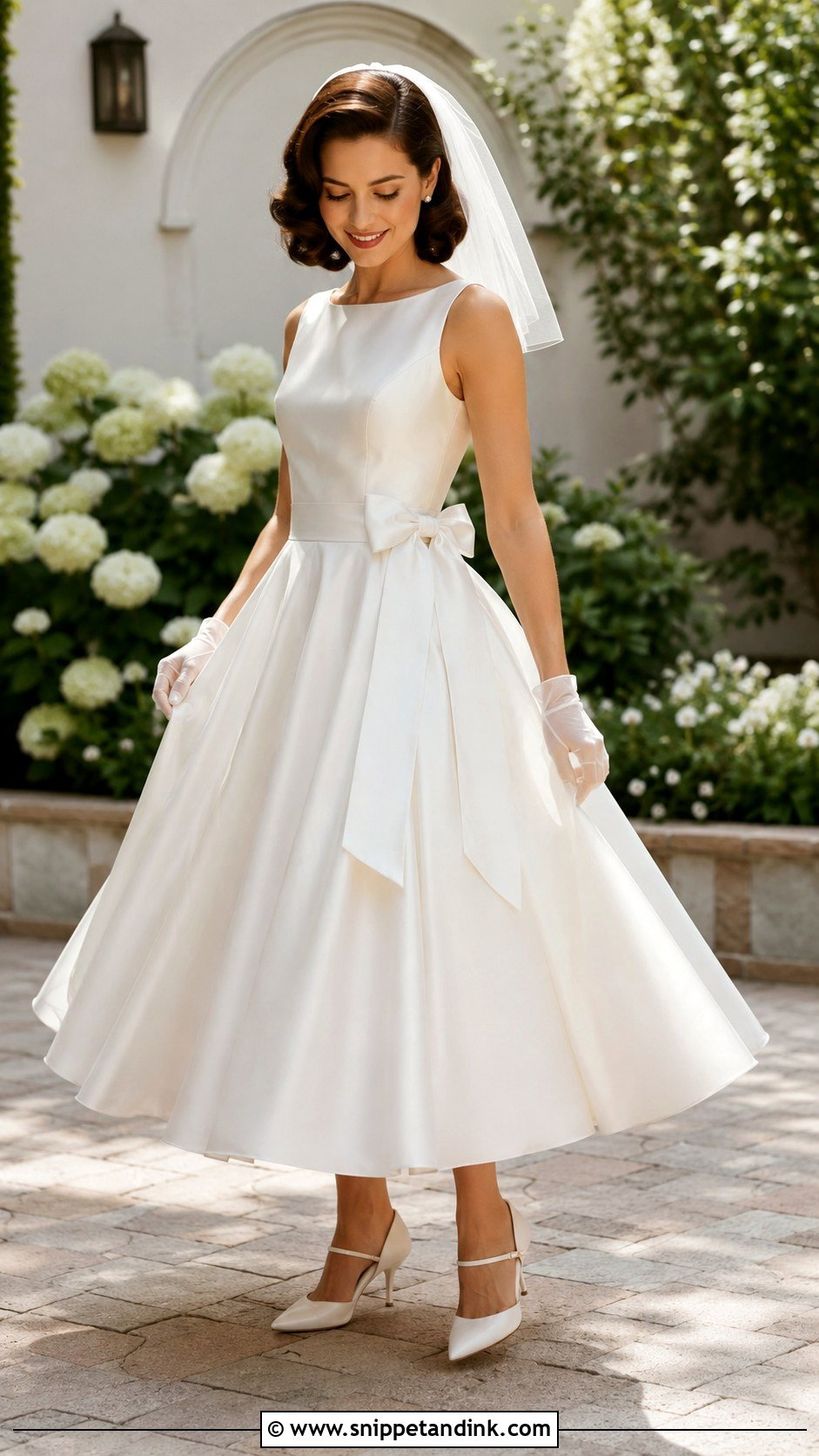
Tea length ends between knee and ankle, so your shoes are part of the look. A fitted bodice and full skirt with a sash tied into a bow at the back or side waist reads vintage. Sashes come untied when you sit and stand all day; I have them tied once at the final fitting and stitched discreetly so they keep their shape. Pointed pumps, Mary Janes or ankle straps complete the retro-inspired silhouette. Add pearl studs, short gloves if you want them and a shoulder-length veil, with soft waves or a French twist. Daytime parties, courthouses and gardens all suit it.
10. One Shoulder Wedding Dress with Bow
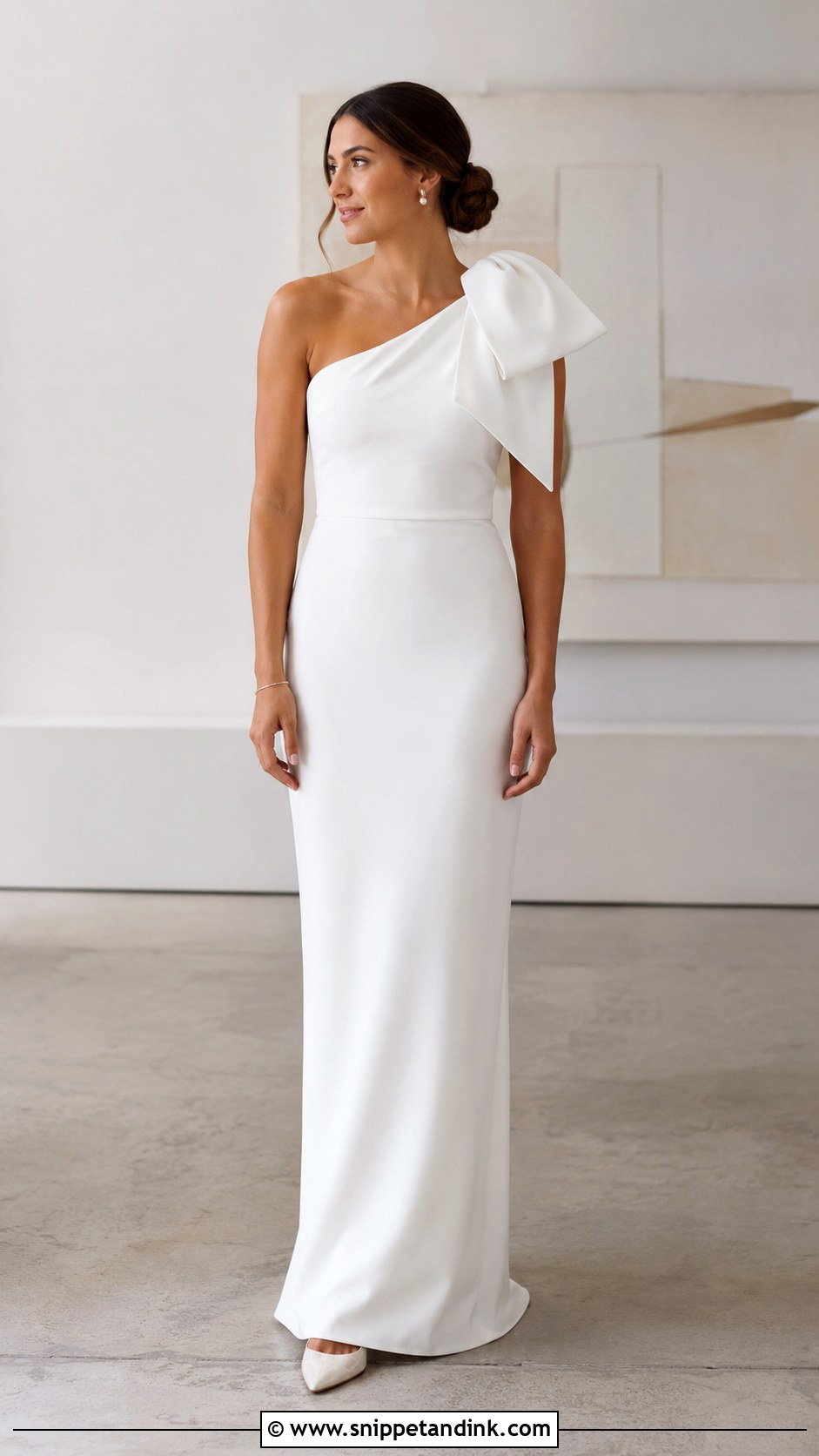
On a one-shoulder gown, the bow becomes the neckline. It can sit right on the shoulder, just below it, or extend into a draped panel across the upper back. A fitted crepe column keeps it understated; a satin A-line adds volume. Small earrings and no necklace, pointed metallic or ivory heels and a bracelet on the bare arm suit it. A low side bun on the opposite side balances the weight. A comb may work better than a veil, which tends to snag on a shoulder bow.
11. Pearl Wedding Dress with Small Bows
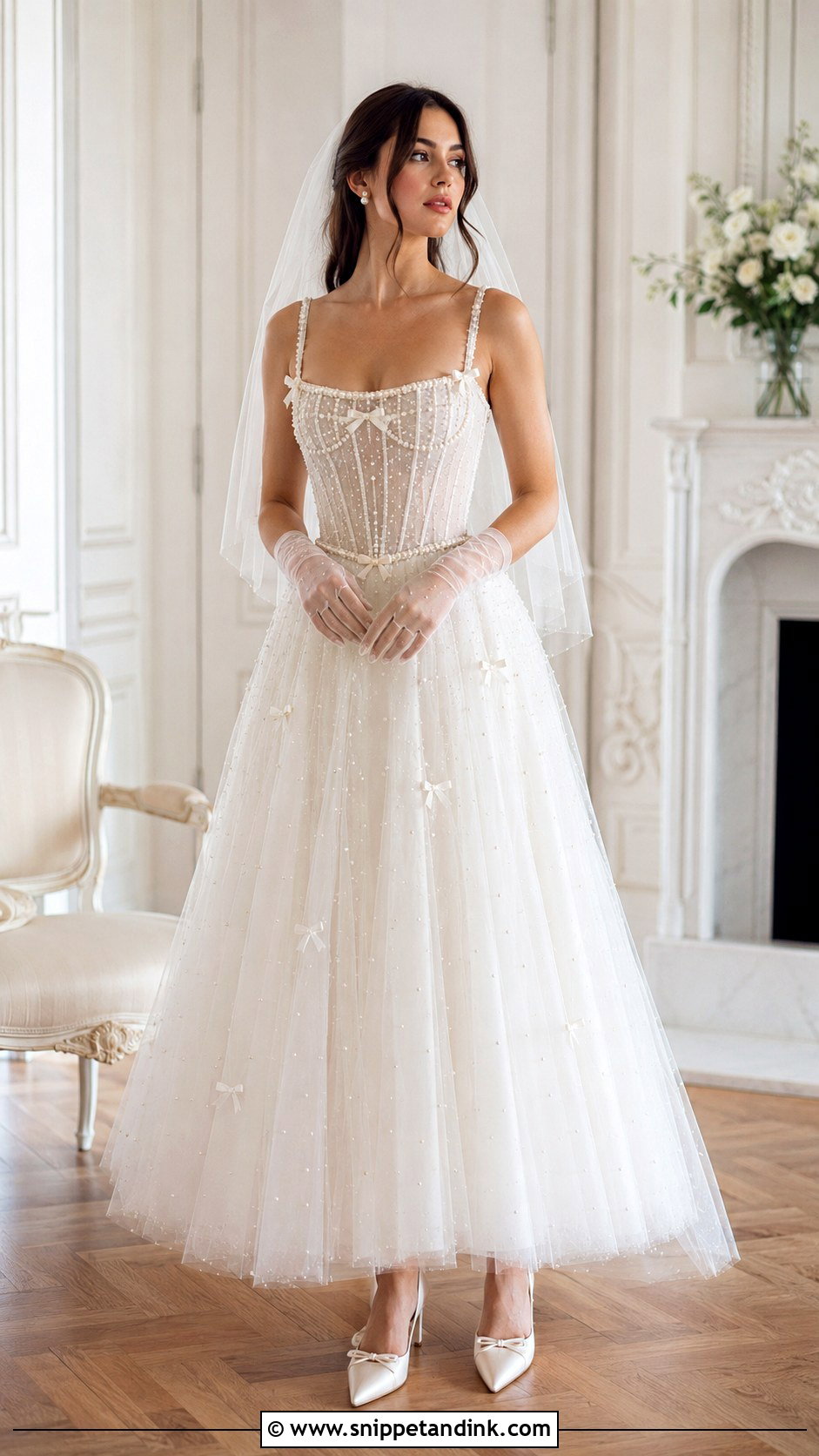
Little bows and scattered pearls make a gown you appreciate up close. Small ribbon accents along the neckline, straps or waist, with a lightly embellished tulle skirt, keep it soft rather than dramatic. Here, restraint with accessories really matters: pearl studs, an ivory satin clutch, pointed pumps and a plain veil. A loose low bun with smooth face-framing strands suits it, and sheer plain gloves if you like. Tiny bows can twist or flip over during the day, so ask the seamstress to tack each one at two points rather than one.
12. Tulle Corset Wedding Dress with Bow Straps
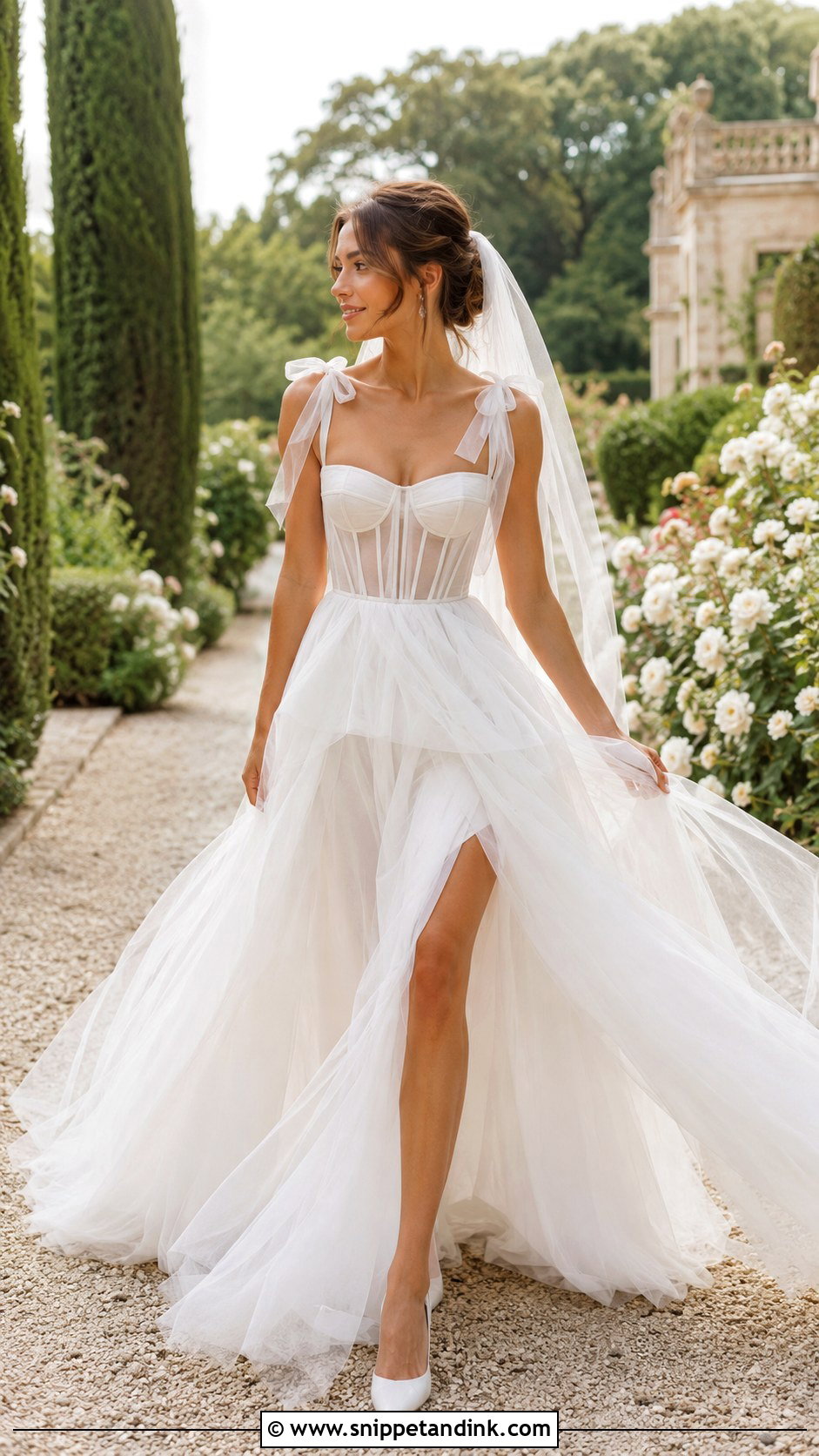
Tied bow straps soften a corset and suit outdoor weddings and bright rooms. The boned bodice should do all the supporting, because tied straps loosen and shouldn’t be holding anything up. Medium-width ties make neat bows without covering the neckline. Delicate drops, pointed satin heels, a sheer fingertip veil and a textured updo keep the straps visible. Skip a necklace if there’s draping, lace or exposed boning at the neck. If the bows detach, have them stitched securely during alterations.
13. Slip Wedding Dress with Low Back Bow
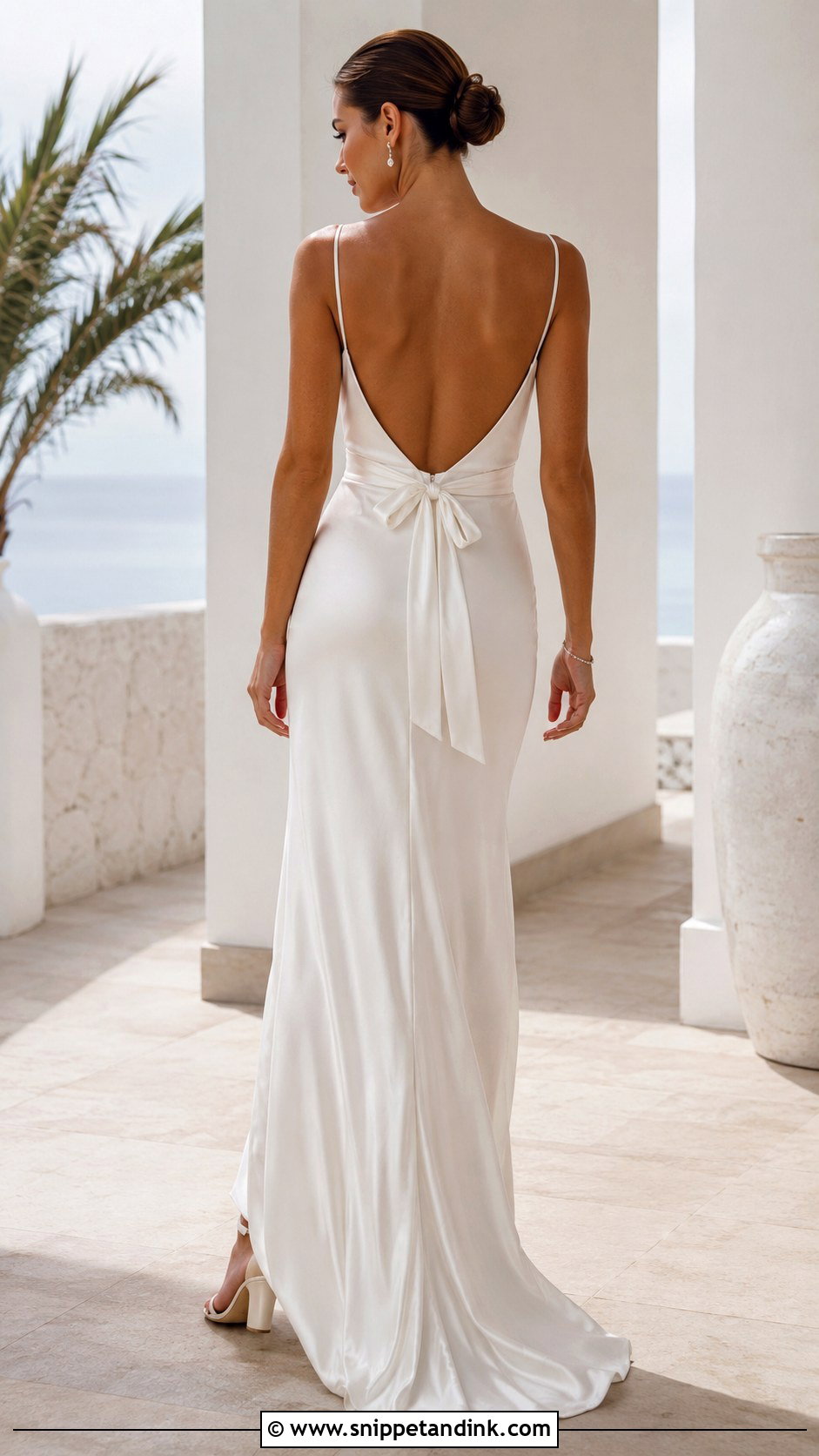
Silk on the bias moves with you, and a bow above a low back adds just enough to a plain slip. A medium bow at the lower back can also hide a closure. The fit of a bias slip is unforgiving: every seam and undergarment line shows, so proper underwear and a skilled seamstress matter more here than on any other gown in this post. Minimal sandals, fine drop earrings and a delicate bracelet suit it, with a sleek bun or a waved bob. A short blusher or a comb keeps the bow clear; a long veil would cover it.
14. Long Sleeve Wedding Dress with Back Bow
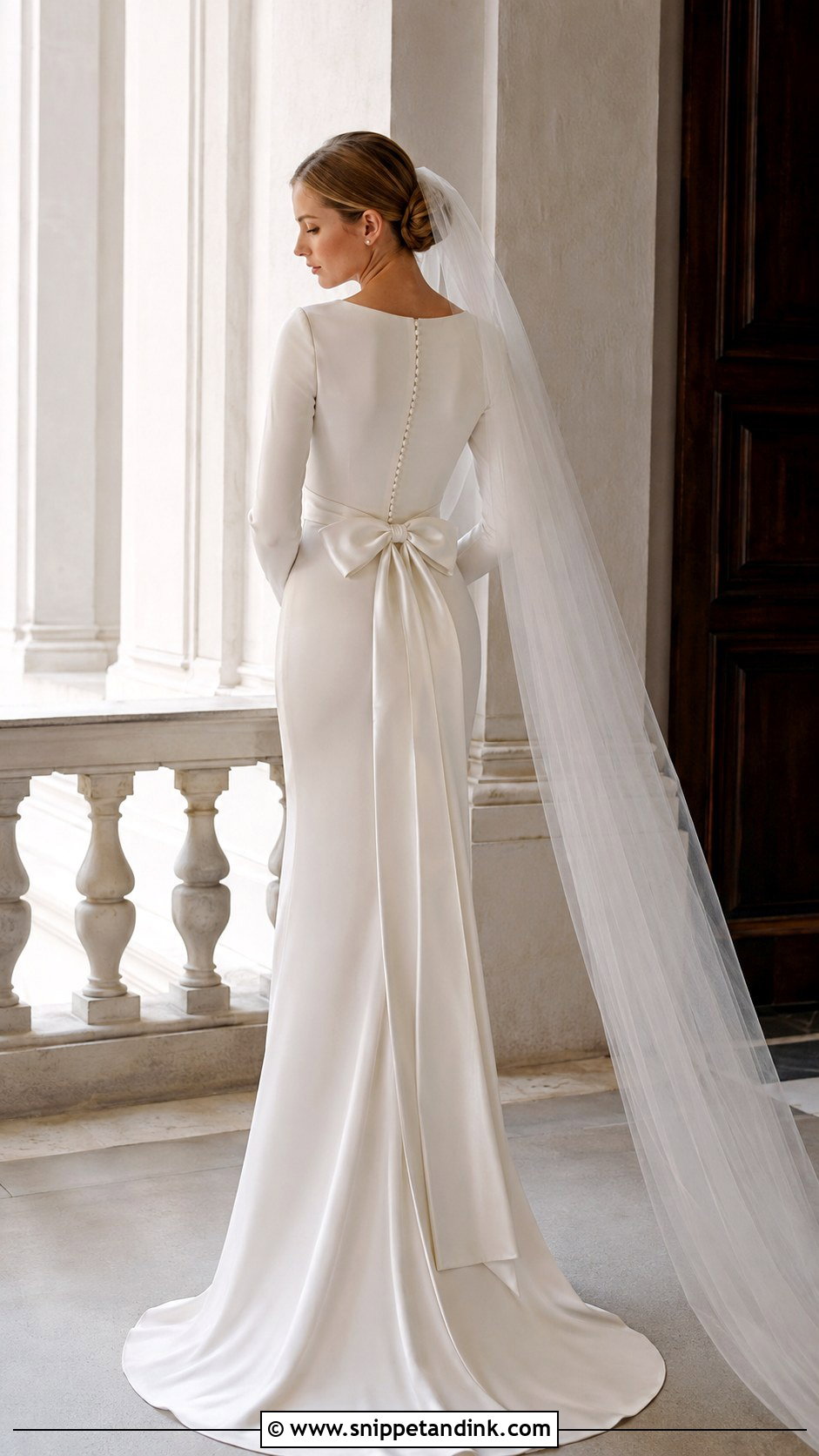
Long sleeves give coverage, and a back bow gives you something to see as you walk away. Smooth crepe with fitted sleeves and a satin bow at the waist is clean; lace sleeves with a smaller ribbon look softer. Closed-toe pumps, pearl studs and a plain chapel veil suit it, with a low bun so the bow shows once the veil is off. Skip bracelets that could snag fine sleeves. It works across seasons and venue types, and for a modest dress it gives photographers an obvious focal point.
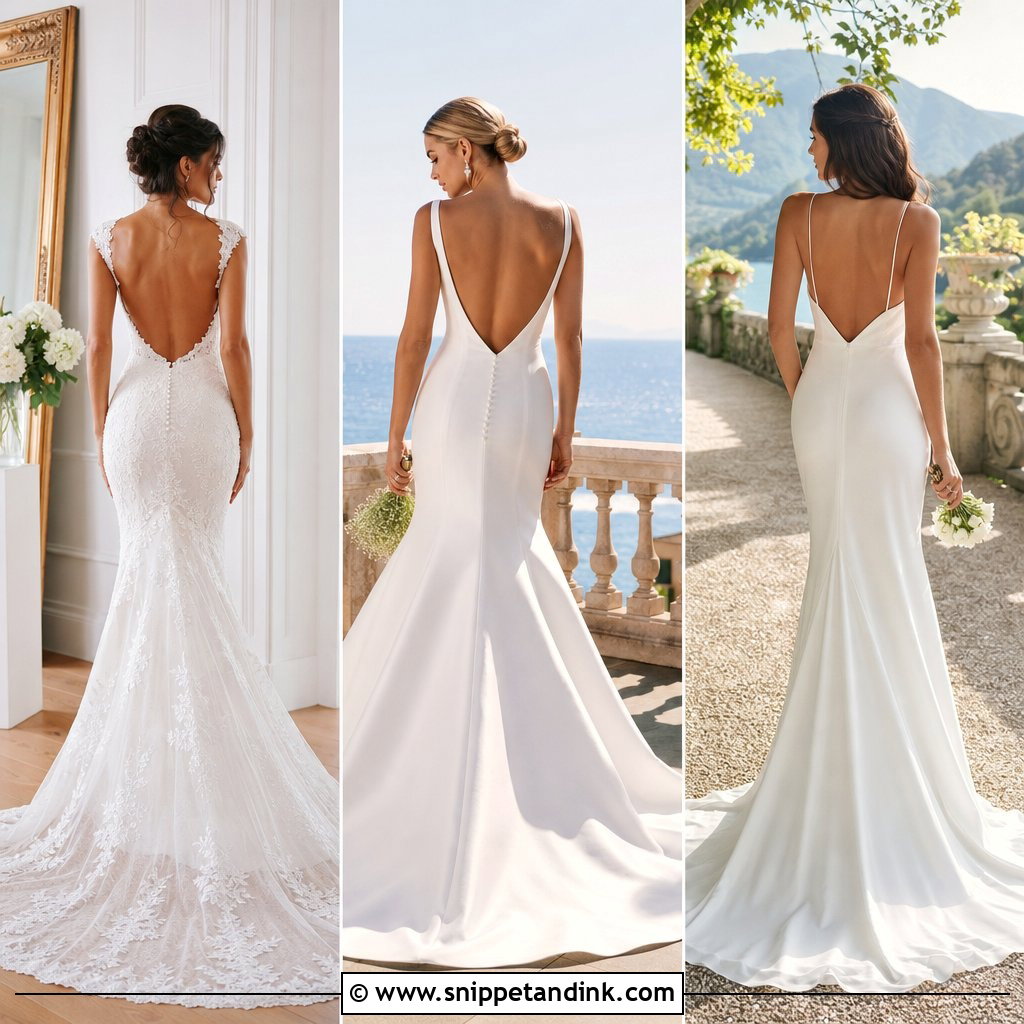
15. Floral Wedding Dress with Side Bow
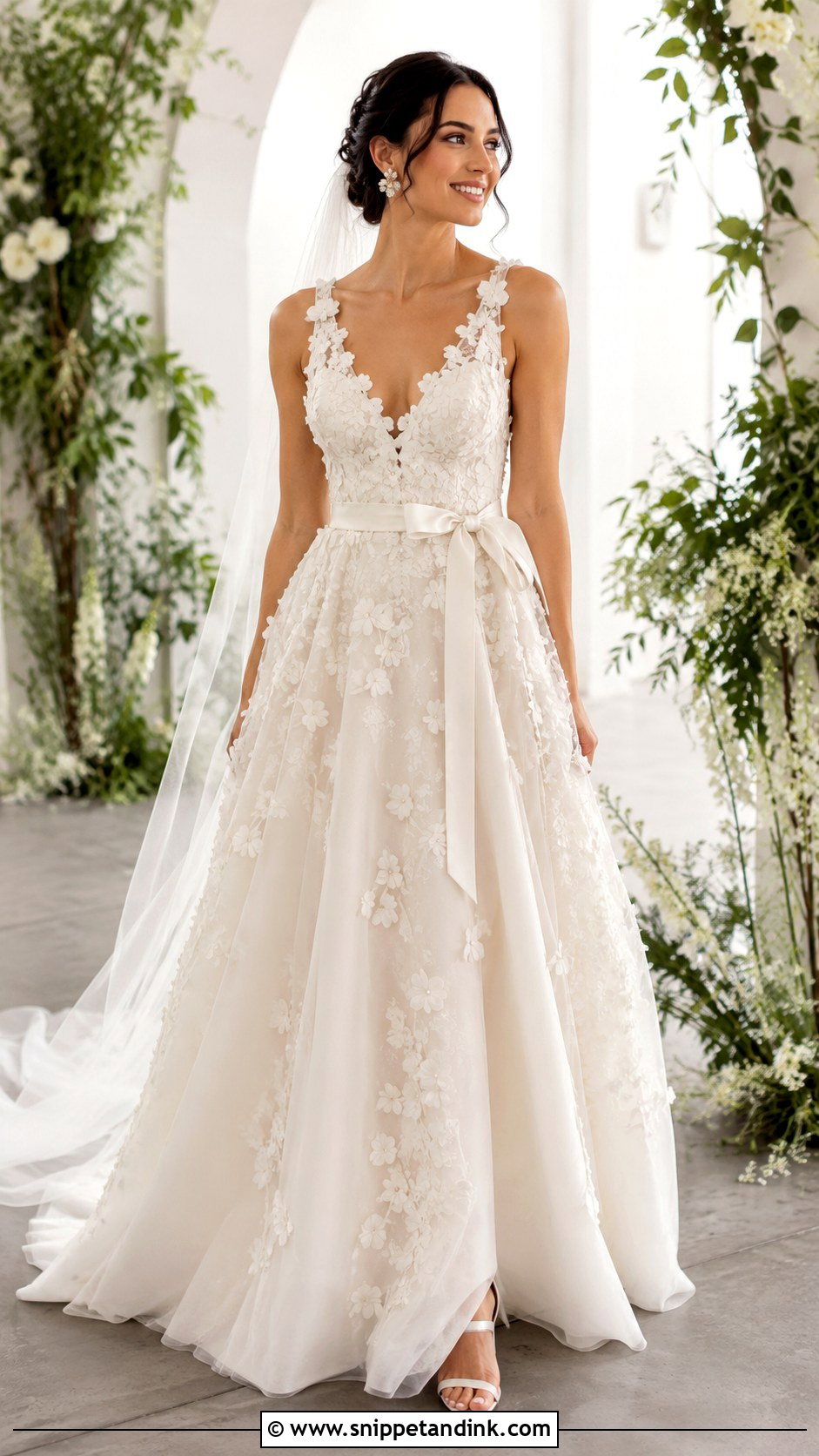
A side bow on a floral appliqué gown breaks up the texture and gives the waist a clear line. Embroidered flowers, vines or raised petals look best flowing from the bodice down an A-line or softly gathered skirt. Keep the ribbon ivory to blend, or pale blush for a little contrast. Plain satin heels, floral earrings, a plain tulle veil and a loose braided updo suit it. With so much decoration already, I’d leave off the necklace and belt.
16. Plus Size Ball Gown Wedding Dress with Bow
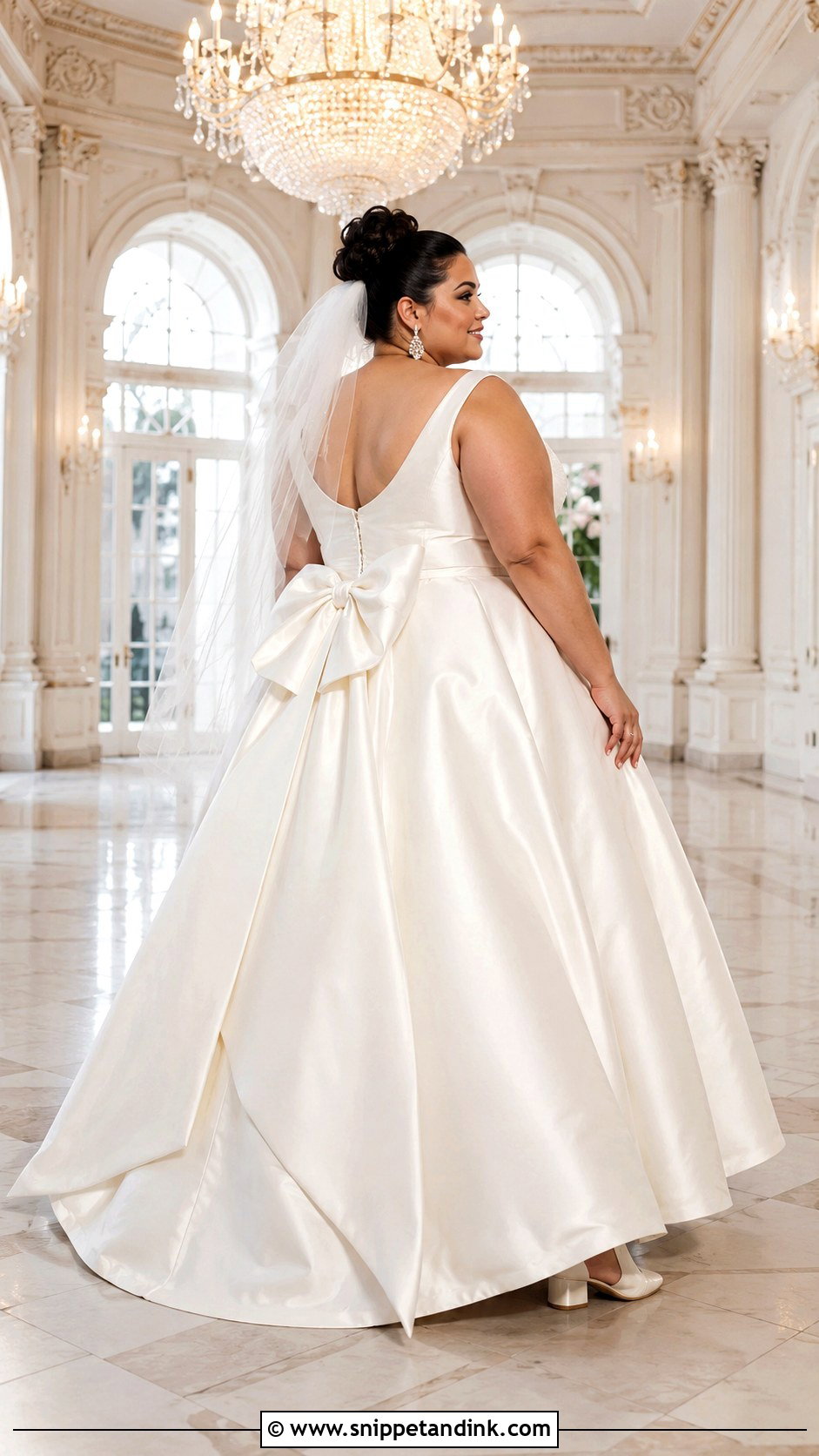
On a plus-size ball gown, a bow at the back waist highlights the narrowest point without interrupting the front. Scale matters: wide loops look proportional with a full skirt, while a tiny ribbon gets lost. Start with real internal structure, comfortable boning and straps or sleeves at the coverage you want. Block-heel pumps, statement earrings and a light veil set below a secure updo finish it. At fittings, sit, walk and turn; a bow sewn too low will press into the small of your back when you sit.
17. Petite Wedding Dress with Detachable Bow
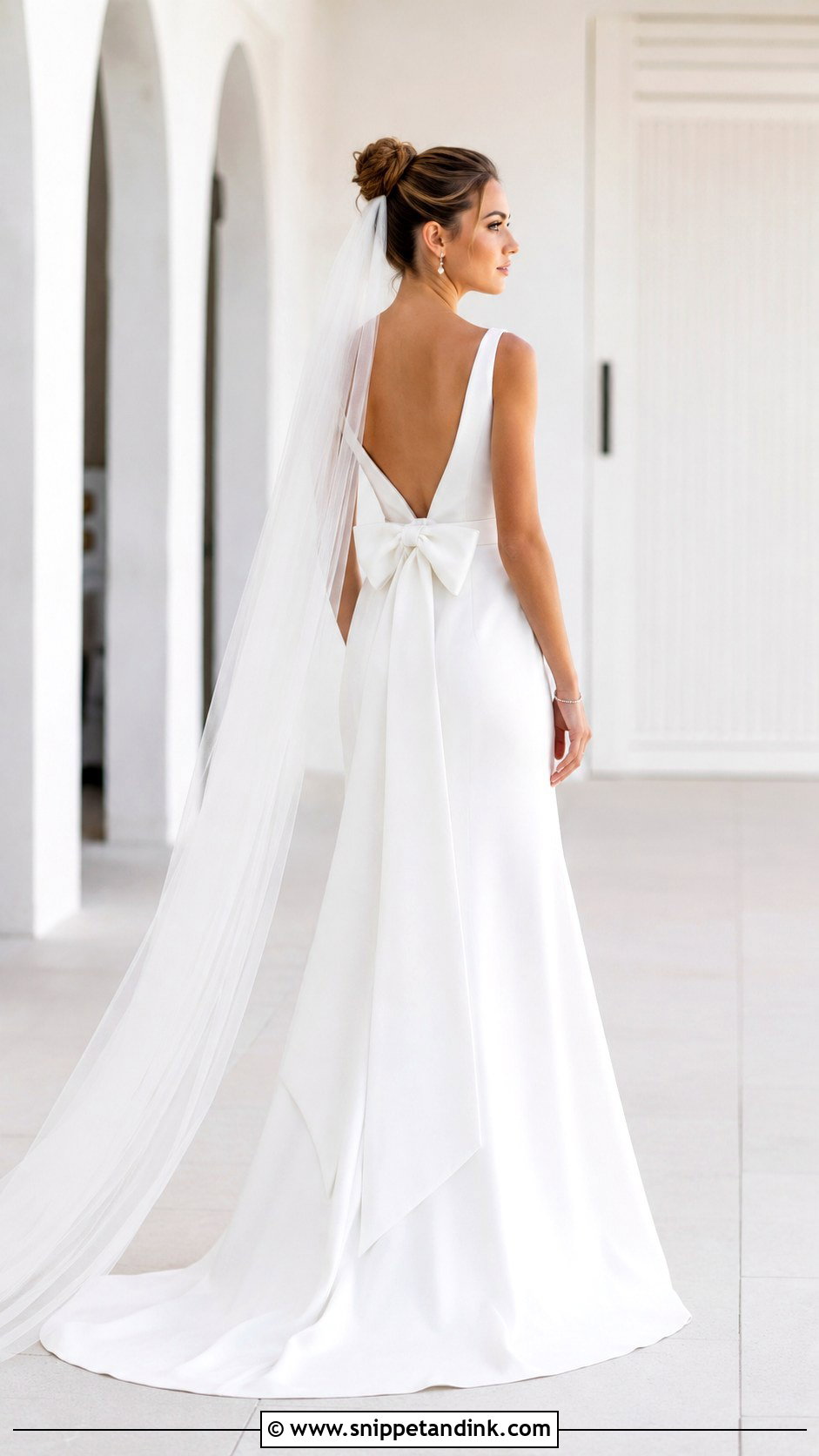
Petite brides can carry a statement bow if it’s scaled down and placed high. A column or narrow A-line keeps the line long, and a detachable bow at the upper back draws the eye up. Choose a medium or small bow with slim tails; a very wide one swallows a small frame. Pointed toes lengthen the leg, a high-set veil adds height, and a lifted bun or ponytail does the same. Keep jewelry delicate. Have the bow positioned after the hem and bodice are finished, because both change where it should sit.
18. Vintage Wedding Dress with Neckline Bow
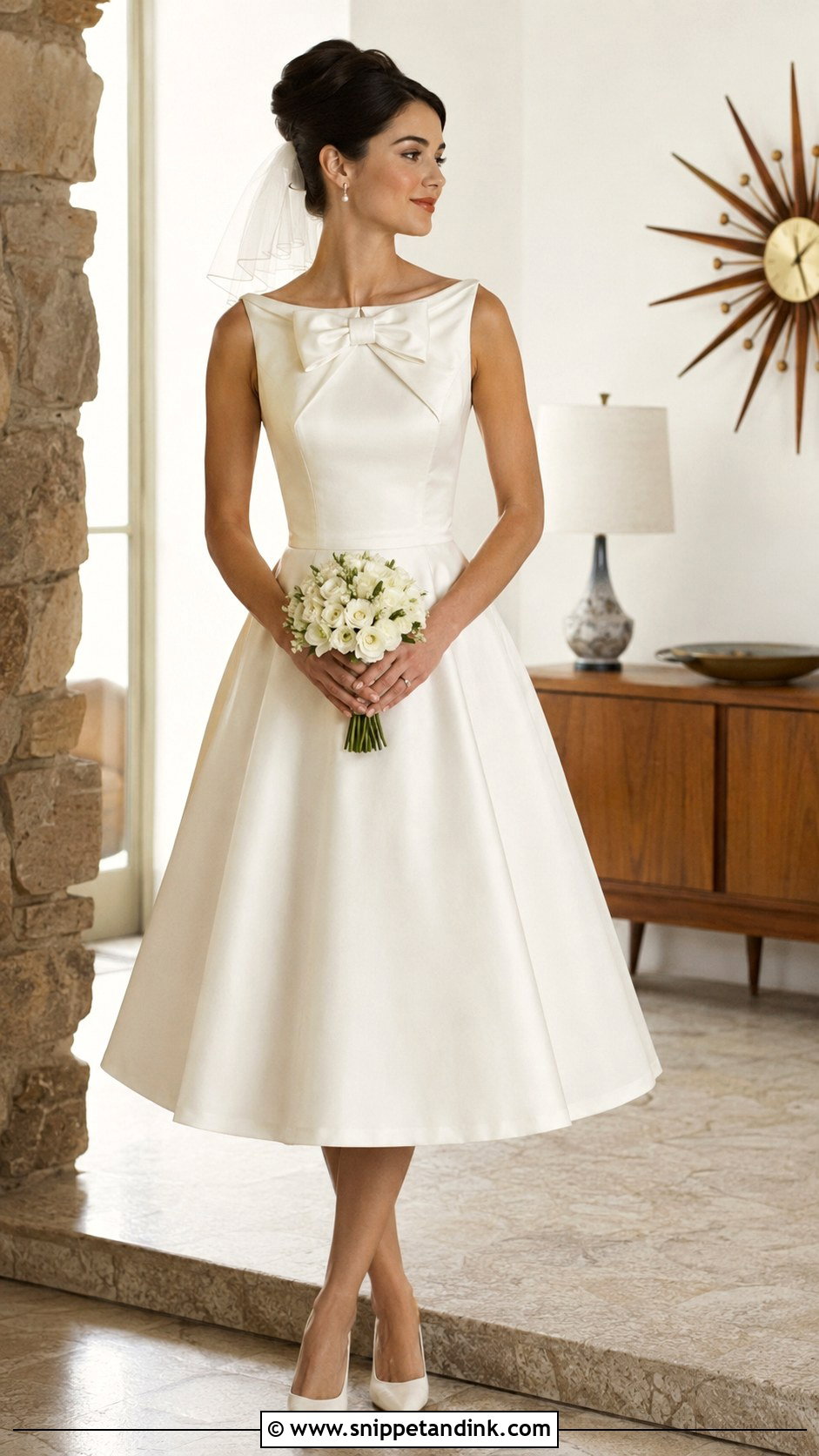
A neckline bow points straight to mid-century bridal style. Think of a bateau neck with a slim bow, a tea-length dress with a tied collar, or a fitted bodice with a structured ribbon near the shoulder. Satin, lace and silk faille hold the shape. Low pointed pumps, pearl earrings and a compact bouquet suit it, with a short veil, birdcage face veil or understated headband rather than anything long and ornate. Soft waves, a French twist or a chin-length bob finish it. The bow should look crisp, so press it once more on the morning. It gives the look nostalgic character without feeling like fancy dress.
19. Two Piece Wedding Dress with Bow Top
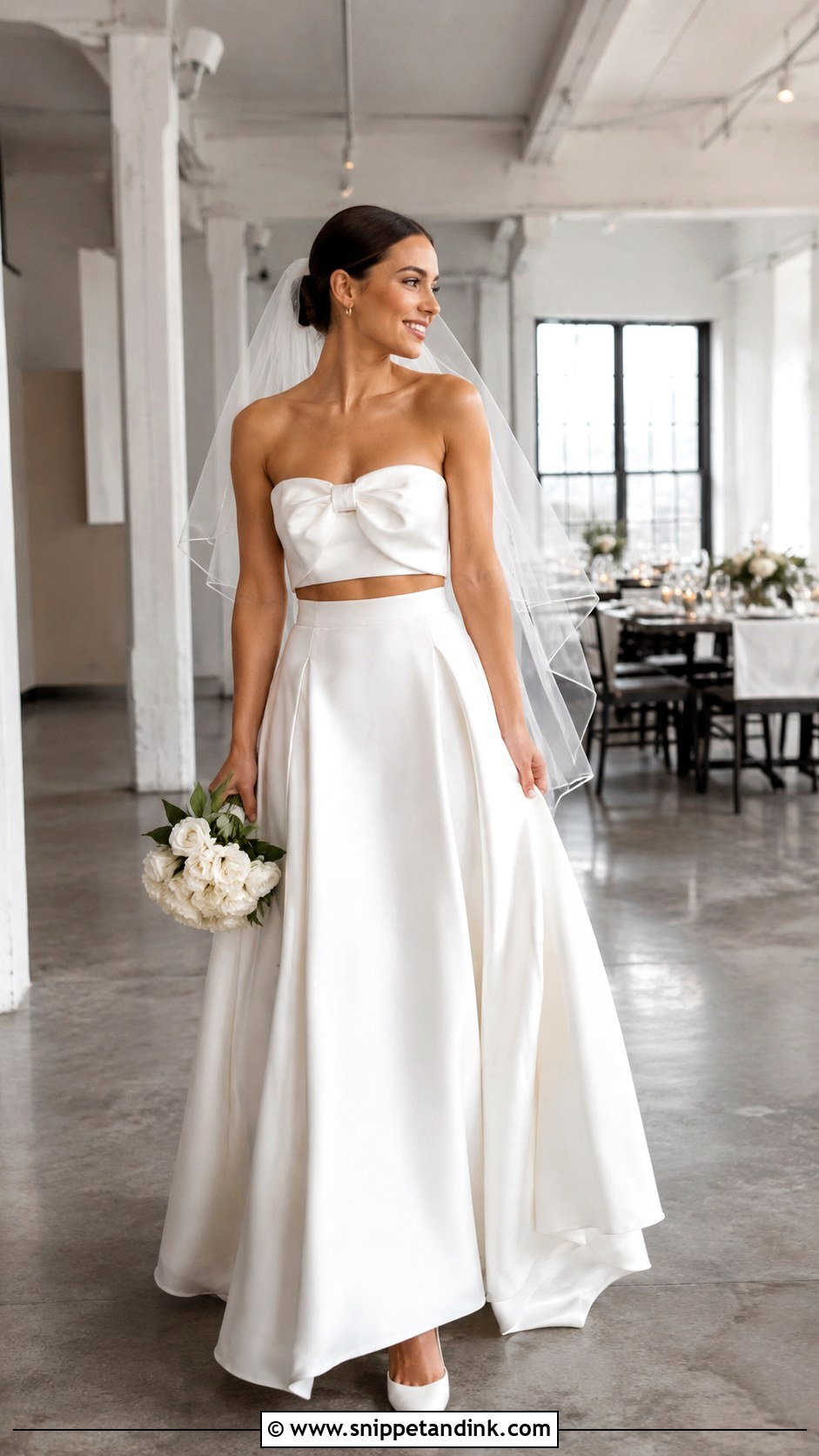
Two-piece gowns appeal to brides who want reusable separates, and a bow top makes it bridal. Pair a structured bow-front top with a high-waisted satin, crepe or tulle skirt. The bow can cross the bust, wrap the waist or tie dramatically at the back. Keep the skirt plain. Sleek pumps, small hoops, a fingertip veil and a polished bun finish it. The gap at the waist is the thing to test: raise your arms and sit, and make sure the top still overlaps the skirt. Later, swap the skirt for tailored trousers or a shorter one.
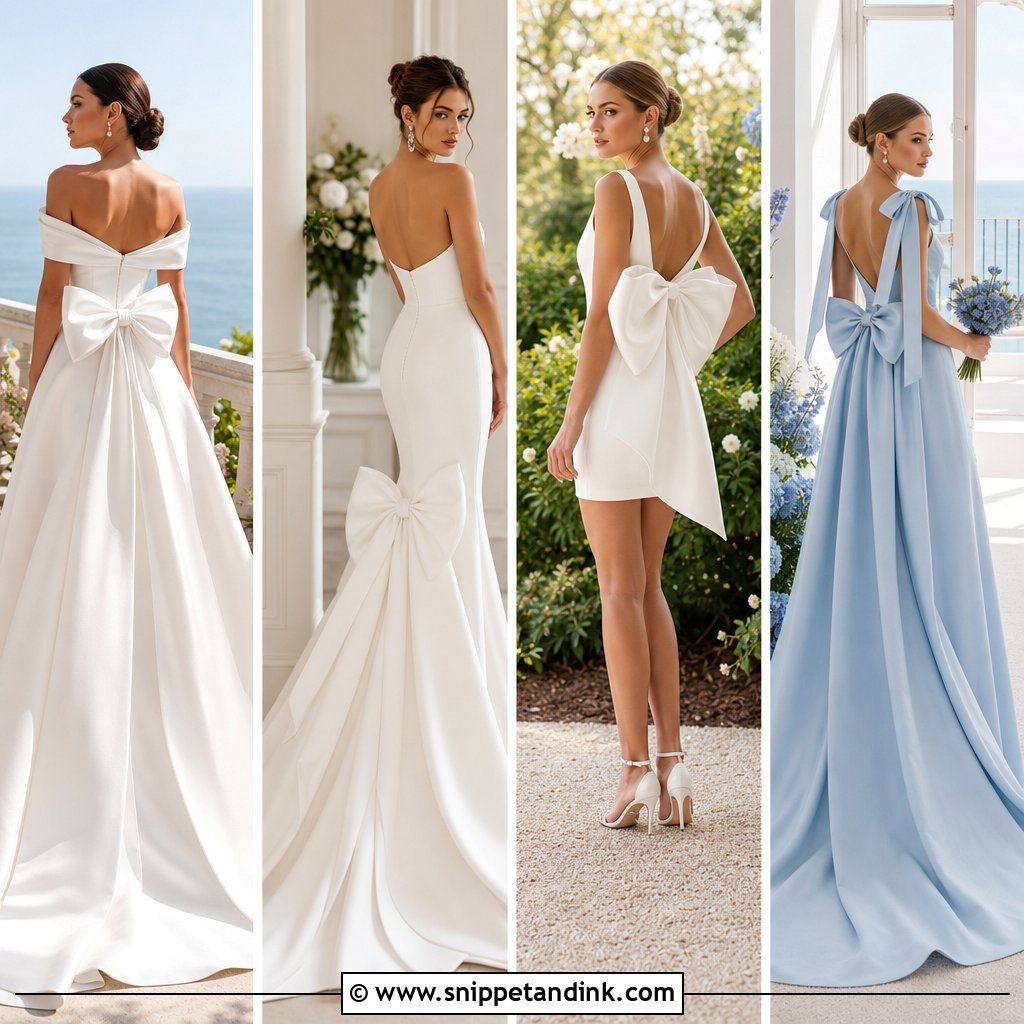

20. Wedding Dress with Black Bow
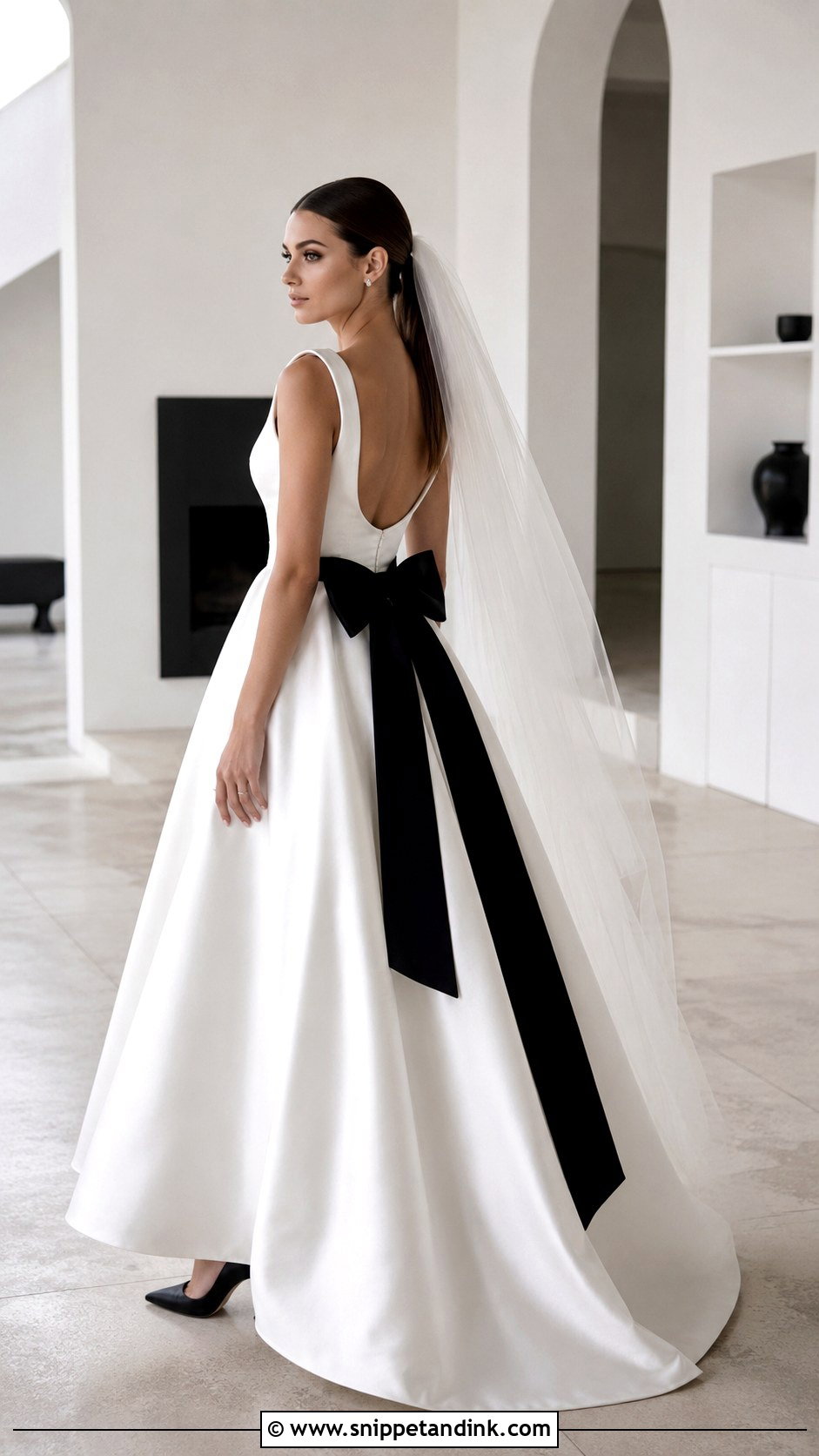
A black bow on a white gown is graphic and confident. Start with a clean satin ball gown, minimal A-line or fitted crepe, and put the bow in one spot only: waist, shoulder or back. Black pointed pumps and small onyx or crystal earrings tie in, but keep everything else light. A plain ivory veil softens the contrast. One practical note: black dye can transfer onto white fabric if the bow gets damp, so ask whether the ribbon is colourfast. Hair can be a sleek bun, smooth waves or a ponytail. More black accents would overdo it.
A Big Back Bow Changes Your Veil, Hair and Bustle Plans
Brides choose the bow first and think about everything around it later. I’d rather plan them together, because a back bow sits right where the veil falls, where the bustle hooks go and where you lean in a chair.
Veil
A long veil lying over a big bow hides it and flattens the loops. Either set the veil high so it floats clear, choose a sheer one that lets the shape show through, or plan to take it off straight after the ceremony.
Hair
Long loose hair covers an upper-back bow completely. An updo, low bun or ponytail keeps it visible, and it also stops hairspray landing on silk loops.
Bustle and sitting
Bustle points are often placed at the back waist, right under the bow. Ask your seamstress to work around it so the bustled train doesn’t drag the bow down. In the car and at dinner, sit slightly forward or have someone lift the loops out before you lean back.
One Bow, Placed Where the Eye Lands First
A good bow suits the gown’s silhouette, fabric and mood. Big back bows bring drama; narrow waist ties and shoulder ribbons are softer; detachable ones let you change the look without a second dress. Look at every option from the front, side and back, and test it walking, sitting and turning at fittings. Keep accessories in support of the bow rather than competing with it. With the right scale and careful tailoring, a bow can look romantic, modern or playful, and still feel like yours.
You'll Like These Ideas:




Leave a Reply