
A groom’s haircut does more work than most people expect. It sits right above the collar of a suit you’ve spent weeks fitting, and it gets photographed from angles you never see in the mirror, including the back of your head during the vows. I’ve pulled together 20 men’s wedding hair ideas here, from tight fades to long hair worn down, and for each one I’ve noted what it needs from your hair, your barber and your morning. Read them with your own hair texture in mind, because that decides more than the photo does.
How Your Hair Texture Narrows the List
Before you fall for a photo, check the hair in it against yours. Most disappointments I see come from a groom with fine, straight hair asking for a pompadour that needs thick, coarse hair to stand up, or a groom with tight curls asking for a slick-back that his hair will simply refuse.
- Fine or thinning hair: short textured cuts, the crew cut, the Caesar or a buzz. Height and slicked-back styles show the scalp under flash.
- Thick straight hair: almost anything works, but it needs thinning out on top or it puffs up as the day goes on.
- Wavy hair: side parts, the quiff and the comb over all suit it. Leave enough length for the wave to form.
- Curly and coily hair: cut for the curl, or choose braids or a sharp fade with defined texture on top.
- Long hair: wear it down only if your venue is sheltered; otherwise a bun or braid holds far better.
Growing into a longer style takes months, so if you need length for a pompadour or a man bun, tell your barber now and let him shape it as it grows.
1. Classic Side Part for Grooms
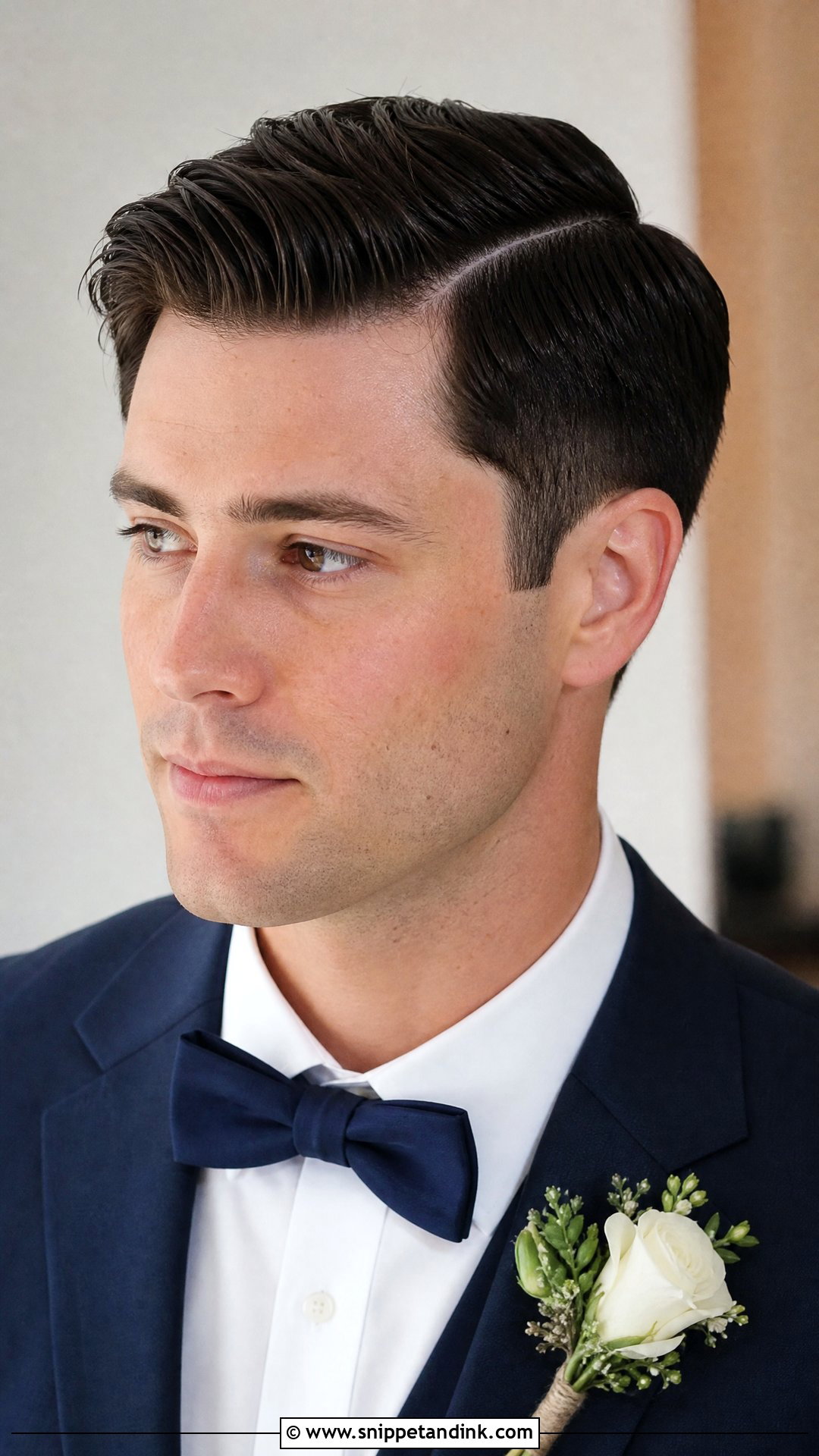
A side part is the cut I recommend most often to grooms who are nervous about change, because it reads as tidy under a tuxedo and it forgives a slightly late trim. The parting line is the whole look, so ask your barber to cut it in where your hair naturally falls rather than where the photo shows it. A forced part fights cowlicks and splits open by the reception. Tapered or lightly faded sides both work. A medium-shine pomade holds the comb lines without going crunchy.
2. Textured Crop Haircut
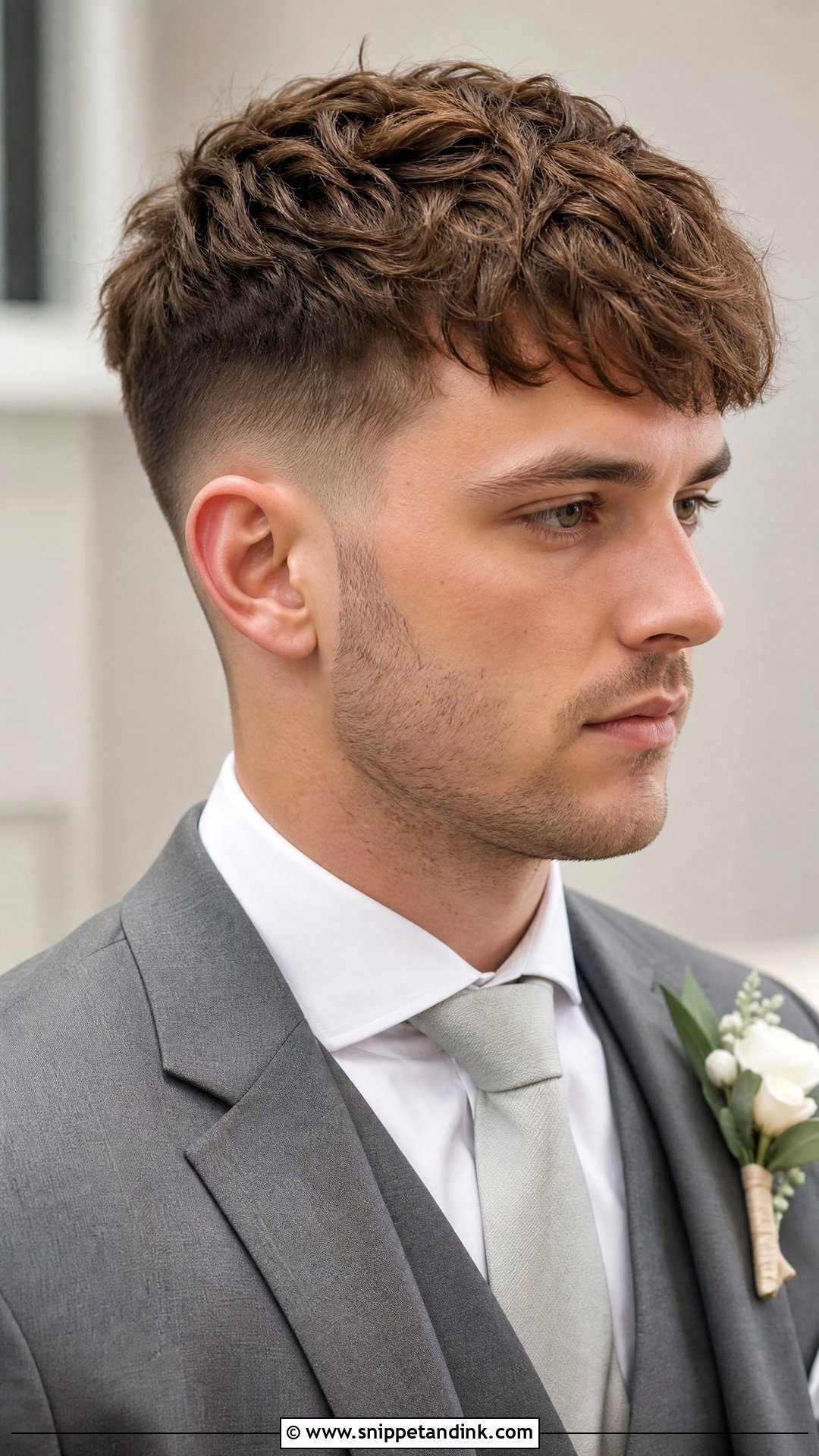
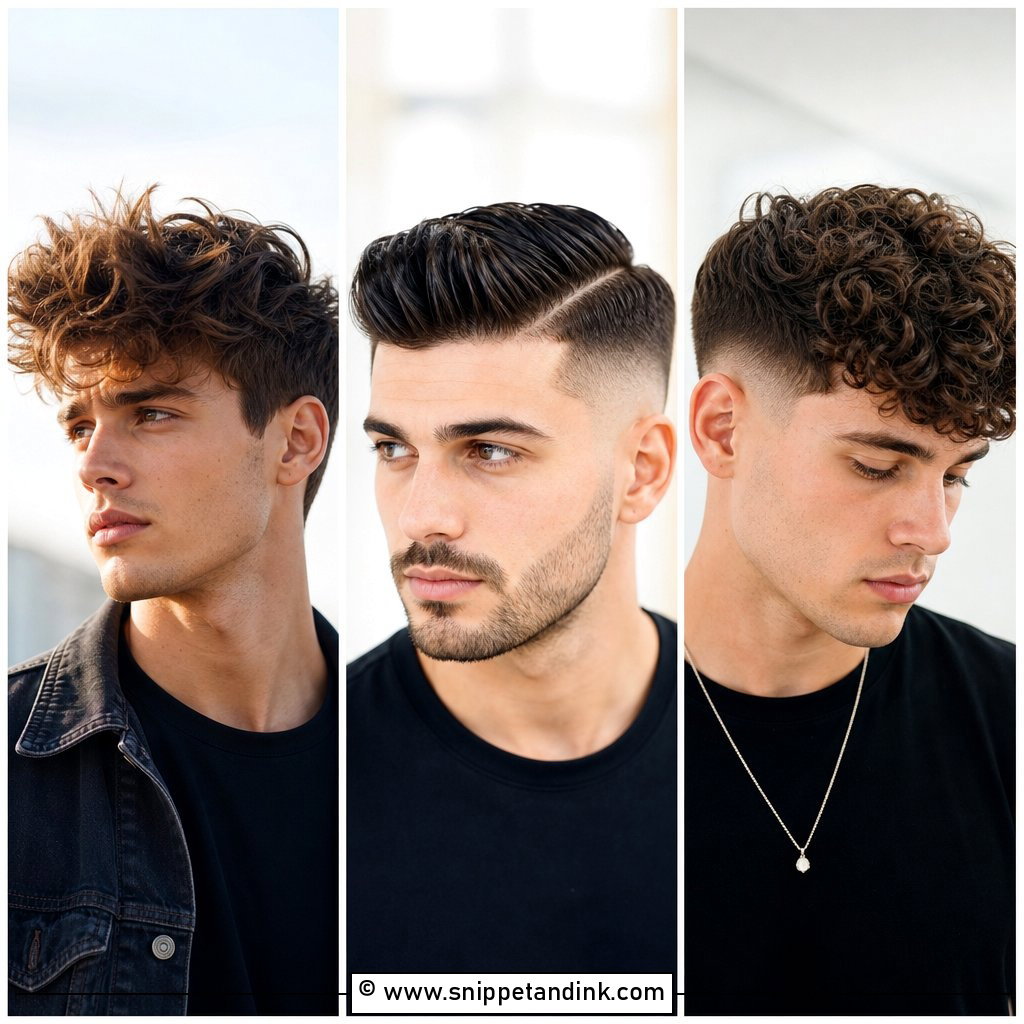
A textured crop is quick to style, which matters on a morning when you’ll be pulled in six directions. Short tapered sides keep it clean, and the top is point-cut so it breaks into separate pieces rather than sitting as one block. That choppiness gives fine hair a fuller look, and on thick hair it removes bulk so the top doesn’t puff up by evening. Rub a pea of matte clay between your palms until it’s warm before working it in. Cold clay lands in clumps.
3. Pompadour Wedding Hairstyle
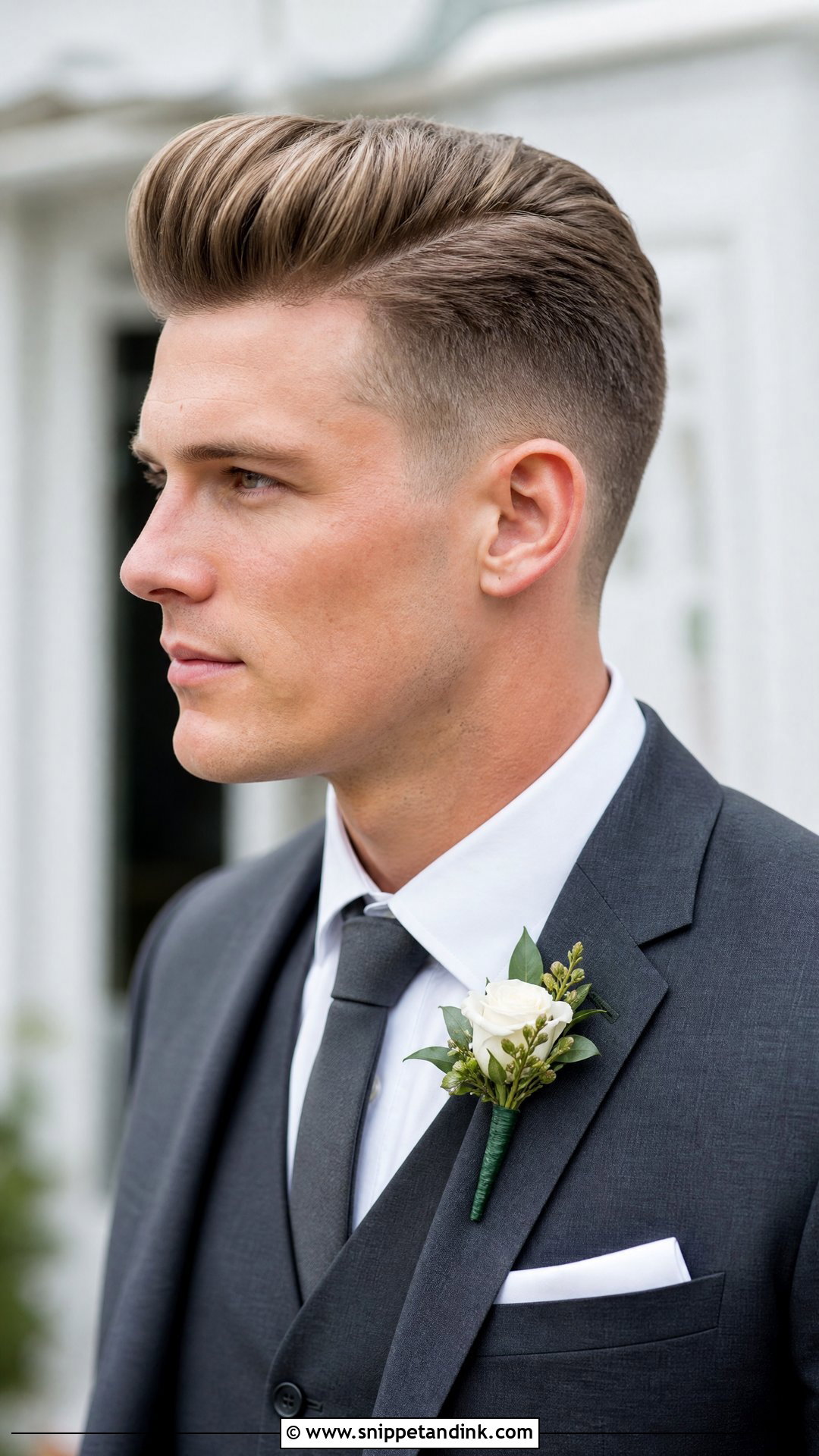
The pompadour needs length to work, usually several inches at the front, so this is a style you plan months ahead, not the week of. Height comes from blow-drying the front up and back with a round brush before any product goes in. Skip that step and no amount of pomade will hold it. I’d steer grooms with very fine or thinning hair away from it, since the lift exposes the scalp under flash. A strong-hold pomade with a clean shave gives you the full retro silhouette.
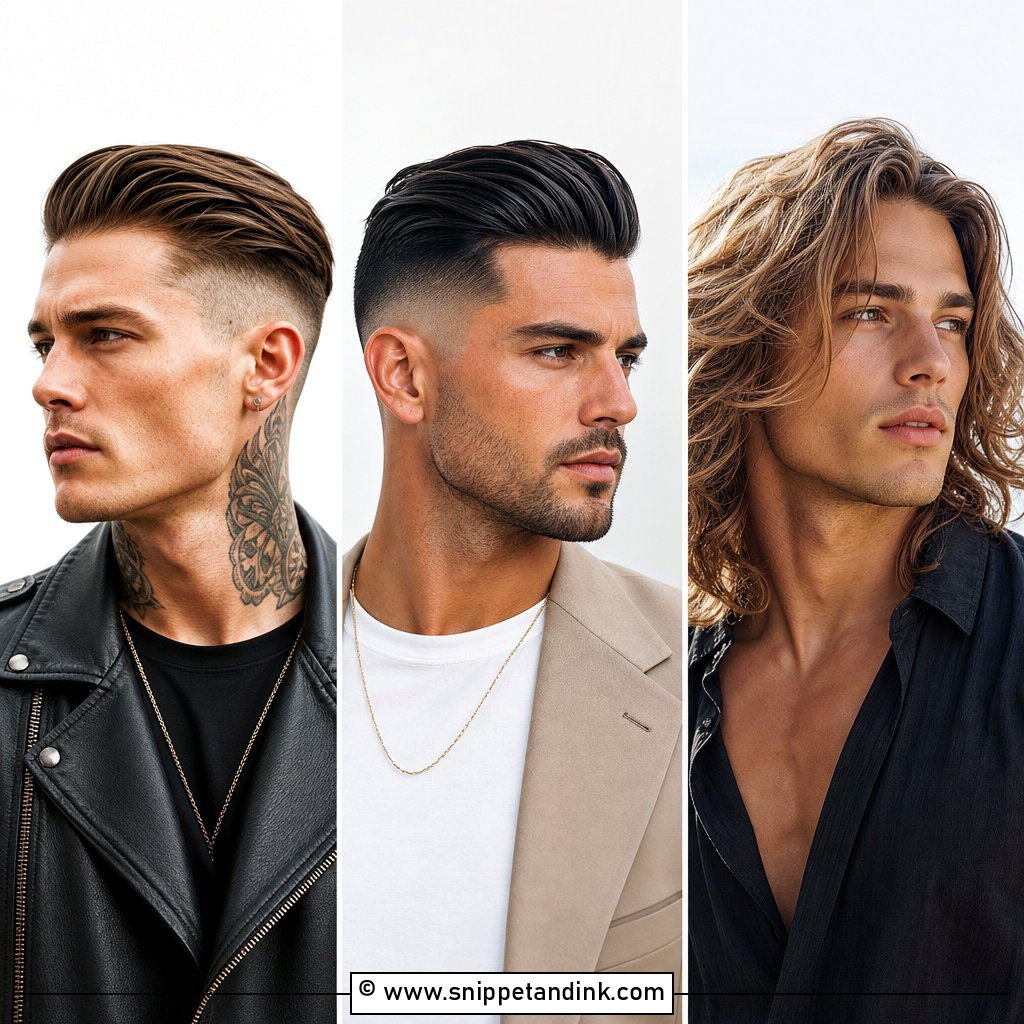
4. Low Skin Fade With Textured Top
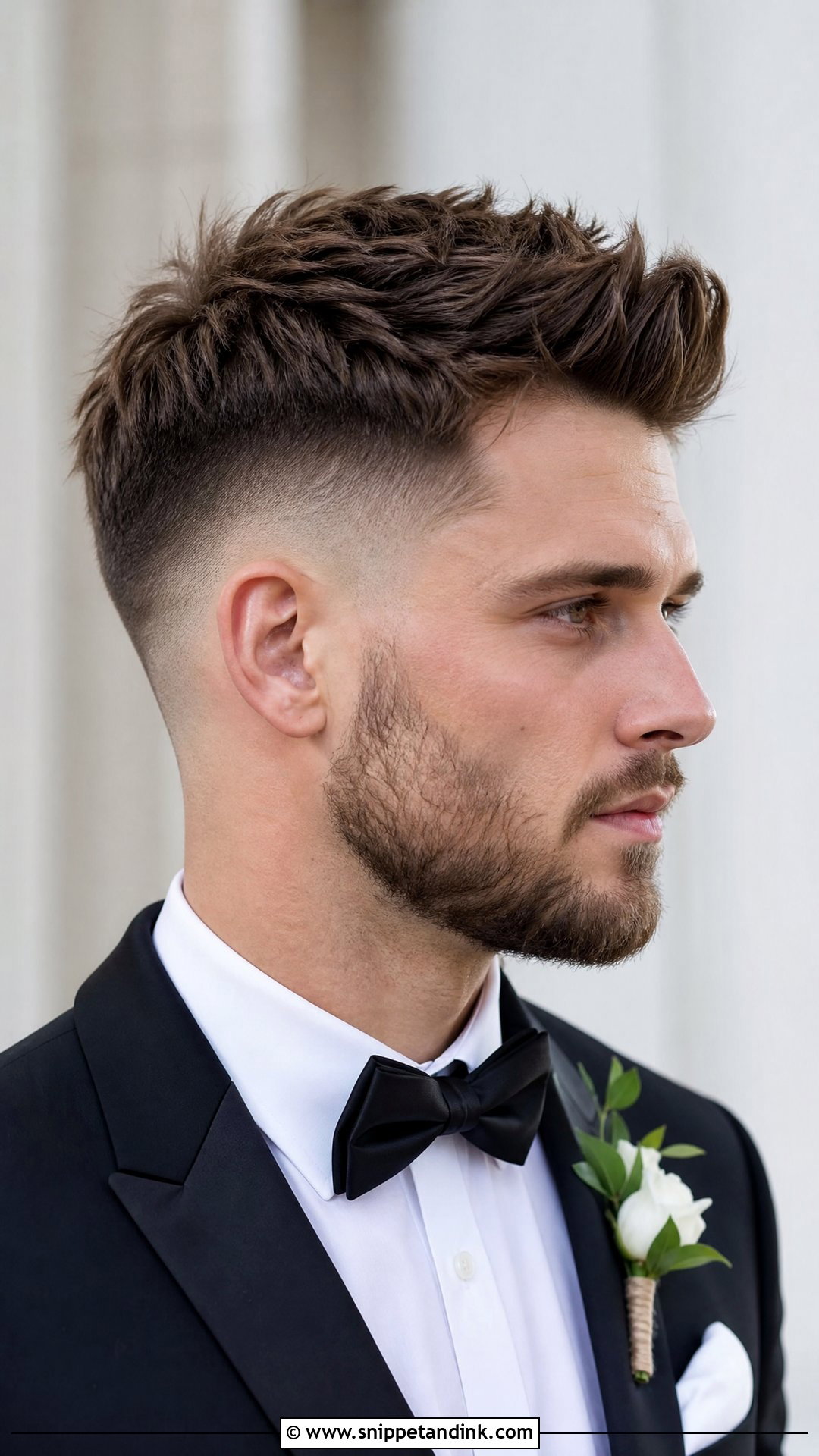
Barbers get asked for this combination constantly, and it earns that popularity. The low skin fade keeps the hairline at the neck crisp, which is exactly the area a camera catches when you turn to face your partner. On top, the length is left loose and textured, so the contrast reads clearly from across a room. The catch is timing: a skin fade looks its sharpest for only a few days, so book the cut close to the date. Finish the top with a light matte product and keep your beard line in step with the fade.
5. Slicked Back Hair for Weddings
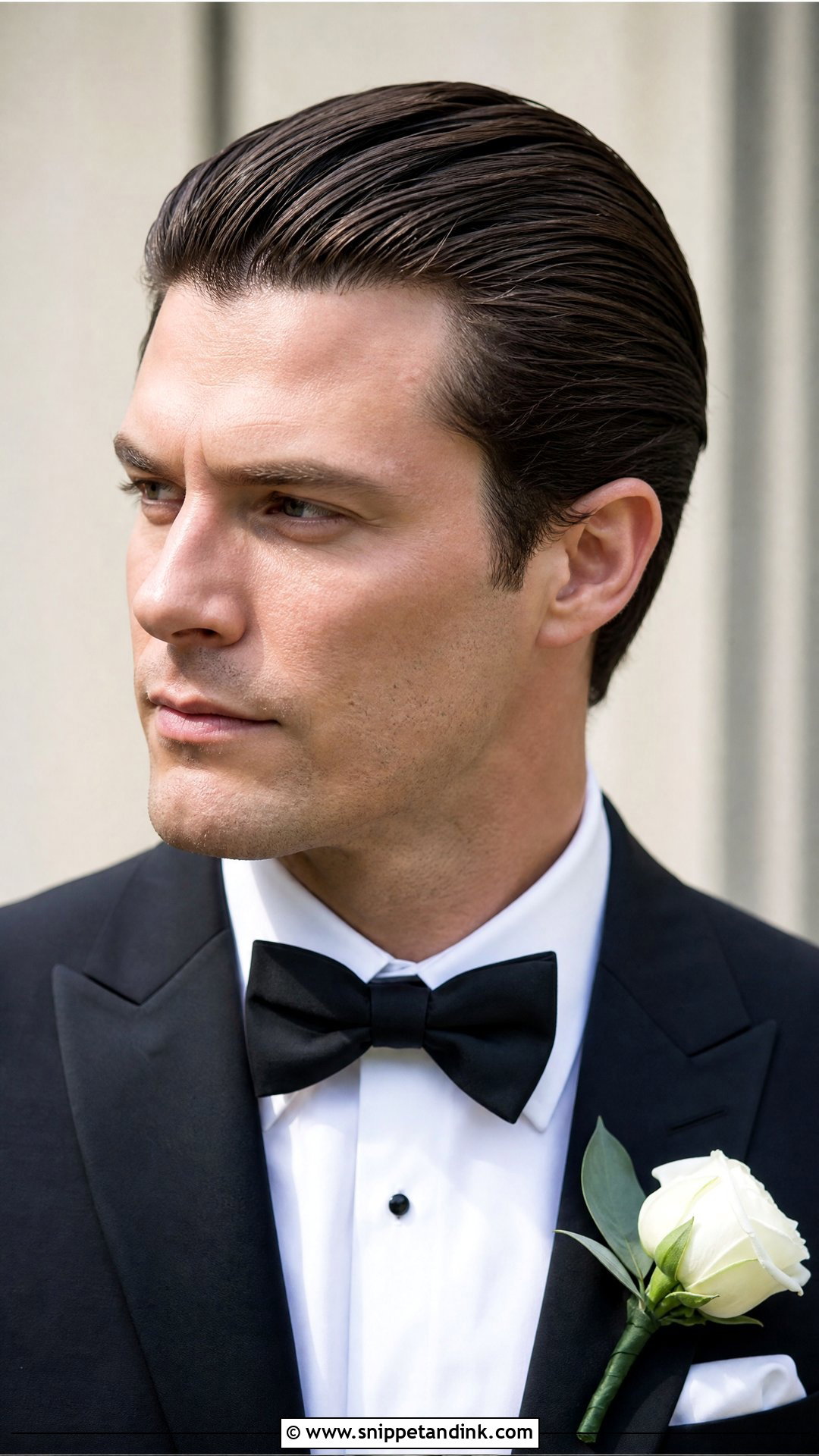
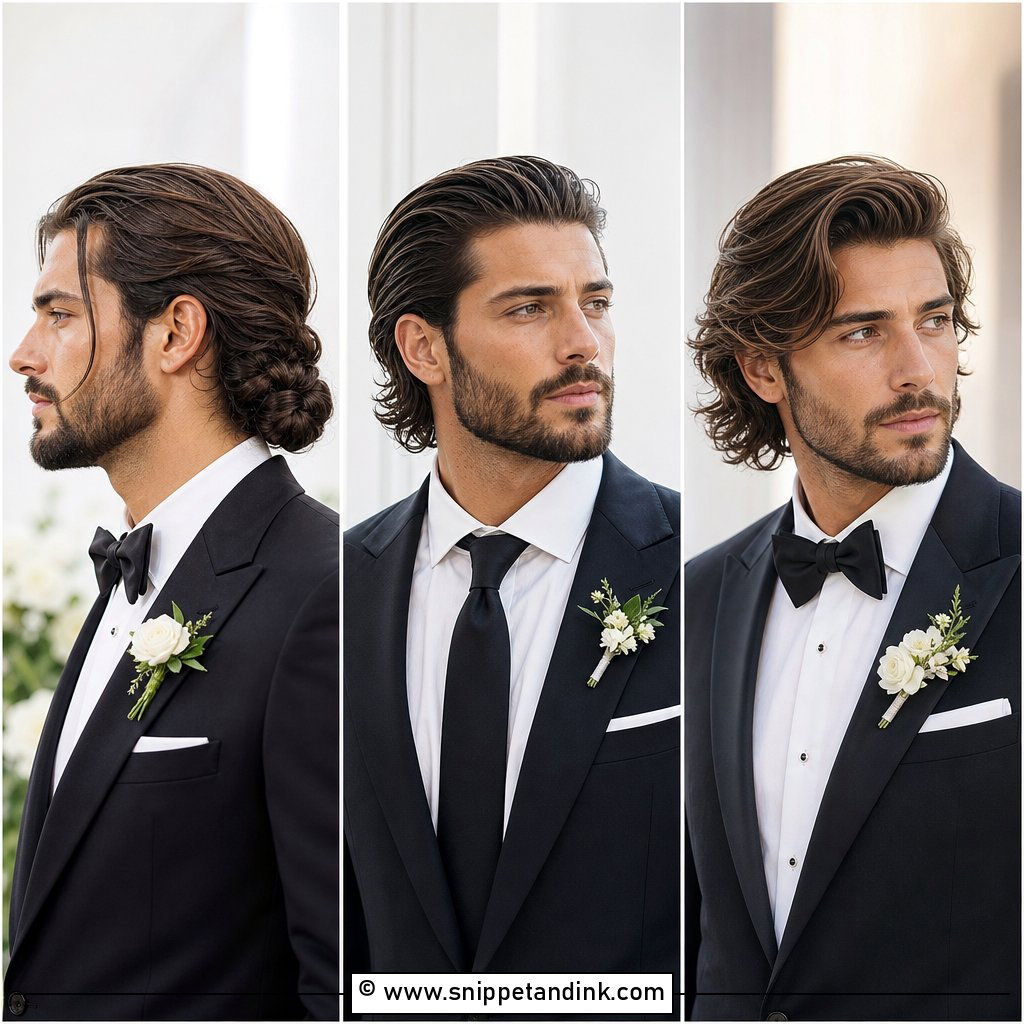
Slicking everything straight back shows off your whole face, which is great if you like your forehead and less so if you don’t. It needs medium length, ideally straight or loosely wavy hair, because tight curl pulls against the direction of the comb. I prefer a water-based pomade here since it gives the polished shine and washes out the next morning without a fight. Comb it through damp hair, then let it set before you put your jacket on so you don’t brush it with your collar.
6. Curly Hair Groom Style
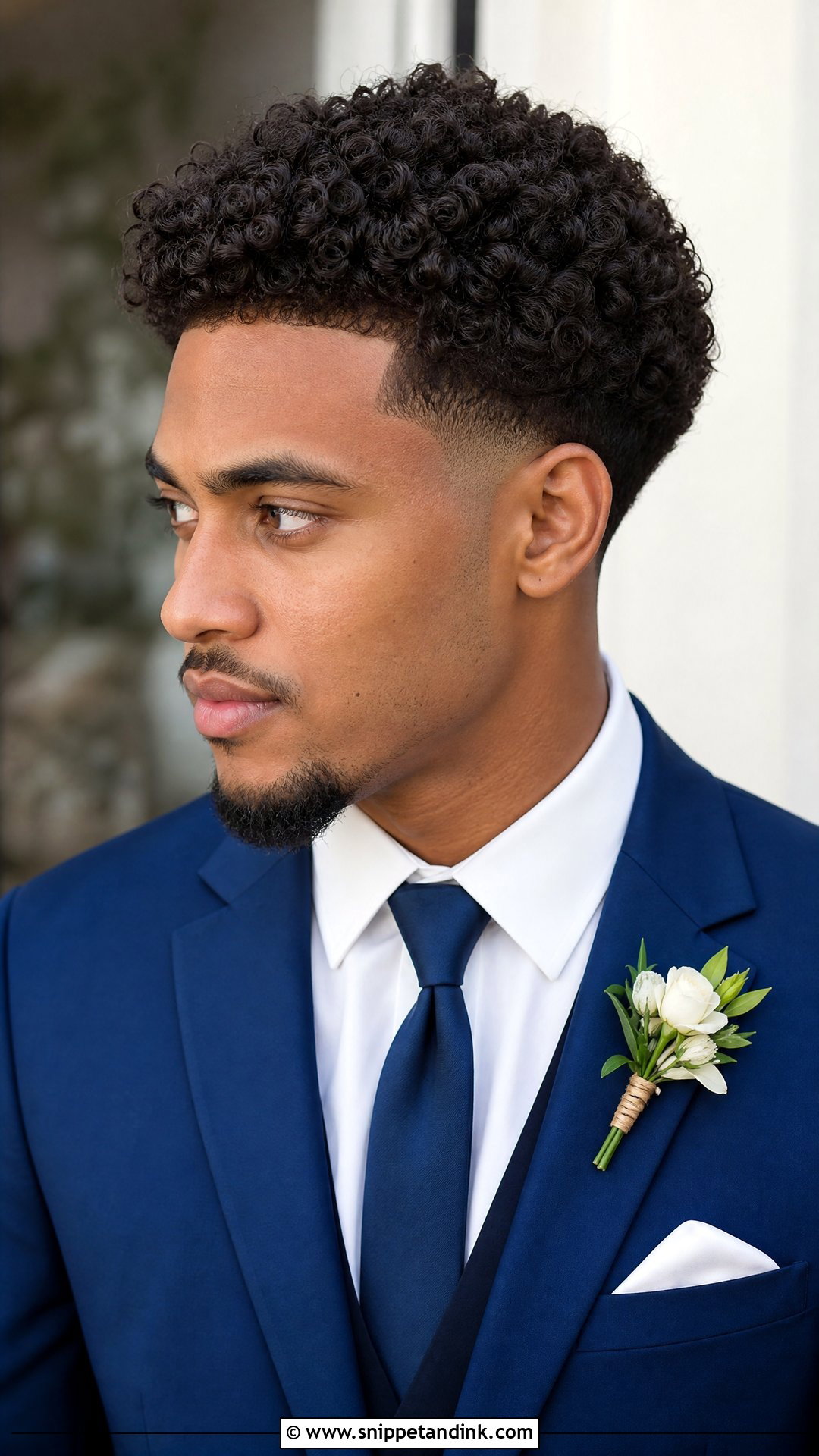
Curly hair photographs best when it’s cut for the curl, not against it. Tapered sides keep the shape tidy while the top stays full, and a barber who cuts curls dry can see where each ringlet actually sits. Apply curl cream to soaking wet hair and then leave it alone; touching curls while they dry is what turns definition into frizz. If you’re outdoors in humidity, a light gel layered over the cream helps the shape hold through the evening.
7. Quiff Hairstyle for Grooms
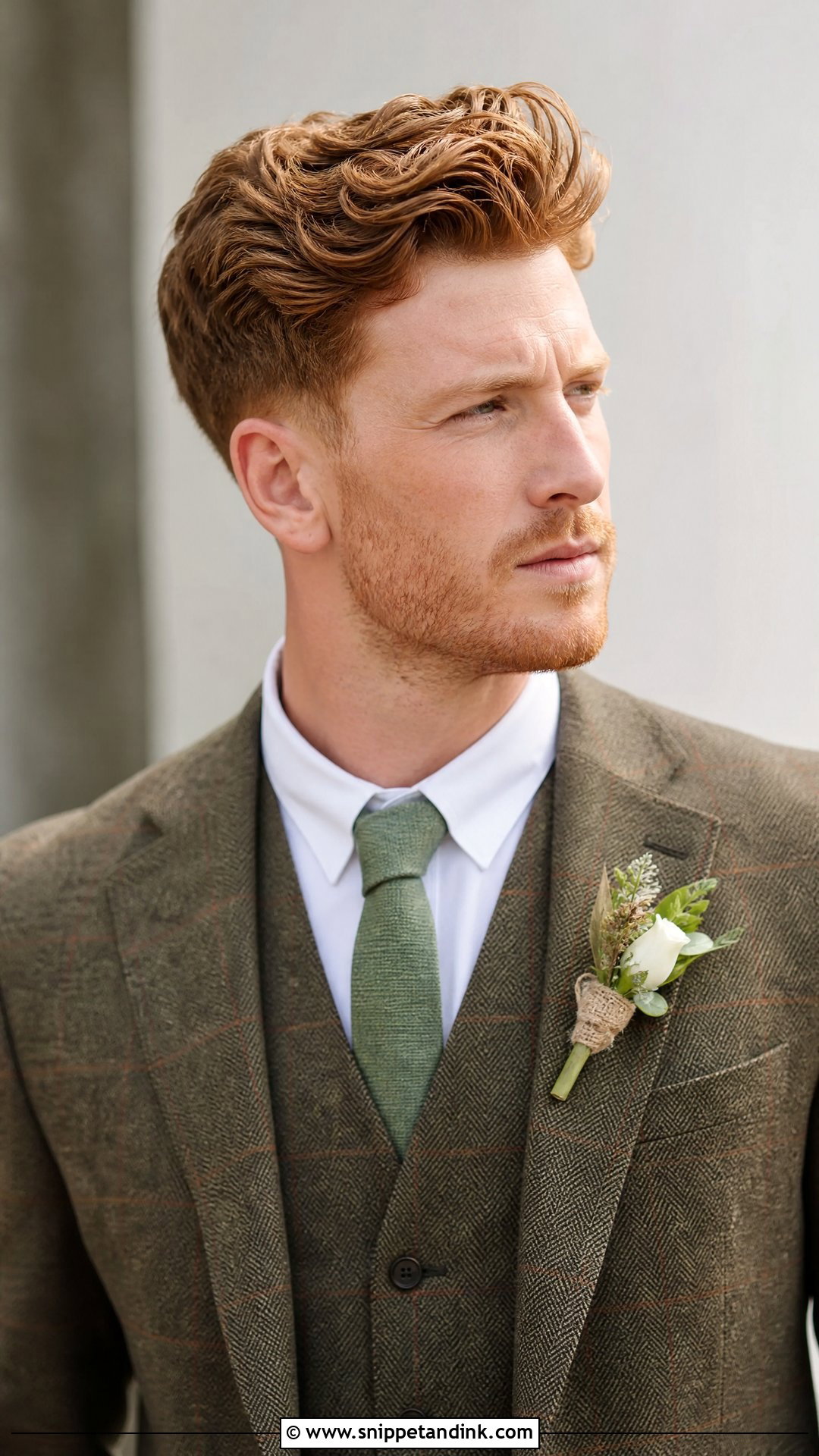
Think of the quiff as a gentler pompadour. The front lifts up and back but the shape stays softer and more textured, so it doesn’t look like a costume in daylight photos. It suits most face shapes, and the sides can be faded or tapered depending on how sharp you want the outline. A little mousse at the roots before blow-drying gives lift that lasts longer than pomade alone. Then use a light pomade just to shape the ends.
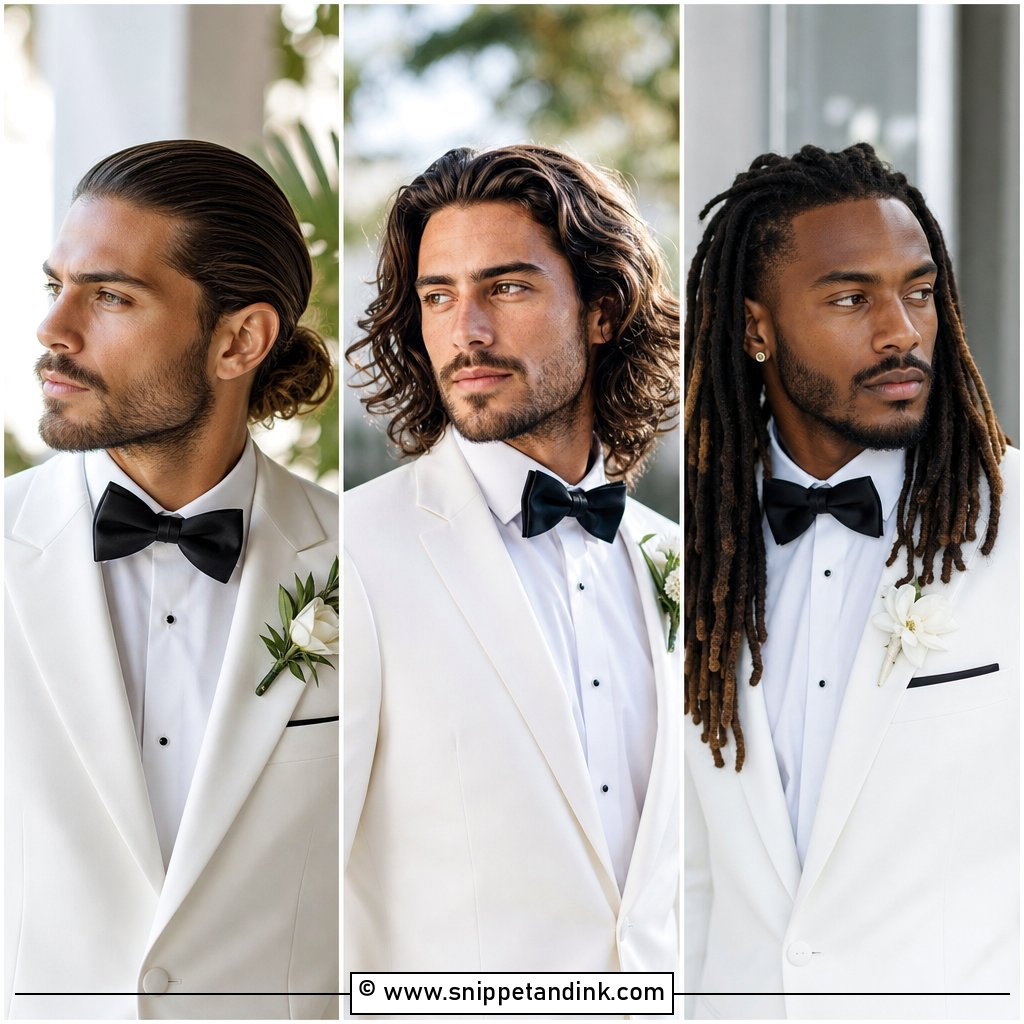
8. Man Bun for Long Hair Grooms
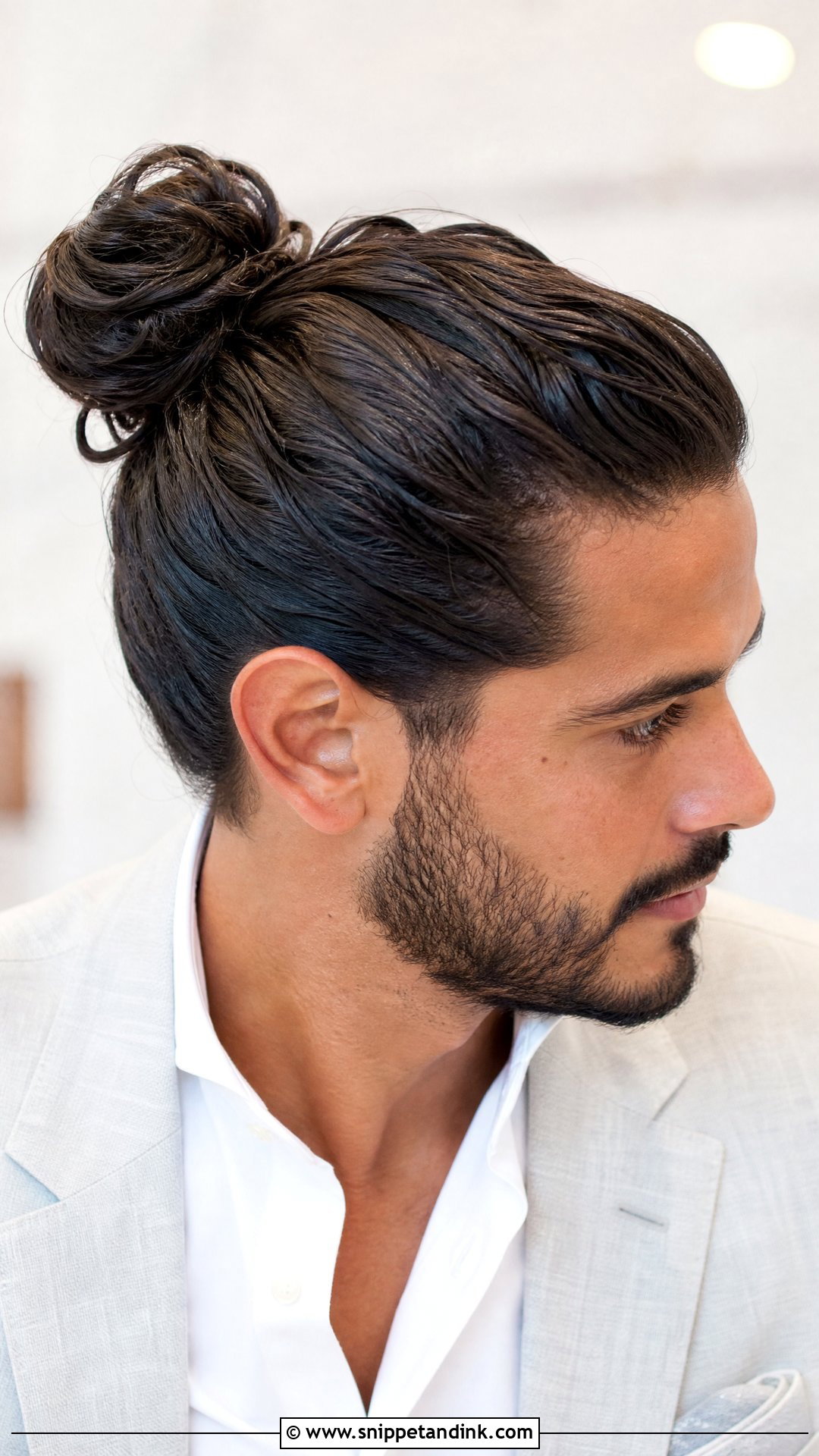
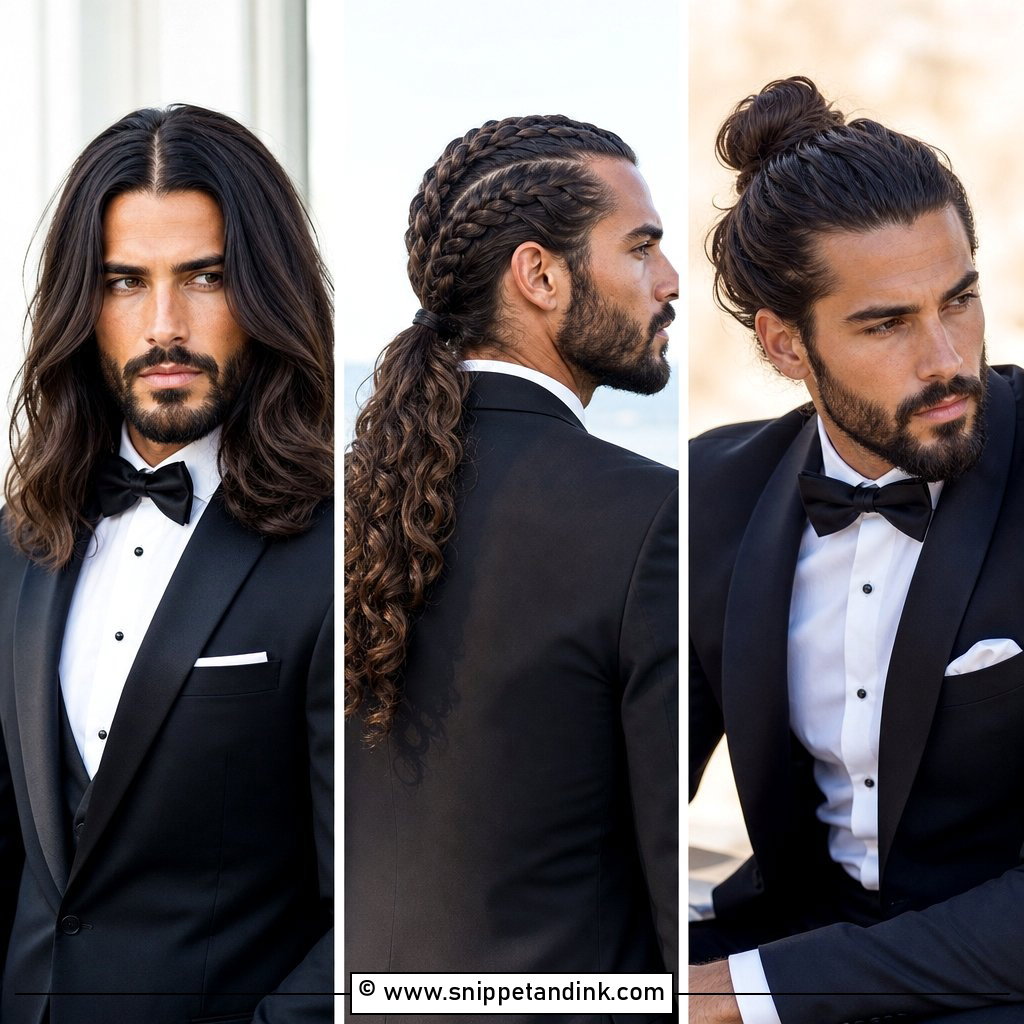
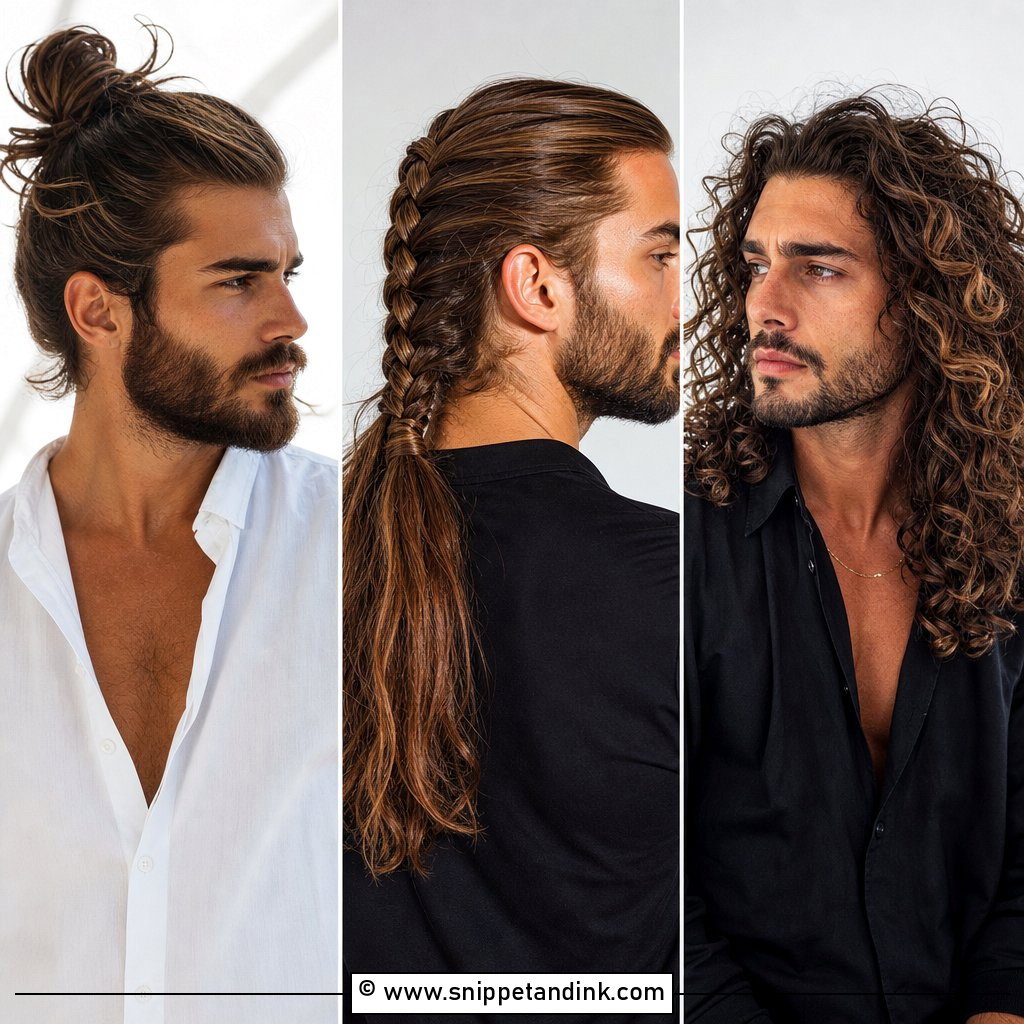
Long-haired grooms often land on the man bun because it keeps hair off the face in heat and through a lot of hugging. Placement changes the mood: a bun high at the crown feels casual, while a low knot at the nape looks more formal under a suit collar. Use a snag-free elastic and smooth the surface with a small amount of styling cream. A light taper on the sides keeps it looking deliberate rather than tied up in a hurry.
9. Buzz Cut for Grooms
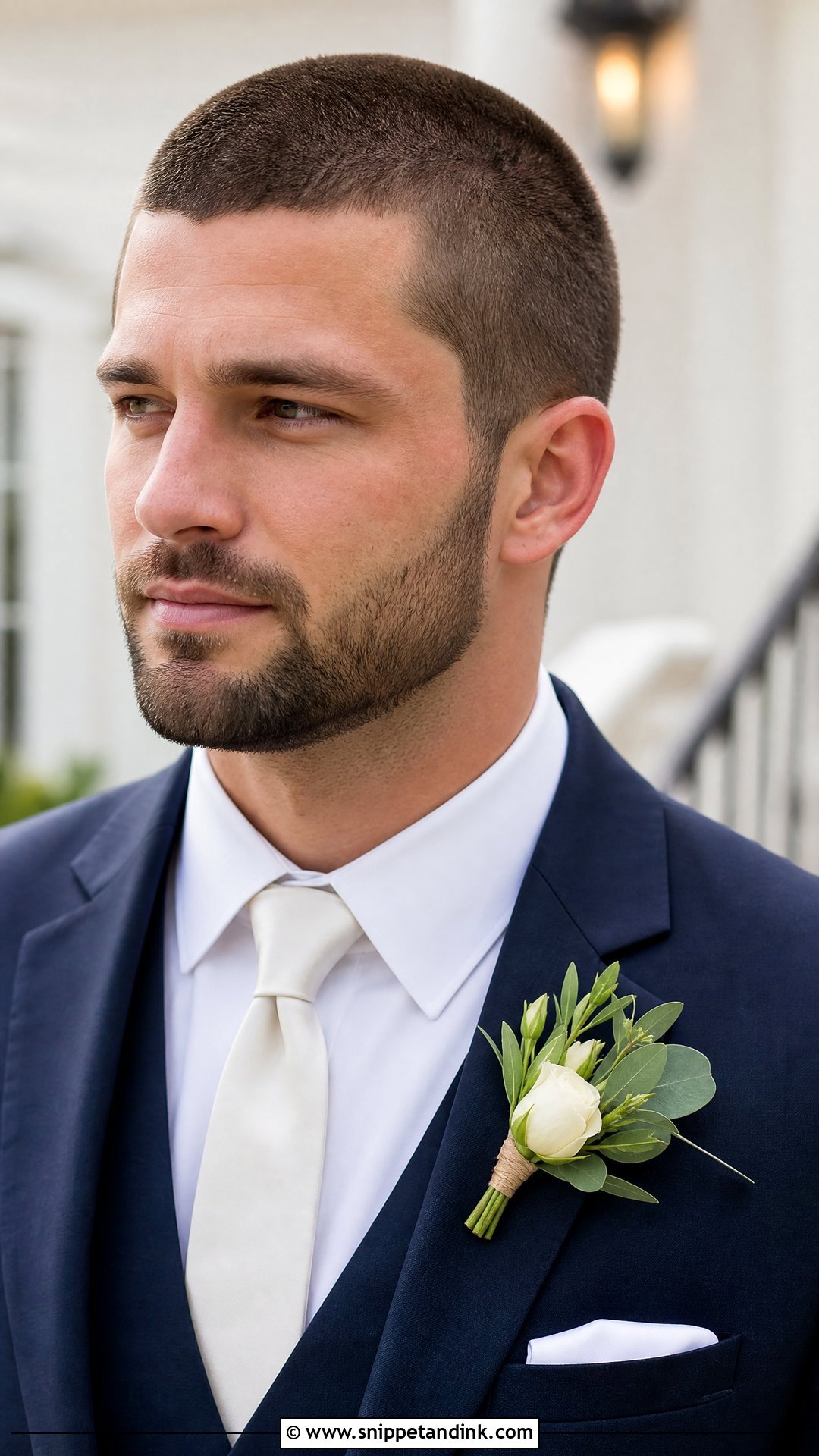
Nothing on this list is lower risk than a buzz cut. There’s no styling, no product and nothing to fall out of place, so the only real decision is the clipper guard length. Do a test buzz a few weeks before the wedding, because the scalp under a very short cut can be paler than your face if you’ve been out in the sun. It suits strong features and pairs well with a sharp beard or a smooth shave. It’s also an honest answer for thinning hair, since it removes the contrast that makes thinning noticeable.
10. Side Swept Undercut
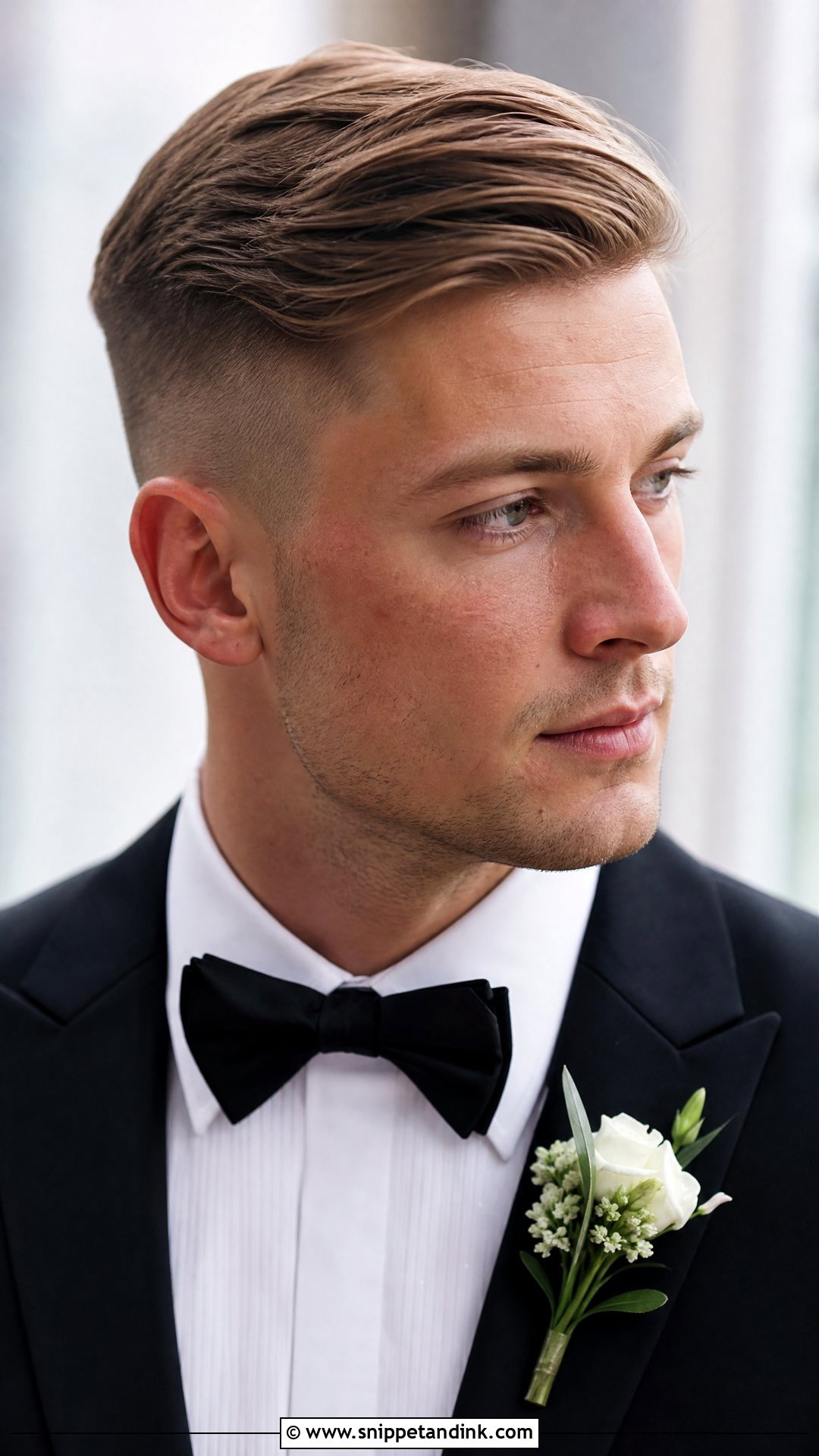
In a side-swept undercut, the sides are clipped short and the long top falls to one side, so there’s a hard line where the two lengths meet. That disconnection is the point, but it needs straight to wavy hair with enough weight to fall over it. On very curly hair the top springs up and the line gets lost. Direct the top with a light pomade while it’s still slightly damp. It’s a fashion-forward cut that still sits comfortably with a tailored suit.
11. Faux Hawk Wedding Style
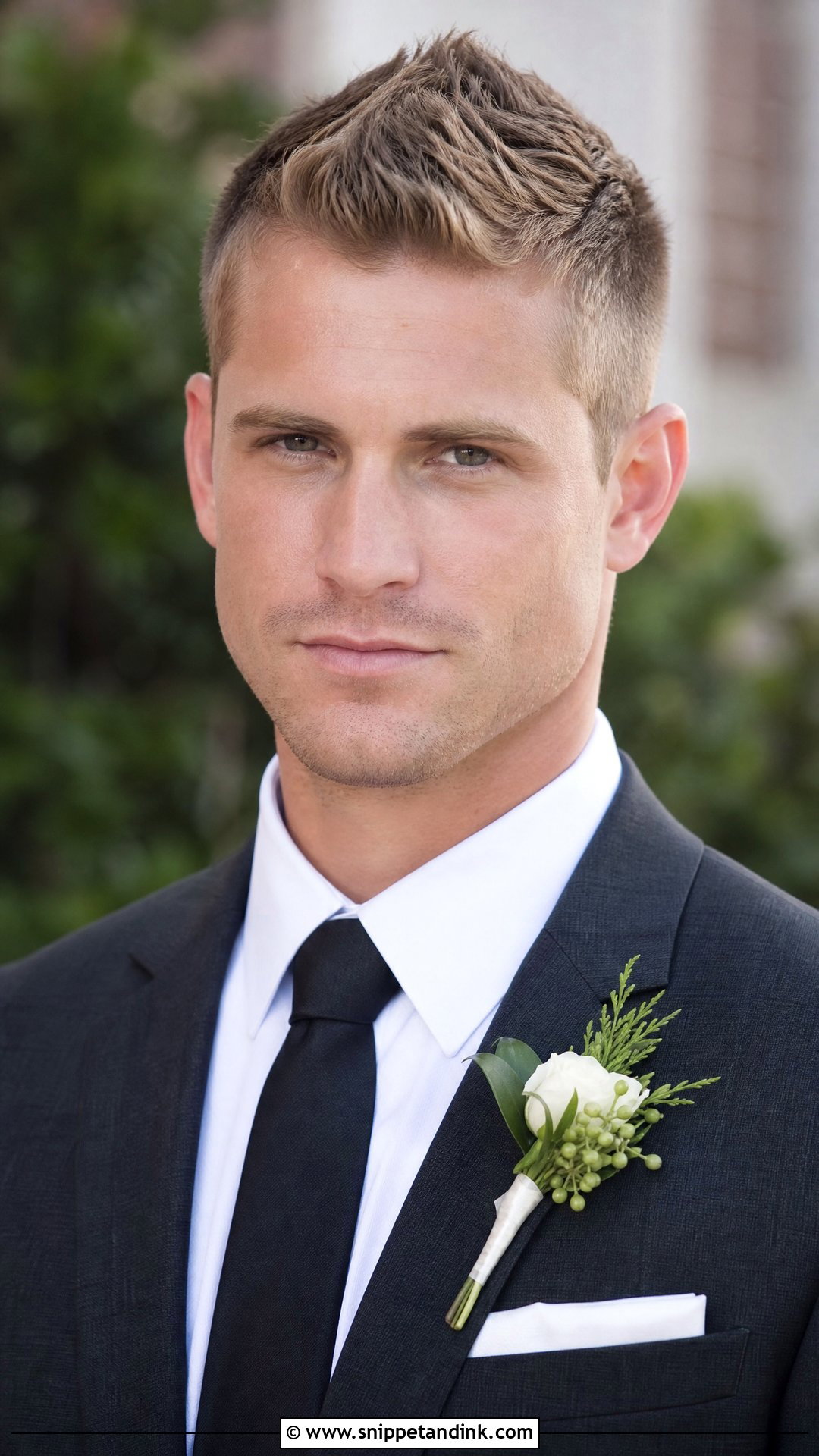
A faux hawk gives you a little edge while staying formal enough for a church. The sides stay short and the centre is pushed into a soft peak, rather than the shaved strip of a true mohawk. Use a flexible product, because a stiff gel cracks into visible chunks after a few hours of dancing. I’d suggest a lower, rounder peak for the ceremony; you can push it higher for the reception if you want the energy.
12. Crew Cut for Grooms
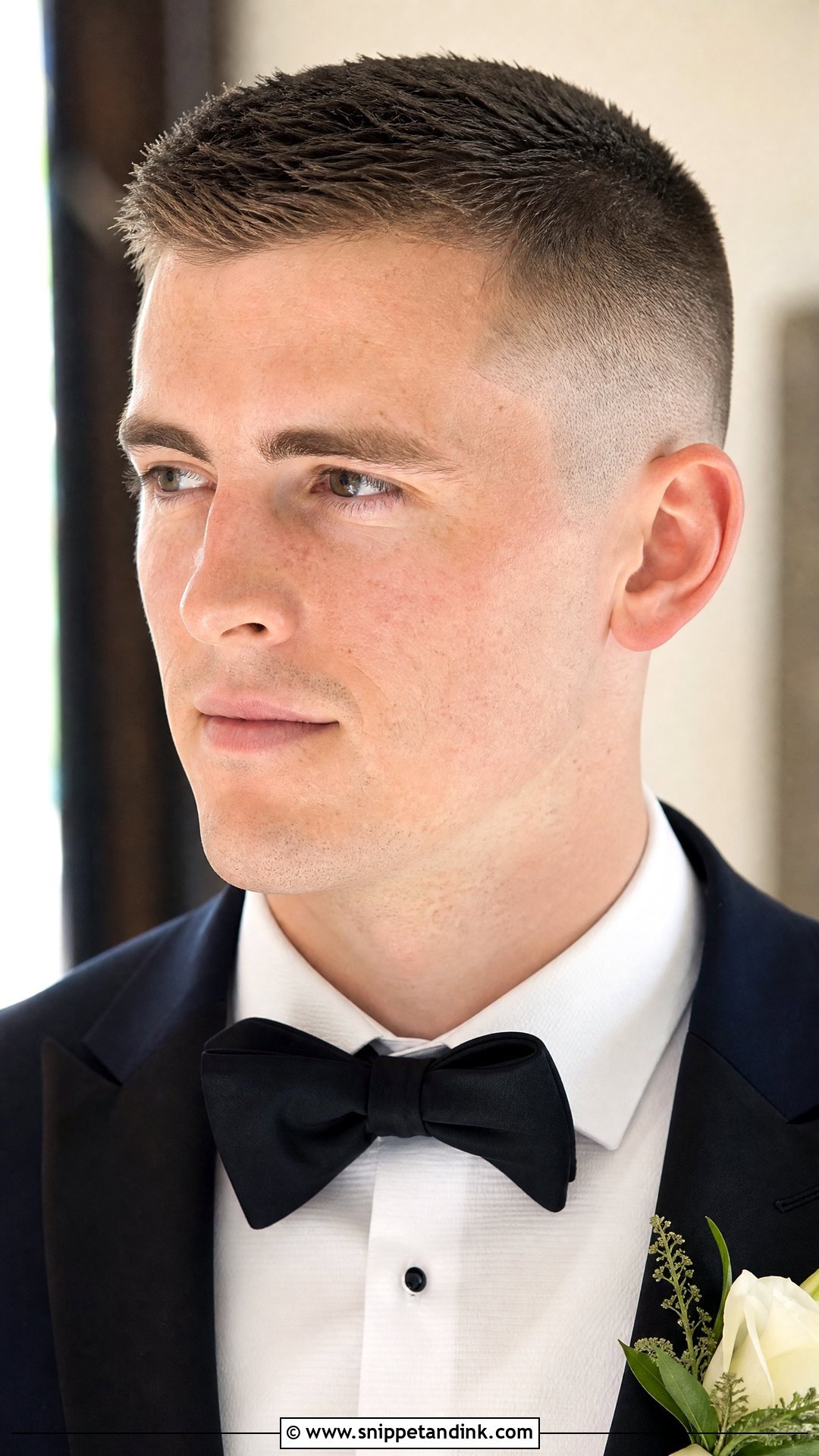
The crew cut has a military origin, and it shows in how little it asks of you. The sides are short, the top a touch longer, and the length tapers down toward the front. It suits almost every head shape, which is why I suggest it to grooms who want to forget about their hair entirely. If you like a little texture, use a dab of matte product and push the front forward with your fingers. It sits neatly under any classic suit or tuxedo.
13. French Crop Haircut
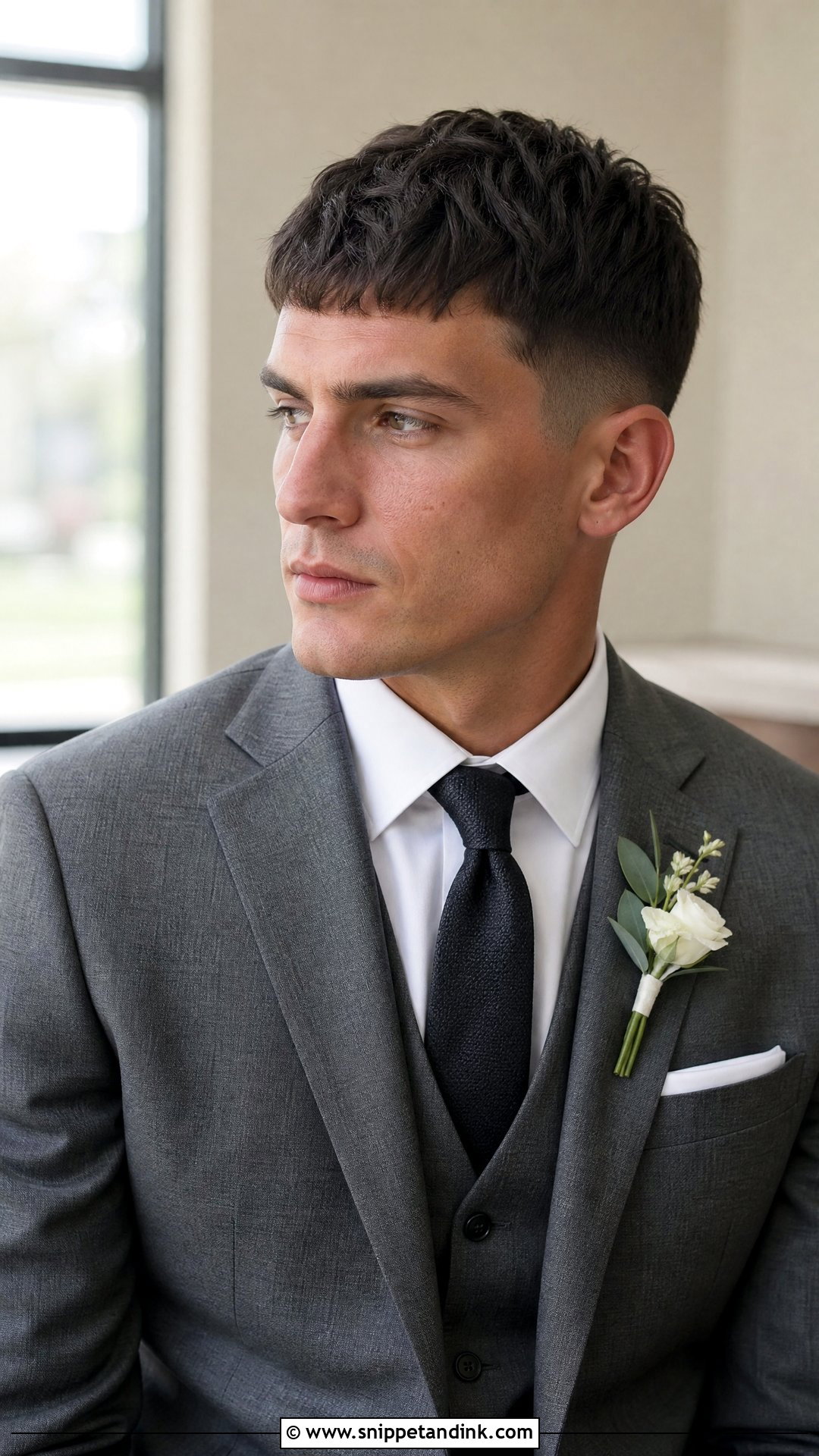
The French crop has stayed popular for years because the blunt fringe hides a high or uneven hairline with very little effort. The sides are short and tapered, and the longer top is pushed forward to a straight line across the forehead. Thick hair shows the shape best; on very fine hair the fringe can separate and look sparse. A small amount of matte paste keeps the fringe defined. Ask for the fringe line to be cut a few days before, since a fresh blunt edge settles quickly.
14. Comb Over Fade
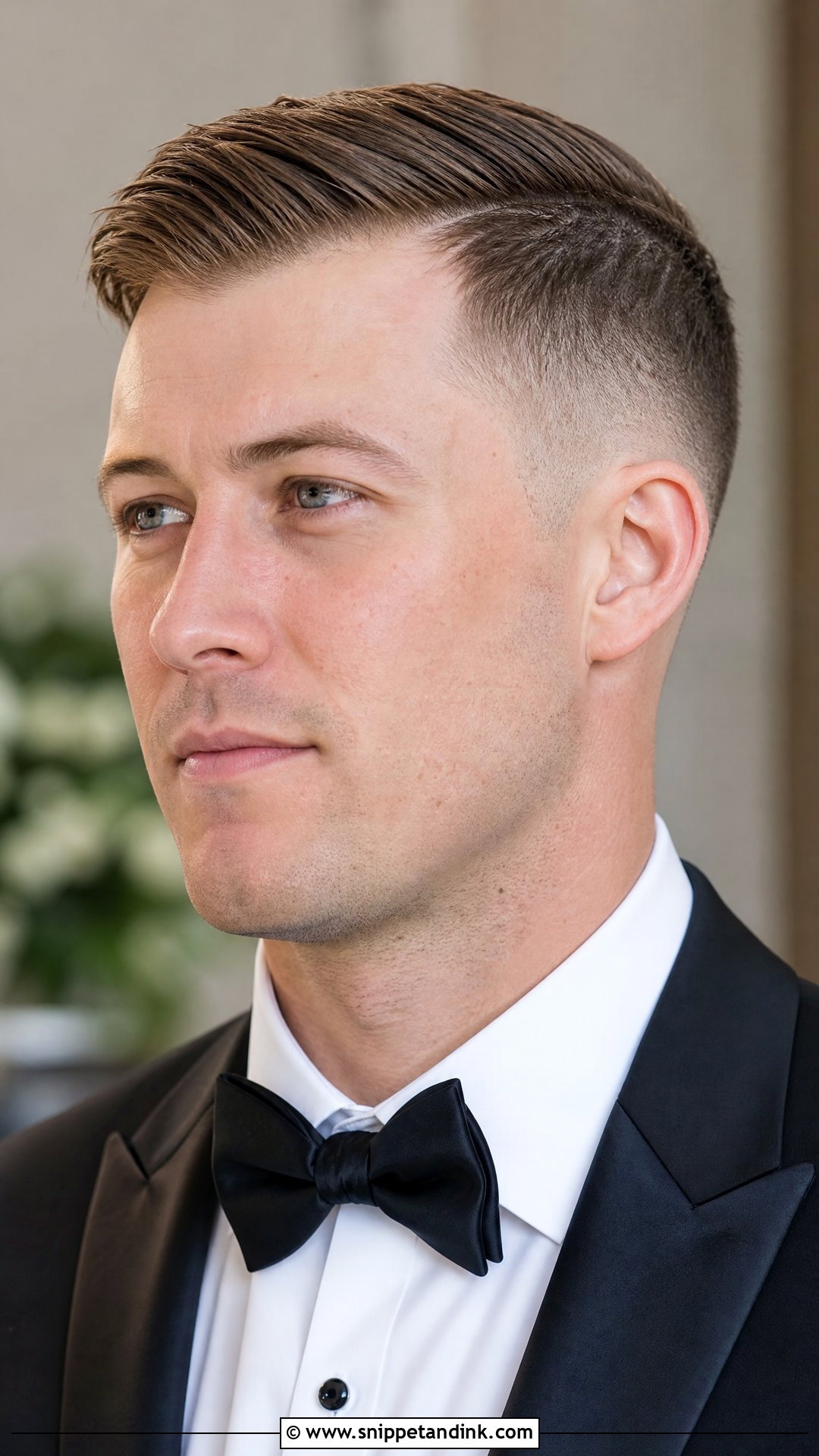
The comb over fade is the dressier cousin of the side part, with the sides faded down to the skin so the top looks deliberate. The top is combed neatly to one side, and the gradient below gives it a sharpness that reads well next to a tuxedo lapel. A light pomade keeps the comb lines in place. It works on straight or wavy hair, and it suits grooms who want something formal that doesn’t feel stiff.
15. Textured Fringe for Grooms
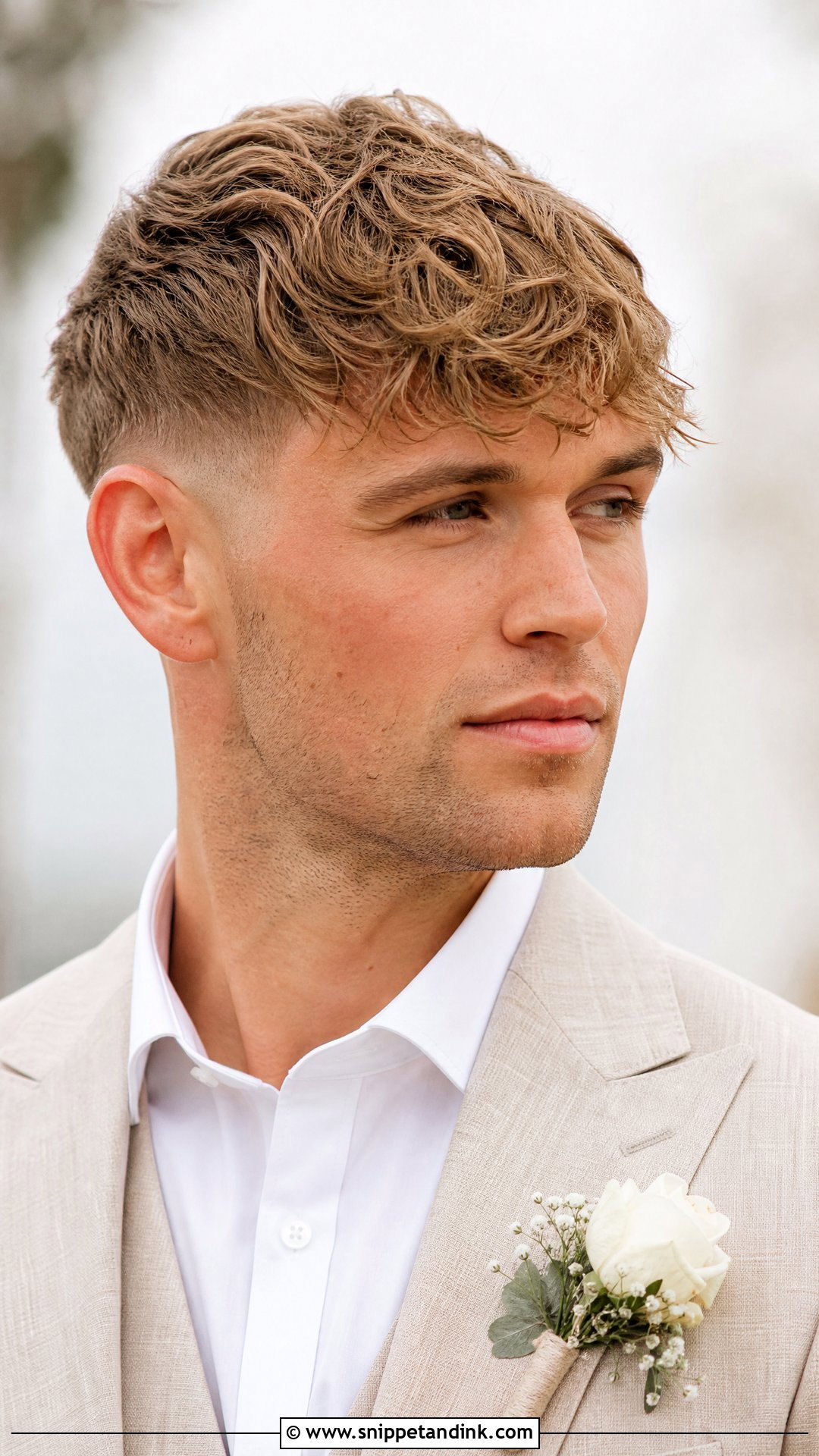
A textured fringe falls forward over the forehead with choppy, separated pieces, so it reads younger and looser than most cuts here. It softens strong brows and a long forehead. The sides can be tapered or faded. Work matte clay through dry hair and pinch the ends so the pieces stay apart. I’d pick this for an outdoor or relaxed ceremony; under strict black-tie it can look a bit casual next to the formality of the suit.
16. Long Flowing Hair Groom Look
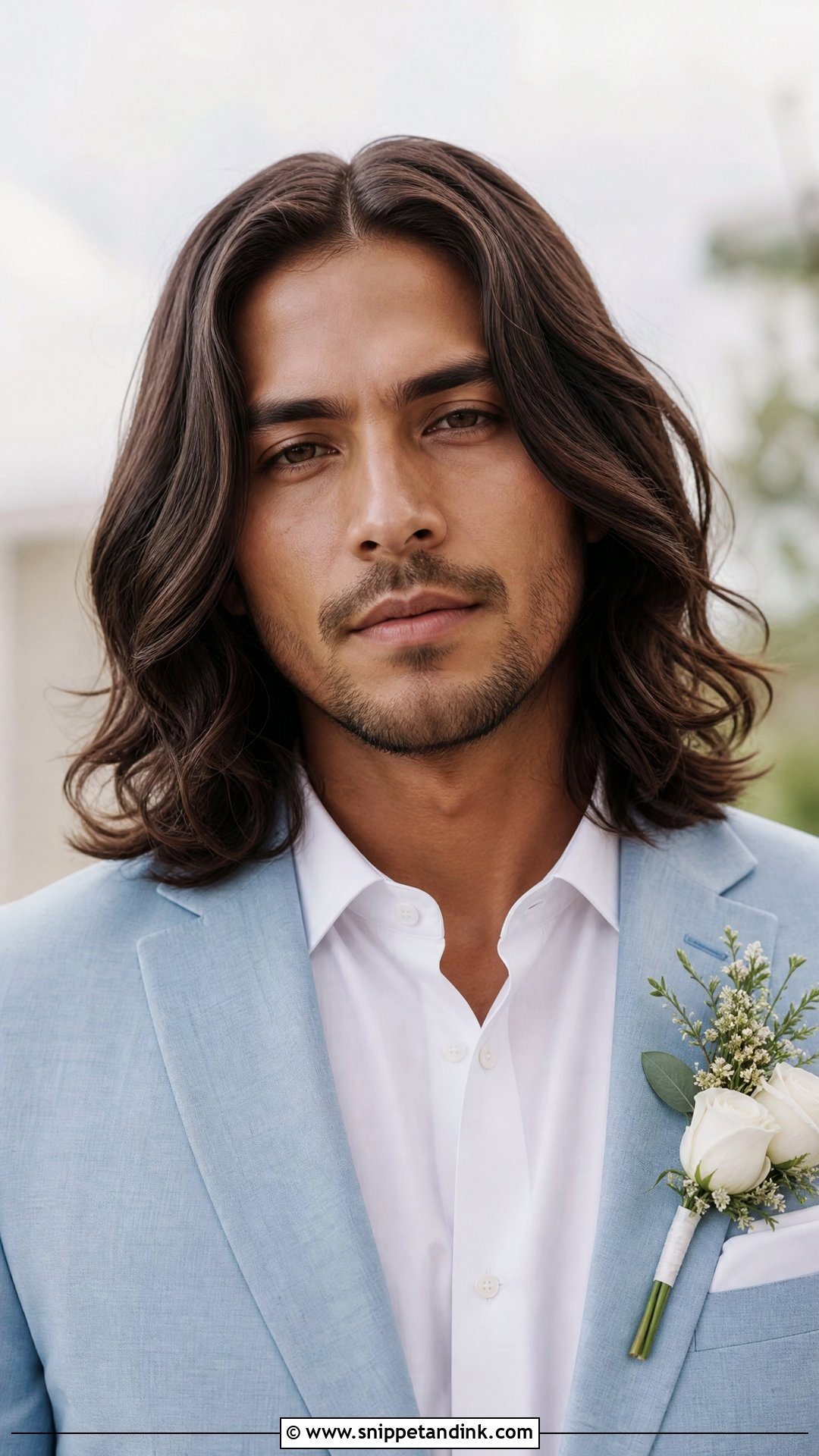
Wearing long hair down is the hardest style here to keep consistent, because loose length reacts to wind, humidity and every hug. A centre or side part frames the face, and a trim a couple of weeks before removes split ends that look frayed in close-up shots. Smooth frizz with a lightweight serum on the mid-lengths and ends only. Keep a small comb in your jacket. It suits beach and bohemian weddings, but for a windy coastal ceremony I’d still have a low tie ready.
17. Caesar Cut for Weddings
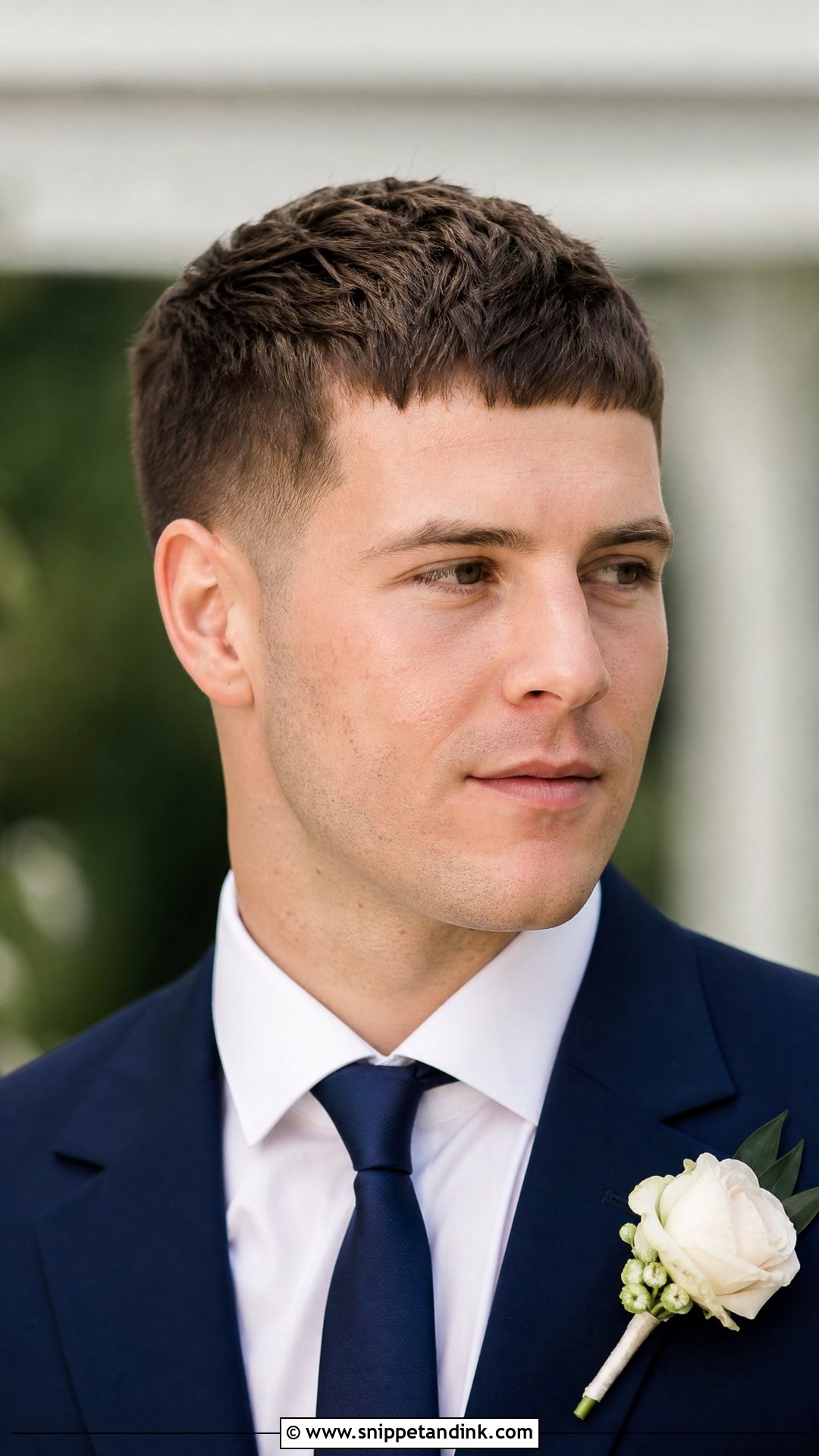
The Caesar cut is even all round with a short, horizontal fringe brushed forward. That forward fringe is why it helps grooms with a receding hairline: it adds fullness right where the temples are thinning. It’s close to zero effort on the morning. A small amount of matte product gives definition without shine. It flatters round and oval faces, and it works with casual or formal clothes.
18. Braided Hairstyle for Grooms
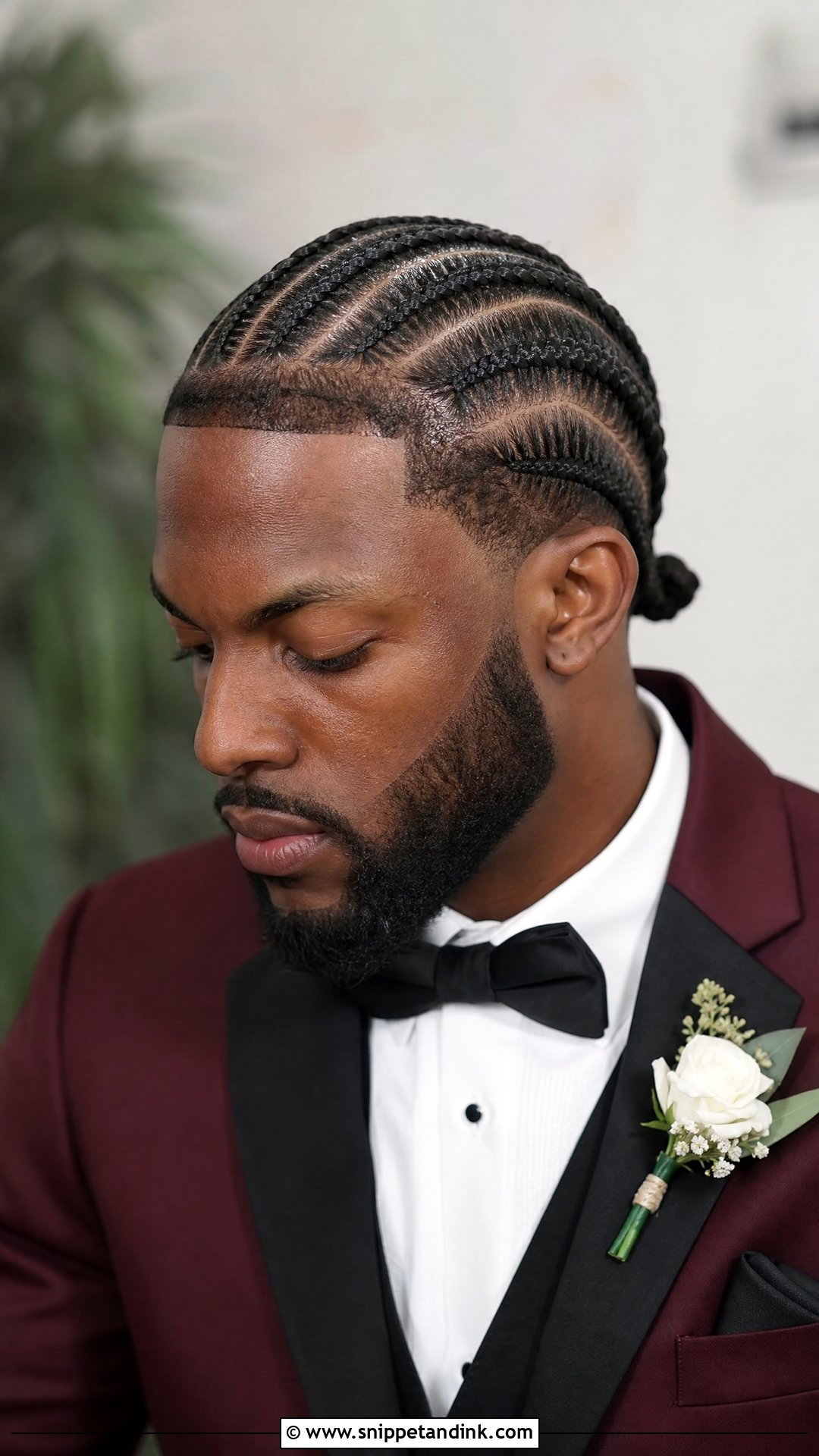
Braids range from two simple plaits to detailed cornrow patterns, so the first conversation is with your braider, not your barber. Cornrows and tighter patterns are best done a day or two before, which gives the scalp time to settle and the edges time to look neat rather than raw. Braids keep long hair off the face all day and hold up to dancing far better than loose length. Many grooms choose them for cultural meaning, and that significance deserves an experienced braider who knows the tradition.
19. Wavy Hair Side Part
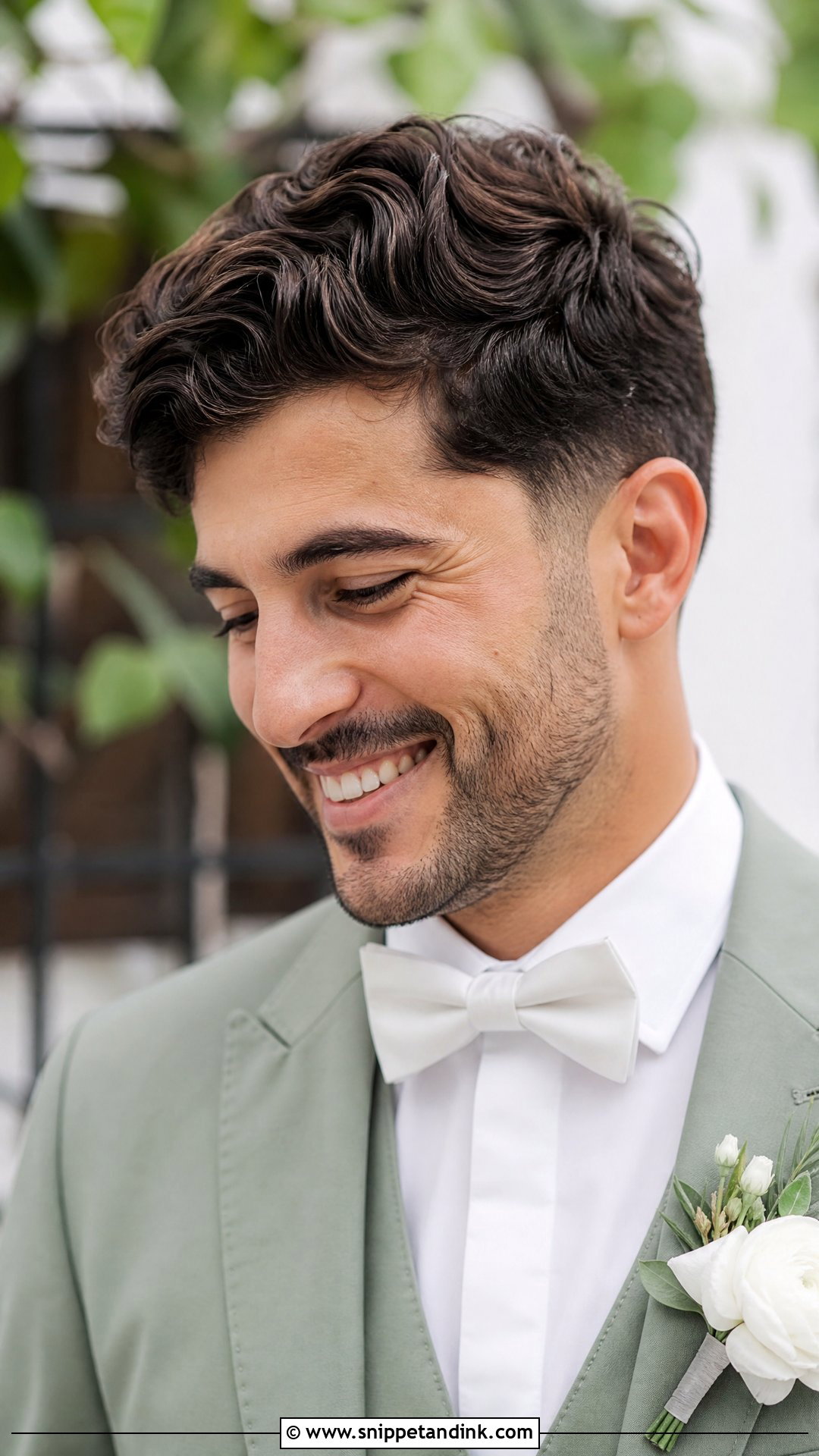
Naturally wavy hair is easier to work with than most people think, as long as the cut leaves enough length for the wave to form. A relaxed side part lets the waves fall to one side and keep their movement. Scrunch a light cream into damp hair and let it air-dry or diffuse on low heat, since a hot blow-dryer straightens the wave and adds frizz. Taper the sides to keep the outline tidy. It sits comfortably at formal and casual weddings alike.
20. Slick Undercut With Beard
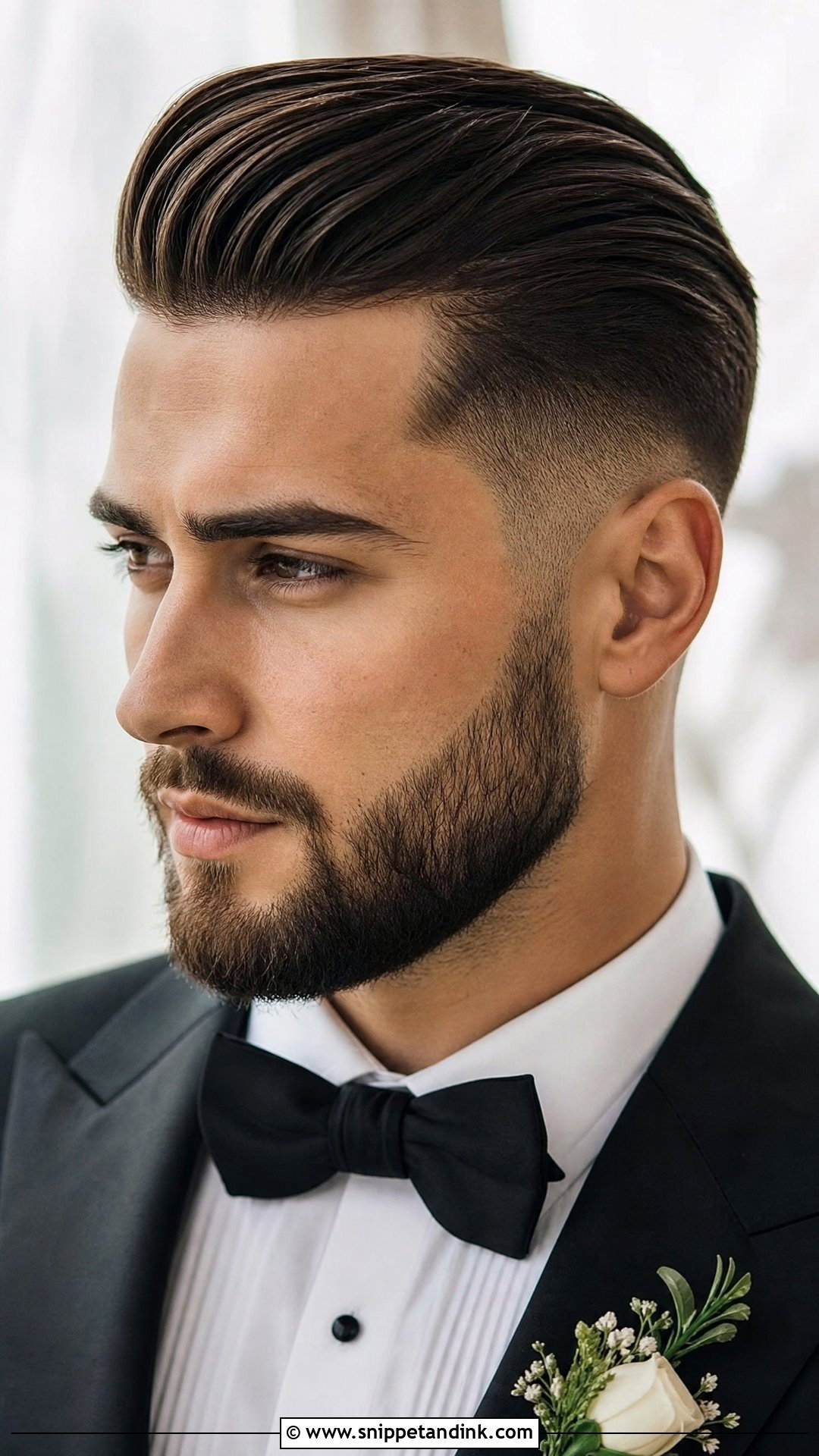
For a bold, modern groom look, pair a slick undercut with a well-groomed beard. The sides are shaved short or faded and the long top is slicked back with a glossy pomade, giving a strong contrast. The beard needs its own appointment, ideally with the cut, so the fade on your head blends into the beard line instead of stopping abruptly at the ear. Keep the cheek line soft rather than razor-sharp; a hard shaved edge can look drawn on in close-up portraits.
Pomade, Clay or Nothing at All for a Fourteen-Hour Day
Product choice decides whether your hair at the first dance looks like your hair at the vows. Oil-based pomade holds hard and shines, but it builds up and can leave marks on a shirt collar. Water-based pomade gives similar shine, softens a little in heat, and can be revived by running wet fingers through it. Matte clay and paste hold texture without shine, which suits crops and fringes and hides sweat better under hot lights.
Whatever you choose, use less than you think. Too much product is the most common reason a groom’s hair looks greasy by evening. Start with a pea-sized amount and add only if the shape won’t hold.
What goes in your jacket pocket
- A small fine-tooth comb for side parts, slick-backs and comb overs
- A travel tin of the same product you styled with that morning
- Blotting papers for a shiny forehead before portraits
- A spare elastic if you’re wearing a bun or tying long hair back later
Hand these to your best man if your suit has shallow pockets. A two-minute check before the photos after the ceremony fixes most of what a long day does to your hair.
Your Barber’s Calendar From Six Weeks Out
Most of these cuts look their best a few days after the clippers, not the same morning. A fade wants three to five days to soften, while longer styles need their last real cut a week or two before so the shape has settled. Bring two or three photos of the style on hair like yours, not on a model with a completely different texture. Then practise the styling yourself at least twice, with the same product, so the morning holds no surprises.
You'll Like These Ideas:


Leave a Reply