
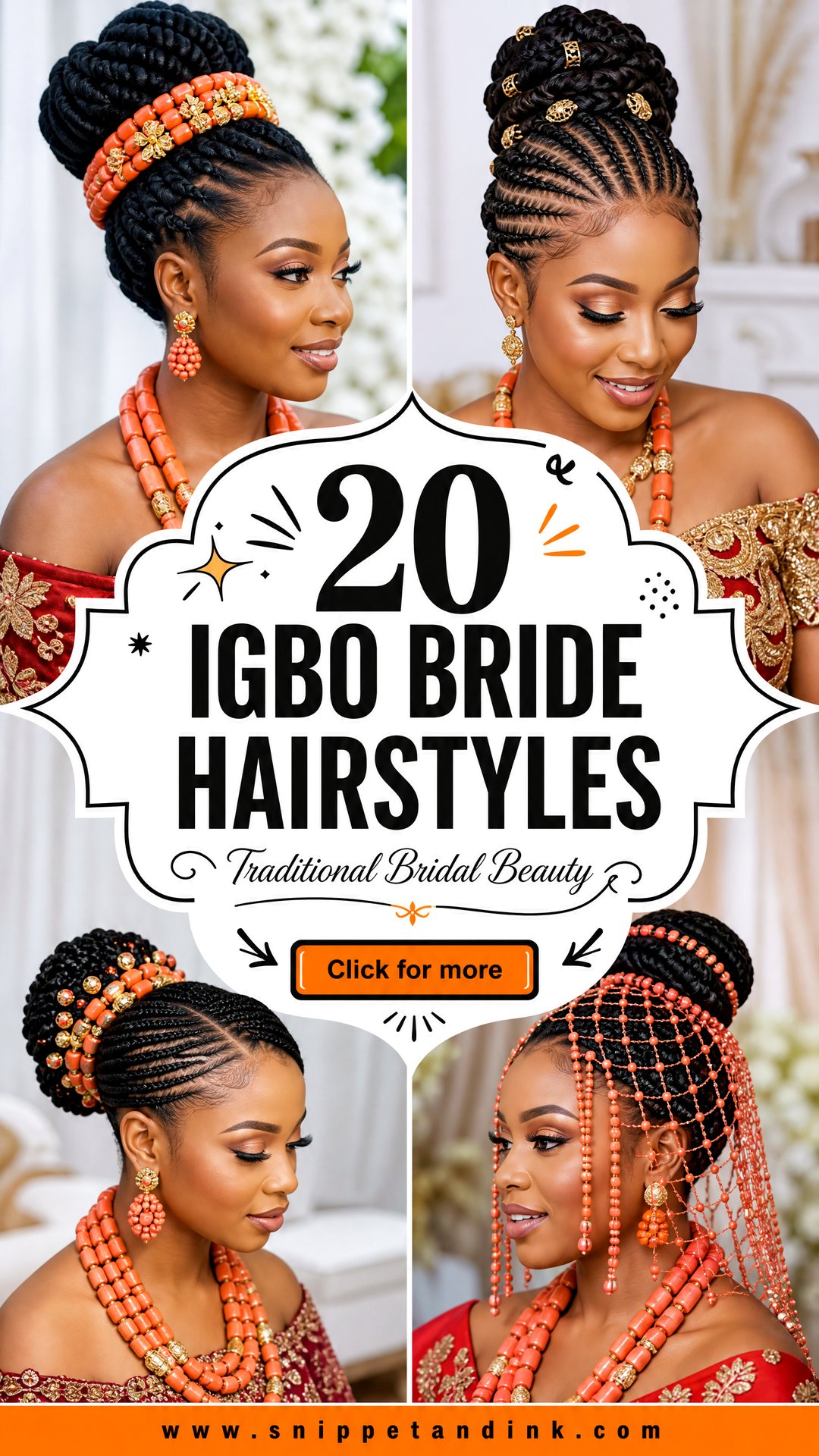
At an Igbo traditional wedding, the hair is built to carry something: coral beads, a beaded crown, sometimes a full draped headpiece. That changes how I approach it. The style has to look regal beside the gorgeous george wrapper or the isi agu top, and it also has to hold weight for hours without pulling at the scalp. Below are twenty looks I’d consider for an igba nkwu, from the packed-up bun to braided crowns and threaded styles, with notes on structure, comfort, and how each one handles coral.
One Base, Several Outfits: Planning the Changes
Many igba nkwu brides change outfits more than once, and each look can call for different hair: coral with the first wrapper, perhaps a different crown later, an ichafu or a gele for another outfit. Planning each style separately is how a bride ends up with a forty-minute hair change in the middle of her own party.
I plan a single base that can carry every look. Cornrows or a firm, low ponytail work best, because a packed bun, a beaded crown, and a headwrap can all sit on them. The change between outfits then becomes a matter of swapping the top, not rebuilding the hair.
- List every outfit in order and note what each one needs on the head: coral, a crown, a wrap, or hair down.
- Choose the base that suits all of them, and do it the day before if braids are involved.
- Ask your stylist how long each change takes, and give the planner that time so the next entrance isn’t rushed.
- Keep pins, edge gel, and a hand mirror with whoever helps you change.
1. Beaded Bun Updo
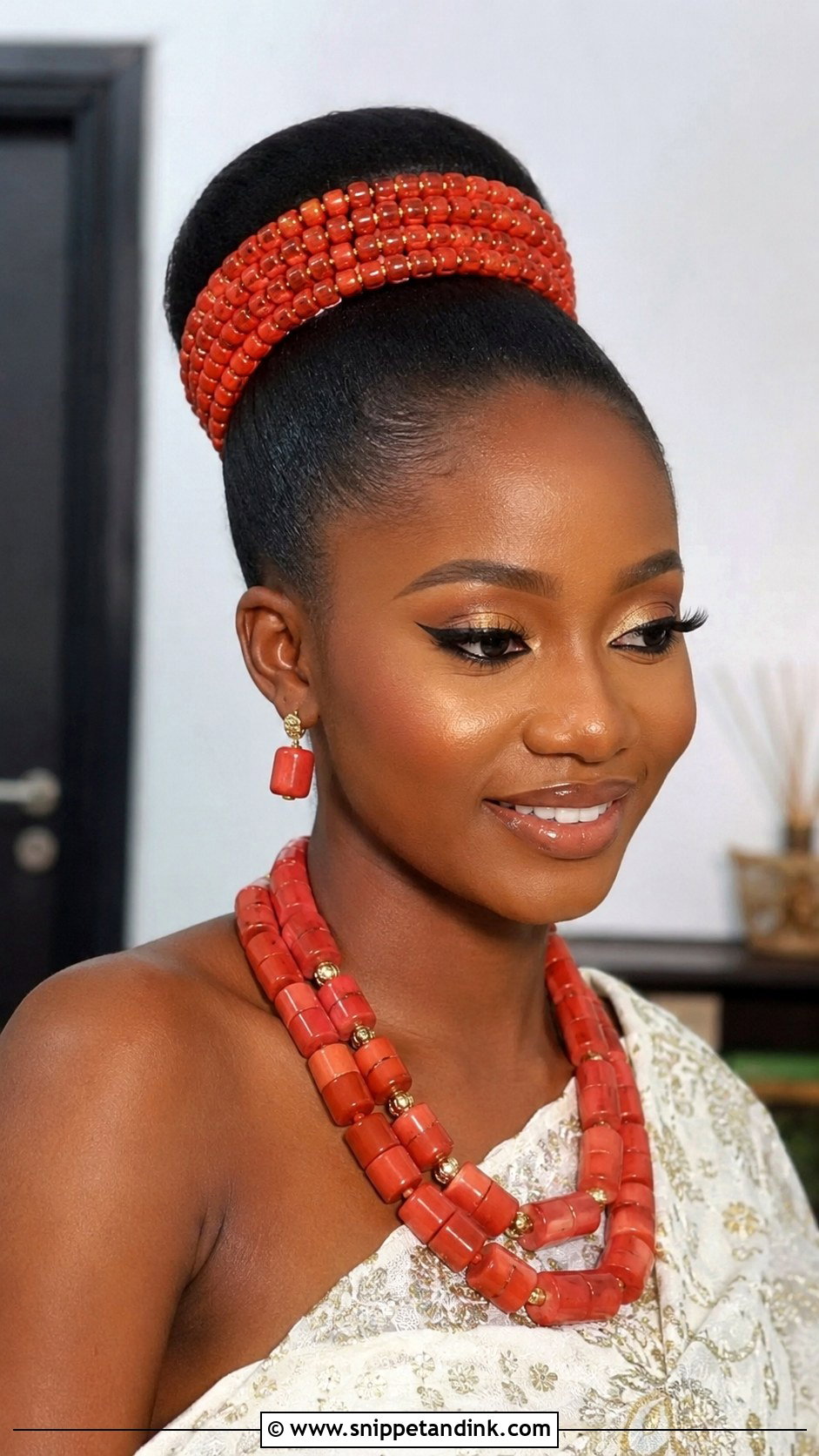
The packed-up bun is the classic Igbo bridal shape for a reason: it gives coral a solid, round base to wrap around. The hair is smoothed back, gathered high, and built into a thick doughnut-shaped bun, usually with extensions or a padded form inside for volume. I make sure the bun’s base is anchored to cornrows or a firm ponytail underneath, because a bun built on loose hair shifts once the beads go on. Rows of red coral then circle it like a crown. It suits the first outfit, with the george wrapper and the coral neckpiece.
2. Chunky Cornrow Updo
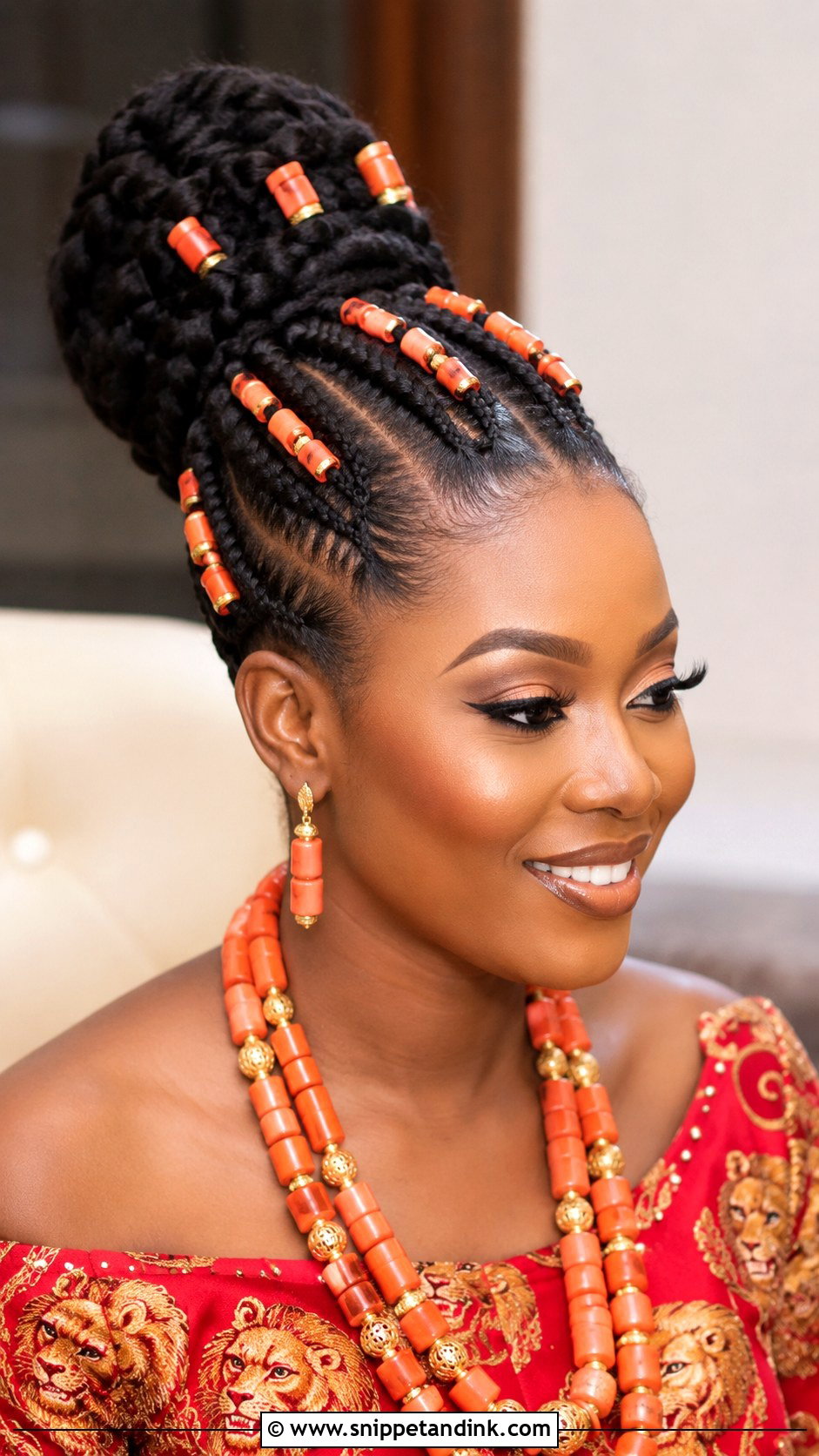
Thick cornrows, worked straight back or in curves, are gathered at the crown into a raised shape. Big braids read clearly from across a hall and in group photos, where finer work can blur. Coral threaded along the rows turns the pattern into jewelry. I braid these firmly but never tight at the hairline; the size of the braids already does the visual work, so there’s no need to pull. Few styles stay neater through a long day than these jumbo cornrows.
3. Braided Bun With Coral Crown
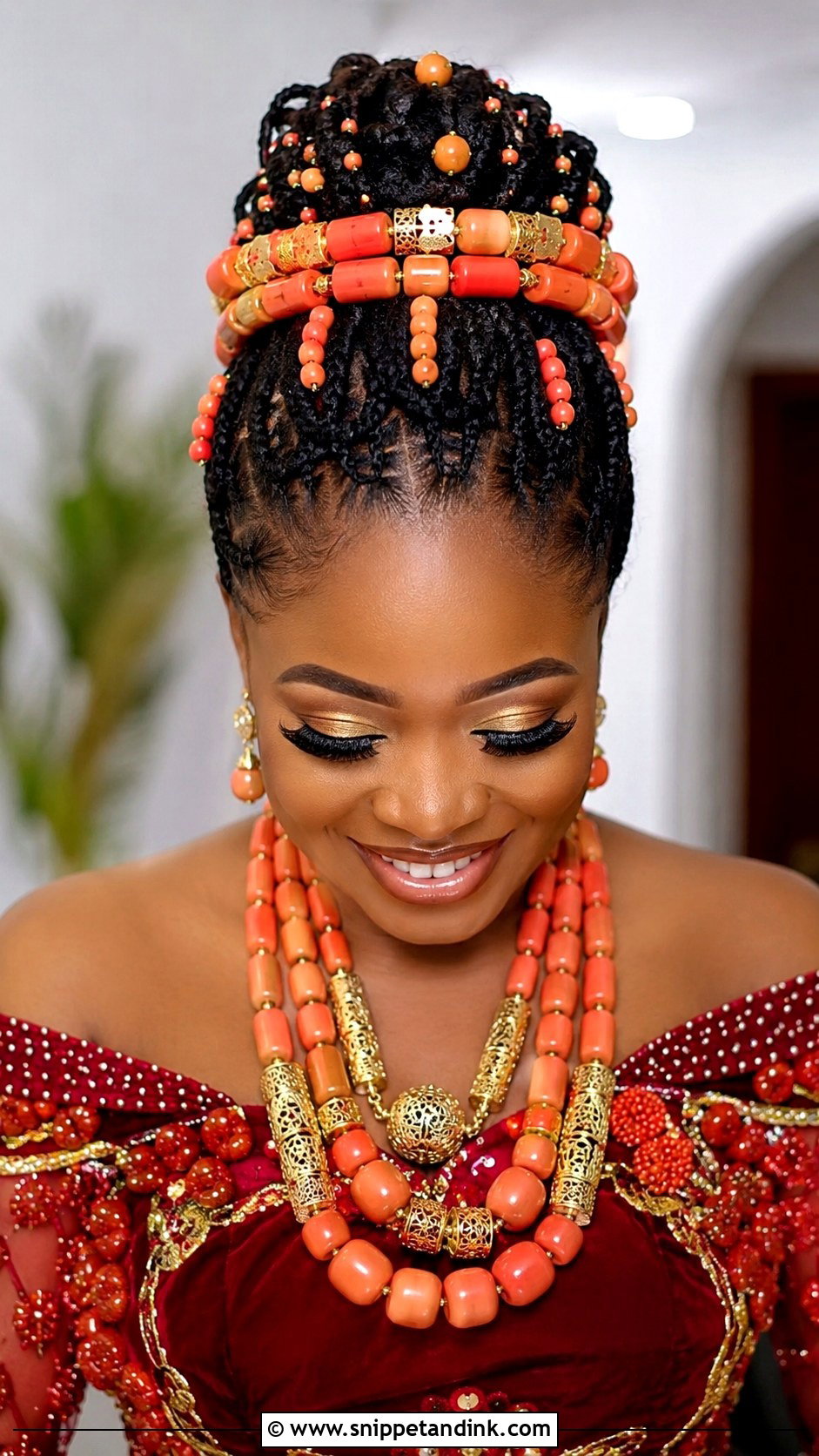
Here the top sections are braided first, then twisted and wrapped into a bun, so the bun itself has texture. That texture has a practical side: braided hair grips coral strands better than a smooth wrap does, so the beads stay where they’re placed instead of sliding down. Layers of small coral are draped around the top to form a crown. Expect the styling to take longer than a smooth bun, since the braids have to be done before the bun is built.
4. Bantu Knot Bridal Style
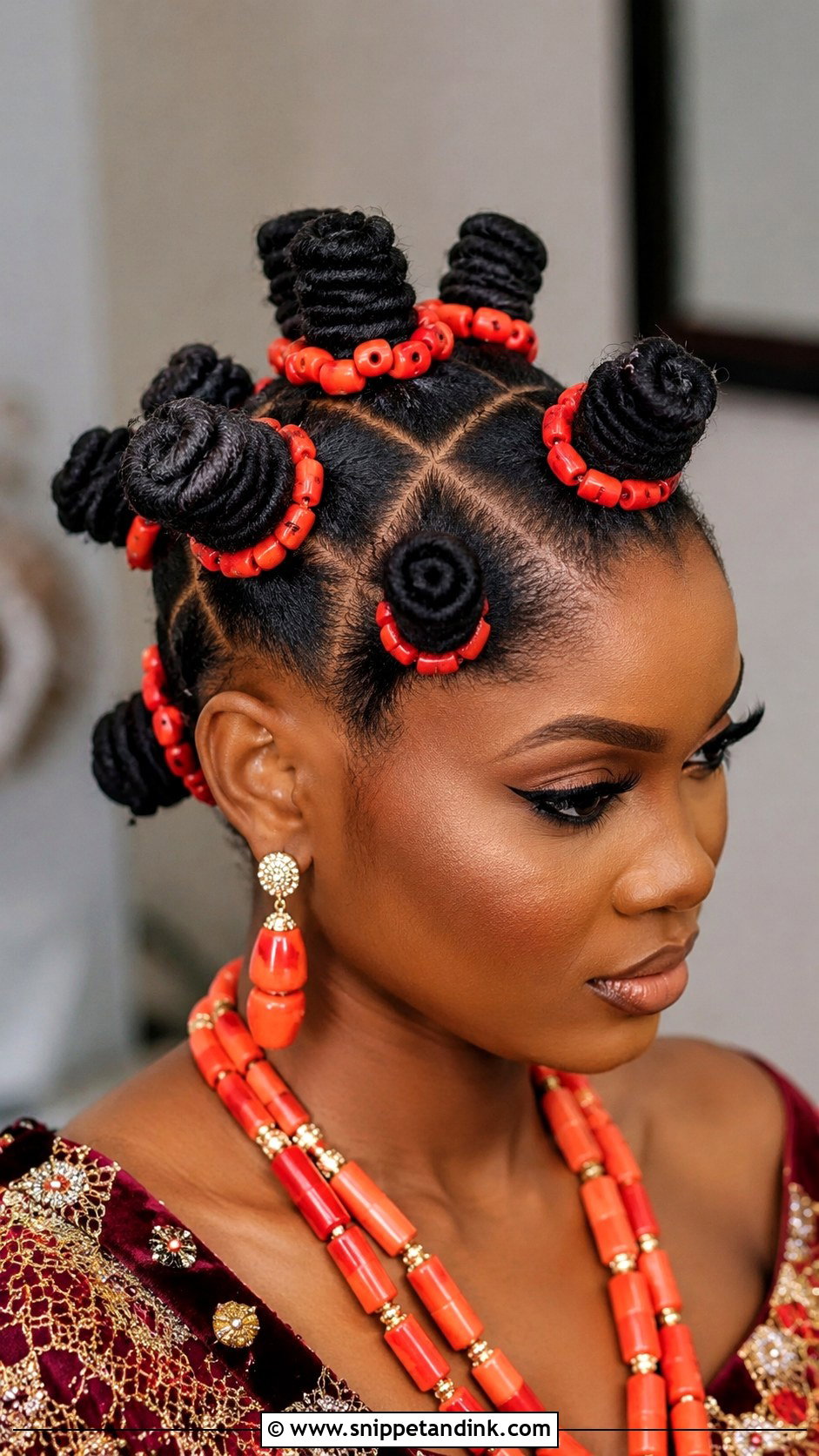
Bantu knots are twisted and coiled into raised knots in a geometric pattern across the head. For a bride, I make a few of them larger so they can hold coral accents. This is one of the lighter options here and suits brides with natural hair who’d rather skip heavy extensions. The parting is what makes or breaks it, so the sections need to be clean and even. If you set the knots the night before and sleep in them, protect them with a satin scarf so they don’t flatten.
5. High Ponytail With Beads
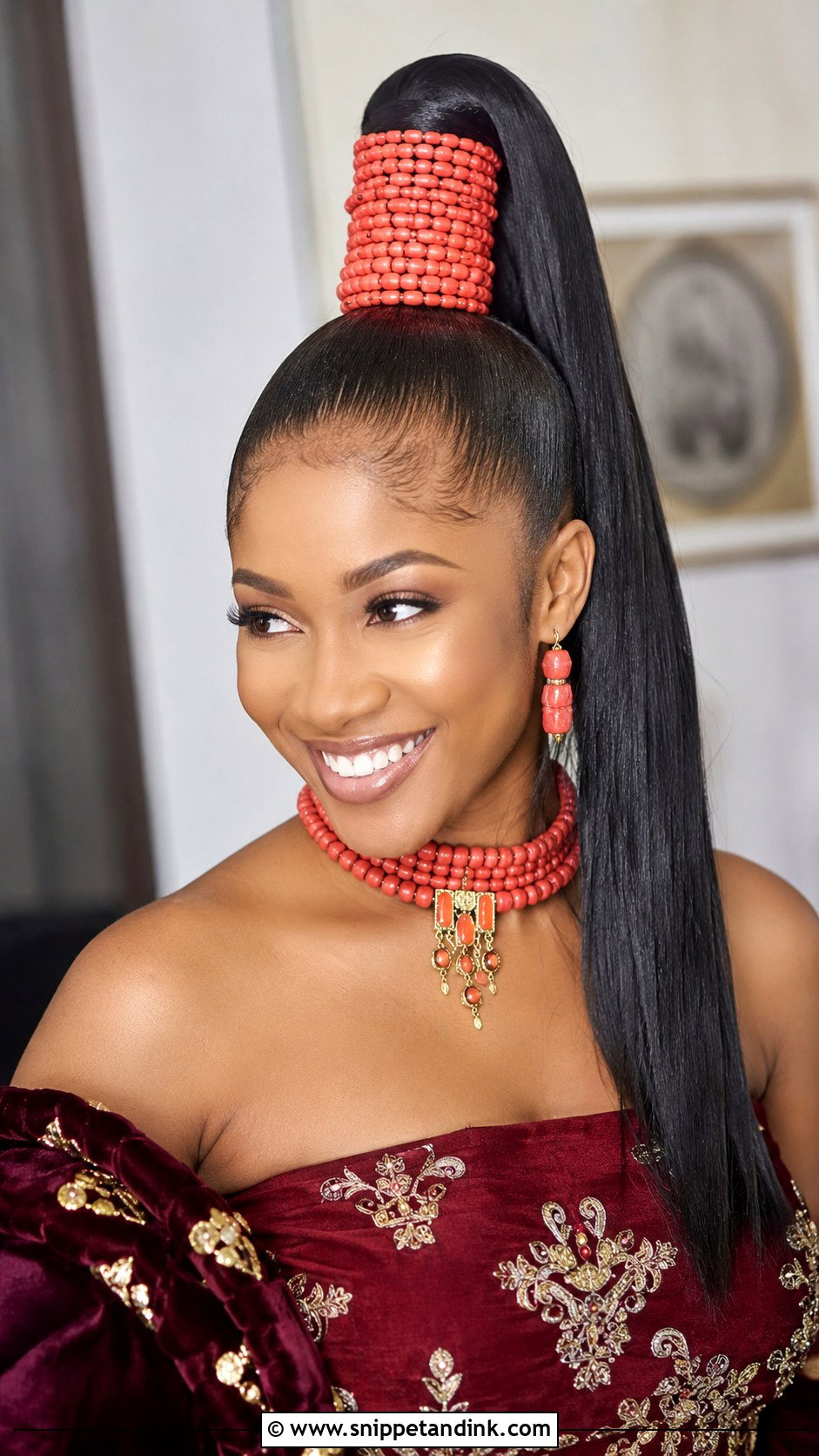
A high ponytail gives height and movement instead of a structured bun. The hair is gathered at the crown, smoothed for shine, and lengthened with extensions. Its base is a natural place to wrap rows of coral. A ponytail this high pulls at the hairline over many hours, so I set it a touch lower than it looks in most photos and make sure the edges aren’t strained. It works well for a later outfit, paired with a beaded crown or a coral choker.
6. Ichafu Headwrap Style
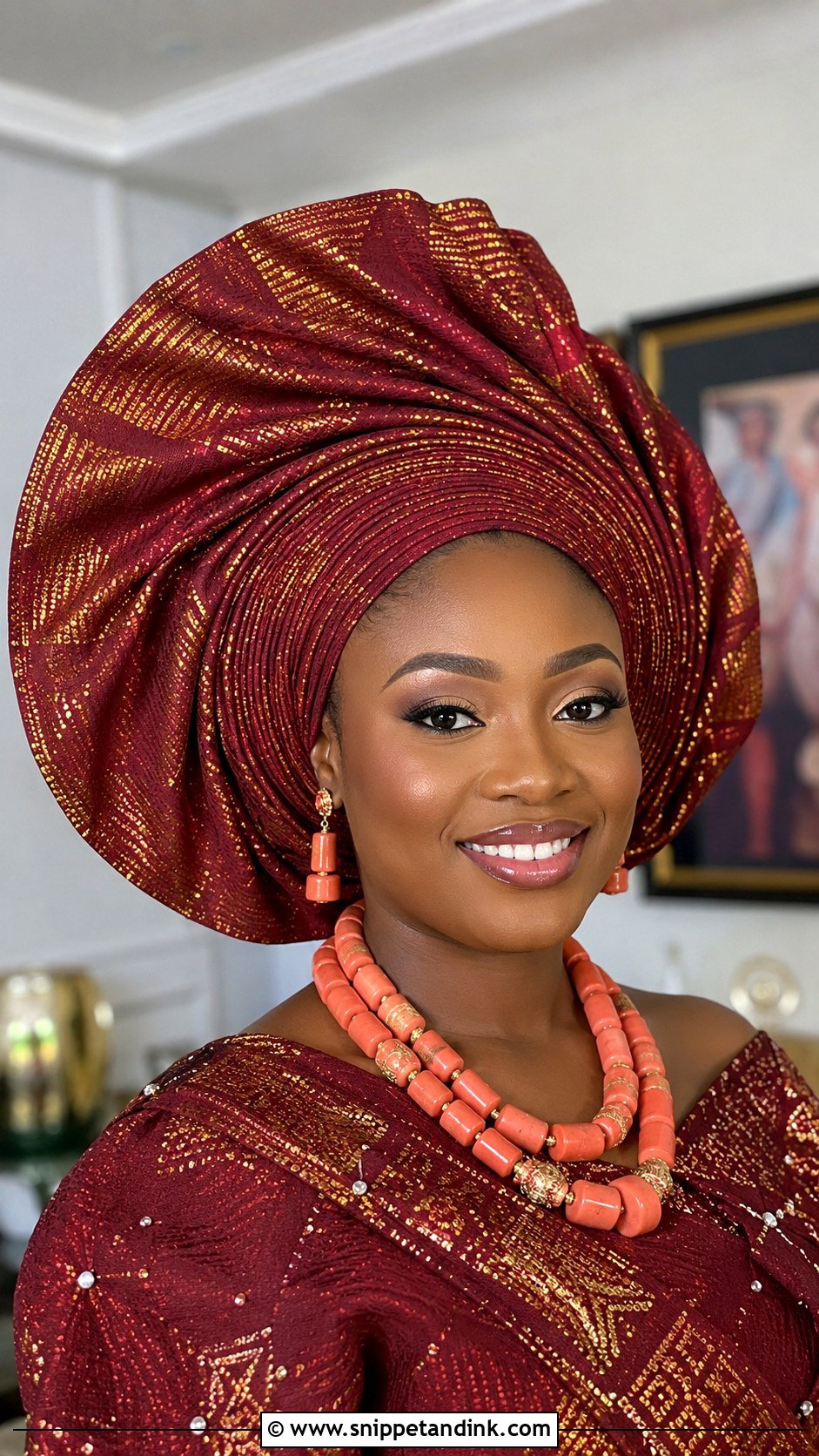
For an outfit change, many brides switch to the ichafu headwrap, folded into crisp pleats that fan out to one side. The wrap gives height without any elaborate styling underneath, which makes it a practical way to cover hair that has already done a long morning of coral. I recommend flat cornrows or a low bun as a base, so the wrap sits close to the head and doesn’t slip. Matching the ichafu to the george wrapper ties the outfit together. Coral earrings and a beaded neckpiece finish it.
7. Twisted Bun Updo
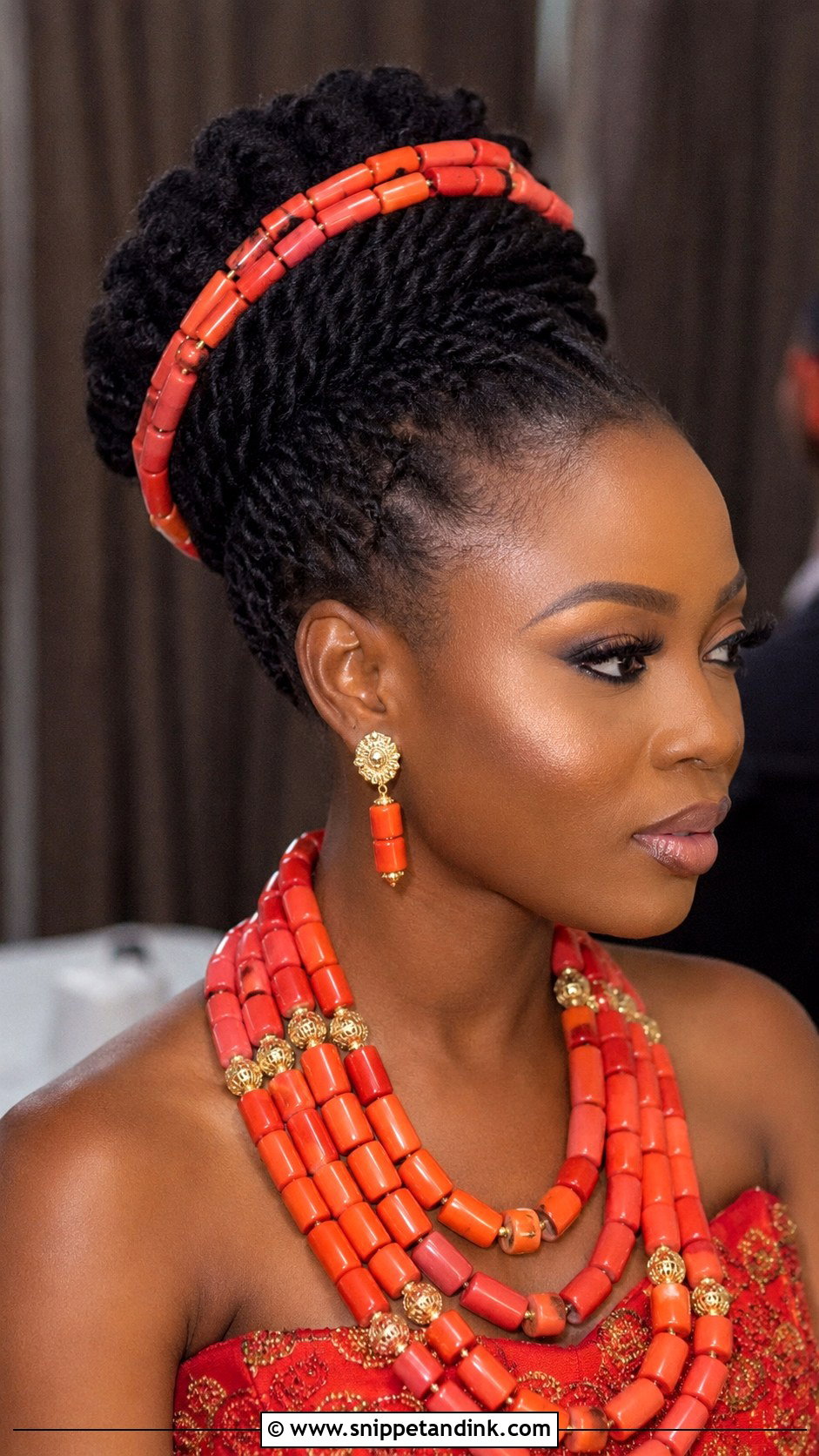
Instead of a smooth wrap, the hair is twisted in sections and then coiled into a raised bun. The twists create ridges that catch light and give the bun a softer look than the sleek version, while keeping plenty of volume. Coral wrapped around the base finishes it. Twists can loosen over a long day if the hair is very soft, so I set each twist with a little gel or styling cream before coiling it.
8. Beaded Crown Over Low Bun
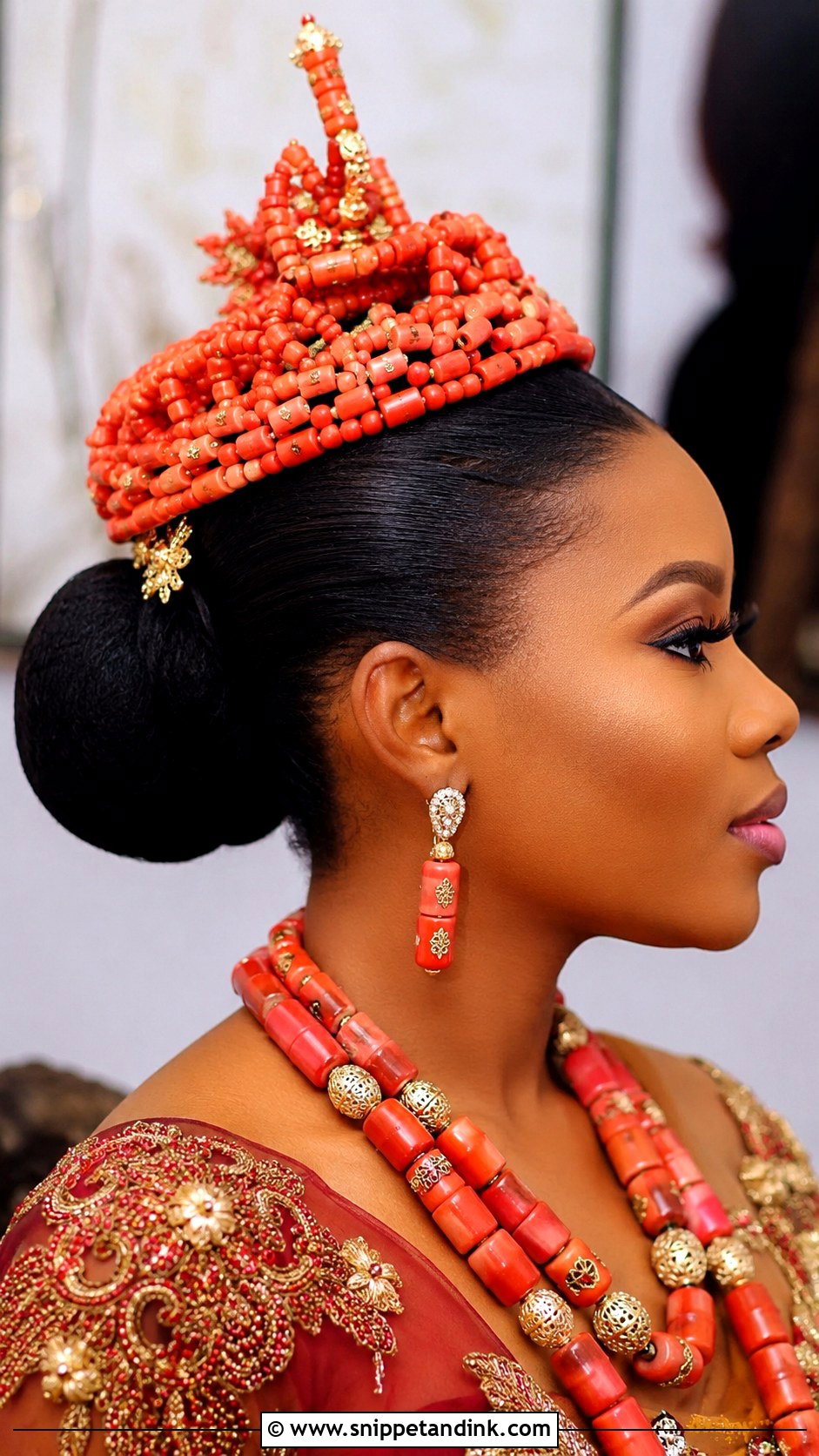
Not every bride wants height. A low bun sits at the nape, smooth and polished, with a beaded crown of coral rows and drapes on top. The low placement balances a tall crown and large earrings. It’s often more comfortable than a high bun too, because the weight of the beads rests closer to the neck rather than pulling at the crown. I’d suggest it for brides who find heavy headpieces tiring by the afternoon.
9. Goddess Braids Updo
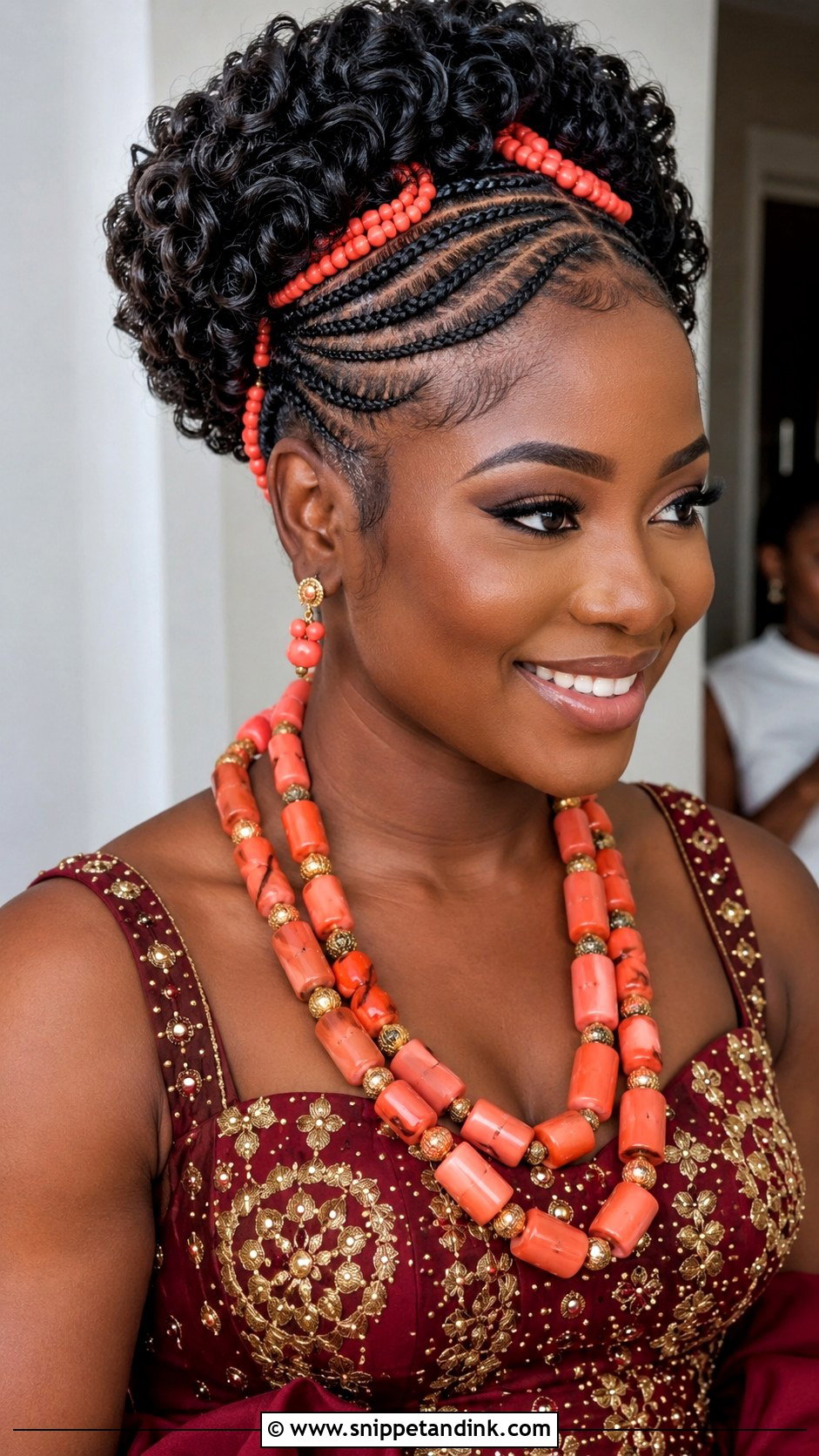
Goddess braids have loose, curly pieces woven through them, giving a softer finish than standard braids. For an Igbo bride, they’re swept up and pinned into a crown shape. The curly pieces frame the face and the braids keep everything secure. Coral along the braid lines adds the traditional touch. Those loose curls can frizz in heat, so a light mousse on the curly ends before the event helps them hold their shape.
10. Mohawk Braided Updo
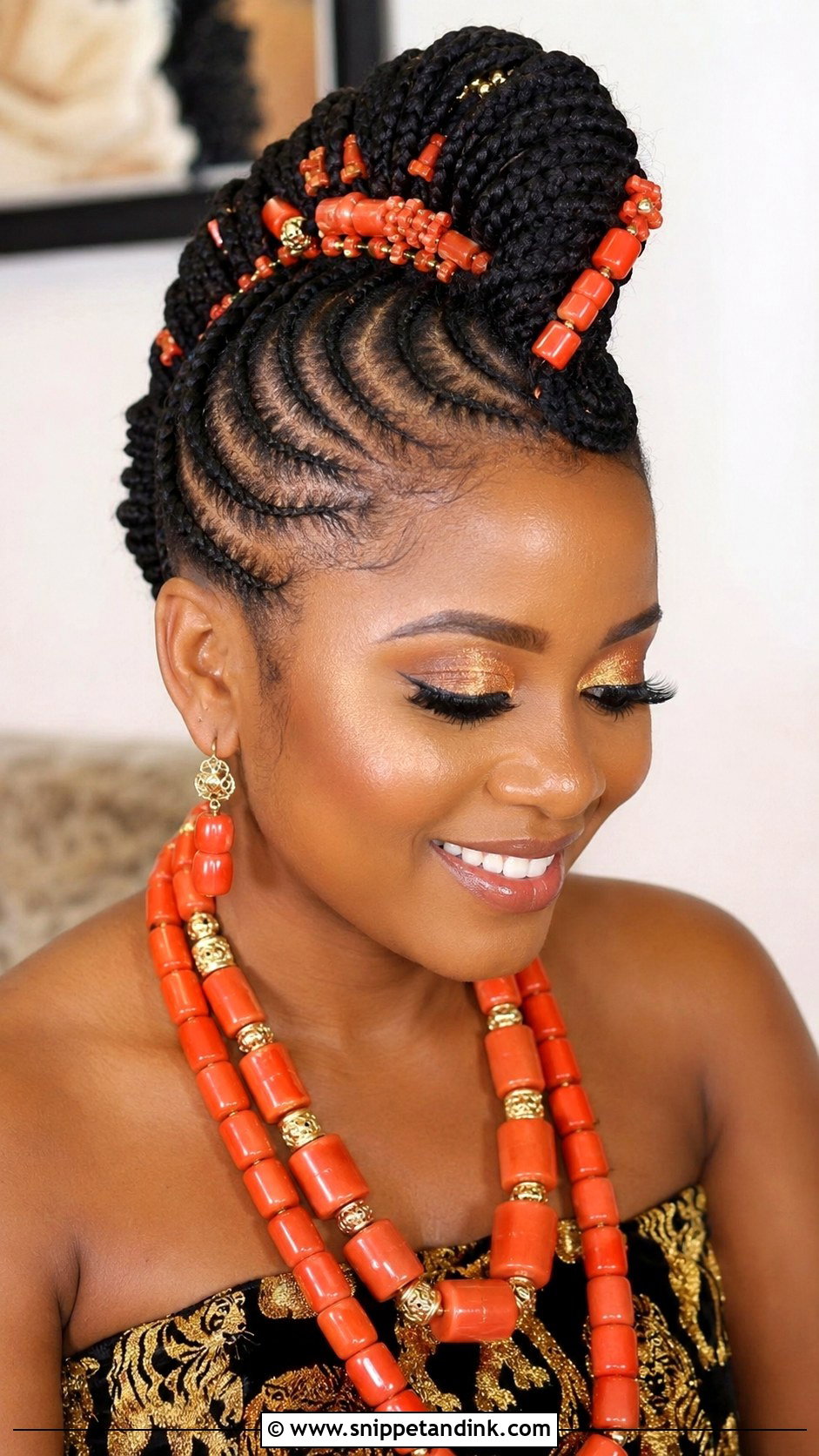
Cornrows run from the sides toward the center, where the hair rises into a sculpted ridge down the middle. The height and shape make this one of the boldest styles here. Coral woven through the central ridge makes it feel distinctly Igbo. The center needs enough volume to stay upright, which usually means extensions or a padded form inside. It pairs best with statement coral jewelry and a bride who wants her hair to be the focus.
11. Frontal Wig Updo
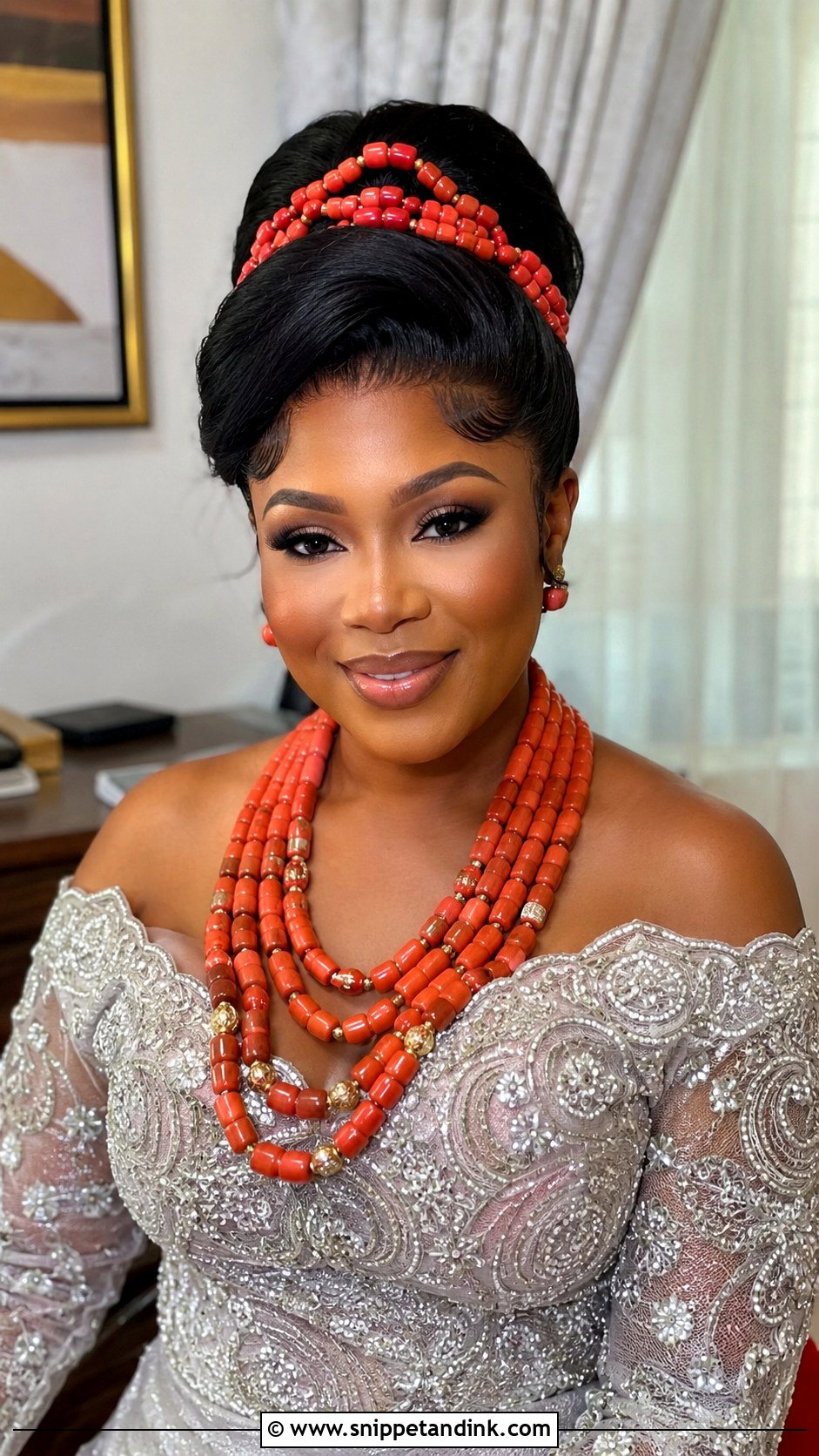
A frontal wig gives a full hairline, a natural-looking part, and plenty of volume, and it can be styled into a high bun, a ponytail, or a braided crown. It also lets brides protect their natural hair underneath. I’d have the wig installed and styled a day or two before, then test it with the coral at the trial, because a beaded crown sits differently on a wig than on braids. If adhesive is used, do a patch test well in advance. Coral is wrapped around the finished style.
12. Cornrows With Packed Bun
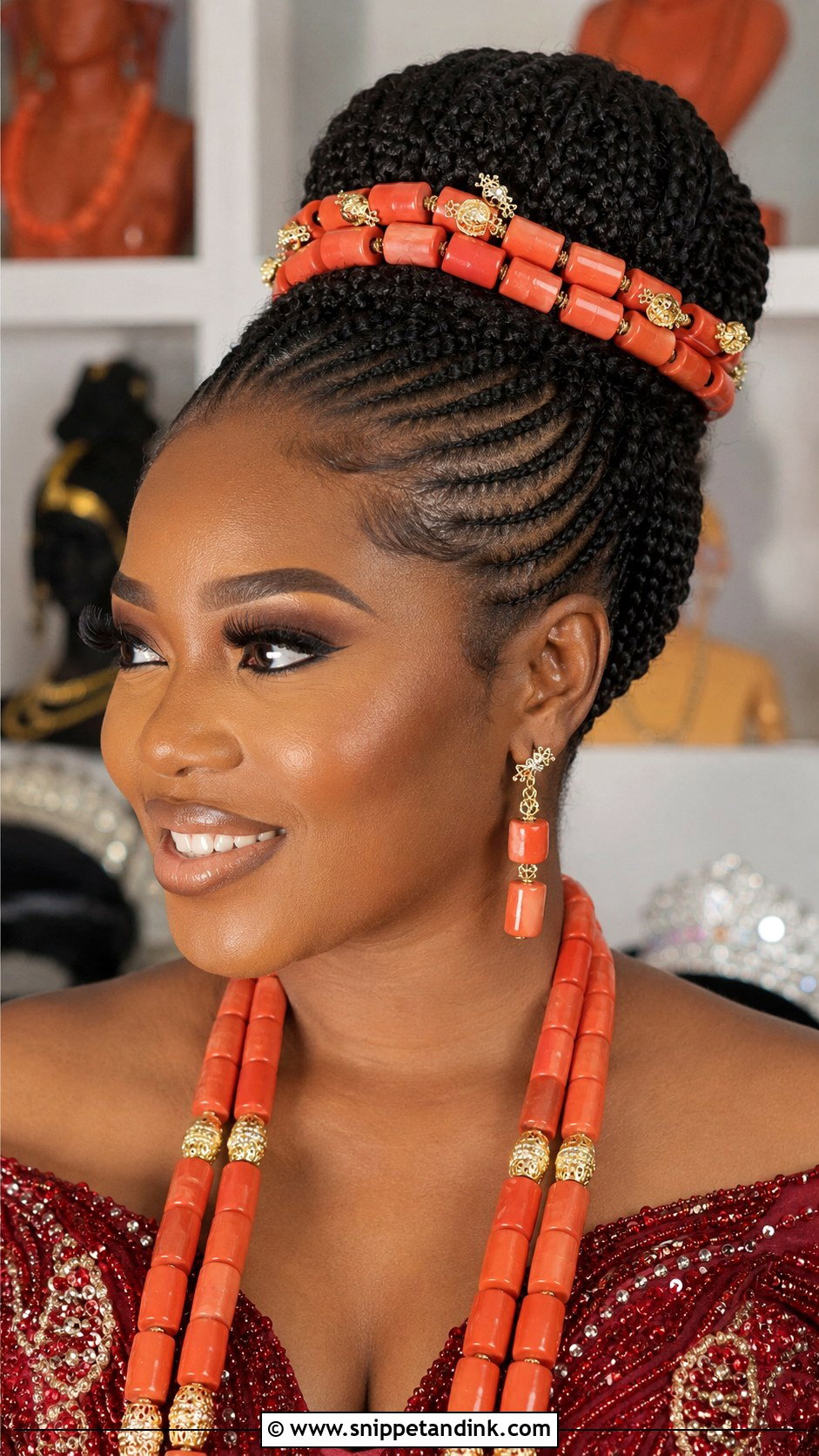
Neat cornrows at the sides or back lead up into a packed bun at the crown. The braided base adds detail and also does most of the smoothing work, which means less gel. It also holds the bun firmly, so the coral sits securely even through dancing. This combination stays neat for hours and suits brides who want both texture and height.
13. Fulani-Inspired Braids
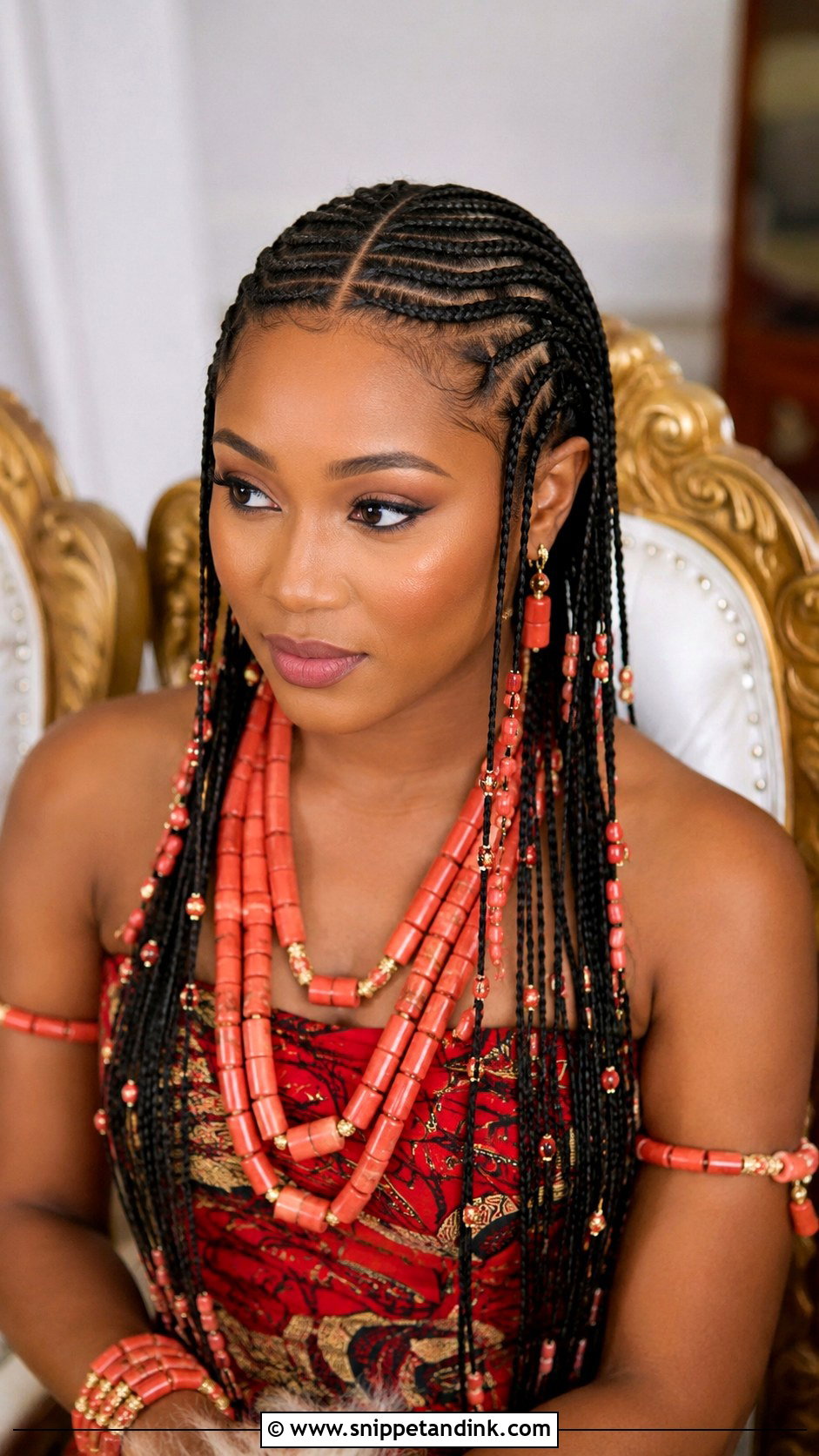
Fulani-inspired braids are thin braids in distinctive patterns, often with a center part and braids framing the face. Beads slide onto the braids for movement, and coral makes the style feel Igbo. The braids can be swept into an updo or left down. This style takes a long time to install, often several hours, so I’d book it a day or two ahead. Keep the face-framing braids lighter, since heavy beads at the temples can pull at the edges.
14. Beaded Bun With Side Part
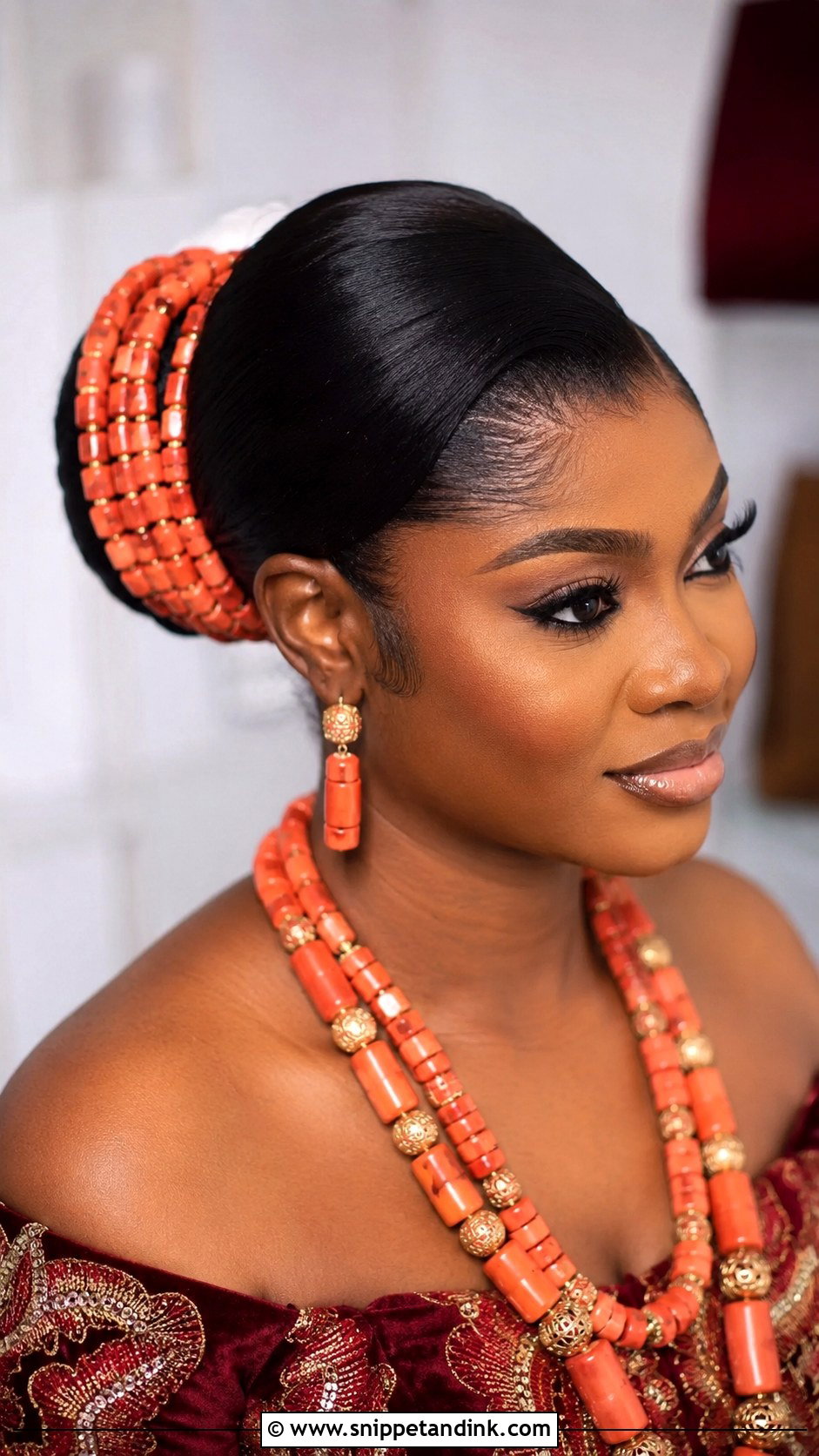
A deep side part across a sleek bun changes the whole shape. The hair is smoothed across the head and gathered into a bun, and the asymmetry frames the face from one side. Coral wrapped around the bun keeps it traditional. The exposed side is the right place for a statement earring. I mark the part with a tail comb and set it with a strong gel so it doesn’t drift during the day.
15. Threaded Hair Style
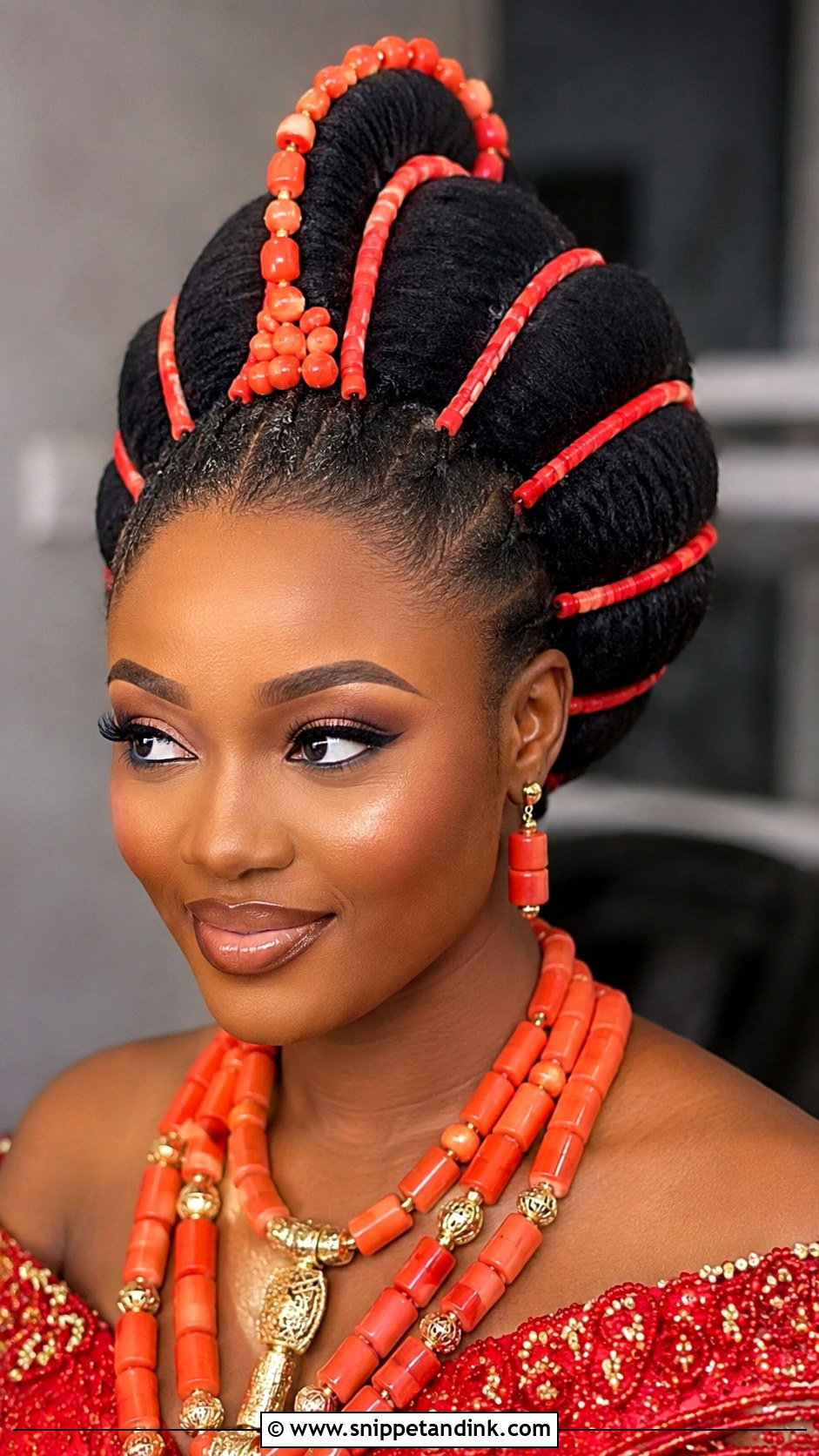
Threading is an old African technique: sections of hair are wrapped tightly with thread to create raised, curved, or spiky shapes that stand away from the head. For a bride, threaded sections can be arranged into a crown shape and accented with coral. It’s sculptural and makes a striking tribute to traditional styling. Fewer stylists offer it today, so ask to see their threaded work before booking. Threading done too tight is uncomfortable, so I always check tension at the root as I go.
16. Voluminous Bun With Beaded Veil
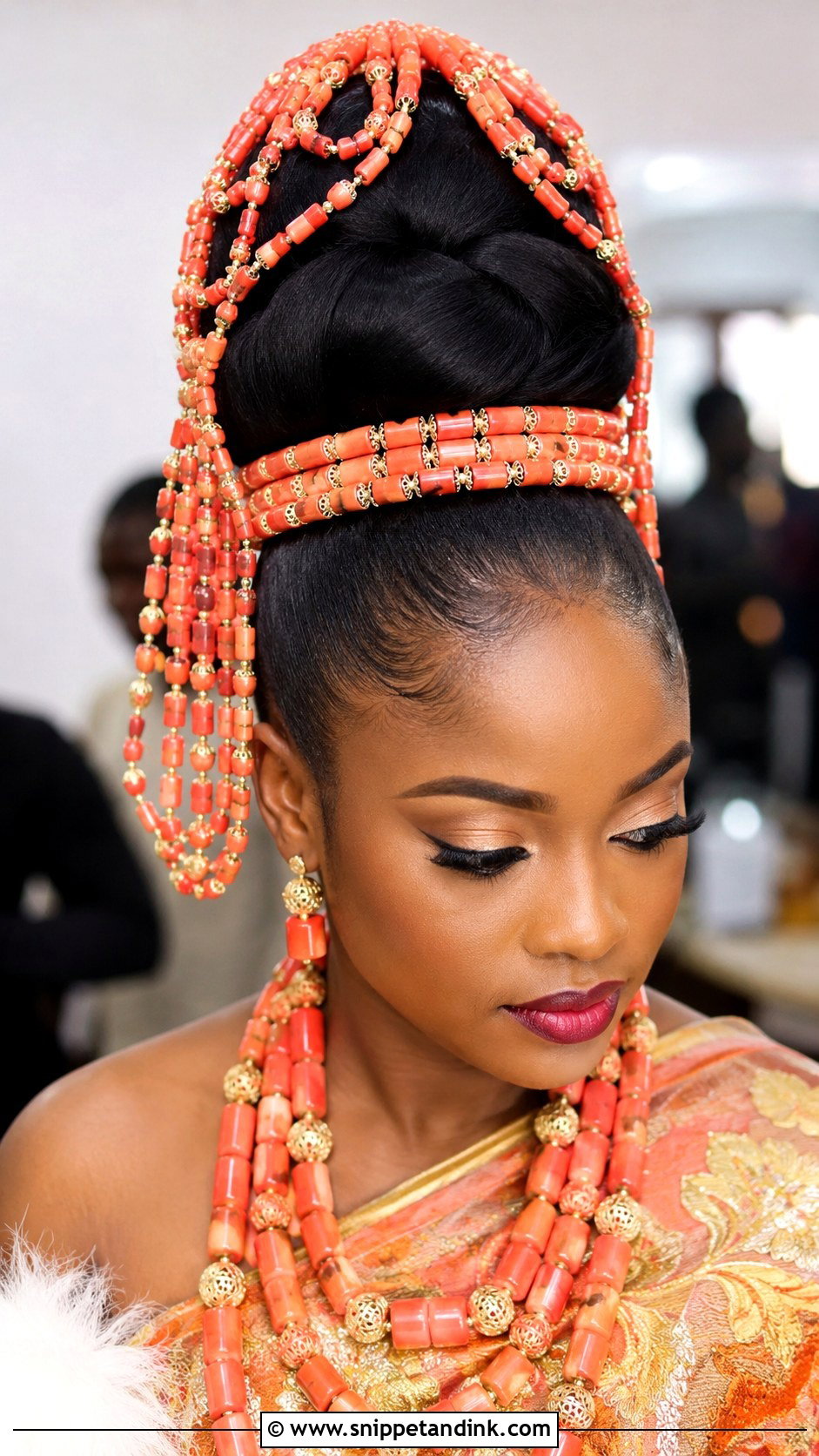
For maximum drama, a tall, full bun is surrounded by strands of coral that drape down like a veil. The bun is built with extensions and a padded form so it can carry the weight of the beads. The drapes move with every turn of the head and frame the face and shoulders. This is the heaviest style on this list. I’d only recommend it for a bride who has tried the full headpiece at a trial and is comfortable wearing that weight for the ceremony; plan to remove some of the drapes for later outfits.
17. Curly Updo With Coral Beads
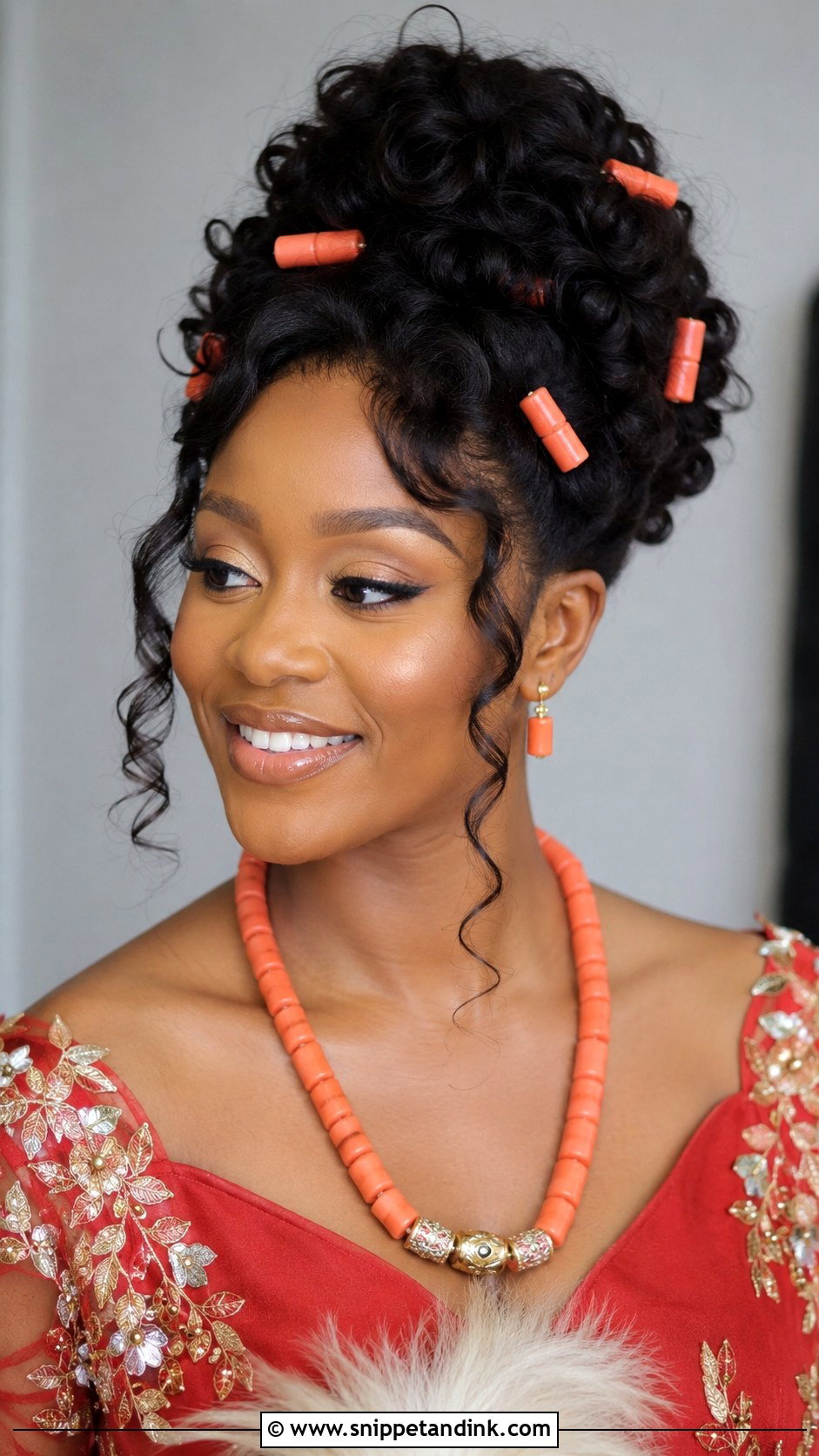
Here the hair is curled, then gathered loosely and pinned up, with some curls left out. The texture adds volume without looking structured. Coral tucked into the updo keeps it traditional. Curls set with heat drop in humidity, so for an outdoor ceremony I’d use a curl-defining product on natural texture or a heat-set curl with a strong hold. Light coral accessories suit this softer look better than a heavy crown.
18. Double Bun Style
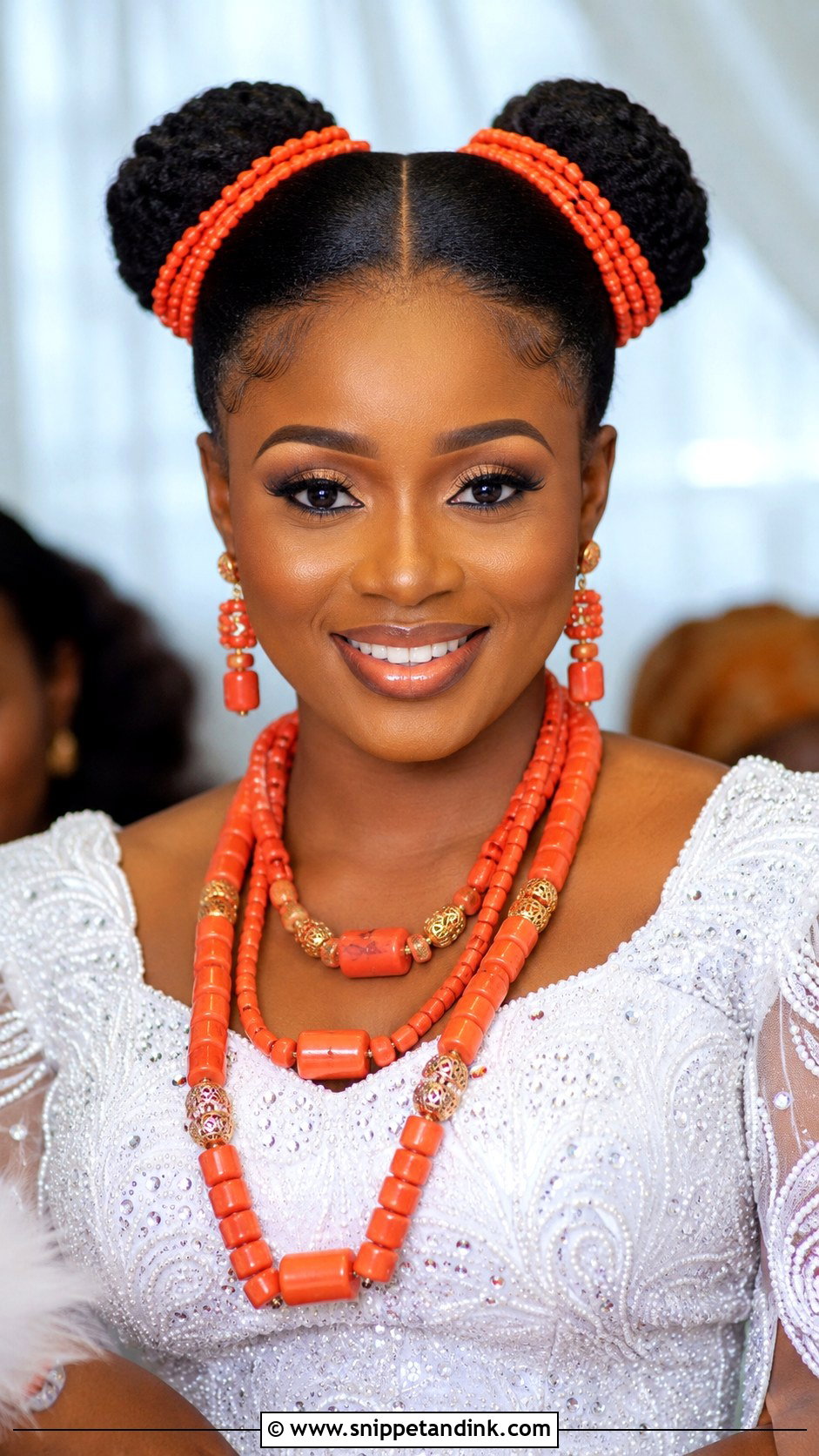
Two buns placed symmetrically on top of the head give a balanced, unusual silhouette. Each bun can be wrapped with coral. It works with braided or smooth bases. The challenge is symmetry, so I measure the placement from the center part before building either bun. It’s less common at traditional weddings, which is exactly why some brides choose it.
19. Sleek Low Bun With Edges
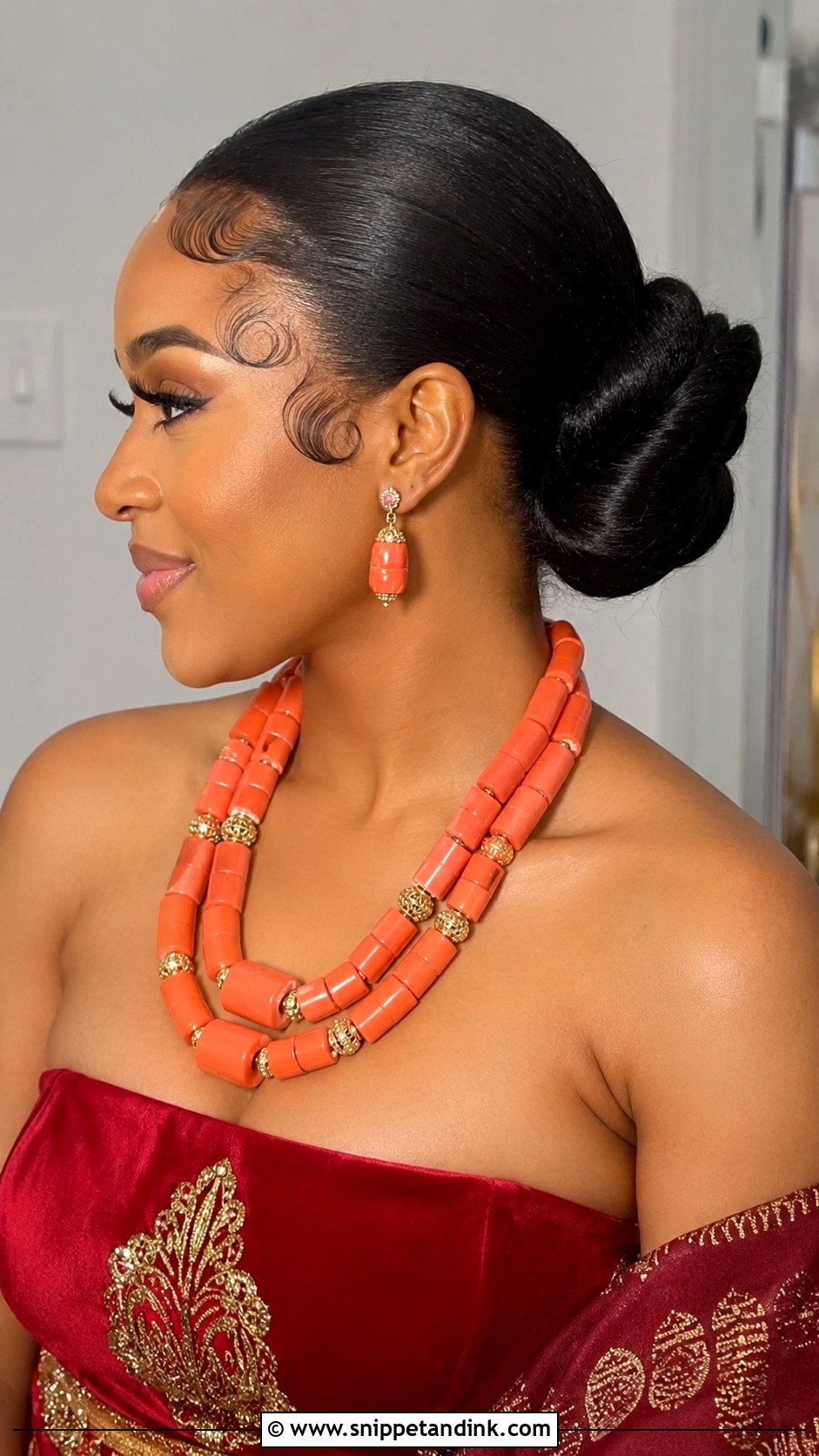
Sometimes the plainest shape is the strongest. The hair is smoothed back into a polished knot at the nape, and baby hairs are laid in swirls along the hairline. Those edges are the main detail, so I lay them with a soft brush and a light edge gel, keeping the swirls simple. Coral around the bun keeps it traditional. It’s comfortable for an all-day celebration and sits well under an ichafu later.
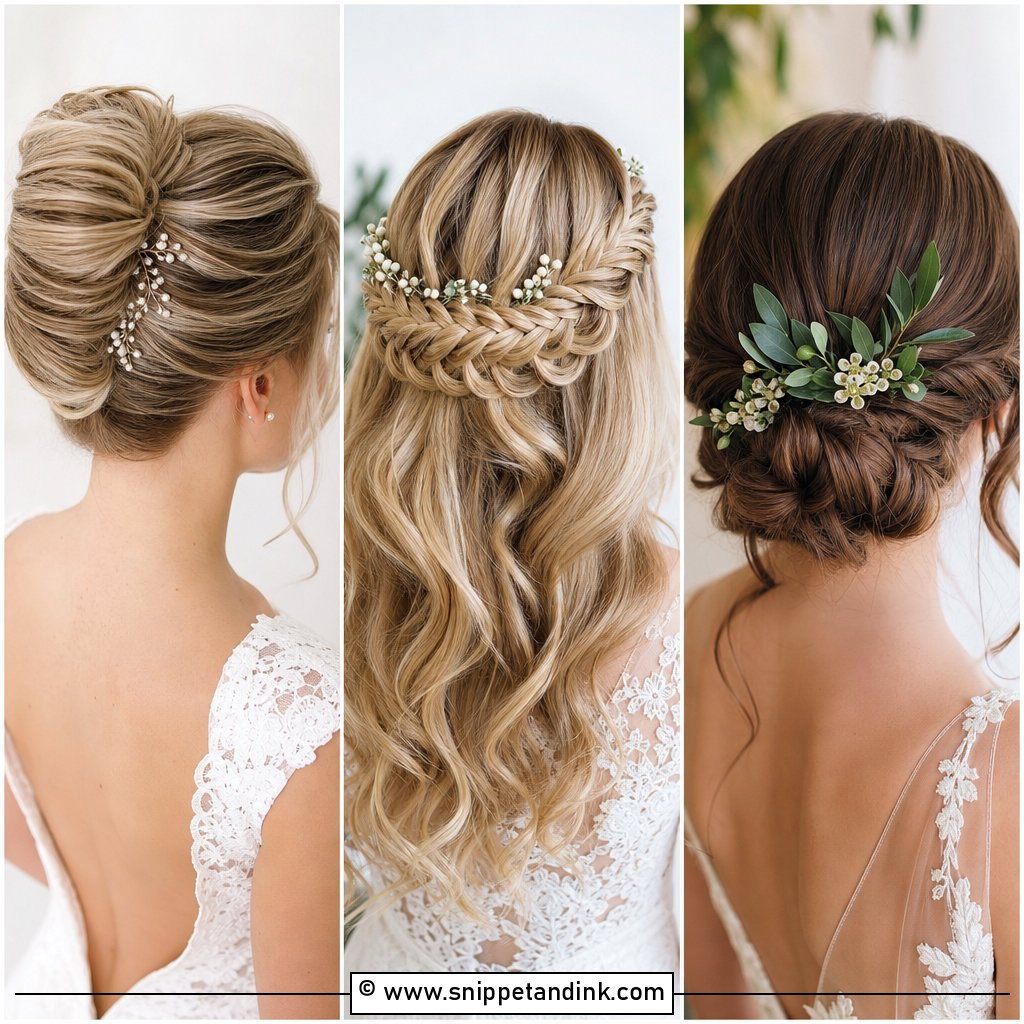

20. Beaded Crown With Braided Base
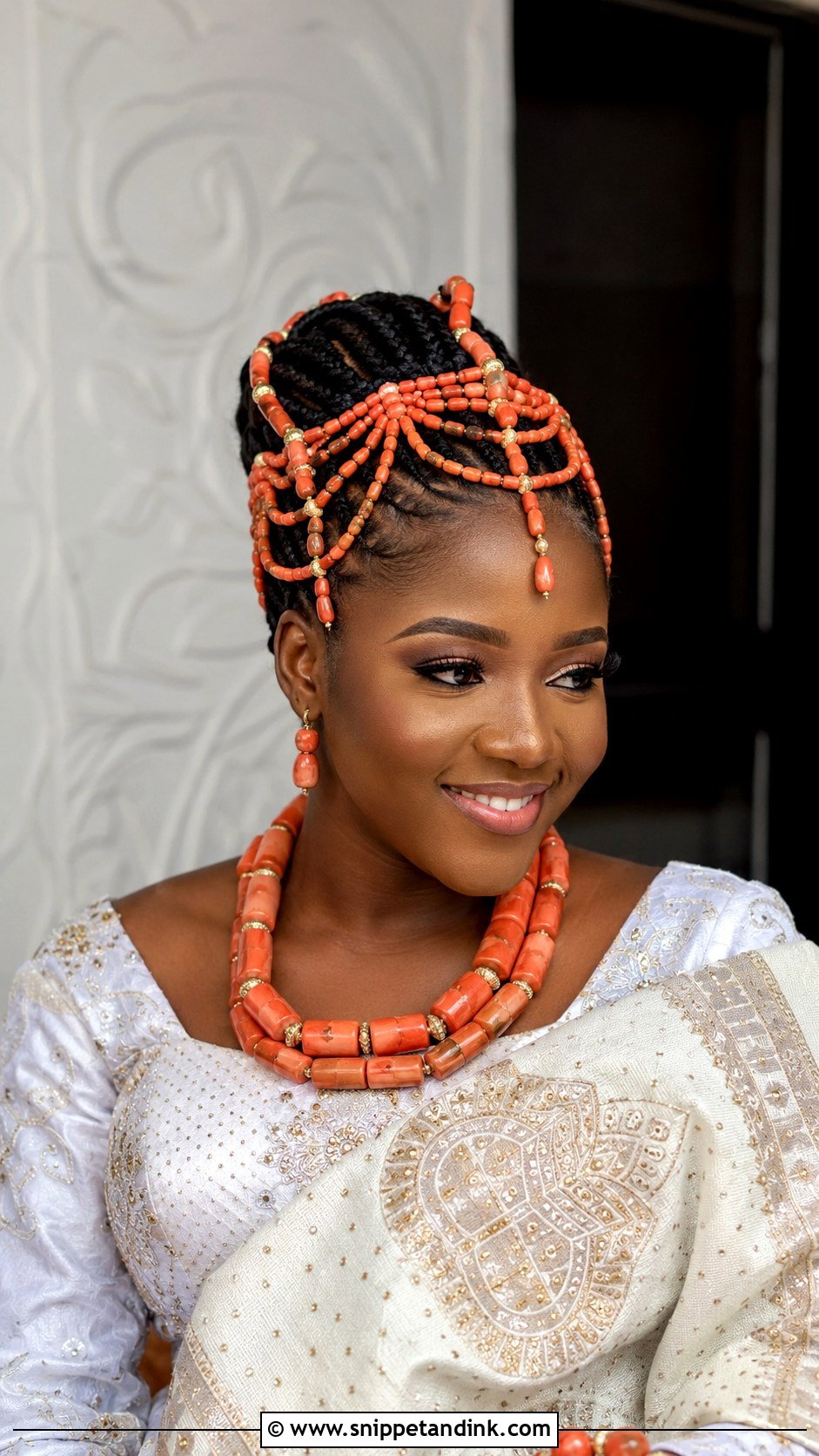
A fully braided base, cornrows or braids all over, carries an elaborate beaded crown of coral rows and drapes. The braids hold the crown firmly and add texture underneath. This combination is one of the most secure ways to wear a heavy crown for hours of celebration. The crown gets pinned to the braids at several points rather than resting on them, which keeps it from sliding forward when you bow or dance.
Coral Weight, Scalp Tension and Your Edges
Coral crowns and draped bead headpieces are heavy, and they sit on hair that has usually been braided or pulled tight. That combination is the main reason brides end the day with a headache or sore edges. A few habits help a great deal.
Braid firmly, not tightly
A secure base doesn’t need to pull. If you feel bumps along the hairline or the braids sting the day after they’re done, they’re too tight. Have braids and installs done one or two days before the wedding, so any tenderness settles before the ceremony.
Spread the weight
A crown that rests on one spot drags. I pin heavy coral to several anchor points on the base, so the load is shared across the head. Bring your actual coral to the trial, since a borrowed or rented set can be far heavier than the one you practiced with.
After the celebration
Take the coral off as soon as you can after the final outfit. Remove pins slowly, loosen any tight ponytail, and massage the scalp gently. Keep tight styles out for the following weeks so your edges can recover from the strain.
Build the Look Around Your Coral
An Igbo bridal hairstyle carries culture, family, and heritage, not only style. From tall beaded buns to cornrow crowns, every look here starts from the same place: a base strong enough to hold coral. Many brides wear two or three styles to match their outfit changes, so plan them together rather than one at a time. Work with a stylist who knows coral placement and updo structure, bring your actual beads to the trial, and choose a style that you’ll still feel comfortable in at the end of the night.
You'll Like These Ideas:


Leave a Reply