
Being asked to stand as a principal sponsor is an honour, and the outfit has to carry that from the church to the last dance. I dress a lot of ninangs, and the questions are always the same: what colour did the couple ask for, how formal is it, and can I walk the aisle in these shoes? Many Filipino weddings give sponsors a set colour or motif. Church ceremonies usually expect covered shoulders, and traditional touches like butterfly sleeves are always welcome. Stay away from bridal white unless the couple asks for it. Below are twenty complete outfits, from modern Filipiniana to pantsuits, with notes on fit, fabric and age.
What a Ninang Does During the Ceremony, and How That Shapes the Outfit
Principal sponsors are formal witnesses to the marriage, so the outfit isn’t just for the reception photos. Think through each moment you’ll be seen in.
- The processional. You walk the aisle, often paired with a ninong. Hems must clear the floor in your shoes, and heels should be ones you can walk slowly in.
- The front pews. You sit close to the altar for the whole Mass, in full view. Anything that wrinkles badly when seated, like light satin or linen, will show.
- The signing. Sponsors sign the marriage certificate as witnesses. You’ll lean over a table, so check that necklines stay put and big sleeves won’t sweep across the paper.
- Formal portraits. Sponsors stand together beside the couple. Colours the couple requested will be side by side, so a shade that’s slightly off is noticeable.
Some couples go further and send each sponsor a fabric swatch or name a dressmaker. If you get a swatch, take it to the shop and compare in daylight, not under store lighting. If you’re asked for a specific style, do ask whether a version with longer sleeves or a different neckline is fine; most couples are happy to adjust for comfort.
1. Modern Filipiniana Ninang Gown
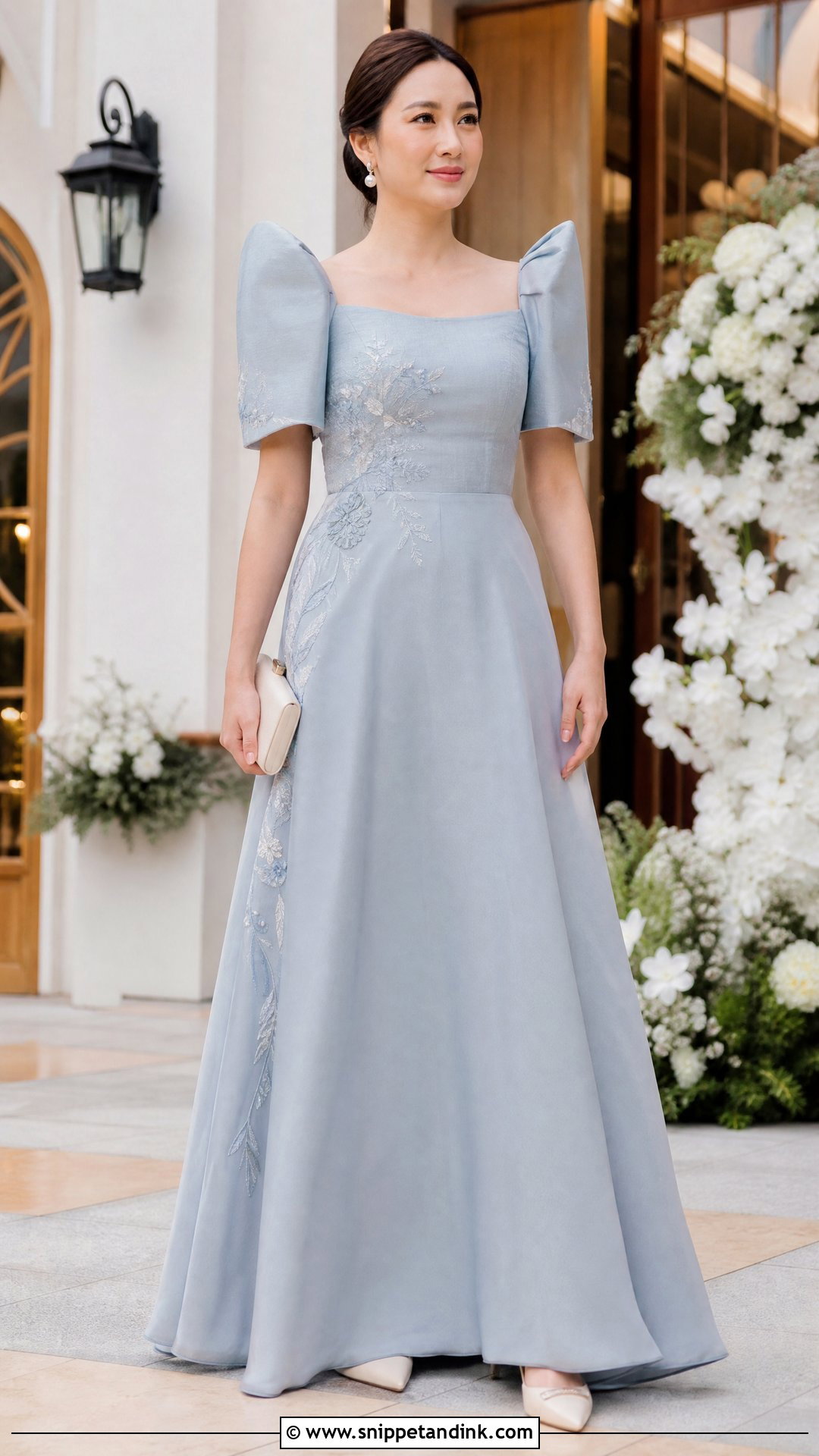
Butterfly sleeves are the signature of a modern Filipiniana gown, and they only work if they’re stiff enough to stand up. The first thing I check is what’s inside them; good ones use a firm interfacing or a double layer of organza so they don’t collapse by the reception. A floor-length A-line with a fitted bodice and light embroidery keeps it graceful. Dusty blue, mauve, champagne or sage stay refined beside the bride. Piña-inspired fabric or embroidered mesh breathes in warm weather. Wear the hair low so the sleeves stay visible.
2. Dusty Rose Chiffon Ninang Gown
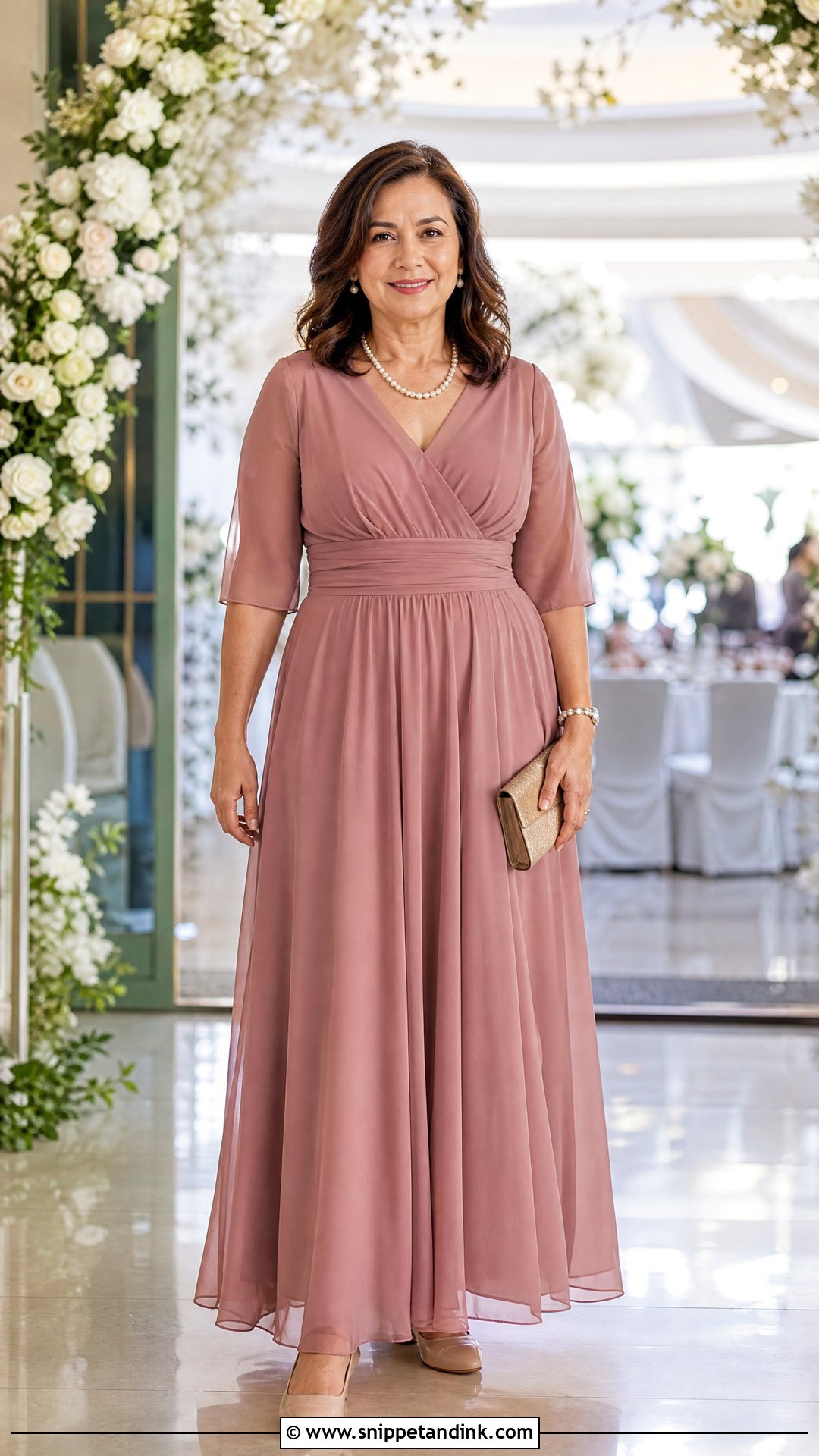
Dusty rose chiffon sits comfortably in a pastel entourage photo, which is half the point of a sponsor dress. Elbow sleeves, a softly gathered waist and a modest V or bateau neck make it church-ready. Chiffon is sheer, so the lining must run the full length in a matched shade, or the legs show through in a backlit church doorway. Nude or metallic low heels and pearls are enough. A smooth low chignon suits it. Go easy on shimmer in the makeup; group photos use flash, and shimmer reads as shine.
3. Champagne Lace Ninang Maxi Dress
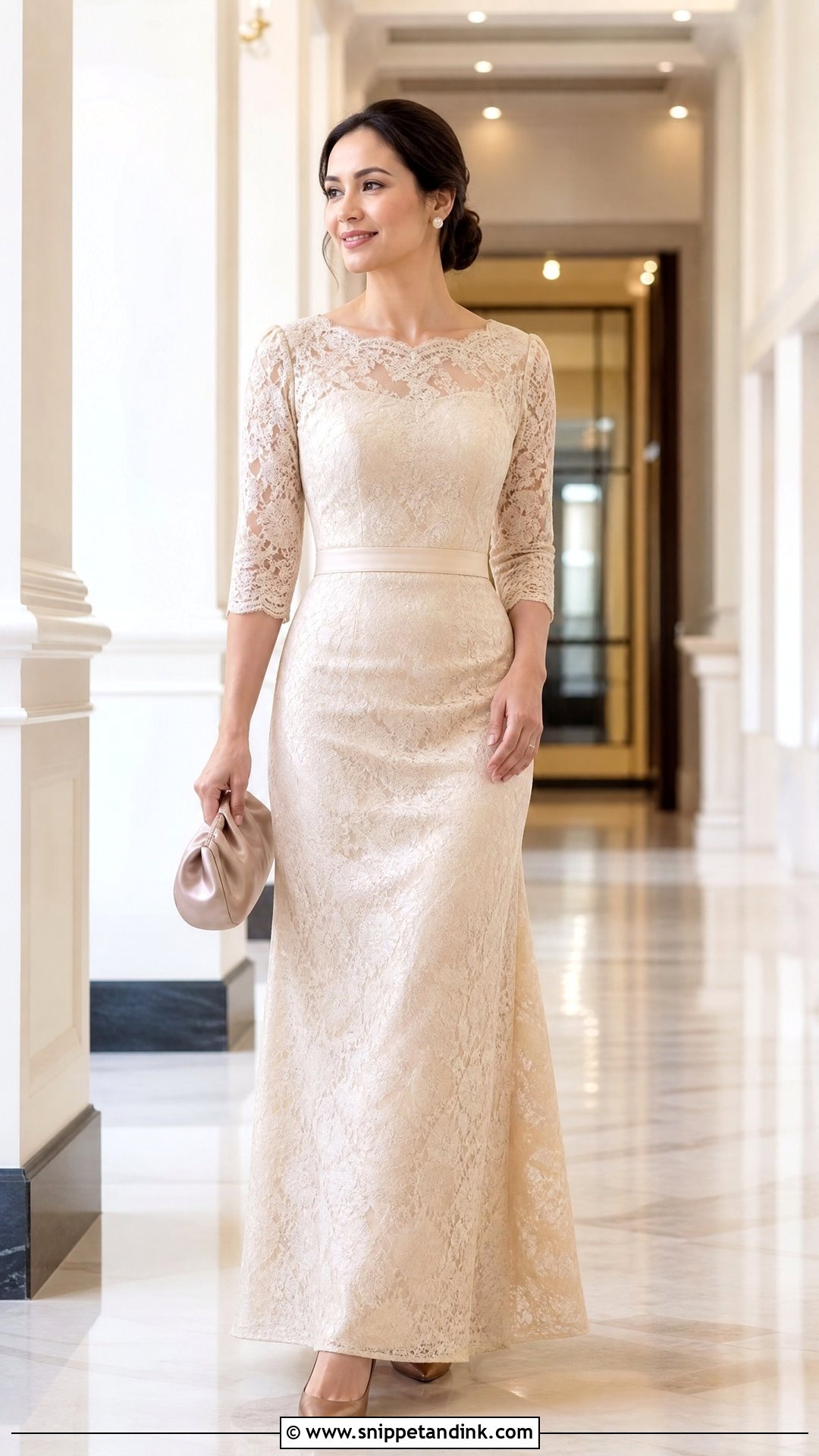
Lace in champagne is a classic, and the lining colour is what keeps it from looking bridal. Beige, taupe or soft gold underneath, never white; white under champagne lace turns the whole dress pale on camera. Three-quarter sleeves, a natural waist and a gently flared skirt keep the shape quiet. Bronze kitten heels and pearl studs, and skip the big necklace because lace is already detailed. Show the couple the exact shade before buying. Bright church lights lift champagne a full step lighter.
4. Sage Green Pleated Ninang Midi Dress
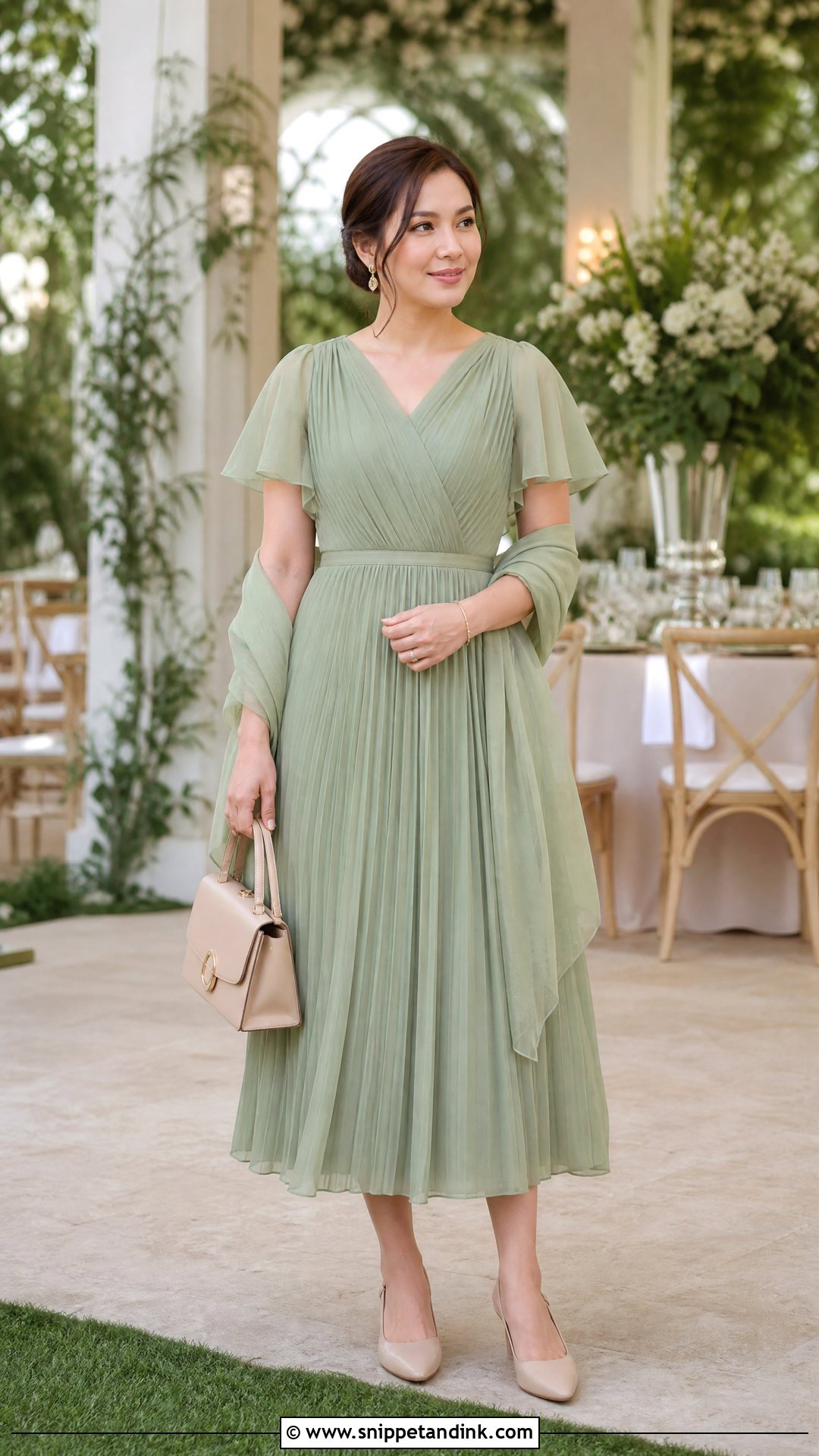
Midi length is my favourite for garden weddings because the hem never drags on wet grass or gravel. A sage green pleated midi dress with flutter sleeves and a soft waist moves well in heat. Fine pleats need care: they come out of an iron press, so steam lightly and never iron them flat. Nude slingbacks, a beige structured bag and gold studs keep it neat. A light shawl or matching cropped jacket covers the shoulders in church and comes off for the reception.
5. Navy Blue Cape Sleeve Ninang Gown
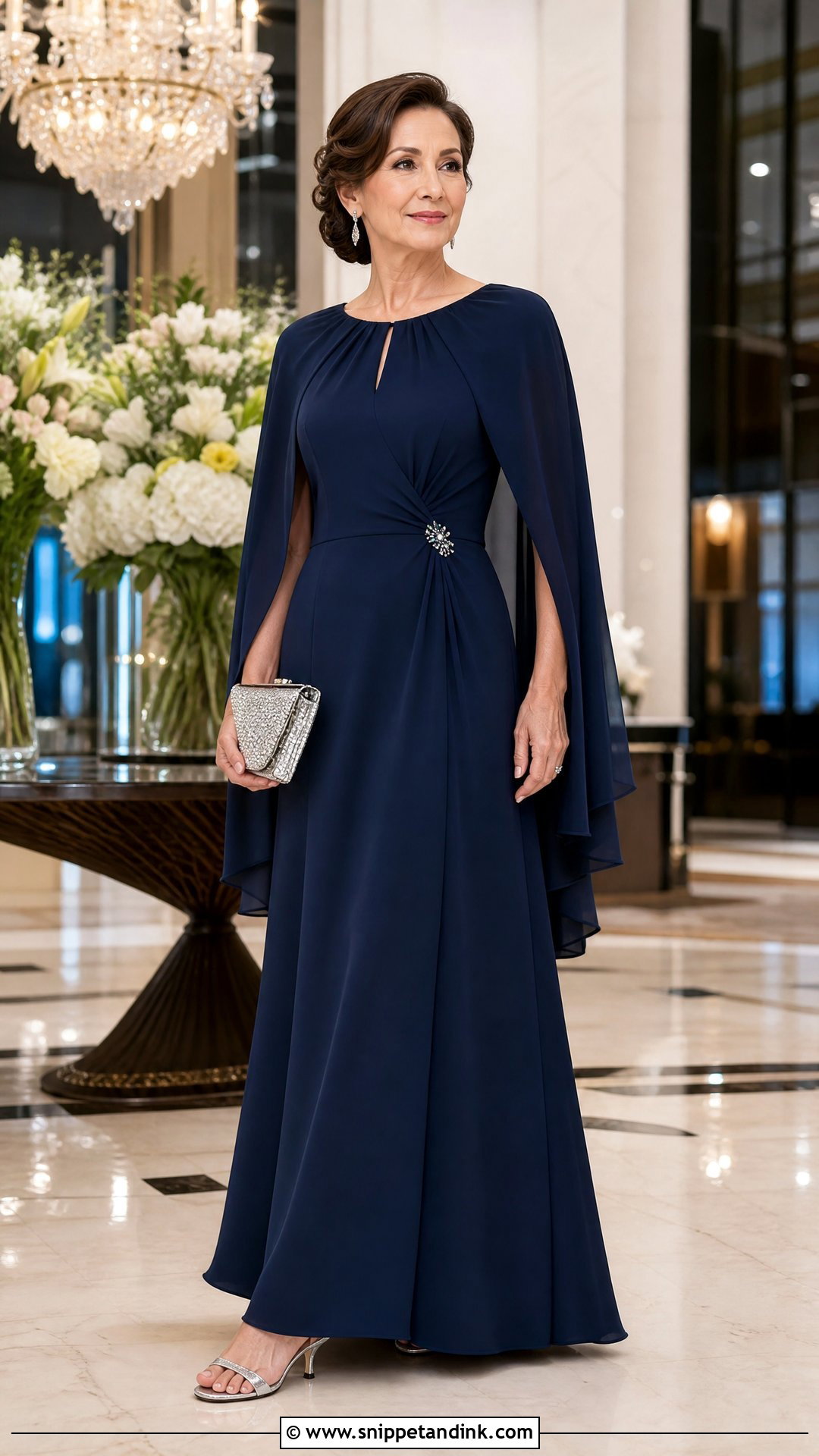
Navy is the evening colour I suggest when black isn’t in the palette. A cape sleeve covers the upper arms, which church dress codes often require, and still looks dressy. Keep the shape a clean column or gentle A-line, and avoid beading all over; a deep colour already has presence. Silver heels and a crystal clutch brighten it. Wear the hair swept back, or it tangles with the cape at the shoulders. A stretch lining helps for a long ceremony and reception.
6. Mauve Wrap Ninang Maxi Dress
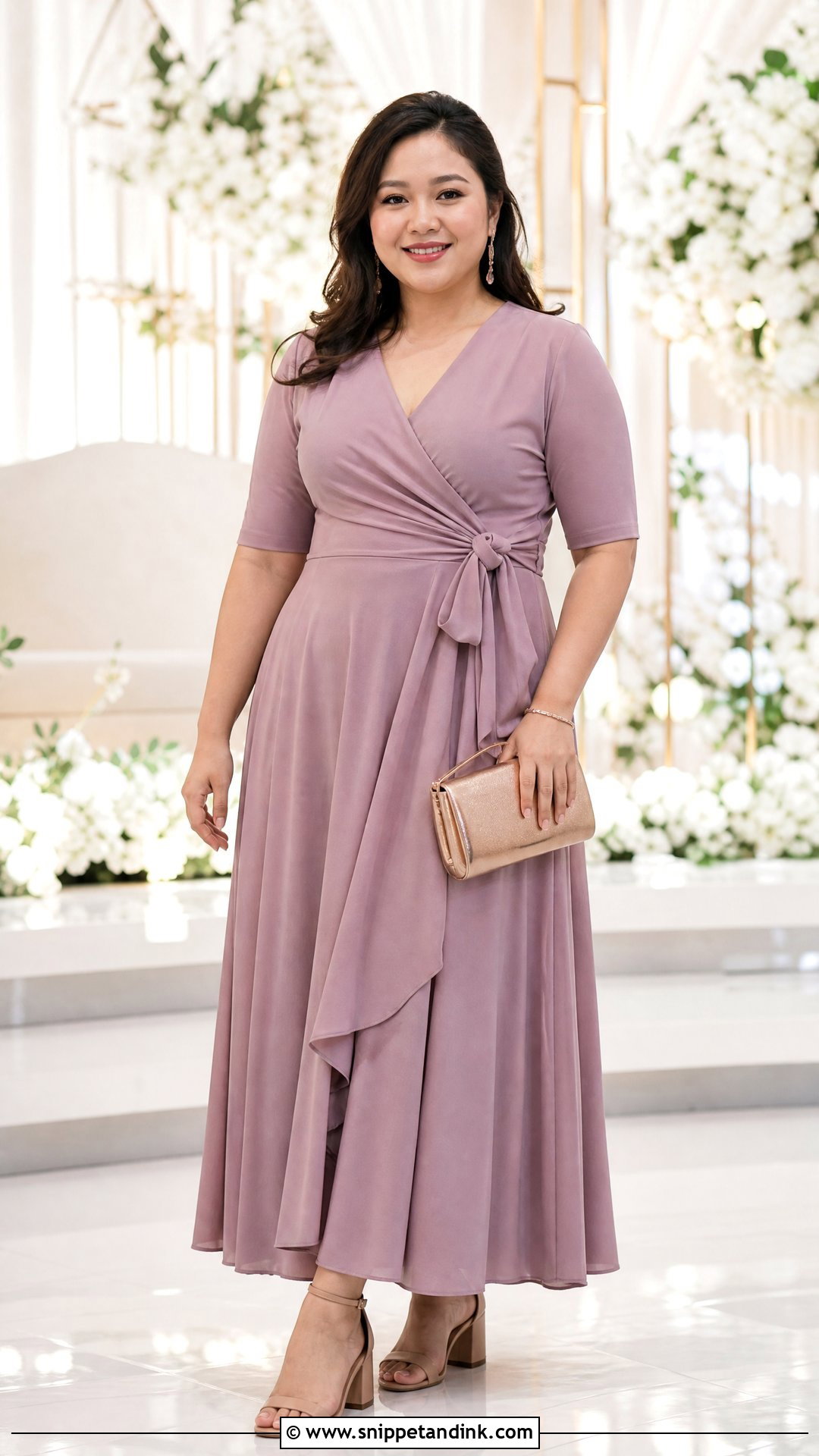
Wrap dresses adjust to the body, which is why I suggest them to ninangs who don’t want a structured bodice. The catch is the neckline. A true wrap can drift open when you bend to sign the marriage certificate, so ask for a modesty panel or a hidden snap at the cross point. Elbow sleeves and a flowing mauve skirt suit church, garden and hotel venues. Taupe block heels, a rose gold clutch and small earrings. In jersey or chiffon, I always suggest laser-cut, edge-free underwear; every line shows.
7. Emerald Green Satin Ninang Gown
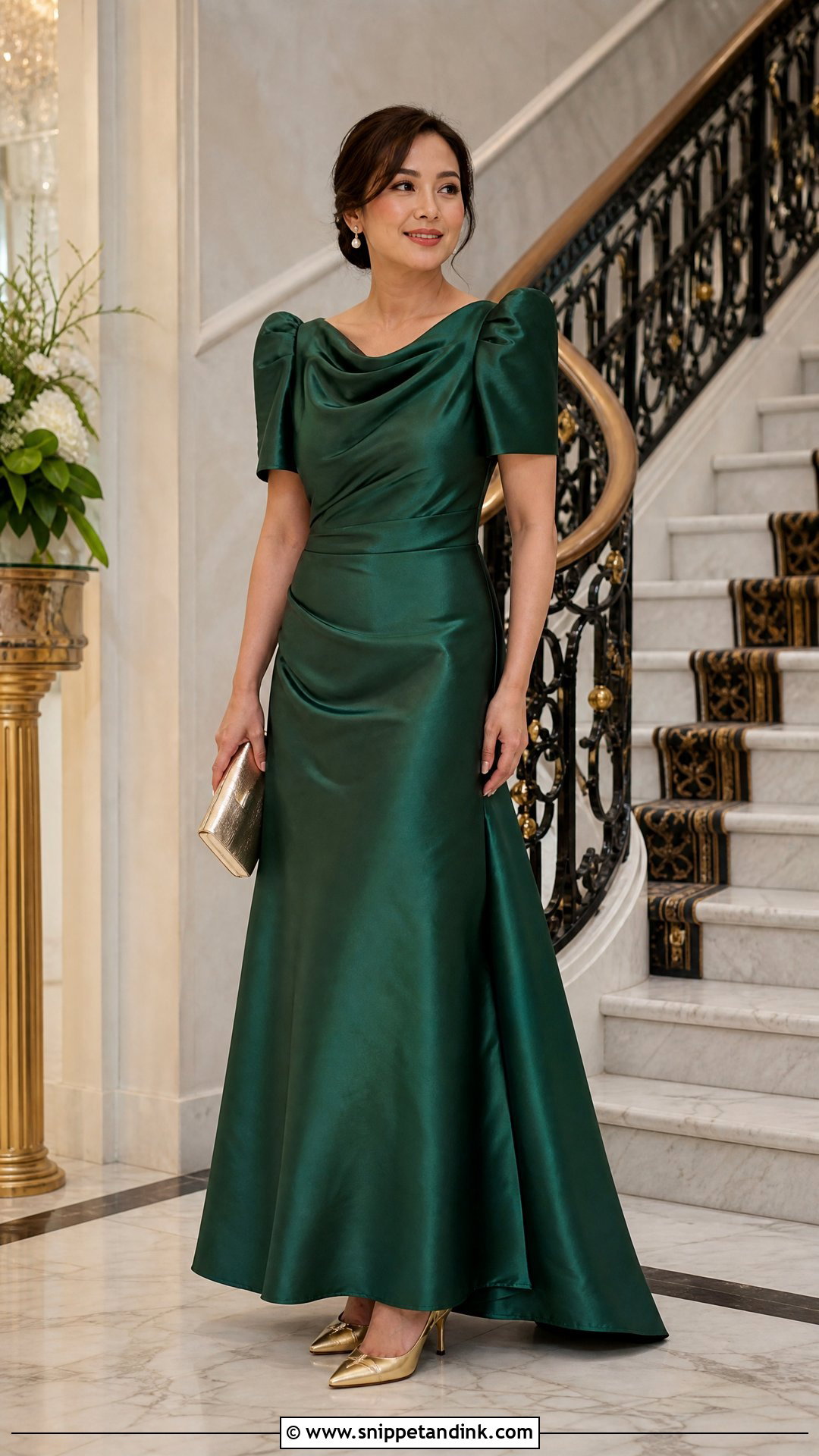
Emerald satin is formal and confident, and the weight of the satin matters more than the cut. Light, shiny satin clings and shows every crease from sitting; a heavier matte satin skims. A modest draped neckline, structured short sleeves and a bias-cut or softly flared skirt suit black-tie. Gold kitten heels and pearl or gold earrings are enough against a jewel tone. If the church asks for more coverage, add a chiffon cape or a tailored evening jacket you can take off for the reception.
8. Blush Pink Beaded Ninang A-Line Dress
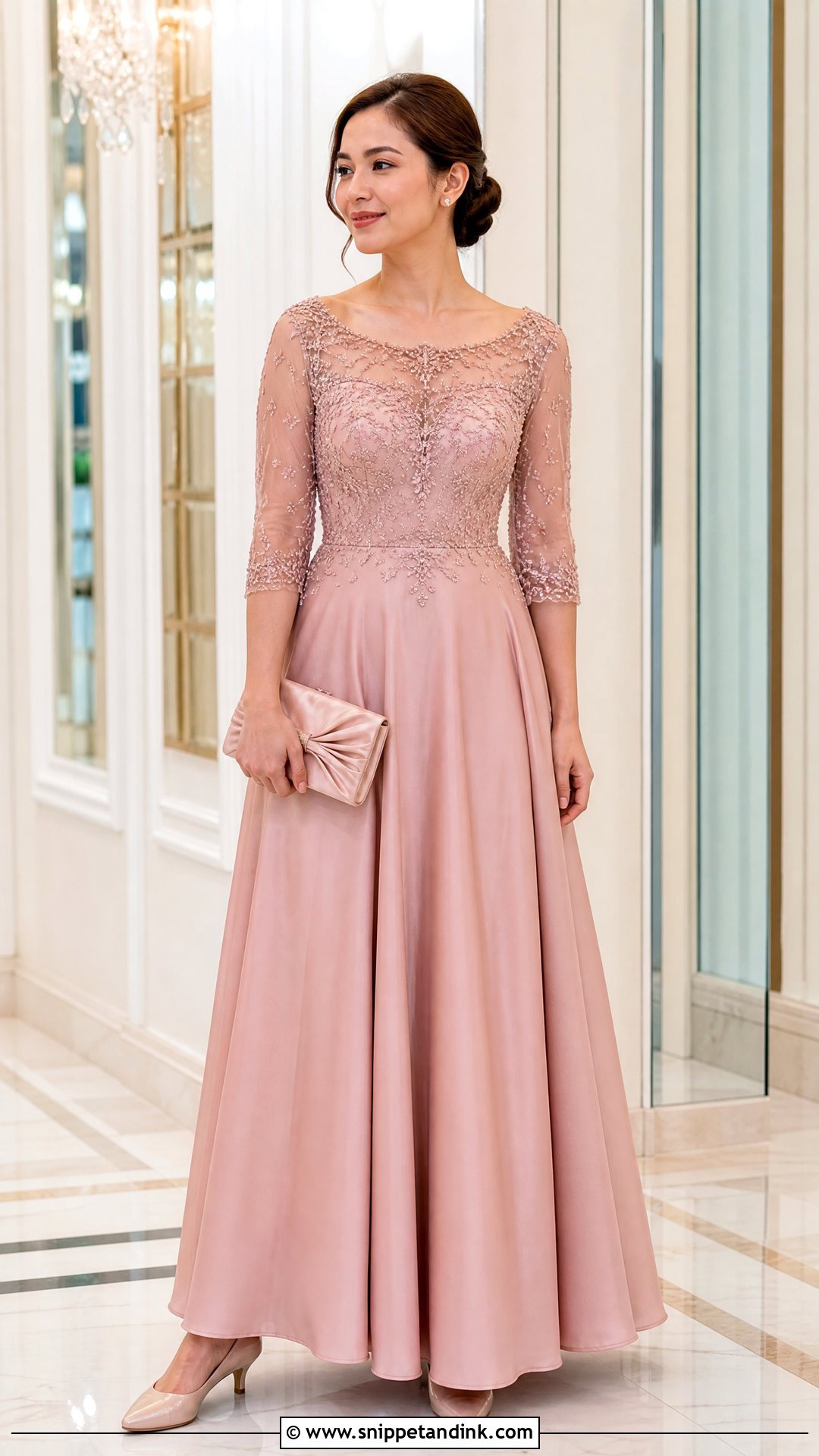
Beading on blush should stay in one zone: neckline, sleeves or waist. All-over beading on a pale pink edges toward bridal and adds weight. A floor-length A-line with a fitted lining and sheer three-quarter sleeves is graceful for a ballroom. Beads catch on chain clutch straps and lace shawls, so check that pairing before the day. No necklace if the bodice is worked. A half-up style or smooth chignon keeps the neckline clear.
9. Powder Blue Organza Sleeve Ninang Dress
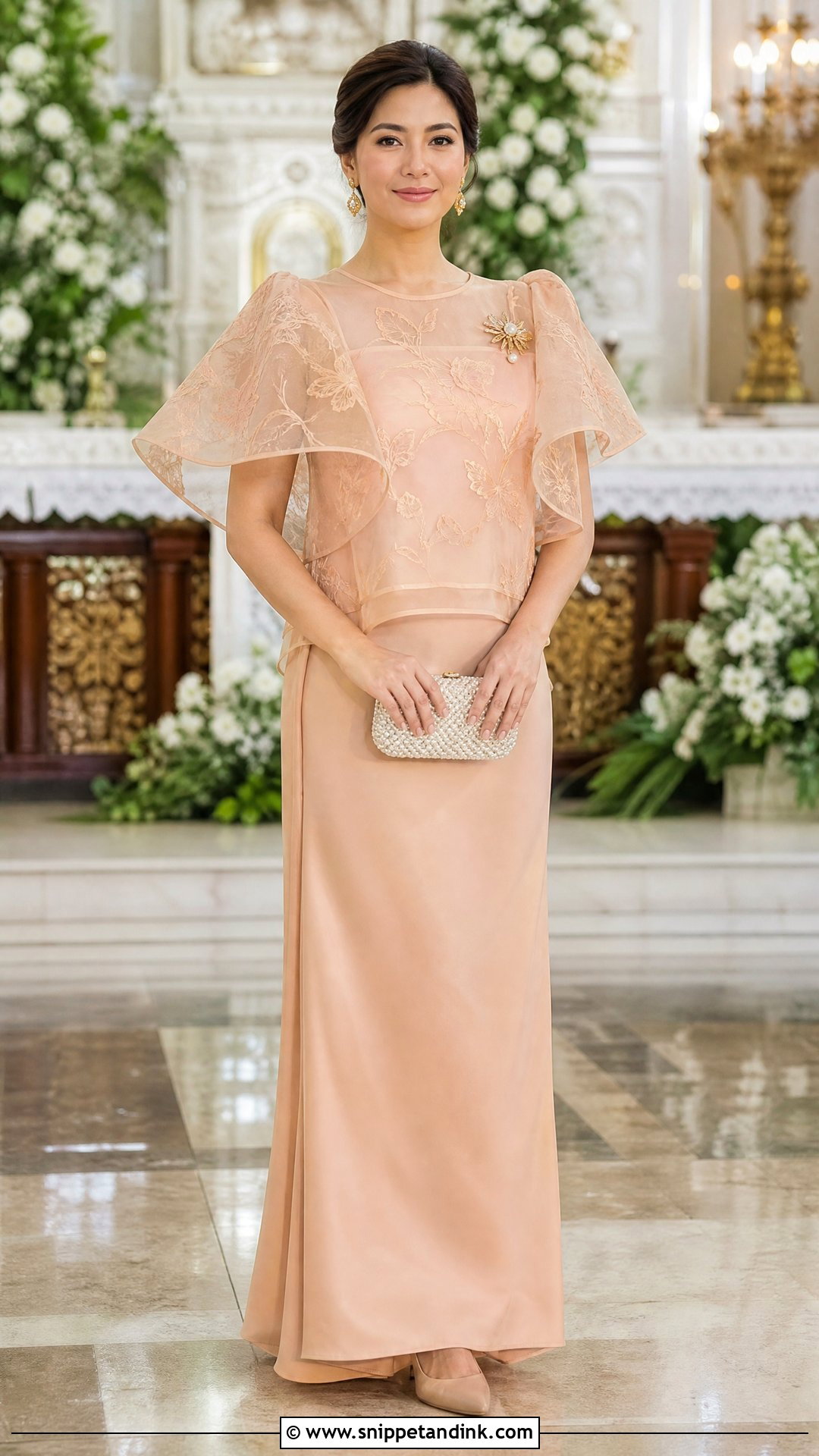
Organza sleeves on powder blue give shape without weight. Organza is crisp, so a gently puffed sleeve keeps its volume through the ceremony, which softer fabrics won’t. An ankle or floor-length dress with a clean bodice and defined waist suits daytime, spring and summer weddings. Silver slingbacks, a grey clutch and pearl drops. A narrow crystal belt defines the waist, but only if the bodice is plain. Pale blue can make some complexions look cool, so a little warmth in the cheeks helps.
10. Burgundy Velvet Ninang Gown
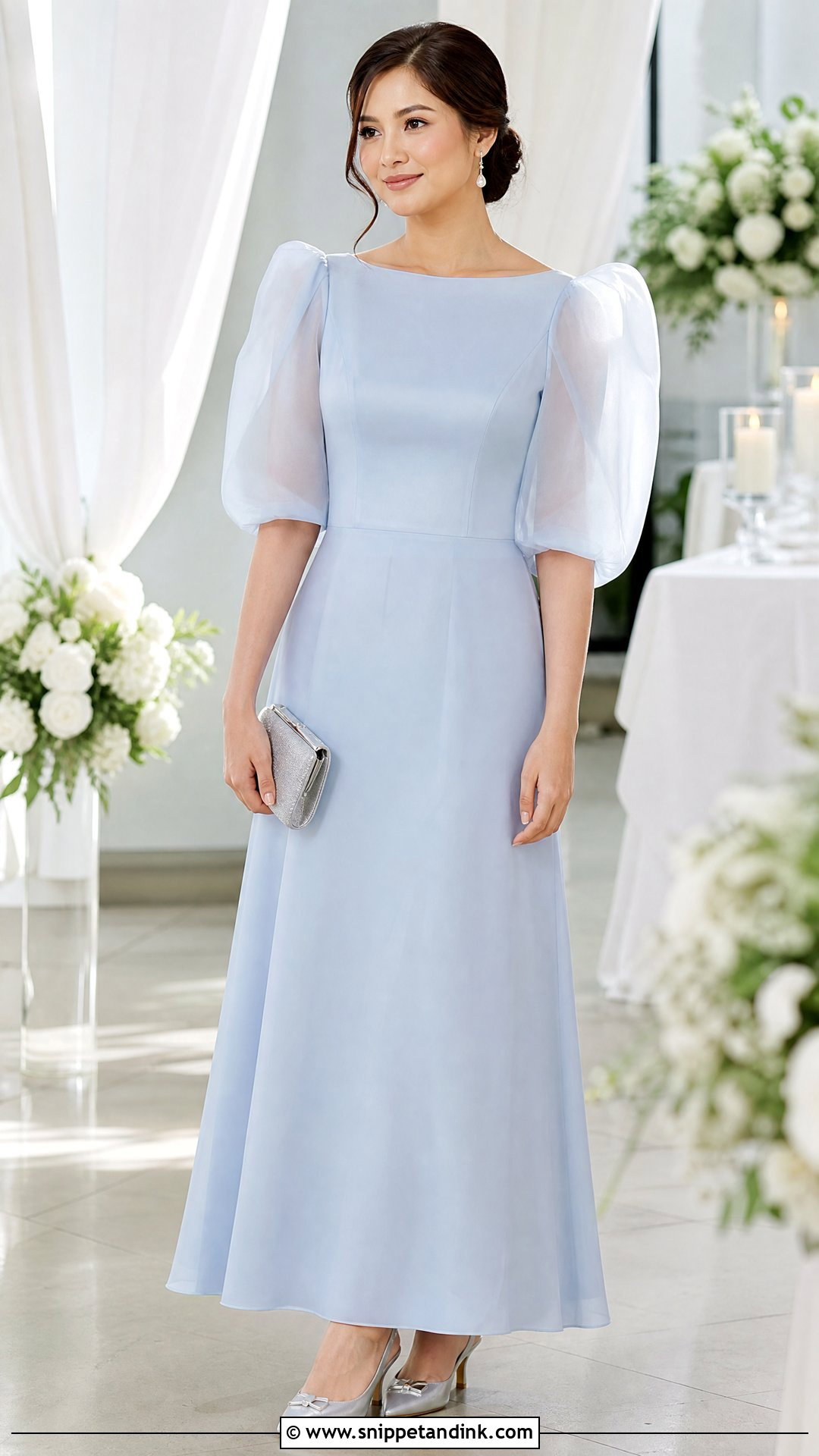
I keep velvet for cool months or a ballroom with strong air conditioning; in a warm church it gets hot fast. Stretch velvet moves far better than stiff lined velvet, and it doesn’t pucker when you sit. A long burgundy A-line with a square neckline and three-quarter sleeves looks dignified. Skip big gemstones, since velvet already has depth. Dark gold block heels, refined drops and soft waves or a low side bun finish it, with warm eyes and a muted berry lip. Velvet marks easily, so carry it on a padded hanger.
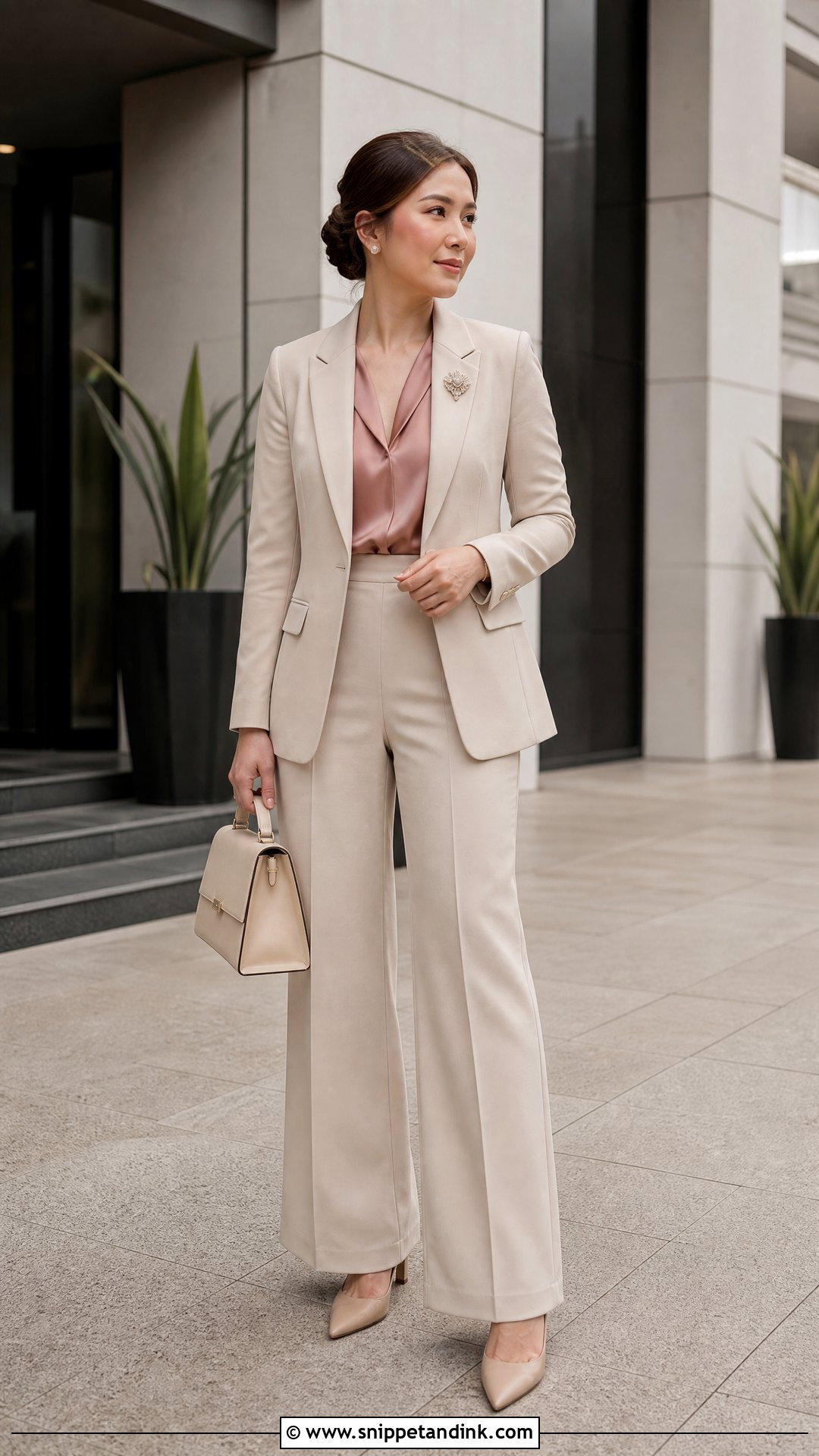
11. Beige Ninang Pantsuit With Silk Blouse
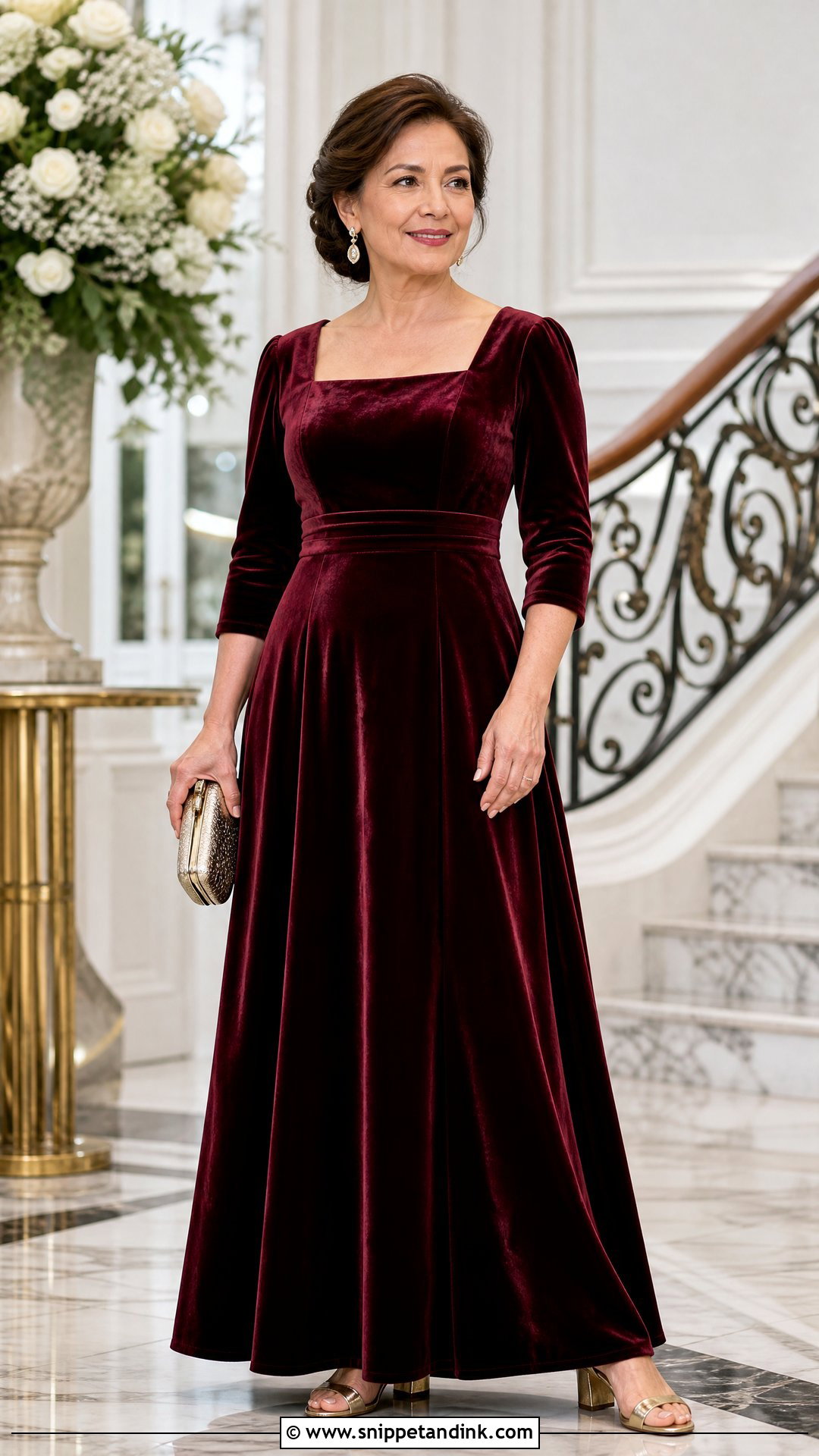
Some ninangs simply feel more themselves in trousers, and a well-cut beige pantsuit is completely appropriate. Wide or straight legs, a hip-length blazer and a silk blouse in taupe, champagne or dusty rose. The jacket should sit flat across the shoulders when buttoned; if it pulls into an X, size up and tailor the waist. Pointed closed-toe heels, a top-handle bag and a simple brooch. Make sure the beige is clearly deeper than the bride’s gown, and get the couple’s nod.
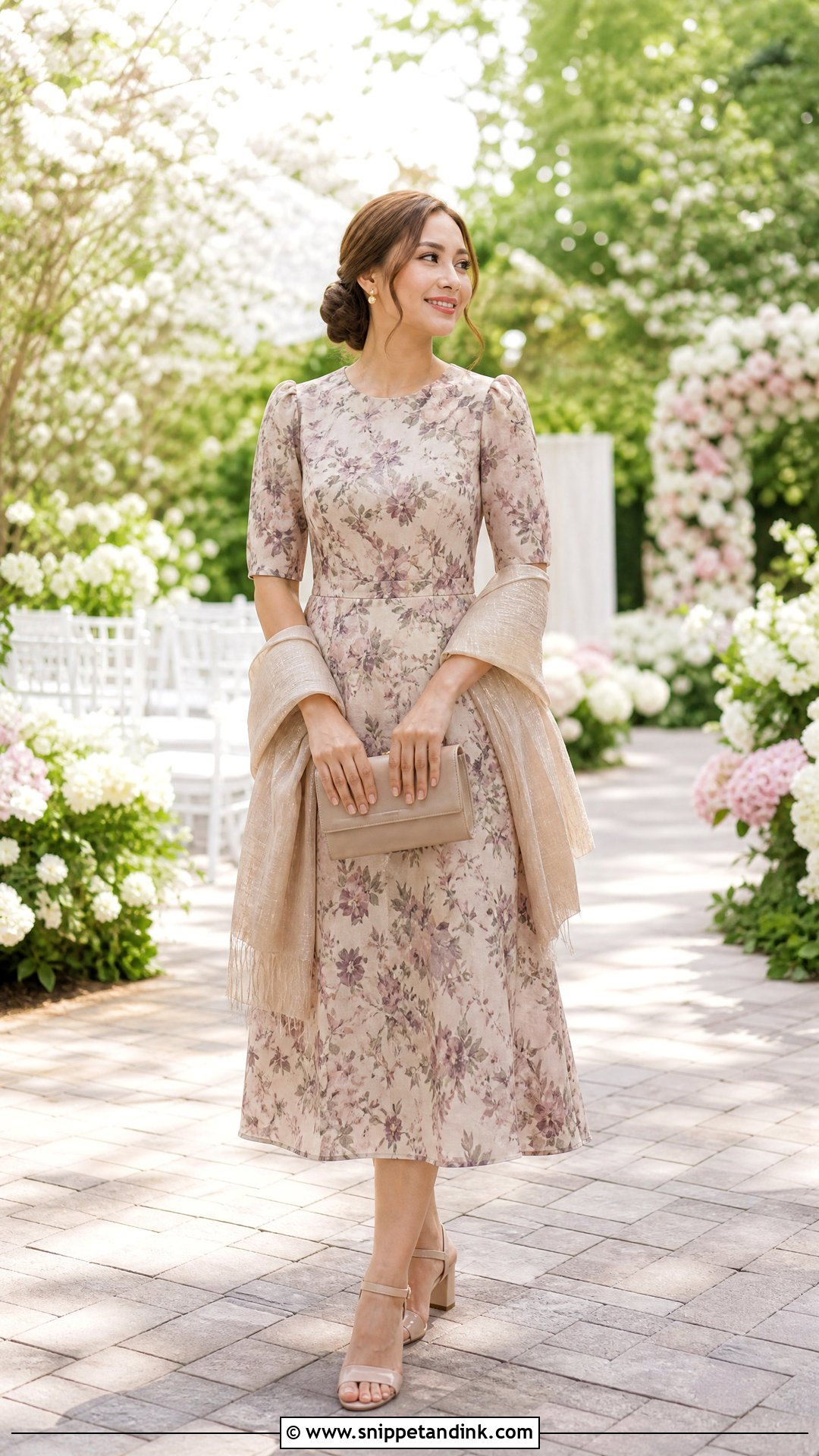
12. Floral Midi Ninang Dress With Block Heels
I find prints trickier than solids for sponsors. Big white areas in a floral can read close to bridal in group photos, so look for a print on a muted or coloured ground that picks up the wedding palette. Below-the-knee or ankle length, elbow sleeves and a fitted waist suit outdoor and semi-formal events. Block heels for grass. Match earrings to one shade in the print and keep the clutch solid. A lined, breathable fabric stops the print turning see-through in bright sun.
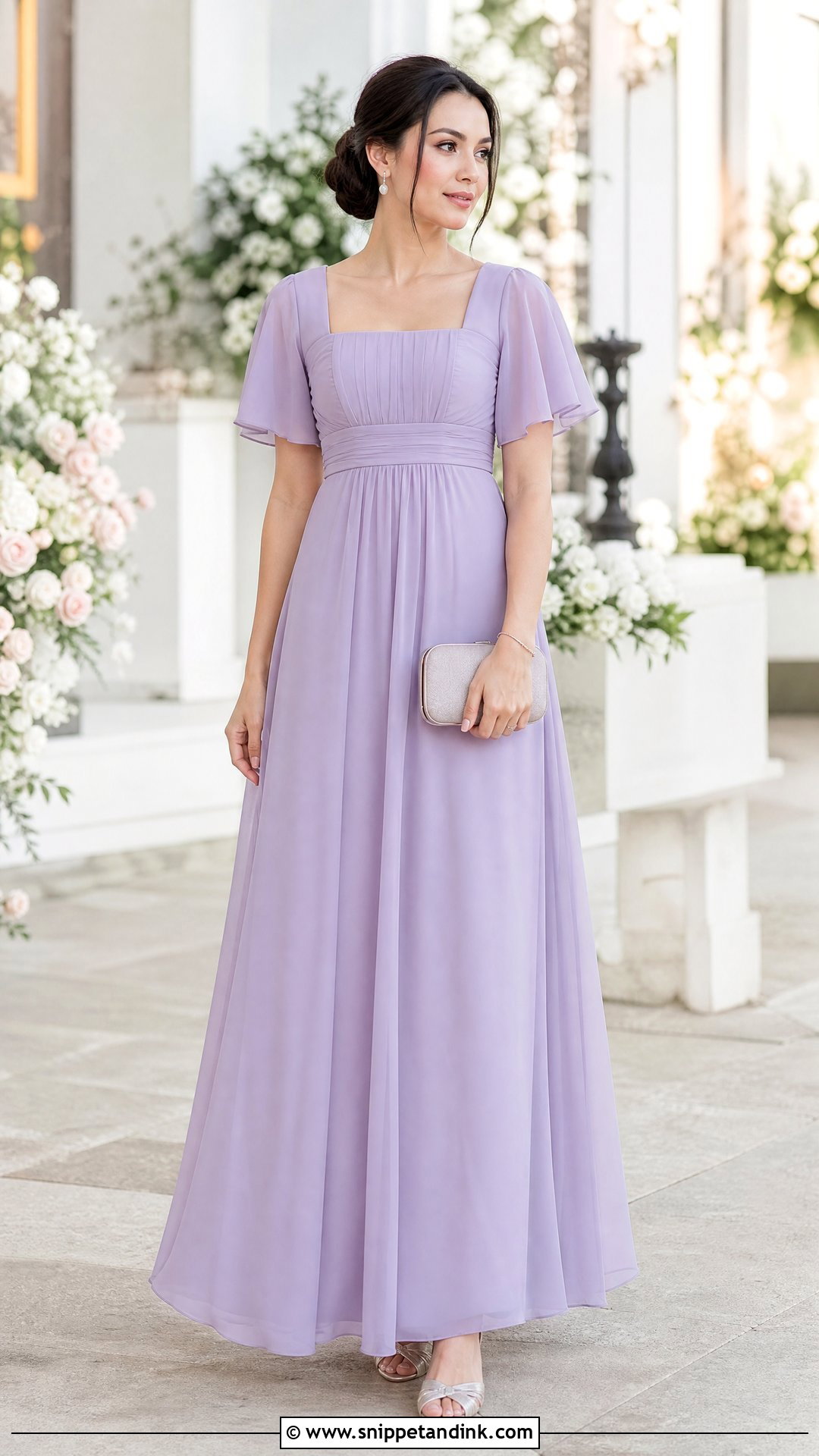
13. Lavender Empire Waist Ninang Gown
An empire waist sits high under the bust and lets the skirt fall clear of the midsection, which is why it’s comfortable for a long ceremony and a seated dinner. Lavender chiffon with a structured bodice, modest neckline and short flutter sleeves. Built-in cups or enough structure for a proper bra matter here; an empire bodice without support slides. Silver low heels and pearls. Styled simply, lavender looks mature rather than youthful. Side-swept waves or a low bun suit it.
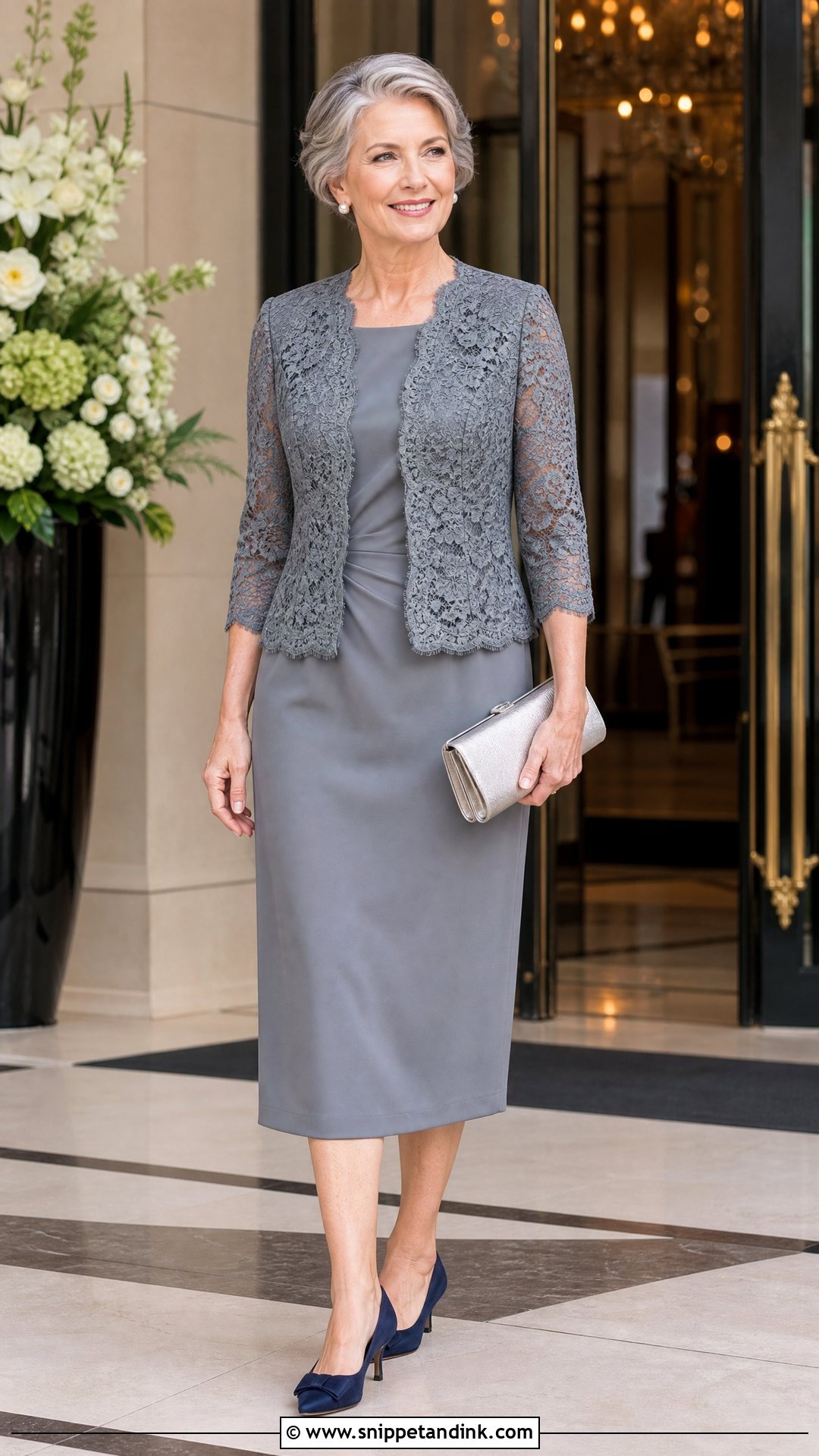
14. Gray Sheath Ninang Dress With Lace Jacket
A gray sheath dress with a lace jacket is the most re-wearable outfit here. The sheath needs a back slit, or you’ll take tiny steps down the aisle. Knee-covering or midi length, lightly shaped waist. The jacket ends at the hip with three-quarter sleeves, giving ceremony coverage you can remove later. It’s often chosen by older ninangs, but it suits any age when it fits exactly. Grey drains colour from the face, so wear more blush than you think and a rose lip.
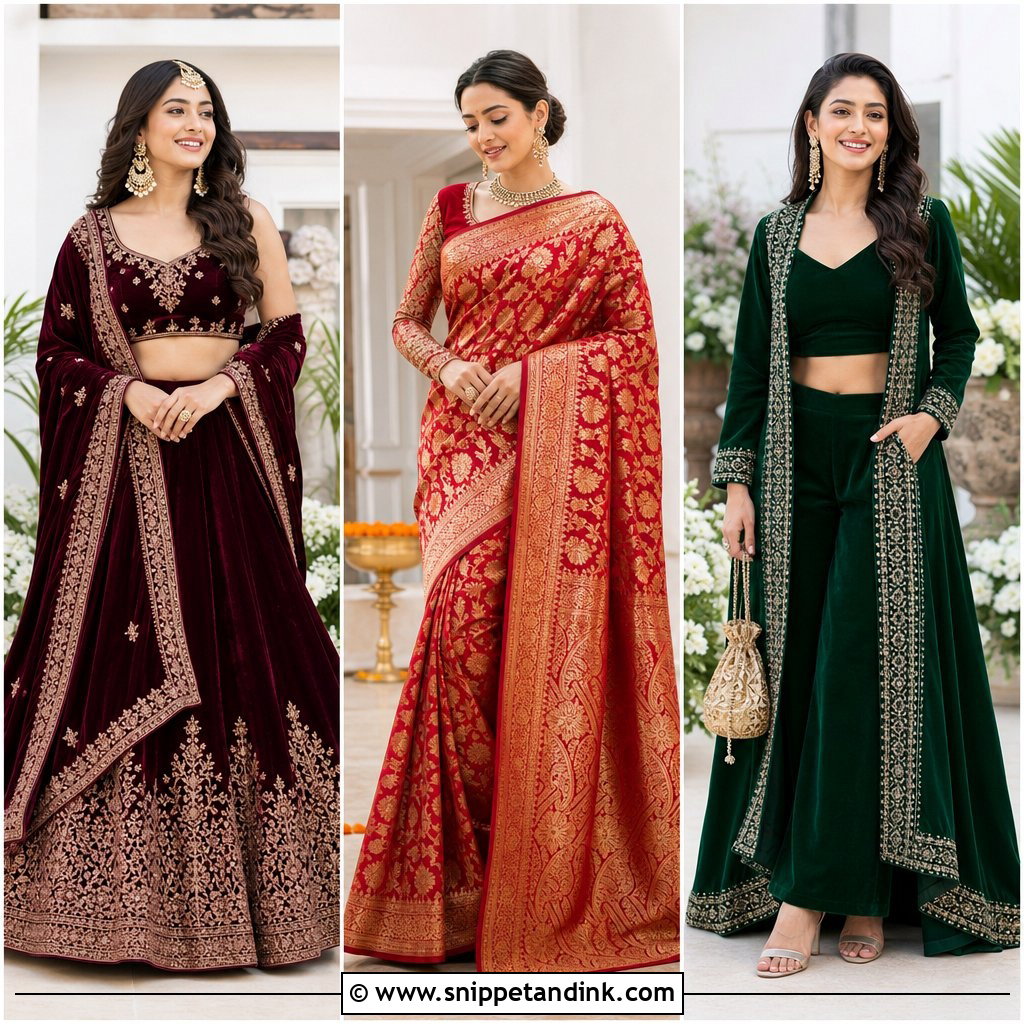
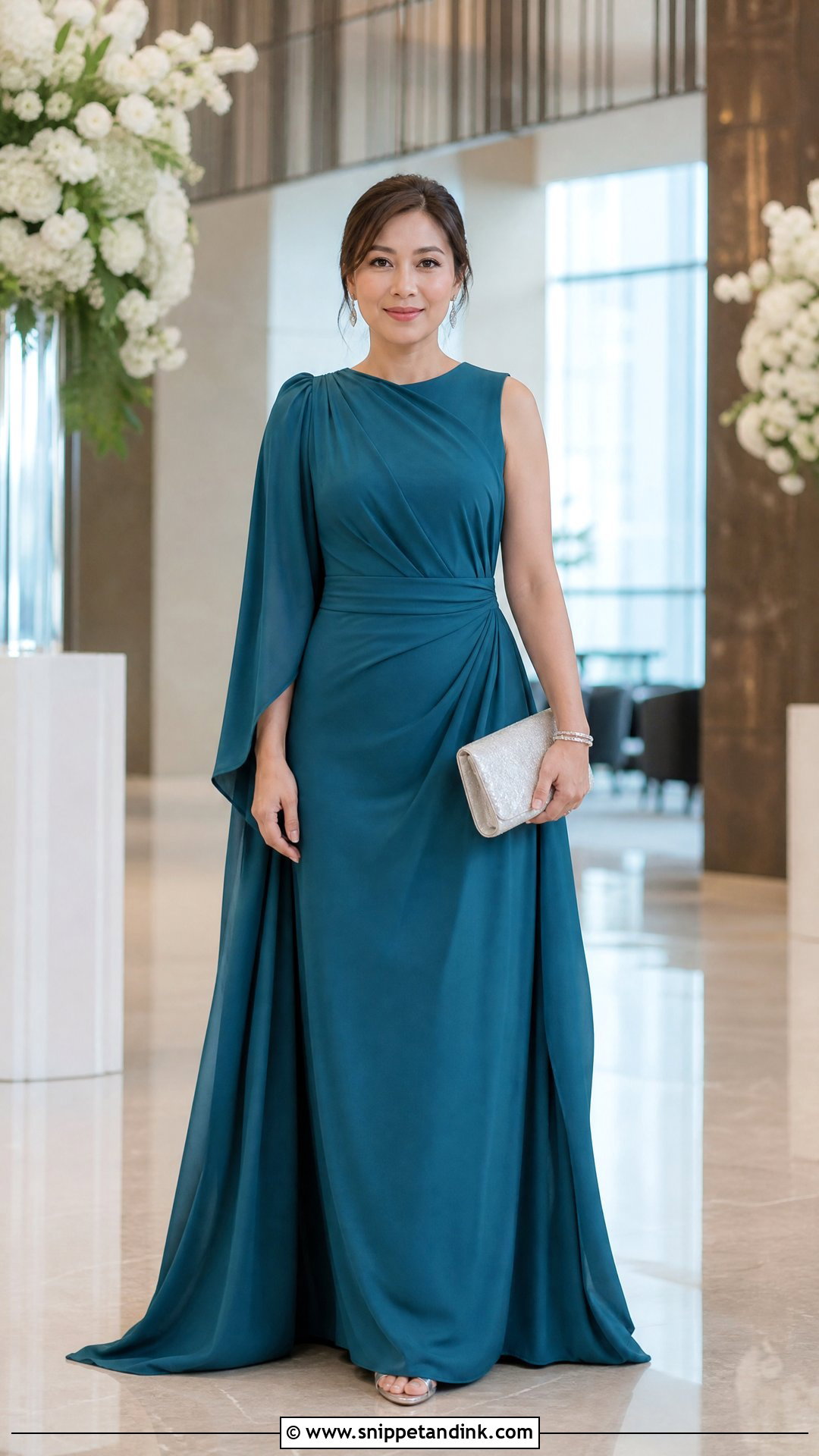
15. Teal Draped Sleeve Ninang Gown
I’d pick teal when navy feels too heavy. A draped asymmetric sleeve gives movement, but drape adds fabric, so it should be cut from something thin enough not to bulk up the shoulder. If the design bares one shoulder, cover it for the church with a matching wrap or detachable cape and take it off at the reception. Pewter heels, a silver clutch and slim drops. A low bun shows off the neckline. It suits hotel, evening and formal garden weddings.
16. Peach Baro’t Saya Ninang Set
A peach baro’t saya set honours Filipino heritage in a way an evening gown can’t. The baro, the sheer embroidered blouse, goes over a matching camisole; the saya is the long skirt. A modern wrap or lightly structured overskirt makes it easier to walk in. Nude closed-toe heels, a pearl clutch and a small brooch are traditional touches. Keep the peach consistent across both pieces; two slightly different peaches look mismatched up close. It fits heritage venues and Filipino-themed celebrations.
17. Rose Gold Embellished Ninang Gown
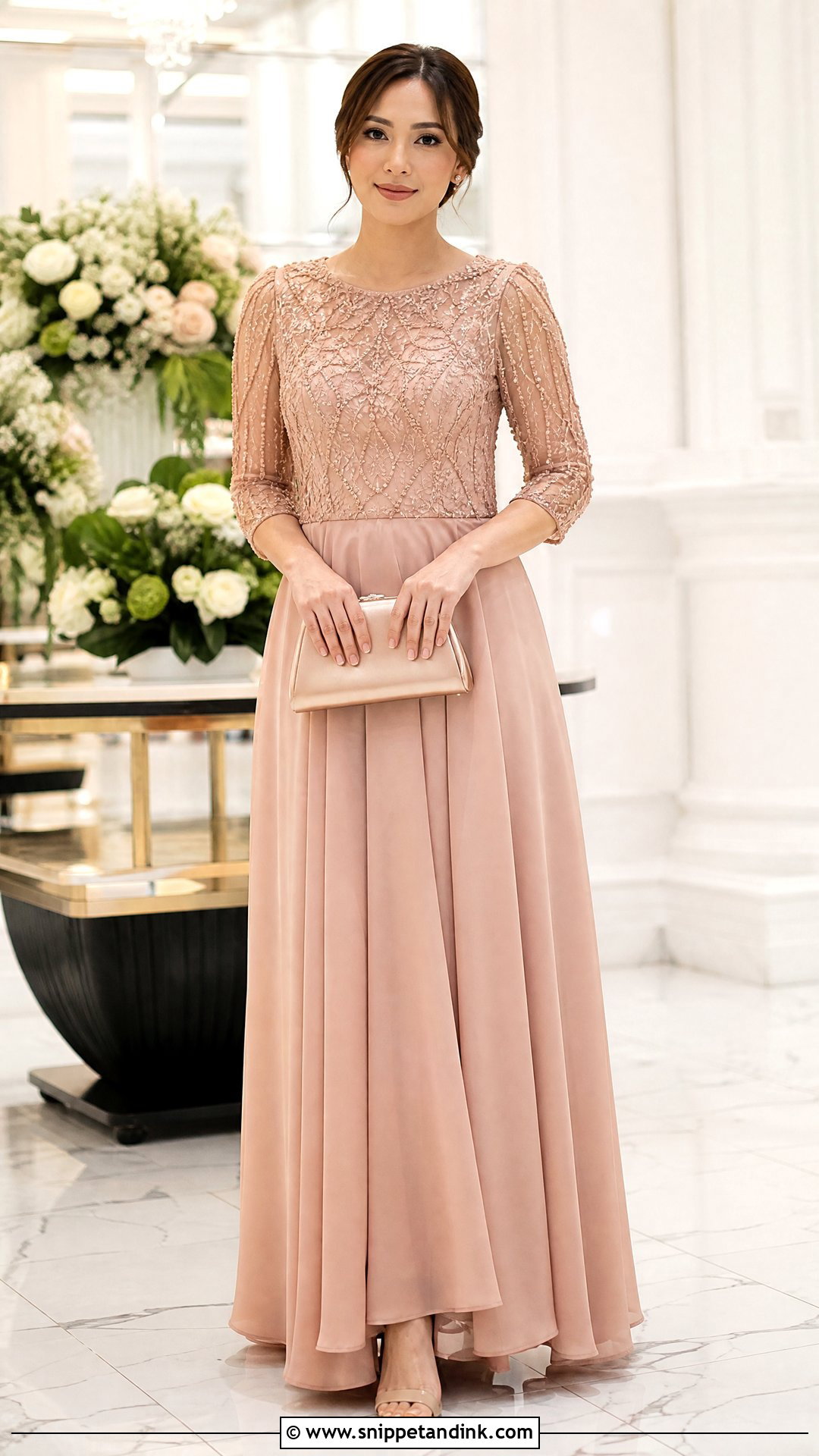
Rose gold sequins on the sleeves and a matte chiffon skirt: that split keeps a shiny gown sophisticated. Shine on one area reads festive; shine everywhere competes with the bride. A floor-length A-line with a fully lined bodice is the right base. Sequinned sleeves can scratch the inner arm over hours, so check that the sleeve is lined too. Plain satin clutch, minimal studs, no statement necklace. A sleek low chignon gives the soft metallic some structure.
18. Terracotta Long Sleeve Ninang Maxi Dress
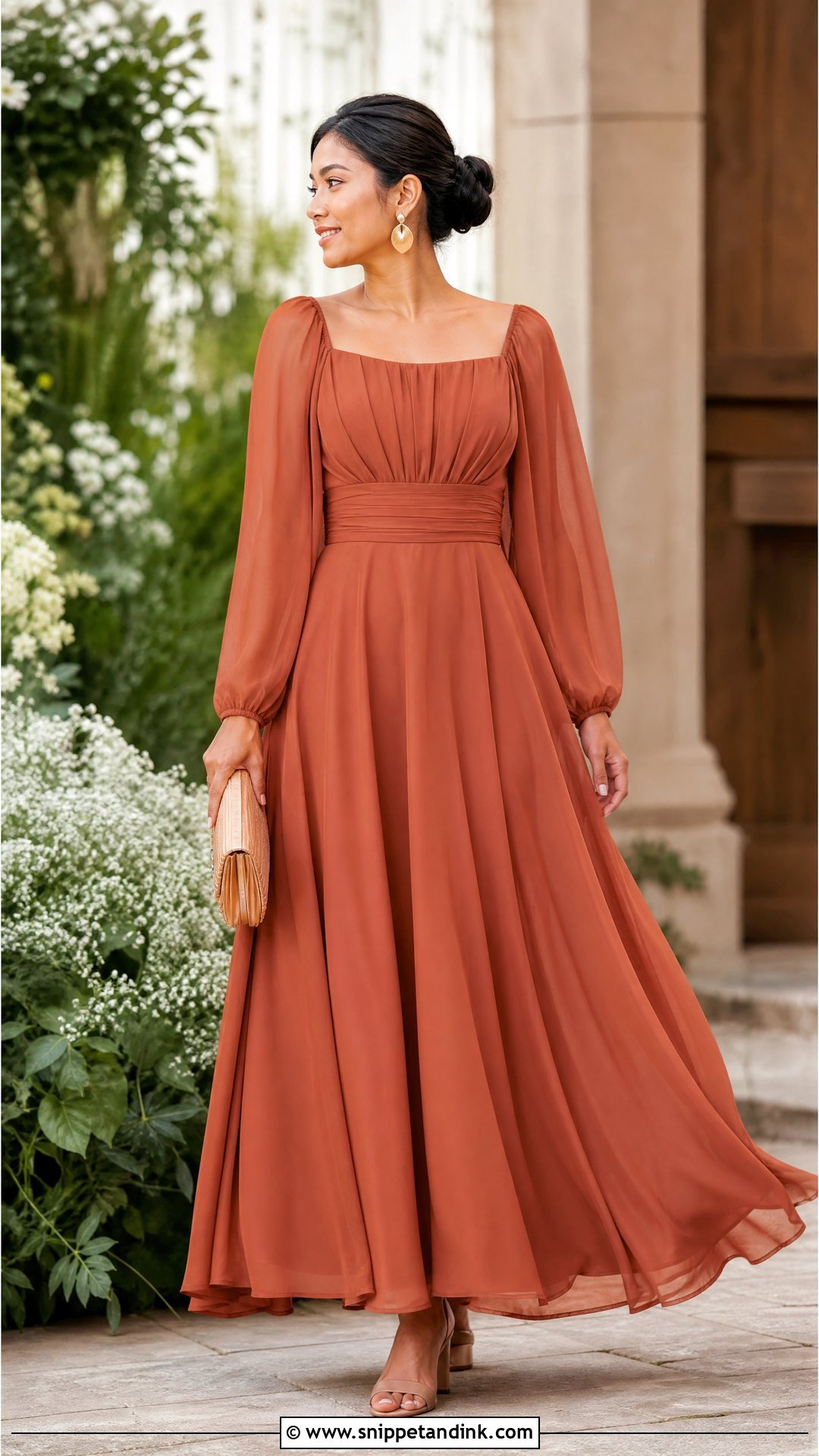
Terracotta suits rustic, garden and destination weddings, and pairs naturally with greenery, beige and rust. Long sheer sleeves, a gathered waist and a clean, tier-free skirt look more formal than ruffles. Outdoors, the heel decides your comfort: tan block heels won’t sink into lawn the way stilettos do. Chiffon or crepe keeps it light. Brushed gold earrings and a textured formal clutch suit the earthiness, with a low textured bun.
19. Black And Gold Ninang Jumpsuit
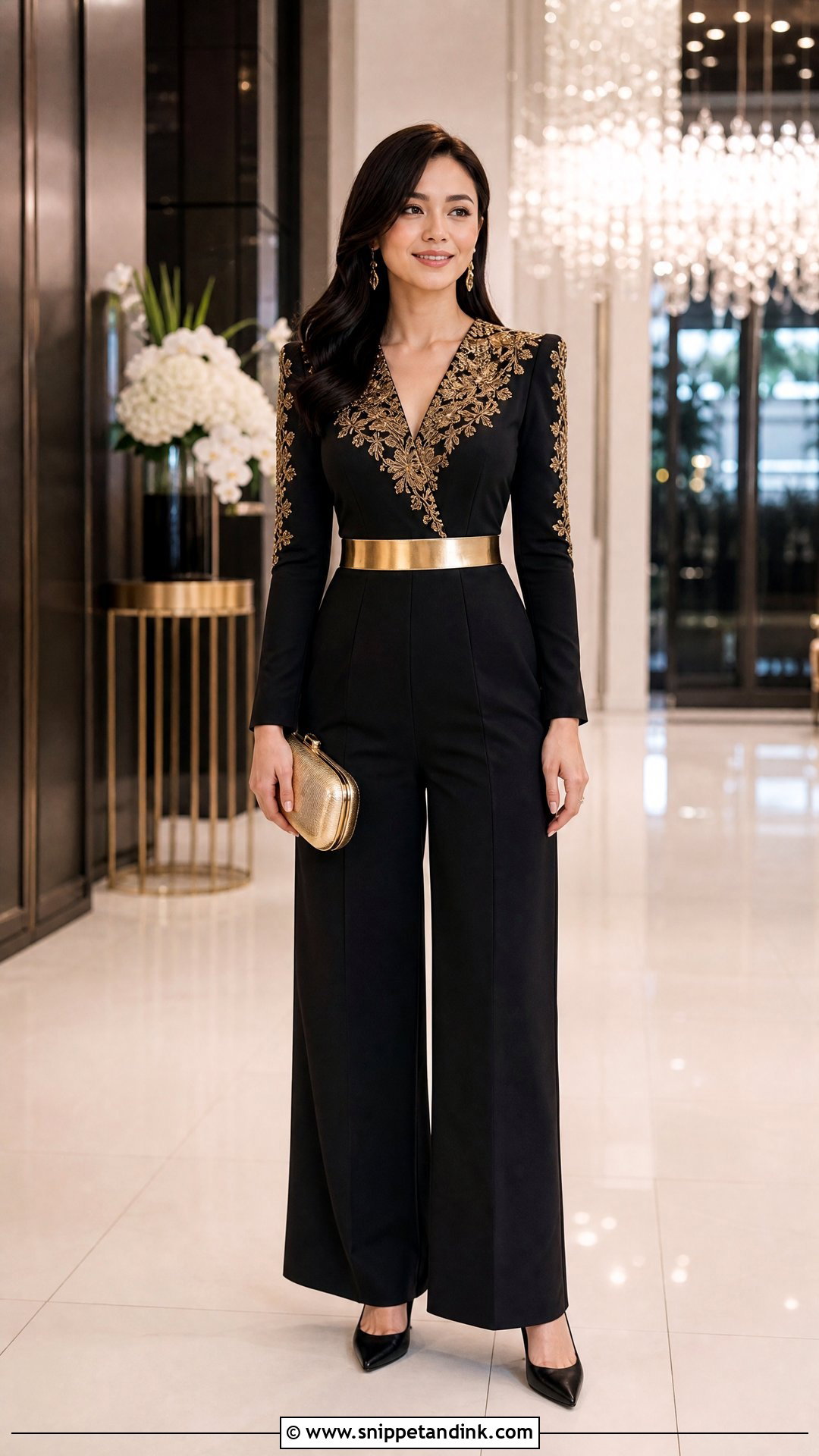
I’d be cautious here: black is still off-limits at some Filipino weddings, so only choose this jumpsuit when the invitation clearly allows it. When it does, a wide-leg jumpsuit with a defined waist, covered shoulders and a modest V looks sharp at a civil or city wedding. Gold buttons, a metallic belt or light embroidery lift the dark colour. Hem the legs to just skim the floor in your exact heels; any longer and you’ll trip in the processional. A sleek bob or low ponytail suits the tailoring.
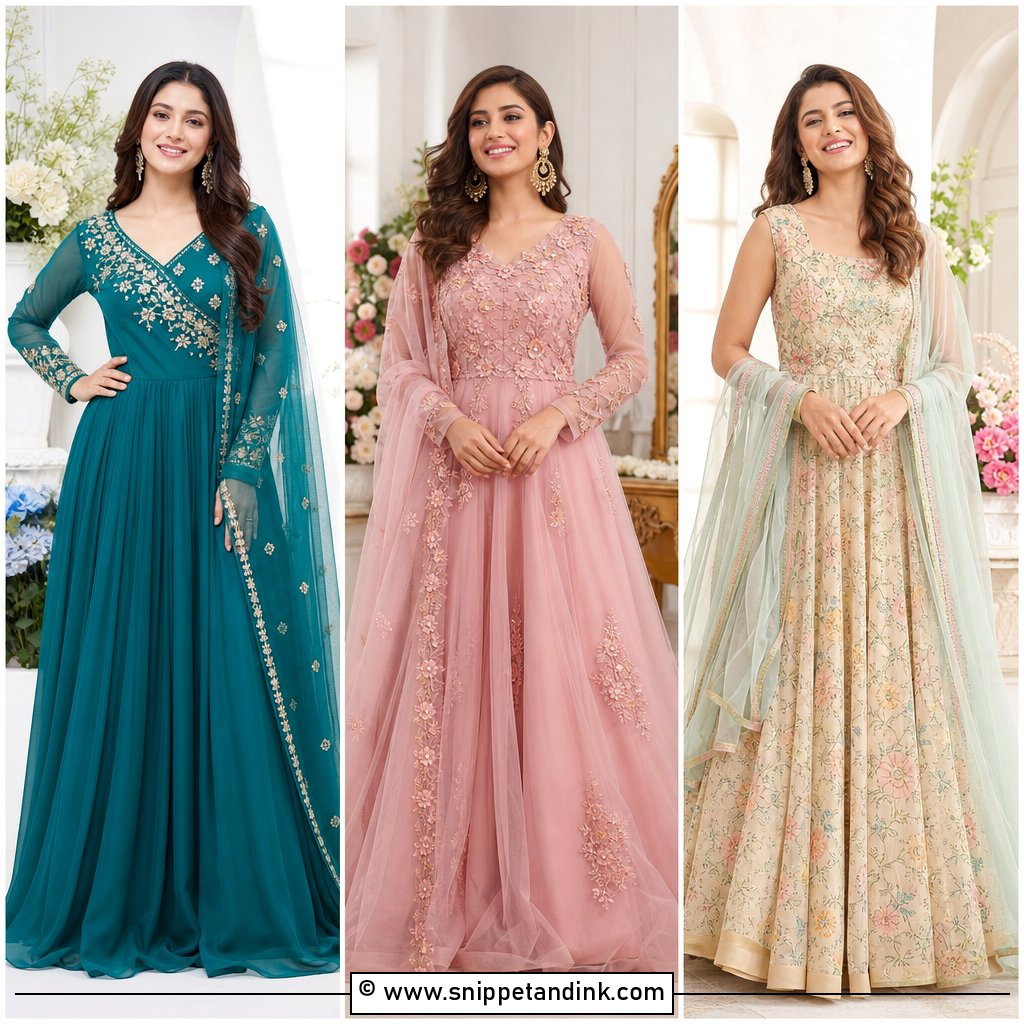
20. Royal Blue Plus Size Ninang Gown
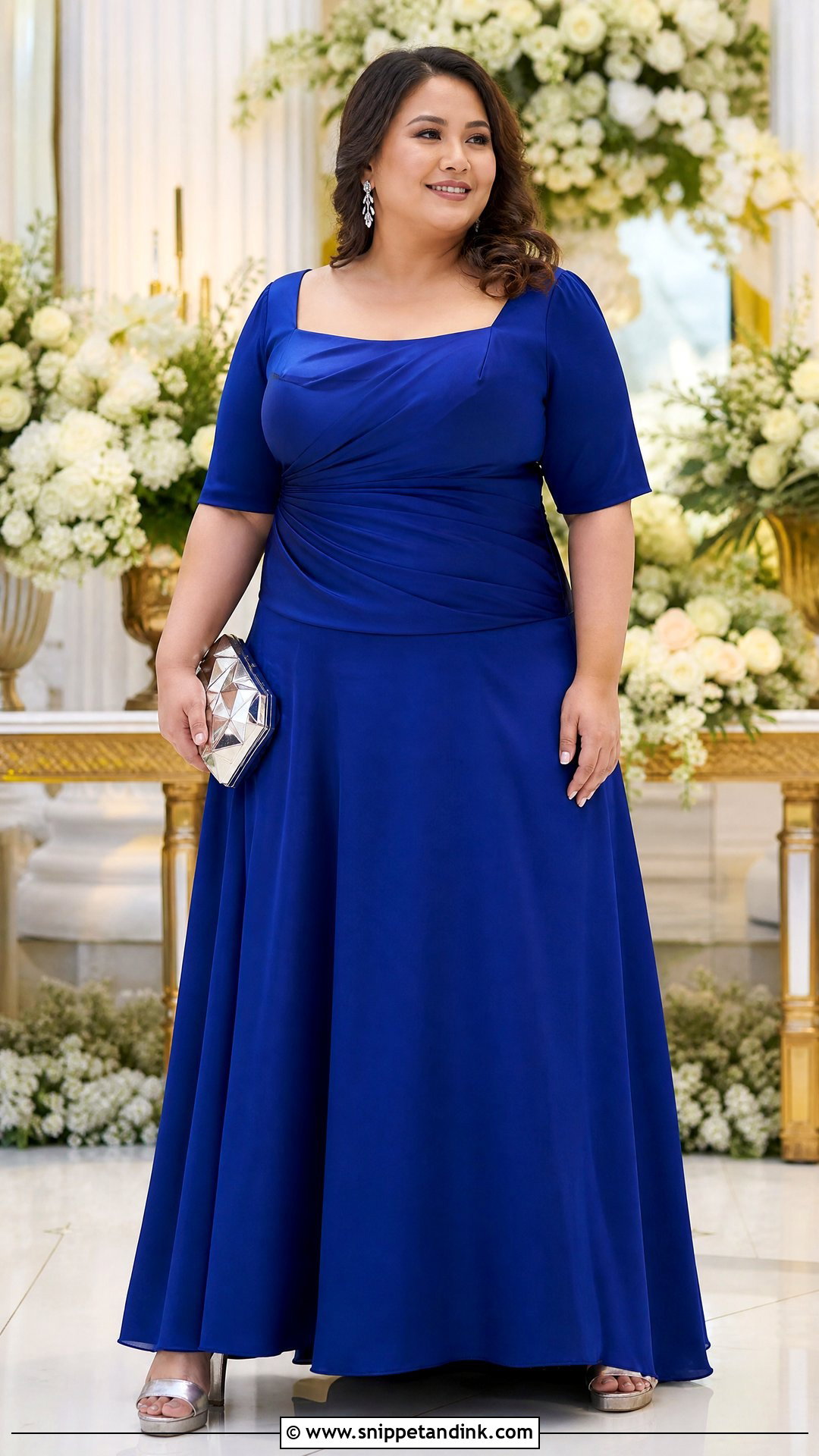
Royal blue holds its colour in group portraits, and in an A-line it suits plus-size ninangs well. A supportive fitted bodice, defined waist, elbow sleeves and floor-length skirt. Soft ruching shapes the midsection when it’s placed diagonally; horizontal ruching adds width. Tailoring beats the size label every time, so adjust hem, sleeve width and neckline. Supportive undergarments should be comfortable for hours of standing and sitting, so wear them for a full afternoon before the day. Silver block heels and drop earrings finish it.
Piña, Jusi and Organza Need Different Handling
If you’re having a Filipiniana or baro’t saya made, the sheer fabrics behave differently from ordinary dress fabric, and a little know-how saves the outfit.
Ordering
Hand-embroidered piña takes time to make, and dressmakers get busy in peak wedding months. Give yourself a few months for a made-to-order piece, and plan at least two fittings. Ask for a camisole or slip in your skin tone or the dress colour rather than white, so the sheer top doesn’t look bridal.
Care and storage
- Piña and jusi are stiff, fine fibres that crack along hard folds. Roll the piece around acid-free tissue or lay it flat instead of folding.
- Don’t iron directly on embroidery. Use a low setting with a pressing cloth, or have a cleaner who handles barong and Filipiniana do it.
- Keep it out of plastic covers, which trap humidity and can cause yellowing; a cotton garment bag is better.
- Spot-clean food marks quickly with plain water, and leave anything bigger to a professional.
Respecting the Role, and Your Feet
A good sponsor outfit balances elegance, comfort, church requirements and the couple’s palette. You can go Filipiniana, baro’t saya, chiffon, a pantsuit or a jumpsuit. Start by confirming colour, length and venue with the couple. Then pick a silhouette you can walk, sit and sign in. Low heels, secure necklines, breathable linings and edited accessories make even an ornate outfit easy to wear. Above all, wear something that feels like you while honouring your role as a principal sponsor on the couple’s important day.
You'll Like These Ideas:


Leave a Reply