
Dressing for an Anand Karaj is a different brief from dressing for a reception. You’ll take your shoes off at the door, cover your head the whole time you’re in the prayer hall, and sit on the floor for the ceremony, so the outfit has to handle all three without fuss. Covered shoulders, a sensible neckline, bottoms you can sit cross-legged in, and a dupatta big enough to stay on your hair are the starting point. If you’re thinking of a saree, a lehenga or a sleeveless blouse, ask the family first, because expectations do vary between Gurdwaras. After that, soft fabrics, light jewelry and flat juttis will carry you through a long morning. Here are twenty-five outfits I’d happily send a guest out in, with notes on how each one behaves once you sit down.
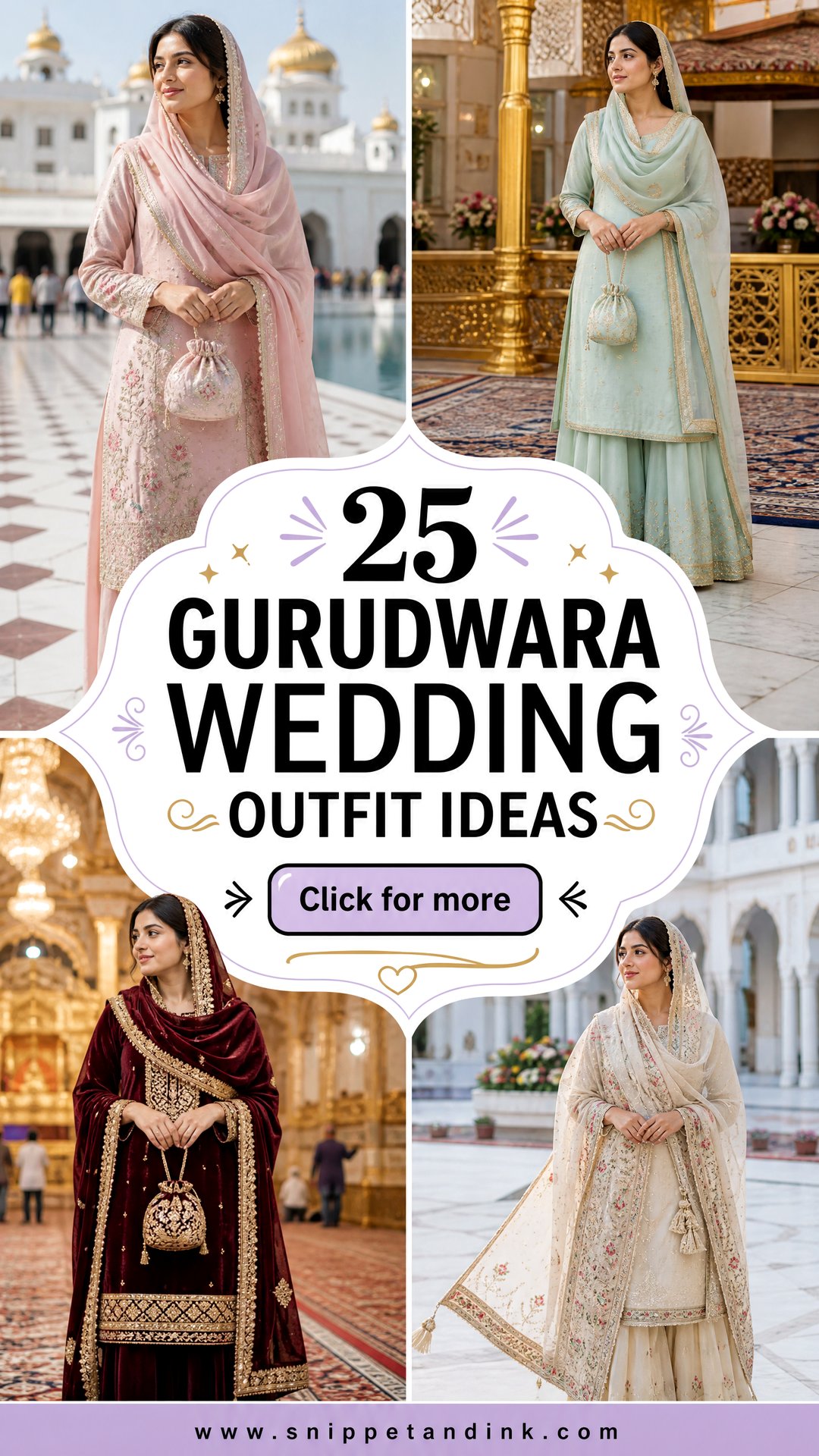
How an Anand Karaj Morning Plays Out for a Guest
Most of the advice on what to wear makes sense once you picture the morning itself. Ceremonies are usually held before midday. You arrive, leave your shoes in the shoe area near the entrance, cover your head, and enter the prayer hall, where everyone sits on the carpeted floor facing the Guru Granth Sahib. In many Gurdwaras men and women sit on separate sides. There is kirtan, then the four laavan, when the couple walks around the Guru Granth Sahib while the hymns are sung.
You will stand for the Ardaas, sit again, and then usually move to langar, the communal meal, which in many Gurdwaras is also eaten seated on the floor. All told you may be barefoot and covered for two or three hours. That’s why I judge every outfit with three questions.
- Can I sit cross-legged for an hour without the hem riding up or the waist digging in?
- Can I stand up from the floor without help and without treading on my own fabric?
- Will my head covering stay on while I bow, stand and eat?
A few practical points beyond clothing: keep your feet tucked rather than pointed toward the Guru Granth Sahib, carry a small bag rather than a large one since floor space is shared, and wear socks or a pedicure you’re happy to show. In cold months, thick socks are welcome; the floors can be chilly.
1. Pastel Salwar Suit For Gurudwara Wedding
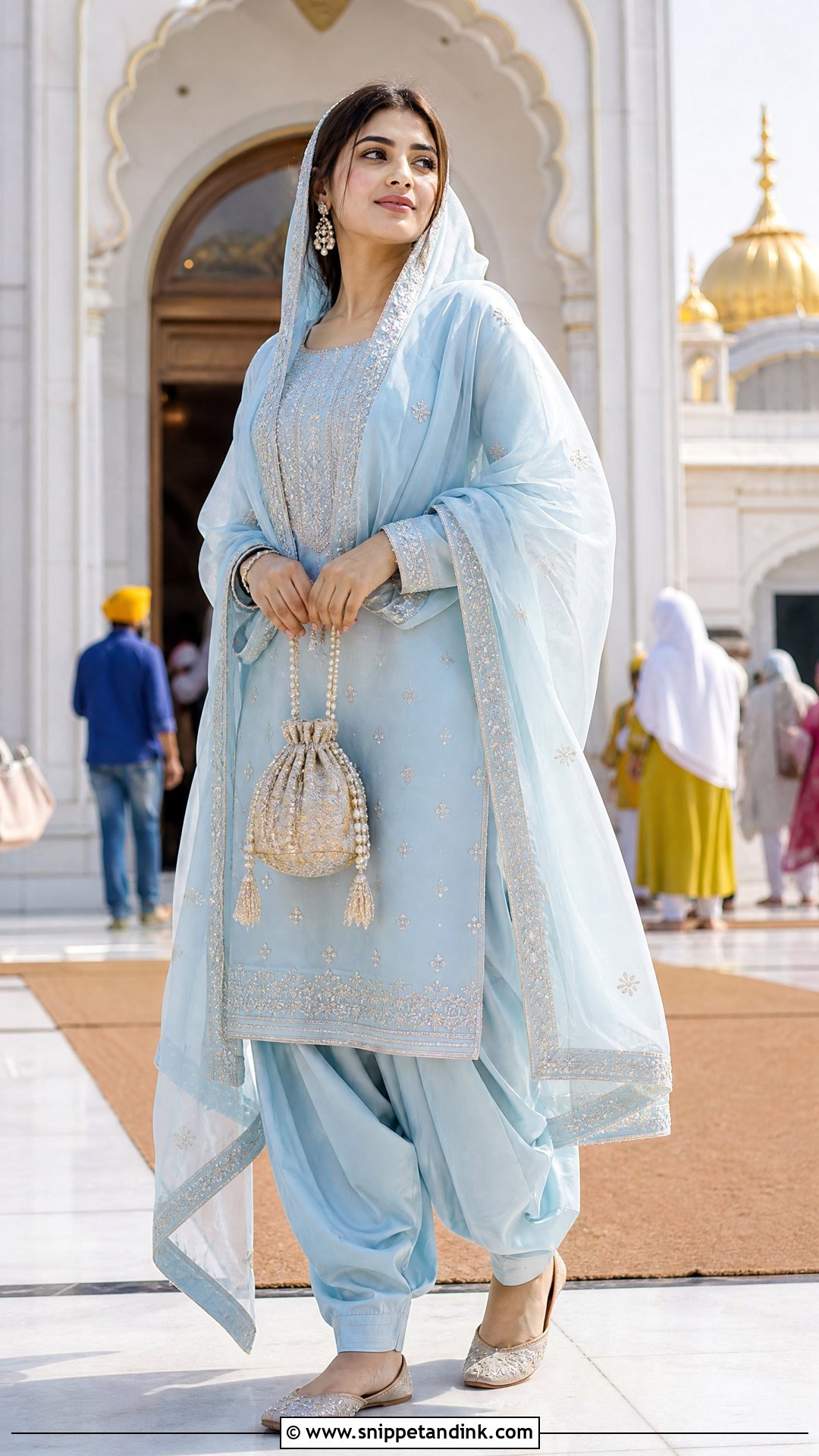
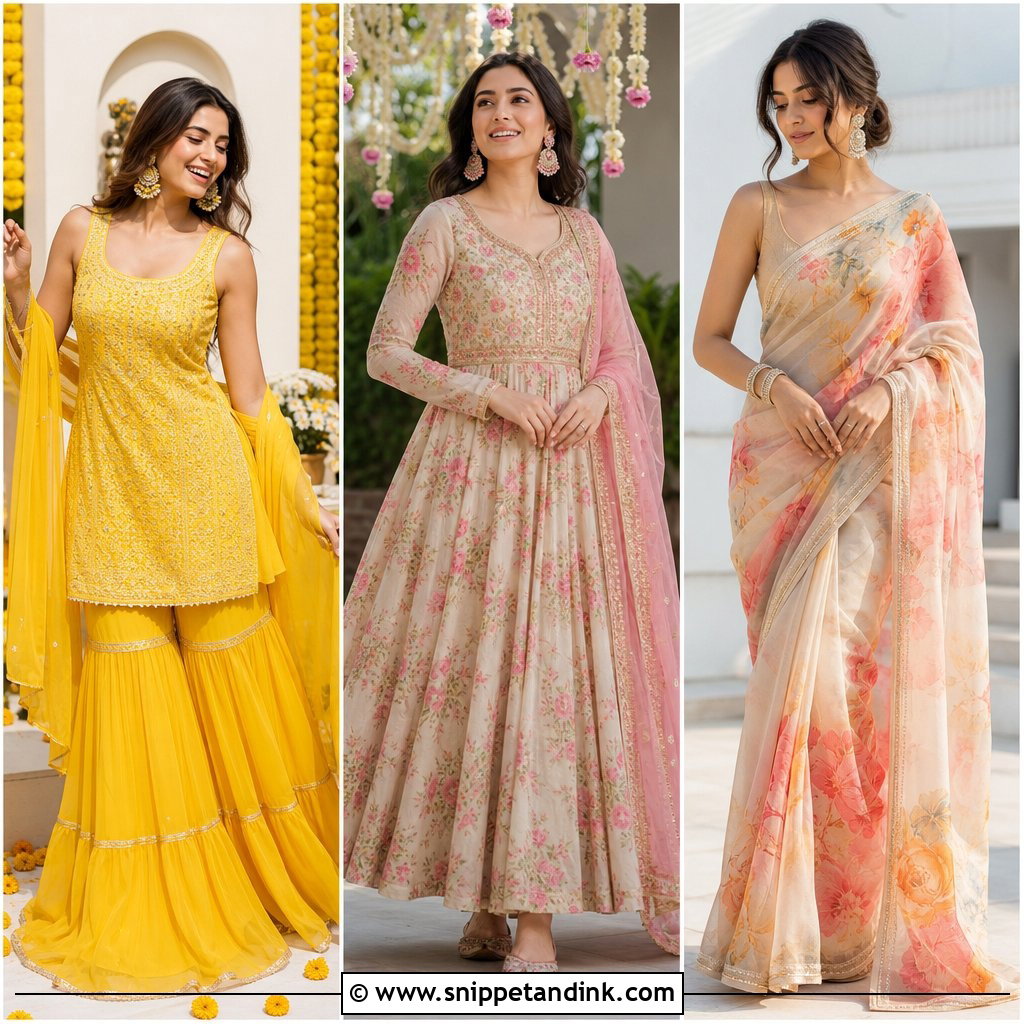
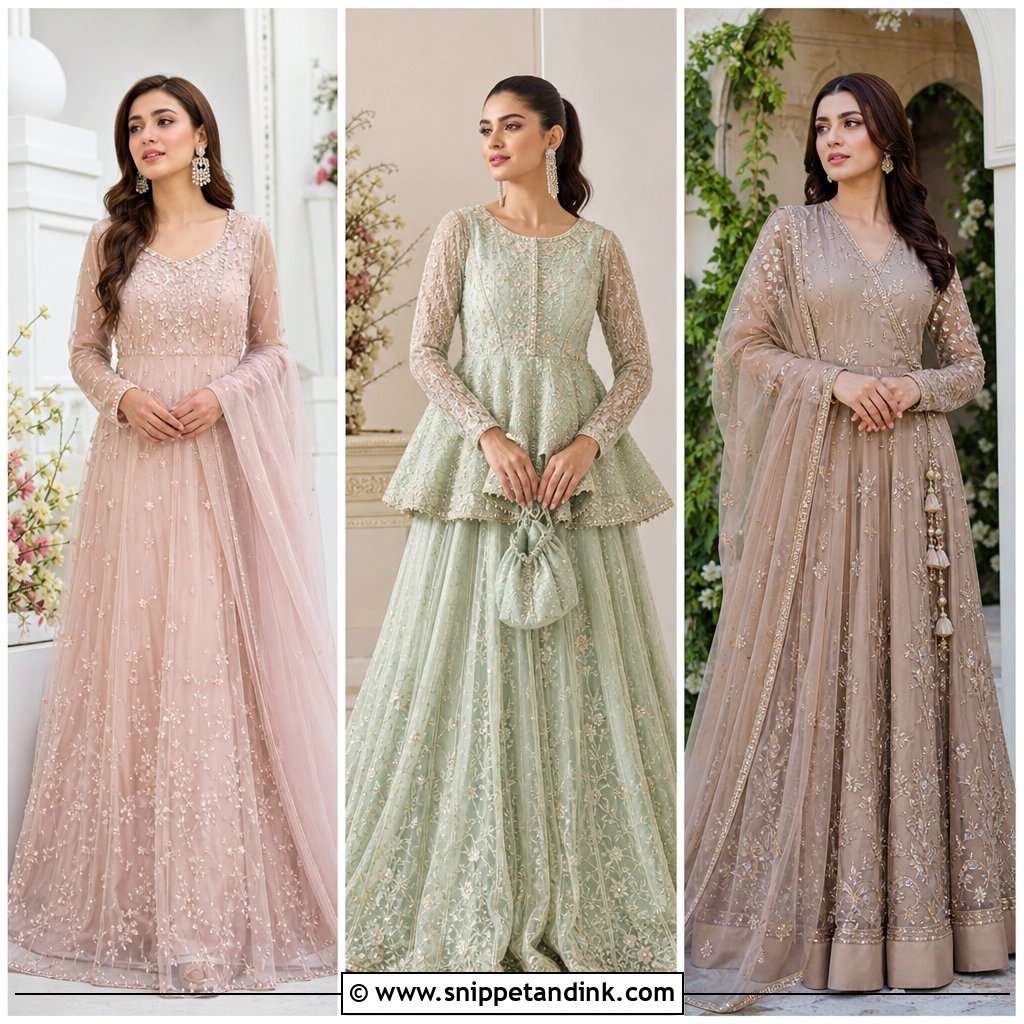
Pastels are my first suggestion for a morning ceremony, because they read festive in daylight without competing with the bride. A kameez at knee length or longer, comfortable salwar and a light dupatta; powder blue, blush, pistachio, lilac or peach. Thread embroidery, a few pearls or a narrow metallic border is plenty. Add embroidered juttis, small drops and a structured potli. Pin the dupatta just behind the hairline with two small pins so it stays put when you sit and stand. Check the neckline fabric in daylight: very sheer georgette can show more than you expect once the dupatta shifts. A cotton-silk or georgette blend drapes well and still copes with sitting.
2. Embroidered Punjabi Suit For Gurudwara Wedding
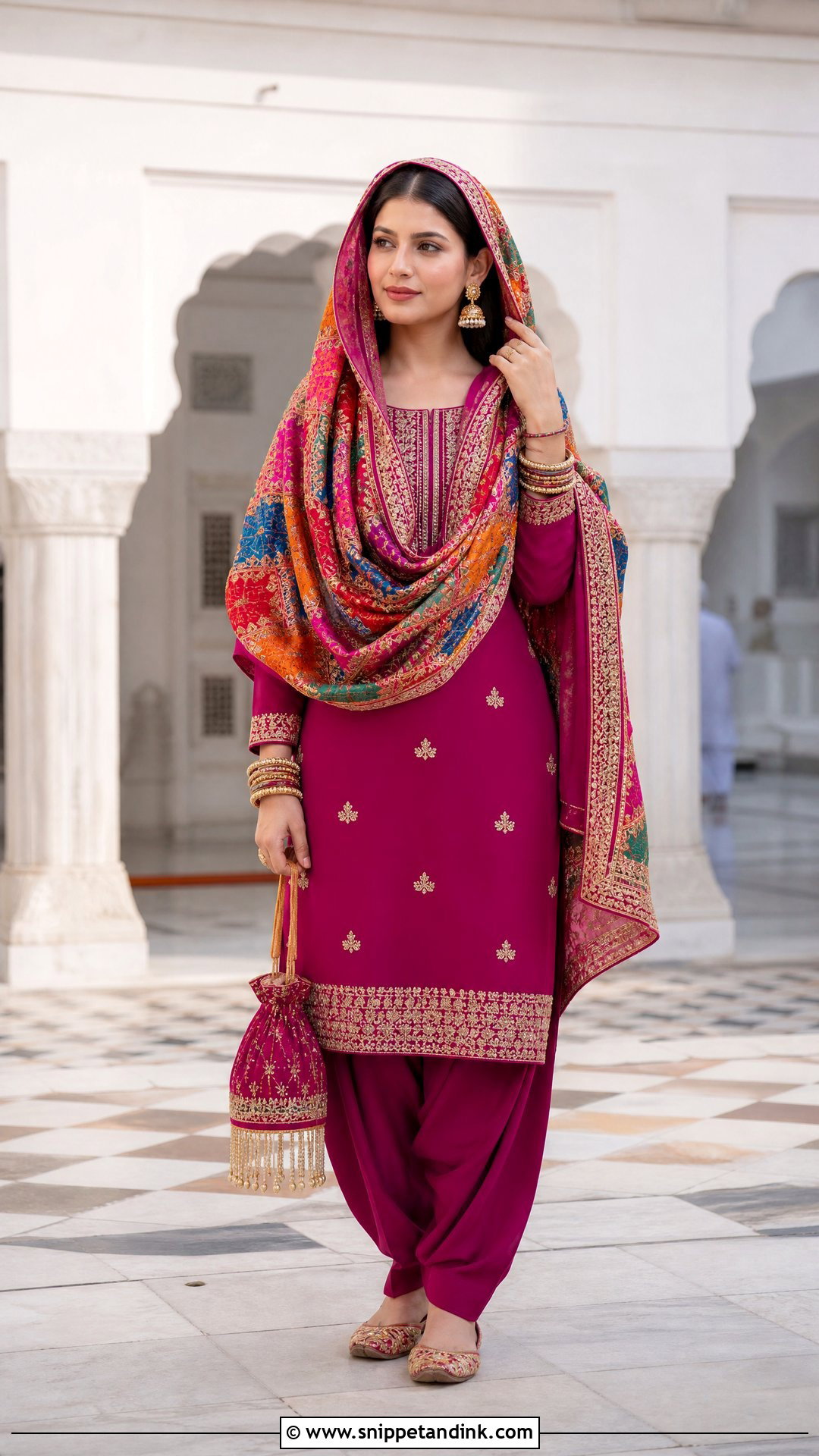
Punjabi embroidery suits this occasion naturally, and it brings color without needing heavy jewelry. Go for a straight or gently fitted kameez with loose salwar pants rather than anything tight. Phulkari-style threadwork or small mirror accents feel celebratory. Sleeves should cover the shoulders and the neckline stays modest. Drape the bordered dupatta over both shoulders first, then lift it onto your head; doing it in that order keeps the border straight. Simple gold earrings, stacked bangles and Punjabi juttis finish it, and a plain bag is better than an ornate one when the suit is already this busy. Emerald, mustard, magenta and royal blue all look right in a bright hall.
3. Anarkali Suit For Gurudwara Wedding
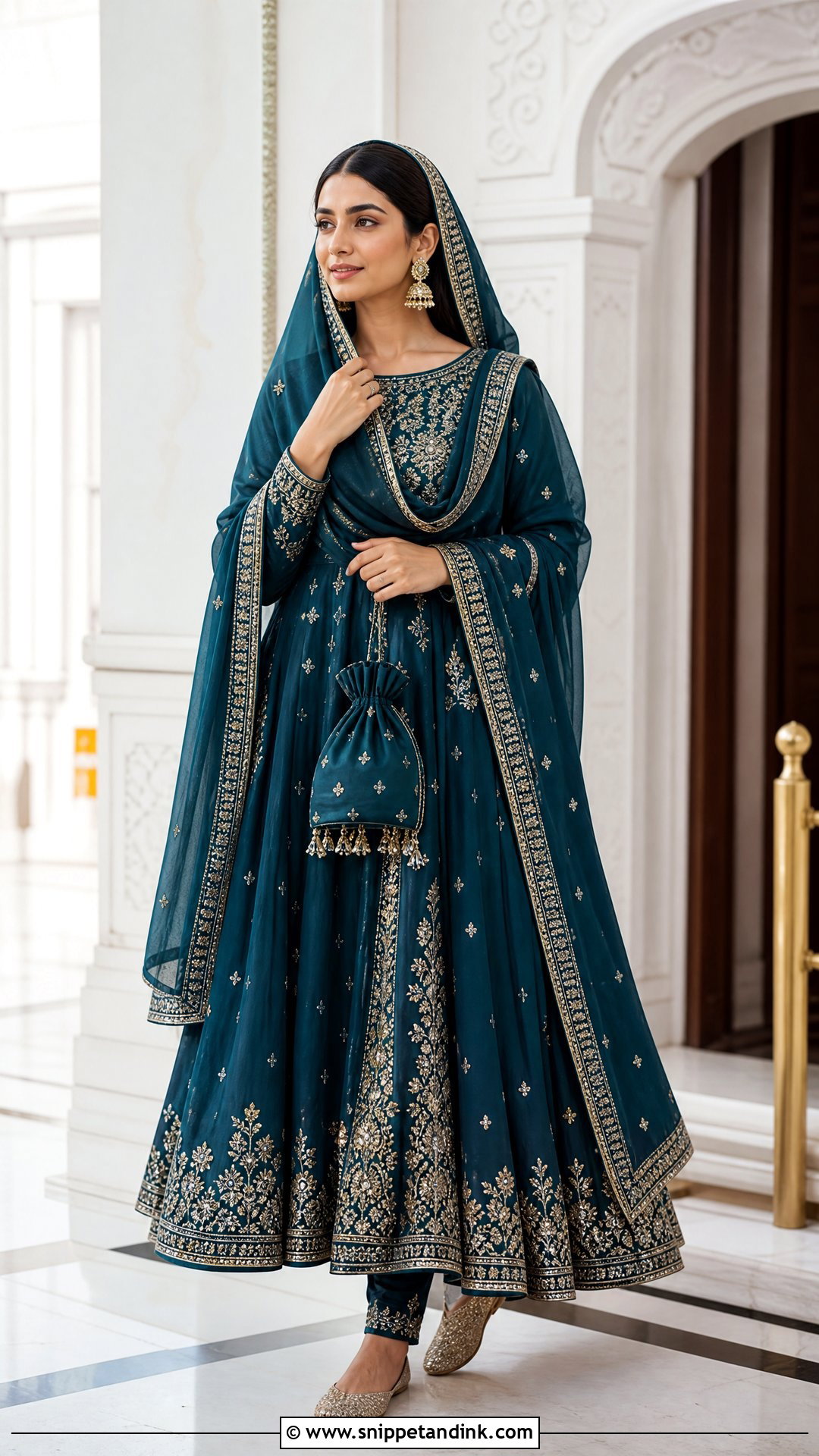
An Anarkali feels formal but still lets you move. Choose a moderate flare, a covered back and sleeves to the elbow or longer. I’d take an ankle-length hem over a floor-sweeping one: you’ll be walking barefoot, bowing and folding yourself onto the floor, and a long hem ends up trapped under your knees. Fitted churidar underneath, and a soft dupatta you can pin over your head. Zari borders, floral embroidery or tonal sequins give enough finish. Low juttis, a small potli and medium jhumkas complete it. Deep teal, plum, dusty rose or sapphire suit a formal ceremony; lighter shades look fresher in the morning.
4. Straight Kurta And Palazzo Set For Gurudwara Wedding
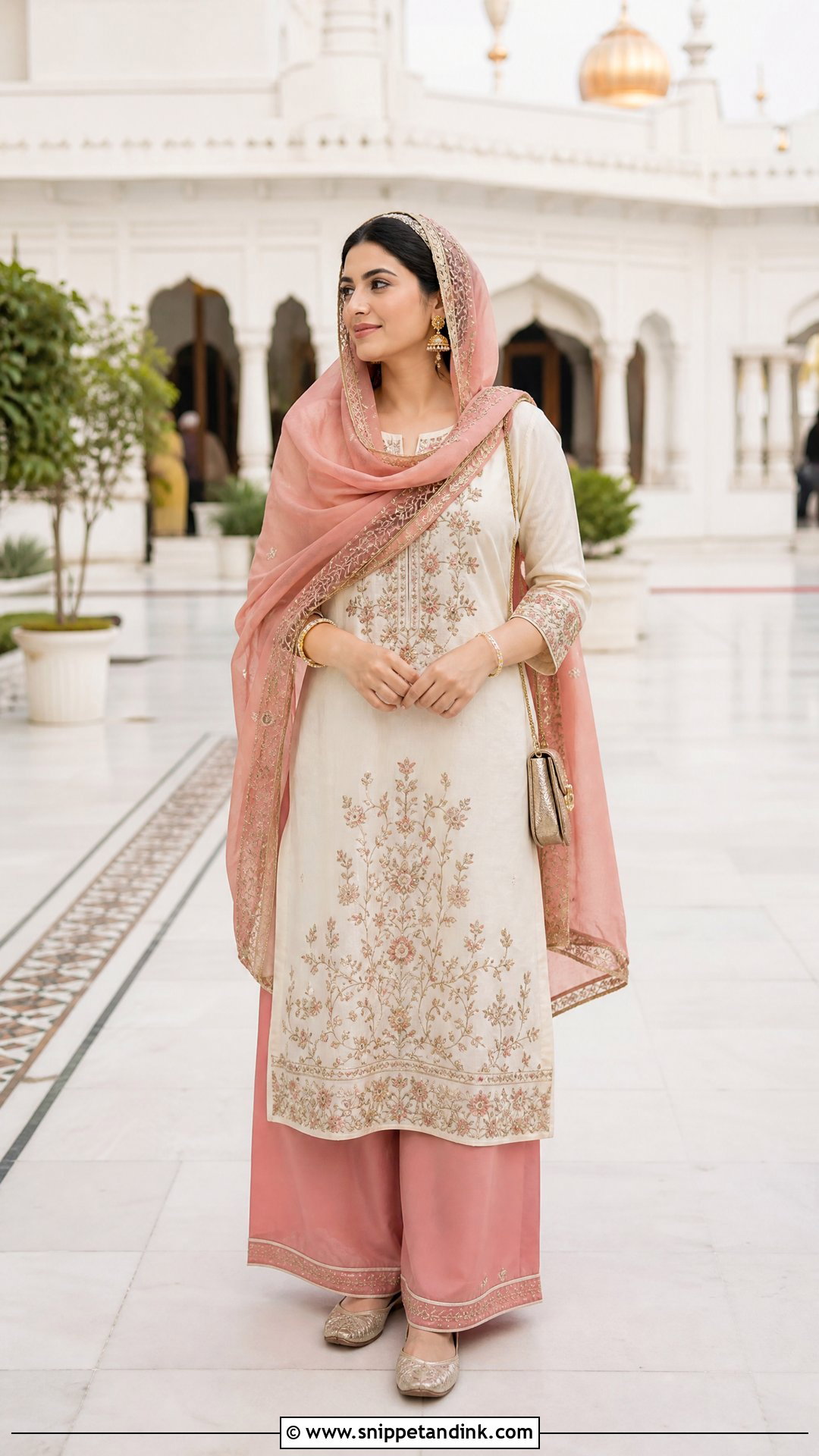
Wide palazzos are about the easiest bottoms to sit on the floor in, which makes this set my quiet favorite for comfort. A straight kurta near the knee with a higher neckline, covered shoulders and some refined embroidery, over palazzos in the same color. A printed kurta with plain bottoms is lighter for daytime. The dupatta needs to be long enough for proper head coverage and in a fabric with a little grip: chiffon, organza or cotton silk. Metallic flats, a few bangles and a small shoulder bag. Have the palazzos hemmed to clear the floor by an inch or so, or you’ll step on them barefoot.
5. Sharara Suit For Gurudwara Wedding
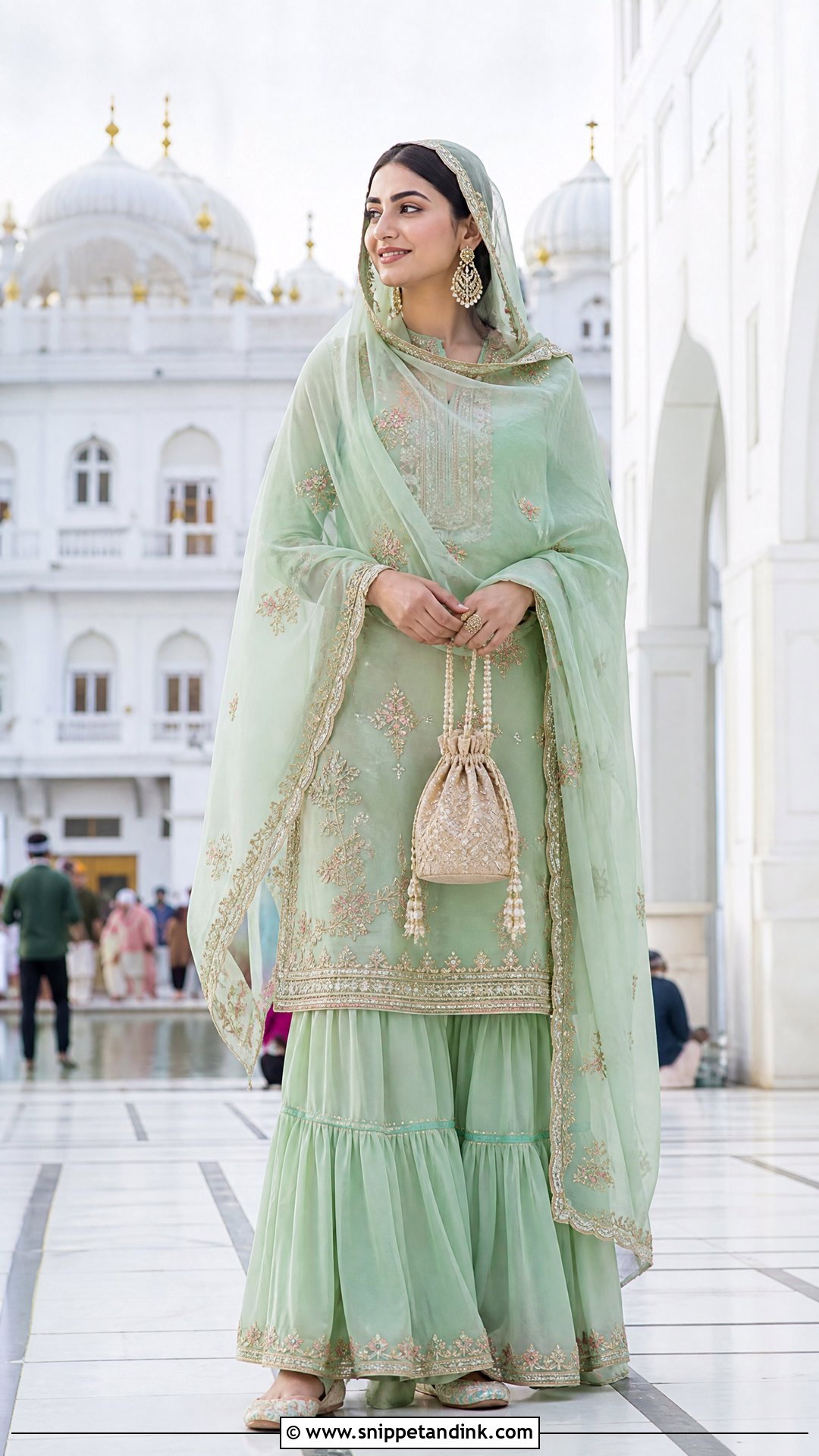
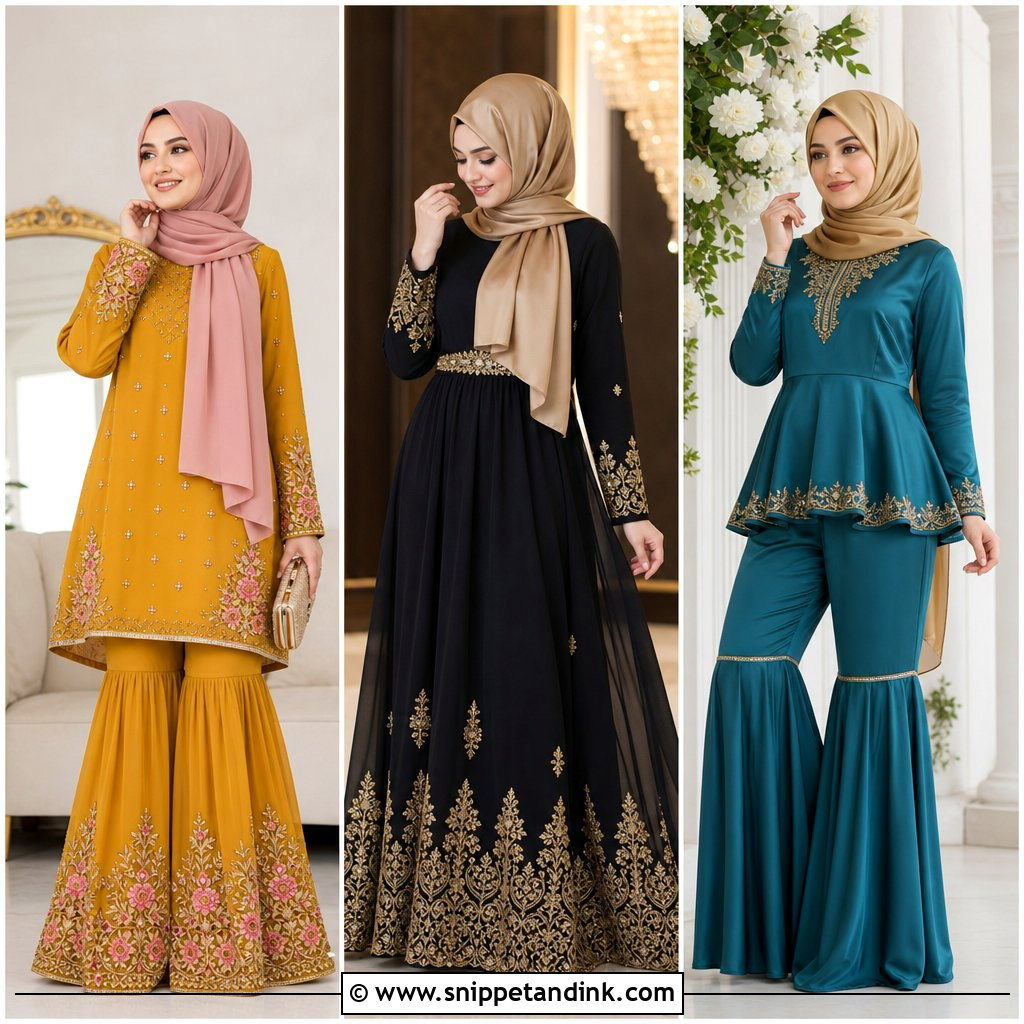
A sharara gives you festive volume without the weight of a lehenga. The fitted top of the leg and the flare below move nicely and still fold neatly when you sit. Wear it with a longer kurta or a peplum top that fully covers the midriff when you reach for your shoes. Georgette, crepe or light silk keeps the layers manageable. Pin the embroidered dupatta at one shoulder and bring it up over the head. Statement earrings, a simple bracelet and embellished juttis. Mint, coral, turquoise or lavender for spring and summer; wine, navy or forest green with restrained gold for something richer.
6. Gharara Suit For Gurudwara Wedding
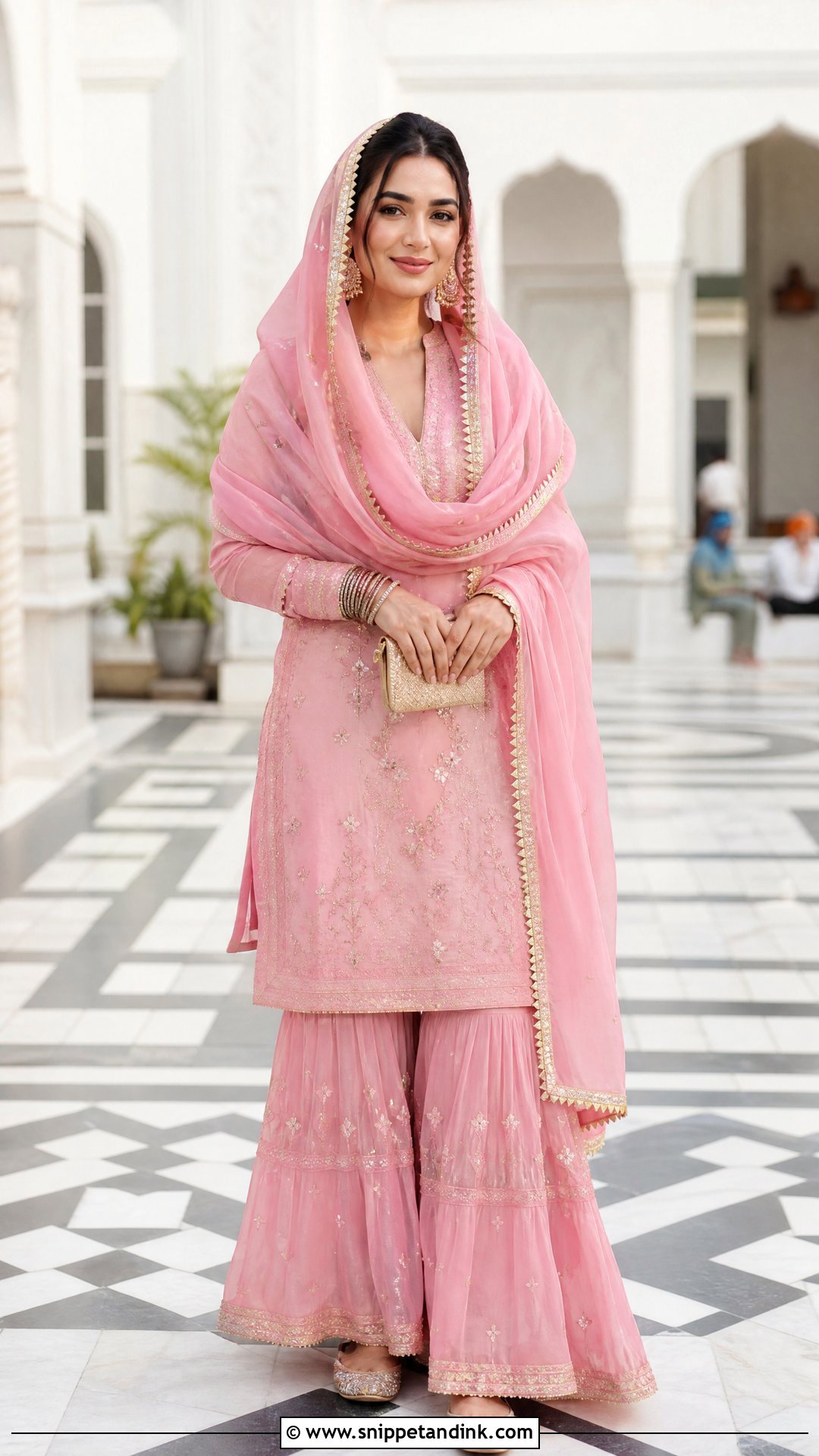
The gharara’s knee seam and dramatic flare make it the most distinctive bottom on this list. Balance it with a straight, modest kameez that covers the torso and hips comfortably. Gota, zari or small florals pick out the construction without weighing it down. This is the outfit where the dupatta fabric really matters: a lightly textured chiffon or soft net with a finished border stays on the hair far better than a slippery satin. Flat juttis, chandbalis and a compact clutch. Ivory with colored accents works, though rose, teal, marigold or violet usually feels more celebratory. Do a practice sit at home, because a gharara flare needs tucking to one side when you’re on the floor.
7. Silk Kurta And Cigarette Pants For Gurudwara Wedding
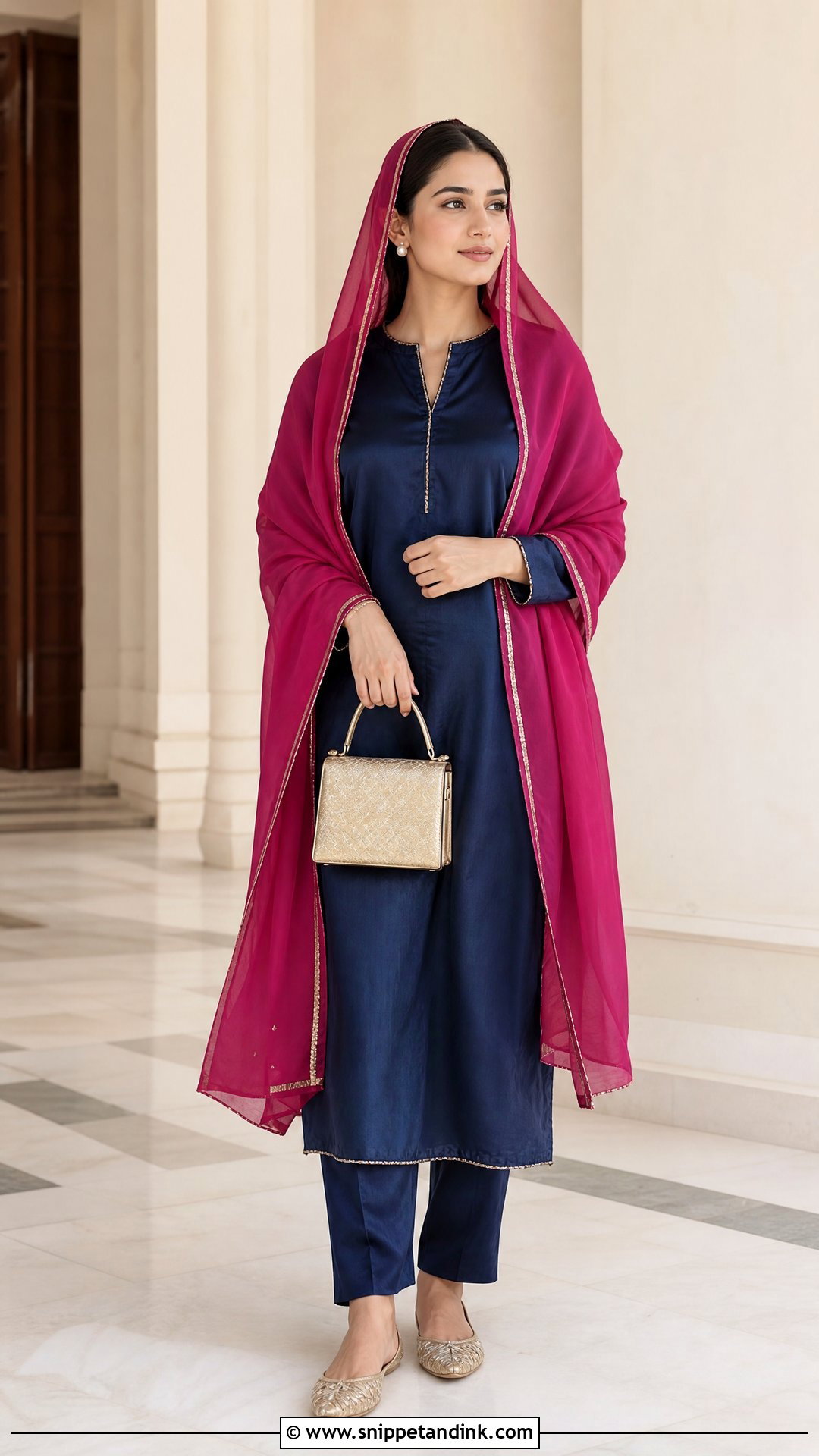
Clean tailoring can look every bit as wedding-ready as heavy embellishment. Try a silk or silk-blend kurta over straight cigarette pants with a coordinating dupatta. The kurta should fall below the knee so the slim pants are covered properly. Jewel tones with woven motifs, narrow zari edging or embroidery at the cuffs keep it special. Here’s the honest catch: cigarette pants are fitted, and many pairs simply won’t let you sit cross-legged for an hour, so sit in them before you commit and size up if they pull at the knee. Pointed juttis, pearl or kundan studs and a structured mini bag. A contrasting dupatta, say fuchsia with navy, adds depth.
8. Floral Kurta Set For Gurudwara Wedding
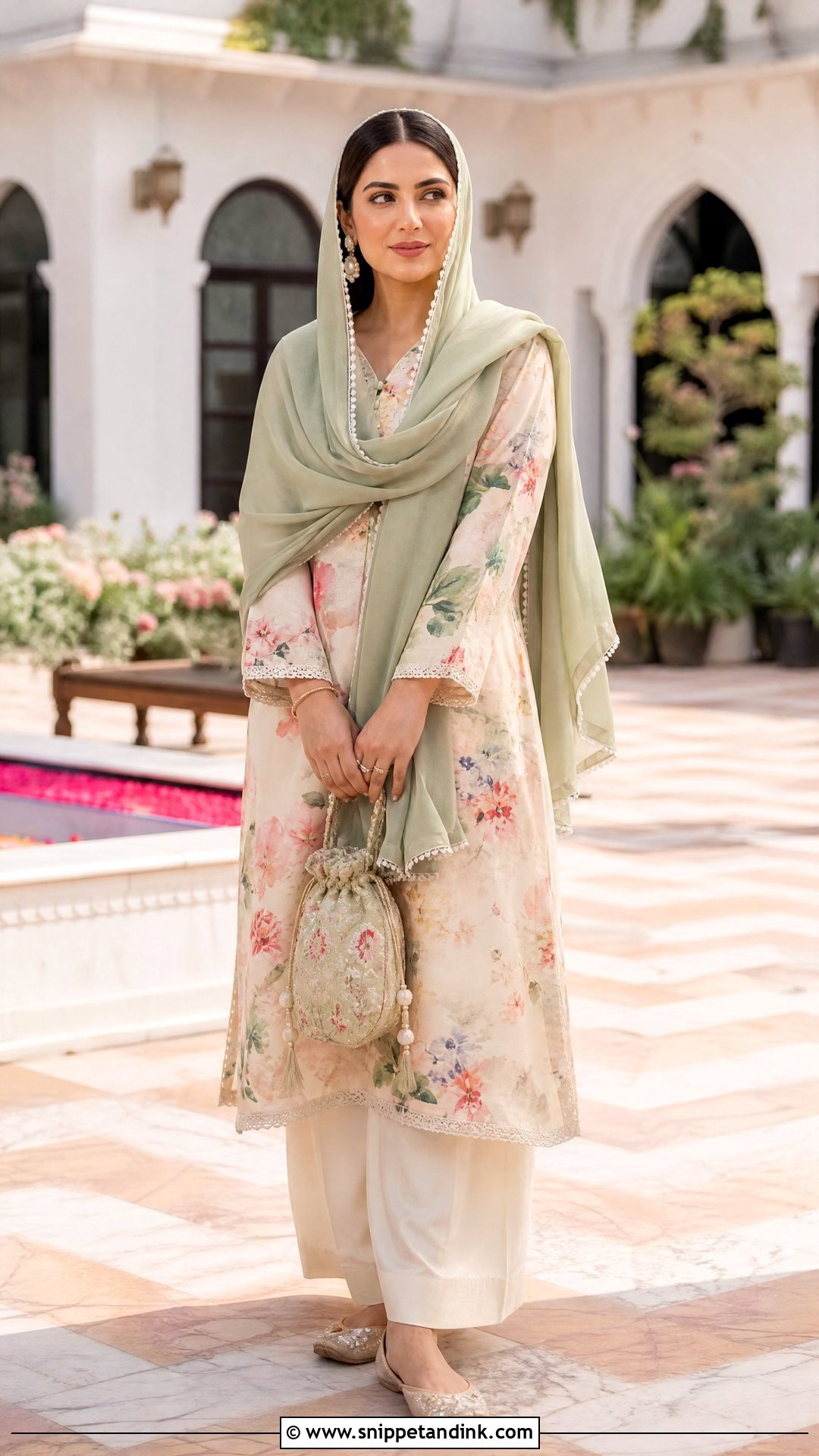
Florals come into their own at a bright morning ceremony in spring or summer. A floral kurta with loose straight pants or palazzos, and a dupatta in one of the print’s solid colors so the outfit holds together. Small block prints feel traditional; watercolor flowers feel newer. Make sure the kurta is lined and the neckline doesn’t shift when you sit, which unlined cotton prints often do. Pearl earrings, pastel bangles, neutral juttis and a small woven bag. Let the print carry the outfit and skip extra embellishment. Cotton silk, chanderi and light crepe all hold a print nicely.
9. Banarasi Kurta Set For Gurudwara Wedding
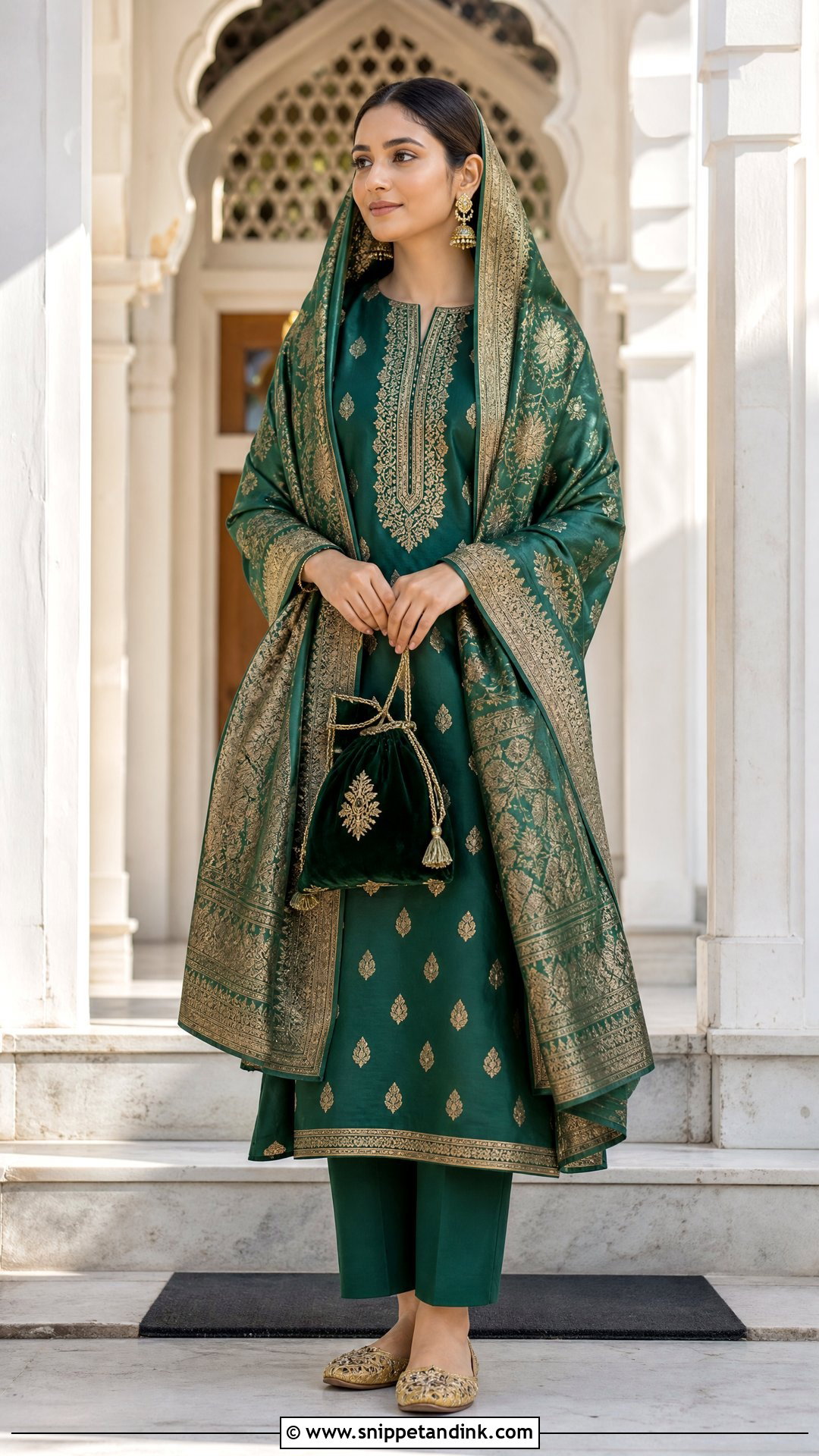
Banarasi weave turns a simple kurta set into wedding clothing almost by itself. A straight Banarasi kurta with plain silk pants keeps it from getting heavy, or flip it: solid kurta and trousers with a Banarasi dupatta, which puts the richness right where it frames your face during the ceremony. Ruby, emerald, peacock blue, antique gold and deep pink are classic. Understated kundan studs, thin bangles, a velvet potli and plain metallic juttis. Don’t stack brocade, heavy embroidery and big jewelry together; one rich element is enough. A Banarasi dupatta is also heavier than chiffon, so it needs firmer pinning to stay up.
10. Velvet Salwar Suit For Winter Gurudwara Wedding
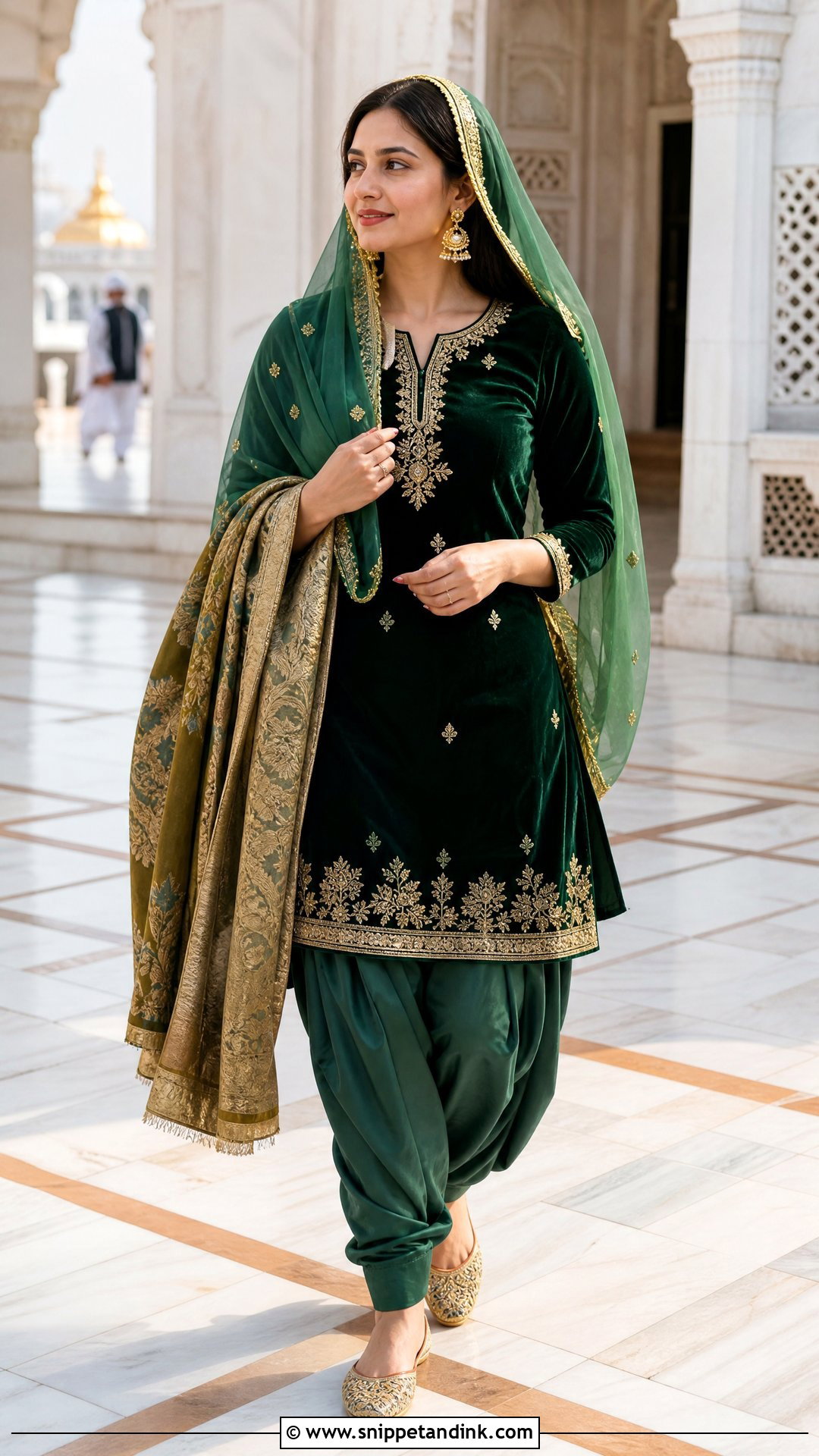
In winter, Gurdwara floors can be cold and halls are not always heated, so velvet earns its place. A straight velvet kameez with full or three-quarter sleeves, comfortable salwar and a lighter dupatta. Velvet head to toe gets bulky when you sit, so I’d pair the top with silk or crepe bottoms. Burgundy, bottle green, navy, aubergine or charcoal blue suit the pile. Fine gold embroidery at the neck and cuffs is enough. Closed juttis, medium earrings and a shawl for the journey. Keep a separate lightweight dupatta for your head, since a velvet one is too heavy to stay pinned and drags on your hair.
11. Cotton Silk Suit For Summer Gurudwara Wedding
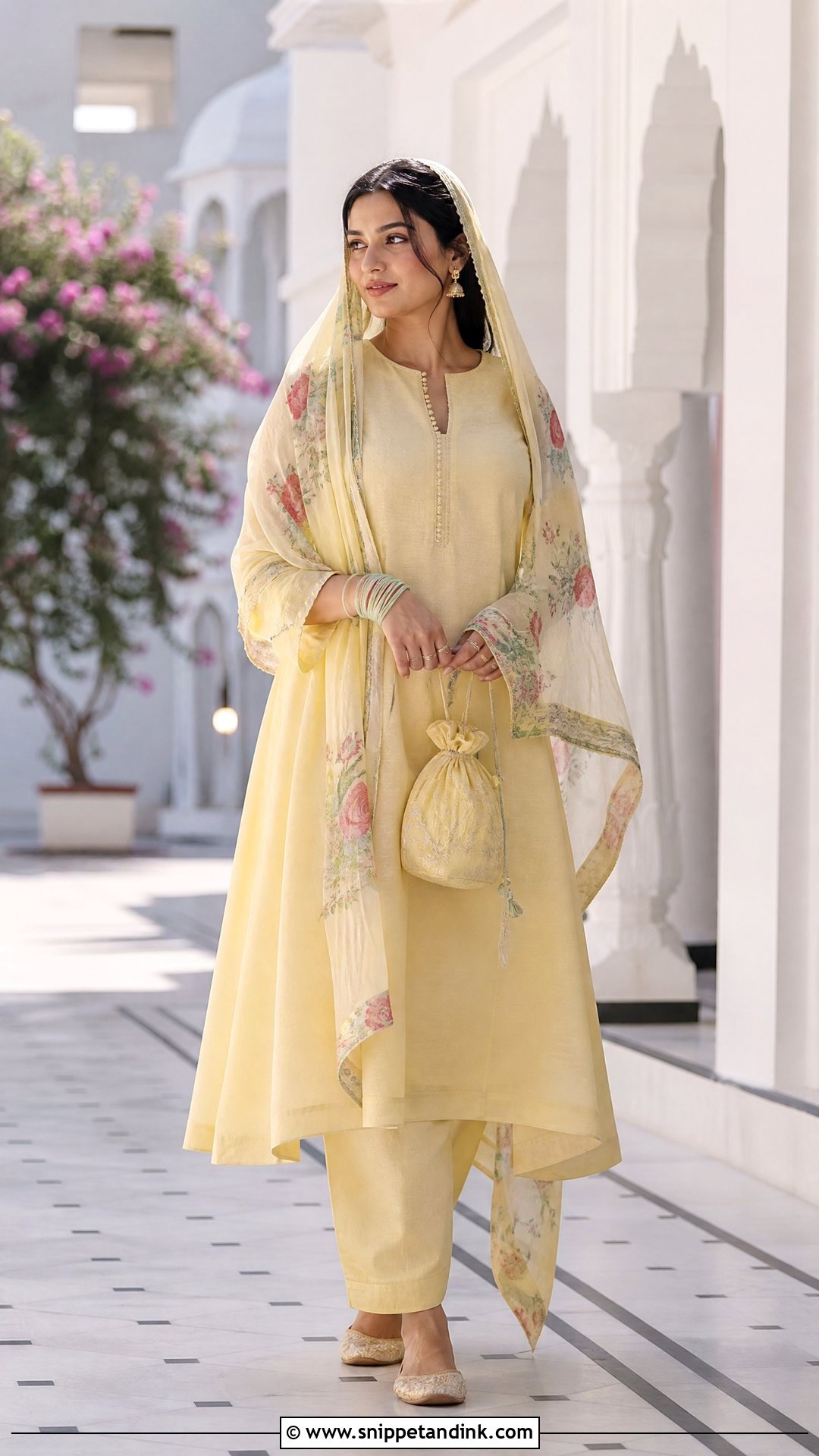
Cotton silk is what I’d wear to a summer ceremony myself: it breathes, has a little sheen and doesn’t cling. A relaxed A-line or straight kurta with loose pants and a light dupatta, in pale yellow, aqua, coral, sage or periwinkle. Woven borders, small embroidered flowers or delicate lace keep it special without weight. Flat juttis, small hoops or jhumkas and a light potli. Leave heavy layered necklaces at home; they get uncomfortable when you’re seated and bowing. A cotton or cotton-blend dupatta grips the hair and slides far less than satin. Pin it near the hairline and let the length fall over your shoulders.
12. Jacket Anarkali Suit For Gurudwara Wedding
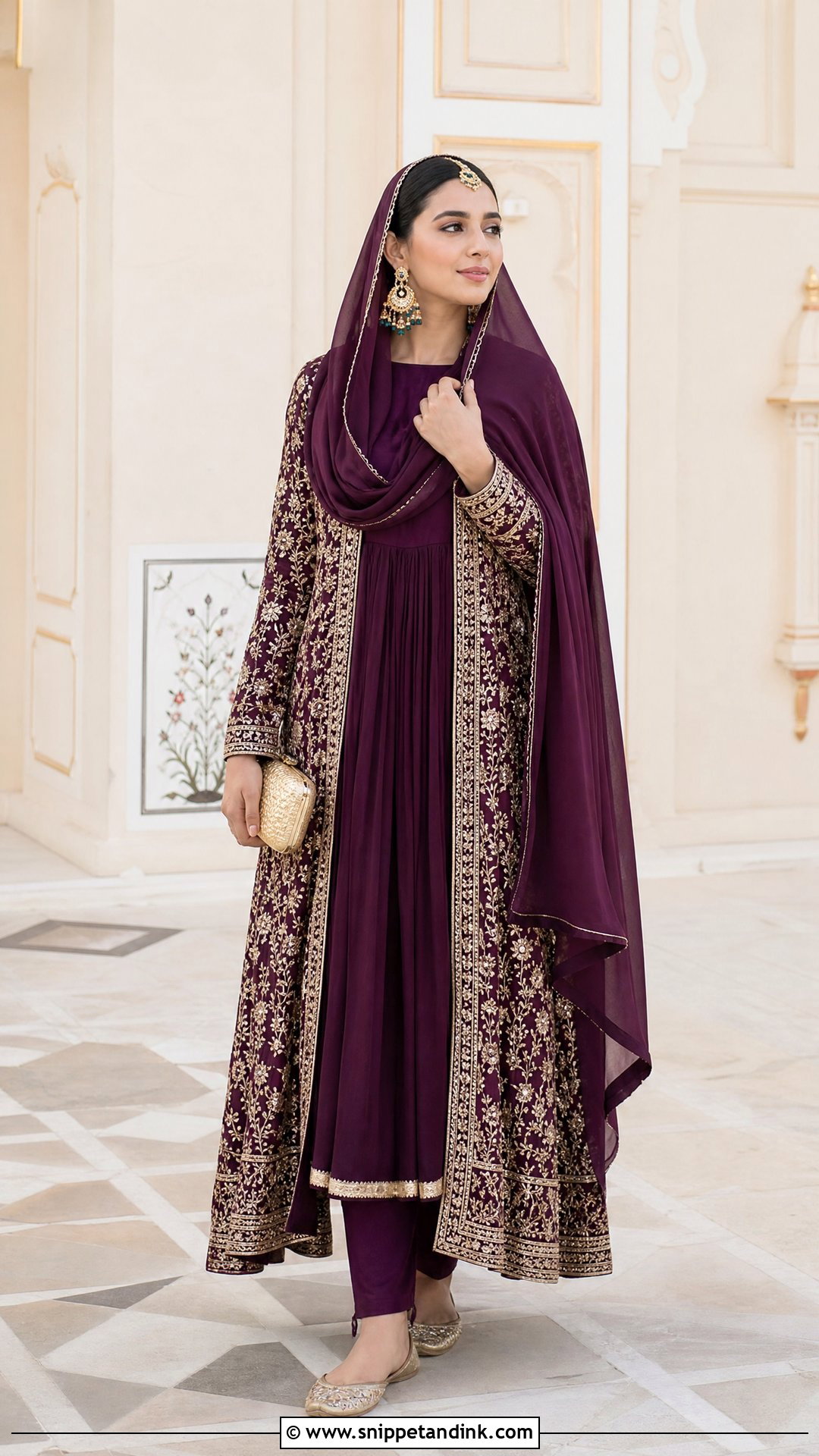
A jacket Anarkali layers formality and adds coverage at the same time. Start with a modest ankle-length Anarkali and churidar, then add a long embroidered jacket worn open or closed at the waist. The jacket doesn’t stand in for a dupatta; you still need something for your head, and it should be plain if the jacket is busy. Tonal pairings like navy over blue or plum over mauve look refined. Earrings, a ring, a small box clutch and low juttis. Skip stiff, padded jackets, because they ride up around your neck when you sit. Organza, light brocade or embroidered net gives structure without fighting you.
13. Peplum Sharara Suit For Gurudwara Wedding
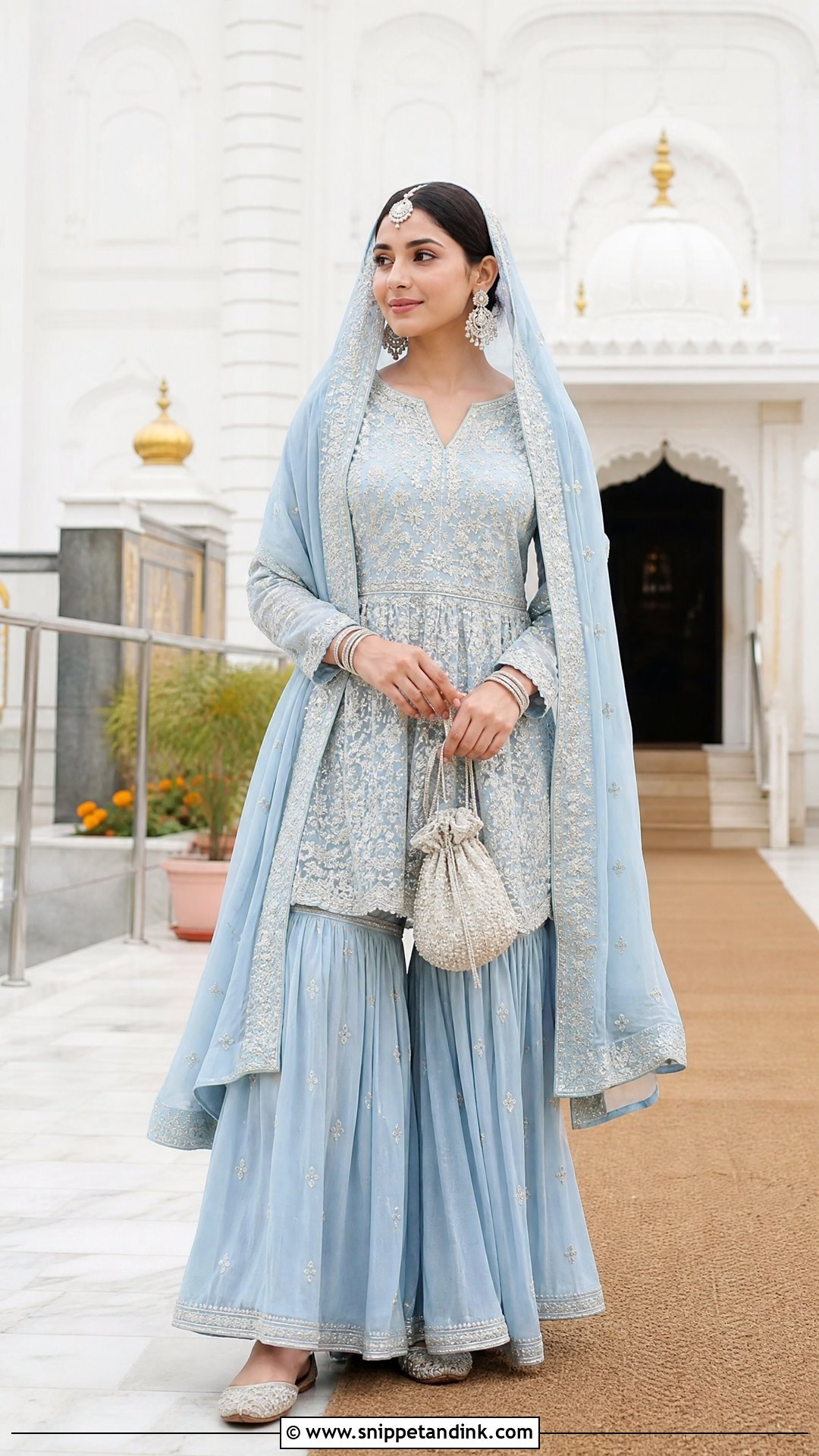
A peplum sharara reads young and festive, provided the top is long enough. Lift your arms in the fitting room: if any midriff shows, the peplum is too short, and you’ll be raising your arms to adjust your dupatta all morning. Choose one that sits below the hip, with fluid sharara pants and a full-length dupatta. Embroidery along the peplum hem links the top to the flare. Rose, icy blue, soft orange or emerald all look fresh in daylight. Chandbalis, a few bangles, a beaded potli and flat shoes. Keep the hair low and smooth so the dupatta sits flat over it.
14. Angrakha Suit For Gurudwara Wedding
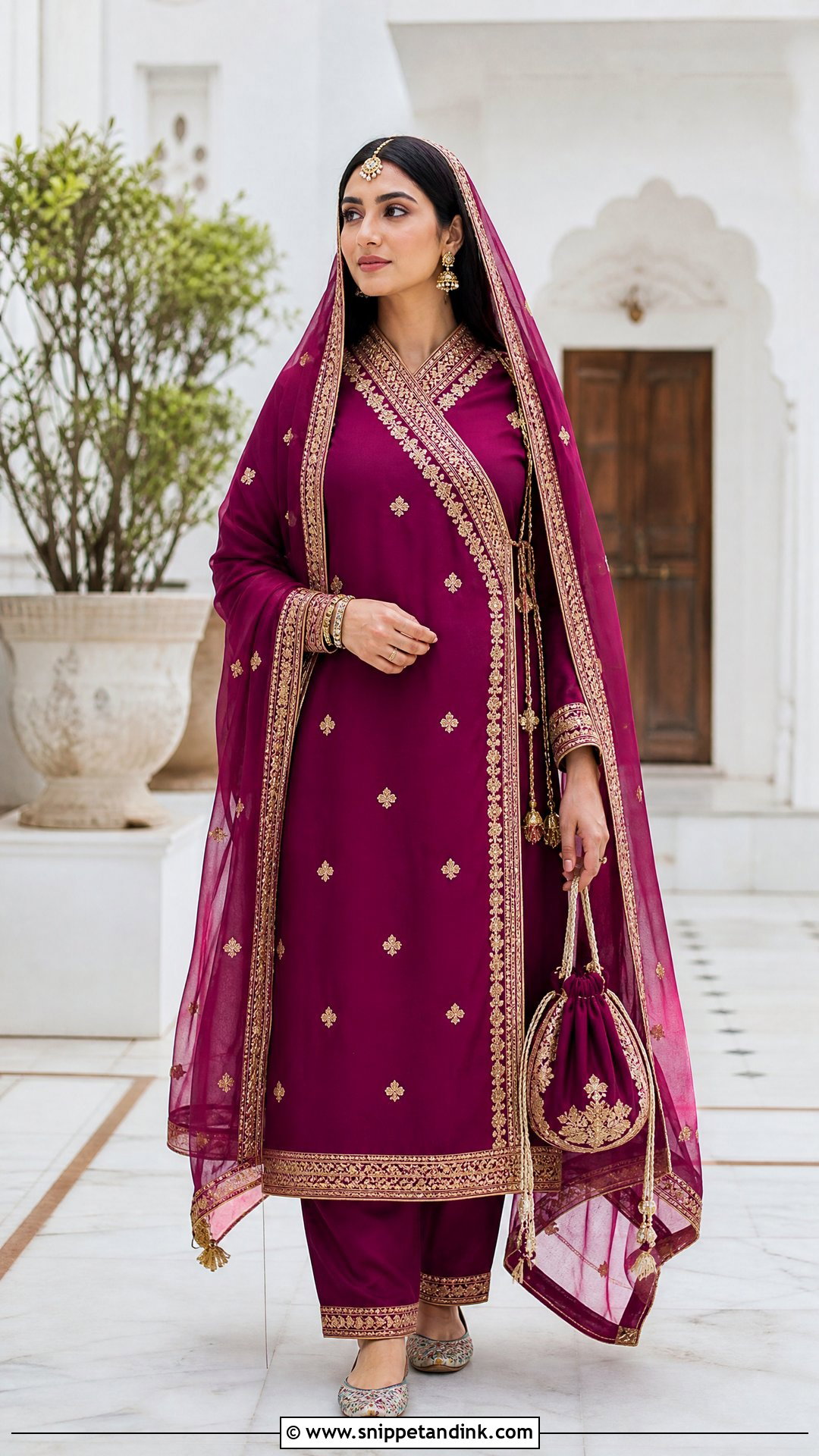
The overlapping front of an Angrakha suit gives gentle movement and a traditional feel. Wrap styles can gape when you lean forward to bow, so look for a secure fastening and a high inner panel that keeps the neckline covered from every angle. Wear it with churidar, straight trousers or a lightly flared salwar. Short side tassels are fine; long heavy ones end up underneath you on the floor. Pin a narrow-bordered dupatta over both shoulders and up onto the hair. Small jhumkas, a potli and embroidered juttis. Jewel tones for winter, printed cotton silk for warmer days.

15. Kalidar Anarkali For Gurudwara Wedding
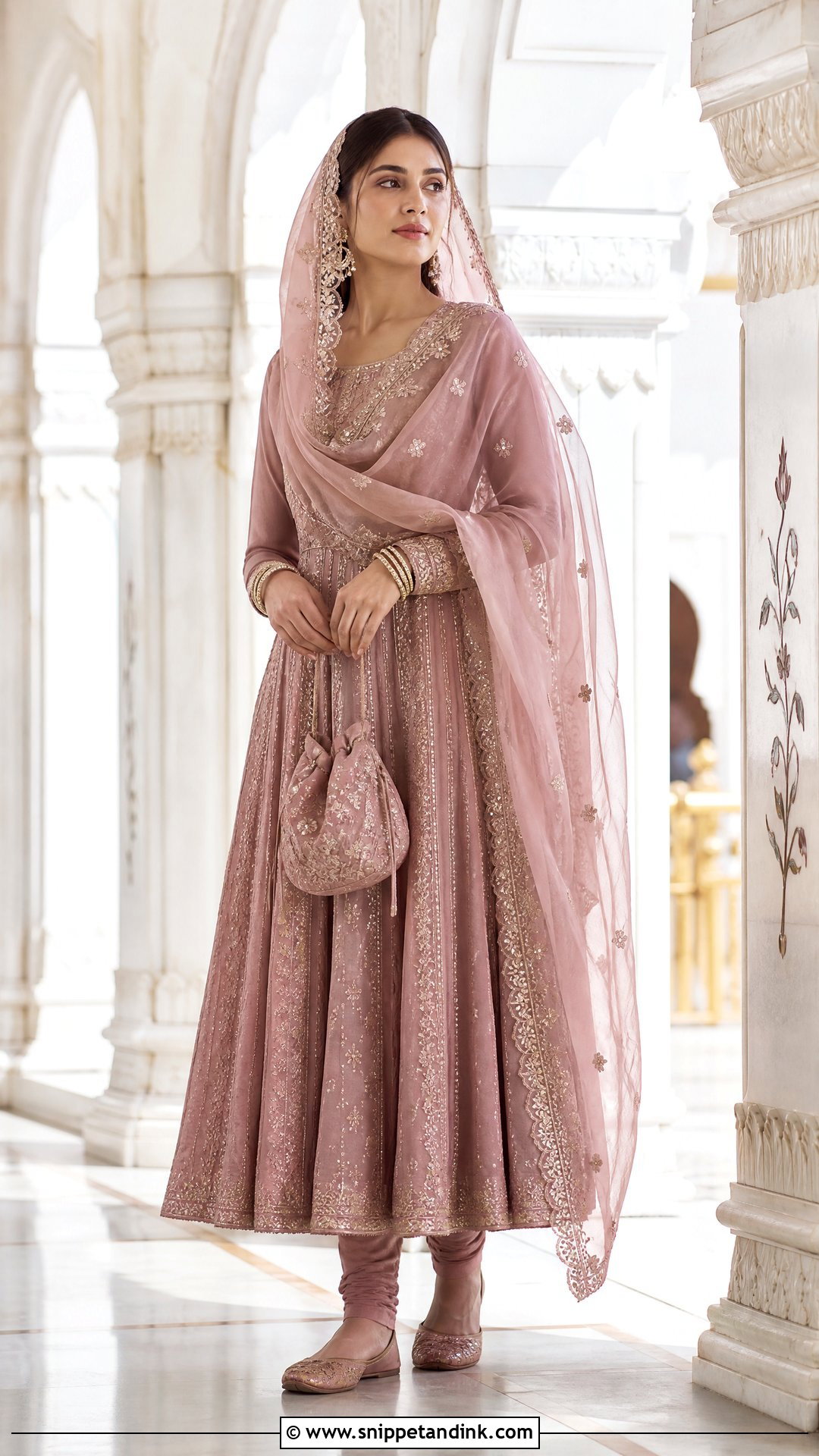
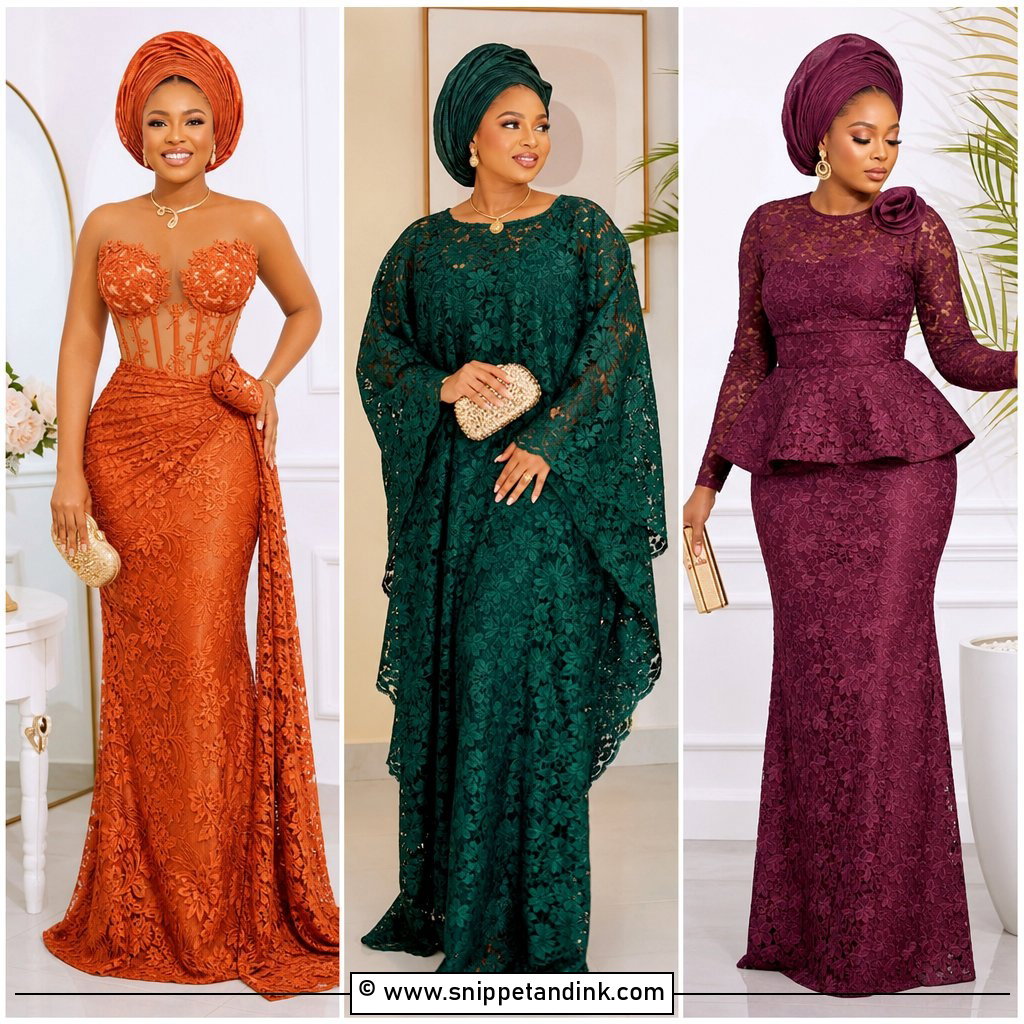
A kalidar Anarkali is built from many panels, which gives a gown-like sweep while keeping you in traditional dress. Ankle length, full or elbow sleeves, and a properly lined bodice. Churidar and a soft dupatta in a matching or complementary color. Alternating prints or woven motifs across the panels add depth. Drop earrings, thin bangles and one statement ring are enough, with flat or low juttis and a small bag. I’d avoid the very widest hems: on the floor all that fabric spreads into your neighbor’s space and takes a while to gather when everyone stands. A moderate flare gives you the look with far less to manage.
16. Patiala Suit For Gurudwara Wedding
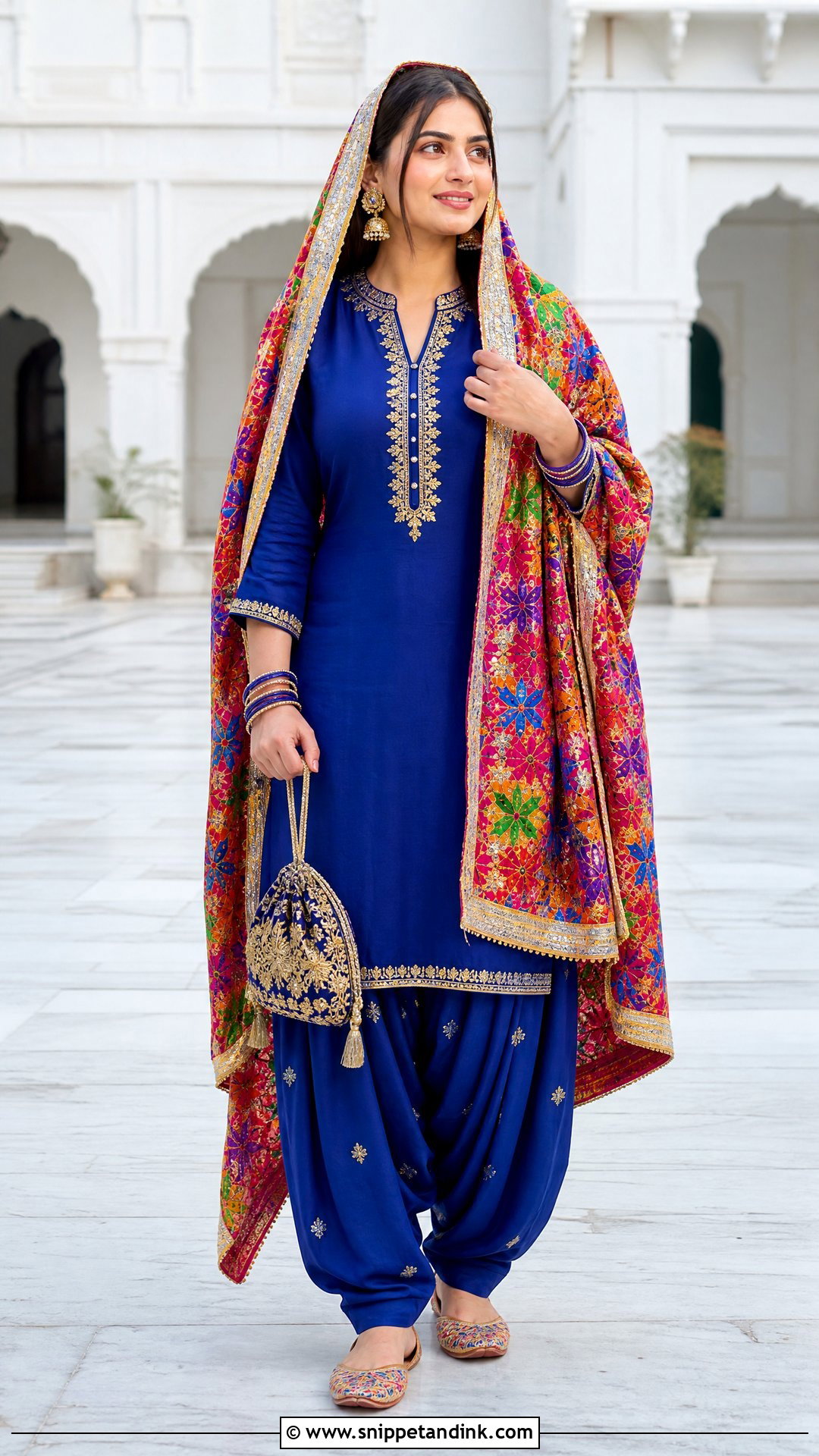
A Patiala suit is among the most comfortable things you can sit on the floor in, thanks to all those pleats. Wear the pleated pants with a longer kameez. A strong color with phulkari-style embroidery feels festive; a plain kameez with a decorative dupatta is quieter. The dupatta must be generous enough that it doesn’t keep slipping back off your head. Traditional juttis, small gold earrings, glass bangles and an embroidered potli. Casual Patialas often come with a very short kameez; for the ceremony I’d lengthen it to the knee. Bright pink, royal blue, orange, teal and mustard all suit a Punjabi celebration.
17. Long Kameez And Trousers For Gurudwara Wedding
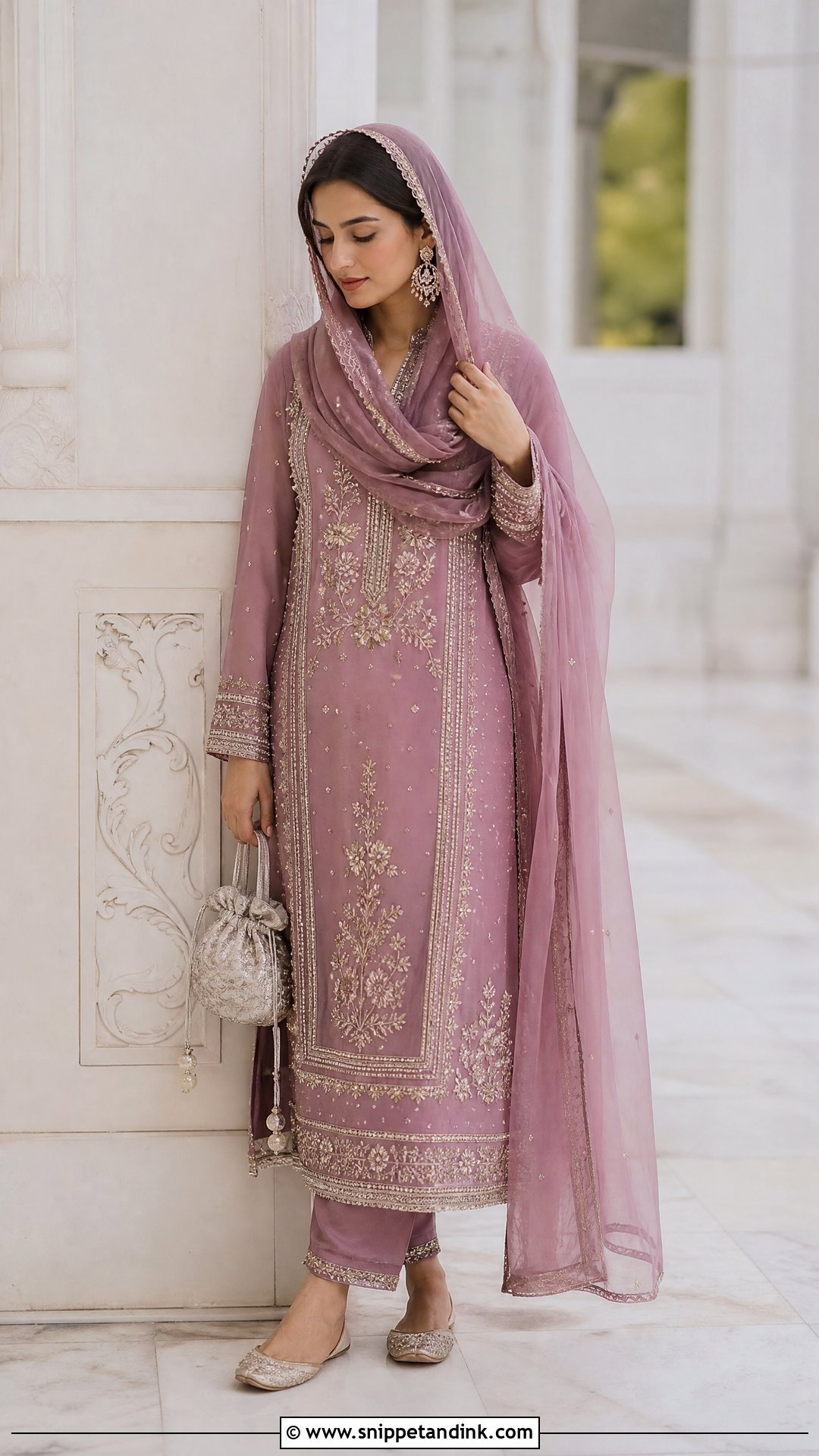
A long kameez over straight trousers is simple and gives excellent coverage. Calf length works best, with side slits that start below the knee so you can sit without the front panel riding up. Loose or straight-cut trousers, not tight leggings. Thread embroidery, scalloped cuffs or a detailed hem lift the plain line enough for a wedding. A matching dupatta in chiffon, organza or cotton silk, large enough to cover your hair fully. Delicate earrings, metallic flats and a structured potli. Monochrome looks polished; a contrasting dupatta brings color. It’s the outfit I’d point anyone toward who dislikes fuss.
18. Modest Lehenga For Gurudwara Wedding
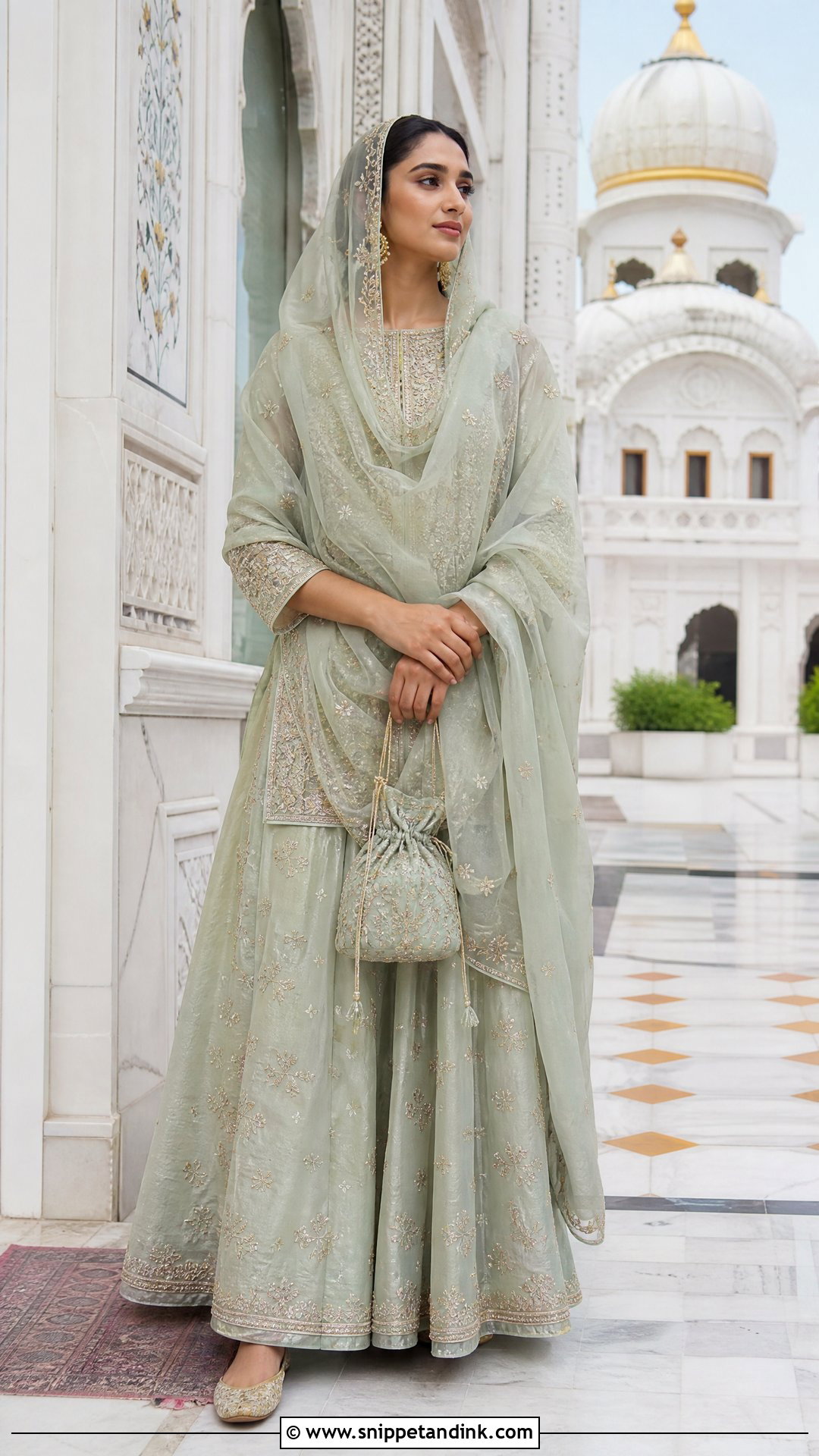
A lehenga can work at a Gurdwara if it’s light, modest and the hosts are happy with it, so ask first. An A-line skirt that folds easily when you sit, and a longer blouse covering the stomach, shoulders, chest and back; elbow sleeves look especially neat. Leave the stiff cancan, trailing hem and heavy embroidery for the reception, since you’ll be barefoot on a carpet and sitting for a long time. If your main dupatta is heavily worked, carry a second light scarf for your head. Small kundan earrings, a potli and flat juttis. Muted jewel tones, soft florals or delicate gold borders keep you from looking bridal.
19. Peplum Lehenga For Gurudwara Wedding
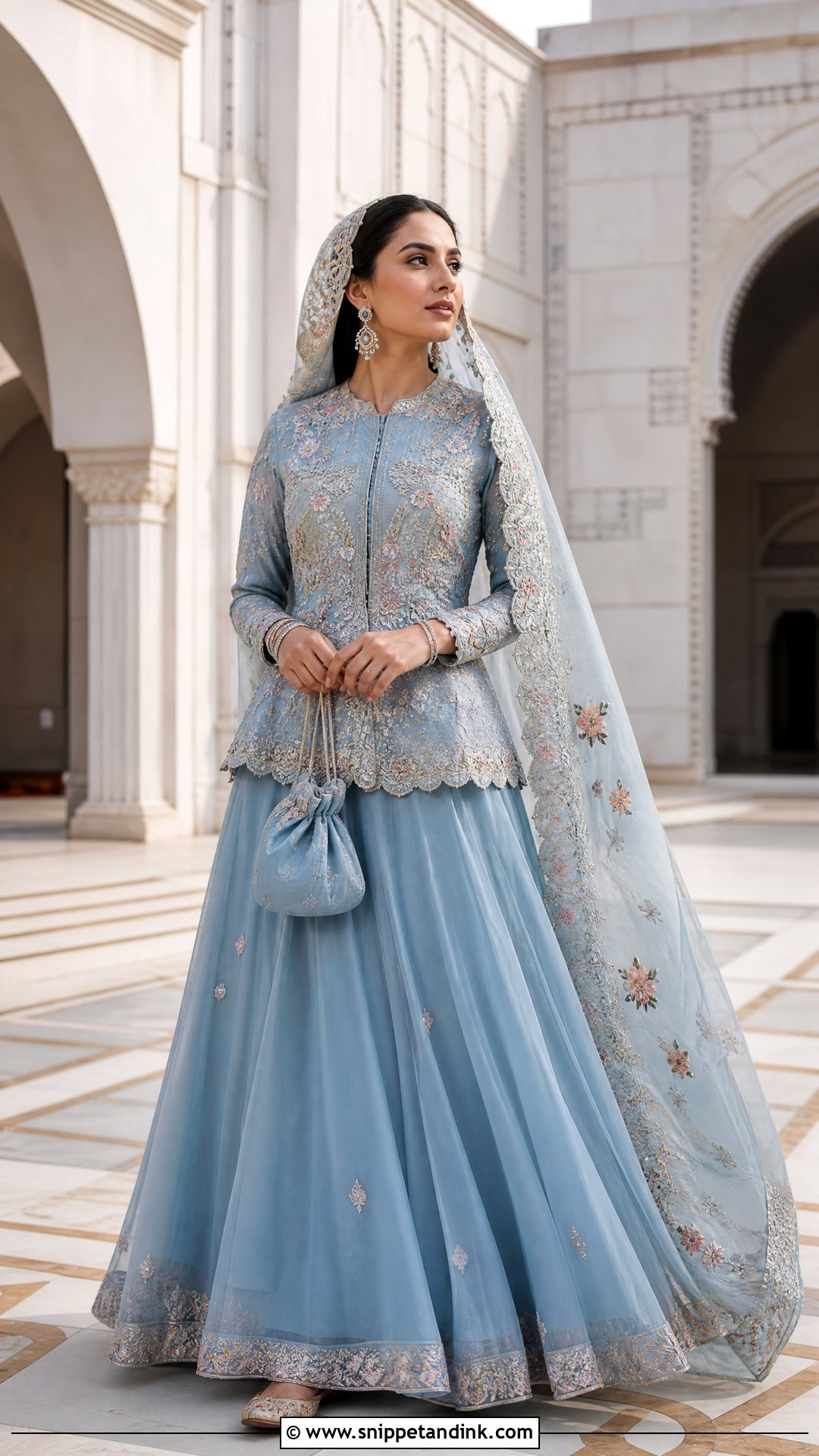
The peplum lehenga solves the midriff question that a cropped blouse raises. Pick a hip-length peplum top with sleeves and a comfortable neckline over a lightly flared skirt, and keep the skirt’s volume modest so you can get up and down without help. Tonal embroidery looks polished; small florals feel softer. Pin a long dupatta at the shoulder and bring it up over the head. Drop earrings, slim bangles, a small potli and matching juttis. Dusty blue, mauve, sage or deep rose suits a daytime ceremony. Do confirm with the family, because some Gurdwaras and households prefer suits over lehengas.
20. Modest Saree For Gurudwara Wedding
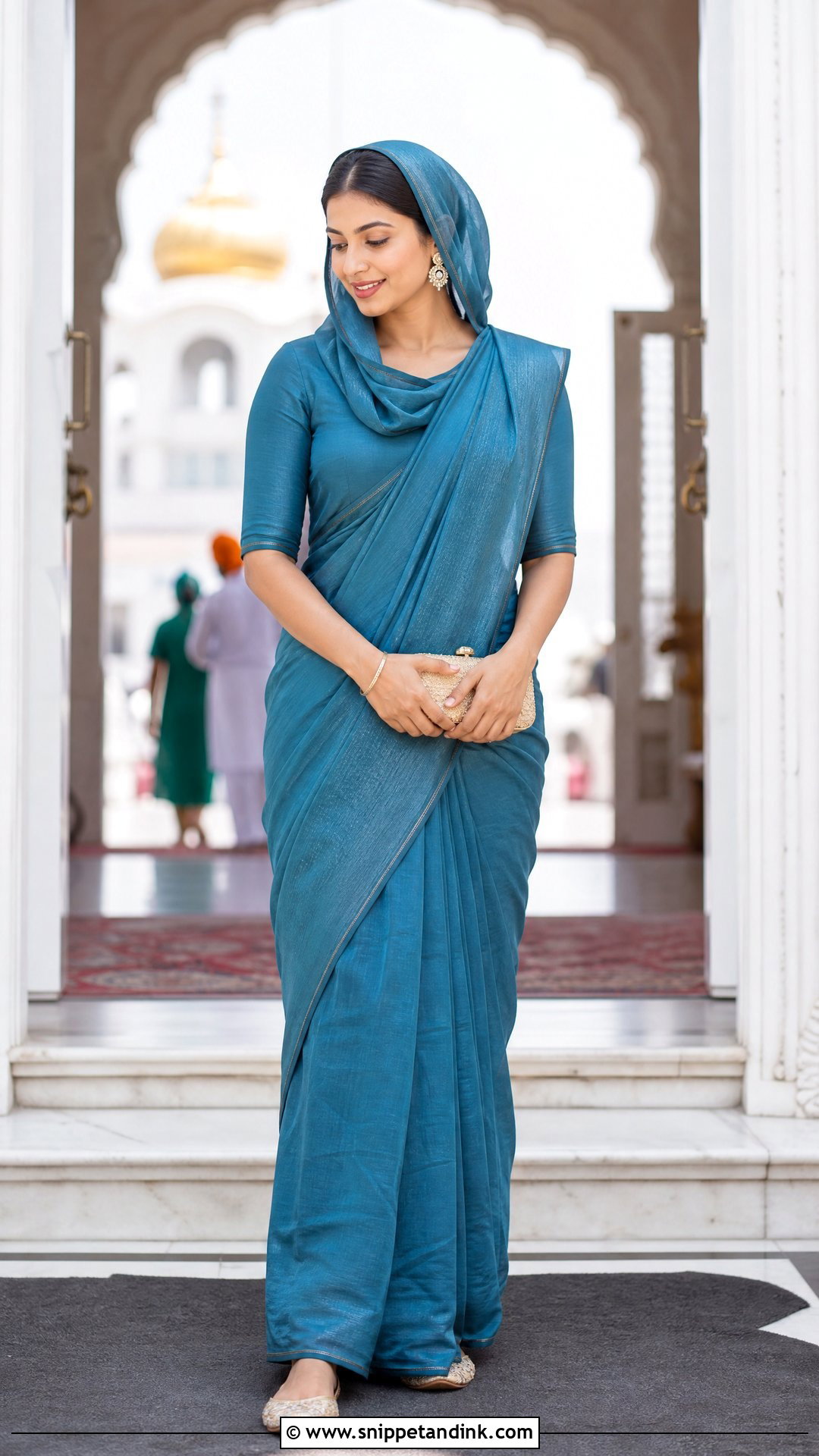
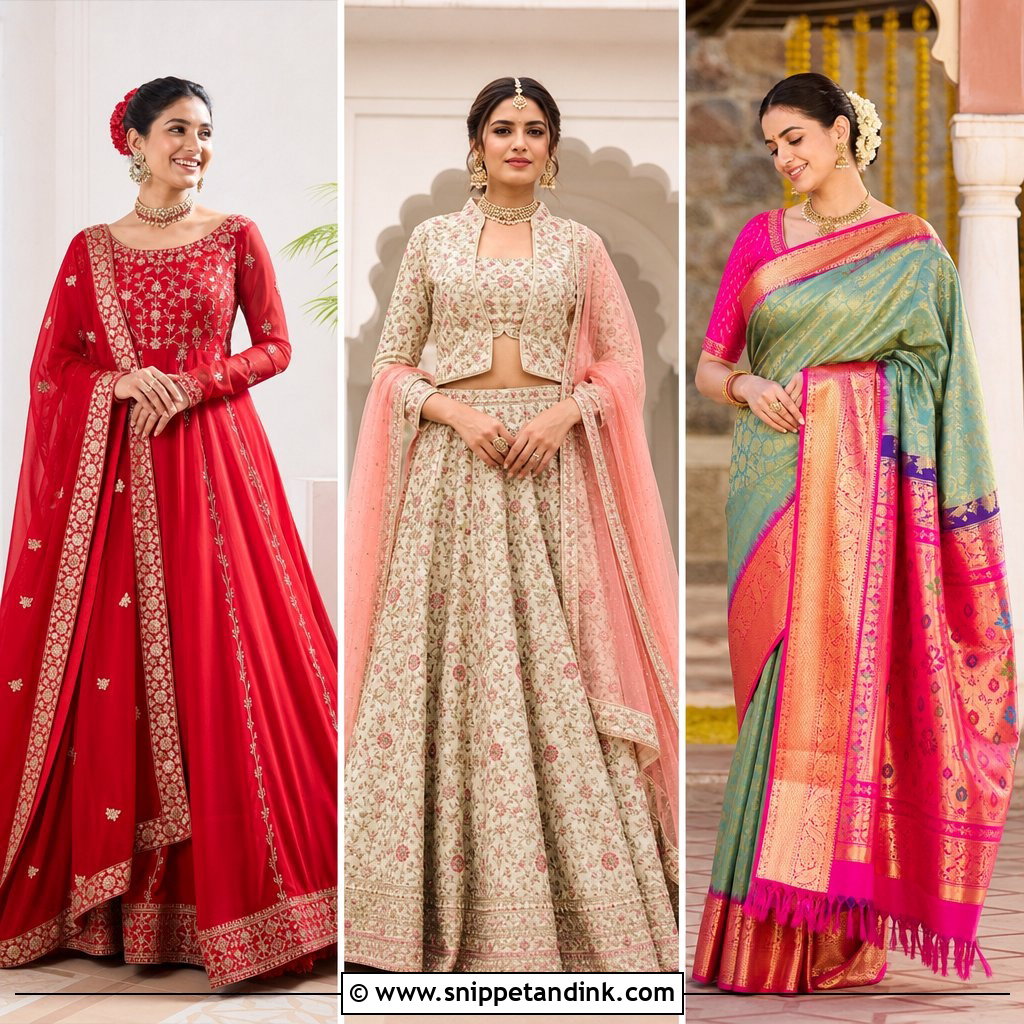
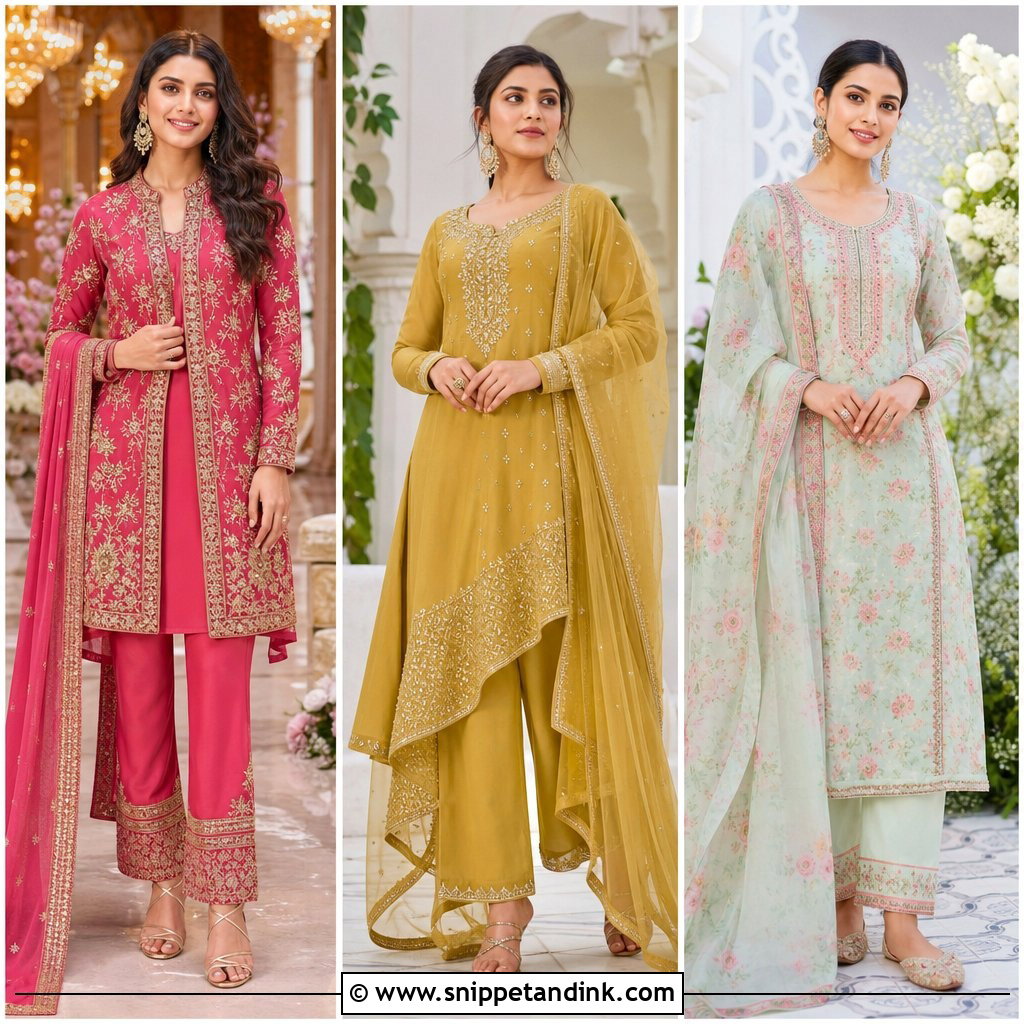
A saree can be lovely at an Anand Karaj, but it takes the most planning of anything here. Choose a lightweight silk, crepe or georgette that pleats securely, with an elbow-sleeve blouse, covered back and moderate neckline. Pin the pallu generously so it doesn’t shift. Most pallus are too slippery or too short to stay on your head for a full ceremony, so carry a matching scarf for that. Low-profile jewelry, flat sandals or juttis and a small clutch. If you don’t wear sarees often, practise sitting on the floor in one at home, since the pleats pull differently when you’re cross-legged. And ask the hosts, as some venues prefer a trouser-based outfit.
21. Pre-Draped Saree For Gurudwara Wedding
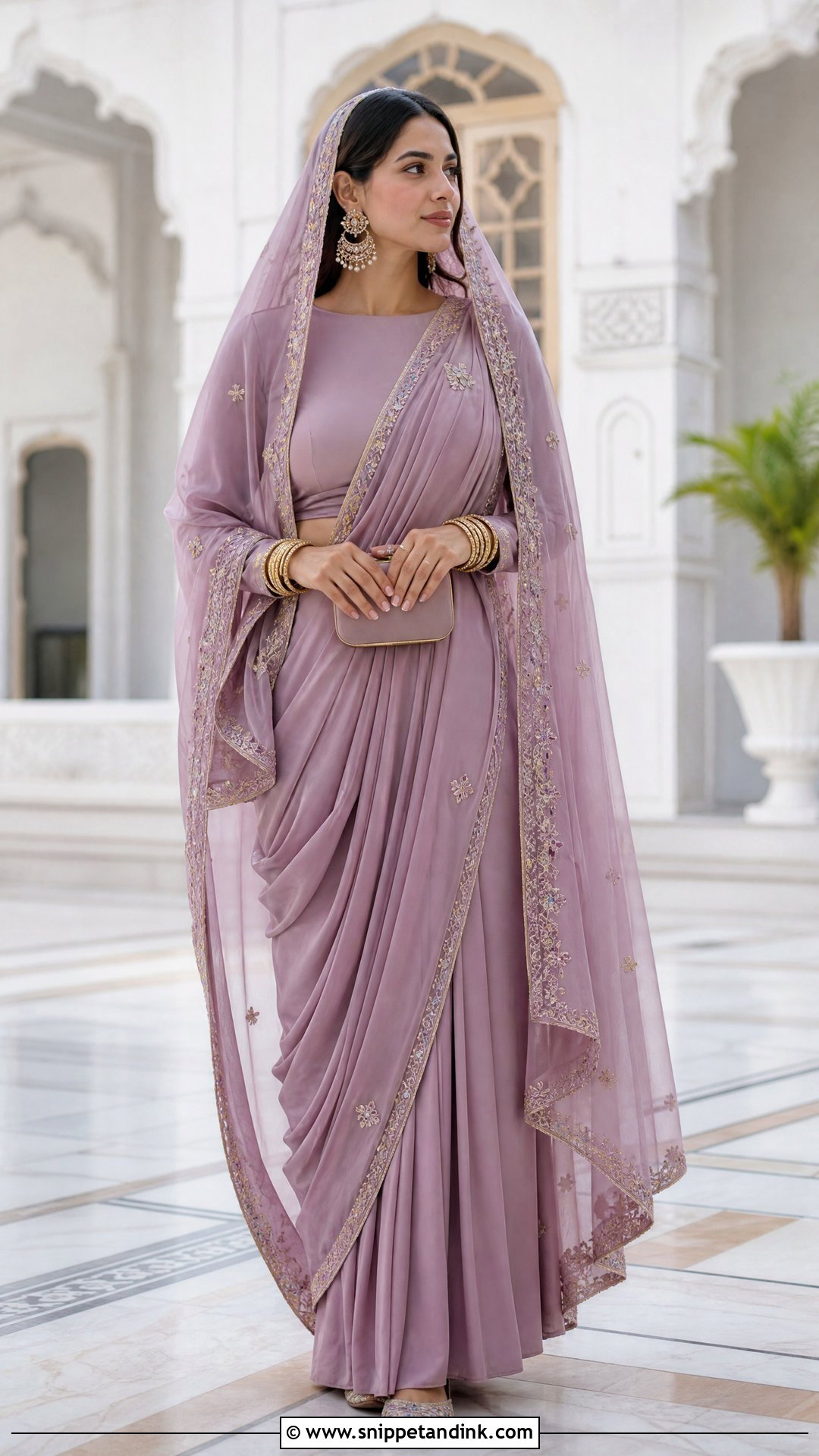
A pre-draped saree removes the pleating worry and still drapes like the real thing. Choose a loose skirt, never a narrow mermaid cut, because a slim skirt simply won’t let you sit on the floor. The blouse should cover shoulders, back and midriff with room to move. Most pre-draped styles have a short attached pallu, so add a separate dupatta for your head and match it to the saree border. Small chandbalis, stacked bangles, a compact clutch and flat embellished shoes. Leave out cutouts, sheer panels and trailing fabric. Sit cross-legged in it at home first: the stitched pleats can pull hard across the hips and knees.
22. Brocade Kurta And Wide-Leg Pants For Gurudwara Wedding
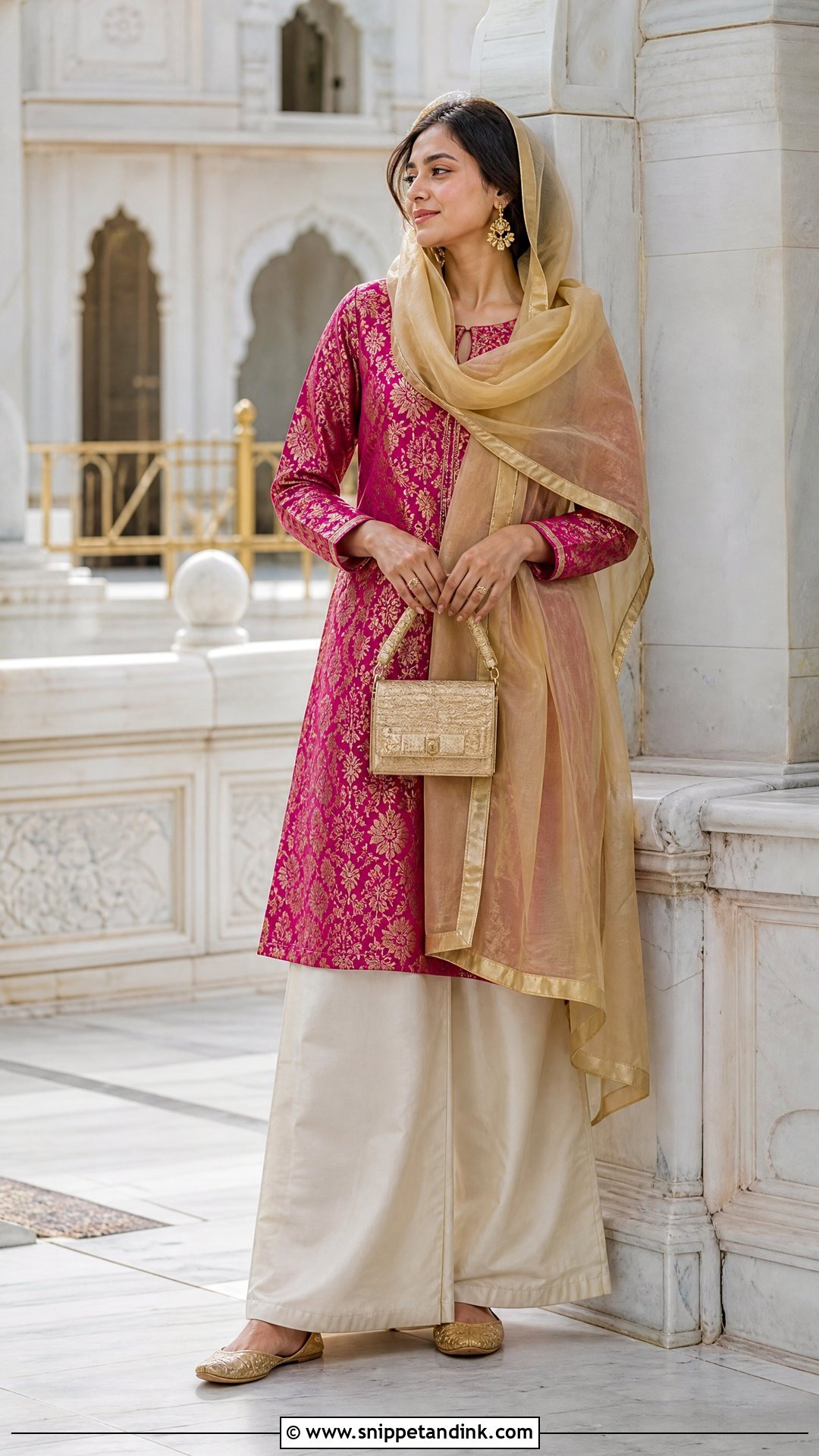
Brocade on top and plain wide-leg pants below is a modern take that still feels traditional. A knee-length brocade kurta over plain silk or crepe trousers keeps the woven pattern from taking over. A solid dupatta with a small border covers your head and calms the rich top. Gold, peacock blue, magenta or emerald brocade looks sharp against neutral bottoms. Sculptural earrings, a structured mini bag and plain juttis. Brocade is stiff, so check that the kurta’s side slits open enough to sit comfortably, and keep the trousers wide but hemmed short enough not to drag. A good pick for guests who like tailoring and want something beyond a standard salwar suit.
23. Kurta And Dhoti Pants For Gurudwara Wedding
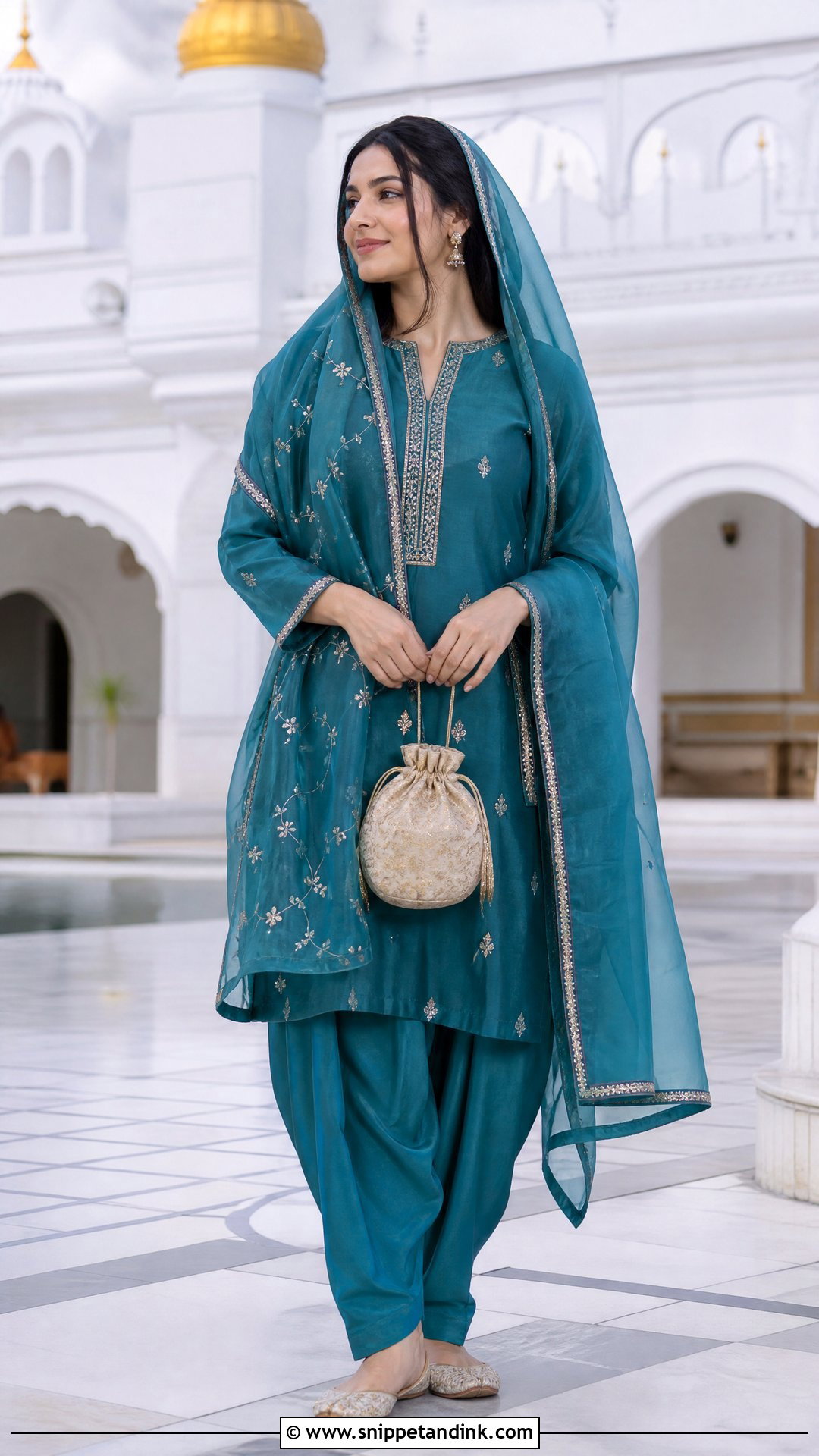
A kurta with dhoti pants is a modern Punjabi-leaning silhouette with plenty of room in the leg. Go for a longer kurta reaching close to the knee to balance the gathered drape. The dhoti should feel secure when you sit, without pulling across the knees, and the crotch of some ready-made versions sits so low it gets tangled when you fold your legs, so try a proper sit before buying. Silk, crepe or lightly embroidered chanderi makes it formal enough. A soft dupatta for your head, small earrings and flat juttis. Skip waist embellishment; the gathers already provide detail. A monochrome set looks sleek, a contrasting dupatta more festive.
24. Plus Size Gurudwara Wedding Outfit
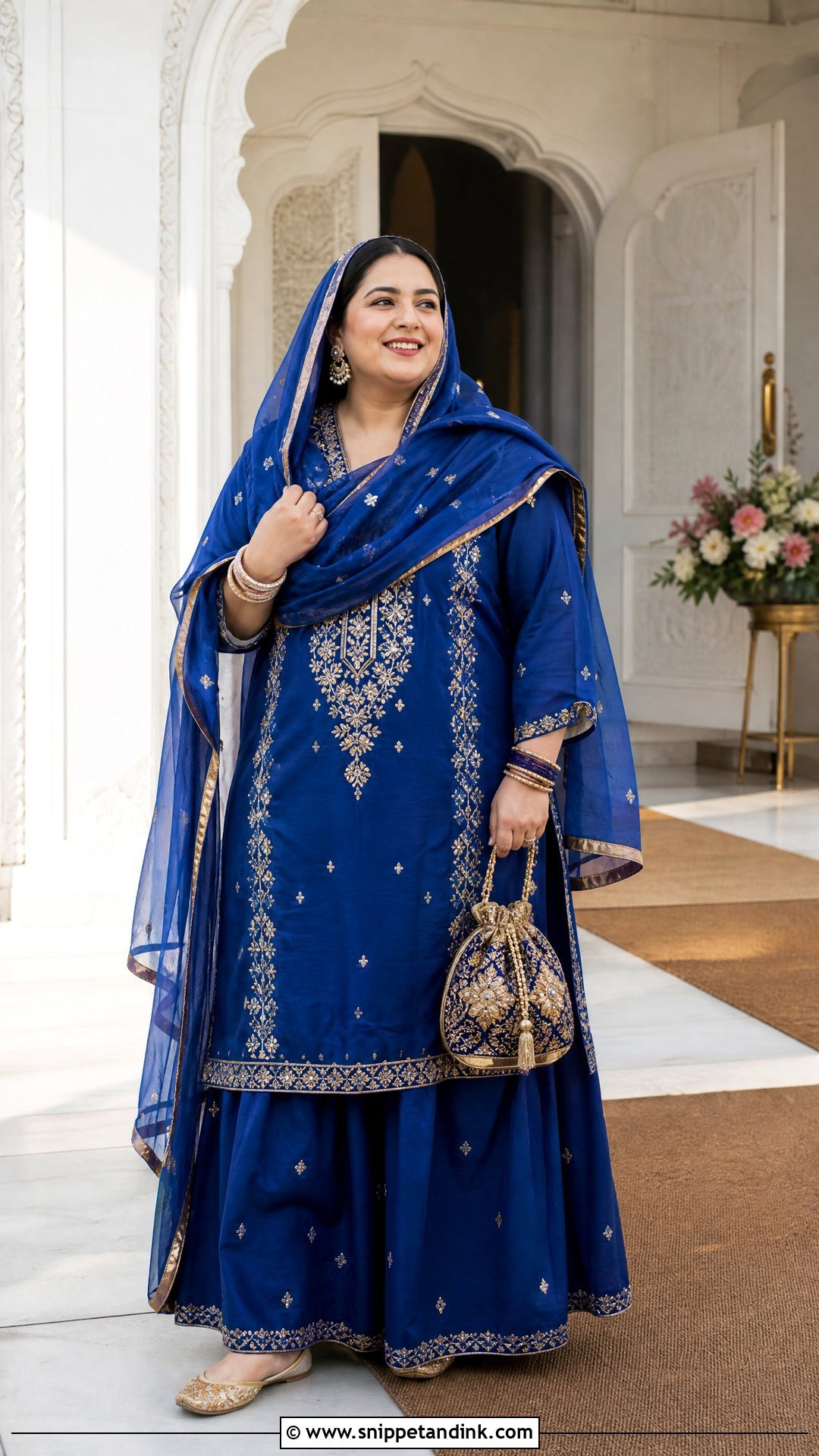
An A-line kurta with wide-leg trousers is the plus-size outfit I recommend most for a Gurdwara wedding, because it skims rather than clings and moves well on the floor. Check the side slits: placed too low, they restrict sitting; too high, and they flap open. Vertical embroidery, open florals and softly structured cloth give shape without stiffness. Palazzos or a relaxed salwar underneath, and a dupatta long enough to stay on the head securely. Supportive juttis, medium earrings, bangles and a structured potli. Wear whatever color you love: cobalt, raspberry, turquoise, coral and lavender all look wonderful. The detail that matters most is the armhole, which should be cut generously so the sleeve doesn’t pull when you adjust your dupatta.
25. Gurudwara Wedding Outfit For Women Over 50
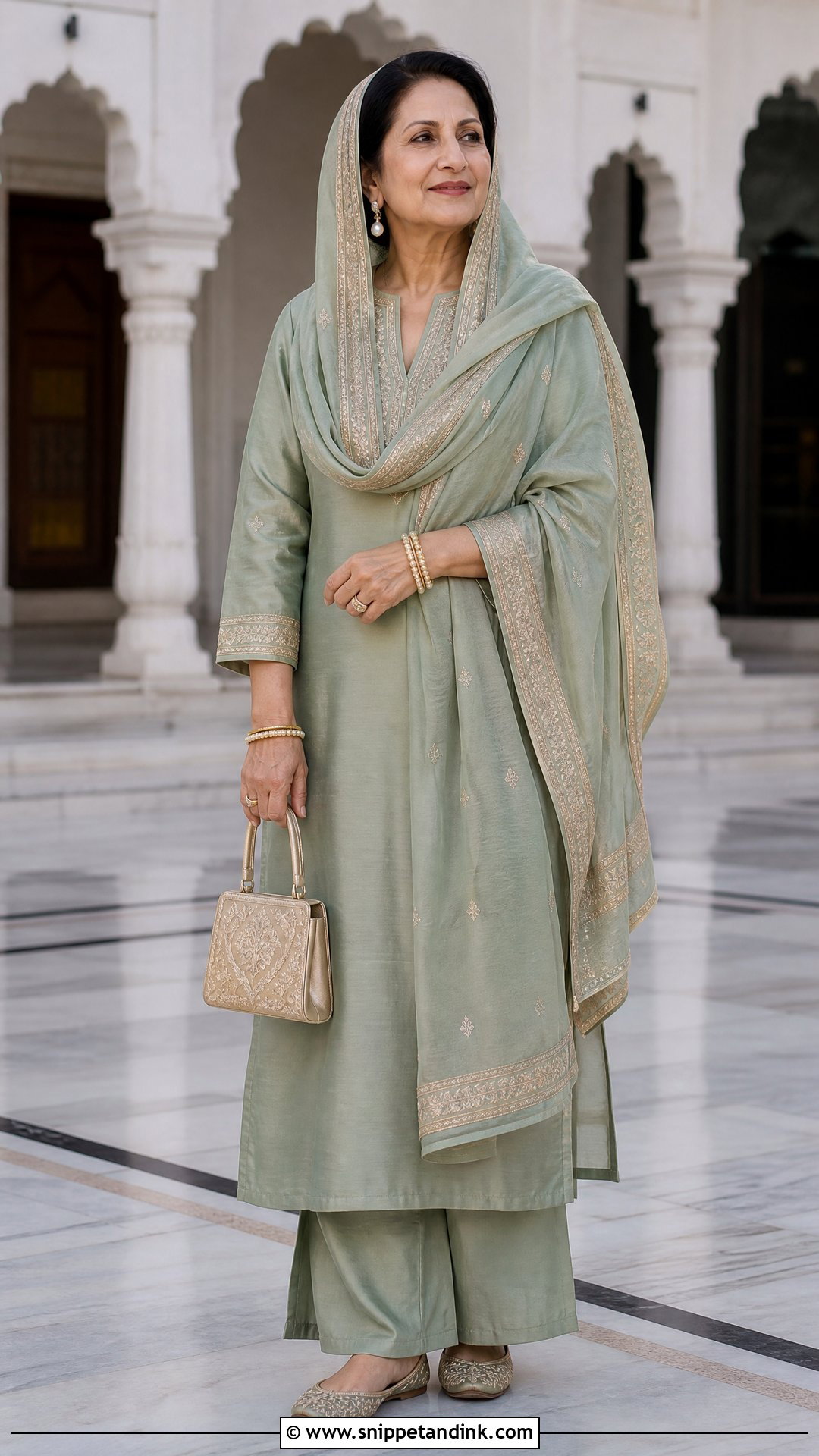
For women over 50 I’d lean on fabric quality over embellishment, and a good silk suit does exactly that. A straight or gently flared kurta with full or three-quarter sleeves, relaxed trousers and a coordinating dupatta. Woven silk, chanderi or light brocade give richness on their own. Teal, plum, rose, navy, jade or muted gold. Pearl drops or small kundan earrings, bangles or a watch, and supportive embroidered flats, since floor sitting is harder on knees and the walk to the shoe rack can be long. A shawl helps on cold mornings, but keep a separate light dupatta for your head. Skip a heavy necklace if the neckline is already embroidered.
A Head Covering That Survives Bowing, Standing and Langar
The single thing guests struggle with most is keeping the dupatta in place. It slides back every time they bow or turn, and they spend the ceremony tugging at it. A little preparation fixes most of that.
Fabric decides half the battle
Cotton, cotton silk, chiffon with a little texture and soft net all grip the hair. Satin, smooth crepe and heavy Banarasi slide. If the dupatta that matches your outfit is a slippery one, wear it draped over your shoulders and carry a plain cotton scarf in the same color for your head. Nobody will notice, and you’ll be far more comfortable.
Hair and pins
- Wear your hair in a low bun or low braid; a high bun pushes the fabric off the back of your head.
- Slide two bobby pins in a cross through the fabric just behind the hairline, catching hair underneath, and one more near each ear.
- Skip silky serums and fresh blow-dries on the morning; slightly textured hair holds pins better.
- Keep a couple of spare pins and a small safety pin in your bag.
Men attending will be offered a head covering at the entrance if they haven’t brought one, but bringing your own scarf or patka looks considered and saves you a borrowed one.
Dress for the Floor, the Scarf and the Long Morning
The Gurudwara wedding outfit ideas that work best put festive color on top of respectful coverage and real comfort. Punjabi suits, Anarkalis, shararas, ghararas and long kurta sets are dependable because you can walk barefoot and sit on the floor in all of them. Modest lehengas and sarees can work when the family and the Gurdwara are happy with them. Whatever you choose, bring a generous dupatta that will stay on your head, and keep shoulders covered, necklines sensible and hems clear of the floor. Then you can stop thinking about your clothes and pay attention to the laavan, which is the reason you’re there. When in doubt, ask the couple’s family.
You'll Like These Ideas:



Leave a Reply