
A long shirt is the piece I reach for most often when a wedding guest wants to look dressed up and still be able to sit cross-legged at a mehndi or dance at a baraat. The whole outfit lives or dies on one relationship: where the shirt’s hem lands against the shape of the bottom underneath. Get that right and the dupatta, shoes and jewelry only have to support it. Below are twenty pairings I’d actually put together for clients, from ghararas and shararas to palazzos and lehenga skirts, with notes on fabric, proportion and what to watch for at the fitting.
Measuring the Hem Against Your Height and the Bottom Underneath
When a guest brings me fabric for a long shirt, the first measurement I take is not the bust. I measure from the nape of the neck down to where the bottom’s detail starts: the gharara knot, the churidar gathers, the tulip curve. The shirt has to end a little above that point or it hides the reason you chose that bottom.
- Petite frames: knee to just below knee, with slits starting around mid-thigh. Anything near the ankle swallows a shorter figure.
- Average height: lower calf works for most bottoms except tulip and gharara.
- Tall frames: ankle length can look striking with palazzos or a lehenga, as long as the slits are high enough to walk.
- Slit height: ask for the slit to open above the knee if you’ll be dancing. A low slit pulls the shirt tight across the thighs every time you step.
Have the hem marked while you stand in the shoes you’ll wear. Heels change the length by more than people expect, and a shirt pinned barefoot can end up looking too short on the night.
Give the Tailor Enough Time
In wedding season, tailors who do this kind of work get booked up fast. I tell clients to hand over fabric at least three to four weeks before the event, longer for hand embroidery, and to book a second fitting a week out. Most of the fixes I see at that second fitting are shoulder width and slit depth, both easy if there’s time and rushed if there isn’t.
1. Long Shirt With Gharara
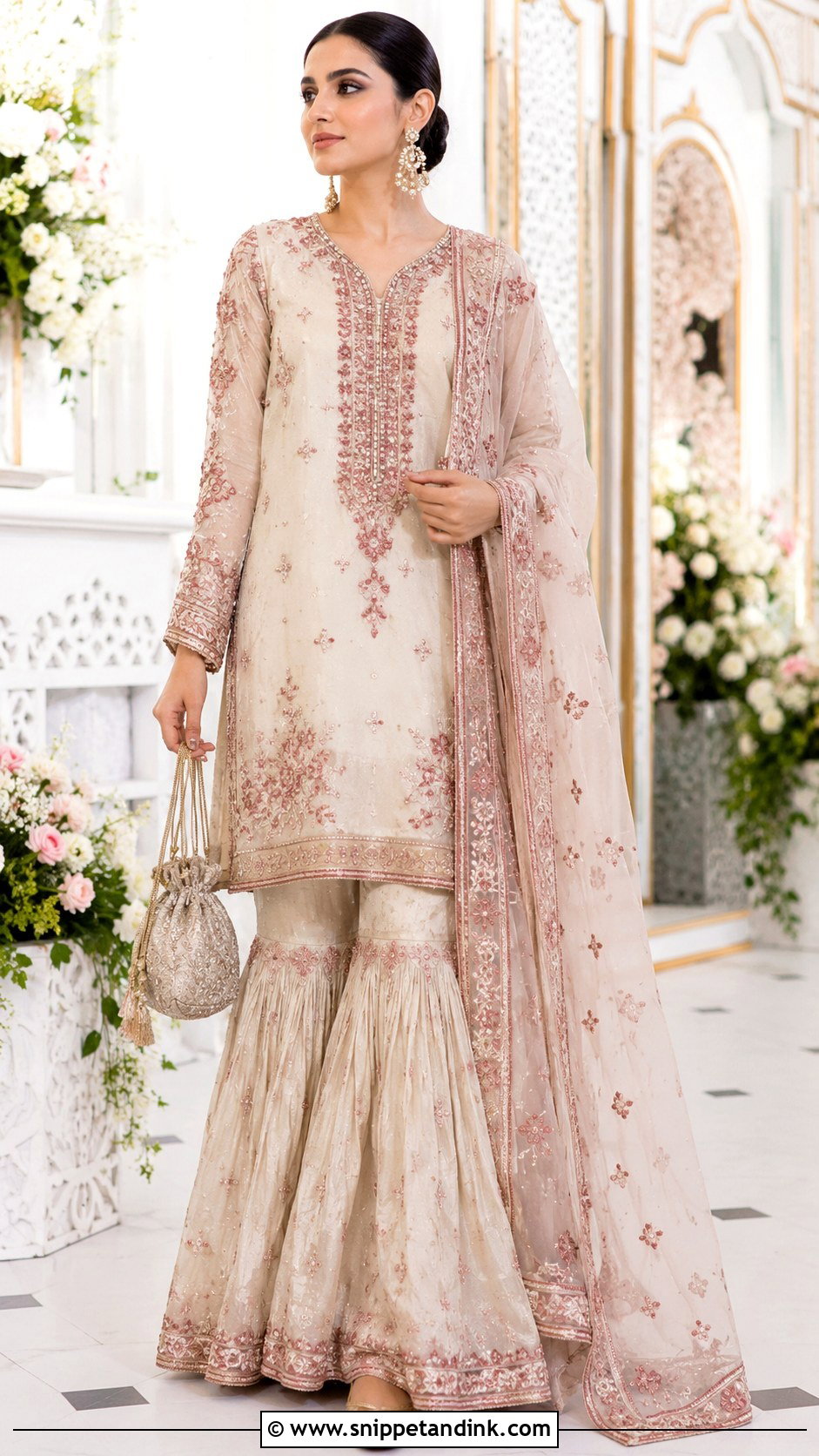
With a gharara, the knot at the knee is the feature, so I keep the shirt at knee or just below; any longer and that gathered joint disappears. Organza with threadwork or a little pearl detail sits well over the gharara’s weight without dragging it down. Ivory with dusty rose, emerald with antique gold or navy with silver all read formal. One thing I always check at the fitting: the shoulders. A gharara already adds width low down, and a loose shoulder on top makes the whole figure look boxed in. Khussas, a potli and slim bangles are enough from there.
2. Long Shirt With Sharara
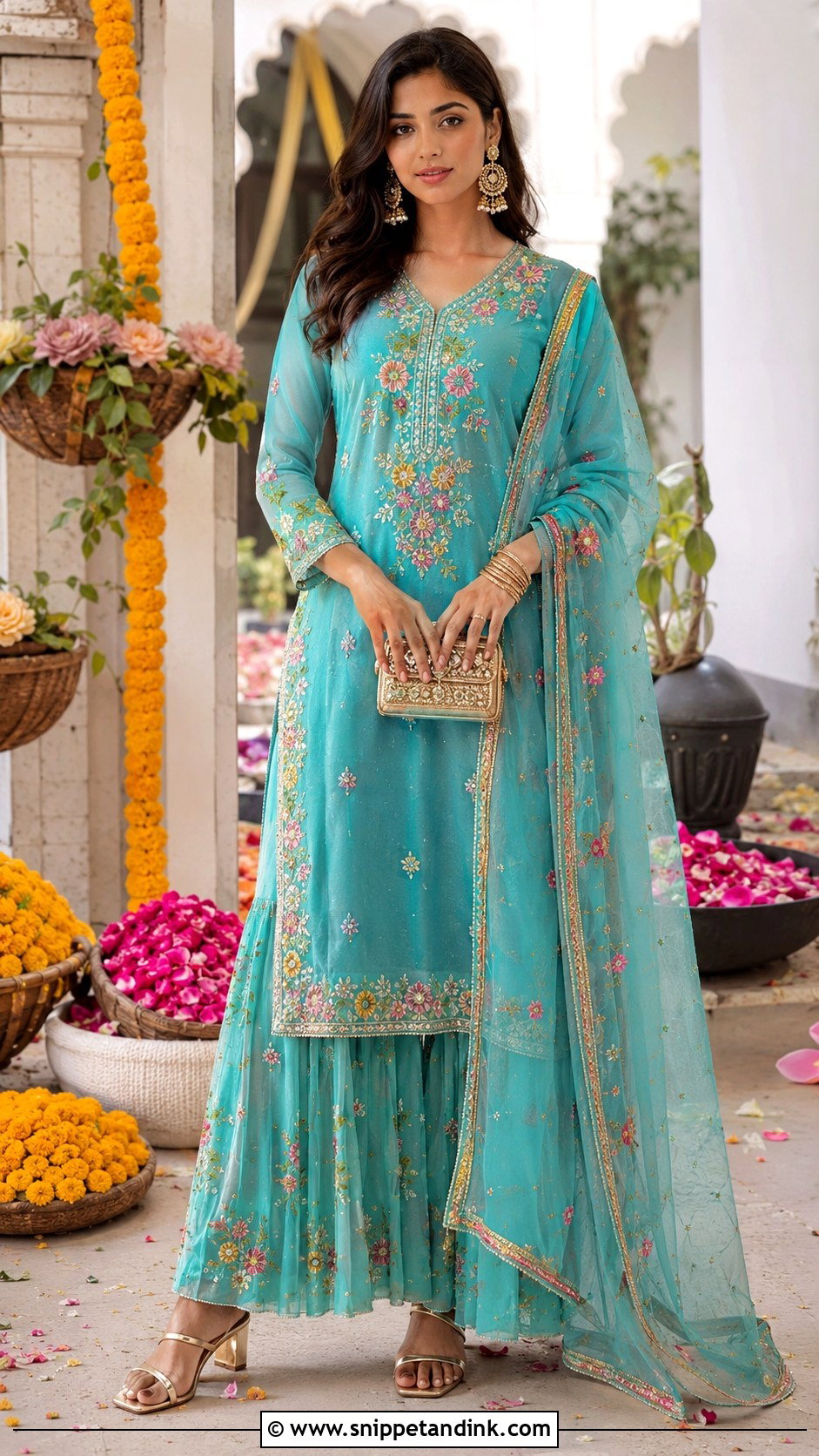
If you plan to dance, this is the pairing I’d point you to. A long shirt and sharara combination moves from the hip, and a straight or lightly flared shirt with side slits lets the sharara swing without the shirt riding up. Chiffon for the sharara keeps it light under a worked net or silk shirt. Mustard, coral and turquoise suit a mehndi; champagne or plum belongs at a reception. The trap is putting a heavily embroidered shirt over a heavily embroidered sharara. Pick one to carry the work and let the other stay quiet.
3. Long Shirt With Lehenga
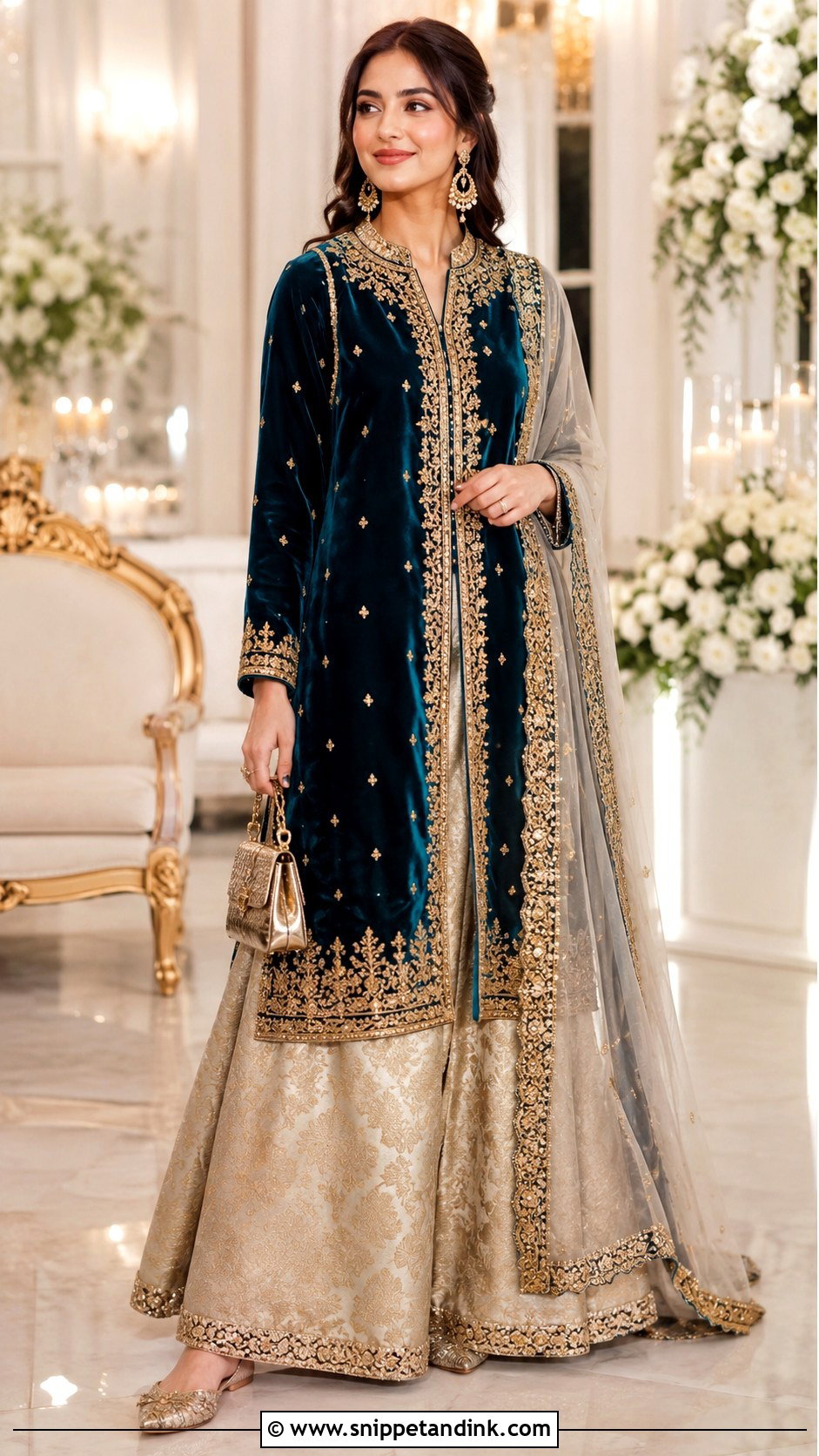
Worn over a lehenga, a long shirt gives you coverage and a very regal outline, but only if the slits are cut high enough. Without them you can’t see the skirt and you can’t take a full stride. Velvet over brocade is my winter choice; raw silk or organza for anything warm. Maroon with gold and teal with champagne look properly formal. I ask the tailor to keep the lehenga’s flare moderate, because a full can-can skirt pushes the shirt outward at the hip and the side panels start to tent.
4. Long Shirt With Palazzo Pants
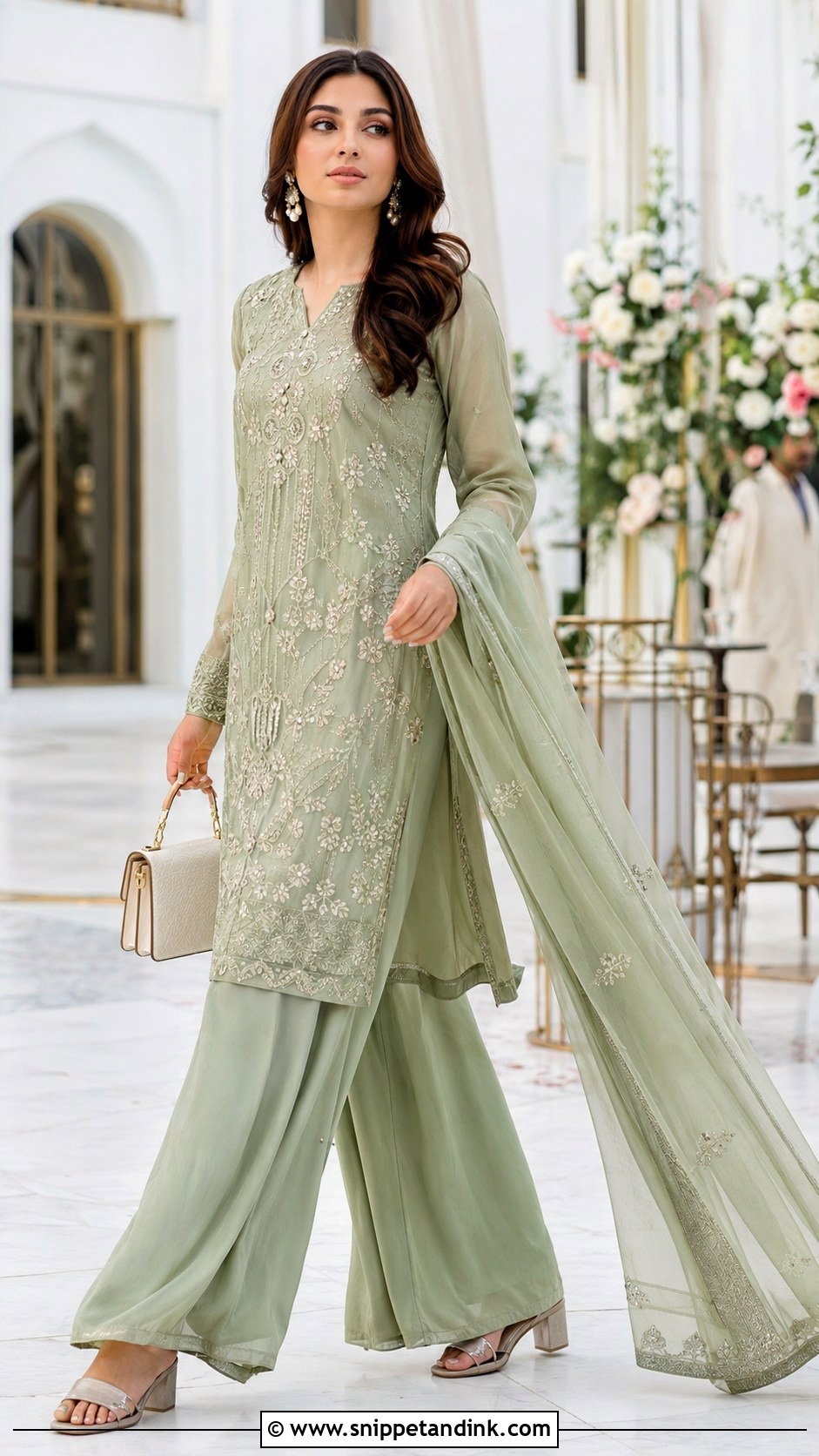
Palazzos are the comfortable option that still photographs as an outfit. I like the shirt to end at the lower calf with high-waisted palazzos, so the leg line runs uninterrupted from the waist down. Silk, crepe and light jacquard all hang well; stiff cotton tends to flare out at the hem. Sage with matching embroidery works in daylight, wine or navy after dark. Proportion is where I adjust for height: on petite clients I narrow the palazzo and lift the hem of the shirt a few inches, and on tall clients I go wider and nearer the ankle.
5. Long Shirt With Cigarette Pants
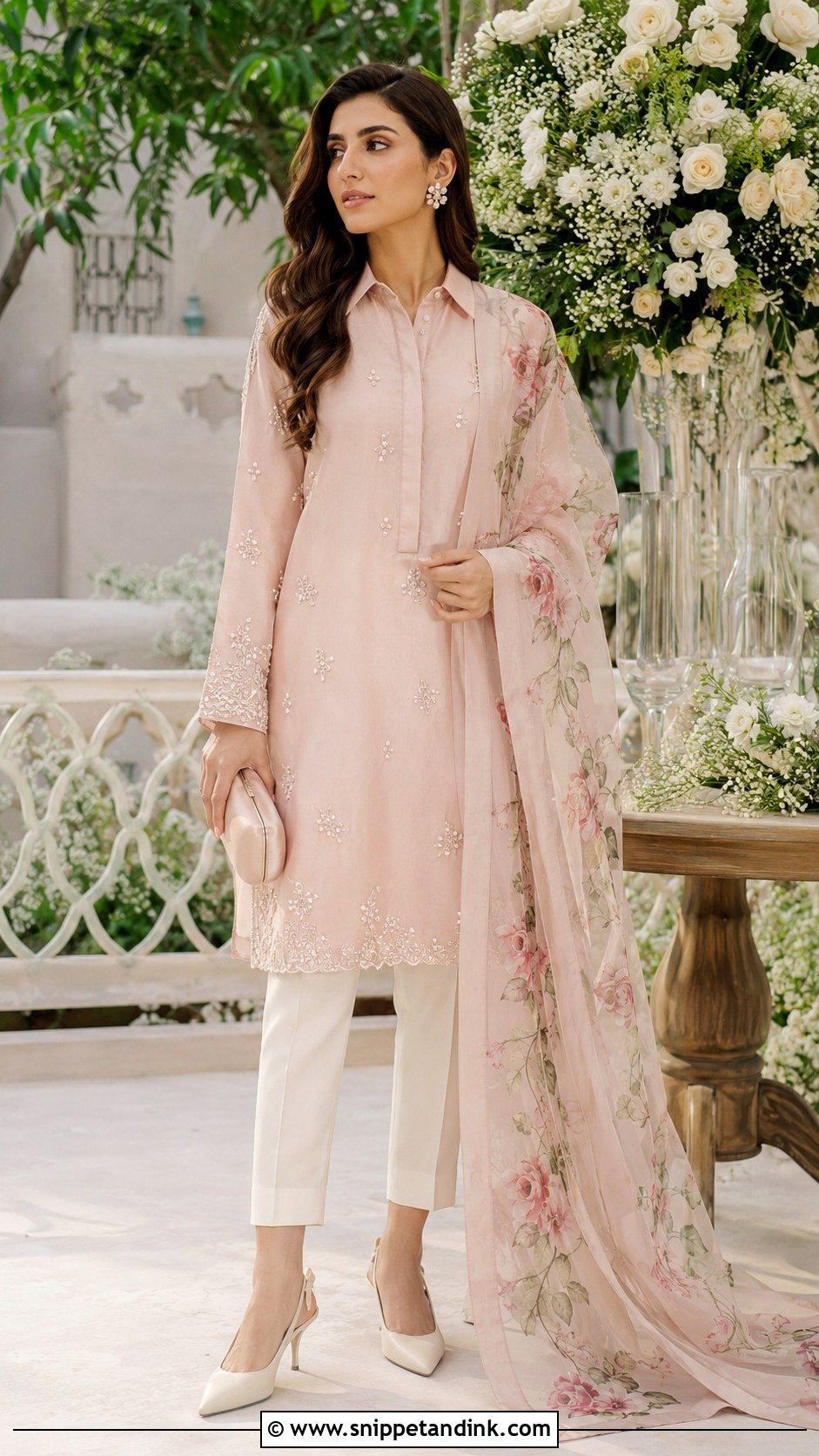
Cigarette pants are what I suggest to guests who dislike volume. The slim leg gives an embroidered shirt a crisp frame, and the whole look reads modern. Fit through the shoulder matters more than usual here, because nothing below distracts from it. Blush with pearl details over ivory pants suits a daytime nikkah; deep green, charcoal or sapphire with metallic thread for evening. The pants should stop at the ankle bone so a pointed pump or slingback shows. Long-limbed women carry this best; if you’re shorter, a slight heel stops the slim pant from cutting the leg.
6. Long Shirt With Churidar Pants
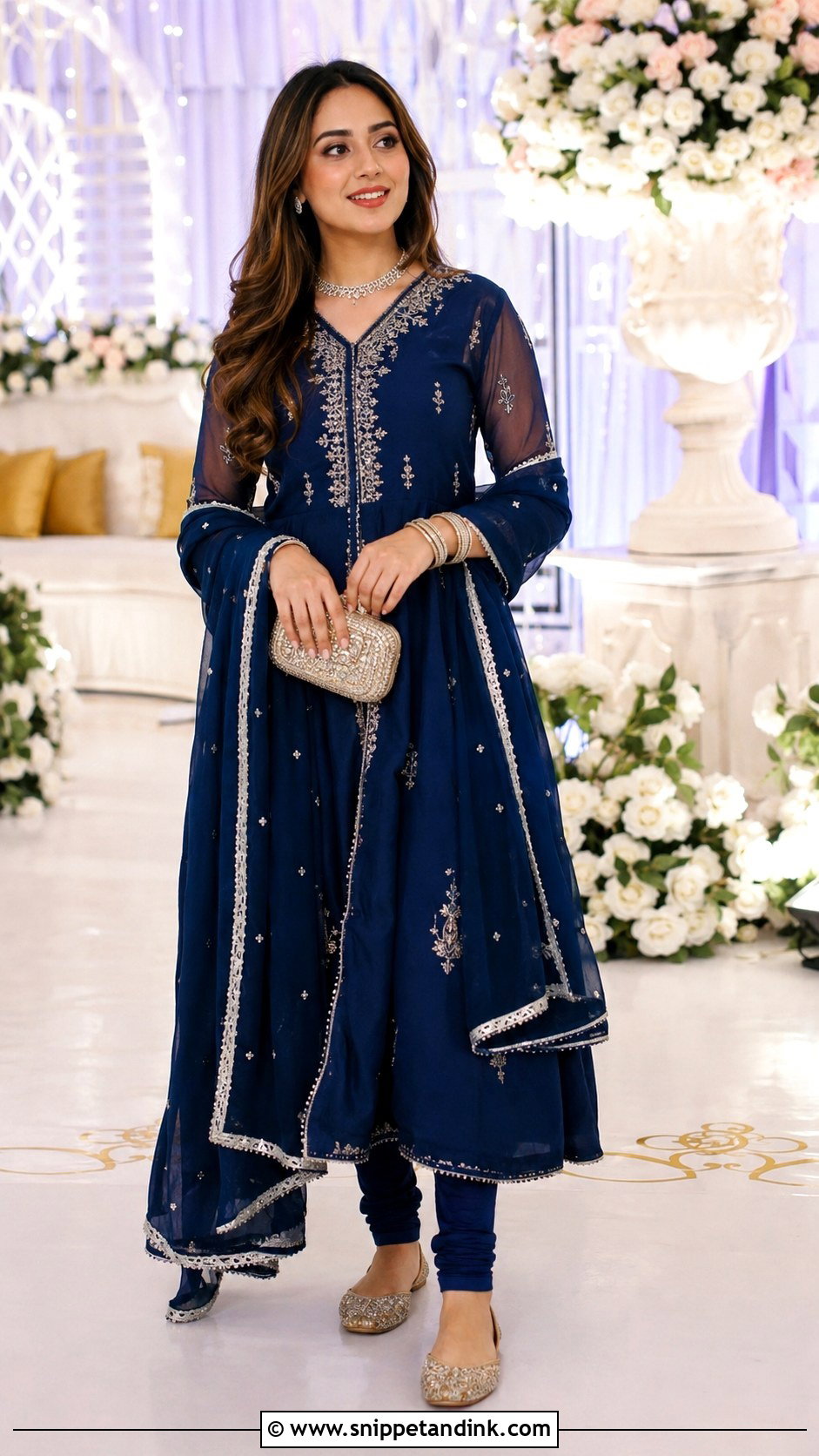
Churidar is cut extra long so it gathers at the ankle, and those folds are the point. I keep an A-line, paneled or Anarkali-inspired shirt finishing above the ankle so they stay visible. Soft fabrics that drape, chiffon, georgette, silk, suit it far better than anything with body. Pale blue with white embroidery is fresh for a day event, ruby or aubergine richer at night. A note from fittings: churidar only looks right if it’s cut on the bias and long enough. A straight-grain churidar bags at the knee after an hour of sitting.
7. Long Shirt With Straight Trousers
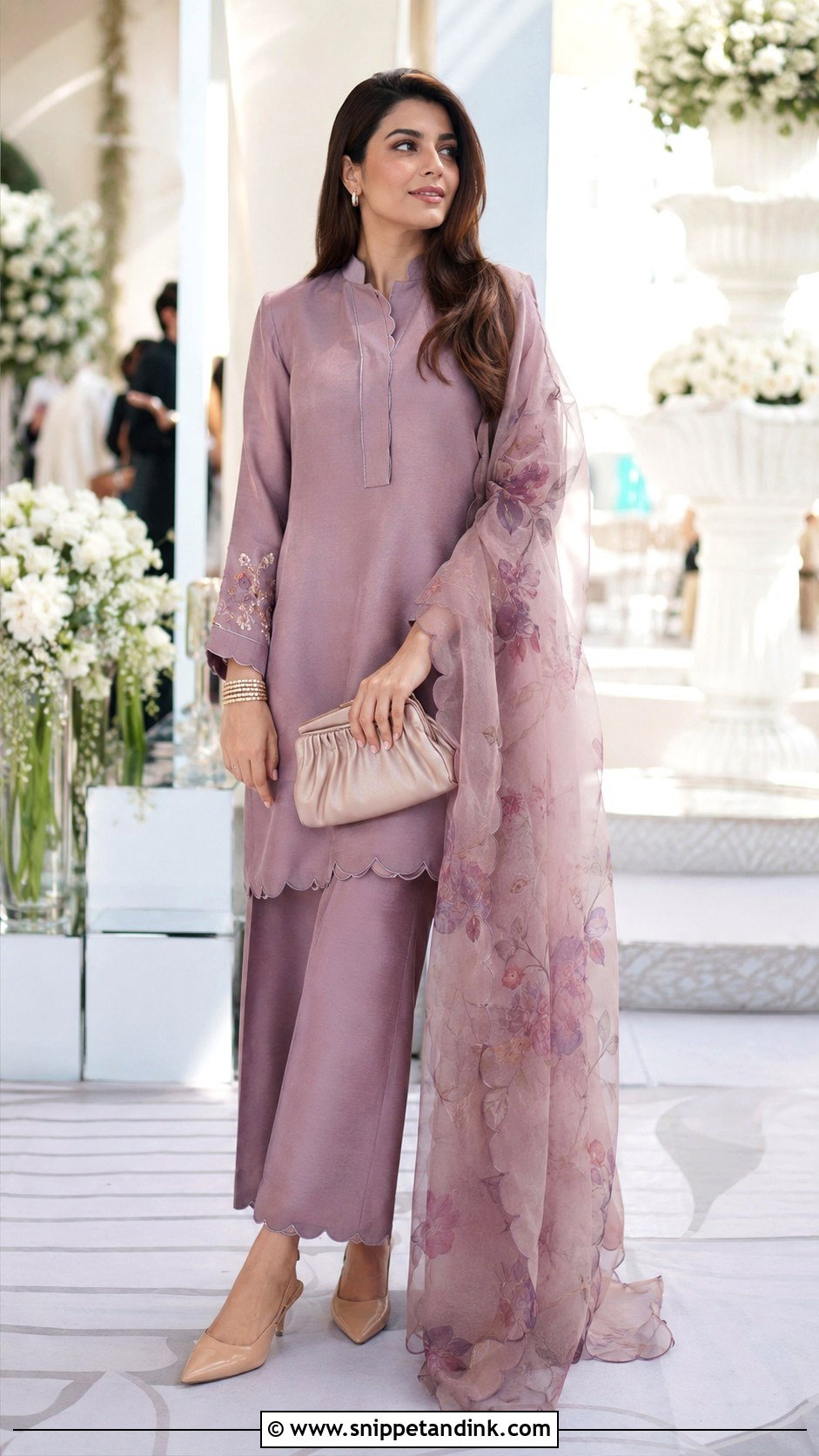
This is the quietest pairing on the list, and that’s why the details on the shirt have to work: scalloped hems, embroidered cuffs, pearl buttons, a finished neckline. Straight trousers should skim, never grip. A single color top to bottom in mauve, powder blue, olive or champagne lengthens you without any effort, and a floral dupatta brings the contrast. I often recommend it to women who want modest coverage without layers. If you’re having it stitched, ask for a discreet side pocket. You will use it all night.
8. Long Shirt With Wide-Leg Pants
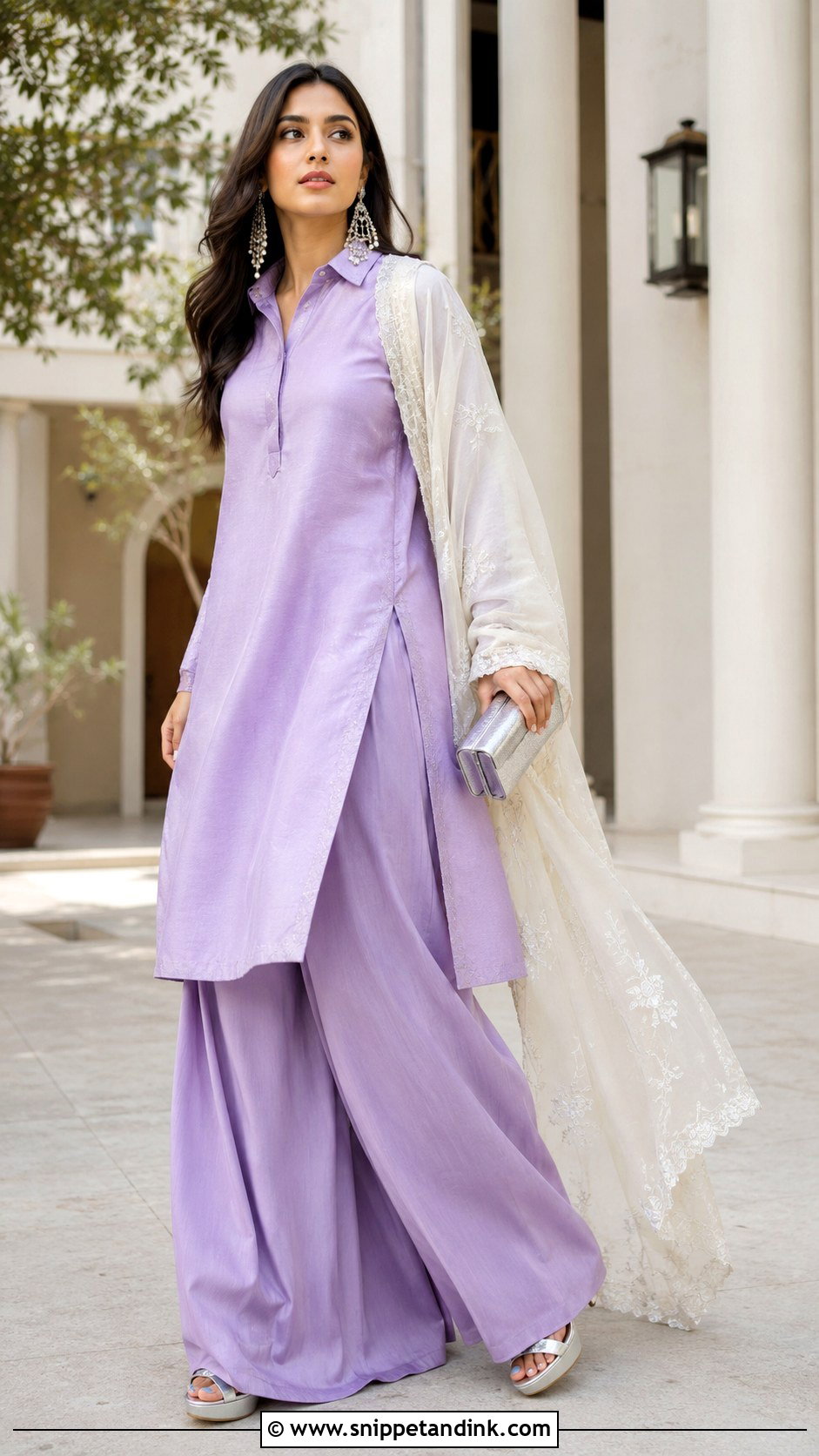
Wide-leg pants under a long shirt can tip into one solid block of fabric if the slits are low. I ask for high slits and a slightly structured shirt so the trouser shows when you move. Brocade or raw silk pants under a simple organza shirt is the richer version; chiffon pants give a softer fall. Lilac with lavender or ivory with champagne keeps it tonal. Hem the trousers with the shoes you’ll actually wear, so they just cover the heel. Too long and you’ll be stepping on them by the second dance.
9. Long Shirt With Farshi Shalwar
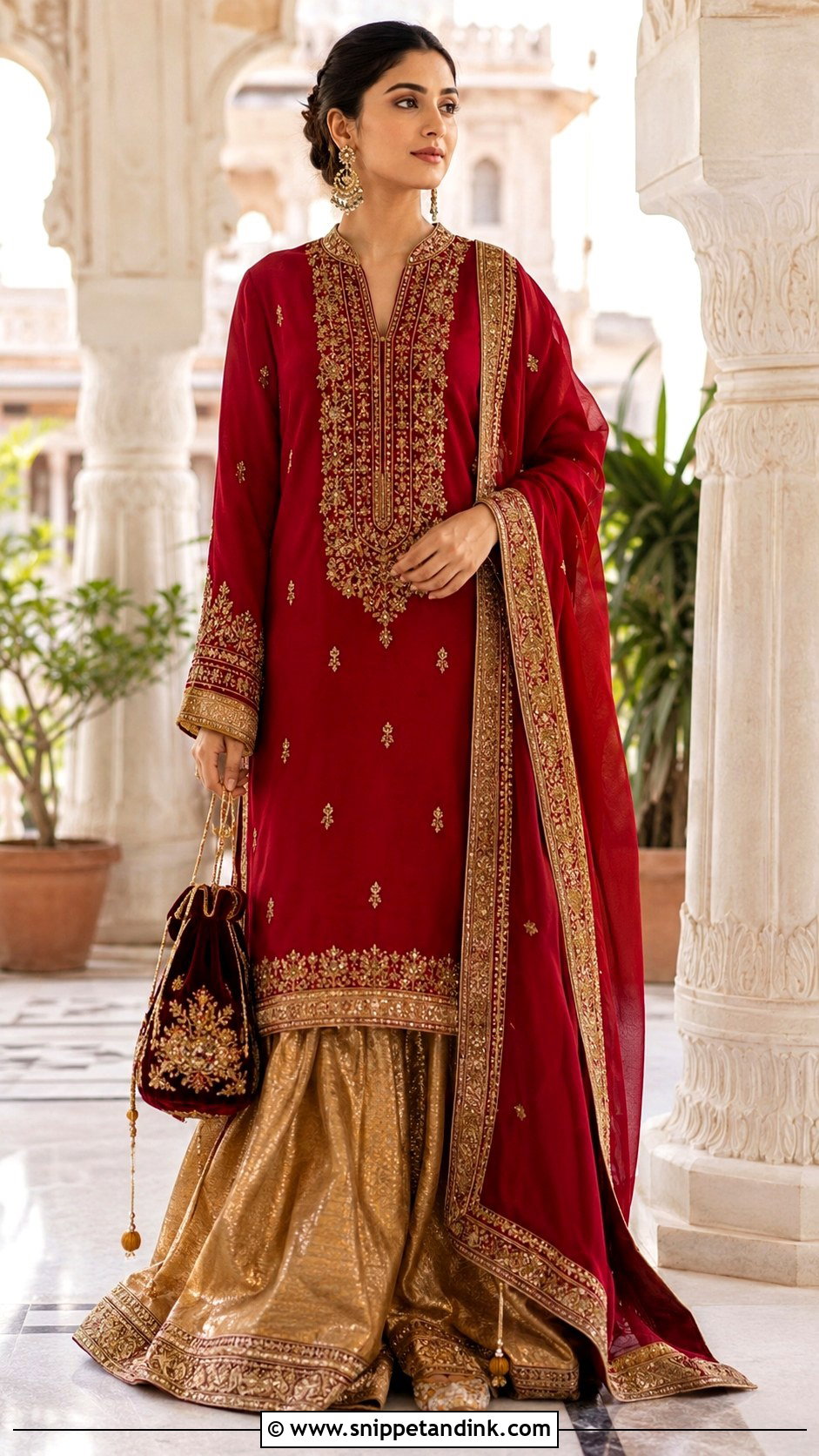
A flowing farshi shalwar pools on the floor, and that much volume and length needs a calm shirt above it. I keep the shirt straight, ending at the knee or upper calf, with embroidery concentrated at the neckline rather than all over. Raw silk, jamawar and light brocade hold the shalwar’s folds. Deep red over antique gold is regal; pistachio and blush much softer. Practically, a farshi has a train at the back. Practice walking and turning in it before the day, and hold the side as you climb stairs.
10. Long Shirt With Tulip Pants
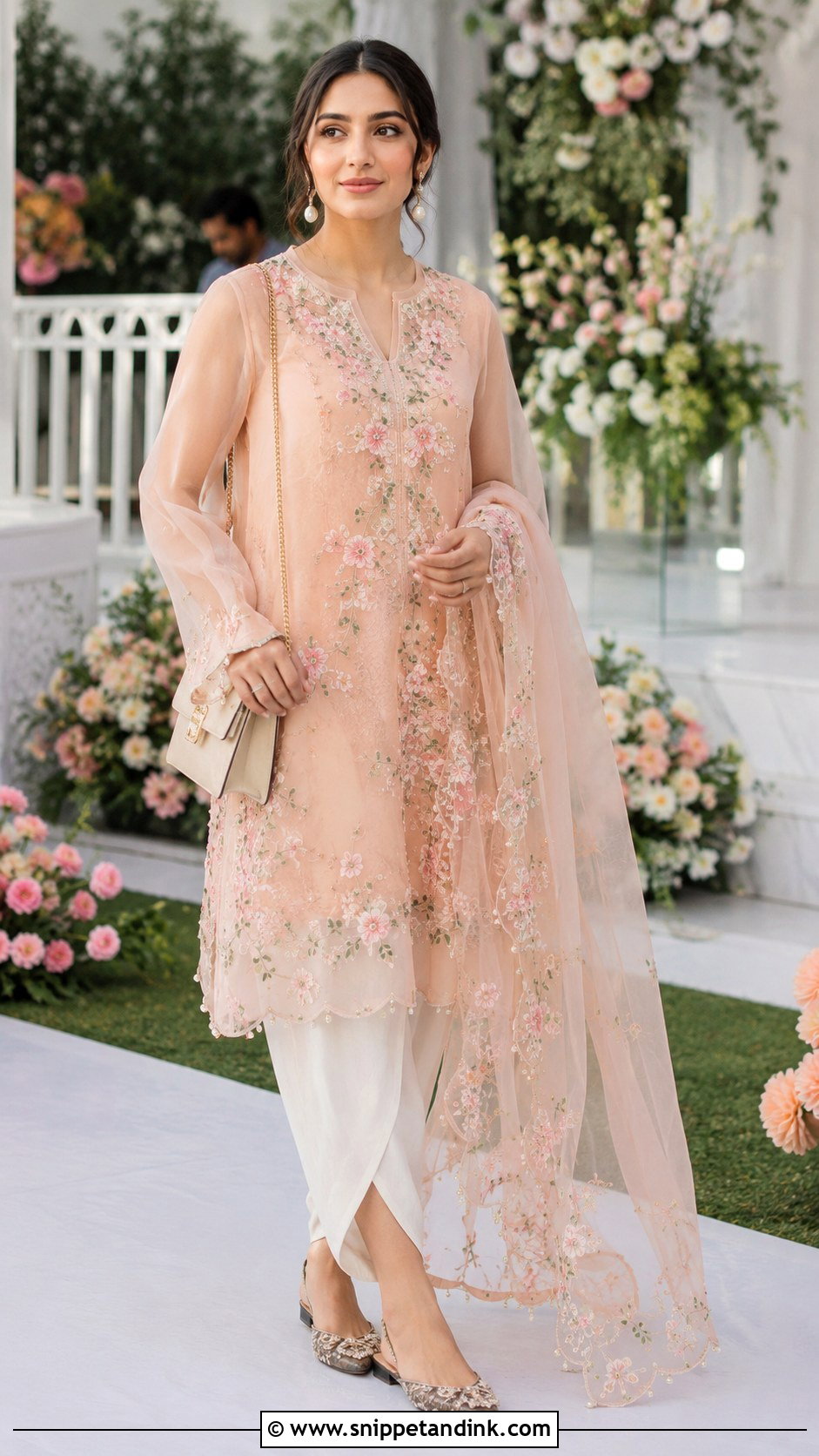
Tulip pants have that overlapped, curved hem at the ankle, so the shirt must stop at the knee or the detail is wasted. I’d use this for a smaller ceremony or a daytime event rather than a heavy baraat. A peach organza shirt over ivory tulips is one of my favorite light combinations; a jewel-toned silk set works for evening. Embellished mules show the hem well, and a slight raise in the heel helps the curve sit open instead of collapsing over the foot.
11. Long Shirt With Dhoti Pants
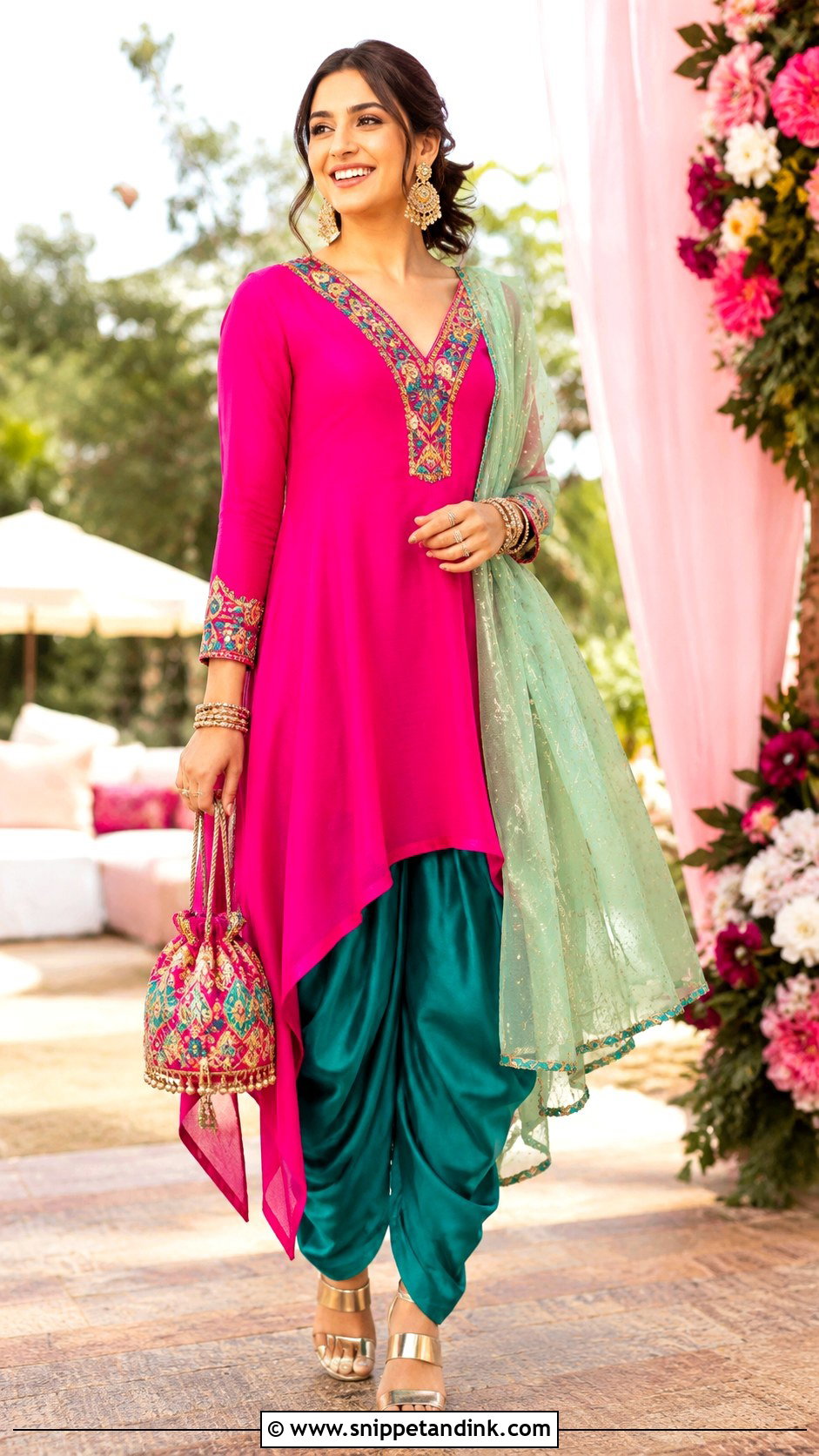
Dhoti pants bring drape and an easy, festive mood that suits pre-wedding functions more than the main event. The shirt can be straight, asymmetric or slightly flared, but it has to leave the pleated drop of the dhoti in view. Silk holds the pleats; crepe is lighter but collapses faster. A solid shirt with worked cuffs over a printed dhoti is the balance I’d aim for. Fuchsia, teal and mustard are made for a mehndi. Pin the dupatta neatly. Loose draping on top of all that pleating looks messy within an hour.
12. Long Shirt With Flared Pants
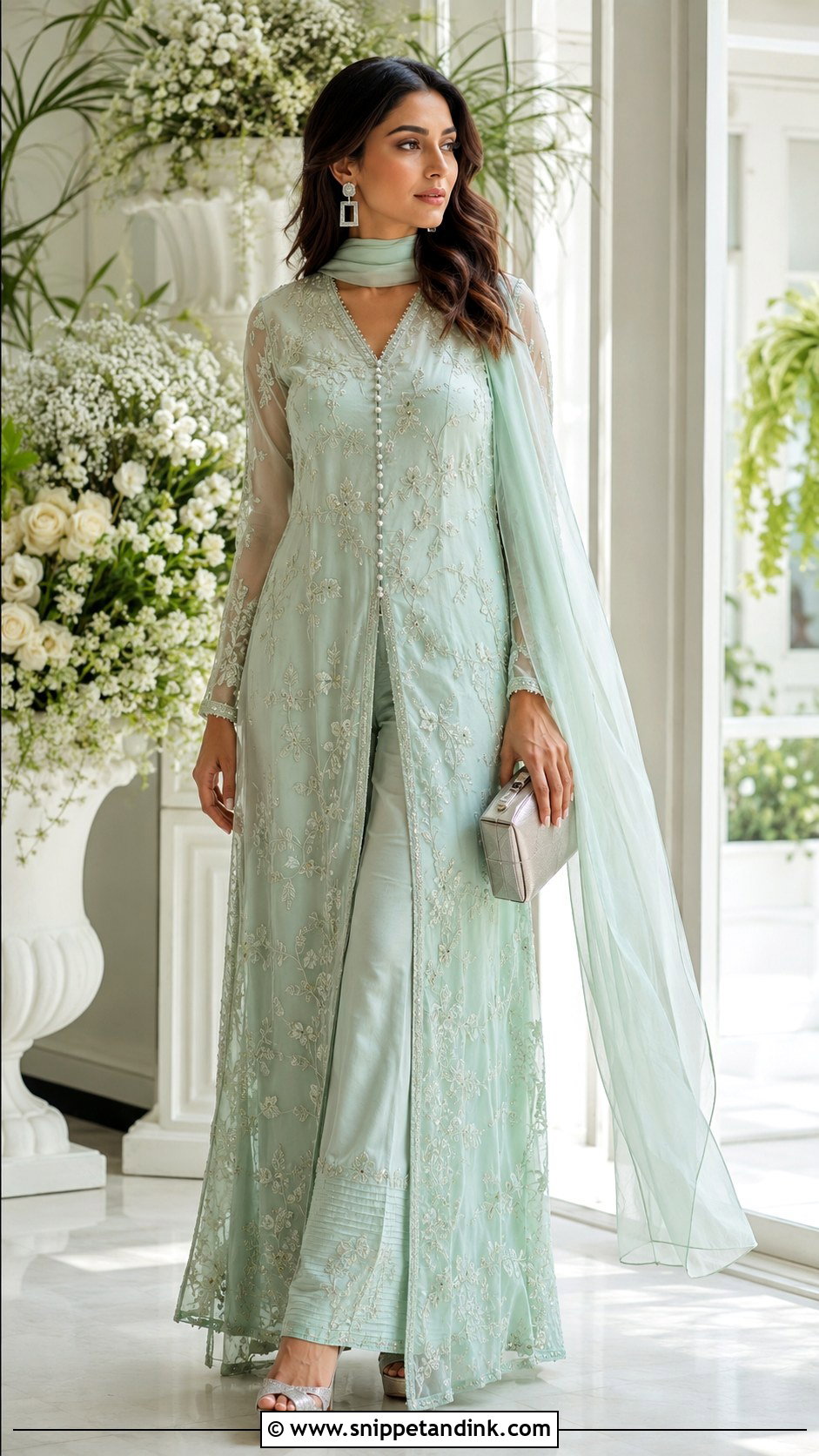
Flares give the outfit a slight retro tilt. I pair them with a fitted or straight shirt slit above the knee so the widening hem is the movement. Black velvet over gold brocade flares is a winter reception look I like a lot; mint organza over tonal silk is the daytime version. Wear a platform or wedge under the flare, because the hem needs to clear the floor and a stiletto sinks into grass. Keep the lower half of the shirt slim so the volume stays at the leg.
13. Long Shirt With Banarasi Pants
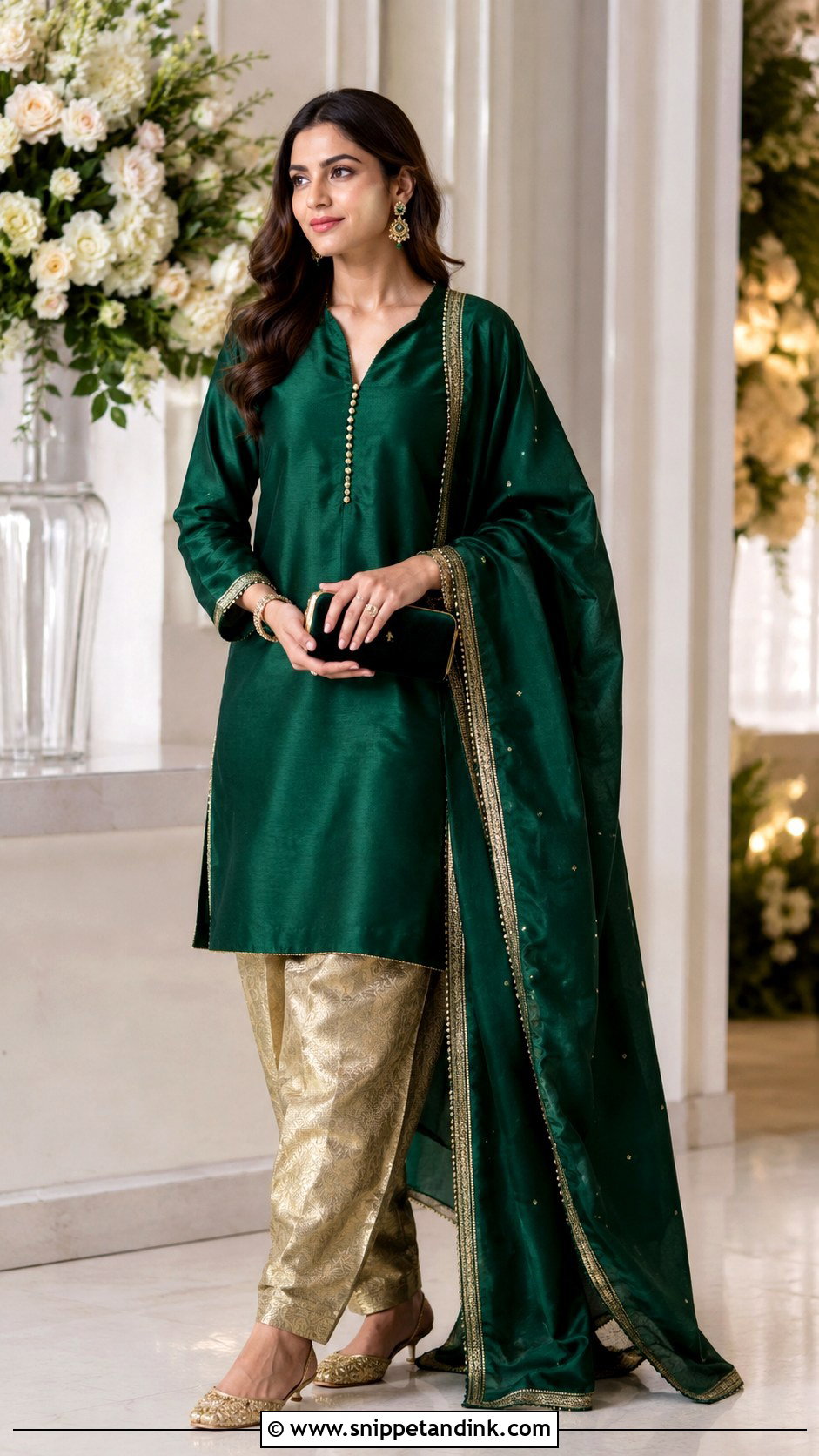
Banarasi pants carry woven metallic pattern, so I let them be the focal piece and keep the shirt plain or lightly worked in silk, velvet or organza. Straight or gently wide cuts are easiest to balance with a knee or calf-length shirt. Emerald with antique gold and magenta with deep purple are classic pairings. A dupatta with a thin Banarasi border ties the top and bottom together. Something I warn clients about: real zari is heavy and scratchy against bare skin at the inner thigh, so ask for the pants to be lined.
14. Long Shirt With Embroidered Skirt
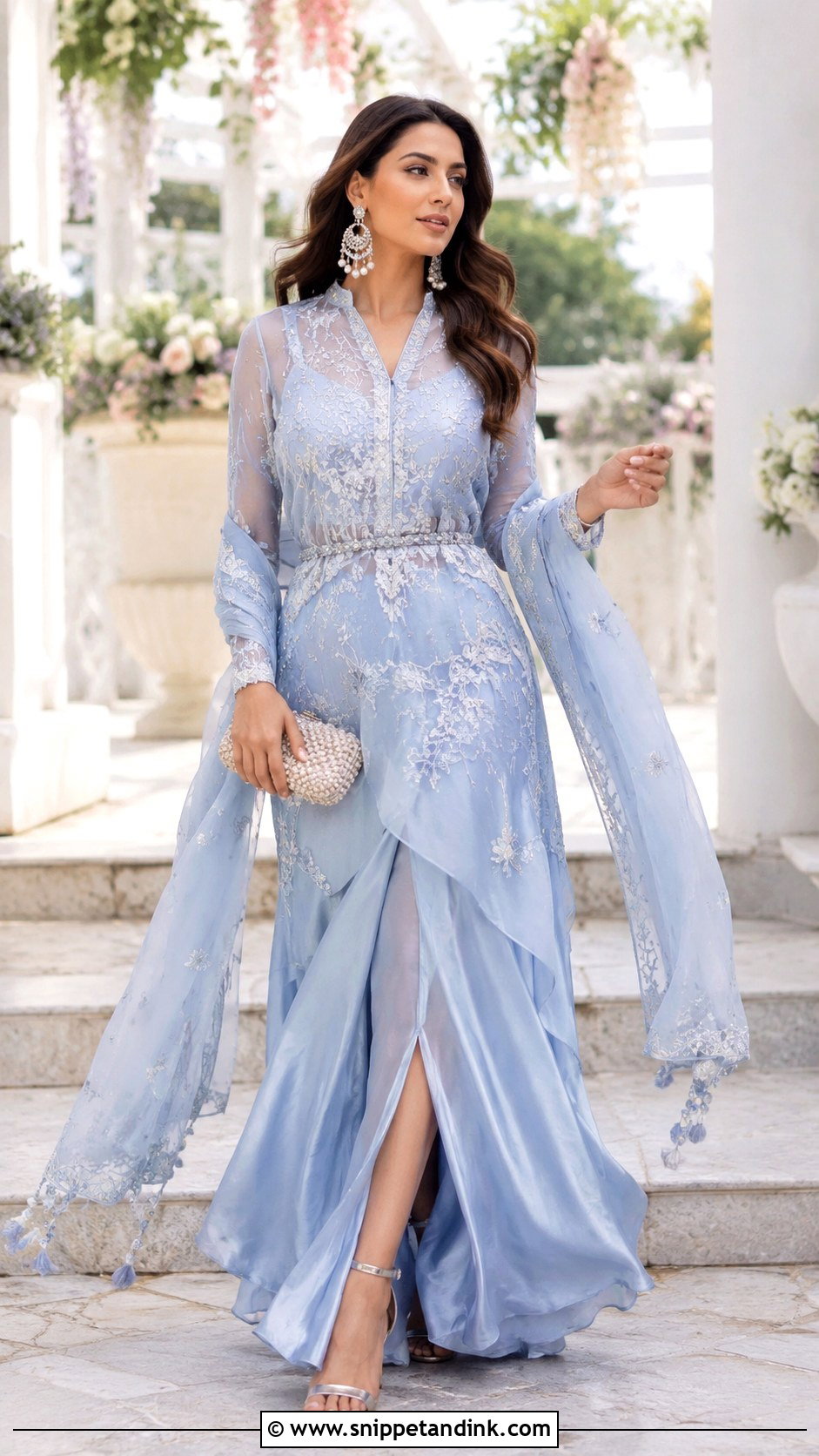
A sheer embroidered shirt floating over a flared skirt gives you the formality of a lehenga with more coverage than a short blouse. High slits or a front opening let the skirt’s border show. Pastel organza over a tonal silk skirt reads daytime; dark velvet over an embellished skirt reads evening. At fittings I check the waistband carefully. If the skirt bunches at the waist, the sheer shirt shows every fold. A belt can define you, but it shouldn’t sit on top of the embroidery.
15. Front-Open Long Shirt With Trousers
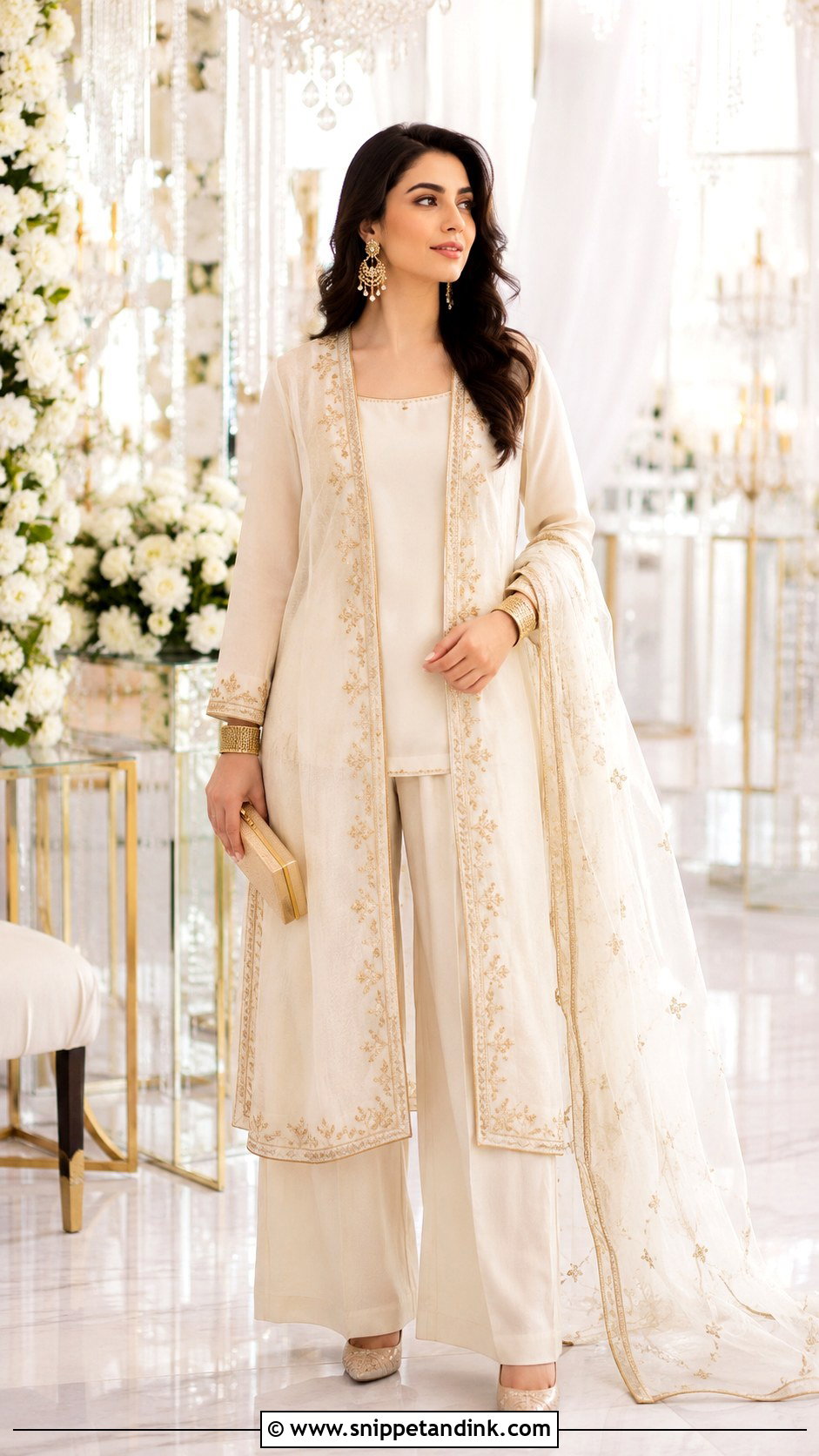
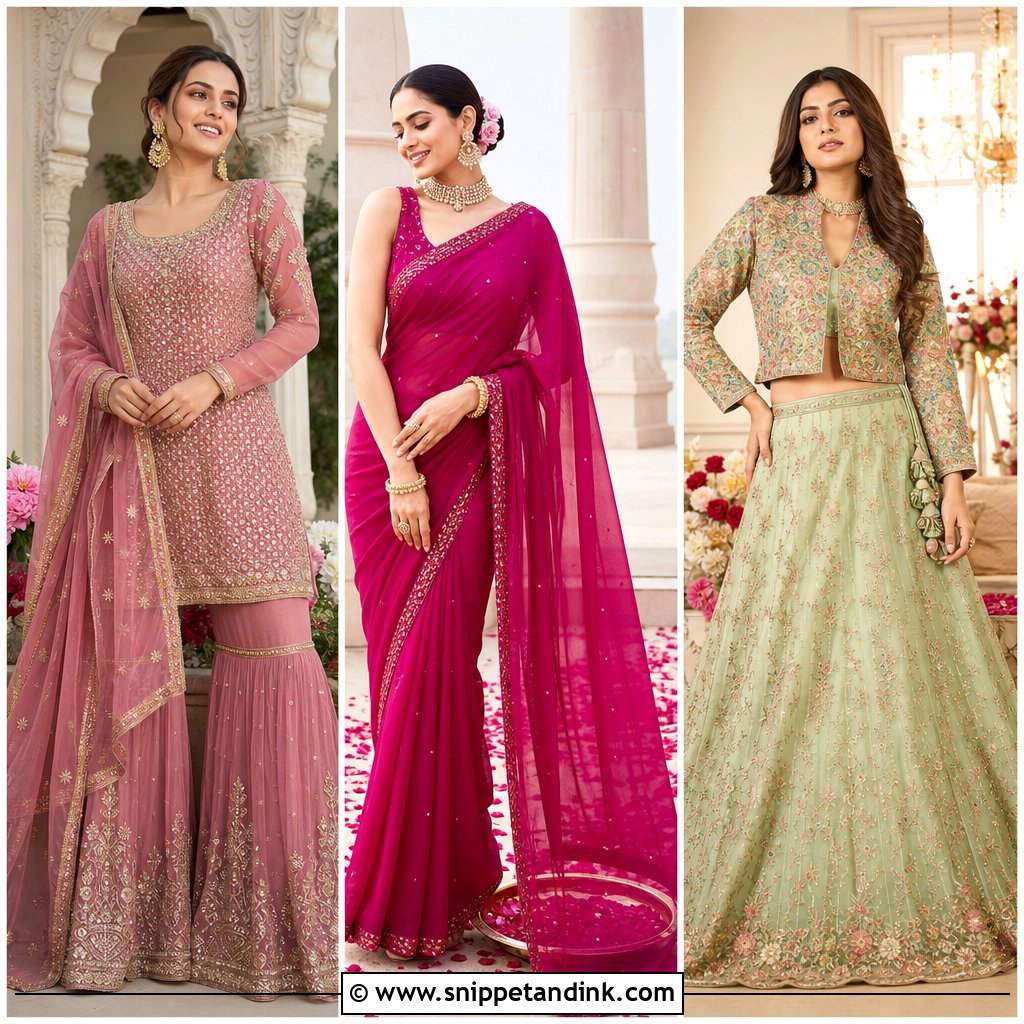
The front-open shirt behaves like a long formal jacket. It goes over a sleeveless inner shirt and straight or wide trousers, with embroidery running along the front edges, sleeves and hem so the vertical line does the work. Ivory with gold for day; navy, plum or emerald after dark. Hang the dupatta over one arm instead of across the chest, otherwise you cover the very edges that make this design. The inner shirt is visible every time the outer layer opens, so it needs its own proper fit, not an afterthought lining.
16. Angrakha Long Shirt With Churidar
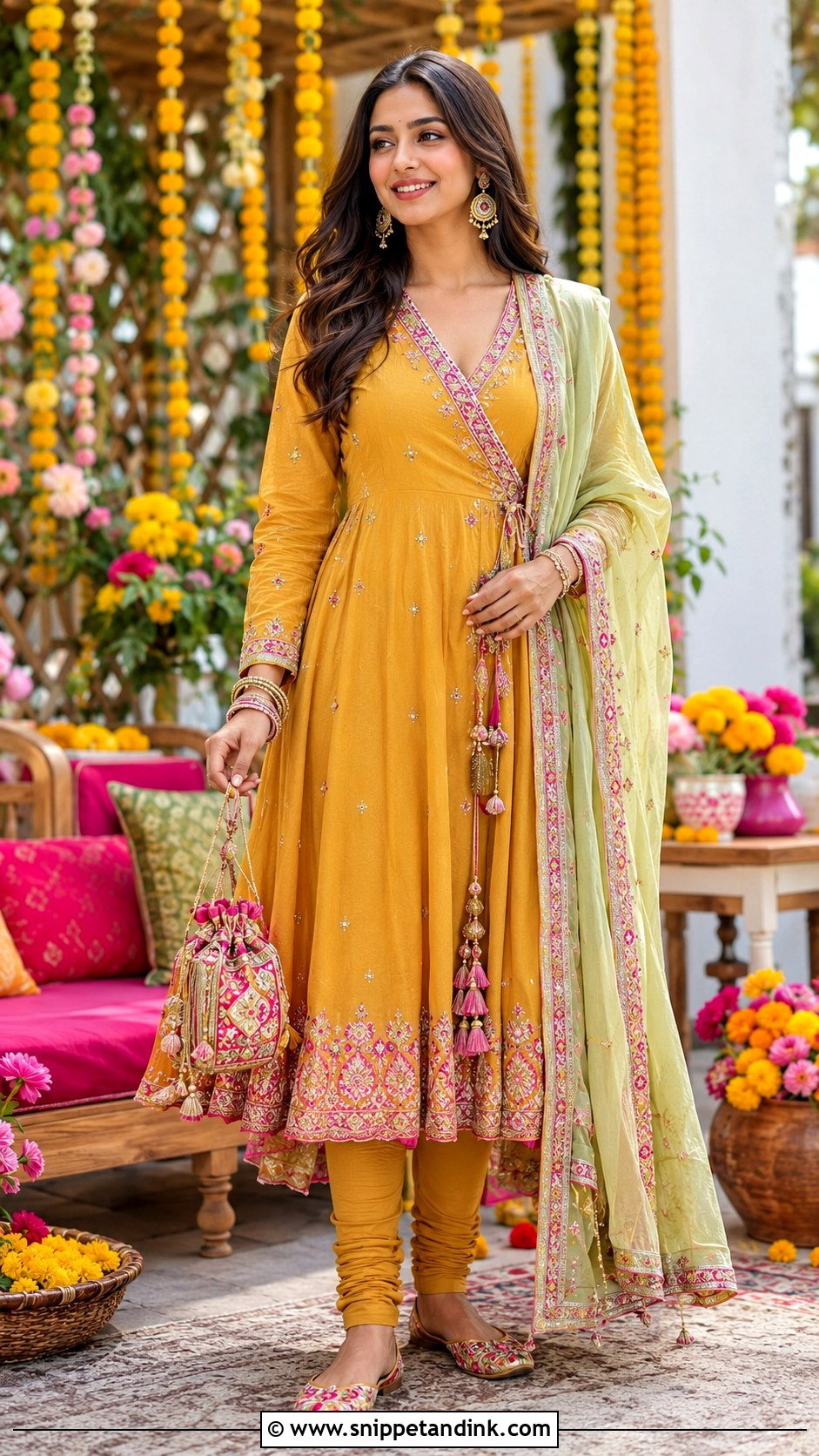
An angrakha long shirt wraps across the body and ties at the side, so it defines the waist without any darts. Calf or ankle length over fitted churidar balances the flared skirt of the shirt. Ties with tassels, mirror work and embroidered borders all play up the wrap. Marigold and pink or turquoise and lime suit a mehndi; dusty rose or pale blue is calmer for a day ceremony. Drape the dupatta over the shoulder opposite the ties. And always ask for an inner hook or press stud at the overlap, or the neckline will slide open as you move.
17. Anarkali Long Shirt With Leggings
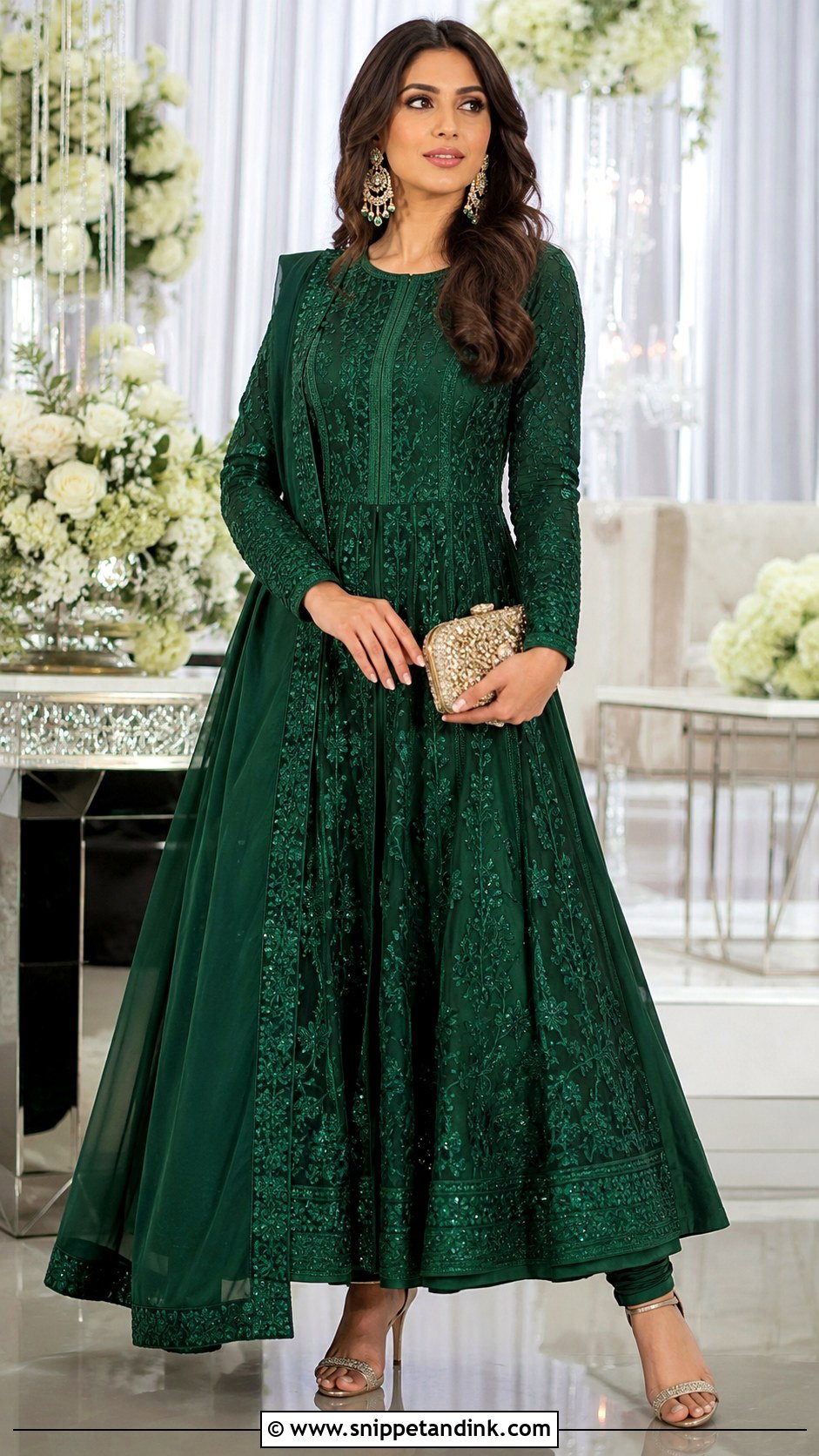
An Anarkali with fitted leggings flatters a wide range of figures because the fit sits at the shoulders and bust, then opens out. That fit is the whole job: if the bodice is even slightly loose, the panels hang from the wrong point and the flare goes flat. Floor length for a reception, calf length if you’ll be on your feet at a pre-wedding event. Chiffon, georgette and silk drape properly. Deep blue, burgundy or plum feel rich; powder pink and mint suit the daytime. Match the leggings to the shirt so they disappear.
18. Cape Long Shirt With Palazzo Pants
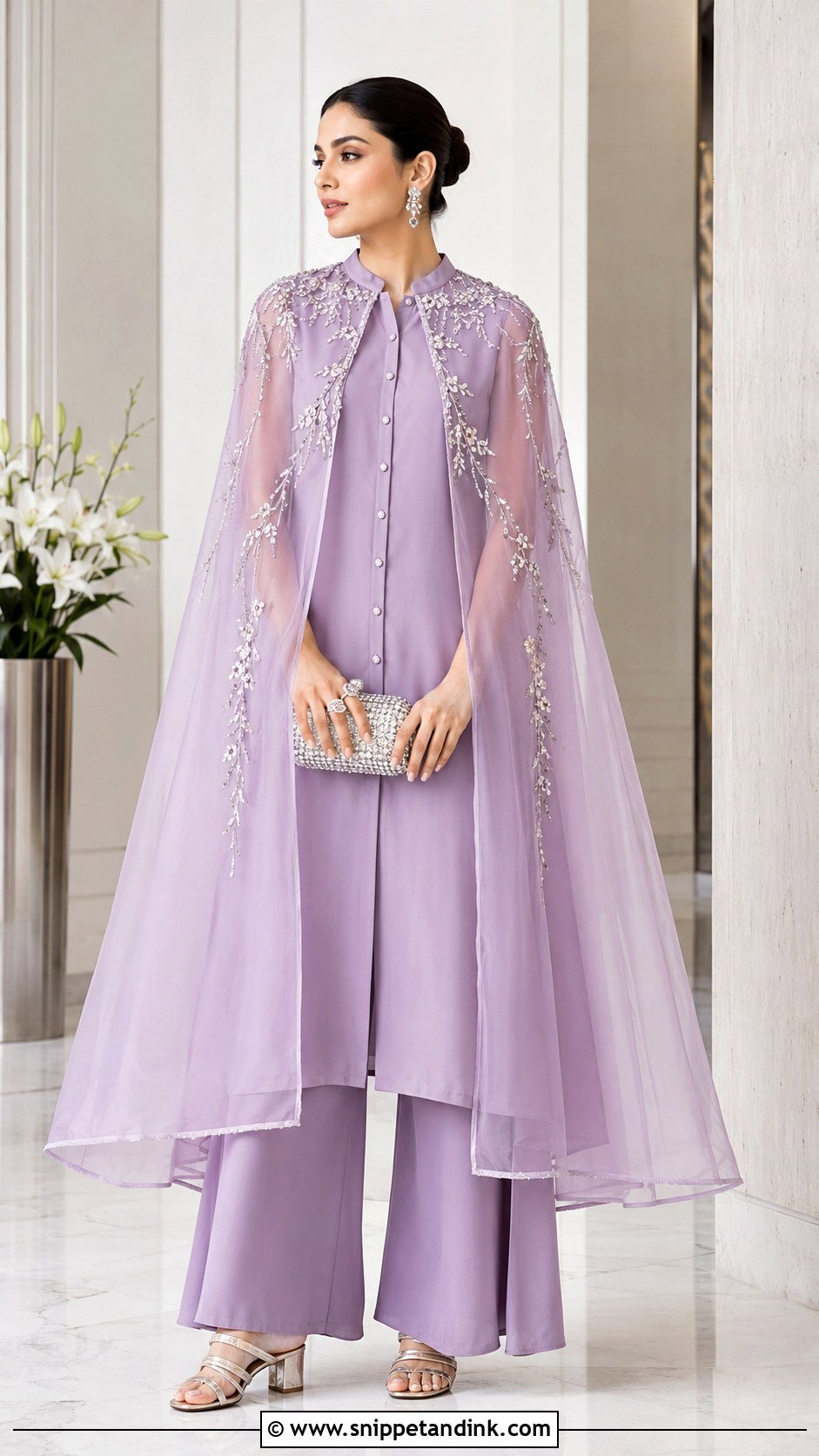
A cape attached at the shoulder gives you the drama of a dupatta without anything to manage all evening, which is why I suggest it to guests who hate pinning. Chiffon, net or organza capes over a fitted inner shirt and coordinated palazzos keep the line long. Soft grey, lavender and champagne with pearl or silver embroidery are quietly polished; midnight blue goes darker for a reception. Skip the necklace, it fights with the cape at the neckline. Earrings and one ring is plenty.
19. Velvet Long Shirt With Jamawar Trousers
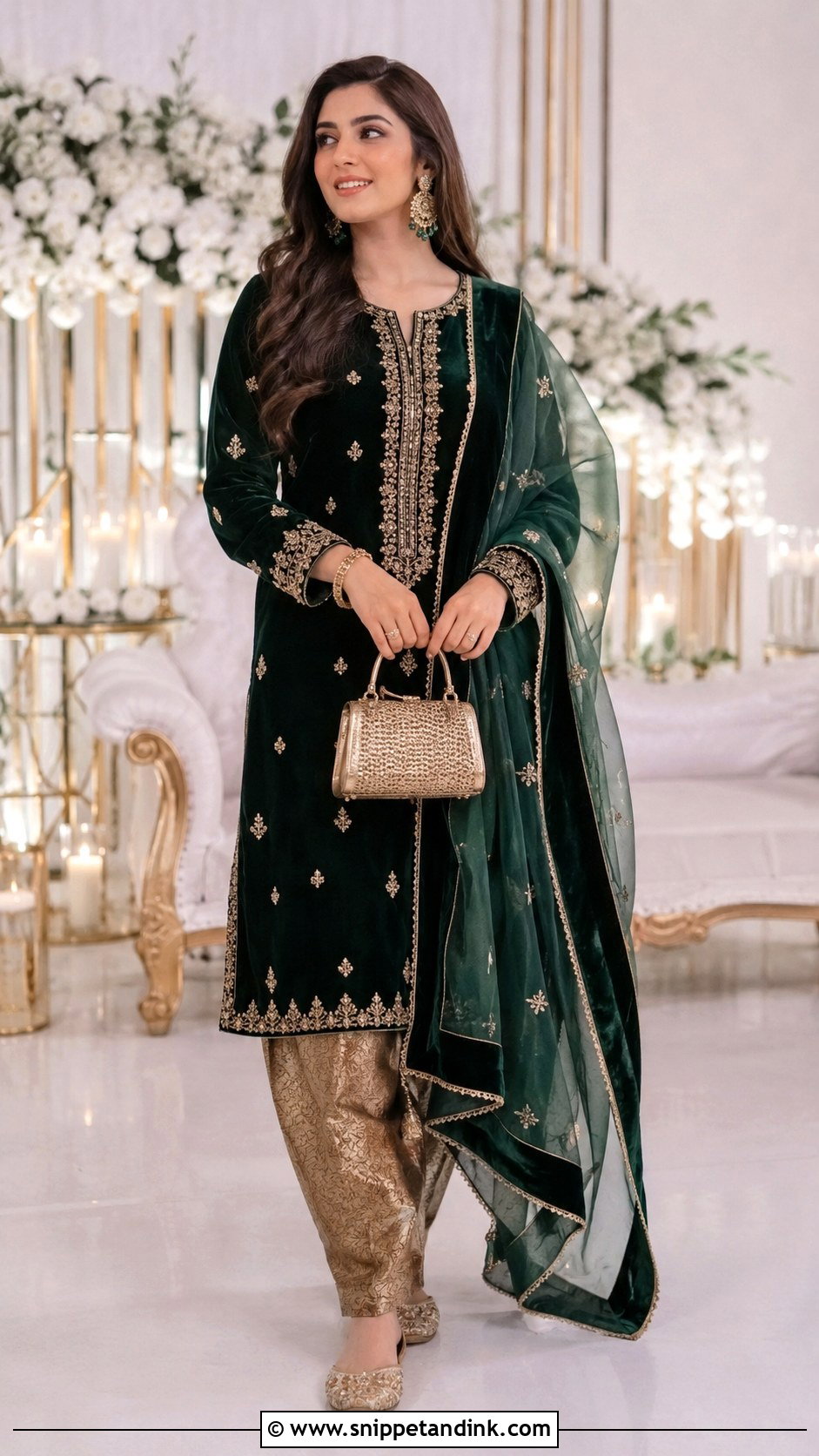
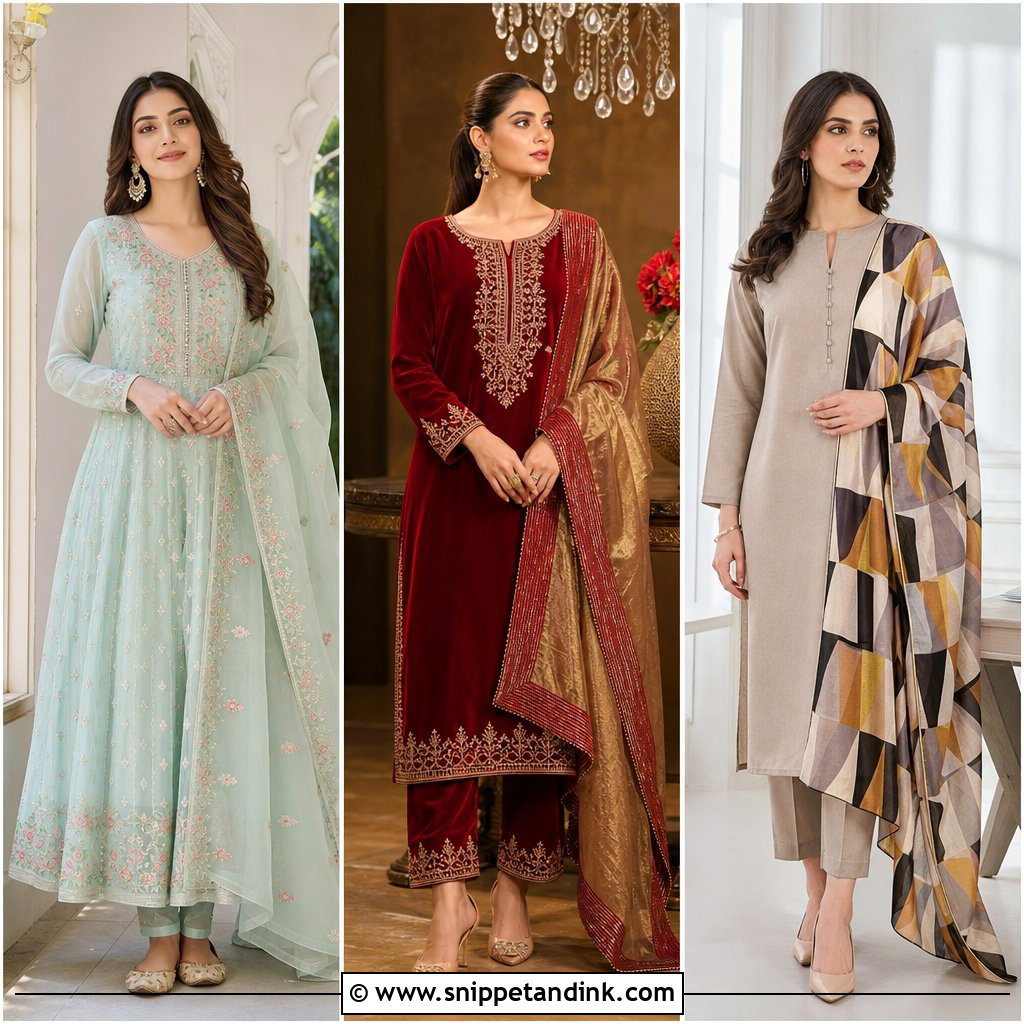
Velvet is my answer for a cold-weather wedding, and a velvet long shirt with antique metallic work at the neckline, cuffs and hem looks rich without trying. Straight, knee or calf length. Jamawar trousers add woven pattern below, so the embellishment isn’t covering every inch. Black with rust or bottle green with bronze are my favorite pairings. Velvet already has weight, so go light on layers and jewelry. One practical point: velvet marks where it’s pressed, so steam it from the inside and never sit on it in a car for long.
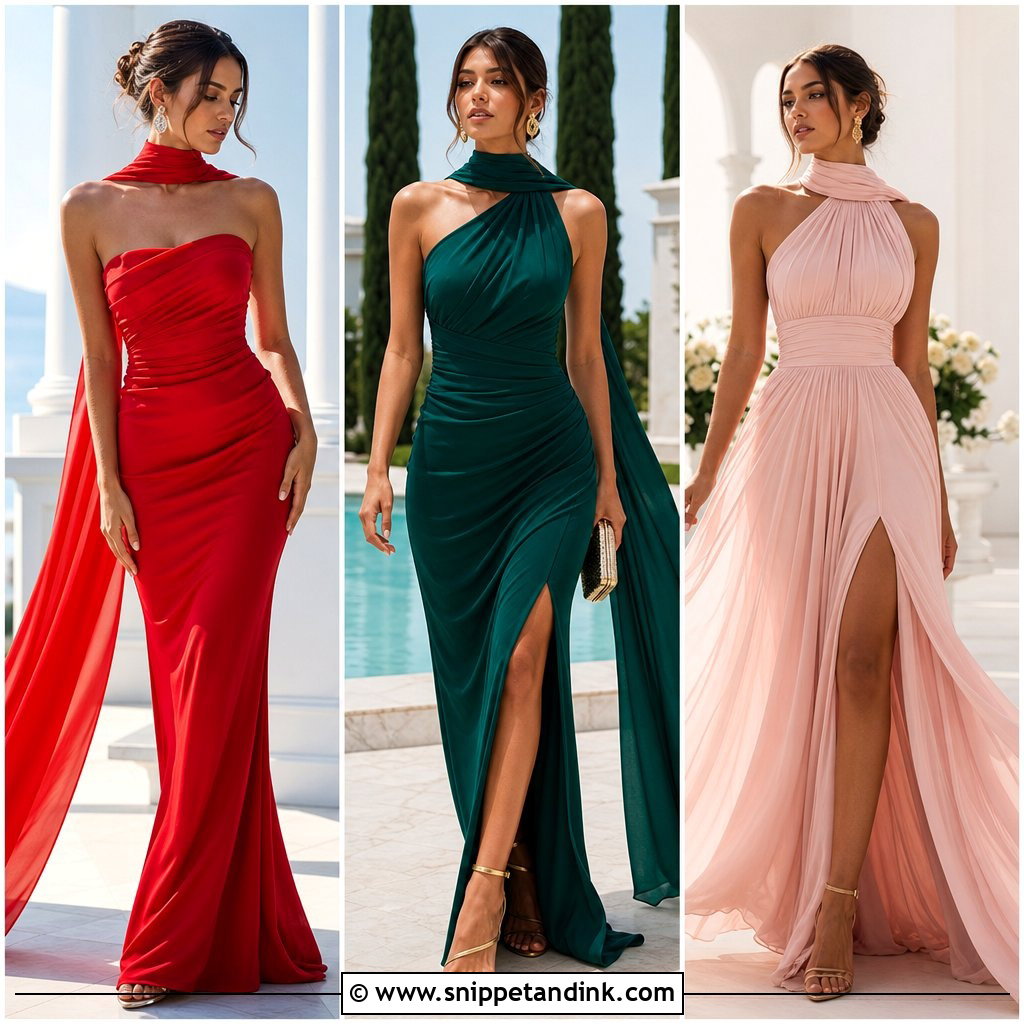
20. Pastel Long Shirt With Matching Pants
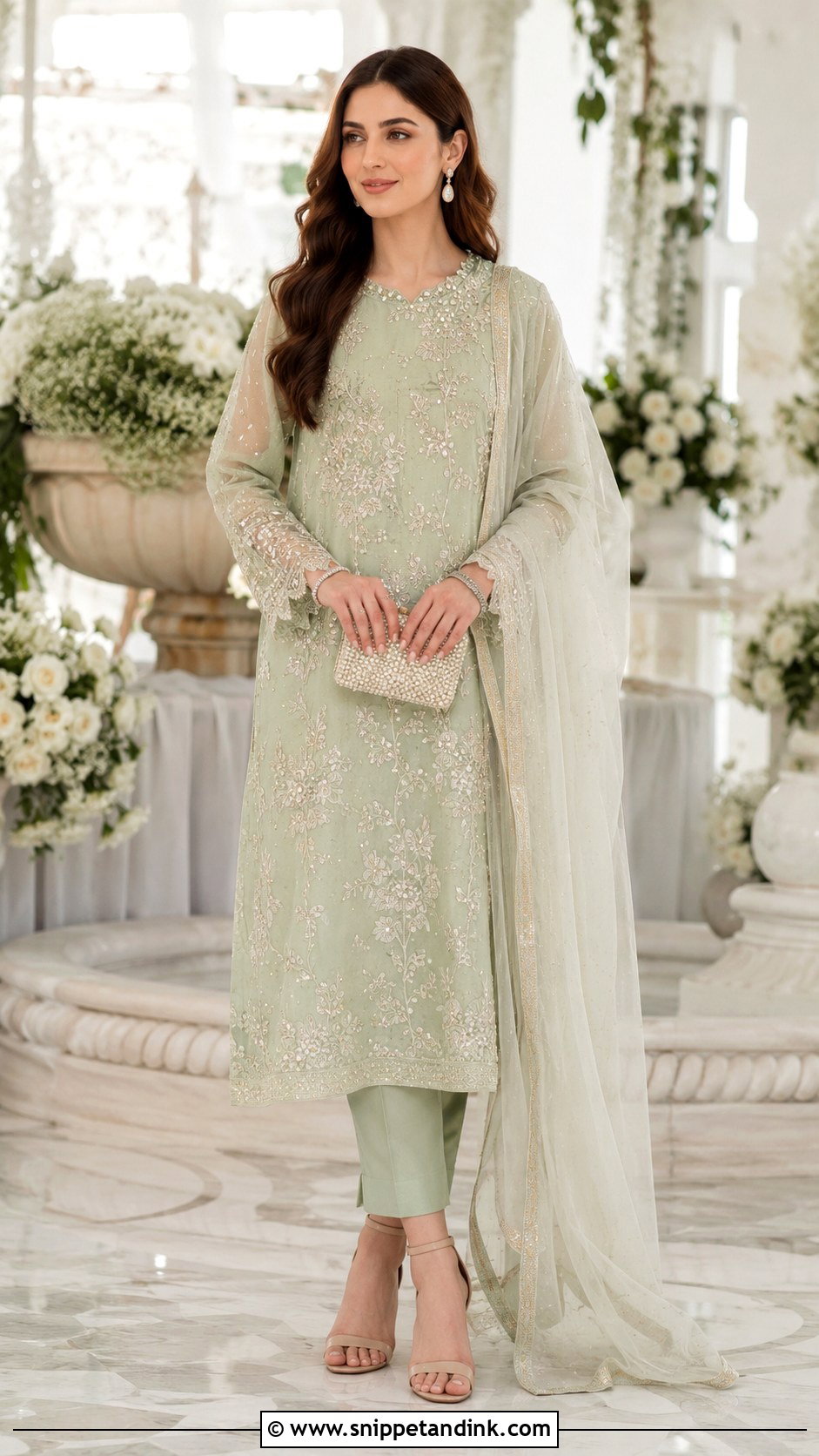
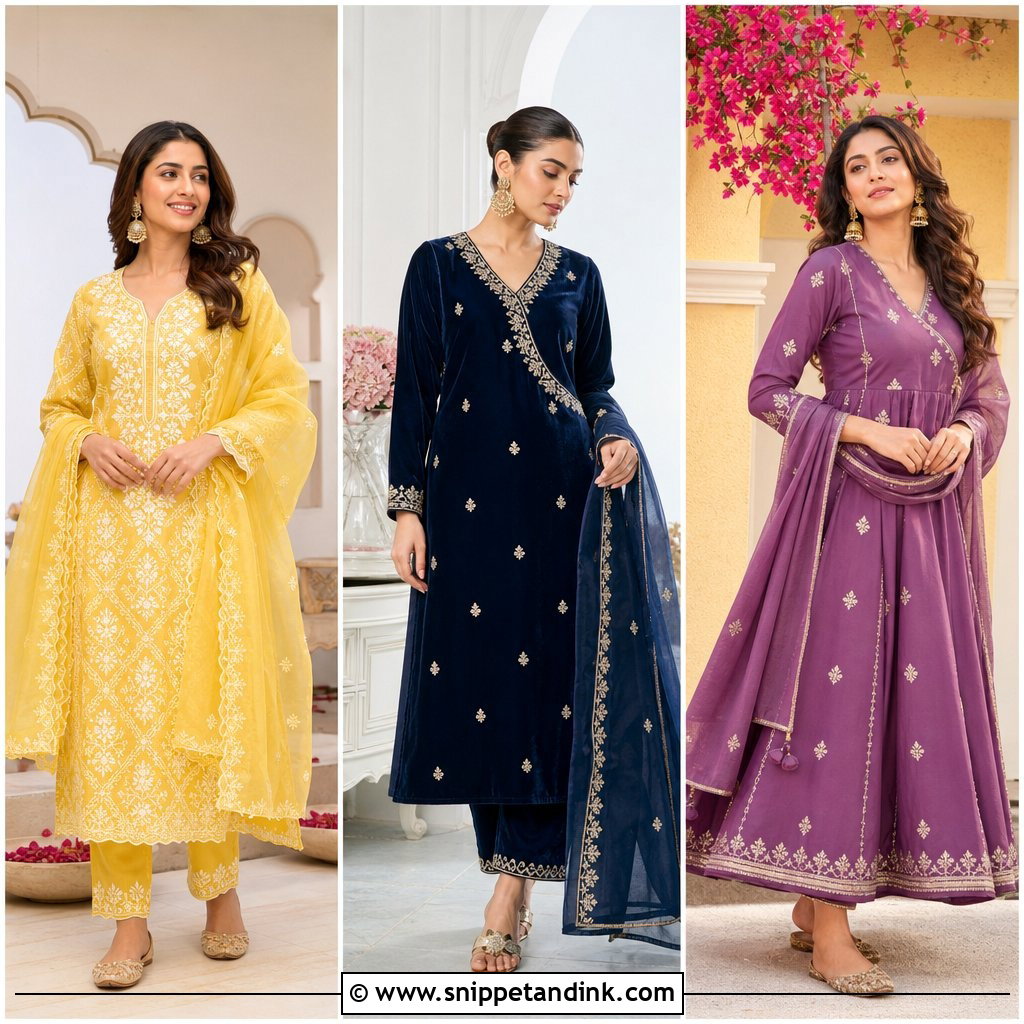
Pastels in organza, chiffon, silk or tissue are what I suggest for a daytime wedding when the bride is in red and you want to stay well clear of her. Blush, pistachio, lilac and powder blue all work. Tonal embroidery, pearls and small florals add depth without breaking the soft palette. A straight shirt with tailored pants keeps a clean line. An ivory dupatta or a silver border brings a little contrast. Be aware that pale organza shows sweat and makeup marks at the neckline quickly, so pin a tissue there while you’re getting ready.
Three Functions, One Shirt, Three Different Bottoms
A wedding with a mehndi, a baraat and a walima can mean three outfits, and few guests want that cost or that suitcase. A well-made long shirt in a mid-tone like teal, plum or dusty rose can carry you through two or even all three events if you change what sits underneath and how you finish it.
- Mehndi: swap in a printed dhoti or a bright sharara, wear juttis, and pin a contrasting dupatta. Keep jewelry playful and light so you can sit on the floor.
- Baraat: the same shirt over a brocade lehenga skirt or Banarasi pants, heavier earrings, and a dupatta with a worked border draped formally.
- Walima or reception: tonal straight trousers, a sleek bun and one statement piece. The quieter base lets the shirt look different again.
This only works if the shirt itself is neutral in shape: straight or slightly A-line, side slits, embroidery concentrated at the neck and cuffs. A very flared Anarkali or a cape shirt is harder to re-style because the silhouette is so recognizable. Between events, hang the shirt on a padded hanger and steam it rather than ironing directly on embroidery, which flattens the threadwork and can leave a shine on silk.
One Piece Carries the Detail, the Other Supports It
Most of these pairings come down to the same rule I use at every fitting: one piece carries the detail, the other supports it. A heavily worked shirt wants quiet bottoms; a plain shirt can take Banarasi pants, a flared skirt or a full gharara. Think about the event, the season and how much you’ll move before you commit, then let the tailor fix the shoulders and the hem. Shoes, jewelry, bags and dupattas are there to finish the outfit, never to compete with it.
You'll Like These Ideas:


Leave a Reply