
Filipino bridal fashion has a few cornerstones, and most of the looks I style go back to one of them. The baro’t saya pairs a blouse with a skirt. The formal Maria Clara ensemble layers on a pañuelo across the shoulders and a tapis over the skirt. The terno later pulled everything into one gown with those upright butterfly sleeves. Each sits differently on the body and copes differently with heat, which matters at a tropical wedding. Below are twenty complete outfits, with the shoes, jewelry and flowers I’d put with each, and the practical catch I’d flag at a fitting.
Piña, Jusi or Organza on a Humid Afternoon
Most Filipiniana weddings happen somewhere warm, so I talk fabric before silhouette. Piña is woven from pineapple leaf fiber and is crisp, sheer and slightly stiff. It holds embroidery and openwork well and stands away from the body, which keeps you cooler. It also creases easily and dislikes moisture, so it isn’t the fabric for an outdoor ceremony in a downpour.
Jusi is softer and drapes more; it’s lovely on separates but needs support inside a butterfly sleeve. Silk organza is the most forgiving: light, strong and easy to stiffen. Many modern ternos combine organza sleeves with a satin or crepe body, which gives the classic shape without the care demands of a full piña gown.
- Handwoven piña is expensive and slow to produce, so many brides use it only for the baro or sleeves.
- Ask to see the fabric in daylight; piña has a natural ecru tone that can look yellow beside bright white satin.
- Always line sheer fabrics. A camisole in your skin tone looks more traditional than stark white underneath.
1. Classic Maria Clara Wedding Dress
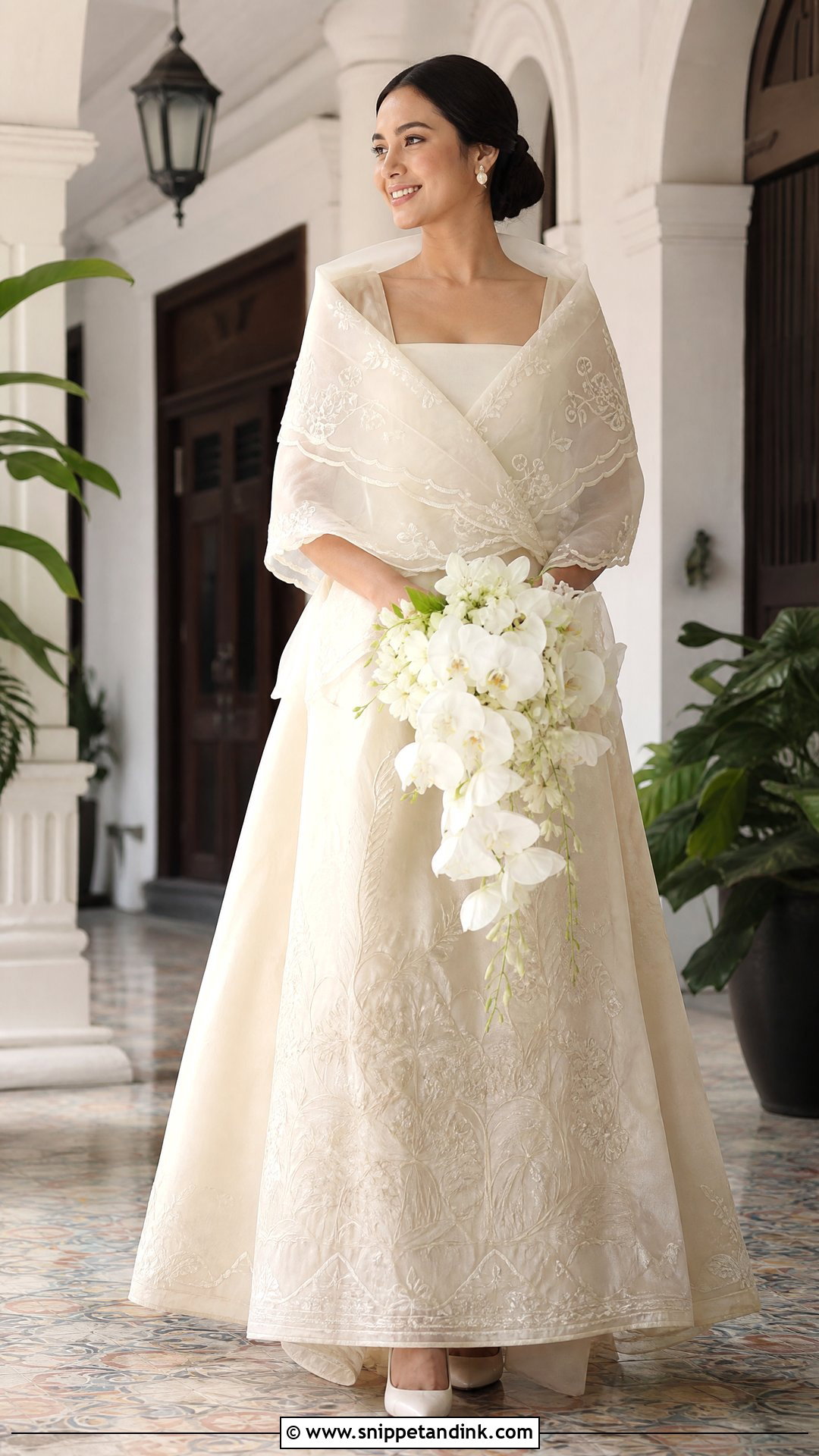
The Maria Clara is the most layered of the Filipiniana looks, so I fit it from the inside out. An ivory embroidered baro goes over a lined camisole, then a floor-length saya with gentle structure. The sheer pañuelo is folded across the shoulders to make that modest neckline, and the tapis wraps the waist and hips. The pañuelo slides as you move, so I anchor it with two small pins hidden under the fold. Add pearl earrings, a smooth low bun and an embroidered veil falling past the waist. Ivory pointed pumps keep the hem off the floor. A compact bouquet of white orchids or roses, or blooms that recall sampaguita, balances all those layers.
2. Ivory Terno Wedding Gown
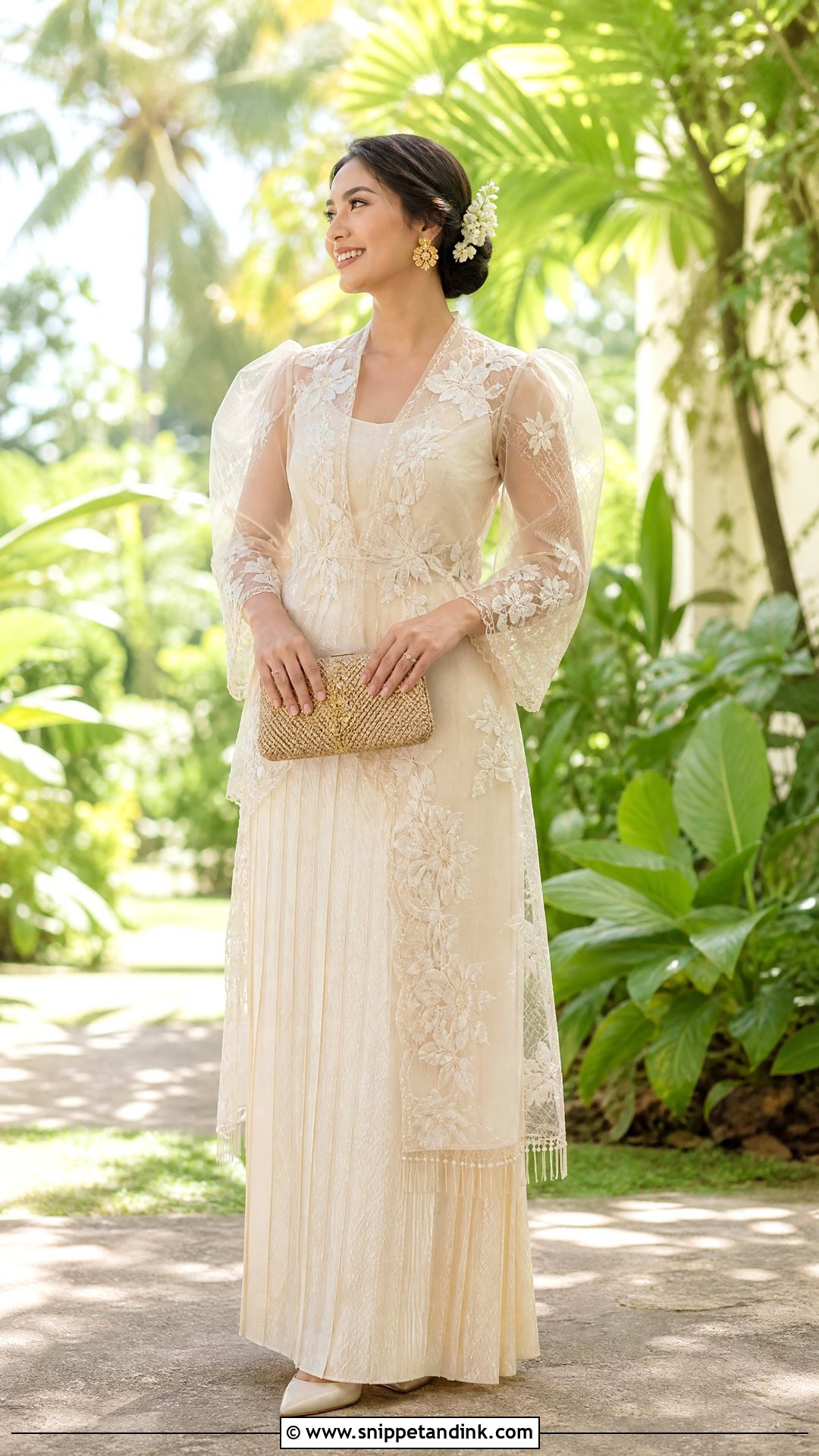
The ivory terno is the cleanest way to wear a Filipino silhouette in one piece. Everything hinges on the structured butterfly sleeves, which widen the shoulder line and make the waist look smaller. The terno grew out of earlier Filipiniana clothing as a single streamlined gown. A bateau neckline gives the sleeves a stable base; a deep V lets them flop outward. Keep embellishment at the cuffs, waist or train. Ivory heels, pearl studs and a sleek chignon finish it, and a sheer cathedral veil adds length without blurring the sleeve shape.
3. Piña Baro’t Saya Wedding Dress
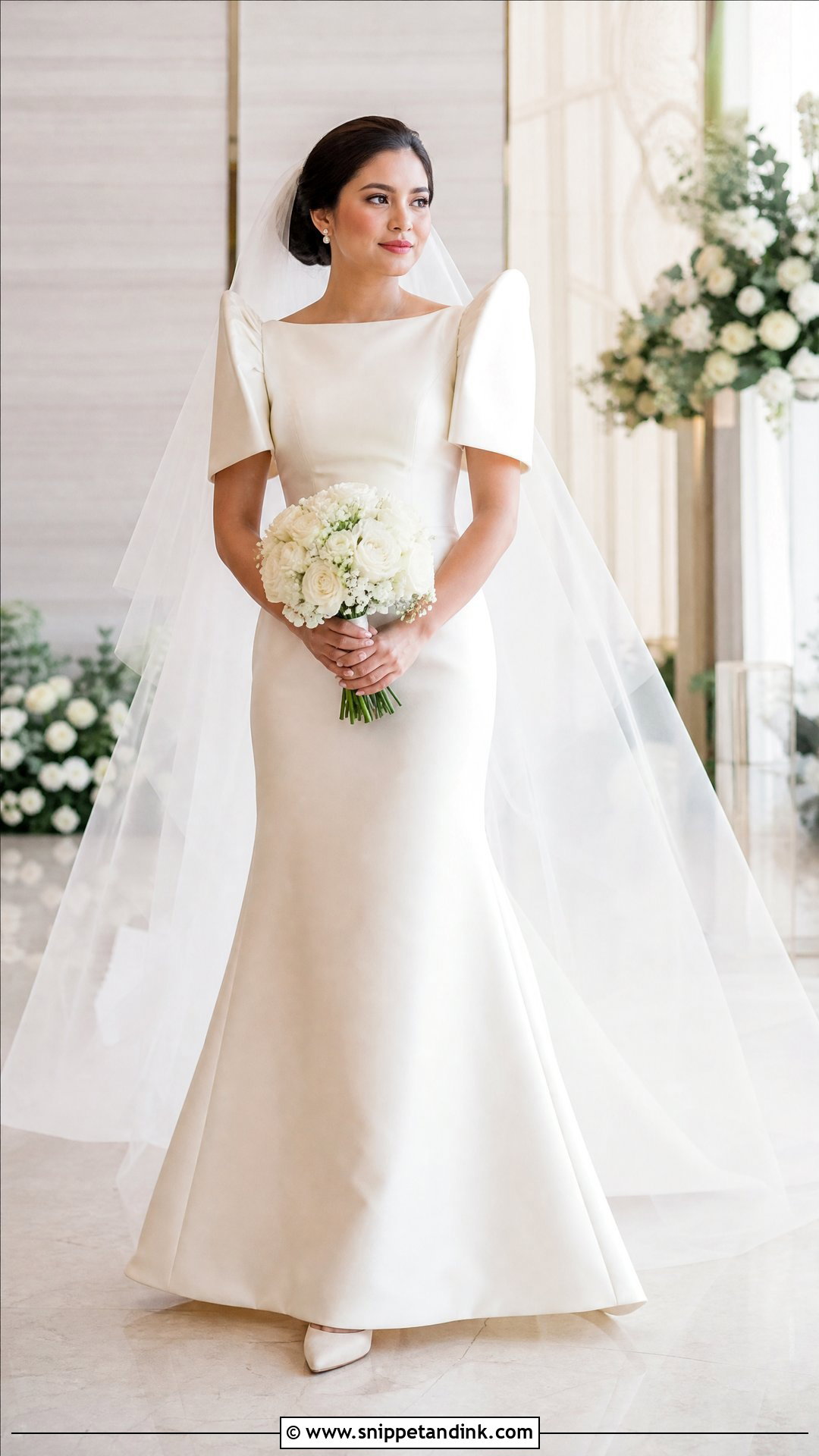
Piña, woven from pineapple leaf fiber, is the fabric I’d reach for at a warm-weather wedding. It’s sheer and crisp, almost papery, which means it stands away from the skin instead of clinging when you sweat. A piña baro with floral embroidery over an ivory silk camisole, worn with a lightly pleated saya, moves easily. That crispness also makes it crease, so don’t sit in the car in it for an hour before the ceremony. A narrow embroidered tapis ties the pieces together. Piña and jusi remain central to traditional and contemporary Filipiniana formalwear. Embroidered closed-toe heels, simple gold earrings and a bun with small white flowers complete it. Keep the veil short so the weave shows, and carry a woven clutch.
4. Embroidered Jusi Terno Wedding Dress
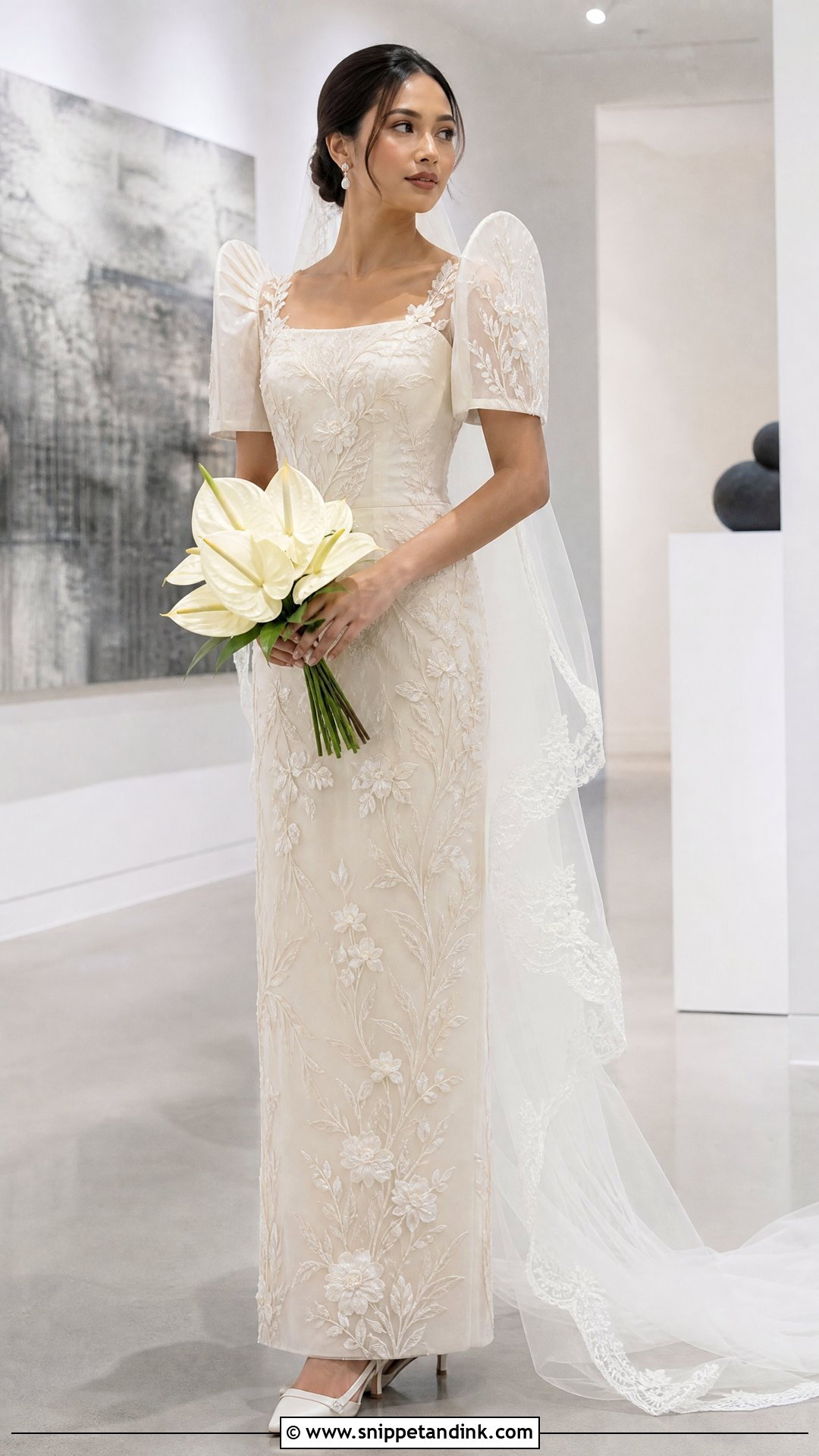
Jusi is softer than piña and drapes a little more, so a jusi terno feels formal without the stiff look. Build it on a lined ivory column gown, with jusi butterfly sleeves carrying botanical embroidery that continues lightly over the bodice and lower skirt. Jusi sleeves need an inner support, usually stiffened net, or they wilt by afternoon. With embroidery on the fabric already, keep the neckline plain and the jewelry modest: pearl drops and nude or ivory slingbacks. A low twist leaves the sleeves clear. A fingertip veil with a narrow embroidered edge and a compact bouquet of white anthuriums and orchids suit the gown’s clean structure.
5. Modern Mestiza Wedding Gown
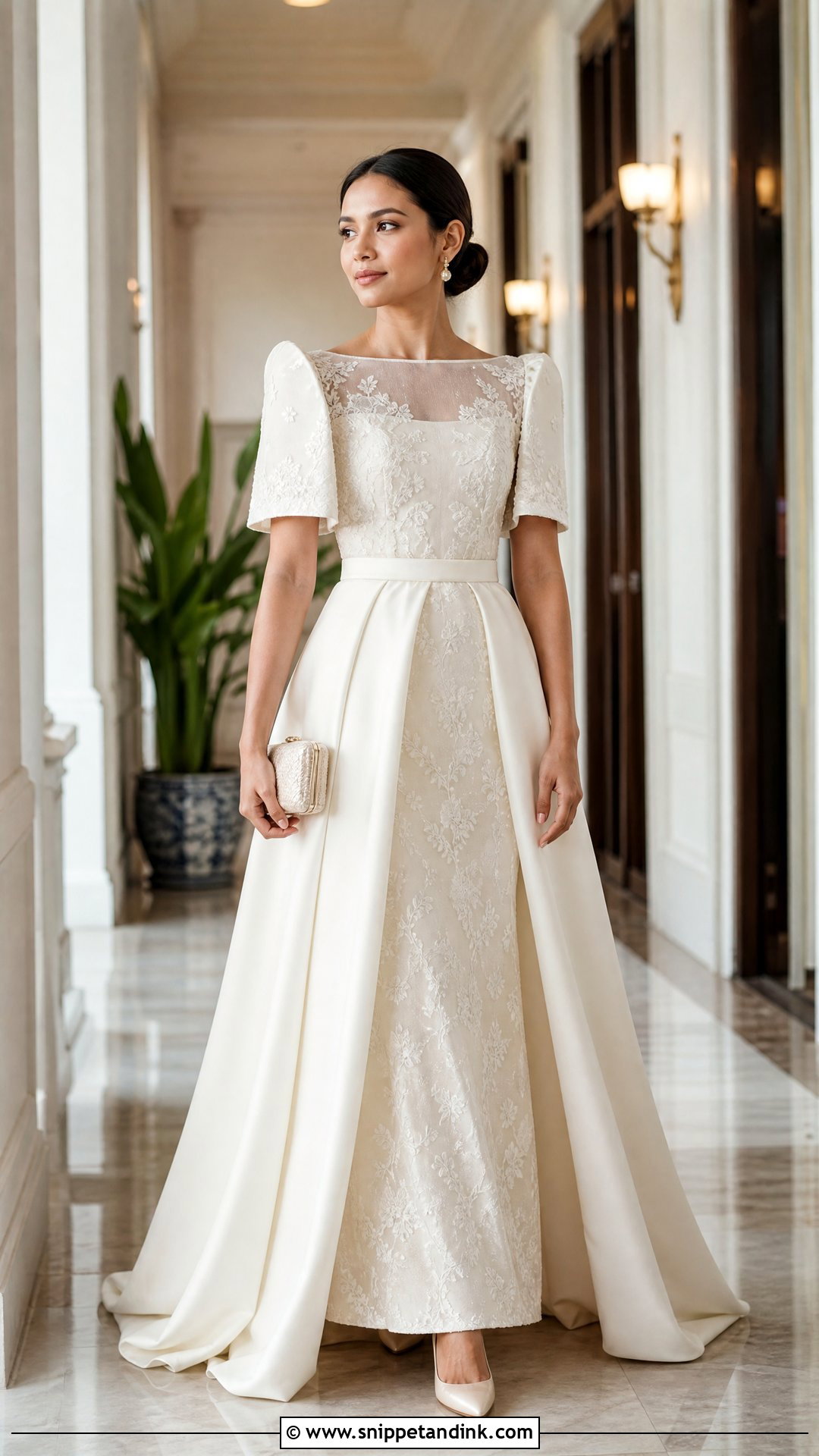
The modern mestiza gown takes Filipiniana coverage and gives it a lighter frame. I look for an off-white A-line with a fitted inner bodice, a sheer embroidered layer on top and a shoulder detail that recalls the pañuelo. A draped overskirt suggests the saya’s volume without three petticoats. Define the waist with a slim fabric belt or embroidered band; a crystal sash looks borrowed from a different dress entirely. Pearl-and-gold earrings, pointed ivory heels and a structured clutch complete it. A low bun keeps the shoulder line clear. Choose a long plain veil if the gown is simple, a short one if the embroidery is busy.
6. Butterfly Sleeve Ball Gown
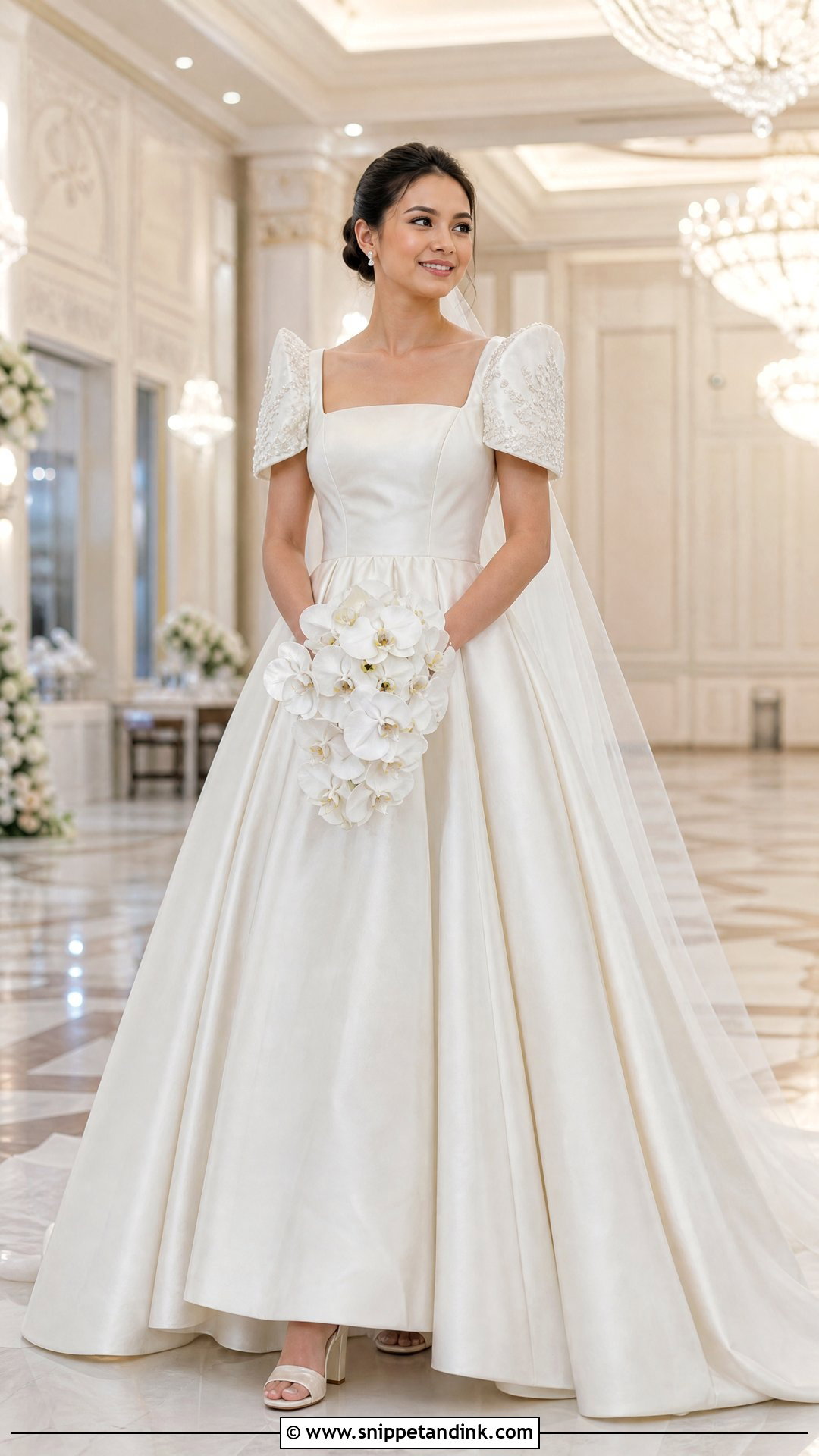
Butterfly sleeves on a full ball gown make the strongest entrance in this list, and they need a room big enough to hold them. A fitted bodice and full skirt sharpen the waist beneath the sleeves, which suits a hotel ballroom or large indoor venue. I prefer matte ivory mikado or duchess satin for the skirt with piña-style embroidered fabric on the sleeves and neckline. A smooth bodice keeps the dress from looking crowded. Hide block heels under the skirt; nobody sees them and you’ll stand for hours. Pearl studs, a neat updo, a veil longer than the train and a round bouquet of roses and orchids complete it.
7. Filipiniana Mermaid Wedding Dress
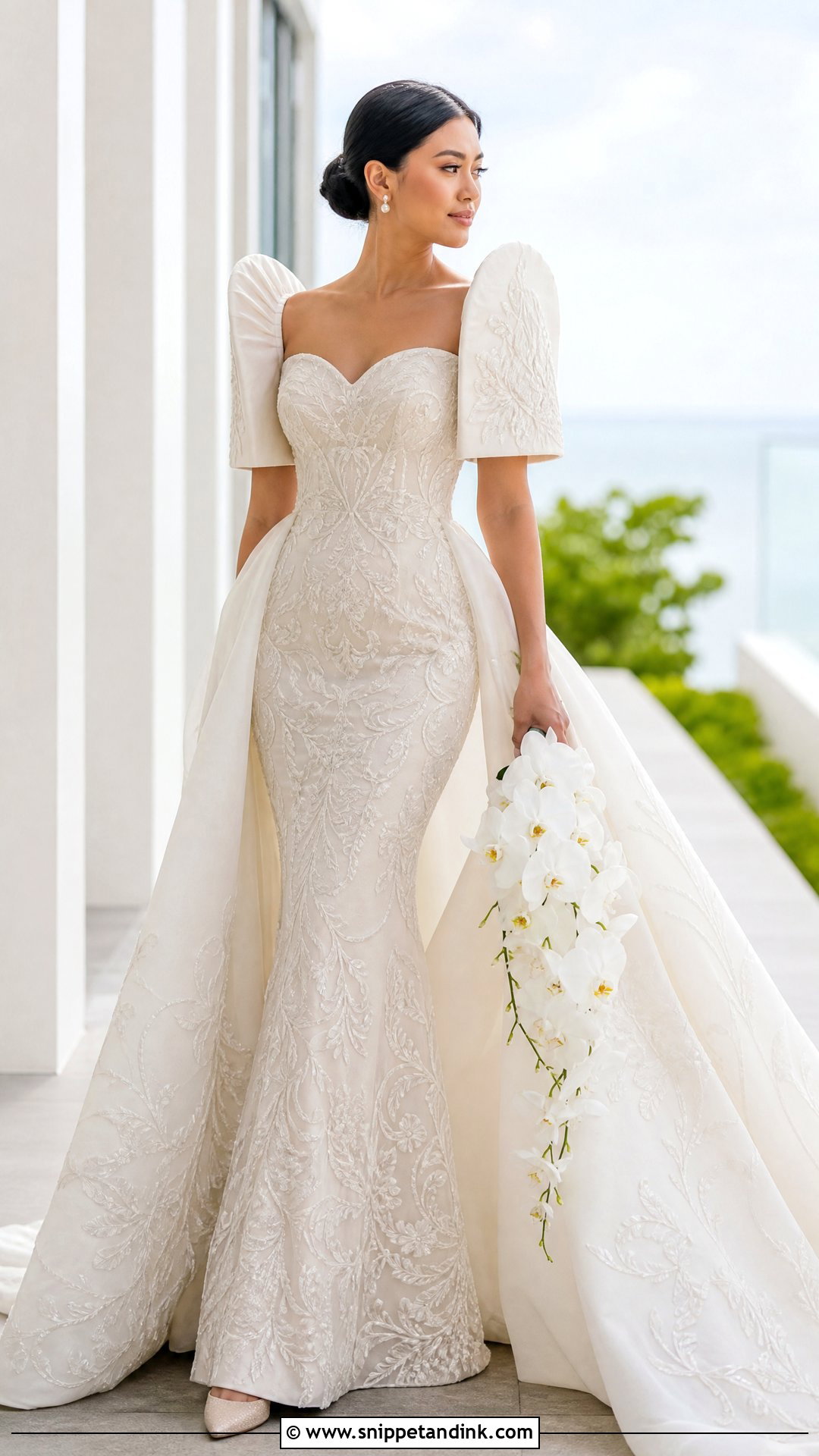
Put butterfly sleeves on a mermaid gown and it becomes Filipiniana at once. The fit should follow the hips and widen near the knee, but I always have the bride sit and climb a step at the fitting; a mermaid cut too tight at the knee turns walking into shuffling. Lace or beadwork running from bodice to flared hem keeps the line continuous. A bateau or soft V-neck balances the close fit. Pointed pumps, small pearl earrings and a combed-back low bun complete it. A detachable overskirt gives ceremony volume and a slimmer shape for dancing. A long narrow orchid bouquet mirrors the vertical line.
8. Filipiniana A-Line Wedding Dress
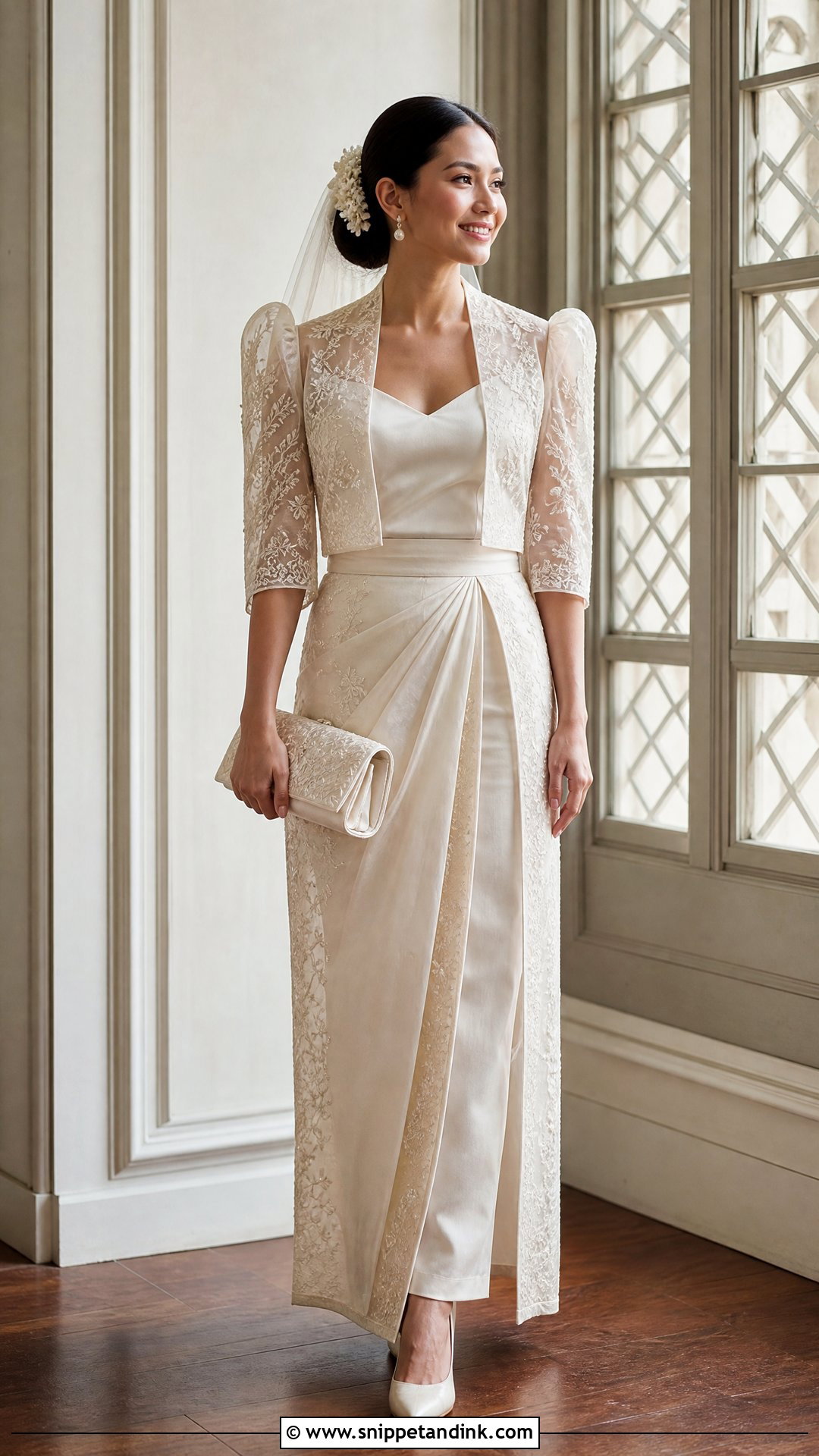
An A-line is the shape I suggest most often to brides who want Filipiniana details without fuss. The fitted top, butterfly sleeves and gradually widening skirt suit almost every figure. Lightweight satin, organza or lined embroidered fabric moves well. A square neckline feels current; a rounded one feels classic. A thin belt covered in the same embroidery cleans up the seam between bodice and skirt. For an outdoor venue, low block heels won’t sink into grass. Finish with pearl-and-gold earrings, a low textured bun, a fingertip veil and a loose bouquet of white flowers and greenery.
9. Filipiniana Lace Wedding Gown
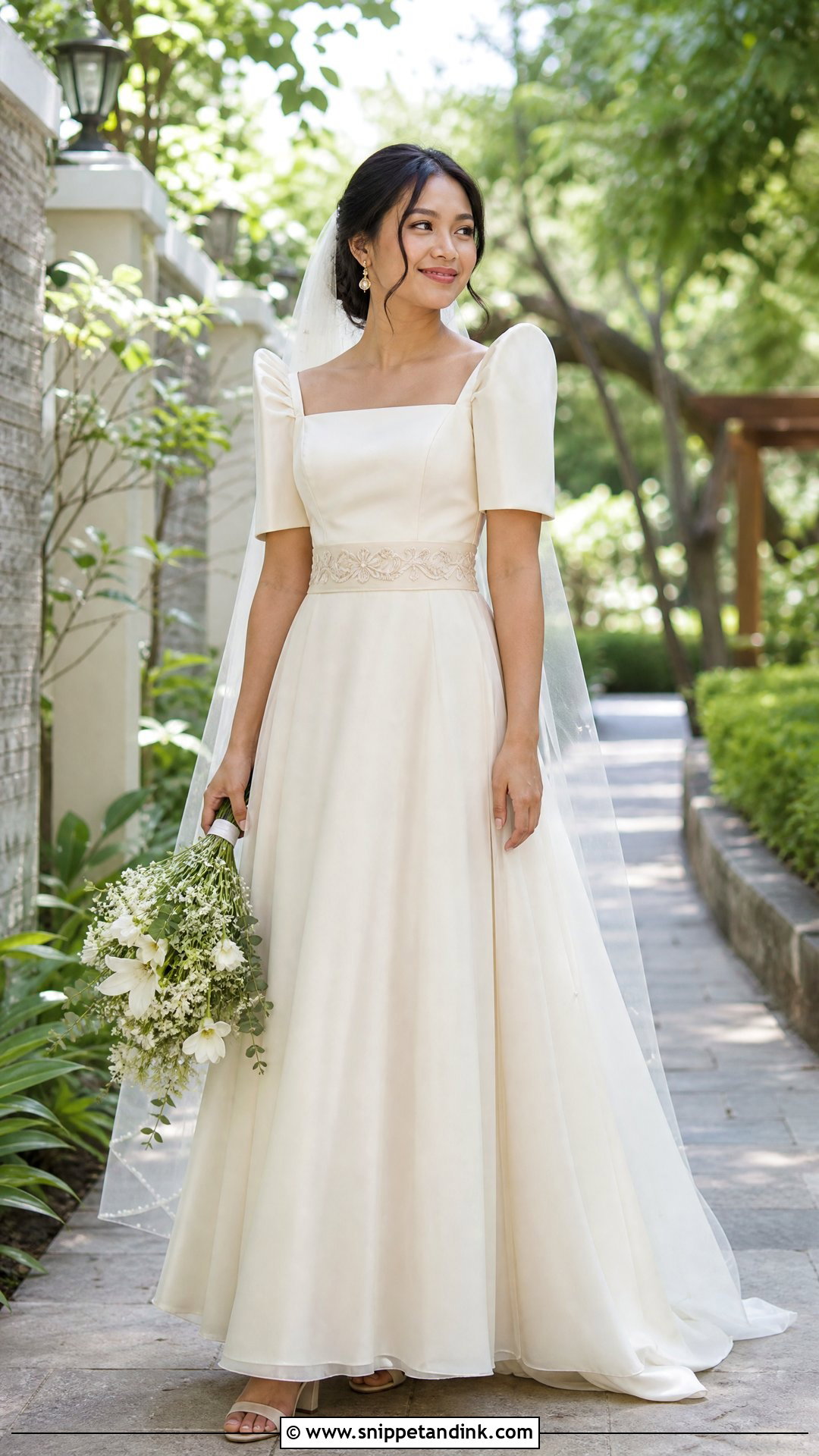
Lace sleeves are softer than piña ones, so plan for that before you fall for the look. Lace has no natural stiffness and needs an inner net to hold the butterfly shape. Choose a lined ivory gown with a fitted waist and floor-length skirt. Floral lace over sheer fabric echoes the surface embroidery on traditional Filipiniana, while the lining keeps it comfortable against the skin. I like denser lace at the bodice that thins toward the hem. Closed-toe ivory pumps, small pearl drops and one narrow bracelet are enough. A smooth low bun, lace-edged veil and a bouquet of roses, orchids and small leaves complete the outfit.
10. Minimalist Terno Wedding Dress
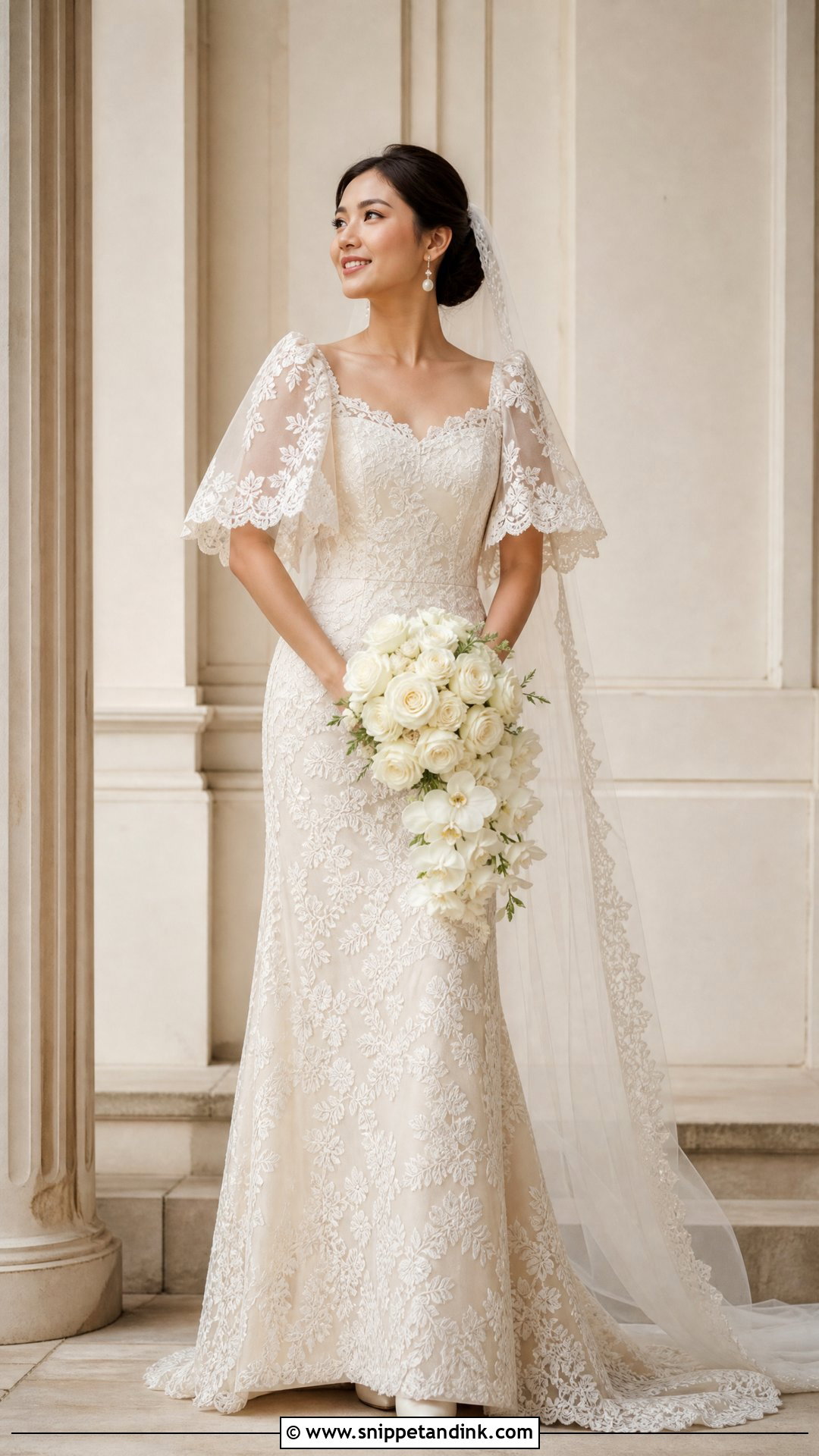
A plain crepe terno is unforgiving, which is exactly why I like it on brides who invest in tailoring. With no embroidery to distract, every seam and the exact height of each sleeve is on show, and a quarter-inch difference between shoulders is visible in photos. Choose a fitted bodice, structured sleeves and a straight or softly flared skirt. A bateau neckline gives the sleeves solid support; only add a low back if your maker confirms the sleeves will stay upright. Sleek pointed heels, pearl studs and a small satin clutch suit it. A polished bun or straight ponytail and a plain fingertip veil keep it modern, with a single-variety bouquet such as white orchids.
11. Terno Wedding Dress With Train
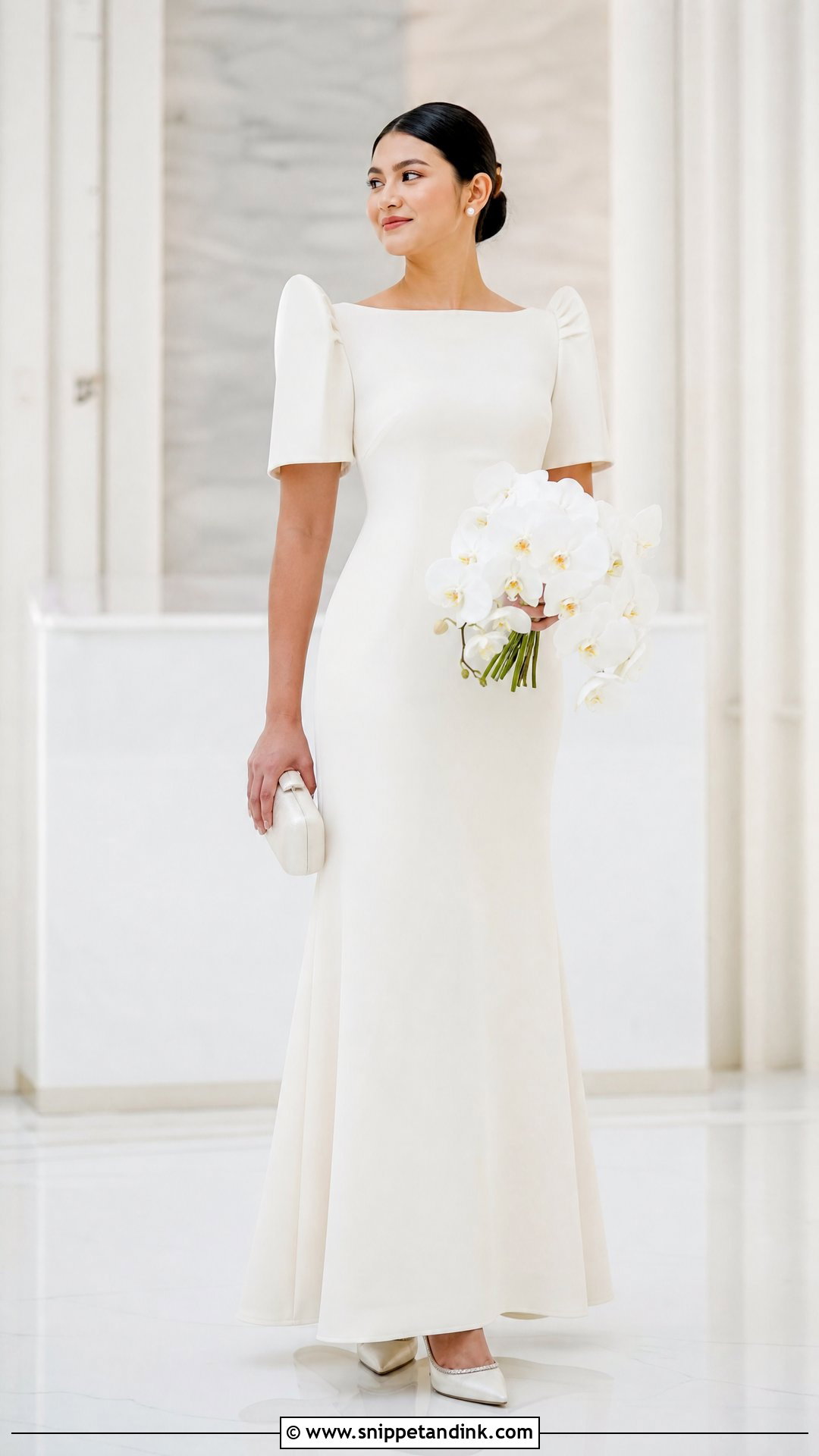
A chapel train adds movement to a structured terno, and it also adds weight you’ll feel at the shoulders. I like embroidery that starts at the shoulders, narrows through the waist and returns along the train edge, so the back view matches the front. Ask for a sturdy bustle and practise it with whoever will be fastening it. Cushioned block heels help carry a heavy skirt. Drop earrings and a smooth chignon suit the shape, with a veil ending just past the train. A small orchid bouquet leaves a hand free to manage the skirt on steps.
12. Detachable Butterfly Sleeve Wedding Gown
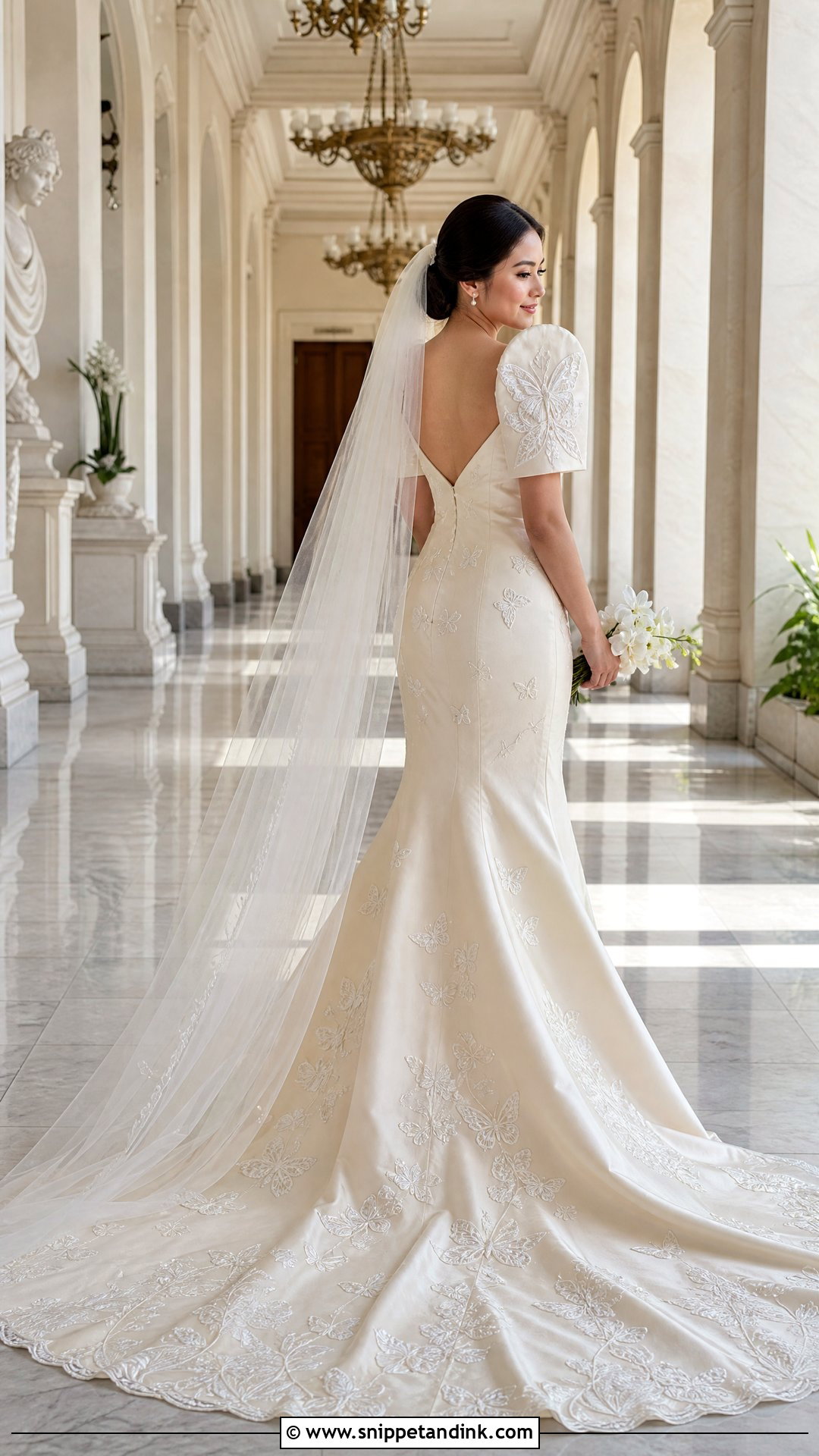
Detachable butterfly sleeves give you two outfits from one gown. For the ceremony, embroidered organza or piña-style sleeves attach to an ivory strapless or sleeveless A-line, and the long embroidered veil matches them. For the reception, they come off and you can lift your arms to dance. The weak point is the join. I ask makers to hide the attachment under embroidery, piping or a narrow band, and to use hooks or snaps that someone can undo in a restroom without unpicking anything. Ivory pumps, pearl earrings and a refined low bun work for both versions. Swap the bouquet for a small structured bag later.
13. Baro’t Saya Two-Piece Bridal Outfit
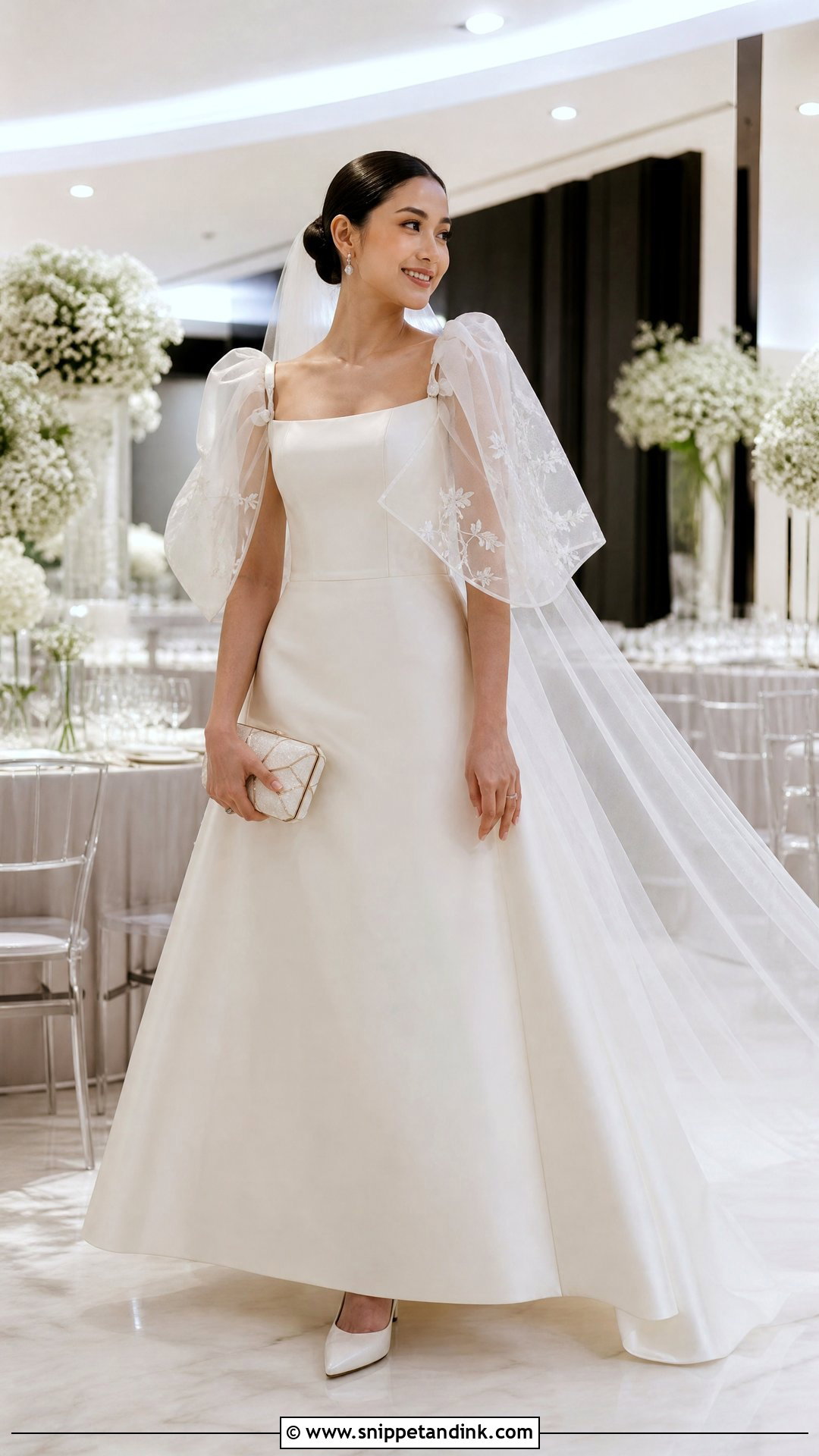
Separates keep the familiar blouse-and-skirt construction of the baro’t saya while letting each piece be fitted on its own, useful if your top and bottom are different sizes. Choose an embroidered ivory baro with elbow-length sleeves over a silk camisole and a high-waisted saya that falls in soft pleats. A removable tapis adds color or family embroidery without altering either garment. Closed-toe heels, pearl earrings and an updo with a small floral comb complete it, and a short veil leaves the blouse embroidery visible. Repeating one motif across baro, tapis, clutch and veil border ties it together. The separates can be worn again to other formal occasions.
14. Kimona And Patadyong Wedding Outfit
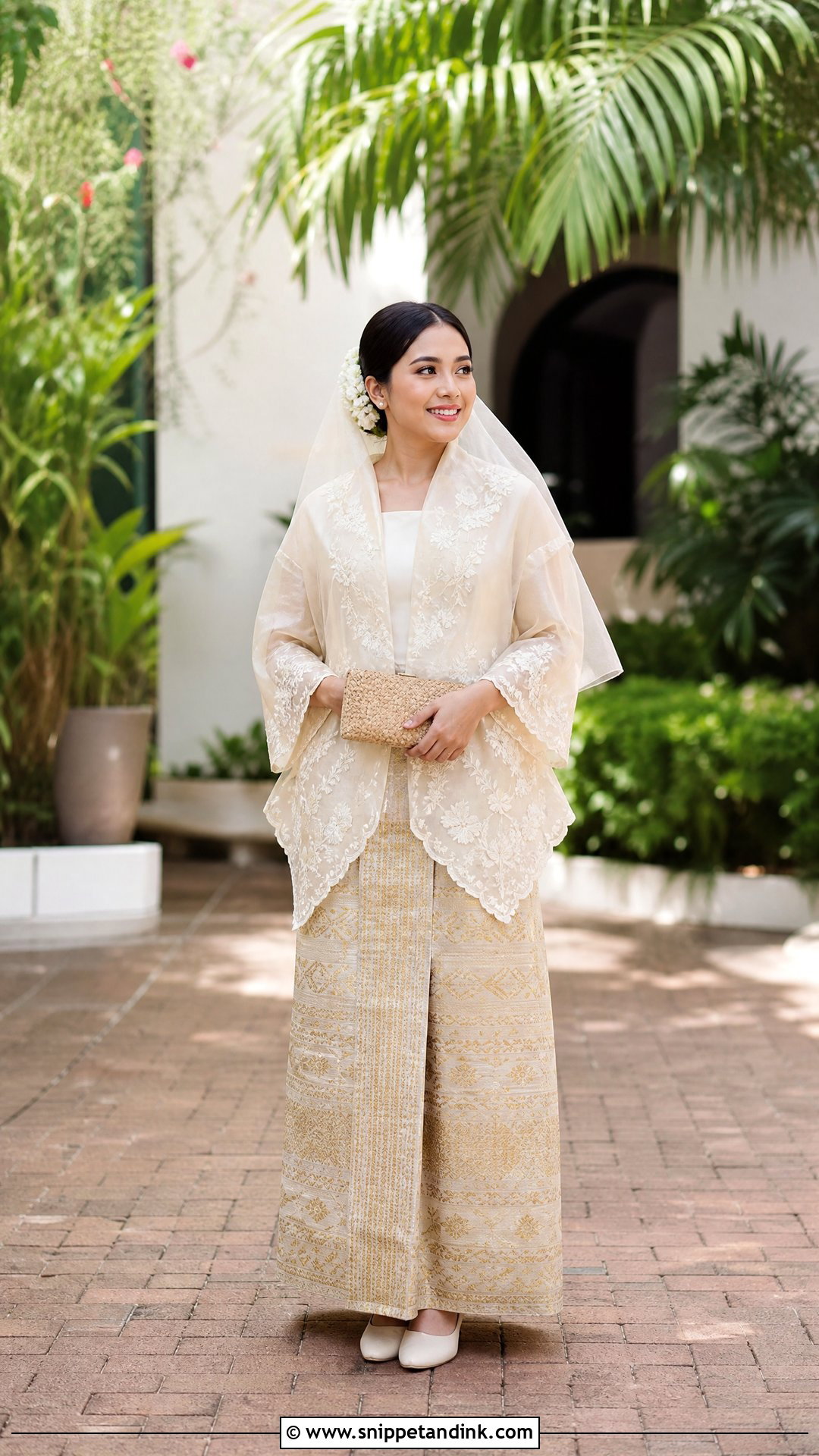
A kimona with a patadyong honors Visayan heritage through a lighter, regional silhouette. The kimona is usually a loose or short-sleeved embroidered blouse; the patadyong is a woven wrap skirt whose stripes or checks carry the color. For a bride, I’d put an ivory kimona over a fully lined camisole with a floor-length patadyong in muted cream, gold or soft pastel stripes. Let the weave show; heavy beading on a handwoven textile hides exactly what makes it special. Low ivory heels, pearl earrings, a small woven clutch, a low bun with white flowers and a shoulder-length veil keep it simple. Ask relatives or local weavers which patterns belong to your community before you buy.


15. Tapis Layered Maria Clara Wedding Dress
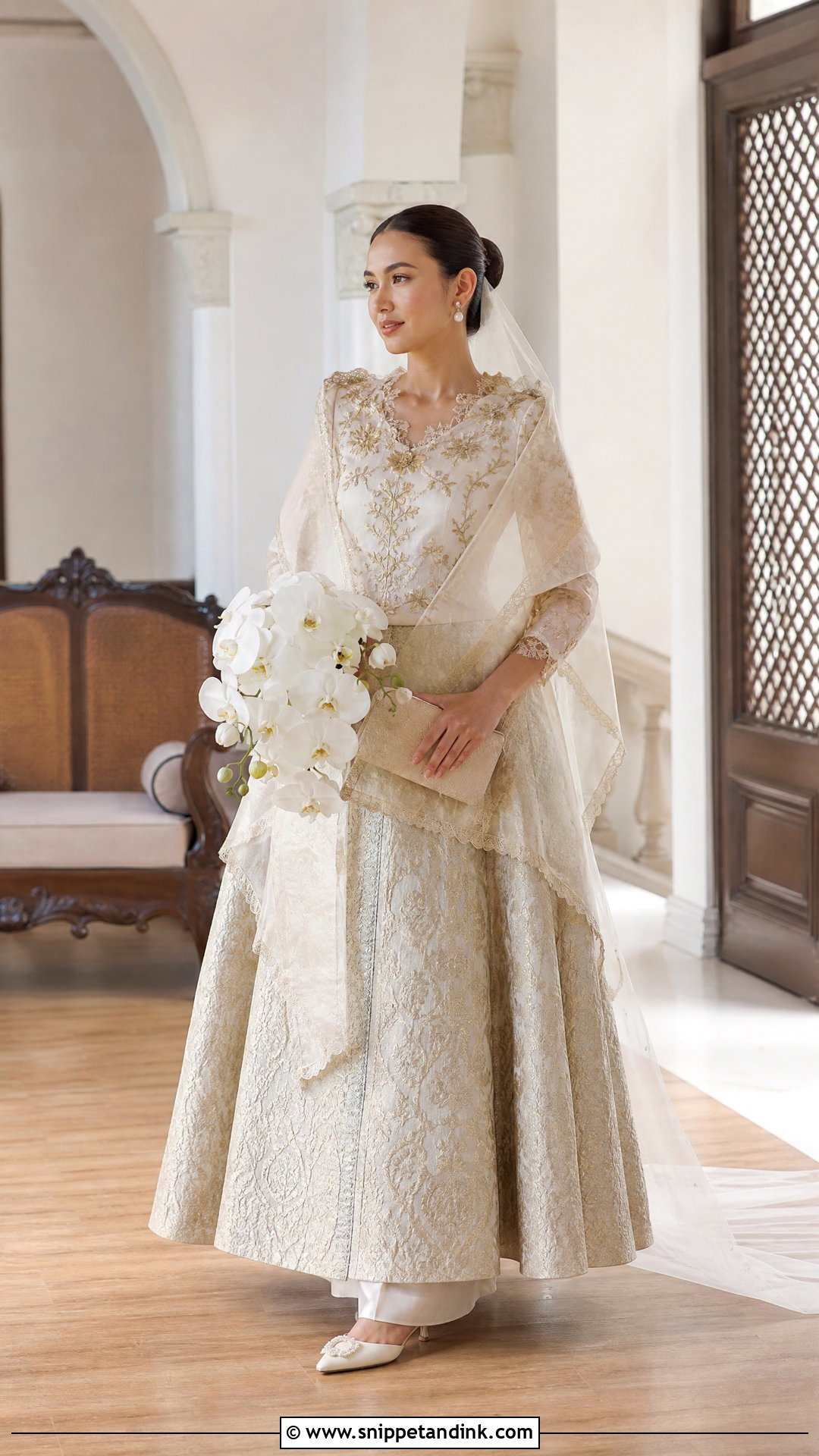
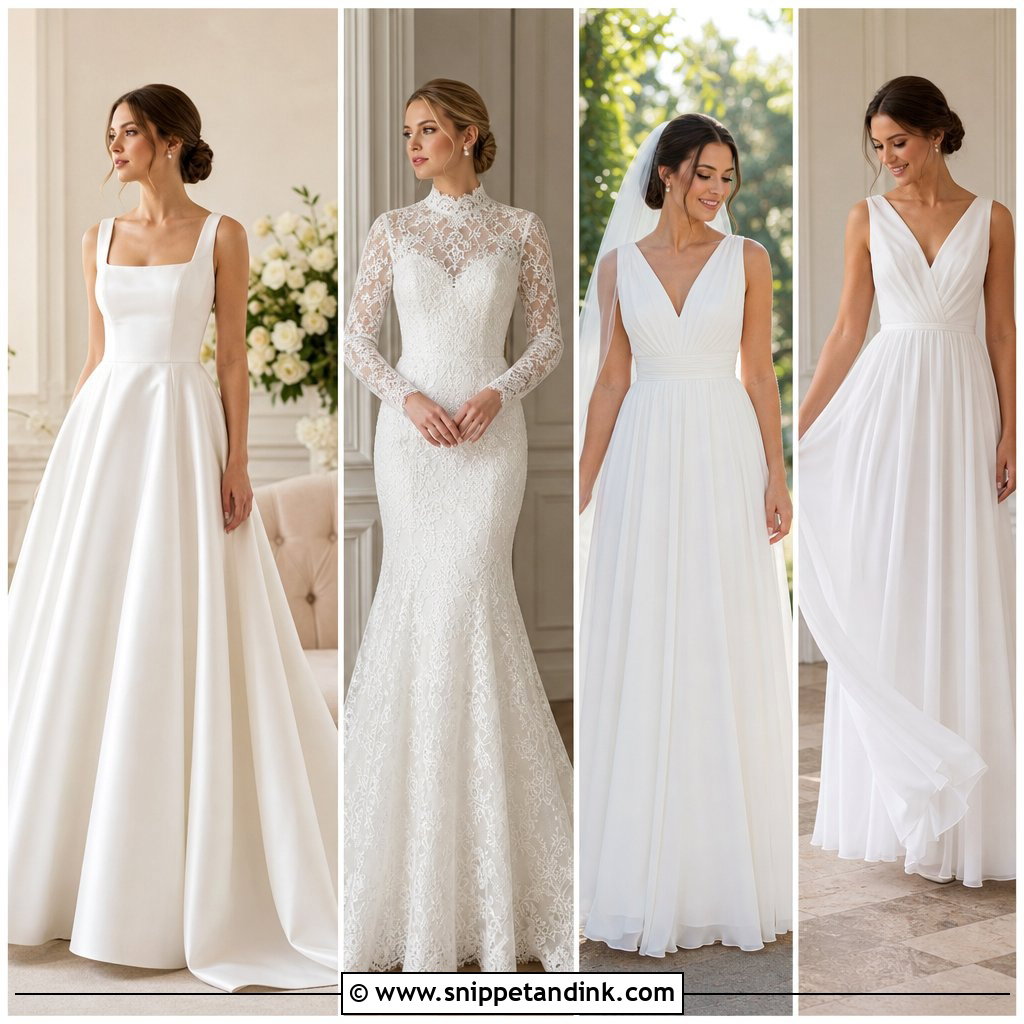
The tapis gives a Maria Clara outfit depth, but where it sits decides whether you can walk. Start with a softly embroidered baro, a matching pañuelo and a full ivory saya, then wrap a satin, brocade or embroidered tapis smoothly across the front. If it’s wrapped tight below the hip, your stride shortens noticeably, so I tie it a little looser than brides first want. A slightly deeper ivory or champagne tapis gives contrast while staying bridal. Wear a fitted camisole under the sheer baro. Pearl drops, low pointed heels and a structured clutch complete it, with a classic bun and a light veil pinned beneath it. White orchids with pale yellow centers link the tones.
16. Beaded Filipiniana Wedding Gown
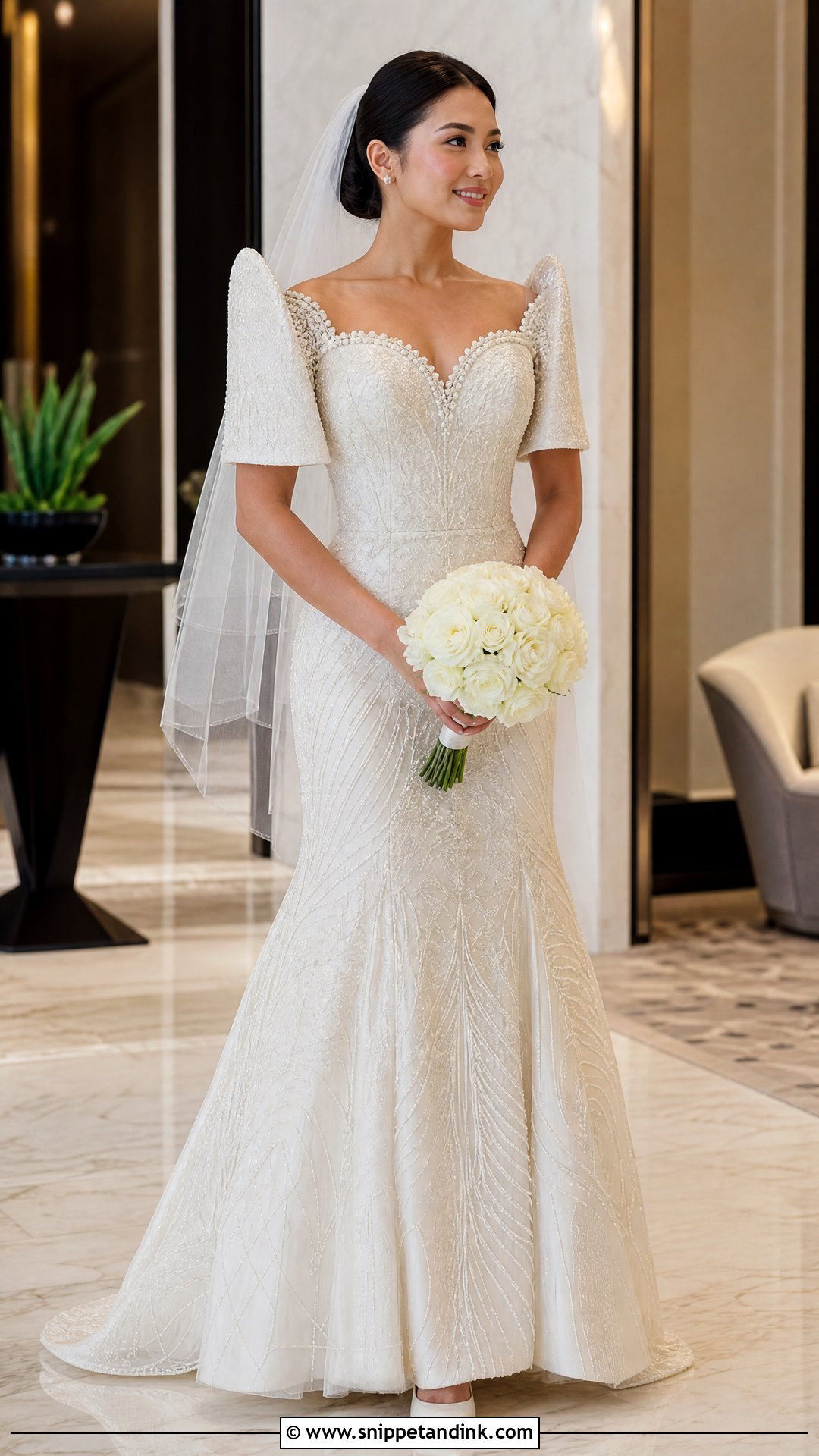
Beading on a Filipiniana wedding gown works best when it follows the construction rather than covering it. On an ivory terno with structured sleeves and a soft flare, I keep pearls and clear crystals to the neckline, sleeve edges and existing embroidery. Heavy all-over beading weighs the sleeves down and stiffens fabric that should move. A lined bodice stops beads scratching the skin through a long day. Plain satin heels, small earrings and a smooth bun keep it uncluttered, and a sheer unembellished veil contrasts with the sparkle. Under bright venue lights the beads catch nicely while the sleeves keep the Filipino profile.
17. Floral Embroidered Terno Wedding Dress
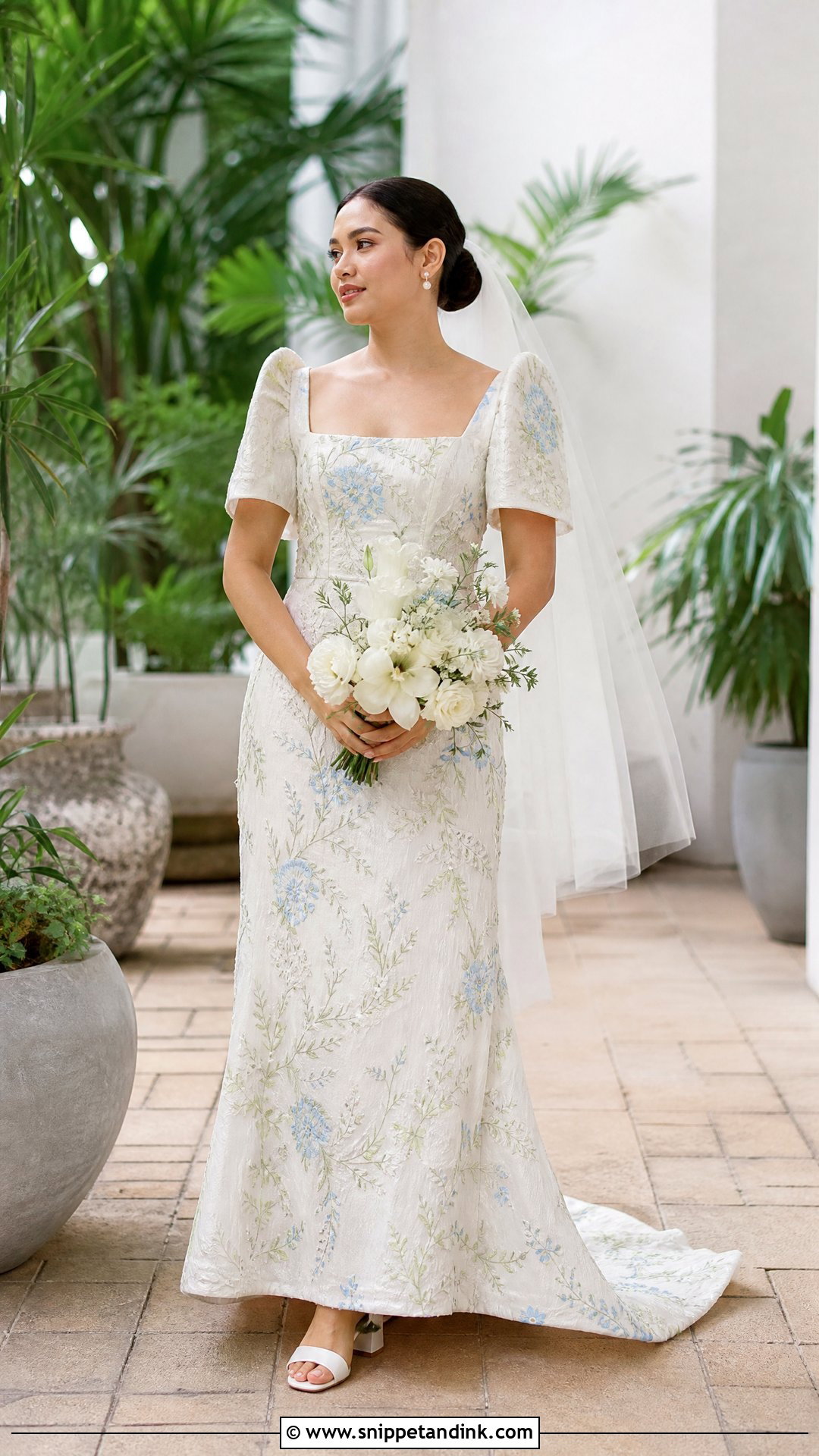
Colored floral embroidery on an ivory terno gives the gown a story without changing what it is. I’d place vines around shoulders, waist and lower skirt, in pale blue, soft green, blush or muted gold thread, and leave real space between motifs so it doesn’t look busy in photos. Some brides choose flowers tied to their family’s province or their hometown, which gives the embroidery a personal meaning. Ivory block heels, pearl earrings and a low bun with one embroidered comb complete it. Keep the veil plain. A mostly white bouquet with a few blooms in the thread colors links the flowers you carry to the ones you wear.
18. Champagne Filipiniana Wedding Dress
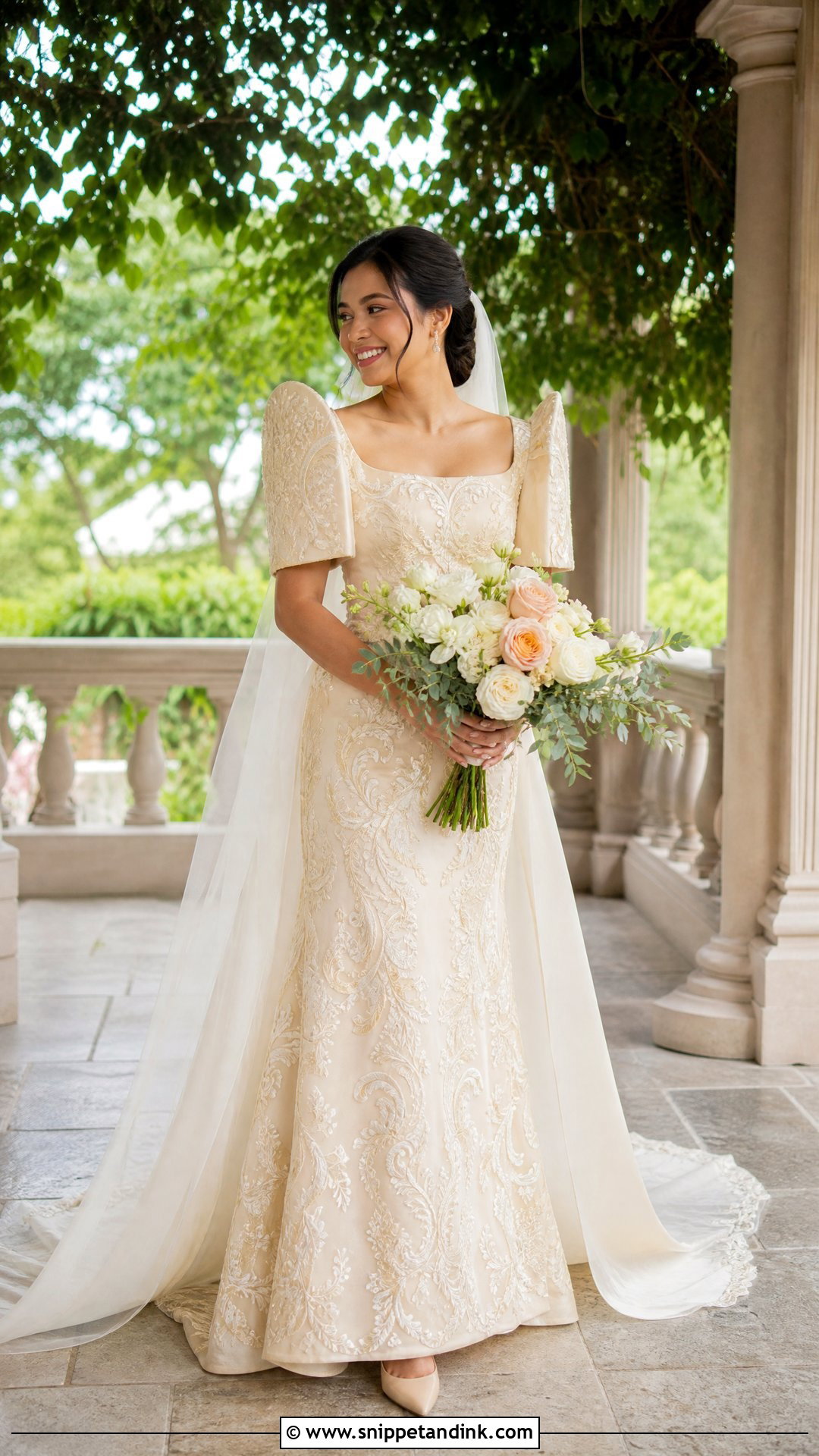
Champagne is kinder than bright white to warm skin tones and makes embroidery read more clearly. Choose a terno or Maria Clara-inspired gown in pale champagne with ivory embroidery at sleeves, neckline and waist. A satin underlayer gives sheer fabric a soft glow. Be careful with the lining tone: too dark and the dress looks muddy, too gold and it reads metallic. Match neutral pumps to the hem. Gold pearl earrings and a slim bracelet suit the palette, and a cream veil separates face from dress. Fresh neutral makeup, a low polished twist and white and pale peach flowers finish it. It looks especially good in bright interiors and sunny gardens.
19. Short Balintawak Wedding Dress
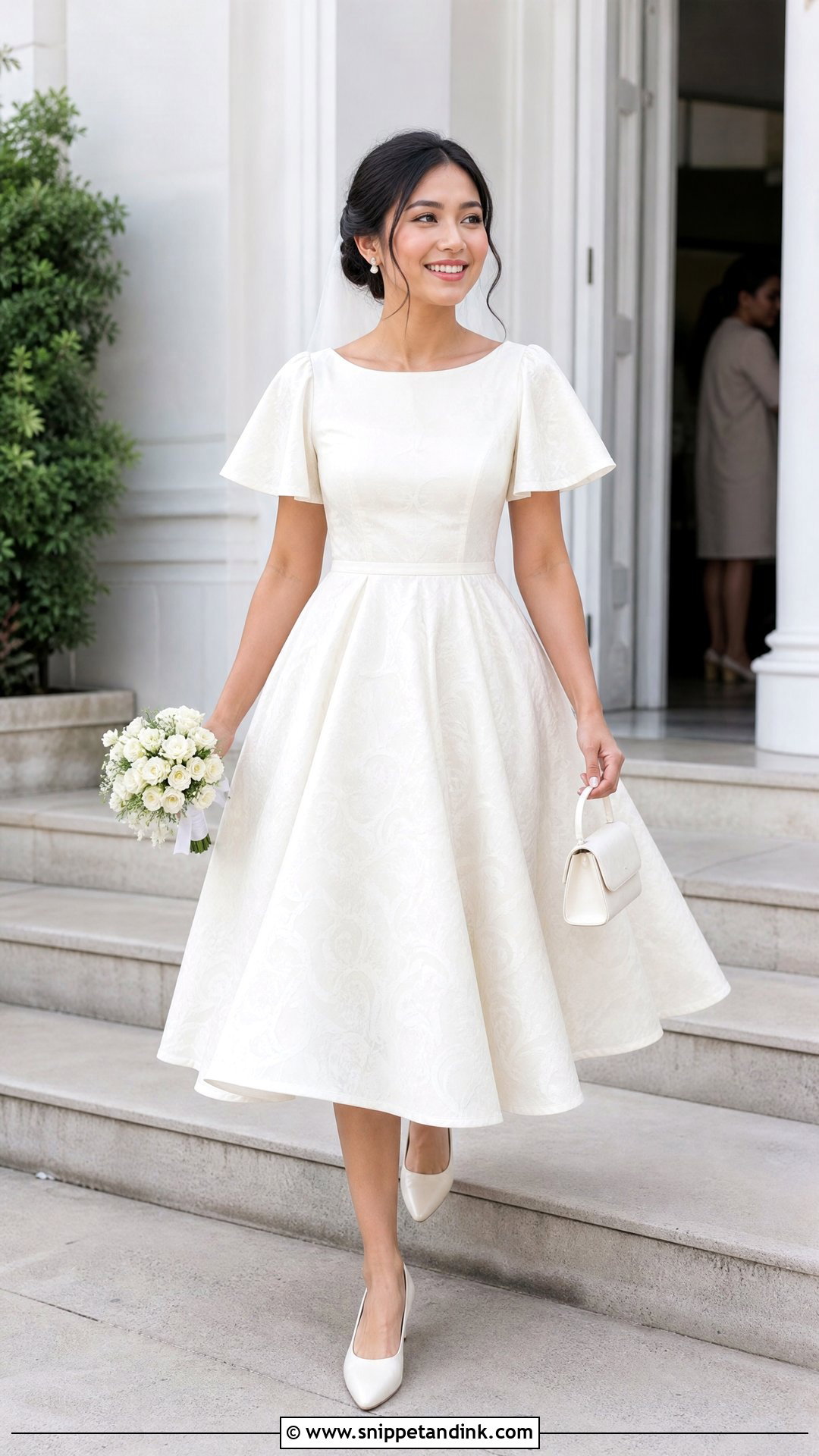
The balintawak is the shorter, more relaxed member of the Filipiniana family, which makes it my pick for a civil ceremony, daytime party or reception change. Choose an ivory tea-length dress with butterfly sleeves, a fitted waist and a full skirt below the knee. Subtle checks or stripes nod to the casual originals while staying bridal. Since the shoes are fully visible, they need to be as considered as the dress: low heels or neat flats, not something hidden under a long skirt. Pearl studs and a compact top-handle bag suit it. A birdcage or shoulder veil fits the length; a cathedral veil would look odd. Add a neat bun and small white bouquet.
20. Filipiniana Reception Wedding Dress
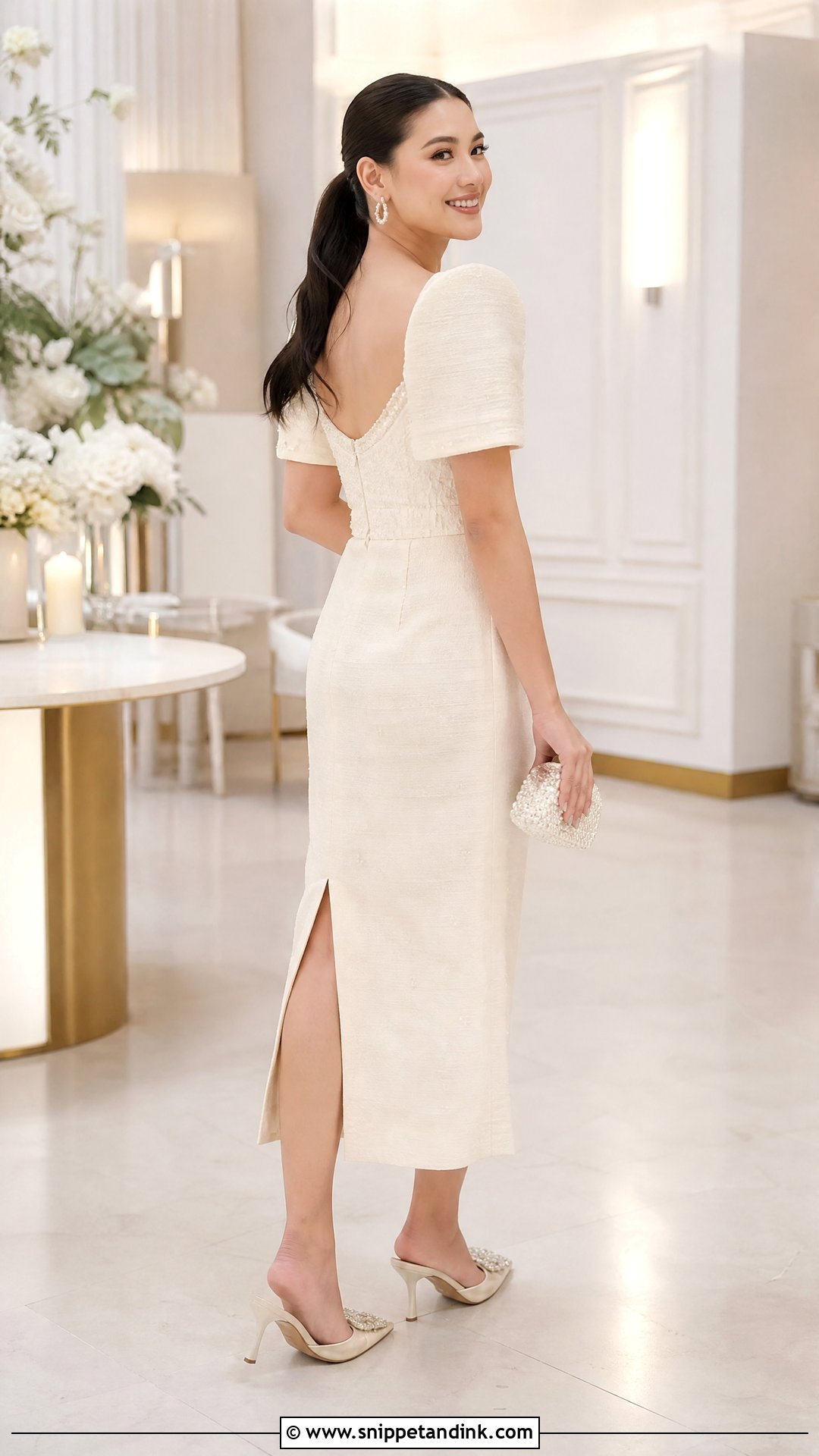
A reception change should keep the Filipiniana theme while letting you dance. A lightweight column, tea-length terno or fitted midi with smaller butterfly sleeves works well. Smaller sleeves matter more than people realize; full terno sleeves restrict how high you can raise your arms. Embroidered organza, crepe or satin keeps it formal without the ceremony gown’s weight. If dancing is planned, ask for a back slit, secure closures and a comfortable lining. Swap ceremony heels for embellished flats or low block heels in the same color. Pearl hoops, a small clutch and a sleek ponytail keep it fresh. Repeat one detail from the ceremony gown, such as the embroidery or sleeve shape, so the two outfits clearly belong together.
Why Butterfly Sleeves Wilt and How Your Maker Stops It
A terno sleeve stands up because of what’s inside it, usually stiffened net, crinoline or a light interfacing shaped into a fold. In heat and humidity, soft fabrics lose that shape. A bateau or high neckline also helps, because it gives the sleeve a firm anchor point. Ask your maker how the sleeves are supported and whether they can be re-pressed on the day.
Pack a small steamer for the morning, but never steam piña directly; hold it well away or press from the inside with a cloth. Sit with your arms forward in the car so the sleeves aren’t crushed against a seat back.
Coordinating the Groom’s Barong Without Copying the Gown
The barong tagalog is traditionally worn untucked over a camisa de chino, and it is usually made from the same family of fabrics: piña, jusi or a blend. Matching the fabric is what makes the pair read as a set. The embroidery doesn’t need to match; I’d pick one motif from the bride’s dress, such as a single flower, and ask for it in a smaller scale on his collar or front panel. Keep his thread tone close to the bride’s, ecru with ecru or white with white, so neither looks dingy beside the other.
Who Should See Your Filipiniana Before the Final Fitting
The right Filipiniana wedding look respects where these garments come from and still lets you move, breathe and dance. Maria Clara layers, ternos, baro’t saya separates, kimona with patadyong and lighter reception dresses each suit a different venue, climate and level of formality. Weigh the sleeve structure, fabric weight and what each textile means to your family before you choose. Keep accessories modest enough that the craftsmanship stays the focus. Work with Filipino designers, embroiderers, weavers or relatives who know the tradition, and bring them in early. Simple or elaborate, a well-planned dress connects your heritage, your family and your own taste.
You'll Like These Ideas:




Leave a Reply