
An Indian wedding is rarely one event. There’s usually a haldi, a mehendi, a sangeet, the ceremony itself and a reception, and each asks something different of your clothes. Below are twenty complete looks, from silk sarees and lightweight lehengas to Anarkalis, shararas and modern Indo-Western outfits, plus pre-draped sarees, capes and separates for women who’d rather not wrestle with six yards of fabric. For each one I’ve noted the jewelry, shoes and bag I’d put with it. When I dress someone for these functions, I ask three things first: what time is it, how long will you stand, and will you sit on the floor? Those answers rule out half the options before color even comes up.
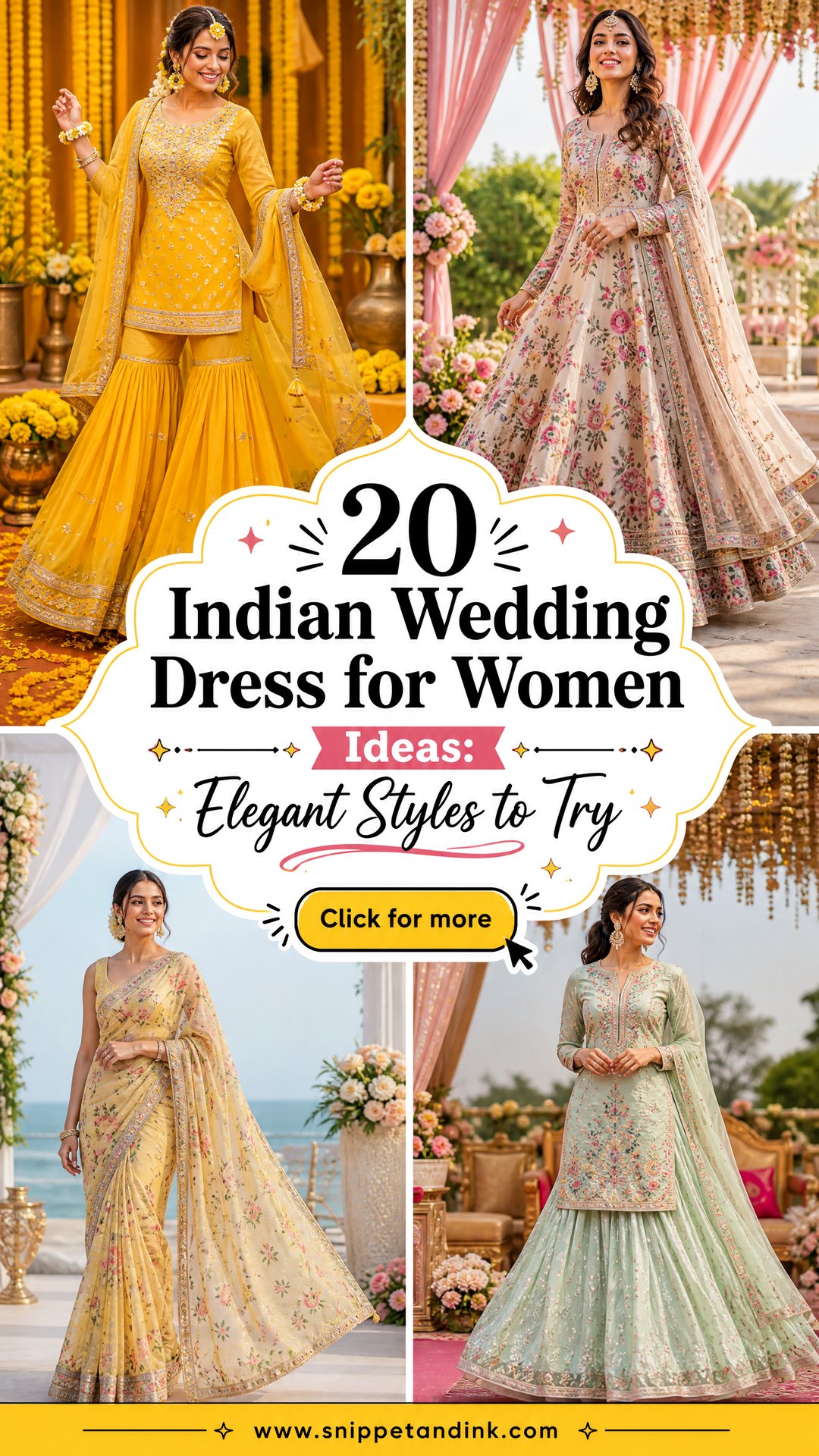
Silhouette Advice I Give at Almost Every Fitting
Indian occasion wear is forgiving because so much of it is cut to measure, but the silhouette still does most of the work. Here’s how I steer different figures through the styles below.
Petite frames
Avoid heavy borders at the hem, which cut you off at the ankle. Vertical embroidery, a matching blouse and skirt, and a slightly shorter kurta keep your legs looking long. A medium flare suits you better than a very full can-can lehenga.
Tall frames
You can carry wide borders, big motifs, long jackets and ghararas that would swamp someone shorter. Do check that ready-made lehengas and Anarkalis are long enough; many are cut for an average height and end above the ankle once you add heels.
Fuller figures
Structured silks and brocades hold their shape better than clingy georgette. An A-line Anarkali or a lehenga with a flat front panel avoids bulk at the tummy, and a blouse with proper inner support matters more than any embroidery. Drape a saree pallu slightly wider over the shoulder for a balanced line.
Wanting more coverage
Jacket lehengas, long capes, Anarkalis and kurta sets all cover the midriff and arms without looking old-fashioned. A blouse can also be lined in a sheer fabric at the back to cover the skin while keeping a lighter feel.
1. Red Bridal Lehenga for Indian Wedding
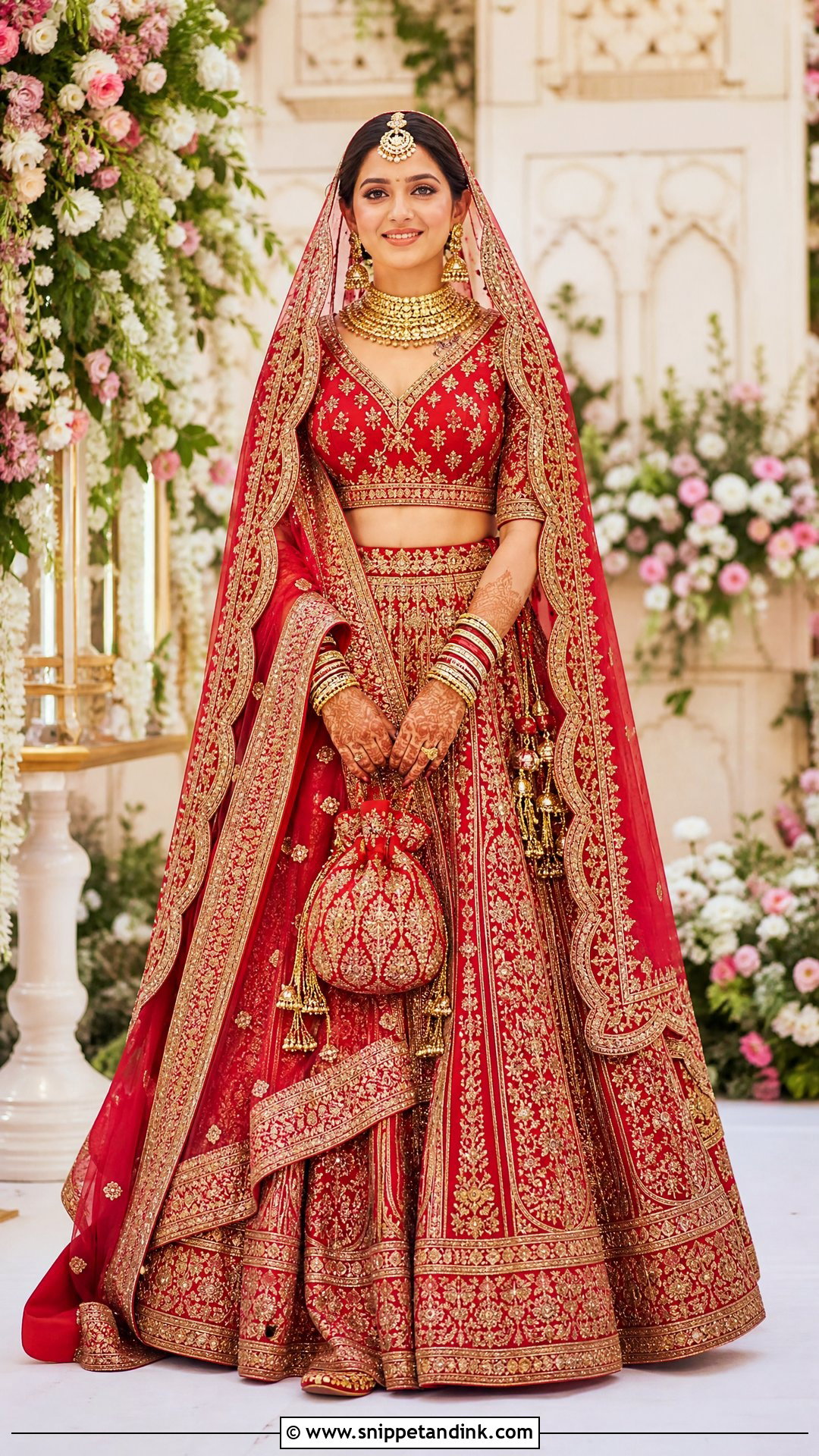
Red is still what most brides choose for the ceremony, and it’s the one outfit where I let the embroidery be heavy. Choose a high-waisted skirt with balanced work, a structured blouse and a coordinated dupatta; for more coverage, a longer blouse with elbow sleeves sits well under all that weight. A bridal lehenga can weigh several kilos, so ask for wide hooks at the waistband so it doesn’t dig in by the pheras. For the double drape, one dupatta over the head and one across the shoulder, I pin the head dupatta into the hairstyle in at least four places, because it drags the bun backwards otherwise. Gold jhumkas, a choker, bangles and a maang tikka are the classic set, with cushioned gold juttis hidden under the skirt and a structured potli for essentials. Keep makeup luminous and ask your hairstylist for a low bun or braid firm enough to anchor those pins.
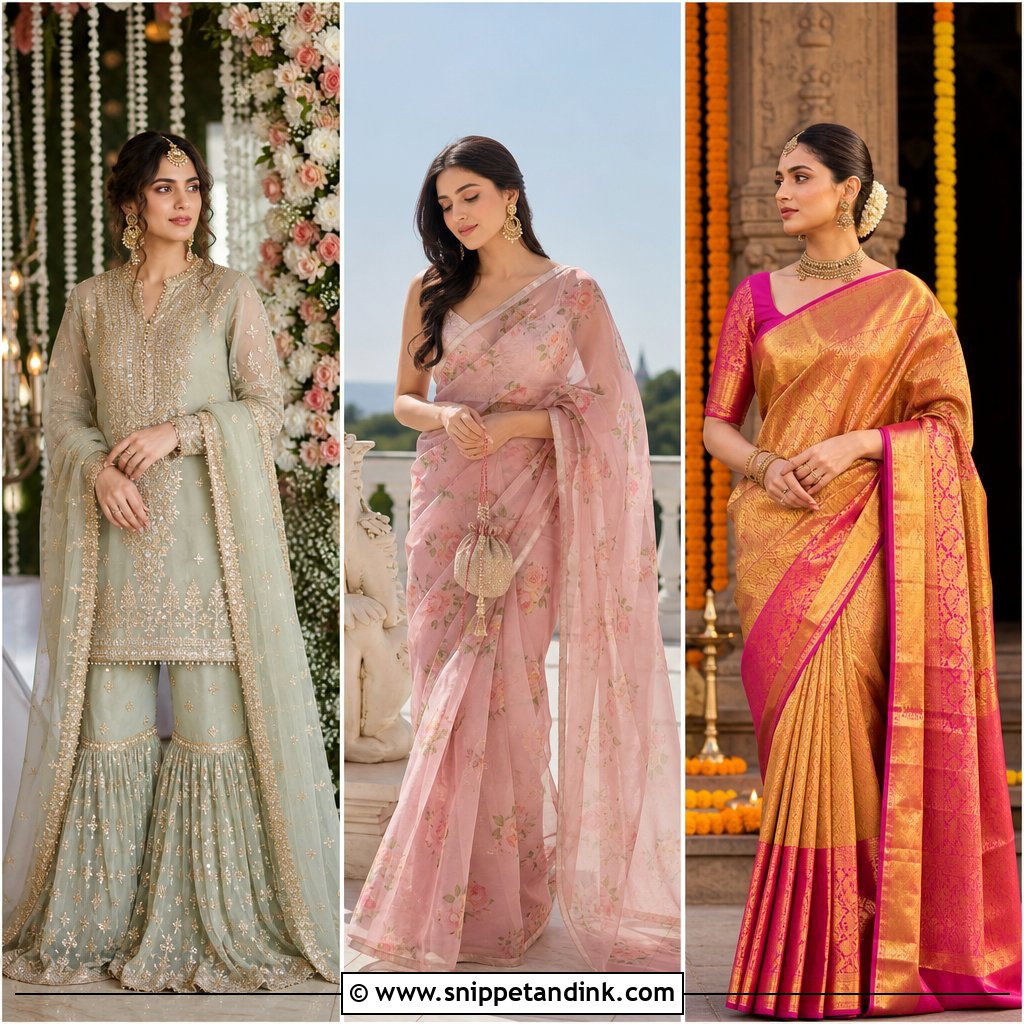
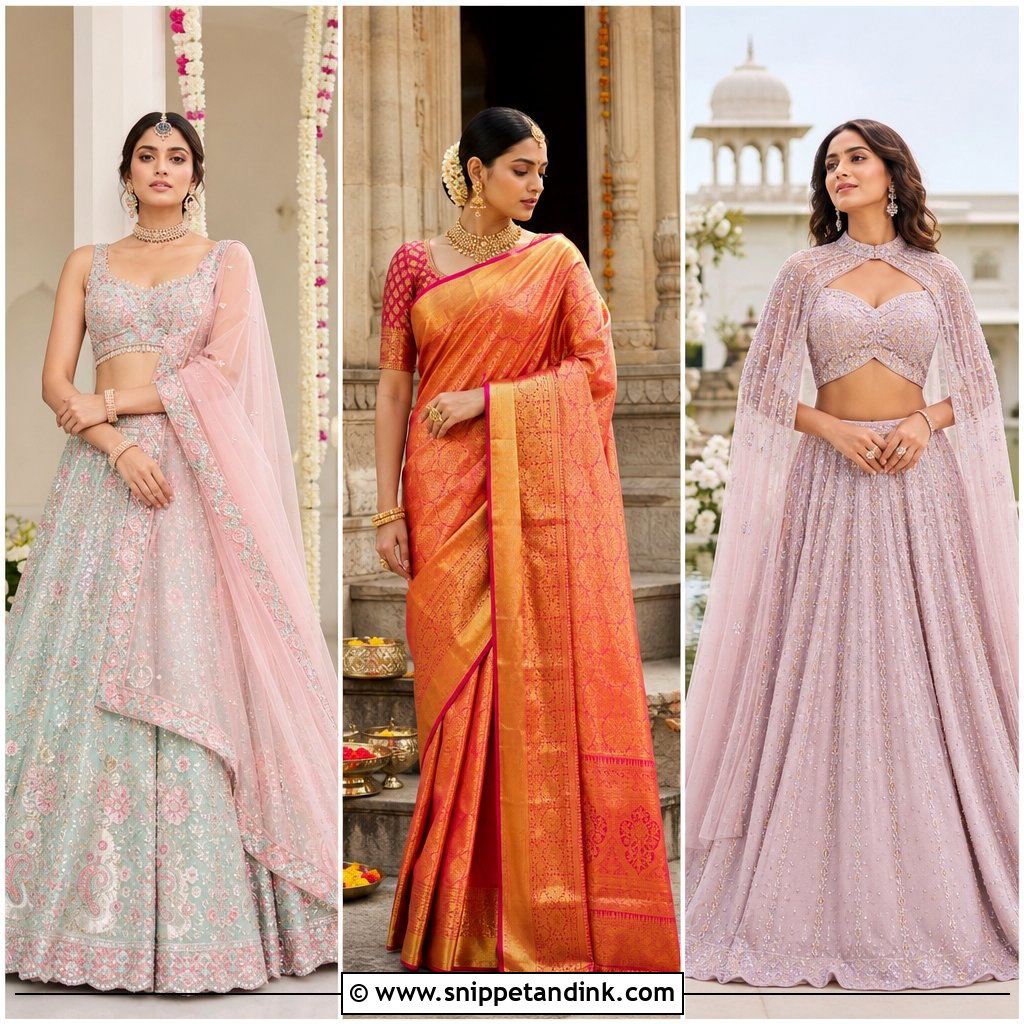
2. Pastel Floral Lehenga for Indian Wedding
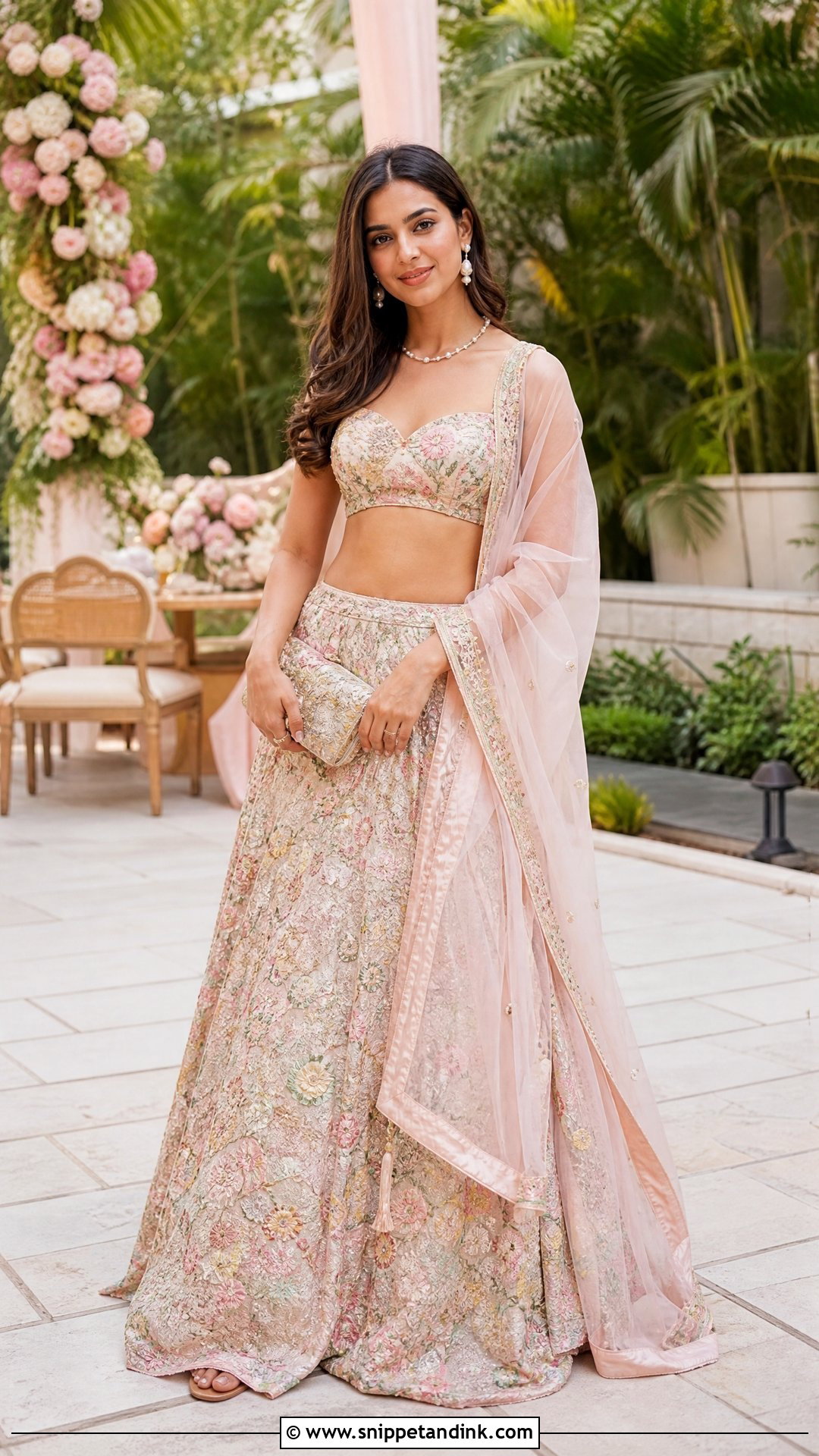
Outdoor daytime weddings are where pastel florals come into their own. Powder blue, blush, mint, peach or lavender with thread embroidery suits daylight, and on a pale base, dense stonework only adds weight you can’t see from across a lawn. Pair the skirt with a supportive blouse and an organza or chiffon dupatta. A matching blouse draws one long line; a contrasting one adds definition, which helps if you’re petite. Pearl earrings, a delicate necklace, metallic sandals and a small embroidered clutch keep it light, and a few fresh flowers can go into a low bun. I like this outfit for weddings spread across a lawn, a photo spot and a dining tent, because the light layers won’t wilt you on the walk between them.
3. Banarasi Silk Saree for Indian Wedding
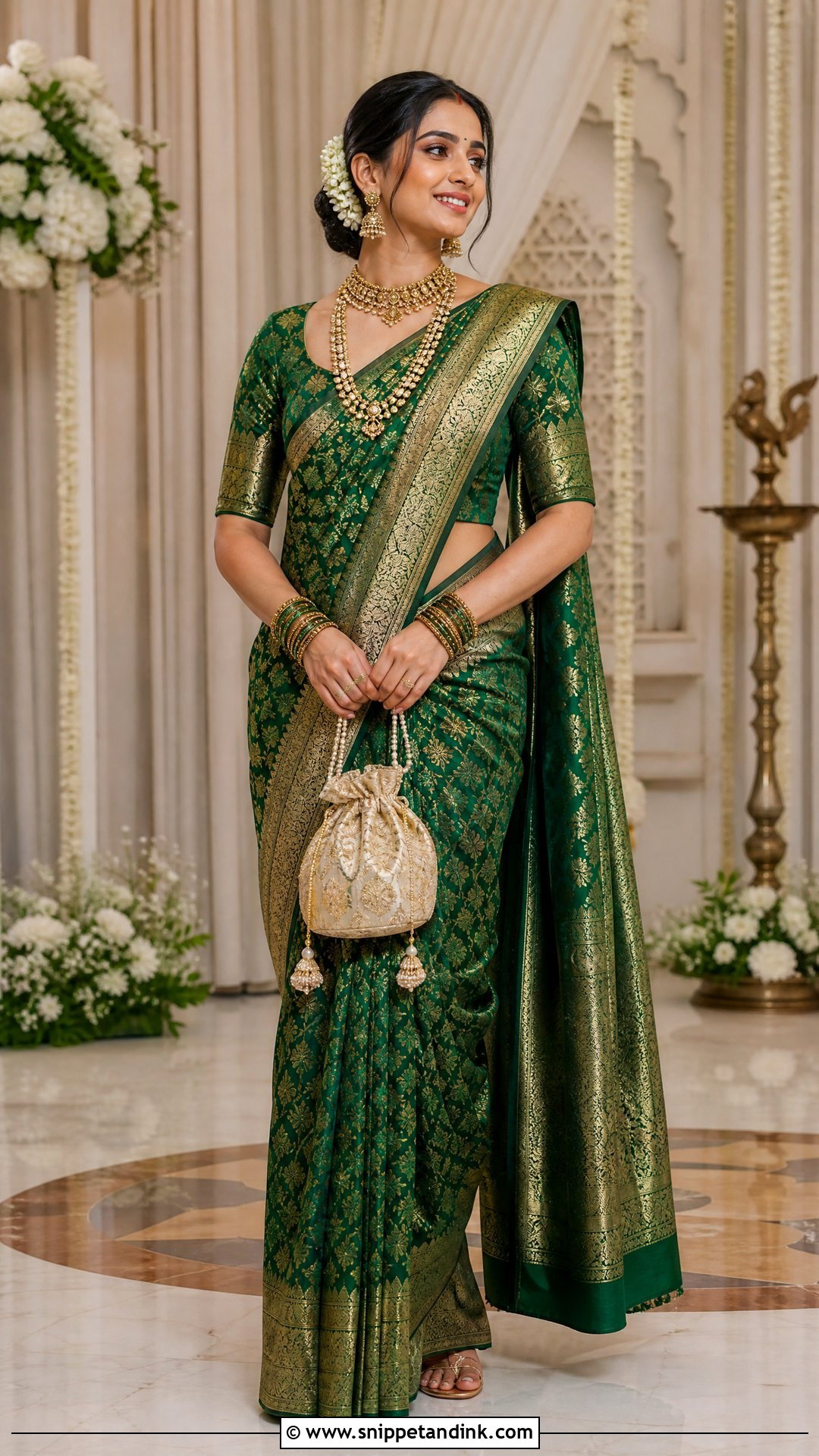
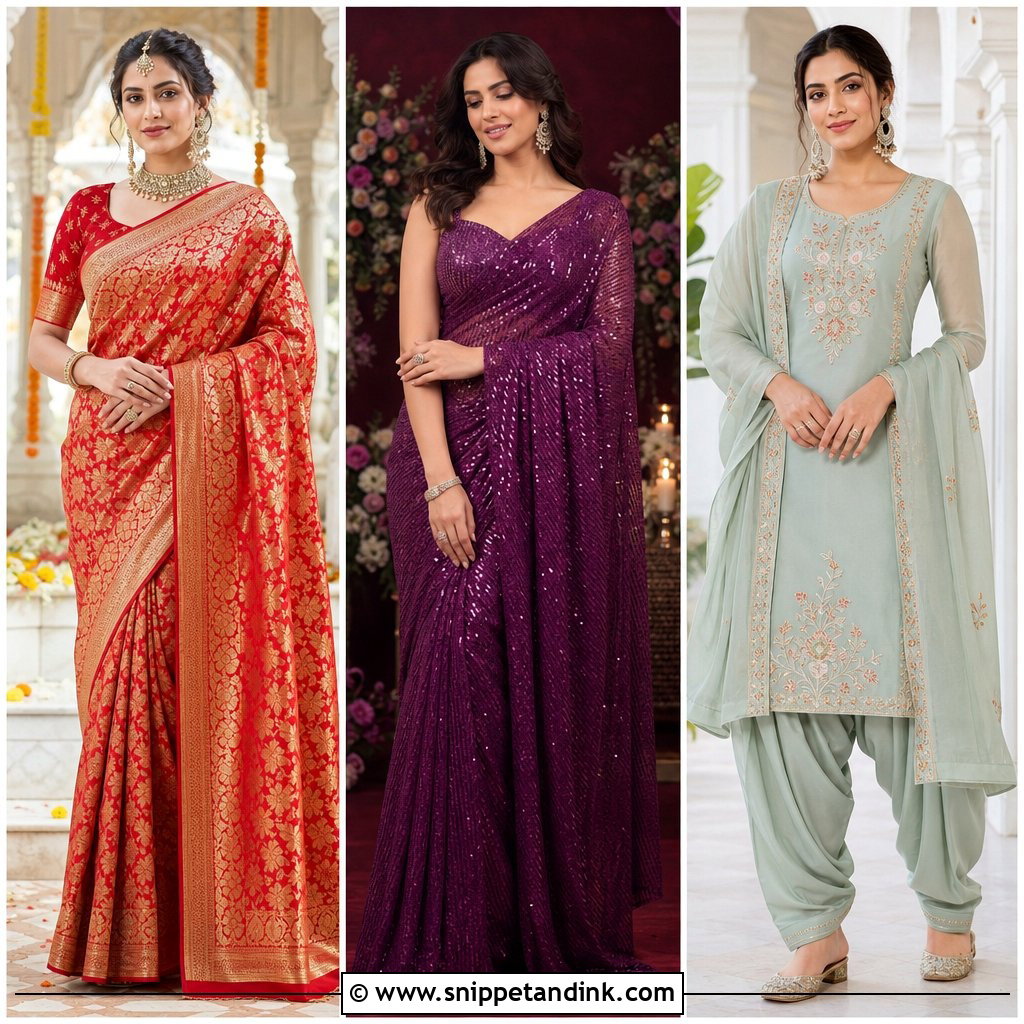
Banarasi silk with traditional gold jewelry is the pairing I see mothers hand down and daughters borrow back. Emerald, royal blue, deep pink, maroon or purple all carry gold well. A contrasting blouse picks out the border, while a matching one gives an unbroken column, which I’d suggest to shorter women who want height. Temple jewelry, gold jhumkas, bangles and a compact potli suit the mood. Pure Banarasi is heavier than it looks on a hanger, so wear block heels or padded sandals, and have the pleats pinned to the petticoat rather than simply tucked if the ceremony runs long. A center-parted bun with flowers finishes it. Brides, close relatives and guests can all wear this without it looking dated in a few years.
4. Kanjeevaram Saree for South Indian Wedding
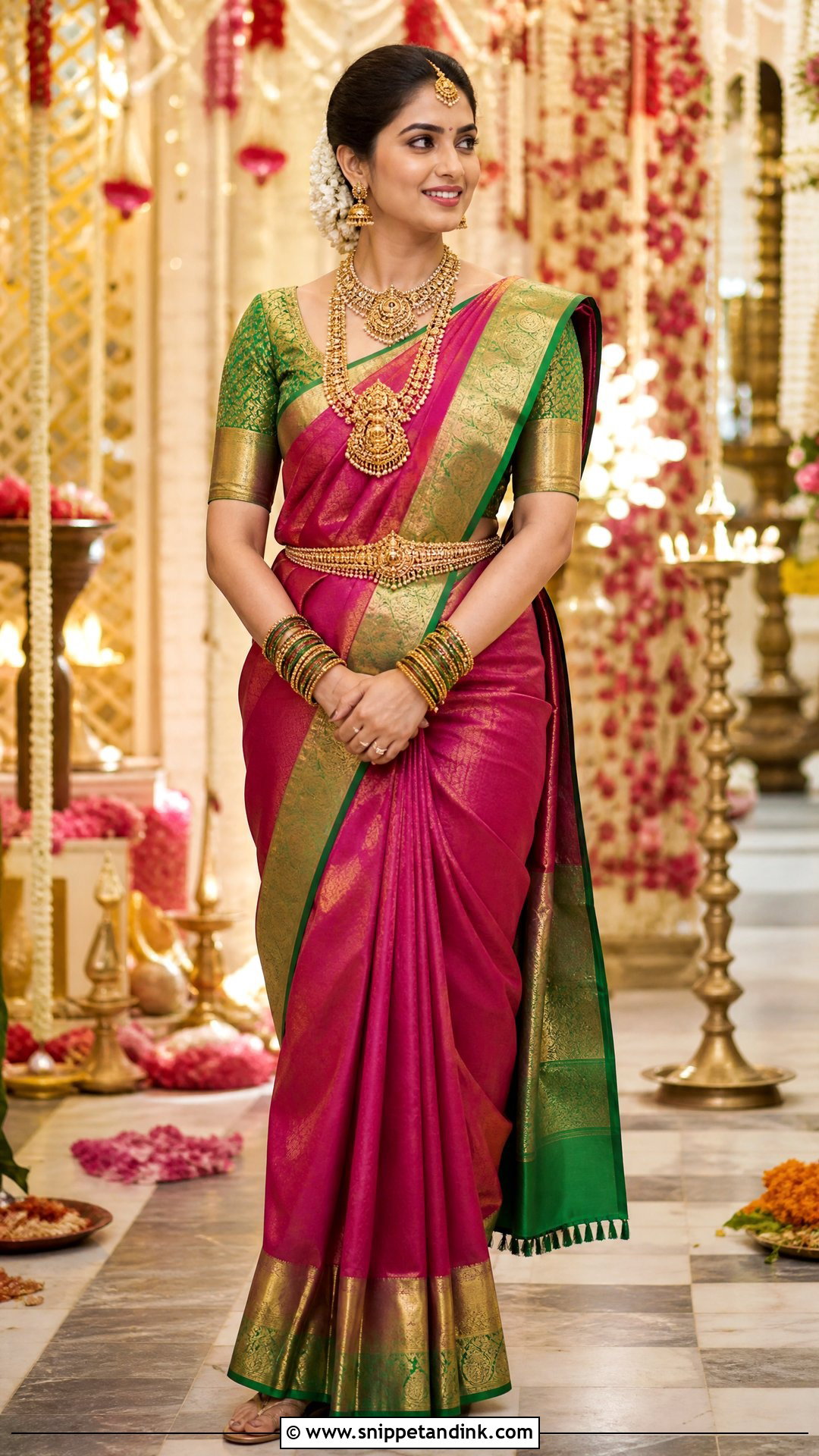
The body of a Kanjeevaram saree is woven separately from its border and then interlocked with it, which is why that contrast border looks so crisp. Red, green, mustard, magenta and royal blue are traditional; softer shades read more contemporary. Ask for a blouse with room across the shoulders, since stiff silk won’t forgive a tight armhole when you raise your hands during rituals. Layer gold necklaces at different lengths with matching earrings, bangles and a waist belt where it suits the ceremony. A low bun wrapped with jasmine, plain gold sandals or cushioned block heels, and a small bag keep attention on the border. If you want reassurance that it’s pure silk, look for the Silk Mark label when you buy.
5. Sequin Lehenga for Indian Wedding Sangeet
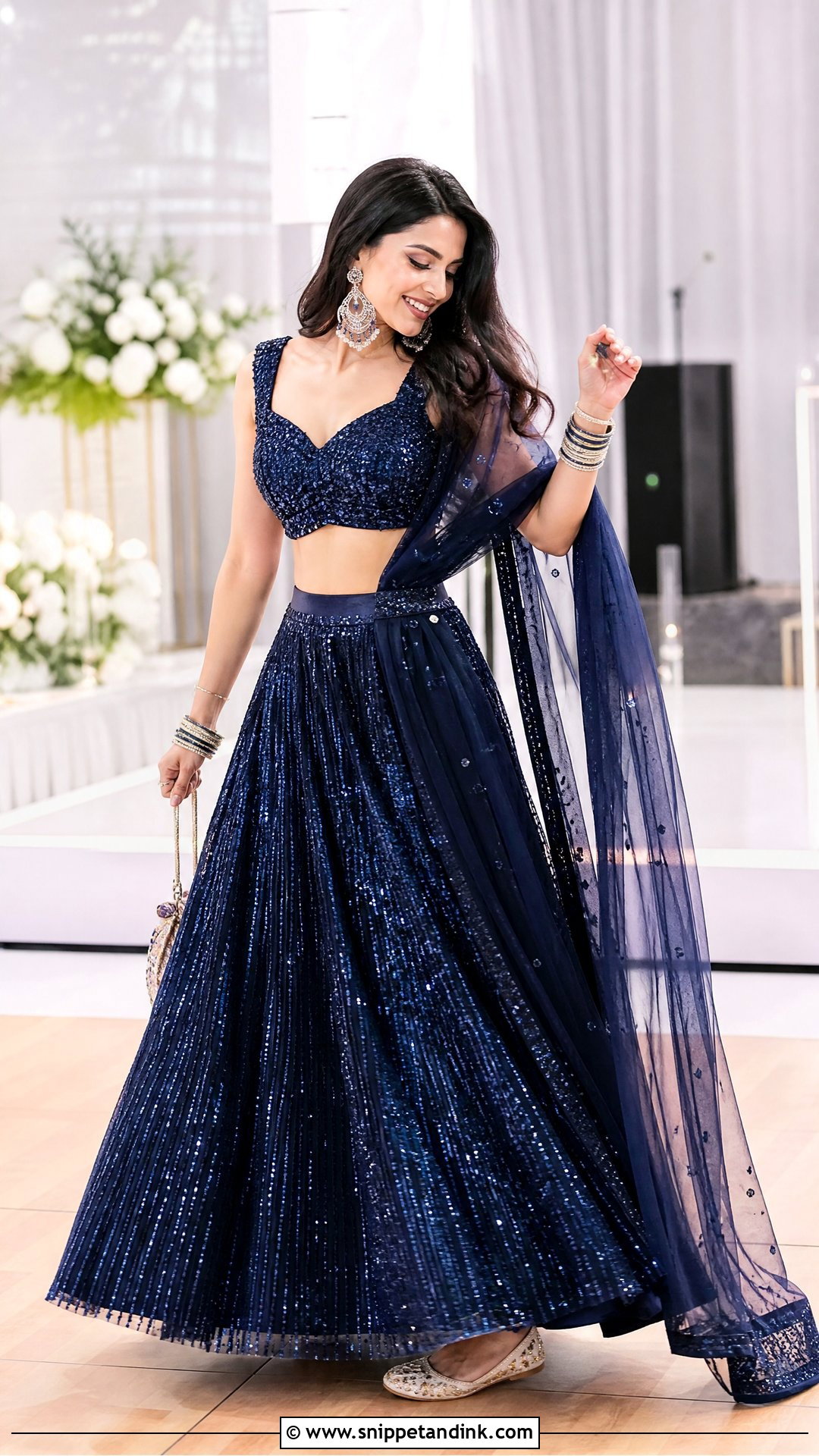
When the music starts, a sequin lehenga moves with you, provided you pick the right one. Spaced sequins on a lightweight skirt are what I’d choose; dense allover work turns a skirt stiff and heavy enough to tire you halfway through a dance. A blouse with secure straps or sleeves and a net dupatta pinned away from your arms keep everything put. Midnight blue, plum, emerald, rose gold and silver hold up under evening lighting. Statement earrings, stacked bangles and block heels or embellished juttis suit it, and a wristlet is easier than a shoulder bag that swings into people. Turn the blouse inside out before buying. Sequin threads on the lining scratch the underarms over a long night, so I ask for a soft inner layer.
6. Yellow Sharara for Indian Wedding Haldi
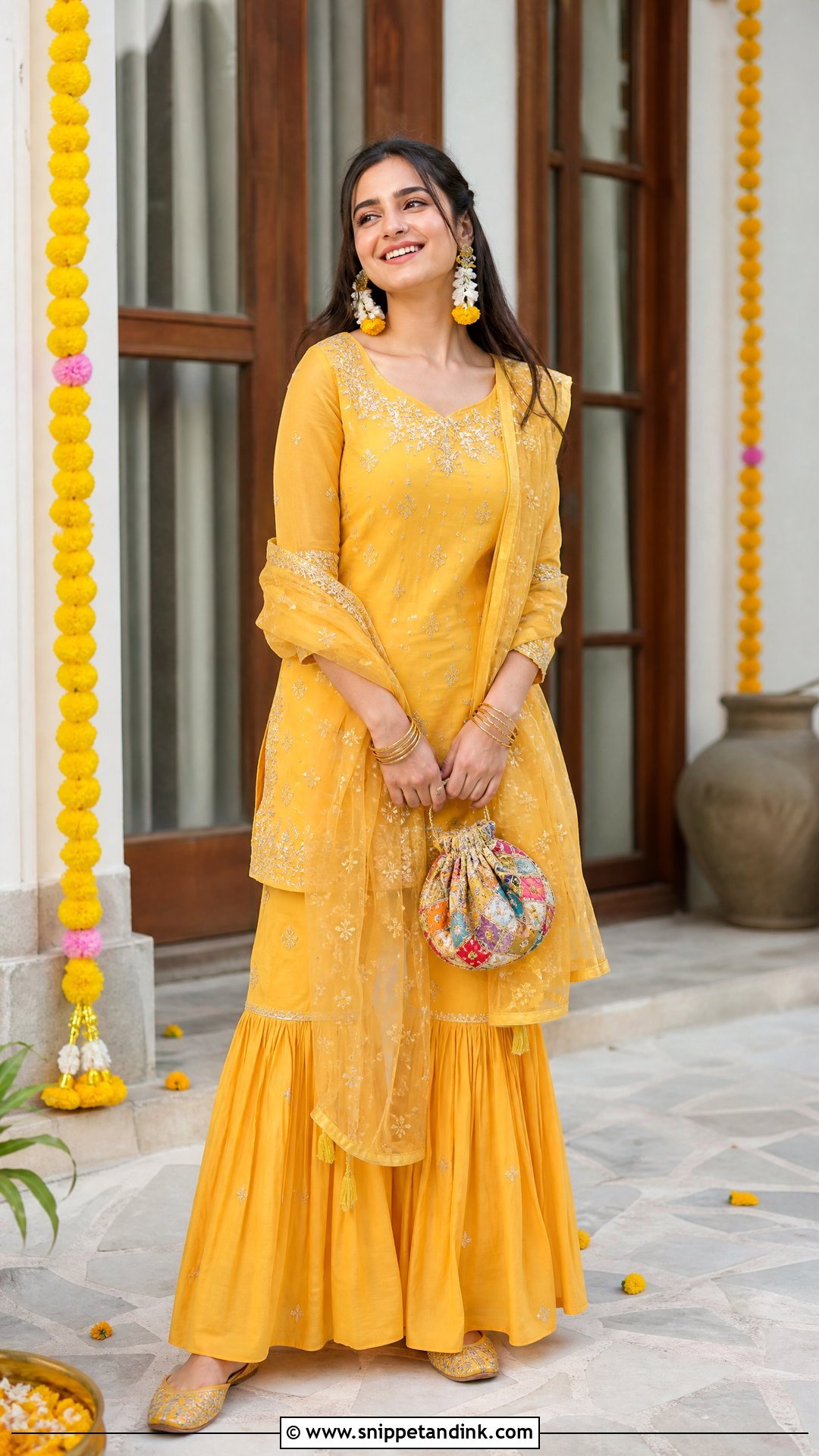
Haldi calls for yellow, and a yellow sharara handles the color and the comfort together. Wide flared pants with a short embroidered kurta and a dupatta you can pin or drop keep it practical. Mustard, marigold, lemon and mango tones all work, with white, pink or green details for contrast. Cotton silk or georgette breathes in daytime heat. Floral earrings, simple bangles, flat juttis and a small potli are plenty, and hair goes up so the paste stays out of it. One practical bonus of yellow: turmeric marks show far less on it than on any other shade. Even so, leave heirloom pieces at home.
7. Green Lehenga for Indian Wedding Mehendi
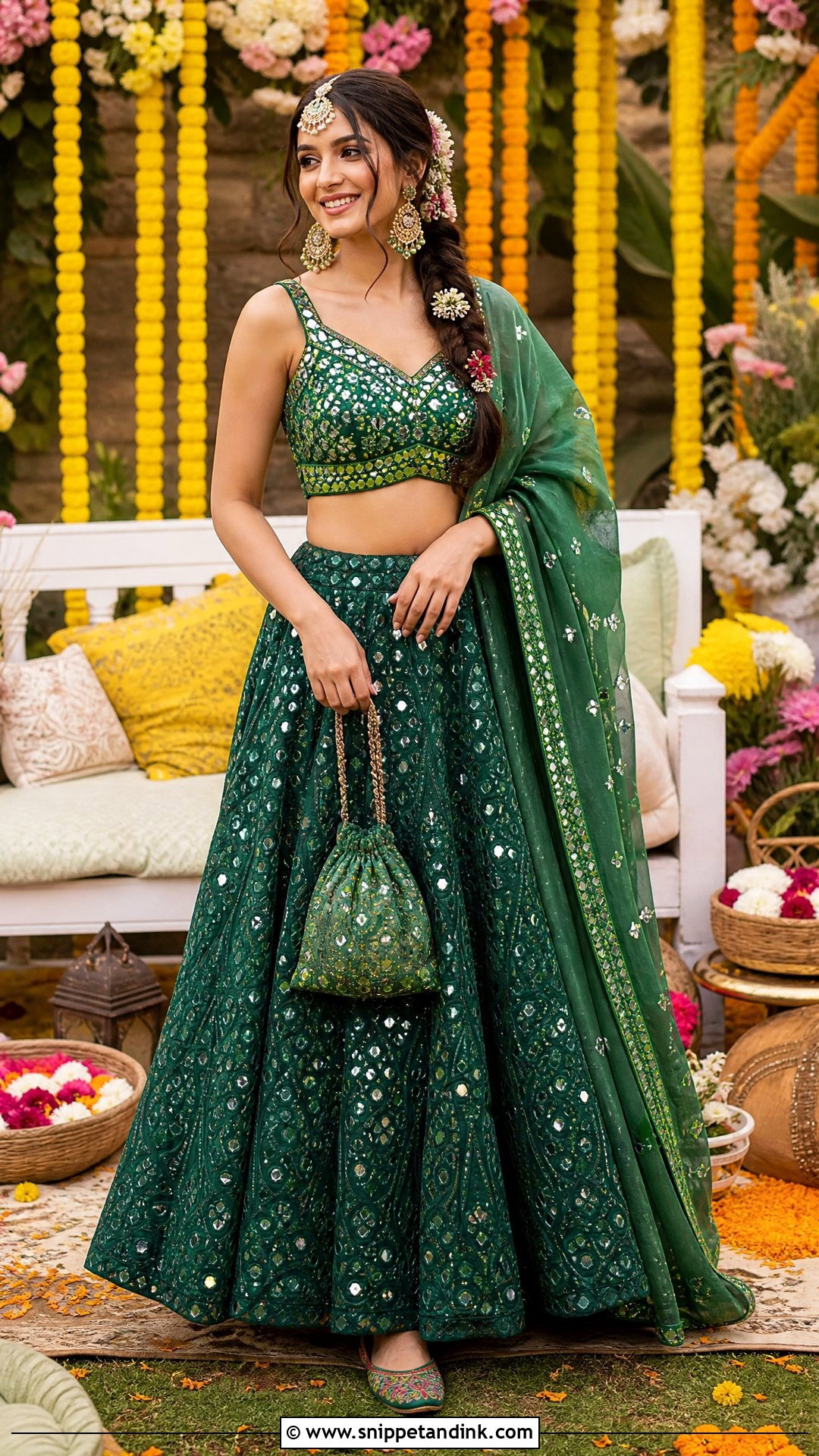
Green ties naturally to mehendi, and a green lehenga with mirror work, prints or light embroidery keeps the afternoon festive. Emerald, lime, sage and bottle green each change the feeling, so I match depth to the hour: lime and sage while the sun is up, emerald or bottle green after dark. A cropped blouse leaves your arms free while the artist works; choose a longer blouse or a short cape if you want coverage. Wear a dupatta only if it can be pinned well clear of your hands. Big earrings, a maang tikka, flat juttis and a belt bag finish it, with a flower-trimmed braid so loose hair never sticks to wet paste.
8. Floral Anarkali for Indian Wedding
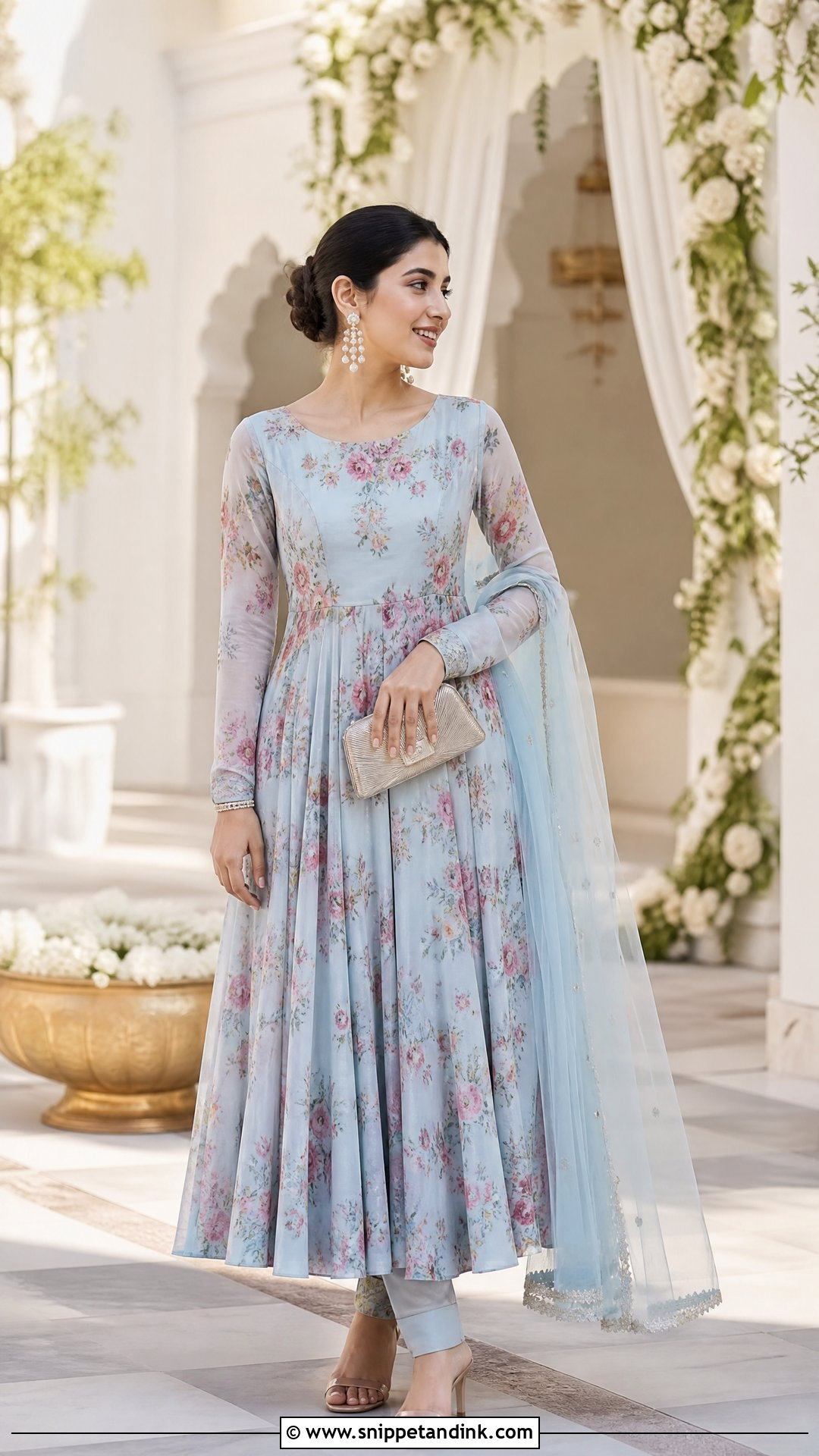
Coverage and movement come together in a floral Anarkali. I look first at where the skirt starts. A seam at your natural waist flatters most figures, while a high empire seam on a very full skirt can add bulk. Small prints read delicate and large motifs bolder, and the bigger ones sit better on taller frames. Wear it with churidar and a sheer dupatta, or pick a floor-length version that needs almost nothing else. Pearl earrings, a slim bracelet, a structured clutch and low block heels keep it neat. Pastel florals belong to daytime, darker botanicals to evening. Soft curls or a low bun finish it.
9. Velvet Lehenga for Winter Indian Wedding
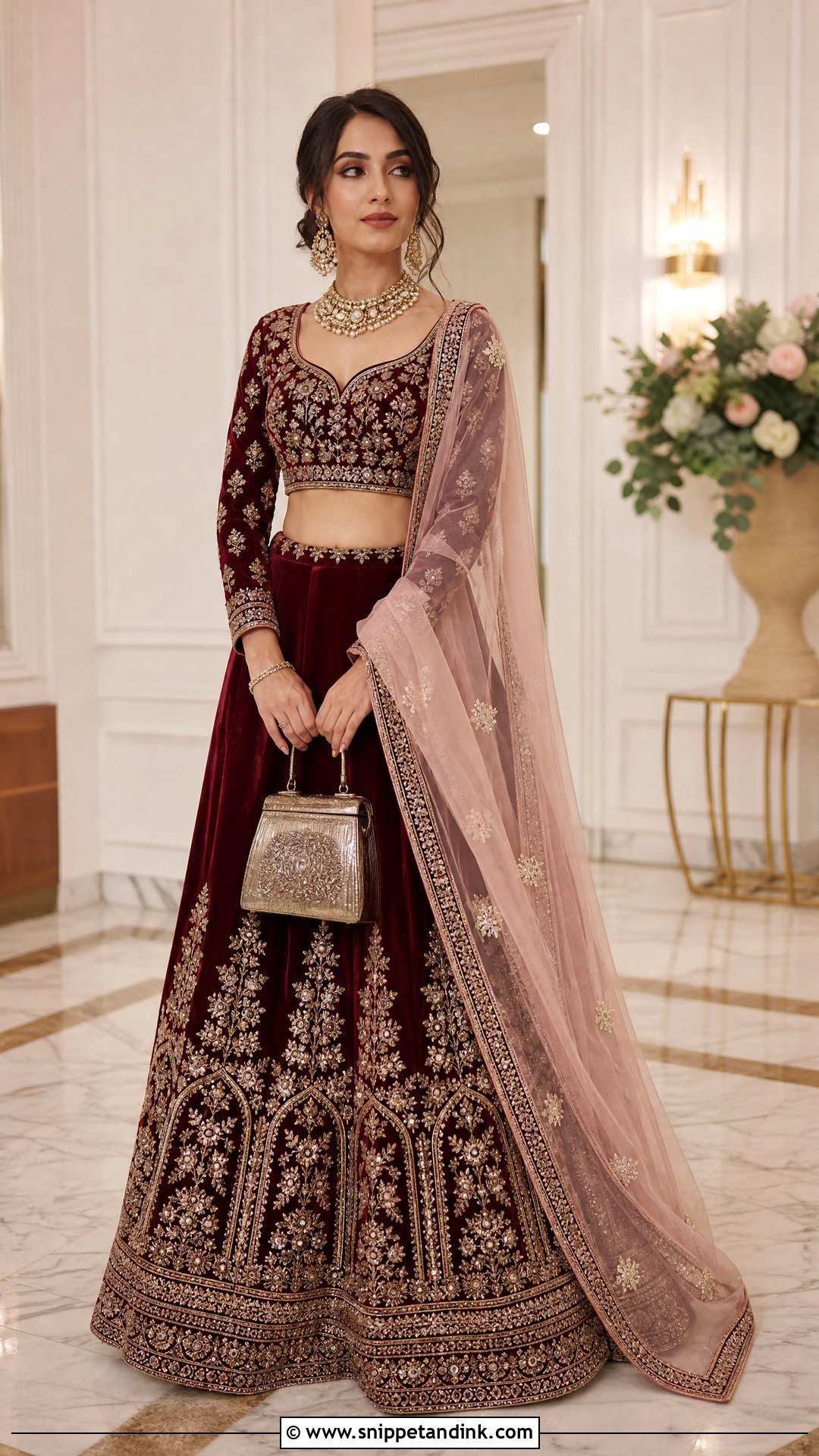
Velvet needs cold weather. Deep burgundy, navy, forest green, plum and blackened maroon show off its depth without extra jewelry. A velvet blouse with a velvet skirt doubles the warmth and the weight, so unless the venue is chilly, I’d balance the skirt with a lighter silk blouse and a sheer dupatta. Watch the pile, too. Velvet catches light differently depending on which way it runs, and panels cut in opposite directions look like two shades in photographs, so check the seams in daylight before you buy. Antique gold earrings, a statement necklace, stacked bangles and closed-toe juttis suit the season, with a small structured bag and embroidery kept to the hem, neckline or waist. A sleek bun keeps attention on the fabric.
10. Chiffon Saree for Summer Indian Wedding
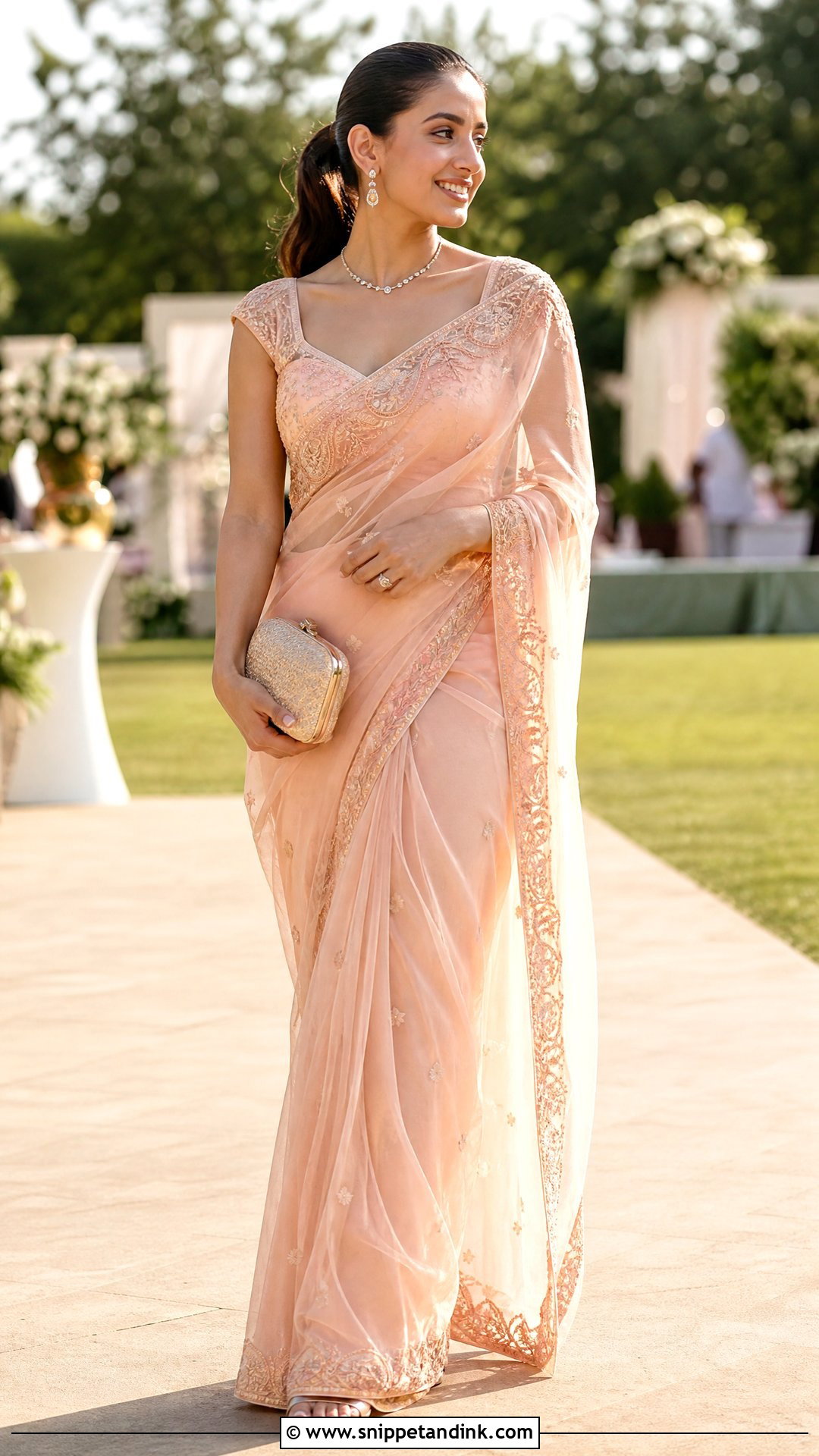
Chiffon is the coolest saree fabric I can put someone in for a summer wedding. It’s light and drapes close to the body, so choose a light color with threadwork, a narrow border or a little sequin work that won’t drag the drape down. Blouse sleeves come down to how much coverage you want. Chiffon is also slippery. The pleats need firm pinning and the pallu should be pinned at the shoulder, especially outdoors, where a breeze will lift it straight off. Medium earrings, a delicate necklace, a slim clutch and metallic sandals keep things light, with fresh makeup and an updo or ponytail to keep your neck cool. It looks graceful without tipping into formal.
11. Pre-Draped Saree for Indian Wedding Reception
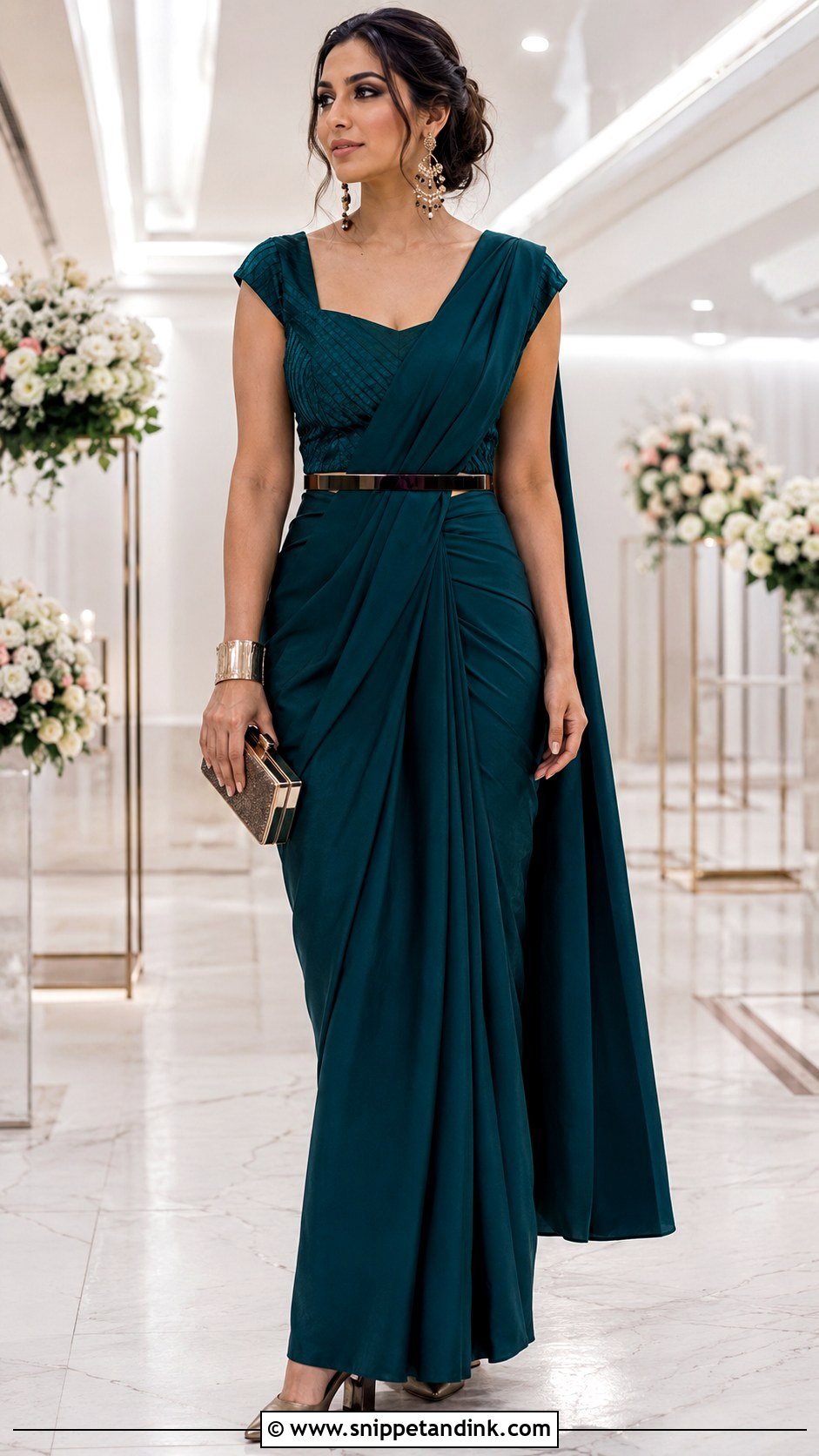
A pre-draped saree gives the look of a traditional drape and needs almost no adjustment through a long evening. Look for stitched pleats and a clean pallu, then balance the soft lower half with a structured blouse. Satin, crepe, chiffon and organza all give a modern reception line, in champagne, deep teal, berry, silver or midnight blue. Statement earrings, a cuff, pointed block heels and a box clutch suit it. A belt defines the waist and holds the drape steady; I’d keep it slim so it doesn’t crowd an embellished blouse. Finish with smooth waves or a low bun. Check the size chart against your hips as well as your waist, because stitched pleats are the hardest part for a tailor to adjust.
12. Cape Lehenga for Indian Wedding Reception
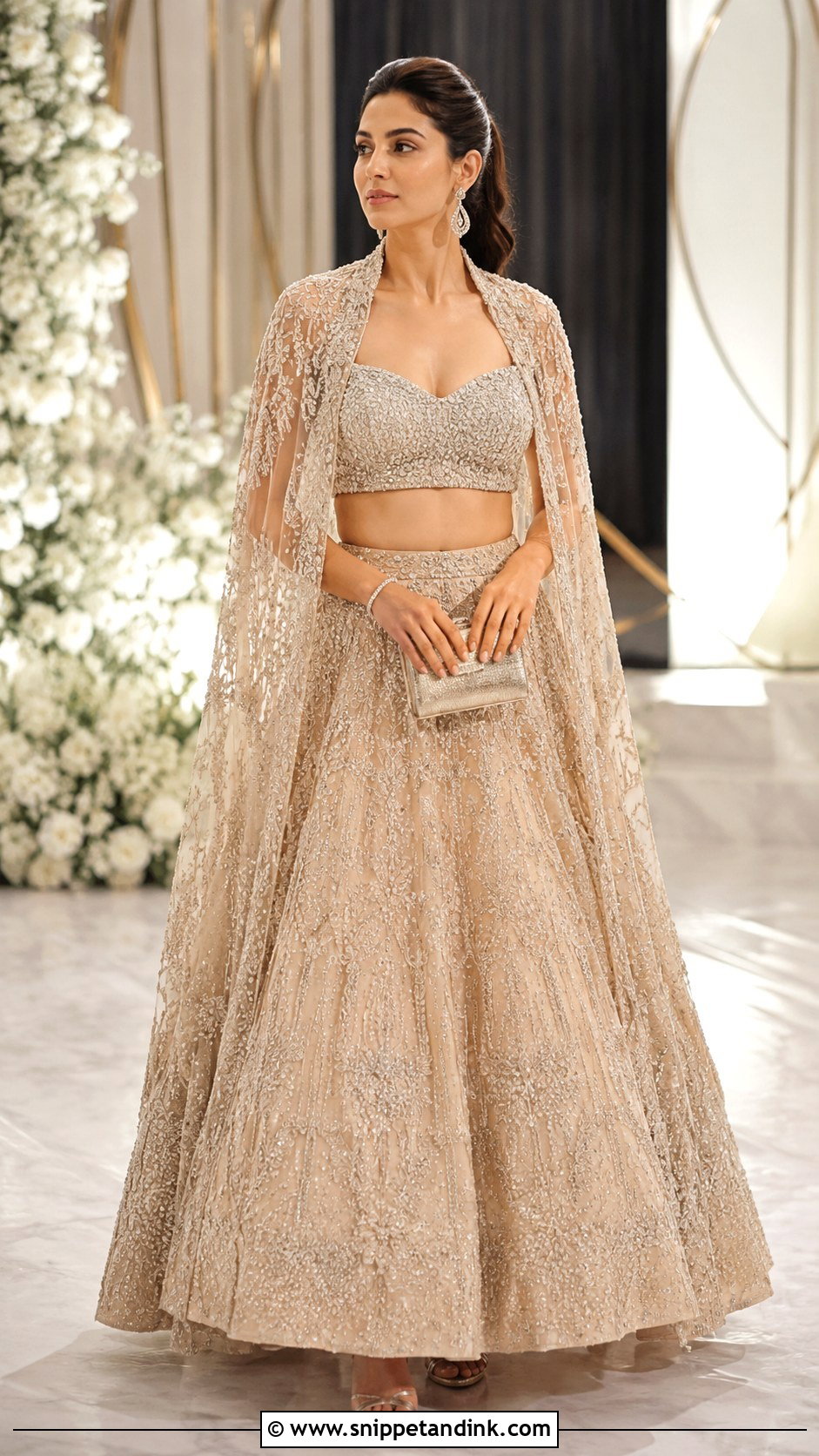
A cape keeps the familiar lehenga shape and adds a modern layer. Start with a streamlined skirt and fitted blouse, then a sheer embroidered cape from the shoulders. Length changes everything: a waist-length cape shows off the skirt, while a long one adds drama and covers the arms, which many older women appreciate. Stay with one main color so the layers don’t compete; deep emerald, navy, plum, champagne and dusty rose are dependable evening shades. Drop earrings, a bracelet, metallic heels and a compact clutch are enough, and skip the necklace if the cape neckline is worked. With no dupatta to hold, your hands stay free for a plate at the buffet. Wear hair up or swept aside so the cape’s line shows.
13. Gharara Suit for Indian Wedding
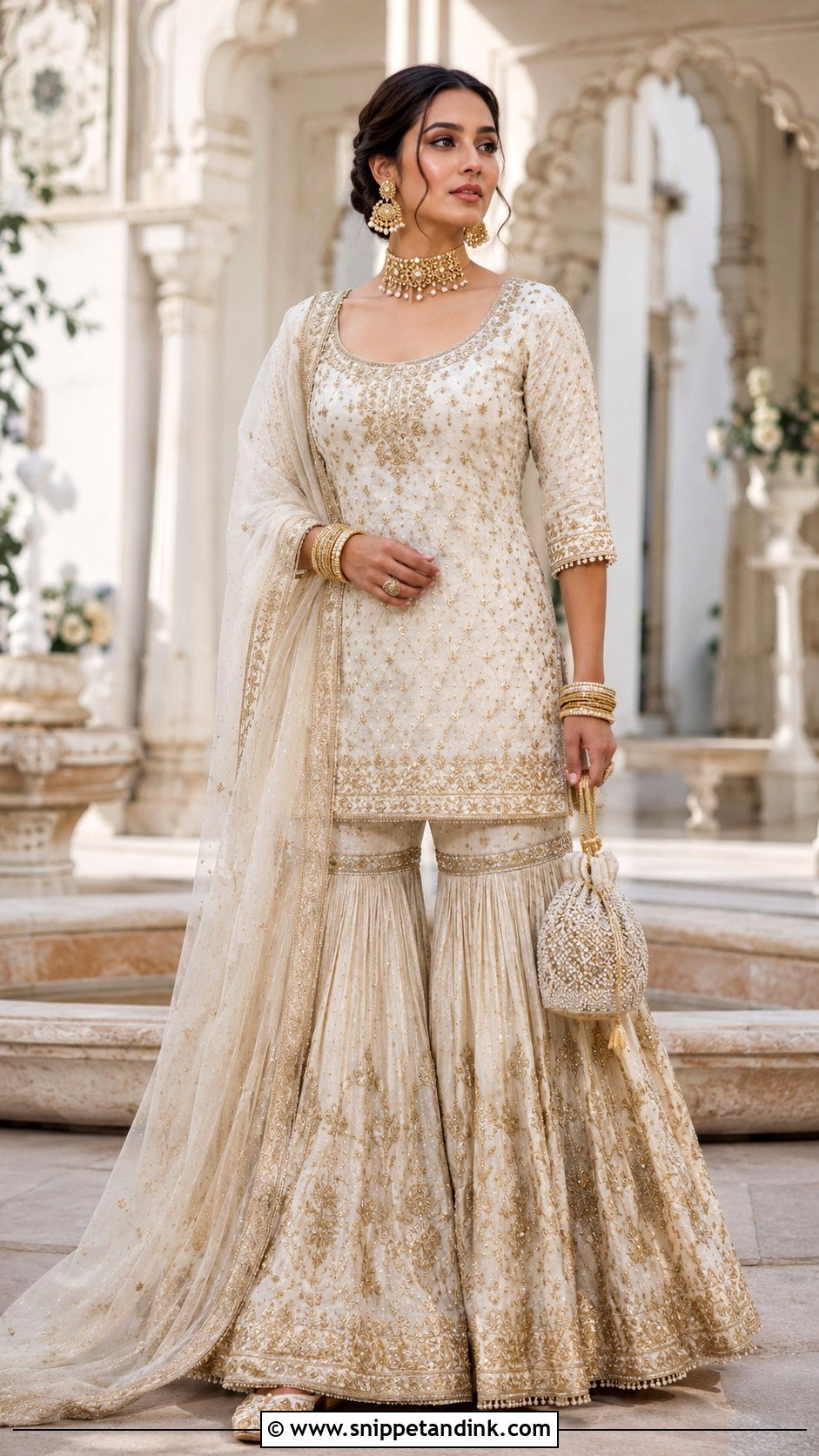
A gharara is defined by its knee seam, where a narrow upper leg meets a full flare below. Pair it with a short or mid-length kurta and a coordinated dupatta. When the hem is heavily embroidered, I keep the kurta simpler, because the gharara’s structure is the feature. Rich colors suit evening, and ivory, peach, mint and powder blue work in daylight. A choker or large jhumkas, several bangles, embroidered juttis and a beaded potli complete it. Pin the dupatta over one shoulder so the kurta and waistband stay visible. It’s comfortable for guests who want volume without a skirt, though the flare takes practice on stairs: lift it from the knee seam, not the hem. A sleek braid or soft bun finishes it.
14. Palazzo Suit for Indian Wedding
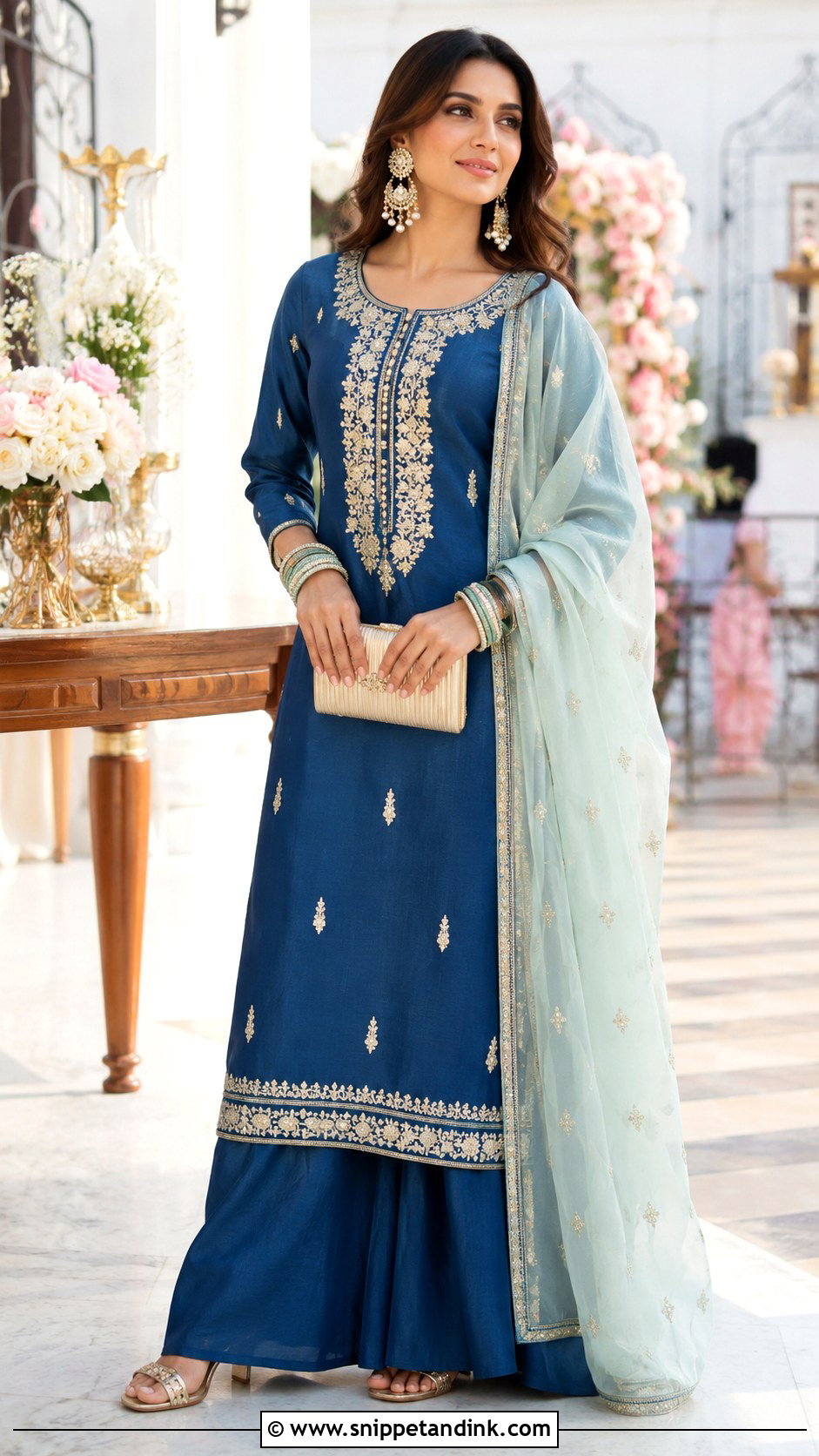
For anyone who wants polish without a lehenga’s weight, a palazzo suit pairs wide-leg pants with a straight or slightly flared kurta. Choose embroidery at the neckline and cuffs and a light dupatta with a coordinated border. One color top to bottom lengthens the figure; a contrasting dupatta adds interest. Chandelier earrings, stacked bangles, block heels and a rectangular clutch finish it. Proportion is where I spend fitting time. Petite women do better with moderately wide pants and a shorter kurta, so they don’t disappear in fabric, while taller women can carry a longer kurta with flowing palazzos. Hem the palazzos to just skim the floor. It suits a smaller ceremony, a welcome dinner or a daytime family gathering.
15. Jacket Lehenga for Indian Wedding
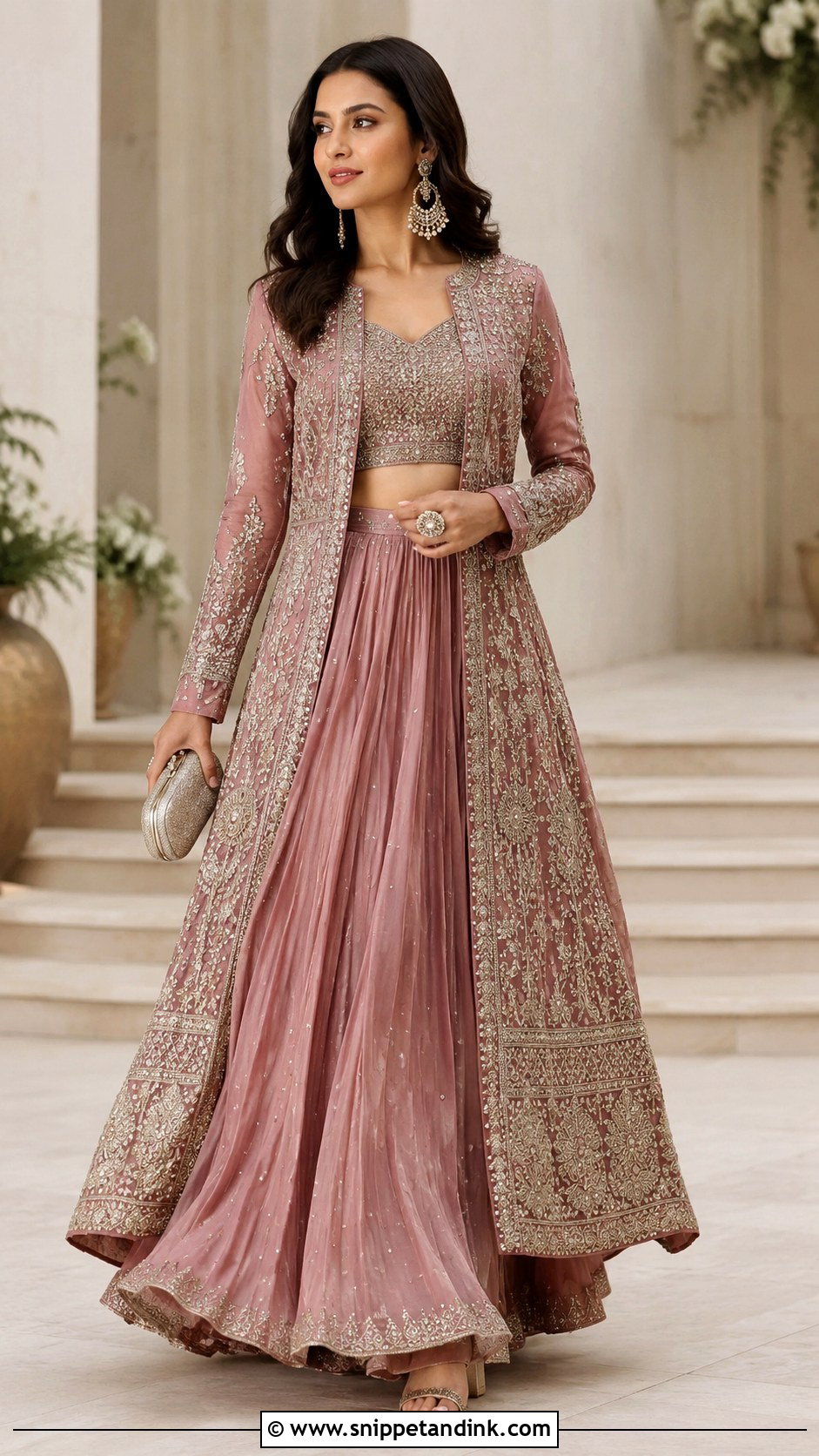
Layering a long, front-open embroidered jacket over a simple skirt and fitted blouse gives coverage and structure at once. A sheer jacket stays light; silk or brocade looks more formal. Vertical motifs and a clean front opening draw the eye up and down, which lengthens the figure. Because the jacket does the decorating, I cut back the jewelry: statement earrings, a ring, block heels and a small clutch usually do it. A low ponytail or bun keeps the neckline visible. Most jacket lehengas don’t need a dupatta at all, which makes dancing easier. Do sit down in it before buying, though. A long stiff jacket bunches behind you on a chair, and a back vent solves that.
16. Indo-Western Dhoti Set for Indian Wedding
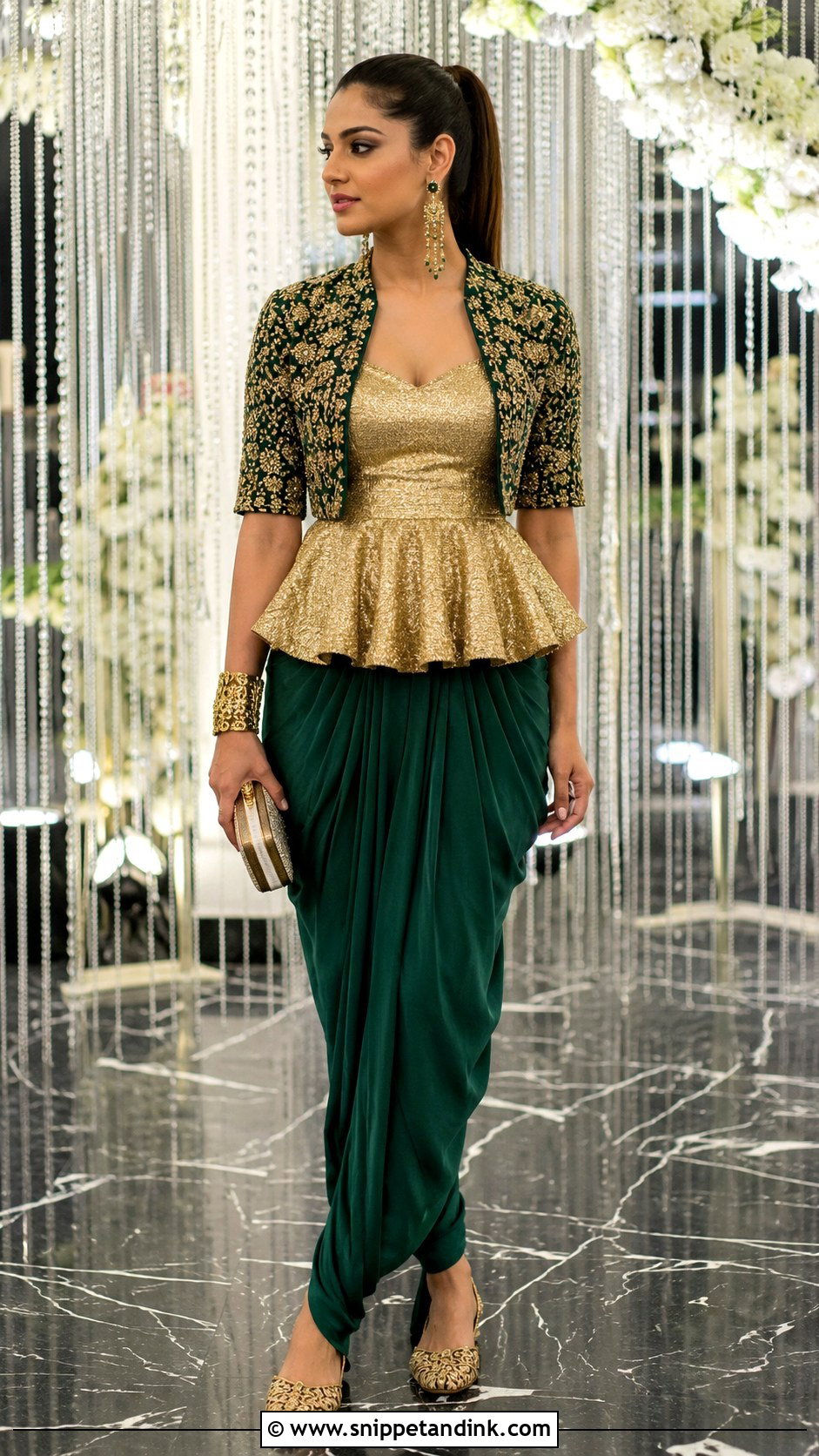
Draped dhoti pants with a peplum top or fitted kurta give real movement below and a defined waist above. Add a cropped jacket, an embroidered belt or a light cape when the event calls for more. Jewel tones, metallic neutrals and bold contrasts suit a sangeet or reception. Long earrings, a statement cuff, a compact clutch and heeled juttis or block sandals finish it. Keep the top short enough to show where the dhoti gathers, because that cowl is the whole point of the garment. A high ponytail or sleek bun sharpens the look. For a wedding I only suggest pre-stitched dhoti pants; a hand-draped dhoti can work loose on the dance floor.
17. Saree Gown for Indian Wedding Reception
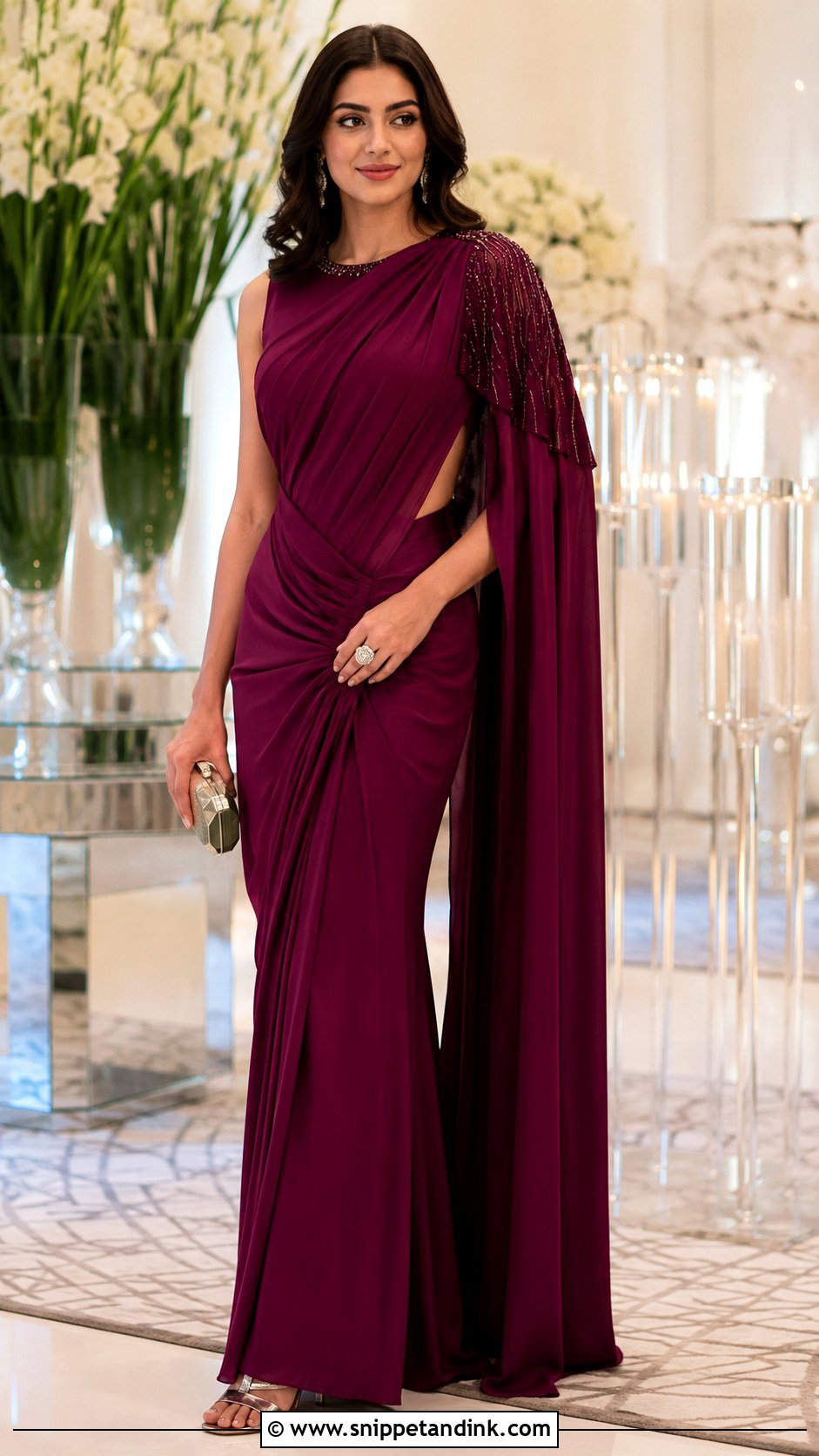
If you love a saree’s drape but not managing pleats, a saree gown builds that drape into a floor-length dress. Look for a defined waist, comfortable lining and a shoulder drape that’s stitched or hooked in place. Crepe and satin give a smooth finish, chiffon a lighter swing. Keep embroidery to the bodice or pallu area. Shoulder-grazing earrings, a cocktail ring, metallic heels and a hard-case clutch suit it; sweep your hair aside for an embellished shoulder, or into a clean bun for a detailed neckline. Alterations need a careful hand. Move the waist even an inch and the drape falls in the wrong place, so I’d take it to a tailor who has altered draped gowns before.
18. Brocade Anarkali for Indian Wedding
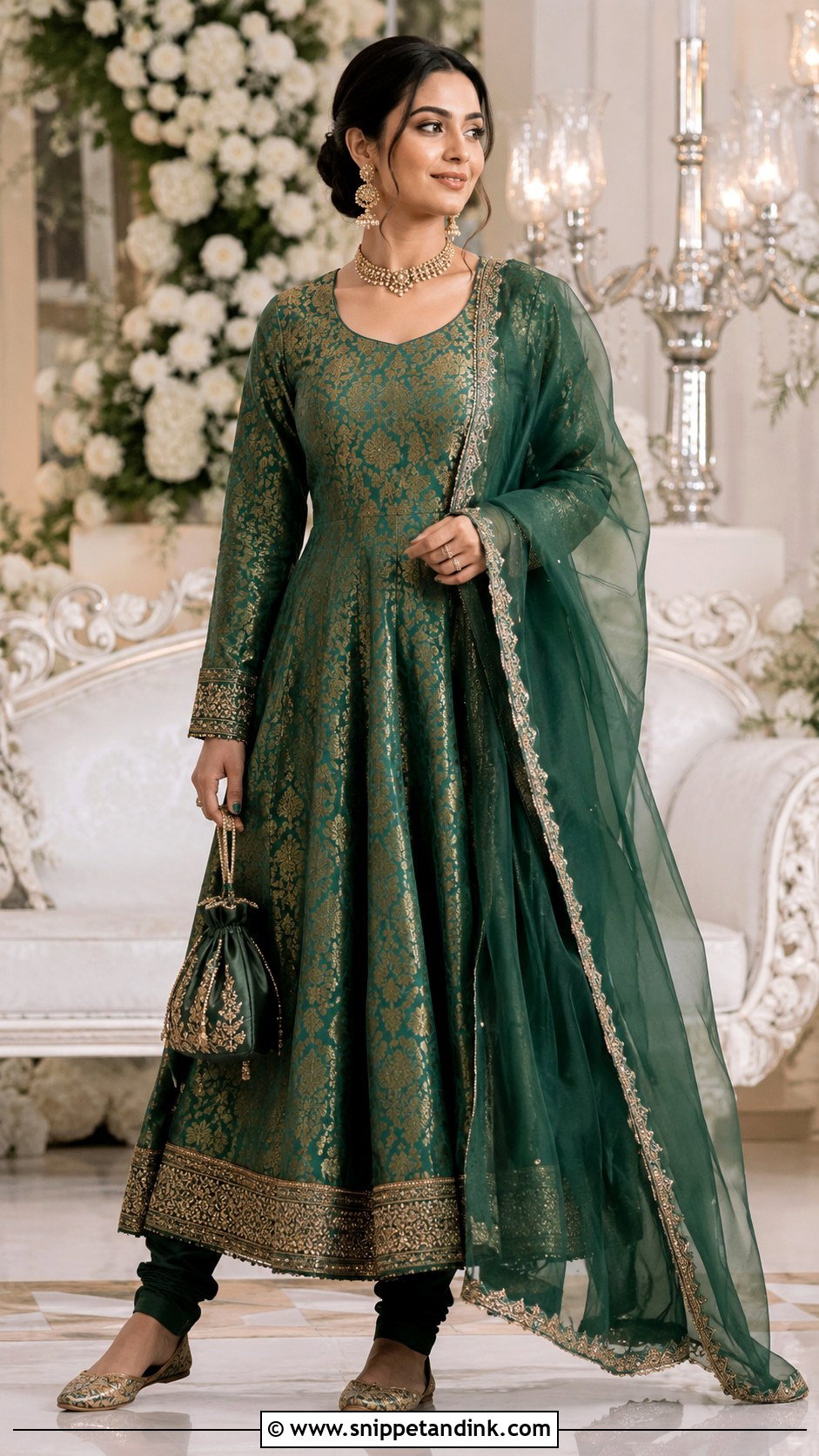
Brocade’s woven pattern gives an Anarkali a formal look without needing surface embellishment. A fitted bodice with a moderately flared skirt suits the stiffer fabric; a very full brocade skirt stands away from the body like a bell. Pair it with churidar and a plain organza or chiffon dupatta, since a patterned dupatta against patterned brocade gets busy. Emerald, ruby, navy, mustard and magenta suit evening, while ivory and pastel gold soften it for day. Antique gold earrings with a matching necklace, embroidered juttis and a small potli complete it. Three-quarter sleeves give comfortable coverage, and a center-parted bun keeps it simple. Mothers and aunts often ask me for exactly this kind of dignified outfit.
19. Organza Saree for Indian Wedding
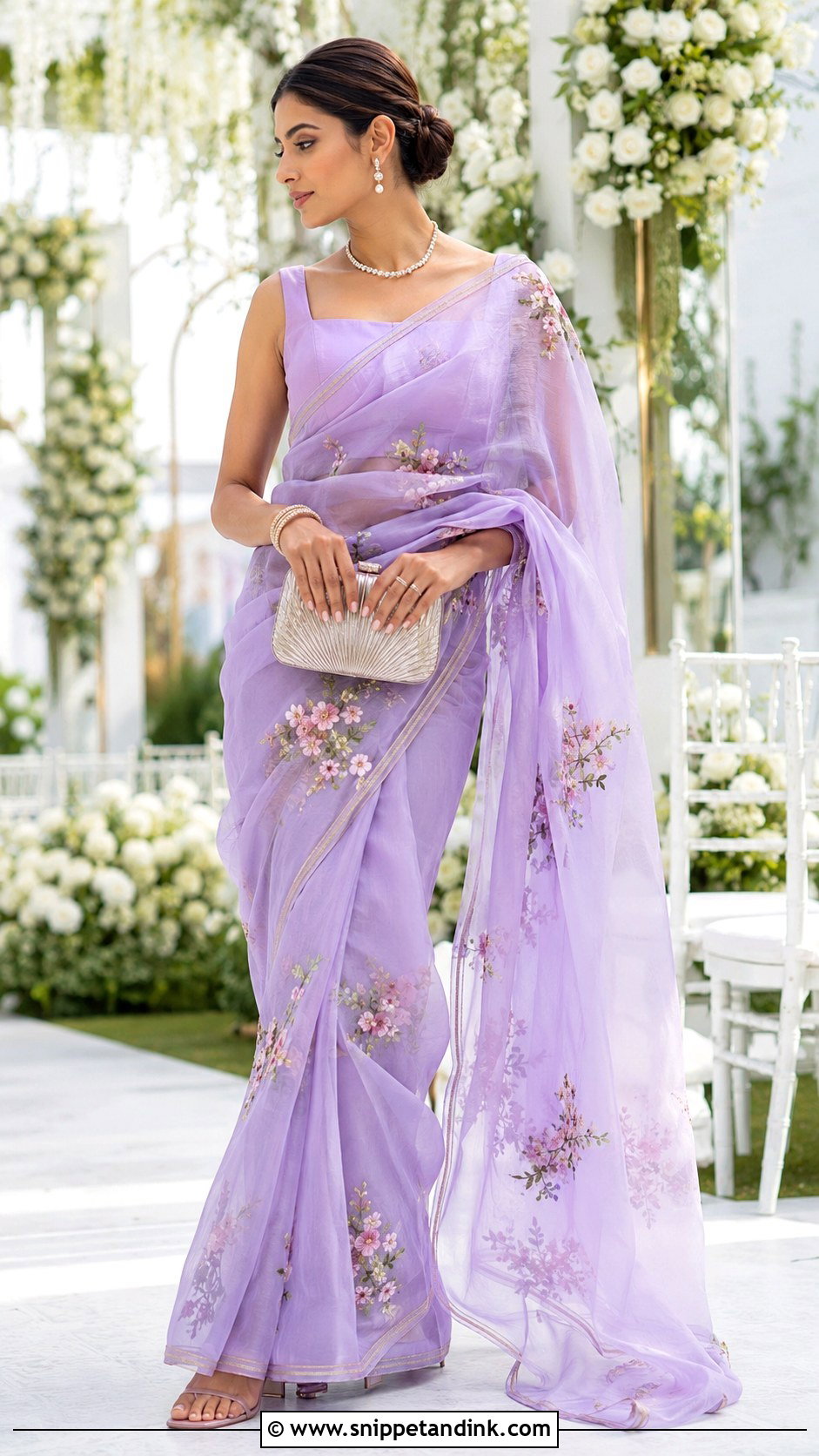
Organza is crisp and see-through, which is both its charm and its challenge at a daytime wedding. Floral embroidery, prints or a fine embellished border suit it, with a silk, raw silk or matching organza blouse. Because organza holds its shape, it won’t collapse into soft pleats; keep them neat and fewer than usual, or the waist looks bulky. Pearl earrings, a fine necklace, a structured clutch and slim block heels match its light finish. Pastels feel garden-ready, and brighter pink, orange, green or blue are more festive. The petticoat matters more here than with any other saree. Choose a fitted, shaped one in the saree’s exact shade, since a flared cotton petticoat shows through as a pale block.
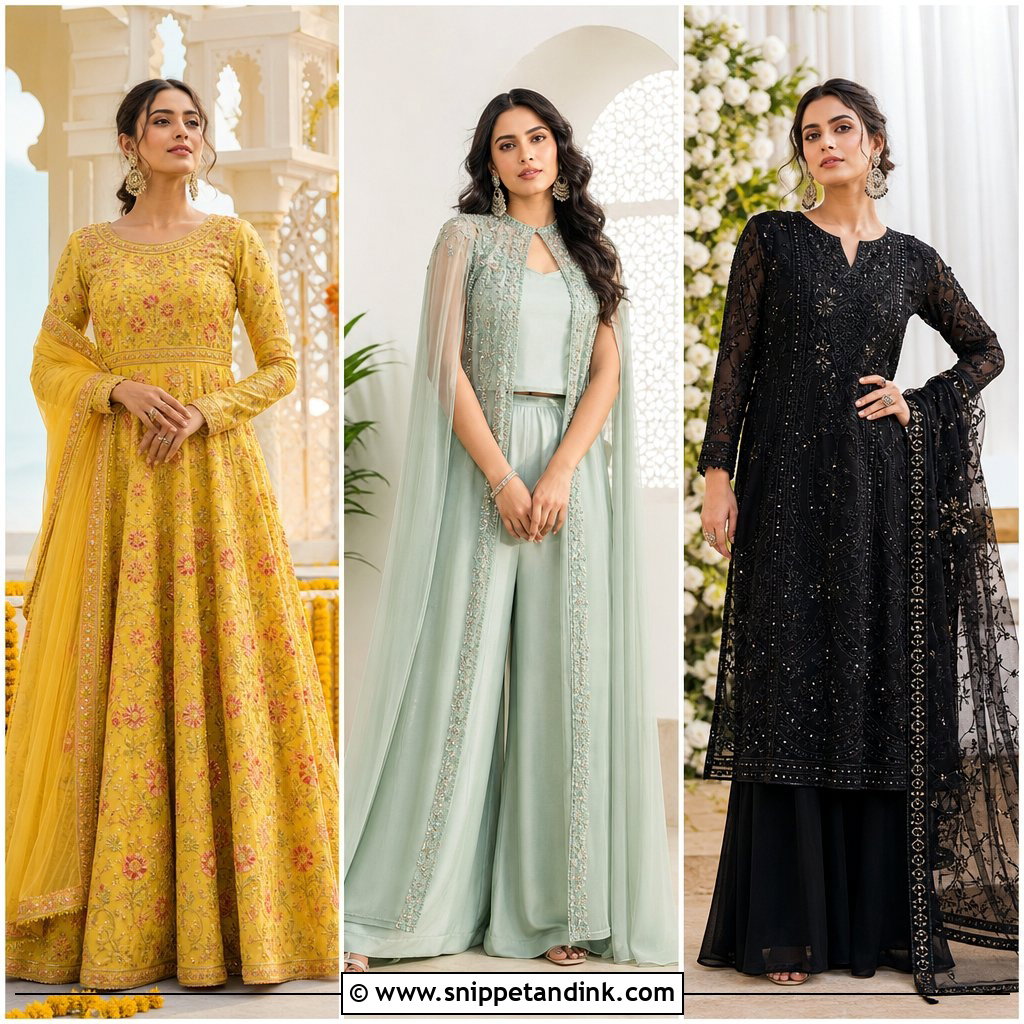
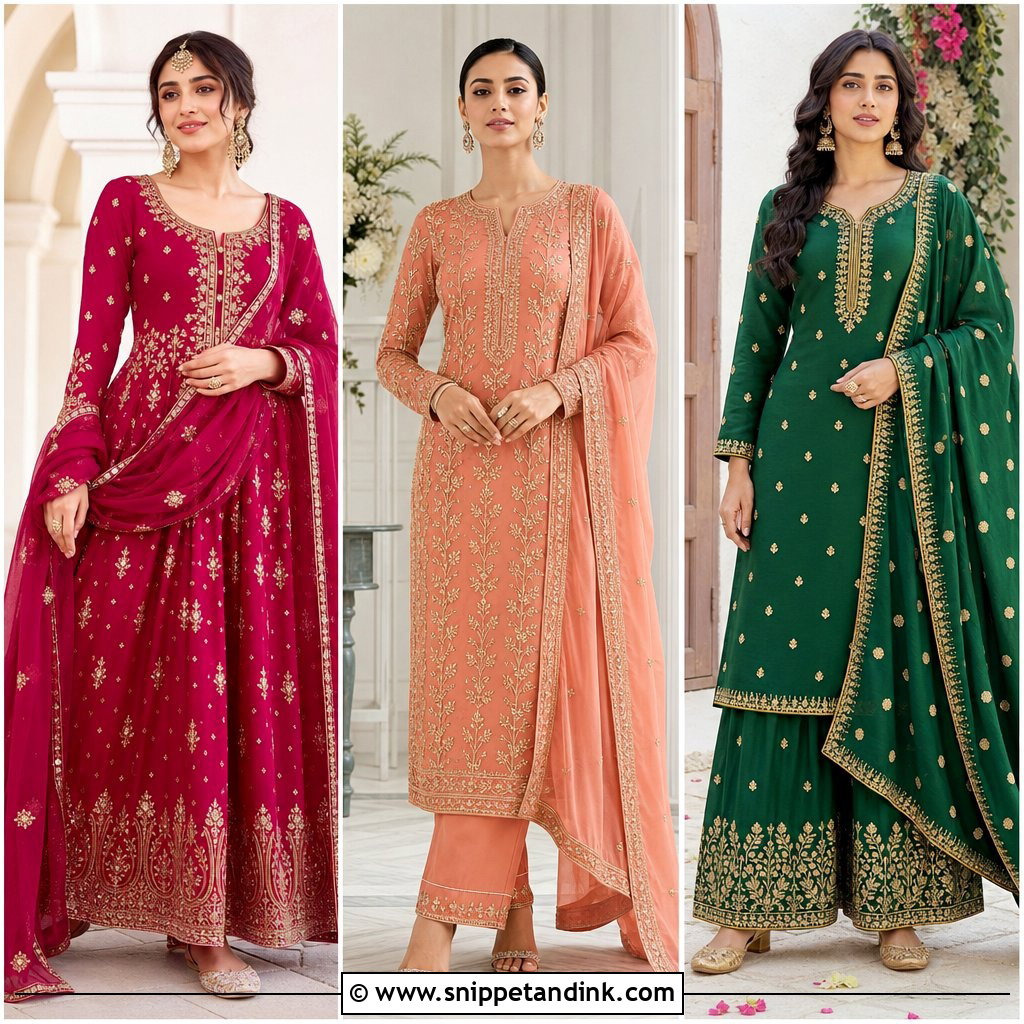
20. Embroidered Kurta Skirt Set for Indian Wedding
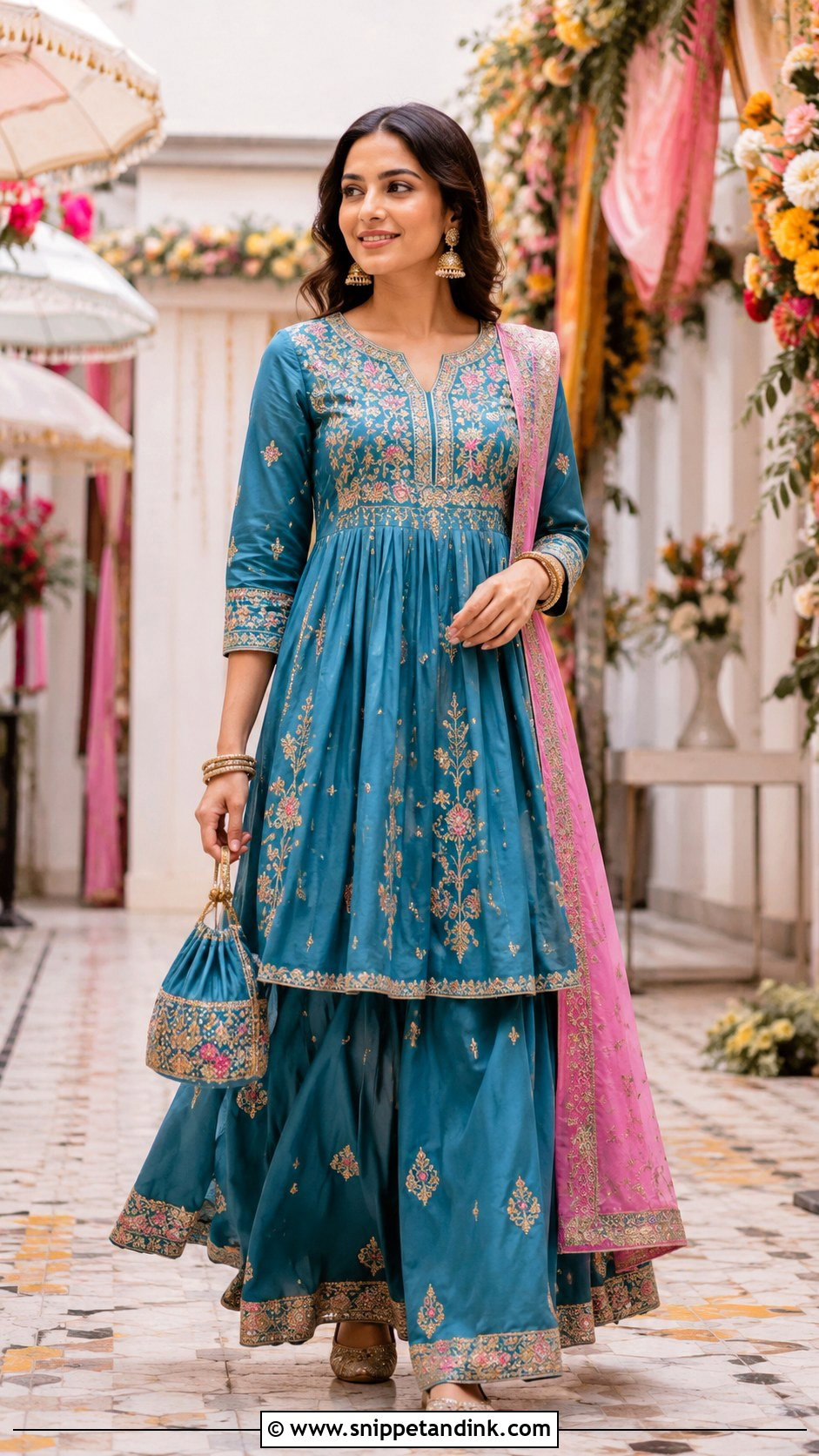
A knee-length flared kurta over a flowing skirt is a fresh alternative to the usual lehenga and blouse, with more coverage. Watch the proportions. The kurta should end clearly above the skirt hem, with enough skirt showing that the outfit doesn’t read as one long dress. Balance the decoration, a plain kurta with a detailed skirt or the reverse. Pink with orange, teal with green, or ivory with gold are easy combinations. Jhumkas, bangles, embellished juttis and a small potli complete it. Keep the dupatta narrow and over one shoulder; two full layers plus a wide dupatta can swamp a smaller frame. It suits traditional ceremonies, day events and anyone who prefers a longer top.
Red, White and Bare Shoulders at Indian Ceremonies
Guests ask me about color etiquette more than anything else, and the honest answer is that customs vary between communities and families. A few habits are widespread enough that I’d follow them unless the hosts tell you otherwise.
- Leave bridal red to the bride at the main ceremony. Rust, wine or coral are fine, but a full red lehenga can look like competition.
- Many families associate plain white and all-black with mourning. Receptions are often more relaxed, but for religious rites I’d add color.
- Gurdwara ceremonies ask everyone to cover their head and remove shoes, so carry a dupatta or scarf and wear something that slips off easily.
- Temple ceremonies usually expect shoulders and knees covered; a jacket or a dupatta over a sleeveless blouse handles that.
- Expect to sit on the floor at some rituals. Skip anything too tight or short to sit cross-legged in comfortably.
If you aren’t sure, ask the couple or a family member what the dress expectations are for each function. Nobody minds the question, and it saves you from switching outfits in a hurry.
Matching the Outfit to the Hour and the Room
Start with the function, then the fabric, then the color. Cotton silk, chiffon and organza are kind to daytime and summer events, while silk, velvet, brocade and sequins belong to grand evenings. Secure the drape, wear shoes you can stand in for hours, keep the jewelry in proportion and carry a bag you can manage with a plate in your other hand. Beyond that, wear the colors and shapes you actually enjoy. Good tailoring is what makes an elaborate outfit comfortable enough to forget about once the celebrations begin.
You'll Like These Ideas:



Leave a Reply