
The waistcoat is what makes a three-piece worth wearing to a wedding. Around the second hour of the reception most grooms take the jacket off, and with a matching waistcoat underneath the outfit still looks finished instead of half-undressed. Colour and fabric should follow the season and venue: navy and charcoal go almost anywhere, while linen, tweed, velvet and paler shades point to a particular setting. Fit counts as much as colour, so I go through shoulders, waistcoat length, sleeve length and trouser hem at every fitting. Below are twenty complete looks, each with the shirt, tie and shoes I would put with it.
How a Wedding Waistcoat Should Sit Under the Jacket
Most three-piece problems I fix come from the waistcoat, not the jacket. It is the piece people try on last and check least, yet it is the one on show for the whole evening.
- Length: the point of the waistcoat should just cover the trouser waistband when you stand. If you see shirt between the two, either the waistcoat is too short or the trousers sit too low.
- Bottom button: on a single-breasted waistcoat it is traditionally left undone, and many are cut to curve away there. A double-breasted one is buttoned all the way.
- Back: the rear panel is lining with an adjuster strap. Tighten it so the waistcoat hugs without the front buttons pulling.
- Belt or braces: a belt buckle can push out under a close waistcoat. Braces give a smoother line and keep trousers from slipping during dancing, so I fit trousers for them where possible.
- Armholes: cut too low, they show a flash of shirt when you raise your glass for a toast.
Bring the shirt and shoes you will actually wear to each fitting. A thicker shirt collar or a heel height change alters where everything lands.
1. Navy Three-Piece Wedding Suit
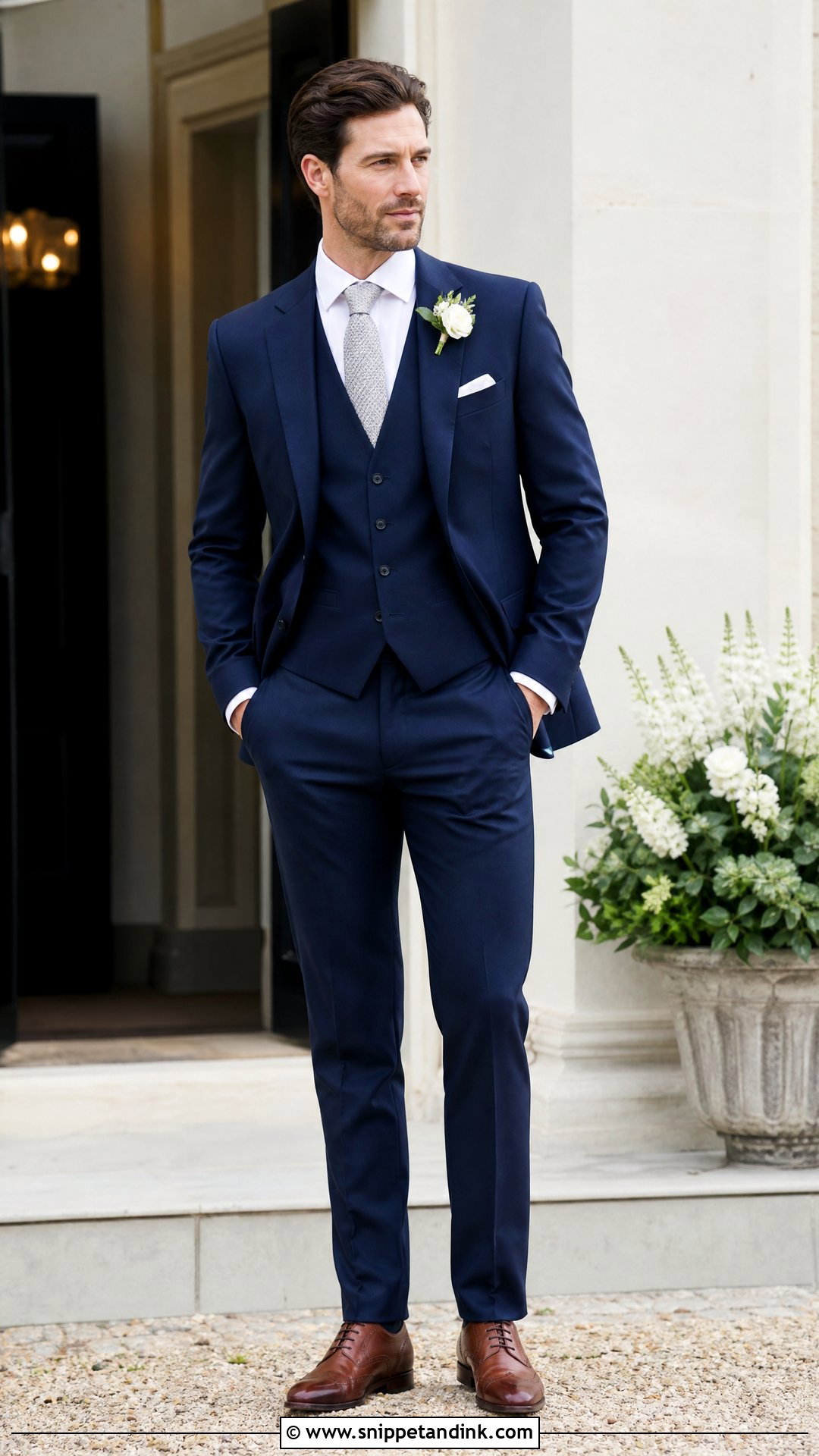
Navy is the suit I recommend when a groom can’t decide, because it reads correctly in daylight and under warm evening lighting alike. A crisp white shirt and a textured tie in silver, burgundy or dusty blue keep it fresh, and a white pocket square stays out of the boutonniere’s way. Shoes set the formality: dark brown Oxfords relax it, polished black lifts it. The test I do first is buttoning the jacket over the waistcoat. If the button pulls into an X, the jacket needs letting out or a size up, because the waistcoat adds a layer that a two-piece fitting never accounted for. Finish with a plain watch, matching belt and quiet cuff links.
2. Charcoal Three-Piece Wedding Suit
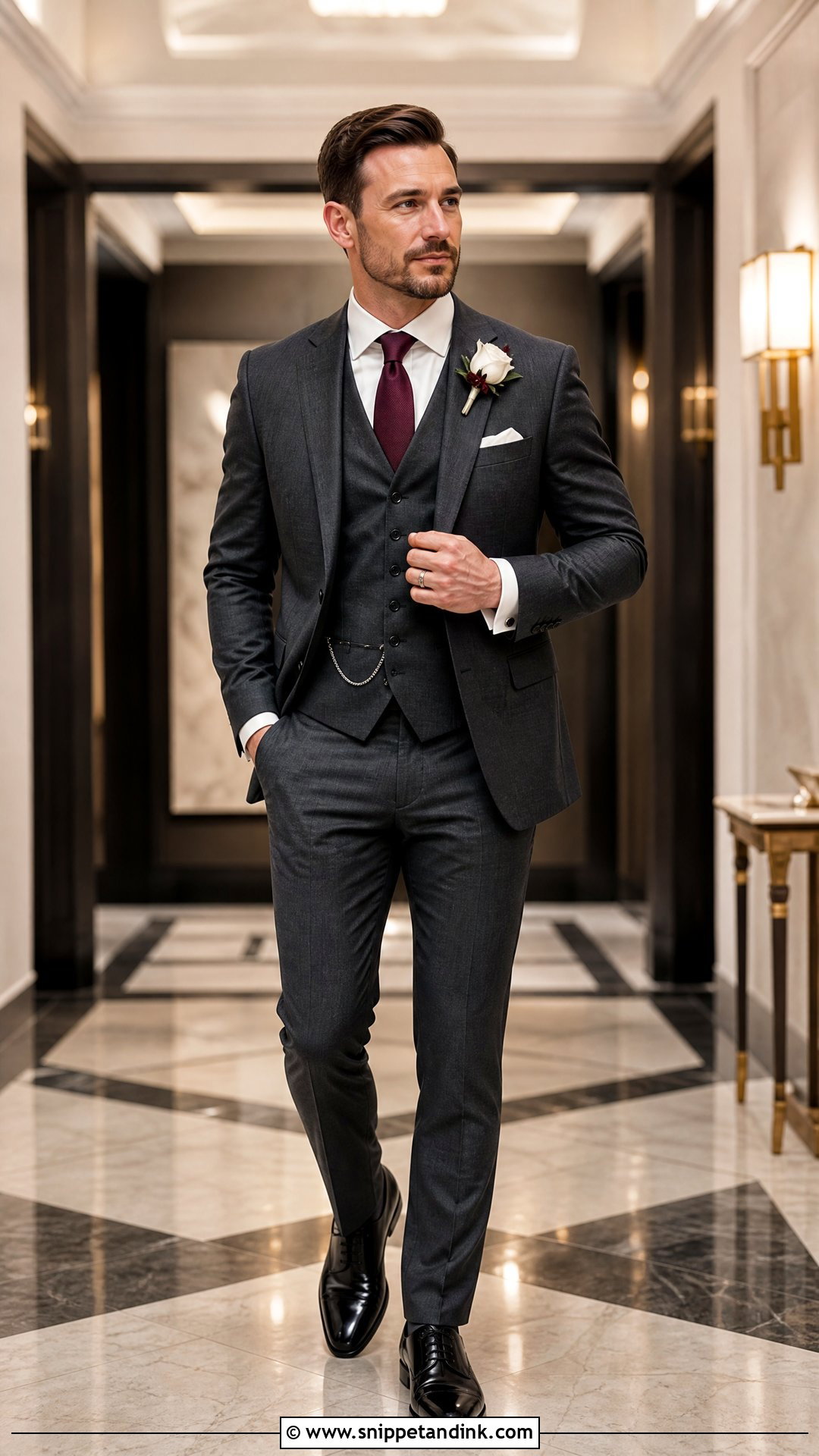
Charcoal has the weight of a dark suit without the funeral edge solid black can carry in daylight. It suits autumn, winter, evening and city ceremonies, and it sits happily with black, wine, forest green or silver ties over a white shirt. Black Oxfords, a black belt and metal cuff links keep it polished. Watch the waistcoat length closely here: on a dark suit any strip of white shirt between waistcoat and waistband shows up like a stripe in photos. Trousers with a flat front and little or no break, a folded white pocket square and a small boutonniere complete it.
3. Light Gray Three-Piece Wedding Suit
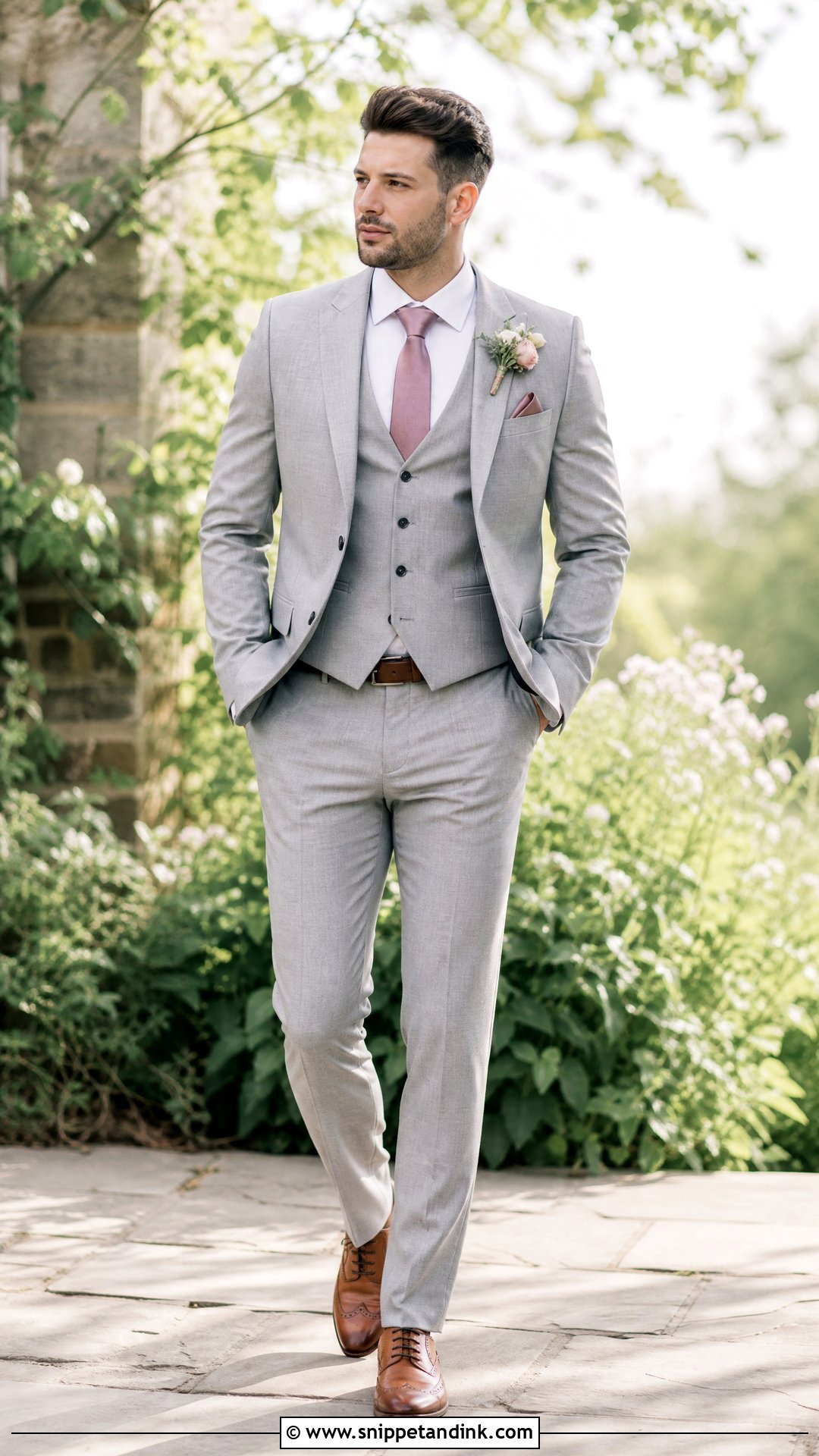
Light grey belongs to bright venues and warm days. It sits a step below charcoal in formality, which makes it right for spring gardens and summer estates. A white or pale blue shirt with a dusty rose, sage or lavender tie keeps it soft, and mid-brown brogues or cap-toes with a matching belt stop it looking washed out. I steer grooms away from shiny grey cloth; in direct sun it bounces light and looks metallic on camera, so a matte worsted is the safer fabric. A subtle check waistcoat can add interest. White linen square, simple links, modest boutonniere.
4. Black Three-Piece Wedding Suit
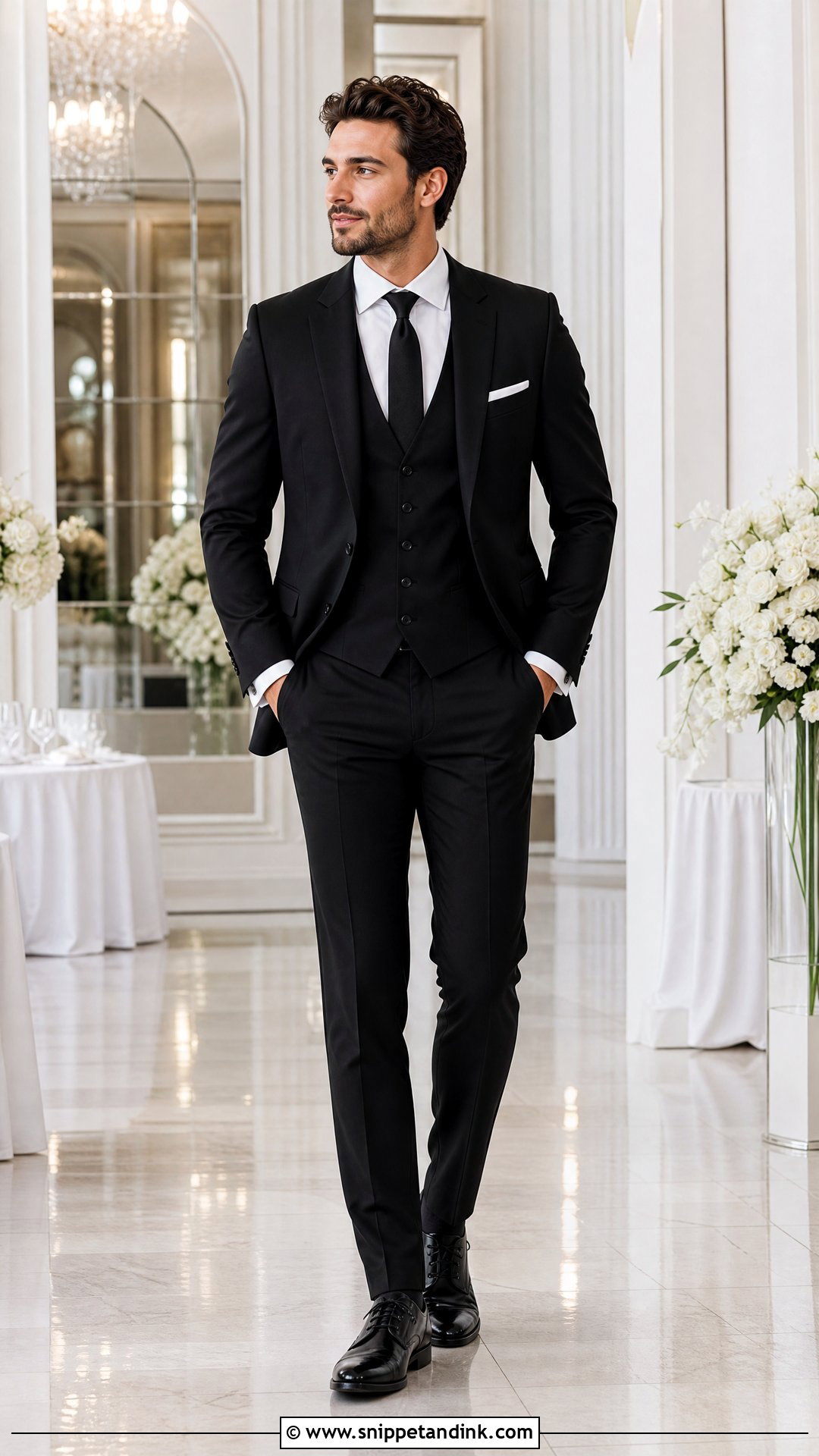
Black three-piece suits are the sharpest option short of a tuxedo, and they suit evening ballrooms and monochrome weddings. A bright white shirt and slim black silk tie keep the palette strict, with black Oxfords, a black belt and silver cuff links. The difficulty with black is that it shows every fault: a collar that stands away from the neck, a sleeve a centimetre too long, a waistcoat pulling at the buttons. Book alterations early so there is time for a second fitting. A white pocket square or a very simple boutonniere is all the contrast it needs.
5. Royal Blue Three-Piece Wedding Suit
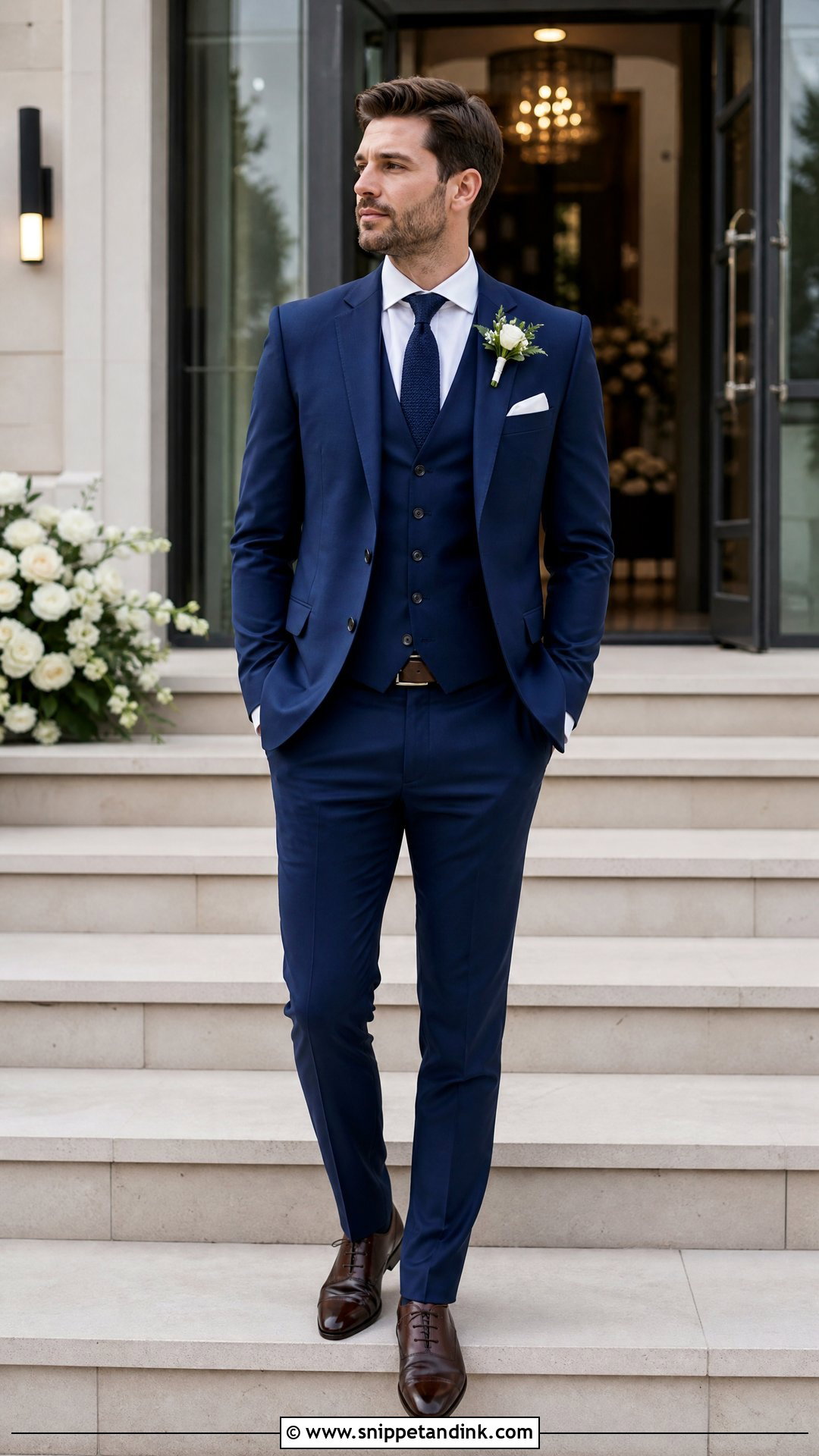
Royal blue is the confident option, and in group photos it marks the groom out clearly from a party in navy while keeping the colour family together. Over a white shirt I’d use a navy, silver or quietly patterned tie. Black shoes give crisp contrast in the evening; dark brown relaxes it for daytime. All three pieces must come from the same bolt of cloth, because saturated blues vary noticeably between dye lots and a mismatched waistcoat is obvious once the jacket comes off. A white pocket square and restrained links are plenty.
6. Beige Three-Piece Wedding Suit
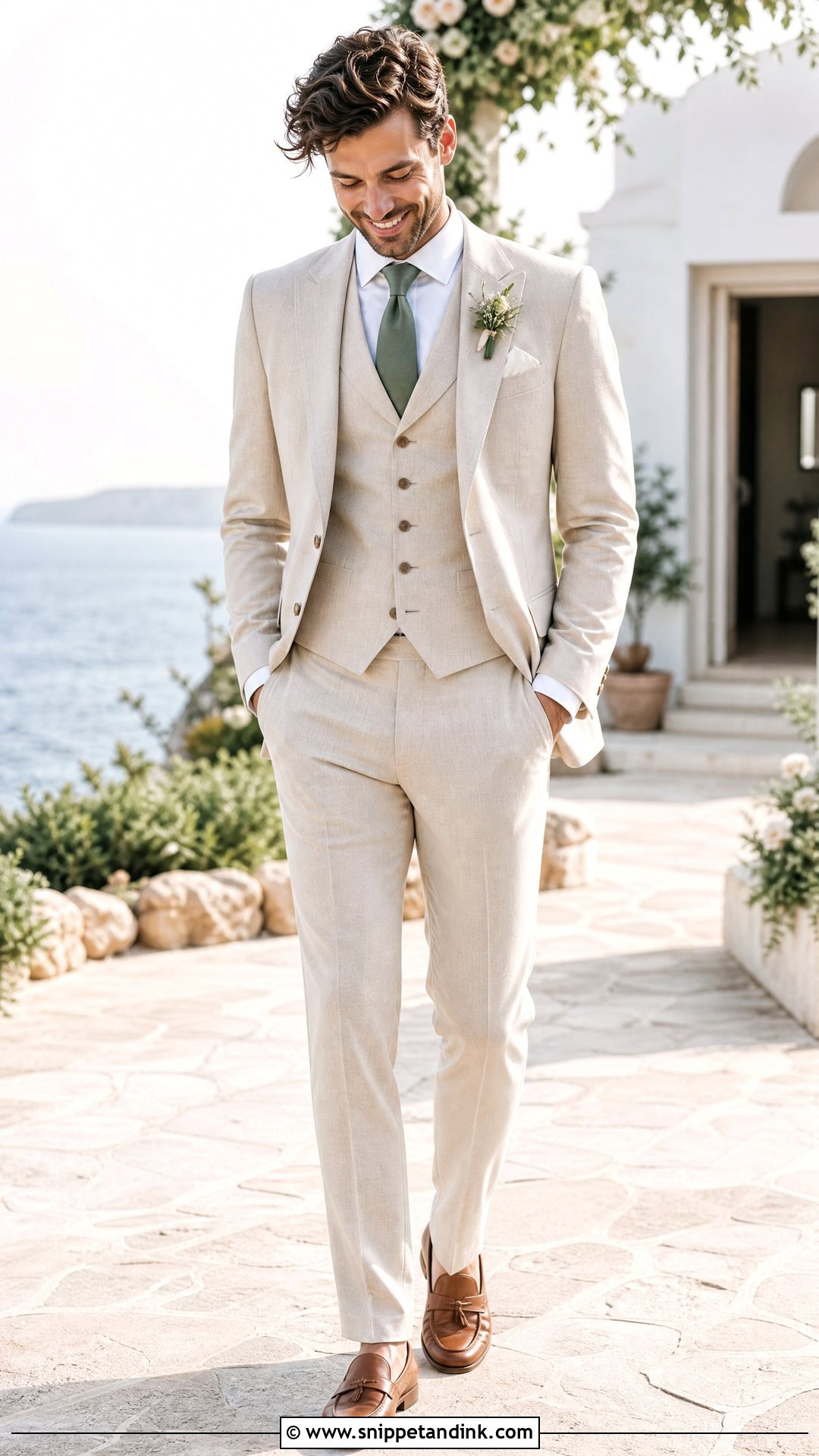
Beige is a warm-weather suit, so the cloth matters more than the colour. Lightweight wool or a linen blend breathes; a heavy wool beige is miserable in the sun. A white shirt gives the cleanest contrast, ivory or pale blue softer, and ties in sage, tan, brown or a muted floral sit well. Brown loafers, suede derbies or leather brogues keep the footwear relaxed. One thing I always check is skin tone: beige close to your own colouring makes the outfit disappear on camera, so pick a shade a clear step lighter or darker. Cream square, woven belt for a casual venue, natural boutonniere.
7. Cream Three-Piece Wedding Suit
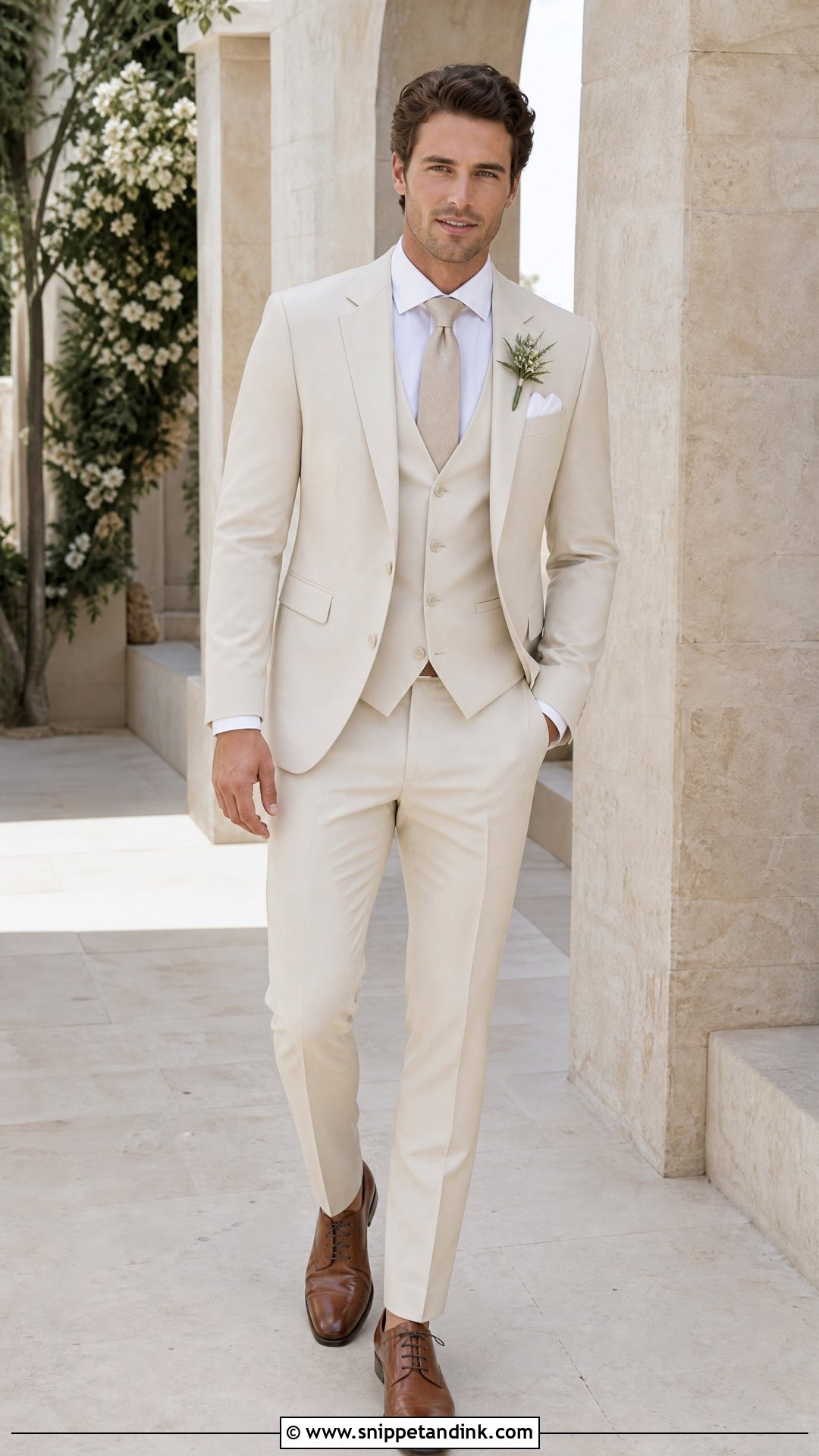
Cream is softer than bright white and much kinder to most complexions in strong sun, which is why I prefer it for coastal and resort weddings. Over a white shirt it gives a quiet tonal layer; a pale blue shirt adds more contrast. Ties in tan, champagne, sage or muted gold, with light brown loafers or polished tan lace-ups depending on formality. Pale cloth shows creases and anything carried in the pockets, so empty the pockets before photos and get the suit steamed on the morning. Keep the waistcoat matched, the jewellery minimal and the boutonniere small.
8. Brown Three-Piece Wedding Suit
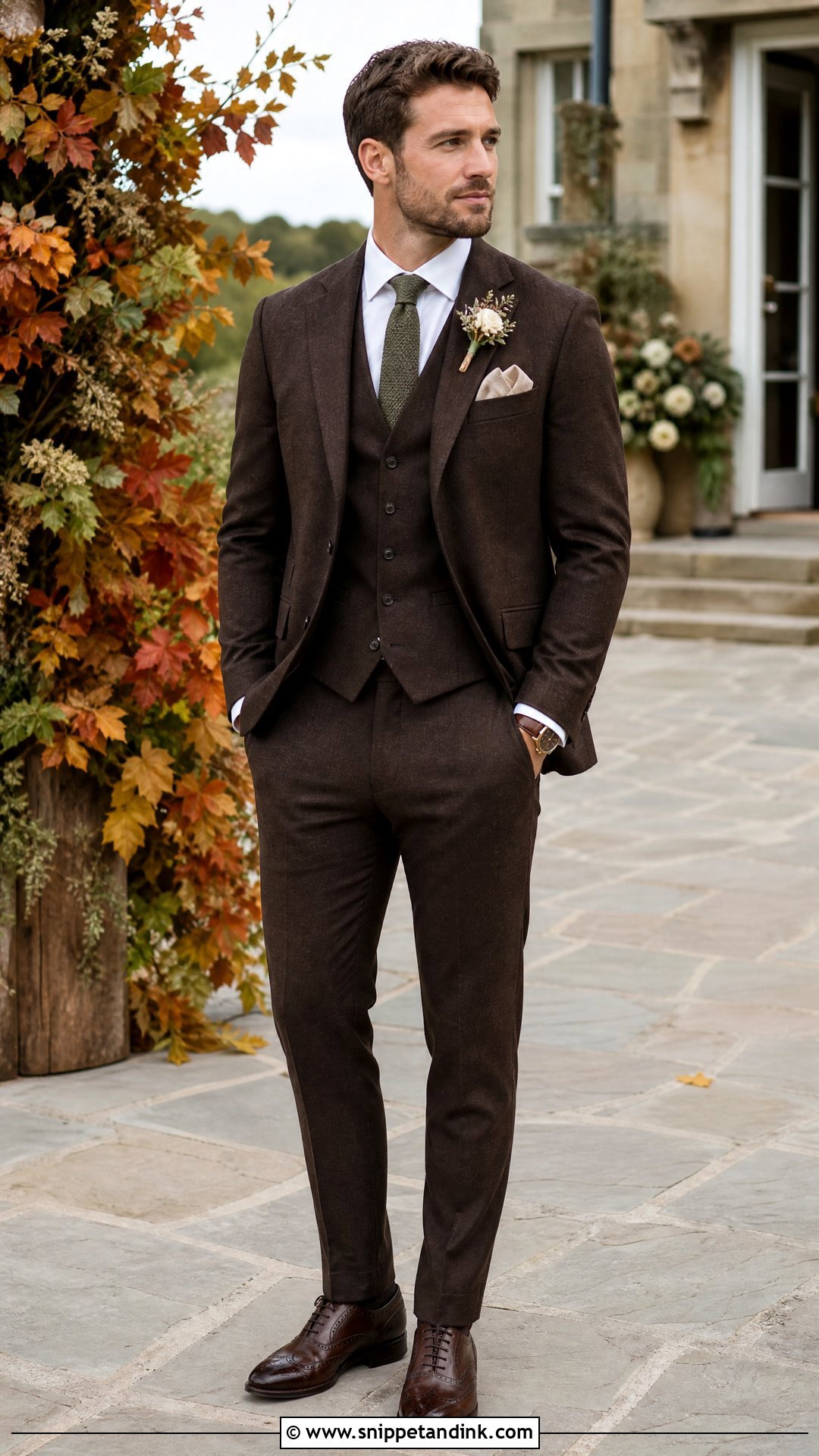
Brown is warm in a way blue and grey never are, and a chocolate or espresso three-piece suit sits naturally among rust, cream, mustard, burgundy and forest green. Pair it with a white, ivory or pale blue shirt and a textured tie in olive, bronze or deep red. Dark brown brogues are the obvious shoe; loafers suit a relaxed day. I’d pick a wool with some visible texture so the waistcoat and jacket don’t look flat. The risk with dark brown is looking dated, which a tapered trouser and a waist with some shape avoids. Keep the pocket square lighter than the suit.
9. Green Three-Piece Wedding Suit
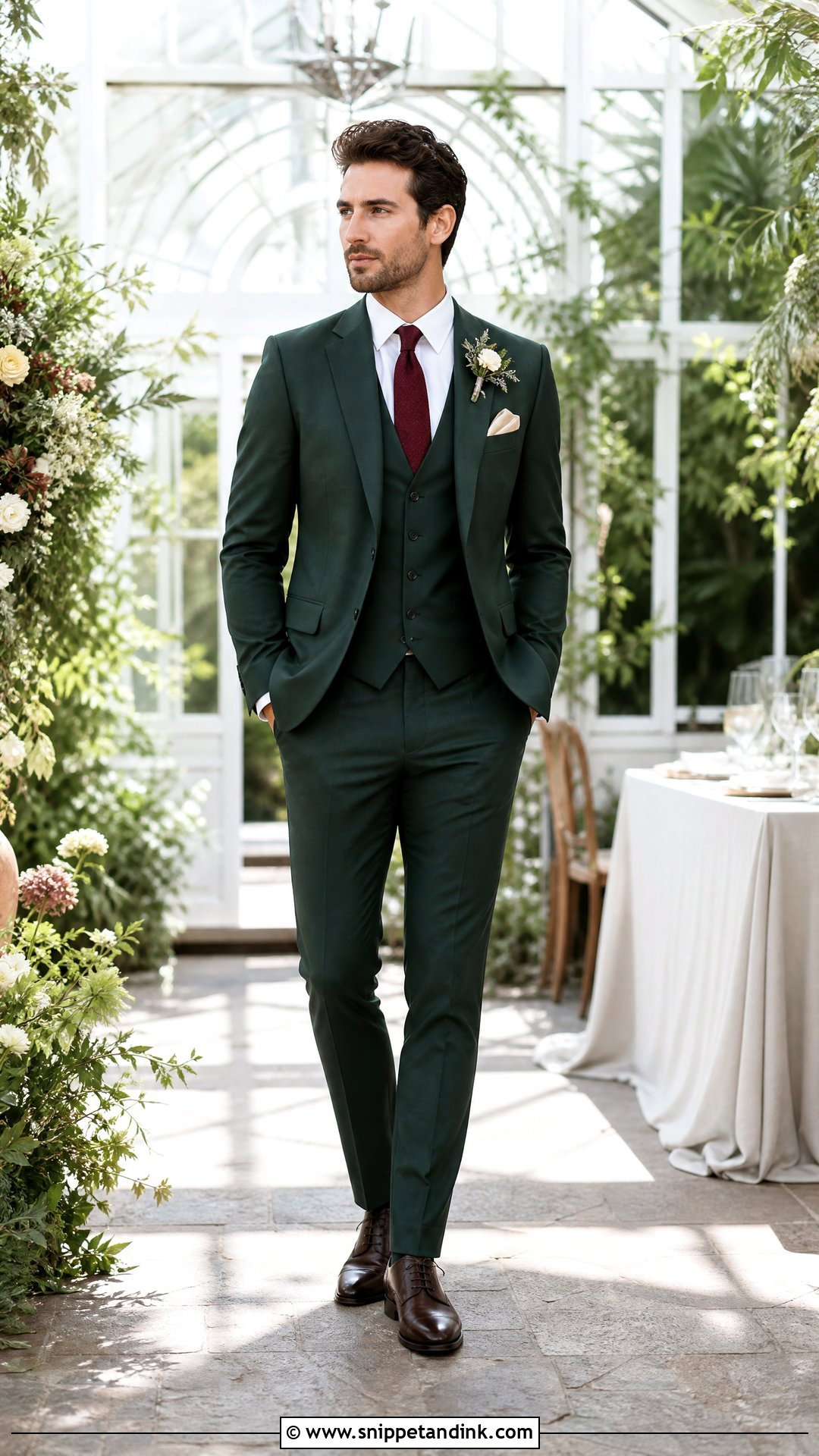
Deep green is the alternative I suggest to grooms who want colour without brightness. Forest, bottle and emerald all sit comfortably among garden greenery and winter decor. A white or ivory shirt grounds it; ties in black, burgundy or gold, or a quiet pattern, finish it. Brown shoes make the green warmer, black Oxfords more formal. Green is the colour most likely to clash with the bridesmaids or the flowers, so I always hold a swatch against the florist’s sample and the bridesmaid fabric before ordering. A cream pocket square and a restrained boutonniere add contrast near the face.
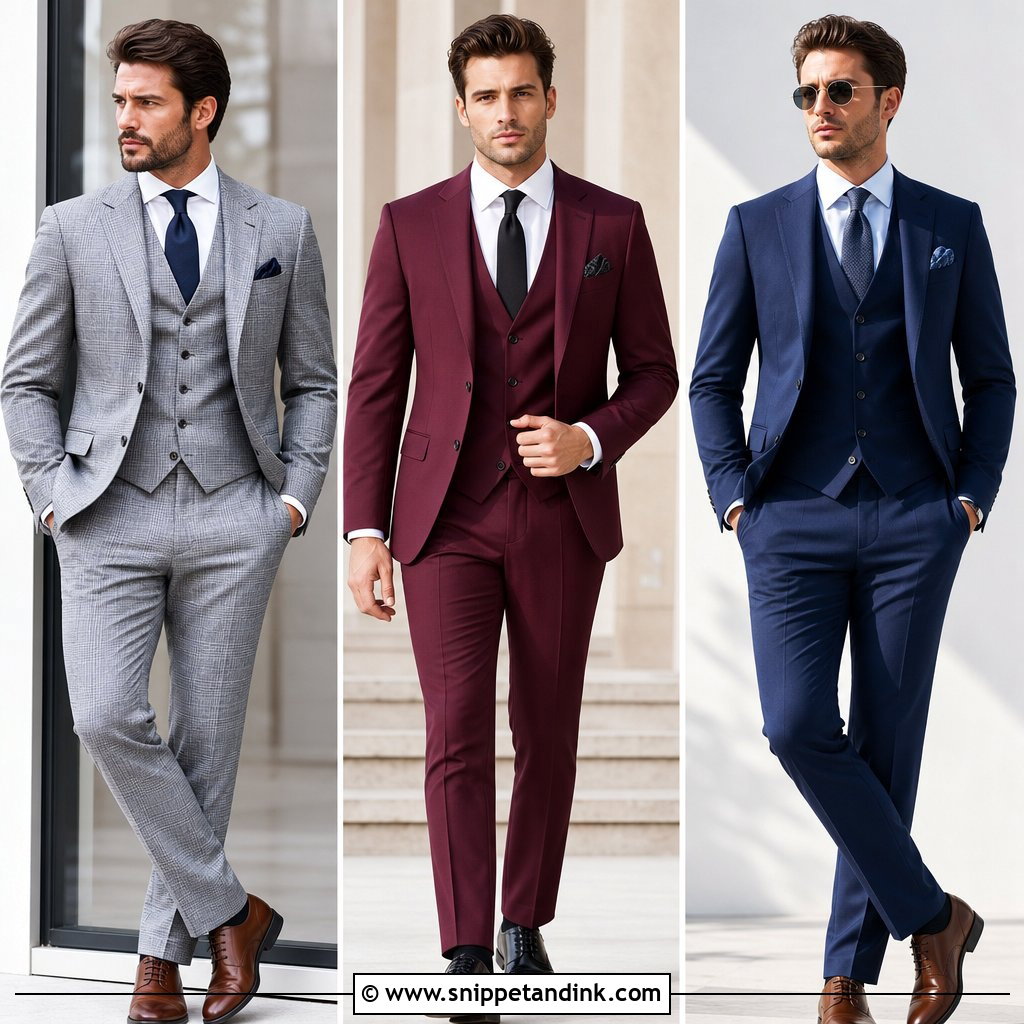
10. Burgundy Three-Piece Wedding Suit
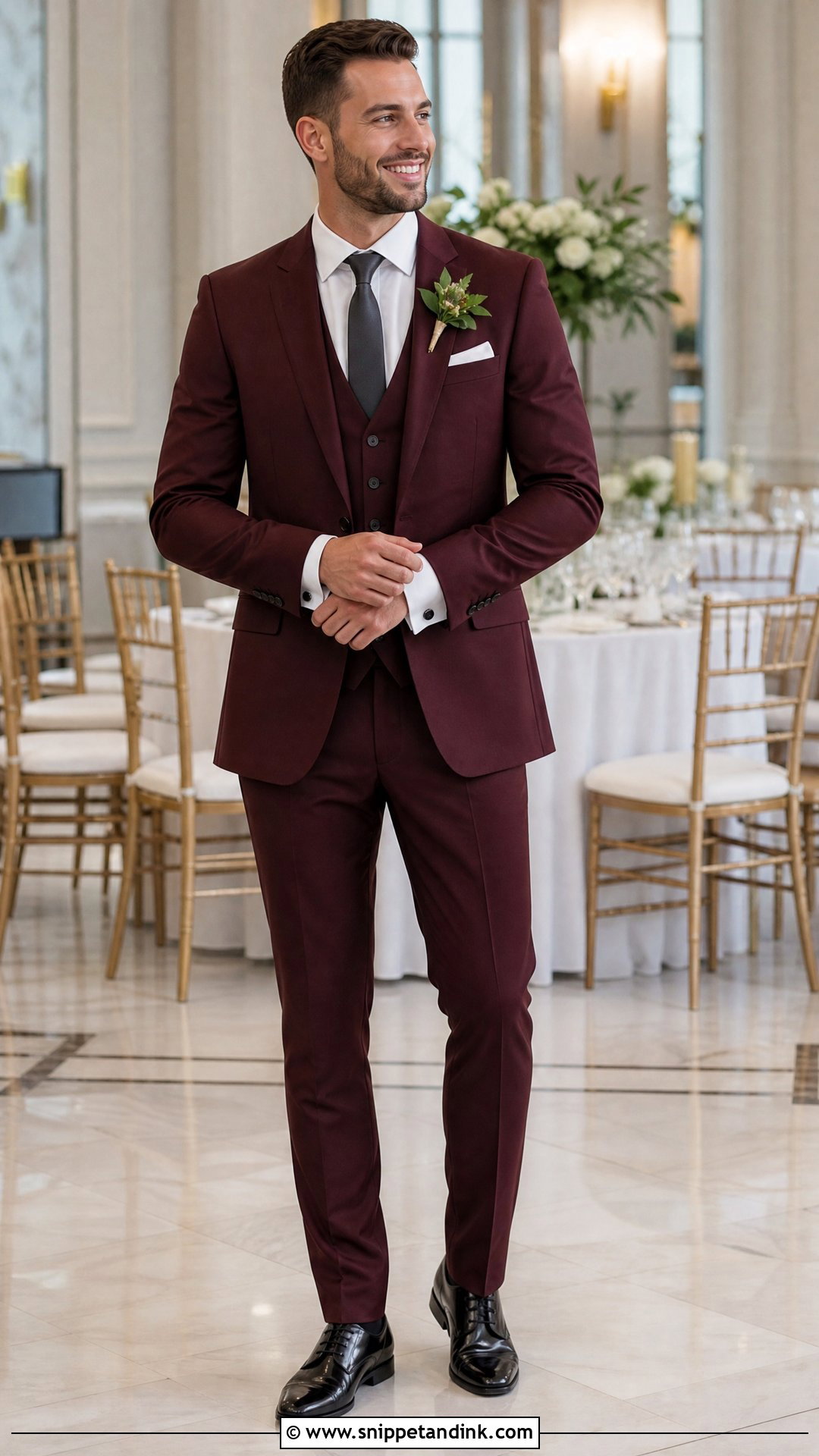
Burgundy is bold, but it’s a deep enough red to stay formal at an autumn or evening wedding. It pairs with black, charcoal, navy, blush and metallic details. For a formal result I use a white shirt with a black or charcoal tie; a softer day calls for ivory and a textured taupe tie. Black Oxfords are usually cleanest. Avoid adding several other reds, because a burgundy suit plus red tie plus red boutonniere turns into a costume. Rich colour draws the eye to fit problems, so take extra care over the shoulders, trouser seat and hem.
11. Tweed Three-Piece Wedding Suit
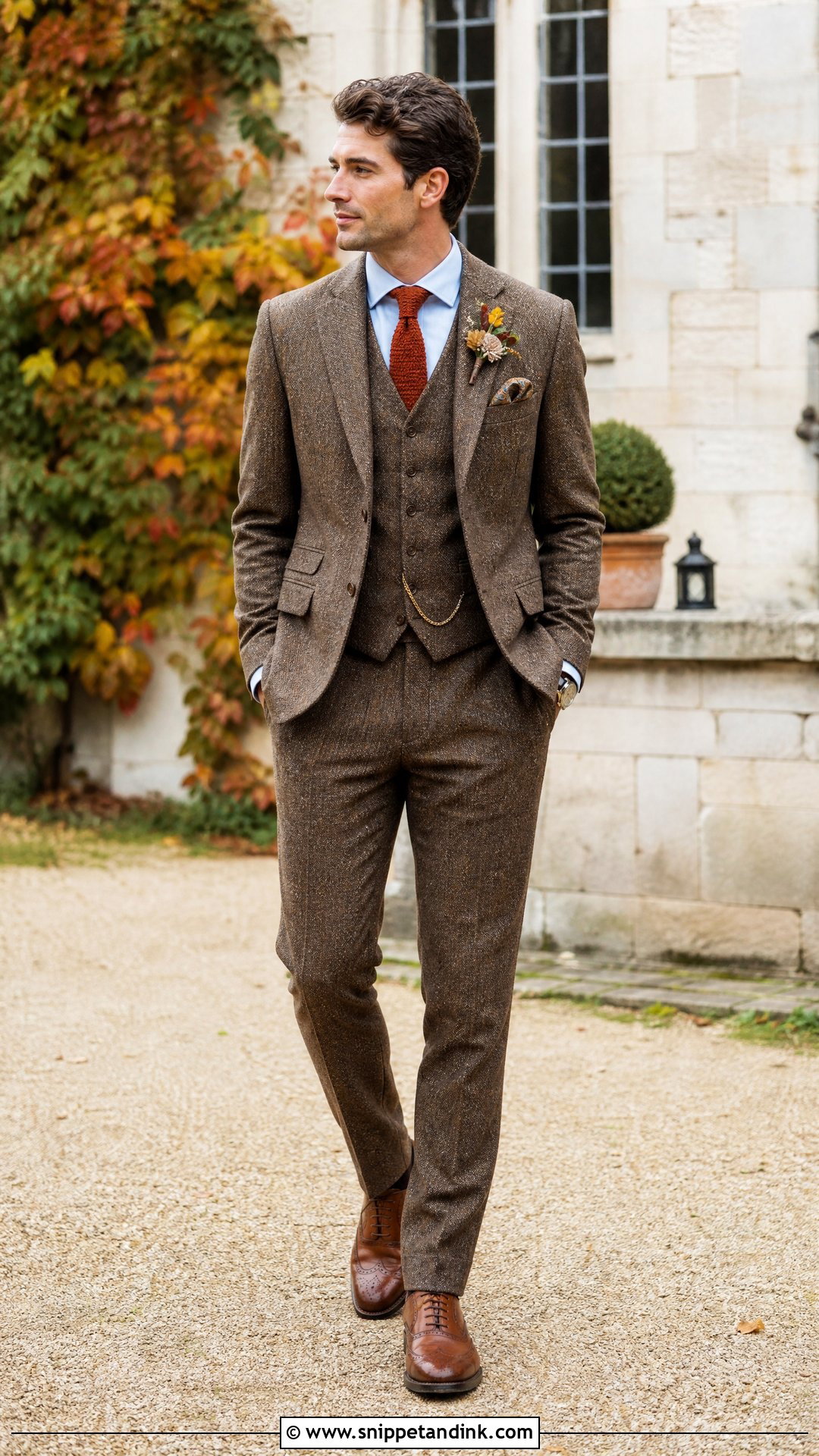
Tweed is a cold-weather cloth, and the weight should match the forecast; a heavy tweed in a warm barn is uncomfortable within an hour. Brown, grey, olive or muted blue tweed with a white or light blue shirt and a knitted tie in navy, rust or forest green makes a proper country outfit. Brown brogues or dress boots suit the cloth better than mirror-shined shoes. The matching waistcoat keeps the groom tidy once the jacket is off. Tweed already carries a lot of texture, so I keep the pocket square to one modest pattern at most.
12. Linen Three-Piece Wedding Suit
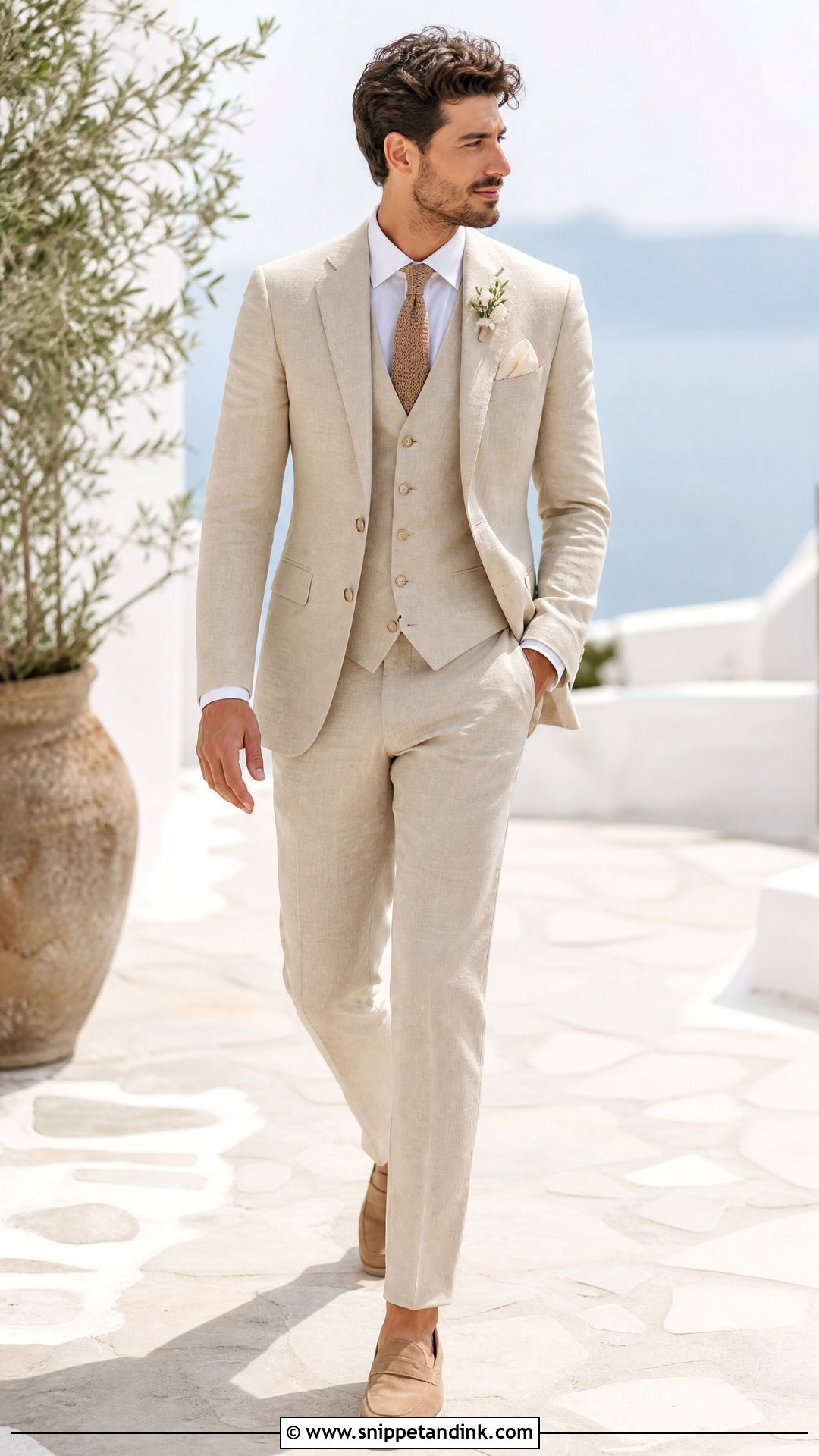
In humid heat a linen three-piece suit is the only sensible tailoring, but expect it to crease. That’s part of its charm, as long as it starts the day freshly pressed. Sand, stone, light grey, soft blue or muted olive suit a destination or summer garden, with a white cotton shirt and a linen or knitted tie. Tan loafers, suede shoes or clean derbies keep it easy. I have linen waistcoats cut with a little more room than wool ones, since a tight waistcoat in the heat is the first thing a groom wants off. Simple pocket square, minimal accessories.
13. Blue Check Three-Piece Wedding Suit
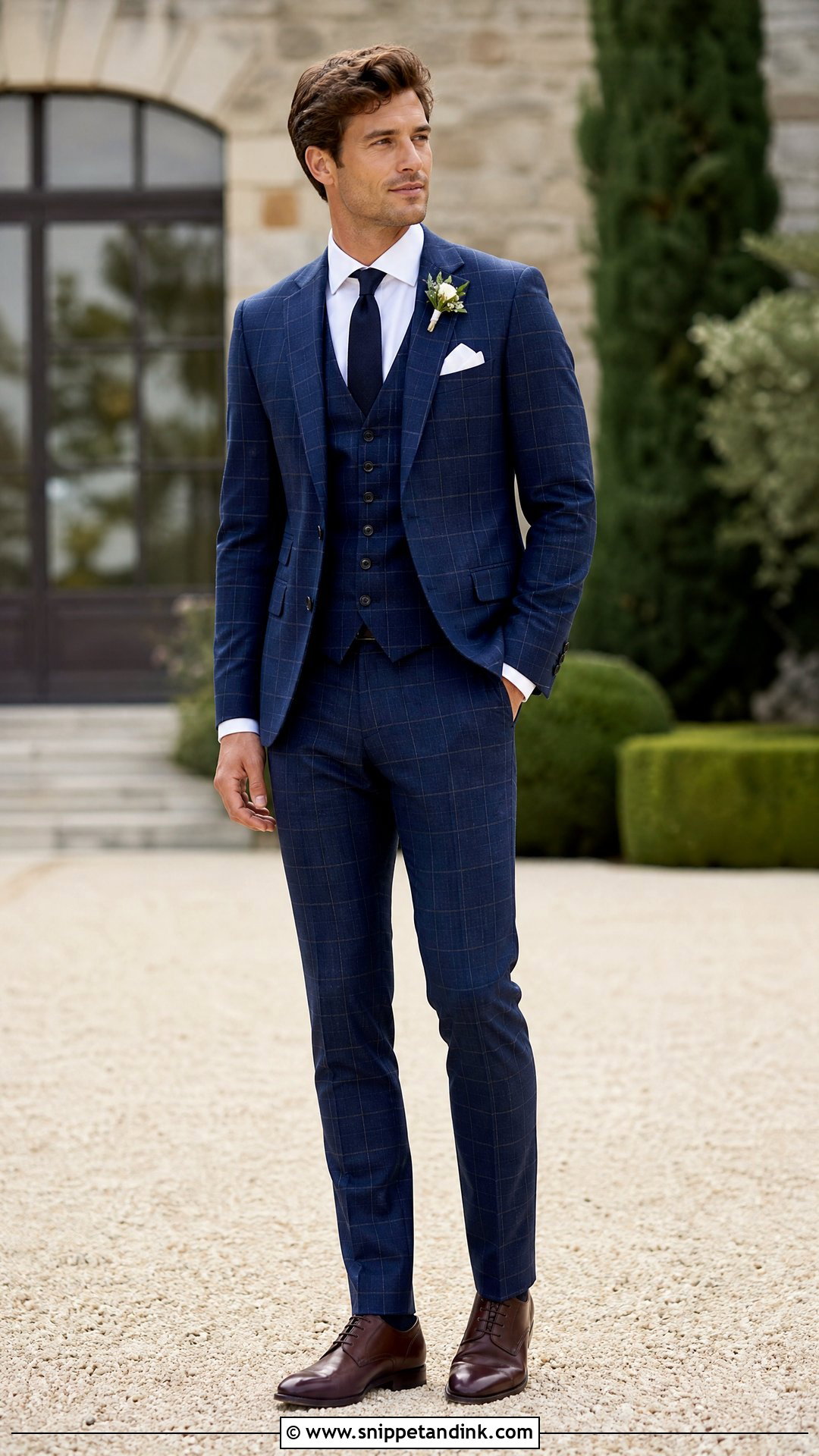
Pattern without leaving the safety of blue. Pick a small windowpane or restrained check; large checks dominate a photo and can strobe on some cameras. A plain white or pale blue shirt gives the eye somewhere to rest, with a solid navy, burgundy or grey tie and dark brown shoes. The waistcoat can match for confidence, or come in solid navy for controlled contrast. Look at how the pattern lines up across the jacket front and pockets; good tailors match the checks there, and it is one of the clearest signs of a well-made suit.
14. Gray Herringbone Three-Piece Wedding Suit
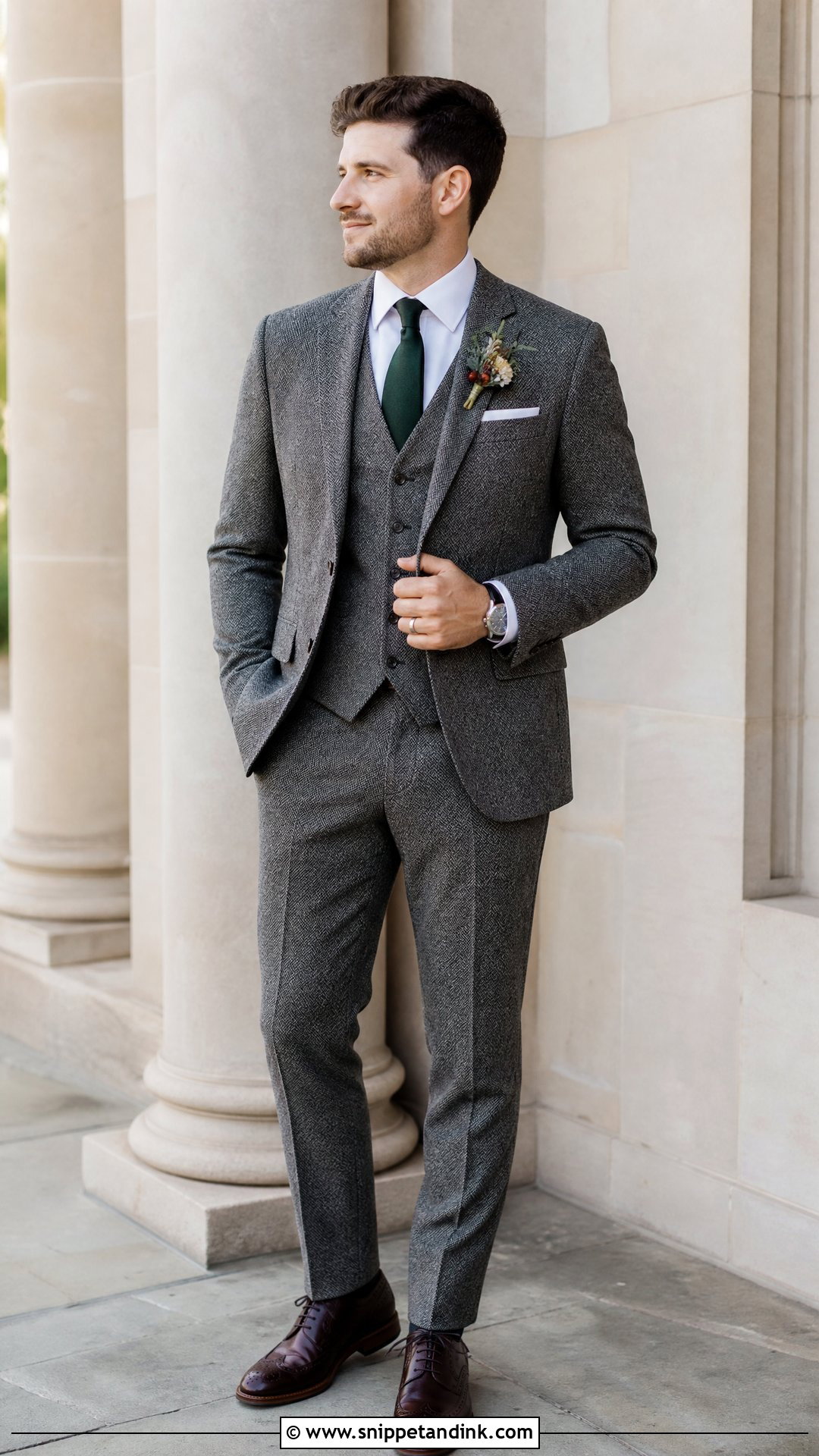
Herringbone gives grey a texture you only notice up close, which makes it right for historic venues and autumn weddings. A white shirt with a tie in navy, plum, forest green or deep burgundy works; black Oxfords keep it formal, dark brown brogues lean heritage. Keep the waistcoat in the same herringbone so the texture continues when the jacket comes off, and use a plain pocket square to avoid two patterns fighting. Herringbone is forgiving on most builds because the zigzag breaks up the surface. Simple links, a classic watch and a compact boutonniere finish it.
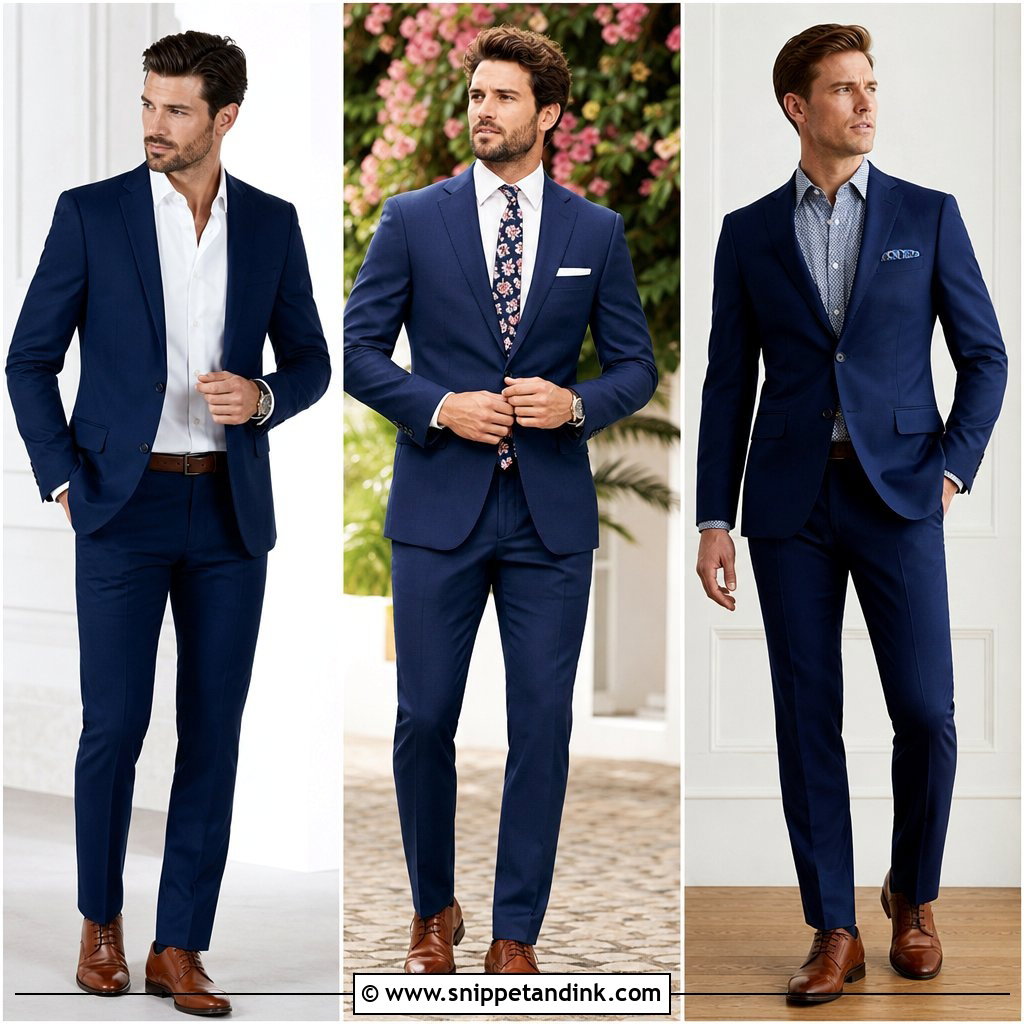
15. Navy Suit With Gray Waistcoat
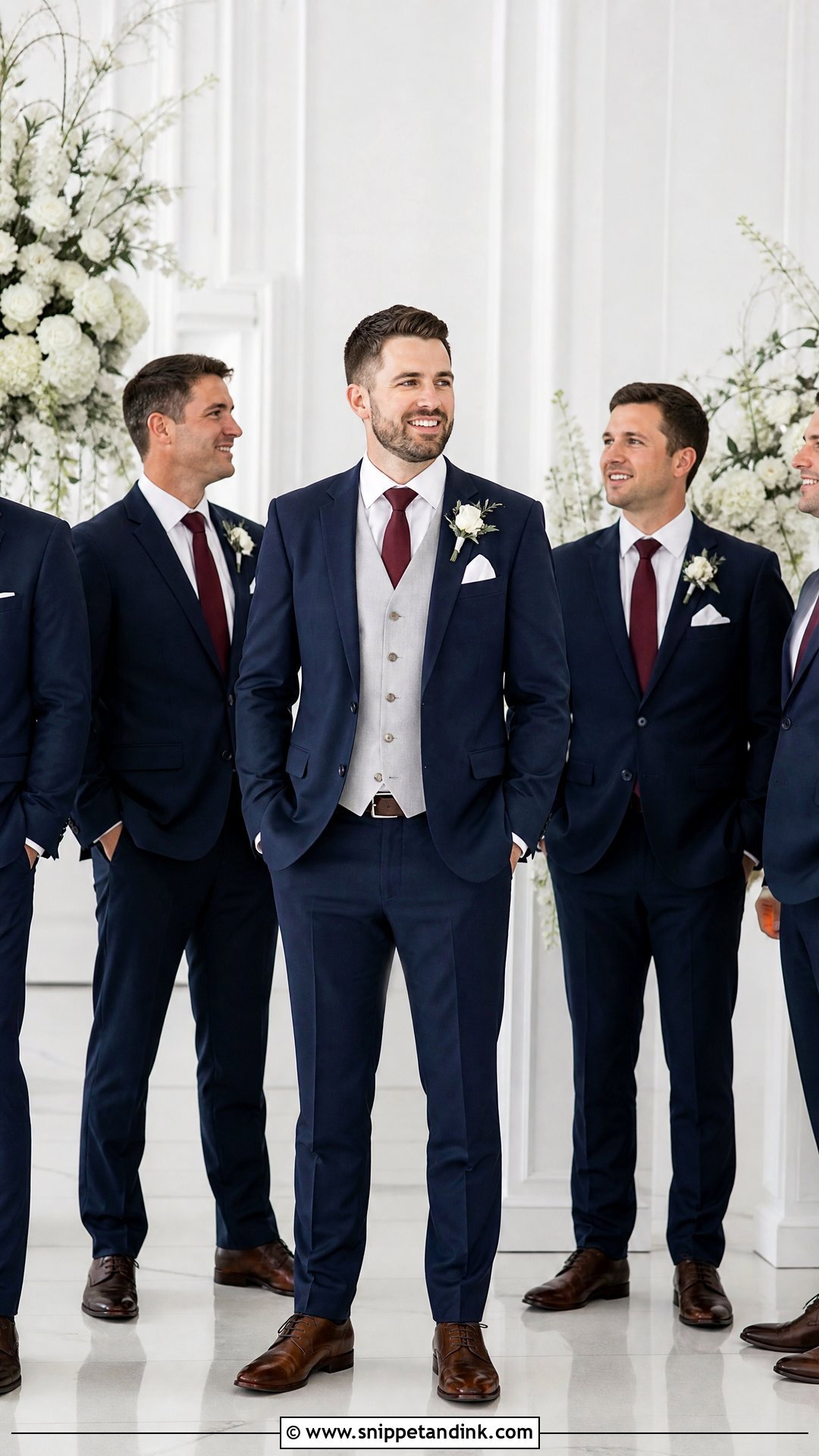
Swapping the waistcoat is the easiest way to set the groom apart when the whole party wears a navy wedding suit. Keep the navy jacket and trousers and add a light or mid grey waistcoat. A white shirt with a navy, silver or burgundy tie links the two colours, and dark brown Oxfords with a matching belt keep it warm. The waistcoat should be in a proper suiting cloth, not a knit, and long enough to cover the waistband completely. White pocket square, understated boutonniere.
16. Charcoal Suit With Double-Breasted Waistcoat
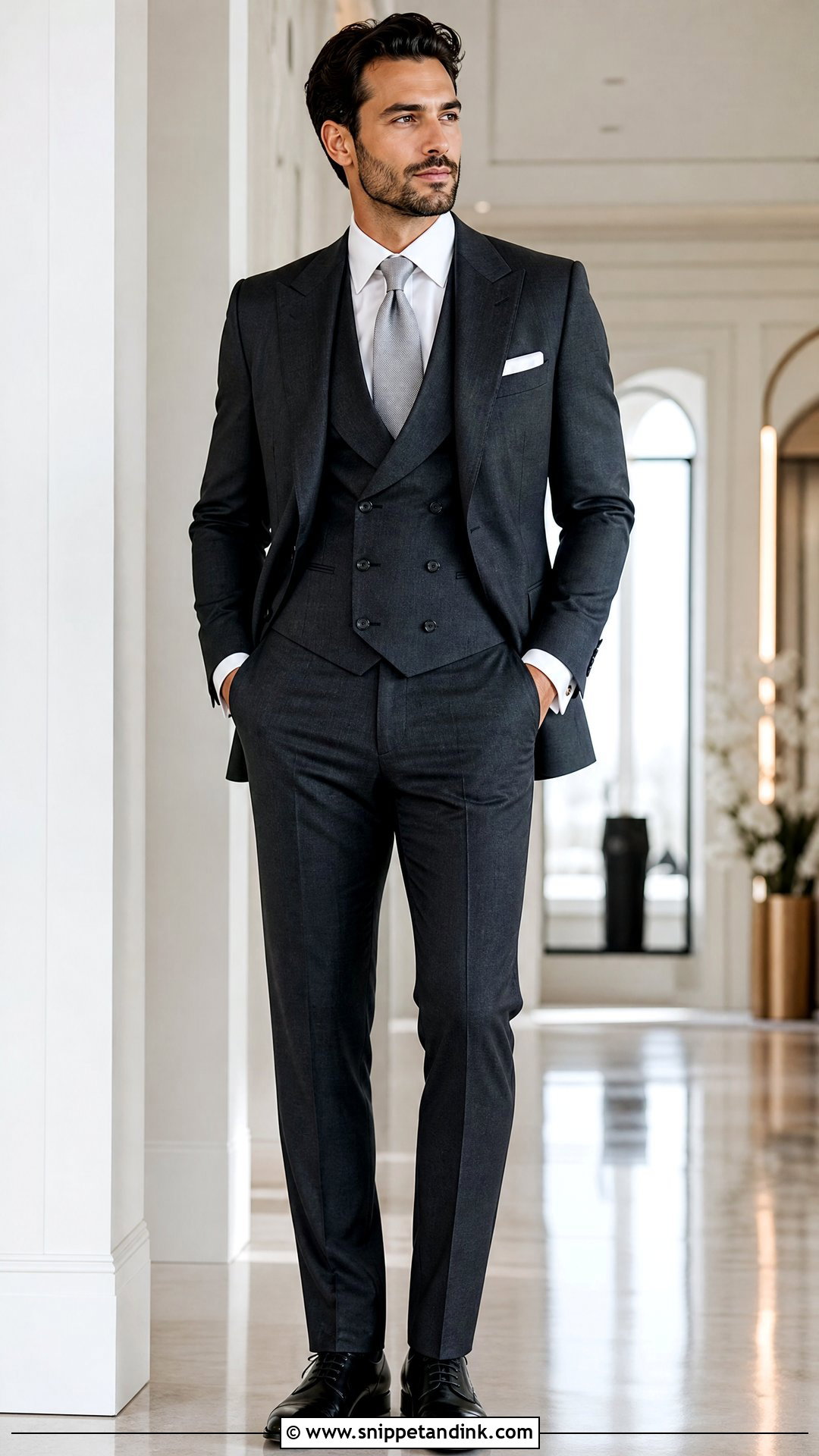
A double-breasted waistcoat raises formality without adding colour. Set a charcoal jacket and trousers over a matching double-breasted waistcoat, then add a crisp white shirt, a black or silver tie and polished black Oxfords. Peak lapels push it further toward evening; notch lapels stay versatile. Unlike a single-breasted waistcoat, this one is worn fully buttoned, so it has to lie completely flat across the chest and stomach, and that usually takes a tailor’s adjustment. White pocket square and small metal links suit indoor evening ceremonies.
17. Velvet Three-Piece Wedding Suit
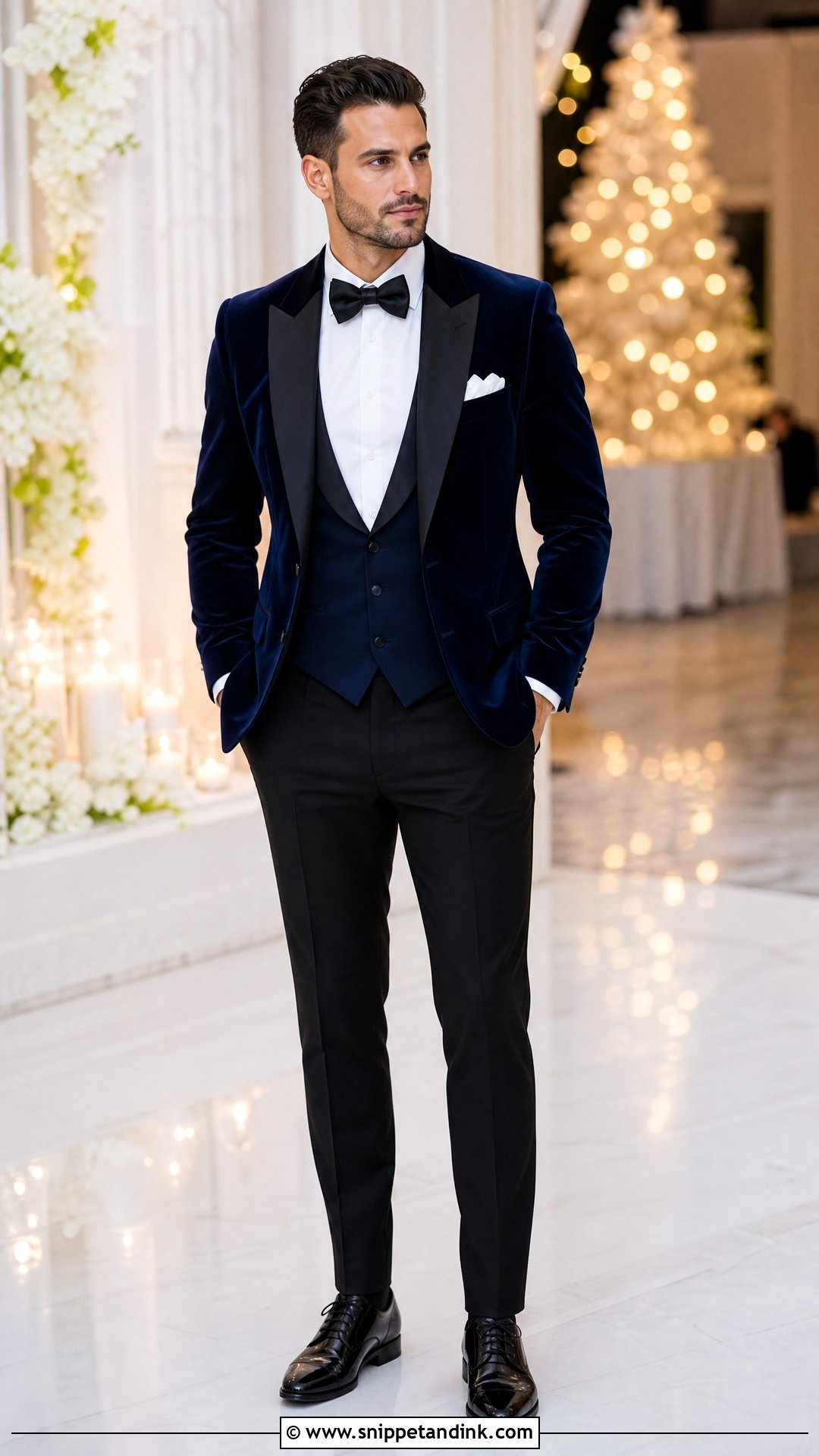
Velvet belongs to winter and evening, and I usually keep it to the jacket: black, navy, burgundy or forest green velvet over coordinating trousers and a smooth matching or tonal waistcoat. A white dress shirt stops the rich pile from looking heavy. Add a black bow tie or slim silk tie, polished black shoes and a neat pocket square, and stop there, since velvet already catches light. Velvet crushes where you sit and lean, so the jacket needs room over the waistcoat and should be hung, not folded, until you dress. It suits the groom more than a guest.
18. Pastel Blue Three-Piece Wedding Suit
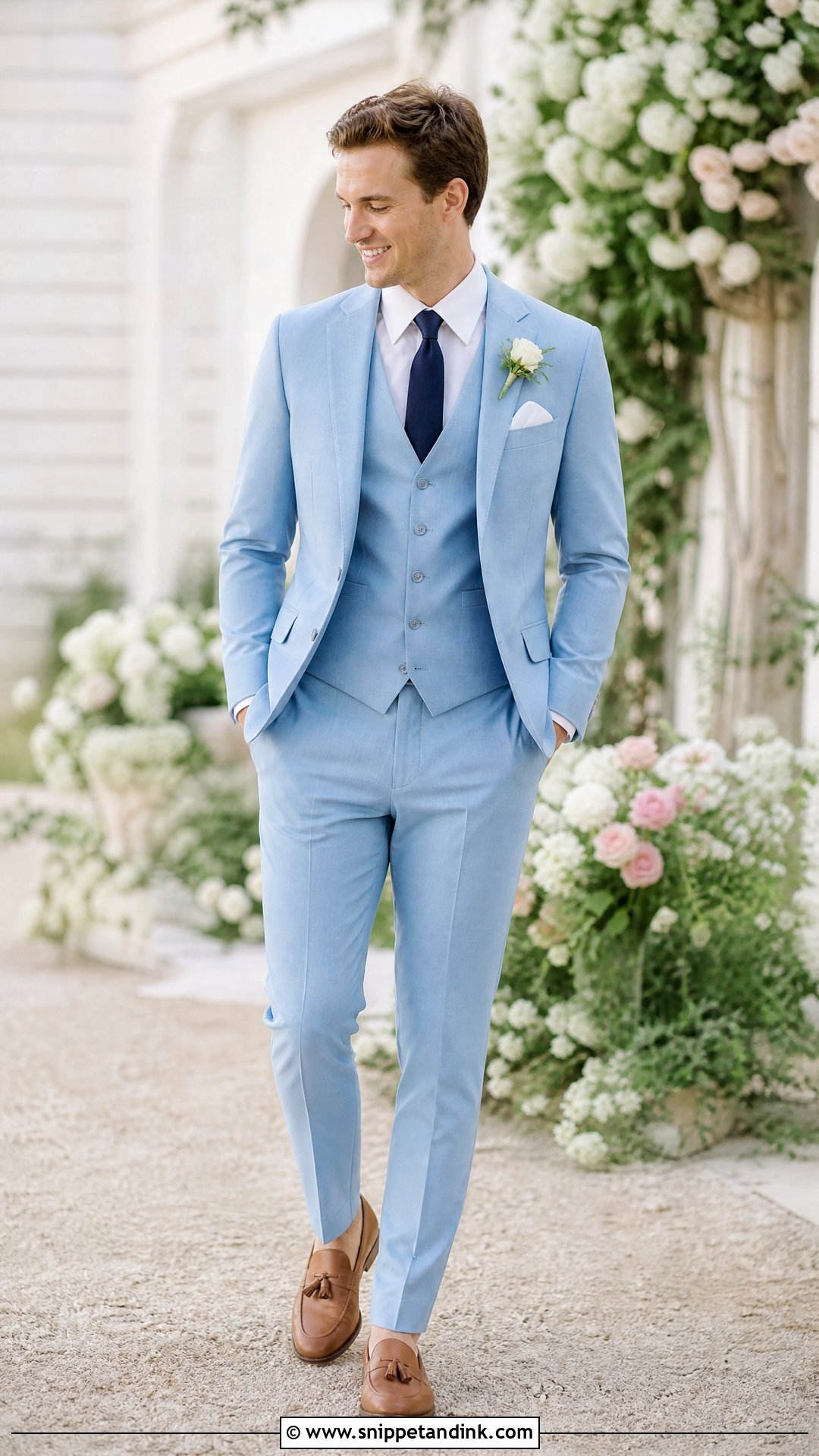
Pastel blue is cheerful in spring and summer light, at gardens, coastal venues and sunny rooms. A white shirt with a navy, silver, soft pink or restrained floral tie works, and tan loafers or mid-brown lace-ups give contrast without weight. A matching waistcoat makes a clean column of colour; a white pocket square brightens the top half. Pale blues shift a lot between shade, sun and indoor bulbs, so look at the swatch indoors and outdoors before you order and before the rest of the wedding party’s colours are fixed. Keep the boutonniere small and in tune with the flowers.
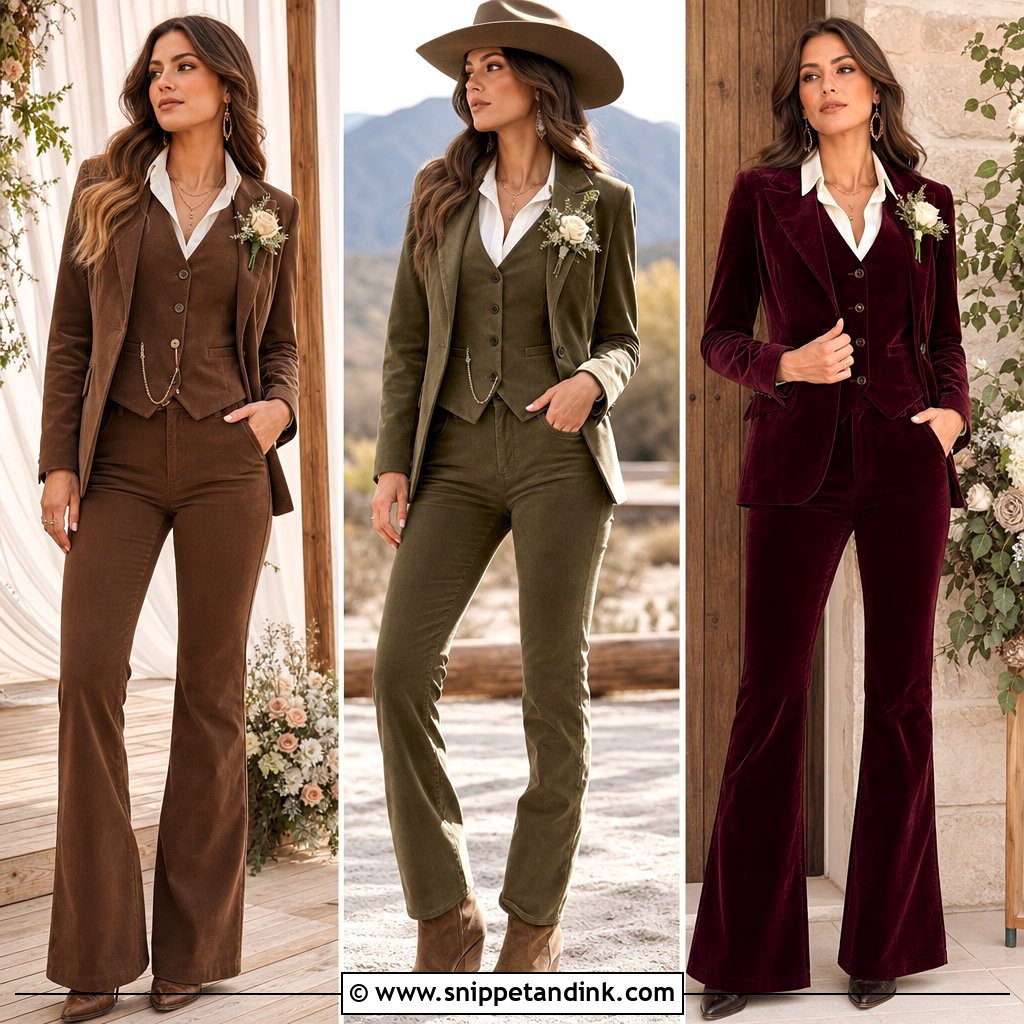
19. Olive Three-Piece Wedding Suit
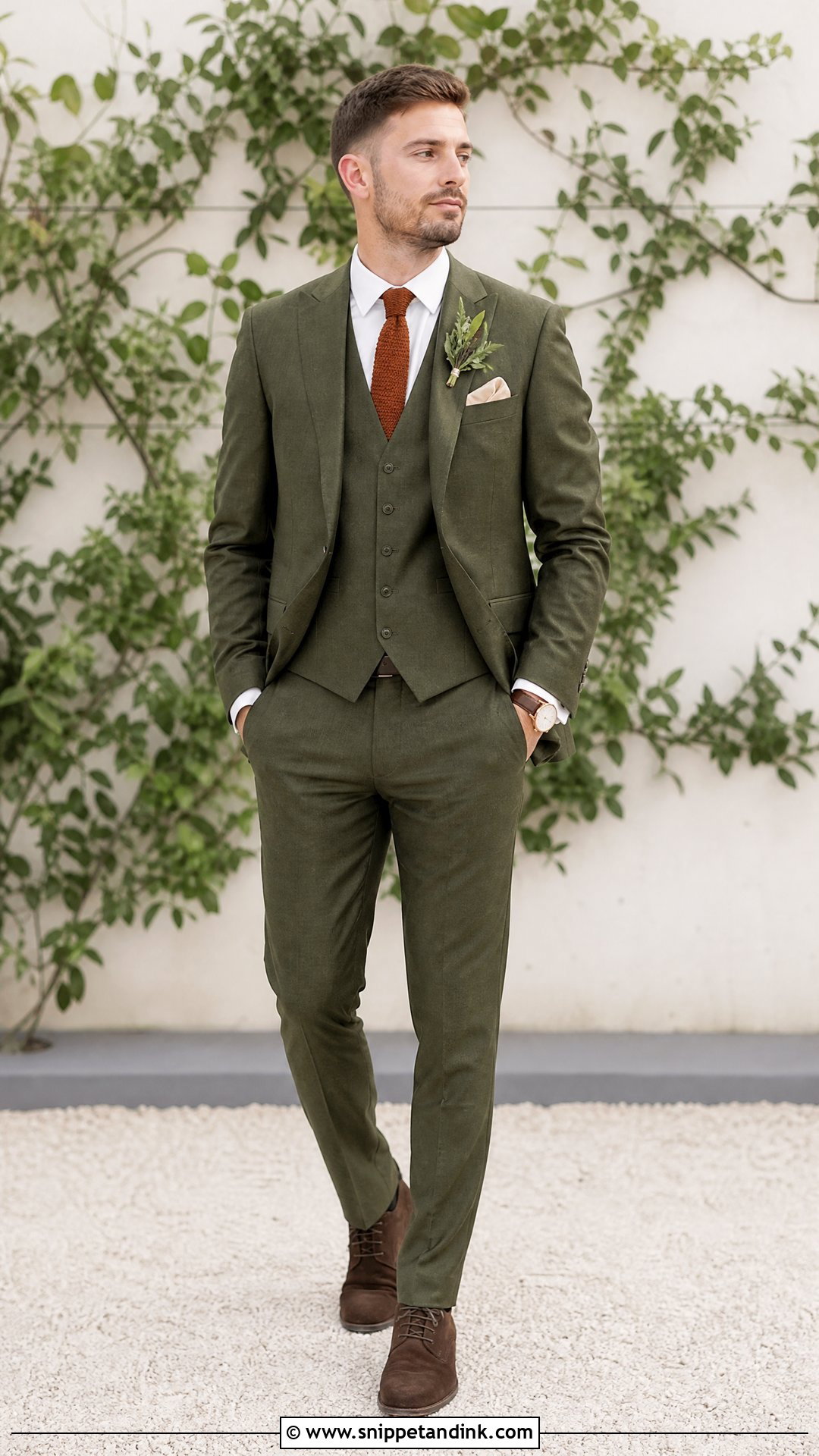
Olive is earthier and less expected than forest green. It suits outdoor, desert, botanical and rustic venues in early autumn. An ivory or white shirt with a tie in brown, cream, rust or deep green, dark brown suede or leather shoes, a matching belt and a simple watch complete it. Keep all three pieces in the same cloth; mixed olives look like separates thrown together. A cream pocket square and a greenery boutonniere suit it. I’d stay with a medium or dark olive, since bright military green looks casual and is harder to place next to wedding flowers.
20. Pinstripe Three-Piece Wedding Suit
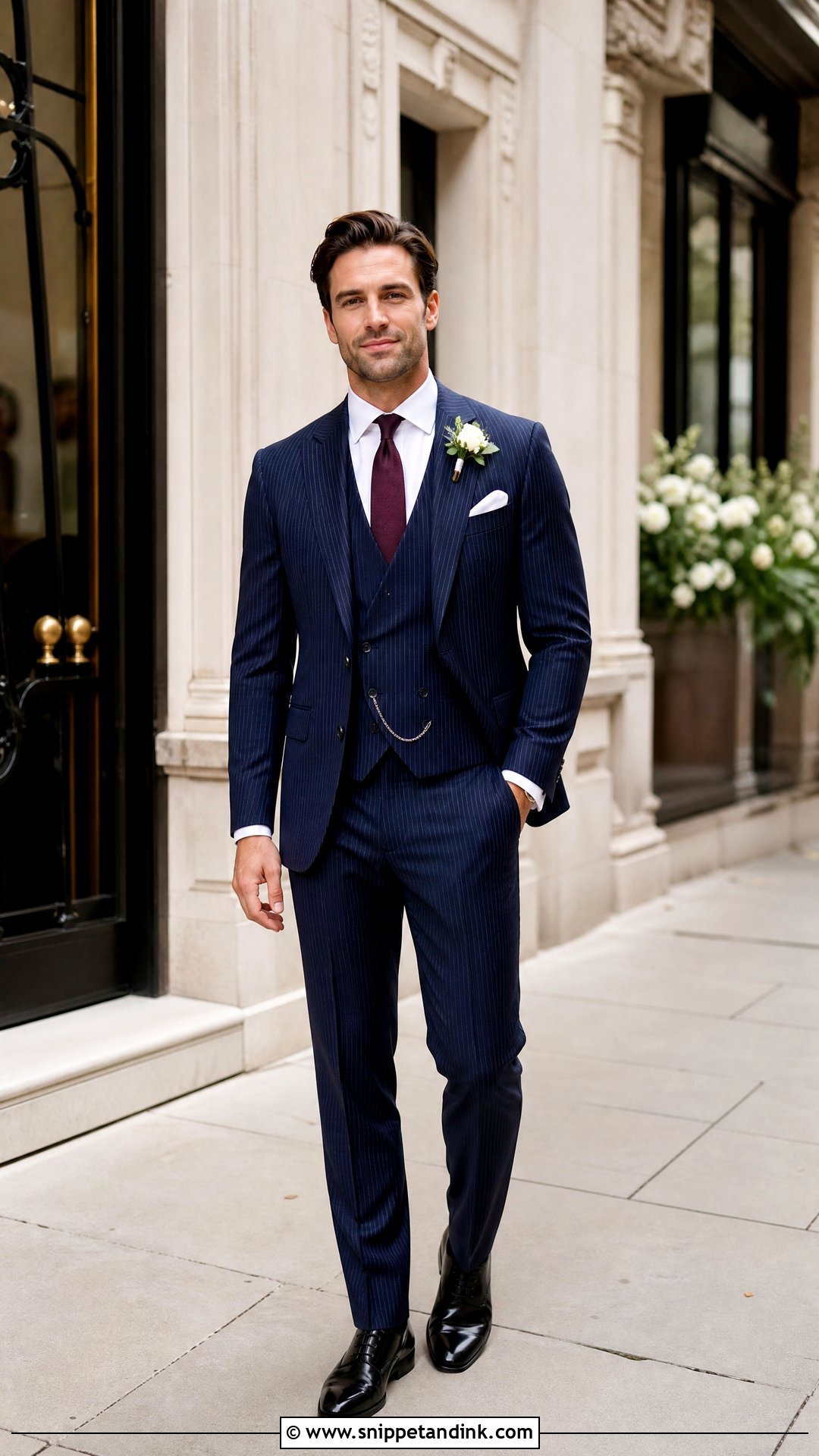
Pinstripe reads city and evening. Choose navy, charcoal or black with a narrow, low-contrast stripe; a wide chalk stripe looks like a banking suit and drowns the wedding accessories. Wear a plain white shirt and a solid silk tie in navy, burgundy, silver or black, with polished Oxfords, a matching belt and a white pocket square. The waistcoat stripes should run cleanly in the same direction as the jacket, and it should sit close to the body. Skip patterned shirts and printed ties completely. Careful alterations make the stripe look deliberate.
Shirtsleeves at the Reception
Once the jacket is off, the waistcoat and shirt become the outfit, so plan for that version too. Choose a shirt with a proper fit through the body, because a billowing shirt bunches under the waistcoat and shows at the armholes. Single cuffs with links or neat barrel cuffs both work; just make sure the sleeves are the right length now that there’s no jacket to hide them. Tuck the tie inside the waistcoat so it doesn’t swing out on the dance floor. If the jacket is likely to come off early, the waistcoat’s back lining should be a colour you are happy to see in photographs, as it will be.
Timing the Order for a Whole Wedding Party
Three-piece suits take longer than two-piece ones simply because there is one more garment to fit. Made-to-measure suits commonly take somewhere between six and ten weeks to arrive, longer in the spring and summer rush, and full bespoke can run to several months. Off-the-rack still needs alterations, which tailors often want two to four weeks for. Lead times vary by maker and season, so ask at the first appointment.
- Order the groom’s suit and the party’s suits together so the cloth comes from the same batch.
- Collect every groomsman’s measurements in one week, ideally taken by the same tailor.
- Schedule a final fitting one to two weeks before the wedding, with time for one last small fix.
- Hang every suit on a broad shouldered hanger in a breathable bag, not plastic, from collection to the morning of the wedding.
Cloth for the Weather, Colour for the Venue
Pick the cloth for the weather and the colour for the setting, and the rest falls into place. Navy, charcoal and light grey are the dependable base; green, burgundy, olive and royal blue give more personality. Linen and beige suit warm outdoor days, while tweed, velvet, and herringbone belong to cooler ones. Whichever you choose, the fit checks stay the same: the waistcoat covers the waistband, the jacket sits smoothly across the shoulders and the trousers fall cleanly onto the shoe. Shirt, tie, shoes, pocket square and boutonniere come last.
You'll Like These Ideas:


Leave a Reply