
An Italian wedding asks a lot of one outfit. It may start in a cool stone church, move to a terrace in full afternoon sun, and finish with dinner outdoors after dark. When I dress a groom for that kind of day, I think about cloth and construction first and colour second, because the Italian way of cutting a jacket (softer shoulders, lighter canvas, less padding) only pays off if the fabric suits the heat and the hour. Pale linens belong to sunny coastal ceremonies; dark wool, velvet and three-piece suits come into their own at formal evening receptions. Below are twenty suits I’d genuinely put on a groom, a groomsman or a guest, from classic navy through relaxed linen, with notes on who each one suits and where it tends to trip people up.
Cloth Weight Decides Whether He Survives an Italian Afternoon
Colour gets all the attention, but the first question I ask a groom heading to Italy is the month. A June ceremony on a Puglian terrace and a November dinner in a Tuscan villa need completely different cloth, and the wrong weight is what makes a man look wilted by the speeches.
- Late spring to early autumn, outdoors: linen, linen-silk or a tropical wool. Tropical wool is the one I push most, because it breathes almost like linen but creases far less and keeps a sharper line in photos.
- Shoulder seasons and indoor ceremonies: a mid-weight worsted wool. It is the all-rounder, comfortable in a cool church and still fine on a terrace once the sun drops.
- Late autumn and winter evenings: flannel, heavier wool or velvet. These hold colour richly under warm lamp light and actually keep him warm outside between courses.
Construction matters as much as cloth. For heat, ask for a jacket that is half-lined or unlined with a soft, unpadded shoulder; that is the relaxed Italian cut most people picture, and it lets air move. A fully lined, heavily padded jacket in the same fabric will feel twice as hot. Church dress codes in Italy also tend to be conservative, so even in high summer I’d keep the jacket on through the ceremony and plan the shirtsleeves for the reception.
1. Navy Italian Wedding Suit
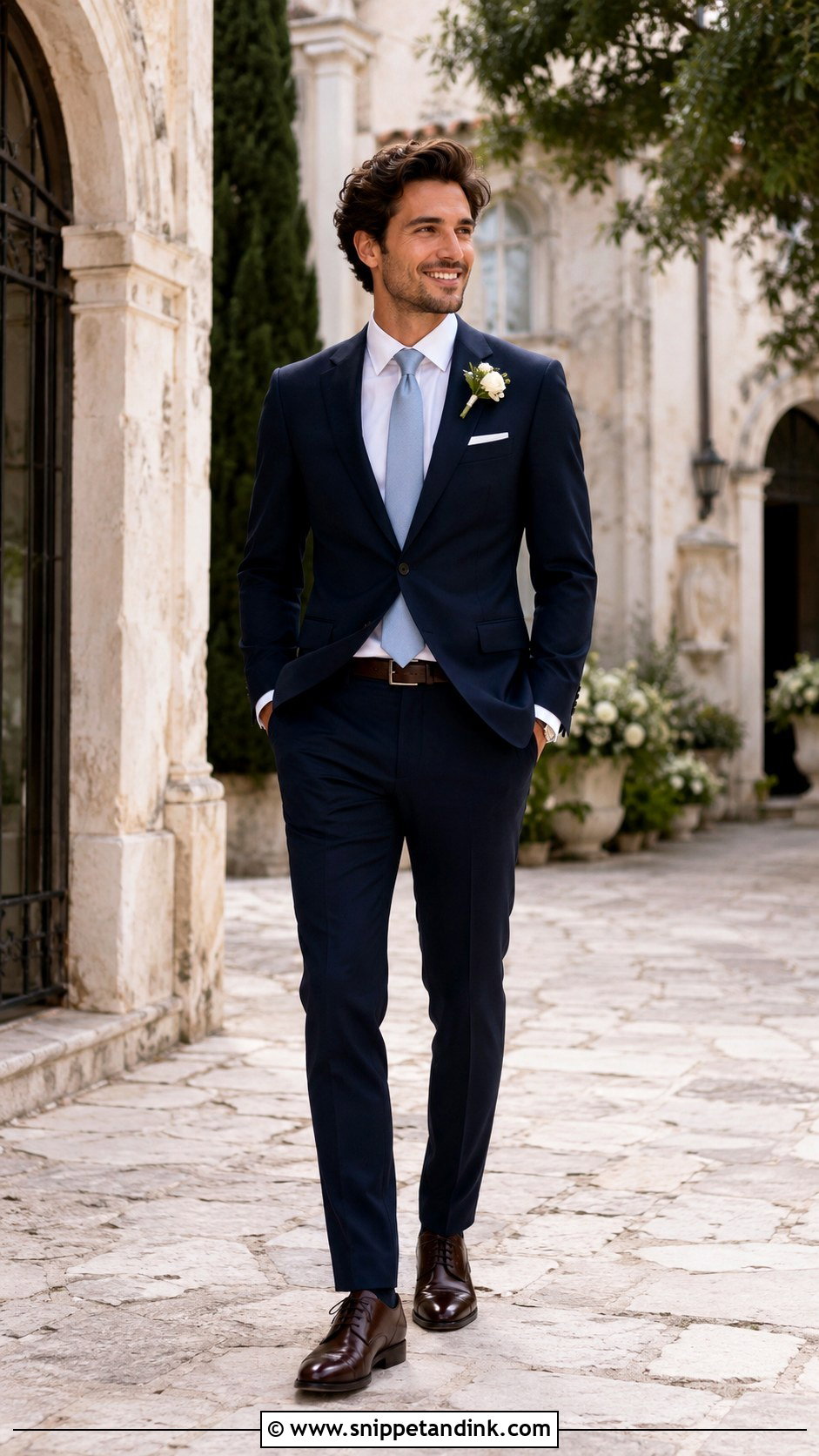
Navy is the suit I reach for when a couple can’t decide, because it reads as formal in a church and still looks relaxed on a terrace. I like a single-breasted jacket with soft shoulders, medium notch lapels and trousers tapered just enough to clear the shoe. A white spread-collar shirt keeps it proper; a pale blue or textured silver tie gives quiet contrast. Dark brown oxfords, a matching belt and a white linen pocket square finish it, and for the groom I’d add a small boutonniere and personal cuff links. One thing to check in daylight: some navies go almost purple in the sun, so look at the swatch outdoors before you commit. Against stone, sea or garden green, navy holds its own without the severity of black.
2. Light Blue Linen Italian Wedding Suit
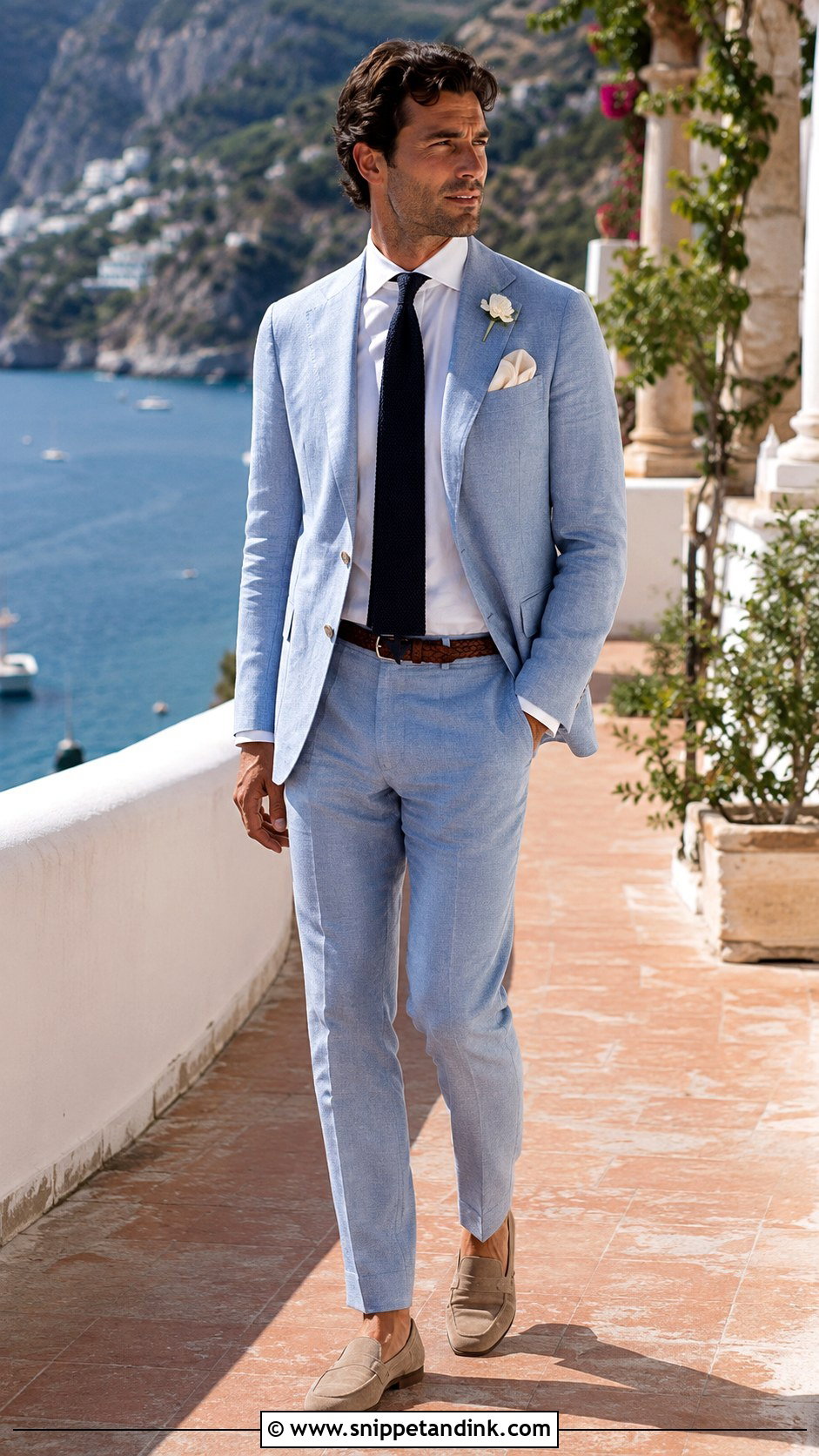
Light blue linen is a summer suit, full stop. In Mediterranean heat I want the jacket half-lined or unlined, with almost no canvas, so air actually moves through it. Keep the trousers clean rather than skinny, because linen pulls and wrinkles hard across a tight thigh every time you sit. A white cotton-linen shirt, tan suede loafers, a woven brown belt and a cream pocket square keep it light; a soft navy knit tie lifts the formality without stiffening anything. Accept the creases. They are part of linen’s character, and a sharp cut through the shoulder matters far more than a smooth sleeve. Wear it at a coastal venue, on a terrace or at a midday ceremony.
3. Beige Linen Italian Wedding Suit
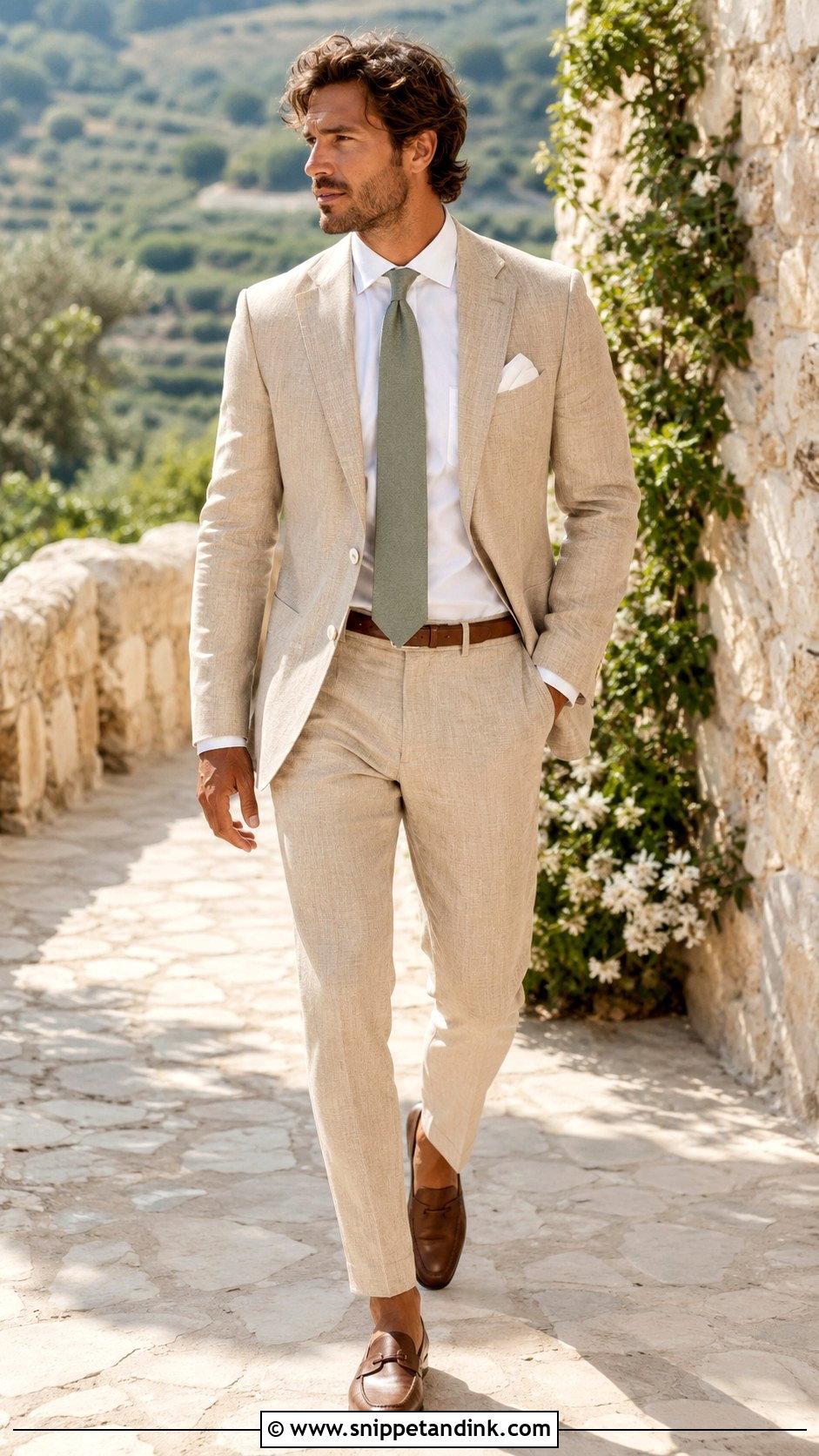
A beige linen suit is relaxed but still clearly dressed. The trap is shade: a very pale beige flares toward white in bright photographs, so I steer grooms to a warmer sand or oatmeal. Pair it with a clean white shirt and one tie colour, sage or chocolate brown both sit well against it, then medium-brown loafers and a matching belt. Give the trousers room through the thigh; linen that’s cut too close shows every seated crease by the speeches. If the day is informal, the tie can come off after the ceremony and the suit still holds together. It looks most at home among vineyards, country estates and warm stone.
4. Cream Double-Breasted Italian Wedding Suit
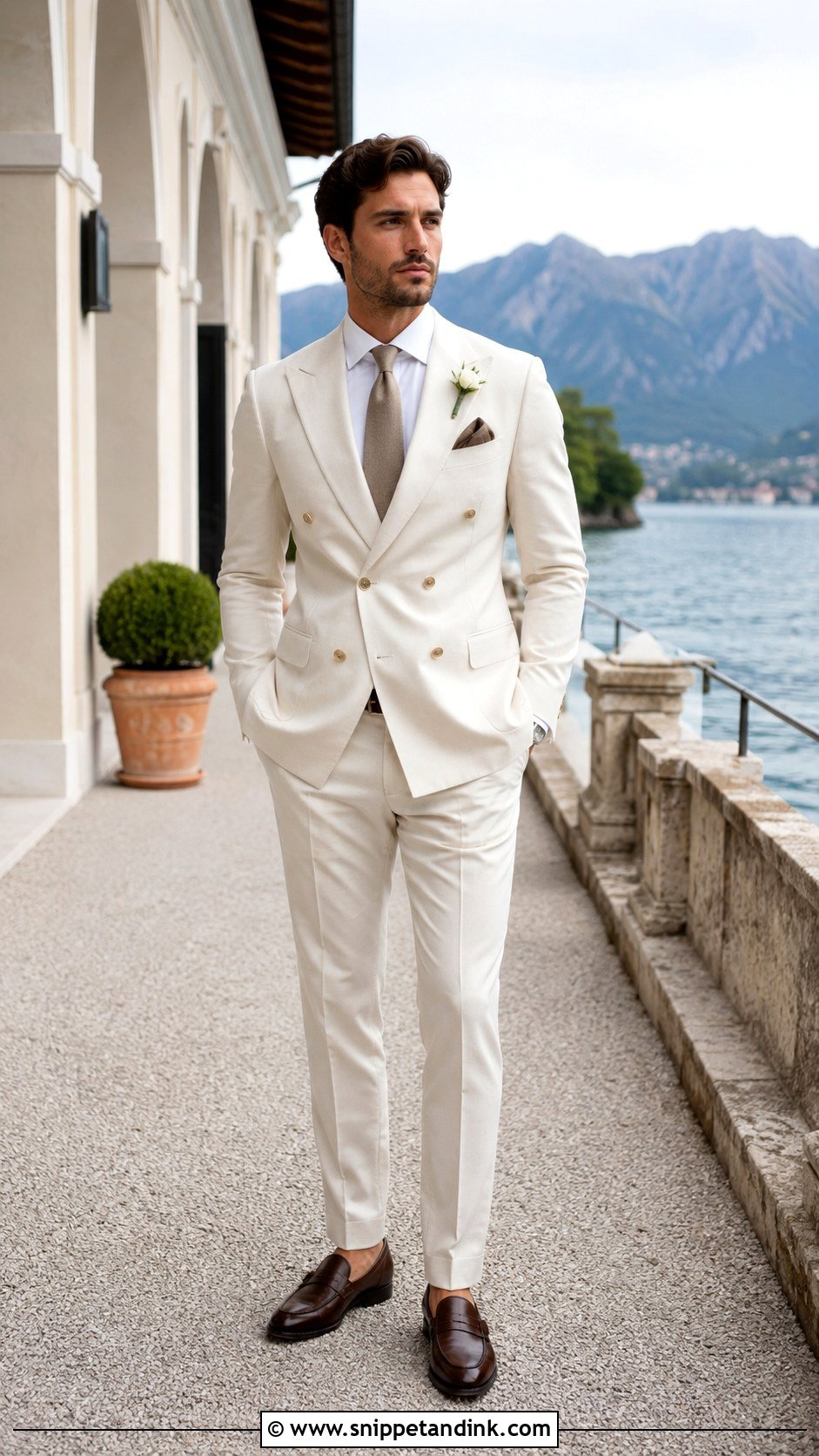
A cream double-breasted suit is confident, and that cuts both ways. I’d cut it as a six-button jacket with peak lapels and a defined waist, with matching trousers, and check one thing above all at the fitting: it has to close without the buttons pulling into an X across the stomach, because cream shows every strain line. A white or very pale blue shirt adds a little tonal depth. Dark brown loafers and belt anchor the light cloth, and the tie stays quiet, muted taupe silk or textured navy. Because cream draws the eye, I keep it for the groom, or for a wedding where the couple has explicitly asked for light formalwear.
5. Charcoal Three-Piece Italian Wedding Suit
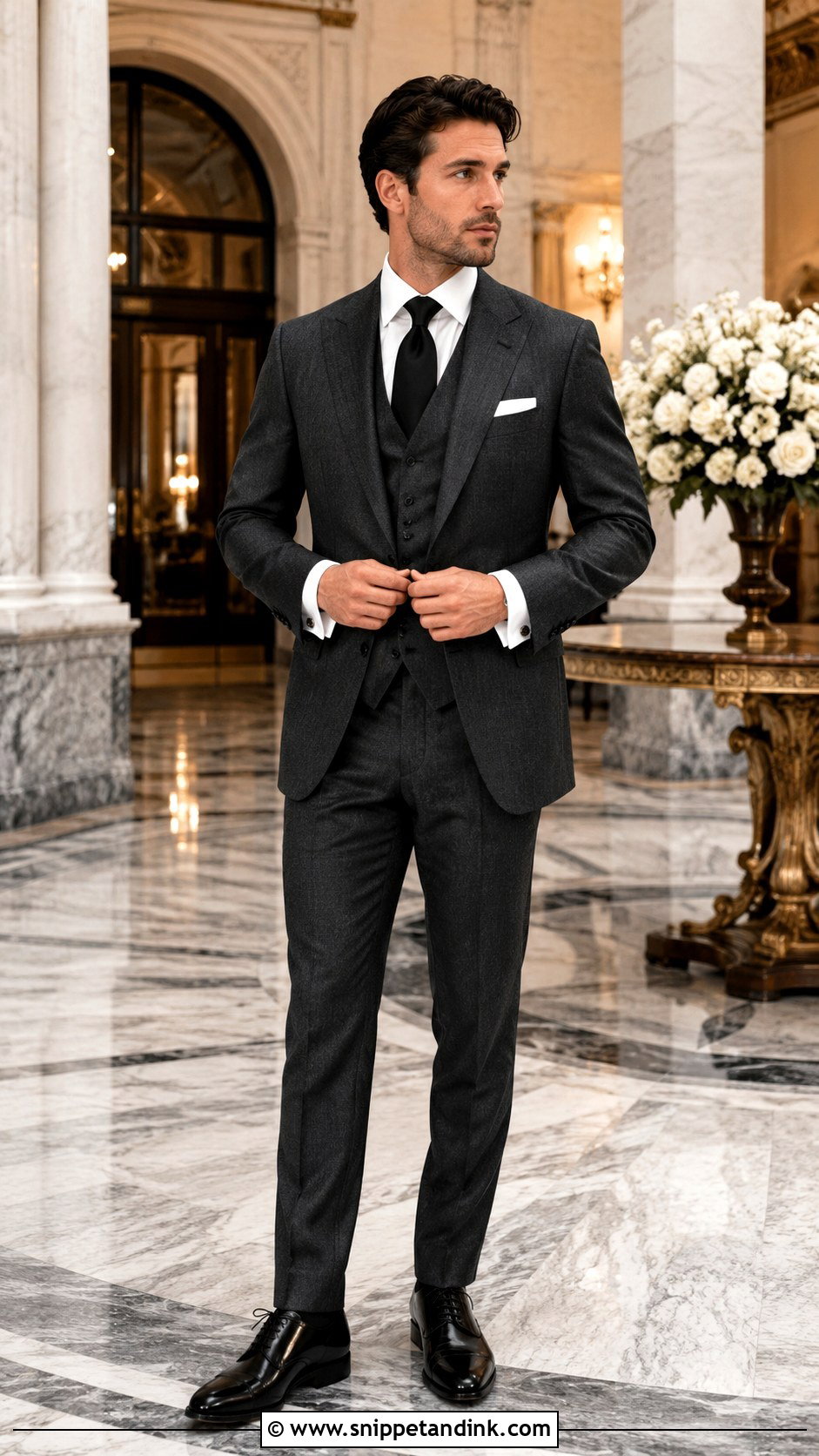
Charcoal three-piece is my answer for a cool-weather, properly formal wedding. The waistcoat earns its place once the jacket comes off at the reception, because the groom still looks finished in shirtsleeves. Style it with a white shirt, black silk tie, black cap-toe oxfords, a white pocket square and silver cuff links. The cloth matters here: three layers of heavy wool become miserable by the first dance, so ask for a fine worsted with a smooth drape. The waistcoat must cover the waistband, which means the trousers have to sit higher than most men are used to. Save it for fall, winter and formal evenings.
6. Black Tuxedo Italian Wedding Suit
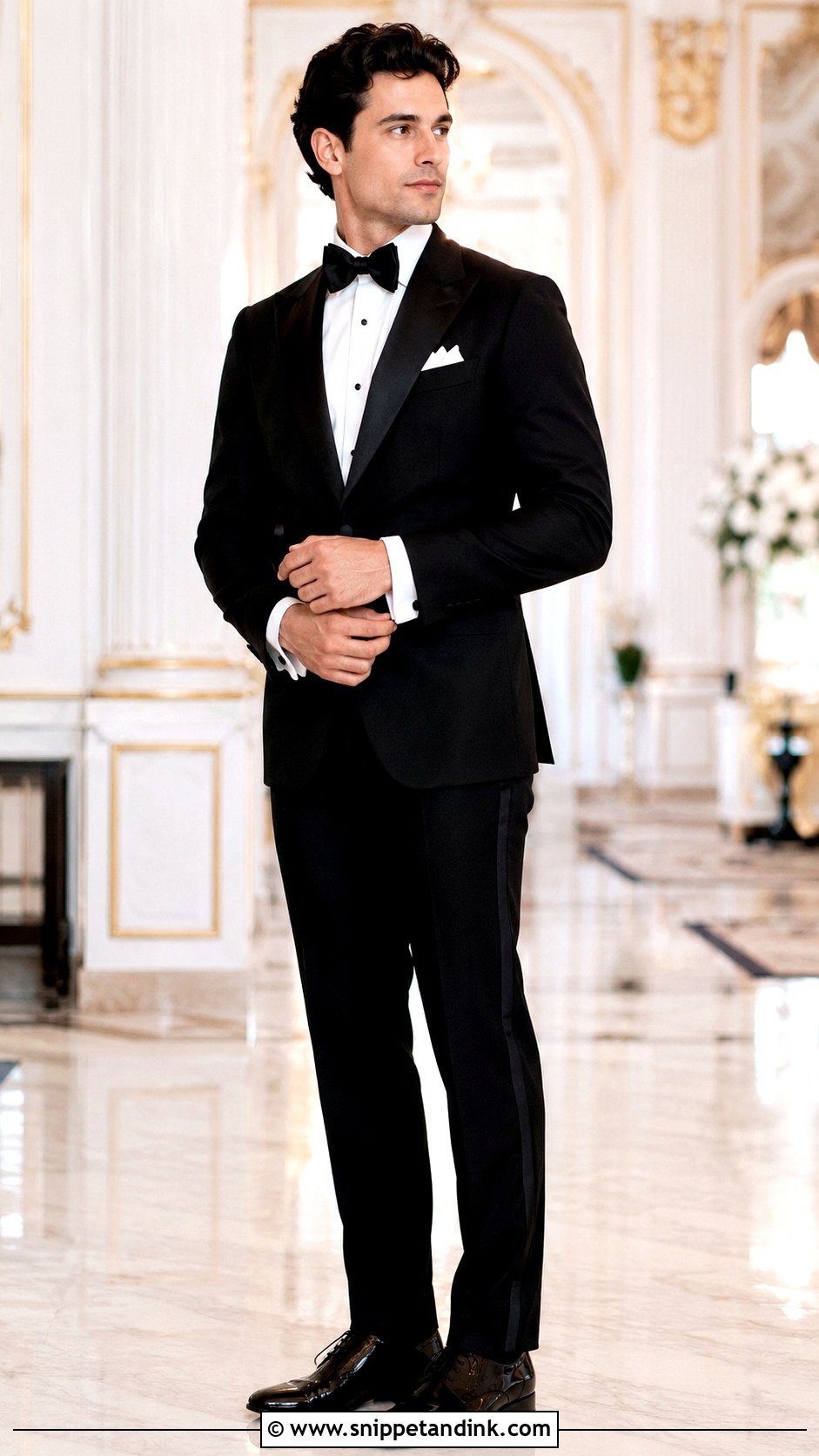
A black tuxedo is the most formal thing a groom can wear, and it only works if it’s cut exactly right. I prefer a single-breasted jacket with peak or shawl lapels faced in satin or grosgrain, a white French-cuff shirt, a black bow tie and trousers with a side stripe. Polished black oxfords or formal loafers, plus a white pocket square. Skip the belt entirely; tuxedo trousers should hang from side adjusters or braces. At the fitting I look for about a centimetre of shirt cuff past the sleeve and little or no break on the trouser. Reserve it for black-tie ceremonies and evening receptions, because in afternoon sun it can feel heavy and out of step.
7. Midnight Blue Tuxedo Italian Wedding Suit
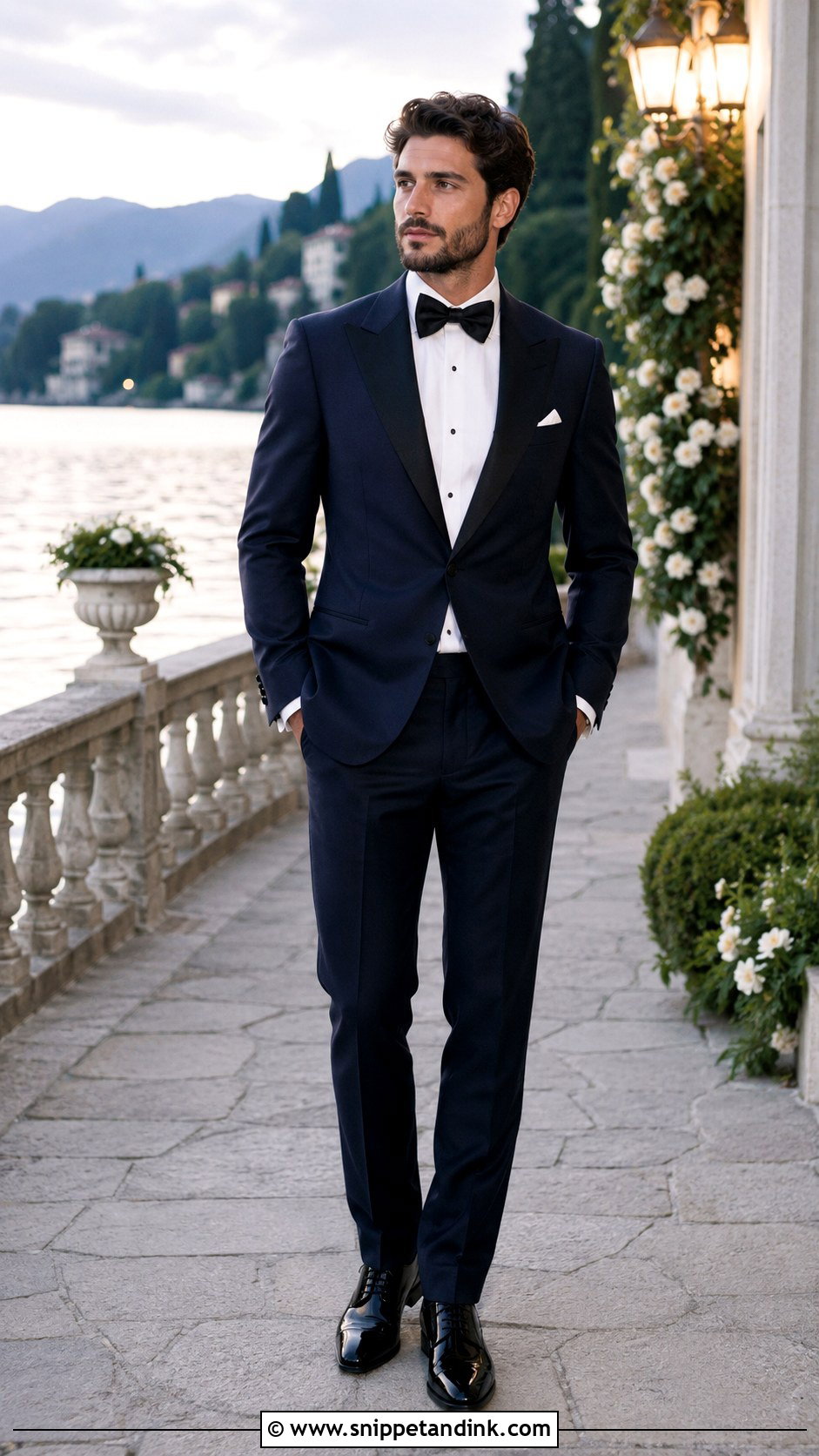
Under warm evening light, midnight blue often reads deeper than black, which is the whole reason the colour exists for dinner wear. Build it on a jacket with black satin peak lapels and matching trousers, then a white pleated or plain-front dress shirt, a black bow tie and black patent shoes. A white pocket square keeps the palette crisp. To give it an Italian character, I’d ask for a softer shoulder and a gently shaped waist rather than a stiff, heavily padded jacket. It stays fully formal while letting the groom look different from the guests, and it suits grand hotels, historic villas and ballrooms, or dinner by the water.
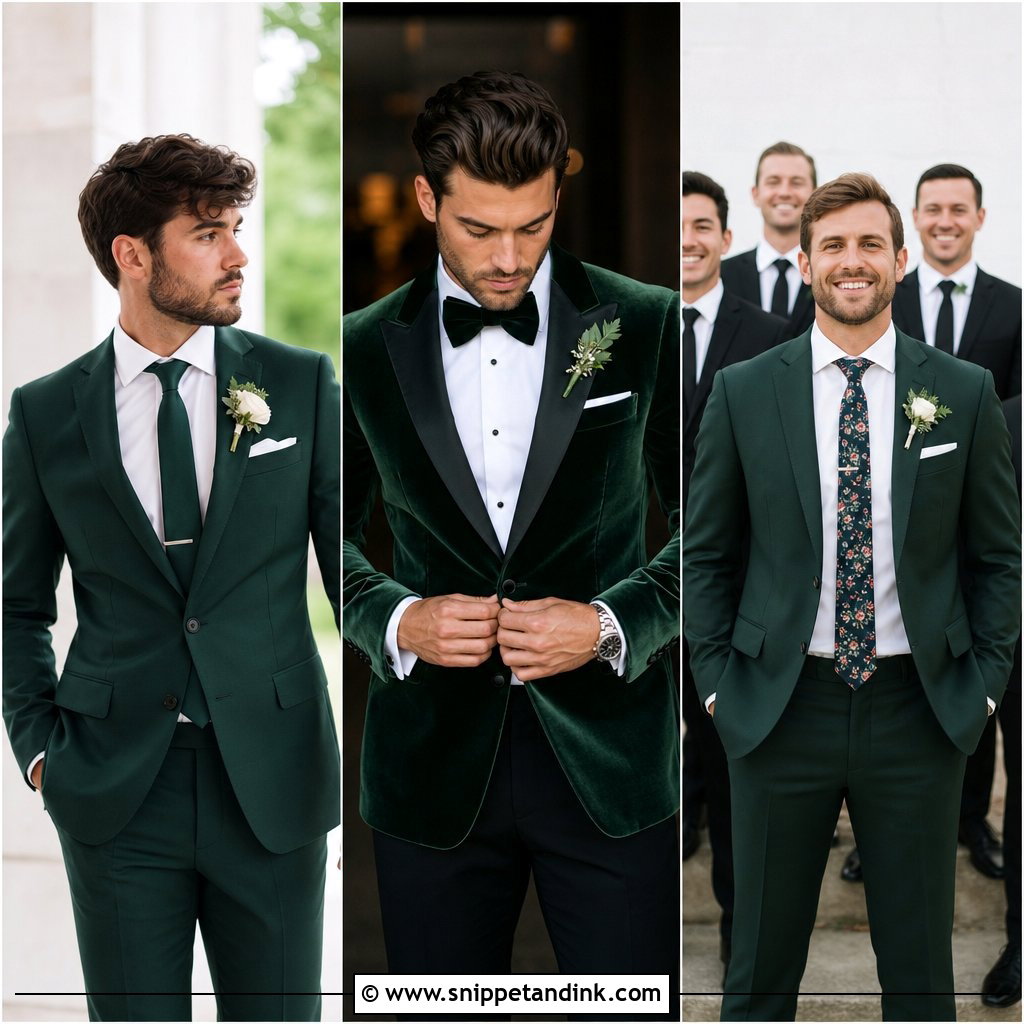
8. Sage Green Italian Wedding Suit
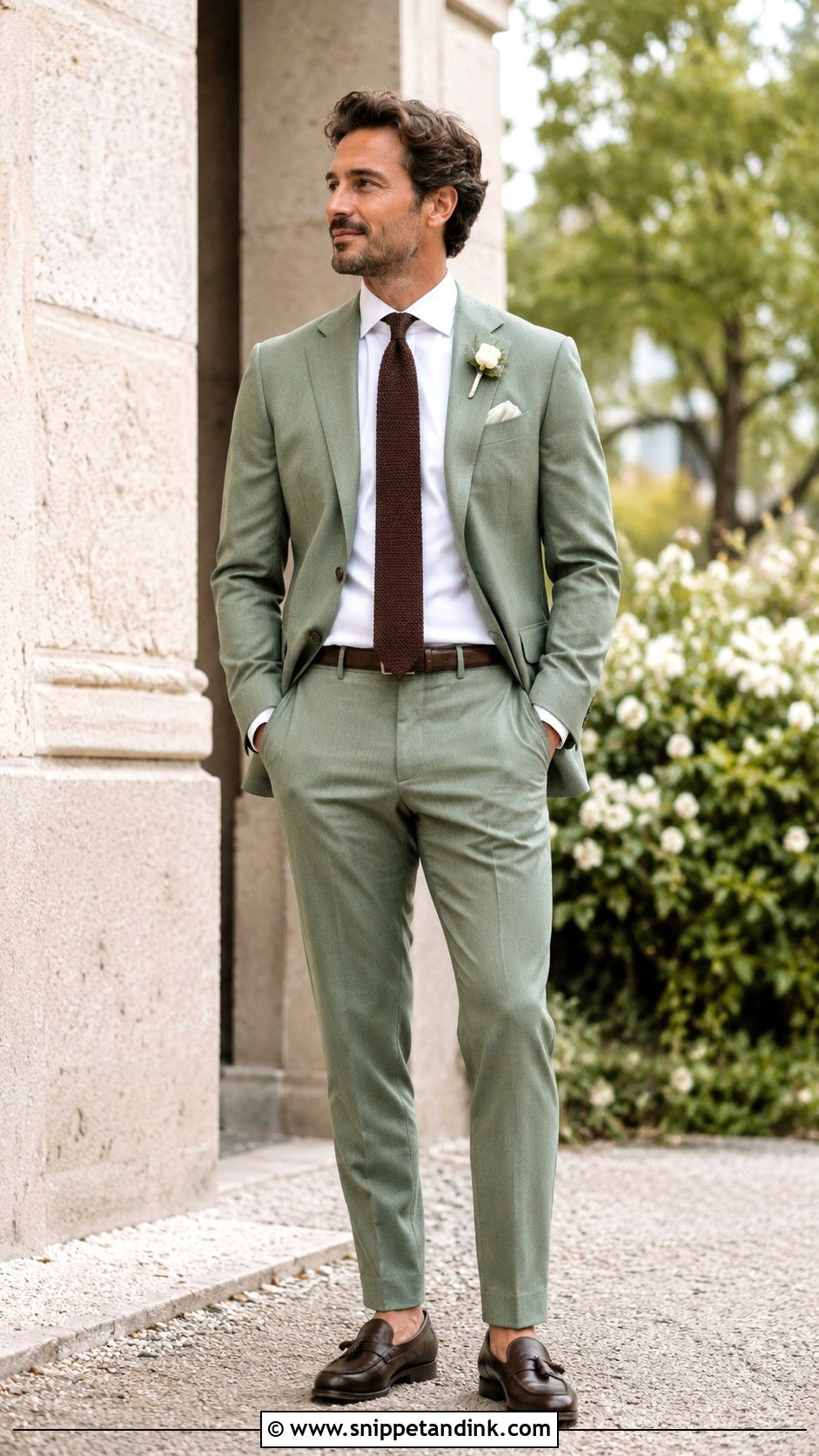
Sage only works when it’s greyed down. A bright mint reads like a costume, while a sage with grey undertones looks quietly expensive. I pair it with a white shirt, a dark brown knit tie and brown leather loafers, then a matching belt, a cream pocket square and an understated boutonniere so the green stays the focus. Lightweight wool is the polished route; a linen blend adds texture for hot outdoor days but creases more. Keep the cut lean with a two-button jacket and gently tapered trousers. It sits naturally against countryside, pale stone and gardens in spring or early fall.
9. Olive Italian Wedding Suit
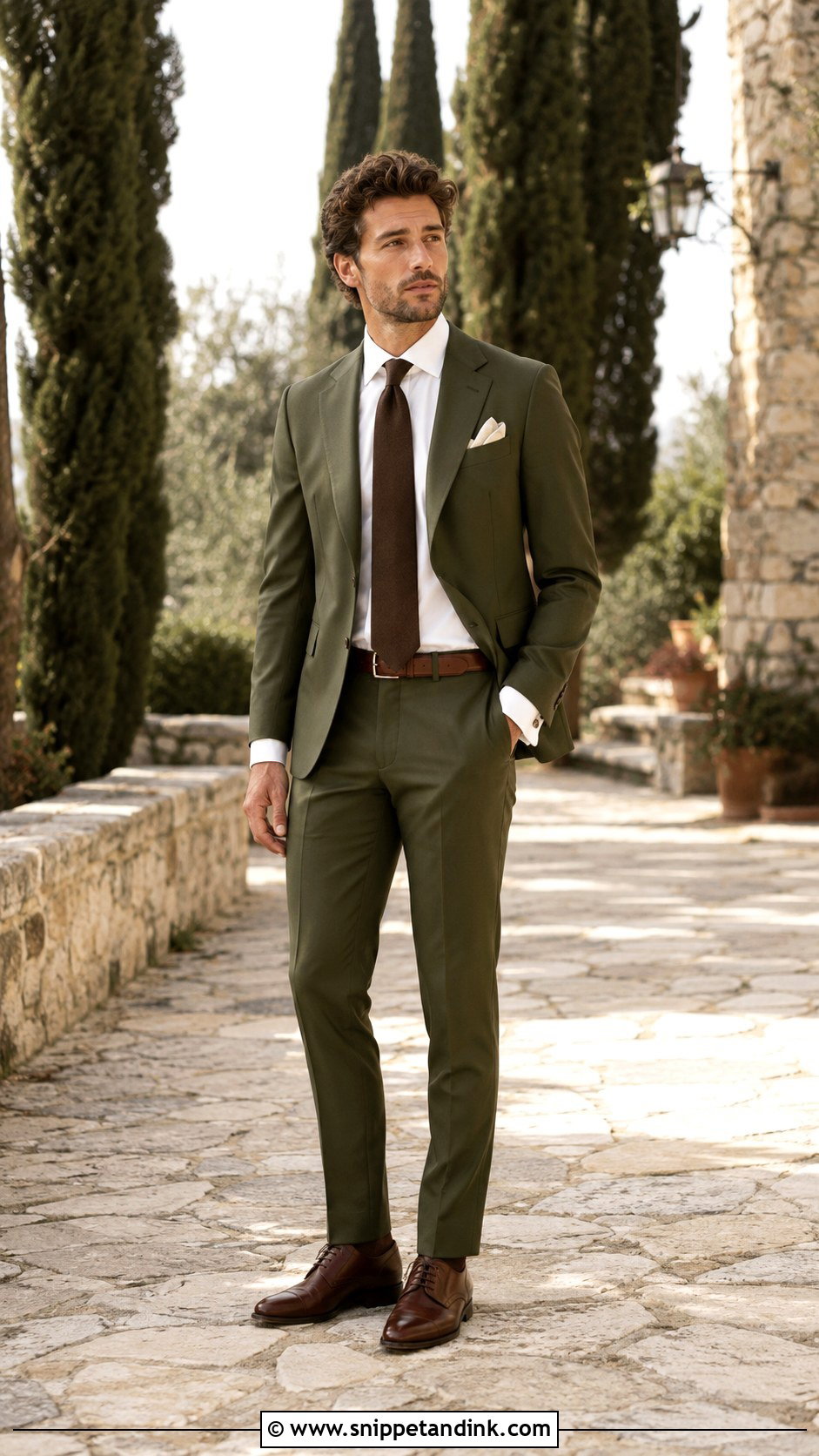
Olive is sage’s darker, earthier cousin, and it suits men with warm or olive skin particularly well. A deep olive two-piece with an ivory shirt, a dark brown silk tie and polished brown derbies is the combination I’d start with; a cream pocket square and antique-style cuff links add personality without tipping into theme. Insist on a matte cloth. Sheen on olive turns it slightly khaki and cheap-looking on camera. Notch lapels, a natural shoulder and a comfortable mid-rise keep it grown-up. It belongs at woodland properties, country estates and fall destination weddings, where navy would feel predictable.
10. Brown Double-Breasted Italian Wedding Suit
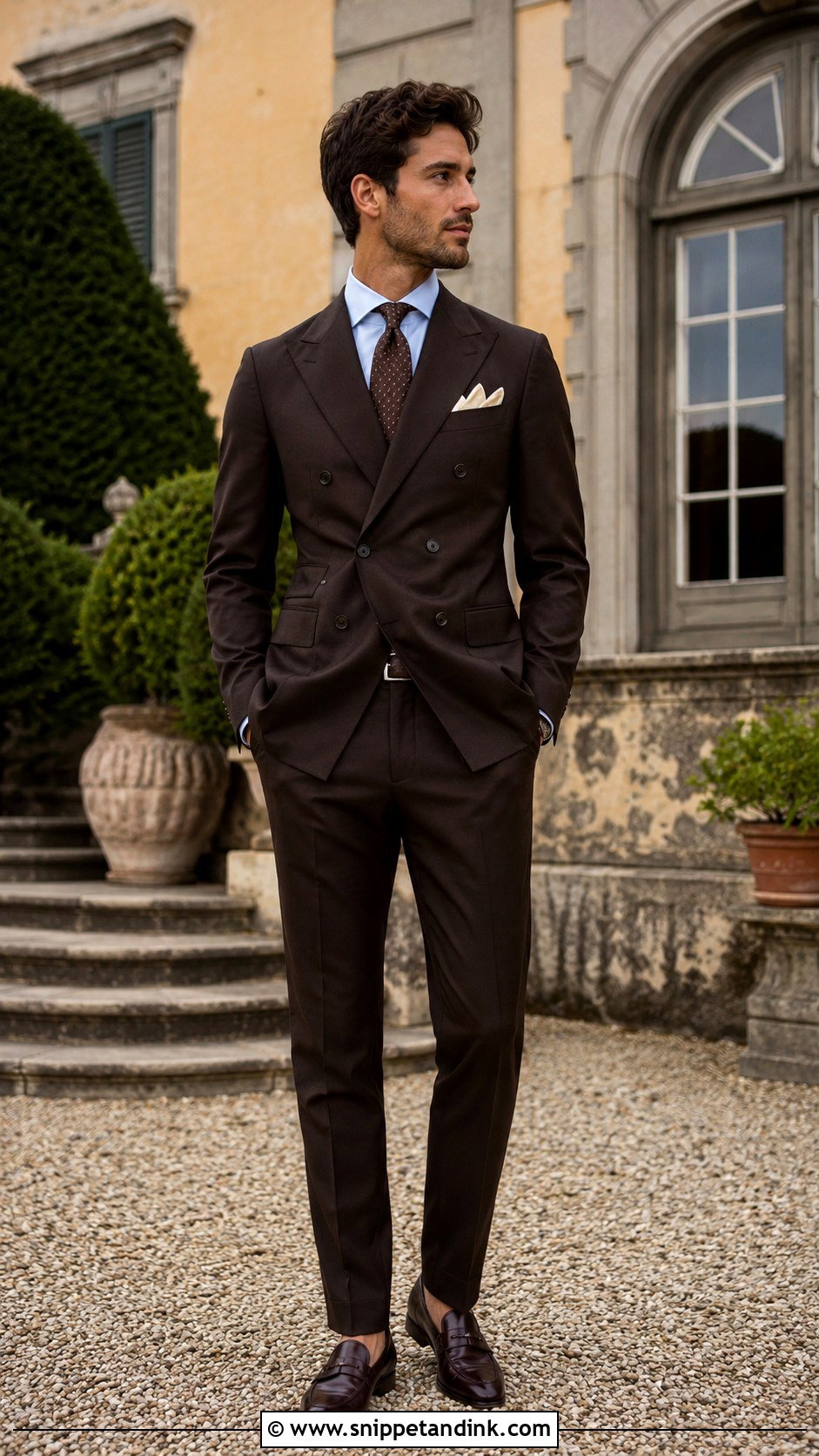
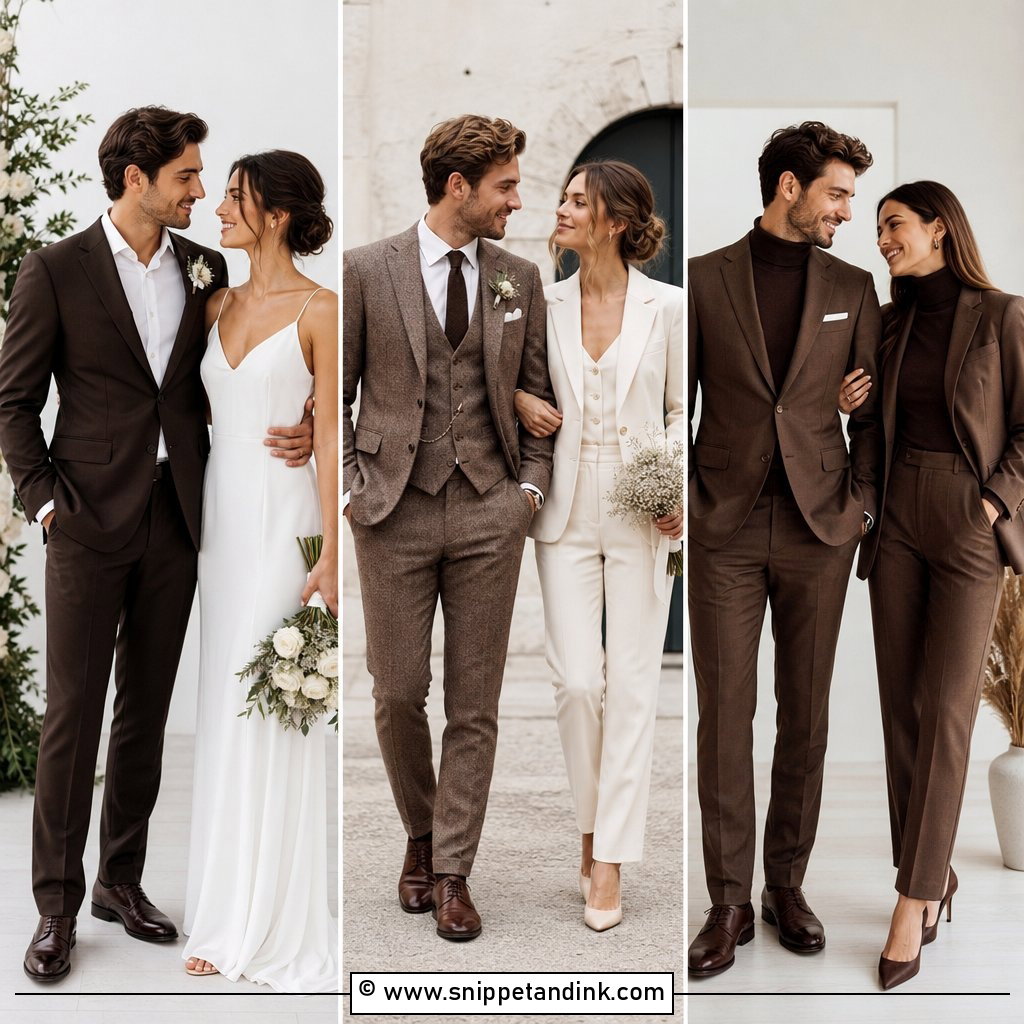
Rich chocolate or tobacco-brown tailoring is warmer and more individual than any grey. A double-breasted jacket with peak lapels gives it structure, and matching high-rise trousers lengthen the line. I’d style it with a pale blue or ivory shirt and a dark brown patterned tie, dark brown loafers and belt, and a cream pocket square. For fall, a textured wool or a subtle wool-silk blend gives the colour depth. The common mistake is piling on rustic extras, tweed caps, wooden bow ties, twine boutonnieres. Brown already says country; let the sharp cut do the rest.
11. Terracotta Italian Wedding Suit
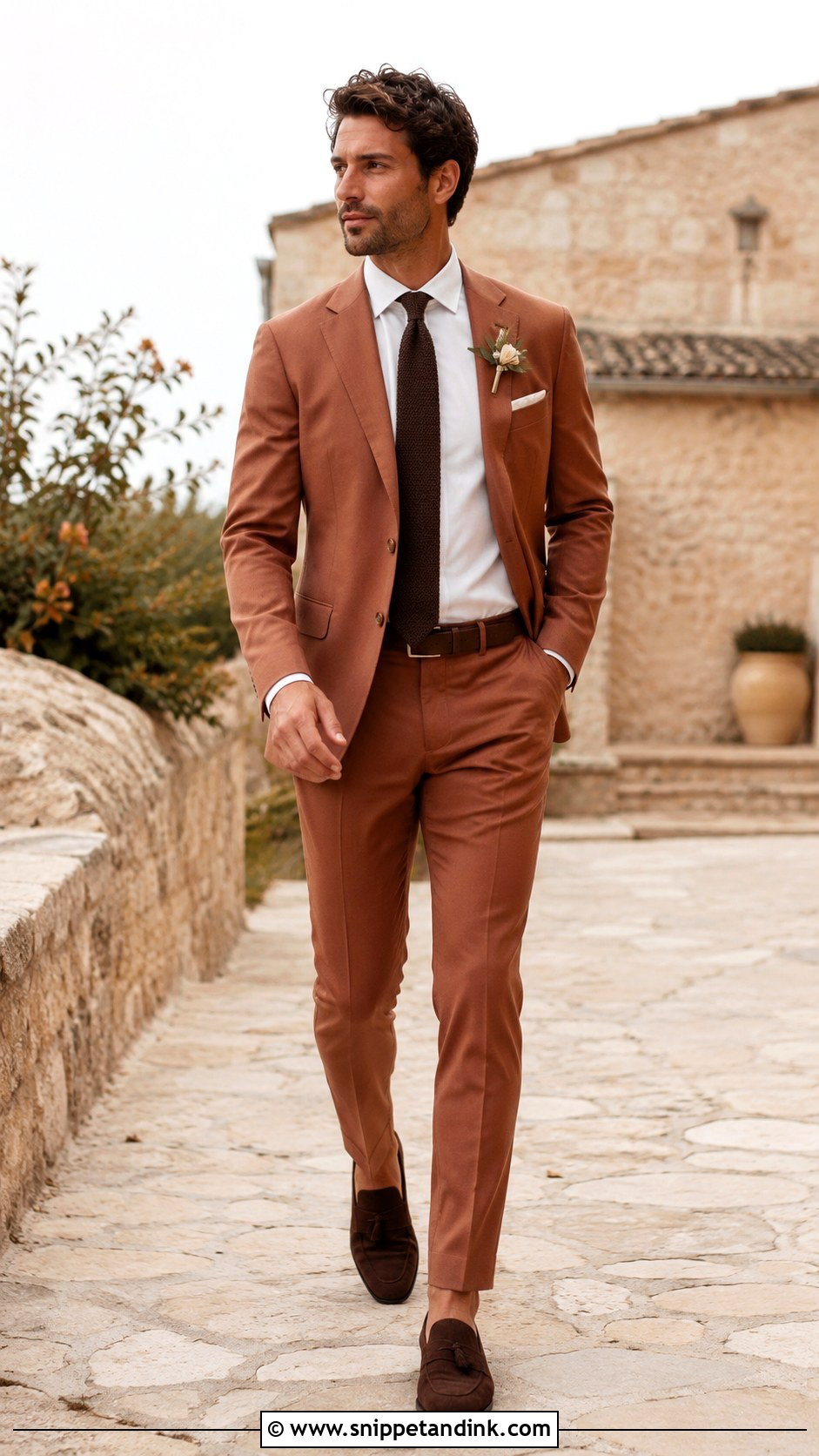
Terracotta tailoring borrows its colour straight from Italian rooftops, and it is the riskiest suit on this list. I only recommend a muted rust, never anything near orange, cut cleanly as a single-breasted jacket with tailored trousers. An ivory shirt softens it and a chocolate knit tie adds texture; dark brown suede loafers, a matching belt and a cream linen pocket square finish it. Keep everything else minimal, because the suit is already doing all the talking. This is a groom’s piece. If the groomsmen want to coordinate, put them in softer brown or beige rather than matching rust, which can look like a team uniform. Late summer and fall suit it best.
12. Soft Gray Italian Wedding Suit
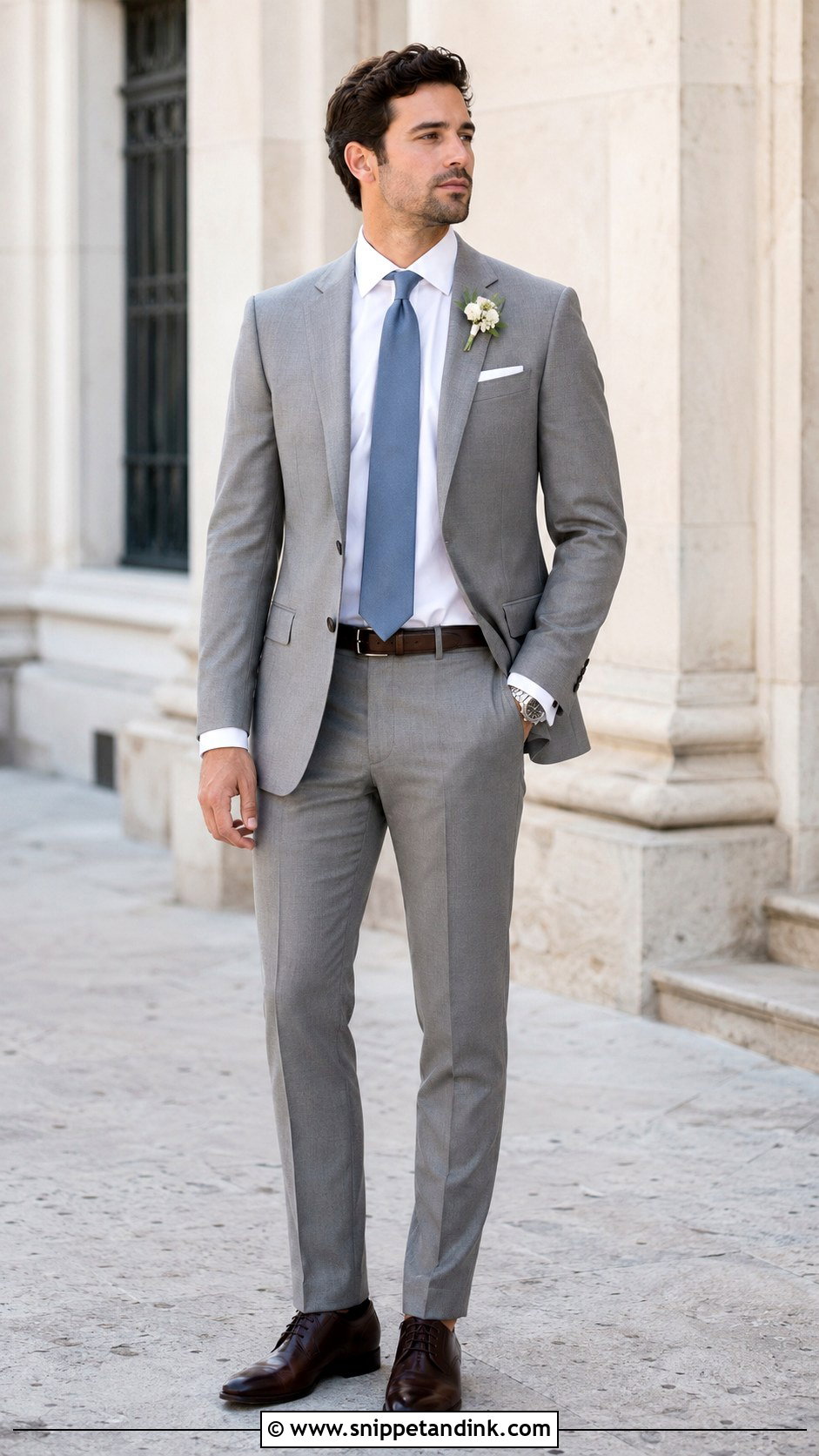
Soft grey is the daytime suit for a man who finds charcoal too sombre and beige too casual. Choose a lightweight wool in a cool or neutral grey depending on the wedding palette; cool grey with silver accents, neutral grey if there’s a lot of warm stone around. A white shirt with a dusty blue silk tie is the safe pairing, and dark brown oxfords add warmth. Finish with a brown belt, a white pocket square and a simple silver watch. Fit through the chest and waist is what I fuss over here, since light grey shows every pull. Avoid shiny cloth, which glares in bright photographs. City ceremonies, refined gardens and spring events all suit it.
13. Navy Pinstripe Italian Wedding Suit
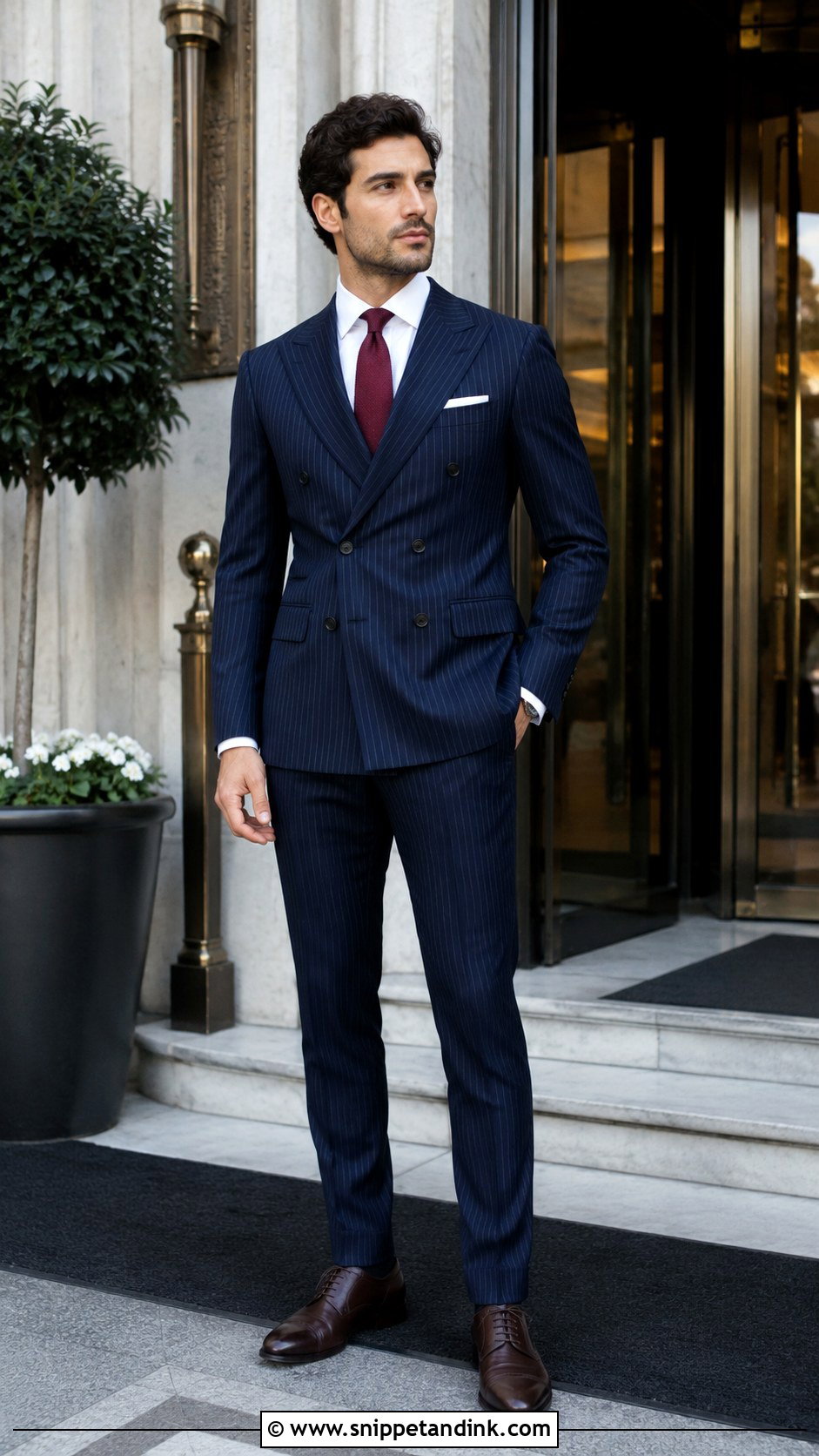
A subtle navy pinstripe suit adds character without losing formality, provided the stripe is fine and closely spaced. Wide chalk stripes look like a banker’s office, not a wedding. Pair it with a white spread-collar shirt and a solid burgundy, silver or navy tie, then dark brown oxfords and a matching belt; keep the pocket square plain white so it doesn’t fight the stripe. Double-breasted pushes the Italian character, though single-breasted is easier to sit and dance in. Wear dark socks long enough to cover the shin when seated. I’d suggest it to men who already wear tailoring and are comfortable with a little pattern.
14. Check Italian Wedding Suit
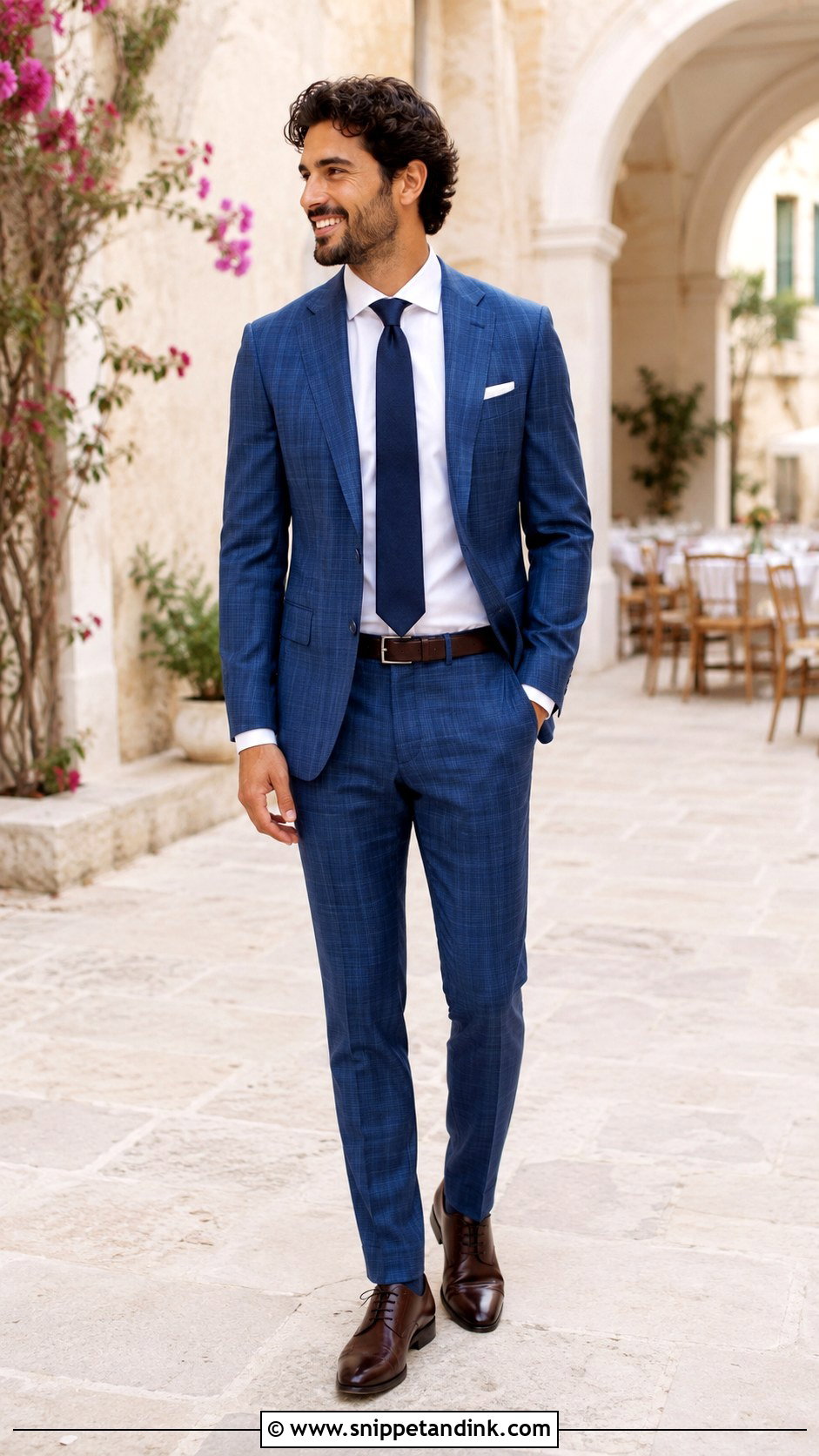
Checks go wrong faster than any other cloth, so I keep them small. A blue, grey or brown suit with a subtle windowpane or tonal check, a solid white shirt and a plain tie that picks up one of the quieter colours in the weave is about as far as I’d push it. Dark brown shoes, a matching belt and a white pocket square finish it. Never stack a patterned shirt, a busy tie and loud socks on top. Ask the tailor to align the check across the front edges and the back seam; a misaligned pattern exposes an uneven fit instantly. It’s good for grooms, family members and guests at semiformal daytime weddings.
15. Ivory Dinner Jacket Italian Wedding Suit
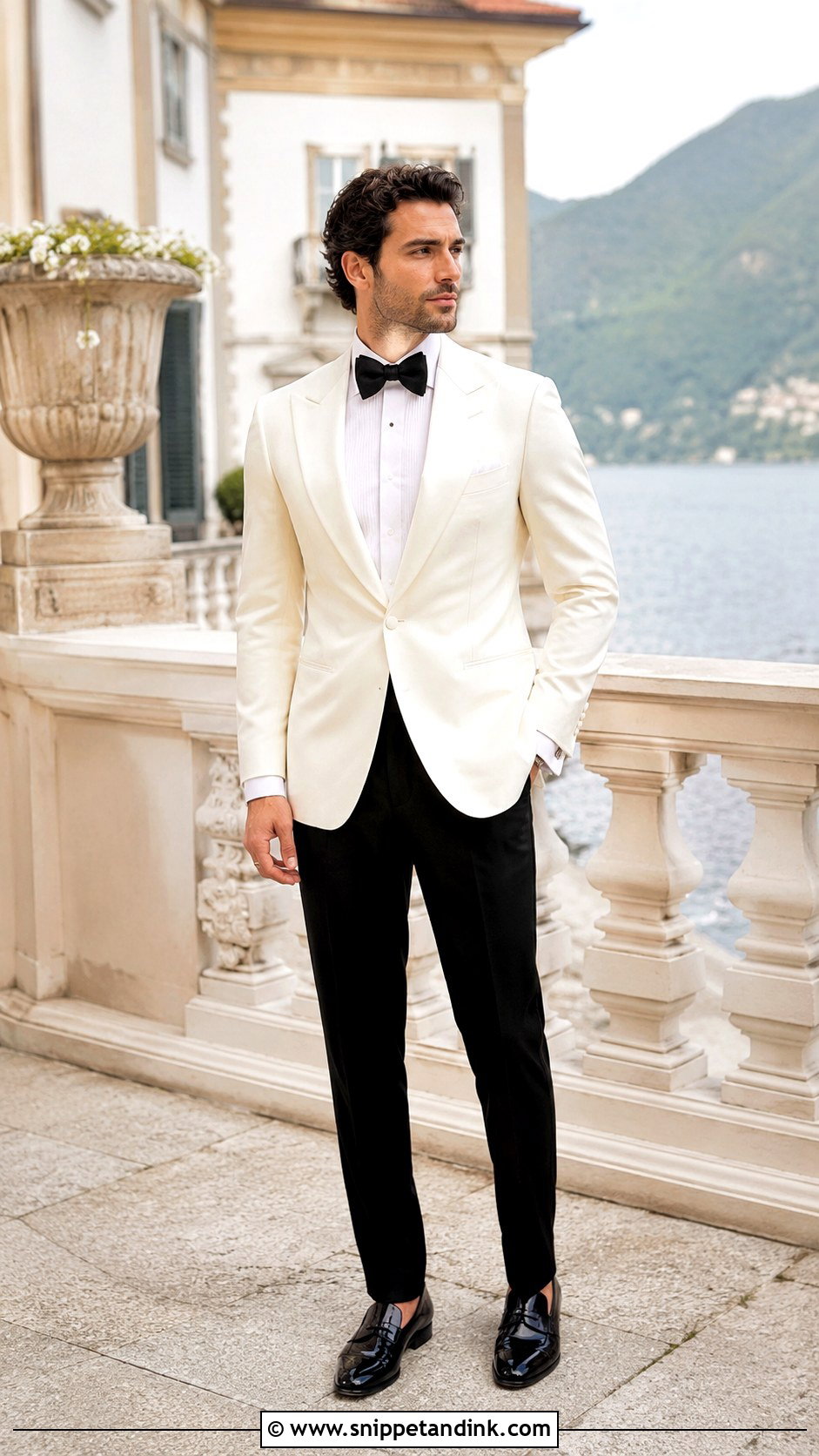
An ivory dinner jacket with black trousers is the warm-weather alternative to a full tuxedo, and it reads instantly as evening wear at a seaside hotel. I like a single-button jacket with black or ivory peak lapels and a clean waist, worn with a white dress shirt, a black bow tie and black tuxedo trousers. Polished black loafers or oxfords, a white pocket square and discreet cuff links. No belt; side adjusters keep the line smooth. Because the contrast is so strong, I’d keep it for the groom rather than the whole wedding party. Lakefront villas and spring or summer evenings are where it looks right.
16. Burgundy Velvet Italian Wedding Suit
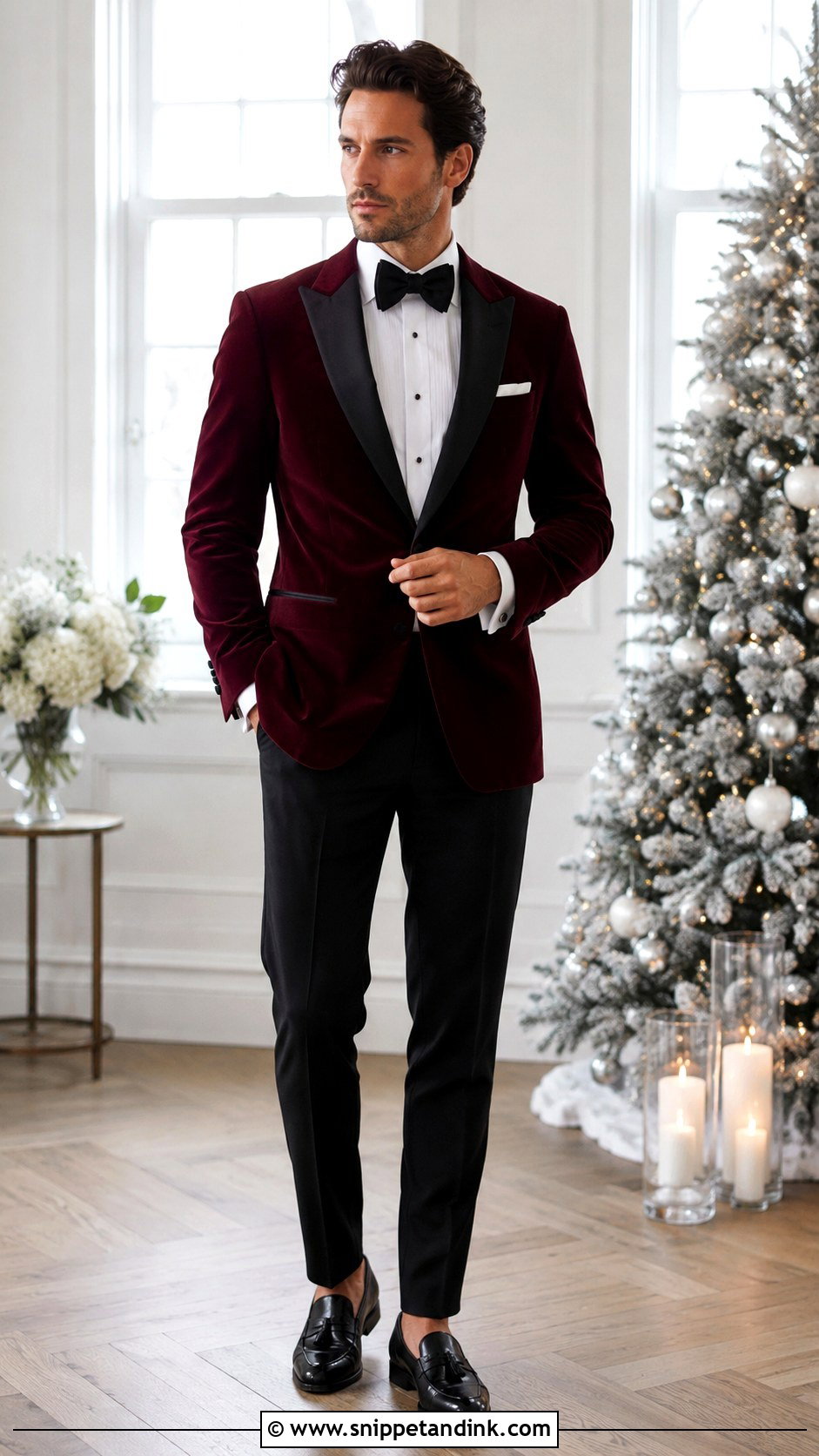
Velvet is the one fabric I’ll happily put on a groom in winter that he can’t wear in June. A burgundy velvet dinner jacket with black tuxedo trousers, a white dress shirt and a black silk bow tie is the classic build; black velvet slippers or polished loafers and a plain white pocket square keep the rest quiet. Velvet crushes where it’s sat on or pressed, so it should travel hanging, and never be ironed flat. A structured but comfortable jacket keeps the heavier pile from looking bulky. Under candle and lamp light the colour glows. It suits the groom, a reception change, or a creative black-tie dress code.
17. White Linen Italian Wedding Suit
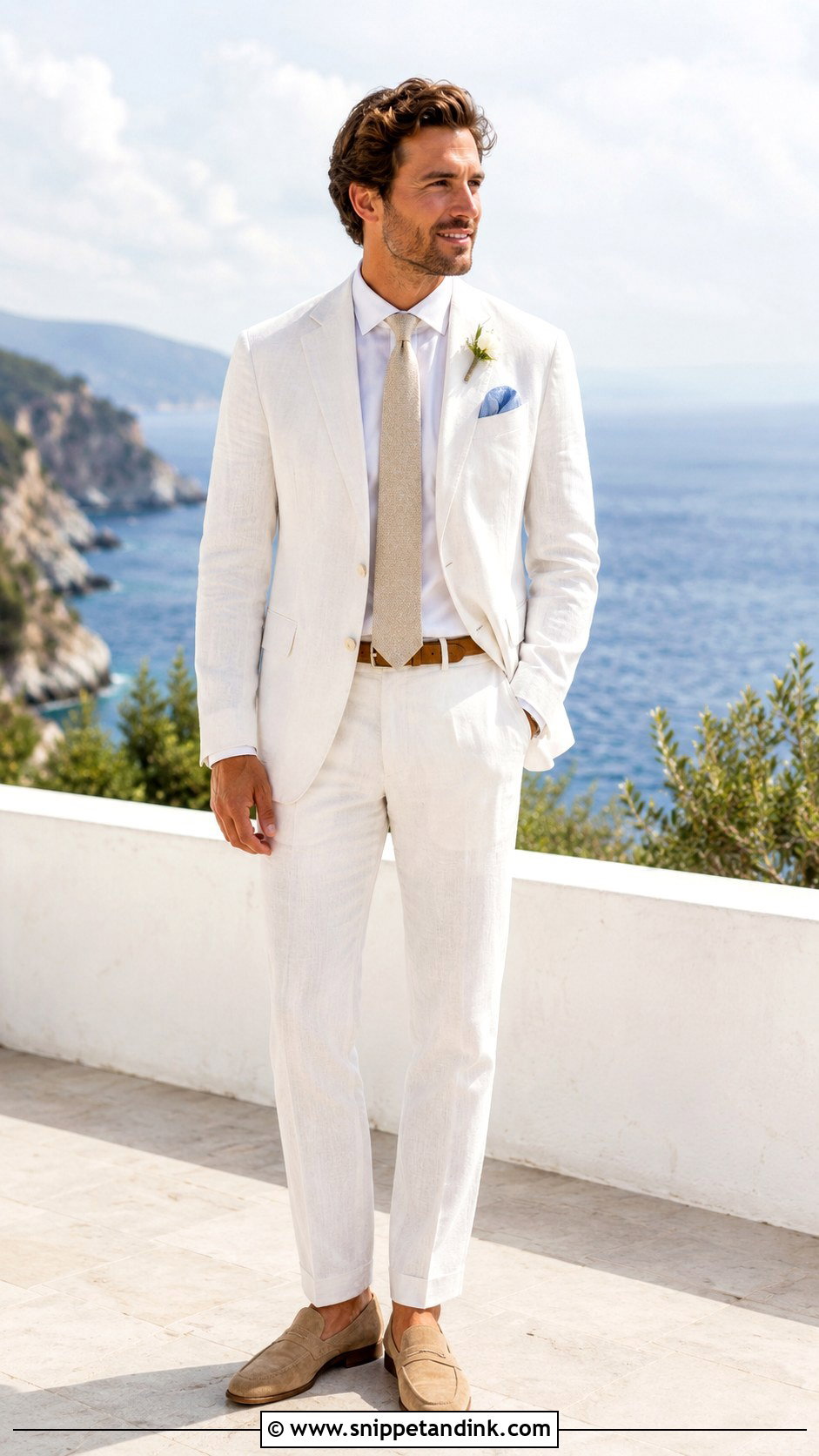
White linen is a groom’s suit and nobody else’s. I steer clients toward off-white or natural white so the suit has a little depth against a crisp white shirt. Tan suede loafers, a light brown belt and a pale blue pocket square keep it relaxed for heat; a sand-coloured silk tie and a small boutonniere raise the formality. Ask for a light lining, because unlined white linen can turn see-through in direct sun, and wear skin-tone underlayers rather than white ones, which show through. It’s made for seaside ceremonies, private terraces and couples who want a bright Mediterranean feel.
18. Blue Italian Wedding Suit With Patterned Tie
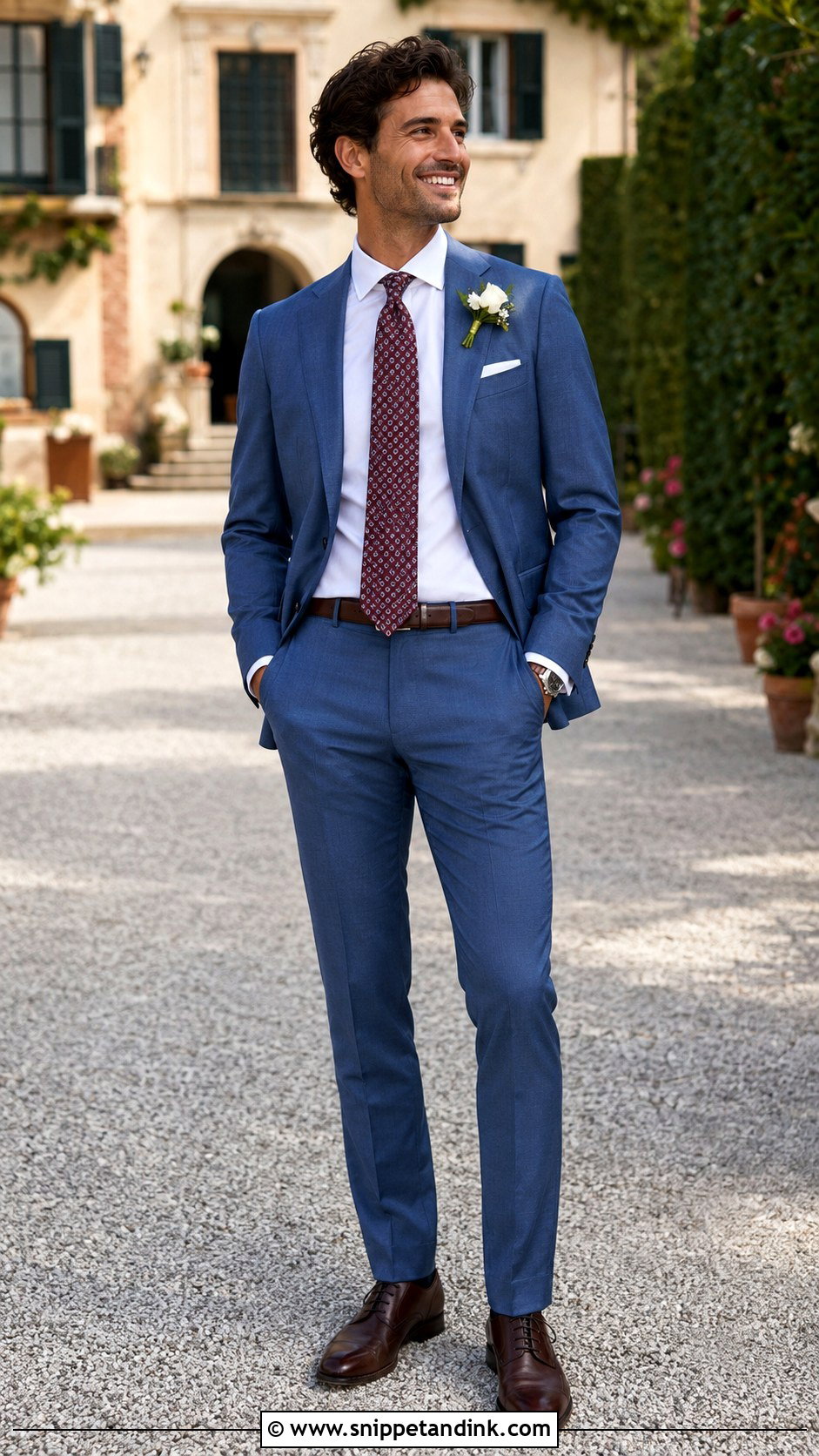
A medium-blue suit becomes wedding clothing the moment you give it one good patterned accessory. Start with a tailored two-piece, a white shirt and a silk tie with a small geometric, floral or medallion print; burgundy, cream or muted green in the tie adds colour without taking over. Dark brown oxfords, a matching belt and a plain white pocket square. Since the tie is the point of interest, I keep the shirt plain and the boutonniere small. This is the suit I recommend most to groomsmen and guests who want something they will wear again, and it handles daytime ceremonies and semiformal destination weddings.
19. Taupe Italian Wedding Suit With Knit Tie
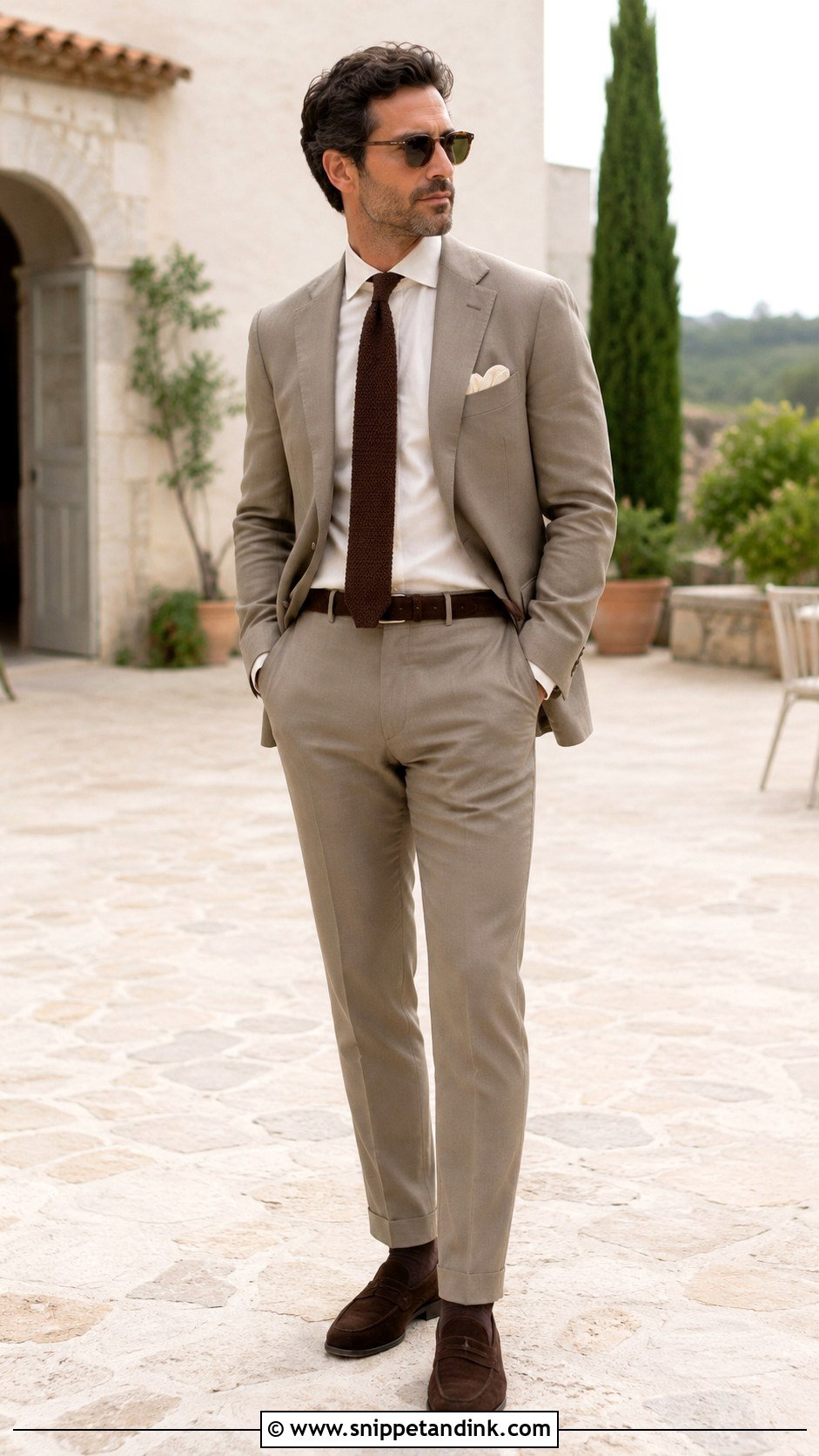
Taupe sits between beige, grey and brown, which makes it easier to wear than any of them on their own. Pair a lightweight taupe suit with a white or ivory shirt and a dark brown knitted silk tie; brown suede loafers add texture, and a matching belt and cream pocket square tie it together. Socks are worth a thought: no-show socks only suit a truly relaxed event, otherwise fine brown socks look cleaner when he sits down. The shirt needs enough contrast against the suit to stay defined in photographs. Wear it from spring to early fall. It’s also a good guest suit, polished without competing with the groom.
20. Spezzato Italian Wedding Suit
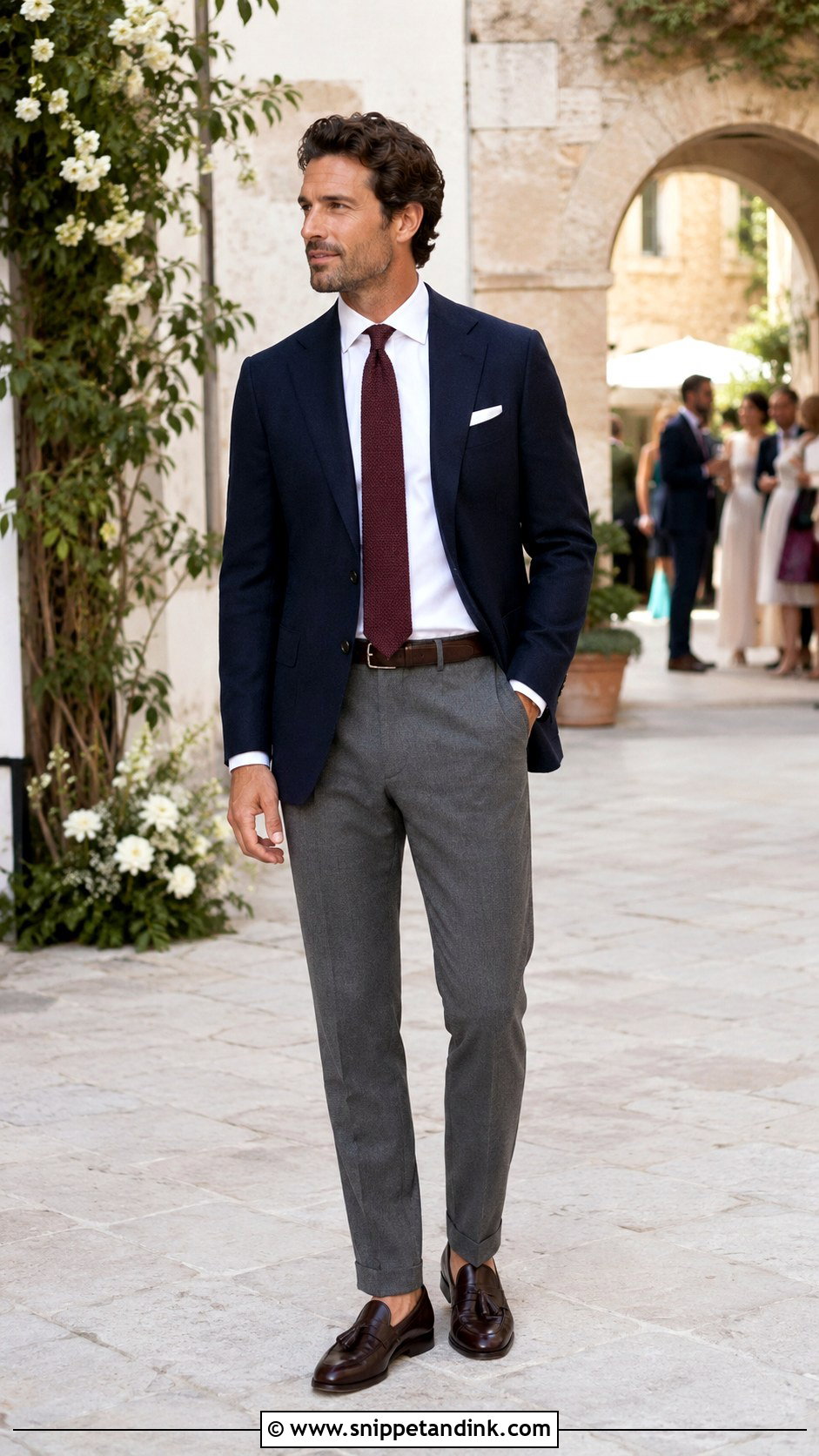
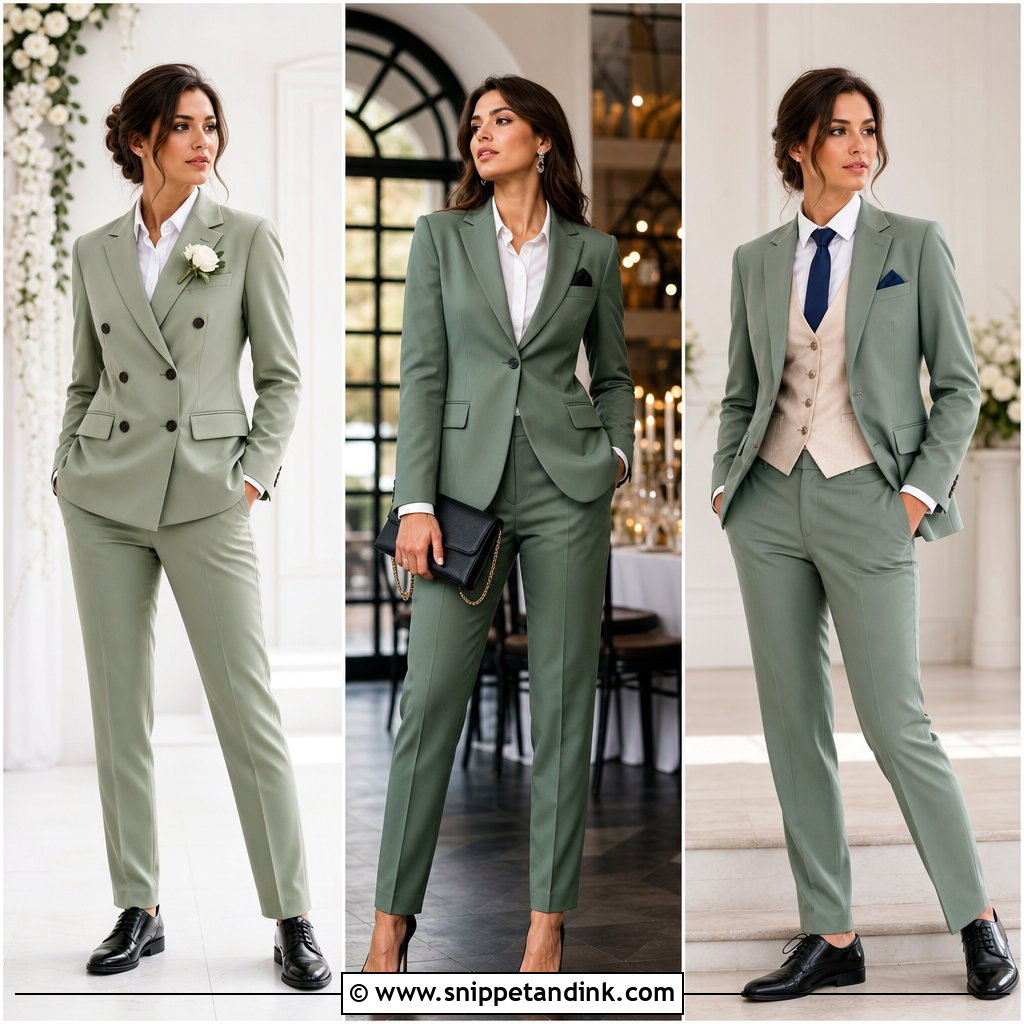
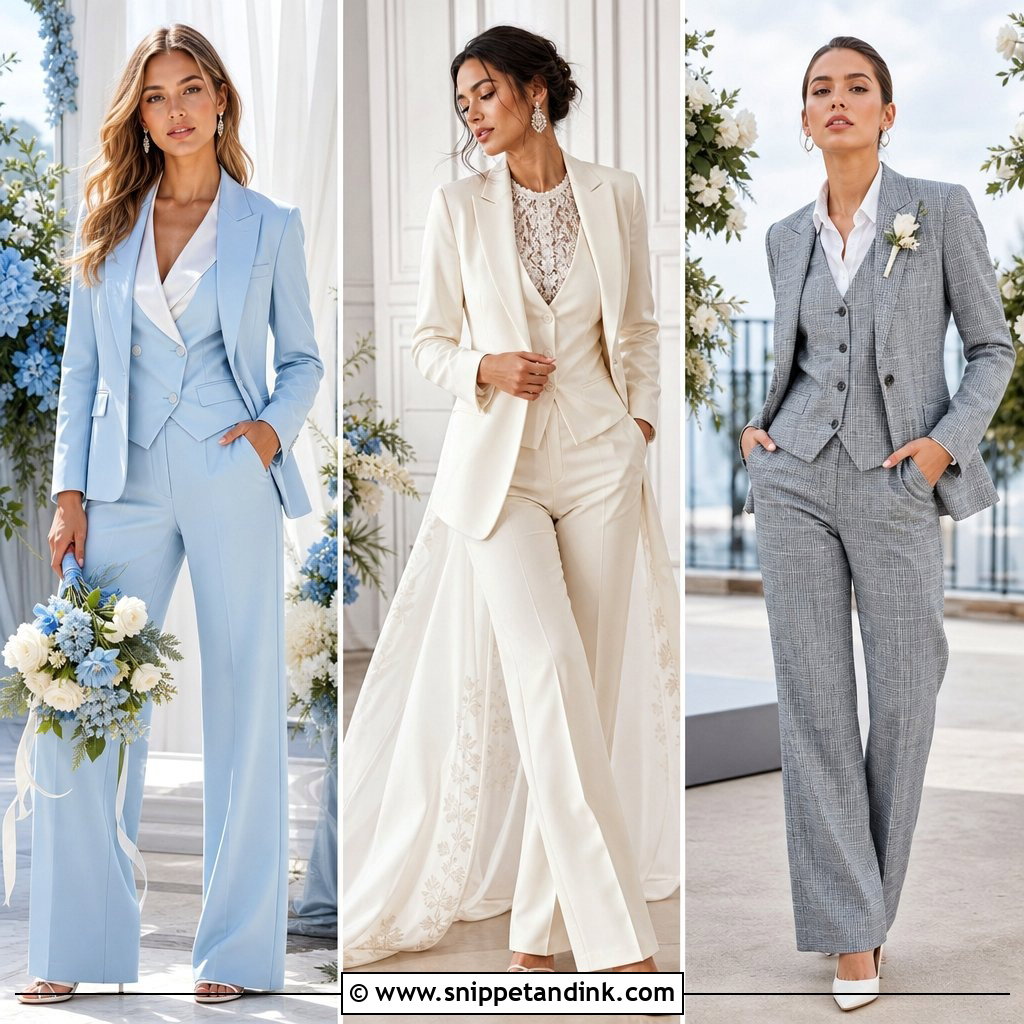
Spezzato simply means wearing tailored separates instead of a matching suit, and Italians do it all the time. For a wedding, I’d pair a navy blazer with mid-grey wool trousers, a white shirt and a muted burgundy or blue tie, then dark brown loafers, a coordinating belt and a simple pocket square. The rule I give everyone is clear contrast. Two slightly different navies look like a suit that lost its other half. Keep the jacket and trousers in similar fabric weights so the outfit feels even. It suits casual or semiformal weddings, rehearsal dinners and guests, but it is usually too relaxed for the groom unless the ceremony is intentionally informal.
Getting the Suit to Italy Without a Single Bad Crease
A destination wedding adds a step most grooms forget: the suit has to travel, then look sharp a day or two later. Work backwards from the flight, not from the wedding date.
- Order early. Made-to-measure usually takes six to ten weeks before the first fitting, sometimes longer in spring when tailors are busiest. Off-the-rack still needs two or three weeks for alterations.
- Do the final fitting in the shoes and shirt you will wear, ideally a couple of weeks before you fly, so there is time to fix a sleeve or hem.
- Carry it on. I always tell grooms never to check the suit. Fold it inside out in a garment bag with tissue in the shoulders, or roll the trousers, and ask cabin crew to hang it if there is space.
- Hang it in a steamy bathroom the night you arrive. Wool relaxes overnight. Linen will not fully recover, so book a hotel steamer or a local pressing service for the morning of the wedding.
- Break in the shoes at home. Stone steps and cobbles are hard on new leather soles, and blistered feet show in the first dance.
Pack a spare shirt as well. Even in a cool church, a white shirt can go limp by the reception, and a fresh one before dinner makes the whole suit look newly pressed.
What Guests Actually Notice Is the Fit
The suits that look best on the day are rarely the most expensive ones; they are the ones that fit and suit the weather. Navy and charcoal will cover most weddings, while sage, terracotta, taupe and brown bring colour for grooms who want it. Linen and tropical wool handle the heat; velvet and heavier wool add texture once the evenings turn cool. Whatever you pick, leave time for proper alterations and check the shoulder, sleeve length, trouser break and collar at the final fitting. Then keep the accessories restrained. A well-fitted mid-price suit will always look better in the photographs than a costly one that pulls across the back.
You'll Like These Ideas:


Leave a Reply