
By the time dinner is cleared, most brides I work with are ready to lose the train, the layers of tulle and the corset that’s been pressing into their ribs since noon. A second look is the answer, and it can be anything from a short satin dress to a jumpsuit or a gown in another color. Minis, coordinated sets, lace, crystal and feather trims are all made with receptions and after-parties in mind now. Some brides echo the ceremony gown; others want the change to feel like a different person walked in. Below are twenty options, with what I’d check about each before you buy.
Planning the Change Itself, Down to the Minute
The dress is only half of a second look. The other half is the change, and it’s usually more rushed than brides expect. Getting out of a laced or buttoned gown takes a helper and at least ten minutes; add shoes, hair adjustments and a lipstick refresh and you’re closer to twenty or thirty. Most couples change after dinner or straight after the first dance, while guests are busy.
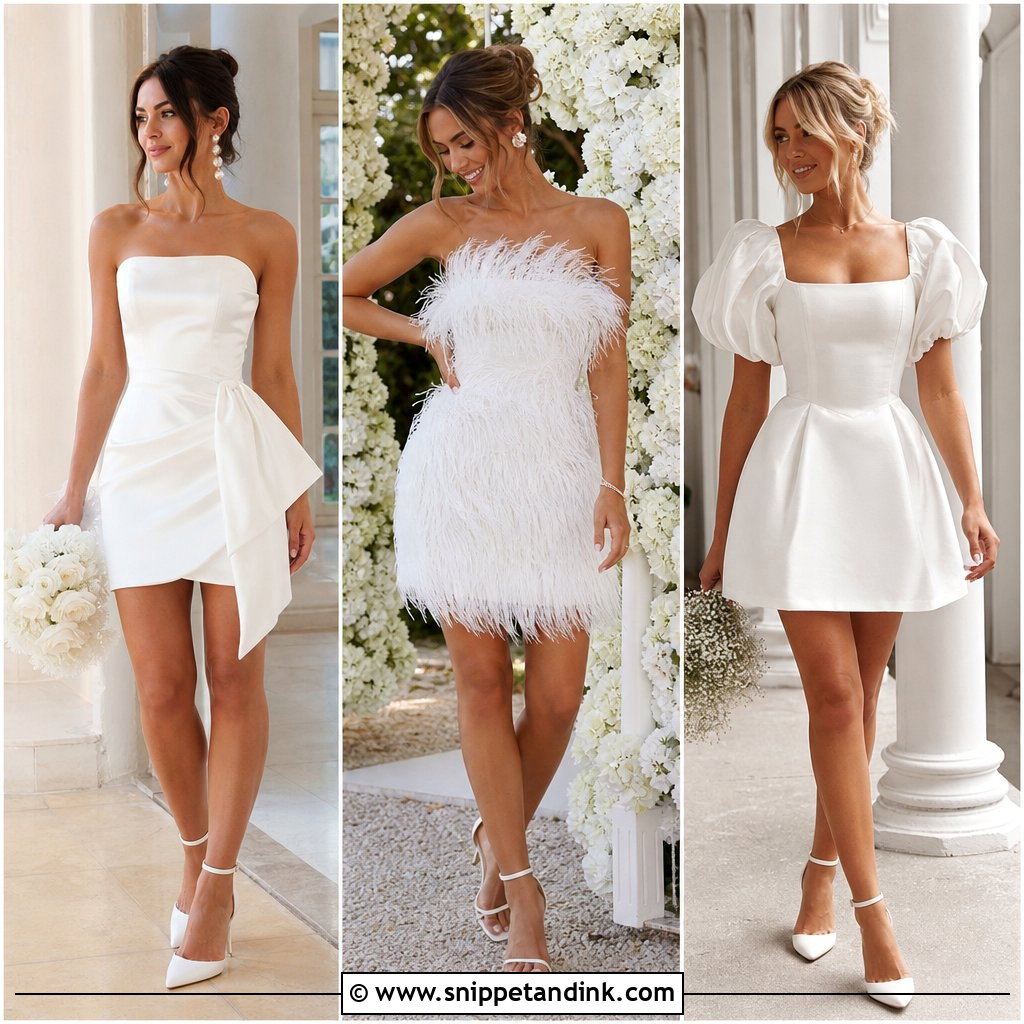
- Pick one person to help, ideally the one who dressed you in the morning.
- Hang the second look, shoes, jewelry and underwear together in the changing room before the ceremony starts.
- Ask your hairstylist to show you or your helper how to take out the veil without pulling pins loose.
- Have a garment bag ready for the first gown so it isn’t left over a chair.
If you have less than fifteen minutes, choose a second look with a side zip or a pull-on skirt rather than a corset back.
Hair usually changes too
A cathedral-veil updo can look heavy over a short satin dress. Many brides ask their stylist to build the morning style so it can drop into a ponytail or loose waves later, with a few pins removed rather than a full restyle. Tell your stylist at the trial if you plan to change, so the first look is pinned with that second step in mind.
1. Bridal Satin Mini Dress With Bow
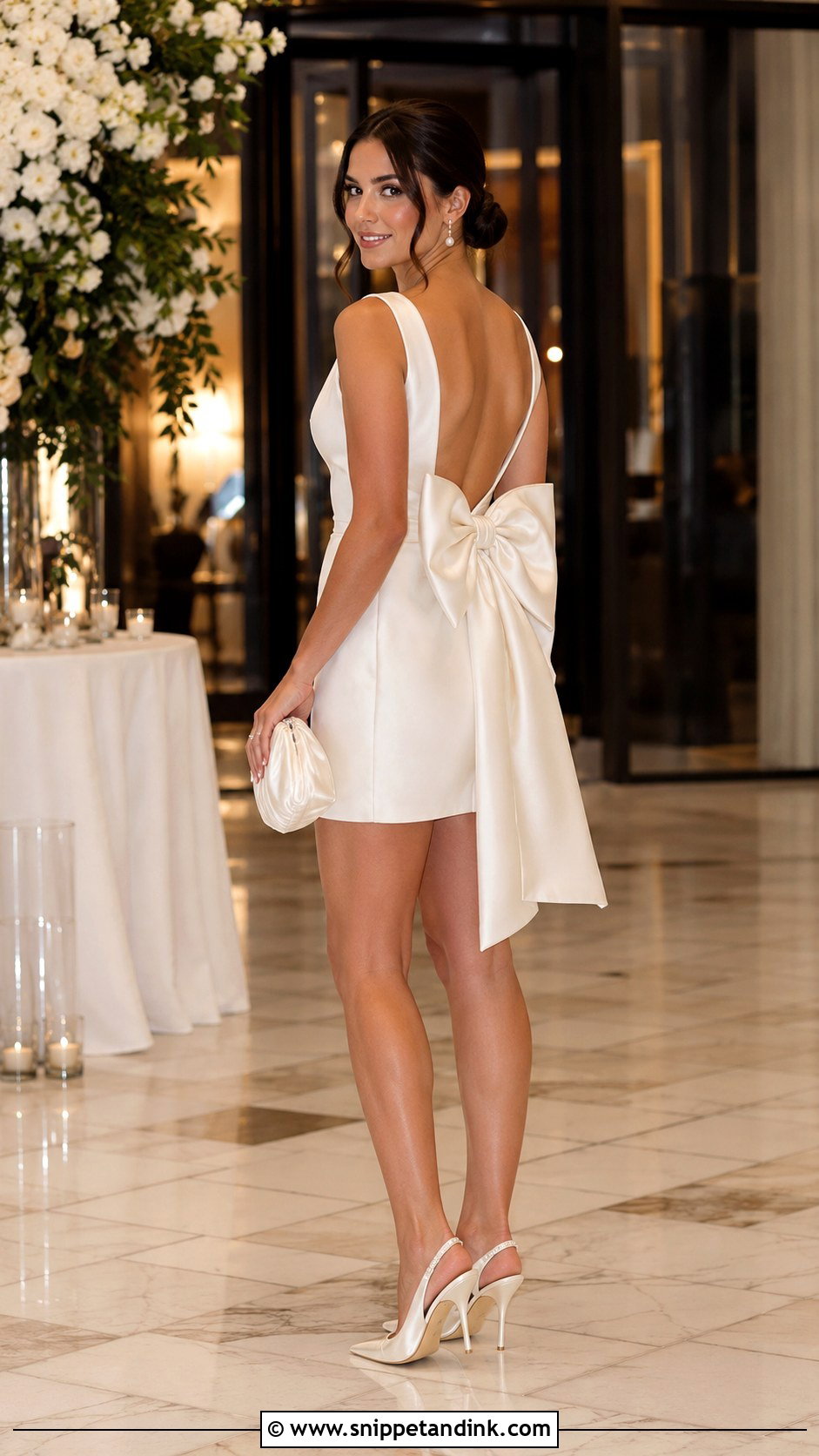
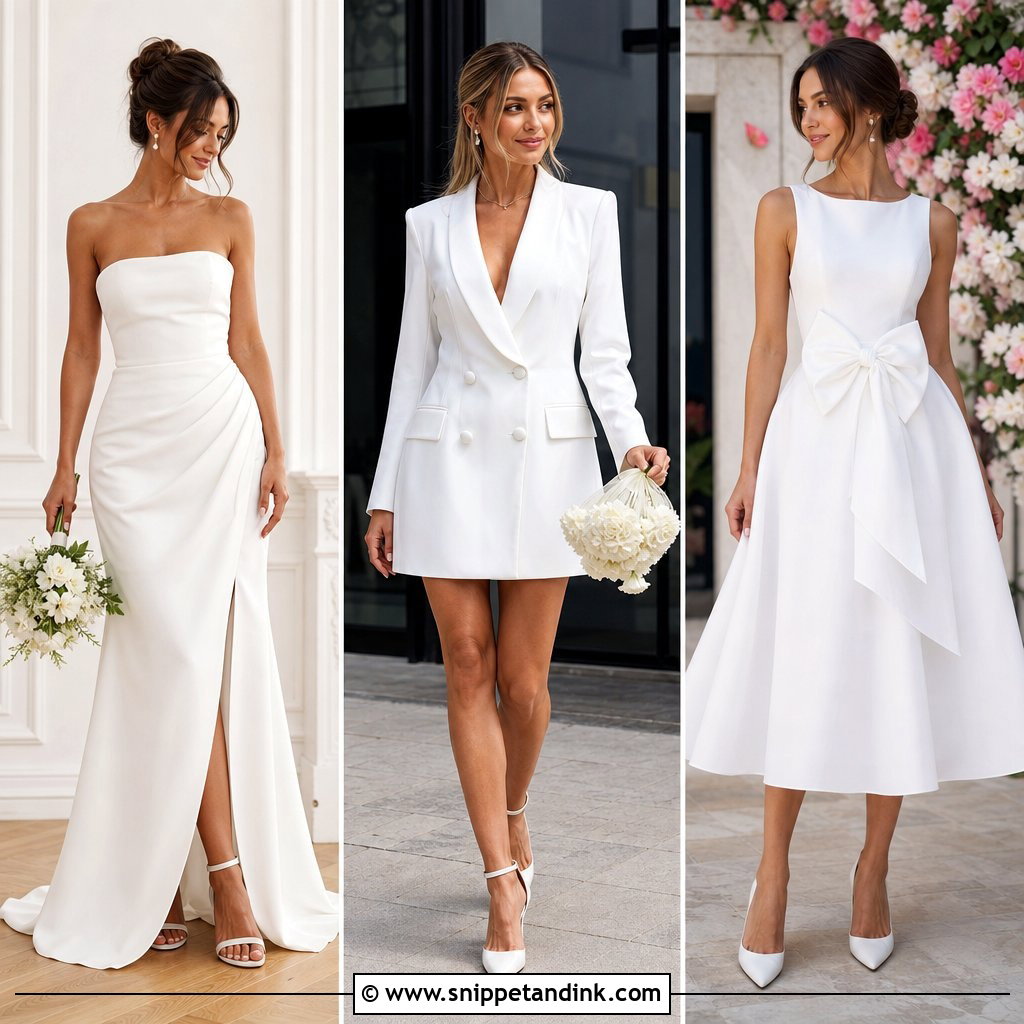
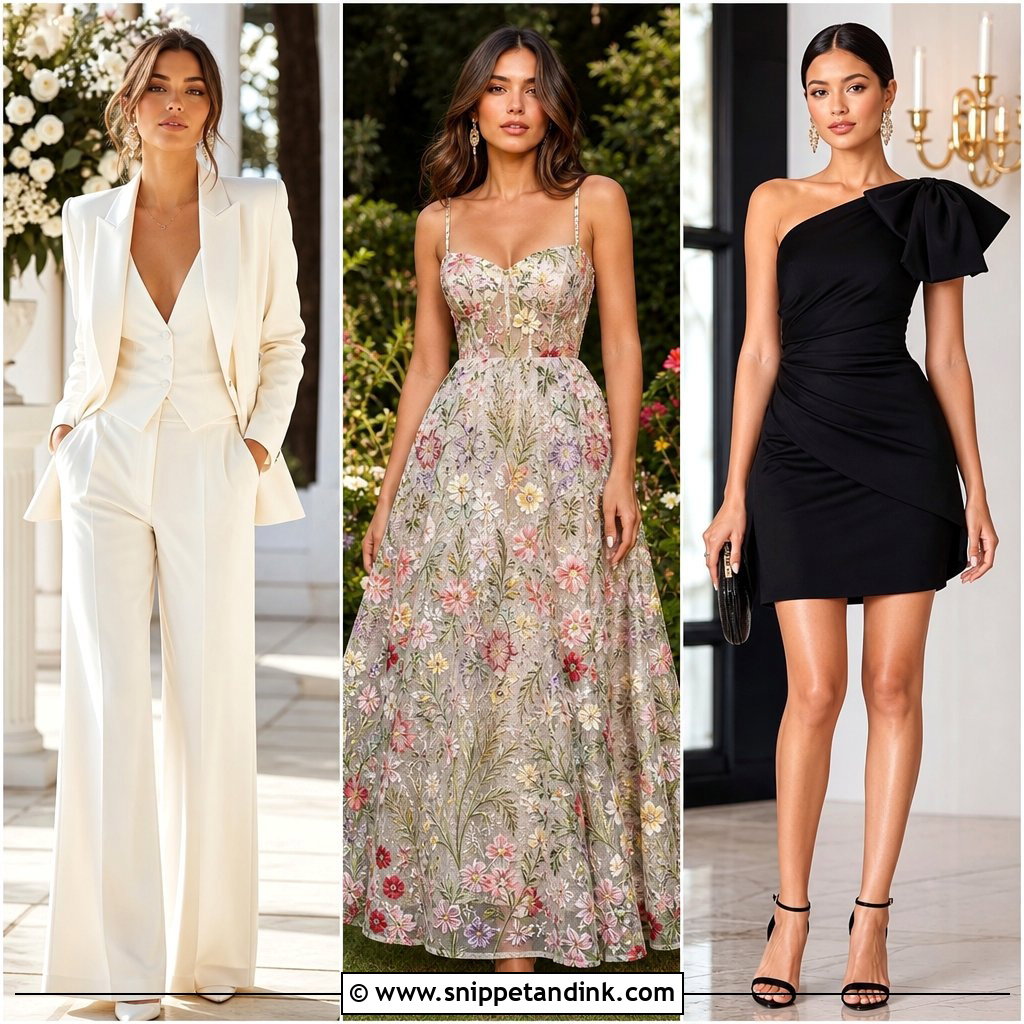
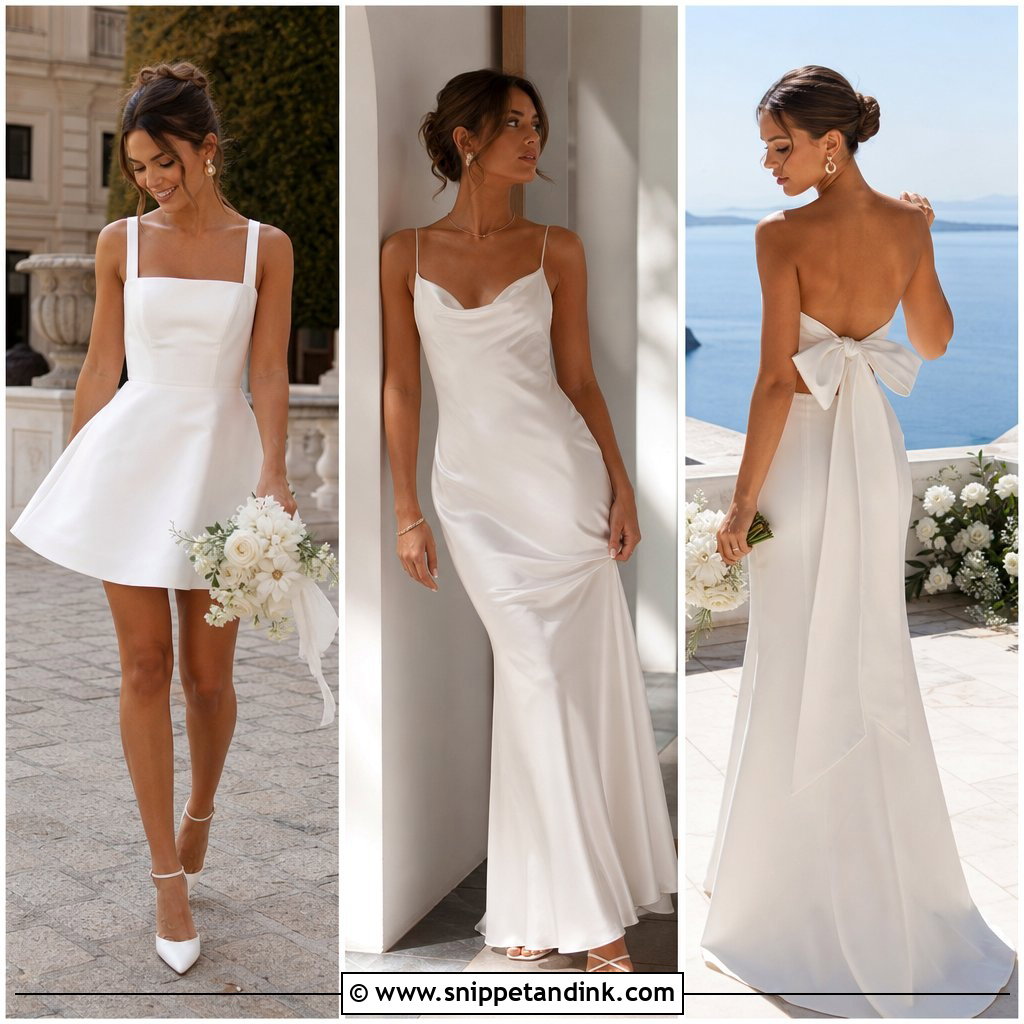
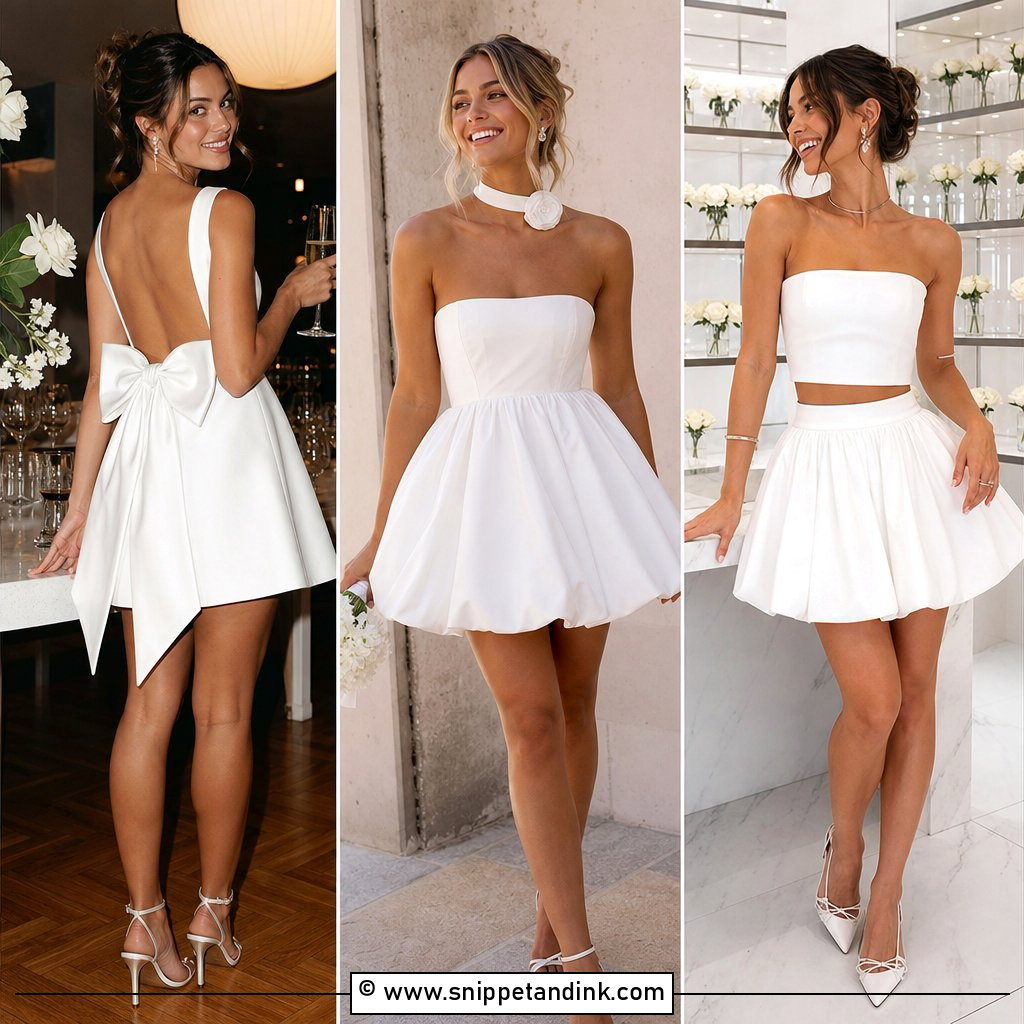
The bow is the whole story here, so decide where it sits based on how you’ll be photographed. A big bow at the back makes the entrance, but you’ll lean against it every time you sit, and soft satin bows crush flat. I ask for a bow with a light interfacing or a hidden stitch to hold the loops open. Keep the bodice fitted and the skirt roomy enough to dance, then add pointed slingbacks or ivory ballet flats, pearl drops and a small satin clutch. Hair goes up and out of the way: a smooth bun or a low ponytail.
2. Bridal Sequin Mini Dress With Heels
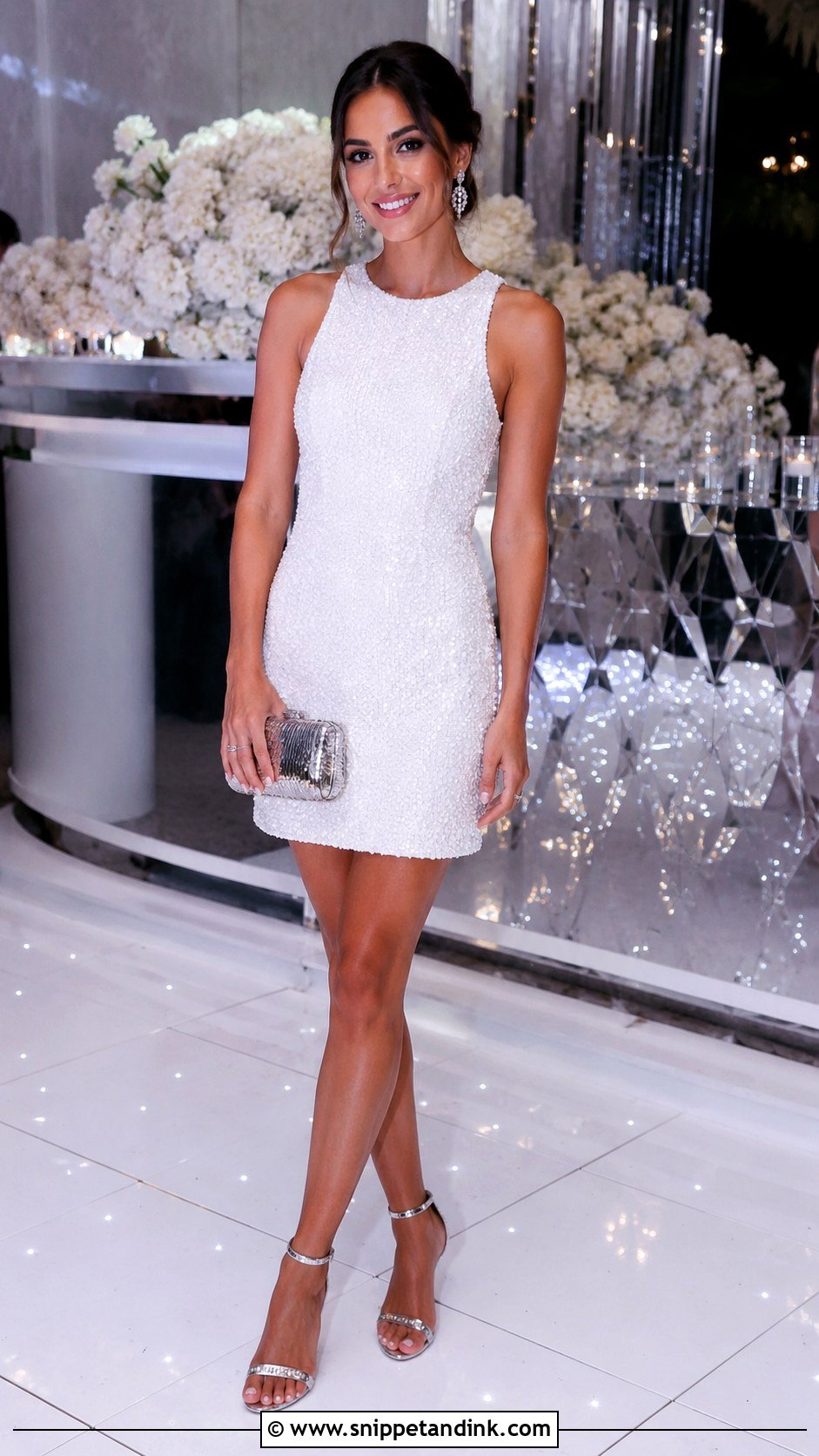
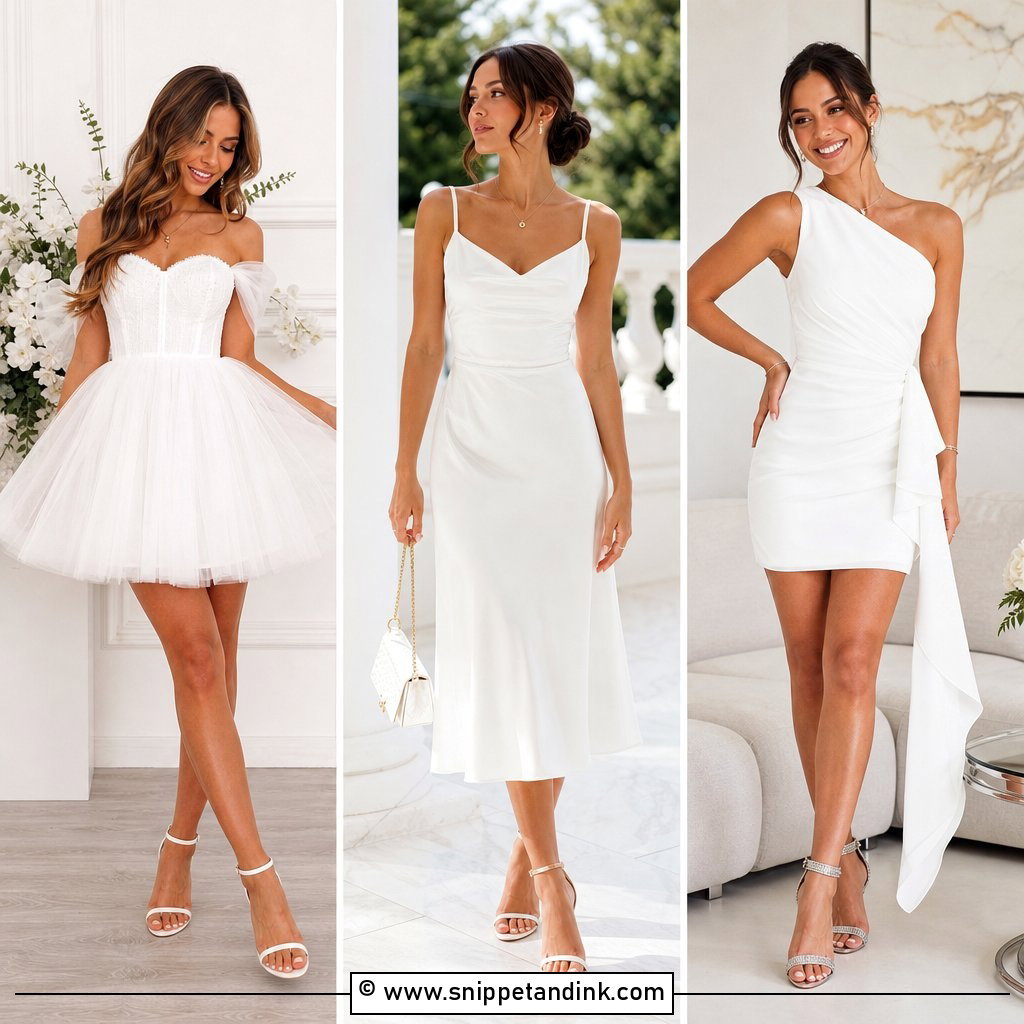
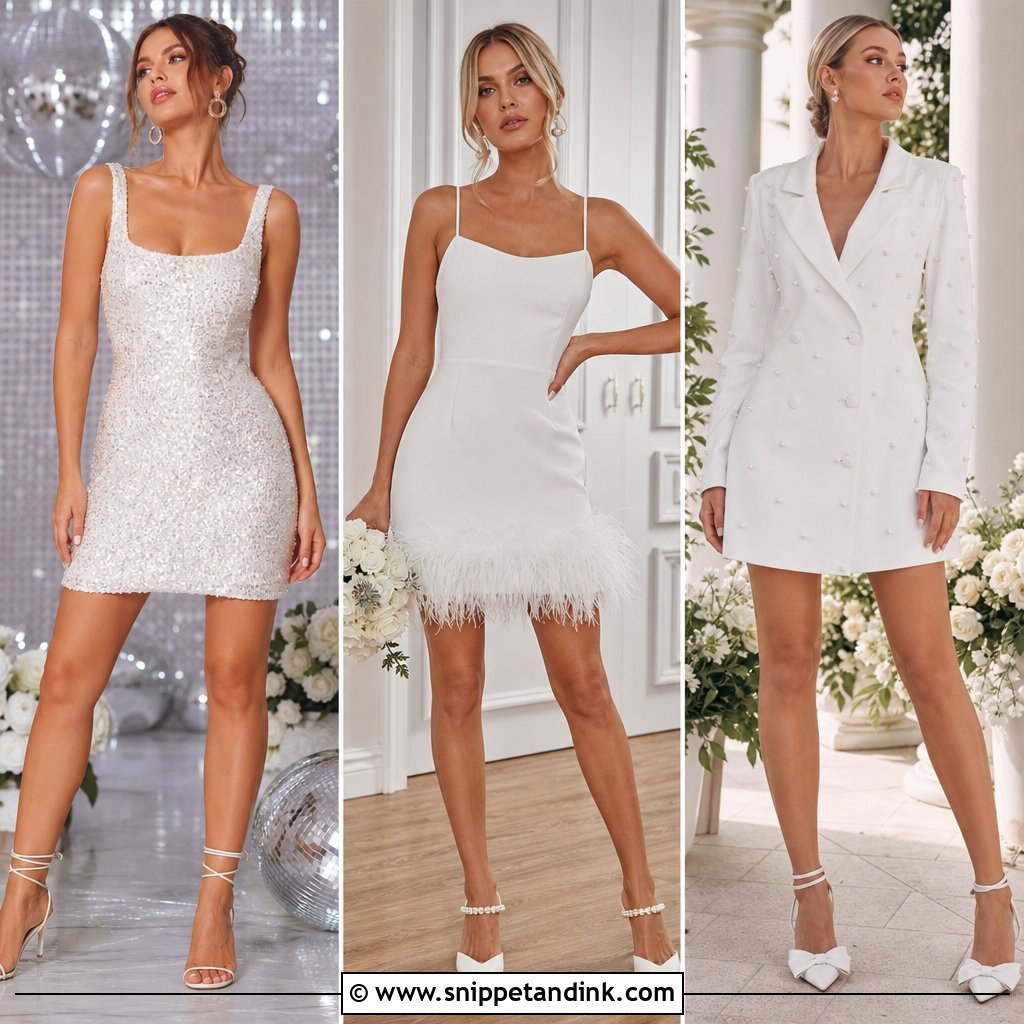
Sequins are made for the moment the lights go down. A sequin mini dress in ivory, silver or champagne reads clearly in photos, but camera flash can bounce off large paillettes and blow out detail, so I prefer smaller, matte-backed sequins. Check the inside seams too. Sequins sewn into the side seams scratch the inner arm raw after a few hours of dancing. A simple neckline, metallic ankle-strap heels, crystal studs and a sleek ponytail are enough, and an oversized white blazer covers the arms for the entrance if you want it.
3. Bridal Feather Trim Mini Dress
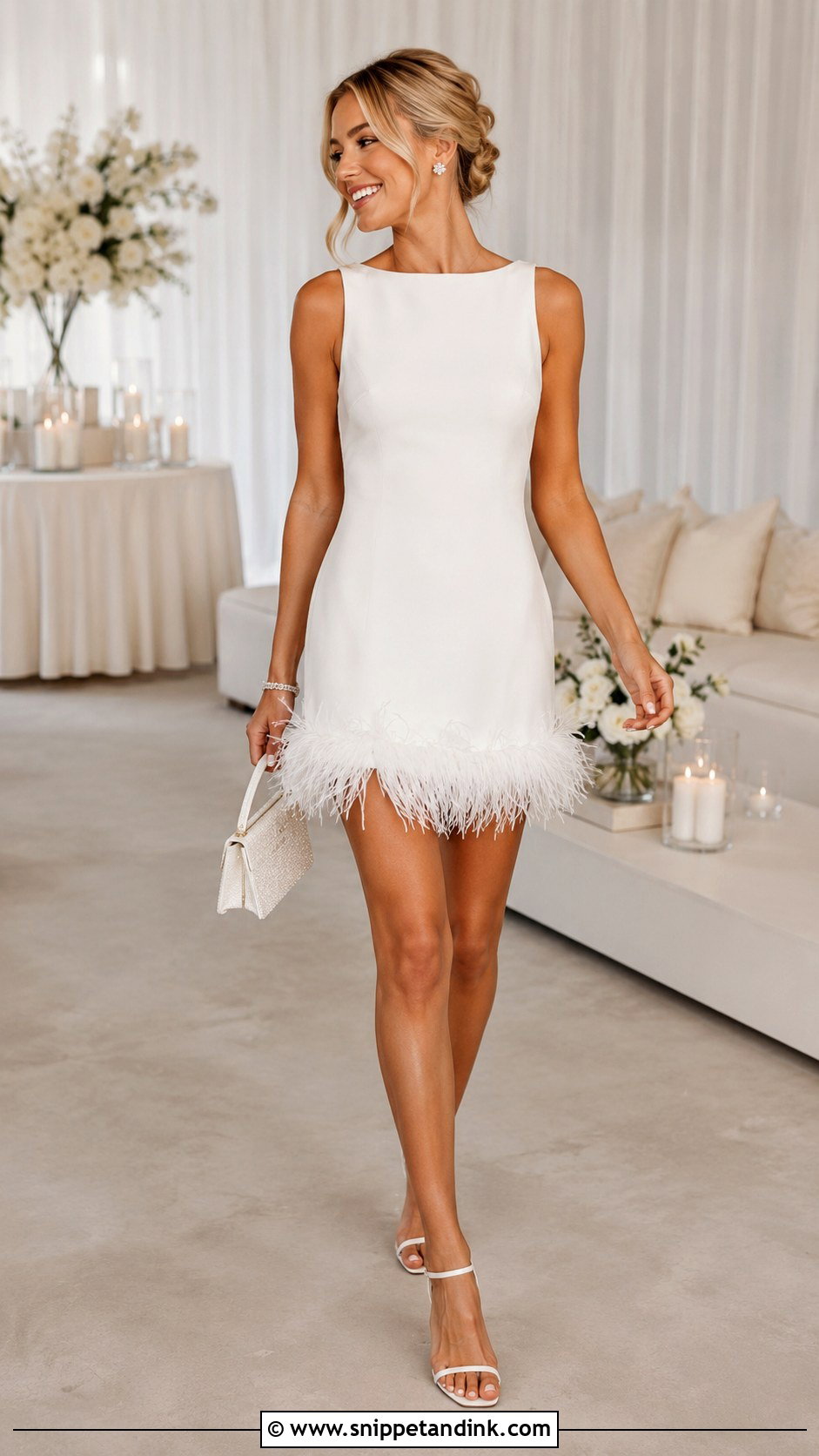
Feather trim is a lot of fun, and it’s fragile. Ostrich feathers shed onto dark suits and flatten in damp air, so I’d avoid it for an outdoor reception on a humid night. Keep the feathers to the hem, cuffs or neckline over a plain crepe or satin base, and ask the seller whether the trim is sewn or glued; sewn trim survives dancing. Minimal white sandals or a low kitten heel, sparkly studs and a small structured bag keep the rest quiet. A low bun shows off a feathered neckline, while loose waves suit a feathered hem.
4. Bridal Lace Midi Dress With Slingback Heels
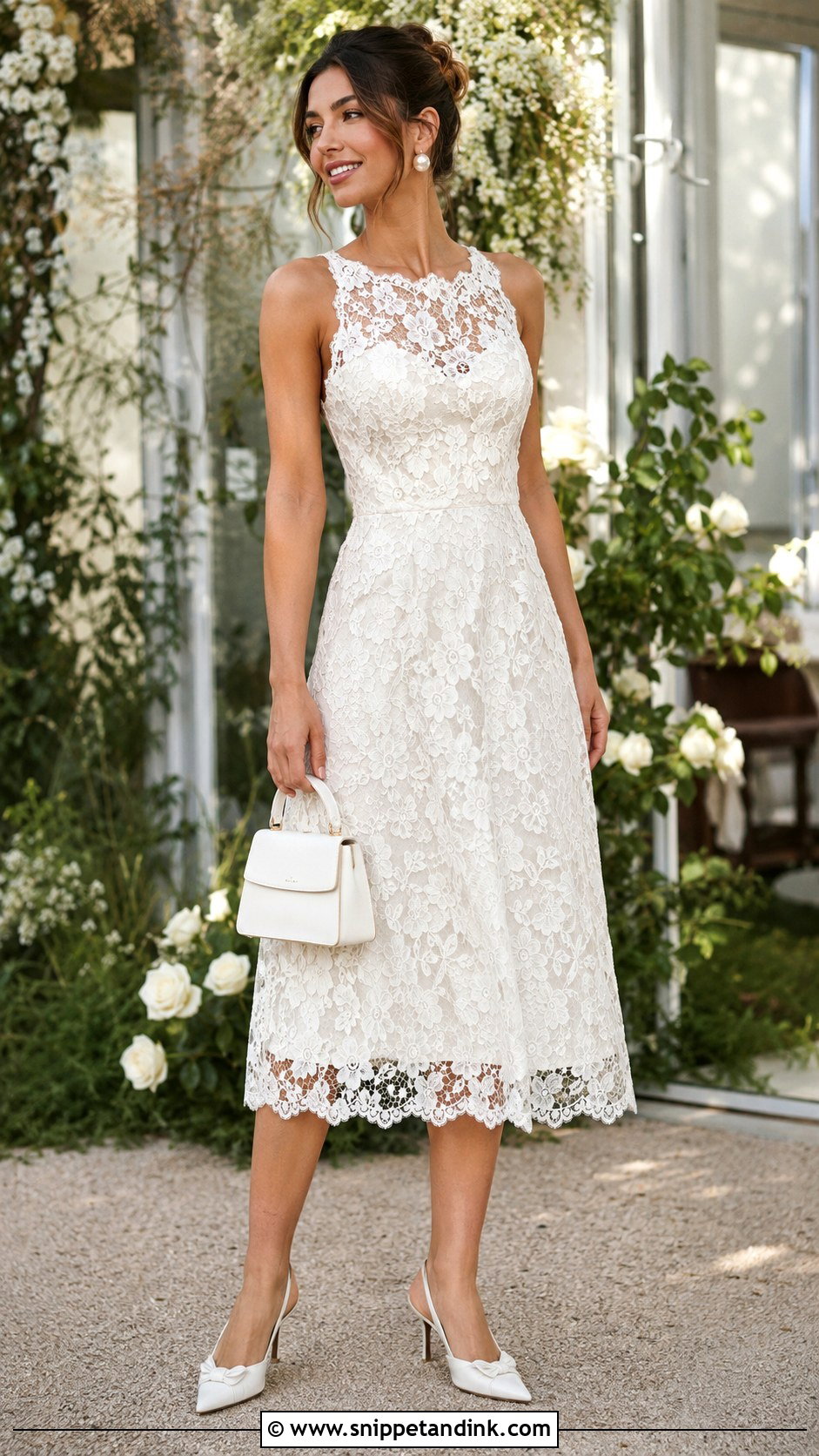
Lace midis keep the romance of the ceremony gown in half the length. I look at the lining before the lace: a lining that’s a shade off from your skin makes floral lace look patchy in photos, so hold it against your arm in daylight. Choose a defined waist and a skirt ending between knee and ankle, with a square or bateau neckline. Ivory slingbacks, pearl earrings and a top-handle bag are all it needs. A half-up style or soft chignon sits well with the texture, and this one gives more coverage than any mini for a garden or historic venue.
5. Bridal Silk Slip Dress With Strappy Sandals
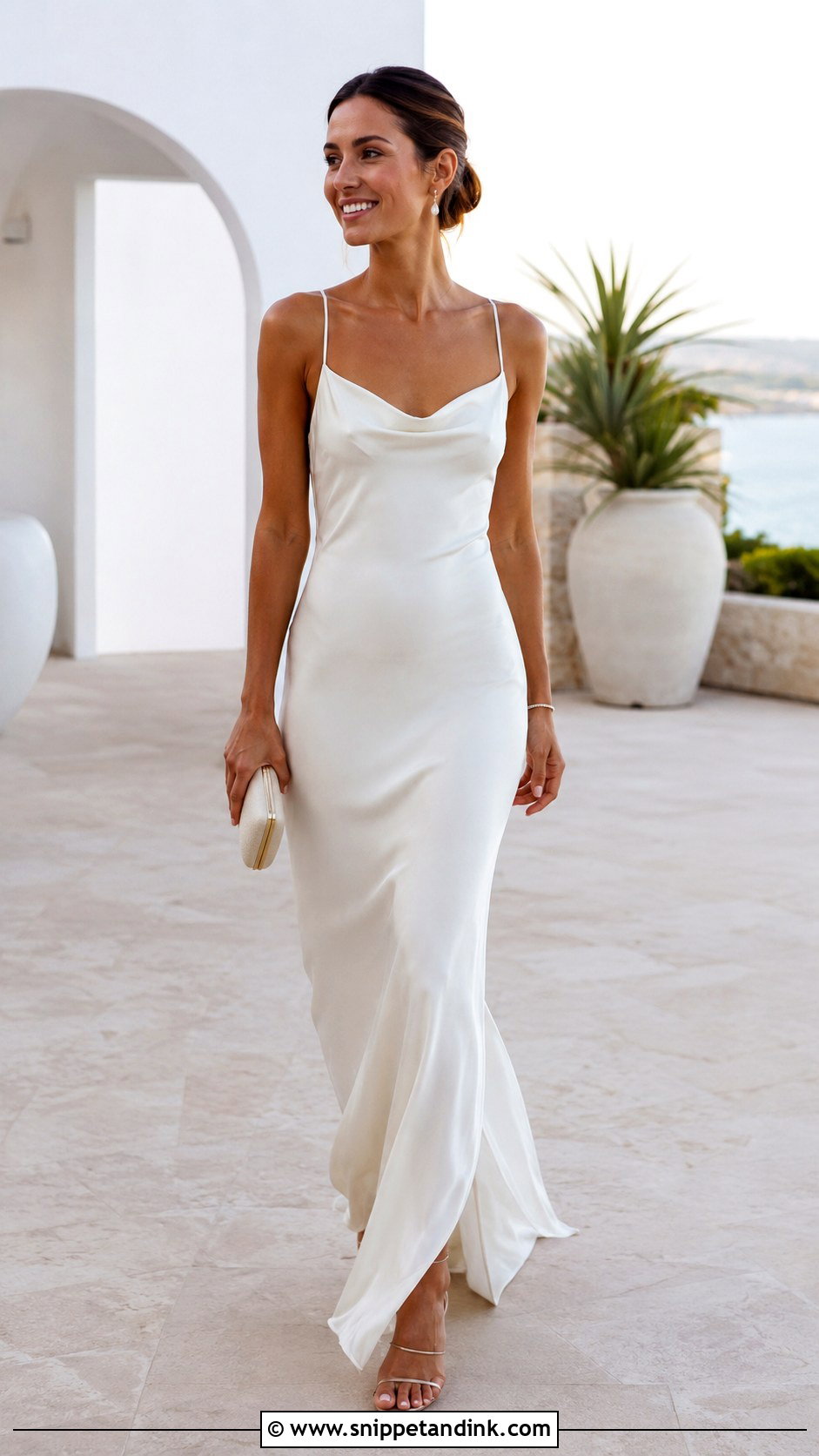
A bias-cut silk slip is the most honest dress on this list: it shows every line, seam and bulge underneath. That’s why I only recommend it with a professional alteration and smooth, invisible underwear chosen at the fitting, not on the morning. Silk also water-spots, so a spilled drink leaves a mark. In return you get clean lines and fluid movement. Pick ivory or pearl, adjustable straps or internal support, delicate strappy sandals and small drop earrings, with a light shawl for cooler evenings and loose waves or a sleek bun.
6. Bridal Corset Mini Dress With Full Skirt
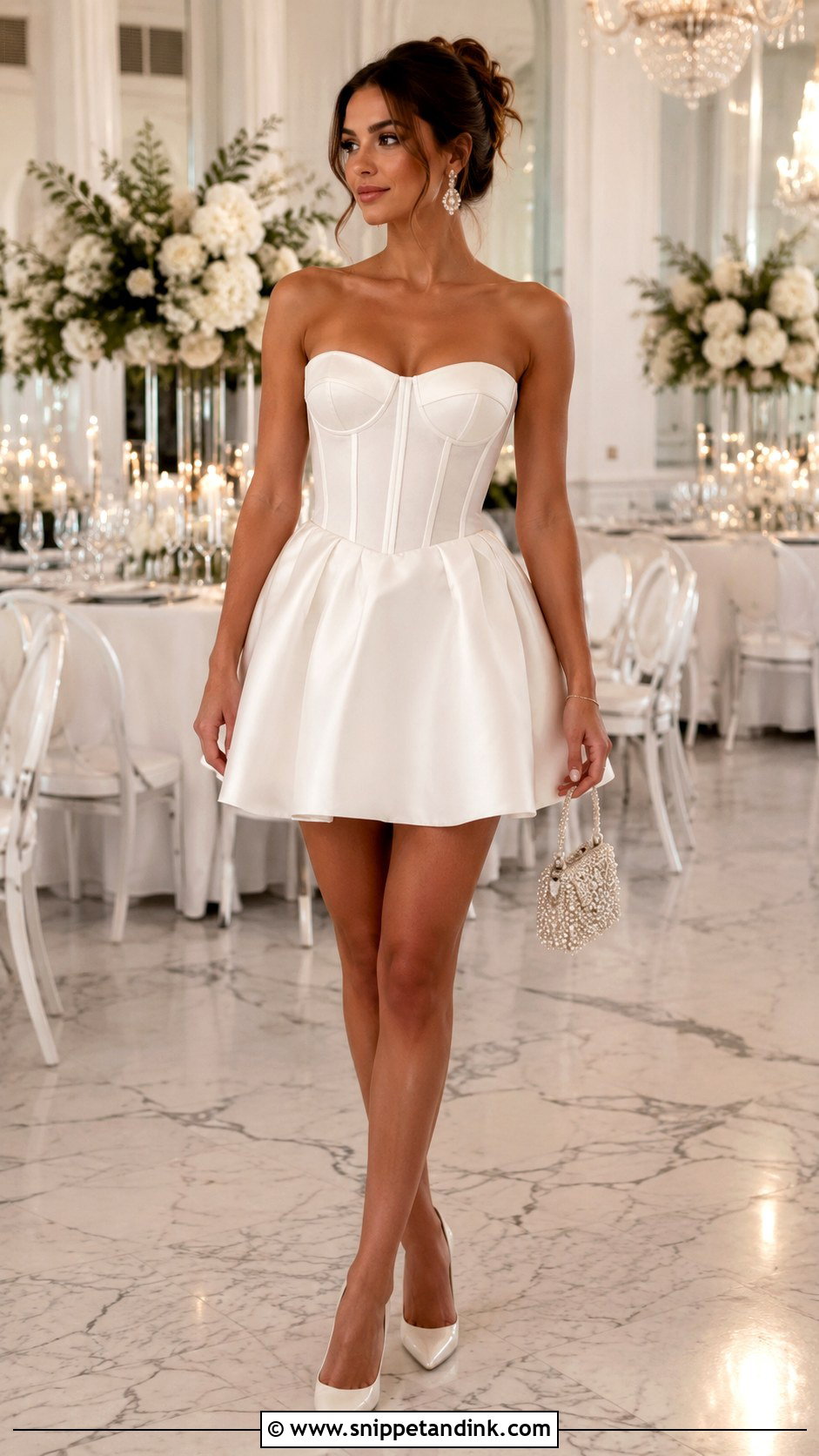
Corset minis give you support on top and freedom below. Proper boning should keep the bodice in place without you hitching it up, and the test I use is simple: sit in it for ten minutes. If the boning digs into your hips when seated, the corset is too long for your torso. A flared or pleated skirt, pointed pumps and a tiny embellished bag balance the fitted top. Fuller-busted brides usually do better with wider or removable straps, and a straight or scoop neckline softens the shape. Wear a high ponytail or a polished updo.
7. Bridal Tea Length Dress With Pumps
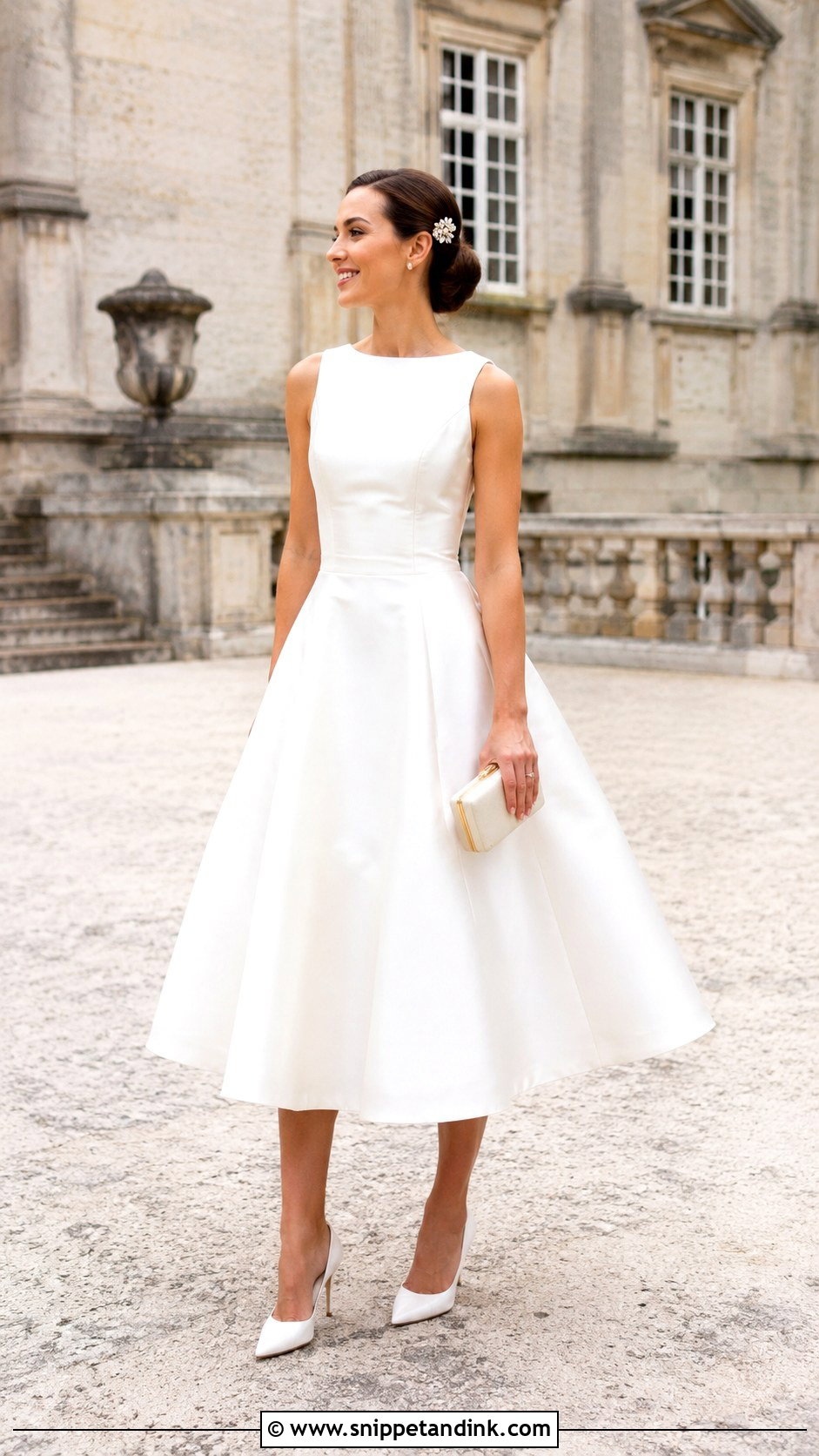
Tea length falls around the lower calf, which turns your shoes into part of the outfit. A fitted bodice with a softly flared skirt dances well, and I find it flatters across a wide range of sizes because the waist and skirt can both be adjusted. Swap the veil for a headband, ribbon or comb after the ceremony. Gloves give a vintage note, though they make eating and holding a glass awkward, so I’d wear them for the entrance only. Pointed ivory pumps, pearl studs and a box clutch finish it.
8. Bridal Off Shoulder Midi Dress
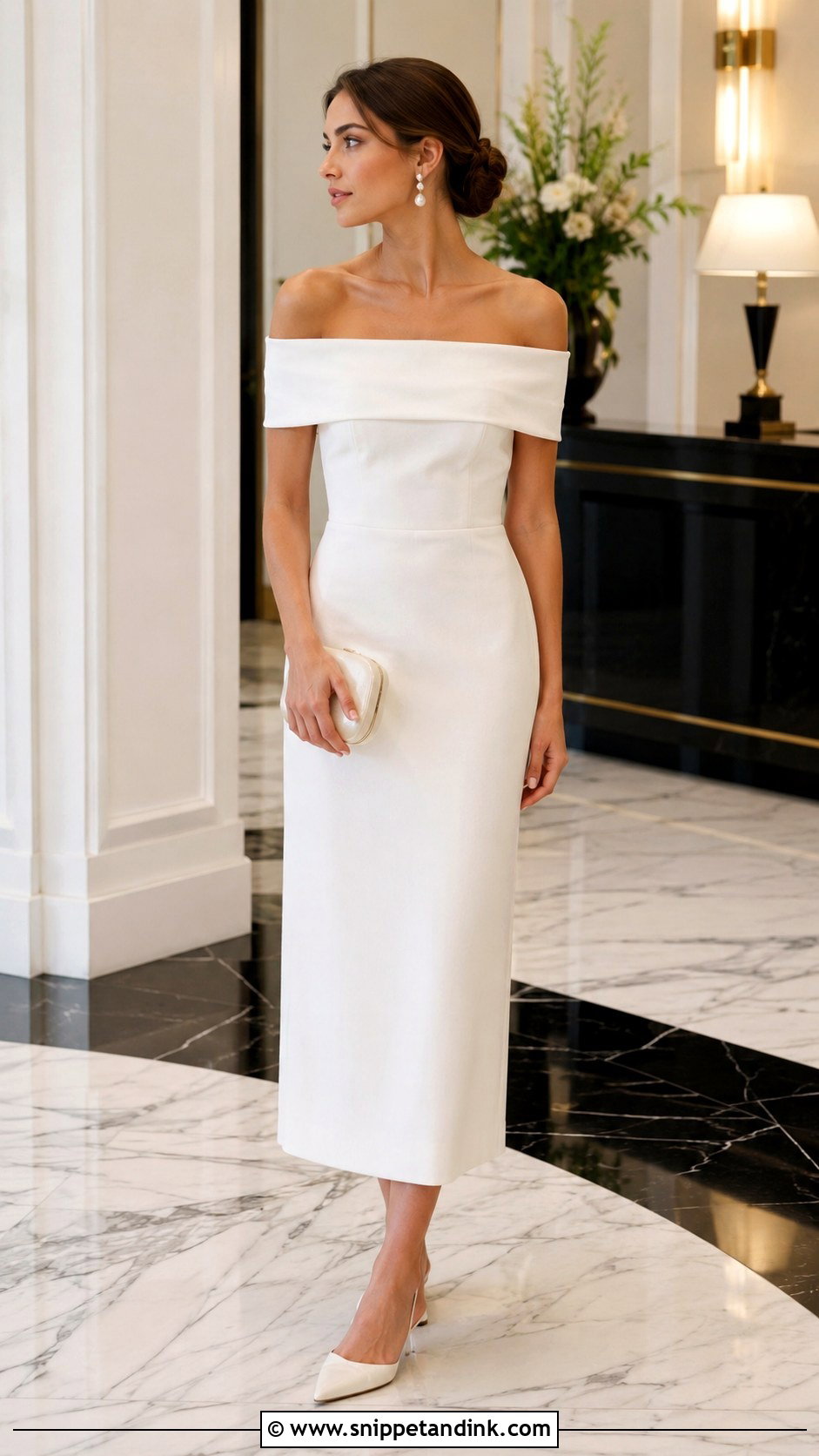
Off-the-shoulder necklines have one habit: they ride up the moment you raise your arms to dance. A silicone grip strip inside the neckline and a properly fitted strapless bra do more than fashion tape, though tape helps. Stretch crepe holds the line better than satin. A column skirt looks sharper; an A-line skirt is freer on the dance floor. No necklace, just pearl drops, kitten heels and a compact clutch, with your hair low or swept to one side so the shoulders stay visible.
9. Bridal Halter Column Dress With Metallic Accessories
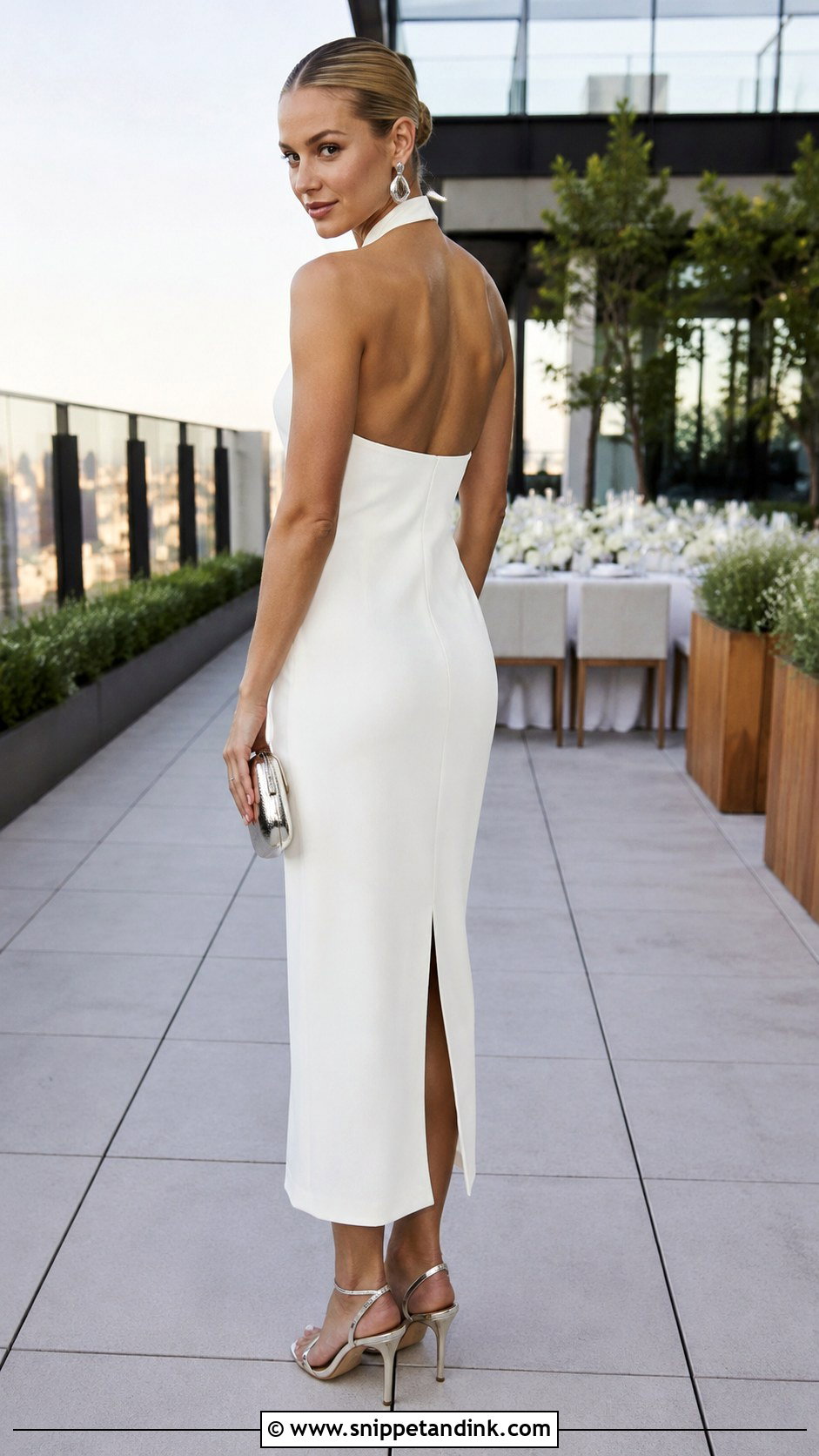
A halter column looks long and a little retro, but the neck strap carries weight for hours. If you get headaches from heavy earrings or tight ponytails, ask for a halter with a hook closure you can loosen, or a wider strap that spreads the load. Make sure the skirt has a back slit so you can walk normally. Satin gives structure, jersey gives comfort. Pair it with silver or pale gold sandals, sculptural earrings and a metallic bag, skip the necklace, and wear the hair up to show the neckline.
10. Bridal One Shoulder Draped Dress
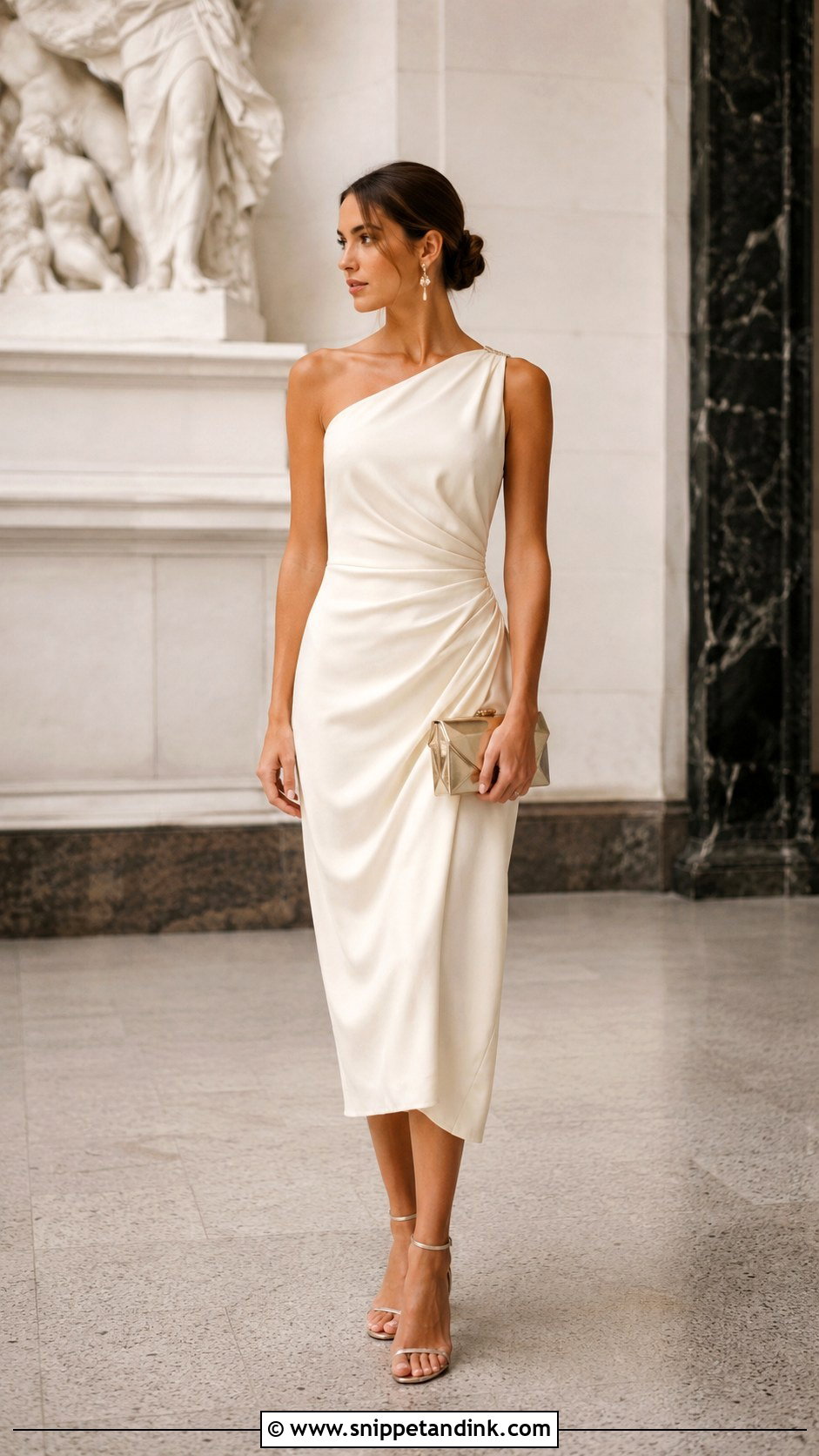
One-shoulder drapes move the eye up and give you coverage on one side without long sleeves. The gathering through the waist is forgiving, but drapes shift, so I put brides through a short routine before they buy: sit down, reach overhead, then do a few dance steps. If the drape slides off the shoulder or the bodice twists, it needs internal tacking. Crepe and satin hold better than lightweight jersey. Asymmetric earrings, simple heels and a structured clutch work, and a bun set toward the covered shoulder keeps the balance.
11. Bridal Beaded Fringe Mini Dress
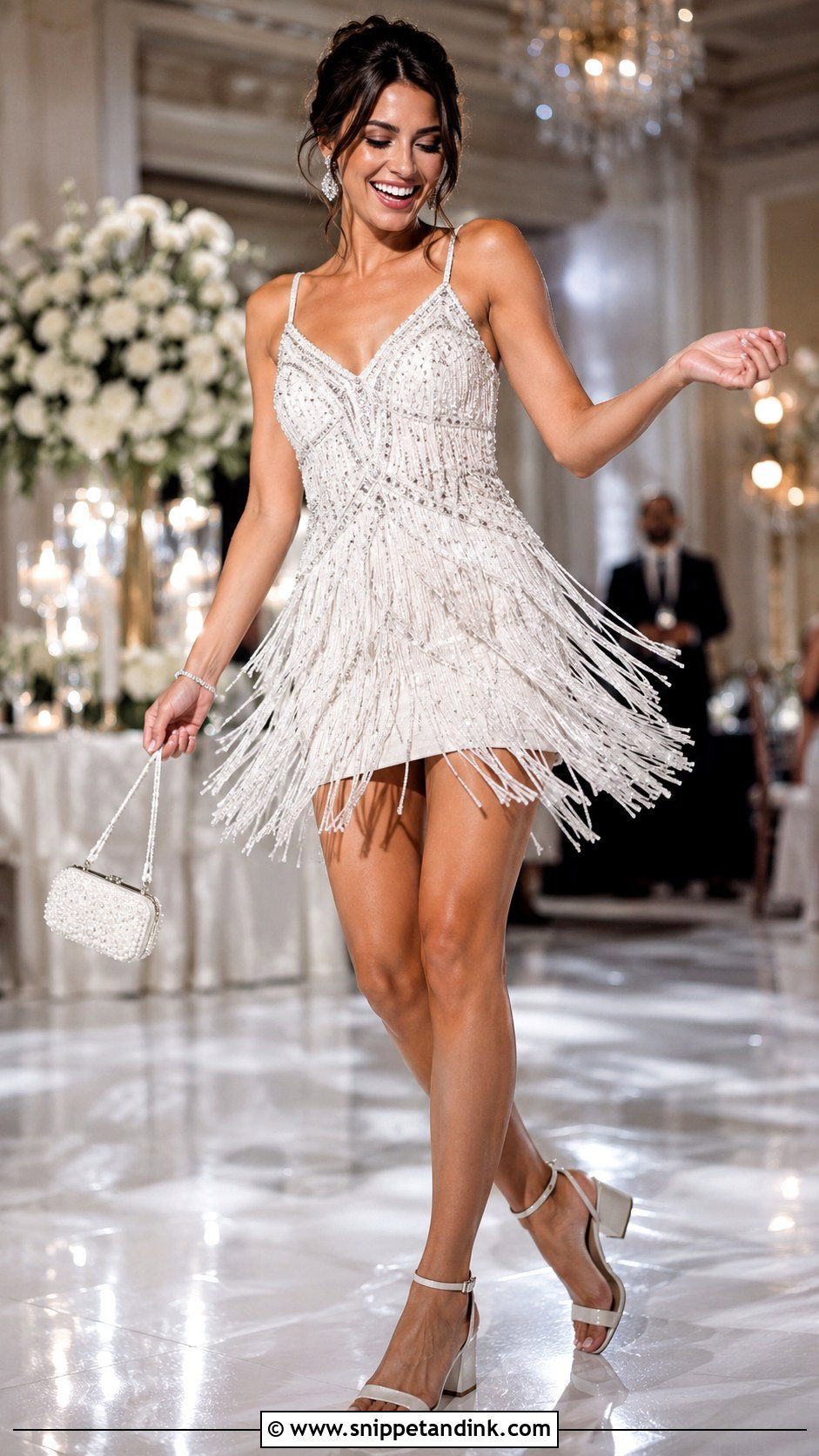
Beaded fringe moves with you, which is exactly why it’s heavy. Lift the dress on its hanger before you commit; dense glass beading can be tiring by the end of the night. A smooth lining matters, because bare beads rub skin and catch on lace underwear. Skip sheer tights, since beads ladder them. Short layered fringe gives bounce, longer vertical fringe lengthens the figure. I’d keep hair sleek or up so it doesn’t tangle in the strands, wear secure block-heel sandals, and carry a wristlet that leaves both hands free.
12. Bridal Wide Leg Jumpsuit With Belt
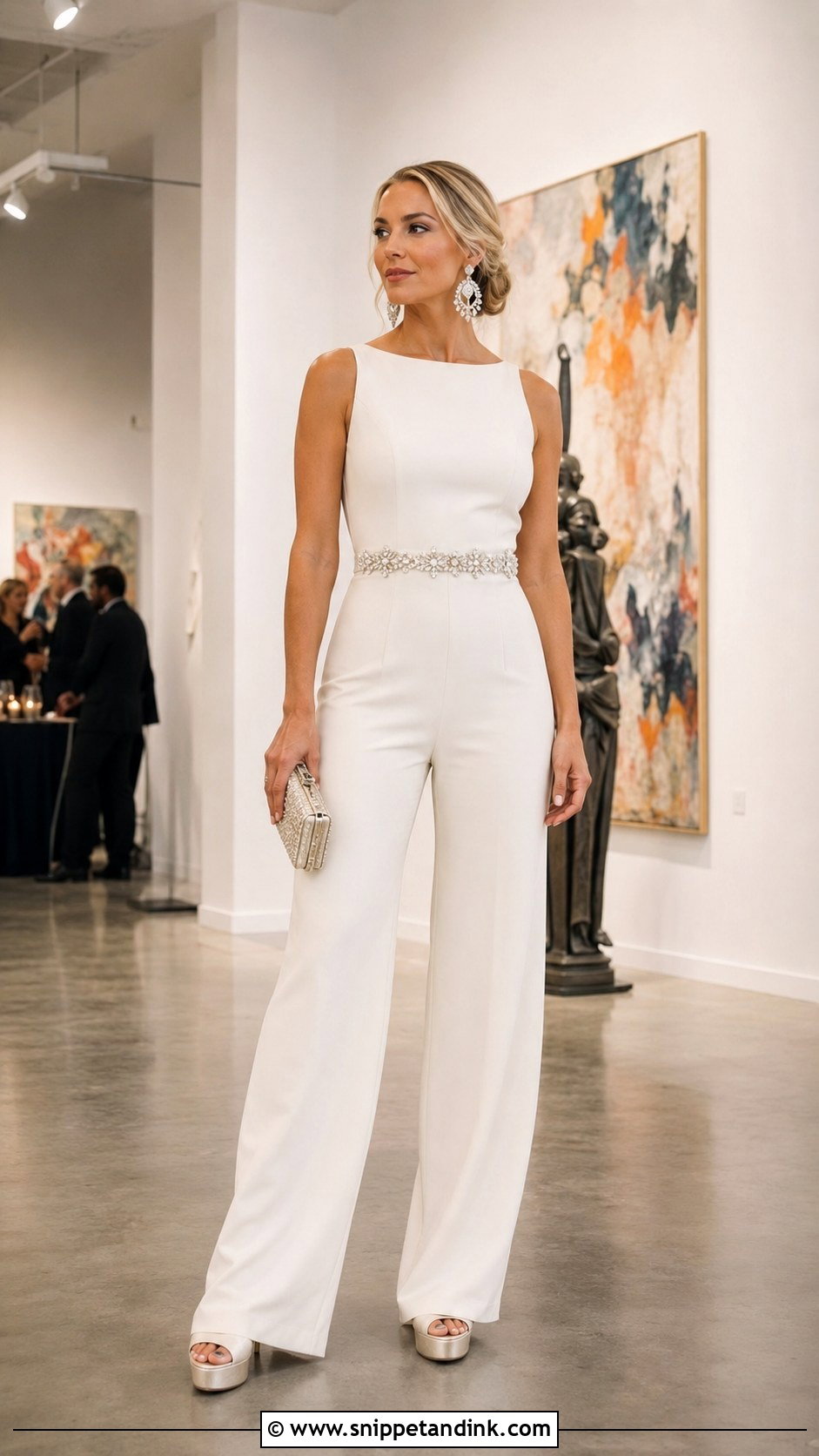
A white wide-leg jumpsuit gives you the bridal impact without another dress. The honest trade-off: a bathroom trip means taking most of it off, so look for a back zip you can reach yourself or a top that separates at the waist. The trouser hem should almost cover your shoes without touching the floor, so bring your reception shoes to alterations. A defined waistband or removable belt keeps the proportions clear. Platform heels, statement earrings and a structured clutch finish it, with flutter sleeves or a cape overlay if you want cover.
13. Bridal White Pantsuit With Camisole
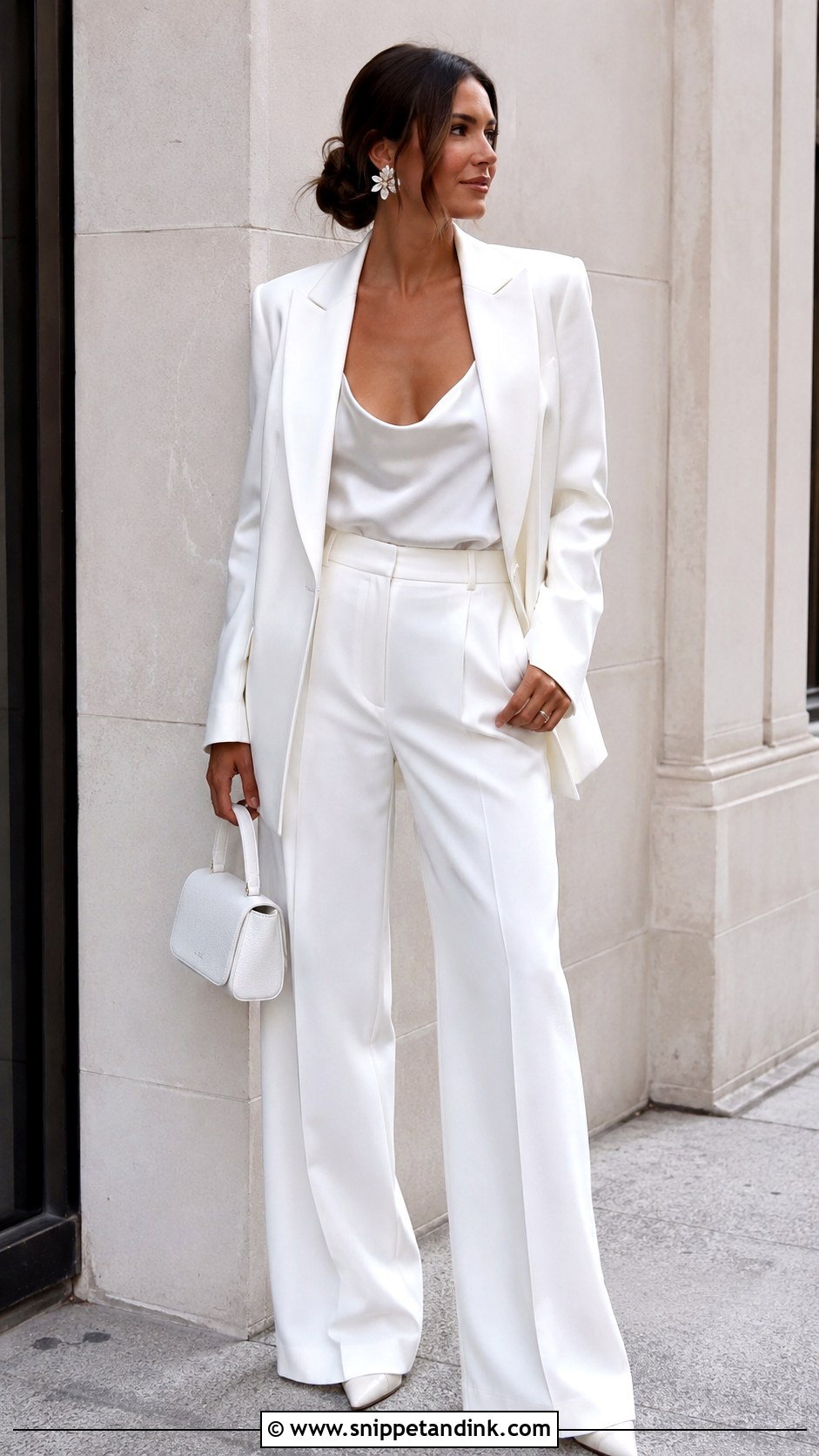
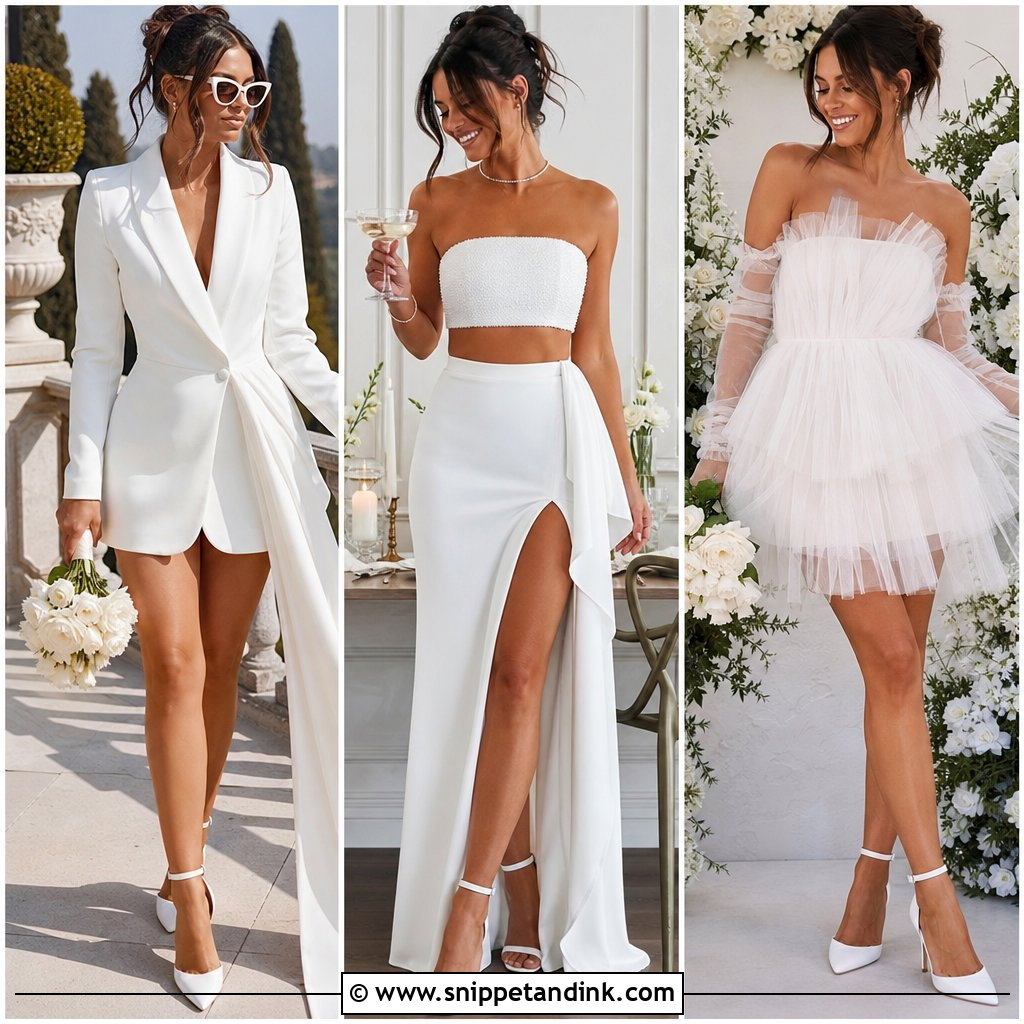
A white pantsuit is the second look you will definitely wear again. Fit the trousers before the blazer: white fabric shows pocket bags and underwear lines more than any other color, so a lined trouser is worth asking for. Under the jacket, a satin camisole or fitted bodysuit gives you something finished to dance in once the blazer comes off. Petite brides tend to look better in a cropped blazer, taller brides in a long one. Pointed pumps or metallic loafers and bold earrings complete it.
14. Bridal Two Piece Top And Skirt Set
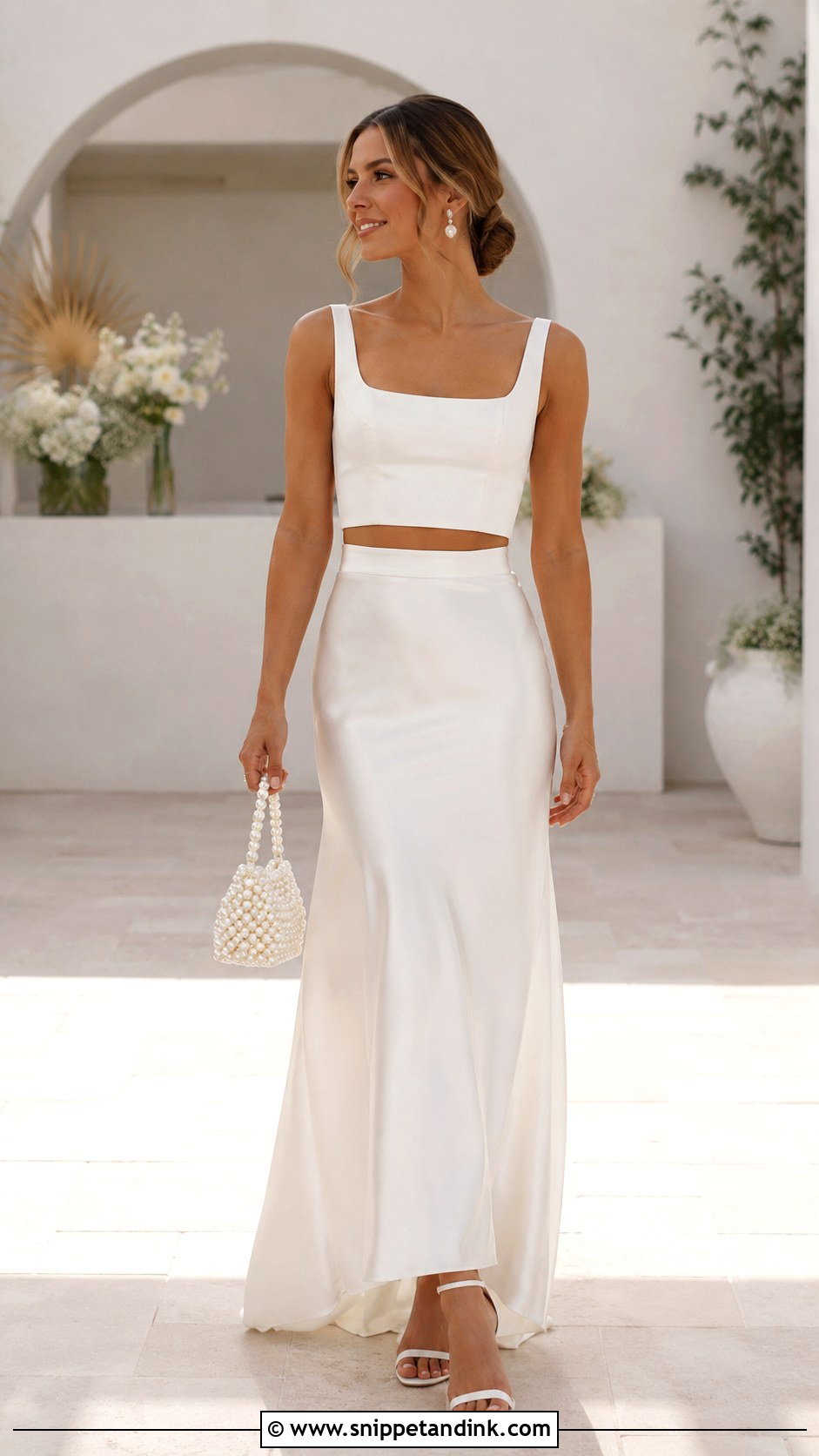
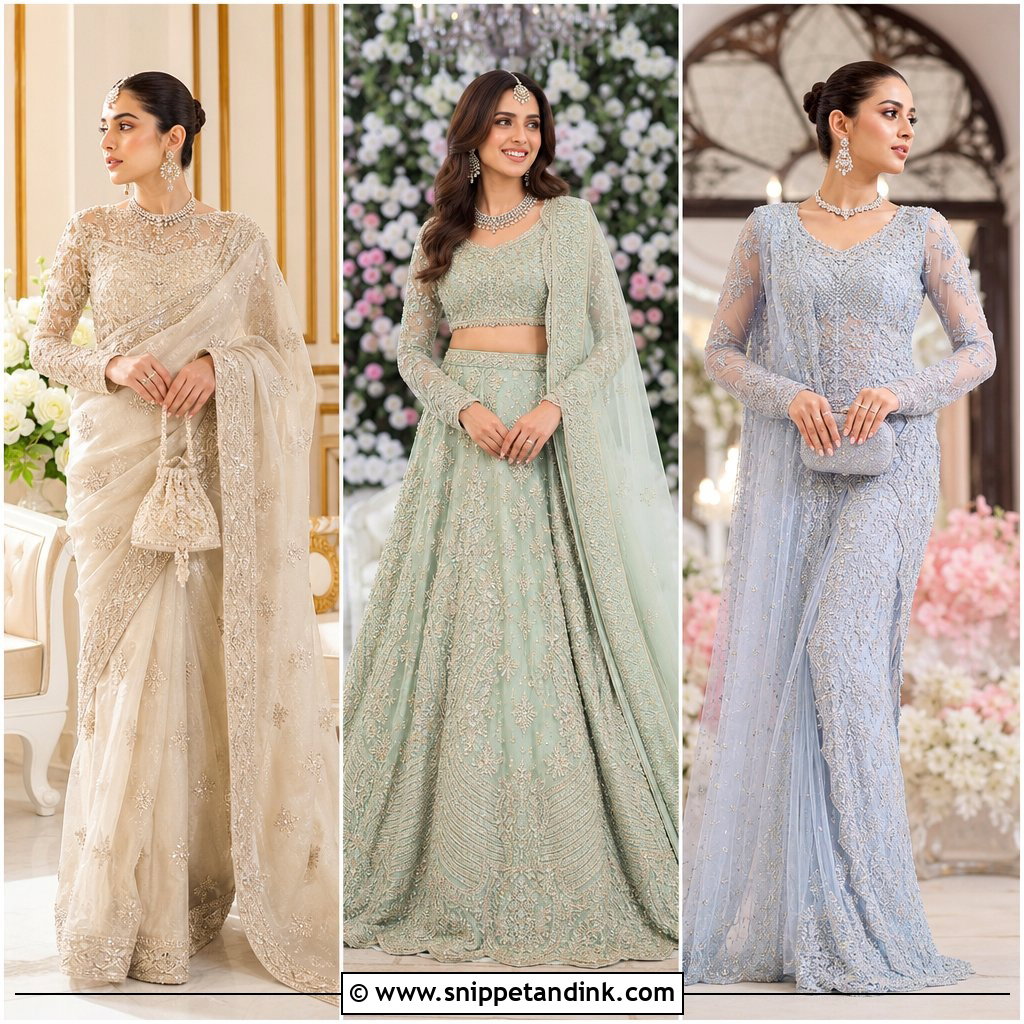
Separates are the easiest second look to fit, because top and skirt can be bought in different sizes. Pair a crop, corset top or fitted shell with a high-waisted midi or maxi skirt in the same fabric for a clean finish, or mix a satin top with a lace overlay skirt for texture. I always ask for a small button tab or hidden hook between top and skirt so the top doesn’t ride up during dancing. Tailoring sets how much midriff shows. Ankle-strap heels, delicate earrings and a pearl bag finish it.
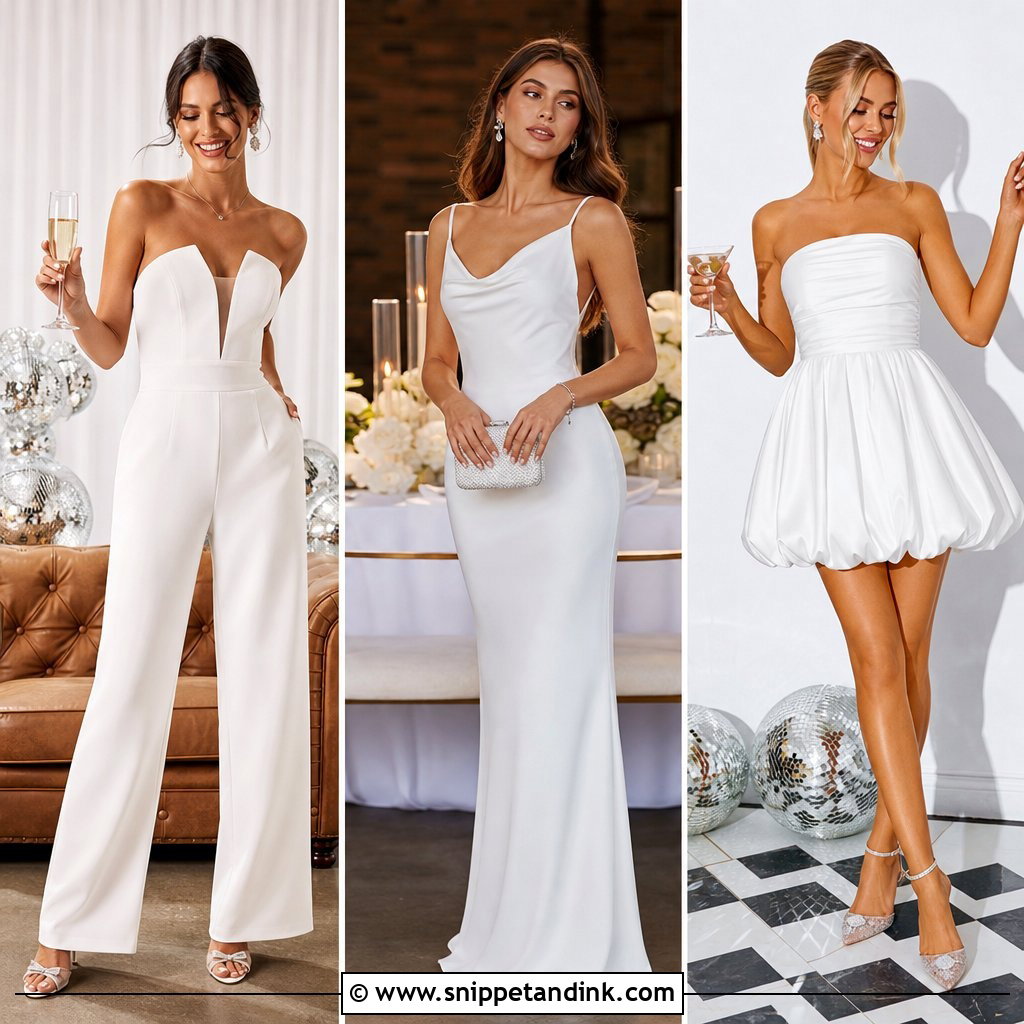
15. Bridal Bubble Hem Mini Dress
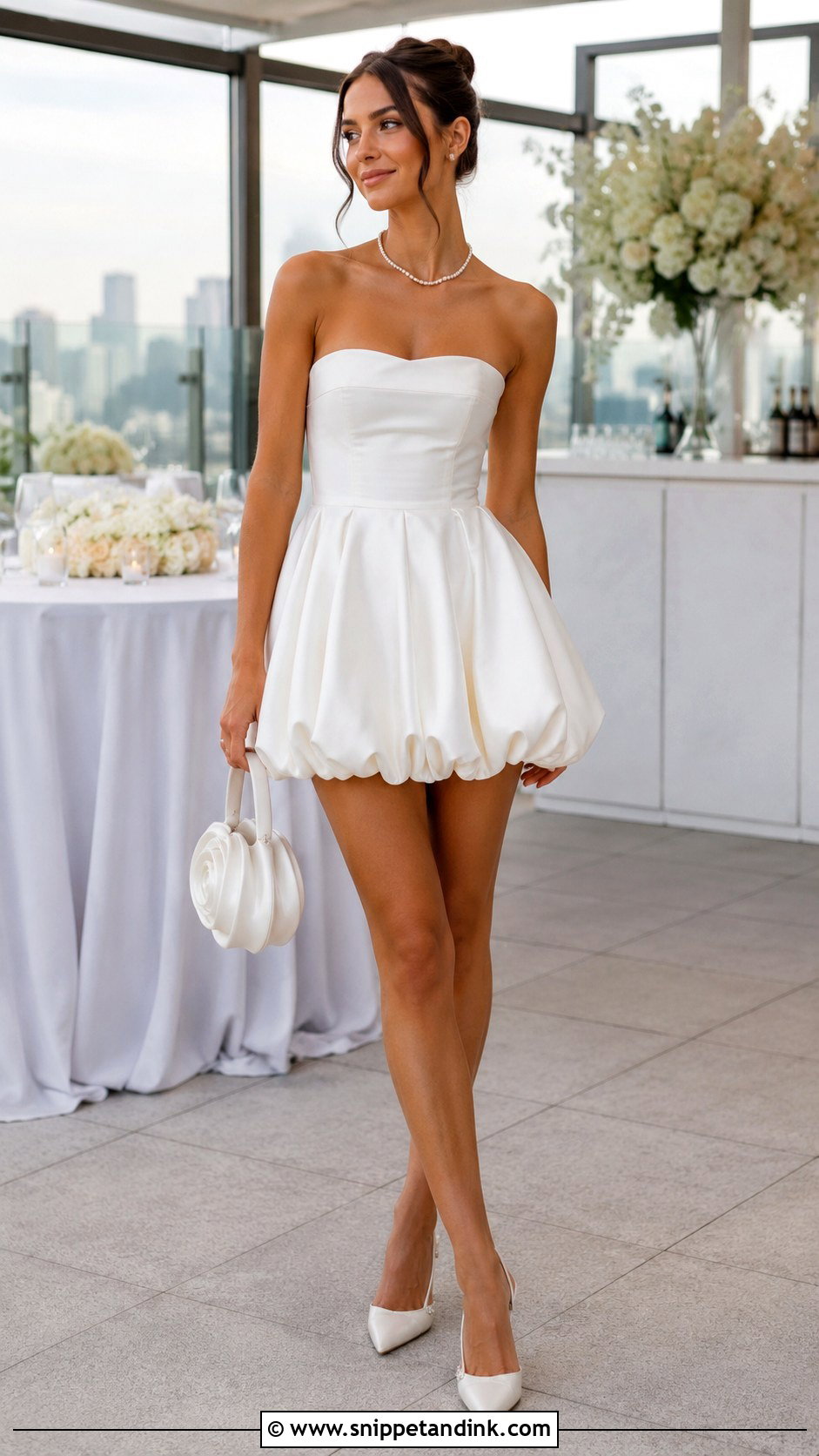
Bubble hems need stiff fabric to keep their rounded shape: taffeta, mikado or crisp satin. Soft fabrics collapse into a droop by mid-evening. Sit down in it at the fitting, too, because the hem pushes up and forward when you sit, which is where hidden shorts or smoothing shorts earn their place. A fitted strapless or square-neck bodice, slingback heels, a short pearl necklace and a small sculptural bag are all it needs. A high bun or flipped bob plays up the shape.
16. Bridal Long Sleeve Mini Dress With Boots
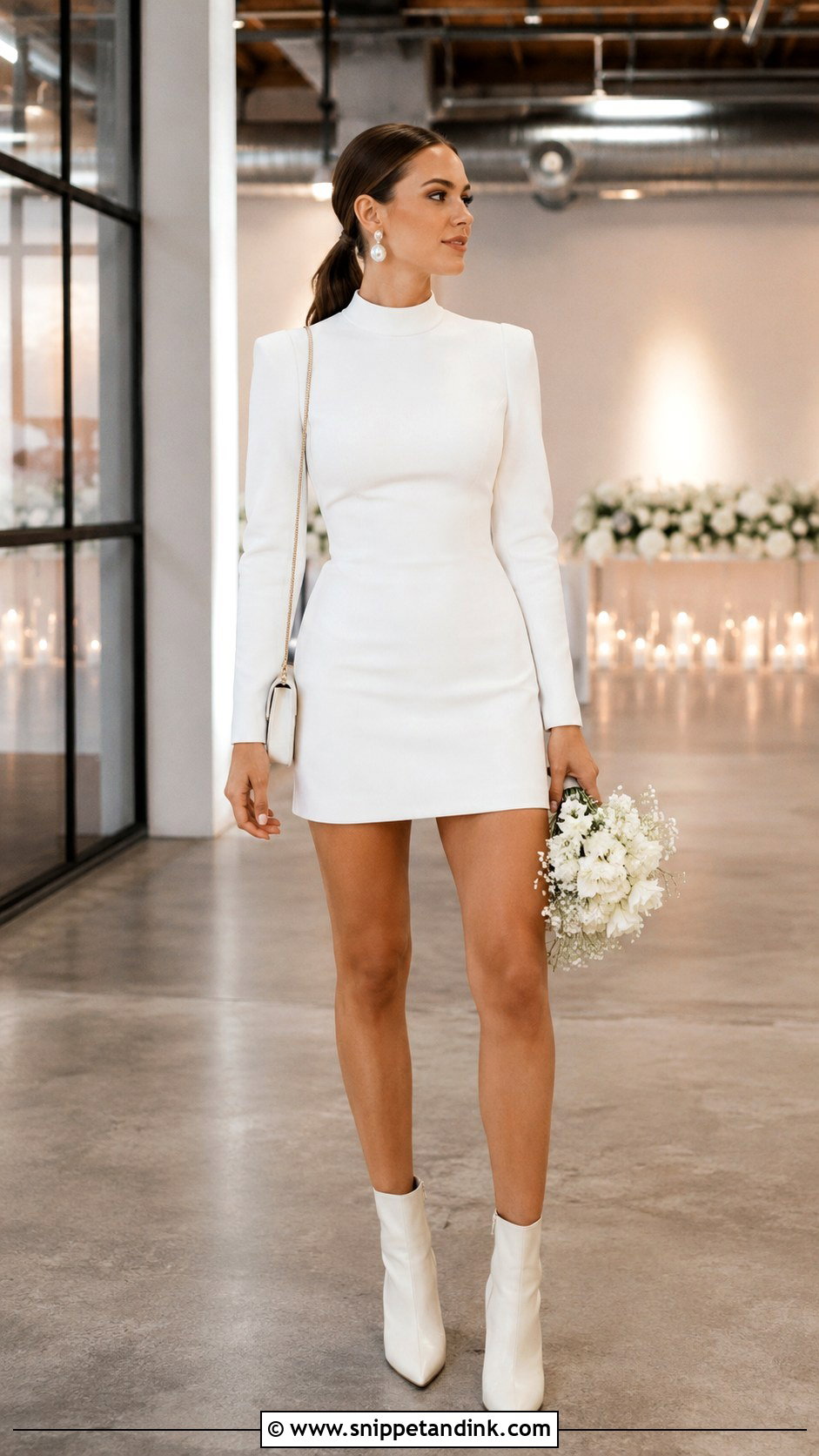
Long sleeves with a short hem are my usual suggestion for an autumn or winter reception. Lace sleeves feel softer; clean crepe sleeves look more modern. Check the sleeve armhole by raising your arms: a tight armhole lifts the whole short dress when you wave or hug. Pair it with sleek ankle boots or pointed pumps depending on the floor, add sheer tights for warmth and statement earrings, and leave off the necklace if the neckline is high.
17. Bridal Square Neck Crepe Midi Dress
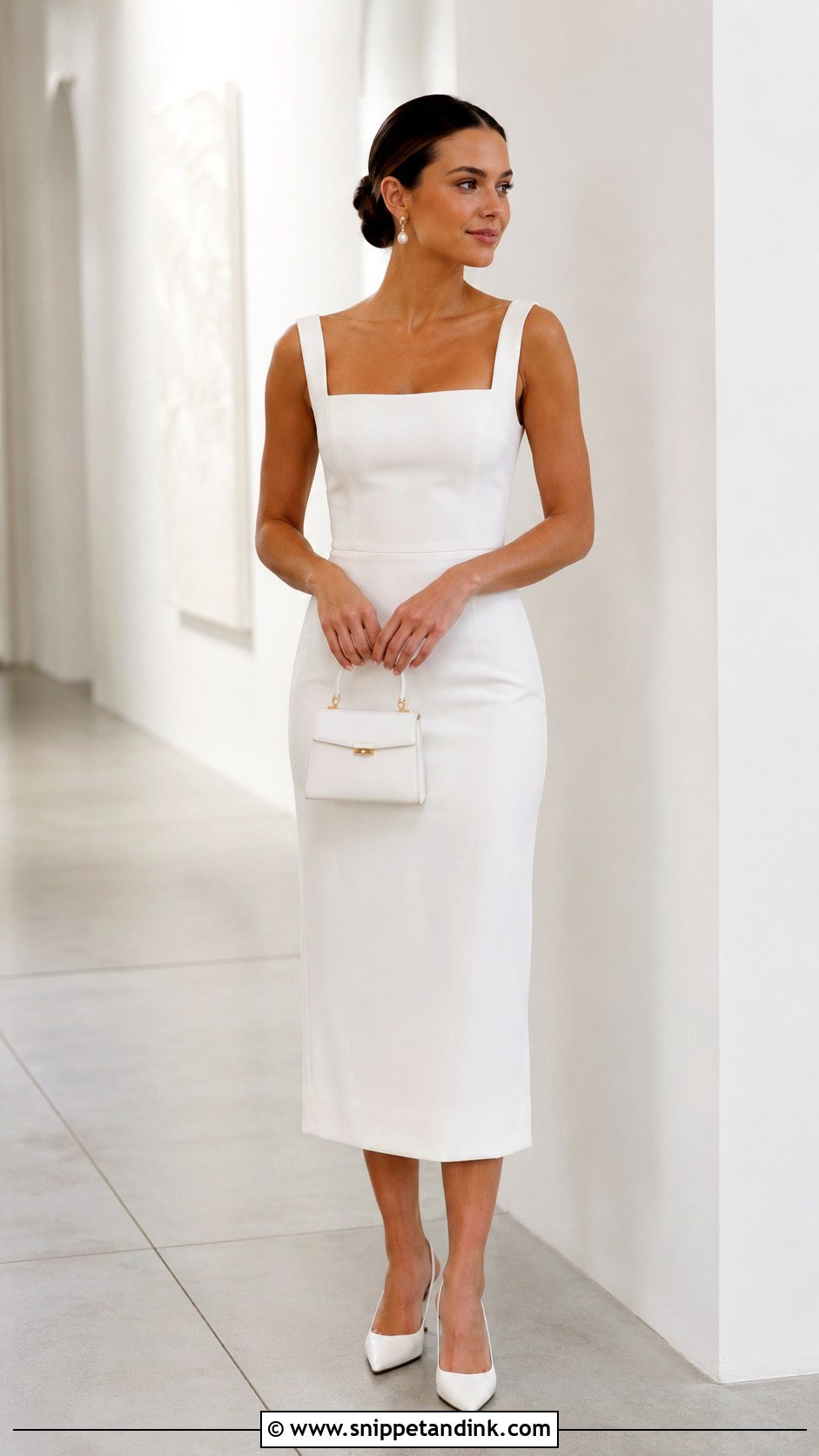
Heavy crepe is the fabric I trust most for a second look, because it doesn’t shine under reception lights and hides creases from sitting at dinner. A square neckline frames the collarbones and sits well on most bust sizes. Choose sleeves or wide straps to suit how much coverage you want, and ask for a back slit or a slightly flared hem so you can walk and dance. A slim belt defines the waist, though an unbroken column looks more modern. Pointed slingbacks, pearl-and-gold earrings and a low chignon finish it.
18. Bridal High Low Dress With Statement Shoes
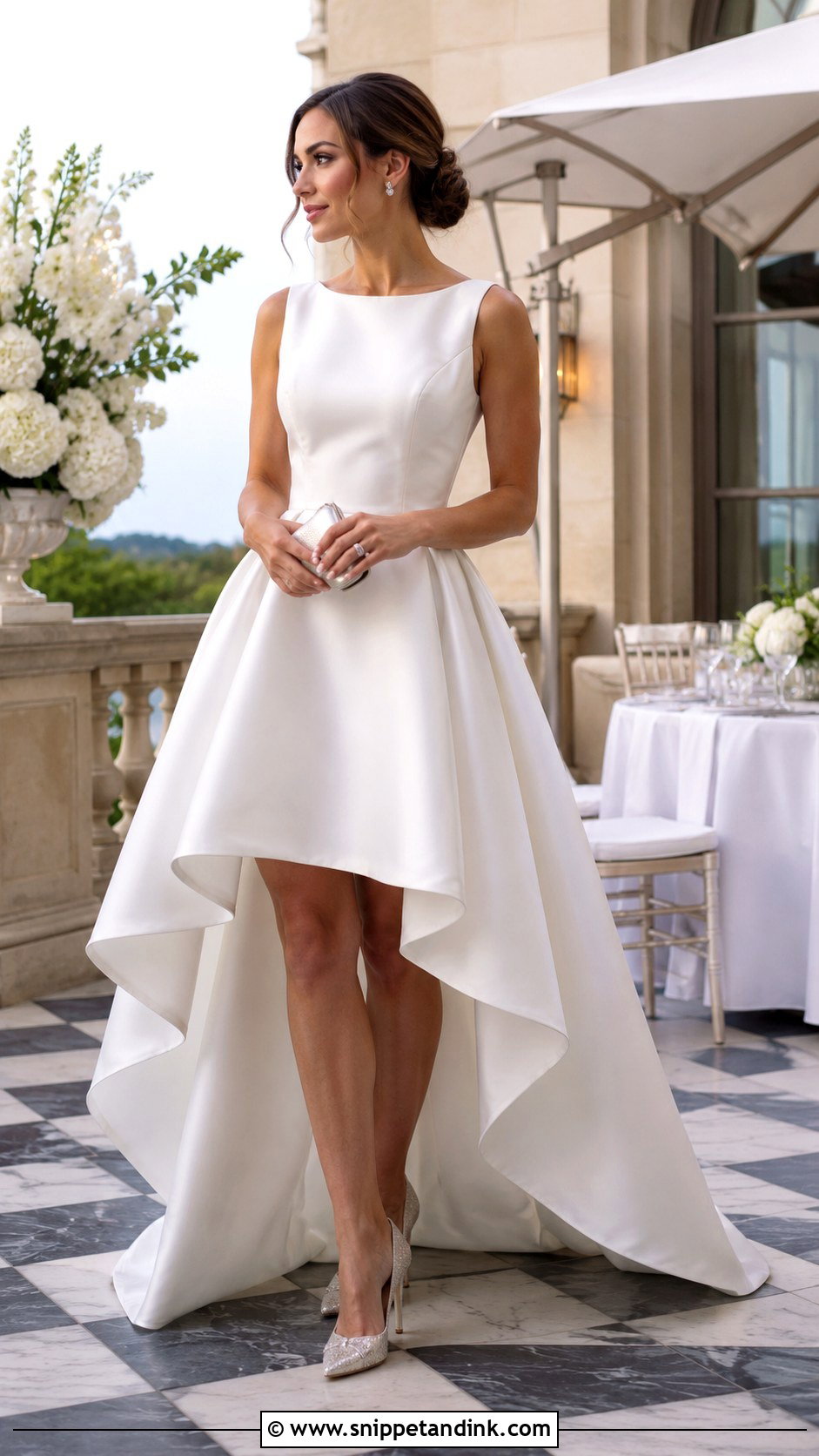
High-low hems show off your shoes and still give you a bit of trailing drama behind. The back is the problem: if it touches the floor, it’ll be stepped on all night, and a high-low dress rarely has a bustle. I hem the back so it just clears the floor in your shoes. Mikado and structured satin give volume, chiffon falls softer. This is the place for embellished pumps or colored heels that pick up your wedding palette, with small earrings and a simple clutch.
19. Bridal Floral Applique Mini Dress
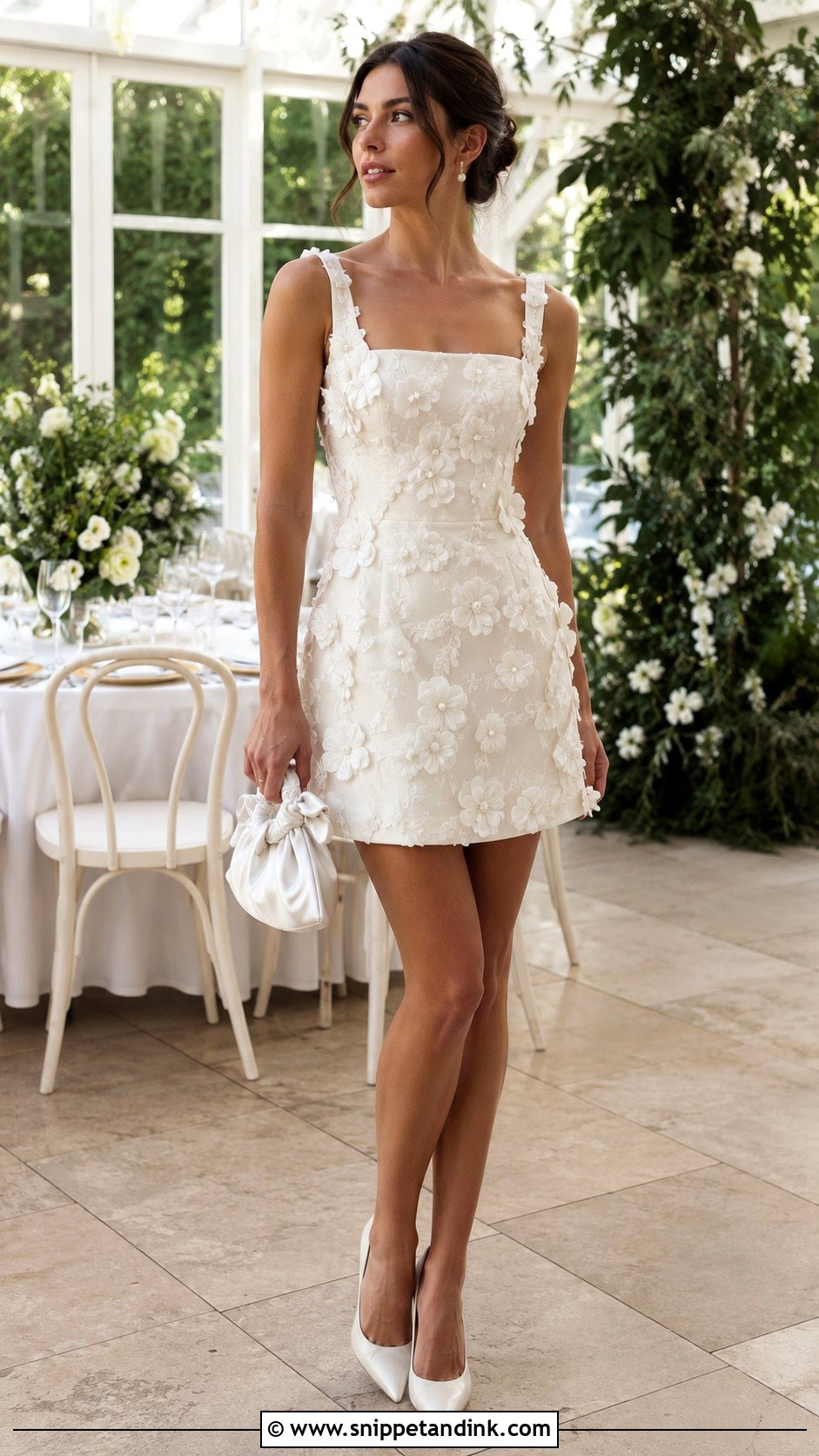
Raised appliqué flowers give a short dress real texture, but they catch on everything: bracelets, a partner’s cufflinks, the beading on a guest’s dress during a hug. Leave the bracelets at home. The lining underneath changes how the flowers read, so view it in daylight and under warm indoor light before you decide. Simple white heels, pearl earrings and a smooth satin bag keep it calm. A headband or floral pins can echo the petals, and it suits a garden or conservatory reception in spring.
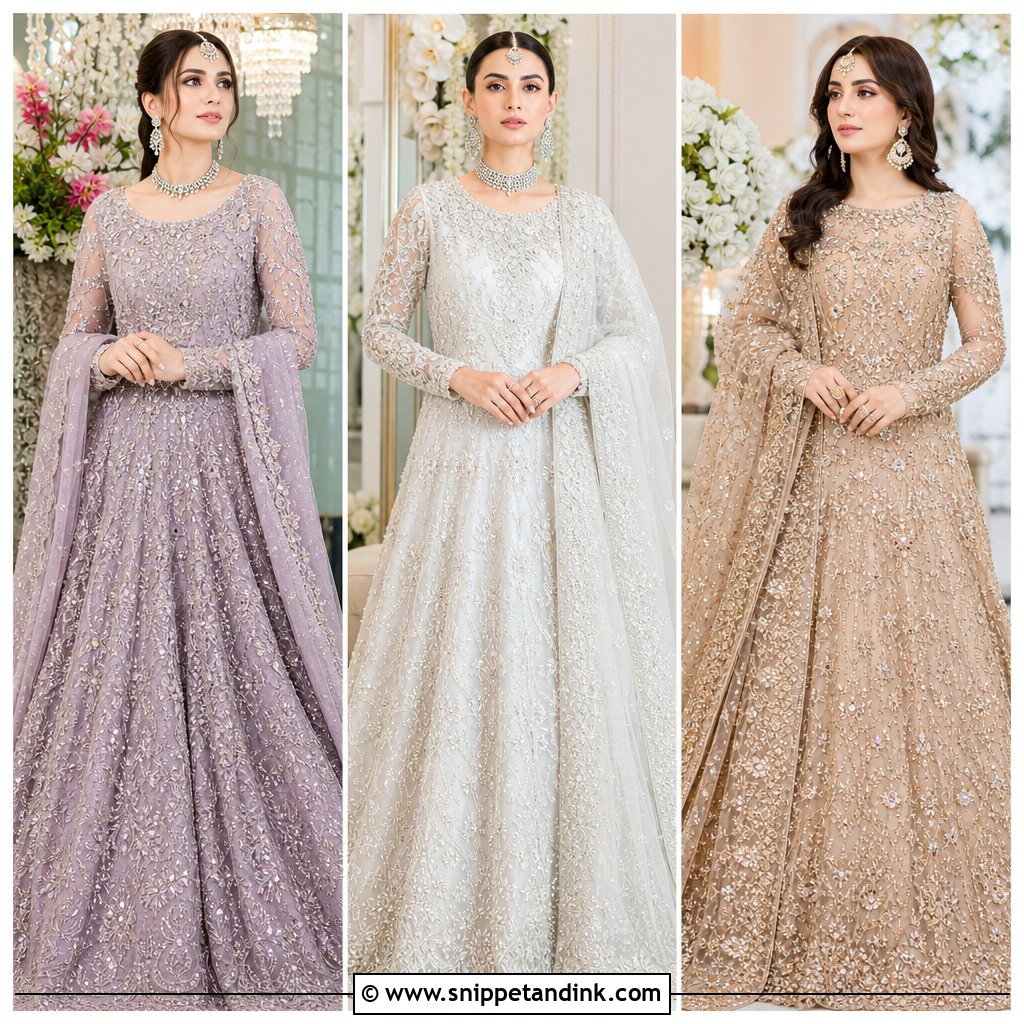
20. Bridal Pale Blue Midi Dress With Silver Heels
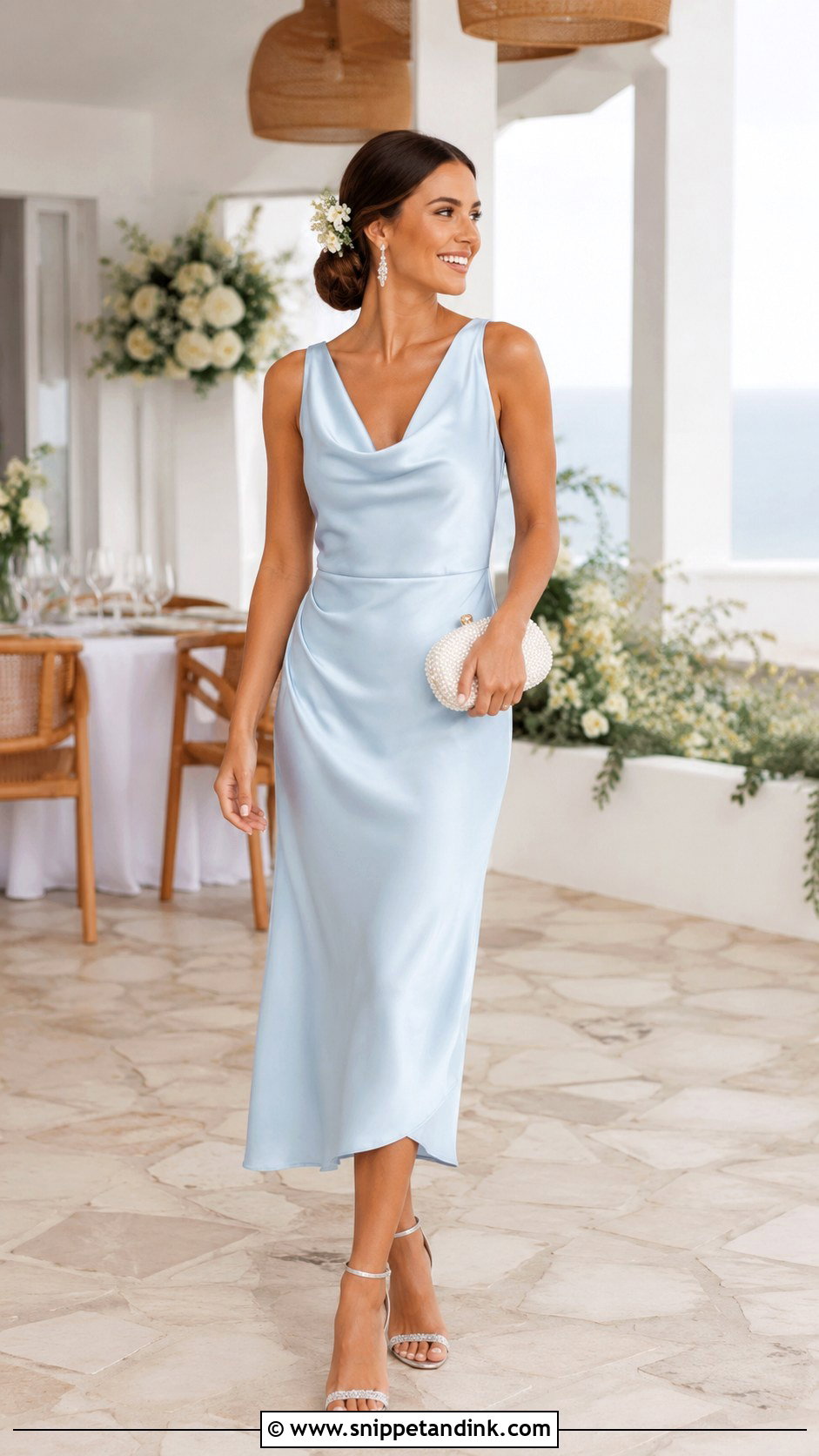
Not every second dress has to be white. Pale blue is a gentle color change, but test it under the reception’s lighting: warm tungsten bulbs can push icy blue toward gray, while daylight keeps it crisp. Powder blue and gray-blue tend to flatter more skin tones than a strong icy pastel. Satin, organza and crepe each give a different finish, from fluid to structured. Silver heels, crystal earrings, a pearl clutch and a white bow or ivory comb in your hair keep the bridal connection.
Underwear Is a Second Fitting, Not an Afterthought
A ceremony gown usually has a built-in corset, so many brides arrive at their reception dress fitting without any underwear plan. A slip dress, a halter and an off-shoulder midi each need something completely different, and the tailor can’t fit the dress properly until you’re wearing it.
What I bring to the reception-dress fitting
- The exact bra or bodysuit you’ll wear, or the dress’s own cups if it has them.
- Smooth-edged briefs in a shade close to your skin, not white, which shows through ivory.
- The shoes you’ll dance in, so hems are set at the right height.
- Any shapewear, worn for the full fitting rather than added later.
Give alterations on the second look the same lead time as the main gown. Bridal seamstresses get busy in peak season, and a short dress that needs the bodice taken in still needs at least one follow-up fitting.
Should Your Second Look Echo the First Gown?
There’s no single right reception outfit, only one that suits how you plan to spend the evening. Decide first whether it should echo the ceremony gown or show a different side of you, then think through fit, fabric weight, undergarments, shoes, temperature and how long you have to change. Sit, walk and dance in the complete look before the wedding. A good alteration can make an inexpensive dress look made for you, and one hour of honest testing will tell you more than any trend.
You'll Like These Ideas:


Leave a Reply