
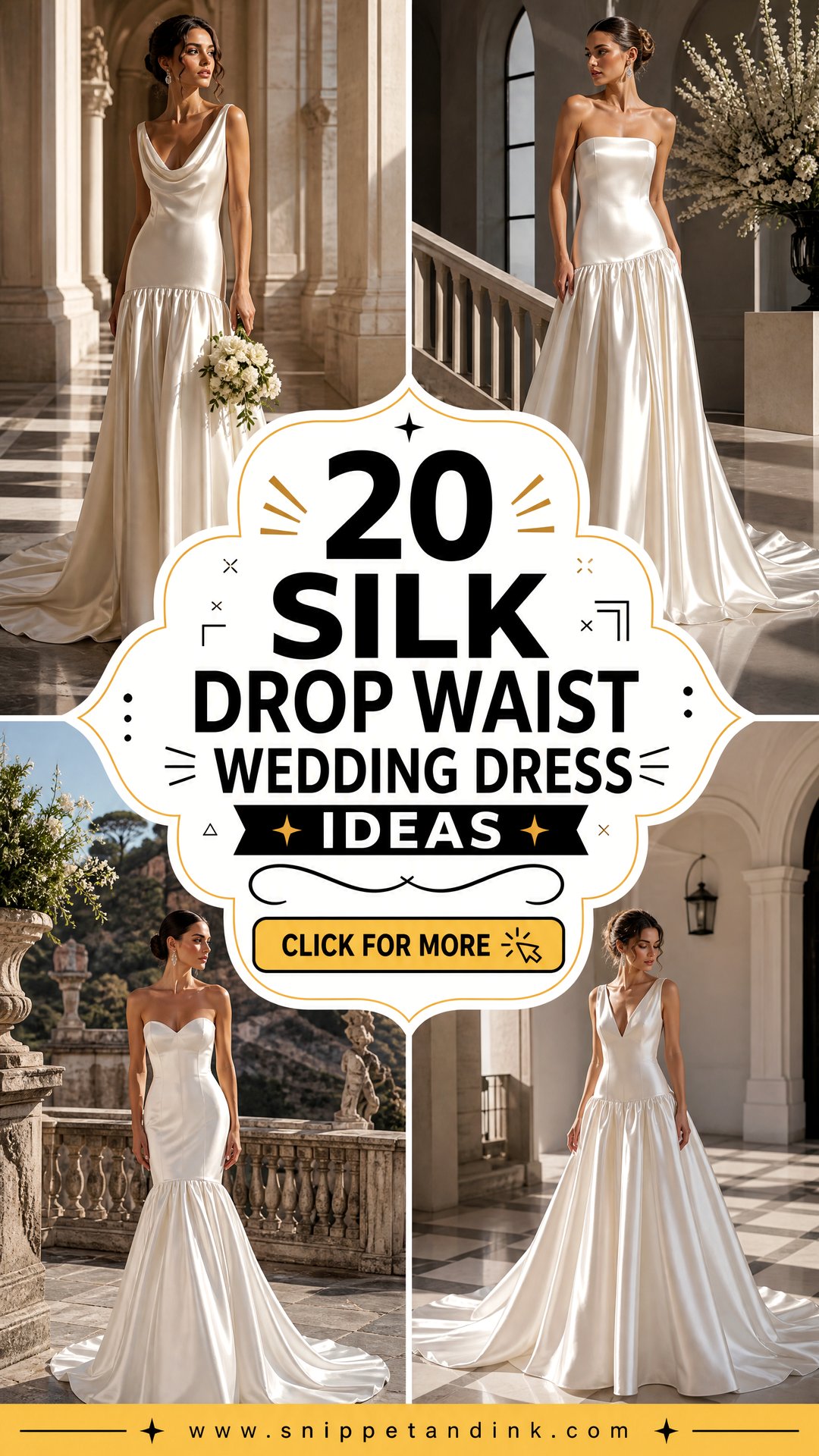
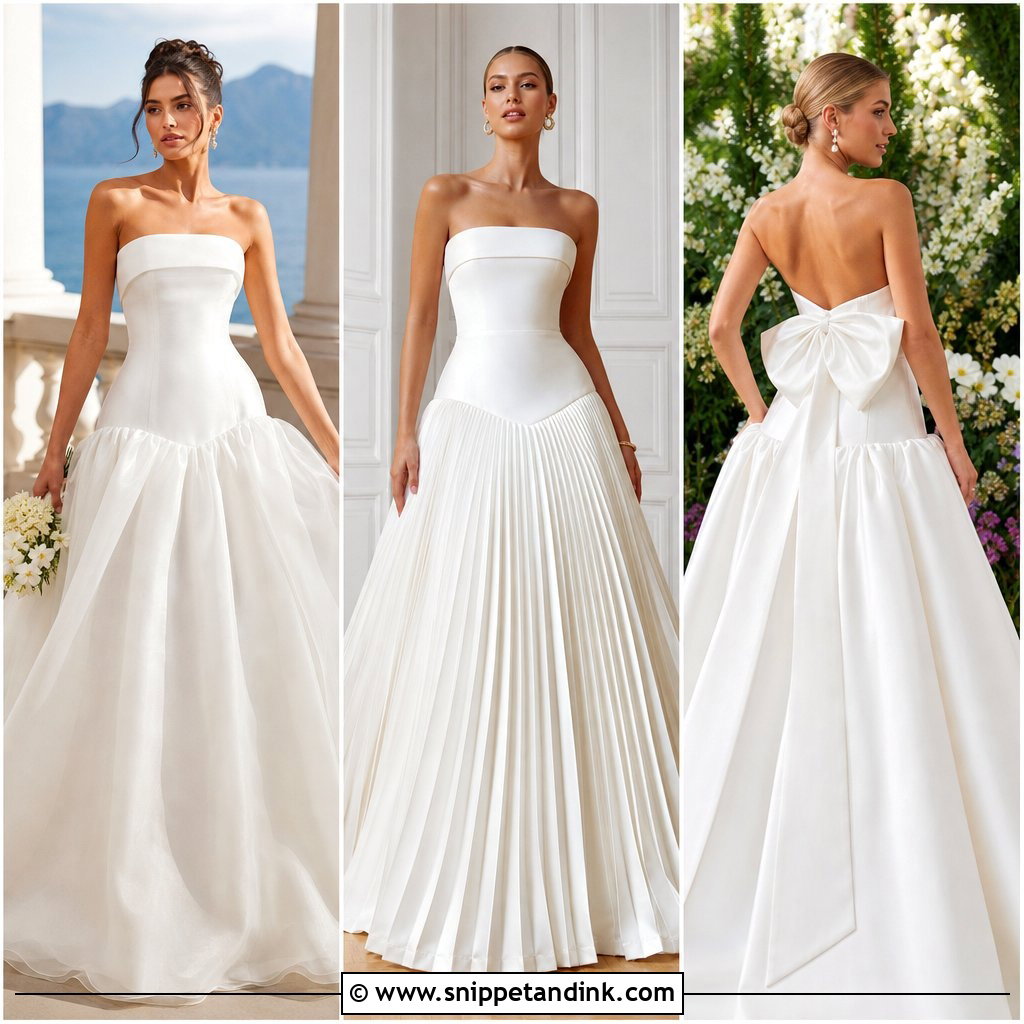
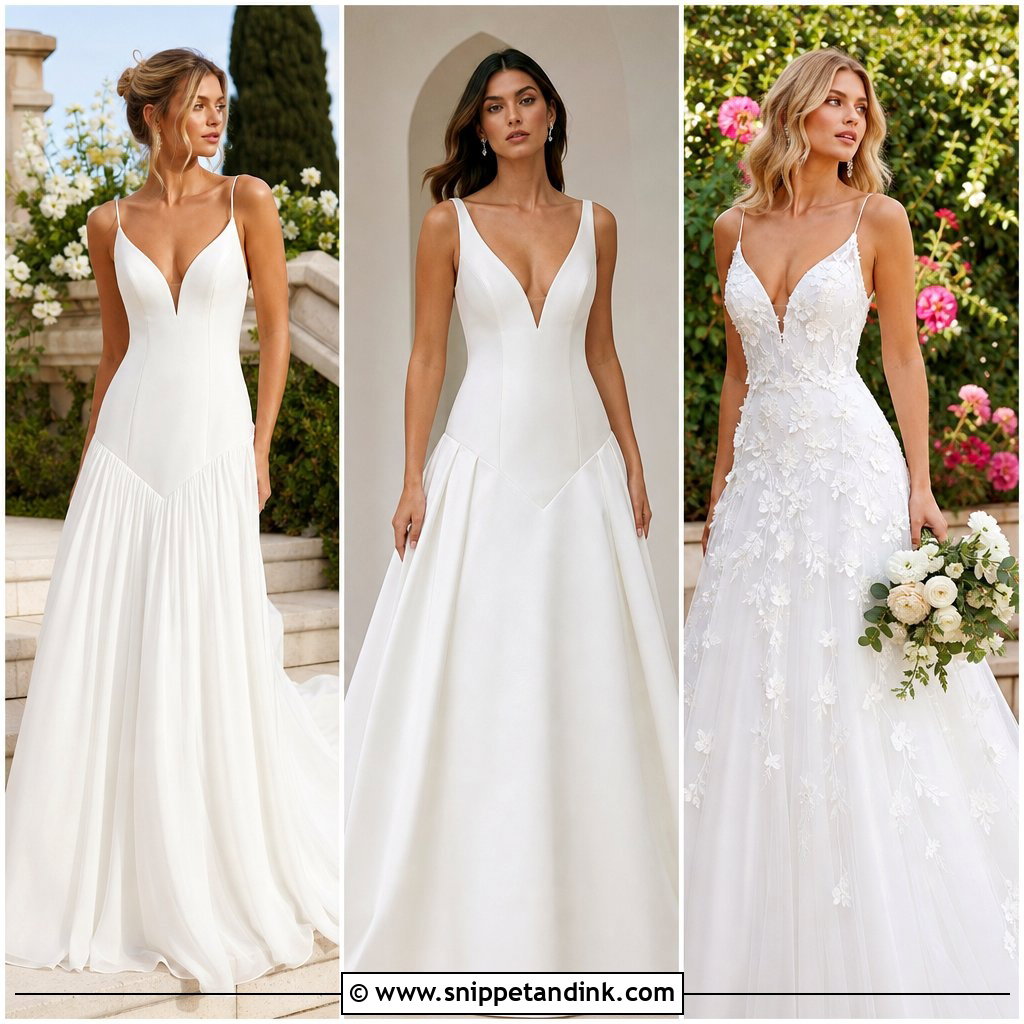
A drop waist moves the seam a few inches below where your body naturally narrows, which lengthens the torso and changes how the whole skirt hangs. In silk, that line looks clean and deliberate. I see brides asking for dropped waists, longline corsets and pointed Basque seams far more than a few years ago, and the fabric decides a lot of the mood: crisp Mikado holds a sculpted shape, charmeuse falls close to the body, and organza adds volume without weight. The catch is that this silhouette is unforgiving about placement. Below are twenty versions, from narrow columns to full ball gowns, with the fitting details I’d pay attention to in each.
Placing the Seam on a Long, Short or Average Torso
The first thing I do with a drop-waist bride is find her natural waist and the top of her hip bones, because the seam needs to land between them or just on the hip bone, depending on her shape. Here’s how that tends to work out in practice.
Short torso
A modest drop of an inch or two below the natural waist gives length without making the legs look shorter. A shallow V point helps too, since the eye follows it down.
Long torso
You can carry a deeper drop, but a fuller skirt or a stronger Basque point keeps the body from looking all bodice. A straight horizontal seam set very low can make a long torso look longer still.
Curvy hips
A curved or V-shaped seam is usually kinder than a straight one, and the seam should sit above the fullest part of the hip, never across it. Sit down at the fitting, since hips widen when you’re seated and a tight seam will dig.
Whatever your shape, I check the seam from the side as well as the front. A drop waist that looks level in the mirror often tilts downward at the back, especially over a fuller seat, and a seamstress can correct that tilt far more easily before the skirt is attached to its final position.
1. Strapless Silk Drop Waist Wedding Dress
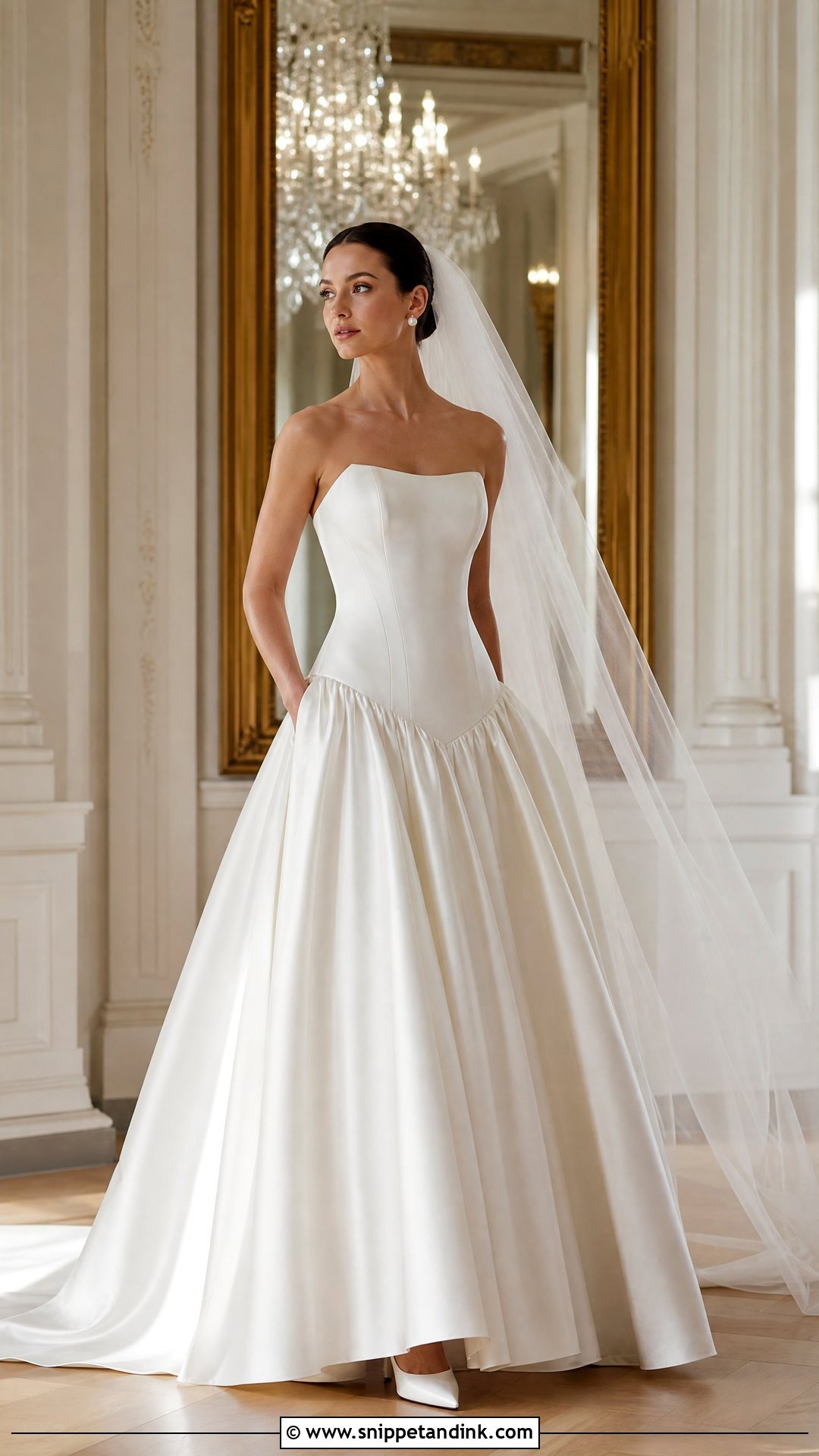
Strapless is the purest way to show a drop waist, because nothing interrupts the line from neckline to hip. The bodice has to be properly built for it: internal boning, a softly curved neckline and a waist stay so the full satin skirt isn’t hanging off your bust. Pointed ivory pumps, pearl studs and a cathedral veil with a narrow satin edge keep it formal; swap the veil for a smooth bun and sculptural earrings if you want it sharper. When I fit this one, I have the bride sit, walk and raise both arms. The neckline shouldn’t shift, and the low seam should lie flat across the hips without rippling.
2. Sweetheart Silk Drop Waist Wedding Dress
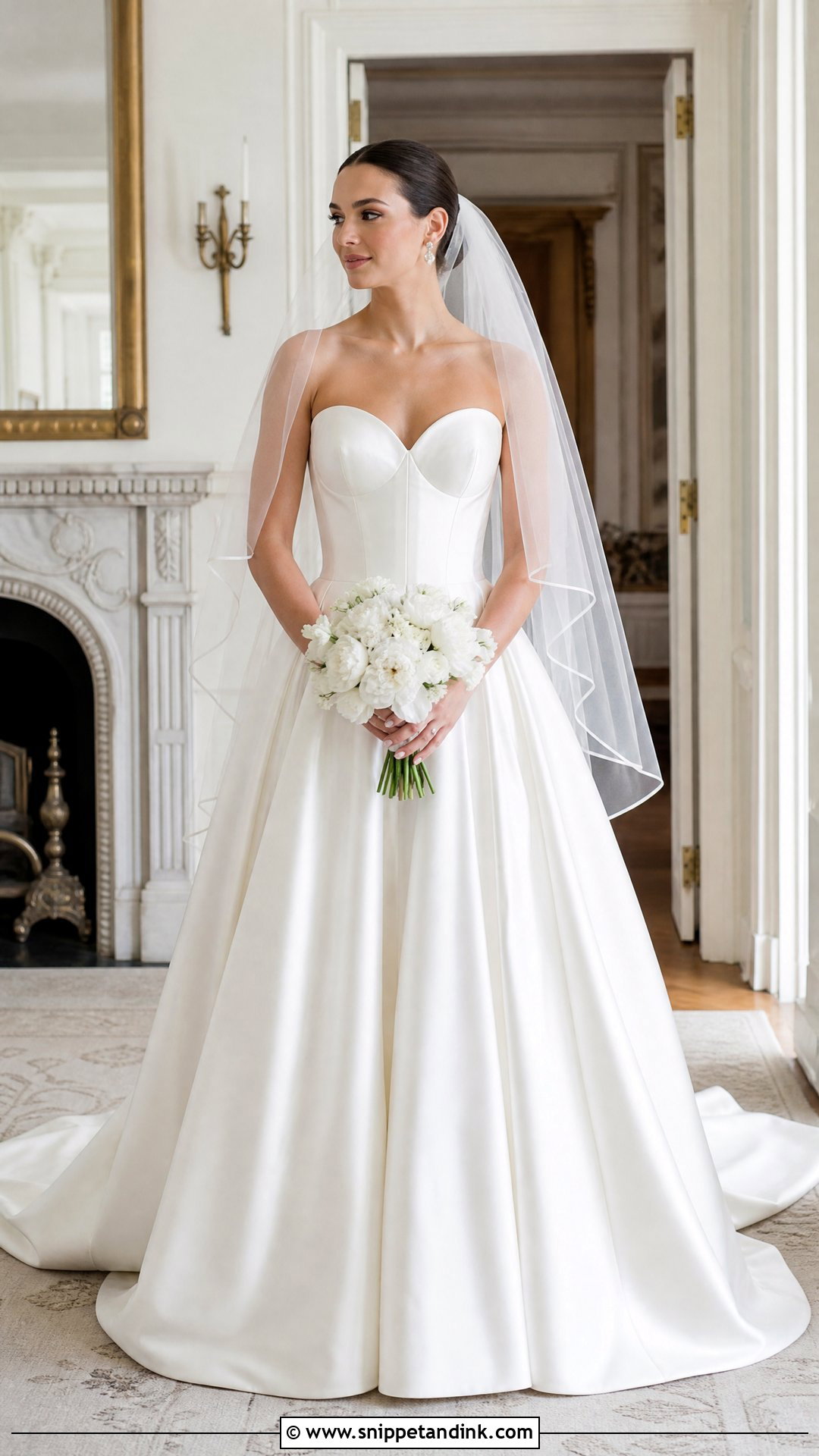
A sweetheart neckline brings curves to the top to balance the long, straight bodice. Look for satin with sculpted bust seams and a waist that dips into a gentle V or rounded point. A moderately full skirt keeps it bridal. Style with a fingertip veil, crystal drops and closed satin heels, and choose a small bouquet so you don’t hide the point of the waist. If the neckline feels too open, removable off-shoulder straps are an easy addition. Cup placement is where sweetheart bodices go wrong, so I insist on the exact bra or built-in cups at every fitting; moving them even half an inch changes the neckline.
3. Square Neck Silk Drop Waist Wedding Dress
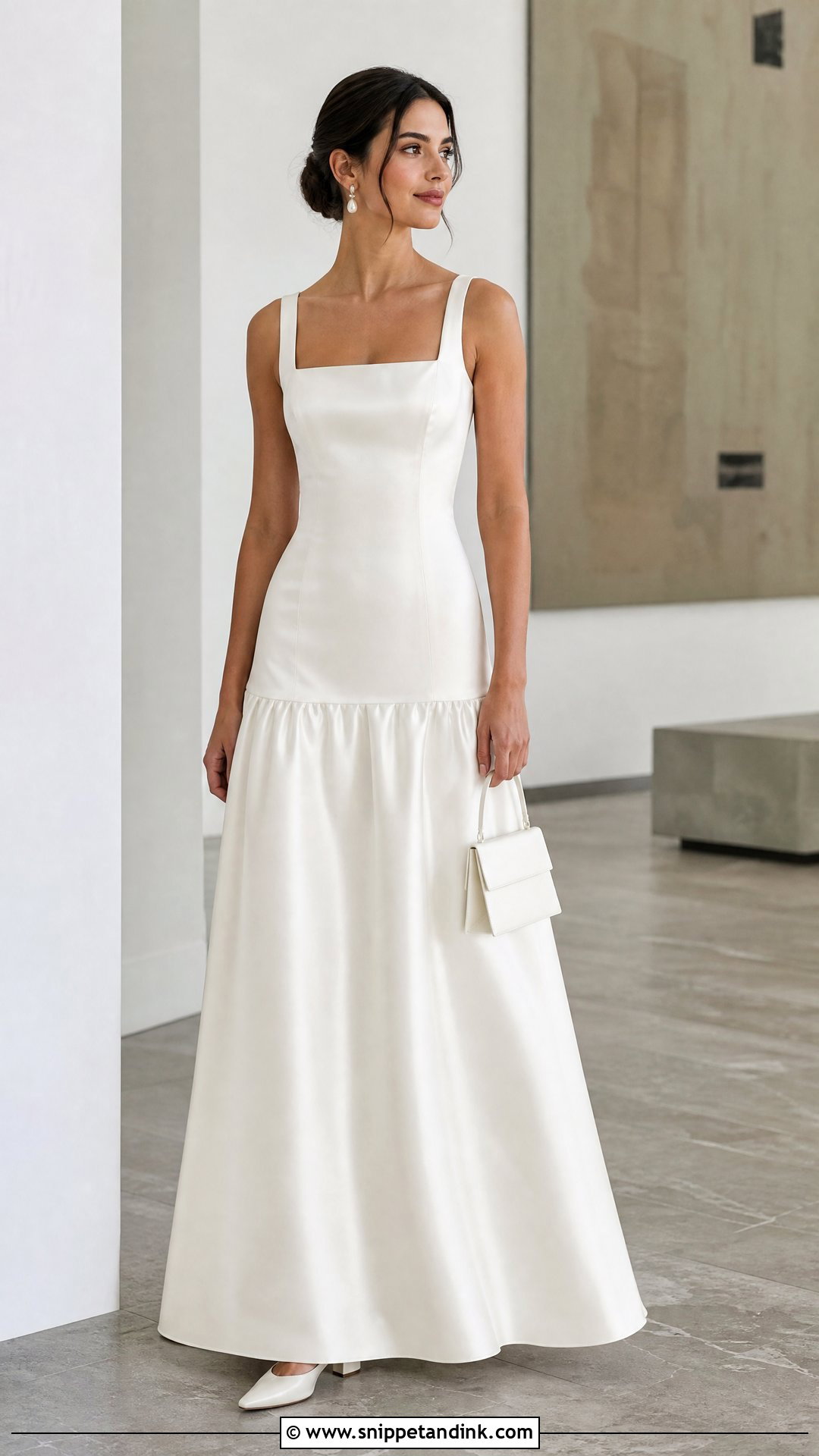
Want vintage structure with modern lines? A square neck on a drop-waist bodice frames the shoulders and makes the long torso read as intentional. Wide straps carry some of the support, which helps over a long day. Matte satin or faille holds the corners crisply; shinier silks soften them. I’d add a smooth A-line skirt, low block heels, a small structured bag and delicate pearls, with a sleek chignon. On a fuller bust, I usually ask the seamstress to round the corners slightly, since a hard straight edge can cut across awkwardly. Check strap length carefully so the bodice isn’t hitched up toward your armpits.
4. Cowl Neck Silk Drop Waist Wedding Dress
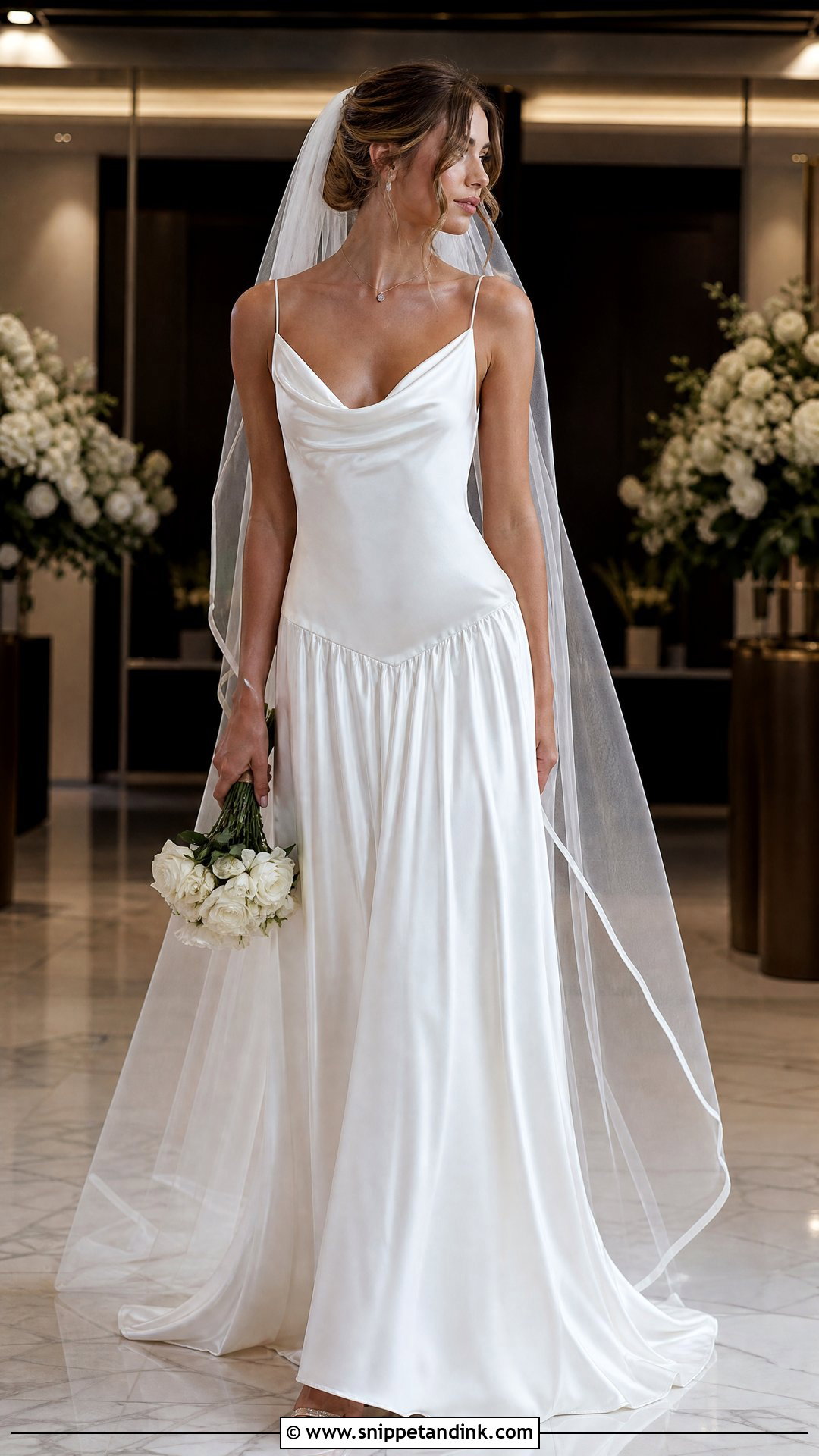
Liquid silk charmeuse drapes into a cowl on its own weight, and it suits a softer take on the drop waist. Skip heavy boning here. A gently fitted bodice with good lining and a low curved seam lets the skirt skim the hips and fall loose to the floor. Metallic sandals, a fine pendant, a sheer chapel veil and loose waves keep the mood light. The honest warning: charmeuse shows everything, from a seam allowance to the edge of your shapewear, and its shine exaggerates any pull. Look at it under daylight and indoor light before final alterations, and fit it over the exact smooth underlayers you’ll wear.
5. Off Shoulder Silk Drop Waist Wedding Dress
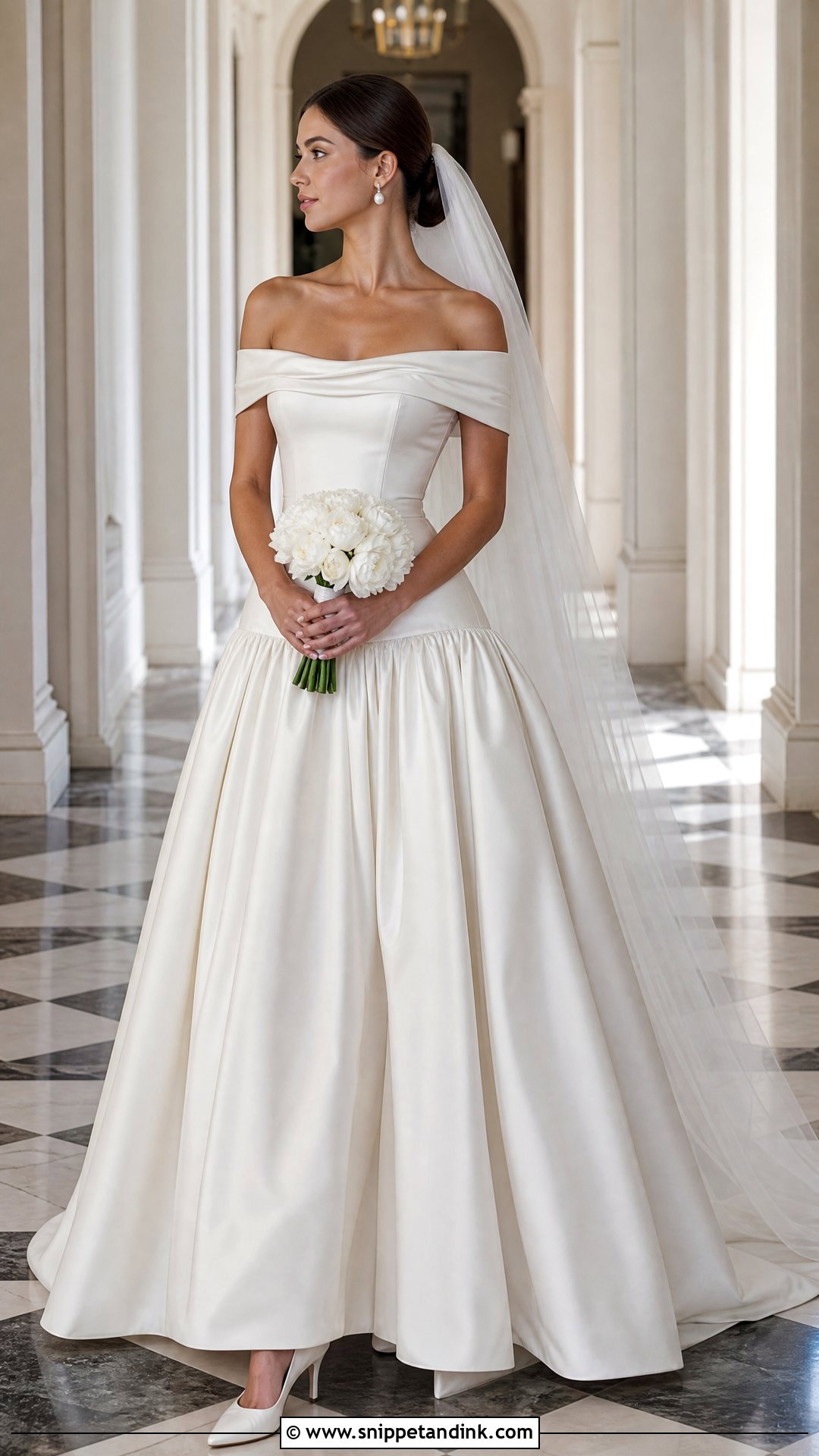
Off-the-shoulder bands widen the top of the silhouette, which nicely balances the long torso below. A folded satin band gives a clean neckline, and a fitted longline bodice carries the shape down to the full skirt. Pearl button earrings, a simple bracelet, ivory pumps and a long plain veil are all it needs for a formal estate or ballroom. The bands are the comfort risk. If they’re stitched tight, you won’t be able to lift your arms to hug anyone, so I ask for a little elastic inside or for bands that detach for dinner and dancing.
6. Long Sleeve Silk Drop Waist Wedding Dress
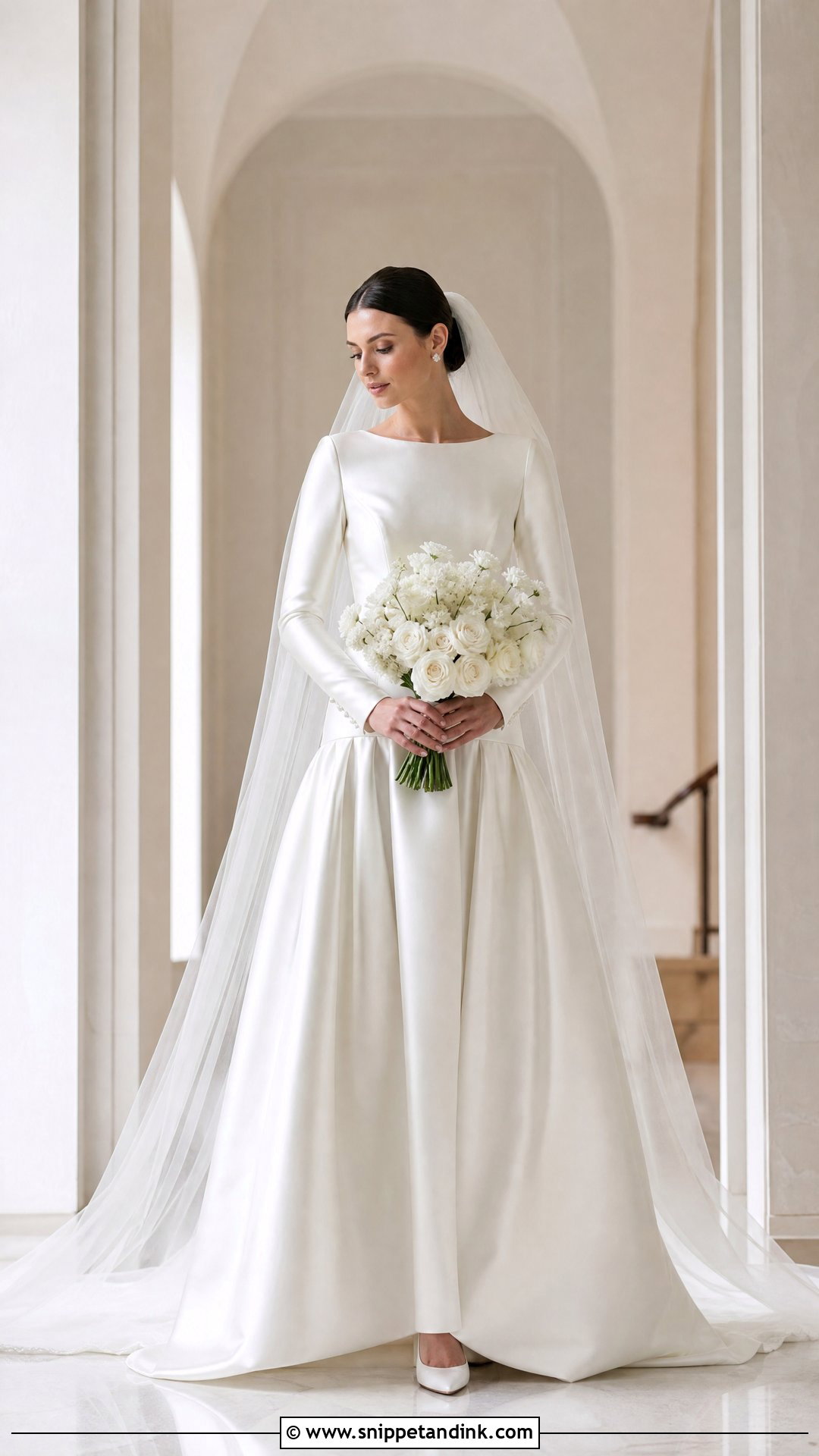
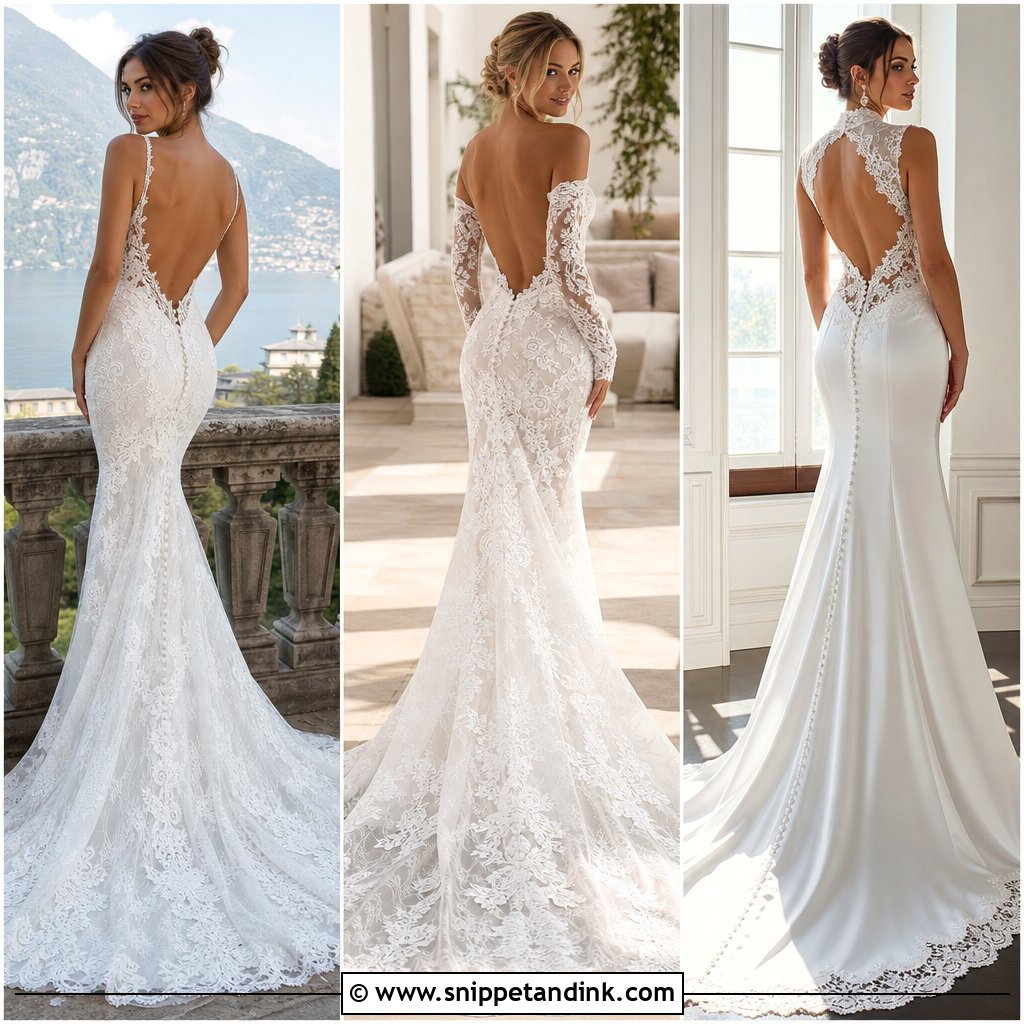
Long sleeves on a drop waist make one uninterrupted line from shoulder to hip, and I suggest them most for autumn and winter weddings. Silk satin has almost no give, so the sleeve must be cut to bend at the elbow without dragging the bodice upward. Small underarm gussets solve that and are invisible. Covered buttons at the cuffs and back add quiet detail. Pair with closed-toe heels, a chapel veil and small diamond or crystal earrings, plus a structured bouquet and polished low bun. Architectural venues and historic houses suit its tailored look.
7. Halter Silk Drop Waist Wedding Dress
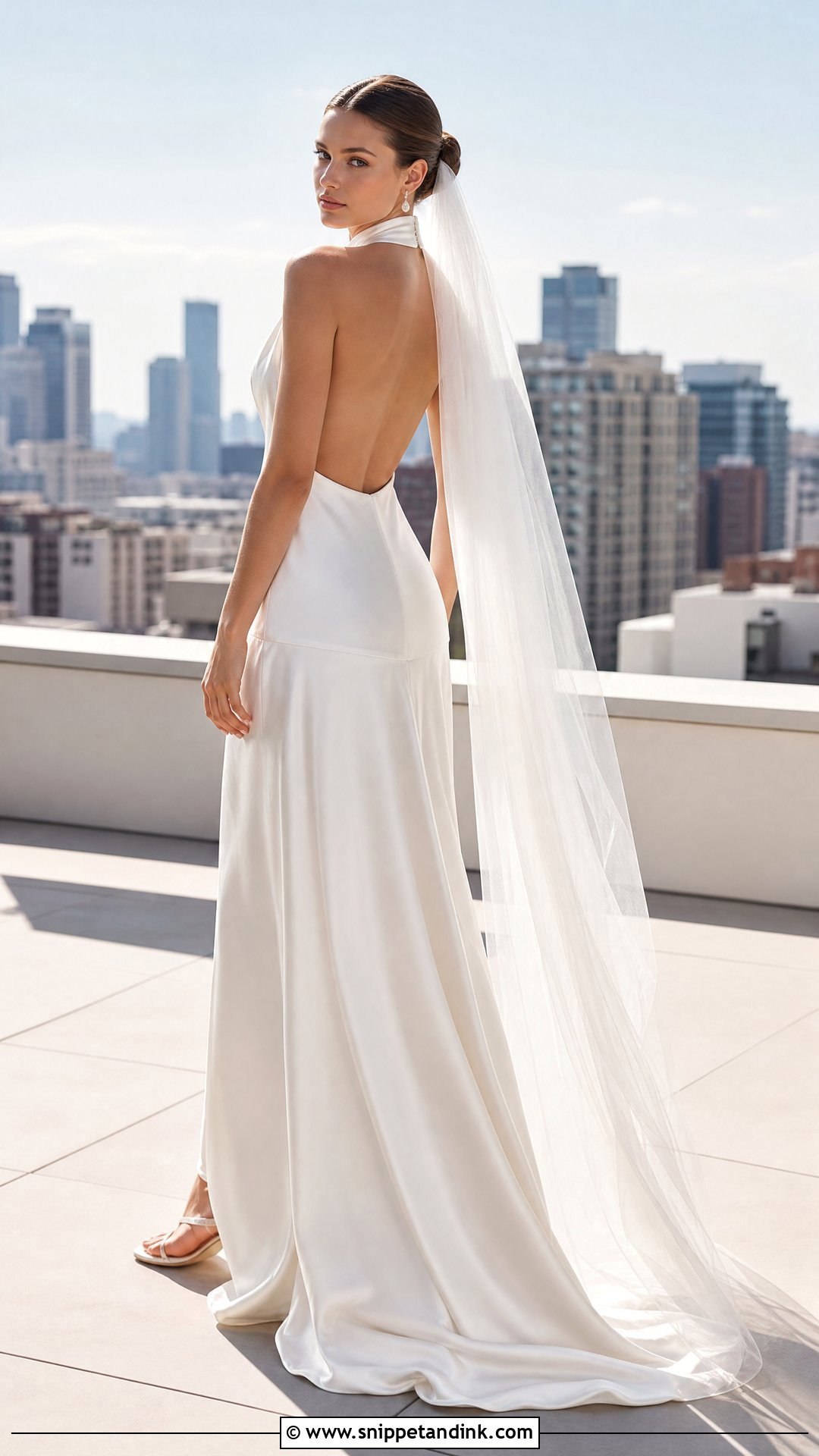
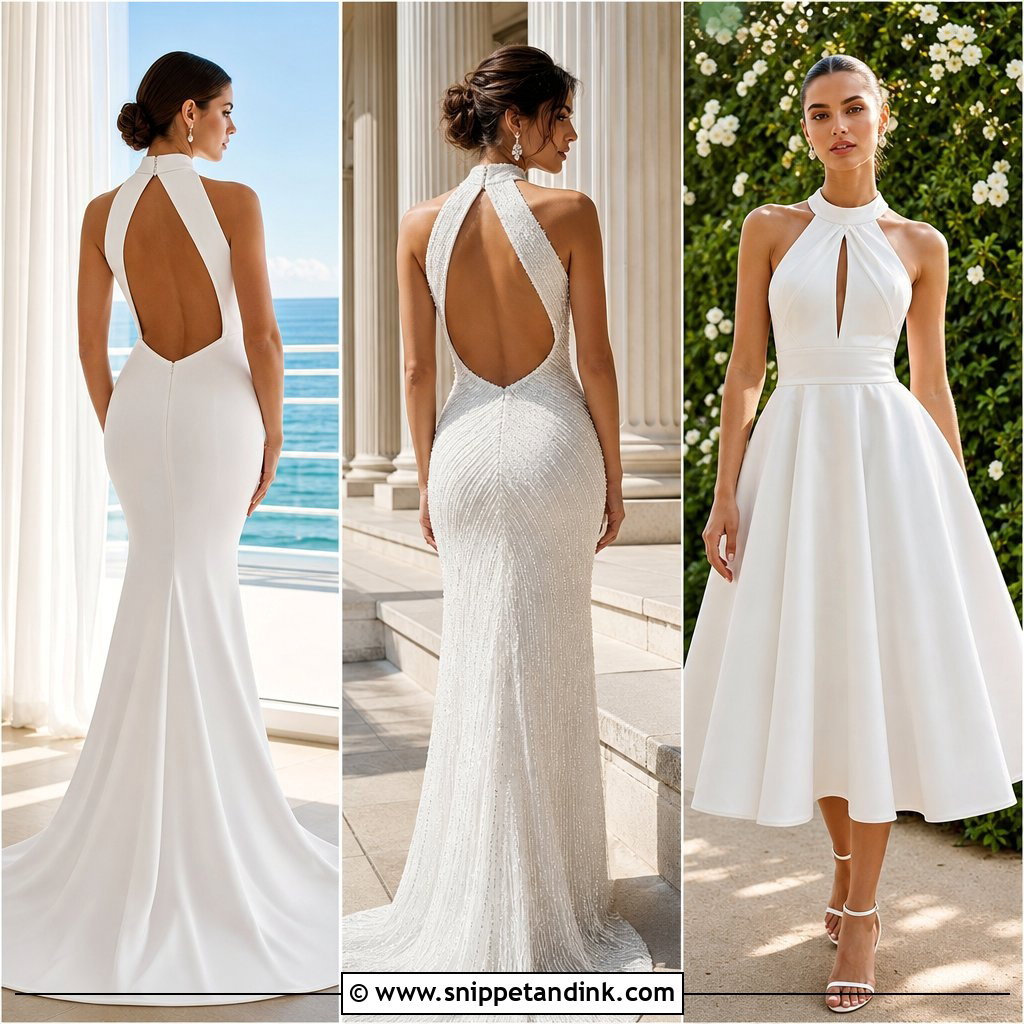
A halter turns the drop waist streamlined and modern. A high-neck bodice with an open or draped back balances the length of the torso, and a fluid satin skirt falling straight from the low waist moves without ball-gown weight. Minimal drop earrings, slim sandals and a light veil under a smooth bun are enough; skip the necklace. With halters I always check the collar after twenty minutes of wear, not just at the first look. If the bodice is relying on the neck strap for support, you’ll feel it by the speeches. The weight should be carried around the ribs.
8. Corset Silk Drop Waist Wedding Dress
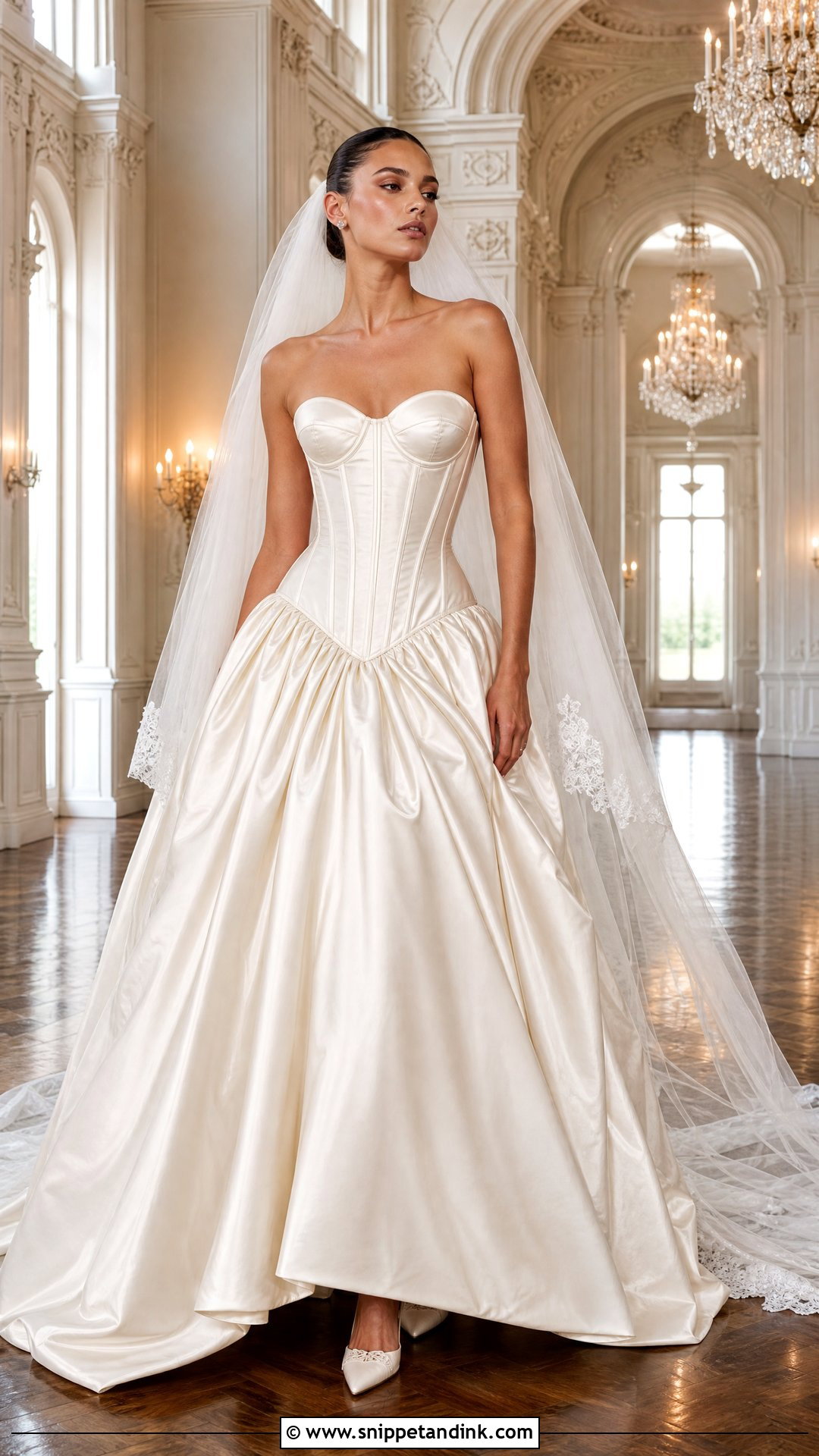
Visible corsetry gives this gown its couture feel: a longline bodice with boning you can see, defined cups and a waist that follows your body below the hip bones. A gathered satin skirt contrasts the precision with softness. Keep the rest quiet with a sheer cathedral veil, pointed pumps and studs. A lace-up back allows a little adjustment if your size shifts before the wedding; a concealed zip gives a cleaner finish. My rule for corsets is to wear it through a full sit-down at a fitting, ideally with a drink and a snack. If you can’t breathe comfortably seated, it’s too tight at the bottom edge.
9. Basque Silk Drop Waist Wedding Dress
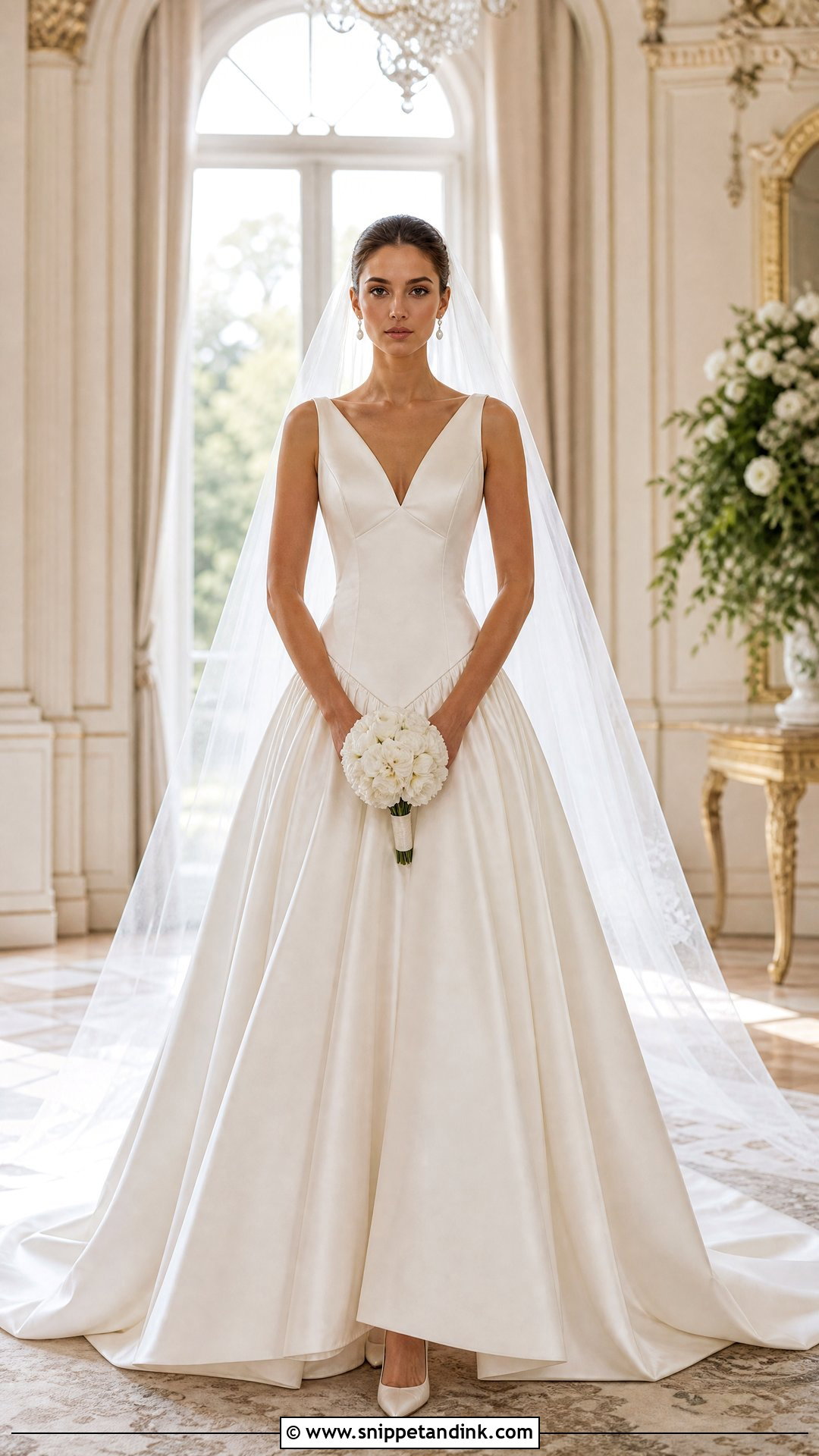
A Basque waist dips into a V or curved point below the natural waist, which draws the eye down and makes the waist look narrower. In structured Mikado with a full skirt and sweeping train, it reads regal. Add a cathedral veil, classic pumps and pearl earrings, and carry a bouquet that sits above the point rather than covering it. The depth of the V is the decision. A shallow dip is subtle, and a deep one makes a strong statement. I ask the seamstress to pin two or three depths and take a photo of each from a few metres away, because the difference is much clearer in a picture than in the mirror.
10. Minimalist Silk Satin Drop Waist Wedding Dress
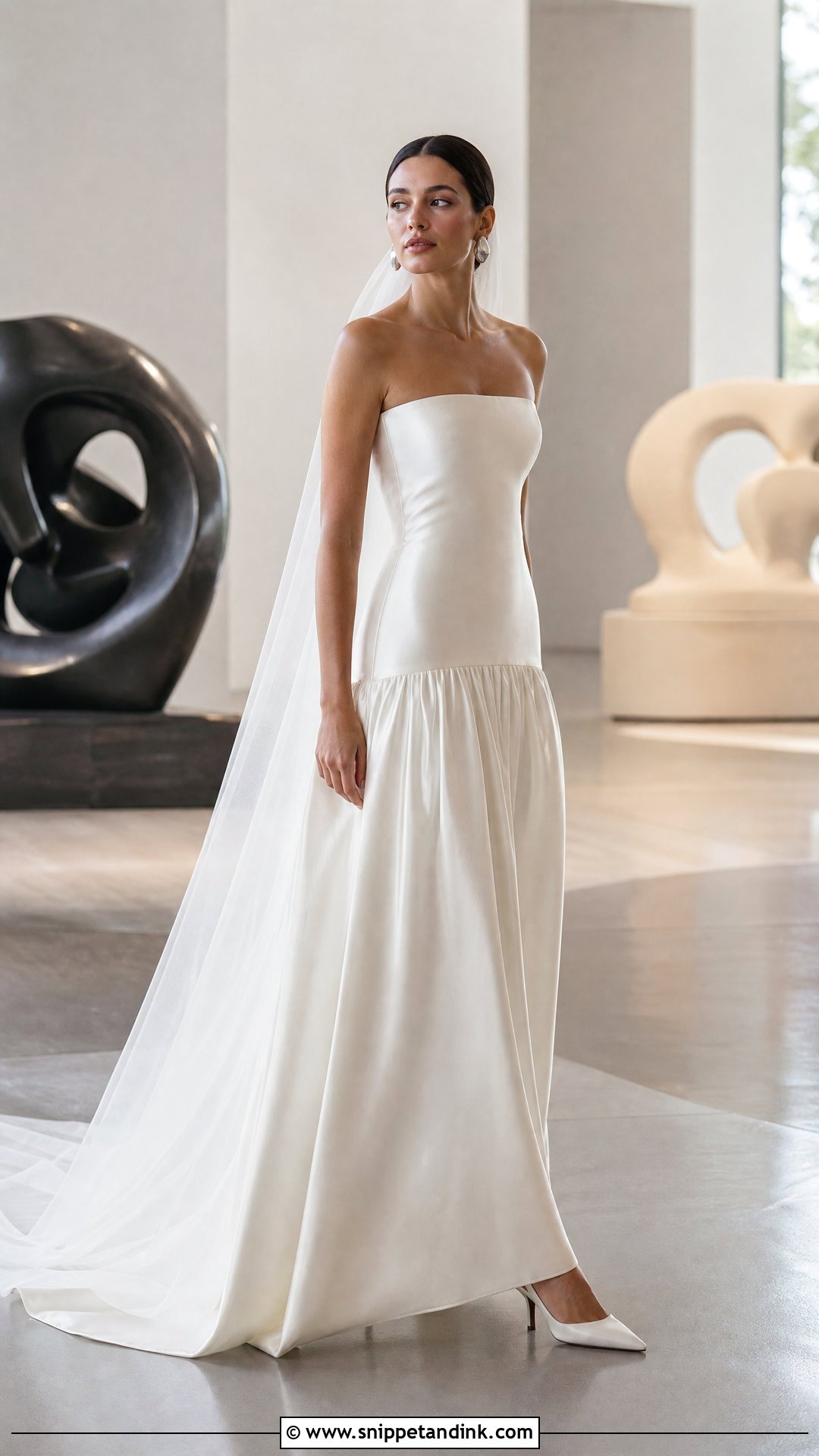
Plain satin leaves nowhere to hide, so this is the gown where tailoring shows most. A straight or softly curved strapless neckline, hidden structure and a skirt without lace or embroidery put all the attention on the seams, hem and waist line. Sculptural earrings, slingback heels, a plain chapel veil and a centre-parted bun keep it minimal. I’d choose a heavier satin with a soft sheen over a very glossy one; the high-shine versions catch flash and show every ripple. Take the veil off and add a clutch or bolder earrings and the same dress carries straight into the reception.
11. Silk Mikado Drop Waist Wedding Dress
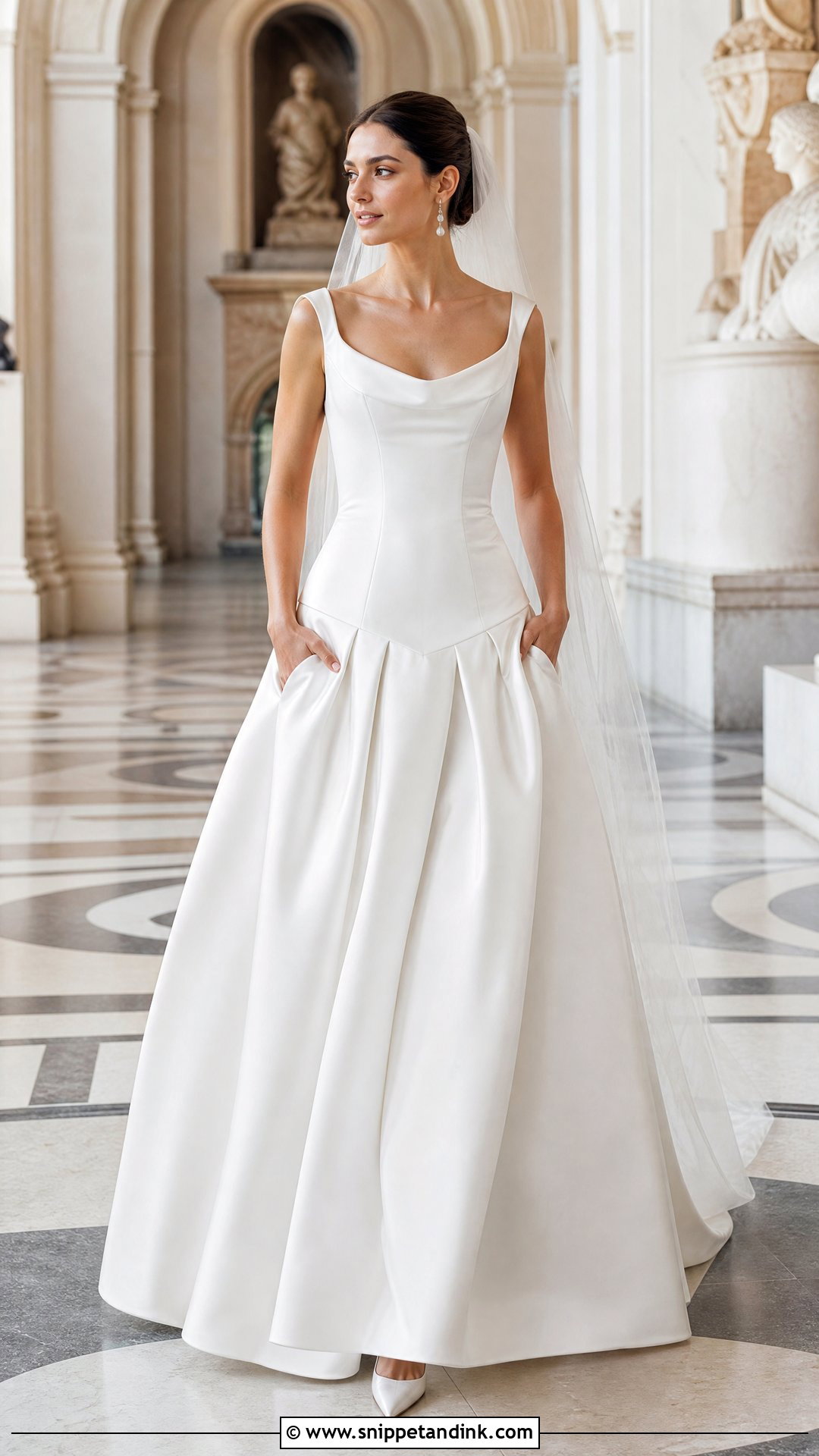
Silk Mikado has enough body to stand away from you, so it can hold a fitted bodice, a defined hip line and a full skirt with real architecture. A strapless cat-eye or softly curved neckline echoes that structure. Pearl earrings, closed pumps and a long tulle veil give light against the heavier fabric. Pockets sit well in Mikado without spoiling the line. It is heavier than fluid silks, though. Practise walking, turning and sitting in the finished dress, and make sure the bustle points are set so the train can be lifted cleanly for the reception.
12. Silk Charmeuse Drop Waist Wedding Dress
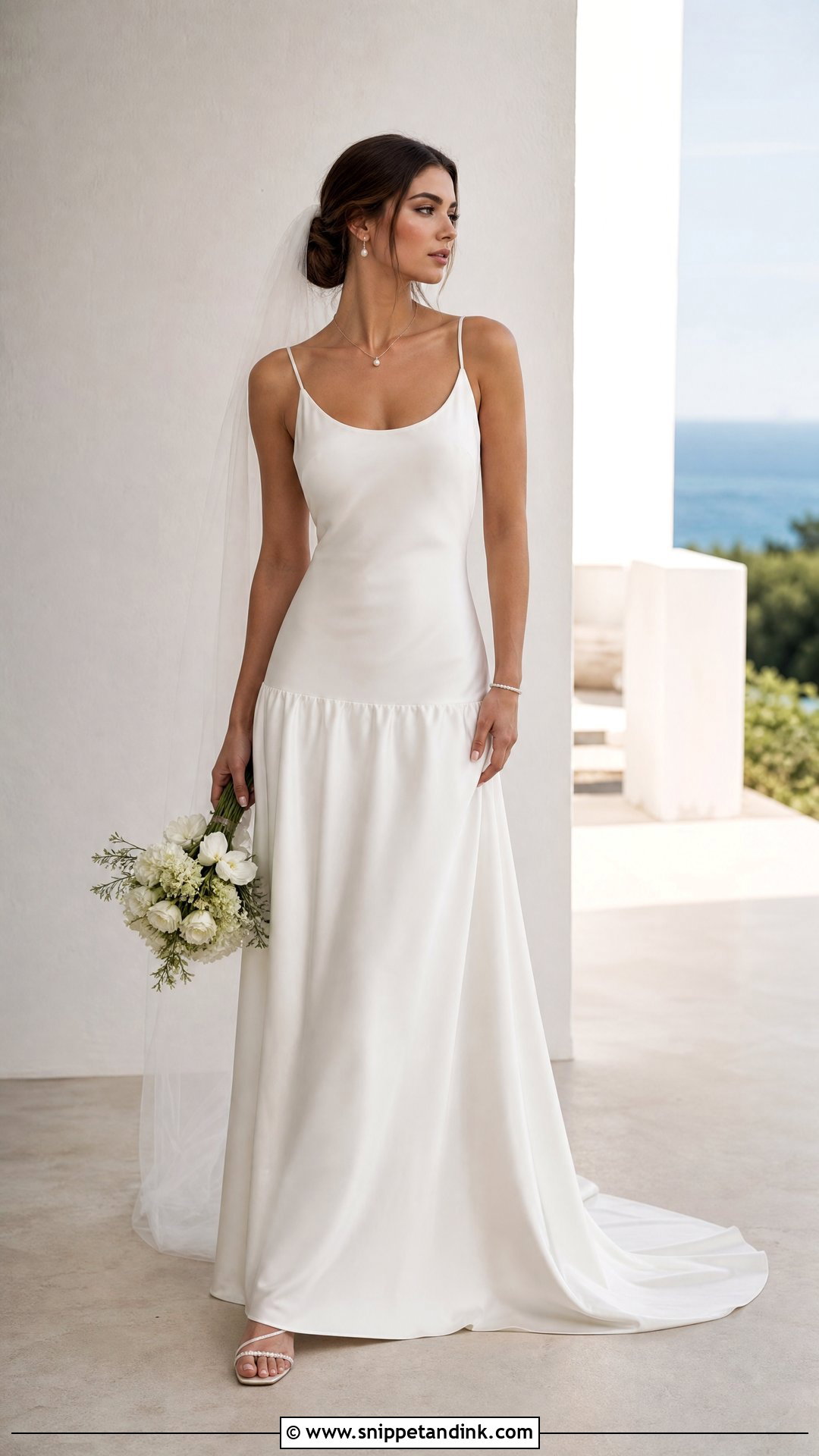
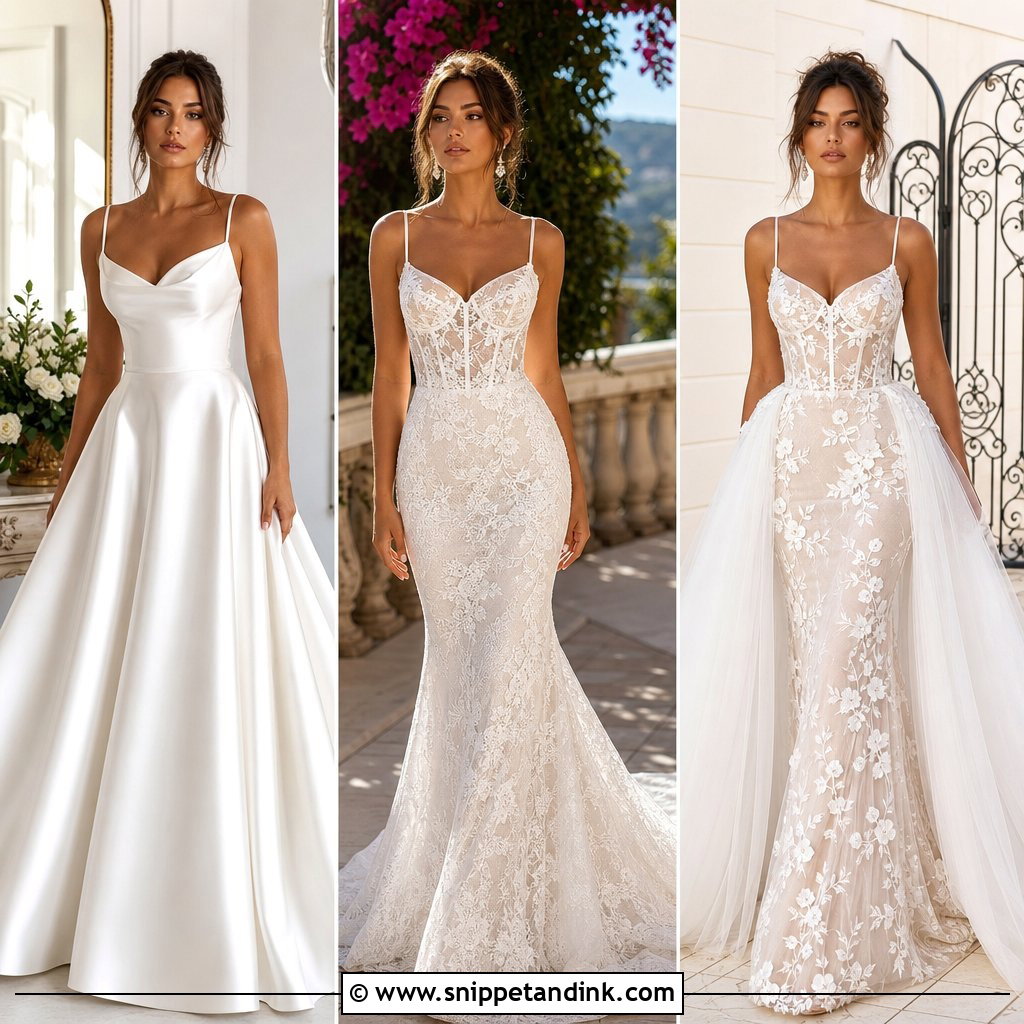
Charmeuse wants to fall, so I’d never force it into a rigid shape. Gentle seaming, soft draping and a lightweight inner foundation give the drop waist without fighting the fabric. Spaghetti straps or a shallow scoop neckline suit it, with barely there sandals, a sheer veil and fine gold or pearl jewelry, and soft waves or a low twisted bun. Underwear lines are the main hazard: smooth, edge-free foundation pieces are essential, and ask for careful pressing of every seam allowance. A light lining keeps it from turning transparent without stiffening it. It’s at its best at small evening ceremonies and coastal or garden venues.
13. Ruched Silk Chiffon Drop Waist Wedding Dress
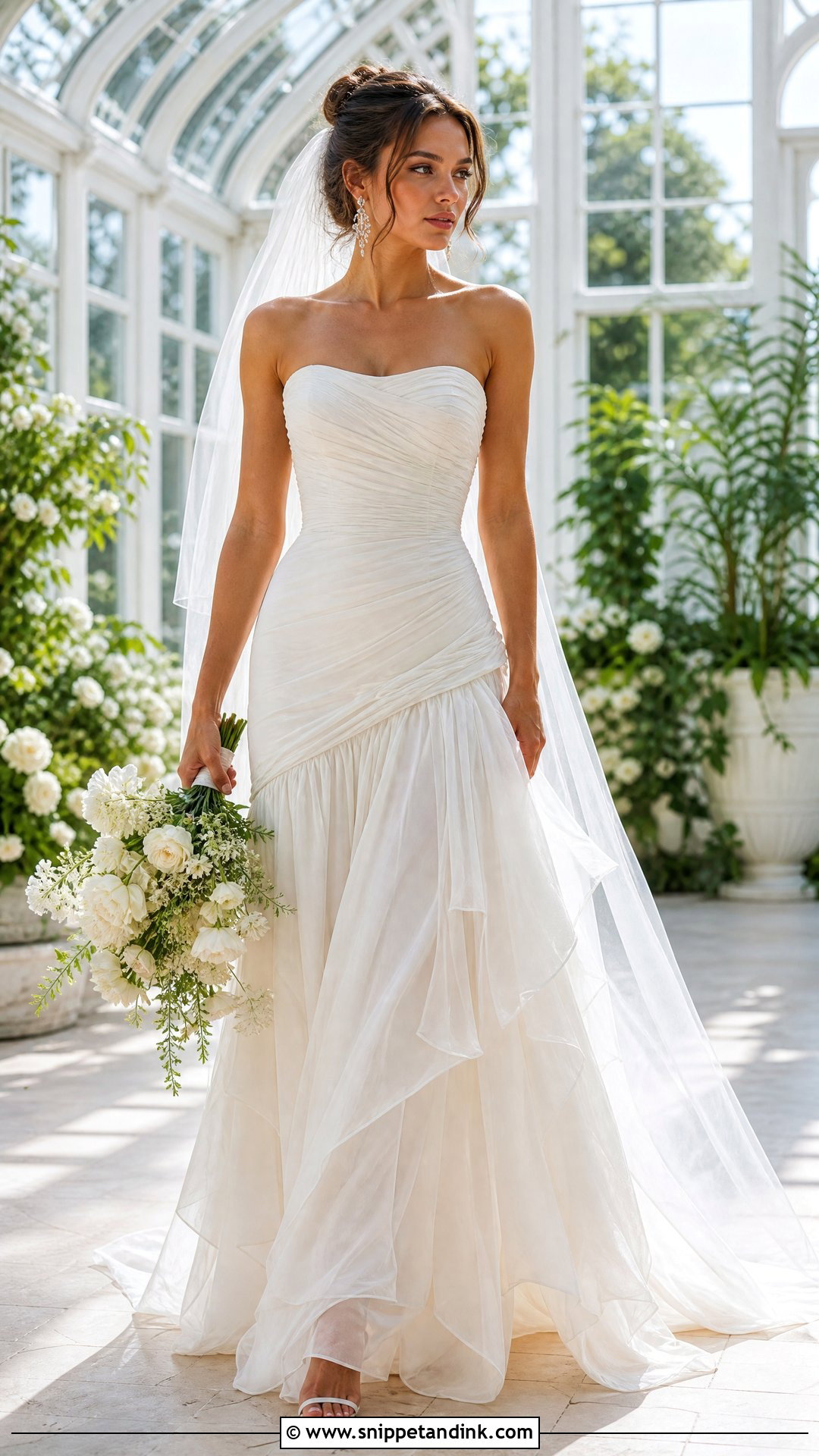
Silk chiffon softens the strong proportions of a drop waist. Ruching across a corseted torso adds texture, and the low seam releases into a light skirt that moves as you walk. A strapless or one-shoulder neckline keeps it uncluttered. Crystal earrings, satin sandals and a plain fine-tulle veil match the floating fabric, and a loose bouquet keeps the weight down. Uneven ruching distorts the silhouette, especially at the bust and hips, so I always ask for the main folds to be hand-tacked to the lining. Loose gathers shift during the day and look messy by evening.
14. Silk Organza Drop Waist Wedding Dress
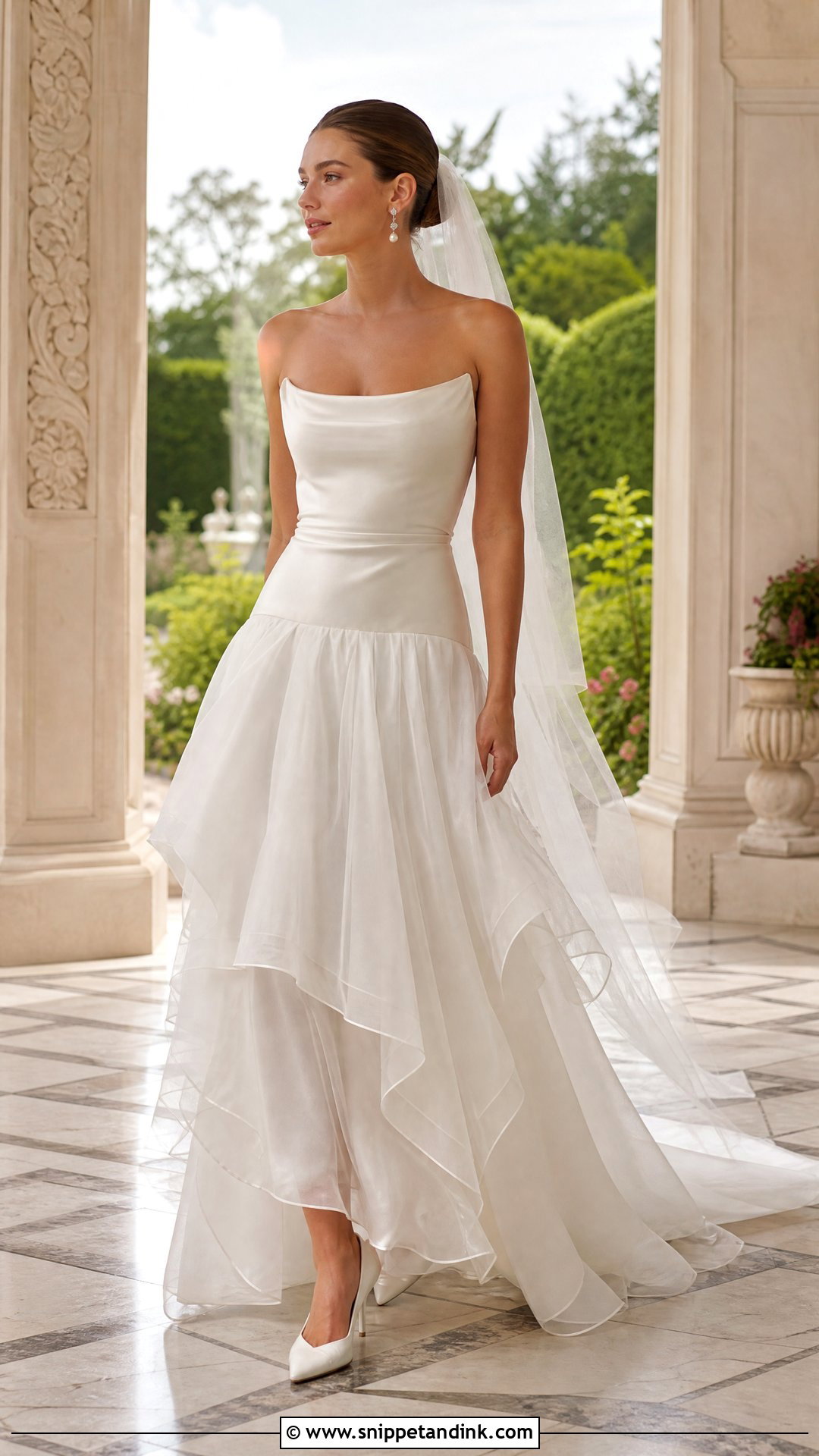
Organza gives the skirt volume with almost no weight, and its slight transparency stops a big skirt from looking heavy. A fitted satin drop-waist bodice with layered organza panels, soft gathers or a removable overskirt makes the long waist stand out against the airy texture below. Pointed heels, pearl drops, a chapel veil and a smooth updo keep attention on the fabric. Organza creases sharply and catches on rough edges, so plan how the dress travels to the venue and who steams it there. Reinforced skirt seams are worth asking about if you’ll be outdoors.
15. Pleated Silk Drop Waist Wedding Dress
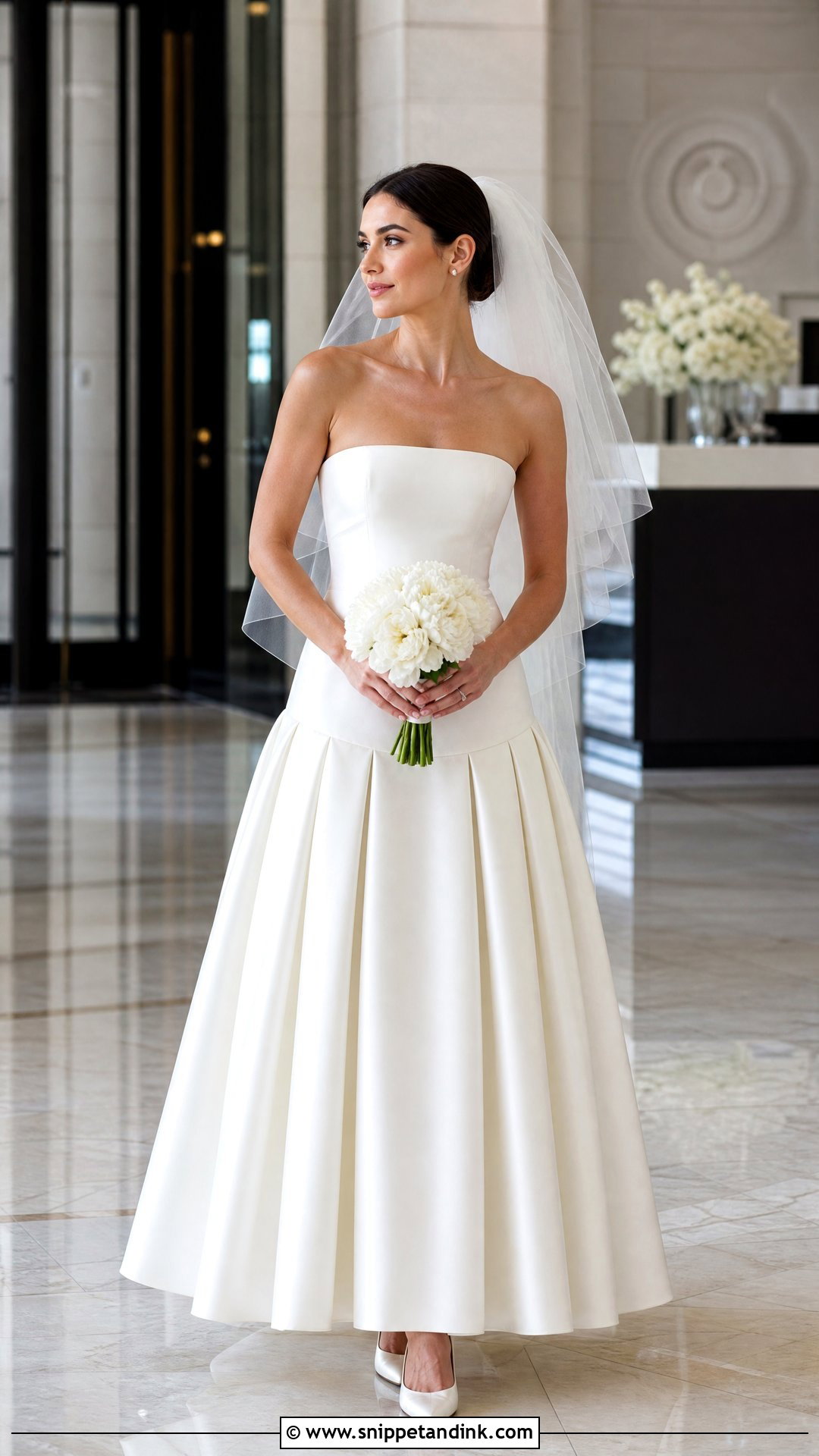
Pleats add controlled volume without embellishment. Narrow knife pleats keep the skirt streamlined, and wider box pleats give a fuller, more traditional shape. A straight strapless bodice keeps the focus on the low waist. Add satin pumps, a structured veil, small pearls and a compact white bouquet. Pleats must start evenly around the hips and stay pressed through the final fitting. Ask how your chosen silk creases when you sit; some silks hold a pleat and also hold every sitting crease. A hidden bustle can lift the train while keeping the pleat pattern intact.
16. Mermaid Silk Drop Waist Wedding Dress
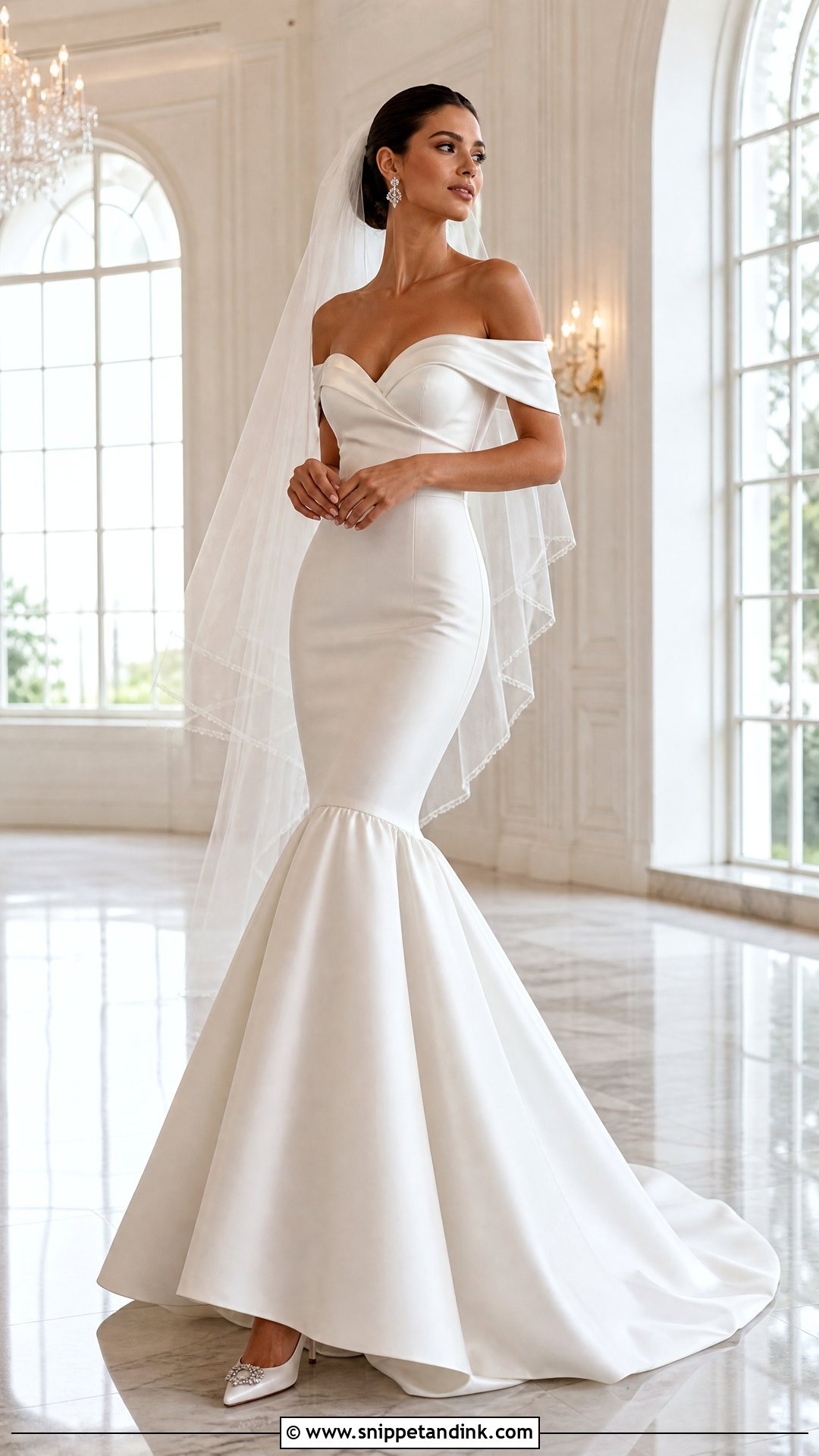
A mermaid drop waist hugs the torso and hips before flaring around the knee, creating a dramatic hourglass line. Satin or faille gives enough structure to hold the flare. Scoop, strapless or off-shoulder necklines all work, depending on how much support you want. Pointed pumps, a fingertip veil and simple earrings keep it clean. This is the one gown where I’d have you walk up stairs at the fitting. If the flare starts too high, your stride shortens to a shuffle; lowering it slightly, or adding a stretch panel in the lining, makes the evening much easier.
17. A Line Silk Drop Waist Wedding Dress
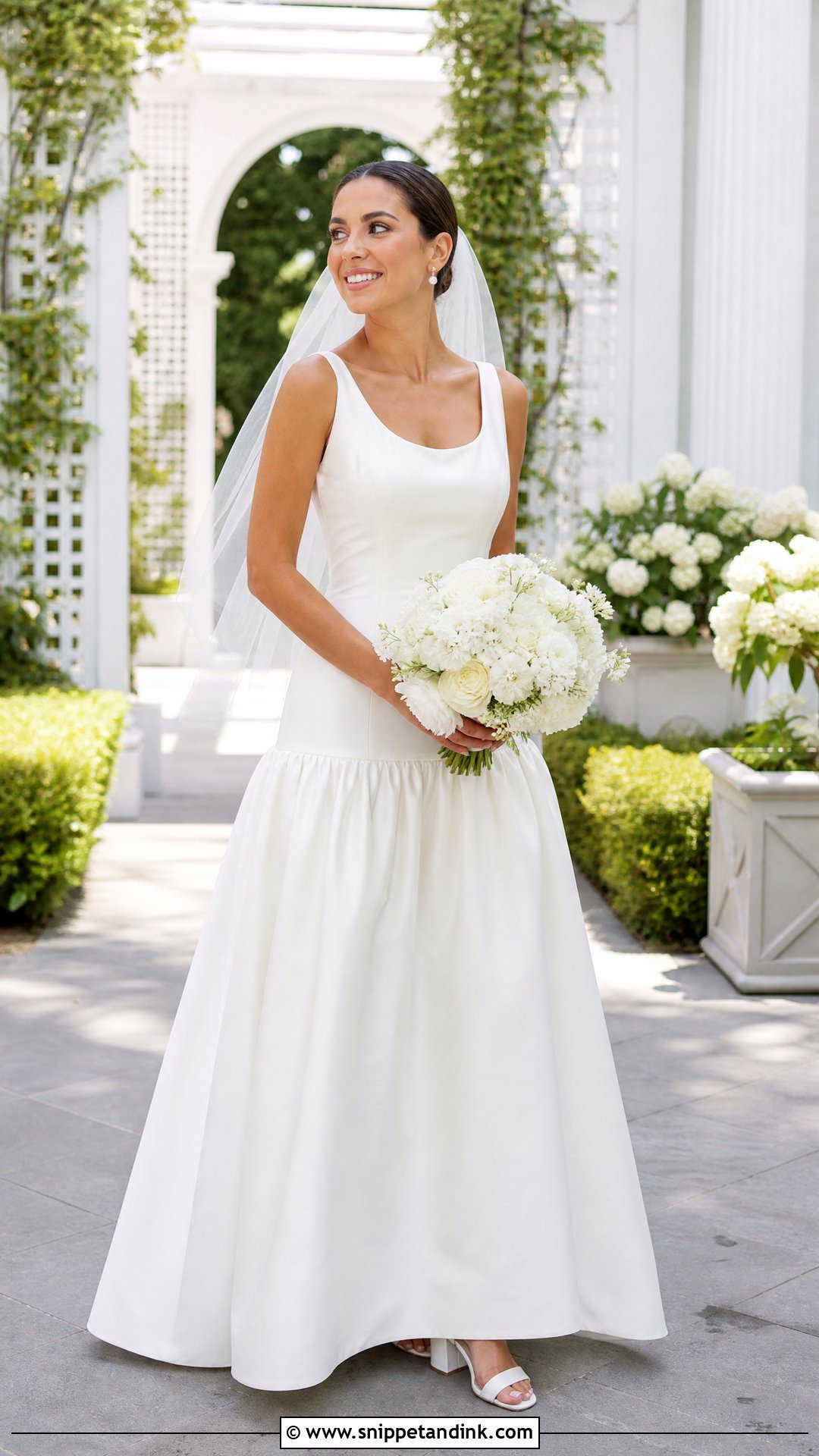
An A-line skirt is the most wearable way into this trend. The bodice runs to the upper hip and the skirt opens gradually, so there’s no sudden volume and no tight knees. Wide straps, a scoop or a modest V-neck give dependable support. Block heels, a medium veil, pearl earrings and a bouquet of seasonal flowers suit it. Satin or lightweight faille keeps the skirt crisp while letting you move. The point I check is where the waist seam joins the skirt: any puckering there shows straight away. Dancing is far easier in this shape than in a mermaid or corset gown.
18. Pearl Silk Drop Waist Wedding Dress
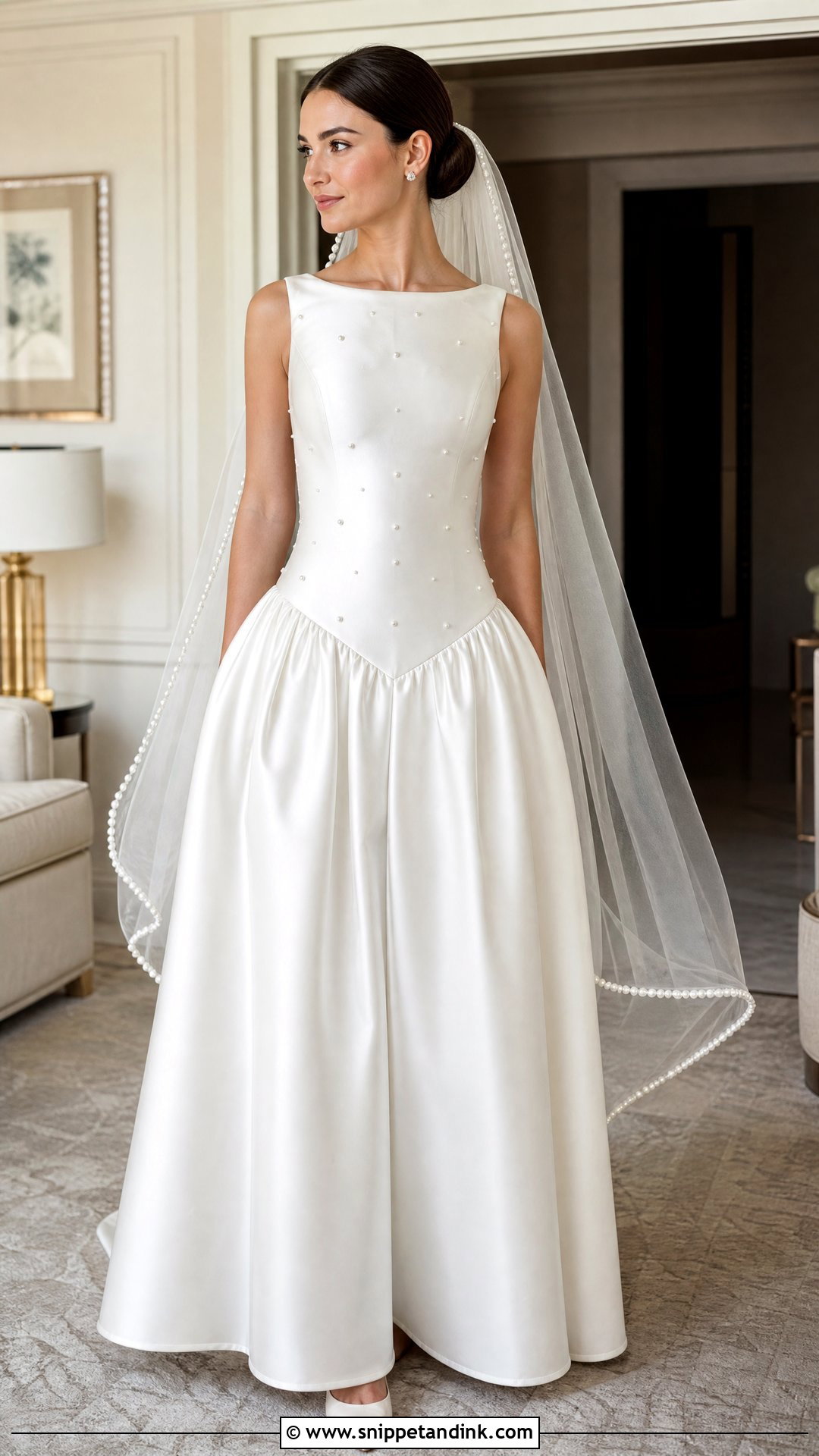
Pearls work on a drop waist when they follow its structure: along the neckline, the corset seams or the upper bodice, not scattered over the whole gown. A plain satin skirt gives them a clean background. Pearl studs, closed heels and a tulle veil edged with tiny pearls finish it; leave out the elaborate necklace. Beading near the inner arm can scratch over a long day, so rub your arm against it at the fitting. Heavily beaded areas may need extra lining. A few days before, I go over every pearl and tighten any that wobble, since loose ones tend to drop off during the dancing.
19. Floral Silk Drop Waist Wedding Dress
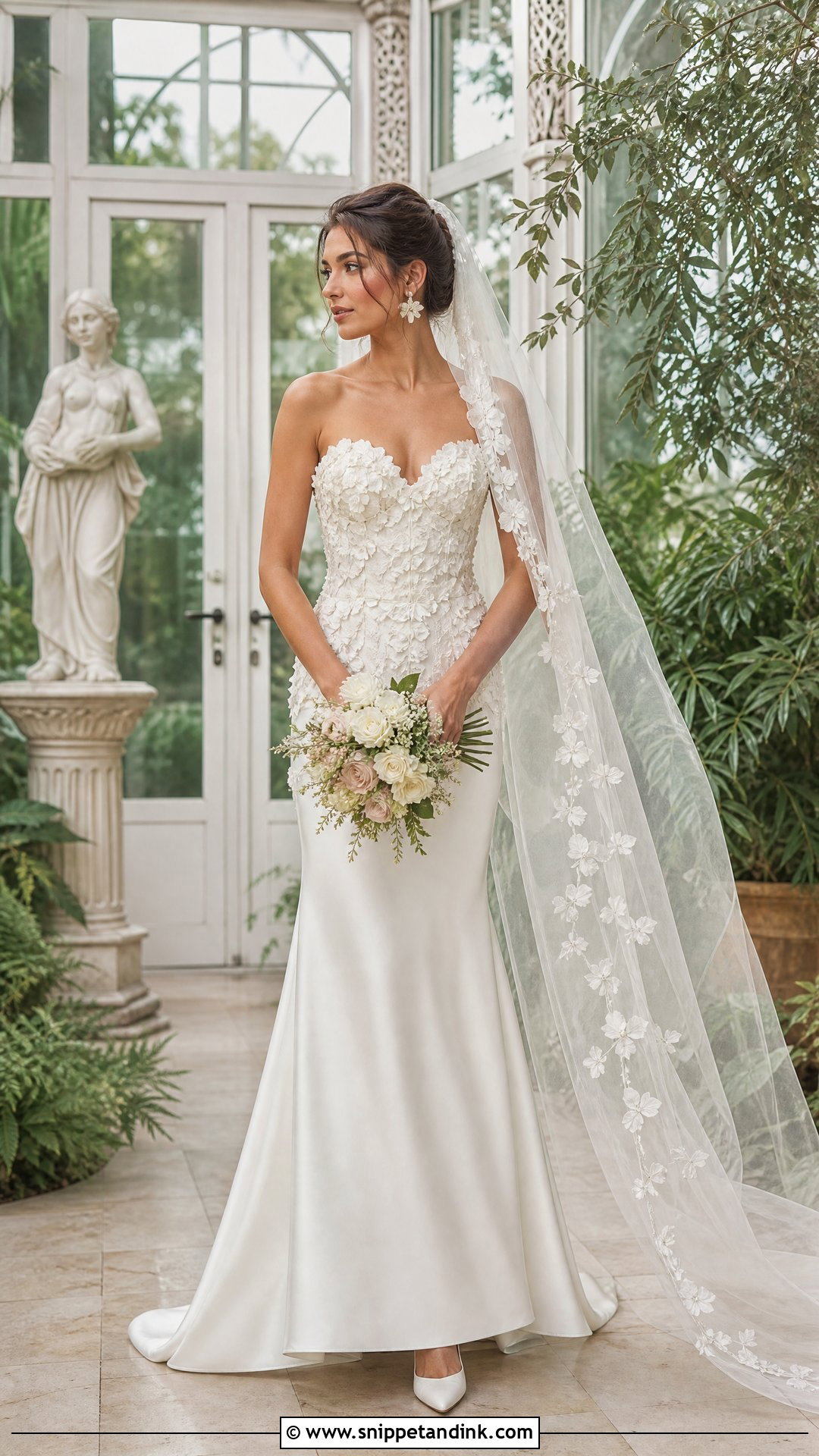
Three-dimensional flowers look romantic against smooth silk, especially placed on the neckline and bodice with a few motifs continuing just past the dropped waist. Keep the skirt mostly plain so the silhouette still reads. Simple pumps, floral earrings, a sheer veil with minimal appliqué and a low bun complete it. Raised petals can rub the inner arm and snag a veil, so test both. I’d also ask whether the flowers are hand-sewn; hand-stitched appliqués sit more naturally on the curved corset seams than glued or machine-applied ones. Conservatories and spring gardens are the natural home for this one.
20. Detachable Train Silk Drop Waist Wedding Dress
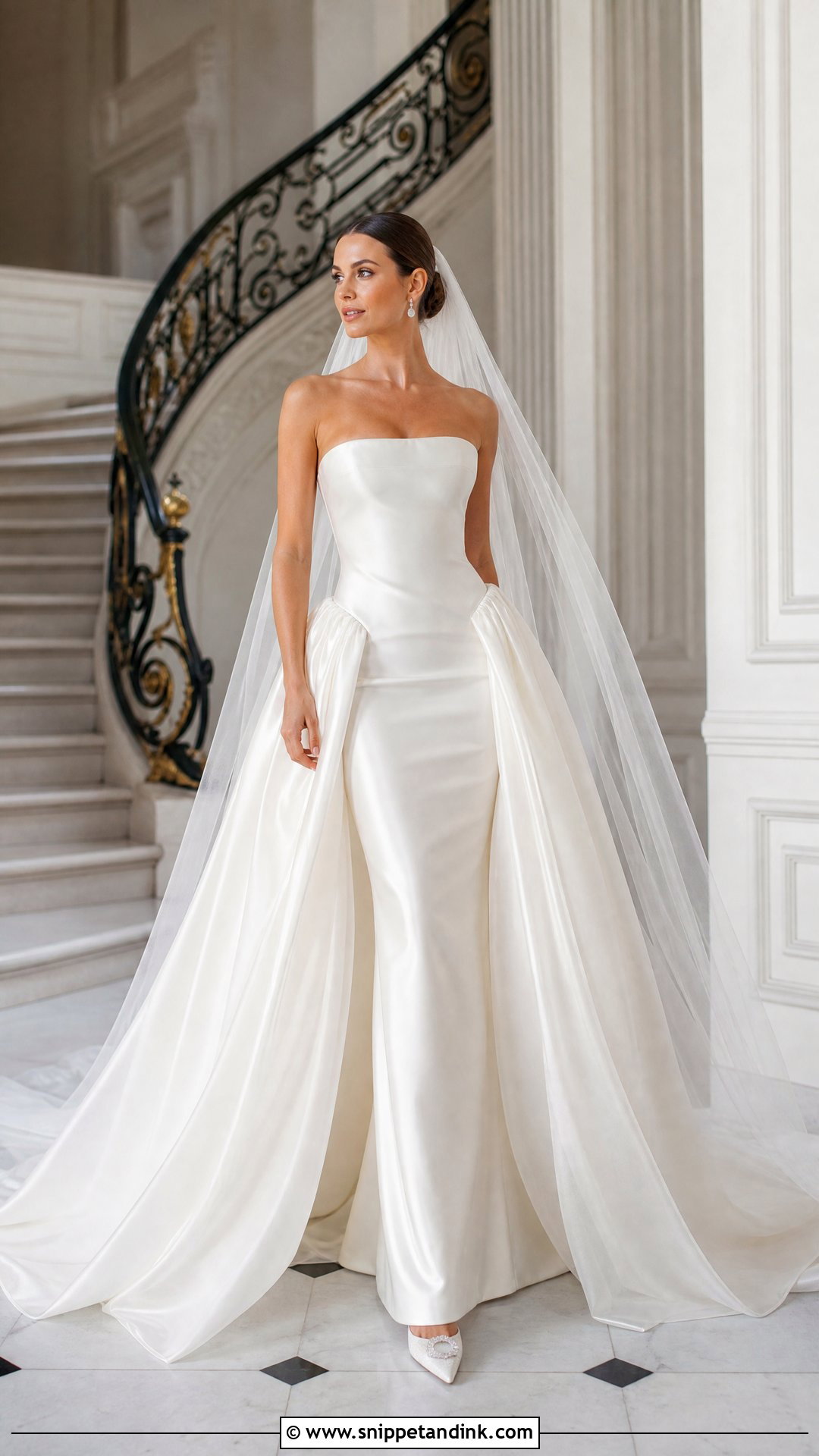
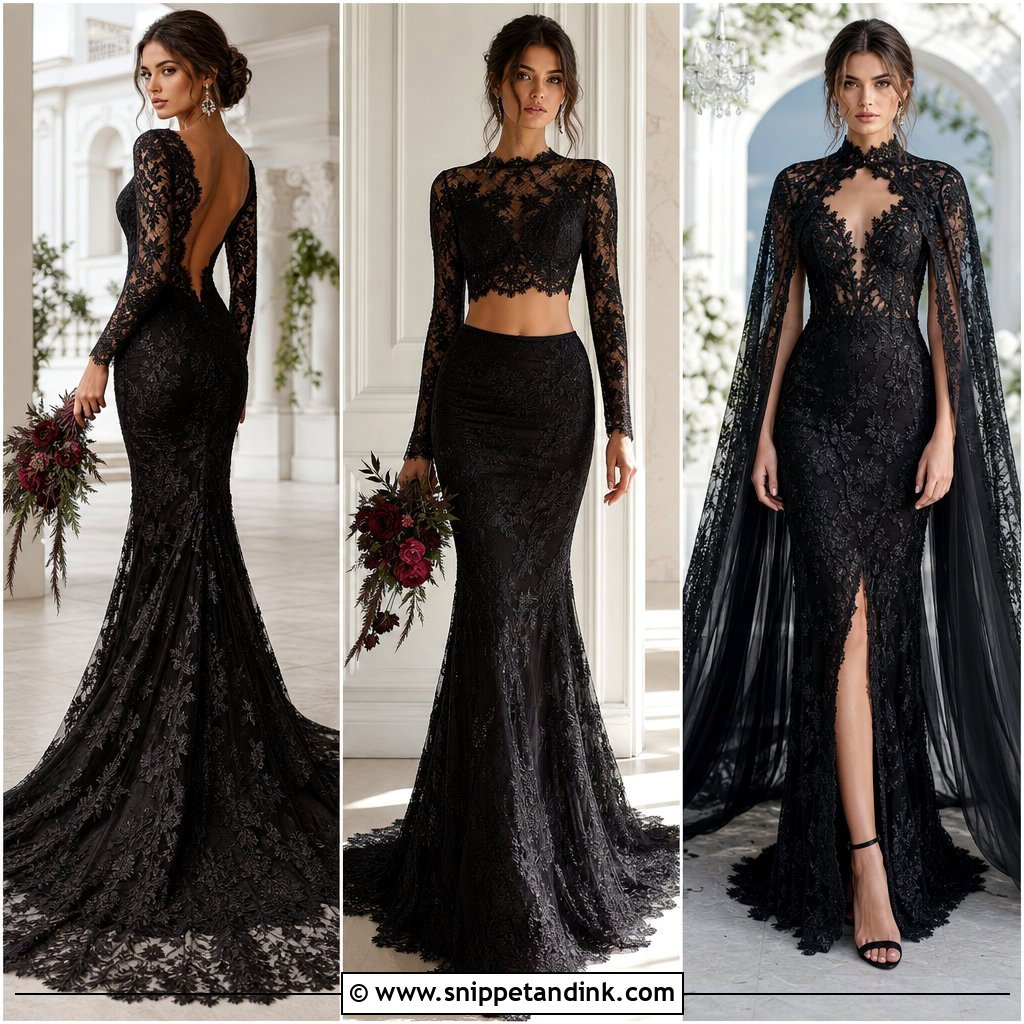
A detachable train lets one dress do two jobs. Start with a fitted satin gown with a low waist and a manageable A-line or column skirt, then add a sweeping organza or matching satin overskirt that fastens around the hips. Wear it with a cathedral veil, pointed heels and understated earrings for the ceremony, then remove the overskirt and veil for dinner. The fastening points should be invisible and comfortable once the train is off. Practise the change with whoever will do it on the day. It takes a minute or two with practice and far longer for someone seeing the hooks for the first time.
How Long a Structured Silk Gown Takes to Arrive and Fit
Drop-waist gowns with boning and silk skirts are rarely off-the-rack pieces. Most are made to order, and production times vary widely between designers, often several months. I’d plan backwards from the wedding like this:
- Order the gown with enough margin for the salon’s quoted delivery plus a few weeks of slack, since silk orders can be delayed.
- Book your first fitting about two to three months before the date, bringing your shoes and undergarments.
- Expect two or three fittings. Corset bodices and pleated skirts often need more adjustments than a simple A-line.
- Schedule the final fitting within the last few weeks, and collect the dress pressed and bagged.
Ask about rush fees before you order, not after. If your timeline is tight, a sample gown or a simpler A-line with a lowered seam added by a skilled seamstress can be a realistic route.
A Lowered Waist Is Only as Good as Its Placement
Every gown here depends on the same few decisions: where the seam sits on your body, how the neckline supports you and whether the skirt lets you walk, sit and dance. Fabric then sets the tone, with Mikado for sculpture, charmeuse for flow, satin for polish and organza for air. Save photos of the shapes you like, but be ready to adjust the waist depth at appointments, because a gown that looks right on a sample model may need its seam moved an inch for you. That inch is usually what turns a striking idea into a dress you’re comfortable wearing all day.
You'll Like These Ideas:




Leave a Reply