
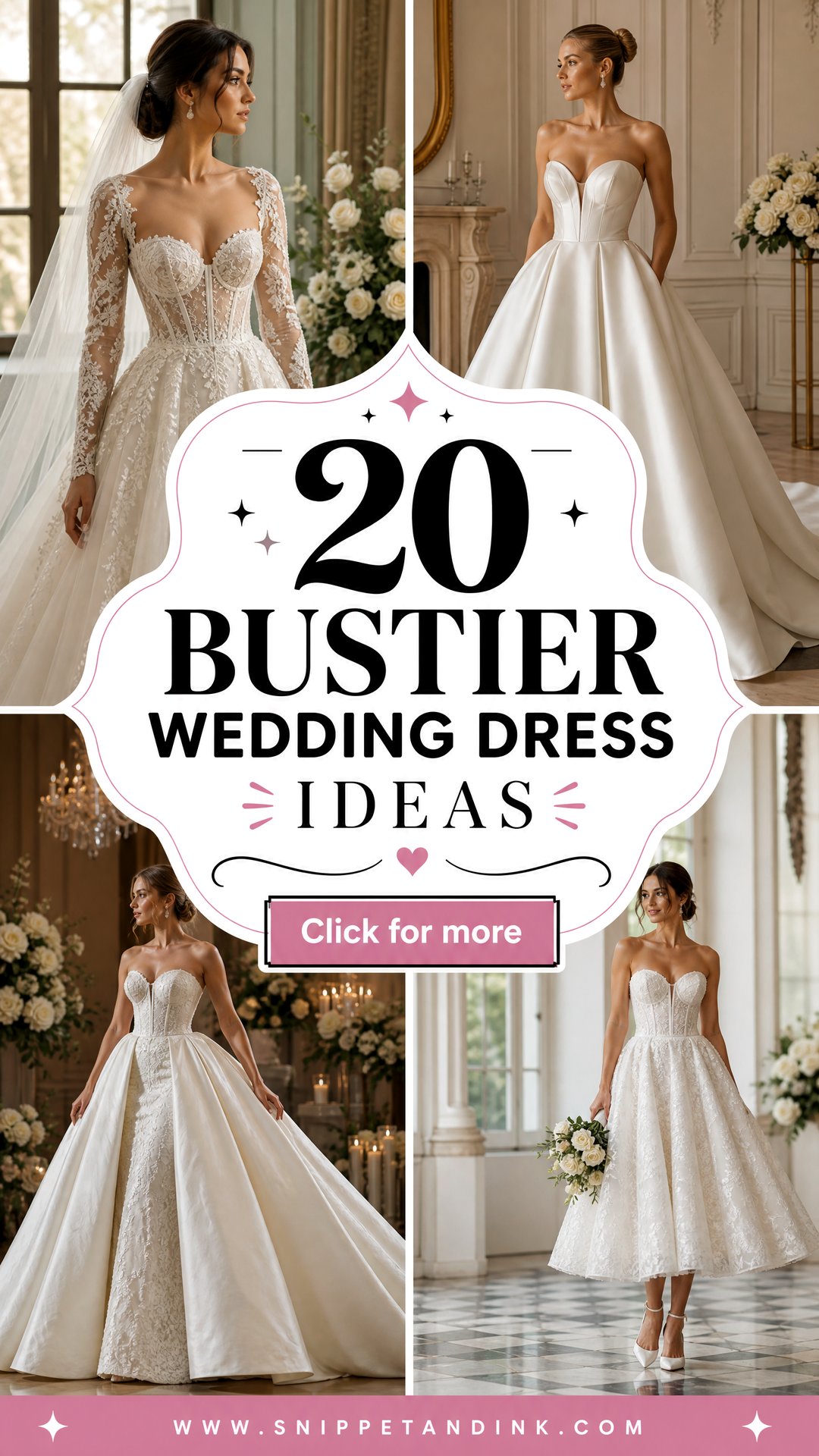
A bustier bodice does a job most wedding dresses only pretend to: it holds you up from the inside. That makes it one of the most rewarding shapes I fit, and one of the least forgiving if the work is rushed. The look can go spare in plain satin, soft in layered lace or theatrical over a ball gown skirt, and right now designers are leaning into visible corsetry, Basque waists, raised florals and detachable pieces. Whatever the style, the bodice has to let you breathe, sit and dance. Below are twenty ways to wear one, with notes on what I check at fittings for each.
What the Boning Inside a Bustier Is Actually Doing
Most brides try on a bustier gown, feel held in, and assume the fabric is doing it. It isn’t. The support comes from three hidden parts, and knowing them helps you judge a dress in a sample sale or a showroom.
- Boning. Flexible plastic boning is common in off-the-rack gowns and can bend or warp after a long day in the heat. Spiral steel bends with you and keeps its line, which is why it’s preferred in better corsetry.
- A waist stay. This is a grosgrain ribbon sewn inside at the waist that hooks closed before the zip. It carries the weight of the skirt so the bodice doesn’t get pulled down.
- Built-in cups. These sit inside the lining. When they’re placed correctly, you won’t need a bra at all.
In the fitting room, press gently on the side seams. You should feel firm, evenly spaced channels. If the bodice bunches when you sit or the boning tips poke outward at the top edge, it either needs better boning or a smaller fit through the ribcage.
1. Strapless Satin Bustier Wedding Dress
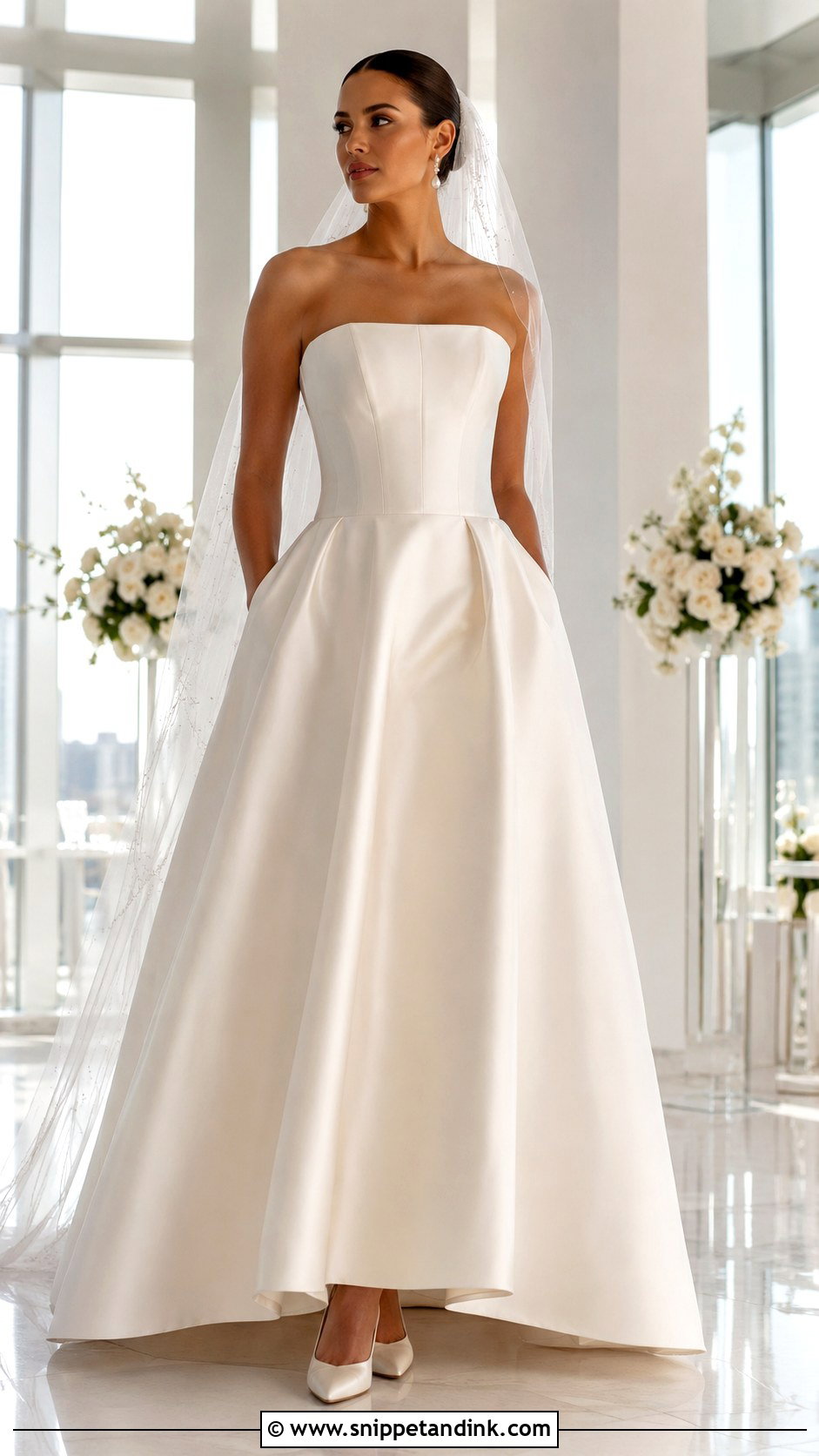
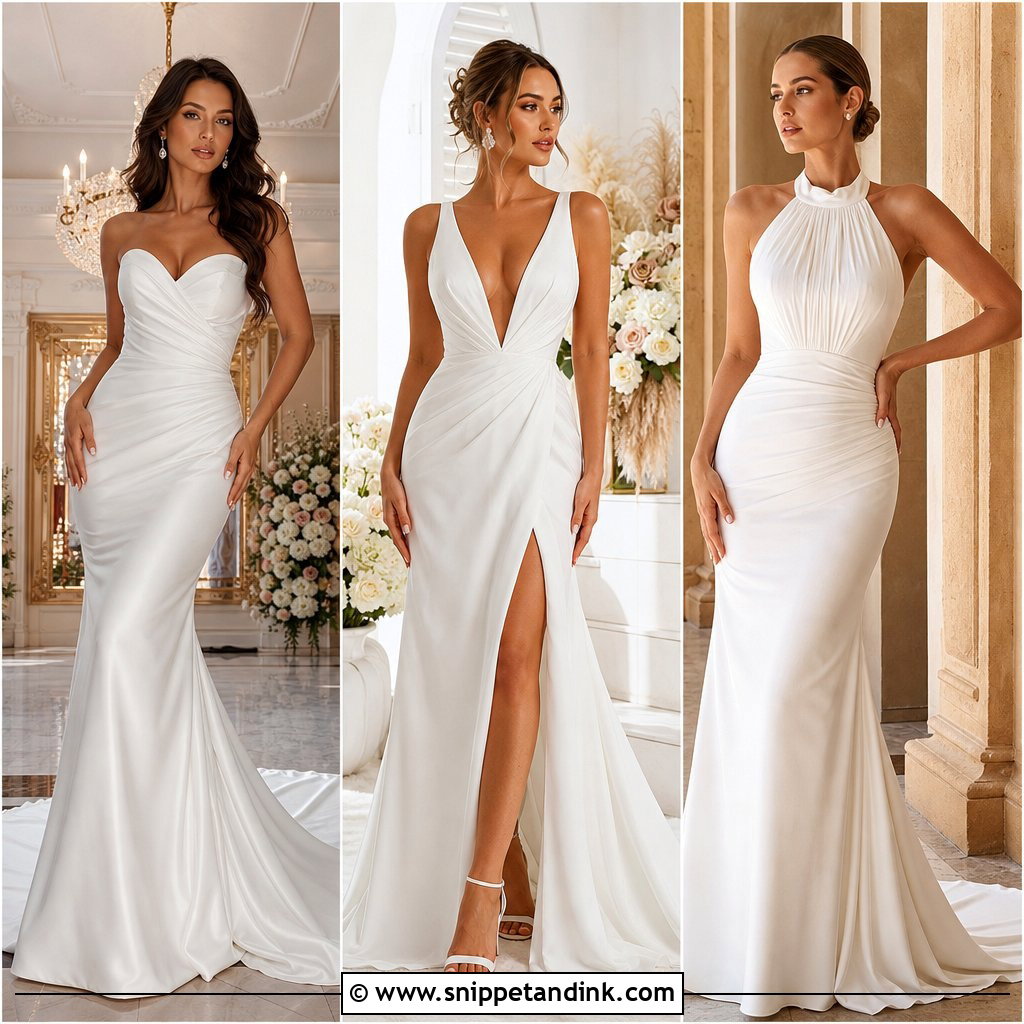
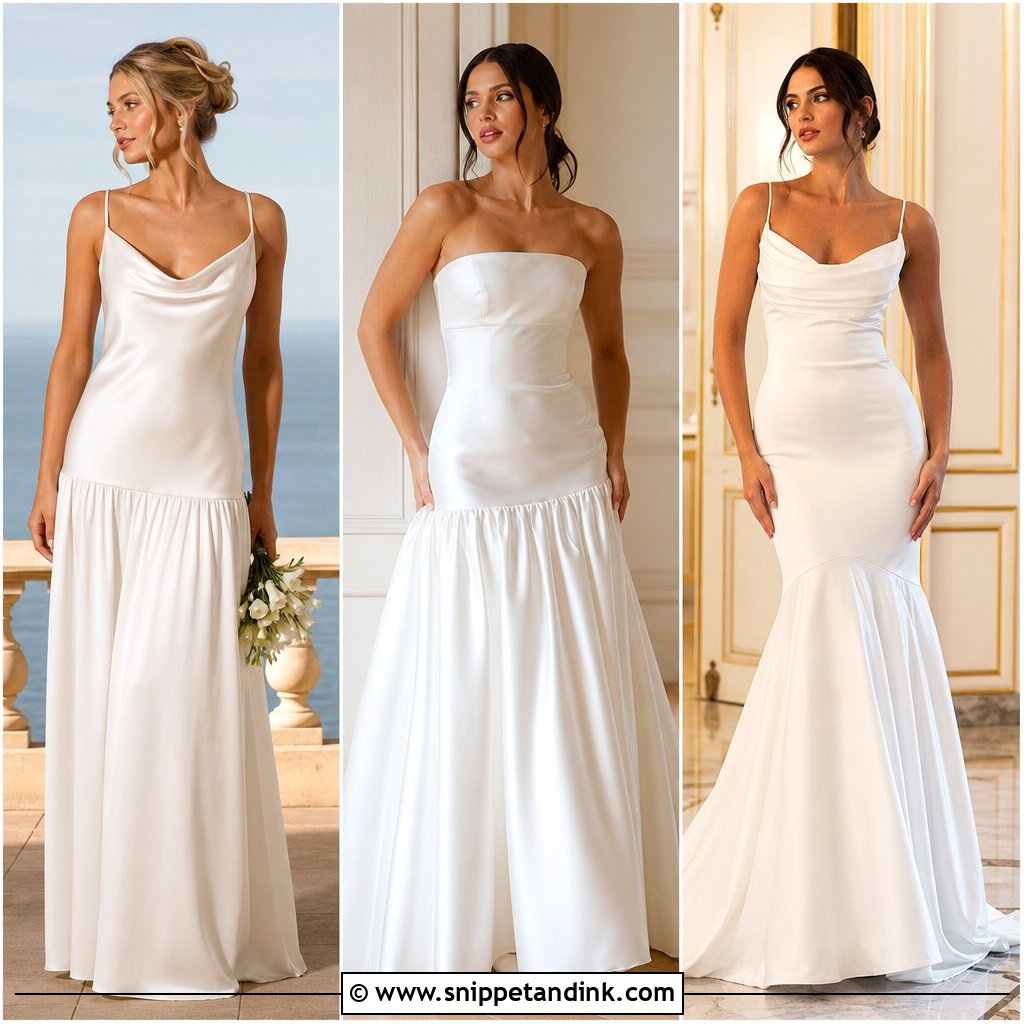
Plain satin is the most honest fabric for a strapless bustier, because there’s nowhere for a poor fit to hide. Every seam and every ripple of boning shows. I look for a gently curved neckline, a defined natural waist and an A-line skirt that carries the weight down without looking heavy. Pearl drops, ivory pointed pumps and a fingertip veil keep the attention on the satin. At alterations, sit down and raise both arms above your head. If the neckline lifts away from your chest when you do, the bodice needs taking in at the side seams before anything else.
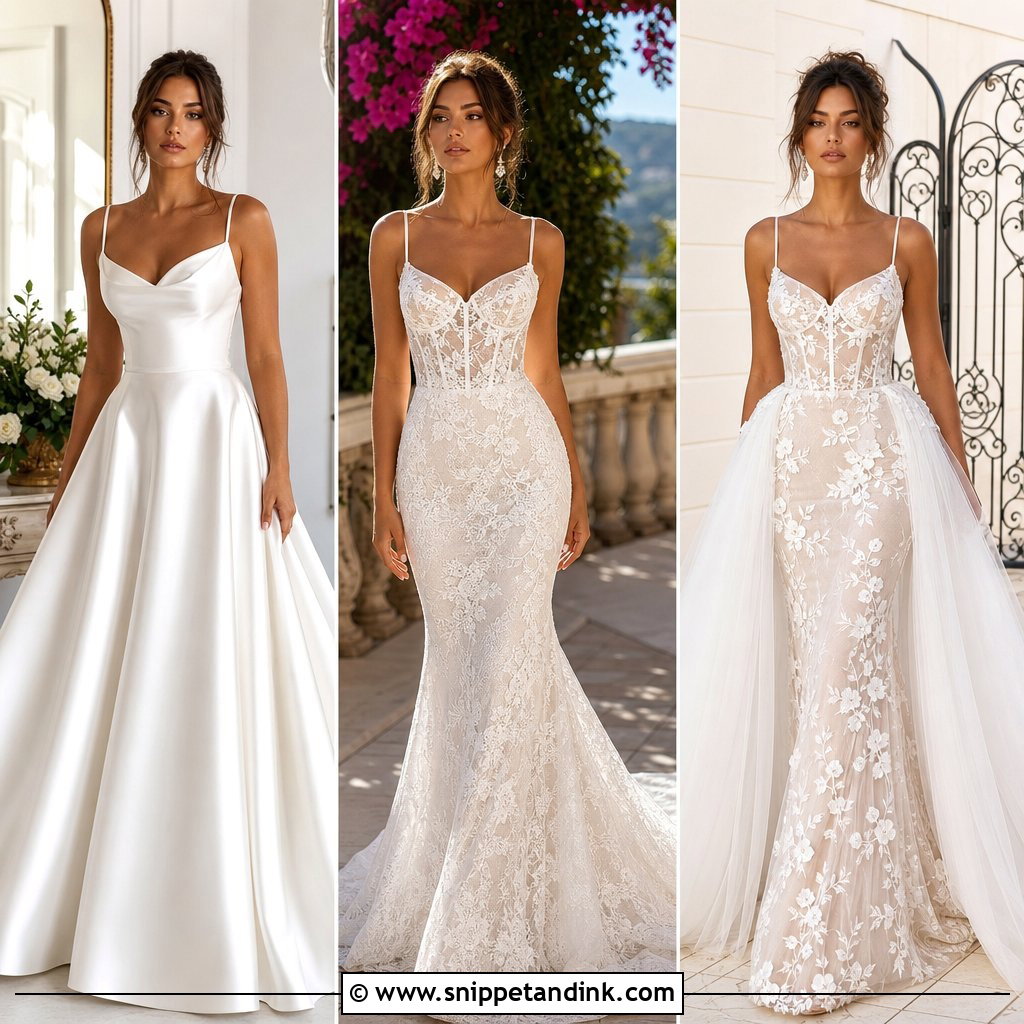
2. Lace Bustier Ball Gown Wedding Dress
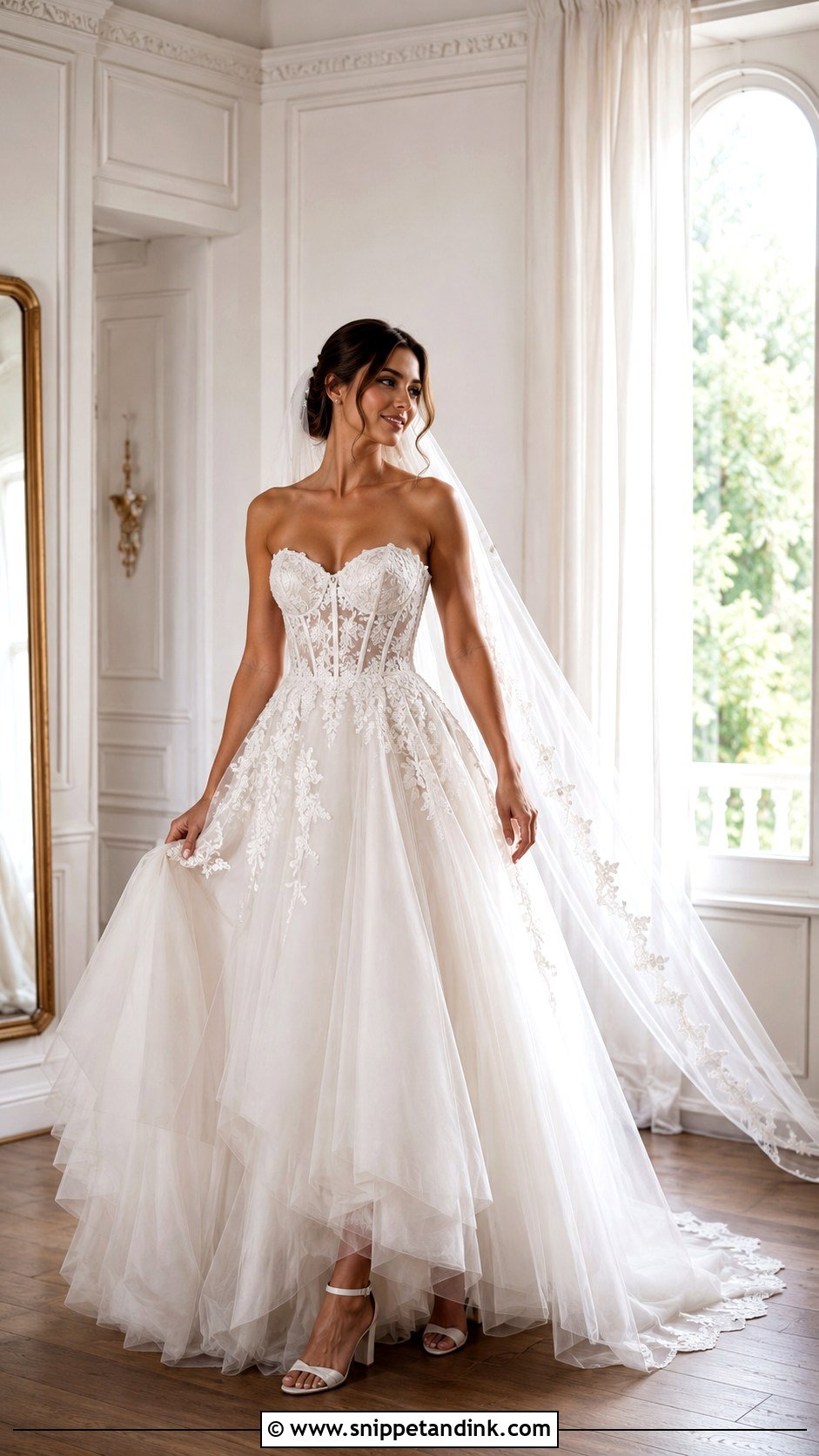
Lace over a full tulle skirt is the classic romantic version, and the lace placement is where a good seamstress earns her fee. Motifs should mirror each other across the sweetheart neckline and wrap the waist symmetrically; a single flower sitting off-centre at the bust draws the eye in the wrong way. Ask for a lined interior so the lace doesn’t scratch under the arms. A lace-edged cathedral veil and crystal studs are enough. Wear satin block heels under that long hem, since you’ll be the only one who knows, and skip the necklace so the neckline stays open. A low bun or pinned waves suit it.
3. Basque Waist Bustier Wedding Dress
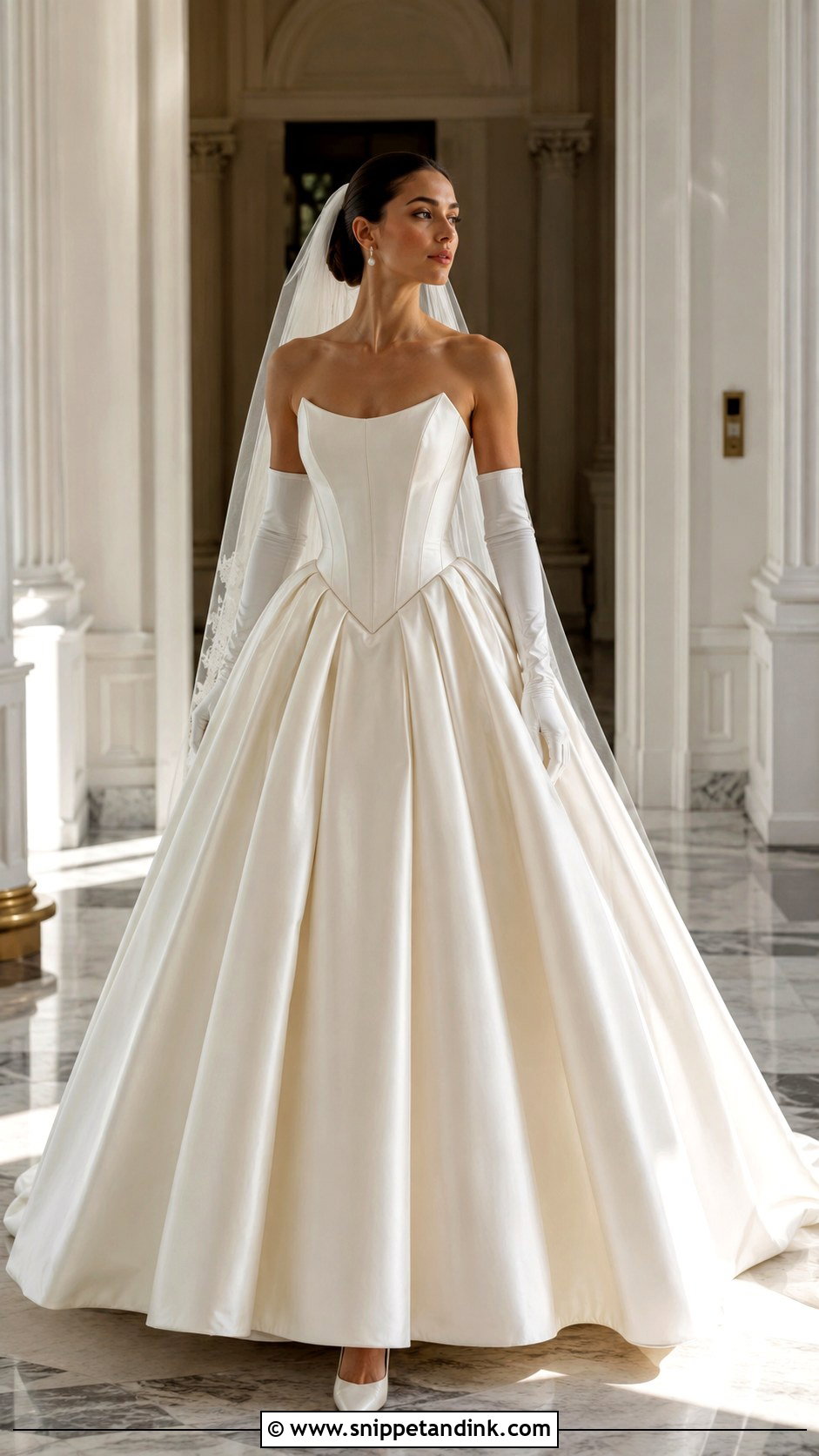
A Basque waist drops below the natural waist and finishes in a point at the front, which pulls the torso long. Over a full satin, organza or tulle skirt, the contrast is dramatic. The depth of that point should follow your body, not the sample. On a short torso, a deep V can jab into the stomach when you sit, so I’ll often suggest a shallower dip; a long torso can carry a sharper one. Keep accessories quiet: long gloves, pearl earrings and a plain chapel veil. The waistline is the jewellery.
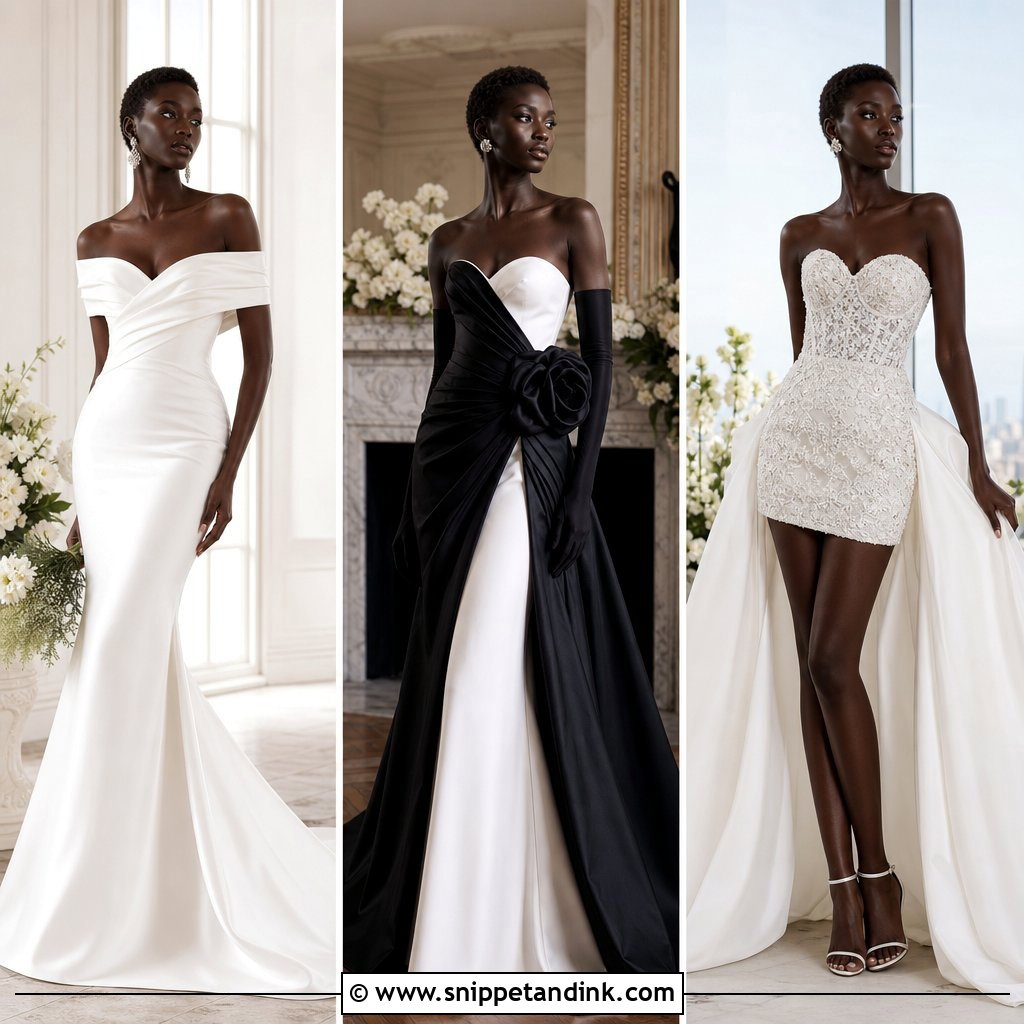
4. Off Shoulder Bustier Wedding Dress
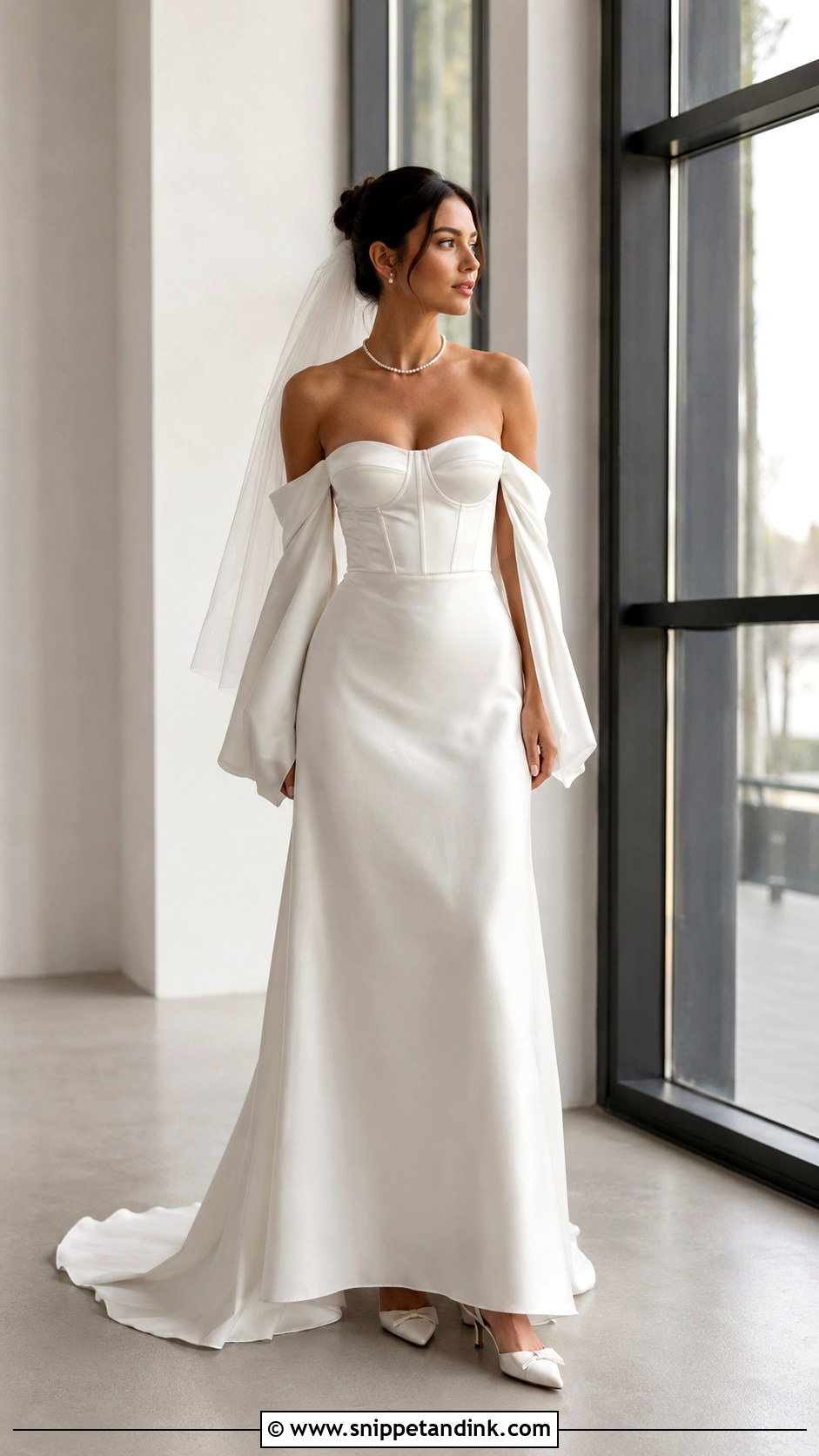
Off-the-shoulder bands soften a structured bodice, but they’re the most restrictive sleeve there is. When they sit on the upper arm, they limit how high you can lift your arms, and hugging a tall relative becomes a negotiation. I ask brides to hug me at the fitting, properly, both arms. If the bands ride up or the bodice lifts, they need loosening or a little elastic in the inner seam. Detachable bands solve most of this, giving you the romantic version for the aisle and freedom later. Pair with a fine pendant, small pearls, kitten heels and a sheer veil under a low bun.
5. Square Neck Bustier Wedding Dress
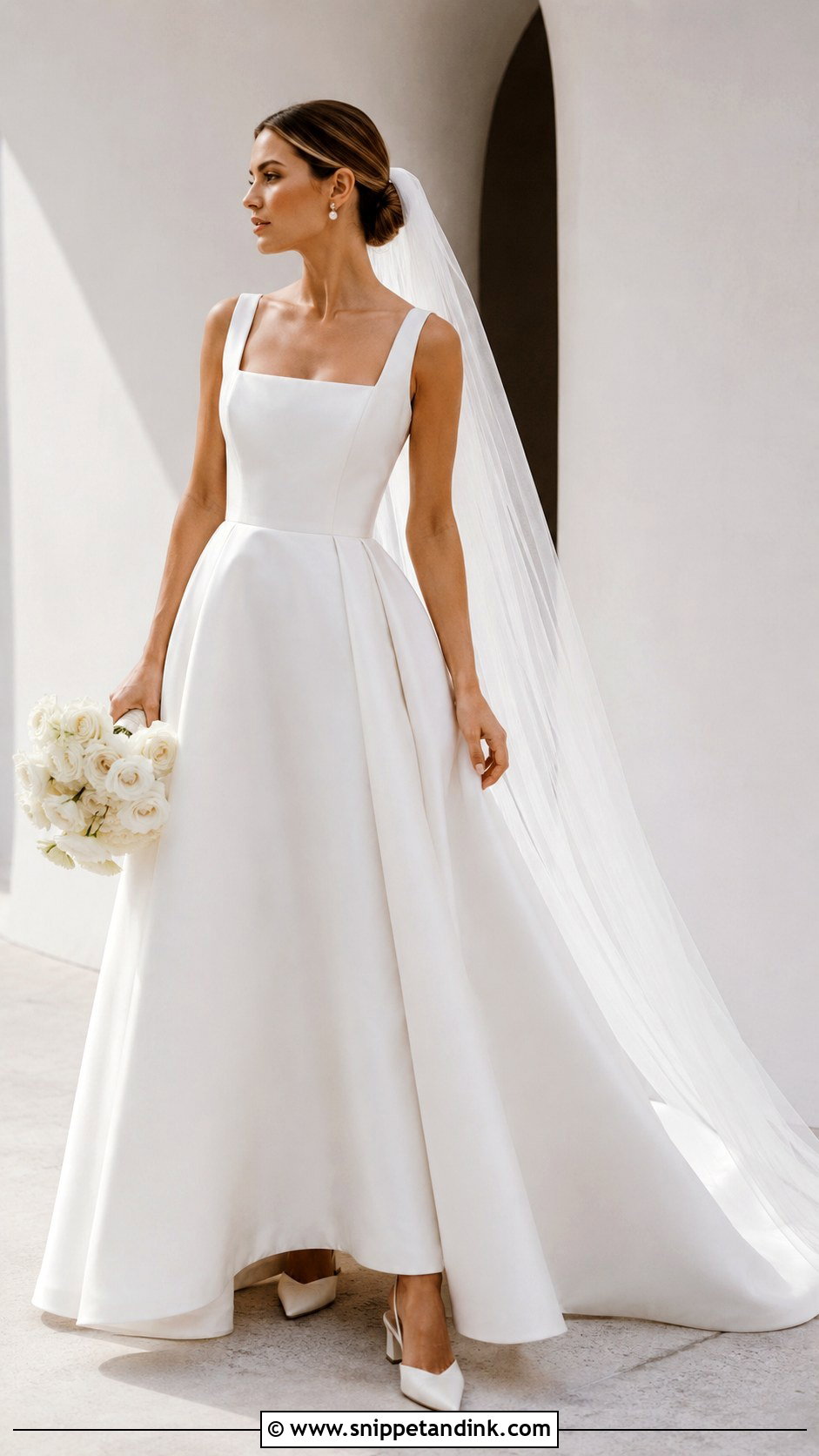
A square neckline gives structured bridalwear a clean, architectural finish and a little more coverage than a deep sweetheart. Wide straps, visible seaming and an A-line skirt keep the geometry going. Satin, crepe and matte Mikado all hold the corners crisply. Those corners are the fitting point. If they flare outward when you roll your shoulders forward, the neckline is too wide for your frame, and it’s a simple fix when caught early. Pearl buttons at the ears, a narrow cathedral veil and pointed slingbacks finish it. A sleek bun follows the lines; soft waves loosen it up.
6. Sweetheart Bustier Wedding Dress
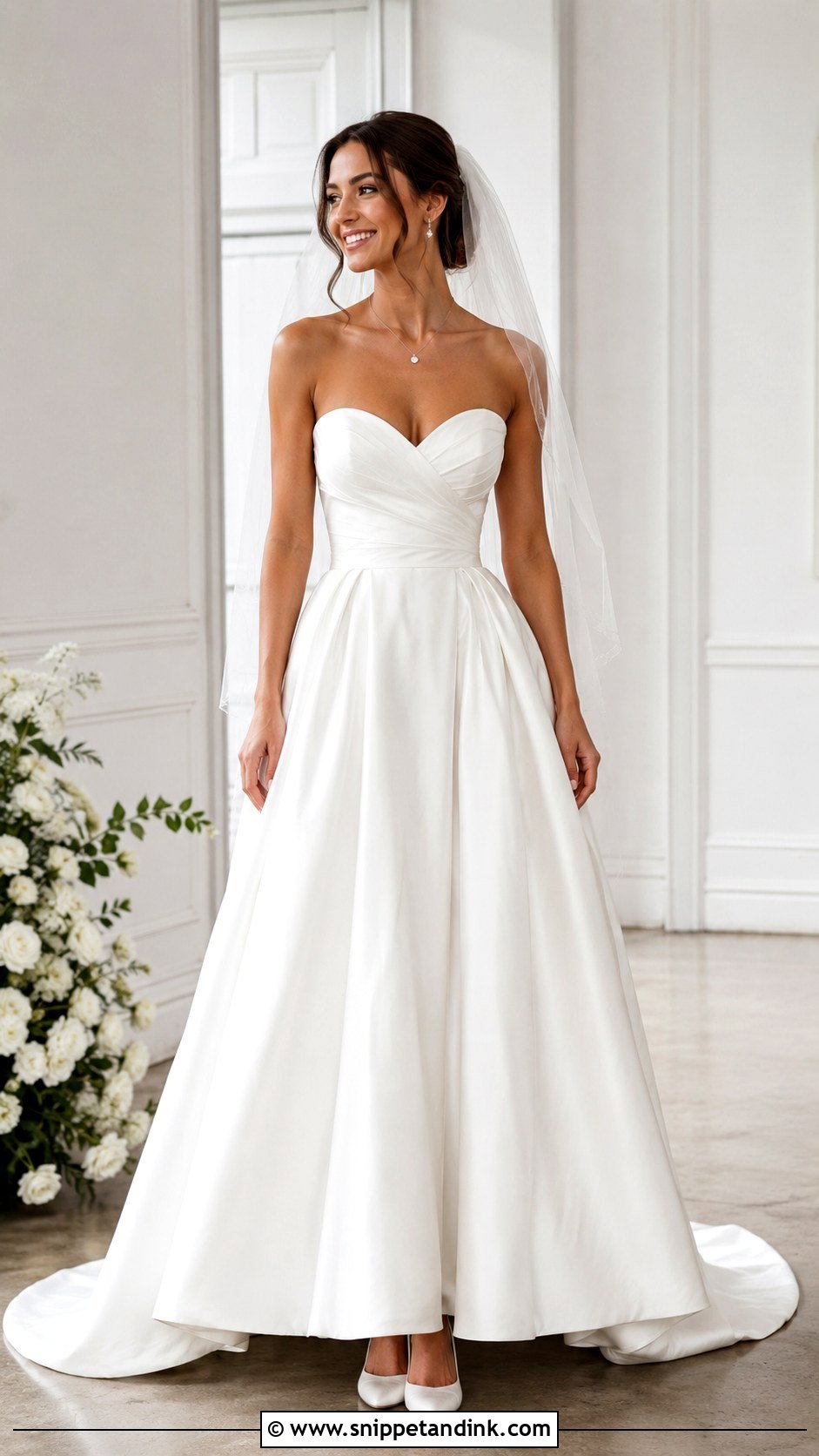
Sweetheart necklines and bustier bodices are natural partners, since the curve follows the bust. The centre dip is where problems show. Too low and you’ll be adjusting it all night; too high and it flattens you. I check the centre point while the bride sits and leans forward to sign the register. Internal cups should sit exactly where your bust sits, and I’d rather move them than add padding. Gathered A-line or ball gown skirts both balance it. If the neckline is heavily beaded, leave the neck bare and keep to drop earrings.
7. Pearl Beaded Bustier Wedding Dress
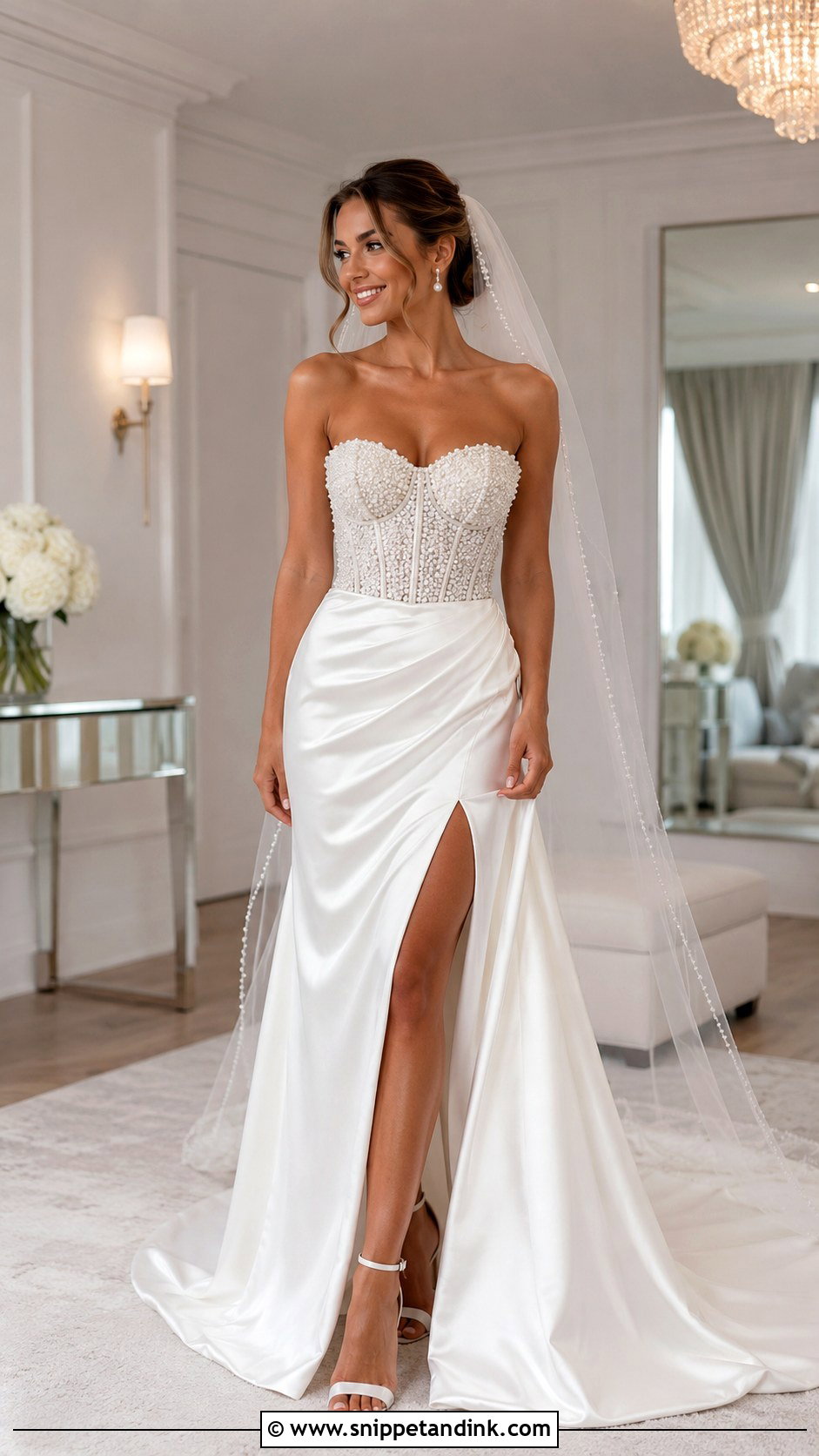
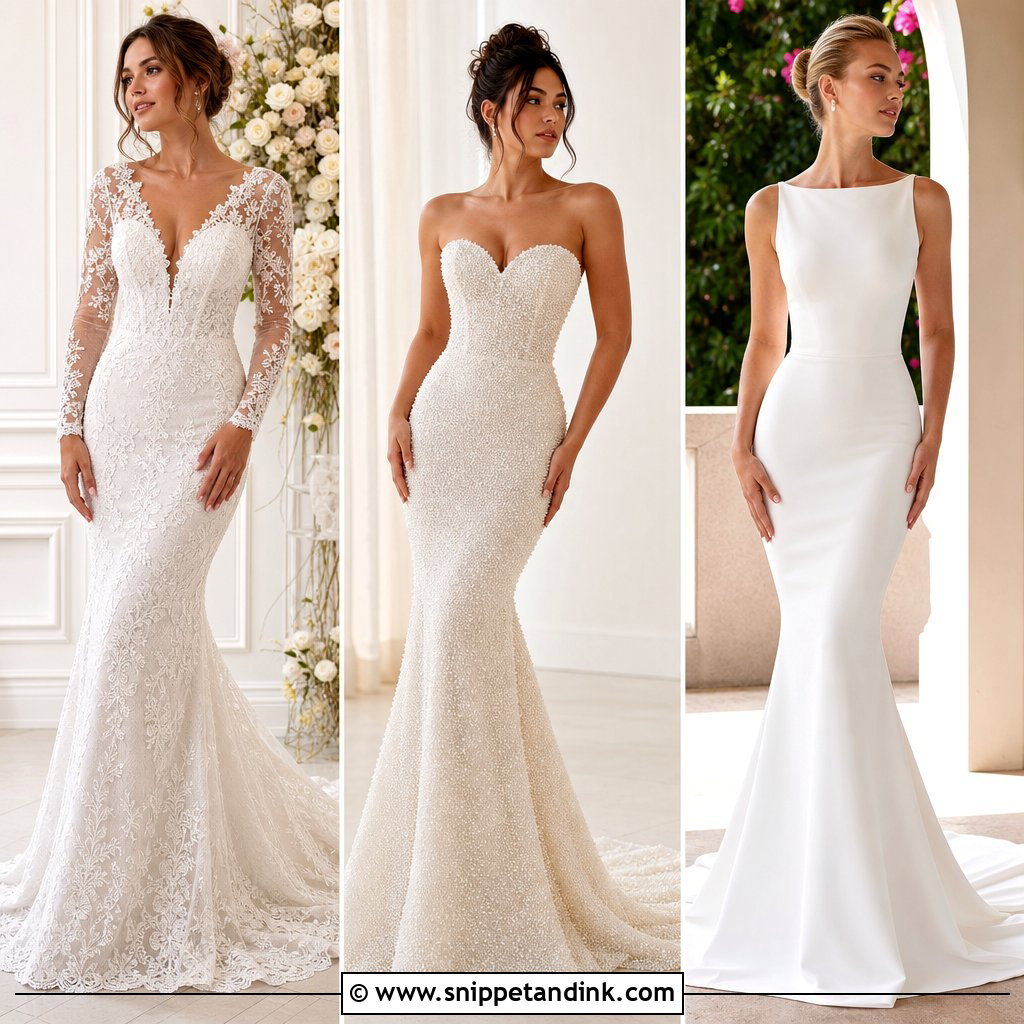
Pearls give a bustier bodice a soft glow rather than sparkle. Scattered pearls, neat rows or pearl-and-crystal embroidery all work, as long as the skirt stays plain beneath them. A fluid satin A-line, a pearl-trimmed veil and ivory ankle straps are plenty. Don’t add a pearl necklace, a pearl bracelet and pearl hairpins on top; it starts to look like a theme. Before you buy, run your fingers over the beadwork. Pearls sewn on with a single thread through each one will drop off by the evening, so ask whether they’re backstitched and whether spares come with the gown.
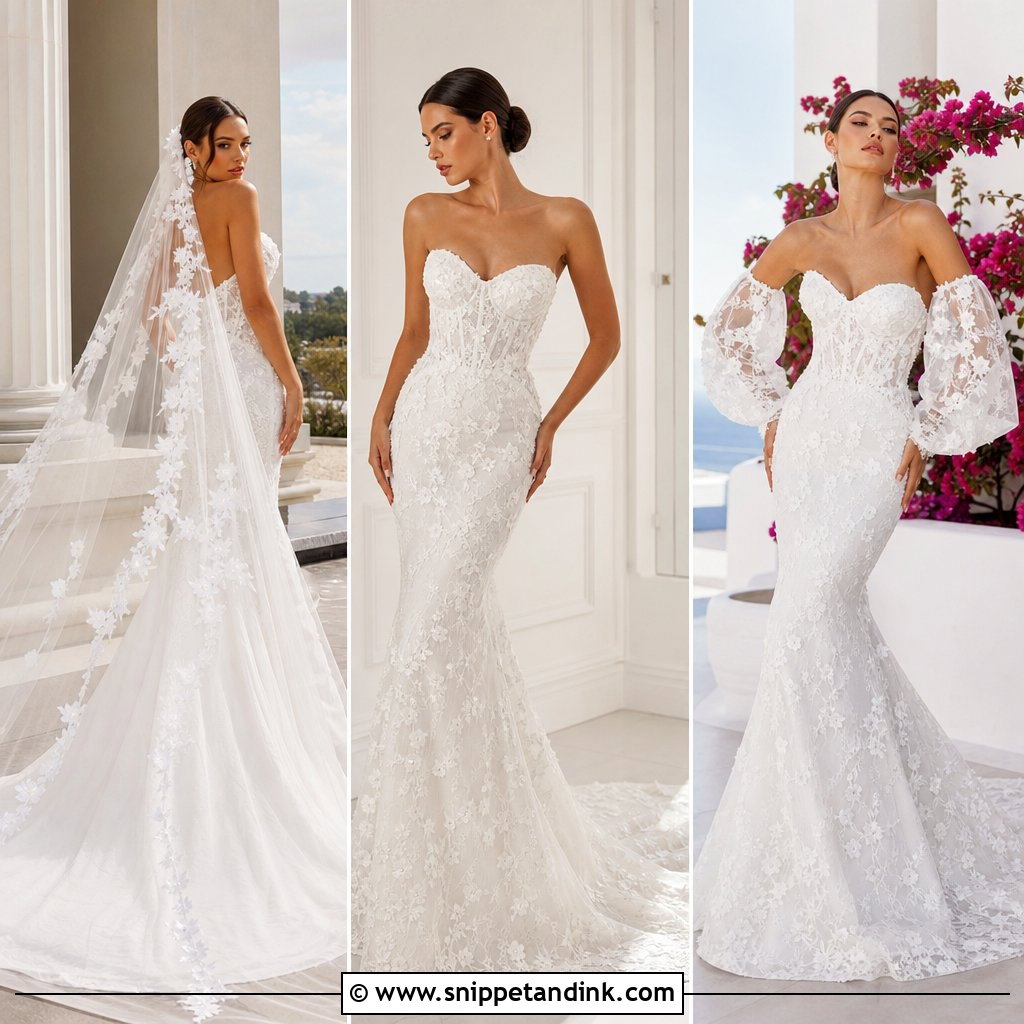
8. Floral Applique Bustier Wedding Dress
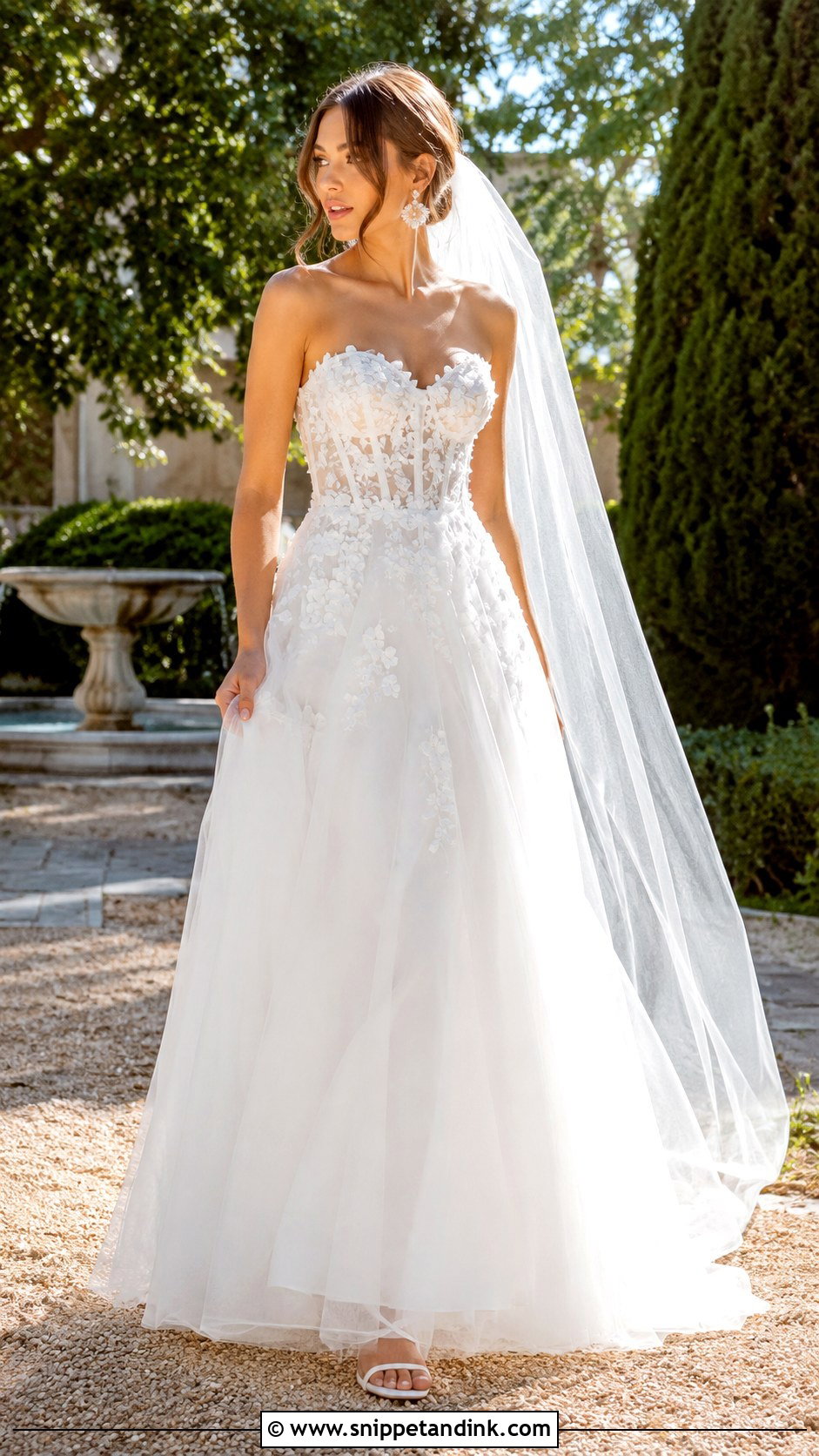
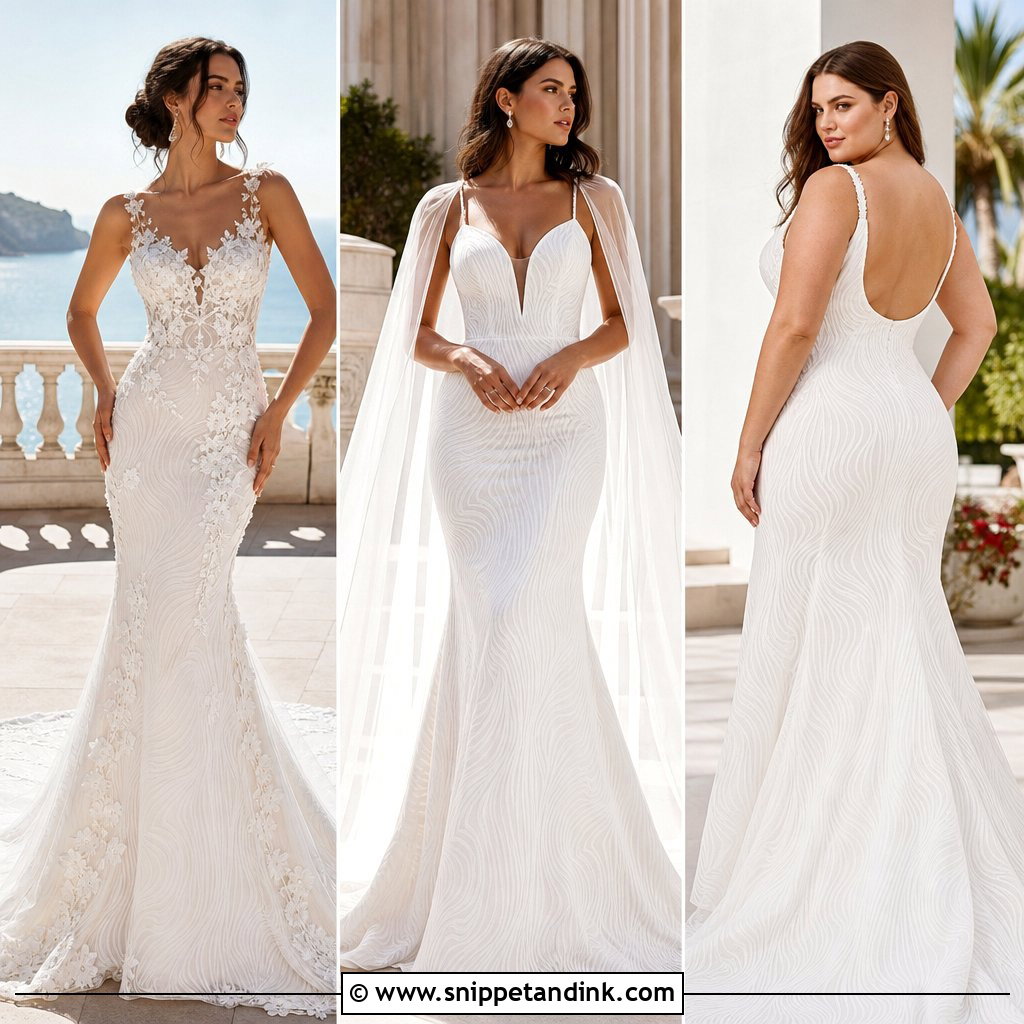
Dimensional appliqués soften the hard edges of a corset. The best ones start at the neckline and trail down onto a light tulle skirt, so there’s no abrupt line where bodice meets skirt. A plain sheer veil lets them show, and a loose low bun or waved ponytail suits the garden mood. If you want a hint of colour, ask for champagne or pale blush underneath. Check the placement in a three-way mirror. Flowers that flatter the bust from the front can cluster awkwardly at the side seam, which is exactly where photographers catch you during the first dance.
9. Long Sleeve Bustier Wedding Dress
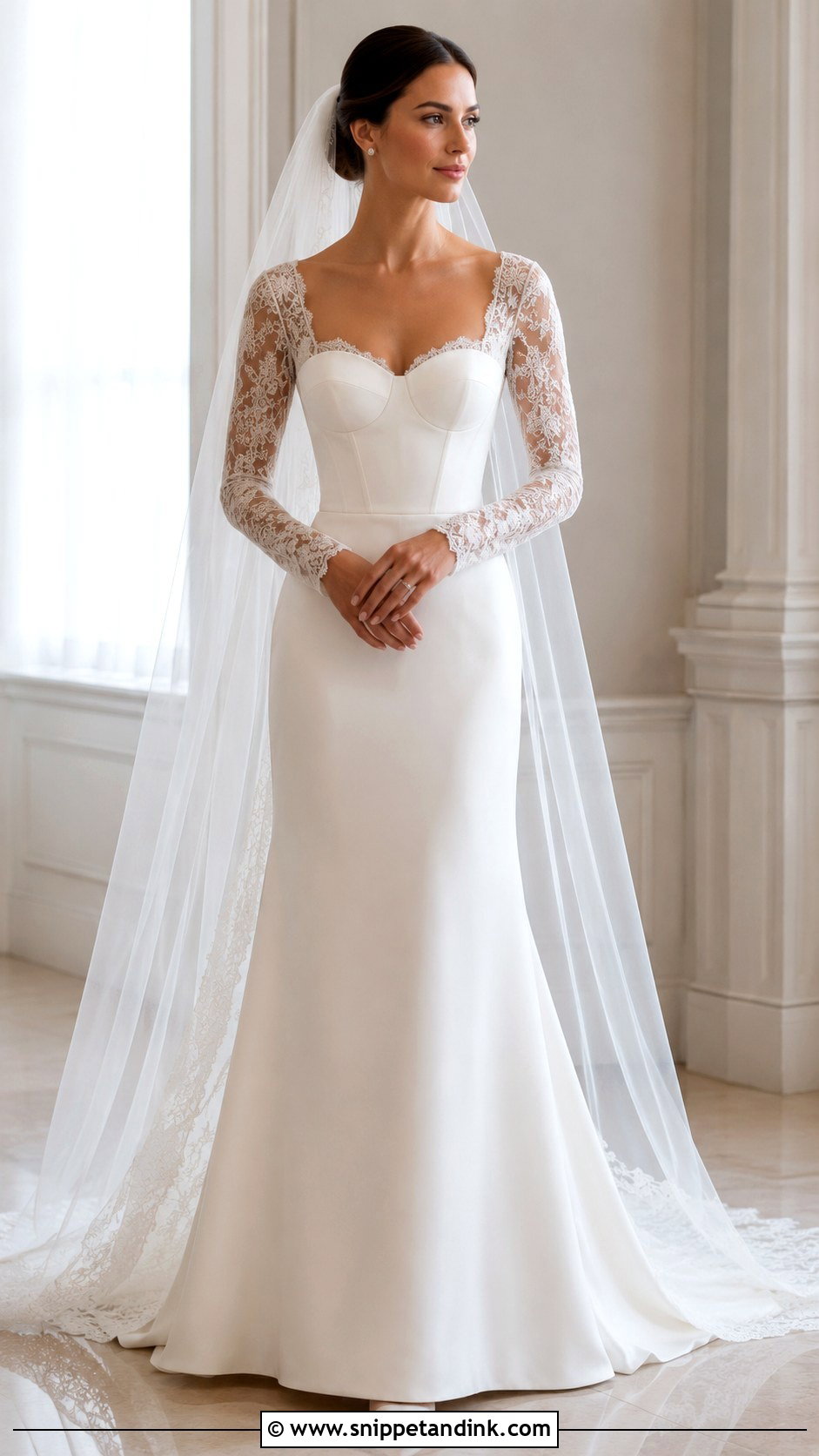
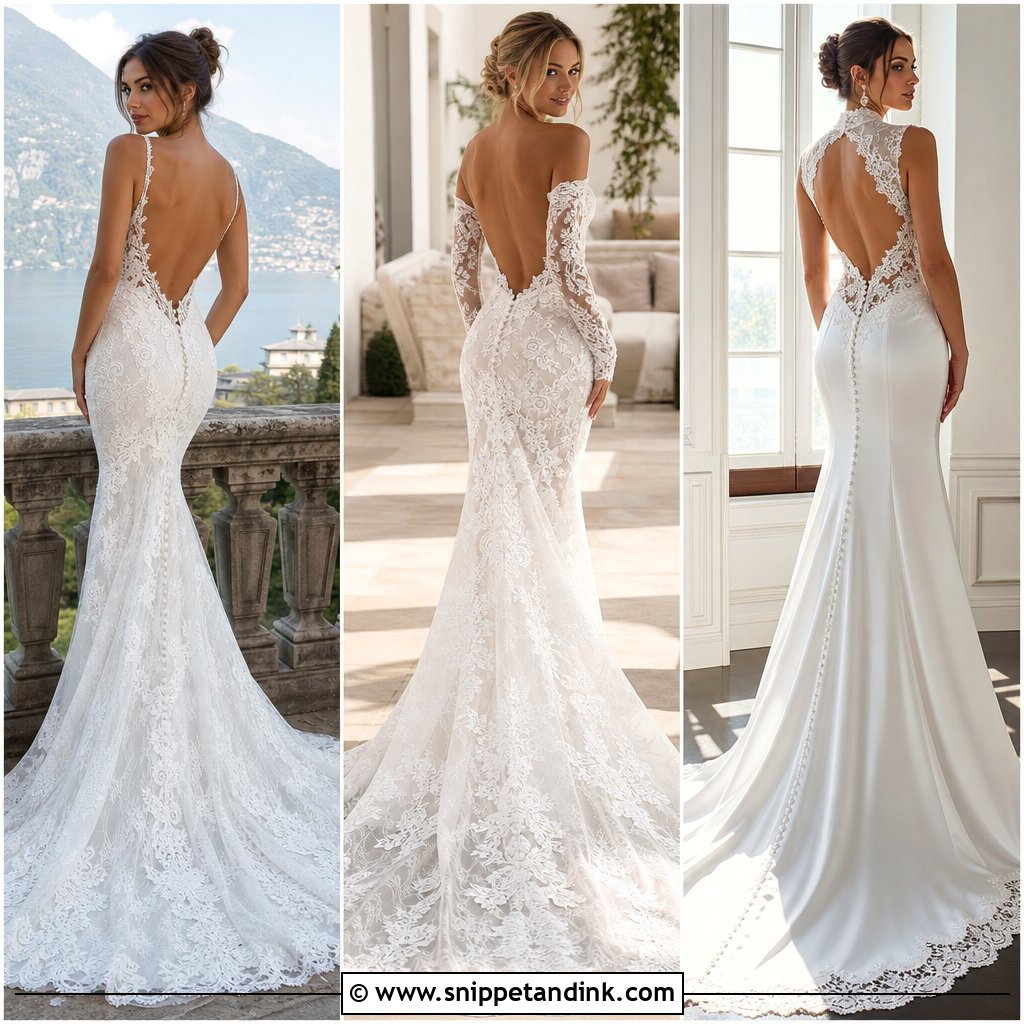
Long sleeves over a bustier give you coverage while keeping the waist sharp underneath. Fitted lace, illusion tulle or a light crepe all work, with a narrow A-line skirt and a chapel train. The sleeves must be cut with room at the elbow. A sleeve that’s too tight through the forearm drags the whole bodice upward when you bend your arm to hold the bouquet. Simple studs, closed pumps and a smooth veil under an updo finish it. For a summer wedding, choose breathable lace or detachable sleeves; for winter, a lined sleeve and heavier satin skirt.
10. Detachable Sleeve Bustier Wedding Dress
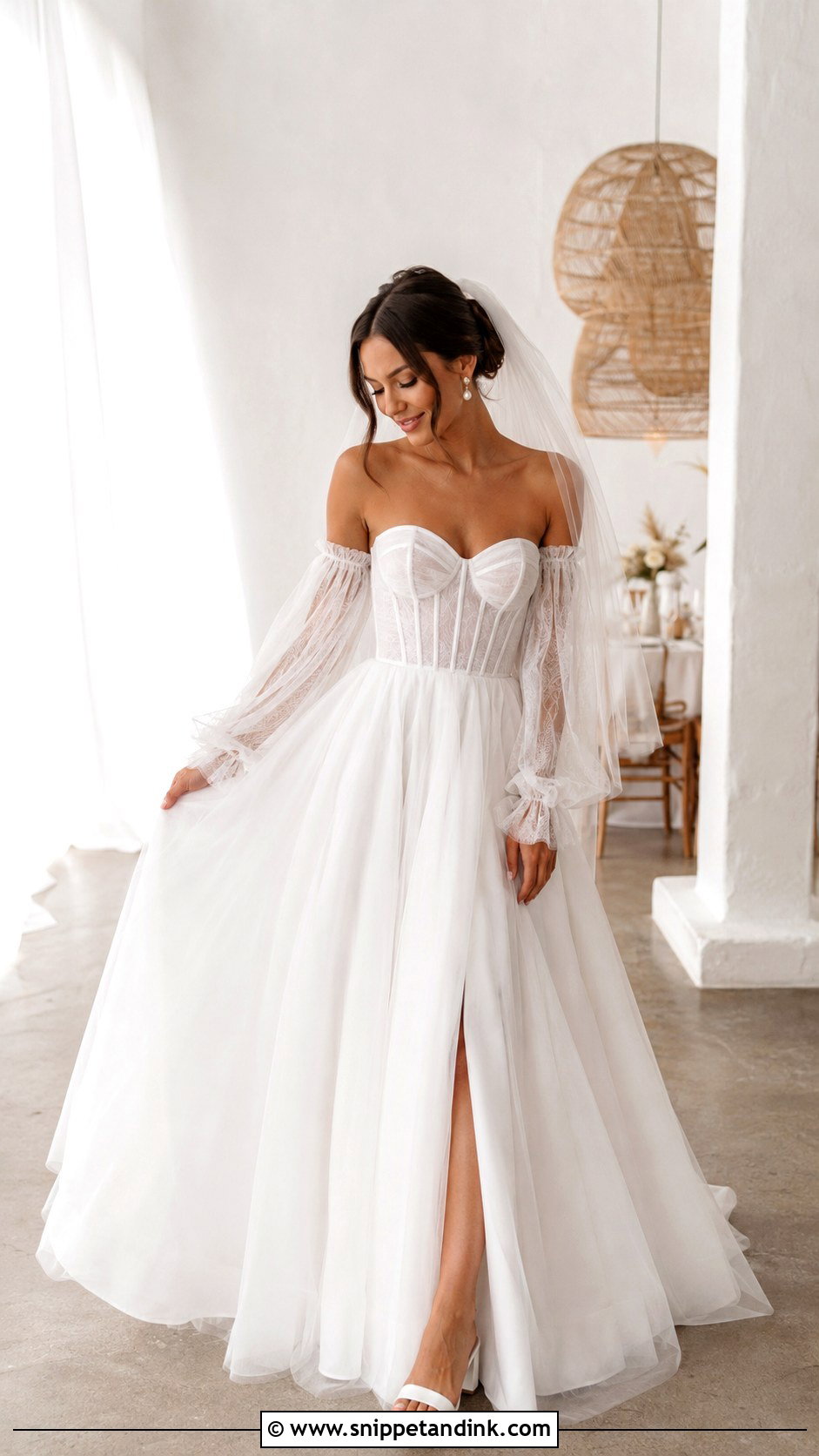
Detachable sleeves give you two looks from one gown: covered for the ceremony, strapless for the party. Fitted lace, draped tulle bands and soft puffs are the usual options. The attachment matters more than the sleeve. Hooks and thread loops are the most secure; snaps can pop under strain. Practise removing them with your helper at the last fitting, because doing it for the first time in a hotel bathroom at nine at night rarely goes well. Pair with a full A-line skirt, block heels, pearl studs and a light veil. Keep the rest of the accessories simple.
11. A Line Bustier Wedding Dress
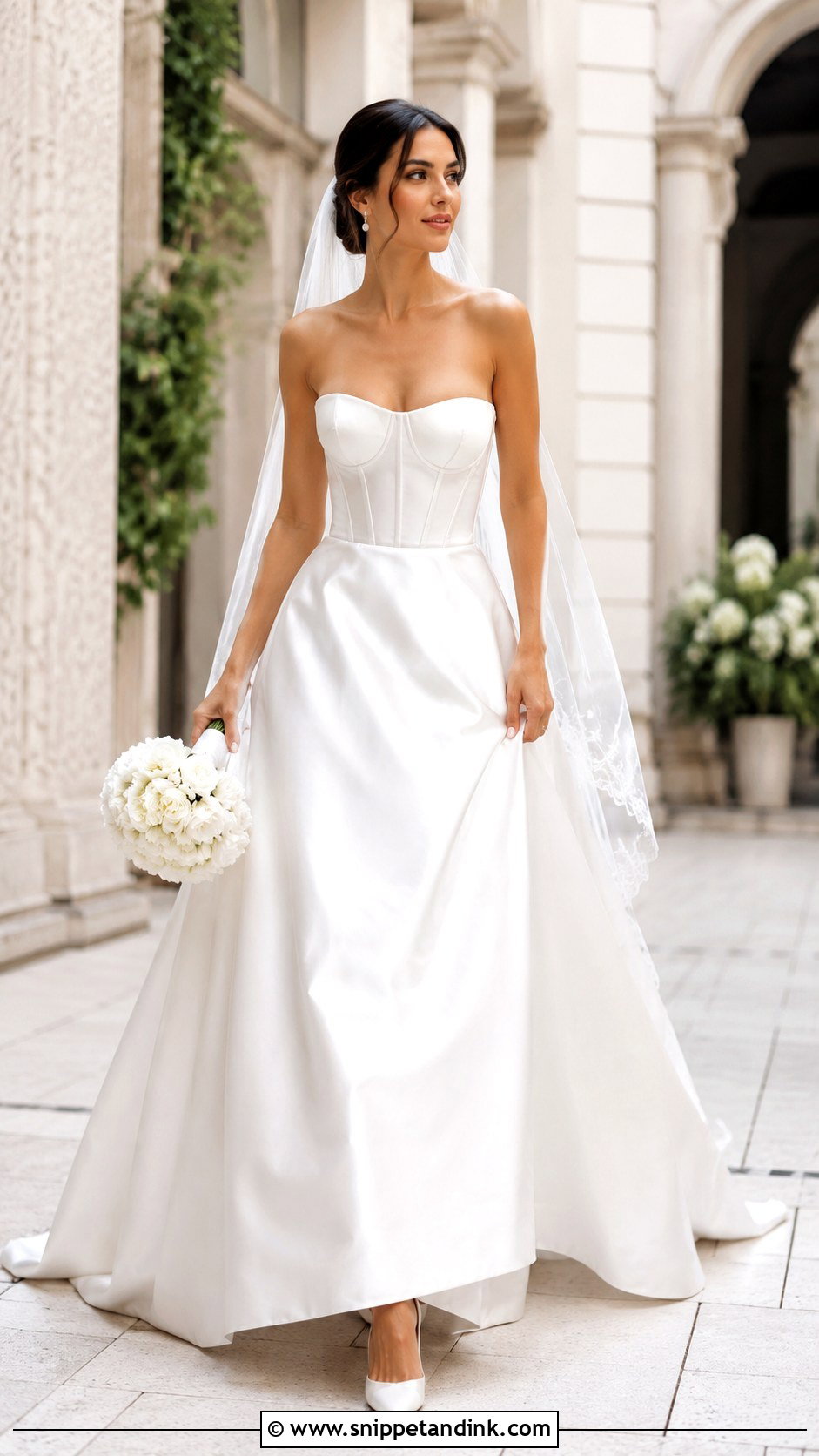
An A-line skirt is the most forgiving partner for a close bustier, widening gradually from the waist without the weight of a ball gown. Matte satin reads modern, lace romantic and organza airy. It also adapts to a natural, dropped or Basque waist. At the fitting, walk across carpet and then a hard floor, and turn on the spot. The hem should float clear of your toes; if it catches, it needs a crinoline or a slightly shorter front. A fingertip veil, small drops and a half-up style keep it soft.
12. Mermaid Bustier Wedding Dress
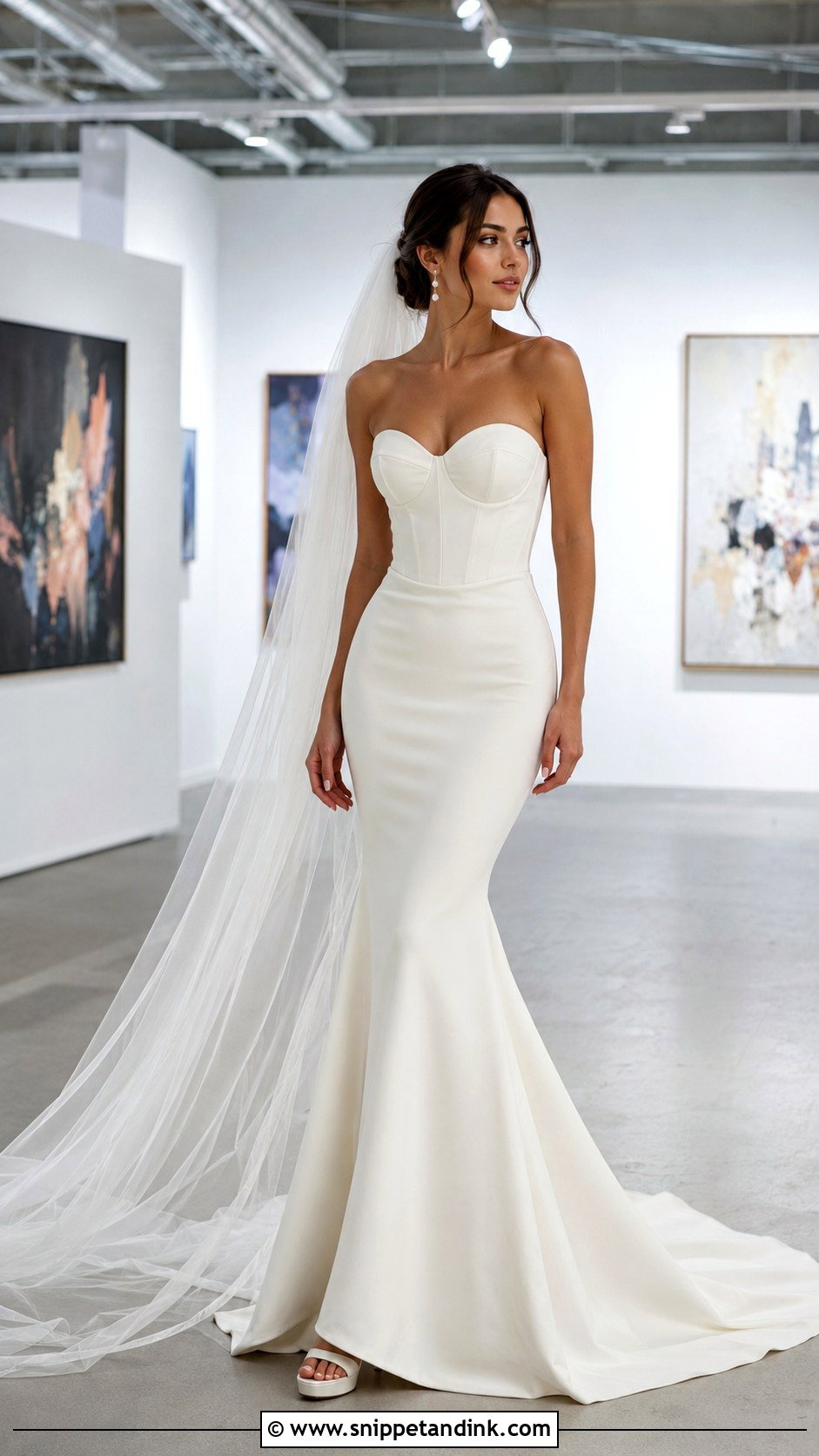
Mermaid cuts fit from bodice through the hips and flare near the knee, and nothing in this list demands more honest testing. The flare point decides how you’ll walk. Set too low and you’ll shuffle; too high and the shape loses its drama. I mark it with the bride walking, not standing. Stretch crepe or lined lace moves better than stiff satin. Platform sandals hidden under the flare give height without wobble. Sitting is the real test: if you can’t sit at the top table without the side seams straining, ask for more ease through the thigh.
13. Minimalist Crepe Bustier Wedding Dress
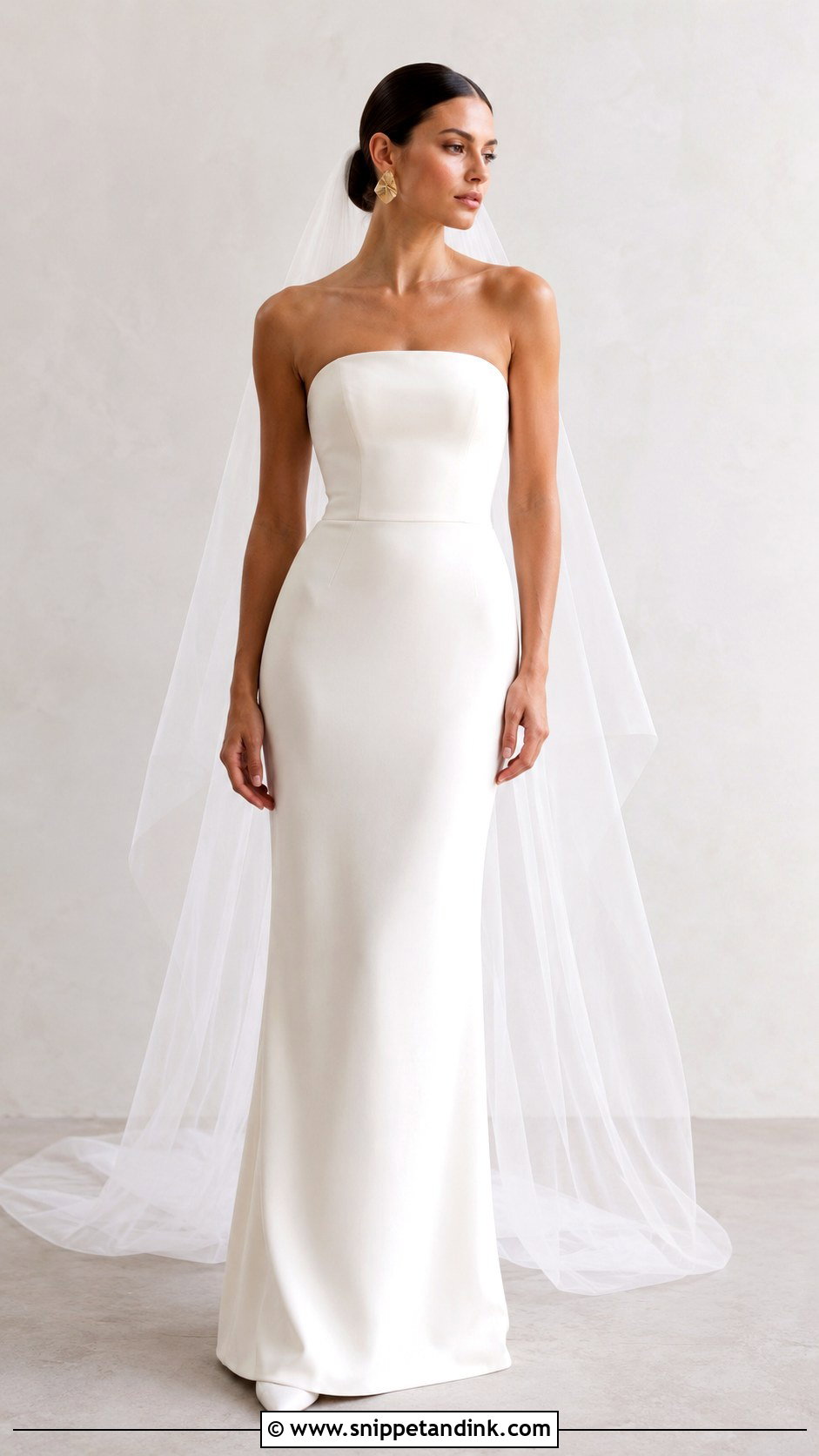
In crepe, the construction becomes the decoration, so the seams have to be perfect. Hidden boning, a straight or softly curved neckline and a column or gentle fit-and-flare skirt keep it spare. Crepe clings, which means lining matters. A poorly lined crepe bodice shows every boning channel as a vertical ridge in flash photos. Check it under daylight and indoor light before alterations are finalised. One accessory carries personality: a pearl hair pin or sculptural earrings, with a plain long veil and a low bun.
14. Tulle Skirt Bustier Wedding Dress
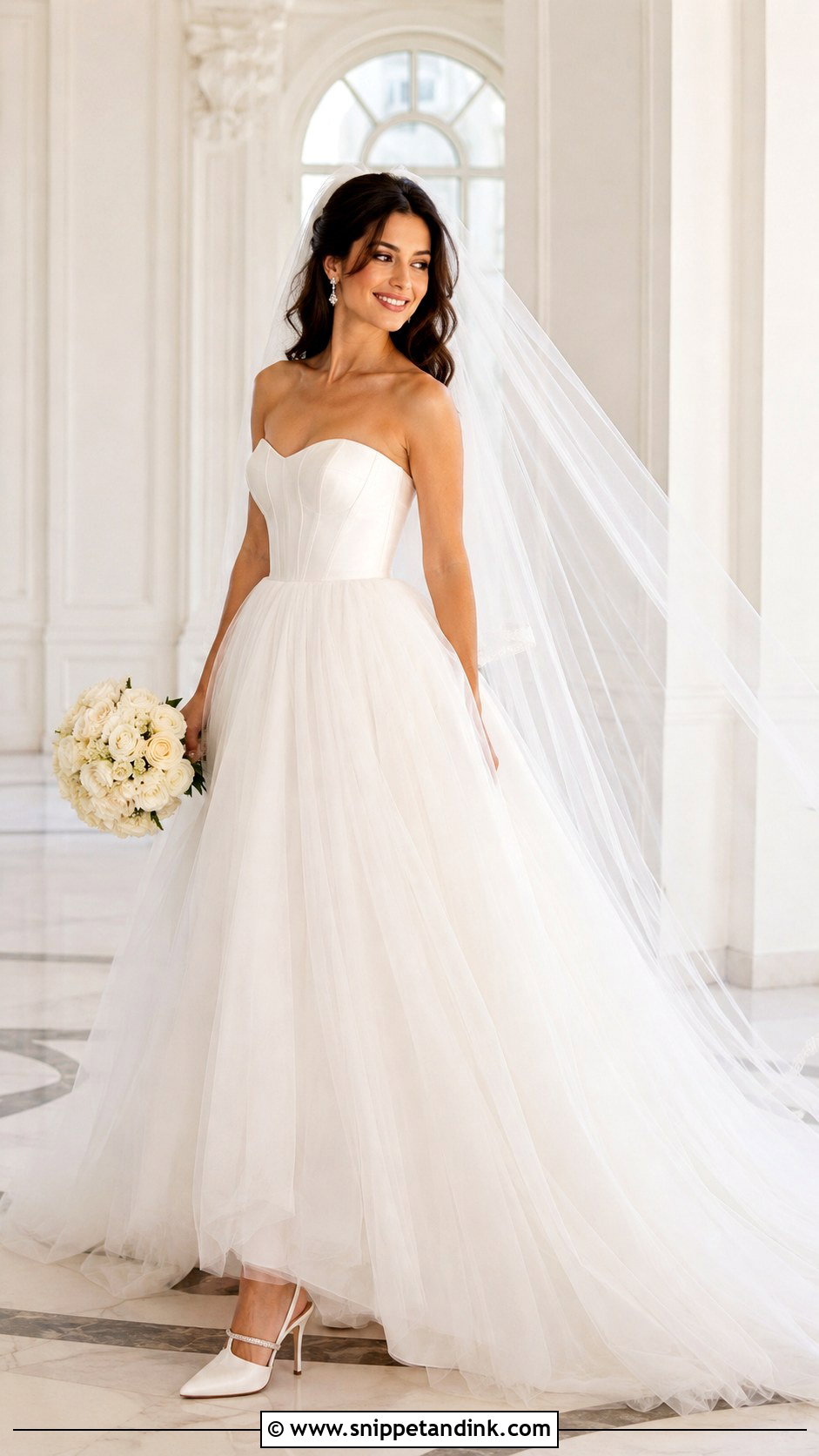
Tulle gives a sharply tailored bodice something light to sit against. A few soft layers move; a structured underlayer adds volume. Satin or lace bodices can meet the skirt at a natural waist or a subtle point. Tulle snags on everything: heel buckles, bouquet wire, rough stone steps. I’d choose closed slingbacks without a decorative buckle, and keep the hem a fraction shorter than you might in satin. If fullness isn’t you, ask for fewer layers or a narrower petticoat. Crystal studs and a sheer chapel veil are enough.
15. Mikado Bustier Wedding Dress
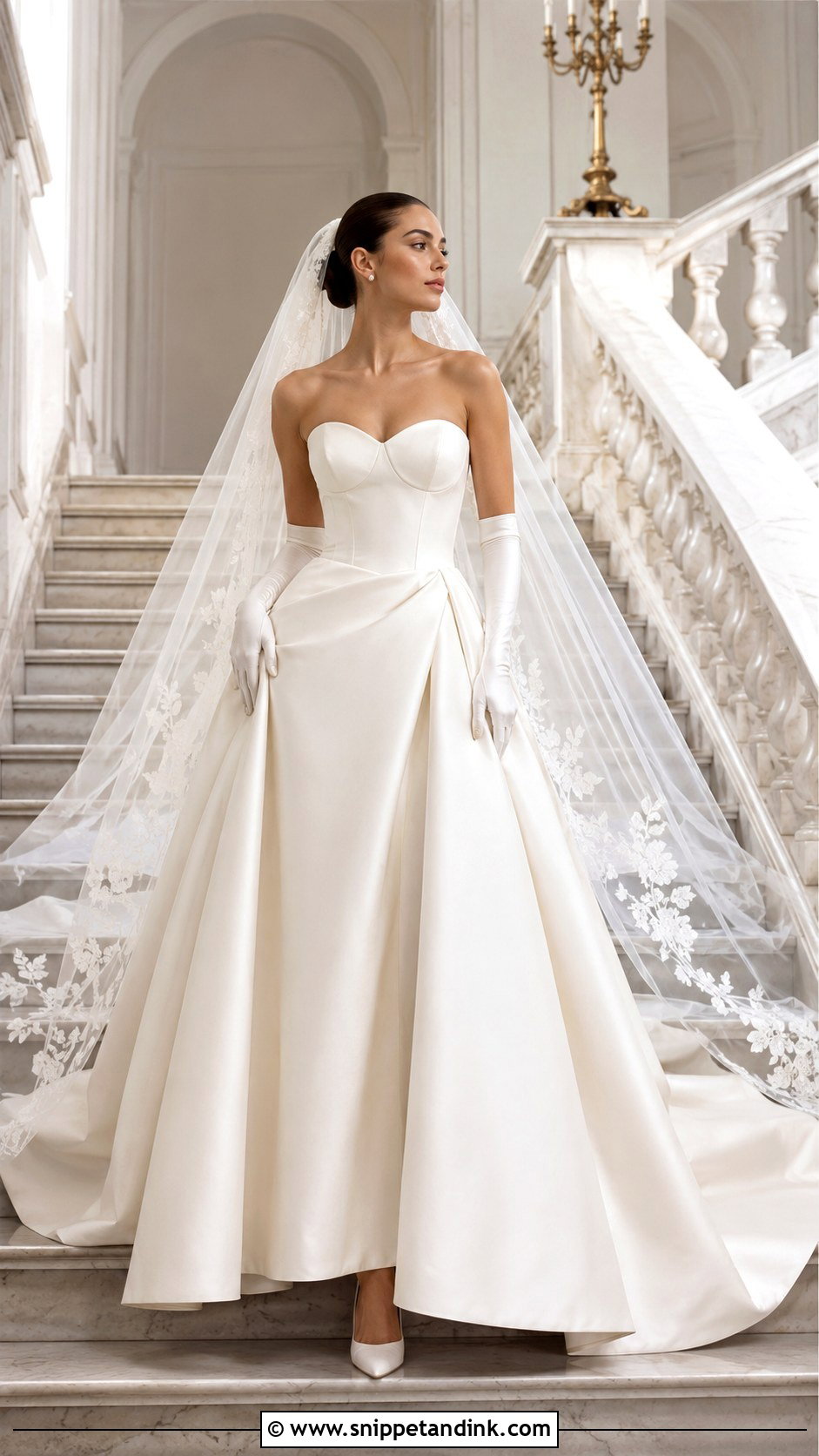
Mikado fabric is the stiffest silk-blend I fit, which is why it holds a crisp bodice and a structured pleated skirt better than almost anything. That body comes with weight and warmth. For a July garden wedding, I’d think twice; for an autumn ballroom, it’s ideal. Pockets can hide in the pleats without breaking the clean outside. A cathedral veil, pearl studs, pointed satin pumps and long gloves suit the formality. Ask the tailor to steam and set each pleat so they fall evenly, and hang it the night before, not folded in a garment bag.
16. Drop Waist Bustier Wedding Dress
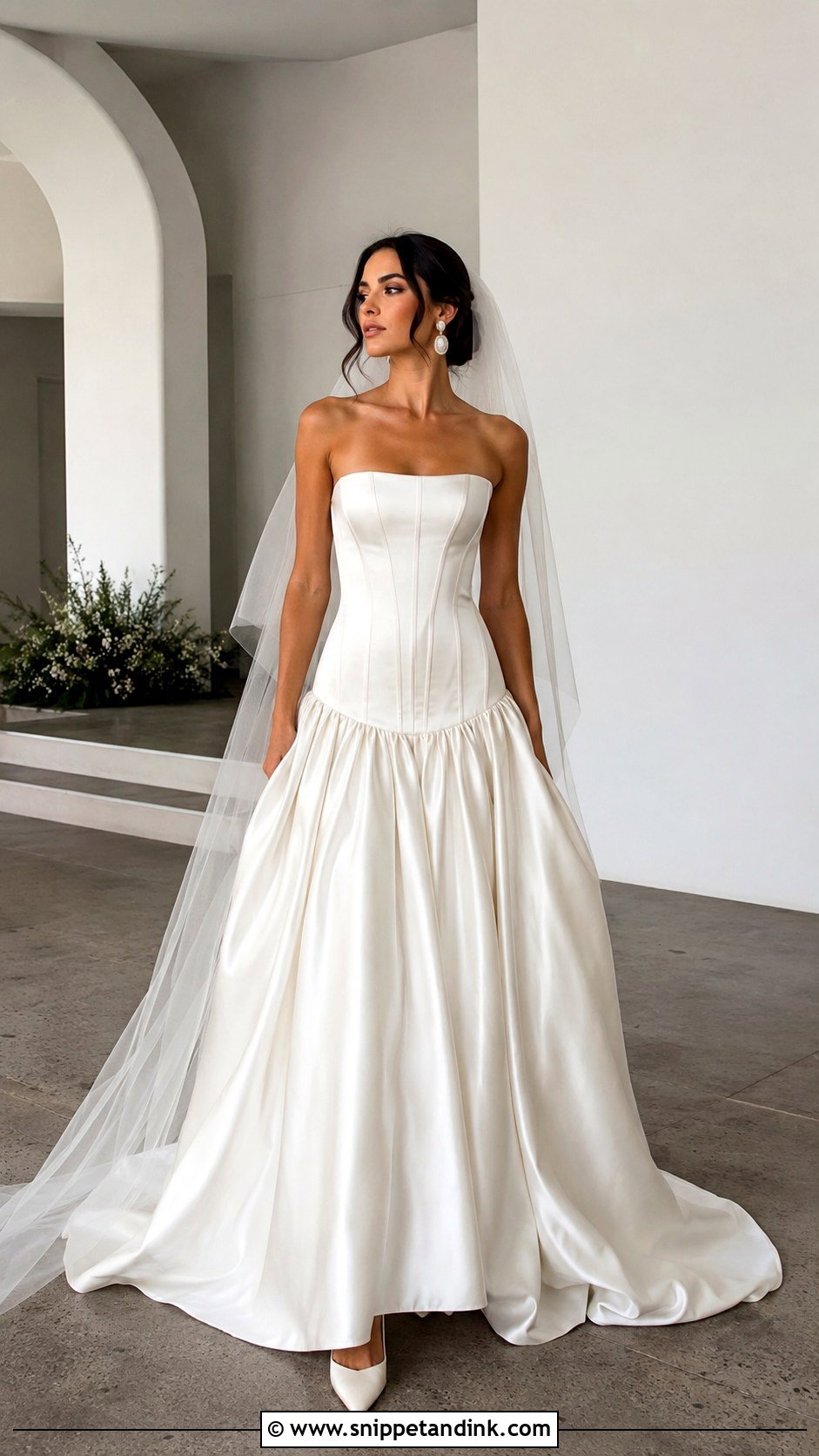
A drop waist extends the bodice past your natural waist and meets the skirt lower on the hips. Unlike a sharply pointed Basque waist, the seam may curve or run almost straight across. Proportion decides whether it flatters. On a petite frame, a long drop shortens the legs, so I’d keep the extension modest; a long torso can take more. Sit and bend at fittings, because the lower edge of the bodice can press into the hip bones. A softly gathered skirt, a plain veil and a compact bouquet keep the waist visible.
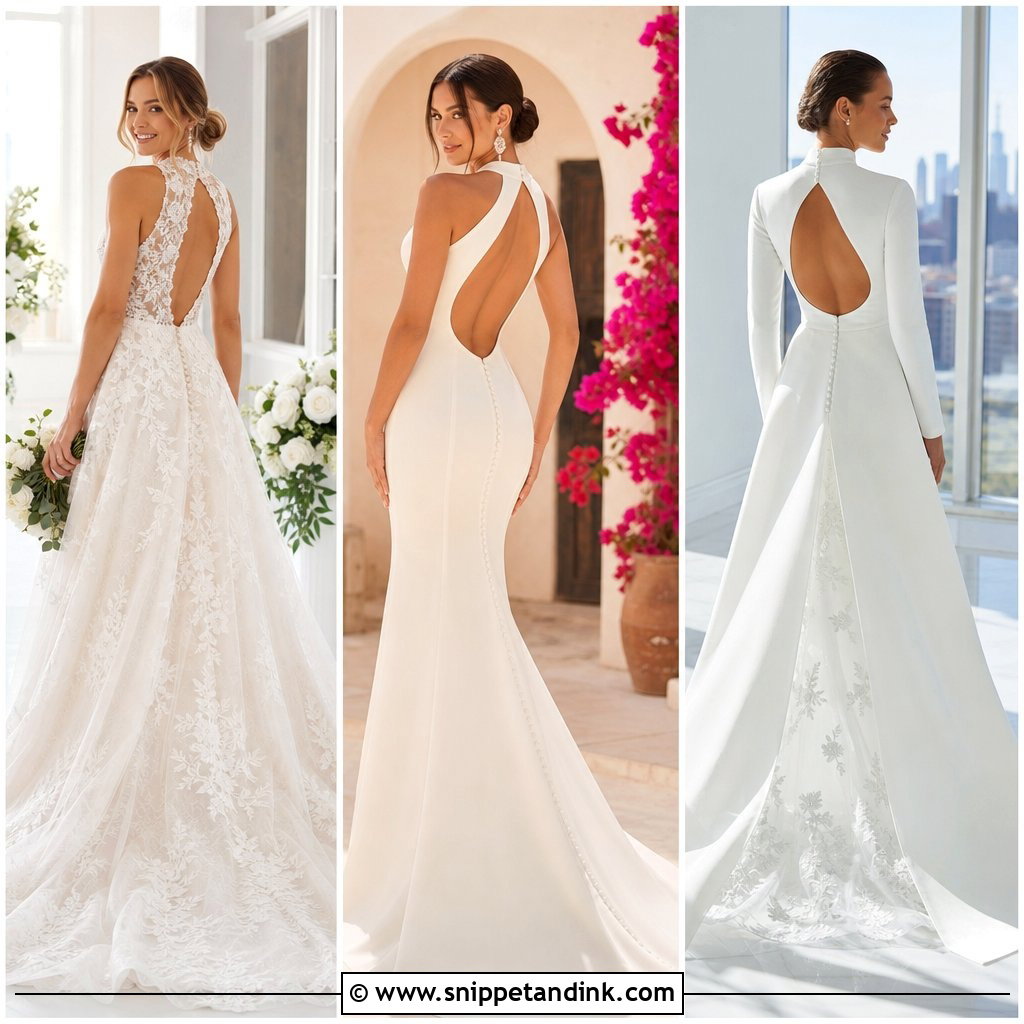
17. Corset Back Bustier Wedding Dress
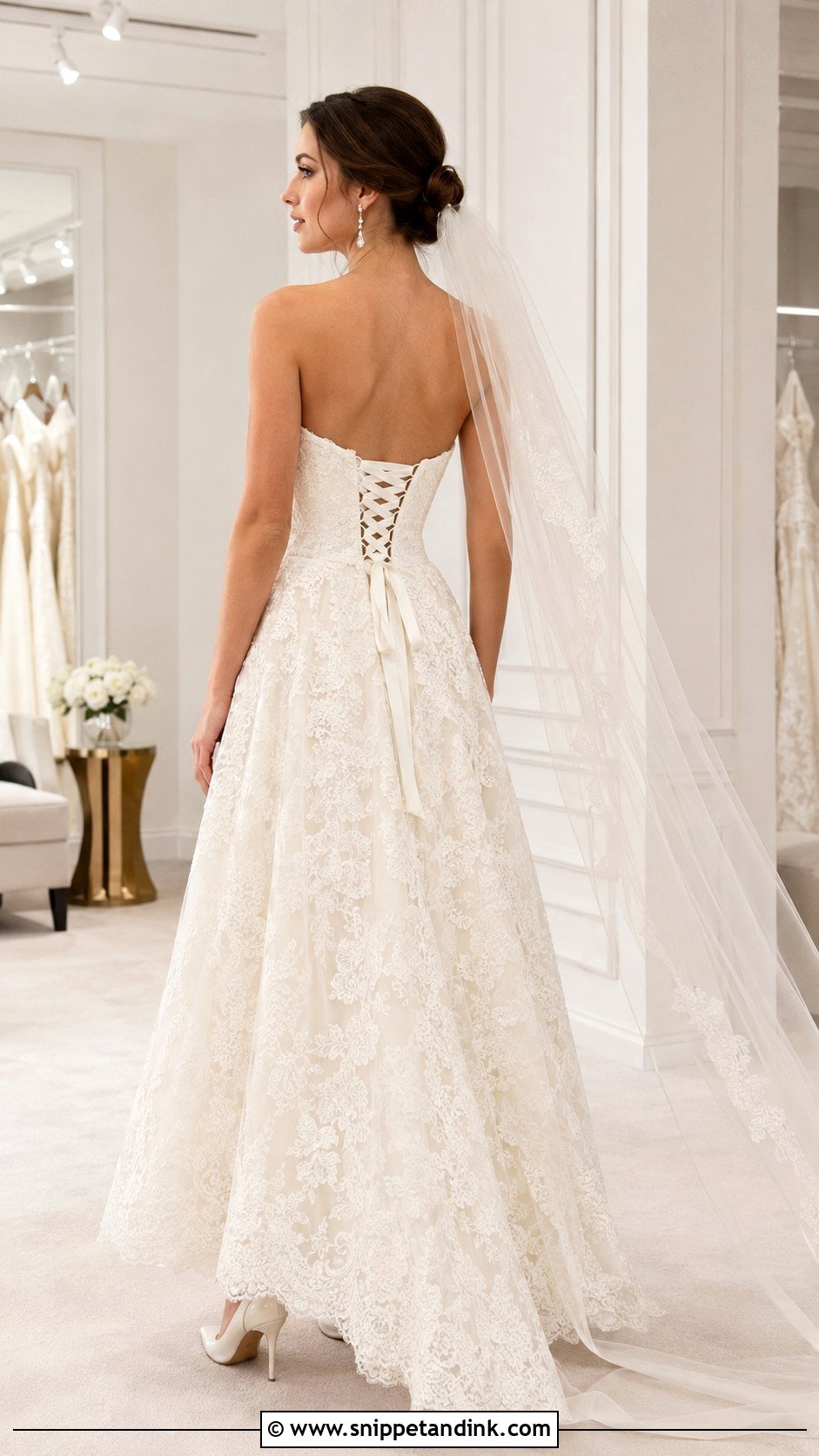
Corset backs let you adjust the fit on the day, which is why I love them for brides whose weight changes in the final month. Satin ribbon looks polished; narrow cord looks finer. The lacing should look even from top to bottom, not strangled at the waist. Have the seamstress teach your helper to lace it, ideally twice, and photograph each step on a phone. A modesty panel underneath stops the laces rubbing your skin. Place the veil high so it doesn’t hide the back, and skip the statement necklace. A side-swept style or low bun shows the lacing.
18. Bustier Wedding Dress With Overskirt
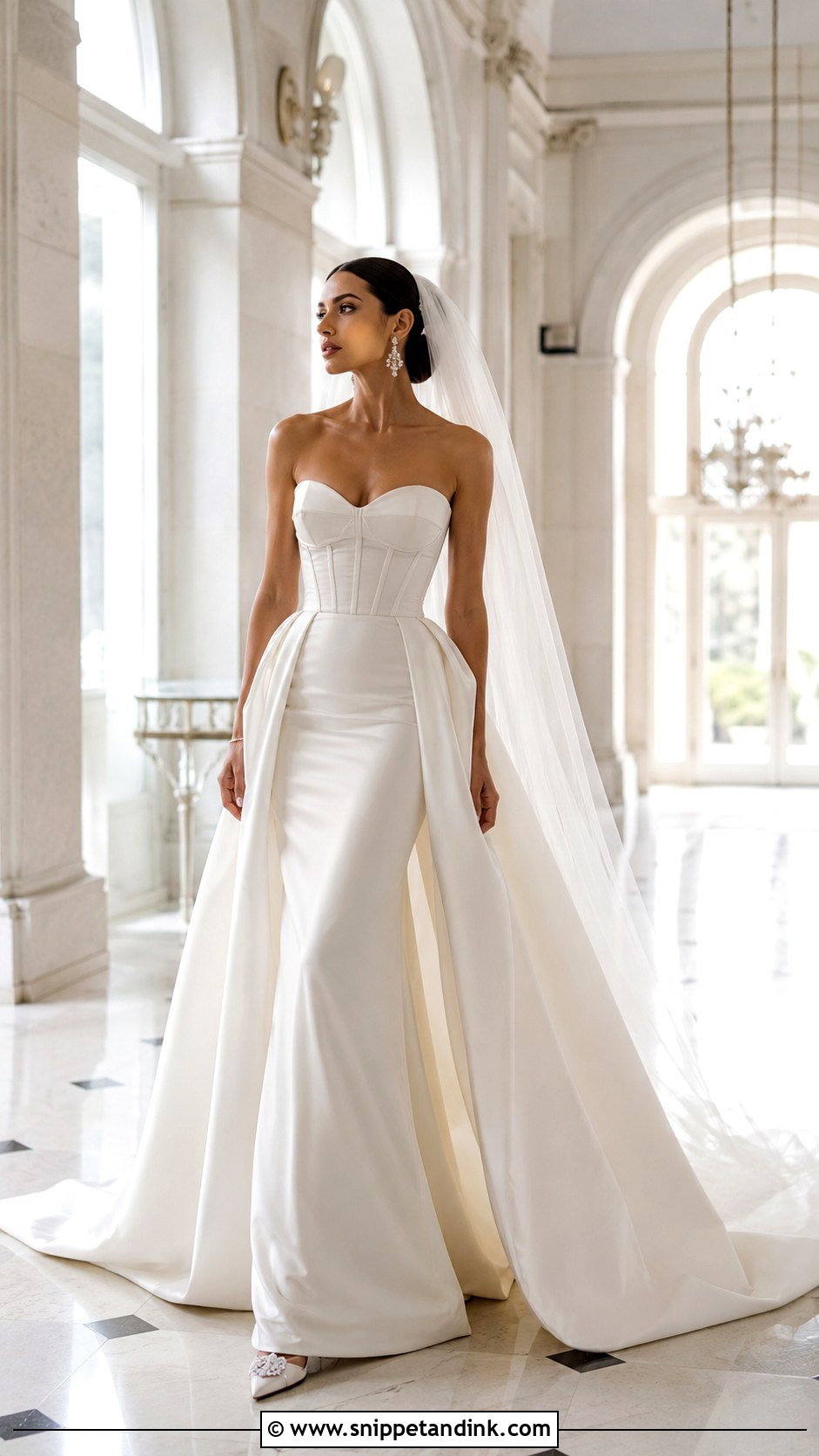
A detachable overskirt turns a fitted column into a full ceremony gown and back again. Start with crepe or satin, then add organza, tulle or Mikado at the waist. Bring the overskirt to every fitting. The two pieces must be hemmed together or the base dress peeks out unevenly at the front. Hooks should hold firmly yet release in seconds; I test that by having the bride remove it herself. Check that the waistband doesn’t cover bodice detailing. A long veil, statement earrings and pointed heels for the ceremony, then you’re free to dance.
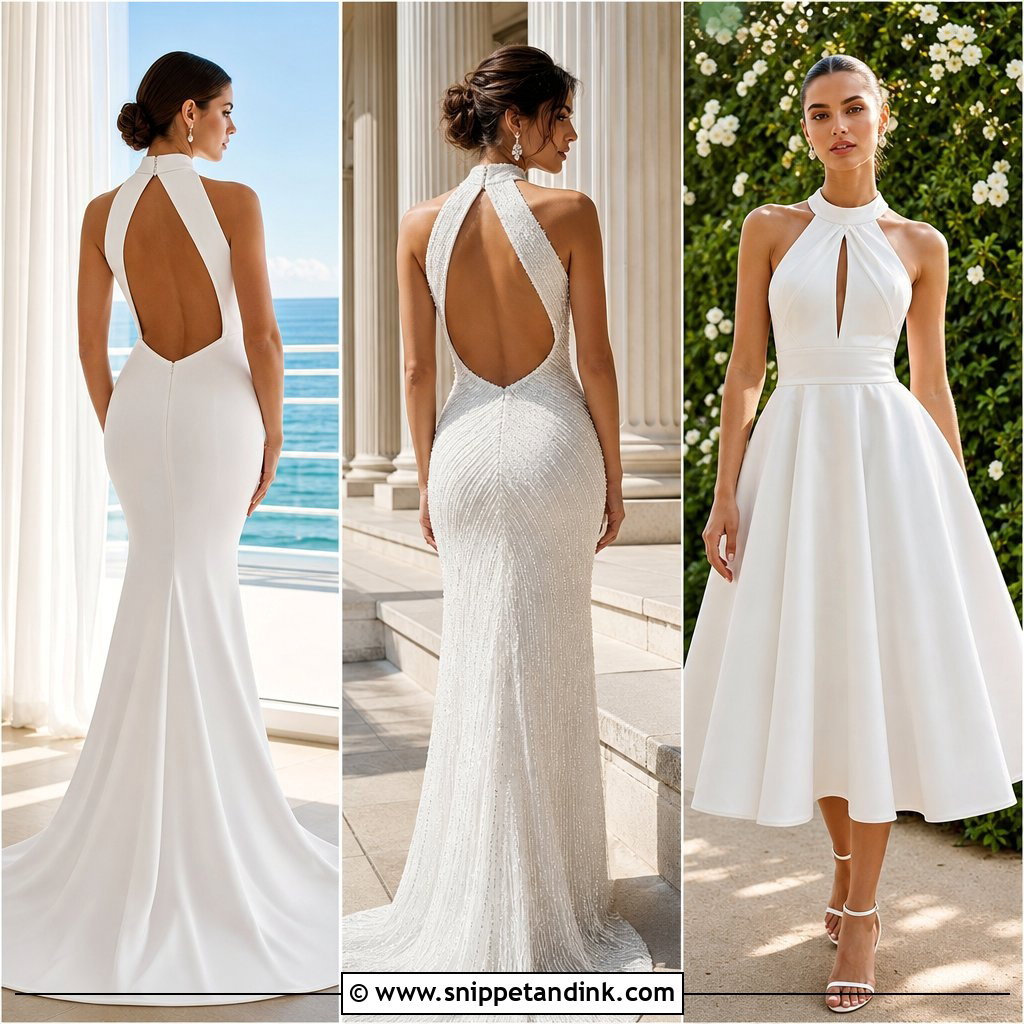
19. Tea Length Bustier Wedding Dress
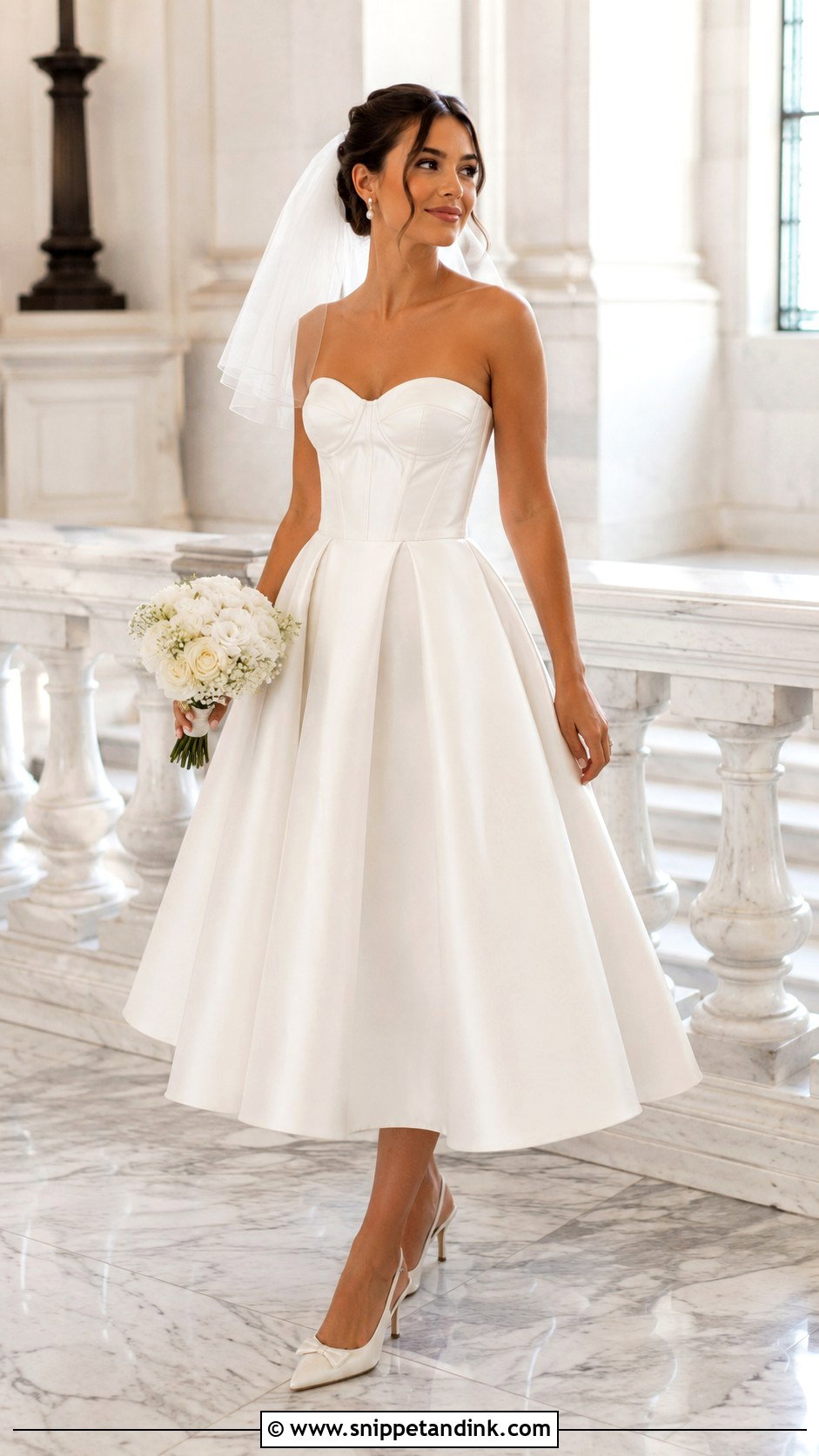
Tea length shows off the shoes, so they become part of the dress. A structured satin bodice over a softly flared skirt that ends between knee and ankle suits courthouse ceremonies and daytime receptions. Proportion is delicate here. A cathedral veil overwhelms a short skirt; a shoulder-length veil or a crisp hair bow is the better match. Hem it wearing the exact shoes, because an inch changes everything at this length. Hidden pockets are a gift. Pearl earrings and elegant slingbacks finish it.
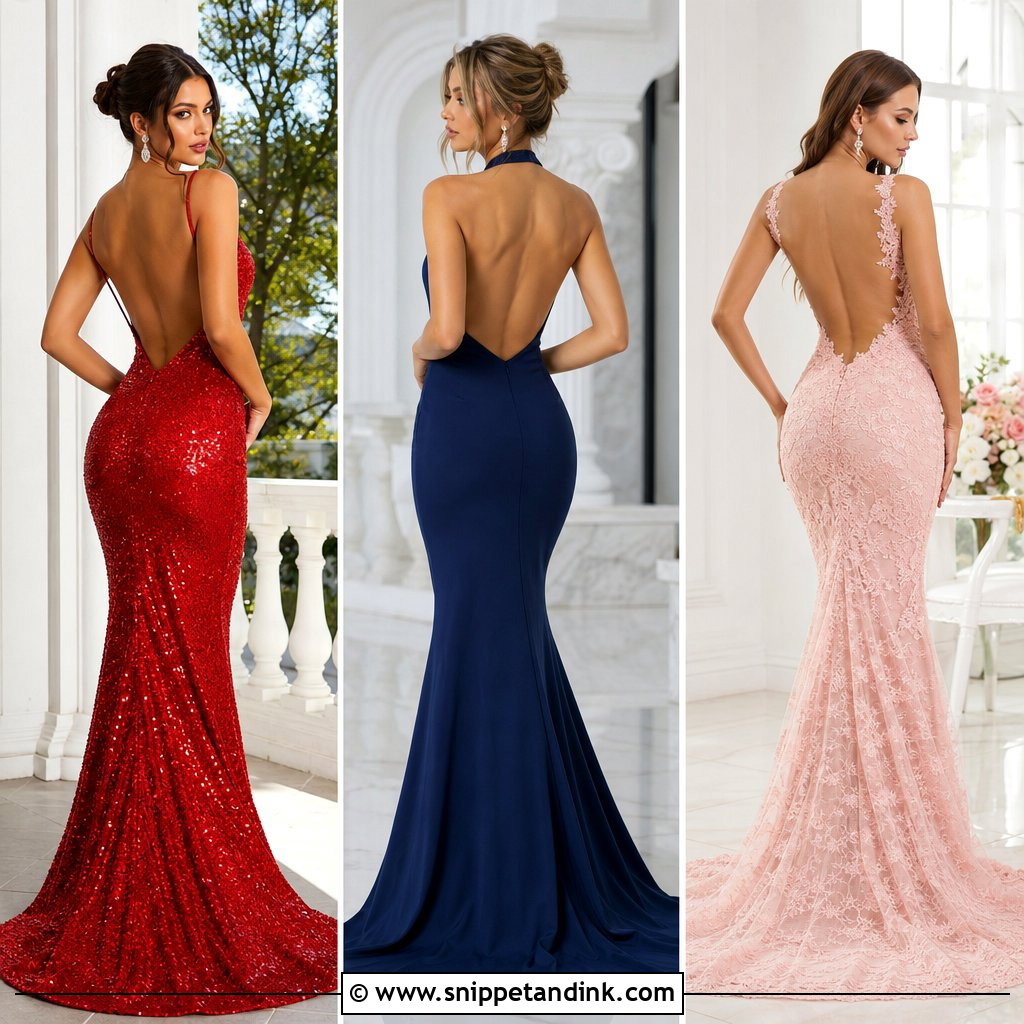
20. Blush Bustier Wedding Dress
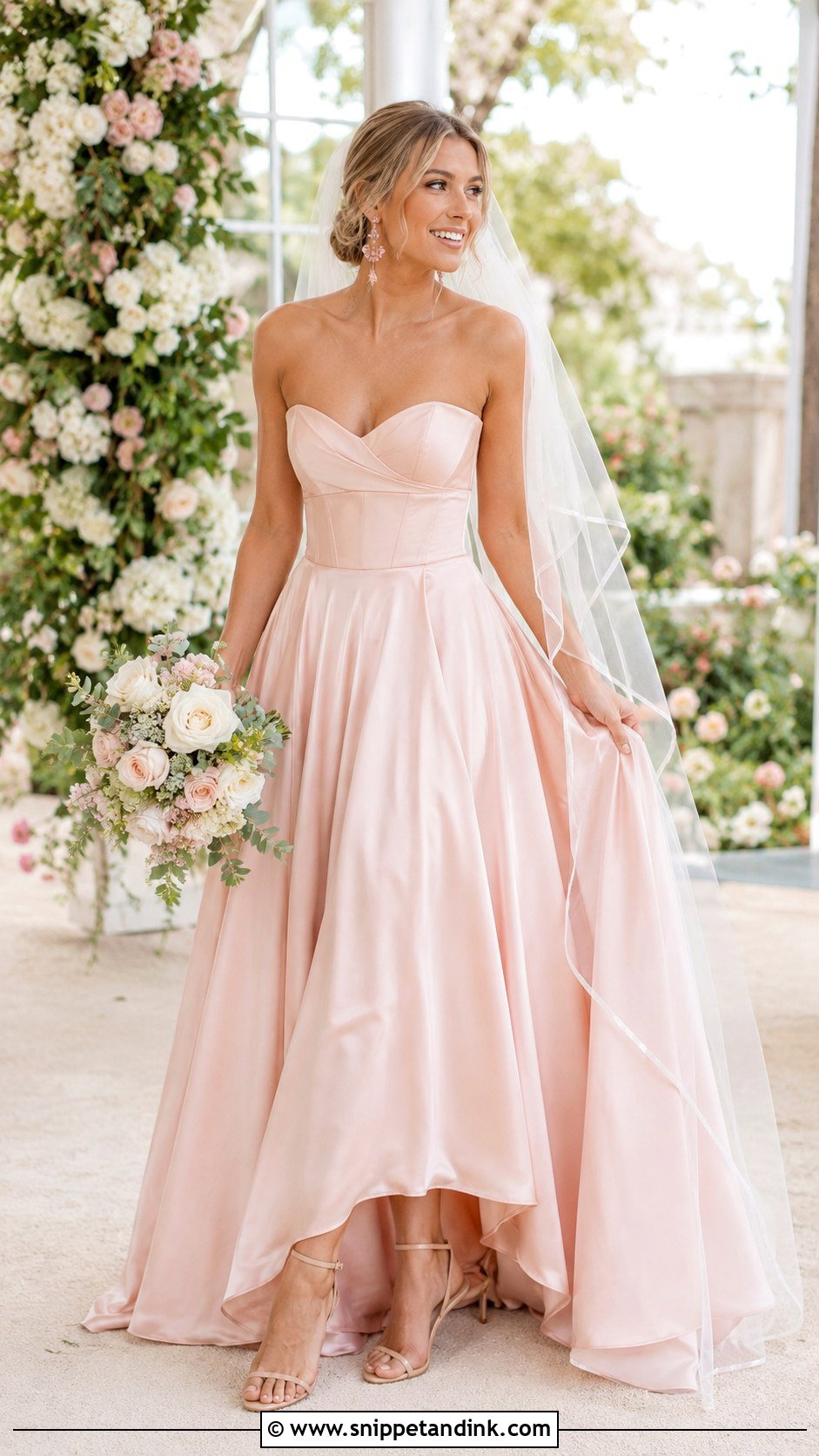
Blush keeps a gown bridal while adding a warm whisper of colour. You can run it as an underlayer beneath ivory lace or as a full colour in satin. Look at fabric swatches in daylight before deciding. Blush shifts toward peach, beige or mauve under different light, and a lining that looked pink in the boutique can read flesh-toned in photos. A sweetheart bodice with an A-line skirt suits it, with neutral heels, rose-toned earrings and an ivory veil that lets the colour show. Don’t match your makeup to the dress; keep it fresh.
The Fitting Timeline a Structured Bodice Needs
Bustier gowns take more alteration time than looser styles, because the fit at the ribcage is so precise. Many bridal shops quote several months for a made-to-order gown, so ordering roughly eight to ten months ahead is common. Lead times vary by designer and season, so ask before you fall in love.
- First fitting, about two to three months before the wedding. Bring your shoes and the undergarments you’ll actually wear. Most of the pinning happens here.
- Second fitting, about a month out. The bodice is checked against the changes made, and the hem is set.
- Final fitting, one to two weeks before. Bring your helper so she can learn the closures, lacing or detachable pieces.
Try not to plan a big change in weight between the first and last fittings. A bodice can be taken in more easily than let out, but there’s only so much seam allowance in each panel.
If the Bodice Starts Slipping During the Reception
A strapless bodice that creeps down by late evening is almost always slightly loose at the ribcage, not the bust. On the day, the quickest fix is to re-hook the waist stay tighter or have someone redo the corset lacing from the bottom up. Double-sided fashion tape along the top edge holds it against skin for a few hours. Pack a small kit with tape, safety pins, a needle threaded in ivory, and blotting papers. Hand it to the person who will help you dress, not to yourself.
Fit the Bodice Before You Fall for the Details
Satin, lace, tulle, Basque waists, detachable sleeves, corset backs and removable overskirts give a structured gown its personality, but tailoring comes first. A bustier that’s beautifully decorated and poorly fitted will slip, dig and distract you all day. The bodice should hold without restricting: you should be able to sit, breathe, hug and dance. Bring your actual shoes and undergarments to every fitting, and look at the dress from behind as well as in front. Get the structure right, and the rest of the choices become easy.
You'll Like These Ideas:


Leave a Reply