
Before I pull a single gown for a bride, I ask how she wants to feel walking, sitting, dancing, hugging, and looking back at the photos in twenty years. The answers narrow things faster than any trend list. The gowns collected here run from classic satin and lace to minimal crepe, beach and courthouse dresses, and newer ideas like pearls, bows, basque waists, sculptural satin and tea-length hems. Treat each one as a full outfit, veil and shoes included, and picture it at your own venue rather than in a studio.
Bridal Sizing Runs Small, and Other Things the Sample Rail Won’t Tell You
Most brides are thrown at their first appointment by the size on the label. Bridal sizing usually runs smaller than everyday clothing sizes, often by one or two sizes, so the number means very little. I’d ignore it entirely.
- Samples are usually one or two sizes, clipped or laced onto you. A gown that gapes or won’t close in the sample can still be right once it’s made to your measurements.
- Gowns are normally ordered by your largest measurement among bust, waist and hip, then altered down elsewhere. Taking in is far easier than letting out.
- Don’t order smaller in the hope of changing size before the wedding. If your weight may change, say so, and your seamstress will plan alterations around it.
- Ask to see the designer’s size chart and have your measurements taken by the shop, in the underwear you’ll wear on the day.
Bring one or two people whose opinion you trust, not a crowd. Too many voices at a fitting usually push a bride toward the gown everyone else likes.
1. Satin Ball Gown Wedding Gown
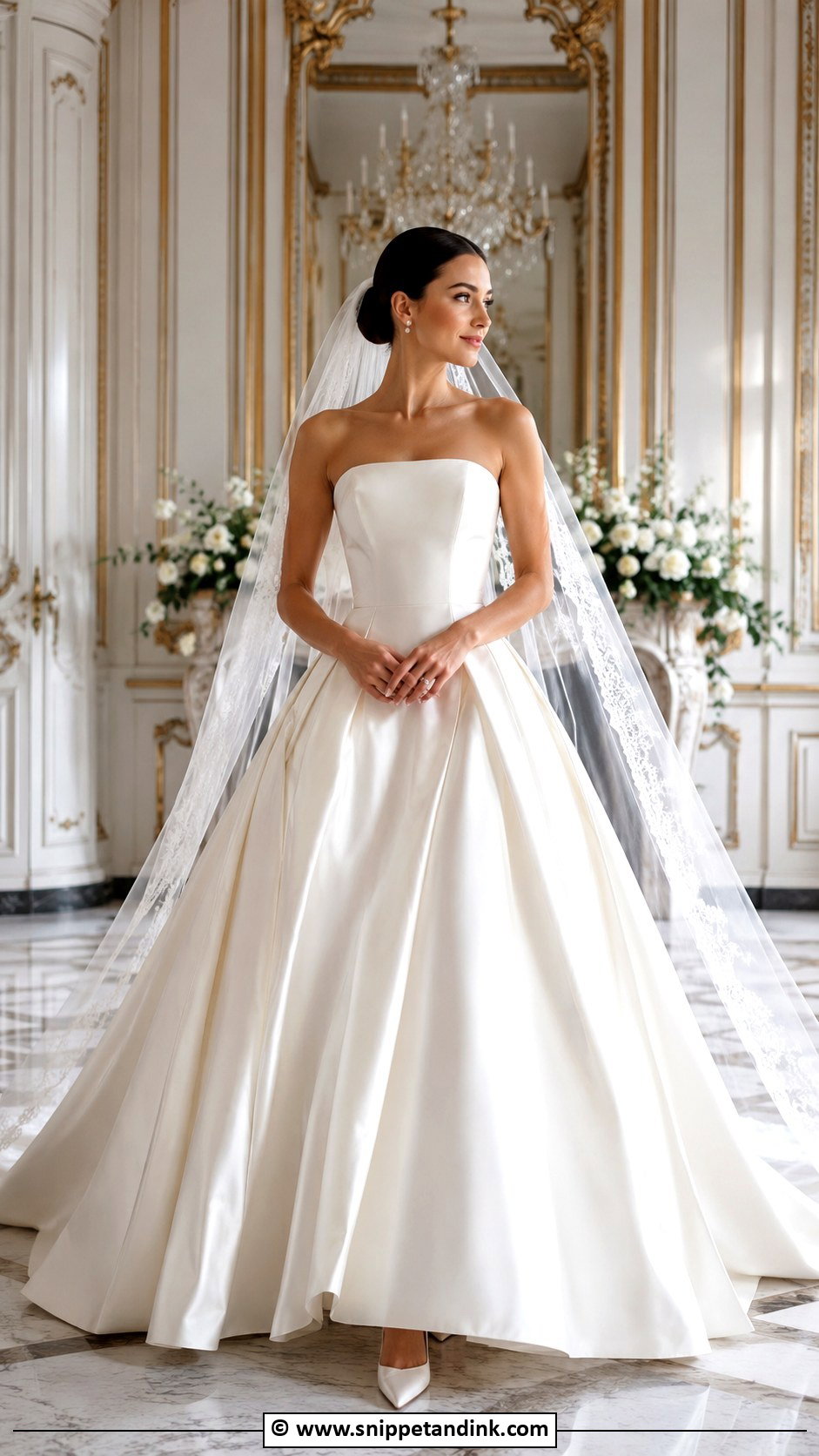
Smooth satin, a structured bodice and a full skirt give a satin ball gown instant presence at a formal ceremony or black-tie reception, with no sparkle needed. Ivory satin reads softer than bright white against most skin. The fitted waist and full skirt balance curves well, while a petite bride usually looks better in a lighter skirt with fewer petticoat layers. I’d also warn you about weight: a full satin skirt gets heavy by the speeches, so ask to wear the sample for a full ten minutes. A cathedral veil, pearl drops, satin pumps and a low bun finish it.
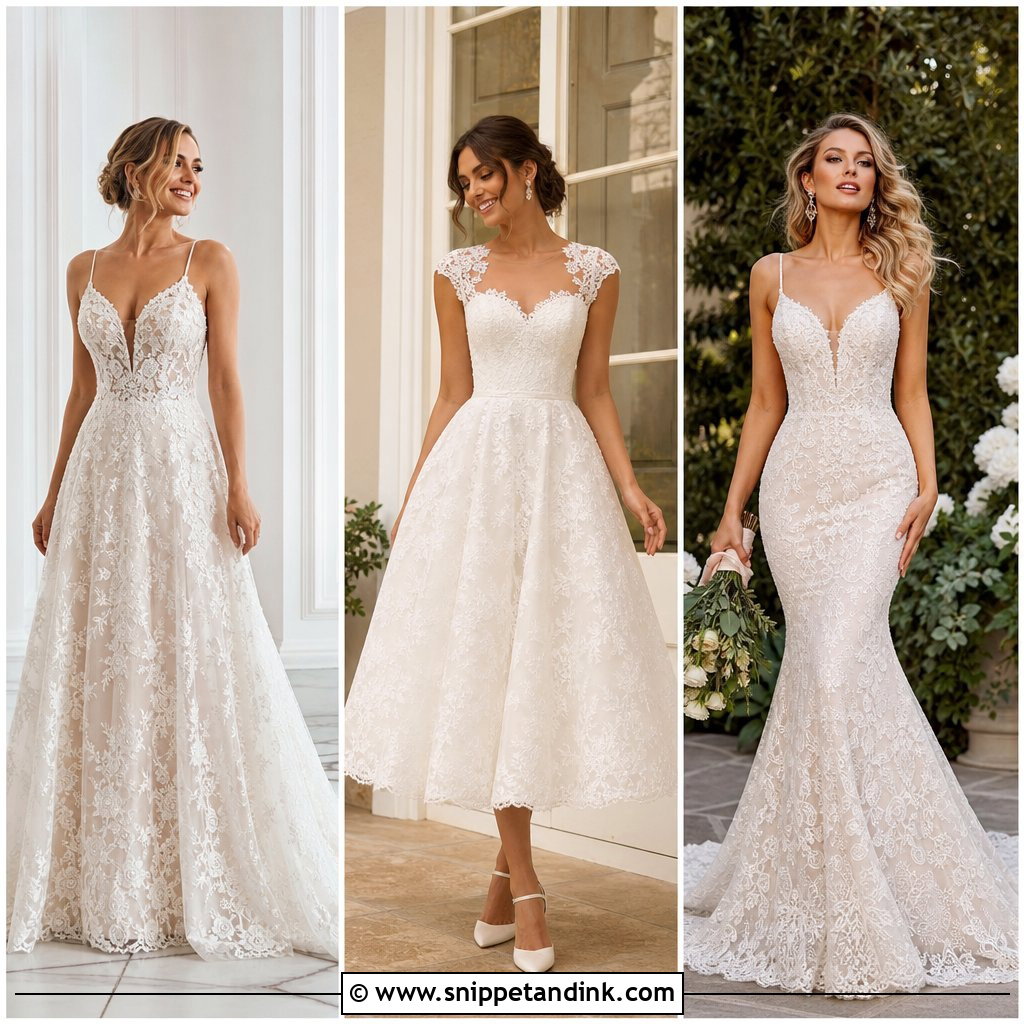
2. Lace A Line Wedding Gown
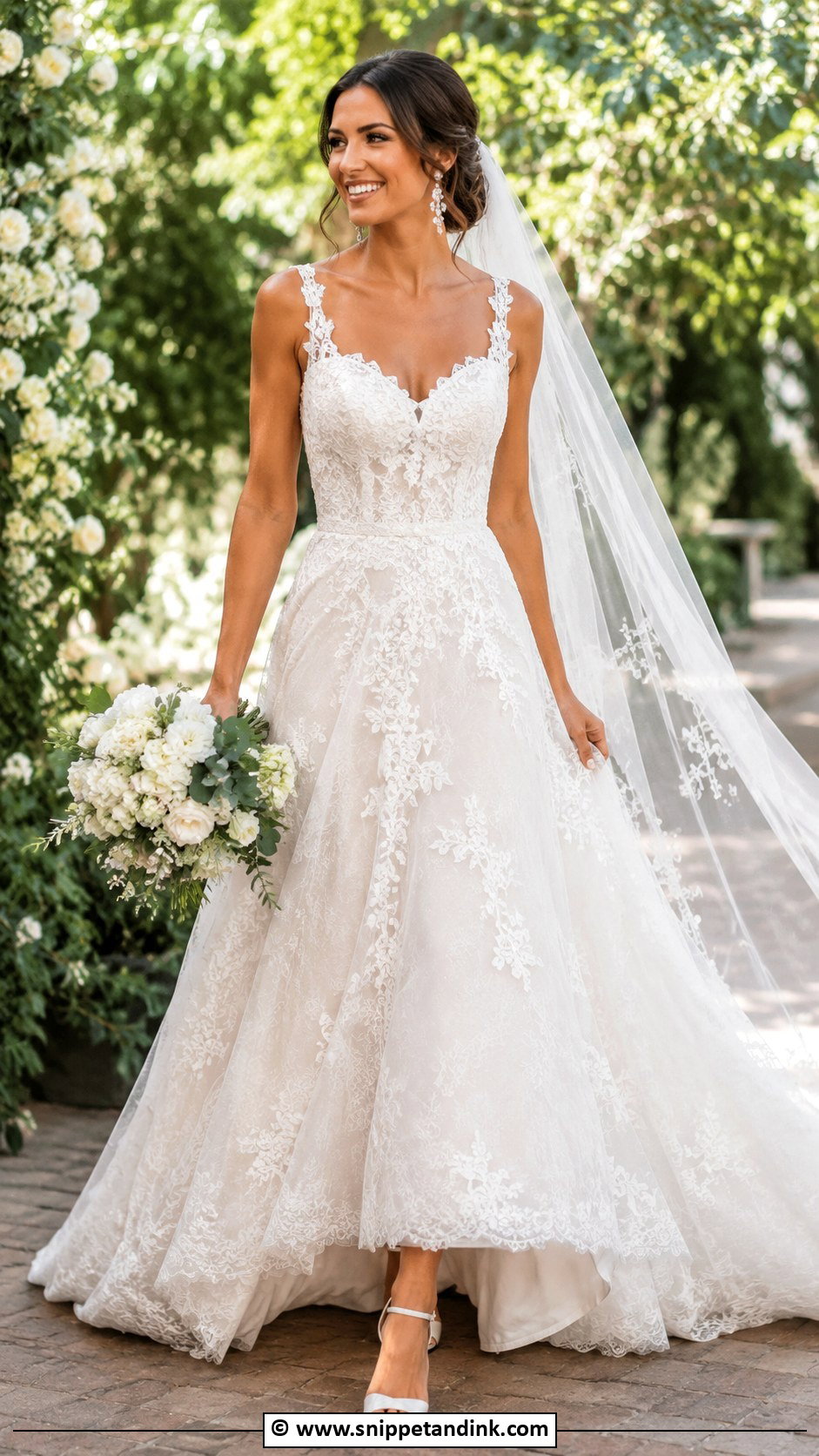
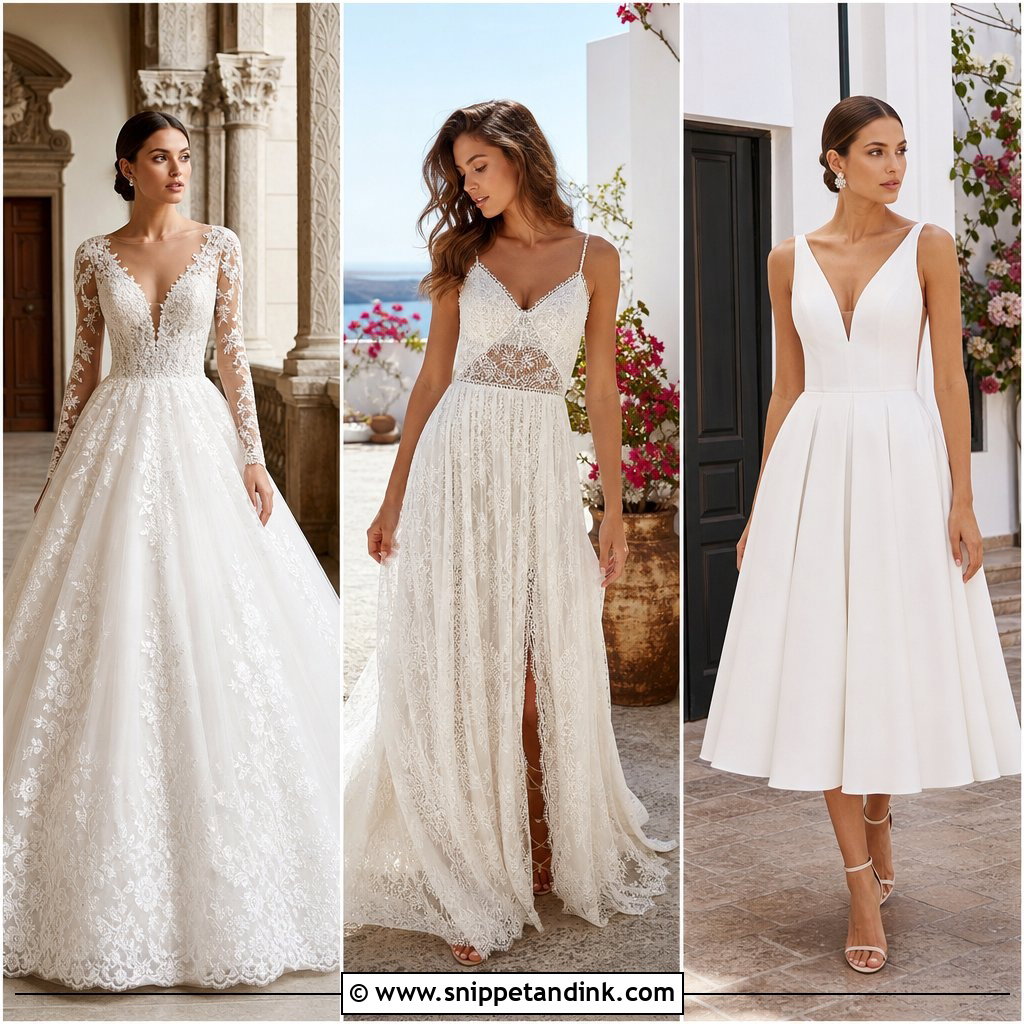
A lace A-line fits through the bodice and floats off the hips, so it’s comfortable for walking and dancing on most bodies. Floral lace suits gardens, Chantilly gives a softer vintage feel, and layered appliqué adds depth. The lining changes everything. Nude lining makes the lace pattern pop, while ivory lining softens it, and I always compare the two near a window rather than under shop lights. A fingertip veil, delicate earrings, soft waves and ankle-strap heels suit estates, vineyards and outdoor ceremonies.
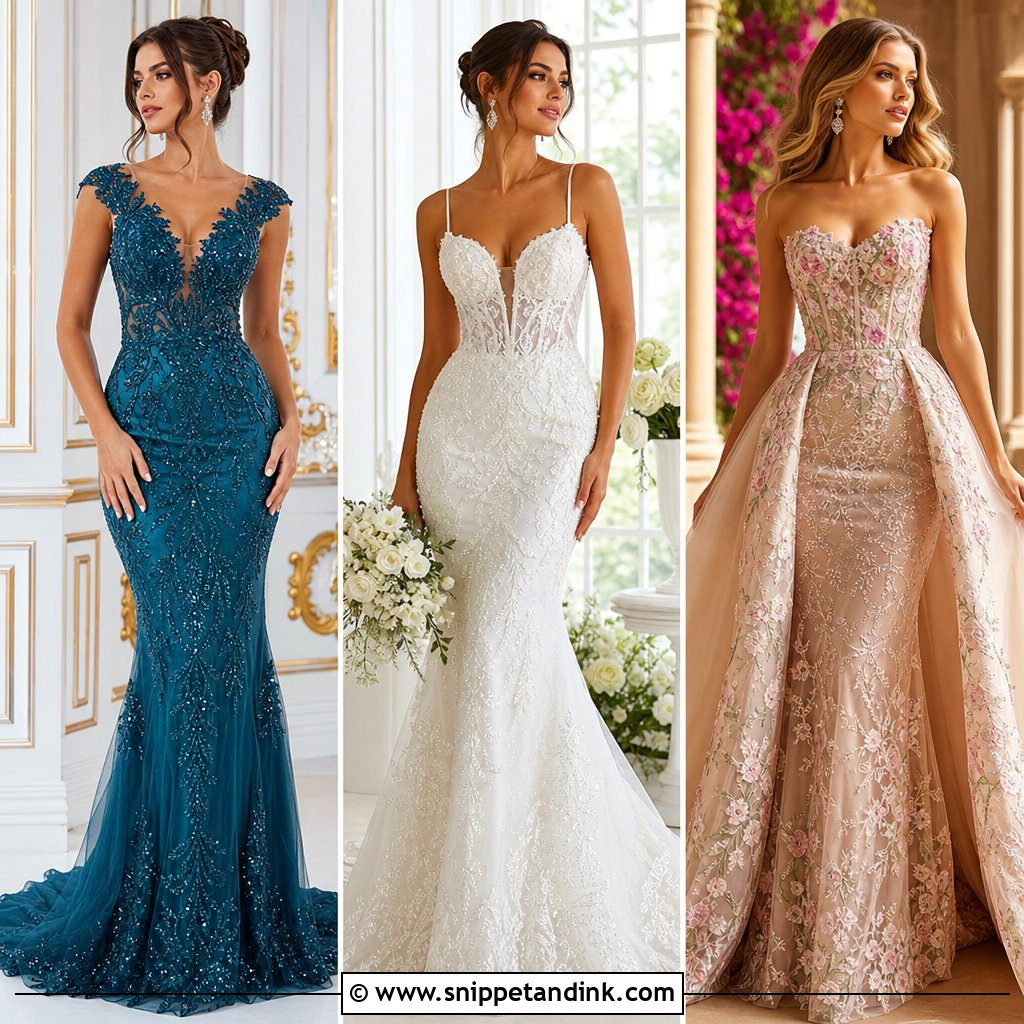
3. Strapless Mermaid Wedding Gown
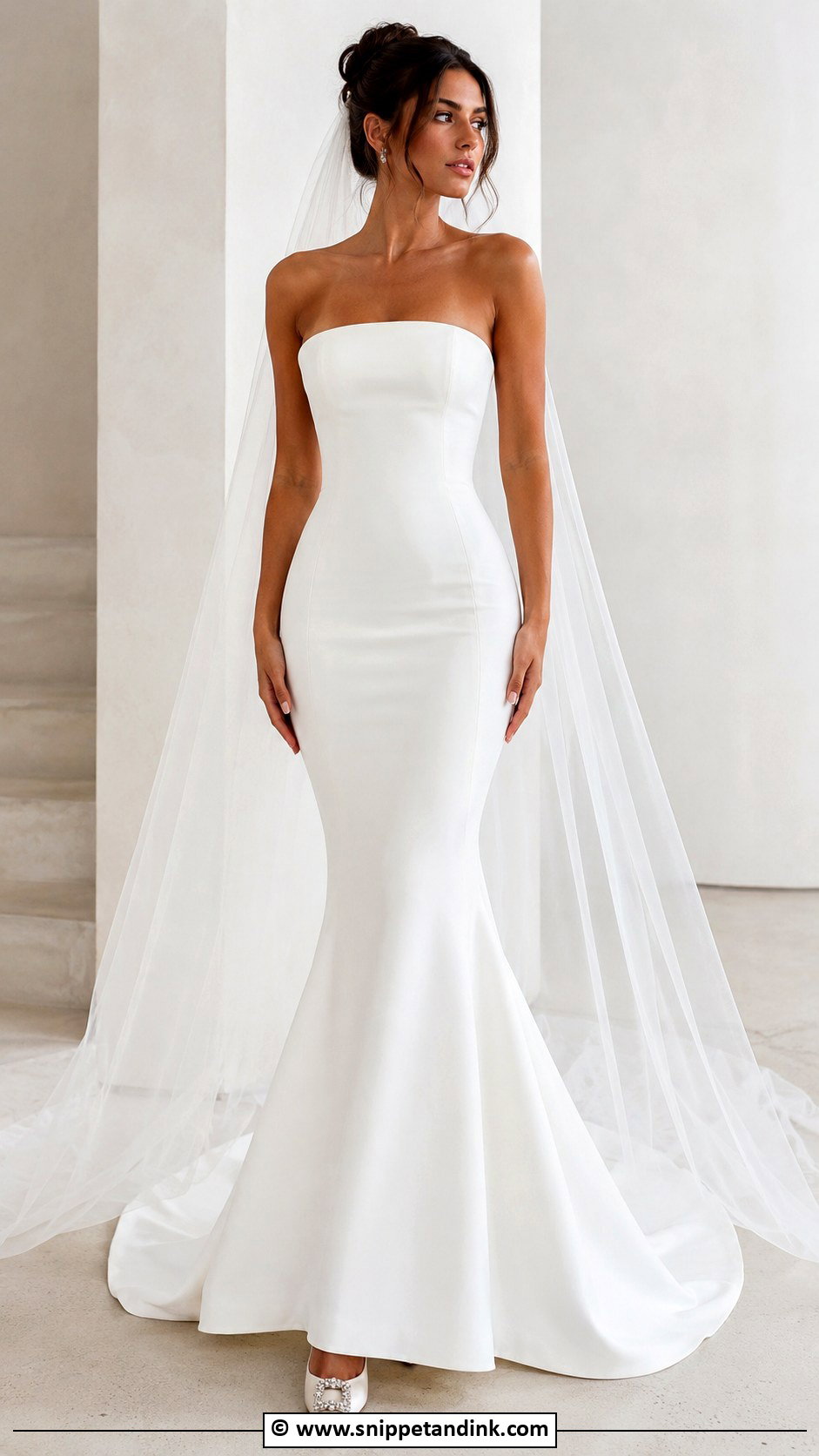
A strapless mermaid hugs the bust, waist and hips, then flares near the knee. In satin, crepe or mikado it looks sleek; in lace, more romantic. Strapless plus fitted means the bodice and hip line have to be tailored precisely, because there’s nothing else holding the dress in place. If you love the shape but not the restriction, ask for stretch crepe or try a fit-and-flare, which keeps the line while freeing your knees. A long veil, crystal studs and pointed heels lengthen the body.
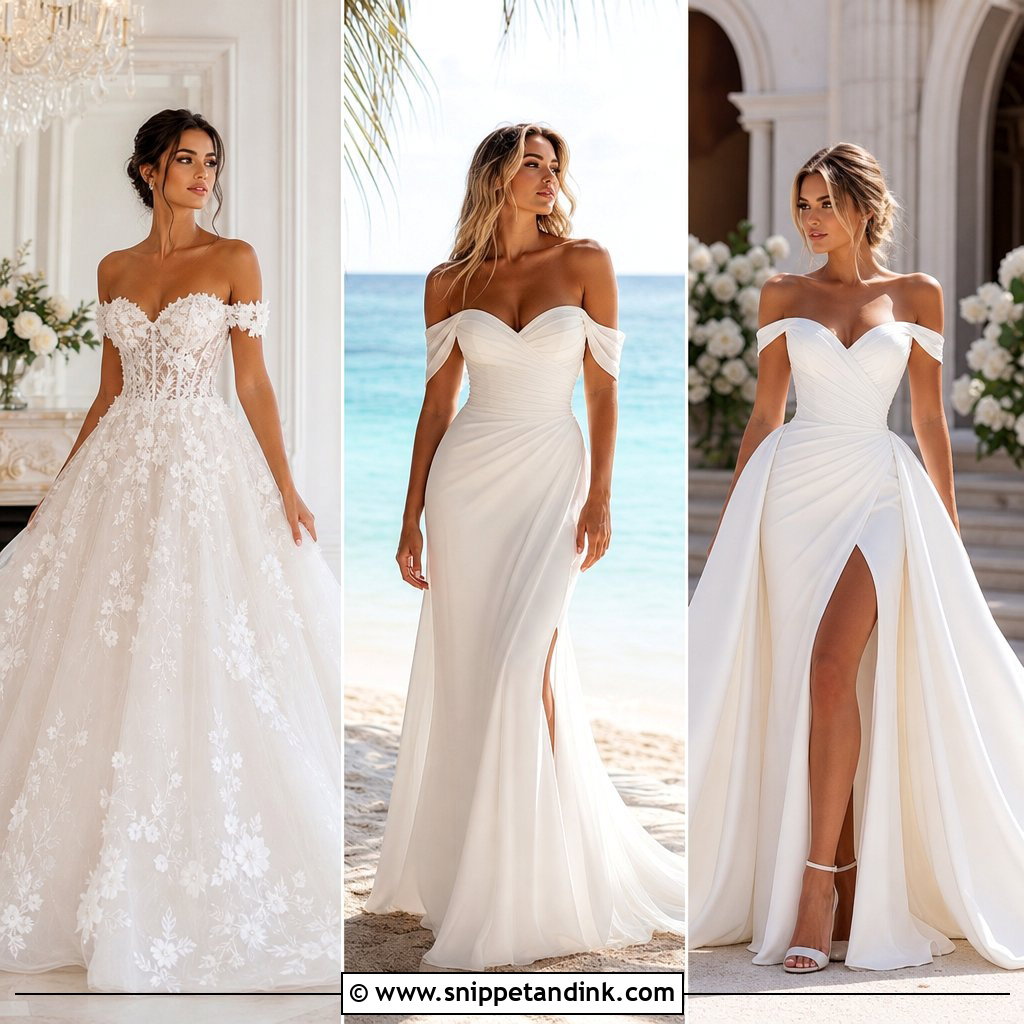
4. Off Shoulder Wedding Gown
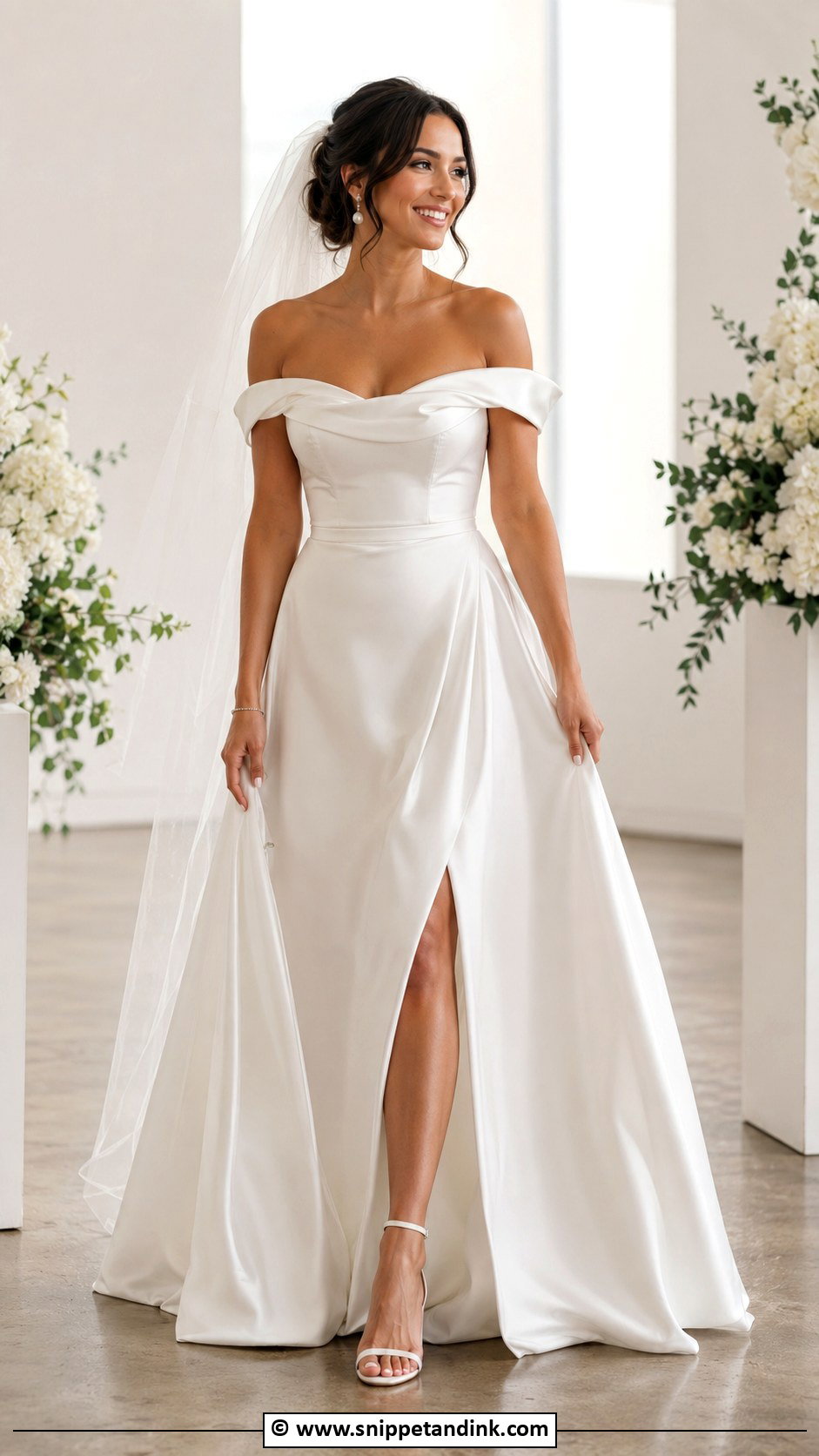
An off-the-shoulder neckline frames the collarbone without feeling revealing, in satin, lace, crepe or tulle. A fitted bodice over a flowing skirt feels graceful for a formal room; a slimmer version looks modern. Necklaces mostly get in the way here, so I’d skip them. What I test at every fitting is the band: walk, hug and lift your arms, and it should stay put without cutting into the upper arm. A soft updo, pearl earrings, a simple veil and heeled sandals complete it.
5. Long Sleeve Lace Wedding Gown
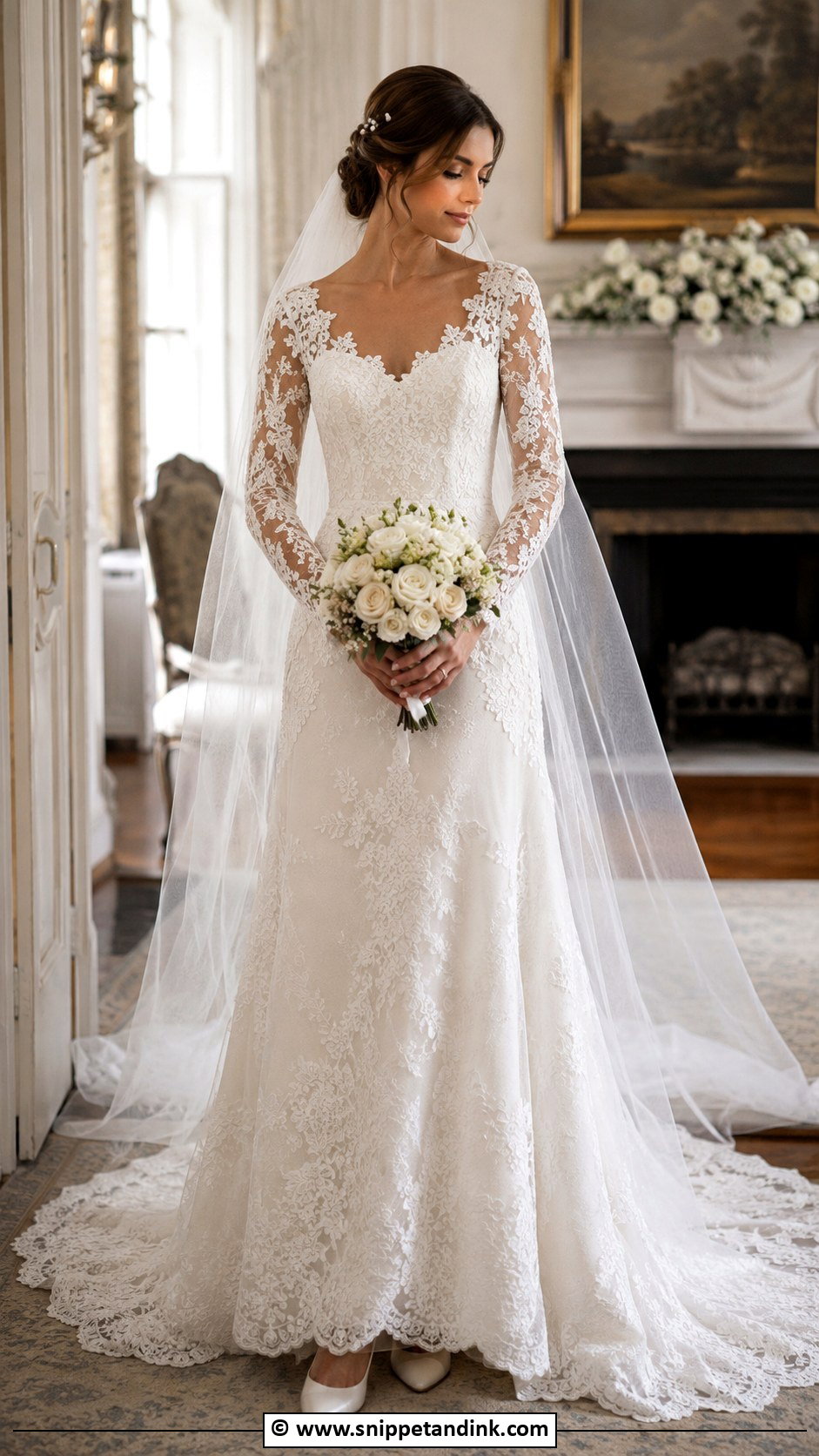
Long lace sleeves suit cooler seasons, formal venues and brides who love texture. Sheer sleeves feel light; lined ones cover more. Wrist fit is the detail people skip. A sleeve that’s a little long bunches at the wrist and hides your hands in ring photos, while one that’s too short looks borrowed, so have the length set with your arm slightly bent. A slightly open back keeps the gown from feeling too covered. A chapel veil, pearl hair pins and closed-toe heels suit fall, winter and early spring.
6. Minimalist Crepe Wedding Gown
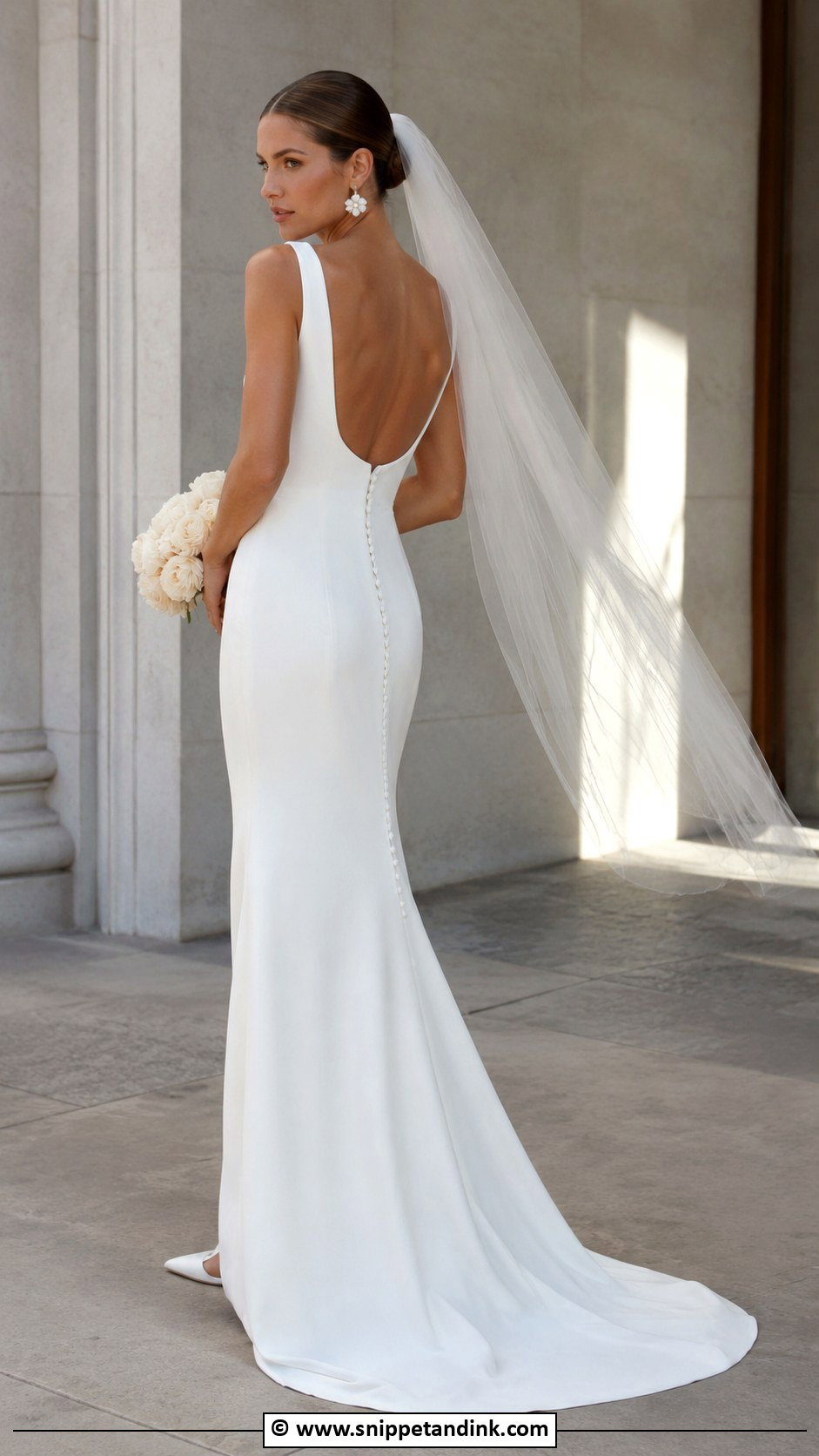
Minimal crepe relies on drape and cut, not beading or lace, which means fit becomes the decoration. Precise tailoring around the bust, waist and hips is where I’d put the money. Look for one or two considered details: a square neckline, a low back, covered buttons or a subtle train. Crepe photographs as a clean, soft matte, which suits city weddings, modern venues and courthouses. Sculptural earrings, sleek heels, a clean veil and a polished bun finish it.
7. Pearl Embellished Wedding Gown
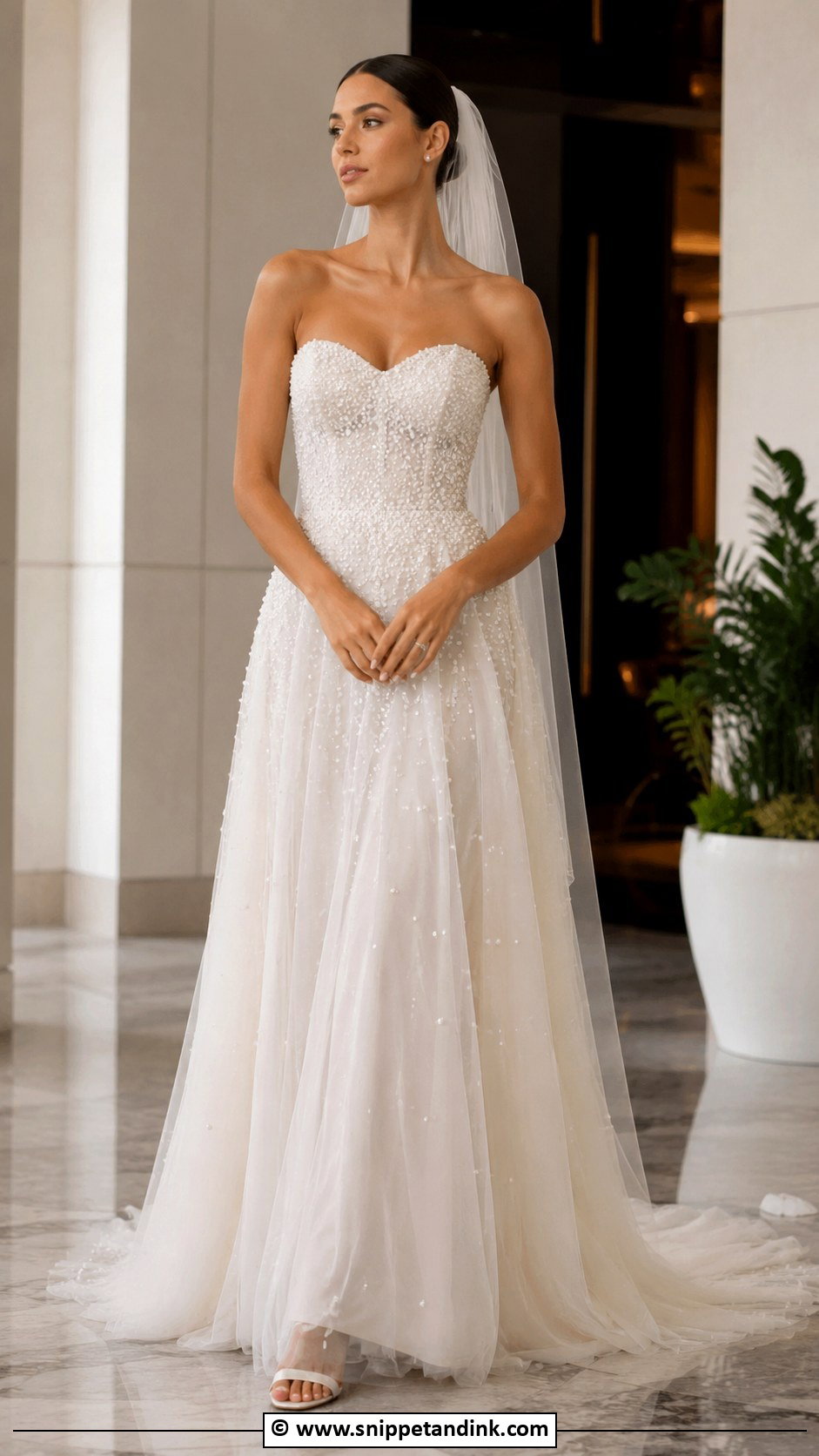
Pearls give a soft glow instead of a crystal’s sharp sparkle, on tulle, organza, satin or lace. Scattered pearls stay delicate; allover beading turns the gown into the main event. Comfort is worth checking: beading under the arms can rub through a long reception, and heavy pearl work adds real weight to a skirt. Keep accessories quiet, with pearl studs, simple heels and a plain veil, plus a sleek hairstyle. It glows under candlelight in hotels and evening venues.
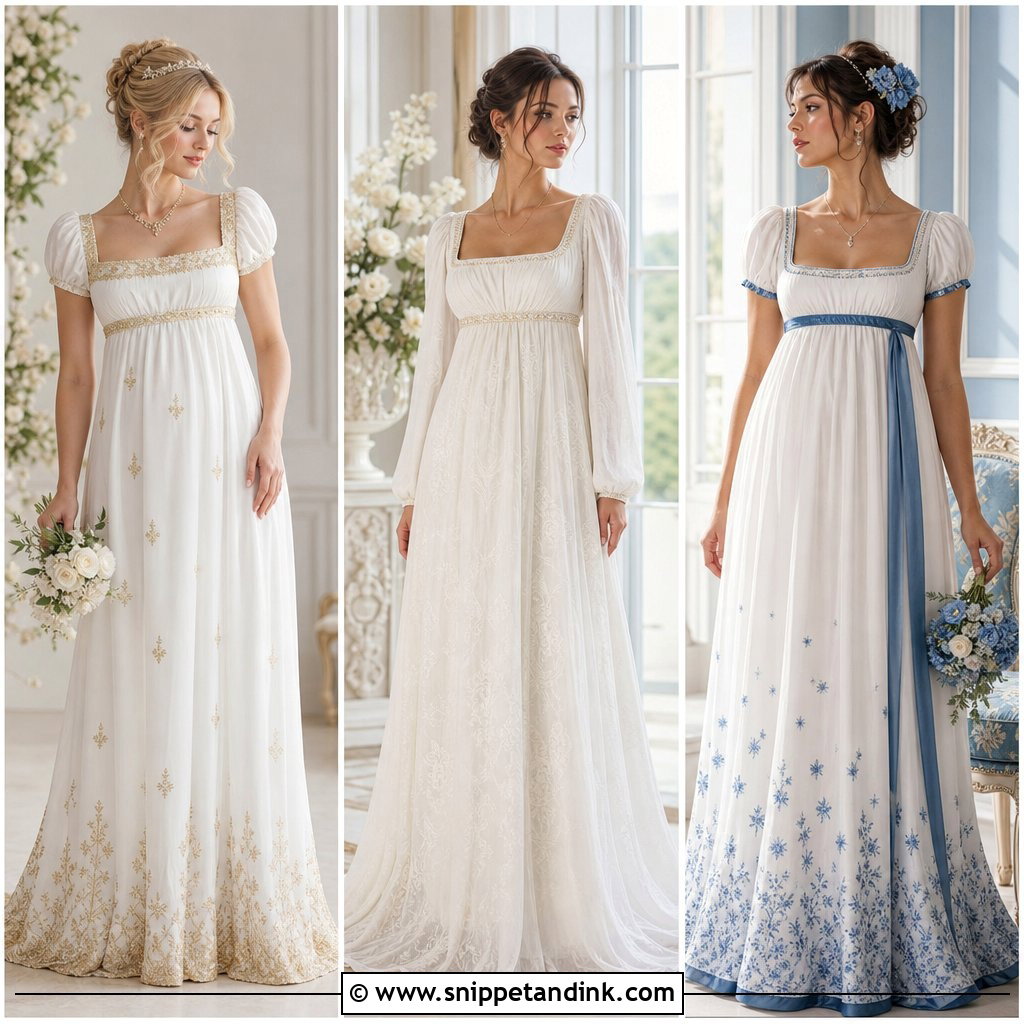
8. Square Neck Wedding Gown
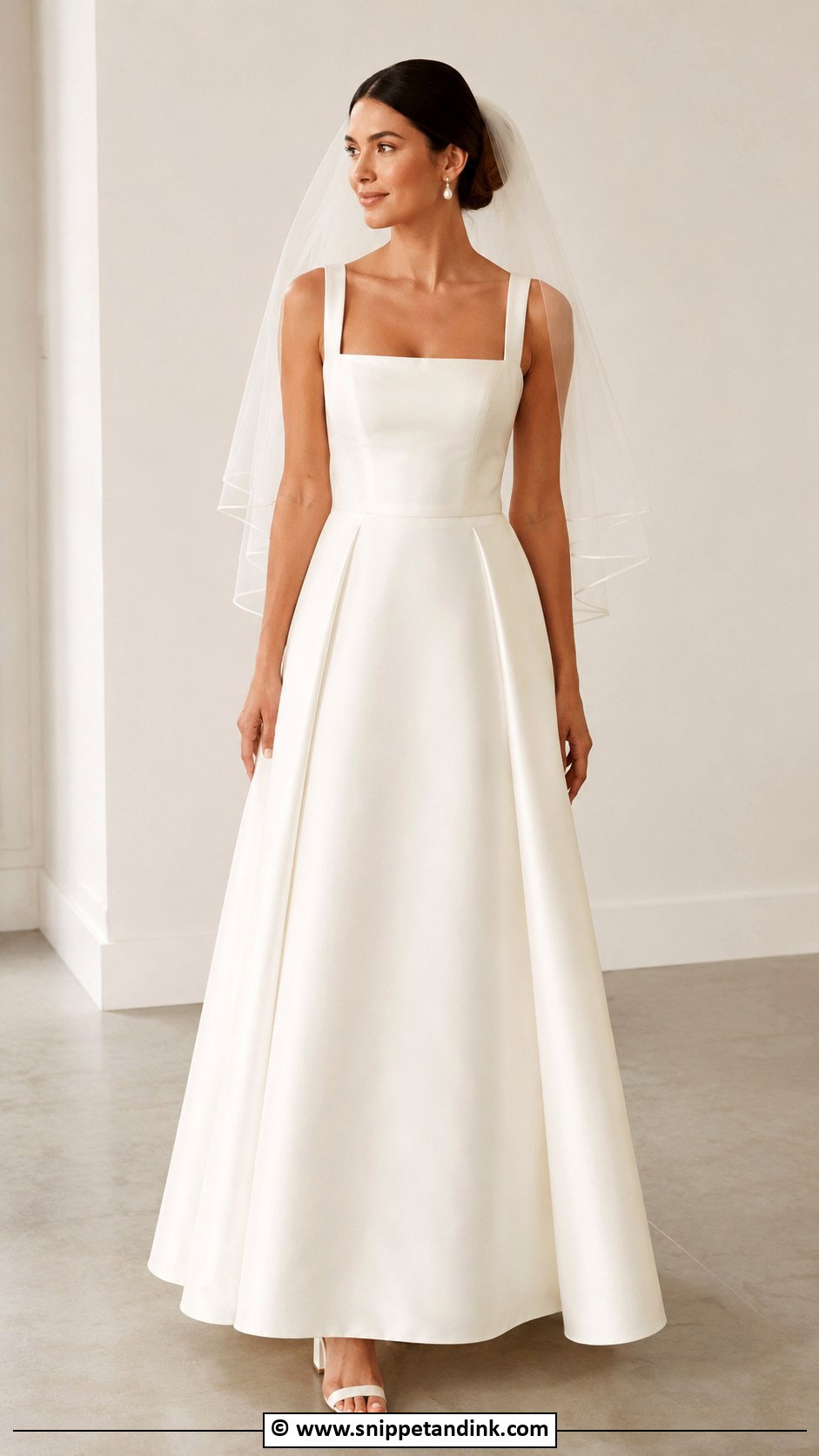
A square neck frames the shoulders and collarbone and gives more support than most plunging necklines. It sits well on A-lines, fitted crepe, satin ball gowns and simple columns. For a fuller bust, the straight edge offers coverage and structure; for a petite bride, it lengthens the upper body. I check that the corners lie flat when the bride leans in. A low bun, pearl or diamond studs, block heels and a fingertip veil suit it, and gloves, a bow veil or a cape make it personal.
9. Basque Waist Wedding Gown
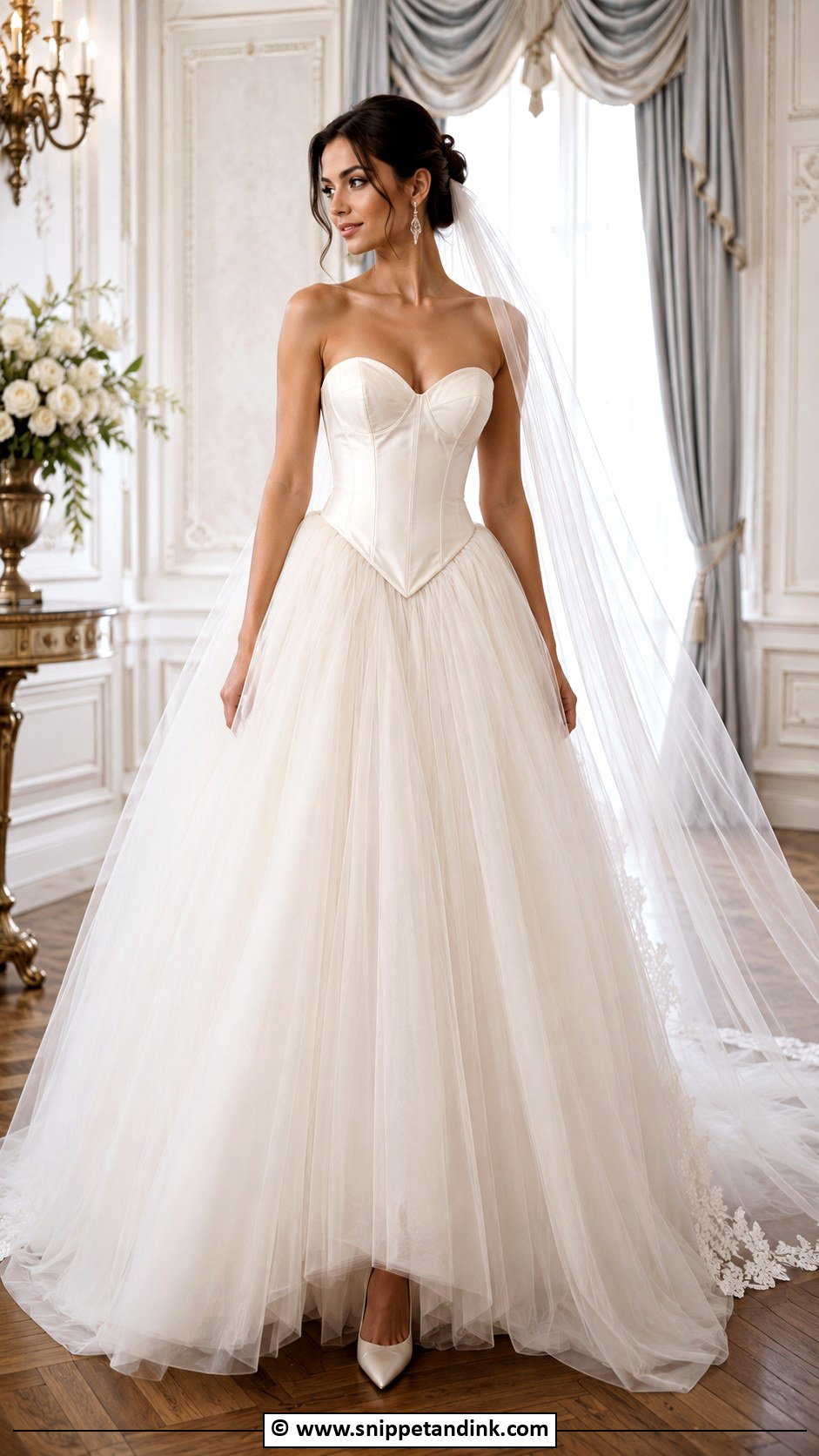
A basque waist dips into a soft V below the natural waist and lengthens the torso, which gives a fairy-tale feel while keeping structure. Pair it with a full satin, tulle or lace skirt for drama, or a lighter fabric for softness. Because the point elongates the body, its placement during alterations is critical; a centimetre too low on a short torso can make the legs look shorter. A long veil, drop earrings and classic pumps suit formal weddings and historic venues.
10. Corset Bodice Wedding Gown
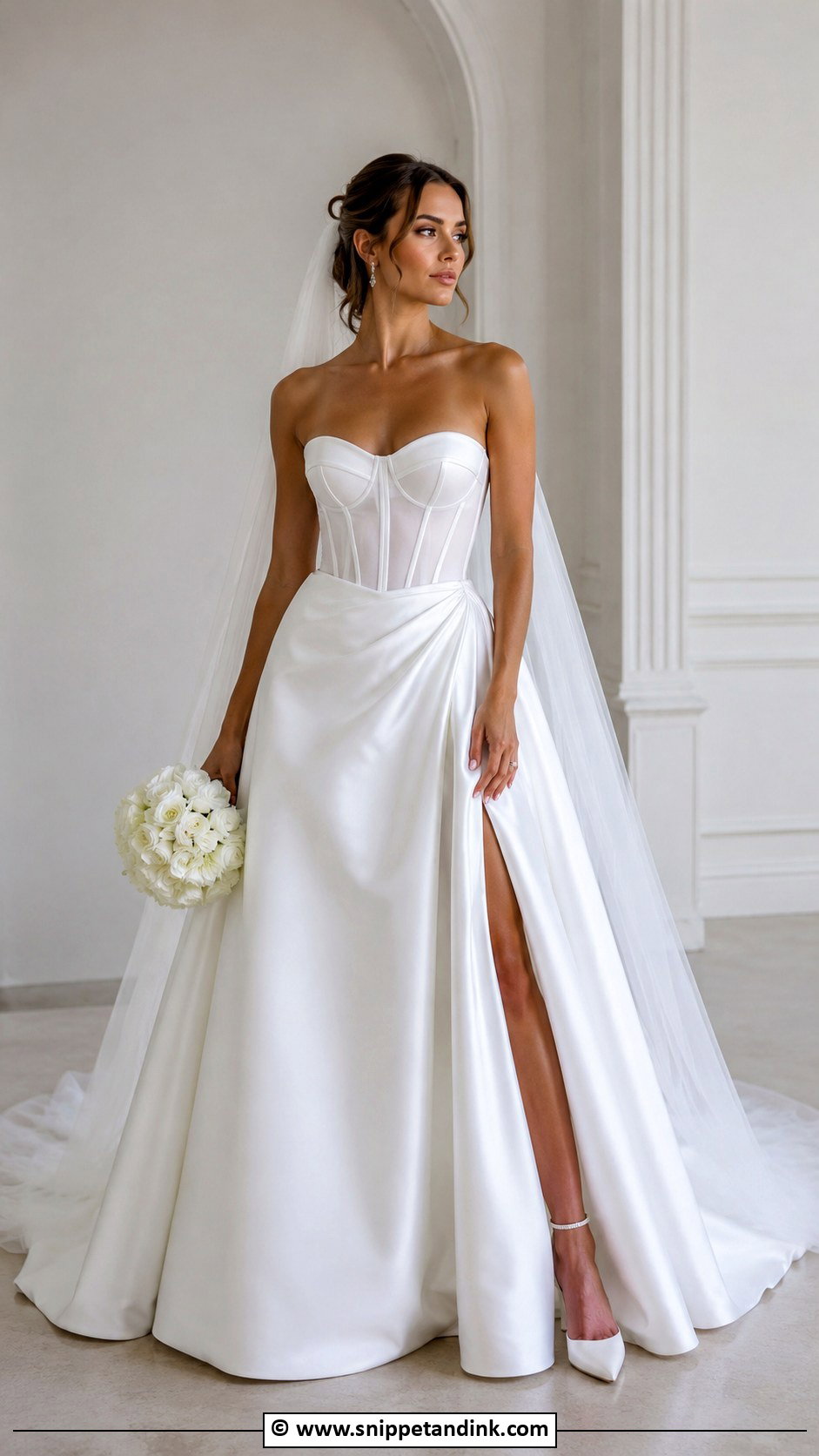
A corset bodice gives shape and support, subtle under smooth satin or visible through boning and sheer panels. A full A-line skirt with soft draping keeps it timeless; a fitted crepe skirt or detachable overskirt makes it modern. I judge a corset by whether the bride can breathe, sit and eat in it, not by how small it makes the waist. A good one improves posture without restricting it. Simple earrings, a smooth veil and elegant heels complete it.
11. High Neck Wedding Gown
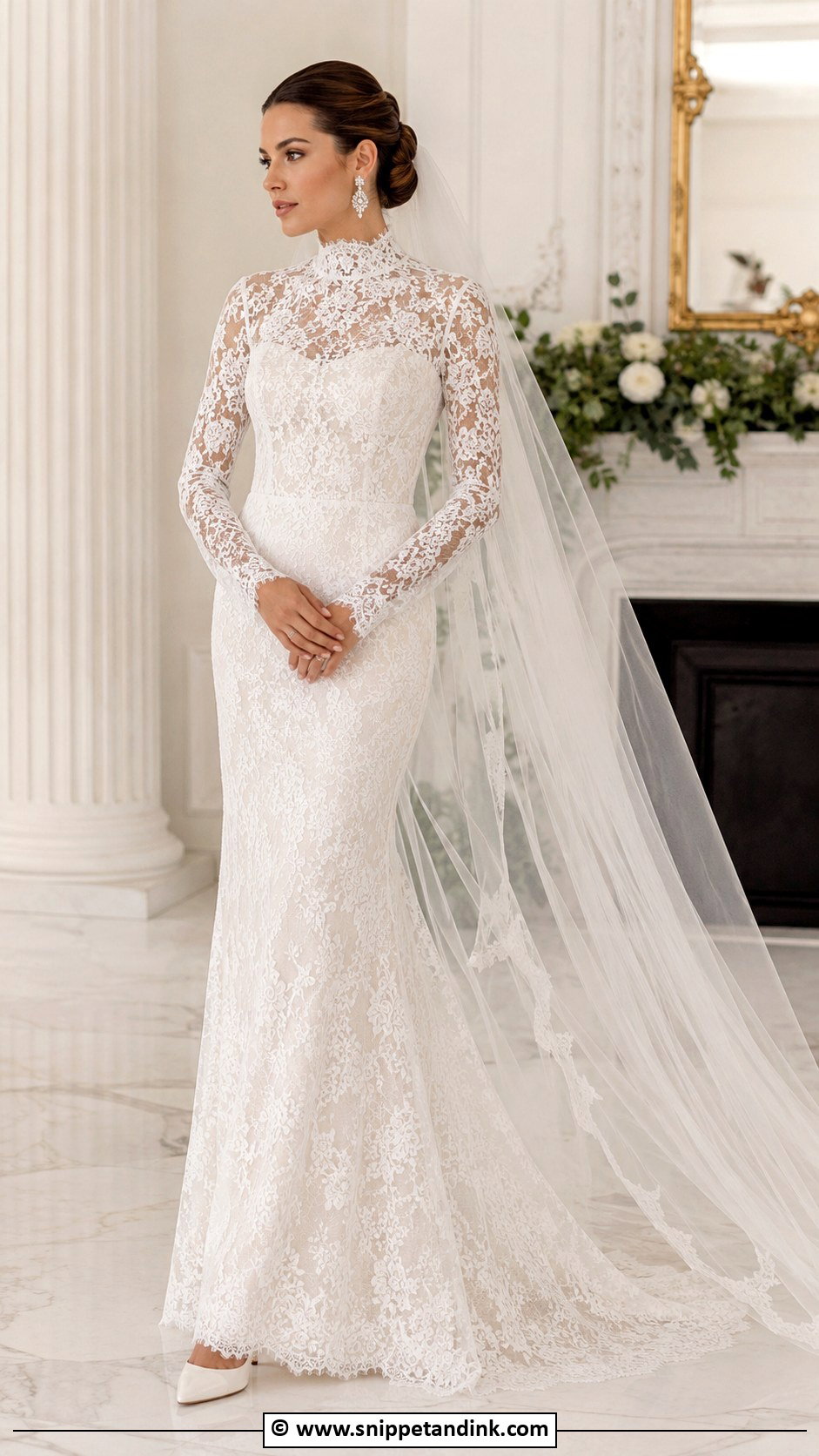
A high neck looks sophisticated and slightly regal. Lace feels romantic, satin polished, crepe modern. Balance it with an updo, statement earrings and a clean veil attached low at the back of the head, so the comb doesn’t fight the collar. For a shorter neck, I’d suggest a softer mock neck or a sheer lace neckline, which give the effect without crowding the jaw. Skip necklaces and let the neckline stay sharp for formal and cool-weather weddings.
12. Tea Length Wedding Gown
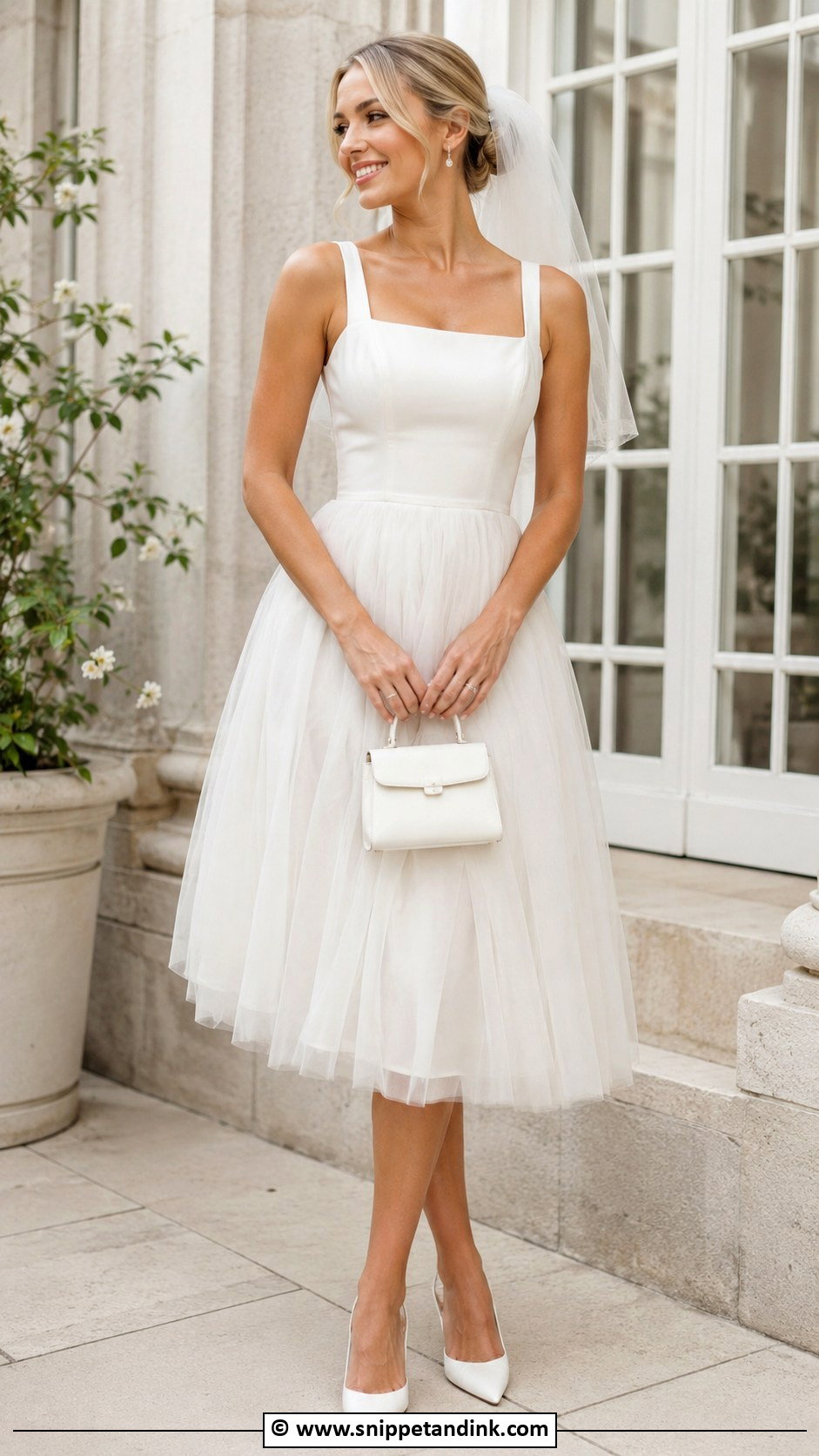
A tea-length gown ends between knee and ankle, so it’s built for movement at courthouse weddings, garden receptions, elopements and on the dance floor. Your shoes will show, so pointed pumps, slingbacks or embellished block heels count as part of the dress. Satin, tulle, lace and organza all suit the length. It’s a clever route to a vintage-inspired outfit that stops short of costume. Keep the waist defined so the shorter hem looks deliberate, and add a short veil, pearl earrings and a structured mini bag.
13. Short Wedding Gown
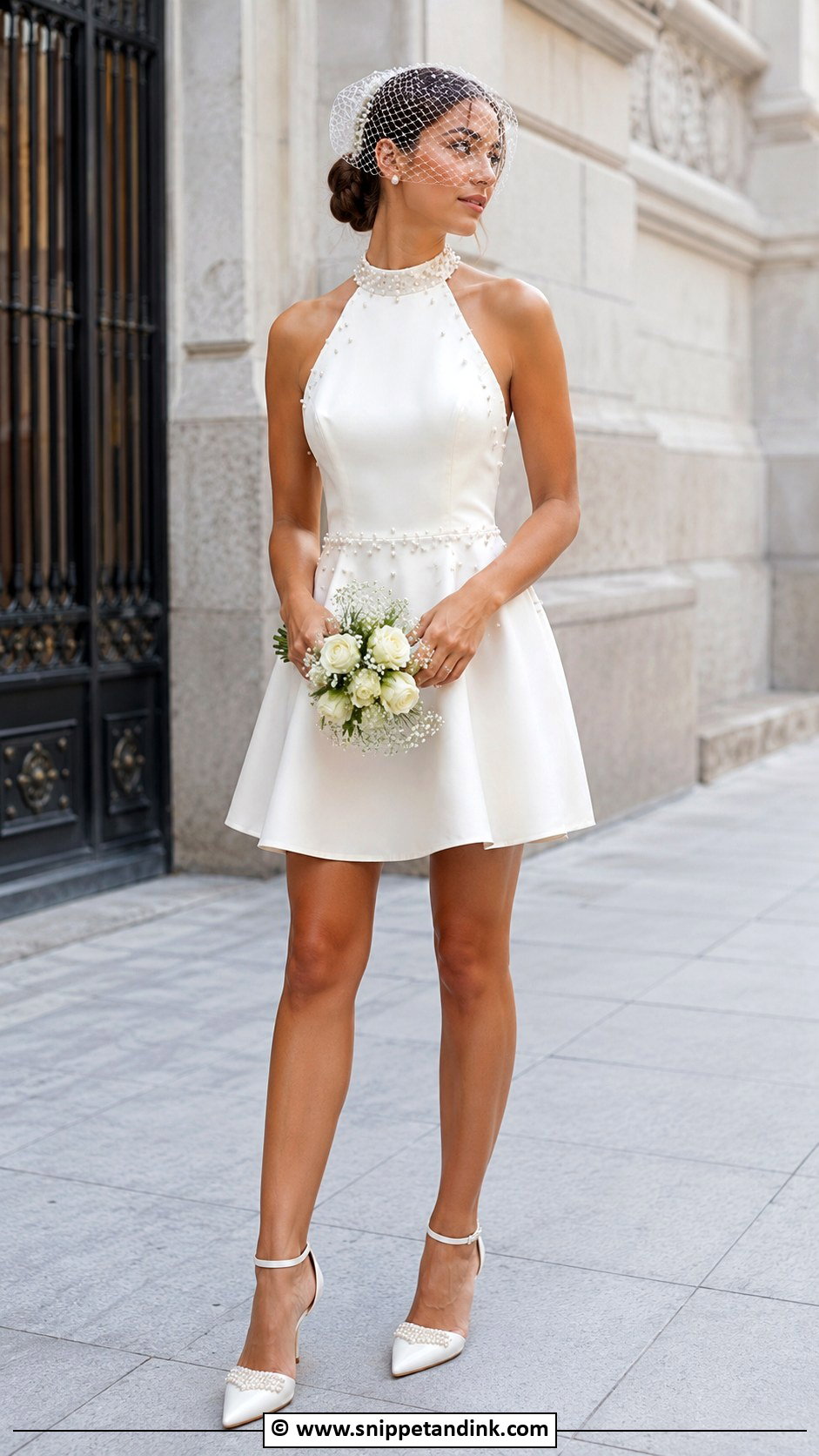
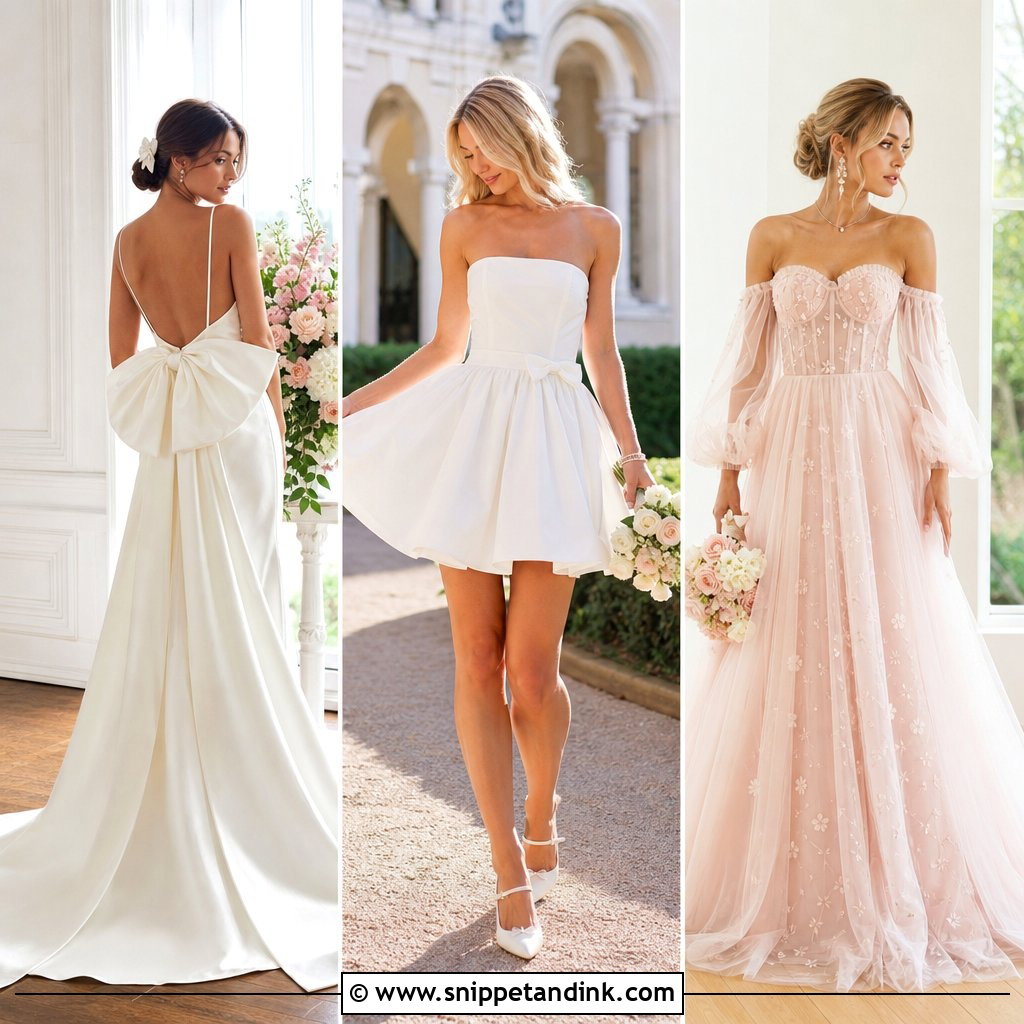
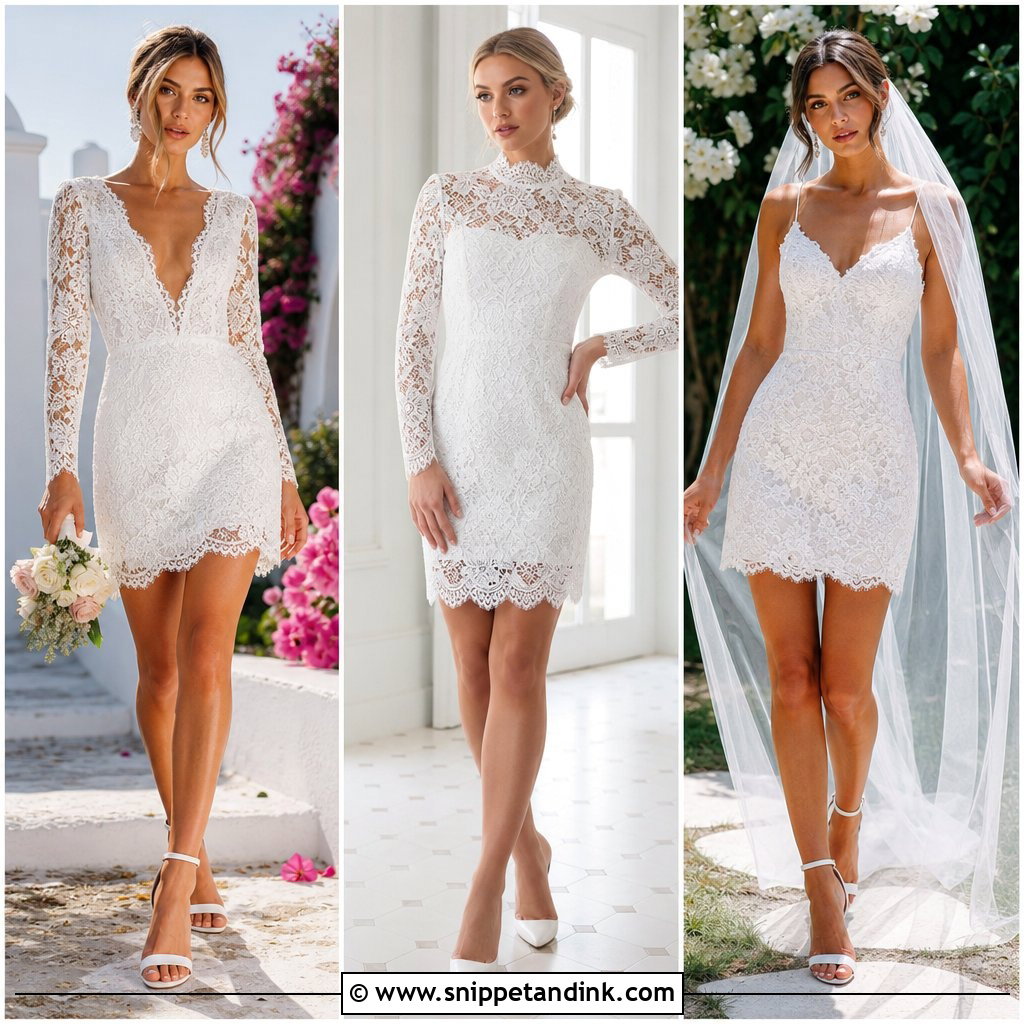
Short gowns suit civil ceremonies, second looks, welcome parties and casual celebrations. They can be tailored and plain, pearl-covered, bubble-hemmed or finished with bows. Legs and shoes get more attention, so pick footwear that feels special and that you can stand in. In cold months, sheer tights; in warm ones, bare legs and slingbacks. A birdcage veil, pearl studs or a sleek headband adds bridal polish. I always check a short hem sitting down before signing off.
14. Slip Wedding Gown
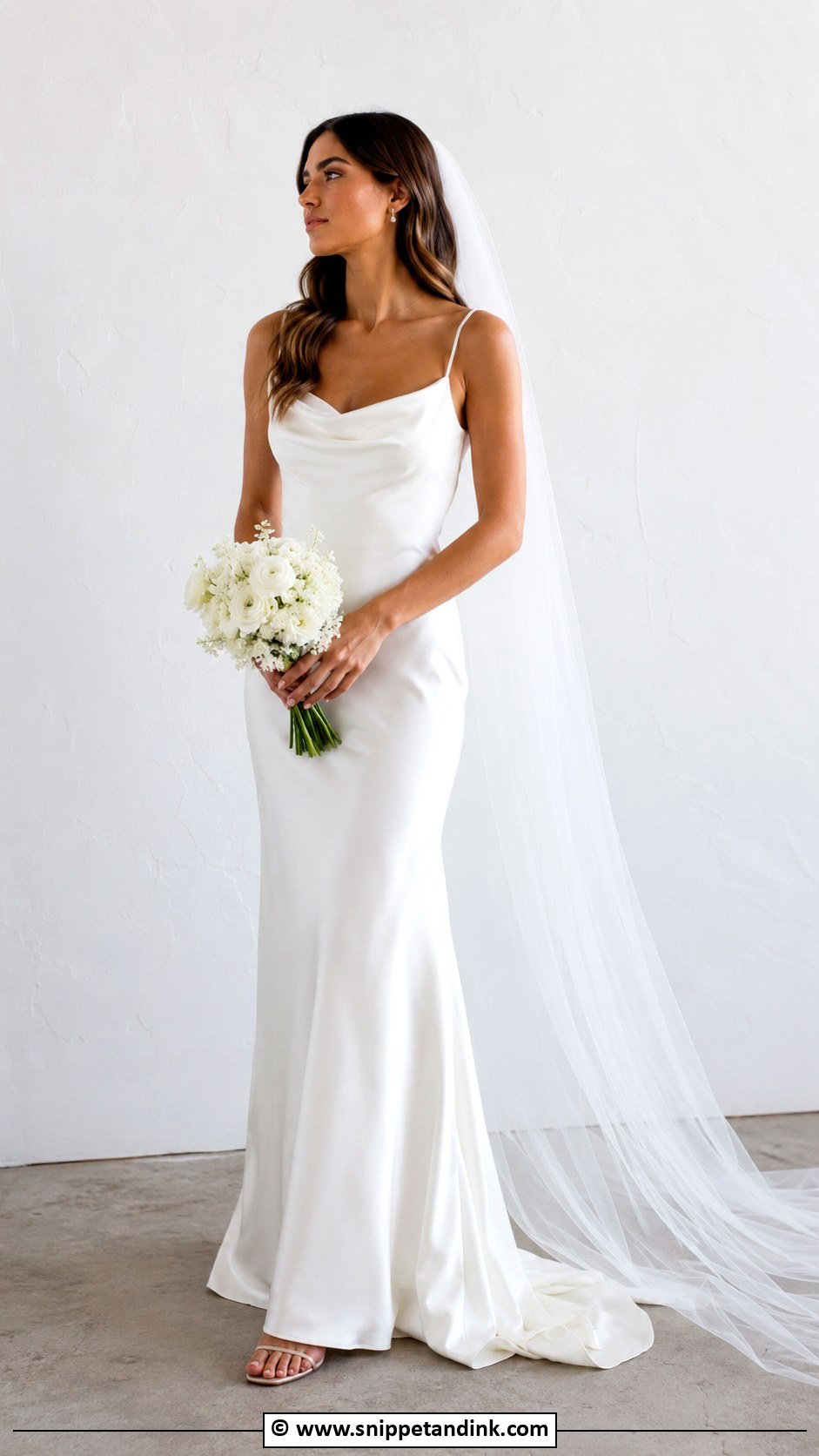
A slip gown in silk, satin or charmeuse skims the body rather than shaping it, so its appeal is all drape, neckline and fit. A cowl neck feels romantic; a straight neckline minimalist. Light fabric shows what’s beneath it, which is why smooth, edge-free underwear and careful tailoring matter so much. I’d look at it in daylight before deciding. Barely-there heels, a long sheer veil, small earrings and soft waves suit beaches, city ceremonies and intimate receptions.
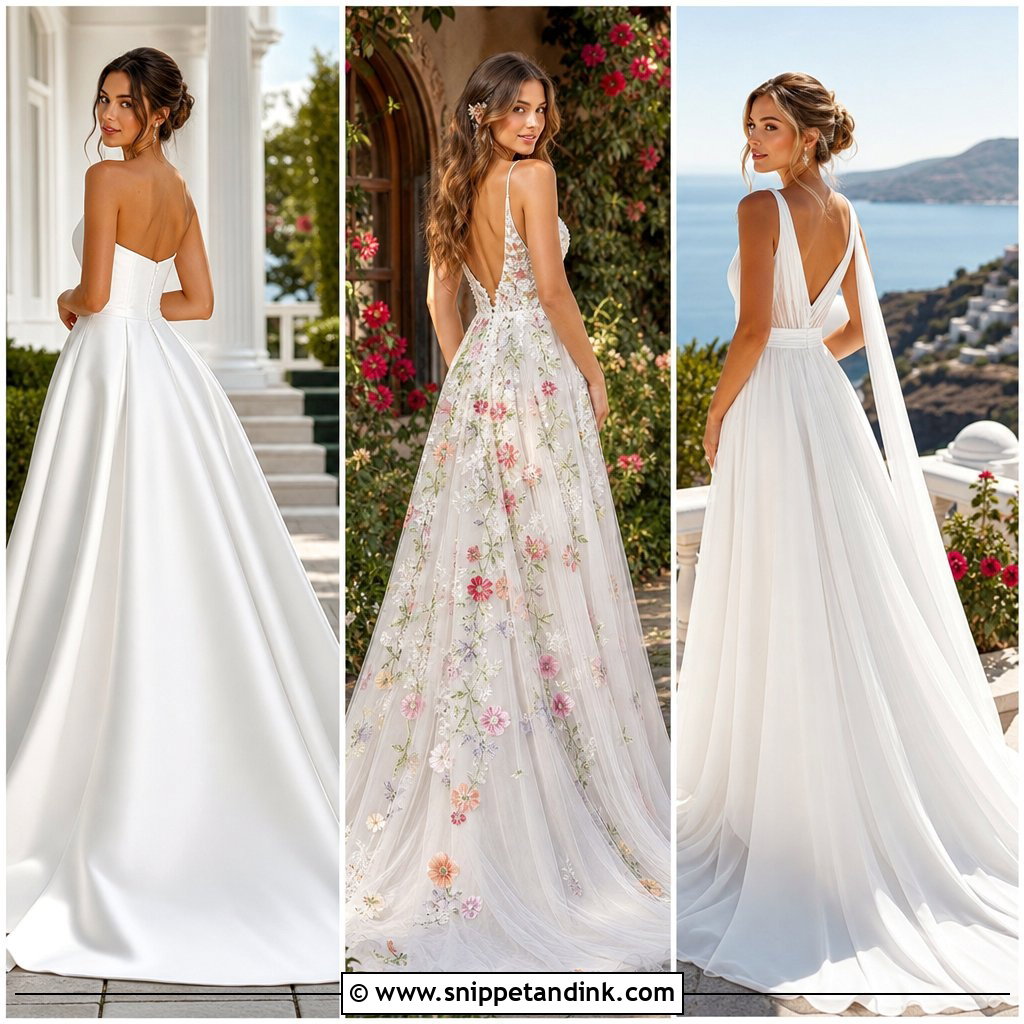
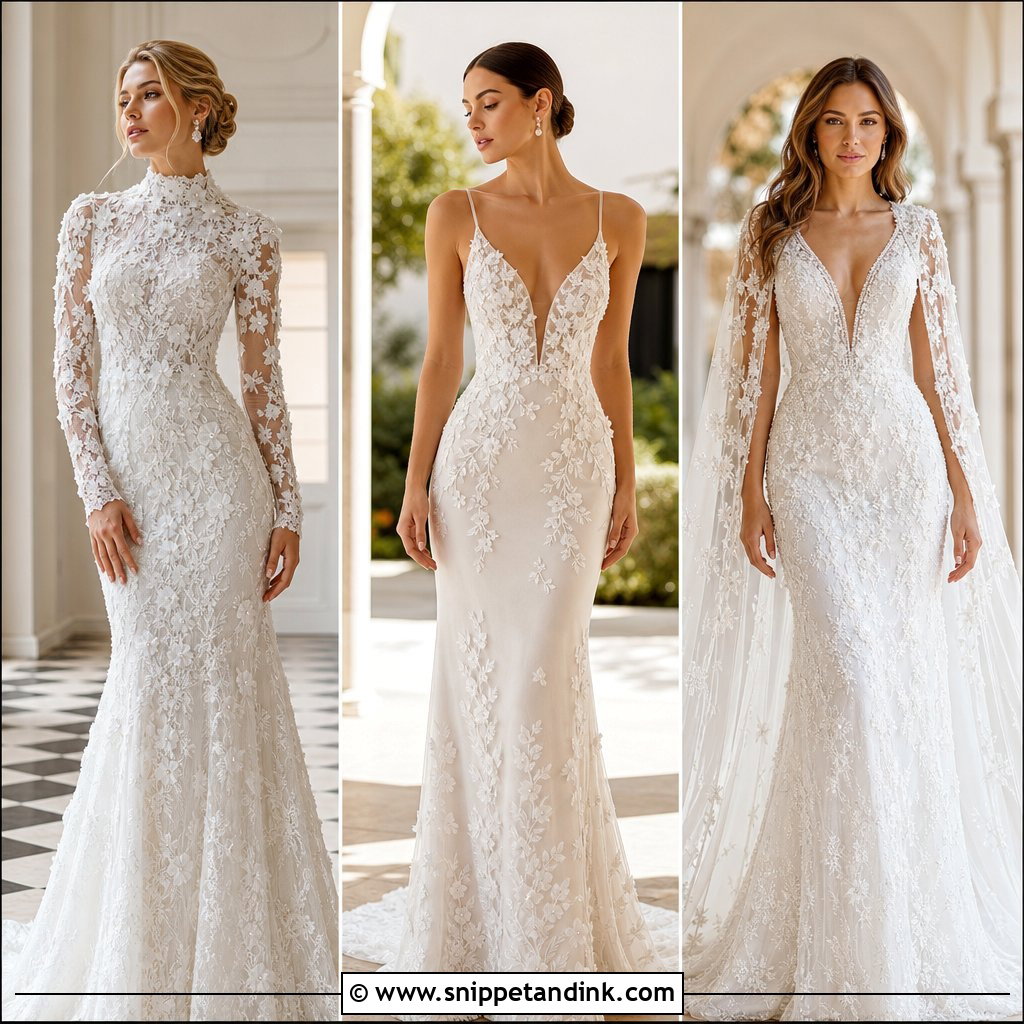
15. Floral Applique Wedding Gown
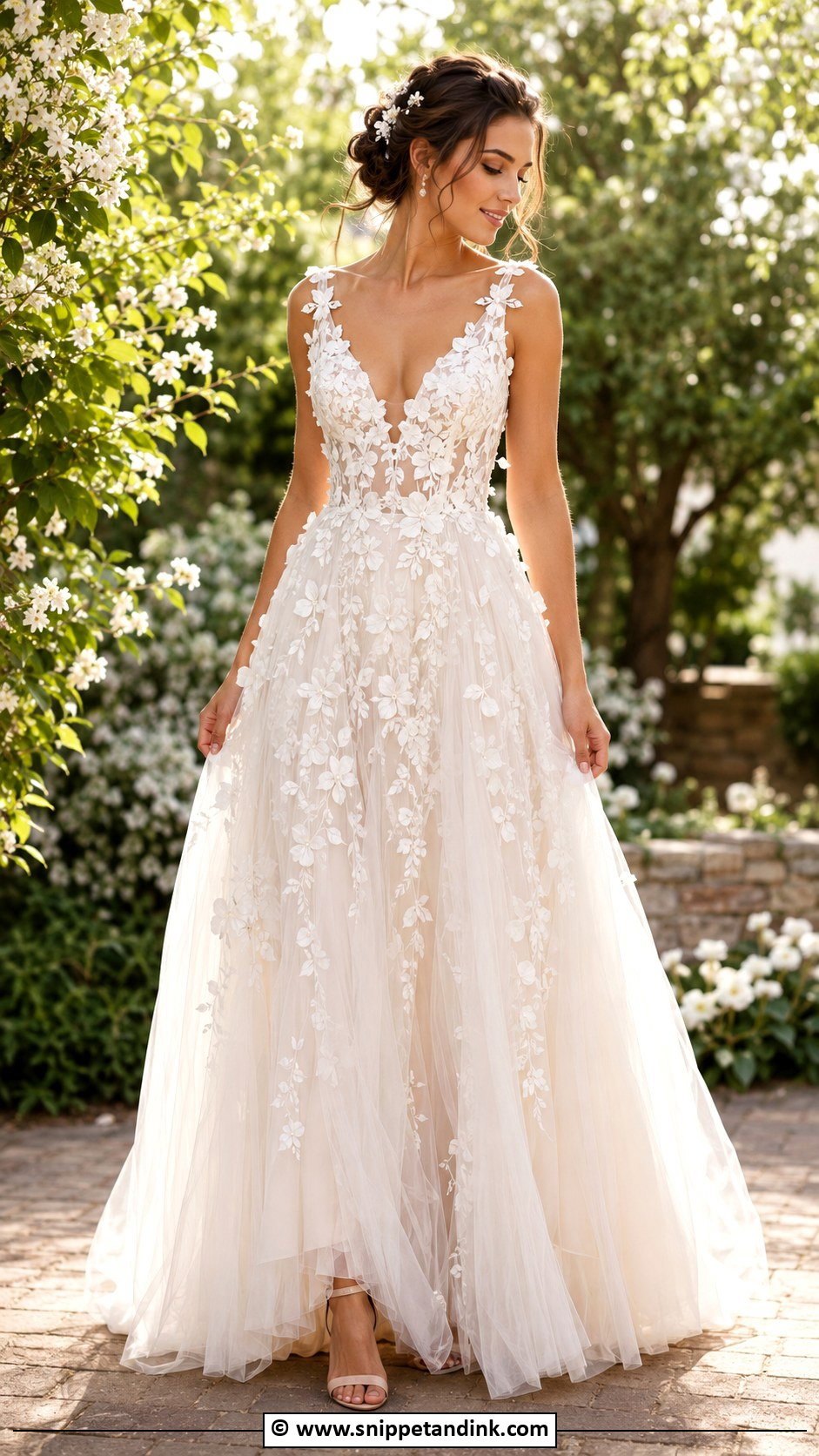
Floral appliqués add raised texture, either scattered softly, bold and oversized, or layered across tulle like a garden. The raised flowers give depth in both close-ups and full-length shots. If the appliqués are detailed, a plain veil avoids clutter. Ask how they’re attached; hand-stitched flowers sit flatter and last better than glued ones. Delicate floral pins, simple earrings and barely-there heels keep the gown in front for spring and outdoor ceremonies.
16. Tulle Princess Wedding Gown
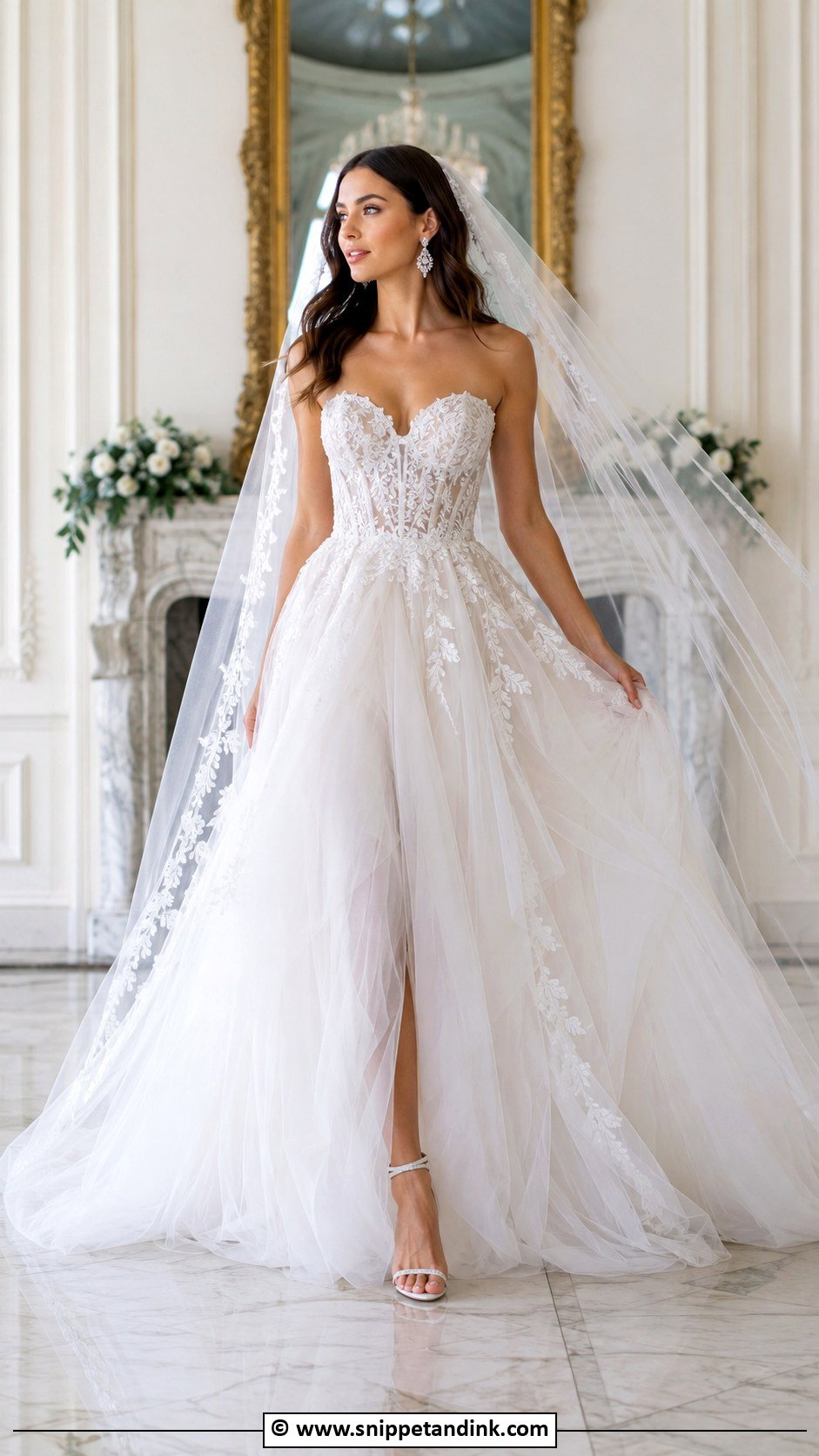
Layers of airy tulle make a princess gown float, with far less weight than satin or mikado. A fitted bodice keeps it balanced. For a modern take, choose a plain bodice with little sparkle. A petite bride should ask for controlled volume, fewer layers or a softer petticoat, so the skirt doesn’t overwhelm her. Watch out for snags on rough floors and jewelry with prongs. A cathedral veil, crystal earrings and delicate heels suit ballrooms, gardens and estates.
17. Mikado Wedding Gown
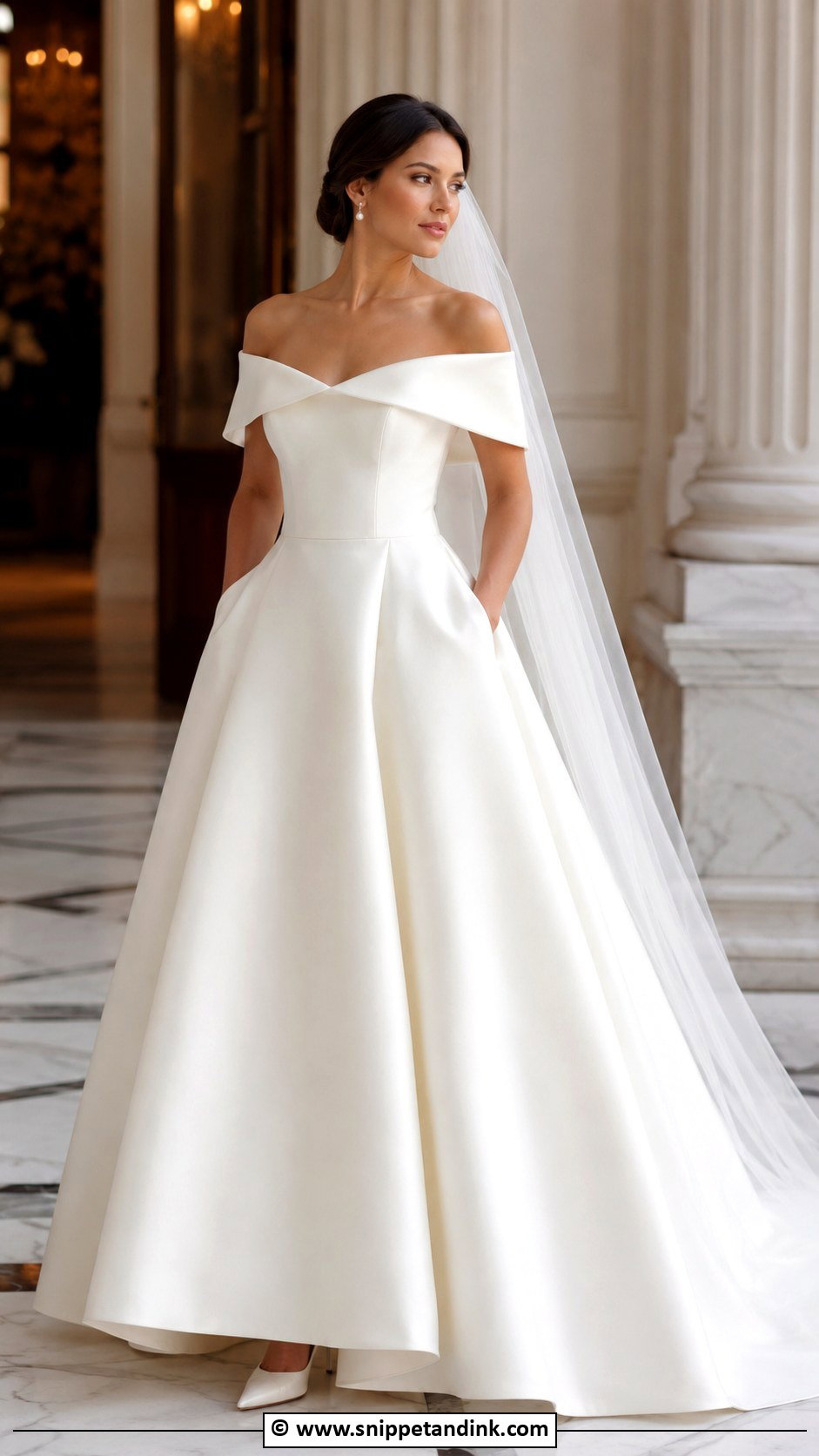
Mikado is a heavy, structured silk or silk blend with a soft glow rather than a high shine, and it holds shape beautifully in clean ball gowns, A-lines and sculptural folds. It gives drama without embellishment. Because it doesn’t drape, it won’t hide a poor fit, so the bodice must be right. A folded neckline, a pleated skirt or hidden pockets make it feel modern. A sleek veil, pearl earrings and pointed pumps match it, and it works in most seasons.
18. Organza Wedding Gown
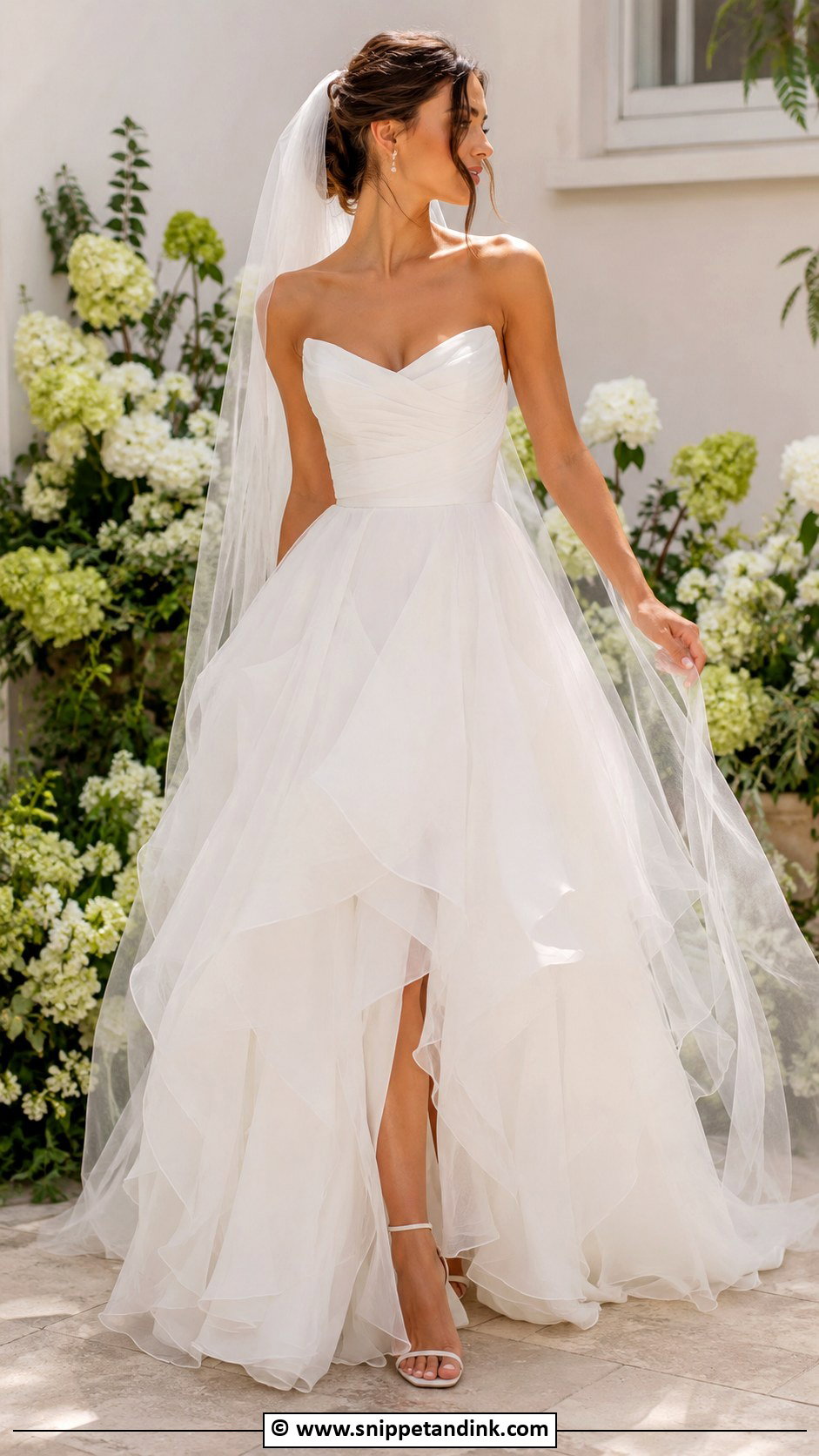
Organza is light but crisp, with enough body to hold a fuller skirt without the weight of satin. Layered skirts, subtle volume, puff sleeves and floral details all suit it, and it moves nicely for spring and summer. Sheer layers show construction under bright light, so I check seams and lining edges with the gown held up to a window. Organza also creases, so plan a steam before the ceremony. Delicate sandals, a sheer veil and small drop earrings suit it.
19. Bow Back Wedding Gown
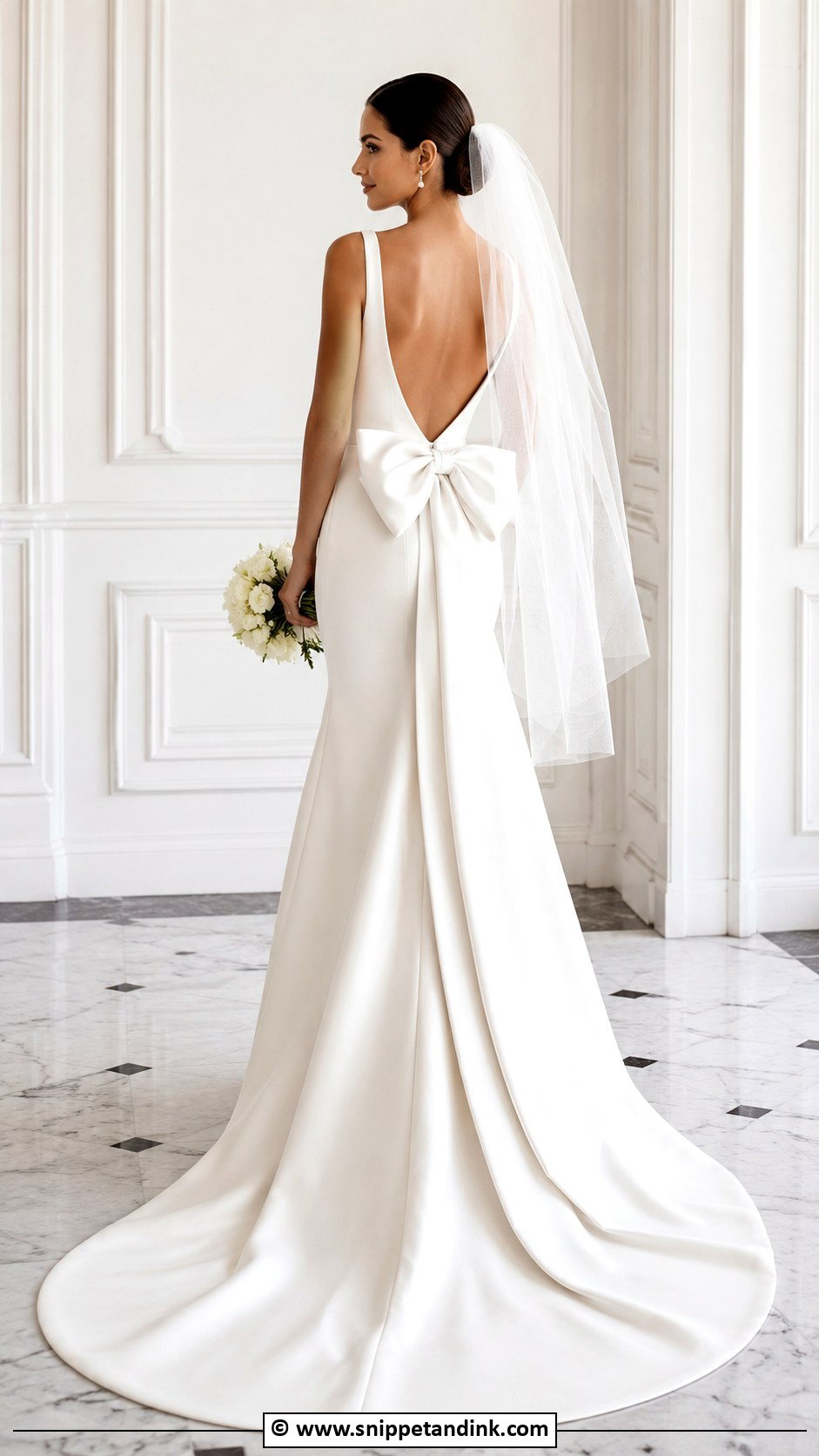
A bow at the back gives you a focal point without sparkle. It can be oversized and dramatic, soft and trailing, or small and tailored, on satin, crepe, mikado or a minimal gown. With a large bow, I’d often skip the veil or choose one that’s cut short enough not to sit on it. At fittings, the bow should lie flat and not drag the back of the dress down. Pearl earrings, classic heels and a smooth updo keep the back visible.

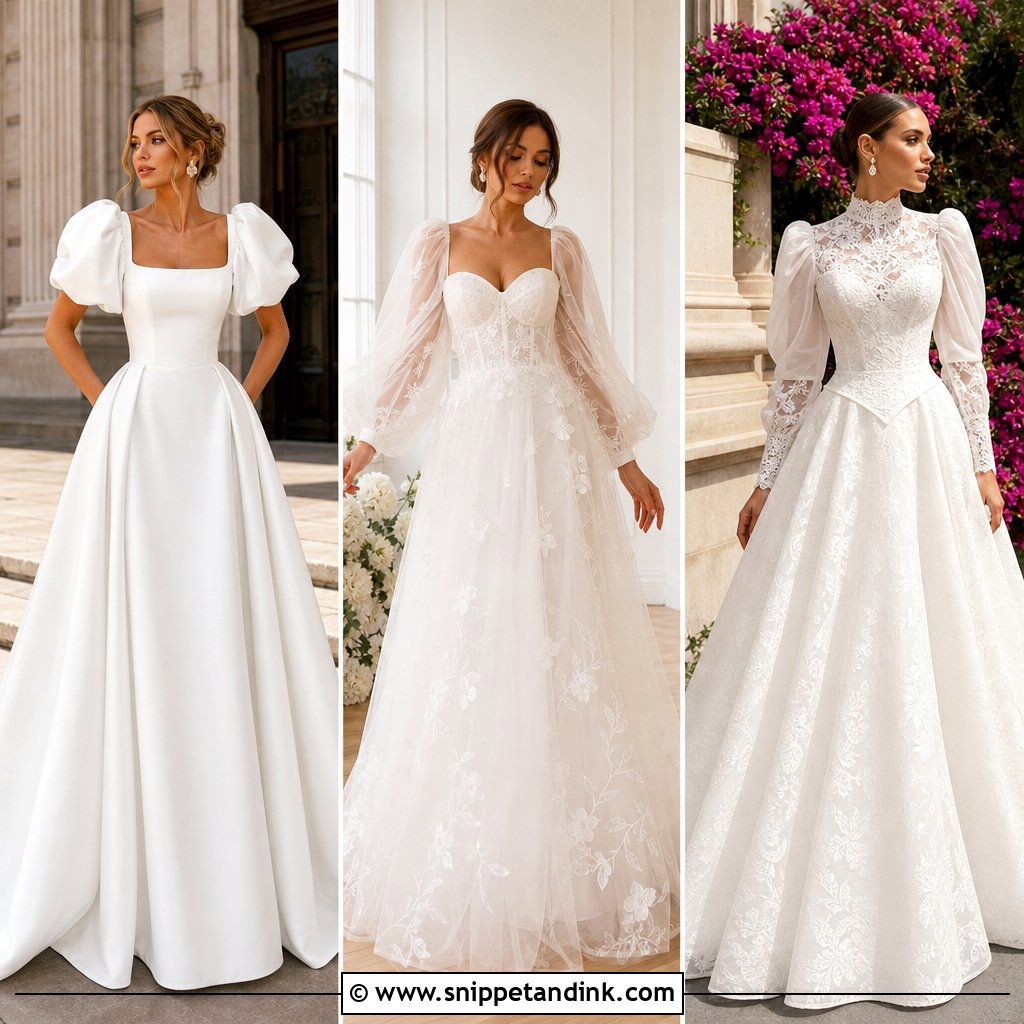
20. Detachable Overskirt Wedding Gown
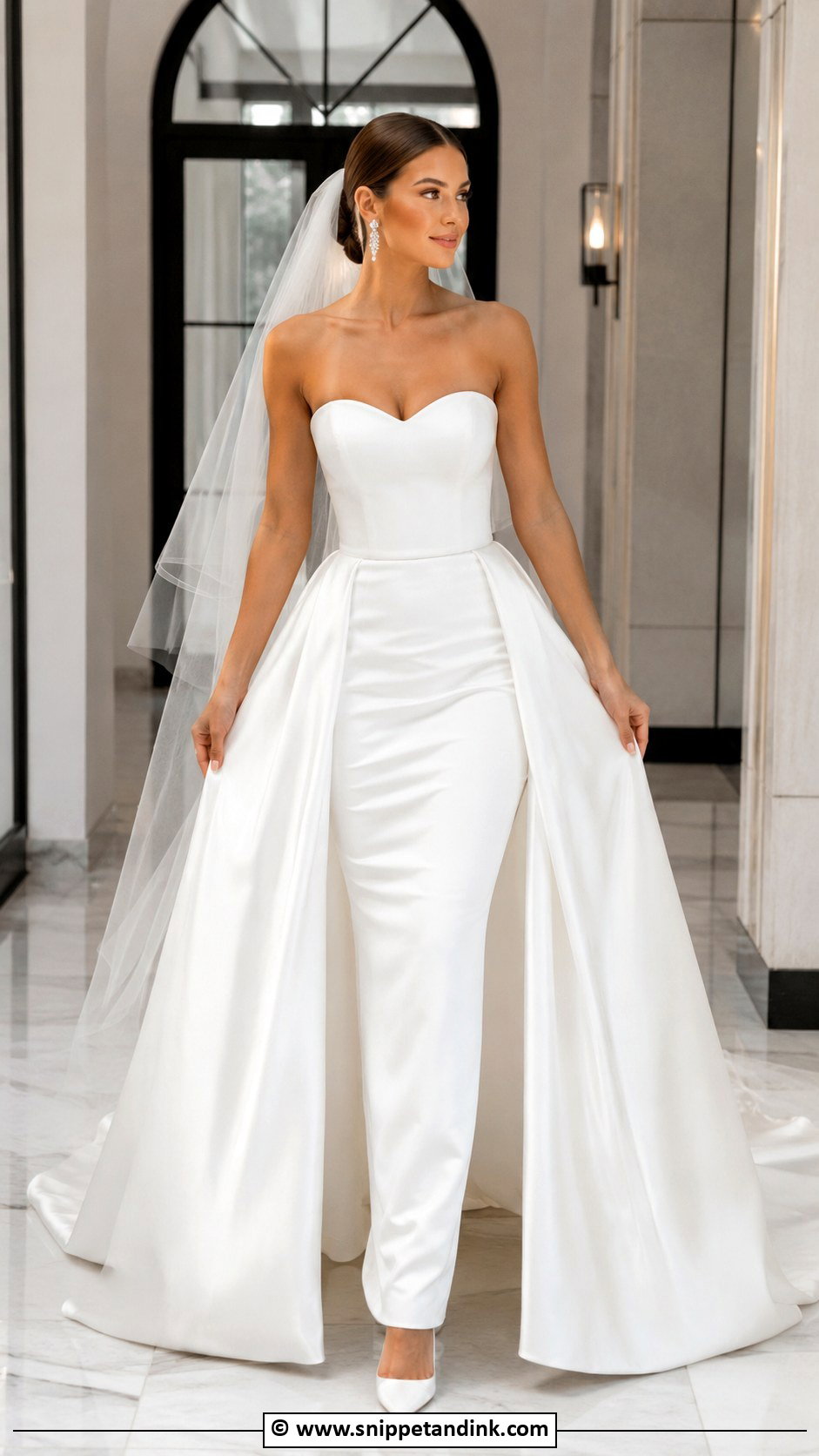
A detachable overskirt wedding gown gives you a ball gown for the ceremony and a sleeker base gown afterward, whether that’s fitted crepe, a satin column or a lace mermaid. It solves the problem of loving drama but wanting to eat and dance freely. Check the attachment closely: hooks, snaps and buttons differ in how quickly they come undone, and someone should practise before the day. Wear a long veil for the ceremony, then switch to statement earrings or a hair bow.
21. Wedding Gown With Cape
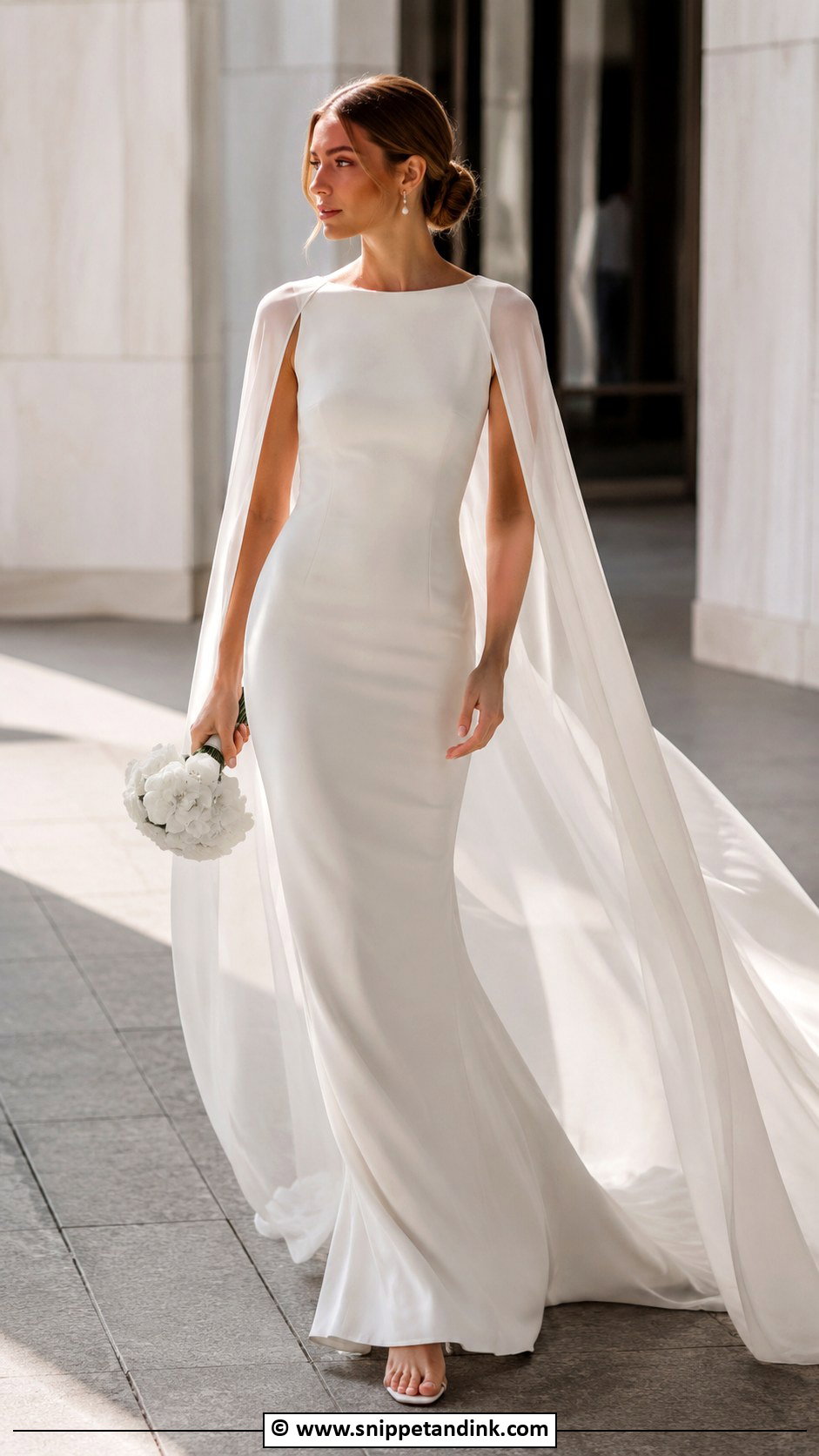
A cape can replace a veil or sit with a very simple headpiece. Sheer capes move softly; structured ones add drama and coverage. It’s useful for covered shoulders without sleeves. Length is the decision that matters. Floor-length capes feel formal but tangle in car doors and on stairs, while shorter ones are easier for photos and travel. I check that the cape fastens into the gown’s structure rather than just the neckline fabric. A minimal gown, sleek heels and clean jewelry suit city and winter weddings.
22. Wedding Gown With Gloves
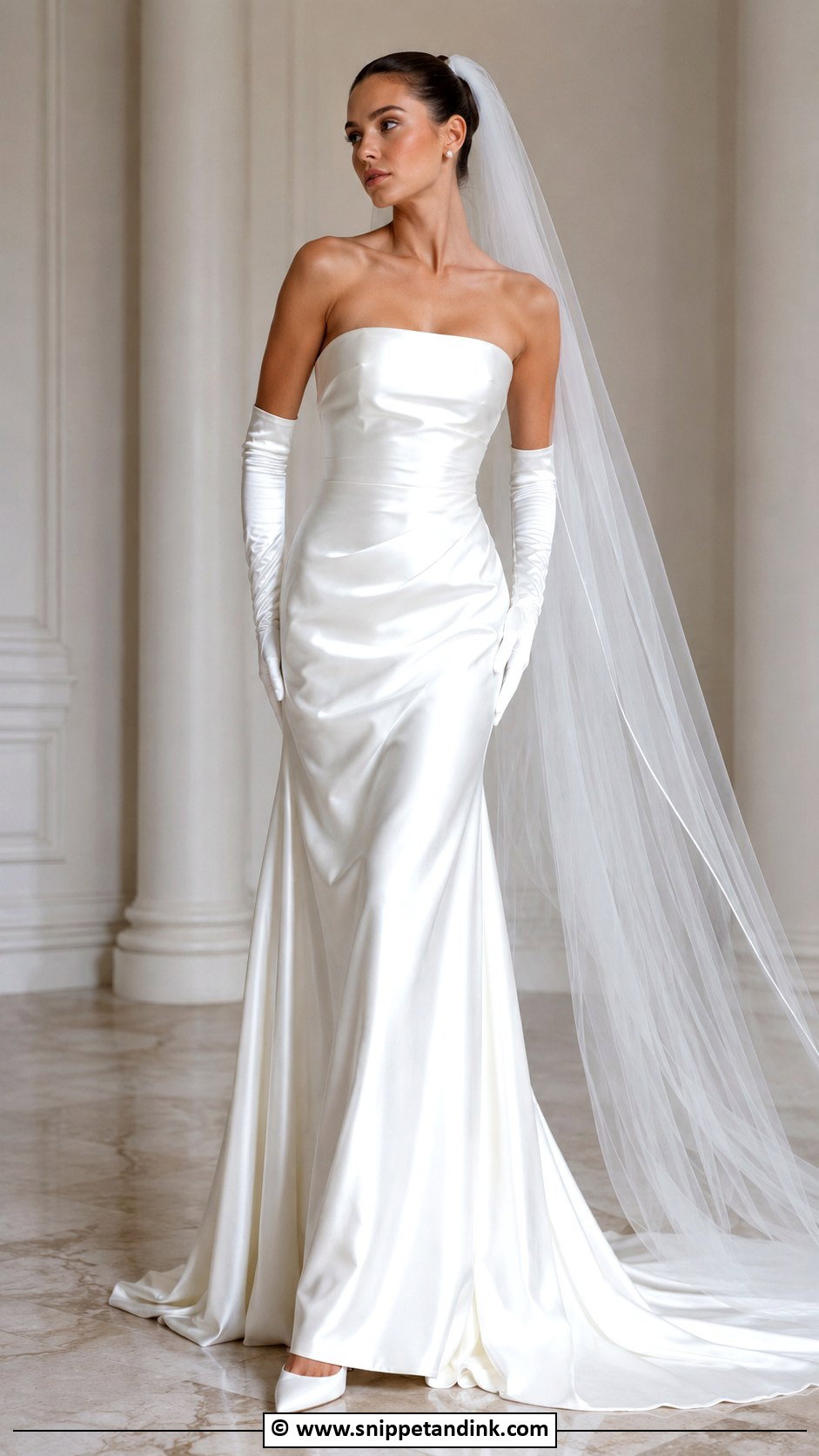
Gloves turn a simple gown editorial. Opera gloves suit strapless, off-the-shoulder and sleeveless gowns; short gloves suit tea-length or vintage styles. Satin looks polished, sheer feels delicate, pearl trim adds detail. They should fit smoothly with no bunching at wrist or elbow. Plan the ring exchange, too: either remove the left glove before the vows or pick gloves with a split finger, and give your maid of honour the job of holding it.
23. Wedding Gown With Pockets
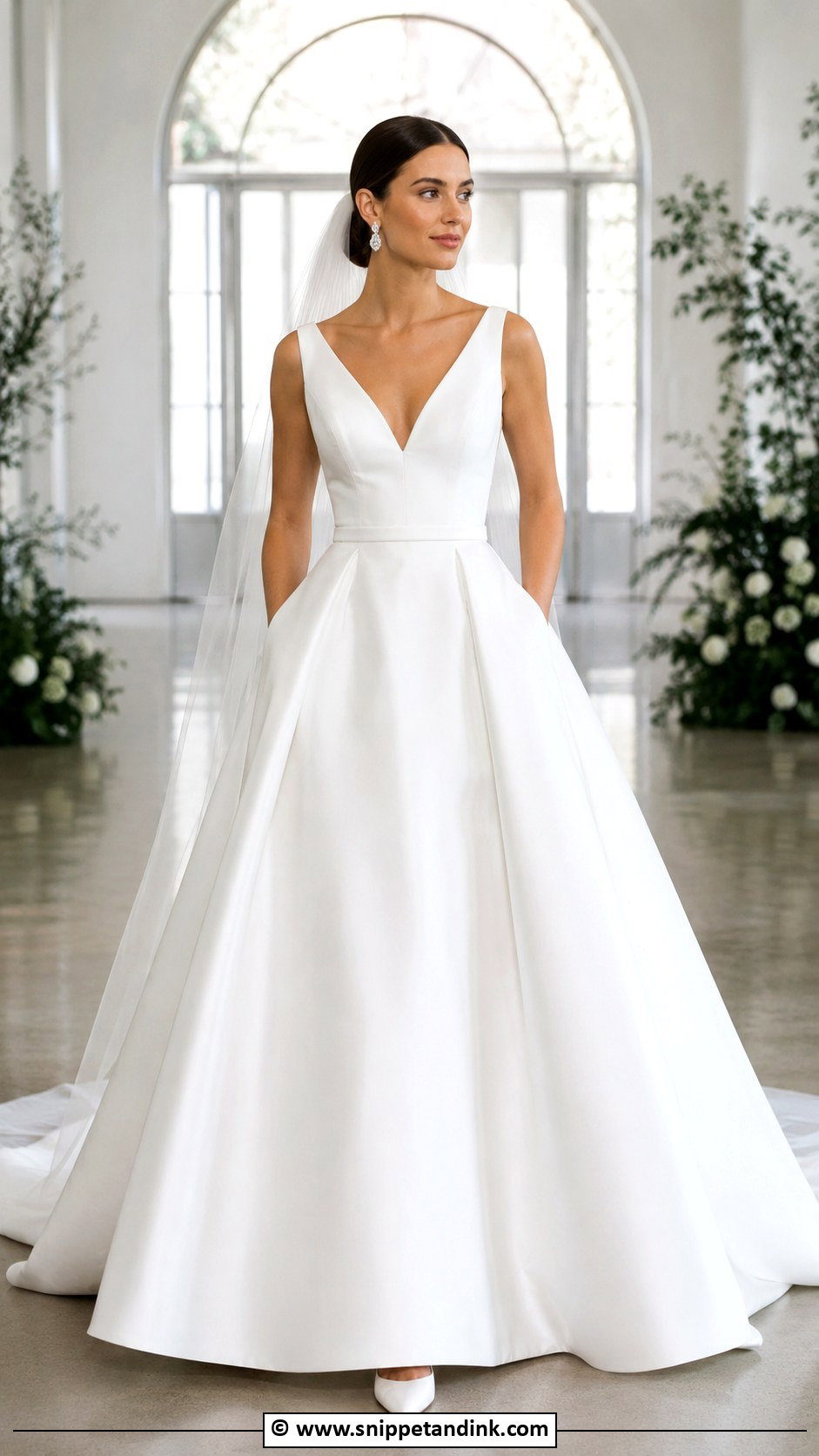
Pockets are the most practical detail on this list. They sit best in structured fabrics like mikado, satin and organza, inside fuller skirts, and they hold a tissue, a vow card or a lipstick so you don’t need a clutch. In portraits, a hand in a pocket relaxes your posture. I check that they don’t add bulk at the hips, especially in a fitted skirt, where a loaded pocket shows. Simple earrings, a clean veil and polished heels are enough.
24. Plus Size Wedding Gown
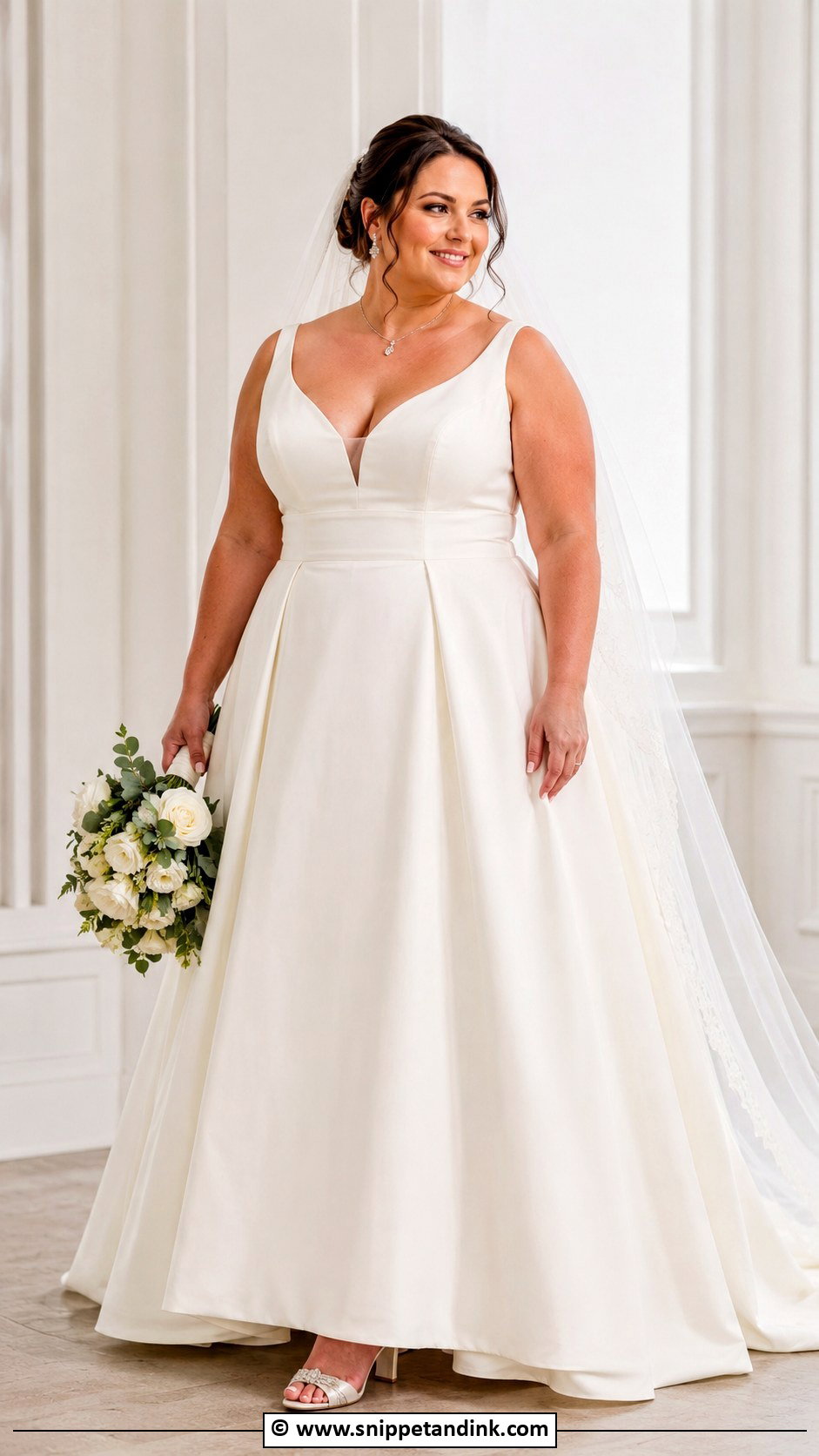
Fit, support and your own taste should decide a plus size gown, not outdated rules. A-lines, structured ball gowns, fit-and-flare, corset bodices and sleek crepe can all look excellent. The right one supports the bust, shapes where you want shape, and lets you move. Ask about extended sizing and custom adjustments before settling for whatever samples a shop happens to have. Choose a veil scaled to the gown, supportive bridal shoes and jewelry that suits the neckline, and spend on fabric quality and strong alterations.
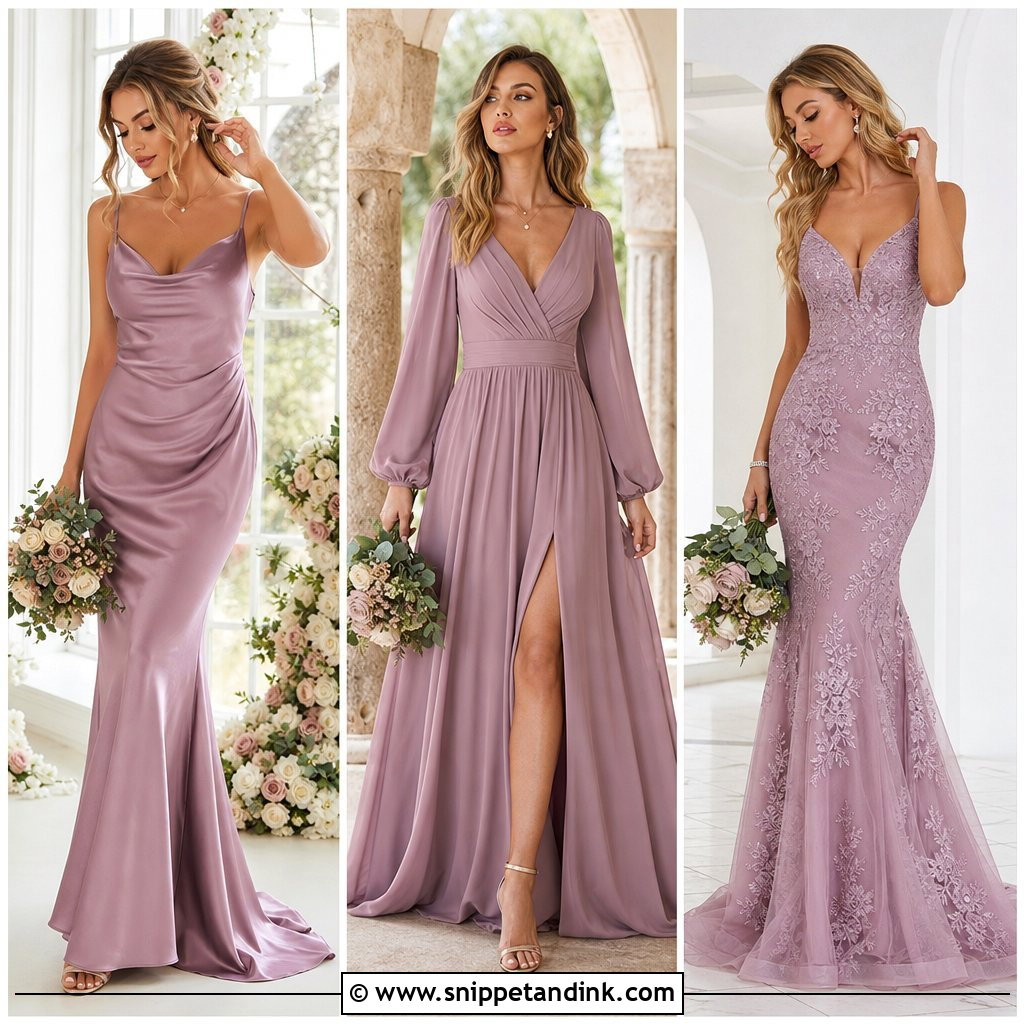
25. Petite Wedding Gown
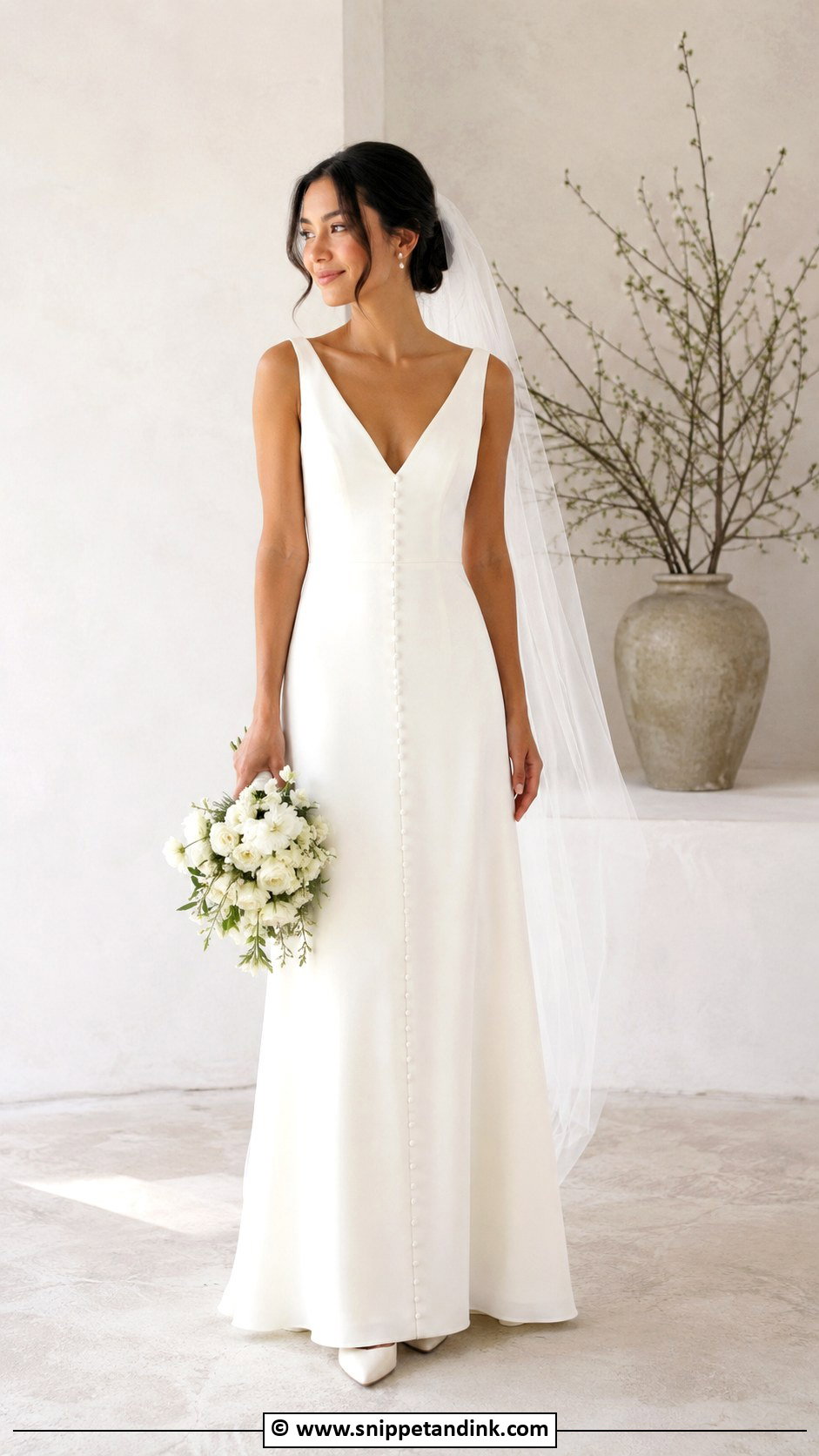
A petite gown should suit your proportions instead of swallowing you. Clean A-lines, sheaths, slim ball gowns, tea-length dresses and high-waisted shapes all work. Vertical details like seams, buttons, soft pleats or a V neck draw the eye up. Very heavy skirts or oversized bows need careful balancing. Plan for expert hemming, because shortening a gown with a lace border or detailed train means moving the lace, not just cutting it. Pointed heels, a narrow veil and smaller accessories complete it.
26. Beach Wedding Gown
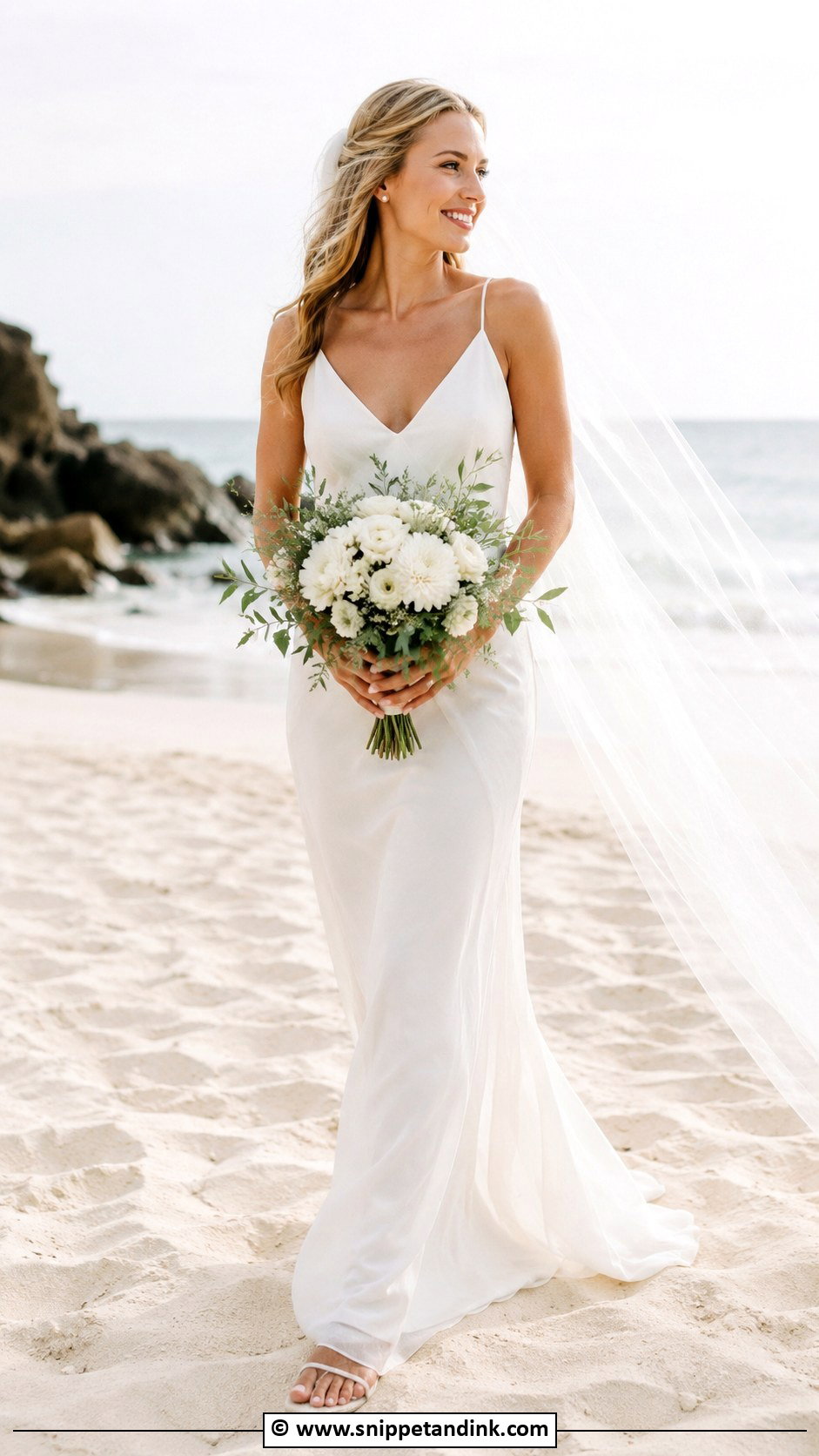
Heavy satin and rigid ball gowns fight a beach; chiffon, crepe, silk, tulle and simple lace work with it. A sheath, slip, A-line or relaxed off-shoulder dress catches the breeze without becoming hard to manage. Skip a long heavy train on sand, because it collects sand and gets soaked at the waterline. Flat sandals, pearl studs, loose waves and a light veil or hair scarf suit the setting. Ivory, champagne and soft white all look warm in natural light.
27. Garden Wedding Gown
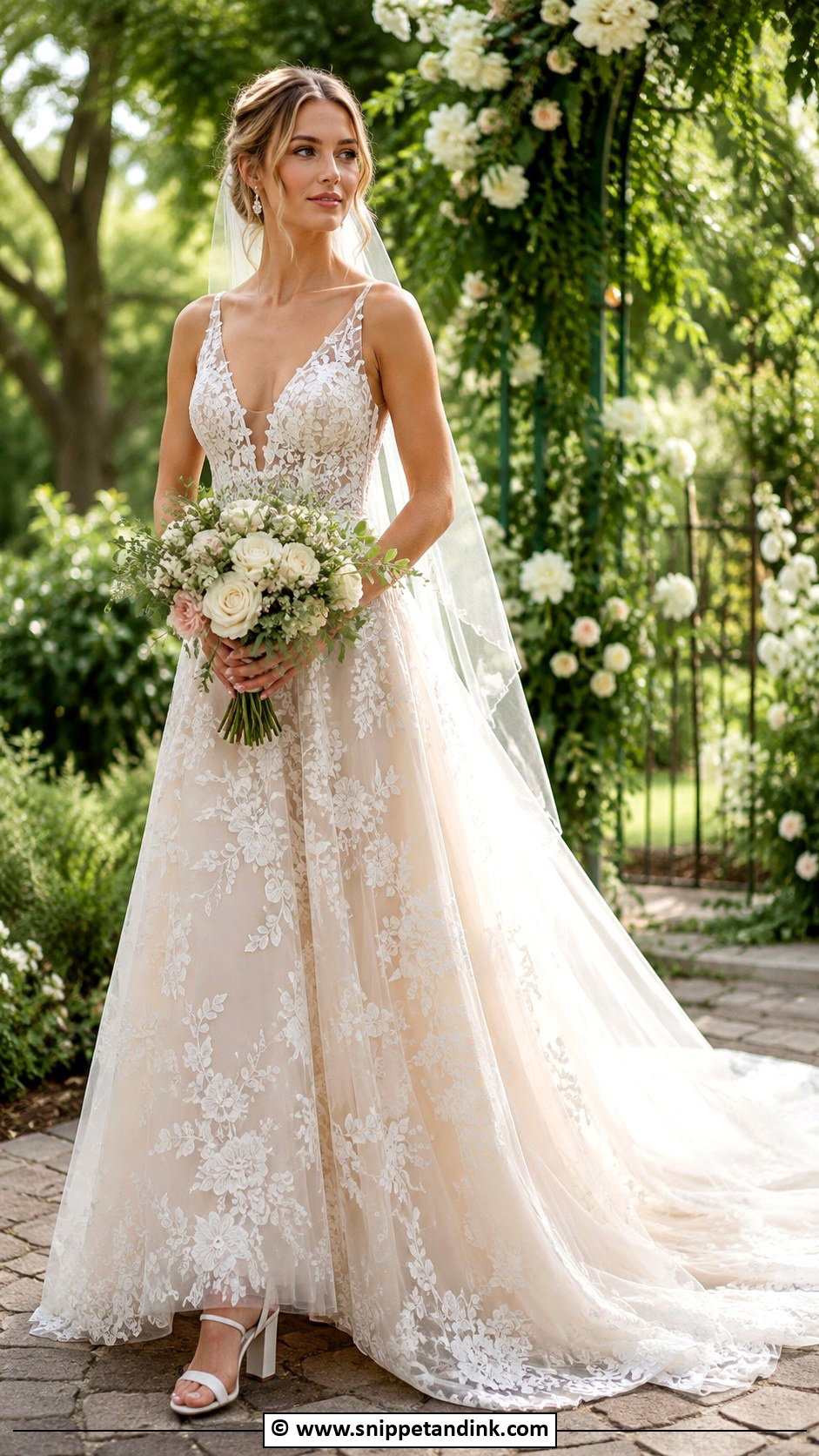
Garden gowns should feel fresh and connected to the setting: floral lace, soft tulle, organza and subtle embroidery, often on an A-line, off-shoulder or floral appliqué gown. Stilettos sink into lawns, so I’d choose block heels or wedges. A train looks lovely on grass in photos but picks up grass stains and petals, so agree a bustle for the reception and know how it works. Delicate earrings, a soft veil and natural makeup complete it.
28. Courthouse Wedding Gown
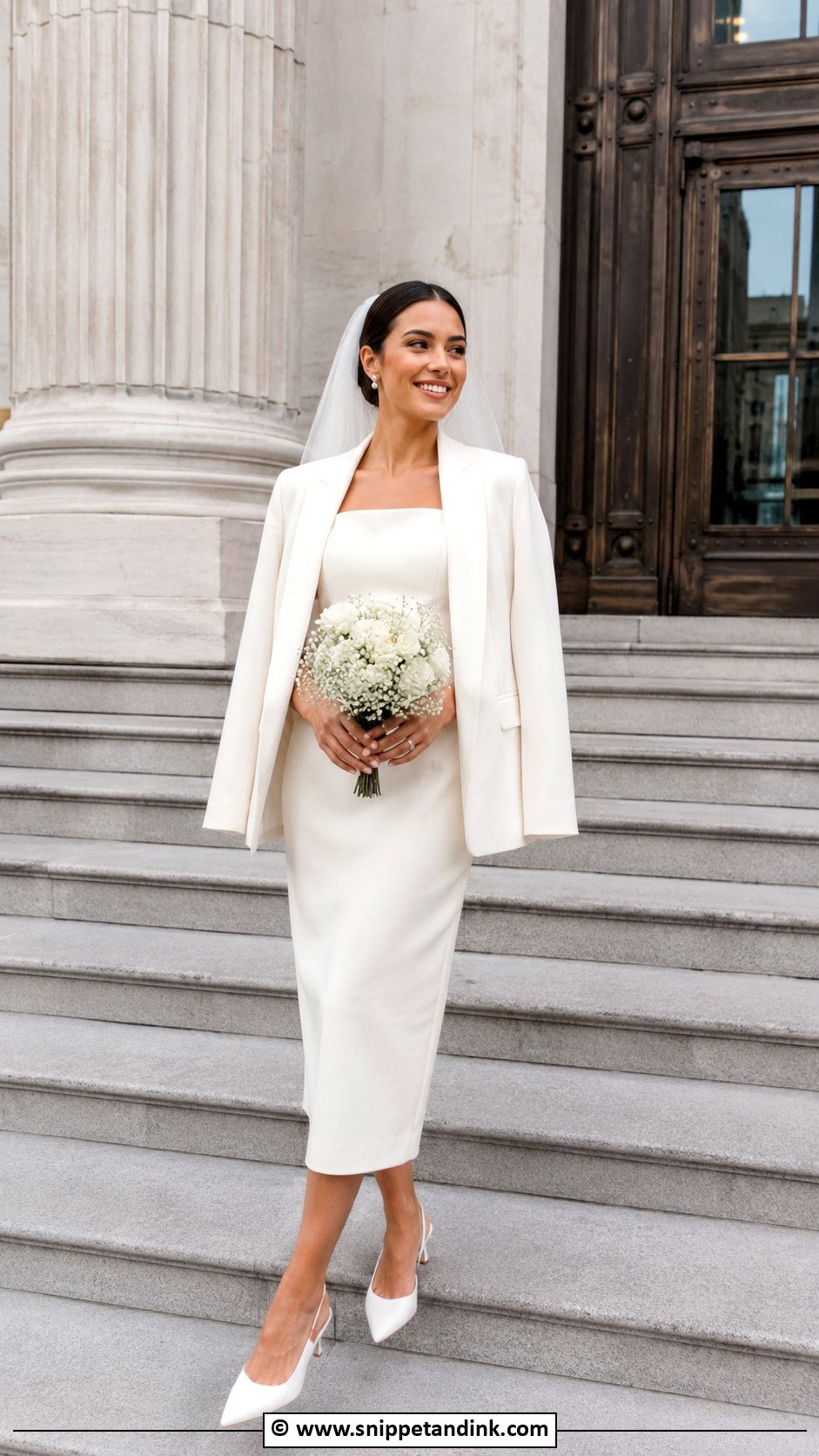
Courthouse gowns should be polished and easy: a short dress, tea-length, sleek slip, tailored midi or minimal crepe. Since the room itself is usually plain, the outfit carries the personality through fabric, fit and accessories. A blazer adds coverage and a city edge. Most courthouse portraits happen on steps and pavements outside, so check your hem and heels on stairs. Slingbacks, a small bouquet, pearl earrings and a short veil or structured headband suit it.
29. Vintage Wedding Gown
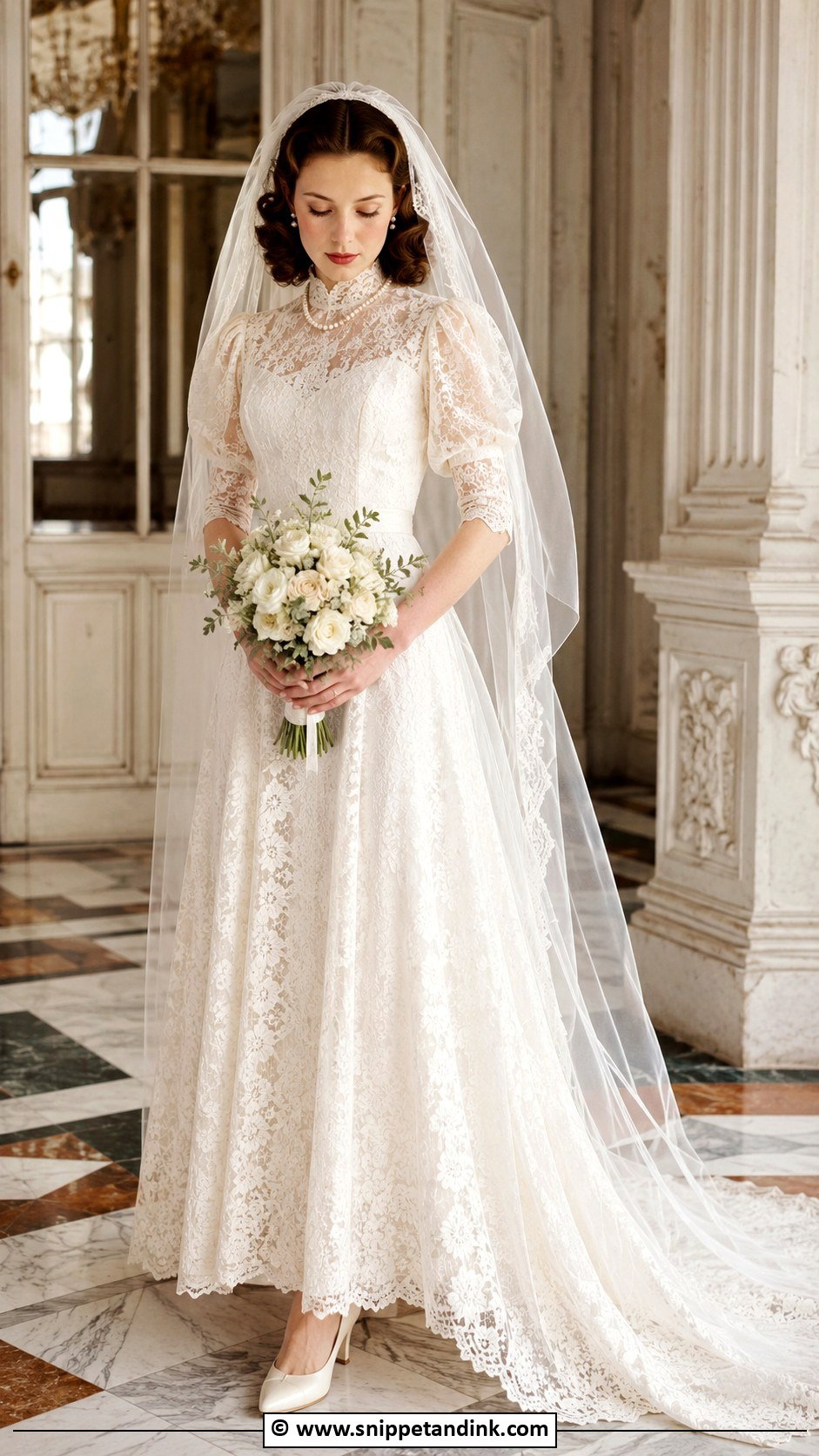
You can wear a true vintage dress or a new gown inspired by a past decade. Lace sleeves, high necklines, tea-length hems, satin slips, beading and Juliet veils all bring nostalgia. If you’re buying genuine vintage, inspect the fabric, stains, seams and alteration room before committing, because old silk can split and some marks won’t clean out. Many older gowns need specialist cleaning and reinforcement. Balance one or two period details with modern hair and makeup, and add classic pumps, pearls and a structured bouquet.
30. Boho Wedding Gown
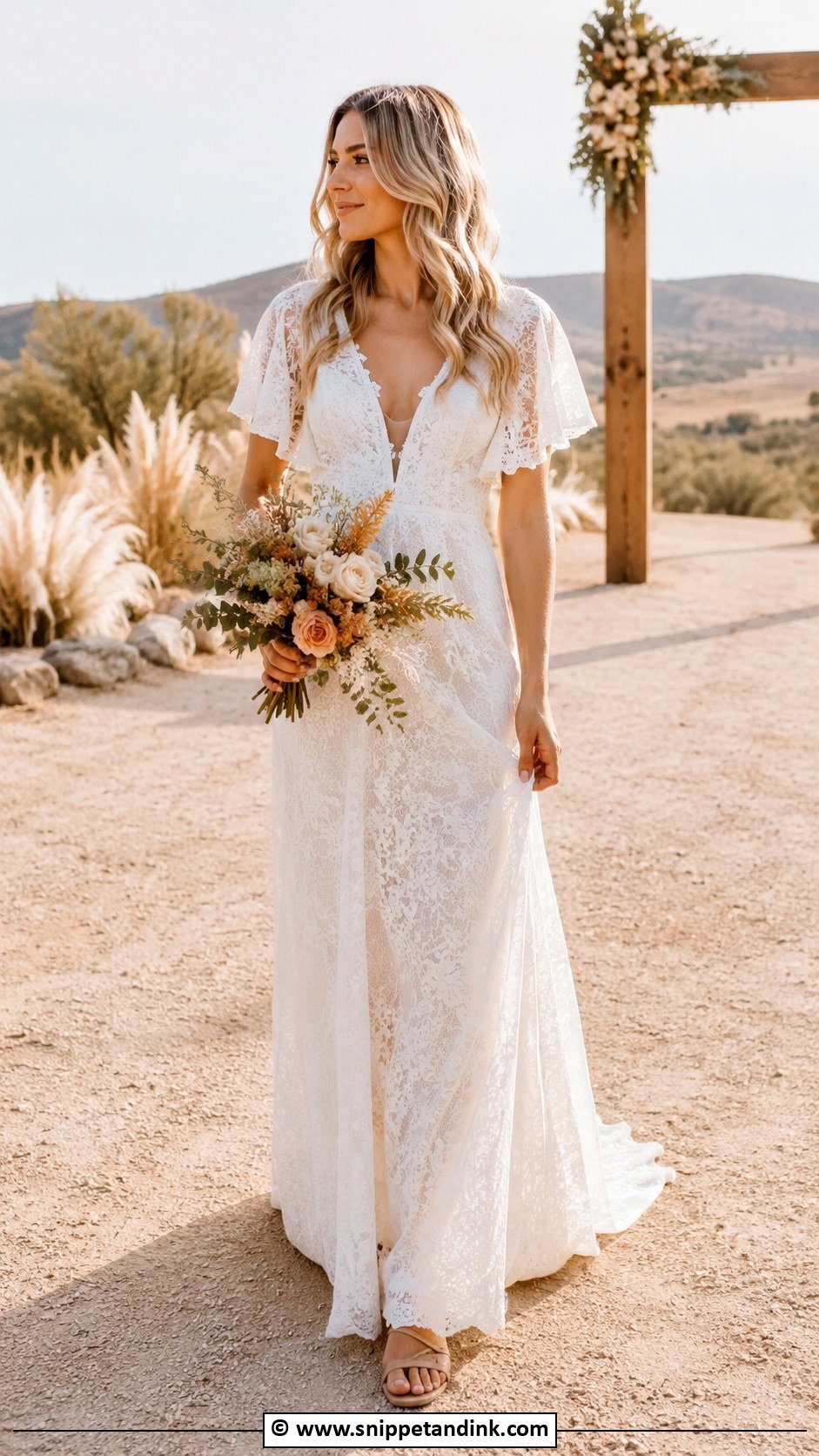
Boho gowns feel relaxed and textured, with soft lace, flutter sleeves, open backs, crochet-inspired details, flowing skirts or a light train. The texture is usually enough, so I keep accessories few. A nude lining makes the lace pattern stand out, while an ivory lining feels softer and more traditional. Above all, you should be able to walk, sit and dance at ease. Loose waves, simple earrings, comfortable sandals and a natural bouquet suit outdoor, desert and rustic venues.
31. Modern Column Wedding Gown
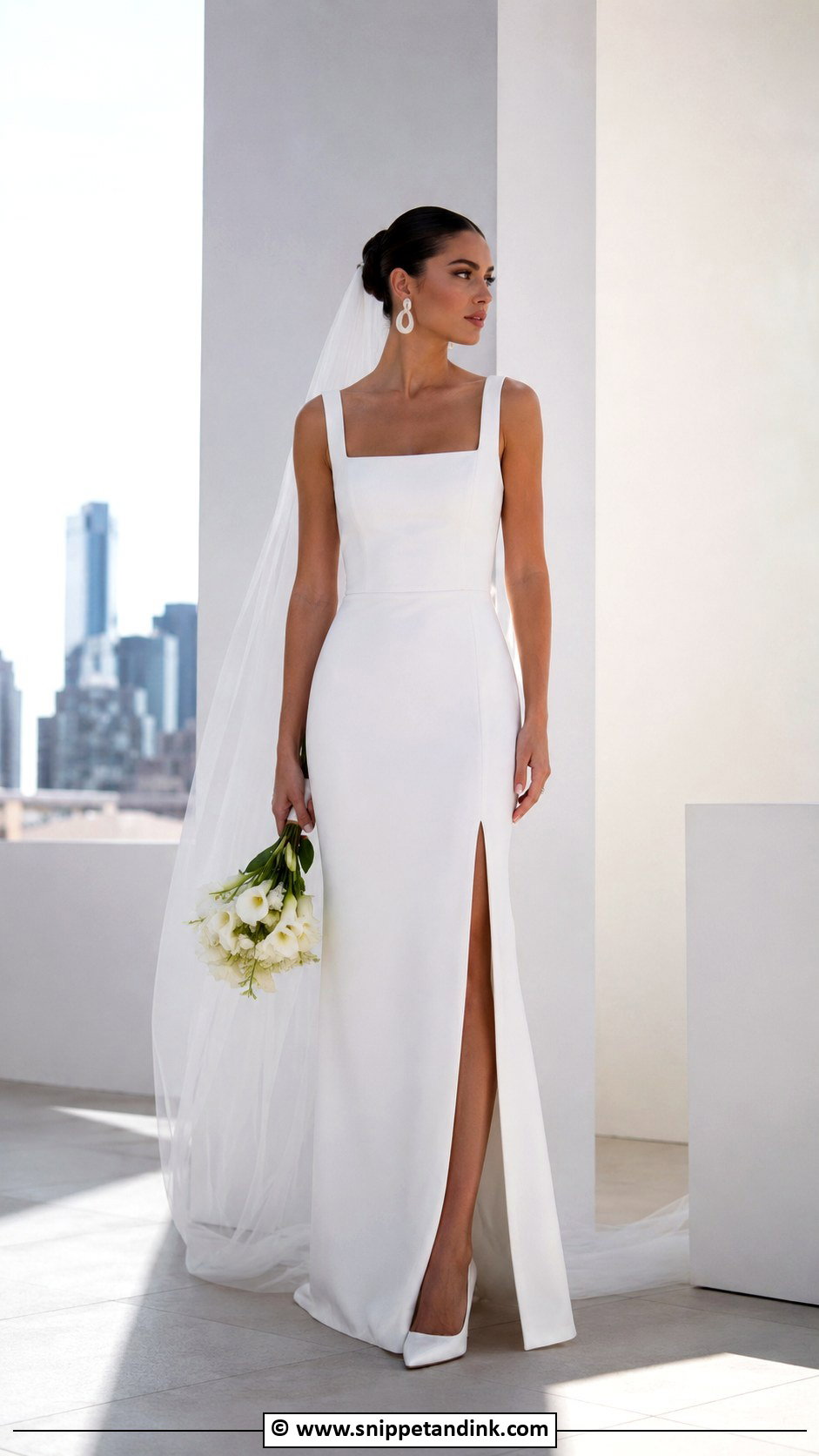
A modern column wedding gown draws one sleek vertical line from shoulder to hem, less fitted than a mermaid and more streamlined than an A-line. Crepe, satin and silk suit it. With so little shape, fabric quality and tailoring decide everything. A side slit, square neckline or low back adds interest; just check where a slit opens when you sit. Sculptural earrings, pointed heels, a smooth veil and a simple bouquet suit city, rooftop, gallery and hotel venues.
32. Beaded Wedding Gown
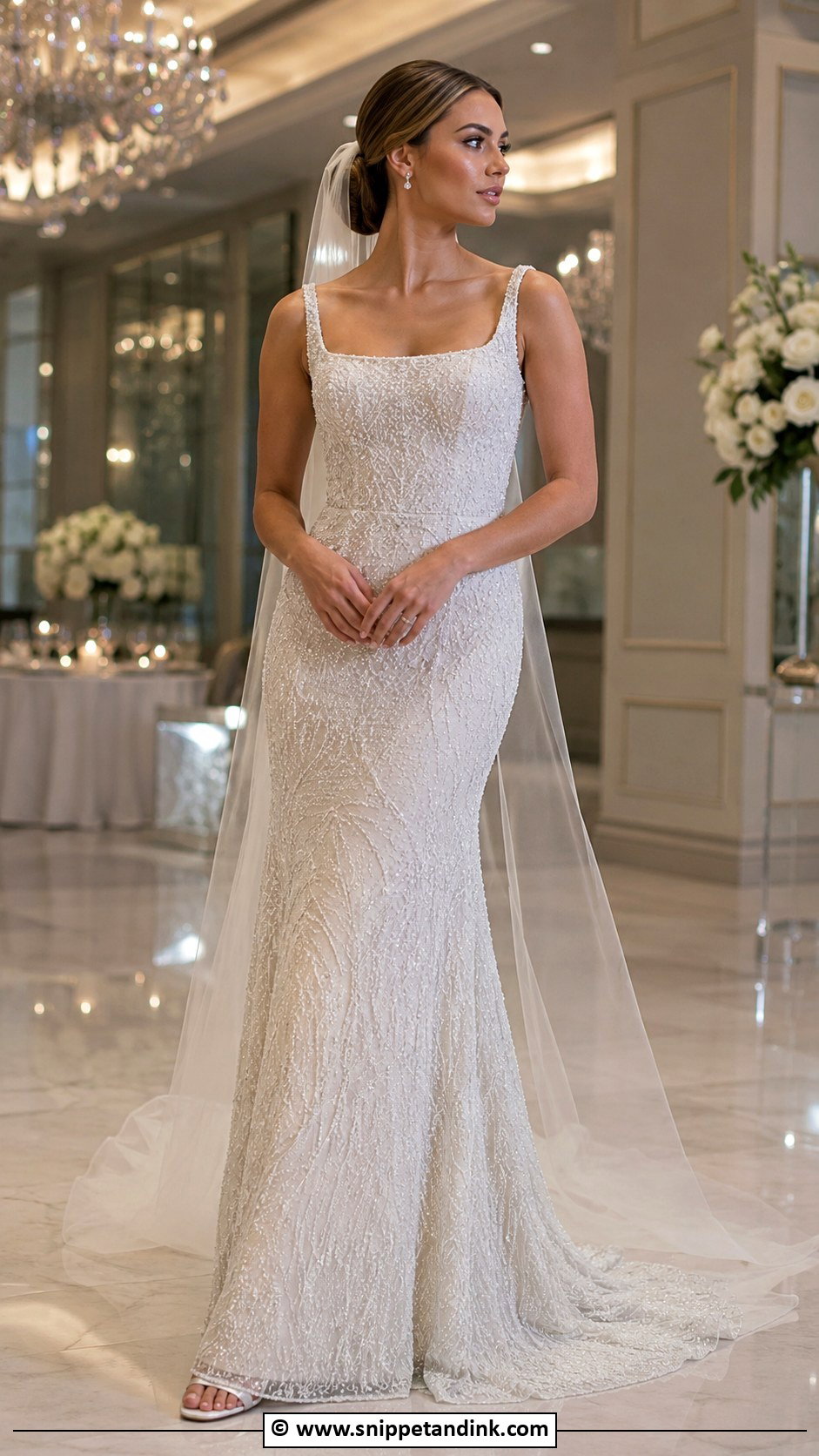
Beaded gowns come alive in candlelight and flash, which is why they suit formal receptions and hotel ballrooms. Subtle beading gives soft sparkle; geometric beadwork leans art deco. Beading adds real weight, so test it properly at fittings: sit, walk, lift your arms, and notice whether the shoulders start to ache. Keep the rest simple, with plain heels, small earrings and a plain veil.
33. Champagne Wedding Gown
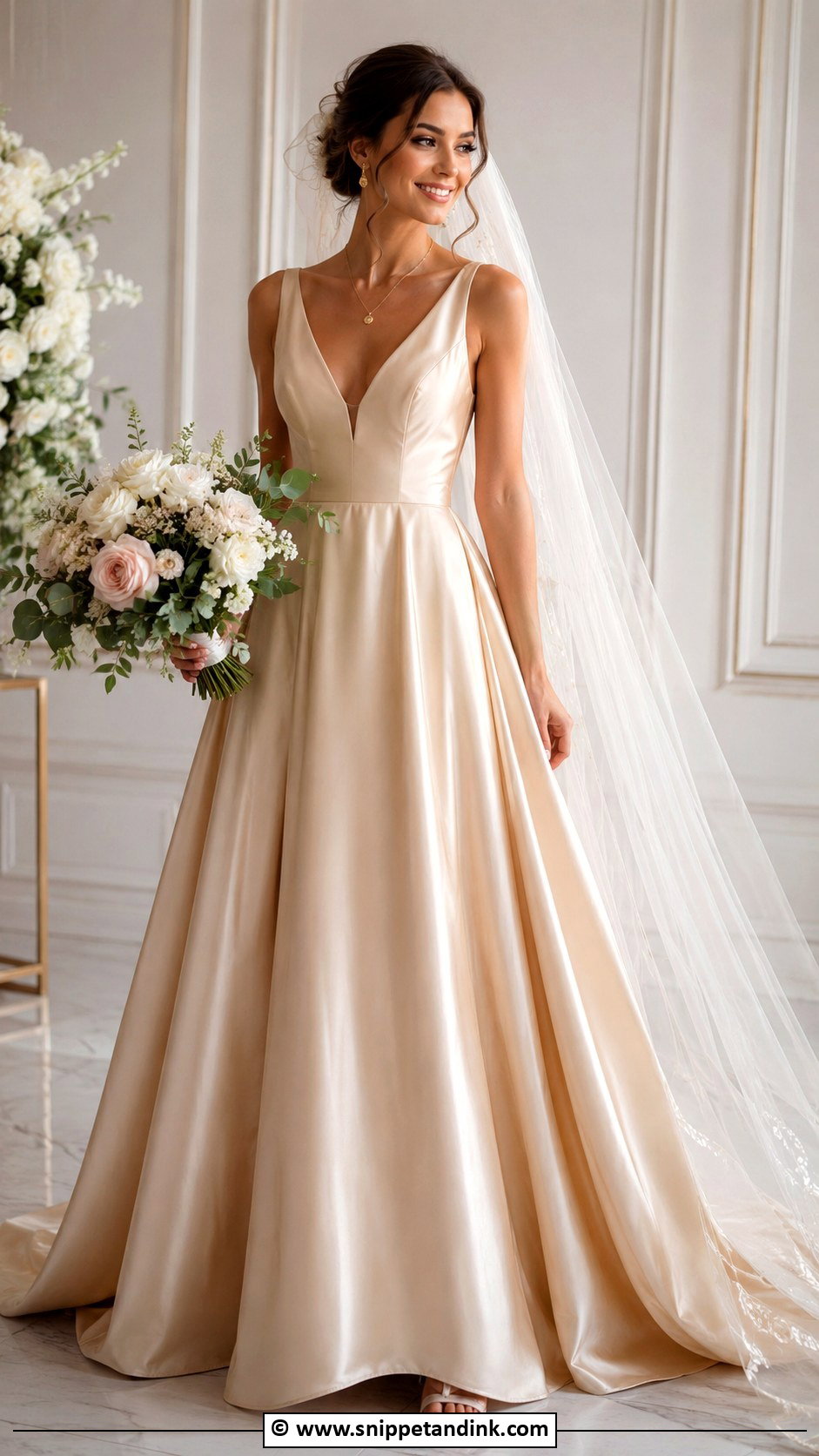
Champagne is a warm alternative to bright white, with a soft golden undertone that suits many skin tones in satin, tulle, lace or beading. The undertone is why accessories matter: a cool white veil or bright silver jewelry beside champagne fabric can look like a mismatch rather than a choice. Go for a veil matched to the gown, gold jewelry and ivory or nude heels. It sits well at fall weddings, evening receptions and gardens, and still reads fully bridal.
34. Blush Wedding Gown
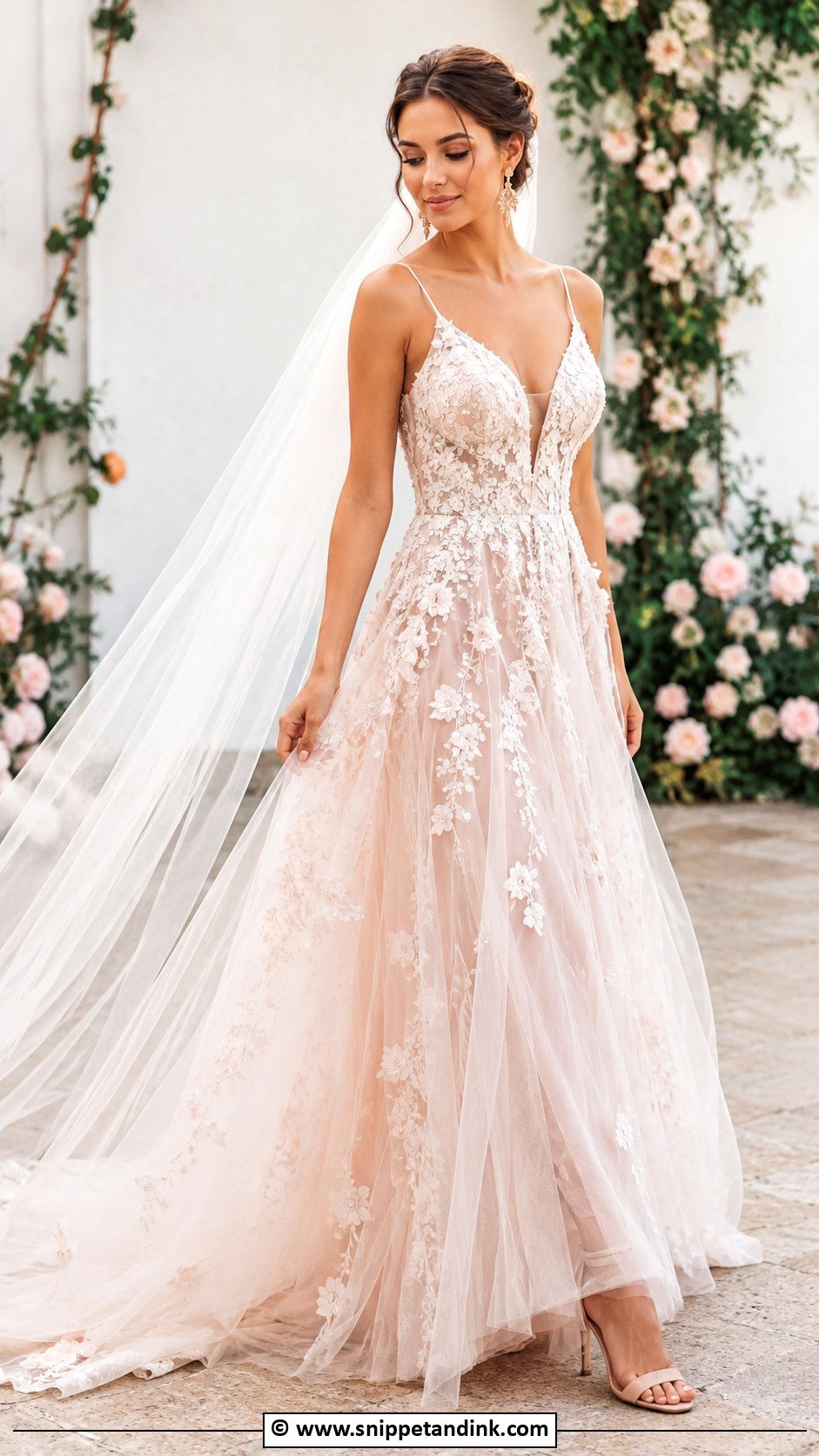
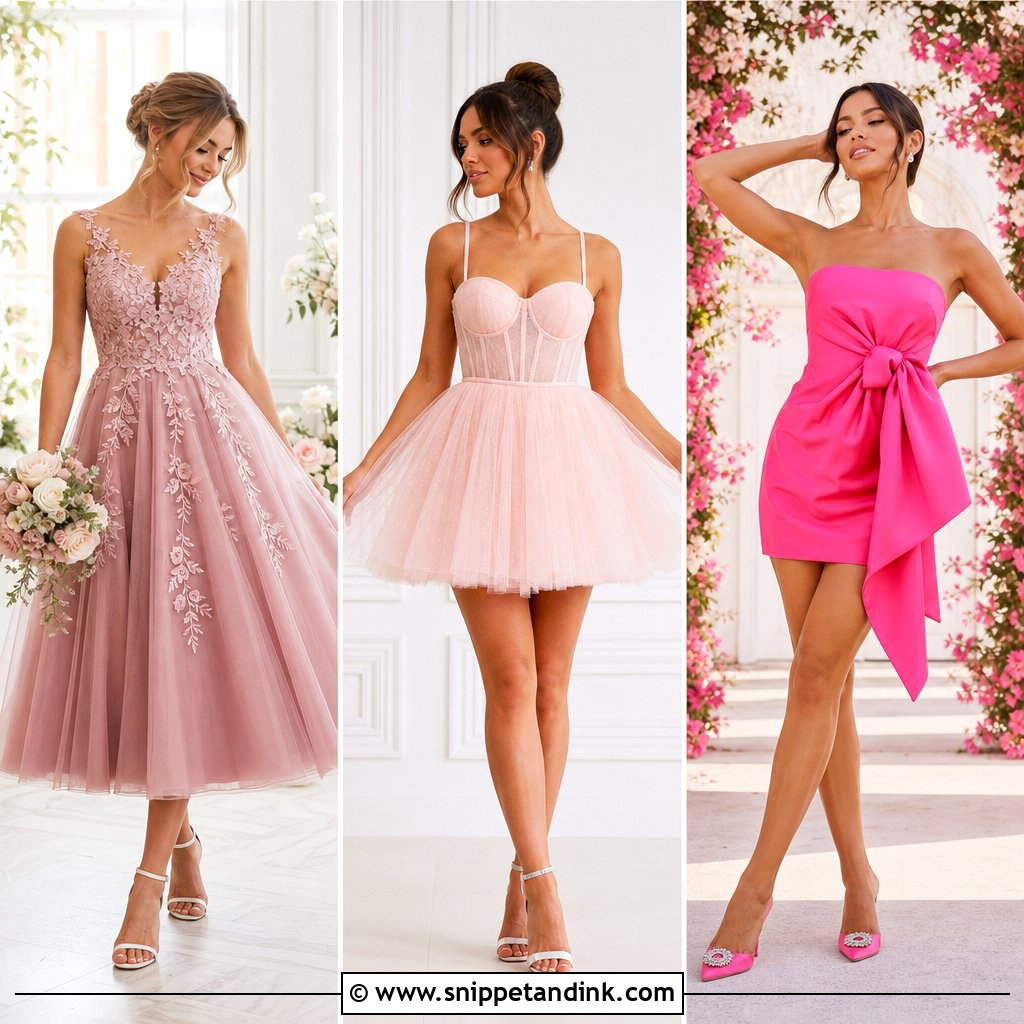
Blush ranges from barely pink to warm rose depending on the fabric and lining. Tulle, organza, lace and floral appliqué make it dreamy; satin makes it polished. Try it in daylight before choosing, because blush can shift noticeably under warm indoor light and camera flash. Rose gold or pearl jewelry, nude heels and a soft ivory veil suit it, with fresh, balanced makeup that doesn’t fight the colour.
35. Black And White Wedding Gown
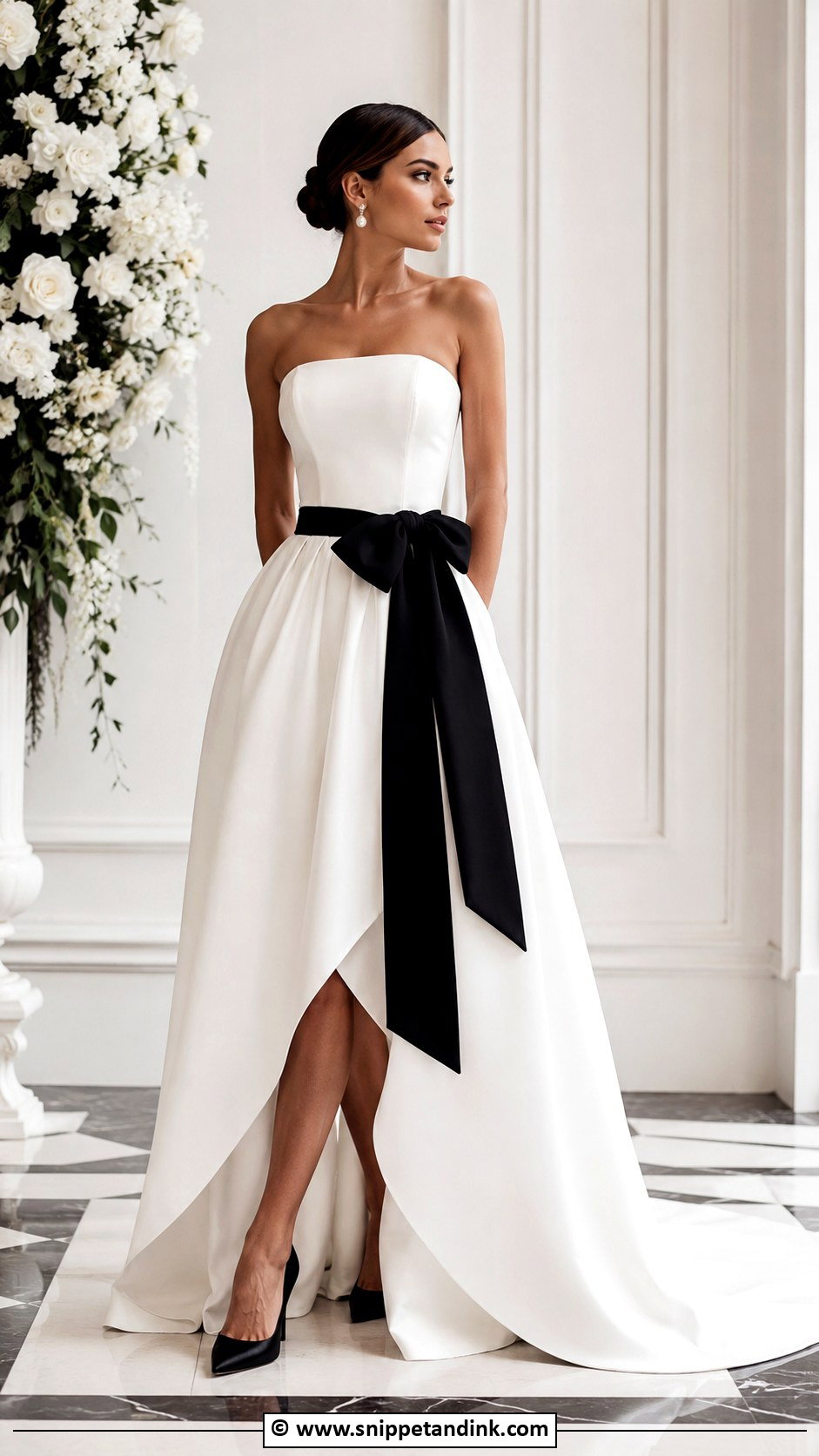
A black and white gown stays formal while making a strong modern point. The contrast can come from a black bow, black gloves, embroidery, a sash or black lace accents on white. One strong black detail works better than several competing ones. I’d brief the photographer, because deep black next to bright white needs careful exposure to keep detail in both. Sleek heels, pearl or diamond earrings and clean hair suit modern venues and evening ceremonies.
Thirty Minutes to Get Into the Gown on the Wedding Morning
Getting into the gown is a step people under-plan, and it’s often where the morning runs late. I allow about half an hour, longer for a corset back or many buttons.
- Hair and makeup go first. Wear a button-down shirt so nothing goes over your head afterward.
- Steam the gown early, hanging, away from where people are eating and drinking.
- Step into the dress rather than pulling it over your head, with your helper holding it open at the floor. Some necklines are an exception, so check at the final fitting.
- Fasten from the bottom up. A crochet hook makes quick work of rows of covered buttons and loops.
- Shoes, jewelry and veil come last, once the bodice is fully closed and settled.
Know your bustle before the reception
Any gown with a train will need bustling for dancing. Common styles lift the train up and over to hooks at the back, or tuck it under to ribbon ties inside the skirt, and some gowns have a dozen points. Have the person doing it learn at the final fitting and take a short video. Colour-coded ribbon ties are a kindness to whoever does it under pressure.
Adjust the Details Until the Gown Feels Like Yours
A dress that looks right on a hanger is only half the decision. The rest is whether it suits your venue, your comfort, your body and the way you want to remember the day. Satin ball gowns, lace A-lines, courthouse minis, beach gowns, pearls and clean columns all appear above for that reason. Start from whichever look pulls you in, then adjust the neckline, fabric, veil, shoes and accessories until it feels like something you’d choose to wear, not just admire.
You'll Like These Ideas:






Leave a Reply