
Traditional bridal hair carries more than any other wedding style I do. It has to hold a tikka on a dead-straight parting, anchor a dupatta or veil that someone will tug on during the ceremony, frame a face under heavy makeup, and stay put through rituals that can run for hours. That’s why I always plan it from the jewellery and fabric backwards. From sleek buns with maang tikka to jasmine braids, chignons and open curls under a veil, the fifteen looks below are the ones I see work, with notes on what each one needs underneath to hold up.
The Hidden Scaffolding Under a Tikka, Passa and Dupatta
Most traditional looks fail from the inside, not the surface. A full set of head jewellery plus a heavy embroidered dupatta can weigh more than the hair can hold if everything is pinned straight into the top layer. So before any styling, I build anchors, and I’d ask any stylist you book how they plan to do the same.
- The tikka chain hooks into a small crossed-pin base at the crown, so the pendant stays centred when you look down.
- A passa or jhumar gets its own tiny braid or pinned section on the side it hangs from. Without it, the parting slowly drifts toward the jewellery.
- The dupatta pins into the bun or a braided base, never into smooth hair on top of the head, where it pulls straight out.
- Earrings with heavy chains get supported by a sahara clipped into the hair behind the ear, which saves your earlobes during a long day.
This is also why I ask brides to bring every real piece to the trial. A lighter stand-in dupatta tells me nothing about how the actual one will sit after three hours.
1. Traditional Bridal Bun
The classic bridal bun is my default when a bride is wearing a lot of jewellery, because it gives every pin a firm base and keeps the face lifted. It sits neatly under sarees, lehengas, veils and dupattas, and it looks tidy from every angle a photographer will catch. I add a little volume at the crown so the head doesn’t look flat under fabric, and I leave smooth pieces near the cheeks only if the earrings aren’t too heavy. Thick hair builds a full bun on its own. Finer hair needs padding or extensions, and I’d rather add them than pull the hair tight to fake fullness.
2. Bridal Low Bun With Flowers
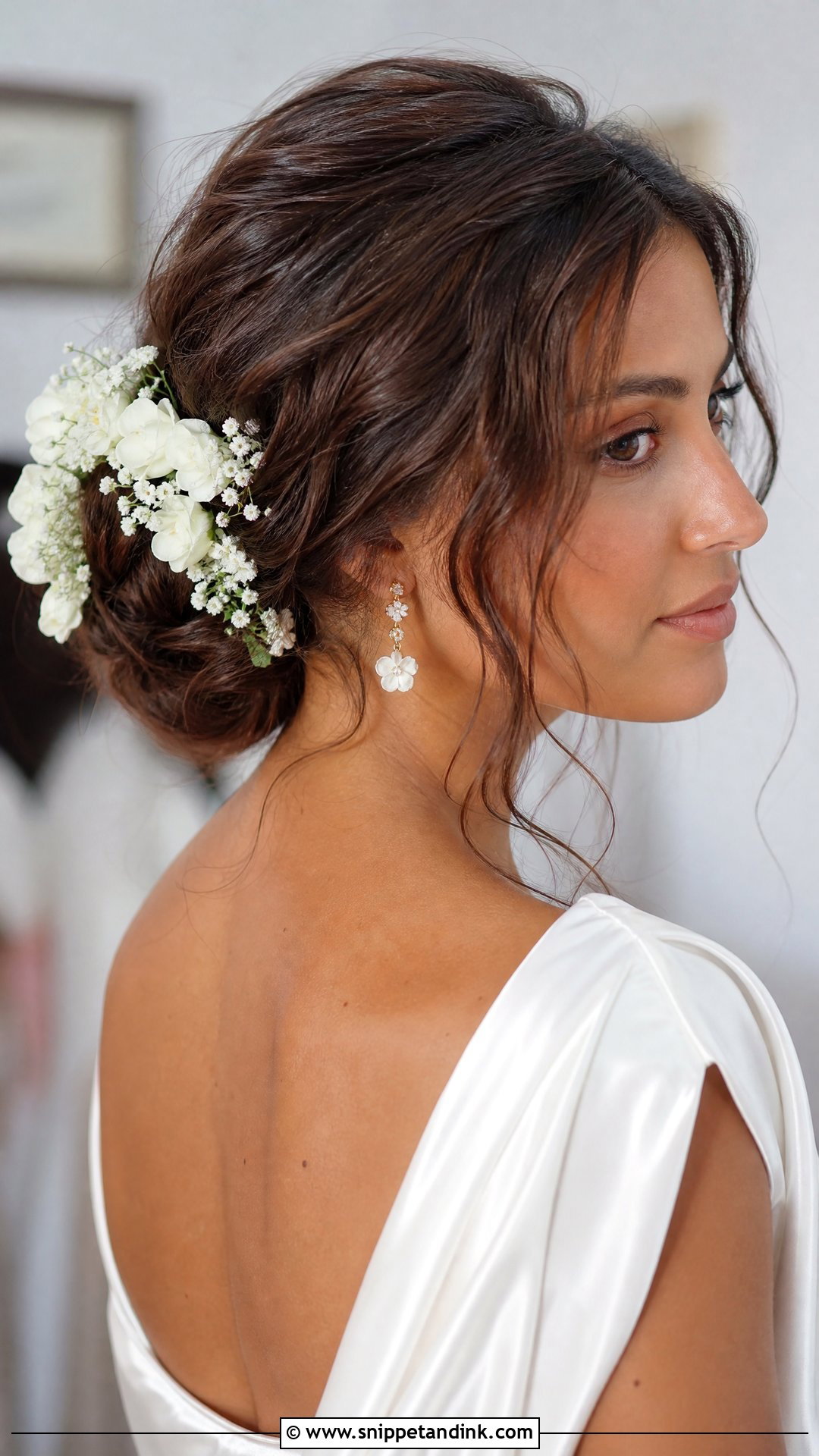
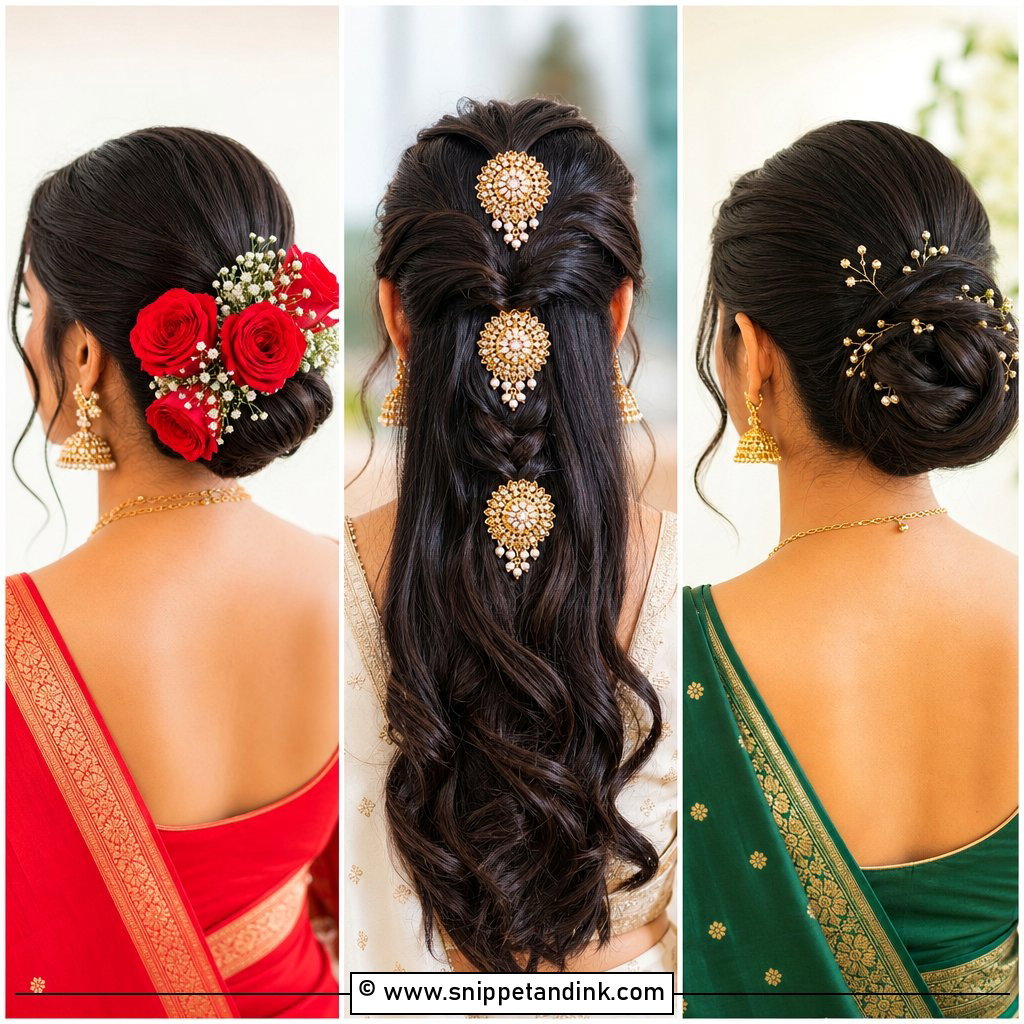
A bridal low bun with flowers sits close to the nape, so a dupatta or veil drapes over it without a bump. Jasmine, roses, baby’s breath or orchids can wrap the bun or cluster on one side. What I watch is weight: a dense rose cluster on one side pulls the bun off-centre by evening, so I pin it into the bun itself, never just the outer hair. A centre part reads classic, a soft side part more romantic. Flexible spray keeps the shape without leaving the petals sticky.
3. Indian Bridal Juda
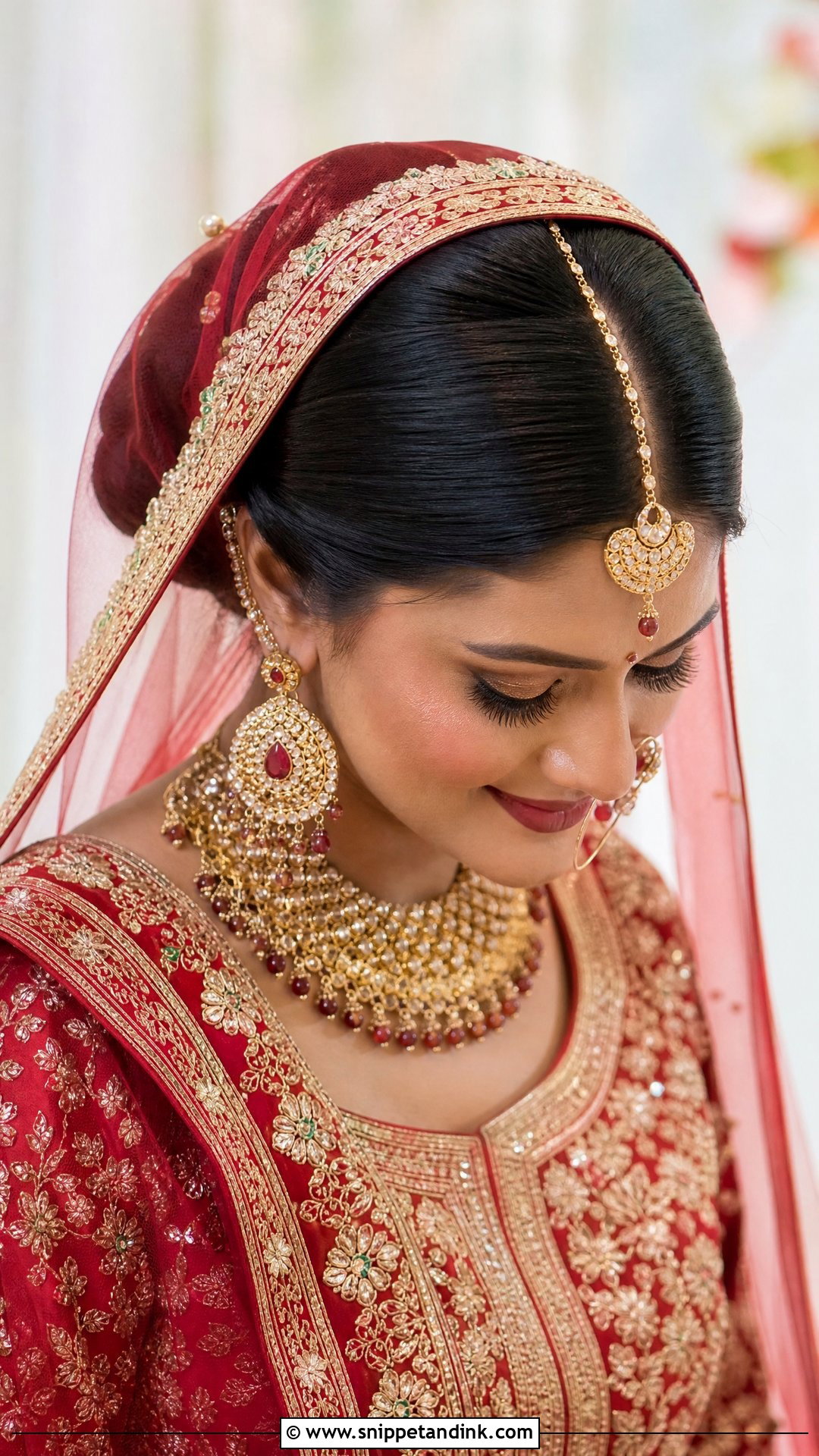
An Indian bridal juda is the shape I trust most for a bride carrying a dupatta, gajra, matha patti and maang tikka all at once. The rounded bun sits low or mid-height and becomes the anchor everything else is pinned to. Because it keeps the neckline open, silk sarees and heavily embroidered blouses show properly. It can be sleek, braided, twisted or fuller, depending on the outfit. My one rule: the parting gets done first and checked from the front with the tikka in place, because a crooked part under a tikka is the thing every relative notices.
4. South Indian Bridal Braid
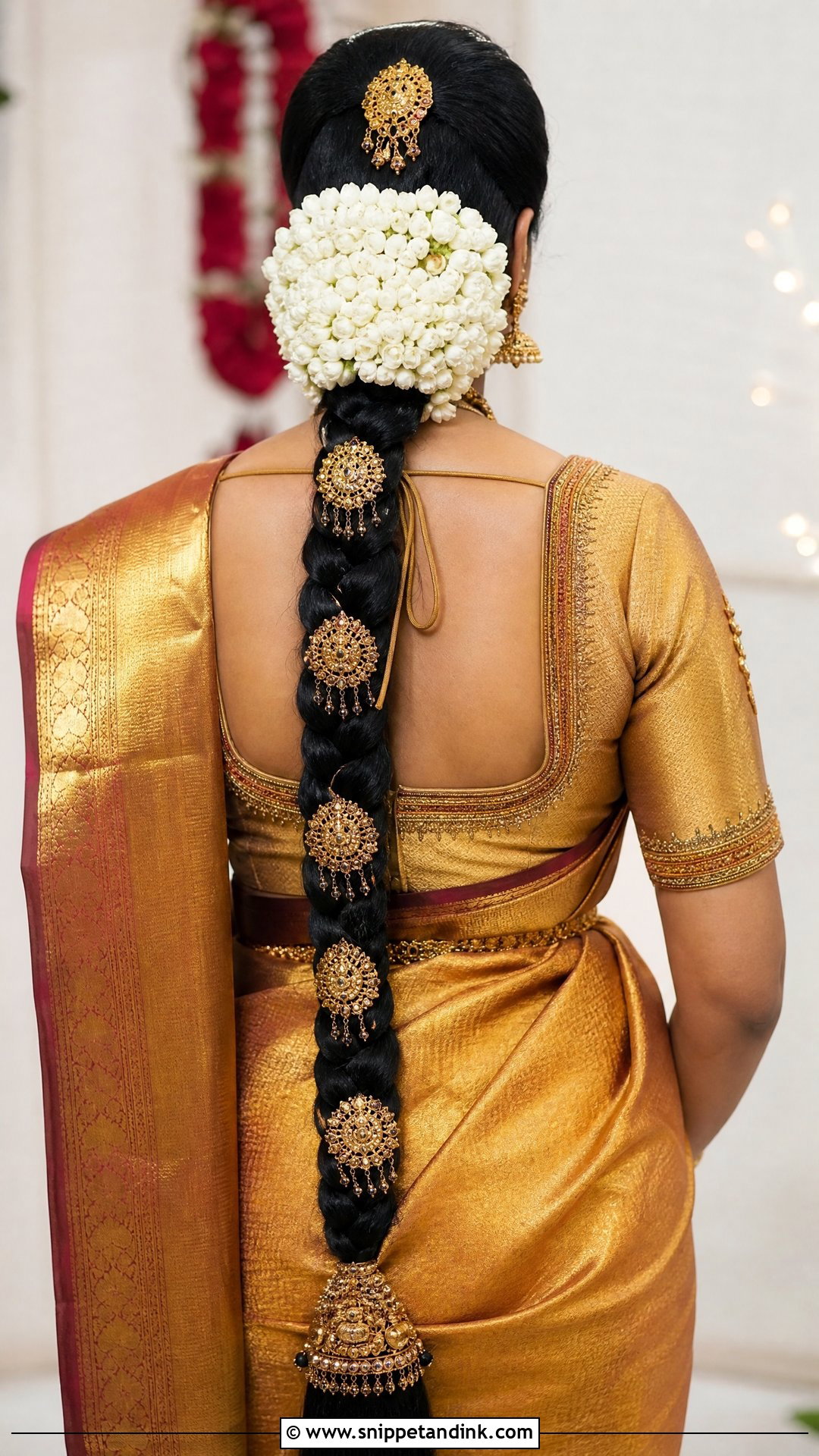
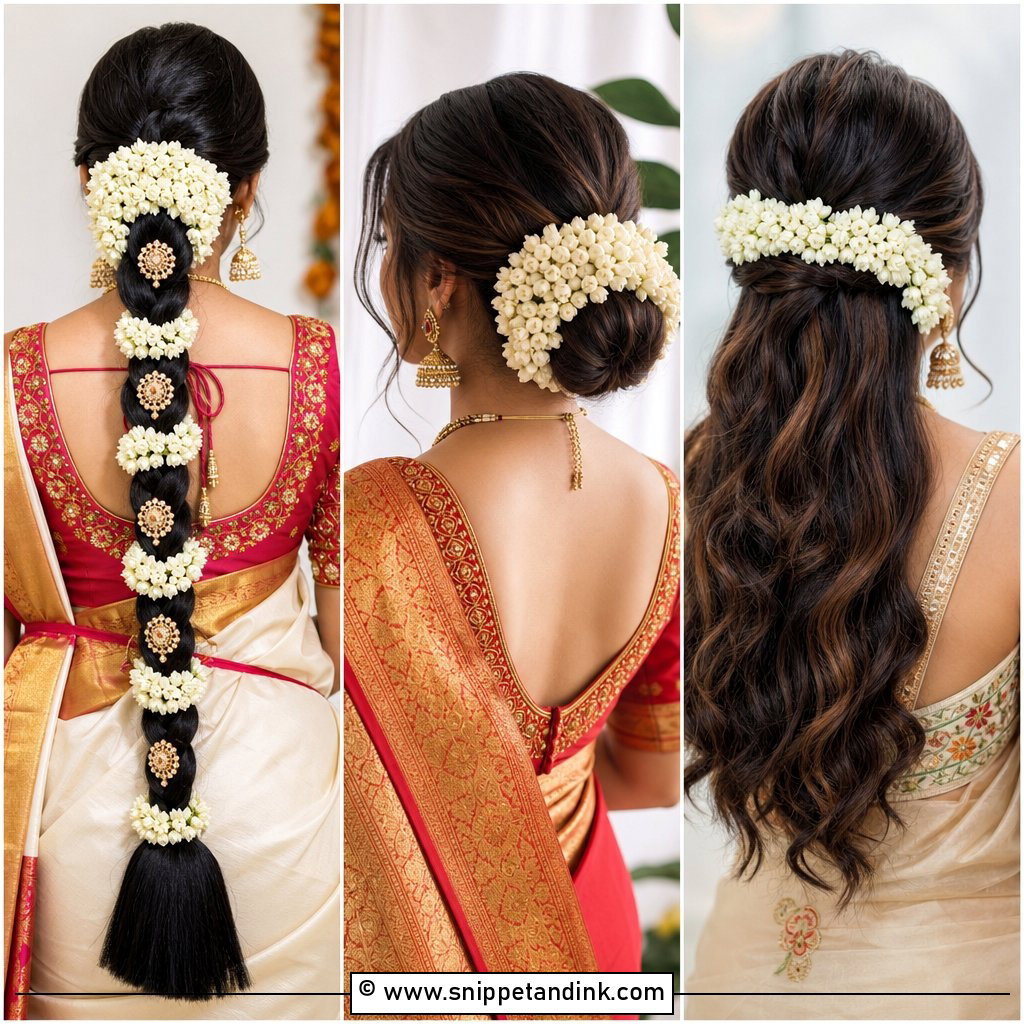
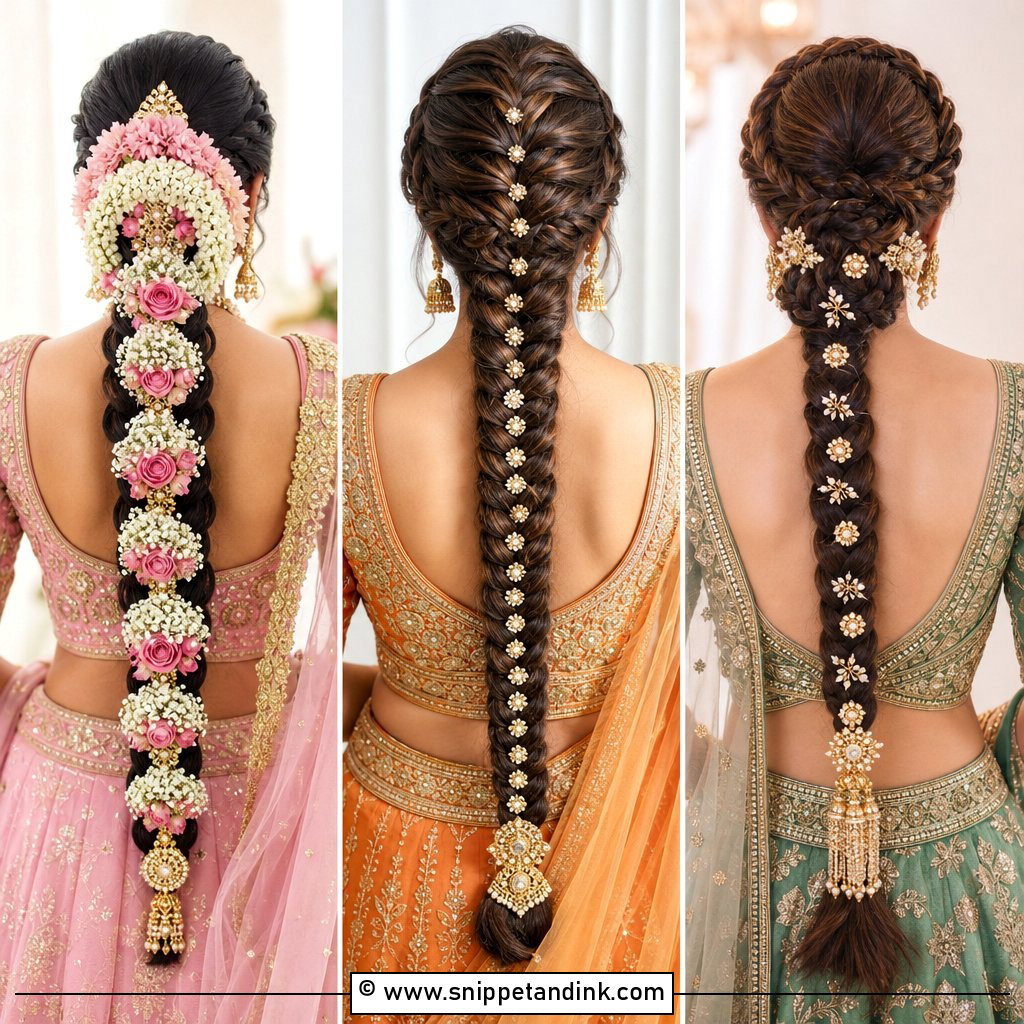
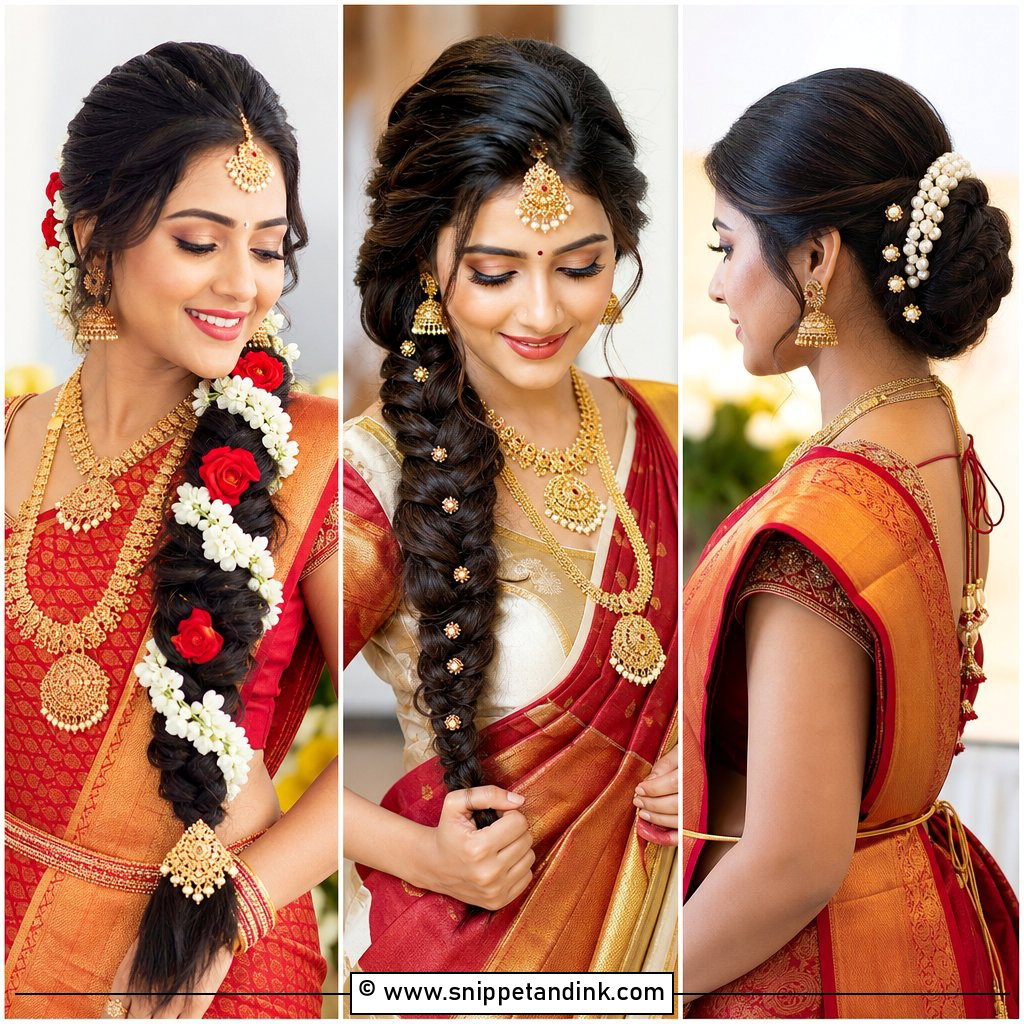
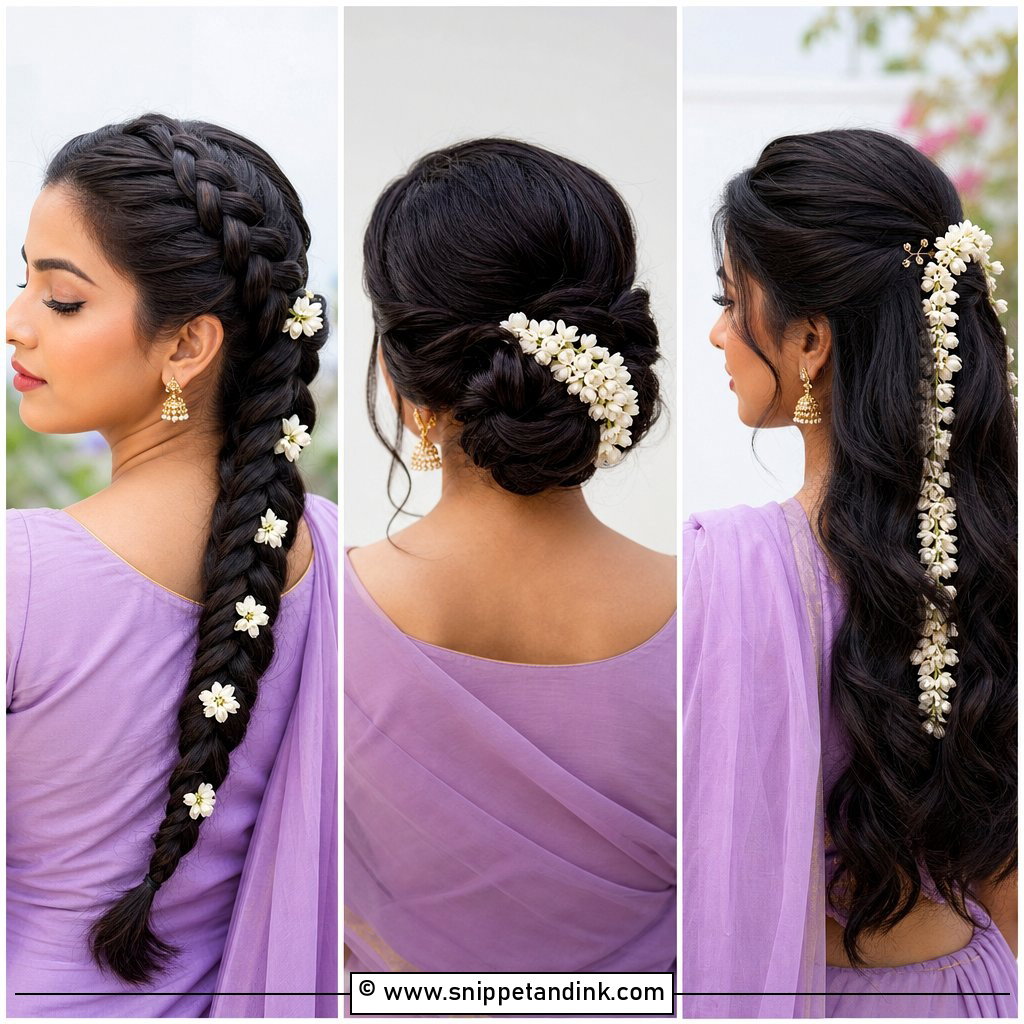
A South Indian bridal braid is about the back view, and it’s the photo families frame. The long braid is usually dressed with flowers, gold pieces or temple jewellery, often over a braid extension for length. It sits naturally with Kanjeevaram silks and layered necklaces. I keep the top sleek with a centre part and build the braid firm and even, because a loose plait twists sideways under the weight of the ornaments. Jasmine strung down the length adds fragrance. Ask your stylist to attach the jewellery to the extension where possible, so the weight isn’t pulling on your own hair all day.
5. Bridal Braid With Maang Tikka
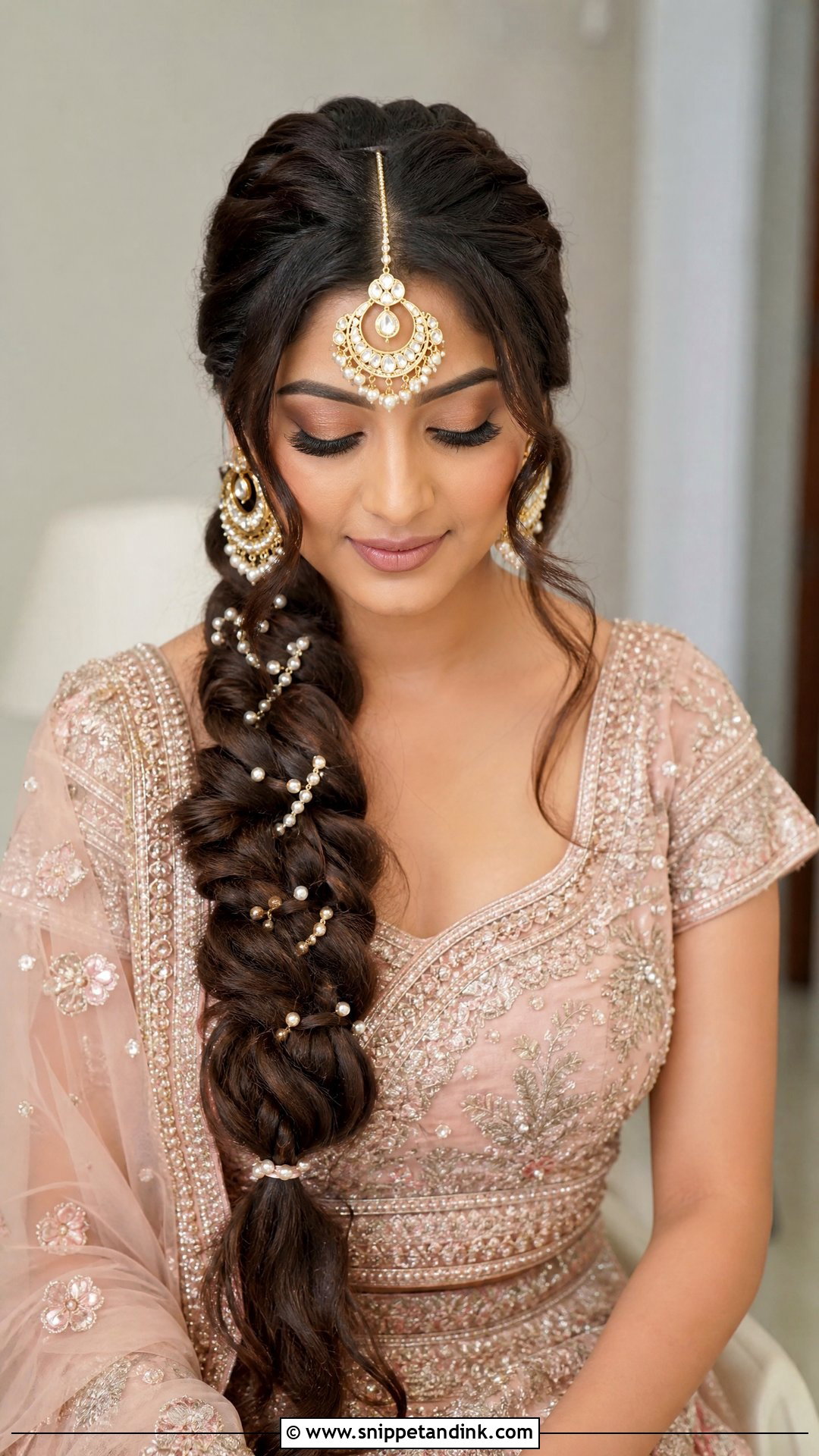
The tikka hangs on the centre part, so with this look the parting is doing half the work. I make it clean, then hook the tikka chain into a small hidden pin anchor at the crown so it can’t slide forward when you bow your head. The braid behind adds structure and movement with lehengas, shararas, sarees or anarkalis. Fishtail and bubble braids suit lighter jewellery. If the tikka and earrings are heavy, keep the front sleek; soft waves at the temples get crushed under chains anyway.
6. Pakistani Bridal Choti
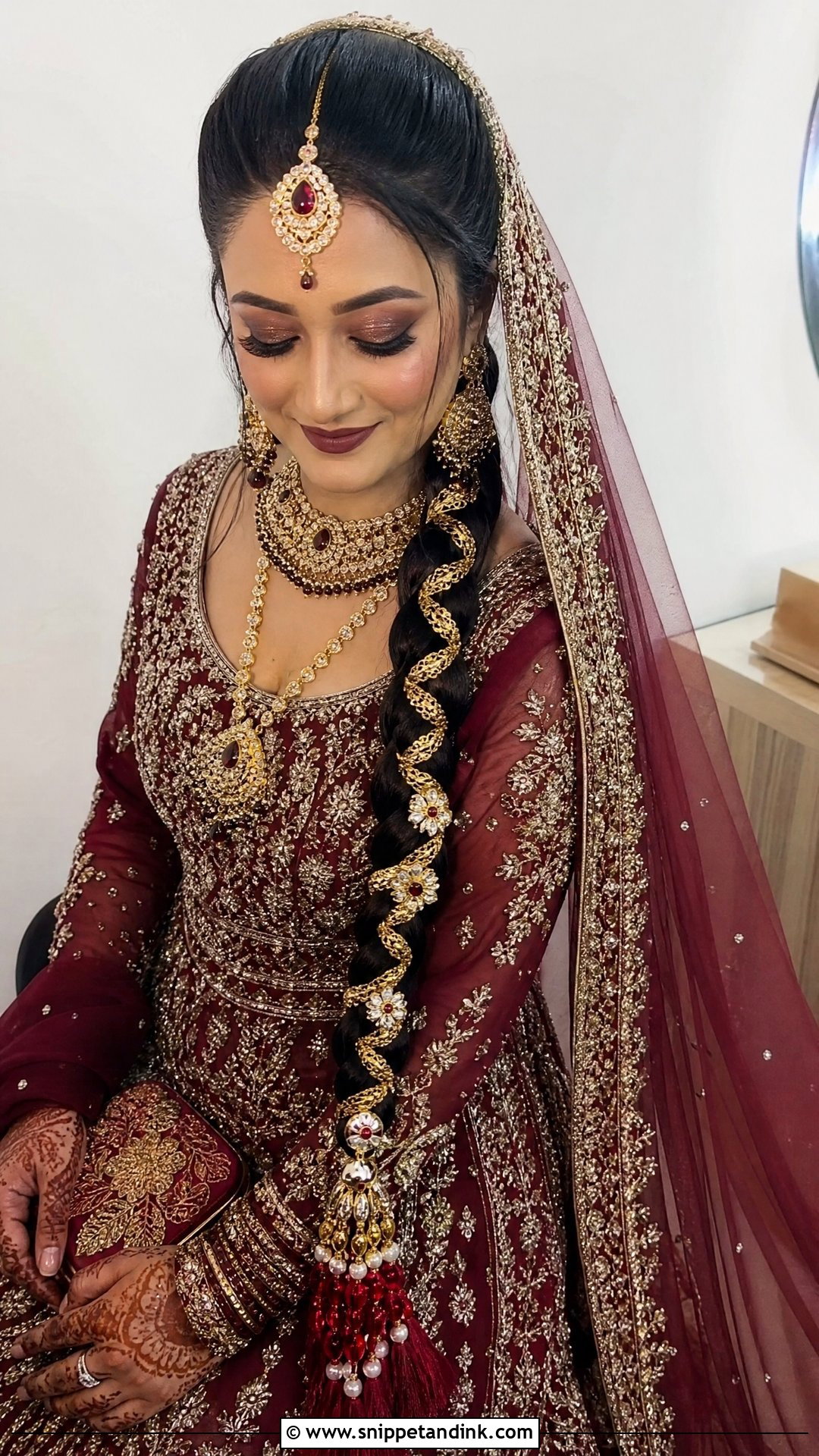
A Pakistani bridal choti is usually built to carry a jhumar or passa, a tikka and a dupatta, often with a parandi worked into the length. I braid it firm and even so the decorative pieces sit straight, and I add a soft puff at the crown so the head doesn’t look flat once the dupatta goes on. It’s practical across mehndi, nikah and walima because the hair stays controlled while still looking dressed. The passa needs its own anchor, a small braid or pinned section at the side, or it drags the parting sideways within the hour.
7. Bridal Bun With Gajra
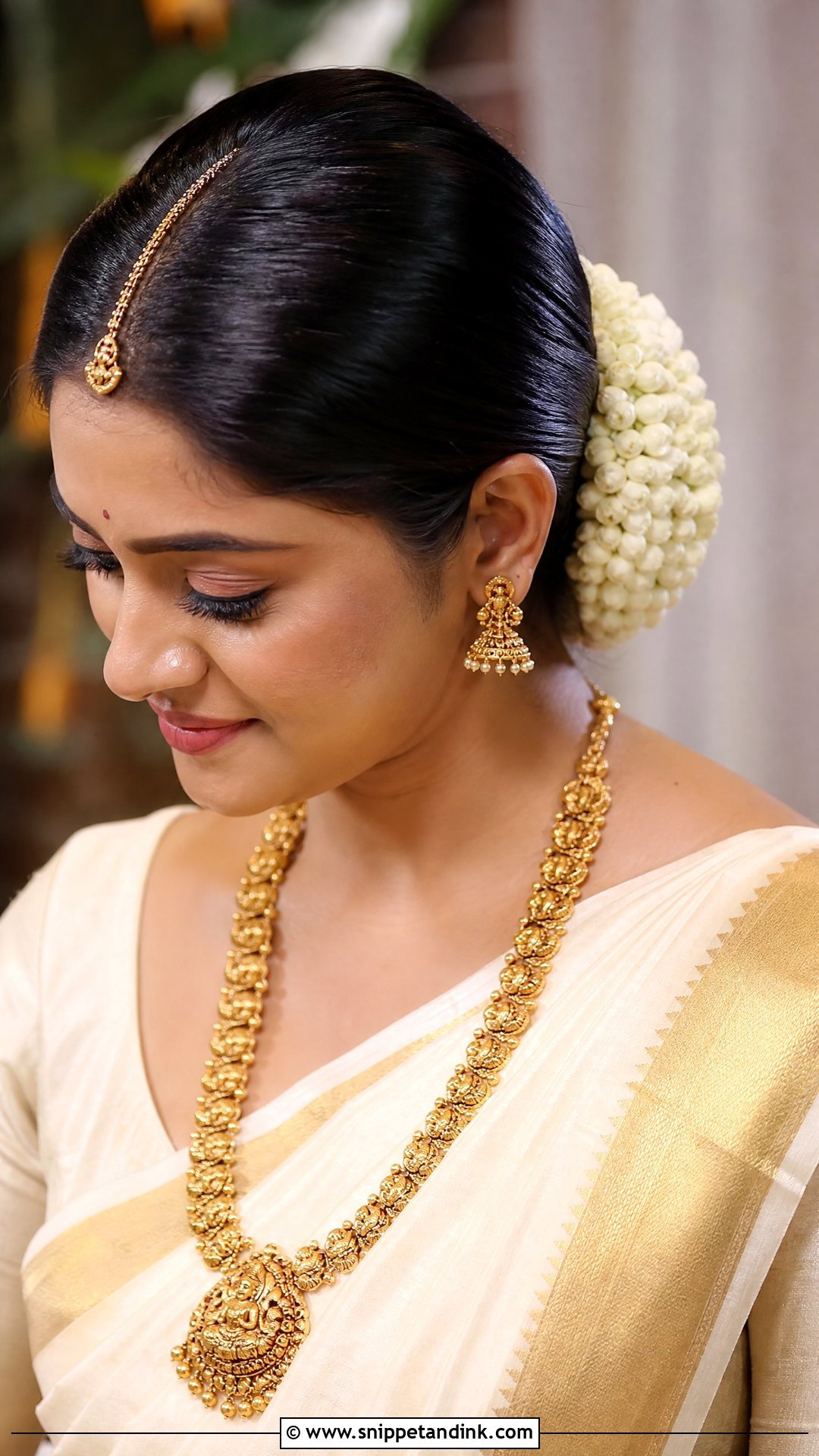
A bun ringed with gajra is the look I’m asked for most at South Asian weddings. The bun is smoothed and rounded, then the gajra wraps around it in a white ring. Jasmine is traditional, though roses or mixed blooms work too. The flowers soften the weight of temple jewellery and ornate sarees, and the pinned bun stays protected through a long ceremony. The detail people forget is the anchor: I sew or U-pin the gajra into the bun at several points, because a garland held at two ends slips down the moment you start greeting guests.
8. Bridal Sleek Bun
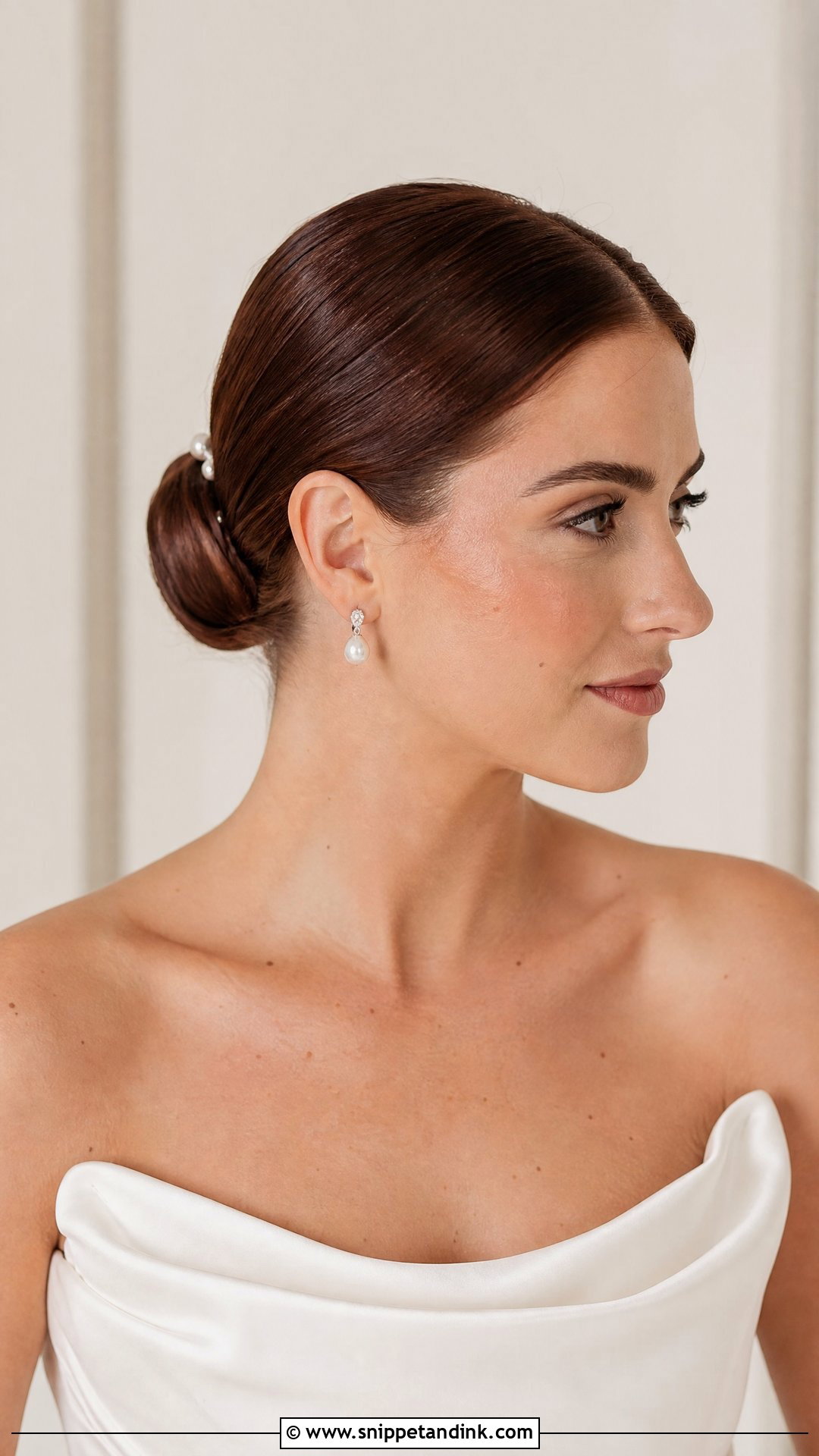
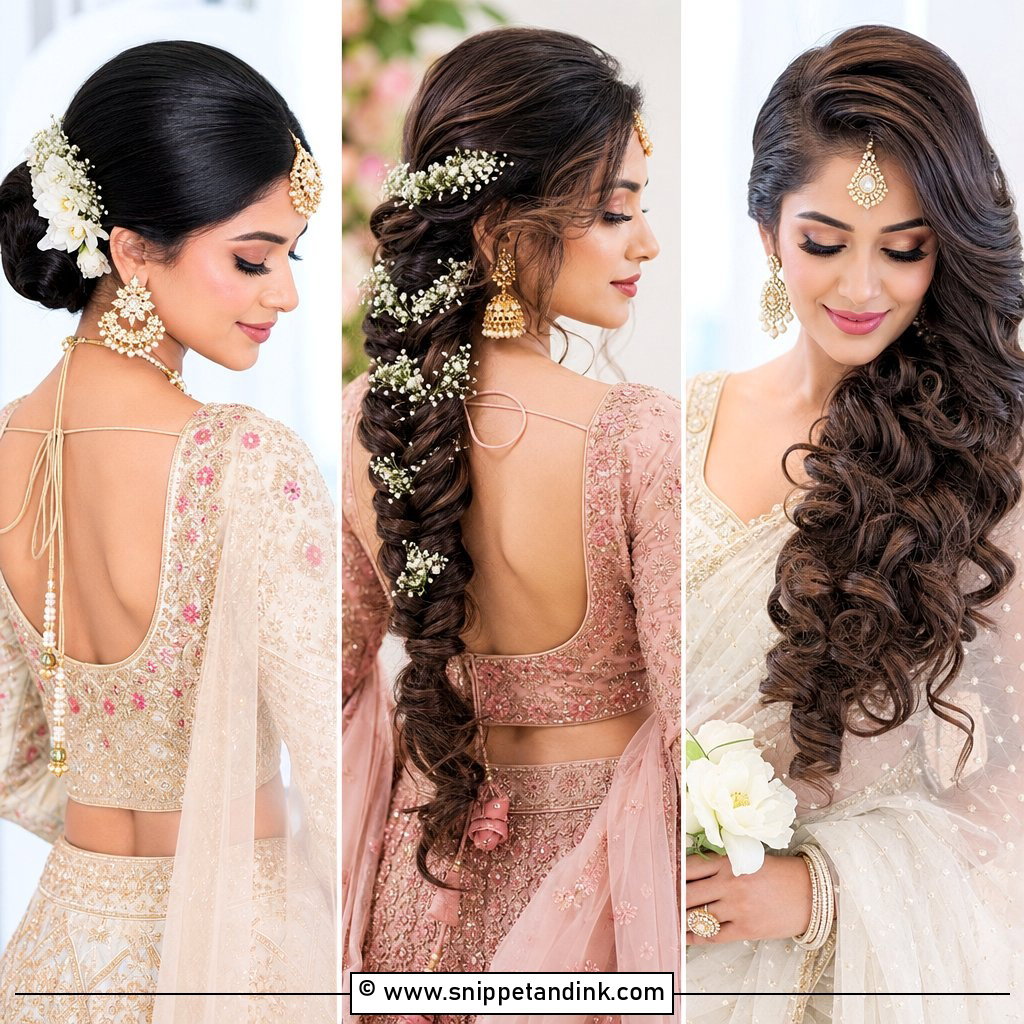
A sleek bun suits brides who want jewellery to carry the look rather than the hair. The hair is smoothed back or parted precisely, then gathered into a low or mid bun. It sits well under high-neck blouses, statement earrings, veils and modern traditional outfits. The catch is that a polished surface shows every flaw, so I work in small sections with a fine comb and a light gel before any shine serum. If a flat bun looks severe on you, ask for a rounder shape; the same sleek surface feels softer that way.
9. Bridal Chignon
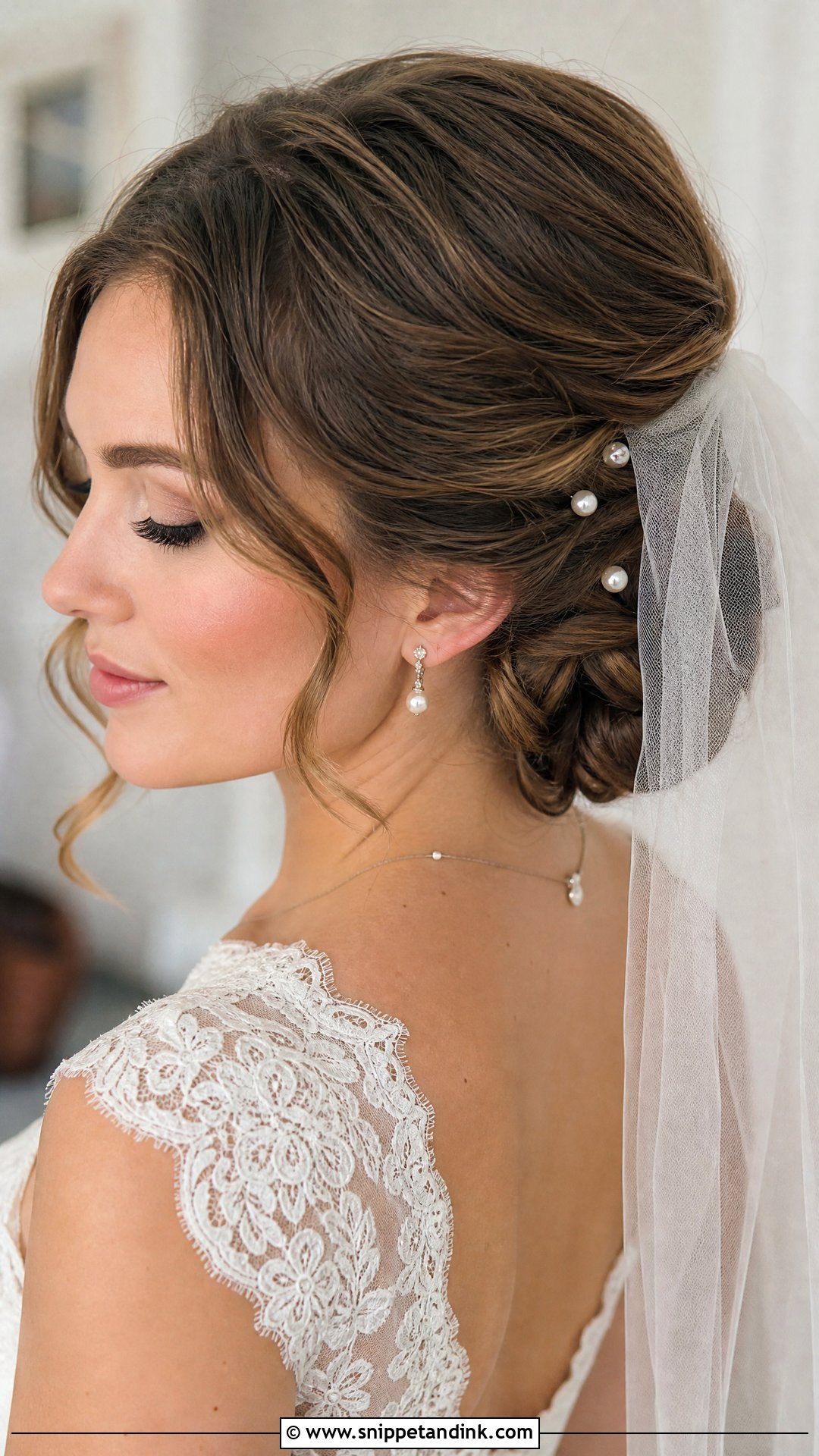
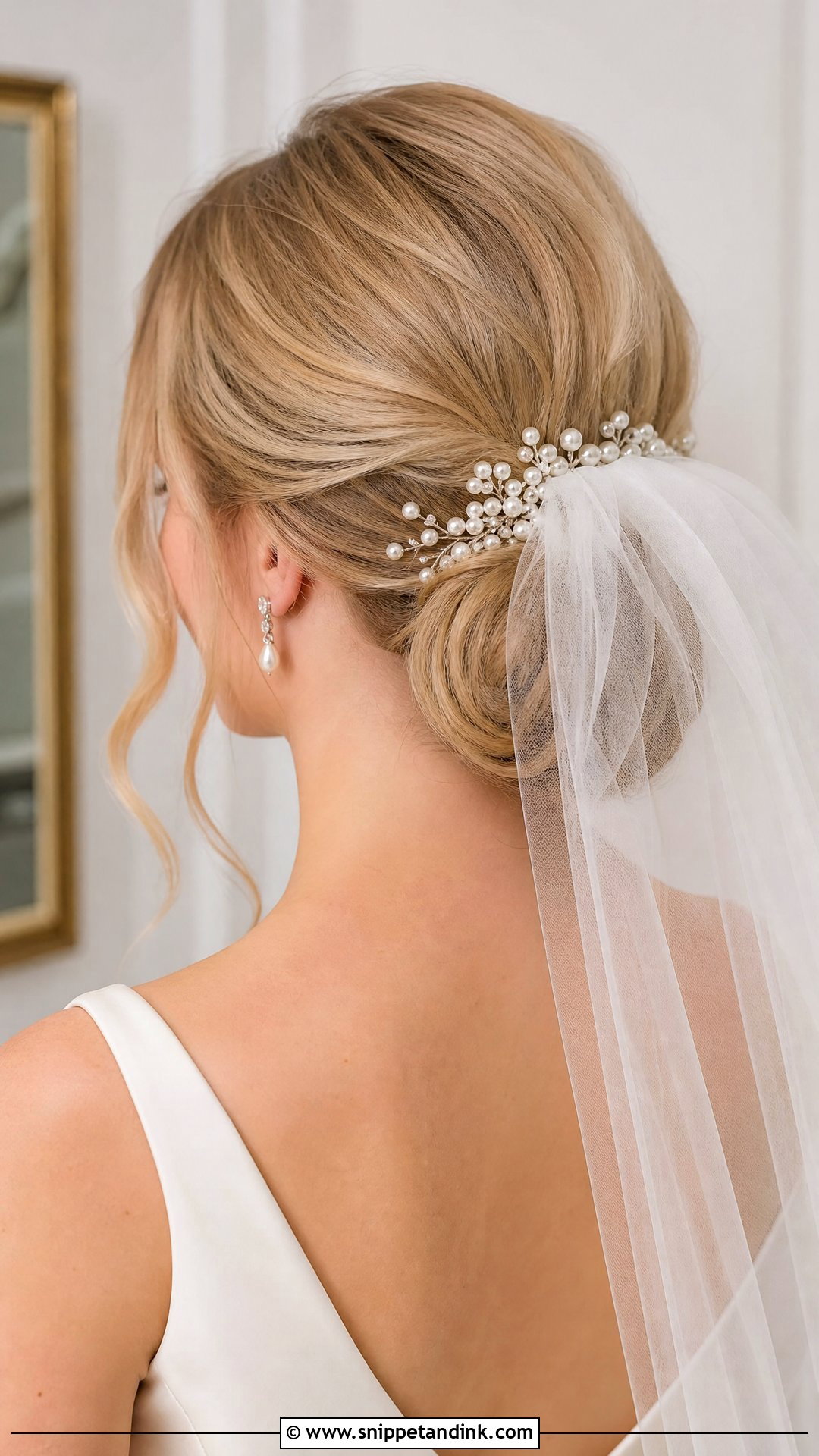
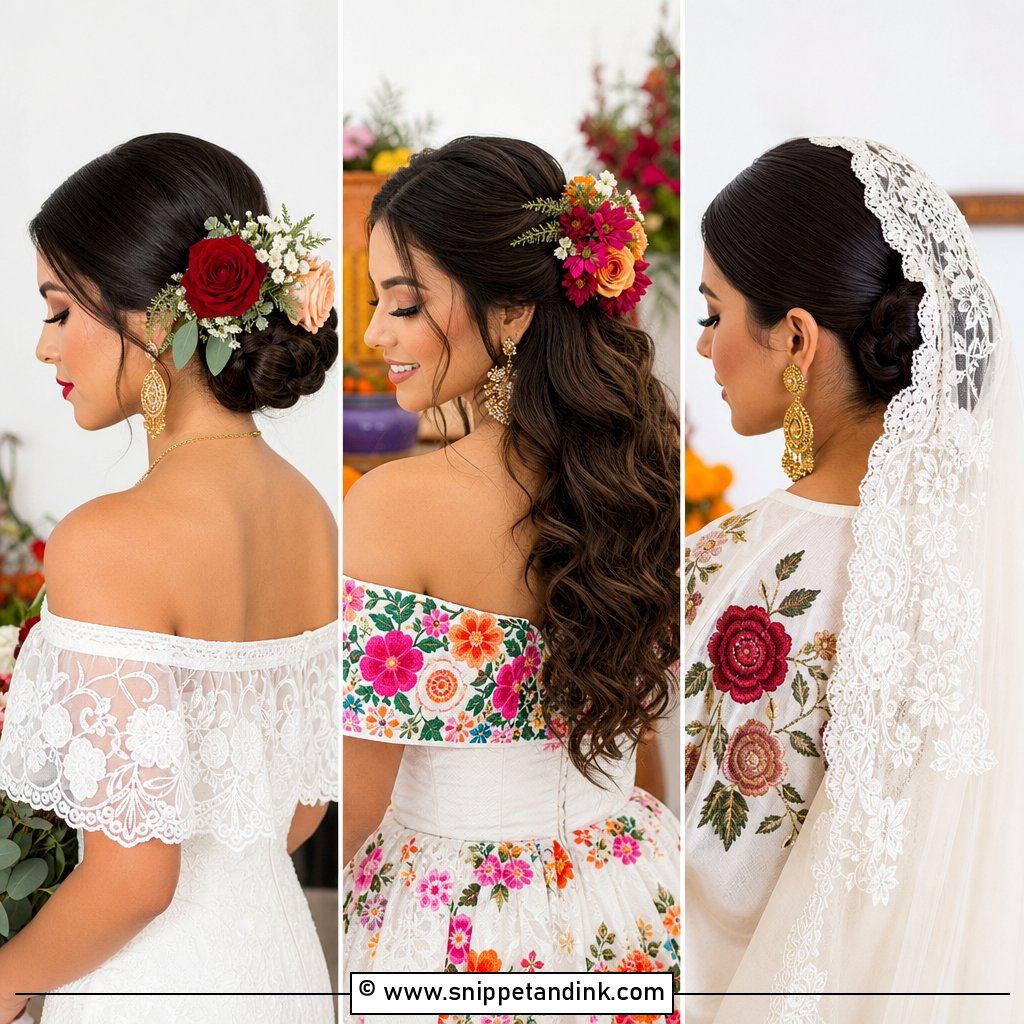
A chignon sits low at the nape and works across many traditional ceremonies, especially where a veil is the main accessory. It can be smooth, twisted, braided or softly tucked. I place the veil comb above it, pushing the comb teeth into a crossed-pin base so the veil’s weight doesn’t drag the chignon down. Pearl pins or crystal clips can go into the twist. It sits especially well with lace gowns, silk dresses and heirloom jewellery, and it still looks current in photos decades on.
10. Bridal French Twist
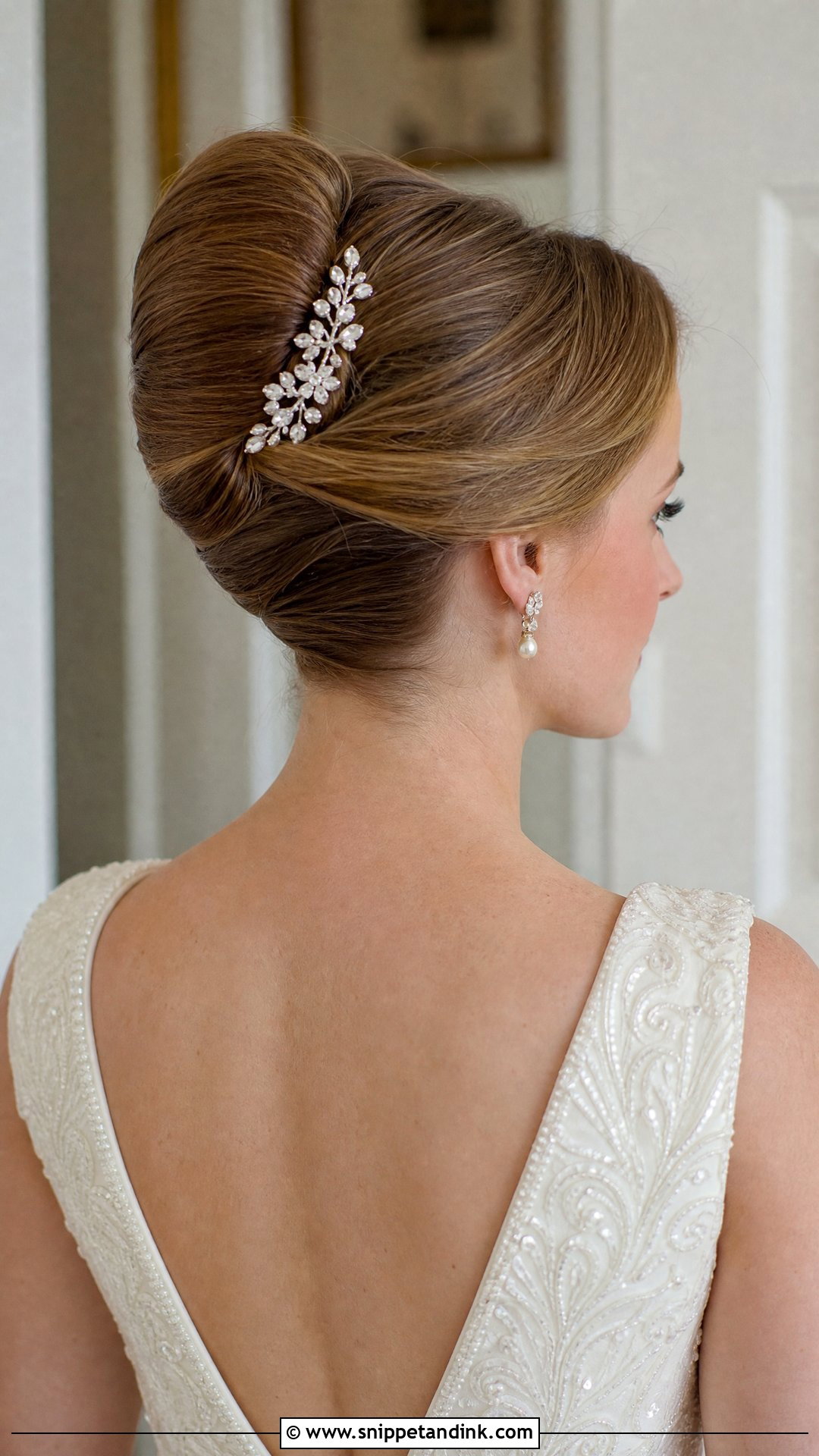
A French twist gives a polished, vintage line: the hair sweeps upward and tucks into a vertical roll at the back of the head. It works under veils and jeweled combs and with structured gowns. Medium-length hair suits it surprisingly well, since the roll hides where the length runs out. The trouble spot is the top of the roll on fine hair, where the pins show, so I backcomb the inner section first and pin into that cushion. The front can stay smooth or carry soft waves, depending on your face.
11. Bridal Half Up Curls
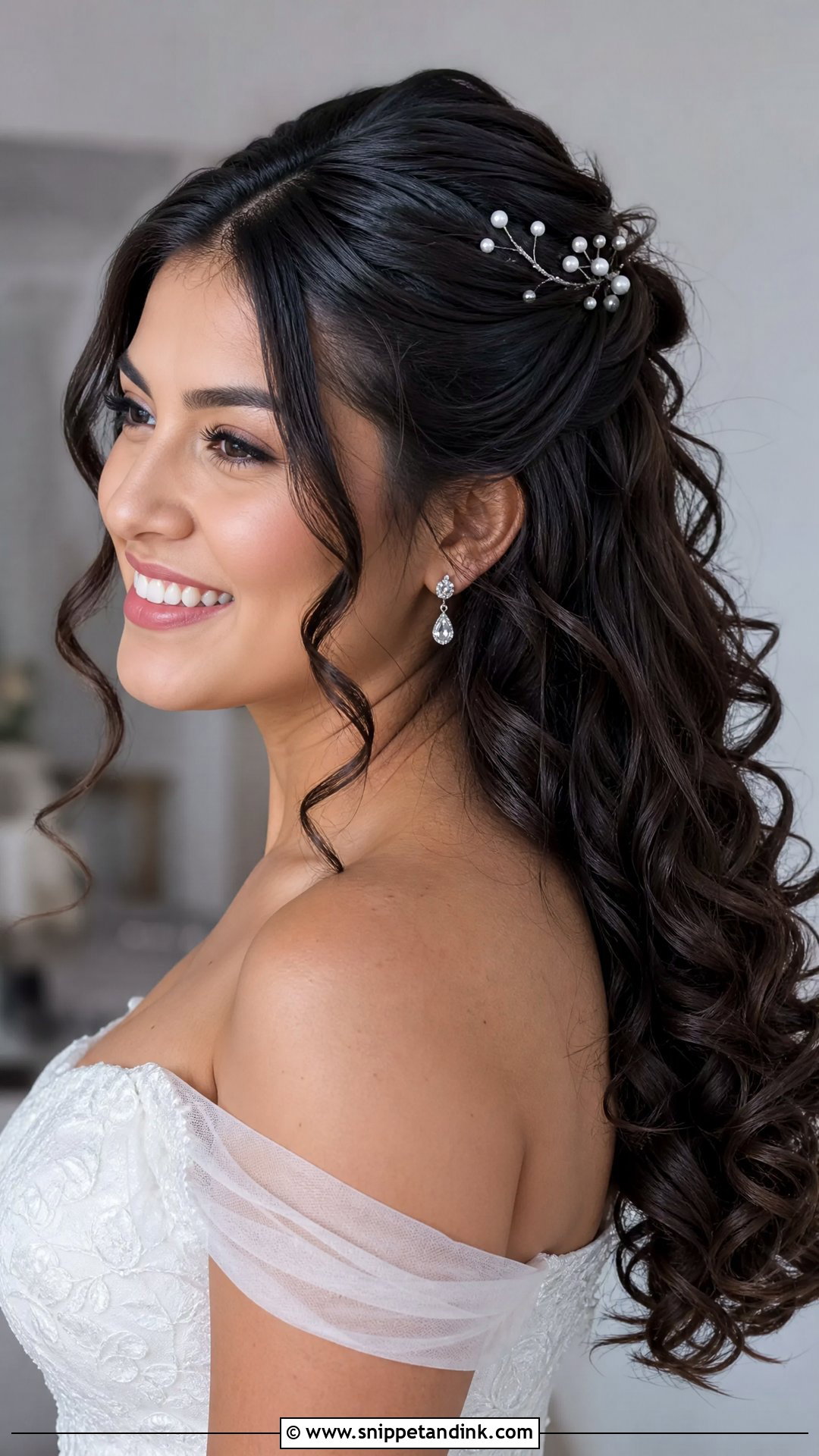
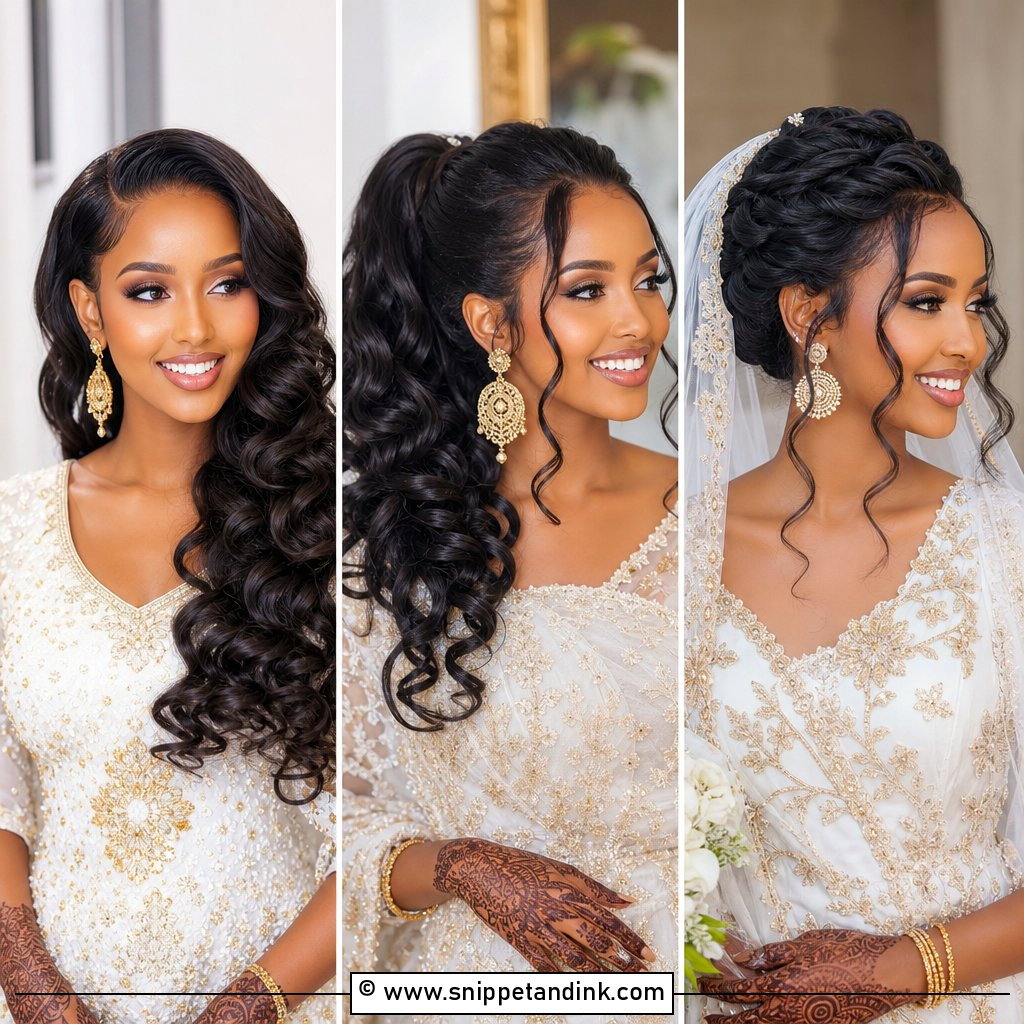
Half up curls keep hair off the face while still showing length. I pin the top section back with crossed pins for lift, then curl the rest. It takes a veil, a tiara or delicate floral pins well. Long and medium lengths show it best. My warning for traditional ceremonies: if you’ll be sitting through long rituals or leaning over a fire, loose curls at the front get pushed back and lose shape, so I keep the face-framing layers short and pinned behind the ears for the ceremony itself.
12. Bridal Curls With Veil
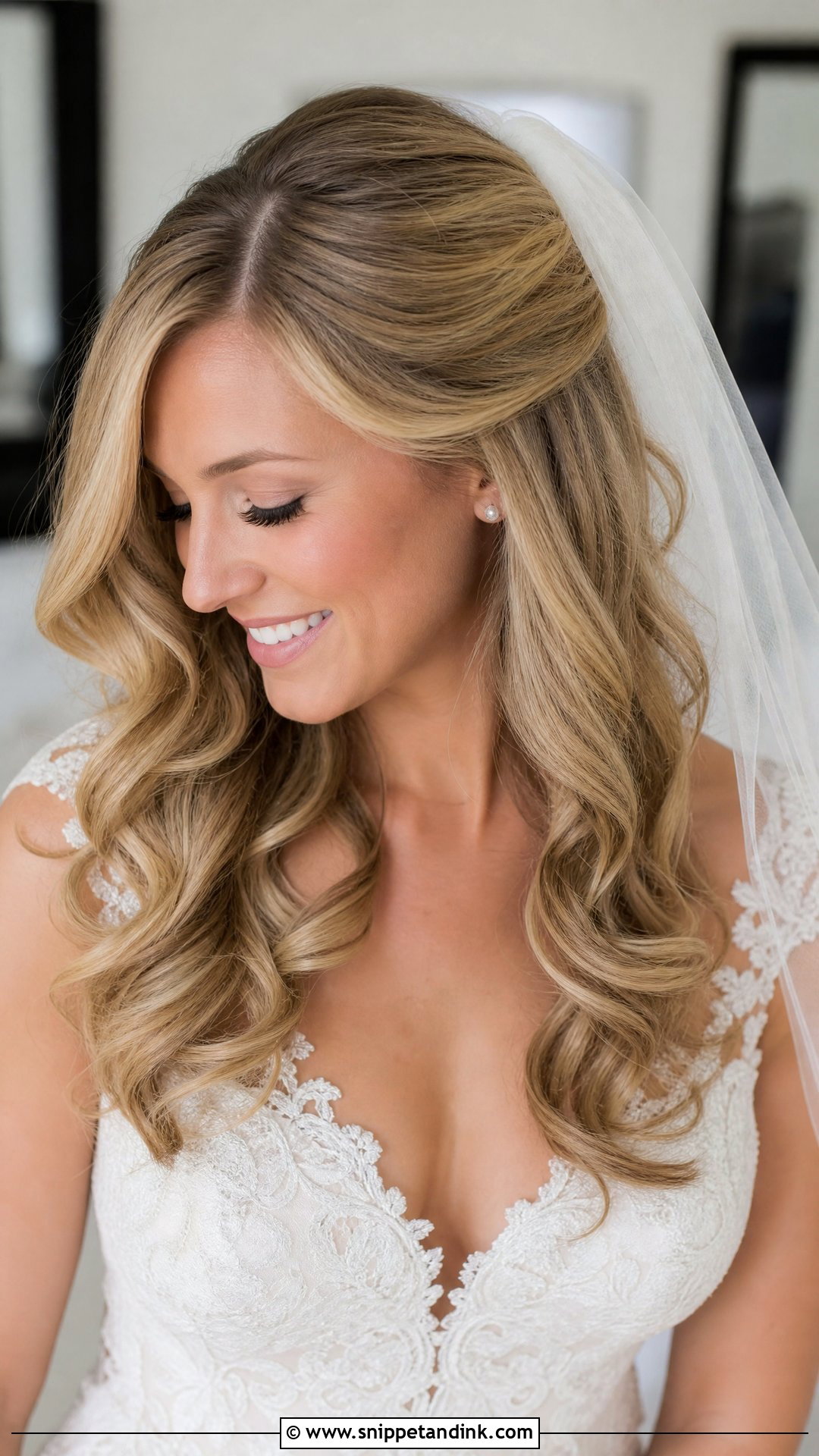
Curls with a veil suit brides who don’t want an updo at all. The curls can be polished, loose or more defined. Placement is the real decision. A veil at the crown frames the face; one set under the curls lets them fall over the tulle. Either way, I build a small hidden pin section first so the comb has something to grip, because a comb pushed into loose curled hair slides out by the first dance. Church ceremonies and lace sleeves suit it. I finish with flexible spray, never anything heavy that flattens the curls.
13. Bridal Side Bun
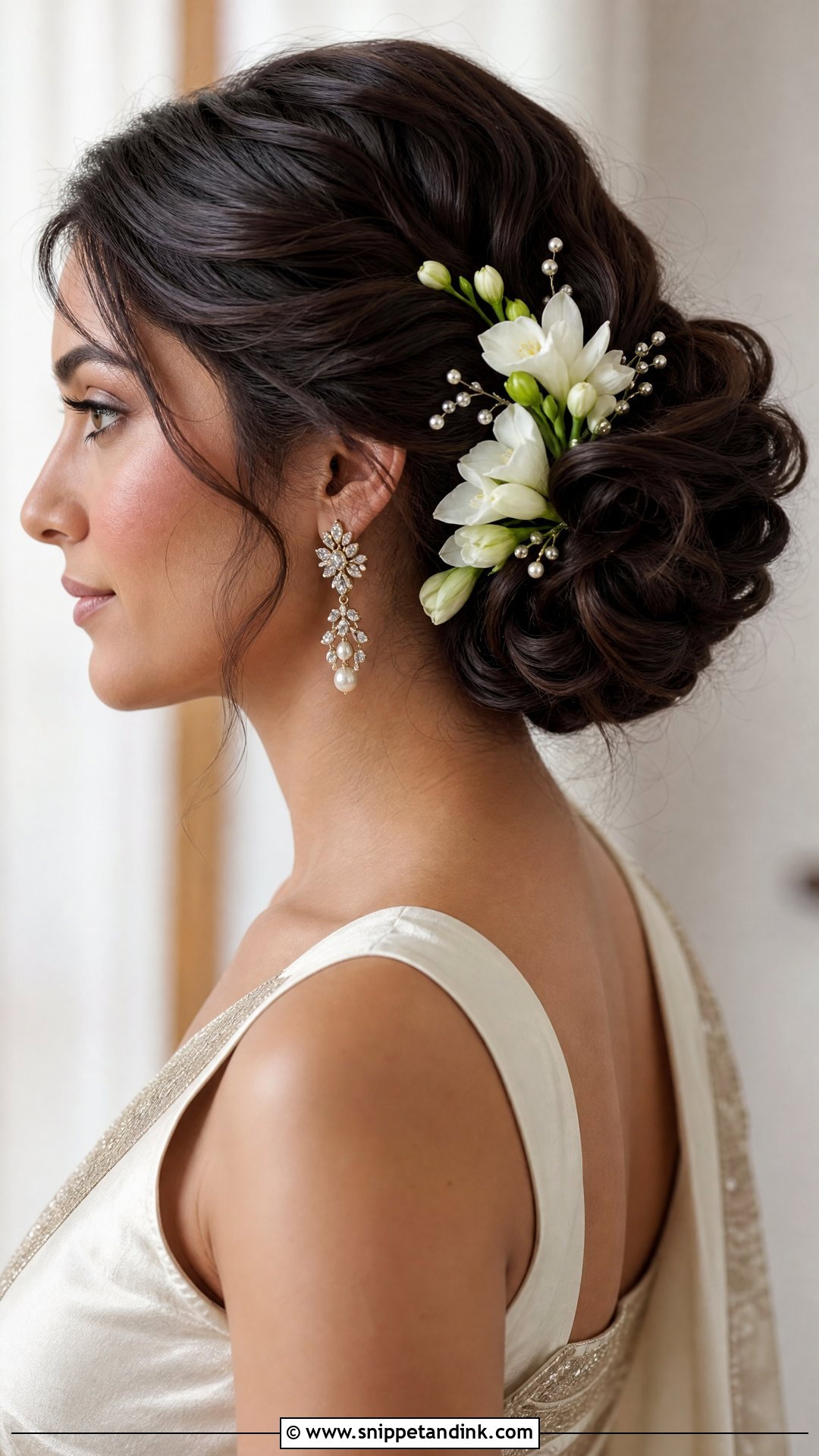
A side bun gives you a strong profile, which matters for traditional portraits shot from the side. It sits low and slightly off-centre, and can be smooth, curled or braided. It pairs naturally with one-shoulder outfits and saree drapes, since the bun sits on the opposite side from the pallu. Flowers or pearl pins can go around it. The thing to check at the trial is your dupatta: a side bun sometimes pushes fabric off one shoulder, so I test the drape before we commit.
14. Bridal Crown Braid Bun
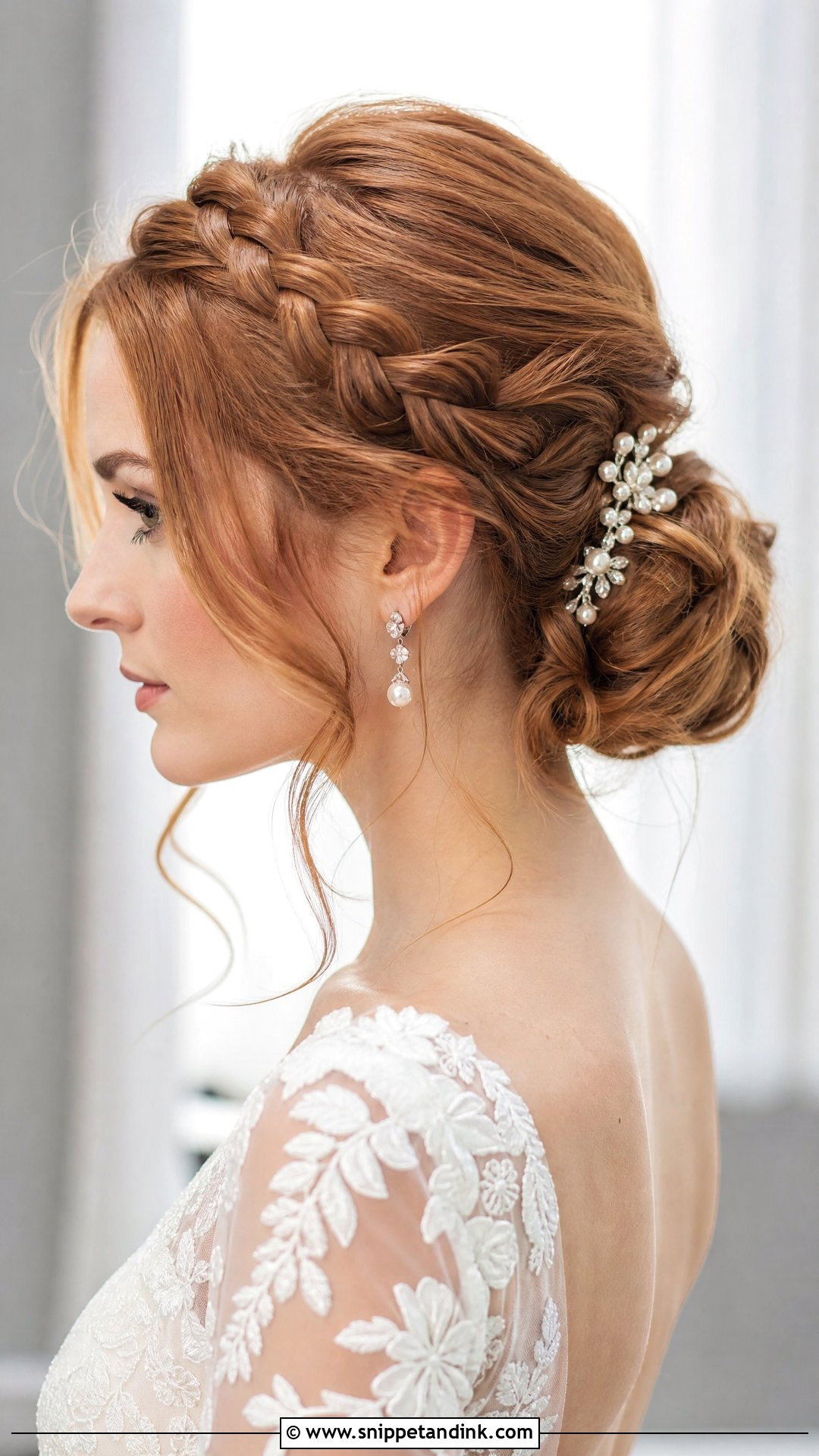
A crown braid bun mixes texture with the security of an updo. The braid wraps across the crown and blends into a low bun at the back, which spreads the weight of veils and floral pins evenly instead of loading one spot. It holds up through a long day and sits well with embroidered outfits. Layered hair needs extra pins along the braid where short ends escape, but it’s worth it. Garden ceremonies and formal receptions both suit it.
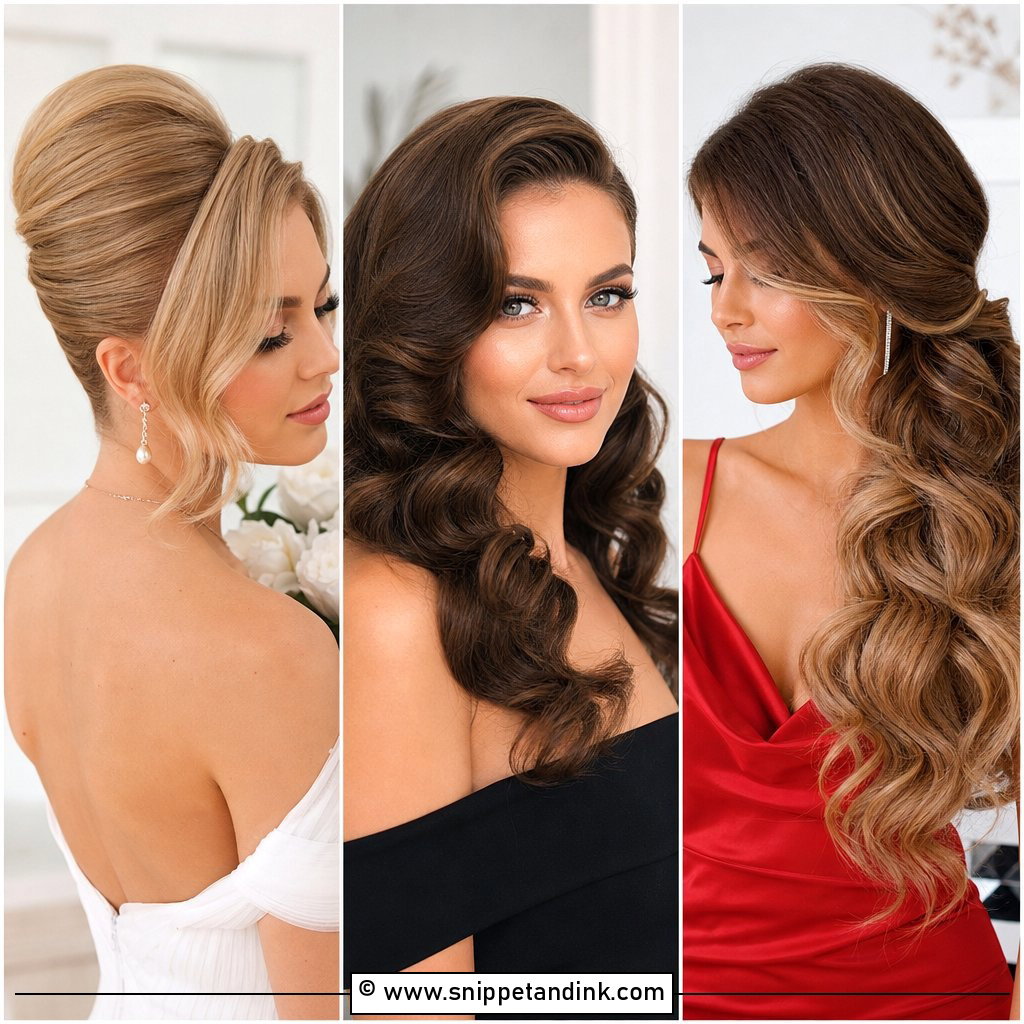
15. Bridal Open Hair With Dupatta
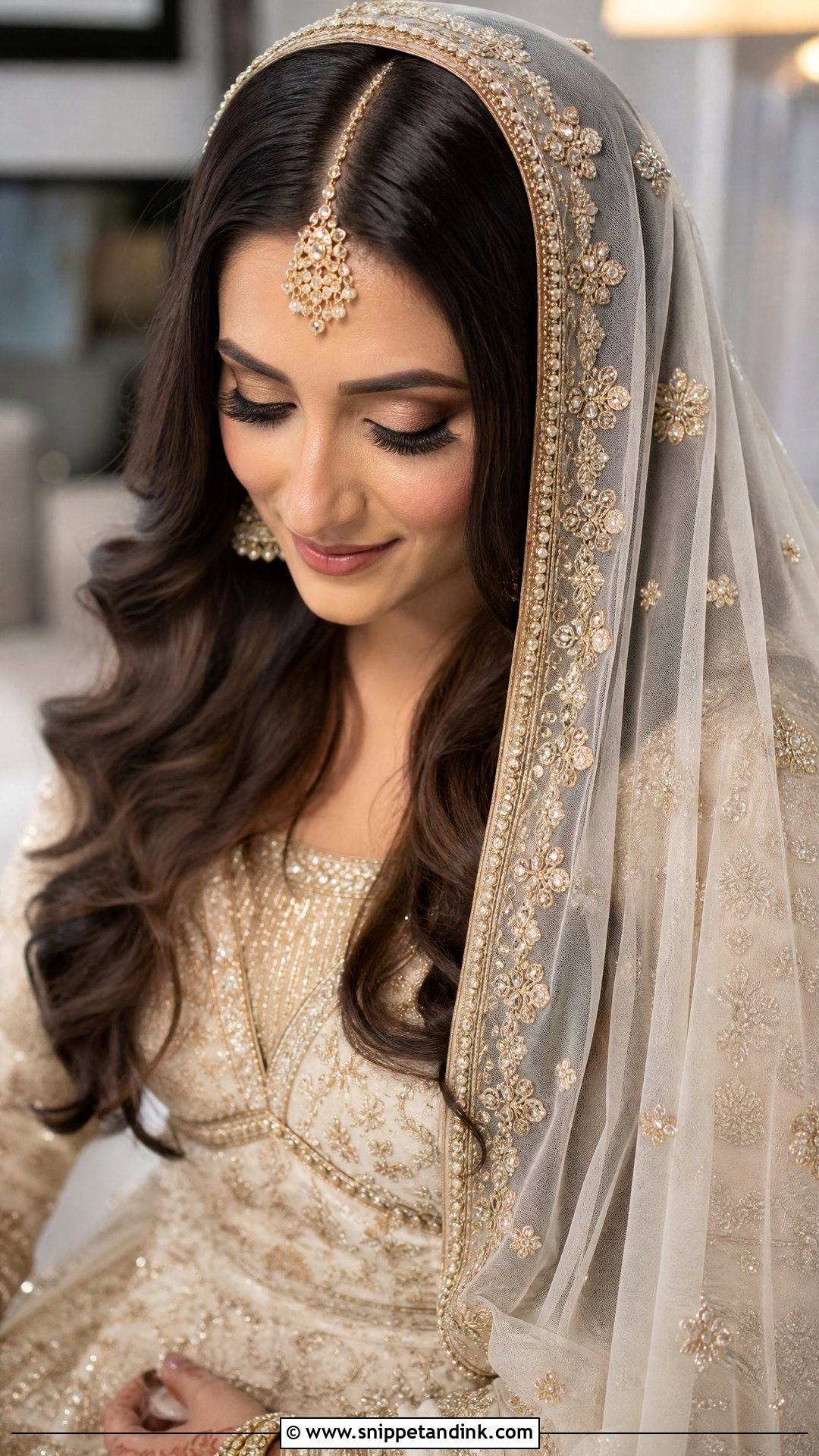
Bridal open hair with dupatta shows length and movement, but it’s the most technical look on this list to keep in place. Waves, curls or smooth straight lengths all work. The front needs a firm base: I braid a small hidden section at the crown and pin the dupatta into that, otherwise the fabric slides back every time you turn your head. A maang tikka or matha patti helps define the centre part. Keep the ends glossy and shaped, and expect the waves to loosen by evening, which usually looks fine under fabric.
Real Jasmine Wilts by Evening, So Time the Flowers
Fresh gajra is the detail brides love most and the one that ages fastest. Jasmine buds open over the day and start to brown at the edges after several hours out of water, sooner in heat or under hot lights. A few habits make a real difference.
Buying and Storing
I ask for strings made from tight, unopened buds, delivered the morning of the ceremony rather than the night before. Until they go in, keep them wrapped in a damp cotton cloth in the fridge, not the freezer, which turns the petals translucent.
Swapping Between Events
If your day runs from a morning ceremony into an evening reception, plan a second set of flowers for the change rather than hoping the first survives. Swapping a gajra takes me a few minutes if the bun was built to take it. Silk jasmine is a fair backup for outdoor summer events, though it won’t give you the scent.
One more check: strong jasmine scent right behind the head bothers some brides by evening, so if you’re sensitive to fragrance, wear it for an hour at the trial first.
Your Jewellery Decides More Than the Photos Do
A traditional bridal look only works when the hair, the jewellery and the fabric are planned together. A sleek bun suits a formal ceremony, a long braid carries heritage jewellery and flowers, and a chignon gives a veil a steady base. Book a trial and bring every piece you’ll wear on your head, plus the actual dupatta or veil, not a substitute. I’d rather find out at the trial that a passa pulls the parting than discover it at the mandap. Go with the style that stays comfortable after hours of ceremony and still feels like you.
You'll Like These Ideas:


Leave a Reply