
More brides ask me to leave their hair down now than ever, and I understand why. Indian open bridal hairstyles move in photos and feel more like you than a lacquered bun. They are also the hardest bridal hair to keep fresh, because loose hair has to share space with a maang tikka, a dupatta, a garland and usually some heat. The fifteen looks below range from soft curls to sleek straight hair, and for each one I’ve noted what holds it in place and where it tends to fail.
Extensions, Density and the Honest Test for Wearing It Down
Before I agree to open bridal hair, I gather the bride’s hair into a ponytail at the nape and look at its thickness. If it’s slimmer than a thumb, curls will look sparse once a dupatta sits on top, and the ends will look thin in photos. That isn’t a reason to give up on open hair. It usually means clip-in extensions.
- Choose human hair so it can be curled with heat and blended into your own.
- Match the colour in daylight, not under shop lighting. Most Indian hair is a deep brown rather than true black, and black wefts look flat beside it.
- Buy them a few weeks ahead and bring them to the trial so your stylist can cut and blend them.
- Have your own ends trimmed three to four weeks before, so the line between your hair and the weft disappears.
Skip any new hair colour in the last fortnight. Fresh colour can shift slightly as it settles, and a mismatch between roots, lengths and extensions shows up immediately under flash.
1. Indian Open Bridal Hairstyle With Soft Curls
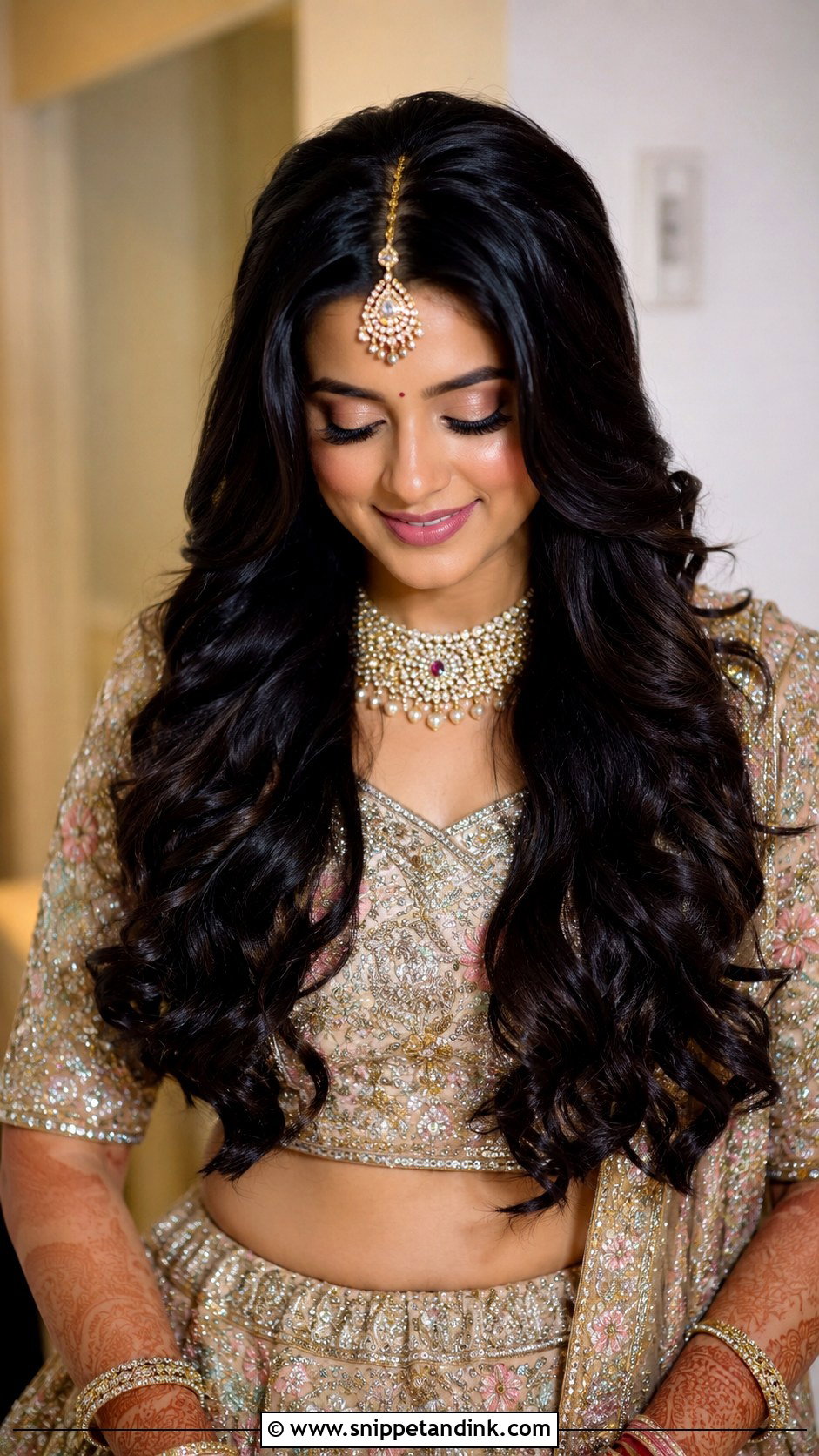
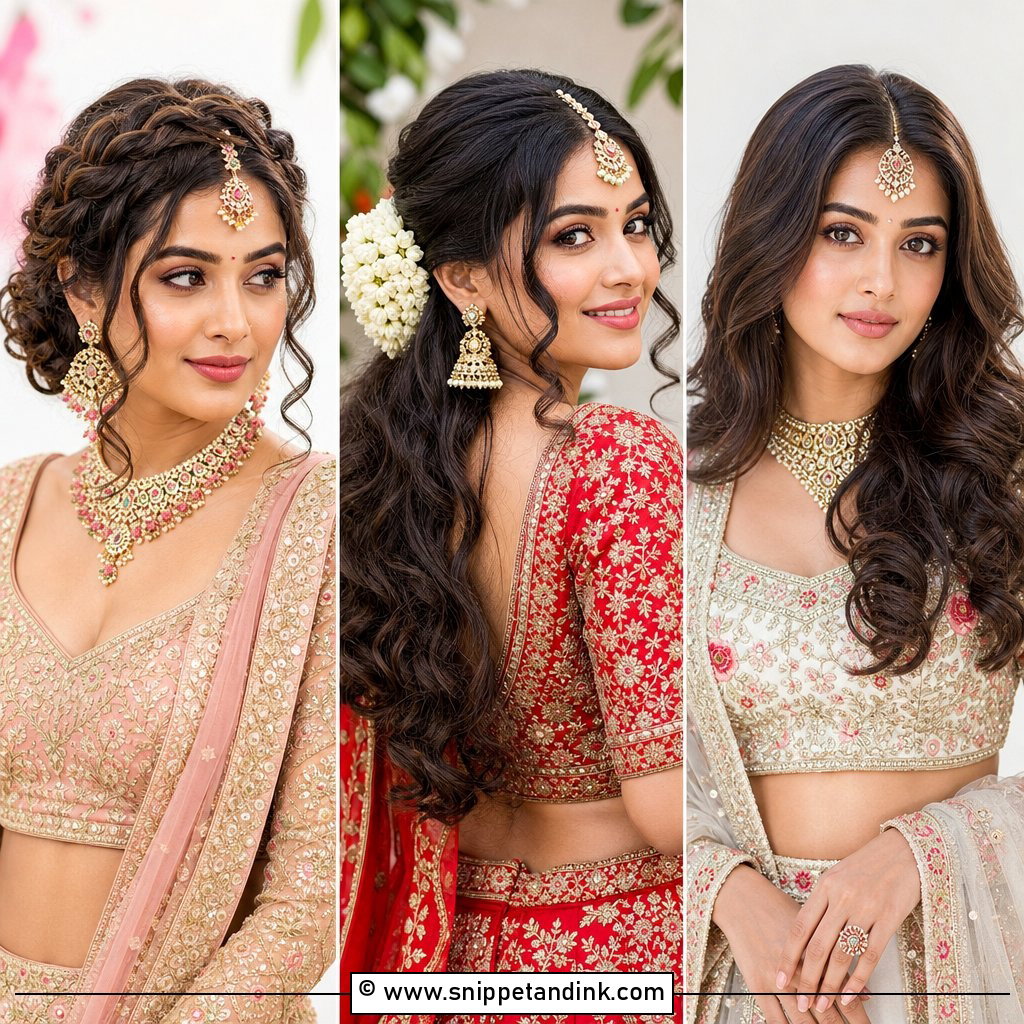
Soft curls are the most requested open look, and the trick is restraint. Ask for loose, brushed-out curls rather than tight ringlets, but don’t let your stylist brush them out fully at nine in the morning. I leave them slightly too defined, because they relax by the time portraits start. A center part takes a maang tikka well, and a light dupatta can be pinned just behind the crown. Medium to long hair works best; on a shoulder-length cut the curls bunch up at the collarbone.
2. Indian Open Bridal Hairstyle With Maang Tikka
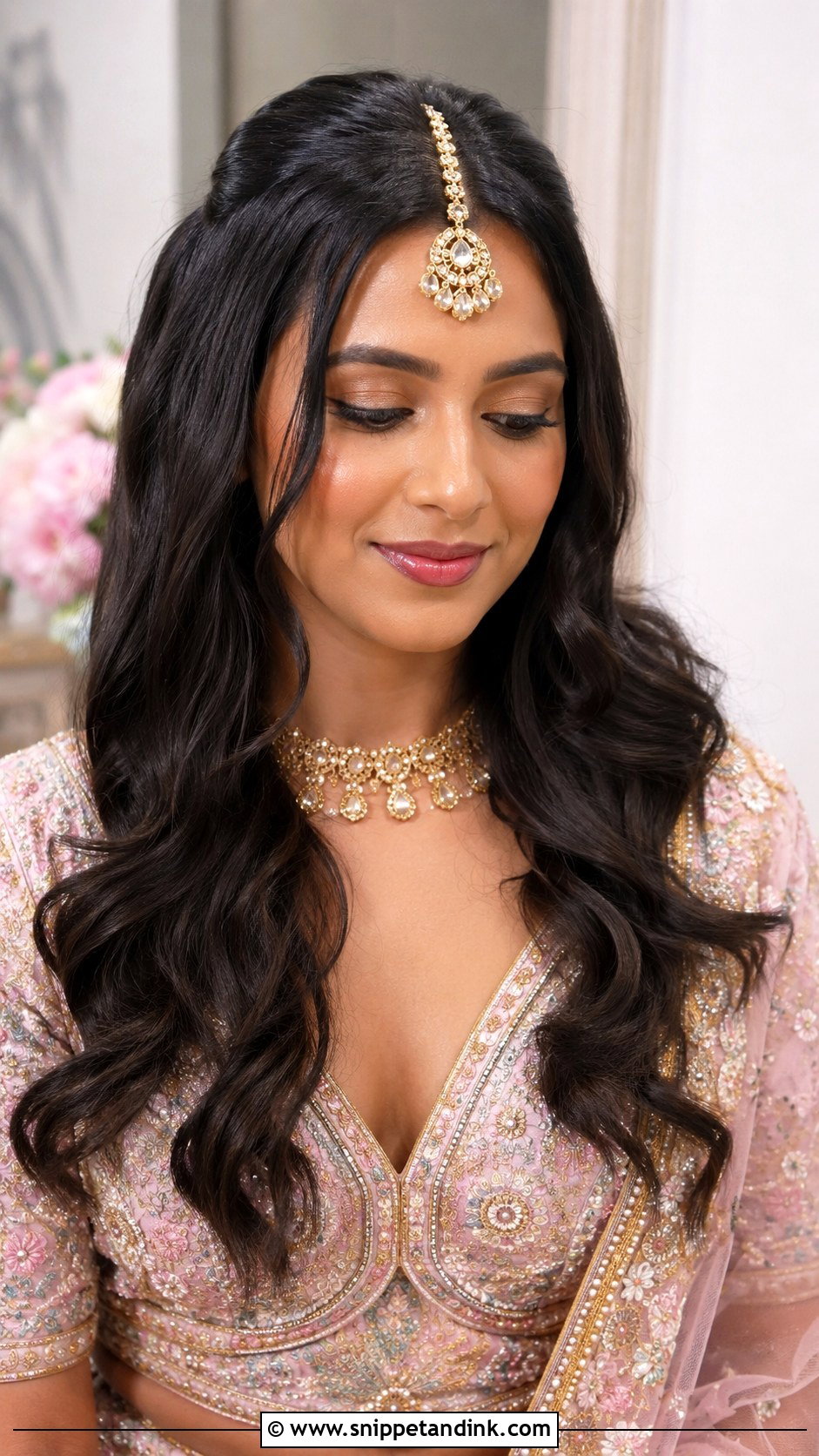
Pairing open hair with a maang tikka depends on what’s holding the tikka. The chain needs something to grip, and loose hair gives it nothing. I make a small hidden anchor near the crown, either a tiny braid or two crossed bobby pins, and hook the chain there, which matters a great deal with a heavy kundan piece. Keep the front sections smooth so the parting stays crisp. Below that, waves, curls or a blowout all suit it.
3. Indian Open Bridal Hairstyle With Matha Patti
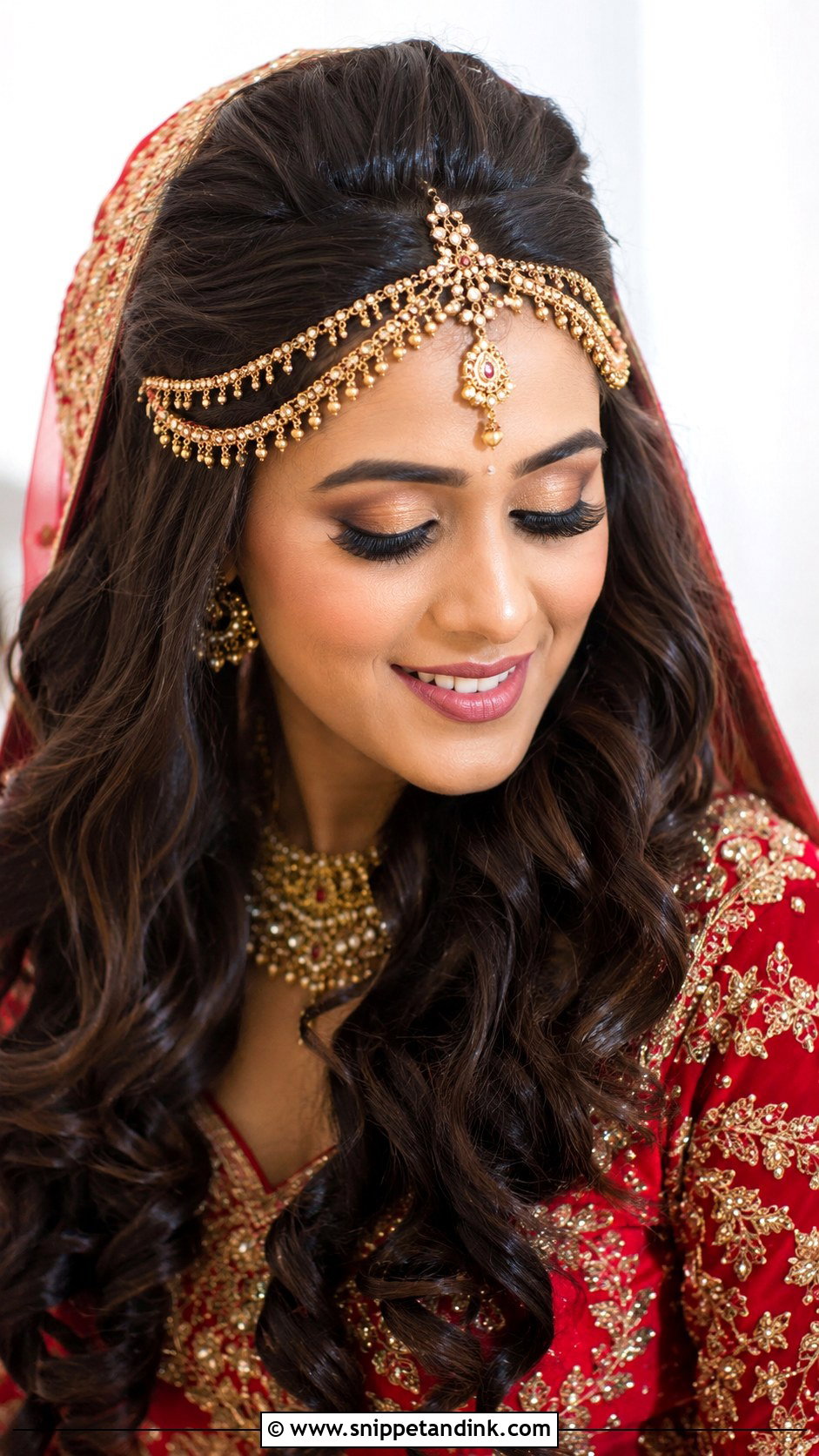
Adding a matha patti turns open hair formal in one move. The side chains of the matha patti lie along the temples, so any frizz there shows straight away; I smooth that area with a little gel before anything else. Keep some controlled volume at the crown so the band doesn’t sit on a flat head, then let the lengths fall in loose curls. Avoid big volume at the sides, as it pushes the chains outward. It frames the face strongly, so it can take defined eyes and large earrings without looking busy.
4. Indian Open Bridal Hairstyle With Hollywood Waves
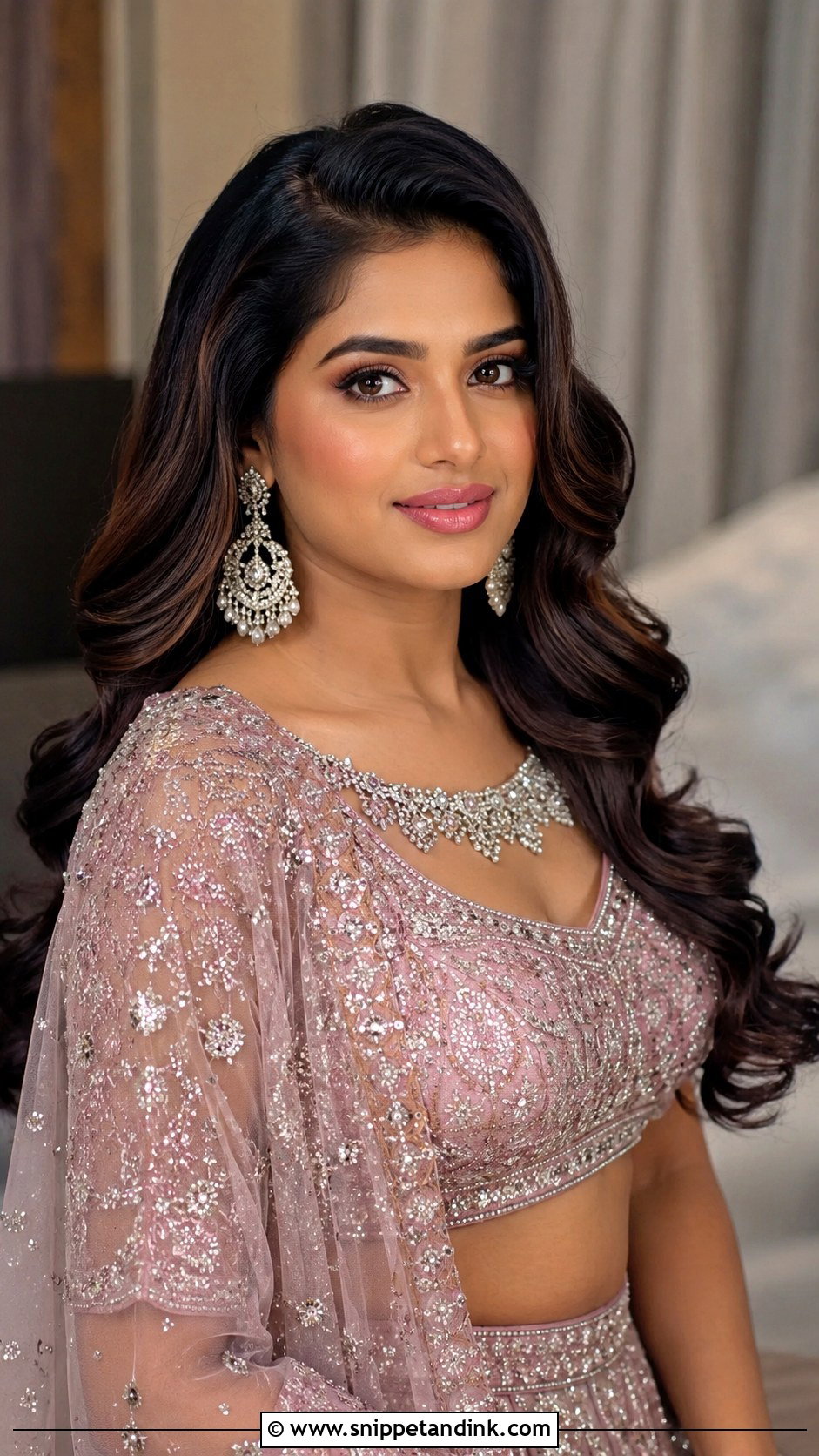
Hollywood waves are a reception look. Every wave is set in the same direction, pinned to cool, then brushed into one continuous S-shape that falls over the shoulder. The pattern needs length to show, so on hair above the shoulder blades I add extensions. A deep side part is the traditional version; a center part feels quieter with a maang tikka. Brushing is where it goes right or wrong: brush too little and you get separate curls, too much and it frizzes. A structured blouse and a neat dupatta drape keep the glamour from tipping over.
5. Indian Open Bridal Hairstyle With Side Swept Curls
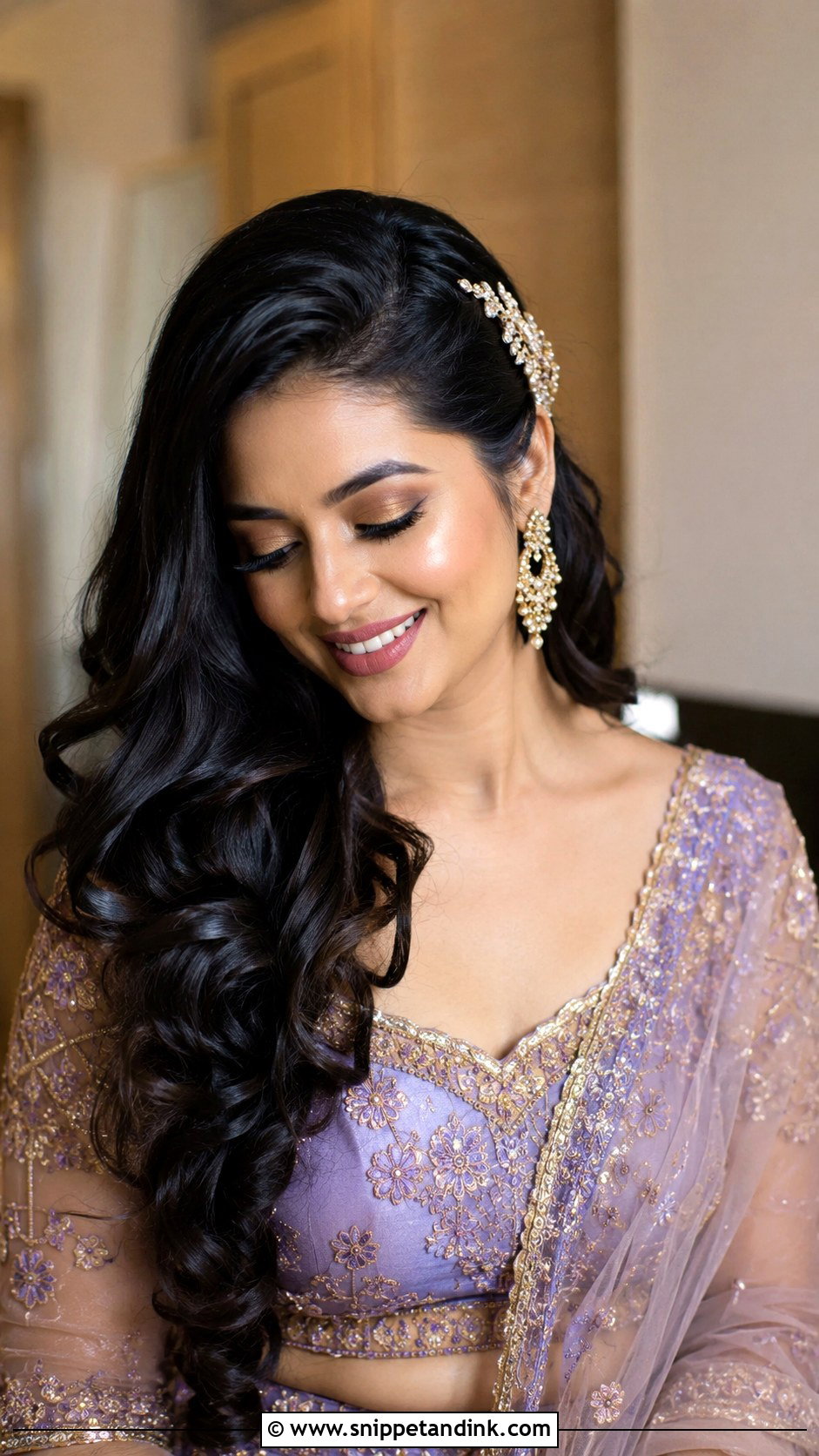
Sweeping everything over one shoulder shows off the blouse back and the opposite earring. That makes it a natural fit for reception, cocktail, or sangeet events, where you’re moving a lot and not wearing a head-pinned dupatta. I anchor the swept side behind the ear with crossed pins, then hide them under a jeweled clip or a few flowers. Lift the roots at the crown before you sweep, otherwise the front looks flat in head-on shots. If you’ll be dancing, a light spray along the pinned side stops it creeping back.
6. Indian Open Bridal Hairstyle With Half Up Curls
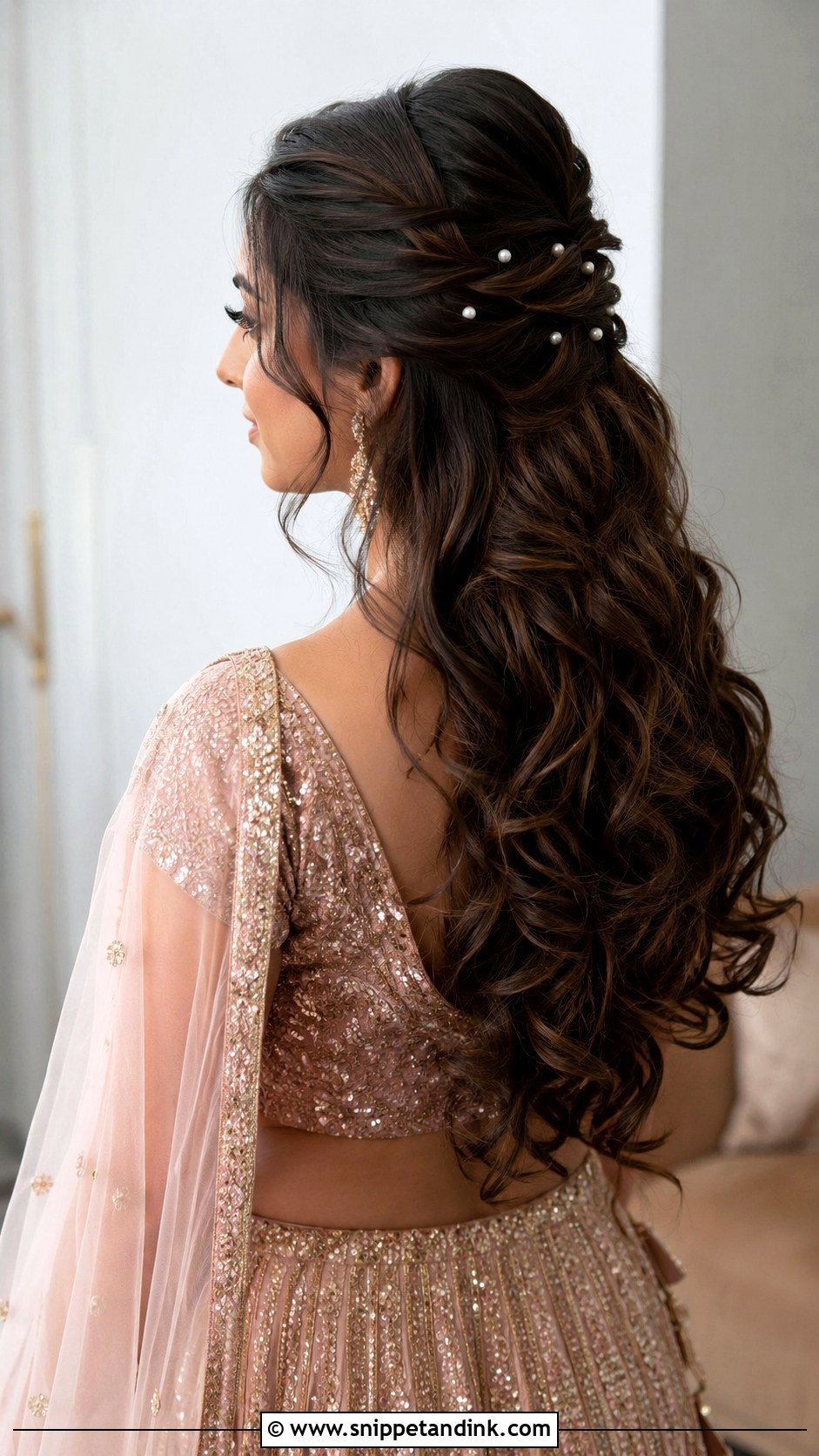
Half-up curls solve the biggest problem with open hair: there’s finally somewhere to pin a dupatta. The top section is drawn back and secured, and the lower lengths stay loose and curled. I can shape volume at the crown for thick, fine or layered hair alike, which is why it’s my default suggestion for a bride who wants hair down but is wearing a heavy dupatta. Add a maang tikka and a few pearl pins or small flowers. It holds up far better through the pheras than fully loose hair.
7. Indian Open Bridal Hairstyle With Fresh Flowers
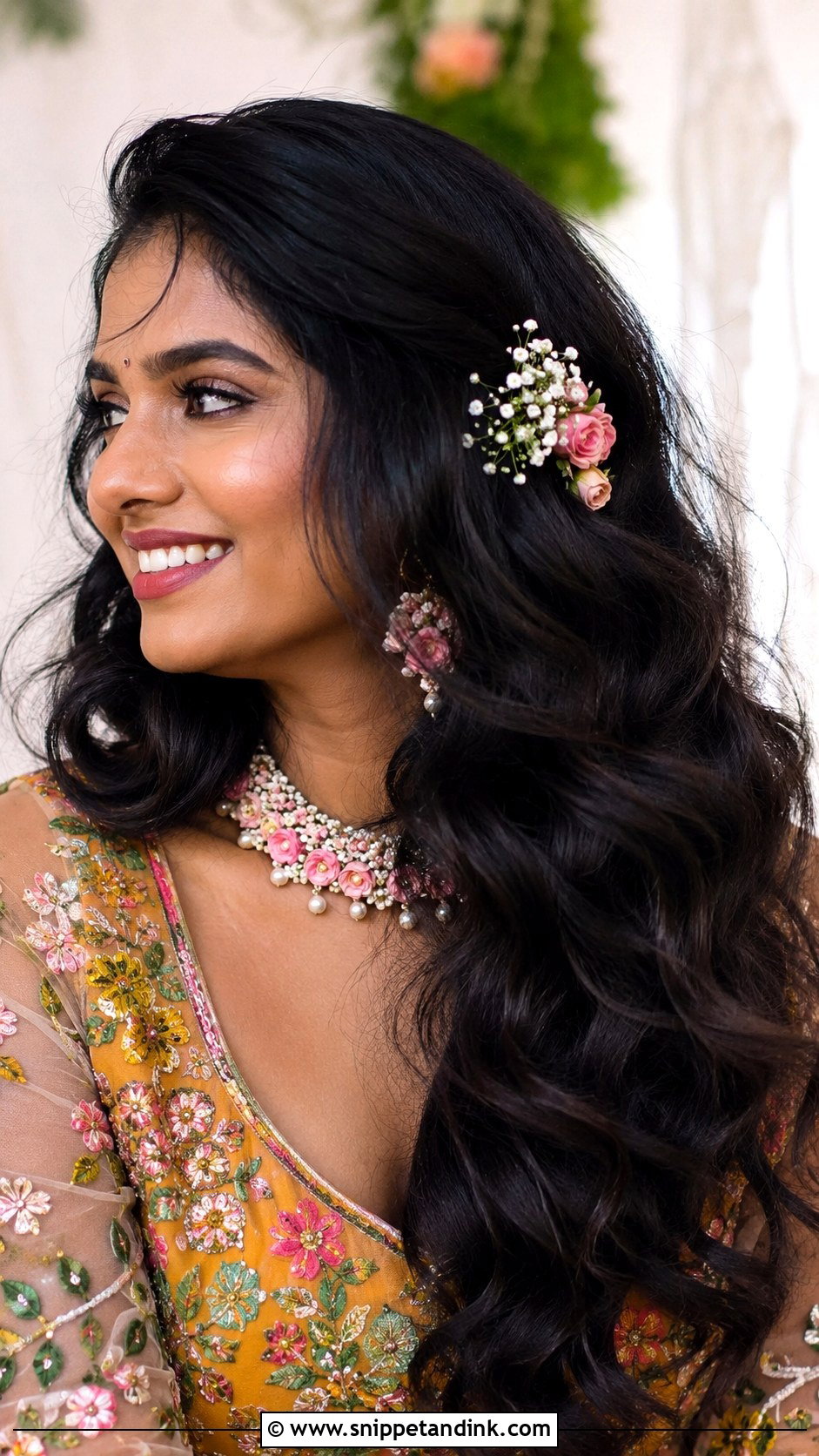
Fresh flowers give open hair a festive, scented touch without committing to a bun. Jasmine, small roses or baby’s breath work along one side or tucked behind the ear. Weight is the issue here: a heavy cluster pulls loose hair down and drags the part with it, so I pin flowers into a small twist or a hidden braid, never straight into loose lengths. It suits mehendi, haldi, South Indian wedding functions and outdoor ceremonies. In heat, add them last.
8. Indian Open Bridal Hairstyle With Loose Waves
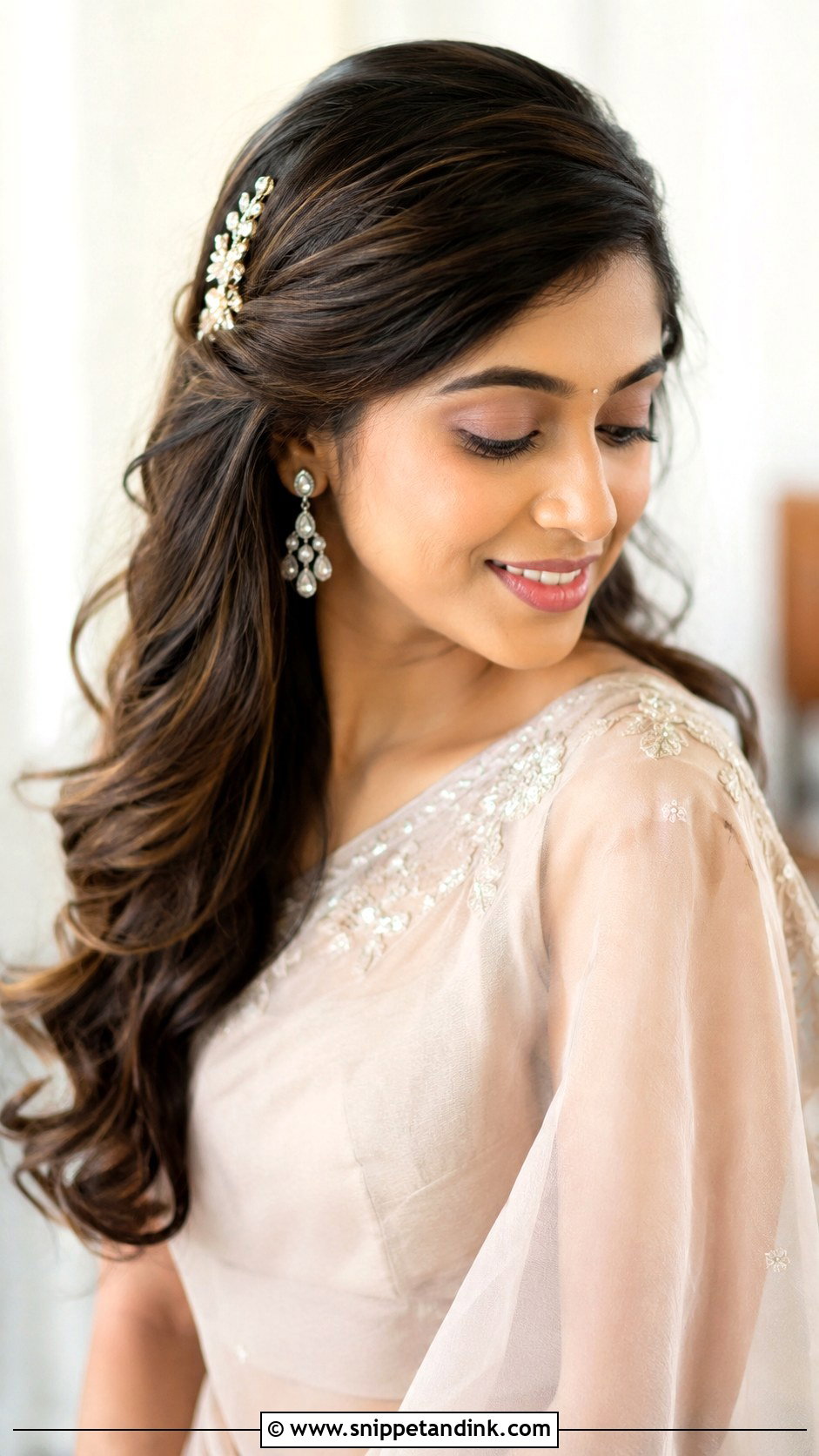
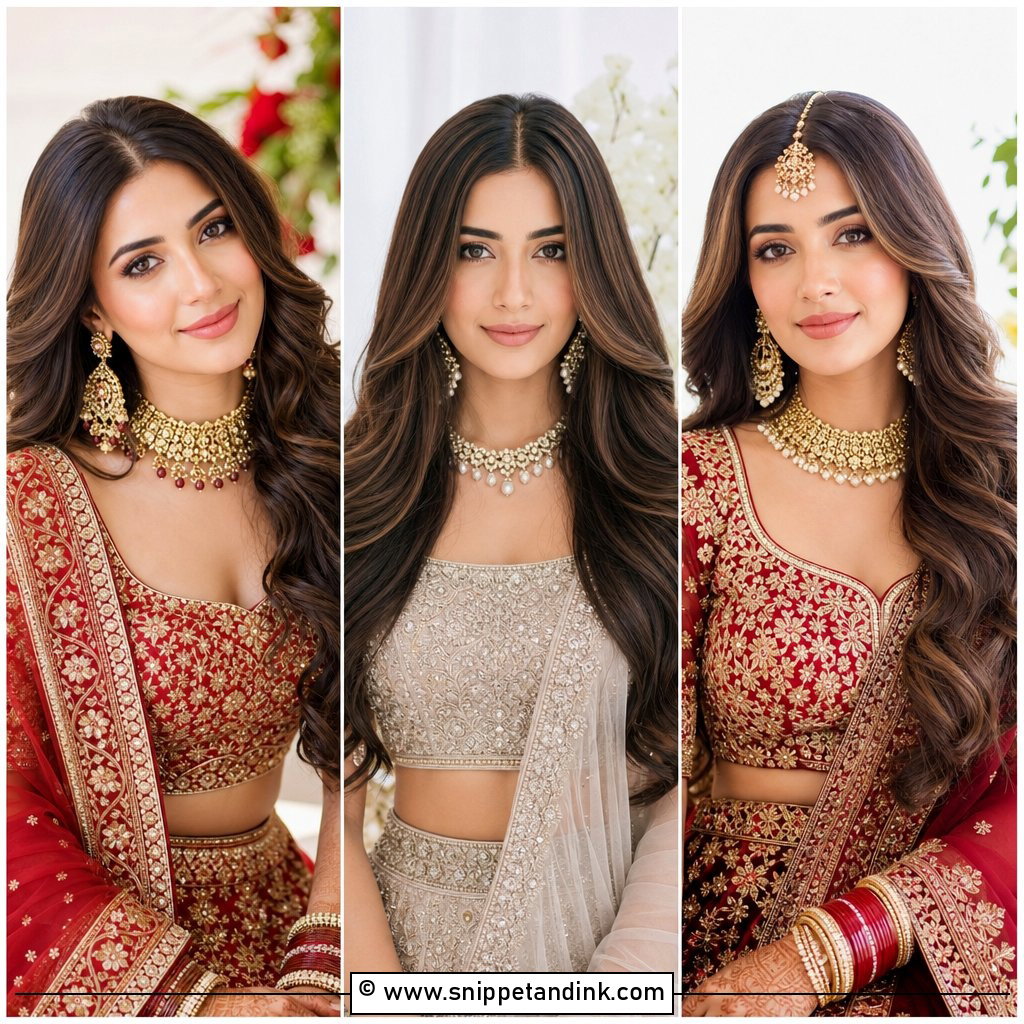
Loose waves are the easiest open style to wear for a whole day. I start the bend around the cheekbones or jaw so the crown stays smooth enough for jewelry. Layered cuts show the movement nicely. Prep is what makes them last: mousse on damp hair before blow-drying, and a humidity-resistant spray to finish. They suit lightweight dupattas, organza sarees and contemporary lehengas. Expect them to loosen through the day; that’s normal and usually looks better in the evening.
9. Indian Open Bridal Hairstyle With Center Part
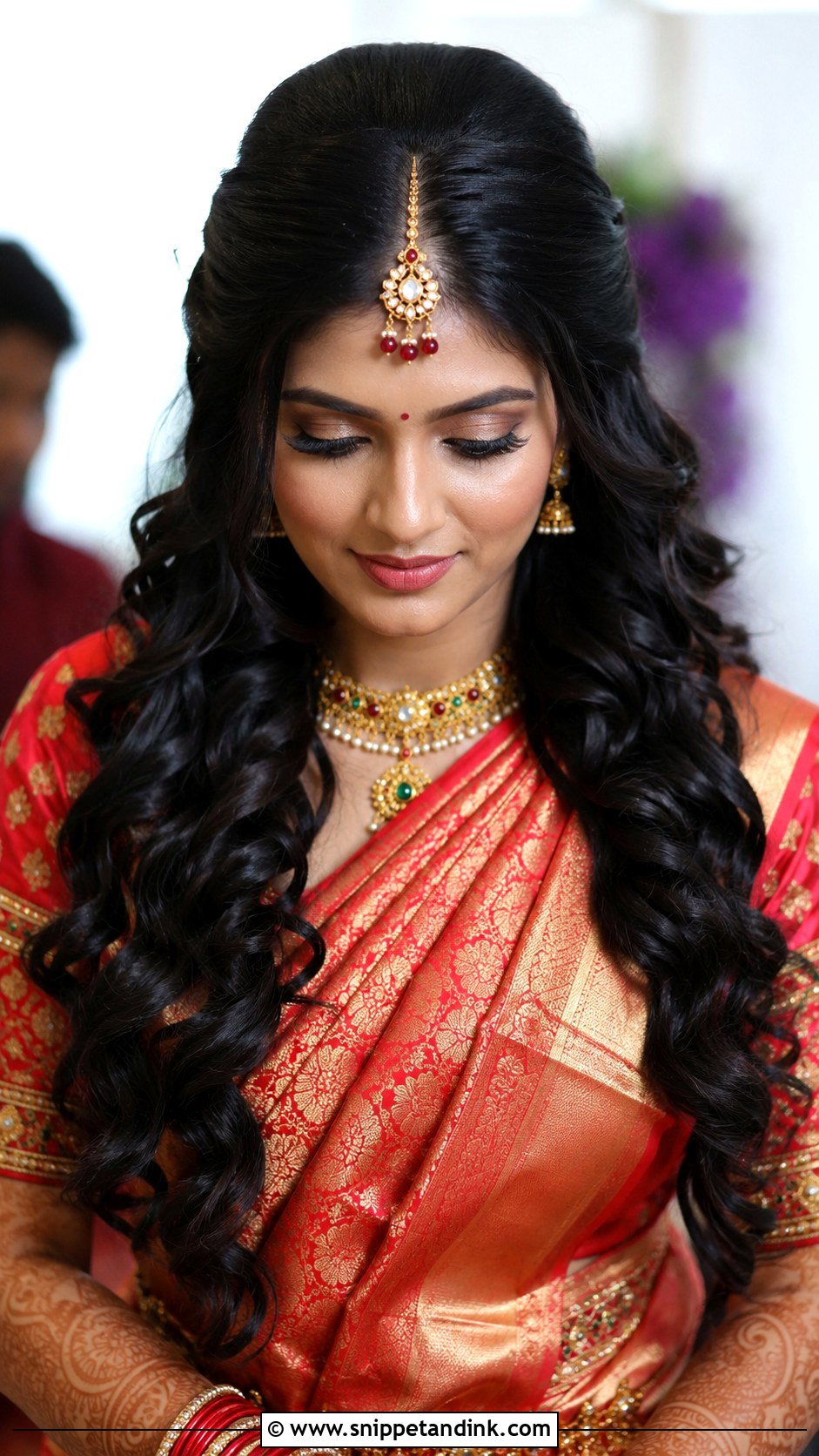
A center part keeps everything symmetrical, which is what you need to wear a maang tikka, matha patti, or passa with neat placement. The lengths can be straight, softly curled or waved. It keeps the face open for heavy earrings and symmetrical makeup. Check the part the night before: if your hair naturally falls to one side, a forced center part can split open by afternoon, so I blow-dry the roots in the new direction first. A little gel or serum along the parting keeps flyaways from catching the light.
10. Indian Open Bridal Hairstyle With Front Twists
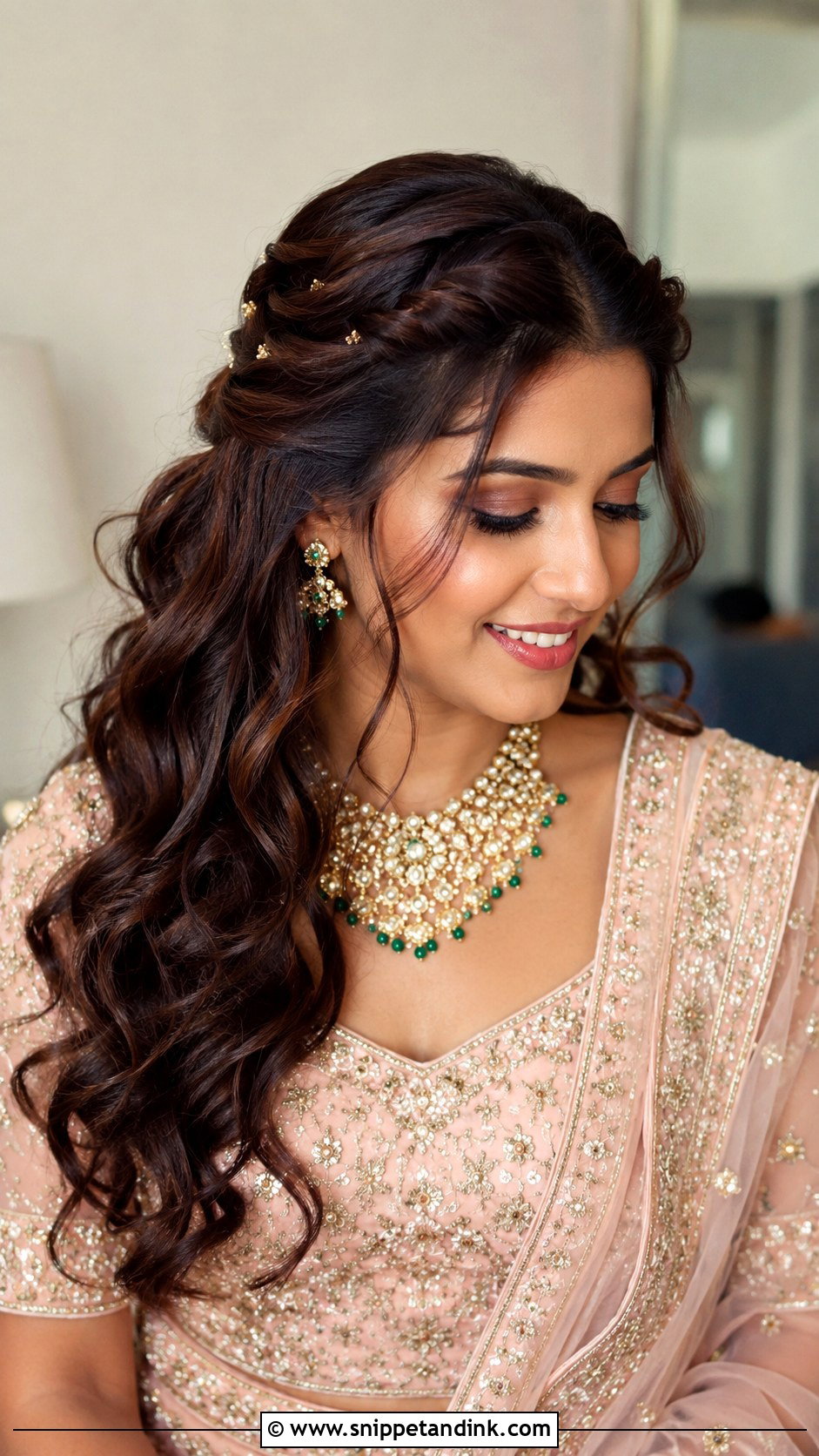
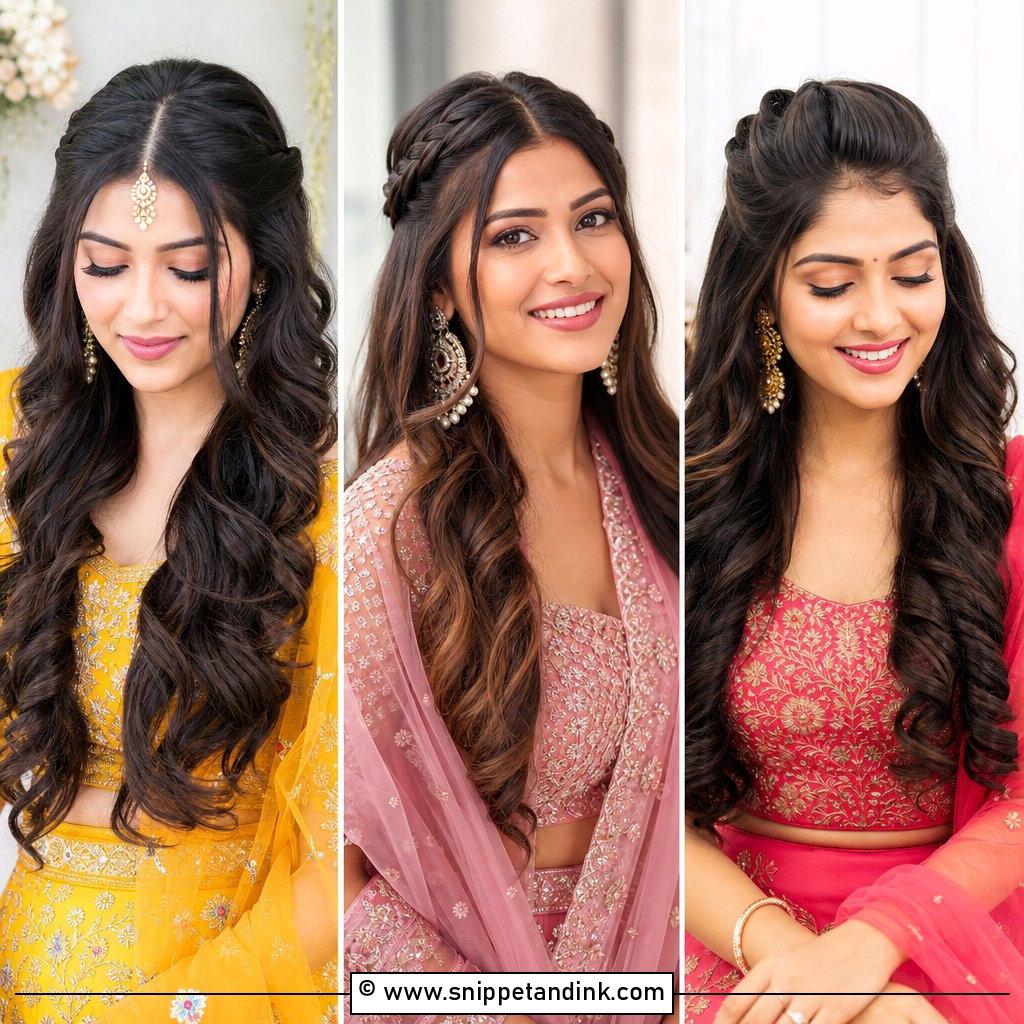
Front twists are my answer for brides who keep tucking hair behind their ears. Small sections at the front are twisted back and pinned near the crown or at the sides, and the rest stays open in curls or waves. I twist away from the face and pin each one crossways so the twist can’t unravel when you bow your head during rituals. Tiny pearls or flowers can sit in the twists. It works at mehendi and engagement just as well as on the wedding day.
11. Indian Open Bridal Hairstyle With Braided Crown
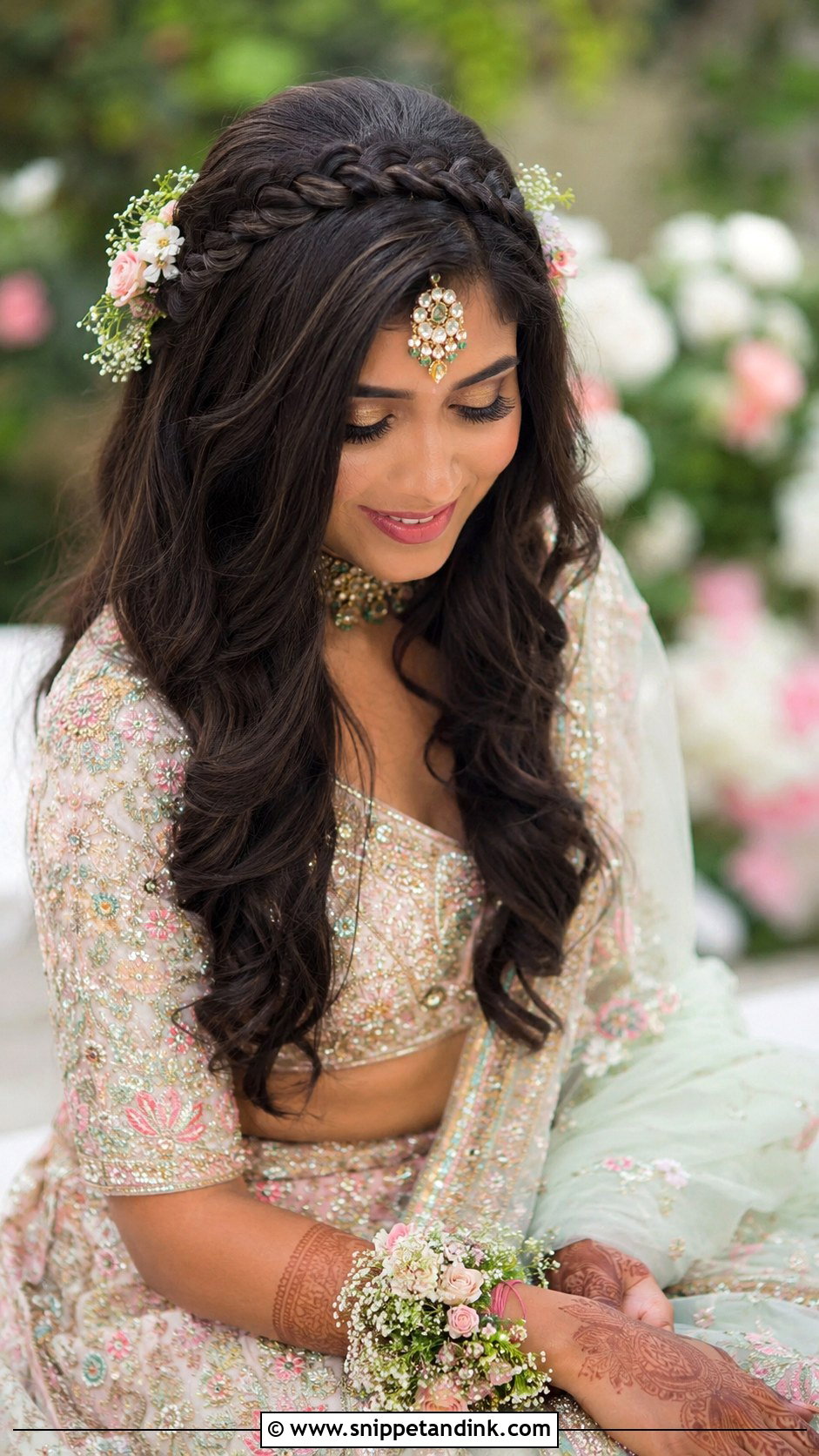
A braided crown gives open hair the structure it otherwise lacks. A soft braid runs along the crown or sides, and the rest is left loose. The braid is the anchor: flowers, pins and even a dupatta grip it far better than smooth loose hair. I keep it slightly loose and pancaked, because a tight braid on open hair looks severe. Curls or waves through the lower lengths fill out the back. Daytime functions and garden weddings suit it well.
12. Indian Open Bridal Hairstyle With Sleek Straight Hair
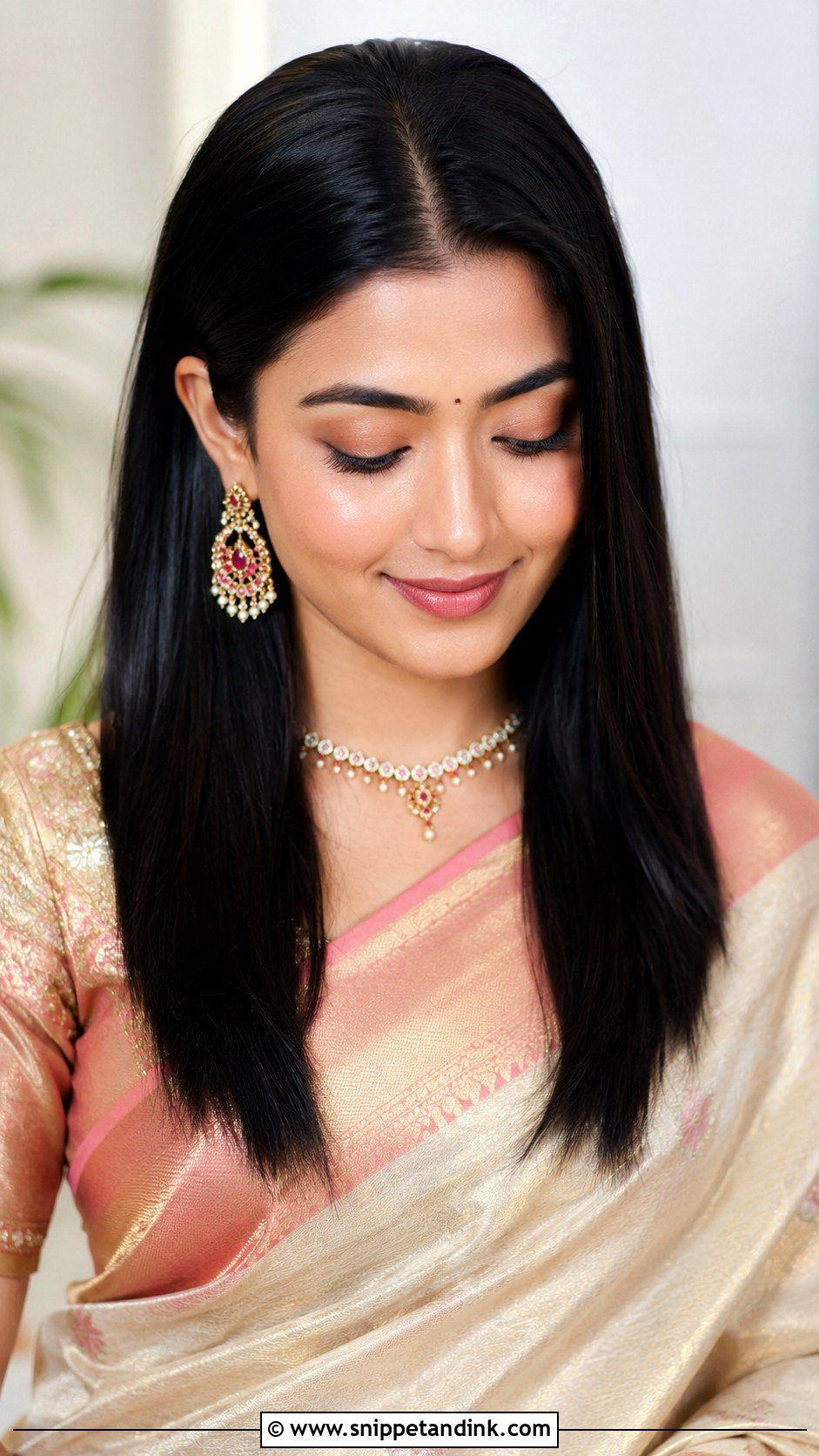
Sleek straight hair is the modern, minimal option and it demands the most preparation. The finish has to be glossy, so I’d look at a gloss treatment a week or two before and a good trim to remove split ends, which show clearly on straight hair. It pairs with silk sarees, structured lehengas and strong jewelry. Use a lightweight shine spray, not oil, so the hair still moves. Honestly, I steer brides away from this one for outdoor monsoon or beach weddings, because humidity puts a kink back in by the second hour.
13. Indian Open Bridal Hairstyle With Dupatta
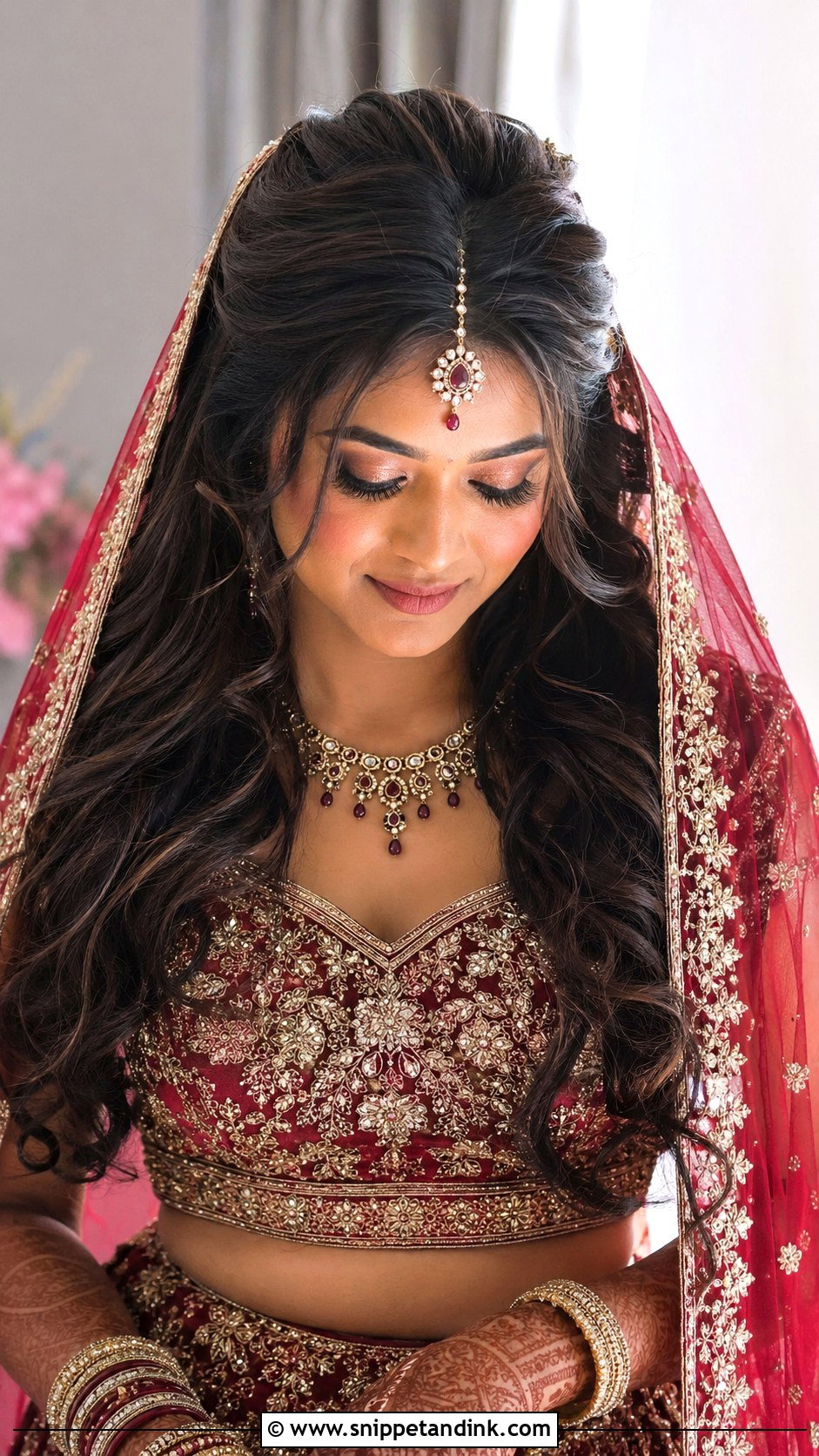
Open hair under a dupatta needs planning, but it can look wonderful when the base is built properly. Half-up curls, crown volume or hidden anchor braids under the top layer all give the dupatta something to hold without squashing the hair flat. A lighter dupatta keeps the lengths visible and is much more comfortable. Tell your stylist exactly how it will be draped, over the head or just at the back, because the pin positions change completely. Bring it to your trial and wear it for half an hour.
14. Indian Open Bridal Hairstyle With Passa
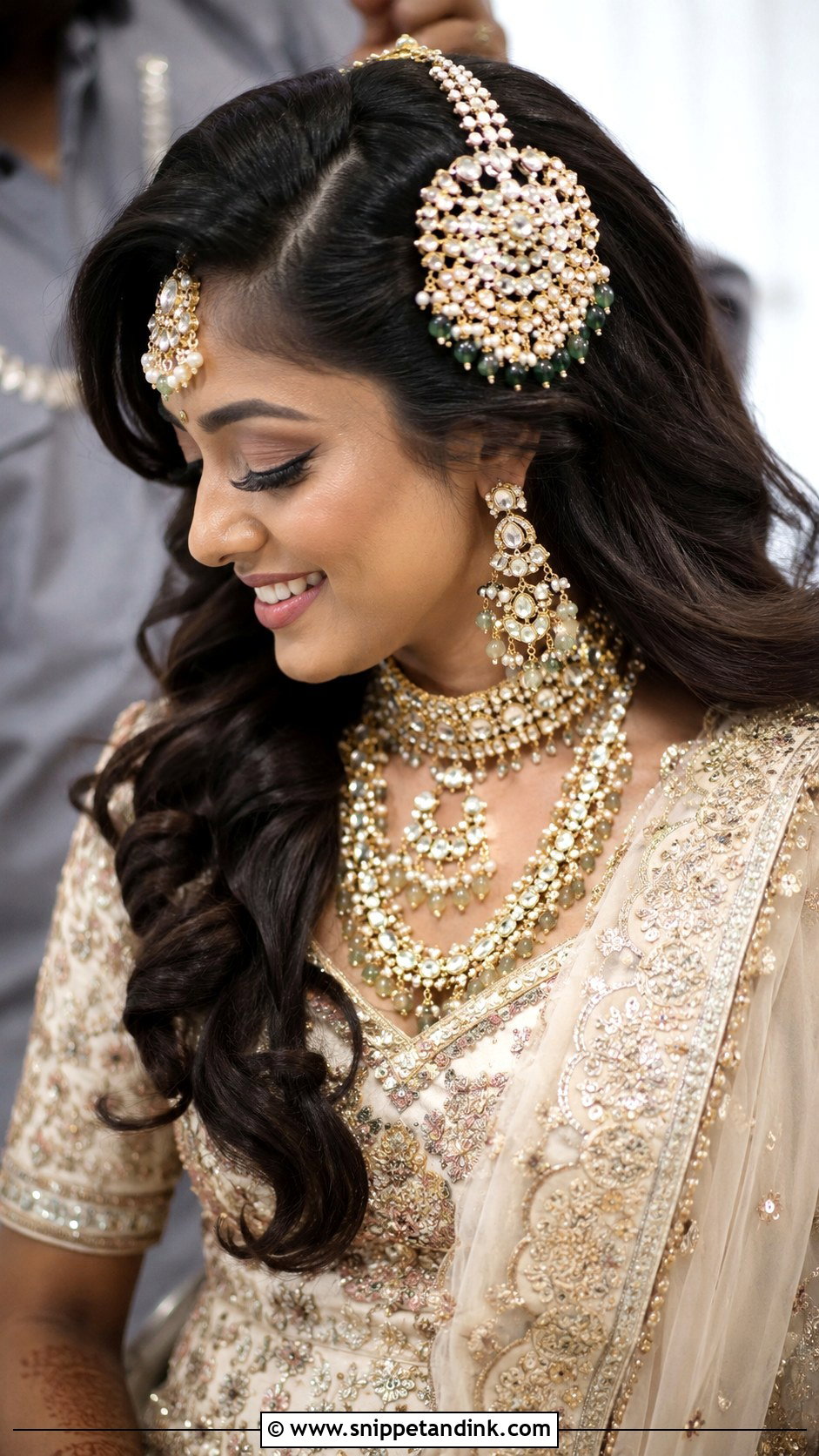
A passa sits on one side of the head, so the hair has to be arranged around it. A side part, side-swept curls or soft waves let the jewelry sit clearly on one side. I pin the passa through a small flat braid near the temple, since it’s heavy and will slide down loose hair within an hour. Keep the opposite side full for balance. It goes especially well with sharara sets, ghararas, lehengas and Mughal-inspired outfits.

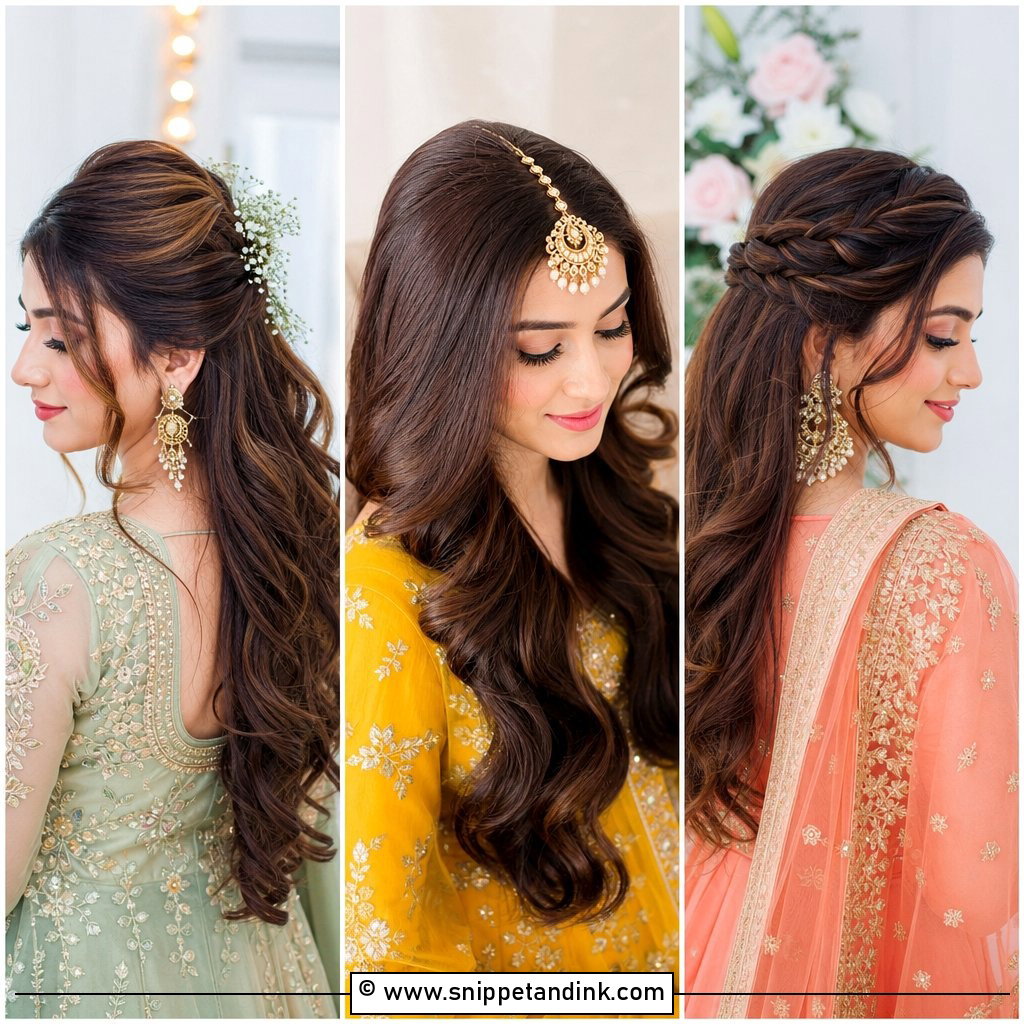
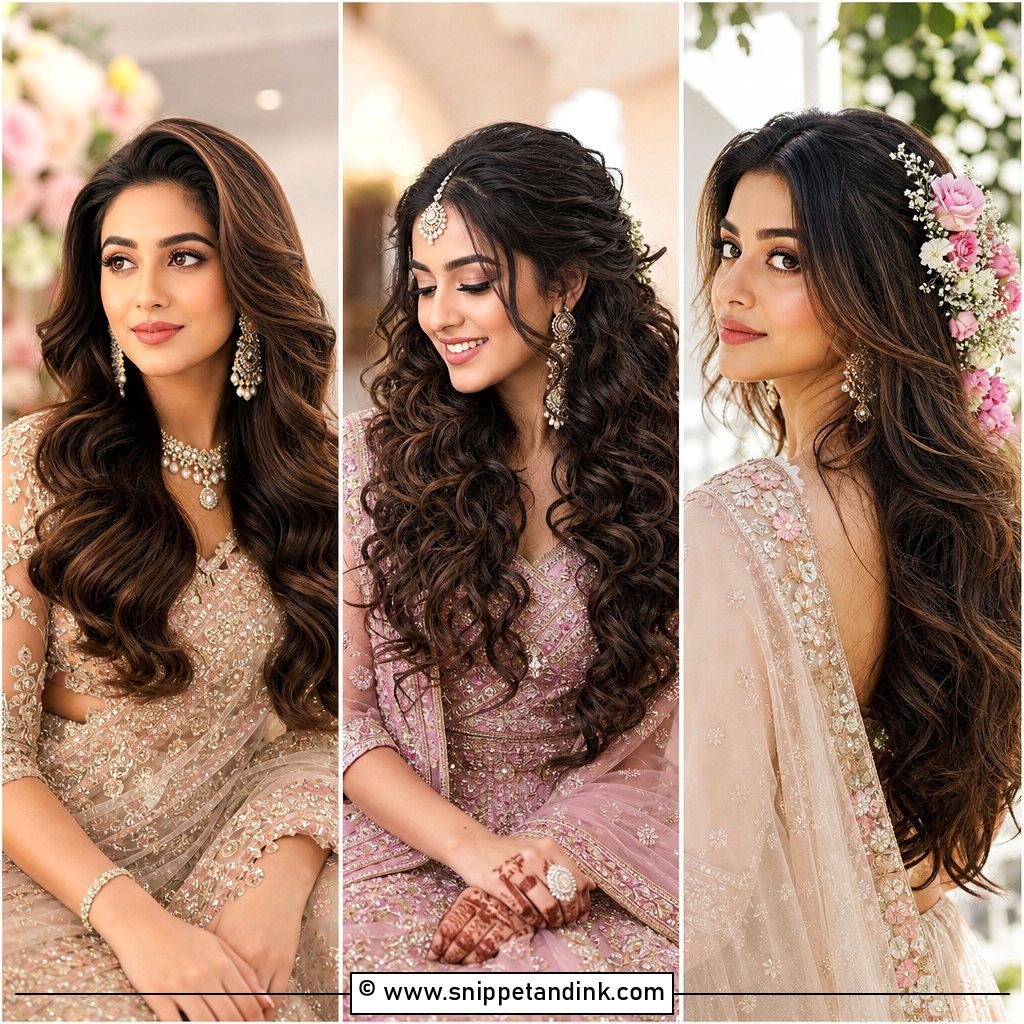
15. Indian Open Bridal Hairstyle With Pearl Pins
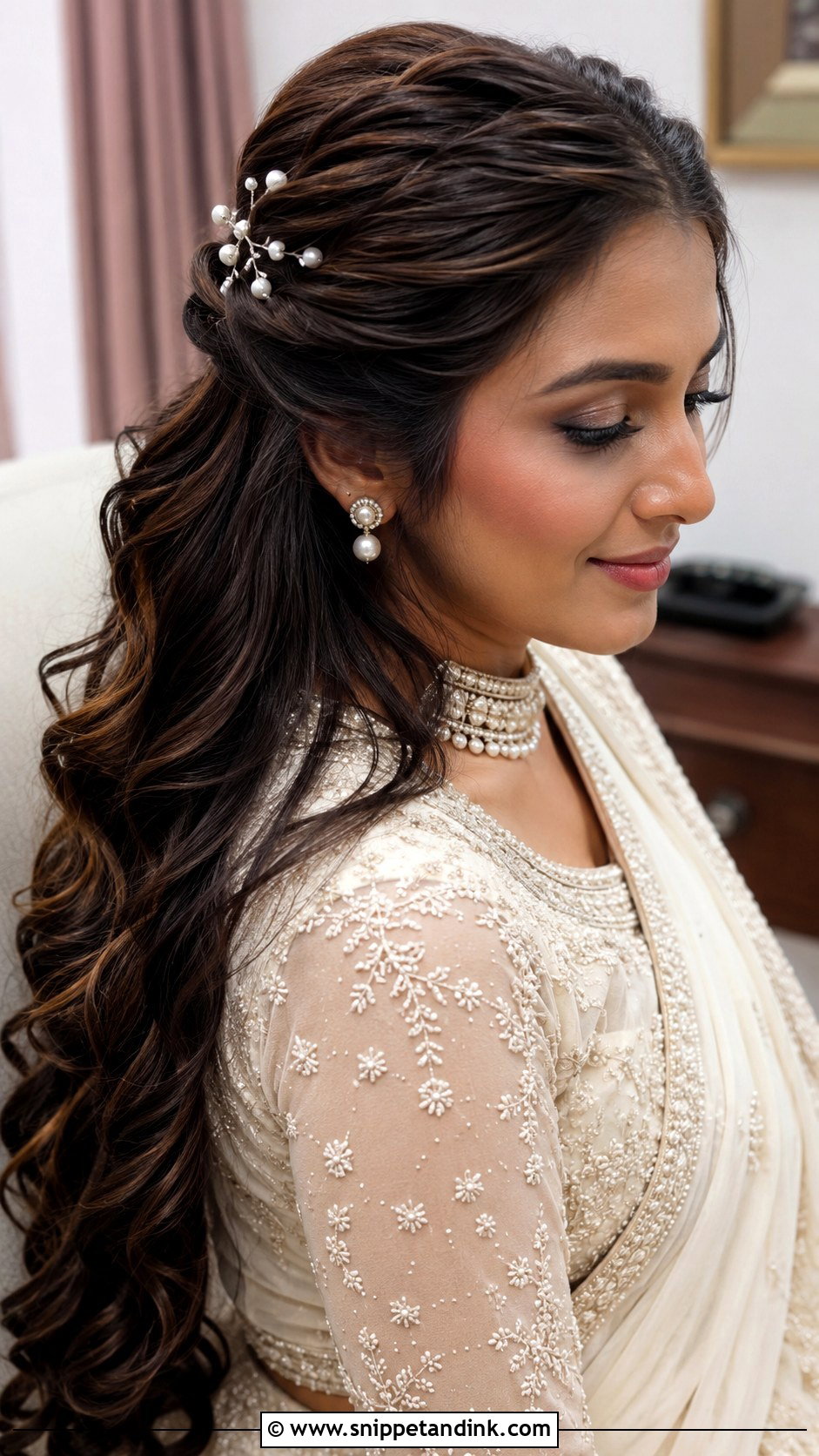
Pearl pins are the lightest way to dress up open hair. They work best scattered through the pinned area of half-up waves or a small twisted crown rather than over the whole head, which starts to look crowded. Ivory, champagne, blush and pastel outfits suit them, and they read well in natural light. With heavy embroidery on the outfit, pearls add detail without fighting it. Choose pins with a slight bend or a grip coating; straight smooth pins slip out of freshly curled hair.
Garlands, Smoke and Sweat: What Loose Hair Goes Through at the Pheras
Buns forgive a lot. Open hair doesn’t, and the ceremony throws three things at it. The jaimala garland catches in curls when it’s put over your head, so lift your lengths forward over one shoulder before the exchange. Then you sit near the havan fire, where heat and smoke soften curls and hairspray is flammable, so keep the lengths gathered behind you and away from the flame. Finally, the back of the neck sweats under hair and a heavy dupatta, and that dampness drops curls from the bottom up.
The midday touch-up
If your stylist can stay, or come back, ask for a ten-minute refresh between the ceremony and the reception: re-curl the front sections, smooth the part, re-pin the dupatta anchor. If she can’t, tuck a small travel tong and a few pins into your bag and let a sister handle it.
Humid venues
For a monsoon date or a beach mandap, I’d switch fully open hair to half-up or front twists. You keep the look of hair down, but the sections around your face can’t frizz or stick to your skin.
Settle the Hold Question at Your Trial, Not on the Day
Open hair is about movement, and the right version depends on your outfit weight, jewelry, dupatta, venue, weather and texture. If you need hold, go half-up, add front twists or a braided crown. For a clean, graphic look, sleek straight hair or Hollywood waves work. For softness, fresh flowers, pearl pins or side-swept curls. Whatever you choose, do a trial with every accessory and the actual dupatta, and wear it long enough to feel whether anything pulls. Hair that is comfortable at the trial is usually still in place at the reception.
You'll Like These Ideas:




Leave a Reply