
Ask a room of brides which one hairstyle they’d wear if they had to choose today, and a lot of them land on half-up. It keeps your face clear for the vows and the close portraits, gives a veil or a bow somewhere solid to sit, and still lets your hair move when you walk. What changes from bride to bride is the detail. One wants glossy waves and a clean twist; another wants a loose braid and a few face-framing pieces. I’ve written each idea below the way I’d explain it in the chair, with what it needs underneath to last and who it suits.
Where the Gather Sits Changes Your Whole Profile
Most half-up photos look alike from the front. The real difference shows from the side, and it comes down to how high I gather the pinned section. It’s a small decision that changes your silhouette more than curls versus waves ever will.
High, near the crown
Lifts the whole look and adds a little height, which helps with round faces, high necklines and full ball gown skirts. The catch is that a veil comb placed this high shows more, so it suits short or sheer veils better than heavy ones.
Middle of the back of the head
The classic position and the easiest to wear. It gives a veil the steadiest base, photographs well side on and works with almost every dress. If you can’t decide, I’d start here at your trial.
Low, closer to the nape
Feels relaxed and slightly undone, and looks lovely above a low back or a simple slip dress. It holds less firmly, though, because there’s less hair above it to anchor into. Expect more pins, and be wary of pairing it with a long, heavy veil.
1. Half Up Half Down Bridal Hair With Loose Waves
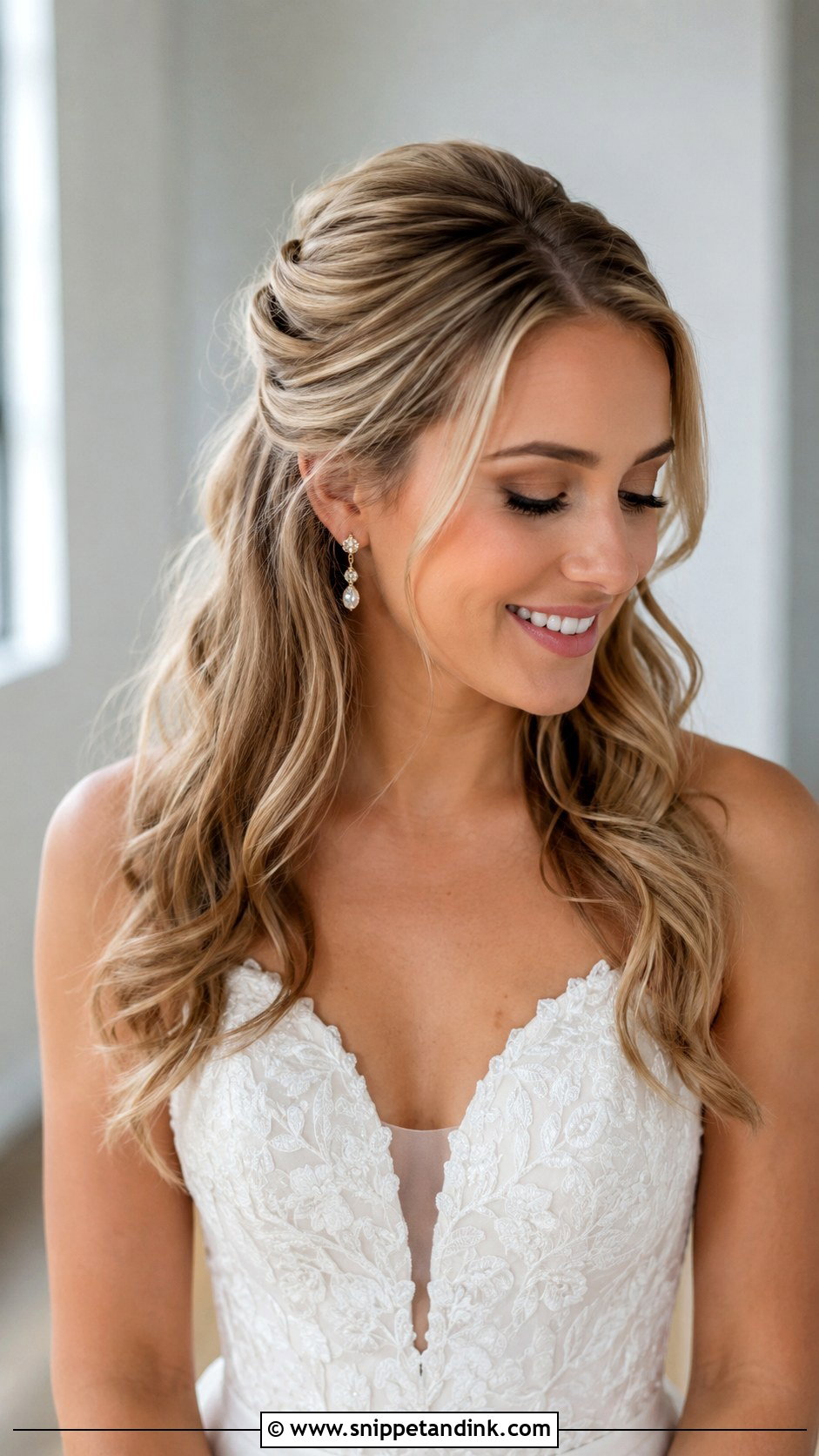
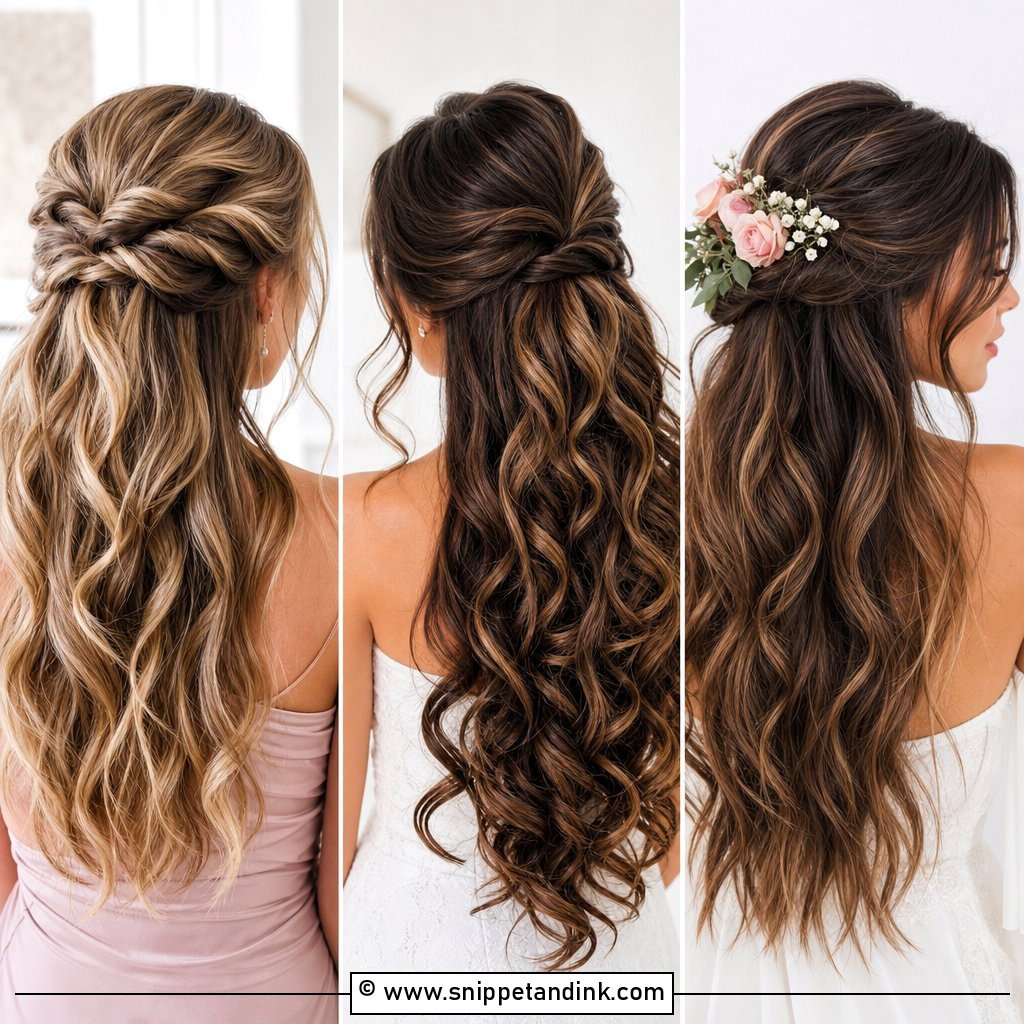
This is the half-up I’d call the default, and it earns the title. The crown gets a soft lift, the top is pinned back with a small twist or hidden pins, and the lengths fall in waves rather than ringlets. It sits well with strapless, off-shoulder, sweetheart and square neck dresses, because bare shoulders give the waves room to show. Waves lose their shape faster than curls, so I set them a touch tighter than the final look and brush them out late. Use a flexible spray. A firm one turns crunchy the first time someone hugs you.
2. Half Up Half Down Bridal Hair With Veil
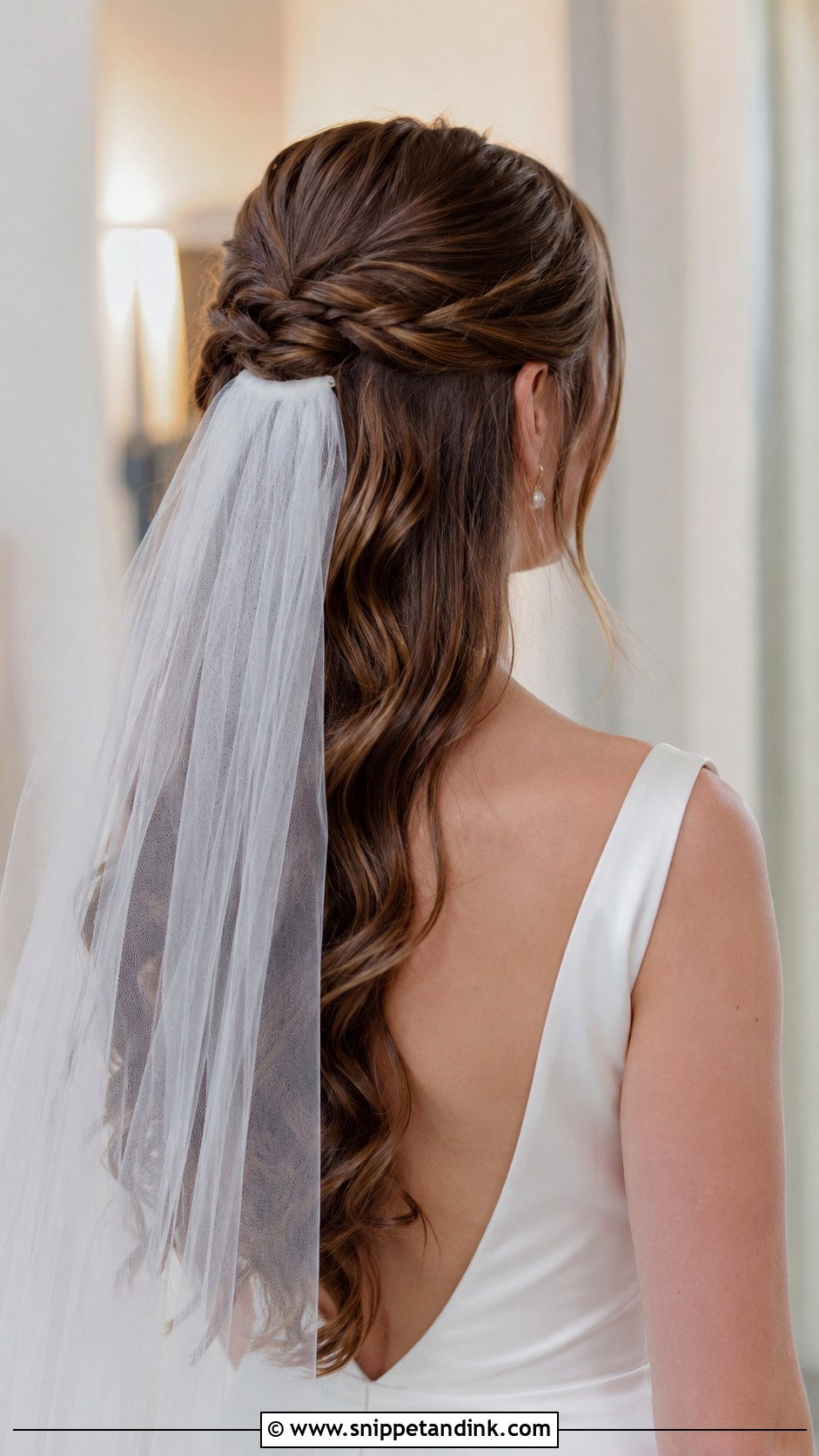
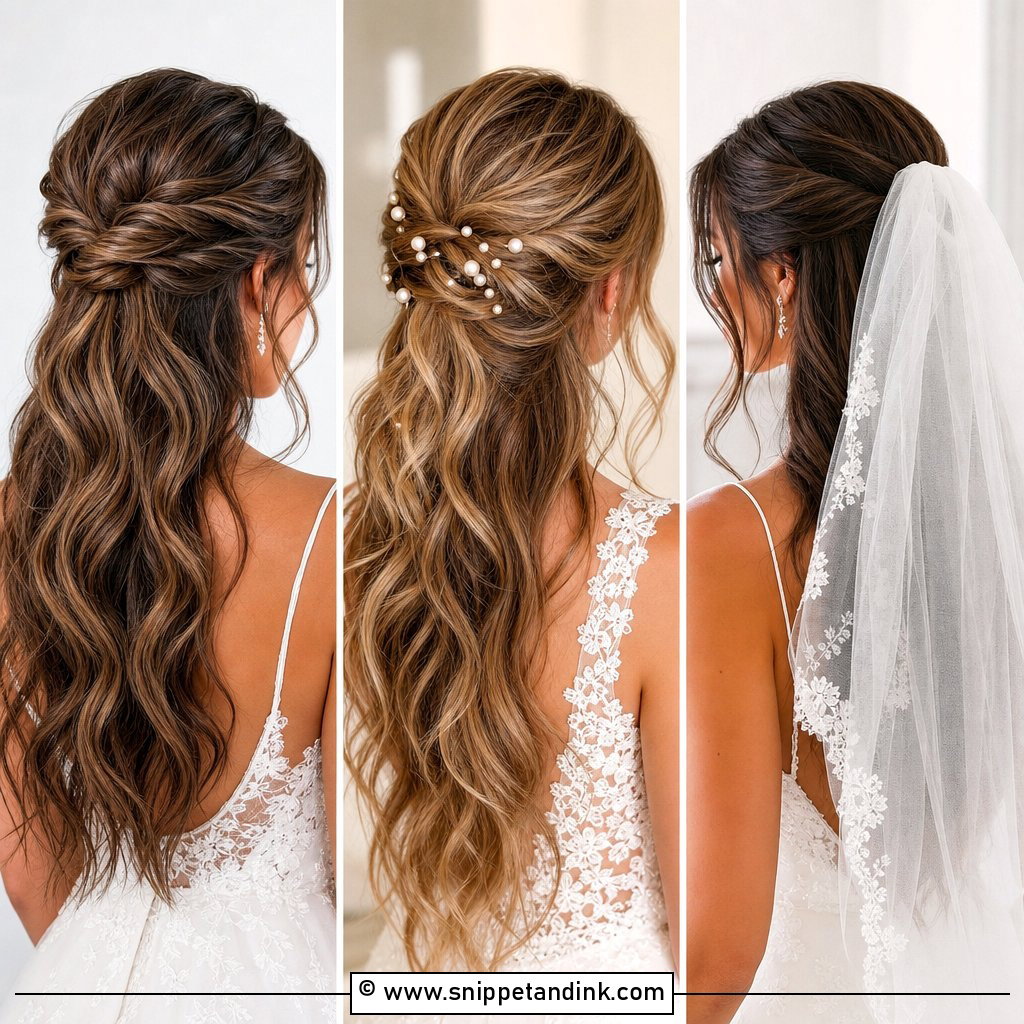
The veil decides how the half-up section is built, not the other way round. I place the comb just under the crown, above the twist or tucked into the back, and the pins under it are crossed so the comb’s teeth have something to bite. Tucked into the back section, the tulle looks as though it grows out of the hair. Loose curls below keep it soft while the top stays neat through the vows. Bring the real veil to your trial: a long one pulls much harder than a sample, and that’s the time to find out, not on the morning.
3. Half Up Half Down Bridal Hair With Pearl Pins
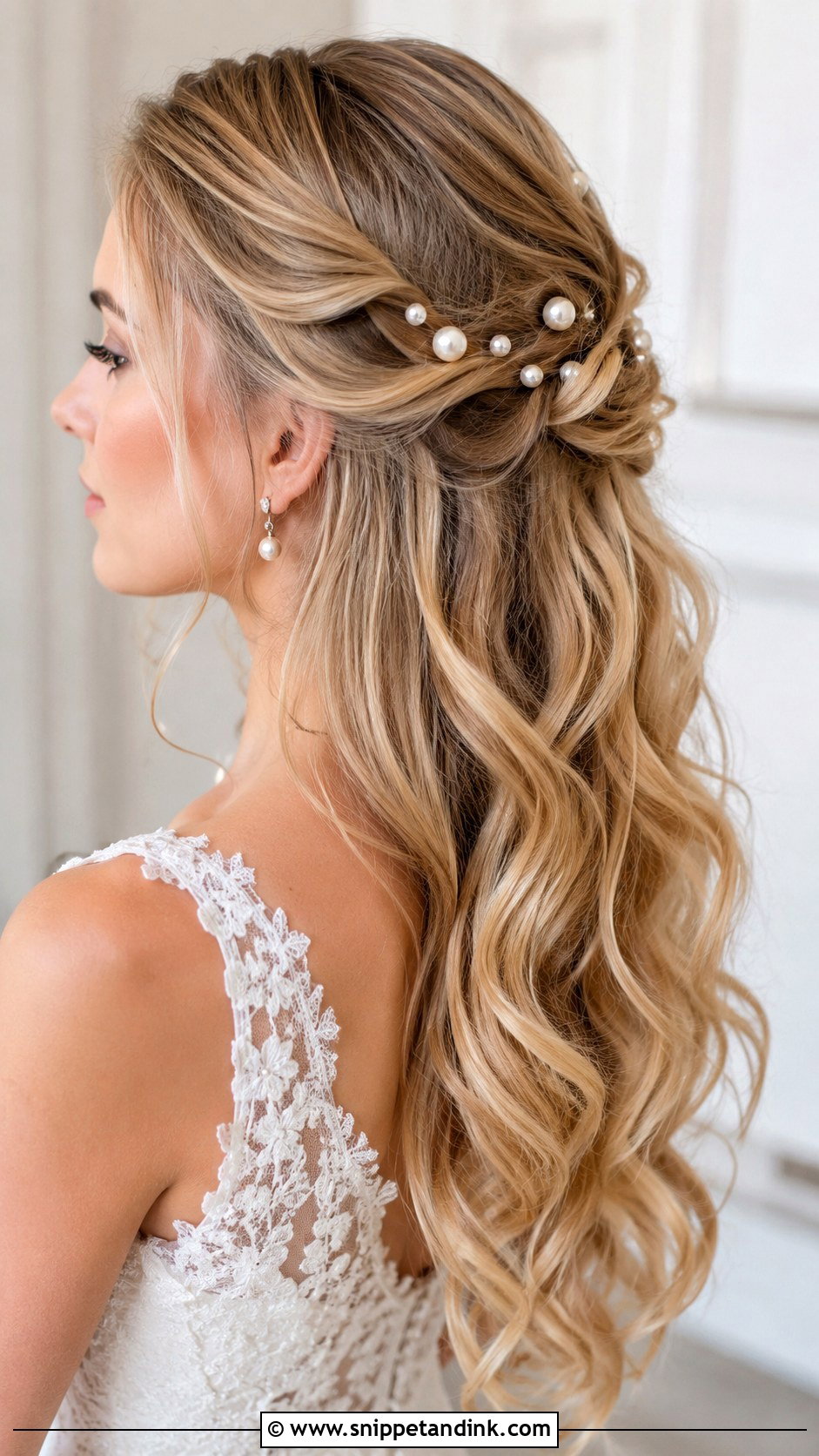
Scattered, not clustered. That’s how I place pearl pins in this style. One heavy group at the back weighs on the pinned section and looks like a brooch, while pins spread along a twist or soft braid read as detail. Mixing two or three sizes makes the arrangement look natural rather than lined up. Pearls suit satin gowns, lace sleeves and simple crepe dresses especially well, since they echo a matte or softly lustrous fabric. Slide each pin in against the direction the hair was twisted so it locks instead of slipping out.
4. Half Up Half Down Bridal Hair With Braids
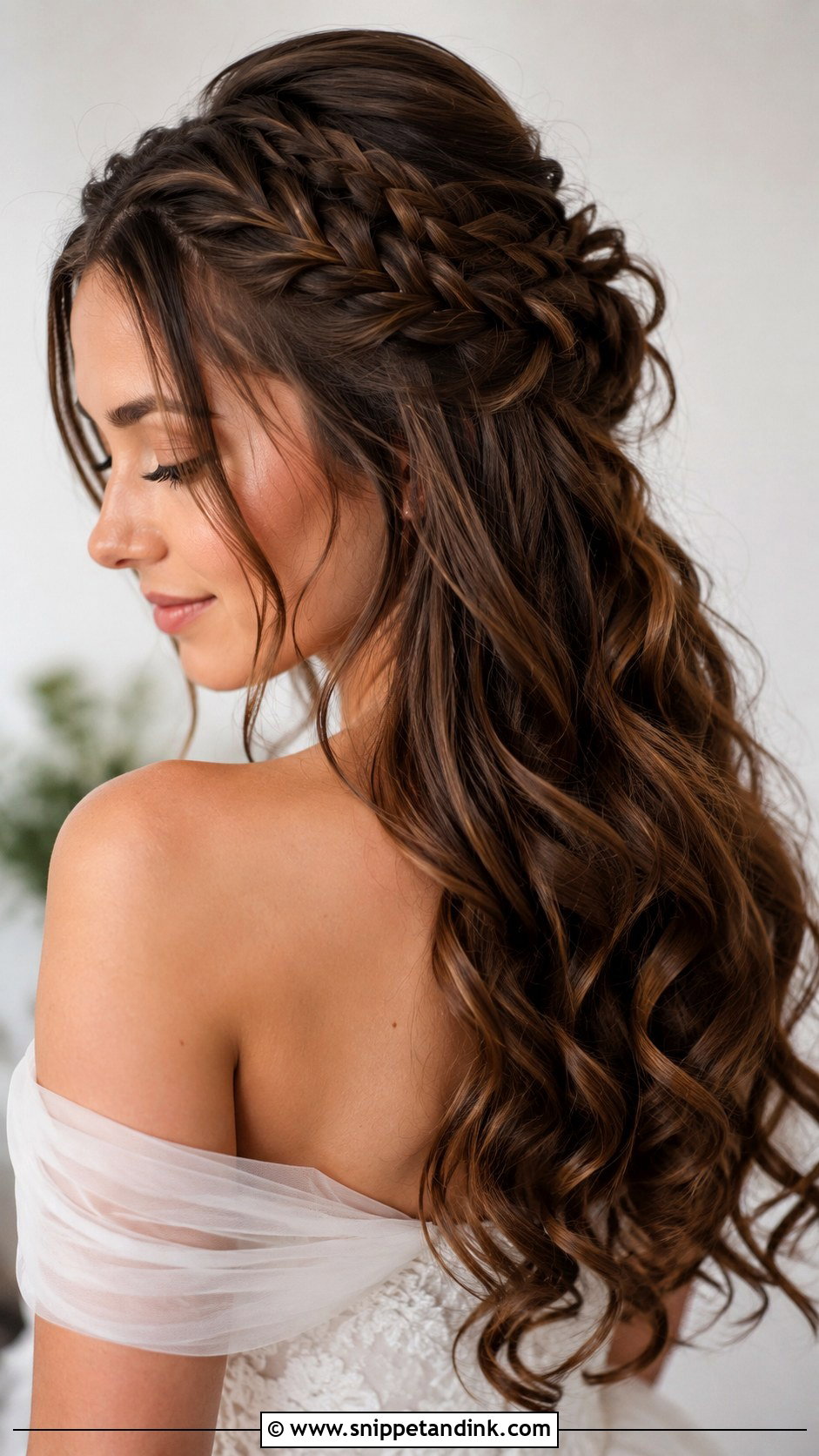
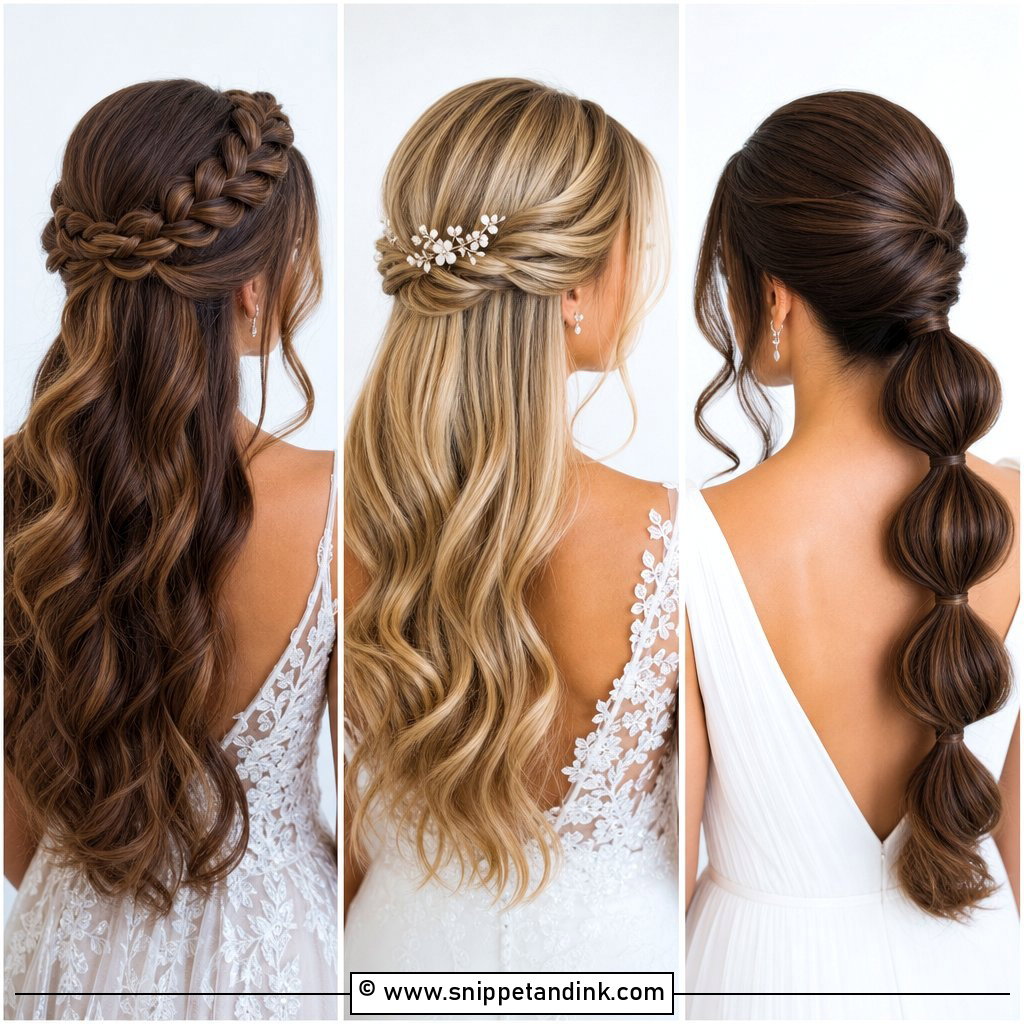
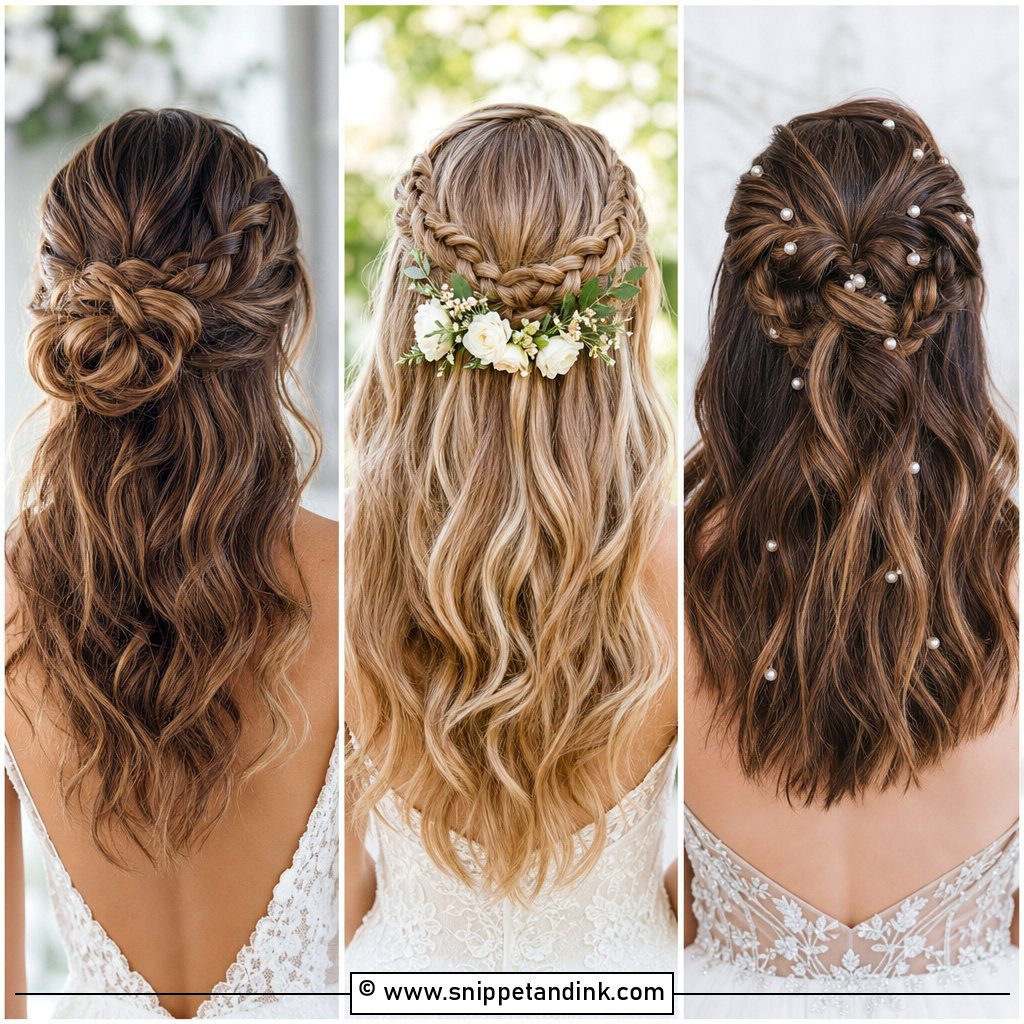
Braids hold the top section more securely than anything else, which makes them my first suggestion for outdoor weddings where wind and a long day are both certain. A small side braid, a crown braid or a loose fishtail can pull the hair back while the lengths stay curled. Loosen the braid after it’s pinned, not before, so it looks soft and deliberate instead of tight. Fine hair needs a little texture spray first, or the braid looks thin once it’s pulled open. Flowers or pearls can go in afterwards if your dress has romantic details.
5. Half Up Half Down Bridal Hair With Flowers
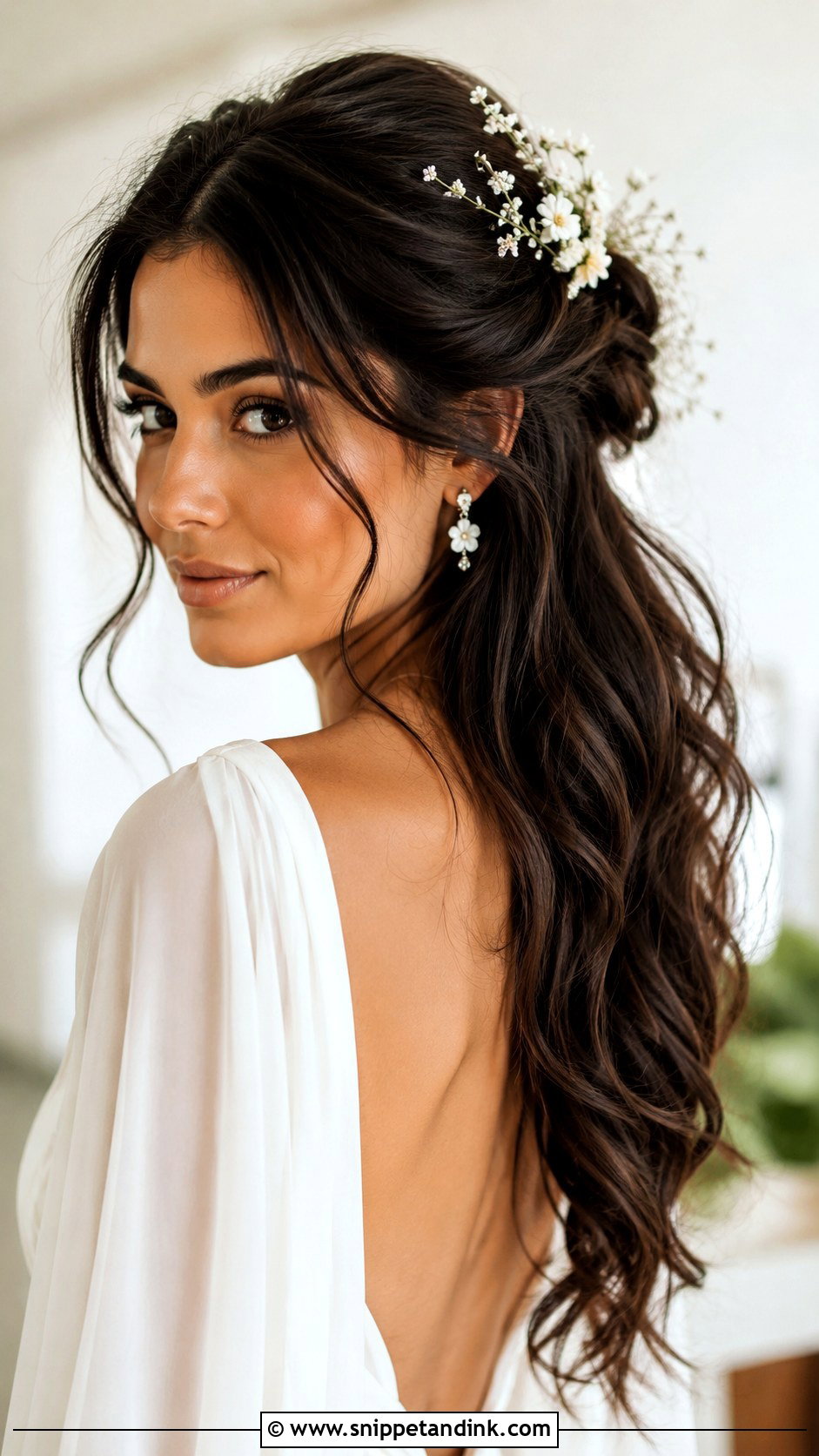
Flowers in hair are a conversation between your florist and your stylist, and it’s worth starting it early. Baby’s breath, spray roses, orchids and small greenery turn up again and again because they hold up reasonably well out of water and sit securely in curls or twists. Oversized blooms tend to dominate and tilt on their stems. I pin through each stem into the twist rather than just tucking it, because tucked stems work loose within an hour or two. On a hot day outdoors, ask for the hardiest options and keep a couple of spares somewhere cool until the portraits.
6. Half Up Half Down Bridal Hair With Twists
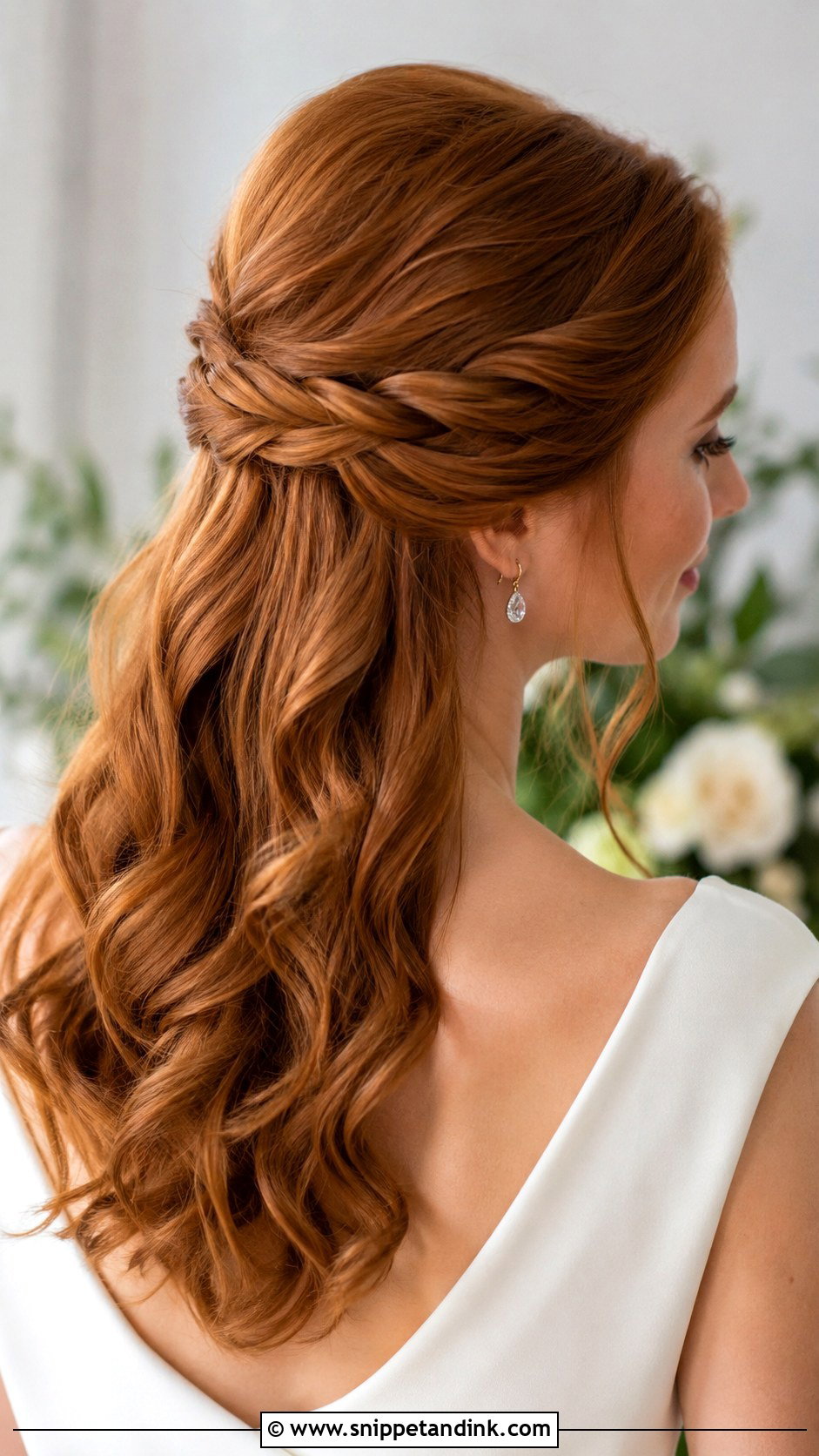
Twists are what I offer brides who find braids too busy. Two side sections are twisted away from the face and pinned together at the back, and the amount of crown volume decides whether it looks minimal or full. The twist draws a clean line back from the temple, so your ears and earrings stay on show. I twist toward the back, then roll the last inch under before pinning, which hides the ends and stops them fanning out. Combs, pearl pins and light veils all sit easily at the join.
7. Half Up Half Down Bridal Hair With Curls
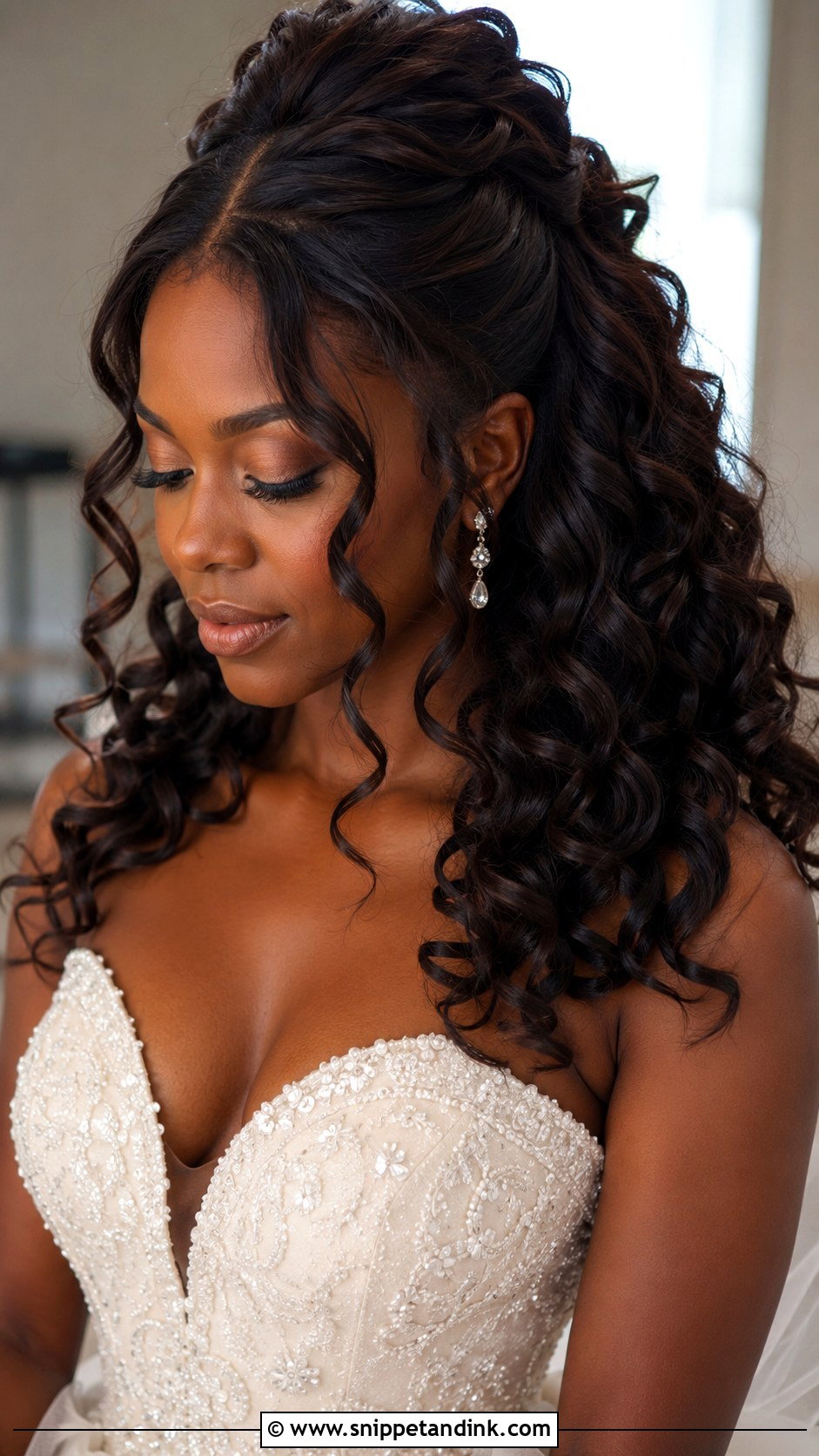
Defined curls depend on prep more than any other finish here. Heat protection, a setting spray on each section before the iron and only the lightest shine product keep the shape without turning it greasy. I pin the top section high for volume or lower for a softer line, depending on the face. Medium to long hair shows the texture best from every side. Separate defined curls with your fingers, never a brush, or they turn into frizzy waves within minutes. A few curls pinned at the crown make it read as bridal.
8. Half Up Half Down Bridal Hair For Long Hair
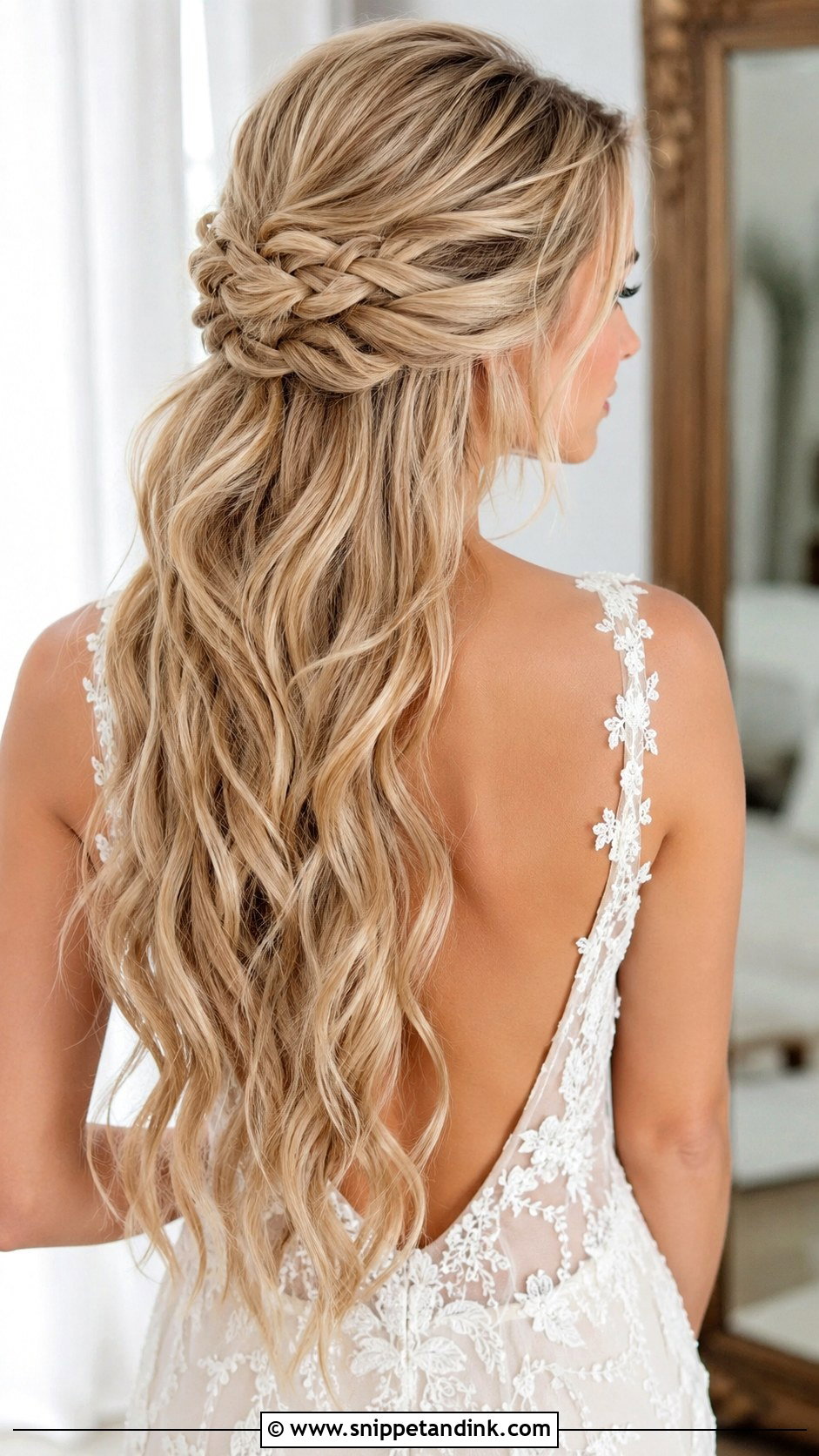
Very long hair is heavy, and weight is the enemy of any half-up style. The top can be twisted, braided or lifted, with the lengths falling in waves down the back, which suits low-back gowns and dramatic trains. The real work is hidden: pins crossed into a small base, curl support through the mid-lengths and light products that don’t add more load. I aim for a firm crown and airy ends. If your hair reaches your waist, ask your stylist whether taking out a little bulk a few weeks before would help the curls hold.
9. Half Up Half Down Bridal Hair For Medium Hair
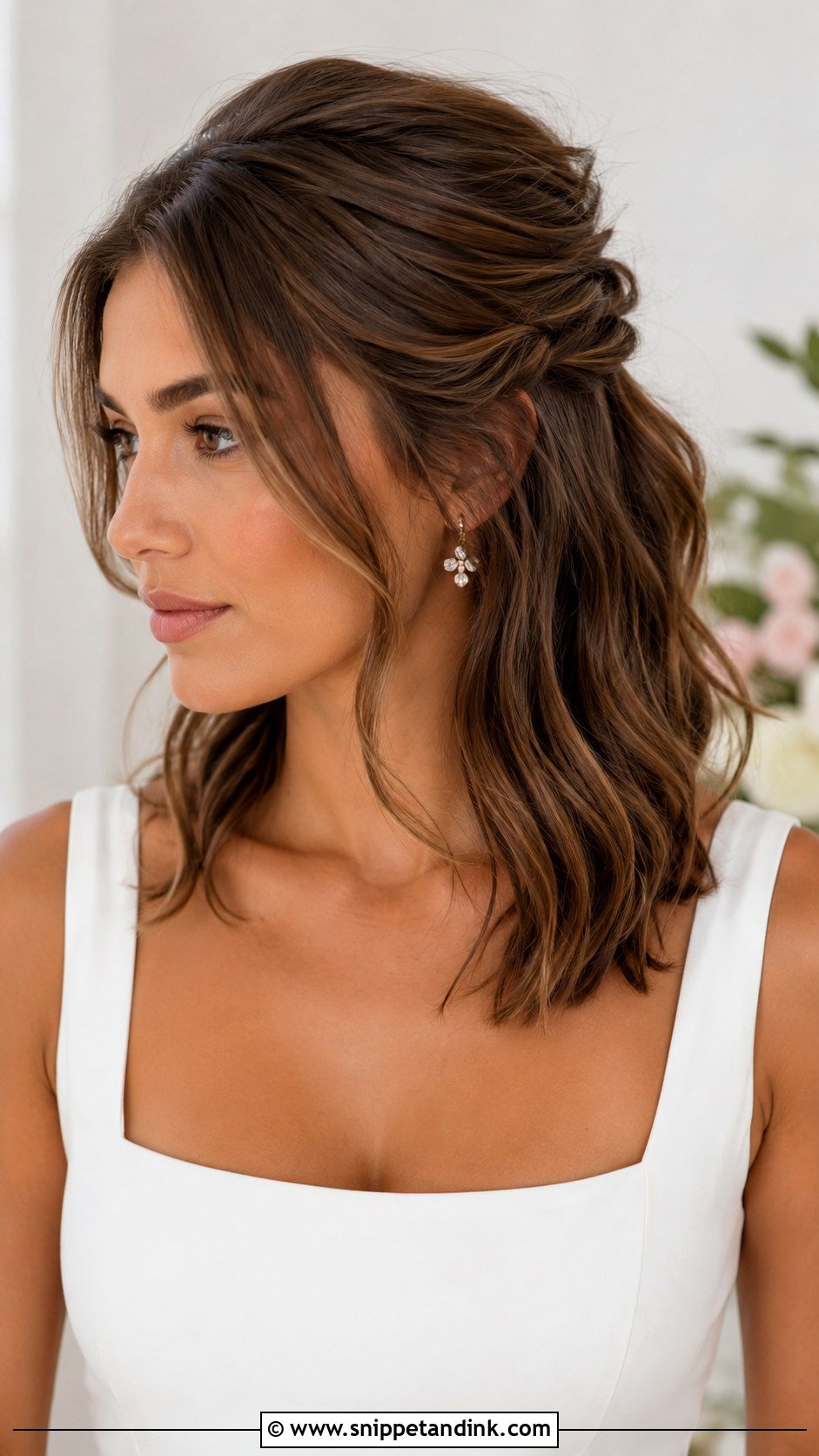
Medium length is the easy one to hold. Shoulder and collarbone cuts carry loose bends and soft curls without the weight that drags longer hair down by evening. I often set the pinned section slightly higher on medium hair, which gives the impression of more length underneath. Layered cuts help, since the shorter pieces fall around the face on their own. A small comb, a few pearl pins or a clean twist finishes it. Blunt one-length cuts are trickier, because the ends can sit in a straight line across the back; a few soft bends break that up.
10. Half Up Half Down Bridal Hair For Short Hair
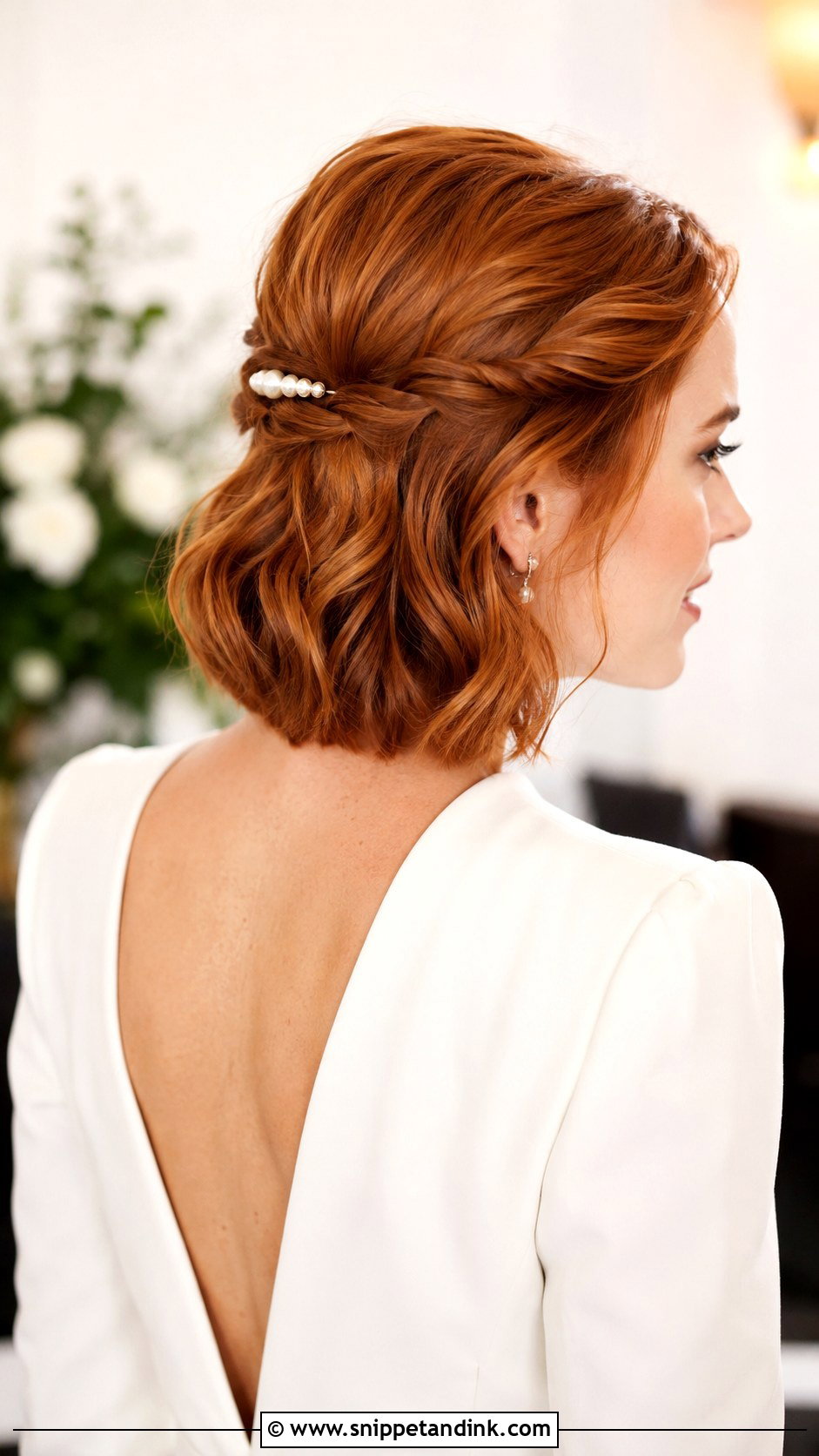
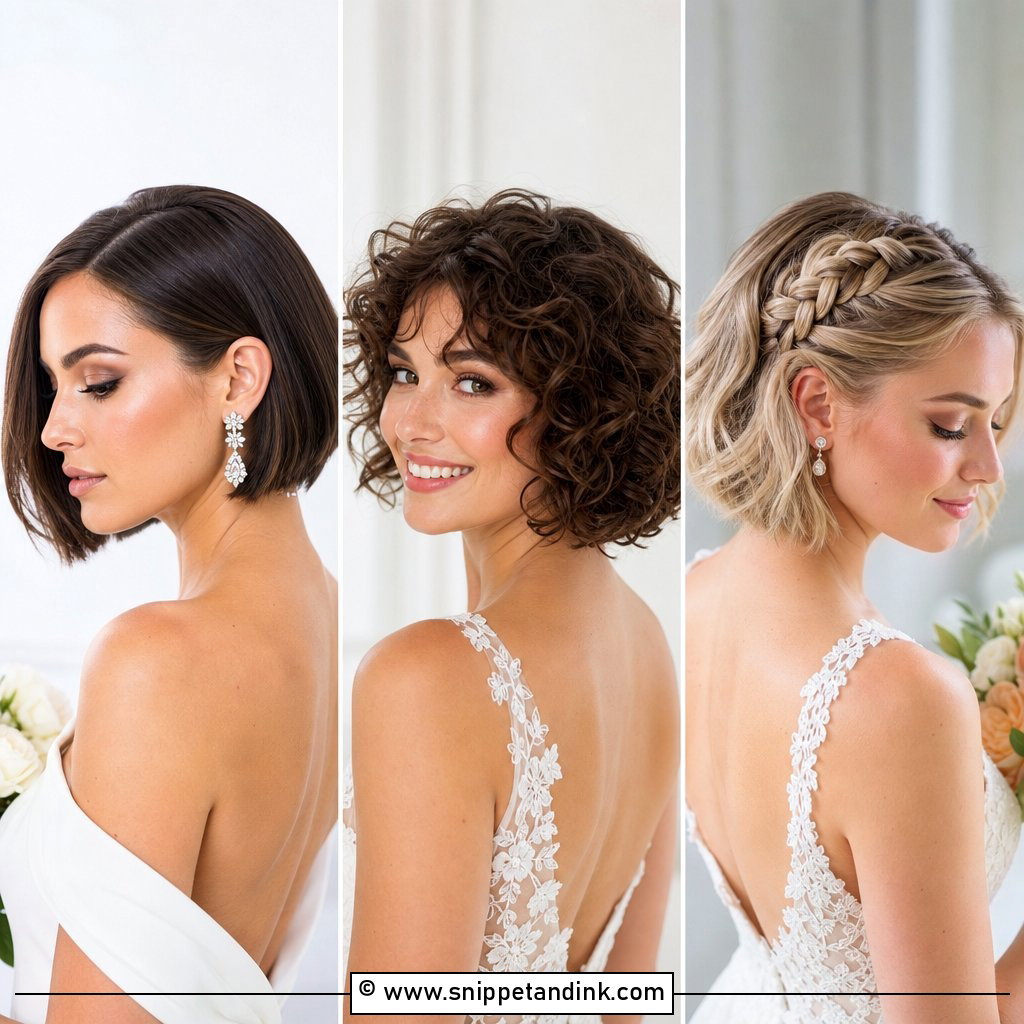
With a bob or lob the pinned section is smaller, but it’s still there. I texturize the roots first so the pins have grip, then twist, clip or pin back just the top layer. Soft waves through the rest add volume and stop the ends looking flat. No extensions needed, which is part of the appeal. A slim barrette, a pearl clip or one small flower is enough; anything bigger swamps short hair. At your trial, check that your shortest front pieces actually reach the back before you plan the whole look around it.
11. Half Up Half Down Bridal Hair With Curtain Bangs
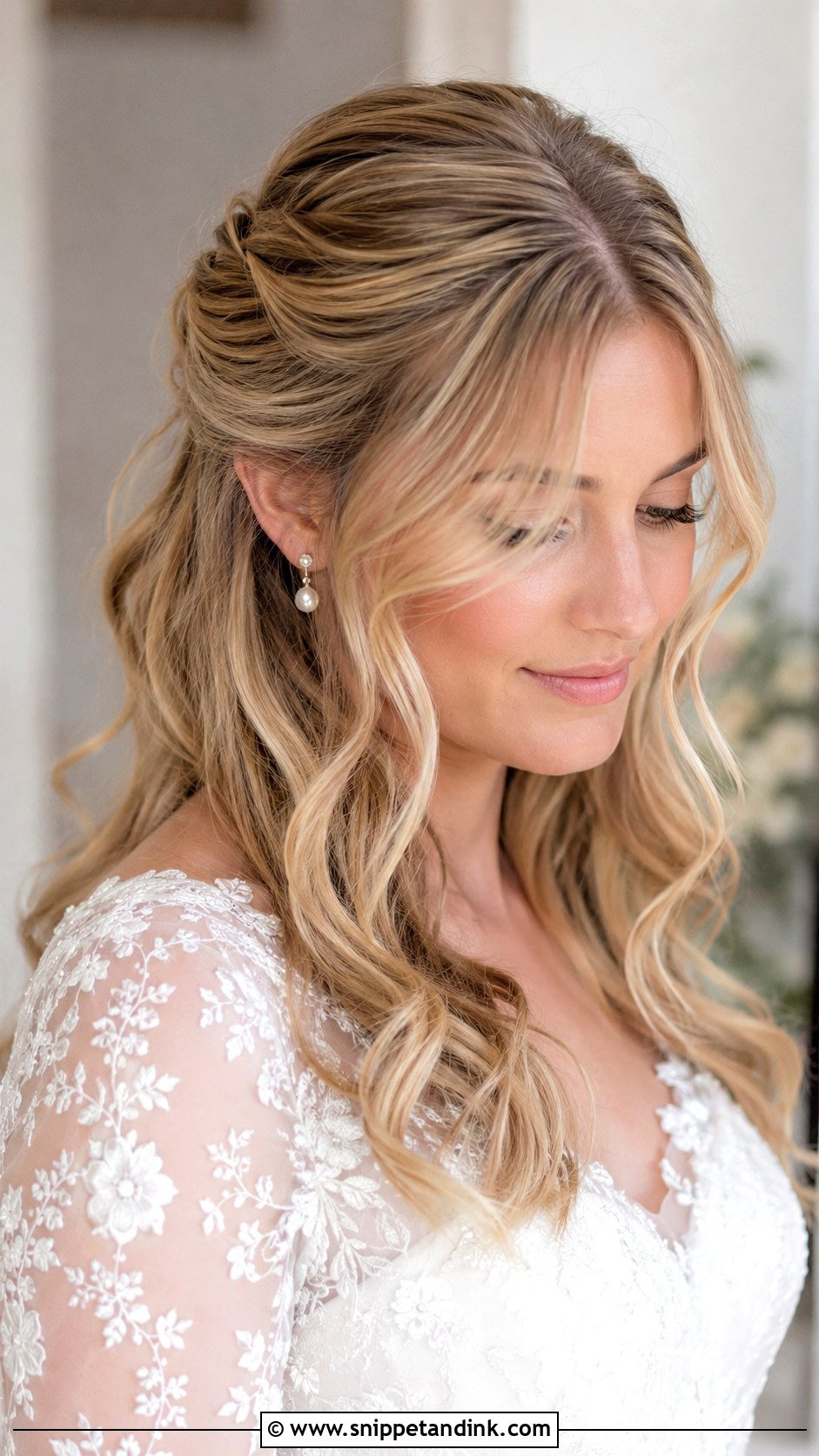
Curtain bangs add softness at the front without needing loose face-framing sections, which leaves more hair for the pinned part. Lift the top away from the face and the bangs fall around the cheekbones, which flatters close-ups. I give them a light bend with a large barrel rather than a tight curl, so they blend into the waves. Freshly cut bangs are stubborn to style, so have them trimmed about a week before the wedding to let them settle. On humid days a touch of powder at the root stops them splitting apart.
12. Half Up Half Down Bridal Hair With Side Part
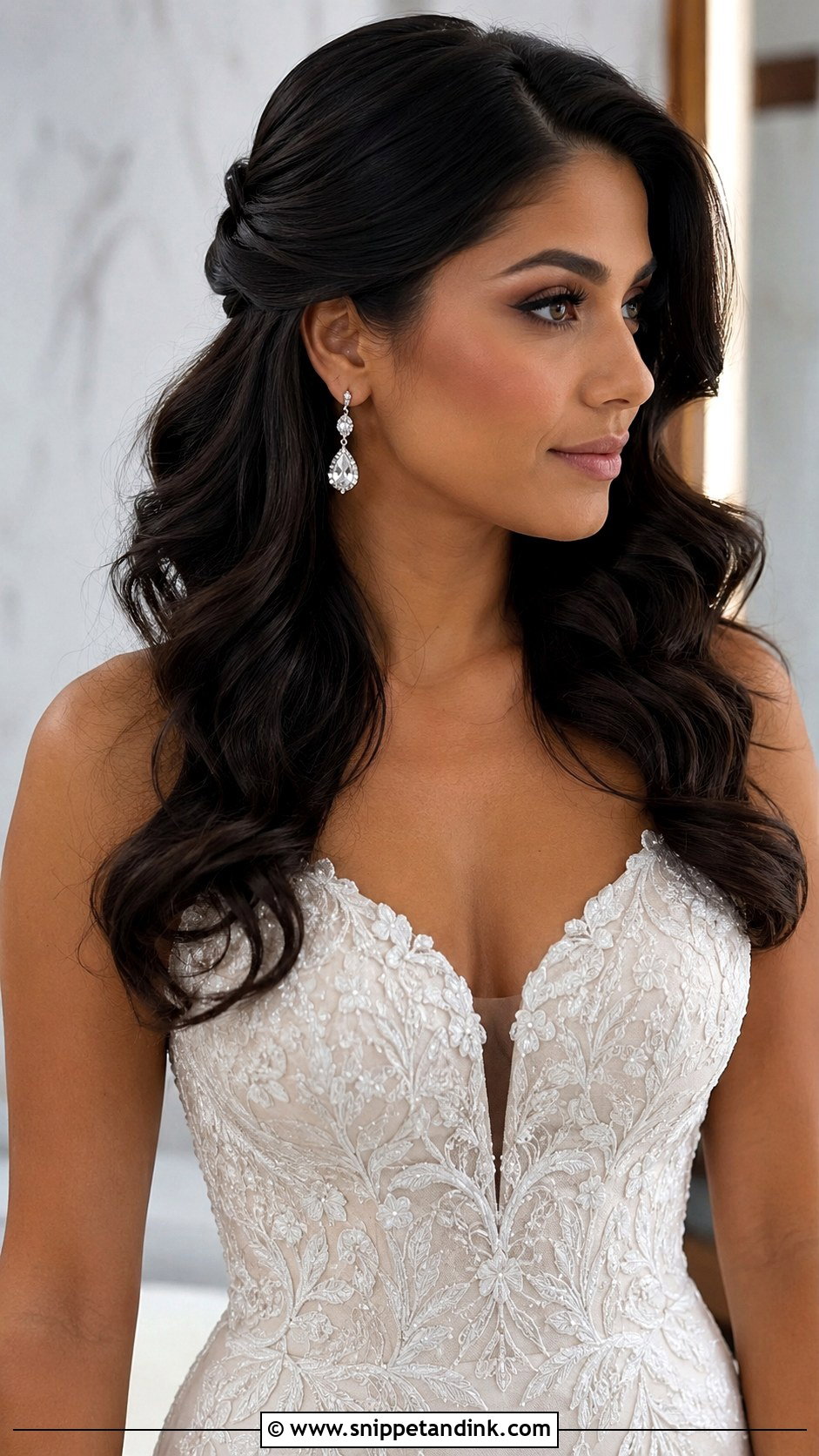
A side part reads a little more sculpted and formal. One side is swept back and pinned into the half-up section, while the other frames the face in a diagonal line that suits most face shapes. Loose waves, glossy curls and Hollywood-style bends all work with it. I reach for it when a bride wears statement earrings, because the swept side shows one earring completely. Smooth that side with a paddle brush before pinning, or the lift at the root can look bubbly under flash.
13. Half Up Half Down Bridal Hair With Middle Part
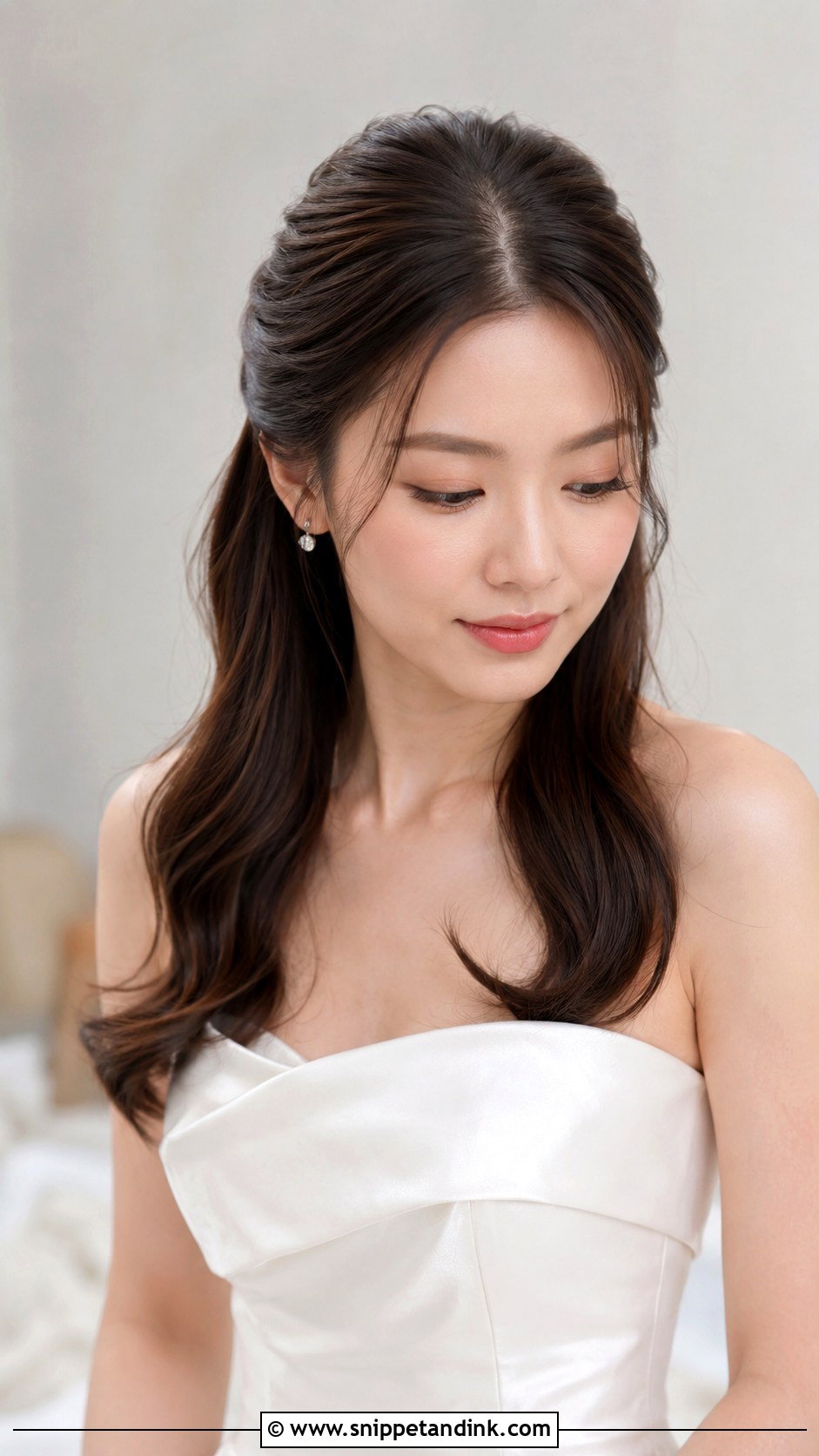
Symmetry is the whole point of a middle part, so I check it straight on in the mirror before a single pin goes in. The front pieces can be pulled back, twisted or left slightly loose. Sleek waves and minimalist gowns suit it, and so does a simple veil, since the center line keeps everything balanced. Middle parts flatten quickly, so ask for gentle volume at the crown. Smooth, shiny hair and careful pinning are what keep it refined rather than plain.
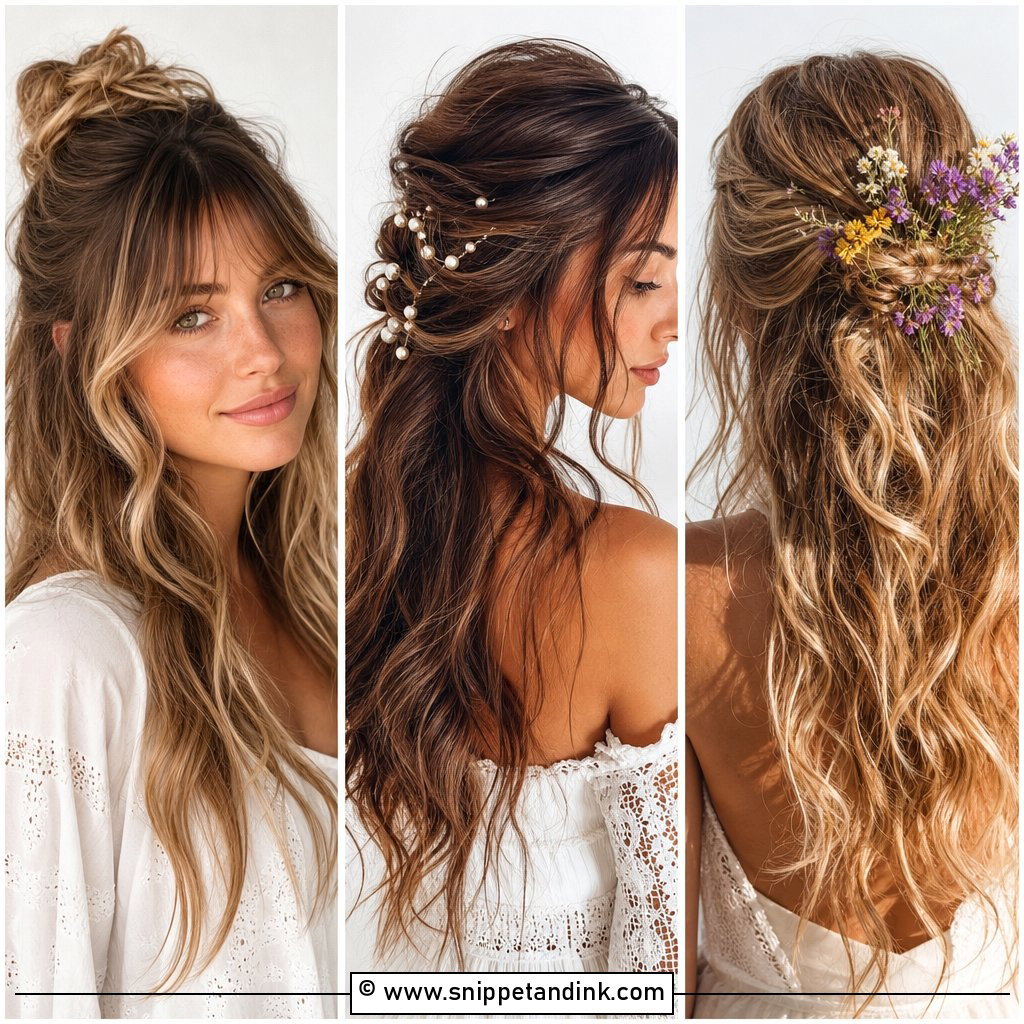
14. Half Up Half Down Bridal Hair With Hair Vine
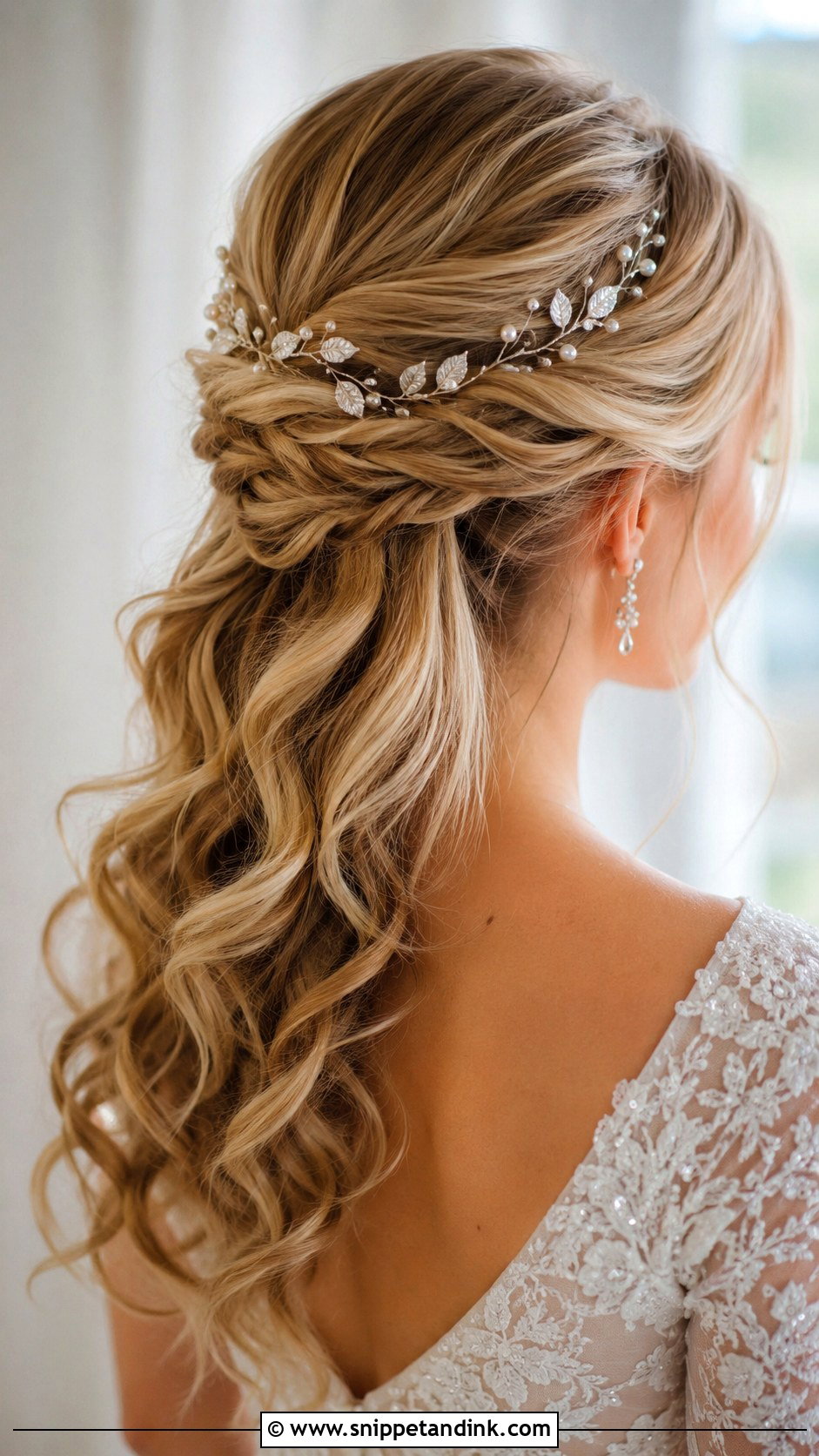
A vine gives a lot of detail for very little weight. It can be woven through the half-up section, laid across the back like a crown or tucked into twists. Loose waves, textured curls and romantic dresses with lace or beading suit it best. Match its pearls, crystals or leaves to the finish of the gown. The wire should follow the curve of the hair, never cut across it, so I bend it to shape in my hands before it goes anywhere near the head.
15. Half Up Half Down Bridal Hair With Bow
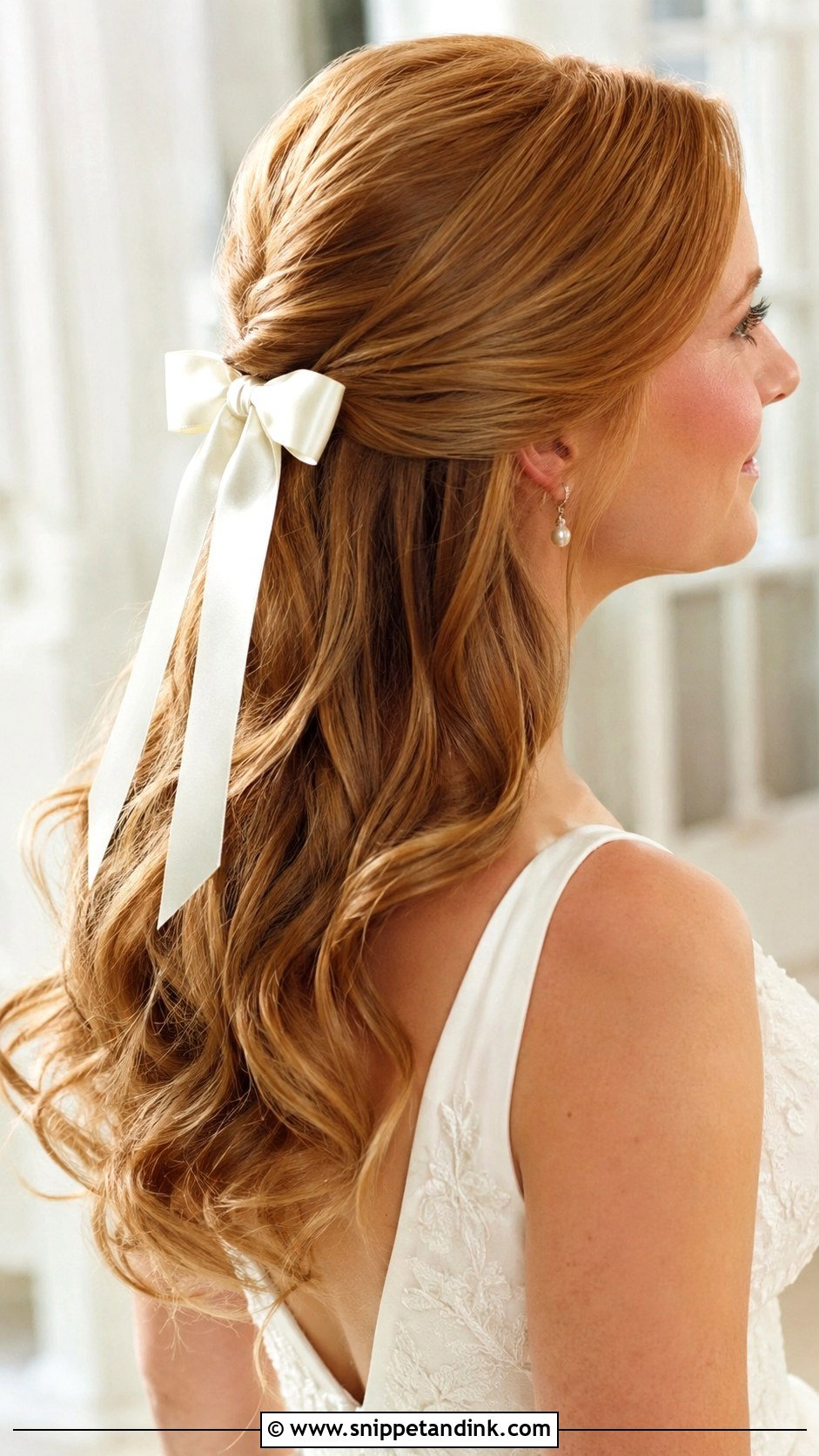
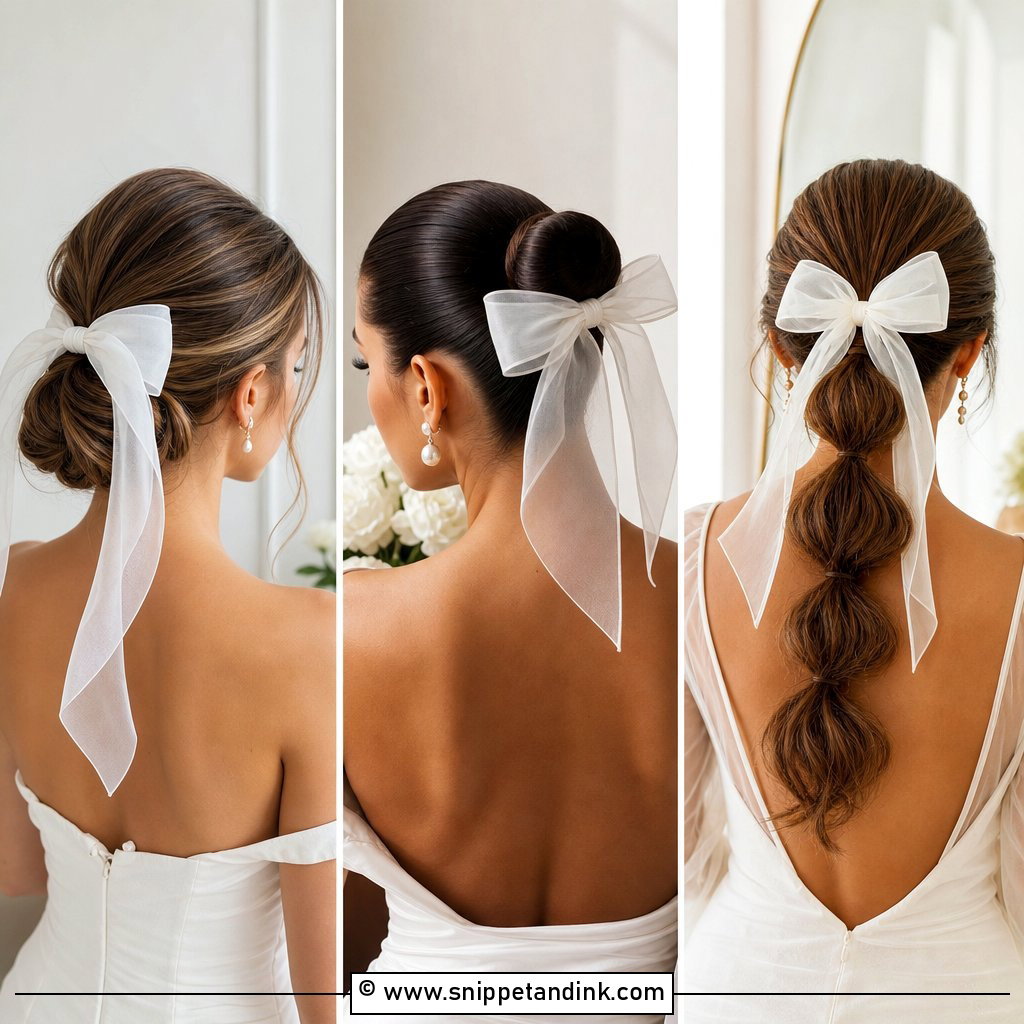
Bows look best tied around something, not just clipped onto loose hair. Satin, organza or velvet bows sit well around a small half-up ponytail, a twist or a gathered section at the back. Keep the lengths polished in waves or soft curls so the bow looks intended. Scale matters: a slim ribbon feels delicate, while a large bow needs a sturdy base or it droops. I secure the knot with a pin pushed through from behind, because satin loves to slide. Vintage-inspired, courthouse and intimate weddings suit this one well.
Accessories Go In Last, and Lighter Than You Think
Bows, vines, pearls and combs are part of what makes this style feel modern, but they also add weight to a section of hair held only by pins. A heavy bow on fine hair will slowly pull the twist down over the afternoon. This is the order I work in at a trial:
- Settle the veil position first. It needs the strongest anchor, so everything else arranges itself around it.
- Add the main accessory next. Look for one built on a comb or a sturdy clip rather than a single slide, and have two pins crossed underneath it in an X.
- Add small details like pearl pins or tiny flowers only after that, and stop as soon as the back looks finished. Three well placed pins usually beat ten.
- Shake your head and walk around the room. Anything that moves now will be on the floor by the first dance.
Hair vines need a little extra care. The wire should be stitched in with pins at both ends and once in the middle, or it lifts away from the hair whenever you turn your head.
Then think about the reception. If the veil comes off after the ceremony, the spot where it sat can look empty. A second comb, a bow or a small cluster of pearls kept ready in a bag lets your stylist or a bridesmaid fill the gap in a minute.
Pin Placement Is What Makes It Yours
On paper, all fifteen share the same skeleton: top secured, rest left free. What makes one feel like you is the detail you add and where it sits, whether that’s a veil, flowers, pearls, vines, bows, braids, twists or curls. Save the two or three looks you keep going back to and take them to your trial along with every accessory you plan to wear. A good stylist will adjust the volume, the curl, the parting and exactly where each pin goes until it suits your face and your dress. That’s usually the moment a saved photo turns into your own hairstyle.
You'll Like These Ideas:


Leave a Reply