
A gown that looks right in a bridal salon can feel very different on a hillside in July. Outdoors, the dress has to cope with wind, uneven ground, sun and a long day on your feet, so the details I care about are breathable fabric, a train you can manage, a bodice that supports you without a strapless struggle, and shoes that won’t sink. Botanical lace sits naturally in a garden, chiffon moves with sea air, and crepe with sleeves holds its own against mountains and forest. Accessories should belong to the place too: fine floral jewelry, a textured veil, sturdy boots, a small hairpiece. Here are 20 dresses I’d style for a ceremony on a beach, in the woods or across a meadow, with the complete look for each.
Five Questions I Put to Every Bride Marrying Outside
Before we look at a single gown, I want to know the venue in detail. The answers rule out more dresses than personal taste does.
- What will you walk on? Lawn, sand, gravel, rock and decking each need a different hem length and heel.
- How far will you walk? A train that’s fine for a twenty-step aisle is exhausting on a half-mile photo trail.
- What’s the temperature at ceremony time and at ten at night? Altitude, water and desert all swing hard after sunset.
- Is there wind? Coastal cliffs and open meadows make long veils and lightweight overlays hard to control.
- Where will you get dressed? If the getting-ready spot is far from the ceremony, the gown needs to survive a car ride and a walk without creasing.
Bring these answers to your first appointment. A good consultant will narrow the racks quickly once she knows them, and you’ll spend your time trying the dresses that actually suit your day.
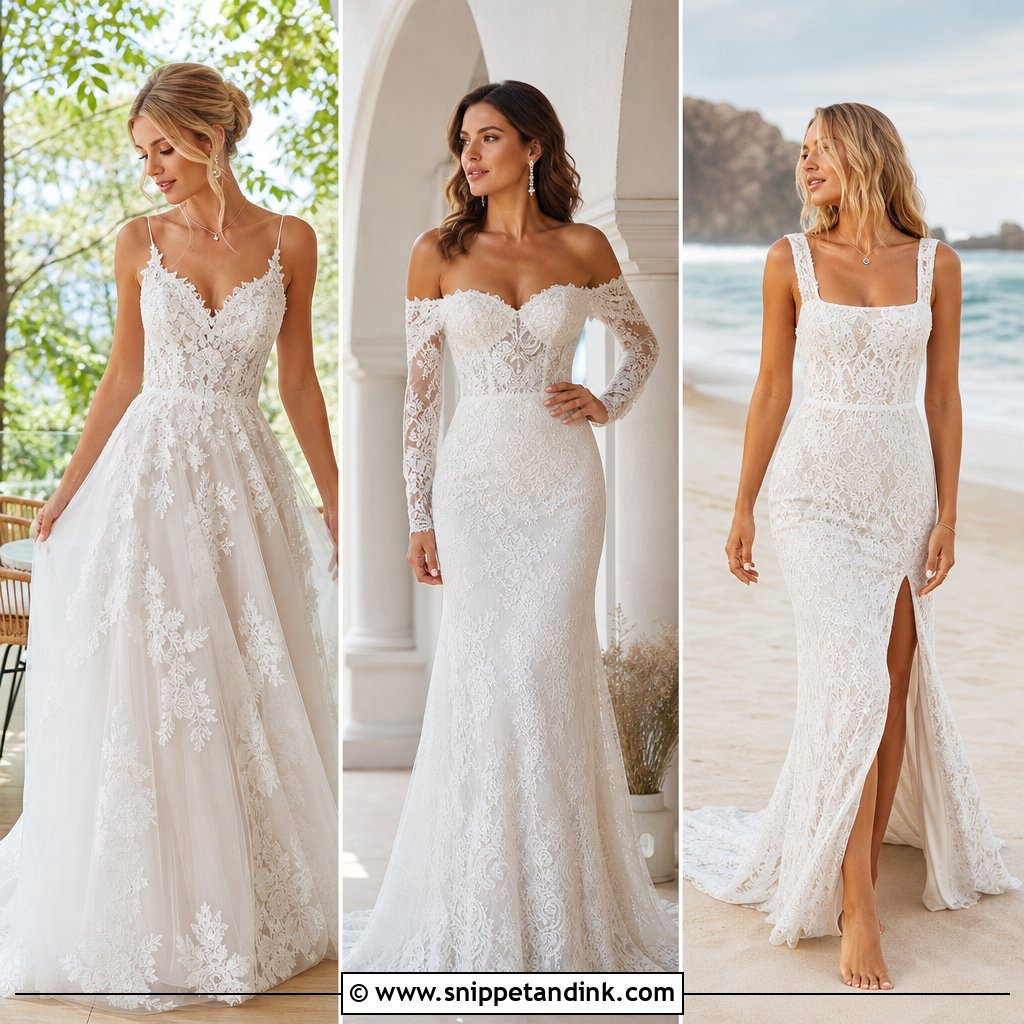
1. Boho Lace A-Line Wedding Dress
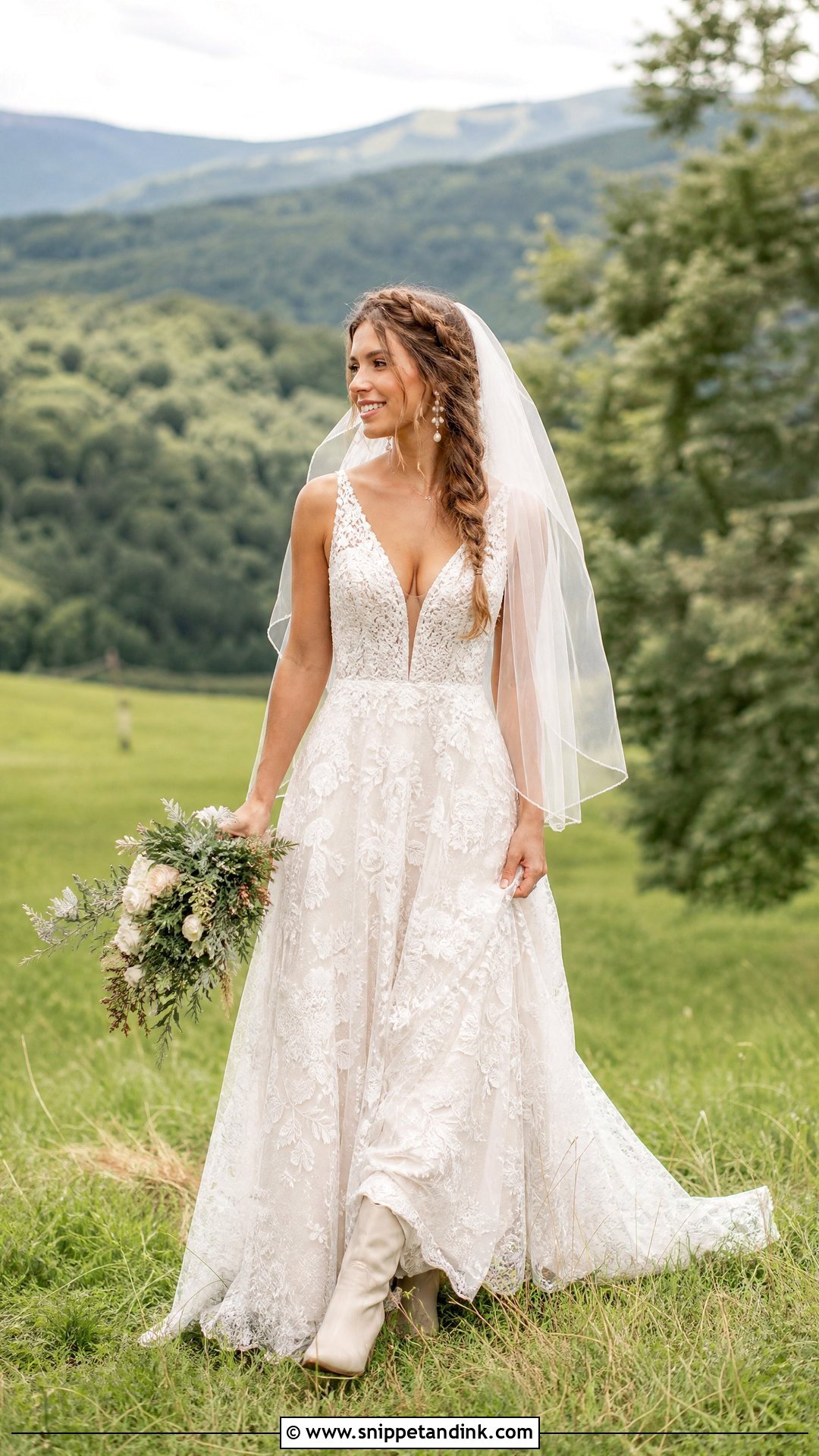
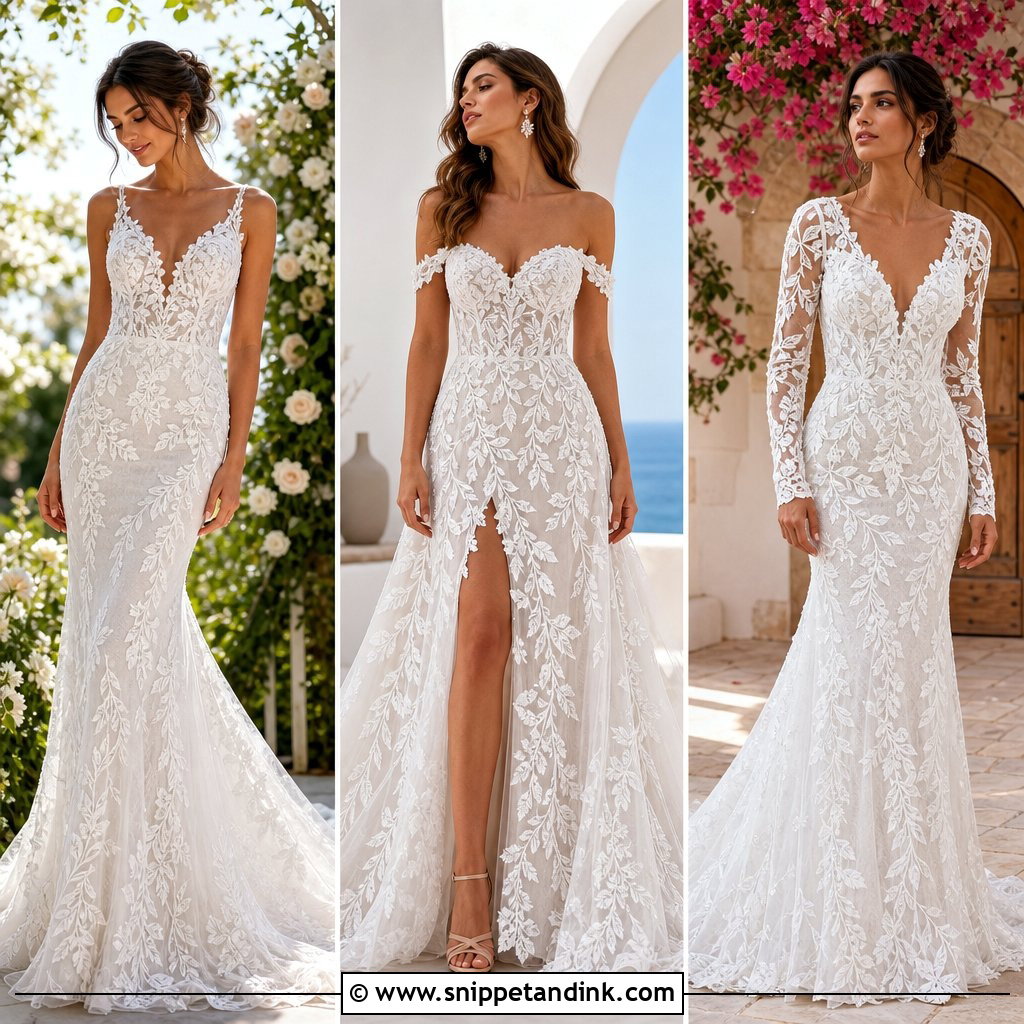
Of all the shapes in this list, a lace A-line is the most forgiving outdoors. The fitted bodice holds you in, while the skirt clears grass and packed earth without fighting your stride. I like a V-neck with wide straps here, since straps mean you’re not tugging the bodice up between photos. Ivory block-heel sandals or bridal ankle boots, depending on the ground. Keep it loose up top: pearl studs, a soft braid, a fingertip veil with a plain edge. A bouquet of mostly greenery with a few seasonal white flowers finishes it.
2. Floral Embroidered Garden Wedding Dress
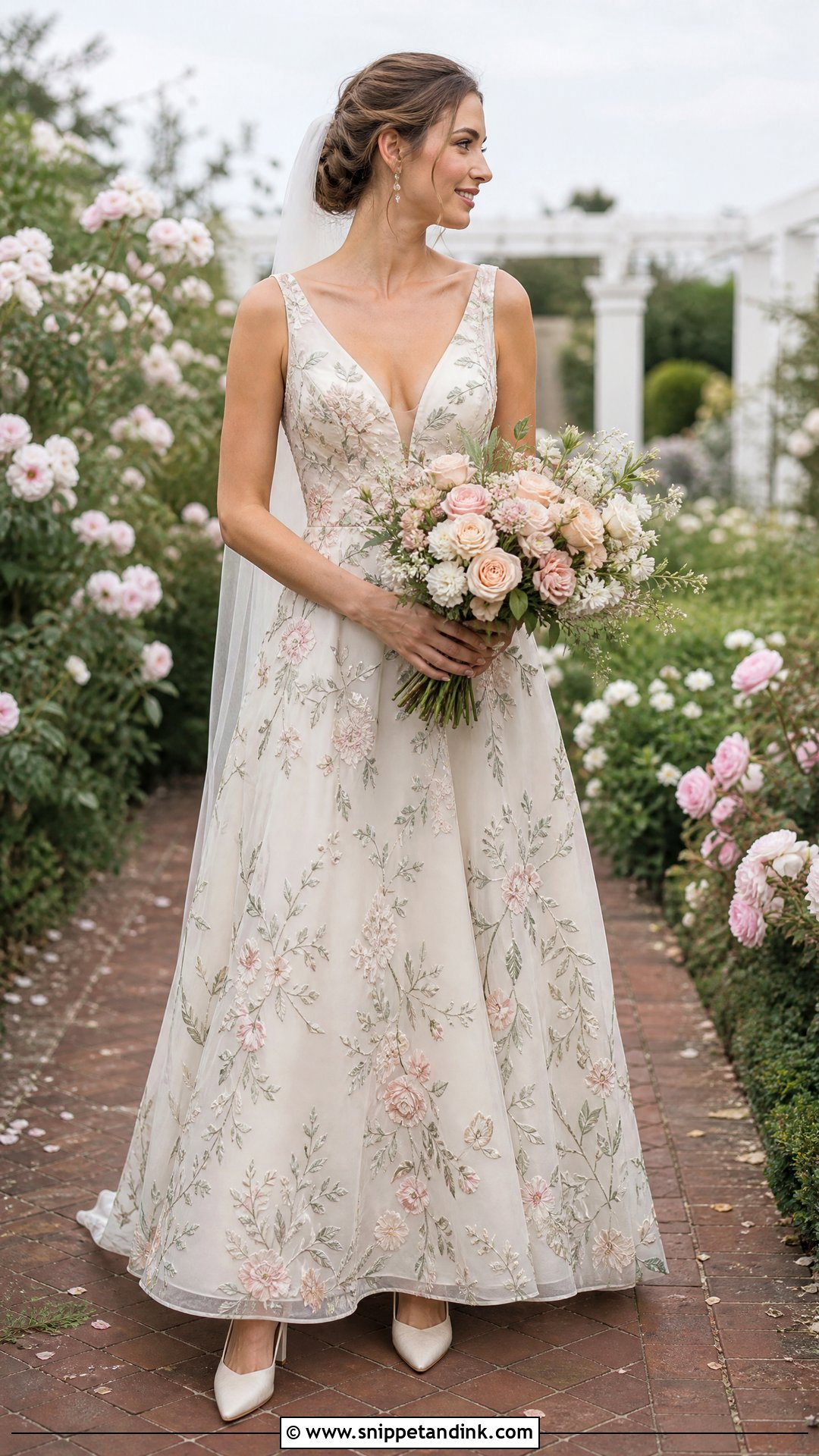
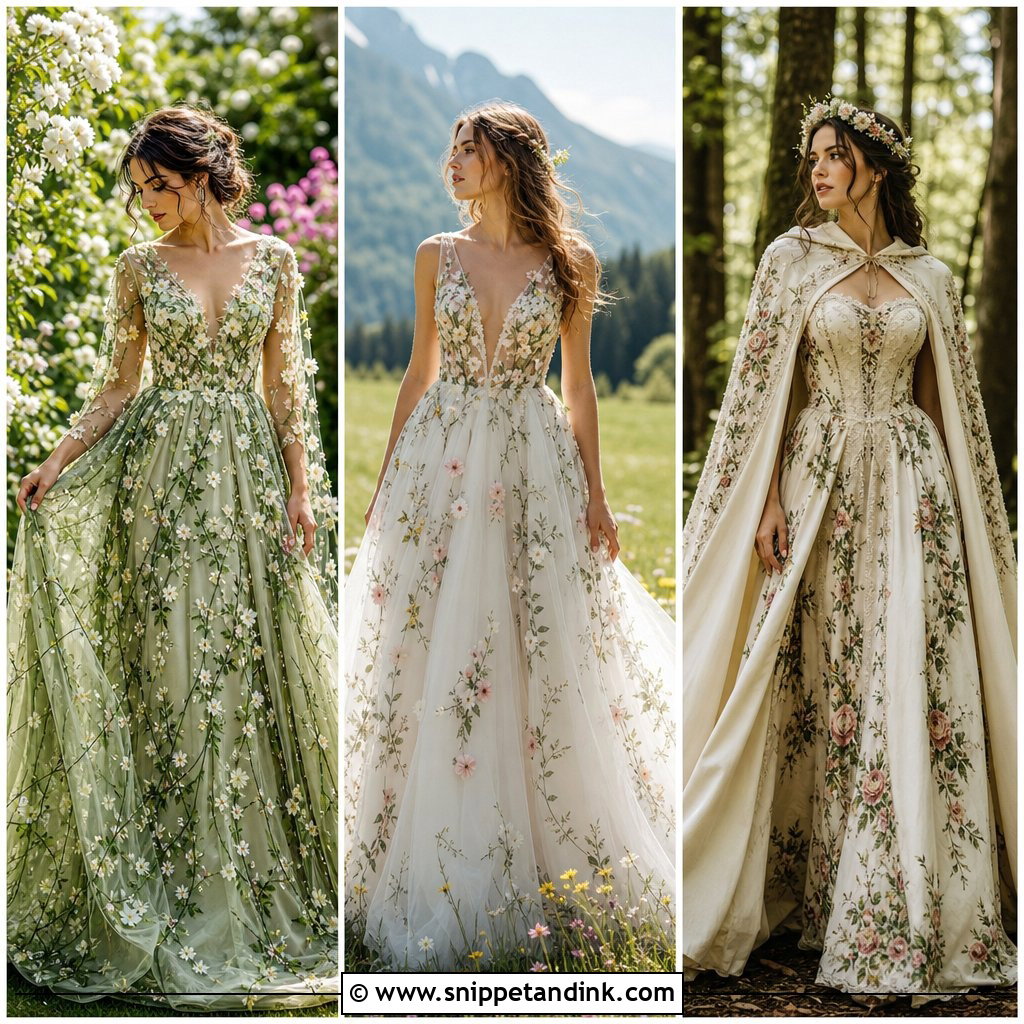
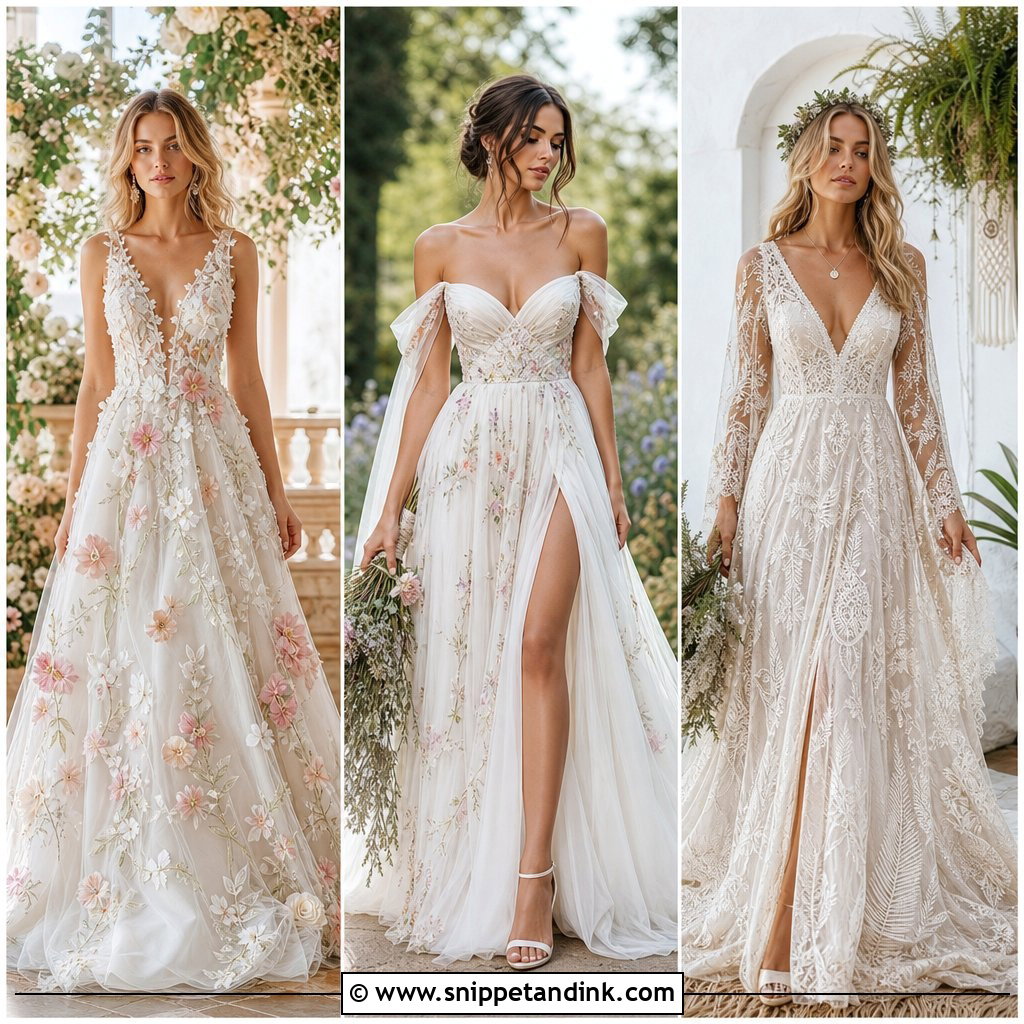
Embroidery on a sheer overlay is at its best in daylight, when you can actually see the stitching. I’d look for a gown where the flowers are dense at the bodice and thin out down the skirt; all-over embroidery gets heavy and can catch on garden shrubs. Blush, pale blue or sage thread reads clearly in photos, while ivory-on-ivory is quieter. A narrow veil lets the work show through. Block heels or pointed flats keep you steady on lawns, and the bouquet should pick up one or two thread colors, not all of them.
3. Chiffon Beach Wedding Dress
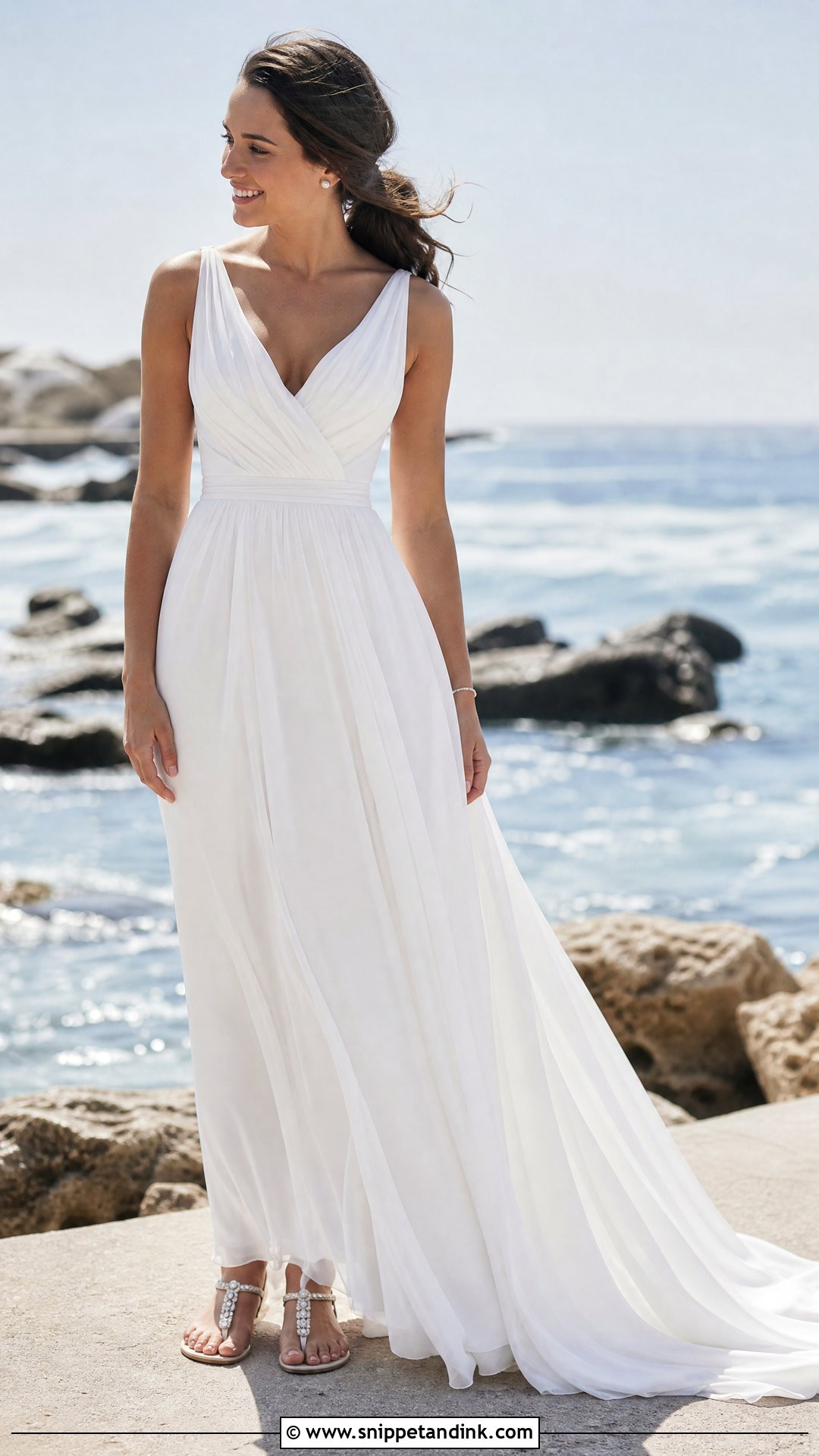
Sea air and chiffon get along. The fabric is light enough to move, dries quickly if spray catches it, and doesn’t trap heat. Skip heavy underskirts and beading; both drag in sand. A sweep train gives you a bridal line that lifts easily, whereas a cathedral train on a beach fills with sand within minutes. Flat sandals or barefoot jewelry work on sand; simple bridal flats suit a boardwalk. Coastal wind will wrap a long veil around your face, so I’d choose a short one or a comb, with a low ponytail that can’t be pulled apart.
4. Long Sleeve Mountain Wedding Dress
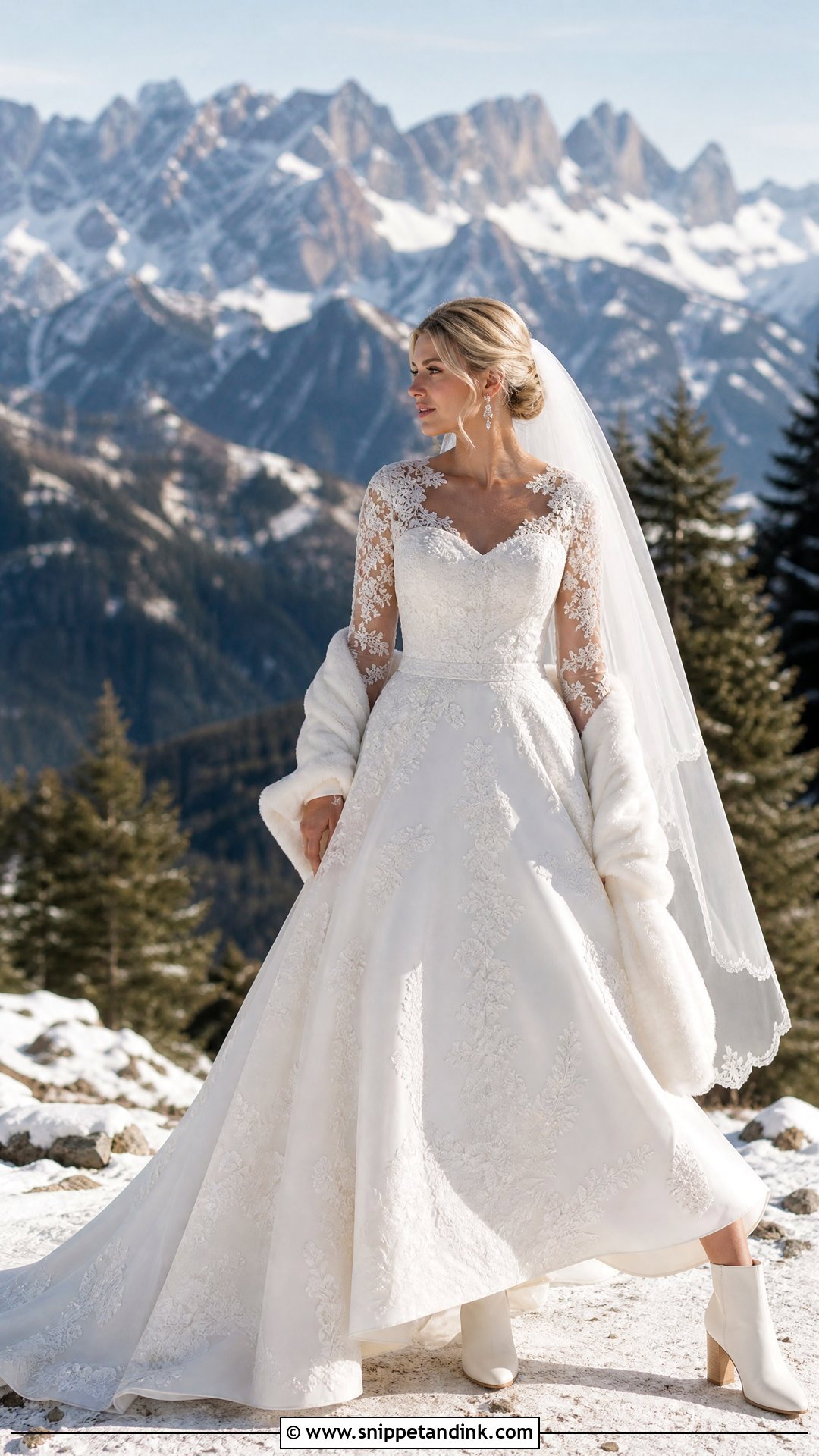
Long sleeves earn their place at altitude, where it can be cold even in summer once the sun dips behind a ridge. Lined lace or a medium-weight crepe keeps you warm without bulk, and illusion lace sleeves give texture without weight. If your photographer plans to take you up a trail, wear ankle boots with a sturdy block heel and ask your seamstress for a bustle or a slightly shorter train. A sleek low bun stays put in mountain wind. Bring an ivory wrap for after sunset.
5. Crepe Sheath Forest Wedding Dress
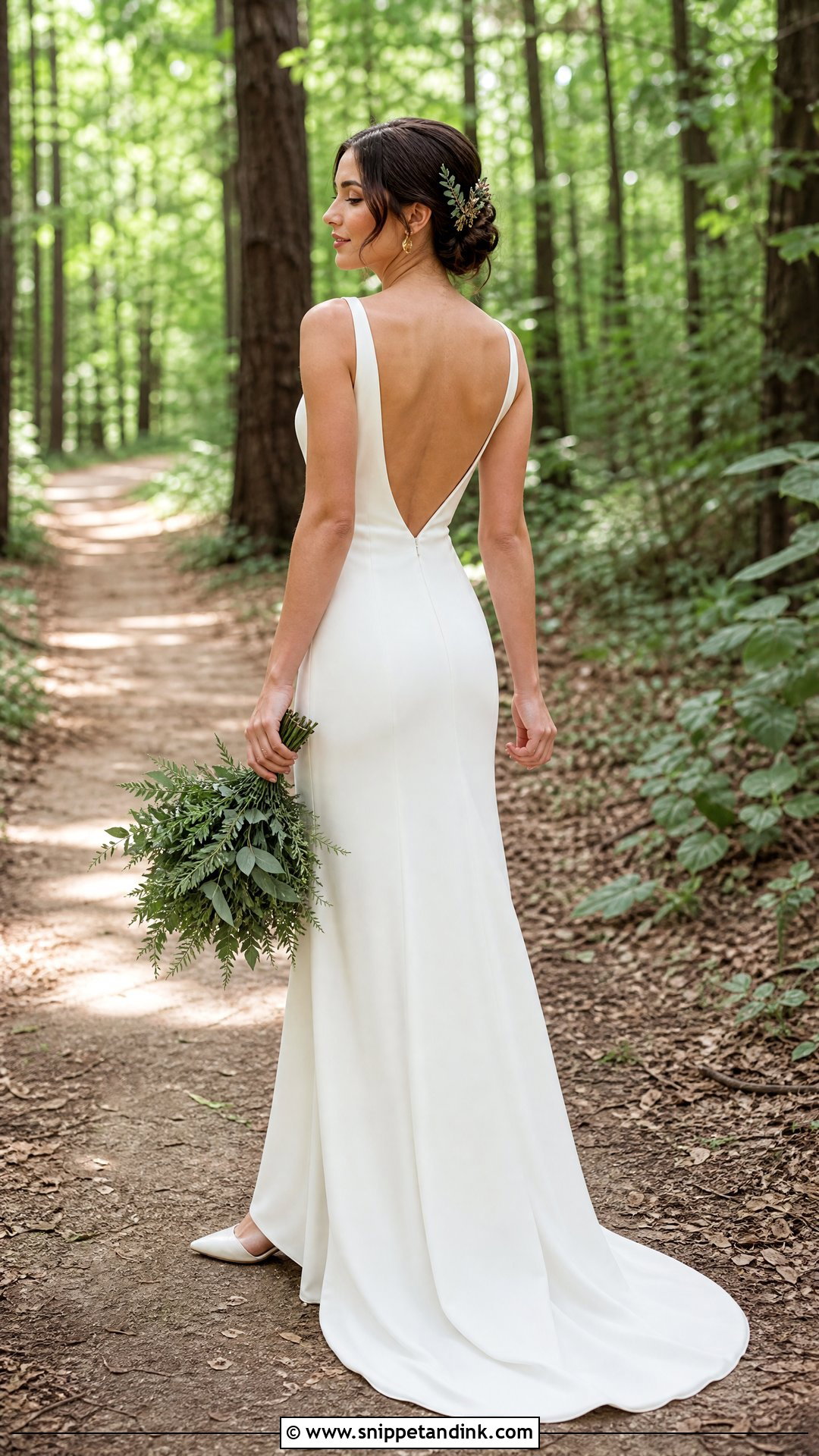
Crepe and forest are a good pairing because the plain fabric stands out against all that bark and leaf texture. A sheath wedding dress with a lightly structured bodice gives you the shape without a heavy skirt to haul over roots. Wide straps, a bateau neck or a low back add interest. On a woodland path I’d pick pointed flats, low block heels or polished leather boots. Keep the veil at fingertip length or shorter; anything longer will snag on low branches. A sheath can feel restrictive on steps, so check you can climb a stair comfortably at your fitting.
6. Tea-Length Backyard Wedding Dress
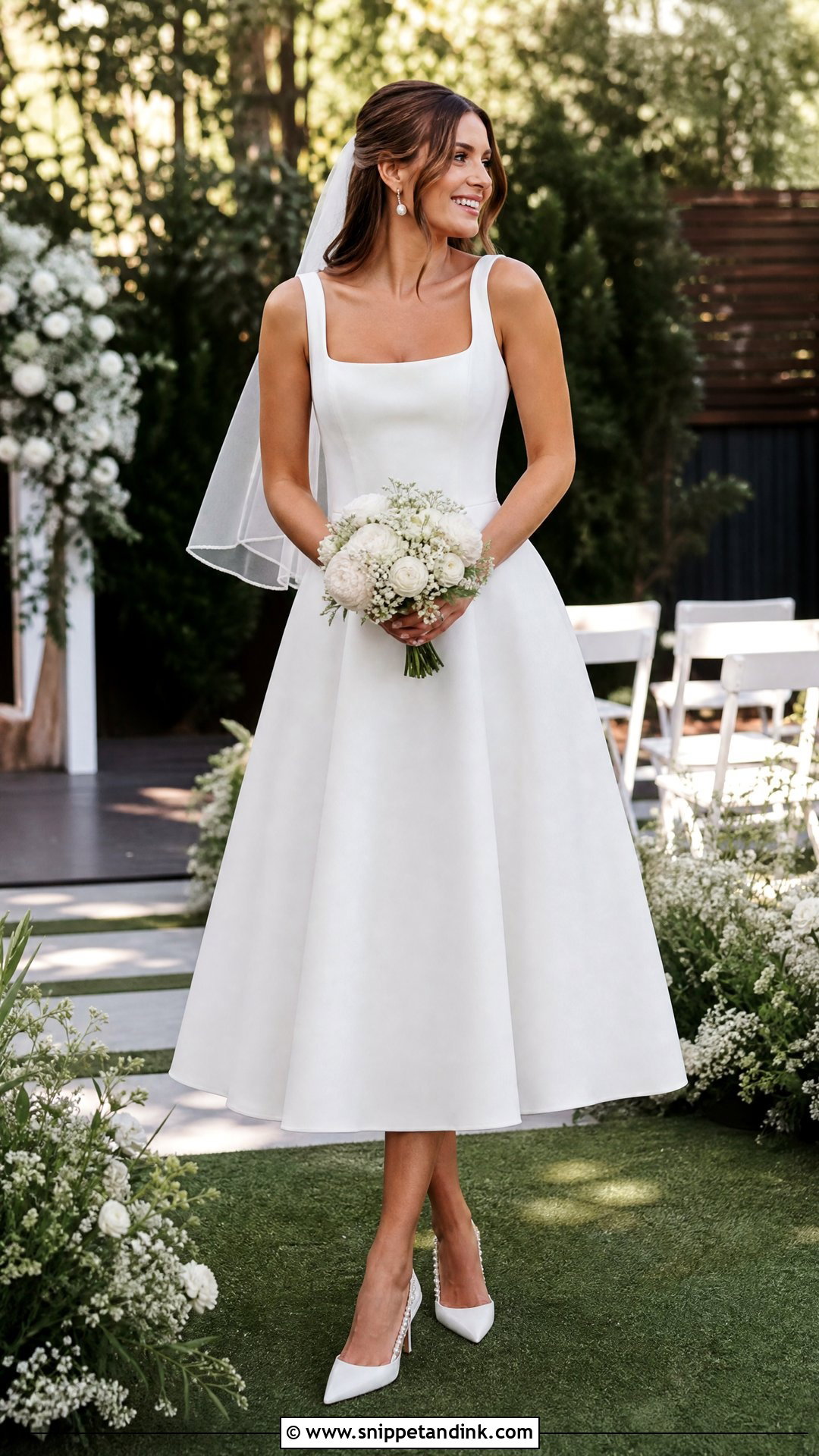
Tea length is my quiet favorite for a backyard wedding. The hem stays out of damp grass, and the shoes become part of the look rather than something hidden. A fitted bodice with a square or sweetheart neckline and a skirt that flares between knee and ankle has a slightly vintage feel. Low slingbacks, embellished flats or clean white sneakers all suit it. Because the dress is lighter, I scale down everything else: pearl drops, a short veil, a half-up style and a compact bouquet. You can dance in it all night.
7. Satin Slip Vineyard Wedding Dress
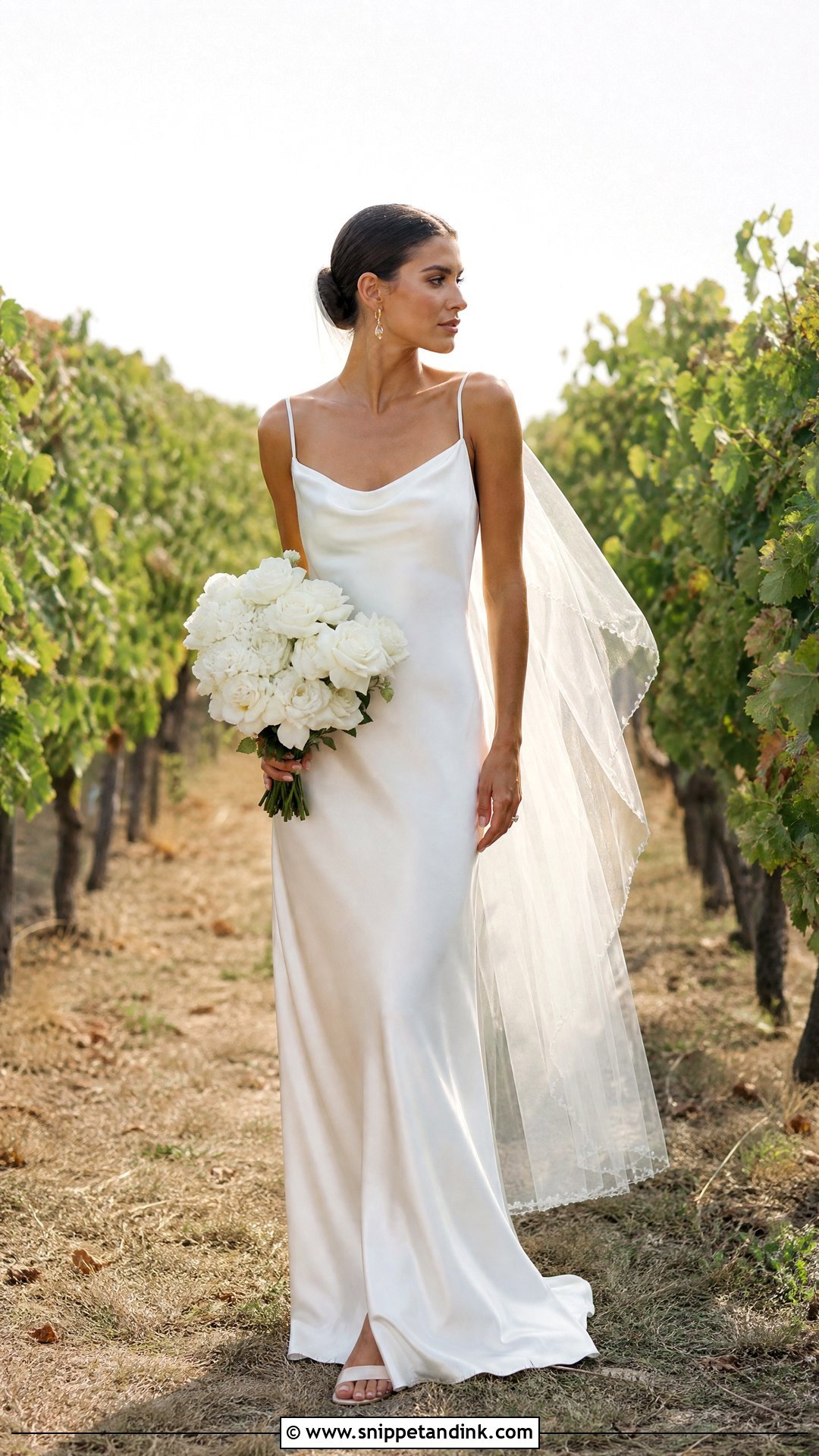
Satin catches outdoor light in a way few fabrics do, which is why it suits vineyards at golden hour. It also shows every crease and any water drop, so I’d choose a heavier bias-cut satin and keep a steamer at the getting-ready spot. A softly draped neckline and fluid skirt that skims the body look modern. For more coverage, a removable sheer cape for the ceremony works. Gravel between the vines is hard on a chapel veil; a shorter one is easier. Block-heel sandals, small gold earrings and a structured white bouquet keep it clean.
8. Off-Shoulder Meadow Wedding Dress
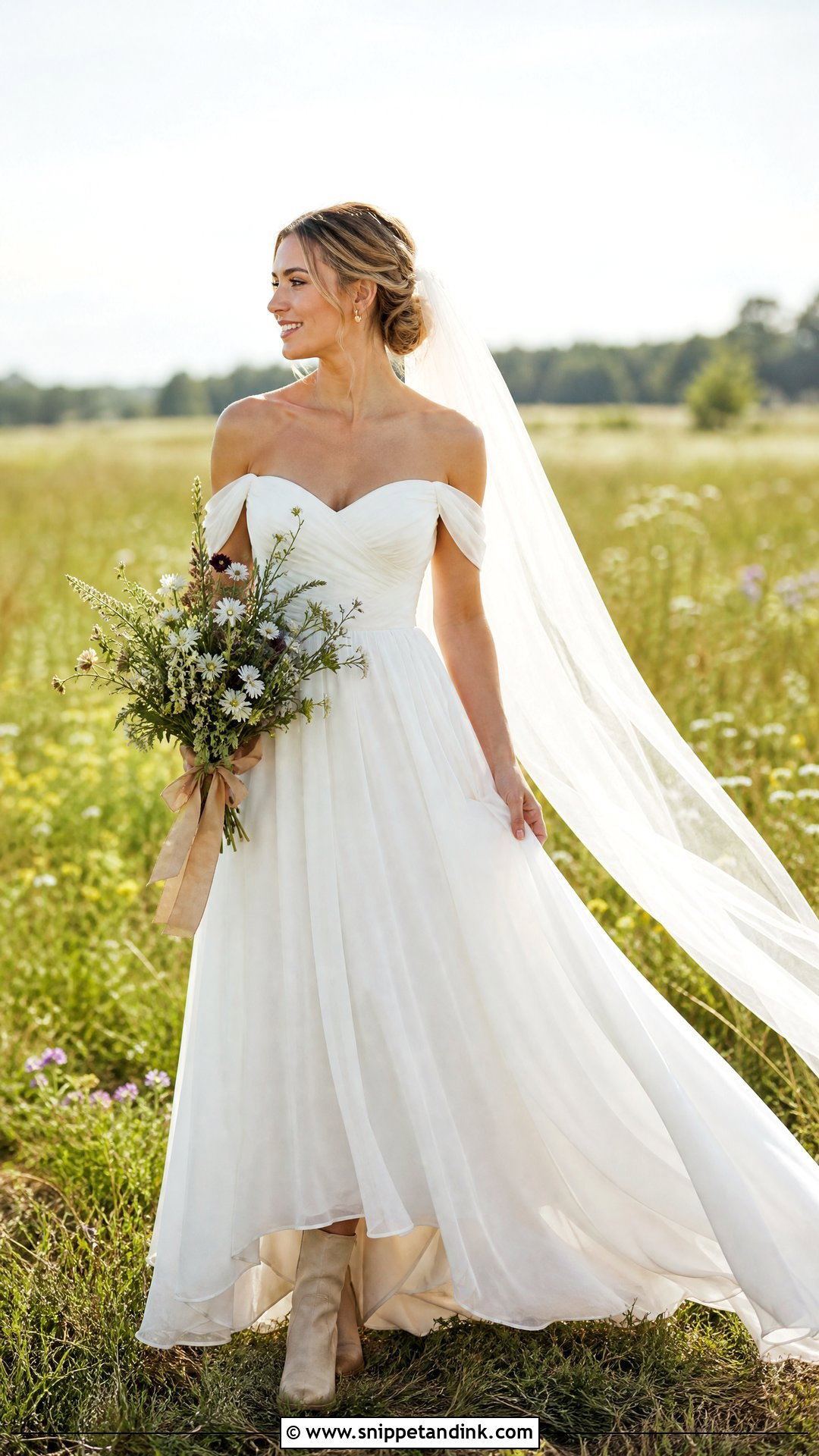
Off-shoulder gowns only work outdoors if the support is inside the dress. I check for an internal corset or boned bodice so the sleeves aren’t holding everything up, because they’ll slip the moment you lift your arms to hug someone. Chiffon, organza or light tulle skirts suit an open meadow. The neckline is the feature, so no necklace; hair in a low bun or side braid. Wear block heels, boots or flats on grass. A wrap that slips over the arms without crushing the neckline is worth finding before the day.
9. Square-Neck Minimalist Outdoor Wedding Dress
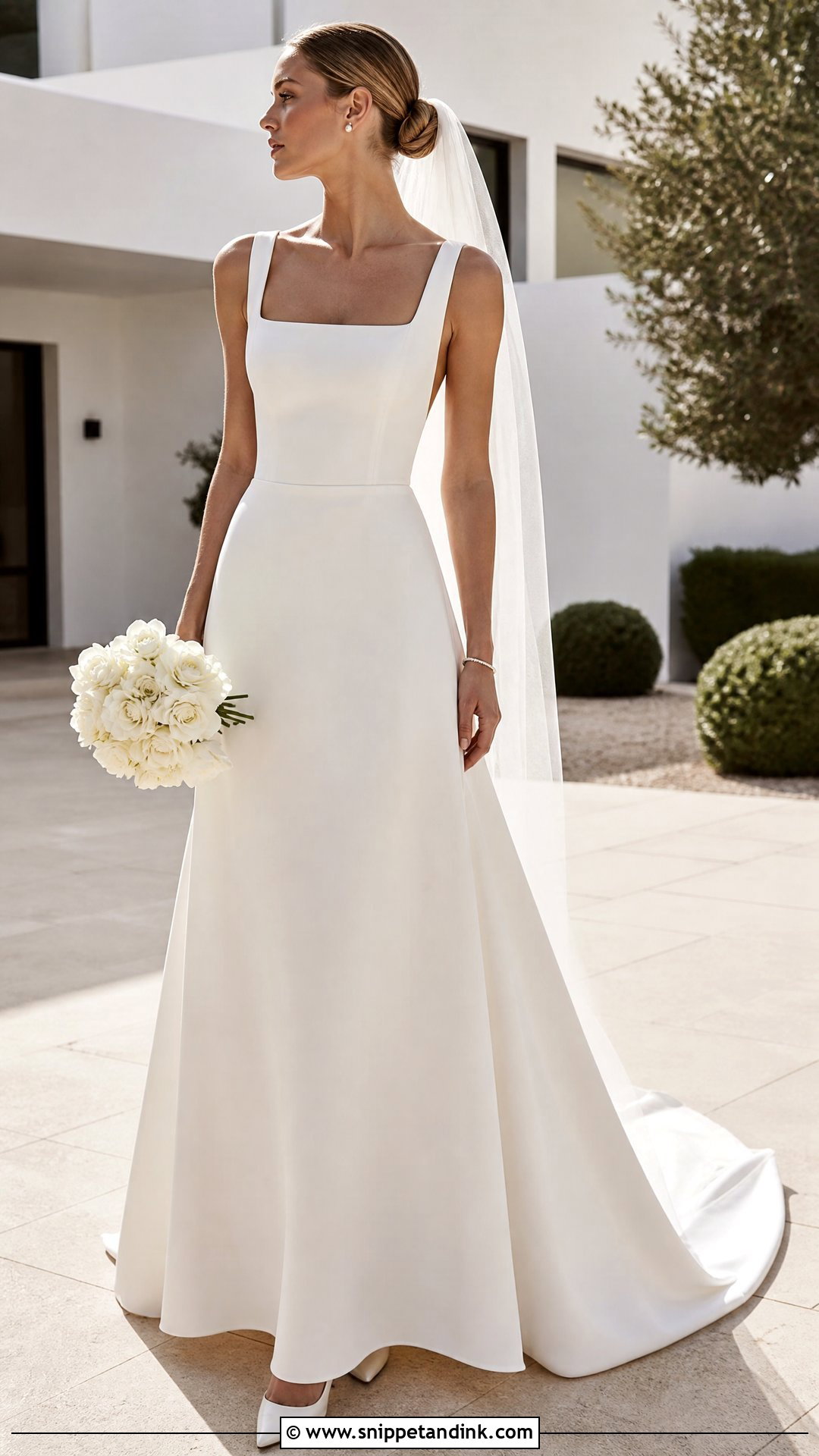
Minimal dresses hide nothing, which is both the appeal and the risk. A square neck in matte crepe, silk faille or smooth satin shows the collarbone and needs a precise fit at the bodice edge; if it gapes even slightly, you’ll see it in every photo. Wide straps and a tailored A-line skirt keep the structure. Pointed block-heel pumps with clear heel protectors handle grass, or switch to flats before the aisle. A plain fingertip veil, pearl studs and a bouquet of a single flower variety keep the line clean.
10. High-Low Adventure Elopement Wedding Dress
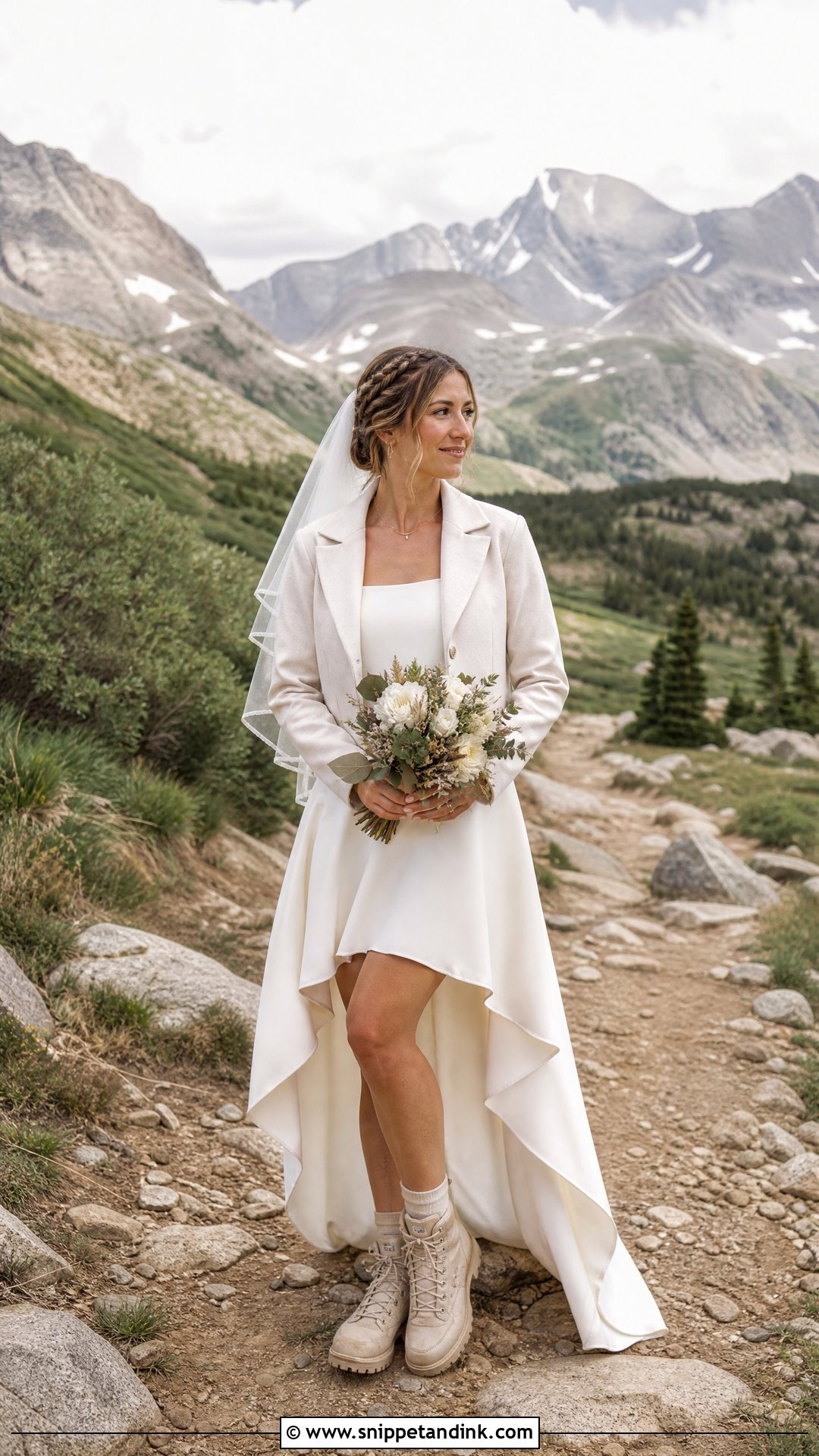
Elopements on trails are hard on a dress, and the high-low hem is the practical answer. The short front lets you climb steps and cross rocks; the longer back still gives you a train for portraits. Lightweight crepe or chiffon holds up better than delicate tulle, which snags on brush and rock. For footwear, ivory hiking boots are honestly the best choice if you’re walking any distance, with western ankle boots or closed block heels for easier ground. A secure braid, small hoops and a cropped jacket you can take off for the main photos. Leave the long veil at home.
11. Empire Waist Desert Wedding Dress
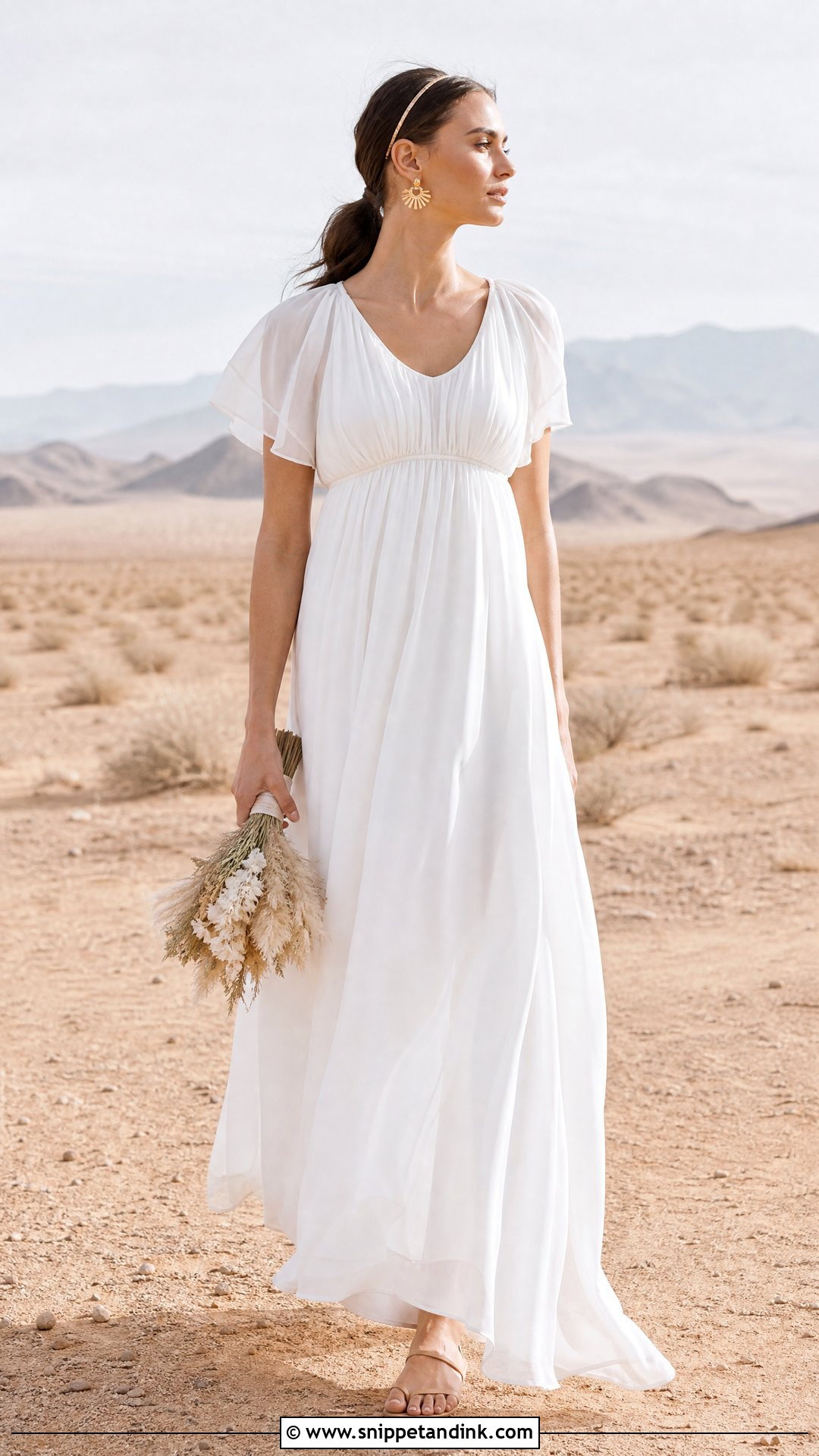
Desert heat is the reason I like a fluid empire waist gown here. The skirt falls from just under the bust, so nothing presses at the waist while you stand in full sun. Breathable chiffon or silk georgette with flutter sleeves or narrow straps keeps air moving. Dry, rocky ground calls for flat leather sandals or low closed shoes. Sculptural gold earrings, a low ponytail and a light veil or band suit the open landscape, and neutral flowers with silvery foliage sit well against sand and stone. Avoid heavy layers; you’ll feel them within the hour.
12. Tulle A-Line Garden Wedding Dress
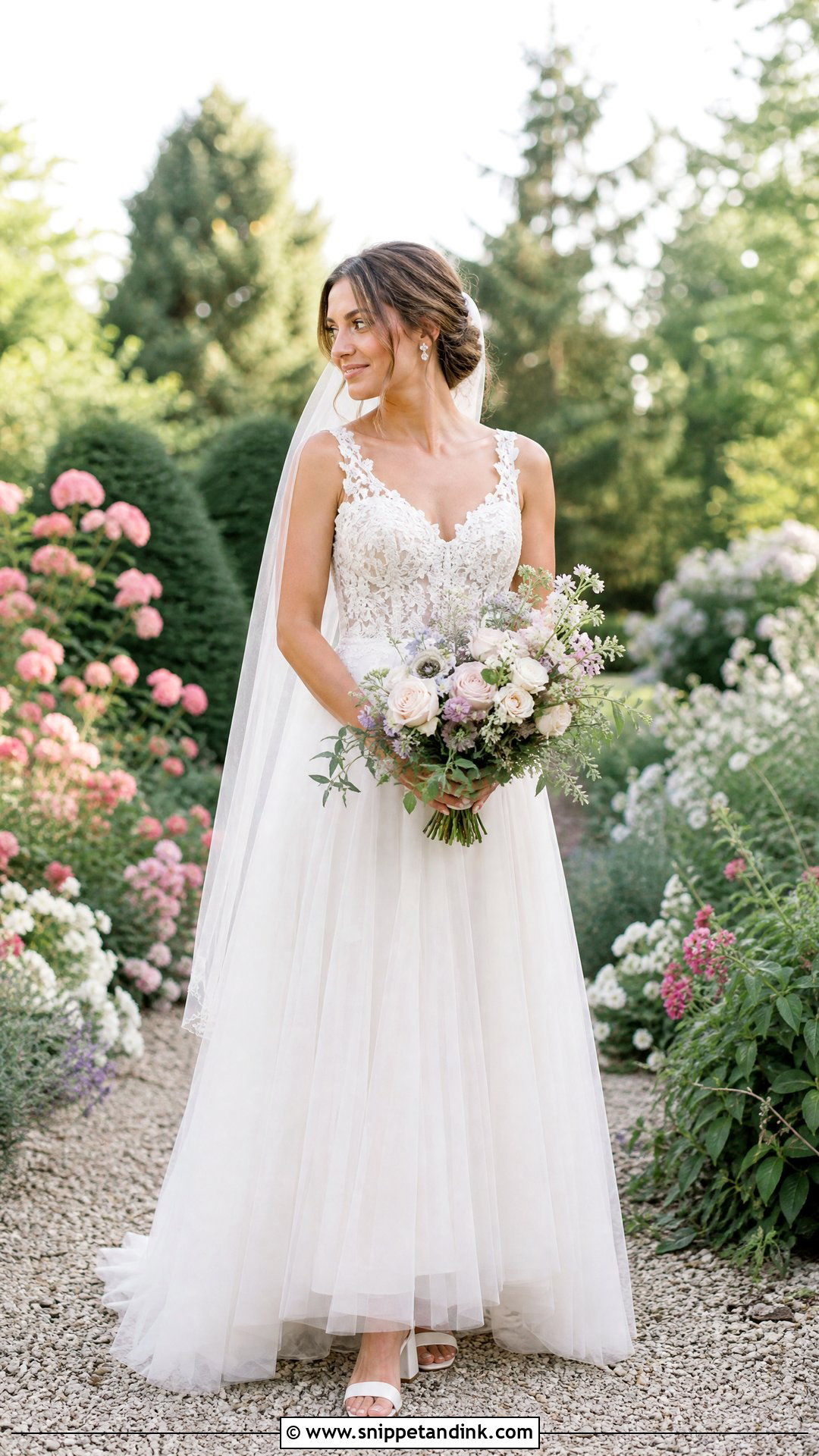
Tulle gives you the romance of a ball gown at a fraction of the weight, provided the skirt isn’t built from a dozen layers. I’d look for a structured bodice with straps and a skirt of a few soft layers, with lace appliques at the neckline or waist to tie it to the flowers. Tulle picks up burrs, twigs and petals, so bustle or remove a chapel veil before walking through planted borders. Low block heels, crystal studs and a loose chignon with a small floral comb. A rounded bouquet suits the classic outline.
13. Bell Sleeve Boho Wedding Dress
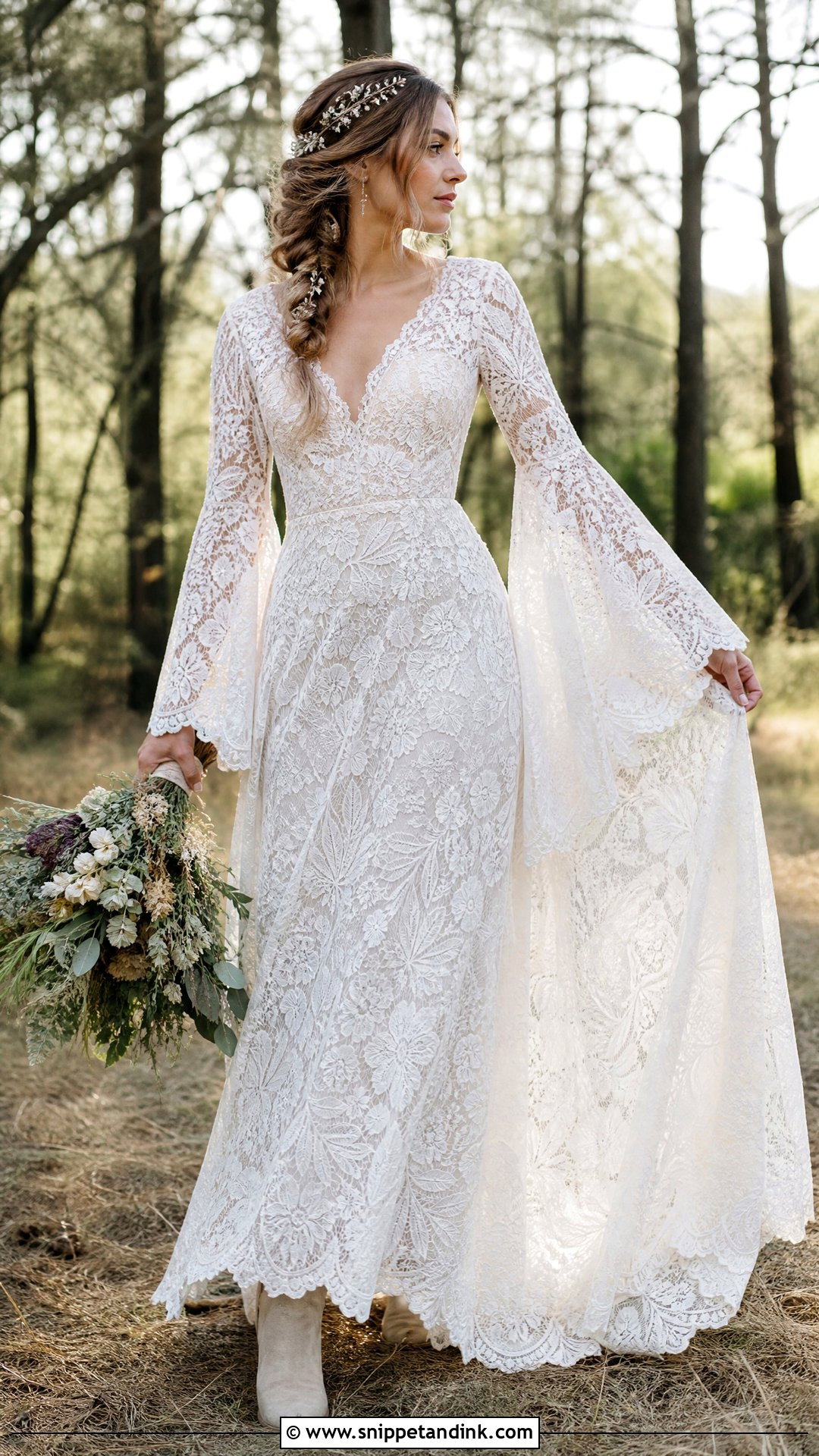
Bell sleeves are lovely in motion and a nuisance at dinner, so I always have the bride practice lifting a glass and reaching across a table at the fitting. Choose sleeves that widen below the elbow rather than from the shoulder, and balance the volume with a clean A-line skirt. Botanical lace and a scalloped hem suit woodland and rustic venues. Suede boots in cooler months, block-heel sandals in summer. Small earrings, relaxed waves or a braid, and a delicate hair vine rather than a big crown. Carry trailing greenery.
14. Floral Print Outdoor Wedding Dress
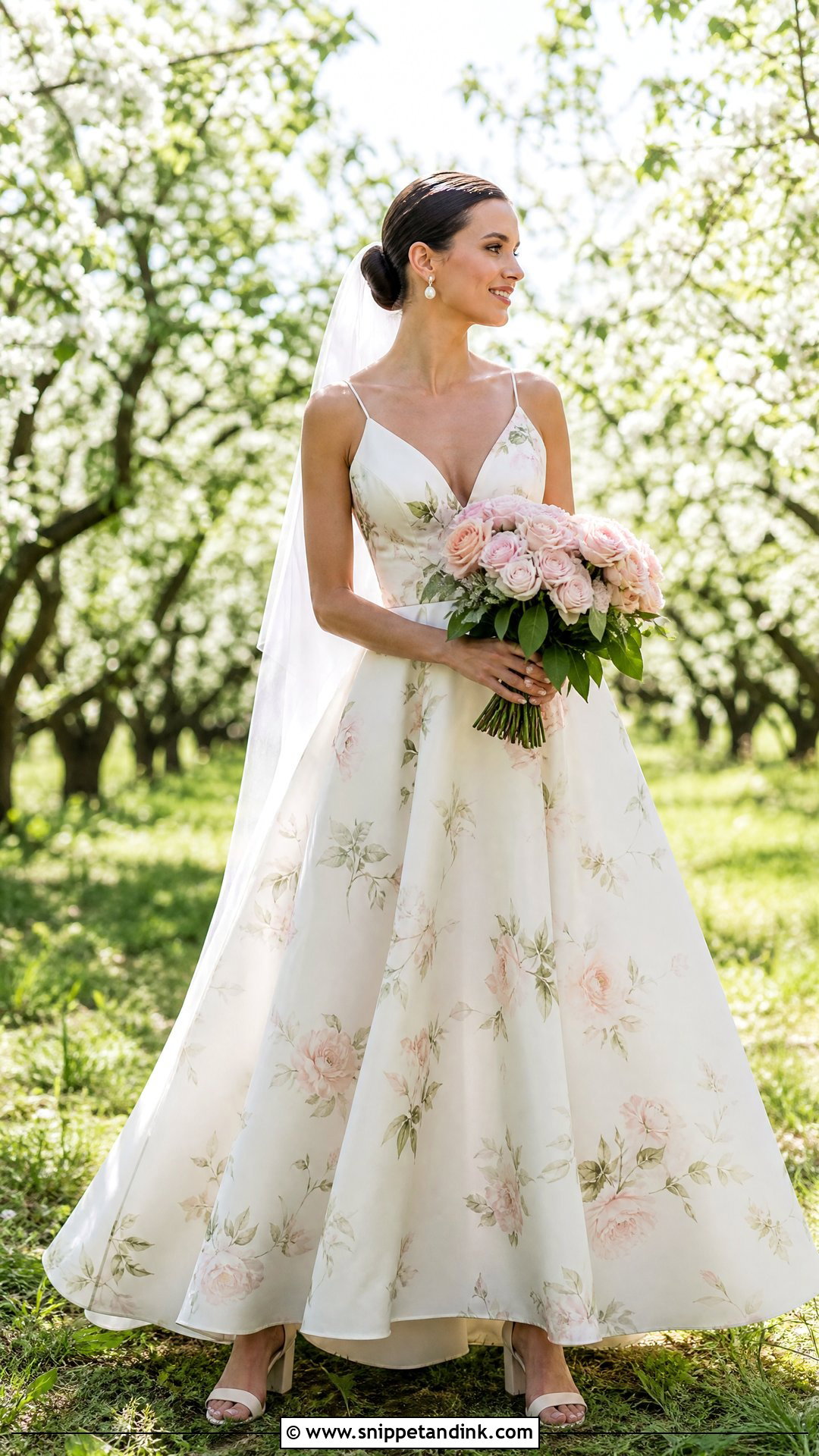
A floral print wedding dress is a confident choice, and the print should lead the whole outfit. An ivory base with watercolor flowers or small botanical motifs keeps it bridal. A fitted bodice and full A-line skirt give the pattern a formal frame. Everything else stays plain: neutral block heels, small pearls, a veil with no lace. Build the bouquet around one color from the print rather than echoing every shade, or the two will compete. Orchards, botanical gardens and meadows all suit it, and the print colors can reflect the season.
15. Corset Bodice Rustic Wedding Dress
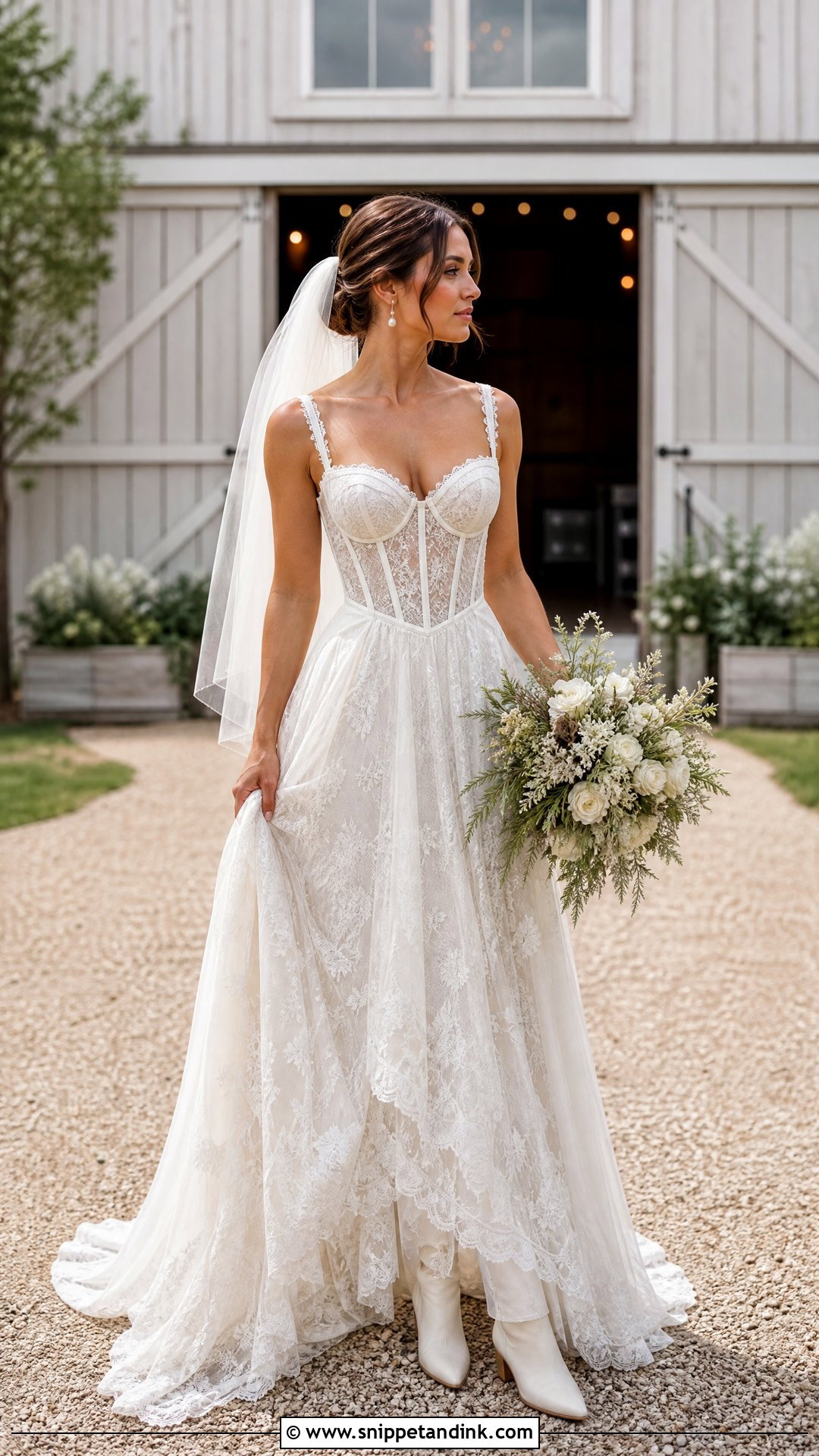
A corset bodice gives real support, which matters on a long outdoor day with no air conditioning to retreat to. The trade-off is that it must be fitted precisely. I’d always ask for a sit-down test at the final fitting; if you can’t breathe deeply or eat while seated, the boning needs adjusting. Lace, satin or embroidered tulle over the boning softens it. An A-line skirt with a short train manages grass, gravel and decking. Pointed bridal boots, pearl earrings, a plain veil and a low bun with loose pieces suit barns and ranch venues.
16. Cape Sleeve Woodland Wedding Dress
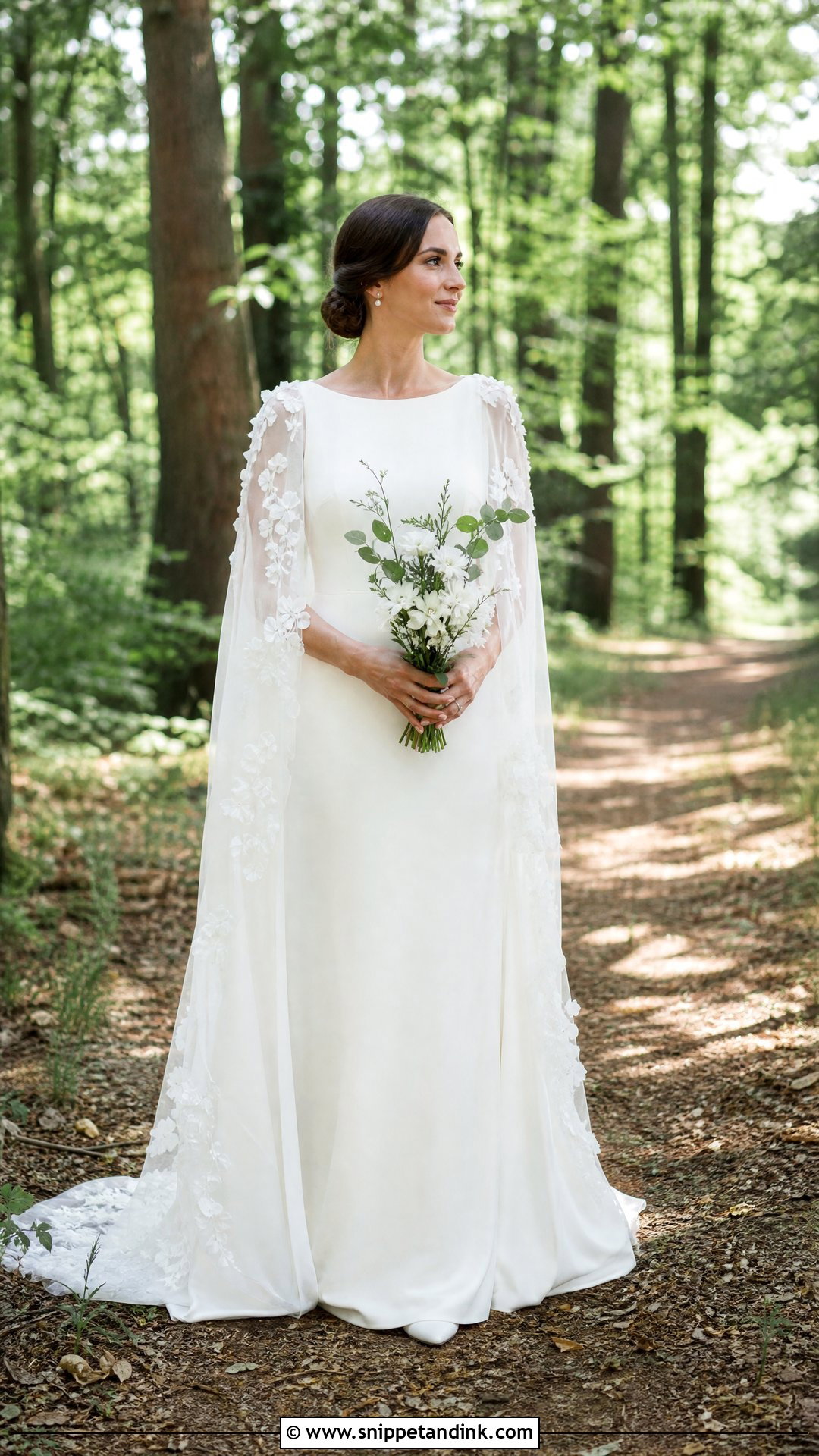
Capes are a clever swap for a long veil outdoors because they’re attached at the shoulders and won’t lift off in wind. Start with a plain crepe or satin column, then add a sheer cape with lace edging or small appliques, falling to fingertip or floor length. In woodland, a floor-length cape will collect leaves, so I’d go fingertip unless the path is paved. Closed flats or leather boots, a low bun to show the attachment, and a narrow bouquet that follows the long line. It gives light shoulder cover on a cool, shaded afternoon.
17. Short Beach Wedding Dress
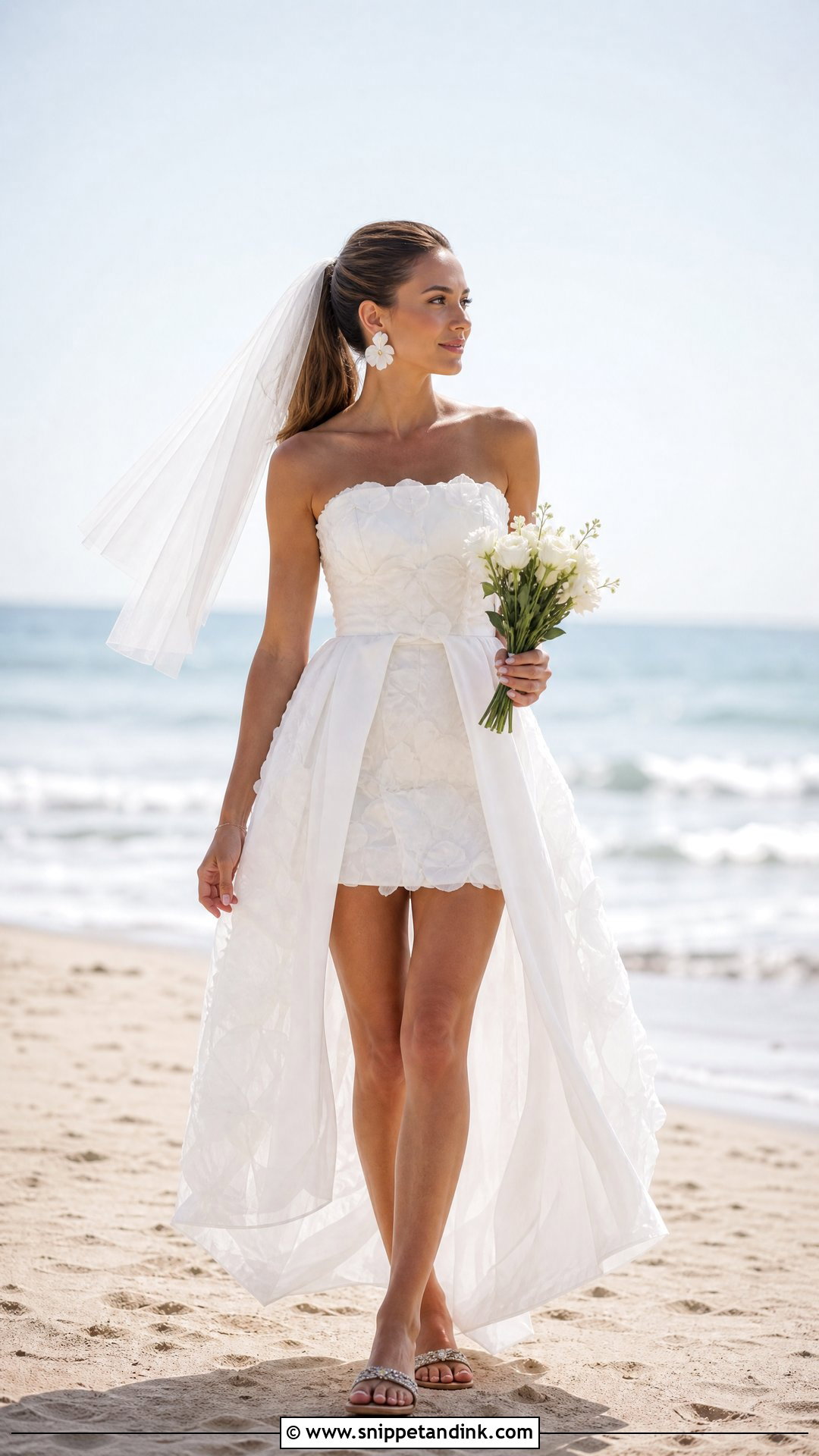
On a beach, short is often smarter than long. A mini or knee-length dress with a structured bodice still reads as bridal, especially in lace or textured organza. Wet sand won’t touch the hem, and you can walk into the shallows for photos. My favorite version has a detachable overskirt: wear it for the vows, take it off for the reception. Flat sandals, espadrilles or bare feet, statement earrings, a short veil and a sleek ponytail that holds in a breeze. Keep the bouquet small so it doesn’t overwhelm the shorter shape.
18. Plus Size Lace Outdoor Wedding Dress
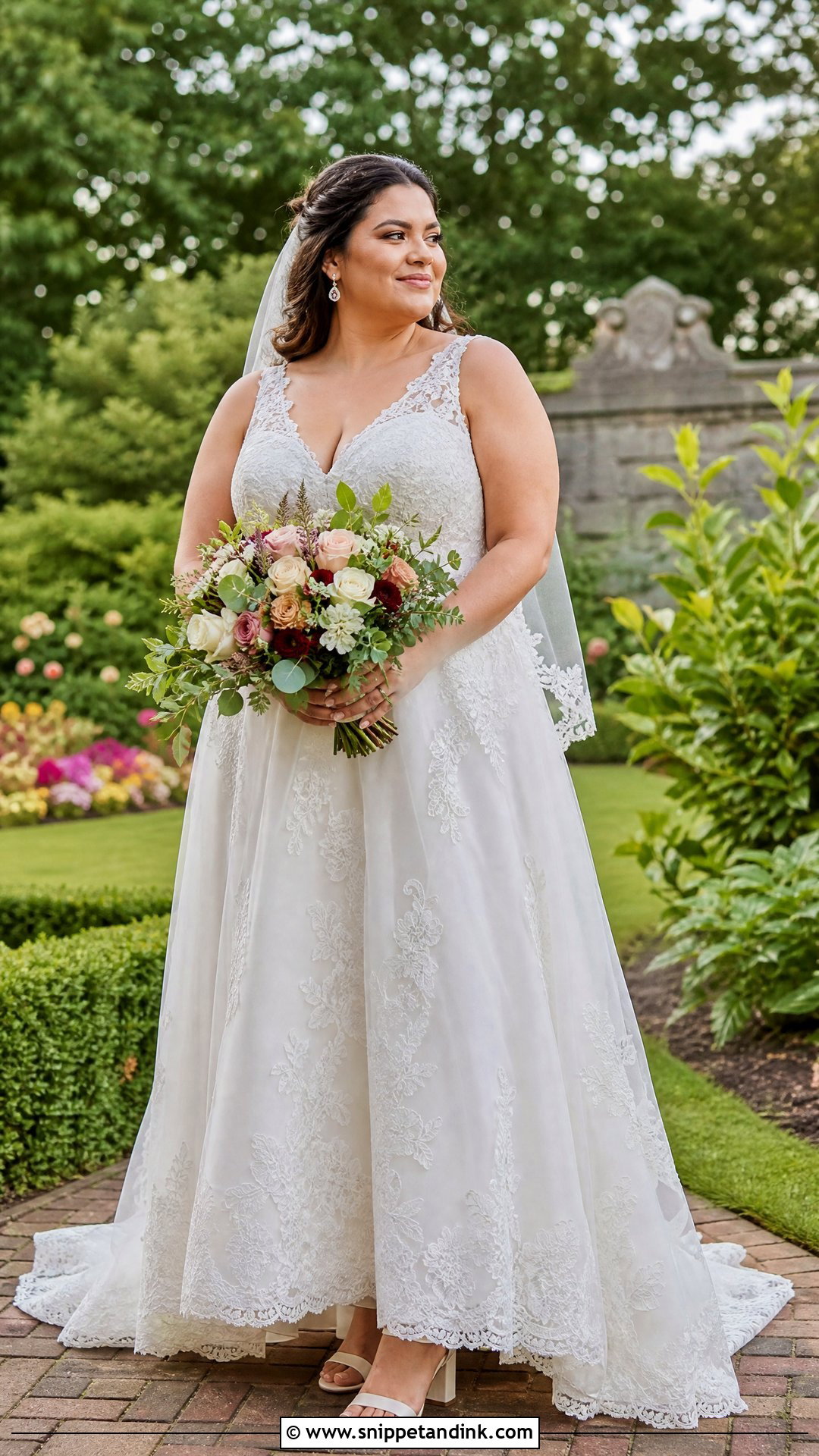
For plus-size brides marrying outdoors, support and lining matter more than any trend. I look for an A-line or fit-and-flare with a built-in supportive bodice, comfortable straps and a smooth lining, since a scratchy lining becomes unbearable in heat. Lace placed at the neckline and waist defines shape. Cushioned block heels or flats, pearl drops, and a secure updo or half-up style. Size the bouquet to your height and the gown. The work that matters most happens at alterations, along with undergarments chosen for the exact neckline.
19. Modest Long Sleeve Outdoor Wedding Dress
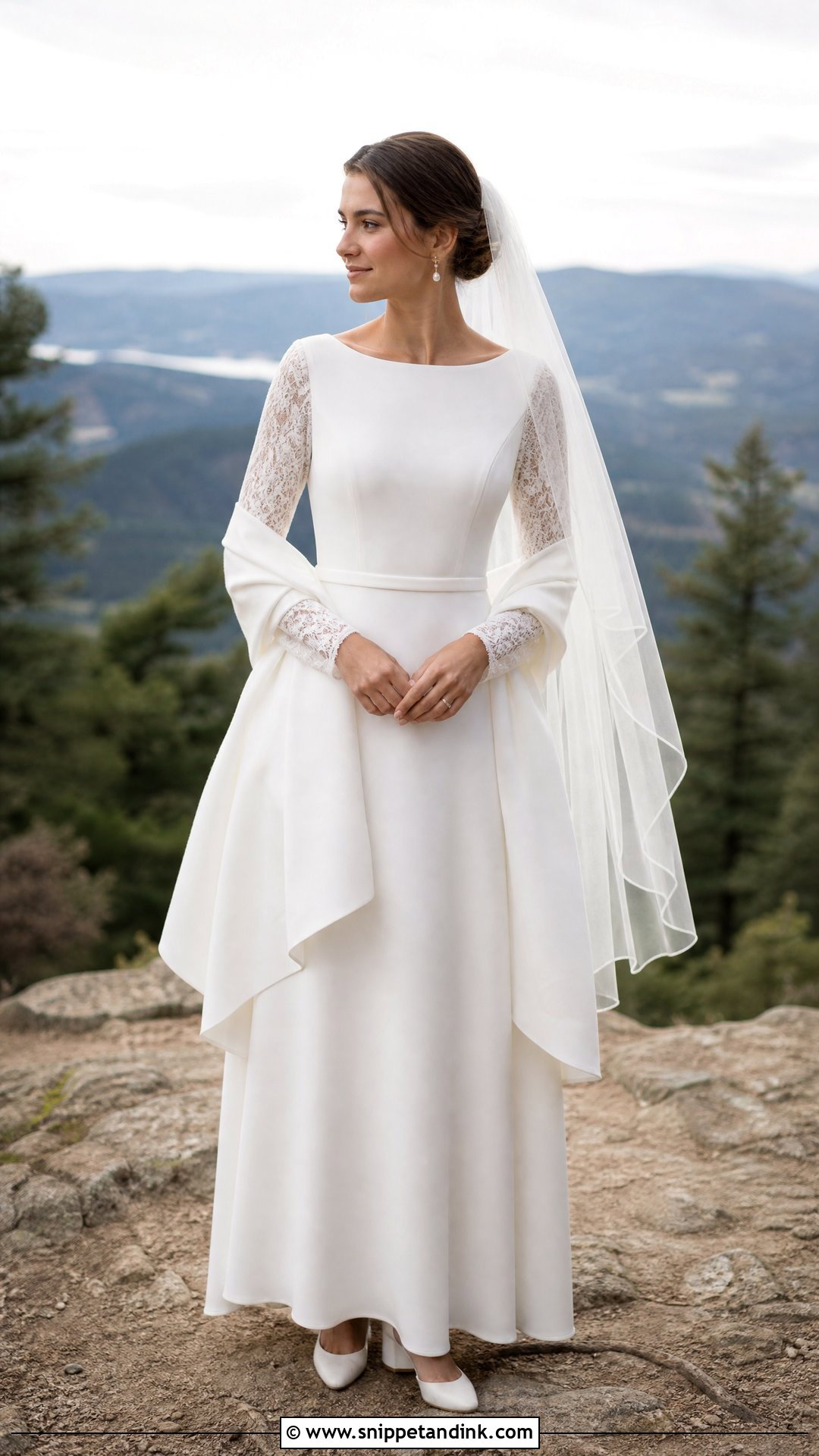
Coverage outdoors has a practical upside: lined long sleeves and a jewel or bateau neckline protect you from sun as well as cold. Lightweight crepe or soft lace keeps it from feeling heavy, and an A-line skirt moves easily on uneven ground. Ask for sleeves cut with a little ease at the elbow so you can lift your arms. Closed block heels, pearl studs and a neat low bun. A shoulder-length or fingertip veil frames the dress without hiding the sleeve detail. For early spring or fall, add an ivory wrap.

20. Blush Outdoor Wedding Dress
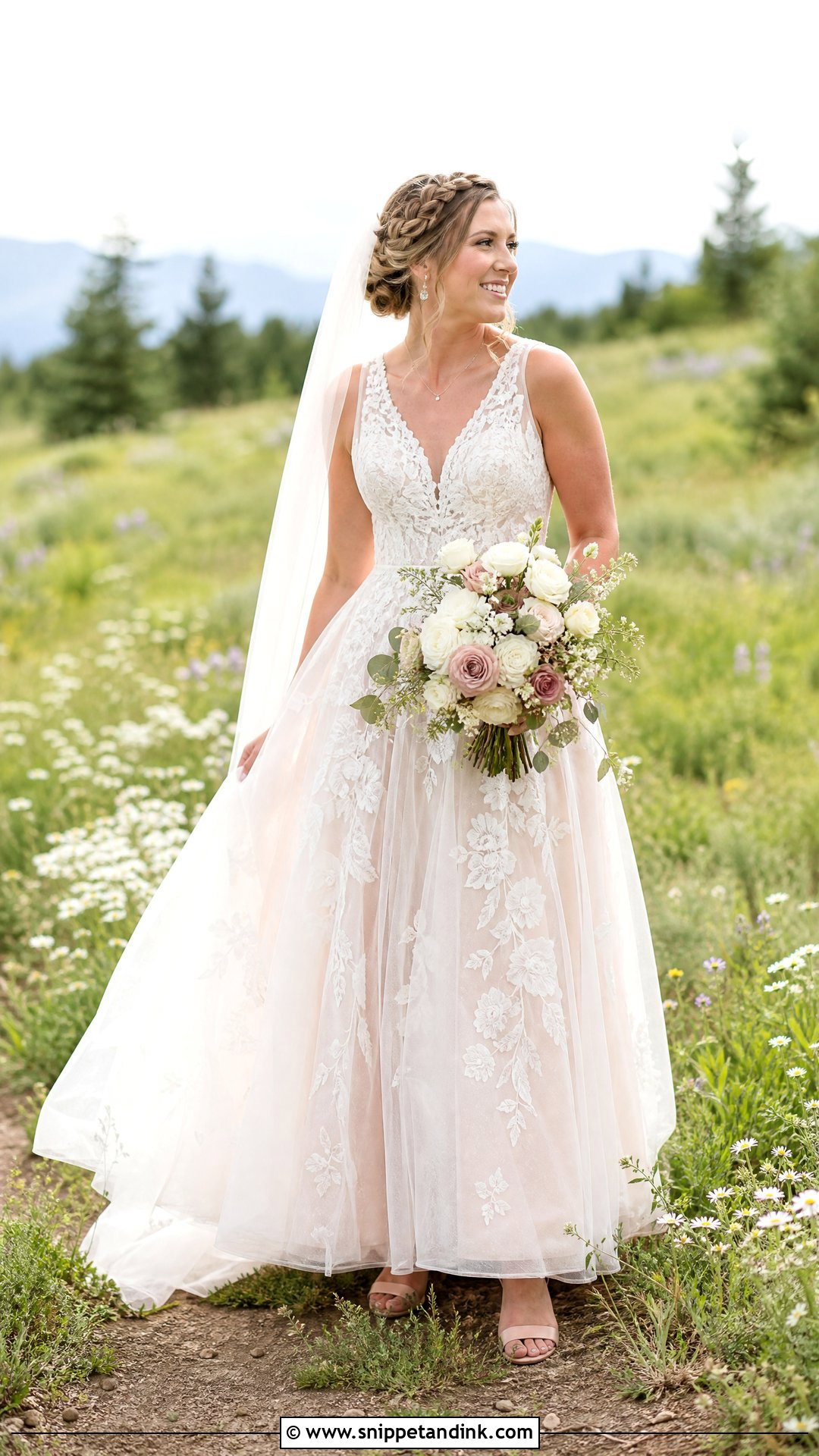
Blush picks up warmth from outdoor light and softens against green or sand. I prefer it as a dusty rose or pale nude lining under ivory lace or tulle, which keeps the gown clearly bridal and gives botanical embellishments more depth. Check the shade in daylight at your fitting; under shop lighting blush can look stronger than it will outside. Neutral shoes, rose gold earrings and a plain ivory veil. Flowers in ivory, muted pink and green tie it together without matching too closely.
Trains, Bustles and Hem Guards on Natural Ground
Every outdoor bride asks me what will happen to the hem. Honestly, it will get some dirt on it. The aim is to keep that to the last few centimeters and to stop the train dragging through mud for the whole reception.
Pick a bustle for the fabric
An over bustle hooks the train up onto the back of the skirt and suits lace and heavier fabrics. An under bustle (sometimes called a French bustle) tucks the train beneath and suits chiffon and tulle, which hang more softly that way. Ask your seamstress to show a bridesmaid how to do it, because the bustle usually goes up just after the ceremony when you’re busy.
Protect the hem before it touches the ground
Some seamstresses will add a band of horsehair braid or a slightly stiffer facing at the hem so it stands away from wet grass. Clear heel protectors stop block heels sinking into a lawn. If the ground will be damp, have the hem finished a touch shorter at the front, so you’re not stepping on it as you walk.
Getting Grass, Sand and Red Wine Out Before Storage
An outdoor gown comes home with more on it than an indoor one, and stains like grass and sugar set the longer they wait. Hang the dress and let any mud dry completely before touching it; brushing wet mud spreads it into the weave. Shake out sand while the dress is still in the bag, then take it to a specialist wedding gown cleaner within a few weeks and point out every mark, including clear spills of wine or soda that may yellow later.
Don’t try home stain removers on silk, satin or lace. Water rings and color loss are common, and a specialist can often treat what you’d make worse. Once cleaned, store the gown in breathable cotton or an acid-free box somewhere cool and dark, never in the plastic bag it came home in.
Let the Landscape Decide the Dress
When I style a bride for an outdoor ceremony, the place does a lot of the deciding. Light gowns make a beach easier, while crepe, sleeves and bridal boots suit the mountains. Gardens welcome embroidery and tulle; plain satin or crepe stands out against wild scenery. Walk the venue if you can, think about wind, temperature, ground and how far you’ll walk, then plan the train and shoes around it. Secure hair and practical accessories finish the job, and leave you free to enjoy the day.
You'll Like These Ideas:





Leave a Reply