
Flowers on a wedding dress can mean almost anything, from a few ivory vines you only notice up close to painted peonies across a whole ball gown skirt. That range is why I like this category: there is a botanical version of nearly every silhouette, including flowing A-lines, slim sheaths, full ball gowns and short reception minis. The nature-inspired details below run from flat lace and embroidered leaves to raised 3D petals and colored threadwork. Each idea comes with the shoes, jewelry, hair and bouquet I’d put with it, because a detailed dress needs accessories that step back. Garden, greenhouse, forest or ballroom, there’s a look here for the setting you have.
Appliqué, Lace or Print Changes Your Alterations Bill
Brides tend to pick a floral dress by the flowers. I look first at how they’re attached, because that decides what alterations cost and how long they take.
- Flat botanical lace is the most forgiving. A seamstress can usually take in seams and shorten hems by working around the motifs.
- 3D appliqué near the hem means hemming is done by unpicking the flowers, shortening the tulle and stitching them back by hand. It’s slow, careful work and is quoted accordingly.
- Embroidery stitched straight into the fabric limits how far a seam can move before the pattern breaks.
- Printed fabric can’t be repaired or matched, so ask whether the maker keeps spare yardage for alterations.
For any of these I’d order early enough to leave two to three months for fittings, and book the seamstress before the dress arrives. Heavily appliquéd hems are something most experienced alterations studios will want to see before quoting.
1. 3D Floral Appliqué A-Line Wedding Dress
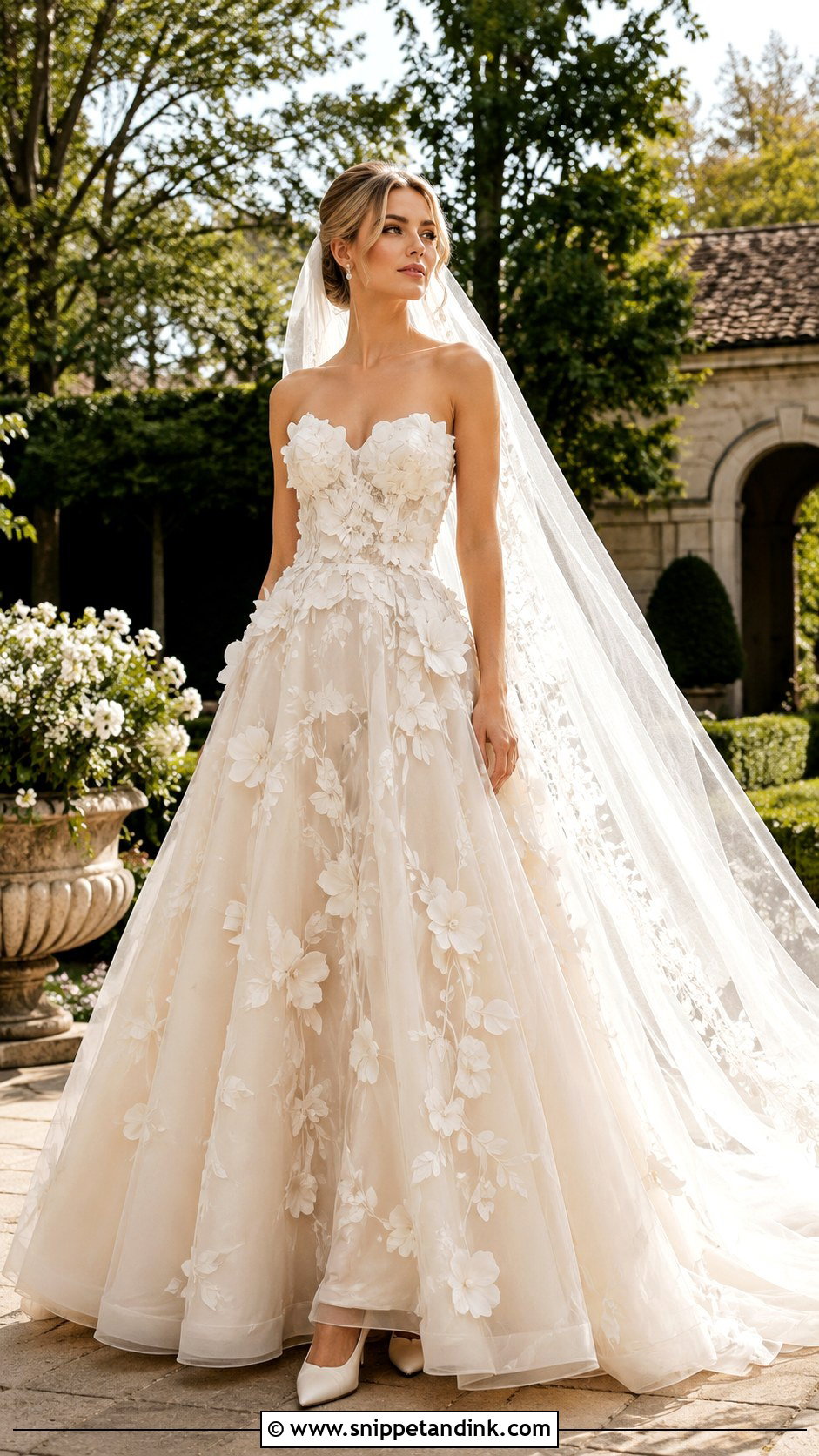
Raised organza flowers give an A-line texture without adding bulk to the body underneath. Look for an ivory tulle skirt with hand-cut flowers drifting from a fitted bodice toward the hem, and a sweetheart or soft V-neckline with slender straps. When I check a 3D appliqué gown, I turn the bodice inside out: each petal should be tacked by hand at several points, not just glued or caught at the center, or it will flop by the reception. Pearl drops, an airy cathedral veil and pointed ivory pumps finish it, with a low, loose bun that leaves the neckline flowers in view. Keep the bouquet to white garden roses and greenery. It sits well in a spring garden, an estate or a bright conservatory.
2. Colorful Wildflower Embroidered Wedding Dress
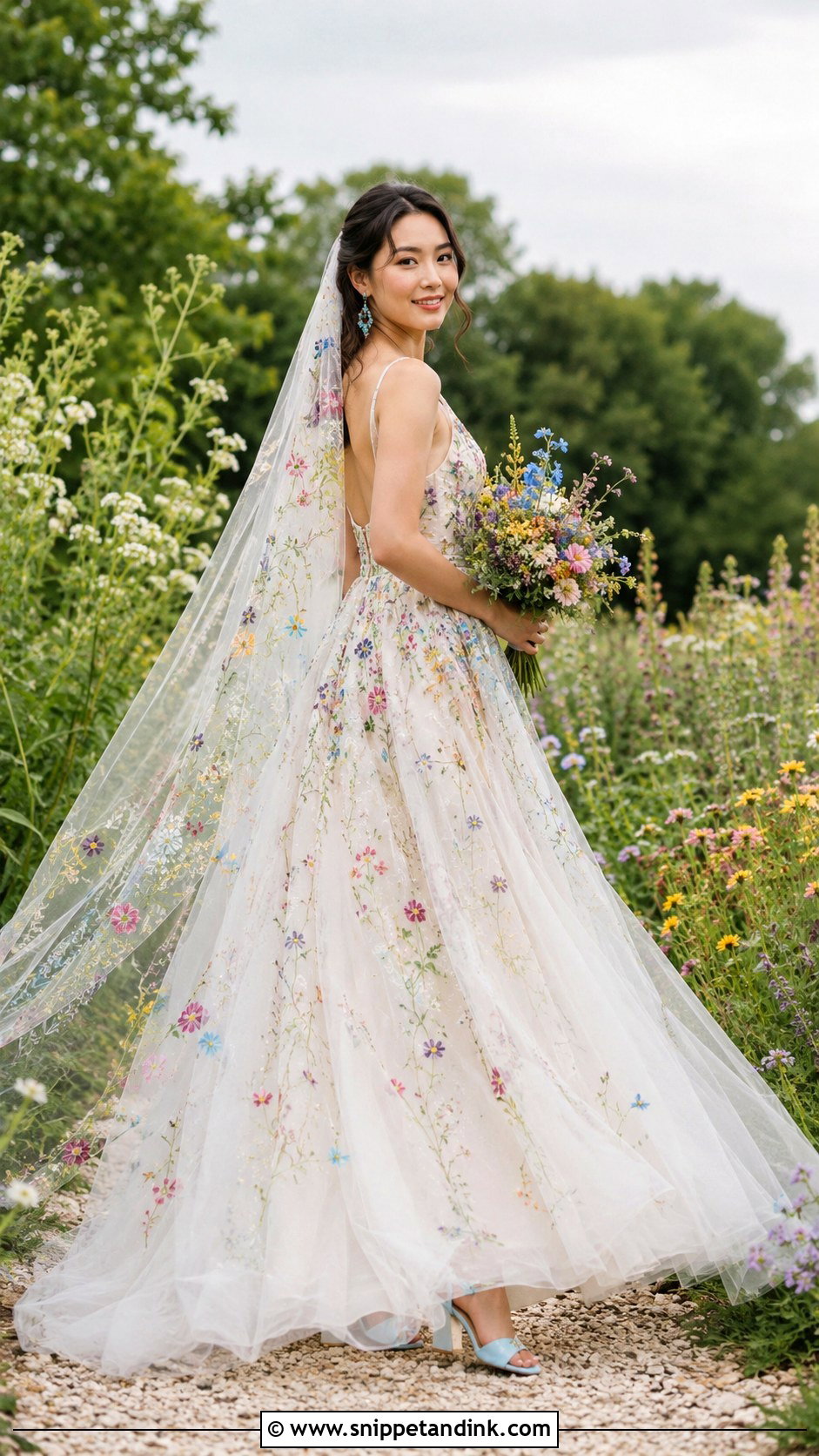
Tiny stitched wildflowers in blue, lavender, pink, yellow and green turn a white gown into something cheerful. Under a sheer tulle overlay they seem to float over the bodice and skirt. I’d pull one color out for the shoes, pale blue block heels for instance, and keep the earrings small: sapphire or aquamarine studs. A fingertip veil with a few matching flowers, a softly braided updo and a loose bouquet built only from shades already on the gown keep it from turning into a costume. The detail to check in person is thread sheen. Matte cotton embroidery looks handmade and soft in daylight; shiny polyester thread can look cheap in close-up photos. It suits outdoor summer weddings and botanical gardens.
3. Botanical Lace Long Sleeve Wedding Dress
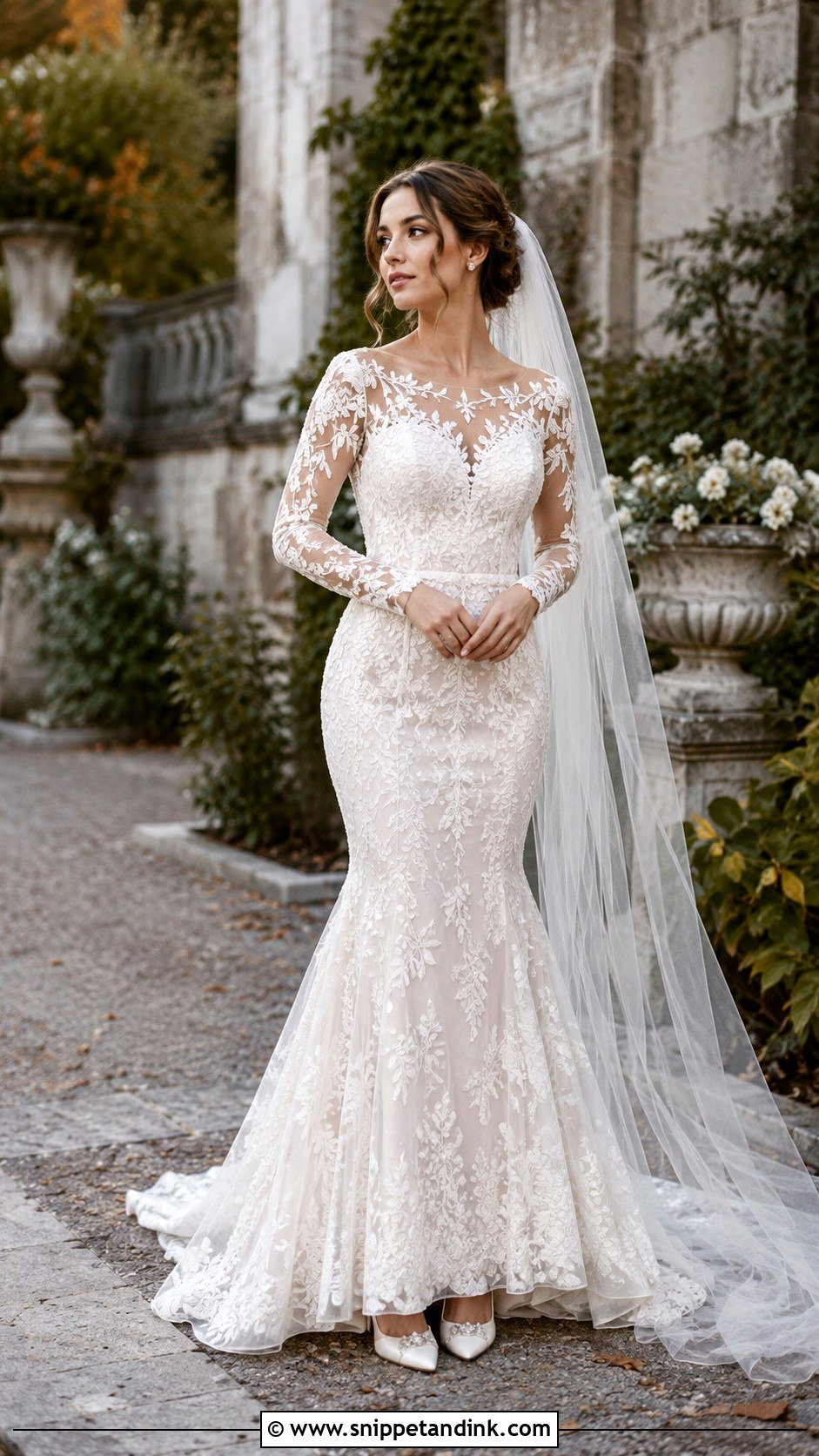
Long lace sleeves full of leaves and climbing vines are what I reach for when a bride wants coverage that still feels light. Choose a fitted botanical lace gown with a lined sweetheart bodice under an illusion neckline, a gently flared skirt and a short train. Sheer sleeves need a test I always do at the fitting: hug someone, then reach forward as if signing the register. Lace sleeves cut too close will pull at the armhole or pop a seam. Crystal studs, ivory satin heels and a plain chapel-length veil keep the accessories quiet, and a polished low chignon shows off the lace shoulders. Carry white flowers with eucalyptus and trailing greenery. It is my pick for fall, historic venues and cool-weather gardens.
4. Floral Print Organza Ball Gown Wedding Dress
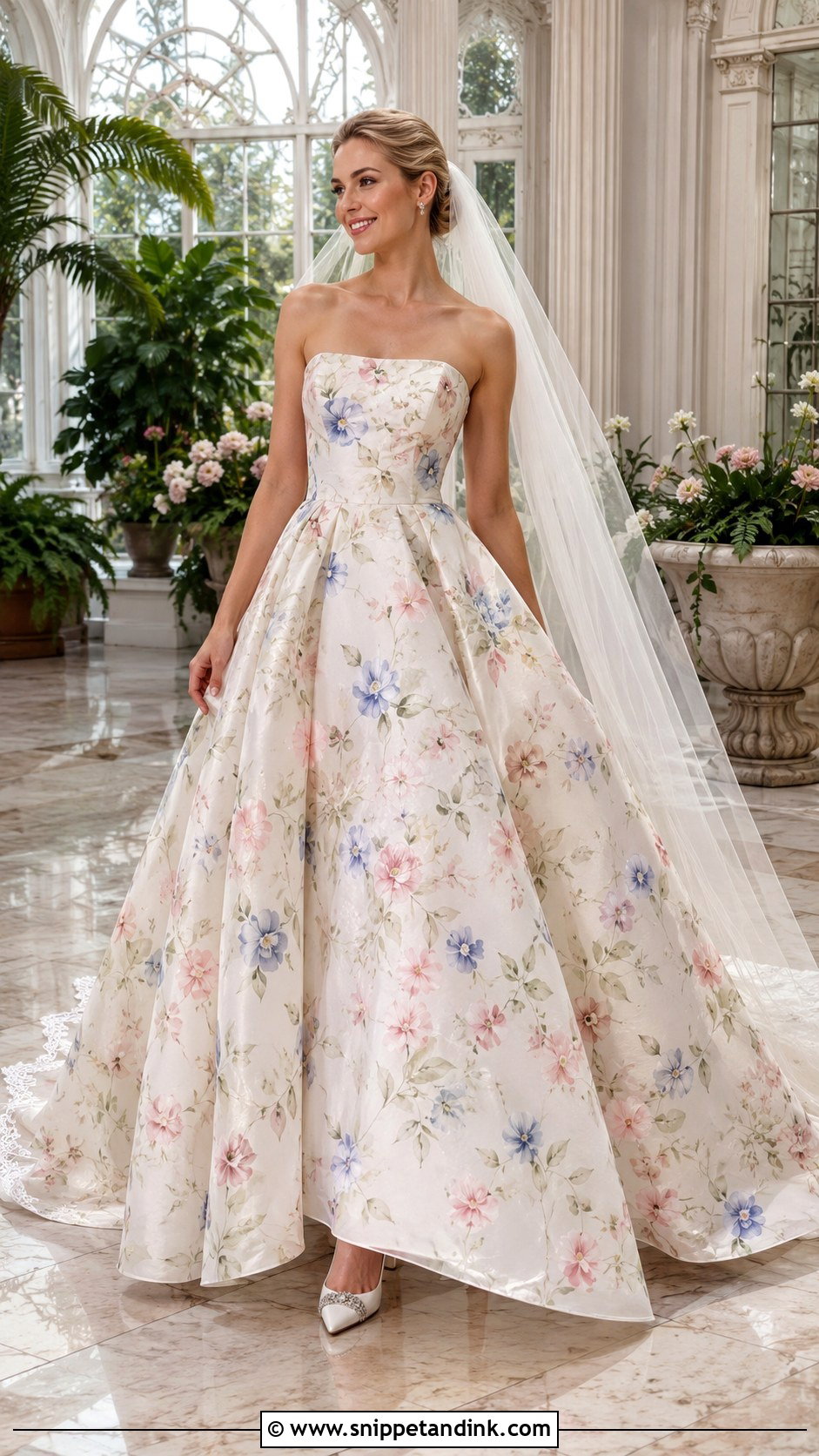
Printed organza does what embroidery can’t: it puts large, painterly flowers across an entire skirt. An ivory ball gown printed with soft pink peonies, blue hydrangeas or painted roses needs a structured strapless bodice and a full skirt so the pattern has room. Pull the shoe color from the print, add diamond studs and a narrow bracelet, and choose a clean sheer veil reaching just past the train. A sleek bun keeps it formal. One caution from fittings: a print is placed on the fabric before it’s cut, so alterations that take in the seams can chop a flower in half at the side. Ask the seamstress to show you where the print meets each seam before she cuts. A small single-color bouquet lets the dress do the talking.
5. Leaf Embroidered Sheath Wedding Dress
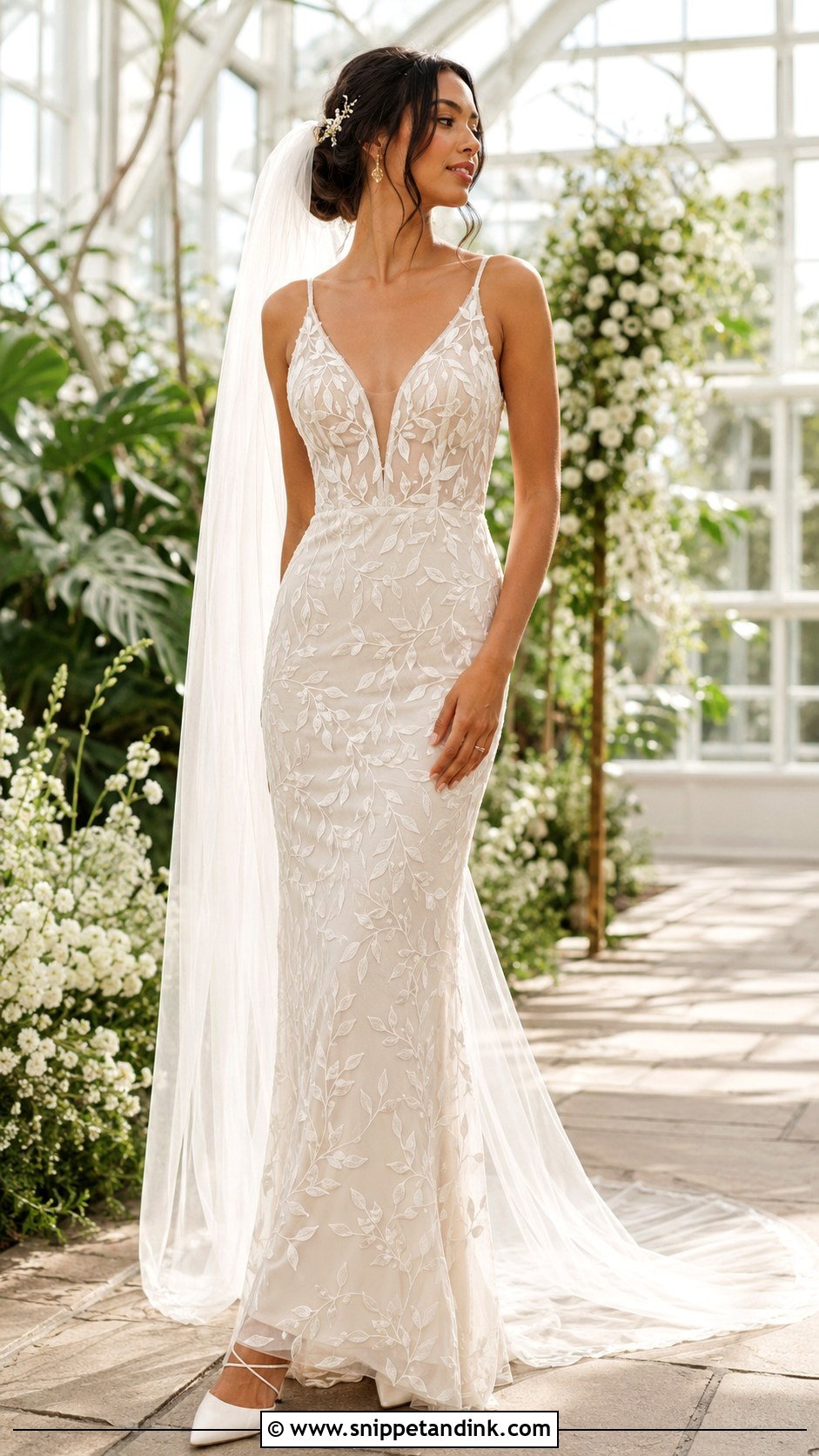
For something cleaner, a sheath with delicate leaf embroidery running down the sides keeps the botanical idea and drops the volume. Crepe holds a sharper line; tulle softens it. Choose a plunging V or a square neck depending on how much support you need, and remember a plunge needs either a built-in bra or tape you’ve tested in heat. Pointed slingbacks, small gold earrings, a narrow metallic comb and a plain floor-length veil complete it, with white calla lilies and glossy leaves to echo the embroidery. It packs and travels better than any skirt on this list, which is why I like it for destination and greenhouse weddings.
6. Daisy Appliqué Tea Length Wedding Dress
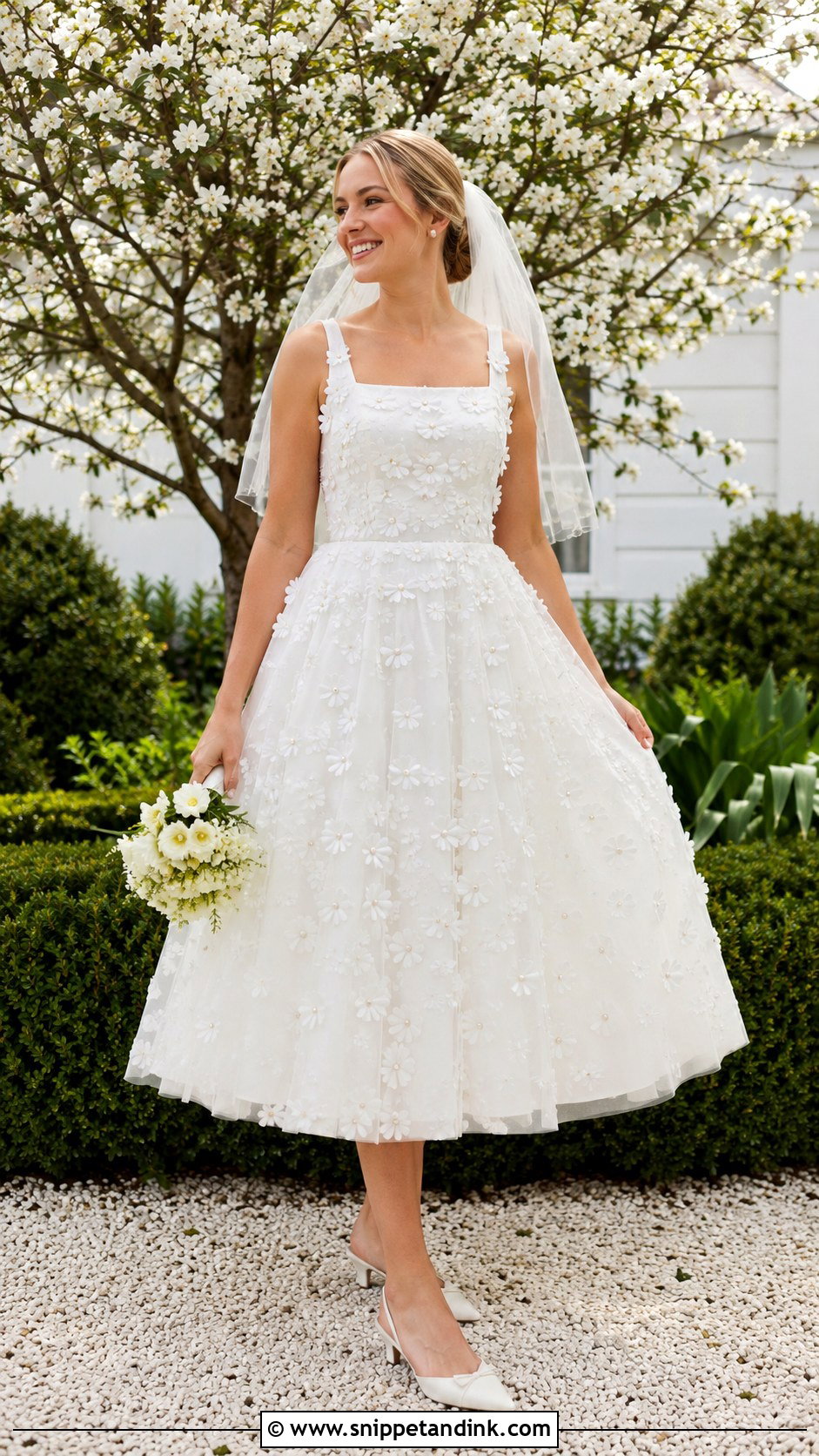
Daisies are cheerful, and a tea-length hem shows off the shoes, so treat the shoes as part of the dress. Choose a fitted bodice with a square or scoop neckline and a layered tulle skirt ending between knee and ankle, scattered with white daisy appliqués with yellow or pearl centers. Ivory kitten heels or classic slingbacks, pearl studs, a short tulle veil and a smooth low ponytail keep it polished. Hem length on tea-length tulle is unforgiving: I have it marked while you stand in the actual shoes, because a centimeter difference changes whether it looks deliberate or outgrown. A compact white and yellow bouquet suits courthouse ceremonies, spring brunches and vintage-feeling garden parties.
7. Blush Floral Tulle Wedding Dress
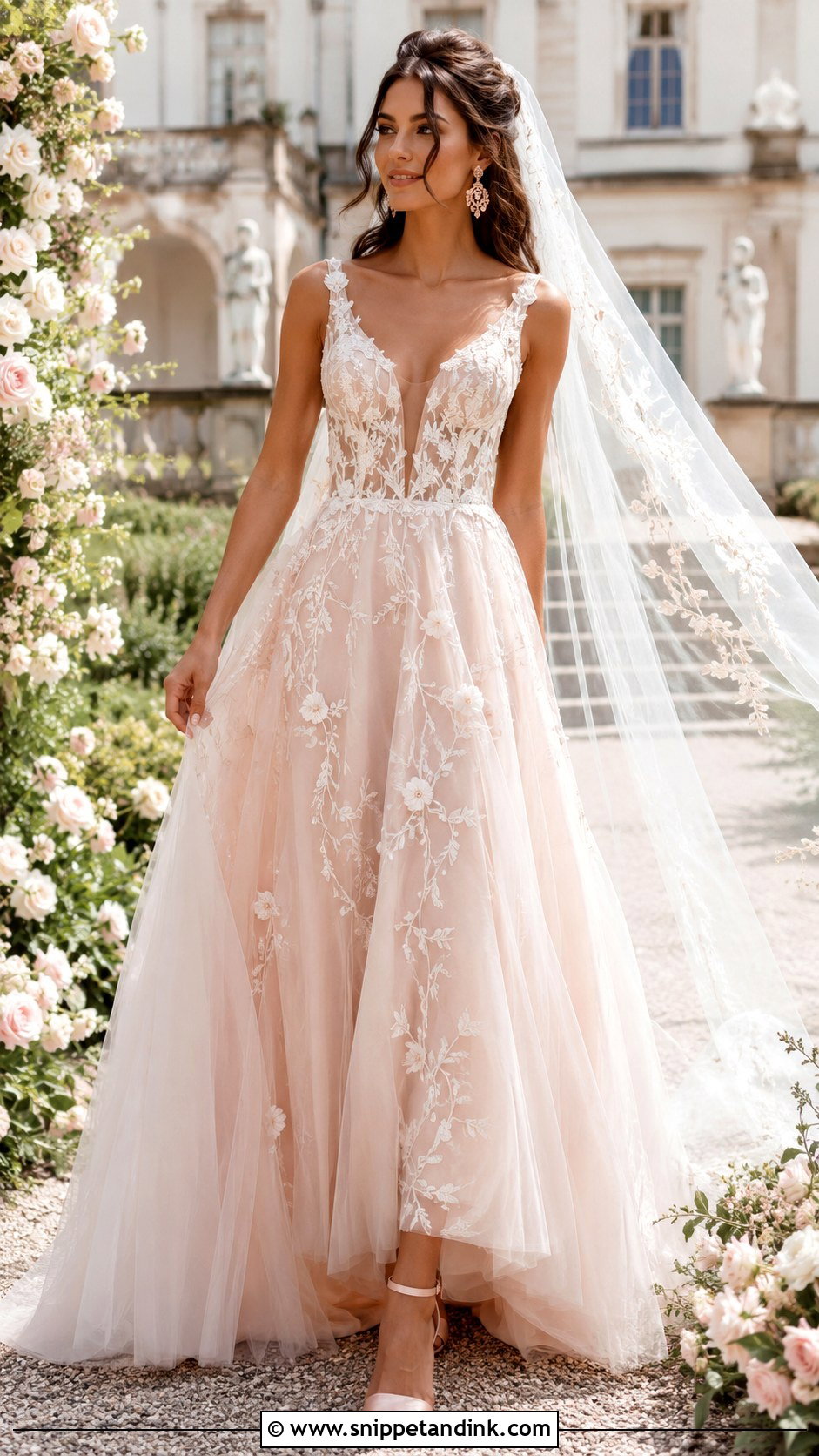
Blush tulle under ivory botanical embroidery gives color without losing the bridal read. Look for a flowing A-line with layered skirts, a supportive fitted bodice and vines scattered from neckline to train. Blush is skin-adjacent, so I always hold the fabric against the bride’s chest in daylight; on some skin tones it can look like bare skin from a distance, which isn’t always the effect people want. Rose-gold earrings, blush satin heels and a sheer ivory veil edged with small leaves suit it, along with loose waves or a soft half-up style. Carry pale roses, white ranunculus and muted greenery. It’s happiest in natural light, so spring and early summer in gardens, vineyards or glasshouses.
8. Green Vine Embroidered Wedding Dress
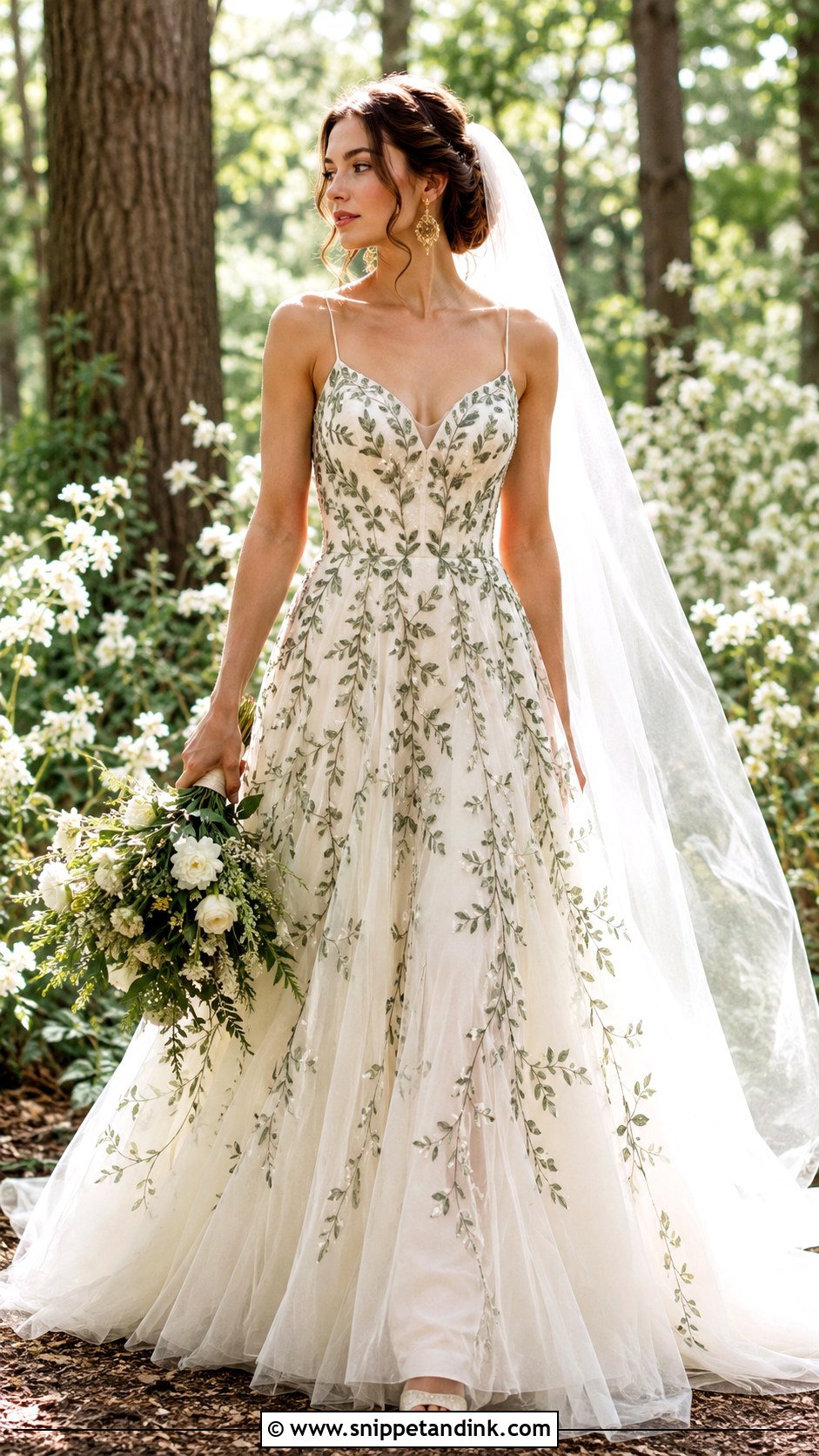
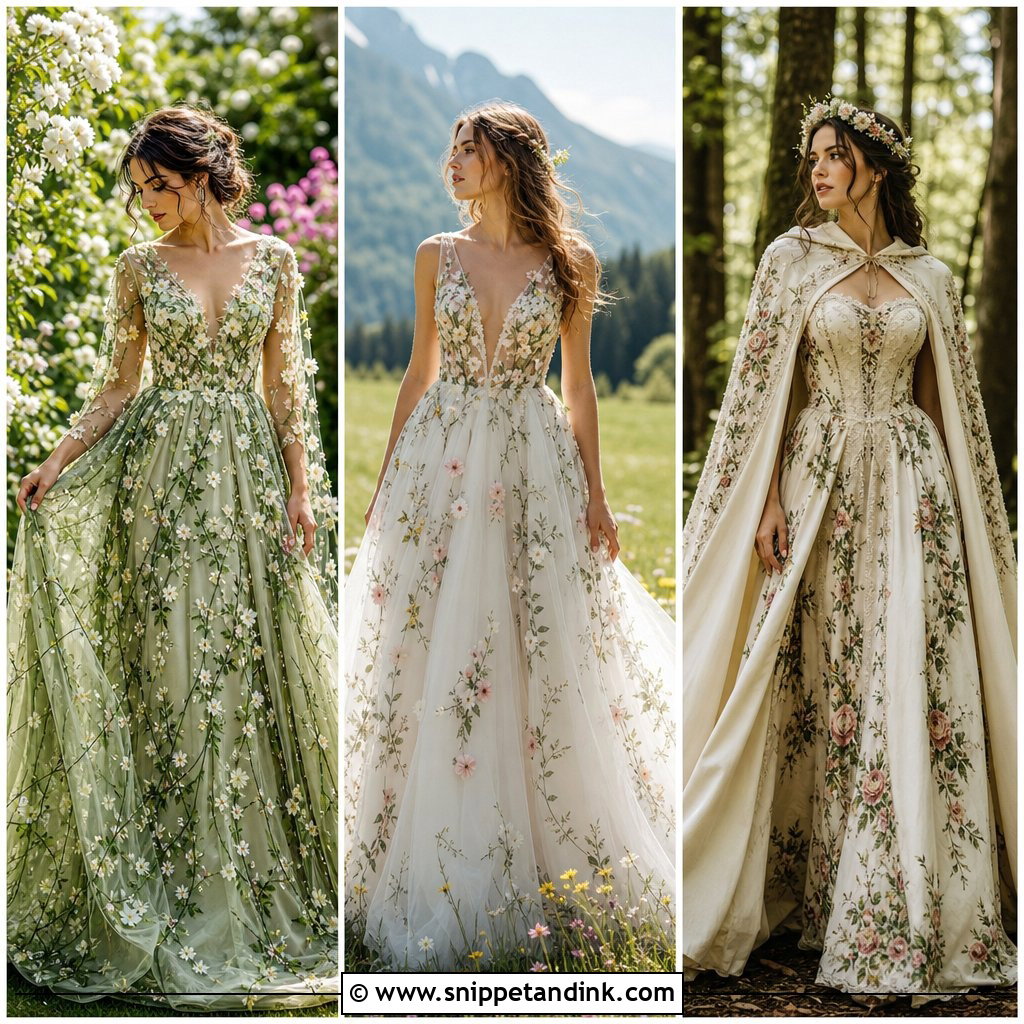
Green vine embroidery brings the woodland straight onto an ivory gown. Choose soft tulle with sage, olive or moss leaves climbing the bodice and drifting down the skirt, an A-line shape and delicate straps so the color stays light. Before you commit, ask for a thread sample next to your actual greenery: sage embroidery beside dark eucalyptus can look grey, and olive beside bright fern can look muddy. Simple gold hoops or leaf earrings, ivory block heels and a plain veil keep the focus on the vines, with a loose braided bun for texture. Fill the bouquet with white flowers and plenty of greenery in matching shades. It belongs in a forest, a rustic outdoor venue or a greenhouse.
9. Blue Botanical Embroidered Wedding Dress
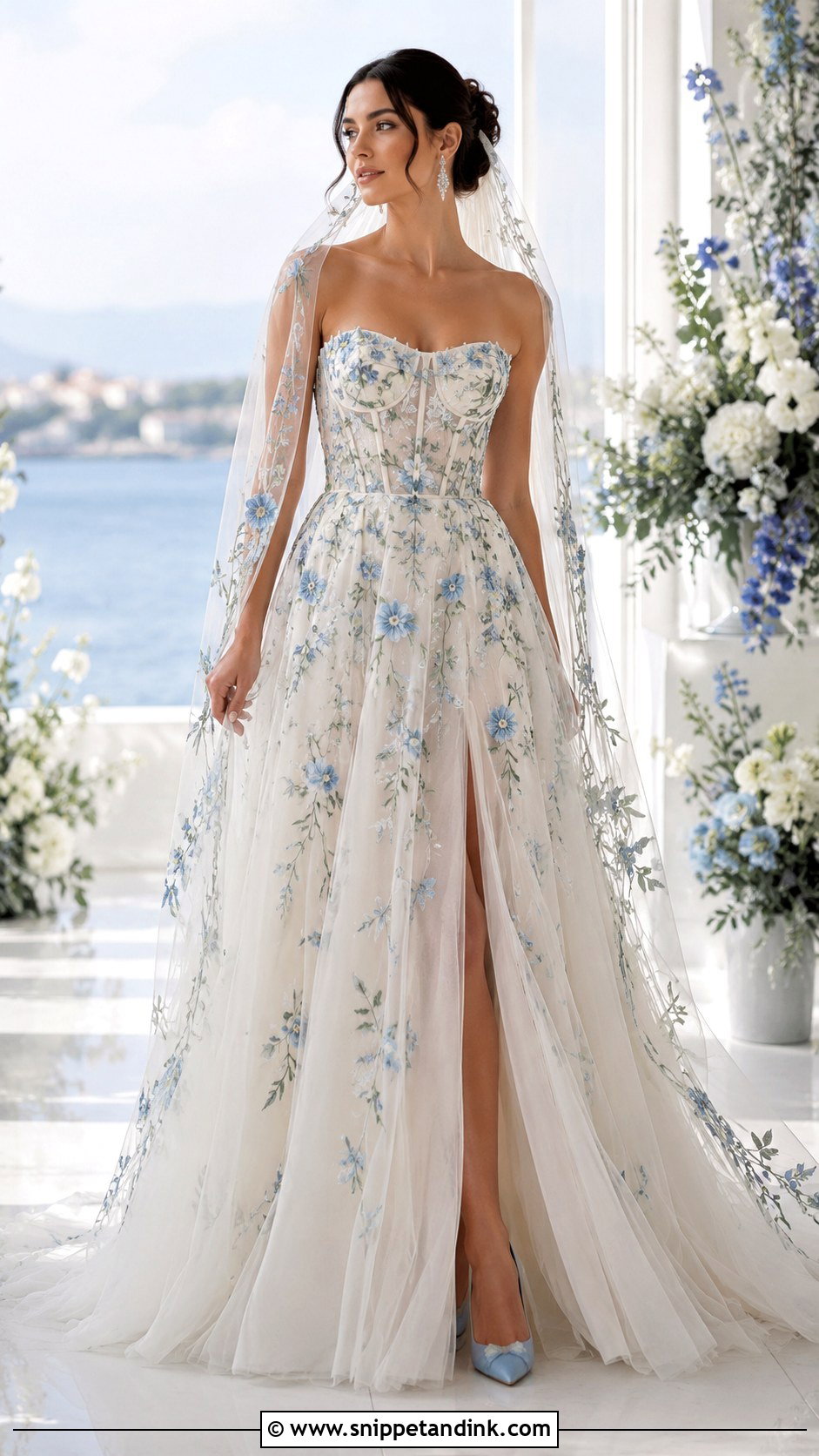
Powder-blue flowers with slender stems and muted leaves are a quiet way to wear your something blue. A corseted bodice with a flowing tulle skirt gives structure while the embroidery stays soft. Pale blue pumps, silver drops and a clean veil with a little blue embroidery near the hem pick up the color, and a twisted updo keeps the bodice clear. Blue is the shade most likely to shift between daylight and indoor light, so I look at the embroidery in both before signing off. White roses, blue delphiniums and light greenery connect the bouquet to the dress. It’s a good fit for spring, waterfront venues and celebrations already using blue in the decor.
10. Off Shoulder Rose Appliqué Wedding Dress
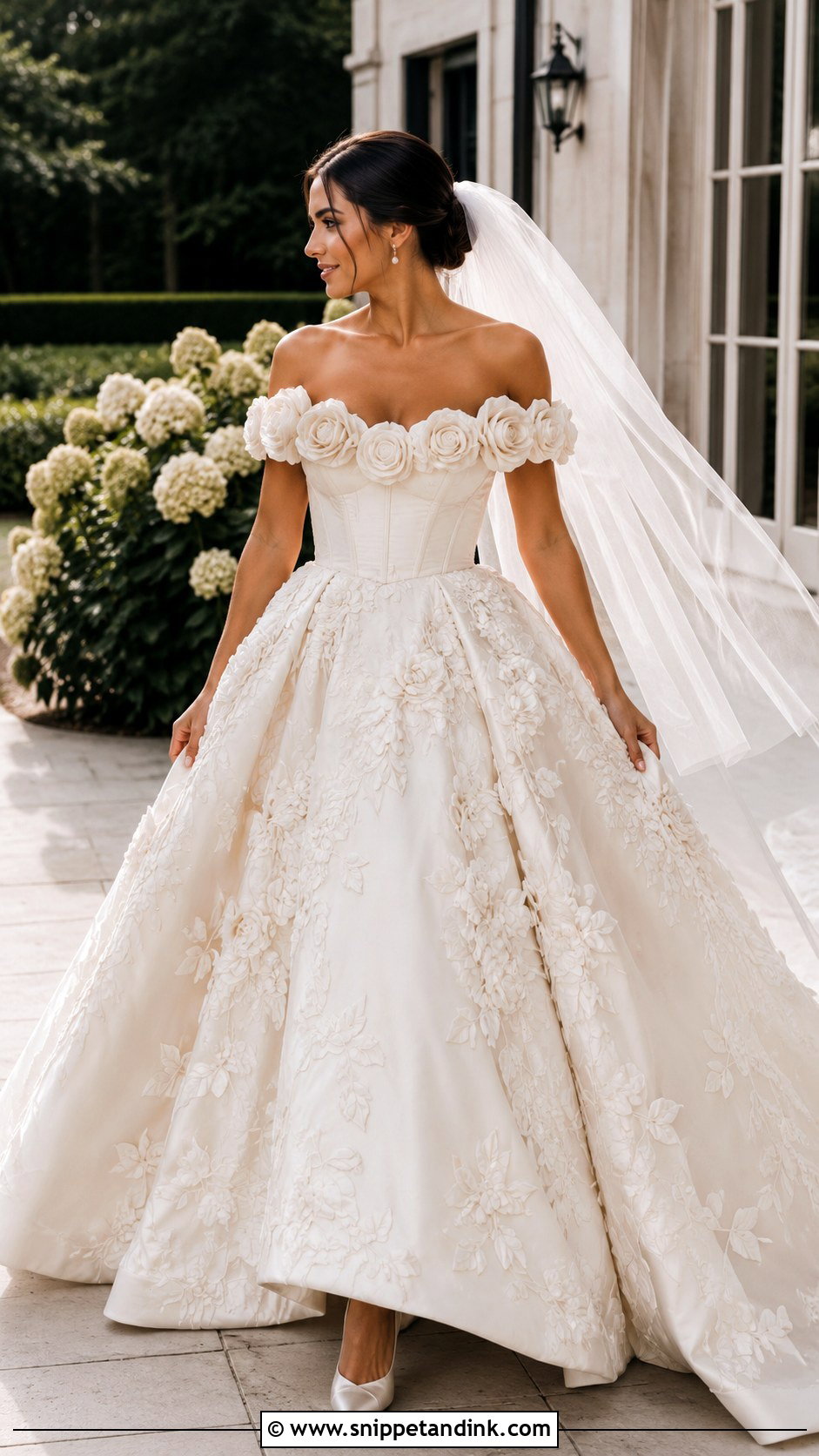
Rose appliqués tracing an off-the-shoulder neckline frame the collarbones like nothing else, but this neckline has one weak point. Off-shoulder bands rely on grip, not straps, so I fit them while the bride lifts her arms and hugs; if the band slides, it needs silicone gripper tape or a firmer inner corset. Choose a structured bodice with florals continuing into a full A-line or ball gown skirt, ivory for a classic read or blush for color. A delicate pendant, pearl earrings and closed-toe satin pumps keep things light, and a low bun or side-swept waves leave the neckline open. Anchor a simple cathedral veil beneath the hair so it falls behind the flowers. One color of rose in the bouquet is enough.
11. Strapless Floral Corset Wedding Dress
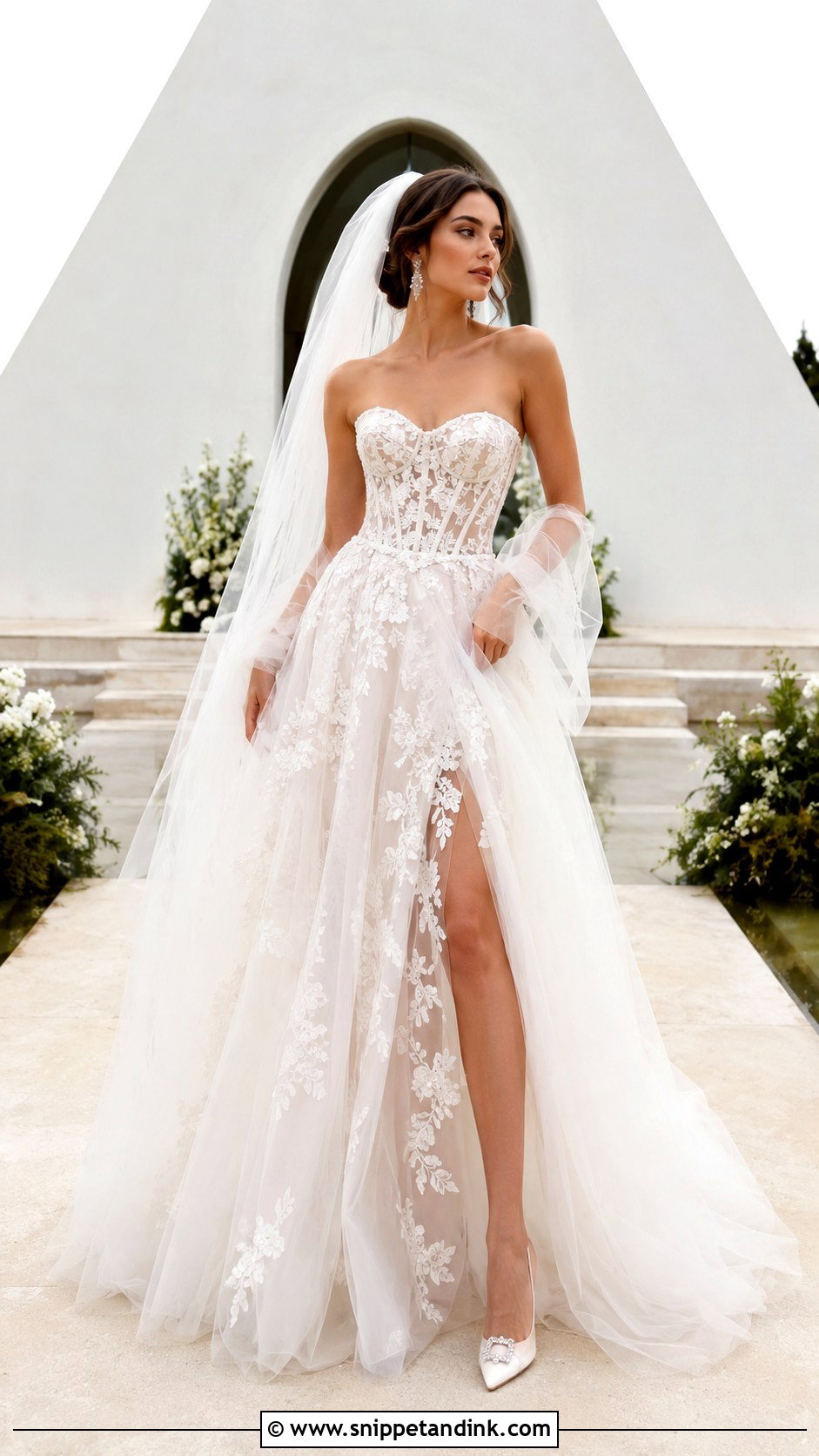
Visible boning under floral lace gives a strapless gown modern structure and real support. Look for lace over the corset and a soft tulle skirt starting at the natural waist, with scattered appliqués linking the two. If the ceremony venue expects covered shoulders, a detachable tulle wrap or sheer bolero solves it without changing dresses. Crystal earrings, pointed ivory heels and a plain chapel veil complete it, with a polished ponytail or sleek bun. The fitting point I’m strict about here is the top edge: a strapless corset should sit snug without the bride hitching it up, and I check it after she’s been seated for ten minutes. Keep the bouquet to one or two flower types.
12. Botanical Cape Sleeve Wedding Dress
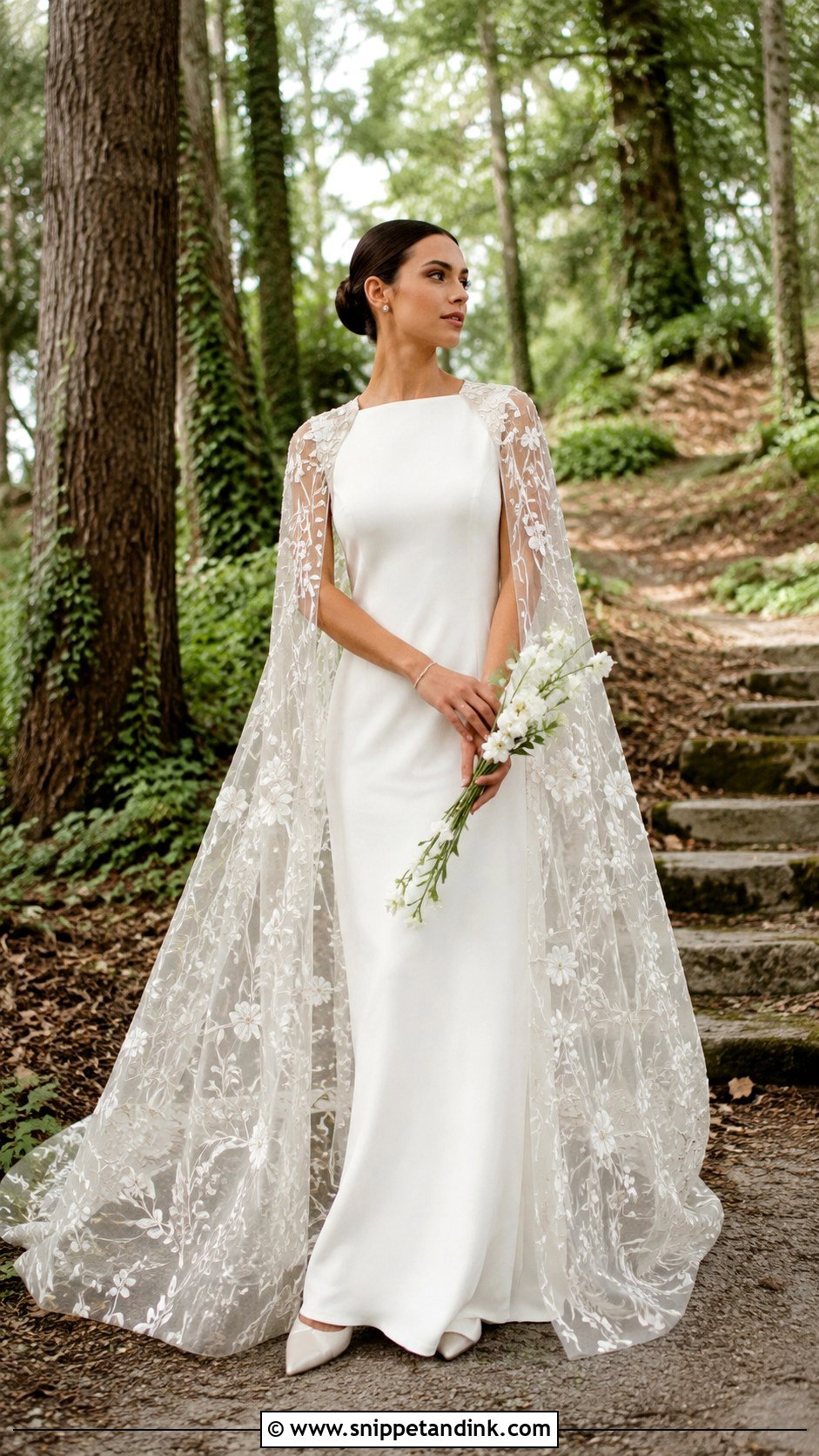
A botanical cape replaces a veil and gives you movement when you walk. Start with a clean ivory column or A-line, then add a sheer shoulder cape embroidered with flowers, leaves and winding vines, either waist length or sweeping to the floor. A floor-length cape is beautiful on the aisle and a nuisance at dinner, so I make sure it attaches with hooks or snaps at the shoulder and can come off without help. Pearl studs, a slim bracelet and ivory pointed pumps keep the rest quiet, with a smooth low bun. A narrow bouquet of white flowers and greenery repeats the vertical line. Good for formal woodland weddings and cool spring ceremonies.
13. Boho Bell Sleeve Floral Wedding Dress
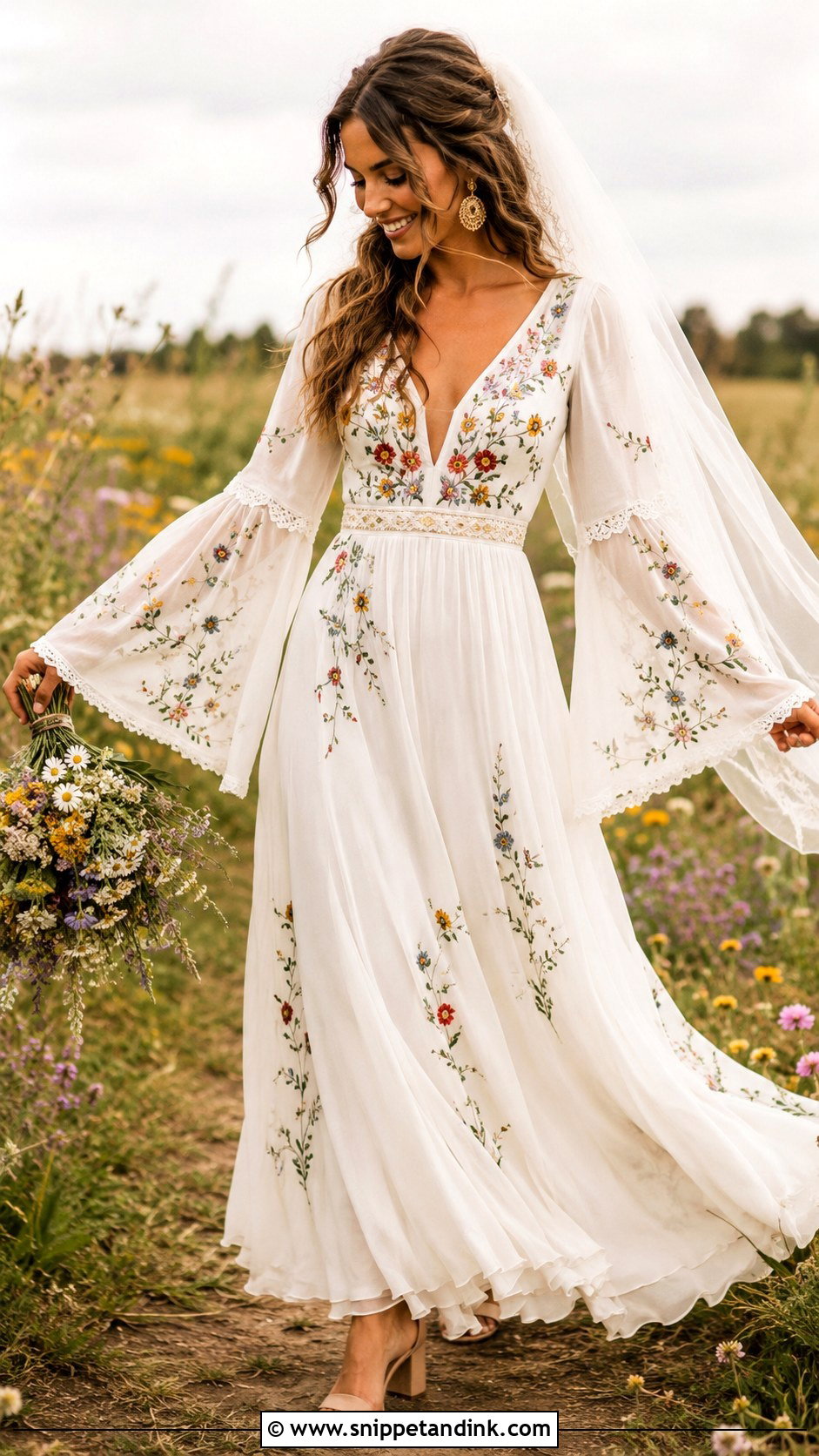
Flowing bell sleeves make a floral dress feel relaxed and easy. Choose soft chiffon or lace with a defined waist, an open neckline and wildflowers scattered over the sleeves and skirt, cut to skim the body rather than cling. Wide sleeves dip into everything: cake, candles, the guest book ink. I’d have the sleeves hemmed a little shorter than the shop sample and keep a few hair ties in the emergency kit to gather them while you eat. Ivory block-heel sandals, small hammered-gold earrings, a floral hair comb and a long simple veil finish it, with loose waves or a low textured braid. An unstructured seasonal bouquet suits meadows, desert landscapes and informal gardens.
14. Minimal Crepe Wedding Dress With Botanical Train
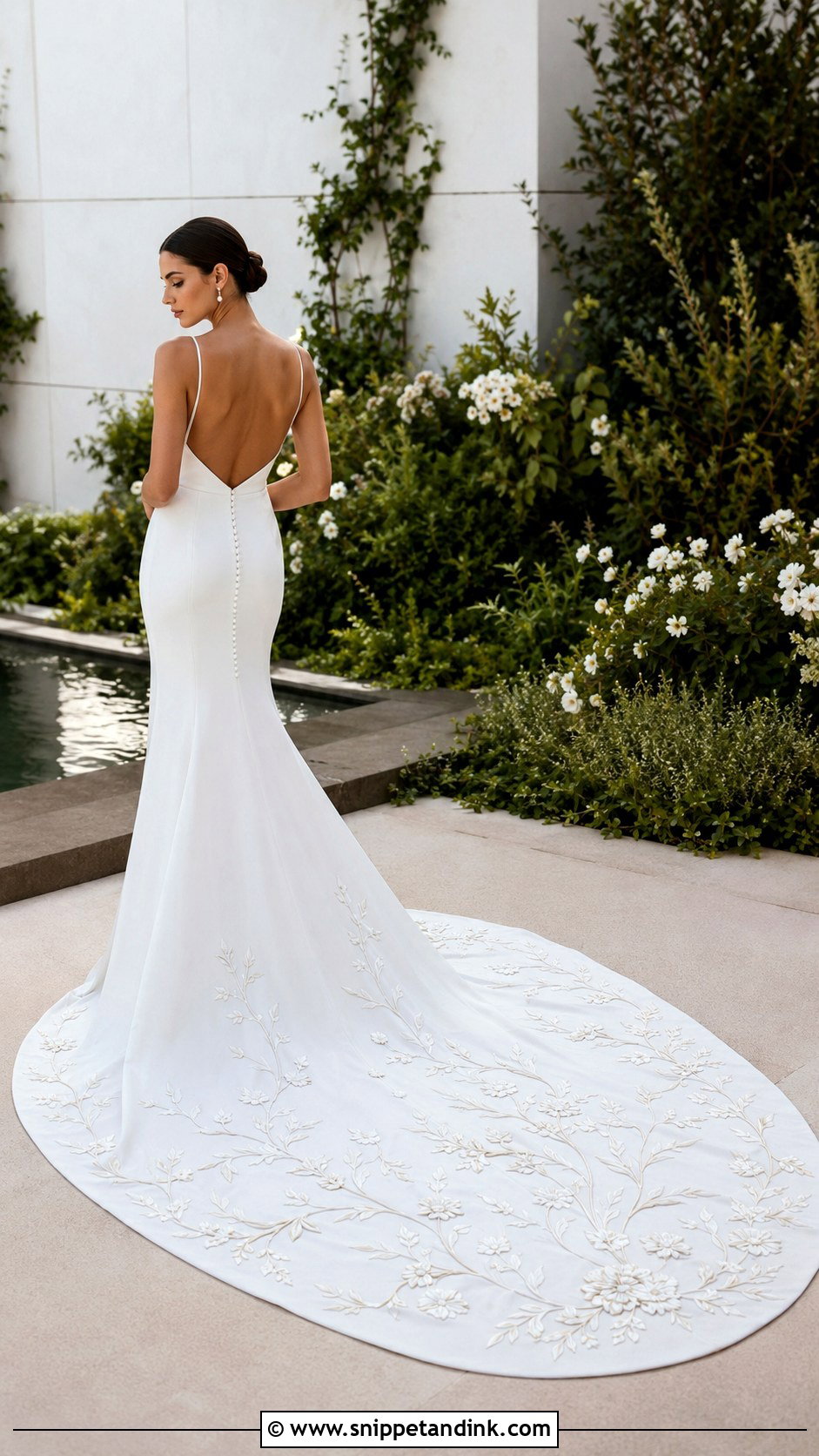
Plain crepe at the front, embroidered vines and flowers at the back: this one is all about the moment you walk away from your guests. Choose a fitted column, sheath or gentle fit-and-flare with a low back, the embroidery starting at the waist and spreading over the train. The catch is the bustle. Once the train is lifted for dancing, much of that embroidery gets folded underneath, so ask your seamstress to plan bustle points that keep the best section on top. Pearl drops, pointed satin heels and a sleek bun keep the front minimal, and a sheer veil ending above the embroidery leaves the train visible. White orchids or calla lilies with little greenery suit the clean lines.
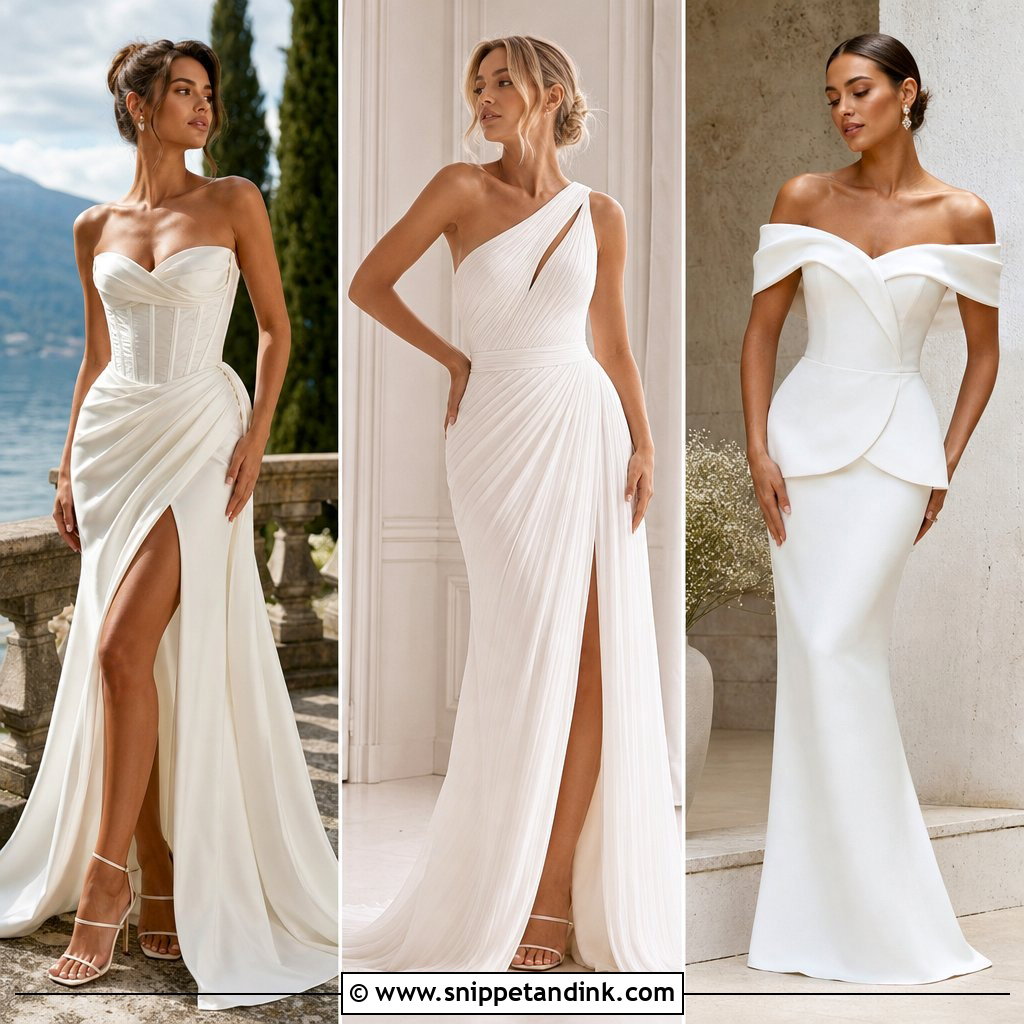

15. High Neck Botanical Lace Wedding Dress
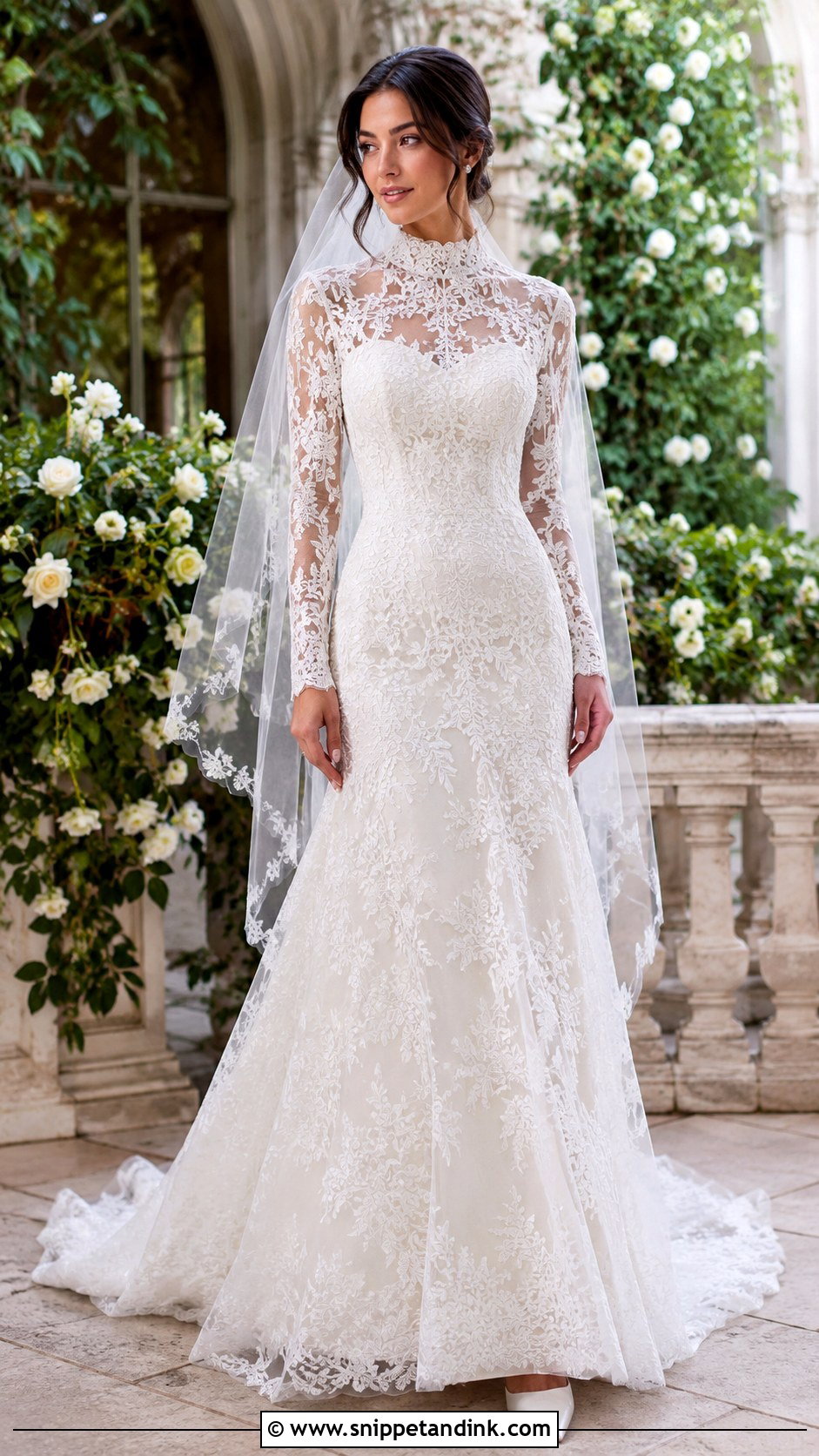
A high illusion neckline embroidered with fine leaves offers coverage with detail right where people look. It can continue into fitted sleeves or stop at a sleeveless bodice, and a softly defined waist with a flowing skirt keeps it from feeling stiff. Skip the necklace; it will fight the lace near your face. Pearl studs, a thin bracelet and pointed ivory heels are plenty, and a low chignon with a fingertip veil frames the neck neatly. I check one thing on every high neck: the closure. A row of tiny buttons or a hook at the nape needs a second person to fasten, so plan who that is. A compact bouquet of white blooms suits fall and traditional ceremonies.
16. Square Neck Botanical Wedding Dress
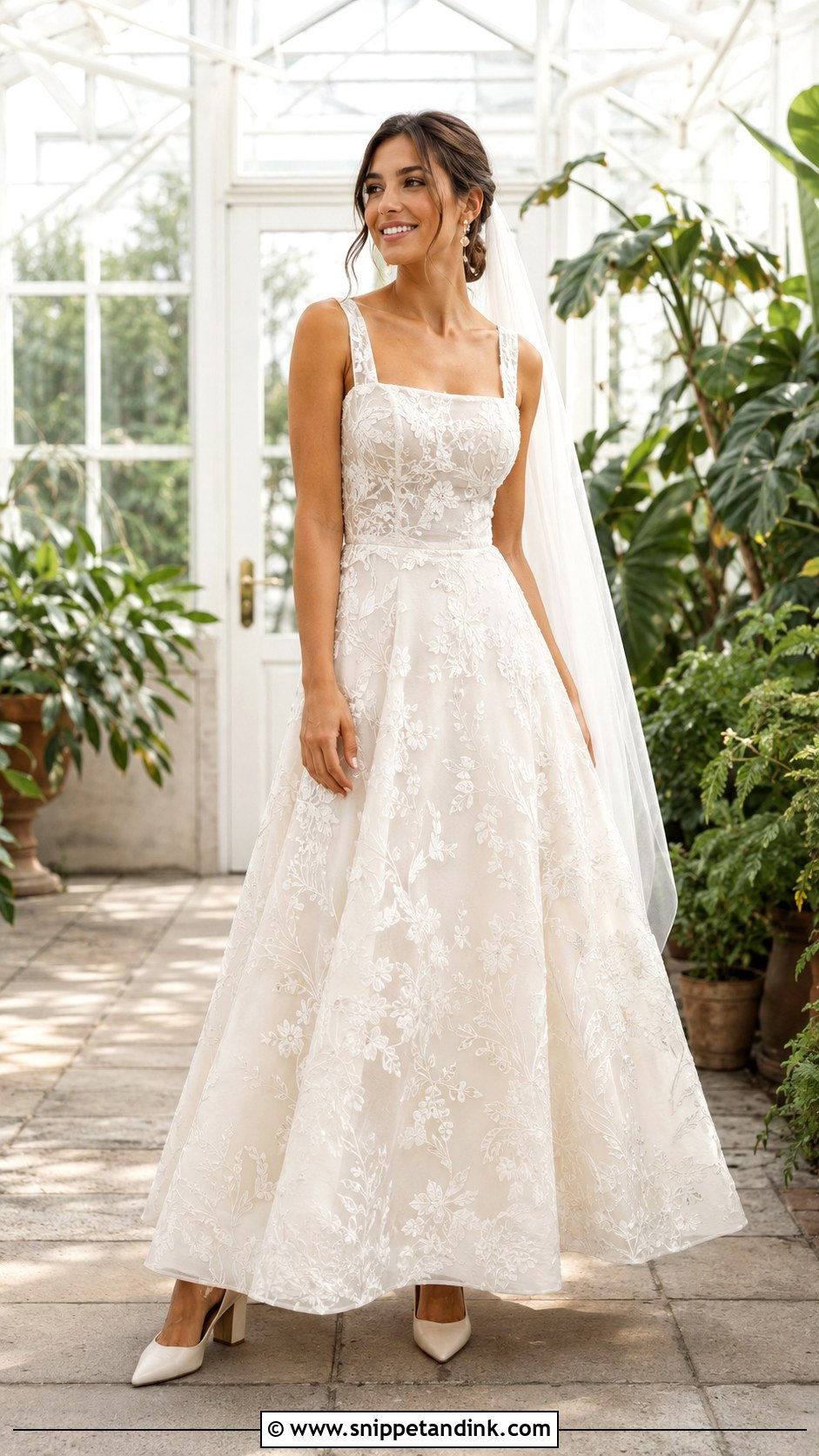
Straight lines and loose leaves balance each other well. A square neckline frames the floral embroidery cleanly, so choose an A-line with wide straps, a supportive bodice and botanical lace spreading across the waist into the skirt. Pearl-and-gold drops, block-heel pumps and a lightweight veil with a plain edge keep it current, and a smooth half-up style shows the shoulders while softening the face. Wide straps flatter most builds, and because they carry real support, I find this neckline the easiest to fit for brides who don’t want a strapless bodice. Carry a rounded bouquet of garden roses, sweet peas and small leafy stems. It works in greenhouses, formal gardens and greenery-filled indoor venues.
17. Champagne Gold Leaf Wedding Dress
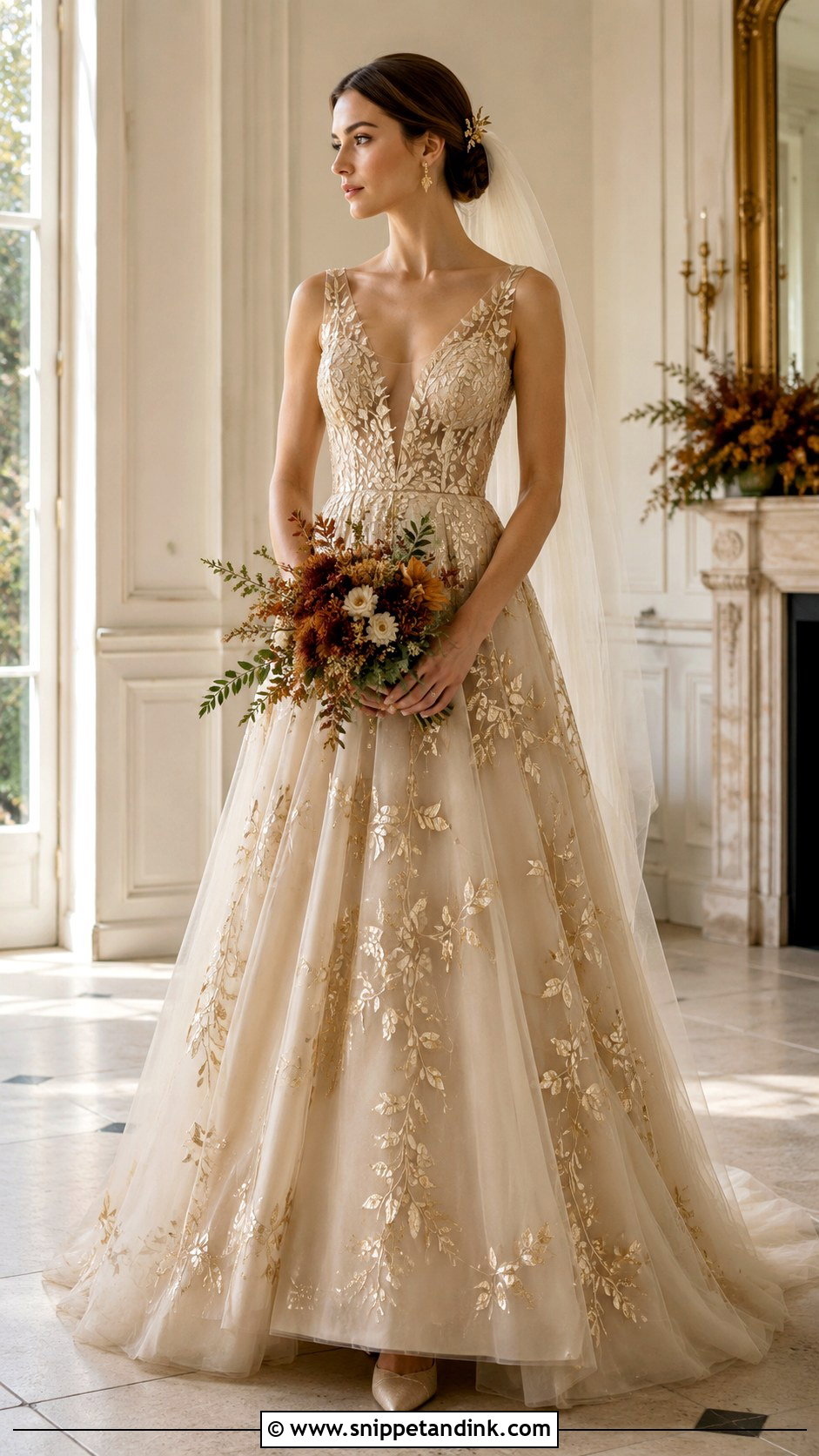
Champagne with gold leaf embroidery is warmer than white and flatters many skin tones that bright white washes out. Choose a tulle A-line or softly fitted gown with metallic vines concentrated on the bodice and fading toward the hem. Metallic thread can scratch, so I run a hand along the inside of the bodice and arms at the fitting; if it catches, ask for a soft lining layer. Understated gold earrings, champagne pumps and a plain ivory veil soften the shine, and a low twisted bun takes a small gold comb well. Cream flowers, pale peach roses and muted greenery complete the palette for fall weddings, grand estates and art museums.
18. Black Botanical Embroidered Wedding Dress
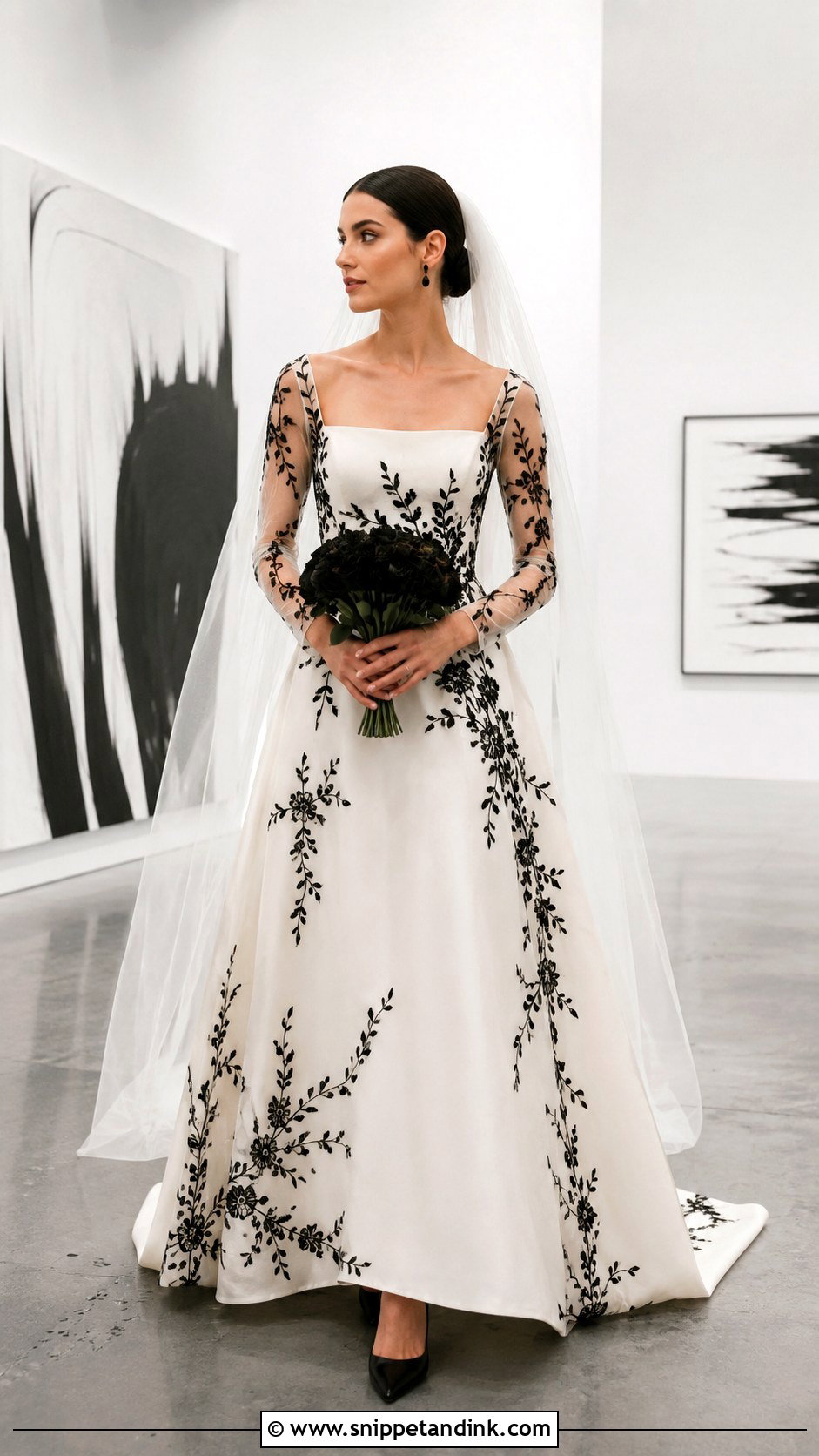
Black embroidery on ivory is graphic and very individual. Fine black vines and flowers can outline the bodice, waist and train without darkening the whole dress, and a structured A-line keeps it formal while sheer sleeves or a square neck modernize it. Black pointed pumps, small onyx earrings and a plain ivory veil carry the contrast, with a low bun or smooth waves. Here is the trade-off nobody mentions: black on ivory shows every alteration, so a seam taken in by a centimeter that hides on white lace can make a vine visibly kink. I’d only choose this with an experienced seamstress. Wrap white flowers in a narrow black ribbon and it suits galleries, historic mansions and monochrome venues.
19. Floral Mini Reception Wedding Dress
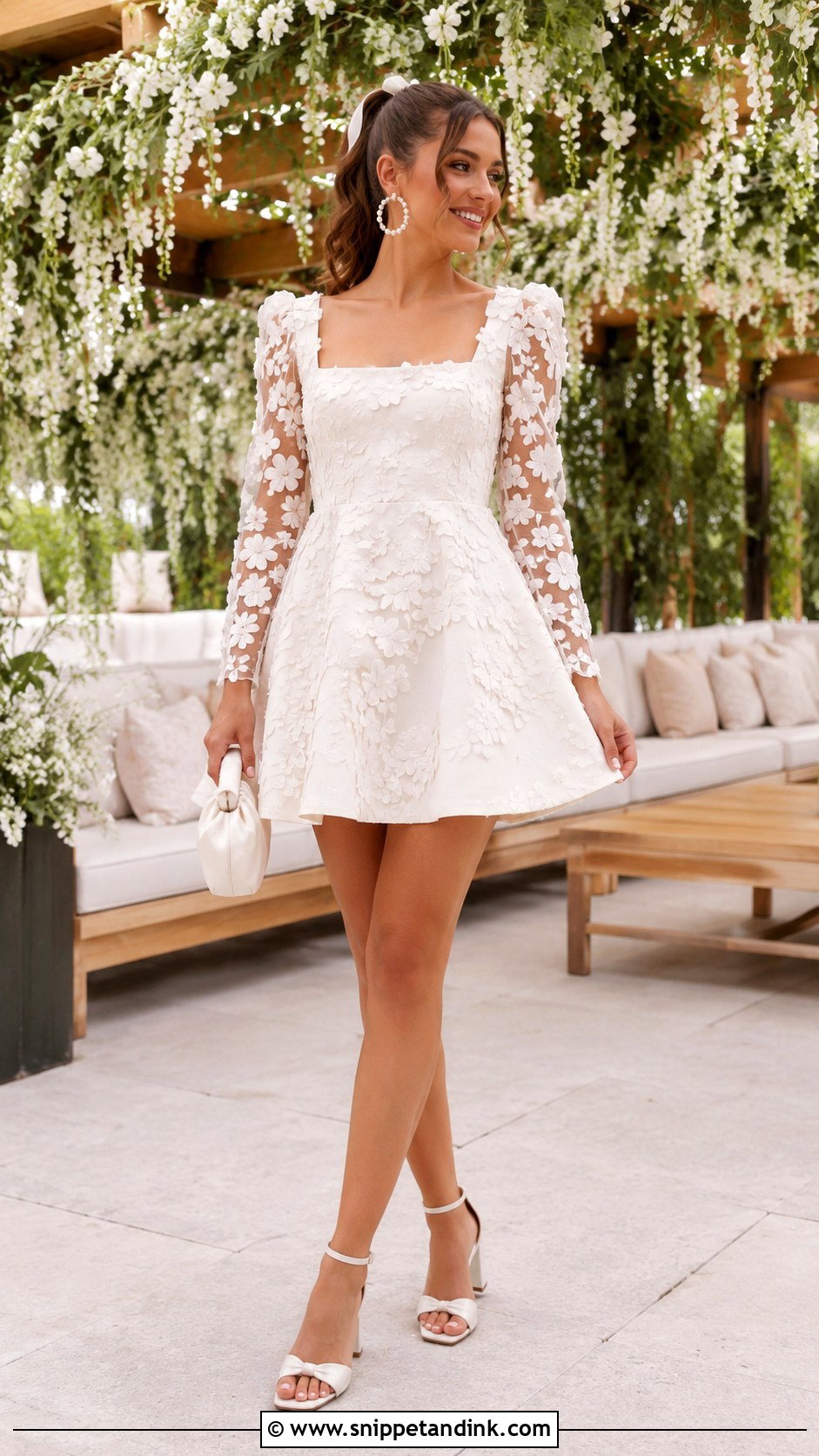
Changing into a mini for the reception gives you legs for dancing and a second look for the photos. Choose a structured ivory design with a fitted bodice, short A-line skirt and dimensional flowers at the neckline or hem; sheer floral sleeves balance a very short skirt. Comfortable block heels, pearl hoops and a small satin clutch suit it, and the veil can give way to a bow, a floral comb or a neat ponytail. A detachable overskirt lets the same mini serve a courthouse ceremony first. When I plan a change, I time it: fifteen minutes with help is realistic, and the bustle-free mini means you lose nothing on the dance floor.

20. Plus Size Floral A-Line Wedding Dress
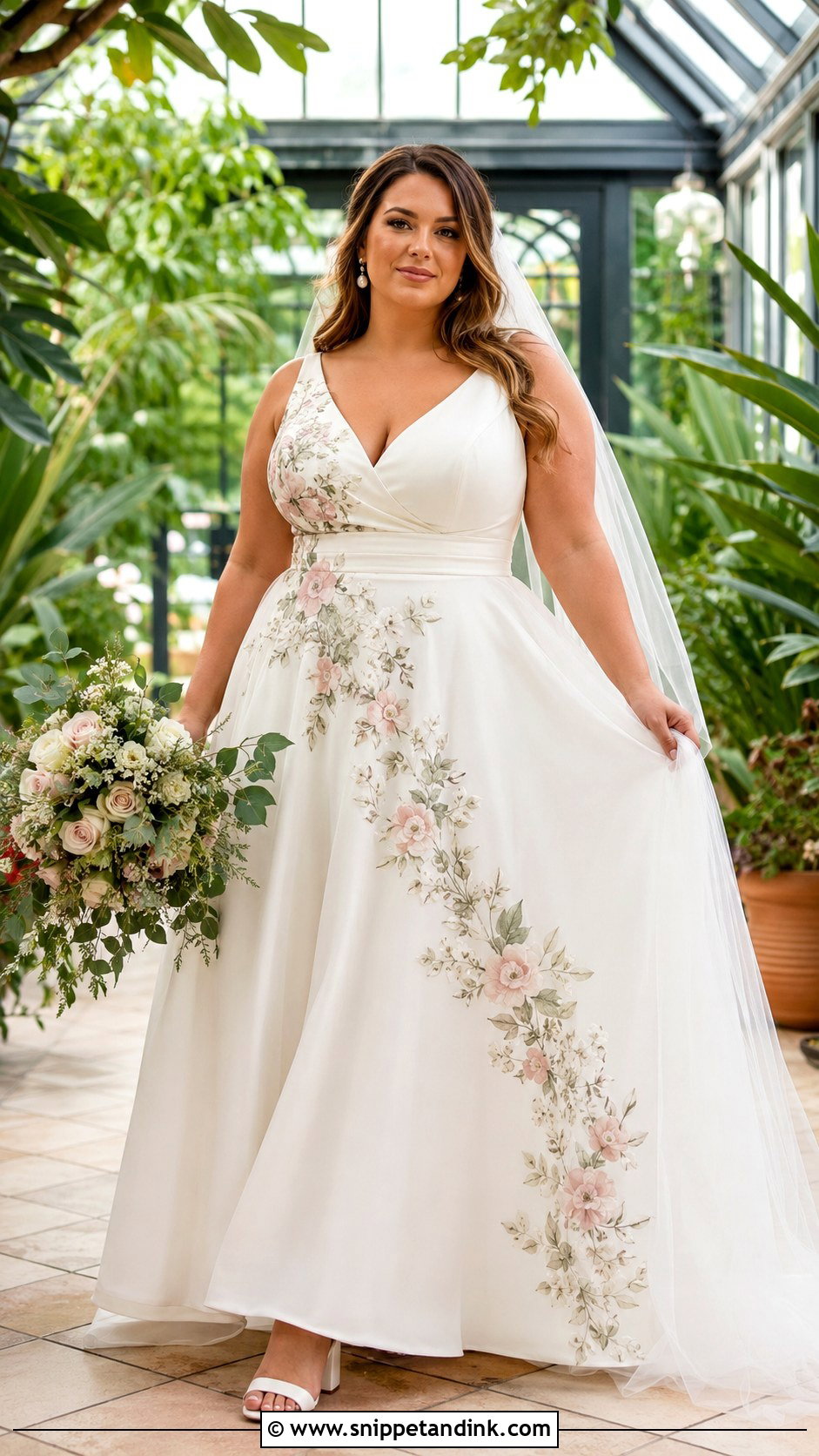
Support is what makes an A-line work on a fuller figure, and it comes from inside the dress. Look for internal structure, wider straps and a clearly defined waist instead of stiff, heavy fabric that adds volume. Botanical appliqués placed at the neckline and running diagonally across the skirt guide the eye and show off the movement. When I alter these, I move appliqués rather than cutting through them, which keeps the diagonal line intact after the waist is taken in. Supportive block heels, pearl drops and a lightweight veil attached to a secure updo finish it, with a bouquet sized to your frame so it doesn’t hide the bodice. Put your effort into alterations and undergarments you can sit in.
Petals Get Crushed, Snagged and Stained Faster Than Lace
Raised flowers and open tulle are the parts of a botanical dress that wear first. Most of the damage I see happens in predictable places, so it’s easy to plan around.
On the day
- Car rides crush 3D petals on the skirt. Sit on the back of the skirt with the front flowers lifted and spread over your lap.
- Bracelets with prongs, watch clasps and the hook side of velcro on bags catch tulle. Check your own accessories and your partner’s cufflinks.
- Outdoors, a hem dragged across lawn picks up grass and soil. A bustle for the reception keeps the embroidered train off the ground.
After the wedding
Get the dress to a specialist cleaner within a few weeks. Spilled drinks and sugary stains can be invisible at first and then turn brown as they oxidize. For storage, I’d keep a heavy appliquéd gown folded in acid-free tissue in a breathable box rather than hanging it by thin straps, which stretch under the weight. Tuck tissue between raised petals so they don’t flatten against each other, and keep it away from damp walls and attics.
Matching the Flowers on Your Dress to the Ones Around You
A botanical dress looks its best when it agrees with the place you’re standing in. Colorful embroidery feels joyful, ivory leaves and vines stay quiet, raised petals add texture, printed organza adds drama and an embroidered train rewards the walk away. Before you decide, think about the season, the setting and how much detail you genuinely enjoy wearing. At every appointment, I’d sit, walk and lift your arms in the dress, and look at it from the side and back too. Once the dress is right, keep the shoes, jewelry, hair and bouquet simple enough that the flowers you chose still read clearly.
You'll Like These Ideas:




Leave a Reply