
Pleats are folds of fabric pressed or stitched into place, and they change a gown more than people expect. Narrow pleats lengthen, wide ones add volume, and the same skirt looks completely different in chiffon than in organza. They also hold light in a way flat fabric doesn’t: each fold has a bright edge and a shadow, so a plain gown gains depth without a single bead. That makes pleating useful for minimalist, classic and fashion-led brides, at formal, coastal, garden or city weddings. The 25 gowns below cover most of the ways pleats are used in bridal wear, with notes on how each one moves, sits and survives a long day.
Knife, Box or Accordion: Reading the Pleat Before the Dress
When a bride says she wants pleats, I ask her to point to the kind she means, because they wear very differently.
- Knife pleats all fold in one direction. They’re slim and swishy, and they lengthen the body, which makes them a safe choice for most figures.
- Box pleats fold towards each other, front and back. They add width and structure, so they suit a full skirt but can make the hips look broader in a slim gown.
- Accordion or sunray pleats are fine, narrow folds set with heat, often in polyester chiffon. They move constantly and catch light, but they’re the hardest to alter.
- Soft or unpressed pleats are folded at the waist and left to fall freely. They give fullness without crisp lines and are the most forgiving when you sit.
Pressed pleats in natural fibres like silk relax a little with heat and humidity over the day. Heat-set pleats in synthetics stay sharp much longer. Neither is better, but it helps to know what you’re buying before you see the gown at the end of a ten-hour day.
1. Pleated A Line Wedding Dress
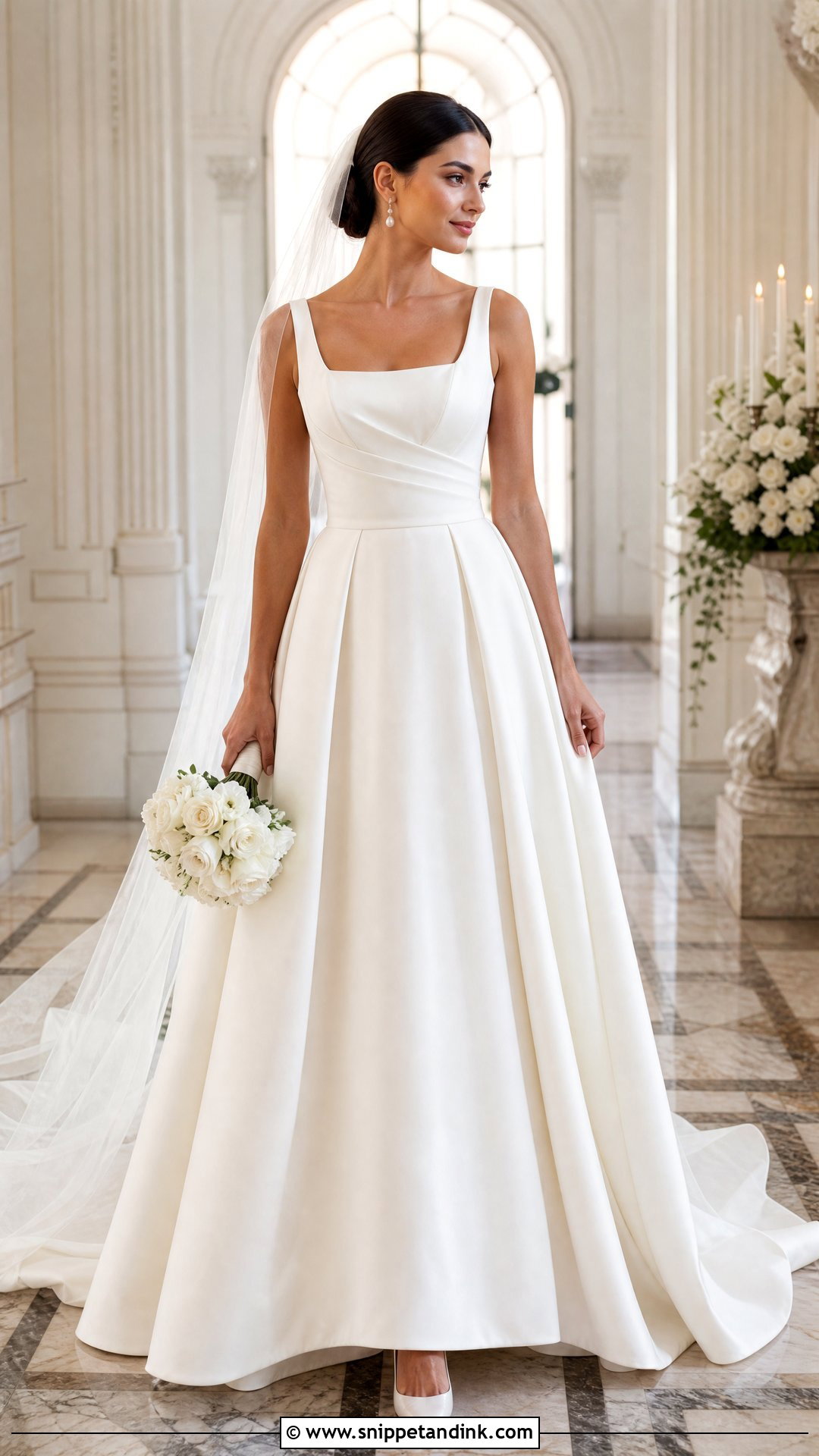
Pleats on an A-line skirt do something clever: they’re stitched flat at the waist and release over the hips, so the skirt flares without adding bulk where most brides don’t want it. That’s why this is the version I’d suggest first. Satin or mikado gives a crisp, structured skirt; chiffon a lighter, more romantic one. Pointed ivory heels, pearl drops and a cathedral veil make a classic ceremony outfit, and a smooth low bun keeps attention on the neckline and folds. Ballrooms, gardens and traditional weddings suit it.
2. Pleated Ball Gown Wedding Dress
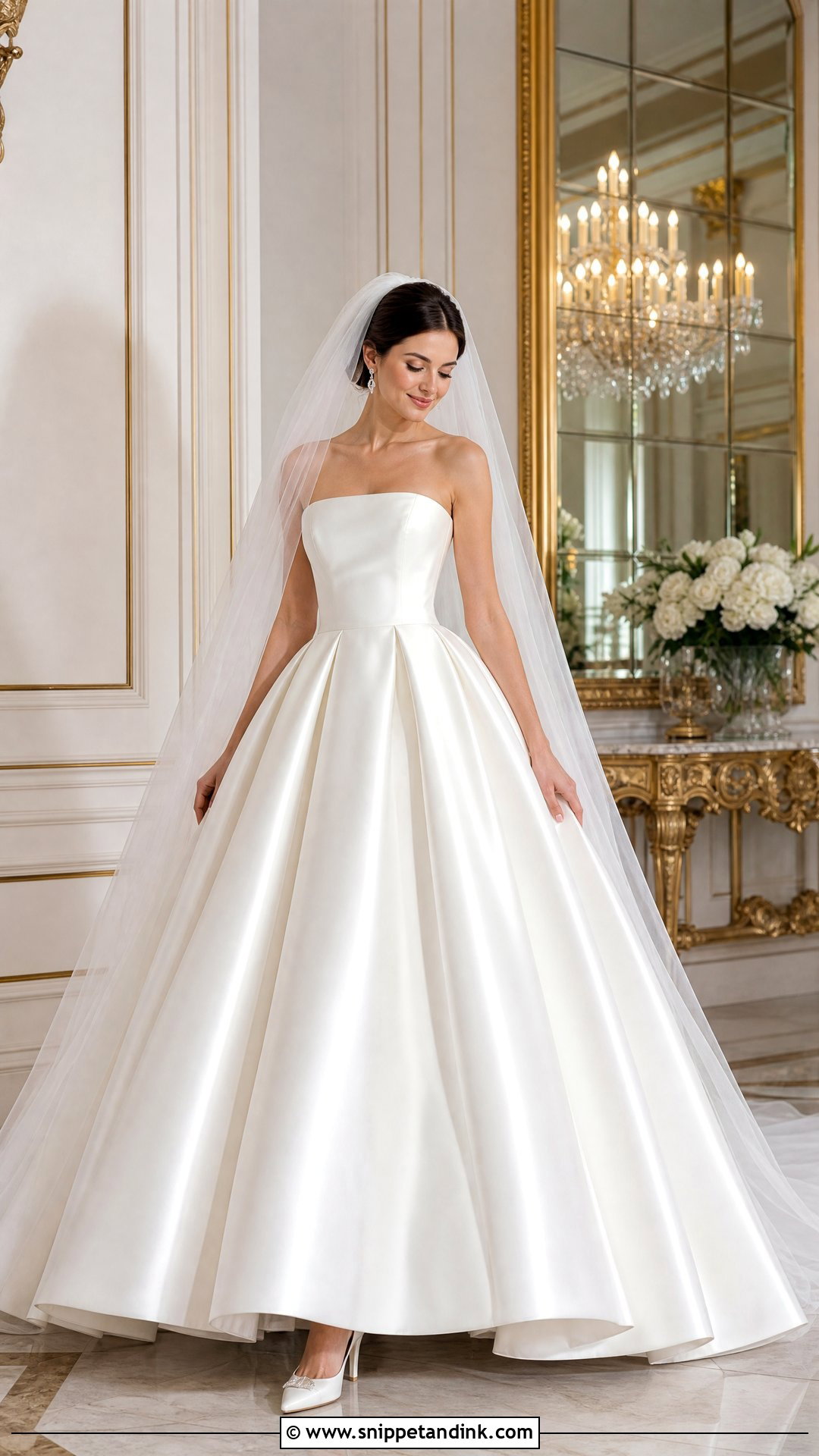
A full skirt without pleats can look like a cloud; with deep pleats it looks controlled and deliberate. The folds organise the volume so the shape is grand without being overwhelming. Pleated ball gowns are beautiful in taffeta, organza or silk faille, which all hold a crisp fold. Taffeta does rustle loudly, which some brides love and others notice all day, so walk around in it at the appointment. A structured bodice, delicate earrings and a long veil give a formal aisle moment. Satin pumps or low block heels and a sleek updo let the skirt lead.
3. Pleated Strapless Wedding Dress
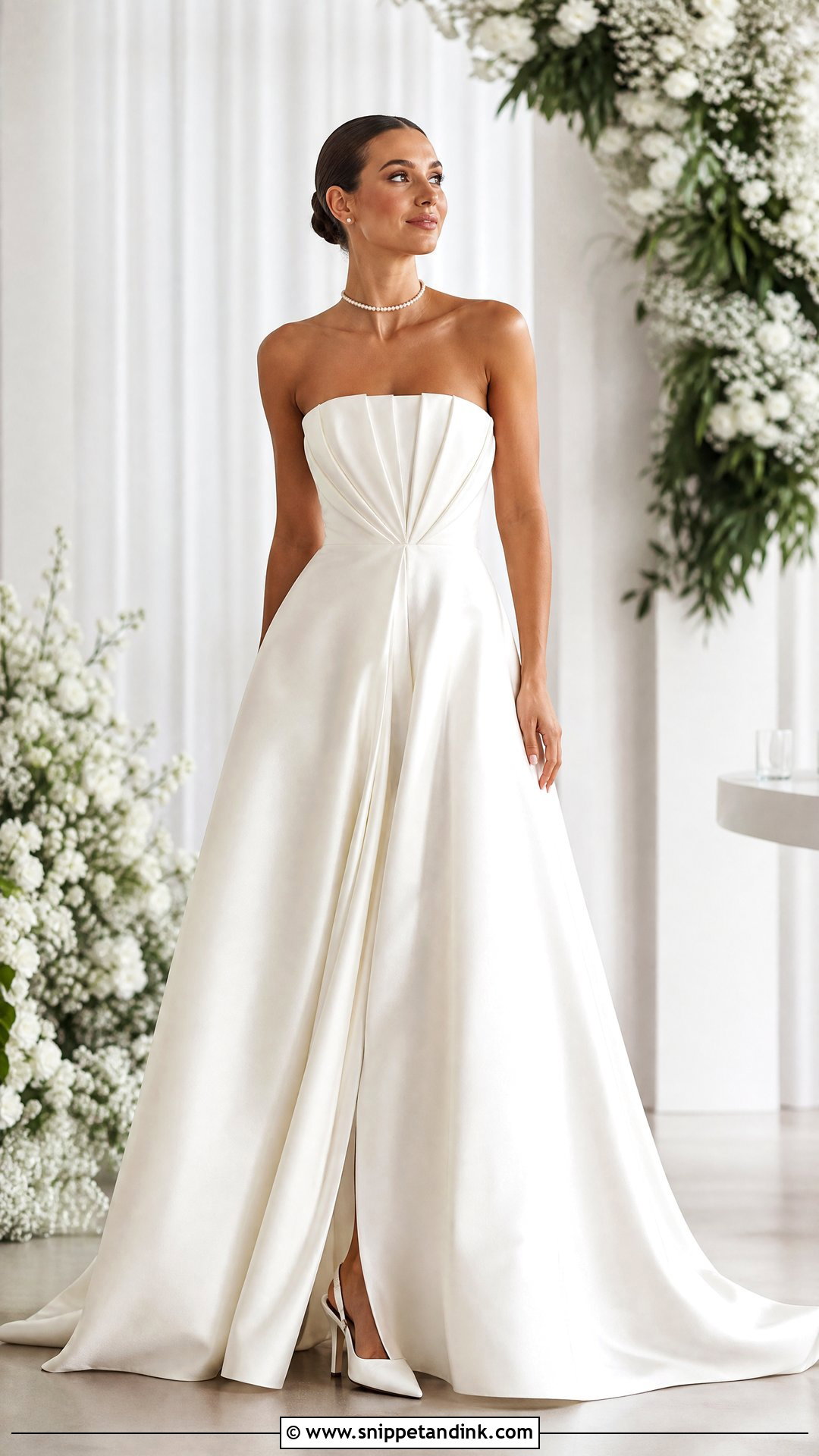
Pleating across a strapless bodice is more than decoration; it adds shaping that a plain bodice would get from darts. A straight or softly curved neckline over a pleated satin skirt looks refined. I check that the bodice pleats lie flat when you breathe and sit, because loose pleats on a bodice gape at the top edge. Add a pearl choker, sheer gloves or small studs. A smooth bun, soft waves or a tucked bob suit it, with ivory slingbacks or minimal sandals for indoor ceremonies and outdoor weddings alike.
4. Pleated Chiffon Wedding Dress
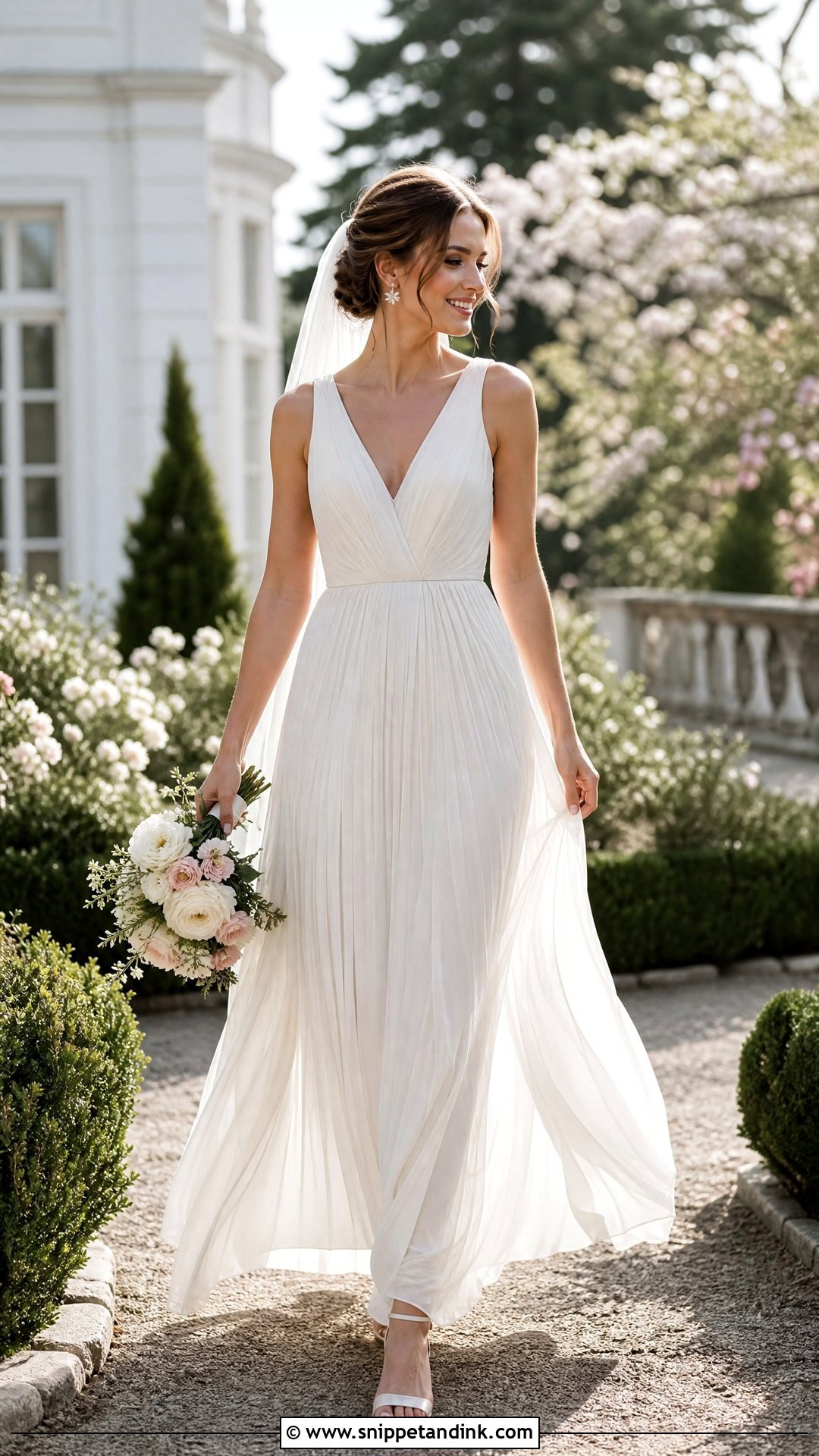
Chiffon pleats hang softly instead of standing away from the body, so the skirt feels airy but keeps a shape. That makes it the coolest pleated gown to wear in heat. Choose a V-neck bodice, flutter sleeves or a camisole top. Very fine chiffon pleats can relax in humidity and look slightly limp by evening, which is just how the fabric behaves, so I don’t panic about it. Barely-there sandals, a delicate veil, small floral earrings and a loose updo or half-up style finish it for spring, summer, beach and destination weddings.
5. Pleated Satin Wedding Dress
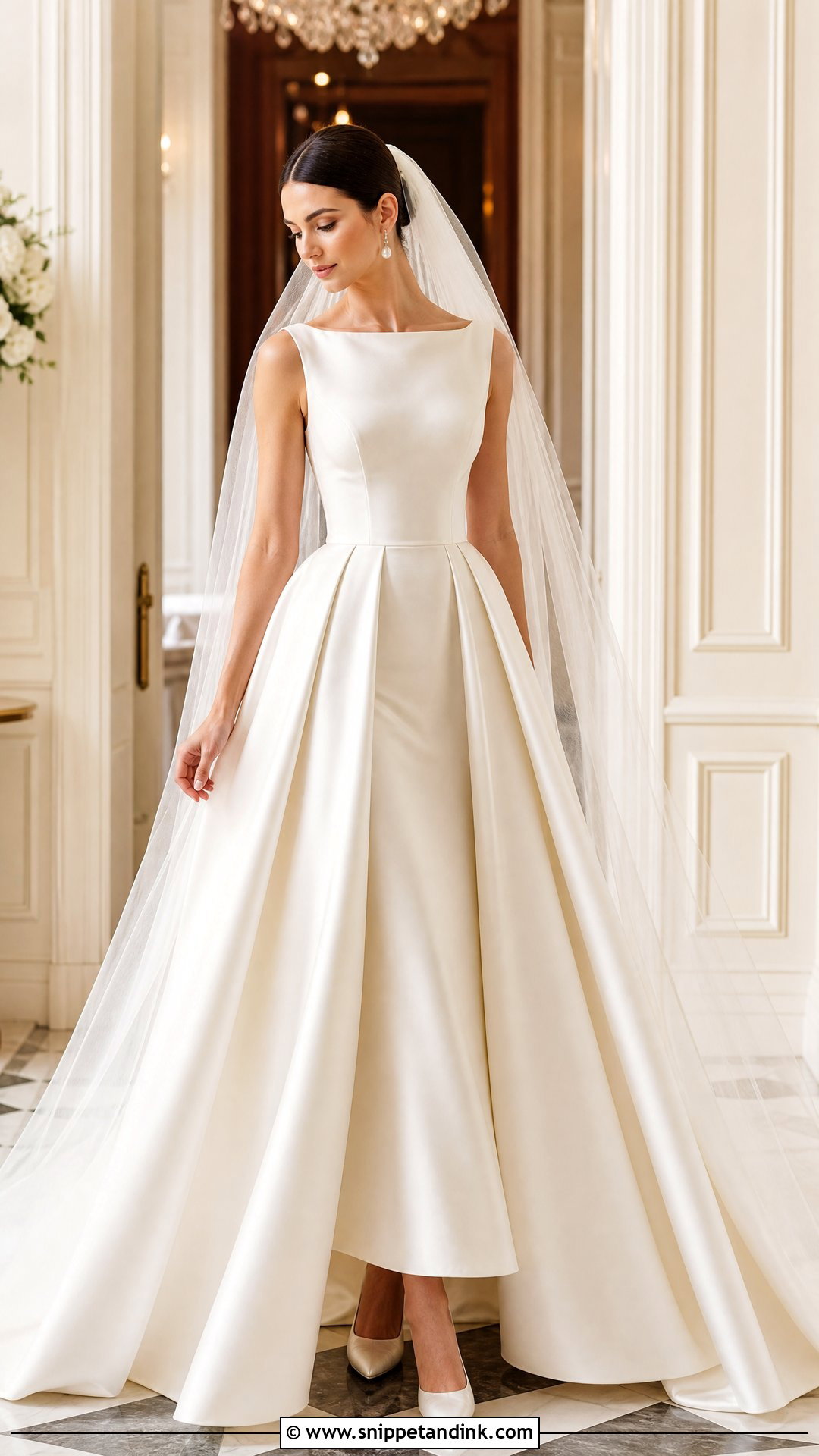
Satin reflects light, so pleats in satin create gentle stripes of highlight and shadow that make the gown look dimensional and expensive. A strapless satin bodice with a pleated skirt is classic, a long-sleeve satin gown more formal. Satin pleats also show crushing more than matte fabrics do, so sit carefully, smoothing the skirt under you, especially before the ceremony. Satin pumps, pearl earrings and a smooth veil complete it, or a square neckline and sleek hair for something modern. Hotels, museums and formal evening celebrations suit its polish.
6. Pleated Tulle Wedding Dress
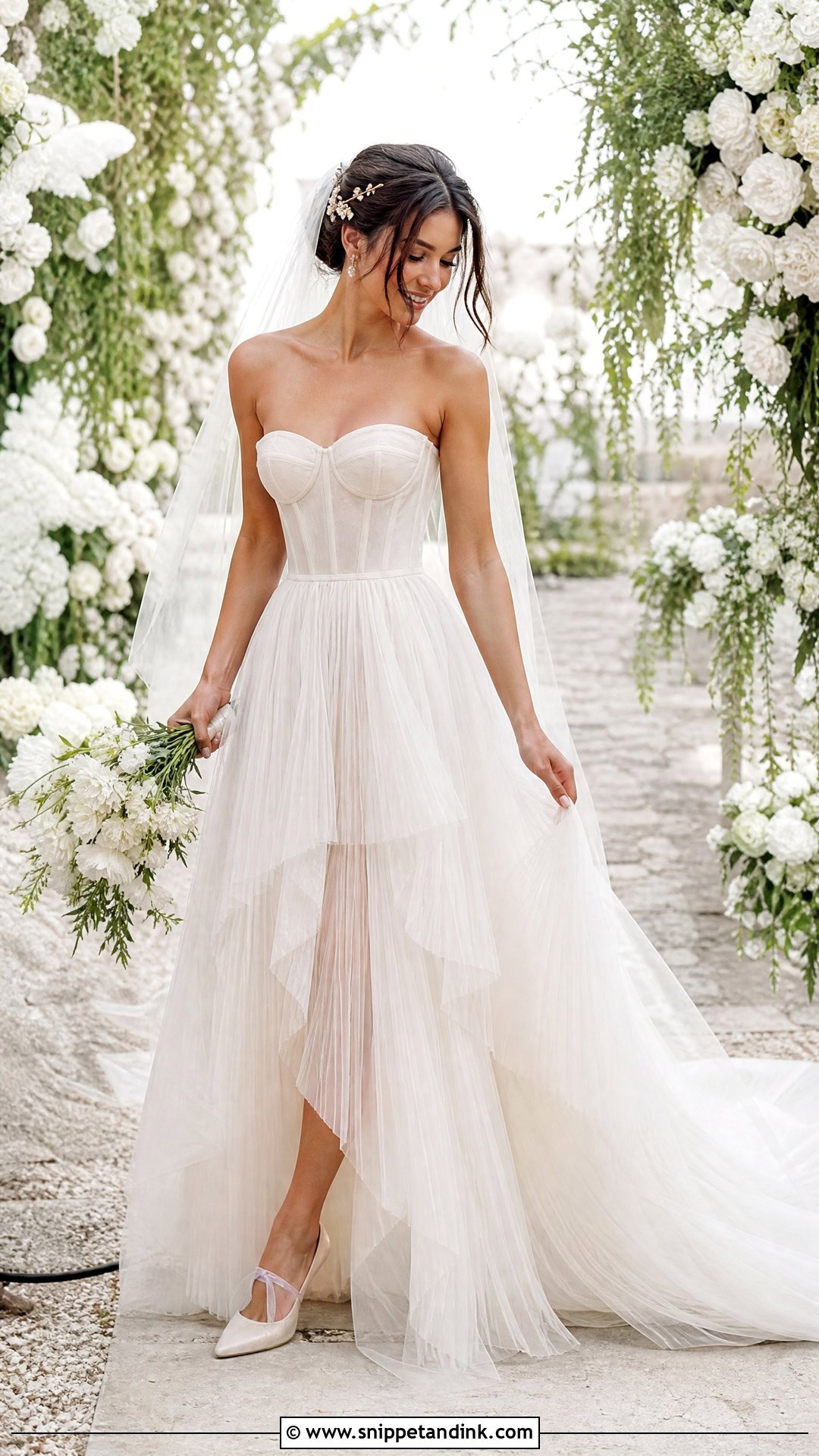
Tulle is soft and doesn’t take a sharp crease, so pleated tulle is usually gathered or stitched into soft folds rather than pressed. The result floats without the stiffness of a petticoat-heavy skirt. It suits a corset bodice, sweetheart neckline or delicate straps. Sheer ivory heels, crystal hair pins and a veil as soft as the skirt complete it, with delicate jewellery so the texture stays the focus. Tulle catches on rough benches and garden furniture, so I’d mention that to whoever sets up the ceremony seating. Gardens, estates and candlelit receptions suit it.
7. Pleated Organza Wedding Dress
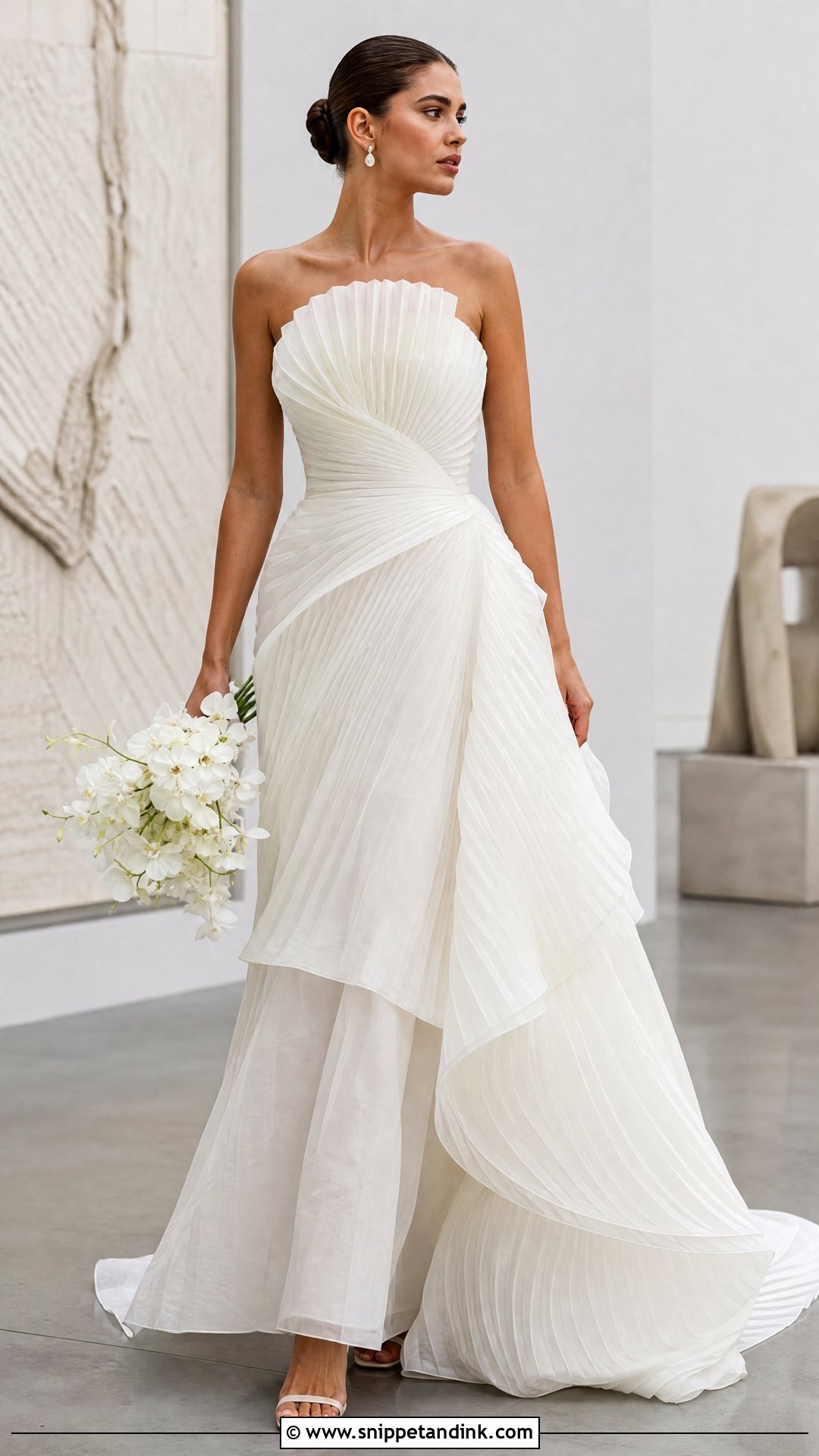
Organza is light but crisp, so it holds a pleat in a visible, almost architectural way. It’s the fabric I’d choose for drama without beading or lace. Try a pleated organza skirt with a fitted bodice, or pleated panels around the neckline. Organza frays easily and shows every snag, so check how the pleat edges are finished. Clean earrings, a neat bun and minimal heels keep the outfit balanced, and either a plain veil or none at all works. Modern venues, galleries and city weddings suit it.
8. Pleated Off Shoulder Wedding Dress
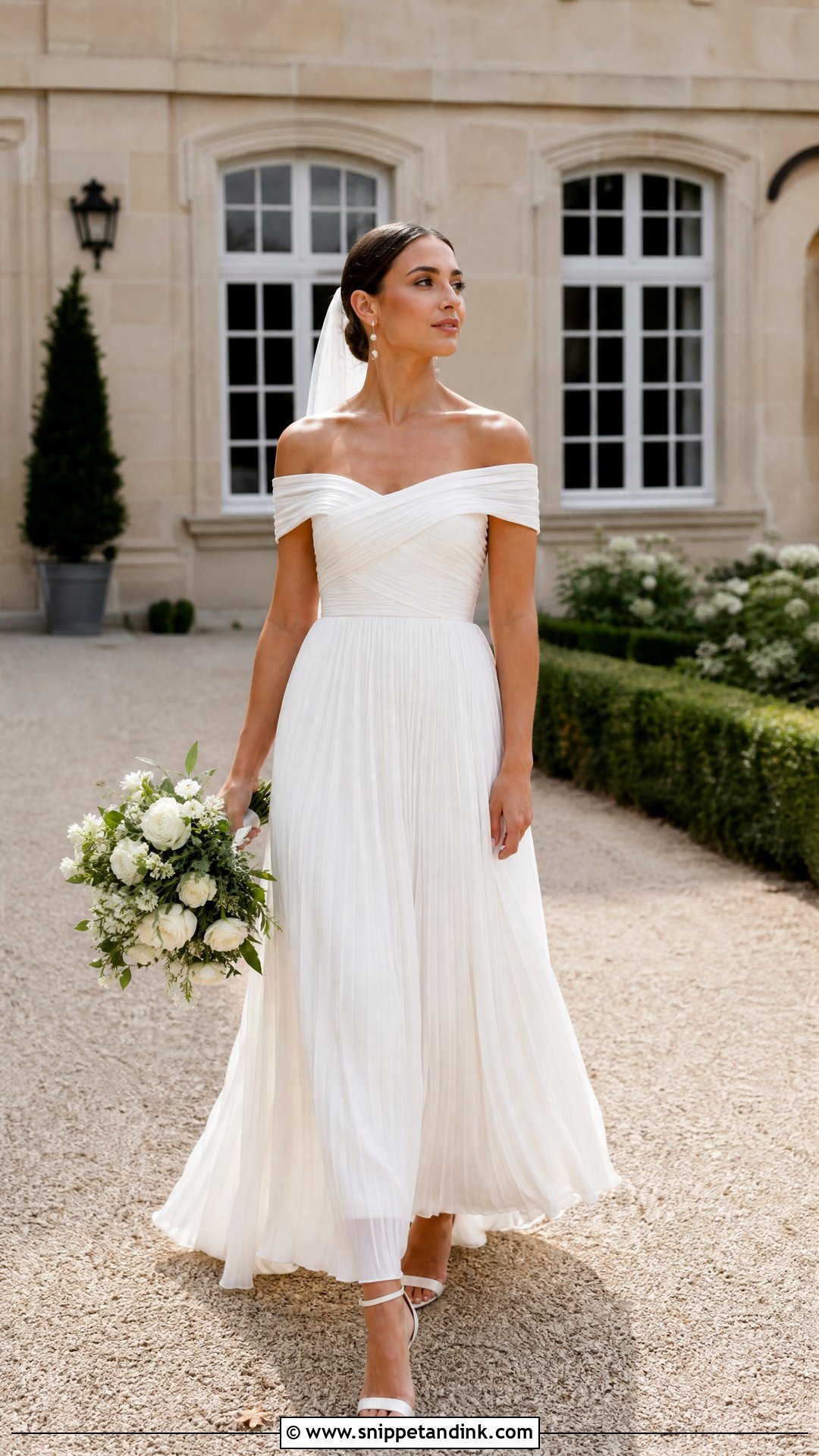
Off-shoulder necklines frame the collarbone, and soft pleats across the bodice add a draped quality that a flat band doesn’t have. Below the waist, a pleated skirt adds movement. Satin, tulle and chiffon all suit it. The band across the arms must sit snugly; pleated bands can slip if they’re cut loose, so I add grip tape inside when needed. Drop earrings, a simple bracelet and strapped ivory heels finish it, with a soft updo. Choose a veil that sits lower on the head so it doesn’t crowd the shoulders.
9. Pleated Long Sleeve Wedding Dress
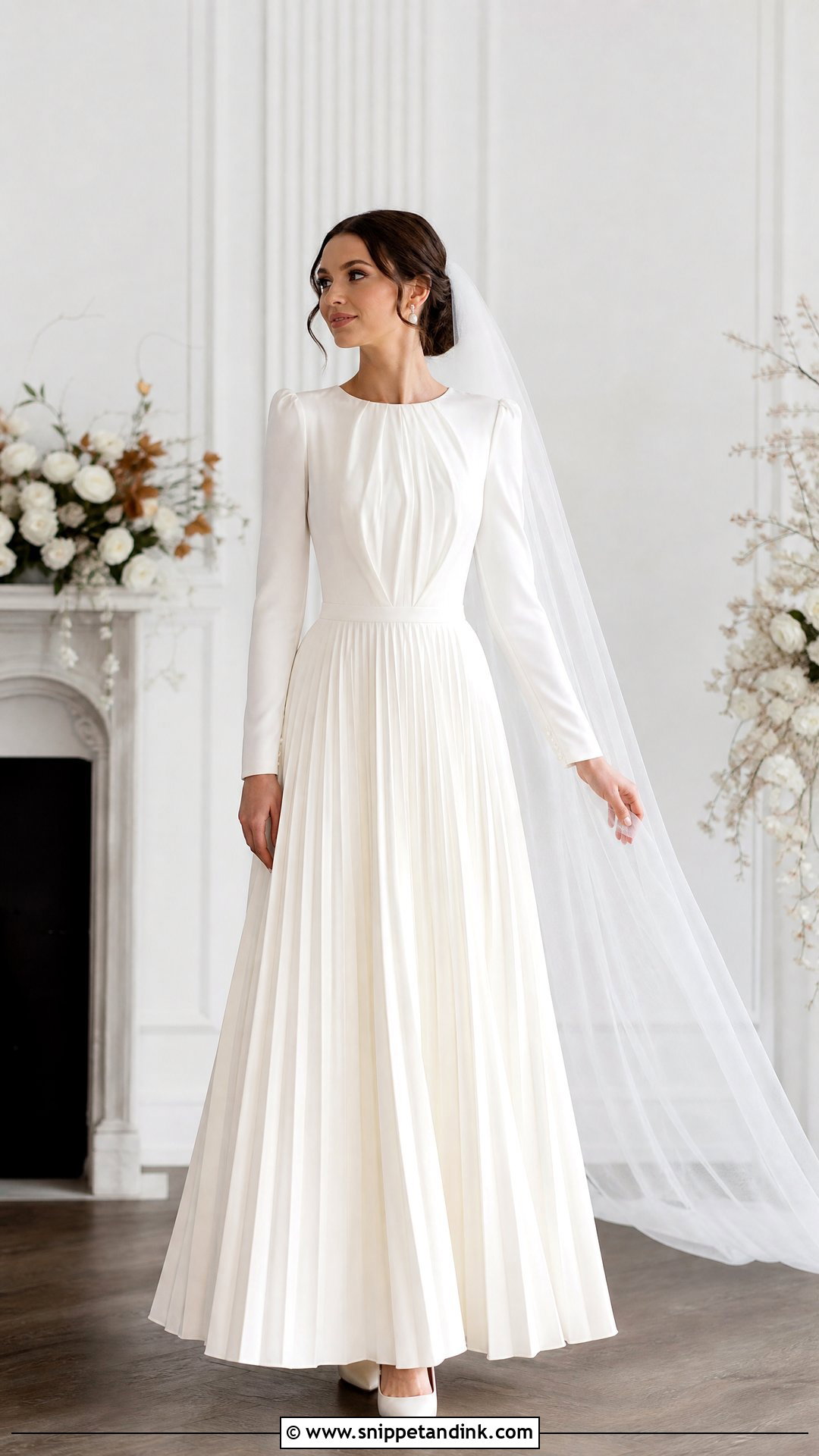
Long sleeves balance a pleated skirt and give coverage without heaviness. Sleeves can be sheer, smooth or lightly pleated themselves. Pleated sleeves are lovely, but check they don’t add bulk at the upper arm when you bend your elbow. Closed-toe pumps, pearl earrings and a clean veil suit it, and a centre-part bun or waves tucked behind the ears keep it polished. Autumn, winter and formal indoor weddings are where it makes most sense, and the coverage suits brides who prefer a modest gown.
10. Pleated Halter Wedding Dress
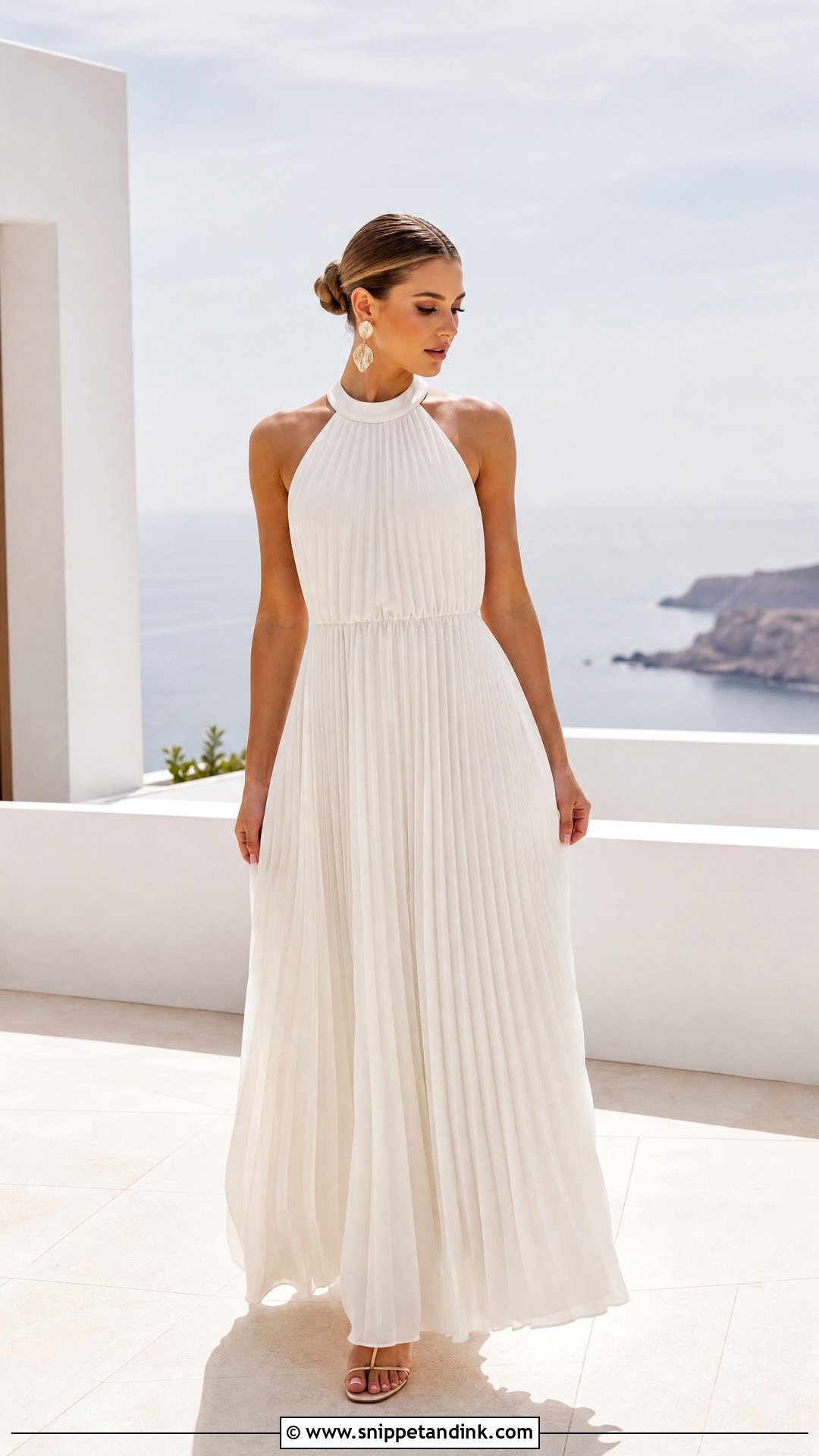
Halters draw the eye upward and show the shoulders; pleats soften the bodice or add movement to the skirt. A chiffon halter dress feels breezy, a satin halter gown sleek and formal. The halter strap carries the bodice’s weight around your neck, so if the skirt is heavy, ask for an internal waist stay to take some of that load. Statement earrings, a neat bun and minimal sandals or pointed heels finish it. Skip the necklace. Coastal ceremonies, rooftops and modern receptions suit it, and it gives secure support.
11. Pleated Square Neck Wedding Dress
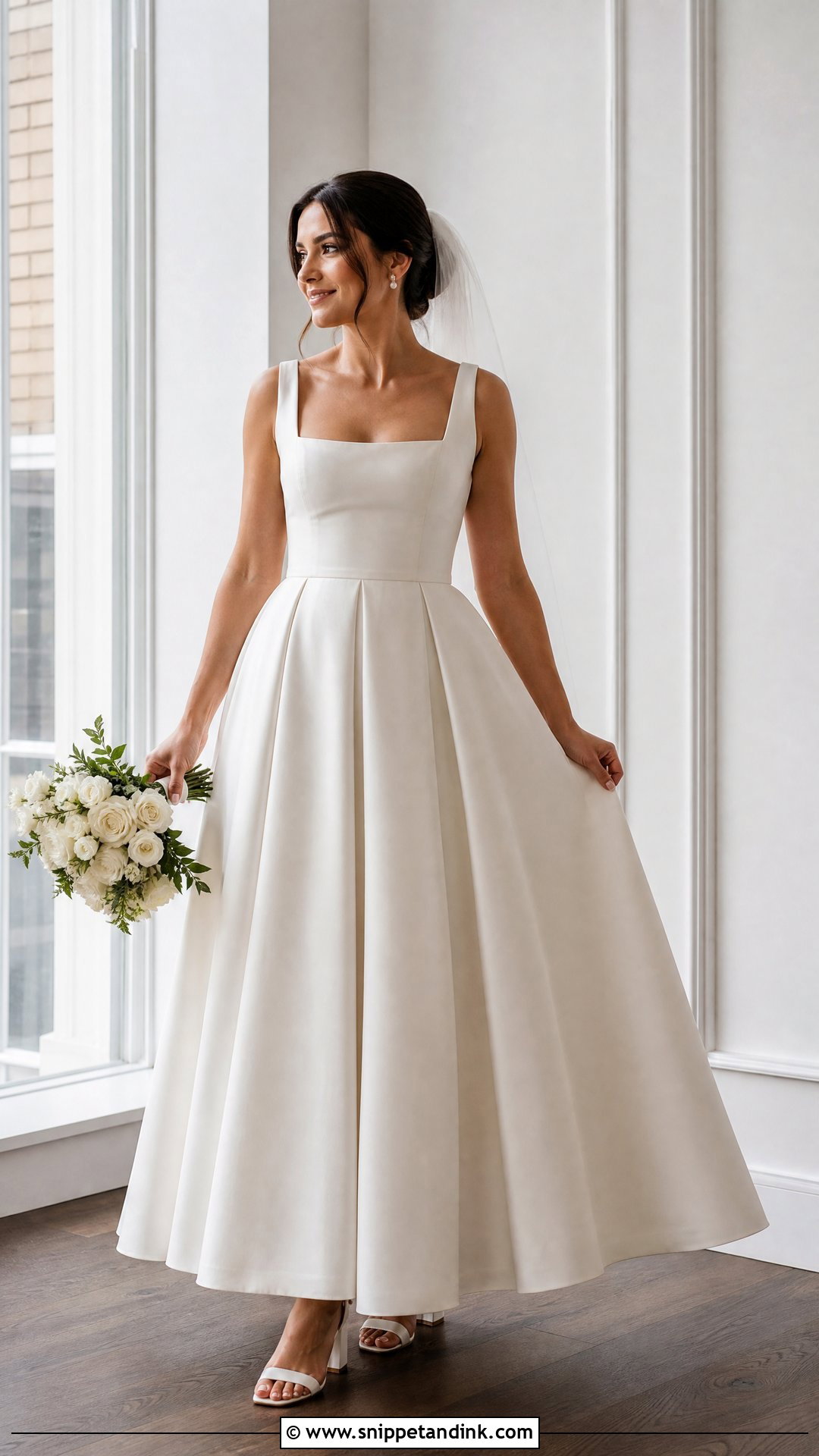
Square necklines give the upper body clean structure, and pleats underneath supply softness and movement. It’s a good balance for anyone who likes classic shapes with a current feel. A pleated satin A-line looks polished; chiffon is lighter. The square corners should sit flat against the chest, so if they lift when you lean forward, the bodice needs adjusting. Pearl studs, a simple veil and block heels keep you comfortable from ceremony to reception, and a low bun or smooth ponytail suits the neckline. Courthouses and intimate celebrations suit it.
12. Pleated Corset Wedding Dress
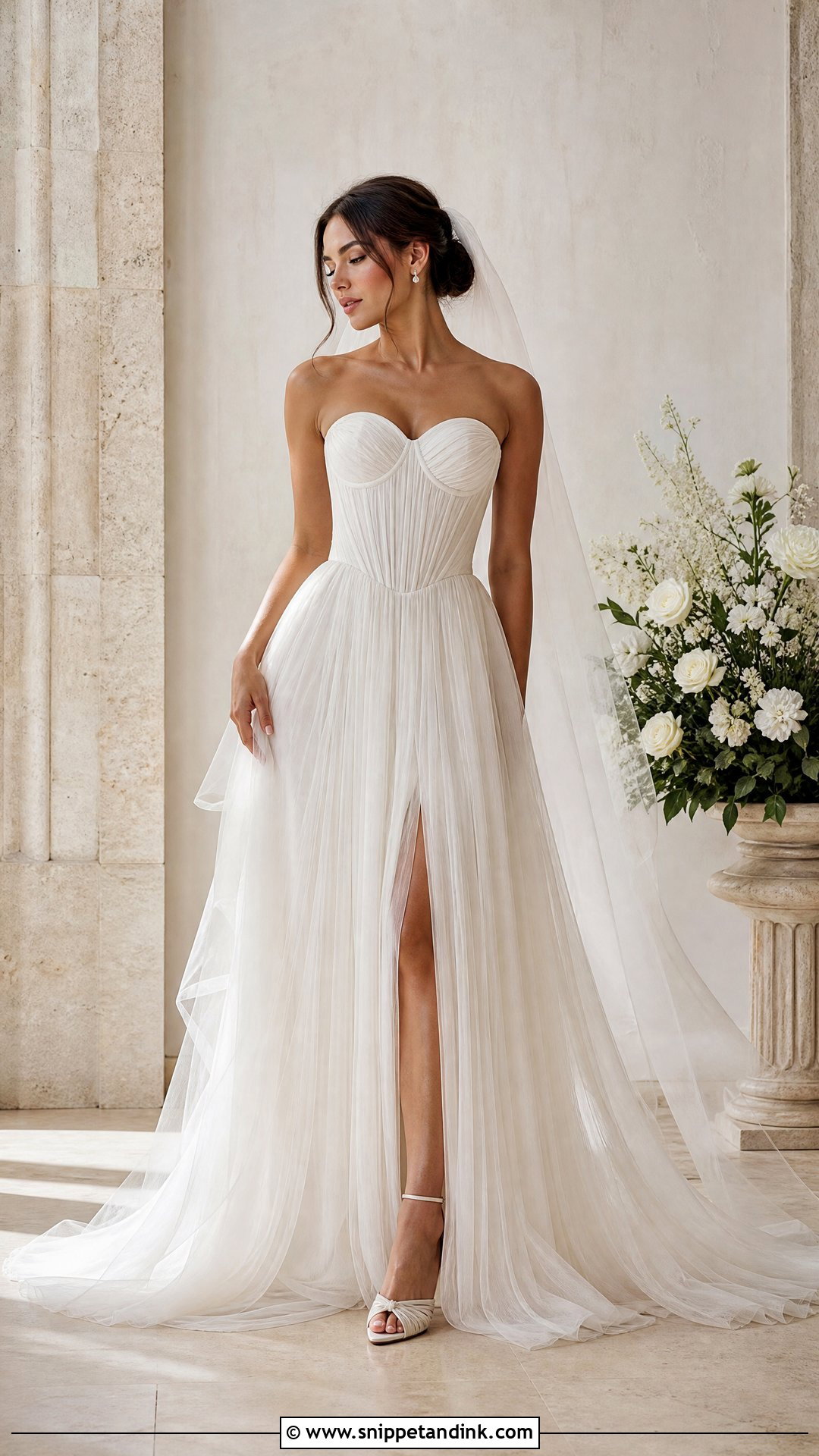
The corset shapes the waist and supports the bust; the pleated skirt releases into movement below it. Fabric decides the mood. Satin is polished, tulle soft, organza sculptural. Where the skirt pleats meet the corset’s point, the waist seam takes a lot of strain, so I check it’s reinforced, especially on heavier skirts. Delicate heels, small earrings and a veil that leaves the bodice visible finish it, and soft curls or a textured bun balance the fitted top. It gives definition without heavy embellishment.
13. Pleated Mermaid Wedding Dress
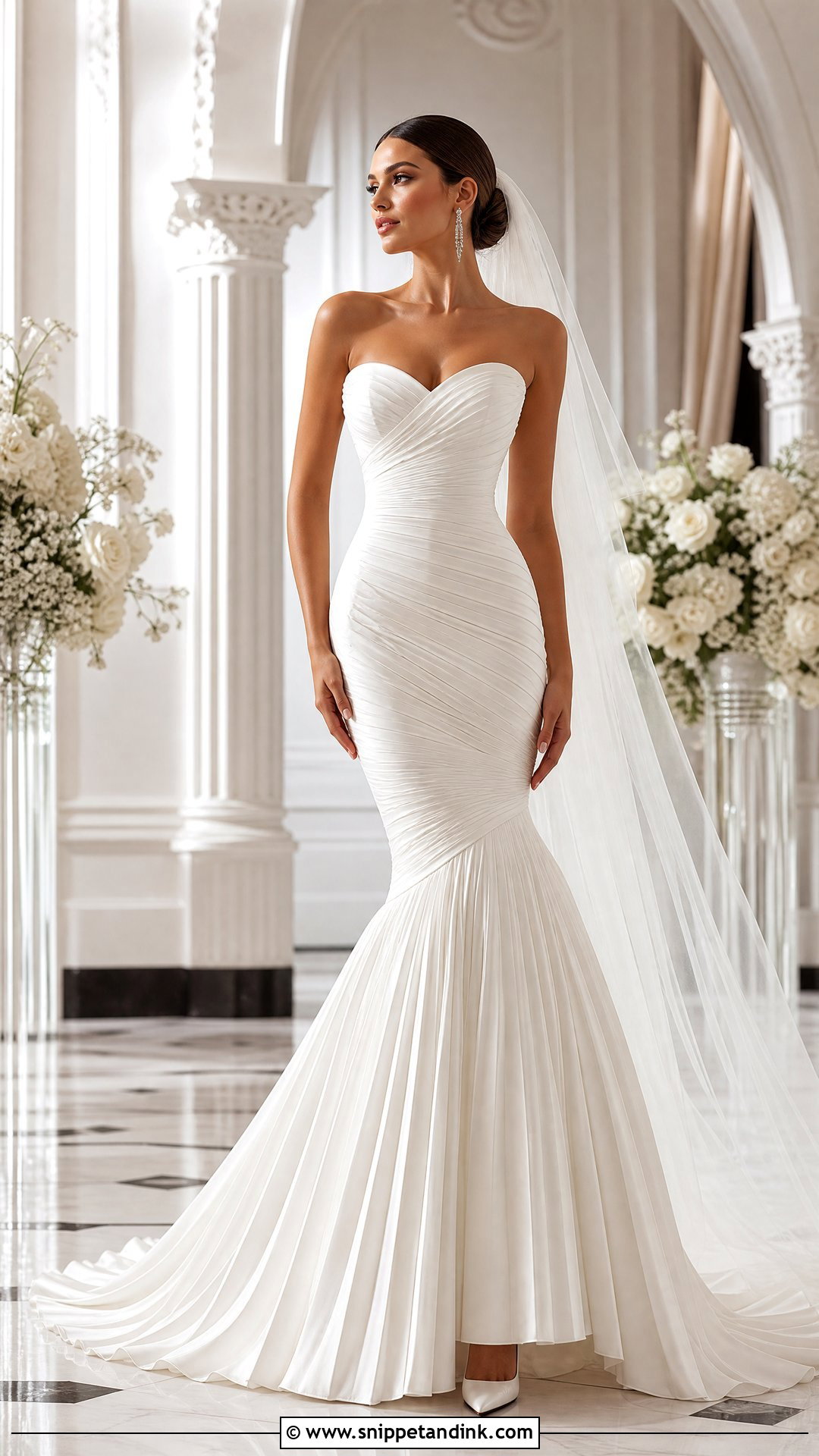
A pleated mermaid hugs through the bodice and hips, then releases into pleats near the knee, which gives the hem real swing as you walk. Satin, crepe and mikado hold a clean line. Where the pleats start is the key fitting point: too low and you’ll shuffle, so I want them opening at or just above the knee. High heels, sleek earrings and a long veil add elegance, with a smooth bun or side-part waves. Formal weddings and glamorous receptions suit its confident shape.
14. Pleated Sheath Wedding Dress
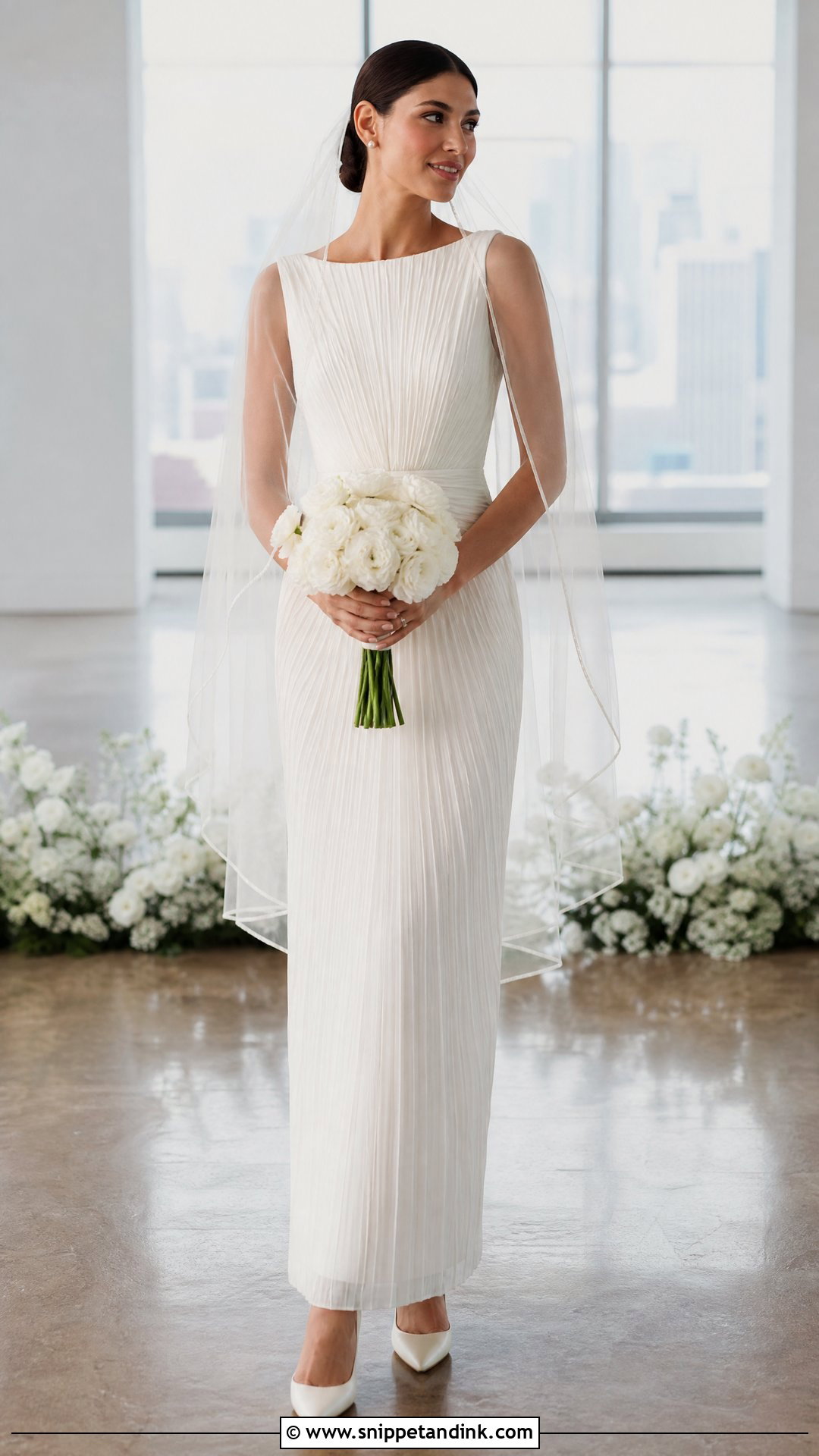
A sheath skims the body without volume, and pleats give it texture so it never looks flat. Soft vertical pleats lengthen; small bodice pleats add subtle detail. This is the pleated gown I’d suggest for petite brides, since vertical lines add height without bulk. Slim heels, pearl studs and a fingertip veil keep it clean. It also pairs well with a cape or detachable overskirt for a ceremony-to-reception change. Beaches, courthouses and intimate venues suit it.
15. Pleated Tea Length Wedding Dress
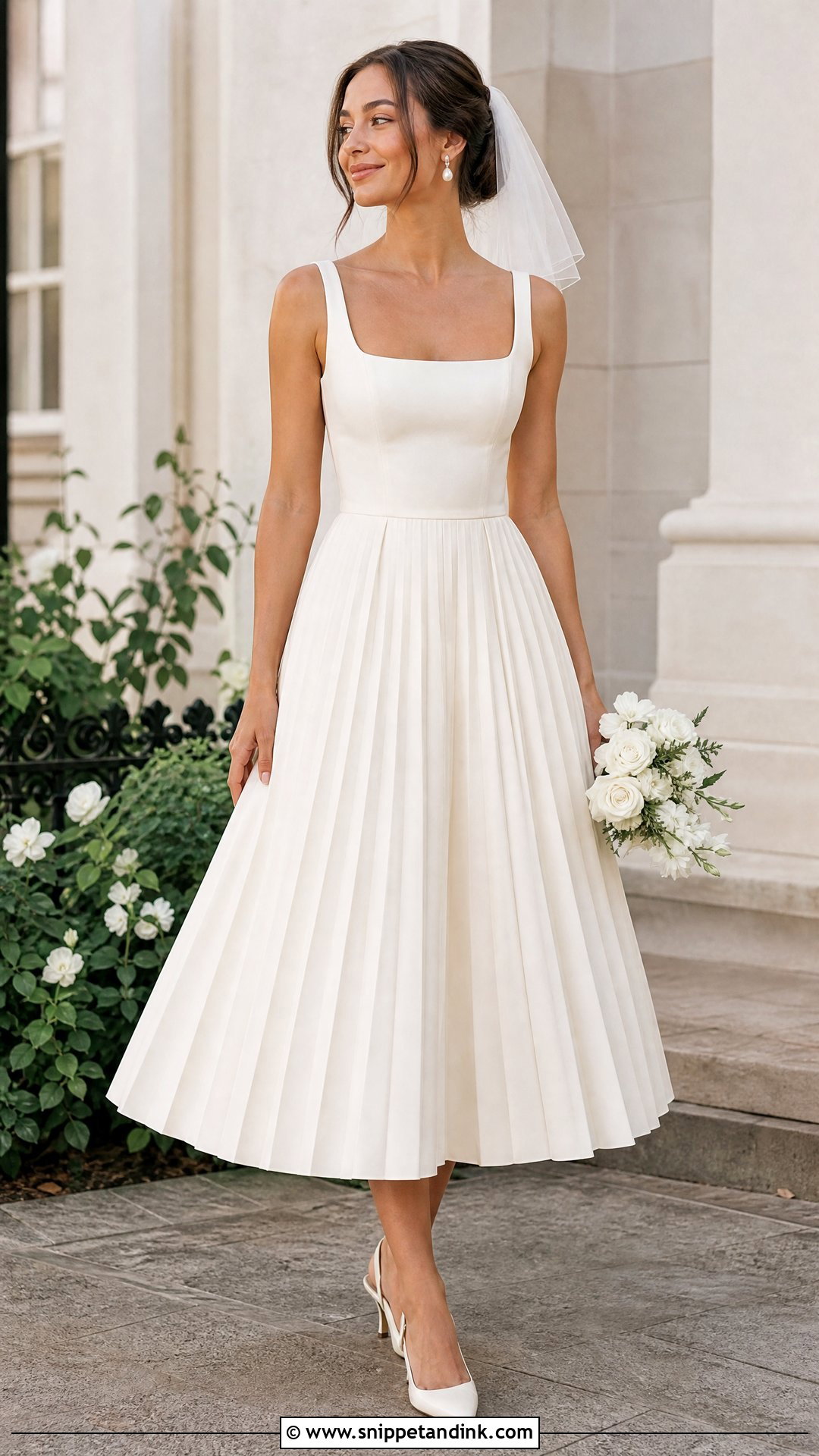
Tea length shows your shoes, so ivory pumps, satin slingbacks or embellished flats become part of the look. A fitted bodice over a pleated skirt makes a neat hourglass without the weight of a full gown. Pleated tea-length skirts can look like a costume if everything else is vintage too, so I keep the styling clean: pearl earrings, a short veil or a simple bow. Hem placement matters; just below the fullest part of the calf flatters most legs. Courthouses, small receptions and garden ceremonies suit it.
16. Pleated Mini Wedding Dress
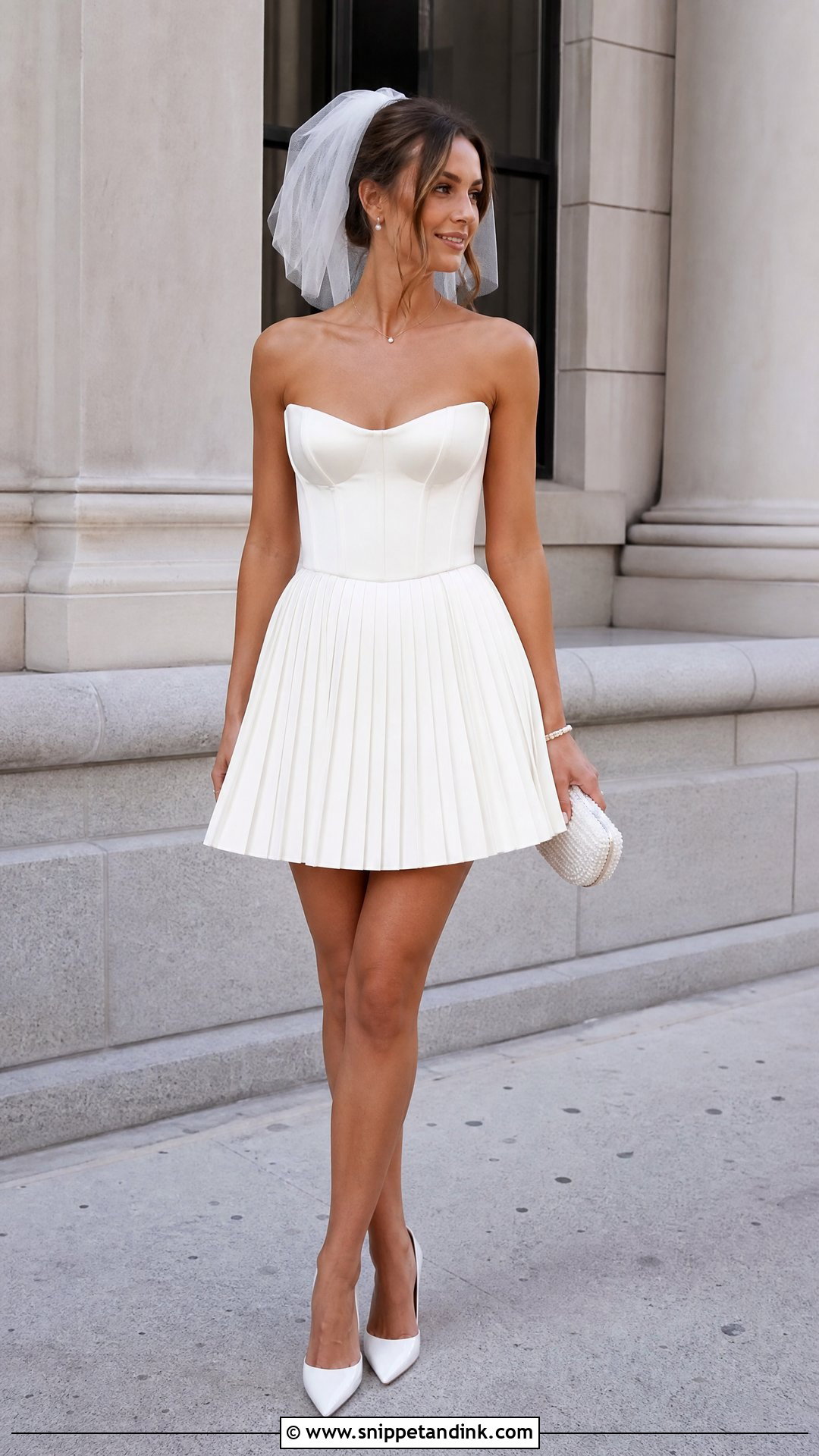
A pleated mini is fun and youthful, and the pleats keep it looking intentional rather than casual. A structured bodice over a pleated skirt balances it; a long-sleeve mini feels chic. Pleated minis lift more than you’d expect when you twirl, so I always suggest matching shorts or a slip underneath for dancing. Pointed pumps, ankle-strap heels or sleek flats suit different venues. Small earrings, a mini veil or a structured clutch finish it. It needs a tailored fit and a bridal fabric to read as a wedding dress.
17. Pleated High Low Wedding Dress
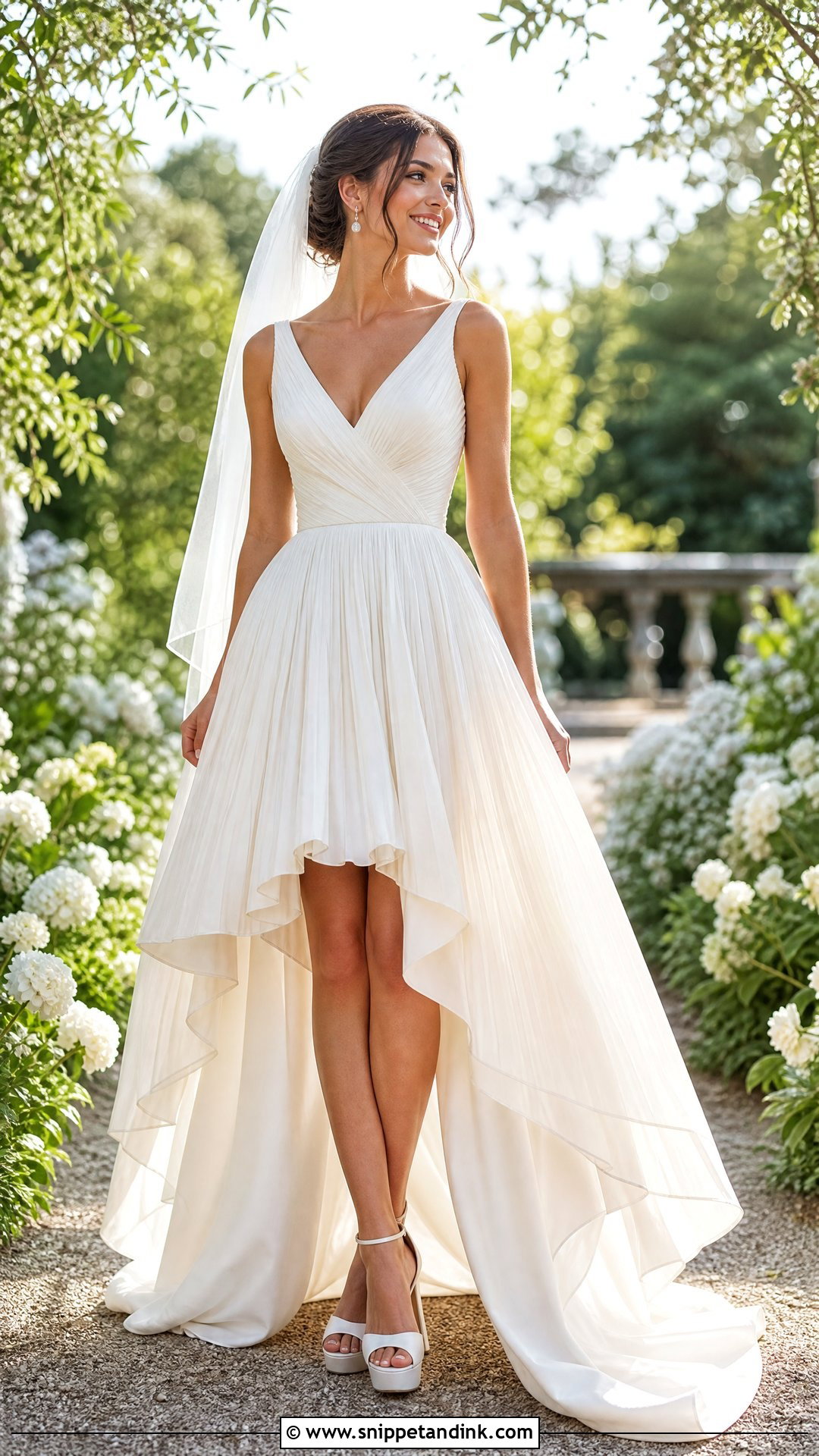
High-low gives you a shorter front that shows your shoes and a longer back that still feels bridal. Pleats make the uneven hem look elegant rather than casual, because they fall in an even rhythm from front to back. It’s easier to walk in outdoors than a full-length gown. The longer back still sweeps the ground, so on grass or sand I’d keep the back hem just at floor length. Statement heels, delicate earrings and a simple veil or clip finish it, with a fitted bodice for balance. Gardens and coastal ceremonies suit it.
18. Pleated Back Wedding Dress
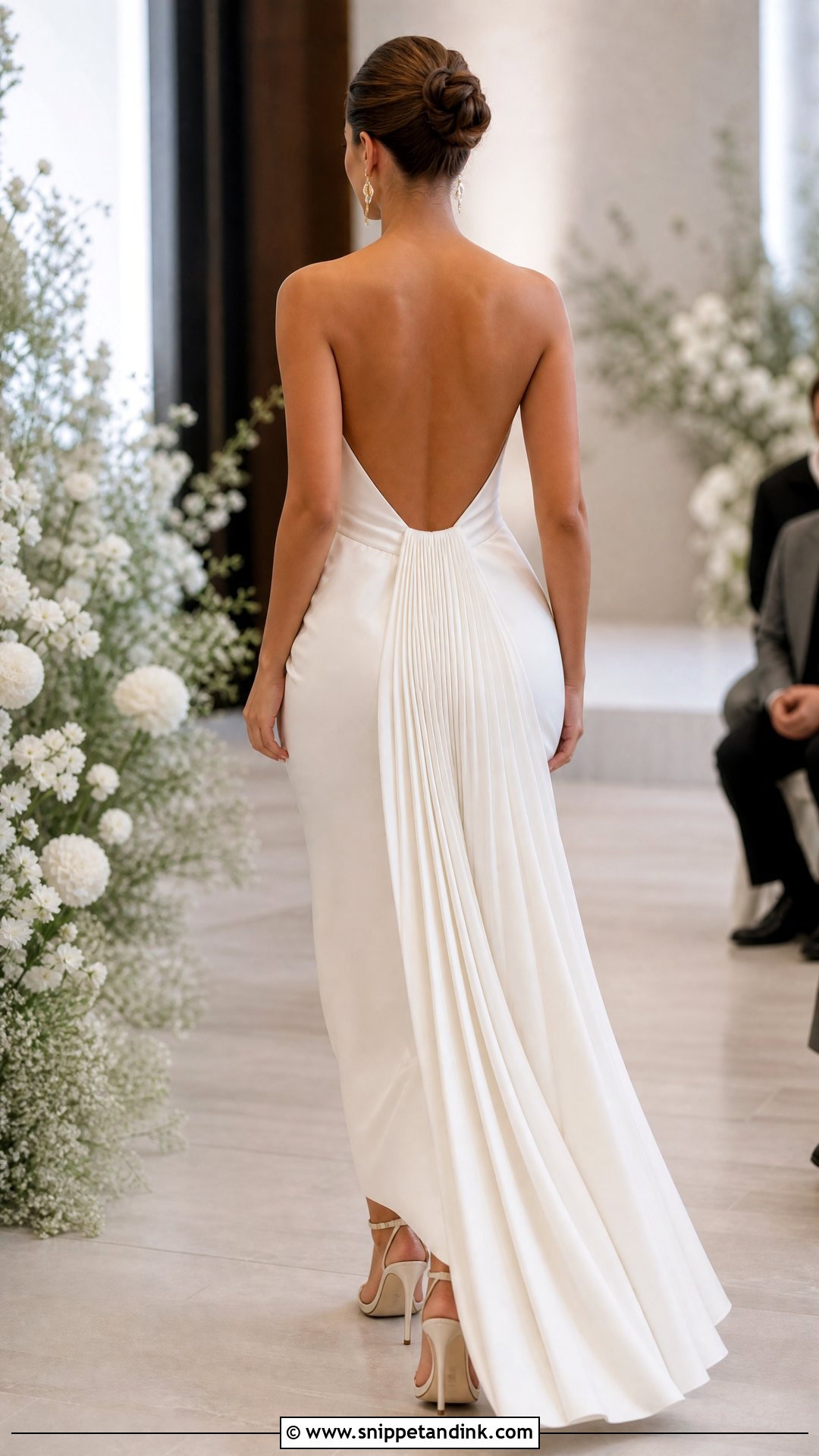
The back is what most guests see during the vows, and a pleated back makes that view count. The front can be simple, while the back carries pleated draping, folded panels or a softly pleated train. An updo keeps the detail visible, earrings replace a necklace, and simple heels won’t compete with the train. A sheer veil works if it’s short enough or fine enough not to hide the pleats; a blusher-length or elbow-length veil is often the better match. It makes a strong ceremony entrance.
19. Pleated Train Wedding Dress
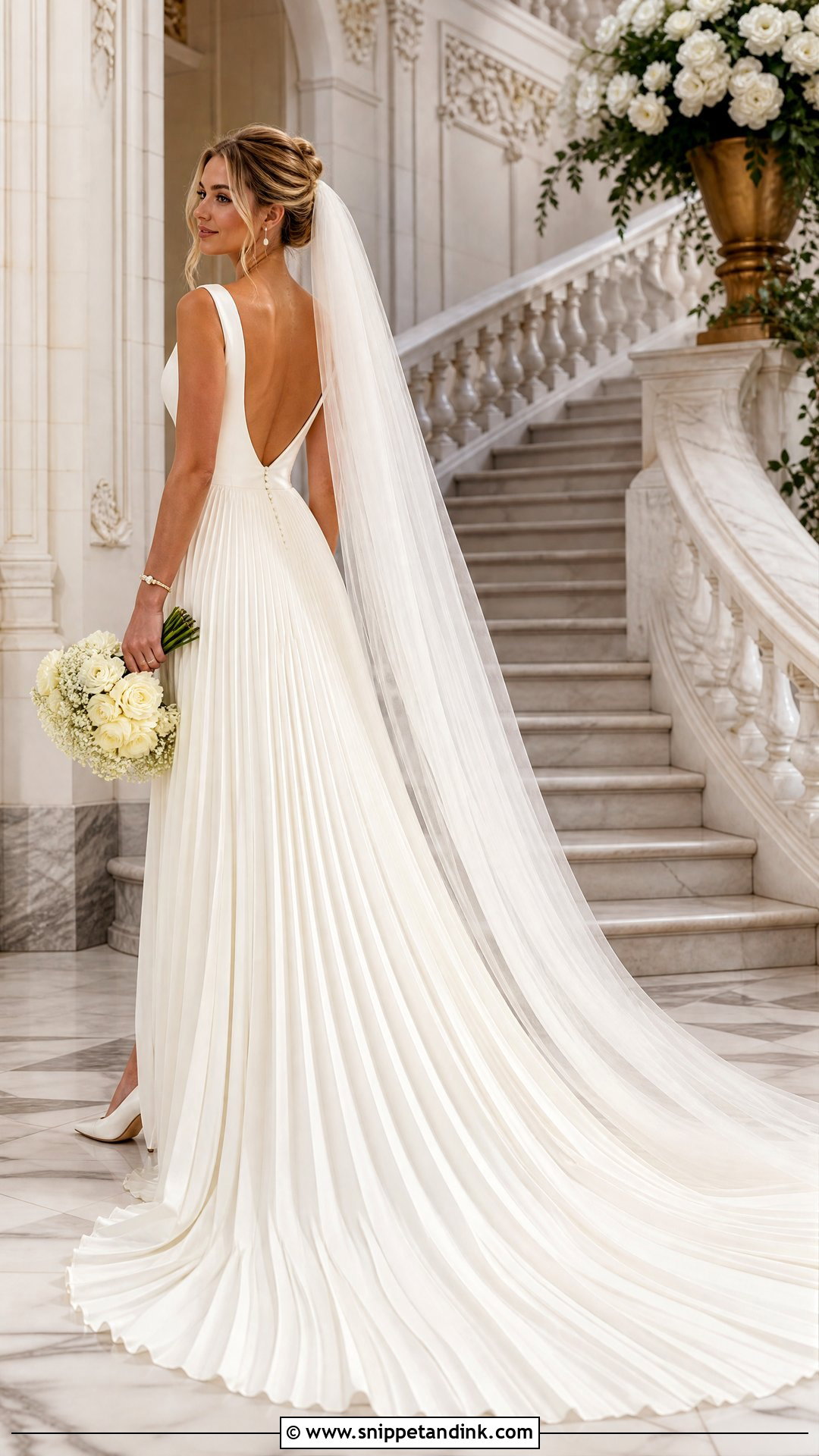
Pleats that start at the waist, lower back or sides and flow into a train give the gown depth and a strong aisle moment without beading or lace. Classic pumps, a long veil and simple jewellery let the train lead. The bustle is where pleated trains get tricky: pinning them up can crush or twist the pleats, so ask your seamstress to show you how the pleats will sit once bustled, and whether a French or ballroom style suits them better. Formal venues, grand staircases and traditional ceremonies suit it.
20. Pleated Wrap Wedding Dress
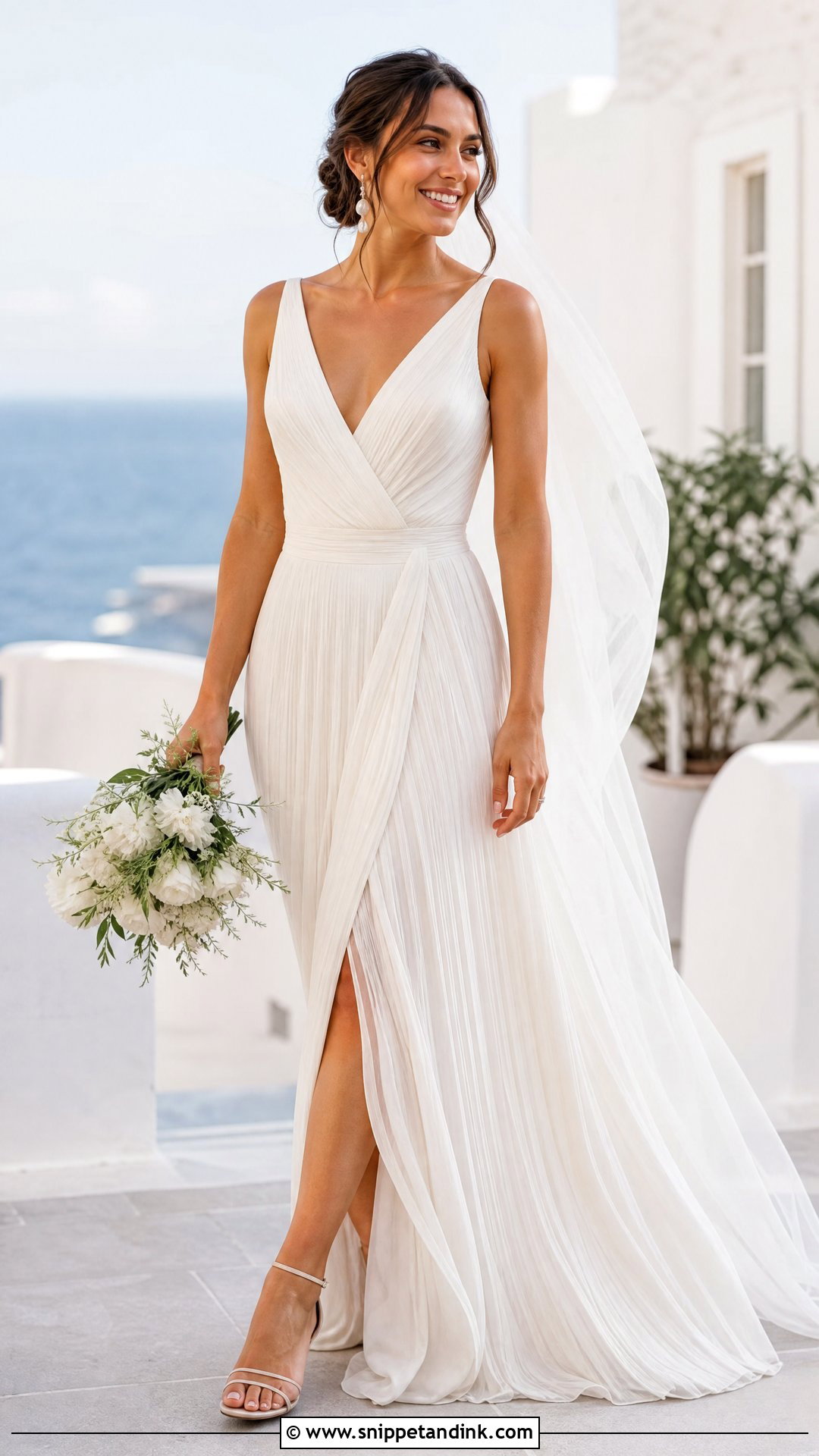
A wrap shape defines the waist, and pleats let the fabric drape smoothly across the body. It’s one of the most forgiving fits on this list, adjusting slightly if your size changes in the final weeks. A V-neck wrap in chiffon or crepe works in warm weather; satin feels more formal. Wrap fronts can open when you sit or bend, so a hidden snap at the cross-over point is worth asking for. Strappy heels, pearl earrings, a soft veil and a relaxed bun or gentle waves suit it for destination weddings and small ceremonies.
21. Pleated Grecian Wedding Dress
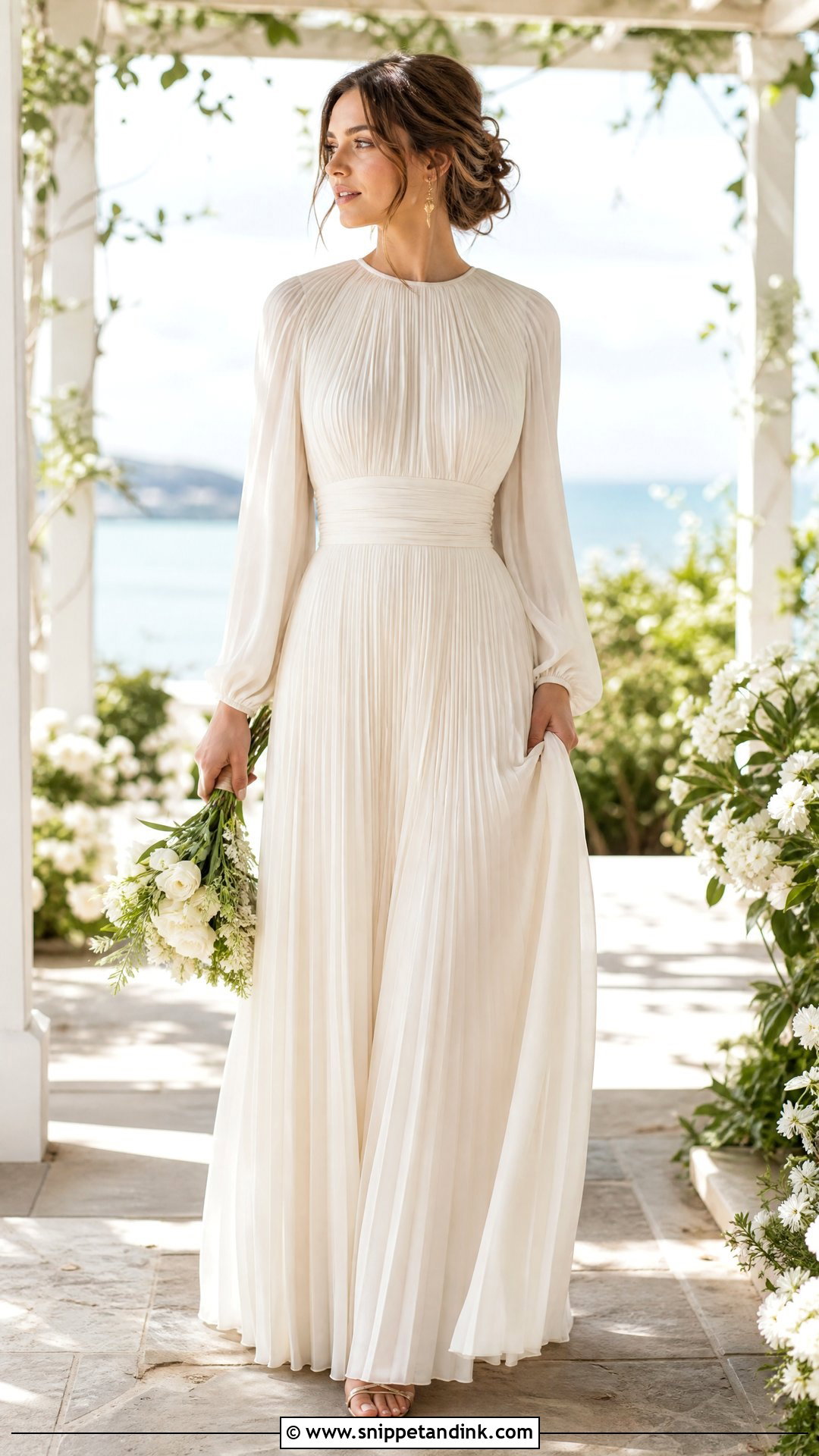
A pleated Grecian wedding dress uses gathered pleats and a soft draped waistline that follows the body. Chiffon and silk-like fabrics give it easy movement. Grecian draping relies on gravity, so it looks best on a still, upright posture and needs a little rearranging after you sit. Flat sandals or simple heels, gold-tone earrings and a loose updo suit it, and a thin headband or small pins add a goddess note without overdoing it. Beaches, gardens and warm-weather weddings suit its relaxed structure.
22. Pleated Minimal Wedding Dress
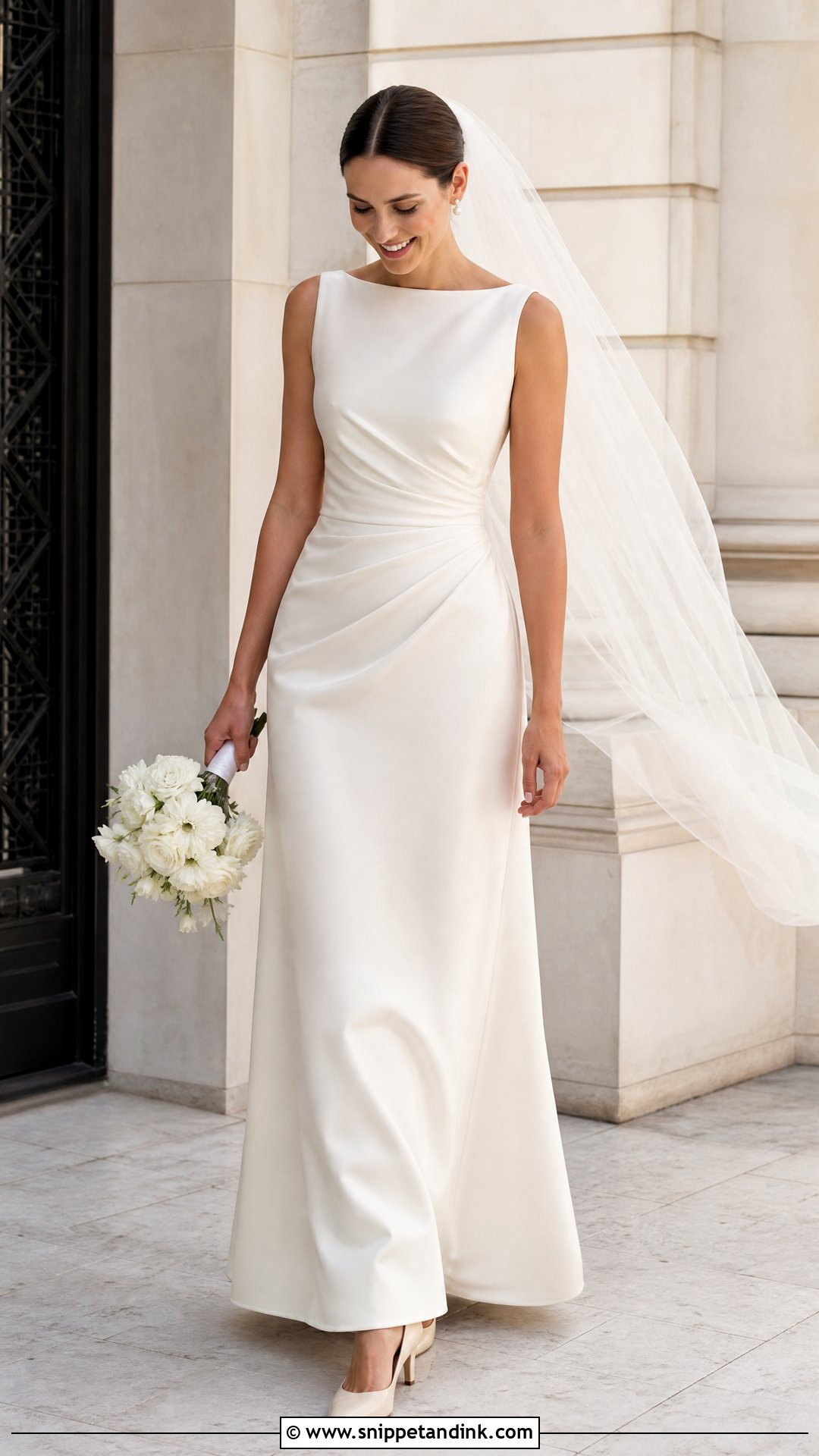
When the folds are the only detail, construction quality is everything. Look for a plain satin or crepe gown with pleated details at the bodice, waist or skirt, and check the pleats are even, pressed sharply and stitched straight. Uneven pleats are the first thing you’ll notice in photos of a minimal gown. Sleek pumps, small earrings and a smooth veil keep it refined, with a low bun or polished ponytail. City venues, art spaces and intimate ceremonies suit it.
23. Pleated Lace Wedding Dress
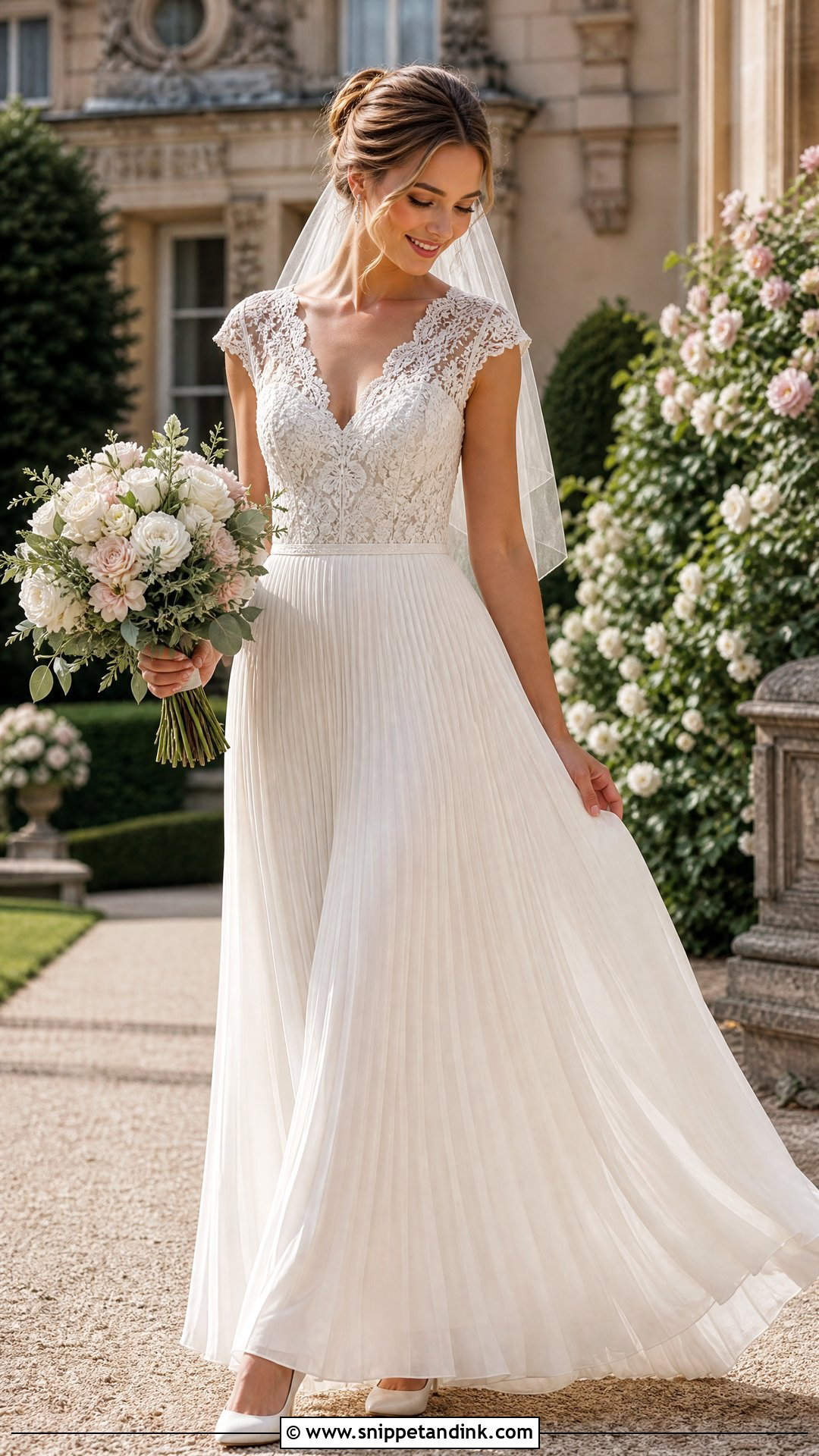
Lace and pleats can compete, so pick one to lead. A lace bodice over a pleated skirt is the easiest balance; a pleated lace overlay on a simple lining is more unusual. Heavy corded lace doesn’t pleat well and looks bulky, so pleated lace gowns usually use fine, light lace. Delicate earrings, classic heels and a veil with minimal trim finish it, with soft waves or a loose bun. Gardens, estates and traditional ceremonies suit its romantic mix of texture and movement.
24. Pleated Two Piece Wedding Dress
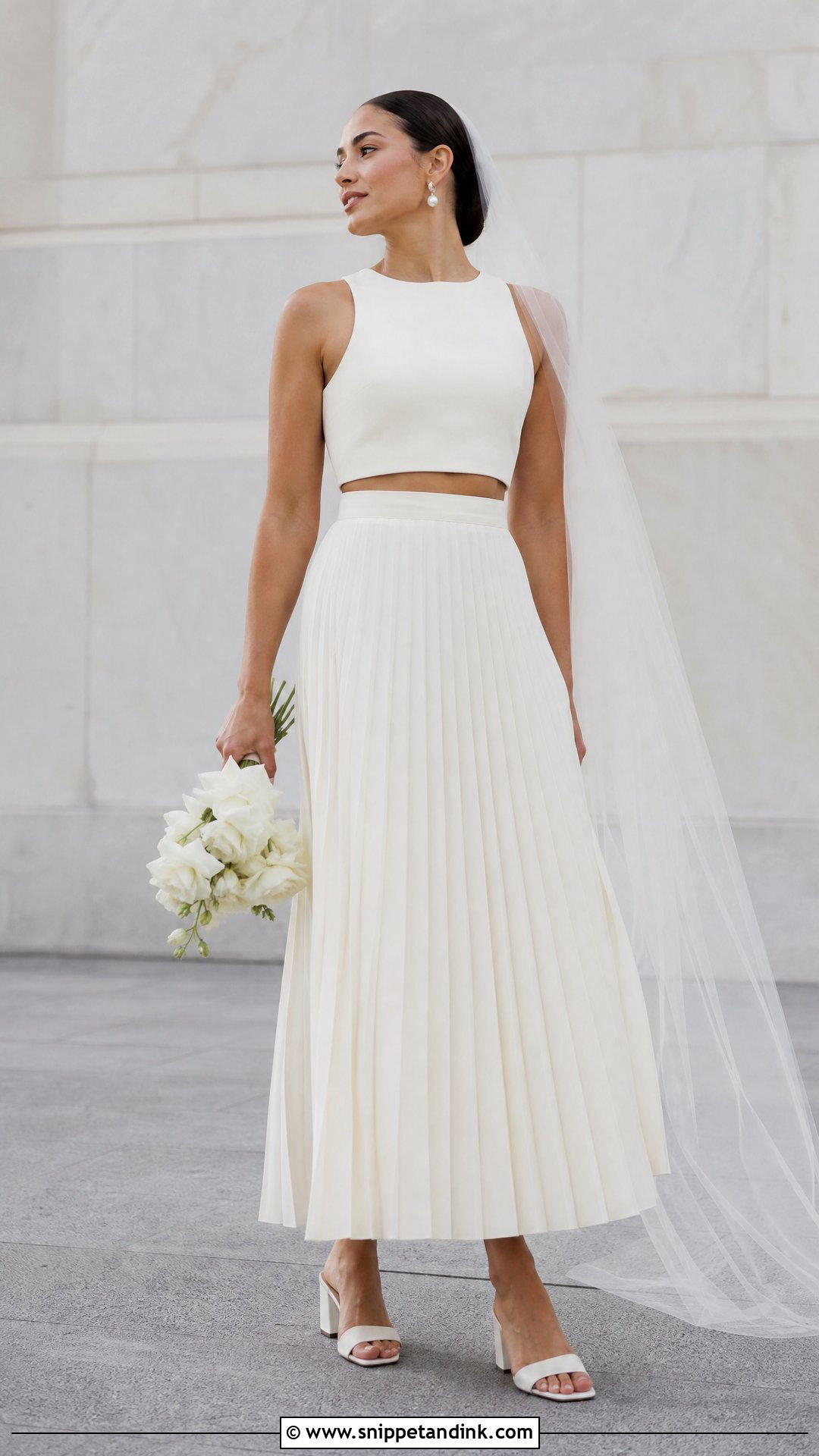
A two-piece gives you a fitted top and a pleated skirt you can style separately. A cropped top meeting the waistband gives subtle separation; a longer bodice more coverage. The skirt’s waistband carries all the pleats’ weight, so it needs a firm interfaced band, or it’ll roll and sag by evening. Block heels, pearl earrings and a sleek veil or hair bow complete it. Courthouses, rooftops and relaxed receptions suit it, and the pieces are easier to wear again separately later.
25. Pleated Reception Wedding Dress
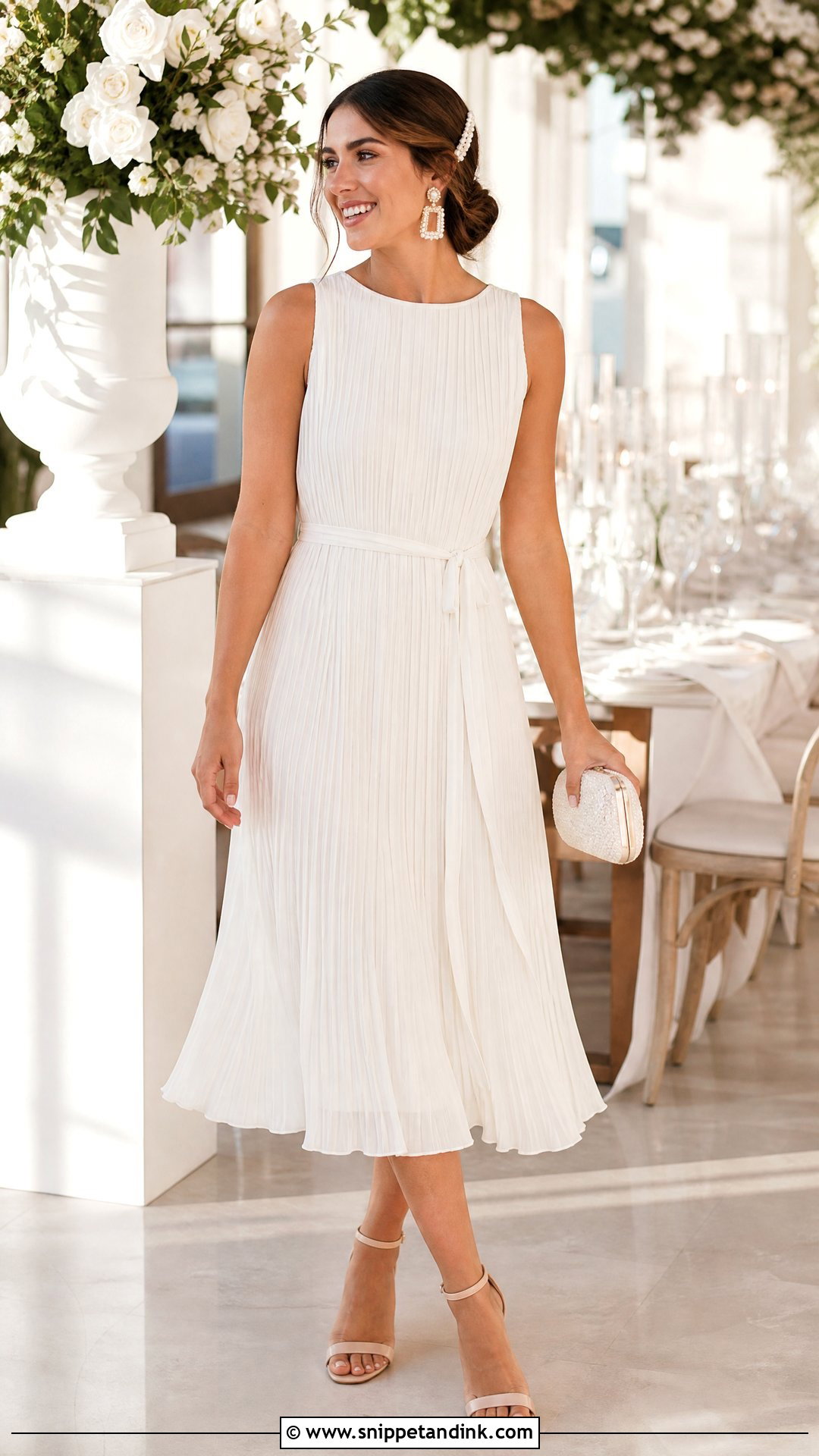
For the reception, pleats give movement while you dance. A pleated midi, mini or light sheath lets you move, mingle and sit comfortably. Satin looks chic, chiffon soft, organza playful. Pack the reception dress folded along its pleats, or hang it in a long bag, so it doesn’t arrive creased across the folds. Comfortable heels, statement earrings and a small clutch finish it, and swap the long veil for a clip, bow or pearl pins. It gives a second bridal moment without the drama of the ceremony gown.
Why Pleated Skirts Are Altered From the Top
With a plain skirt, a seamstress takes up the hem. With a pleated one, especially accordion or sunray pleating, cutting the hem can break the pleat pattern or spoil the finished edge. So a lot of pleated skirts are shortened from the waist instead, by lifting the whole skirt and re-attaching it higher on the bodice.
That takes more time and costs more than a standard hem, so mention pleats when you book alterations, and leave a little extra time between fittings. I’d also wear your exact wedding shoes from the first fitting onwards. On a pleated gown, even a centimetre of difference in heel height changes how the folds hang at the floor.
Steaming Pleats Without Flattening Them
Pleats need a lighter hand than plain fabric. Hang the gown a day or two before the wedding so creases from travel drop out on their own. If you steam, hold the steamer a short distance away and move it down the length of each pleat, never across, so you don’t set a fold the wrong way.
- Never press heat-set synthetic pleats with an iron. Too much heat can flatten them for good.
- For crushed pleats in silk or satin, a professional press is safer than a home attempt.
- Pack the gown hanging, or with tissue tucked between the folds of the skirt.
- Before photos, run your fingers down each pleat to realign it. It takes a minute and makes a visible difference.
Soft Folds or Sharp Ones? Matching Pleats to Your Day
Pleats can make a gown soft, structured, romantic or modern, and the fabric decides which. Chiffon pleats are light and relaxed; satin and organza give a crisper finish. The venue, season and how much you want to move matter as much as the style. For something classic, an A-line, ball gown or long-sleeve design suits; for something modern, a mini, two-piece or minimal gown. Before you choose, sit down in the dress and stand up again in front of a mirror. The way the pleats fall back into place tells you more about the gown than any photo.
You'll Like These Ideas:







Leave a Reply