
Pink is the color I reach for most at bridal appointments, and not because it’s safe. It’s the only family of shades that can sit almost invisibly on the nail or carry chrome, pearls and glitter without fighting a white or ivory gown. The catch is that pink is also the easiest color to get slightly wrong. A shade that looks soft in the bottle can turn chalky next to an ivory sleeve or go sugary under warm reception bulbs. Below are twenty sets I’d happily put on a bride, with notes on how each one wears, which shapes it needs, and where it tends to go wrong.
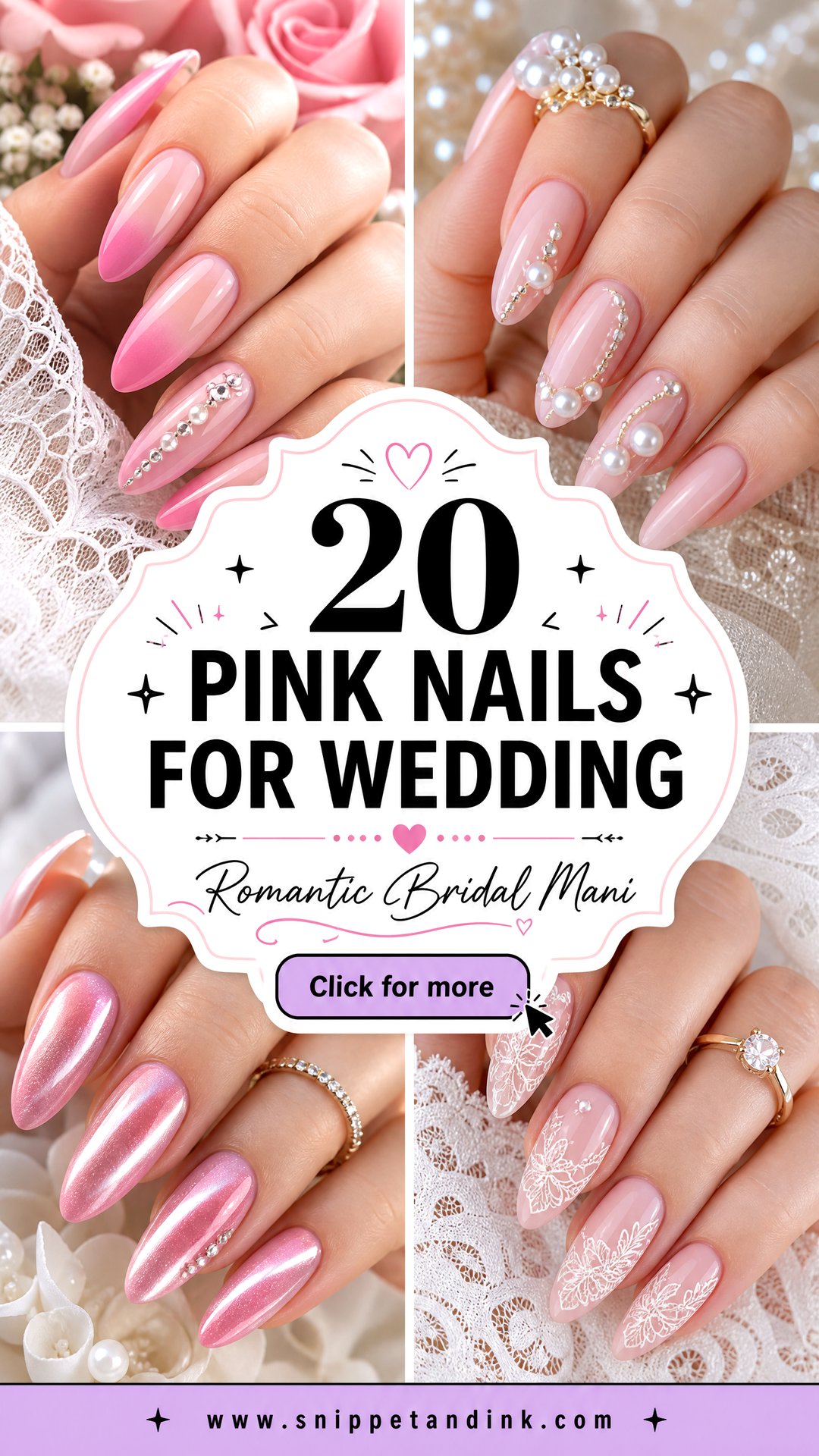
Swatching Pinks Against Your Own Hand and Your Dress
Before a single coat goes on, I want to see the pink next to your skin and your gown fabric. Bottle color lies; the same polish can look peachy on one hand and lilac on another, depending on undertone and how much redness shows at the knuckles.
- Bring a fabric swatch or wear something in your dress color to the trial. Ivory warms pink up; bright white makes it look cooler and sometimes chalky.
- Look at the swatches in daylight near a window, then again under warm indoor light. Reception bulbs are usually warm and will push pinks toward peach.
- Hold your hand flat and then cupped around a pretend bouquet. A pink that disappears flat can look pale and washed out when the hand is turned.
- Check your rings on. Rose gold, yellow gold and platinum each pull the same pink in a different direction.
I usually narrow it to two shades at the trial and let you wear one on each hand for a couple of days. Living with it in your own lighting tells you more than any swatch stick.
1. Soft Pink French Tip Wedding Nails
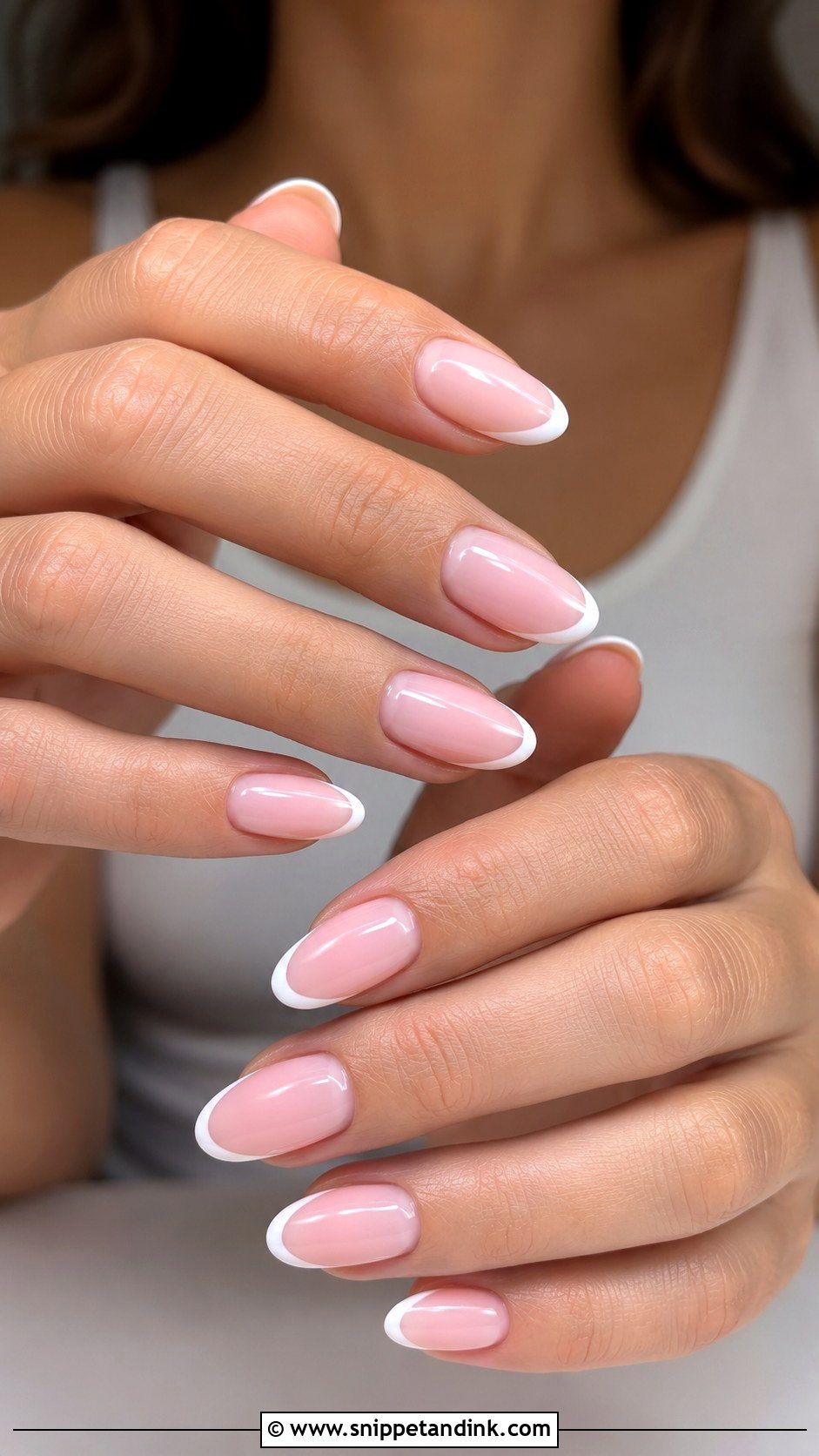
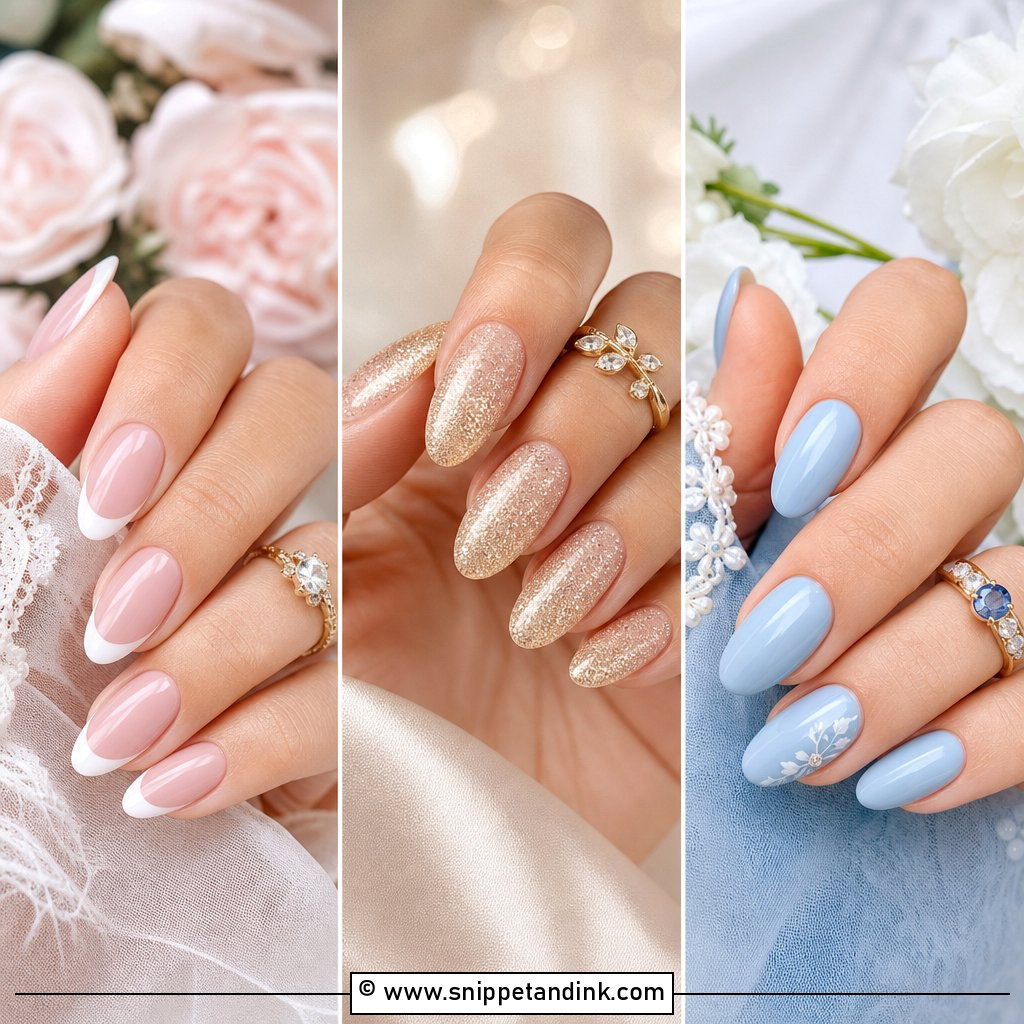
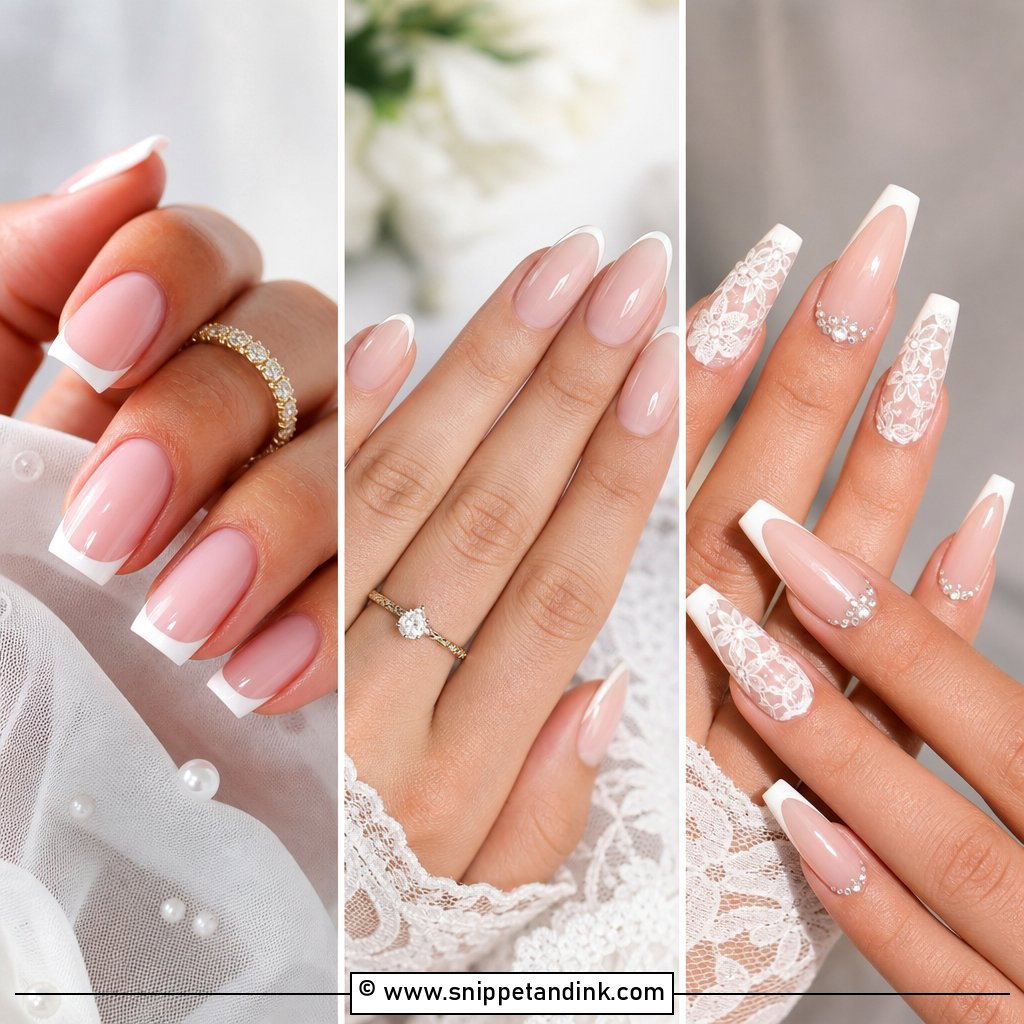
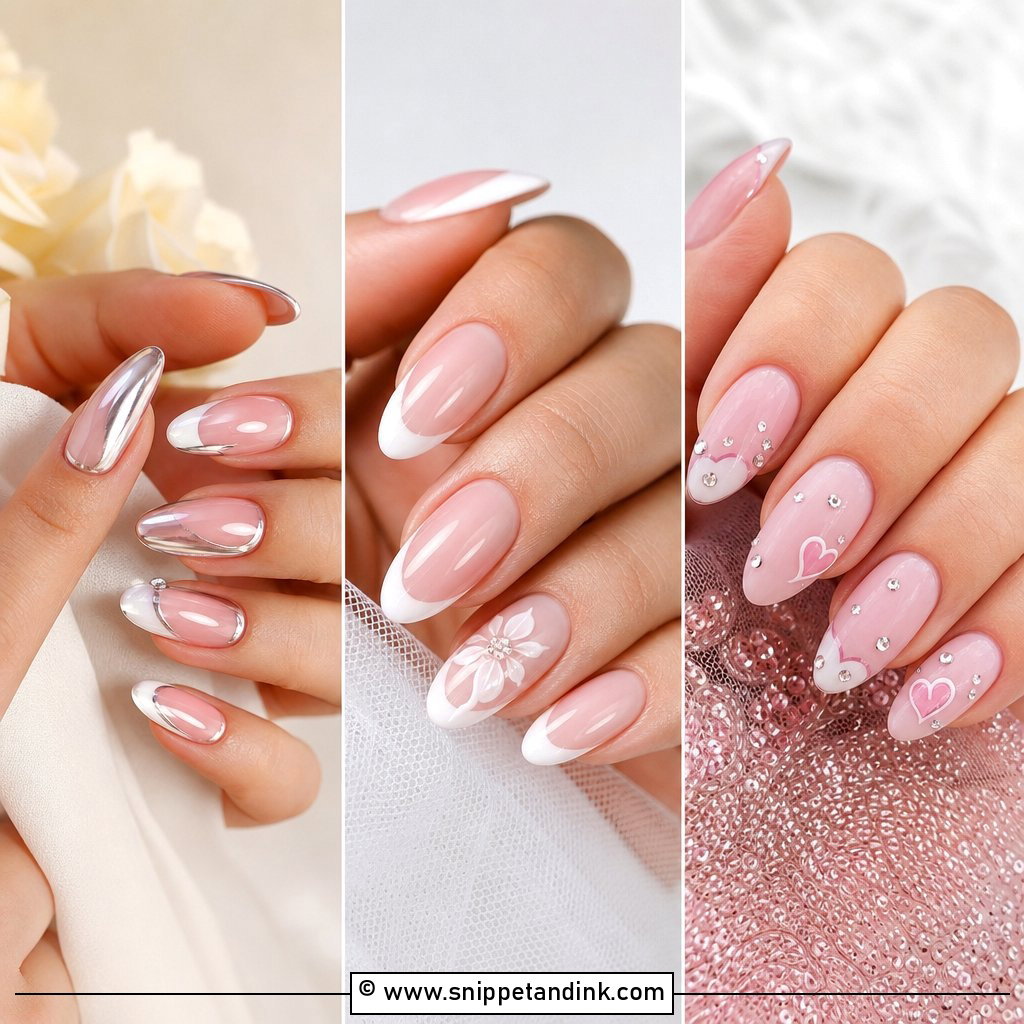
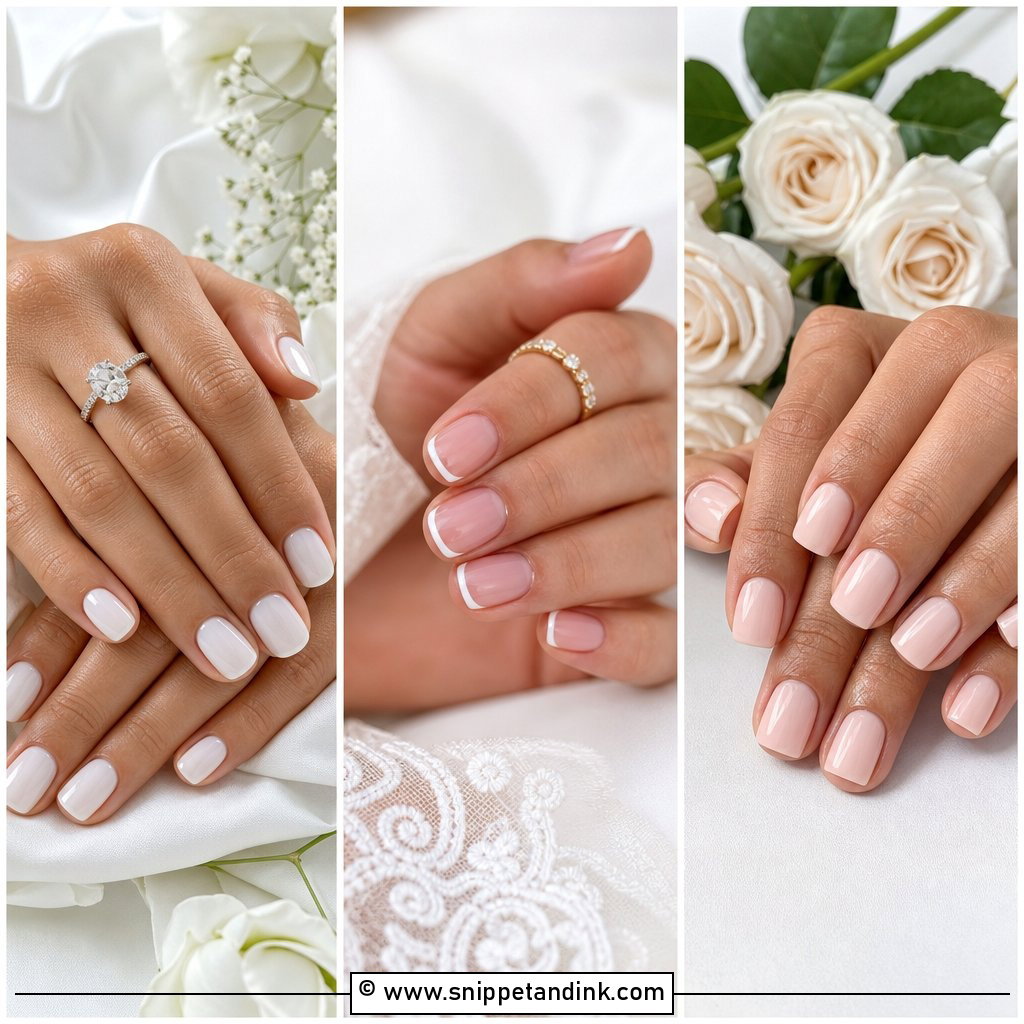
A soft pink French is the set I get asked for most, and the work is all in the smile line. I keep the white tip thin, usually no deeper than the free edge, because a thick band shortens the finger in ring close-ups. Under it, a sheer blush lets a little natural nail show, while a creamier pink hides ridges and staining if your nails aren’t in great shape. Almond flatters long fingers; short squares stay tidy if you’ll be lifting boxes and hugging guests all day. Finish with a high-shine gloss so the white stays crisp.
2. Milky Pink Wedding Nails
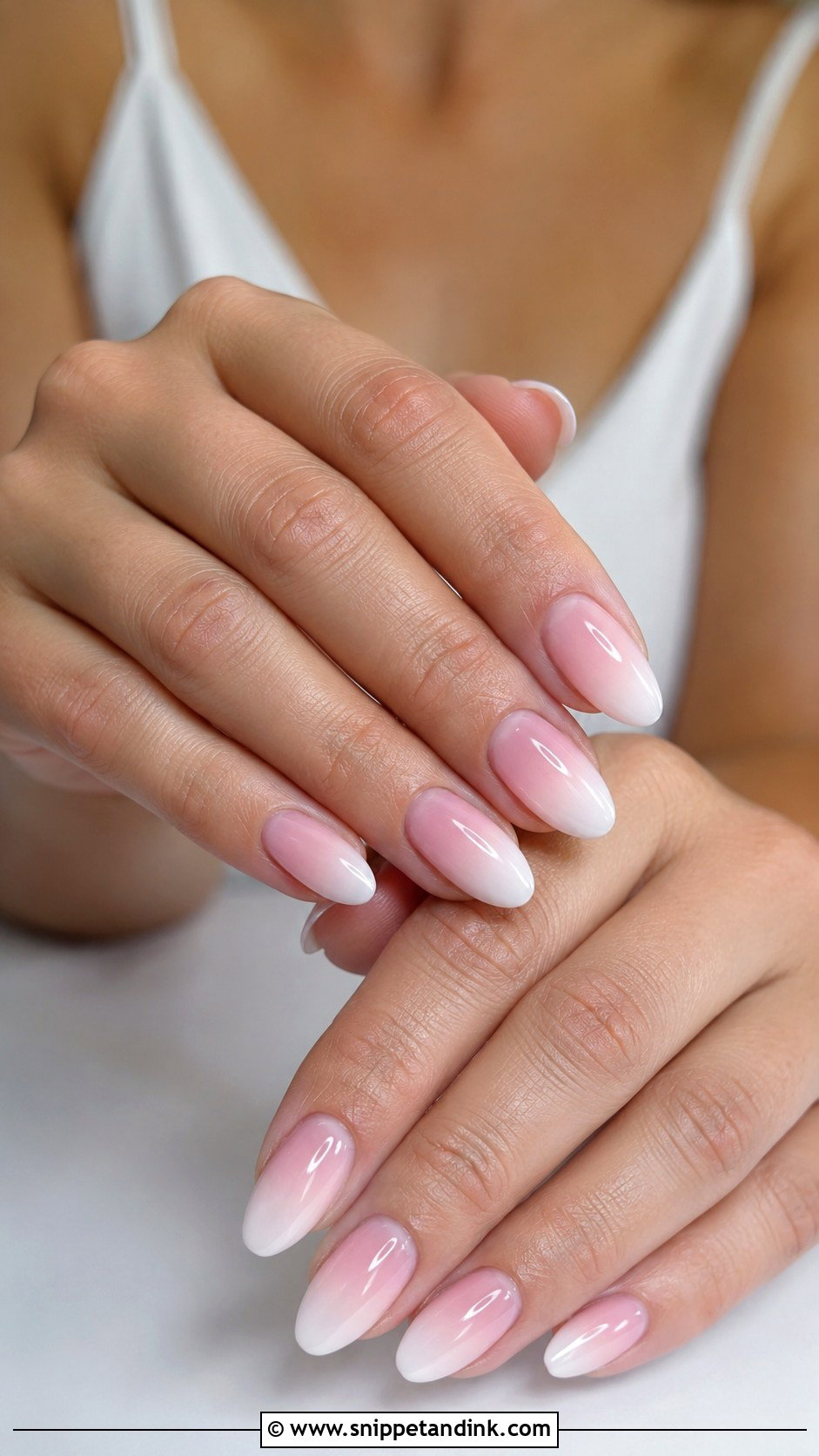
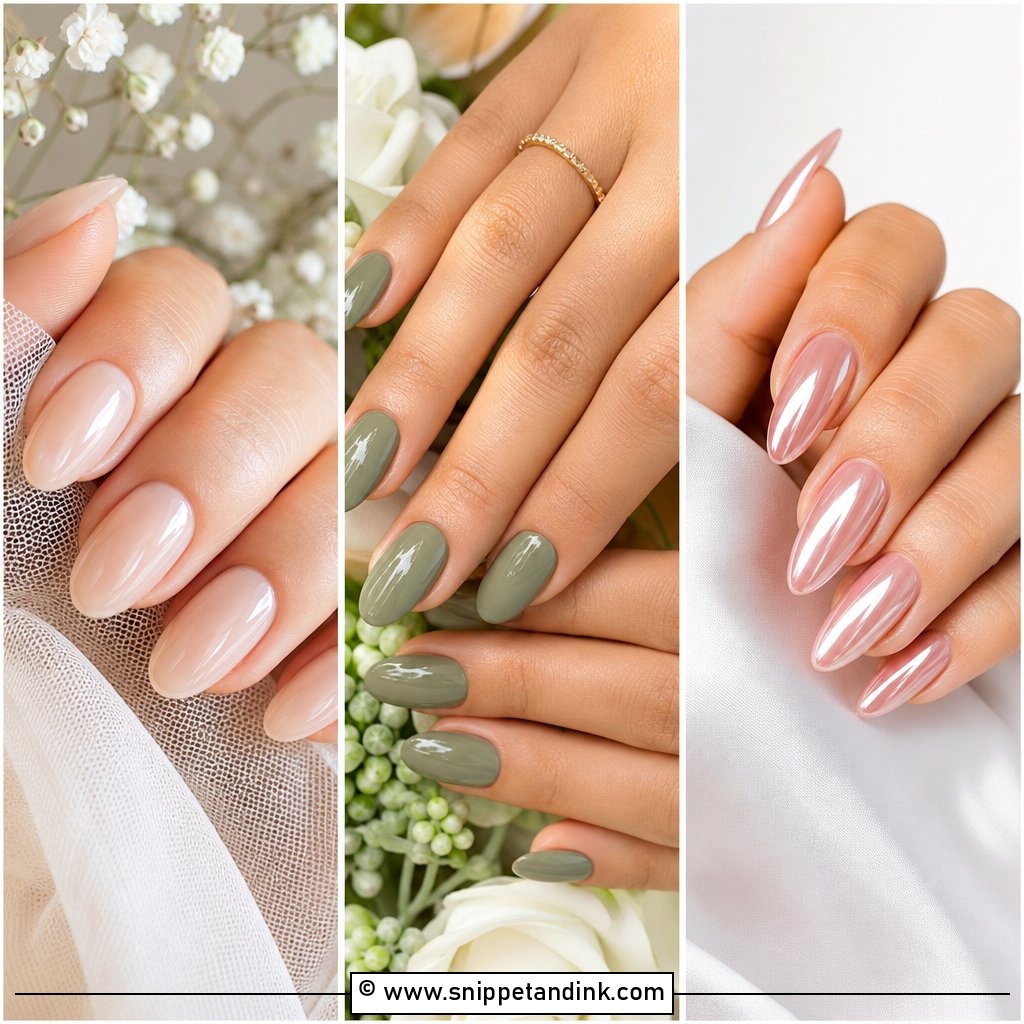
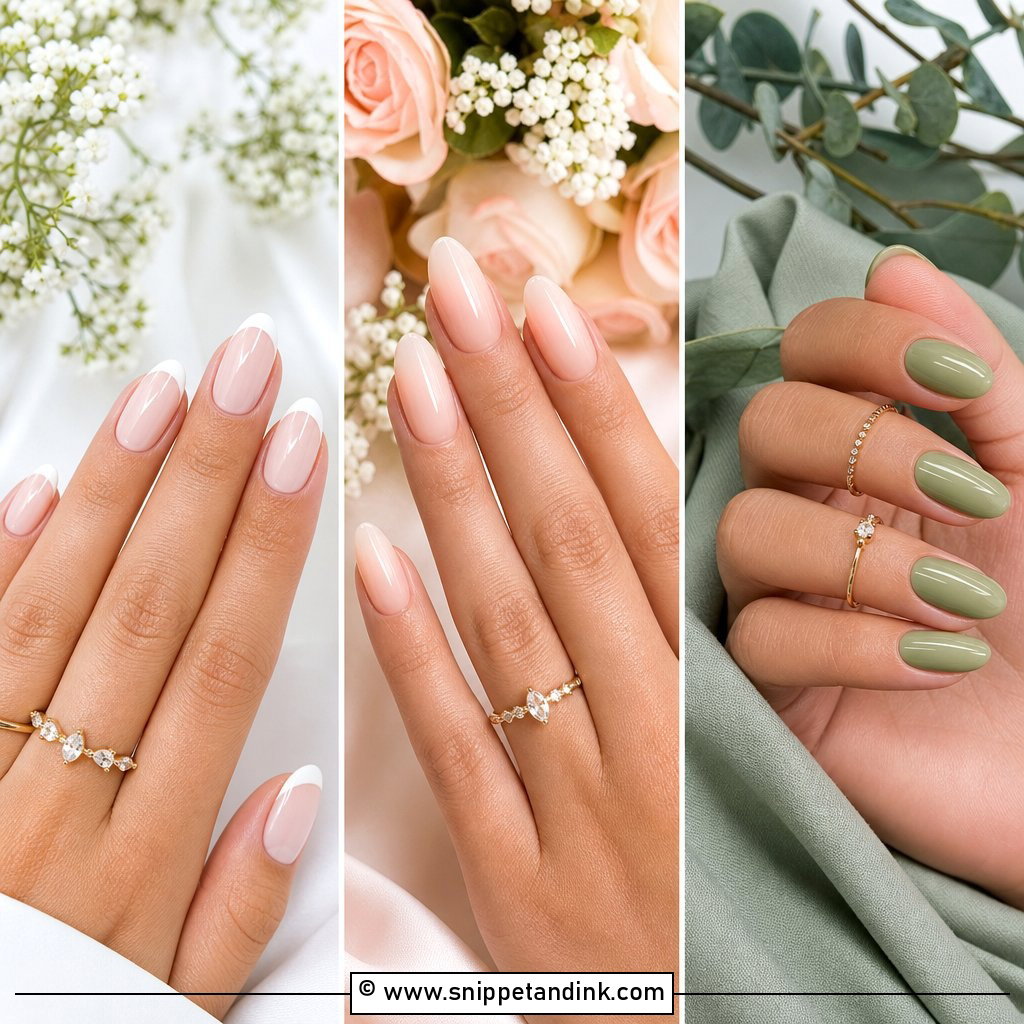
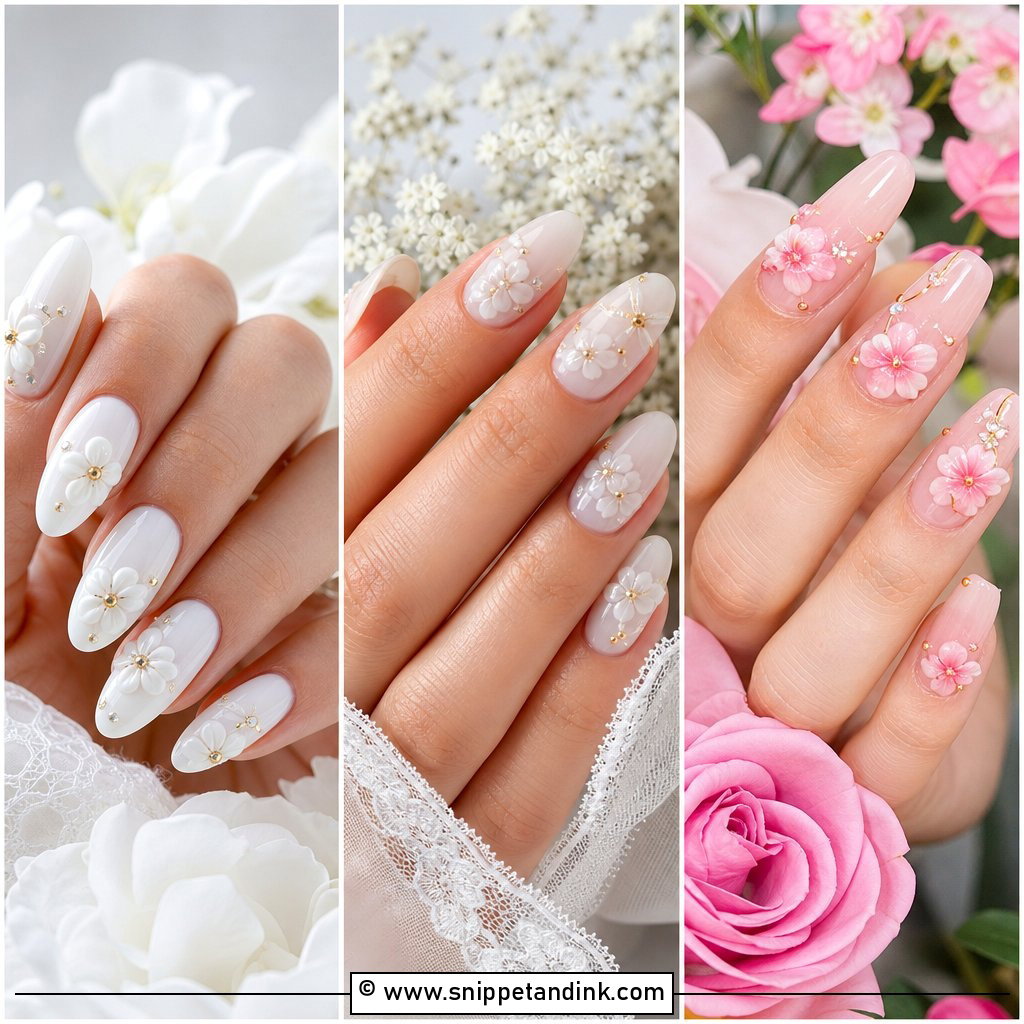
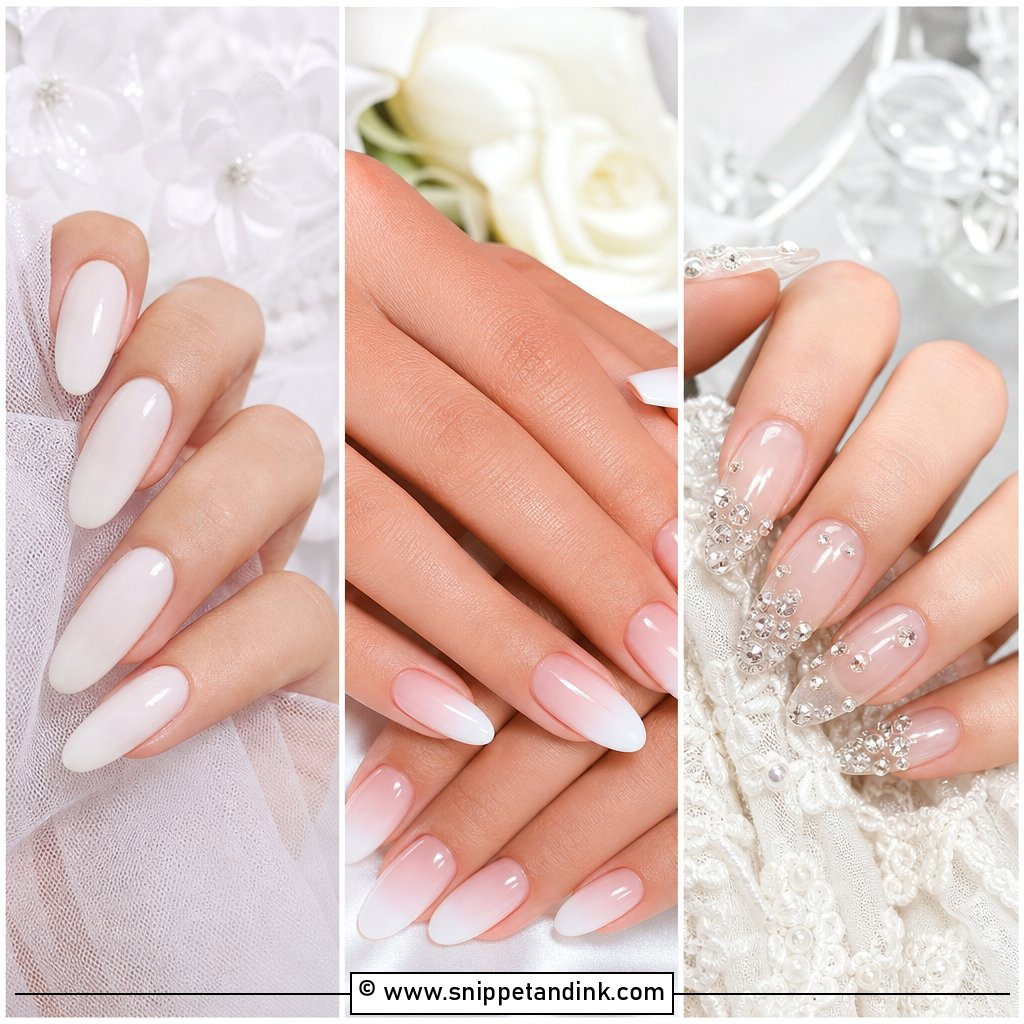
Milky pink wedding nails are my answer when someone says they want their own nails, only better. The color sits between sheer pink and soft white, so it blurs uneven tips and yellowing without reading as paint. Two thin coats look cleaner than one thick one; a heavy milky layer tends to streak at the sidewalls. It suits satin, lace and crepe equally, which is why I often put the whole bridal party in it. Short oval or squoval keeps it believable, and a glossy top coat gives the creamy depth people are actually picturing.
3. Pink Chrome Wedding Nails
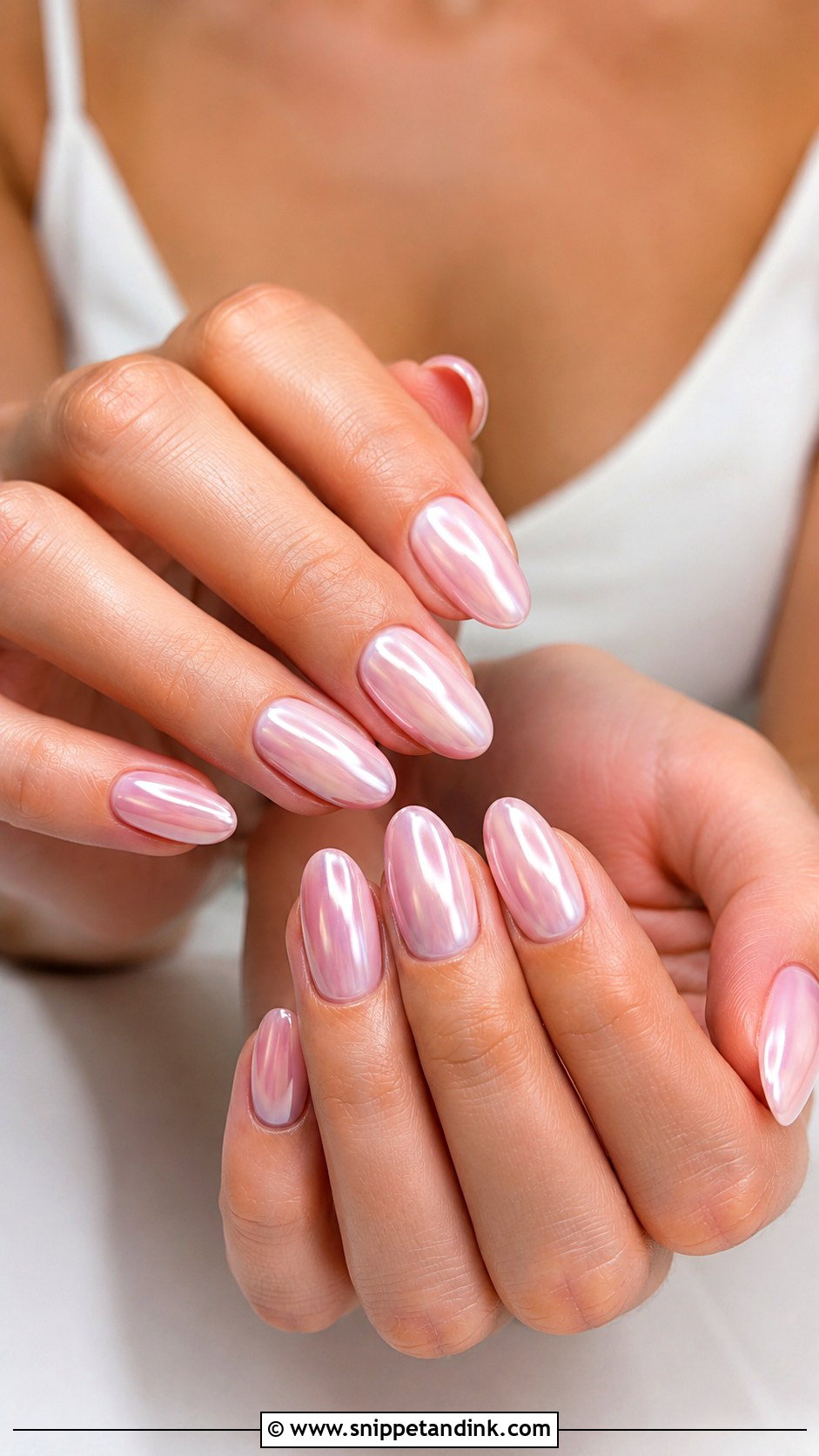
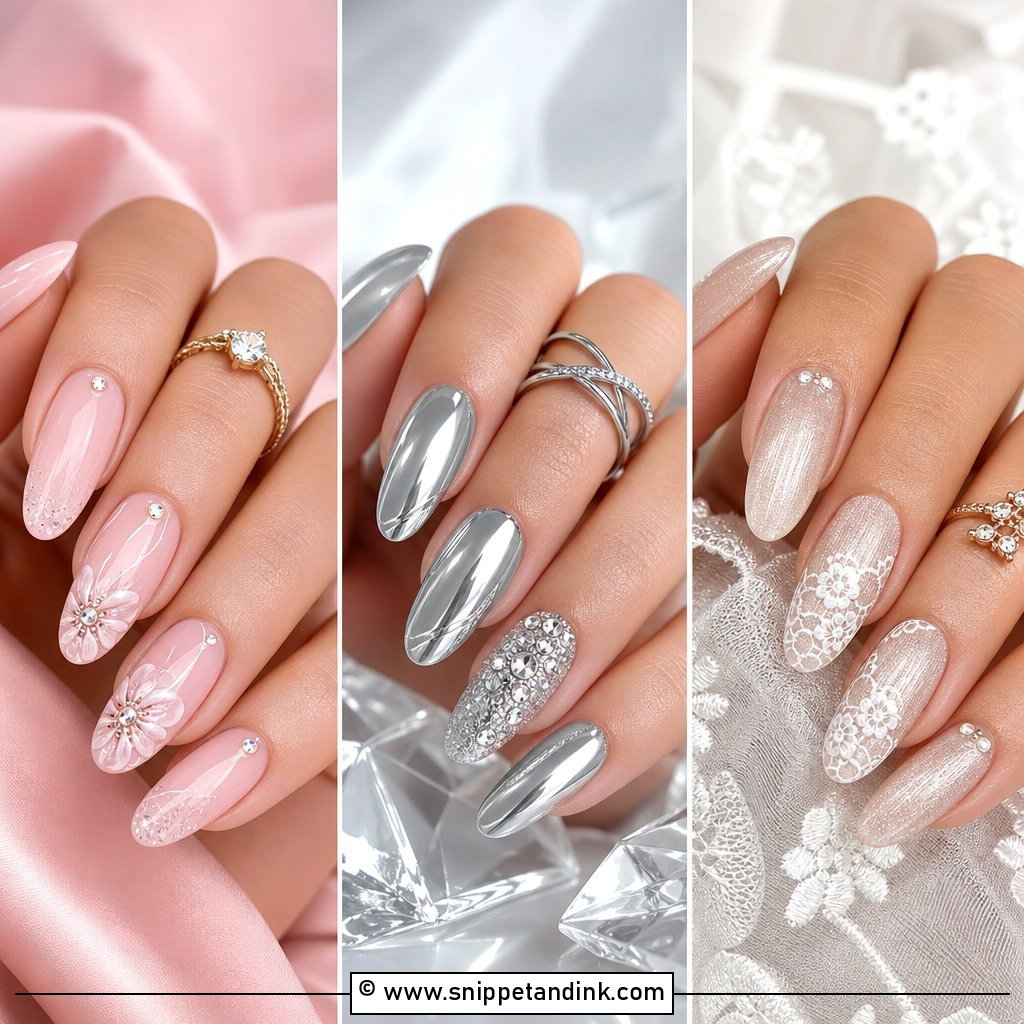
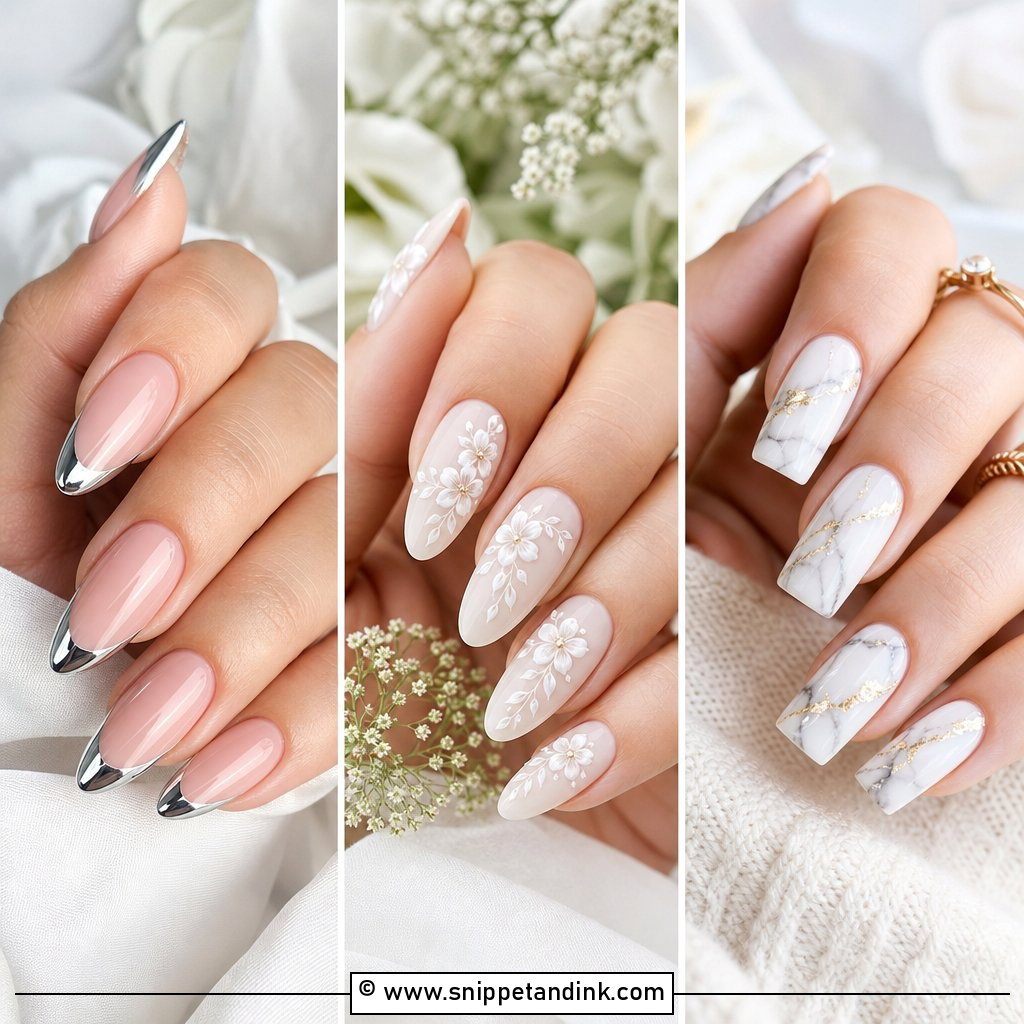
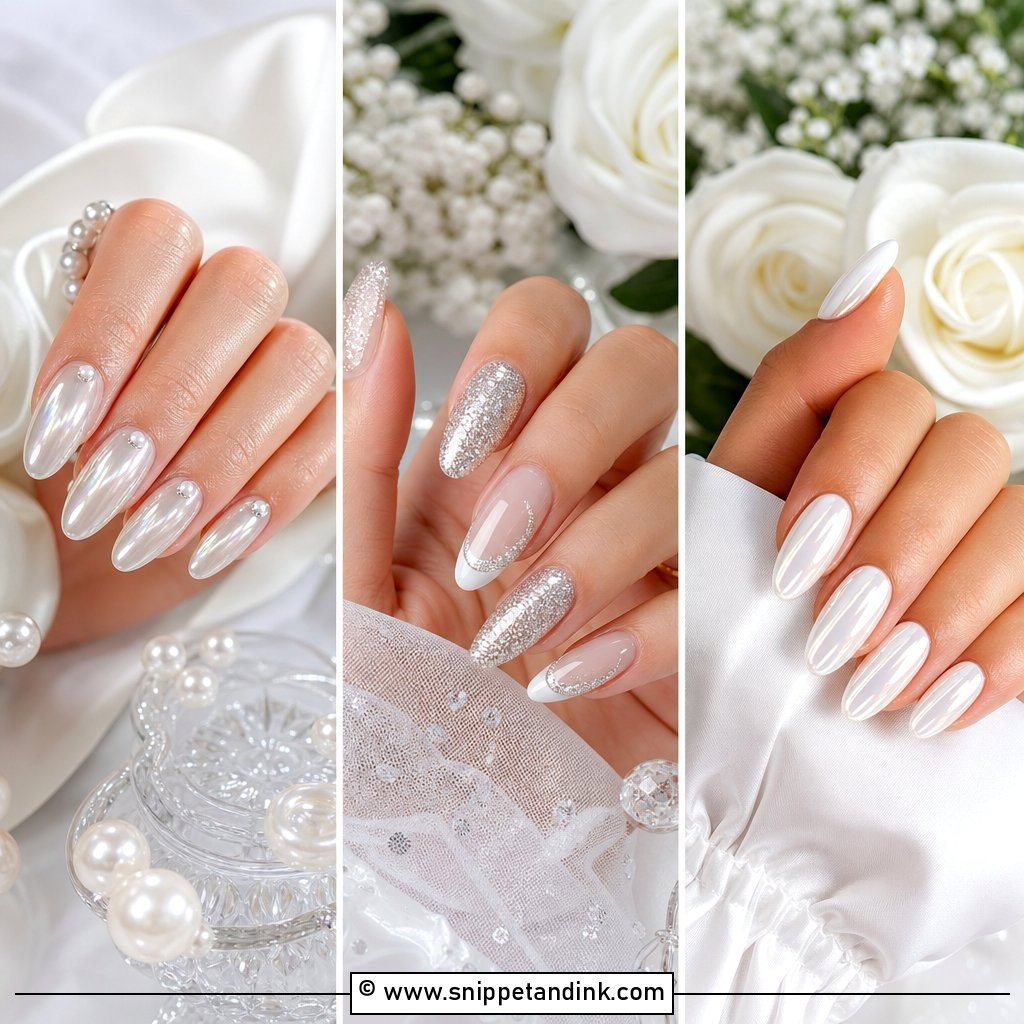
Chrome over pink gives you shine without the grit of glitter. I rub a fine chrome powder onto a no-wipe top coat over a pale blush base, and the result looks glazed rather than metallic. Rose pink underneath warms it up if your jewelry is yellow gold. Chrome shows every bump, so I’d skip it on nails with deep ridges unless you’re happy with a builder gel layer first. Almond and oval shapes let the light roll across the curve evenly; keep everything else plain.
4. Blush Pink Almond Wedding Nails
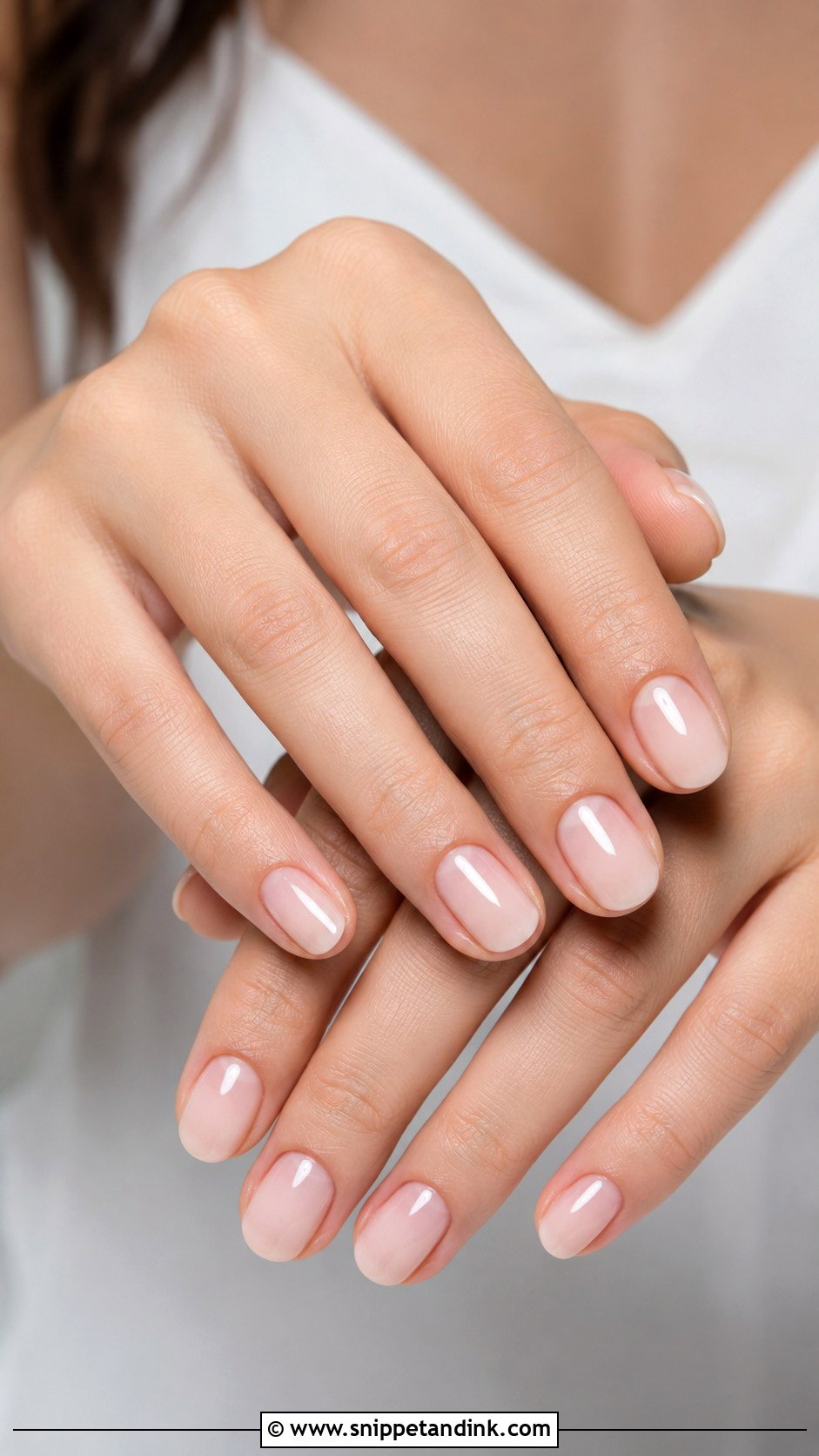
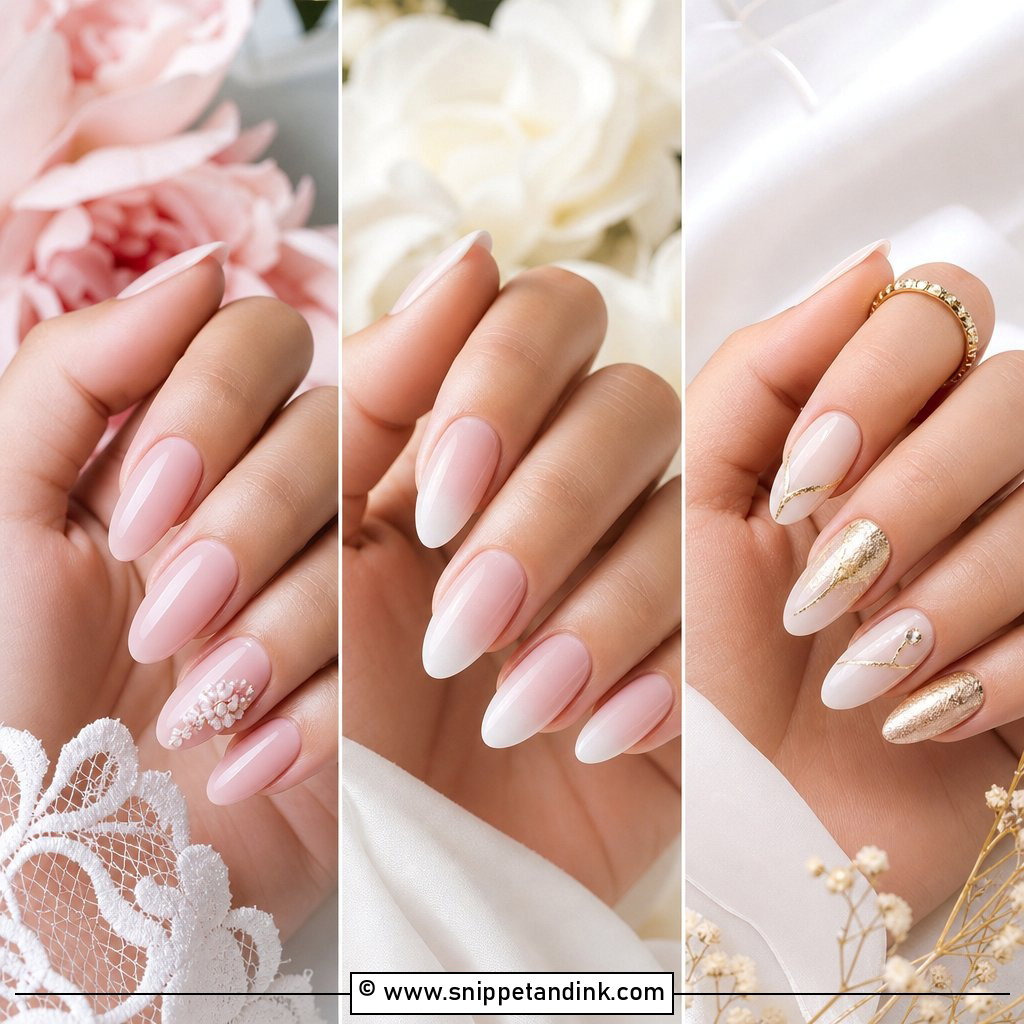
Almond is the shape I suggest when a bride wants longer-looking fingers without committing to real length. The taper draws the eye toward the tip, and a blush color keeps that line soft. The one thing I check is the sidewall: if your nails grow narrow or fan outward, a true almond can look pinched, and a softer oval reads better. Opaque blush gives a finished salon look; sheer blush is kinder as it grows out. Gloss is classic, though a satin top coat looks very modern with a matte crepe dress.
5. Pink Ombre Wedding Nails
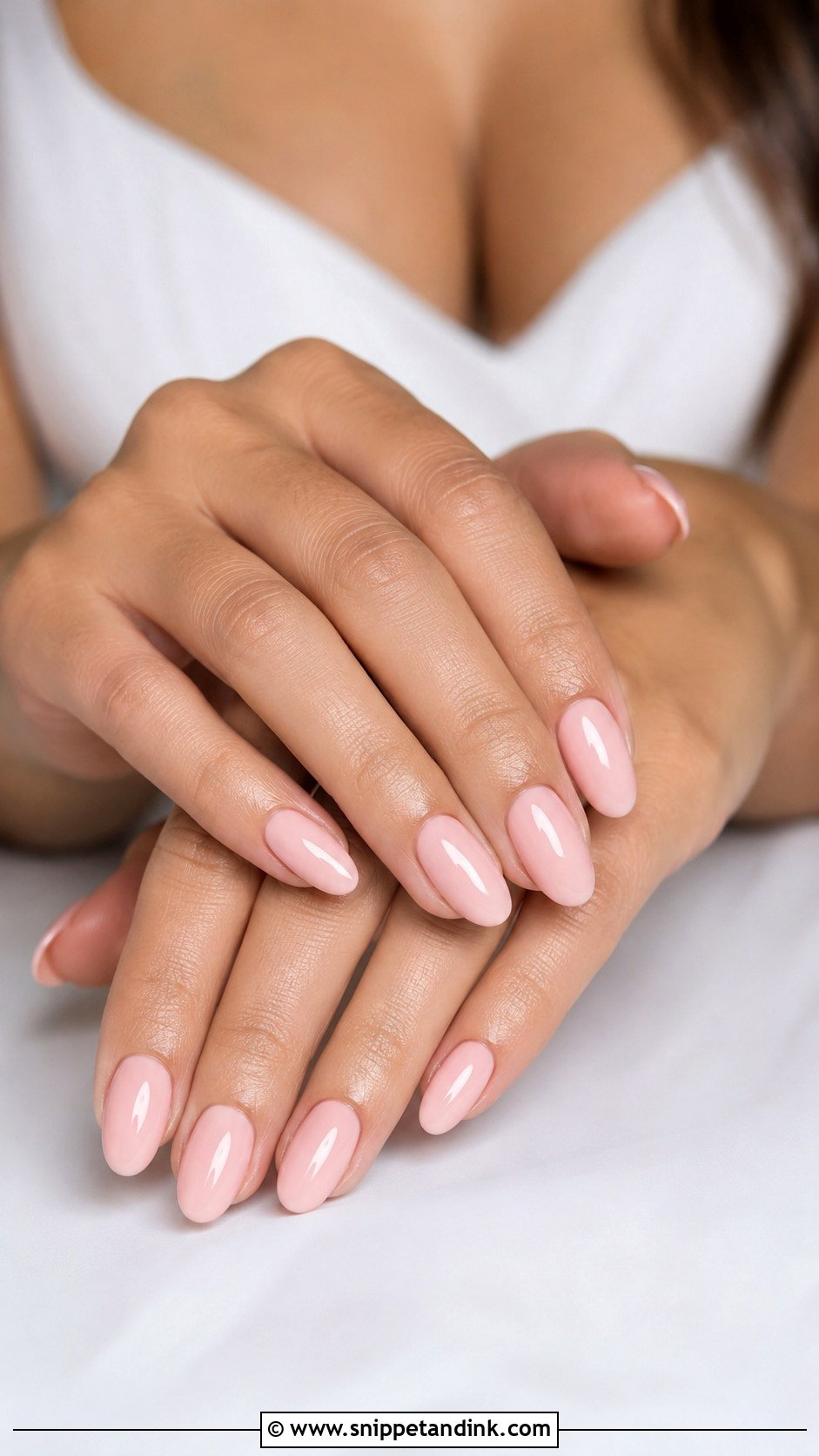
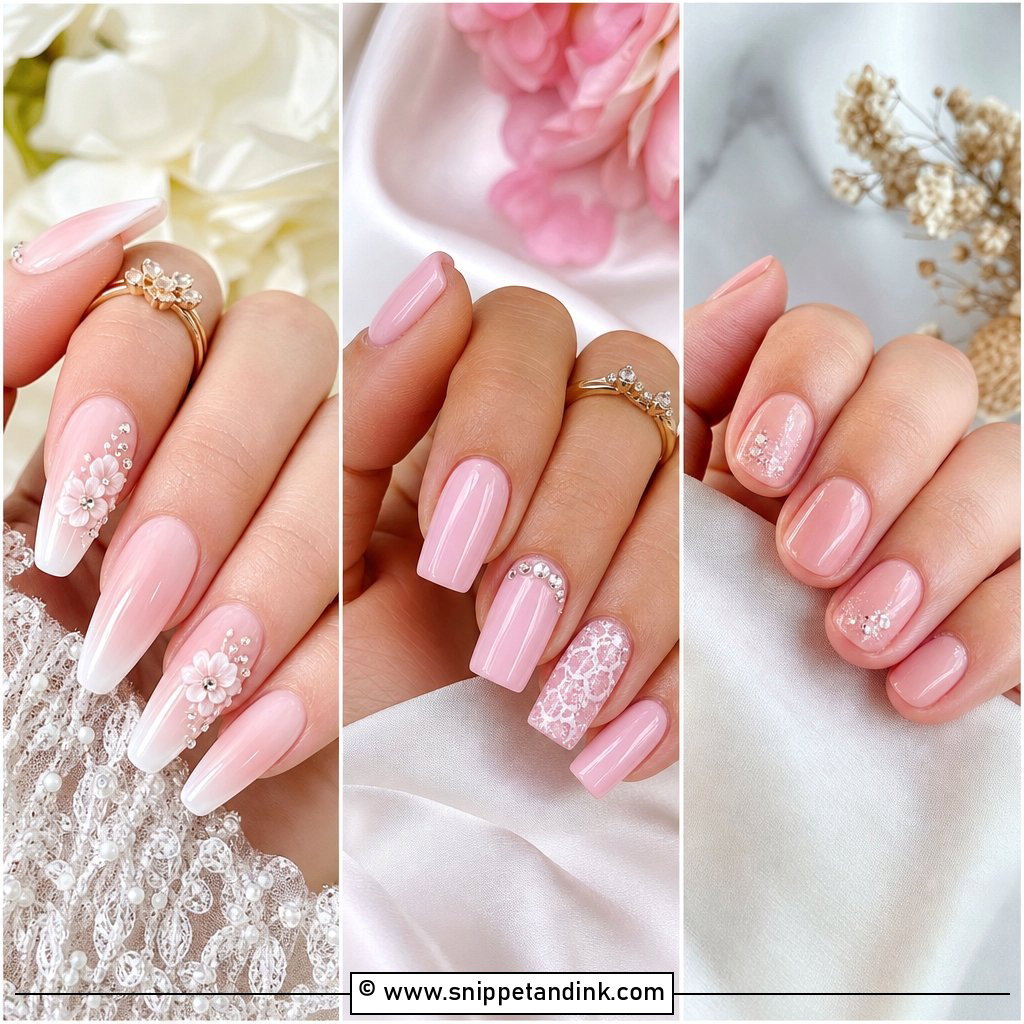
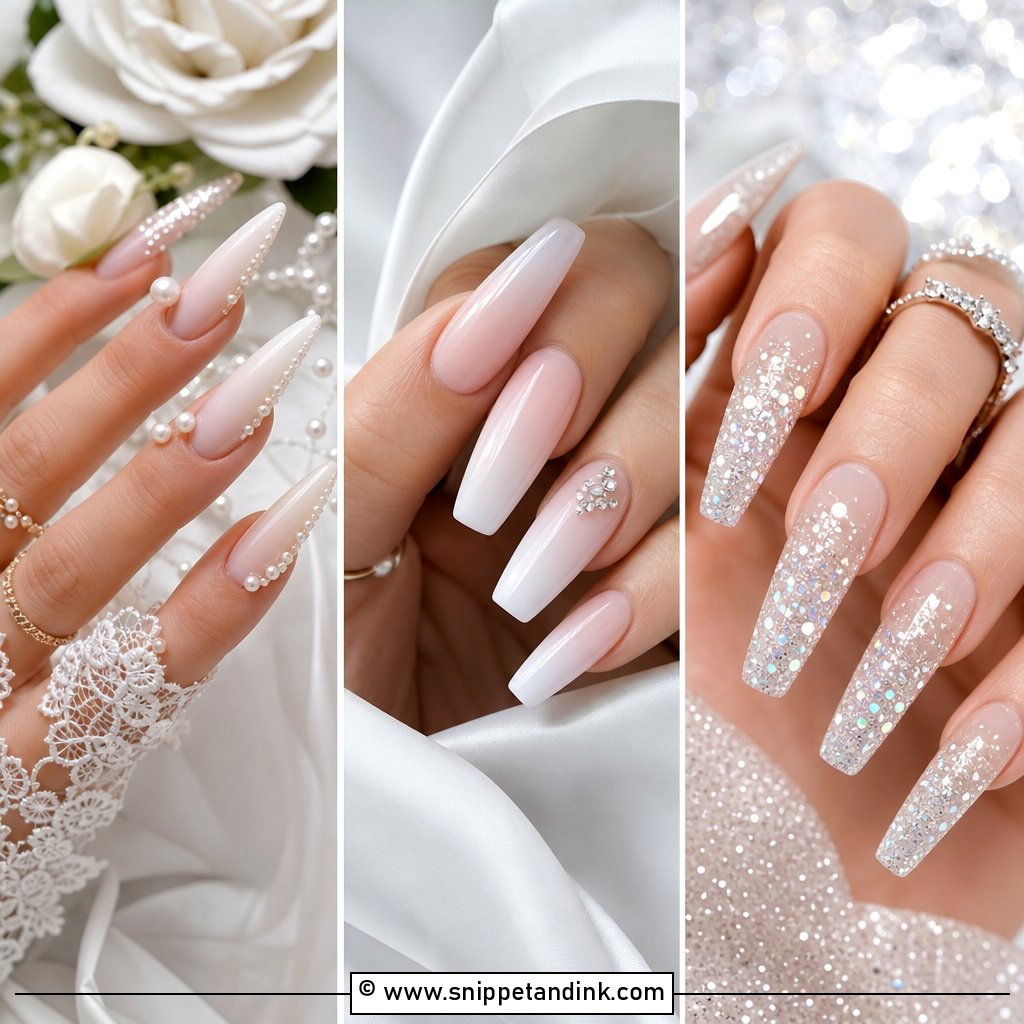
An ombre starts with milky white or pale nude at the cuticle and drifts into pink at the tip. I build it with a sponge or a soft brush in thin passes, because one heavy pass leaves a visible stripe where the colors meet. It’s a good route for anyone who likes the idea of a French but finds the hard line too formal. The fade needs some canvas, so medium almond and coffin show it best; on very short nails I shorten the gradient rather than squeeze it. Gloss melts the blend together.
6. Baby Pink Wedding Nails
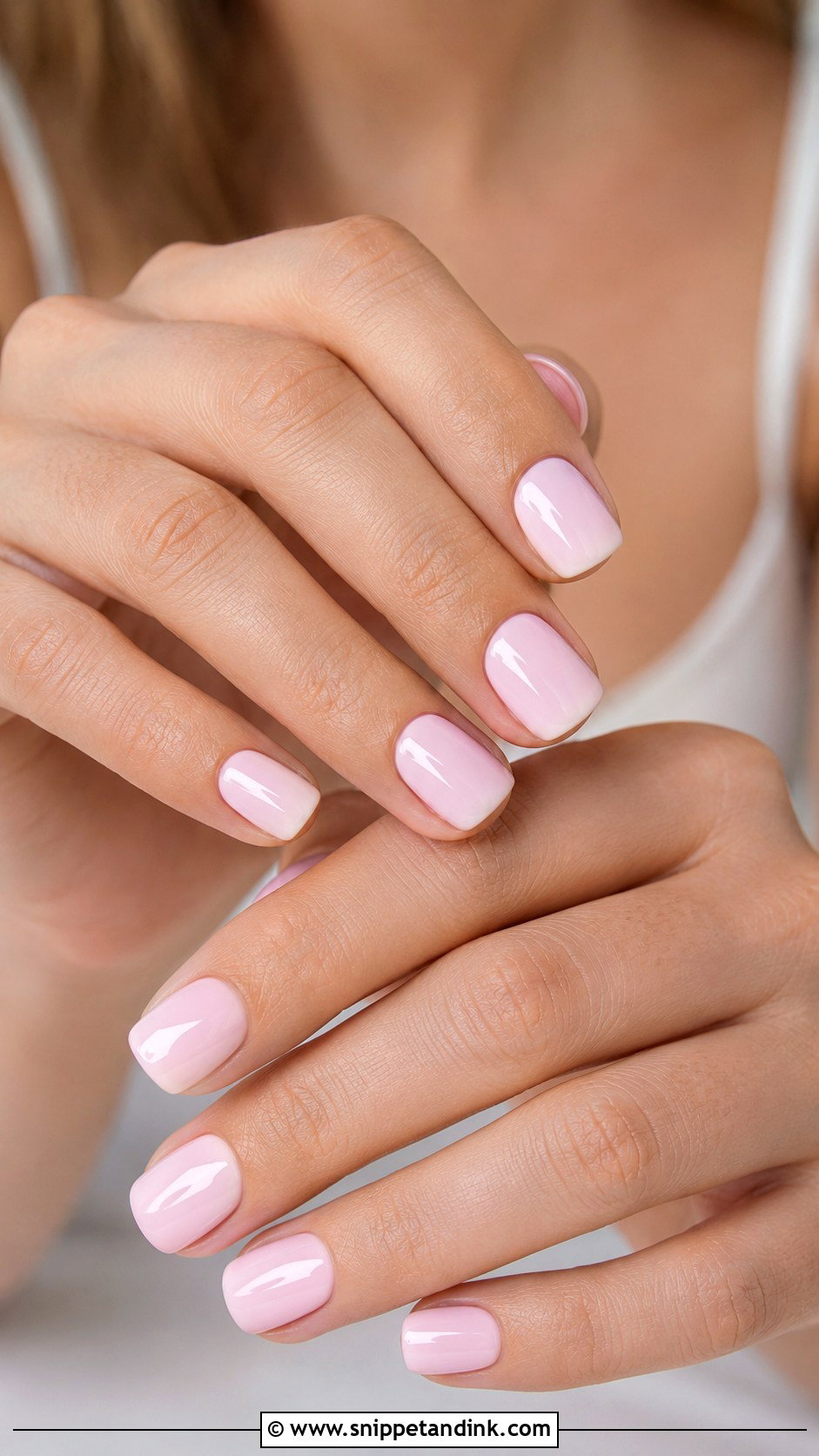
Baby pink is sweeter than blush, and I’d be honest about who it flatters. On cool and neutral skin it looks fresh; on deeply warm or olive skin, a true pastel can sit on top of the hand and look slightly chalky, so I’d test it first. It echoes lace, tulle and pearls nicely, and it’s a natural fit for spring, though it works year-round on a clean shape. A creamy formula covers fully in two coats; a sheer one is more forgiving when it chips at the edge.
7. Pink And White Wedding Nails
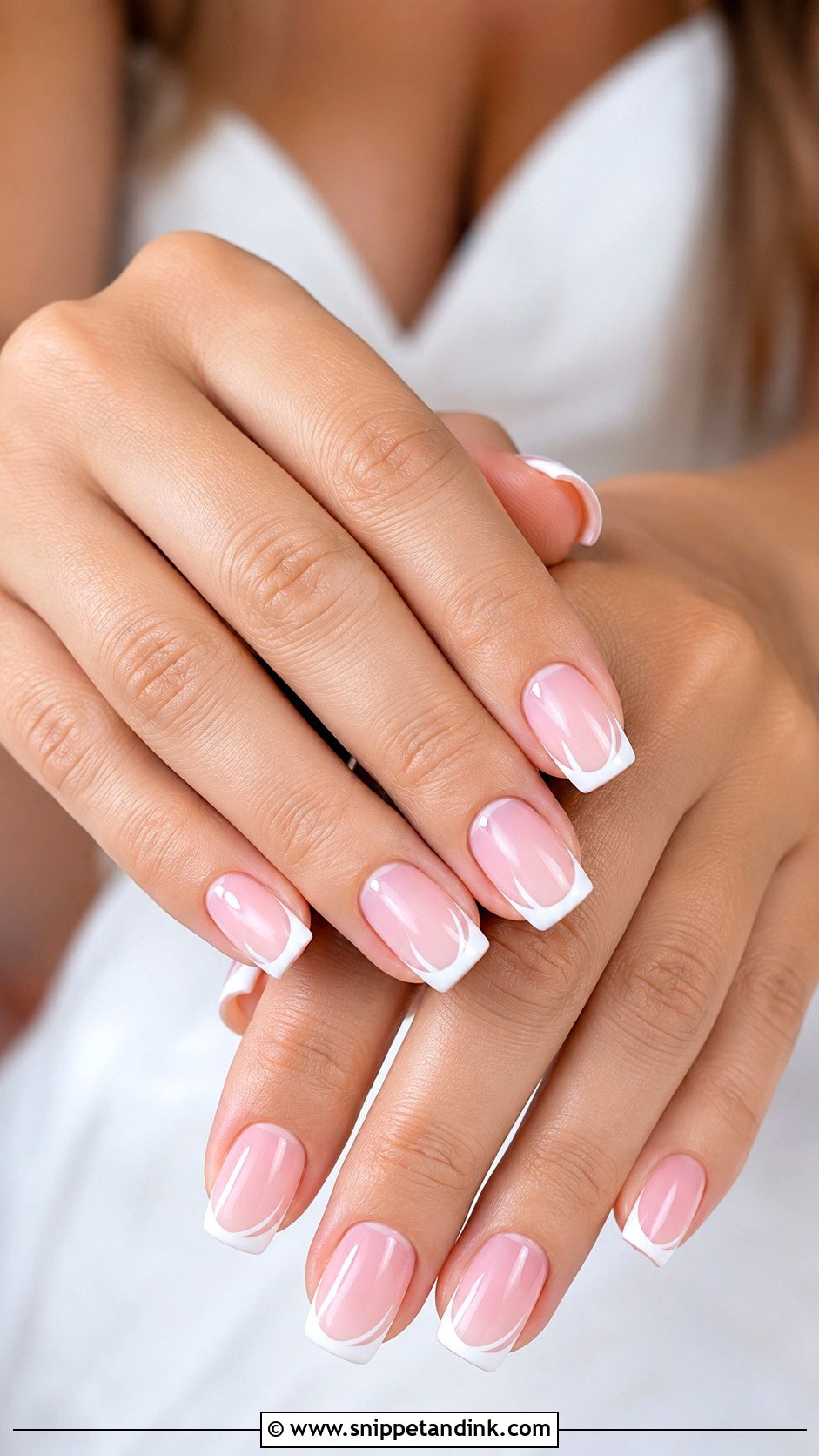
Pink and white can mean a French, a fade or a pink base with fine white details, and I ask brides which one they mean before we start, because the photos look very different. For a modern take, I’d swap the chunky white tip for a hairline French or tiny white dots near the cuticle. The pink matters more than the white here: a pink that is too cool against warm skin makes fingers look red at the knuckle. Bring two or three shades to your trial and look at them in daylight before deciding.
8. Pink Pearl Wedding Nails
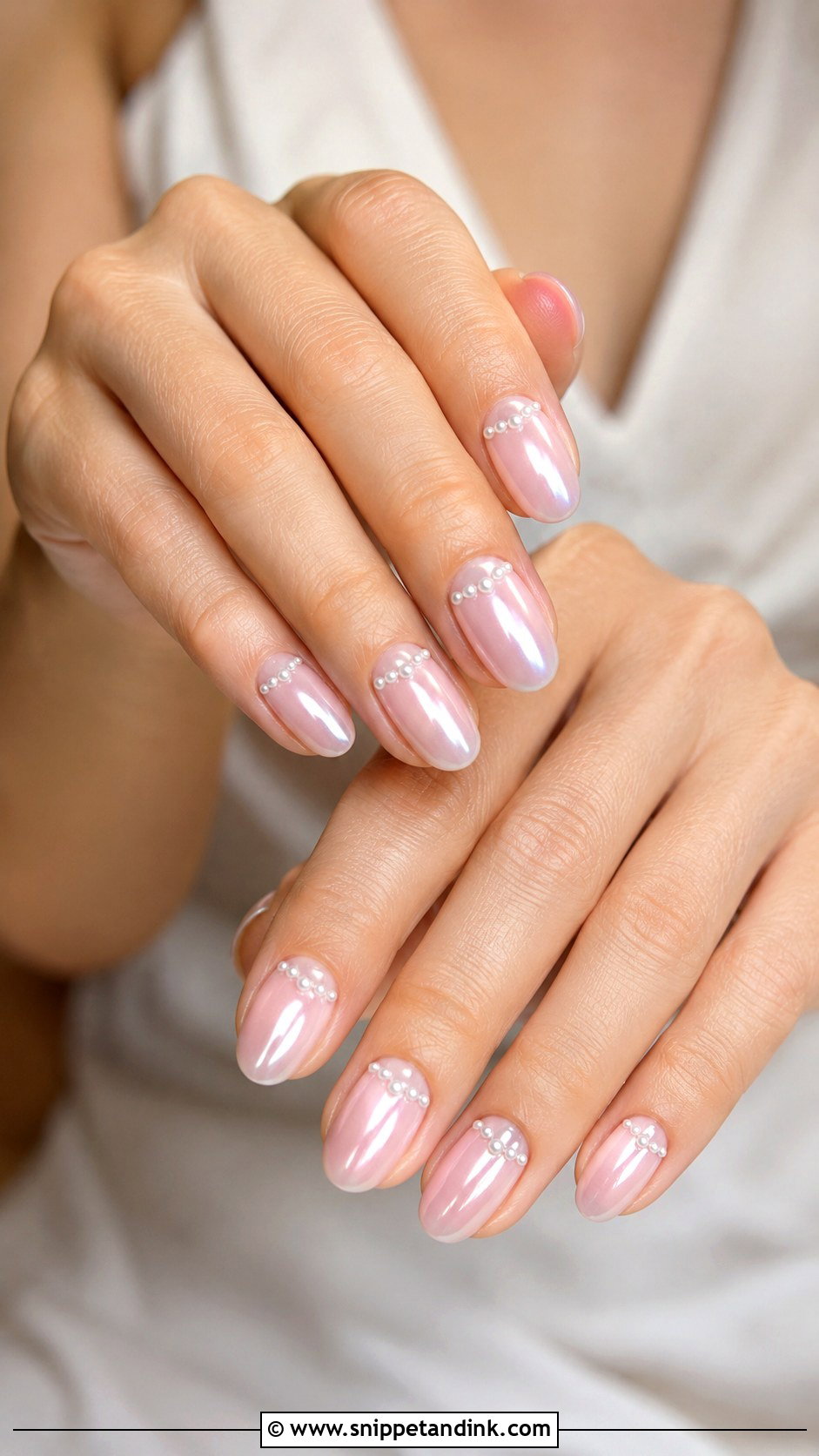
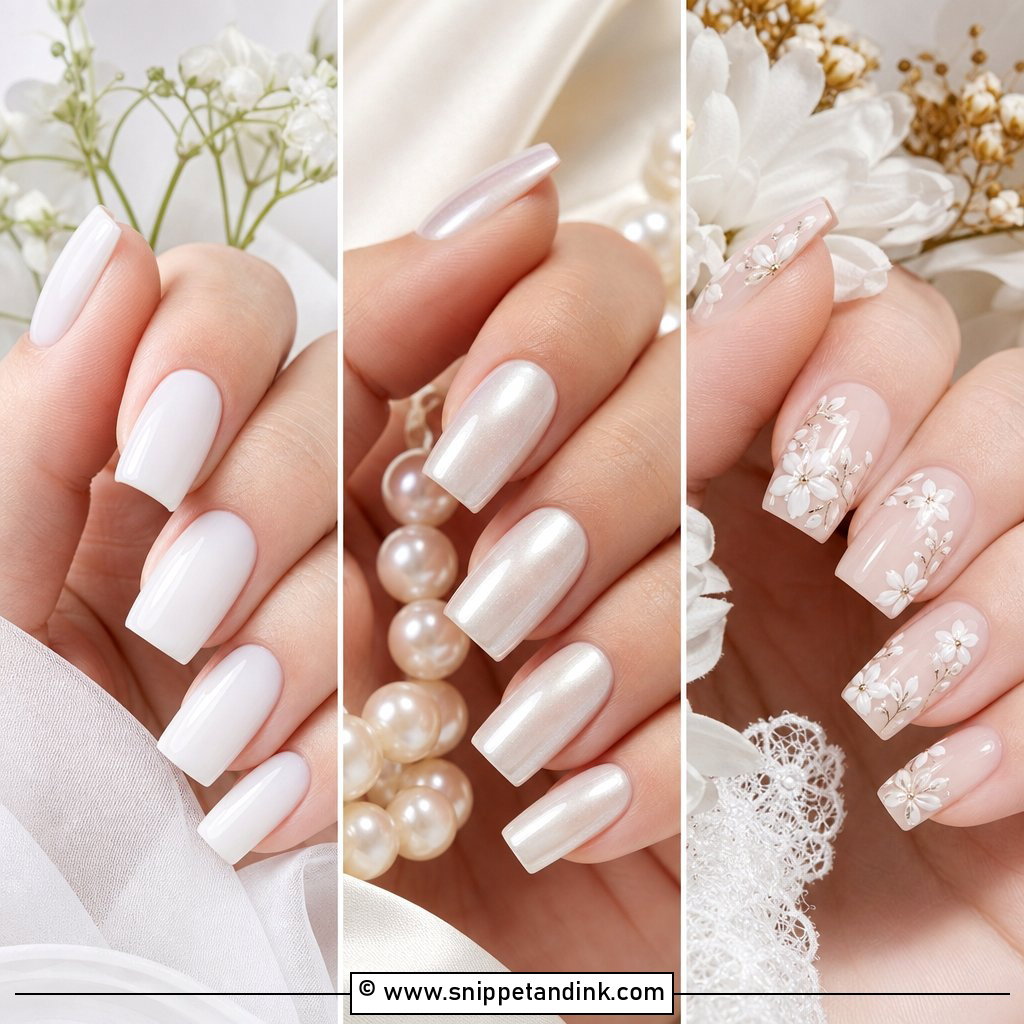
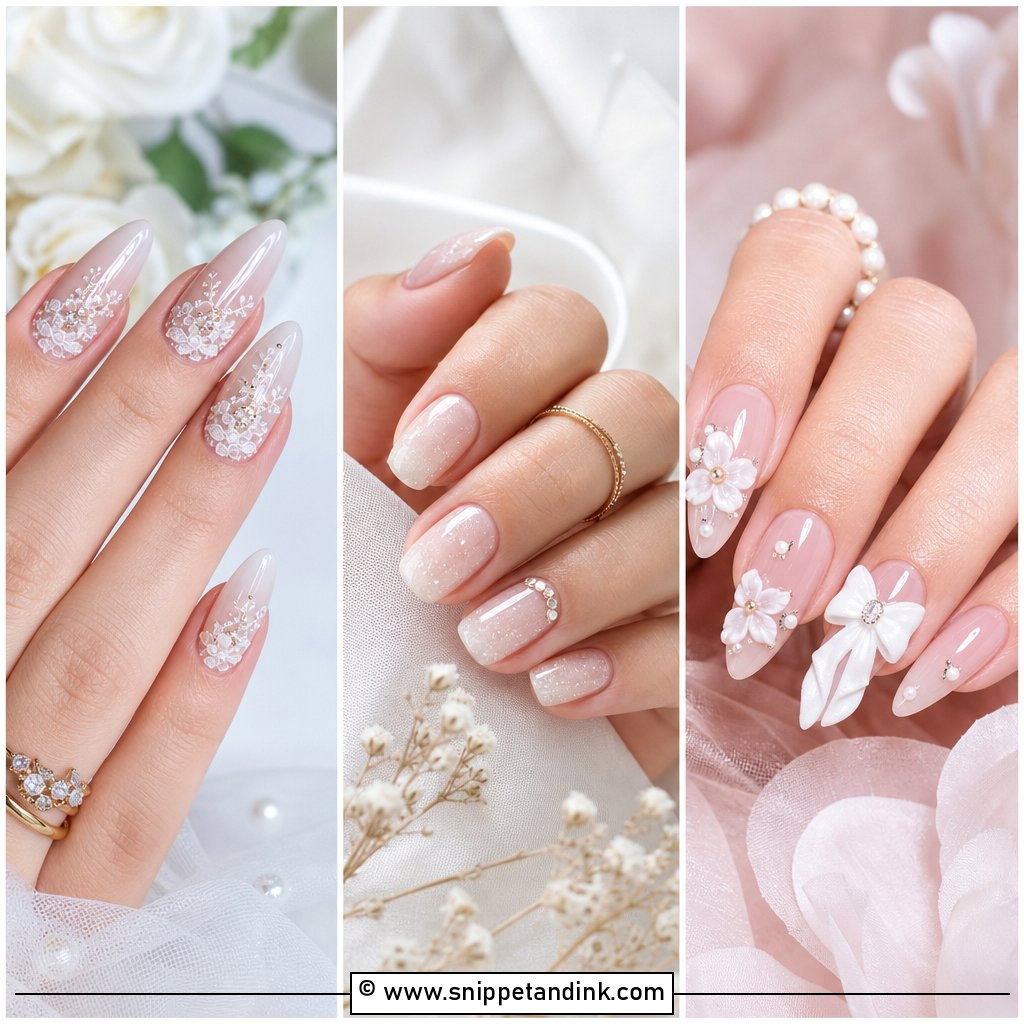
Pearls are where restraint pays off. I place two or three small flat-backed pearls near the cuticle on one or two fingers, set into builder gel rather than top coat, so they’re held from the sides as well as underneath. Anything stuck on with top coat alone tends to pop off the first time you dig in a clutch. A sheer or milky pink base keeps the pearls as the detail, and the set pairs naturally with pearl earrings or a pearl-edged veil. Oval and almond leave room for the stones without crowding.
9. Pink Glitter Wedding Nails
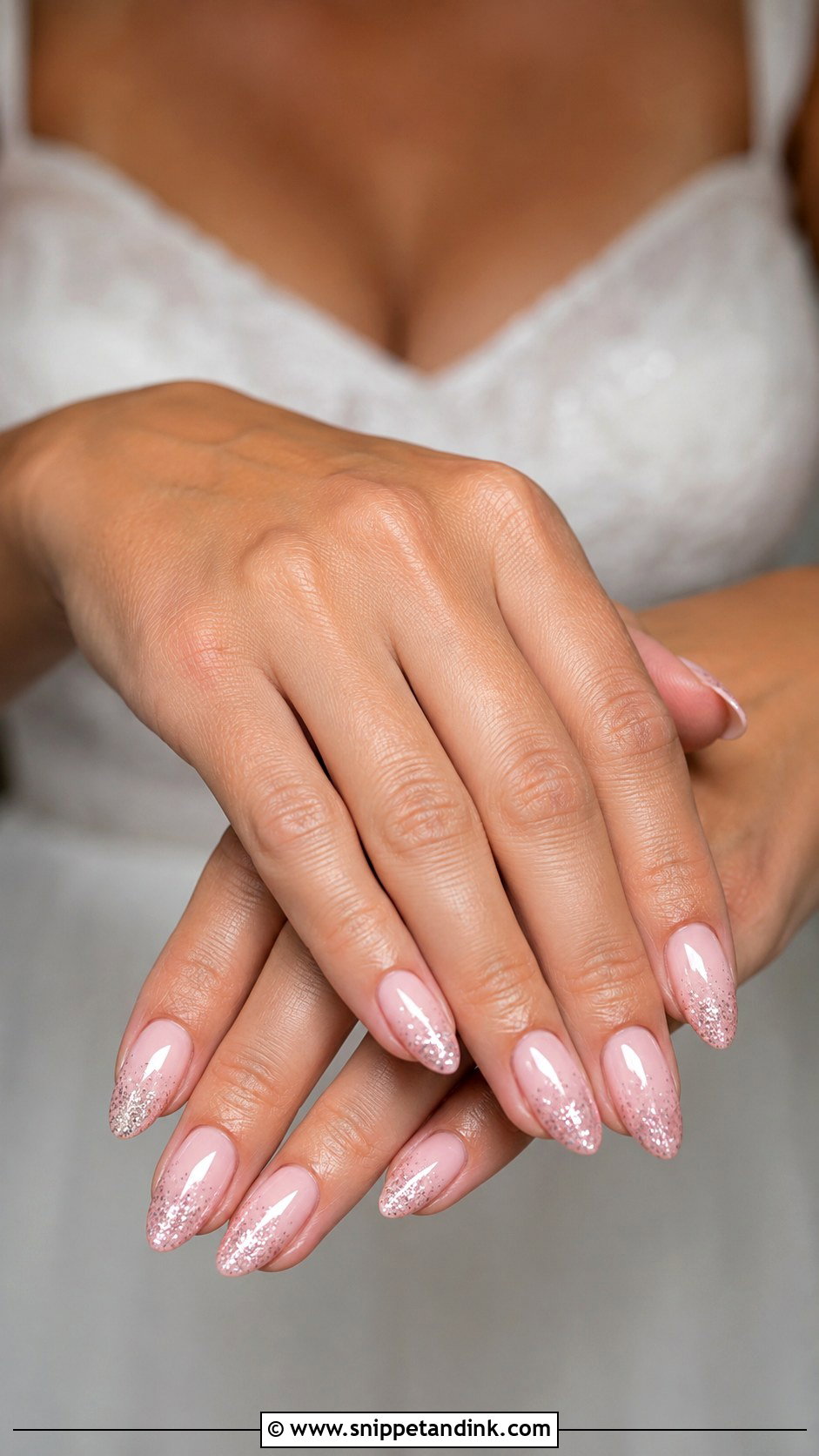
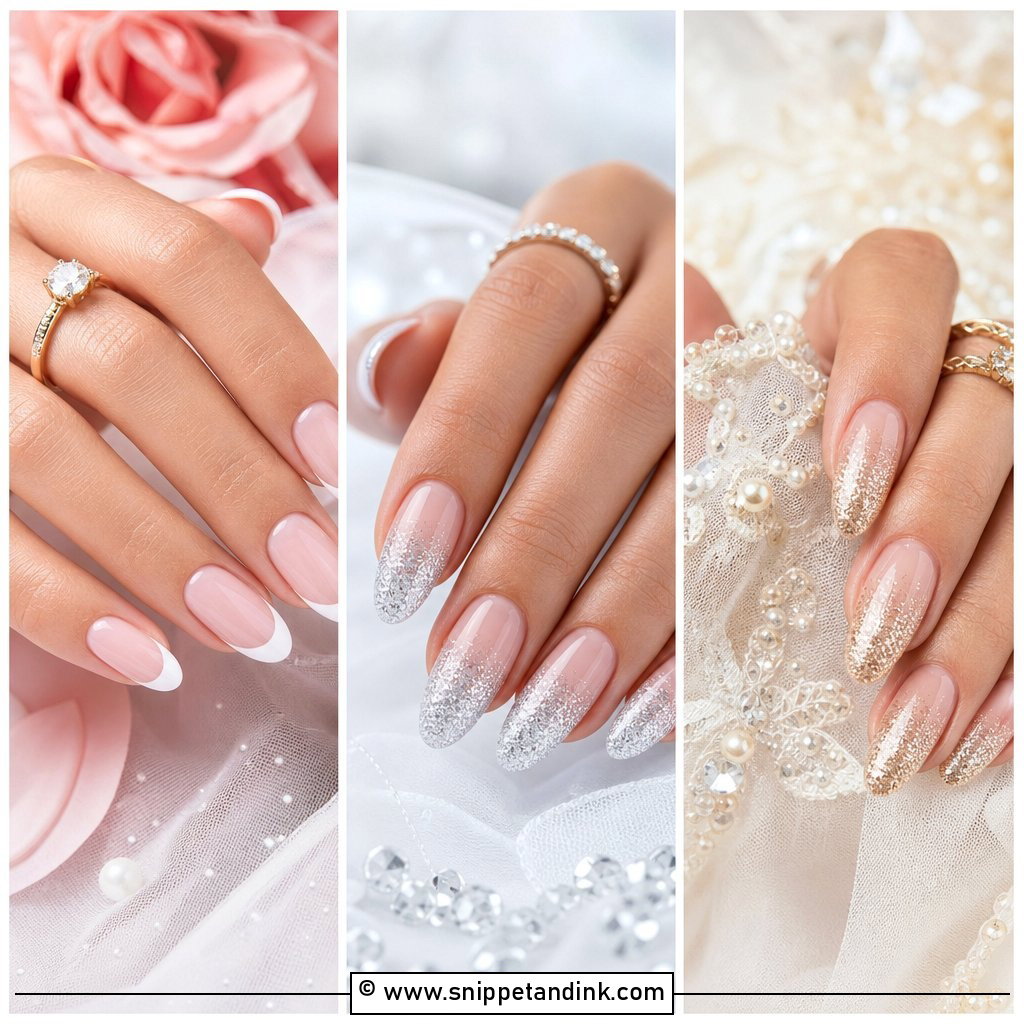
Glitter is the part of bridal nails I’m most careful with, because chunky flakes look grainy in close-ups and are miserable to remove. I’d rather use a fine pink shimmer, a glitter fade from the tip, or one accent nail. Champagne and rose glitters warm the hand; silver-based ones can look cold beside ivory. This is a good choice for an evening or ballroom reception where the lights do the work. On almond or coffin the fade has room to travel; on short squares, a shimmer top coat is plenty.
10. Pink Floral Wedding Nails
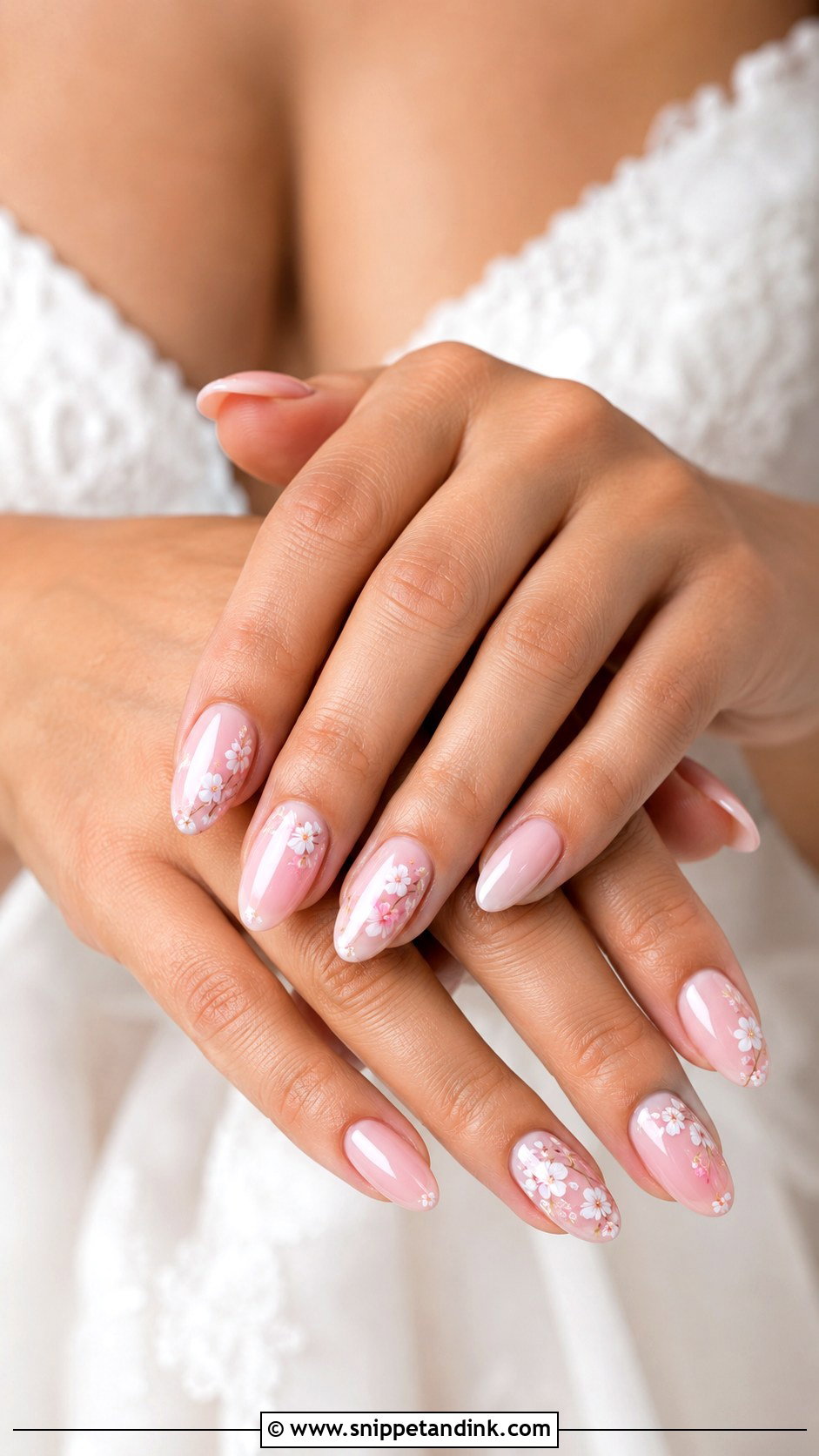
Hand-painted florals are slower than most brides expect, so I book extra time for them. I keep petals small, white or deeper blush on a soft pink base, and usually on two accent nails rather than all ten. Spacing is what stops it looking busy; one sprig drifting toward the tip reads better in a photo than a full bouquet on each nail. Pressed-flower effects work too, but real dried petals need a thick enough gel cap to sit flat. Oval and almond suit the softness, and a gloss seals the art.
11. Rose Gold Pink Wedding Nails
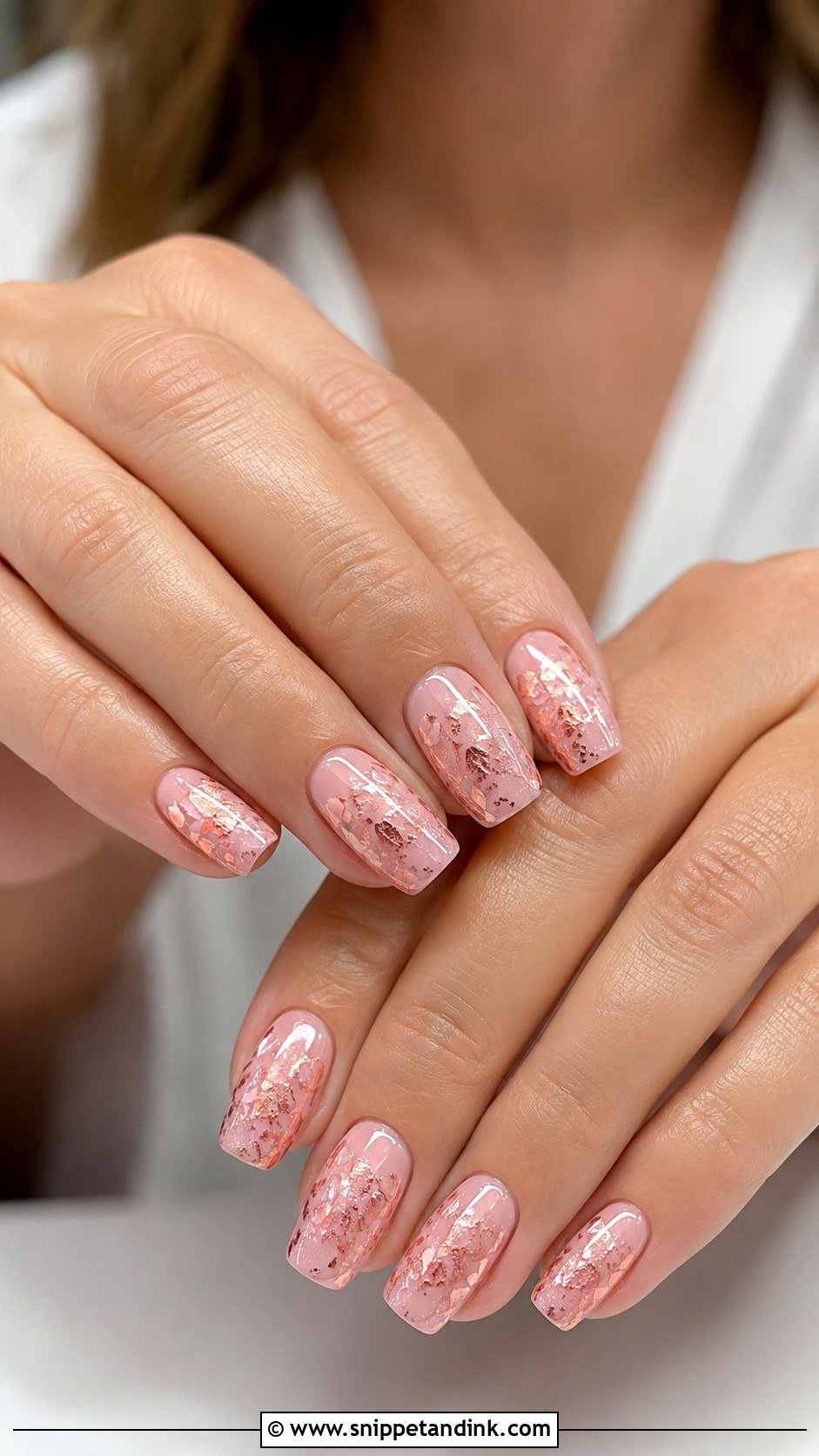
If your rings or earrings are rose gold, this is the set that ties the hand together. I use a blush base with rose gold foil flakes or a single fine metallic line along the smile line, laid in gel so the foil doesn’t lift at the edges. More shine comes from a rose gold glitter fade, but I’d keep foil and glitter on separate nails so they don’t compete. Almond and squoval are my picks. It’s warmest next to champagne gowns and ivory fabrics, and can look muddy against stark white.
12. Sheer Pink Wedding Nails
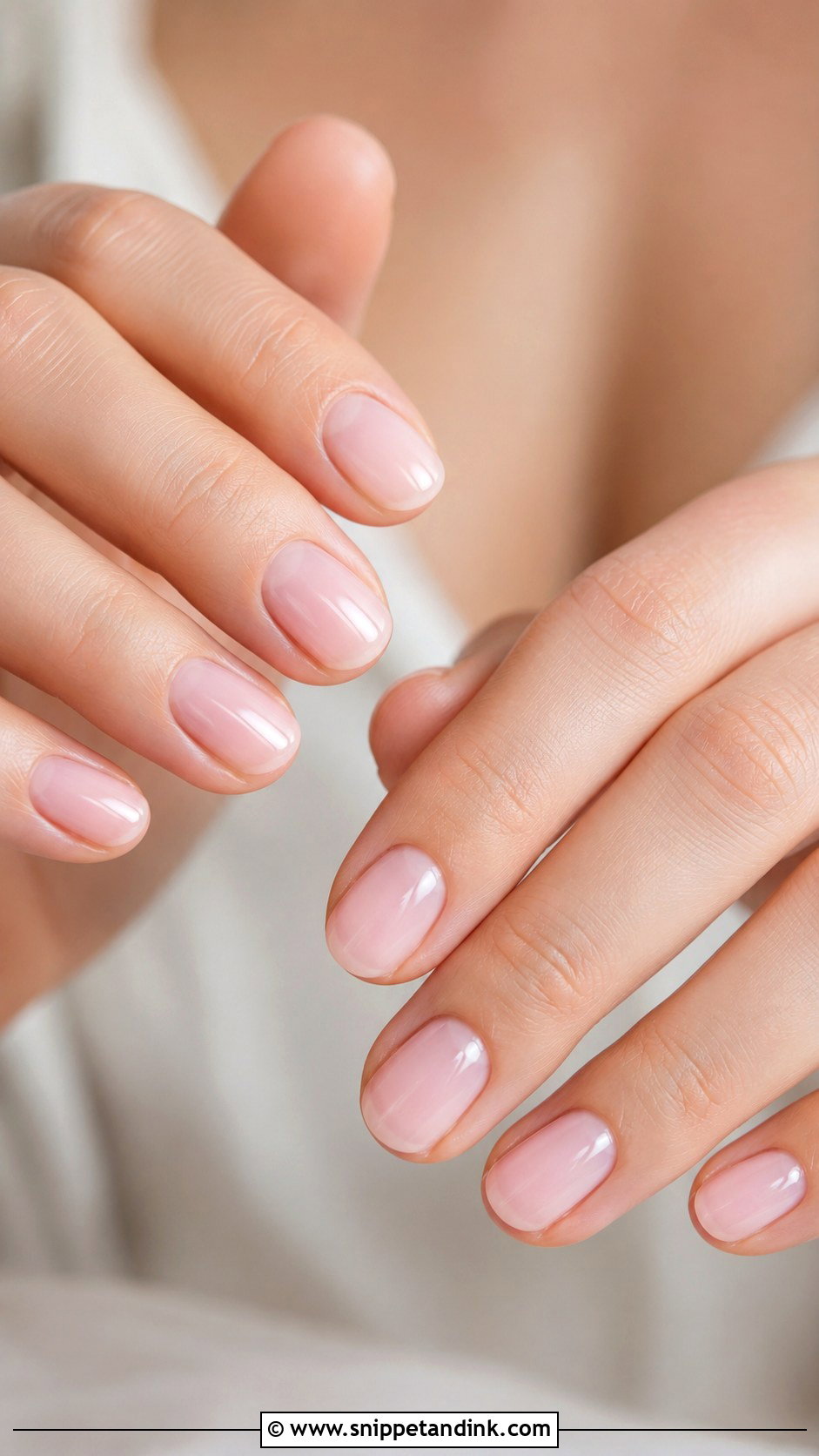
Sheer pink is the most honest manicure on this list, and that’s the risk: there’s nothing to hide behind. I spend more time on cuticle work and shaping for a sheer set than for a full-color one, because every lifted cuticle and uneven edge shows straight through. Undertone matters too. Cooler skin usually suits a ballet pink; warmer skin looks healthier in a peachy pink. Short nails and brides who rarely wear color get the most from it, and a thick glossy top coat gives the healthy-nail shine.
13. Light Pink Square Wedding Nails
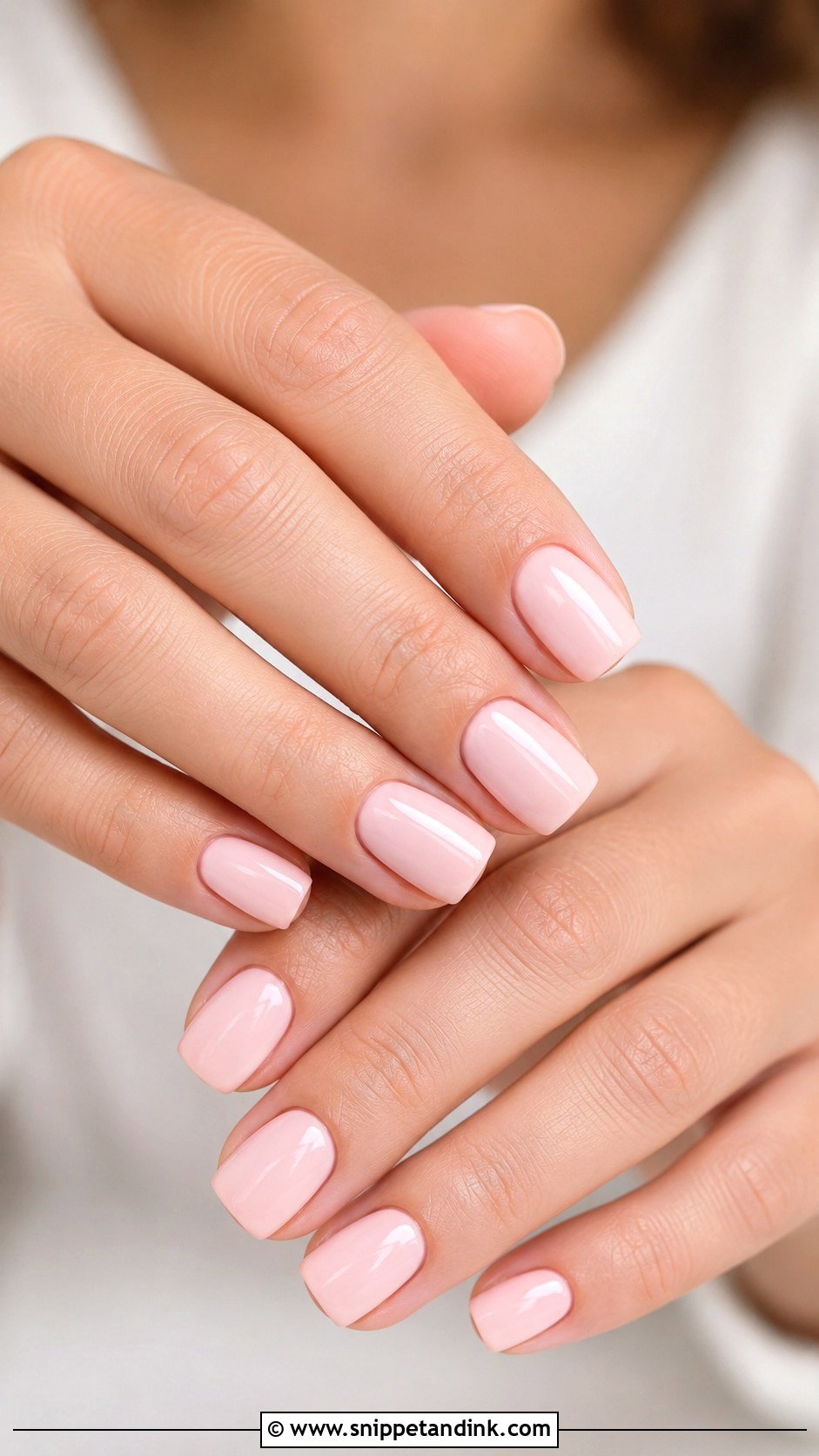
Short square nails in a light pink are what I suggest for the bride who’ll be tying bows, carrying décor and hugging everyone in sight. A shorter length barely chips and doesn’t catch on lace or hair. I file the corners slightly soft; a sharp square looks crisp on day one but snags tights and veils. A creamy light pink covers fully and photographs evenly. Leave it plain, or add a hairline French tip if you want it to feel more bridal.
14. Pink Coffin Wedding Nails
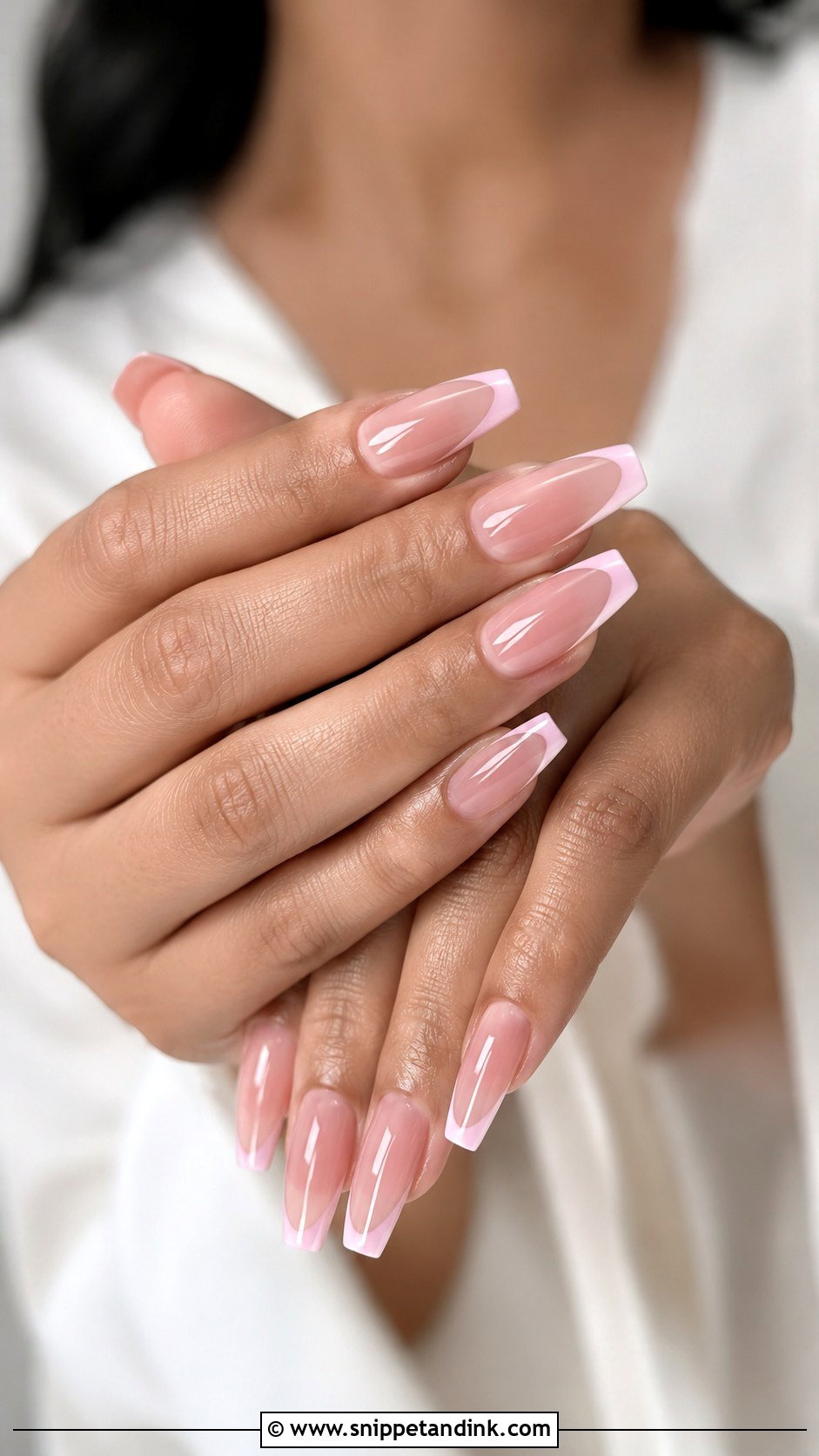
Coffin needs length to look right, which usually means extensions or a builder gel overlay unless your natural nails are long and strong. The flat tip and straight sides give a long, sleek line that frames rings well. I keep the color soft here, blush, nude-pink or milky pink, because a long coffin in a bright shade gets loud fast. Add one detail at most: chrome, a fade or a few small stones. If you’ve never worn long nails, go medium; you’ll be doing up buttons and holding a phone all day.
15. Pink Rhinestone Wedding Nails
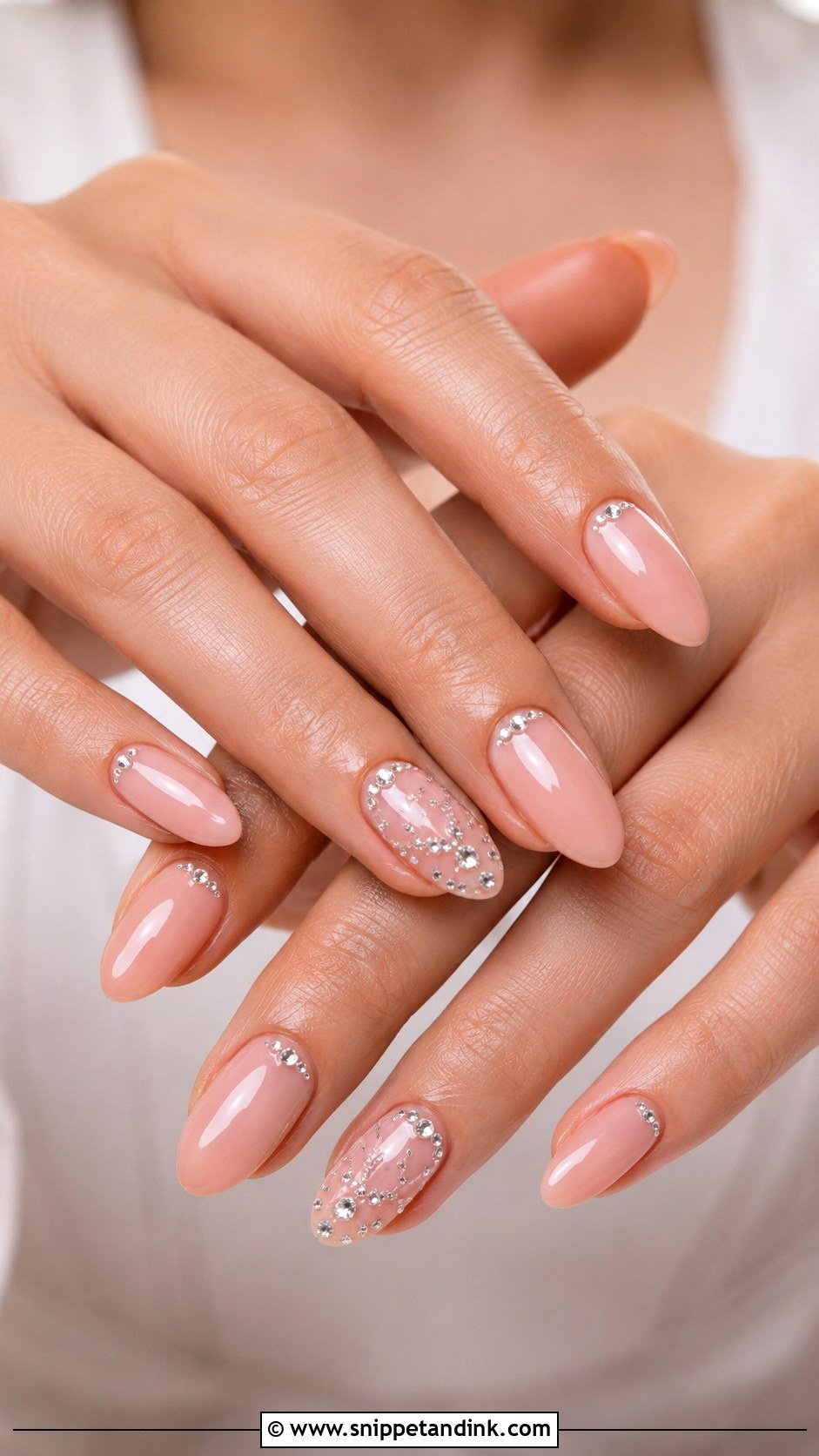
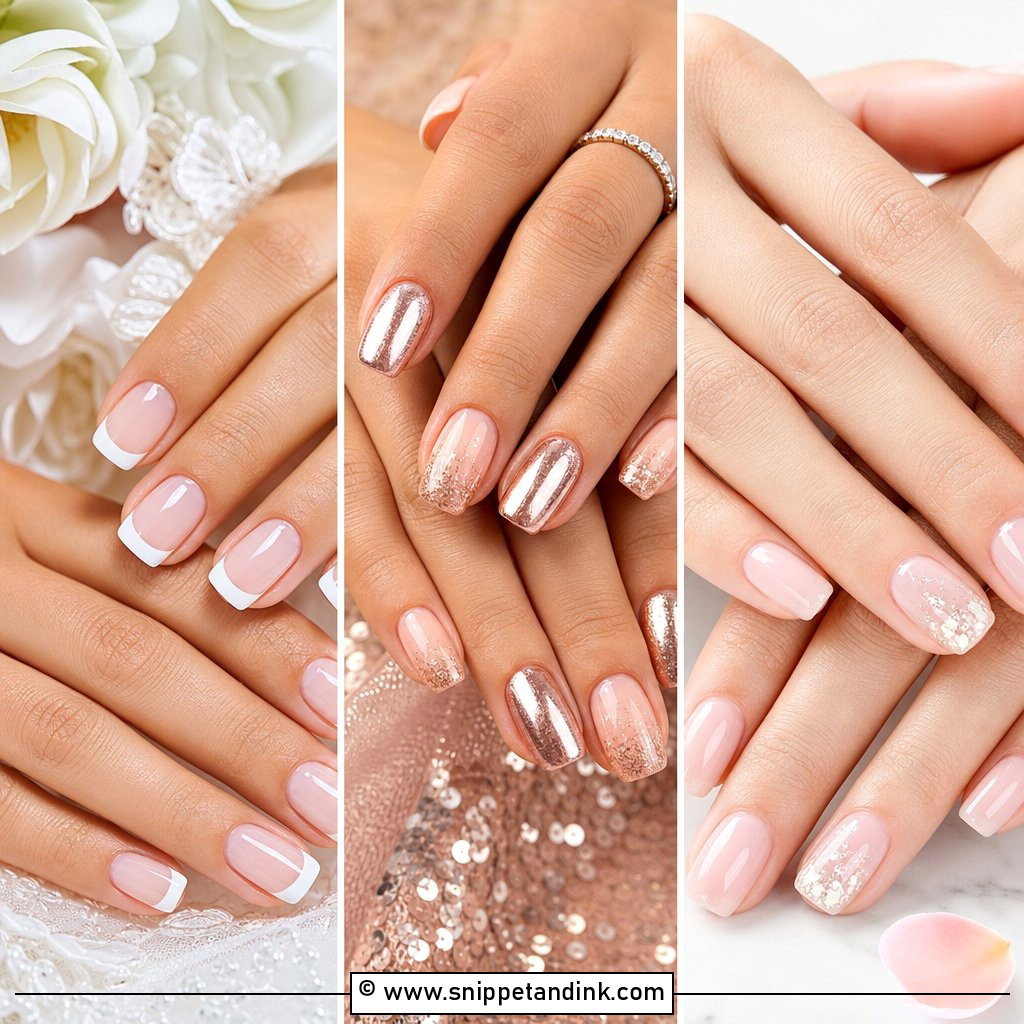
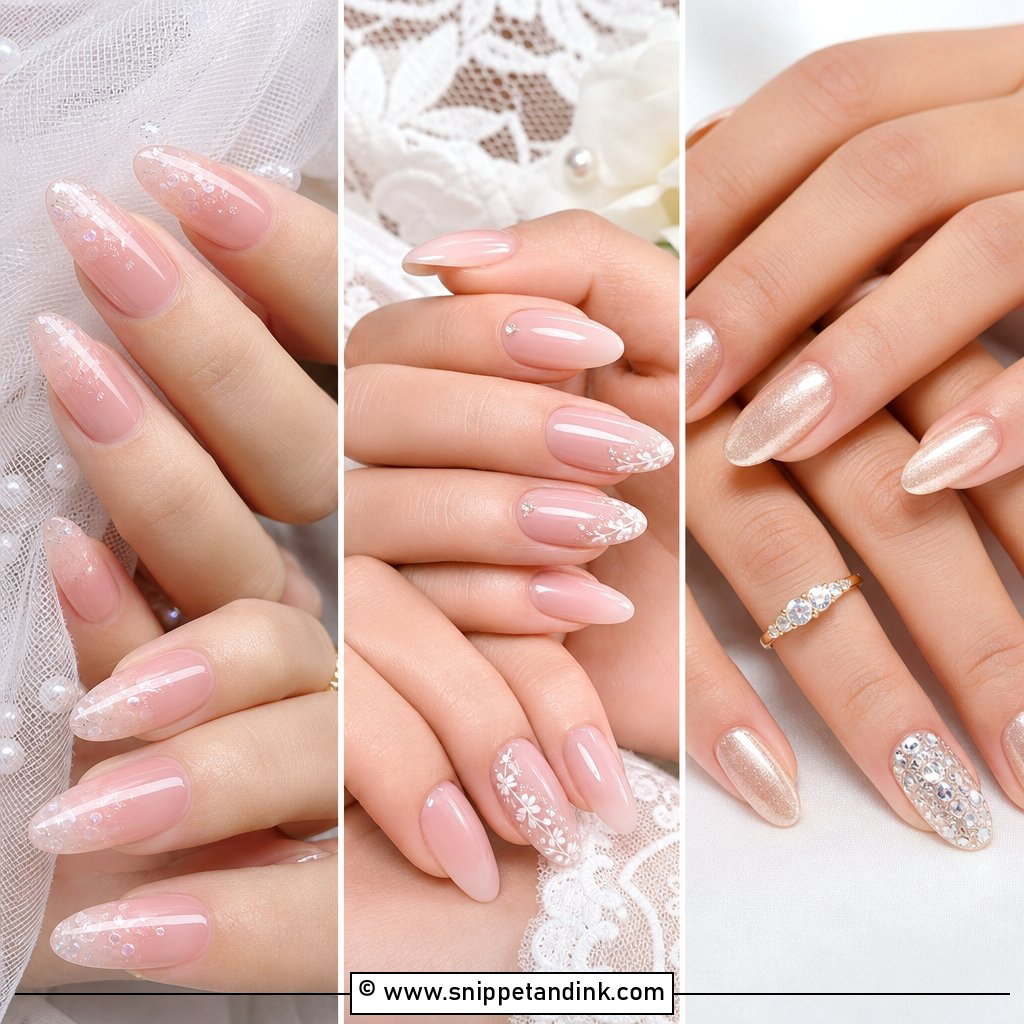
Rhinestones look elegant when they’re placed, not scattered. I set tiny rhinestones in a short arc near the cuticle, along the line of a French tip, or on one accent nail, pressed into a thick gel so the stone sits in a little well. Clear, champagne or pale pink crystals blend best with a blush base. Larger stones catch on lace sleeves and hair, so I keep them small for brides wearing a veil. Almond and oval soften the sparkle; square nails feel a bit more modern.
16. Pink Marble Wedding Nails
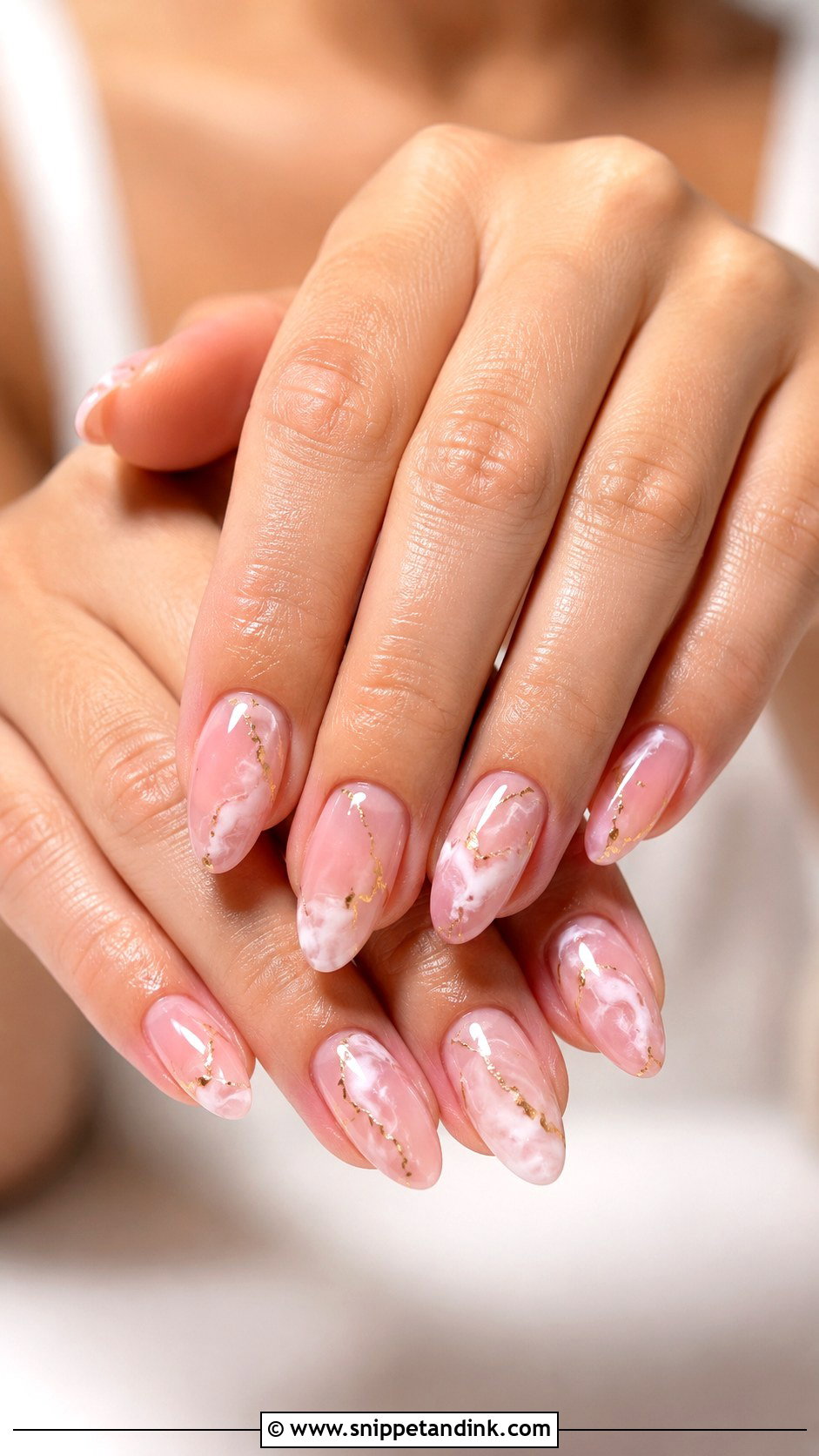
Marble is one of the few designs where each nail is meant to look a little different. I lay blush and milky white wet-on-wet and pull thin grey or gold veins through with a fine liner brush; the trick for bridal is keeping the veins pale so the set doesn’t read as countertop stone. A touch of gold foil warms it, but a little goes far. Medium almond, coffin or oval nails give the marble pattern room to flow. It suits minimalist gowns and modern venues best.
17. Pink Cat Eye Wedding Nails
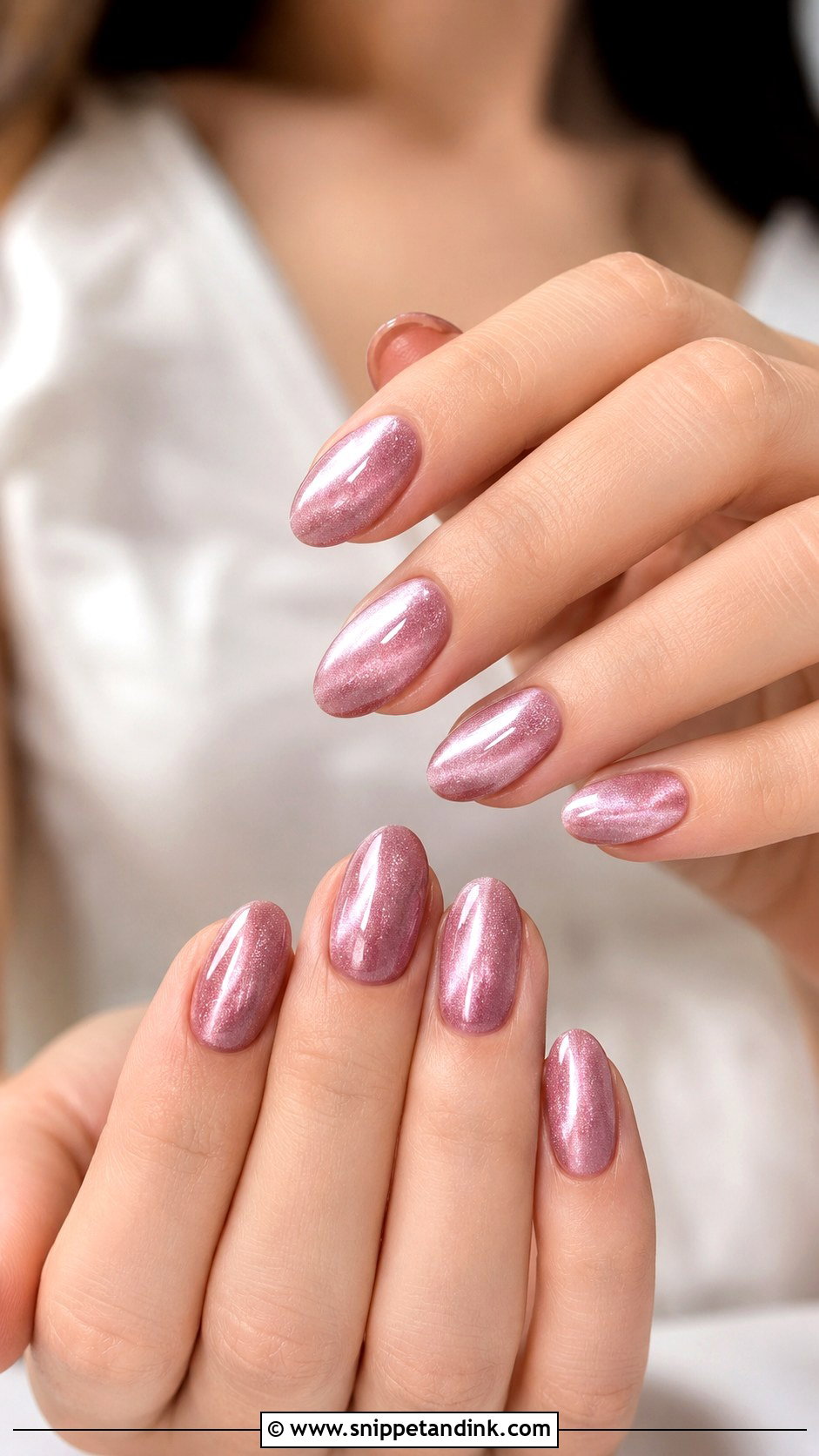
Cat eye polish has magnetic particles that I pull into a line with a magnet before curing, and that line shifts as your hand moves, a bit like light on silk. For a wedding I’d use a pale pink, rose or champagne cat eye rather than a vivid one. The effect is strongest under reception lighting and in close-ups with a flash. Curved shapes, almond and oval, show the band of light best. I’d add nothing else; embellishments break the line and look cluttered.
18. Pink Lace Wedding Nails
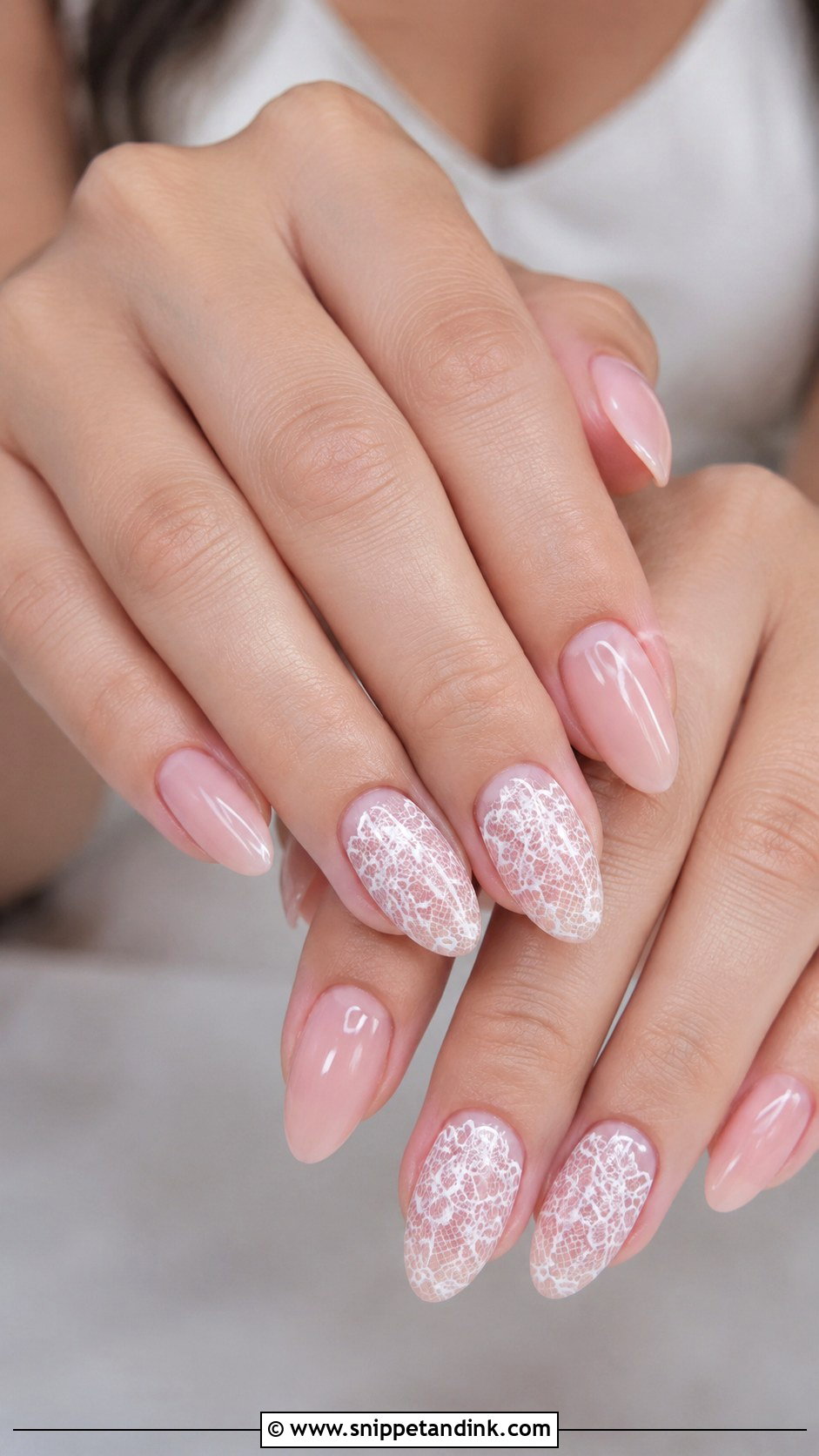
Lace nails are fine detail work: thin white gel lines, a stamping plate or hand-painted scallops over a sheer pink base. I’d ask your nail artist which method they use, because stamping is quicker and more even, while hand painting can be matched to your actual gown lace if you bring a photo. Keep it to one or two accent nails; ten lace nails look crowded. Oval, almond and soft square all suit it, and it sits well with vintage dresses and cathedral veils.
19. Dusty Pink Wedding Nails
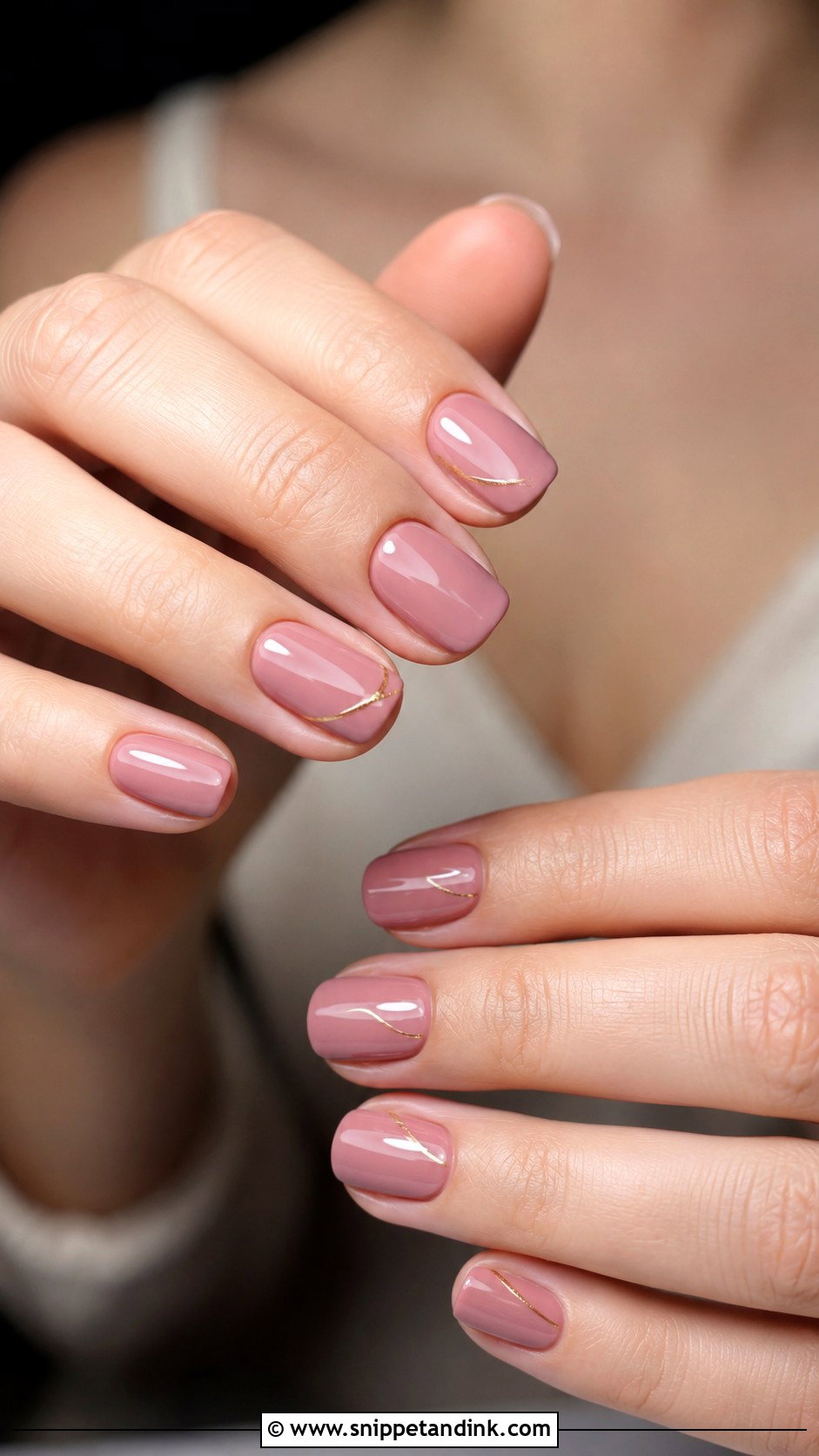
Dusty pink has a grey or mauve undertone, so it reads grown-up rather than sugary, and it’s the pink I suggest most for autumn weddings and formal venues. It flatters a wide range of skin tones because it’s deeper than nude without being bright. I like it plain and glossy, though a fine gold line or a single pearl accent suits it. On short squares it looks chic; almond makes it softer. One note: dusty shades can look greyer under cool white light, so check it near a window at your trial.
20. Hot Pink Wedding Nails
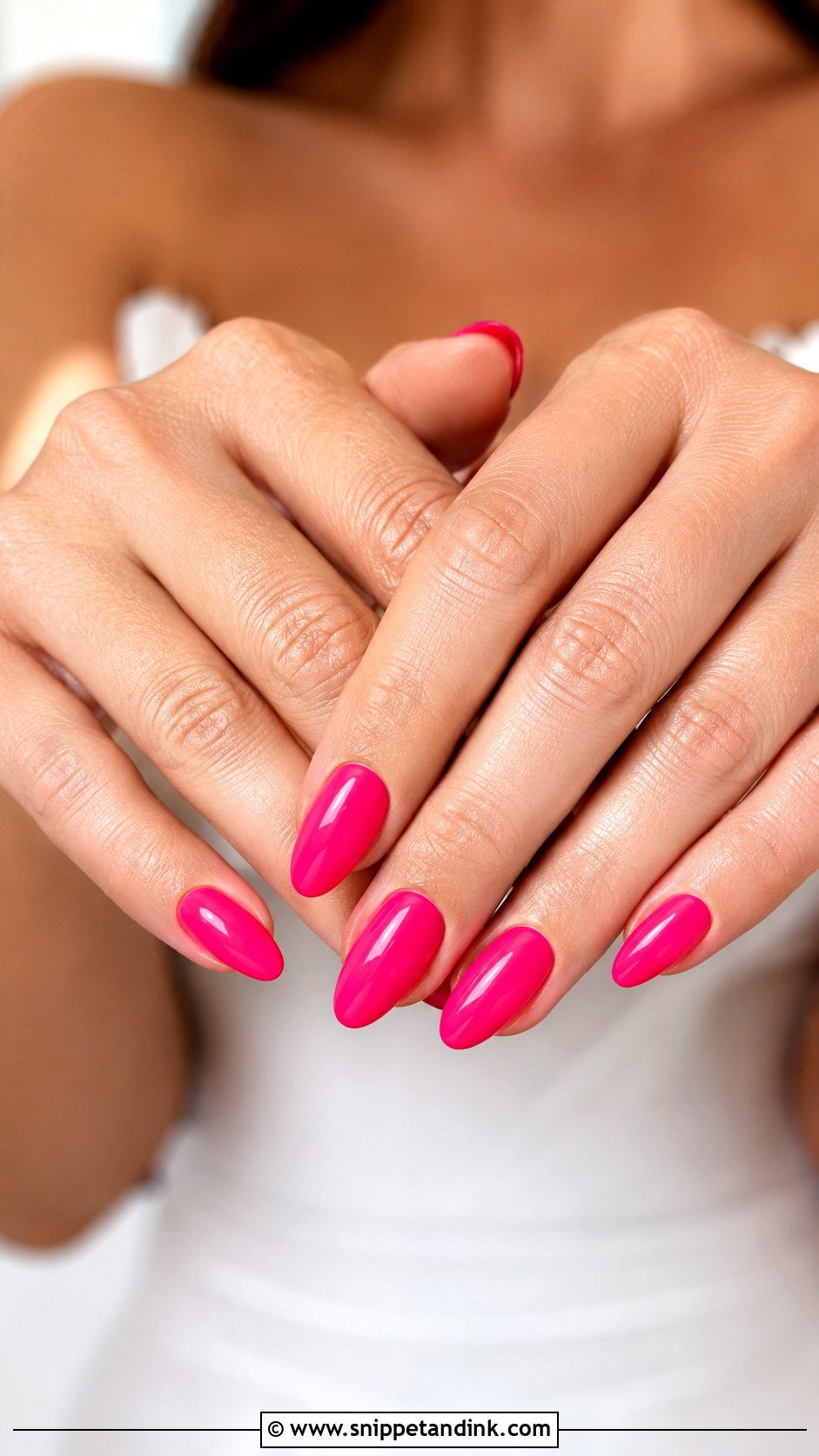
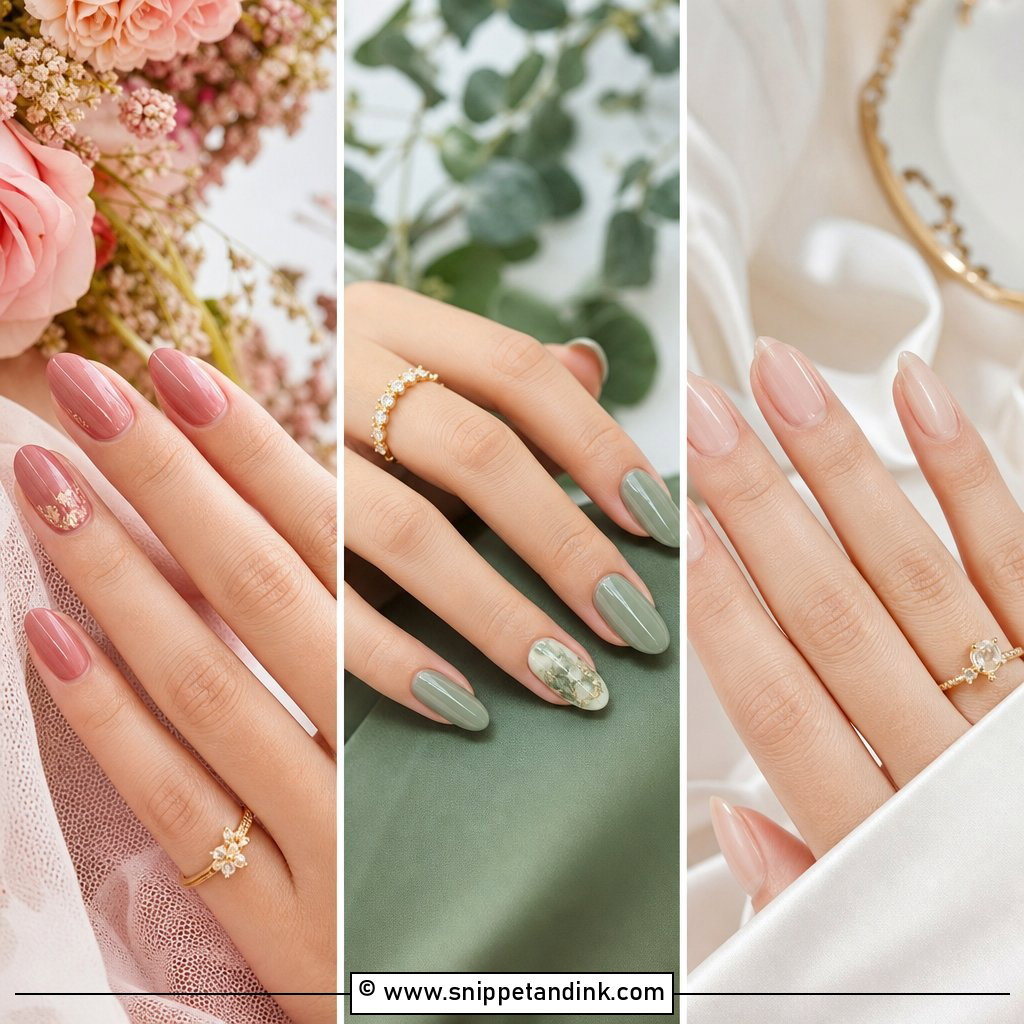
Hot pink is not the quiet option, and I’d only suggest it to a bride who already wears bold color and loves it. It looks fun with a simple dress, a bright bouquet or a colorful palette. The finish has to be flawless, because bright shades show every flooded cuticle, so I’m extra careful with the edges. Glossy hot pink on short squares looks modern; on almond it softens a touch. For a halfway version, try a hot pink French over a nude-pink base.
When to Book the Manicure So Gel Holds Through the Last Dance
Gel is at its best between one and three days after application. On the day itself, cuticles can still be a little puffy from prep; after about a week, regrowth starts to show a thin line at the base, and pale pinks hide that better than bright ones.
My usual schedule
- Six to eight weeks out: trial, so we can test the shade and check how your nails take gel or extensions.
- The week before: no new cuticle cutting at home, and cuticle oil every night so the skin around the nail is soft.
- Two days before: the final set, which leaves a buffer if a stone or tip needs fixing.
- The morning of: oil only. No hand cream right before photos, it leaves a sheen that reads greasy in close-ups.
A Chip at Noon Doesn’t Have to Ruin the Ring Shot
Things happen. Someone pulls a tight zip, a pearl catches on lace. I always tell brides to tuck three things into the getting-ready bag: a small bottle of the exact top coat or a close sheer pink polish, a fine nail file, and a tiny tube of nail glue for a lifted tip or a loose stone.
For a small chip on a sheer or milky set, file the edge smooth and dab on a thin layer of sheer pink; from a few feet away nobody will see it. A missing rhinestone is better left gone than stuck back on crooked. And if an extension snaps, file the broken nail down neatly rather than gluing it back in a hurry. A short nail looks deliberate; a wonky one doesn’t.
Which Pink Will Still Look Right in the Photos Years From Now?
Pink stretches from barely there to bright, which is why it works for the bride, the bridesmaids and guests alike. Start from your dress fabric, your metal color and how much you’ll use your hands, then pick the shade. For a classic set, sheer pink, milky pink or soft French tips won’t date. For more detail, pick one of pearls, florals, chrome or rose gold, not all four. Dusty pink, cat eye, coffin or hot pink can still look polished if everything else on the nail stays clean.
You'll Like These Ideas:


Leave a Reply