
A wig takes a lot of pressure off a wedding morning. The style can be set days ahead, your own hair stays protected underneath, and you can wear a length, color or texture your natural hair wouldn’t give you. But wigs have their own rules. The cap construction decides which styles are possible, the hair fibre decides whether you can use heat, and the install decides whether it survives a veil and a dance floor. From lace front units that copy a natural hairline to glueless 360 wigs that can be pulled up all round, the twenty looks below are ones I’d style on a bridal wig, with notes on which cap and prep each one needs.
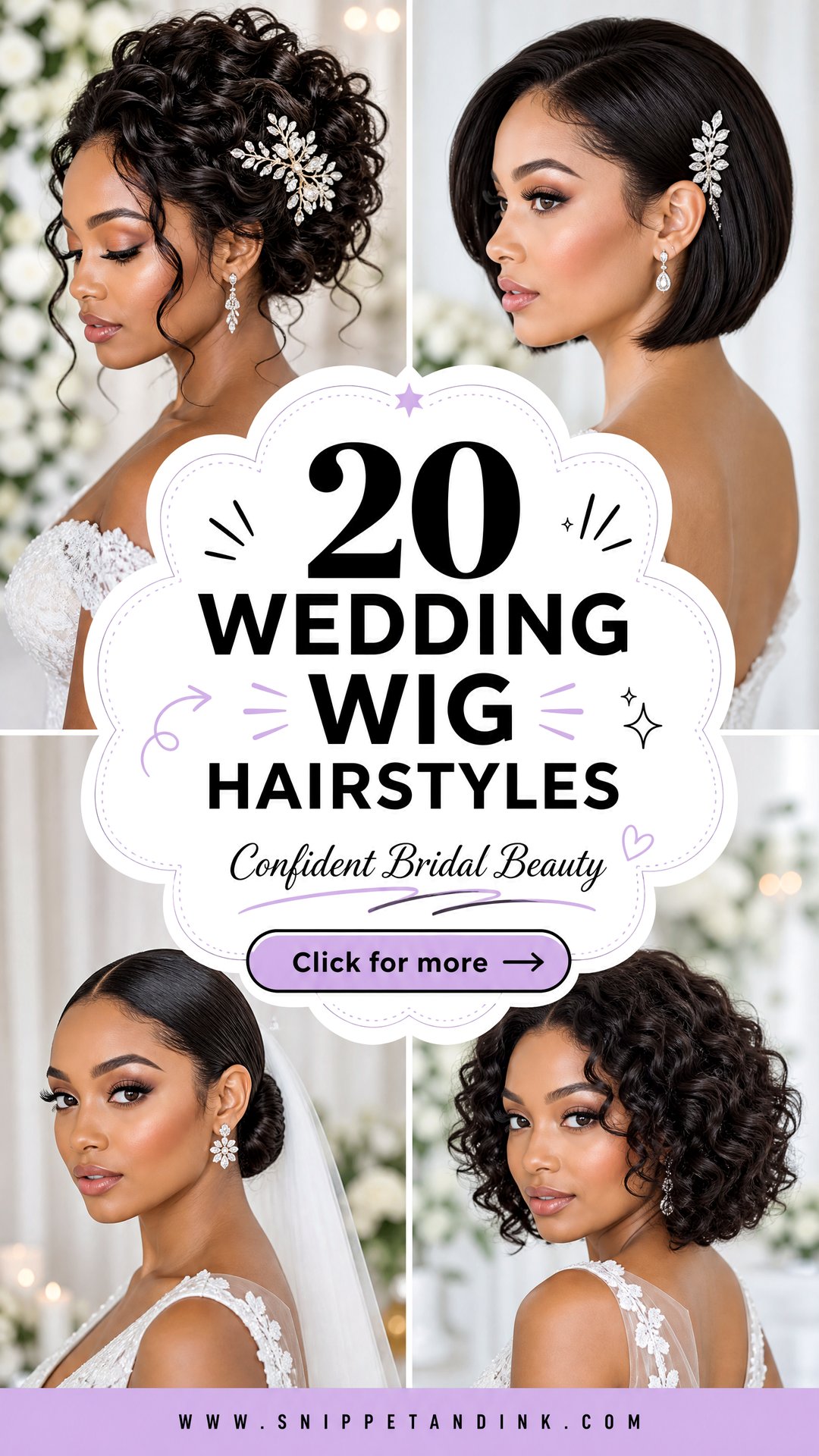
Why a High Ponytail Needs a Different Cap Than a Low Bun
Before you fall for a style, check that your wig can actually wear it. The cap construction is the deciding factor.
- Lace front: lace only along the front hairline. Great for styles worn down, half up or in a low bun that covers the nape. Pull it all up and the wefts at the back show.
- 360 lace: lace around the whole perimeter, so high ponytails, top knots and slicked-back styles look natural from every side.
- Full lace: lace across the entire cap, the most flexible for parting and updos, and usually the most delicate.
- Glueless units: held with combs, an adjustable band or an elastic, no adhesive. Easier to remove and kinder to the skin, but test the grip with your veil.
Human hair or synthetic?
Human hair takes heat, curls and sets the way your own hair would, so it’s the choice for finger waves, Hollywood waves or any style you want restyled. Synthetic holds a factory curl pattern well and costs less, but most fibres melt or frizz with hot tools unless clearly labelled heat-friendly. Pick the fibre to suit the style, not the other way round.
1. Low Bun Bridal Wig
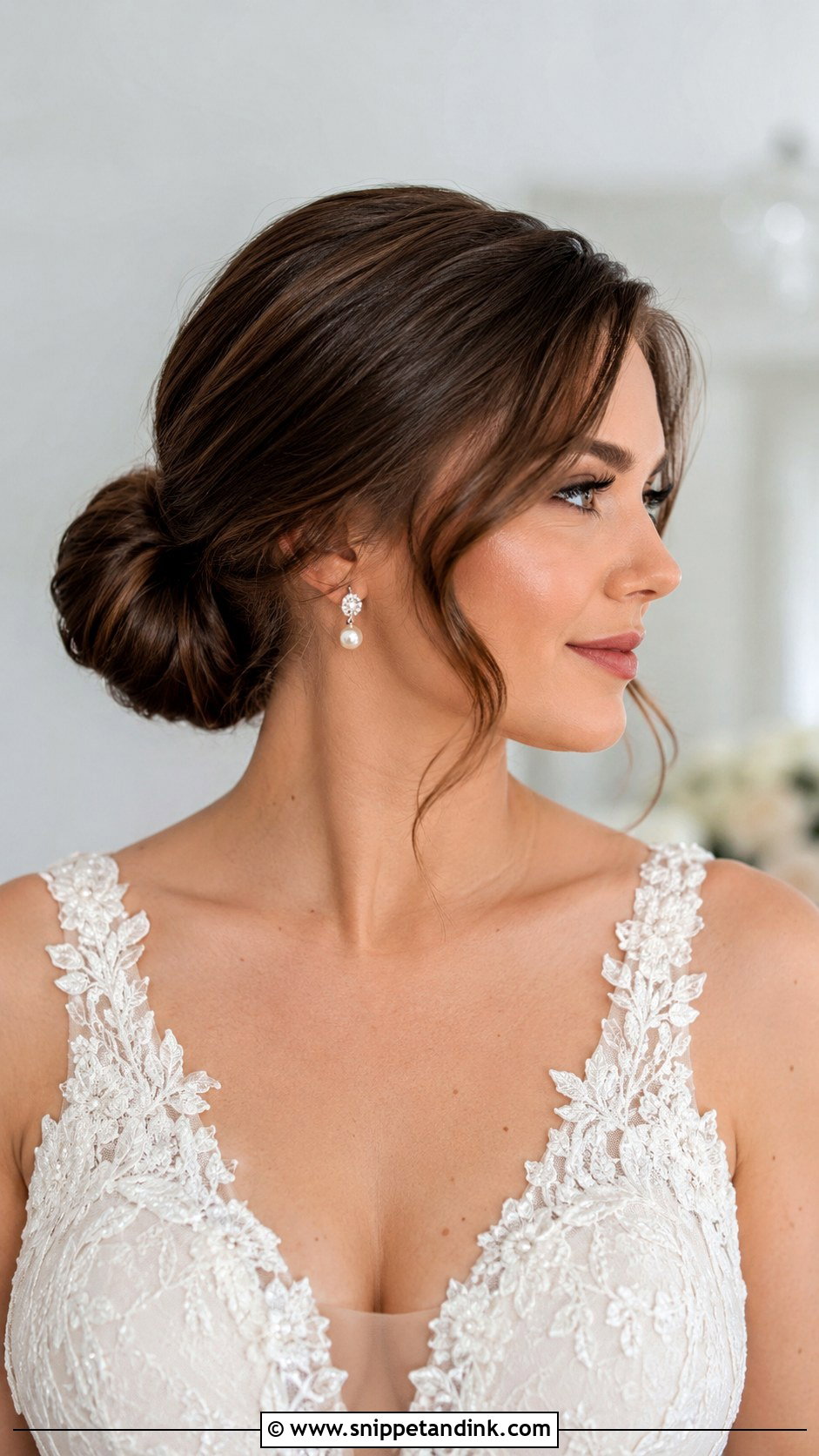
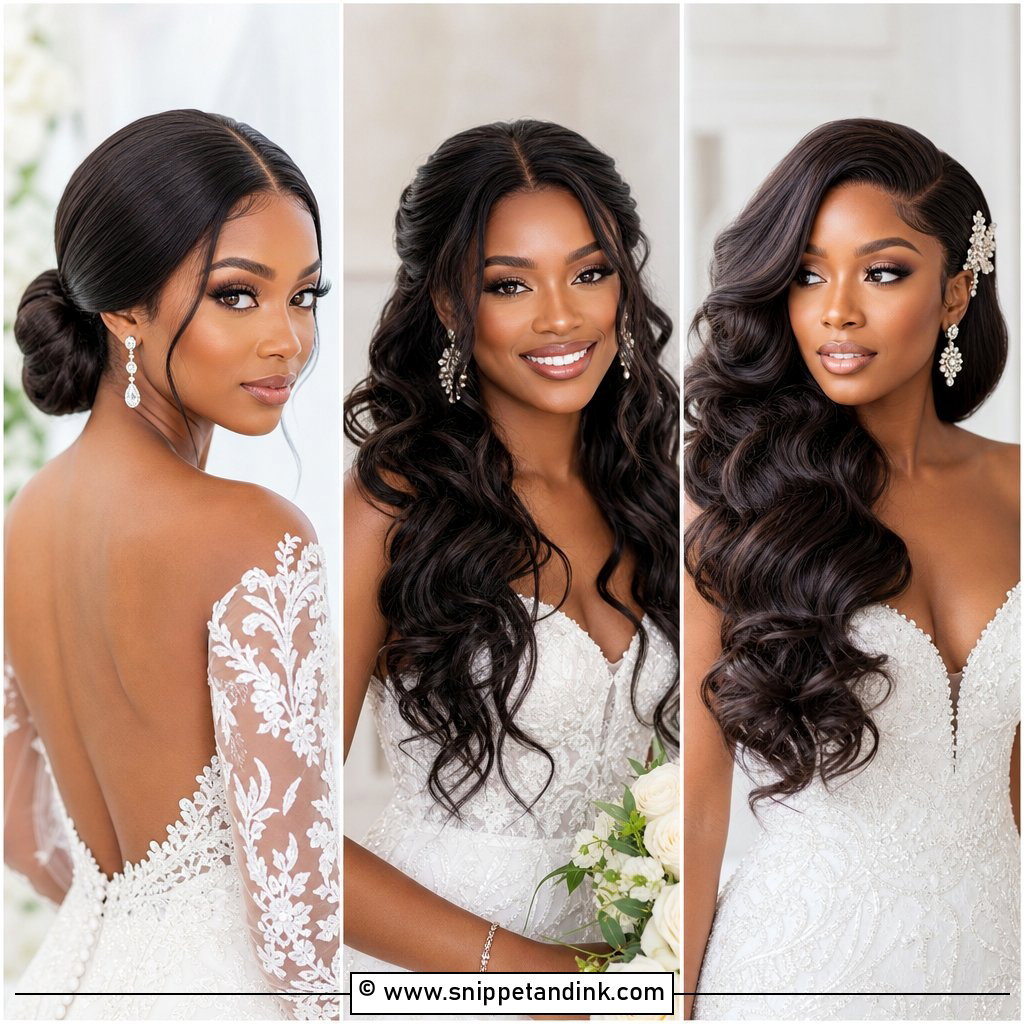
A low bun suits almost every neckline and hides a lot, which is why I suggest it for a bride’s first wig. Because the bun covers the nape, a standard lace front wig works fine here; only the front hairline needs to look natural. Keep it sleek or leave a few tendrils loose. One practical note: the bun adds weight at the back, so the wig needs a snug band or combs at the nape to stop it tilting backward over the day.
2. Hollywood Waves Wig
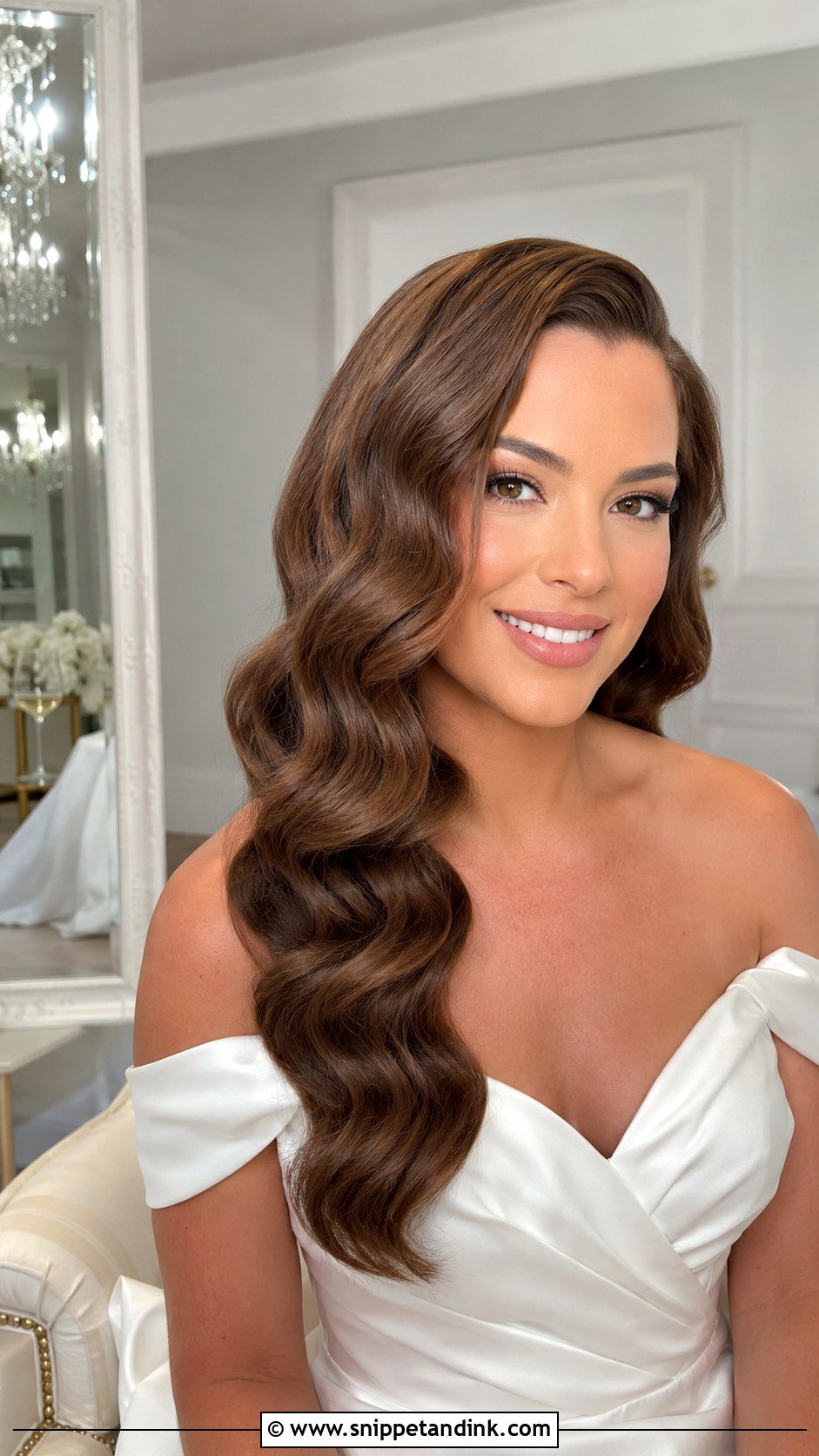
Deep, structured waves swept over one shoulder give a vintage, red-carpet finish, and a wig is ideal for it because you can set the waves well before the wedding without heating your own hair. The glossy surface picks up light in photos. If the unit is human hair, I set the waves with a large barrel iron, pin each curl to cool, then brush through. On synthetic fibre, only use heat if it’s labelled heat-friendly, and keep the temperature low. A deep side part and sweetheart or off-shoulder necklines suit it.
3. Half Up Half Down Wig
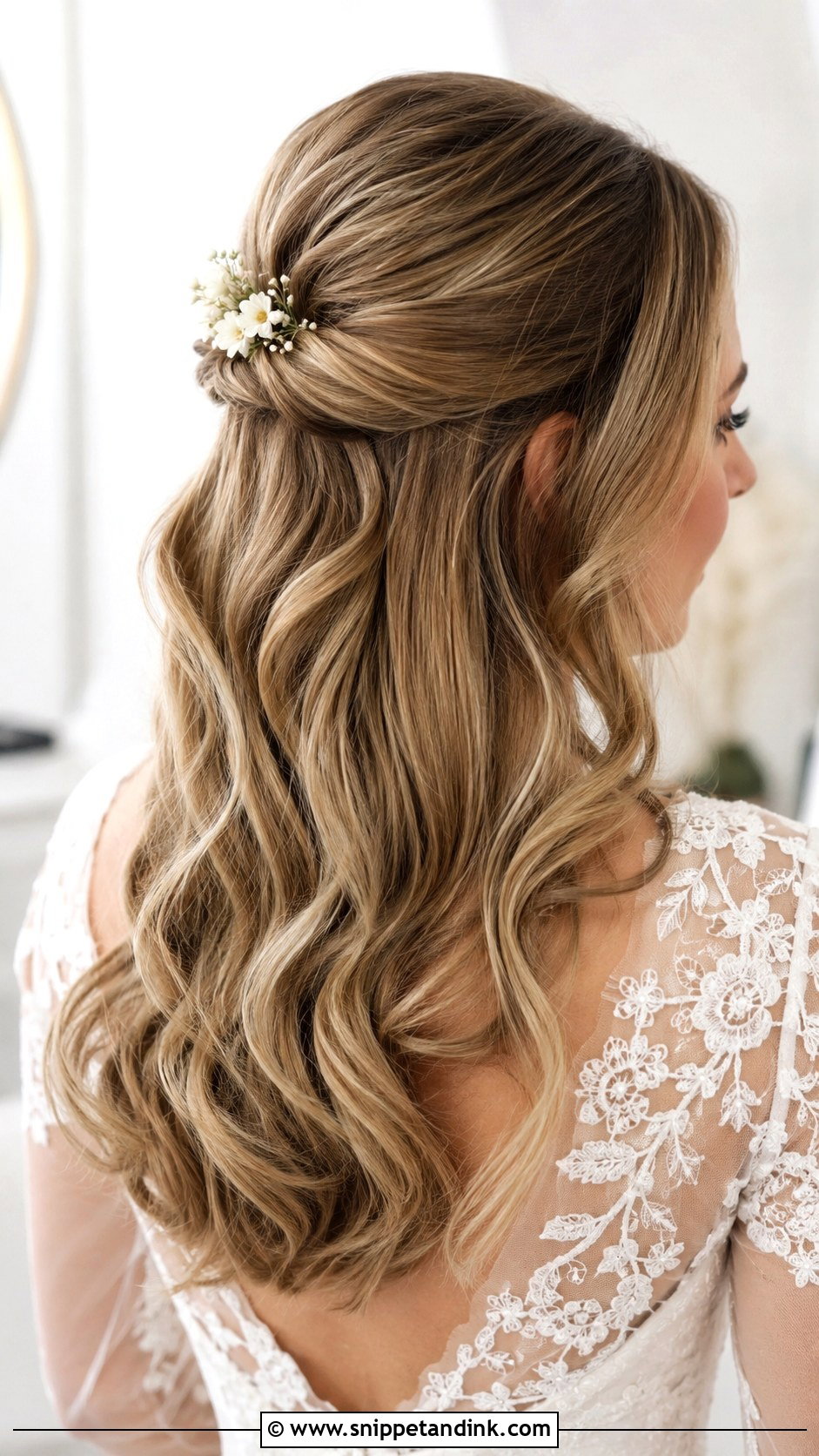
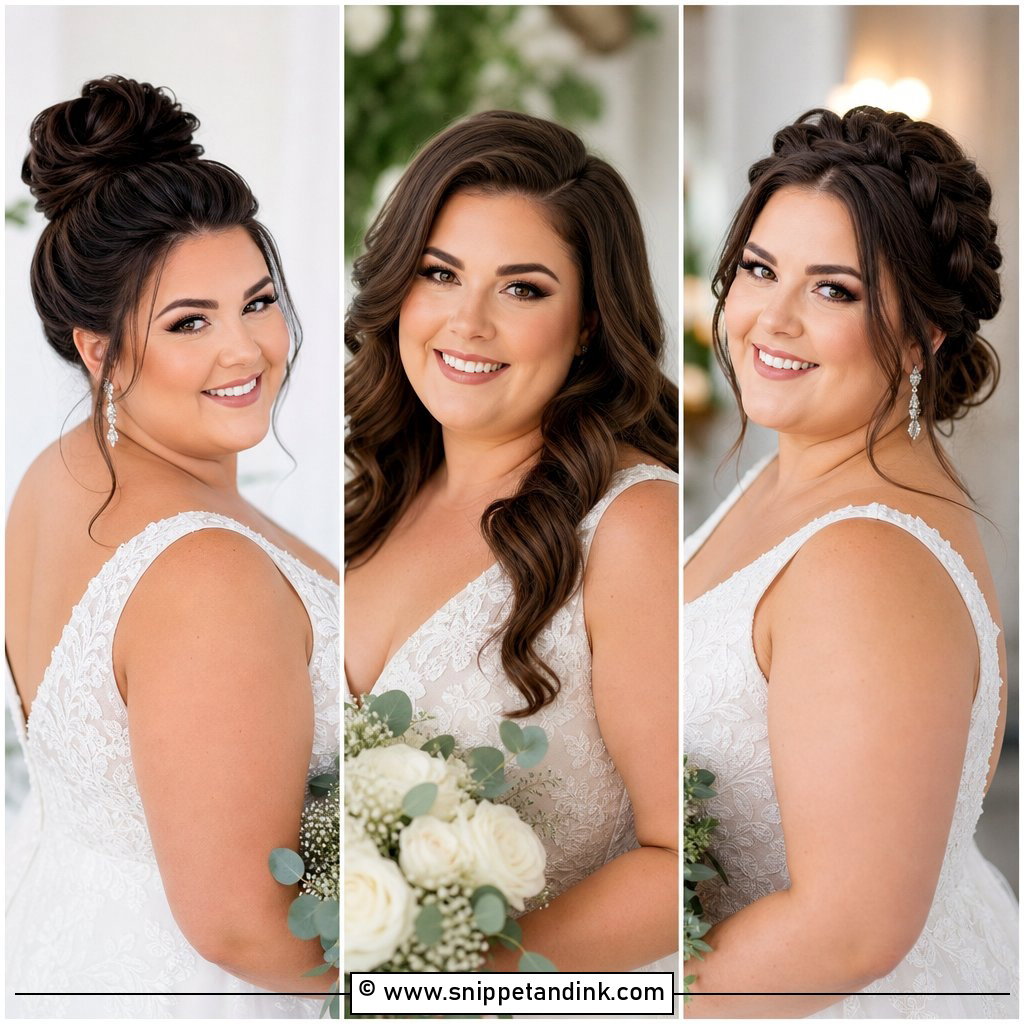
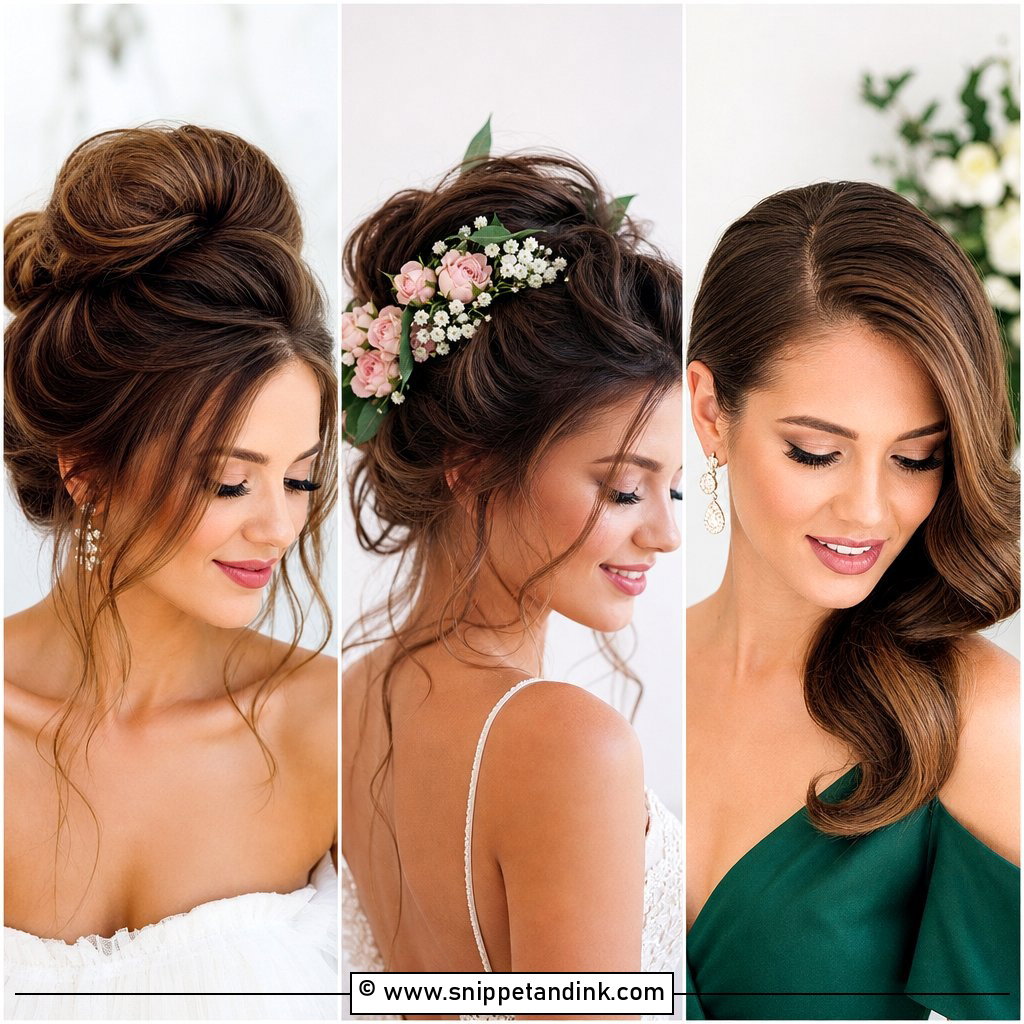
Can’t decide between up and down? This pulls the top section back to frame the face and leaves the rest in waves or curls. It’s the most forgiving style on any cap, because the clip-in point sits on the crown where there’s plenty of hair to anchor into. I attach any floral pins or a small tiara to the wig hair, not through to your own hair underneath, so nothing shifts when you move. A 360 unit keeps the pinned section especially secure.
4. Sleek High Ponytail Wig
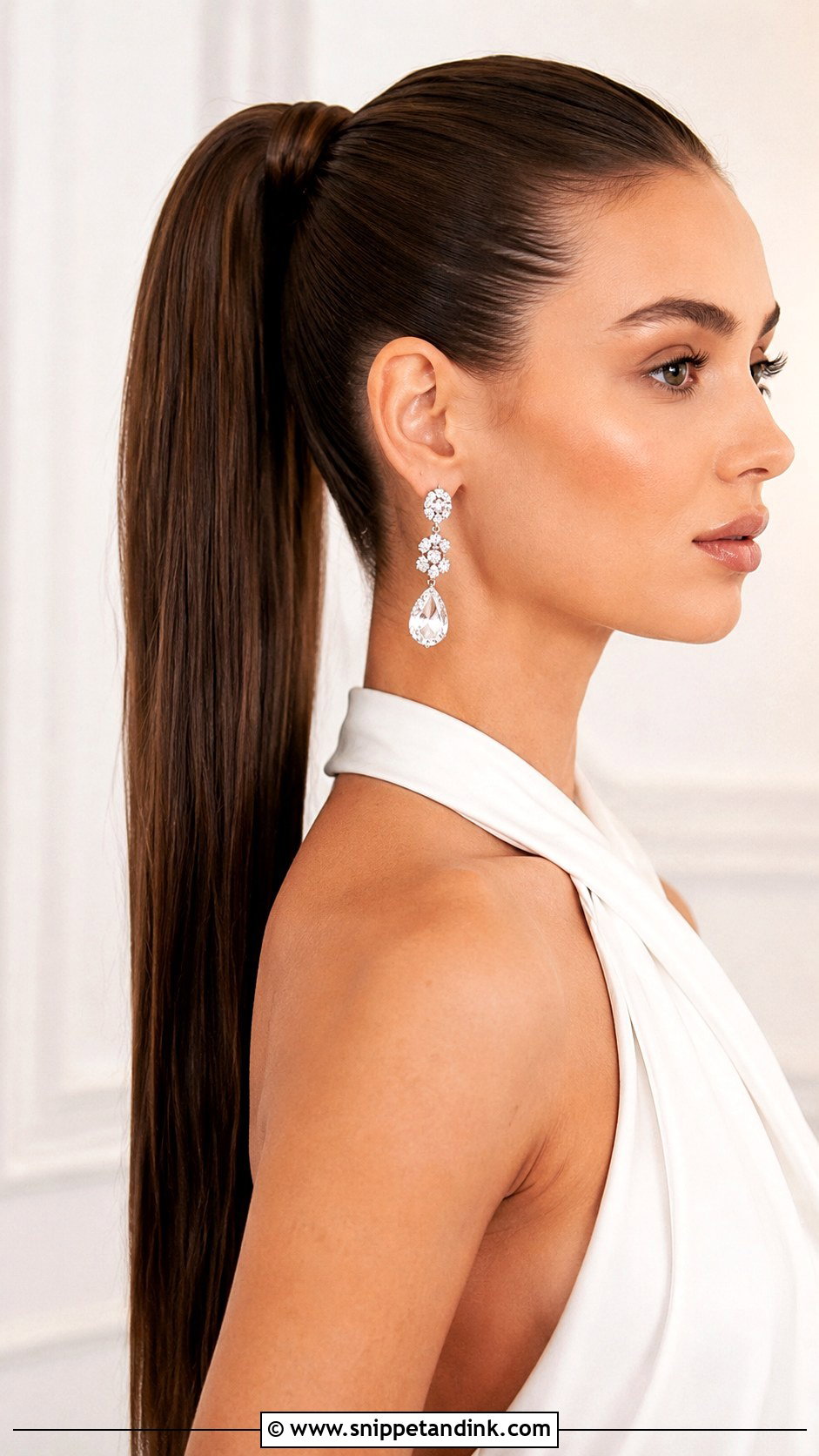
A sleek high ponytail shows off the neck, jawline and earrings, and it’s the style where the cap matters most. A standard lace front exposes the wefts at the back once the hair is pulled up, so this really needs a 360 or full lace unit. With a glueless 360 wig, the pulled-back pony stays smooth from ceremony to reception. Wrap a small section round the base to hide the elastic, and check the nape in a hand mirror before you leave.
5. Romantic Curly Updo Wig
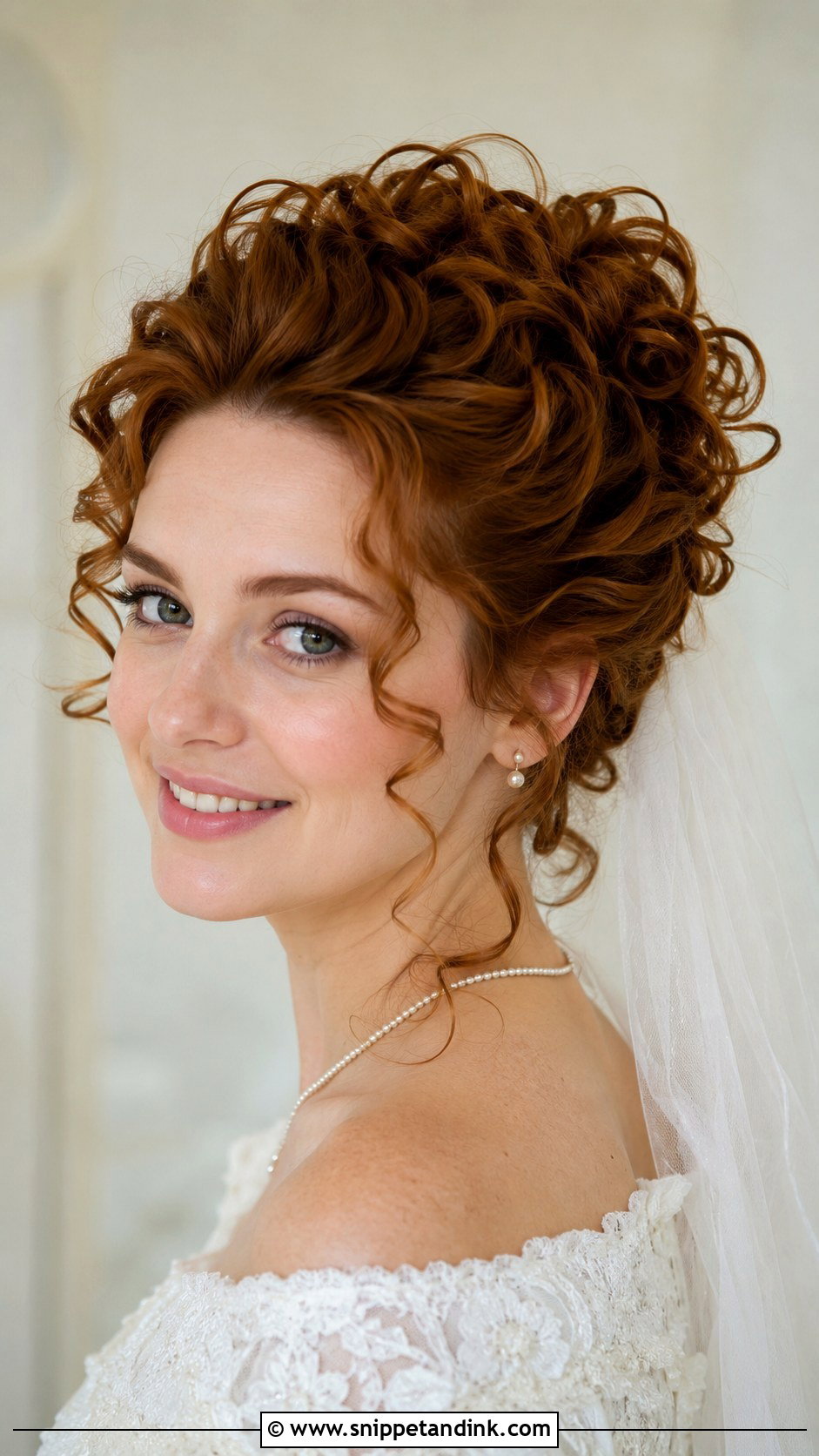
Loose curls pinned up with height at the crown read romantic and grand. A curly textured unit holds volume better than a straight wig curled on the day, because the pattern is already set into the fibre. I let a few curls fall by the face to hide the edge of the lace at the temples, which is where an updo most often gives a wig away. It works with veils, floral crowns and vintage gowns.
6. Sleek Straight Lace Front Wig
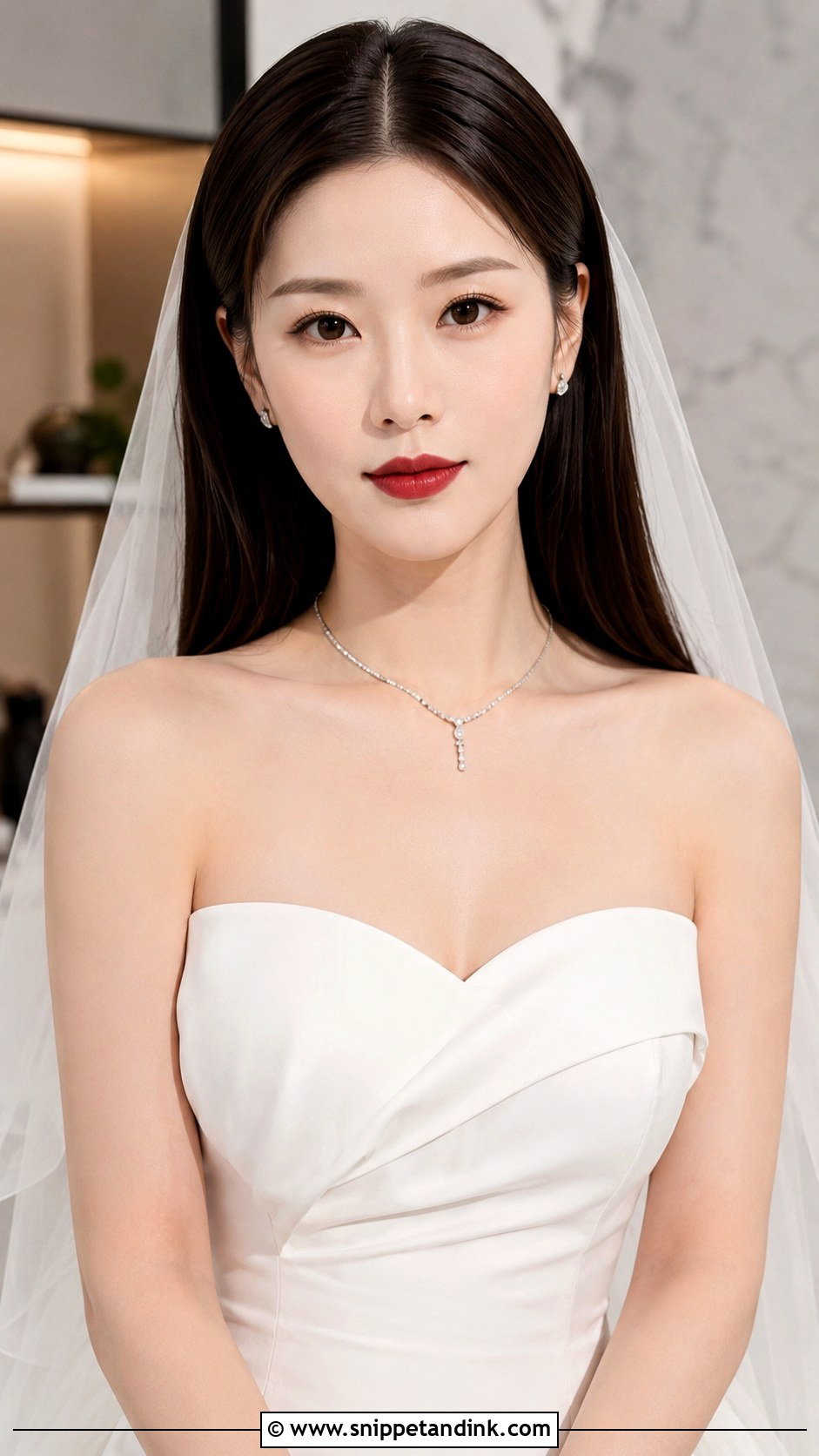
Straight and glossy is the hardest wig look to fake, because there’s no texture to hide a poor hairline or a cap that sits too high. A good lace front with a properly placed center or side part is essential. I’d also trim the ends at the trial so they fall evenly, since a fresh unit can look blunt or bulky at the bottom. Long reads dramatic, a sleek bob reads editorial; bold lips and simple jewellery suit both.
7. Boho Braided Wig
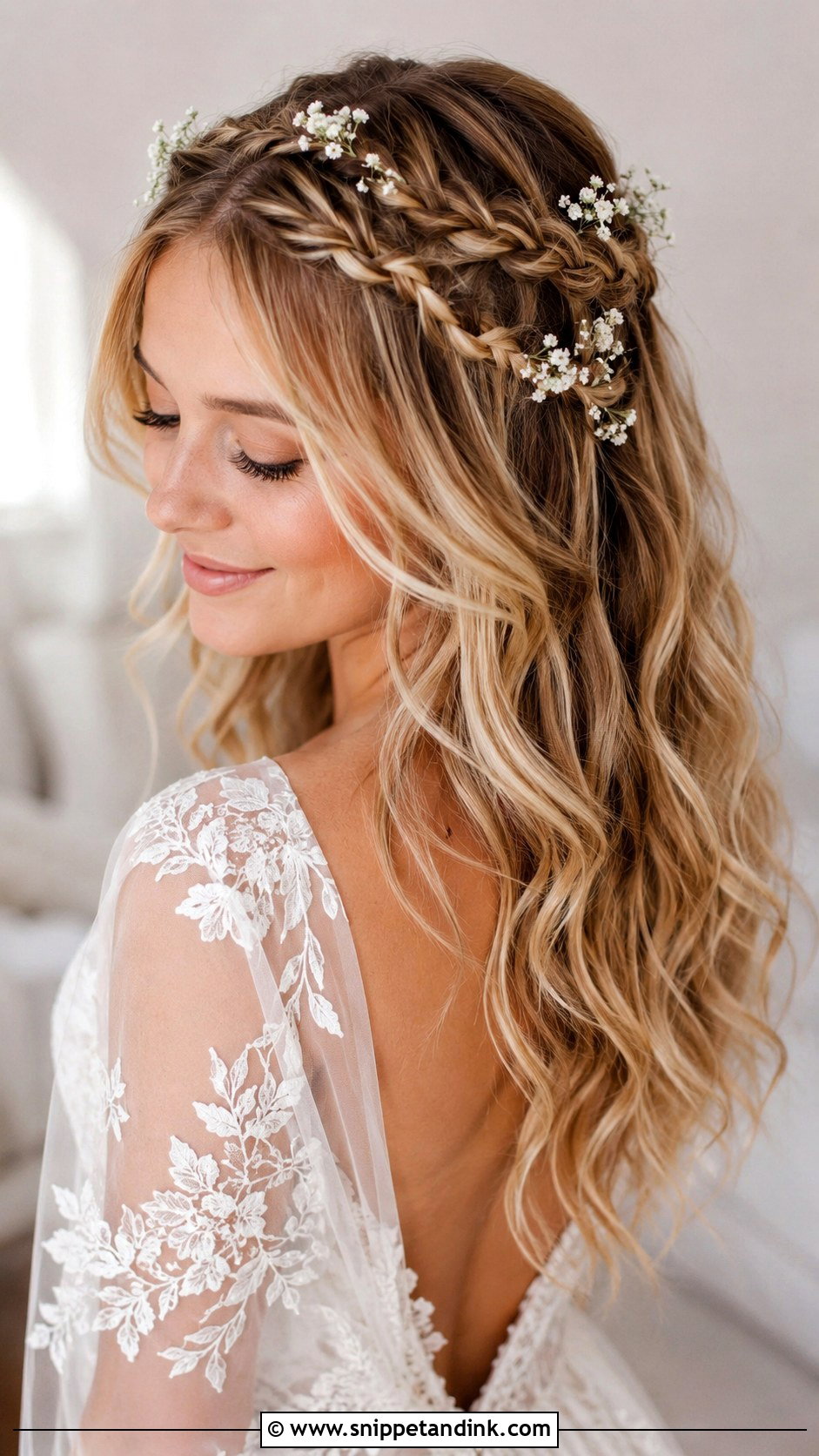
Soft braids woven through loose, wavy hair give an earthy, relaxed look: plaits framing the face, a loose fishtail over one shoulder or braided accents in a half-up style. Braids grip a wavy wig well, which makes it easier than braiding a sleek one. Tuck in tiny flowers or baby’s breath for a garden wedding. Keep the braids away from the front lace, though; tension there can lift the edge.
8. Bridal Top Knot Wig
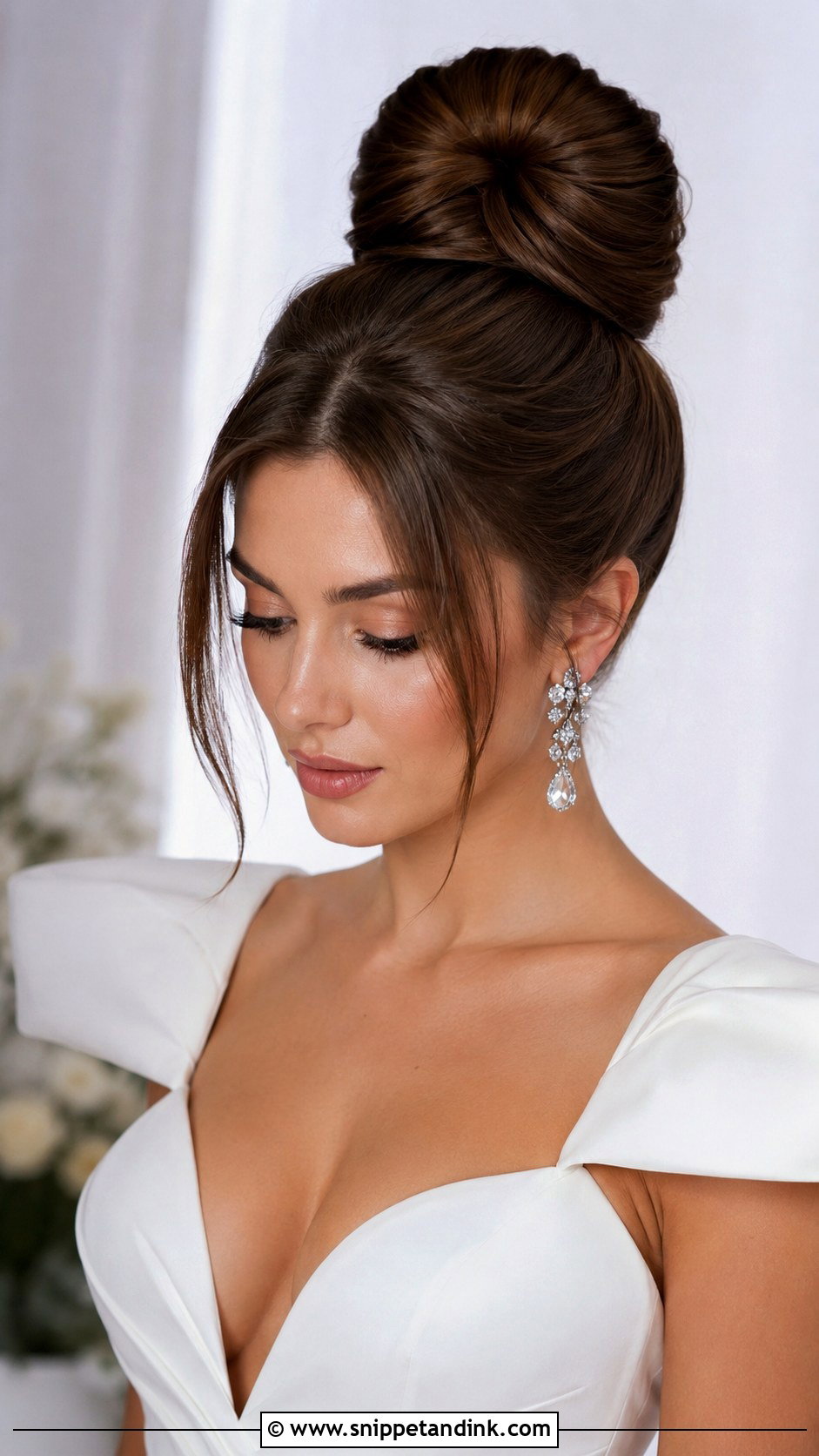
Gathering everything into a sculpted knot at the crown shows the face, neck and earrings, and like the ponytail it needs hair all round the hairline. A 360 lace wig lets you pull it up smoothly with no visible track. I’d still leave a couple of face-framing pieces if the lace at the temples is new and hasn’t been fully blended. It suits structured gowns and keeps hair off your face all night.
9. Side Swept Curls Wig
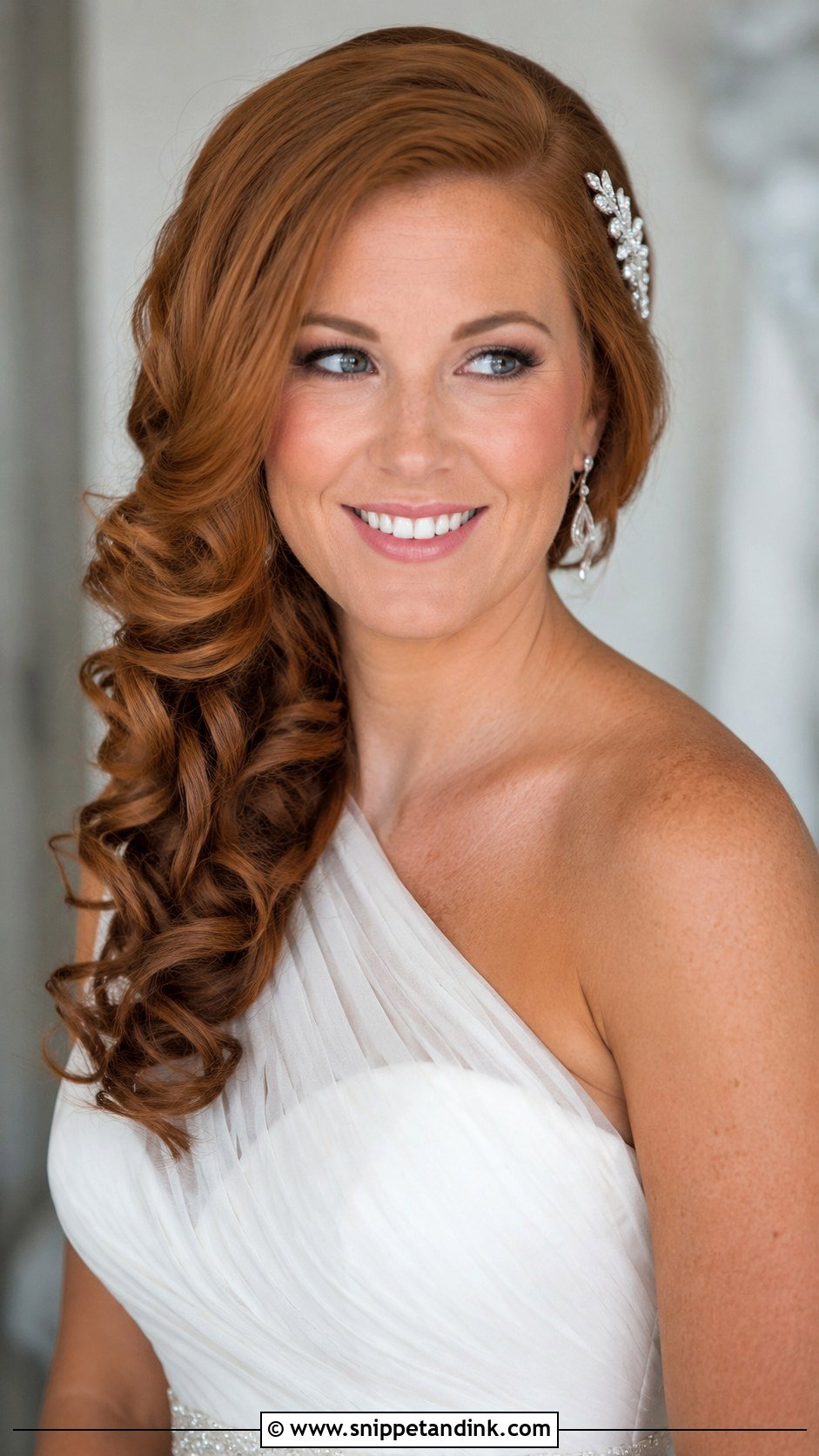
Bouncy curls gathered over one shoulder give an asymmetric, vintage shape and keep the focus on your face. A long curly lace front makes it easy. Because all the length sits on one side, the wig can drift that way, so I anchor it with an extra comb or pin on the opposite side behind the ear. A sparkling comb on the swept side finishes it, and it suits one-shoulder and off-shoulder gowns.
10. Curly Afro Bridal Wig
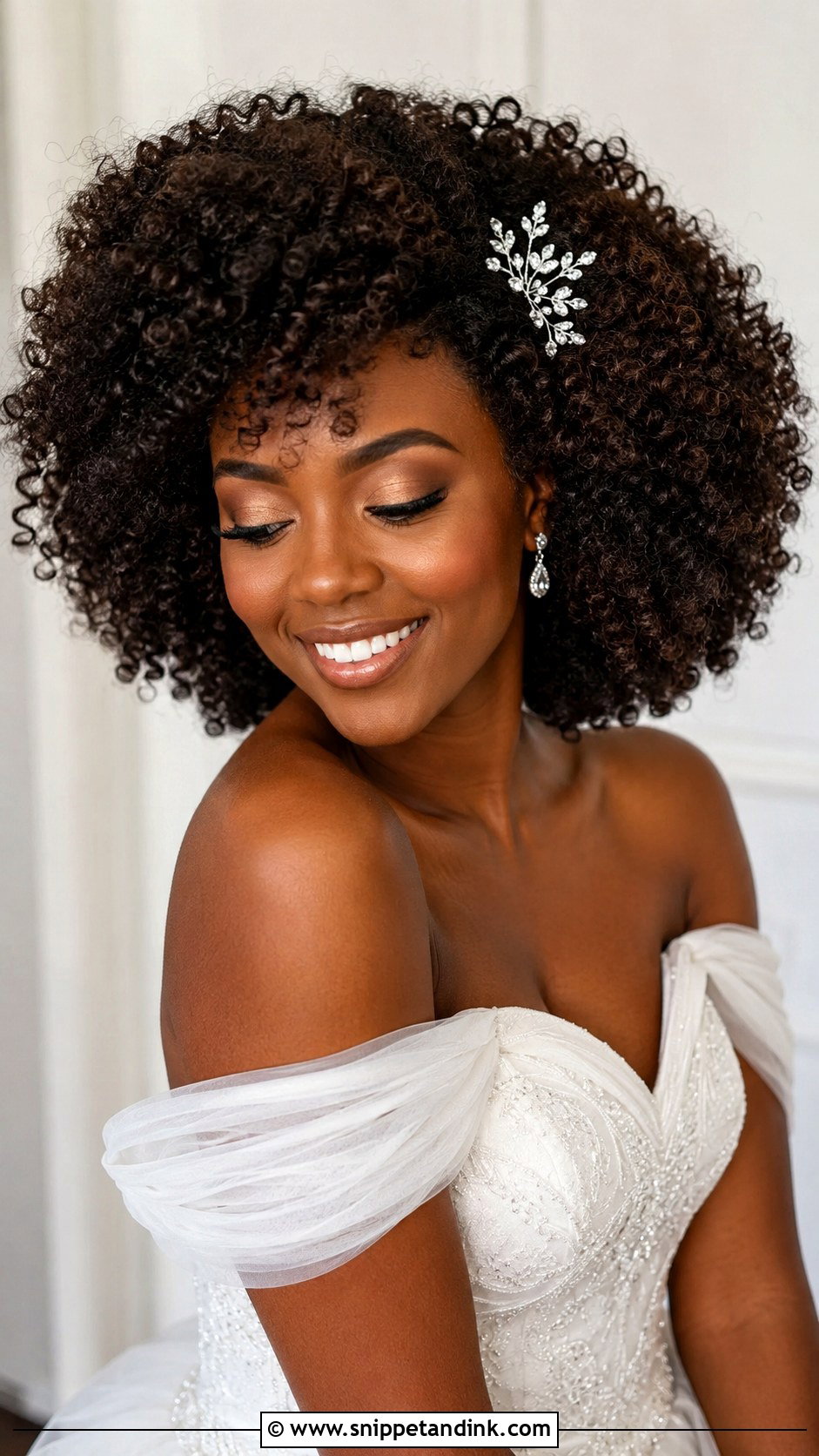
A full, rounded curly afro bridal wig celebrates texture and volume, and for a bride who wants to wear her own curl pattern without a long morning of shaping, a kinky-textured unit gives that shape and bounce straight away. Pick a fibre close to your natural texture so the edges blend. A decorative headband, fresh flowers or a sparkly pin can sit straight into the volume without much securing.
11. Vintage Finger Waves Wig
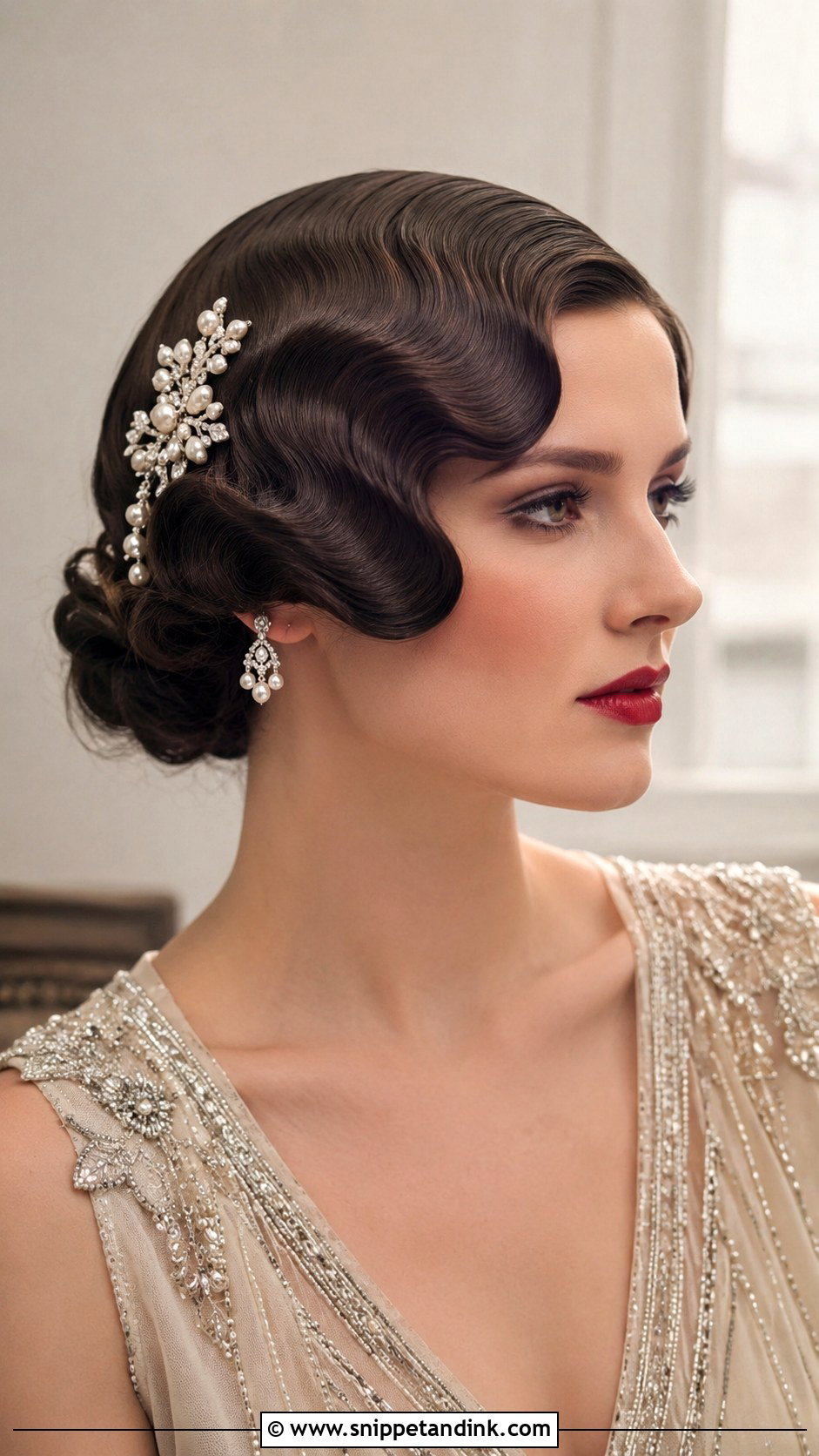
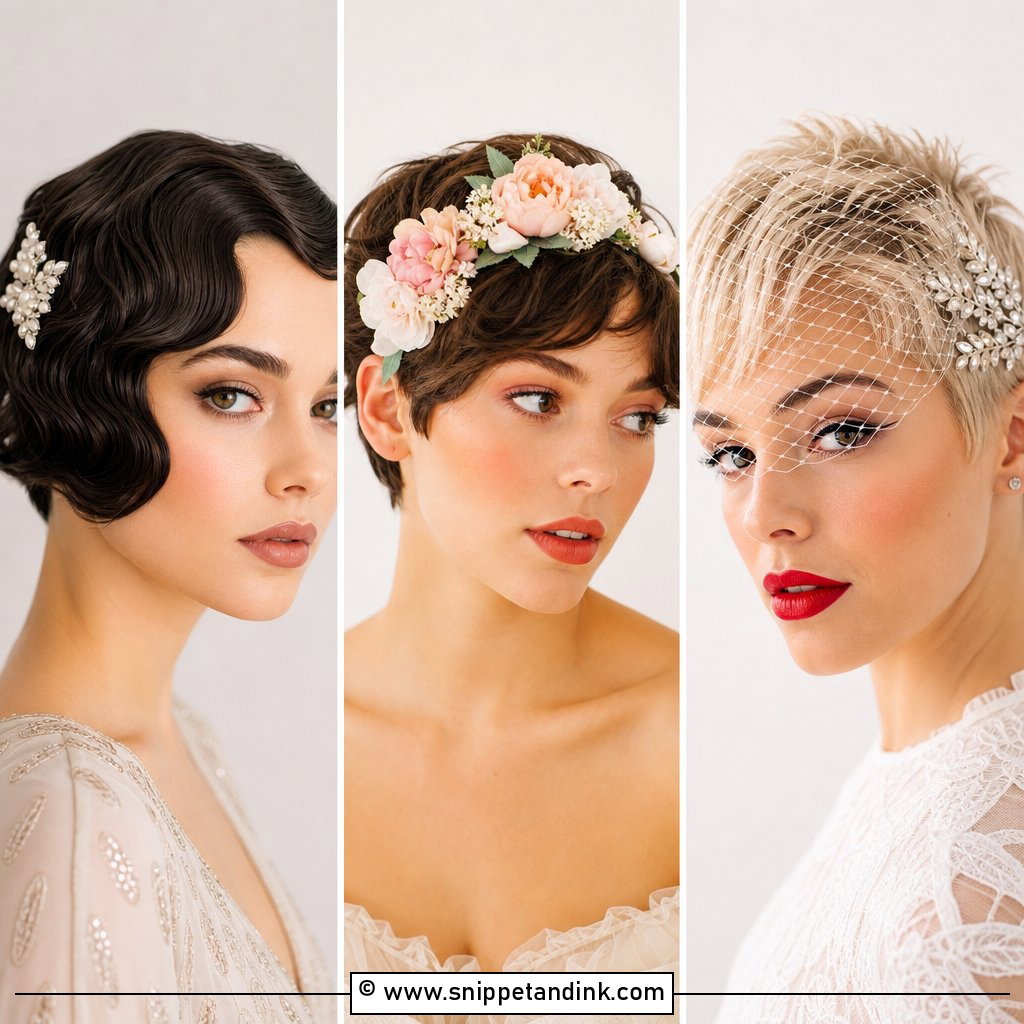
Sculpted S-shaped waves set close to the head give a 1920s and 1930s feel that suits Old Hollywood and Art Deco themes. Finger waves sit best on a sleek bob or short wig, and they need a smooth, straight unit to mould. They’re set wet with gel and combs and left to dry, so a human hair wig is the realistic option; most synthetic fibre won’t hold a wet set. A vintage veil, pearls and red lips complete it.
12. Loose Beach Waves Wig
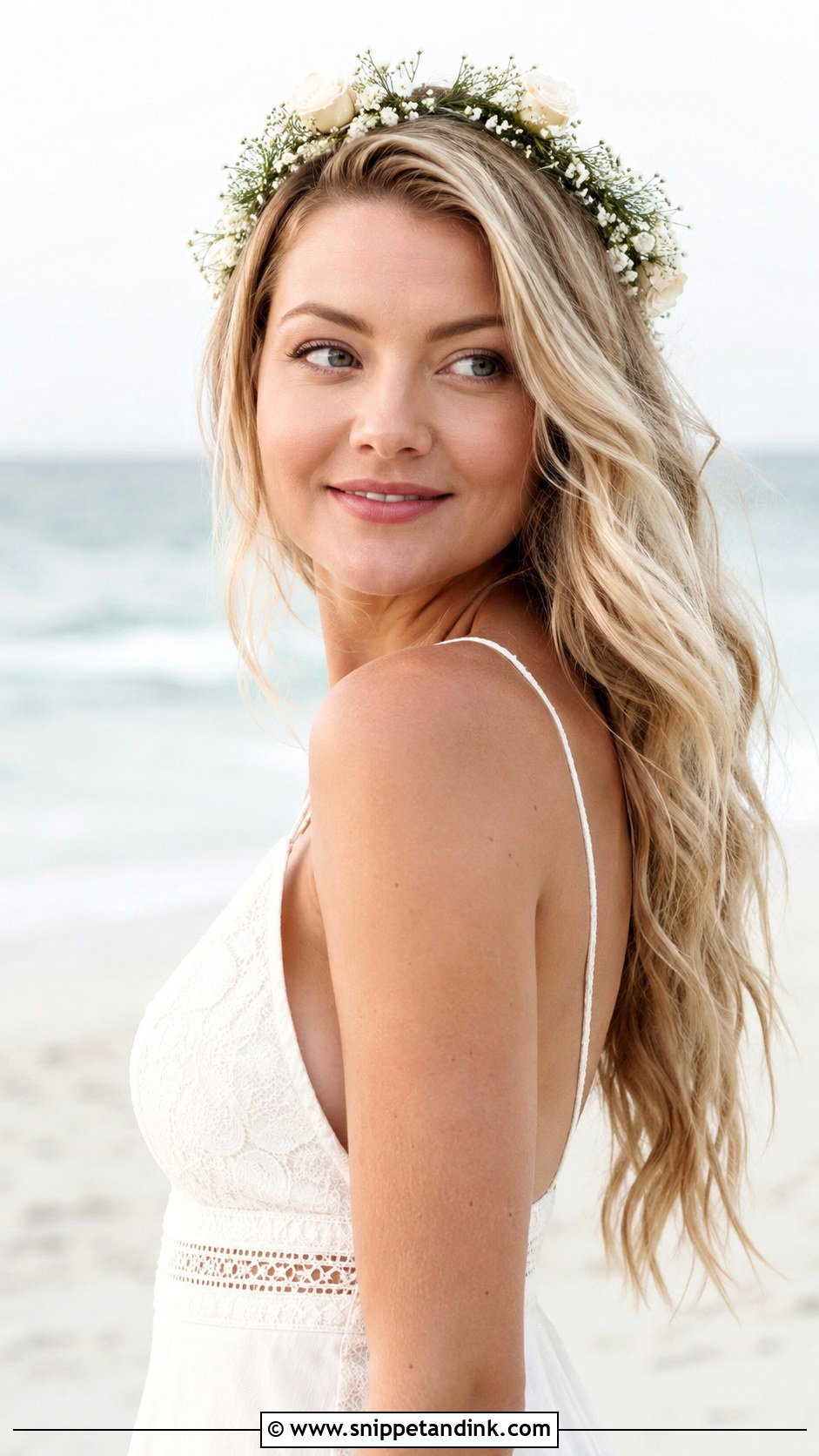
Beach waves suit a relaxed outdoor wedding, and soft, tousled waves are simple to keep on a wig. They can fall down the back or sweep to one side. Undone texture is also the best disguise for a wig: the irregular movement hides the hairline and the weft pattern better than any sleek style. A flower crown or simple veil finishes it.
13. Braided Updo Wig
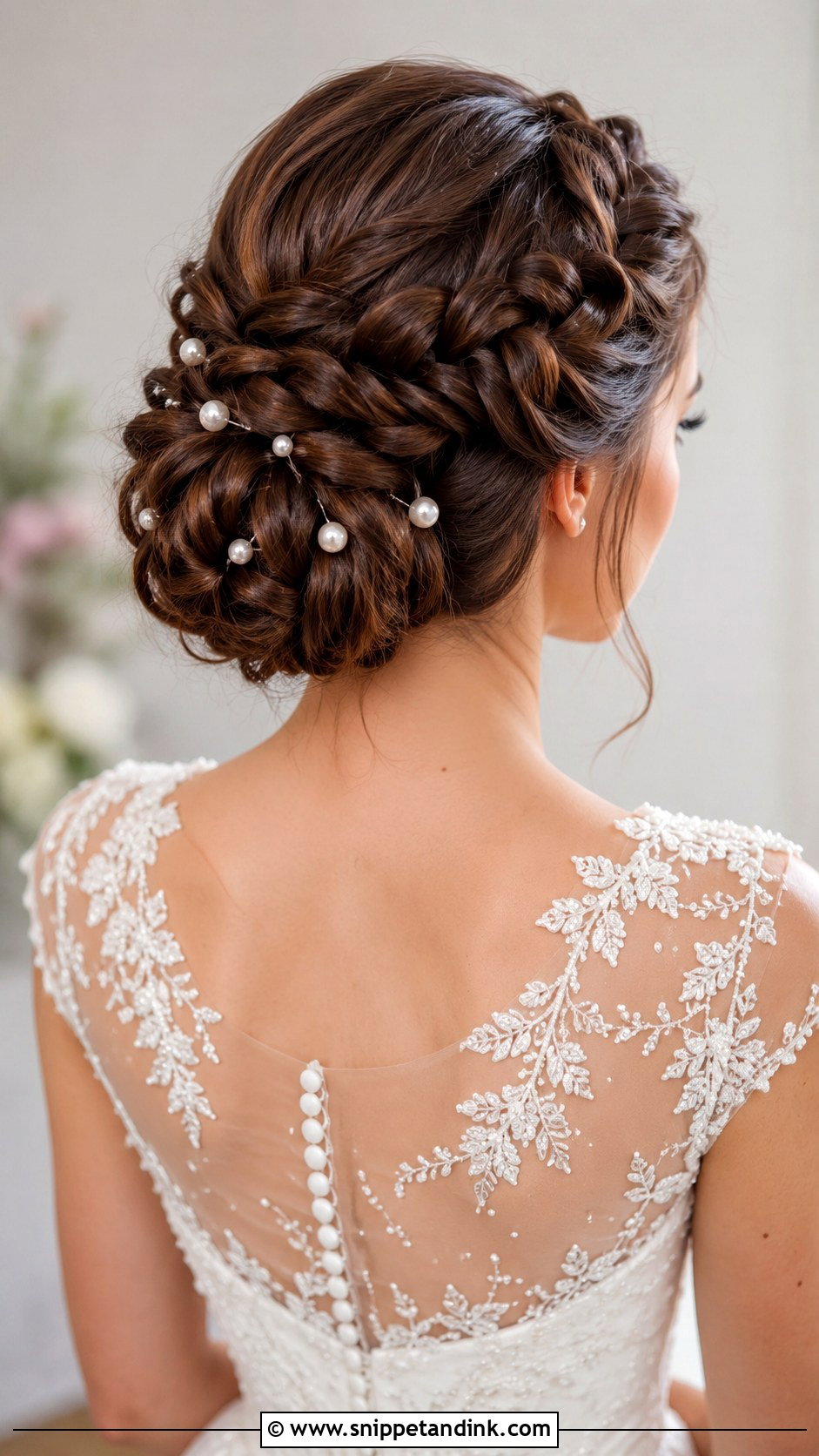
Braids pinned into an updo, whether a crown braid, braided bun or twisted plaits gathered at the back, give plenty of detail. They also give your pins something solid to hold. A long wig provides the length needed, but the braids add weight, so I build this on a 360 or full lace unit with a firm band. It suits modern and traditional gowns, and small flowers or pearl pins add detail.
14. Short Bob Wedding Wig
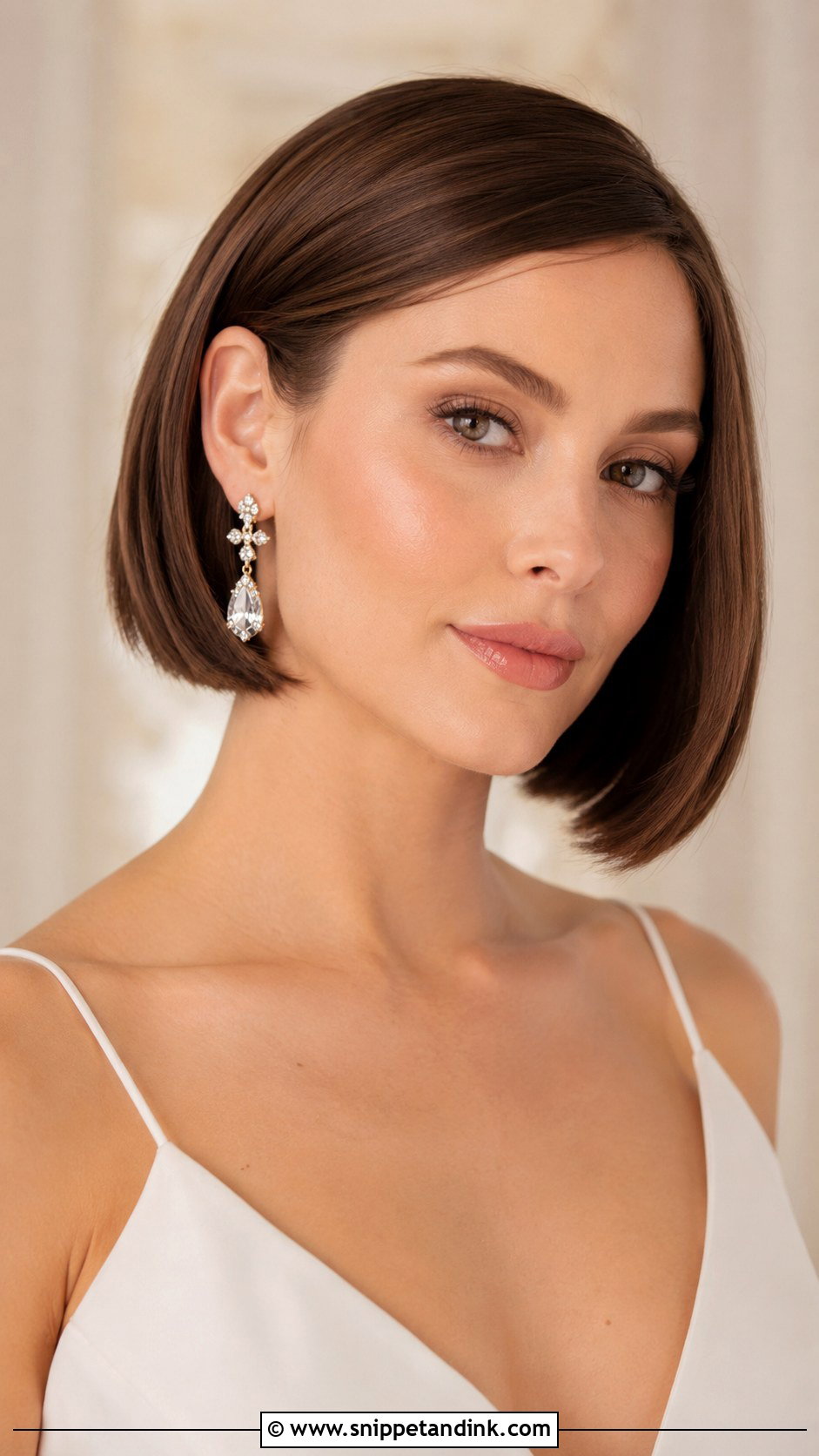
Jaw- or chin-length, a bob wig frames the face cleanly, worn straight, waved or tucked behind one ear. It’s the lightest and coolest wig to wear for a long day, which matters if your venue is warm. A bob lace front gives a natural hairline. My one caution: with no length to hide anything, the cut and the lace both need to be perfect, so have it shaped by a stylist rather than worn straight from the box.
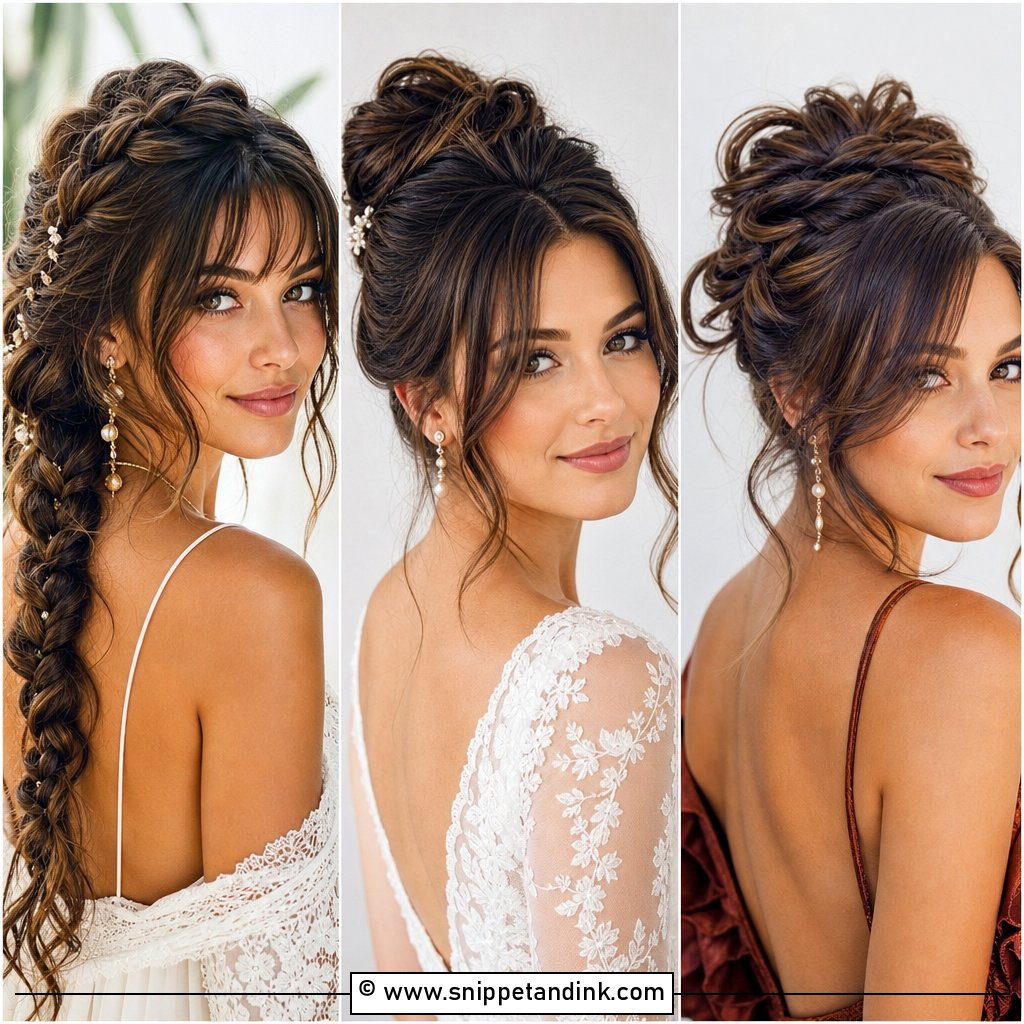
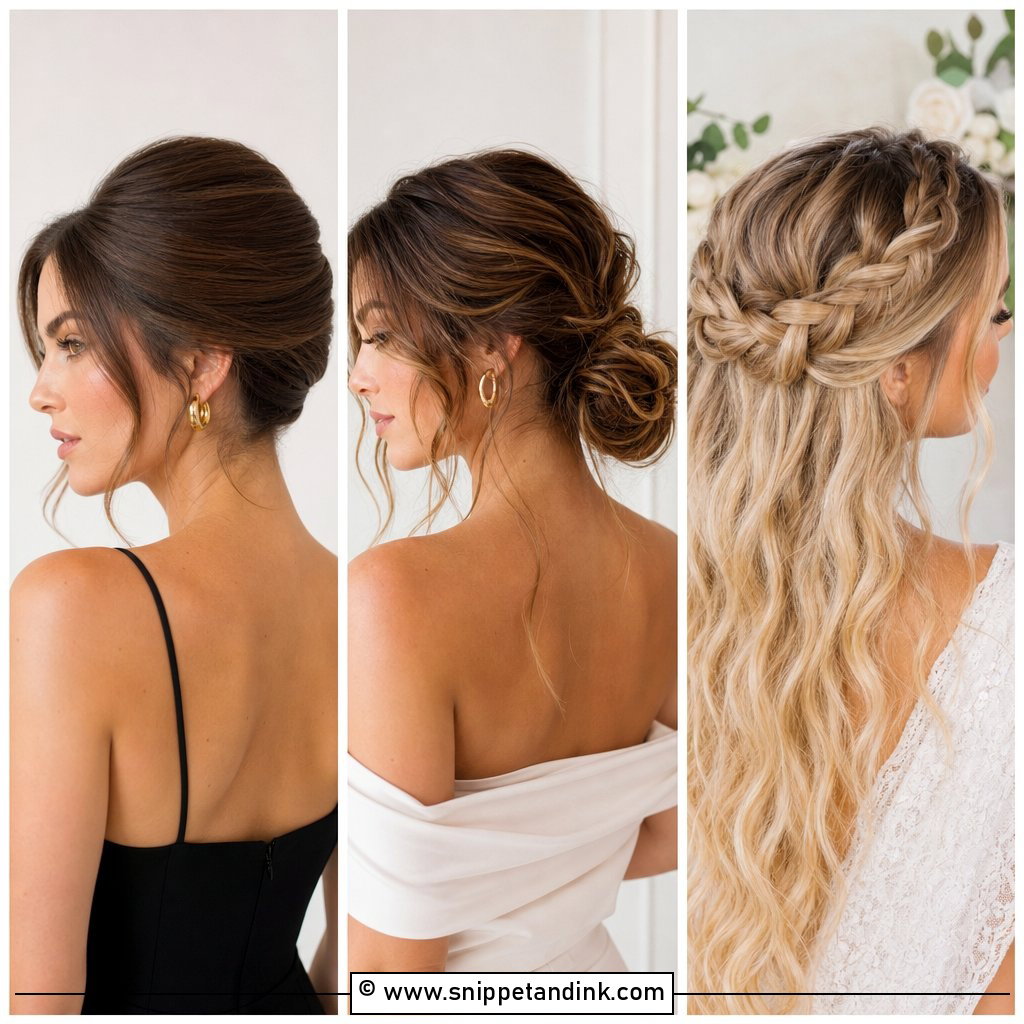
15. Crown Braid Wig
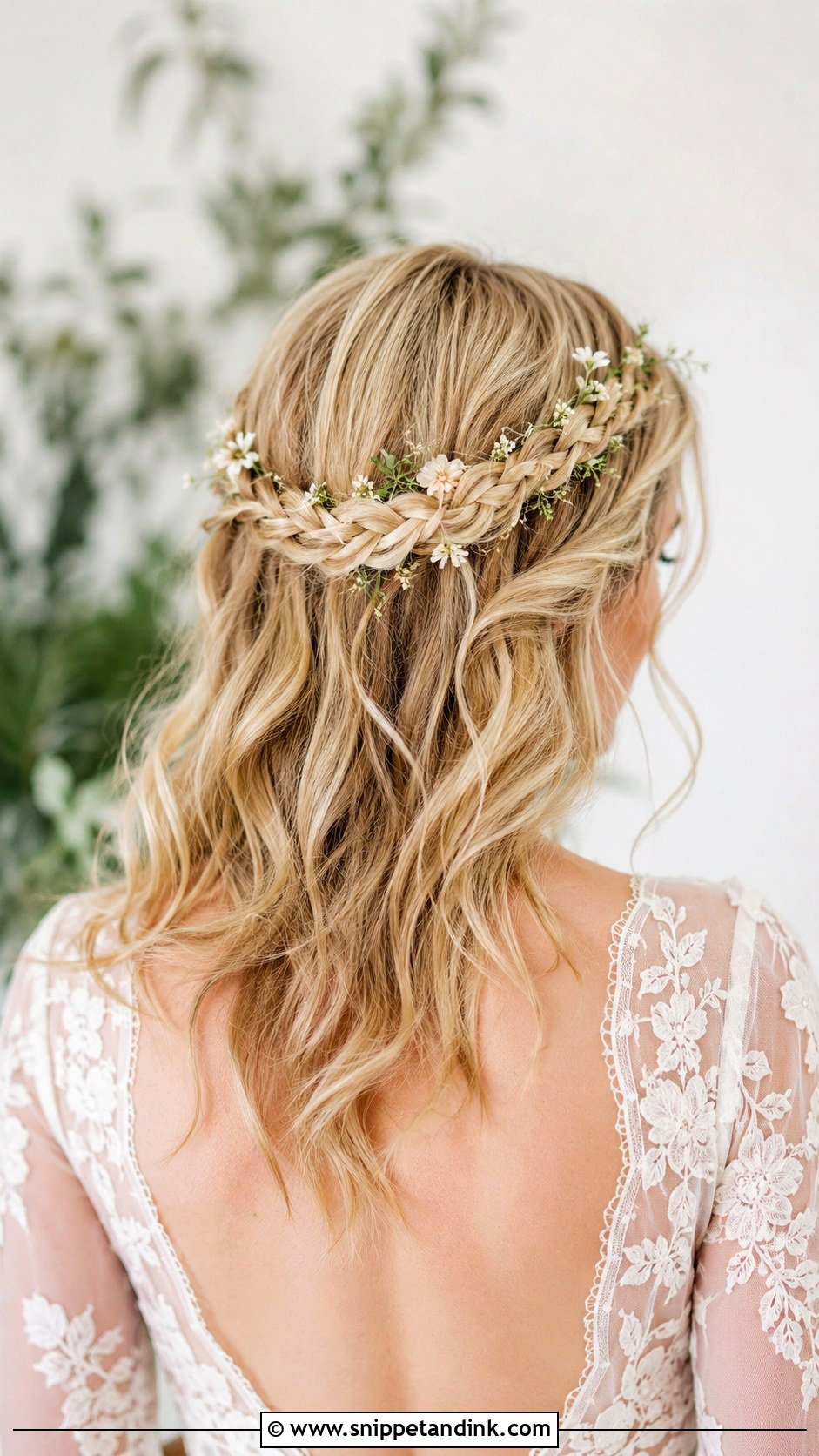
A braid circling the crown like a halo suits boho, garden and fairytale weddings. You can leave the rest flowing or tuck it into the braid. On a wig, the halo braid has to start from the wig’s own hair at the sides and must never pull at the front lace, so I begin it slightly back from the hairline. A long wig gives the length to complete the circle, and tiny flowers or greenery can be woven in.
16. Voluminous Curls With Tiara Wig
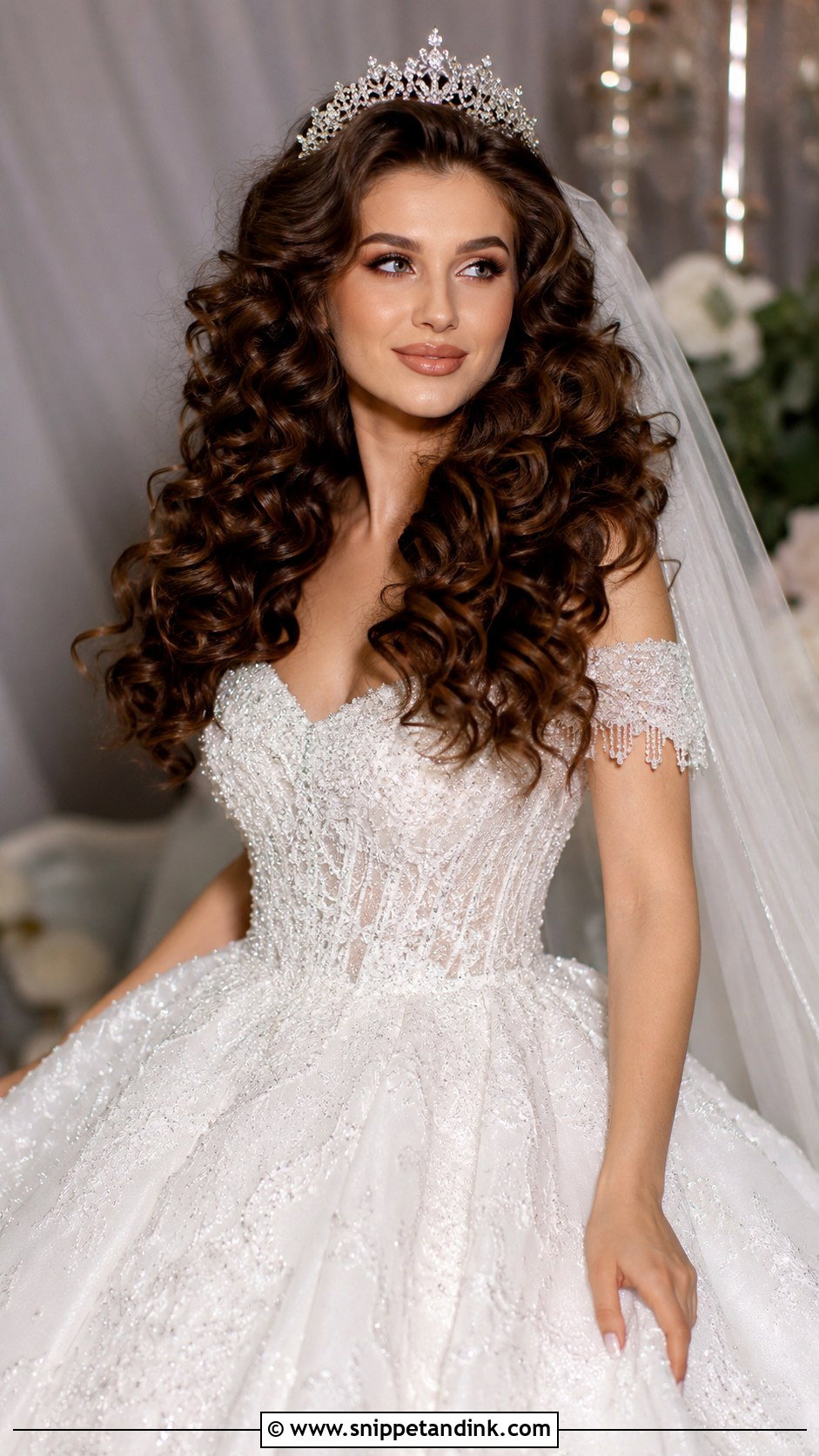
Full, bouncy curls with a sparkling tiara on top suit a grand ballroom. A curly lace front holds the volume all day. A tiara’s combs need to grip the wig without catching your own hair underneath, so I slide them into the curls at an angle and secure the ends with a pin each side. A long veil and statement jewellery complete it.
17. Low Side Bun Wig
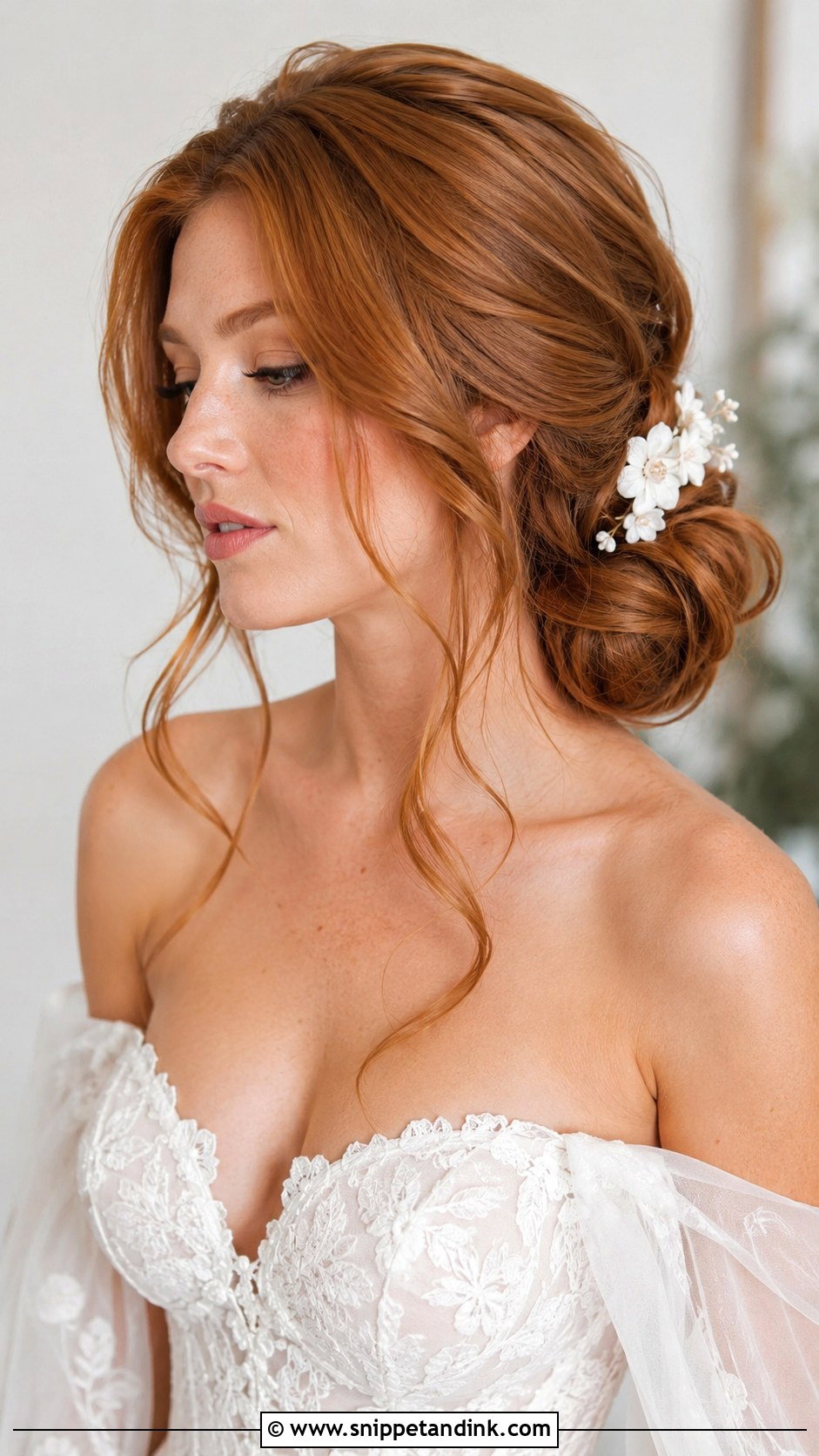
A loose bun placed behind one ear, with wispy tendrils at the face, gives a soft asymmetric shape. Off-shoulder gowns and delicate veils suit it. Because it sits low and to the side, a lace front works fine here; the bun covers most of the back. A decorative pin or fresh flowers by the bun add a small detail, and it suits an intimate wedding.
18. Slicked Back Bridal Wig
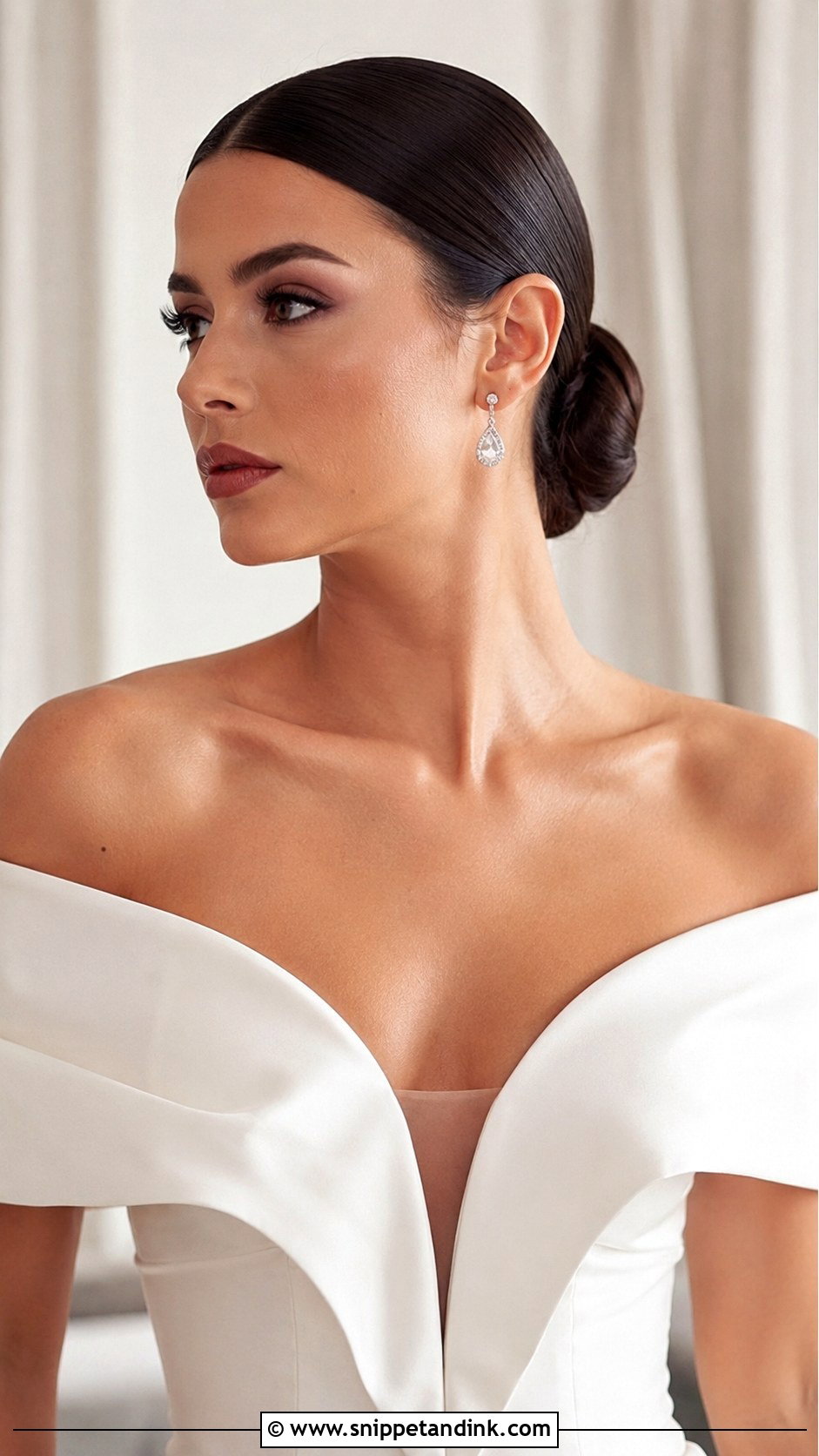
Pulling all the hair straight back gives a clean, editorial finish that shows the face, jawline and earrings. It can finish in a low bun or let the length fall behind. A glueless lace wig makes it achievable, but slicked-back styles show the whole hairline, so the lace needs to be well tinted and laid. I’d only do this one on a unit you’ve already worn a few times and know well. Structured gowns and bold makeup suit it.
19. Curly Bob Wedding Wig
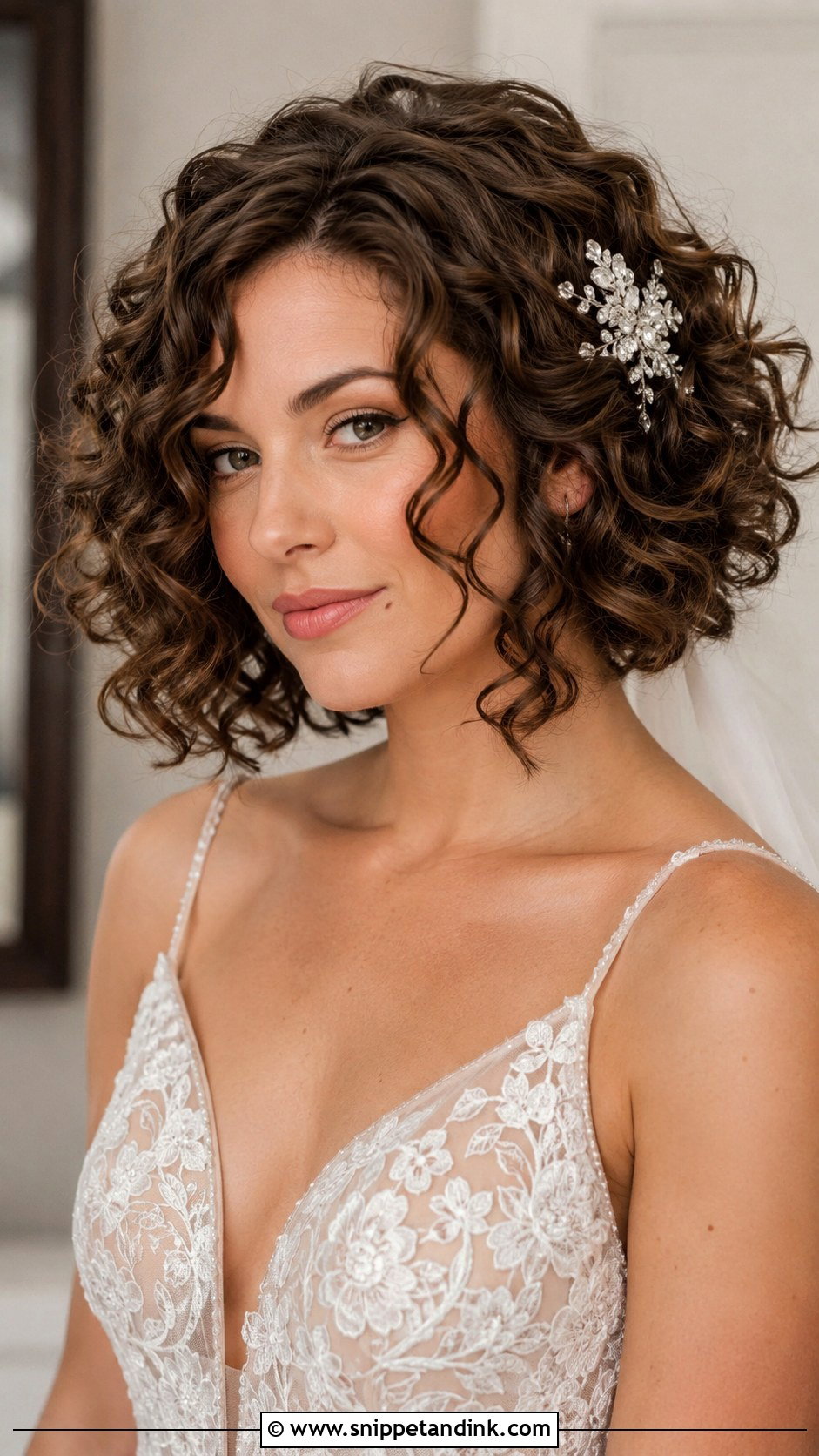
Short, bouncy curls framing the face give a curly bob plenty of personality, with texture and volume and no long length to manage. A sparkly clip, a headband or fresh flowers add some bridal detail. A curly bob lace front gives natural-looking definition. Curly units tangle where they rub, so I’d refresh it with a light leave-in spray and fingers rather than a brush on the morning.

20. Long Flowing Waves With Veil Wig
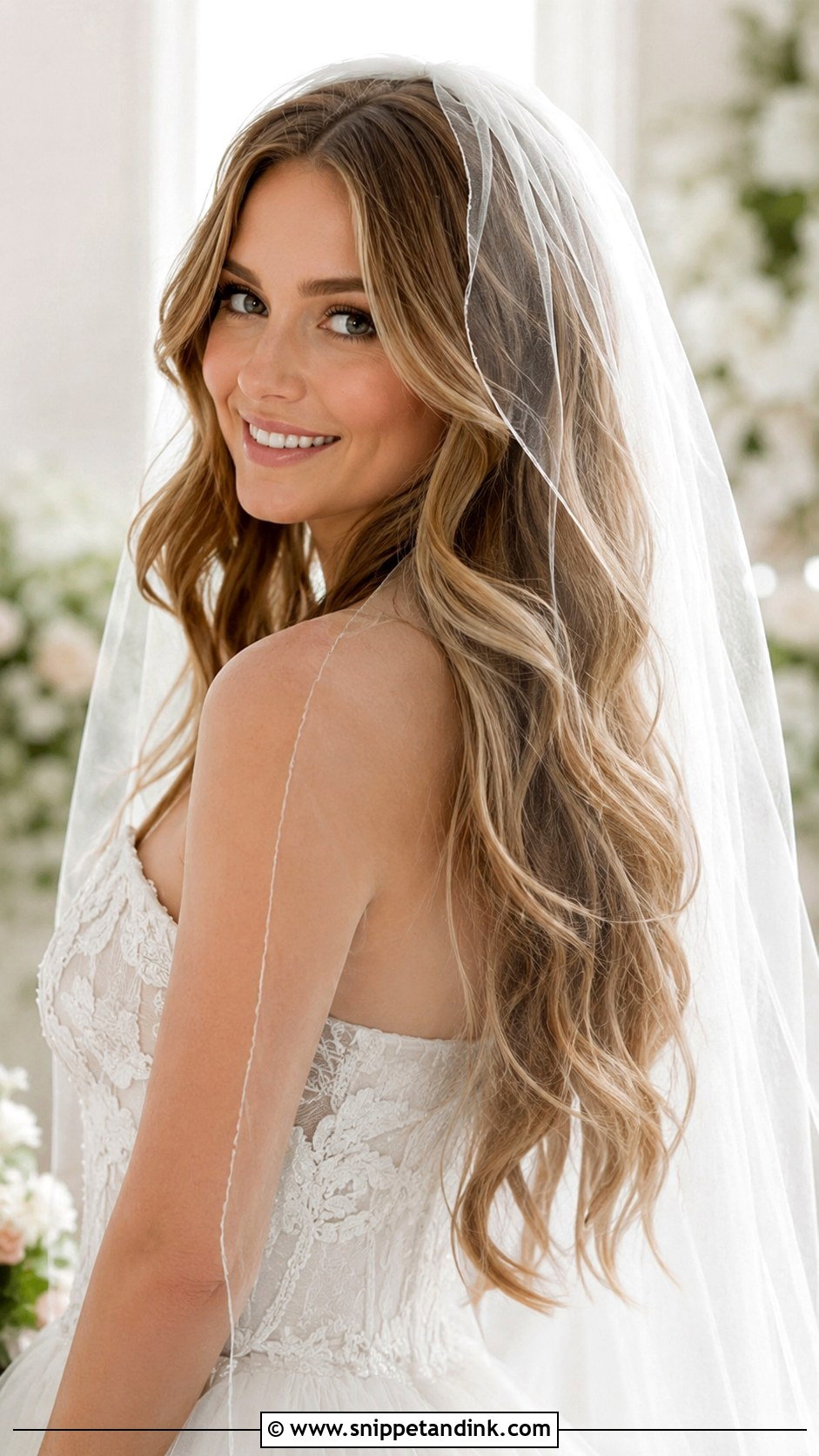
Long waves flowing down the back under a veil is the classic version, and it suits nearly any gown or theme. A long wavy lace front makes it easy. The one thing I always check is how the veil comb attaches: it needs to grip the wig’s own hair at the crown, and with a heavy veil I add a small elastic band or wig grip underneath so the whole unit doesn’t slide back when the veil is lifted.
Securing a Wig Under a Cathedral Veil and Through a Hot Reception
Most wig worries on the day come down to three things: how it’s held on, how warm it gets and how the veil is attached. I plan for all three at the trial.
- Order the unit early, ideally a couple of months out, so there’s time to customise the lace, tint the knots and cut the shape.
- Have the wig installed and styled the day before or early on the morning, then leave it alone.
- Use flat cornrows or a smooth wrap underneath, plus a wig grip band, so the cap sits flat and doesn’t slip.
- Attach the veil comb into the wig hair at the crown and pin both ends, never into the lace.
- Pack blotting papers, a spare comb and the adhesive or bands you used, in case an edge lifts after dancing.
Wigs are warmer than your own hair, especially full lace caps in summer. If the venue is hot, a lighter density or a shorter length will feel far more comfortable by the evening.
Wear It Around the House Before You Wear It Down the Aisle
A wedding wig lets you wear the length, color or texture you want while keeping your own hair protected, and it means the style can be ready before the morning even starts. From curly updos and Hollywood waves to sleek bobs and braided crowns, the right one depends on your cap type, the fibre and your gown. Whichever you pick, get it styled early, wear it for a few hours at home, and test it under your actual veil.
You'll Like These Ideas:


Leave a Reply