
Plus size wedding dresses have changed a lot. Designers now build real support into the bodice, cut corsets and basque waists for fuller figures, and grade patterns properly instead of simply scaling a size 8 up. When I dress a curvy bride, I’m not trying to hide anything. I’m looking for a gown that holds her in comfortably, lets her sit through dinner, and still moves when she dances. Below are 35 silhouettes, necklines, fabrics and colors, each with what I’d actually watch for in the fitting room.
Shopping With Sample Sizes, Size Charts and Real Measurements
Most bridal salons keep their samples in a narrow range of sizes, and many still don’t carry plus samples of every gown. Call ahead and ask which dresses they have in your size so you’re not spending the appointment being clipped into gowns that don’t close. A sample that’s too small tells you almost nothing about how the finished dress will fit.
Bridal sizing also runs smaller than everyday clothing, often by one or two sizes, and every designer uses their own chart. I measure bust, natural waist and the fullest part of the hip, then order by the largest of the three. Taking a dress in is routine work; letting it out is limited by the seam allowance, which on many gowns is very small.
- Wear the bra or shapewear you plan to wear on the day, even to the first appointment.
- Sit, raise both arms and take a few steps in every serious contender.
- Ask whether the back is a zip or a corset lace-up; a lace-up gives you a little room if your size shifts before the wedding.
- Ask how much seam allowance the side seams carry before you order.
1. Plus Size A Line Wedding Dress
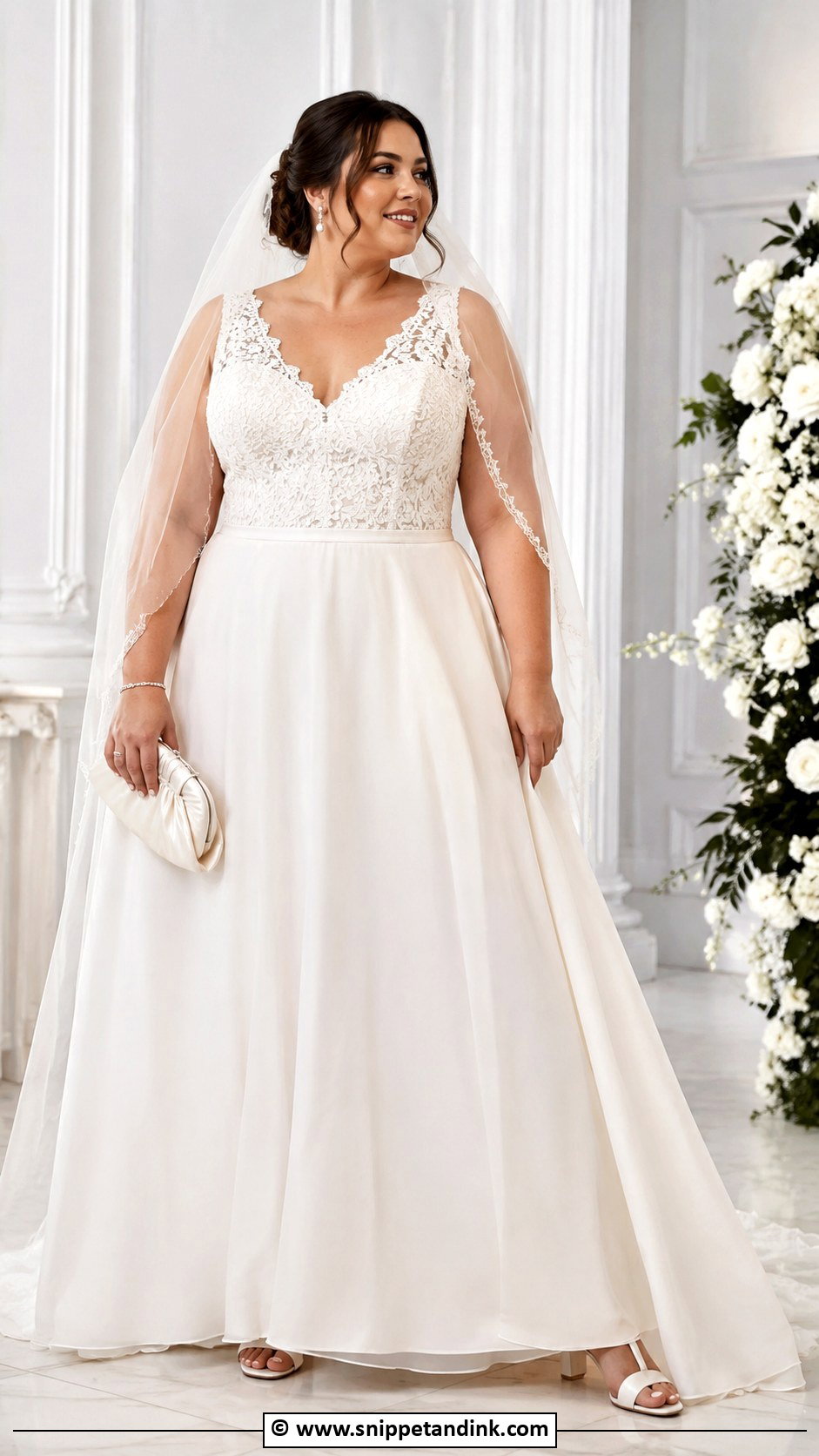
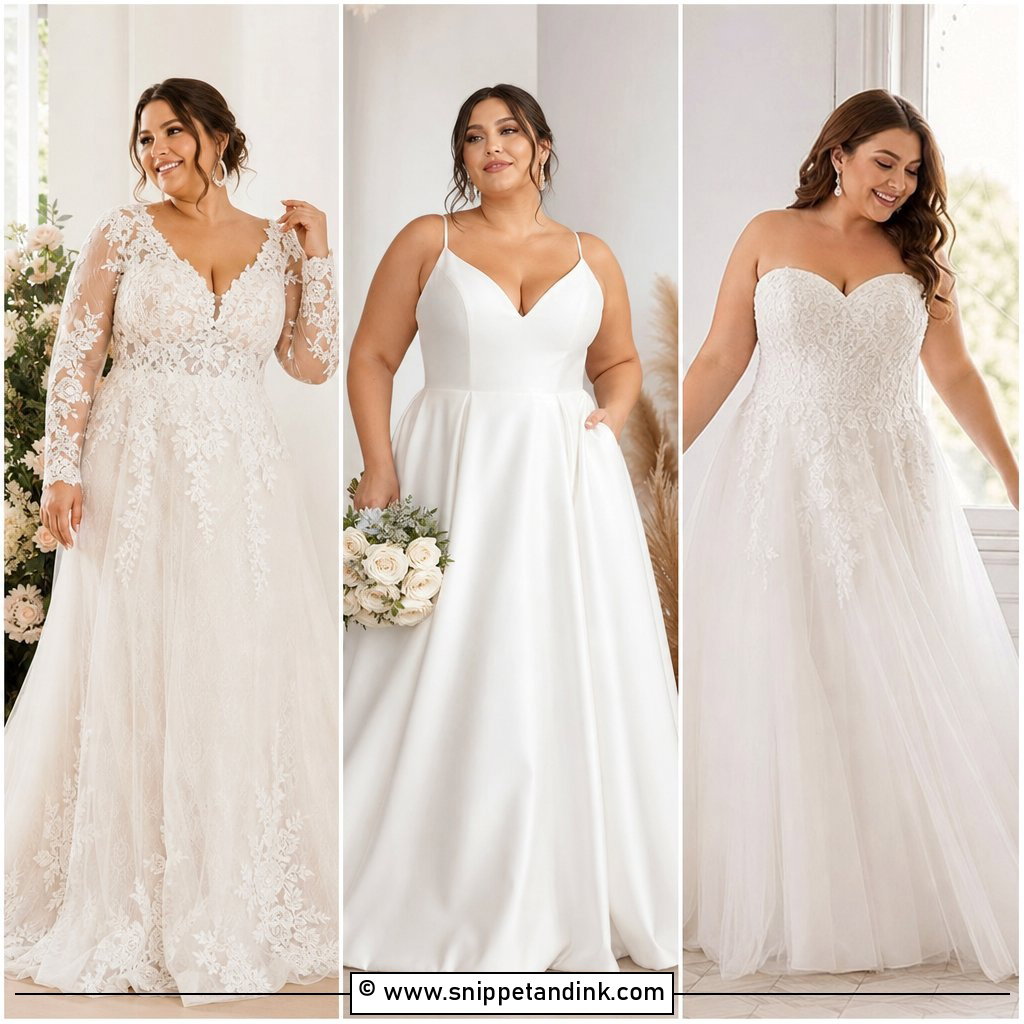
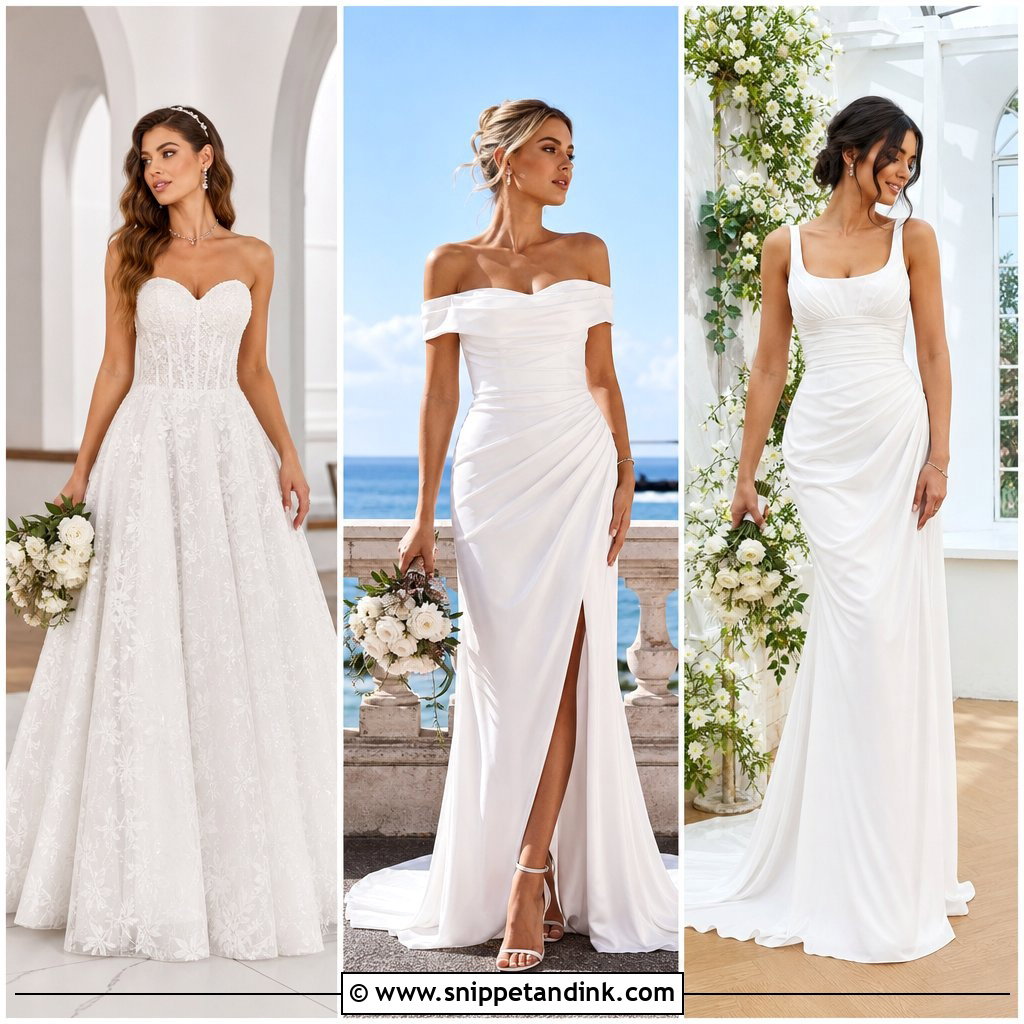
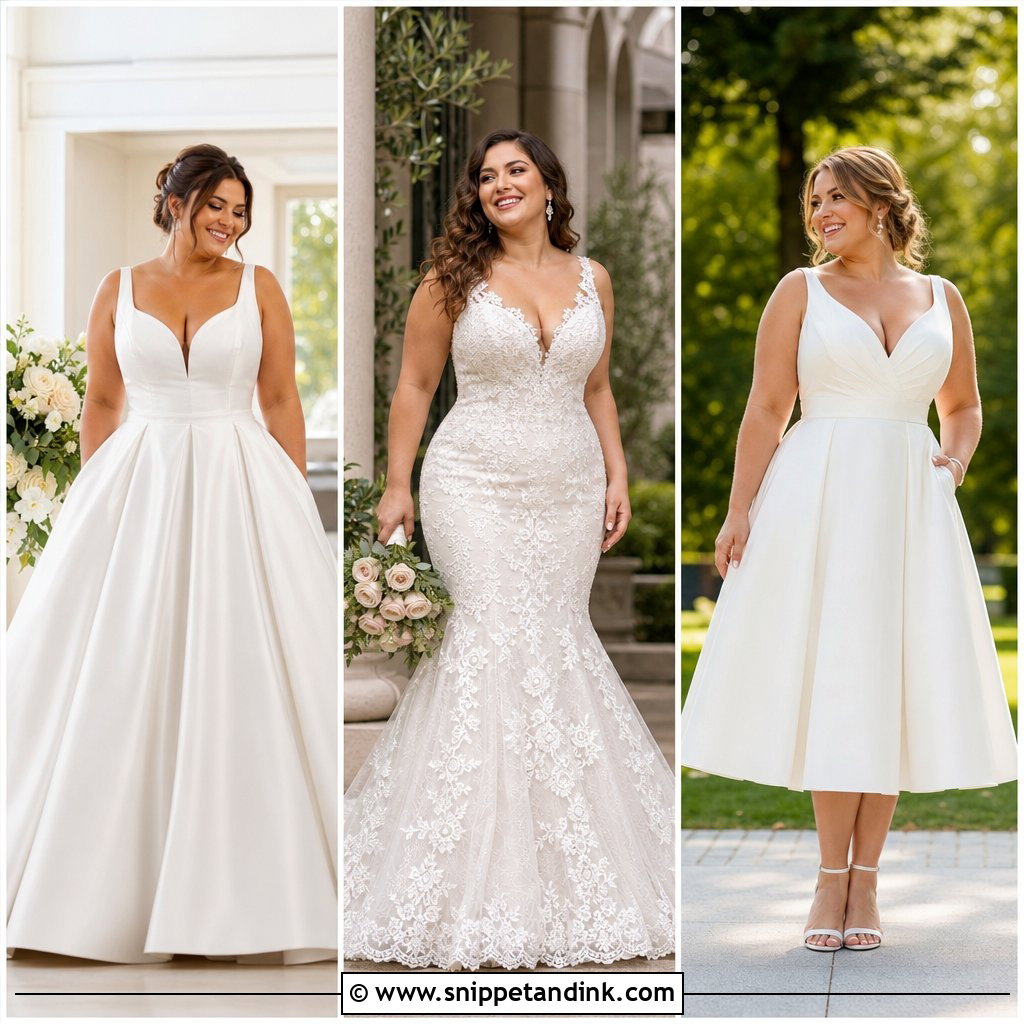
An A-line is the dress I hand over first when a bride isn’t sure where to start. The bodice does the shaping at the natural waist, and the skirt falls away from the hips without catching on them, so it’s easy to sit and dance in. A boned bodice gives more lift than a soft one; tulle skirts feel lighter than satin ones of the same cut. Necklines are wide open here: sweetheart, off-the-shoulder straps, or broad tank straps that let you skip a strapless bra. I’d add a fingertip veil, pearl drops and block heels and leave it there.
2. Plus Size Ball Gown Wedding Dress
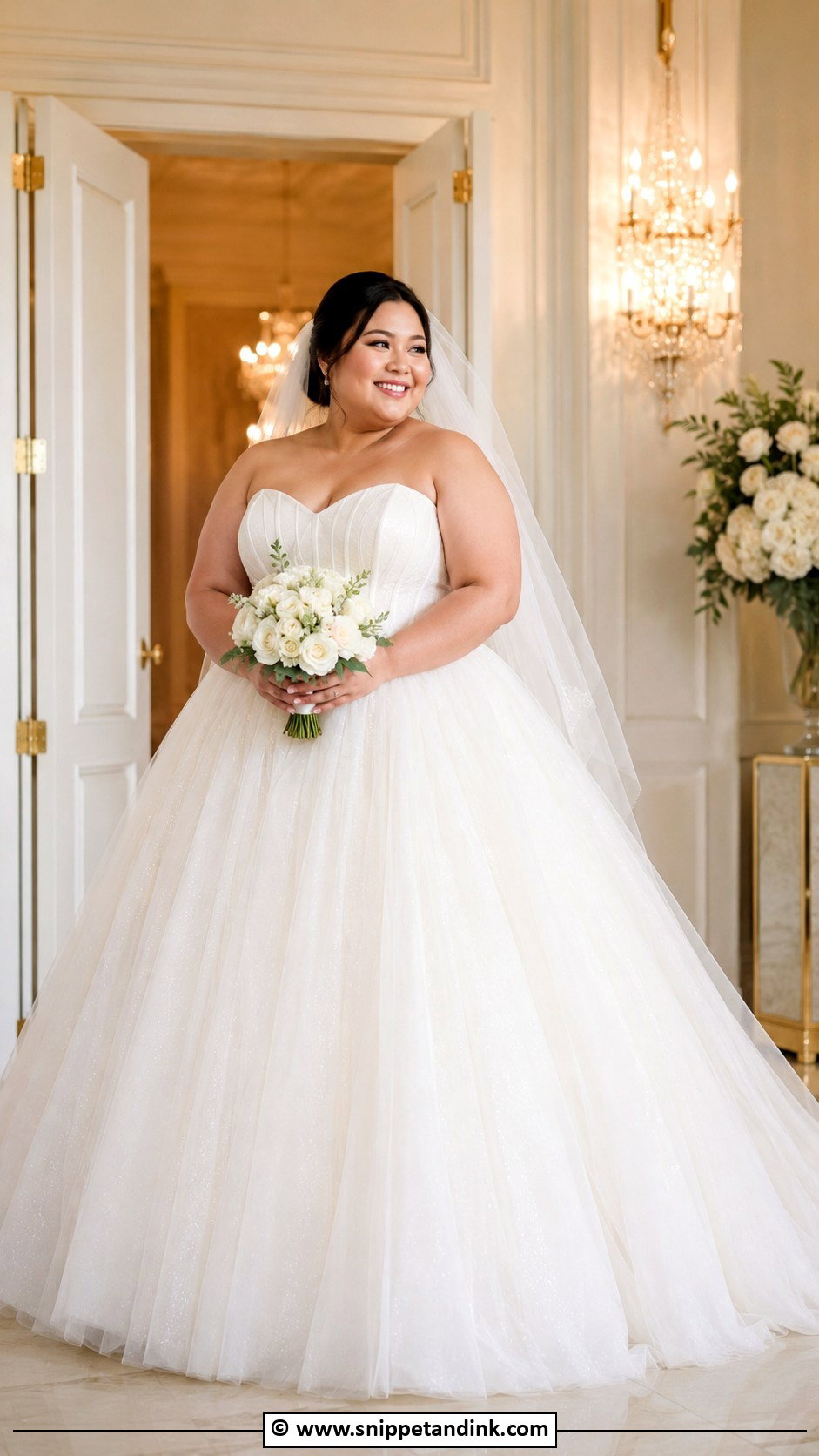
A ball gown gives you the big entrance, and on a fuller figure the contrast between a fitted bodice and a wide skirt marks the waist clearly. The catch is weight. Several layers of satin or organza can be heavy by the reception, so I always ask a bride to walk the length of the salon and sit down twice before she decides. A corset back helps the bodice stay put under that load. Keep the veil plain, the earrings small, and hide comfortable heels under the hem; nobody will see them.
3. Plus Size Mermaid Wedding Dress
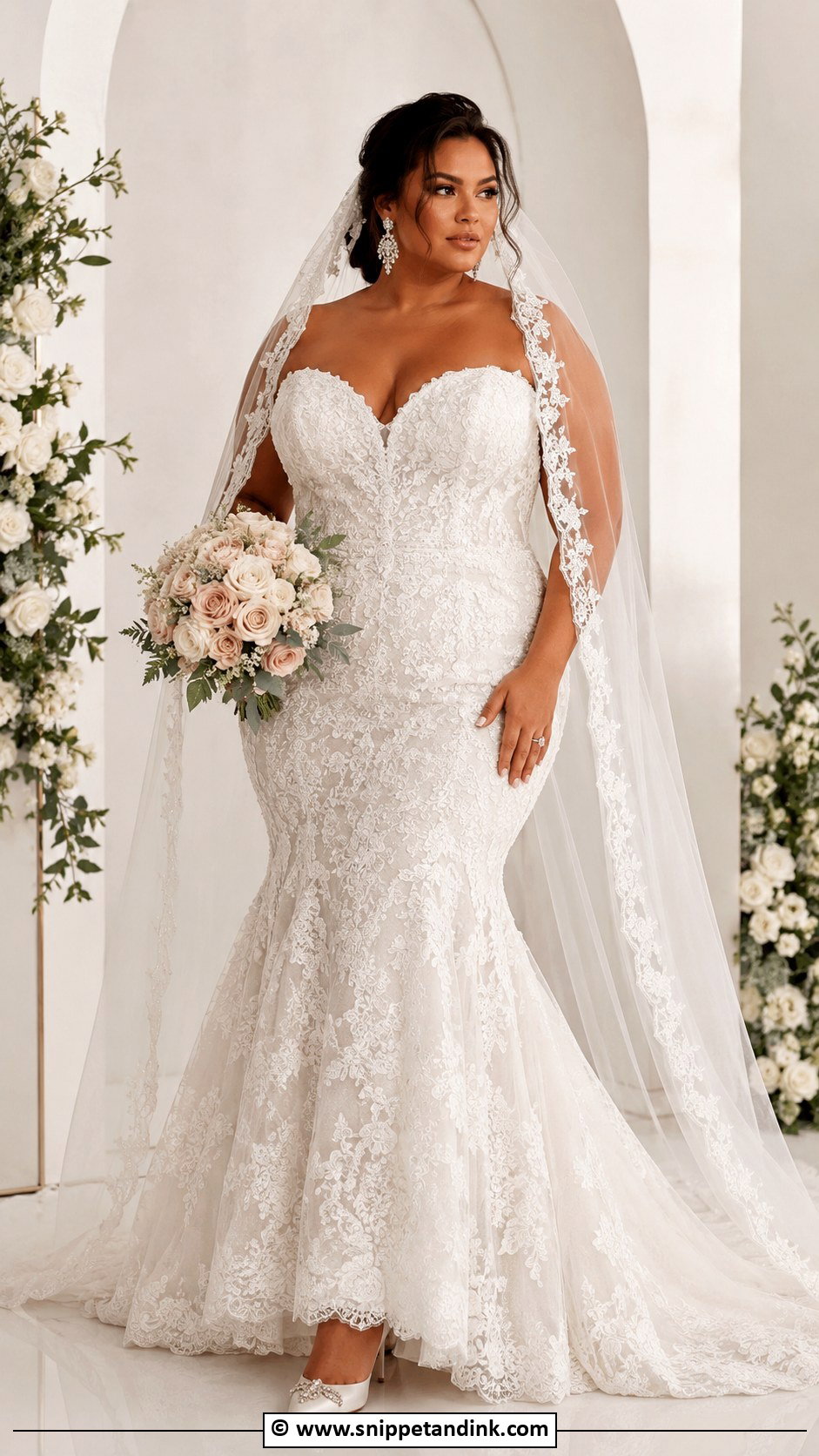
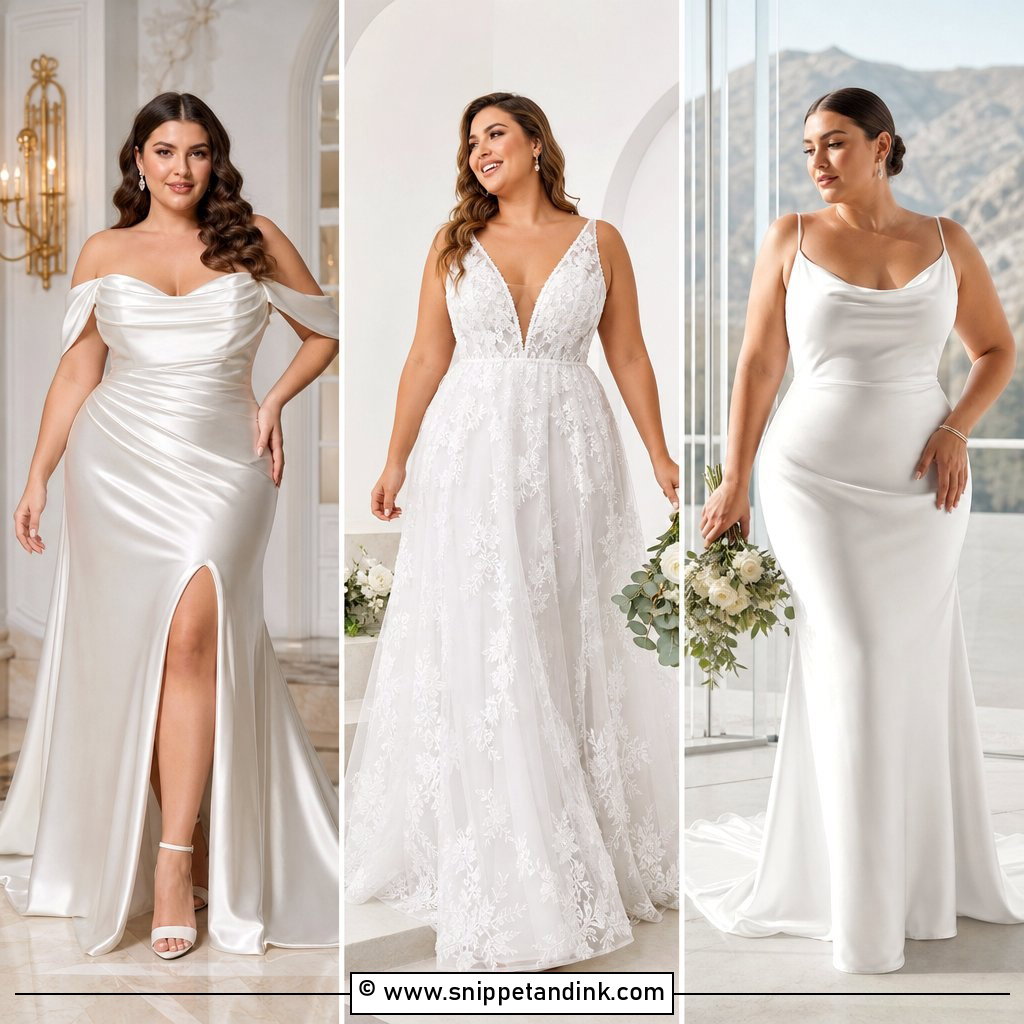
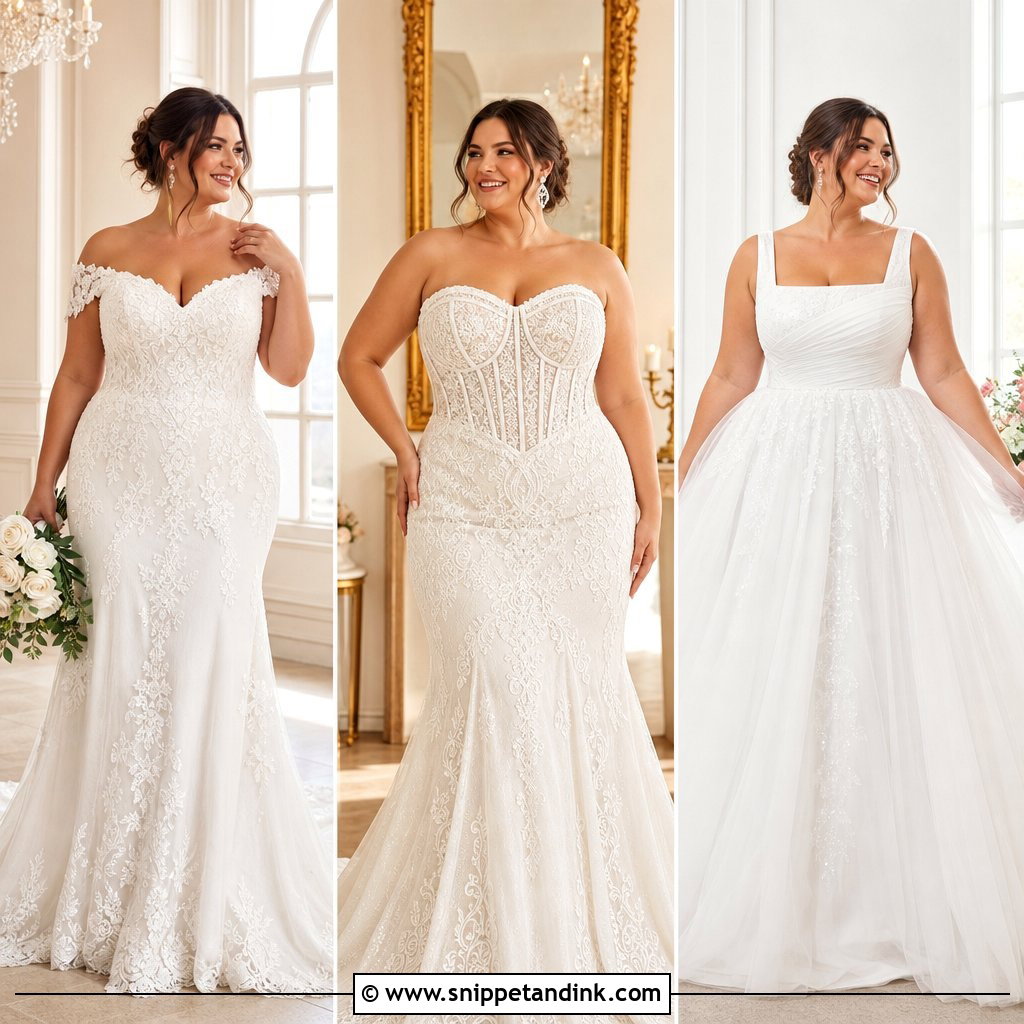
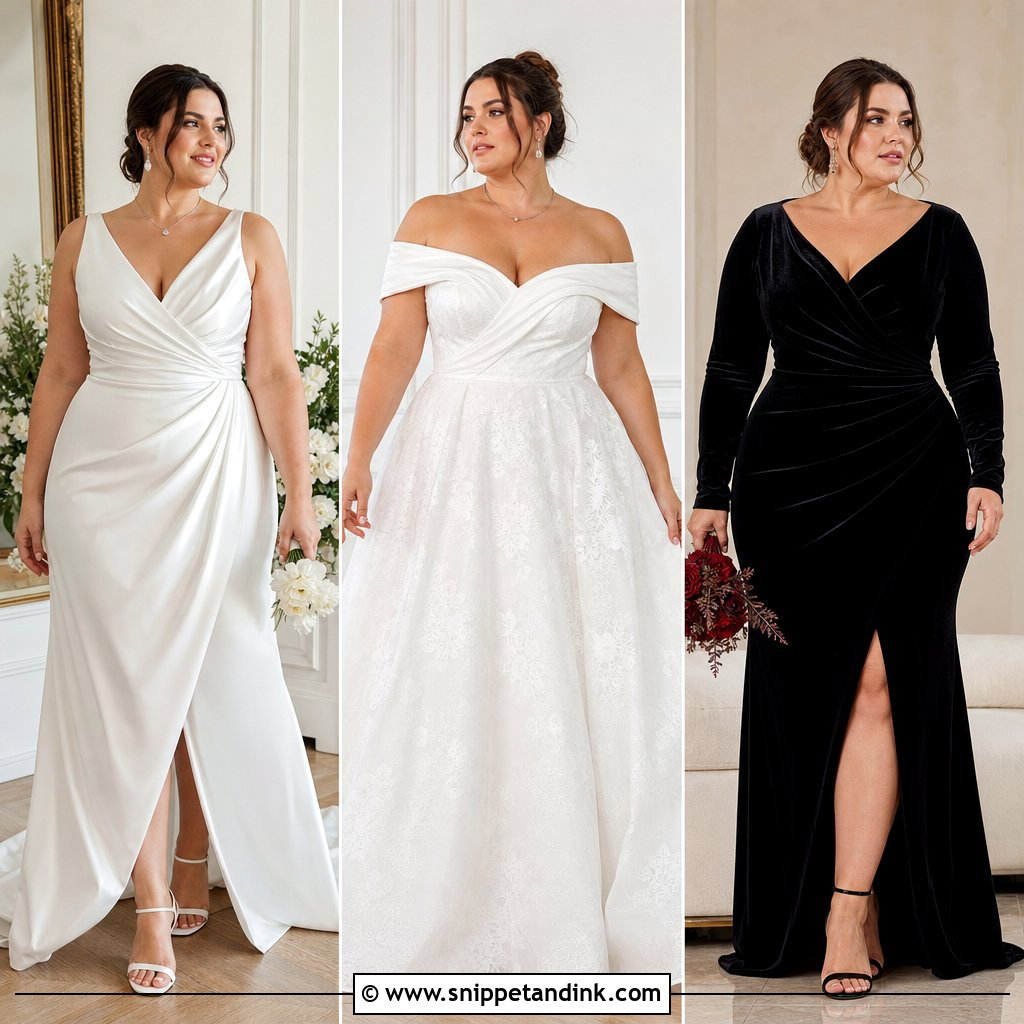
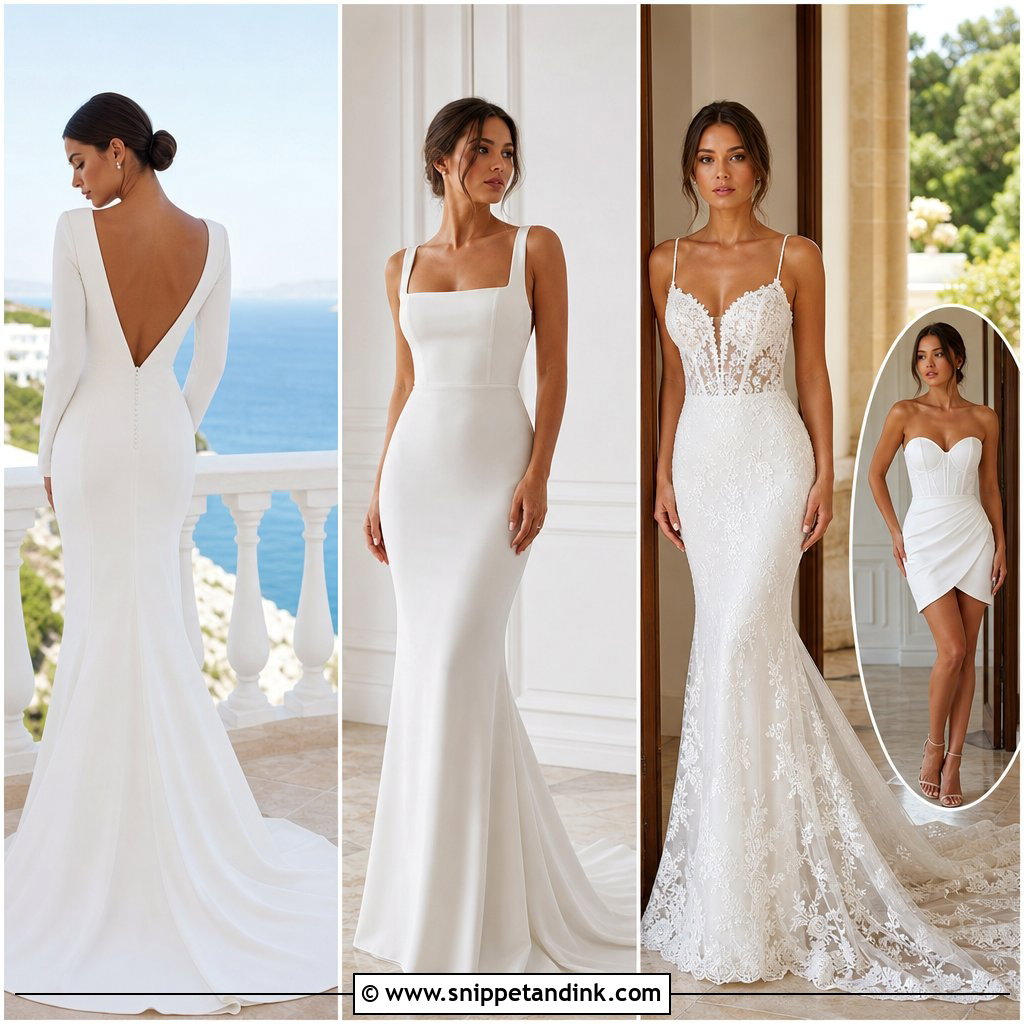
A mermaid follows you through the bust, waist, hips and thighs before flaring at the knee or lower, so construction matters more here than in any other shape. I check three things: whether the lining has some stretch, whether there’s power mesh or boning holding the midsection smooth, and whether the bride can climb two steps without hitching the skirt. Lace and crepe forgive more than thin satin, which shows every seam of your shapewear. A sweetheart or off-the-shoulder bodice softens the line, and a chapel veil adds length behind you.
4. Plus Size Fit And Flare Wedding Dress
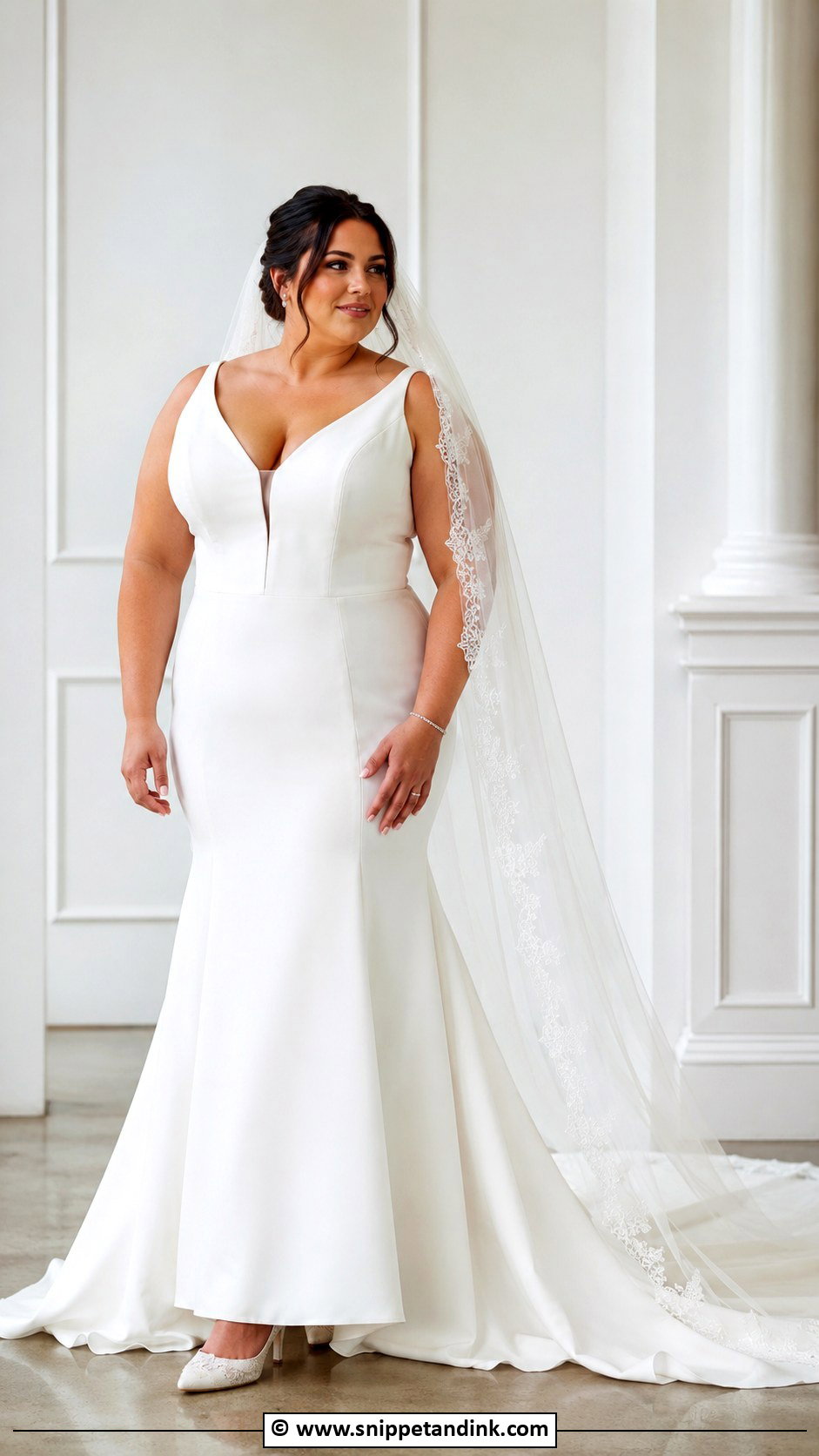
Fit and flare is the mermaid’s easier cousin. The skirt opens higher, around mid-thigh, so you keep the hourglass outline but can actually take full strides. If comfort worries you, look for a lace-up back or proper straps rather than relying on the bodice alone. Crepe reads clean and modern; lace softens it. In my experience this is the shape brides who ‘tried a mermaid and couldn’t breathe’ end up buying. A cathedral veil and a single bracelet are plenty.
5. Plus Size Empire Waist Wedding Dress
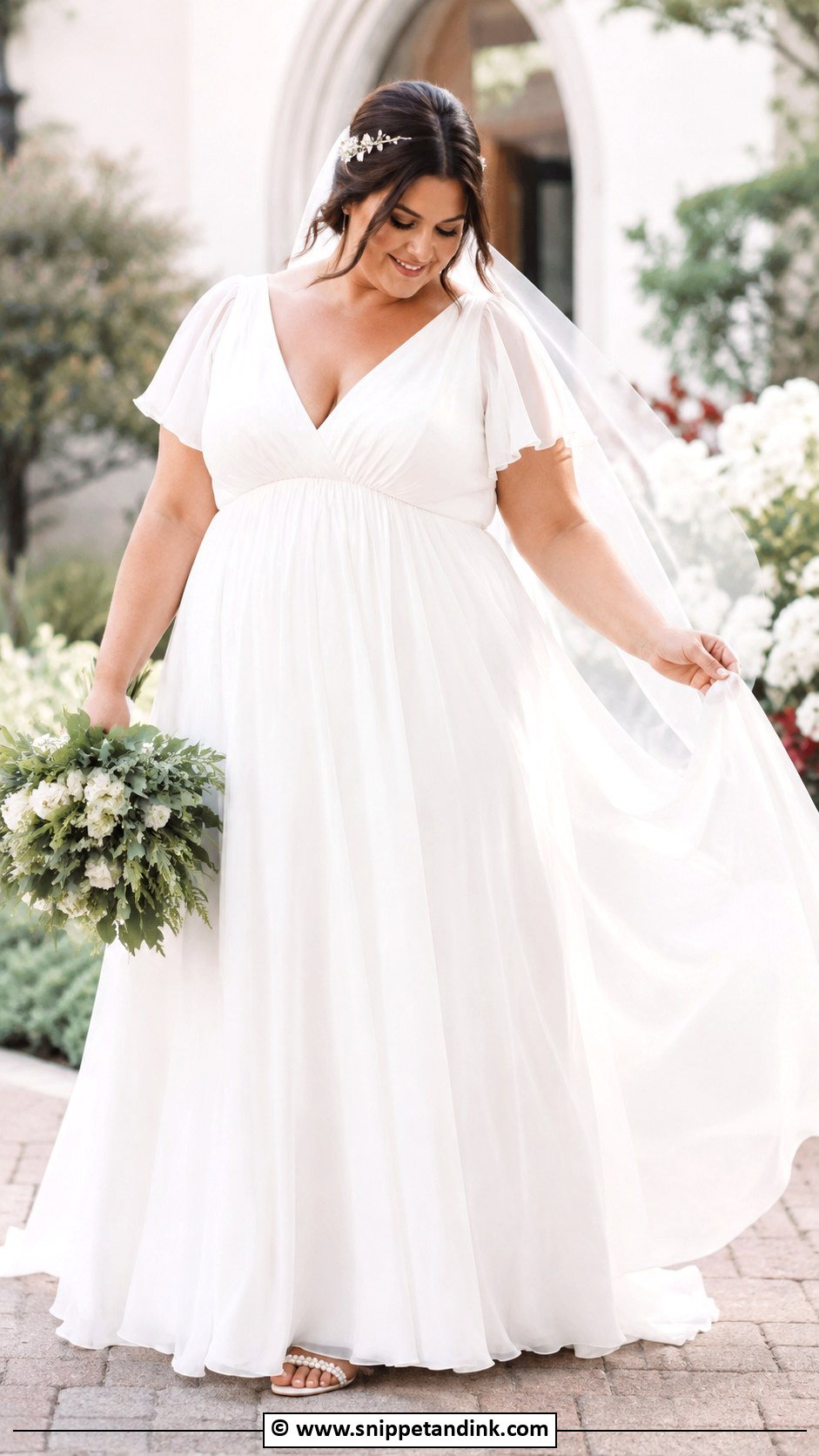
Raising the seam to just under the bust lets the skirt fall loose from there, which is why empire waists suit brides who hate anything pressing on the stomach. It’s also my first suggestion for hot outdoor weddings. Chiffon, tulle, and lightweight crepe drape instead of clinging, but I’d skip very thin jersey, which can show every line underneath. A V-neck or flutter sleeve adds a little structure at the top. Pair it with flat sandals and a floral comb.
6. Plus Size Lace Wedding Dress
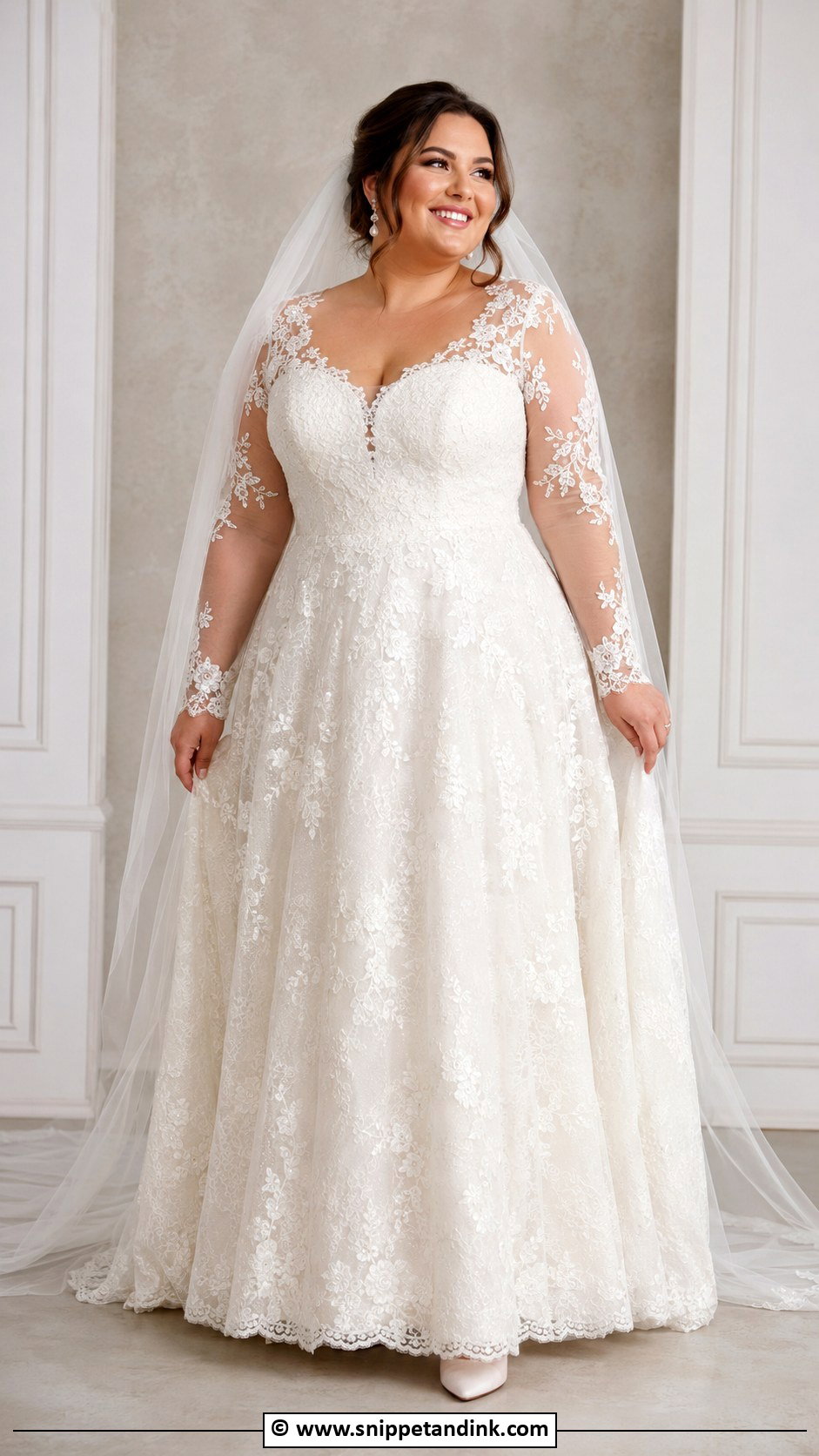
Lace does a lot of quiet work on a curvy figure. A busy pattern disguises seams and boning, and placement can draw the eye wherever you want it. The thing I watch is where the motifs land: a large flower sitting exactly at the widest point of the hip is rarely what a bride wants, and a good seamstress can shift appliqués during alterations. Illusion sleeves give a classic feel; lace over a smooth crepe lining looks more current. Pearls and a plain veil let the pattern stay the main thing.
7. Plus Size Satin Wedding Dress
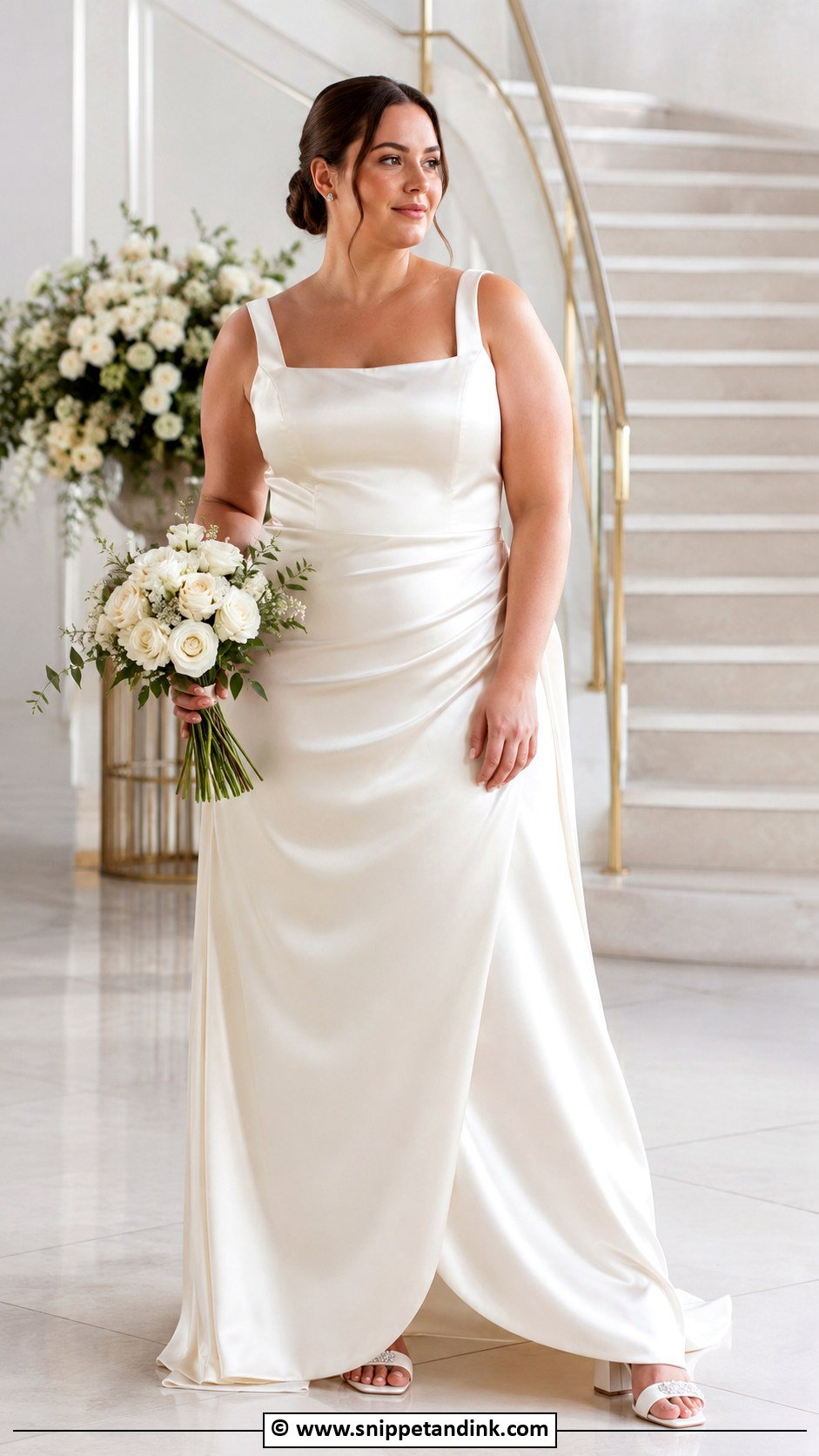
Satin has a soft shine that looks expensive, but it’s honest about fit. Because it reflects light, any pull across the hips or ripple at a seam shows up, especially in flash photos. I’d only buy satin after a fitting where the bodice lies completely flat. It does crease when you sit, so expect some wrinkles across the lap by the reception; heavier duchess satin holds up better than thin charmeuse. Square and scoop necklines suit it well. Finish with crystal studs, a low bun and satin block heels.
8. Plus Size Tulle Wedding Dress
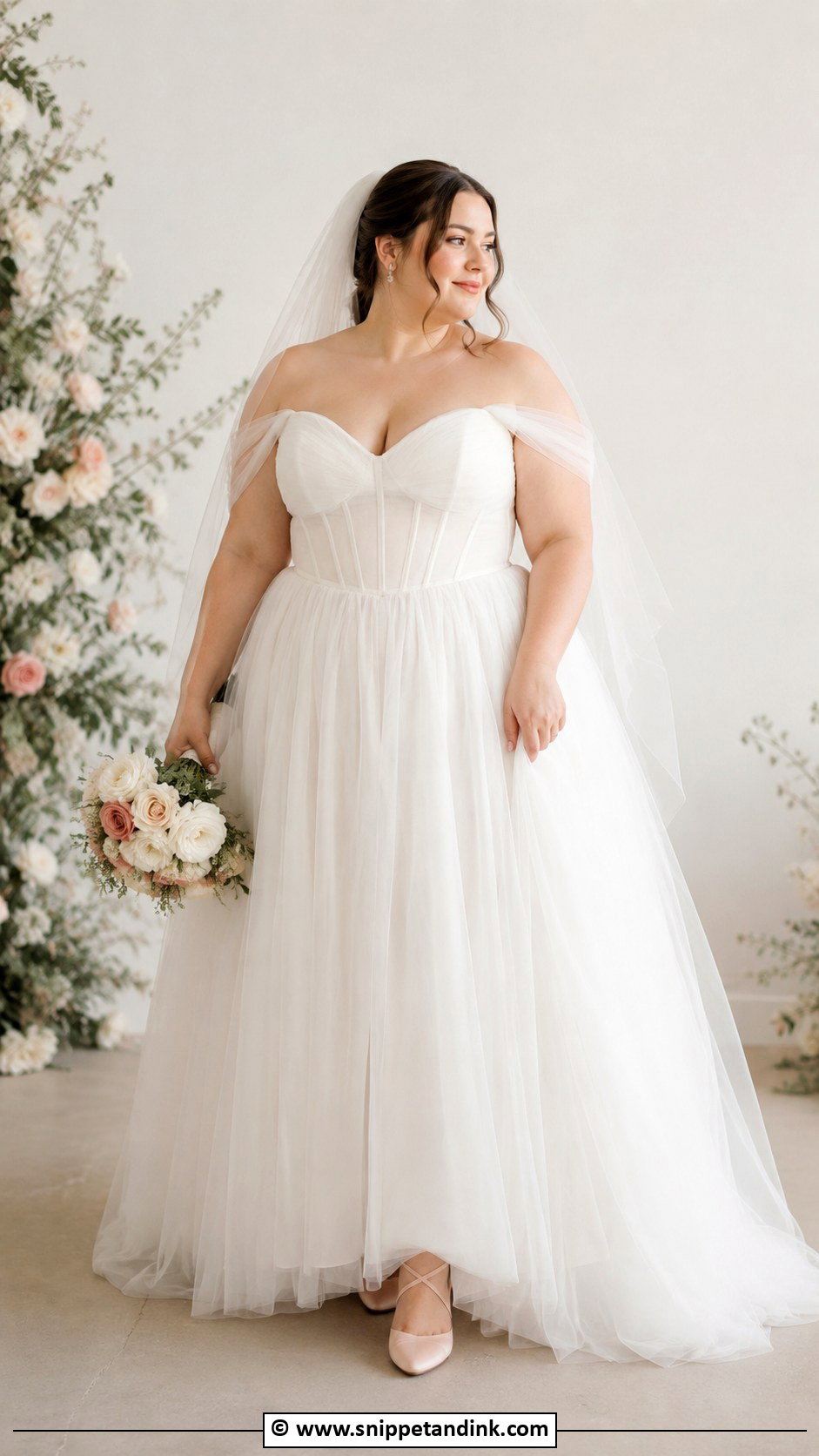
Tulle gives volume without much weight, so a full skirt still feels light at hour eight. My favourite version for curvy brides is a structured bodice over several soft tulle layers: you get support on top and movement below. Plain tulle stays minimal; embroidered tulle adds detail. One honest warning: tulle snags on bracelets, heel buckles and rough garden benches, so check your accessories for catches. Soft curls, a waist-length veil and ballet flats or low heels complete it.
9. Plus Size Off The Shoulder Wedding Dress
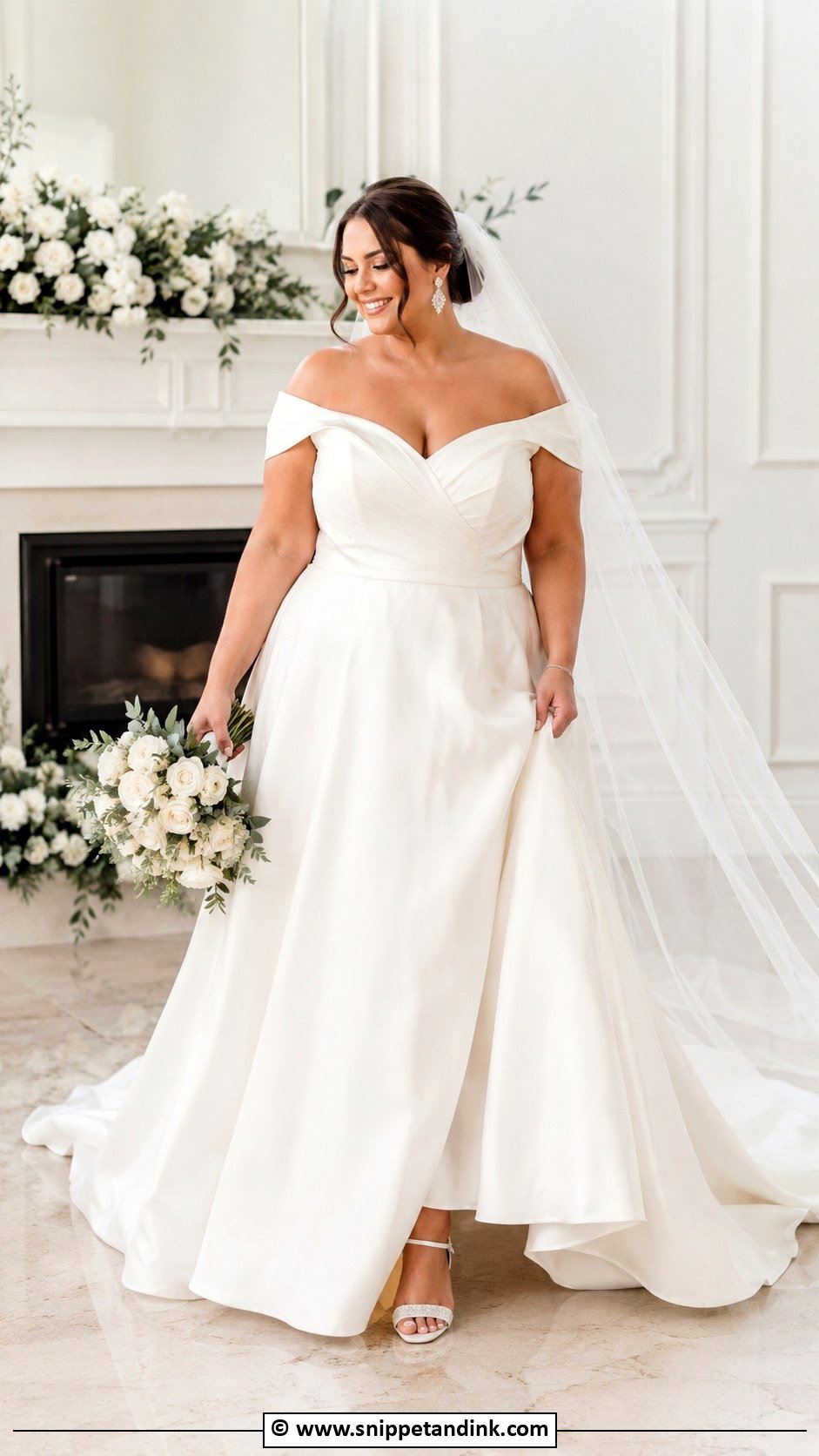
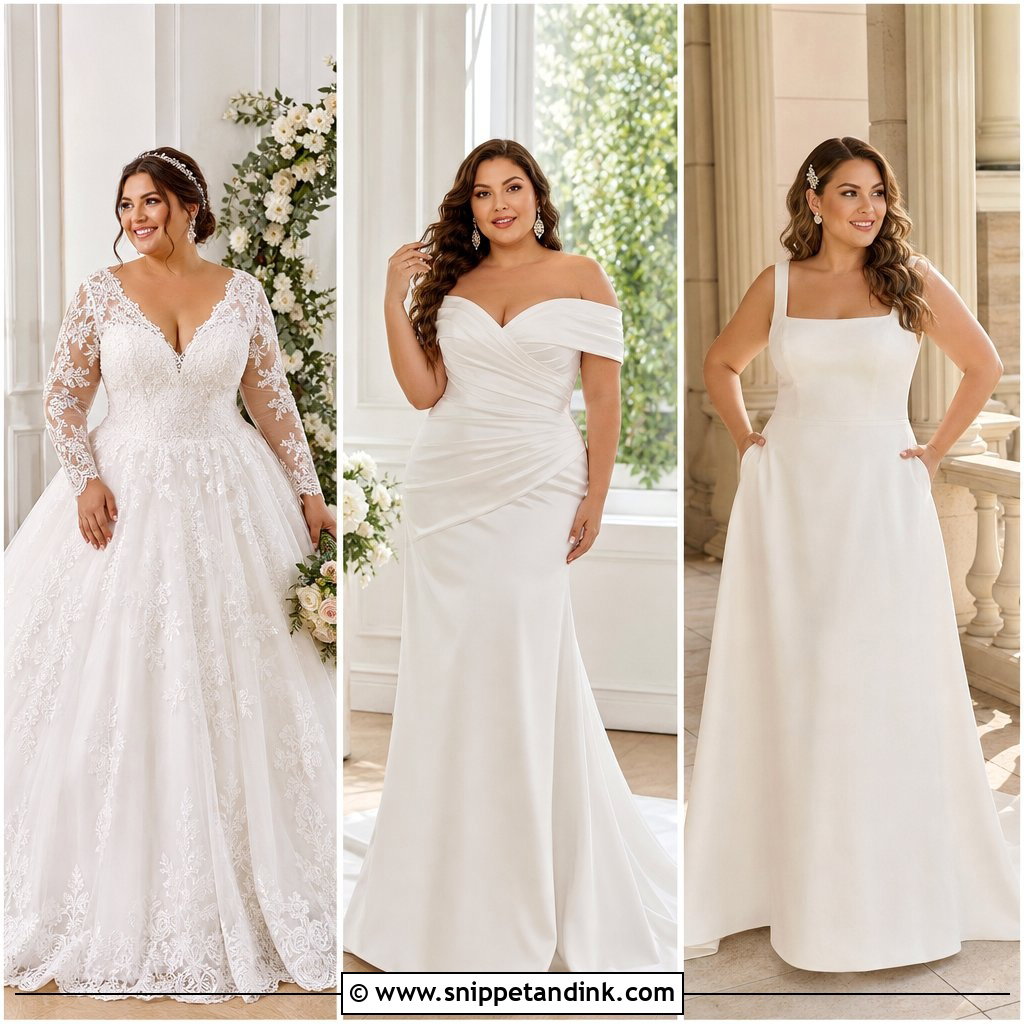
An off-the-shoulder neckline shows the collarbone and shoulders, and on a fuller bust it reads balanced rather than bare. The structure underneath is what matters. The bodice needs to carry the weight so the sleeves aren’t doing the holding, otherwise they slide up every time you lift your arms. I always ask a bride to hug me at a fitting to test this. A short necklace or statement earrings, not both, and anchor the veil below the crown so it clears the shoulder line.
10. Plus Size Long Sleeve Wedding Dress
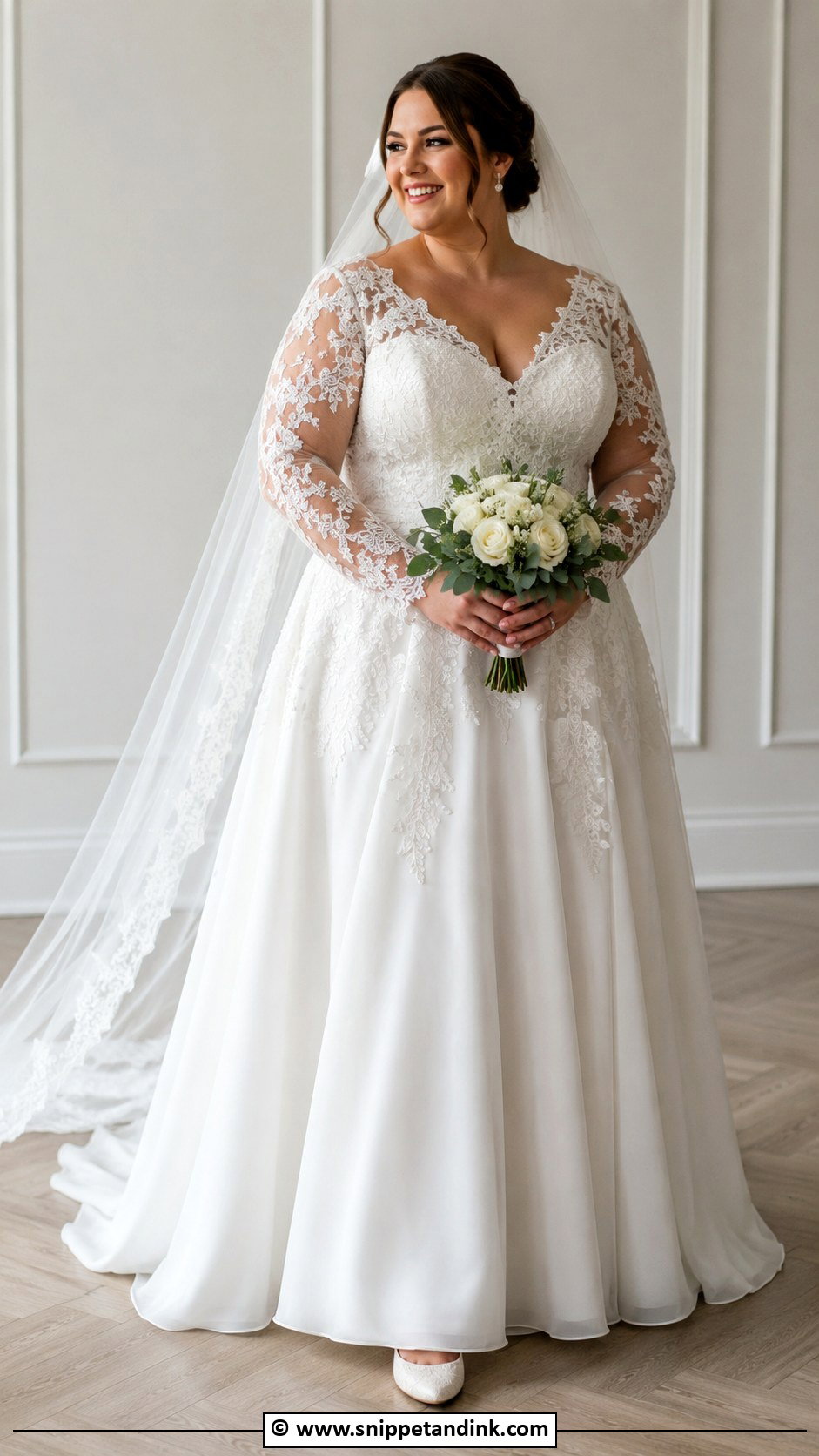
Long sleeves are the answer for winter venues, religious ceremonies, or simply brides who like their arms covered. Sheer lace feels romantic; fitted crepe looks sleek and modern. The fit test I insist on is raising both arms overhead: if the bodice lifts with you, the sleeve head is cut too narrow, and you’ll feel it every time you hug someone. Ask whether the sleeve can be let out, since many have little seam allowance. A low bun, simple earrings and a long veil keep the proportions calm.
11. Plus Size Short Sleeve Wedding Dress
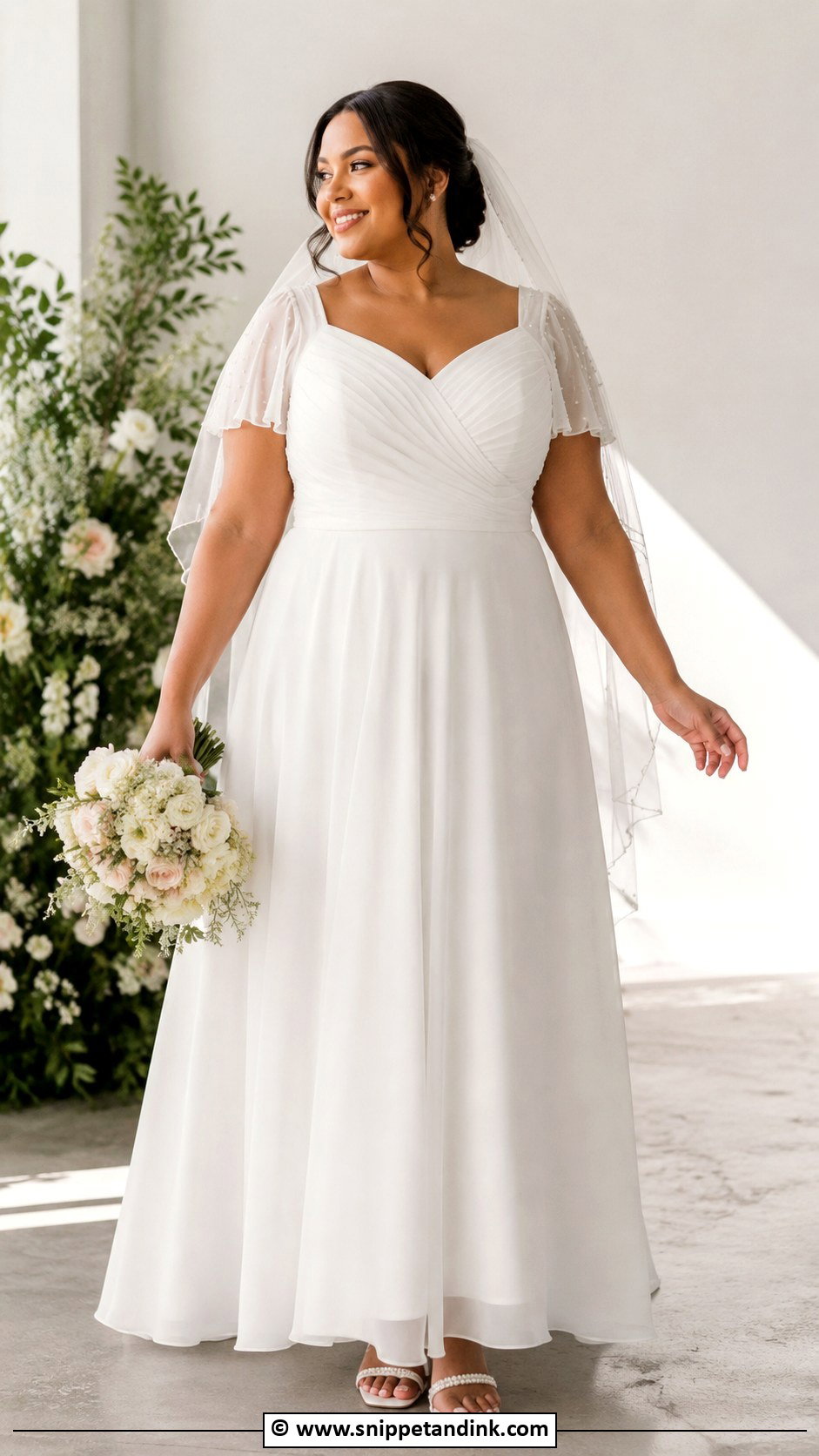
Short sleeves give a little coverage and keep you cool, which makes them ideal for spring and summer ceremonies. Cap sleeves look delicate, flutter sleeves move with you, and structured short sleeves look tailored. The detail I check is where the hem of the sleeve hits the arm: ending at the fullest part draws a line straight across it, so a centimetre or two higher or lower often looks better. Lace, chiffon and crepe all work. Pearl studs and a shoulder-length veil are enough.
12. Plus Size Strapless Wedding Dress
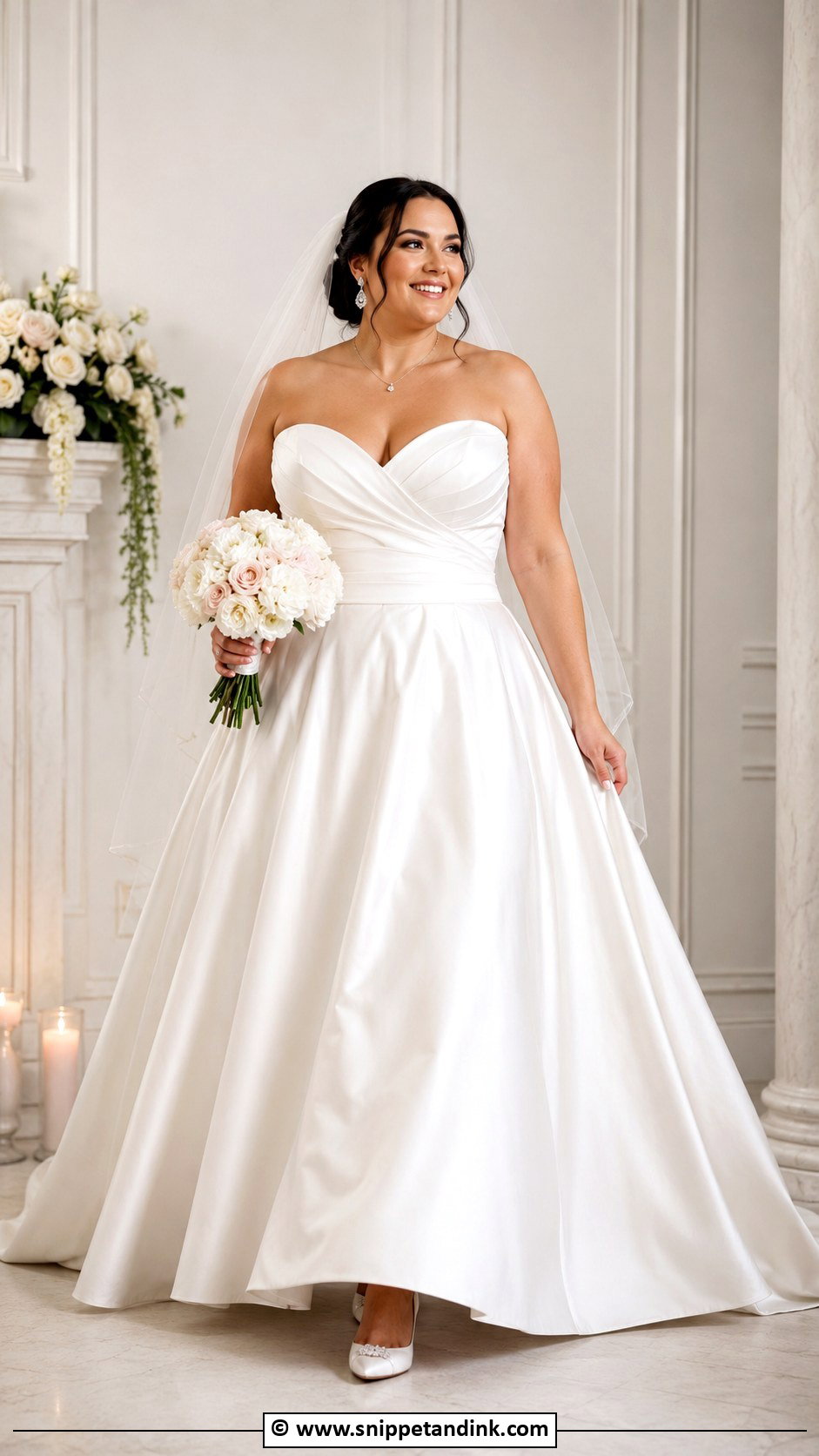
Strapless can absolutely work on a larger bust, but only with real engineering inside. Look for spiral steel boning, a waist stay (an inner grosgrain band that hooks closed and takes the weight off the zip), and a back that can be adjusted. If you find yourself tugging the bodice up during the fitting, it will be worse after dinner. A sweetheart neckline softens the edge; a straight neckline looks sleeker. Wear a necklace if you want sparkle near the face, otherwise go bare and choose stronger earrings.
13. Plus Size V Neck Wedding Dress
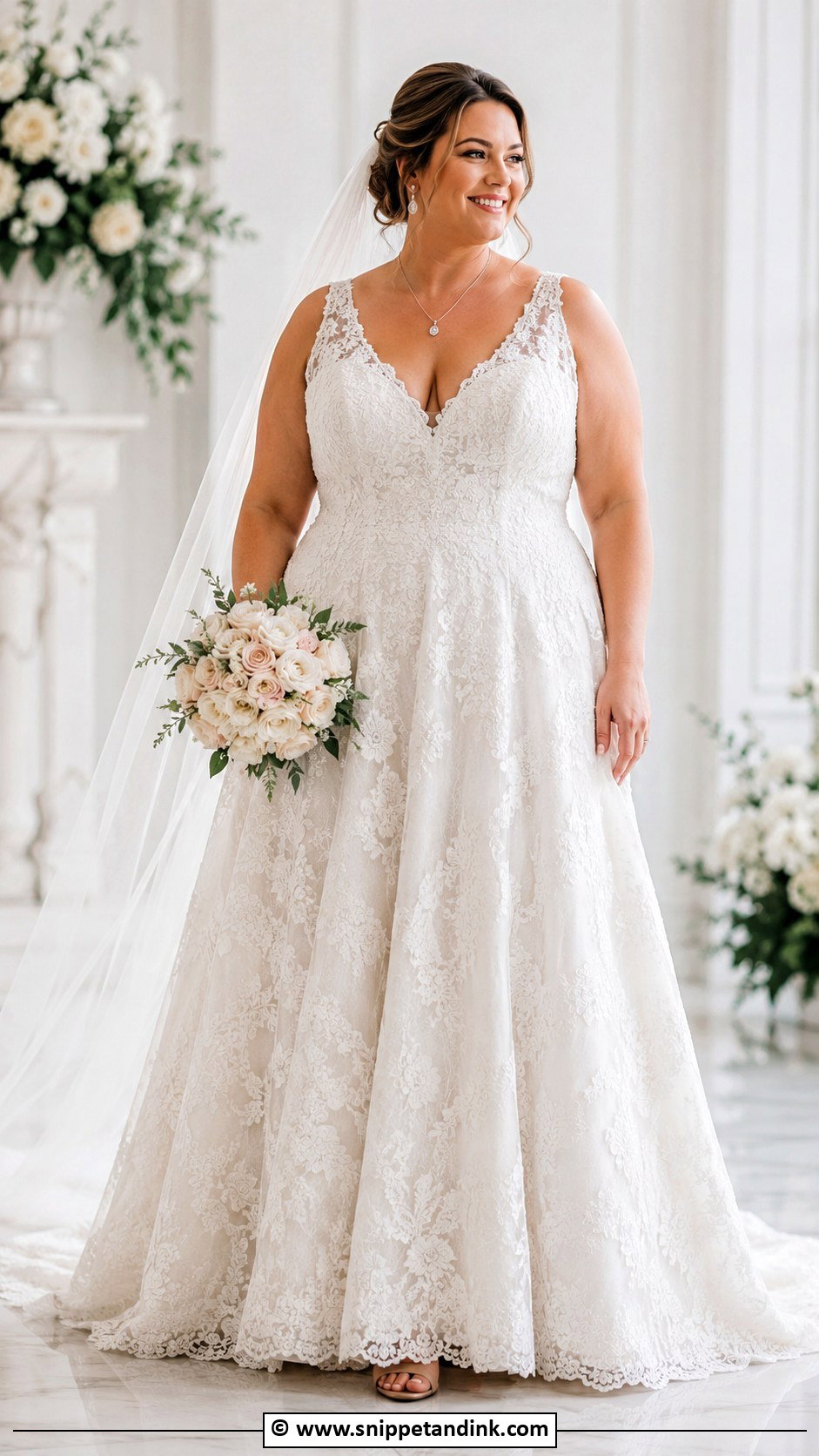
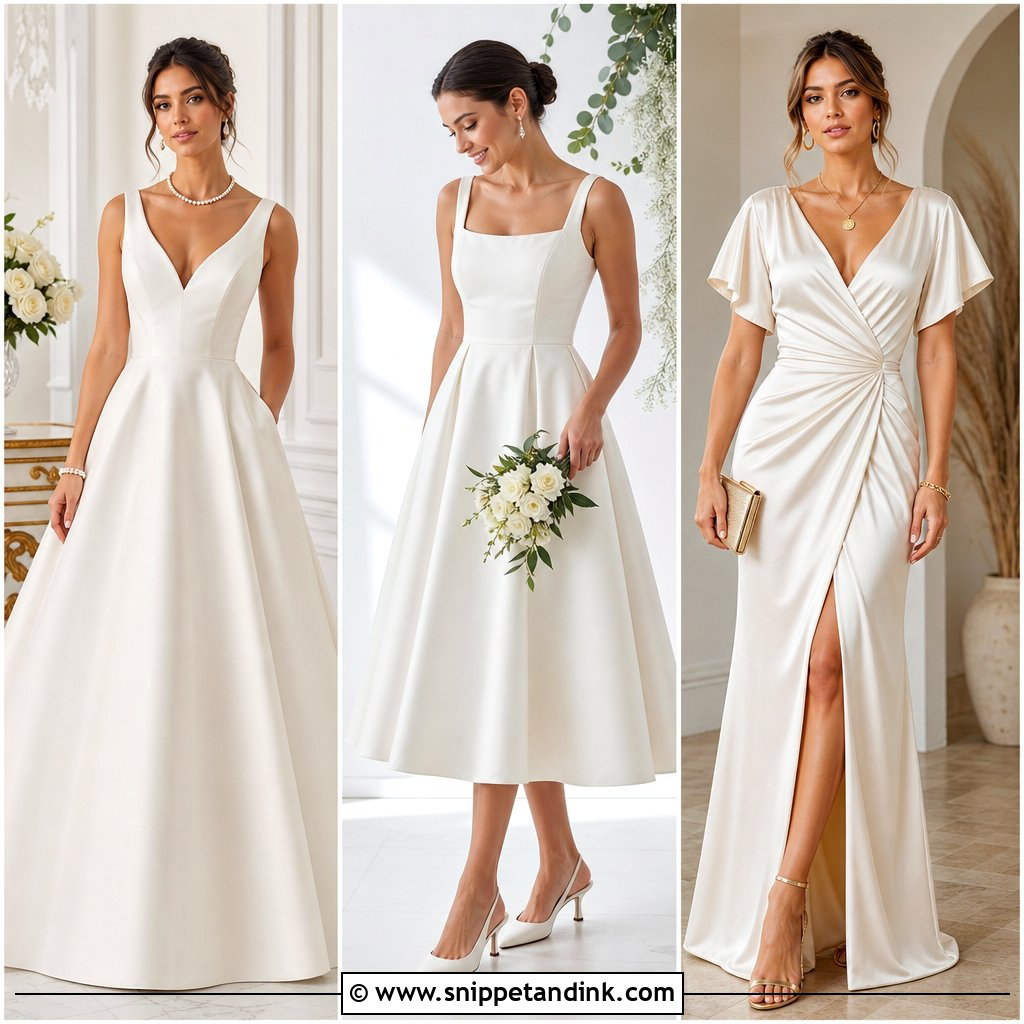
A V-neck draws a vertical line through the torso, which lengthens the upper body and keeps attention near the face. The depth is your call, from modest to plunging. On a fuller bust I prefer wide straps or illusion mesh in the V so it holds its shape without double-sided tape. It suits lace A-lines, chiffon, satin ball gowns and crepe fit and flare. A pendant echoes the line of the neckline; nude or ivory heels carry it down to the floor.
14. Plus Size Square Neck Wedding Dress
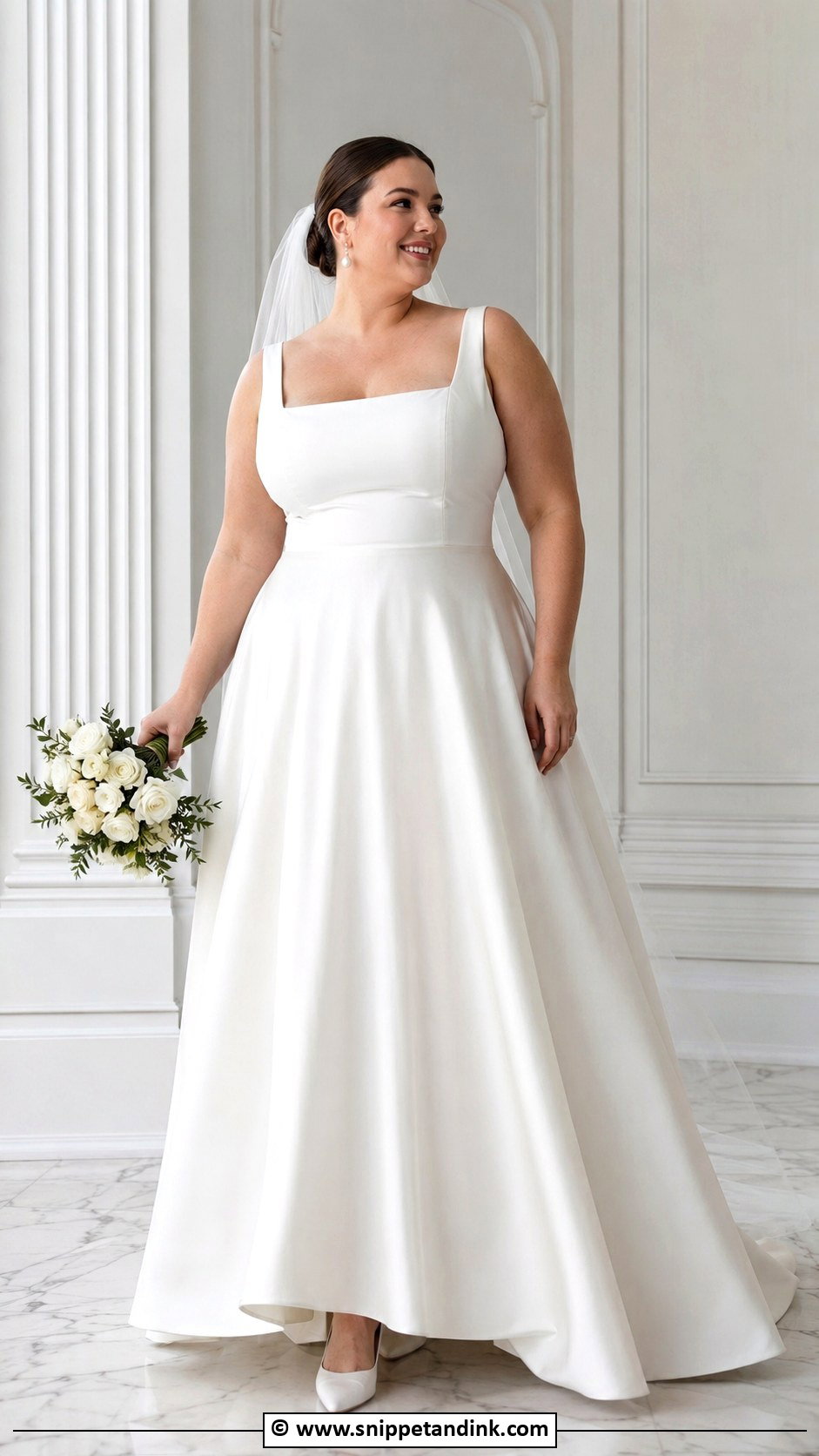
The square neck has come back strongly, and I like it on curvy brides because the straight edge and wider straps give support without a strapless bra. It frames the bust and shoulders in a tidy shape. Satin makes it crisp; lace makes it softer. Check the corners at your fitting: if they gape when you lean forward, ask for them to be taken in. Pearl earrings, a sleek veil and a smooth low bun suit its clean lines.

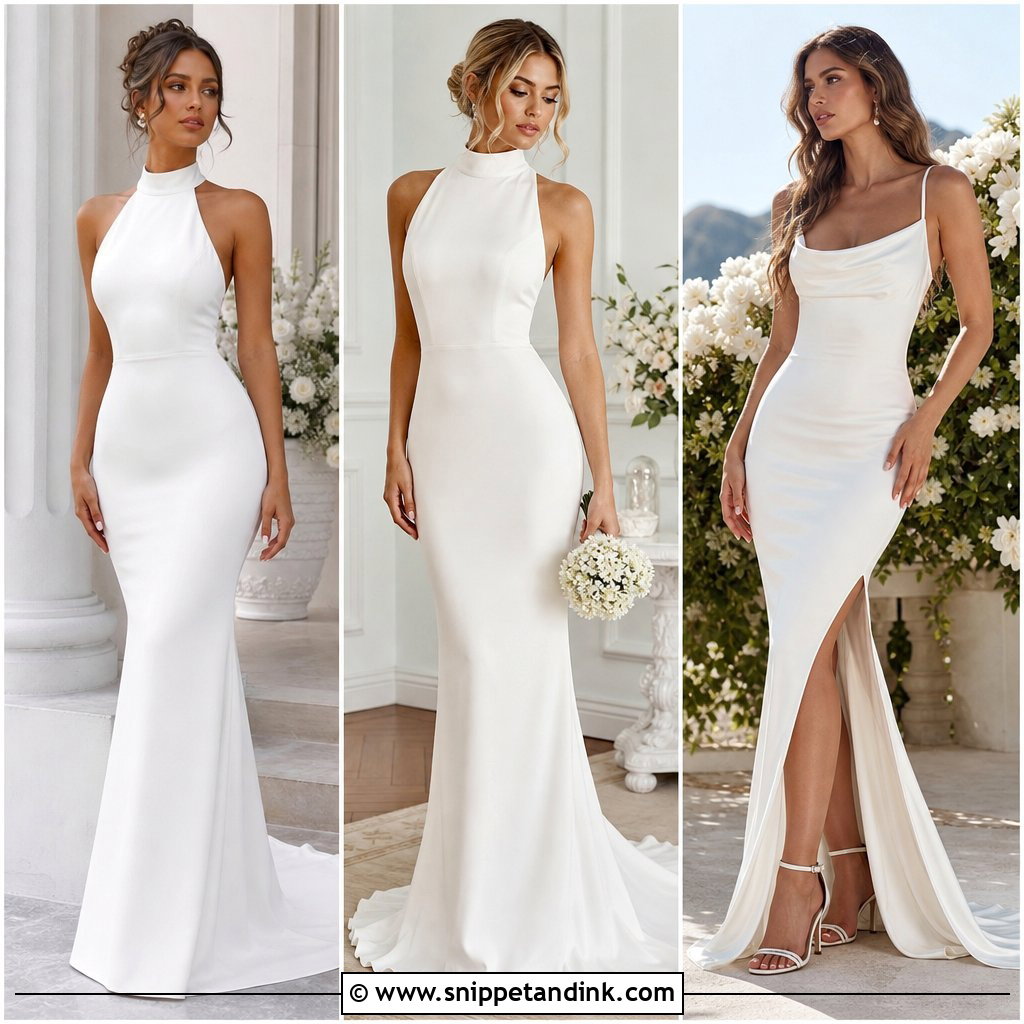
15. Plus Size Sweetheart Wedding Dress
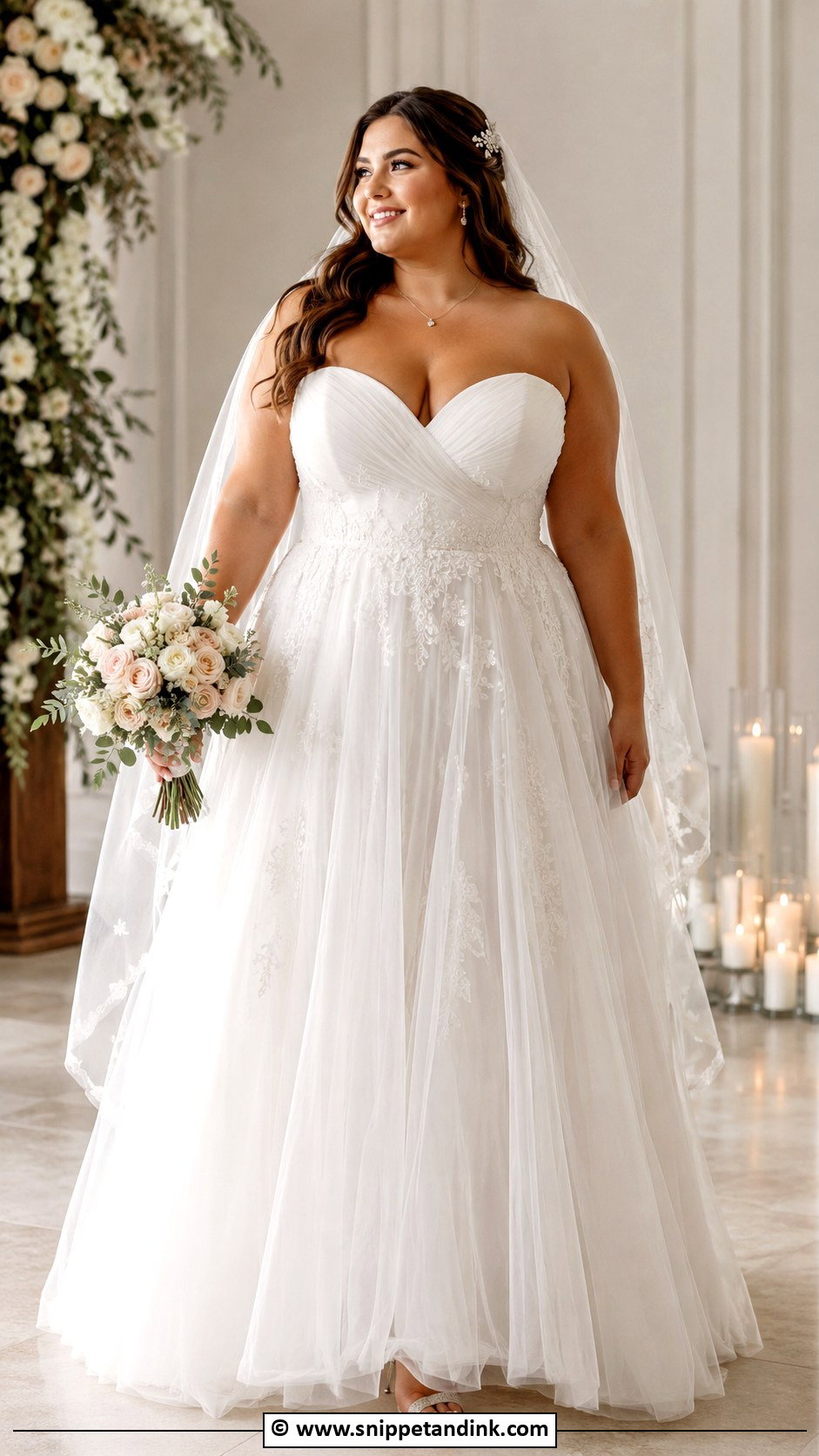
The sweetheart curve is popular for good reason: it follows the bust instead of cutting straight across it. You’ll see it on strapless gowns, with off-the-shoulder sleeves, thin straps or lace illusion panels. Paired with an A-line or ball gown skirt it marks the waist clearly. Satin and beaded lace push it toward glamour; tulle and chiffon keep it soft. One thing I fix often is a sweetheart that dips too low in the centre, which can be raised with a small insert. A delicate necklace and crystal pins are all it needs.
16. Plus Size Corset Wedding Dress
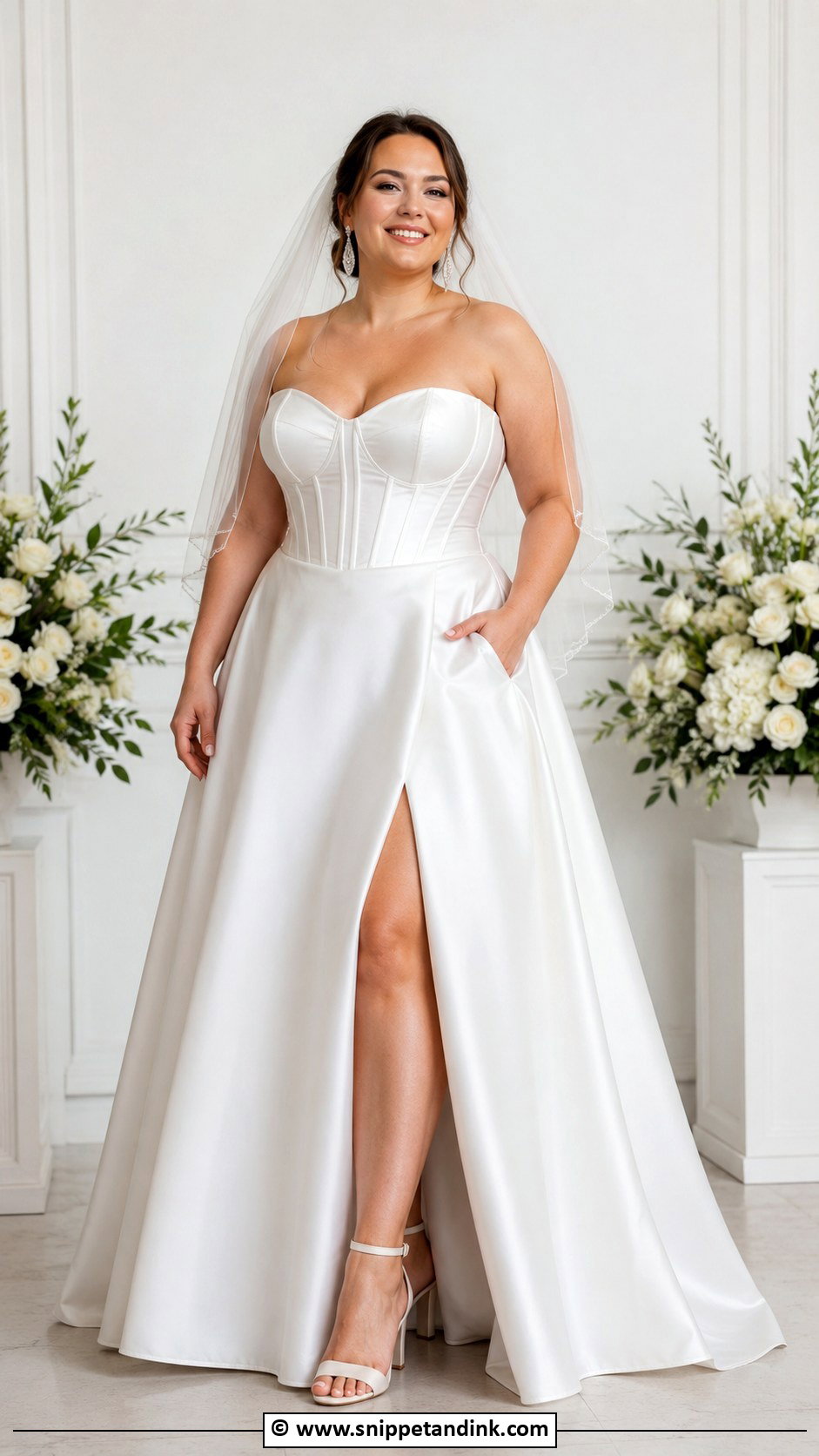
Modern bridal corsets are built to spread support across the whole bodice rather than squeeze the waist. Done properly, a corset is the most comfortable structure a curvy bride can wear, because the boning holds the bust and torso so straps and zips don’t take the strain. Exposed boning looks fashion-led; hidden boning gives a smooth traditional finish. I’d still sit down for ten minutes in it before buying. If the bodice carries visible detail, keep jewelry minimal and the veil soft.
17. Plus Size Basque Waist Wedding Dress
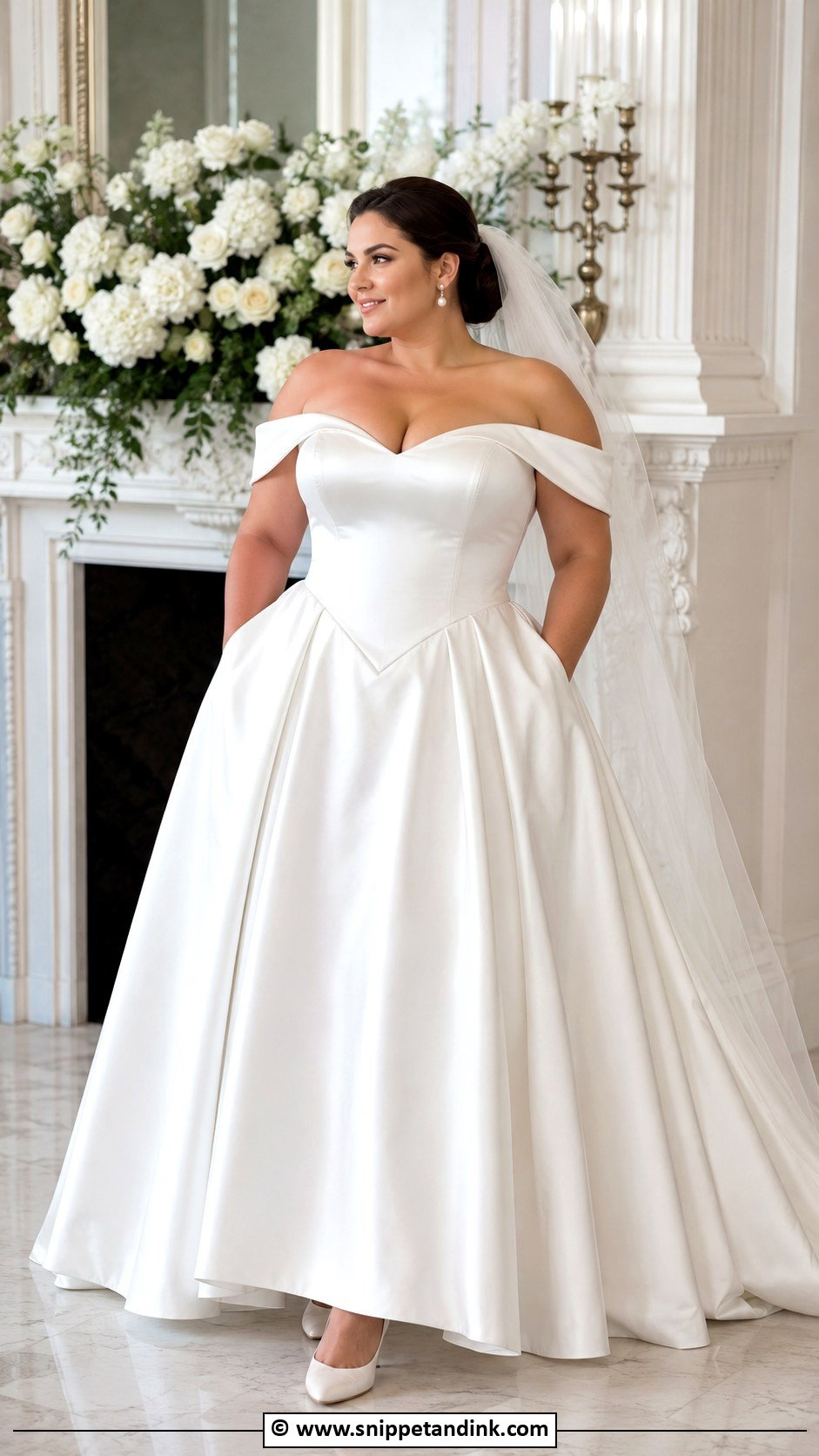
A basque waist dips into a V at the centre front, which visually lengthens the torso and pairs naturally with full skirts. It can feel vintage, regal or modern depending on the fabric. The practical issue is the point of that V. If it sits too low, it digs into the stomach when you sit, and I’ve seen plenty of brides shift in their chair all evening because of it. Ask for it to be shortened if it pokes. Satin and structured bodices suit it best; pearl earrings and a long veil finish it.
18. Plus Size Drop Waist Wedding Dress
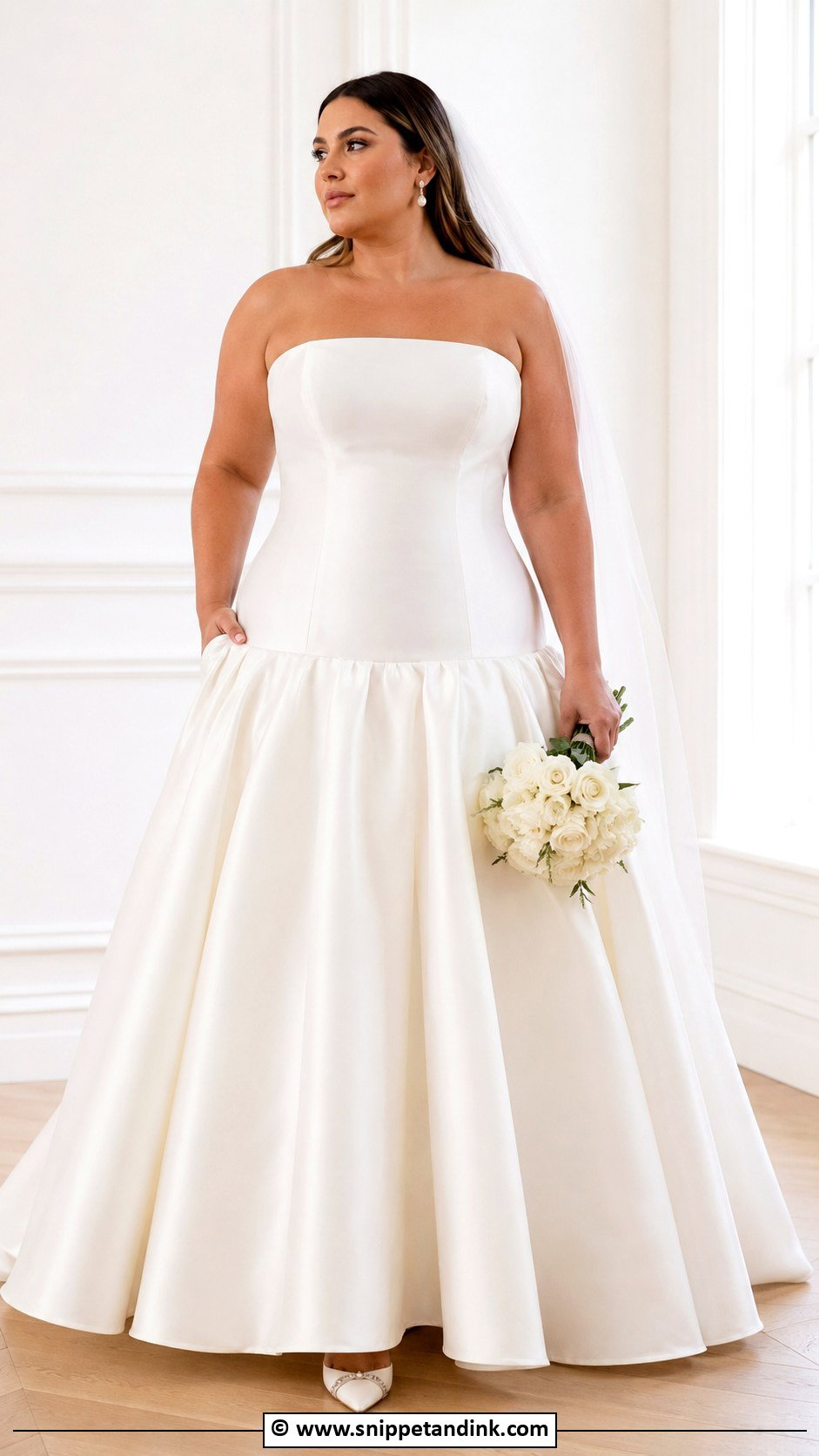
A drop waist moves the skirt seam down to the hips with a long, smooth bodice above it. It’s the more fashion-forward pick on this list, and it depends completely on tailoring. Structured satin, mikado or lace hold the line; anything soft will wrinkle across the stomach. I’d only recommend it to a bride who likes her hips and wants the seam to sit right on them. A fuller skirt adds drama; a softer one is easier to wear. Simple earrings and pointed heels, since the shape already does a lot.
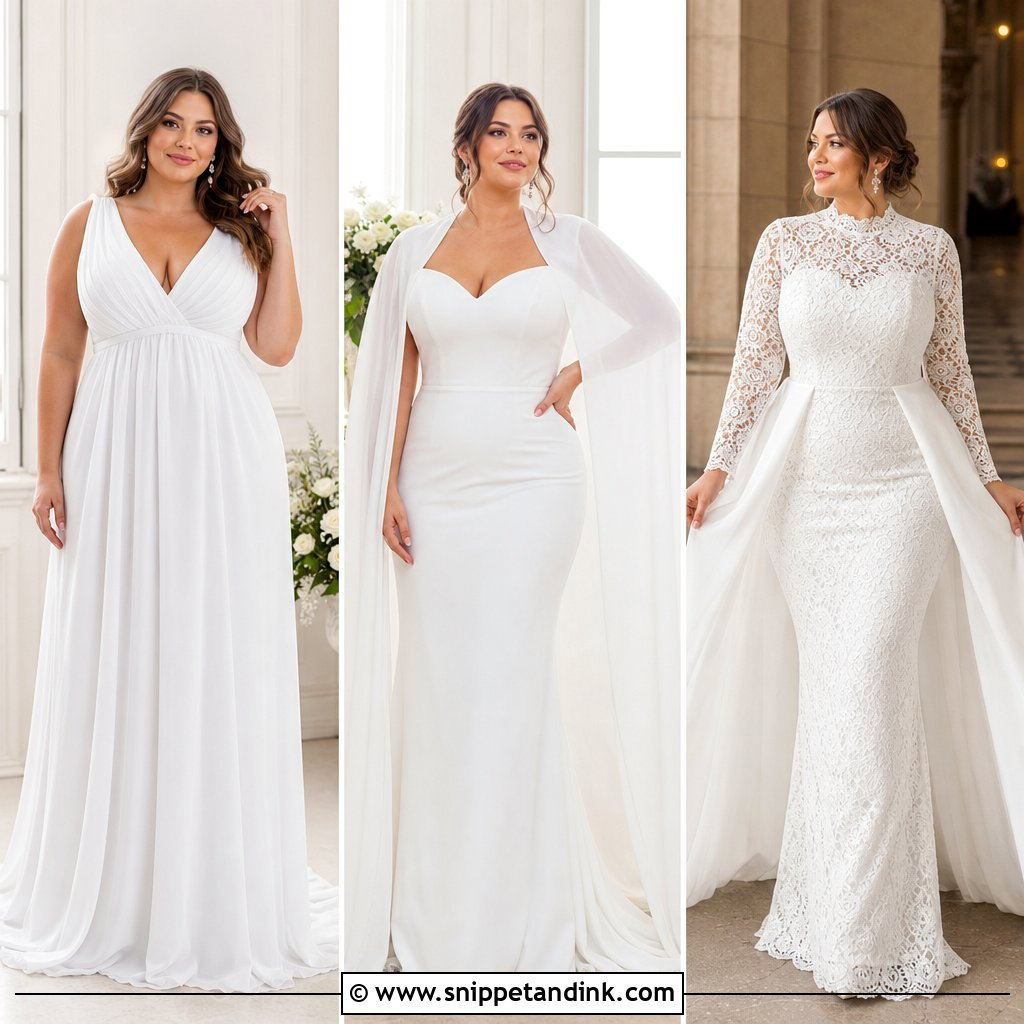
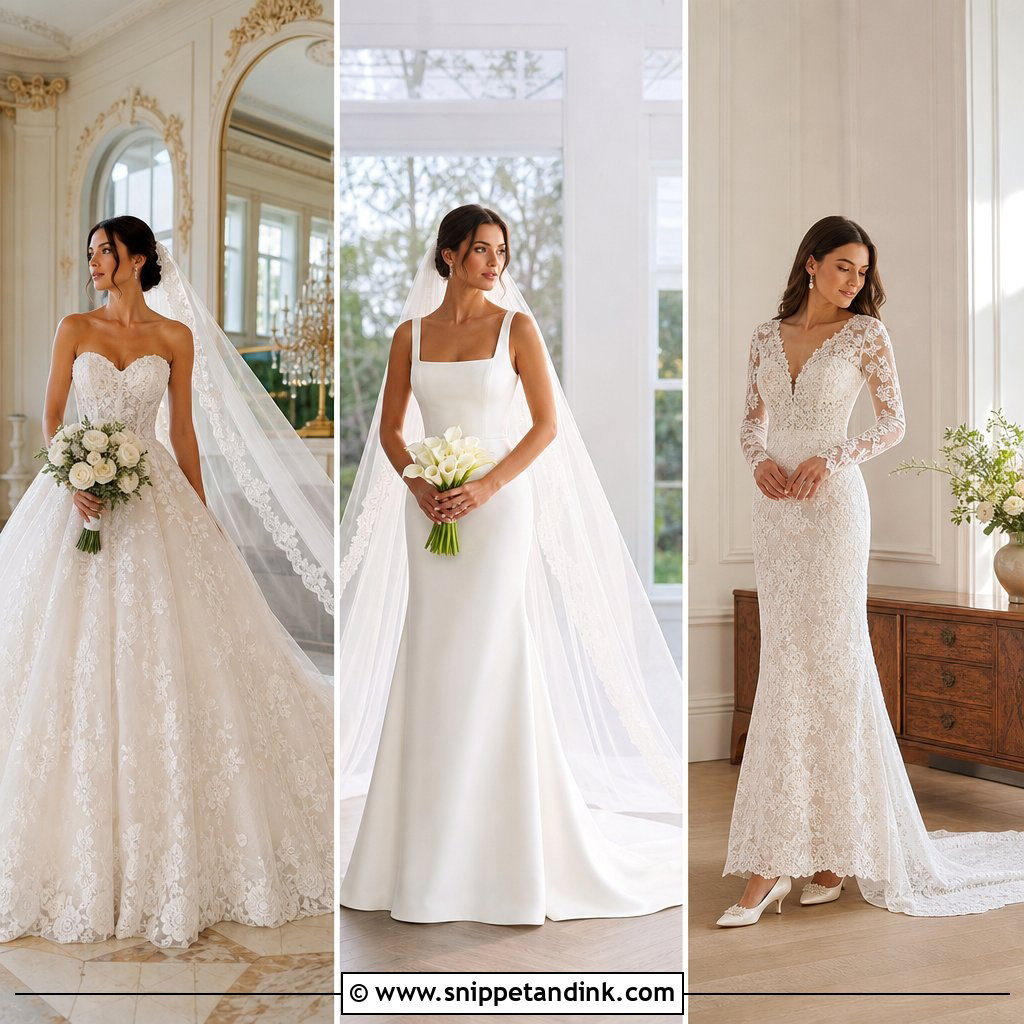
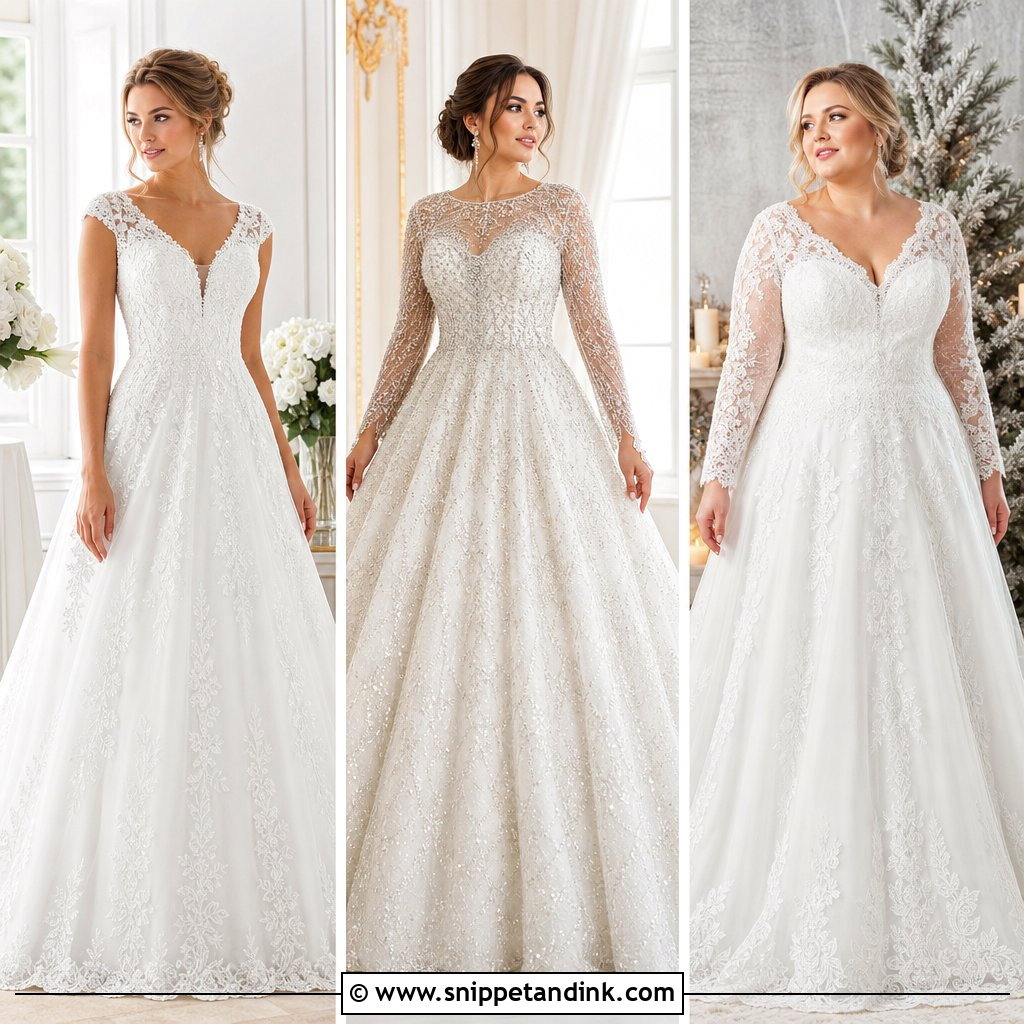
19. Plus Size Boho Wedding Dress
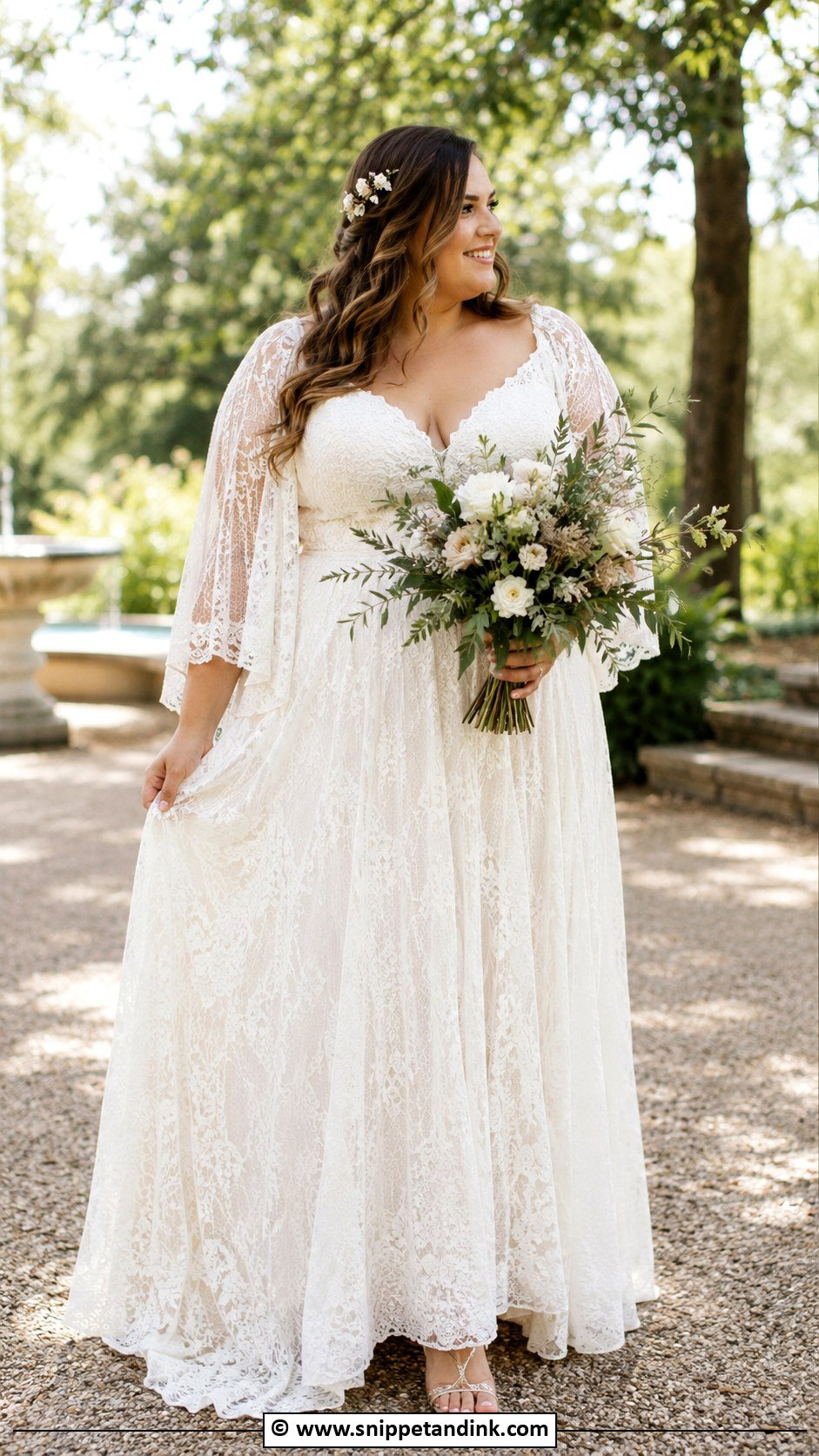
A plus size boho wedding dress leans on soft lace, easy skirts and flowing sleeves. A-line and empire cuts suit it because they don’t fight the relaxed mood. Crochet-style lace, flutter sleeves and light embroidery give the bohemian feel without looking like a costume. My caution is with unlined or thinly lined lace: on a fuller figure you want a proper nude lining and some support in the bust, even if the look is loose. Loose waves, a flower comb and sandals; a veil is optional.
20. Plus Size Beach Wedding Dress
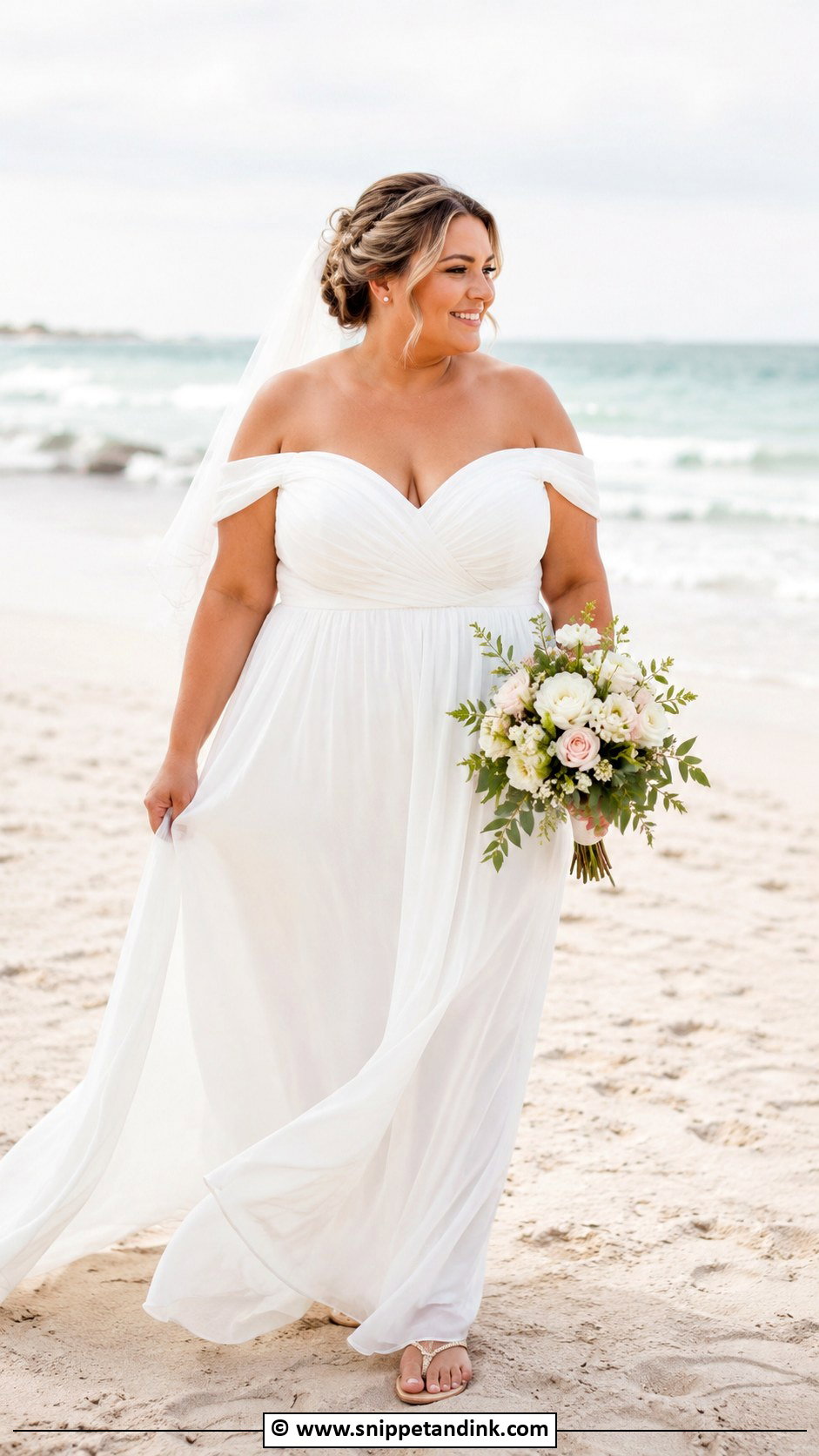
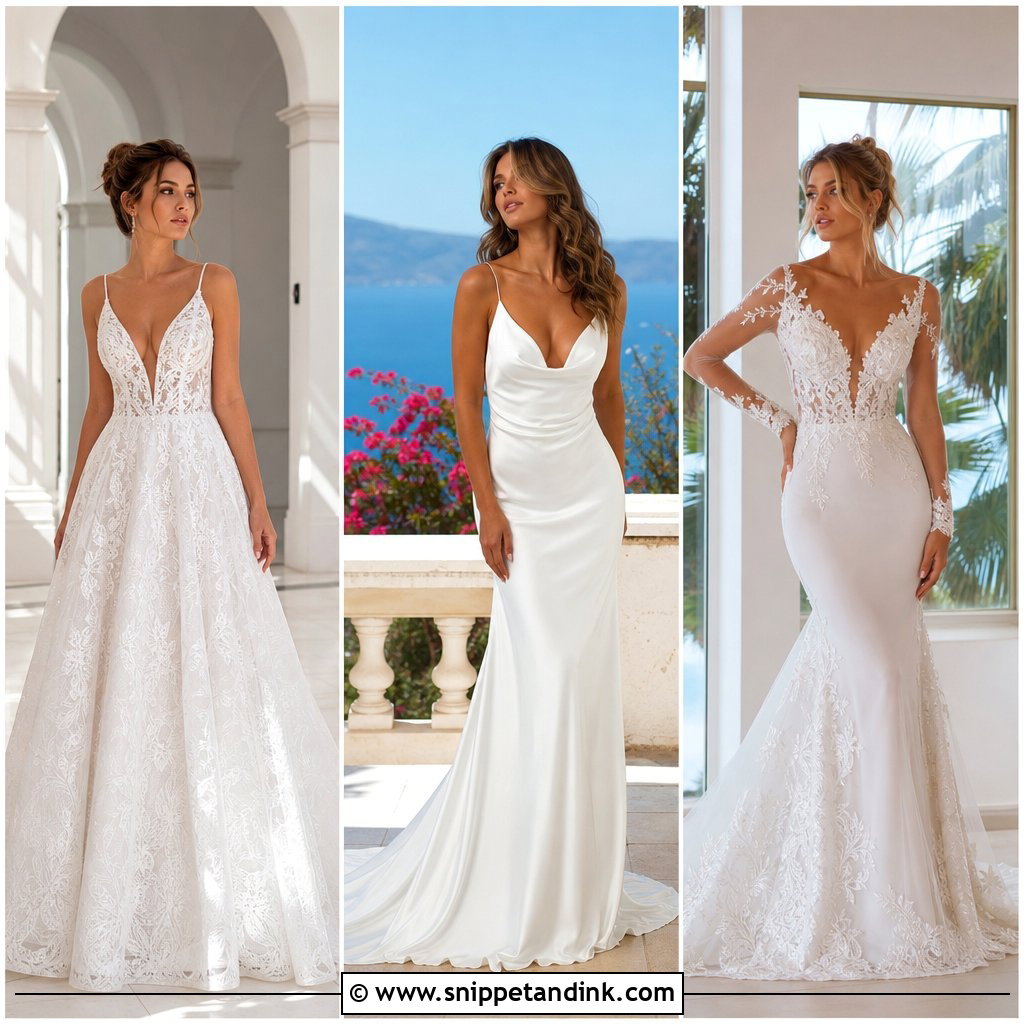
Sand changes everything about how a dress behaves. Long trains drag, collect grit and turn grey at the hem, and stiff skirts are hard to walk in when the ground shifts. For a plus size beach wedding dress I pick chiffon, soft tulle, lightweight lace or relaxed crepe in an empire, A-line or flowing sheath. Sleeveless or flutter sleeves keep you cool. Flat sandals, a loose updo and a short veil that won’t wrap around you in the wind are the sensible finish.
21. Plus Size Courthouse Wedding Dress
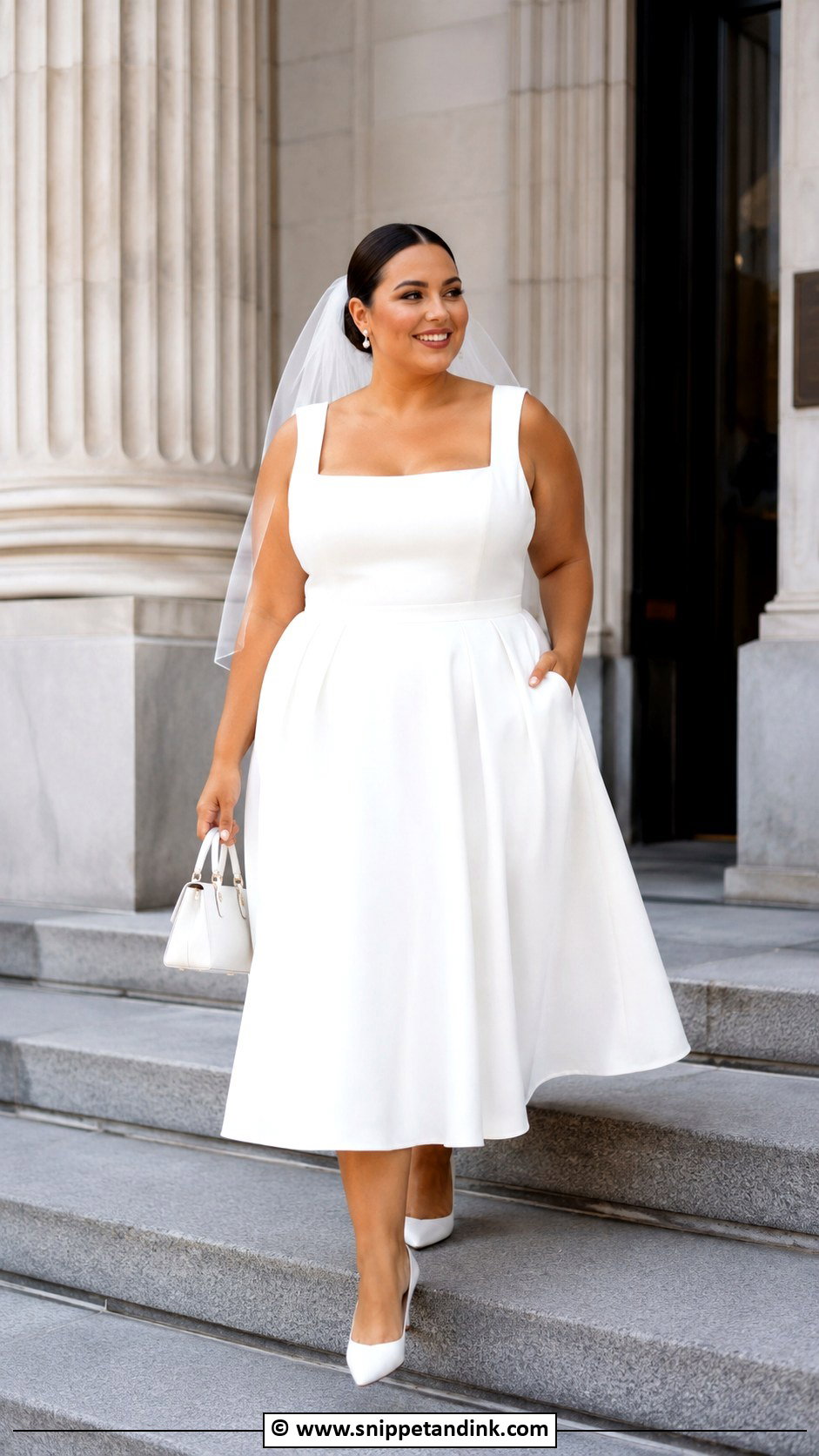
City hall ceremonies call for something polished at a shorter length. A tea-length dress, satin midi, crepe sheath or clean A-line all suit the room. Small details carry the bridal feel here: a square neckline, covered buttons down the back, a puffed sleeve or a defined waist. I always remind brides that courthouse photos are mostly standing and full length, so check the hem in your actual shoes. Pointed heels, a structured mini bag and a short veil or bow keep it feeling like a wedding.
22. Plus Size Tea Length Wedding Dress
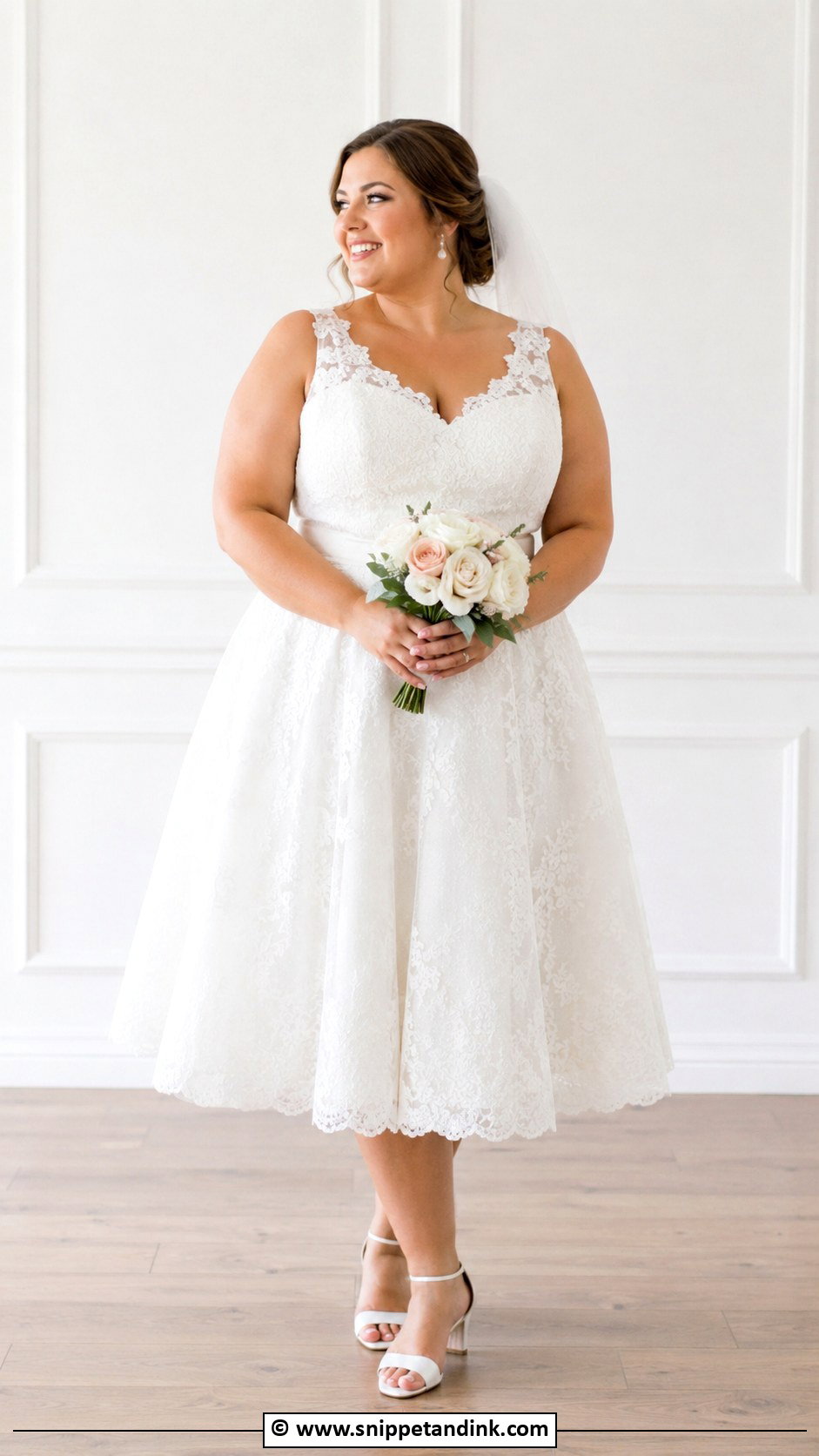
Tea length sits between knee and ankle and shows off your shoes, which is half the fun. It suits garden ceremonies, receptions and anyone who plans to dance hard. A fitted bodice over a flared skirt gives the classic 1950s outline; lace or satin keeps it dressy. The hem is worth a little attention: the most flattering point is usually just below the widest part of the calf, not on it. Block heels, slingbacks or embellished flats, a short veil and a small bouquet.
23. Plus Size Simple Wedding Dress
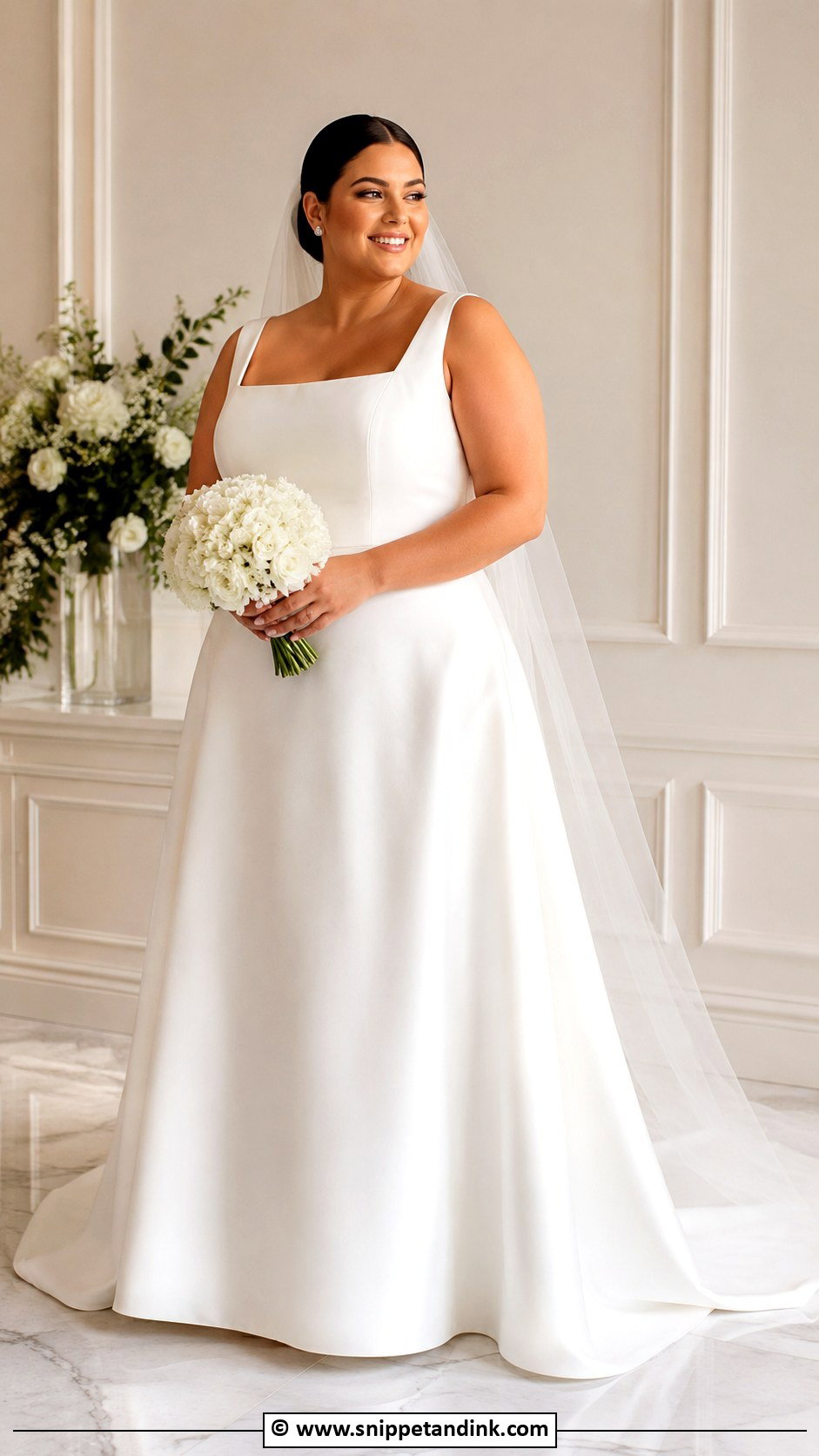
A simple dress has nowhere to hide, which is exactly why I love it when the fit is right. Without beading or layers, the quality of the fabric and the tailoring become the design. Satin, crepe and mikado hold their shape and stay smooth on camera. Try a square neck A-line, a clean sheath or a minimal ball gown with pockets. Budget a little more for alterations here, since every ripple shows. Pearl studs, a plain veil and a smooth hairstyle are all you need.
24. Plus Size Modern Wedding Dress
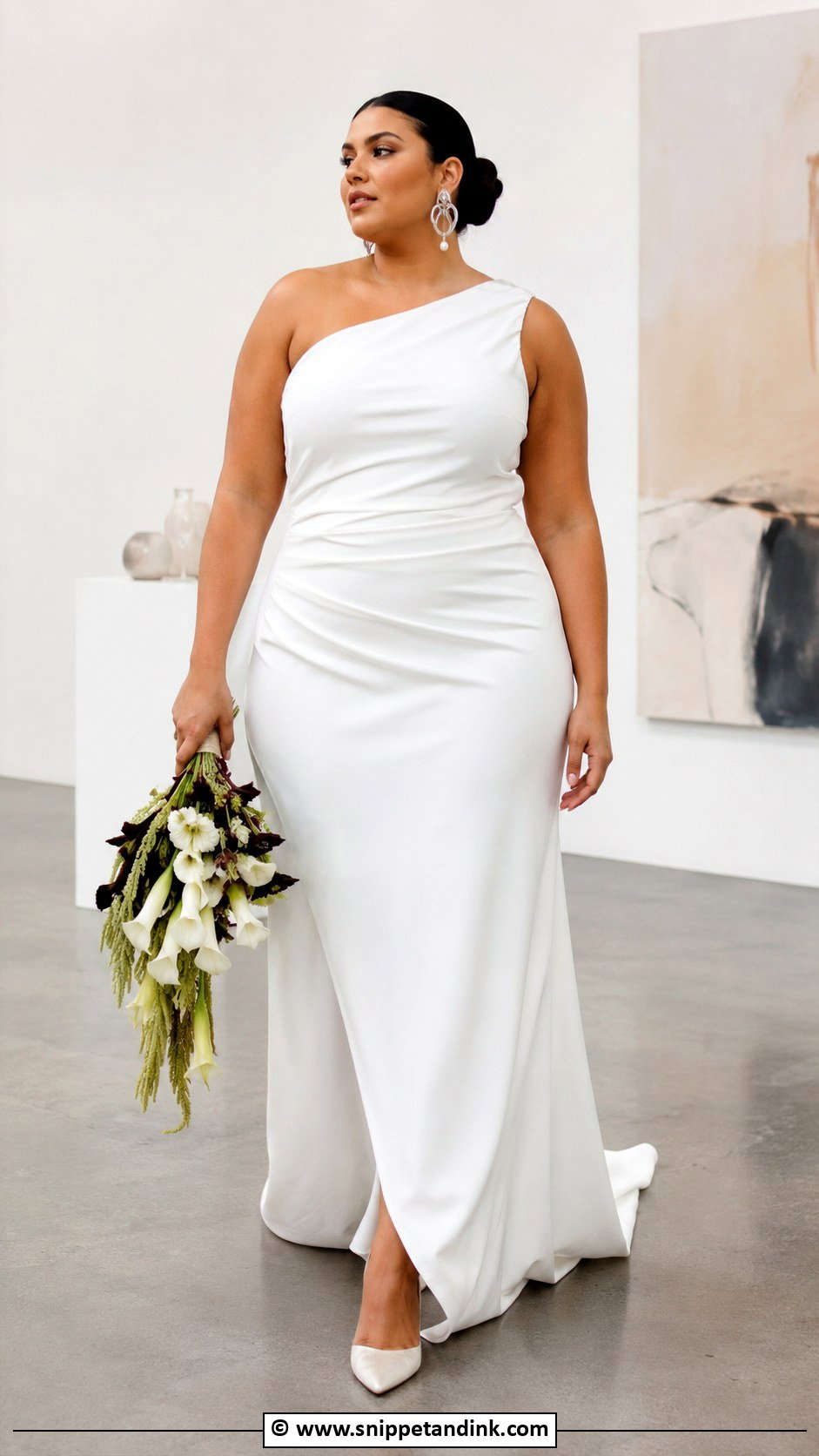
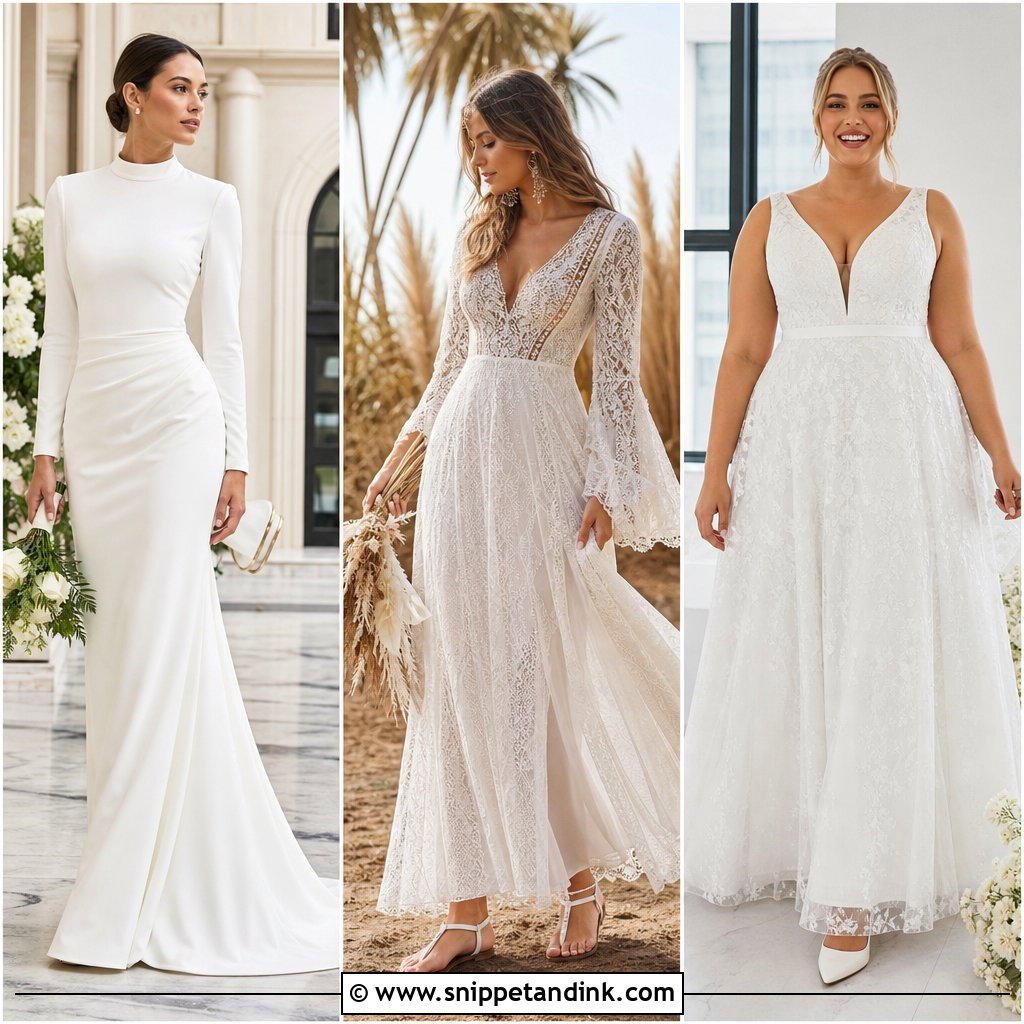
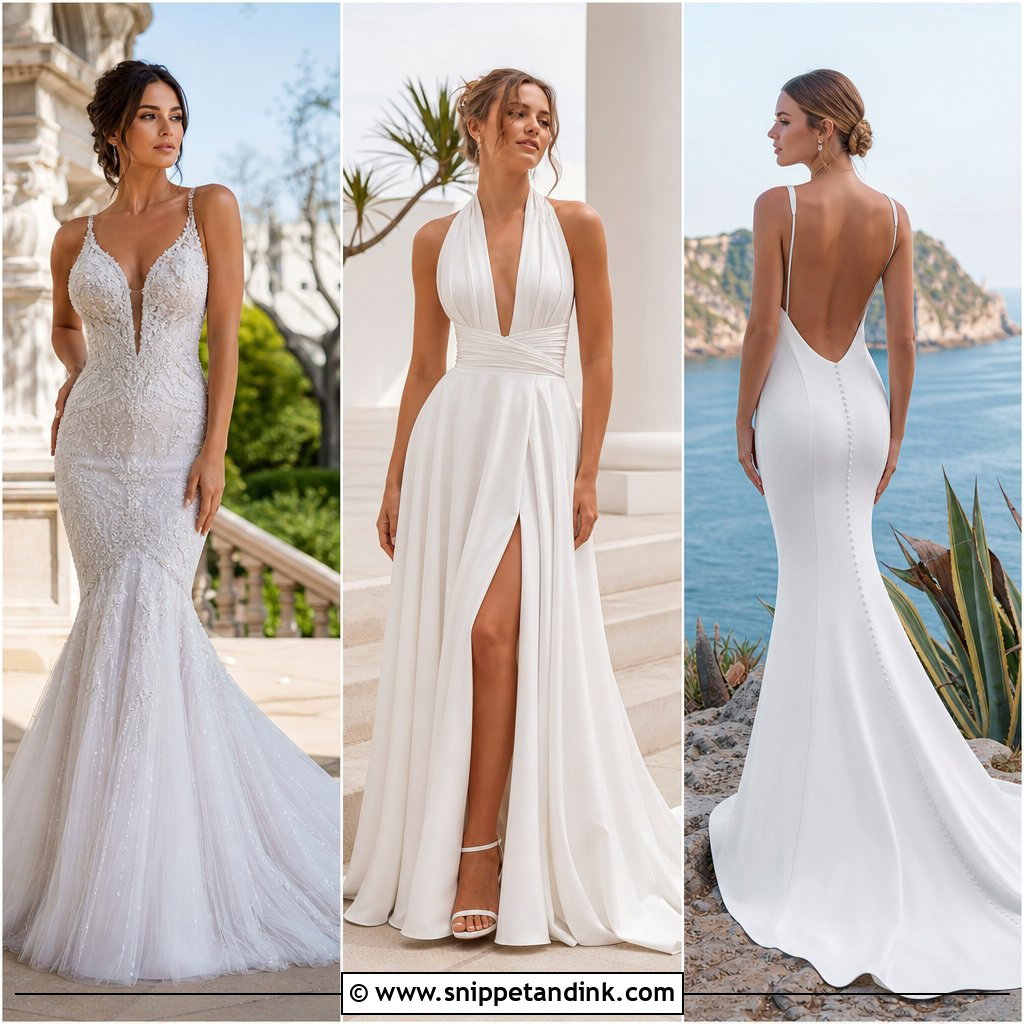
Modern bridal is about clean shapes and one unexpected detail: a single shoulder, a sculptural sleeve, a minimal corset or a high slit. Crepe and satin give the smooth surface these designs depend on. If you’re considering a slit, sit down in it at the fitting and check how far it opens, because on a fuller thigh it can travel higher than you’d expect. A slick bun, statement earrings and pointed heels suit city venues, galleries and rooftops. A veil is optional.


25. Plus Size Vintage Wedding Dress
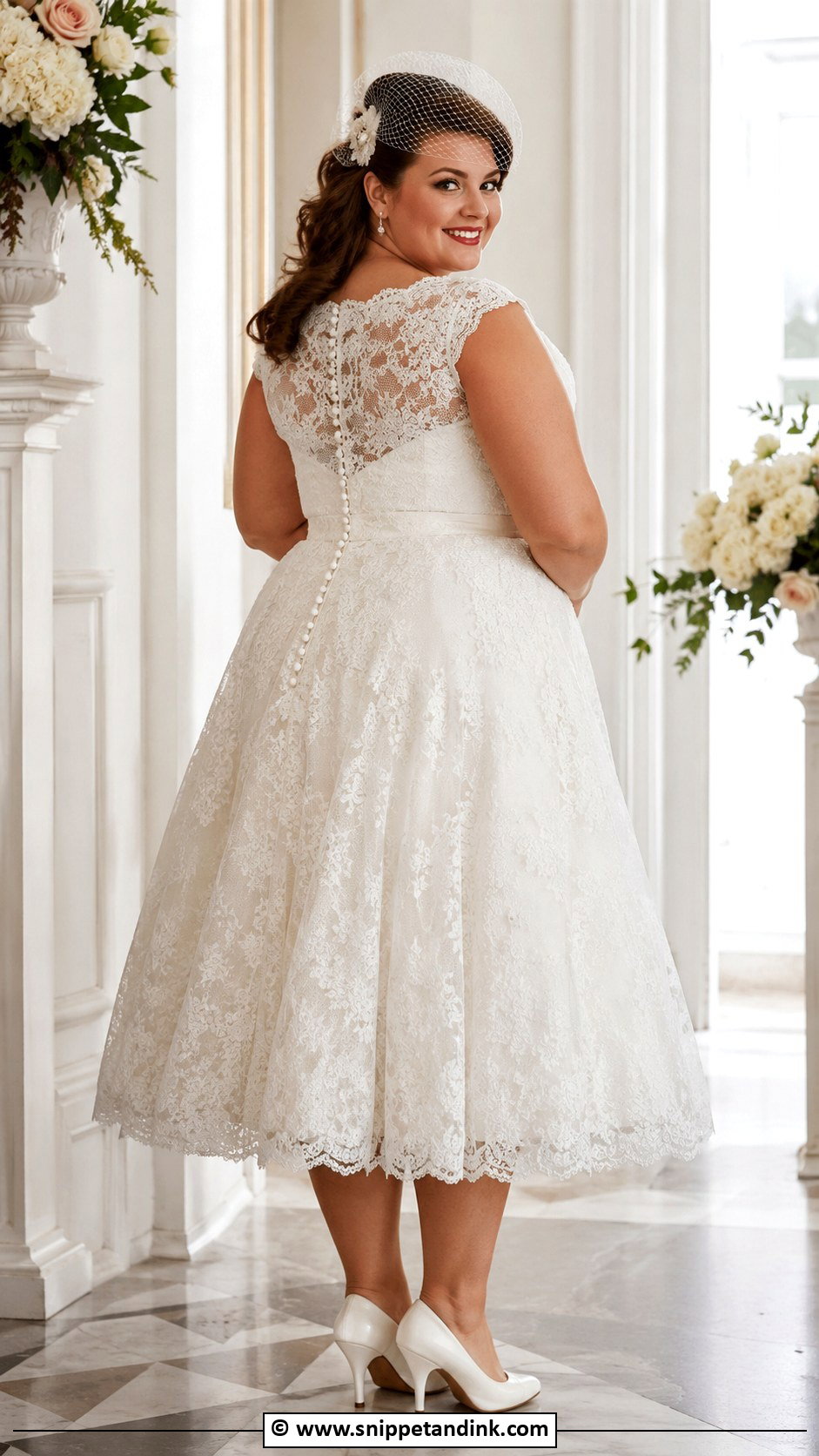
Vintage-inspired gowns bring character, but they work best when you commit to one era. Old Hollywood lace sleeves, a 1950s tea-length skirt, 1920s beading or a satin dress with a row of covered buttons are each strong on their own; mixed together they look confused. If you’re buying a genuine vintage piece, take it to a seamstress before you fall in love, since older gowns often run small and seams may not have enough allowance to let out. A birdcage veil and soft waves suit most eras.
26. Plus Size Beaded Wedding Dress
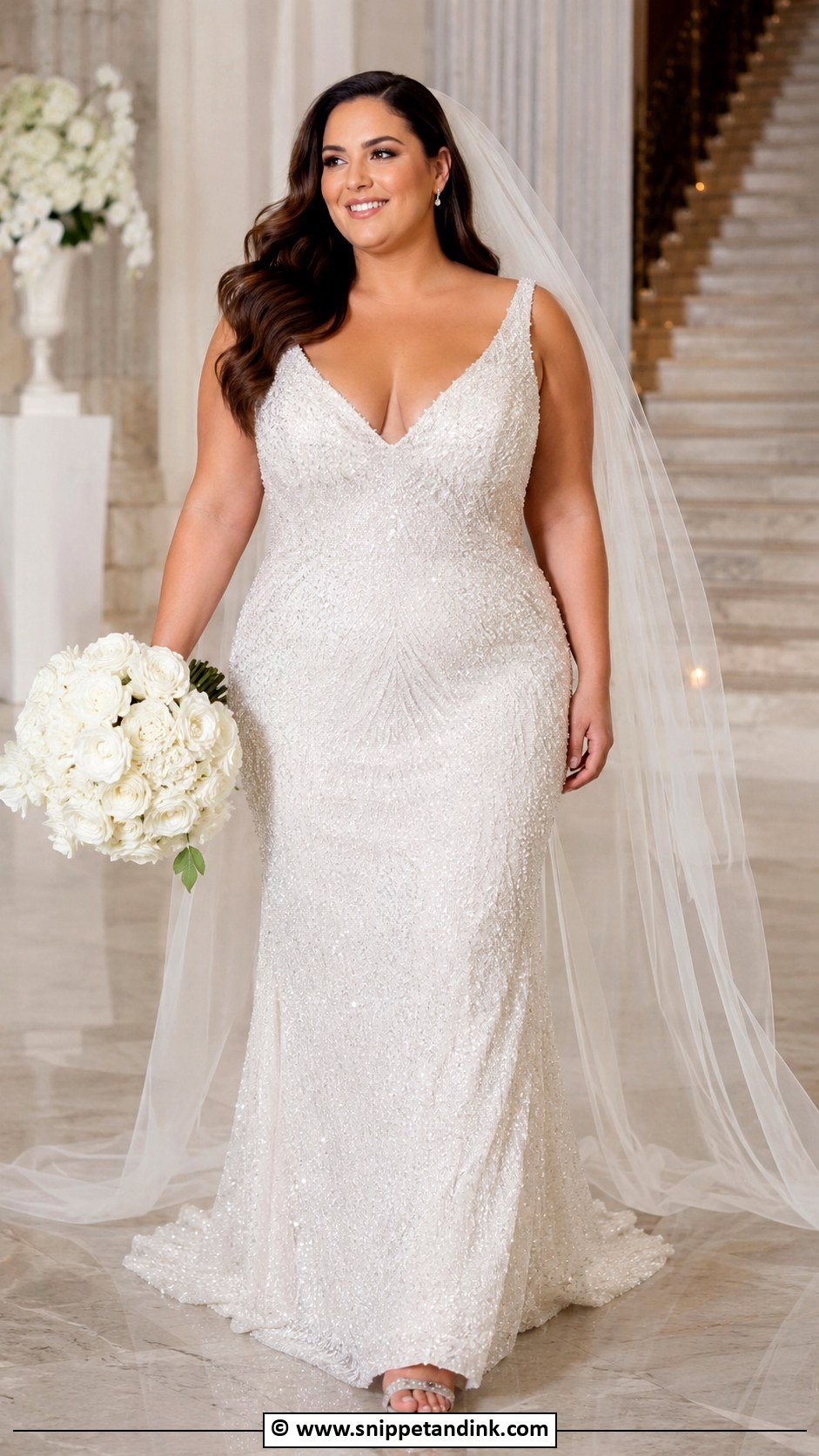
Beading catches every bit of light in an evening venue. It can be concentrated at the neckline, waist or sleeves, or cover the whole gown. A fully beaded fitted dress feels red carpet; a beaded bodice over a tulle skirt reads softer. The practical check is under the arms and along the inner sleeve, where beads rub against skin for hours. I run my hand along those seams at every fitting. Beaded gowns are also heavy, so ask for the hem to be measured with the full weight hanging. Keep the jewelry plain.
27. Plus Size Floral Wedding Dress
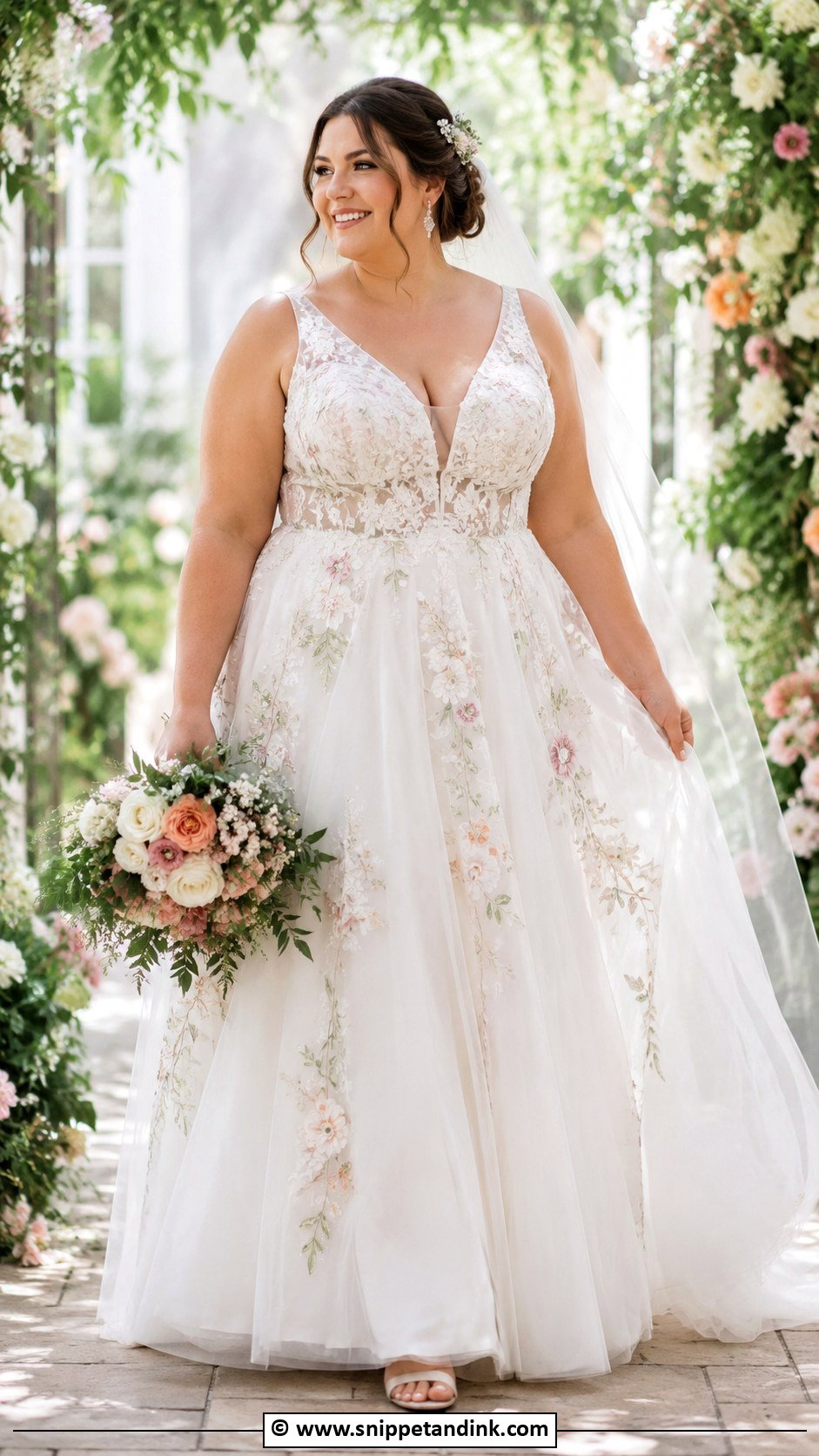
Floral gowns range from white-on-white embroidered blooms to 3D appliqués and soft colour accents. On a fuller figure, I look at the size of the flowers: scattered medium motifs usually sit more naturally than one huge cluster at the hip. An A-line floral gown is easy to wear outdoors. If you want subtle detail, stick to tone-on-tone; for more colour, try blush, blue or champagne accents. A floral hair pin and delicate earrings echo the pattern without competing with it.
28. Plus Size Blush Wedding Dress
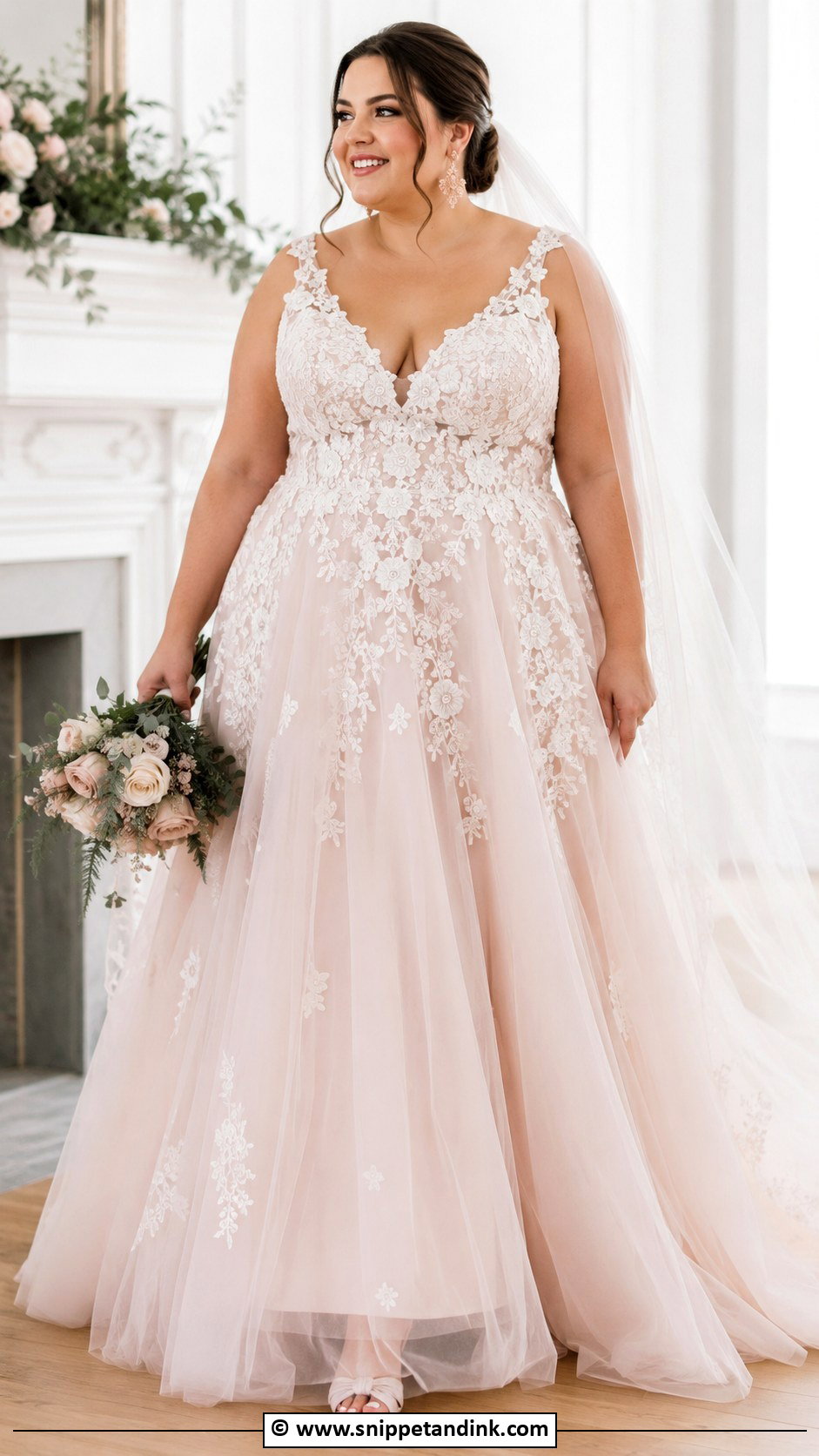
Blush gives warmth under lace, tulle, satin or organza, and it often looks softer on skin than bright white does. I’d always try the actual shade against your face in daylight, because blush can range from barely-there nude to clear pink, and the deeper versions can wash out very fair or very cool skin tones. A blush A-line with lace appliqué is romantic; a blush ball gown is the dramatic option. Rose-gold jewelry and ivory heels suit it. Keep the bouquet pale so the colour reads as intended.
29. Plus Size Champagne Wedding Dress
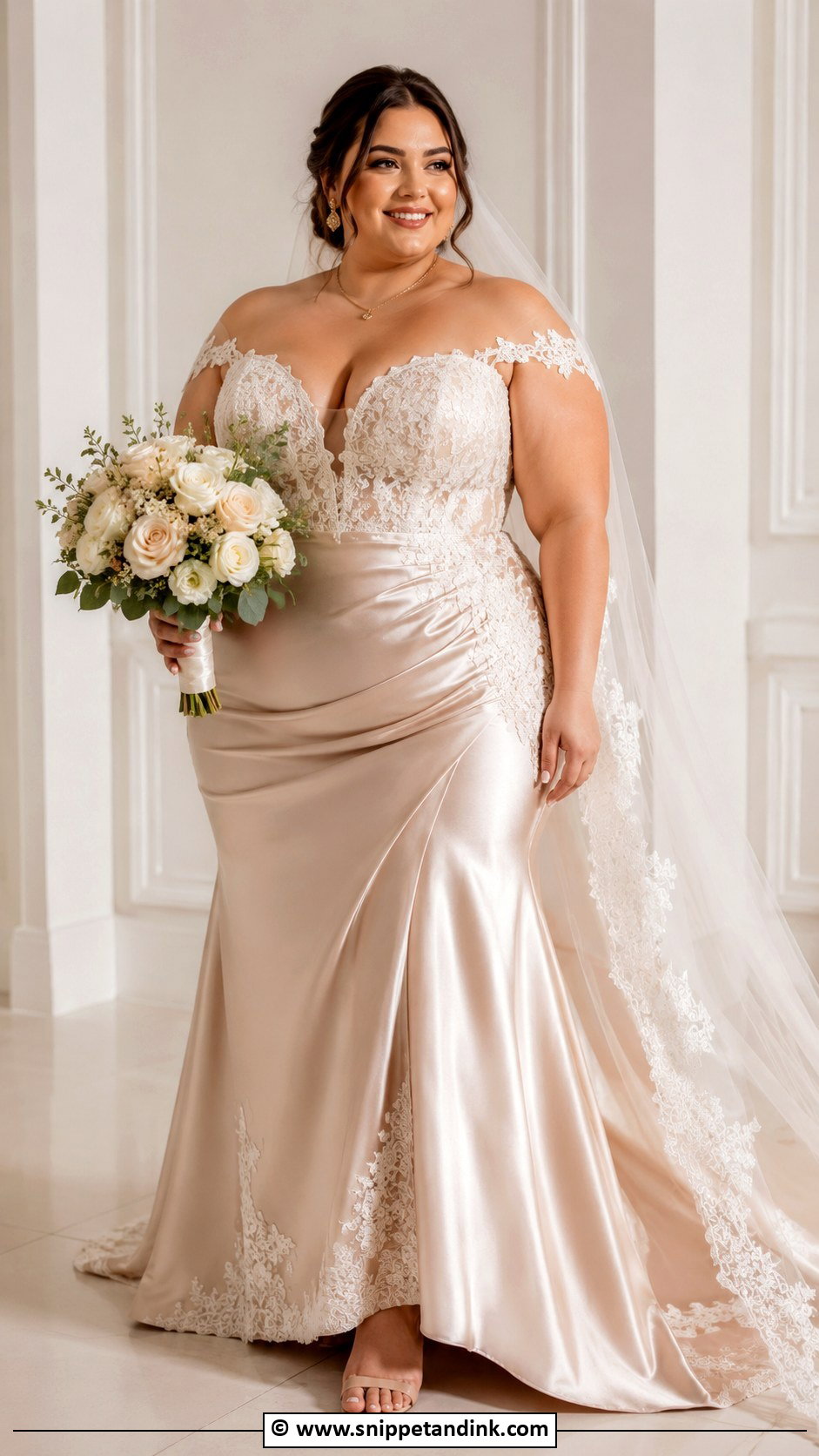
Champagne sits warmer than ivory and is kinder than stark white to many skin tones, especially olive and golden ones. It works in satin, beaded tulle, lace and layered skirts; champagne under ivory lace gives the most depth. The mistake I see most is mismatched whites: a bright white veil next to a champagne gown makes the dress look dingy. Bring a fabric swatch when you buy the veil and shoes. Gold jewelry and nude heels finish it with a warm glow.
30. Plus Size Black Wedding Dress
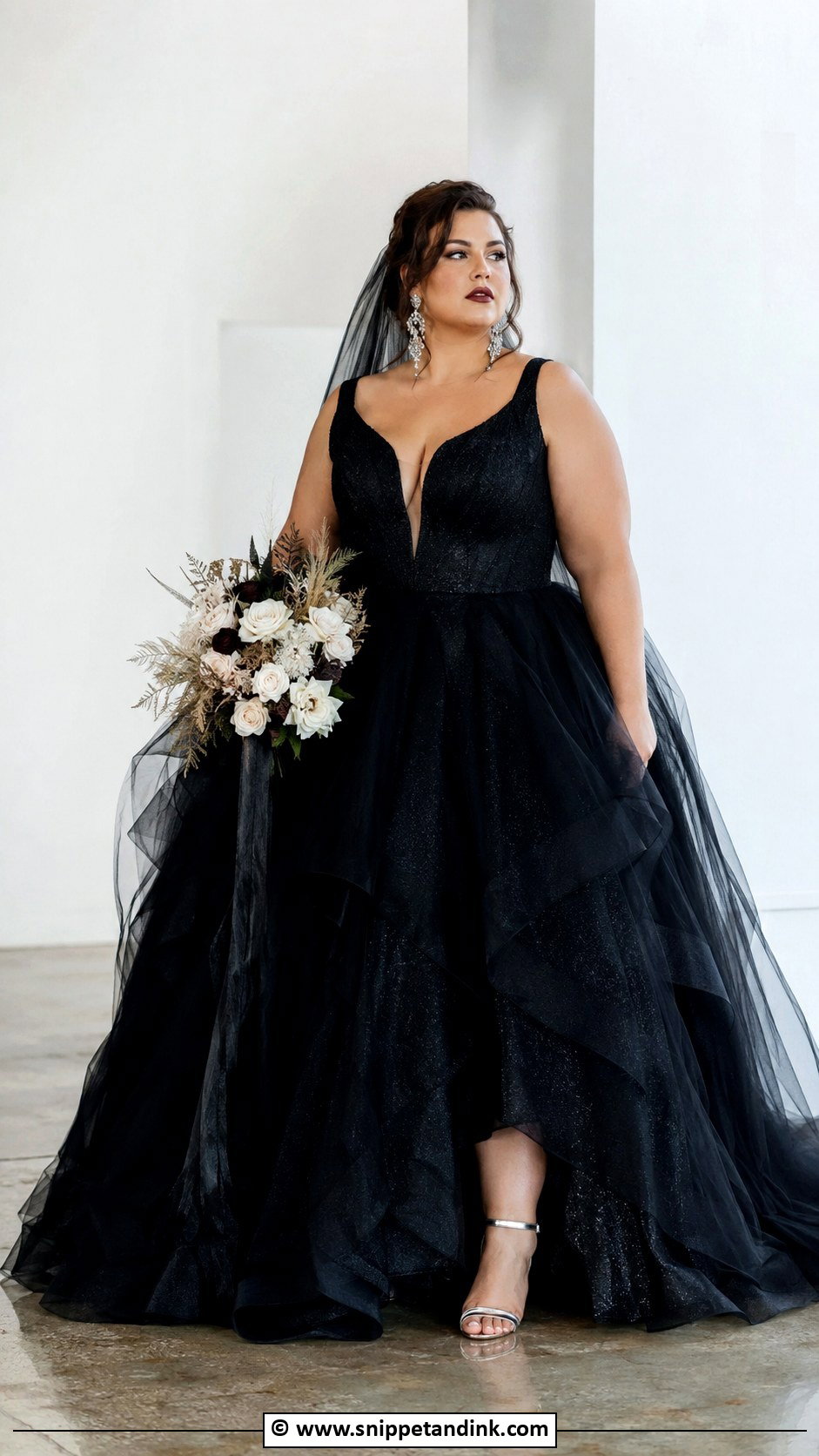
A black wedding dress is a confident decision, and it can still look formal and bridal. Black lace over a nude lining, black satin and a black tulle ball gown each give a very different mood. One practical point: black absorbs light, so detail like lace and seaming can disappear in photos unless the venue is well lit or your photographer adjusts for it. A crystal earring, black or metallic heels and a bouquet in pale neutrals keep it from feeling heavy. A black veil adds drama if you want it.
31. Plus Size Two Piece Wedding Dress
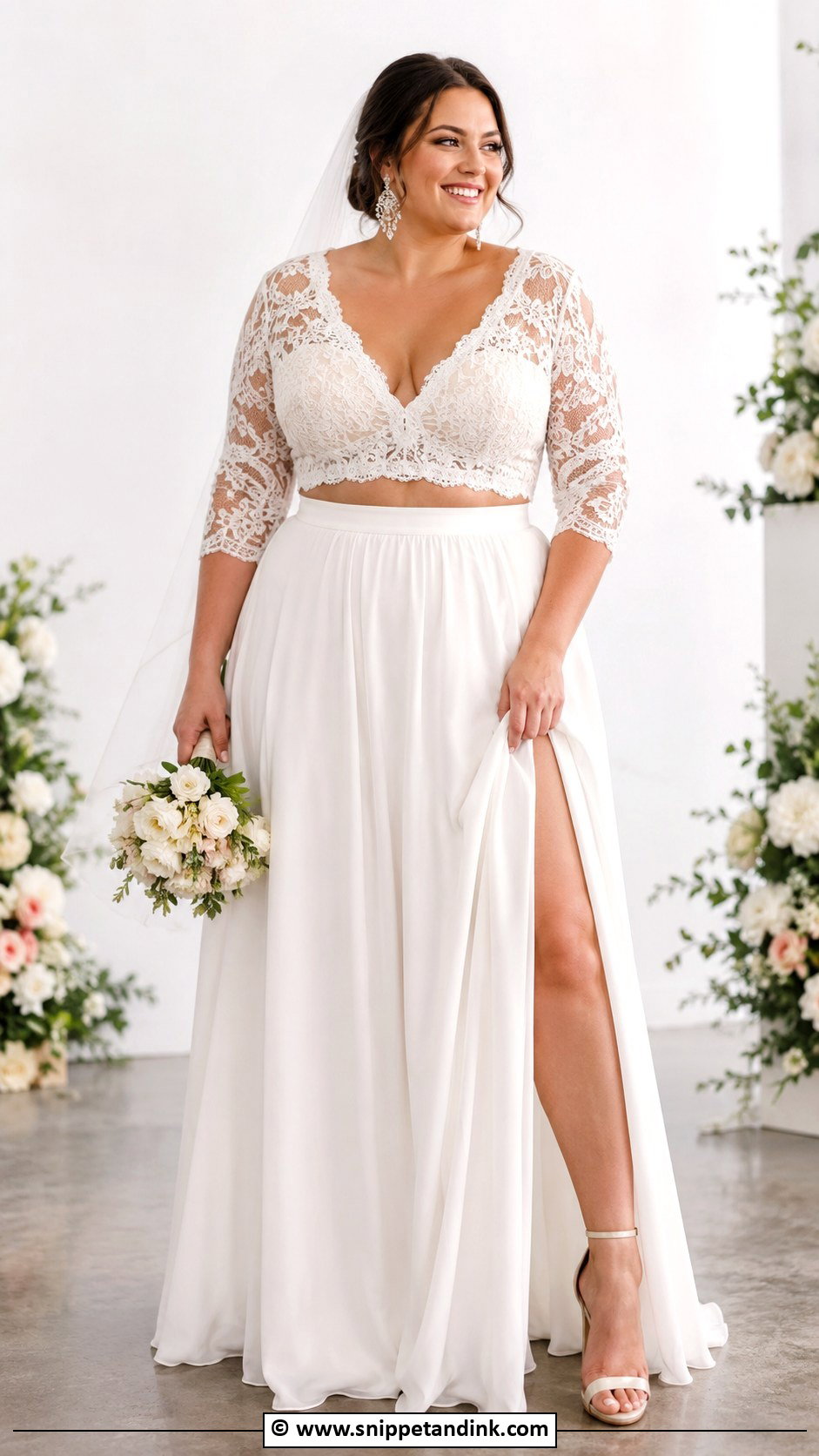
Separates solve a very real fitting problem: many women wear a different size on top than on the bottom. With a two piece, each half can be ordered in its own size, and alterations are simpler. A lace crop top with a tulle skirt feels youthful; a satin corset with an A-line skirt feels classic; a modest blouse over a flowing skirt suits more traditional ceremonies. If you don’t want skin showing, choose a top that overlaps the skirt waistband. Statement earrings and a simple veil complete it.
32. Plus Size Bridal Jumpsuit Wedding Dress
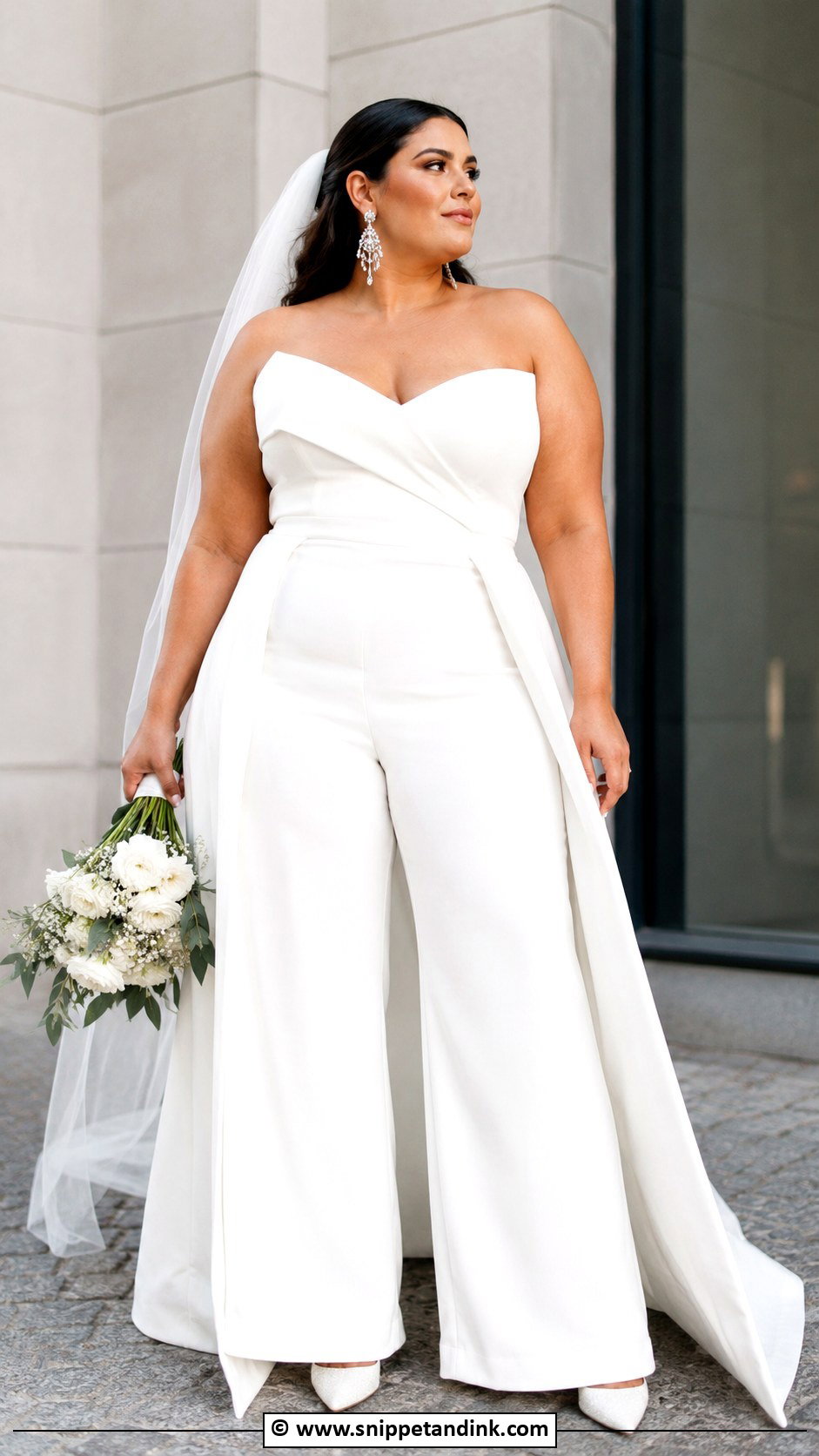
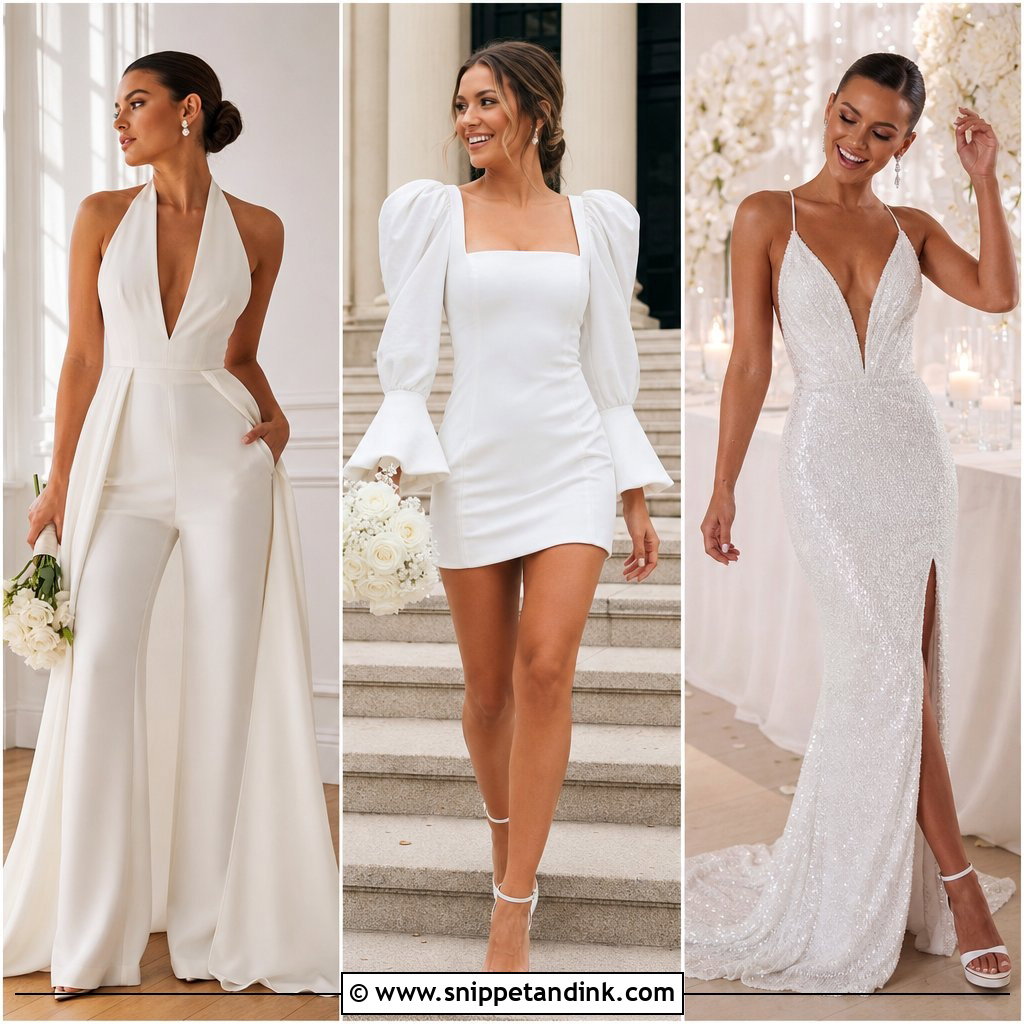
A bridal jumpsuit gives you the formality of a gown with the ease of trousers. A wide leg with a fitted bodice reads most like a dress when you’re standing still. The fit point I check carefully is the rise: a jumpsuit that’s too short through the torso pulls when you sit or bend, so ask whether the body length can be adjusted. Crepe, satin and structured stretch fabrics hang best. A detachable overskirt gives you a ceremony look that turns into a dance outfit. Pointed heels and bold earrings suit it.
33. Plus Size Wedding Dress With Cape
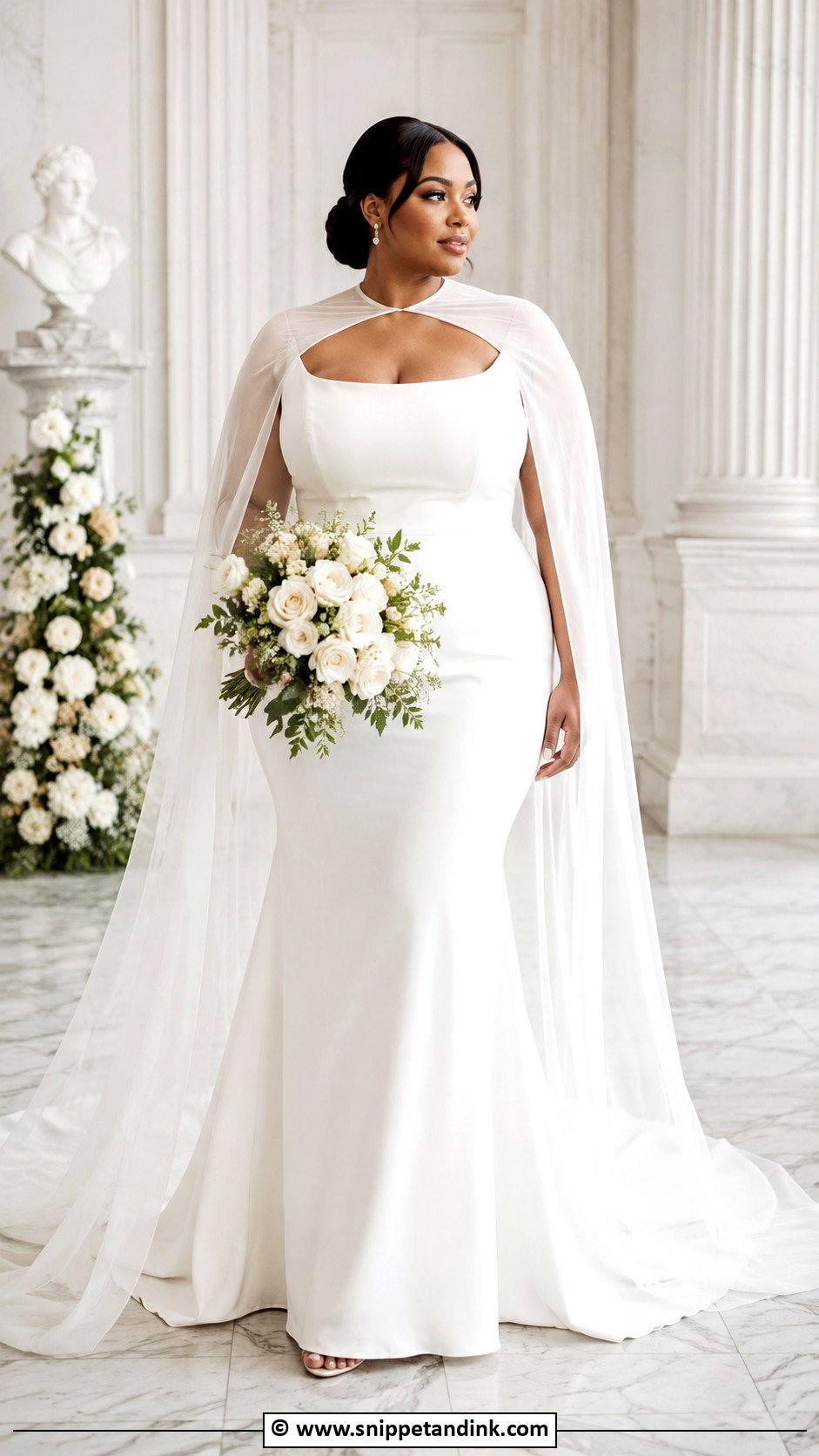
A cape gives you movement and drama without a heavy veil, and it’s one of the best ways to make a simple gown look finished from behind. Capes can be sheer, lace-trimmed, pearl-dotted or plain tulle. A crepe dress with a long cape looks modern; a lace gown with a matching lace-edged cape looks romantic. Check how it attaches. Capes clipped at the shoulder can pull the neckline backwards, so I prefer ones that button or snap into the back seam. Minimal jewelry and a polished hairstyle.
34. Plus Size Wedding Dress With Pockets
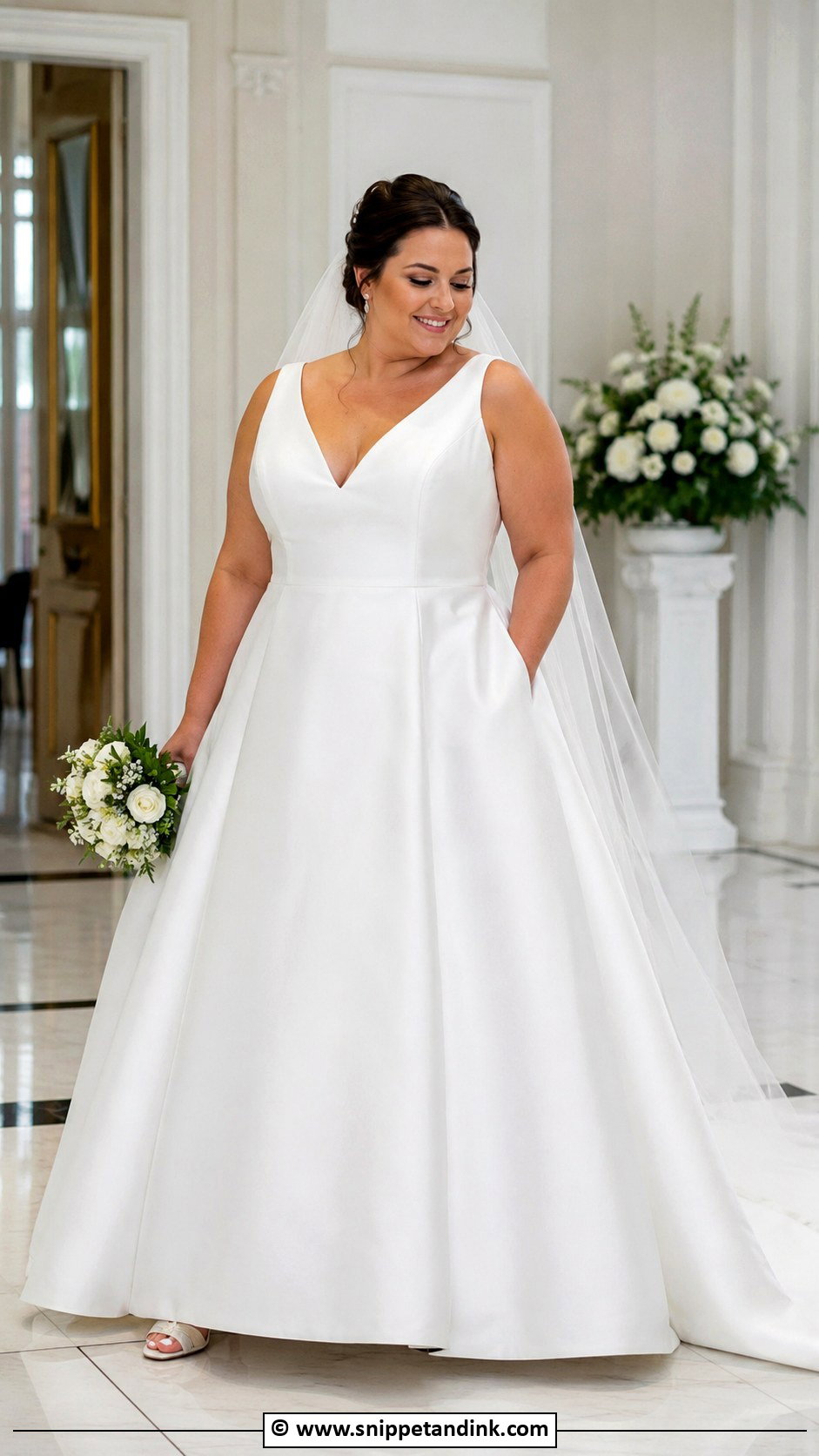
Pockets are the feature brides thank me for most once the day is over. They sit best in A-line, ball gown, satin and mikado dresses, where the skirt has enough body to hide them. Use them for a tissue, lipstick or a small keepsake. A good seamstress can also add pockets to a gown that doesn’t have them, if the side seams allow. The thing to avoid is filling them: anything heavier than a phone makes the skirt pucker at the hip. Classic earrings and a simple veil.
35. Plus Size Reception Wedding Dress
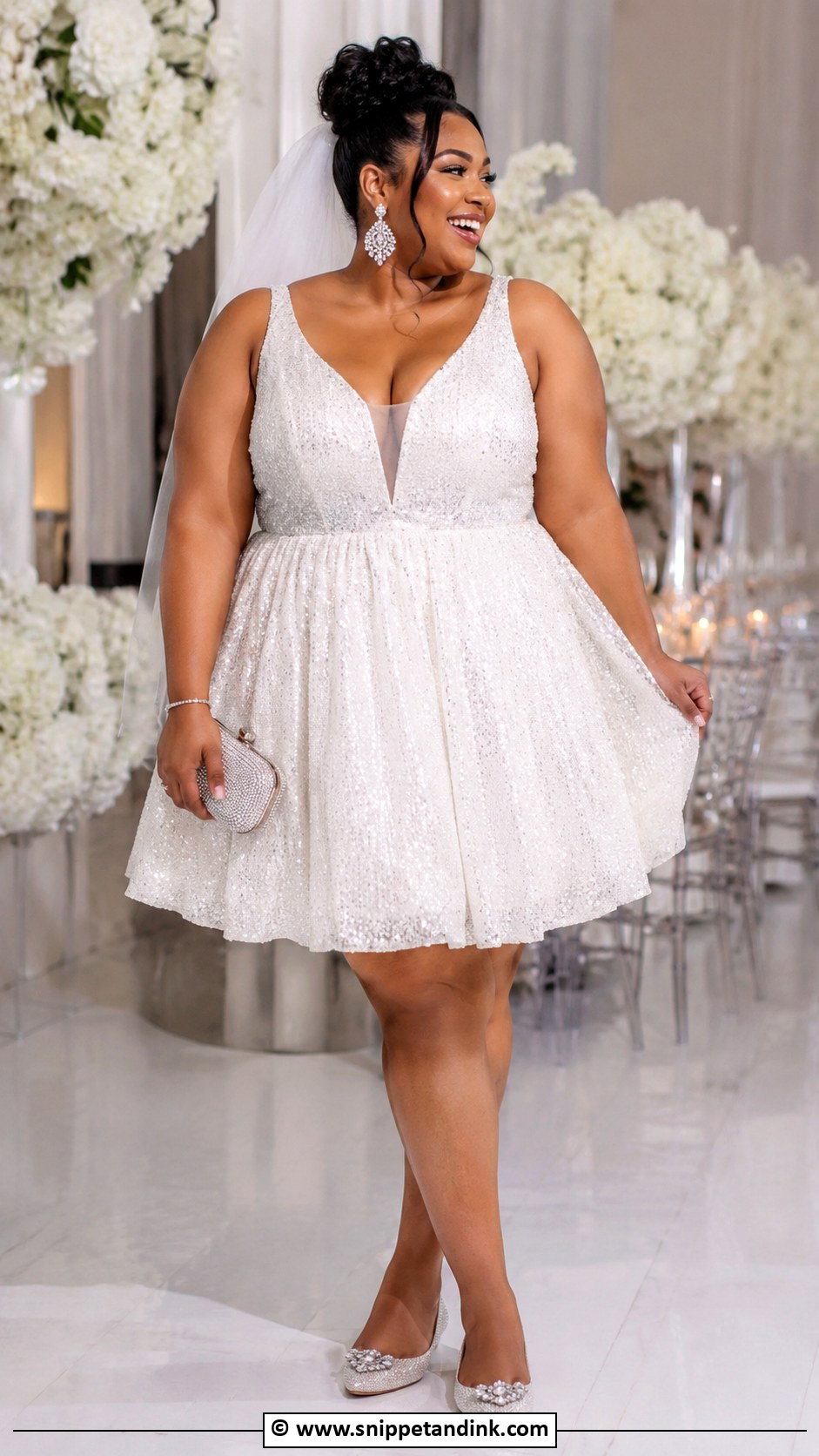
A second dress for the reception means you can dance without managing a train. It could be a short white dress, a tea-length lace gown, a feather-trimmed midi, a jumpsuit or a satin slip with a supportive lining. I’d plan the change for after dinner and before the first dance, and ask someone to help you with fastenings so it takes minutes, not half an hour. Block heels, embellished flats or platform sandals keep you on the floor longer. Add sparkly earrings, a mini veil or a hair bow.
A Realistic Order and Alterations Calendar
Made-to-order gowns commonly take around four to six months to arrive, and some designers quote longer, so I like brides to order roughly eight to ten months out. That leaves a buffer for shipping delays and for alterations, which most seamstresses start about two to three months before the wedding.
Expect two or three fittings. The first deals with the big structural changes: side seams, bust support and the hem. The second checks that everything settled correctly. The last, usually a week or two before, is the one where you practise the bustle and confirm the fit in your final shoes and undergarments.
When something still doesn’t feel right
Speak up at the fitting itself. A strap that slips, a bodice edge that cuts in or a hem that catches your heel will only bother you more over a ten-hour day. A seamstress can add cups, a waist stay, extra boning or a wider strap; she just needs to hear about it while there’s still time.
Fit First, Then Fabric, Then Everything Else
No single silhouette is the right one for every curvy bride. What I look for is a gown that supports you through fit and construction, in a fabric that suits the season and the venue, styled to match the rest of the wedding. Try at least one shape you didn’t expect to like, because tailoring and fabric can change a dress completely. Then picture the actual day: walking, sitting through dinner, dancing, and the temperature in the room. The dress that still feels good in all of those moments is the one to say yes to.
You'll Like These Ideas:



Leave a Reply