
Sparkle is the part of a gown brides talk about least and notice most once they’re in front of a mirror. A sparkling bridal gown can read as glamour, romance or something quite minimal, and the difference is almost always placement. Scattered stones give a soft shimmer that moves as you do; dense crystal patterns read as a statement from across a room. The twenty gowns below run from full ball gowns and fitted mermaids to modest sleeves, sleek satin and short reception dresses. With each one I’ve noted where the stones work, what they do to comfort, and the veil, earrings, shoes and flowers that leave the dress in charge.
Sewn, Glued or Hot-Fixed: What to Look for Inside the Bodice
In my fittings, two gowns can look identical on a hanger and behave completely differently after six hours of hugging and dancing. The difference is how the stones are attached, and you can usually tell by turning the bodice inside out or asking the consultant directly.
- Sewn-on stones have holes or sit in metal settings stitched through the fabric. You’ll see small stitches on the reverse. These are the most secure and can be repaired by any good seamstress.
- Hot-fix stones have heat-activated glue on the back and are pressed on. They’re fine on flat, stable fabric but can loosen on stretch fabric or anywhere that bends a lot.
- Glued stones are the cheapest method. They pop off under strain and can lift if the gown is steamed too closely or cleaned with the wrong solvent.
Glass crystals catch light more sharply than acrylic and stay clear longer, while acrylic is lighter and kinder on a big skirt. Neither is wrong. What matters is that the method suits where the stones sit: sewn at the seams, waist and underarms, where the gown takes strain.
Ask for Spare Stones and Keep Them in Your Kit
Many bridal shops and seamstresses can give you a small bag of matching spare stones, and it is worth asking for one when you collect the dress. A stone or two coming loose on the day is normal on heavily worked gowns. With spares, a needle and thread in the right colour and a small tube of fabric glue, your maid of honour can fix a gap in a couple of minutes. Without them, you’ll be looking at a bare spot in every portrait taken after it.
1. Rhinestone A-Line Wedding Dress
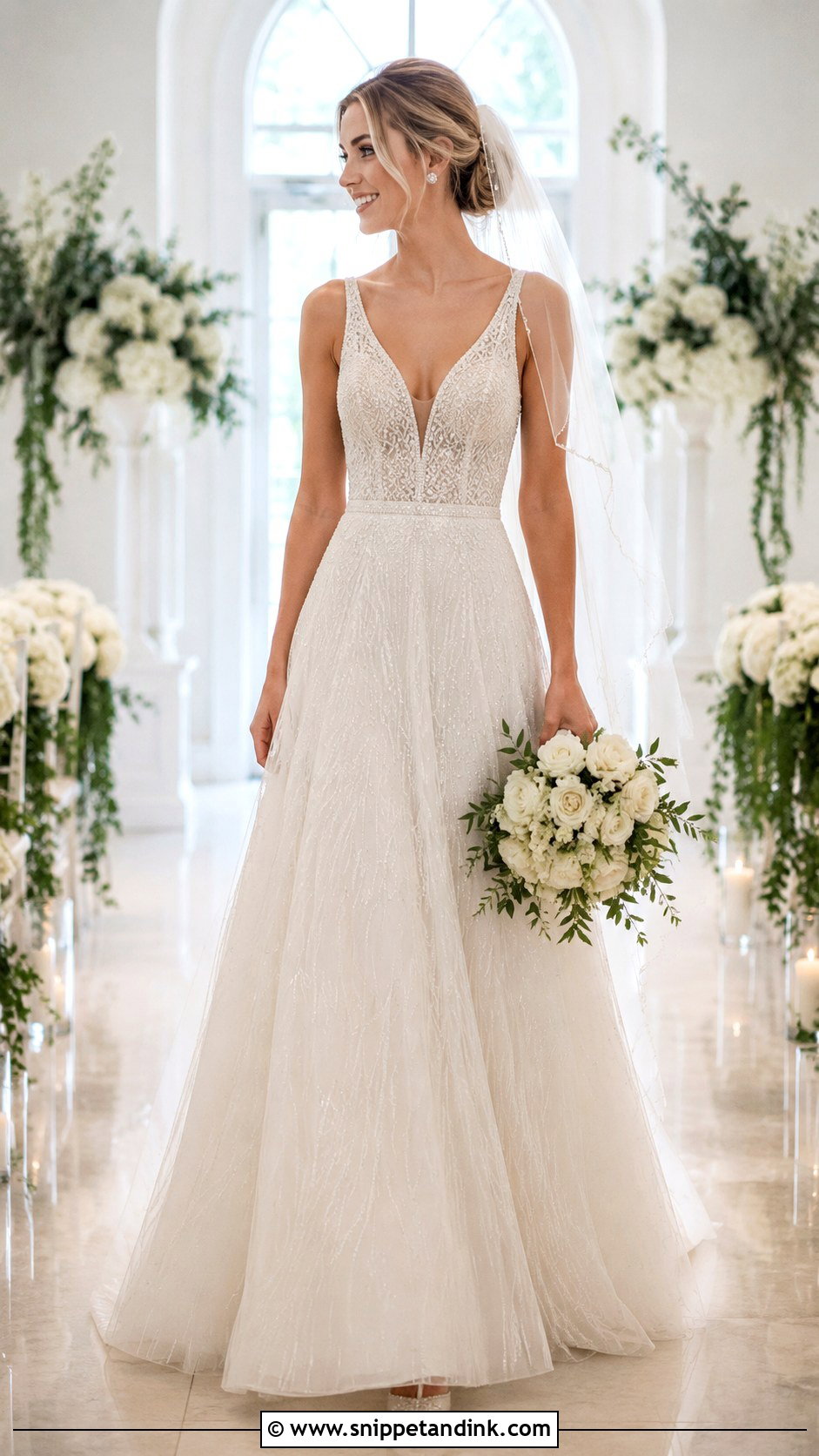
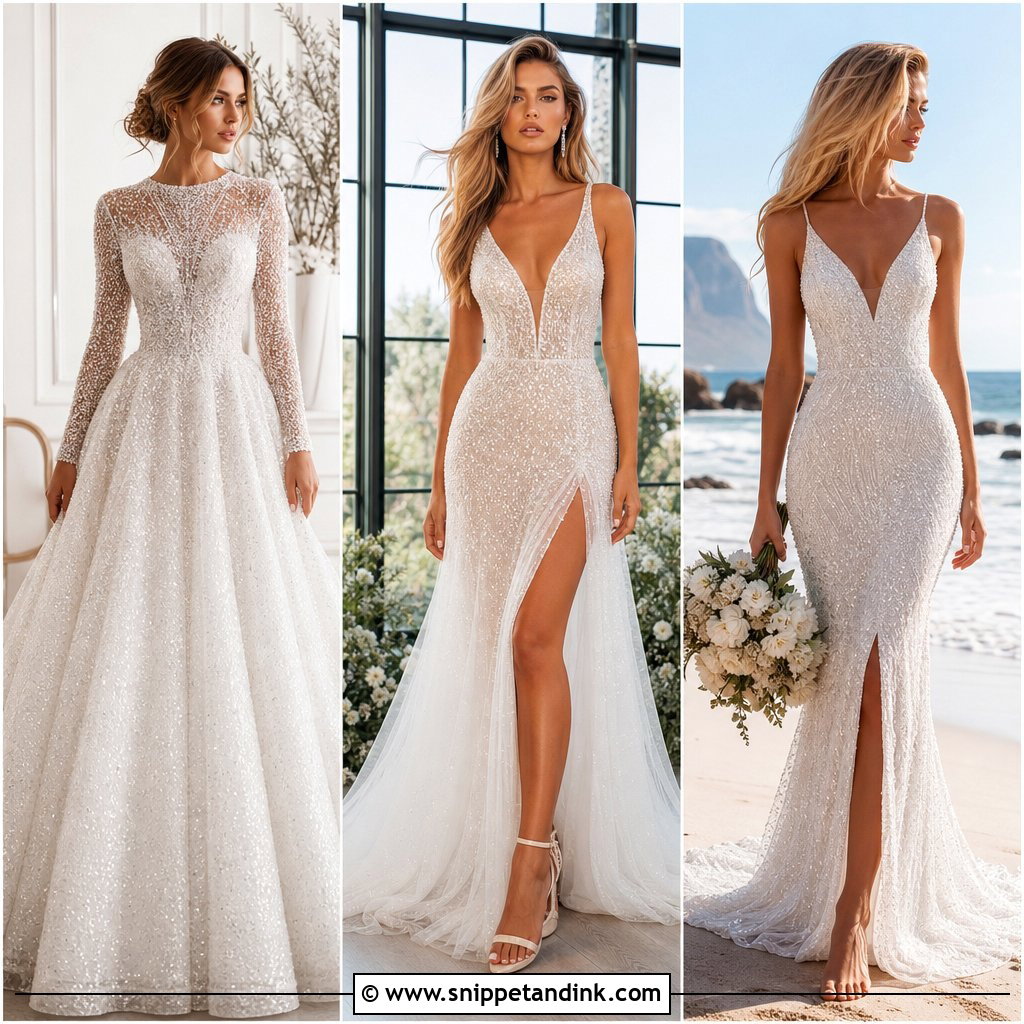
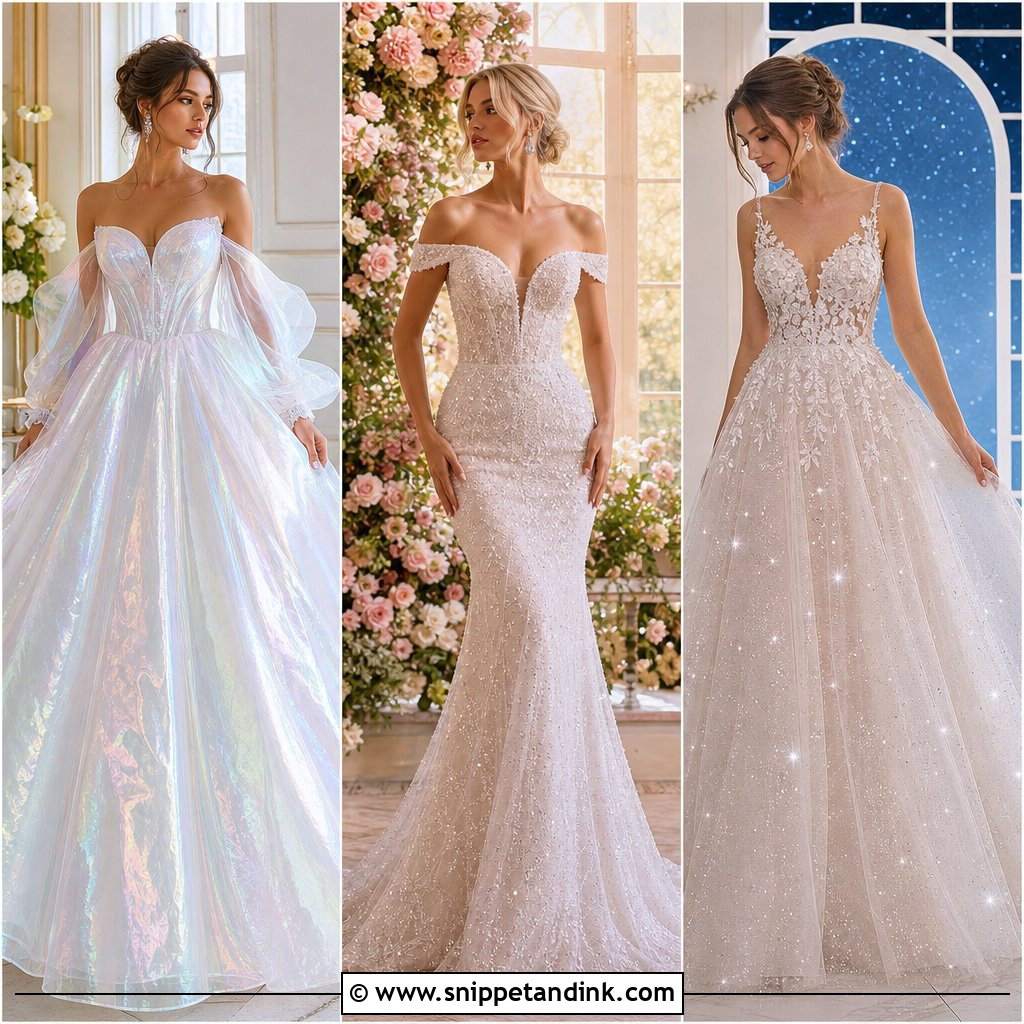
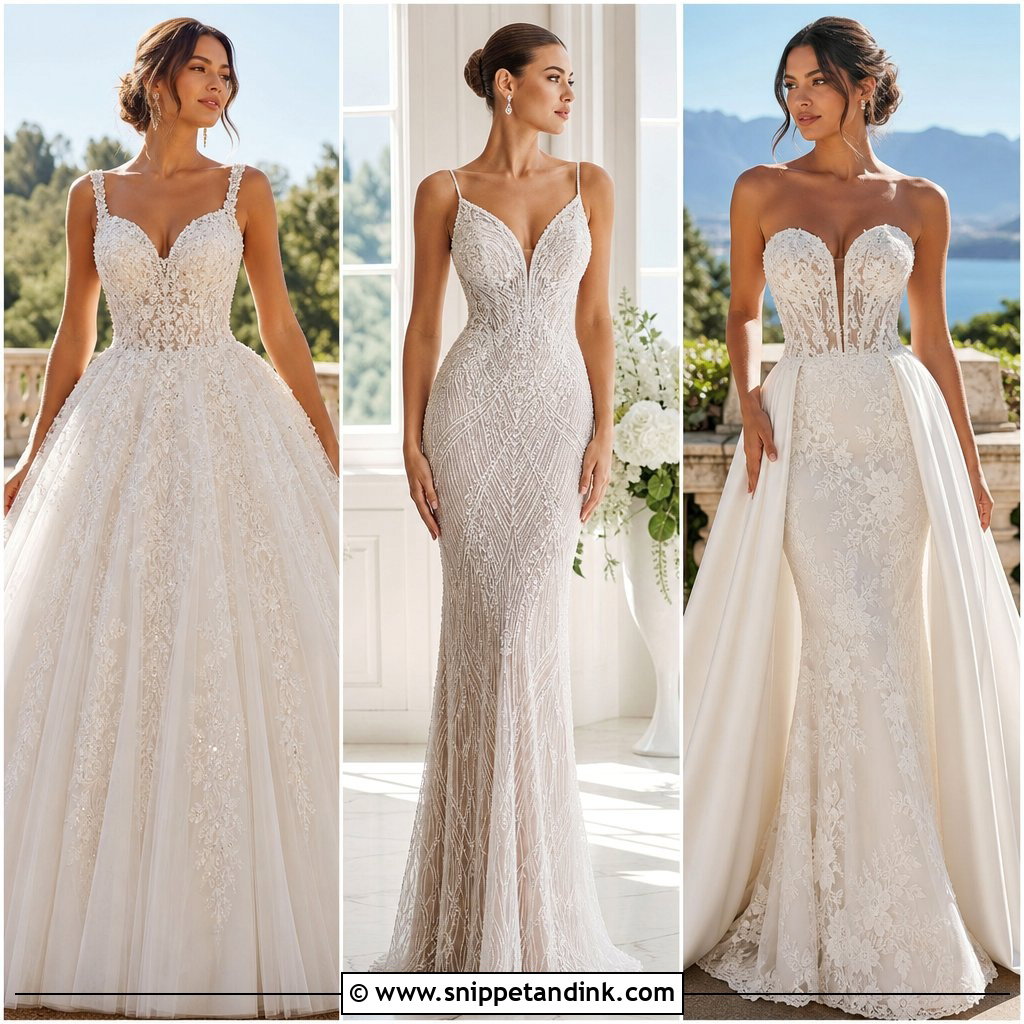
If you’re new to sparkle, this is where I’d start. A fitted bodice carries the densest stones, which fade out as they reach the skirt, so the waist is defined and the skirt stays light enough to move. Sweetheart, scoop and soft V necklines all suit it. The gradient is worth inspecting closely: on a well-made gown it thins gradually, while a cheaper one stops in a hard line around the hip. Pointed ivory heels, small crystal earrings and a fingertip veil complete it, and a low bun keeps the neckline clear. A round bouquet in white and soft green suits the clean shape.
2. Rhinestone Ball Gown Wedding Dress
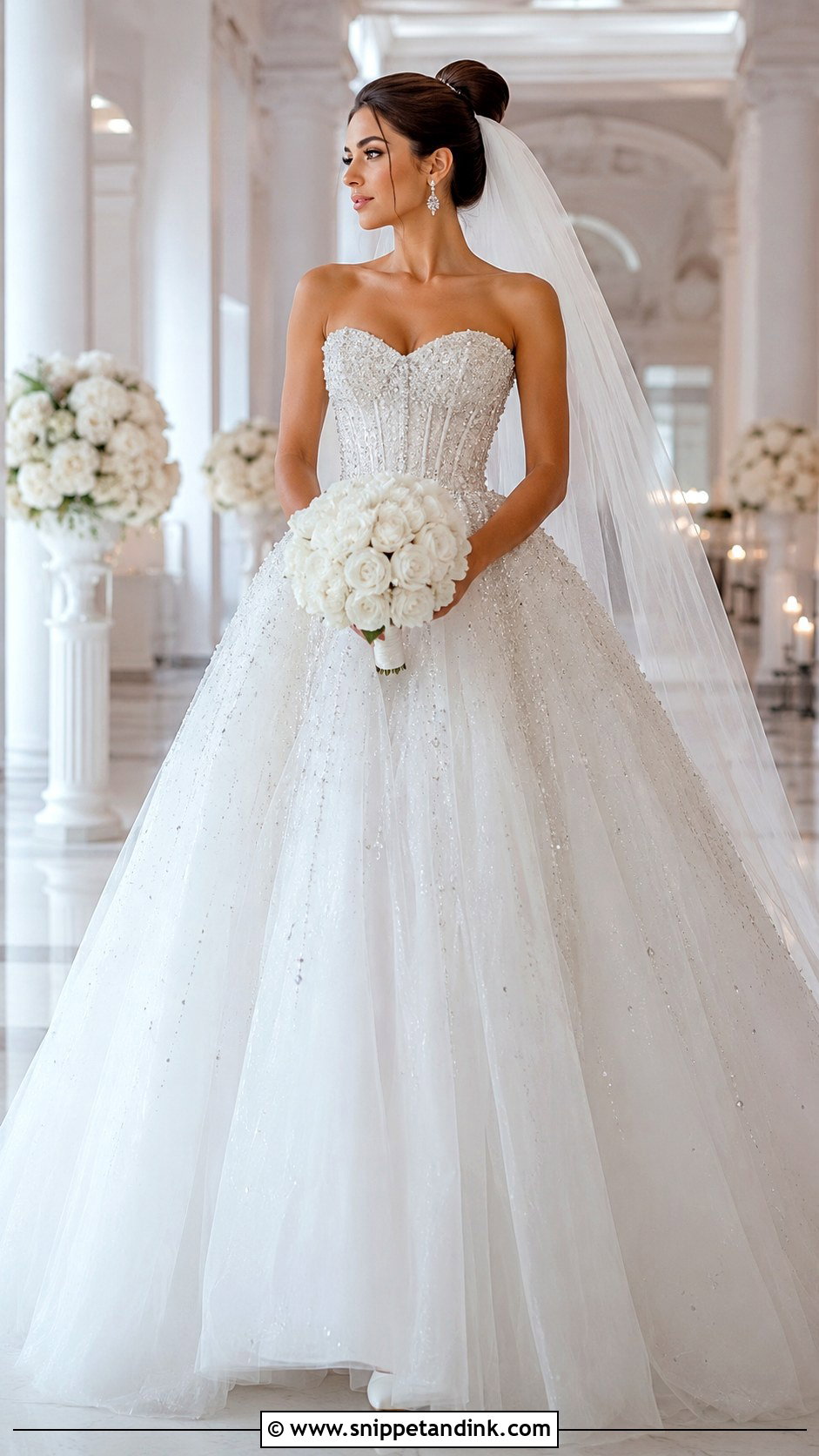
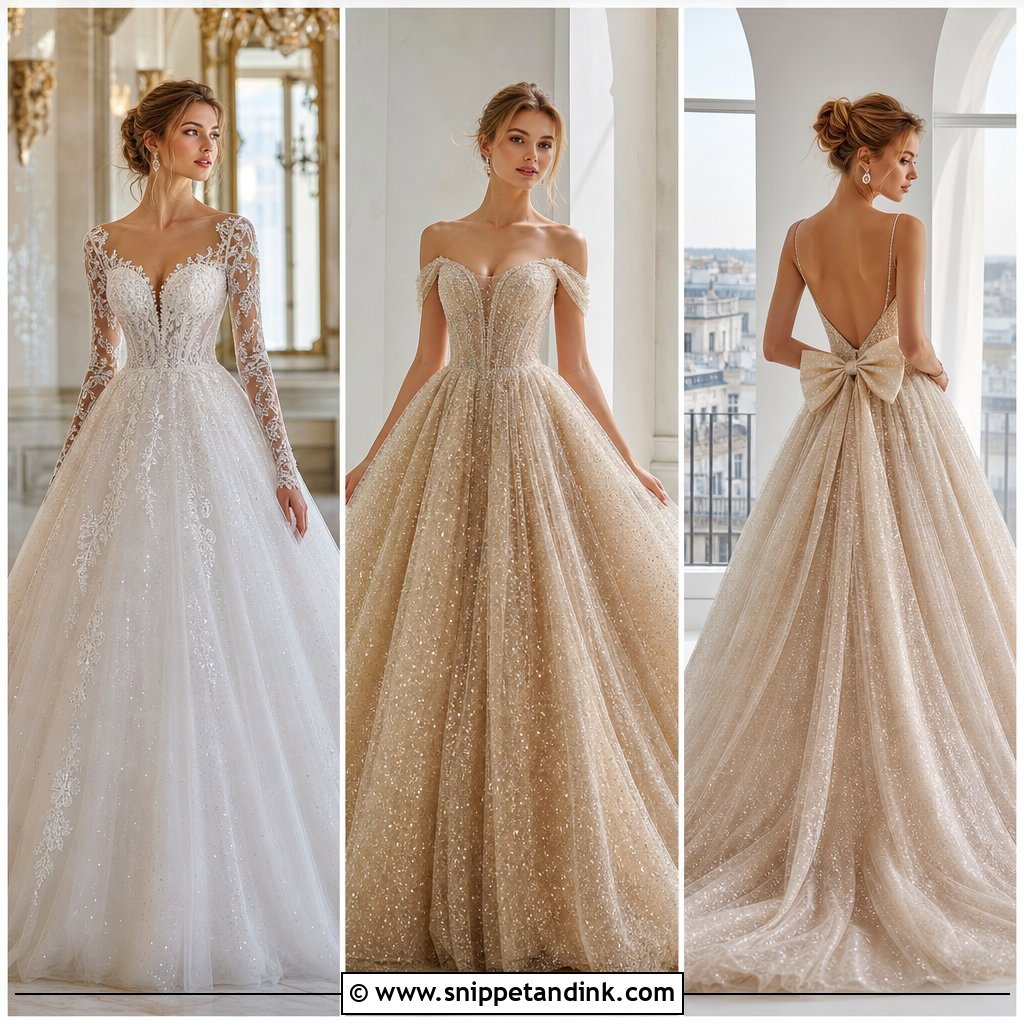
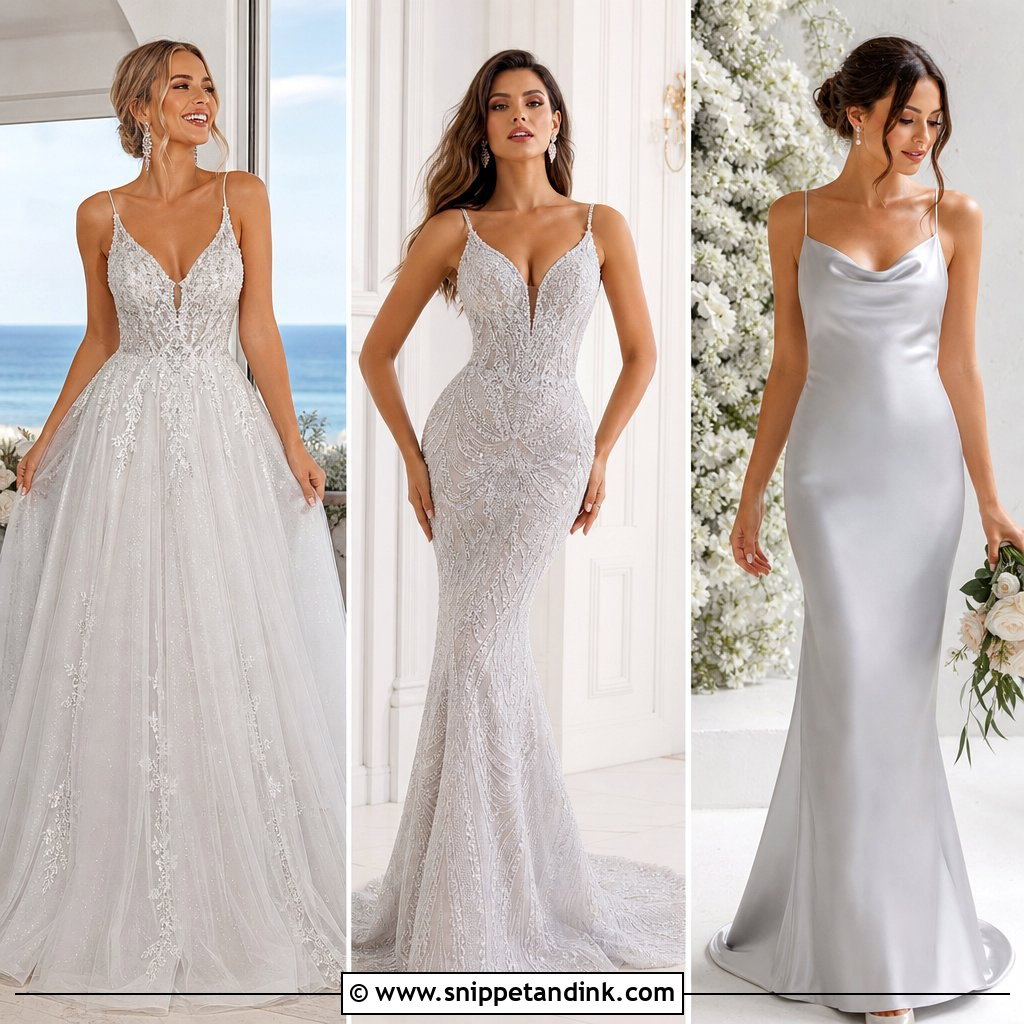
A rhinestone ball gown is built for an entrance. The corset bodice carries closely arranged stones, and a full tulle or organza skirt has more scattered across it to catch the light as you walk. Stones add real weight, and on a ball gown that weight hangs from the waist, so I always ask how the skirt is supported; a good one has a waist stay inside that takes the load off the bodice. Crystal drop earrings, closed-toe satin pumps and a long cathedral veil with a plain edge suit it. Skip the necklace if the bodice is busy, and wear a polished updo. Carry a structured white bouquet.
3. Rhinestone Mermaid Wedding Dress
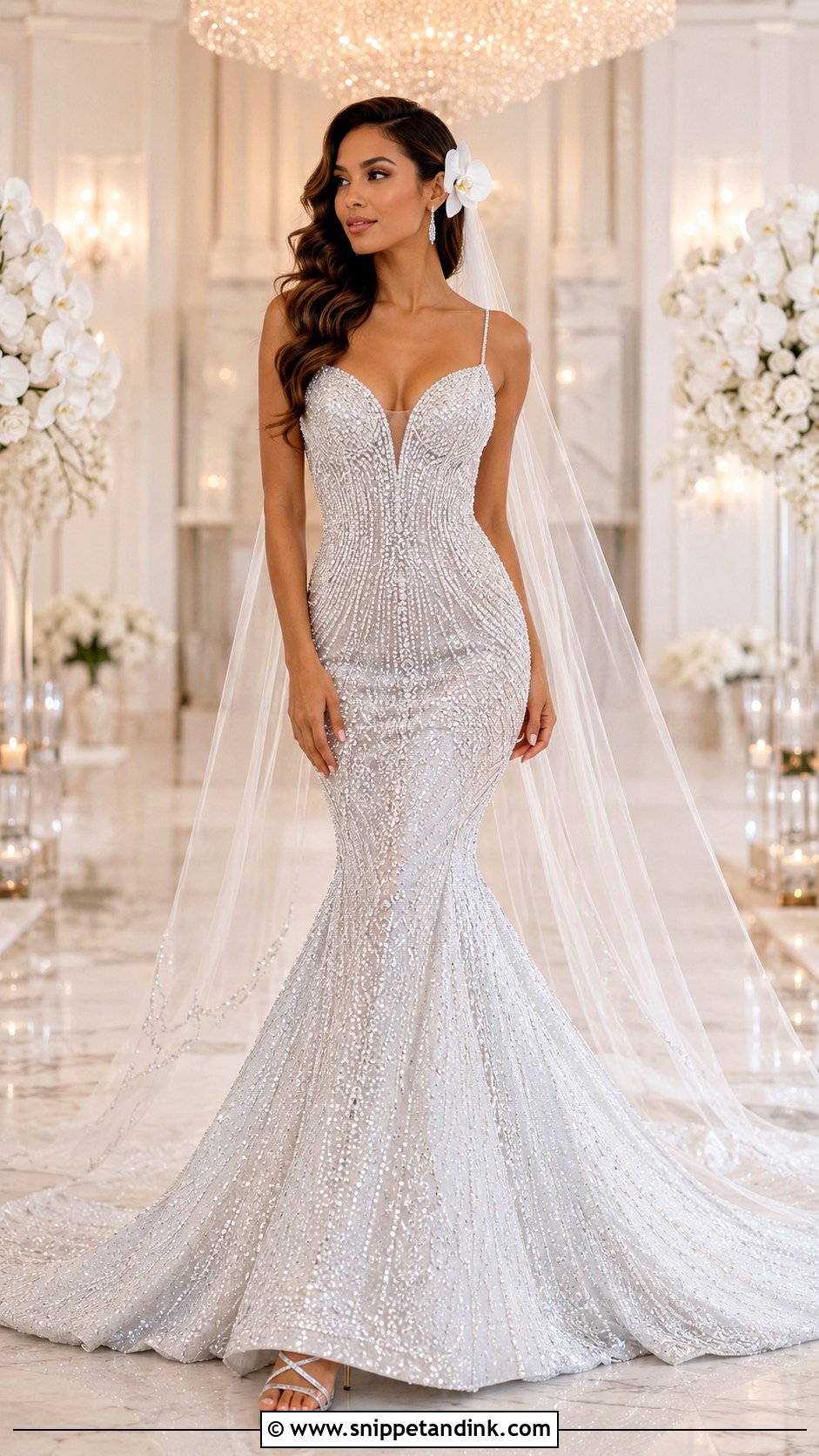
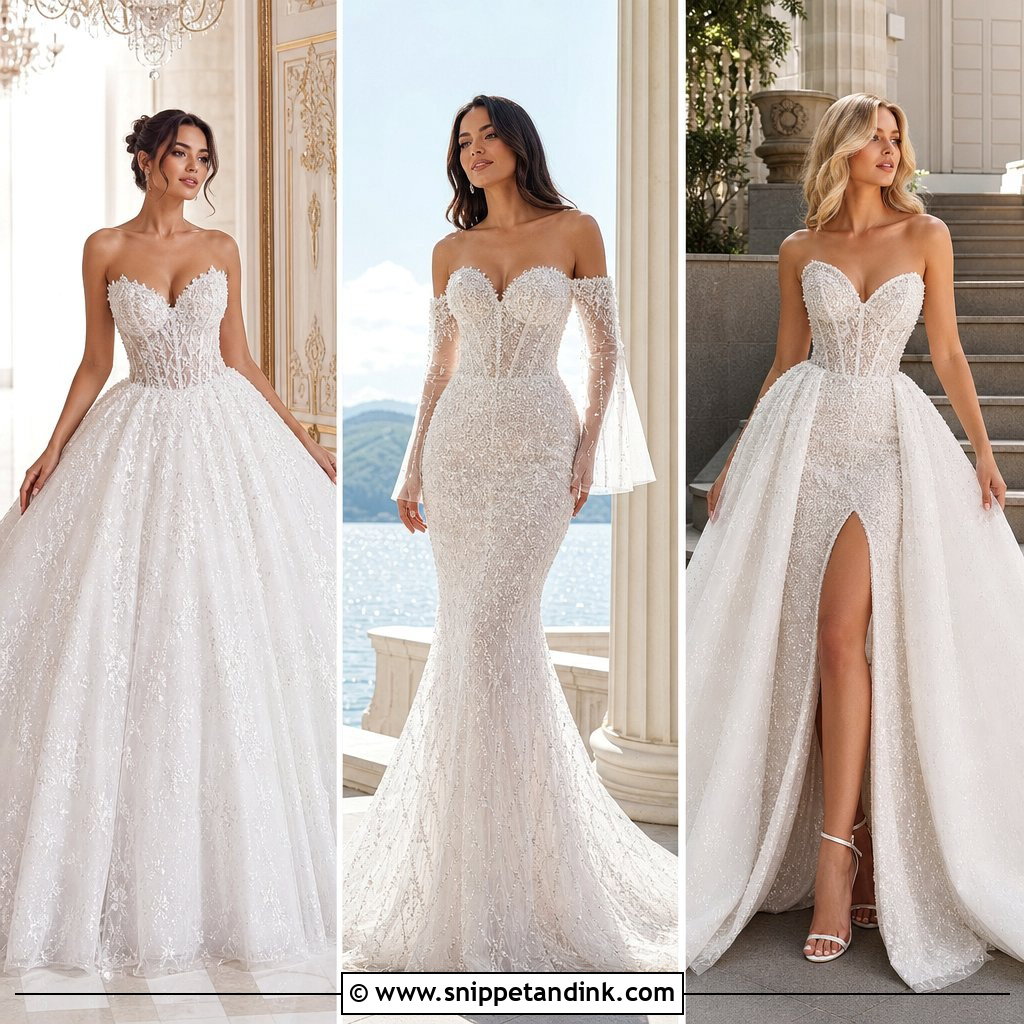
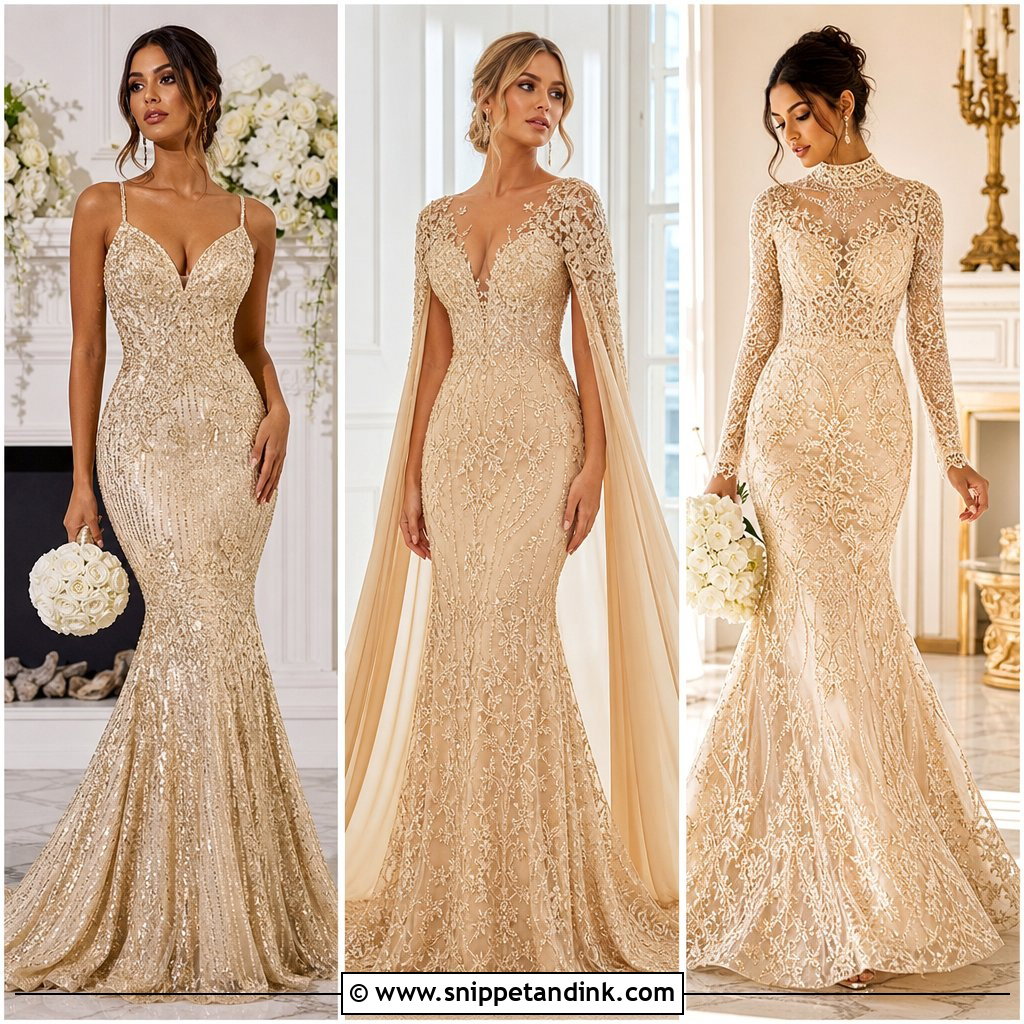
Mermaid gowns are fitted through the bodice, waist and hips before they flare near the knee, and stones laid in vertical or curved lines follow and lengthen those lines. Fit is everything here. Ask for boning that supports and a stretch lining so you can sit, then walk the shop floor at a normal pace; if you’re taking tiny steps, the flare is set too high. Slim crystal earrings, silver heels and a sheer veil reaching past the train suit it. Soft waves keep it glamorous without feeling stiff, and a slim bouquet of orchids or calla lilies keeps the proportions clean.
4. Rhinestone Corset Wedding Dress
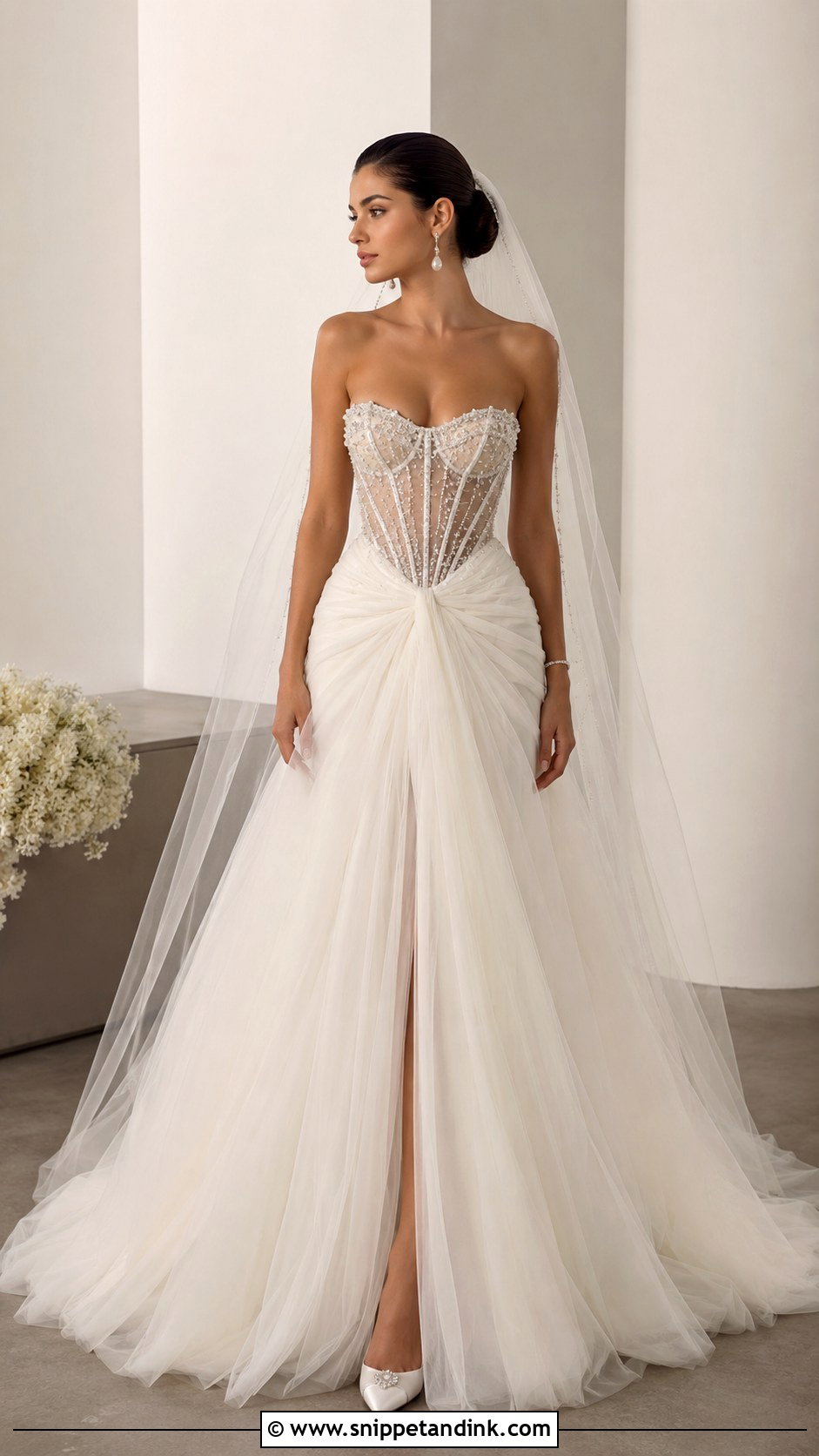
The seams of a corset are its architecture, and rhinestones laid along them, around the neckline or on floral appliqués show off the build. Balance the fitted top with an A-line, column or soft tulle skirt. Stones on boned seams take a lot of strain when you breathe and bend, so this is the area where I check settings most carefully; a loose stone on a corset seam tends to drag others with it. Pearl and crystal studs, pointed satin shoes and a sheer chapel veil suit it, and one delicate bracelet is plenty. A smooth bun or half-up style shows the shoulders. Fit it snugly enough to stay up, never so tight you can’t take a full breath.
5. Rhinestone Strapless Wedding Dress
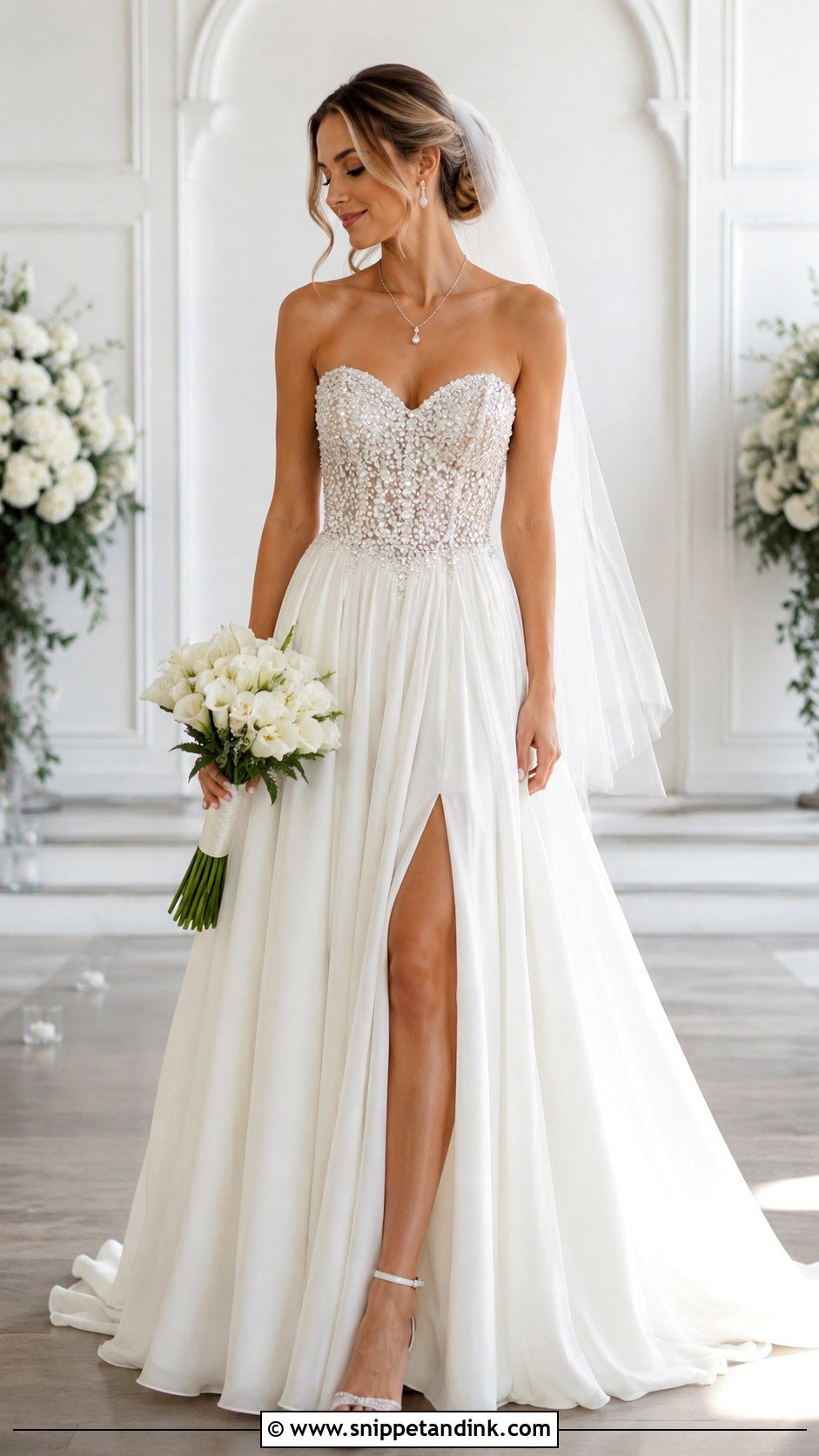
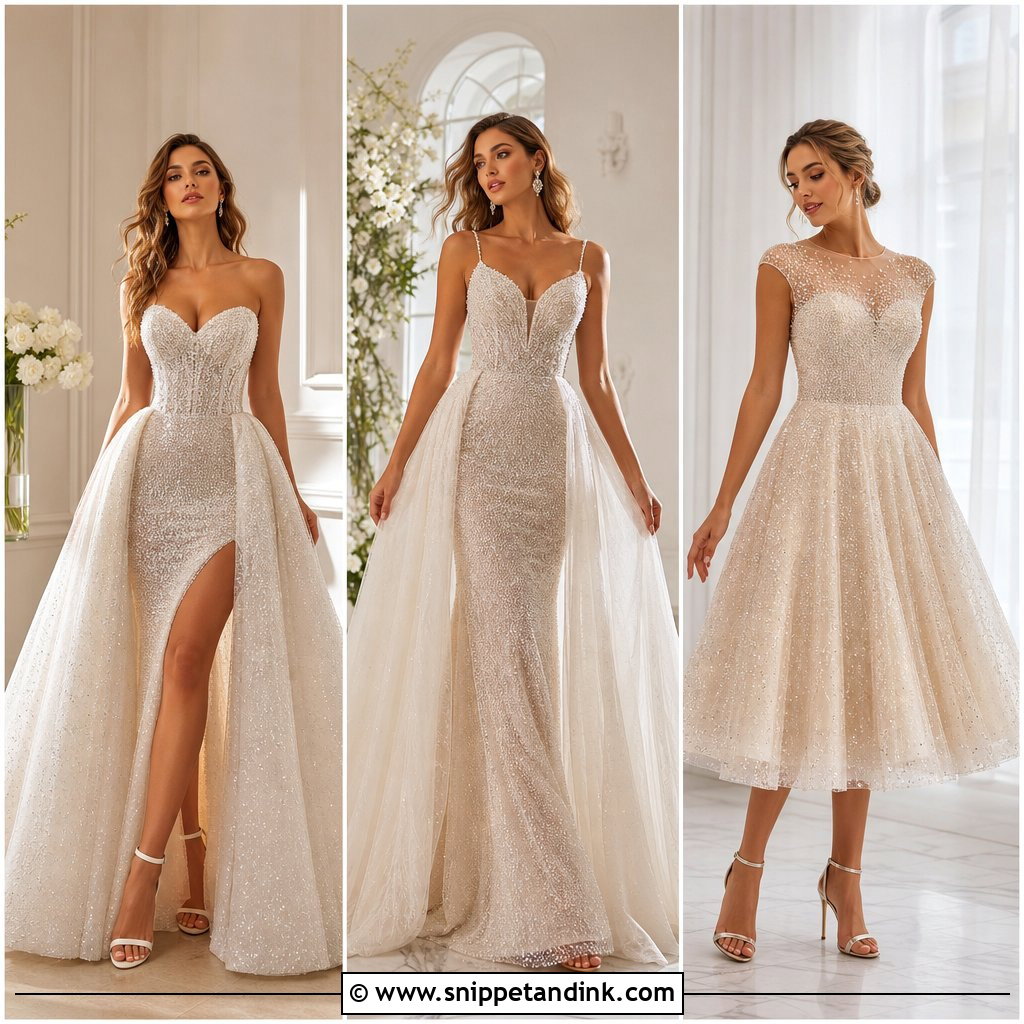
Bare shoulders frame a strapless rhinestone bodice cleanly. A sweetheart neckline is softer; a straight one reads more modern. Rhinestones can cover the whole top or sit in spaced clusters over lace and tulle. Strapless gowns are held up by internal structure, not by your shoulders, and a heavily embellished bodice adds weight that pulls it down, so the inner corset has to fit precisely. Test by raising your arms, walking and sitting. A fine crystal necklace with matching earrings, ivory slingbacks and a veil attached below a low bun finish it, with a long-stemmed bouquet.
6. Rhinestone Long Sleeve Wedding Dress
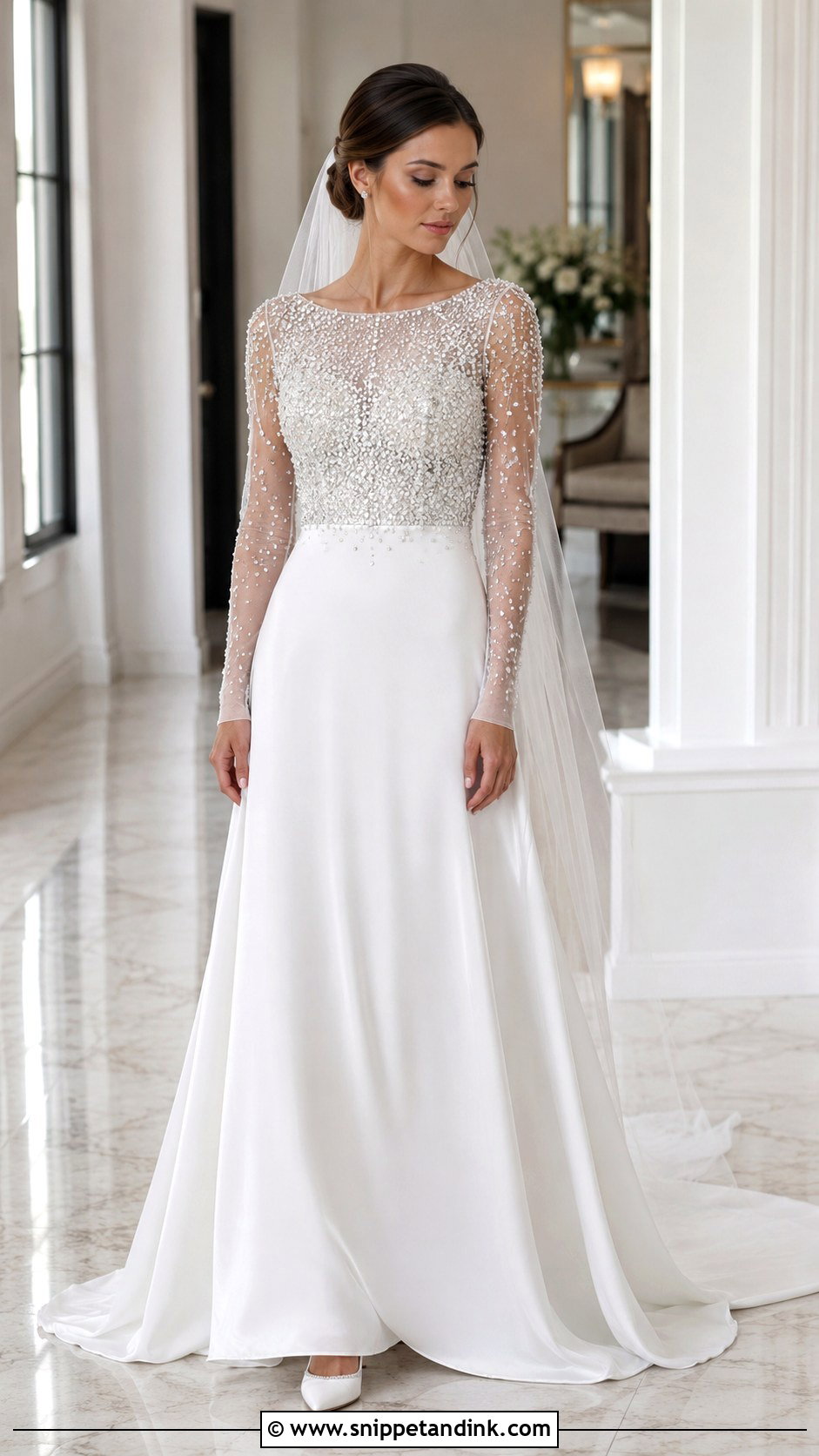
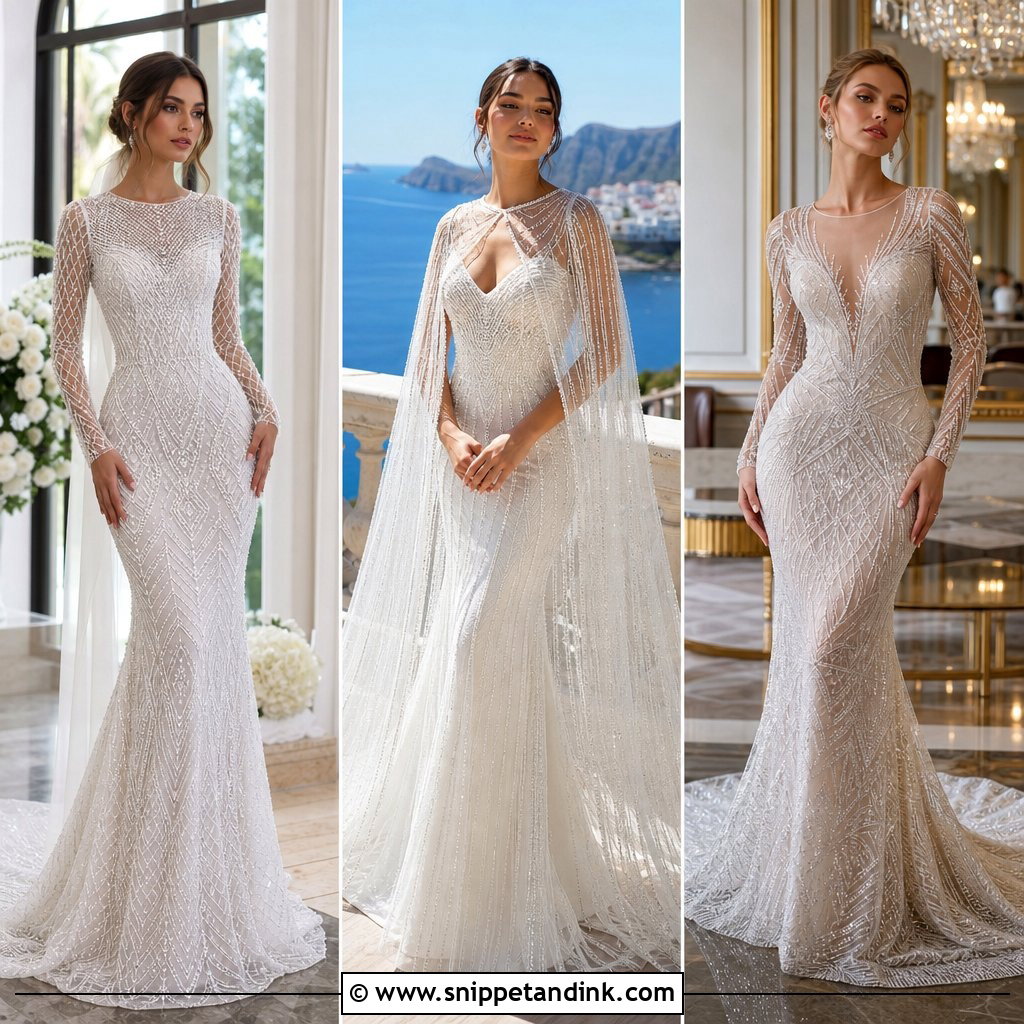
A rhinestone long sleeve wedding dress works because sheer tulle makes the stones look as if they sit directly on your arm. For more coverage, choose lined lace sleeves with stones concentrated at the cuffs and shoulders. The problem spots are the inner elbow and wrist, where fabric folds and stones press into skin; I ask whether those areas can be left clear. With heavily worked sleeves, keep the skirt plain. Closed-toe satin heels, crystal studs and a plain veil coordinate. A low chignon or smooth ponytail shows the shoulder detail. It suits cool seasons and air-conditioned venues.
7. Rhinestone Off-the-Shoulder Wedding Dress
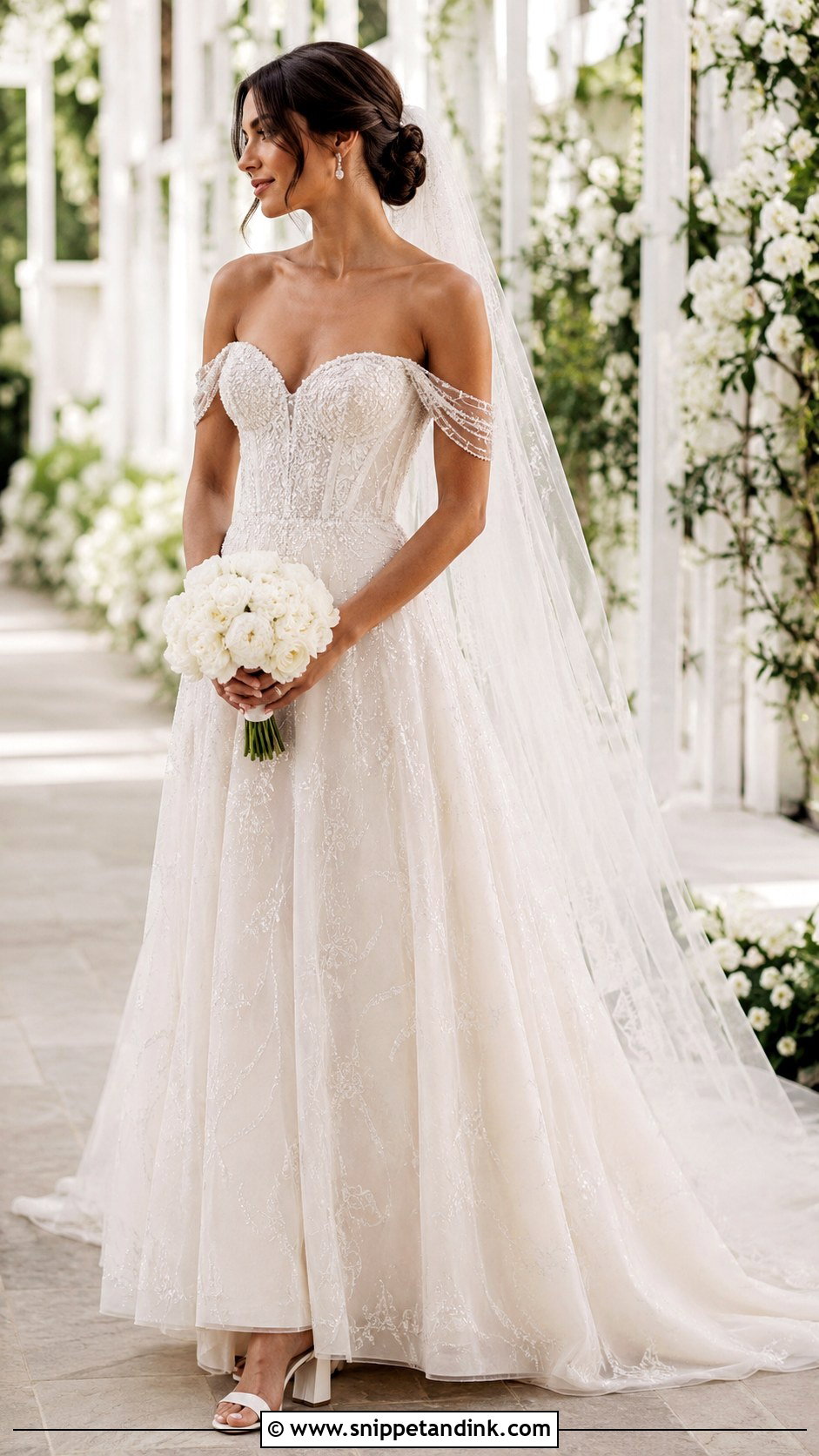
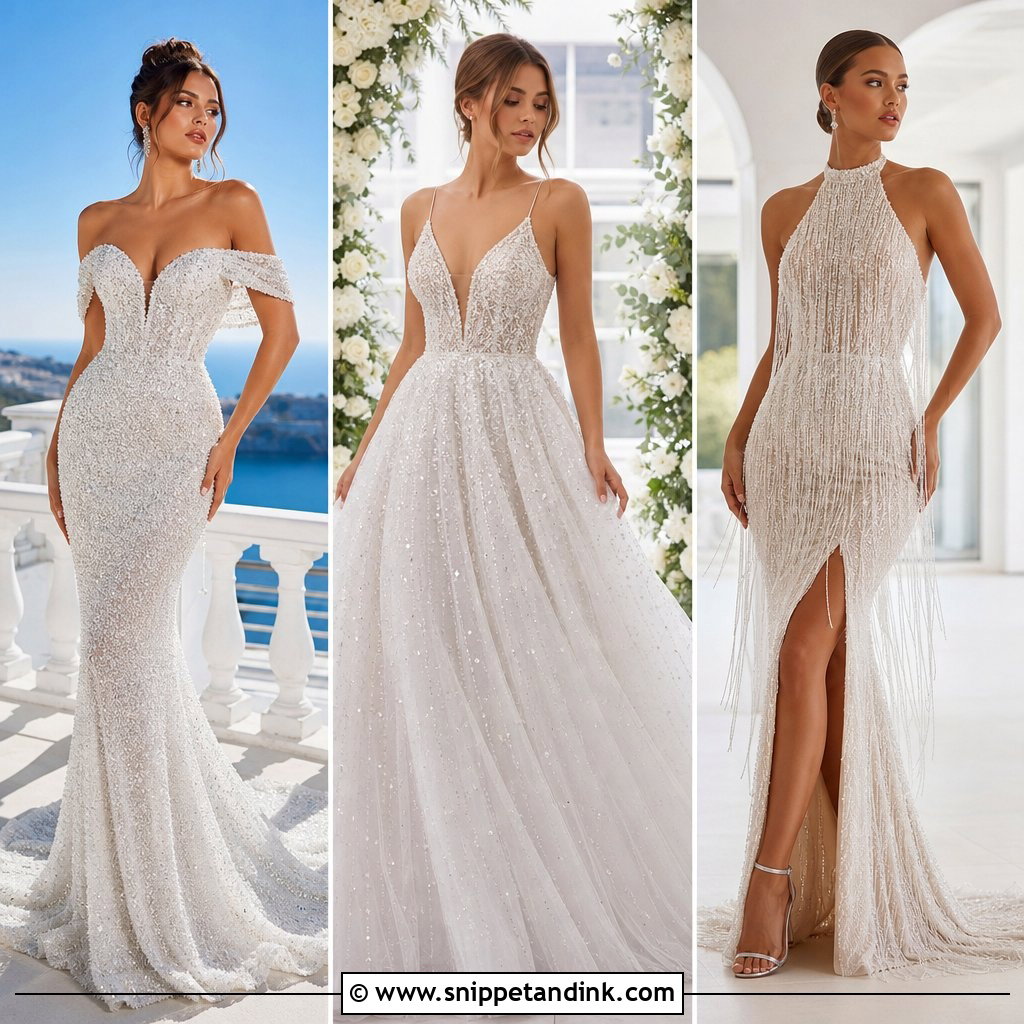
On an off-the-shoulder gown, a line of stones along the neckline points straight at the collarbones, and a few scattered over the bodice add depth. A fitted waist with an A-line or flowing skirt keeps the shape balanced. Skip the necklace and wear medium-length crystal earrings instead. The draped sleeves often carry stones too, and they sit right where your arms rub against them all day, so feel the inside of the sleeve at your fitting. Ivory block heels, a chapel veil and a low textured bun or side-swept waves suit it, with a compact bouquet that leaves the bodice visible.
8. Rhinestone V-Neck Wedding Dress
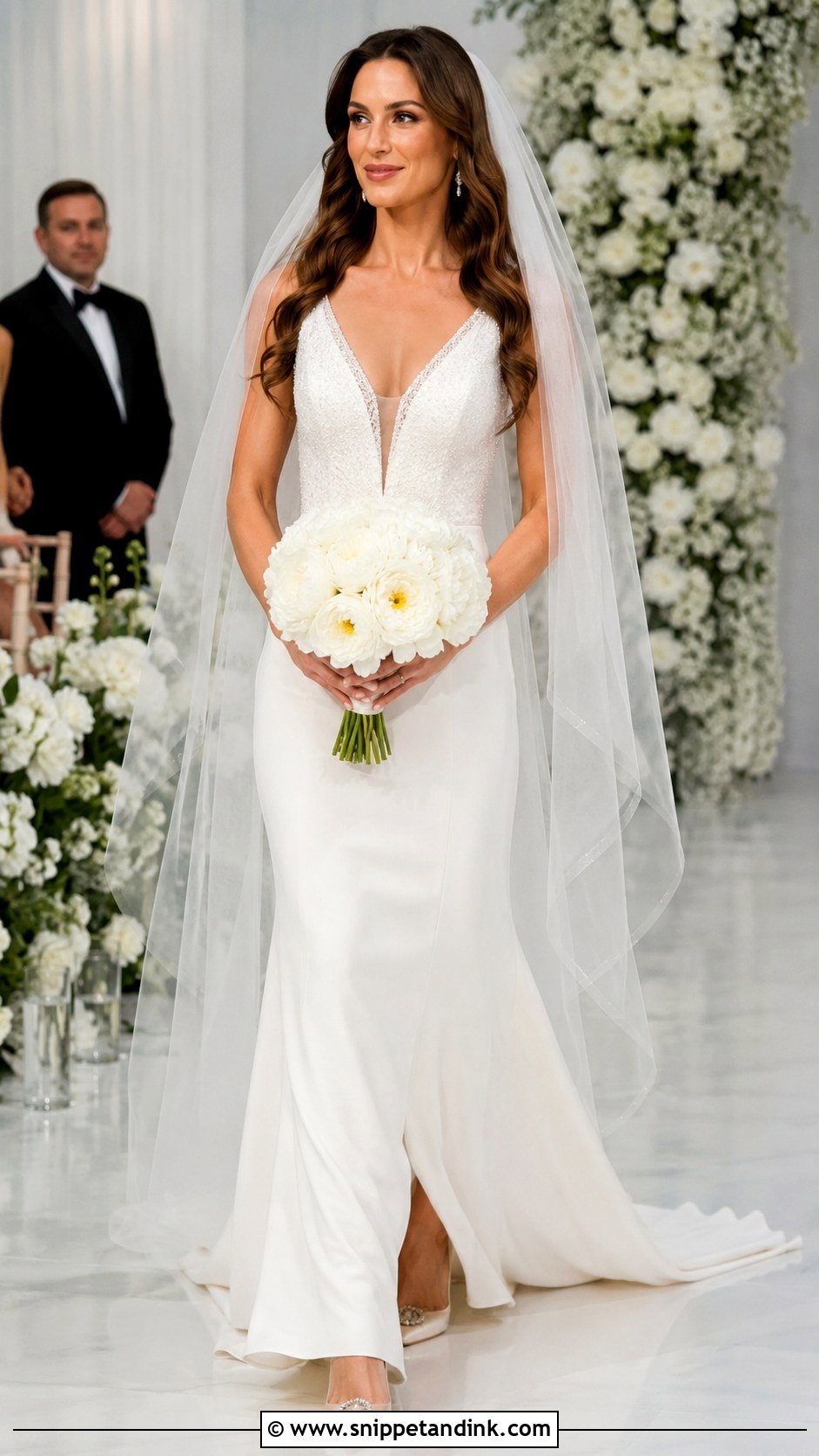
A V-neck draws a vertical line that lengthens the upper body, and stones around the V lift attention toward your face. It can be modest, or deeper with a sheer illusion panel for support. Because the neckline is already decorated, other jewellery can stay simple: small drops, pointed ivory heels and a sheer veil without heavy edging. If the back is detailed, pin the veil below your hair. A deep V is the neckline most likely to gape when you lean forward, and stones make the edge heavier, so ask for sewn-in cups or hidden tape and check it bending over to sign the register.
9. Rhinestone High Neck Wedding Dress
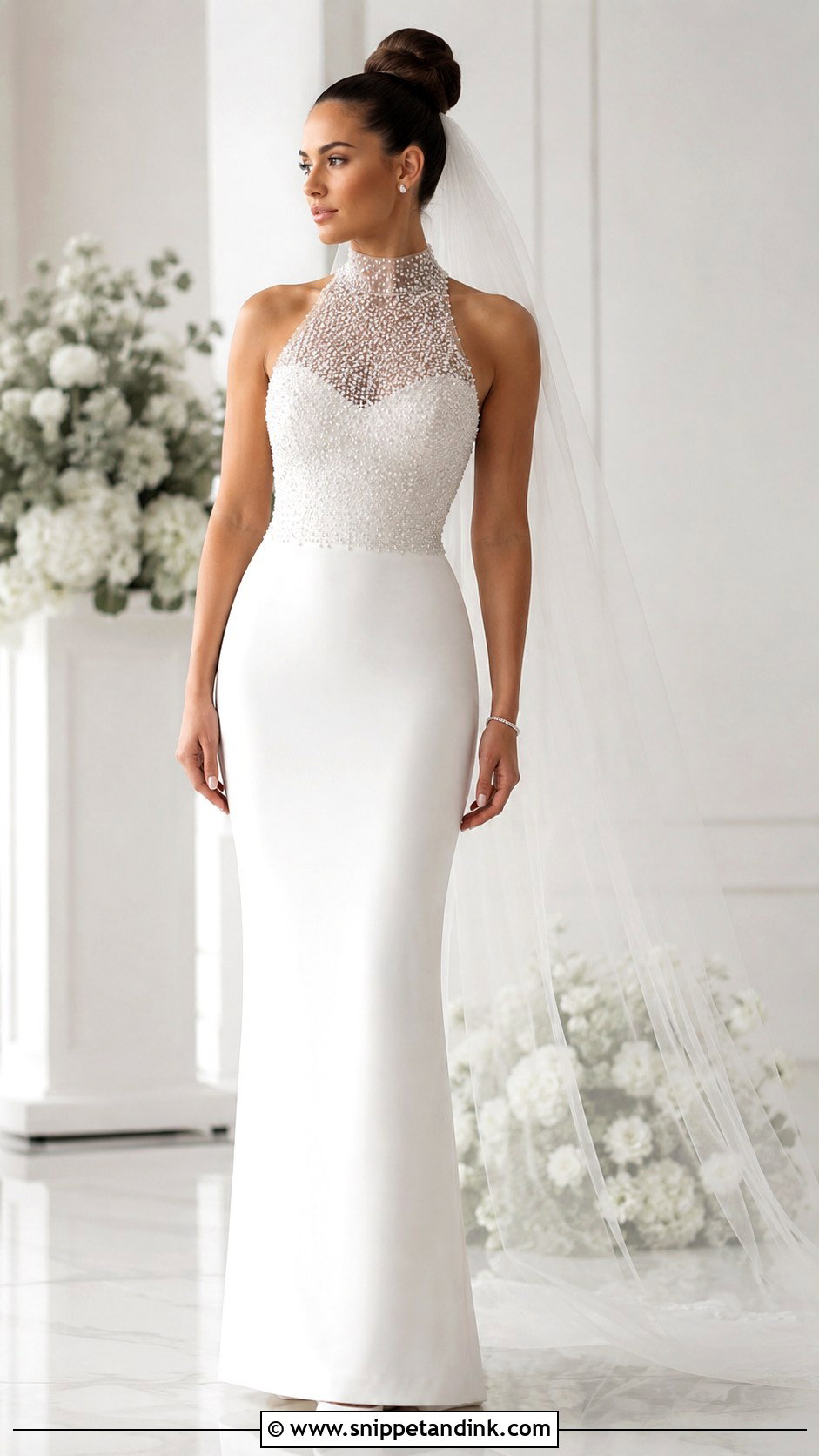
Sparkle on a high neckline looks more refined than flashy, because it frames the face rather than drawing the eye downward. Choose sheer tulle with fine crystal patterns for a light effect, or an opaque collar with rhinestone trim for more coverage. Balance the busy top with a smooth column or lightly layered A-line skirt. Skip the necklace and wear crystal studs, a slim bracelet and closed-toe pumps. A high bun or twisted updo keeps the neck clear, and a plain fingertip veil can attach underneath. Run a finger around the inside of the collar: stones on a high neck can rub your skin and catch fine hairs at the nape.
10. Rhinestone Lace Wedding Dress
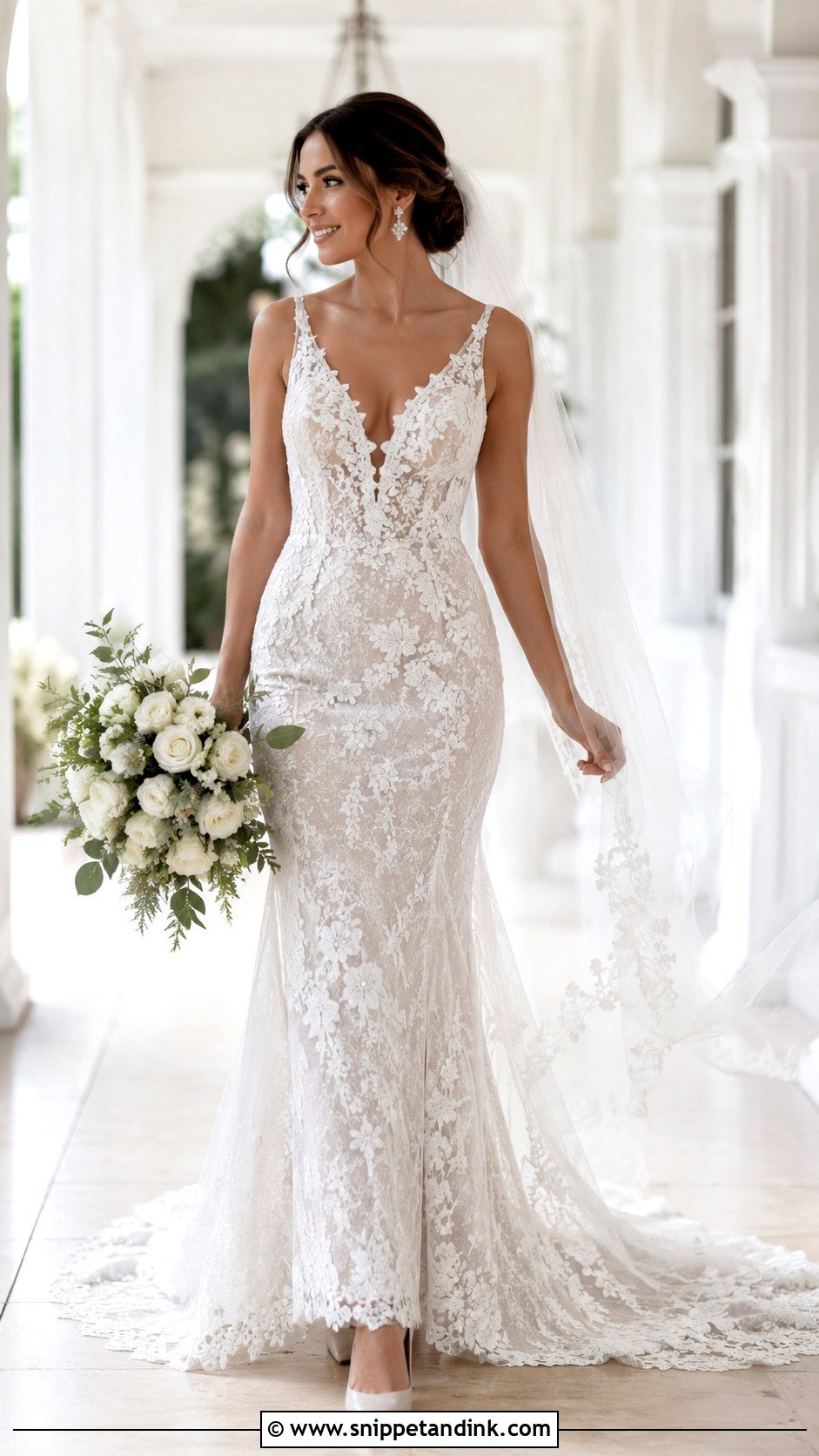
Rhinestones and lace work well together when the stones serve the lace, not the other way around. Floral lace softens the sparkle; geometric lace looks more modern. I like stones set at the centre of each motif, or scattered across the bodice and train, so the pattern stays readable. Lace is also the fabric most likely to catch on a loose stone setting, especially a veil, so I check every claw or stitch during alterations. Pearl and crystal earrings, ivory pumps and a plain tulle veil with a little lace near the hem suit it, along with a loose low bun and a bouquet of white garden flowers.
11. Rhinestone Satin Wedding Dress
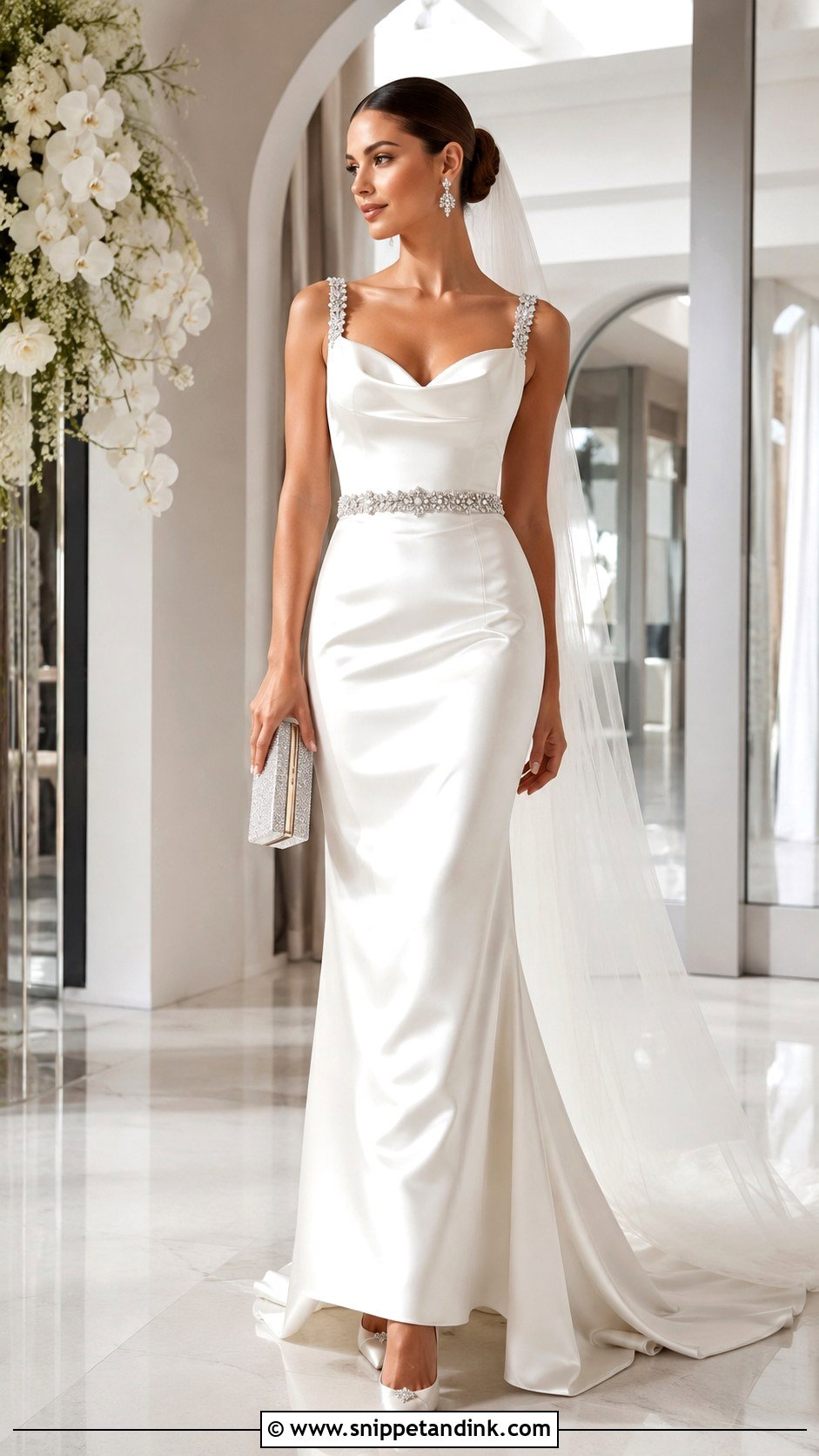
Smooth satin is the cleanest background for rhinestones; each stone stands out distinctly. A satin ball gown might carry a sparkling waistline, while a sheath could have rhinestone straps or a jeweled back. Choose one concentrated detail rather than allover stones, since satin reflects light by itself. Think about where the stones sit when you’re seated: raised work at the waist or under the arms presses in after a few hours, and on satin it can leave visible pulls. Crystal earrings, pointed satin heels and a structured reception clutch suit it, with a smooth bun, a long plain veil and a simple bouquet.
12. Rhinestone Tulle Wedding Dress
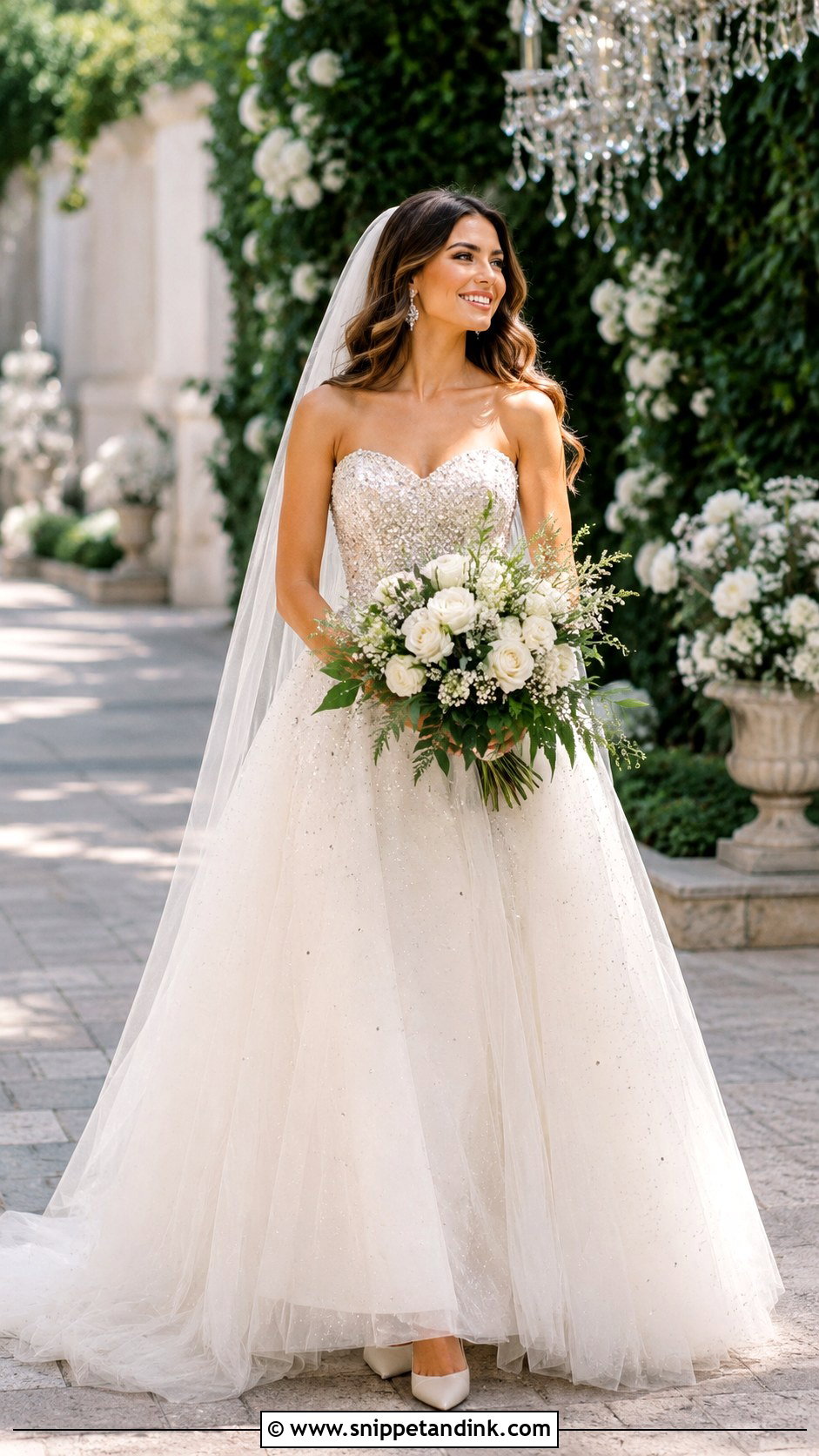
On layered tulle, stones scattered through the skirt look like they’re floating, and they shimmer with every step. An embellished bodice over a soft tulle skirt keeps the overall shape romantic. Keep the skirt stones light; too many and the tulle stiffens and stops moving. Silver-toned earrings, comfortable ivory heels and a plain veil let the tulle lead. Soft waves or a loose braided bun suit the texture, with white blooms and greenery for flowers. Look at the dress under several kinds of light before you decide: tulle sparkle can seem faint in daylight and jump out under indoor lights and flash.
13. Rhinestone Sheath Wedding Dress
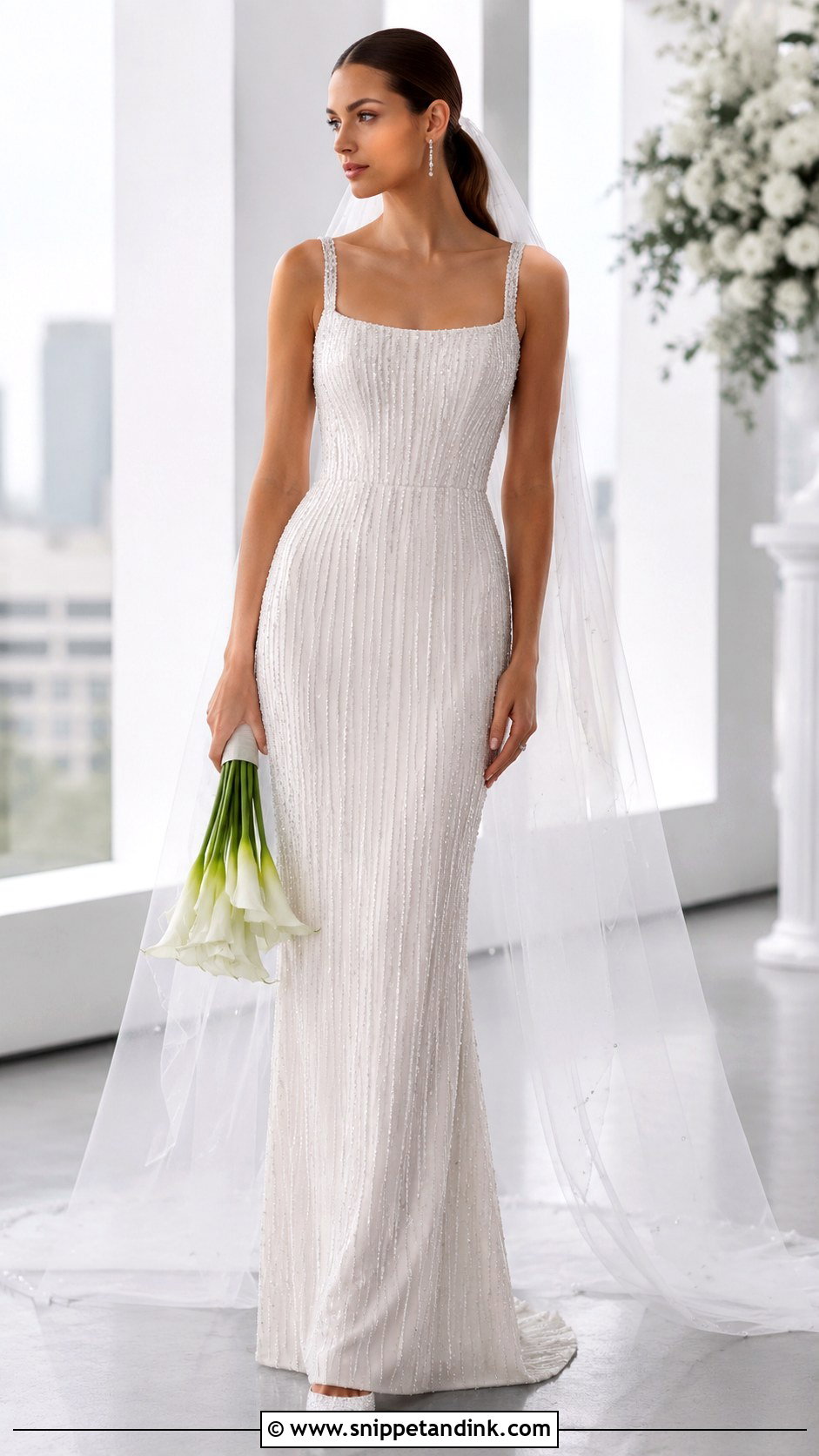
A rhinestone sheath wedding dress follows the body without the dramatic flare of a mermaid, which makes it easier to move around a smaller venue. Vertical stone patterns, beaded straps or a crystal-trimmed open back all exaggerate the long line. There’s less ease through the hips and legs, so do several walking and sitting tests at fittings; the lining should move without twisting. Minimal drop earrings, sleek pointed heels and a light chapel veil suit it. Straight hair tucked behind the ears or a low ponytail keeps it modern, and a narrow bouquet avoids hiding the dress.
14. Rhinestone Plus Size Wedding Dress
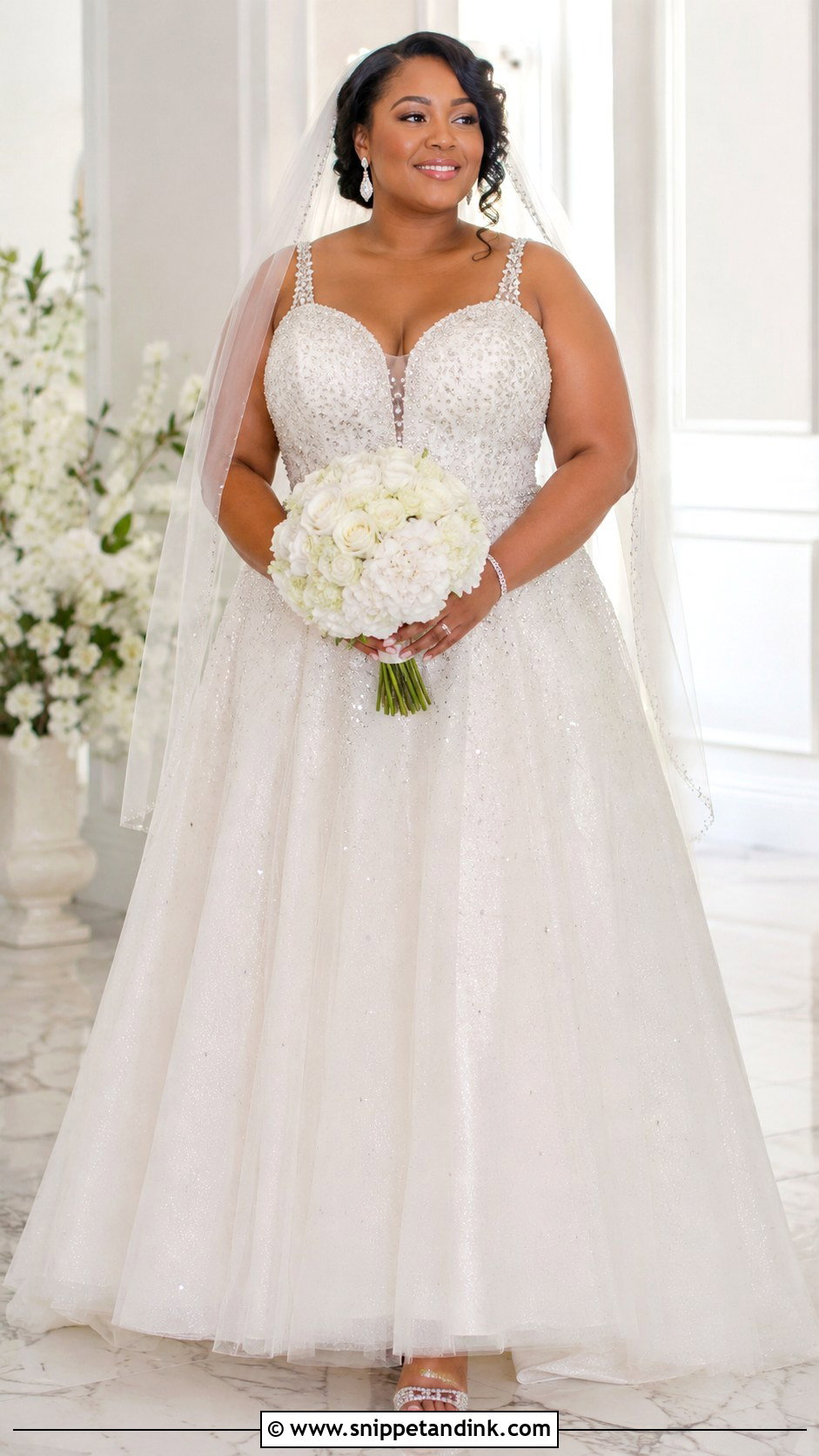
For a plus-size bride, the silhouette should come from what feels best, not a rule about body type: a structured A-line, a fitted mermaid or a draped sheath can all work. Stones along the neckline, waist or vertical seams define the construction. The fitted bodice should sit smoothly without digging into your sides or sliding down, and that comes down to cups, boning and inner support, so ask about reinforced cups and comfortable boning, and about custom sleeves if you’d like them. Supportive heels or dressy flats, crystal earrings and a veil matched to the train length complete it, with a bouquet sized to your proportions.
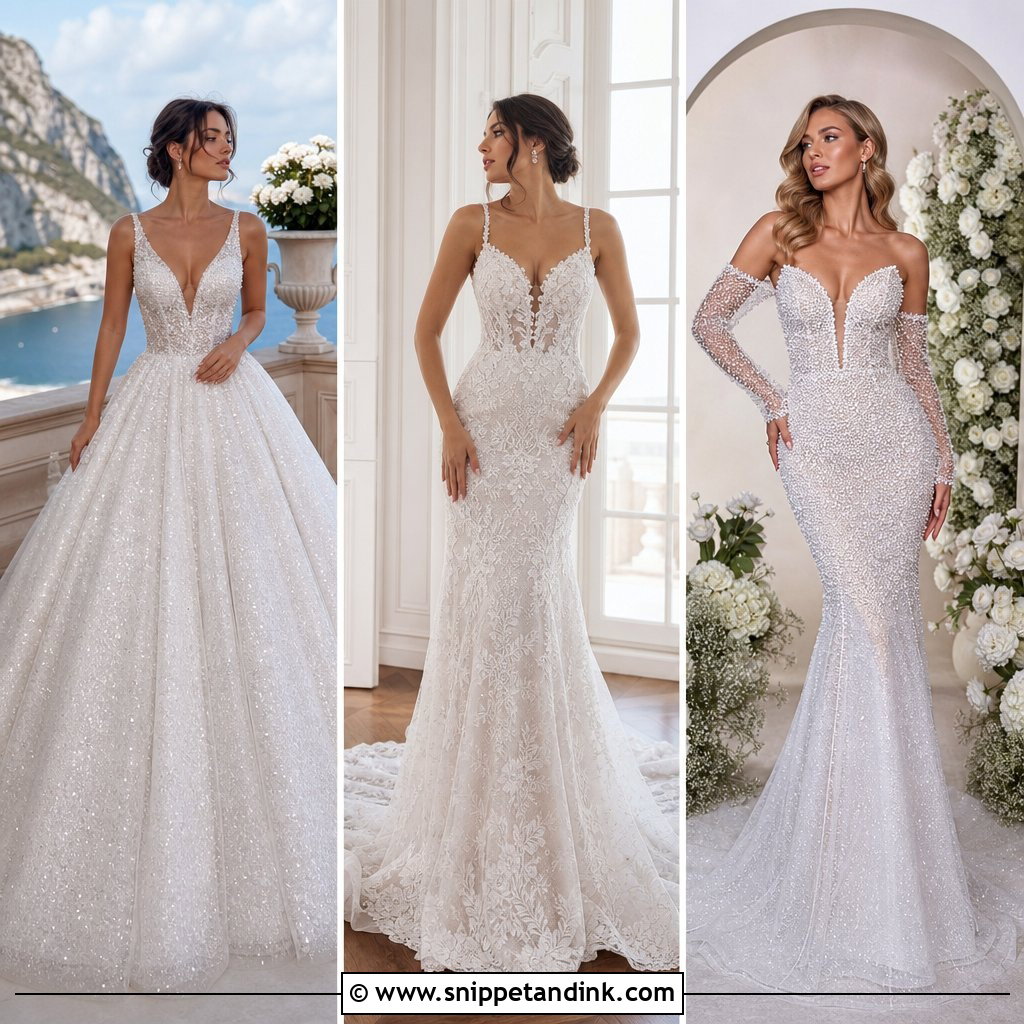
15. Rhinestone Modest Wedding Dress
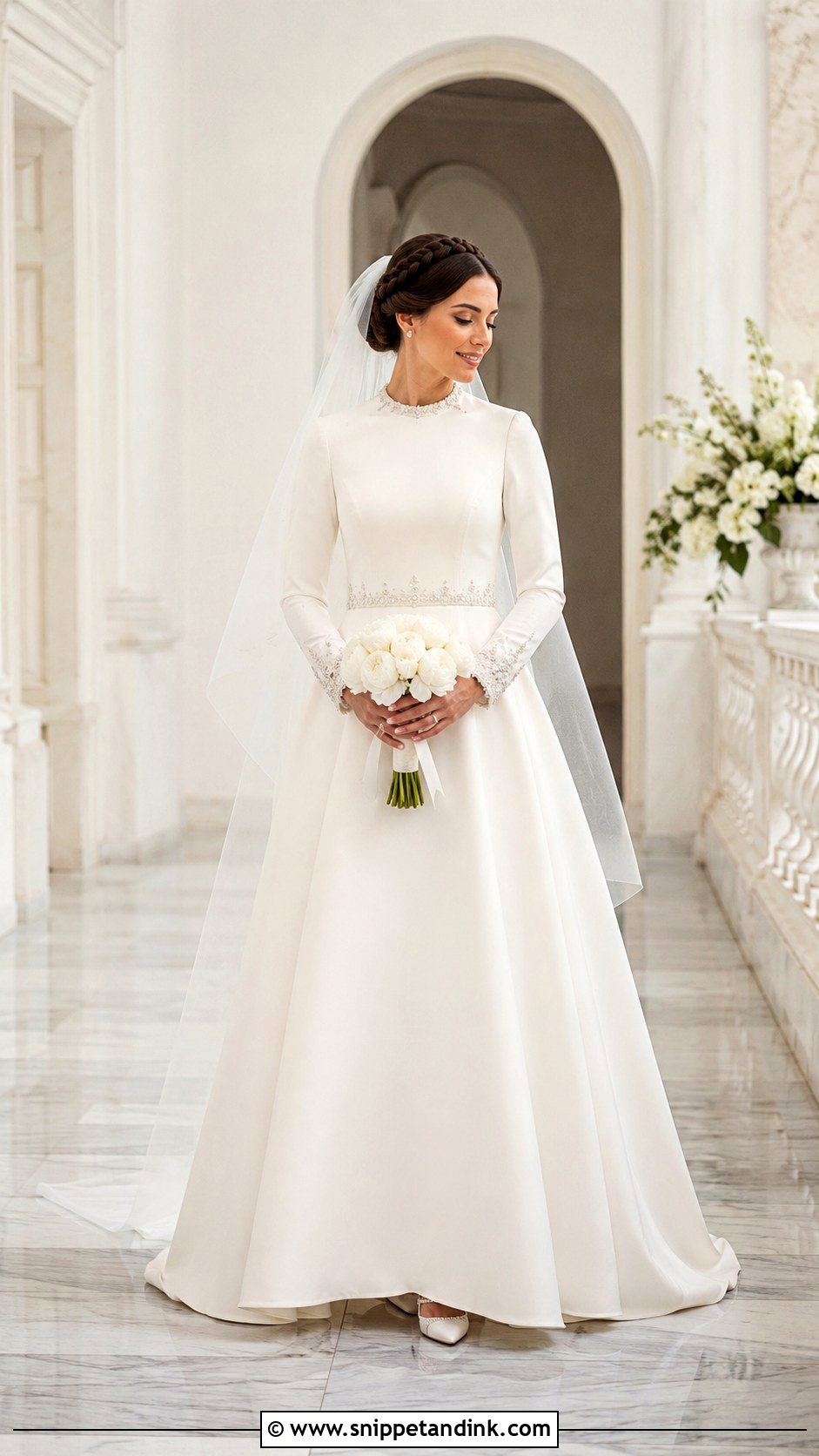
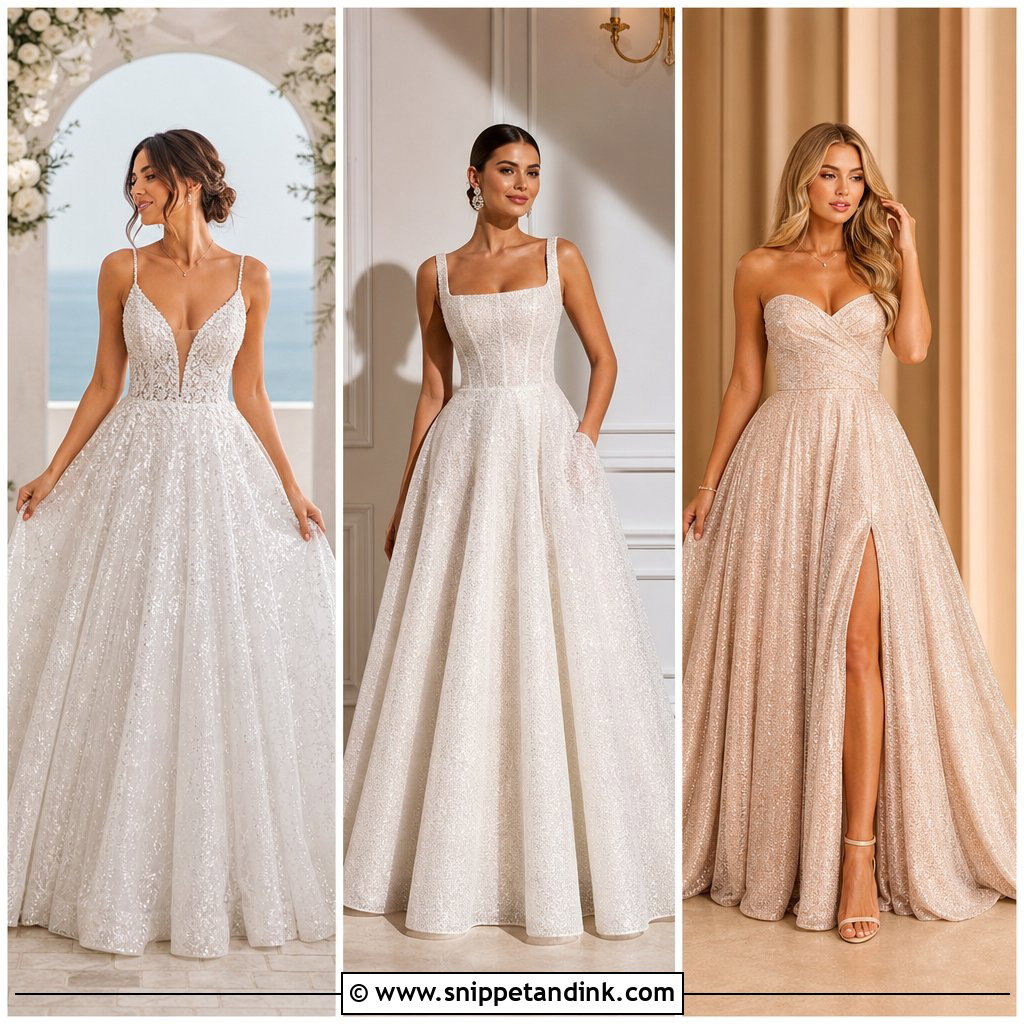
Coverage and sparkle aren’t opposites. A modest gown with a high neckline, lined bodice, full-length sleeves and an A-line or ball gown skirt can carry stones at the cuffs, waist, shoulders and upper bodice and still look bright. I check the lining under strong indoor light as well as in daylight, because some linings that look opaque in a shop turn translucent under spotlights or a photographer’s flash. Crystal studs, closed-toe ivory heels and a long single-layer veil suit it, and a neat bun, braided updo or covered hairstyle coordinates. For warm weather, ask for a breathable sleeve fabric.
16. Rhinestone Boho Wedding Dress
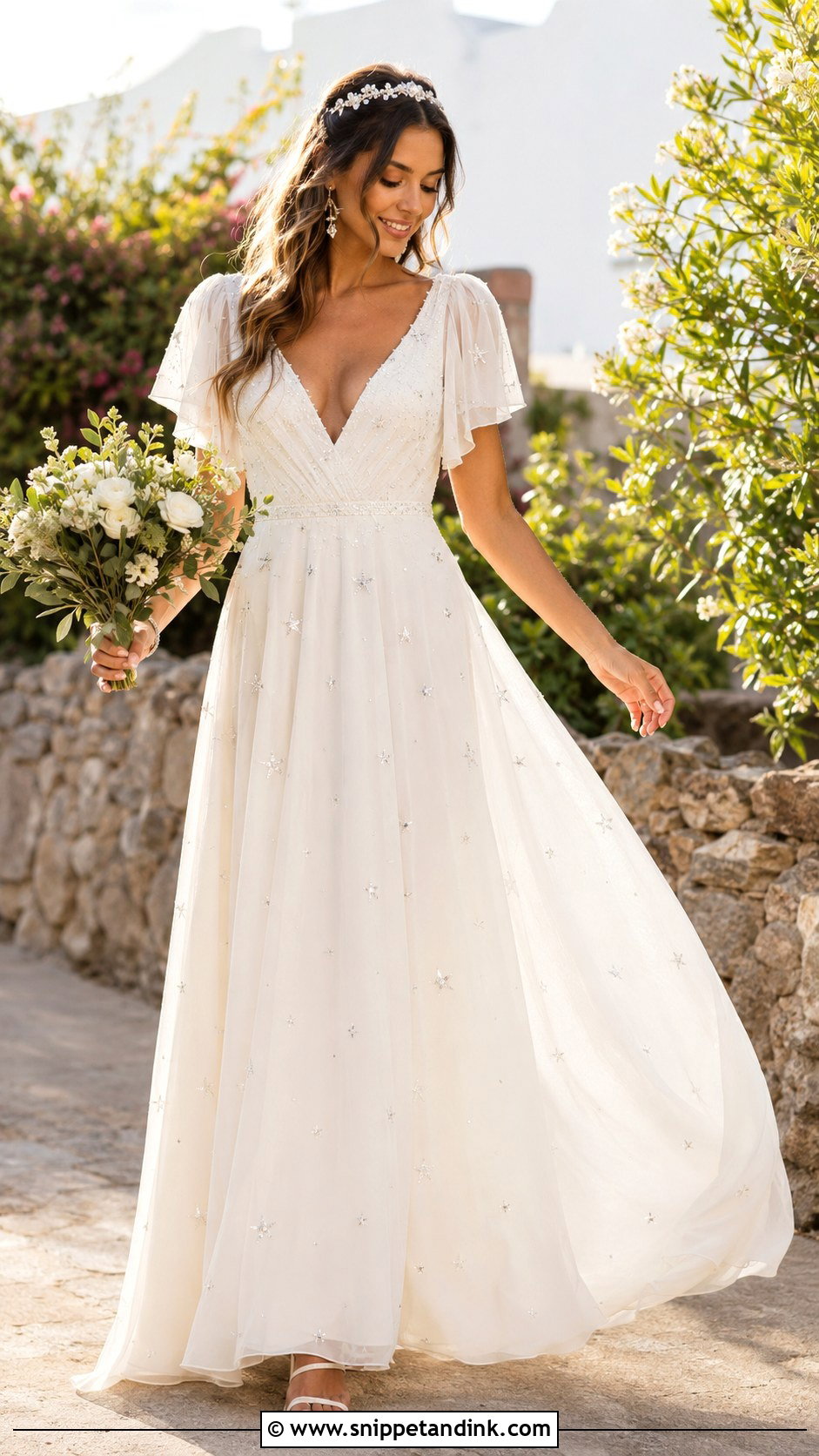
Can a rhinestone gown still feel relaxed? Yes, if the stones are scattered in loose floral or star-like patterns on chiffon, soft tulle or light lace, not set in dense formal rows. An A-line with flutter sleeves, a gentle V or a softly defined waist keeps it easy. Comfortable ivory sandals, a delicate crystal hair vine and small drops pick up the sparkle. A light veil or flowing cape adds movement. Loose waves, a relaxed braid or a textured low bun suit it, with white flowers and greenery. Outdoors, sunlight makes even scattered stones bright, so less is more.
17. Rhinestone Vintage Wedding Dress
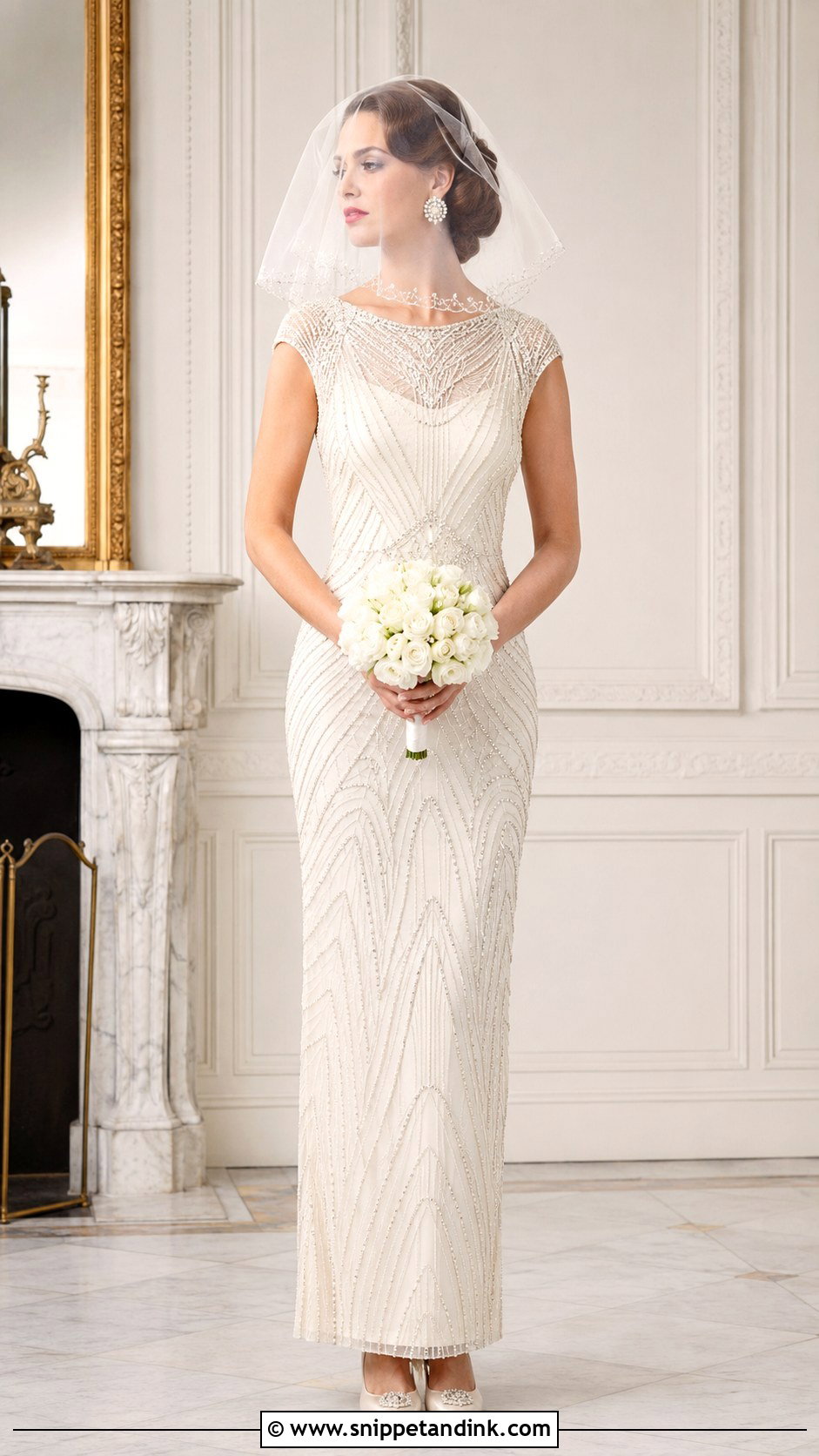
Vintage-inspired gowns tend to have distinctive patterns and decorative beading: an Art Deco sheath with symmetrical crystal lines, or a mid-century ball gown with a jewelled waist and a structured satin skirt. Pick one decade and stay with it; mixing several makes the outfit muddled. Low or mid-height ivory pumps, crystal cluster earrings and a simple veil under a smooth updo suit it. A birdcage veil works with a short reception dress; a long gown wants fingertip or chapel length. Genuine vintage stones are often foil-backed glass whose backing has dulled, and settings may be fragile, so have them checked and reinforced before any alteration.
18. Rhinestone Wedding Dress With Cape
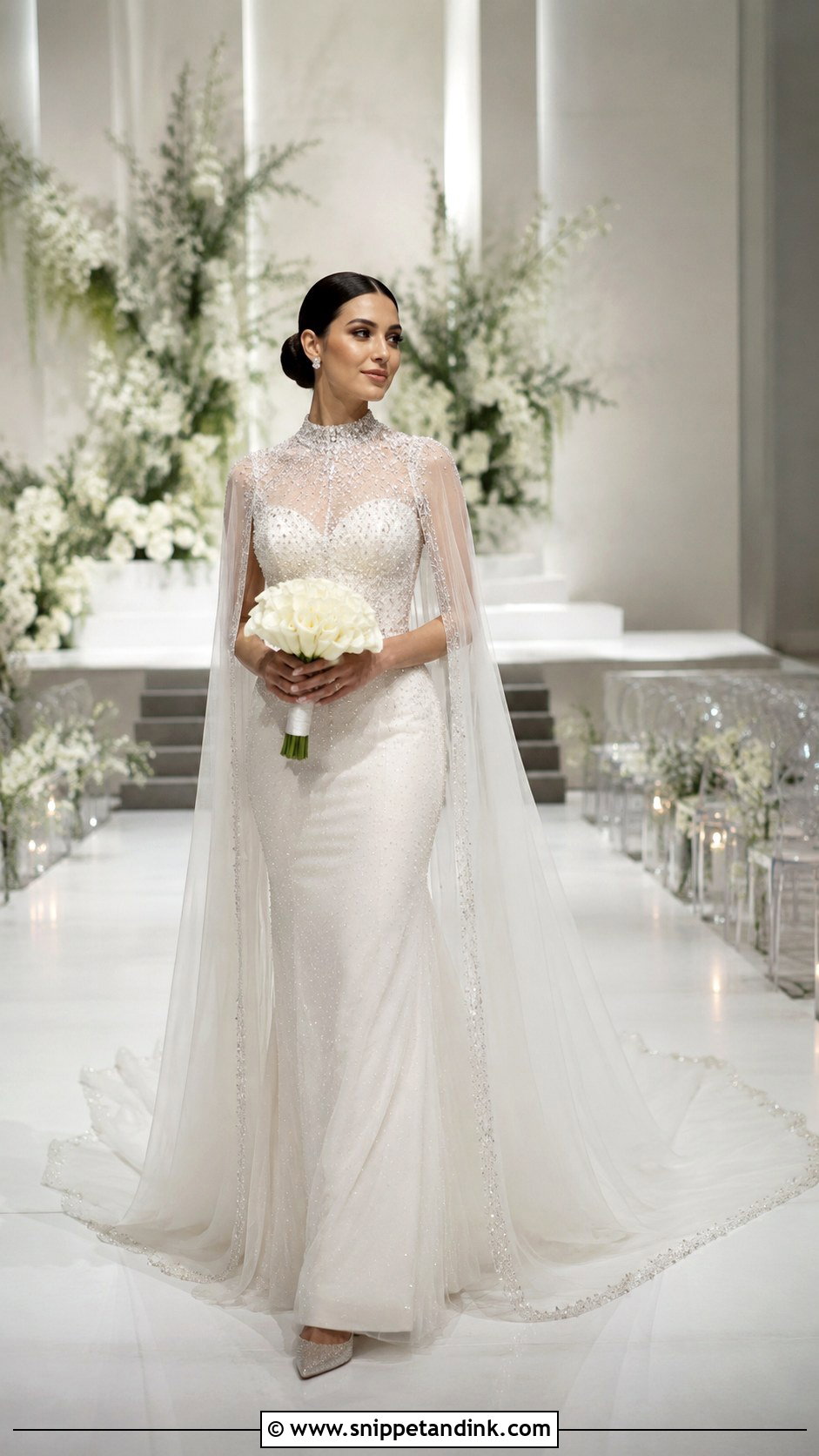
A detachable cape adds drama without adding stones to the dress itself. Start with a simple fitted gown with rhinestone straps or a sparkling bodice, then add a sheer cape falling from shoulders to floor, perhaps edged with light crystal detail. Pointed ivory heels, crystal studs and a sleek bun keep the lines clean. The cape replaces the veil, so you don’t need both. After the ceremony, take it off for the reception. Check that the attachment points don’t drag the neckline back, and that the cape doesn’t catch on the bodice stones when you turn or hold your bouquet.
19. Rhinestone Mini Wedding Dress
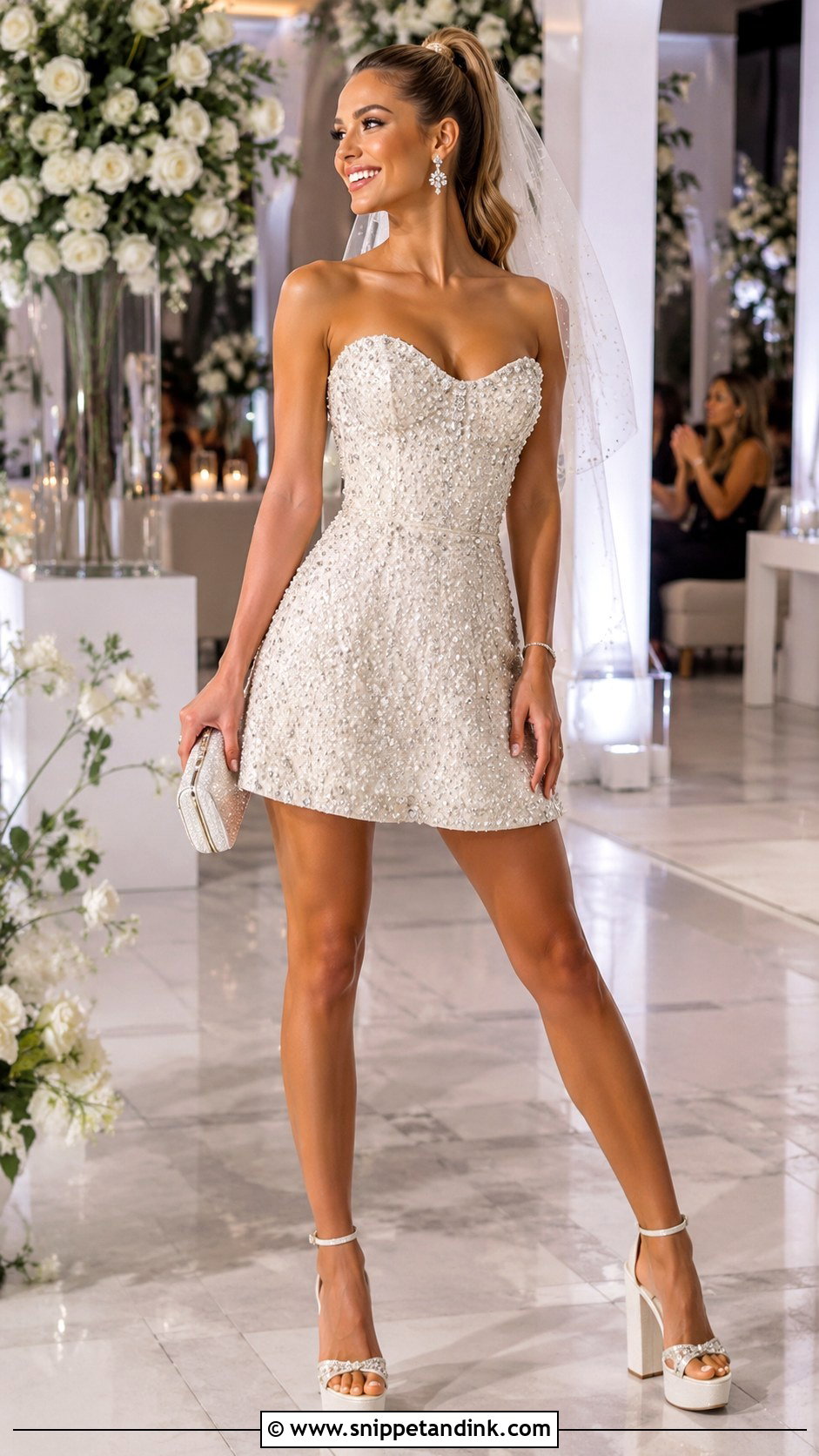
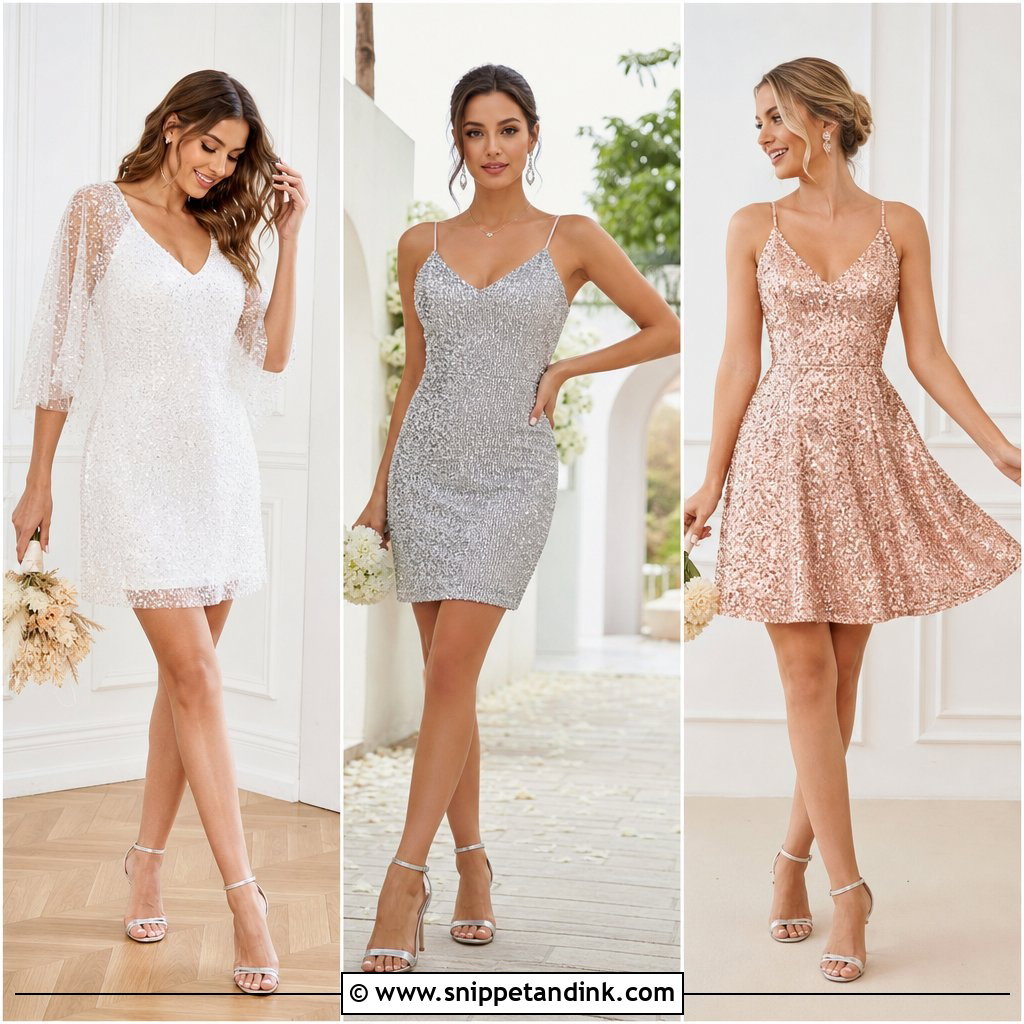
A short rhinestone dress is playful for a reception, a courthouse ceremony or a second look. Choose a structured shift, a fitted long-sleeve style or a short A-line with carefully placed stones. Dense embellishment on a short skirt scratches the backs of your legs when you sit, so I treat a smooth full lining as non-negotiable. Check the length sitting and dancing, not just standing. Block heels, pointed pumps or dressy flats balance the hem; crystal earrings, a small clutch and a short veil or embellished headband finish it. If it’s your second outfit, repeat one detail from the ceremony gown, such as the earrings.



20. Rhinestone Overskirt Wedding Dress
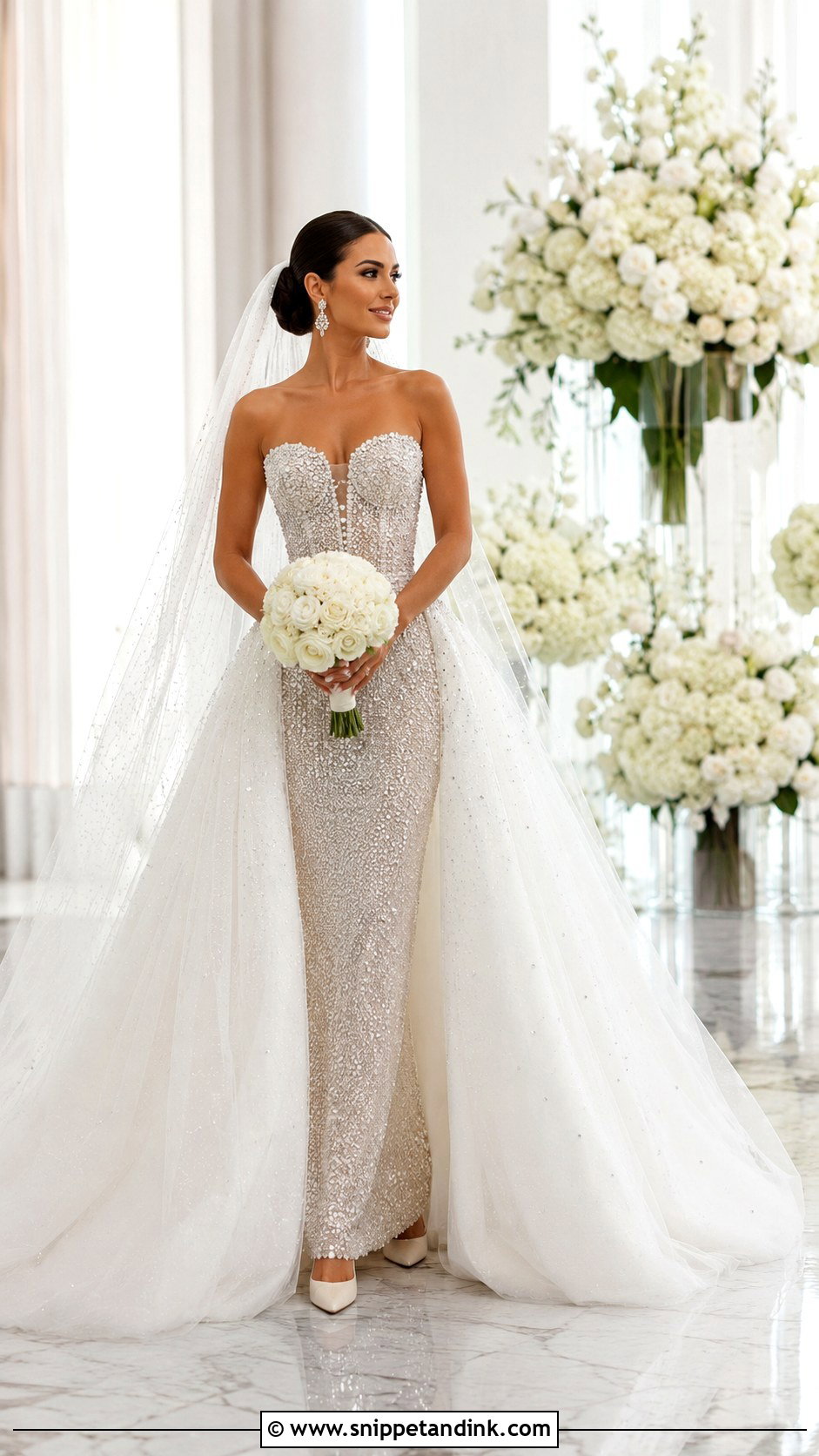
A detachable overskirt gives one gown two silhouettes. Start with a fitted sheath or mermaid with a crystal-covered bodice, and add a tulle or satin overskirt for ceremony volume. A few stones near the waist and hem of the overskirt connect the two. With the overskirt on, wear a long veil, drop earrings and pointed ivory heels; afterwards, take off both and add a sparkling comb or bracelet. Rhinestones on the bodice can catch the overskirt’s waistband as it’s removed, so practise the change slowly with your helper and ask the seamstress to hide the attachment points.
How Rhinestones Read Under Flash, Sunlight and Dance-Floor Lights
Sparkle depends entirely on light, and a wedding day moves through very different lighting. In soft daylight or open shade, stones give a gentle glow. In direct midday sun, every stone throws a sharp highlight, and a dense bodice can look almost white in photographs. Indoors under warm lamps, they glitter in the way most brides picture.
Flash is the one to think about. A direct on-camera flash can turn a heavily embellished bodice into hot white spots that hide its pattern. Mention the gown to your photographer at the planning stage; most will bounce or soften the flash anyway, but knowing about the stones helps. Take a few phone photos at your fitting with the flash on and off, and you’ll see straight away how your gown behaves.
After the wedding, tell the specialist cleaner the gown has rhinestones before it’s cleaned, so they test the glue or settings first. Store it in a breathable bag, with tissue between embellished layers so stones don’t scratch neighbouring fabric.
Sparkle That Moves With the Dress, Not Against It
The most memorable sparkle isn’t the brightest. It’s the kind that follows the shape of the gown, suits the room and doesn’t make you think about it while you’re wearing it. Whatever style draws you, classic, modest, bohemian, vintage or short, look at the stones in daylight and under indoor light, then walk, sit, raise your arms and feel for anything that scratches or snags. If the gown is heavily embellished, keep accessories quiet; if the sparkle is subtle, one coordinated crystal piece is enough. What matters is that you still look like yourself, only brighter.
You'll Like These Ideas:


Leave a Reply