
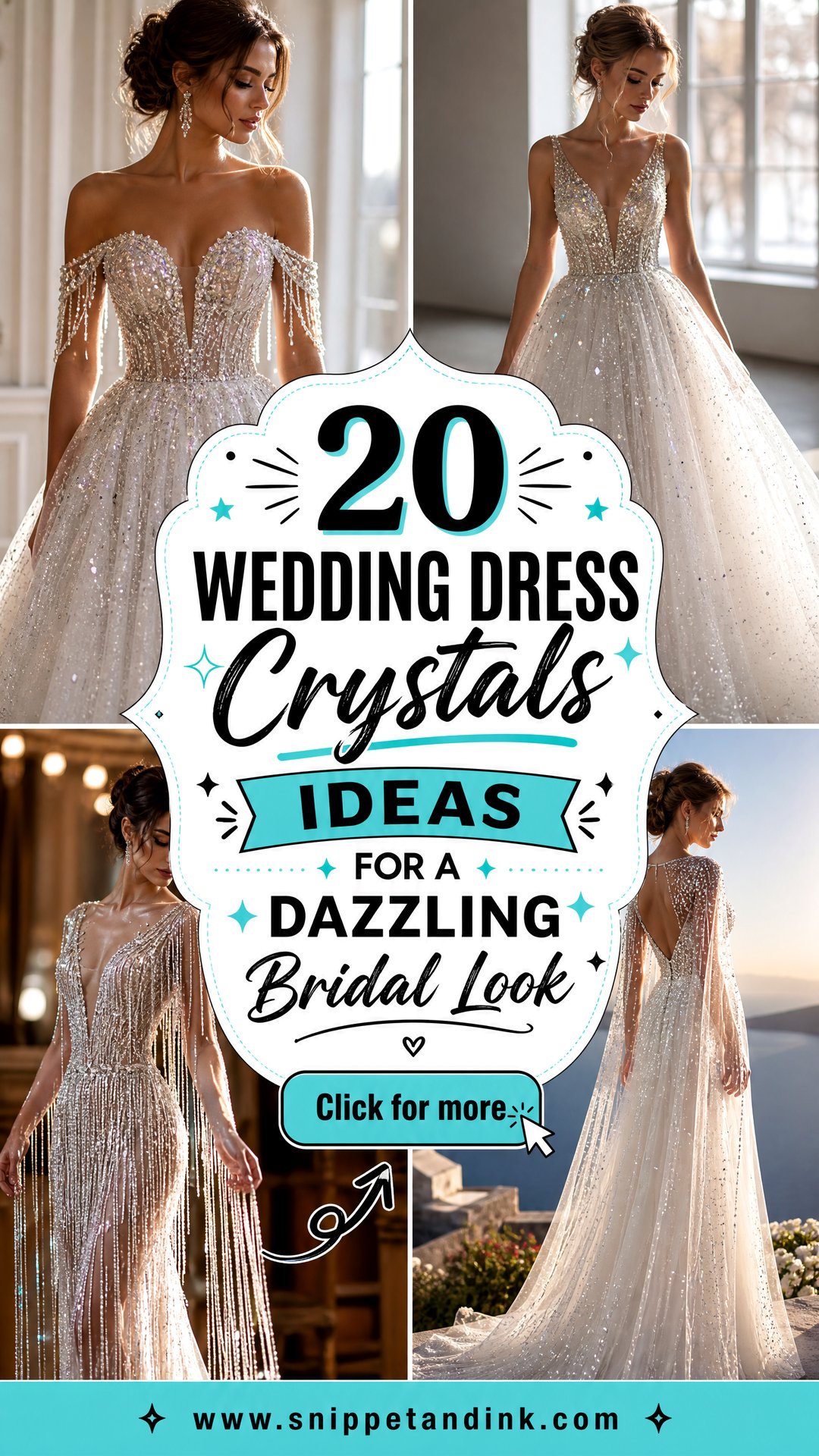
Crystals change a gown more than any other trim, and they also add weight, scratch skin and react to light in ways a lace or satin dress never does. Bridal designers now use everything from a few scattered rhinestones and crystal-beaded bodices to shimmering appliqués and fully jeweled surfaces. When I help a bride choose, I care less about how much sparkle there is and more about where it sits, how it’s attached and how it feels after six hours. Look at any crystal gown in daylight, indoor light and with a phone flash before deciding, because each shows it differently. Below are twenty ways crystals appear on wedding dresses, from a single belt to a gown covered top to bottom, with what I check for each.
Judging Crystal Work at a Bridal Appointment
Two gowns can look identical on a hanger and wear completely differently, and the difference is almost always in how the stones are made and attached. A few checks tell you most of what you need.
Turn the bodice inside out
Hand-sewn crystals show neat stitching and knots on the back of the fabric. Glued or heat-set stones show nothing, which isn’t automatically bad, but they are more likely to lift with steaming, heavy handling or dry-cleaning solvents. Covered backs, where a lining sits between beads and your skin, are what make a heavily beaded bodice comfortable.
Look at the stones themselves
Faceted glass crystals with a foiled back throw sharp points of light. Acrylic stones are lighter and cheaper but look duller and scratch more easily. Neither is wrong; lighter acrylic can be the sensible choice on a big skirt, while glass is worth it near the face.
Test it with a flash
Ask a friend to take a few phone photos with the flash on. Large flat stones can bounce flash straight back as white hot spots, while smaller faceted ones sparkle evenly. If you love a heavily jeweled gown, mention it to your photographer so they can plan their lighting around it.
1. Crystal Beaded Ball Gown Wedding Dress
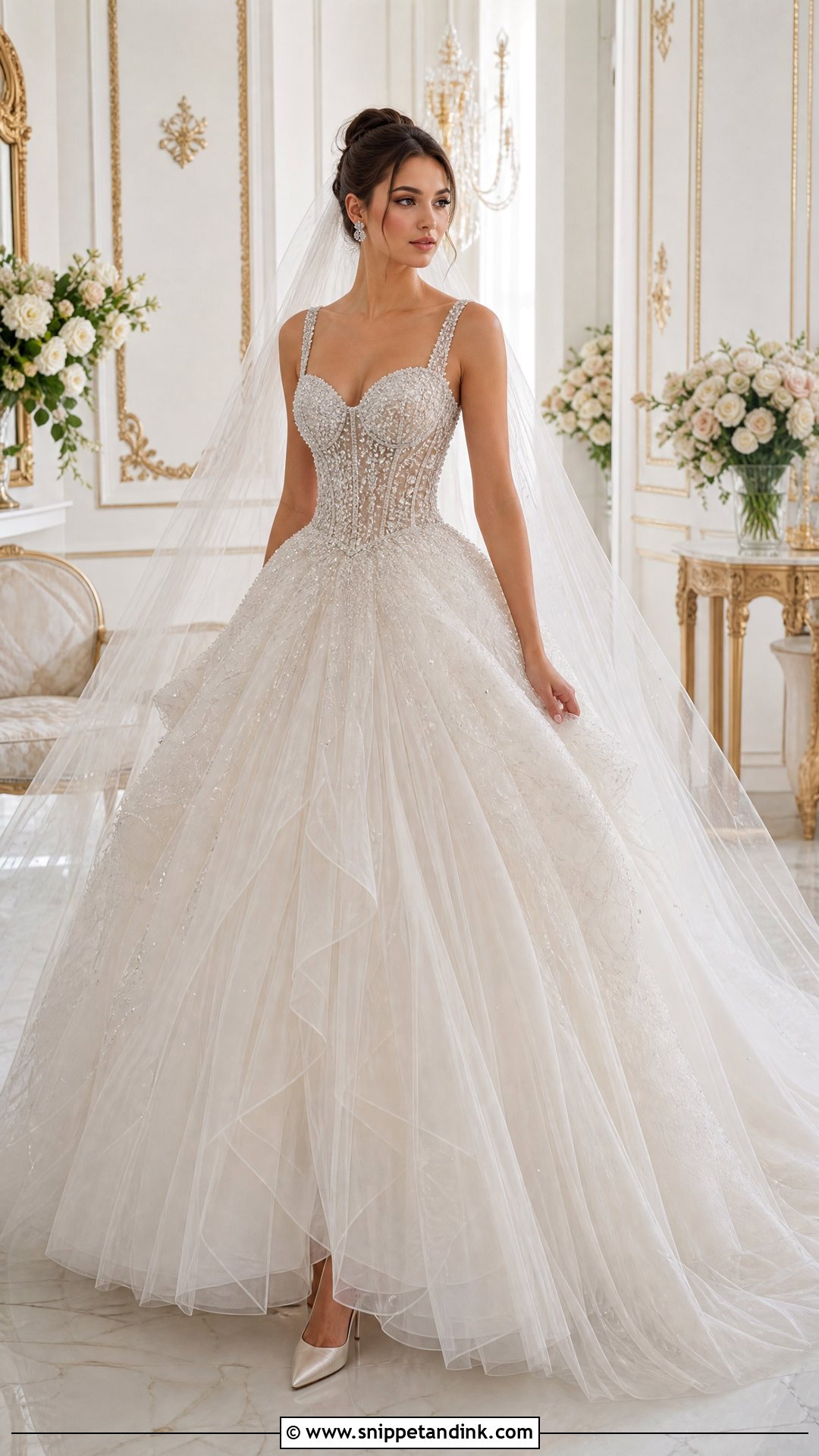
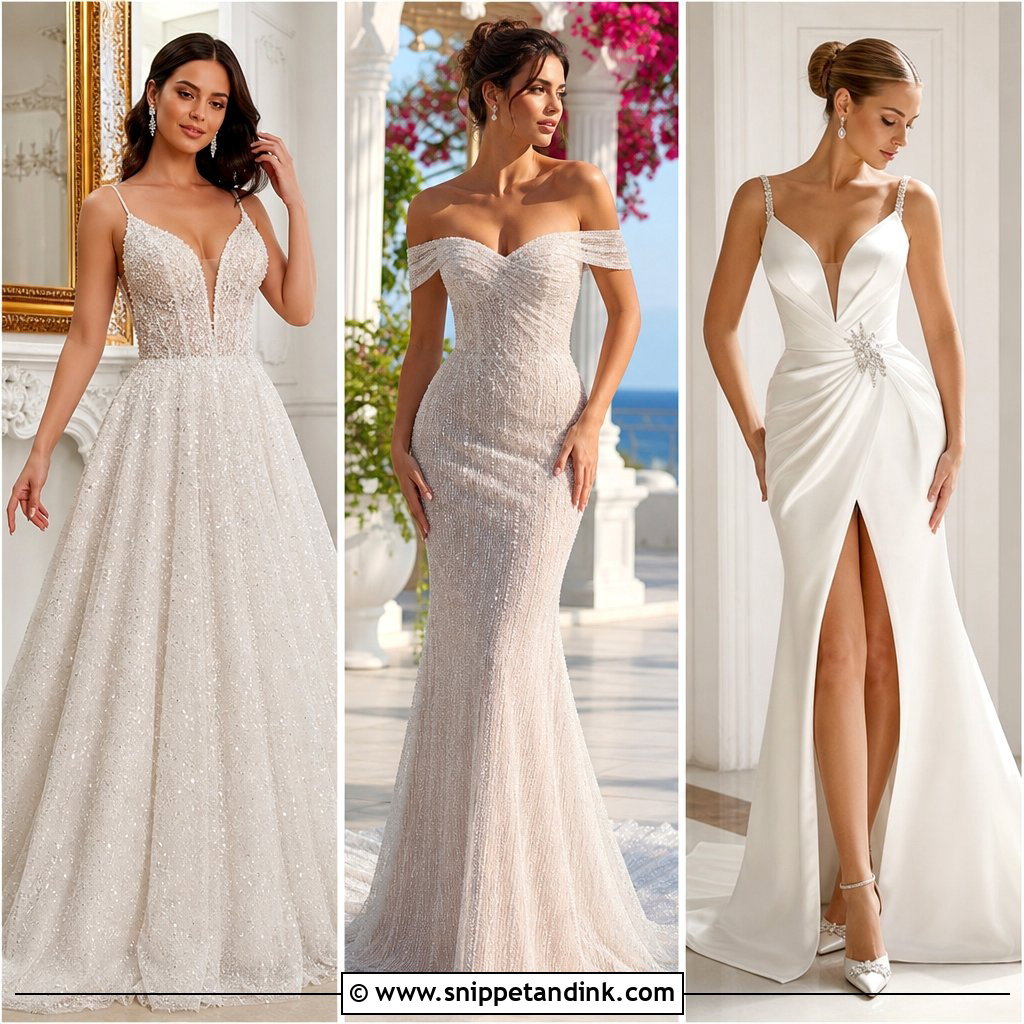
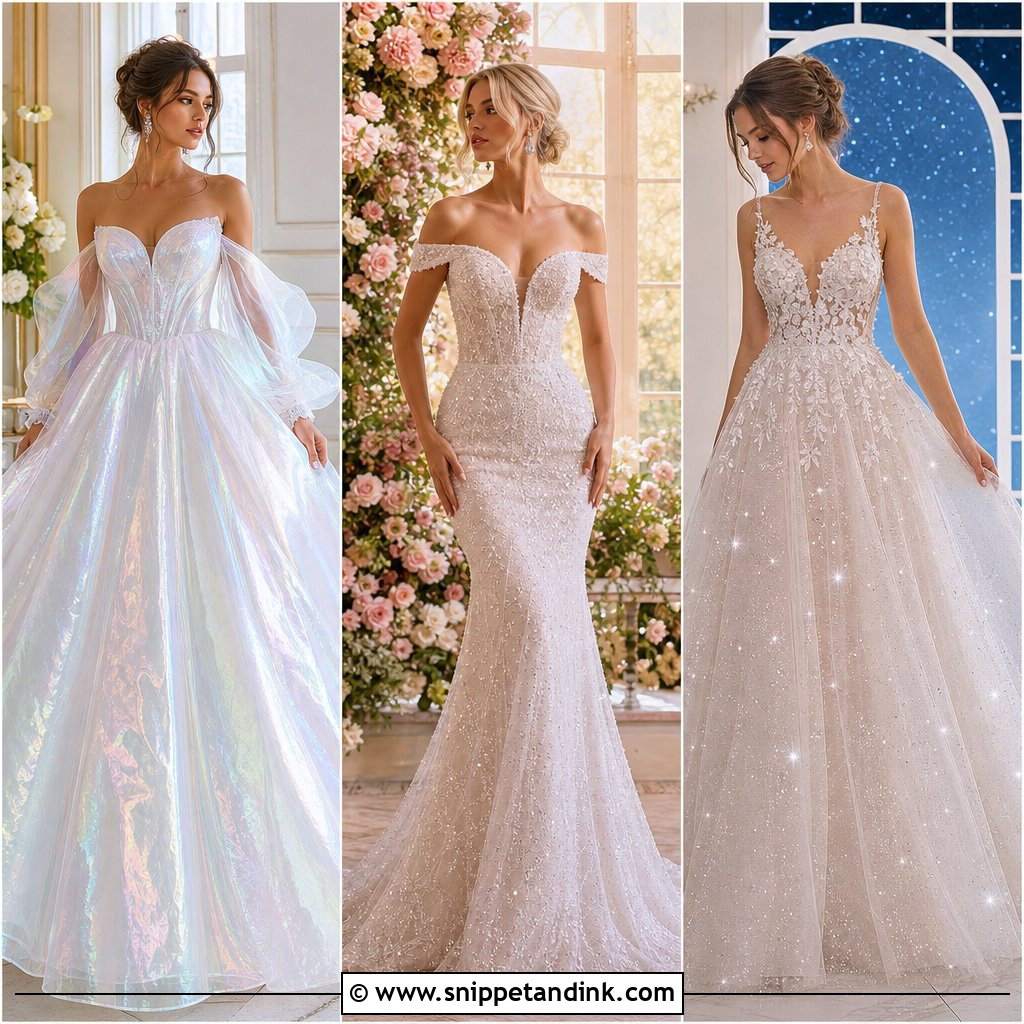
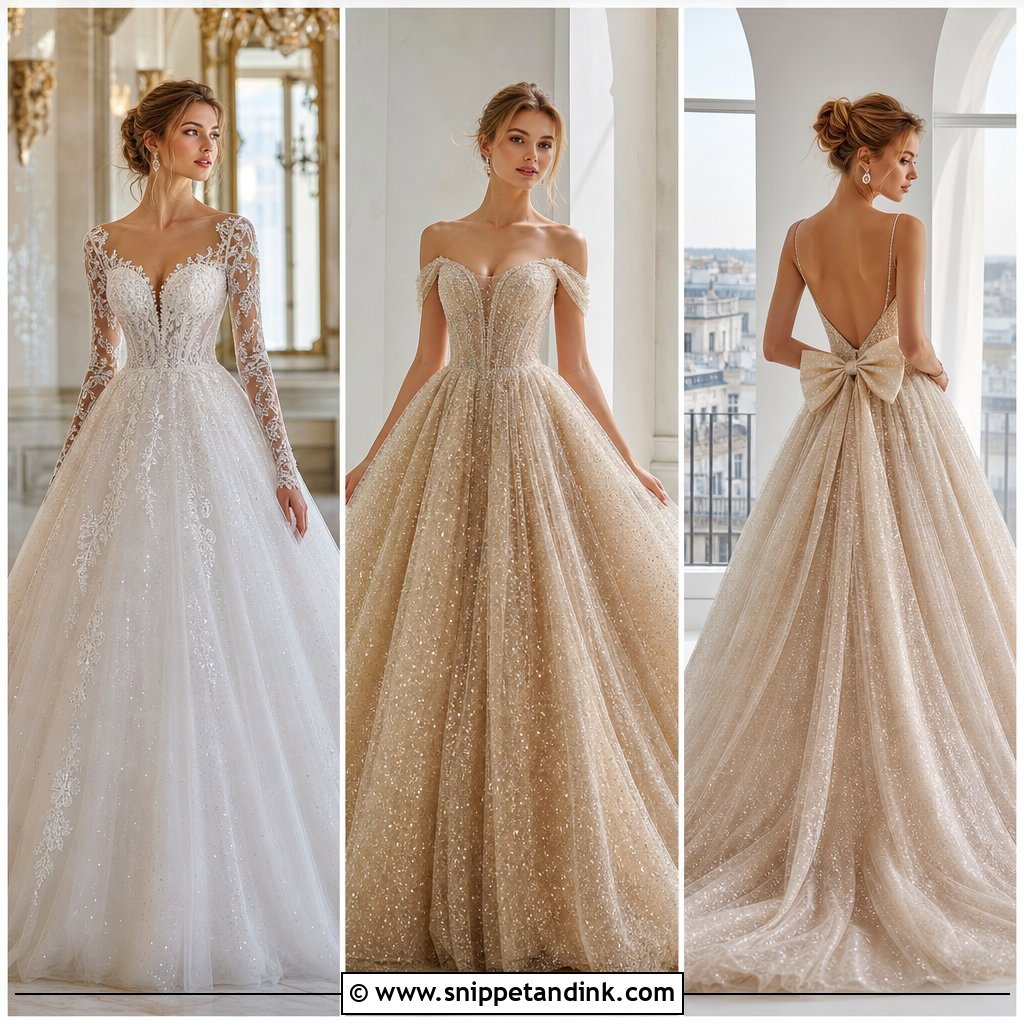
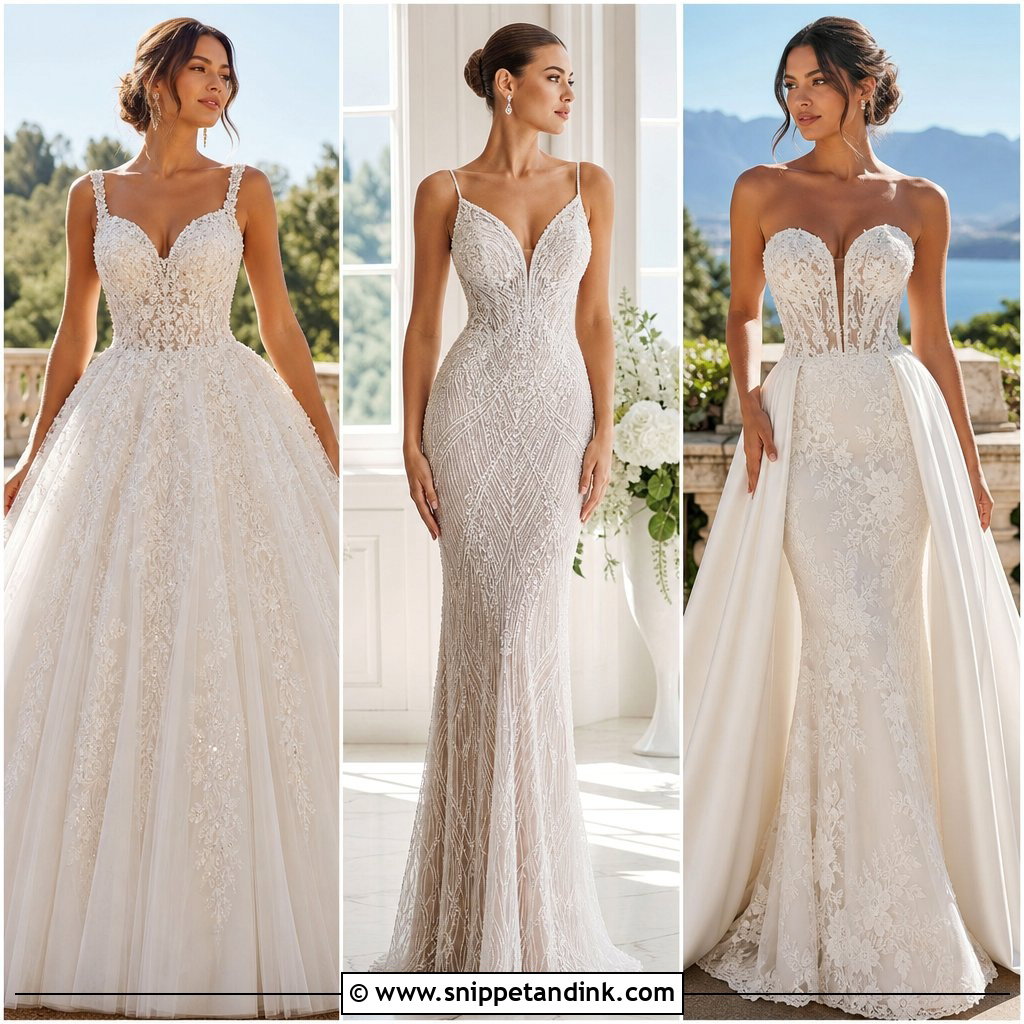
Ball gowns carry crystals well because the full skirt spreads the weight. The best ones concentrate stones at the neckline, waist and upper skirt over a structured bodice, with layered tulle or organza below so the skirt stays light and catches light as you move. Pointed satin pumps, crystal studs and a sheer cathedral veil with a plain edge are all it needs, plus a smooth low bun. Dense beading adds real weight, so lift the gown off the hanger before you fall for it. A proper inner corset takes that load off your shoulders and keeps it wearable in a ballroom all night.
2. Crystal Corset Wedding Dress
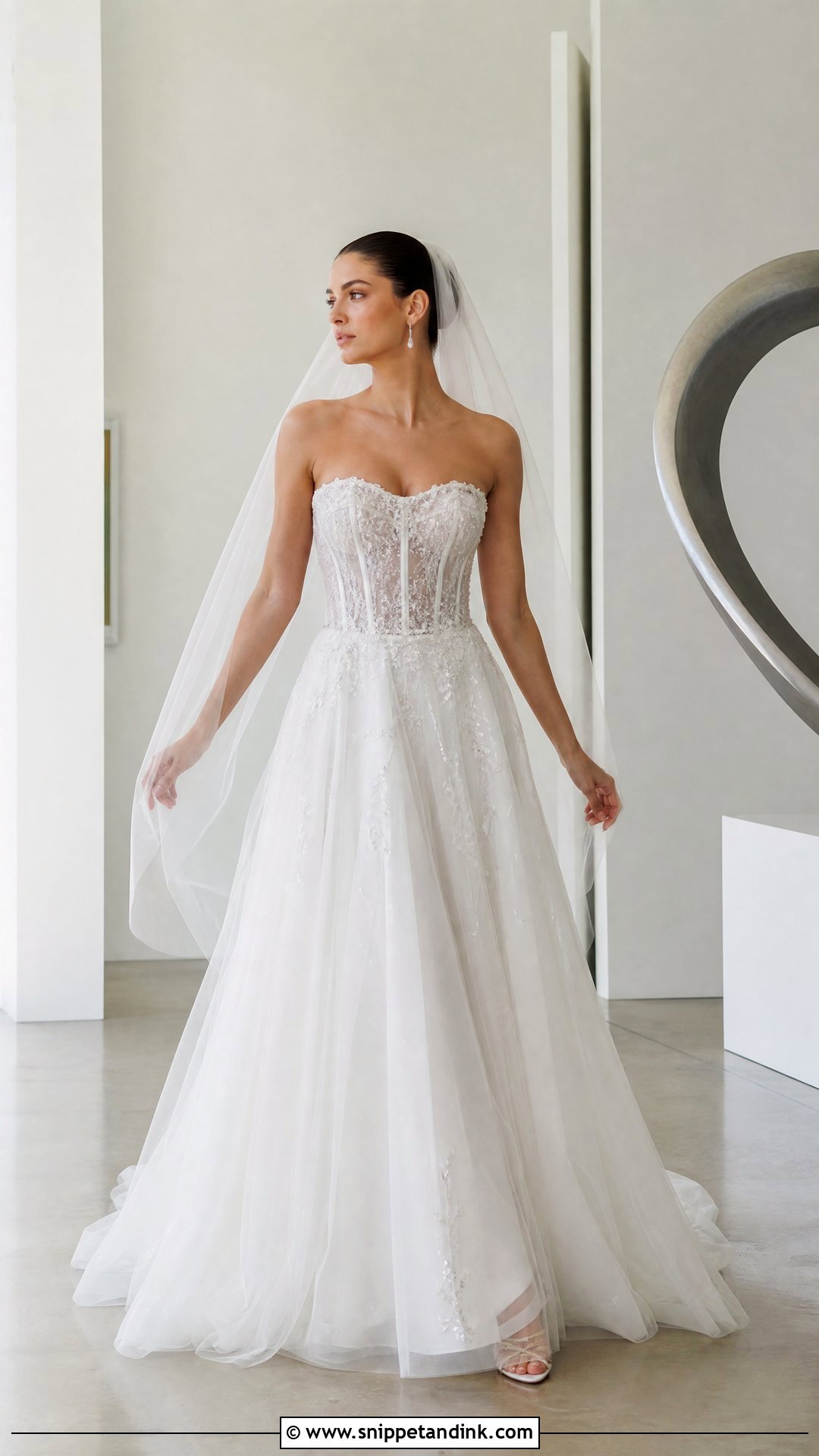
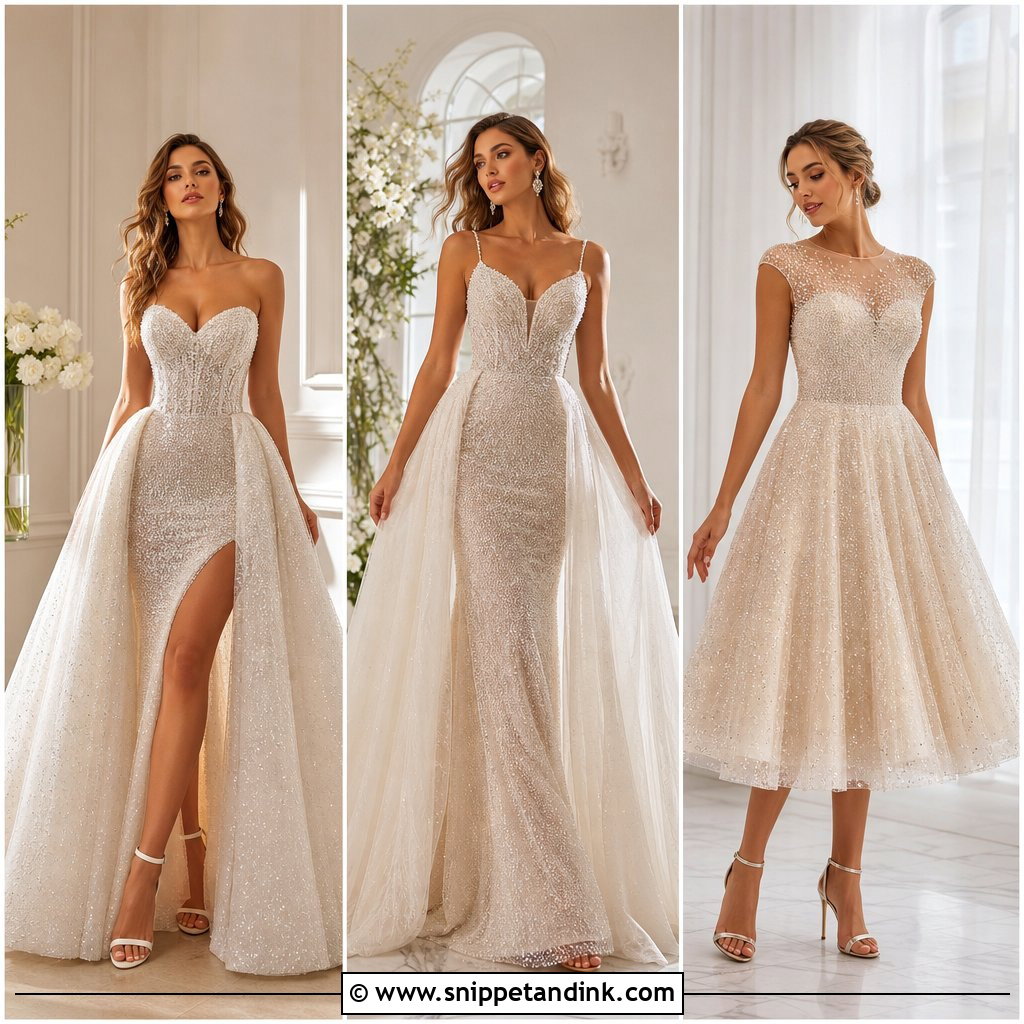
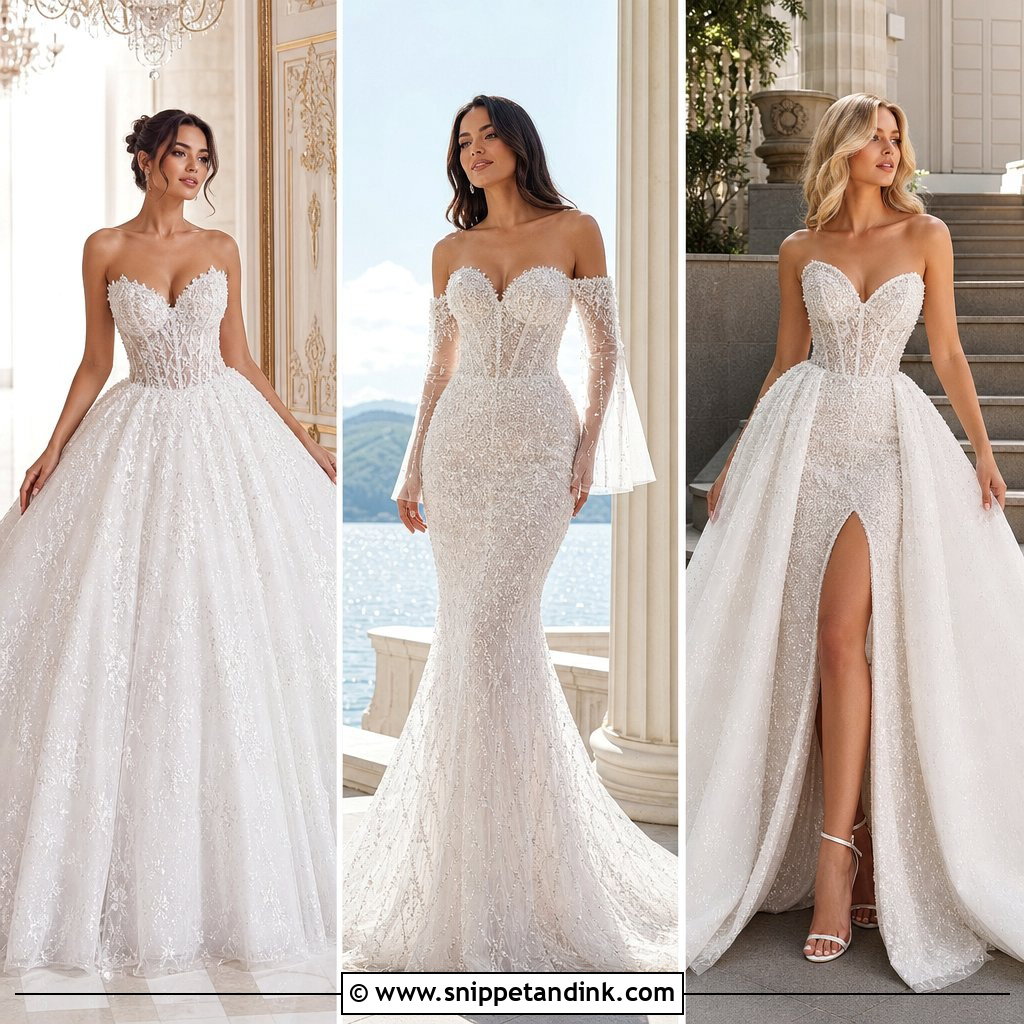
The smartest crystal corsets put stones along the boning seams, so the sparkle traces the construction instead of hiding it. Look for a defined waist with real boning, balanced by a flowing satin, tulle or organza A-line skirt. If the corset has illusion panels, check the lining color in natural light; a nude mesh that’s slightly too pink or too yellow for your skin shows clearly next to bright crystals. Sleek heels, small drops and a fingertip veil anchored under a neat updo suit it. Make sure the neckline stays put when you lean forward, which is the move most corsets fail. Hotels and galleries suit this one.
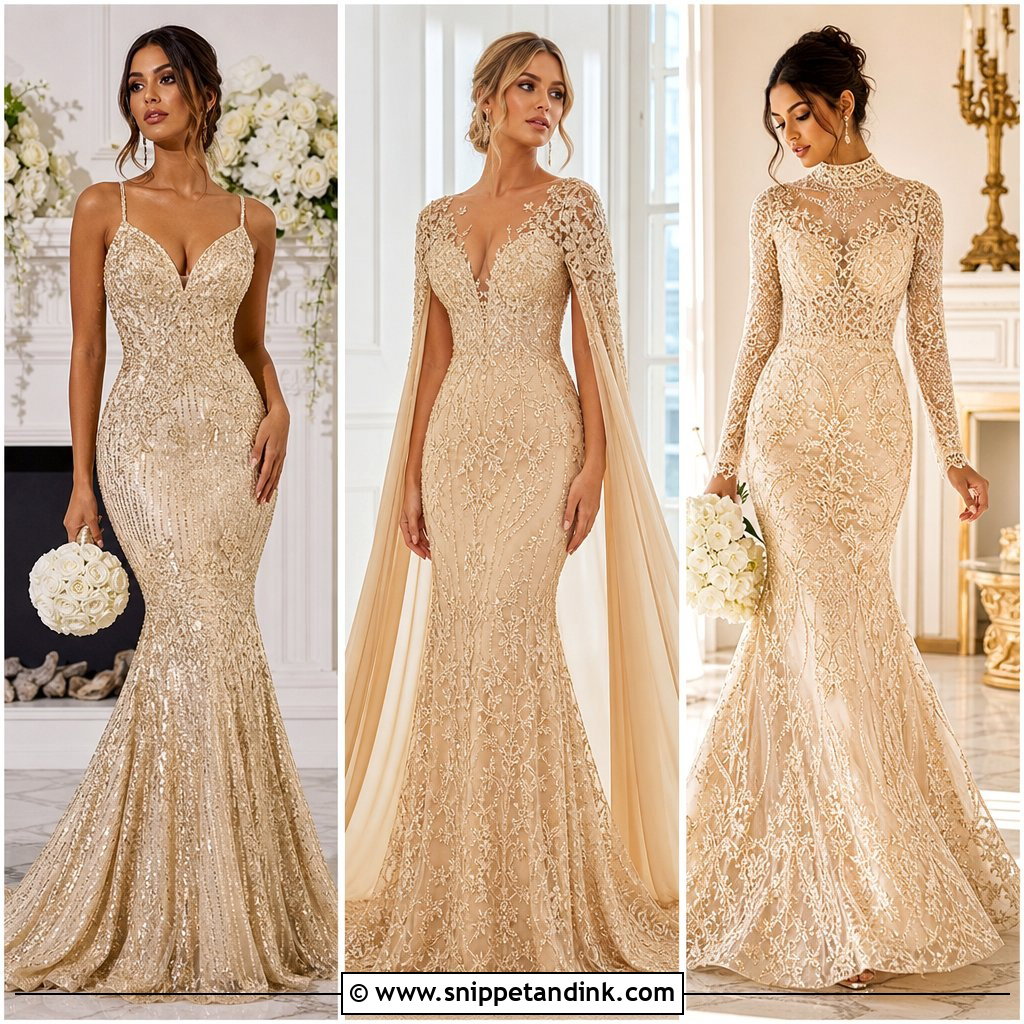
3. Crystal Lace Mermaid Wedding Dress
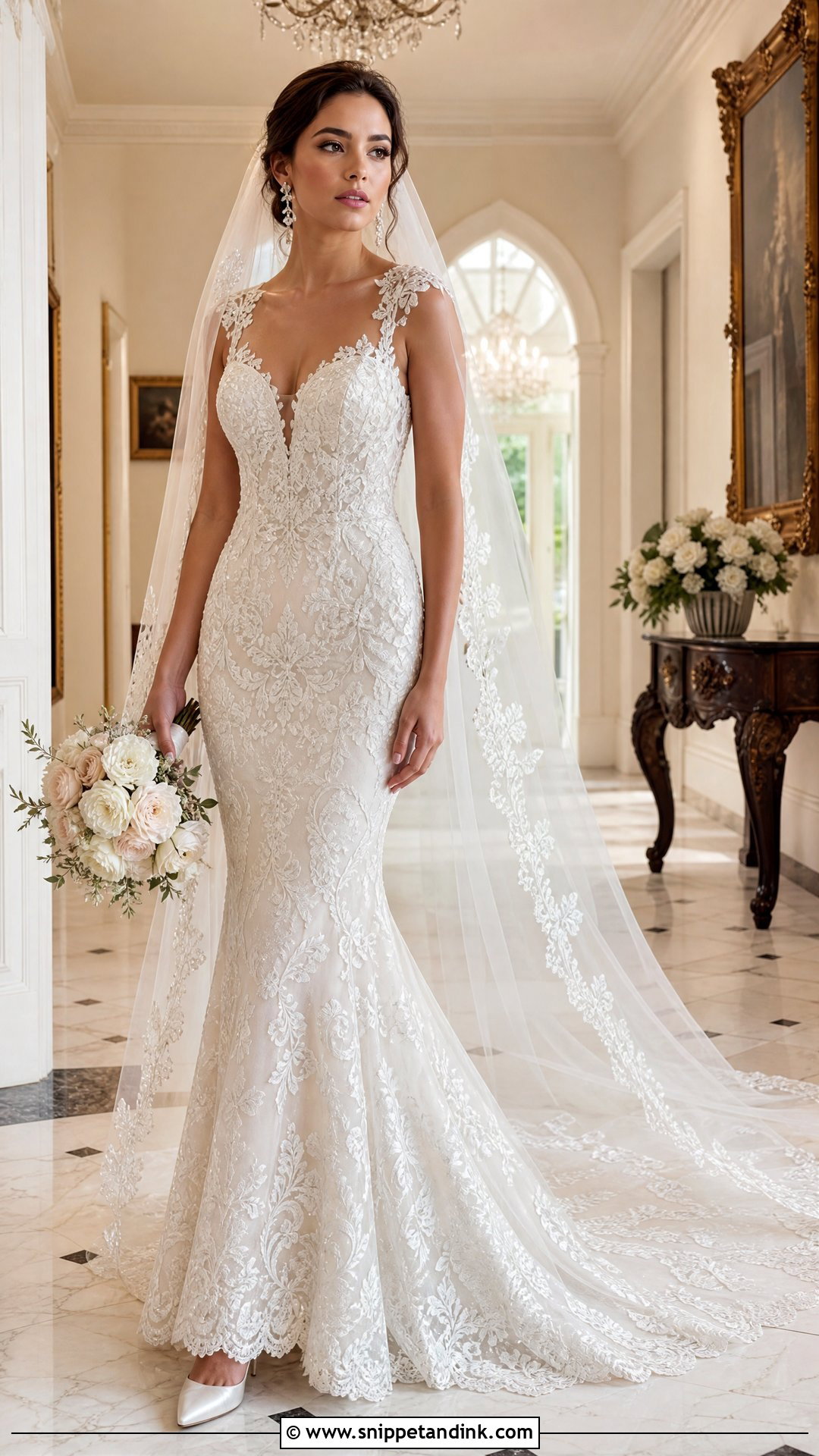
On a lace mermaid, crystals look refined when they follow the lace motifs and look cheap when they’re scattered at random. I trace the beading with a finger at appointments: stones sewn into the lace pattern sit flat and hold, while loose scatter tends to come off first. Choose a supportive bodice, a smooth fit through the hips and a flare starting near the knee. Pearl-and-crystal earrings, plain ivory pumps and a long veil with a narrow lace border finish it, with soft waves or a low side bun. Dense lace plus beading stiffens the skirt, so sit and walk during alterations. Skip a large necklace over a busy bodice, especially in candlelit rooms where everything already glows.
4. Crystal A-Line Wedding Dress
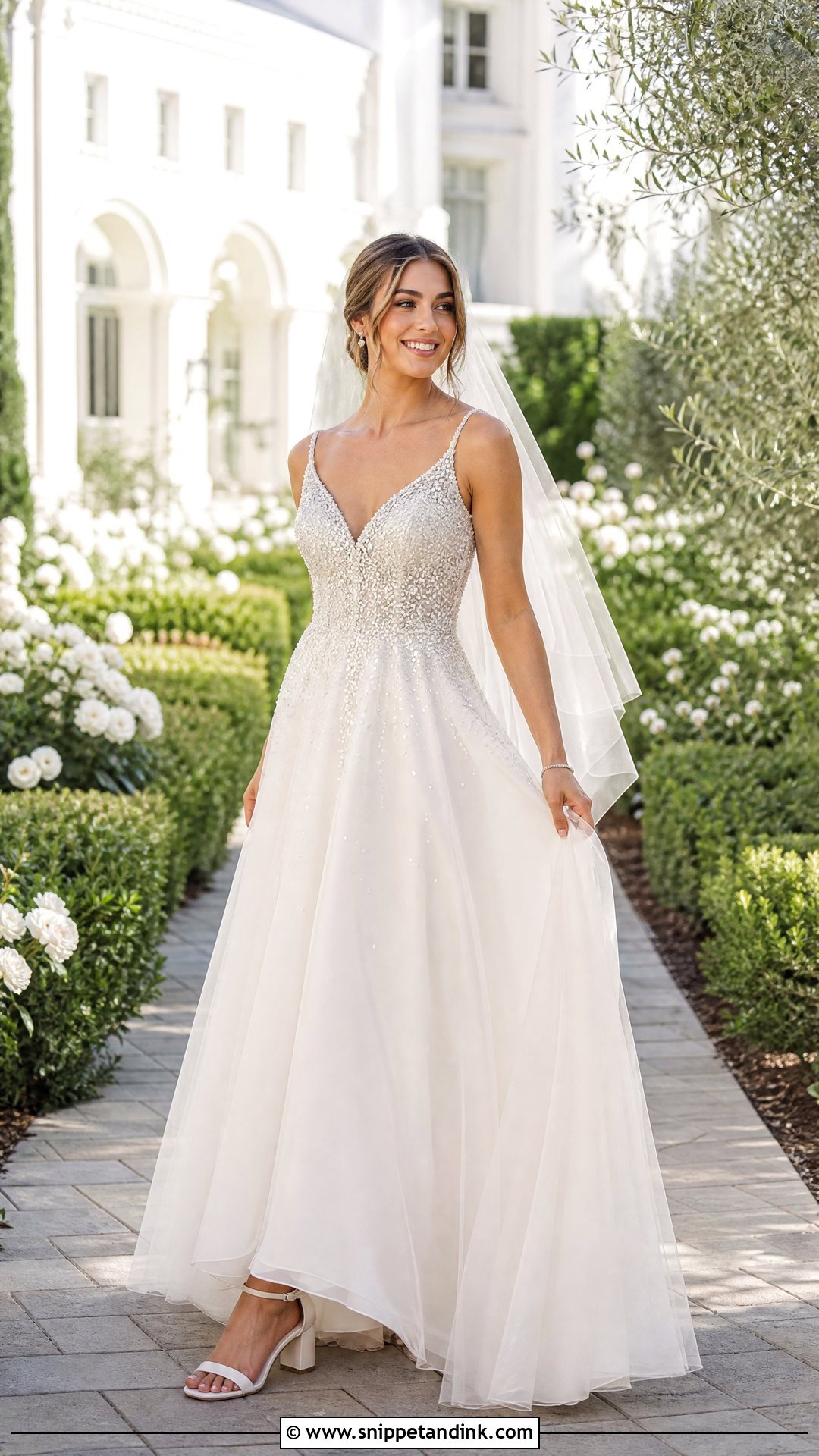
An A-line with crystals that start dense at the neckline and thin out toward the hem is the easiest sparkly dress to move in. The fitted bodice and widening skirt suit most shapes, and graduated beading keeps the weight up top where the bodice supports it. Block-heel sandals, a delicate bracelet and a lightweight chapel veil keep it fresh. A softly twisted updo shows the neckline. For more coverage, illusion straps dotted with small crystals add support without bulk. Fabric and train length decide whether it reads garden or hotel.
5. Crystal Strapless Wedding Dress
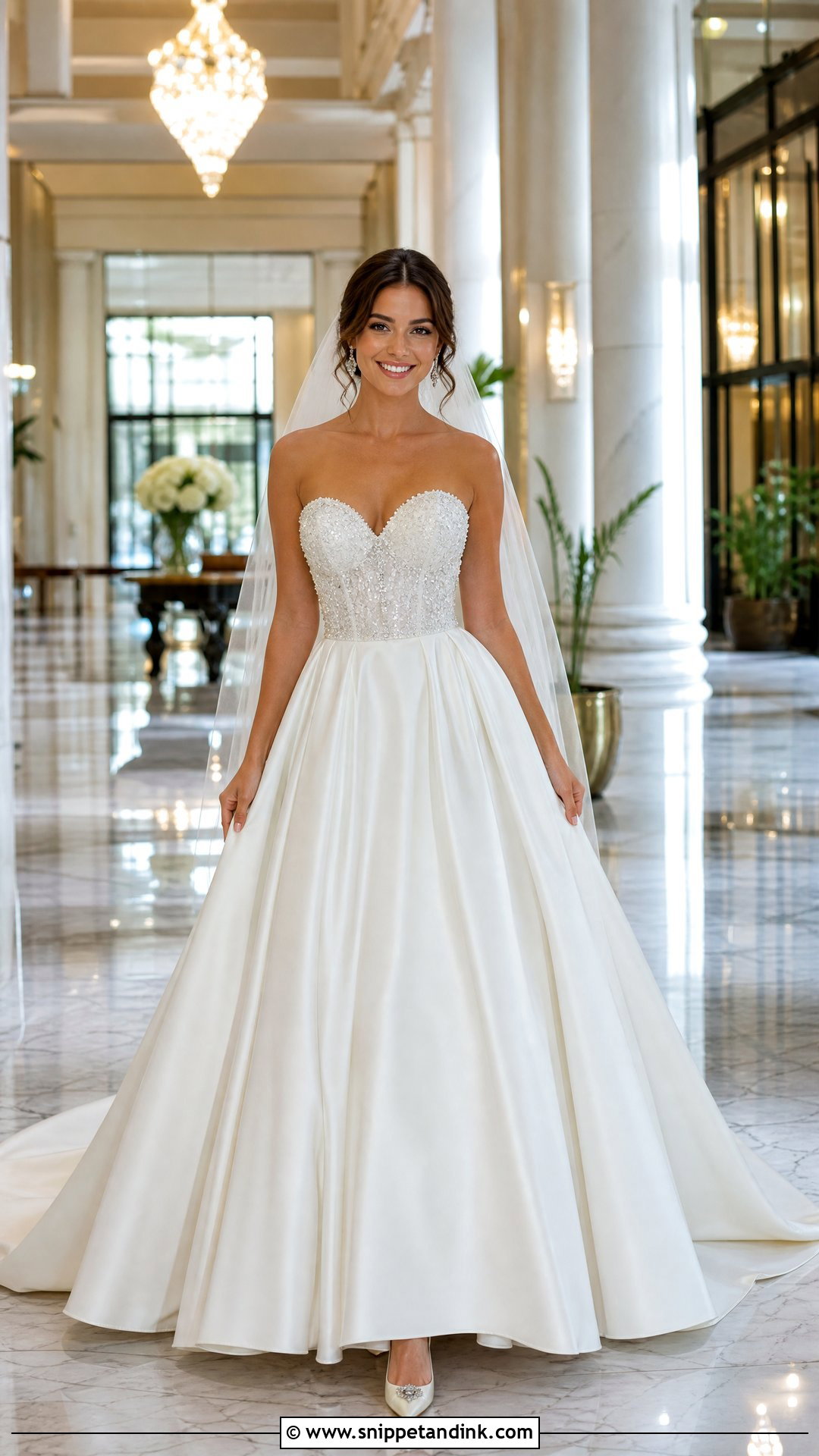
Crystals along a strapless neckline add weight exactly where a strapless gown is least supported. So I start with the inside: an internal corset, silicone grip tape along the upper edge, and a neckline that stays still when you sit. Sweetheart shapes read romantic, a straight neckline more modern. Crystal drops, pointed satin heels and a sheer veil set behind a polished bun suit it. Skip the necklace if the bodice already sparkles; a slim bracelet or a small crystal comb balances it. At fittings, raise both arms and walk the room. If you’re tugging it up within five minutes, it needs more structure.
6. Crystal Long Sleeve Wedding Dress
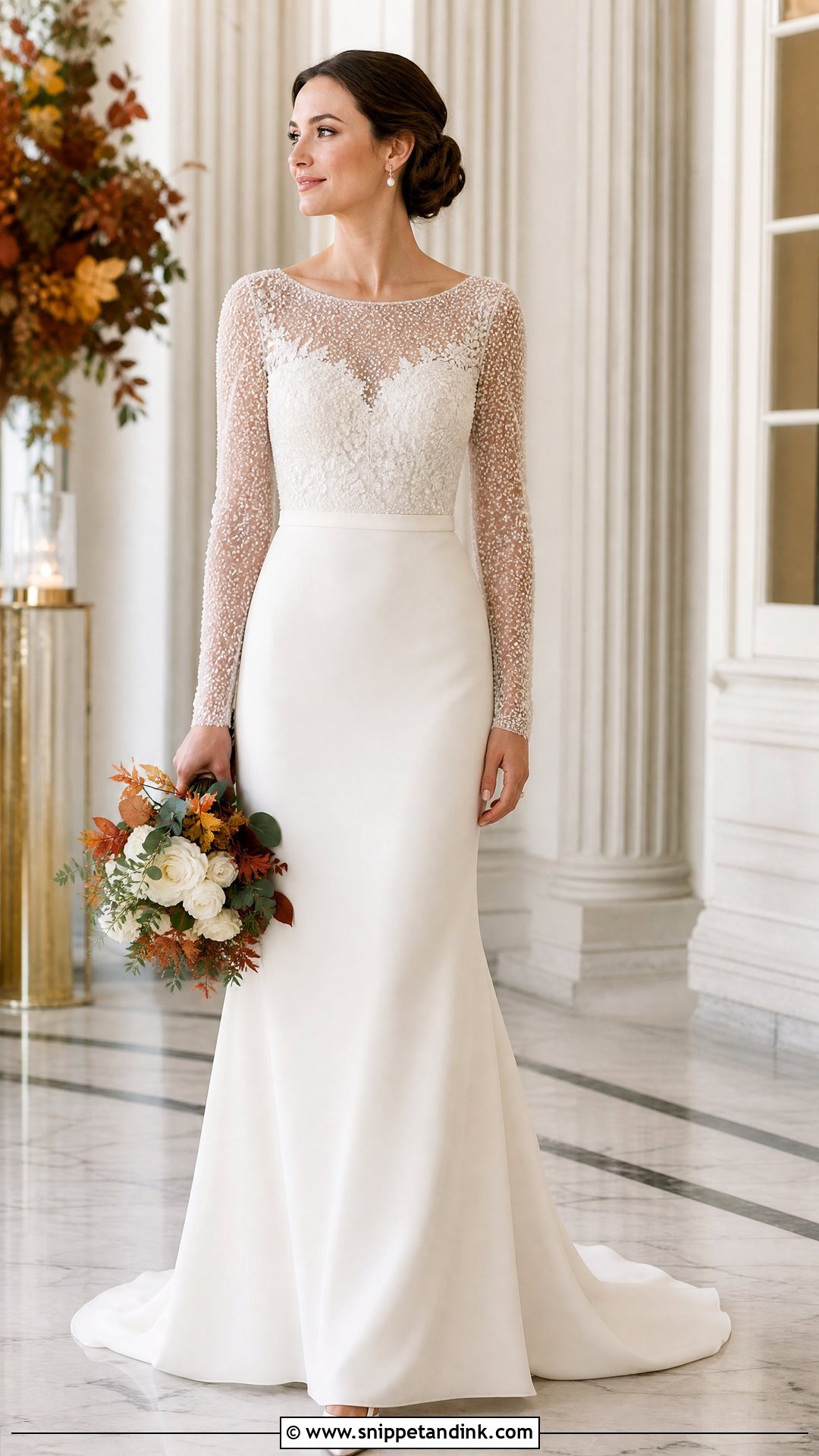
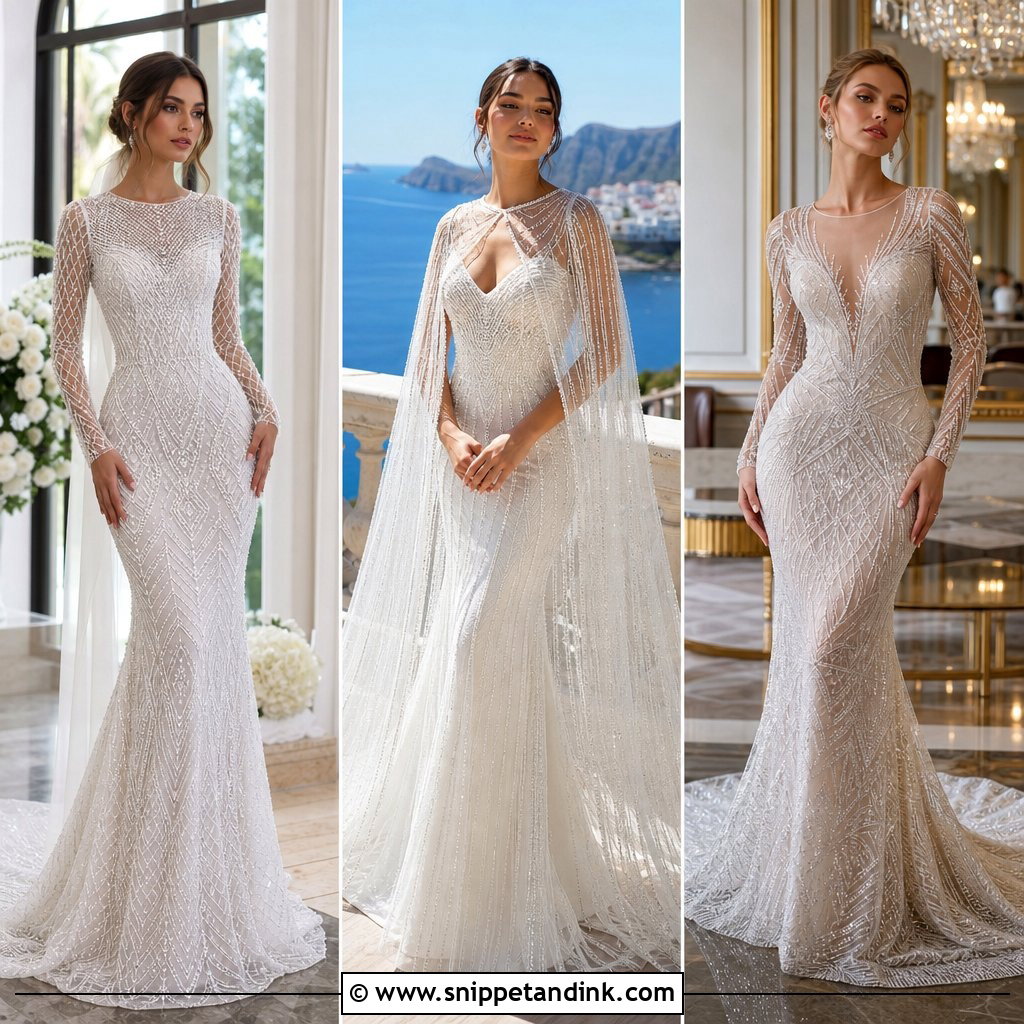
Sleeves are where crystal gowns most often hurt. Tiny stones on sheer tulle sleeves give a light effect, beaded lace sleeves more texture, but either can scrape the inner arm if the backs of the beads aren’t covered. Run your hand inside the sleeve before buying. Flexible fabric at the elbow helps too. Keep the skirt fairly plain when sleeves and bodice are heavily worked, or the design crowds itself. Closed pumps, a structured clutch, crystal studs or small pearls and a low chignon suit fall, winter and formal evening weddings.
7. Crystal Off The Shoulder Wedding Dress
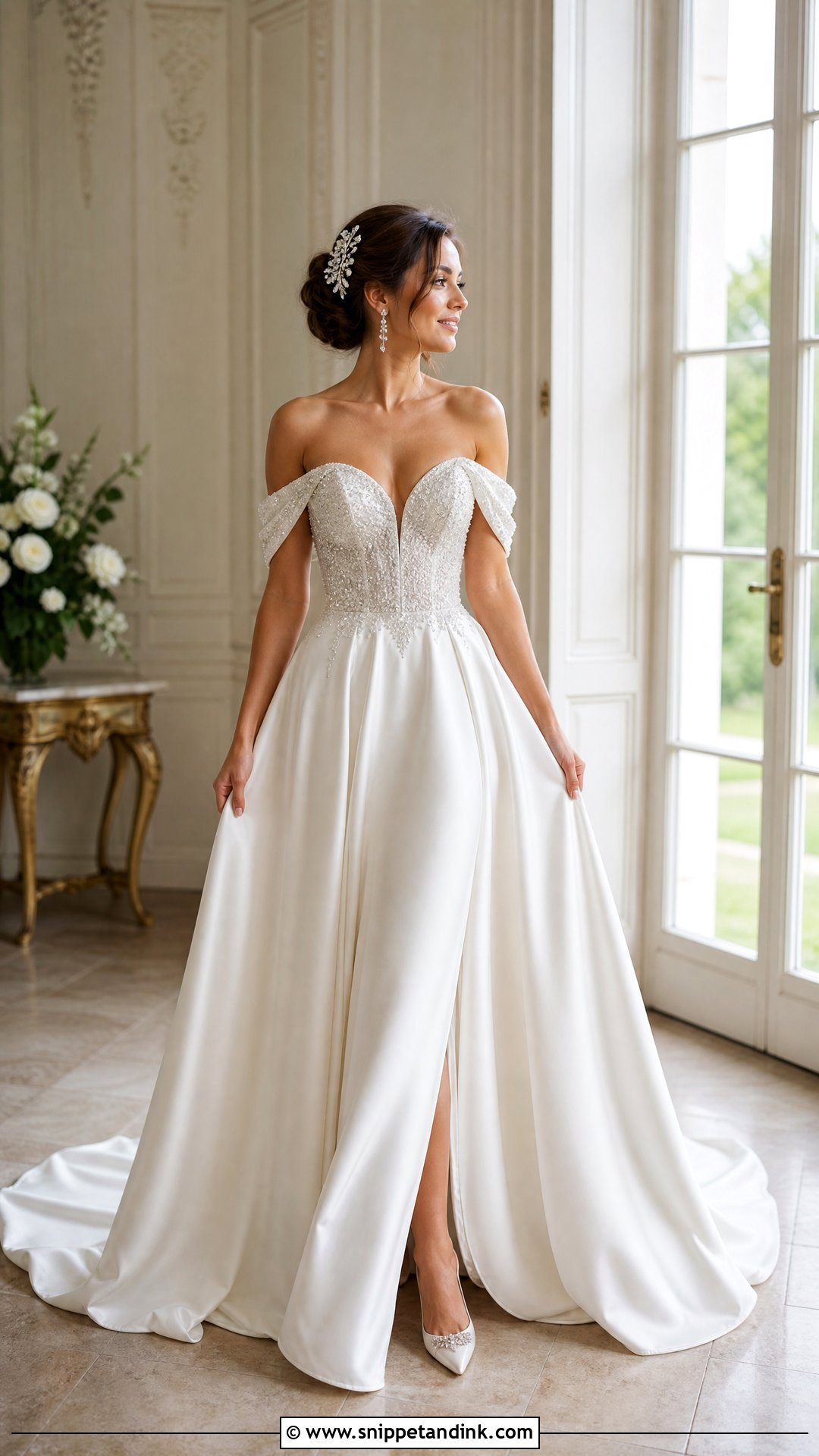
Off-shoulder sleeves frame crystal work at the neckline and waist well, with a clean satin skirt for a sophisticated contrast or tulle for a softer, fairytale-inspired result. The sleeve band is my main worry: if it’s tight, you can’t lift your arms to hug anyone. Ask a seamstress about discreet elastic or support loops. A crystal hair comb, delicate earrings and pointed ivory heels finish it, with a loose low bun to keep shoulders bare. It gives plenty of sparkle without stones across the whole dress.
8. Crystal Illusion Neckline Wedding Dress
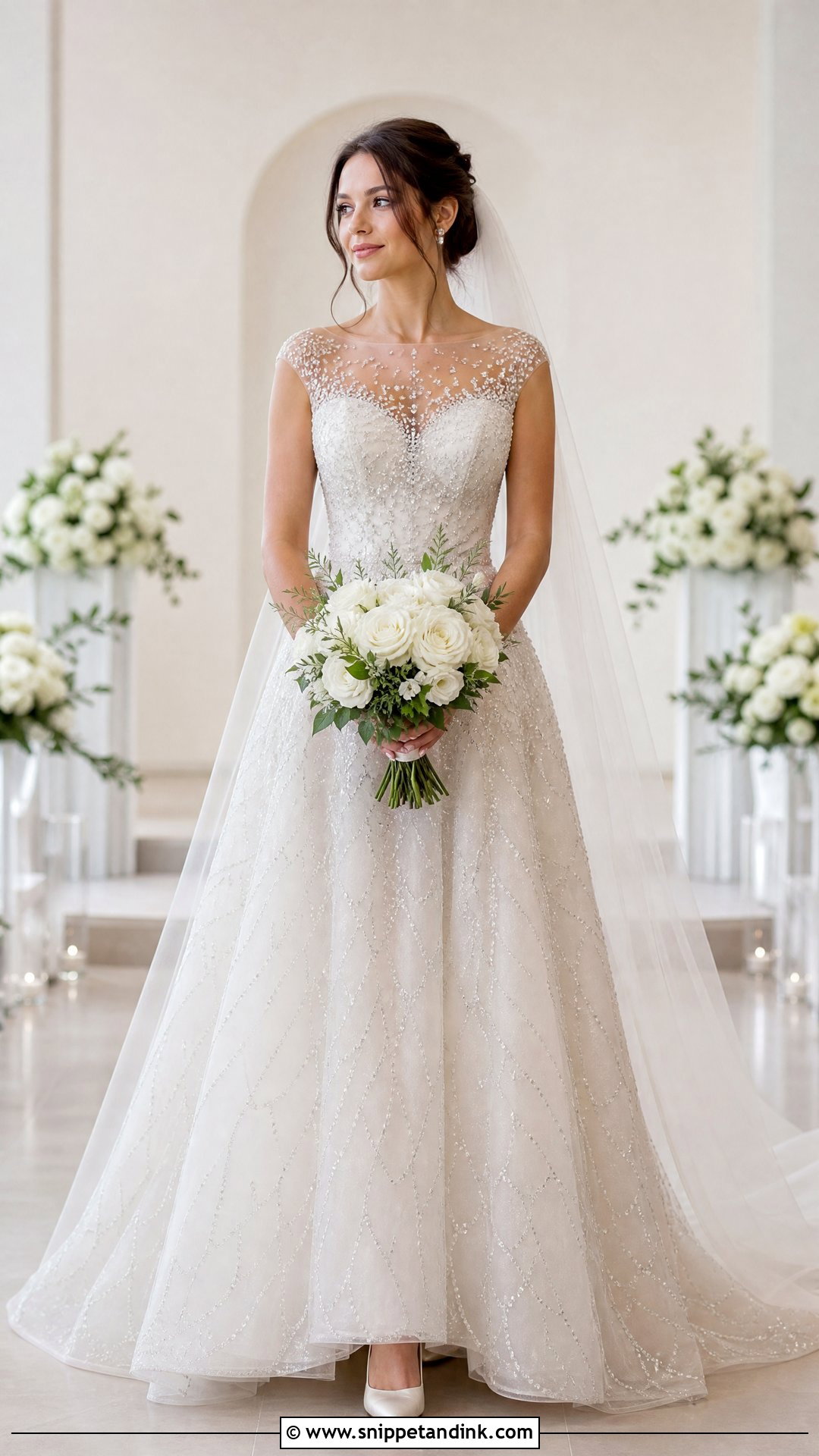
Illusion necklines make crystals look as if they’re floating on skin, but only when the tulle disappears. Fine tulle close to your complexion, lying smooth around the neck, is the whole trick; a shade off and you see a visible edge. The crystals can form vines, symmetrical patterns or a light scatter. Keep everything else plain: satin pumps, small studs, an unadorned cathedral veil and an updo or swept-back hair. Check the neckline from the side and back under several kinds of lighting before final alterations, looking for wrinkles or pulling.
9. Crystal Back Wedding Dress
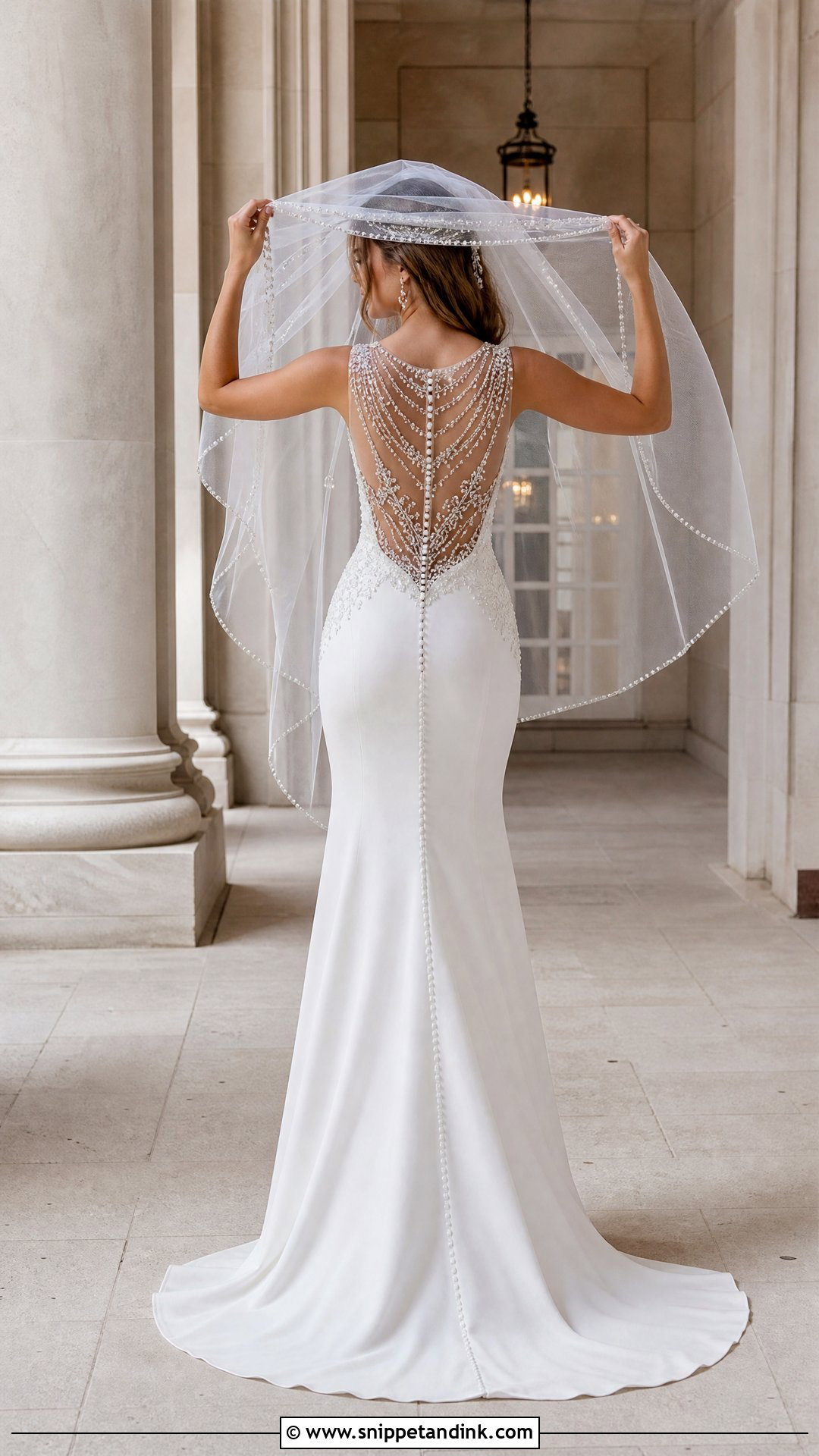
Guests spend the entire ceremony looking at your back, which is why a crystal back gives an unforgettable view. Illusion tulle, crystal buttons, beaded straps or a jeweled pattern down the spine all work best when the front stays simple. Decide on the veil carefully: a heavy one hides the work, so choose sheer tulle or plan to remove it after the ceremony. Slim heels, small earrings and a smooth low bun or side sweep finish it. Ask your seamstress to confirm the illusion panel lies flat and every closure holds, and ask about a soft lining where beads sit on bare skin.
10. Crystal Satin Wedding Dress
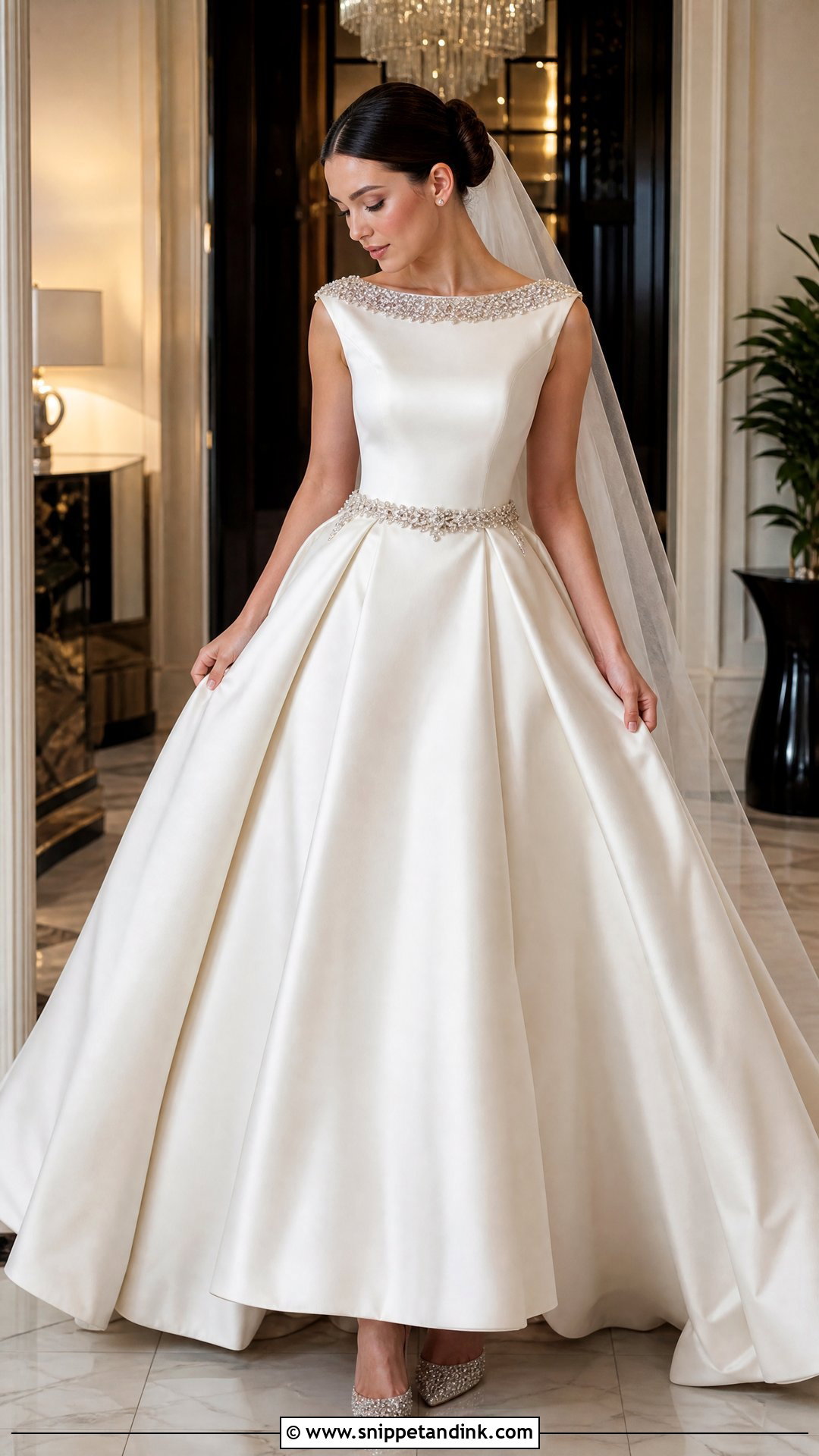
Satin and crystals work as contrast: plain, glossy fabric with sparkle placed in only a few spots, neckline, cuffs, waist or back buttons. A structured satin ball gown reads formal; a slim column more modern. Satin reflects light and shows every pull, so the fit at waist and hips must be smooth. Crystal-trimmed pumps, small earrings, a plain tulle veil and a sculpted bun complete it. Leave the jeweled bag at home, since its edges catch on satin and leave marks you can’t steam out.
11. Crystal Tulle Wedding Dress
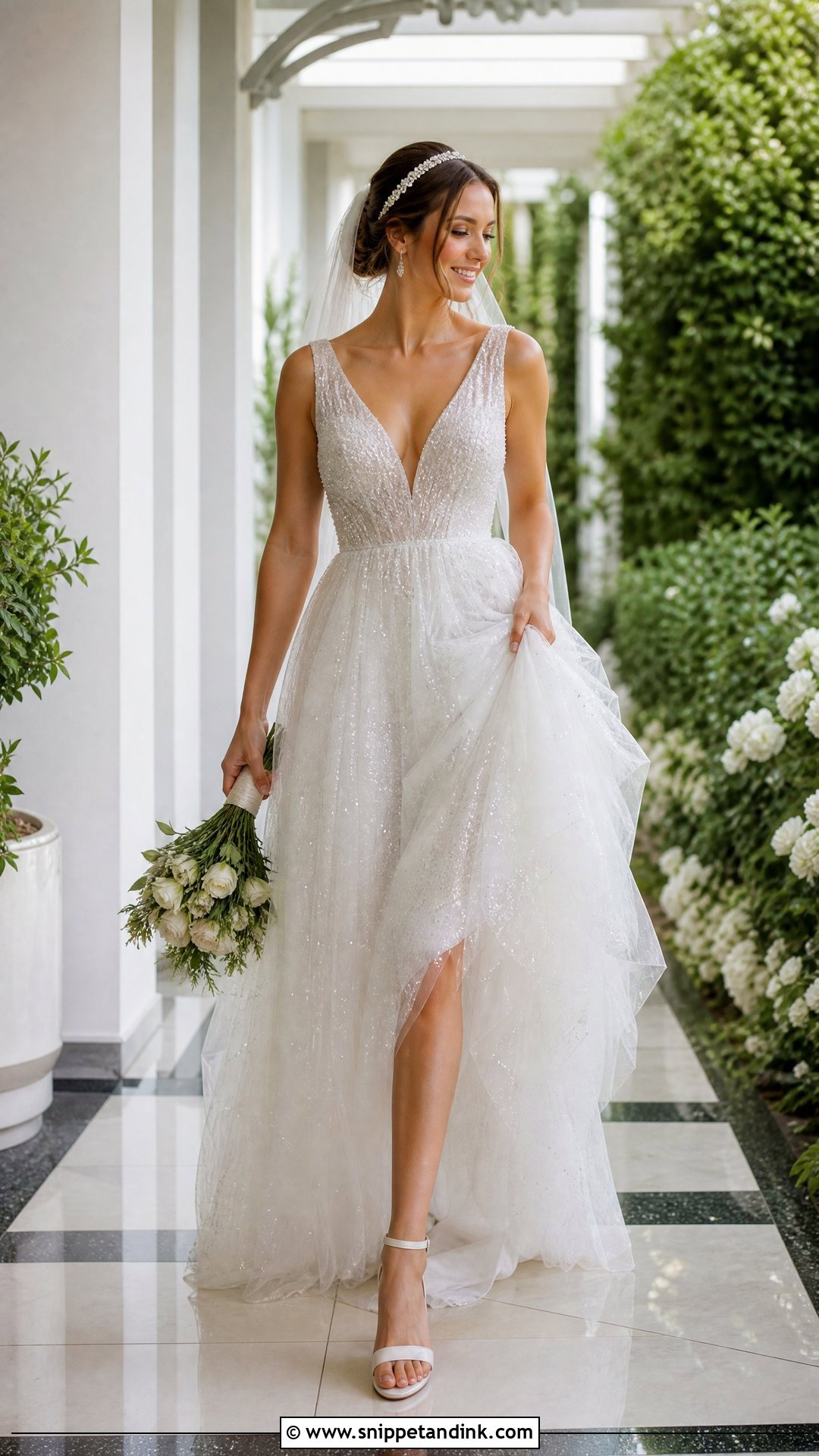
Crystals placed between tulle layers, not only on the surface, give a skirt real depth: some stones catch light directly, others glow through the top layer. Balance that volume with a fitted bodice and slim straps or a modest V-neck. Block heels, a fine crystal headband and a veil with no extra beading suit it, with loose waves or a textured bun. Ask whether the stones are sewn, glued or heat-set. Sewn crystals survive steaming and handling better; glued ones can lift with heat or cleaning solvents, which matters if you plan to preserve the dress.
12. Crystal Floral Wedding Dress
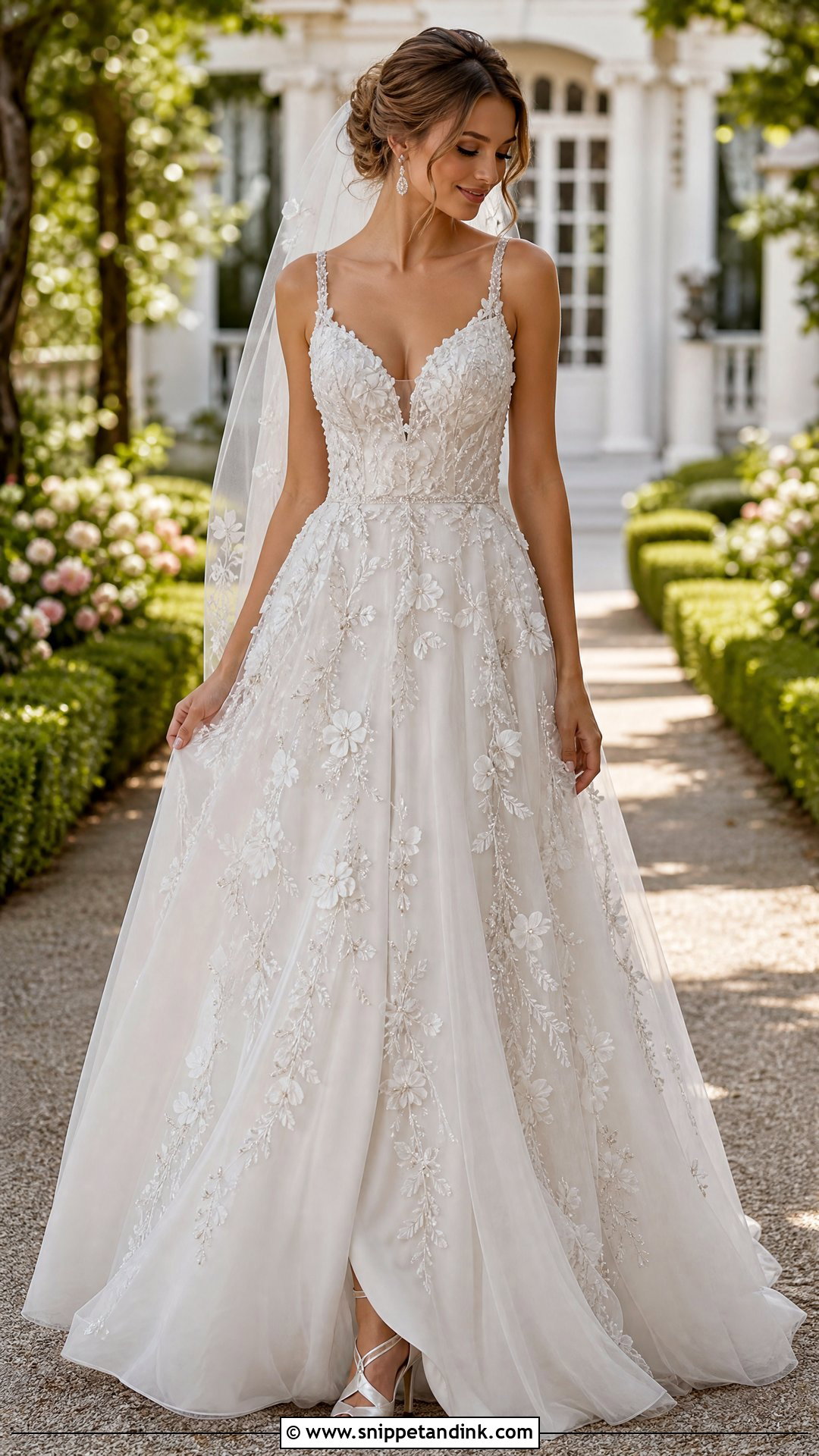
Crystal flowers give romantic detail without traditional lace. The best versions outline floral appliqués with tiny crystals, beads or clear stones, trailing from the bodice onto an A-line skirt. Pearl-and-crystal earrings, satin heels and a veil with just a few matching flowers complete it. I’d choose a soft updo with a small jeweled pin over a floral crown, which competes with the dress. Raised 3D flowers on the hips and inner arms get crushed and rubbed all day, so check that they’re placed away from those spots and stitched firmly.
13. Crystal Pearl Wedding Dress
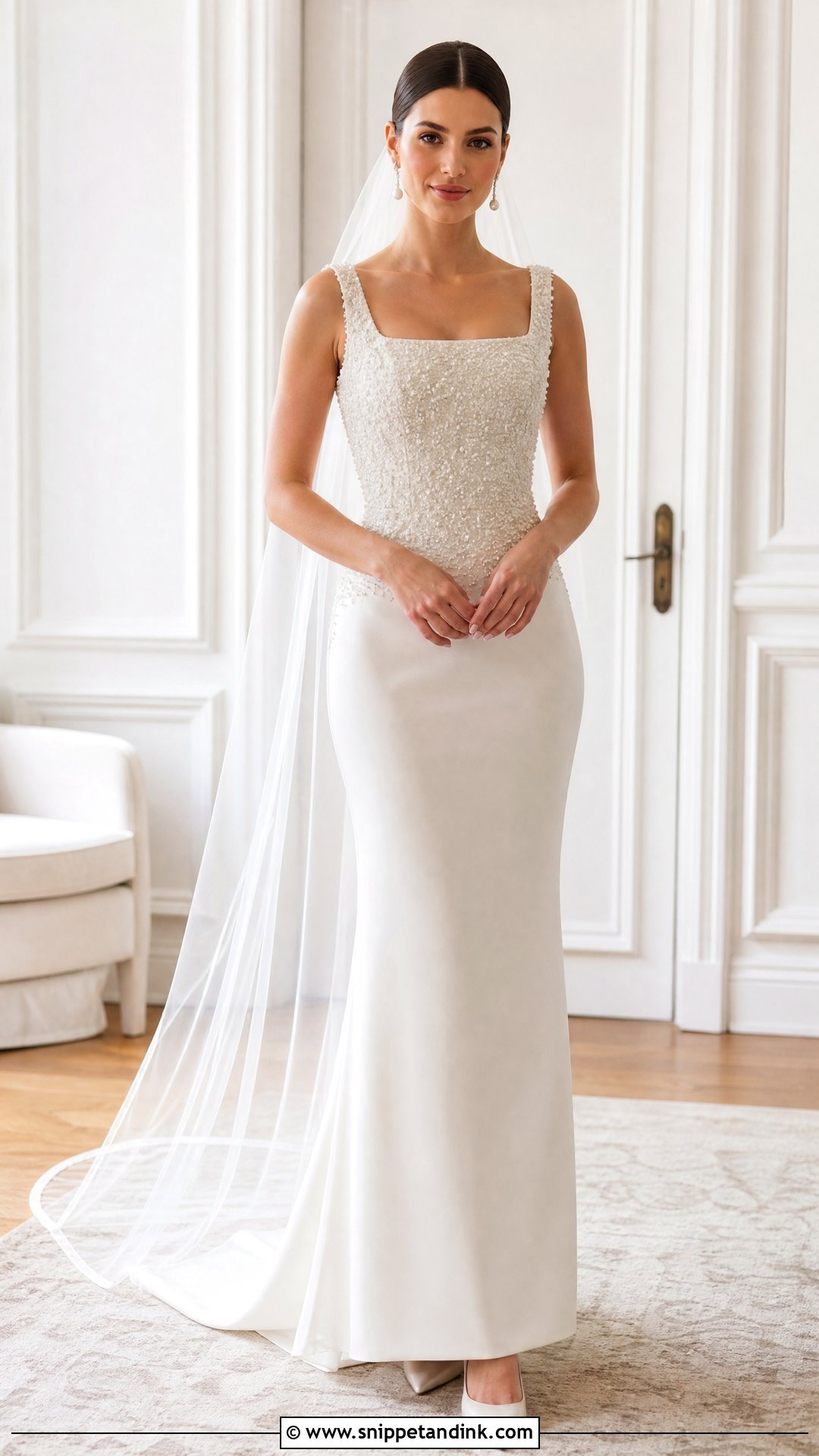
Pearls glow and crystals flash, so the two together give texture rather than more shine. They look organized when they repeat a pattern across bodice, sleeves or neckline. Ivory pearls blend with warm fabrics; clear or silver crystals add definition. Pearl drops, low satin heels and a plain veil with a narrow beaded edge keep the look classic, with a polished low bun. Larger pearls are heavier than they look and are the first to sag if loosely sewn, so check spacing and attachment before buying. A-line, column and softly structured ball gowns carry this combination best.
14. Crystal Fringe Wedding Dress
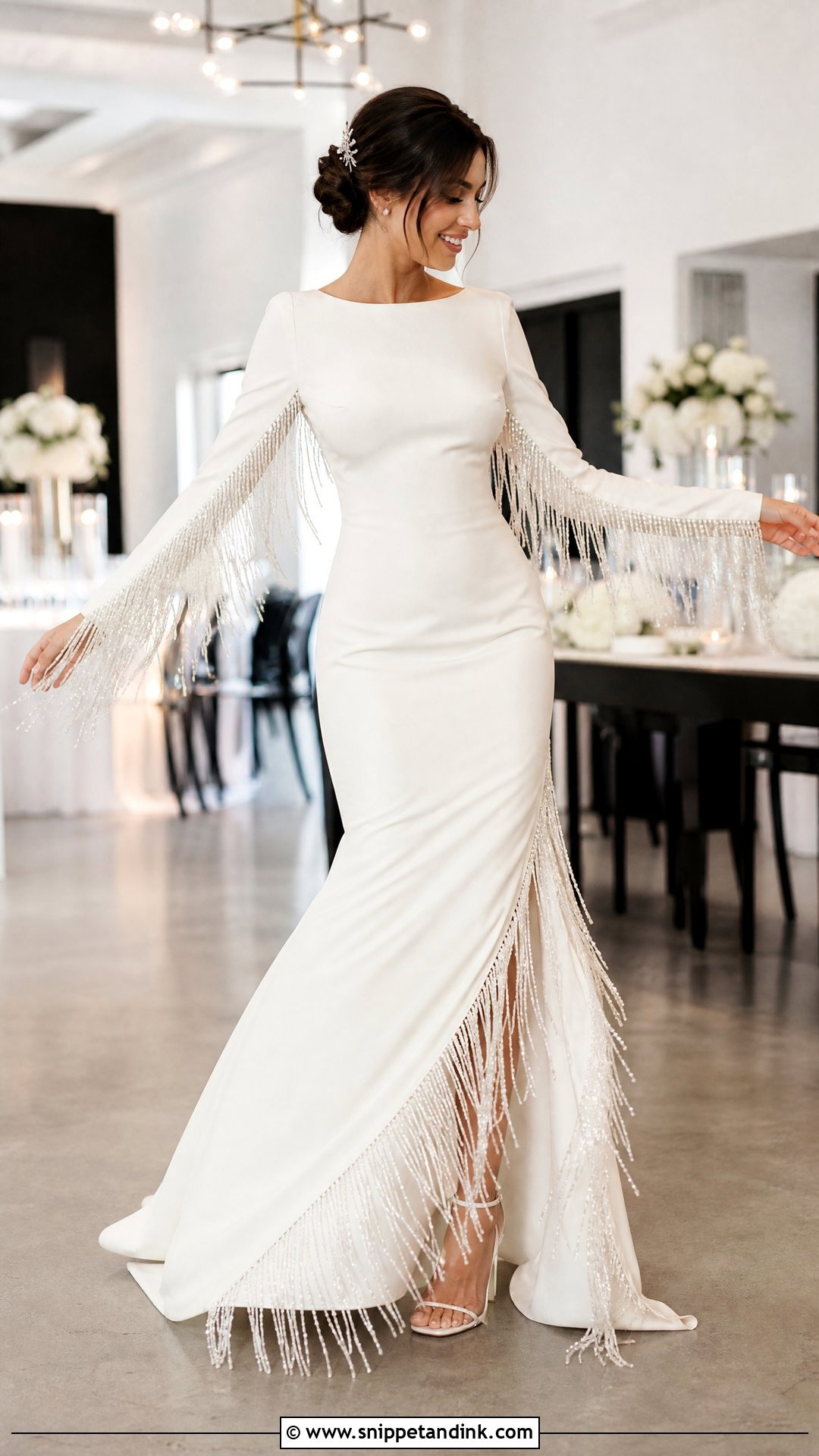
Crystal fringe moves every time you do, and that’s the point. I’d use it selectively along sleeves, neckline, back or skirt hem, on a plain crepe or satin base. Sit, turn and dance a few steps at the try-on: fringe can tangle into knots or hook onto lace, and strands near the underarm catch constantly. Minimal studs, sleek heels and a short veil or crystal clip suit it, with a smooth ponytail or neat bun. It shines brightest as a reception or second outfit at a modern venue.
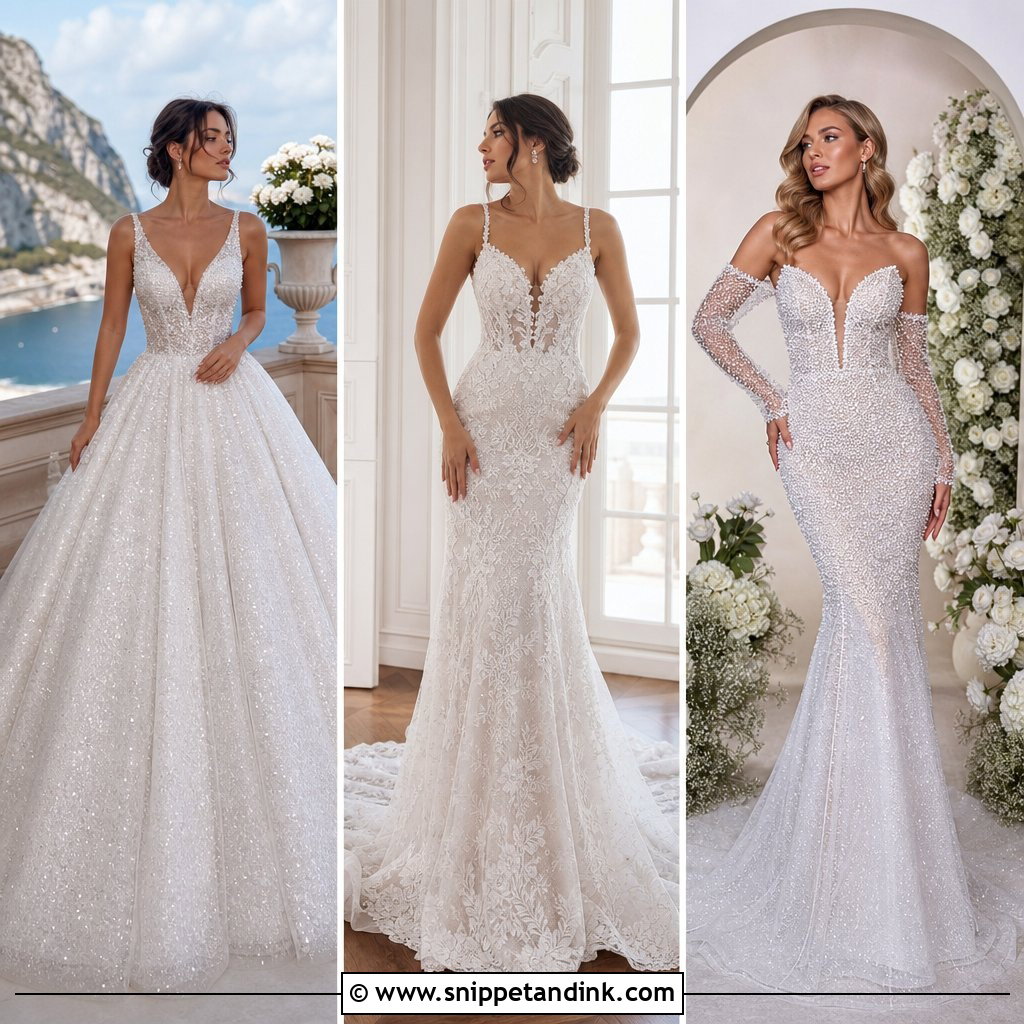
15. Crystal Cape Wedding Dress
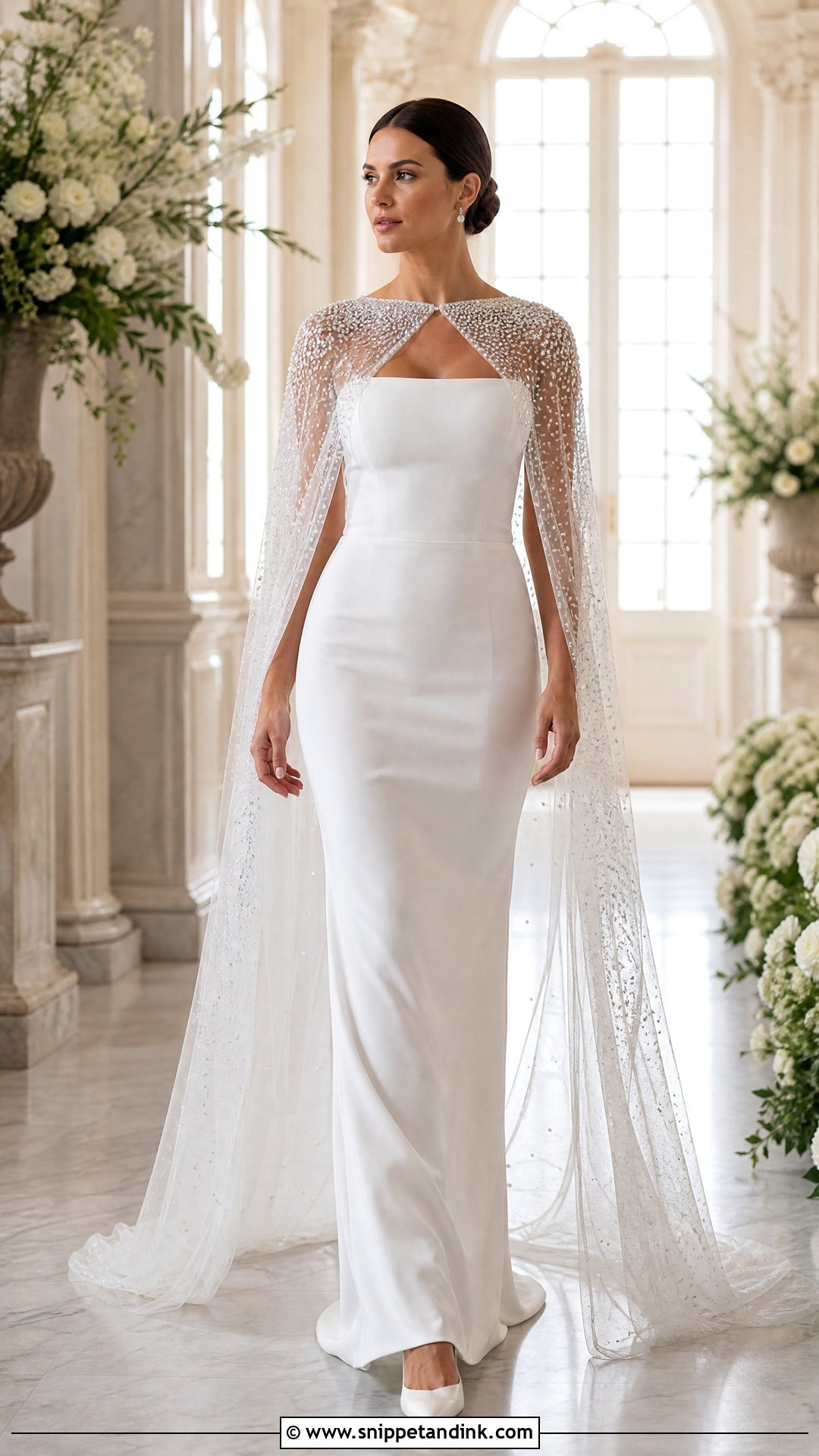
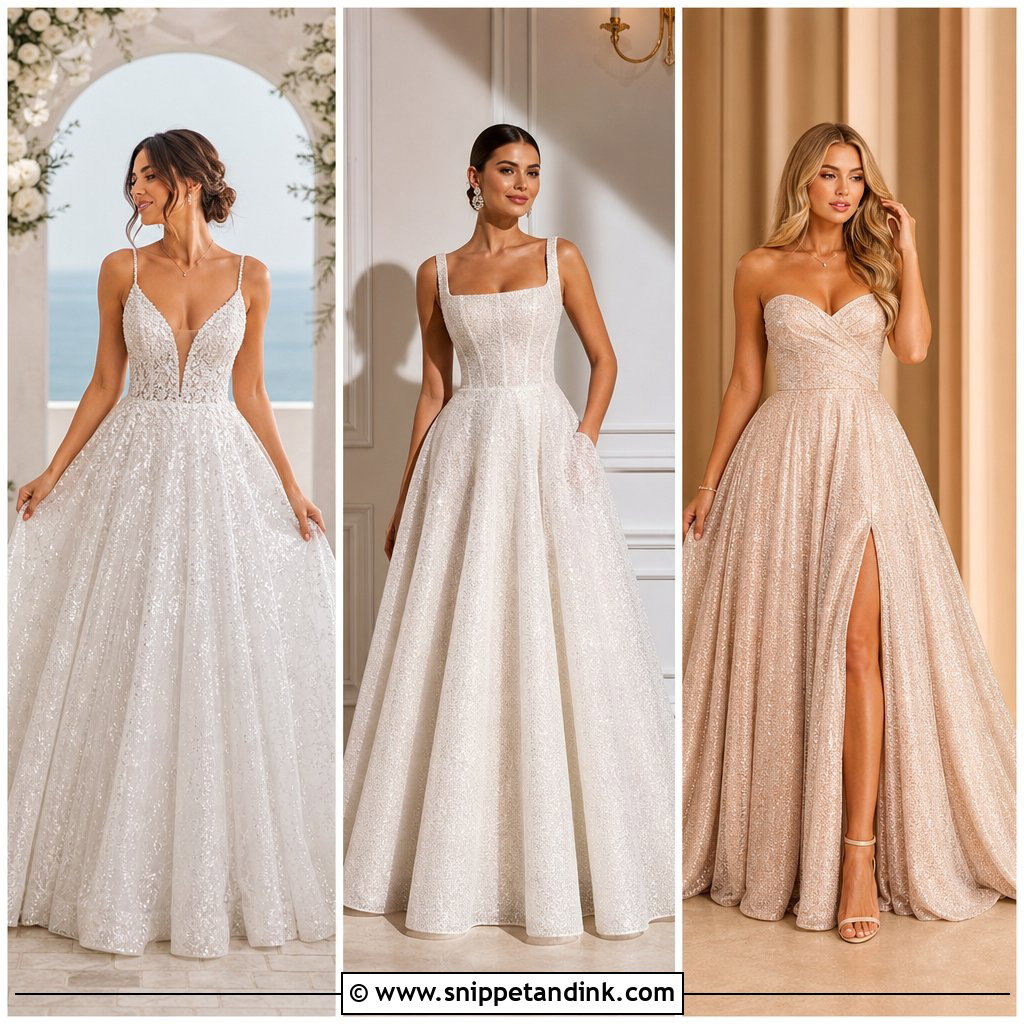
A crystal cape adds ceremony drama to a plain gown and comes off for dancing. A sheer floor-length cape over a column, A-line or fitted crepe dress looks best with crystals heavy at the shoulders and fading toward the hem, which keeps weight off the tulle. Pointed pumps, small crystal earrings and a sleek updo keep the neckline clear; skip a necklace if the clasp is already decorative. Walk and turn in it to check it isn’t dragging the gown backward. Outdoors, a secure shoulder attachment matters even more because wind catches a long cape.
16. Crystal Belt Wedding Dress
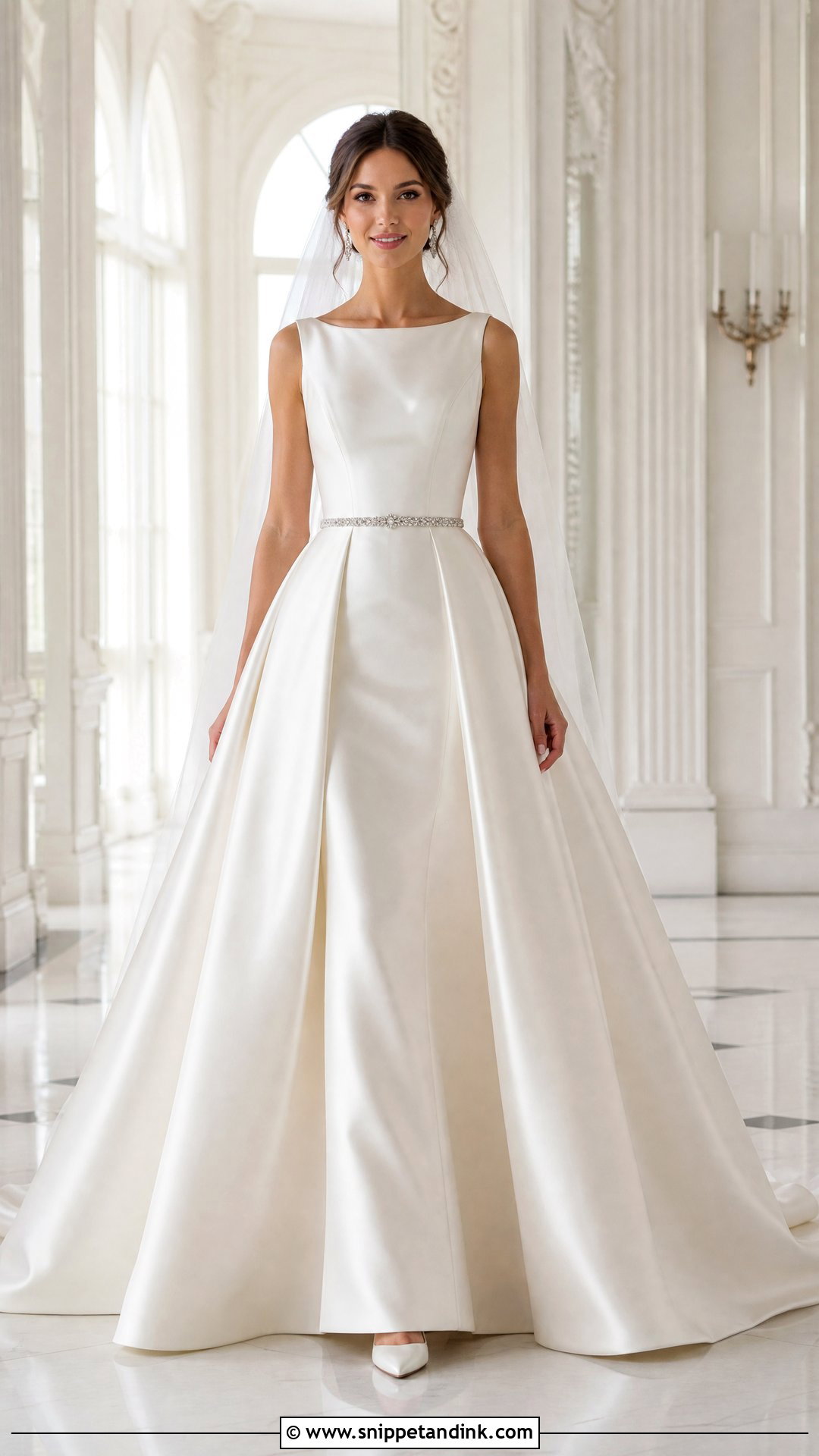
A crystal belt is the simplest way to add sparkle to a plain dress you already own or love. It suits satin ball gowns, chiffon A-lines and clean crepe shapes that need a defined waist. Choose a width in proportion to the bodice, usually narrow for petite frames, and set it at the natural waist unless the dress drops deliberately. Crystal earrings, satin pumps and a plain chapel veil finish it. Have the seamstress tack it at the side seams or back closure so it doesn’t twist when you sit. It’s also the only option here you can remove and wear again.
17. Crystal Shoulder Wedding Dress
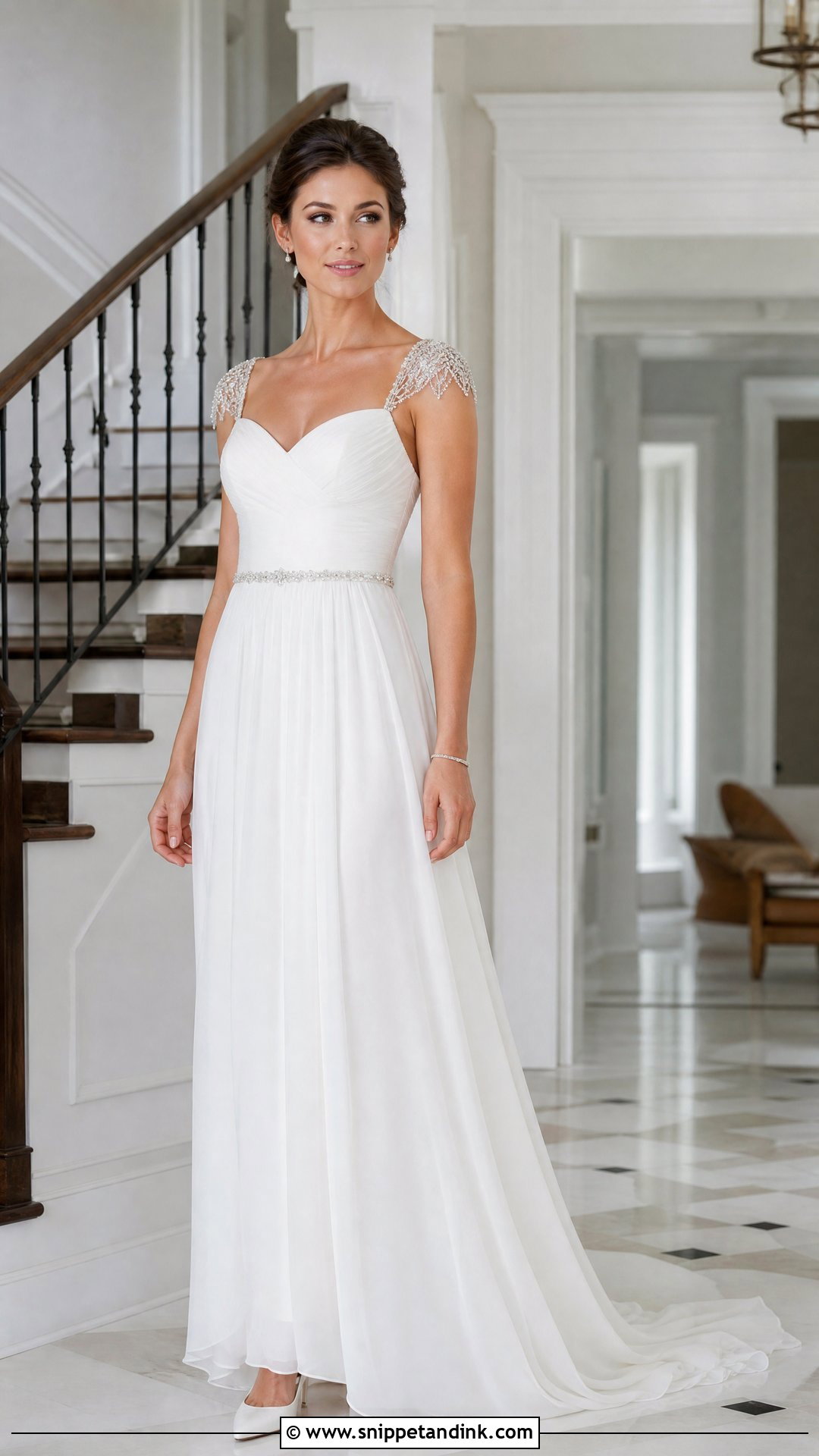
Crystal-covered shoulders frame the face and give a soft gown some structure. Jeweled straps, crystal epaulettes or beadwork running from the neckline across sheer cap sleeves all work above a smooth chiffon, satin or crepe skirt. Simple pumps, a narrow bracelet and small earrings stay out of the way. The two things I check: whether the stones rub the side of the neck, and whether the veil snags on them every time you turn. A soft lining under heavier pieces helps the first; a veil comb placed lower on the head helps the second.
18. Crystal Skirt Wedding Dress
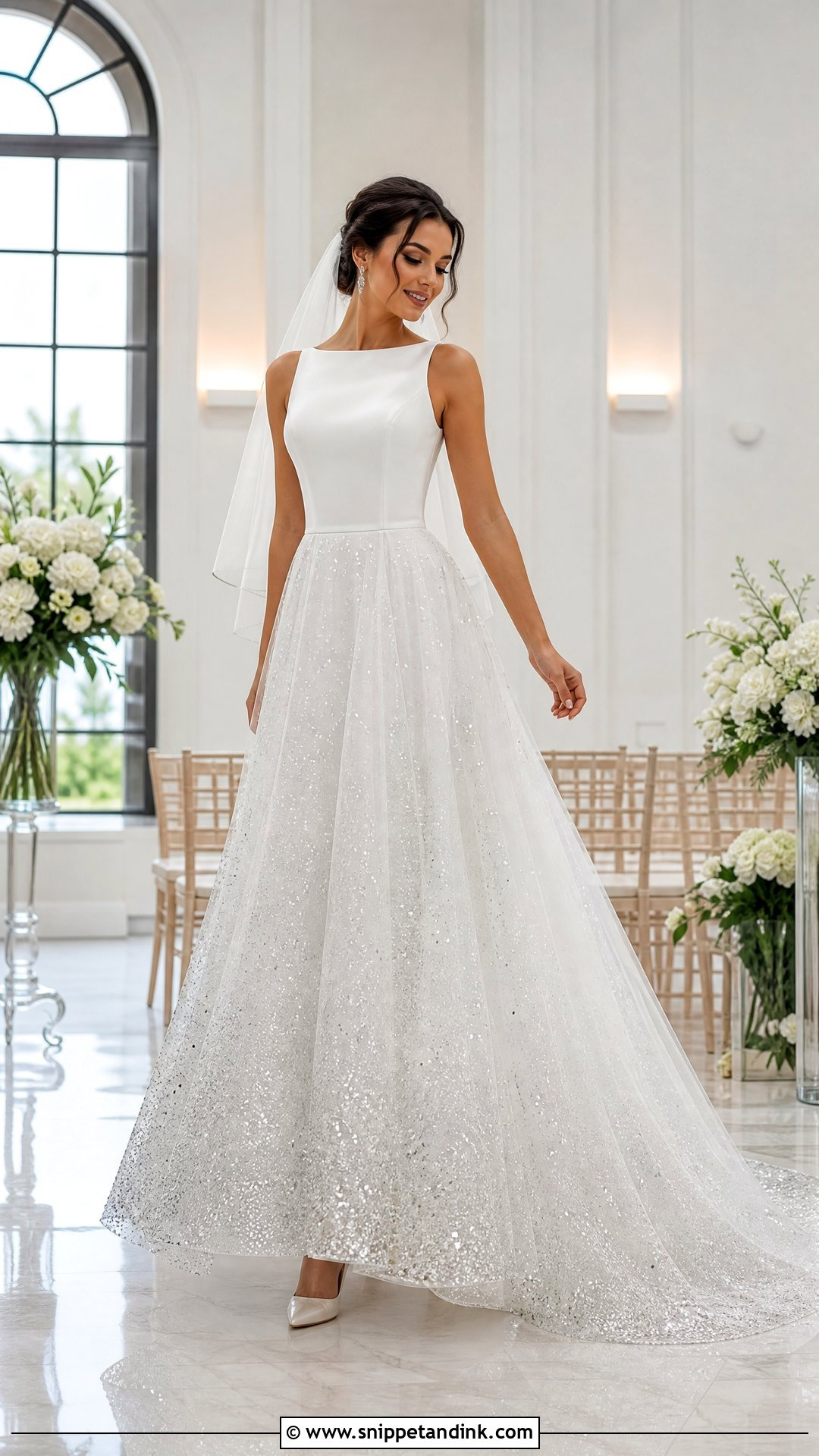
A skirt that gets denser with crystals toward the hem and train looks spectacular walking down the aisle. Keep the bodice clean and fitted so the design stays organized. Tulle makes the stones float, while satin or crepe shows each one sharply. Your veil should end before the most decorated area. Weight at the hem changes how the gown bustles, so ask the salon how they’ll handle it; heavy trains often need a stronger bustle with more attachment points and reinforced stitching. Simple earrings and closed heels finish it.
19. Crystal Drop Waist Wedding Dress
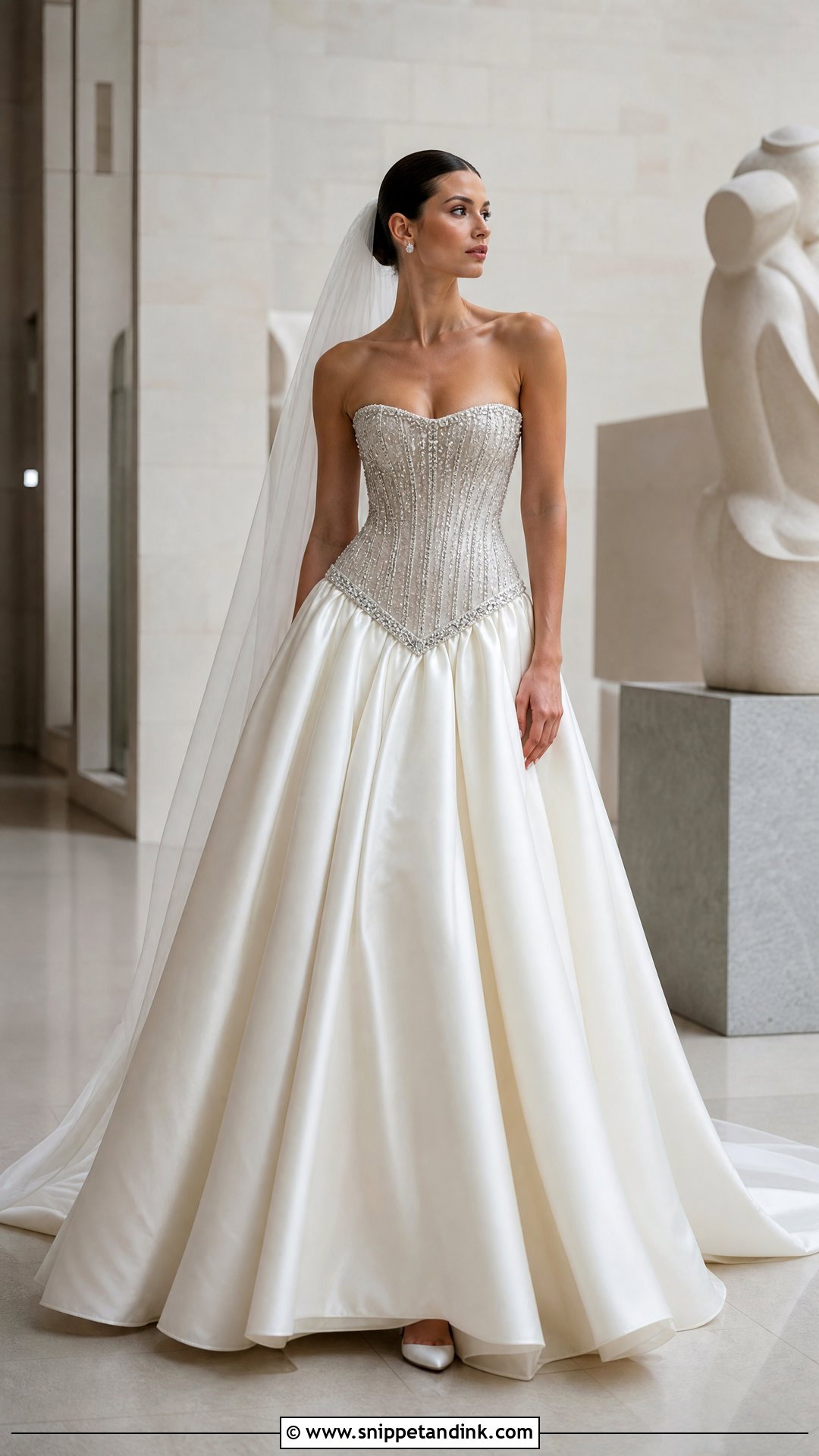
Drop waists lengthen the bodice before opening into a fuller skirt, and crystals can trace that extended line, the corset structure or fade into the skirt. Check the beading from the side as well as the front, since a low waistline can look heavy at the hips if the stones crowd there. Sit and bend at fittings to make sure the lower bodice doesn’t dig into your hips; this silhouette relies on good boning and precise tailoring. Slim satin heels, crystal studs, a long plain veil and a smooth updo suit ballrooms, museums and dramatic architecture.



20. Allover Crystal Wedding Dress
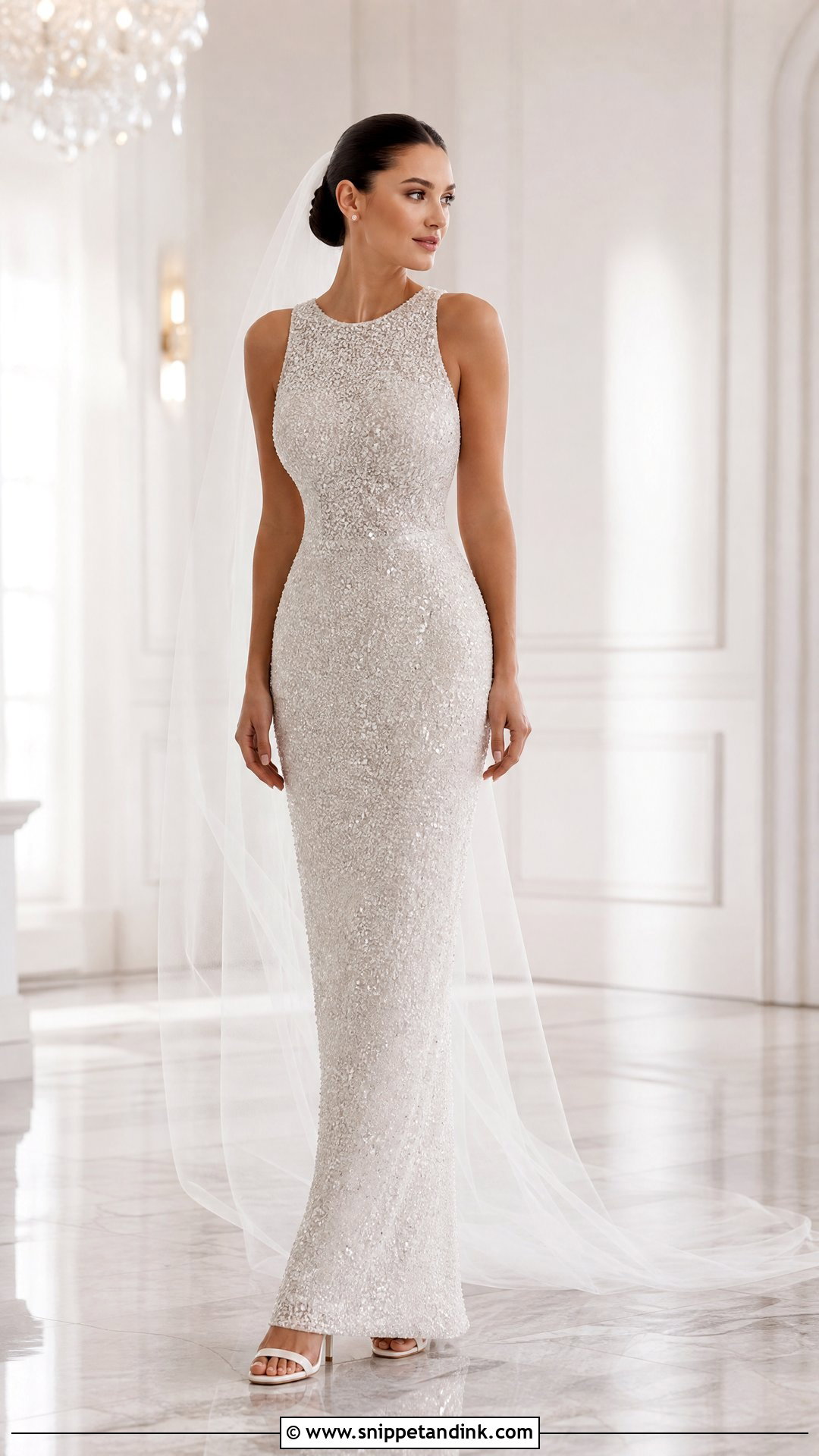
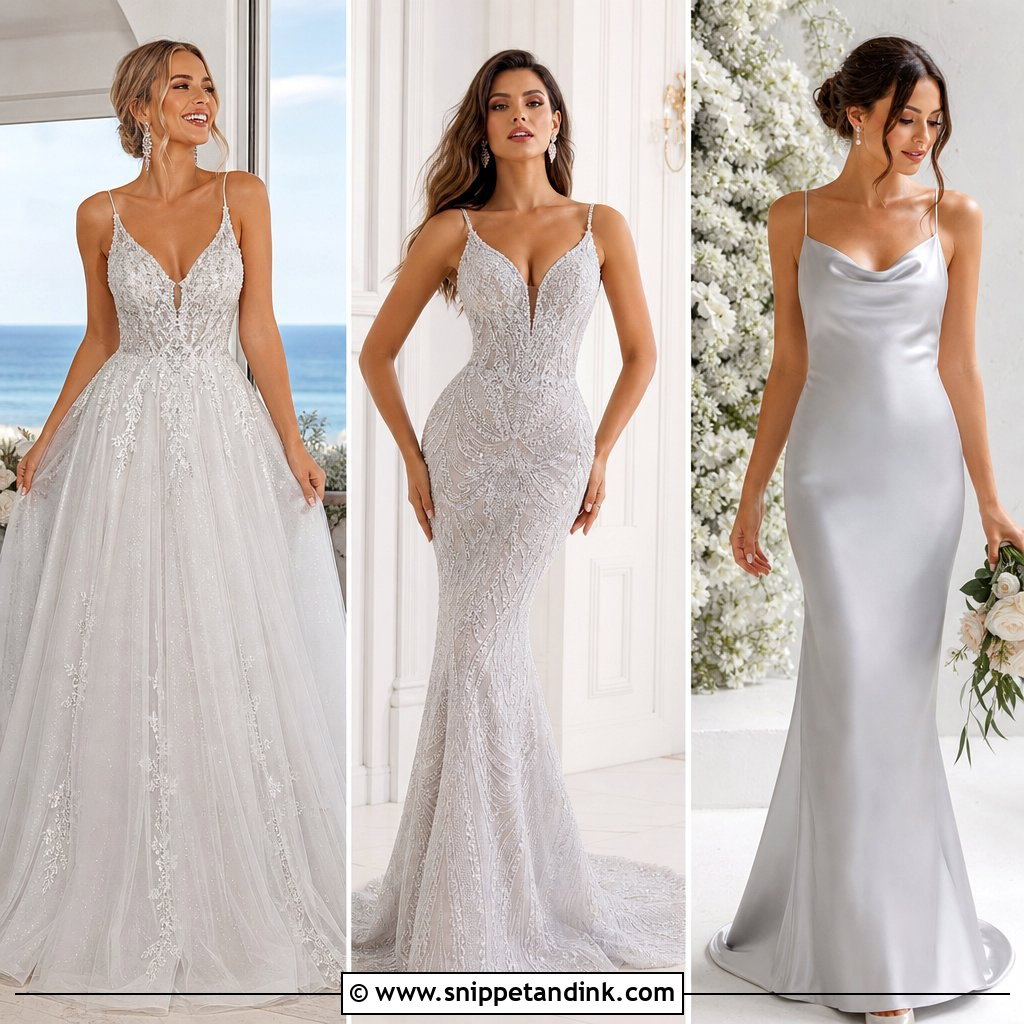
A gown crystal-covered from neckline to hem is the heaviest dress you can choose. I’d keep the silhouette streamlined, a column, sheath or fitted A-line, so the embellishment looks sophisticated rather than costume. Clear, ivory and silver stones give depth without a mix of colors. Wear it for at least half an hour at a fitting before committing, and check the lining, underarms and seams for scratching. Small studs, simple heels and a sheer veil with no decorated border are all it needs, with a sleek bun, polished waves or a ponytail. A secure bustle and solid beadwork keep it manageable through the night.
When a Stone Comes Loose on the Day
Losing a crystal or two during a wedding is normal, especially from a skirt that drags over floors and stairs. What matters is not making it worse.
- Ask the salon for spare stones when you collect the gown. Many dresses come with a small bag of them; if yours doesn’t, ask.
- Never pull a hanging thread. Snip it close with small scissors and leave the repair until after the wedding, because pulling can unravel a whole row.
- Pack a small kit: needle, ivory and clear thread, tiny scissors and a few safety pins. A loose stone near the neckline can be tacked in a minute.
- Have someone check the back of the train after portraits outdoors, where grass and gravel catch beading.
After the wedding, tell the cleaner exactly how the stones are attached, as glued crystals need different treatment from sewn ones. Store heavily beaded gowns folded flat in acid-free tissue in a box rather than hanging; the weight of the crystals stretches the shoulders and seams over time.
Where Should the Sparkle Land?
Crystals should support the dress, not bury it. Start by choosing where you want eyes to go: neckline, waist, back, sleeves or train. Then weigh the gown, check how it feels against your skin, and look at it in the lighting your venue will have. At every try-on, walk, sit, raise your arms and turn, because a crystal gown behaves differently once it’s moving. Firm beadwork and careful alterations matter as much as the sparkle itself. From a single crystal strap to a fully covered gown, the right amount is whatever still feels comfortable when the last song plays.
You'll Like These Ideas:


Leave a Reply