
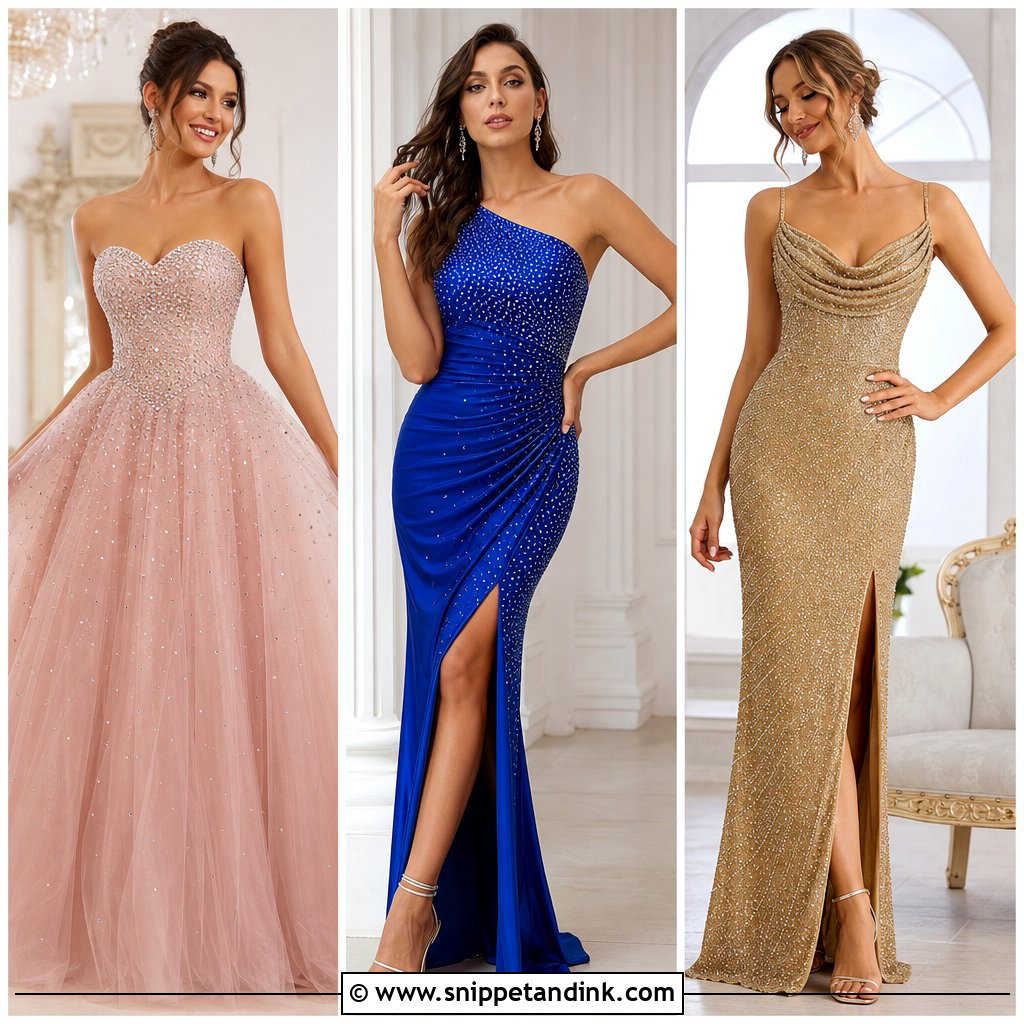
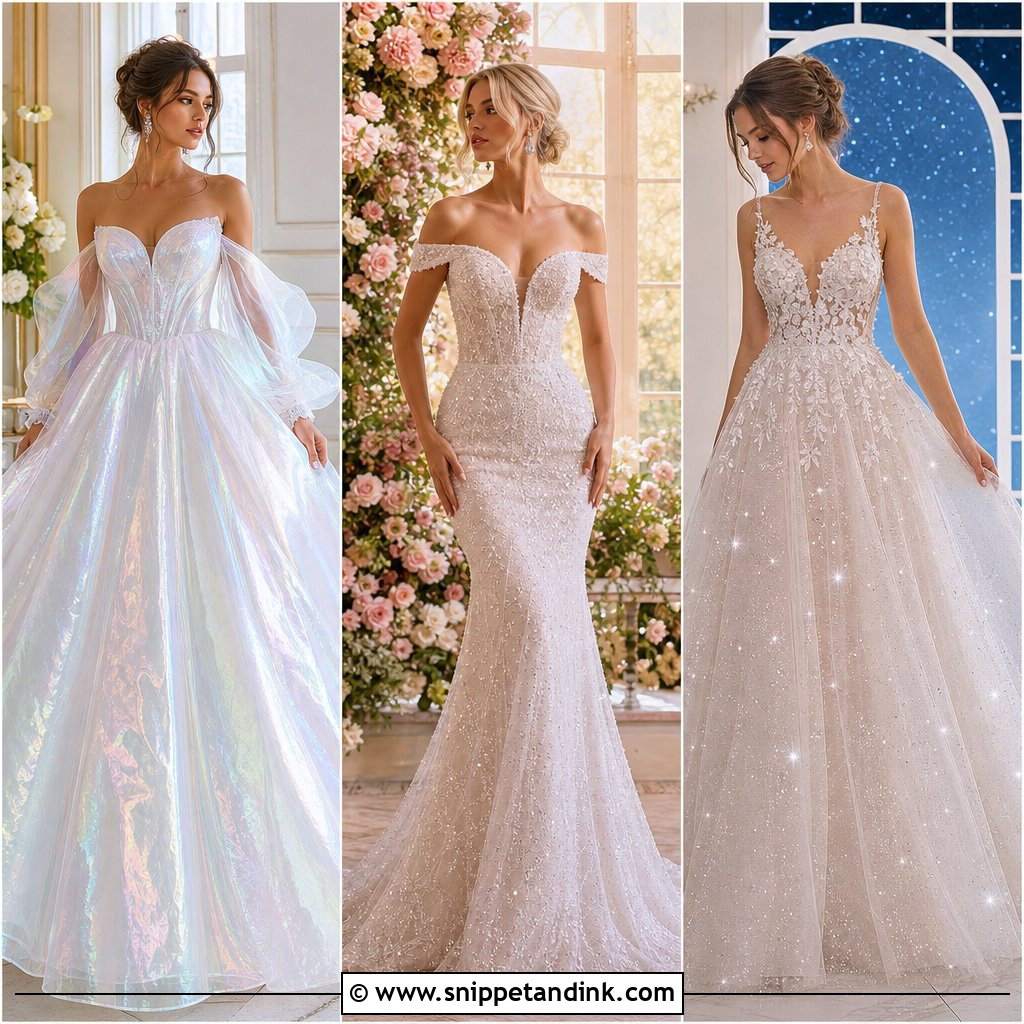
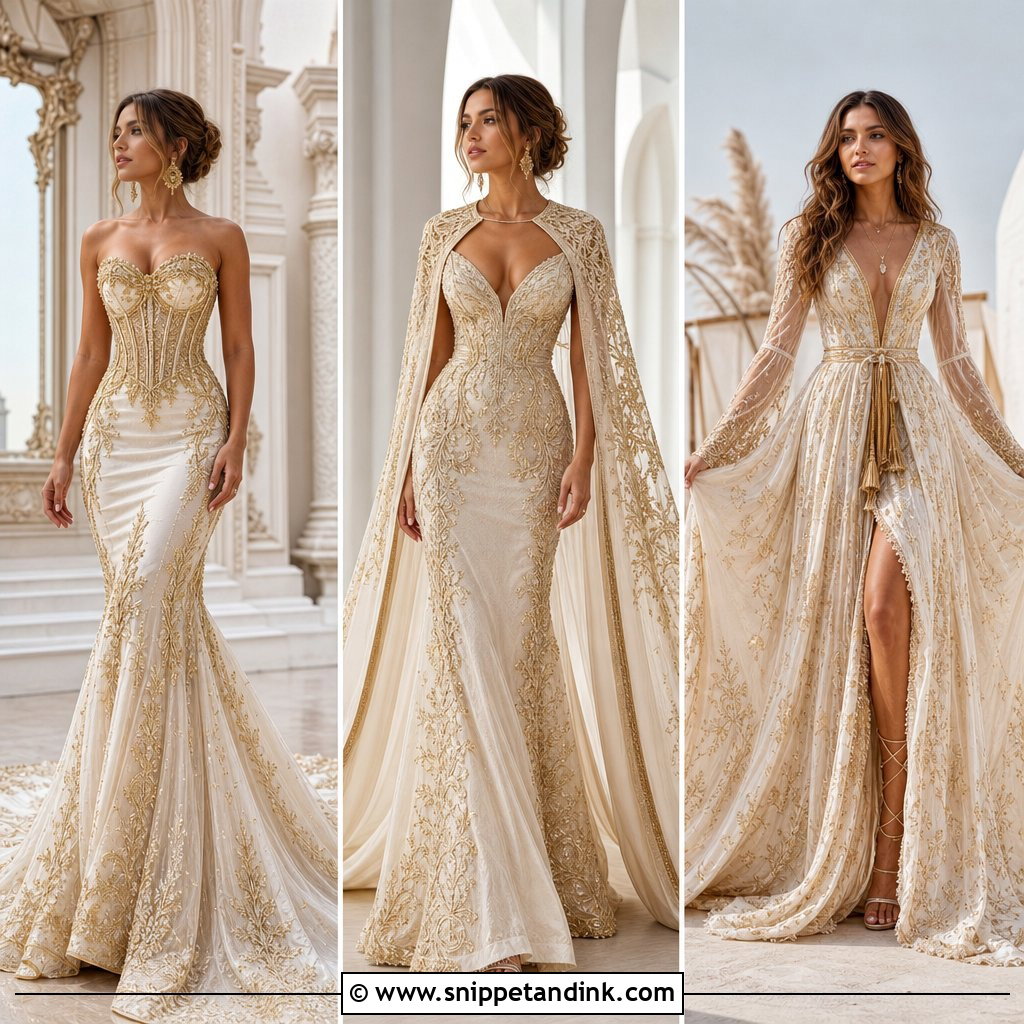
Gold is not one colour. In a fitting room it runs from pale champagne that reads almost ivory, through rose gold with a pink cast, to deep antique gold that looks like old brocade. The right one depends on your skin, your venue lighting and how much shine you can live with for twelve hours. Current gowns add corsetry, draping, lace, detachable layers and long trains to the mix. For each gown below I’ve suggested the veil, jewellery, shoes and flowers I’d put with it, plus who it suits and what to check at the fitting.
Matching the Shade of Gold to Your Skin’s Undertone
Before we look at shapes, find your gold. The wrong shade can make skin look sallow or ruddy in photos, even if the gown fits perfectly. I hold fabric swatches right under the bride’s chin, in daylight by a window, with no makeup, and watch what happens to the face.
- Cool or pink undertones usually glow in champagne, pale gold and rose gold.
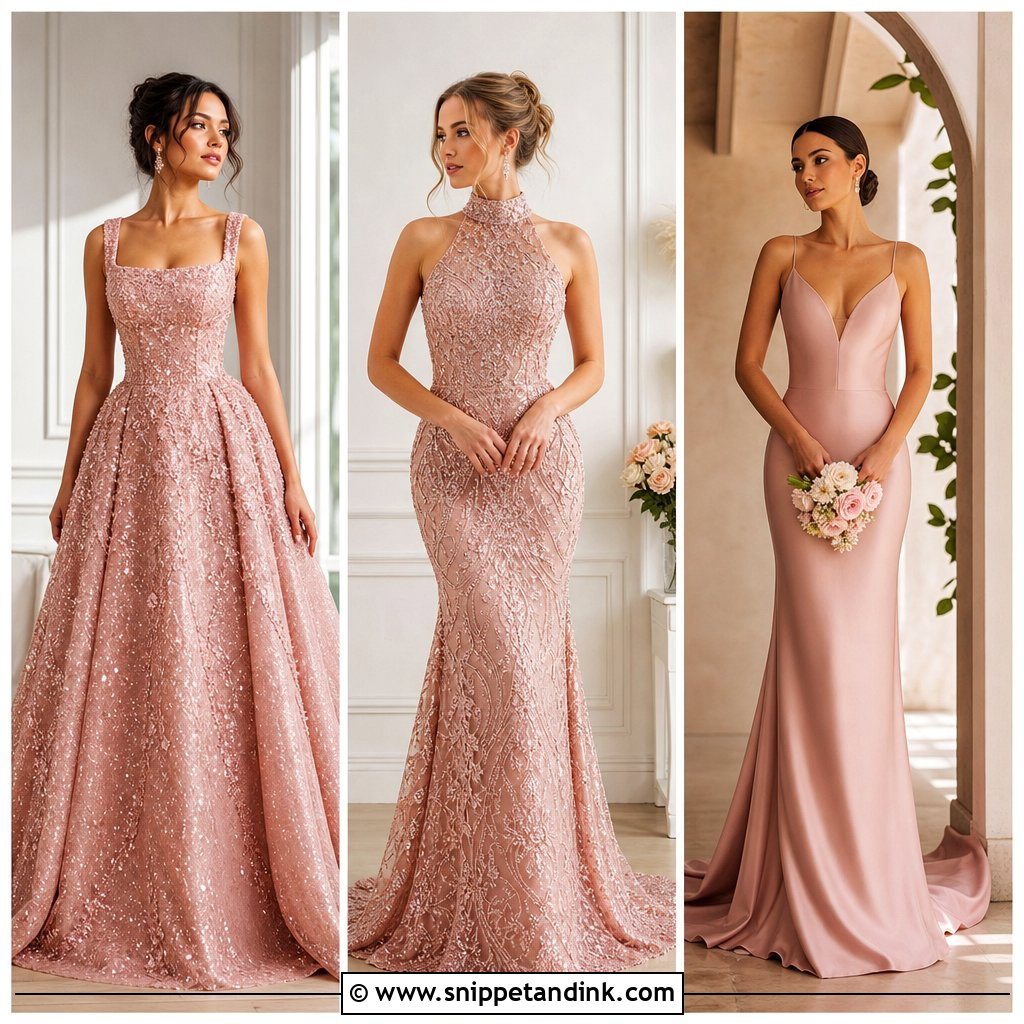
- Warm or olive undertones can carry yellow gold and antique gold, which bring out warmth instead of fighting it.
- Deep skin tones often look rich in saturated yellow gold and bronze, and less so in very pale champagne, which can look chalky beside the skin.
- If you’re unsure, a gold with a soft satin finish is safer than a high-shine lamé.
Also check your jewellery. If your engagement ring is white gold or platinum, a warm yellow gown can make it look grey. A pale champagne gown bridges both metals.
1. Strapless Gold Ball Gown
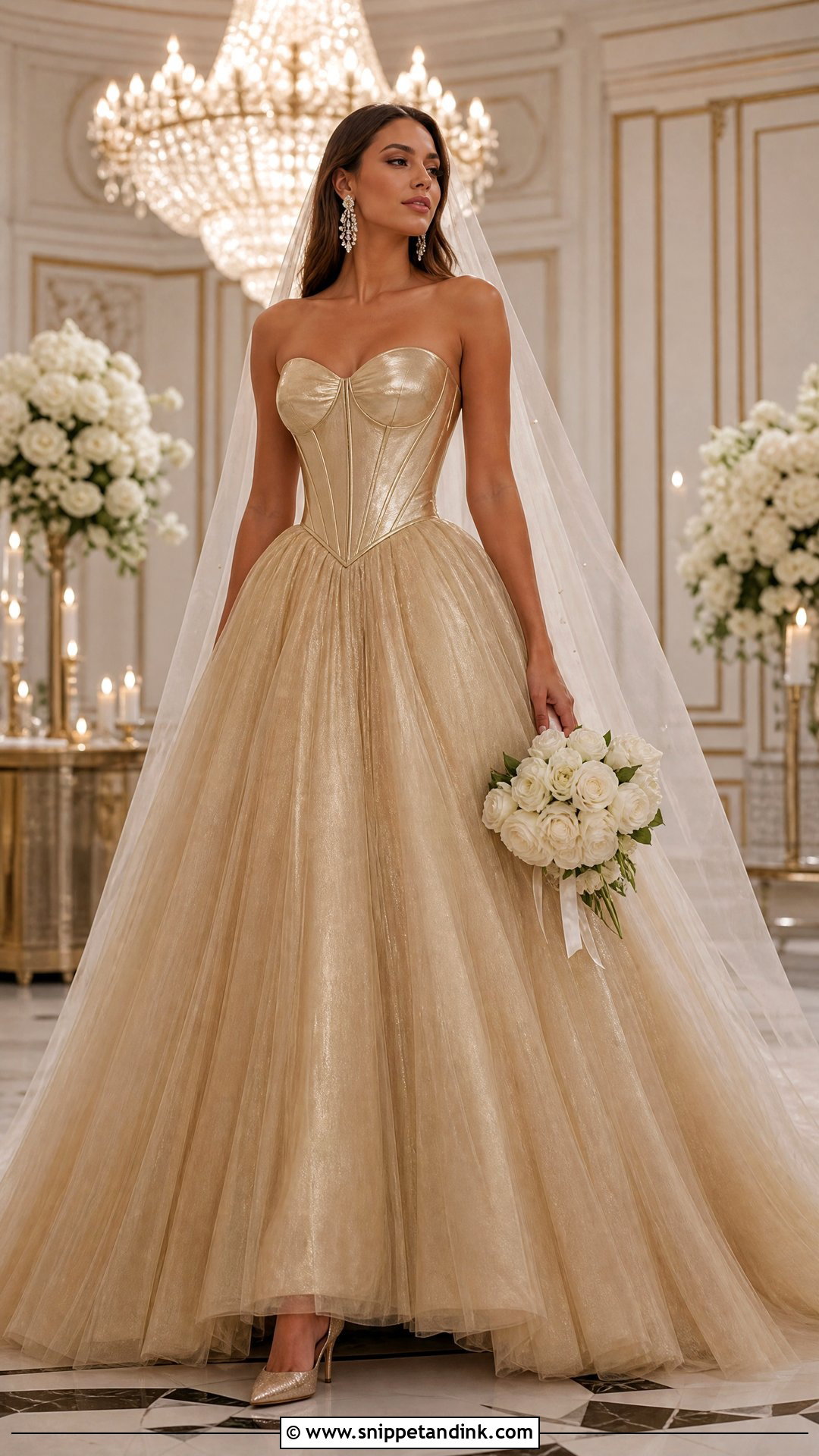
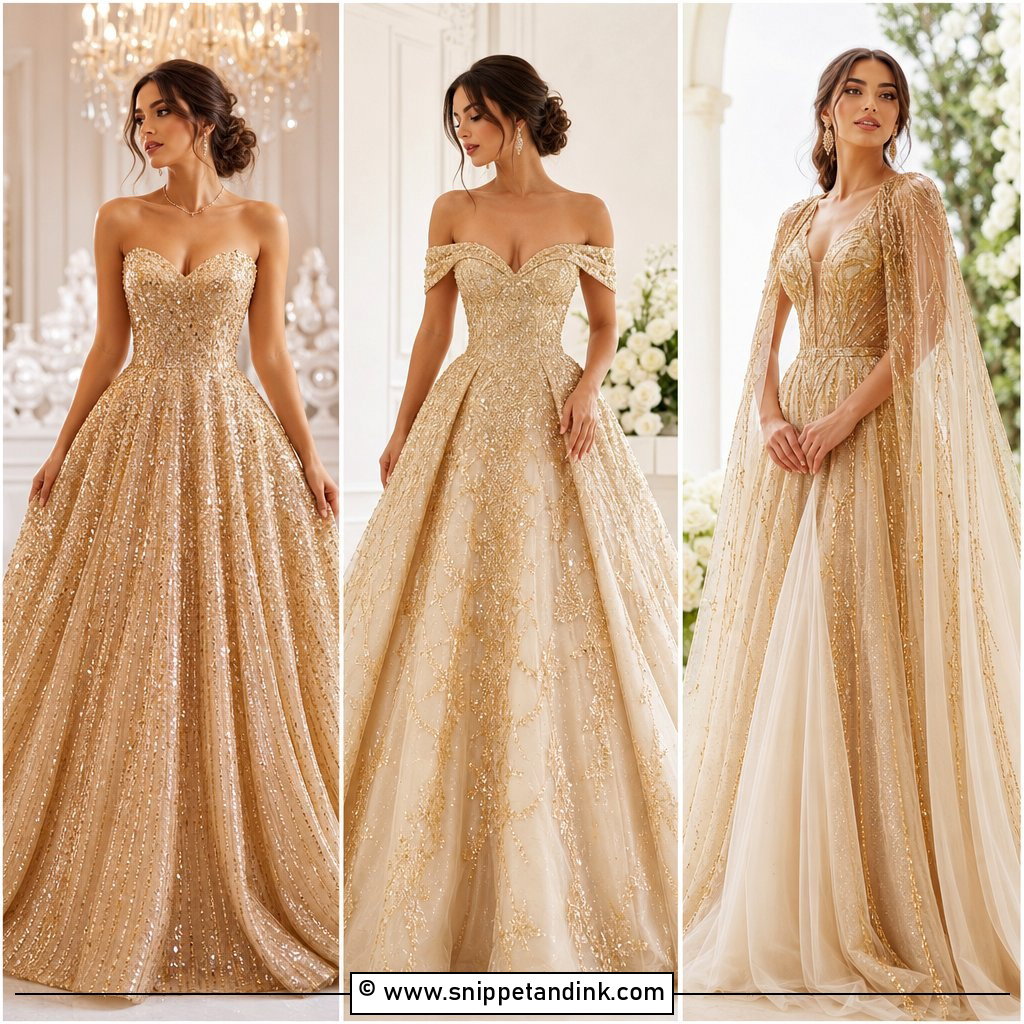
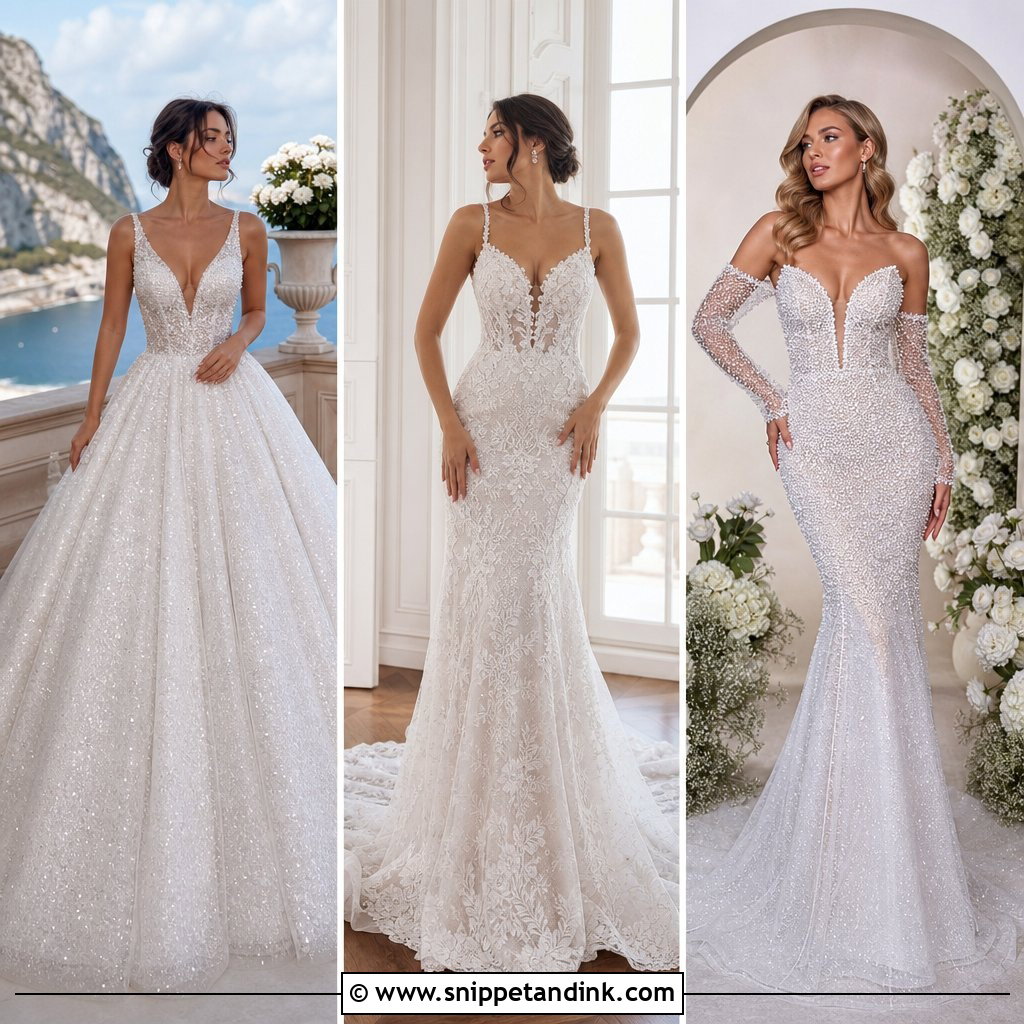
This is the most formal gown here, and the bodice decides whether it works. A strapless ball gown in gold needs proper boning and a waist stay, because a full satin or tulle skirt is heavy and will drag a weak bodice down by the first dance. I keep the rest simple: a sheer fingertip veil, crystal drops and pointed champagne heels, with a sleek bun so the neckline is clear. White roses and pale greenery brighten the metallic fabric. If you have a fuller bust, ask for built-in cups and wider corset panels; they make a bigger difference than any amount of tape.
2. Long Sleeve Gold Lace Wedding Gown
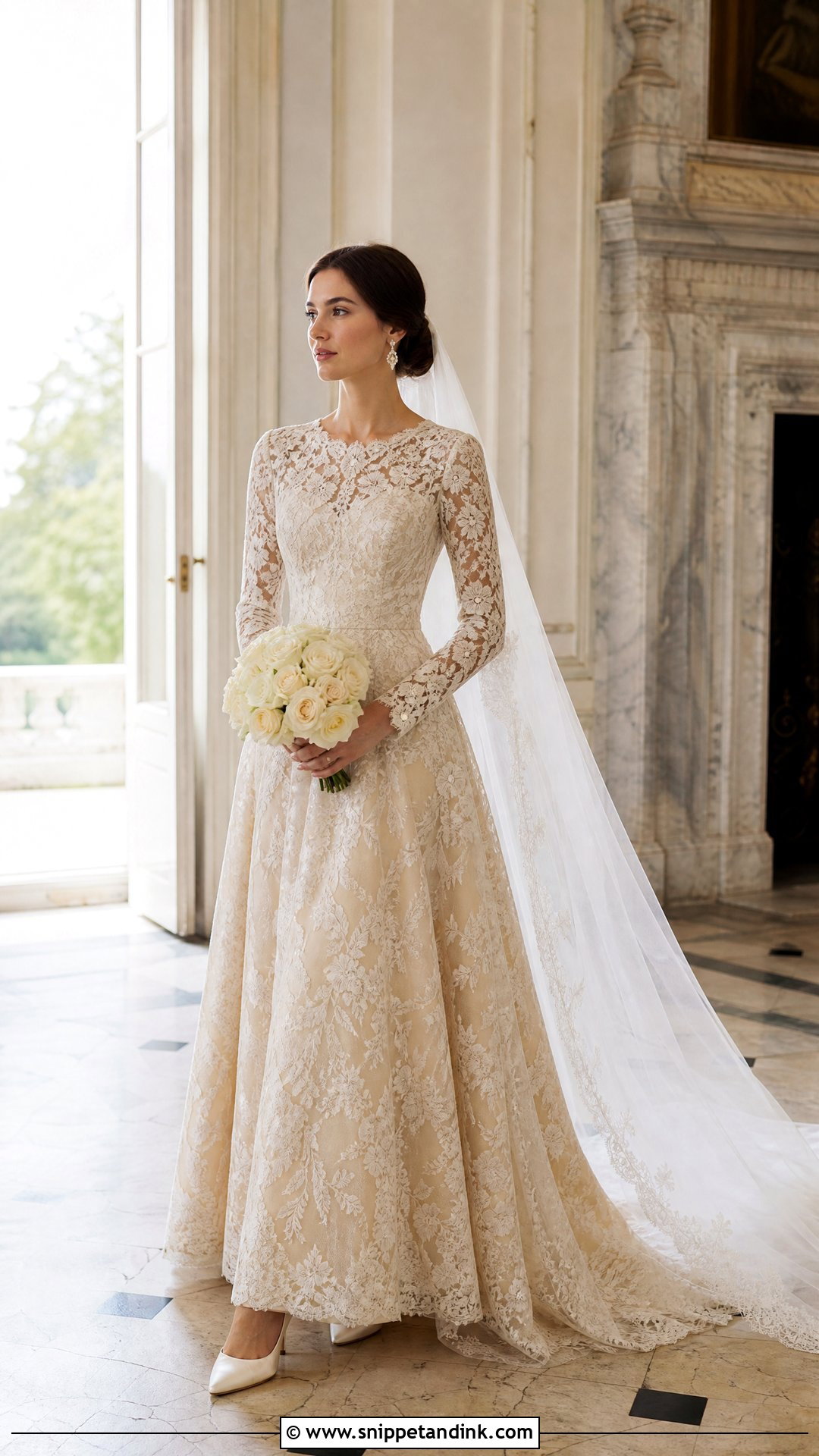
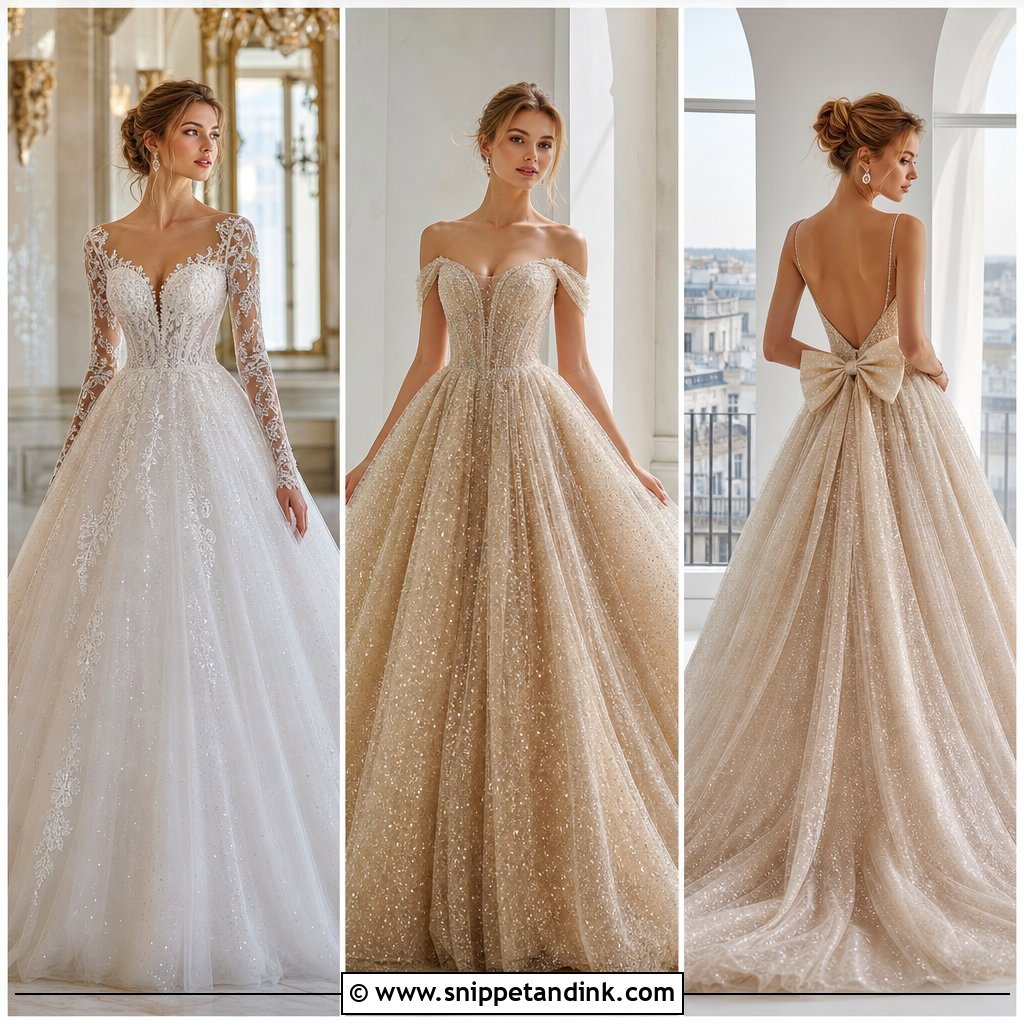
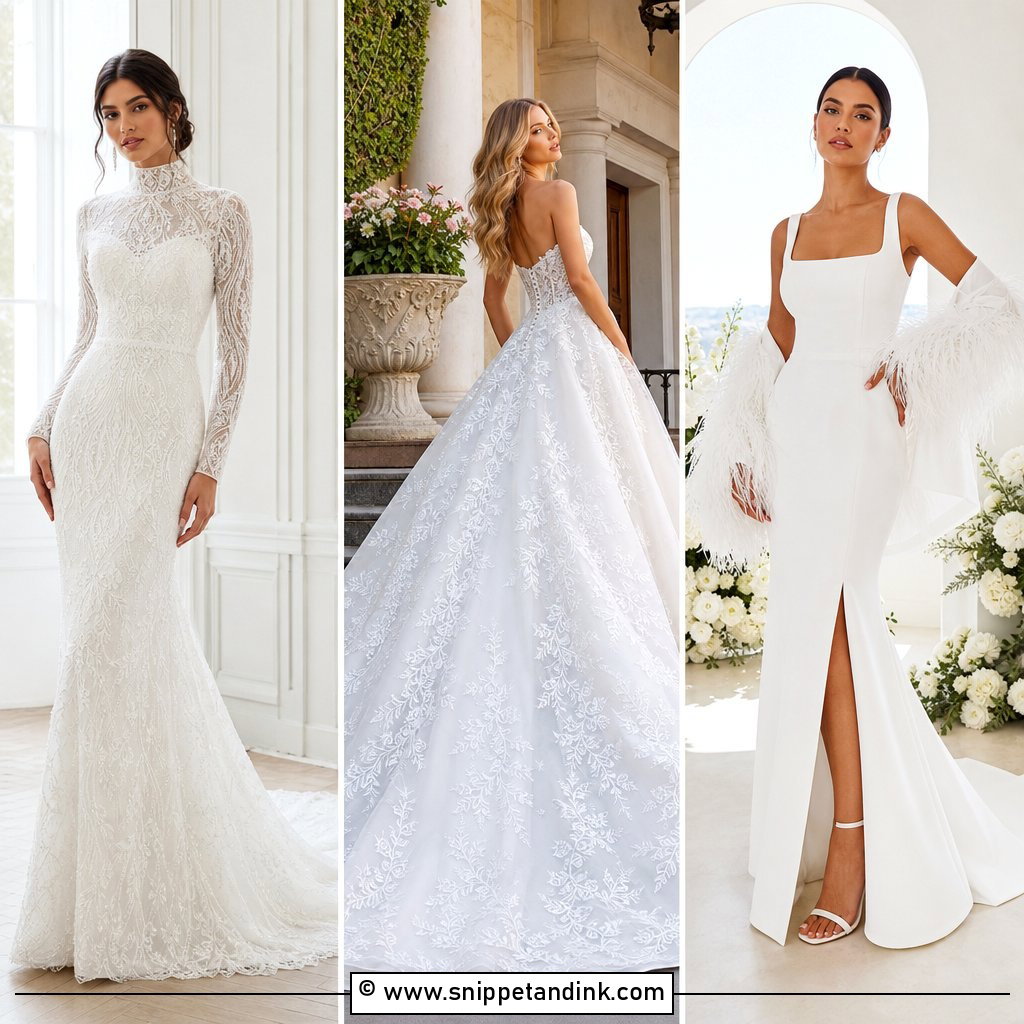
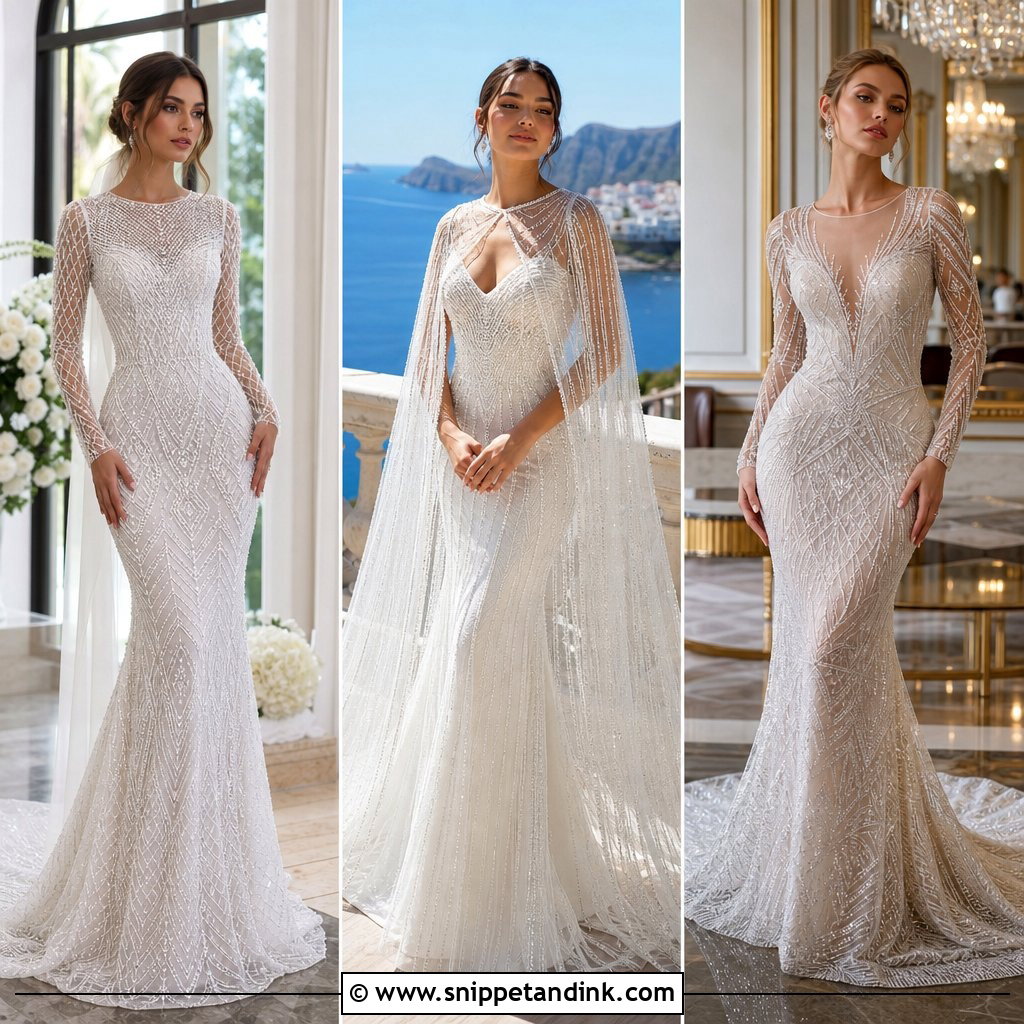
Lace softens gold without hiding it, as long as the underlay is neutral. When lace sits on a gold base, the pattern disappears; on nude or ivory, the Antique gold thread stands out clearly. I’d choose sheer long sleeves, a lined bodice and an A-line or fit-and-flare skirt. Closed-toe satin pumps, a chapel veil and small pearl studs keep it romantic, and a low chignon lets the sleeves lead. Cream garden roses suit it. Watch the sleeve openings: lace sleeves cut tight at the wrist split at the seam the first time you hug someone.
3. Champagne Gold A-Line Wedding Gown
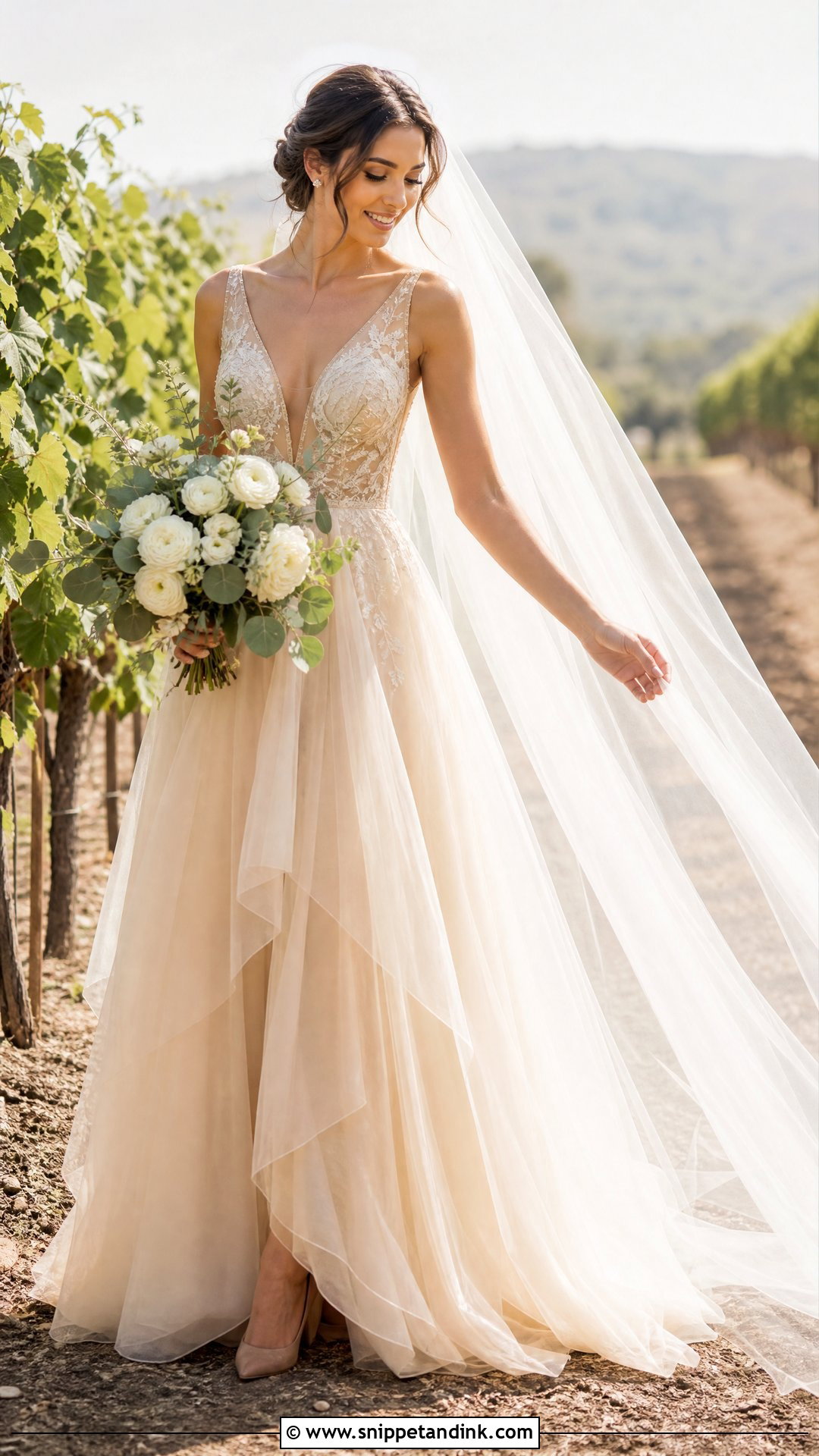
Champagne is where I start most brides who are nervous about gold. It sits close to ivory, so it looks bridal first and metallic second. An A-line with a fitted waist and a skirt of chiffon, organza or tulle moves easily. A sheer cathedral veil, nude pointed heels, a fine gold bracelet and small crystal studs keep it quiet. Loose waves or a low bun suit the softness, and ivory ranunculus with eucalyptus finishes it. Bring a swatch outside: champagne can lean grey on some fabrics in shade, and you want the version with warmth.
4. Rose Gold Beaded Wedding Gown
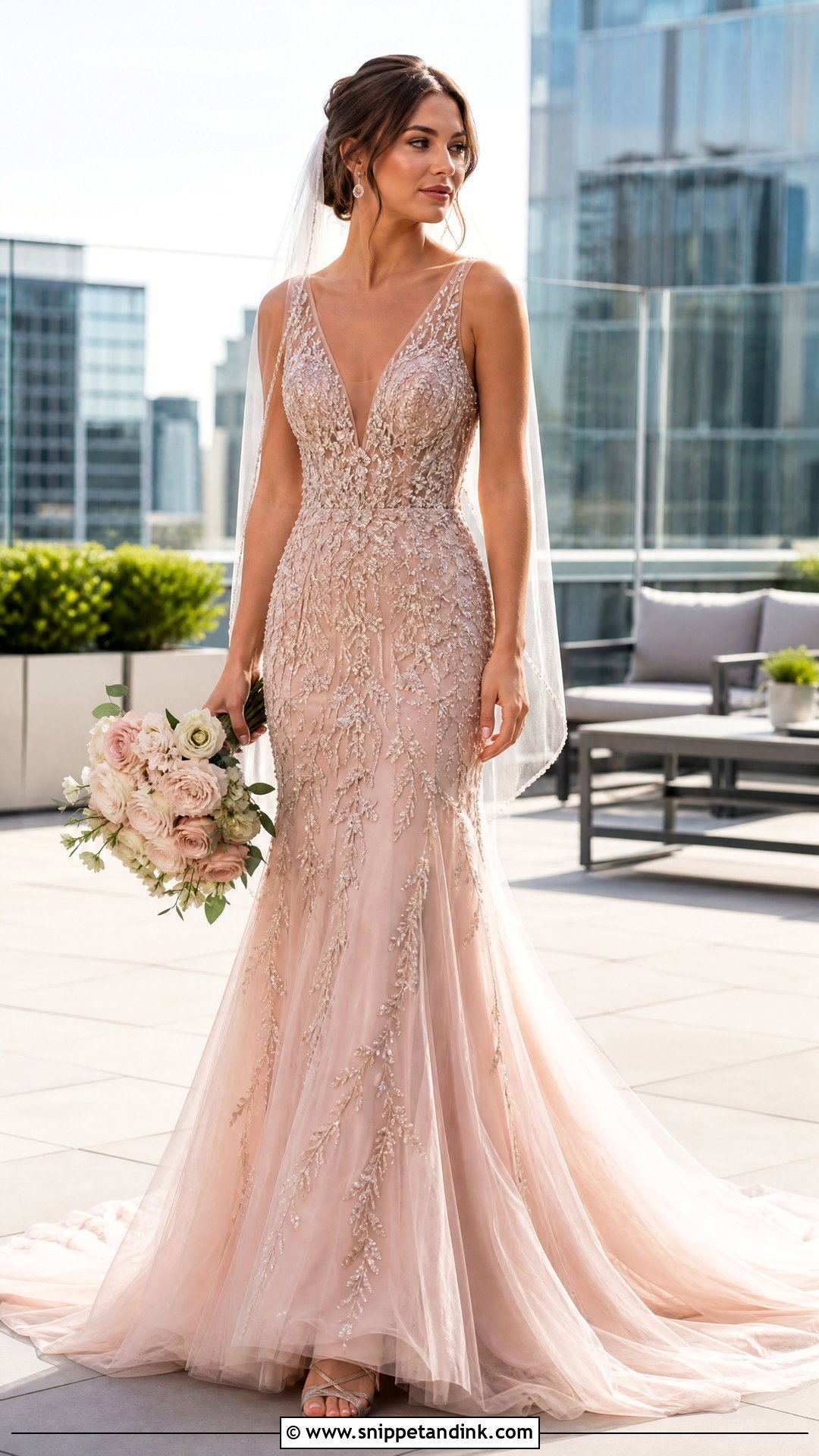
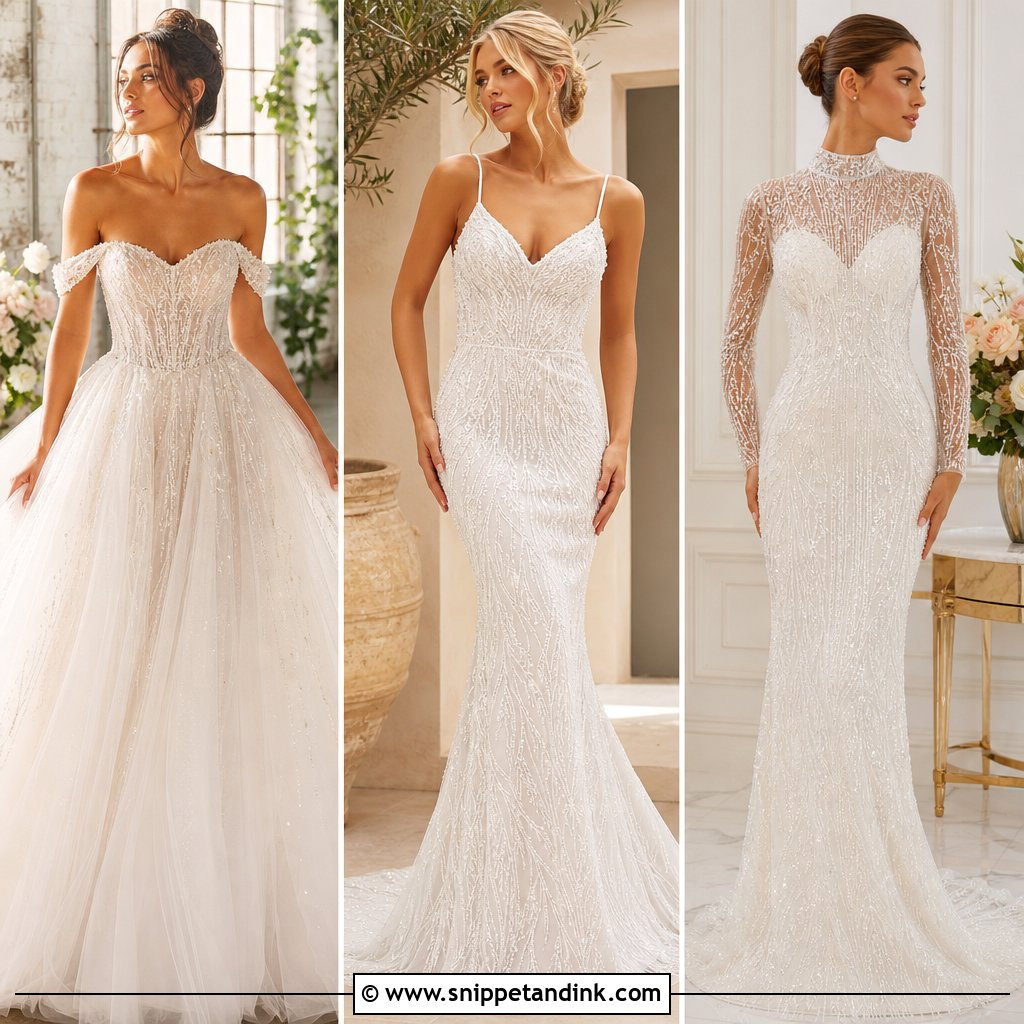
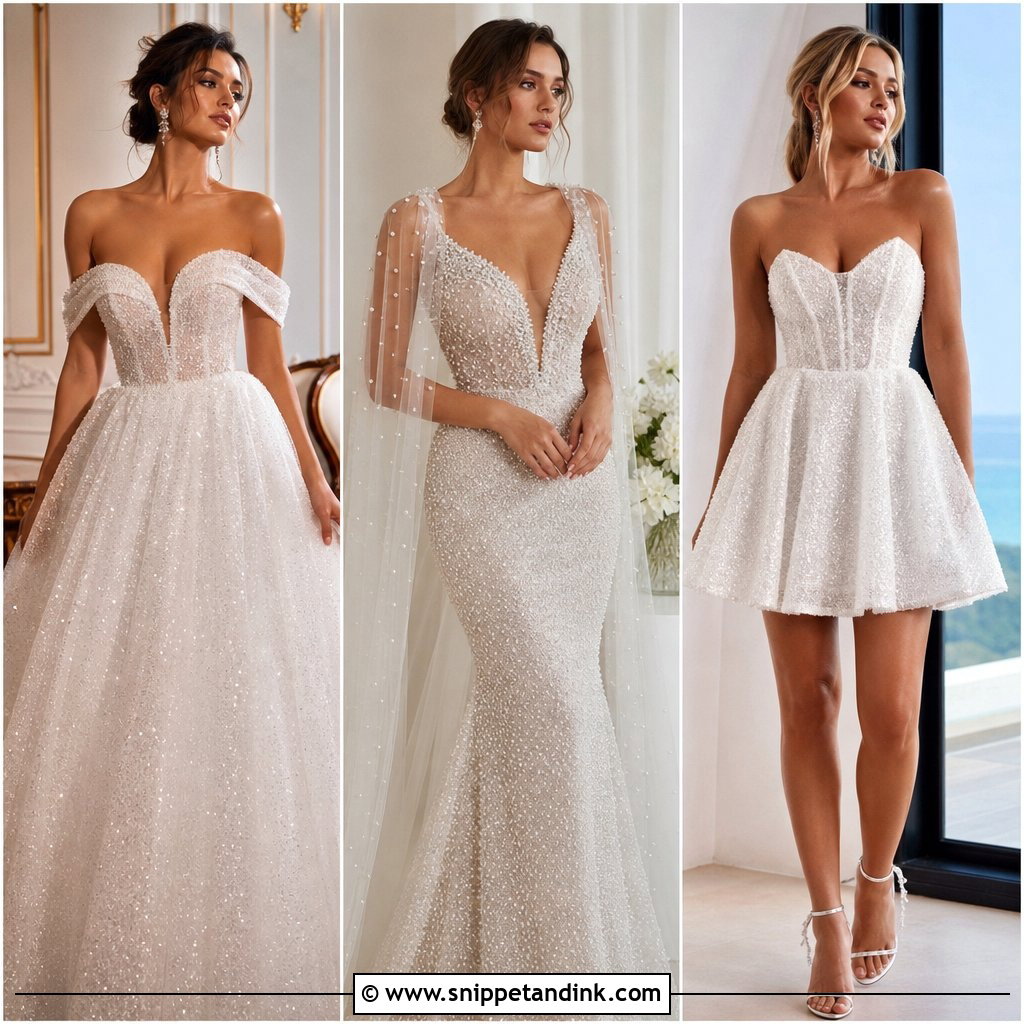
Rose gold carries a pink undertone that flatters fair and warm skin especially, and on a beaded gown it can look rich rather than flashy. I prefer beading that is dense on the bodice and thins out toward the hem, so the dress doesn’t look like armour. A tulle skirt or a slim column balances it. Rose gold sandals, delicate drops and a veil with a narrow metallic edge pull it together. Choose cream, blush and pale peach for the bouquet; anything brighter pink turns the whole look sugary. Rub the beaded areas against your inner arm at the fitting and ask for a soft lining wherever it scratches.
5. Antique Gold Vintage Wedding Gown
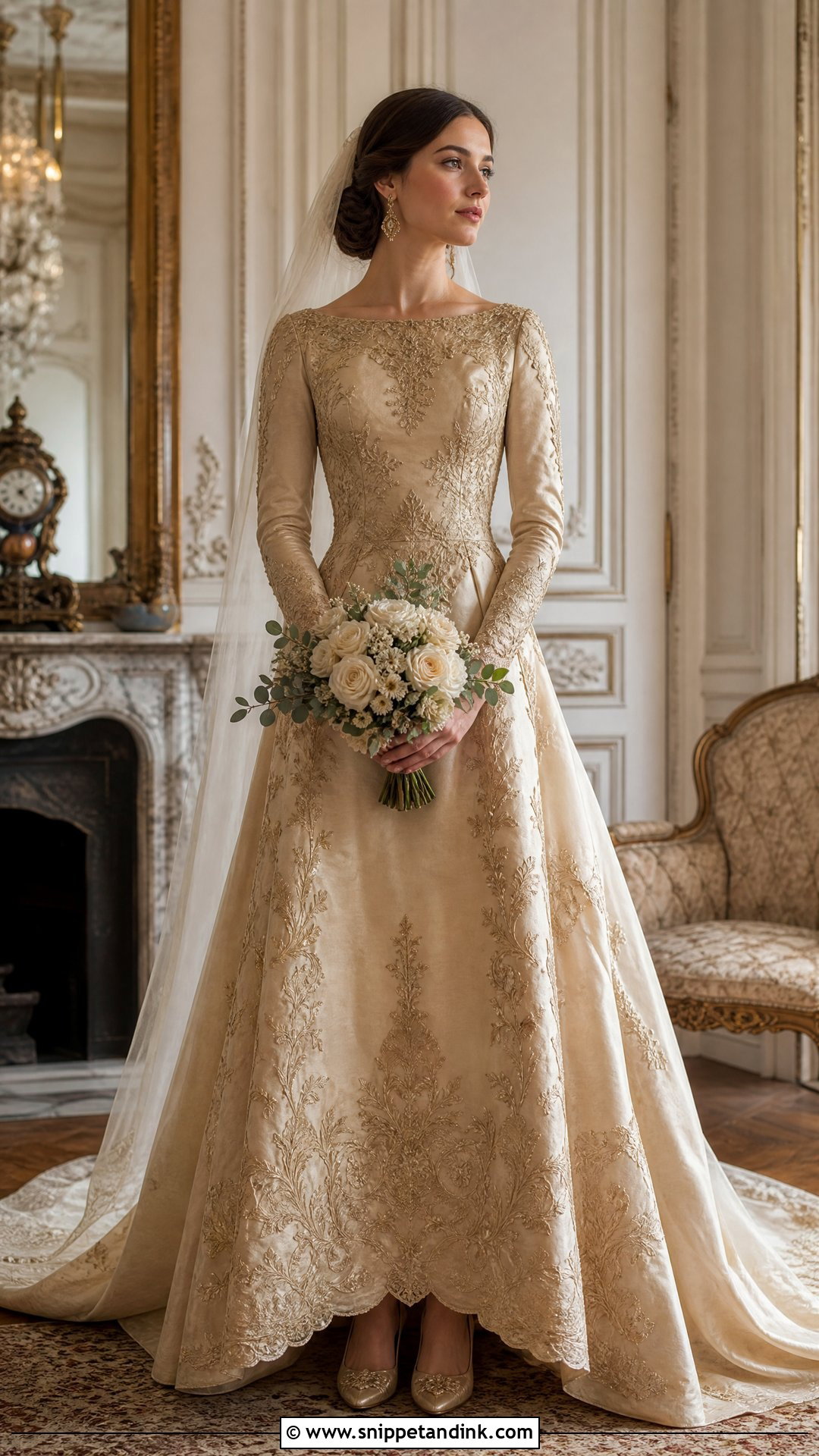
Antique gold is darker and less shiny than bright gold, which gives it the look of something worn by your grandmother. A bateau neckline, fitted waist and flowing skirt suit the vintage direction, with embroidered lace, covered buttons or light beading. The risk is tipping into costume, so I keep accessories real rather than themed: low gold heels, heirloom-style earrings and a plain tulle veil under a chignon. Ivory roses, muted greenery and pale apricot suit the deeper tone. Don’t match every accessory to the gown; neutrals beside antique gold define its colour.
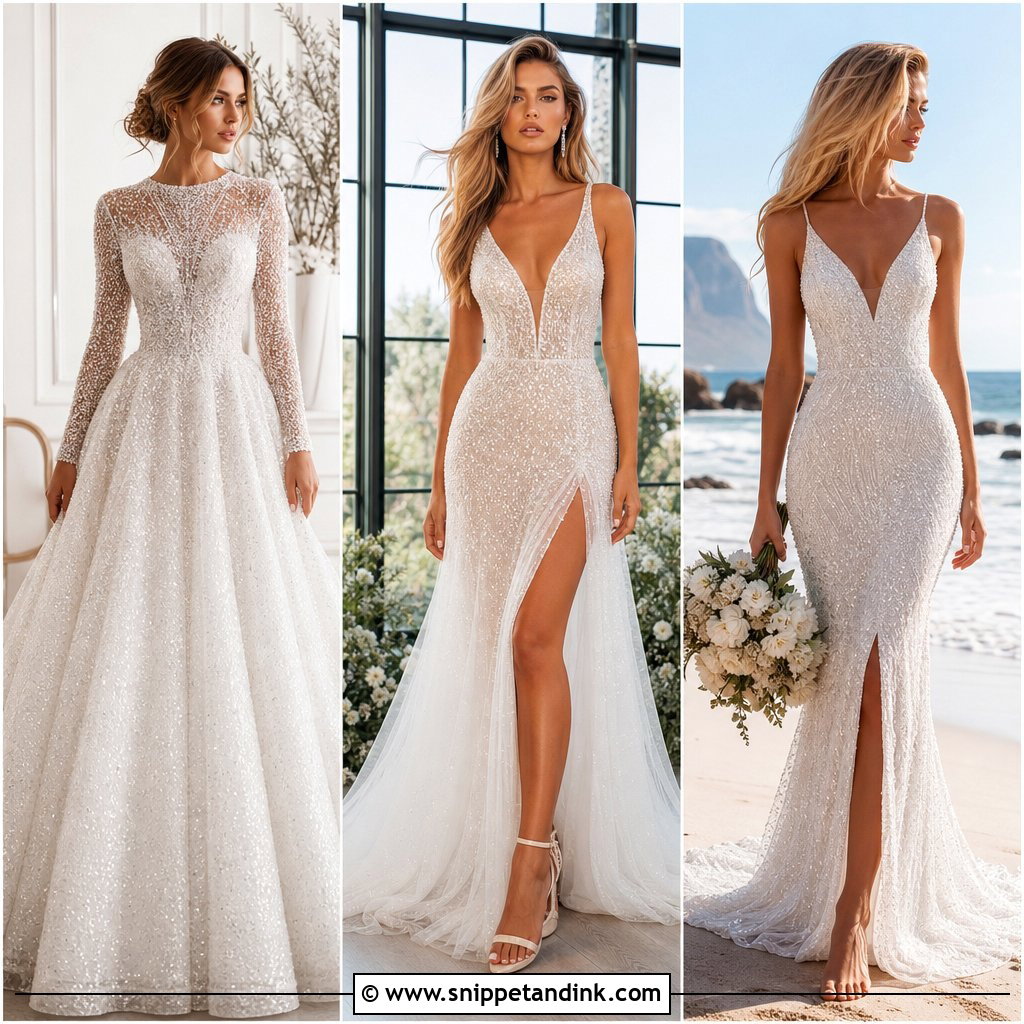
6. Gold Sequin Mermaid Wedding Gown
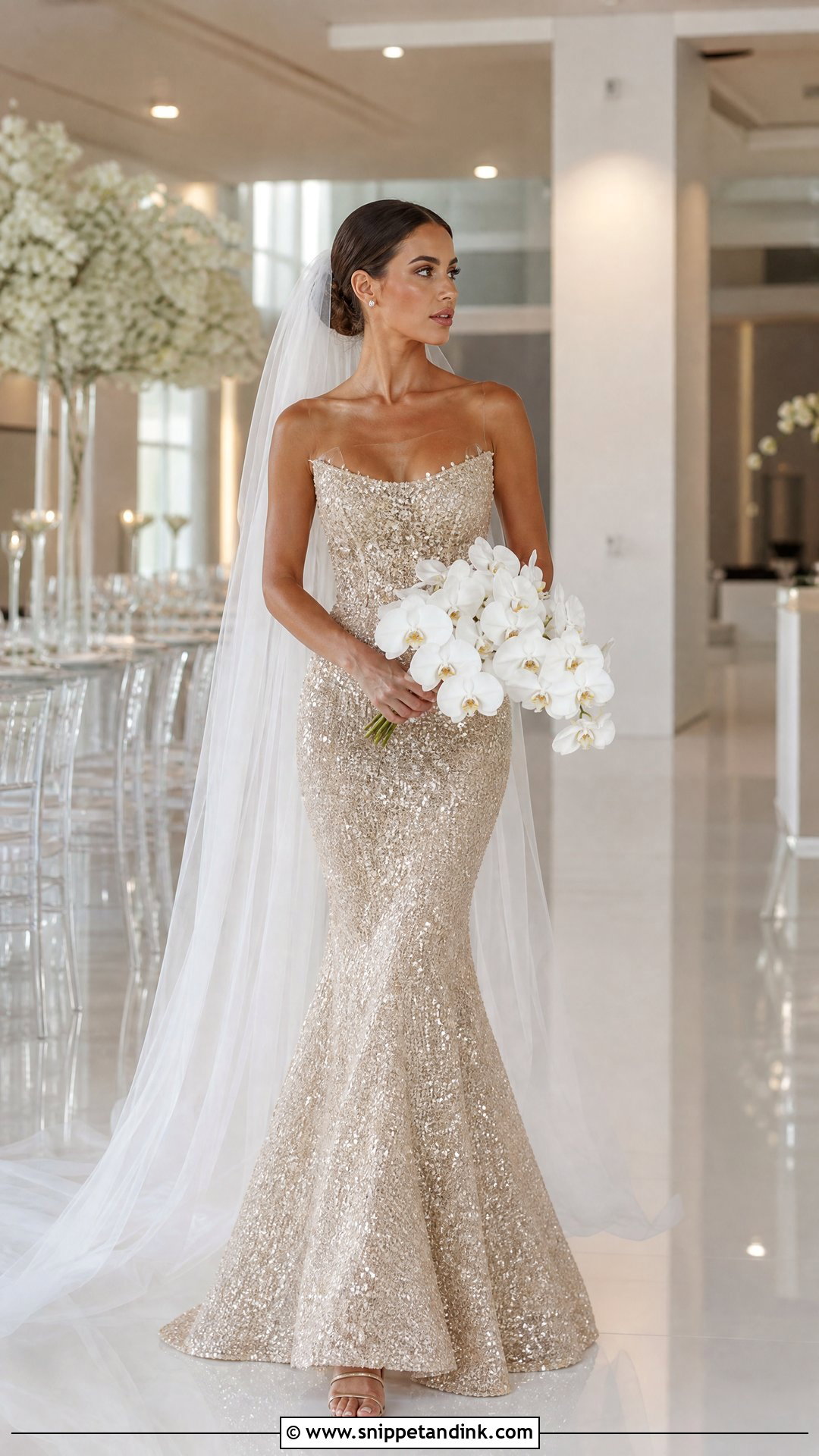
Sequins throw light from every angle, so this is a gown for the evening and for a bride who likes attention. A mermaid that follows the hips and flares into a manageable hem looks strongest. I always insist on a stretch lining, because sequined fabric has no give and you still need to sit and climb stairs. Keep accessories plain: simple sandals, small studs, a sheer veil. A sleek ponytail or low bun keeps it modern. White orchids or callas contrast cleanly. Sequined trains are heavy, so ask your tailor to reinforce the bustle points.
7. Gold Satin Slip Wedding Gown
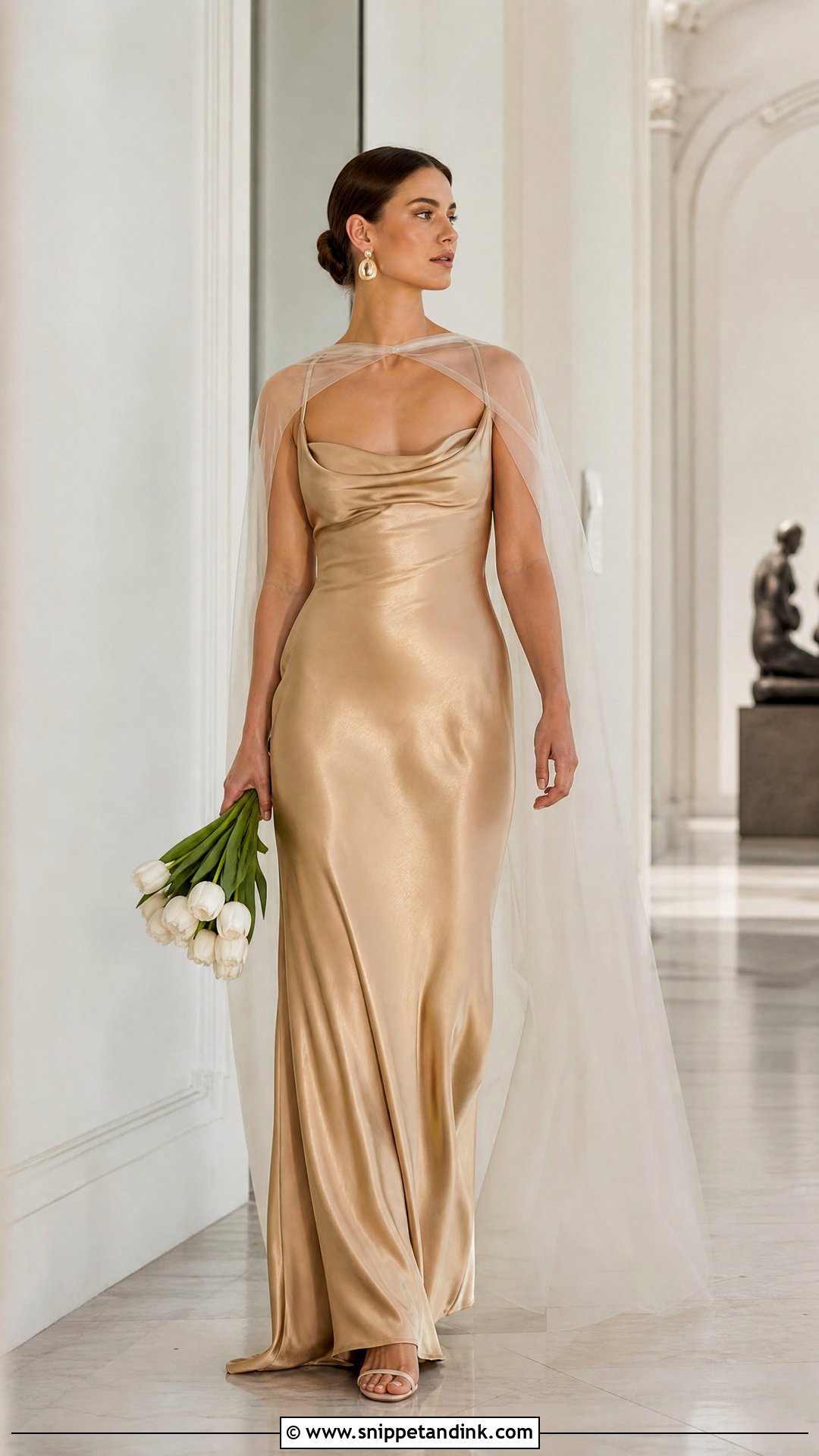
Gold satin in a bias-cut slip is the most minimal look here, and also the least forgiving. Bias-cut fabric clings and moves with you, which is lovely in motion but shows every seam, line and crease. Choose a softly draped neckline, adjustable straps and room through the hips. I’d add a detachable chiffon cape or long veil for the ceremony. Delicate strappy heels, sculptural earrings and a small bouquet of white tulips or roses suit it. Buy skin-tone underwear in a smooth microfibre before your fittings, and steam the gown on the morning, since satin creases the moment you sit.
8. Gold Corset Wedding Gown
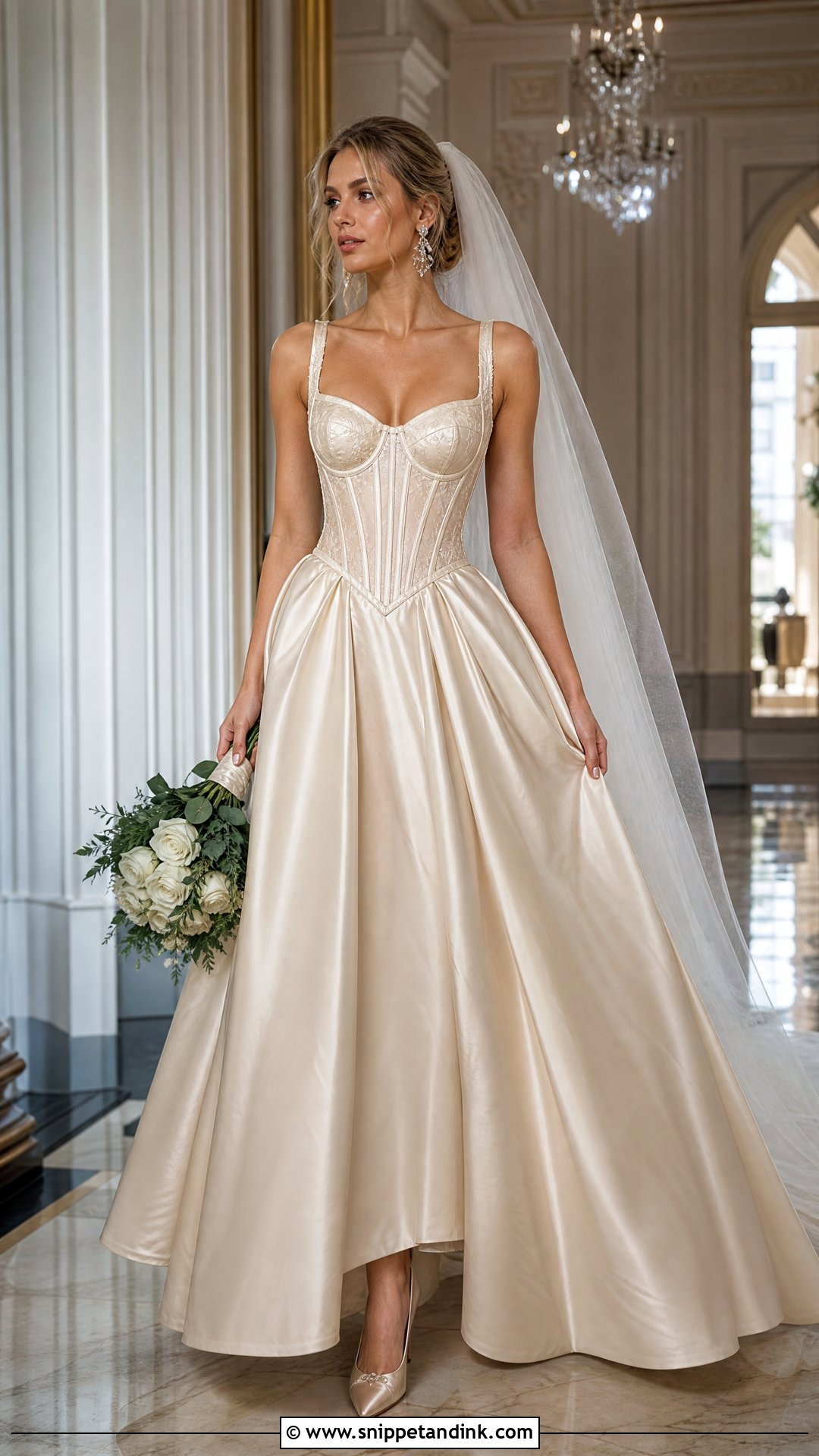
A visible corset makes the structure part of the design. I look for real boning, cups that sit where your bust actually is, and a waist that feels secure when you breathe in. A Basque waist dips to a point at the front, which visually lengthens the torso, and a full satin or tulle skirt balances the fitted top. A long plain veil, crystal earrings and champagne pumps with cushioned insoles complete it, with a smooth updo. White roses with trailing greenery suit it. At every fitting, sit, walk and raise your arms; if the top edge digs in or lifts, it needs adjusting.
9. Off Shoulder Gold Wedding Gown
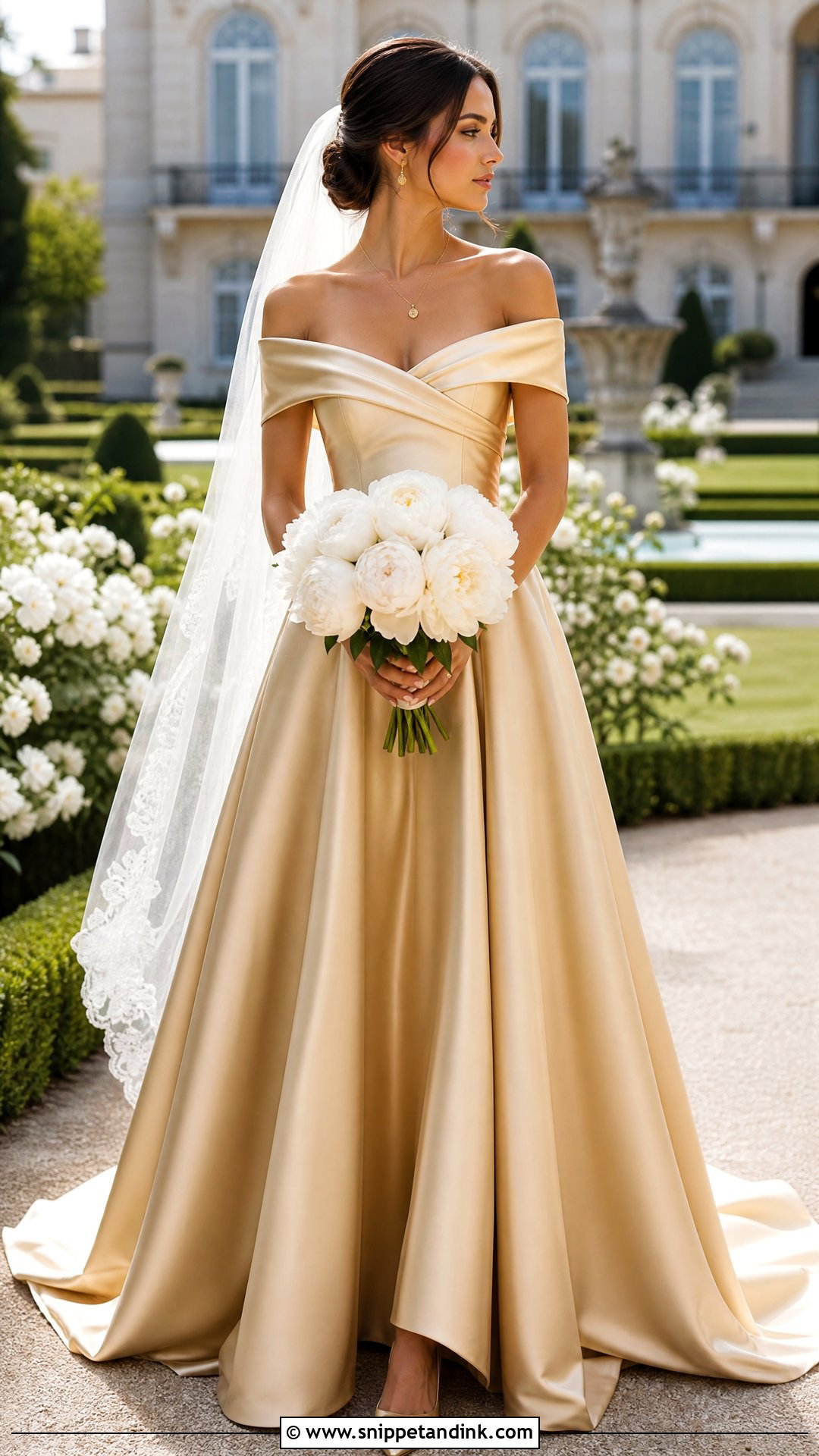
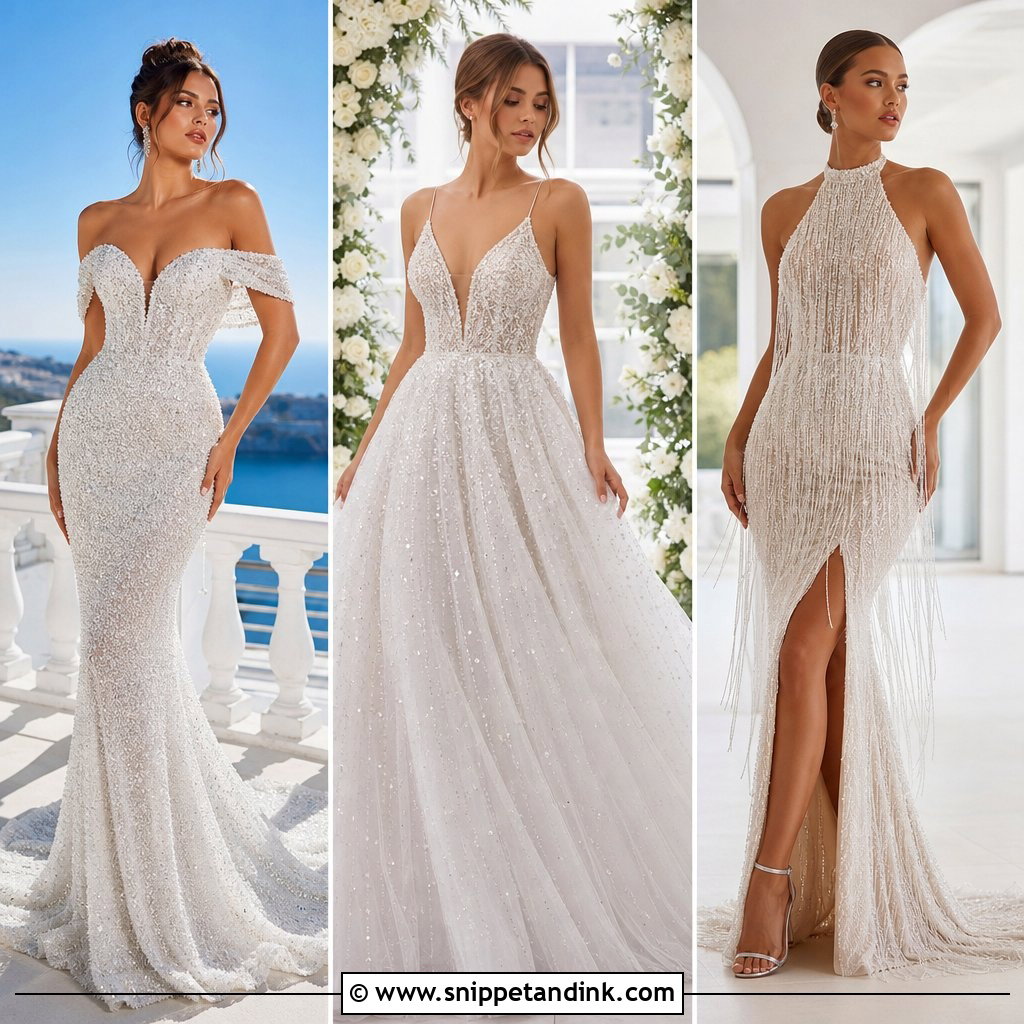
Off-shoulder necklines frame the collarbones, and in gold they bring light right up to the face. A folded satin neckline gives clean structure; soft tulle sleeves feel more romantic. An A-line or ball gown skirt keeps the proportions balanced. A short pendant, matching earrings, pointed gold heels and a plain chapel veil complete it, with a low bun so the neckline stays visible. White peonies and roses brighten the fabric. The fitting test I always do is a hug: if the sleeves stop your arms rising, the band is set too low. Hidden elastic inside the neckline keeps it in place.
10. Gold Cape Sleeve Wedding Gown
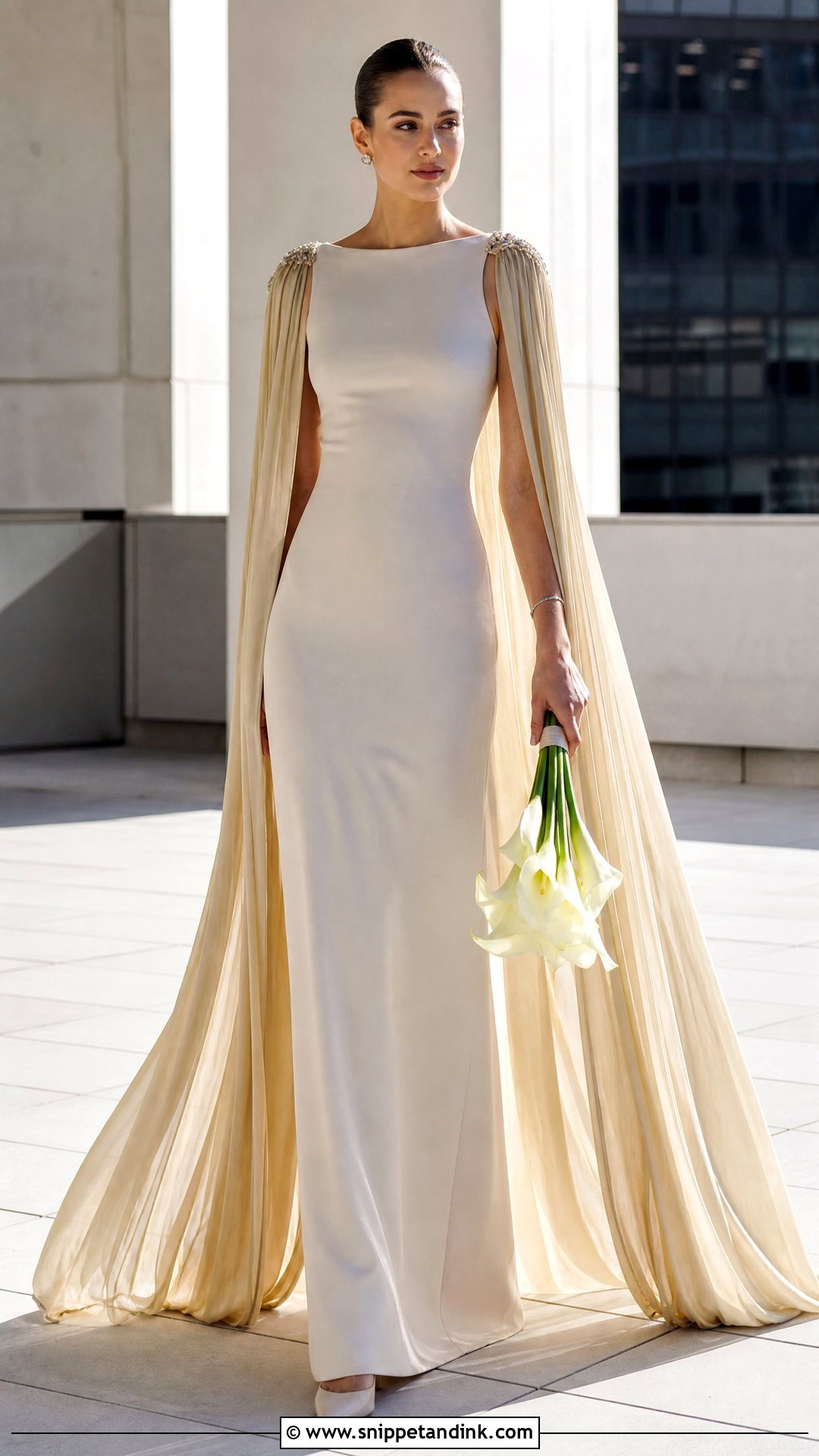
Cape sleeves give a plain gold column or soft flare all the drama it needs. Chiffon panels from the shoulders float behind you as you walk. With that much movement, I keep the rest still: crystal studs, a slim bracelet, simple pumps and a sleek centre-parted bun. A narrow bouquet of callas or orchids suits the long line. Skip the veil or keep it short; a cape and a long veil tangle. For outdoor portraits, ask for small weights sewn into the cape hems so a breeze doesn’t flip them over your head.
11. Plus Size Gold Ball Gown
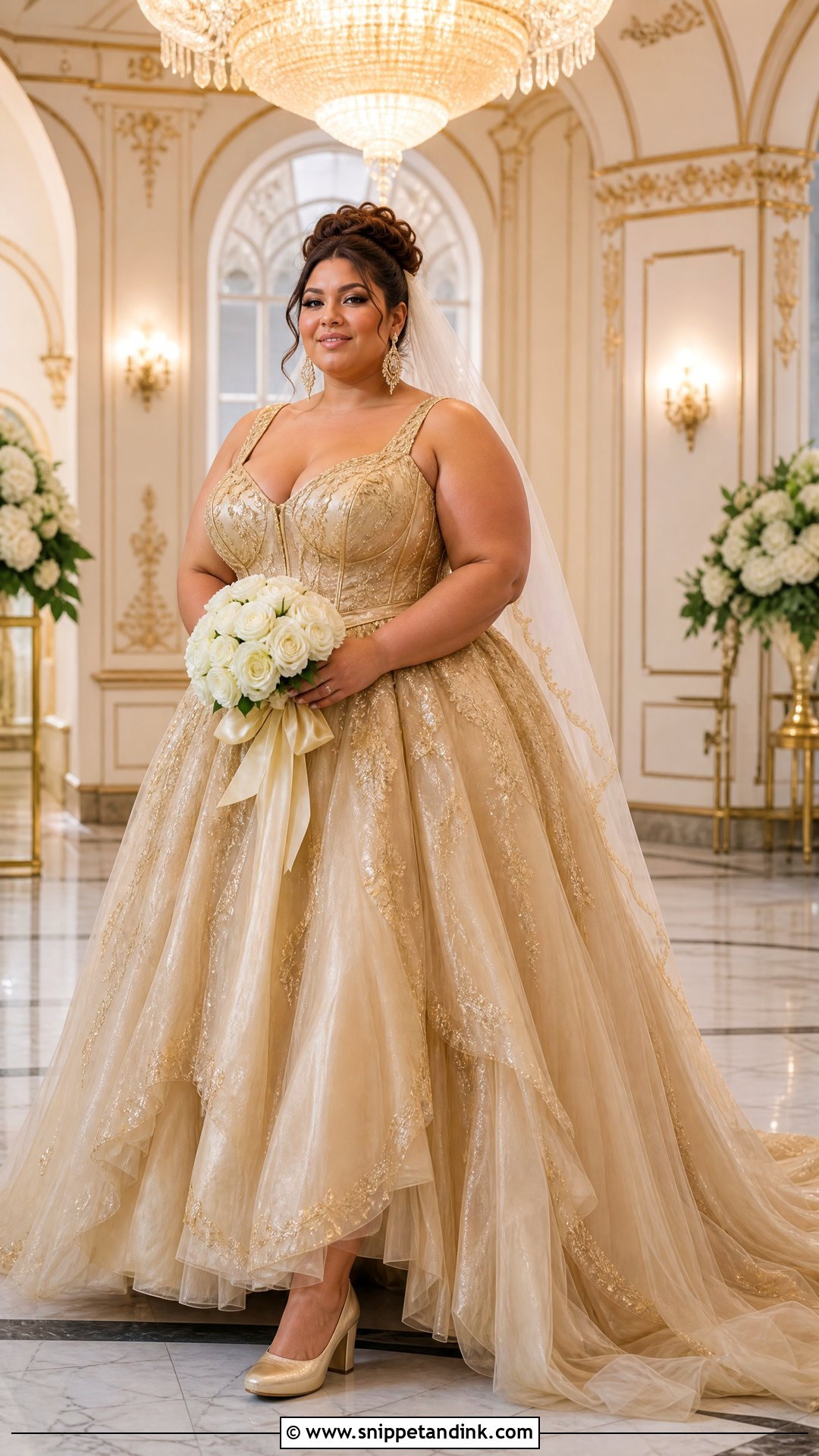
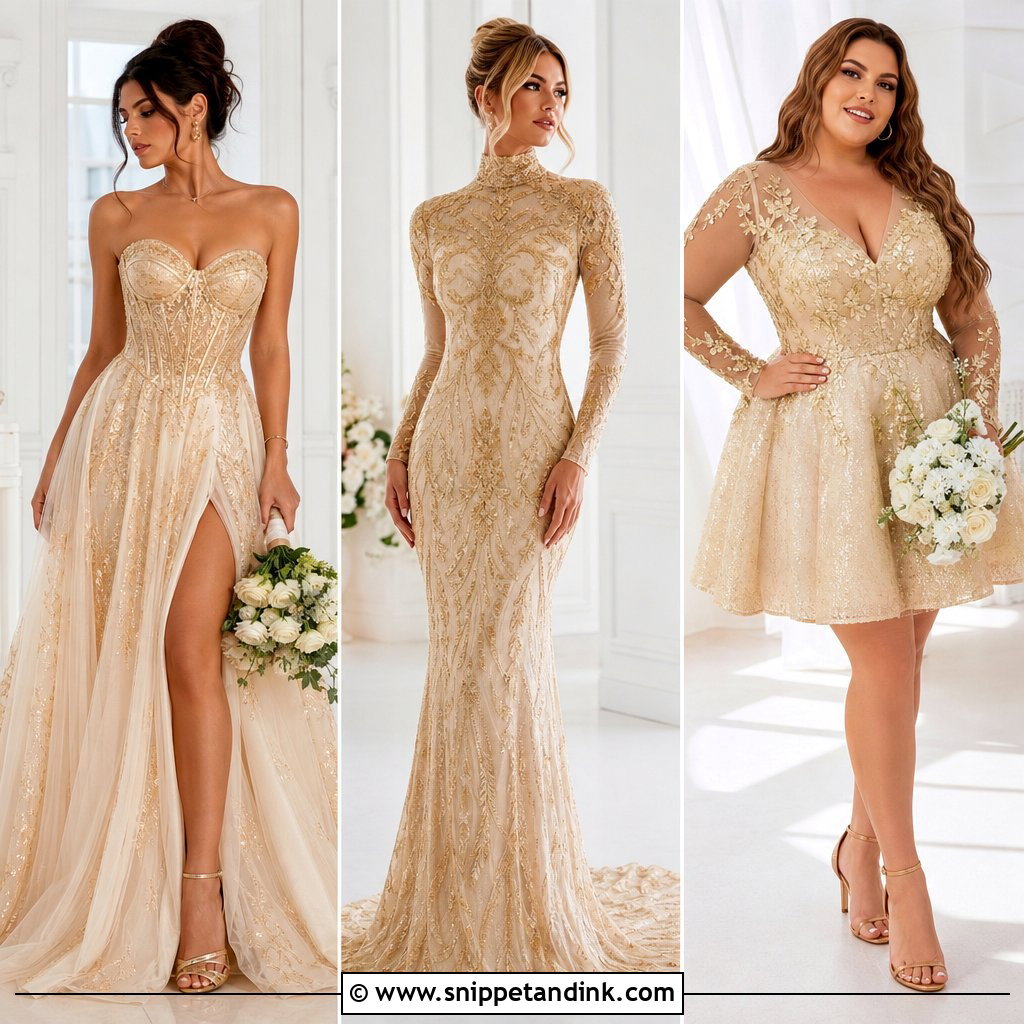
The key to a plus-size ball gown is structure, not size. I want a bodice with wide boning, secure cups and a waistline set at your natural narrowest point, not where the pattern says it should be. A layered tulle or light satin skirt adds volume without weight. Block-heel pumps, statement earrings and a chapel veil complete it, with a soft updo. White roses, greenery and pale gold ribbon suit it. Bring your exact underwear and shoes to every alteration appointment, and ask for a well-positioned bustle that lifts the skirt evenly, so the hem doesn’t trip you on the dance floor.
12. Modest Gold High Neck Wedding Gown
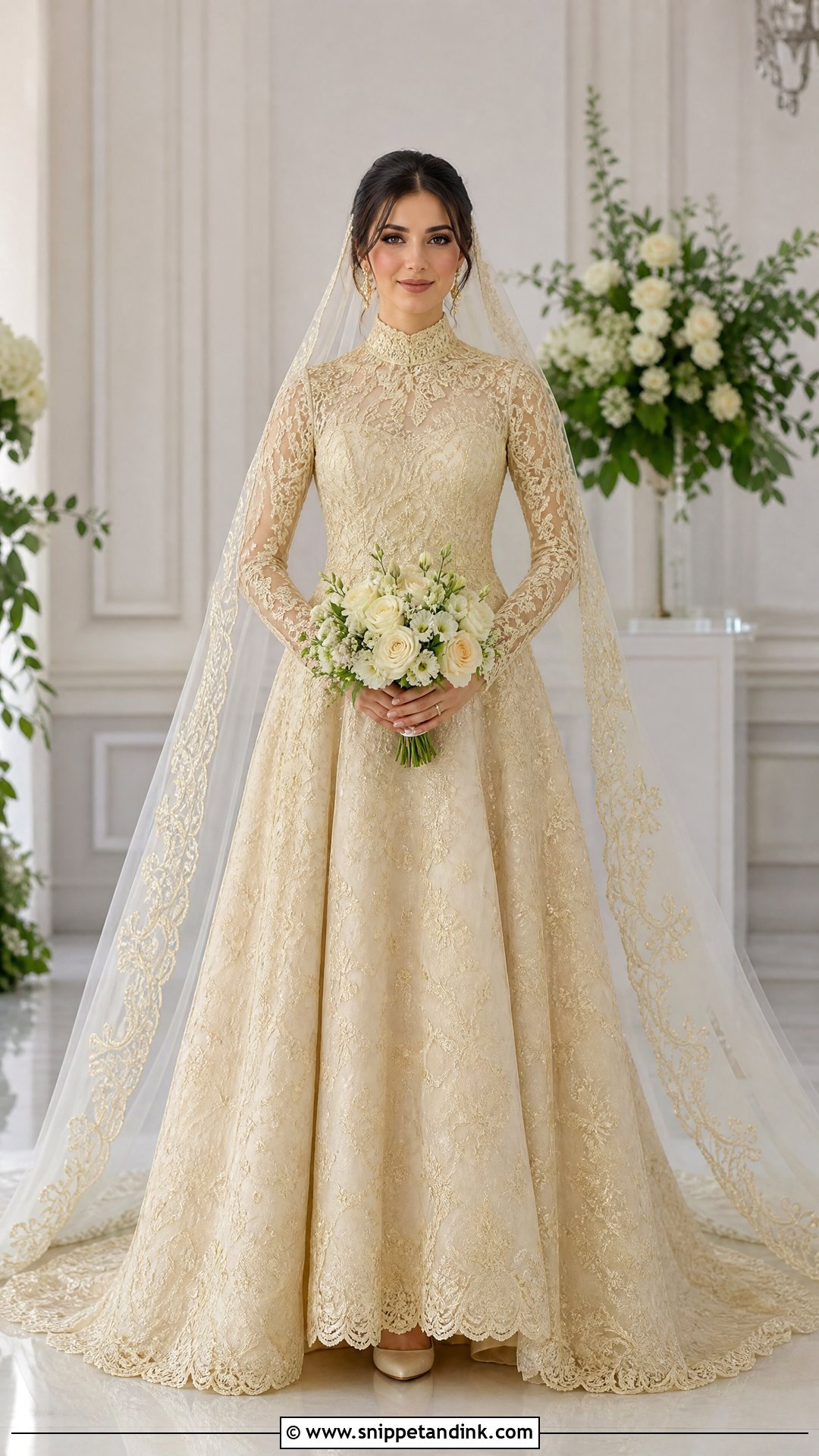
A high neck with long sleeves gives full coverage, and gold keeps it from looking severe. I’d choose a lined bodice with a lace or embroidered neck and a flowing A-line skirt. Closed-toe pumps, a cathedral veil and small drop earrings that still show under the veil complete it. A low bun frames the neckline neatly. Ivory roses, white lisianthus and greenery suit it. Check two things: that you can turn your head freely without the collar rubbing, and that the lining breathes, since a covered gown gets warm through a long ceremony.
13. Gold Floral Applique Wedding Gown
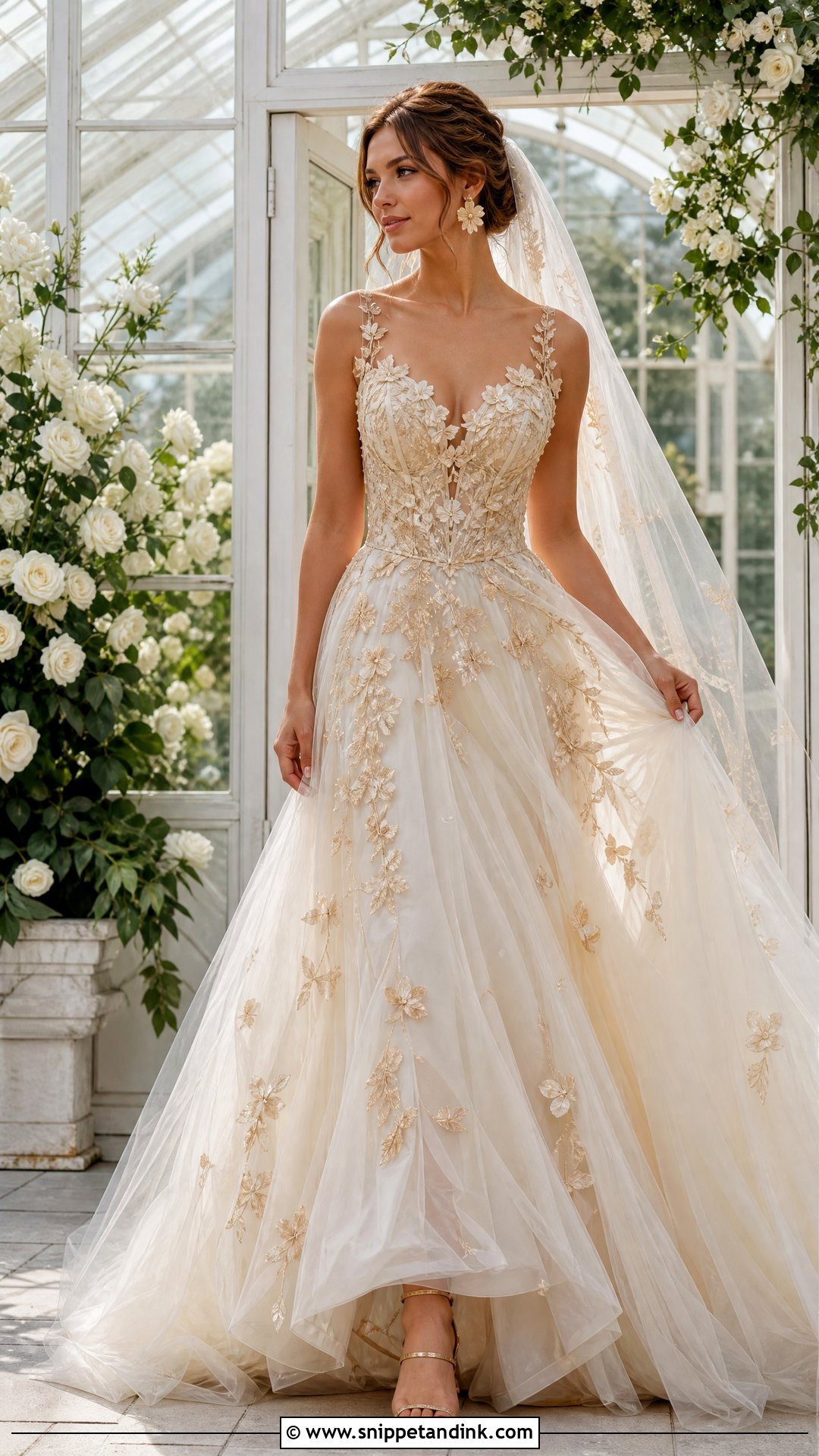
Raised floral appliqués add texture that flat lace can’t. I like them dense at the bodice and scattering down across a tulle A-line, with tiny bead or sequin centres catching light. Gold sandals, floral earrings and a plain-edged veil keep the focus on the flowers. A loose low bun with a few strands suits it. White garden roses suit the organic feel. During alterations, I pin the biggest appliqués by hand, because a large flower placed on the hip adds width, while the same flower at the waist defines it. A neutral underlay keeps the gold blooms crisp.
14. White And Gold Wedding Gown
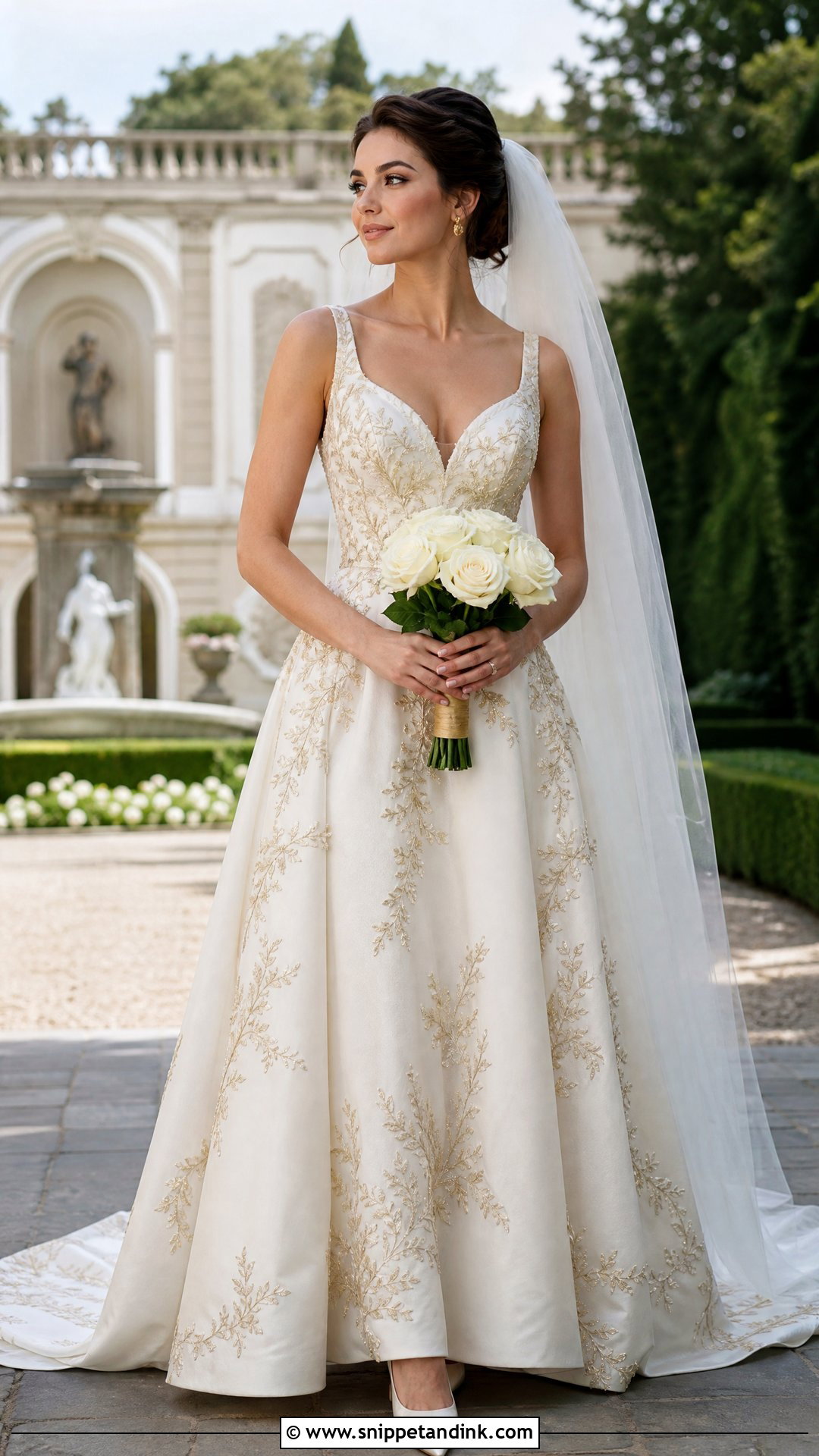
For brides torn between white and gold, this is the compromise I suggest most. An ivory base carries gold embroidery, lace motifs or beaded vines, so it reads as a wedding dress first. A fitted bodice and full A-line skirt give the pattern space. Ivory heels, small gold earrings and a plain veil keep the colours balanced, with a polished bun or half-up style. White roses wrapped in narrow gold ribbon suit it. Repeat gold lightly in one or two accessories, not all of them, or the outfit tips into looking matched.
15. Gold Tulle Princess Wedding Gown
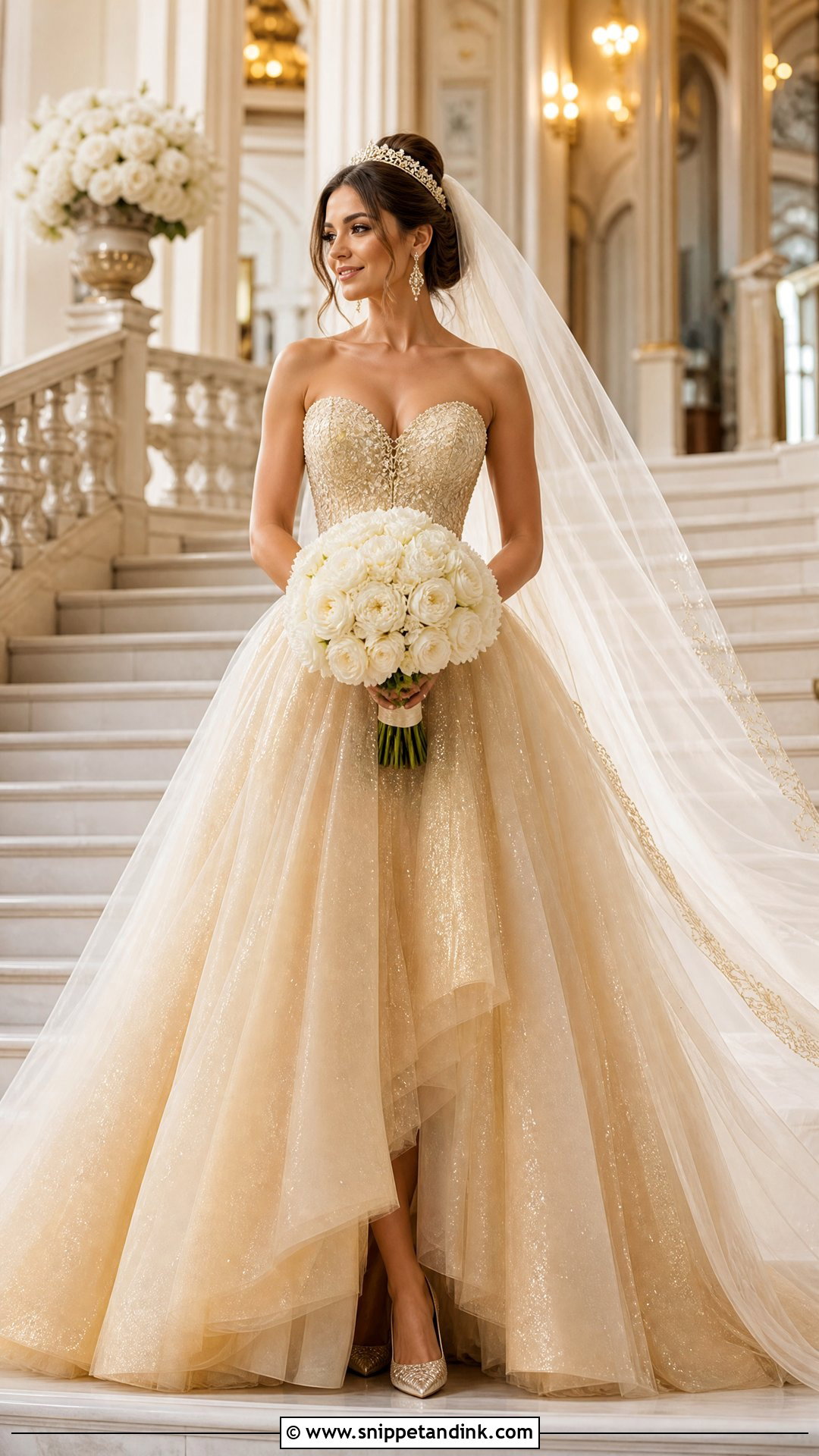
Layers of gold tulle feel lighter than they look, as long as the skirt is built from graduated soft layers rather than stiff net. Fine scattered shimmer gives colour without a solid metallic surface. A fitted bodice with a curved neckline, crystal pumps, a cathedral veil and small drops complete it, with a romantic updo that leaves the shoulders bare. A round bouquet of white roses and peonies suits it. If the skirt is very full, ask for a light hoop or underskirt; it holds the shape off your legs so you can actually walk.
16. Gold Column Wedding Gown
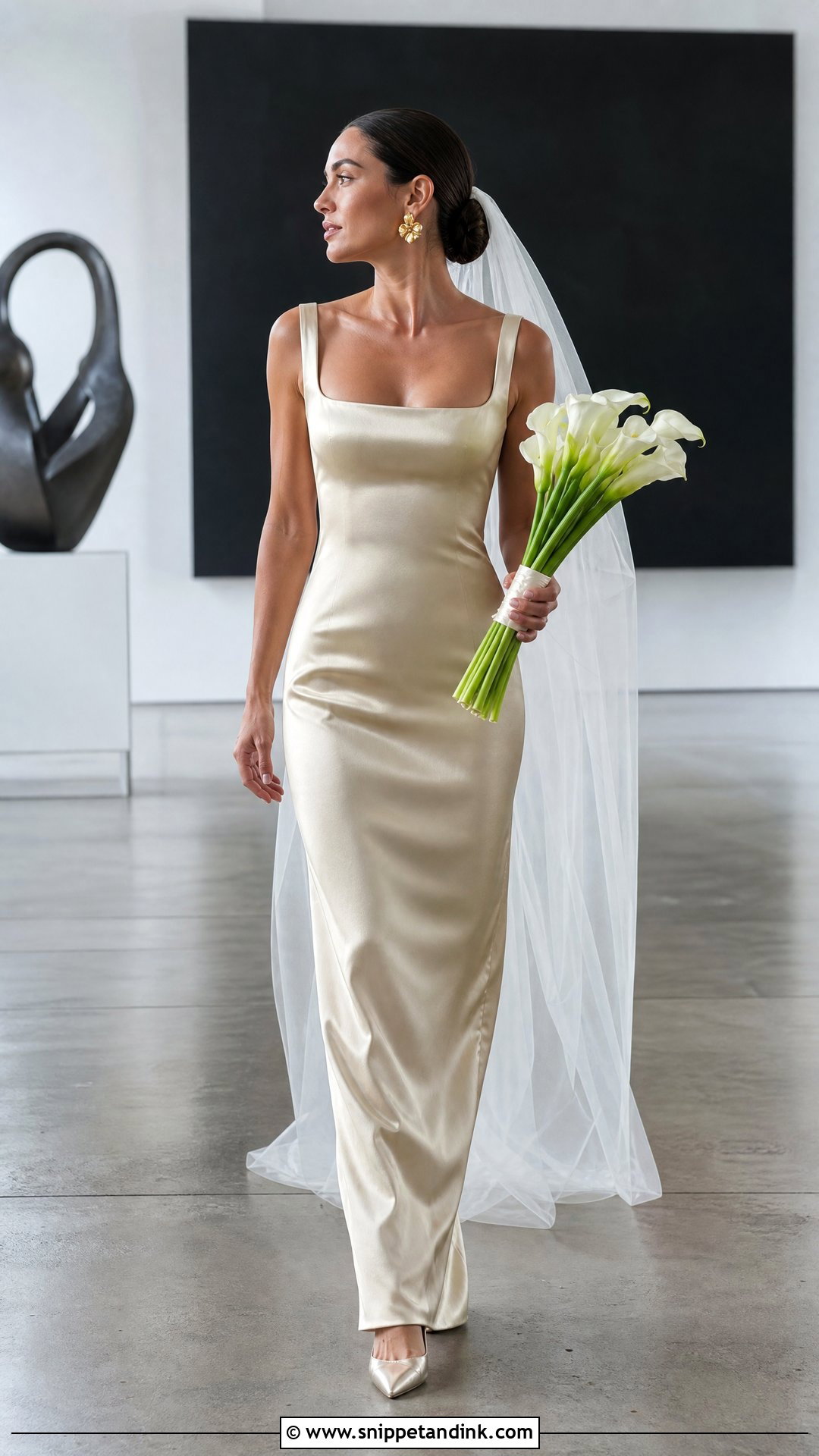
A column gown follows the body in one straight line, without a mermaid’s flare. It needs fabric with weight, matte satin, metallic crepe or light beading, so it drops smoothly. A square, scoop or one-shoulder neckline gives it character. Pointed pumps, bold earrings and a long sheer veil add contrast, with a sleek bun to keep the vertical line. Callas or orchids suit the narrow shape. Tailoring is everything here: the fabric should skim, never pull across the hips. A small back slit lets you take full steps and climb a few stairs.
17. Gold Halter Wedding Gown
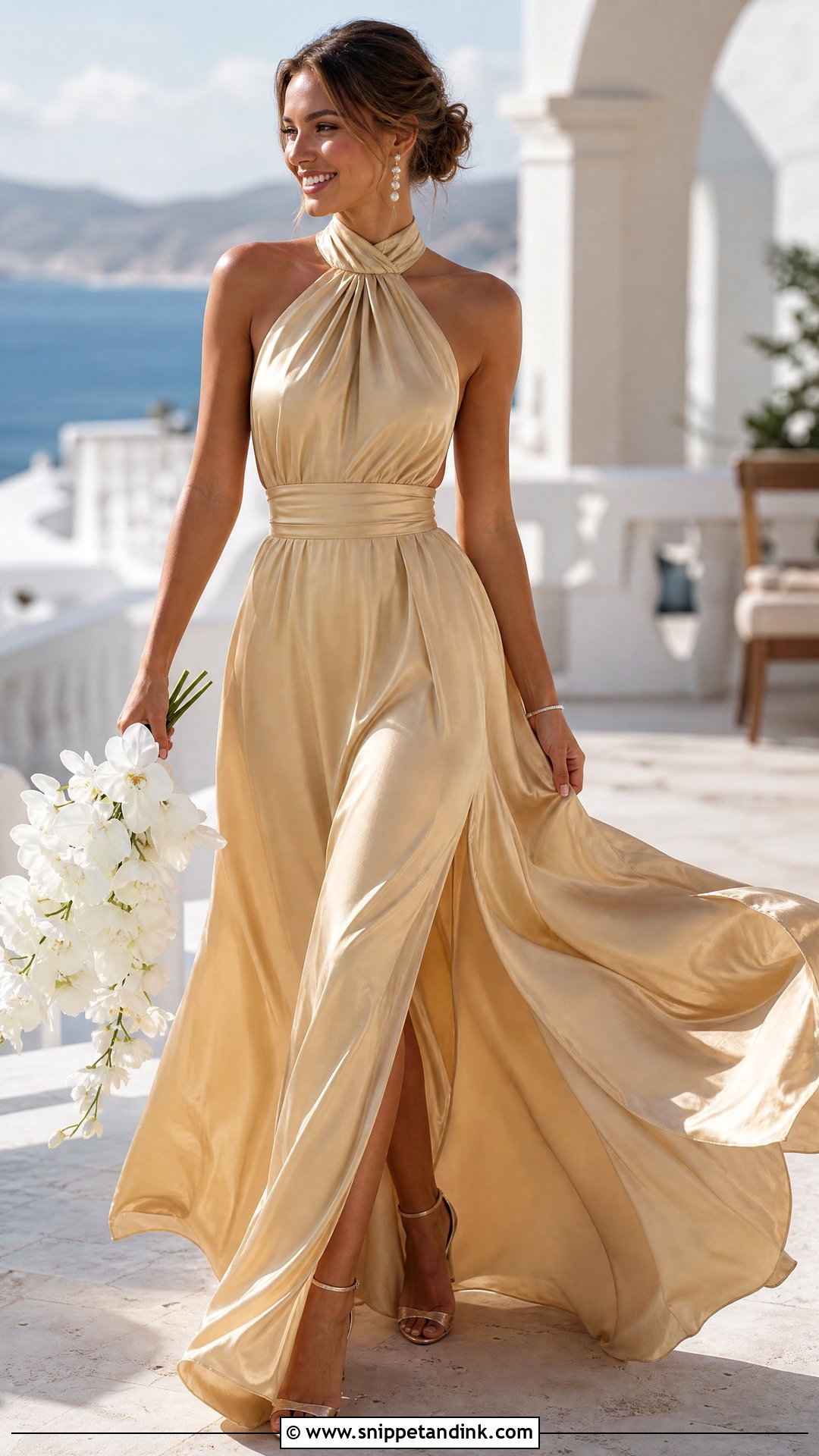
Halters show the shoulders and suit warm weather, and the fastening is what I check first. If the whole gown hangs from the neck strap, you’ll have a sore neck by dinner, so the bodice needs its own internal support. A gathered neckline, defined waist and chiffon or satin skirt suit it, with an open back if you like. Metallic sandals, drop earrings and a bracelet instead of a necklace complete it. A high bun or ponytail shows the neckline. White orchids in a light, loose bouquet suit a resort or terrace.
18. Gold Tea Length Wedding Gown
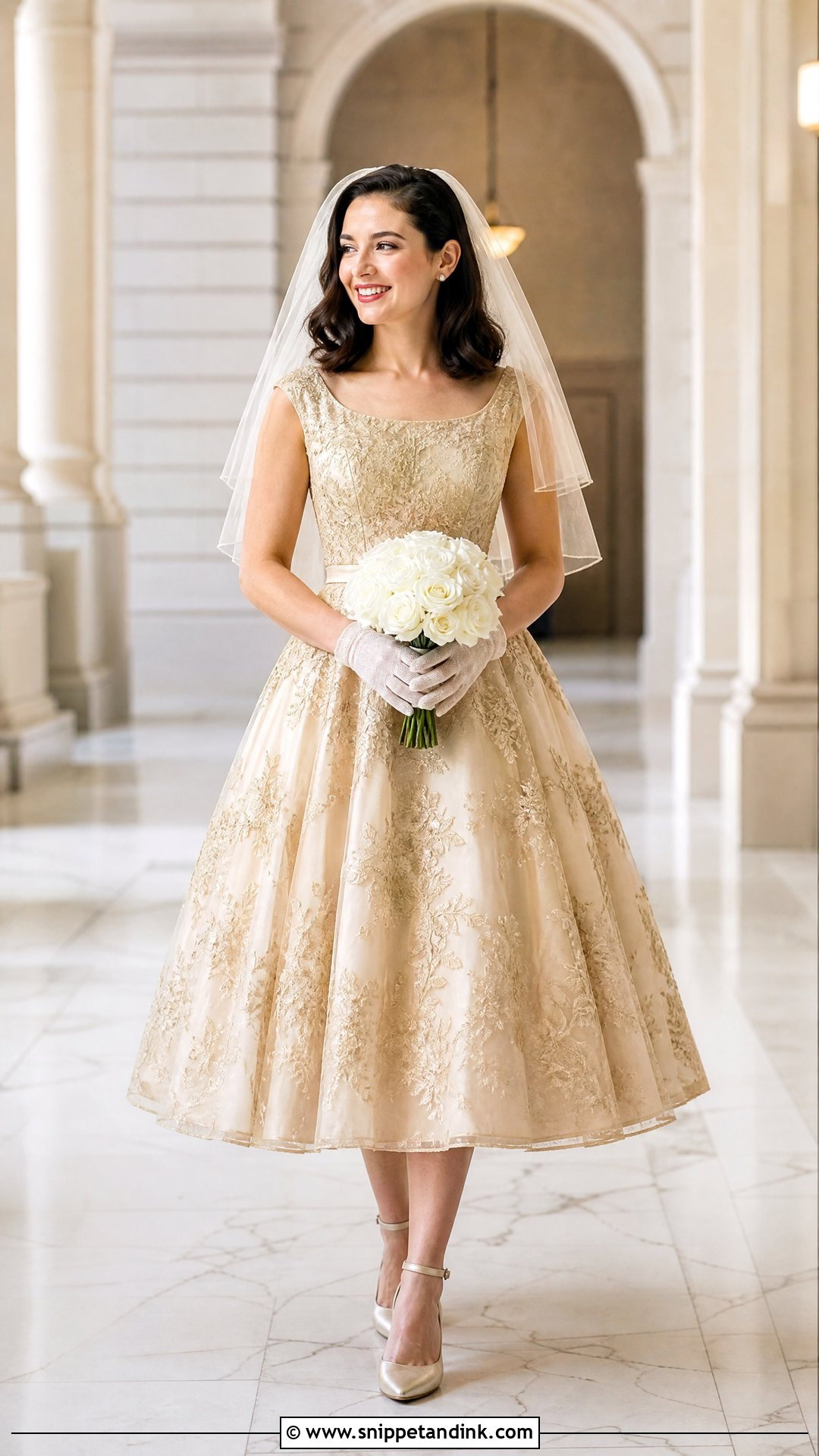
Tea length is a playful choice that still looks polished for a ceremony. A fitted bodice and full skirt ending between knee and ankle hold their shape best in satin, jacquard or embroidered tulle. Your shoes are on show, so choose pointed pumps or slim ankle-strap heels in champagne or ivory. Pearl studs, short gloves if you like, and a shoulder-length veil complete the vintage feel, with soft waves or a chignon. A compact bouquet of roses and ranunculus suits it. I set the hem just below the widest part of the calf, which gives the best proportion.
19. Gold High Low Wedding Gown
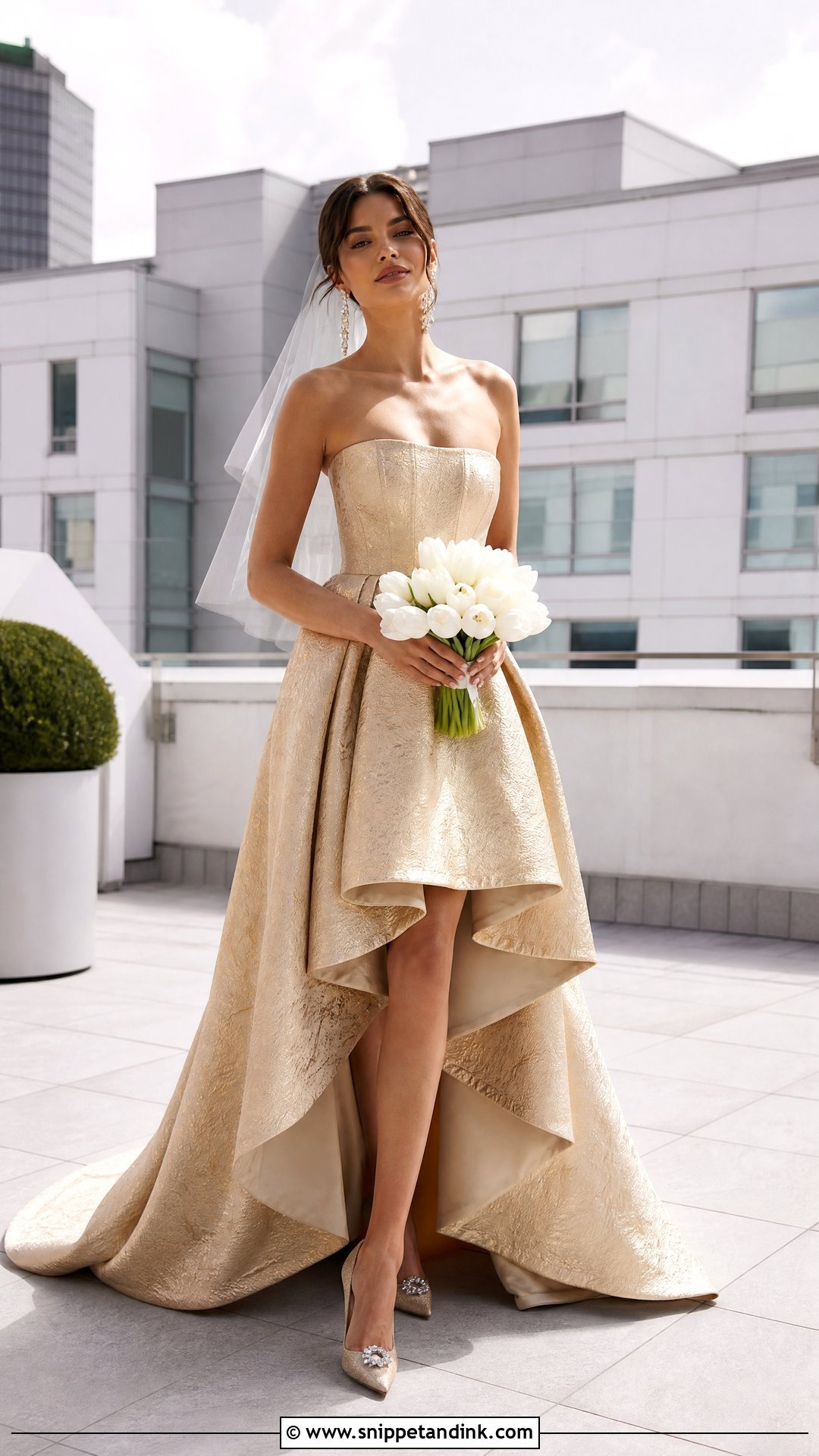
A high-low hem gives you a dramatic back and a front that doesn’t get under your feet. The bodice is structured, and the skirt drops to around the knee before sweeping into a chapel train. Because the shoes are part of the look, choose embellished pumps or metallic sandals with secure straps. Crystal earrings, a bracelet and a short veil complete it, with a sleek ponytail. Tulips or callas in a small bouquet suit it. Walk up and down a few steps at the fitting; a front hem cut too short flicks up awkwardly with each step.
20. Gold Grecian Wedding Gown
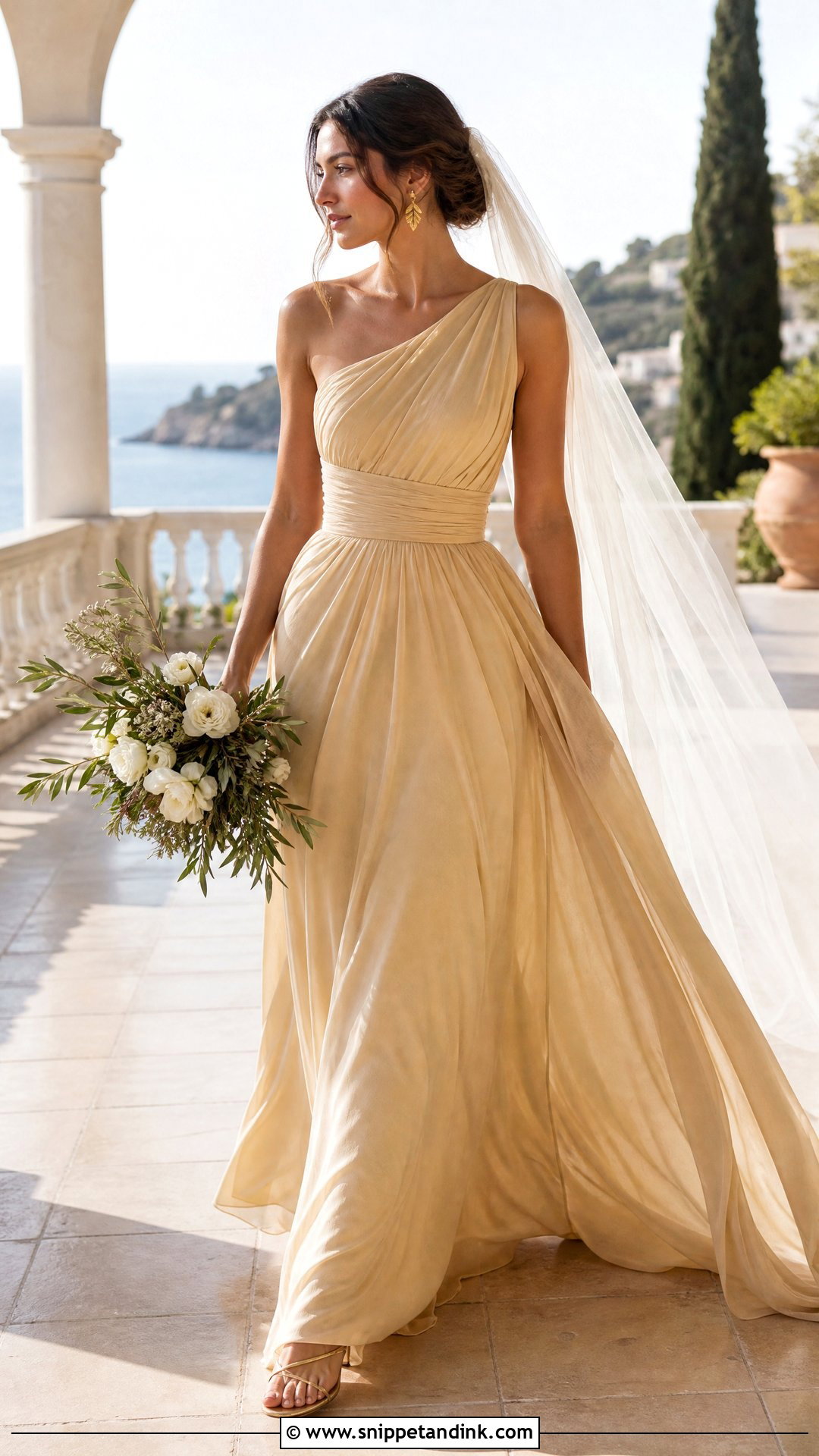
Drape is what makes a gold Grecian gown: light chiffon or satin gathered at the waist, falling freely, with an asymmetric or wrapped neckline. A narrow embellished belt defines the waist without breaking the flow. Delicate flat sandals or low heels, leaf earrings and a sheer chapel veil suit it, with loose waves, a braided updo or a relaxed bun. White flowers with olive-toned greenery suit the natural feel. On a breezy coast, ask for small weights in the hem, and check the lining in direct sun, since fine gold chiffon turns see-through in bright light.
21. Gold Trumpet Wedding Gown
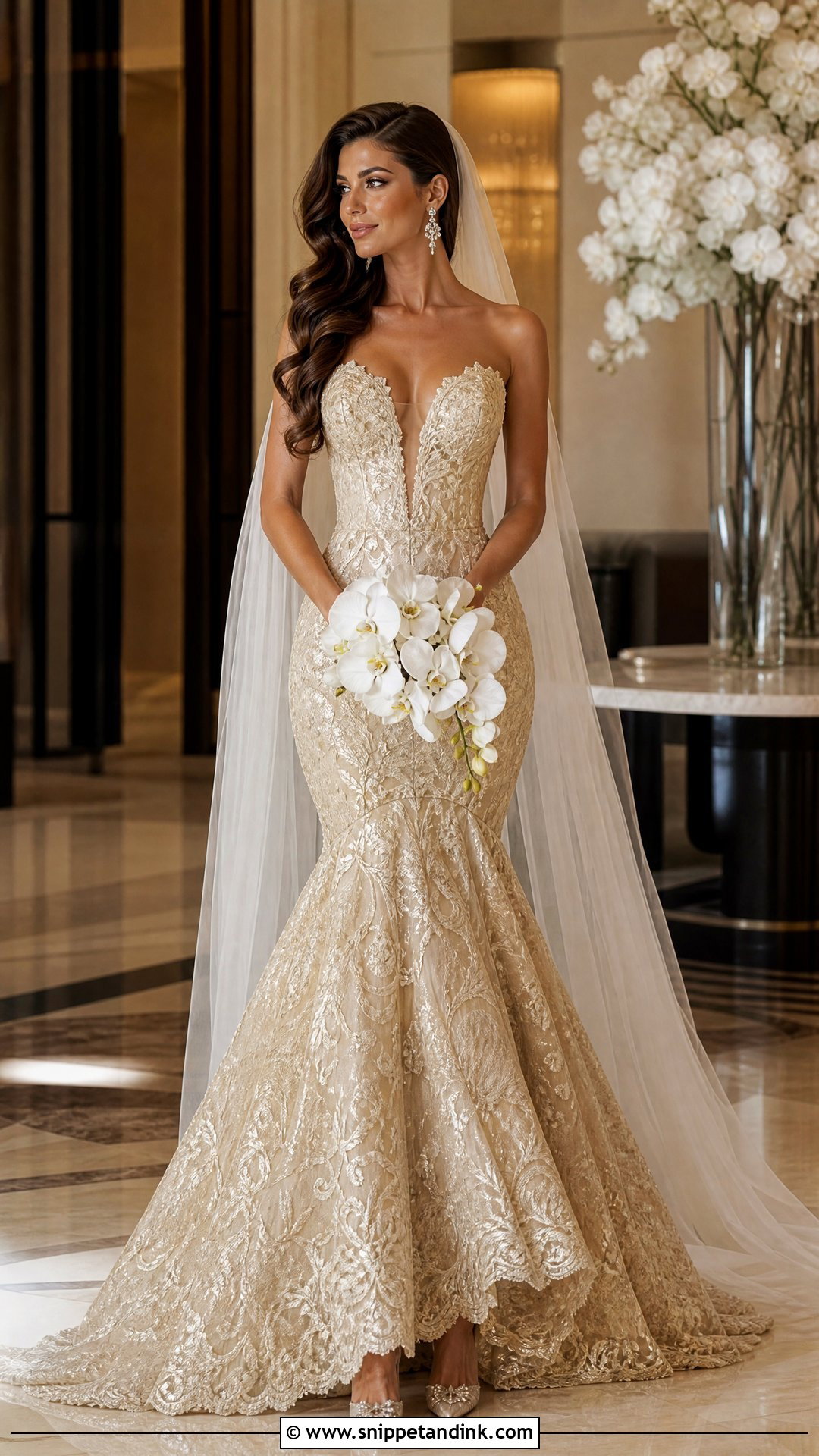
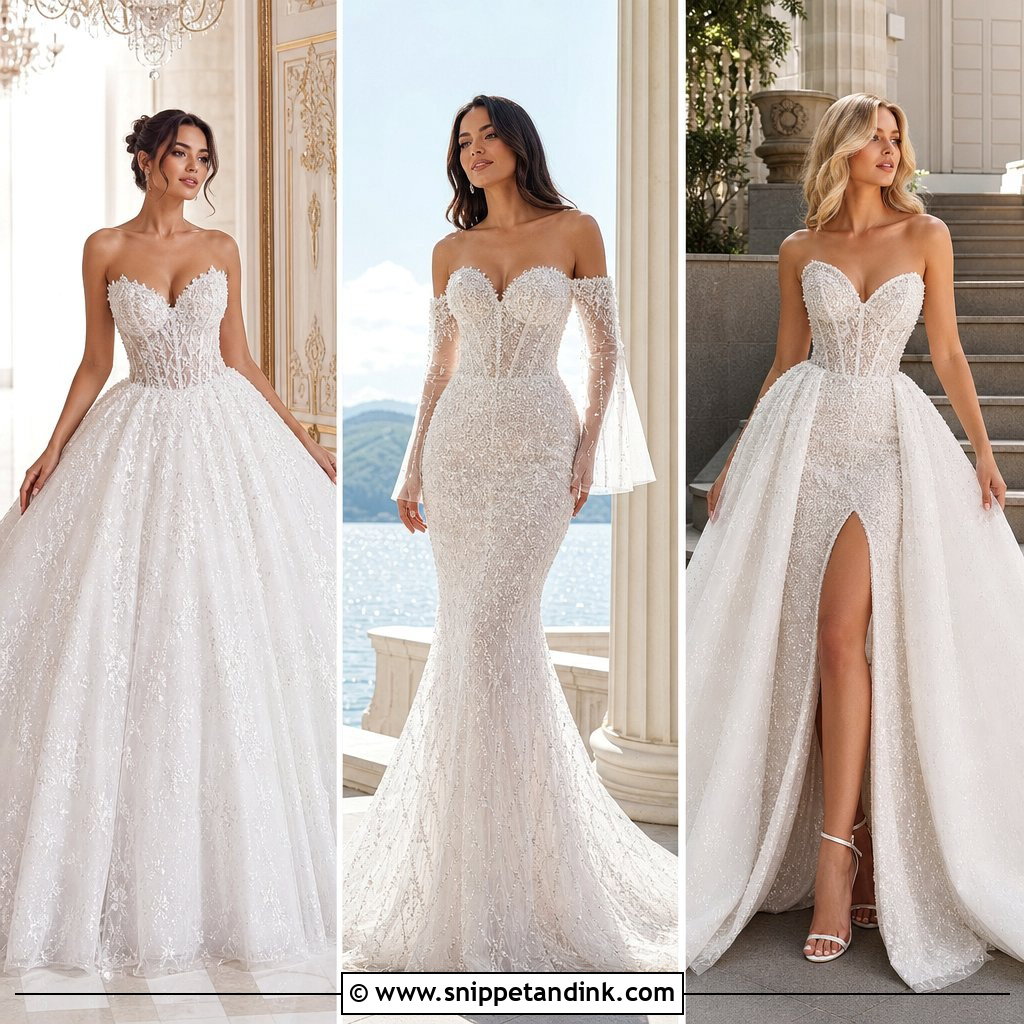
A gold trumpet gown defines the shape but gives you more movement than a mermaid, because the flare starts higher, around mid-thigh. It follows the torso and hips before opening gradually. Smooth satin keeps it minimal; embroidered tulle adds dimension. Pointed heels, a long plain veil and crystal drops complete it, with a side-parted bun or brushed waves. White roses and orchids with little greenery suit it. At alterations, sit down and take several long steps. The lining should move with you, and the flare should begin where your knees can still bend.
22. Gold Wedding Gown With Detachable Overskirt
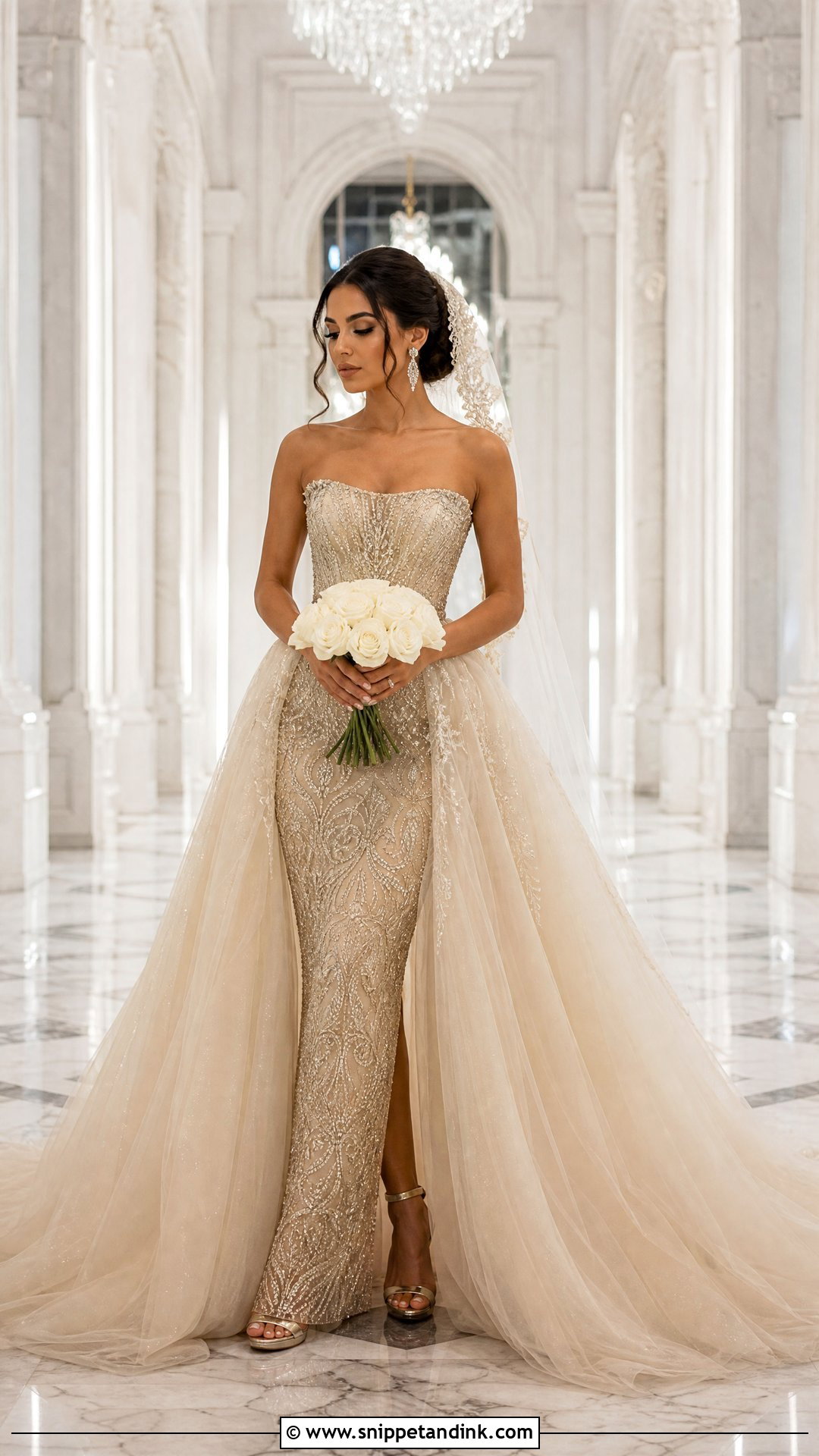
A detachable overskirt gives you two gowns in one: a full skirt for the aisle and a slimmer dress for dancing. Start with a fitted column, trumpet or lightly embellished base, then add a tulle or satin overskirt with a clean waistband and a train. Metallic heels and crystal earrings work for both versions; the cathedral veil comes off with the overskirt. A sleek low bun keeps the change tidy. White roses and greenery suit it. Practise removing it at the final fitting with the person who will help you; hidden hooks under a waistband are fiddly the first time.
23. Gold Pearl Embellished Wedding Gown
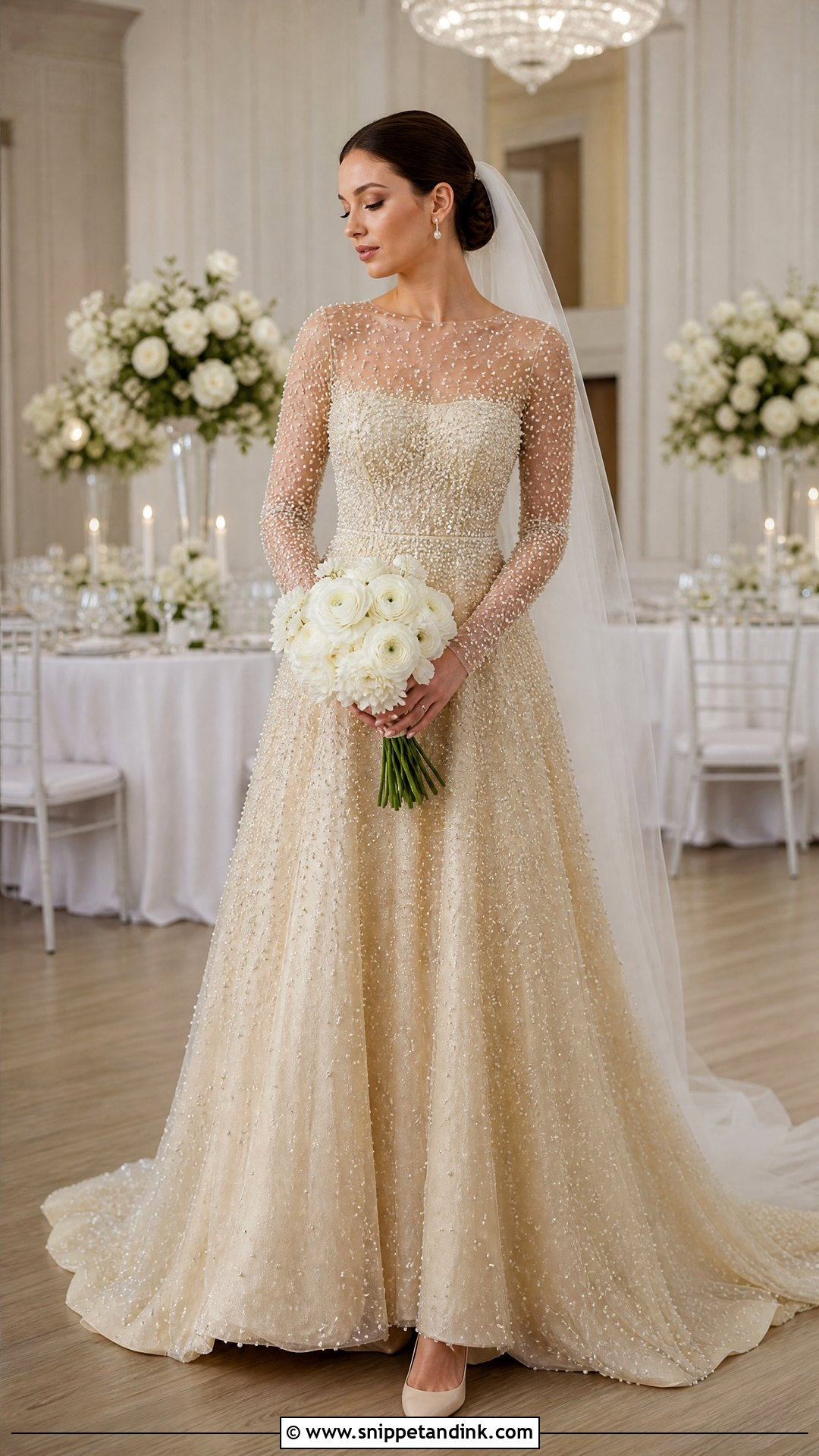
Pearls tone down gold’s shine and add a soft texture. I like them scattered over a sheer overlay or concentrated at the neckline, waist and sleeves, on a fitted bodice with an A-line skirt. Pearl drops, plain champagne heels and an unbeaded veil keep it from looking busy. A neat chignon suits the classic detail. White roses, sweet peas or ranunculus in a rounded bouquet complete it. Before the day, I go over every pearl at the underarms, waist and skirt front, where hands and bags rub, and secure any loose ones.
24. Gold Tiered Ruffle Wedding Gown
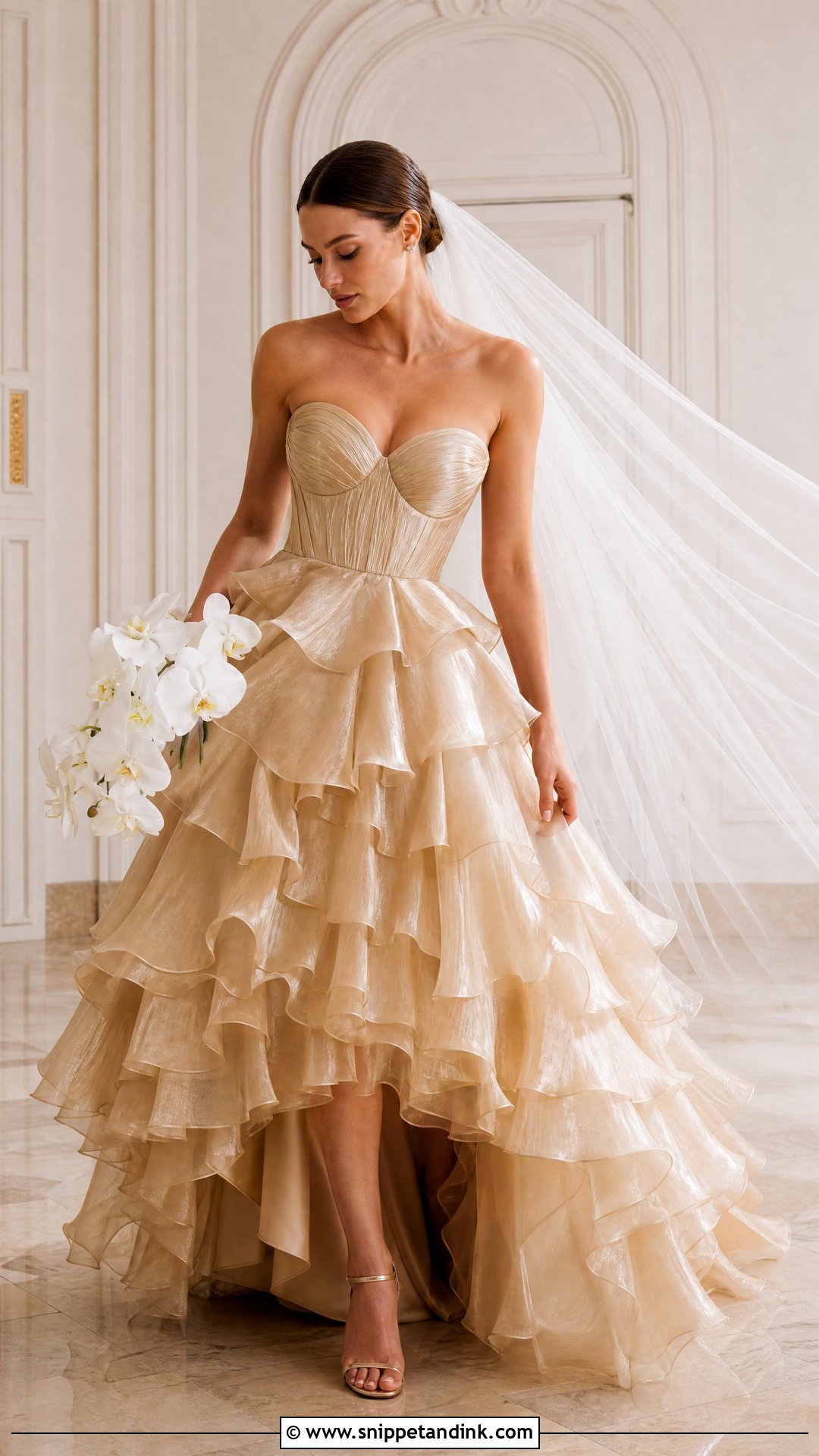
Tiered ruffles add movement without heavy beading. Light organza or tulle layers start below a fitted, supportive bodice, and graduated tiers, narrow at the top and wider below, give a smoother line than equal ones. Keep accessories quiet: simple sandals, small crystal earrings, a plain fingertip veil. A high bun balances the volume. A structured bouquet of orchids or roses contrasts with the soft fabric. Sit for a few minutes at the fitting and check how the tiers recover; a good bustle lifts the train without crushing the layers.
25. Gold Wedding Gown With Cathedral Train
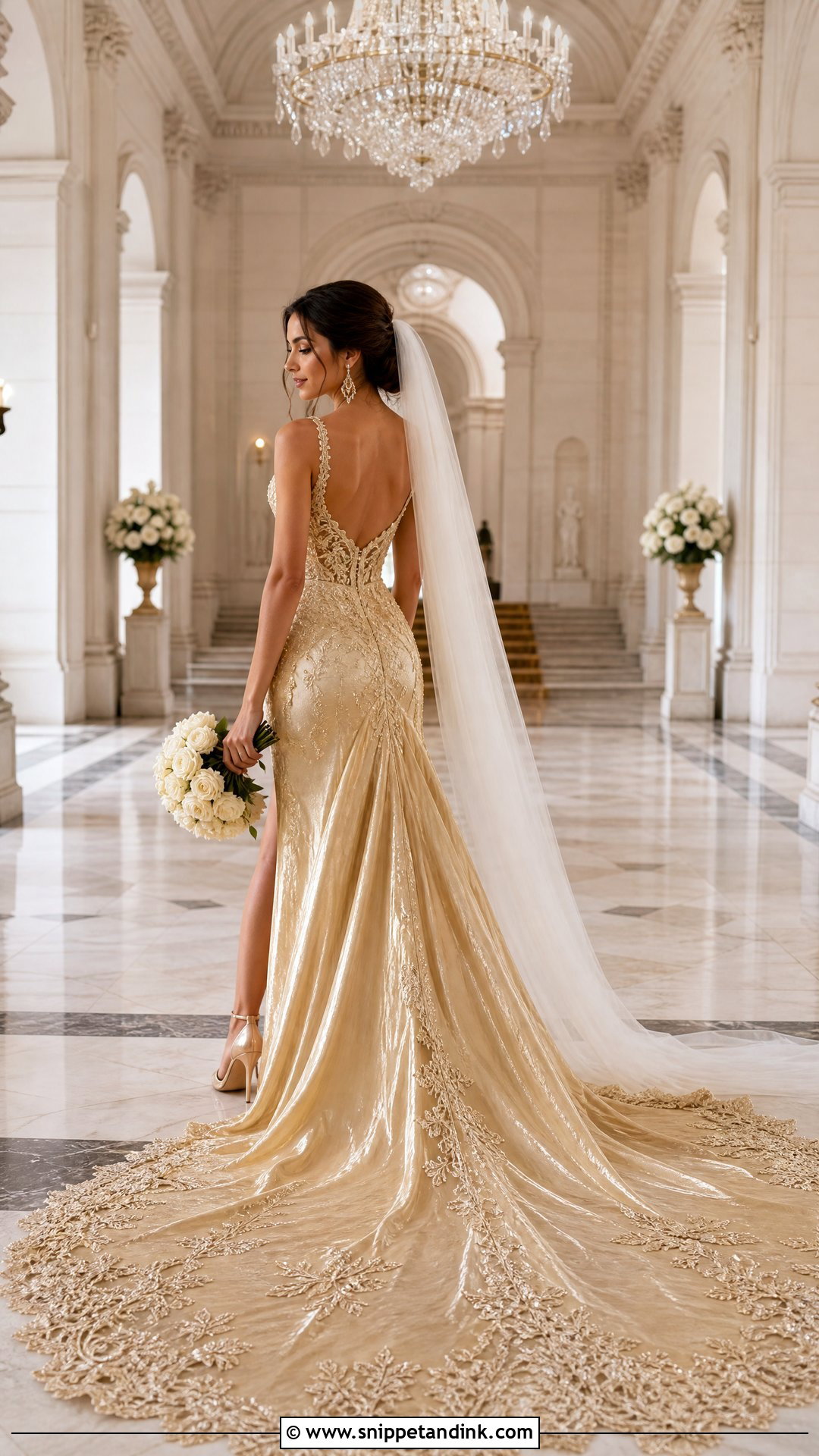
A cathedral train is the most dramatic finish you can give a gold gown, and the most work to manage. Choose a fitted or A-line base in satin, embroidered tulle or metallic jacquard. Any lace edging, threadwork or crystals on the train should be heavier toward the hem and lighter near the bodice. A plain cathedral veil, pointed champagne heels and drop earrings complete it, with a low sculpted bun. White roses and trailing greenery suit it. You need a long aisle, a dependable bustle and an attendant who has practised spreading and lifting the train before the ceremony.
How Metallic Fabric Behaves in Flash, Daylight and Video
Gold gowns photograph differently from white ones, and it’s worth knowing why before the day. Shiny fabrics reflect light straight back to the lens, so a direct flash can turn a lamé bodice into a white patch. Matte satin, crepe and embroidered tulle show colour more evenly. Sequins sparkle in video but can flare in still photos.
I ask brides to take phone photos at the final fitting in three settings: by a window, under warm indoor light and with the flash on. If one setting looks wrong, tell your photographer. Most will plan for bounced or diffused light around a metallic gown. Also look at the colour of the venue walls. Gold beside warm wood or yellow uplighting can blend in, while cool stone or greenery makes it stand out.
Gold Next to Your Bridesmaids, Groom and Flowers
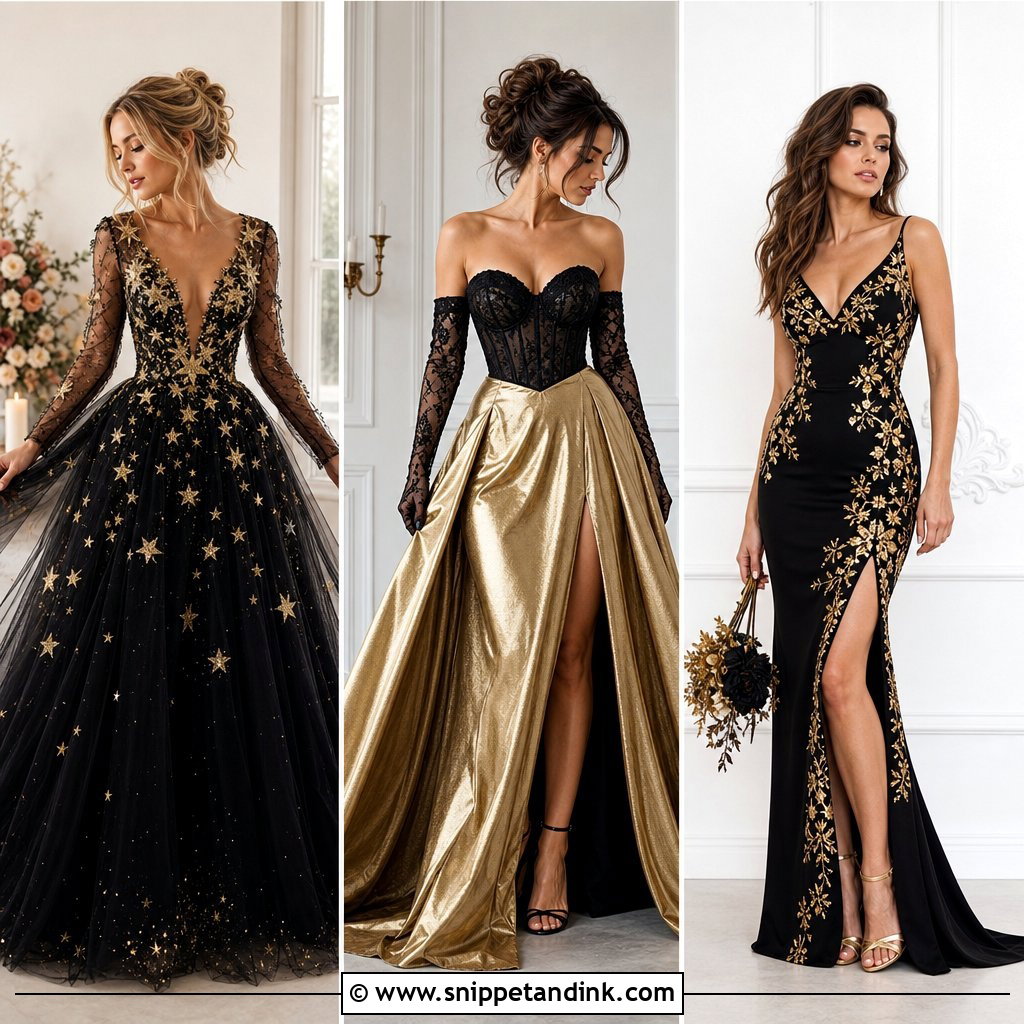
A gold bride changes the palette for everyone else. Bridesmaids in bright yellow or another metallic will compete with you, so I suggest deeper or softer colours: emerald, navy, burgundy, dusty rose or ivory. For the groom, a gold tie or pocket square can echo the gown, but a full gold jacket next to a gold gown is usually too much. White and ivory flowers keep the eye on the dress, which is why I come back to them throughout this list.
Gold Works Best When One Thing Leads
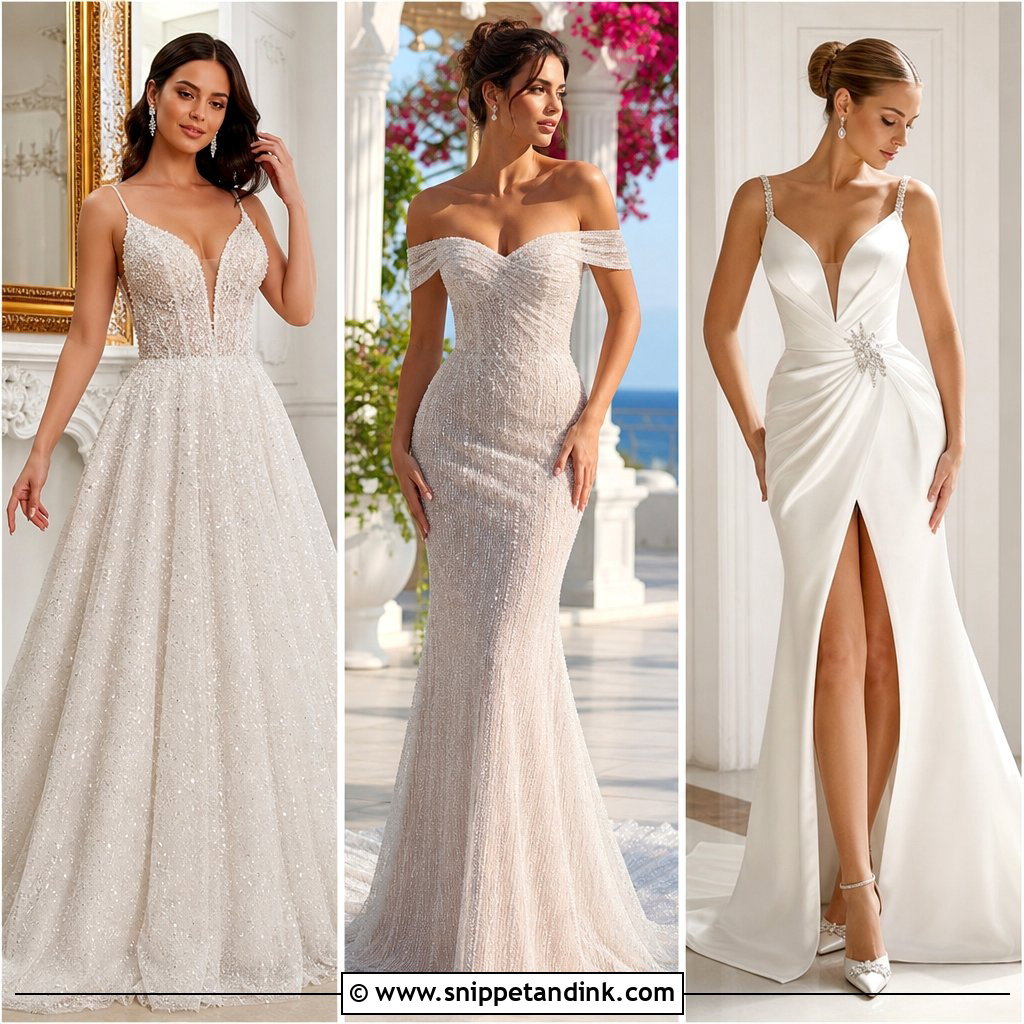
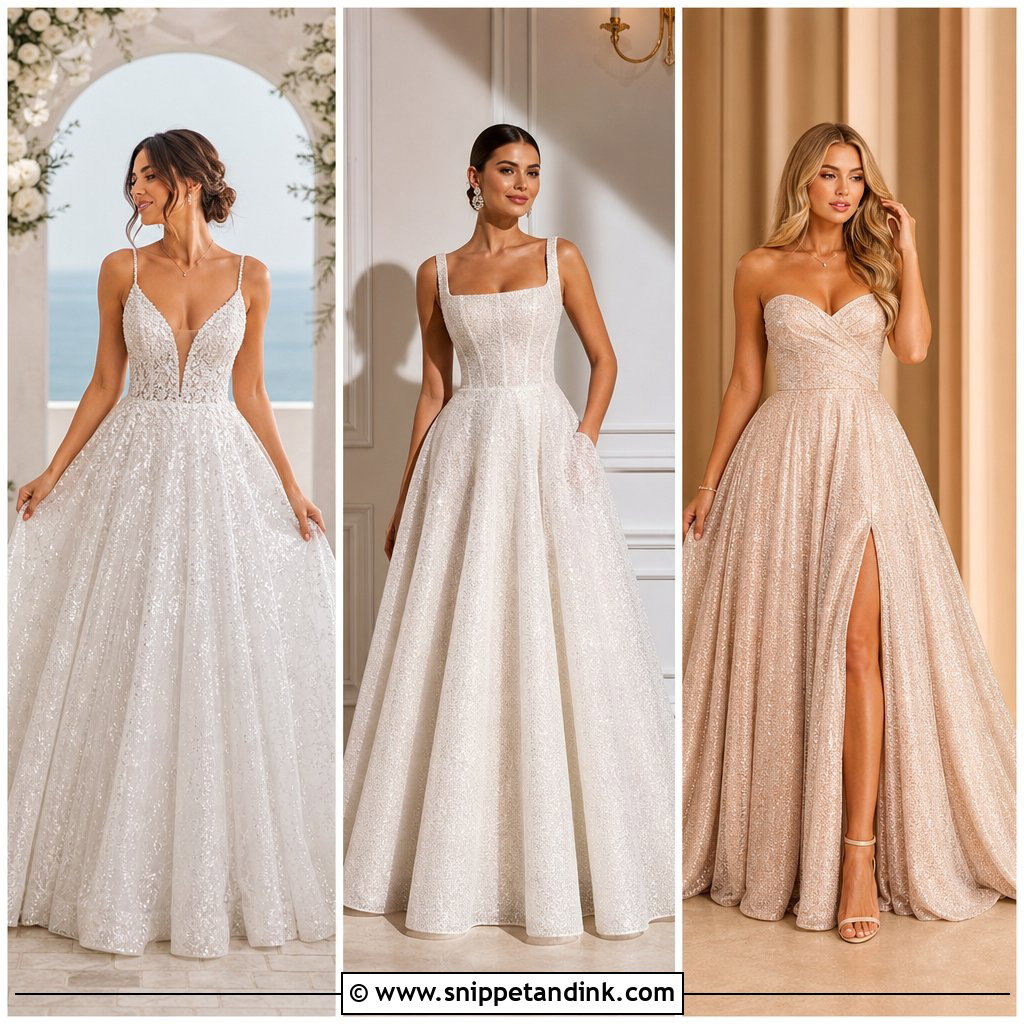
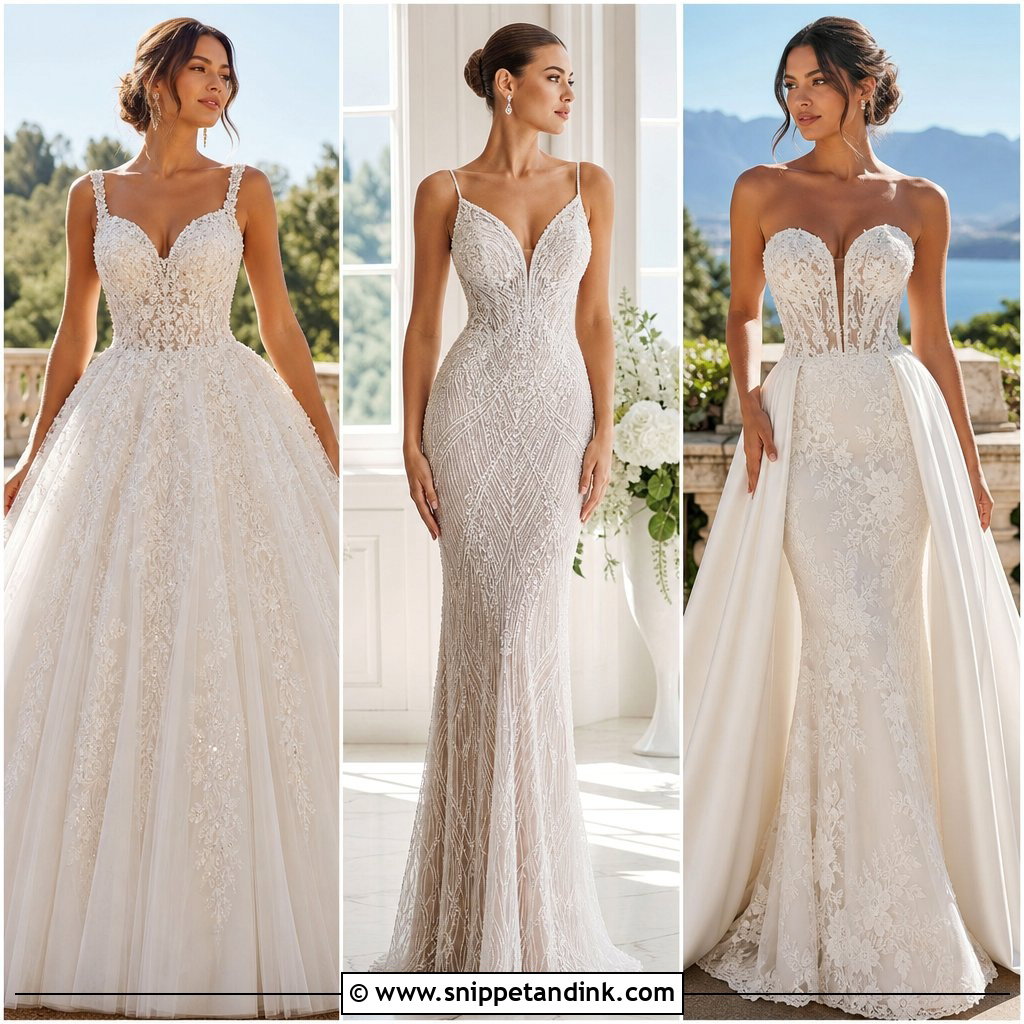
The gowns above show how wide the range is, from pale champagne satin and antique lace to rose gold beading and full sequins. Start with the shade that suits your skin, then think about weight, internal support, train length and how freely you can move. Let one element lead, whether that’s the fabric, the shape or the embellishment, and keep the rest in support. White flowers, simple veils and neutral metallic shoes are the finishing touches I come back to most. A slim column or a full princess skirt can both feel right if the gown fits you properly.
You'll Like These Ideas:



Leave a Reply