
A silver gown still looks like a wedding dress from the back of the room, which is exactly why I like it for brides who feel flat in white. The range is wide: dove-gray tulle with a faint shimmer at one end, full metallic sequins and crystal at the other, with embroidered and beaded versions in between. It has a natural home in a ballroom, a city ceremony or a winter wedding, but it also works outdoors if the finish is soft. When I’m comparing silver gowns with a bride, I look at three things in this order: how the fabric throws light, whether the undertone flatters her skin, and whether she can move in it. The twenty looks below are styled with that in mind.
Ordering a Silver Gown When the Sample Is White
Most bridal shops carry their samples in white or ivory, so the silver version of a dress is often something you order without ever trying it on in that color. It’s common to love a gown in the shop and then feel unsure when the silver one arrives. A few steps take most of the guesswork out.
- Ask for a fabric swatch in the exact silver, and look at it outdoors and under ordinary warm bulbs, not just the shop’s bright white lighting.
- Hold the swatch against the sample’s lace, beading or tulle. Metallic thread and silver tulle can make a pattern look busier than it does in white.
- Check the order timeline before you fall for anything. Colored and made-to-order gowns often take several months to arrive, and alterations come after that.
- Read the return and exchange terms. Custom colors are often final sale, which is another reason to be sure of the swatch.
- If you’re adding a separate veil, jacket or overskirt, order it from the same maker where possible, so the whites and silvers match.
If a shop does have a silver sample in, try it even if it isn’t the style you came for. Ten minutes in the color tells you more than any swatch.
1. Silver Sequin Ball Gown Wedding Dress
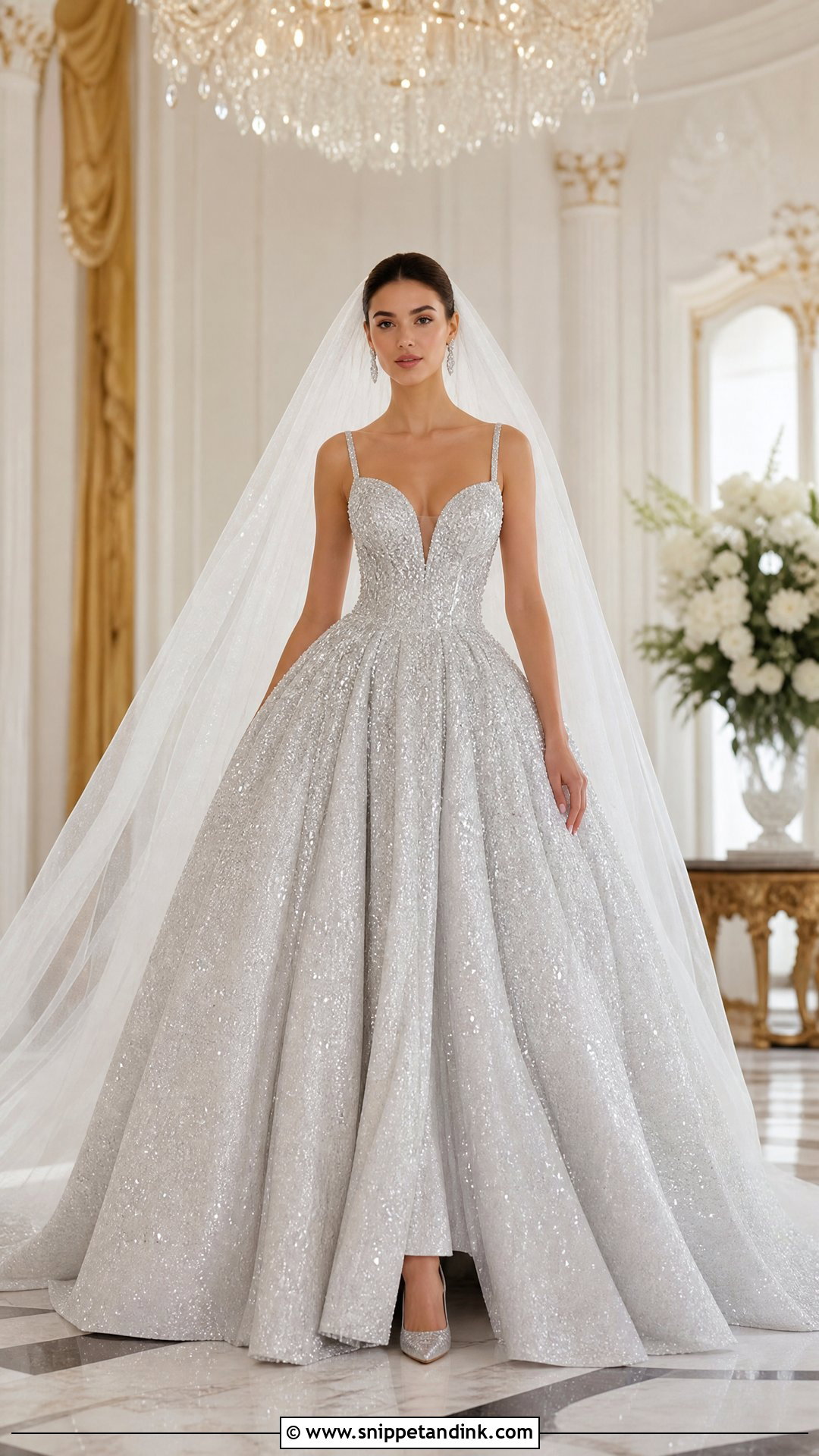
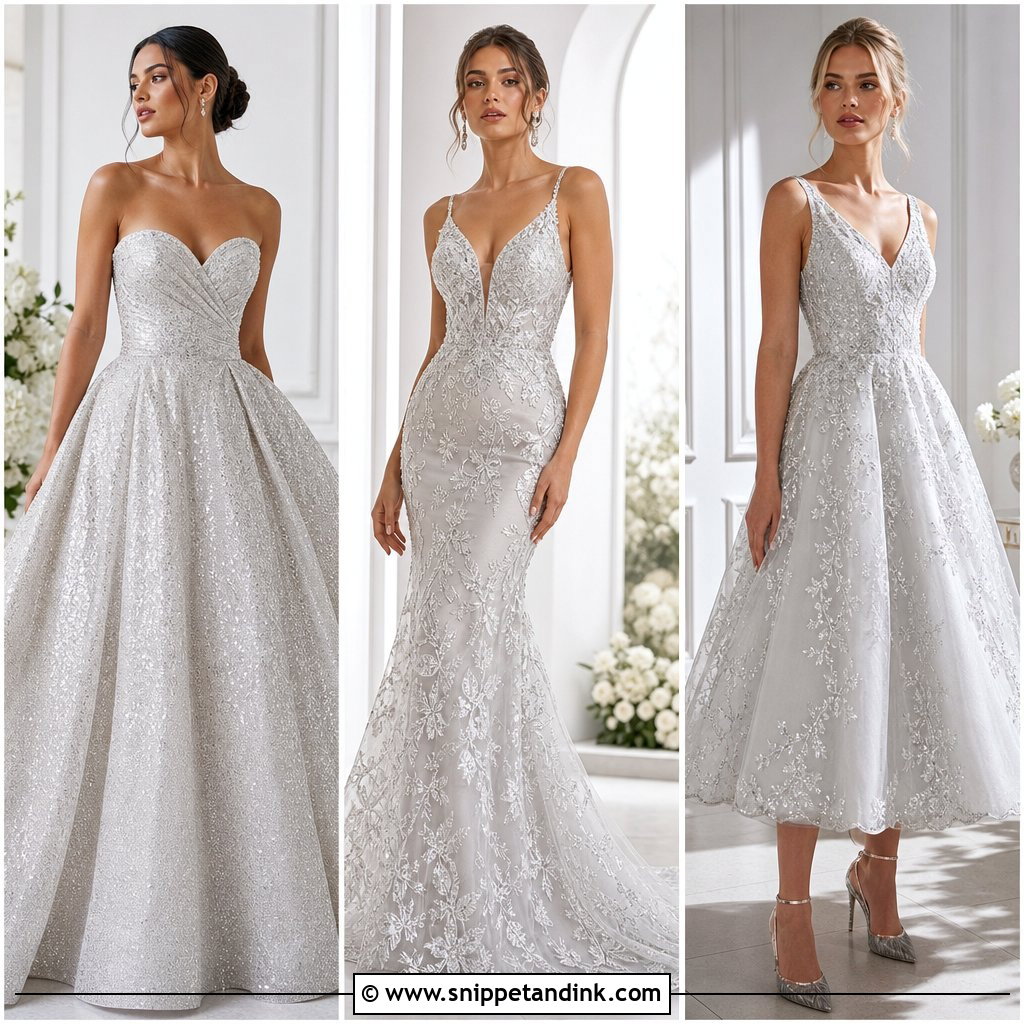
Sequins over a full ball gown skirt are about as much sparkle as a dress can carry, so the bodice needs to stay disciplined. A fitted bodice and defined waist hold the shape; a corset or softly curved neckline keeps it comfortable. I always run my hand down the inside seams of a sequined gown, because sequins sewn into the seam allowance can scratch the inner arm all evening. Silver pointed pumps, crystal drops and a small satin clutch are all you need. A sheer cathedral veil pulls the metallic surface back toward bridal. Keep the hair smooth in a low bun and the makeup glowing with a cool pink lip. Clean overhead lighting in a big ballroom shows sequins at their best.
2. Silver A-Line Tulle Wedding Dress
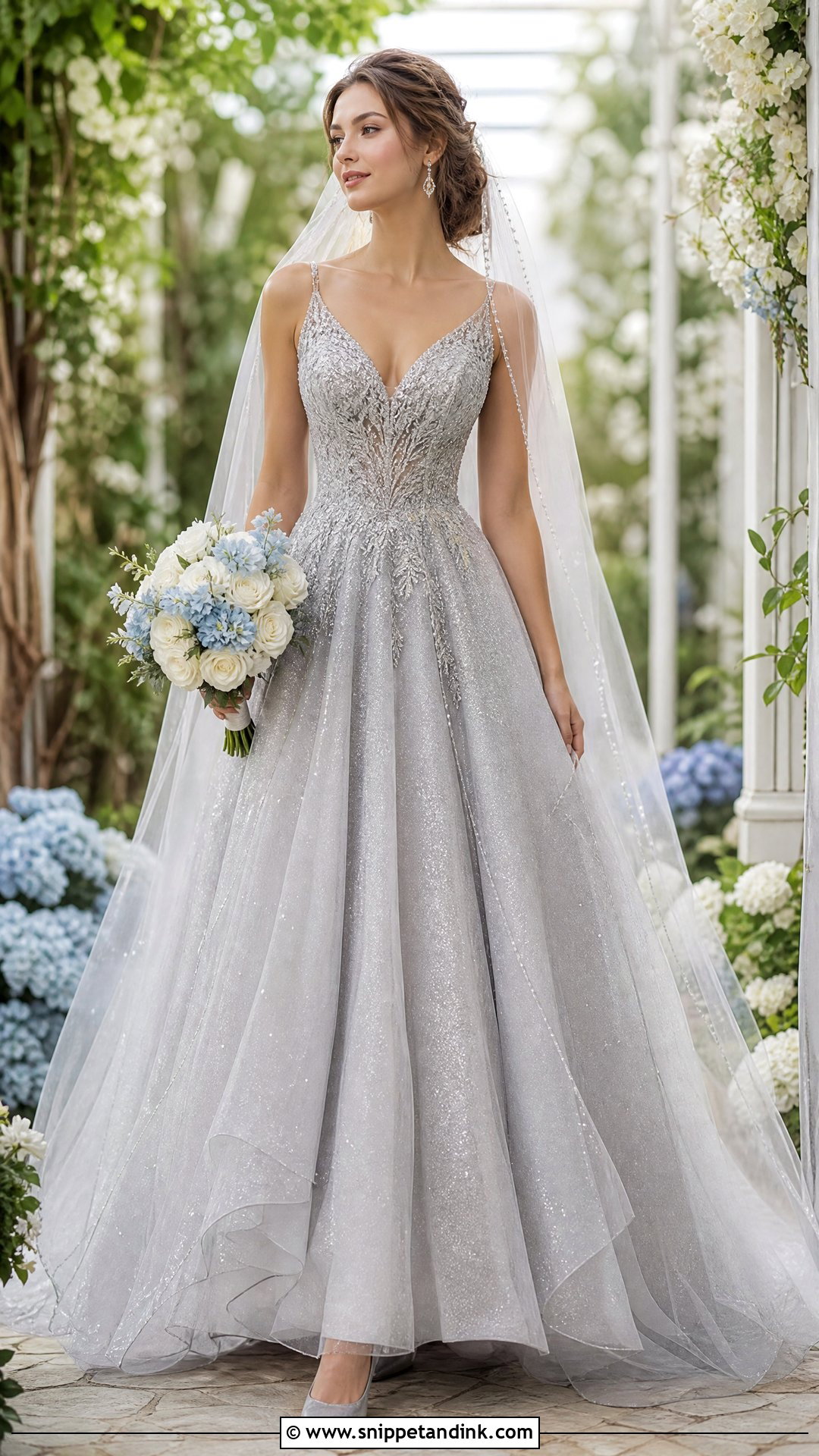
Silver tulle is the gentlest way to wear the color: several sheer layers, each slightly metallic, so the shimmer only builds where the fabric overlaps. An embroidered fitted bodice into a widening A-line skirt gives shape without restriction. Glitter tulle sheds a little, especially when new; I’d warn your photographer and your partner’s dark suit. Light gray satin heels, pearl-and-crystal earrings, a slim silver bracelet and a fingertip veil with fine beaded edging coordinate without crowding the skirt. Loose waves or a half-up style keep it soft. White roses, silvery greenery and pale blue flowers suit a garden or a bright indoor room.
3. Silver Mermaid Beaded Wedding Dress
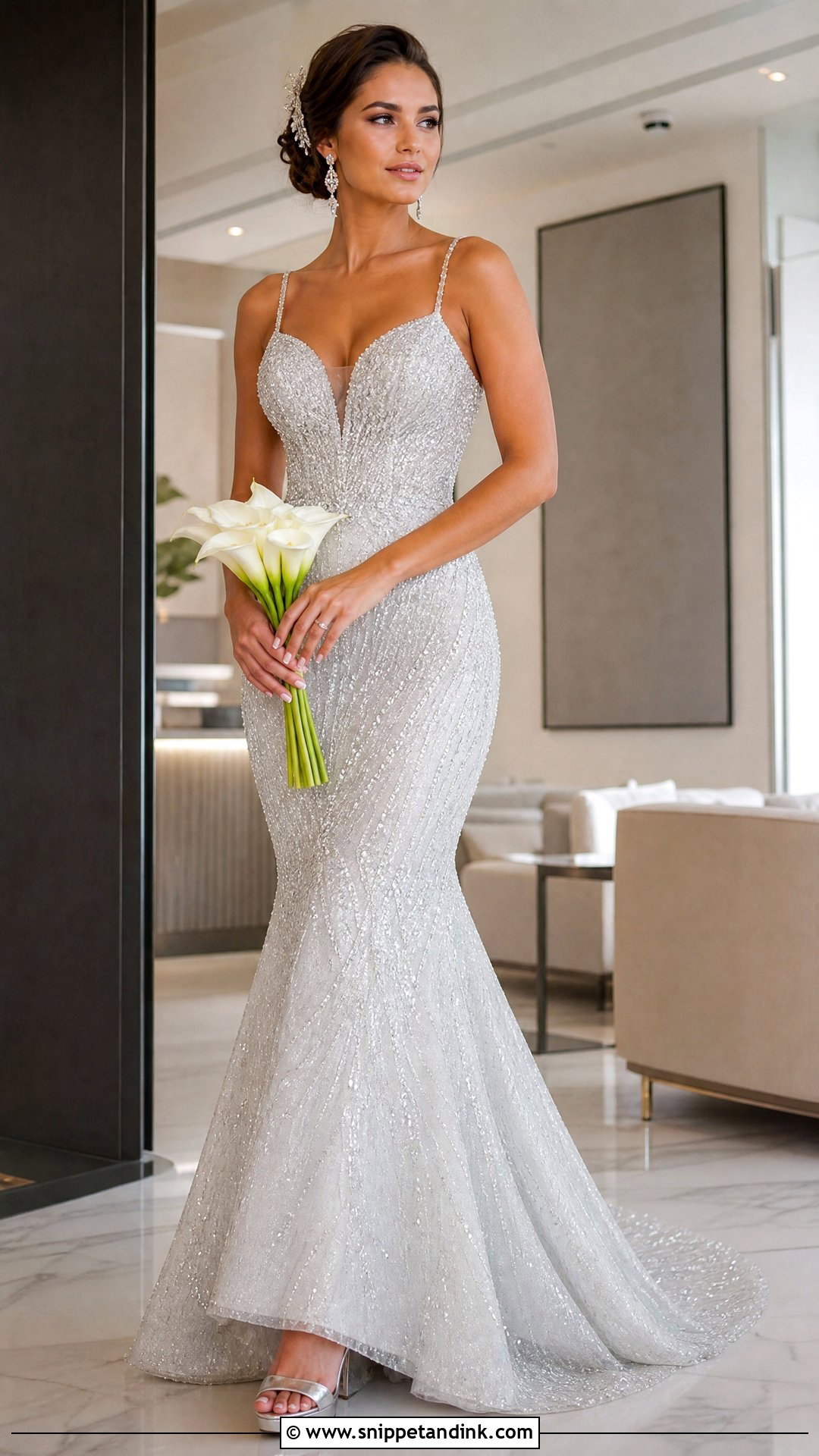
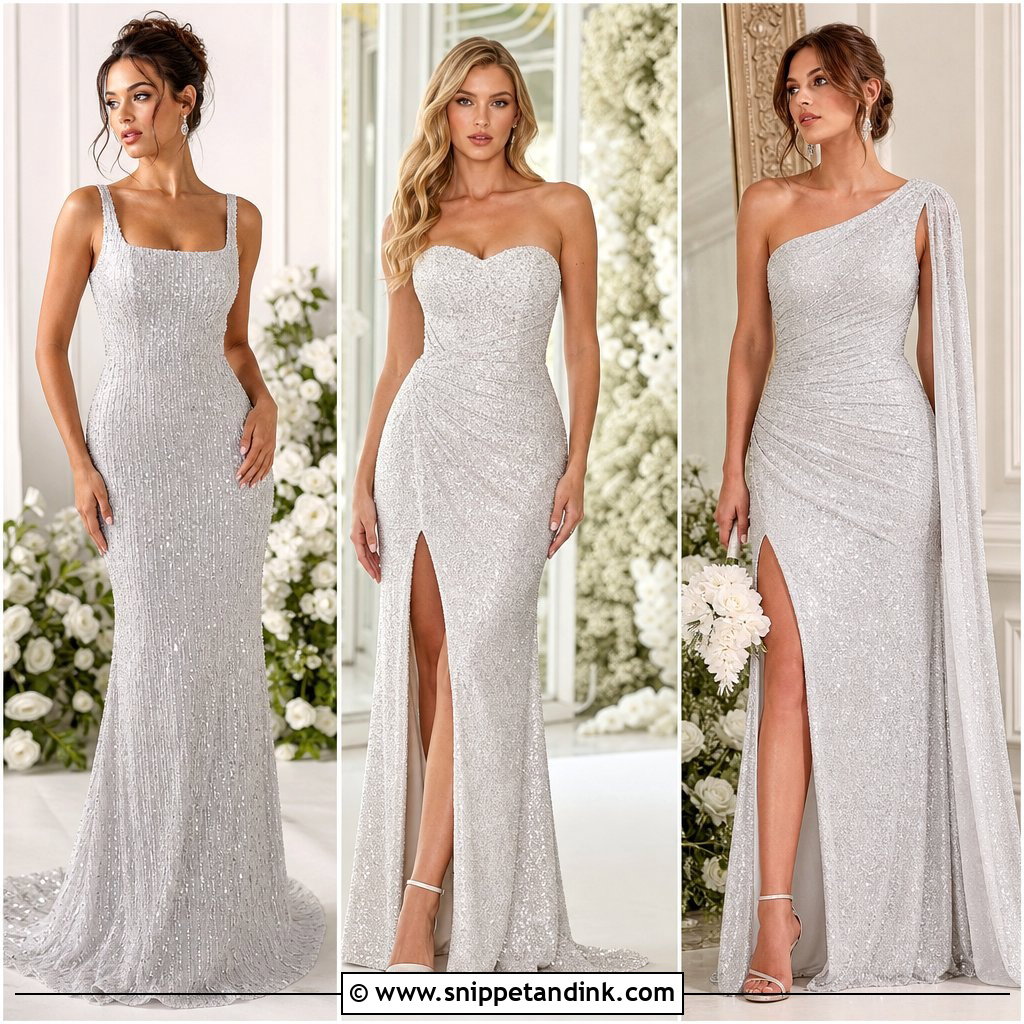
On a beaded mermaid, the direction of the beadwork changes your shape. Vertical or curving lines draw the eye up and down and make you look longer; horizontal bands across the hips do the opposite. The dress should follow the body to the knee, but ask for stretch in the lining and enough room in the skirt to sit, because beads don’t give at all. Silver platform sandals add height without a thin heel sinking into grass. Teardrop earrings and a small crystal comb are enough; skip the large necklace. A sleek ponytail or structured waves and a slim bouquet of calla lilies suit an evening ceremony in a hotel or the city.
4. Silver Satin Slip Wedding Dress
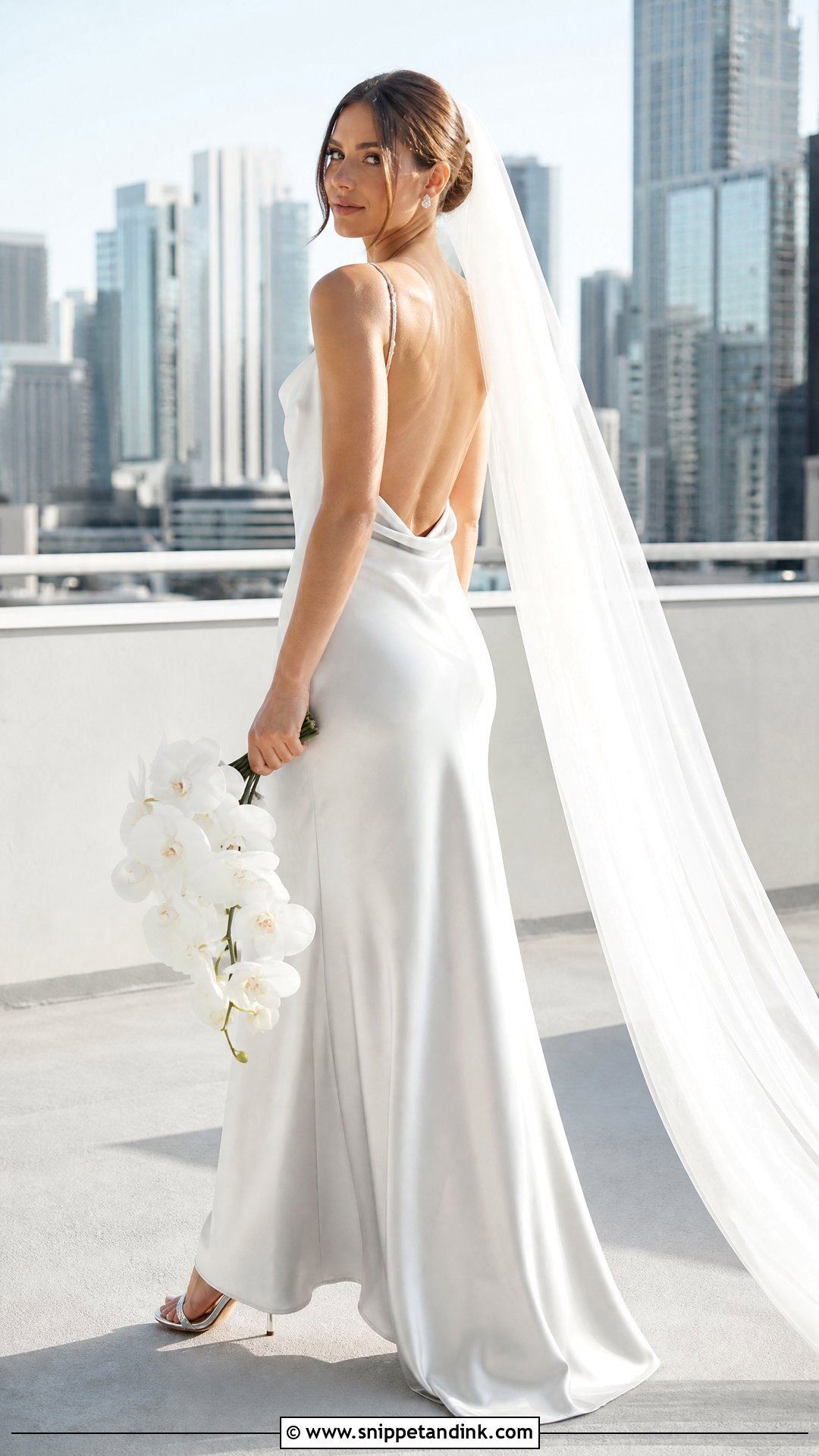
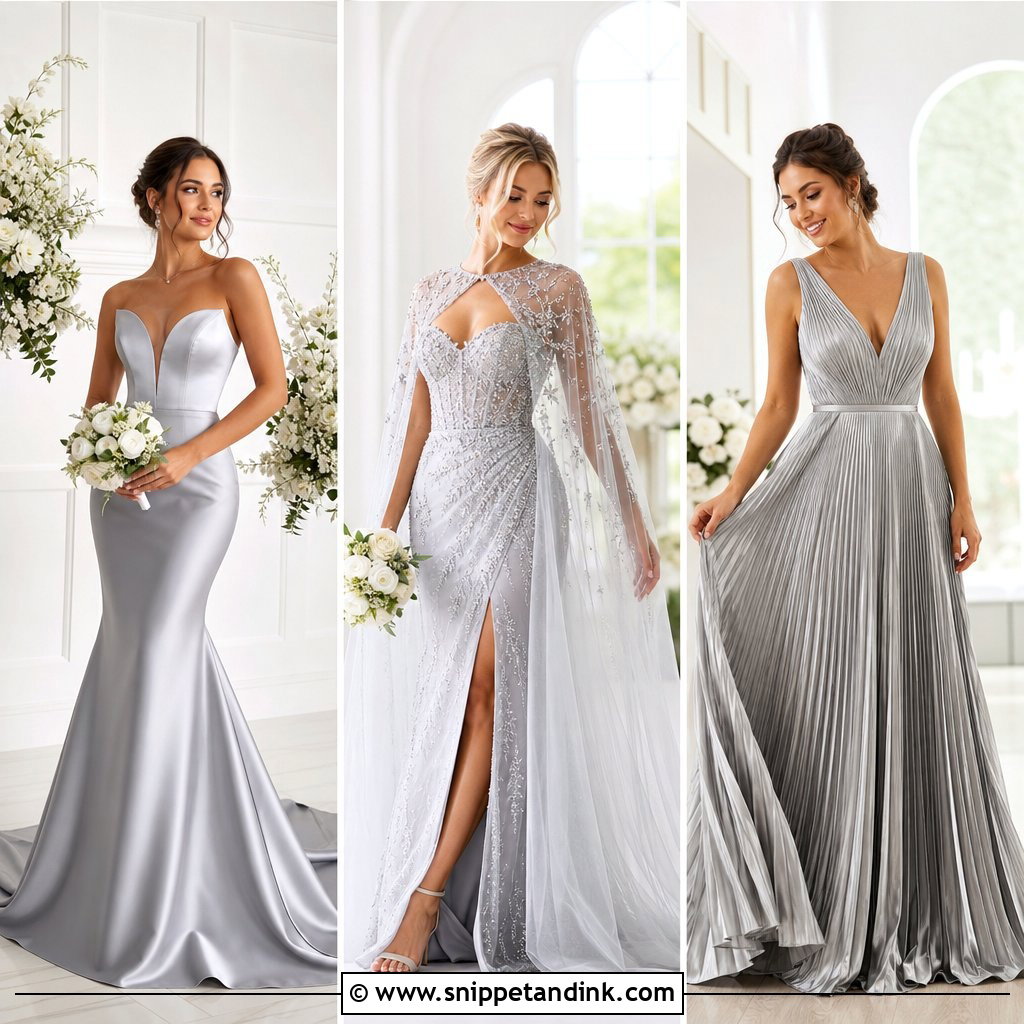
A silver satin slip is all line and no decoration. The bias cut follows the body without boning, so it suits brides who want to feel like themselves rather than built into a dress. A draped neckline, thin straps and a low back over a floor-length skirt is the shape. The honest drawback: bias-cut satin is unforgiving over the stomach and shows any line underneath, so I’d bring your chosen underwear to every fitting. Minimal silver sandals, small studs and a structured ivory clutch keep it modern. A long, plain veil adds the ceremony. A neat bun or side-parted waves, white orchids or tulips, and a rooftop or city venue suit it.
5. Silver Long Sleeve Lace Wedding Dress
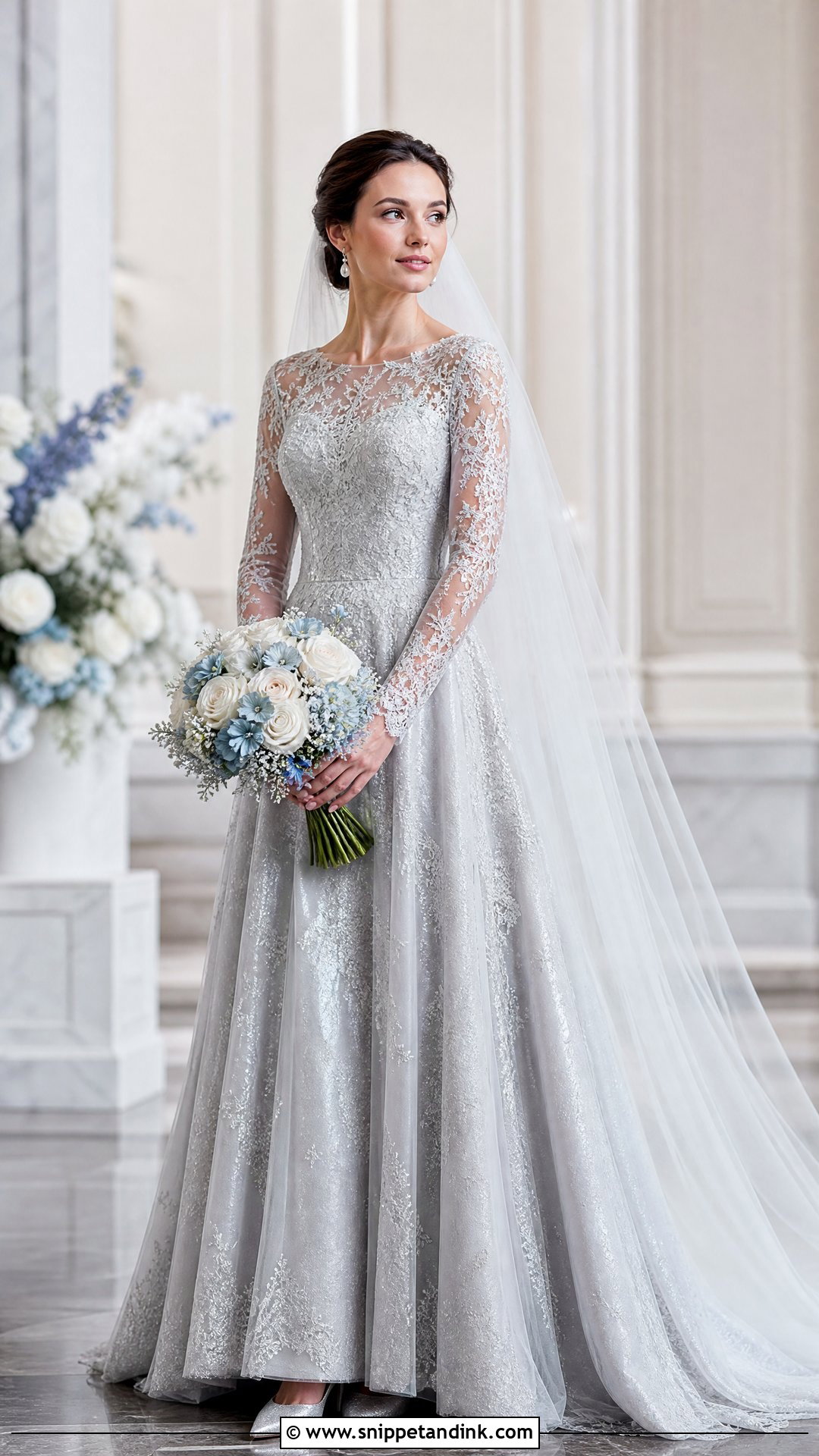
Lace on silver depends on its lining. Laid over soft gray, the pattern stands out sharply; over pale silver it blends and looks more like texture. I’d ask to see both before deciding. Fitted illusion sleeves keep long sleeves light, with a defined waist and flowing skirt underneath. Closed-toe silver heels, pearl drops and a delicate comb above a low chignon are plenty. A plain tulle veil lets the lace stay the focus; a lace-edged veil starts competing. White roses with dusty blue blooms and muted greenery soften it. Cooler months, formal indoor rooms and late-afternoon ceremonies are where it makes the most sense.
6. Silver Off Shoulder Wedding Dress
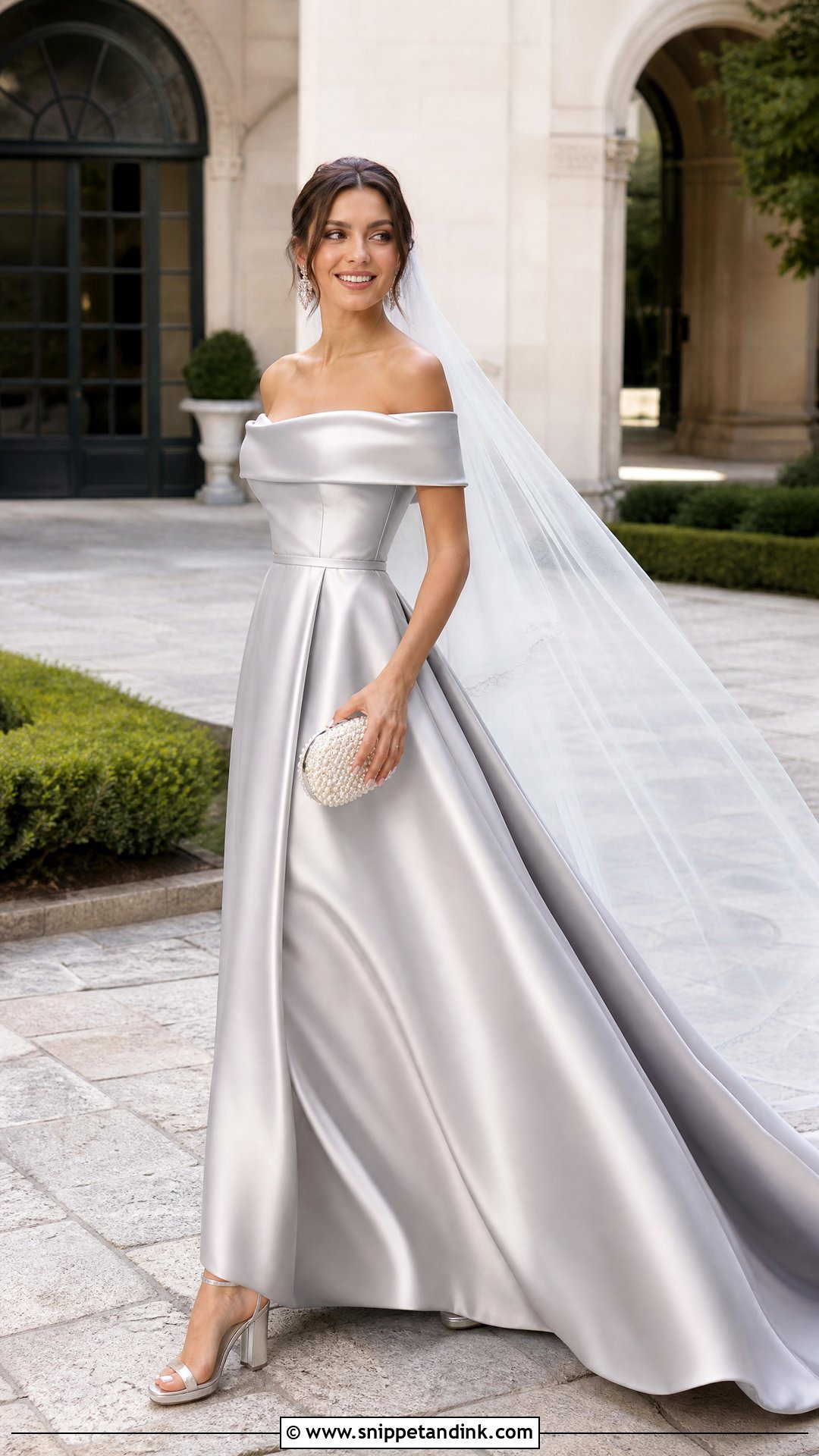
Off-shoulder necklines frame the collarbones, and the construction underneath decides whether you can lift your arms. Folded satin, draped tulle sleeves or embroidered straps all work if they sit on the upper arm without binding. I test it with a hug: if the sleeve rides up or the bodice dips, it needs adjusting. A fitted bodice over an A-line or full skirt keeps it classic. Only wear a short crystal necklace if the neckline is plain; otherwise leave the neck bare and choose statement earrings. Silver block heels, a pearl clutch, a sheer chapel veil and a loose low bun with a few face-framing strands finish it.
7. Silver Corset Wedding Dress
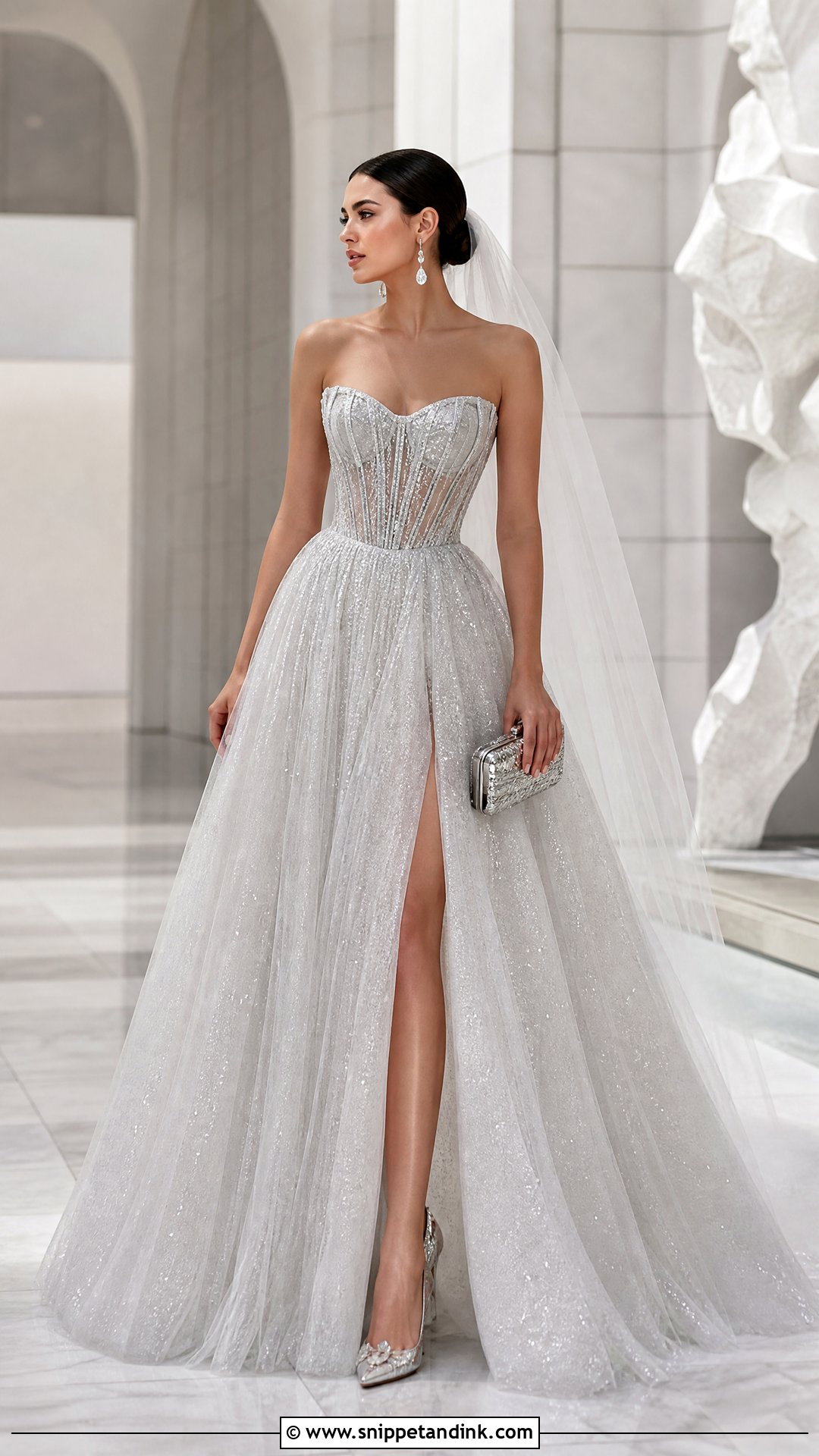
Visible corsetry turns the bodice into the feature. Look at how the boning is placed: channels that follow the curve of the body look sculpted, while straight channels on a curvy figure can buckle when you sit. Supportive cups and a comfortable lining matter more in silver because the shine shows every ripple. A flowing tulle skirt gives contrast; a fitted skirt looks more fashion-led. I’d keep the sparkle to one place, crystal pumps or earrings, not both plus a beaded clutch. Medium drops, a narrow metallic bag, a simple veil under a smooth bun, a soft smoky eye and a neutral rose lip. It suits a grand room, a museum or an evening ceremony.
8. Silver High Neck Wedding Dress
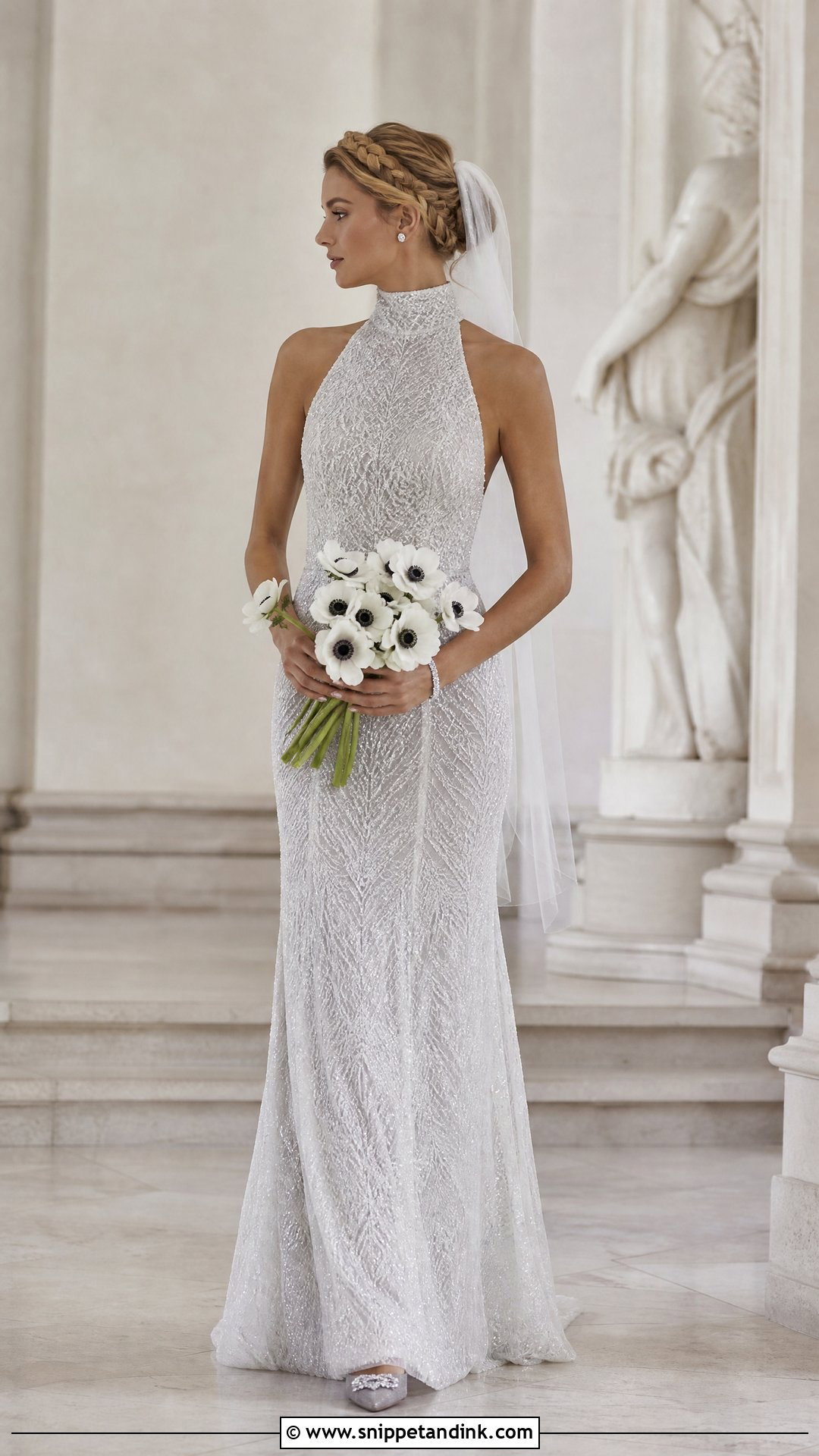
A high neck pulls the attention up to your face, which is the whole point of it. Beading, lace or sheer embroidery keeps the neckline light. A narrow bodice, defined waist and soft skirt balance it below. No necklace; small crystal studs and a slim bracelet are enough, with silver pointed heels. Wear your hair up, in a low bun, braided updo or clean ponytail, and set the veil below the style so it doesn’t add bulk at the neck. I’d check the neckline closure at the back with your hair already done, because a high button loop can catch fine hairs. White anemones or roses, a winter wedding and a formal venue suit it.
9. Silver One Shoulder Wedding Dress
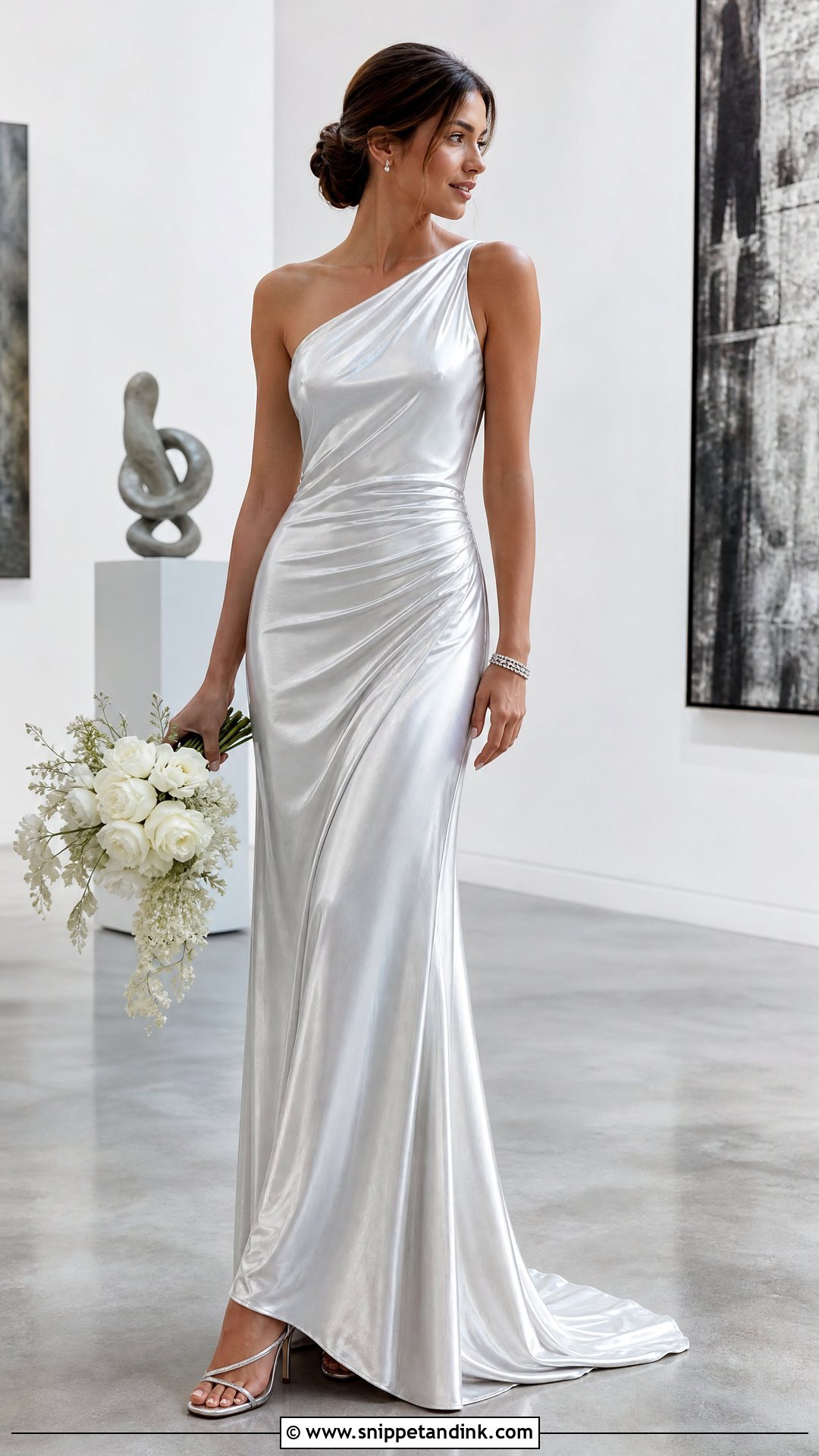
One shoulder creates a diagonal, and that diagonal is the decoration. Draped satin feels fluid; sequins or beading turn it into evening glamour. The bodice has to support itself, so I check that it stays put when you twist, since the single strap isn’t strong enough to hold the dress up alone. A bracelet on the bare arm, small earrings and metallic heels are enough; any necklace interrupts the line. Sweep the hair back or into a low side bun opposite the strap. A structured white bouquet and a small satin clutch suit a gallery, a rooftop or a smart hotel.
10. Silver Tea Length Wedding Dress
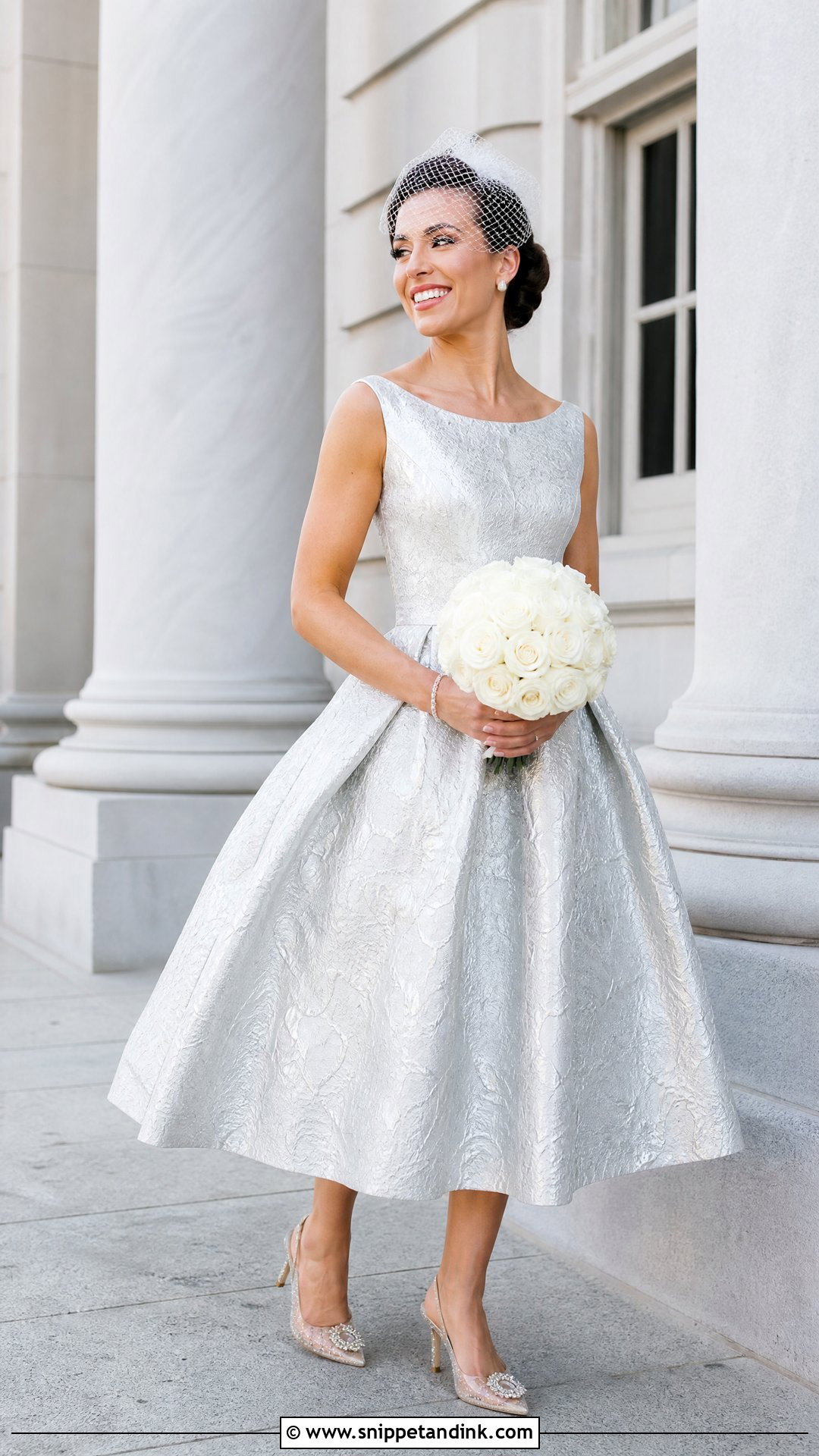
Tea length is a shoe dress. With the hem between knee and ankle, crystal slingbacks, satin pumps or silver ankle straps are part of the outfit rather than something hidden. A fitted bodice and full skirt in metallic jacquard or shimmering tulle look vintage but current. Add short gloves if the event is formal enough, or keep it simple with pearl studs and a bracelet. A birdcage veil, a small bow veil or a jeweled headband suits the shorter length better than a long veil, which can look disproportionate. A round bouquet of white peonies or roses finishes it for a courthouse, a daytime wedding or a relaxed reception.
11. Silver Mini Wedding Dress
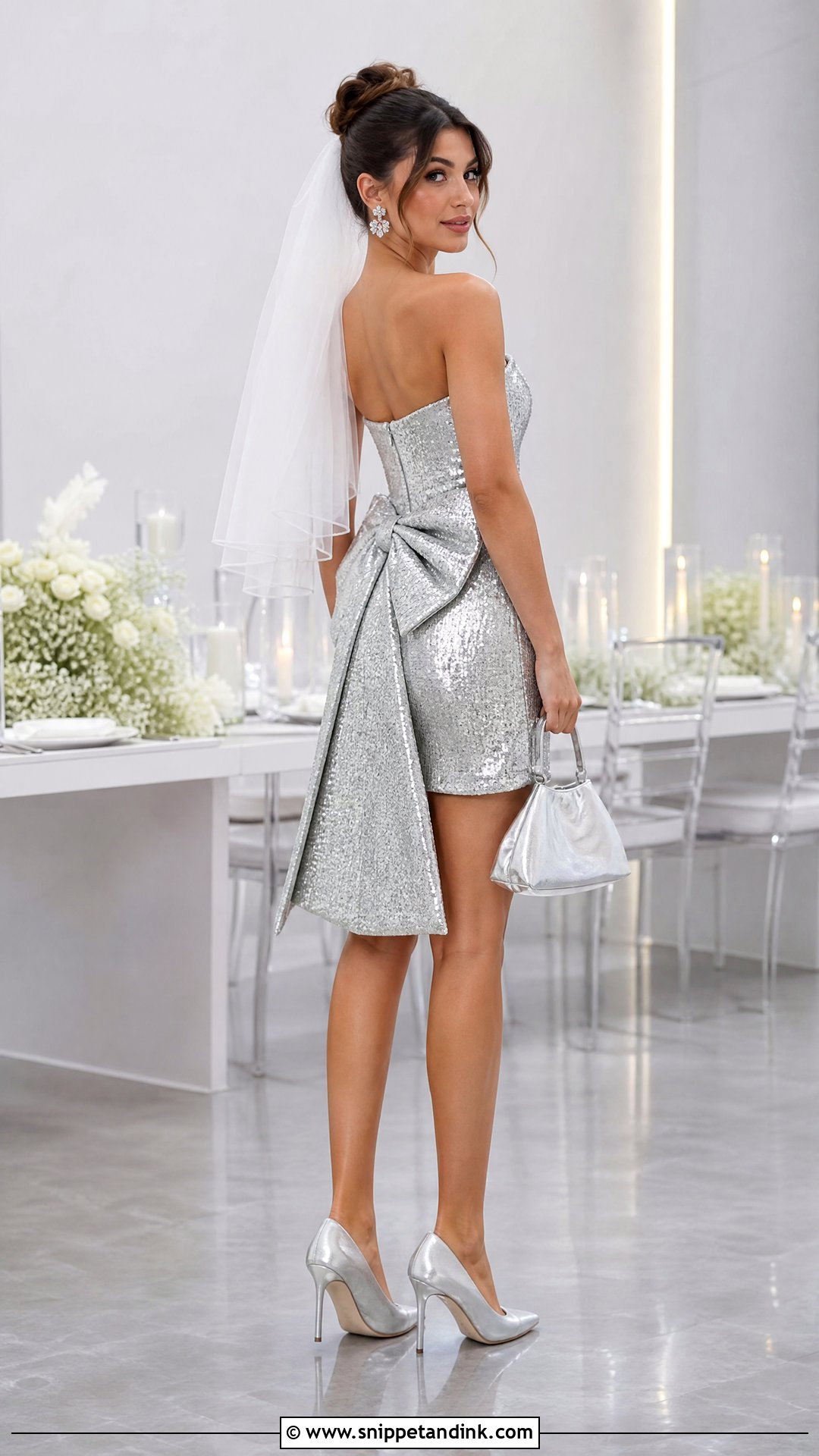
A silver mini wedding dress suits a civil ceremony, a reception change or a less formal party. A tailored shift, a fitted sequin dress or a structured mini with one dramatic detail, a bow, a small overskirt or a feather hem, keeps it bridal. Closed-toe pumps or sleek ankle straps balance the short length. Crystal earrings, a compact silver bag and a short veil make the intent clear. In cooler weather, an ivory blazer or cropped faux-fur jacket keeps you warm without covering the whole dress. I’d check how high the hem rides when you sit, because sequins slide up more than you’d think. A polished ponytail keeps it fresh.
12. Silver Cape Wedding Dress
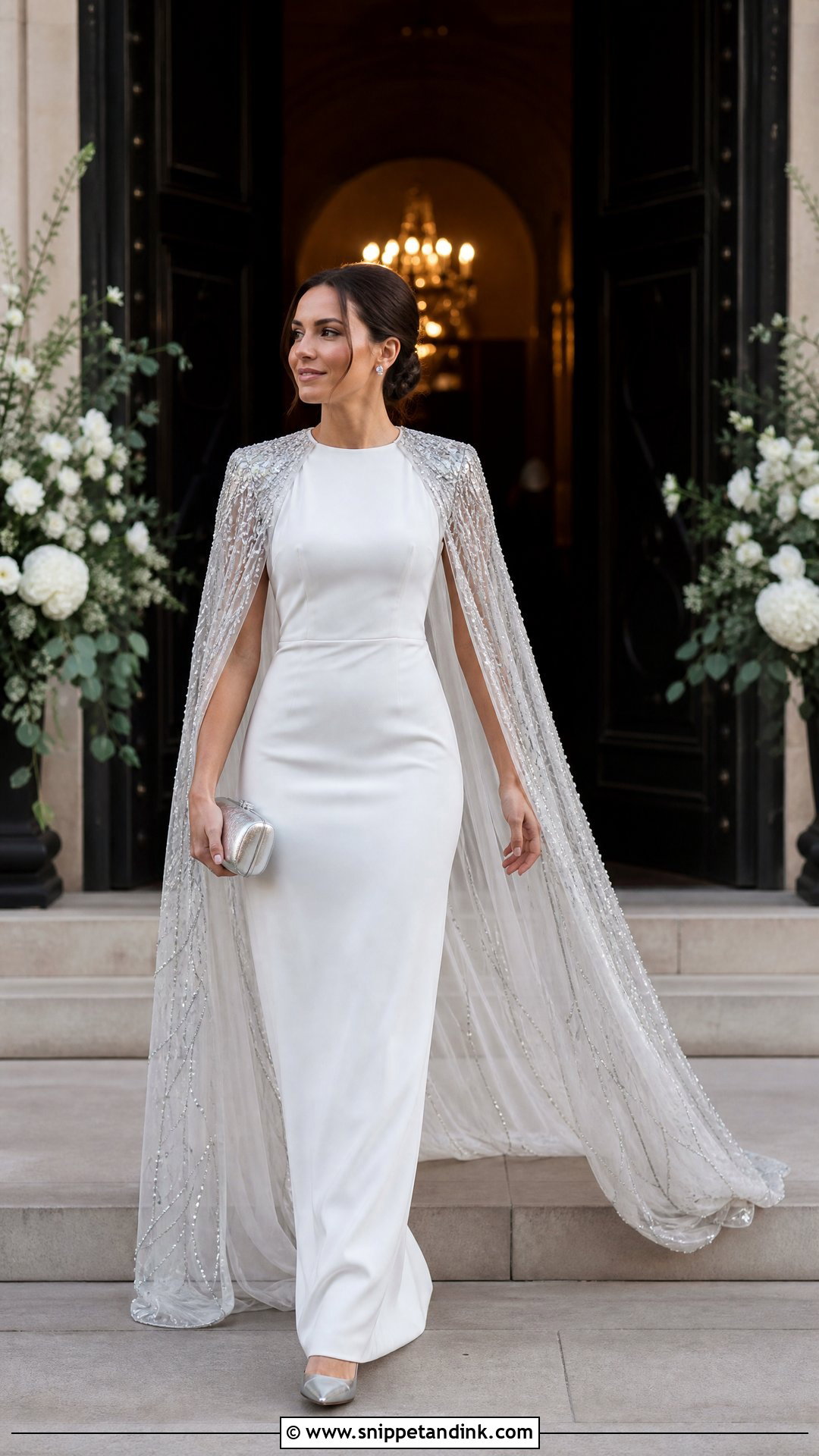
A cape gives a silver gown presence, especially in the walk down the aisle. Light tulle moves; structured satin sharpens the shoulders. Underneath, a fitted column or simple A-line keeps the outline from getting wide. I follow a simple rule: beaded cape, plain gown; plain cape, the gown can have a little texture. Silver pointed pumps, crystal studs and a sleek metallic clutch are enough; skip the necklace because the cape already frames the top. A neat low bun keeps the fastening visible, and hidden loops at the shoulder take the cape’s weight off the neckline. Winter weddings and evening ceremonies suit it best.
13. Silver Feather Wedding Dress
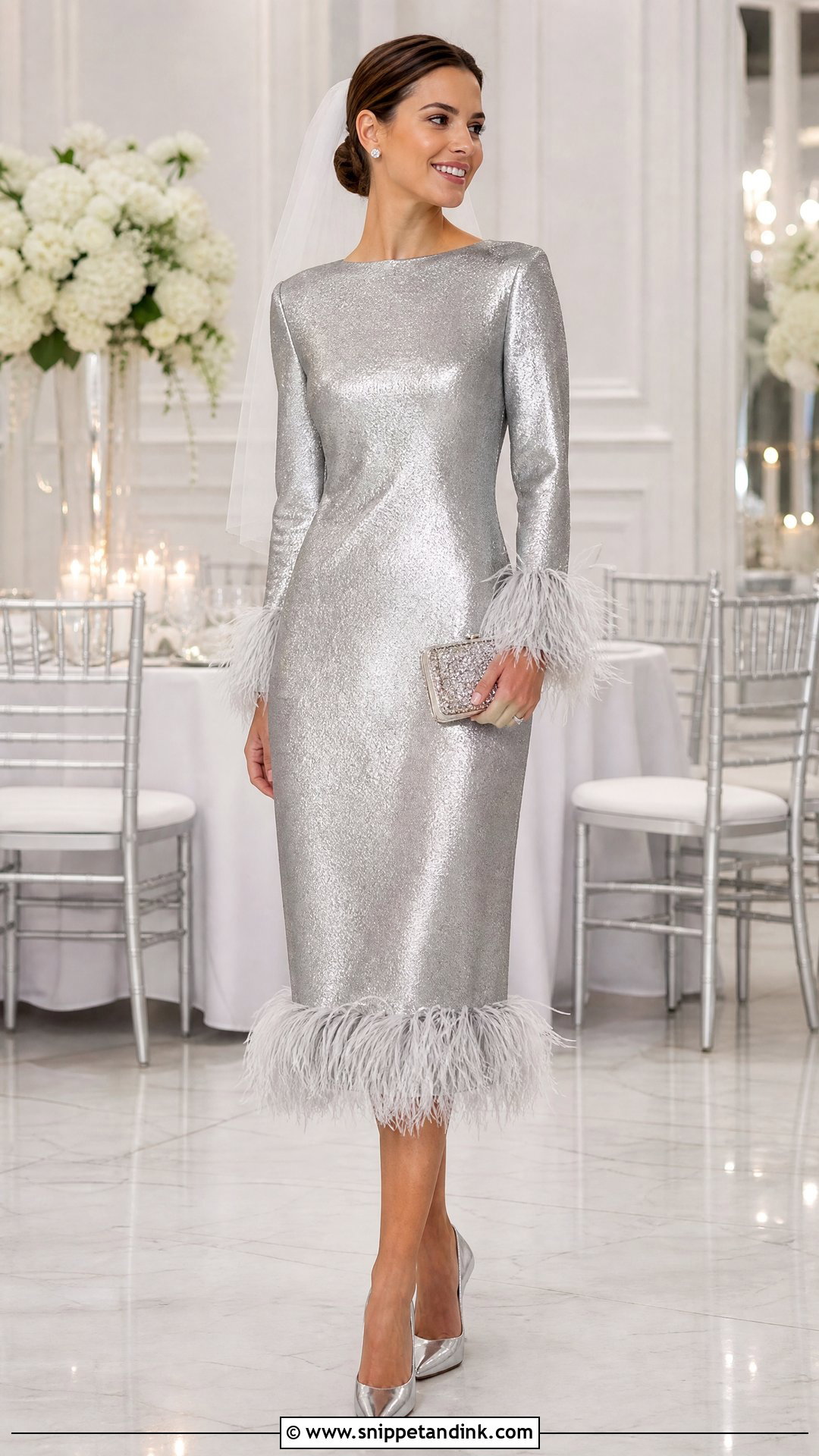
Feathers move with every step, which is lovely, and shed, which is less so. I place them where they’ll survive the day: the neckline, cuffs, hem or detachable sleeves, rather than all over. Ostrich feathers in particular flatten in rain and humidity, so an outdoor wedding in damp weather is a risk. A streamlined column or fitted midi dress is the right base. Smooth silver pumps, a small crystal bag and simple studs keep the rest quiet. A sleek bun or waved bob depending on the neckline, and a plain veil you take off for the reception, finish it.
14. Silver Floral Applique Wedding Dress
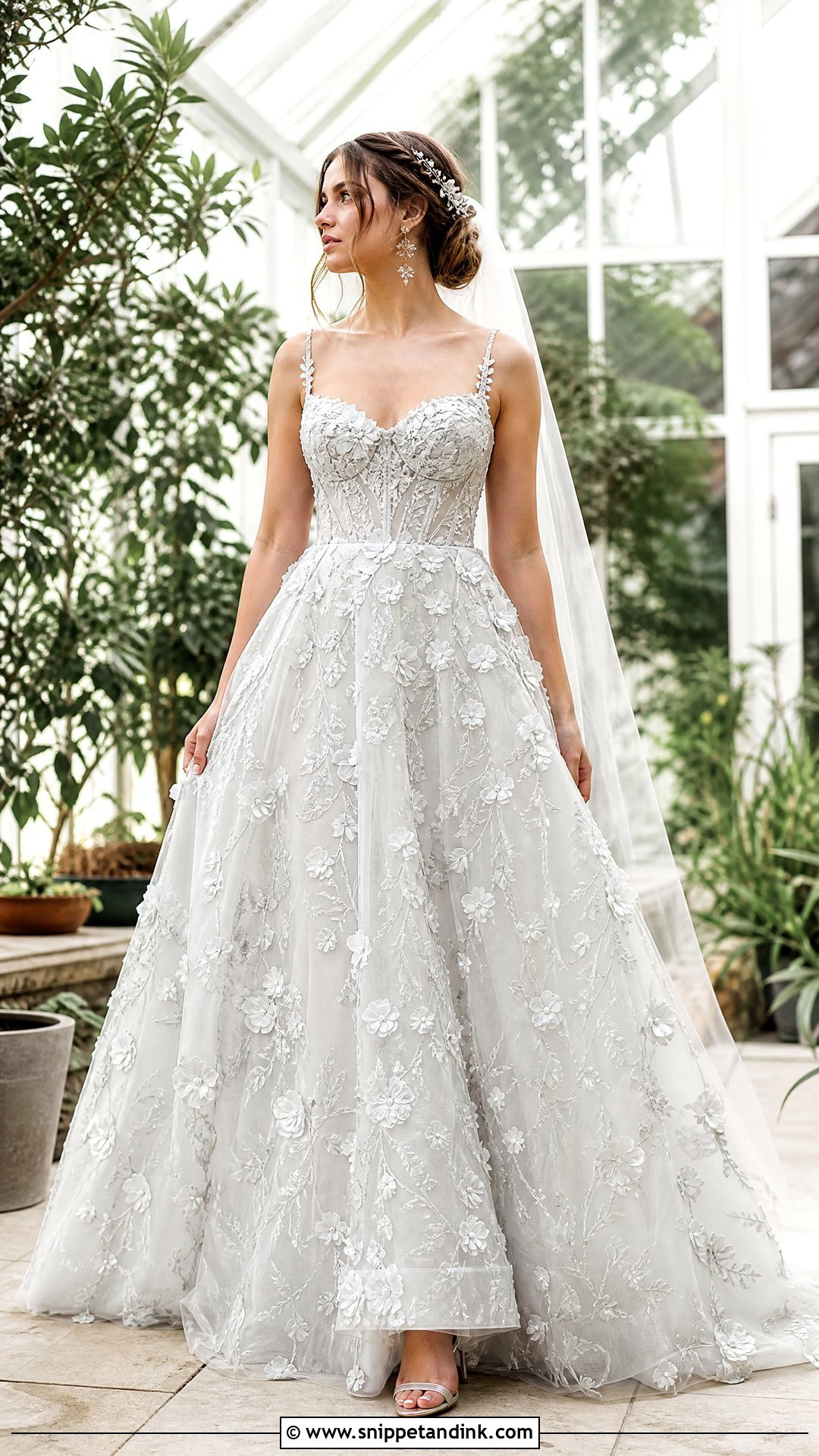
Dimensional floral appliques soften silver and give it depth, with embroidered flowers, beaded leaves or raised petals on pale silver tulle. An A-line feels romantic; a fitted gown lets the appliques trace your figure. Silver satin heels, floral crystal earrings and a plain veil that doesn’t cover the surface work best. A loose chignon with a small matching hair vine ties it together. Keep the bouquet understated, white with soft gray-green, because a busy arrangement against busy embroidery just looks like noise in photos. It’s at home in a garden, a conservatory or a bright room full of flowers.
15. Silver Ombre Wedding Dress
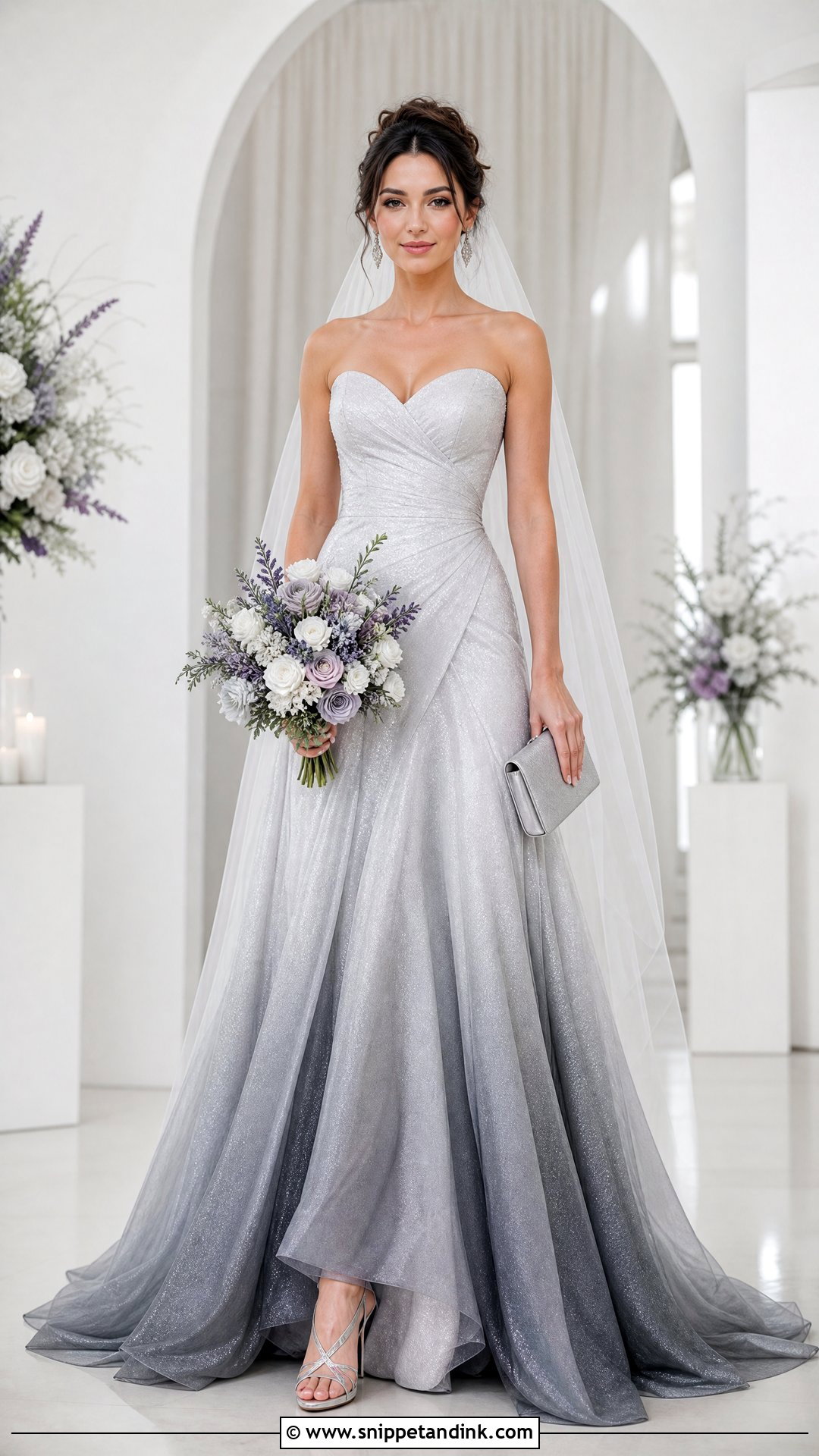
An ombre silver wedding dress gives you color without making the whole gown equally reflective. Most fade from a light bridal shade at the bodice into deeper silver at the hem; a few reverse it. The smoother the transition, the more expensive it looks; an abrupt change can read like two dresses joined at the waist. Keep accessories in one family: silver earrings, cool-toned shoes and a pale gray clutch. A plain ivory or light gray veil lets the fade show. Soft waves or half-up hair, with a bouquet of white, blue-gray and muted lavender, picks up the tones.
16. Dark Silver Wedding Dress
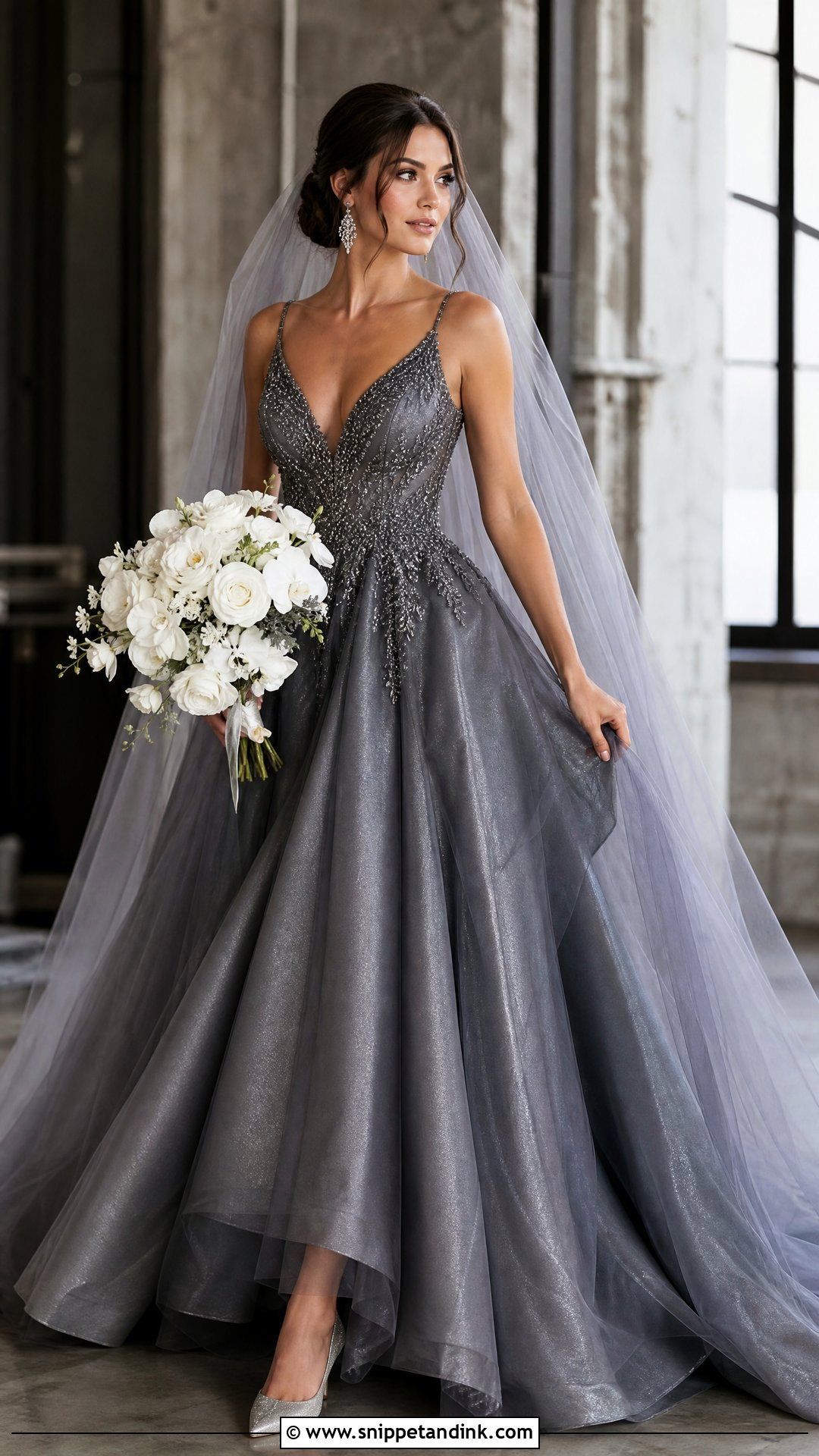
Dark silver sits close to gunmetal, and on the hanger it can look severe. The fix is movement or texture: satin, beaded tulle or metallic lace all break up that flat dark surface. A fitted bodice and sweeping A-line skirt make it read as a wedding gown. I’d always put something white near it, usually the bouquet, because in photos a dark silver dress against a dark background can lose its outline. Lighter silver shoes, clear crystal earrings and a soft gray veil create tonal contrast. Glowing makeup with a cool rosy cheek and a neutral lip. Evening weddings, industrial venues and cold months suit it naturally.
17. Pale Silver Wedding Dress
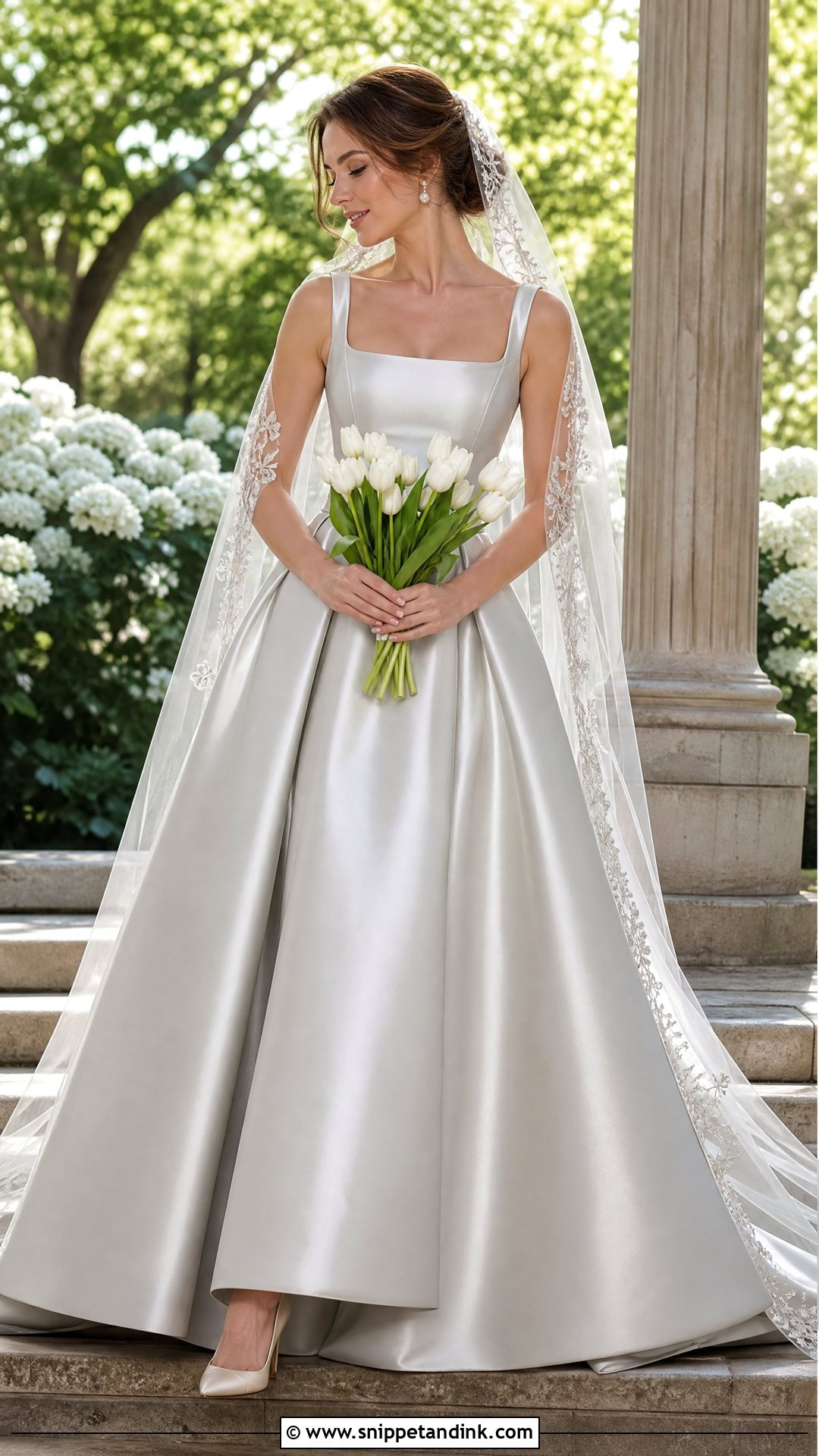
Pale silver is for the bride who wants to step only slightly away from white. Pearl-silver satin or misty gray tulle looks soft and luminous in daylight, and indoors it can pass for ivory until you move. A classic A-line with a fitted waist keeps it traditional. Ivory or silver heels, pearl earrings and a sheer veil edged with fine silver embroidery suit it, with white roses, ranunculus or tulips. Loose waves or a softly structured updo. This is the silver I’d pick if you’re wearing heirloom jewelry, especially yellow-gold pieces, because the pale tone doesn’t clash with them the way bright silver can.
18. Plus Size Silver Wedding Dress
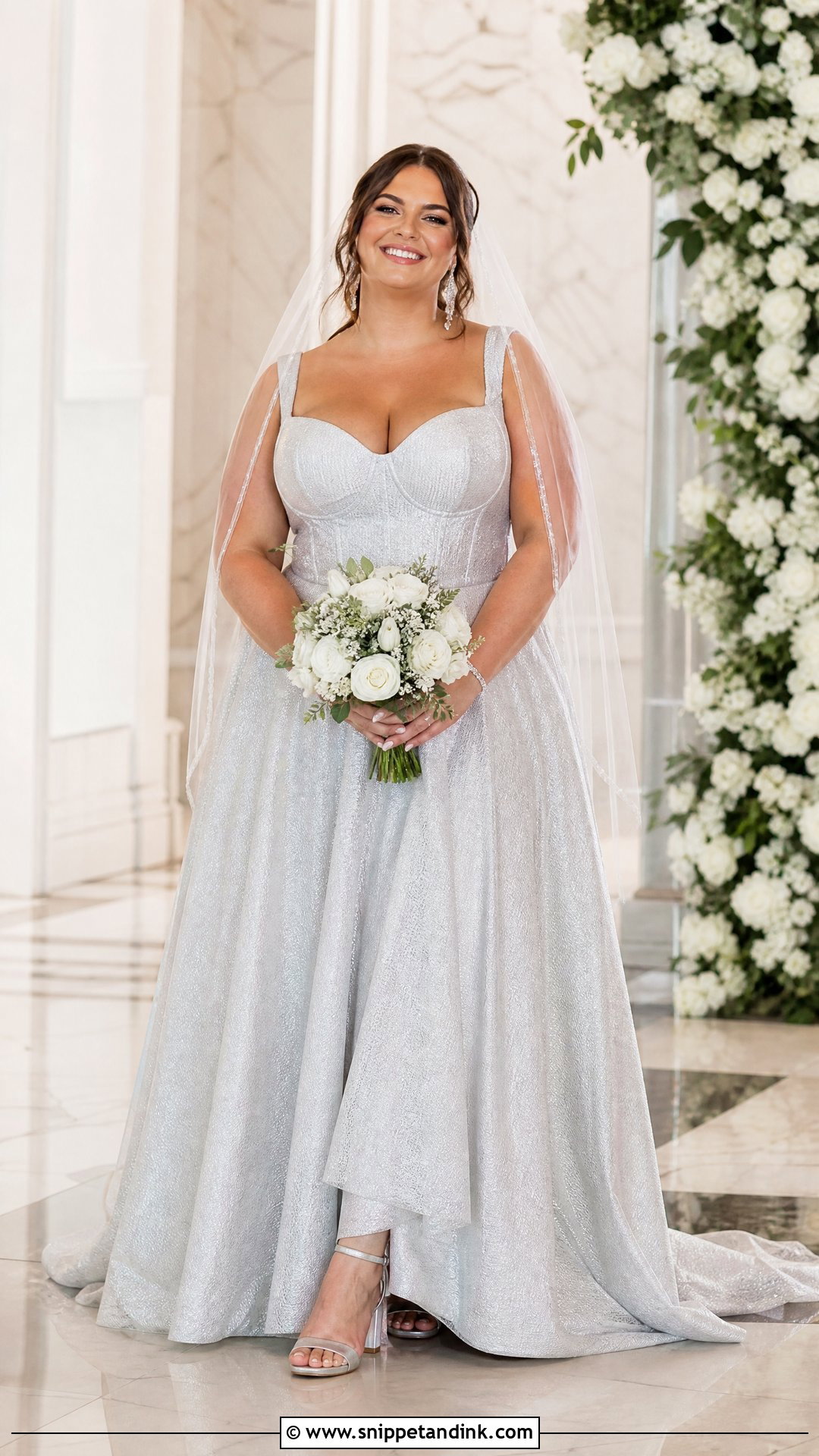
For a plus size silver gown, I start with support and proportion, never with hiding. A structured bodice, defined waist and wide supportive straps over an A-line skirt is the dependable shape; a silver wrap dress or off-shoulder ball gown can work too. Metallic fabrics reflect light most strongly where they stretch tightest, so a slightly looser fit through the hip often looks smoother than a tight one. Look for smooth linings, secure closures and room to sit and dance. Block-heel silver sandals, statement earrings and a comfortable fingertip veil suit it. Good alterations at the neckline, waist and hem make more difference here than anything else, and a hairstyle that keeps the face open finishes it.
19. Modest Silver Wedding Dress
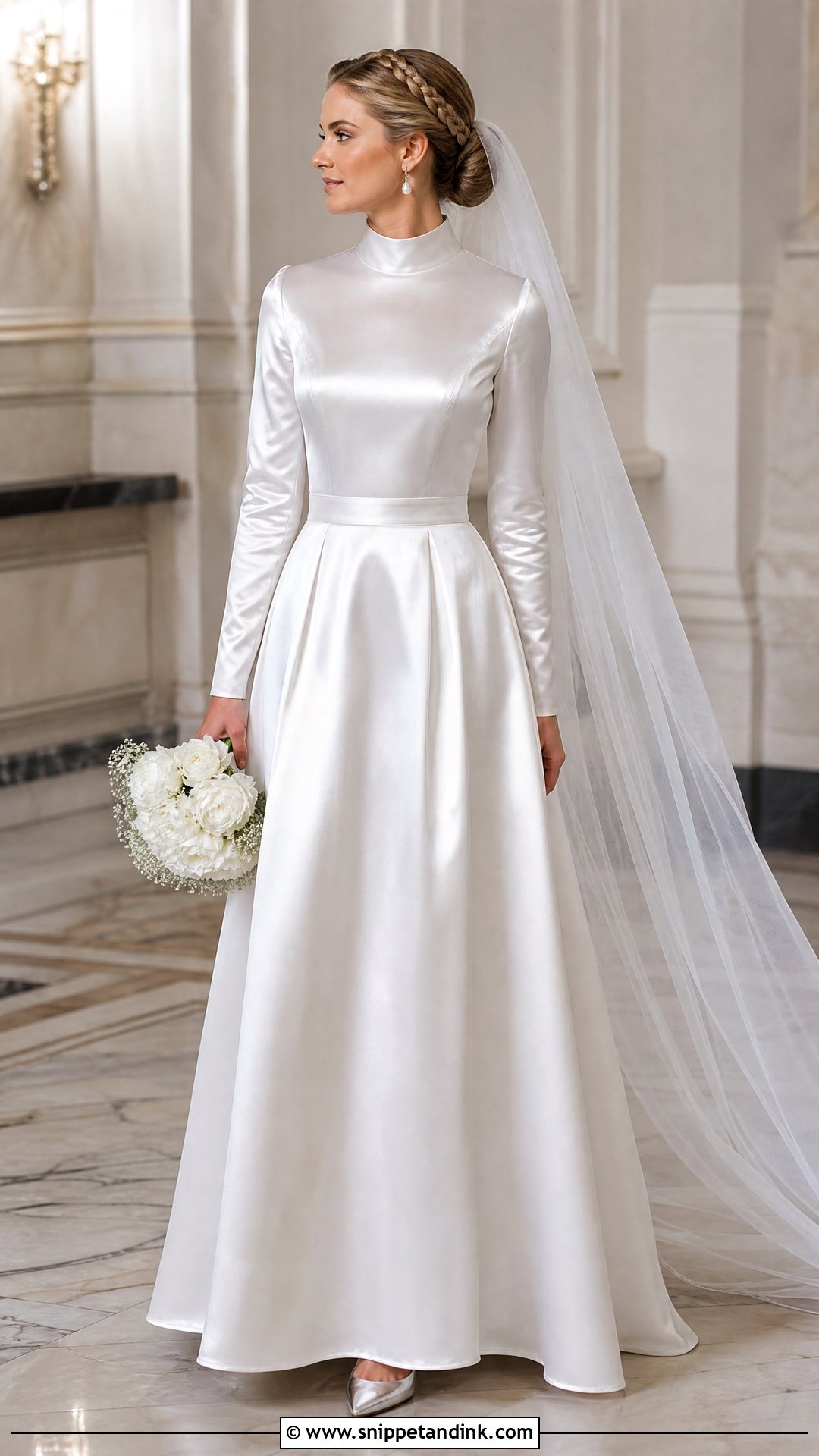
Modest silver means long sleeves, a higher neckline and a full-length skirt, in satin, crepe, lace or soft shimmering tulle. Coverage can look shapeless if there’s nothing defining the waist, so I’d look for waist seams or a matching belt. Closed-toe silver pumps, pearl earrings and a long veil that follows the gown’s lines suit it. A low bun or smooth braided updo keeps the neckline visible. If the dress is plain, add a beaded hairpiece or an embroidered veil; if it already has lace or crystals, keep accessories minimal. For a religious ceremony, check any covering rules with the venue before your final fitting so changes can still be made.
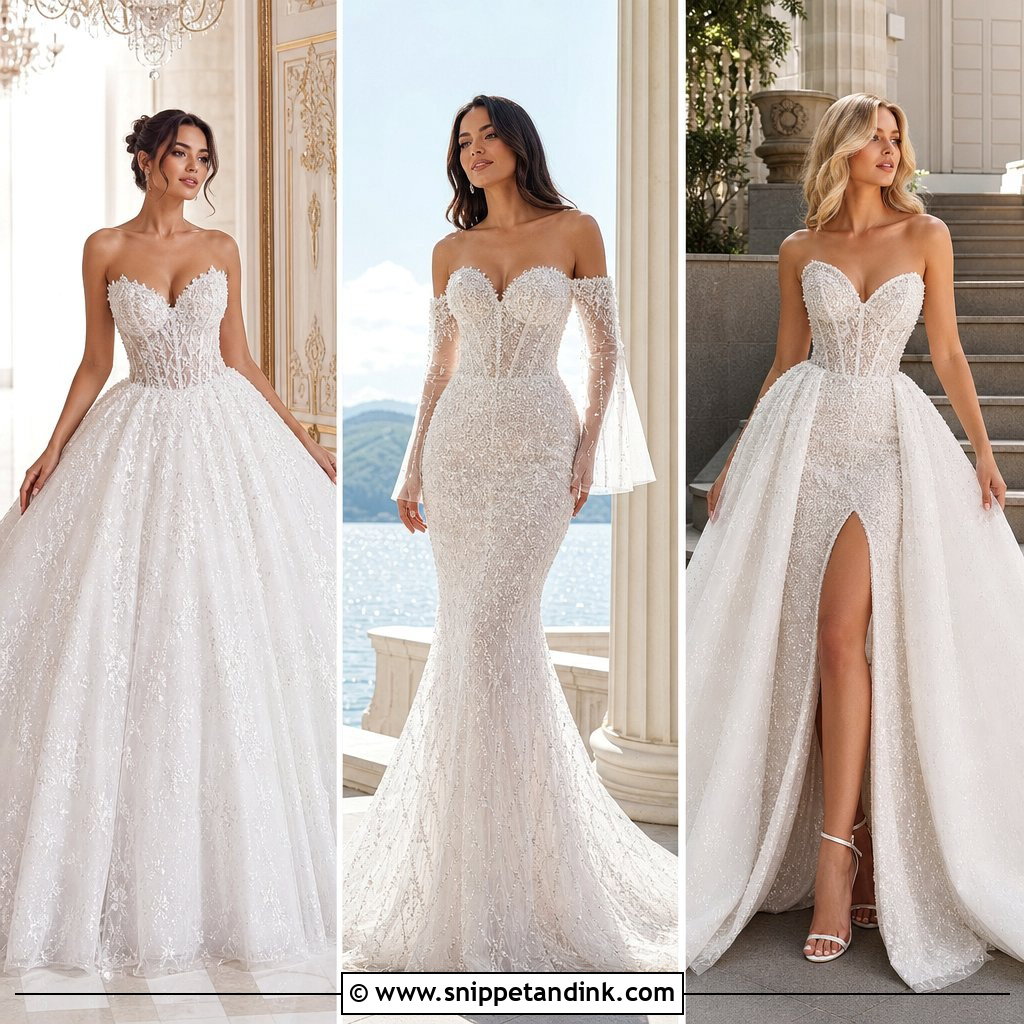
20. Silver Reception Wedding Dress
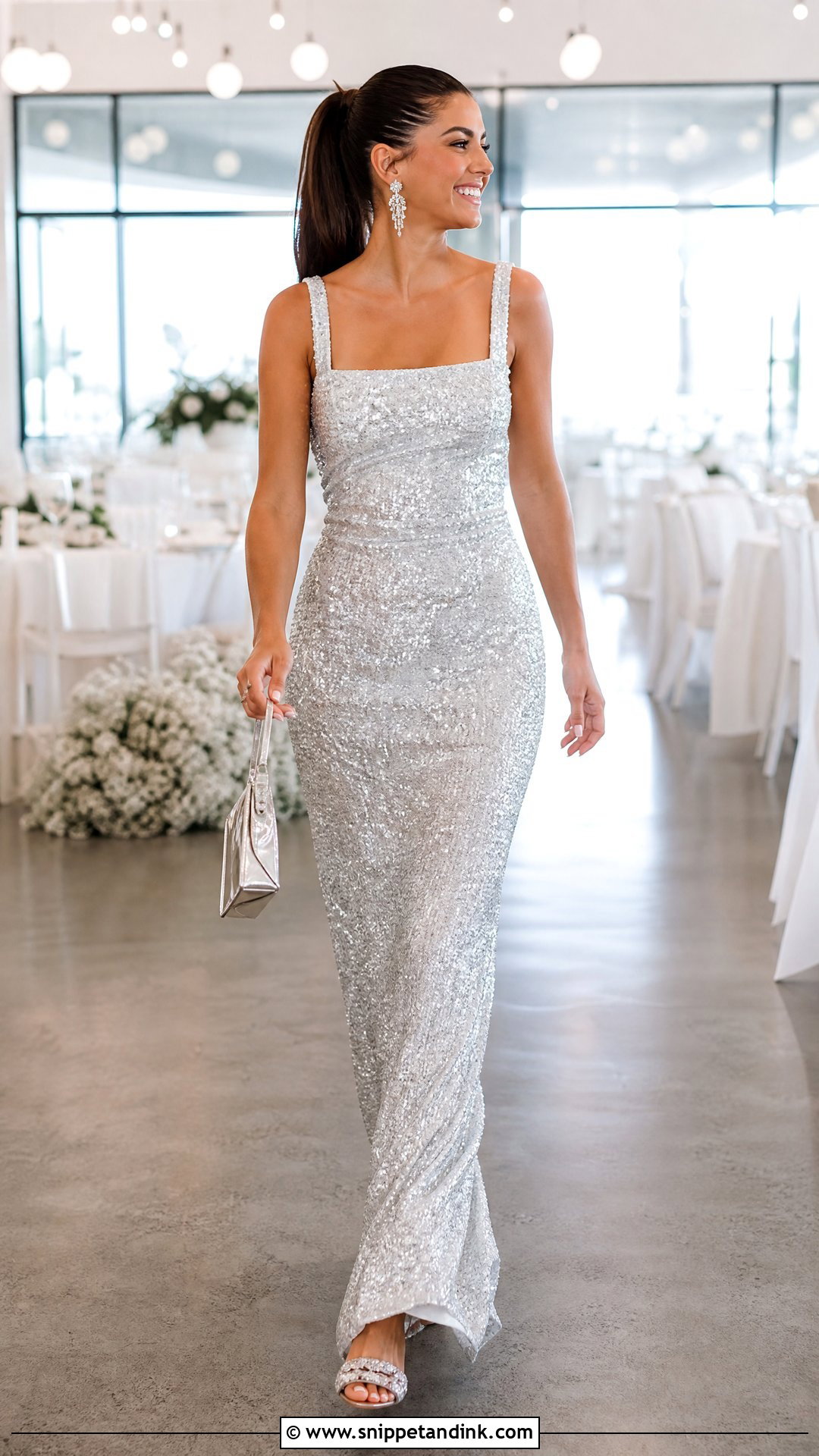
A silver reception dress is your excuse to add sparkle and lose the train. A sequined column, a metallic midi or a structured mini makes a clear change from the ceremony gown. What I check is practical: a breathable lining, straps that stay put when you raise your arms on the dance floor, and a hem you won’t step on. Block heels or embellished flats, statement earrings and a small crossbody or wristlet for essentials. Once the veil comes off, a high ponytail or sleek bun looks fresh. For more coverage, add a cropped jacket or a sheer embellished overlay. Get changed before dinner, not after, so you can greet guests in it.
Sequins Hate Steam, and Other Wear Notes
Silver gowns are built from fussier materials than plain satin or crepe, and they need different handling on the morning and after the wedding.
Pressing on the day
Many sequins are plastic and can curl or dull under heat. I steam a sequined or beaded dress only from the inside, on the lining, and never press an iron onto the right side. Metallic lamé and foiled tulle can mark with heat too, so test a hidden seam first. Glitter tulle generally just needs hanging out the night before.
Bustling a heavy skirt
Beads and crystals add real weight to a train, and a bustle point stitched into fine tulle alone can tear when you dance. Ask your seamstress to anchor the bustle hooks into a seam or a reinforced spot, and have a bridesmaid practise fastening it at the final fitting.
Cleaning and storage
Send a beaded or sequined gown to a cleaner who handles bridal work, and point out any embellishment that came loose. Store it flat or folded in acid-free tissue rather than hanging it, because the weight of beading will stretch the shoulders over time. Keep it away from rubber and plastic bags, which can tarnish real metallic threads.
Undertone First, Sparkle Second
Sequined ball gowns are silver at full volume; pale satin slips and soft tulle are silver at a whisper. Between them sit short hems, mermaids, modest sleeves, supportive A-lines and reception minis. Before you commit to any of them, look at the gown in daylight and under warm indoor lights, then walk, sit and lift your arms. Match the accessories to the dress’s undertone rather than adding shine everywhere. Get those two things right and whichever silver dress you choose will look like it was made for you.
You'll Like These Ideas:


Leave a Reply