
A glamorous dress is the one people remember from the doorway. That can come from volume, from shine or from a single sculpted detail, and right now bridal designers are leaning hard into bold proportions, corsetry, draping and textured fabric. Below are twenty of my favorite ways to do it, from crystal ball gowns and satin mermaids to sparkling sheaths, feathers and a party-ready mini. For each I have written out the full outfit and the one thing I would check at your fitting, because glamour that pinches or sheds beads by nine o’clock is not glamour anymore.
How Sparkle Reads in Daylight, Candlelight and Camera Flash
Shine is not one thing. Crystals throw sharp points of light, sequins flash in sheets, pearls and satin glow. The same gown can look restrained at a noon ceremony and very loud under a photographer’s flash, so I always ask what time of day you marry and where.
- Daylight outdoors flattens sparkle. Crystal and sequin gowns look quieter than in the shop, while metallic thread looks stronger.
- Warm indoor light makes champagne and gold tones richer and can turn bright white slightly grey beside them.
- Direct flash catches every sequin edge and every glued stone. If your photographer uses flash at the reception, embellishment placed close to the face will dominate those shots.
Ask the shop to let you see the dress by a window and then in a dimmer corner. Take a phone photo with the flash on as well. It is a crude test, but it shows you quickly whether the bodice reads as texture or as glare.
1. Crystal Ball Gown Wedding Dress
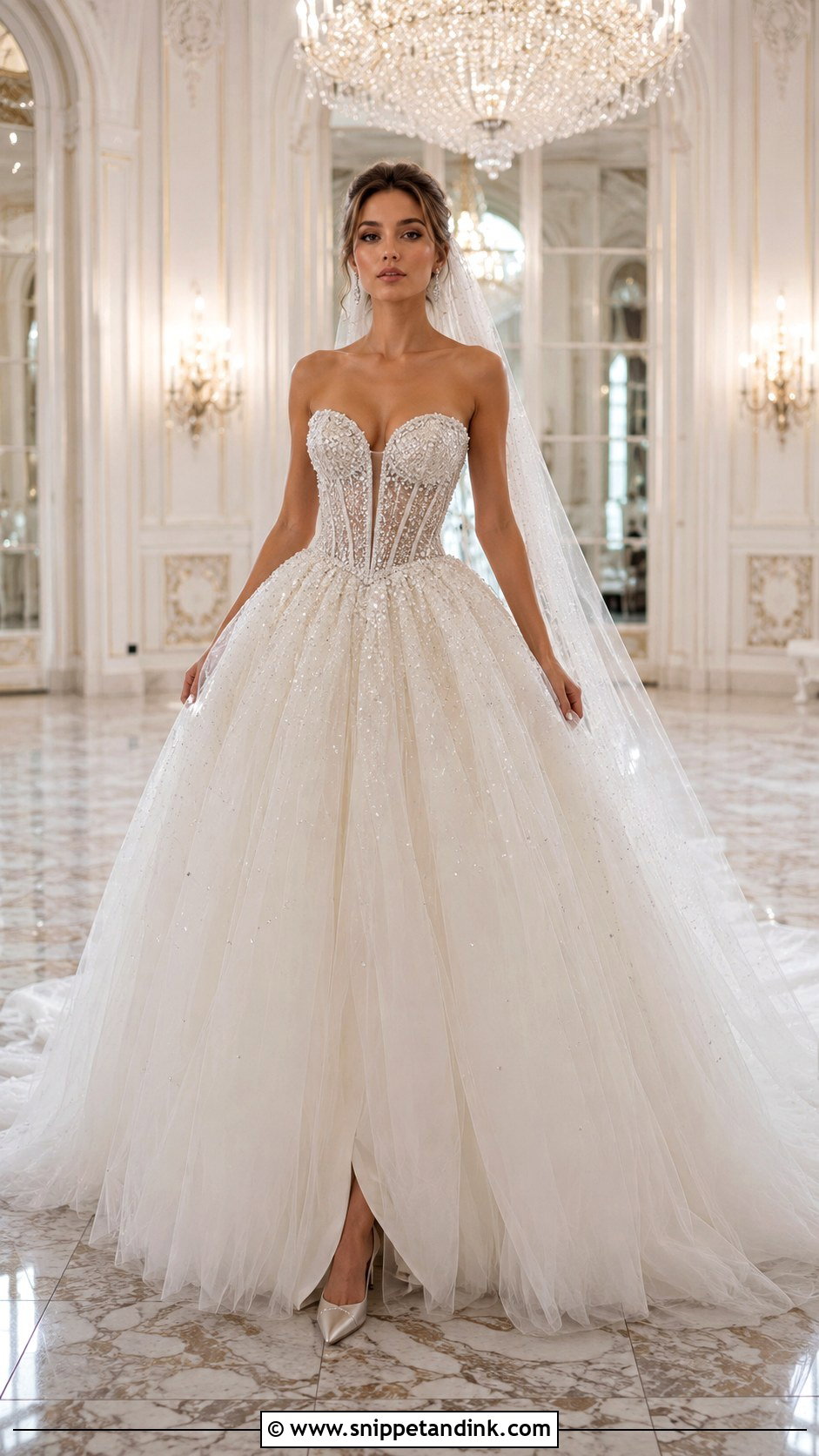
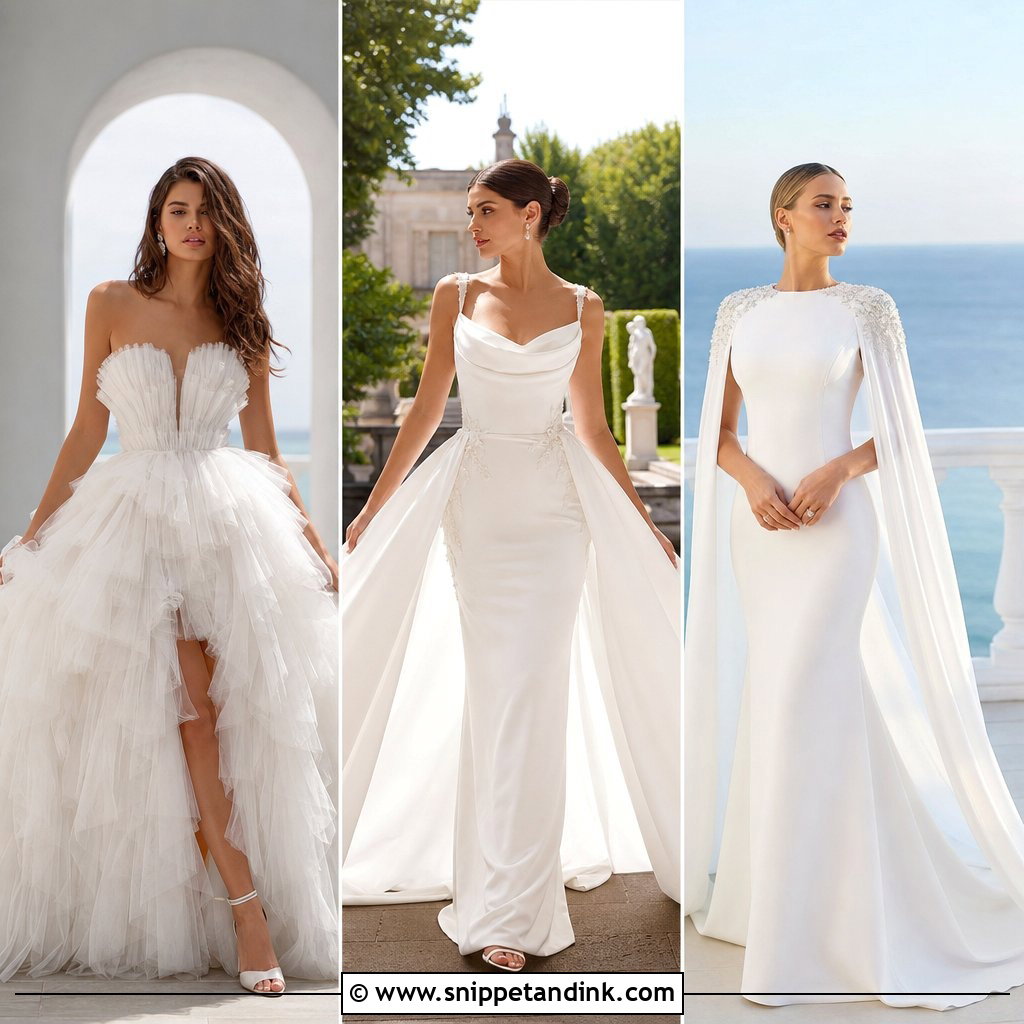
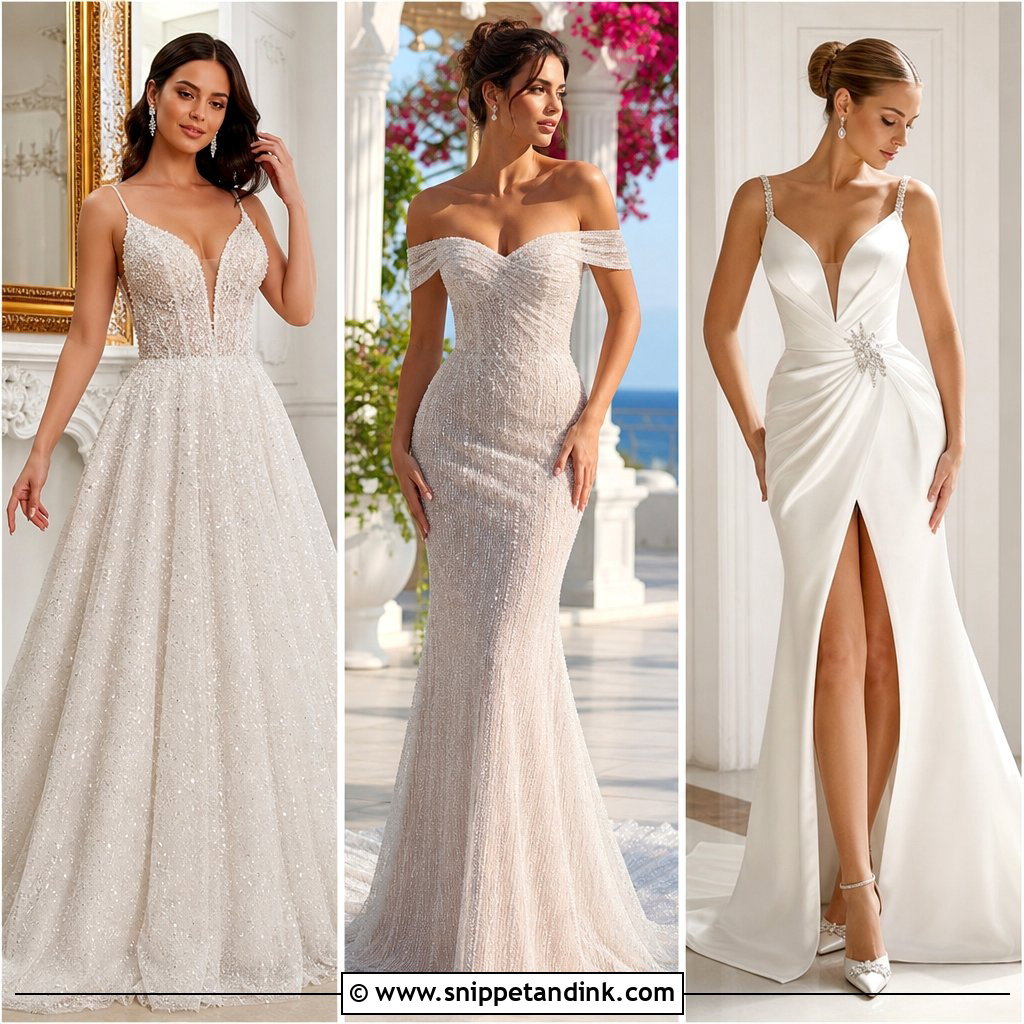
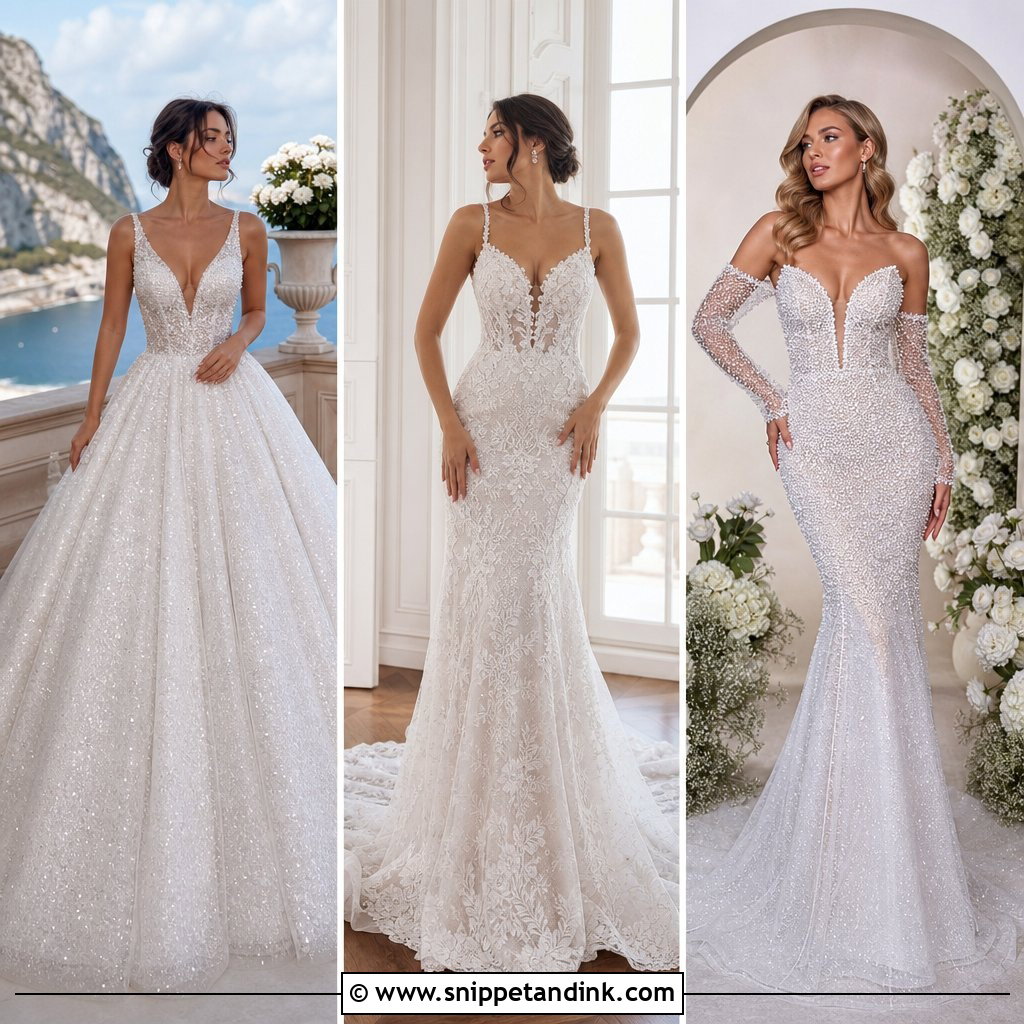
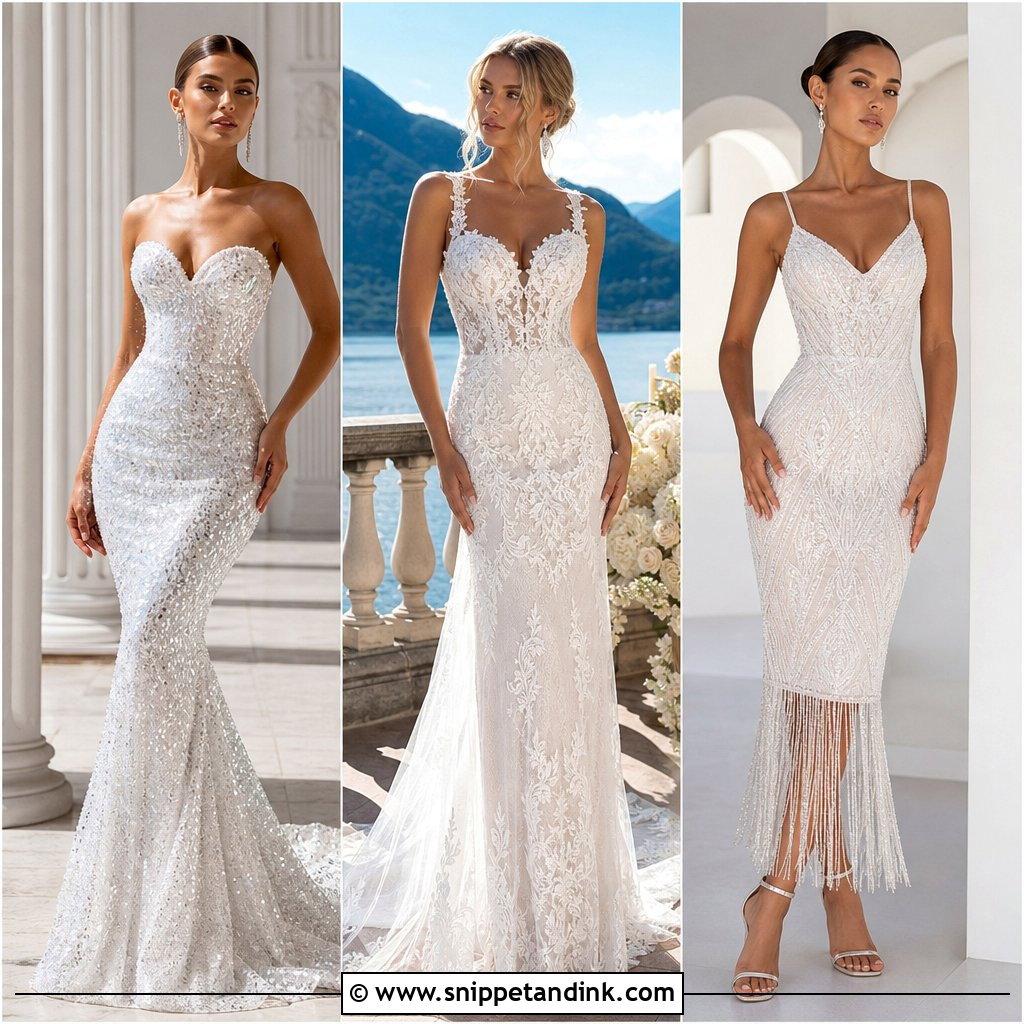
Crystals on a structured bodice above a full tulle skirt is the classic glam formula, and the sparkle sits exactly where the camera looks first. Ask how the crystals are attached. Sewn stones survive hugs and dancing; glued stones tend to pop off at the underarm where the arm rubs. A defined waist keeps the skirt from overwhelming you. Pointed satin heels, small crystal studs and a cathedral veil with a plain edge are all it needs, plus a sleek bun or Hollywood waves. Leave the necklace and beaded bag at home, and save it for a ballroom or grand hotel.
2. Satin Mermaid Wedding Dress
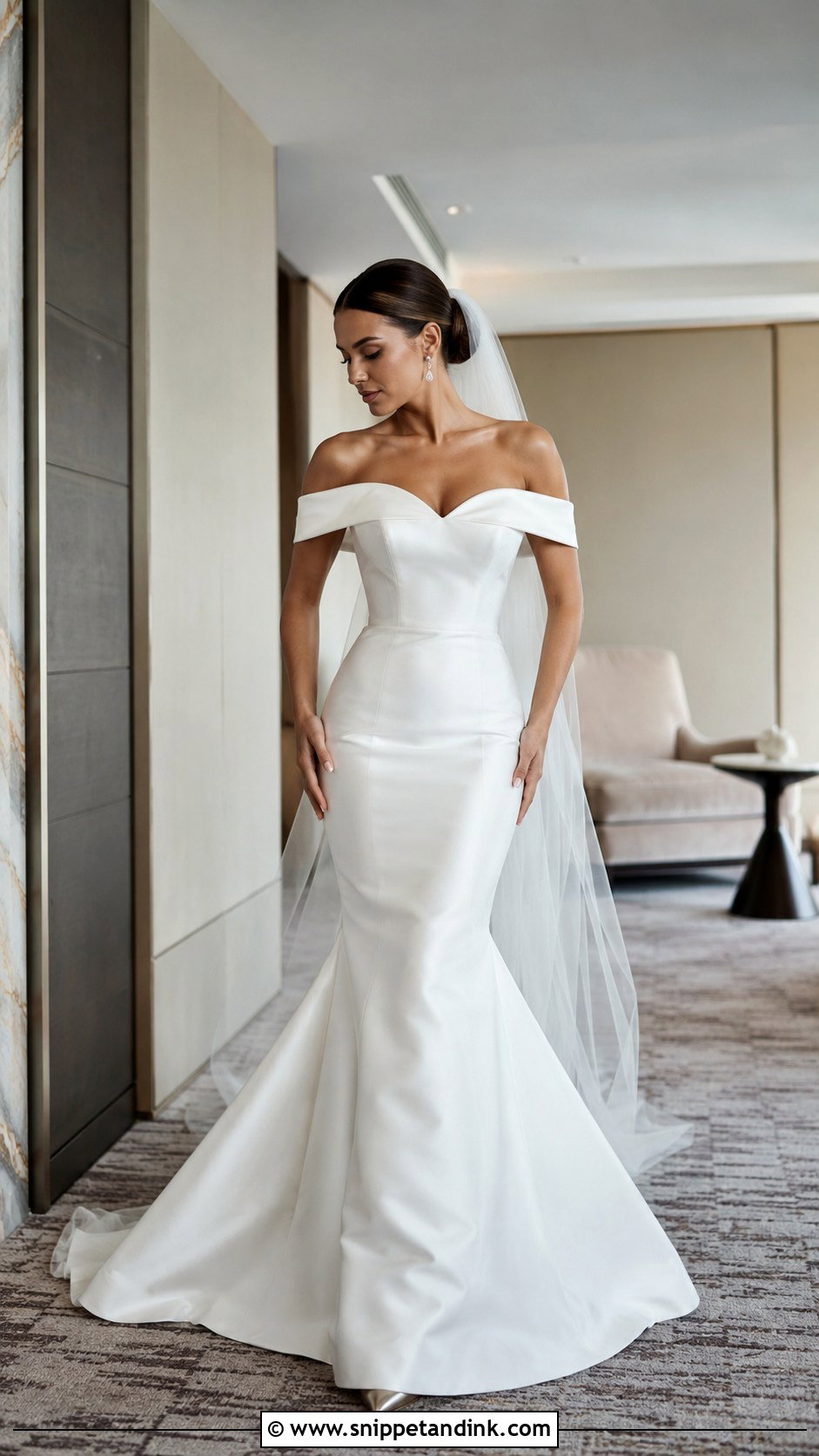
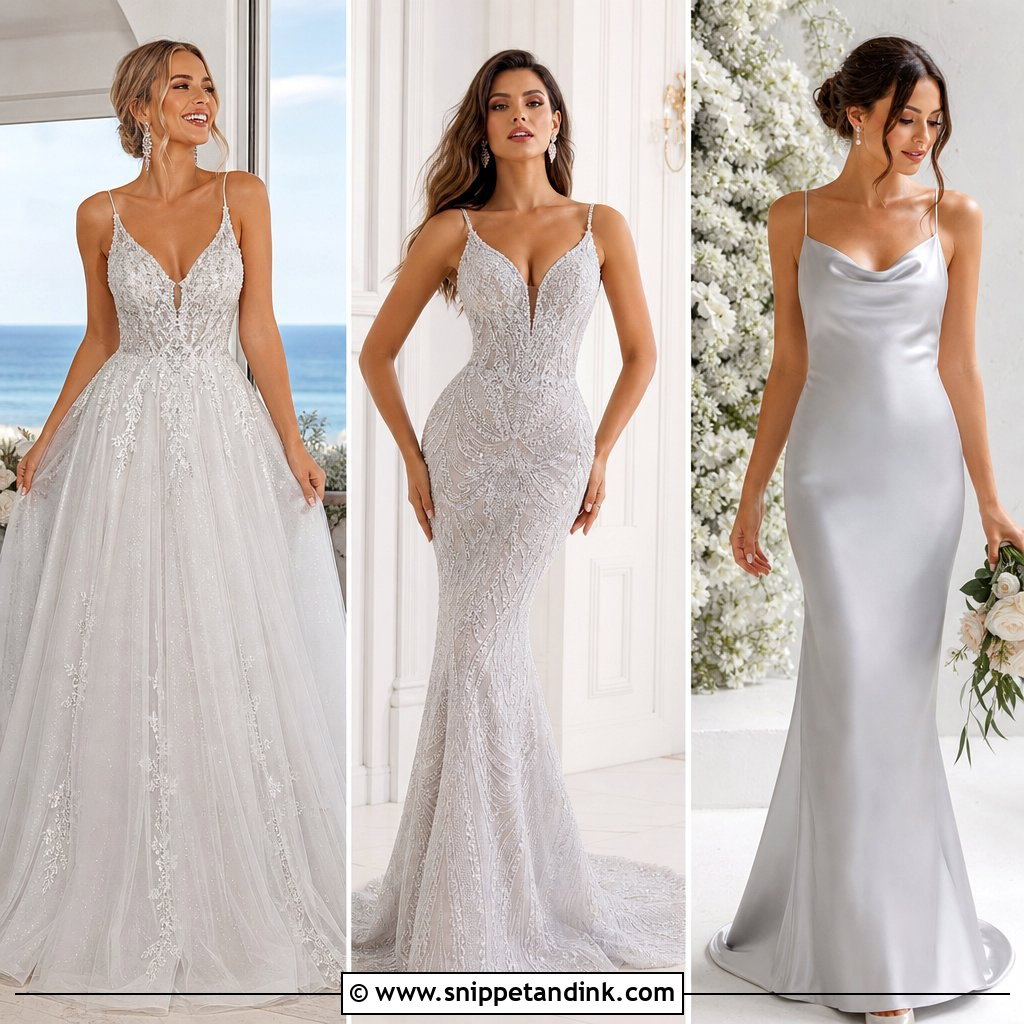
Mermaid fits are tight from bust to knee, so the flare point decides whether you can walk. Too low and you shuffle; I would rather set it slightly higher and give you a natural stride. Satin shows every pull, which makes tailoring through the hip non-negotiable. An off-shoulder neckline or folded portrait collar softens the shape. Metallic pointed heels, drop earrings, a structured white clutch and a long veil pinned beneath a low bun keep one clean line down the back. Since satin already shines, add little else.
3. Beaded Sheath Wedding Dress
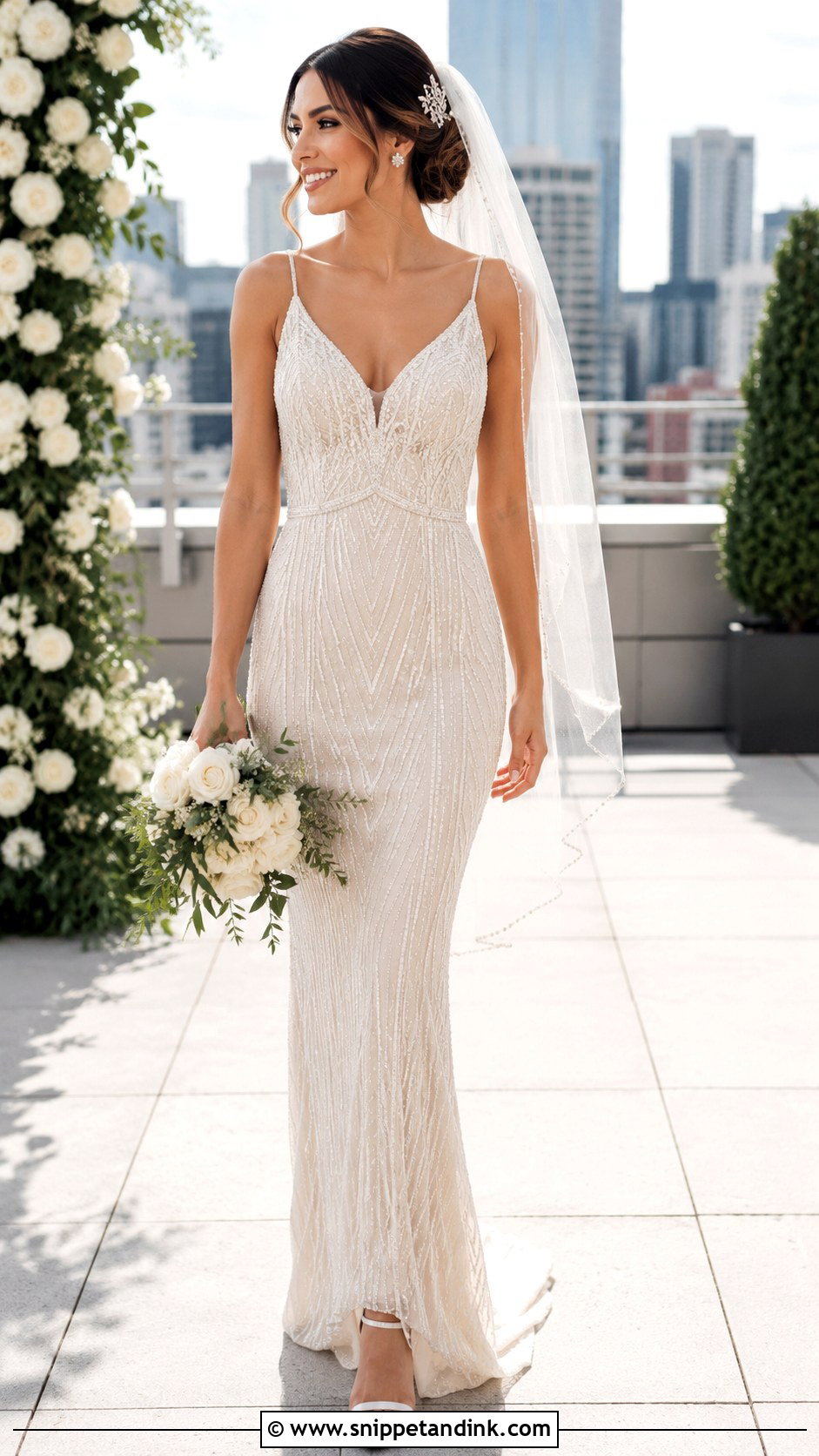
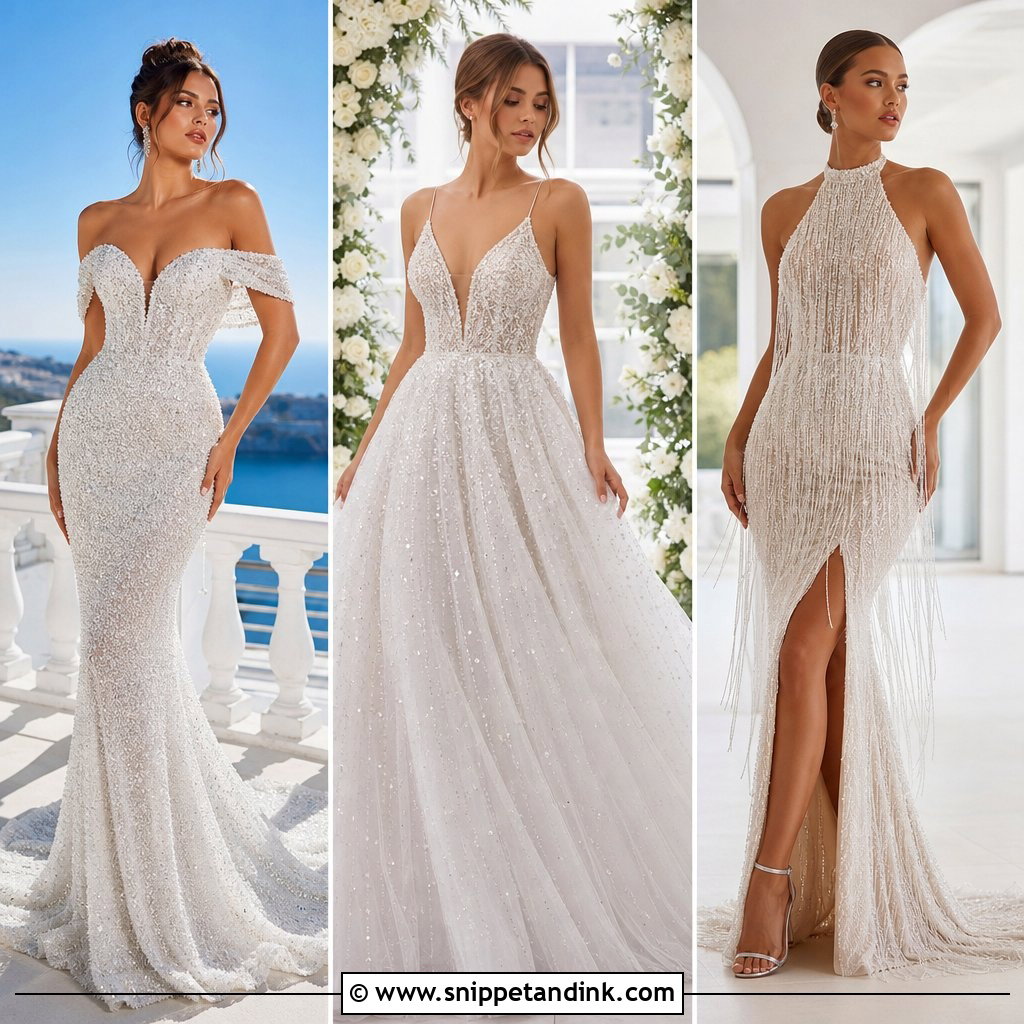
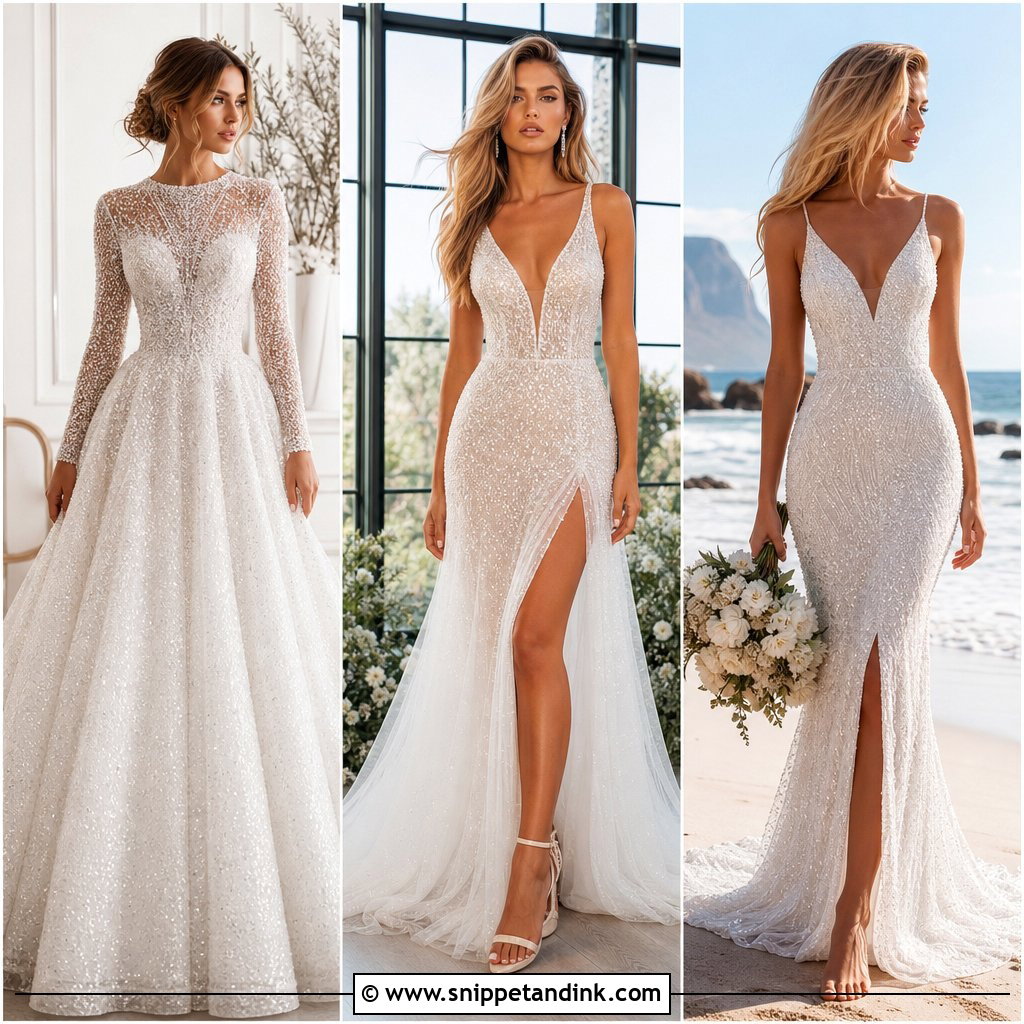
Vertical beadwork or an art deco pattern on a sheath lengthens the body and moves like liquid when you walk. It is also heavy for its size, so a lined bodice with an inner corselet holds the weight on your waist rather than your shoulders. Slim ankle-strap heels, a sparkling comb and understated studs keep focus on the beading. A fingertip veil suits the narrow line better than a heavy one, and an ivory wrap or a removable beaded capelet covers you in cooler weather. It belongs at a rooftop or city wedding.
4. Lace Basque Waist Wedding Dress
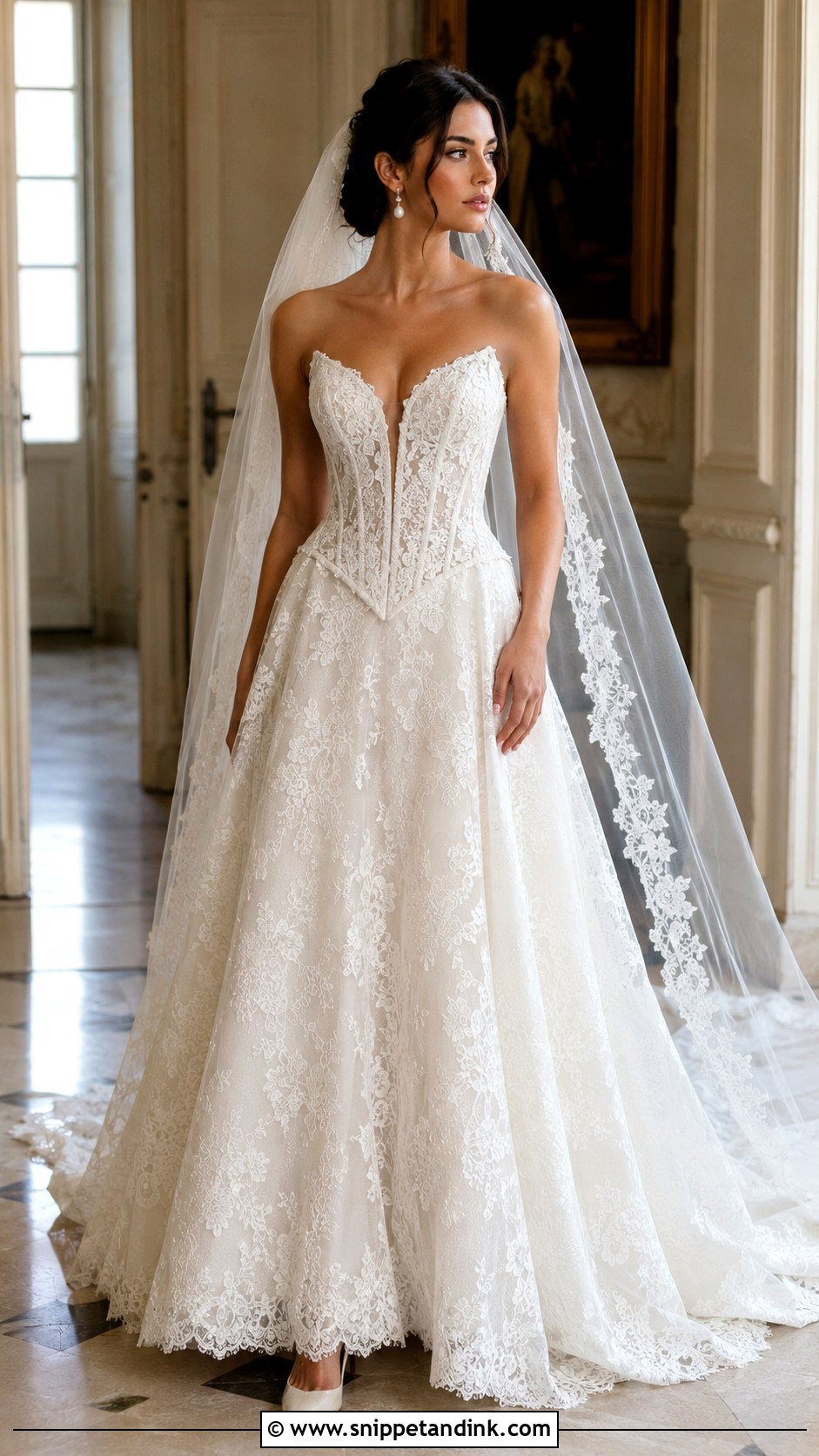
A basque waist dips to a point at center front, lengthening the torso before the skirt opens. In floral lace, the lining underneath needs enough structure to stop the lace from sagging at that point. I check it after the bride has been seated for ten minutes, since that is when a soft bodice starts to buckle. Ivory pumps, pearl drops and a long veil with matching lace edging finish it, with a low chignon to show the bodice. Detachable lace sleeves or an illusion panel add coverage. It is glamorous without heavy sparkle and suits a historic estate.
5. Off-Shoulder Mikado Wedding Dress
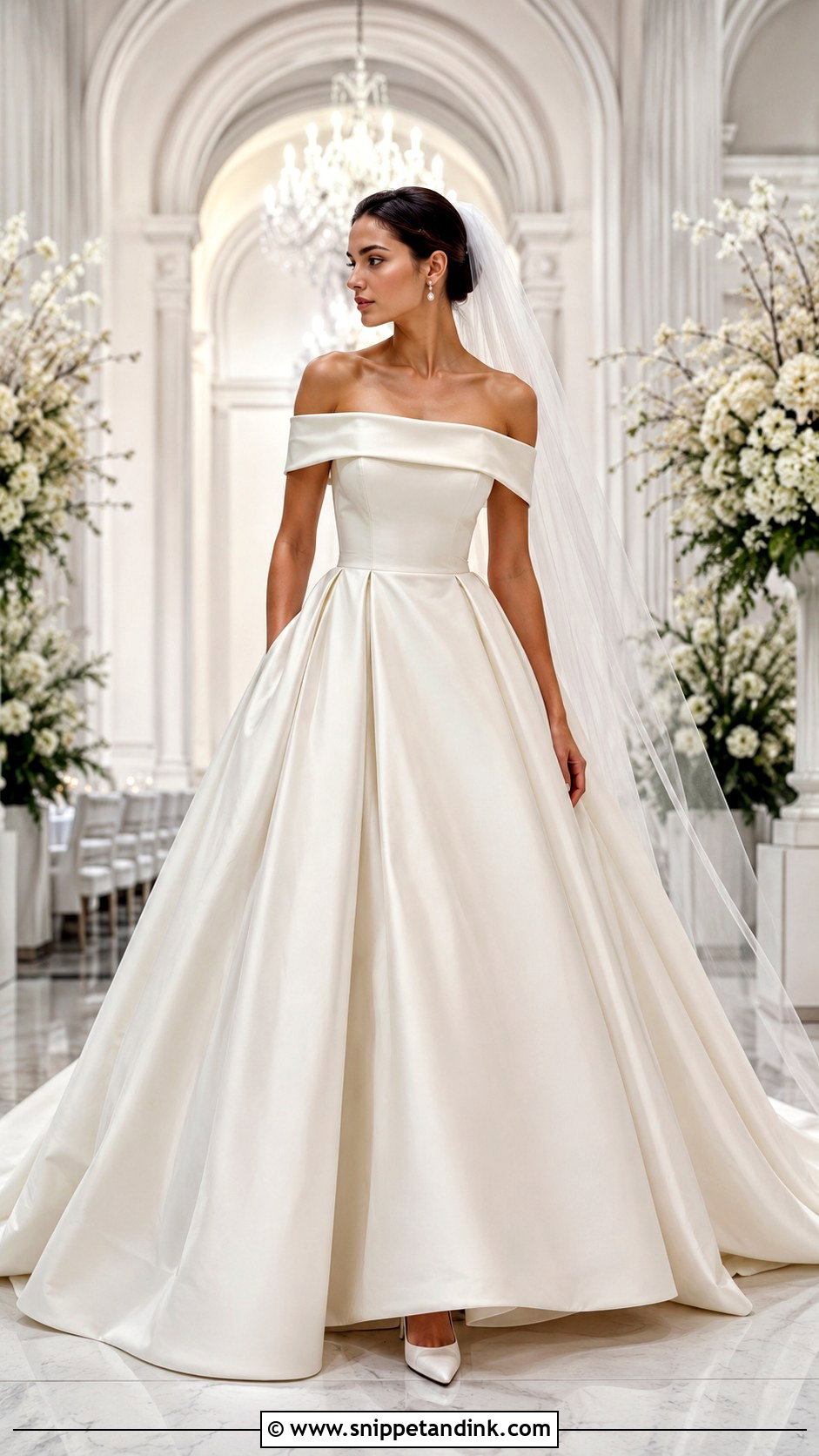
Mikado has a crisp weave that holds box pleats and an off-shoulder band in place, which softer fabrics simply cannot do. The ball gown skirt keeps its volume without a pile of petticoats, and hidden pockets fit easily into those pleats. Make sure the neckline band sits on the upper arm without digging in when your arms are down. Pearl or crystal earrings, pointed satin heels, a simple cathedral veil and a polished updo complete it. It is my go-to for black-tie weddings.
6. Pearl Corset A-Line Wedding Dress
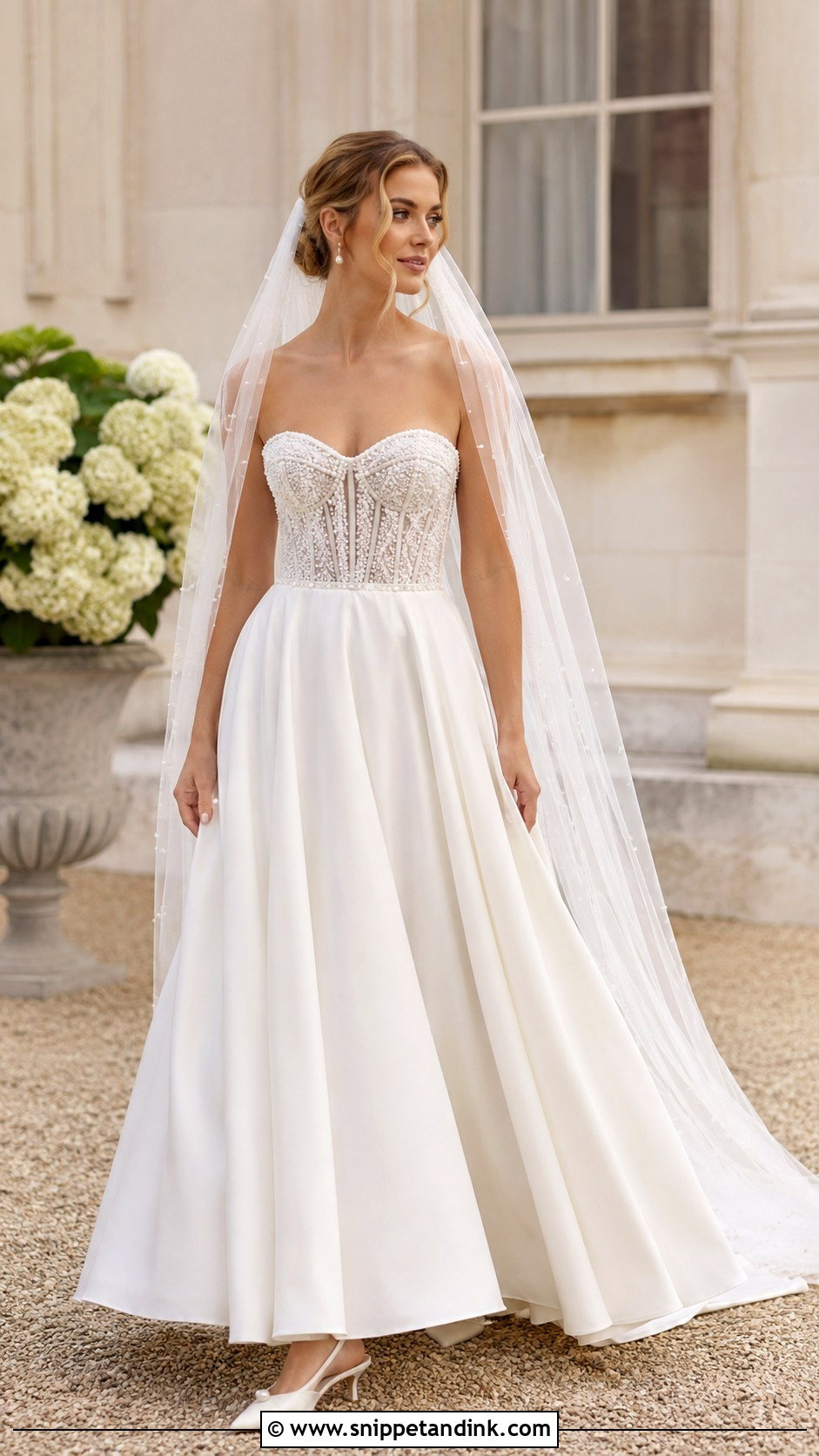
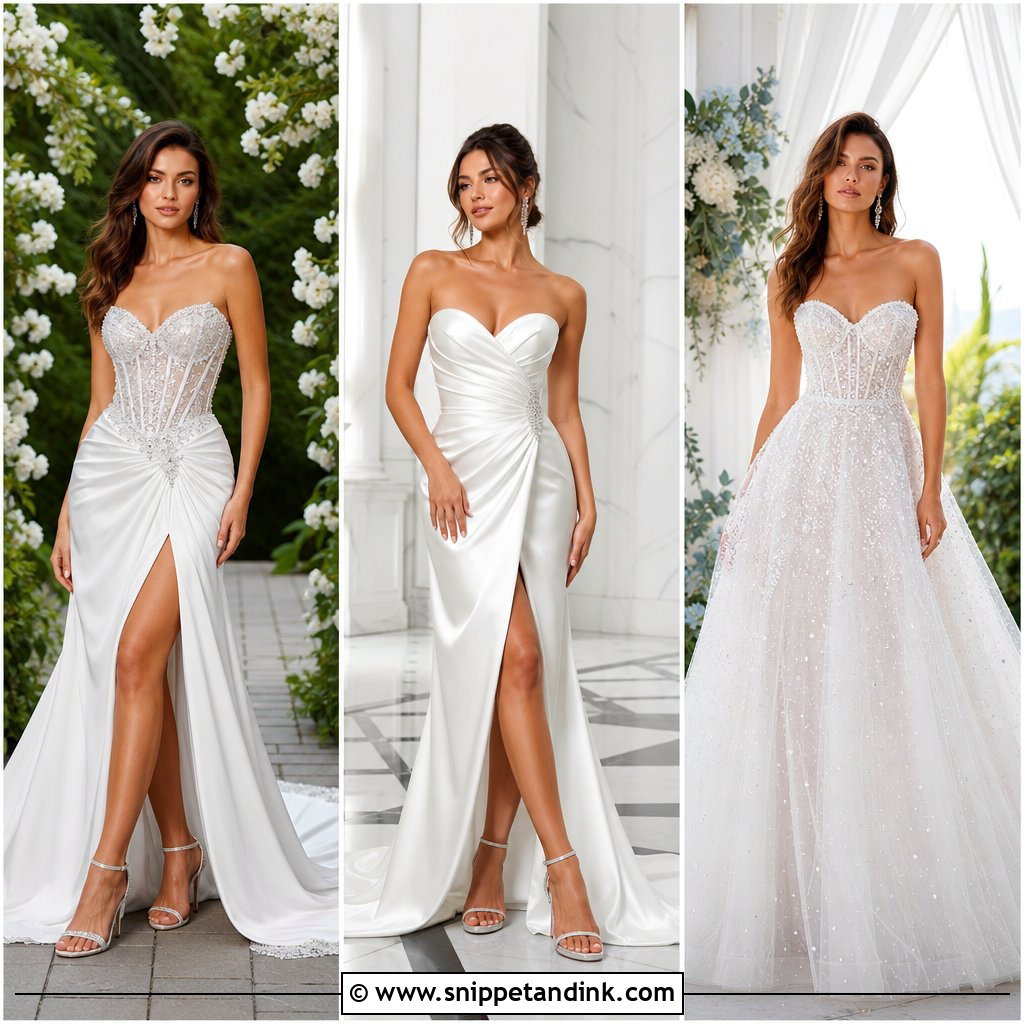
Visible boning dressed with pearls is pretty, but I always run my hand along the inside of the arm where the bodice edge sits. Pearls stitched right at that edge rub skin raw by the evening, and the fix is easy if you ask early: move them a little inward. The flowing A-line skirt keeps things relaxed. Pearl earrings, ivory slingbacks and a sheer veil with a few scattered pearls suit it; skip the necklace if the neckline is already detailed. Wear a soft updo or loose waves, at an estate or a garden.
7. Feather Trim Wedding Dress
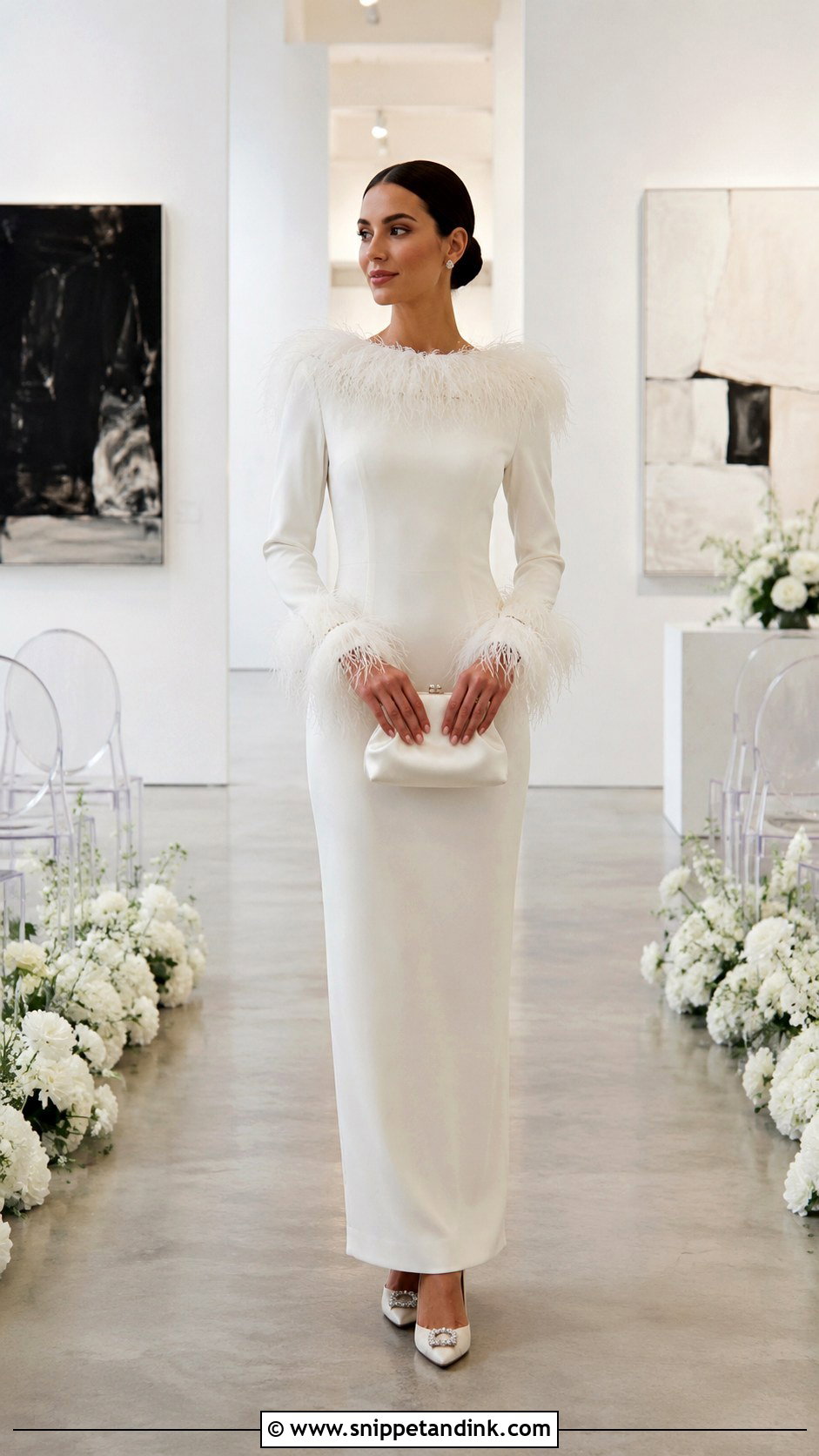
Feather trim works best in small doses at the neckline, cuffs or hem of a column or softly flared gown. Feathers hate moisture, so a humid day or a sudden shower can flatten them; a cool hair dryer on low brings most of them back. They also shed a little, especially on dark suits during the first dance. Sleek closed-toe pumps, crystal studs, a satin clutch and a short clean veil or birdcage stop the accessories from fighting the texture. A sculpted bun or glossy waves keeps it sharp for a gallery or hotel wedding.
8. Cape Wedding Dress
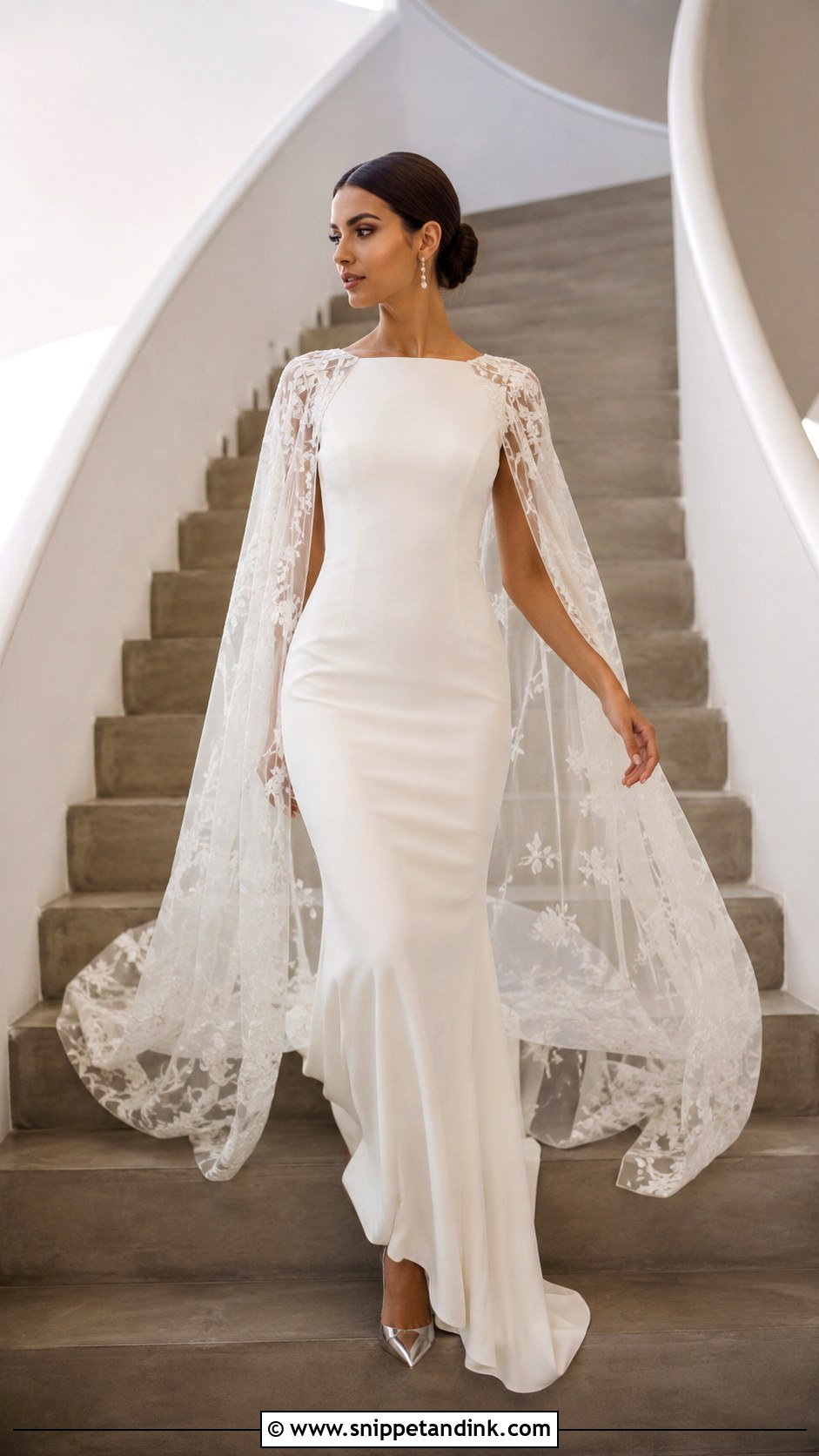
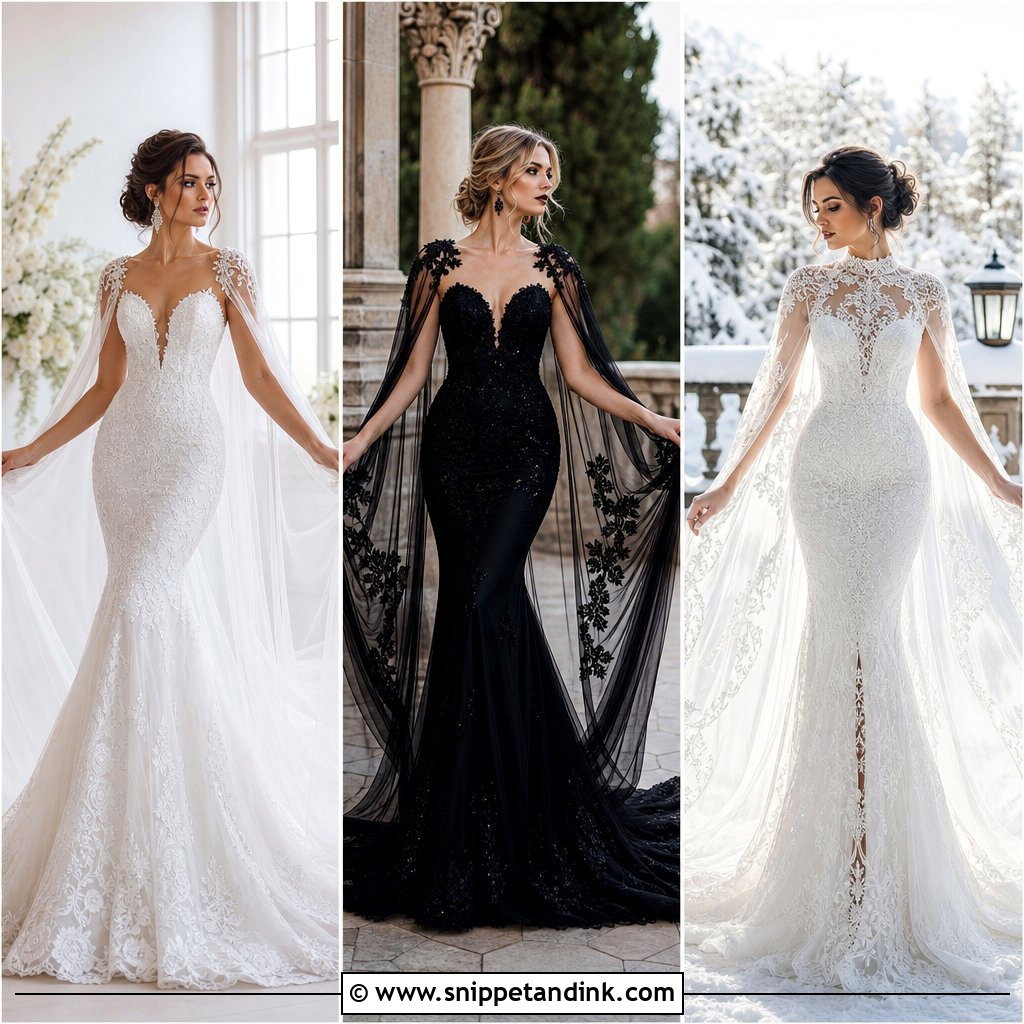
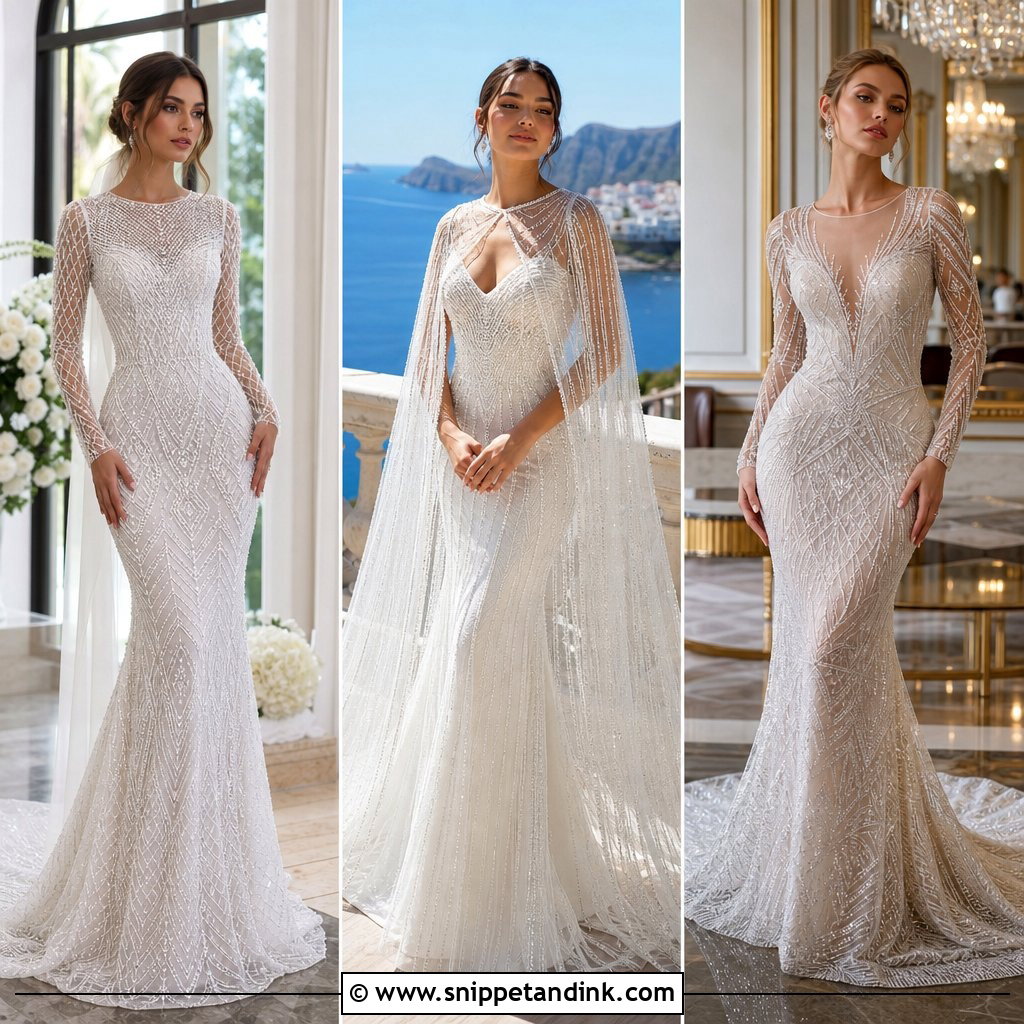
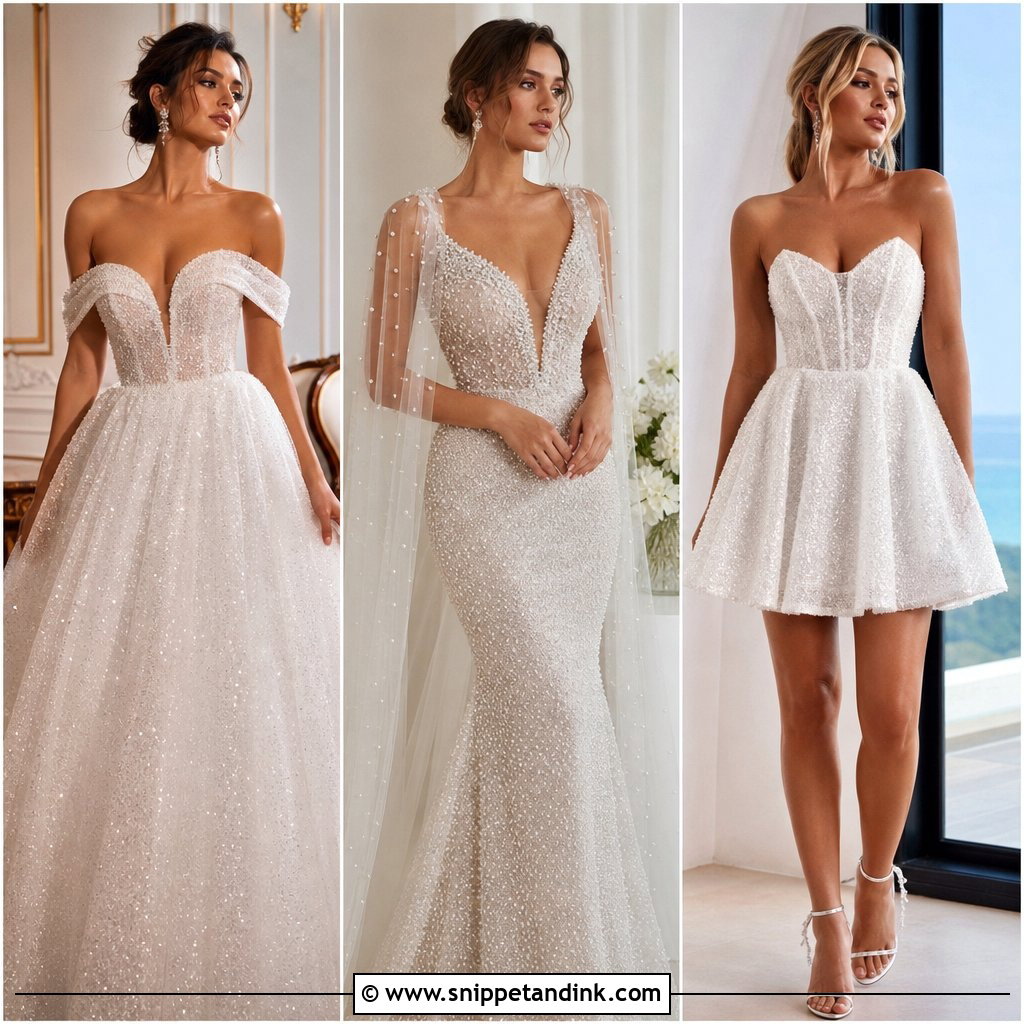
I suggest a cape to brides who want a veil effect without anything on their head. Over a fitted crepe, satin or lightly beaded dress, a sheer floor-length cape fastened at the shoulders gives the entrance its movement. Make it detachable so it comes off before dinner. Embroidered edges or a scattering of crystals add shine without weight. Pointed metallic heels, drop earrings and a clean low bun are enough. On a staircase, ask someone to arrange the cape behind you before you start down, because it lands where it falls.
9. Long Sleeve Sequin Wedding Dress
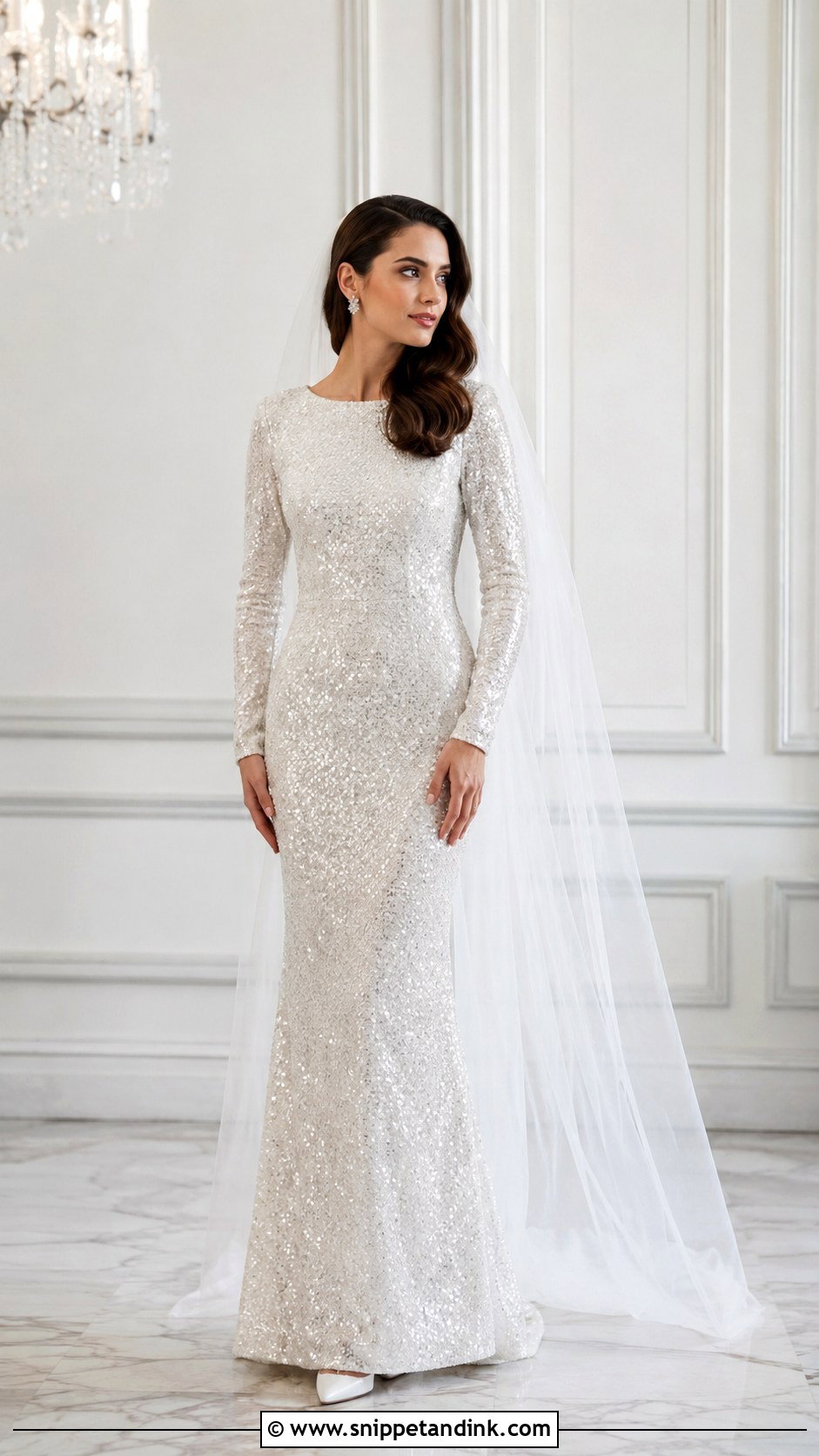
Sequins on a long sleeve can scratch the inner arm unless the sleeve is lined, so I check that first. A fitted sheath or gentle A-line keeps all that shine in proportion, with a bateau, scoop or modest V neck. Satin pumps, small crystal earrings, a plain tulle veil and a smooth low bun or side-parted waves suit it. Walk the veil against the back before the day; tulle catches on sequin edges and pulls threads. It is at its best in fall or winter evening light.
10. Halter Neck Wedding Dress
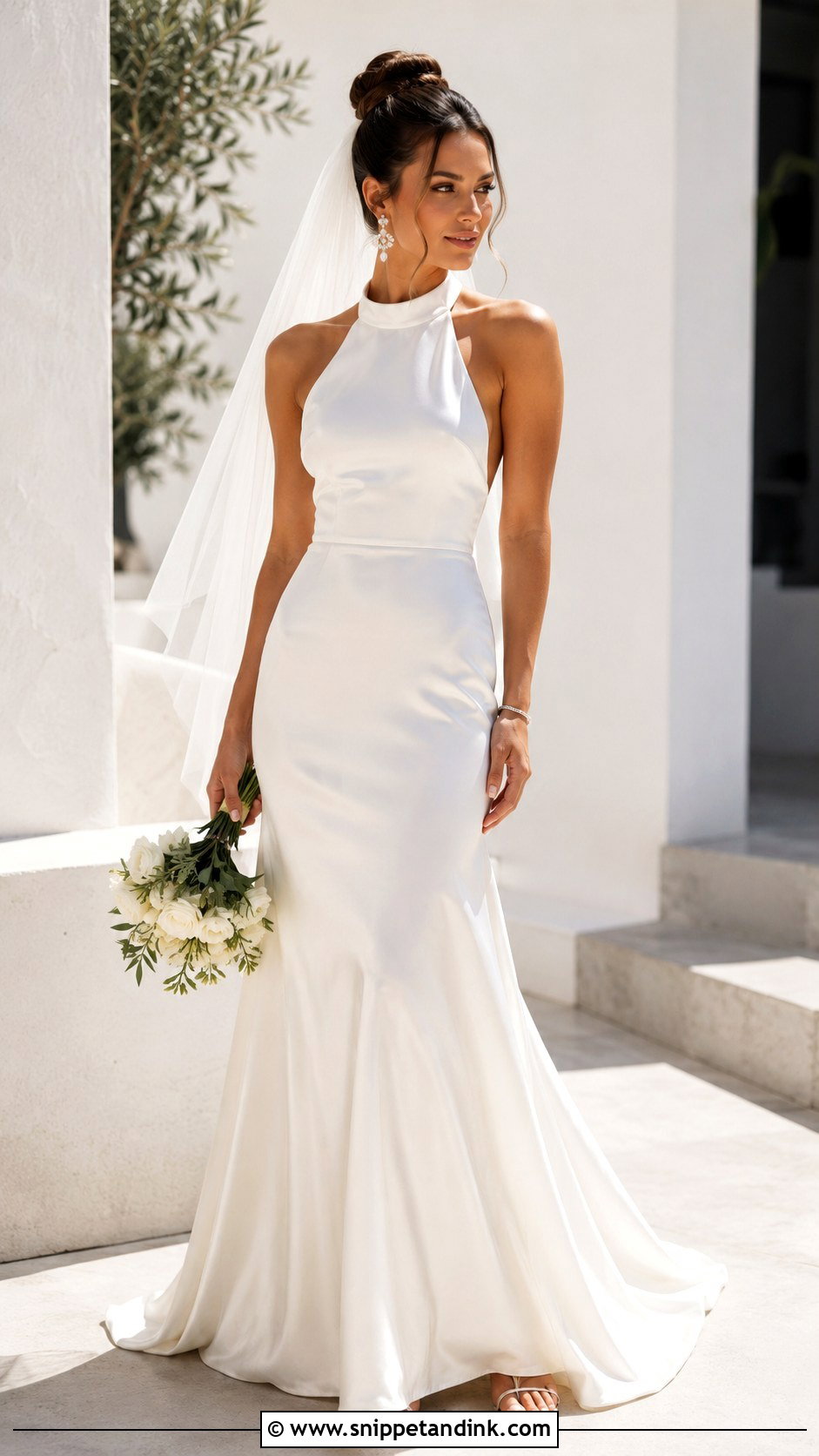
A halter takes its weight on the back of the neck, and on a beaded version that can mean a headache by the speeches. Look for a bodice with its own internal support so the halter strap only shapes the neckline, not holds the dress up. Fluid satin or crepe reads modern; beaded fabric reads eveningwear. Statement earrings, metallic sandals, a narrow bracelet and no necklace keep it clean. A high bun or polished ponytail shows the strap, with a veil pinned underneath. It suits a destination or summer wedding.
11. Champagne Sequin Wedding Dress
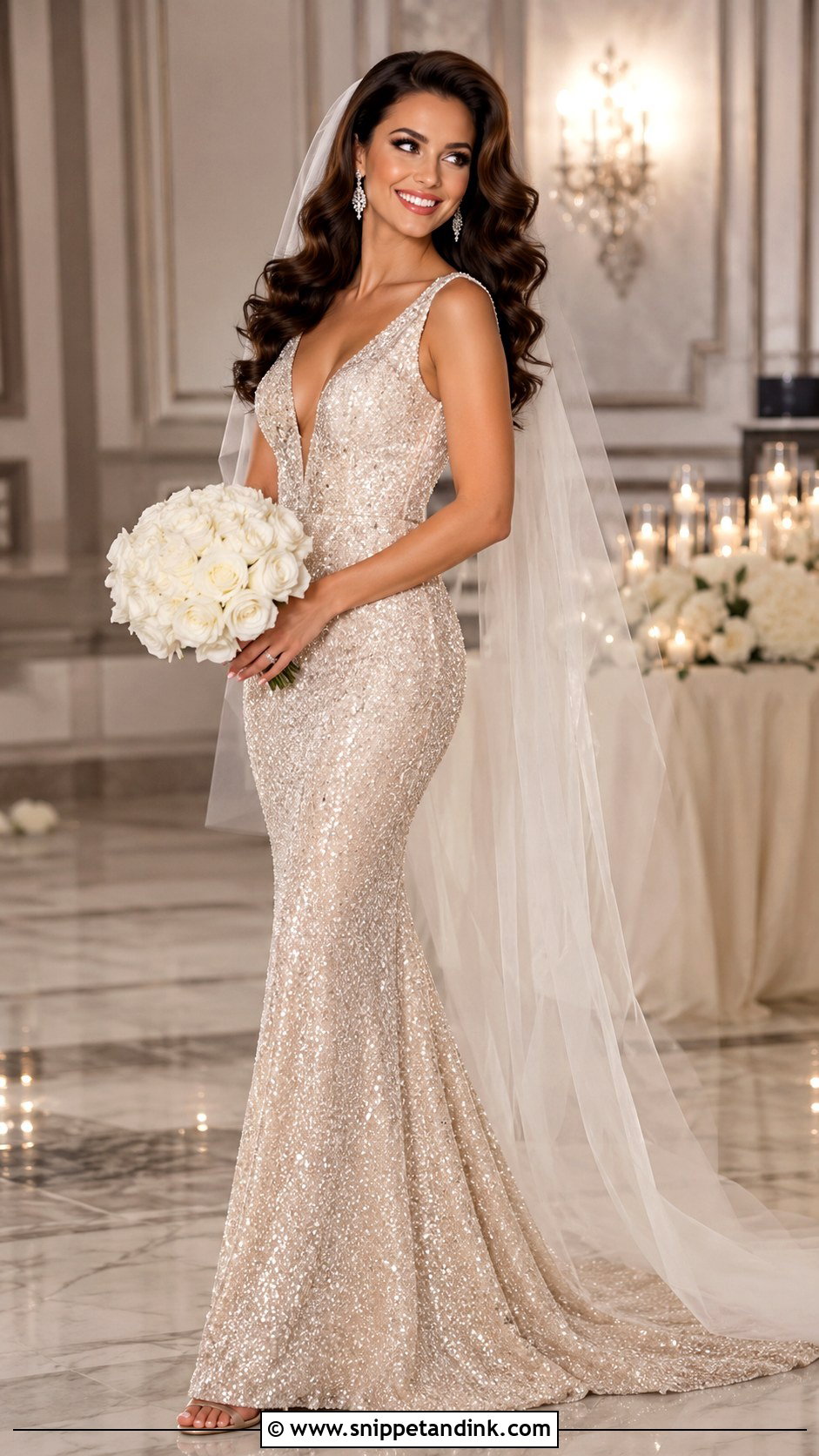
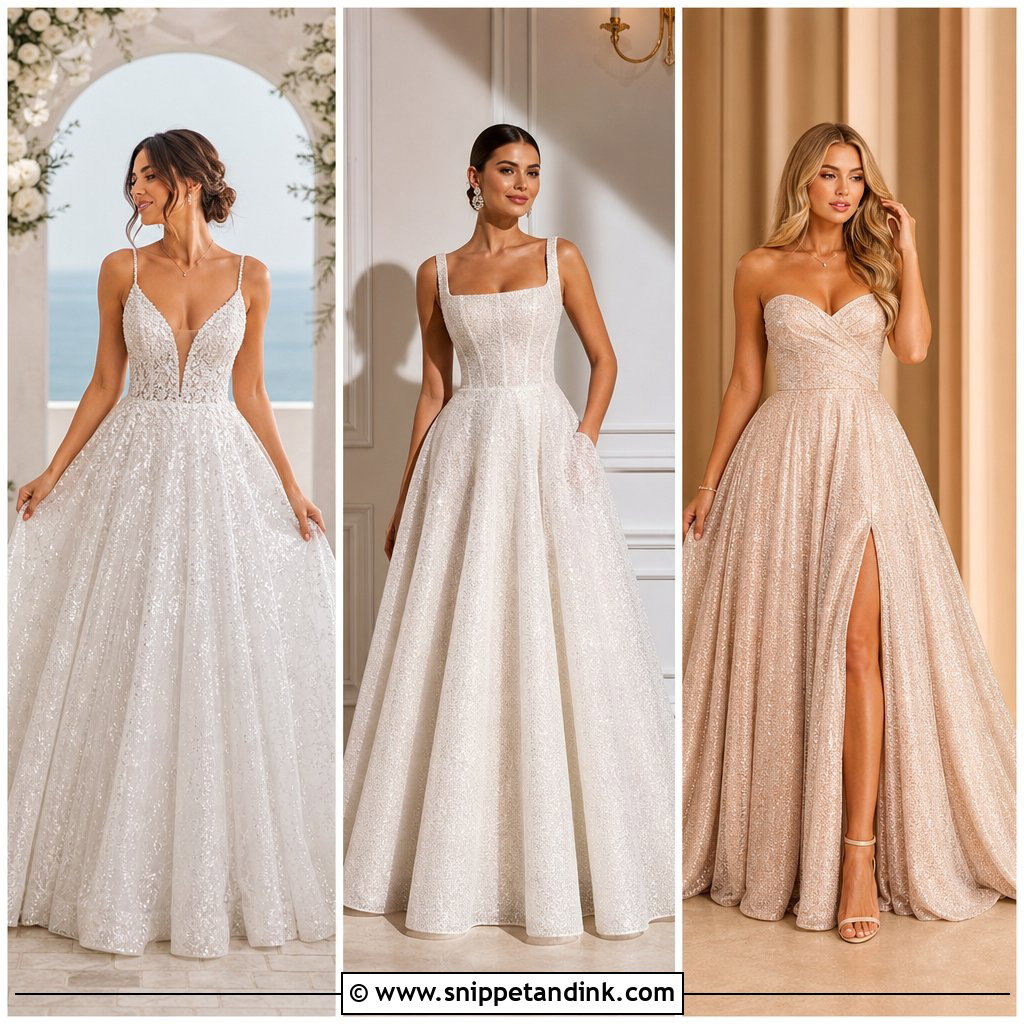
Champagne sequins are warmer than white and kinder to many skin tones, but the shade shifts dramatically between daylight and warm indoor bulbs. View the gown in both before ordering. A trumpet, column or A-line with even lining underneath keeps the surface smooth on camera. Nude or champagne heels, crystal drops and a plain ivory veil give gentle contrast, with a small metallic clutch later. Soft waves or a low bun lean old Hollywood. It shines under candlelight and string lights at evening receptions.
12. Floral Appliqué Wedding Dress
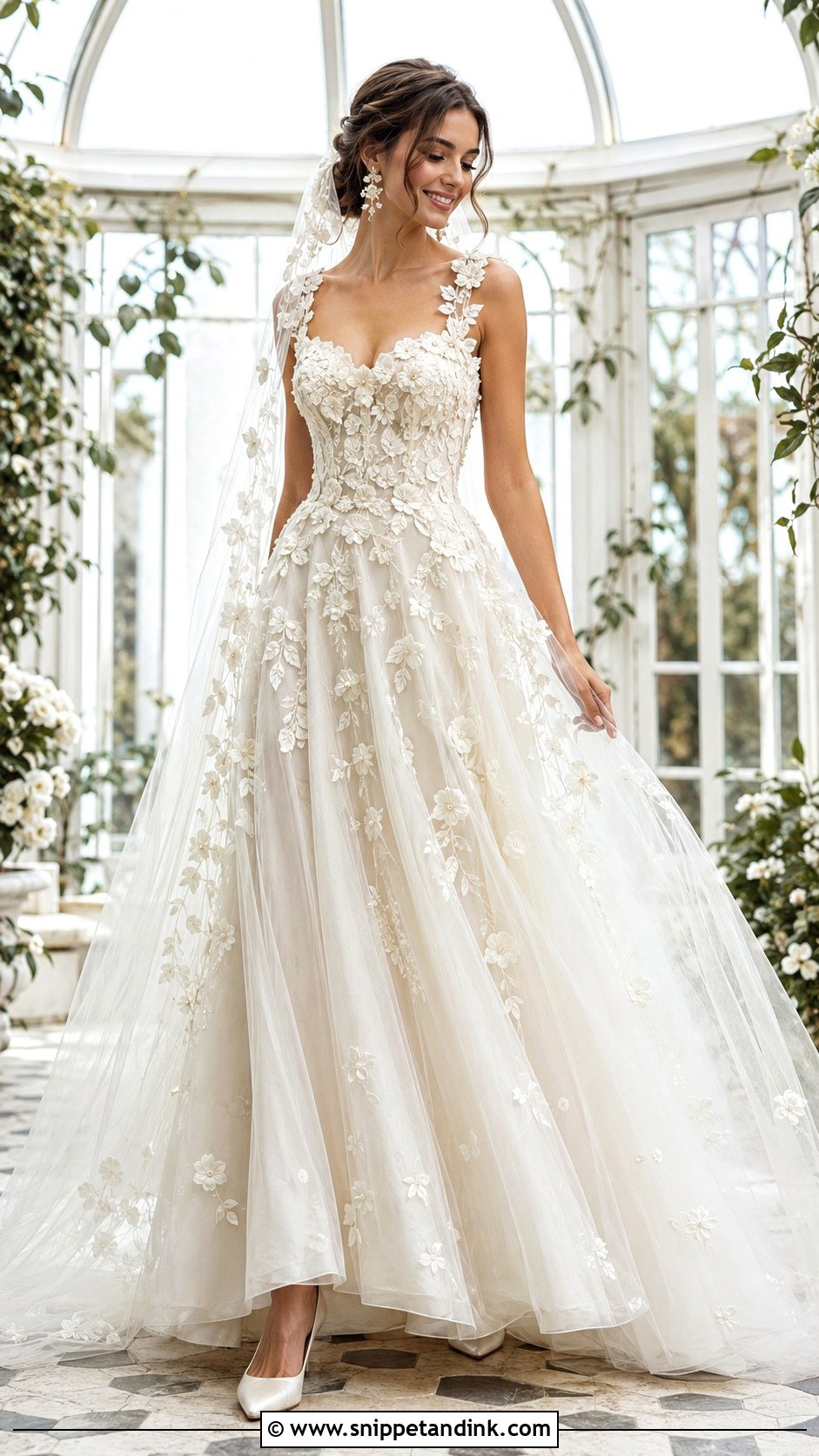
Three-dimensional appliques look richest when they thin out gradually down the skirt rather than stopping at the waist. Check that the flowers are stitched flat at their centers; loosely tacked petals catch on bouquets and lace sleeves of hugging guests. Small pearl or crystal centers add a little shine. Ivory pumps, flower-shaped earrings and a veil with a few matching appliques near the edge echo the dress. Keep the bouquet small so it does not hide the bodice. A loose low bun with face-framing pieces suits a conservatory or spring garden.
13. Square Neck Satin Wedding Dress
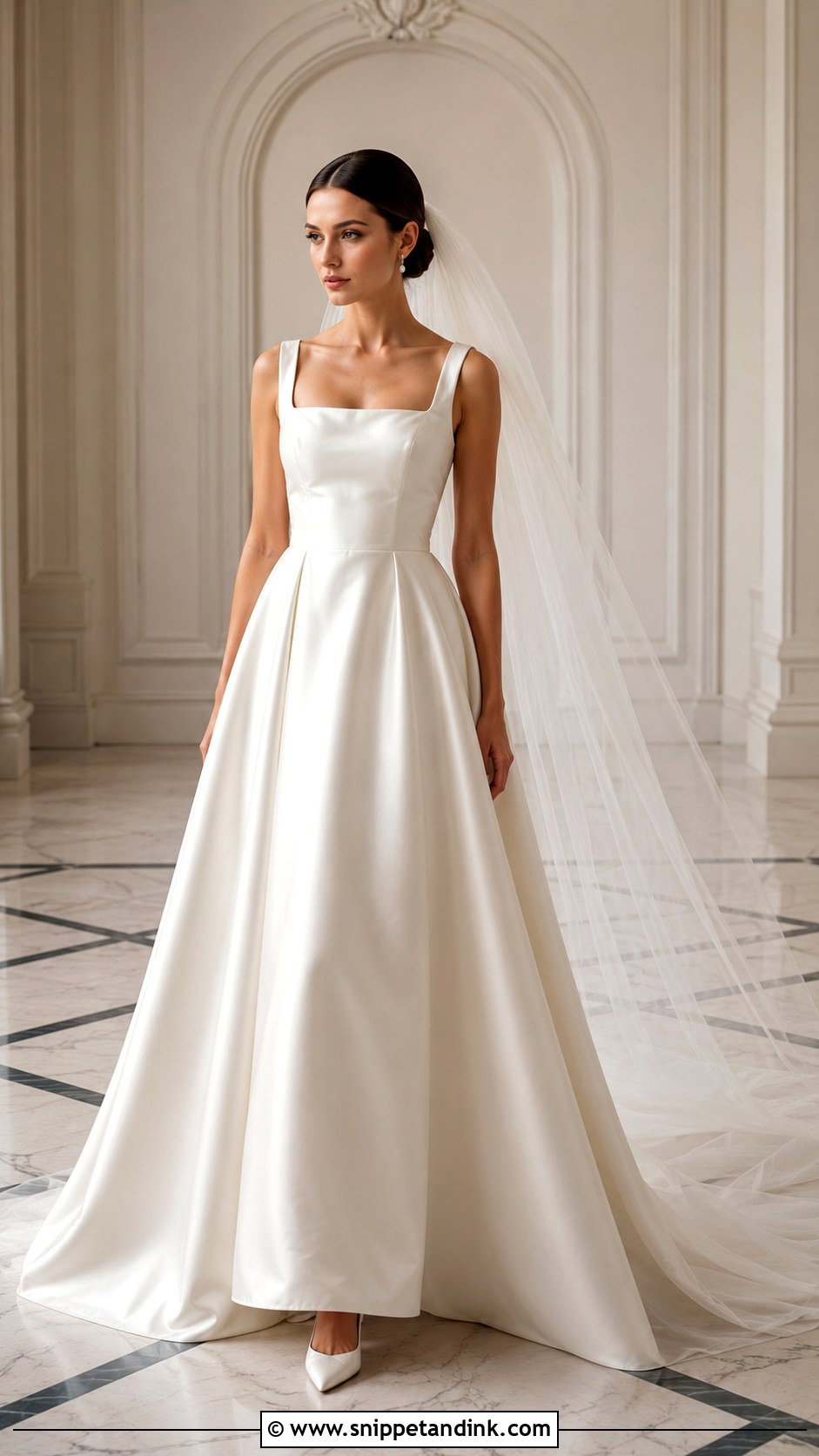
Wide straps on a square neck spread the support across the shoulders, so this is a good choice if you dislike strapless dresses. The strap angle is the tailoring detail: too far out and they slip, too far in and the neckline narrows. Satin carries the shine on its own. Pearl drops, pointed ivory heels and a long plain veil are enough, plus a satin bow at the back or a delicate bracelet if you want one more detail. A center-parted low bun keeps the line clean, in any season.
14. Draped One-Shoulder Wedding Dress
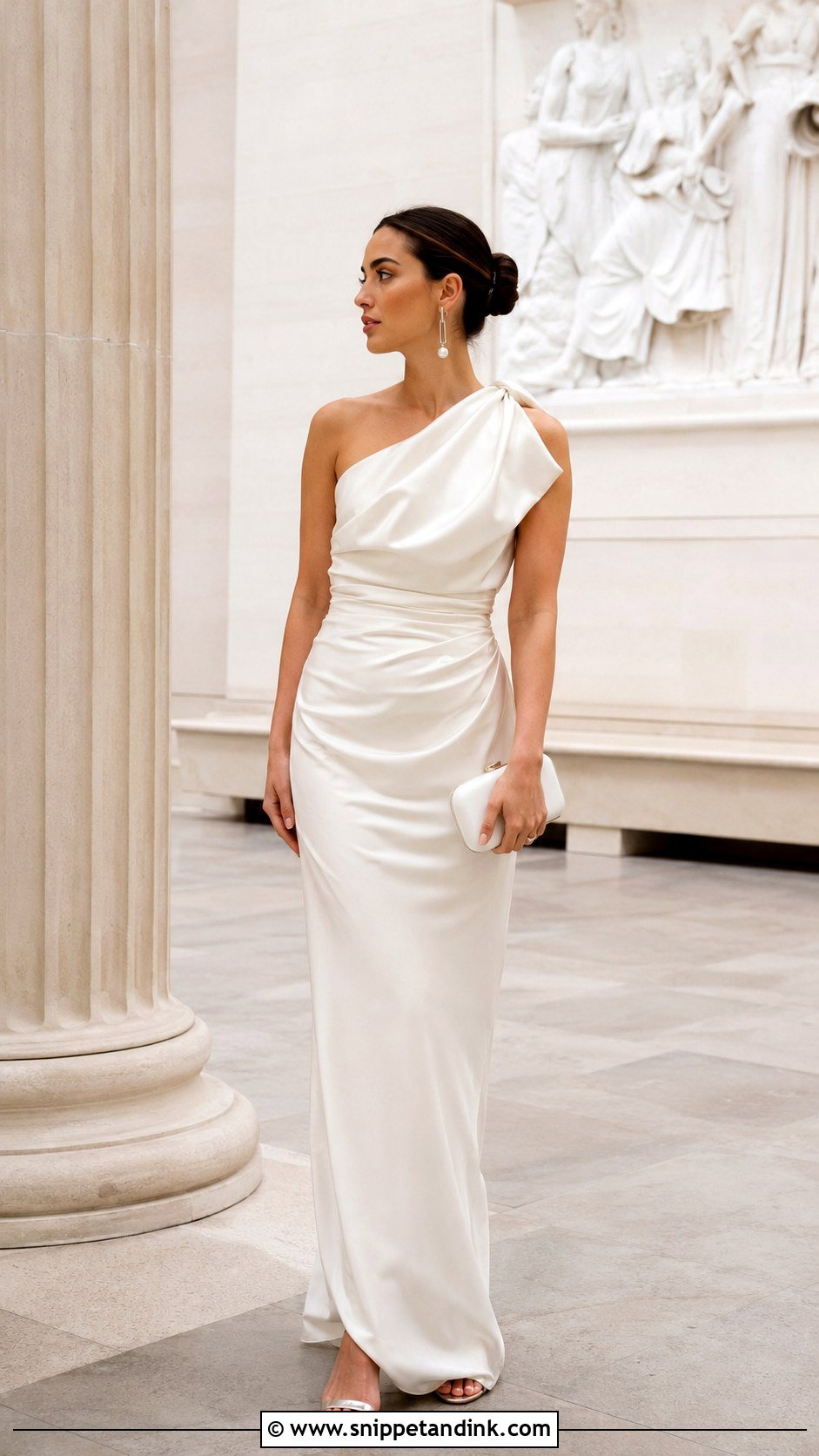
Diagonal drapes in silk, satin or crepe should be stitched to an inner bodice so they stay where the designer put them. Without that, the folds drift as you move your arm. A column or fitted trumpet skirt continues the line. One statement earring or an asymmetric pair, metallic heels and a compact white clutch suit it; any necklace would clash with the neckline. Wear a sleek bun or side-swept hair. For drama, add a detachable train or a veil secured at the back. Museums and rooftops suit it.
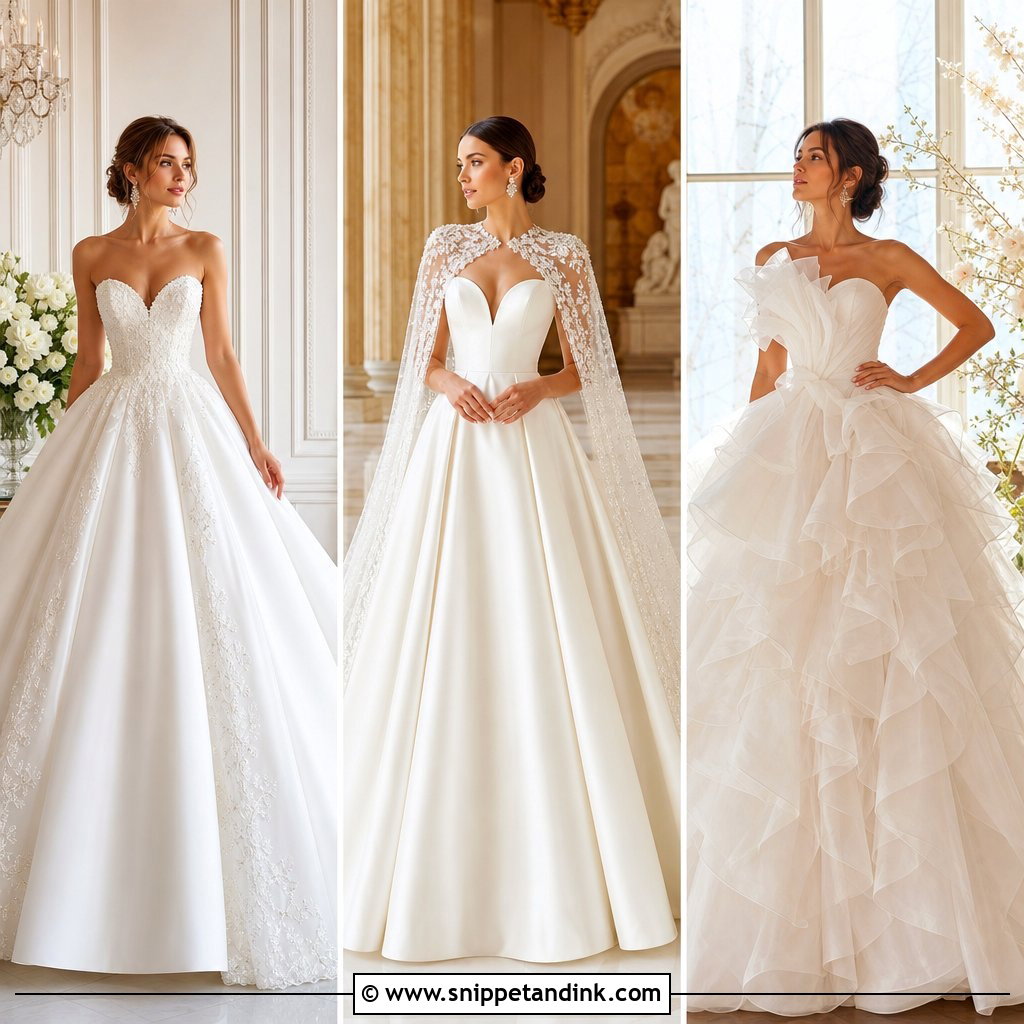

15. High Neck Lace Wedding Dress
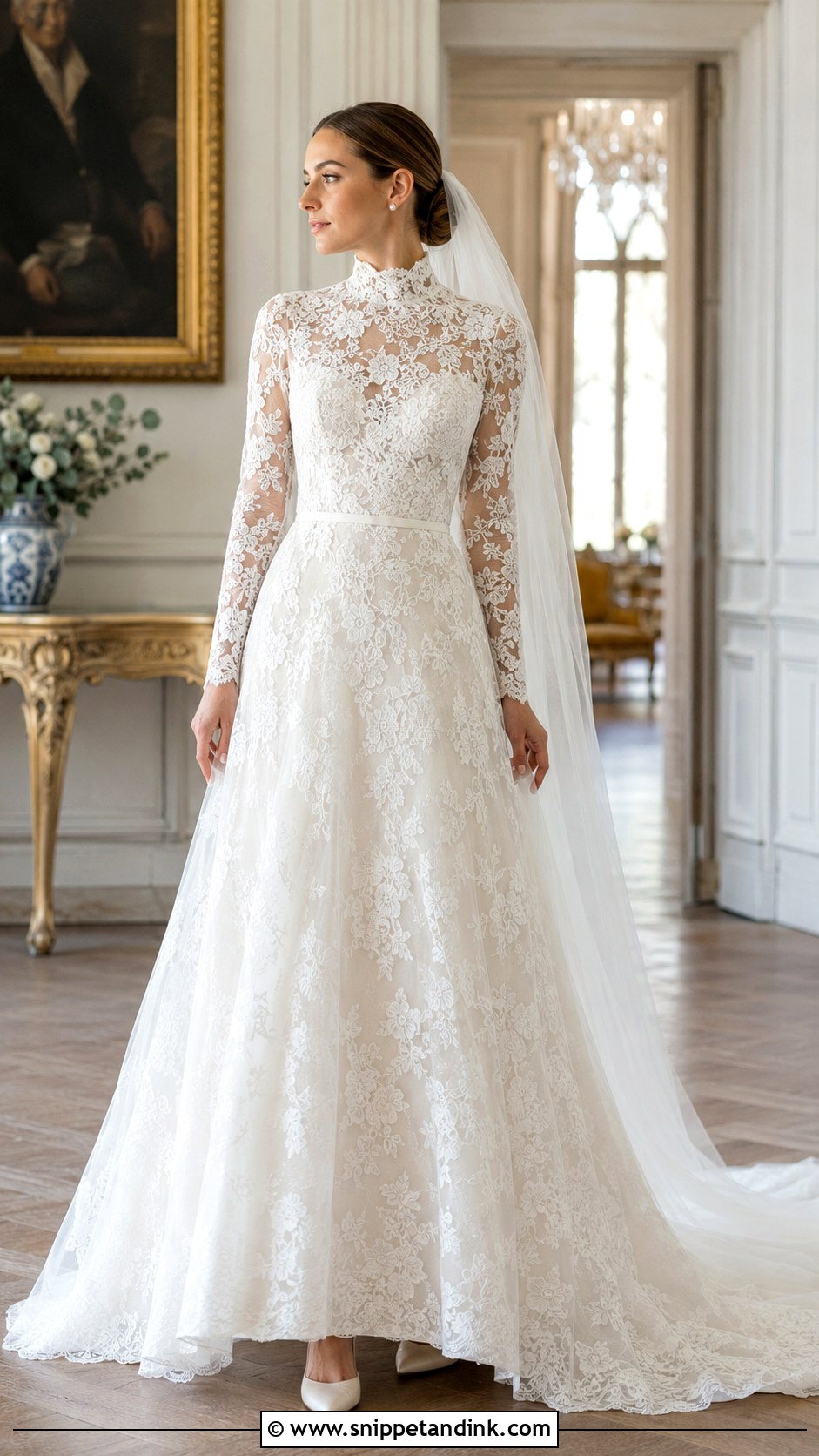
High-necked lace can feel scratchy at the throat, so ask for the inside of the collar to be bound in soft tulle or silk. Fine floral lace over a comfortable lining, with long sleeves or none depending on the season, and a defined waist keep the high neckline from feeling heavy. Pearl studs, classic pumps and a veil beneath a smooth low bun are enough; skip necklaces and big earrings. Covered buttons down the back with a long train give a traditional finish. It suits fall and winter.
16. Detachable Overskirt Wedding Dress
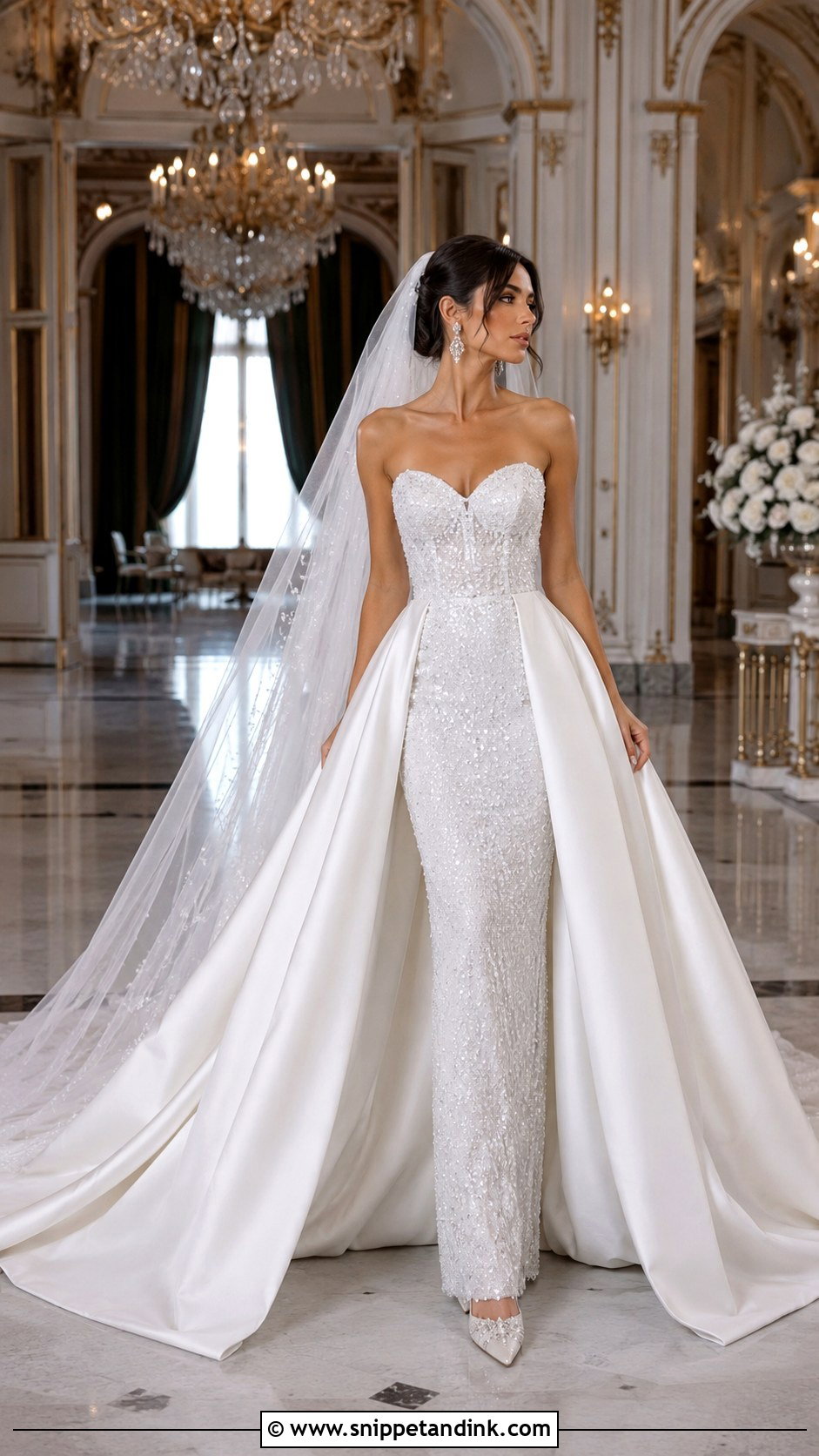
Over a fitted sheath, trumpet, or mermaid gown, a full satin, tulle or embellished overskirt gives you a ball gown entrance and a slimmer dress for the party. Practice the removal with whoever will help you; the attachment should come away in under a minute without tugging the bodice. Crystal earrings, pointed heels and a long veil that suits the overskirt train cover the ceremony. When the layers come off, add a sparkling hair accessory or bracelet so the second look feels finished.
17. Bow Back Wedding Dress
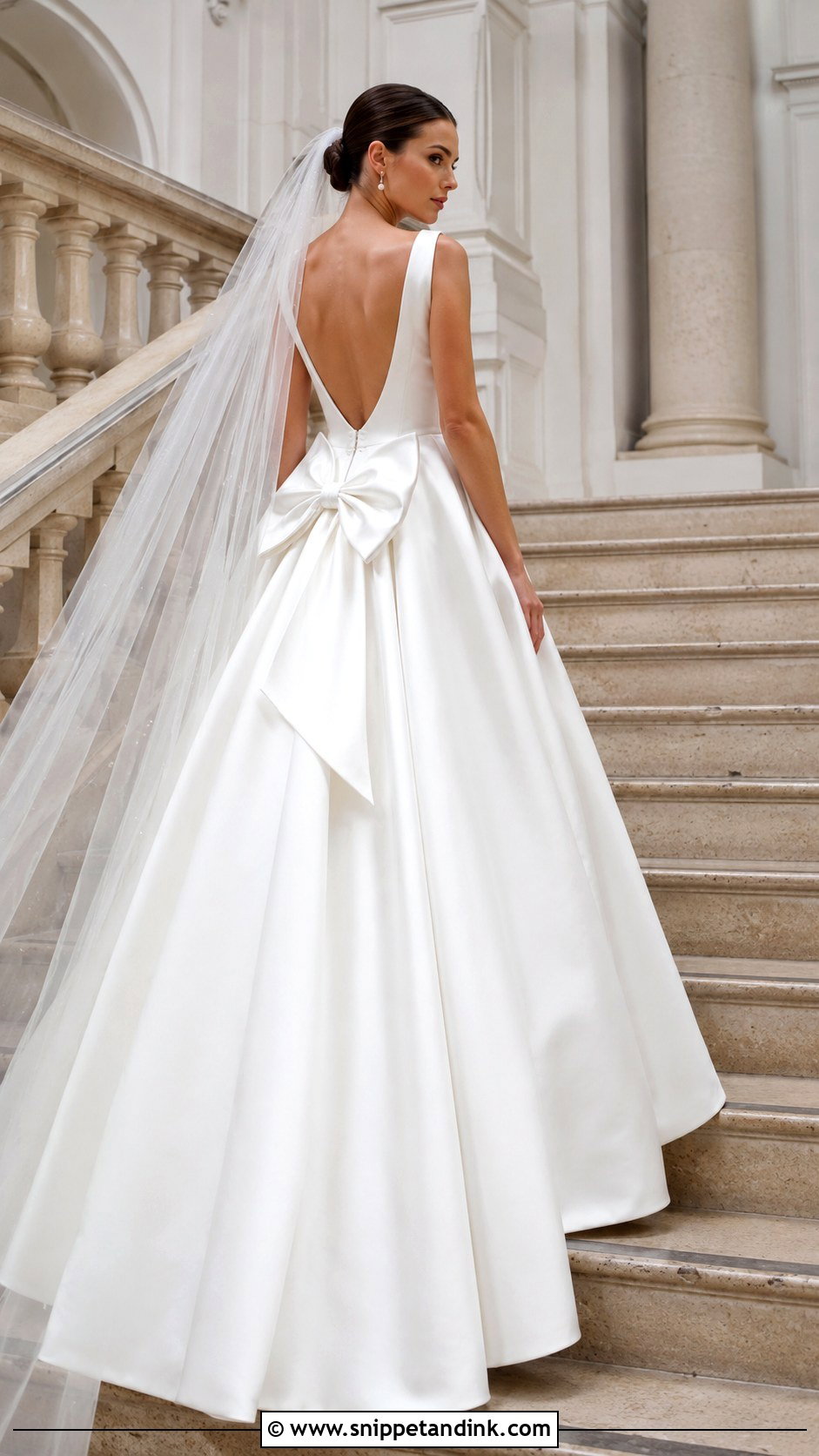
An oversized bow on clean satin or Mikado works because it is the only big statement. At the waist, shoulders or top of the train, it should be anchored into a reinforced patch, or it will droop under its own weight by the evening. Pearl earrings, pointed satin pumps and a veil sheer enough to show the bow work well, along with a neat chignon. Keep the front of the dress plain. A removable bow helps at the reception, and the look belongs on a wide aisle or grand staircase.
18. Metallic Embroidered Wedding Dress
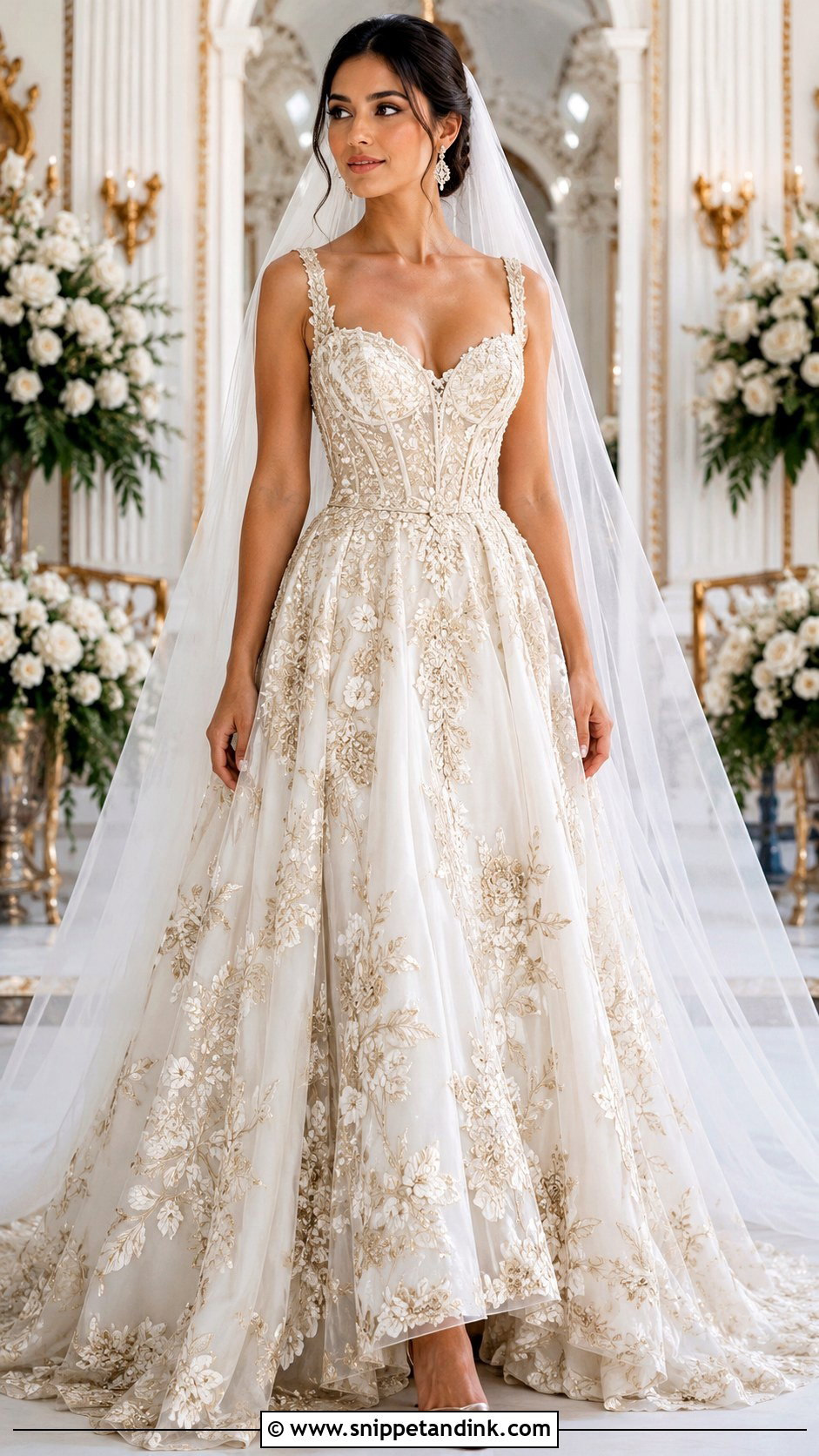
Metallic thread in silver, pale gold or champagne glows rather than glitters, and it reflects much more strongly in daylight than under warm lamps. See the gown in both. Floral motifs across a structured bodice and flowing skirt on an ivory base keep it bridal. Match your jewelry to the dominant thread instead of mixing metals: metallic heels, small gemstone earrings and a plain veil that leaves the embroidery visible. Smooth waves or a low bun keep it formal. It fits ornate indoor venues.
19. Ruffle Train Wedding Dress
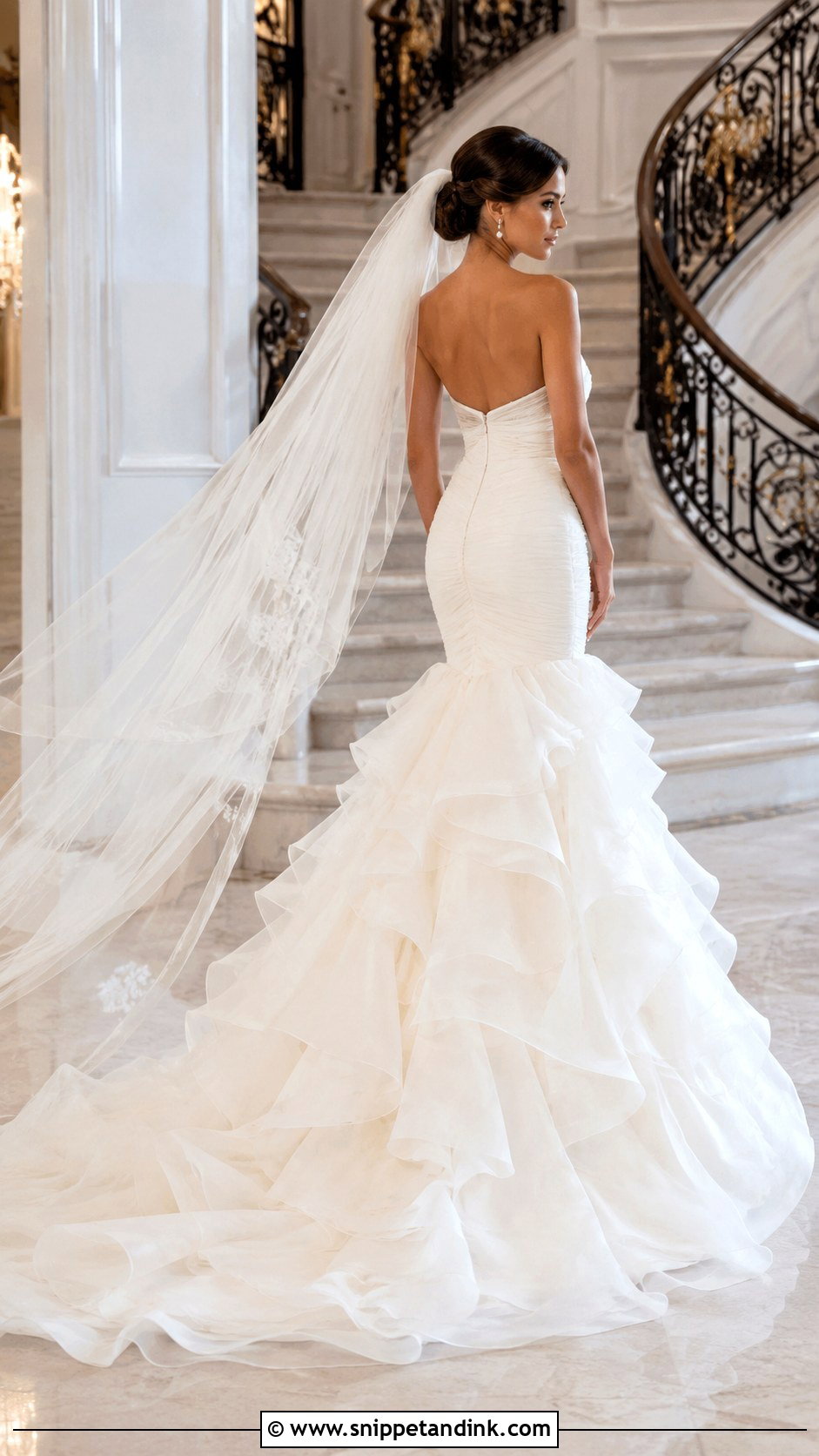
Ruffles starting below the hip of a structured mermaid or trumpet gown make the movement happen behind you. Organza ruffles hold their shape; tulle ones are lighter but crush when sat on. The bustle is the conversation to have early, since layered ruffles are heavy and need several attachment points to stay lifted through the reception. Simple drop earrings, slim heels and a plain cathedral veil removed after portraits keep the focus on the hem. A polished updo balances the volume. It needs a long aisle.
20. Glam Mini Wedding Dress
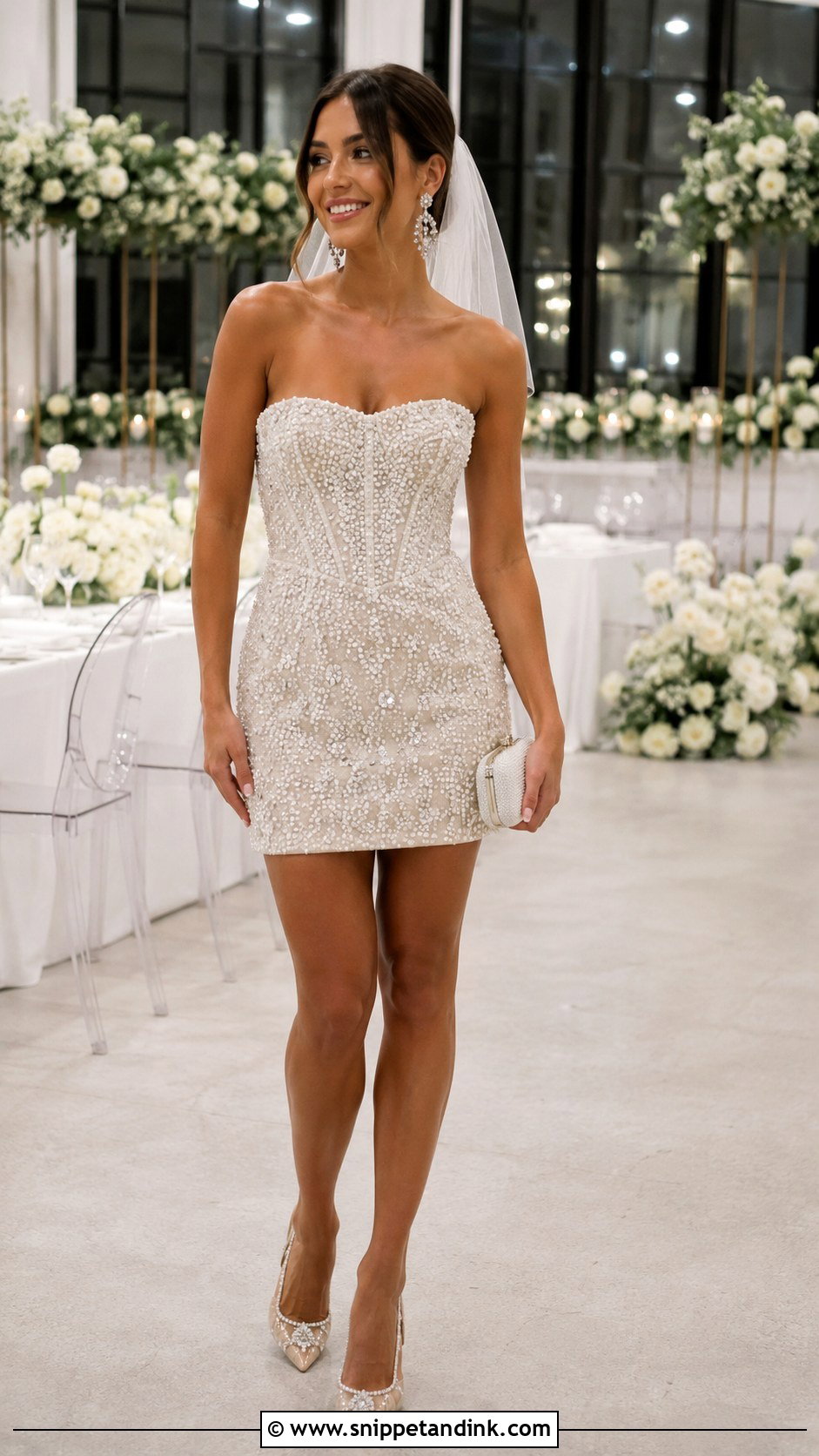
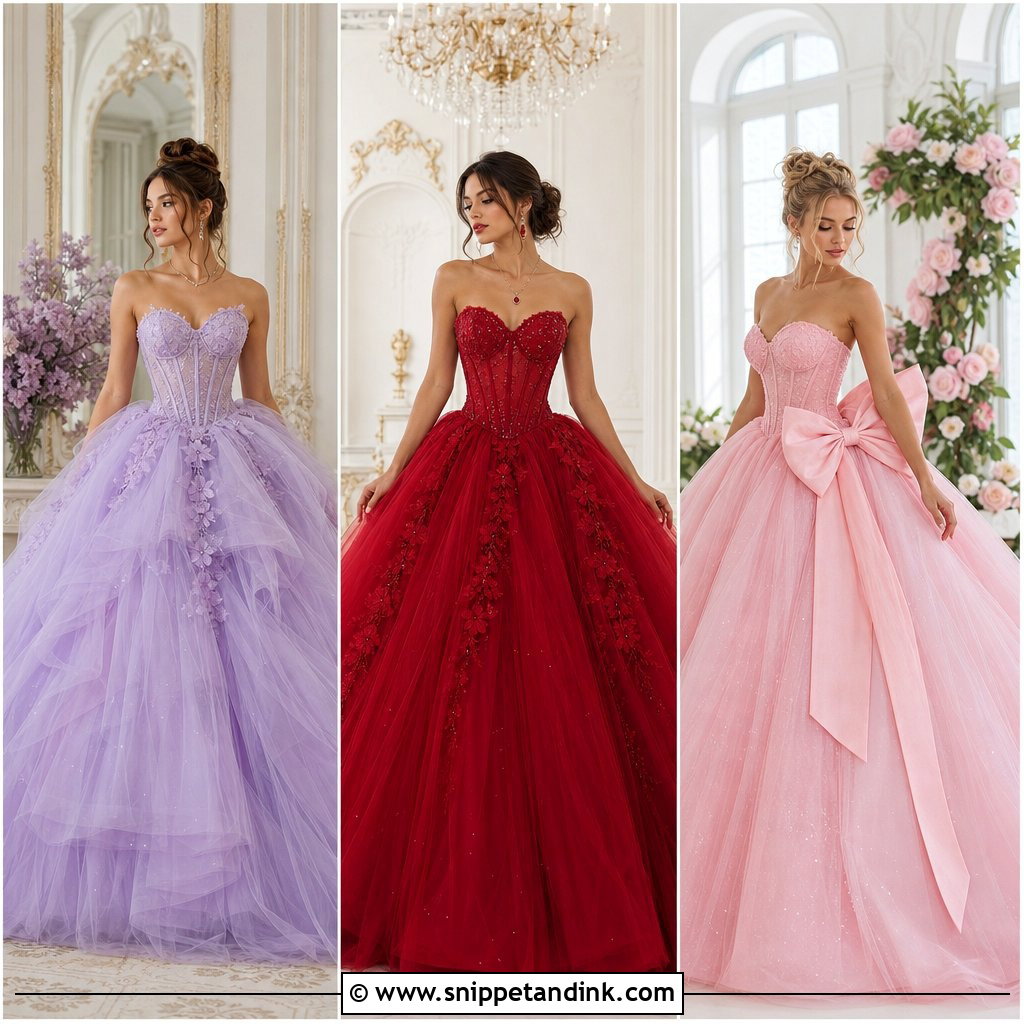
Minis are where I let brides have fun: crystal beading, pearls, feathers or a sculpted satin bow on a structured short dress. With the hem that high, shoes become half the outfit, whether sparkling pumps, slingbacks or ankle straps. Add statement earrings plus a short veil, hair bow or headband so it reads bridal. A tailored blazer or long white coat covers you in cooler weather. Sit down in it at the fitting; a mini that rides up when you sit needs a slightly longer hem.
The First Ten Steps Through the Door
An entrance is mostly pace. Nerves make brides walk fast, and a fast walk in a long train or a mermaid hem looks hurried in every frame. Rehearse in the actual shoes, step and pause, slower than feels natural. Look up at the top of the aisle for a breath before you start, which gives your photographer a clean shot of the full dress.
Have someone fluff and lay the train or cape behind you just before the doors open. On stairs, lift the front of the skirt with one hand so your toes never catch the hem.
After the Party, Before the Cleaner
Embellished gowns need a specialist cleaner, not a standard dry cleaner. Some solvents dissolve the glue on sequins and dull metallic thread, so tell the cleaner exactly what is on the dress, and point out stains you know about, including clear ones like champagne that turn brown with time.
Store a heavily beaded gown folded with acid-free tissue in a breathable box rather than hanging it, since the weight of the beading slowly stretches the shoulders. Keep feathers out of damp rooms and away from plastic covers.
Glamour That Still Holds Up at Midnight
Glamour lasts when the dress is built to carry it. Crystal ball gowns, satin mermaids, metallic embroidery, capes and sparkling minis all need the same things underneath: secure embellishment, real internal support and careful alterations. Think about where you will stand, how much you will move and what light you will be in. Then let the dress keep its strongest detail and edit the veil, shoes, jewelry and hair around it until nothing competes.
You'll Like These Ideas:




Leave a Reply