
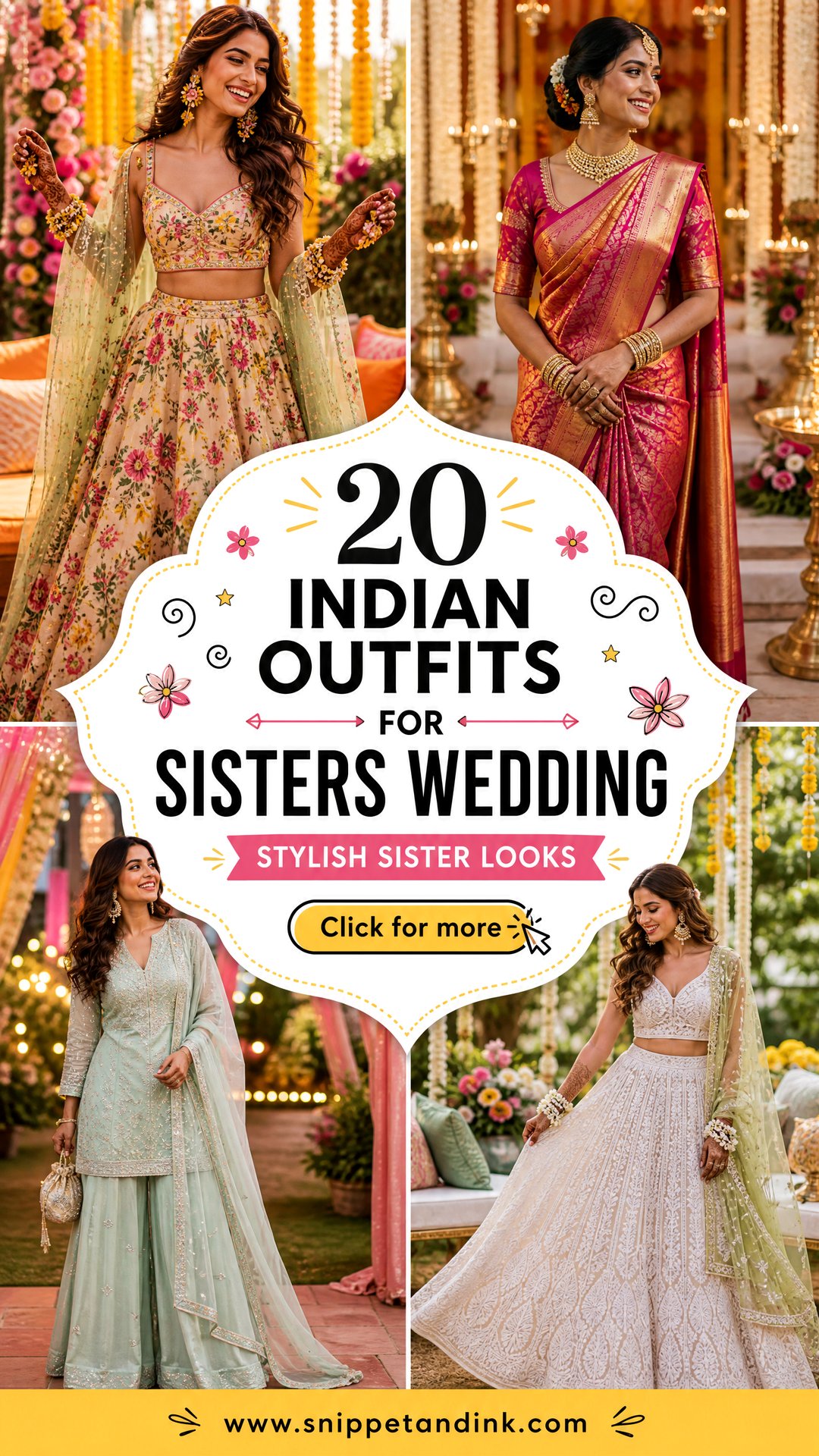
Dressing the bride’s sister is a different brief from dressing a guest. You’ll be in nearly every family photo, standing right beside the bride, and you’ll also be the one fixing her dupatta, fetching things and greeting relatives. So the outfits need to look special without competing with hers, and they need to hold up while you work. Below are twenty looks across the functions, from breathable pieces for daytime rituals to dance-friendly options for the sangeet and richer ensembles for the ceremony and reception, with my notes on what each one asks of you.
You’ll Be Dressed First and Working All Day
On most wedding mornings, the bride’s sister needs to be ready before the bride, because once the bride is in hair and makeup, someone has to hand her things, check the dupatta and answer the door. That timing should guide what you wear.
Pick outfits you can get into quickly and without help: pre-draped sarees, sharara sets, Anarkalis. Save the outfit that needs a professional drape for an evening when you’re not on duty. Have your own hair and makeup done early in the queue, not last.
Think about the jobs too. Sisters in North Indian weddings often take part in joota chupai, hiding the groom’s shoes and bargaining for their return, which involves a lot of running around. At the doli you may be crying, hugging and helping your sister into the car. None of that suits a heavy skirt you can barely walk in.
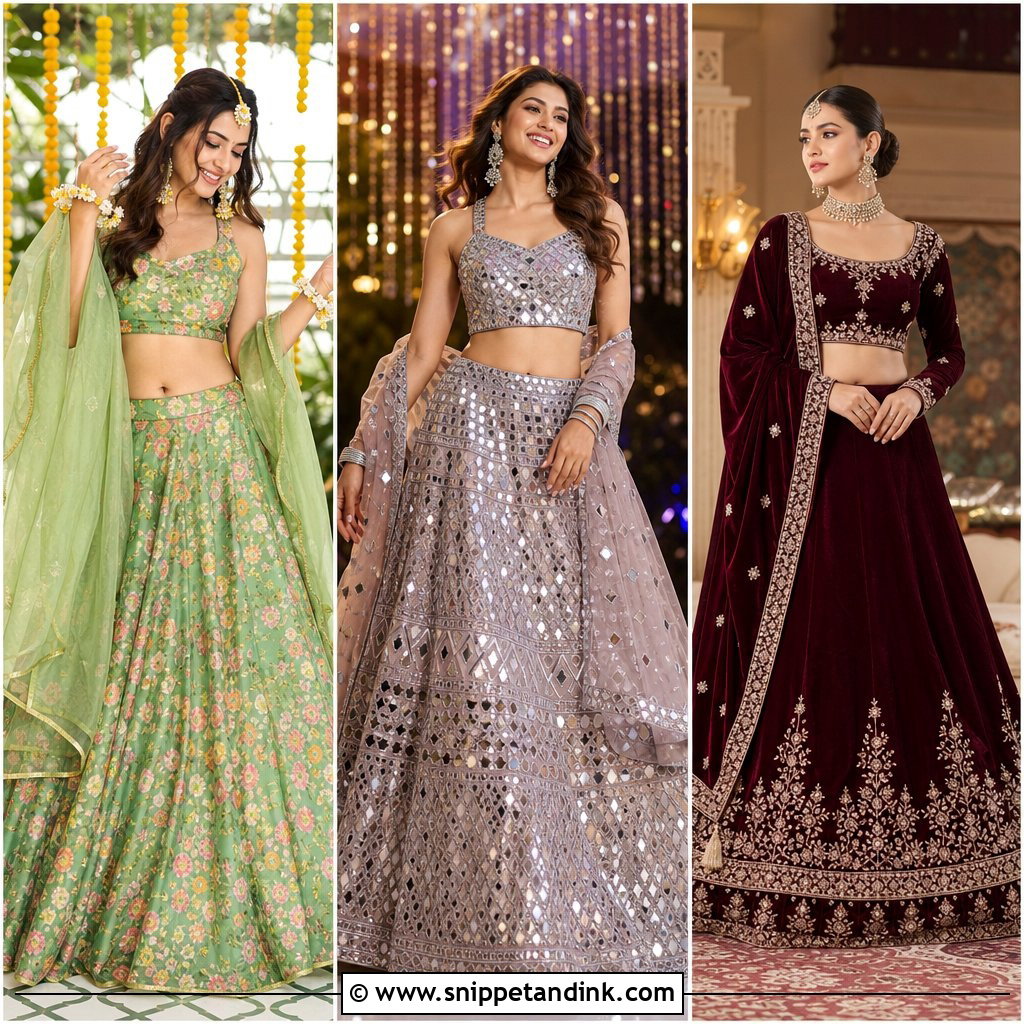
1. Floral Lehenga Outfit for Mehendi
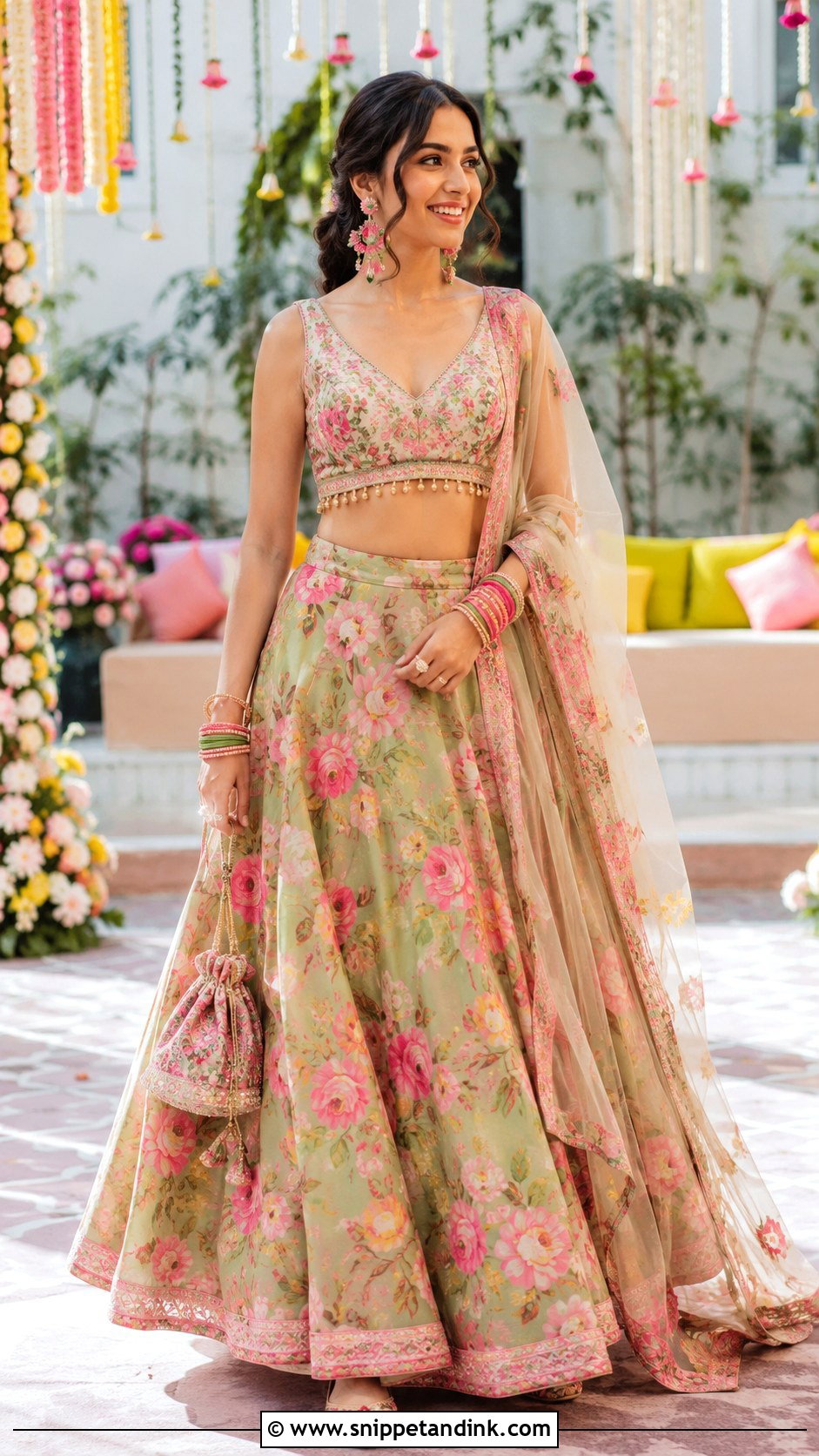
For the mehendi, a floral lehenga in lightweight georgette or organza keeps you cool and photographs well against colourful decor. Green, coral, pink and lavender prints suit the mood. Keep the neckline simple if the print is busy. If you’re having henna done too, tie your hair back in a braid or half-up style, because loose strands stick to wet paste. Petite frames suit smaller motifs; larger prints need some height. Embroidered juttis and a potli bag finish it.
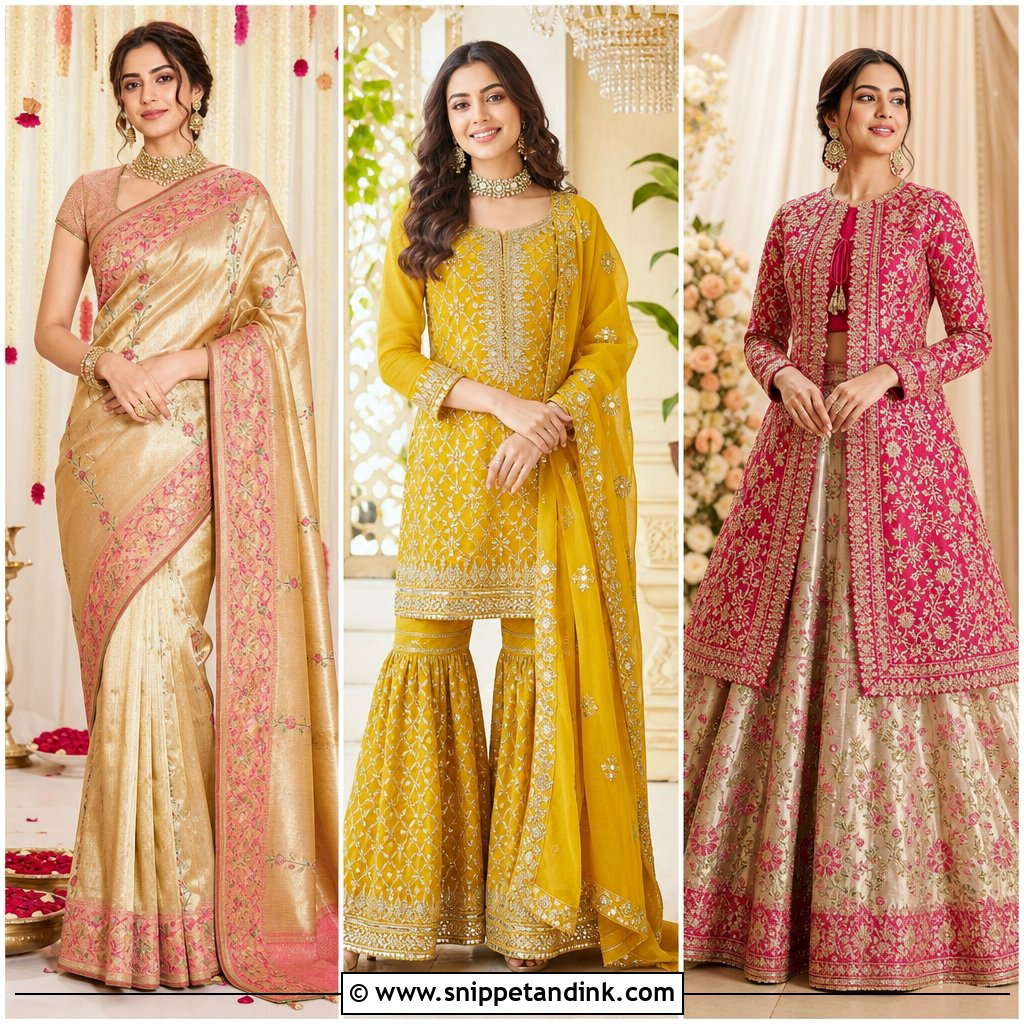
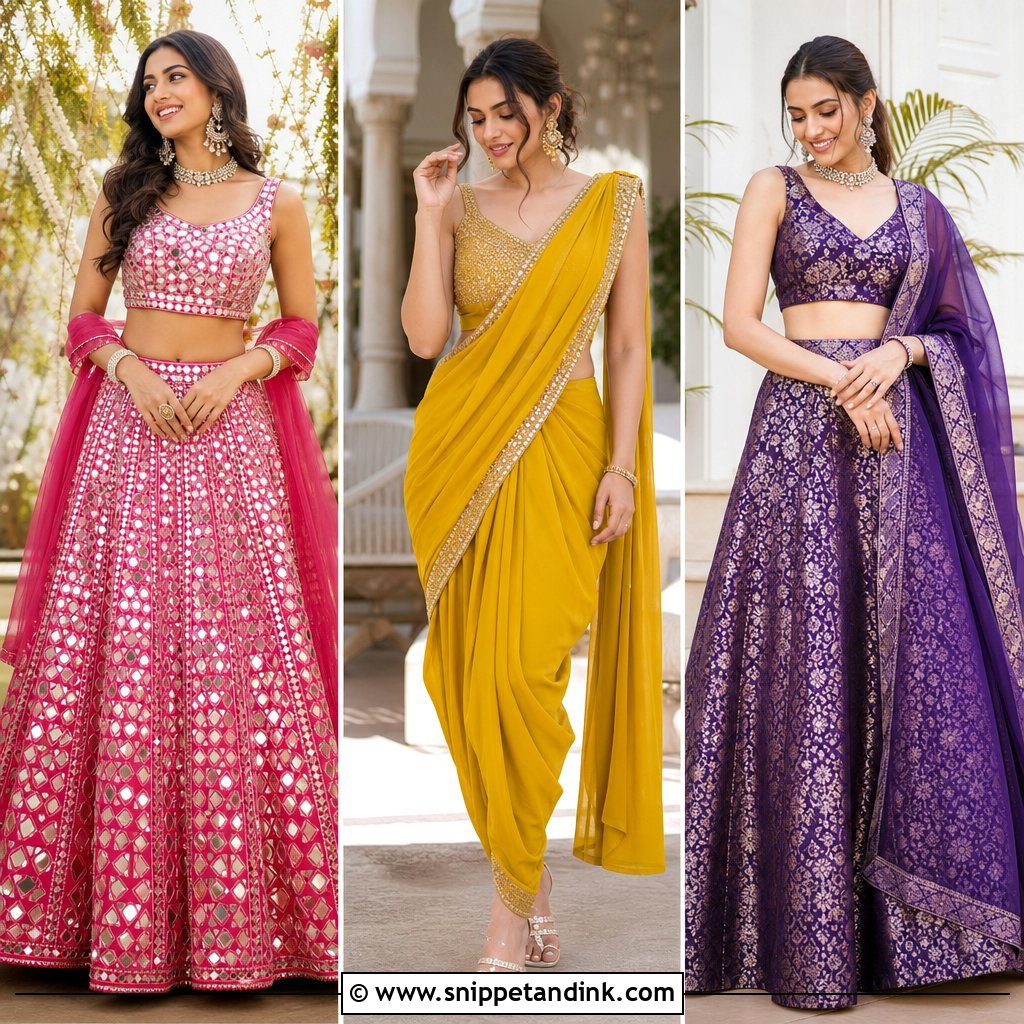
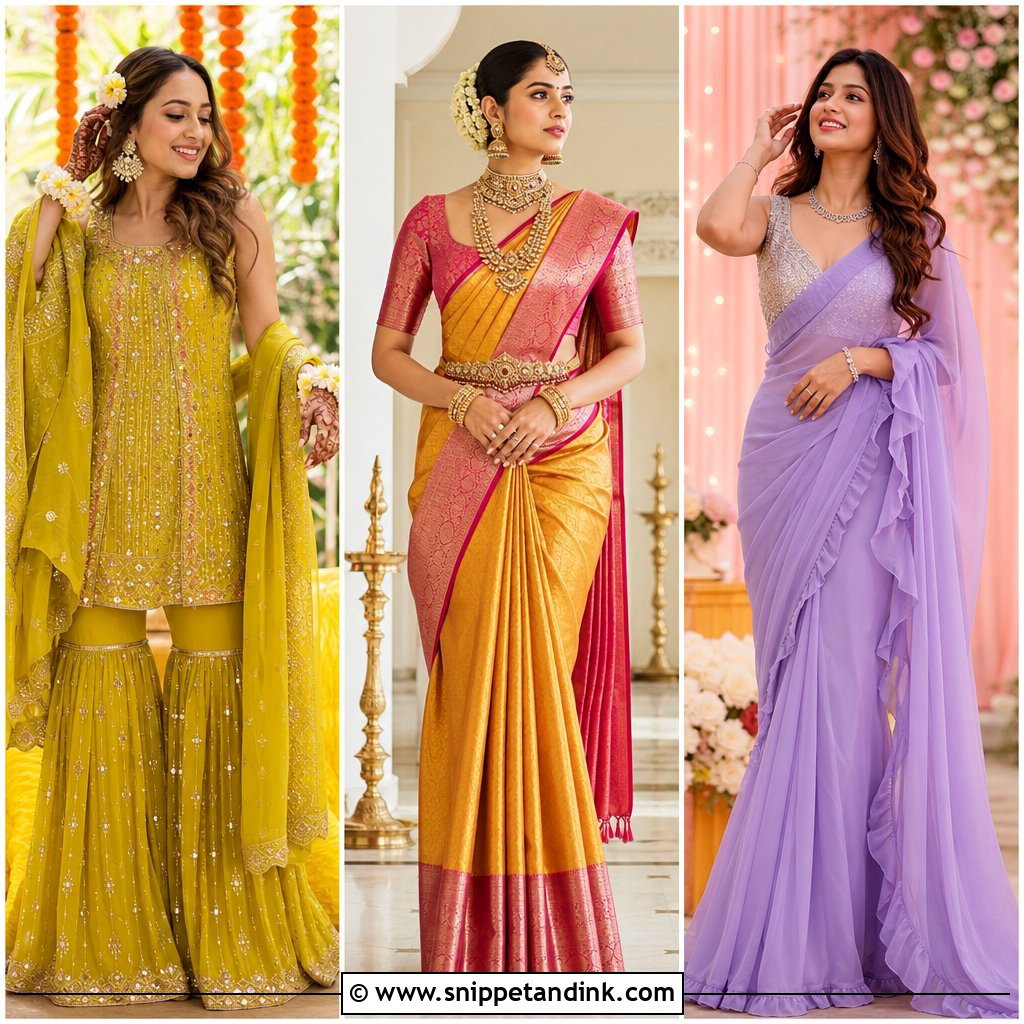
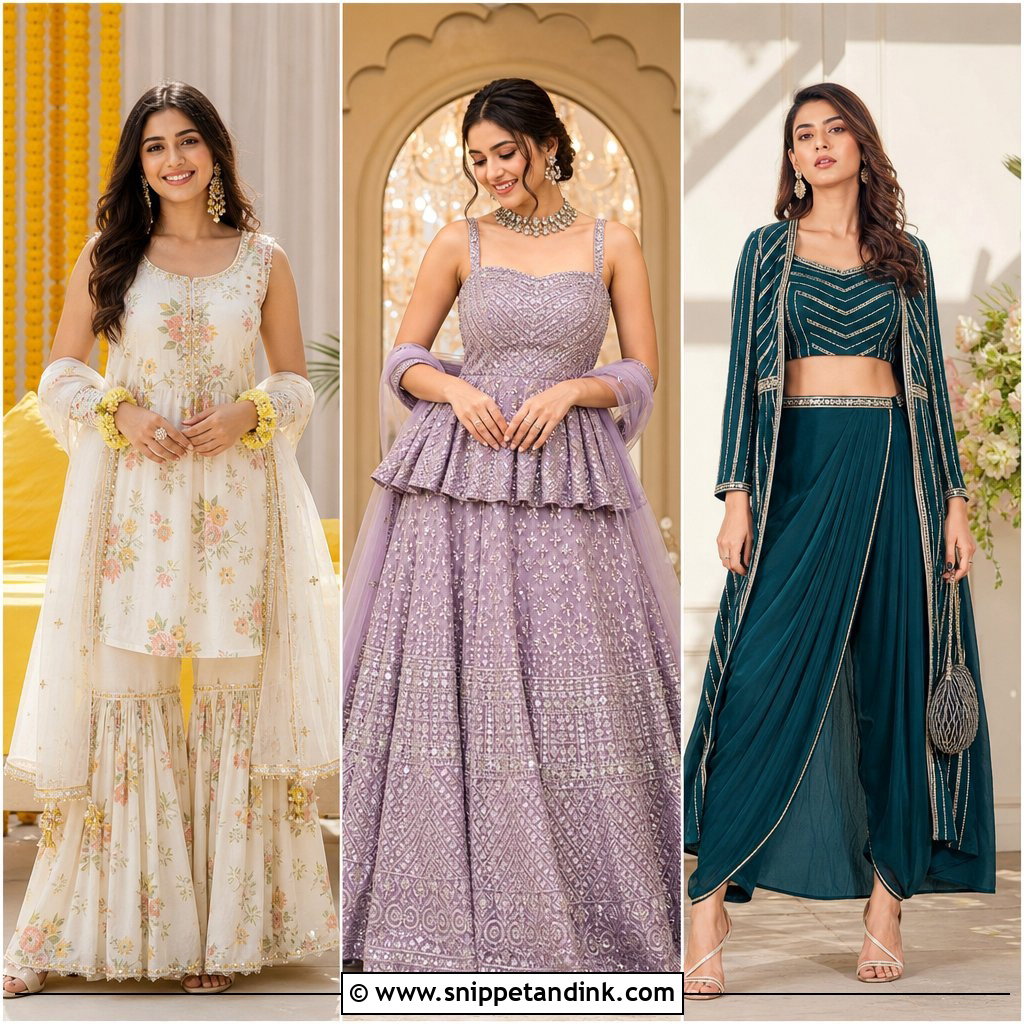
2. Yellow Sharara Outfit for Haldi
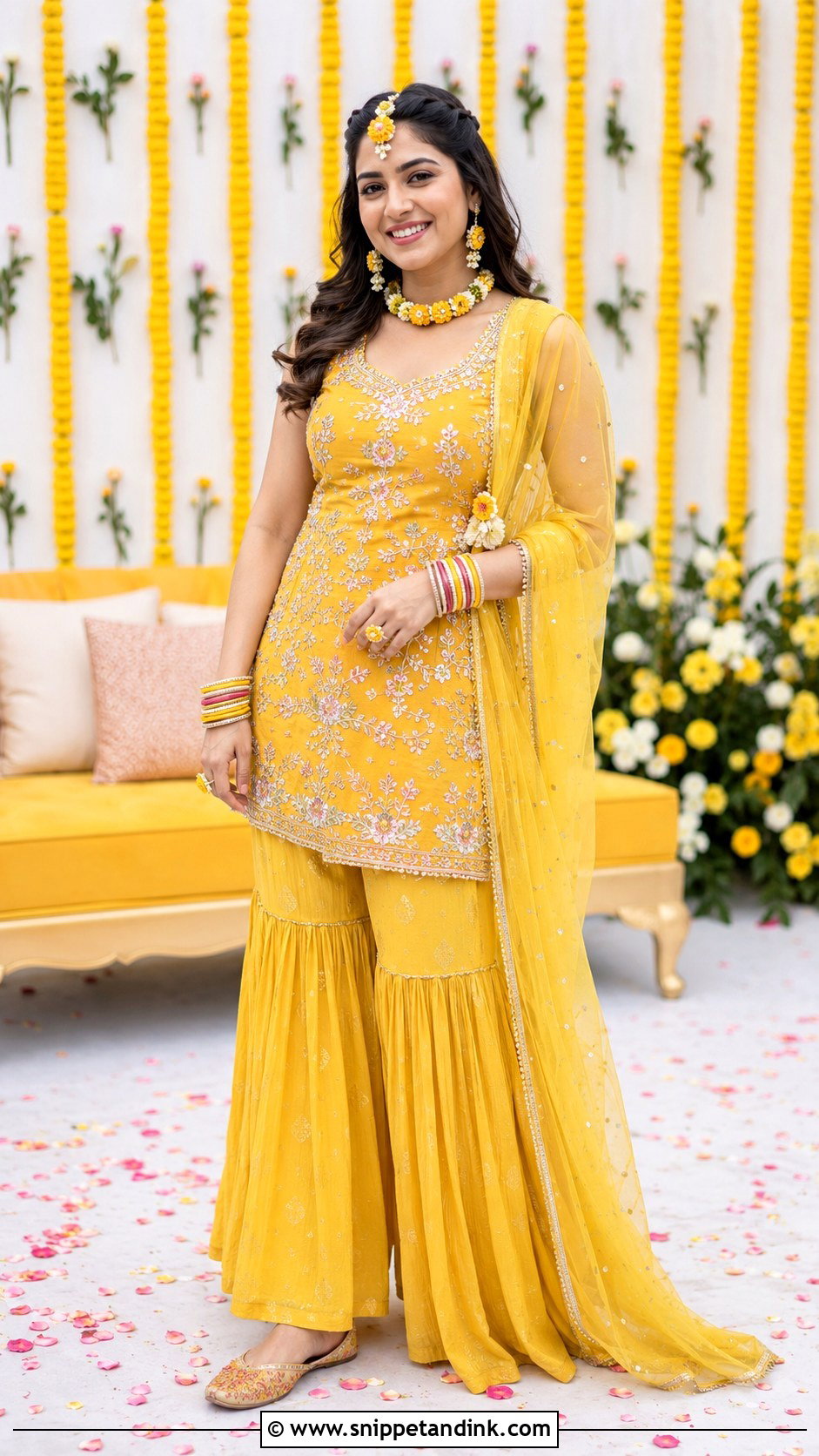
As the sister, you’ll probably be in the thick of the haldi, smearing paste and getting smeared. A yellow sharara set gives you comfort without looking casual. Pick washable cotton, georgette or crepe; turmeric stains set fast and silk rarely recovers. Marigold, lemon, mustard and mango all work. A short embroidered kurta with wide pants and a pinned dupatta leaves your hands free. Pink or green accents keep the yellow from looking flat in photos.
3. Mirror Work Lehenga Outfit for Sangeet
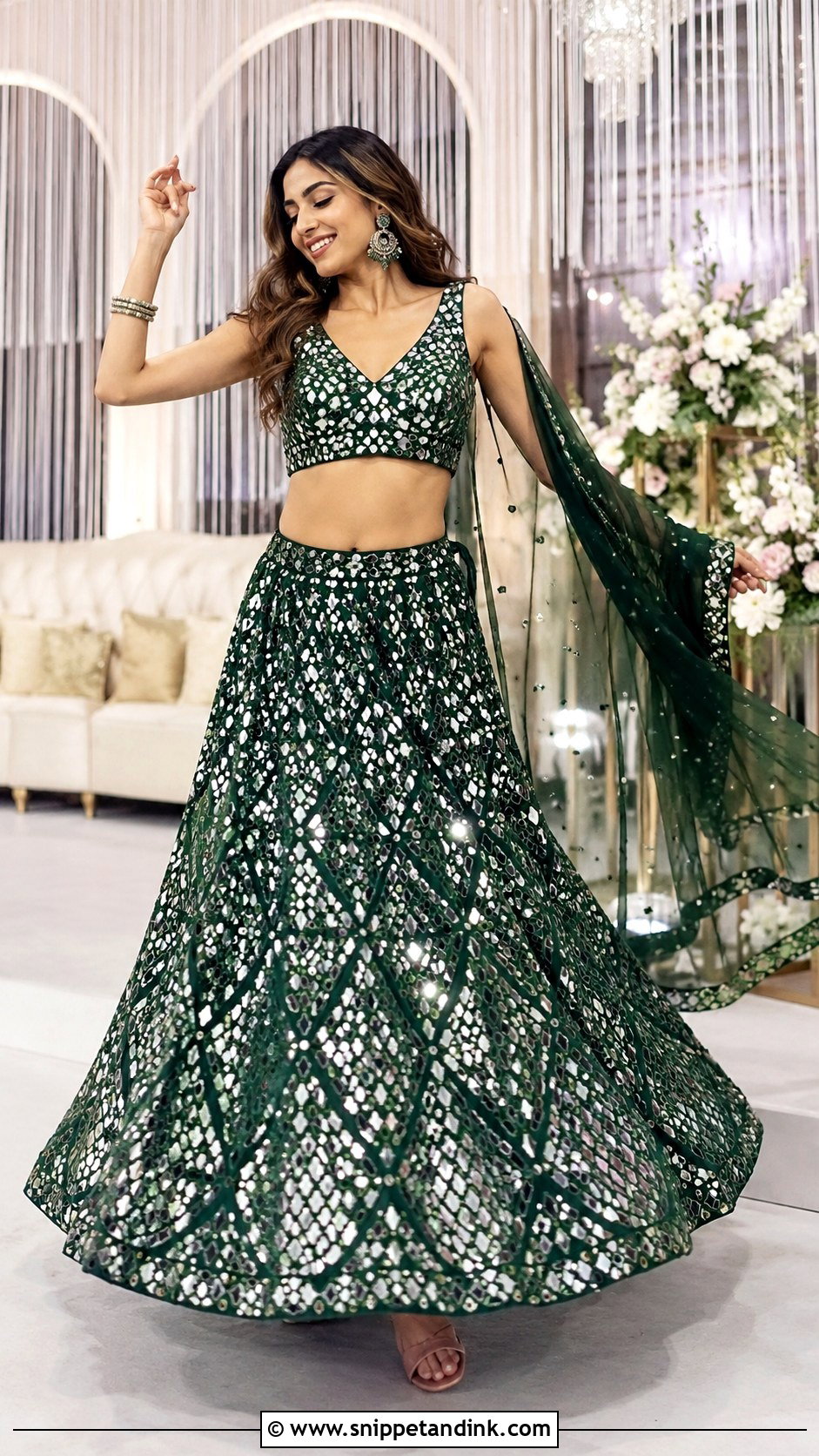
Sisters often perform at the sangeet, and that changes the outfit. A mirror work lehenga in emerald, cobalt, plum or deep pink looks great under lights, but I always ask sisters to rehearse the dance in it at least once. That’s when you discover the dupatta flies off or the blouse rides up. A lighter dupatta or attached drape is much easier on stage. Block heels beat stilettos. Skip the heavy necklace if the blouse is already worked.
4. Banarasi Silk Saree Outfit for Wedding
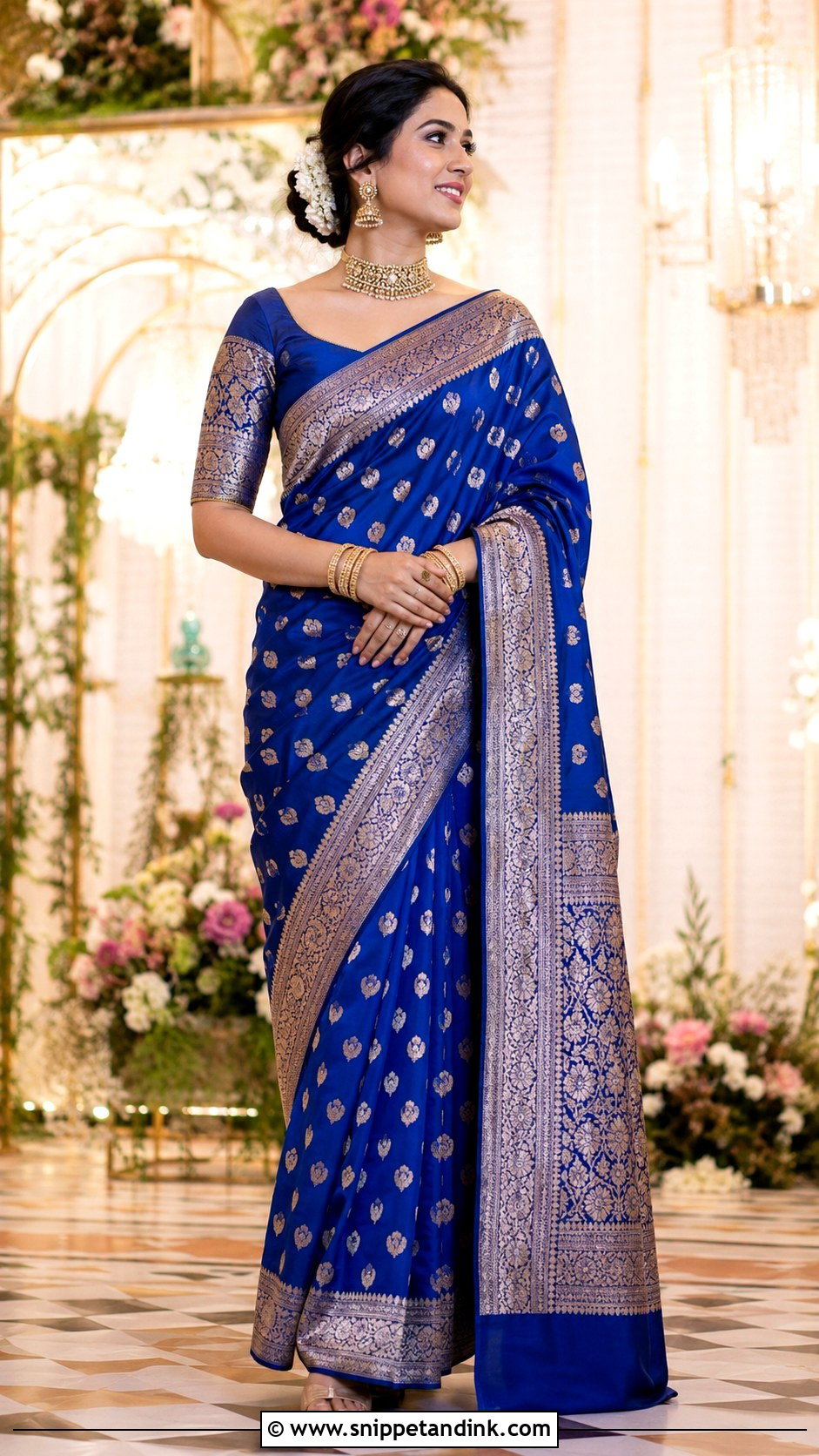
For the main ceremony, a Banarasi silk saree is a respectful, rich choice. The one rule I give sisters: don’t match the bride’s primary colour. Emerald, royal blue, plum, rust and deep purple sit well next to bridal red without blending into it. A tailored brocade or raw silk blouse completes it. Neat pleats help you move between rituals and family duties. If the saree is heavily woven, keep the blouse and jewellery quieter so the group photos don’t look crowded.
5. Kanjeevaram Saree Outfit for Ceremony
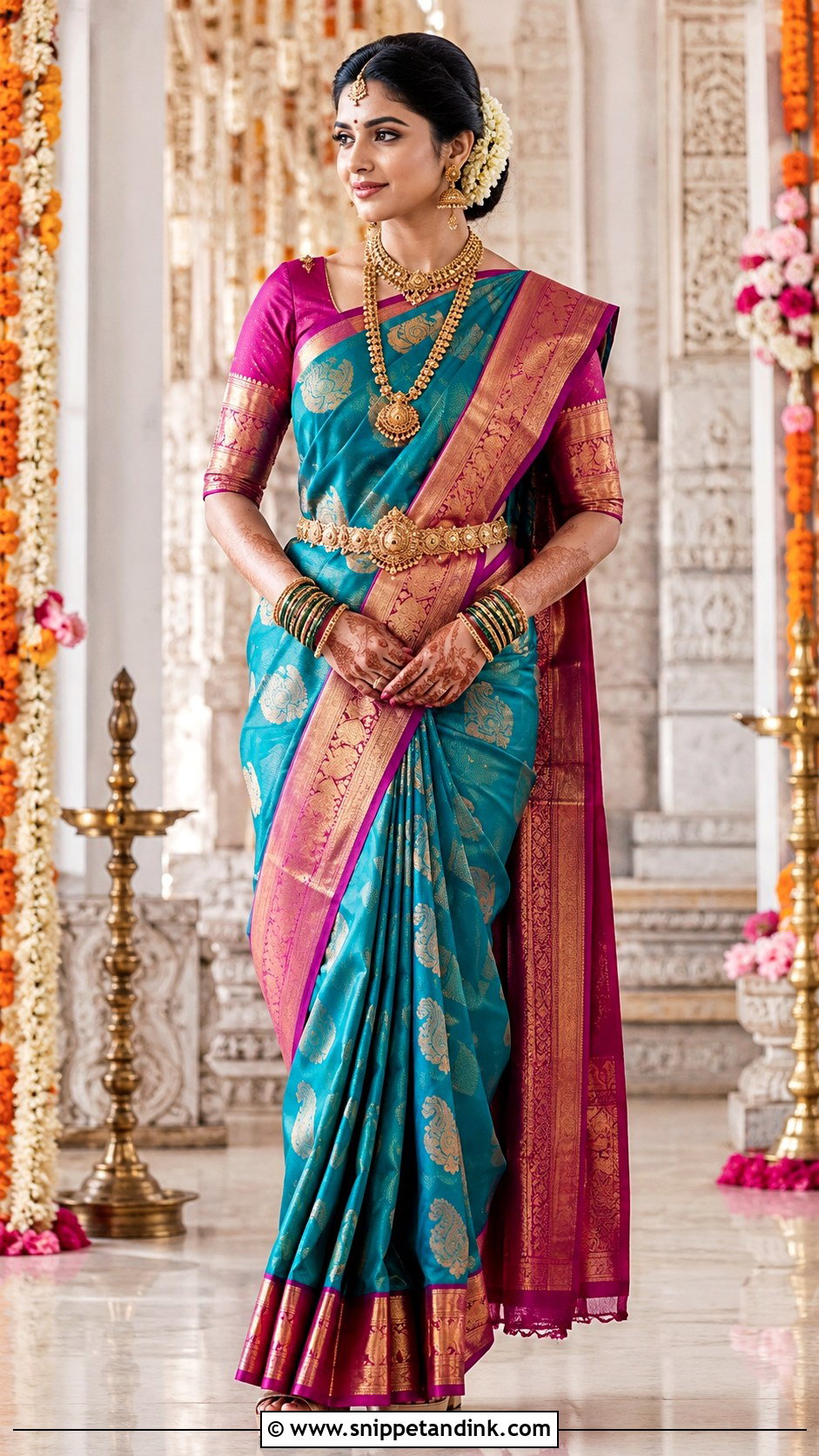
A Kanjeevaram saree is structured and lustrous, ideal for a South Indian ceremony. Contrast pairings like teal with magenta or green with pink feel festive without reading as bridal. Pair it with a fitted elbow-sleeve blouse and temple jewellery. A braid with white flowers suits it. Pin the pleats and pallu properly; the sister is up and down constantly during the ceremony, and Kanjeevaram is heavy enough to drag a loose pallu off the shoulder. Carry a small clutch with safety pins and touch-up products.
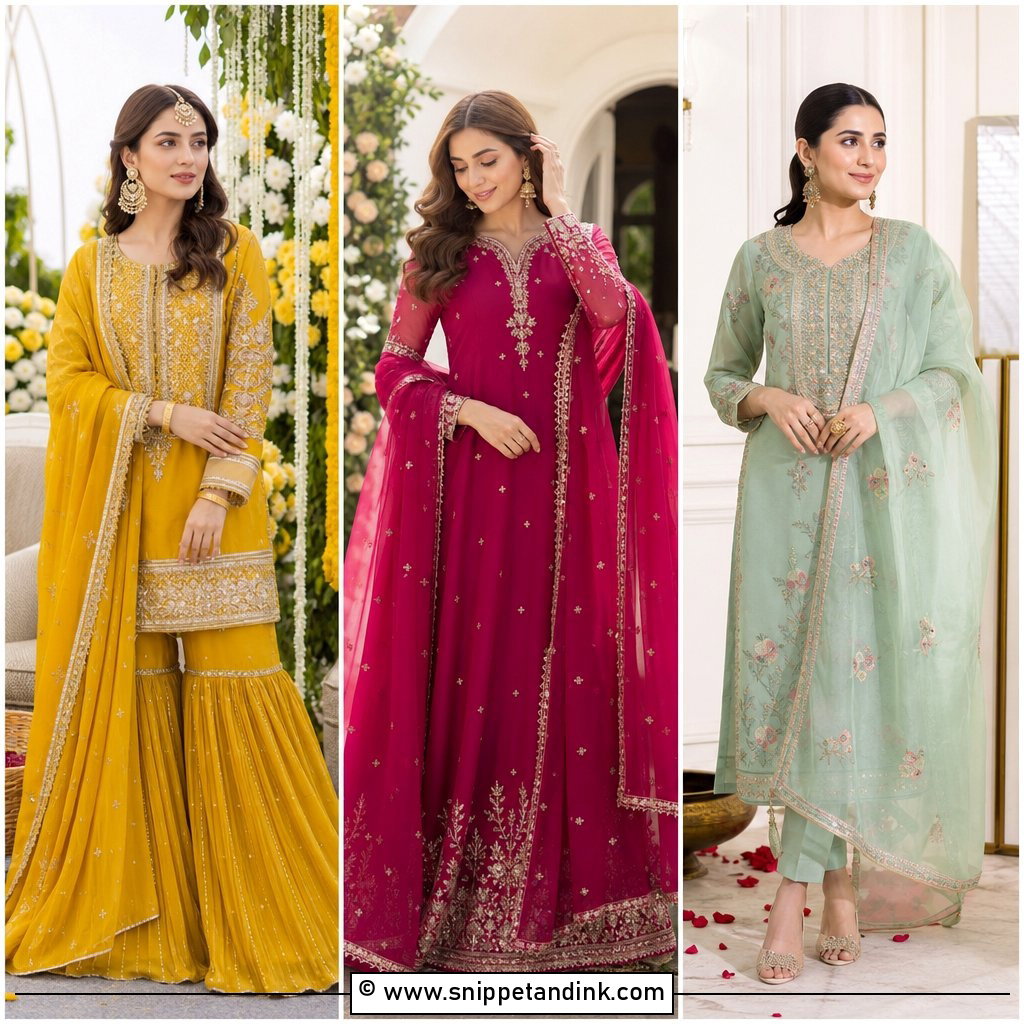
6. Embroidered Anarkali Outfit for Engagement
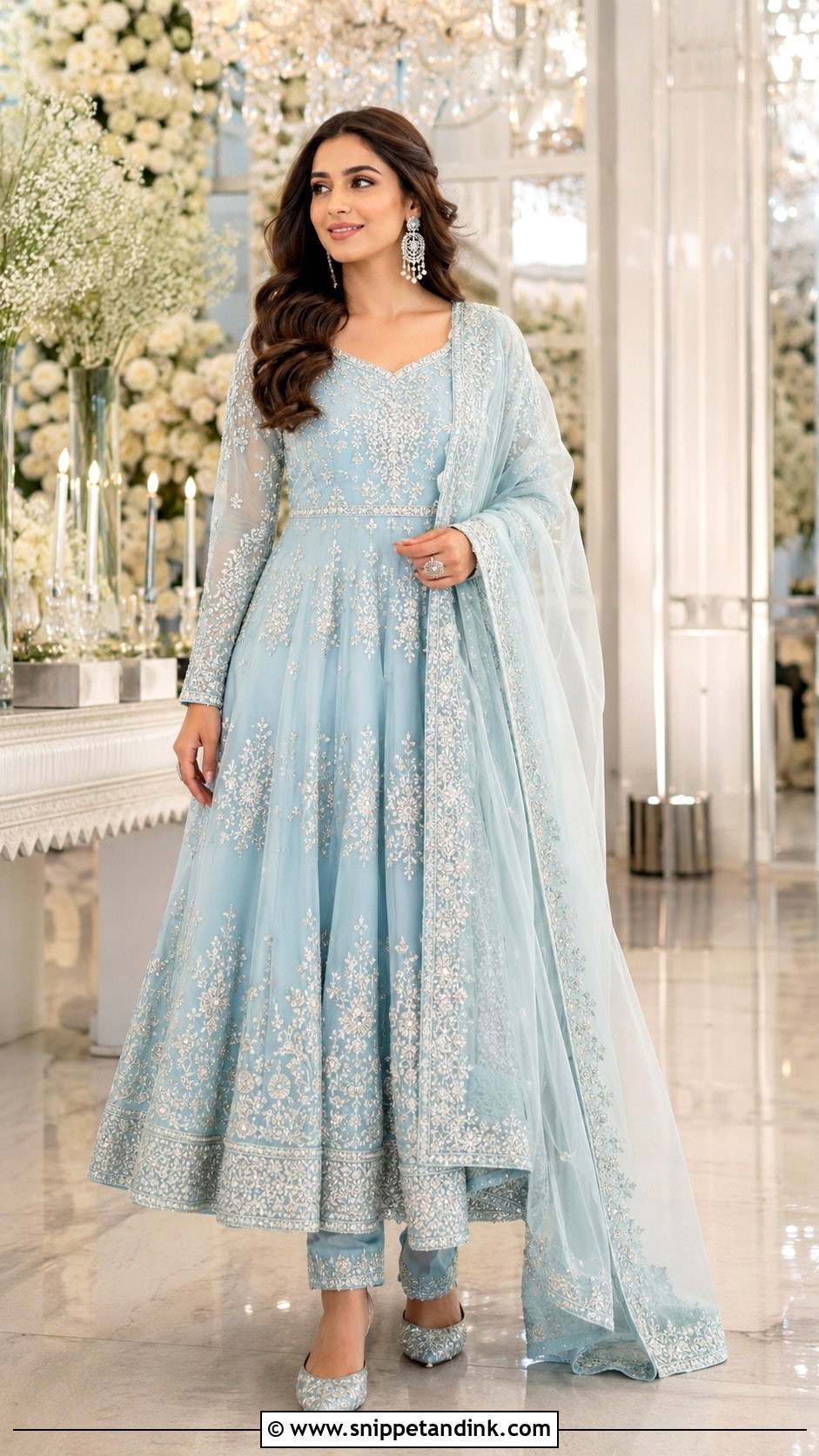
At an engagement, you’ll spend hours standing, greeting and posing. An embroidered Anarkali in silk, georgette or soft net gives coverage and lets you move. Detail at the neck and hem means you don’t need heavy jewellery. Powder blue, wine, sage, mauve and navy all work. A fitted bodice with a flowing skirt defines the waist. Chandelier earrings and one statement ring are enough.
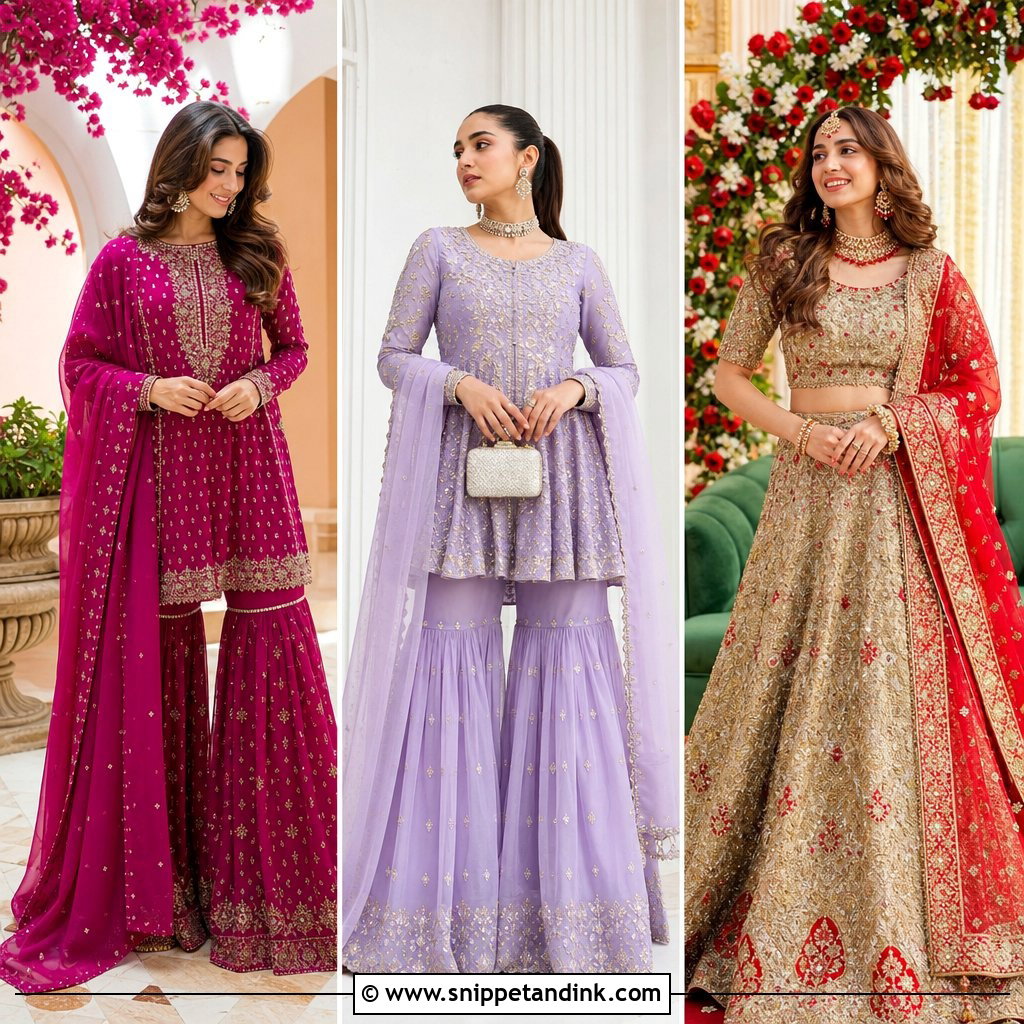
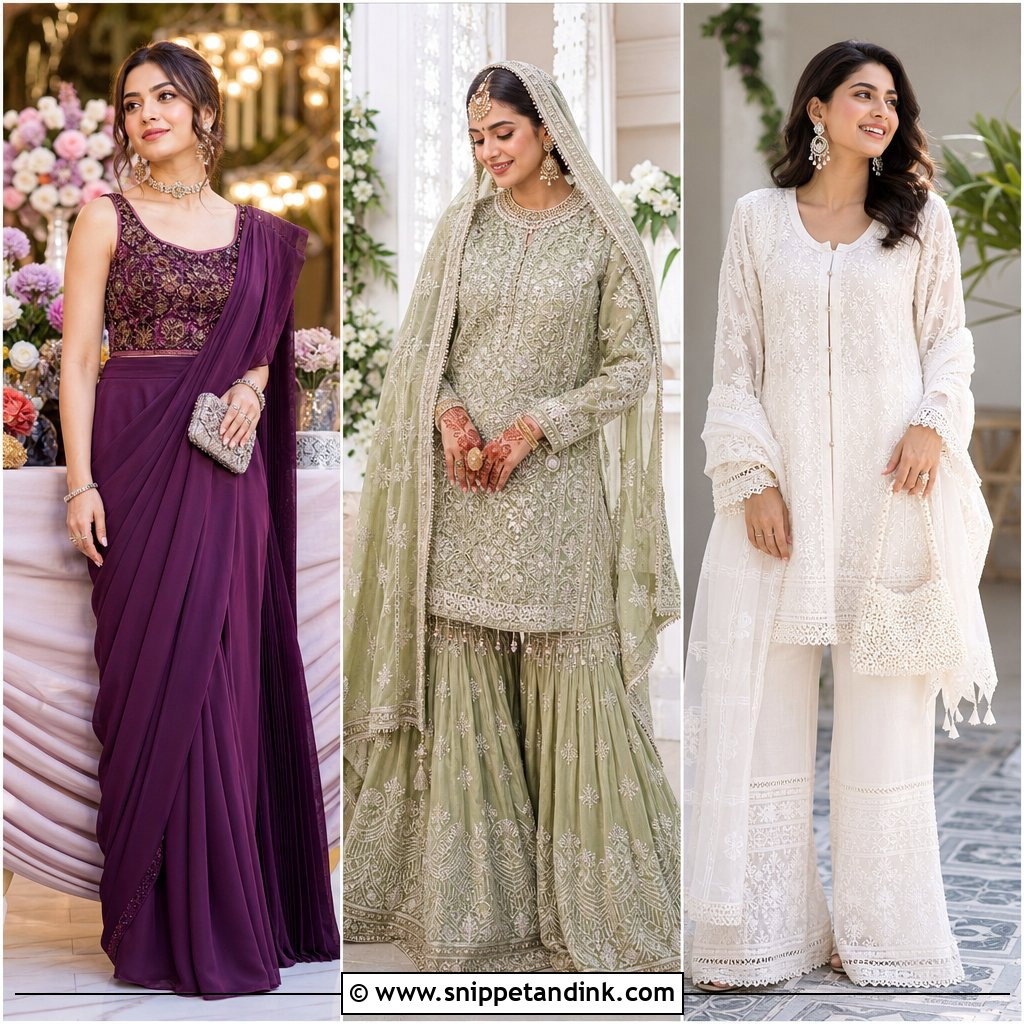
7. Gharara Outfit for Nikah
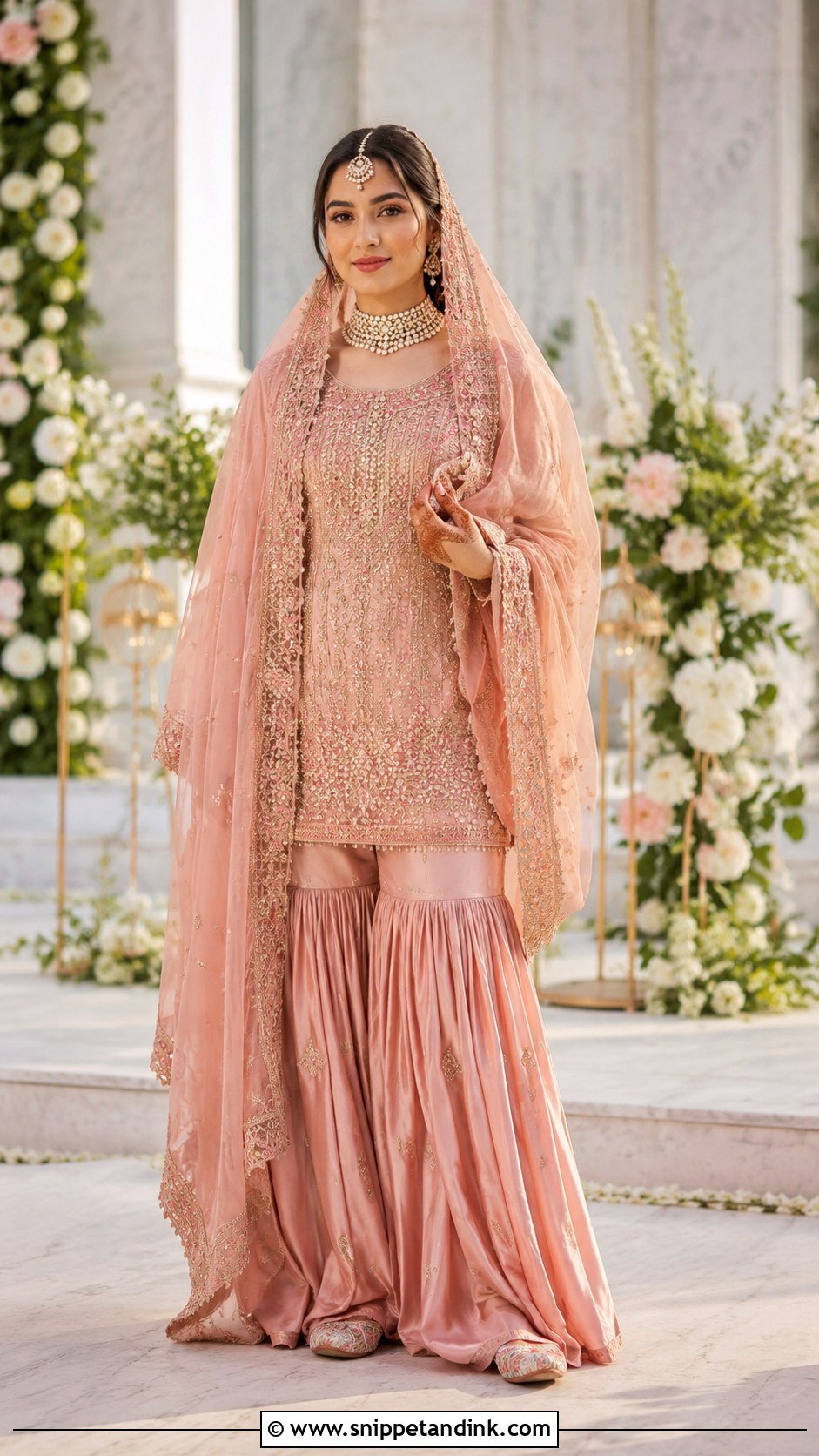
Gharara sets suit a nikah well. The short kurta, fitted upper pants and flared lower panels are a classic silhouette, and the kurta should end above the flare so it shows. Delicate zardozi, gota or threadwork keeps it refined. Ivory, pistachio, dusty rose, powder blue and soft gold make a gentle palette. Many nikah ceremonies expect women to cover their heads, so choose a dupatta that drapes easily over your hair and stays there with a pin.
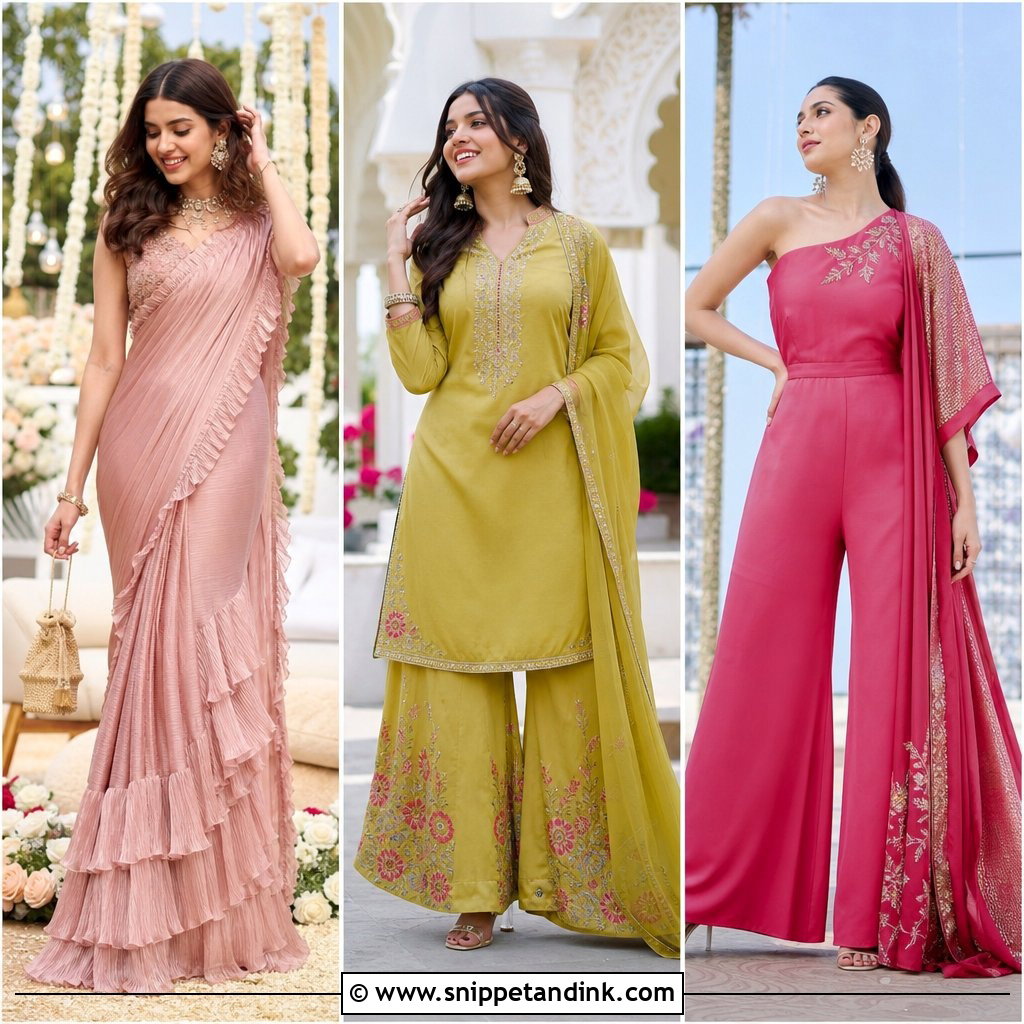
8. Draped Saree Outfit for Cocktail Party
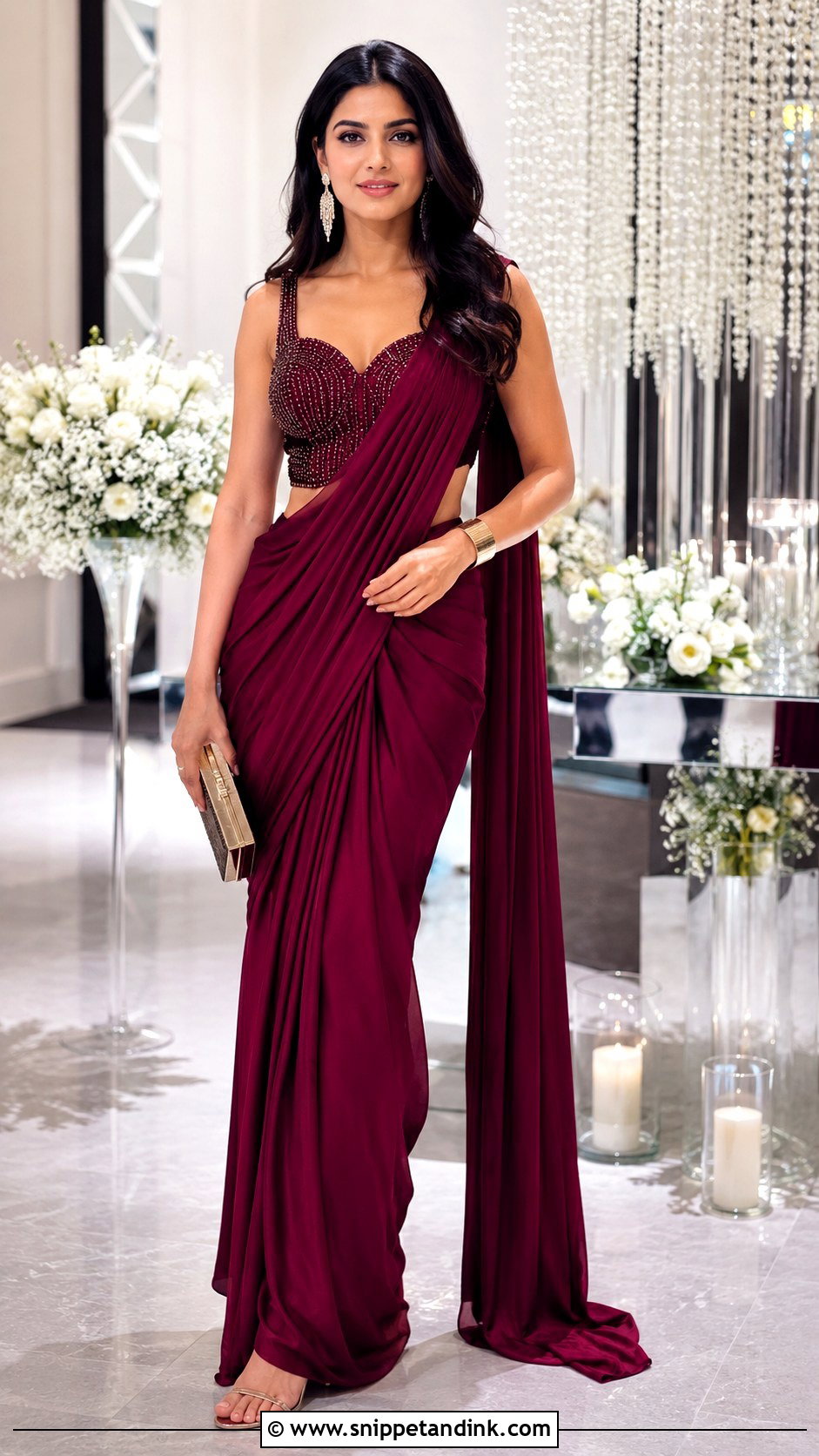
At the cocktail party you’ll be greeting guests, taking photos and dancing, sometimes all within ten minutes. A pre-draped saree in satin, crepe or georgette handles that. The pleats are stitched, so you don’t need to check the drape constantly. Charcoal, navy, berry and metallic grey suit evening. A structured blouse with beadwork or an asymmetric neckline adds interest. Have the length adjusted to your exact shoes before the event; pre-draped sarees can’t be re-tucked shorter on the night.
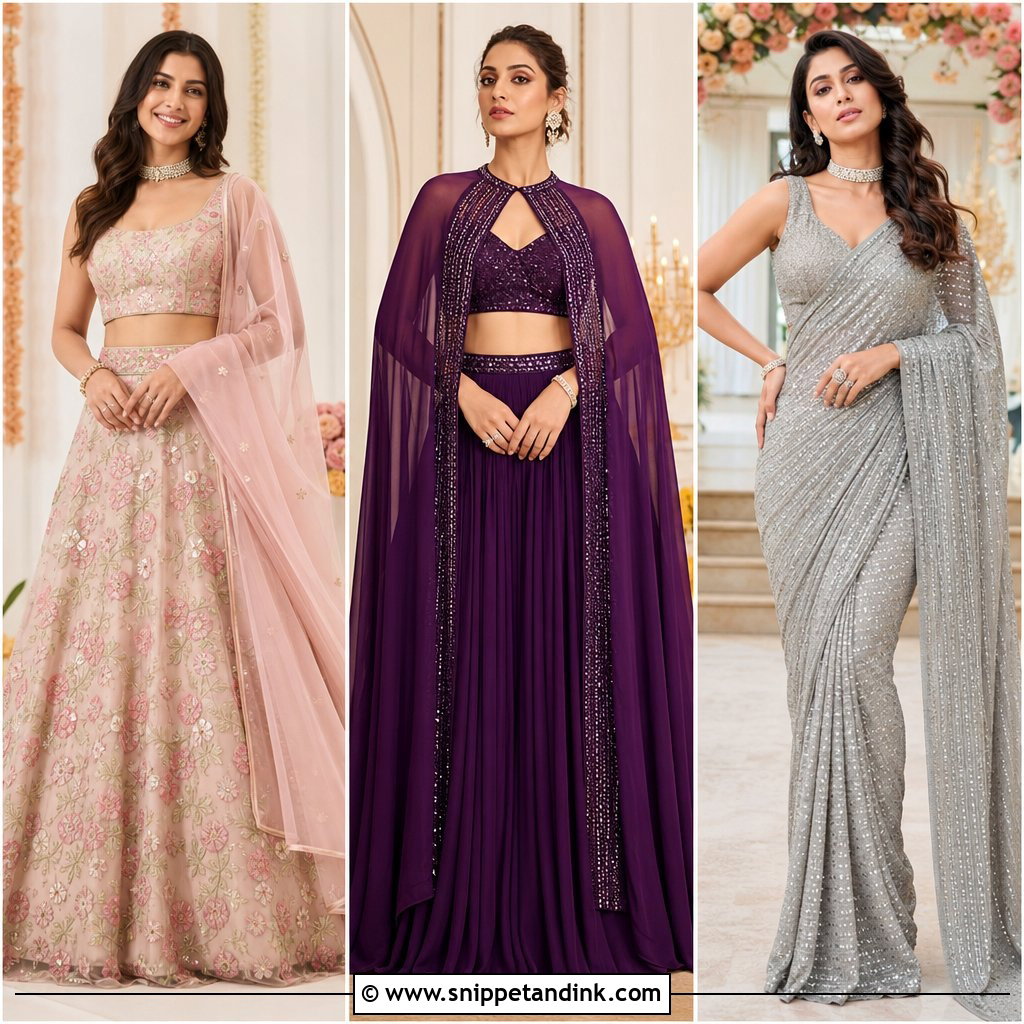
9. Cape Lehenga Outfit for Reception
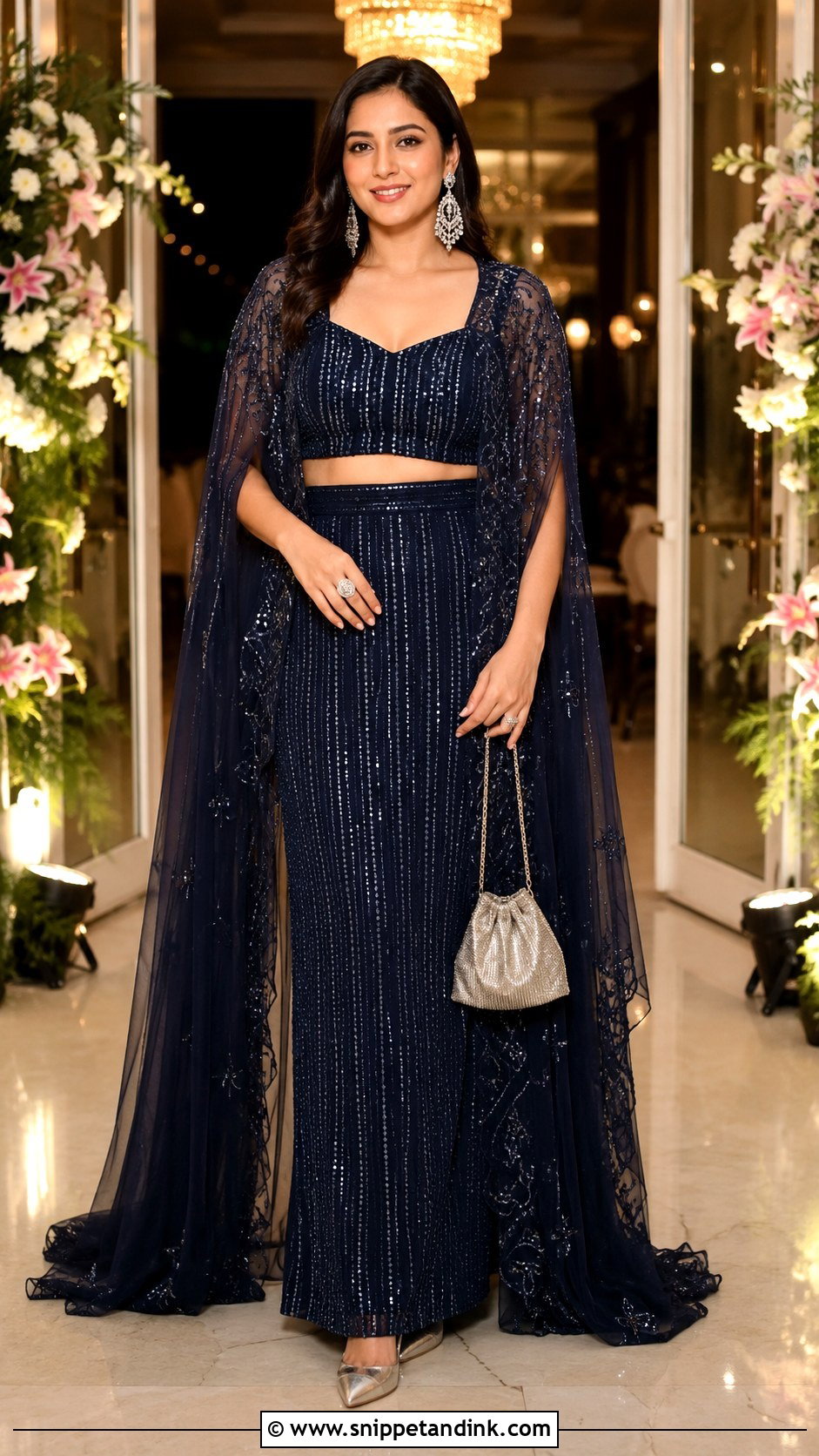
A cape lehenga replaces the dupatta with a sheer embroidered layer over the shoulders, so there’s one less thing to manage while you’re helping the bride. Midnight blue, burgundy, emerald, pewter and deep violet suit the reception. Keep the necklace minimal next to an embroidered cape neckline. In my experience petite sisters usually look better in a waist-length cape; a long one can swamp a small frame. Pin your hair away from the shoulders so it doesn’t catch in the net.
10. Palazzo Set Outfit for Welcome Party
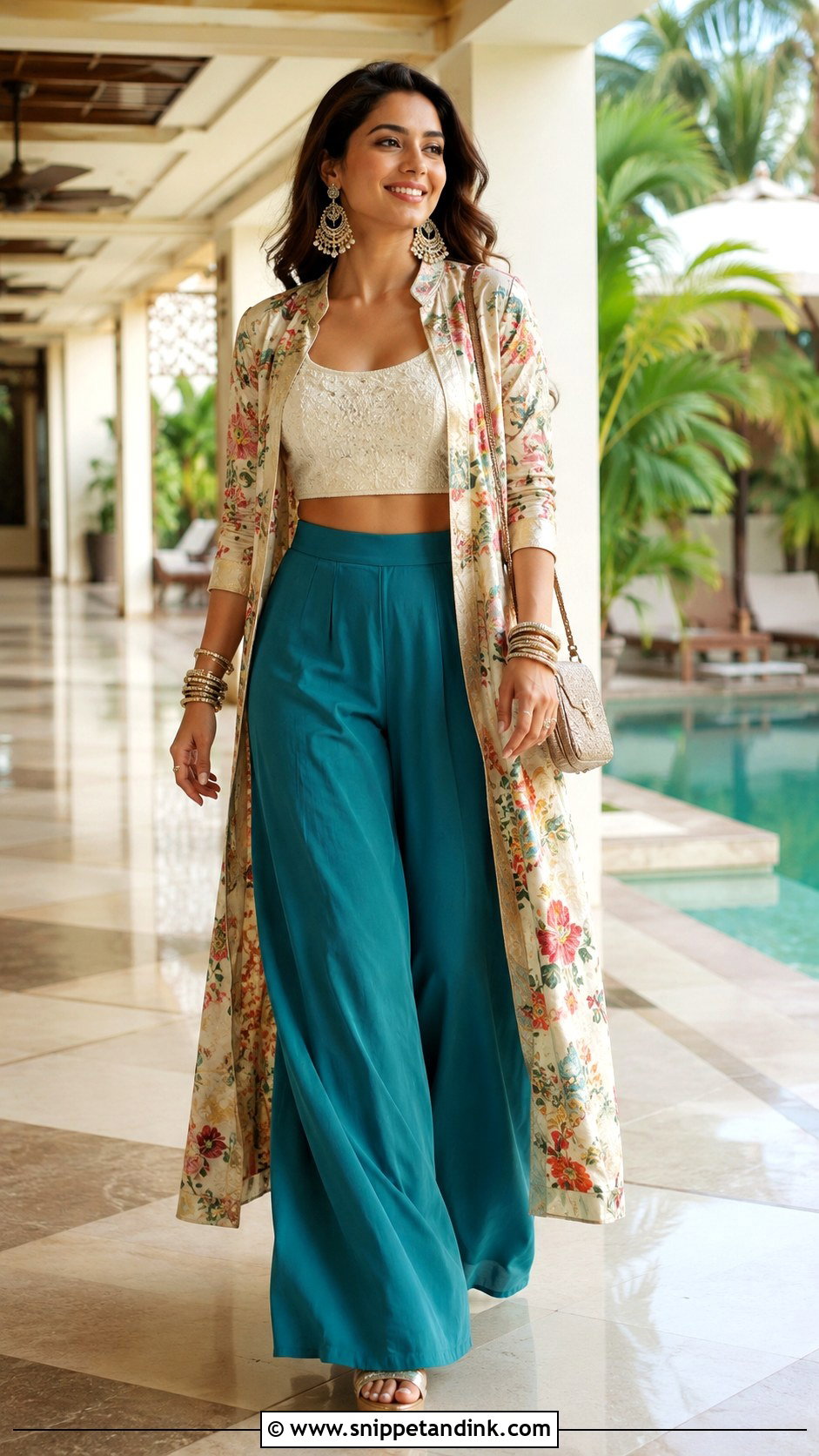
A coordinated palazzo set is easy for a welcome party. Wide-leg pants, an embroidered crop top or short kurta, and a long open jacket give polish without effort. Printed silk, crepe and lightweight brocade all work. I prefer complementary colours over one flat shade; teal pants with a floral jacket and ivory top is a good example. A defined waist keeps the wide legs from looking oversized. Hem the palazzos to skim the floor without hiding your shoes.
11. Jacket Lehenga Outfit for Sangeet
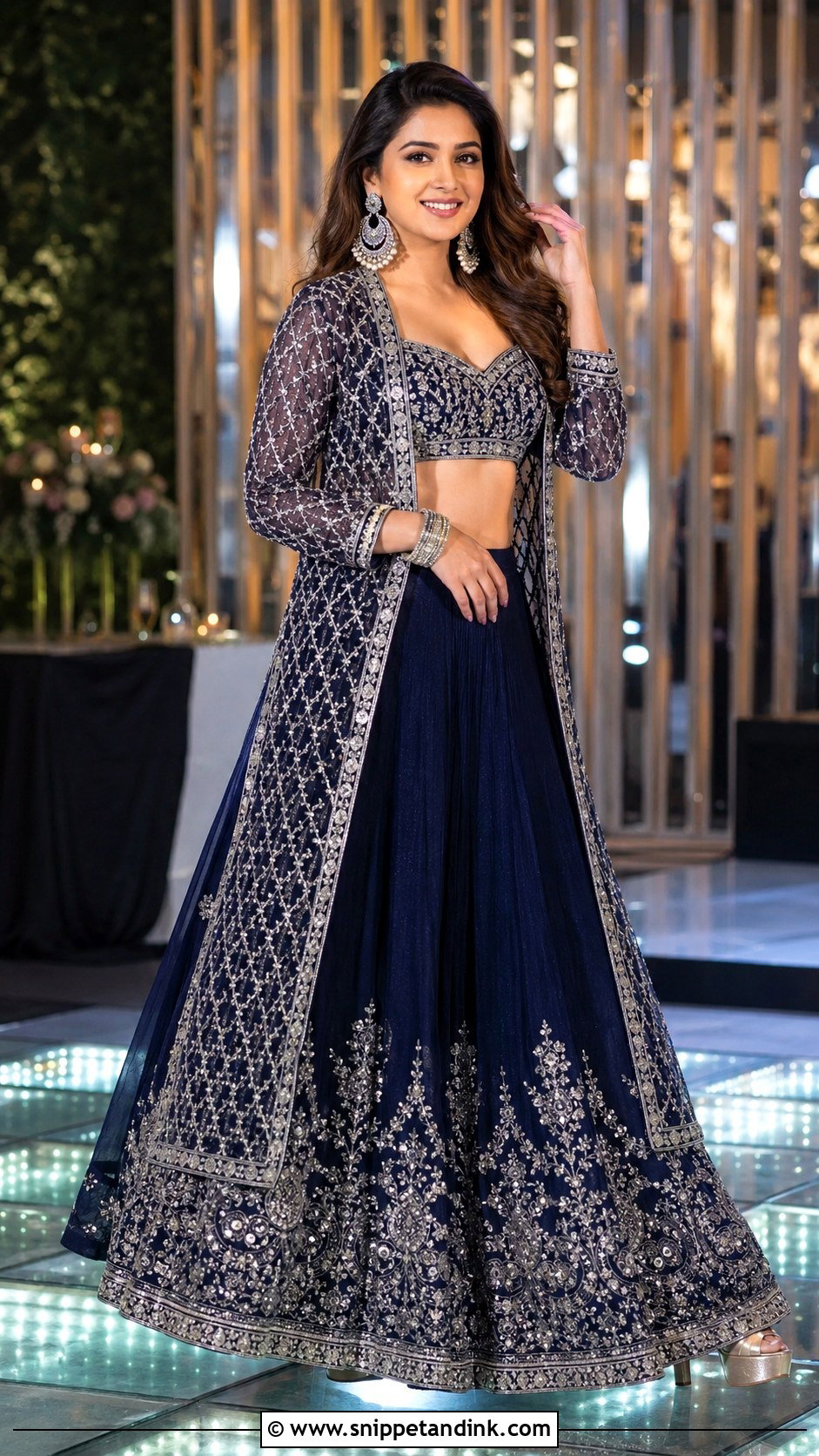
A long embroidered jacket over a lehenga gives coverage and dramatic movement during a sangeet performance. Side slits in the jacket let the skirt show while you dance. Black with gold, navy with silver or fuchsia with antique embroidery look striking under lights. You can skip the dupatta entirely. Keep the skirt lighter than the jacket so the total weight stays manageable. Tailor the sleeves and shoulders; an oversized jacket hides your shape in photos.
12. Velvet Lehenga Outfit for Winter Wedding
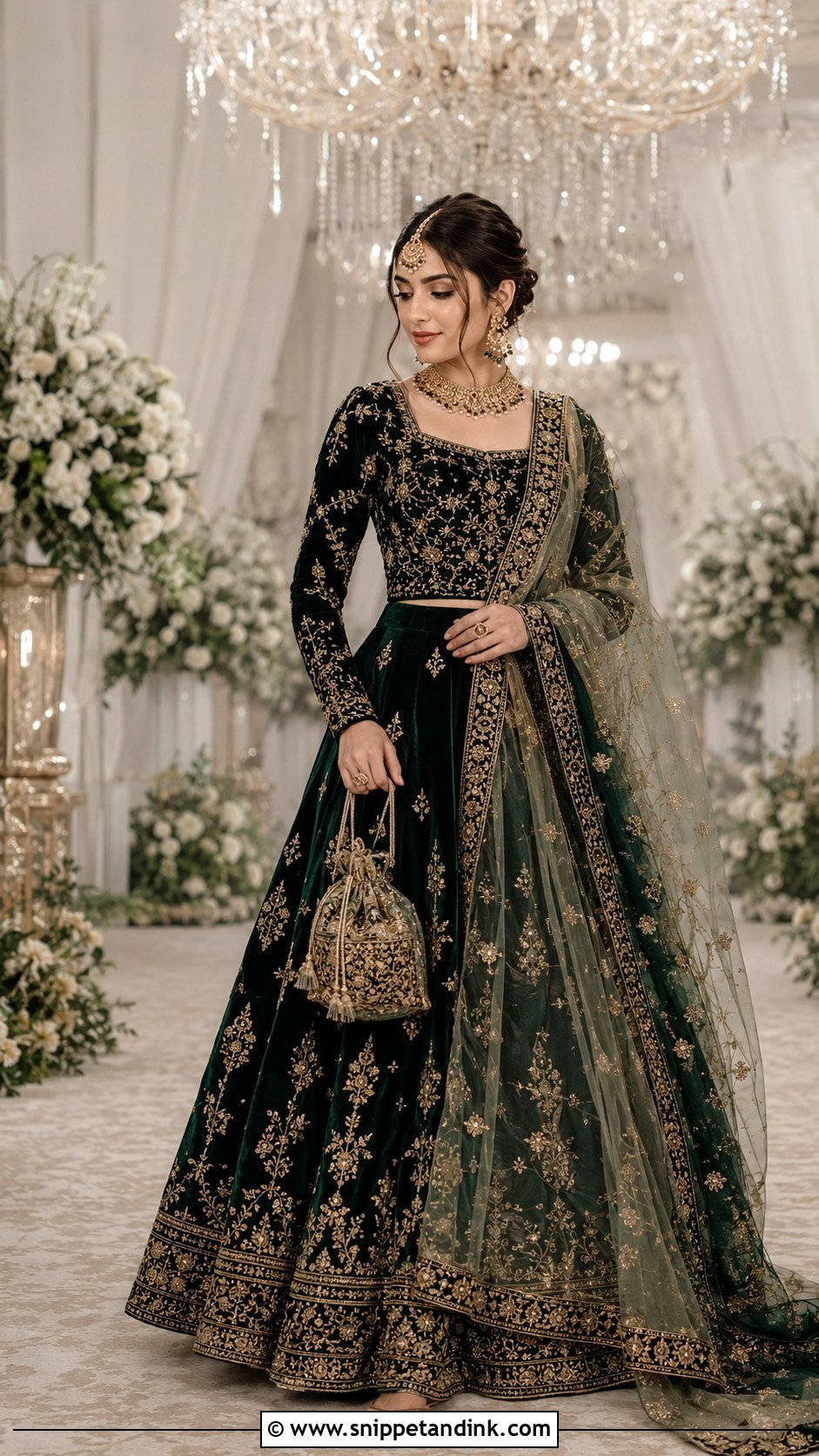
I’d only put a sister in velvet for a cold evening. Maroon, forest green, navy or aubergine velvet makes a rich winter lehenga, with a structured blouse in three-quarter or full sleeves. A light net or organza dupatta stops it feeling heavy. Keep embroidery to the waist, neckline or border; velvet has enough presence already. If the ceremony is outdoors in winter, a slim thermal layer under the skirt is invisible and makes a real difference.
13. Organza Saree Outfit for Day Wedding
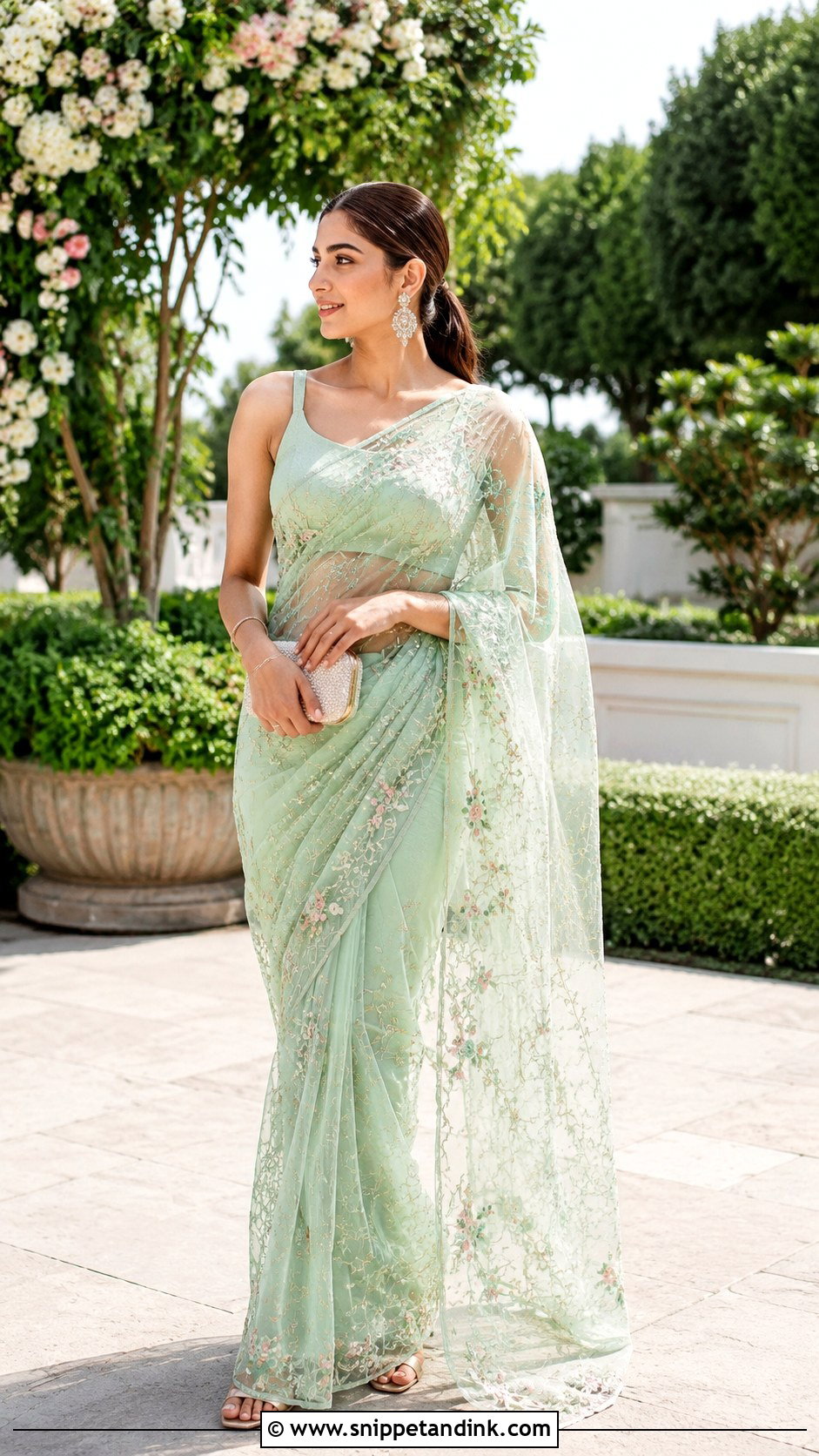
Organza sarees suit sunlit daytime ceremonies. Mint, peach, lilac, sky blue and soft yellow look fresh in daylight. Delicate floral embroidery or a narrow border keeps it light. Organza puffs out, so keep the pleats crisp and flat and position the pallu carefully. A fitted blouse balances the volume. Pearl earrings, slim bangles and low heels finish it. Fresh makeup and a muted lip suit the setting.
14. Chikankari Lehenga Outfit for Mehendi
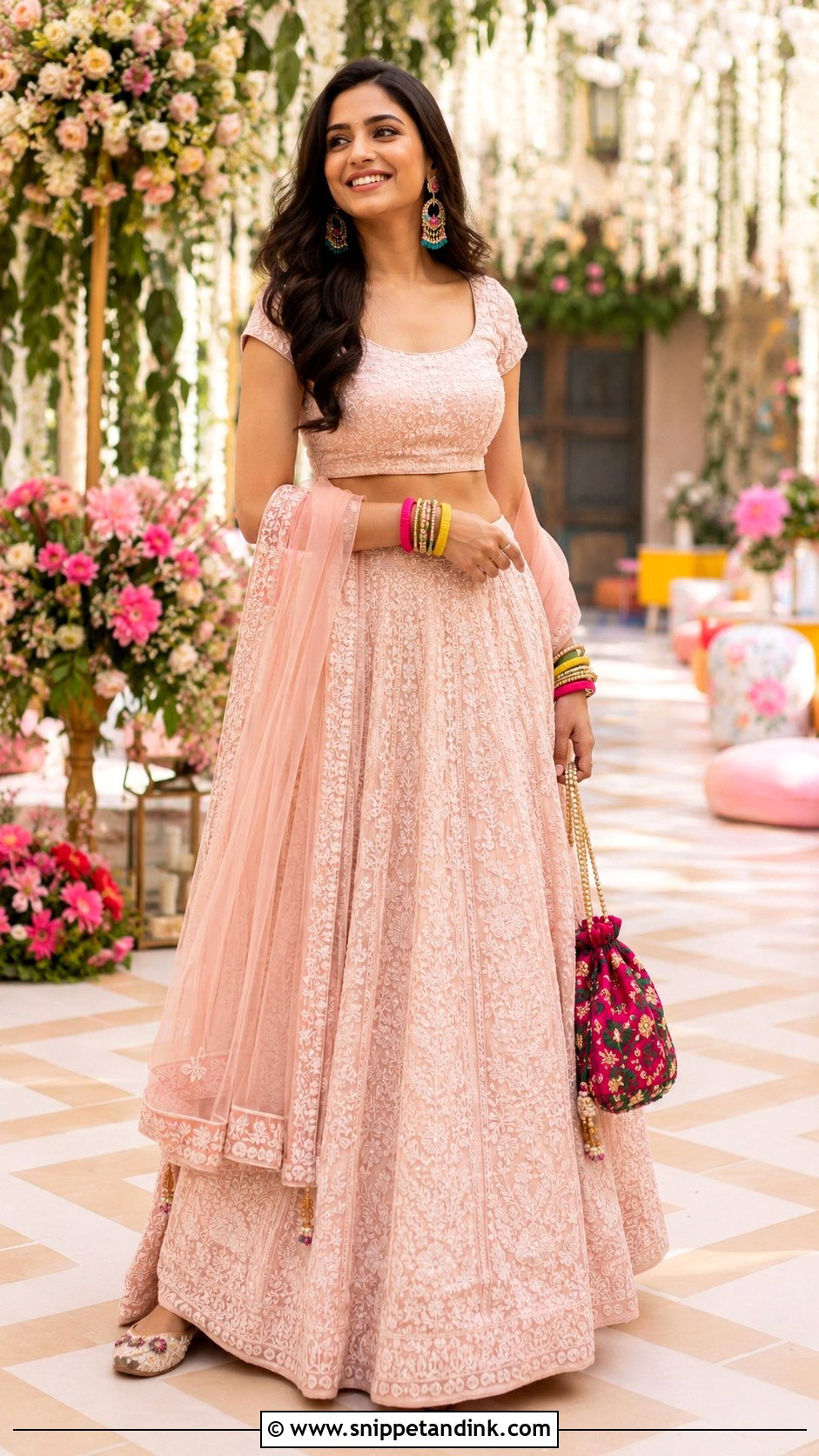
Chikankari is fine white-thread embroidery, and on ivory it can look bridal from across a room. That’s the one risk I flag for a sister. Bring in colour with multicoloured earrings, bright bangles or a contrasting bag. Blush, mint, pale yellow and powder blue avoid the problem altogether. Breathable cotton, georgette or organza suit an outdoor mehendi. A loose braid keeps hair off your neck while you help your sister.
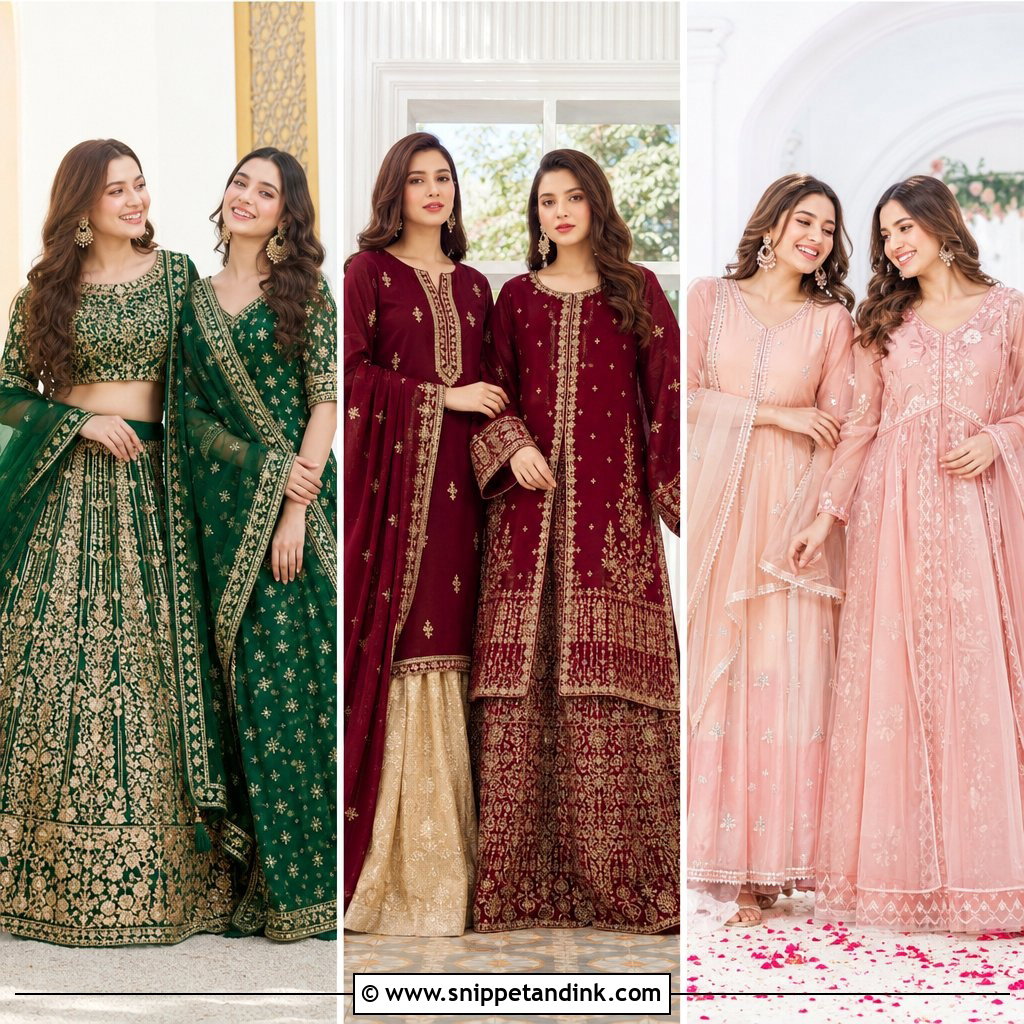
15. Bandhani Saree Outfit for Pooja
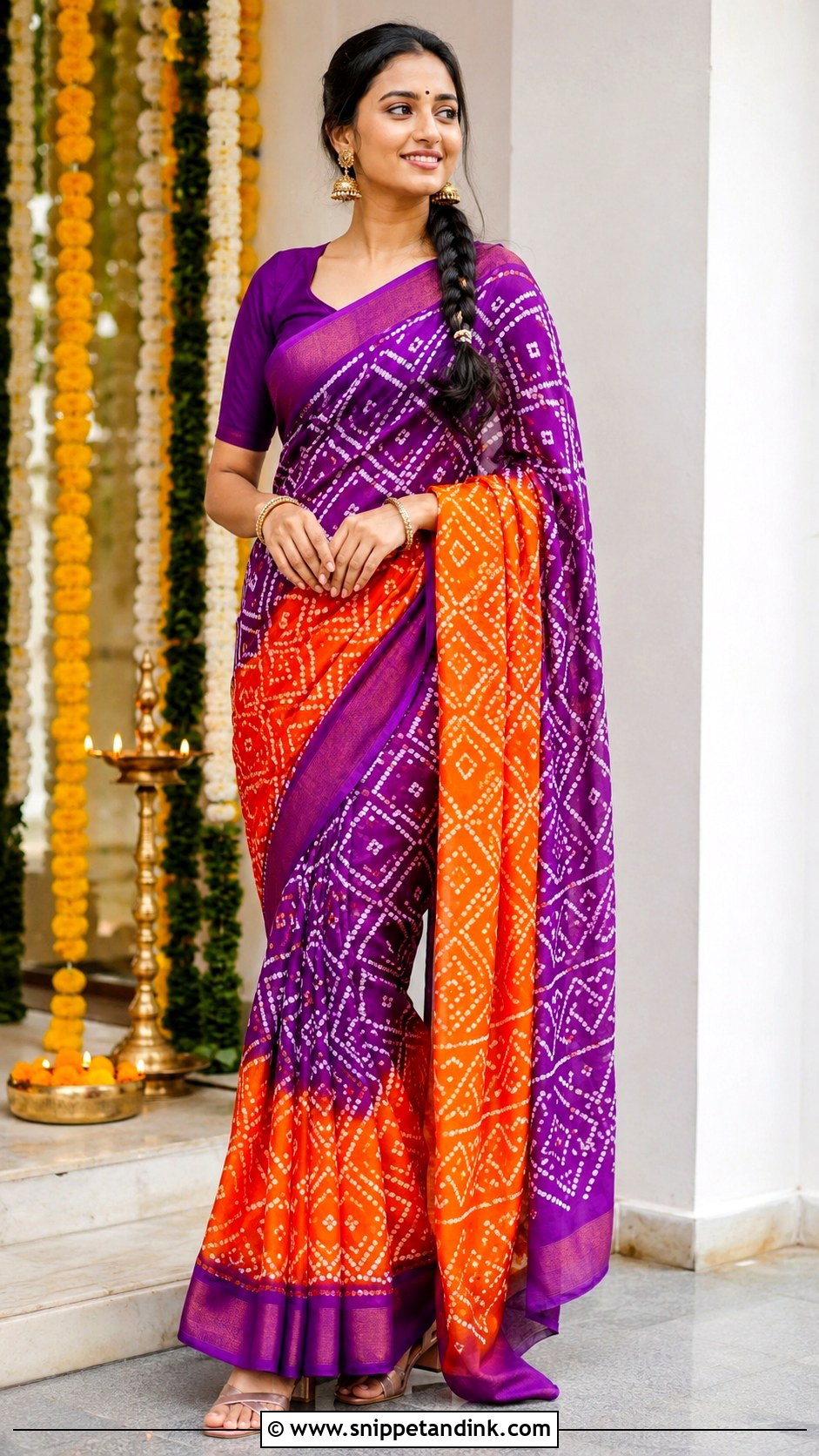
For a family pooja, a Bandhani saree adds colour and tradition. Red and green are classic, but purple, orange, pink, teal and yellow combinations feel festive too. Pair it with a plain silk blouse that picks up one shade from the pattern; that gives the eye somewhere to rest. Gold jhumkas and a bindi suit the mood. Pin the pallu securely, as poojas often involve sitting on the floor and moving around the preparations.
16. Peplum Sharara Outfit for Engagement
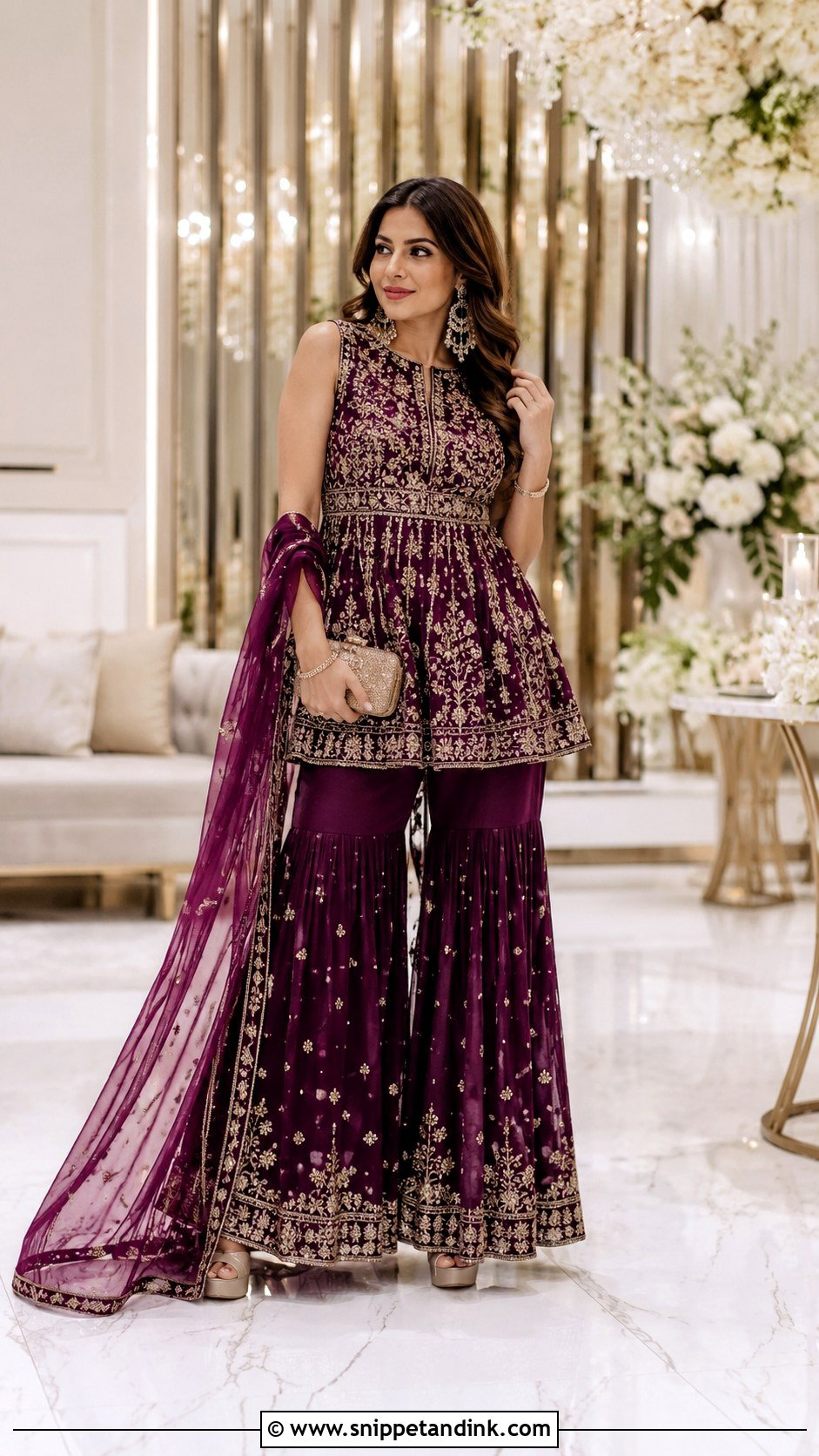
A peplum sharara is a modern engagement look. The fitted top defines the waist and the peplum flows into wide pants. Silk, crepe or georgette in jewel tones or metallics all work. Embroidery around the neckline and peplum hem can replace a necklace. Have the sharara length tailored to your shoes. A sheer dupatta over one arm is optional if the top has enough detail.
17. Dhoti Pant Kurta Outfit for Haldi
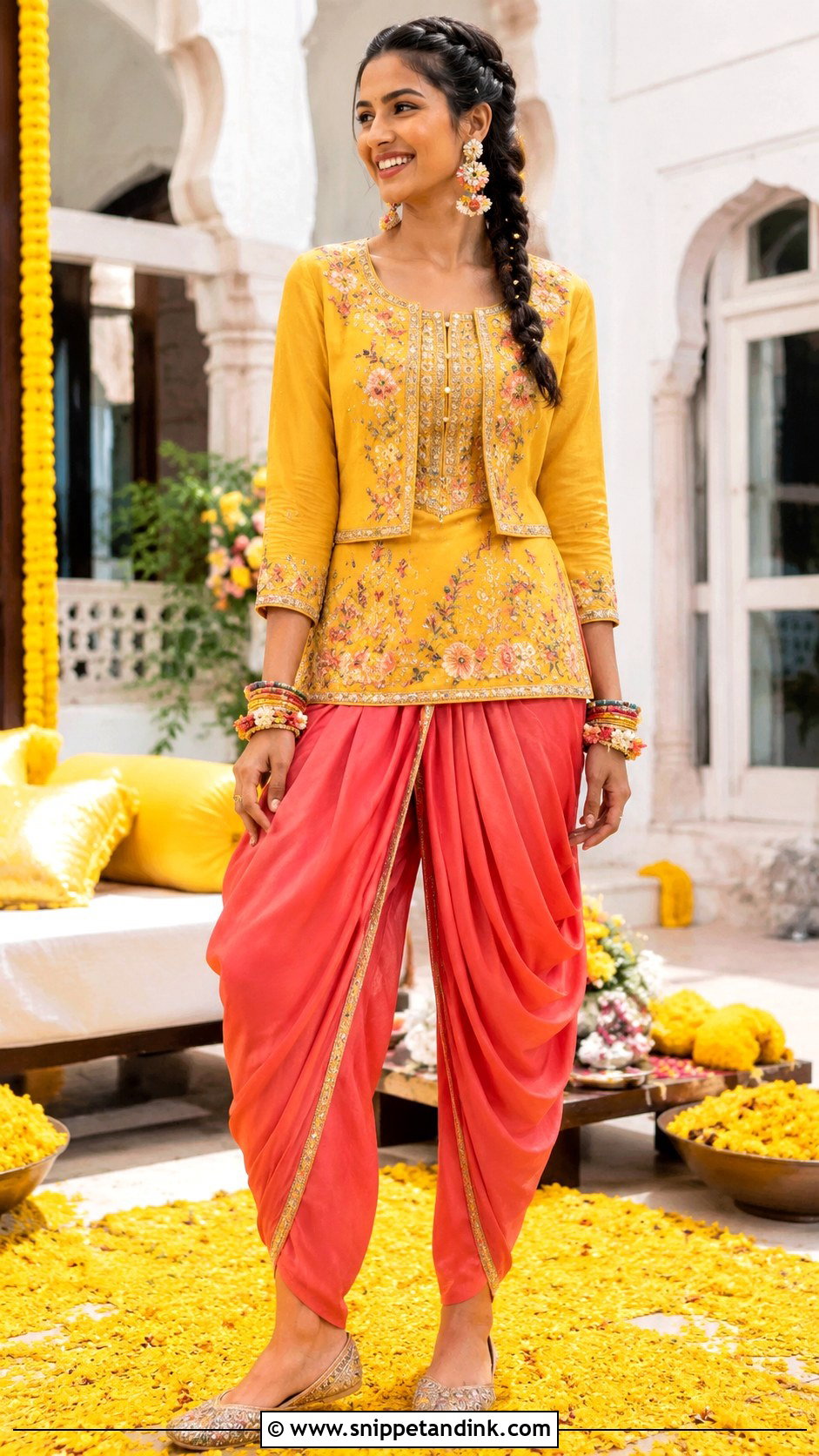
Dhoti pants and a short kurta are made for a hands-on haldi. Orange, yellow, coral or lime kurtas with matching or contrasting pants let you sit, walk and help with preparations freely. A cropped embroidered jacket adds a layer without restricting your arms. Skip long loose dupattas; they trail into the paste. A narrow scarf secured at the shoulder works if you want one. Check that the dhoti pants don’t pool around the ankles.
18. Silk Skirt and Crop Top Outfit for Pooja
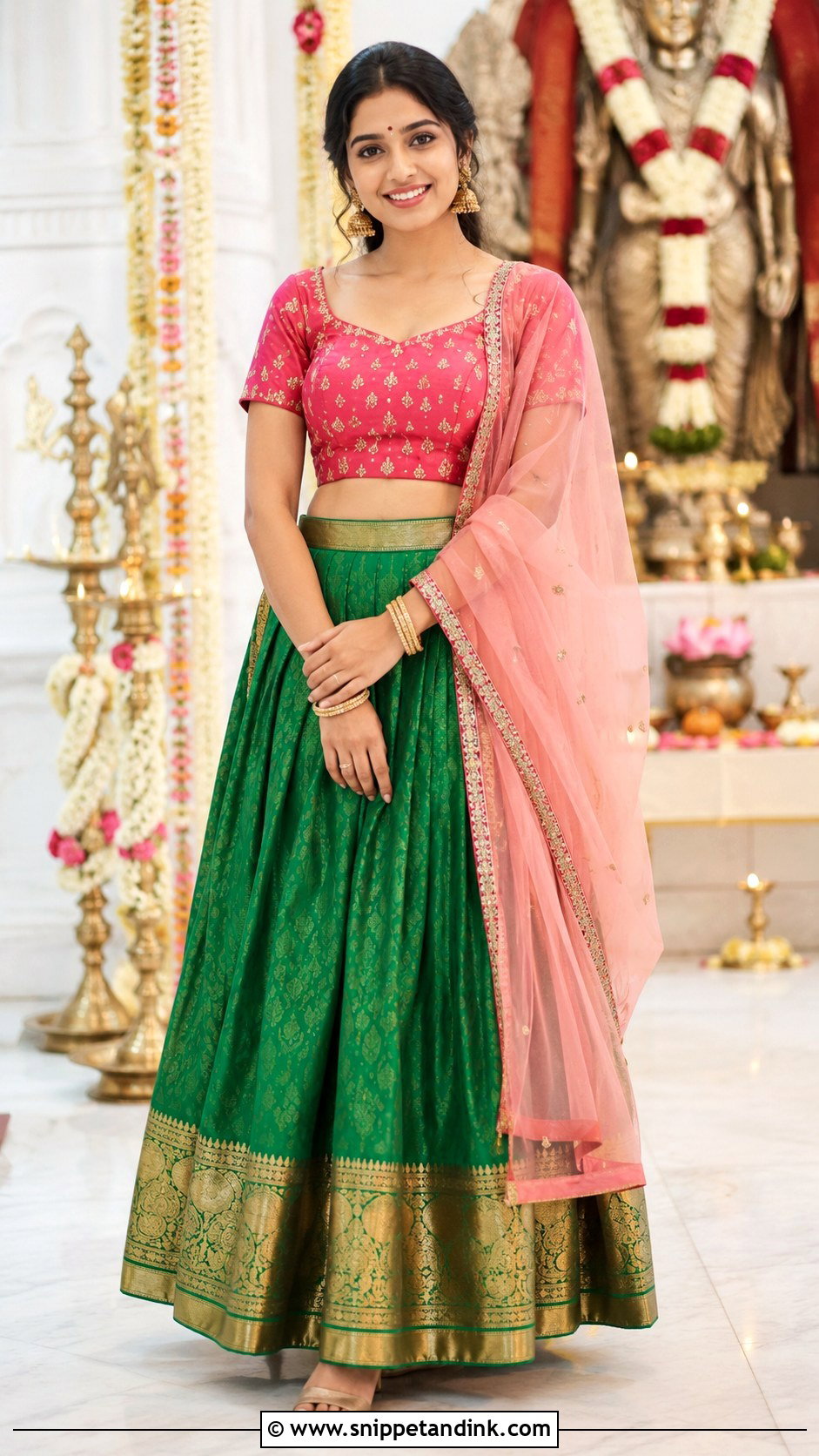
For a pooja or intimate pre-wedding gathering, a silk skirt and crop top set feels youthful and traditional at once. Choose a woven skirt with a broad border and a fitted blouse in a coordinating shade. Add a lightweight dupatta across one shoulder for a more traditional look. Green with pink, mustard with maroon and blue with gold are dependable pairings. Keep the skirt hem just above the floor. A longer blouse or waist-length jacket adds coverage if needed.
19. Sequin Saree Outfit for Reception
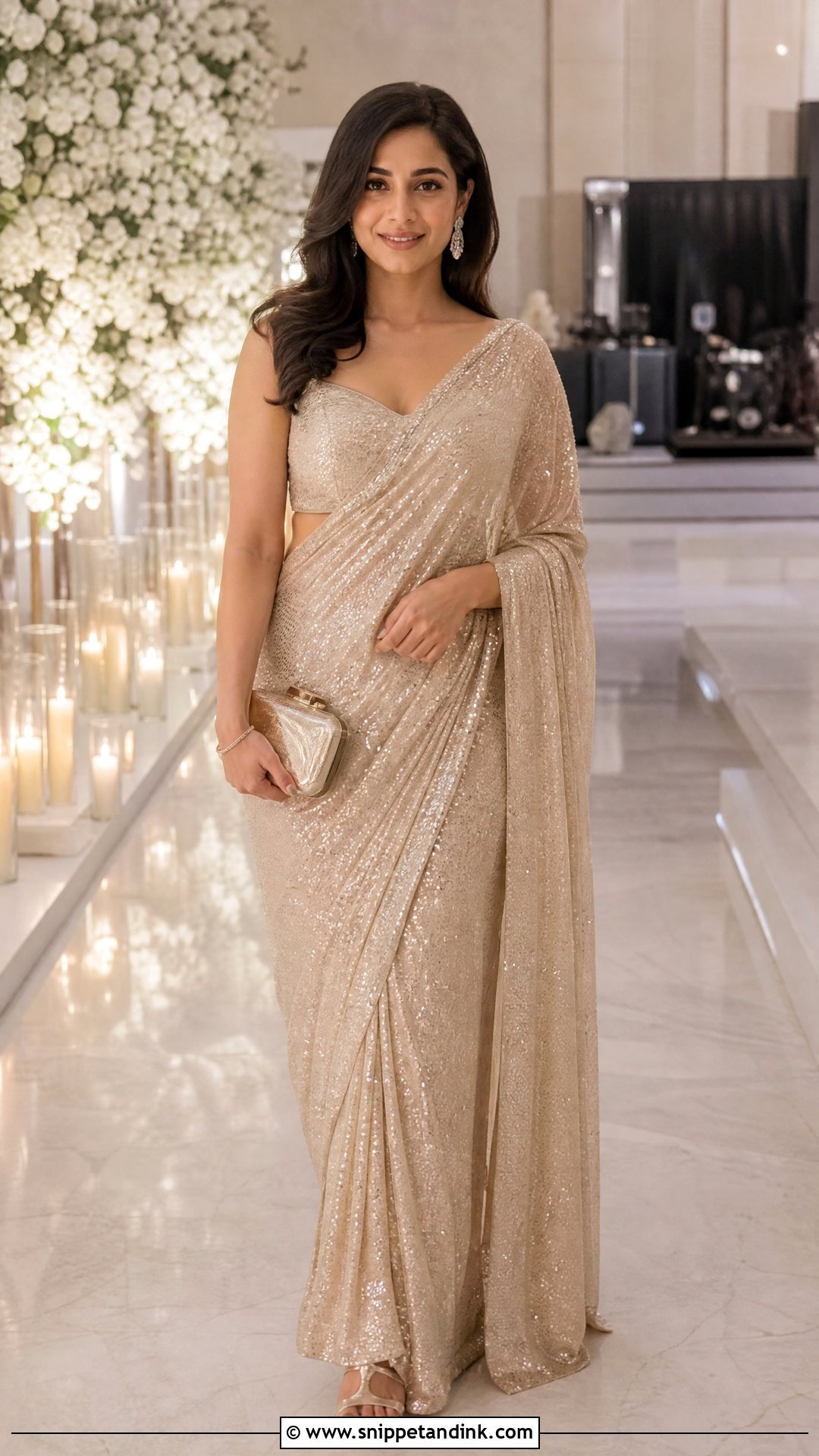
A sequin saree gives reception sparkle without the weight of a heavy lehenga, which matters if you’ve been on your feet since morning. Fluid georgette or net in champagne, silver, rose gold, navy or deep green drapes cleanly. A matching blouse makes one long line. Skip big necklaces when both pieces sparkle. Sequins can scratch at the underarm, so I check the blouse lining at the fitting. Pick one makeup feature, eyes or lips.
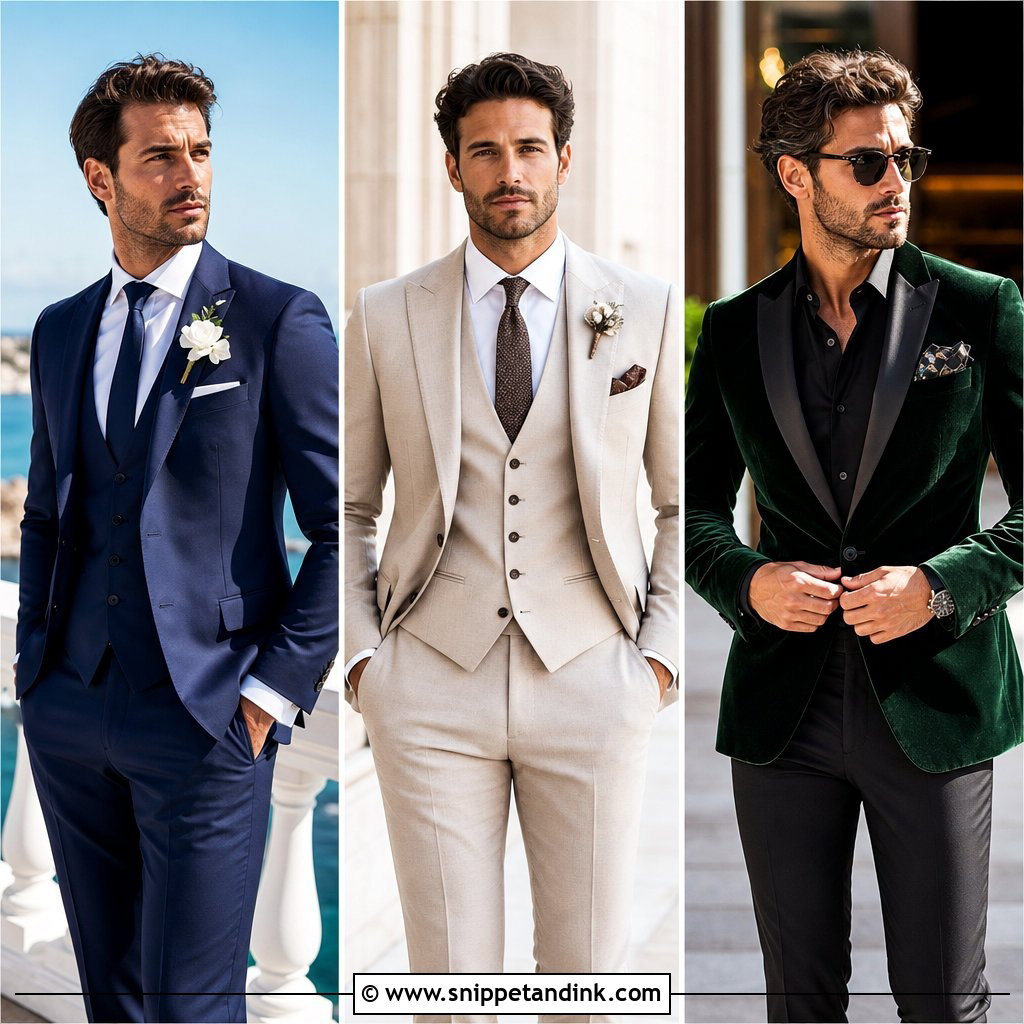
20. Brocade Pantsuit Outfit for Reception
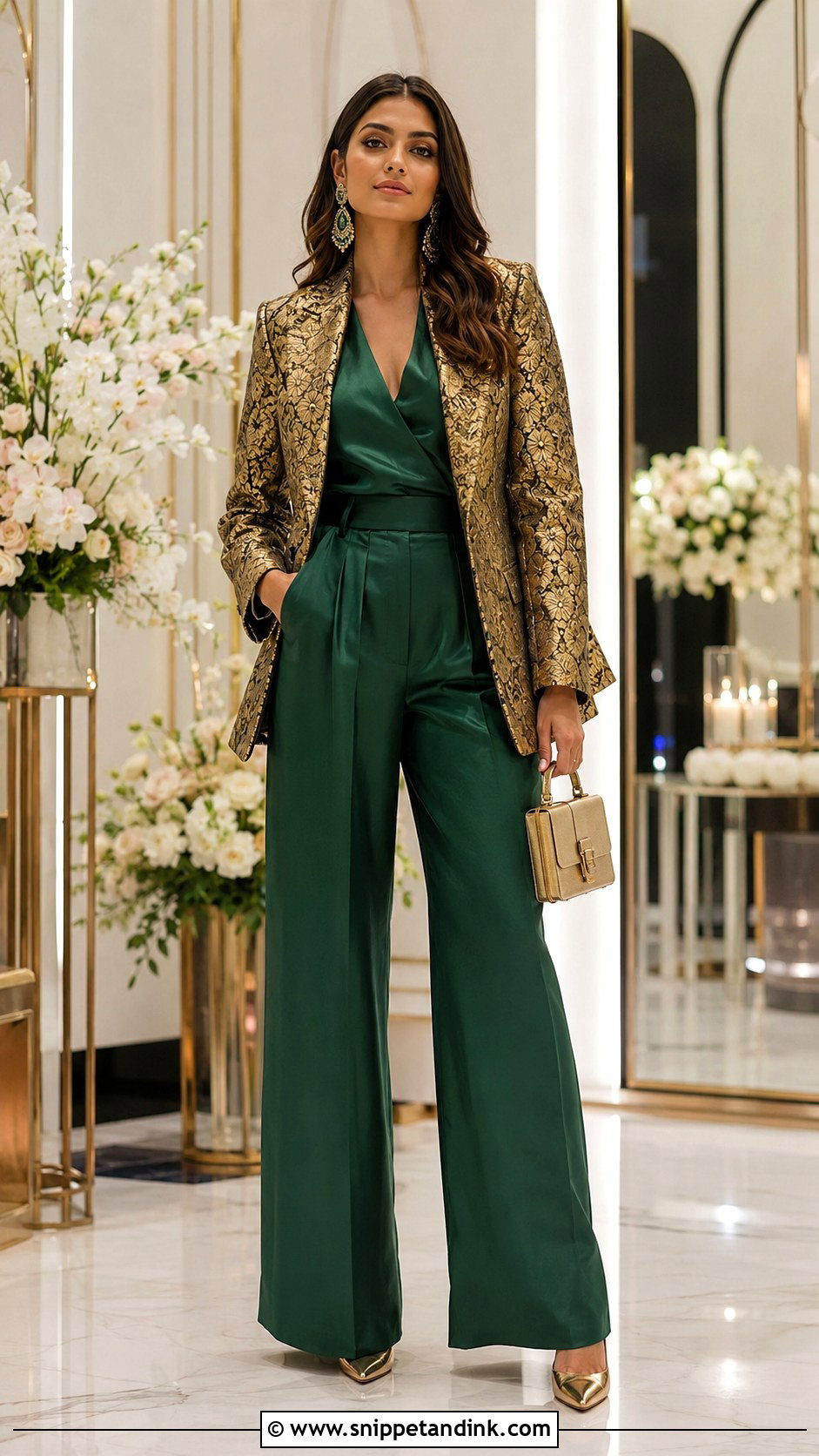
A brocade pantsuit is a confident choice for a sister who’d rather not wear a skirt to the reception. Straight or wide-leg trousers with a bustier, blouse or silk camisole, and a tailored brocade blazer on top bring in traditional texture. Emerald, black, plum, navy and antique gold suit evening. Brocade is stiff, so the blazer has to fit closely at the shoulders and waist or it looks boxy. Button it or choose a high-neck blouse for more coverage.
How Your Outfit Sits Next to Hers in Photos
You’ll be in a lot of pictures beside the bride, so plan with her outfit in mind.
Ask to see her fabric
A photo or swatch of her outfit for each function helps more than a description. Two different reds side by side often clash on camera, and a sister in a near-identical shade can blend into the bride.
Pick a contrast, not a twin
Opposites on the colour wheel tend to photograph well: a pink bride with a sister in mint or teal, a red bride with a sister in emerald or royal blue. Keep your embroidery lighter than hers, so the eye still goes to the bride first.
Coordinate the sisters, if there are several
Some families like the bride’s sisters in one shade or matching fabric. If that’s the plan, agree early, because ordering several matching outfits takes longer than ordering one.
Packing One Bag Per Function
When the haldi runs late and the sangeet starts two hours later, the sister is usually the last one changing. I pack each outfit as a complete kit so nothing goes missing in the rush.
- Hang every outfit in its own garment bag and label it with the function name.
- Clip a small pouch to the hanger with that outfit’s jewellery, pins and the bra it was fitted with.
- Put the matching shoes in a separate shoe bag tied to the same hanger.
- Keep a spare blouse hook kit and a needle threaded in a neutral colour in your own handbag.
It takes half an hour the night before, and it saves you from searching for a jhumka while the dhol is already playing outside.
Your Sister Gets the Spotlight, You Get the Comfortable Shoes
That’s a fair trade. Plan each outfit around the function, venue, weather and how much you’ll be moving. Shararas and floral lehengas suit daytime rituals; silk sarees, velvet and sequinned drapes carry the ceremony and reception. Schedule fittings early and test every outfit with its shoes and jewellery. Don’t copy the bride’s colour or jewellery unless she’s asked you to coordinate. Then you can stop thinking about clothes and enjoy the days with her.
You'll Like These Ideas:



Leave a Reply