
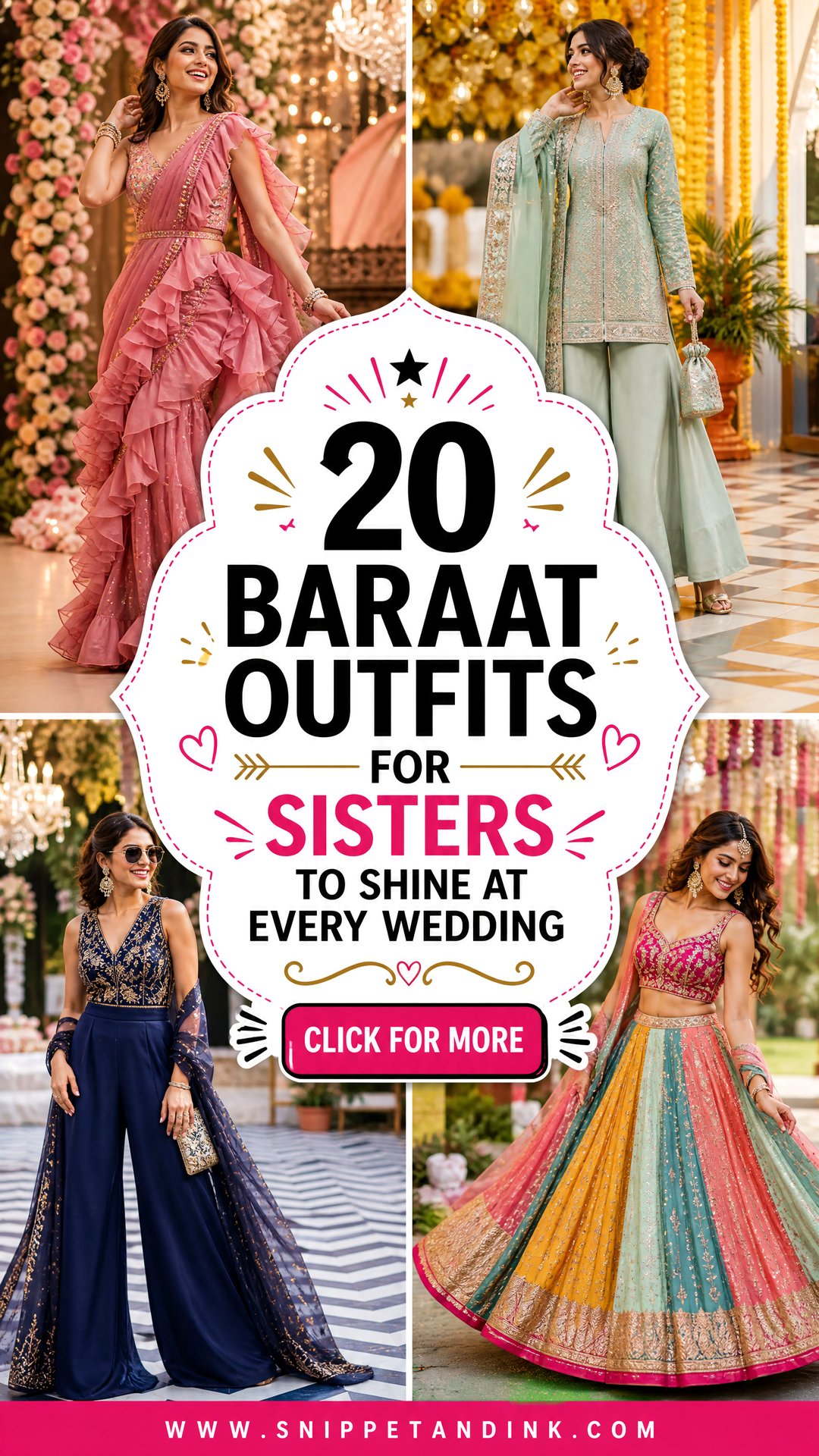
A sister at the baraat has two jobs at once. She is one of the most photographed people in the procession, and she is also the one dancing in front of the dhol, keeping the cousins together and finding someone’s lost shoe. Her outfit has to handle both without looking like the bride’s. Lehengas, sarees, shararas, Anarkalis and fusion sets all work, and the right one depends on the venue, the dress code and how much dancing is planned. When I dress a sister for a baraat, I start from movement: shoes she can stand in for hours, drapes that stay pinned, and jewelry she won’t be taking off halfway. The twenty looks below run from evening sparkle to bright daytime color.
Dress for a Street Procession, Not a Ballroom
A baraat is the groom’s procession, and it often moves along a road, a driveway or a hotel forecourt with the dhol leading and family dancing around the groom. That means uneven ground, dust, a crowd that bumps into you, and long stretches on your feet. In many families the groom’s sisters also take part in small rituals before he sets off, such as holding the mare’s reins and asking for their gift, so you may be up close to the horse as well.
What I check before a sister commits to an outfit
- Hem clearance: nothing should touch the ground once you are wearing the actual shoes. A dragging hem on a road gets torn or stepped on within minutes.
- Arm movement: raise both arms overhead and clap. If the blouse rides up or the dupatta slips, it needs more pins or a different drape.
- Weight: lift the skirt on its hanger. Anything that feels heavy there will feel twice as heavy after the procession.
- Ground: grass and gravel call for wedges, juttis or flat platforms rather than block heels.
Bride’s sisters usually receive the baraat rather than dance in it, so they can wear something more delicate. The groom’s sisters are in the thick of it and need the sturdier choices.
1. Mirror Work Lehenga Baraat Outfit
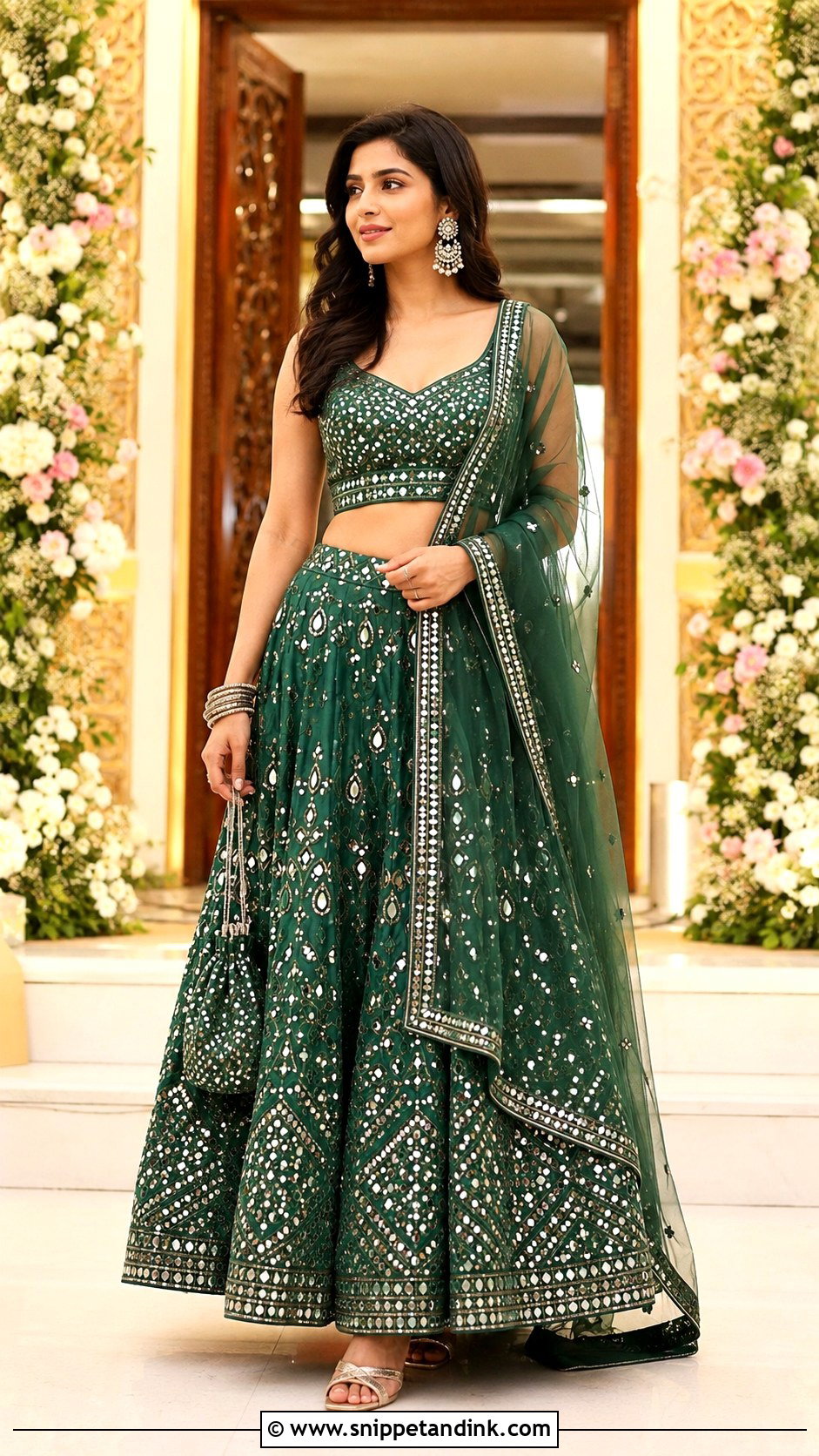
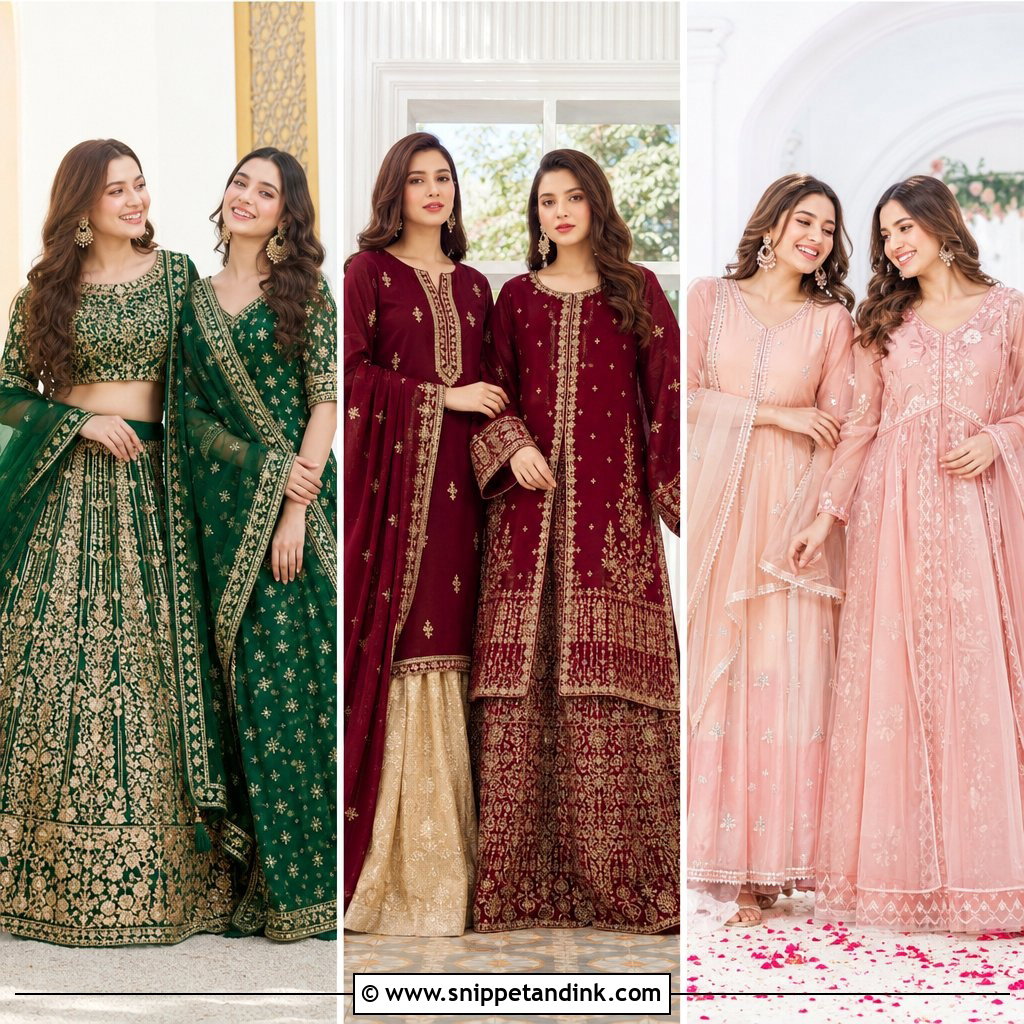
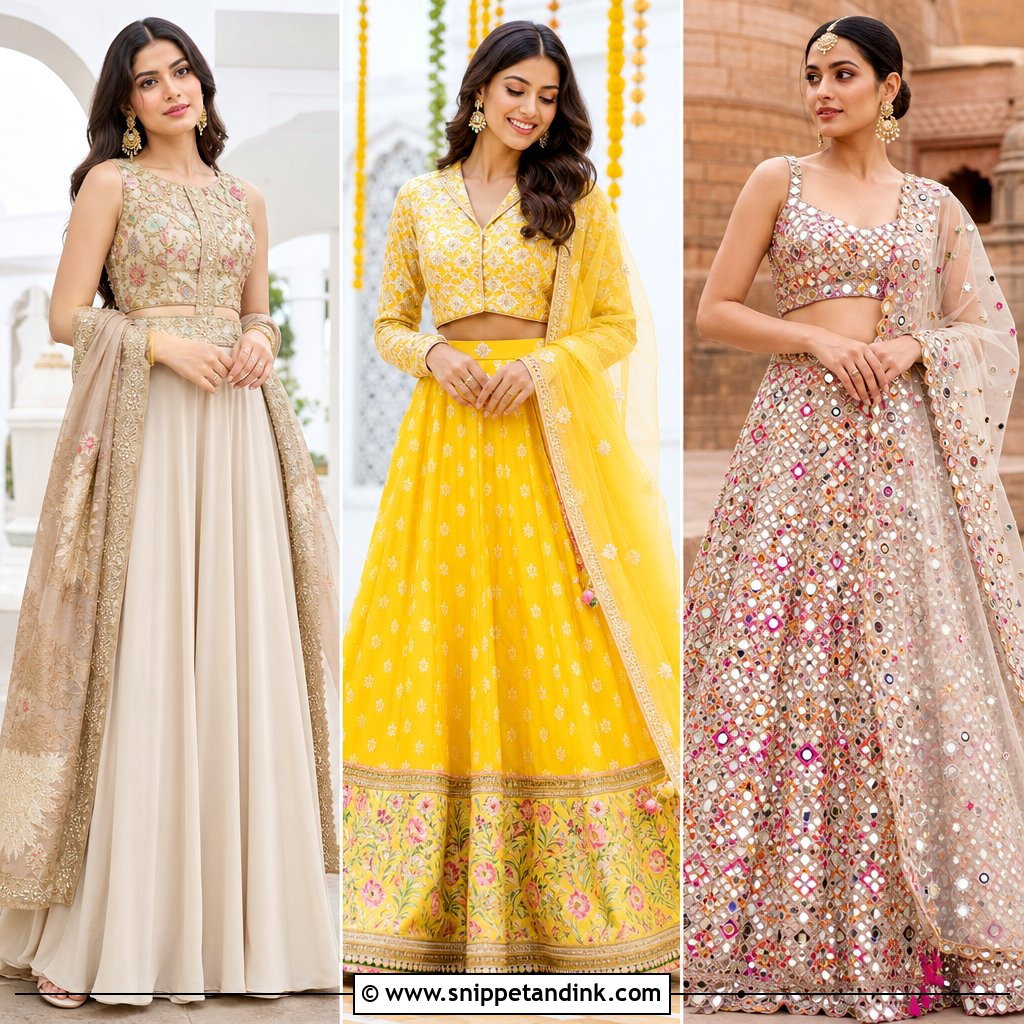
Mirror work catches every bit of light in a moving crowd, which is why it suits a baraat so well. A mirror work lehenga in emerald, royal blue or deep purple with a fitted blouse carrying balanced mirror embroidery is a strong base. Real mirror pieces have stitched edges that can snag net, so I’d pick a dupatta in georgette or a firmer net and drape it over one shoulder to keep your hands free. Block heels or embellished juttis depending on the ground, kundan earrings, slim bangles and a small potli are enough. A braided bun or soft ponytail stays put while dancing. It reads well in daylight and under evening lights.
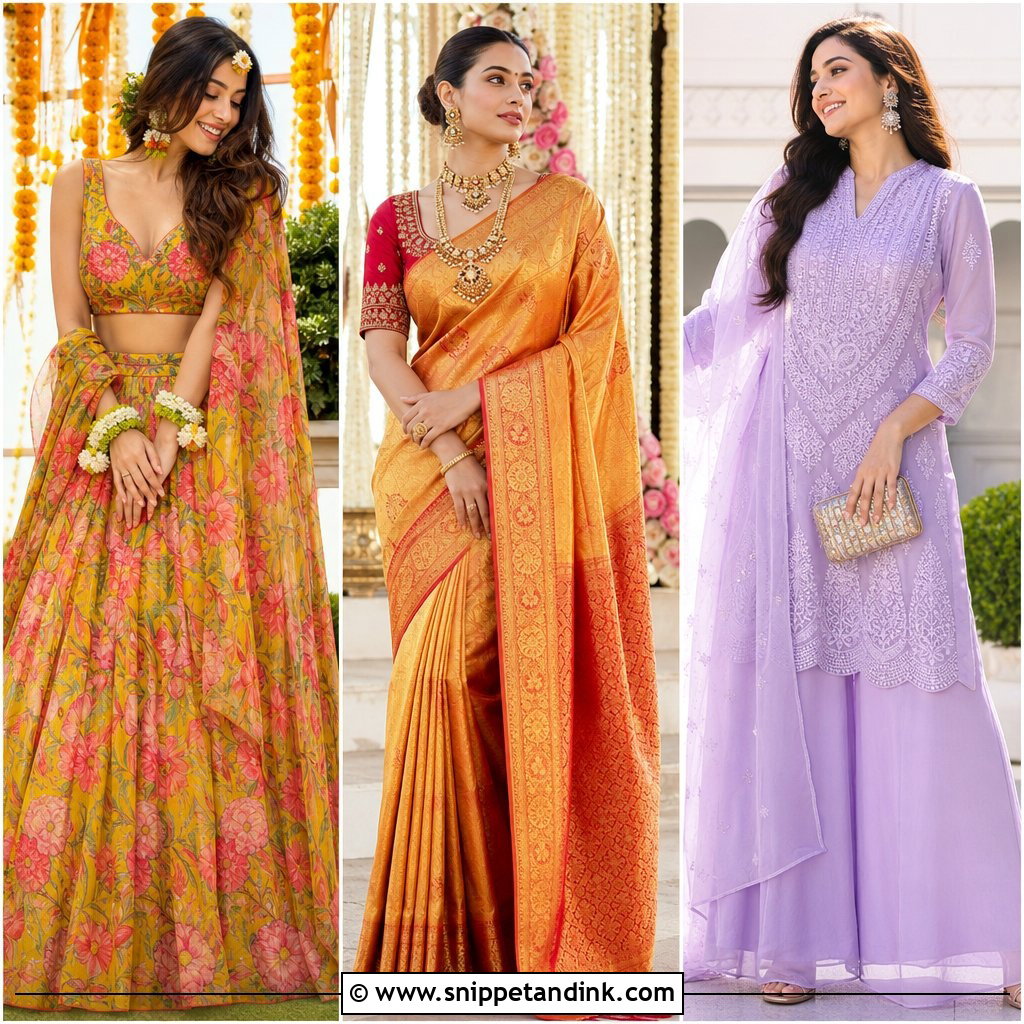
2. Banarasi Silk Saree Baraat Outfit
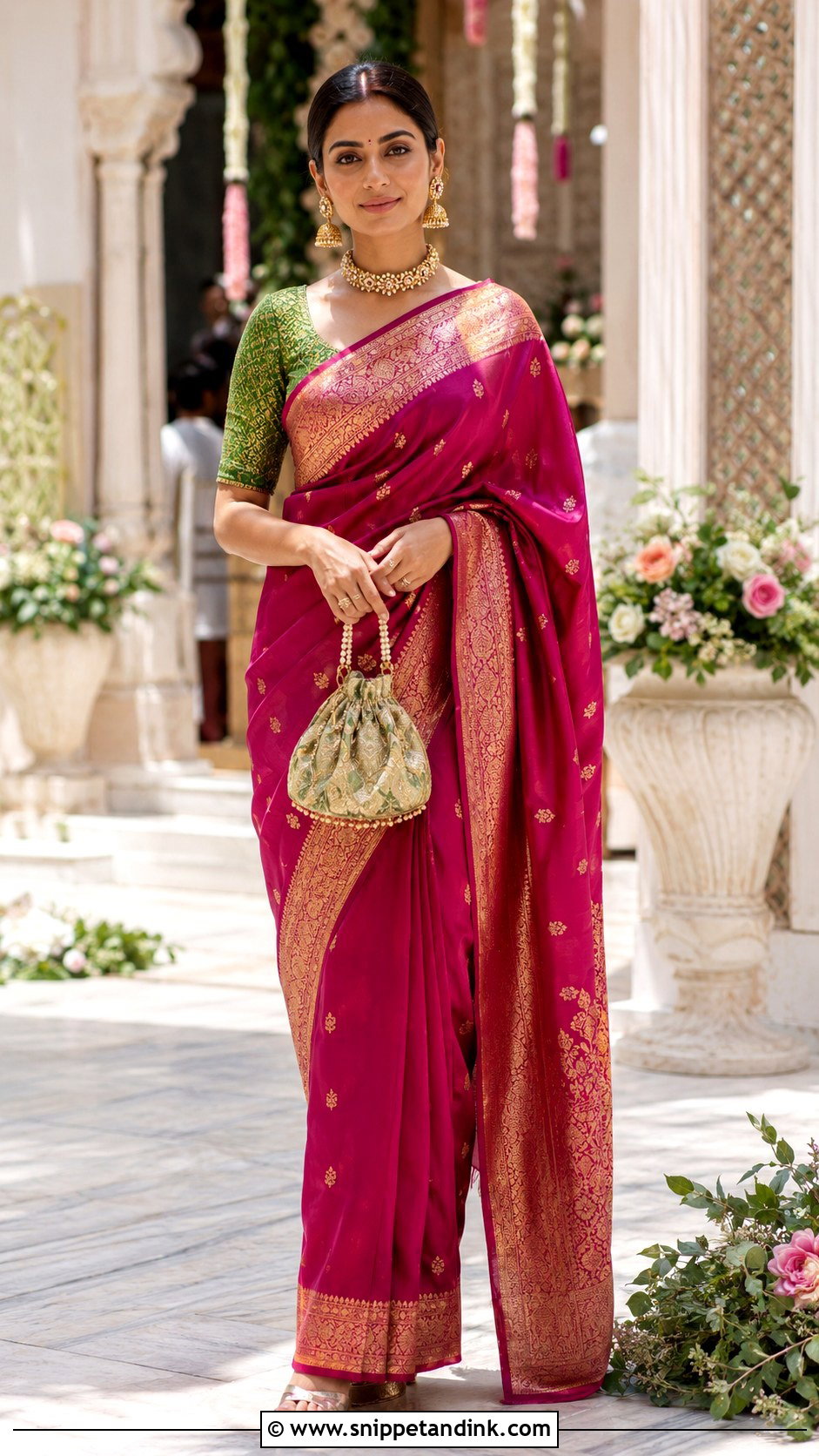
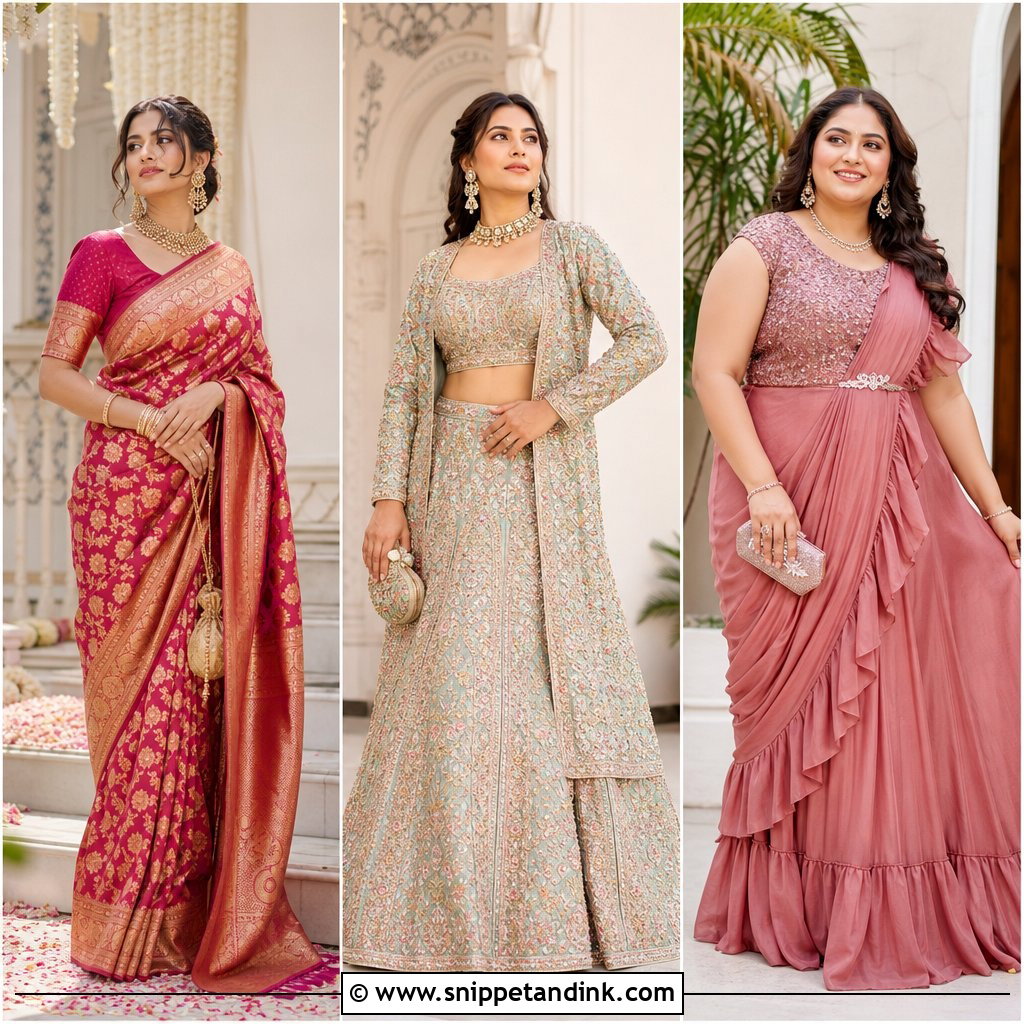
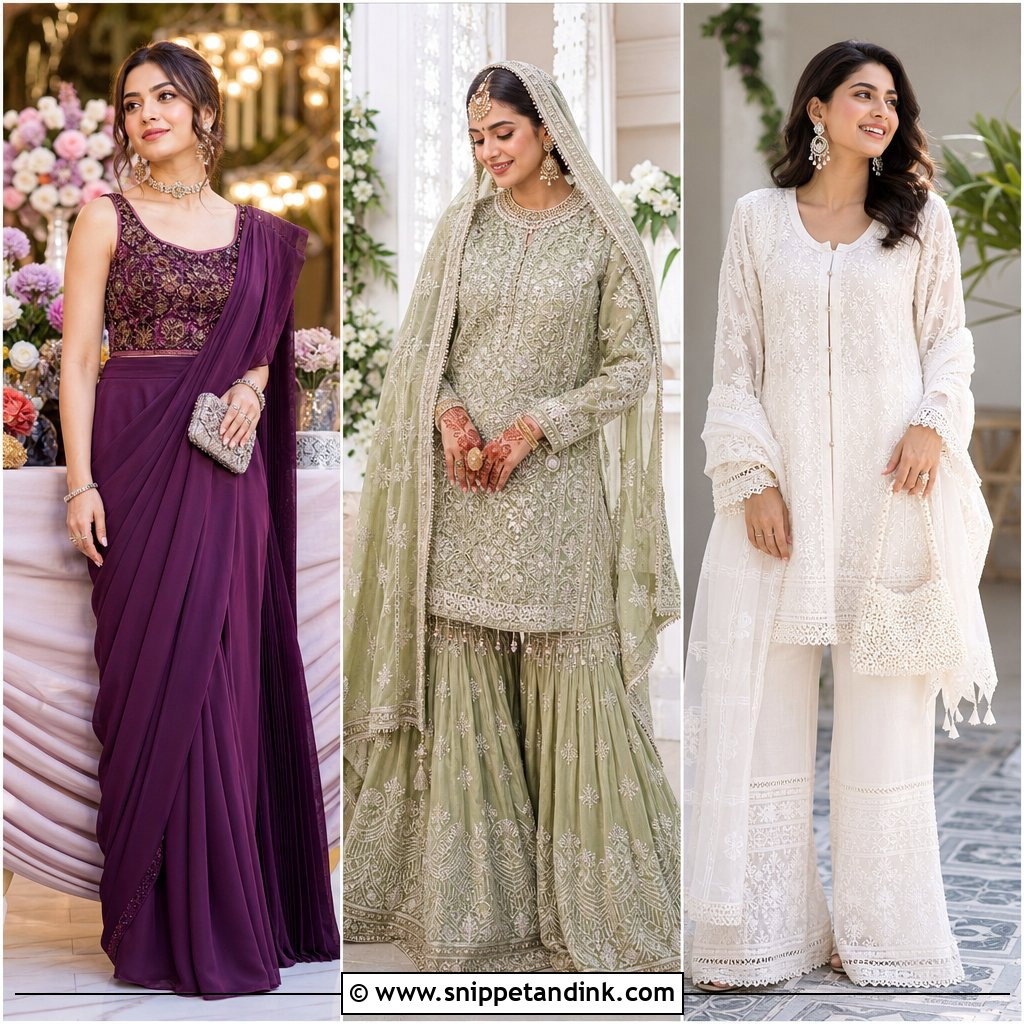
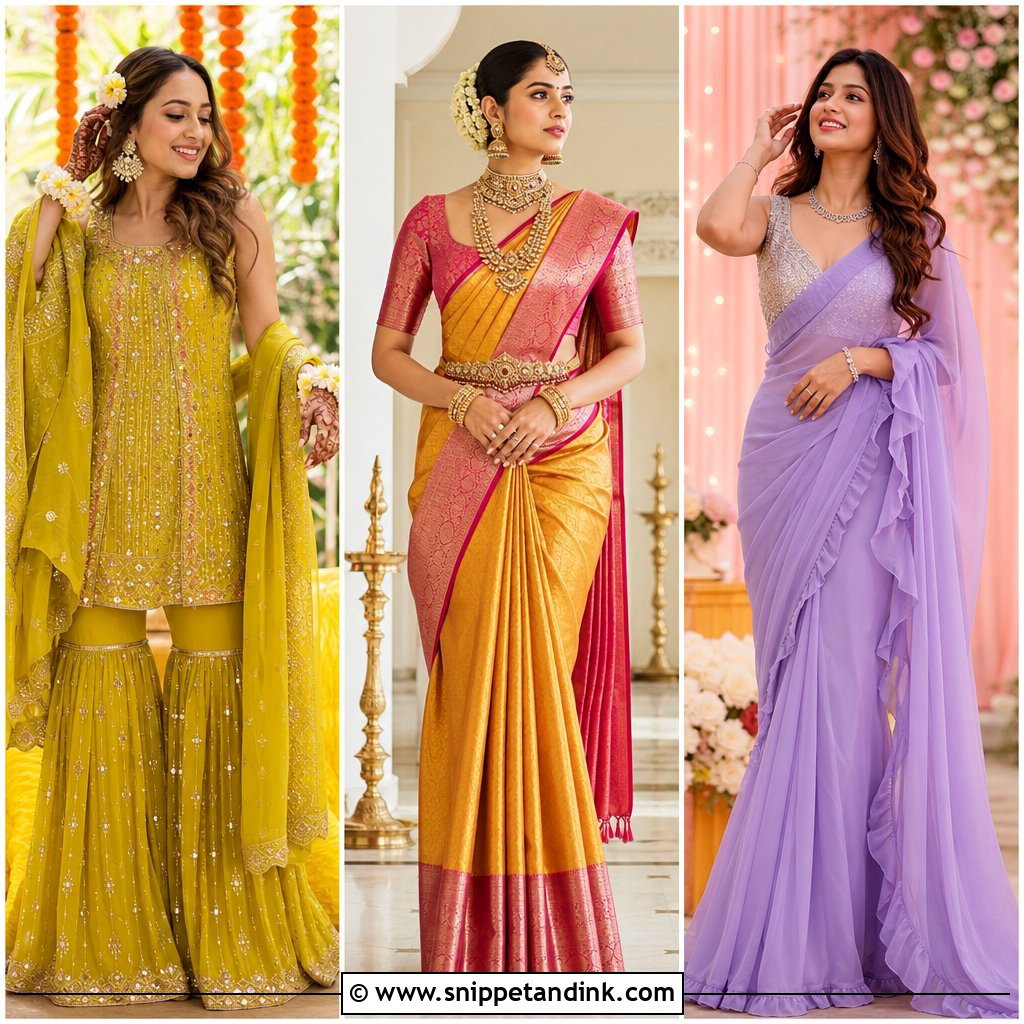
A Banarasi silk saree is the regal option, and the one I’d suggest for a sister who’ll mostly walk beside the groom rather than dance hard. Magenta, turquoise, mustard or bottle green with a contrasting zari border all stand apart from bridal red. Pair it with a fitted elbow-sleeve blouse in raw silk or brocade. Pin the pleats and keep the pallu pleated and secured at the shoulder; a loose pallu in heavy silk slips every time you lift your arms. Metallic platform sandals, a structured potli and jhumkas suit it, with a sleek flower-trimmed bun. On a heavily woven saree, swap a big necklace for a delicate choker.
3. Sequin Sharara Baraat Outfit
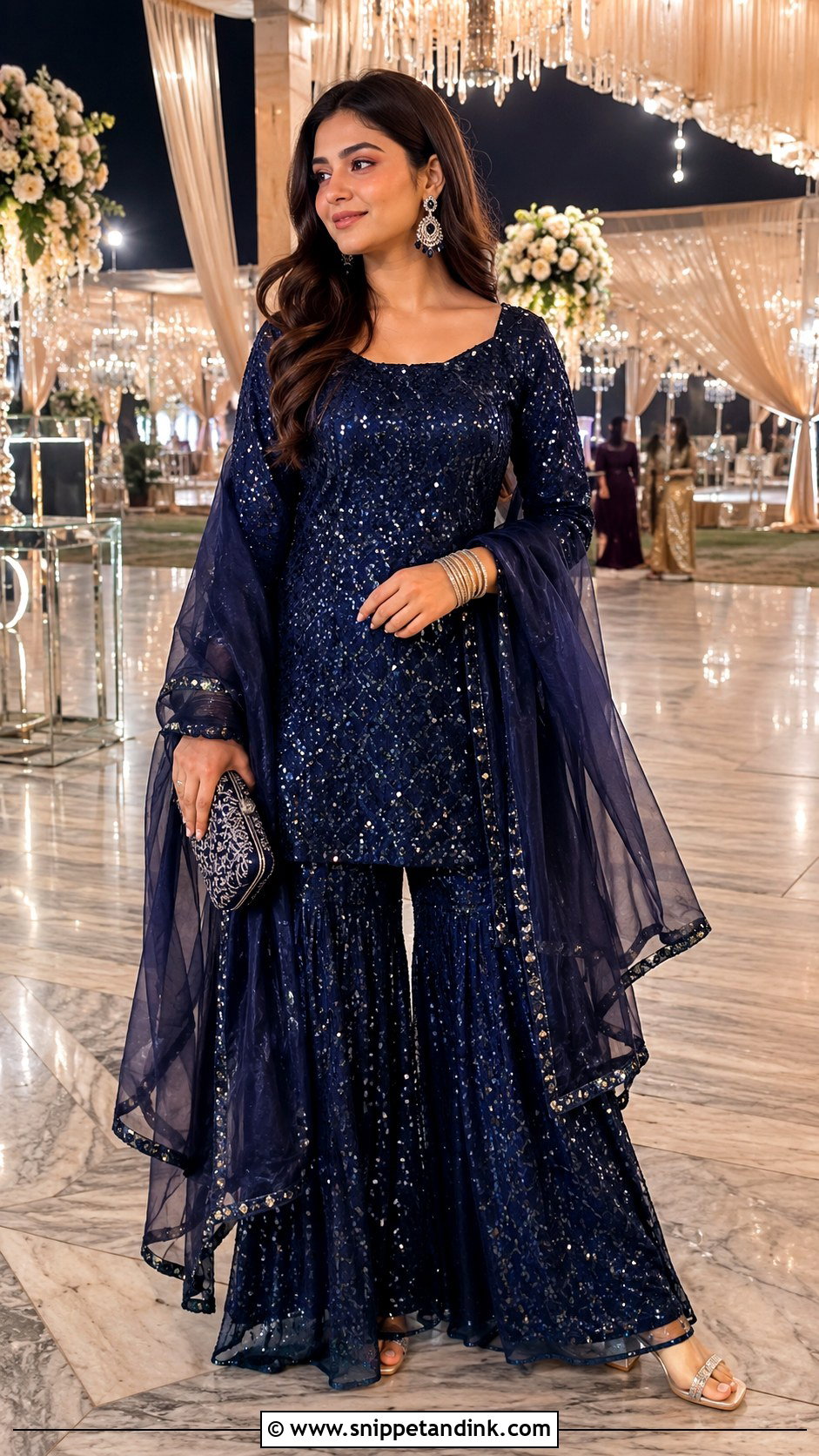
After sunset, a sequin sharara gives sparkle without the weight of a full lehenga. Wide sharara pants with a short embroidered kurti and a light organza dupatta in midnight blue, plum, charcoal silver or deep teal work well at night. Stick to one sequin tone. Sequins on the inner arm rub raw over a few hours of dancing, so check the kurti’s lining runs right to the edge of the sleeve. Stable block heels, statement earrings and a small crystal clutch complete it, with soft waves or a high ponytail. Have the hem finished above the floor so you don’t trip mid-procession.
4. Floral Lehenga Baraat Outfit
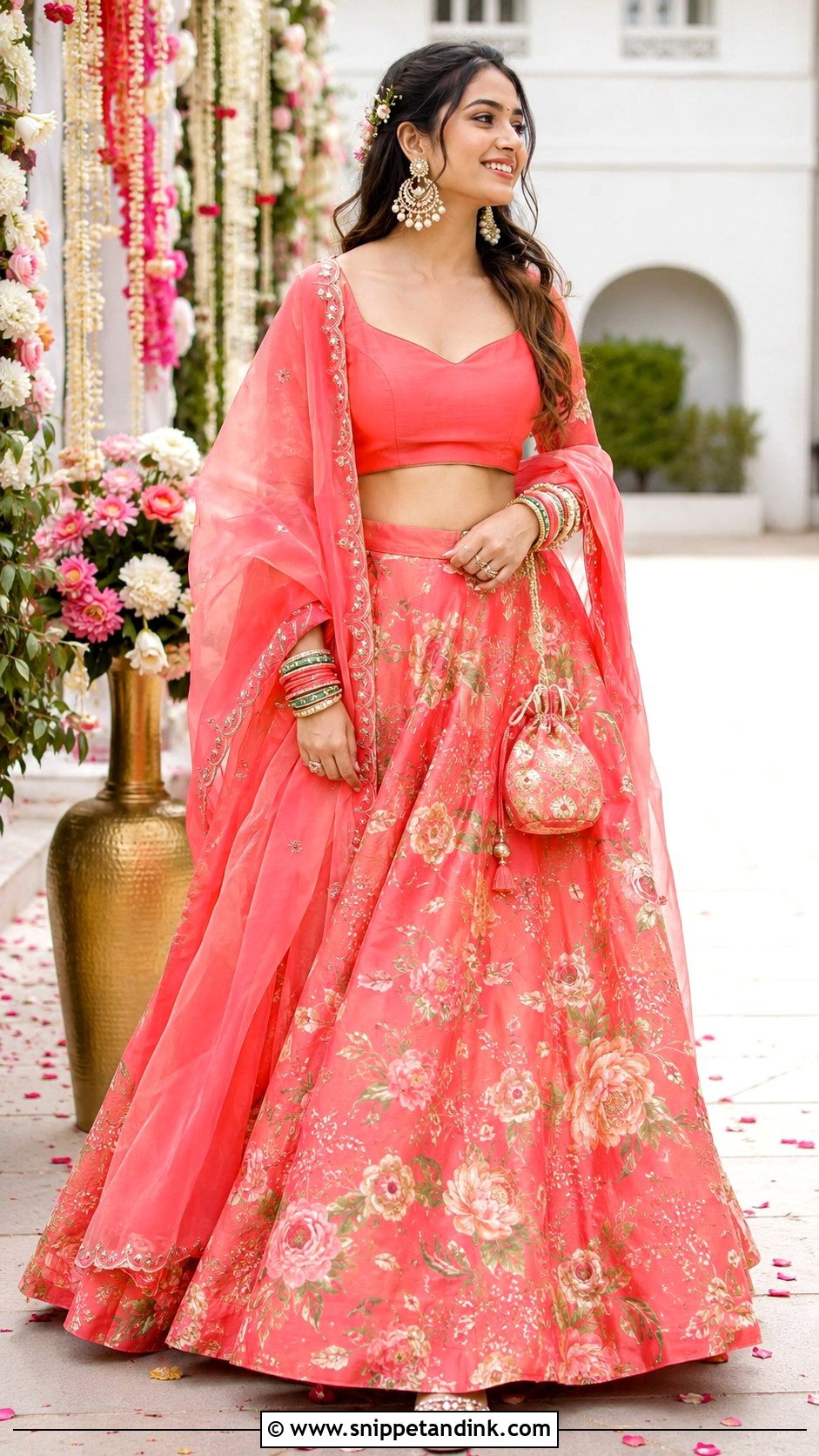
For a daytime or outdoor baraat, a floral lehenga feels fresh. A printed or embroidered skirt in coral, pink, mint or powder blue with a solid coordinating blouse lets the print lead. An organza dupatta with a narrow border keeps it light. Pearl chandbalis, colorful bangles and embroidered wedges or juttis suit it. Wedges are my pick on grass, where block heels still sink. Loose waves with a small braid keep hair off the face. Large florals and heavy jewelry fight each other, so keep one of them quiet.
5. Velvet Lehenga Baraat Outfit
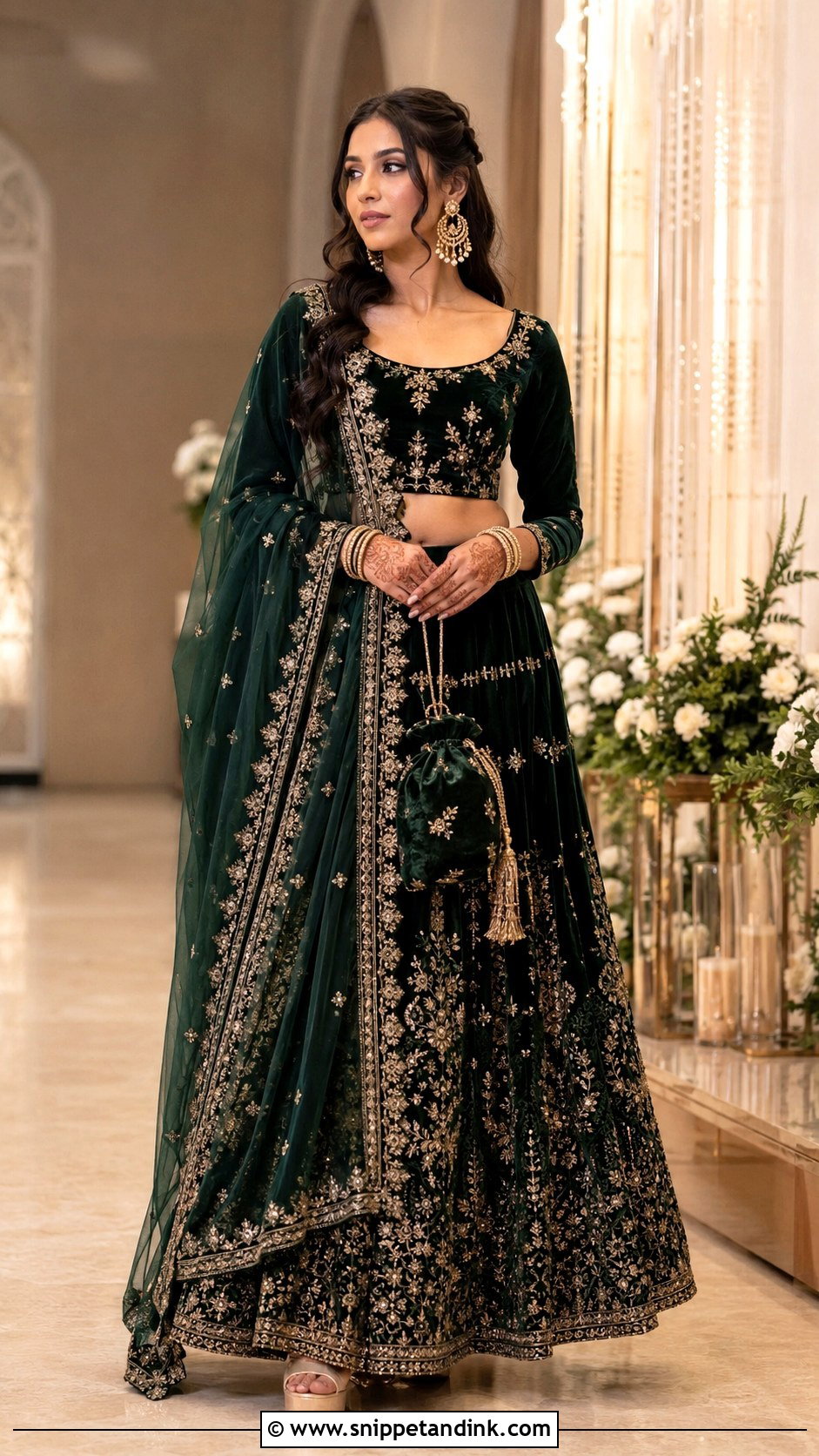
Velvet is the winter choice, and it keeps you warm for a procession that may run well into a cold evening. A deep maroon, navy, forest green or aubergine skirt with restrained zari or thread work, with a matching velvet blouse or a contrasting silk choli, is a good pairing. A sheer dupatta with a simple edge keeps the outfit from feeling heavy. Antique gold earrings, stacked bangles, a velvet potli, platform heels and a center-parted low bun suit the richness. Skip the necklace or keep it delicate. Velvet gets hot once you start dancing, so I’d choose a silk choli over a velvet one if you plan to be in front of the dhol.
6. Jacket Lehenga Baraat Outfit
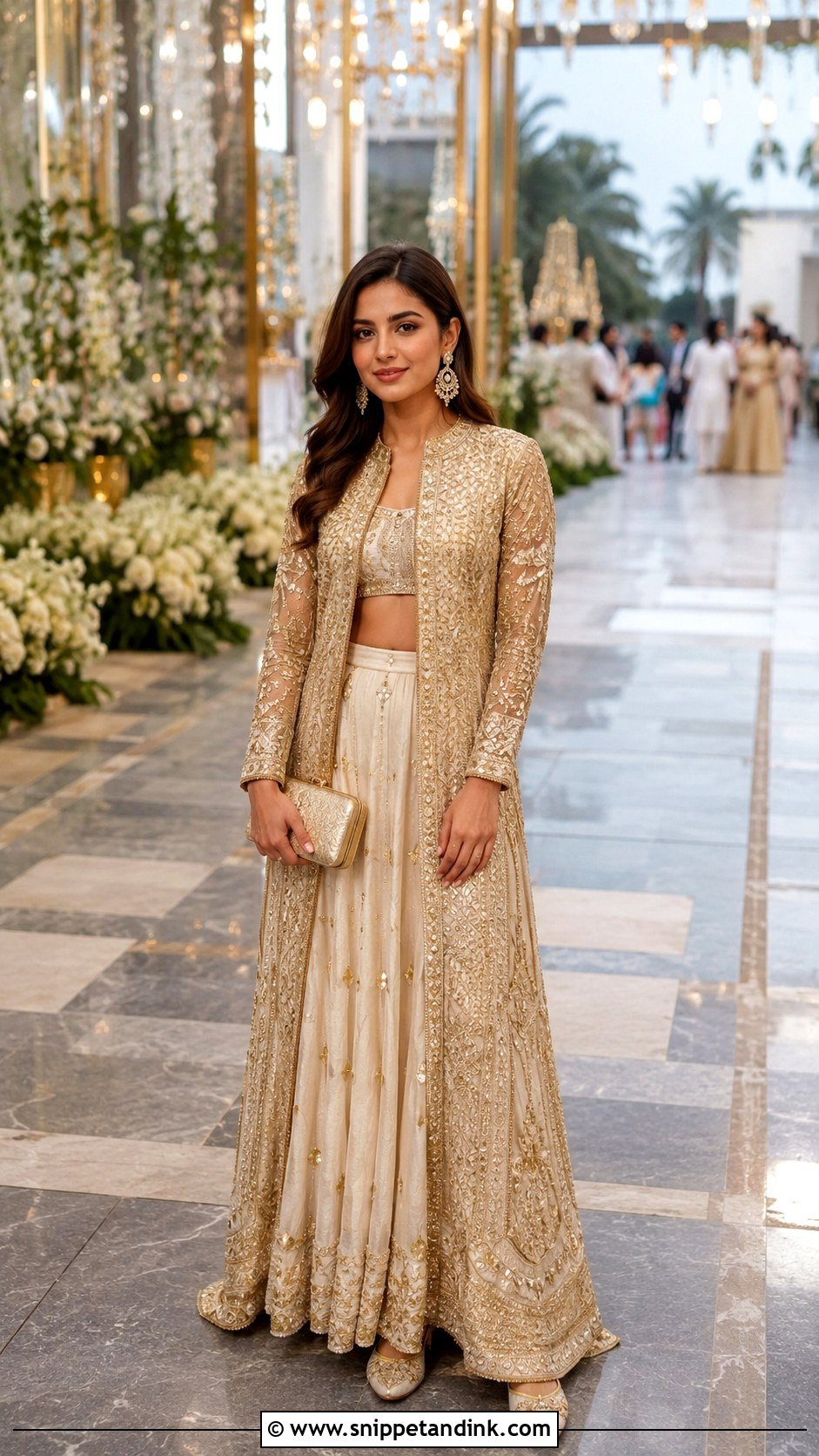
If you don’t want to manage a dupatta, a jacket lehenga solves it. A flowing solid skirt and fitted crop top under a long embroidered jacket reaching the knee or ankle give coverage and structure. Ivory and gold, navy and silver, coral and pink are easy pairings. Wear the jacket open for a long vertical line. Pointed juttis, shoulder-grazing earrings, a box clutch and a polished ponytail or loose curls complete it. A long jacket swings out when you spin, so make sure the lining is finished neatly. It’s my first suggestion for a cool outdoor baraat.
7. Pre-Draped Saree Baraat Outfit
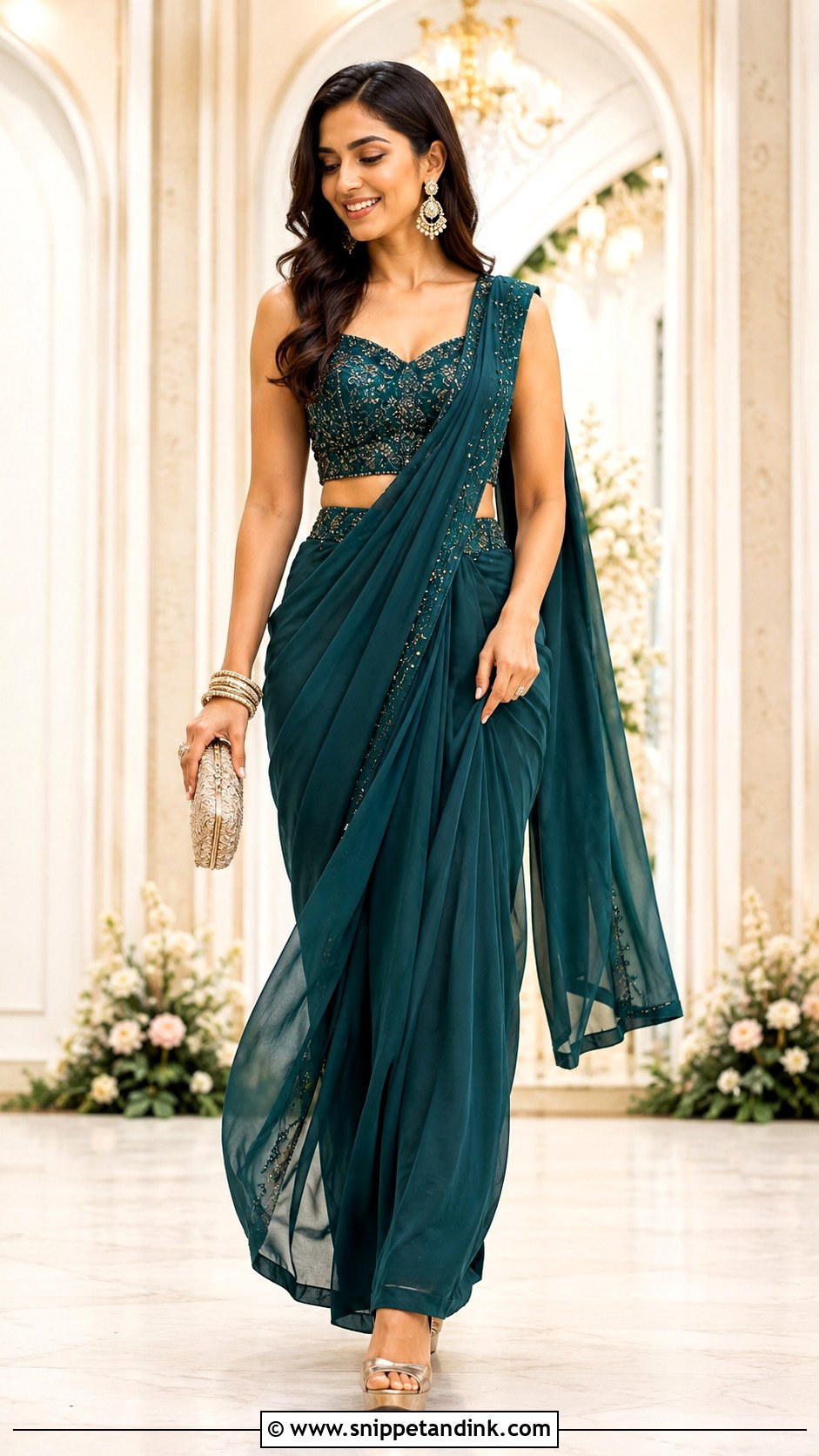
A pre-draped saree gives you a saree’s line without stopping to fix pleats on the road. Lightweight georgette or crepe in ruby, teal, rose gold or deep lavender, with a structured embroidered blouse that has supportive straps or comfortable sleeves, works well. The pleats and pallu are stitched in place and it closes with a zip or hooks, which makes it the easiest saree to dance in. Cushioned heels, a metallic clutch and chandbalis finish it, with a sleek ponytail or side-parted waves. With sequins or beading on the fabric, keep jewelry to earrings and a few bangles.
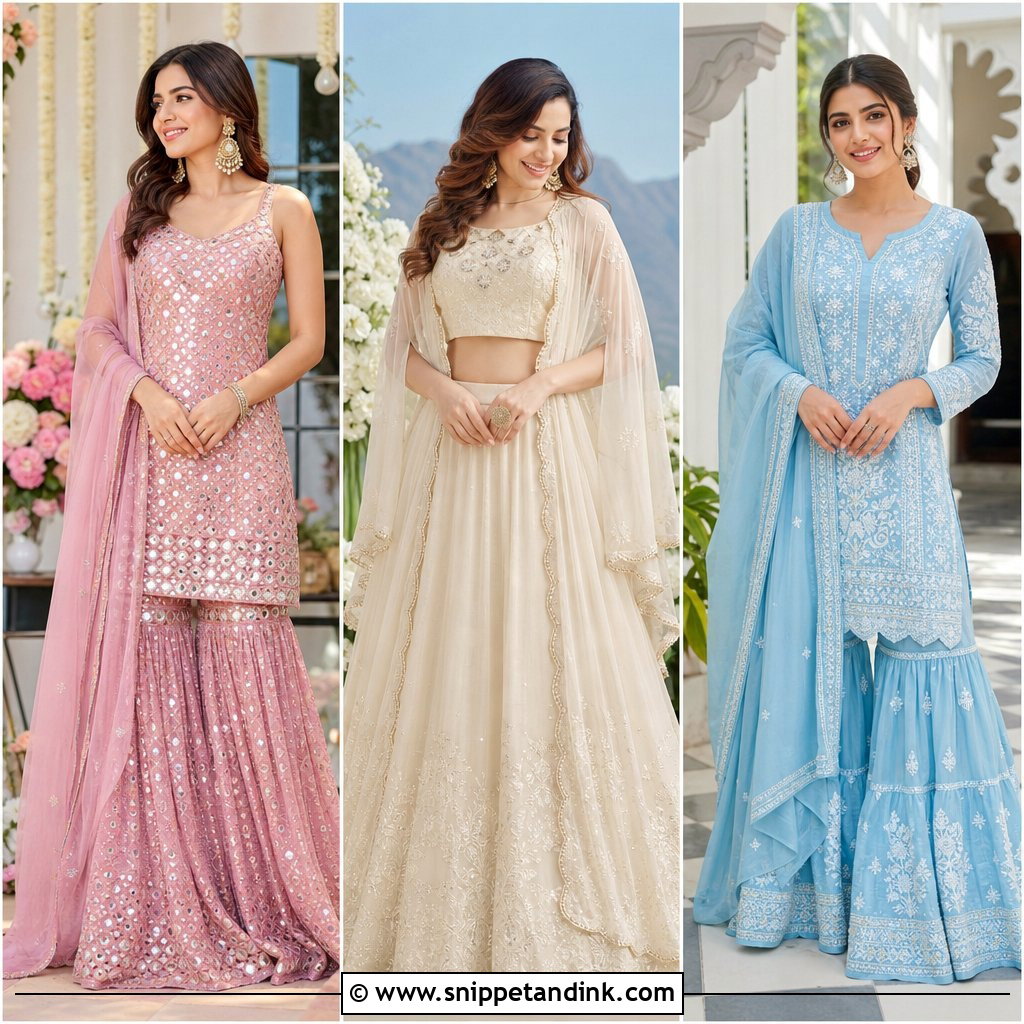
8. Cape Lehenga Baraat Outfit
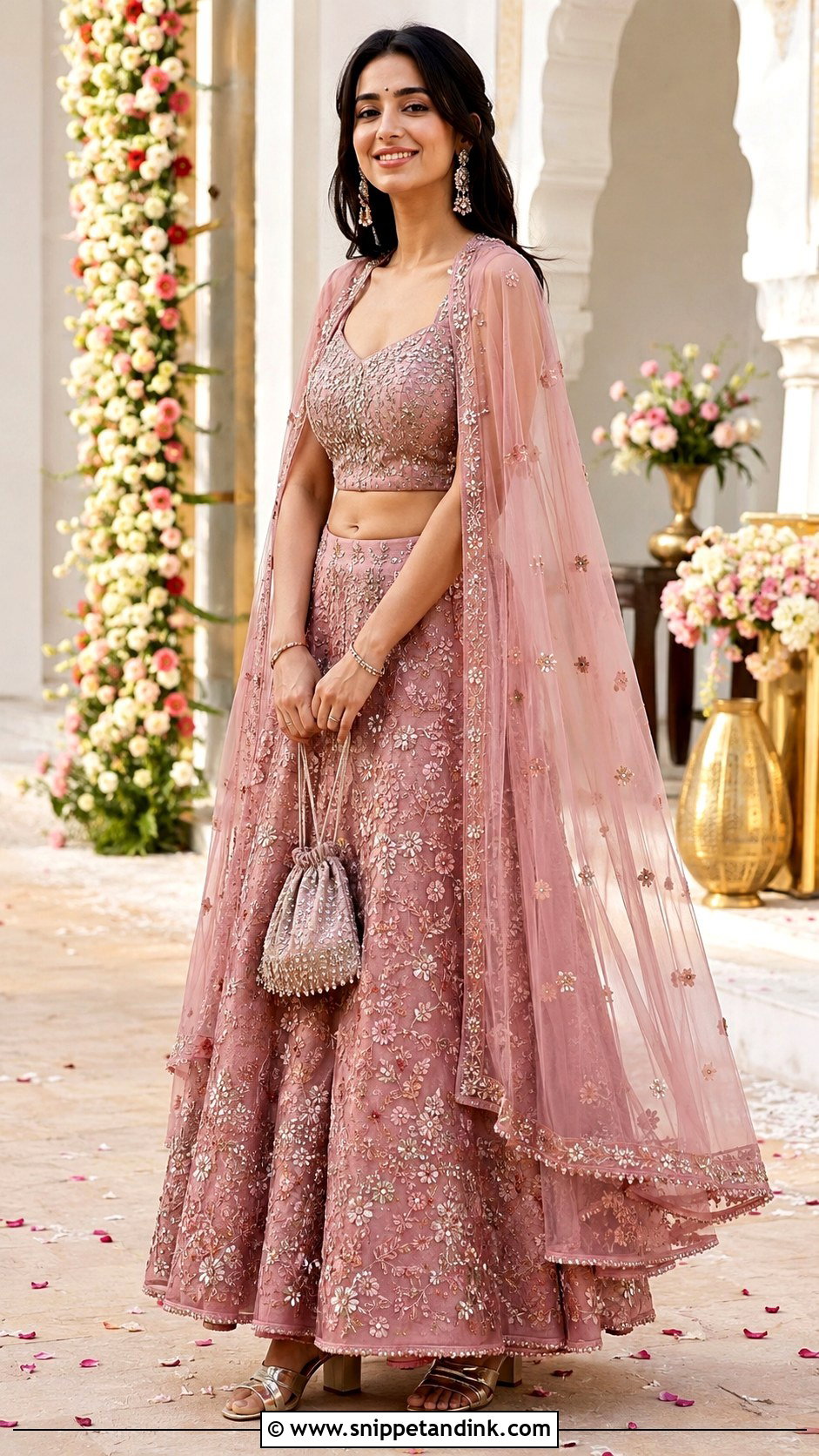
A cape lehenga swaps the dupatta for a sheer cape from the shoulders, which looks dramatic and leaves both arms free. Pair a high-waisted embroidered skirt with a simple fitted blouse and keep it monochrome in dusty rose, turquoise, wine or sapphire. Metallic block heels, a crystal potli and drop earrings that show beneath the cape work well, with a low ponytail or smooth waves. The skirt has to be light enough for dancing, and the cape must end above the floor, or someone will step on it in the crowd. Ask for the cape to be stitched or snapped at the shoulder seams so it doesn’t slide back.
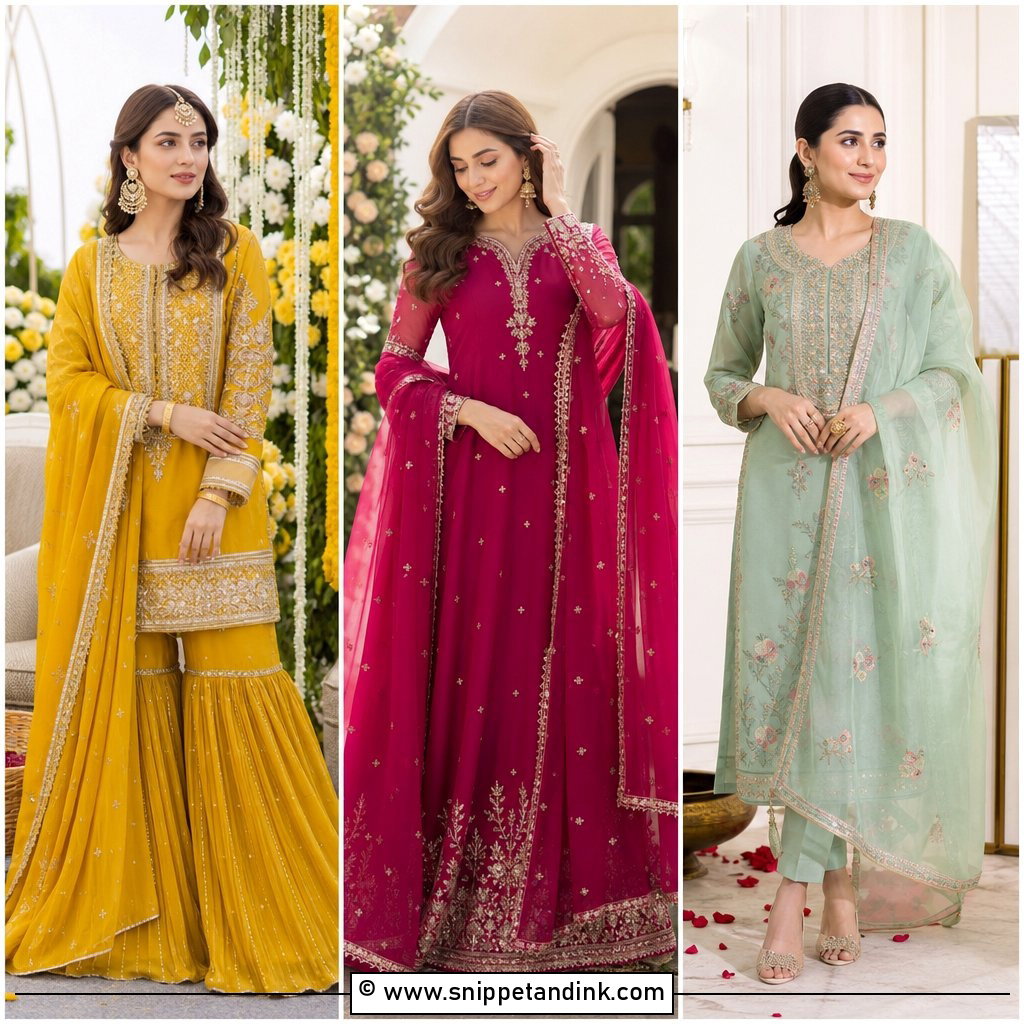
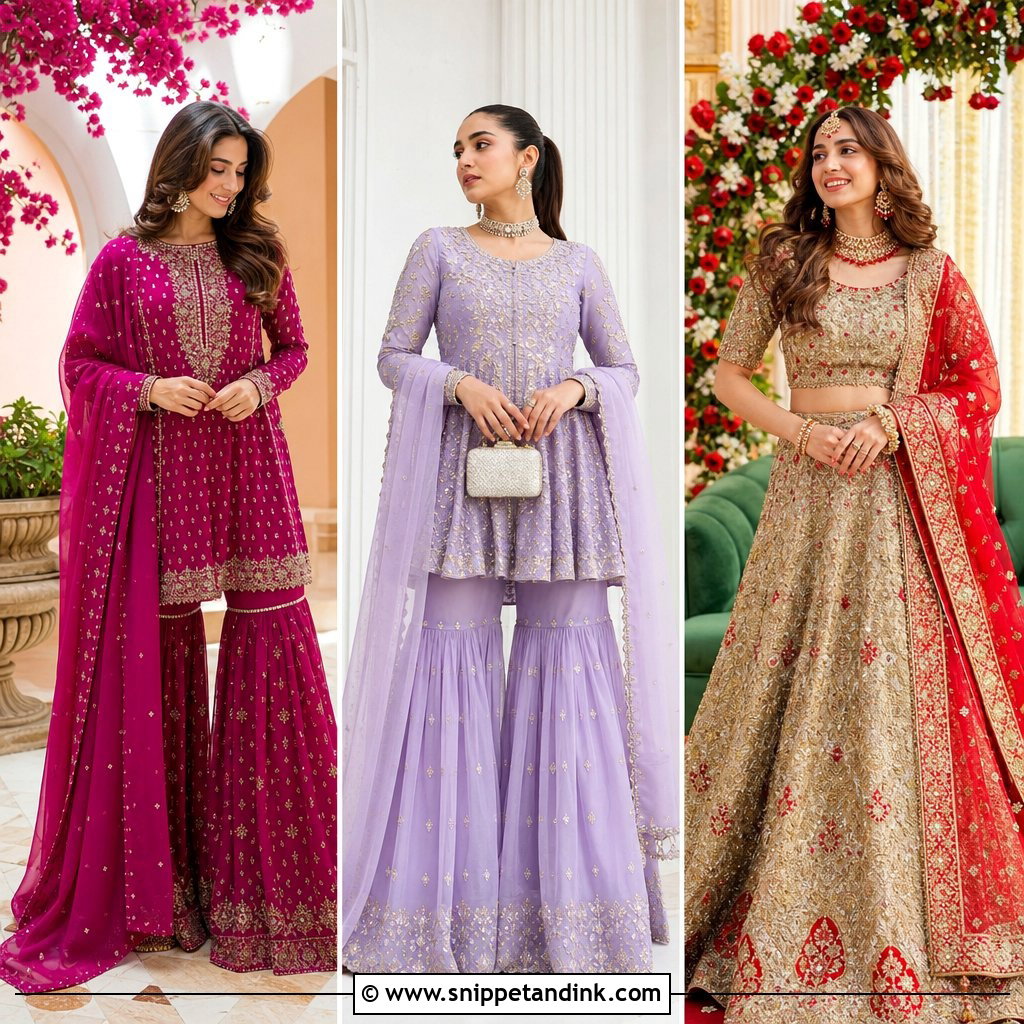
9. Gharara Suit Baraat Outfit
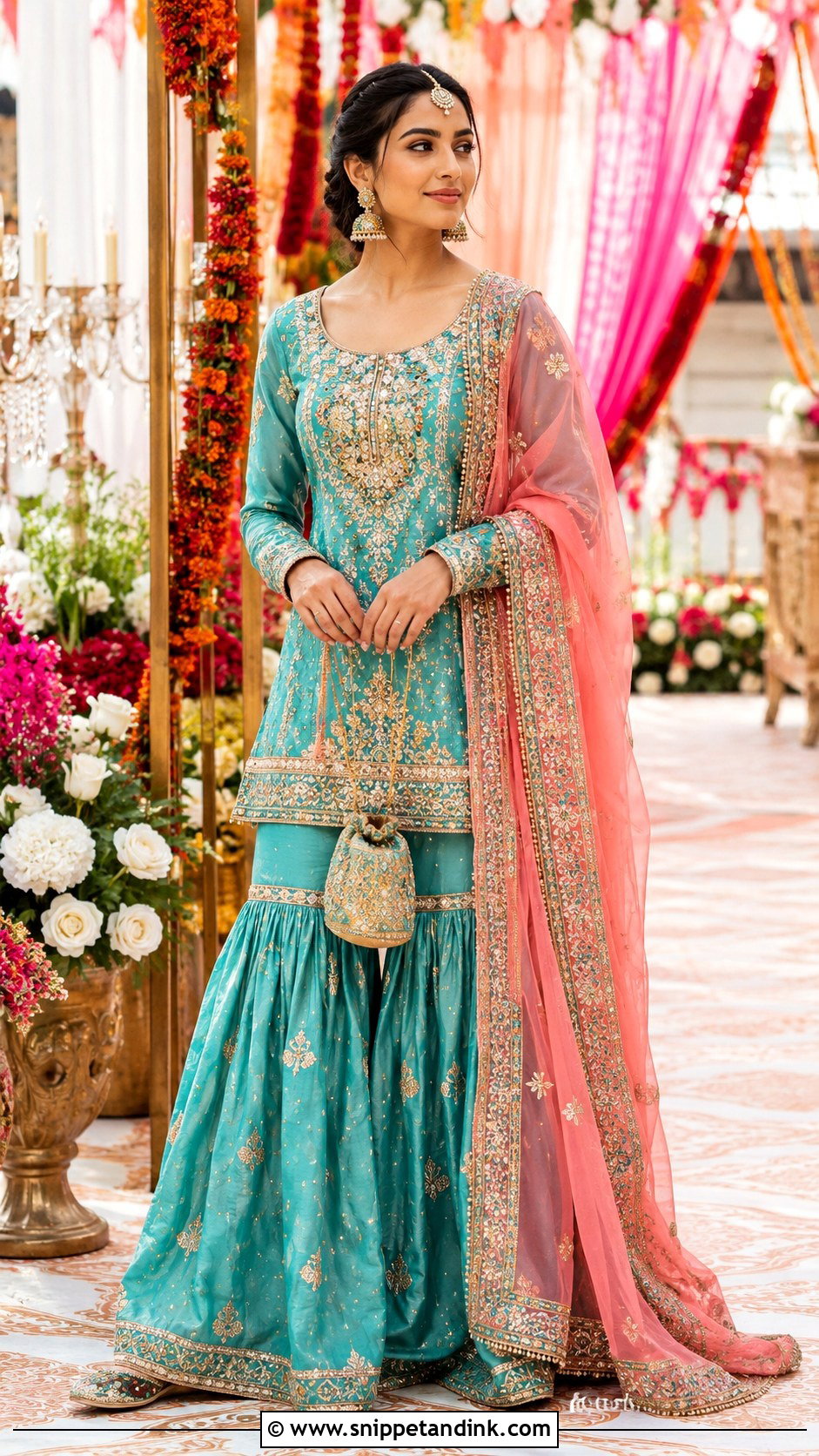
A traditional gharara suit gives more coverage than most lehengas and still feels festive. A short embroidered kurti over gharara pants with the signature knee seam, in jewel tones, bright pink, turquoise or mustard, suits the baraat. Pin the light dupatta discreetly at one shoulder. Embroidered juttis, a beaded potli, jhumkas and a delicate passa add character, with soft curls or a side braid. A kurti that’s too long hides the flare below the knee, which is the whole point. The knee joint is stiff, so walk a few steps and climb a stair at the fitting.
10. Anarkali Suit Baraat Outfit
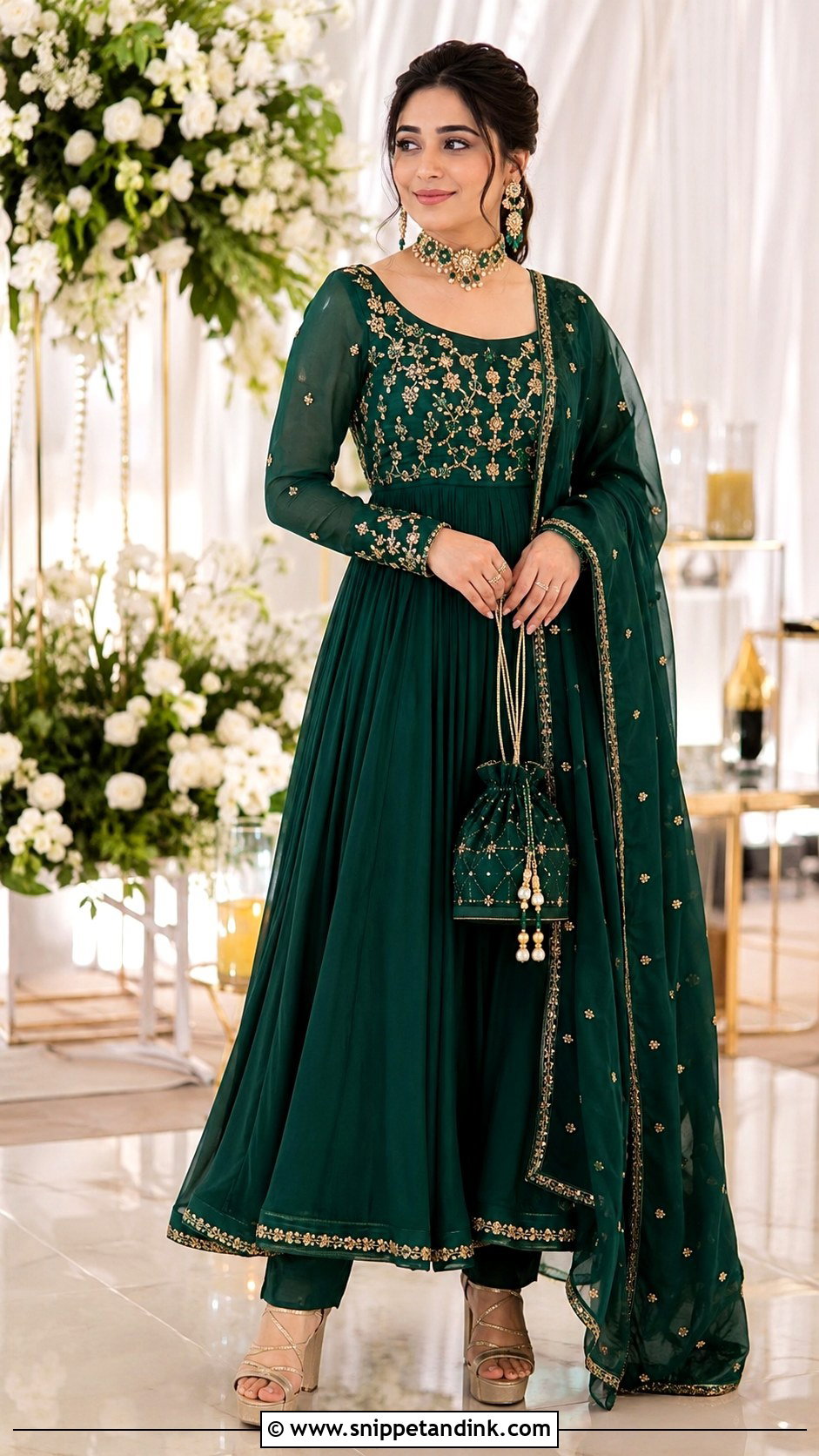
Hours of standing and dancing call for something graceful that doesn’t pinch. A floor-length Anarkali gives you flowing movement and coverage. A fitted bodice, defined waist and generous flare in fuchsia, emerald, royal blue or burnt orange, with slim pants and a light dupatta pinned on one shoulder, is the shape. Platform sandals, a small potli, a choker and matching earrings finish it, and a half-up style keeps the face clear. An Anarkali that brushes the road picks up dirt fast and gets stepped on, so have it hemmed just above your shoe with the heels on.
11. Ruffle Saree Baraat Outfit
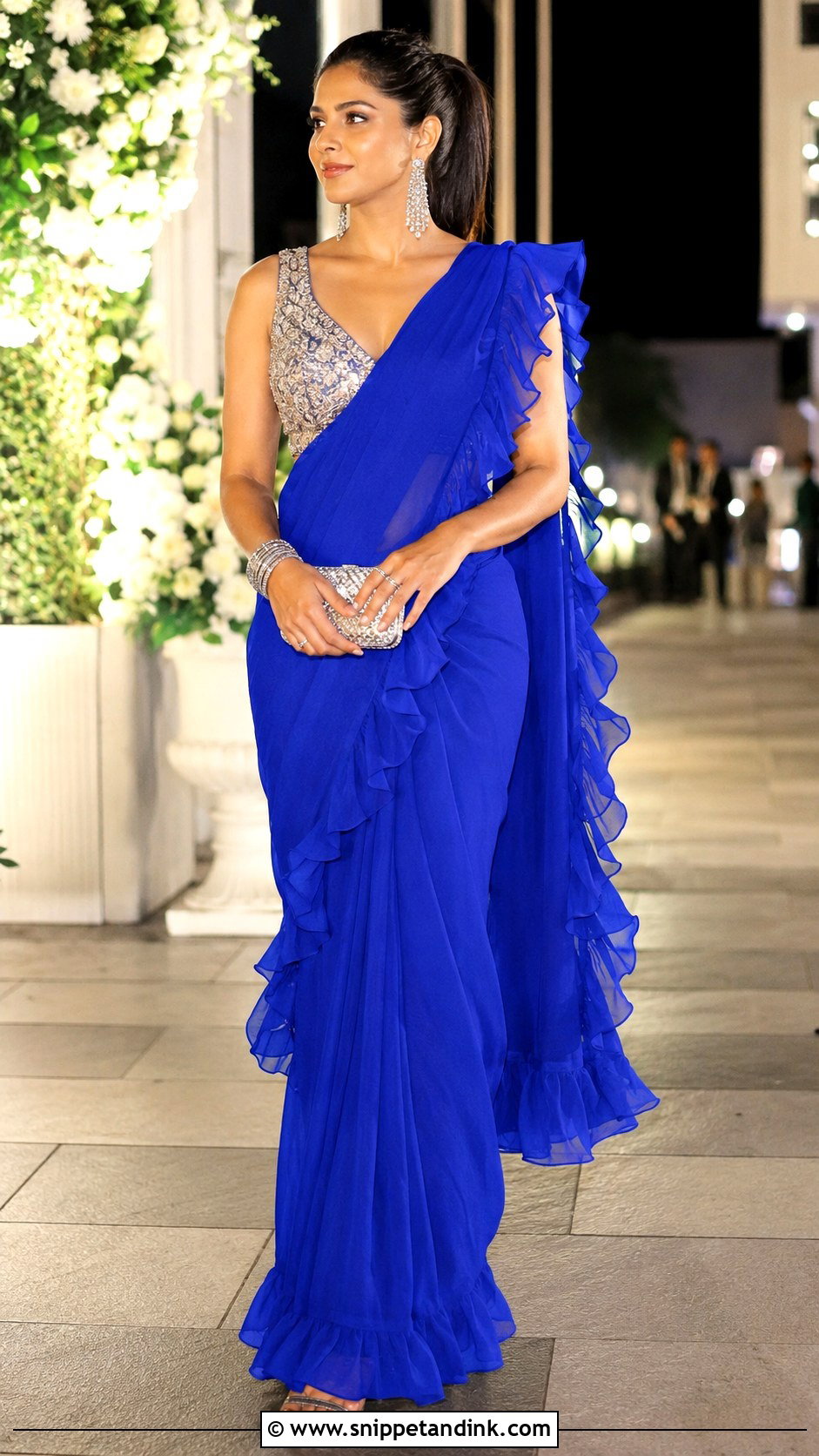
Ruffle sarees move beautifully when you dance, but only if the ruffles are narrow and structured. Large soft layers go limp and tangle. Choose lightweight chiffon or georgette with a fitted sequin, beaded or mirror work blouse for contrast. Deep pink, cobalt, emerald and plum suit evening; peach and lilac suit daytime. Supportive heels, statement earrings and a small embellished clutch are enough. A sleek high ponytail shows off the ruffled pallu and the blouse neckline. The saree already has volume, so skip bulky necklaces and big bags.
12. Peplum Sharara Baraat Outfit
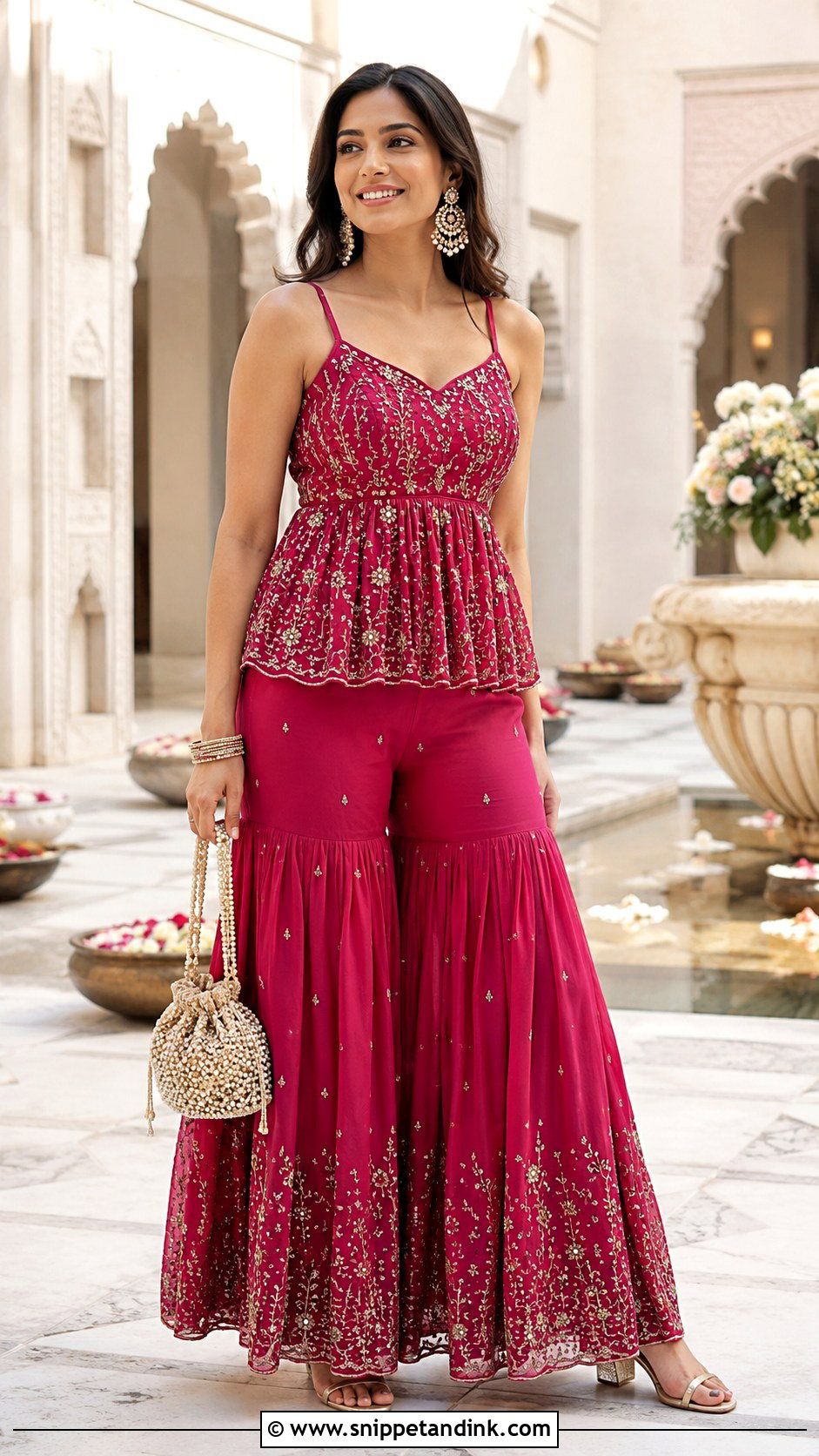
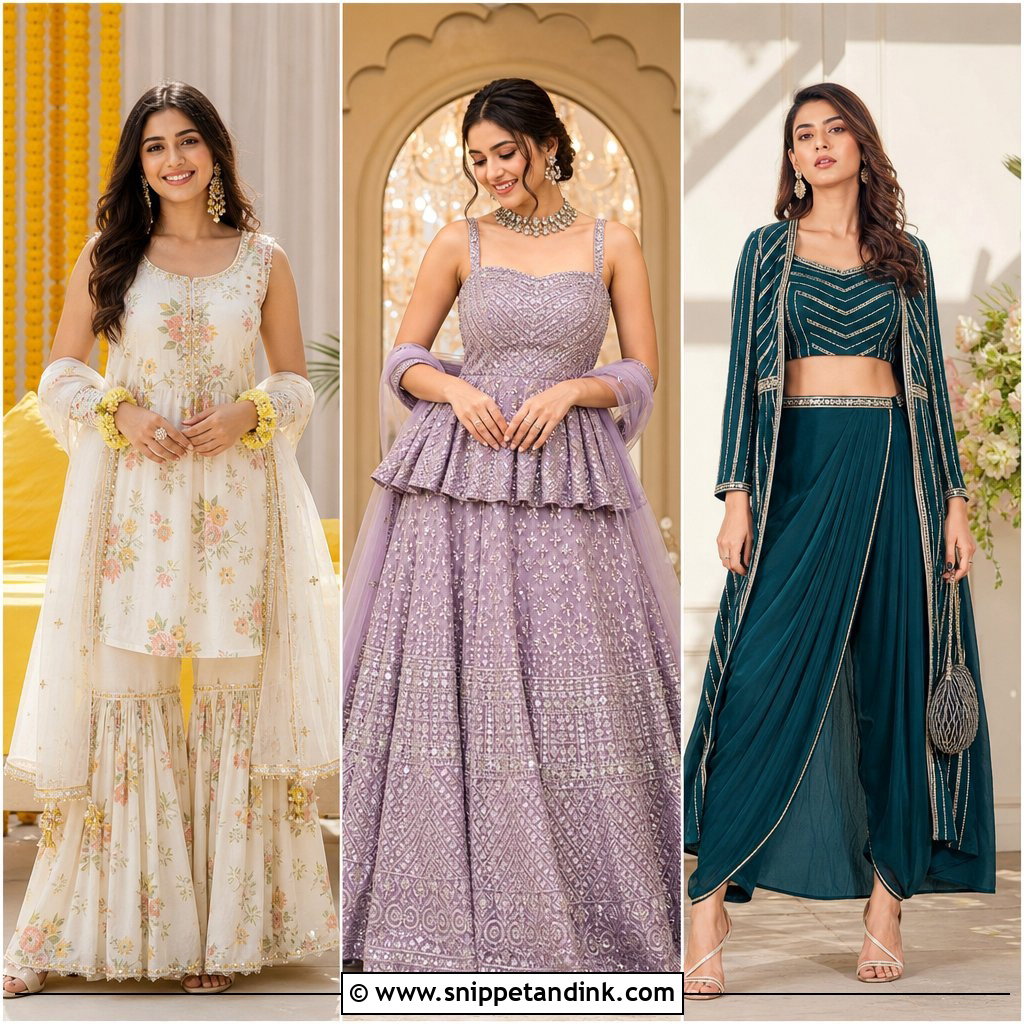
The peplum sharara works on many body types because it defines the waist and then lets everything else move. Choose a structured peplum top with embroidery at the neckline and hem over sharara pants in the same color, which lengthens the line. Raspberry, peacock blue, emerald and deep coral bring energy. Add a sheer dupatta only if you need the traditional touch; otherwise let the peplum show. The peplum should end above the point where the sharara starts flaring, or the hips look doubled. Block-heel sandals, chandelier earrings, slim bangles, a beaded potli and a smooth low ponytail finish it.
13. Draped Skirt Baraat Outfit
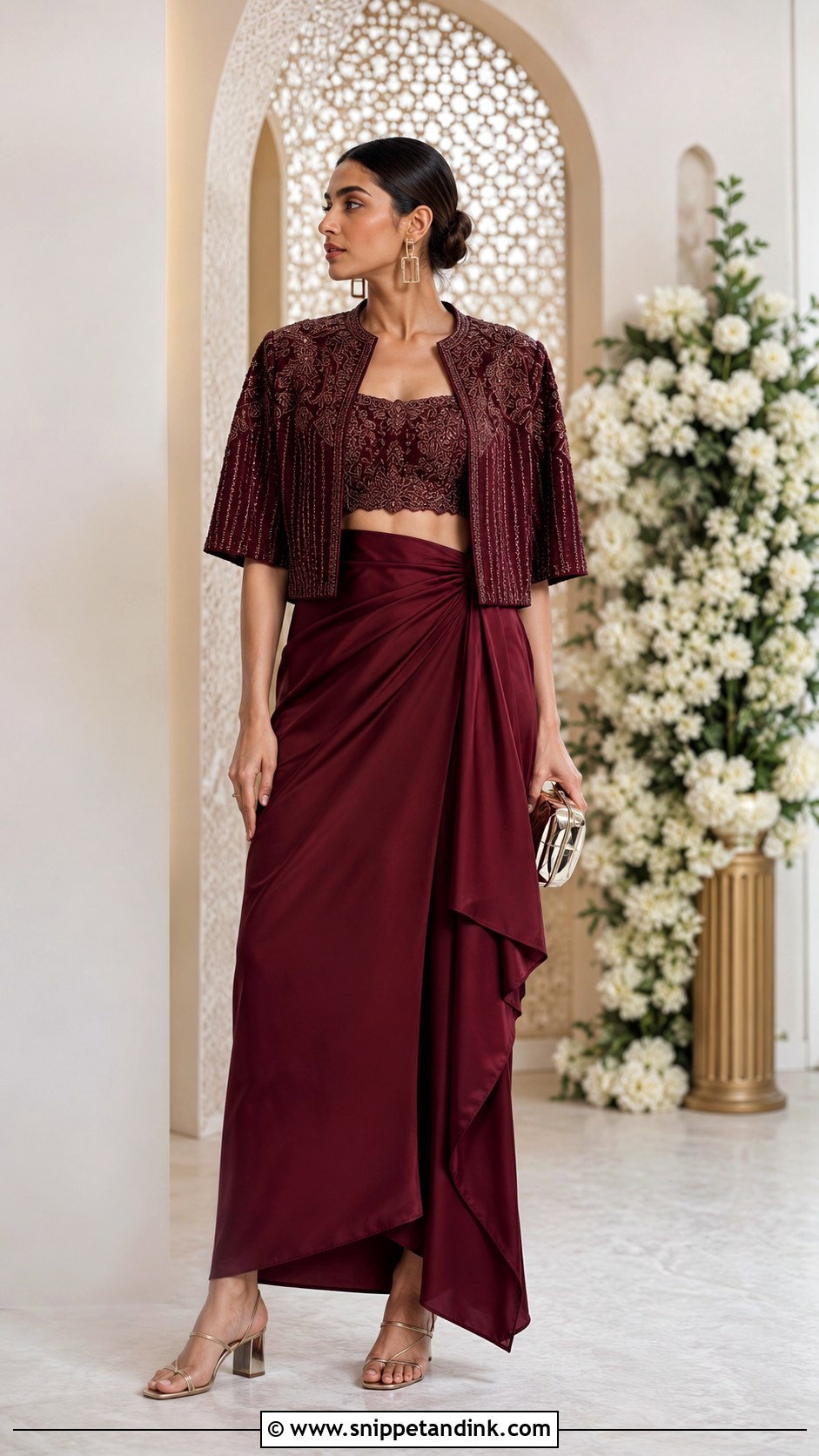
For a sister who likes fusion wear, a draped skirt and blouse is a fresh change from a lehenga. An asymmetric or pre-pleated skirt in satin, crepe or light silk, an embroidered crop top, and a short cape, structured jacket or attached shoulder drape all work together. Keep the palette monochrome in wine, teal, copper or navy so the unusual shape looks deliberate. Strappy block heels, geometric earrings, a small metallic clutch and a neat bun suit it. Asymmetric drapes can twist around the legs while dancing, so test it with a few spins at home. It needs fewer layers than most baraat outfits.
14. Palazzo Suit Baraat Outfit
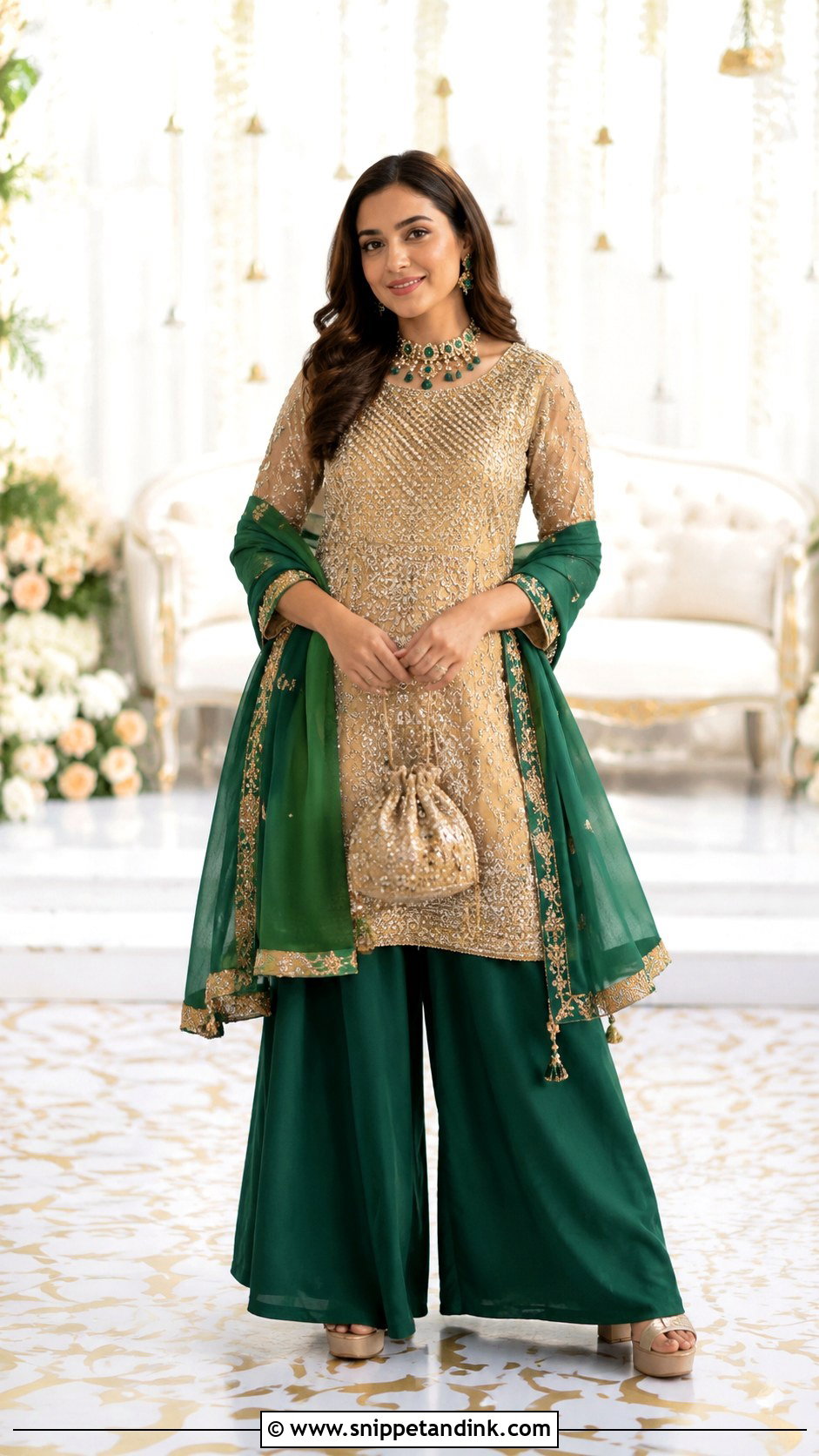
A palazzo suit is the most practical outfit here for the sister who’s also coordinating guests. Wide-leg palazzos with a fitted embroidered kurta ending around the knee, plus a light dupatta with a defined border, are comfortable for hours. Magenta and orange, emerald and gold, or navy and silver look festive. Platform sandals give wide pants height and are easier than thin heels on a road. A statement necklace, medium earrings and a structured potli complete it, with a side braid or low bun. Palazzos in thin fabric cling to the legs when it’s windy, so I’d choose a fabric with some weight.
15. Ombre Lehenga Baraat Outfit
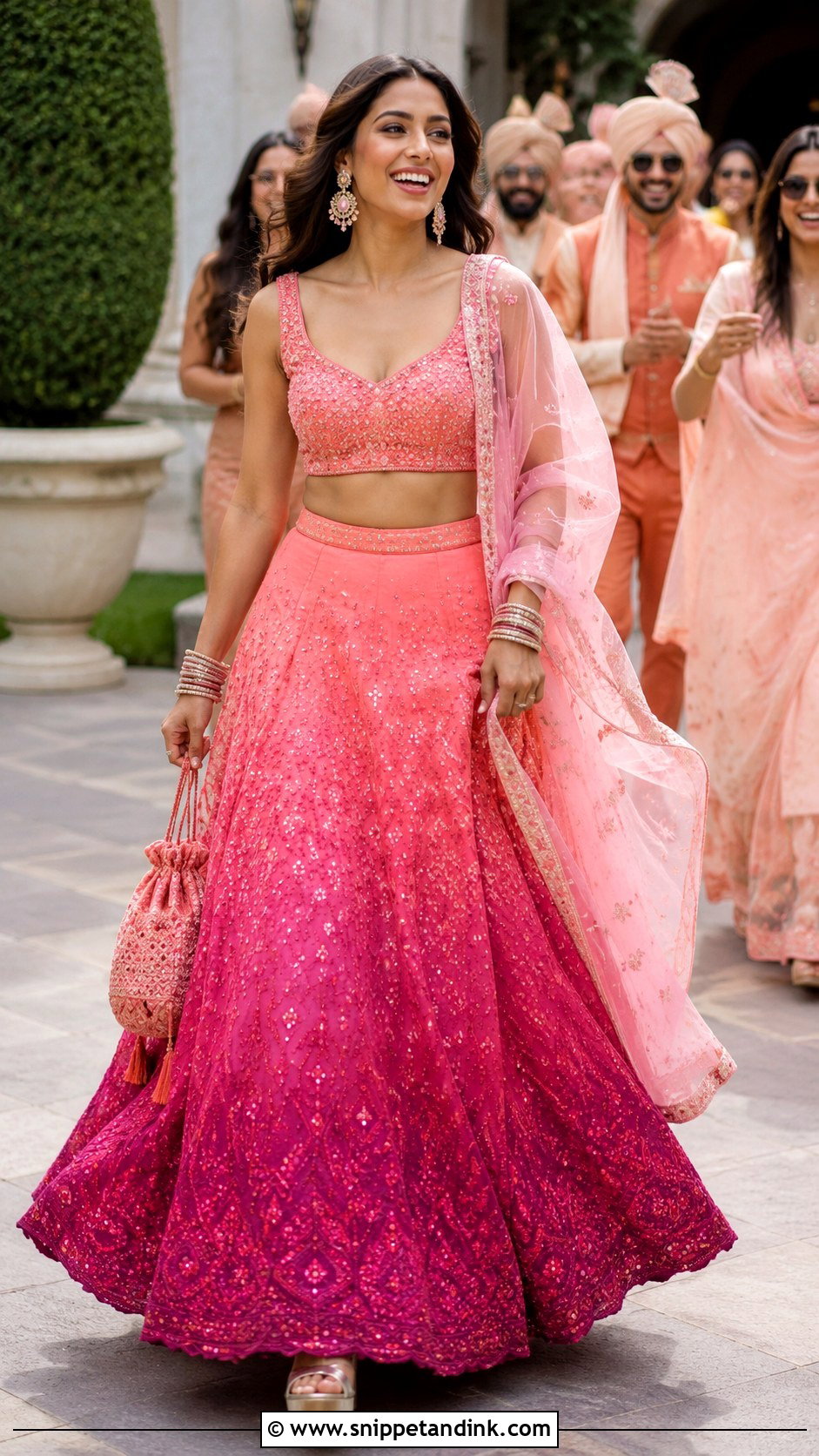
An ombre lehenga gives depth through color rather than heavy embroidery. Choose a skirt shading from pink to coral, turquoise to navy or lilac to purple. Wear a fitted blouse in the darkest shade and a sheer dupatta in the lightest, joined by a narrow sequin or mirror border. Metallic wedges, crystal earrings, stacked bangles and a matching potli are all you need, with loose waves or a half-up style. Don’t add contrasting colors; the gradient is the feature. When ordering, ask for a photo of the actual dyed skirt, since hand-dyed ombre varies from piece to piece.
16. Dhoti Pant Baraat Outfit
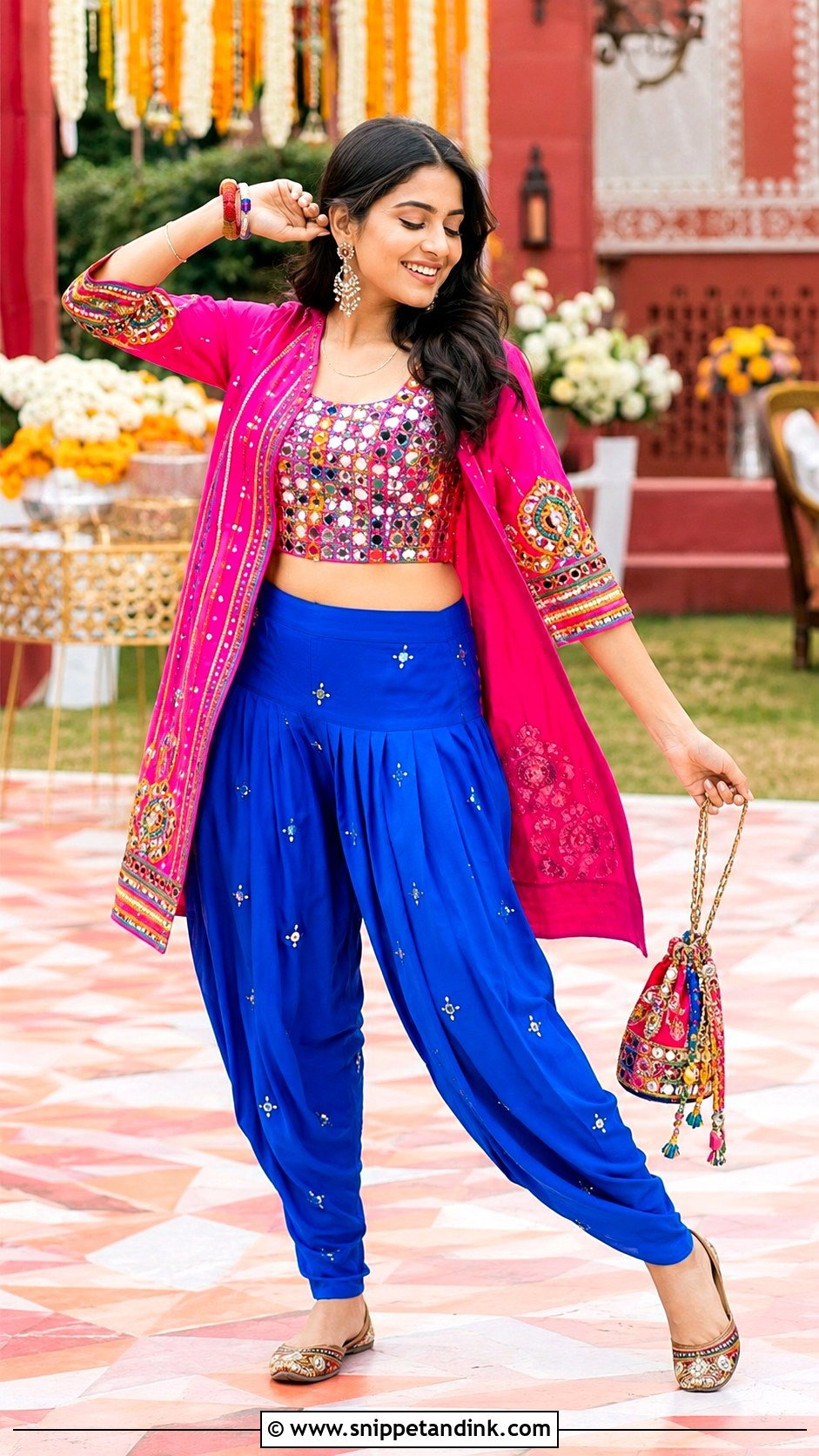
A dhoti pant set is my favorite for a sister who plans to dance the whole way. Draped dhoti pants, a fitted embroidered top and a knee-length jacket or asymmetric cape give embroidery and structure without any skirt to manage. Hot pink, orange, cobalt and green suit the baraat’s mood. The top has to stay put when you raise your arms and spin. Wear embroidered juttis rather than heels. Bold earrings, colorful bangles and a potli with a wrist strap keep your hands free. A high ponytail or braid completes it.
17. Tissue Silk Lehenga Baraat Outfit
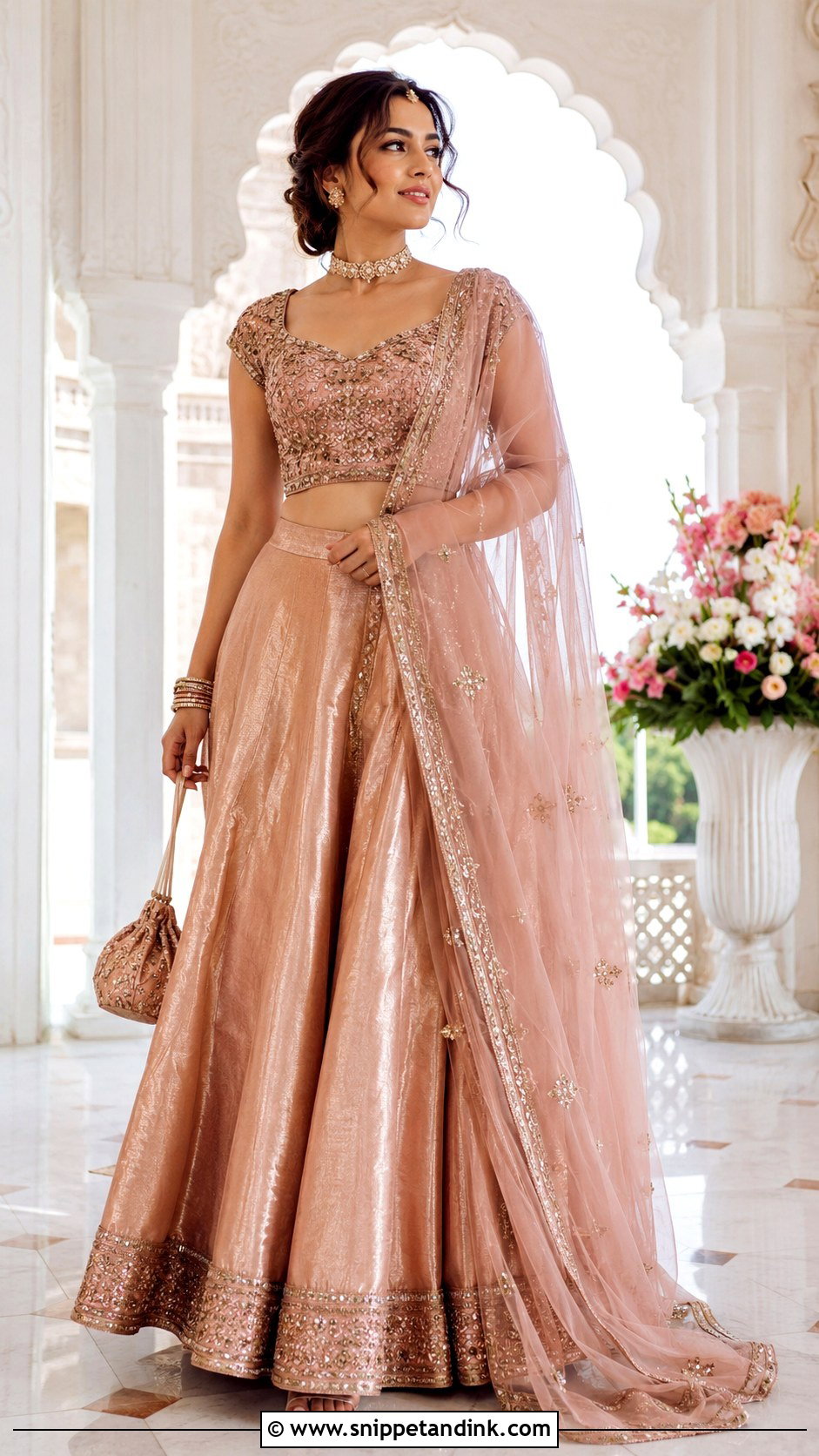
Tissue silk has zari in the weave, so it shines softly in photos without dense embellishment. A champagne, rose pink, mint, copper or pale gold skirt with a detailed blouse in a complementary tone, plus a sheer organza dupatta with a fine zari edge, is plenty. Tissue reflects light on its own, so keep jewelry controlled: a choker, small earrings and slim bangles. Embellished juttis or low block heels, and a smooth bun or curled ponytail, suit it. Tissue creases sharply and the creases show, so steam it from the inside before you leave home and avoid sitting in the car on the skirt’s back panel.
18. Chikankari Lehenga Baraat Outfit
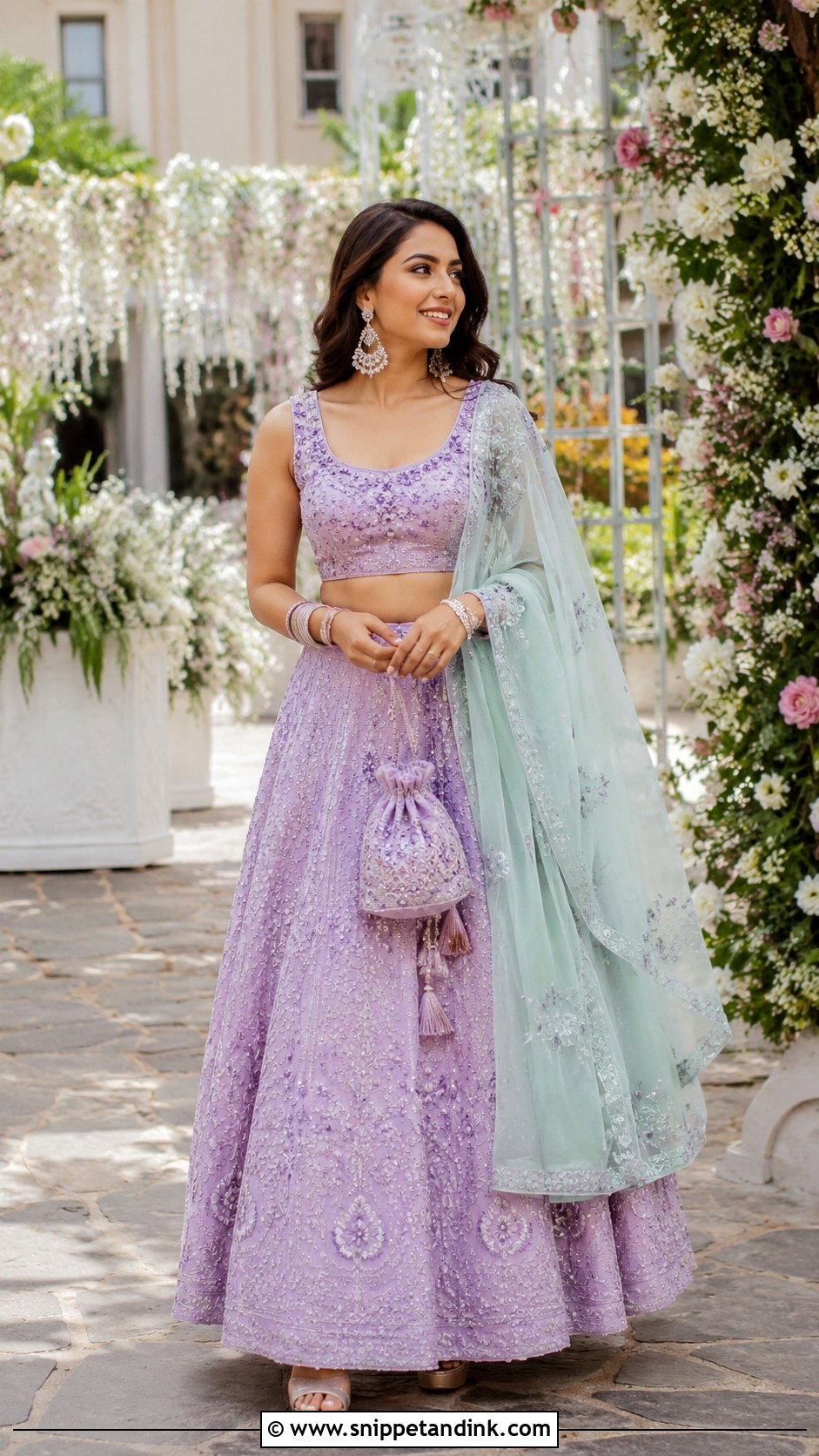
Chikankari is the fine shadow-work embroidery of Lucknow, traditionally worked in white thread on light cotton or georgette, and it can be pushed festive with color and accessories. A flared lehenga in lavender, mint, blush, ivory or powder blue with a little sequin work through the embroidery is the base. A fitted blouse and a contrasting organza dupatta add definition. Pearl and kundan earrings, metallic wedges, colorful bangles and a small potli complete it, with soft curls or a flower-trimmed braid. For evening, choose a deeper blouse or dupatta for contrast. It’s the coolest outfit here on a hot day.
19. Indo-Western Jumpsuit Baraat Outfit
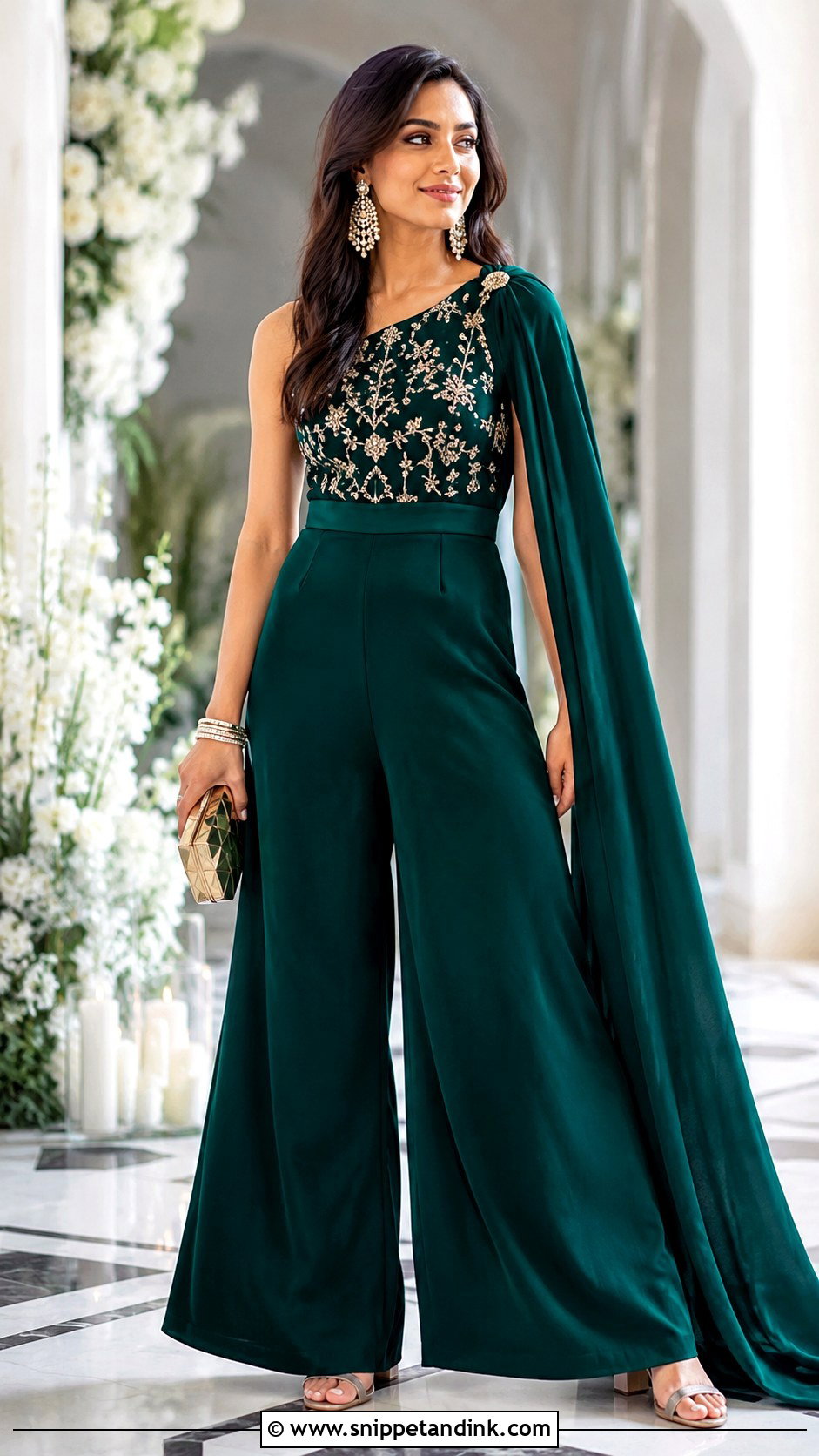
An Indo-Western jumpsuit suits a sister who doesn’t want a saree or lehenga. A wide-leg design with an embroidered bodice, defined waist and attached drape that reads like a pallu keeps it formal. Emerald, wine, navy or purple suit an evening baraat. Block heels, long earrings, stacked bracelets and a structured clutch work with a sleek ponytail. Hem the trousers to sit just above the floor in your shoes. Check that you can manage the closure alone in a restroom; a long back zip on a jumpsuit is a two-person job.
20. Color Block Lehenga Baraat Outfit
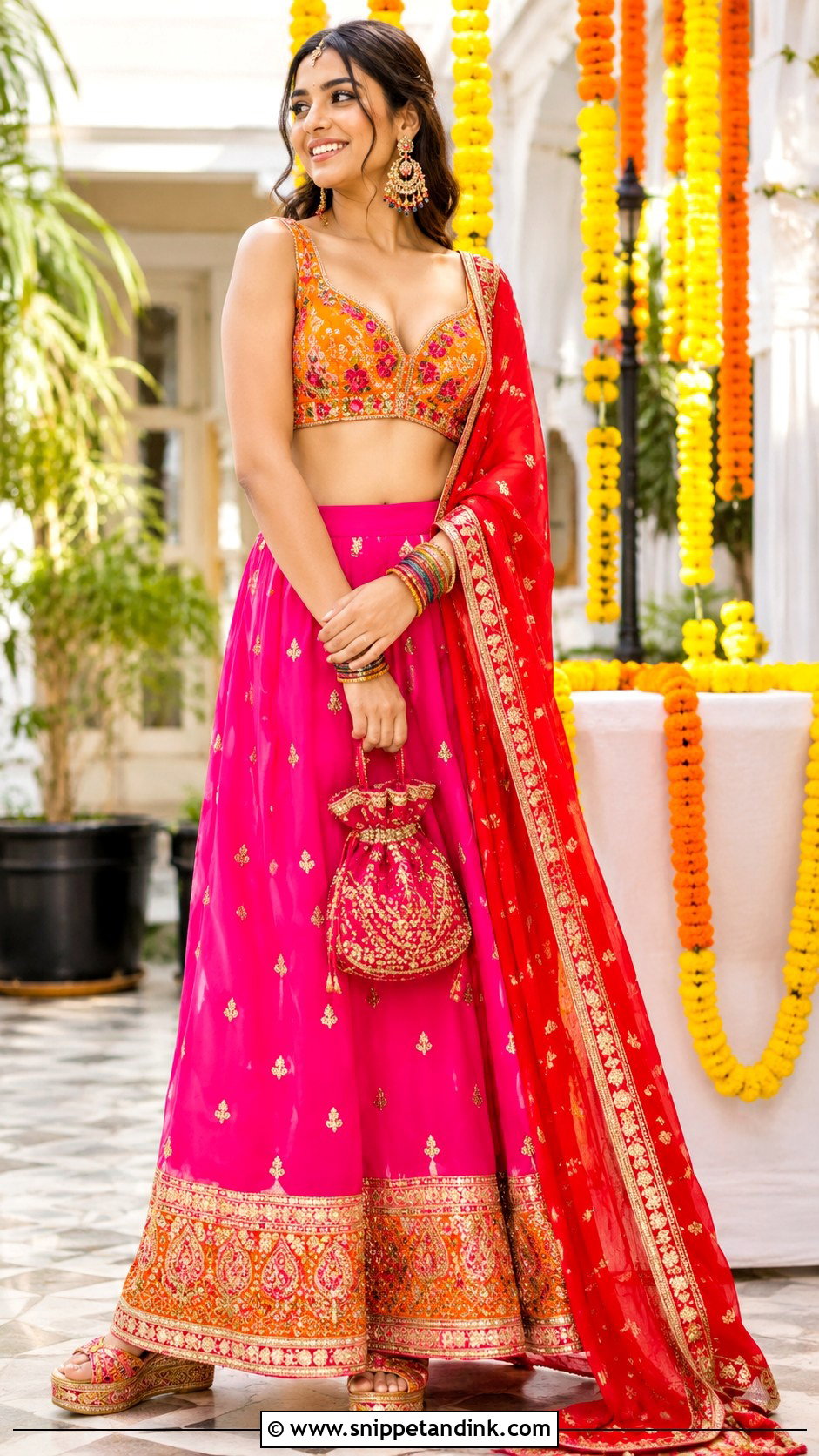
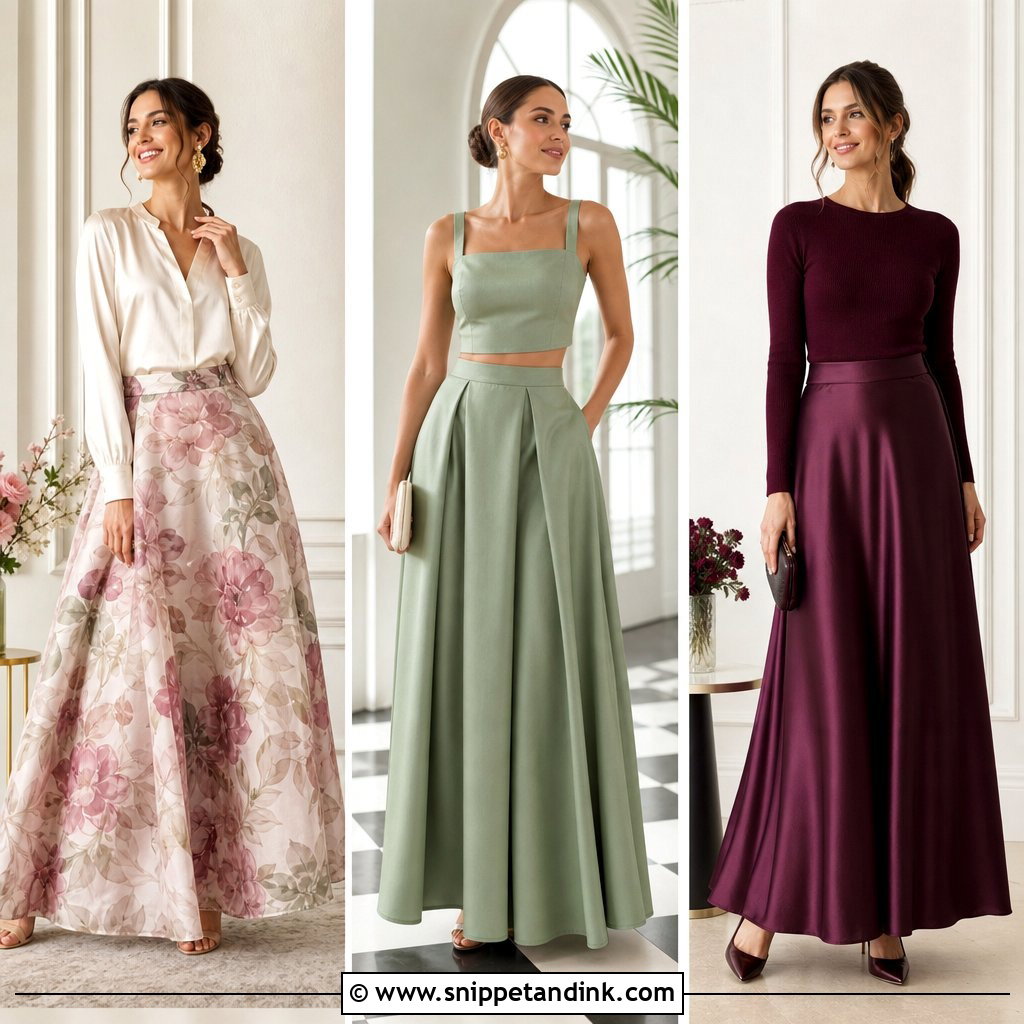
Color blocking captures the baraat’s cheerful spirit. A bright skirt, a contrasting blouse and a third-color dupatta, pink with orange and red or turquoise with purple and green, look intentional when the embroidery is consistent across all three. Pick one metal for the jewelry and keep the chandbalis, bangles and potli in it. Embroidered wedges or juttis give steady footing. A textured braid, ponytail or secure bun all work. It’s a good daytime outdoor choice and reads clearly in family photographs.
How Sisters and Cousins Coordinate Without Copying
Matching outfits for the sisters can look sweet in photos, but identical lehengas on different bodies rarely suit everyone. I’d agree on a shared element instead and let each person choose her own silhouette.
- Agree on a color family, such as jewel tones or pastels, rather than one exact shade.
- Or keep the colors free and repeat one detail: the same mirror trim, the same dupatta, or matching hair flowers.
- Ask the bride or the groom’s mother which color the bride is wearing and avoid it, along with any shade the family associates with mourning.
A Pocket Kit for the Procession
Once the baraat starts moving, there is no going back to the room. A small potli with a wrist strap can carry what fixes most problems.
- Safety pins in two sizes and a few bobby pins for a slipping dupatta or loose hair.
- Blotting papers and the lipstick you are wearing.
- A pair of foldable flats for the walk back or the reception.
- Plasters for blisters, since new juttis rub at the heel.
- A small bottle of water if the procession is long and outdoors.
Celebrate Loudly, but Leave Red to the Bride
The baraat outfits that work best let you celebrate and still move freely. Mirror work lehenga, silk saree, sequin sharara, Anarkali or jumpsuit, think about how it will hold up through dancing, walking and family photos. Secure draping and supportive shoes matter as much as color and embroidery. Coordinate with the wedding palette, but avoid the bride’s exact outfit and main color unless the family has planned matching clothes. Add jewelry you can wear for hours, a hairstyle that won’t fall, and a small bag. Then wear the one that lets you enjoy your sibling’s wedding instead of fixing your outfit.
You'll Like These Ideas:



Leave a Reply