
Sleeves change how a wedding dress behaves far more than they change how it looks on a hanger. The moment a bride reaches up to hug someone, the fabric under the arm either moves with her or pulls the whole bodice upward, and that is the first thing I watch in a fitting room. Lace stretches a little, satin and Mikado barely give, chiffon floats, and tulle sits somewhere in between. Below are twenty sleeved gowns I’d happily put a bride in, each with notes on the veil, shoes and jewelry that suit it, plus what I check before saying yes. Detachable sleeves, illusion lace and off-the-shoulder drapes all appear, so there is room for very different amounts of coverage.
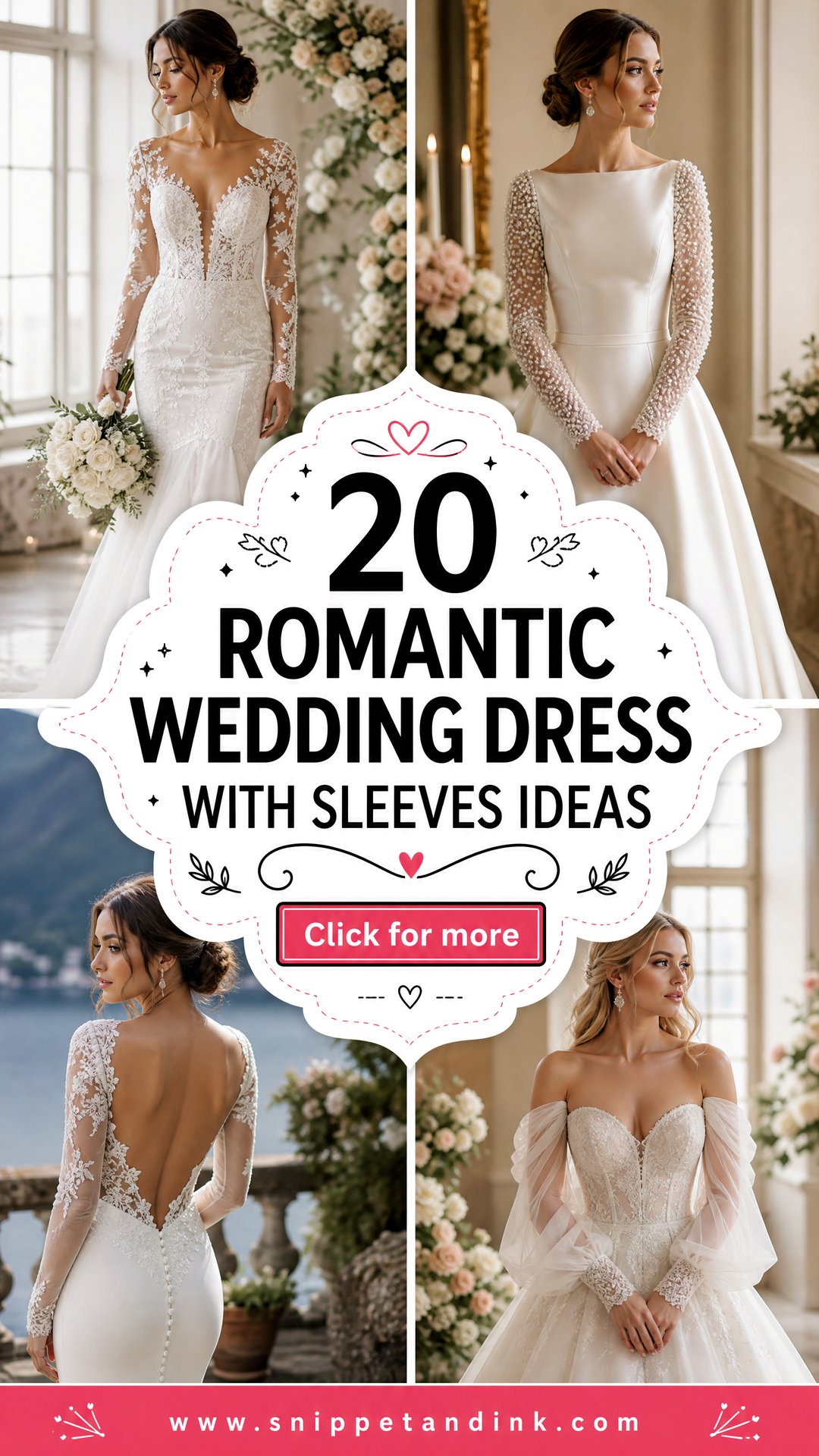
The Four-Move Arm Test I Run at Every Fitting
A sleeved gown can look perfect while you stand still with your arms at your sides, which is exactly how nobody spends a wedding. Before I look at the hem or the bust, I ask the bride to do four things in front of me, and I watch the bodice, not the sleeve.
- Raise both arms as if putting on a veil. If the waistline lifts more than a finger’s width, the armhole is cut too low or the sleeve is too narrow at the bicep.
- Hug me. A tight back sleeve seam shows up here as pulling across the shoulder blades.
- Sit and reach for a glass. Long sleeves bunch at the inner elbow when seated, and fitted lace can dig in.
- Slow dance for a minute with hands on a partner’s shoulders. This is where off-the-shoulder bands slip and cape panels tangle.
Fabric decides how forgiving the result is. Stretch lace and mesh recover; Mikado, crepe and structured satin don’t, so they need ease built in rather than taken out. If you love a stiff fabric, ask your seamstress for a slightly higher armhole. It sounds backwards, but a higher, closer armhole gives more lift than a deep one.
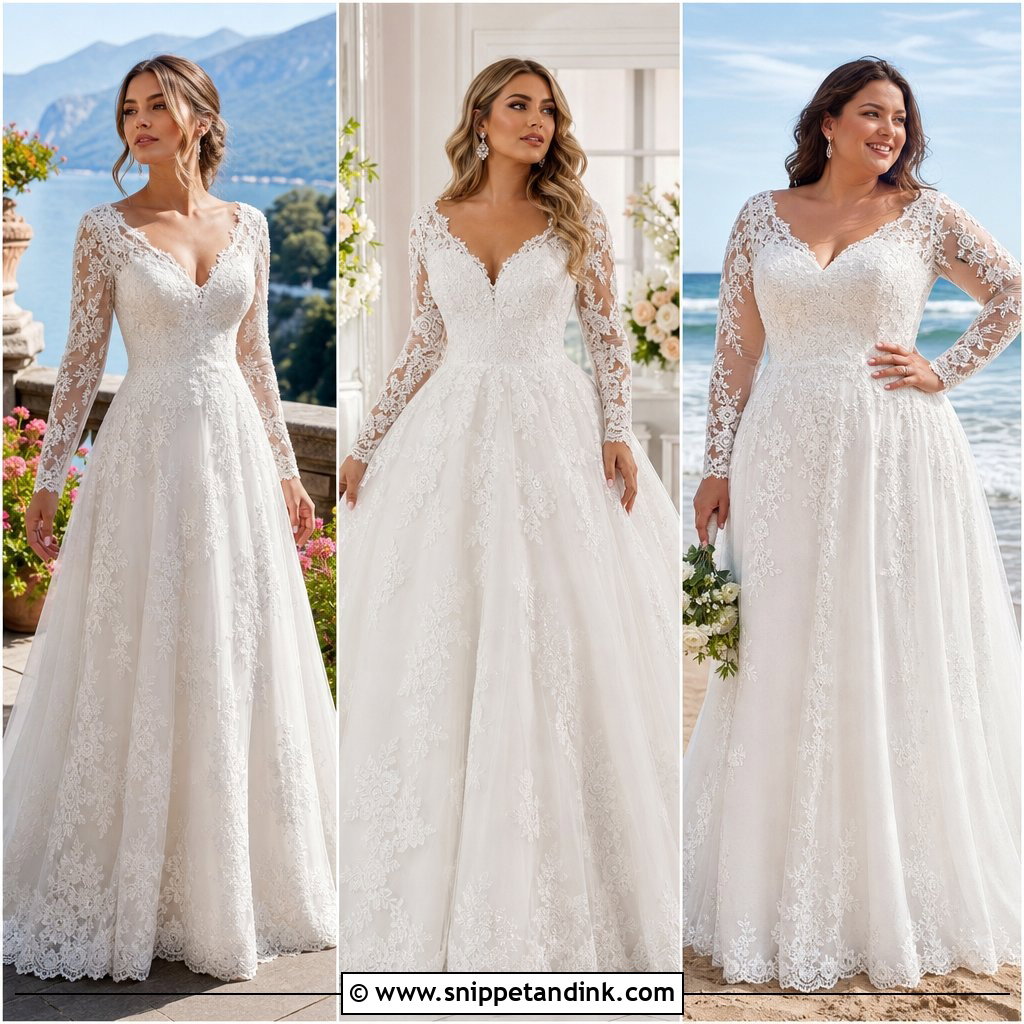
1. Lace Long Sleeve A-Line Wedding Dress
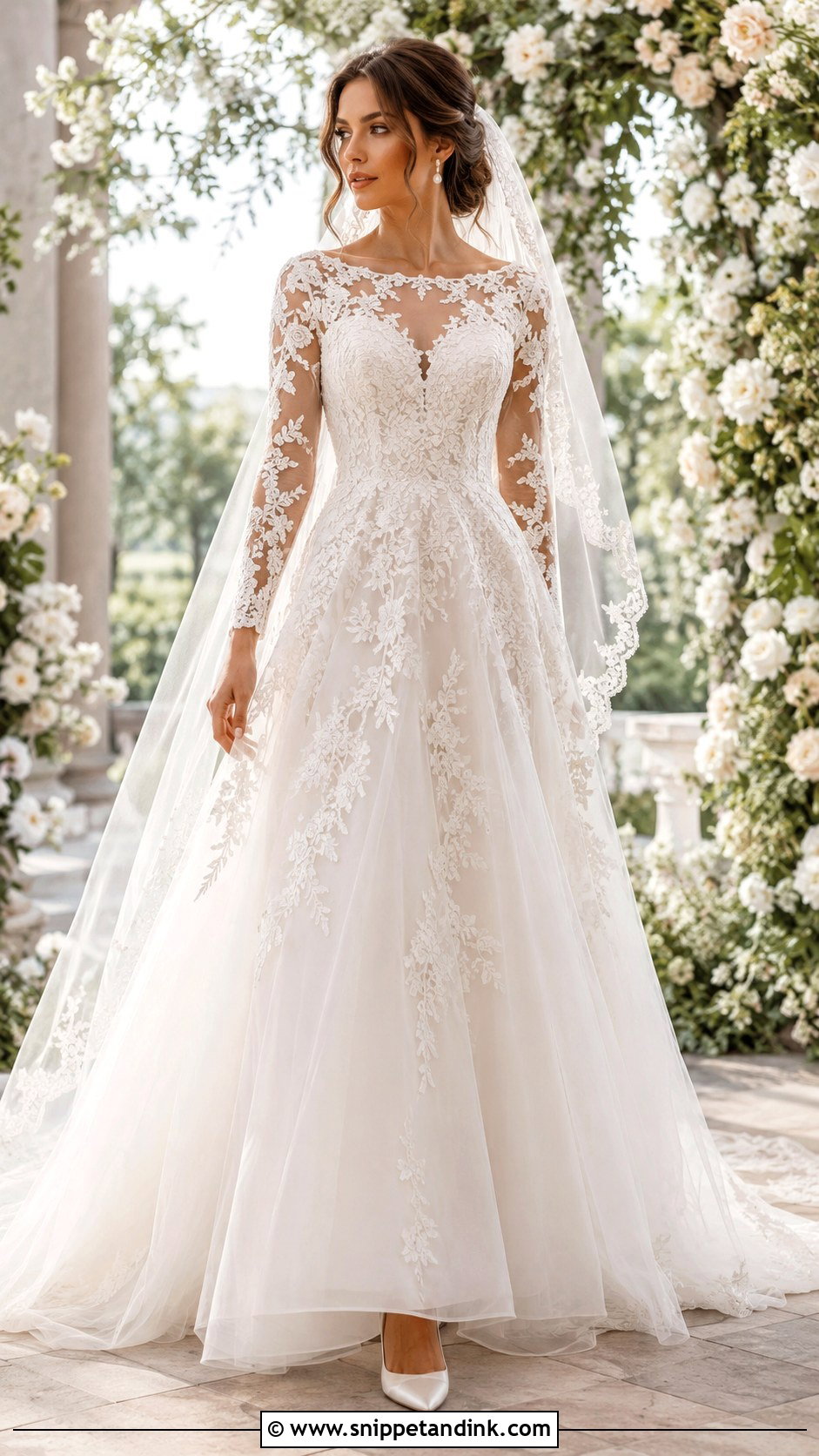
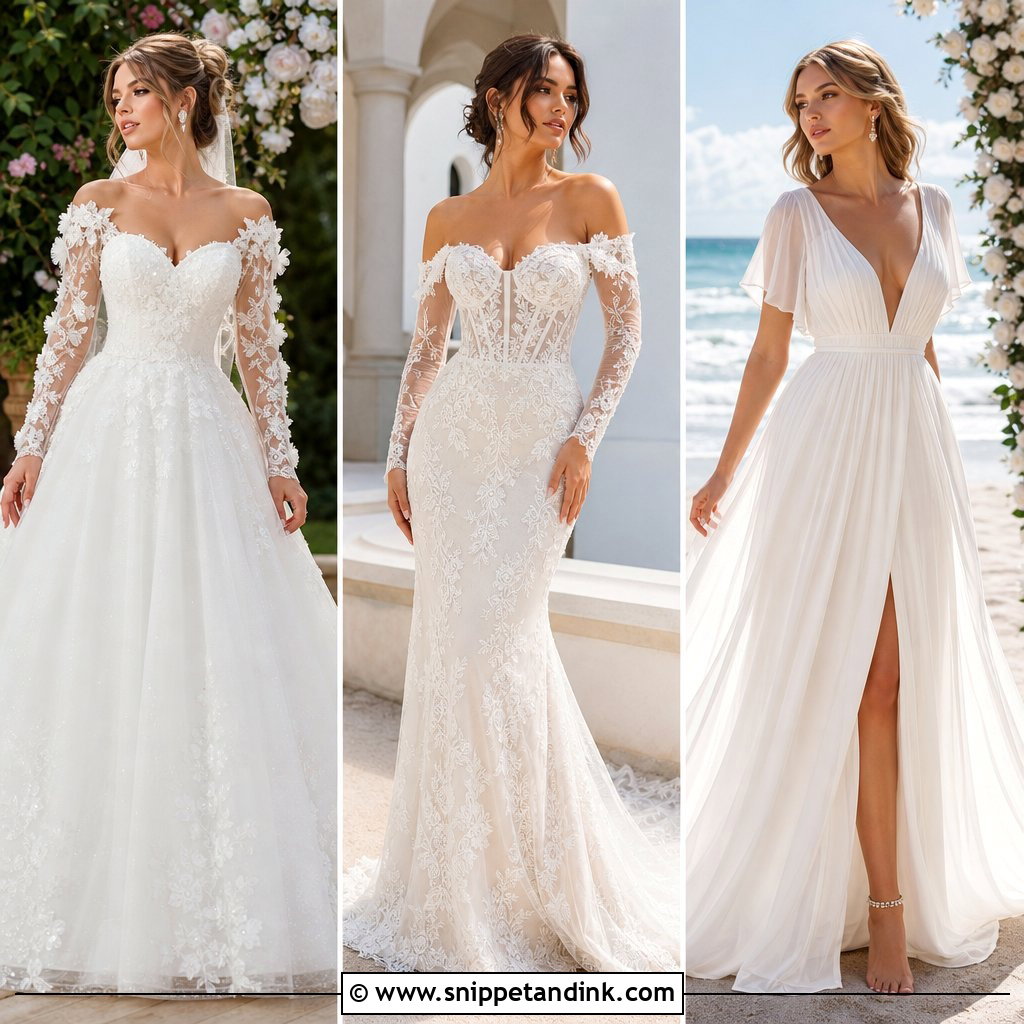
Lace on a long sleeve A-line works best when the appliqué flows over the shoulder seam instead of stopping at it, because a hard line there makes the sleeve look like a later addition. I always ask the bride to cross her arms during the first fitting; corded lace on tight illusion mesh can bite at the inner elbow. Tulle layers in the skirt keep the line soft over the hips. A low chignon, pearl drops, pointed satin pumps and a fingertip veil edged in the same lace keep attention on the sleeves, and a plain bouquet of white garden roses stops the pattern from feeling busy. On a cool spring morning in a garden, this is the dress I’d reach for first.
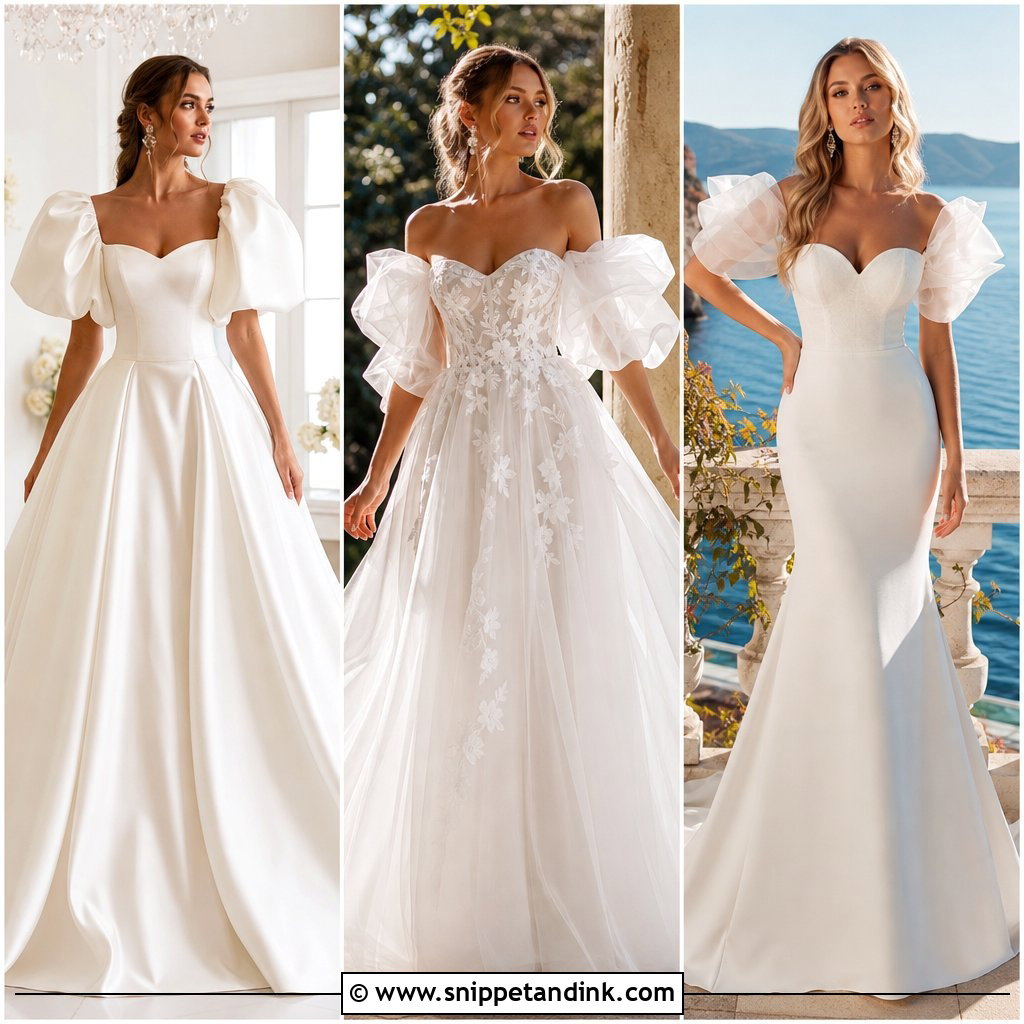
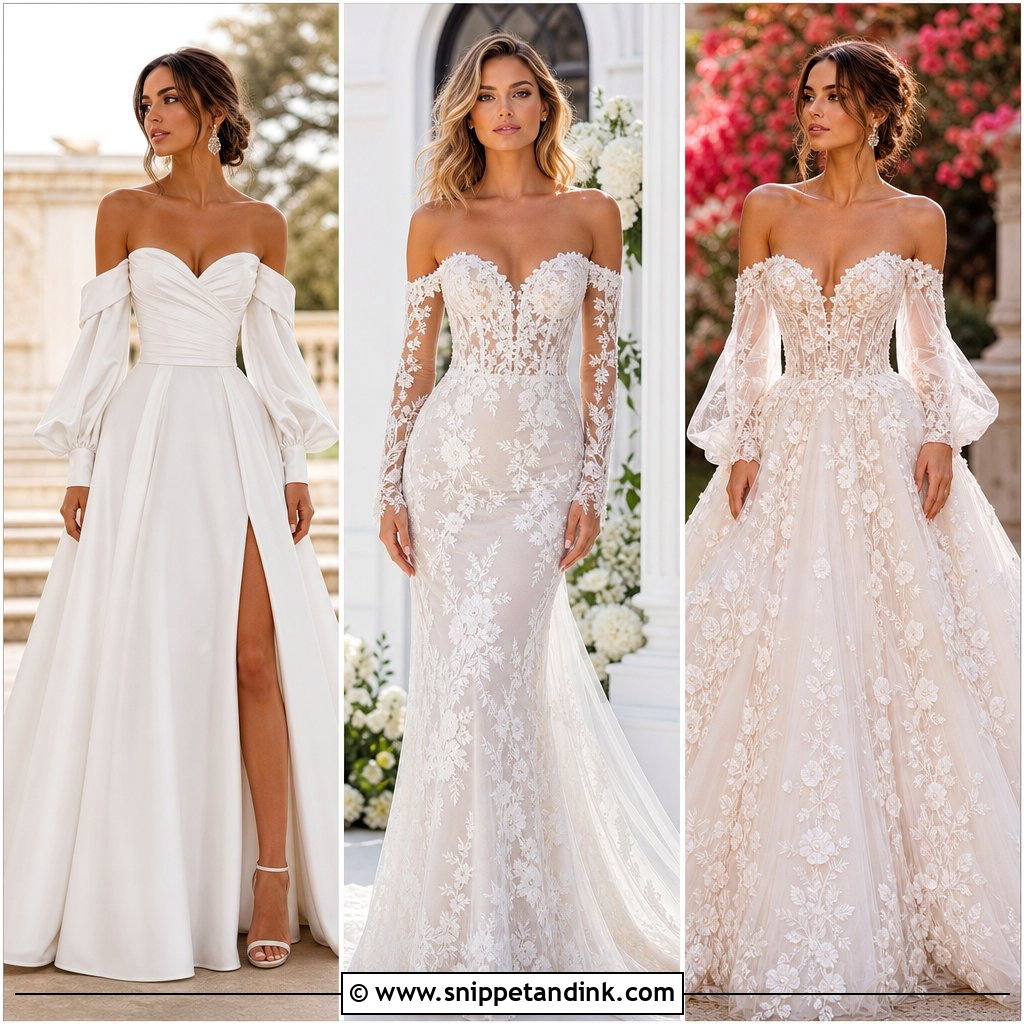
2. Off Shoulder Satin Ball Gown With Sleeves
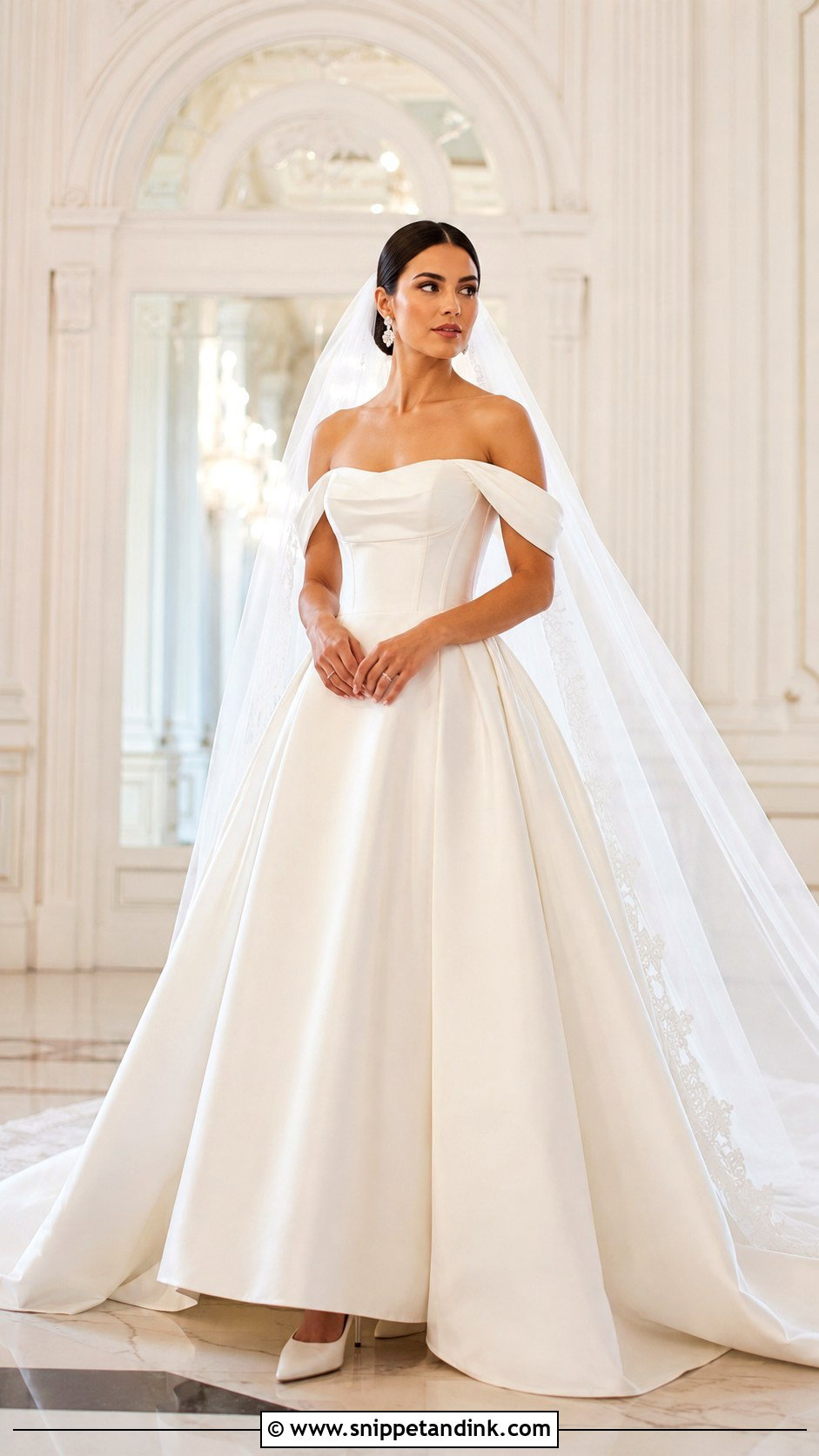
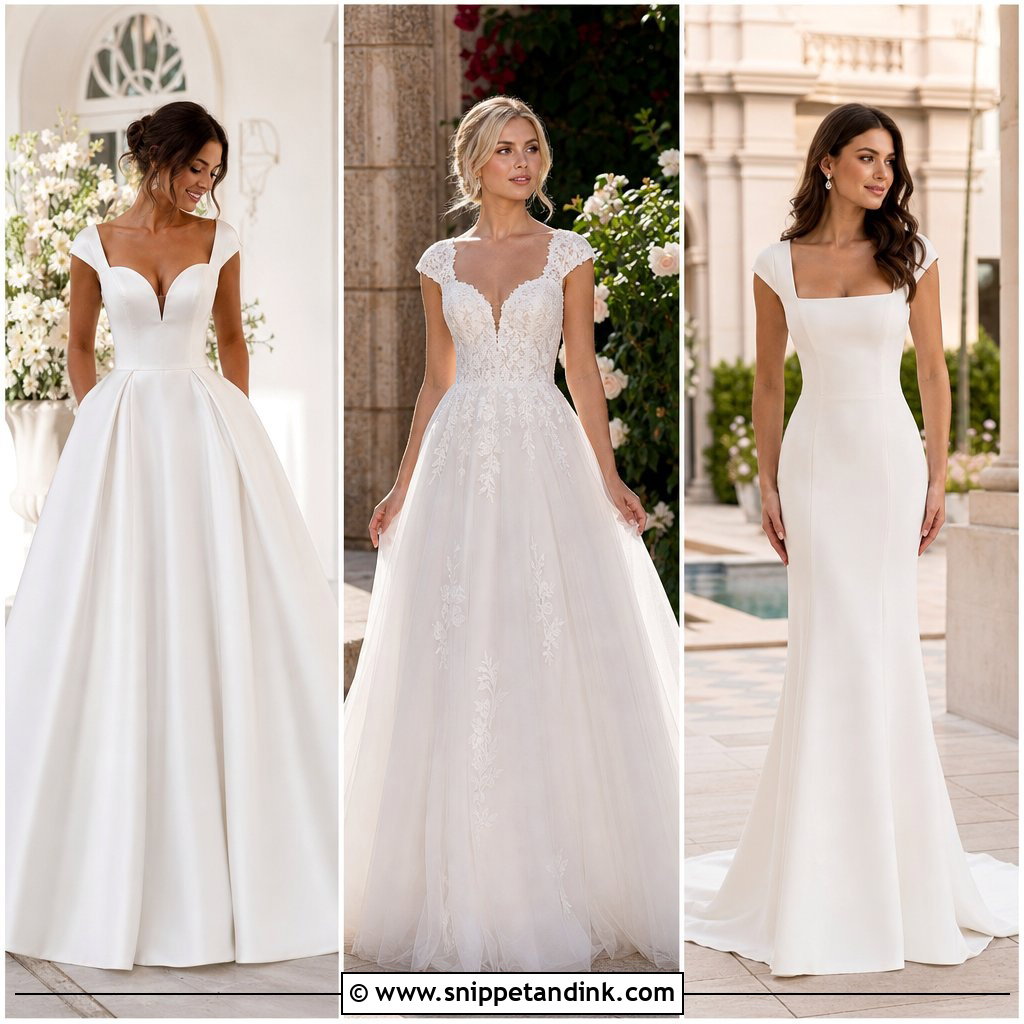
Off-the-shoulder satin is the gown I fit most carefully, because the sleeve band does the work a strap would normally do. Too loose and it slides down the arm during the processional; too snug and the bride can’t lift a glass. I set it so two fingers slip under the band with the arms relaxed. The structured bodice and full skirt carry the drama, so the rest stays quiet: small crystal studs, a tennis bracelet, ivory pumps, a cathedral veil and either a smooth bun or loose Hollywood waves. Satin reflects light strongly, which suits a ballroom or hotel at night.
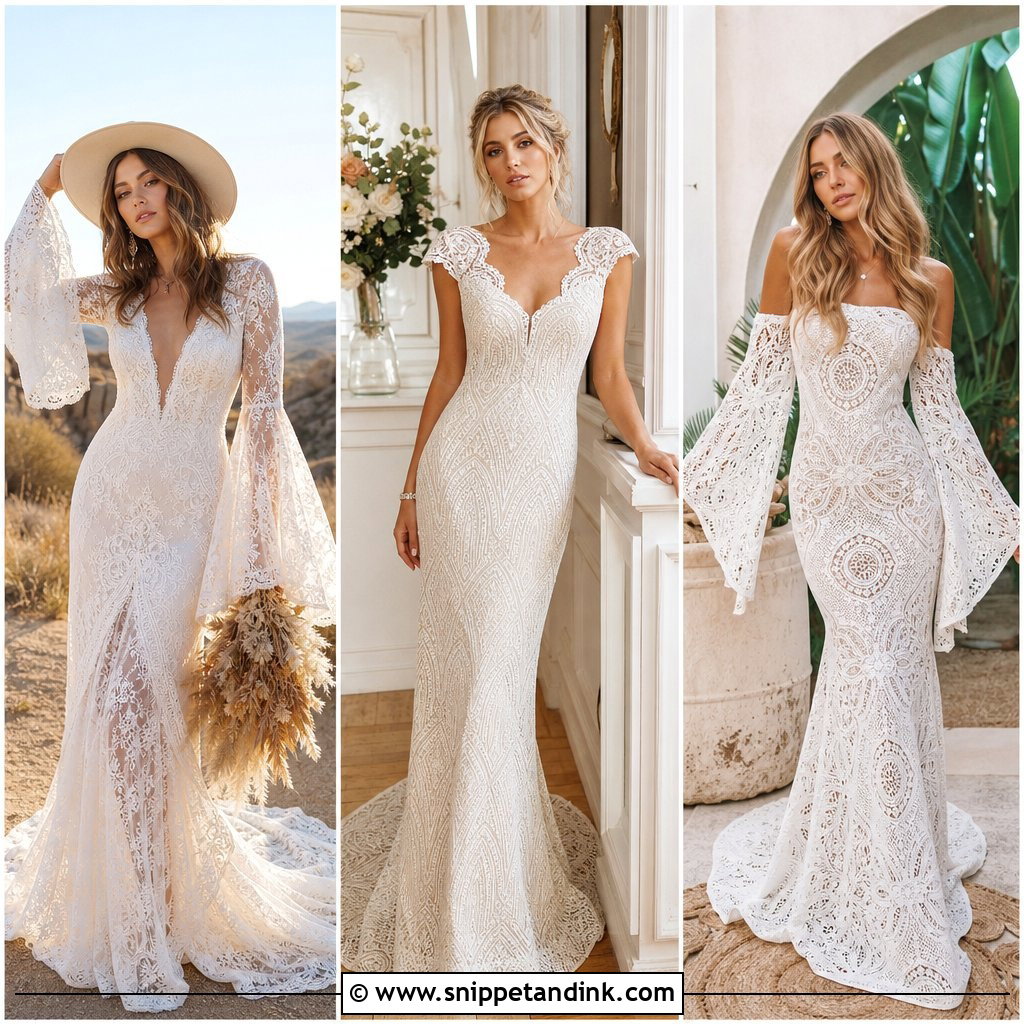
3. Illusion Sleeve Mermaid Wedding Dress
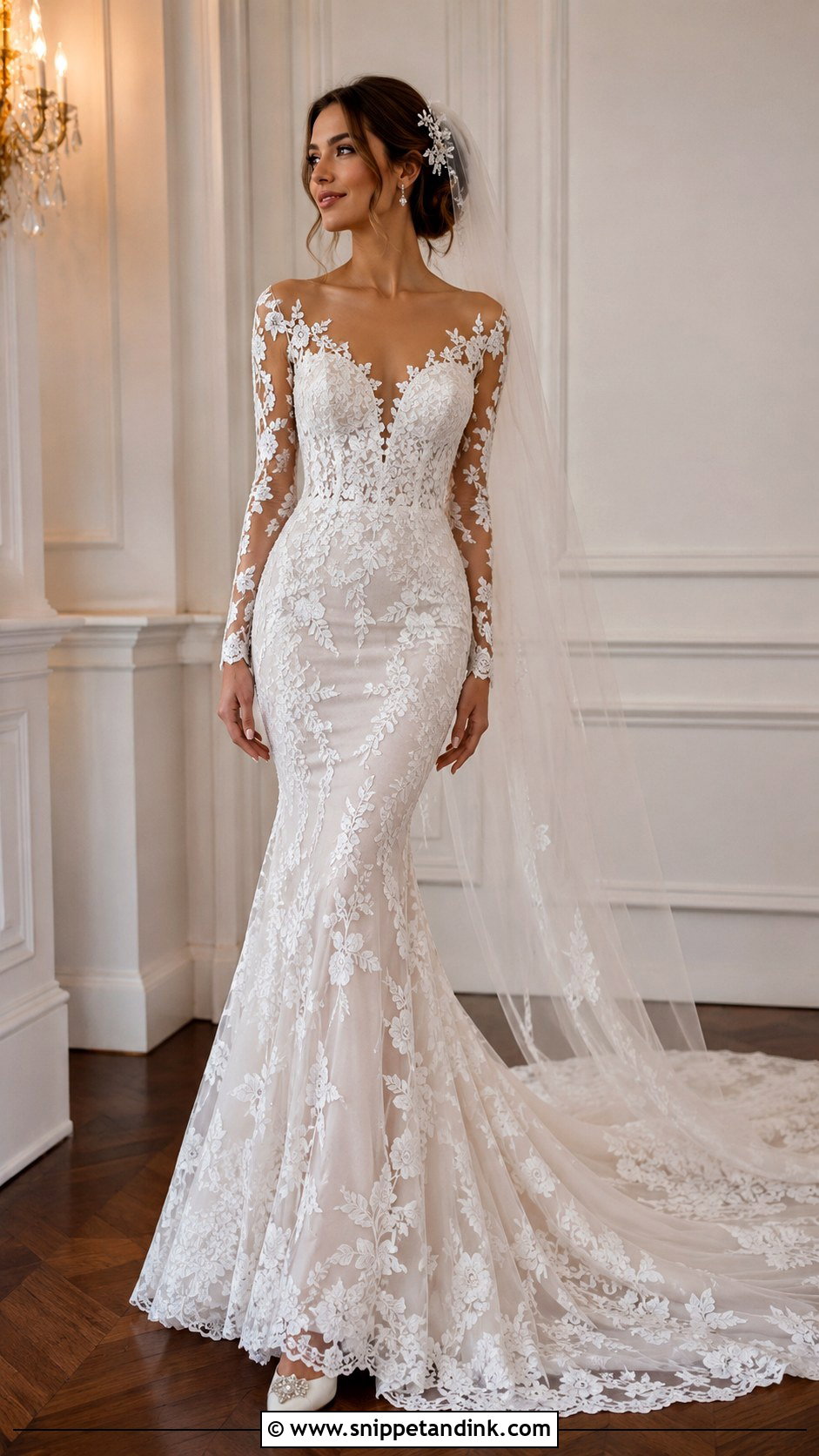
Mermaid gowns are fitted to just above the knee, so the sleeves are often the only soft element on the whole dress. Sheer illusion arms help, especially when the same floral lace runs across the bodice and into the train. My warning with this silhouette is about sitting. Once the bride sits, the flare point rises and the skirt pinches, so I have her sit and stand several times at every fitting before we take anything in. Pointed heels she can actually stand in, a crystal comb, plain studs and a sheer chapel veil let the back lace show. It belongs in a formal evening room rather than on grass.
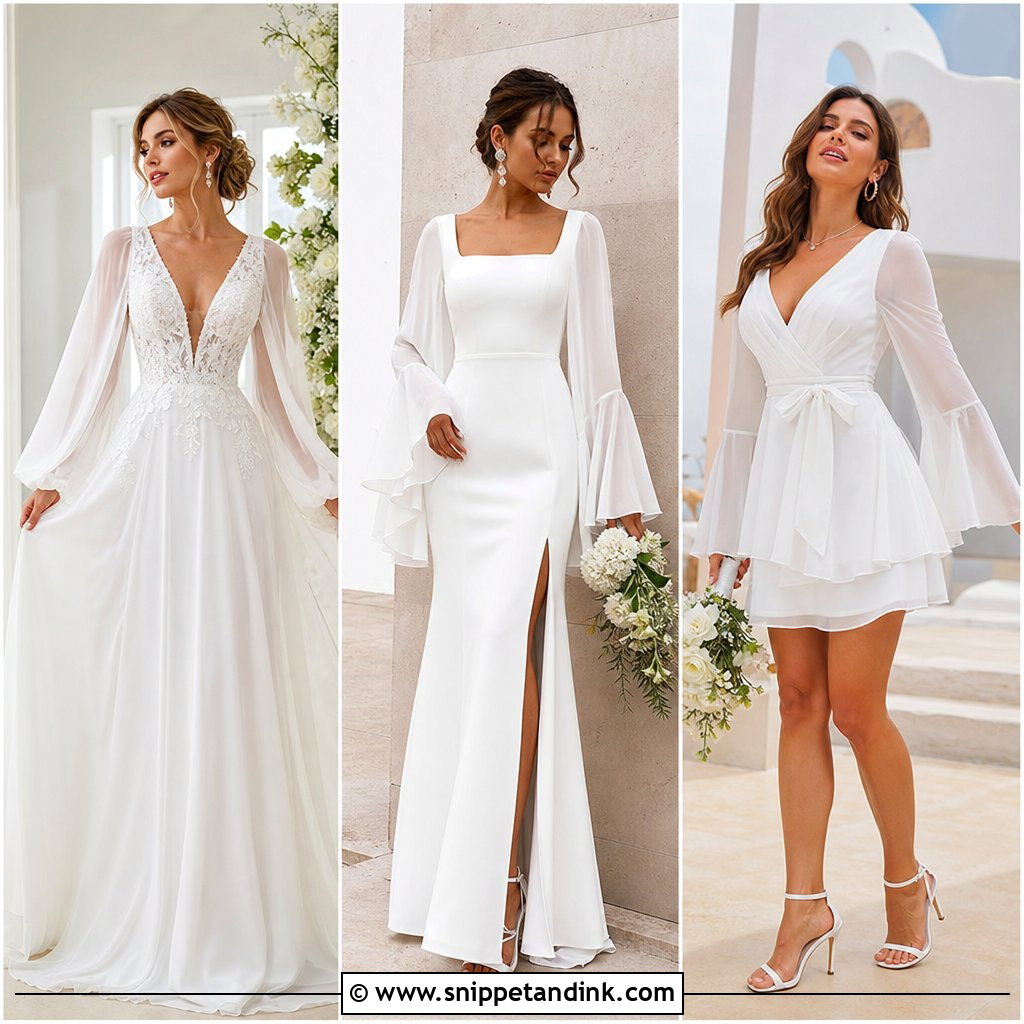
4. Bishop Sleeve Chiffon Wedding Dress
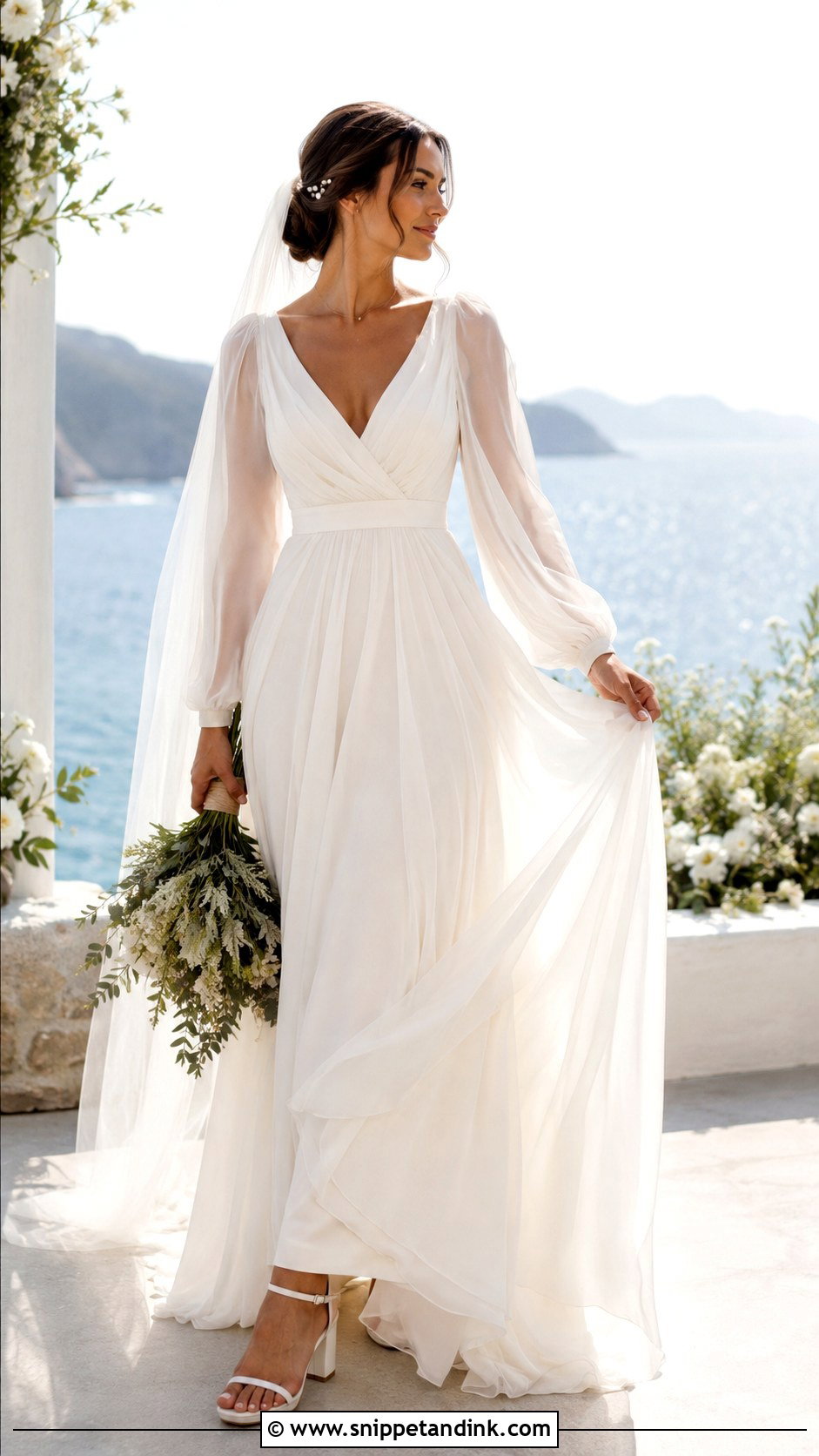
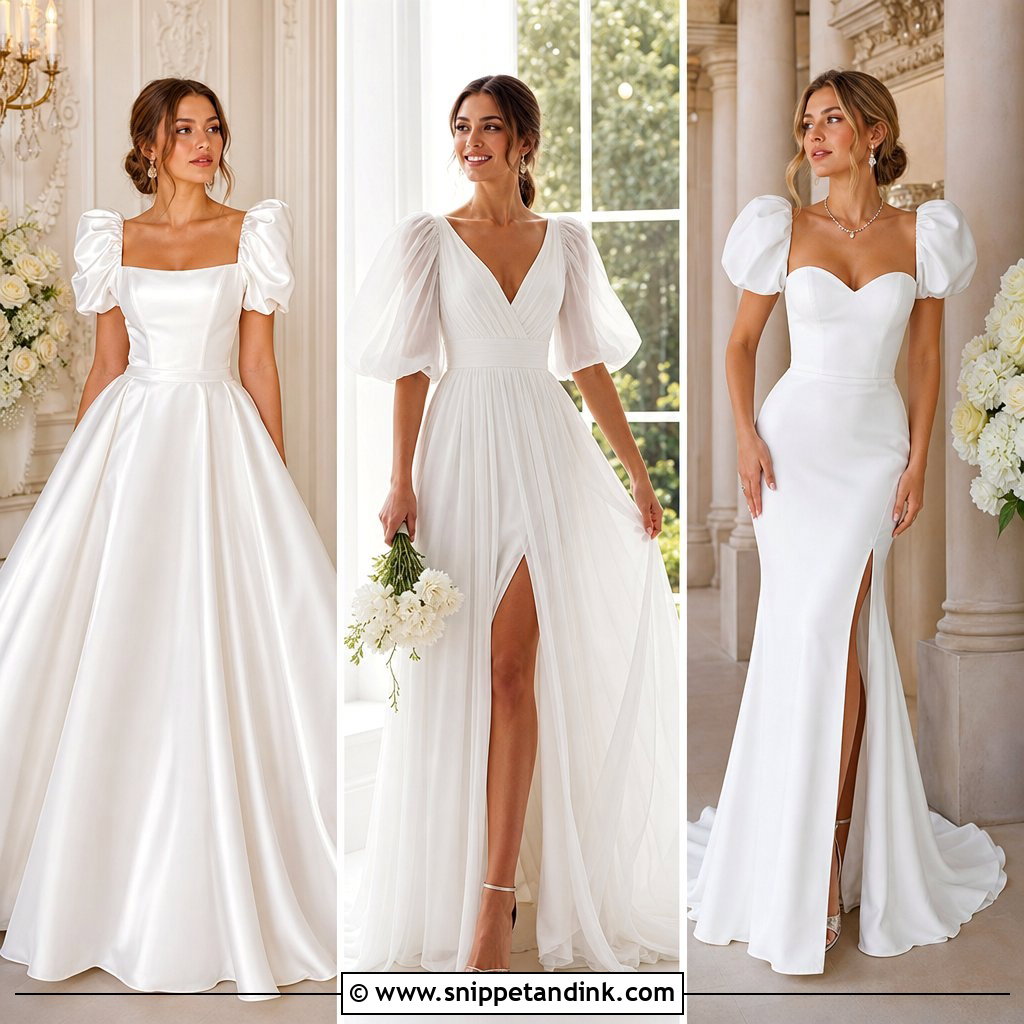
Bishop sleeves gather into a cuff, and the extra fabric between shoulder and wrist is what gives chiffon that billowing shape in a breeze. A V-neck or wrapped bodice balances the volume at the arms; a high neckline with bishop sleeves can swallow a petite frame. Chiffon is often more transparent than brides expect, so I check the lining by a window and again under warm indoor bulbs. Block-heel sandals, a fine pendant, pearl pins in a loose updo and a narrow chiffon veil or light cape suit a beach or a warm destination, where breathable fabric matters by the second hour.
5. Puff Sleeve Square Neck Wedding Dress
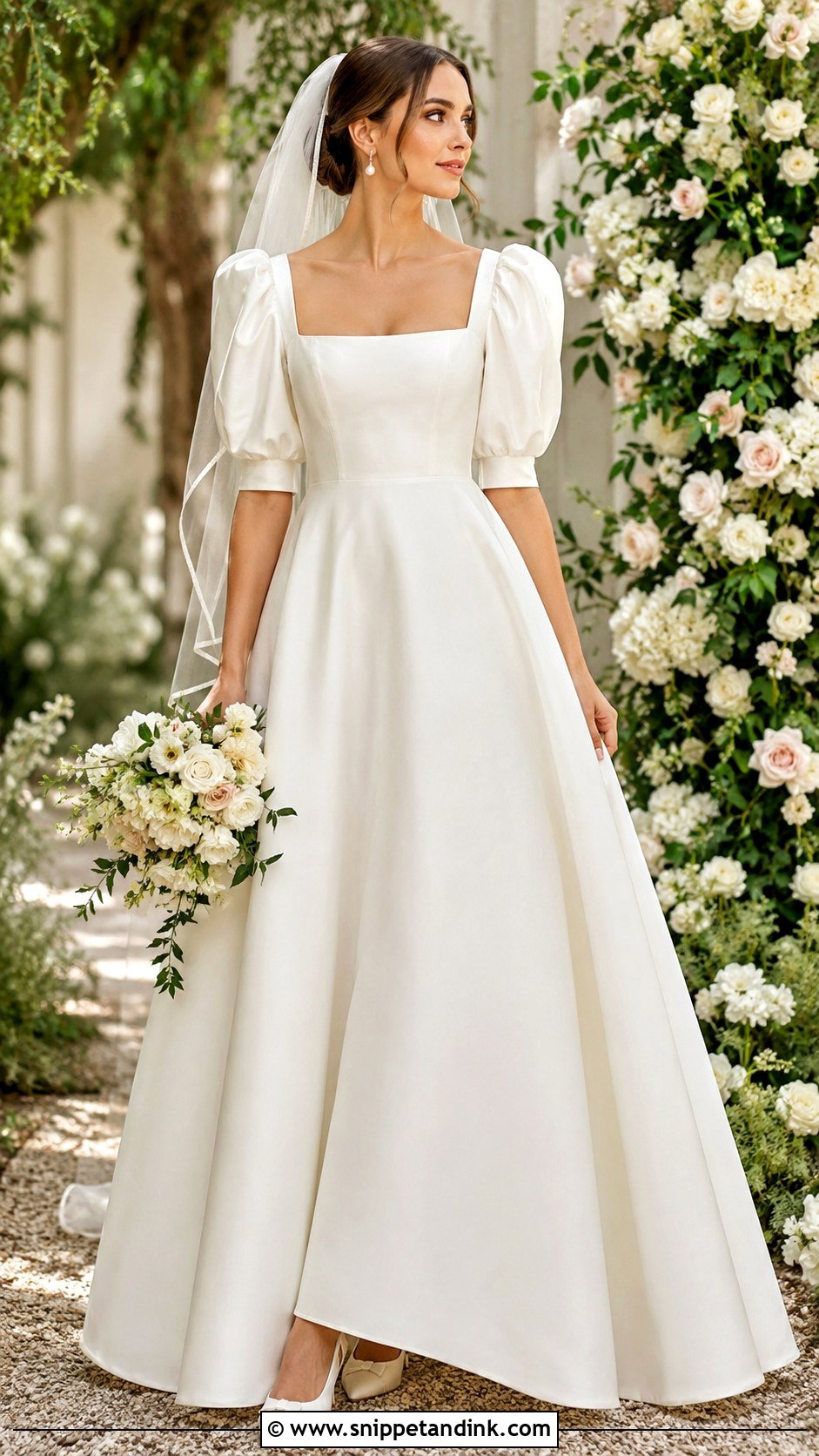
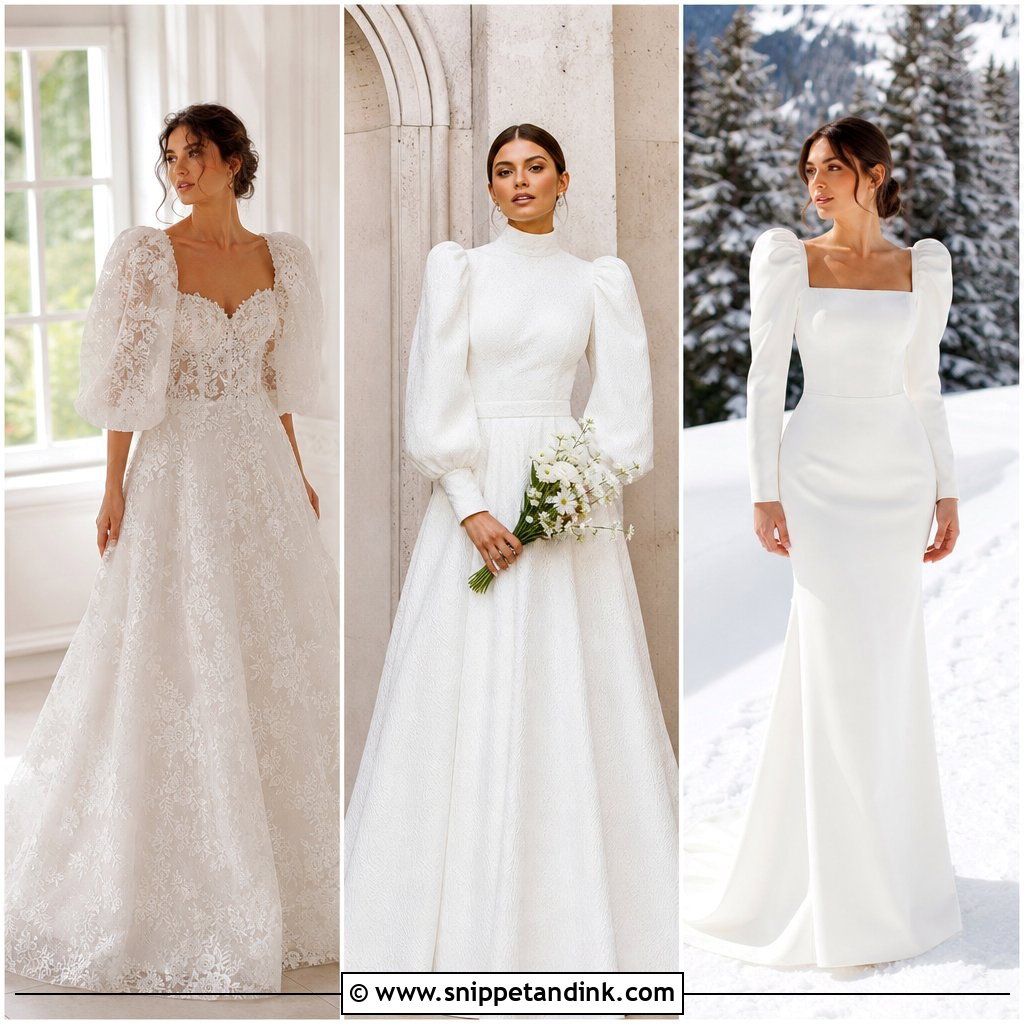
Puff sleeves pull the eye to the shoulders, so the square neckline has to be cut wide enough that the two don’t crowd each other. A square-neck wedding dress with puff sleeves reads vintage with a gathered A-line skirt and modern with a smoother one. Elbow-length puffs are cooler in summer; full-length versions feel more theatrical. I usually skip a necklace here and go with pearl earrings, a ribbon-edged veil and ivory slingbacks. A low ponytail or tidy bun keeps the shoulder line clear for a garden or a country house.
6. Bell Sleeve Boho Lace Wedding Dress
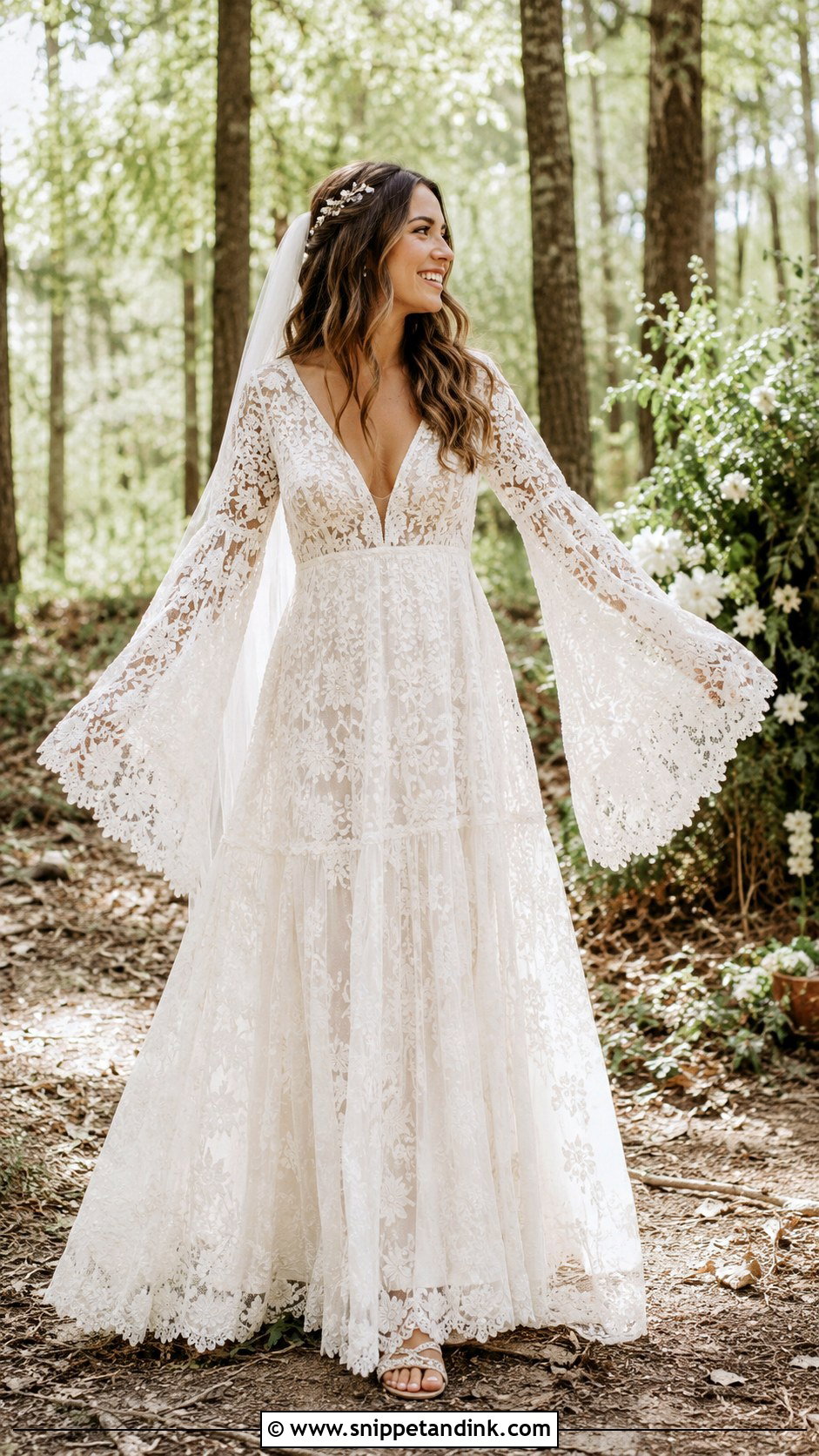
Wide bell sleeves are relaxed to wear but they swing, and the open cuff can trail across a cake or dip into a plate at dinner. I mention that early so nobody is surprised. Botanical lace, a lightly fitted waist and a skirt that falls without a hoop keep the boho feel honest. An open V-neck balances the width at the wrists. Block heels or flat embellished sandals, a flower-shaped comb and a light veil under loose waves are plenty; the lace already gives you pattern, so I leave the neck bare. A small bouquet with eucalyptus suits woods, desert and outdoor estates.
7. Detachable Sleeve Corset Wedding Dress
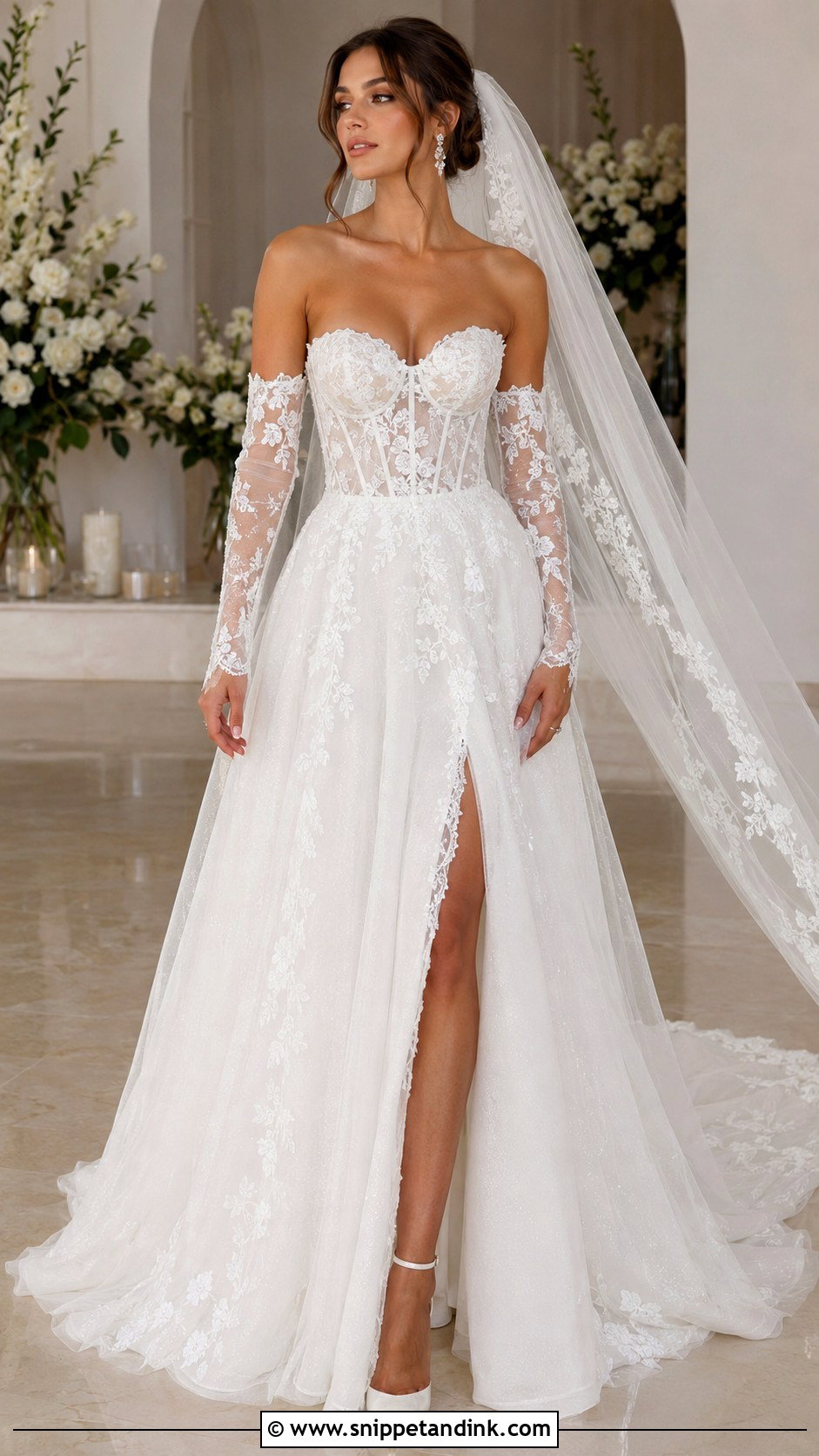
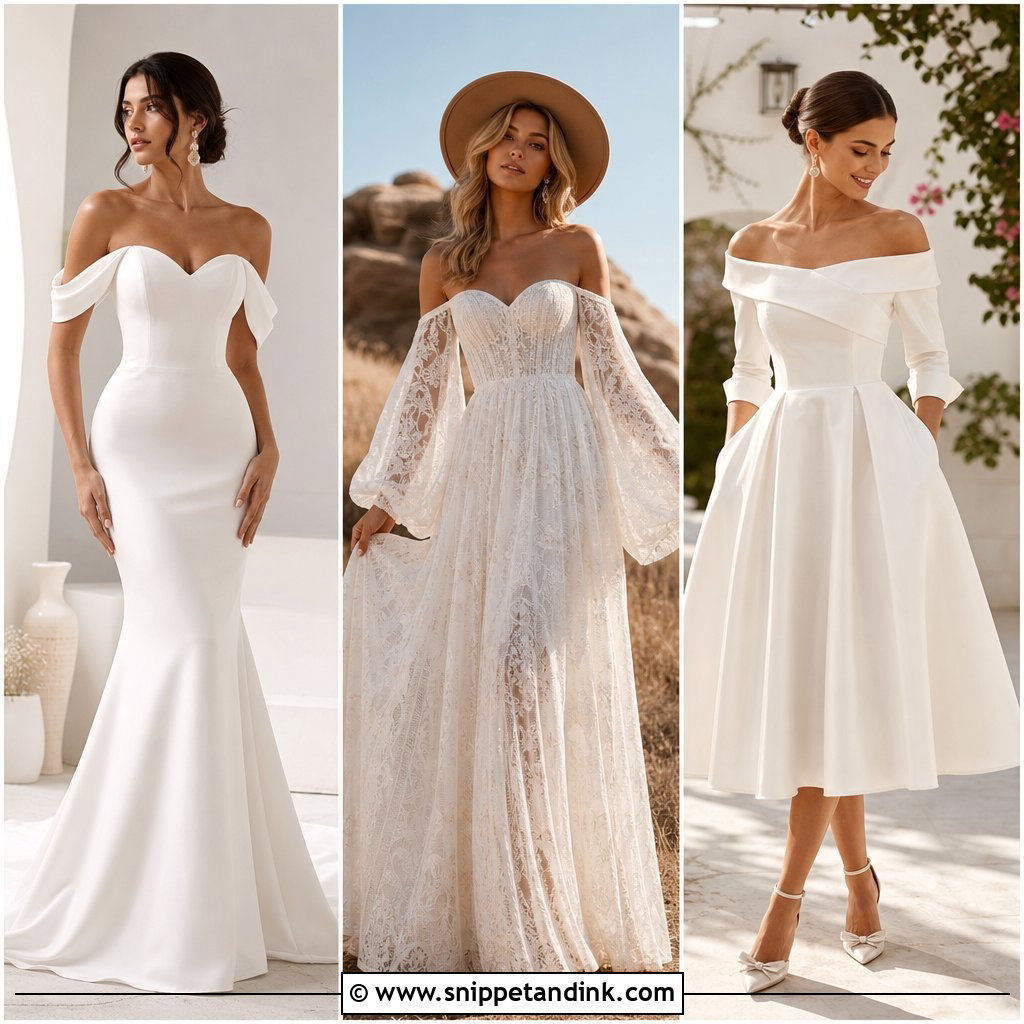
Detachable sleeves give you two looks from one gown, but only if the attachment is done well. I check three things: the sleeve sits flat at the bodice edge, the fastening is hidden from the side camera angle, and someone in the bridal party knows how to remove it in under five minutes. Sheer lace sleeves on a structured sweetheart corset, a flowing A-line skirt, crystal drops, closed satin heels and a long veil cover the ceremony. Later, swap the veil for a jeweled clip and add a bracelet for a strapless reception look that dances more freely.
8. High Neck Lace Wedding Dress With Sleeves
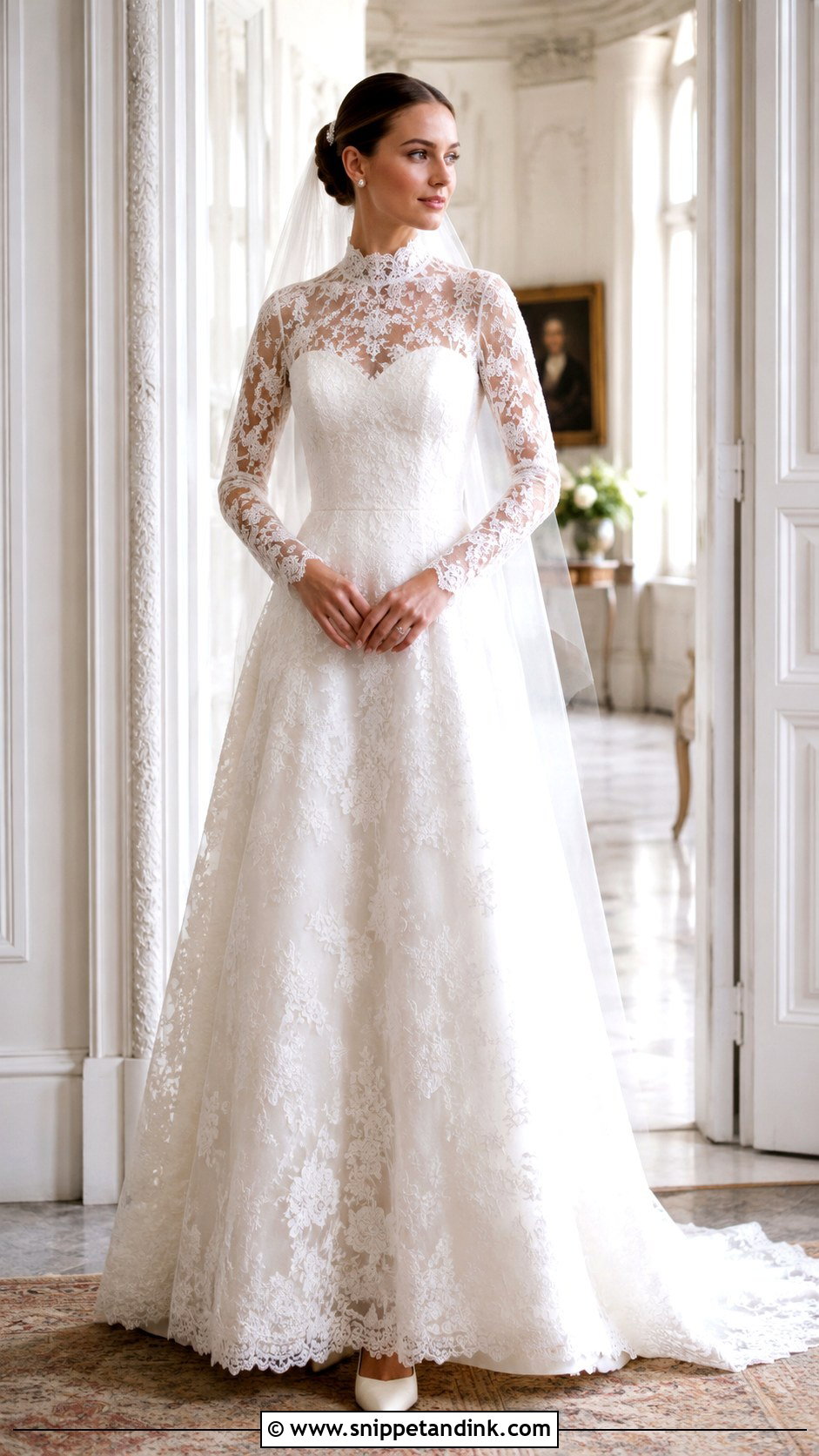
A high lace neck frames the face, which means hair and earrings matter more than in almost any other style. The sheer neckline should sit over a lined sweetheart bodice so the shape underneath still shows. I’d skip a necklace entirely; it tangles with the lace at the throat. A sleek low bun, pearl studs and a veil anchored under the bun keep the neckline clean, and pointed ivory heels lengthen the line of an A-line or column skirt. A compact bouquet works better than a cascade here. Expect this one to feel warm in midsummer, so I’d save it for a formal room or a cooler month.
9. Cape Sleeve Crepe Wedding Dress
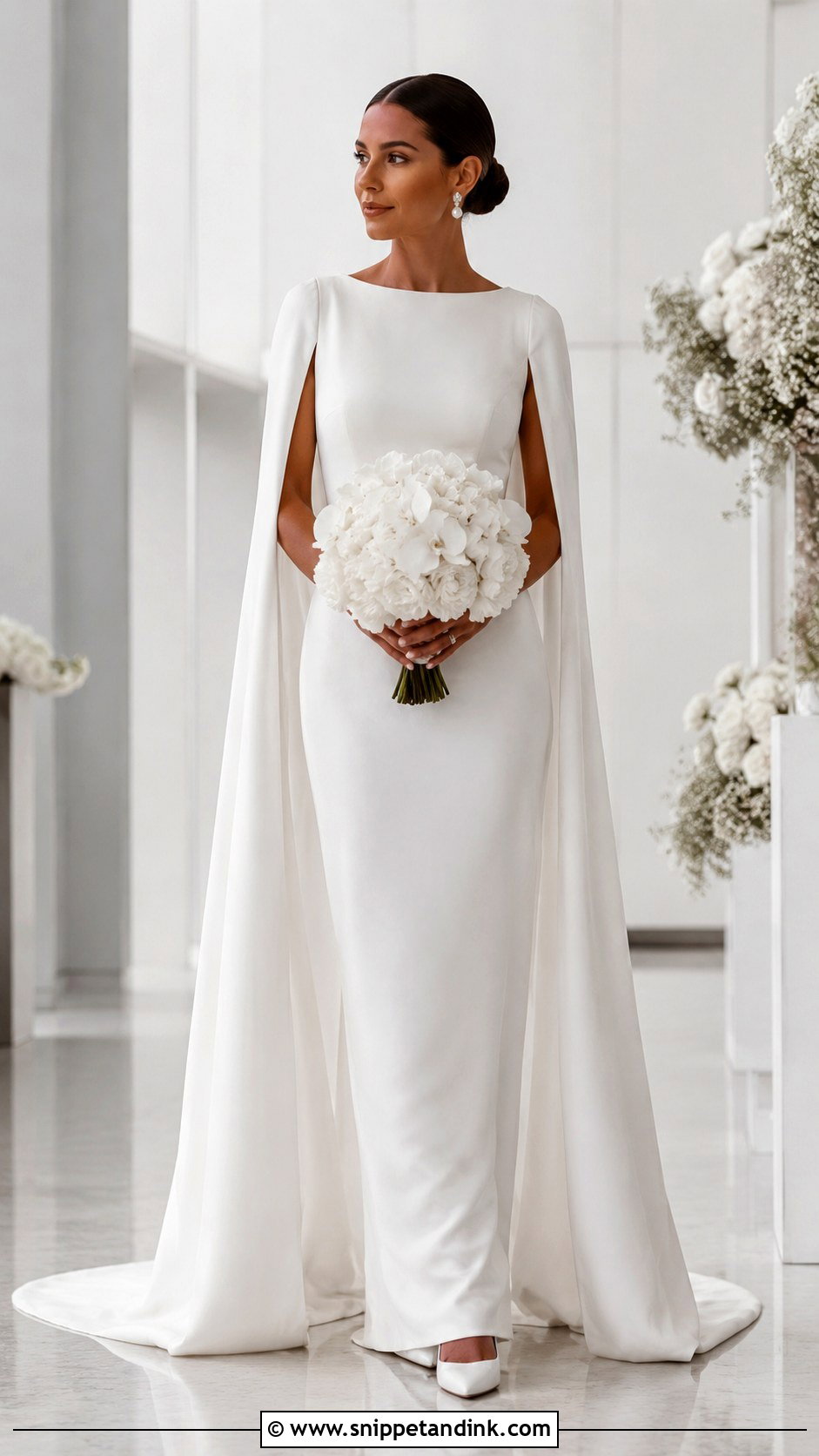
Cape sleeves turn a plain crepe gown into something with movement. The cape panels should fall from the shoulder and move on their own; if they hang straight over the body, they hide the cut you paid for. Crepe shows every seam and bump, so the undergarment fitting matters as much as the dress fitting. Pointed pumps, sculptural pearl earrings and a smooth low bun suit the clean lines. You can skip the veil because the cape already moves behind you, or add a single plain layer. White roses or calla lilies in a tight bouquet suit a rooftop or a minimalist room.
10. Flutter Sleeve Tulle Wedding Dress
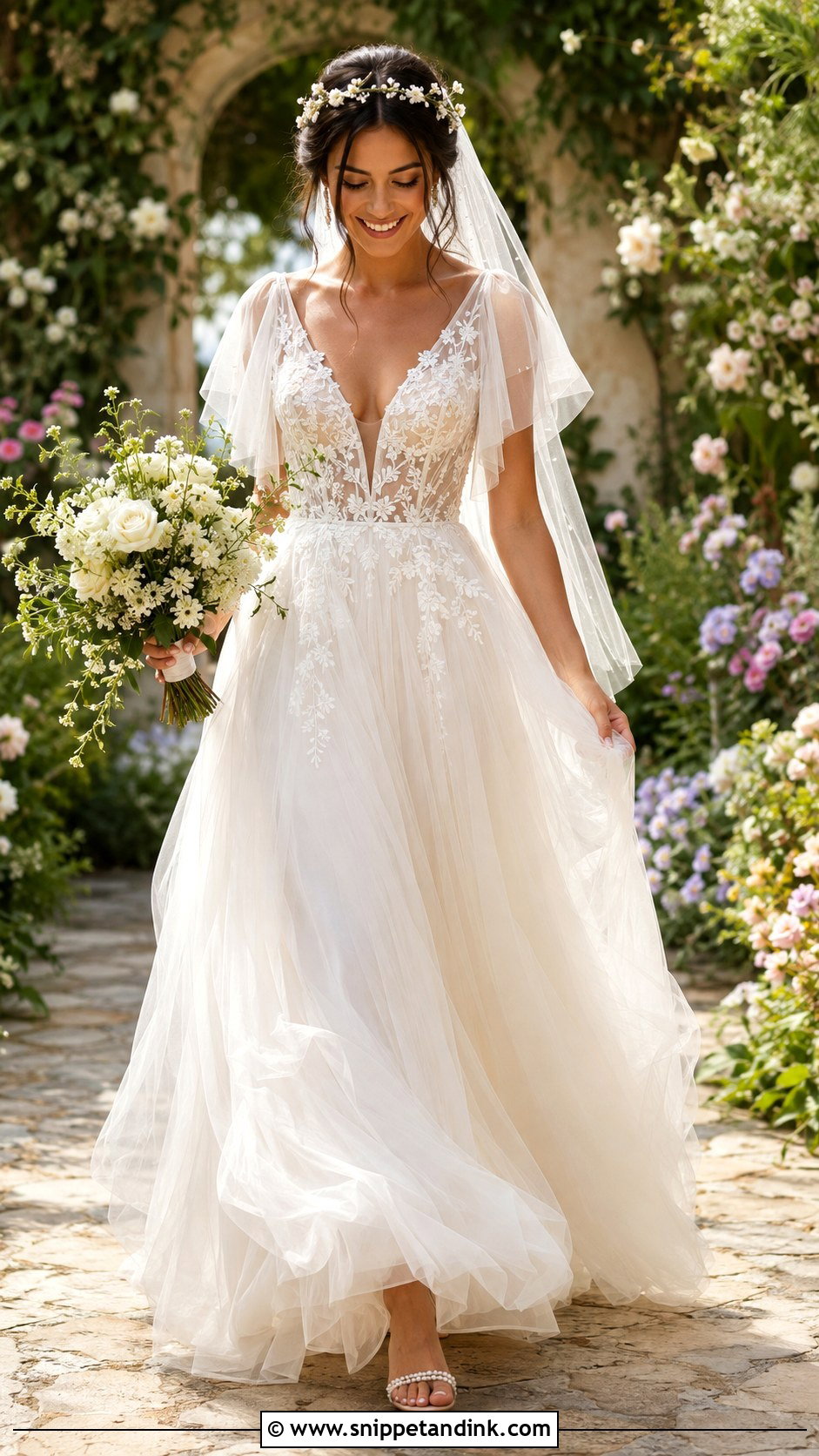
Soft flutter sleeves cover the top of the arm and leave the rest free, which is the easiest sleeve to dance in. On a layered tulle gown, a little embroidery or a few appliqués carried from the bodice into the sleeve ties them together. I like a V-neck or scoop neckline with this, pearl-trimmed sandals, a vine headpiece and a sheer fingertip veil. Keep the bouquet small and round so the bodice isn’t hidden. One honest caveat: tulle snags on rough bark and stone, so in a garden I keep a lint roller and a small pair of scissors in my kit for stray threads.
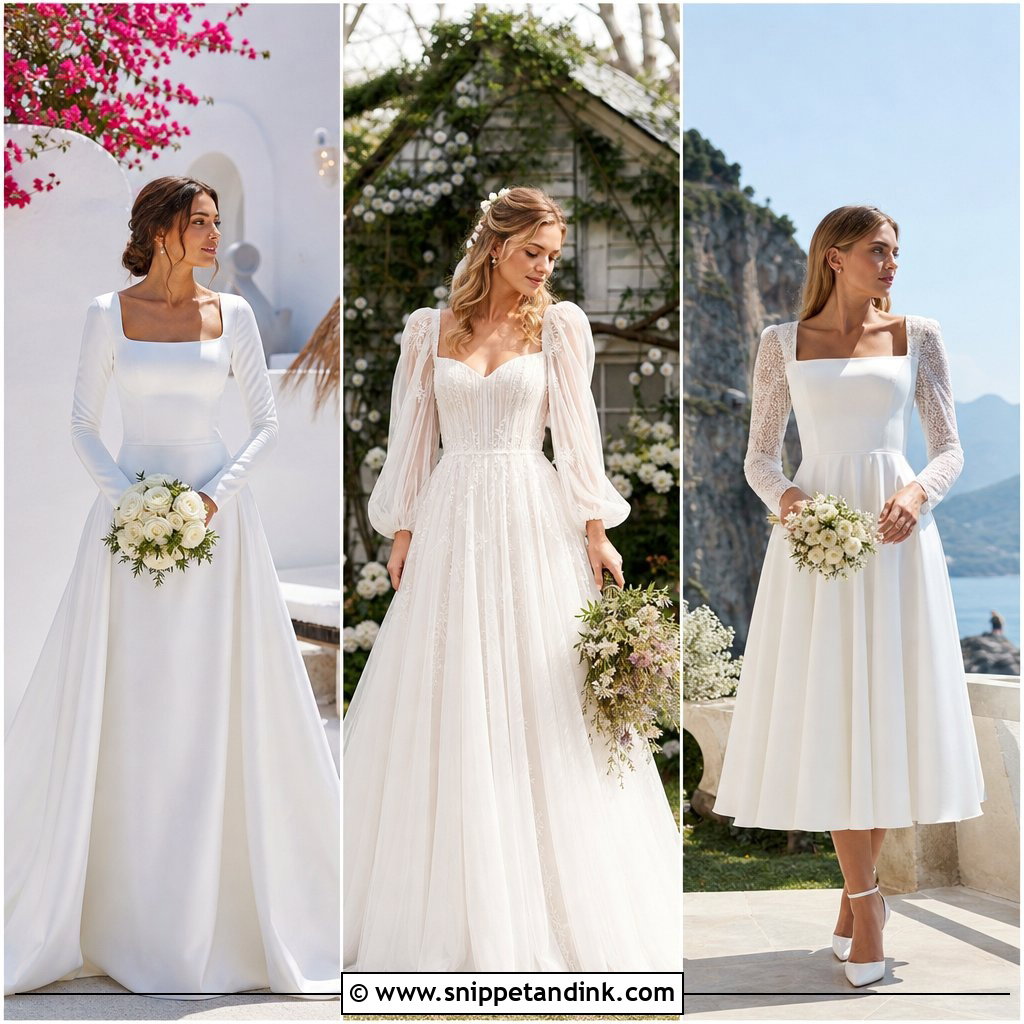
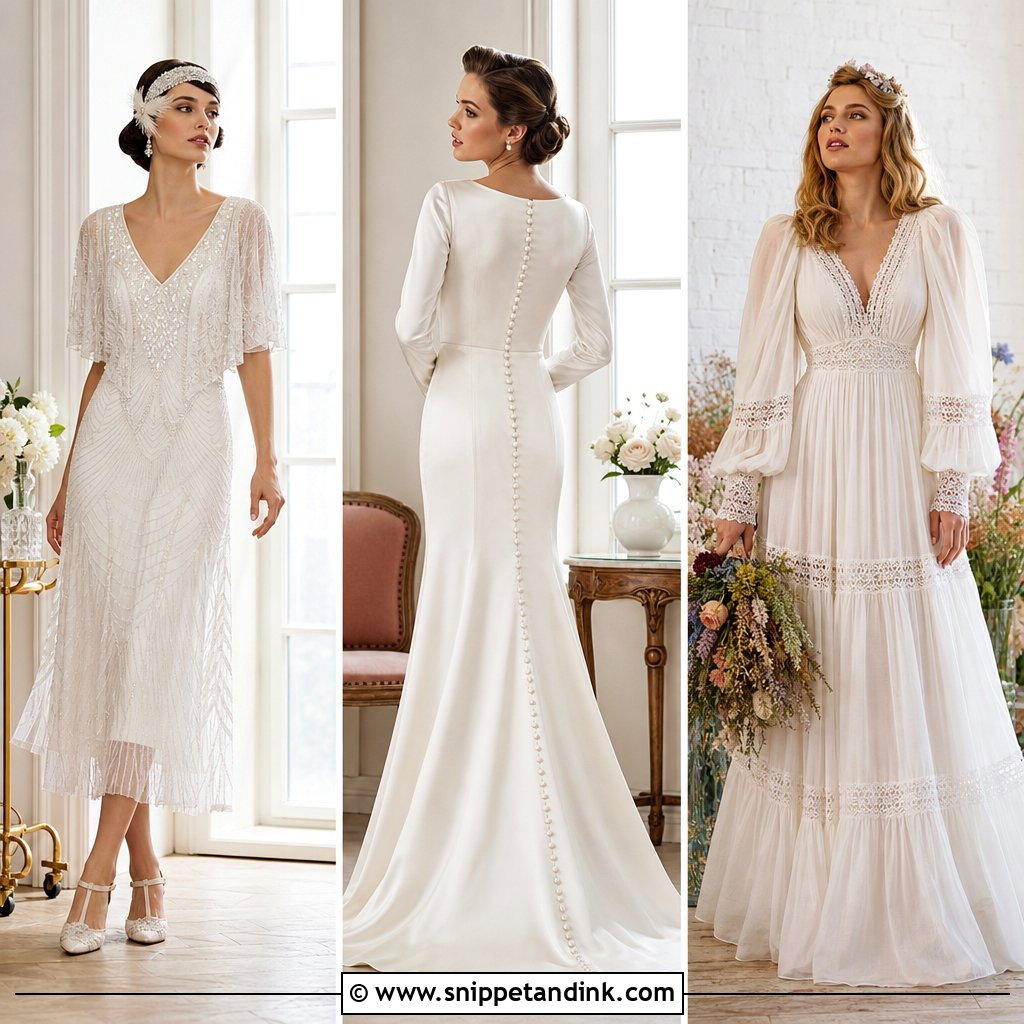
11. Three Quarter Sleeve Tea Length Wedding Dress
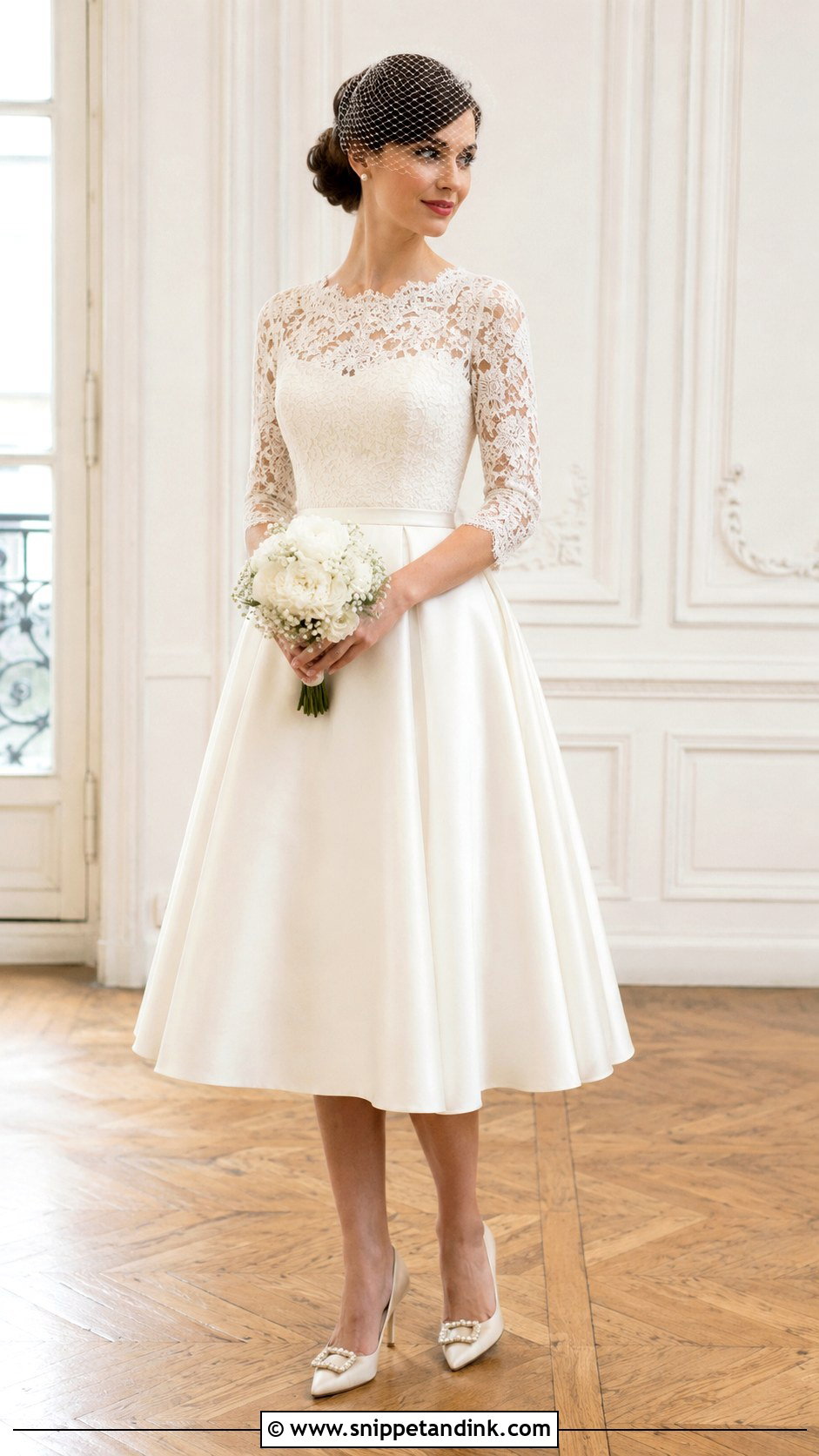
Tea length with three-quarter sleeves is the dress I suggest most often for a courthouse ceremony or a small lunch reception. The hem has to land at the narrowest point of the calf; an inch too high or low makes the leg look shorter, so I pin it with the bride wearing her actual shoes. Since everyone sees your feet, the shoes earn real attention: pearl-buckled pumps or ivory slingbacks. A birdcage veil, pearl studs and a structured little bouquet finish the retro feel. Gloves only work if they stop well short of the sleeve; otherwise the two overlap and bunch.
12. Pearl Sleeve Satin Wedding Dress
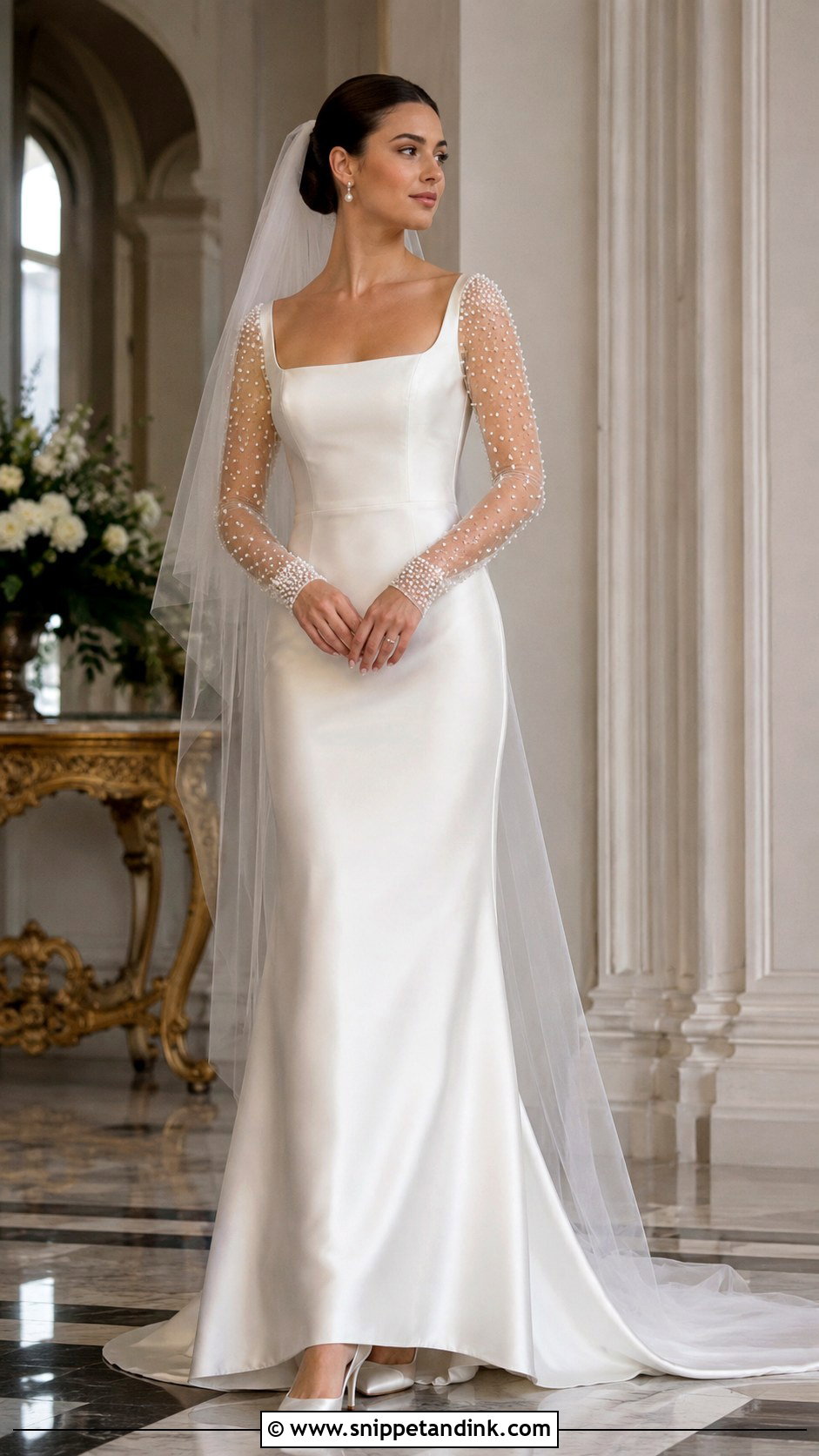
Pearl sleeves need restraint. Scattered pearls on sheer mesh shimmer nicely, while dense beading adds weight that drags the sleeve down by the end of the evening. Pearls also catch on tulle, so at fittings I run the veil and bouquet ribbon across the arm to see where they snag. A plain square, bateau or sweetheart neckline gives the sleeve room. Pearl earrings, smooth ivory pumps, a sleek bun with one small pearl comb and an unadorned chapel veil are enough. It suits an evening reception indoors, where candlelight picks up the pearls.
13. Floral Appliqué Wedding Dress With Sleeves
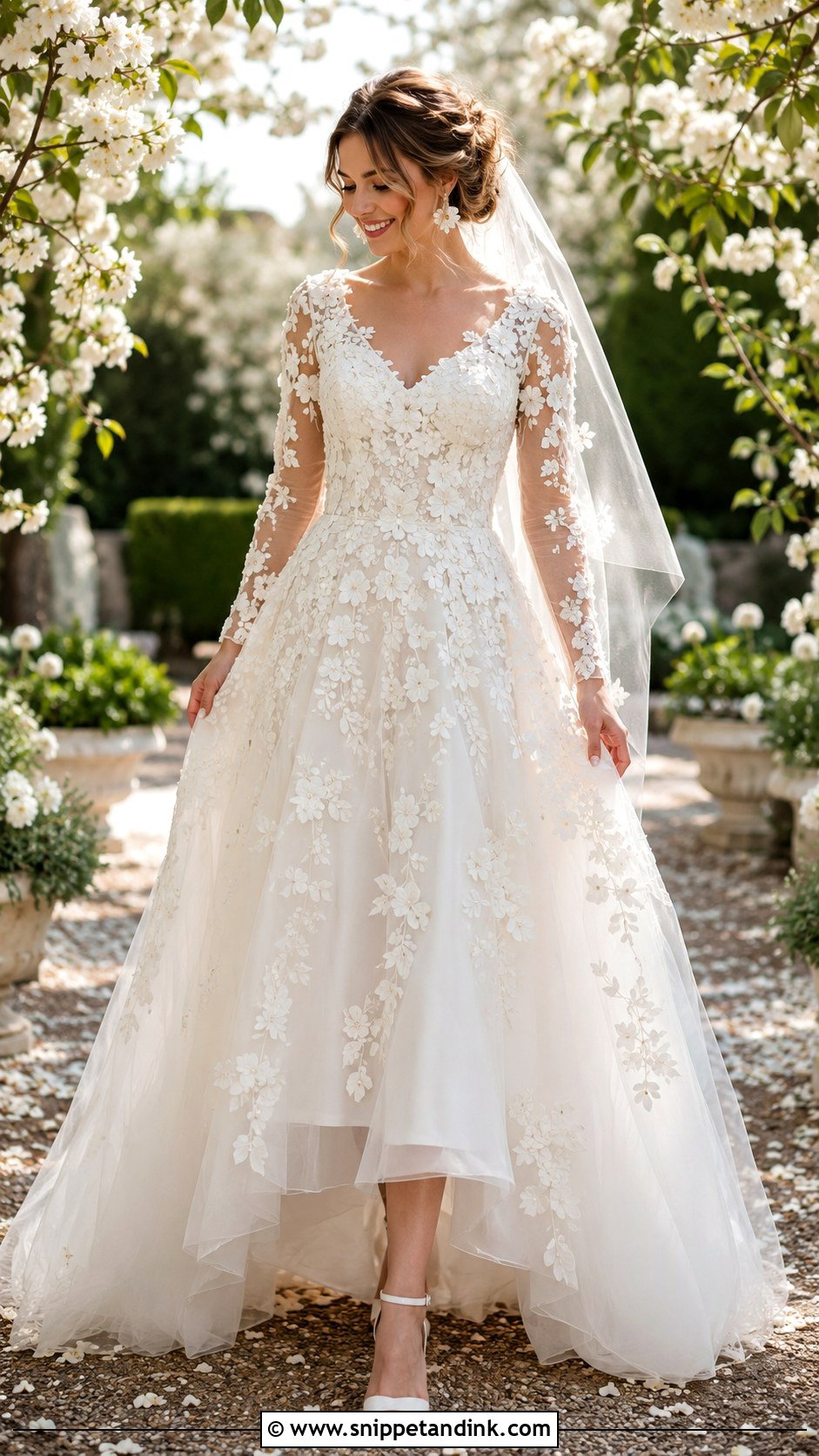
With three-dimensional appliqué, continuity is everything. The flowers should travel from bodice to sleeve to skirt in mixed sizes, otherwise the sleeves look borrowed from another gown. I check the back of each flower for scratchy edges, since the inside of the arm rubs against them all day. An A-line skirt gives the appliqués space. Plain satin heels, tiny floral earrings and a veil with only a few matching flowers at the hem keep the balance right, and an all-white bouquet stops real blooms fighting the fabric ones. Spring gardens and bright indoor rooms suit it.
14. Modest Long Sleeve Mikado Wedding Dress
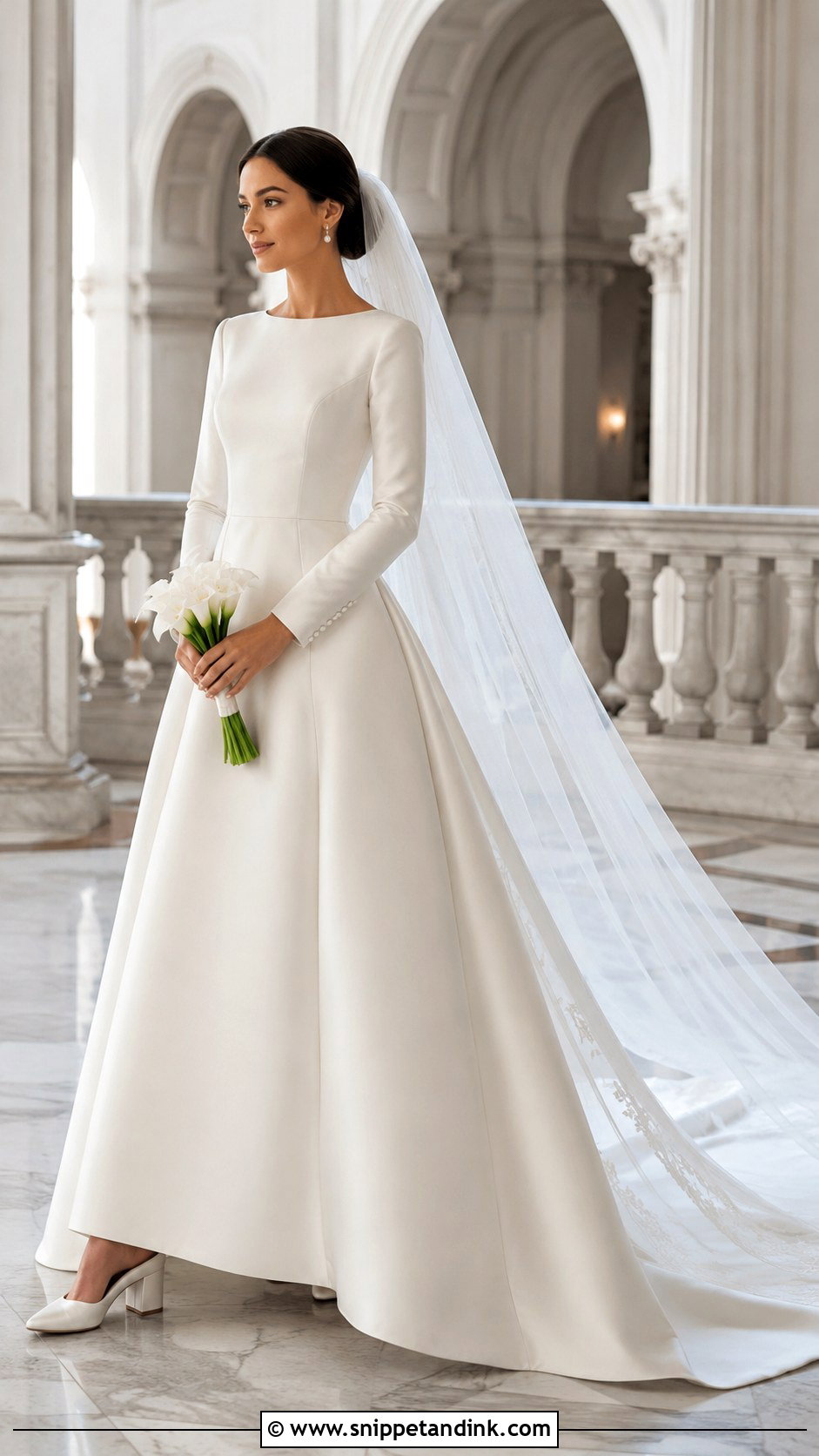
Mikado is a heavy, crisp silk blend, and it gives a modest long sleeve wedding dress sharp structure with no shine to speak of. Because it doesn’t stretch, the sleeve needs extra room at the bicep; I’d rather see a little ease there than a bride who can’t lift her arms for the first dance. A bateau or rounded neckline, a fitted waist, a full A-line skirt with pockets and covered buttons at the cuffs give it a traditional finish. Satin block heels, pearl drops, a clean cathedral veil and a polished chignon complete it, and white roses keep the palette classic.
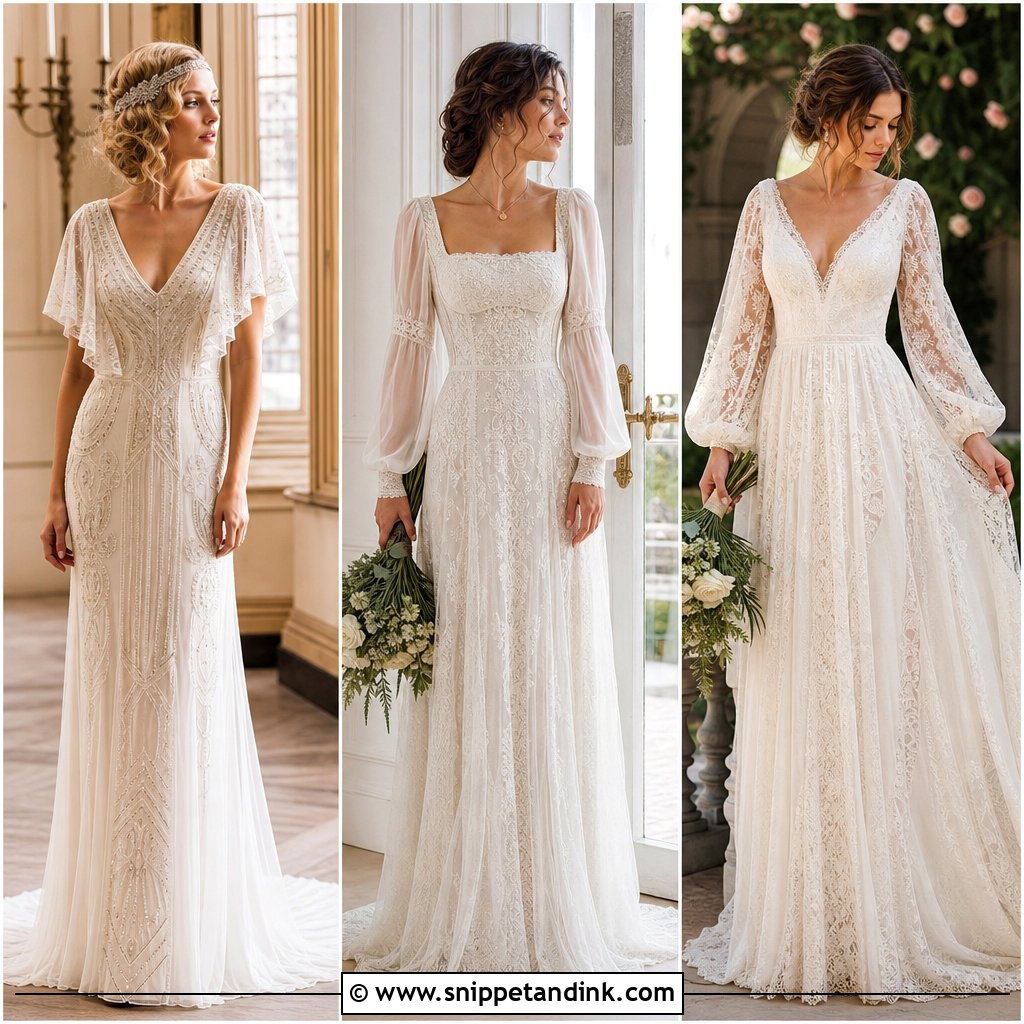
15. V Neck Lace Wedding Dress With Sleeves
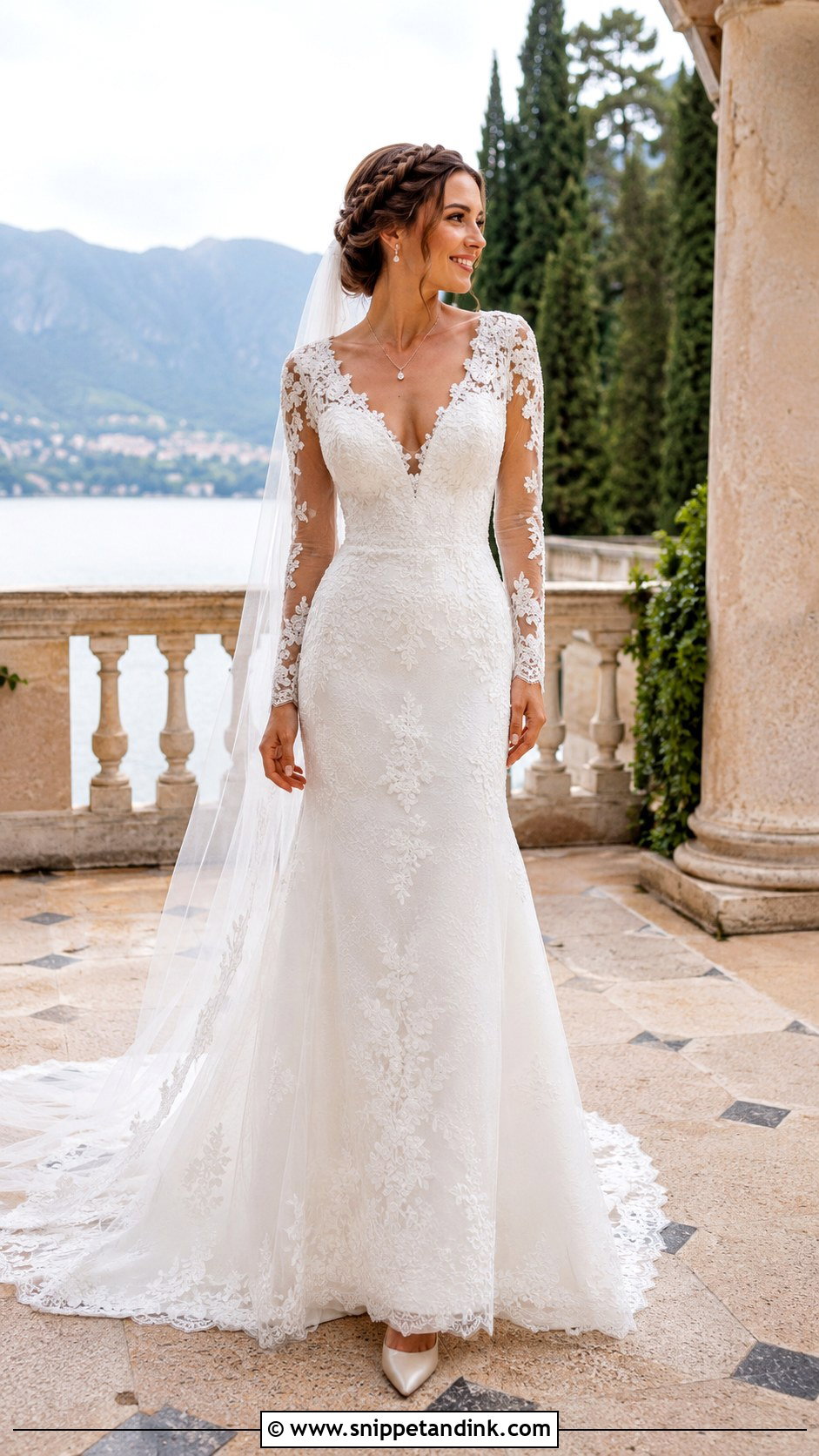
A V-neck with fitted lace sleeves is one of the most adjustable designs I work with, because the depth of the V can be raised and the illusion mesh inside it can be added or removed. Decide how deep you’re comfortable with before the first fitting, sitting down, not standing. A gently flared skirt keeps volume modest. A fine pendant that sits just above the point of the V, simple earrings, pointed ivory shoes and a low braided bun let the lace speak. With a low back, I’d choose a plain tulle veil; heavy lace on both veil and gown starts to look like wallpaper.
16. Open Back Wedding Dress With Fitted Sleeves
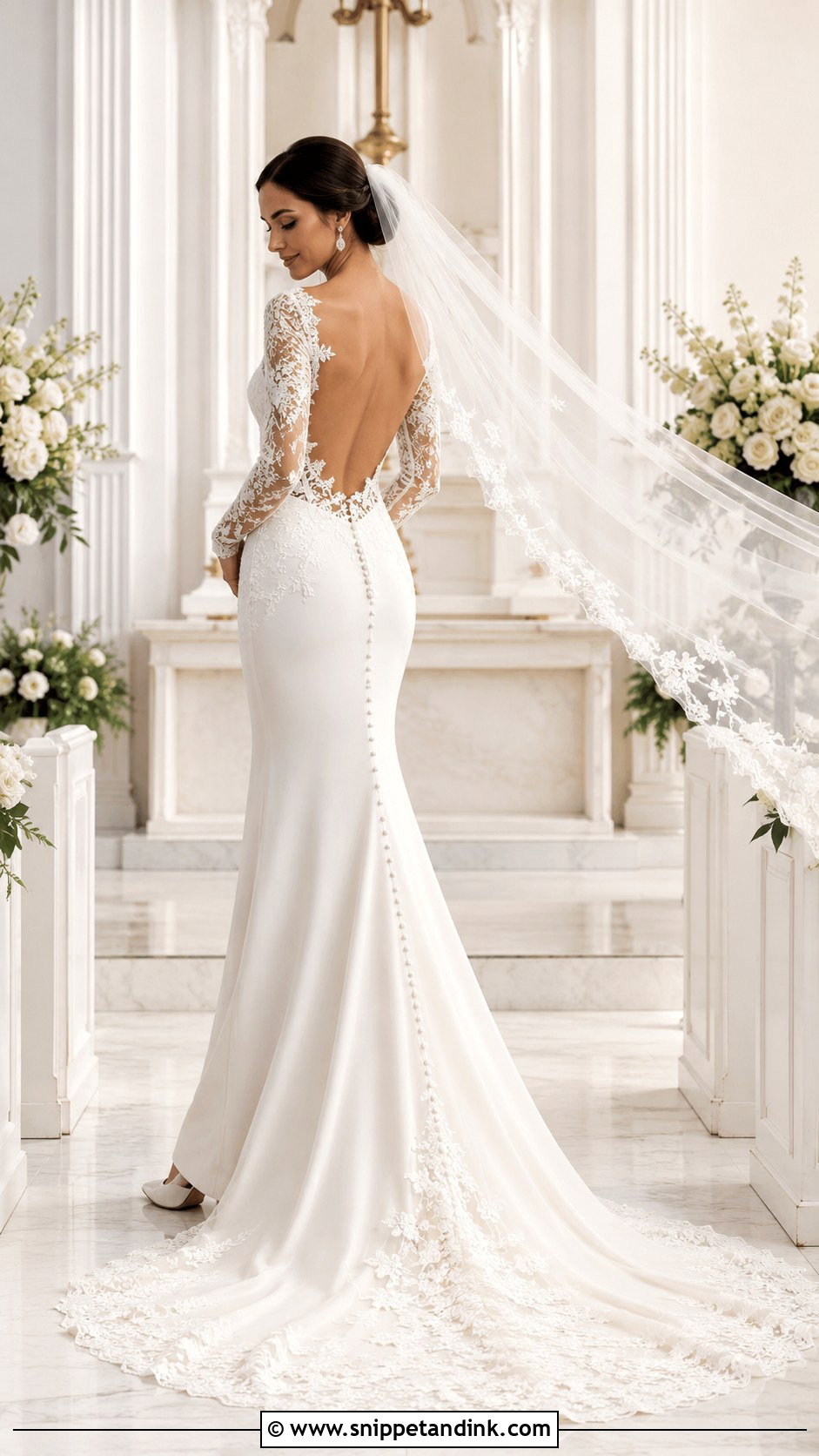
From the front this reads as a covered, sleeved gown, and then the open back changes the whole view as you walk away. Position the opening high enough for the bra or bodice support you need; I have brides bring their undergarments to every fitting for exactly this reason. Covered buttons, lace edging or a small bow can frame the opening. A low bun keeps the back visible, with drop earrings and simple satin pumps. Attach a sheer veil under the hair so it veils the back without hiding it. During the fitting, have someone take photos from behind and both sides; mirrors only show you half the story.
17. Short Sleeve Jacquard Wedding Dress
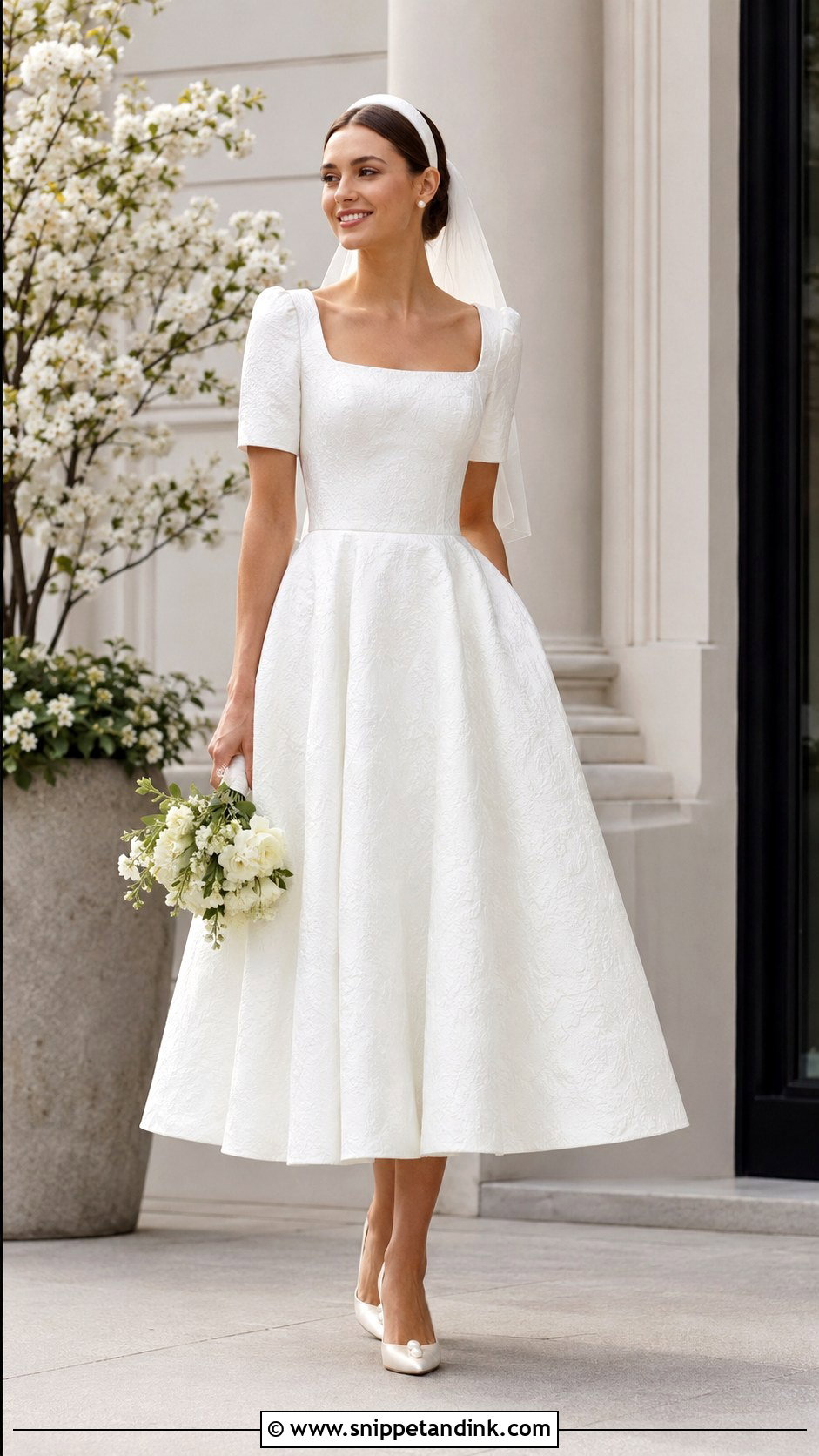
Jacquard has the pattern woven into it, so the fabric itself is the decoration and nothing else needs adding. It has much more body than chiffon or tulle, which makes the tailoring unforgiving; a short sleeve that is cut slightly too tight will stand away from the arm instead of hugging it. A square or soft scoop neckline balances tailored short sleeves. Pearl-button pumps, small earrings and a smooth headband or short veil are all I’d add, plus a compact bouquet in one color so it doesn’t fight the weave. Daytime city ceremonies and spring receptions are where it looks right.
18. Basque Waist Wedding Dress With Romantic Sleeves
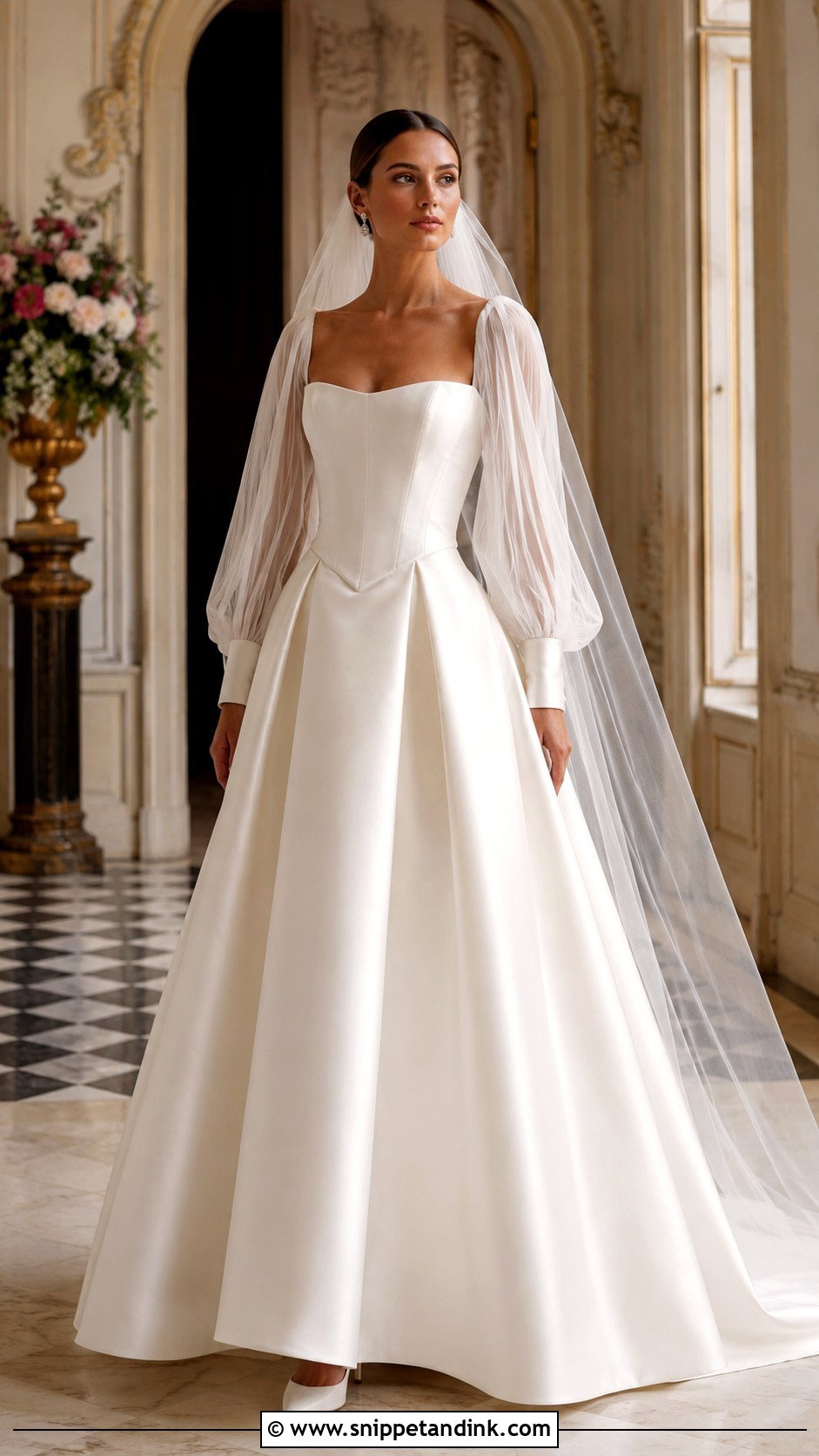
The Basque waist is a long, defined bodice that dips to a point at the center front before the full skirt opens. That point lengthens the torso, which flatters most brides but can shorten the legs on a very petite frame, so I always look at it in shoes. Sheer bishop or softly gathered sleeves balance the structured waist, and a scoop or sweetheart neckline stops it feeling like costume. Never add a belt; it cuts straight across the shape you chose the dress for. Delicate drops, closed satin heels, a long plain veil and a loose bun with a few face-framing pieces suit a grand room at night.
19. Long Sleeve Satin Winter Wedding Dress
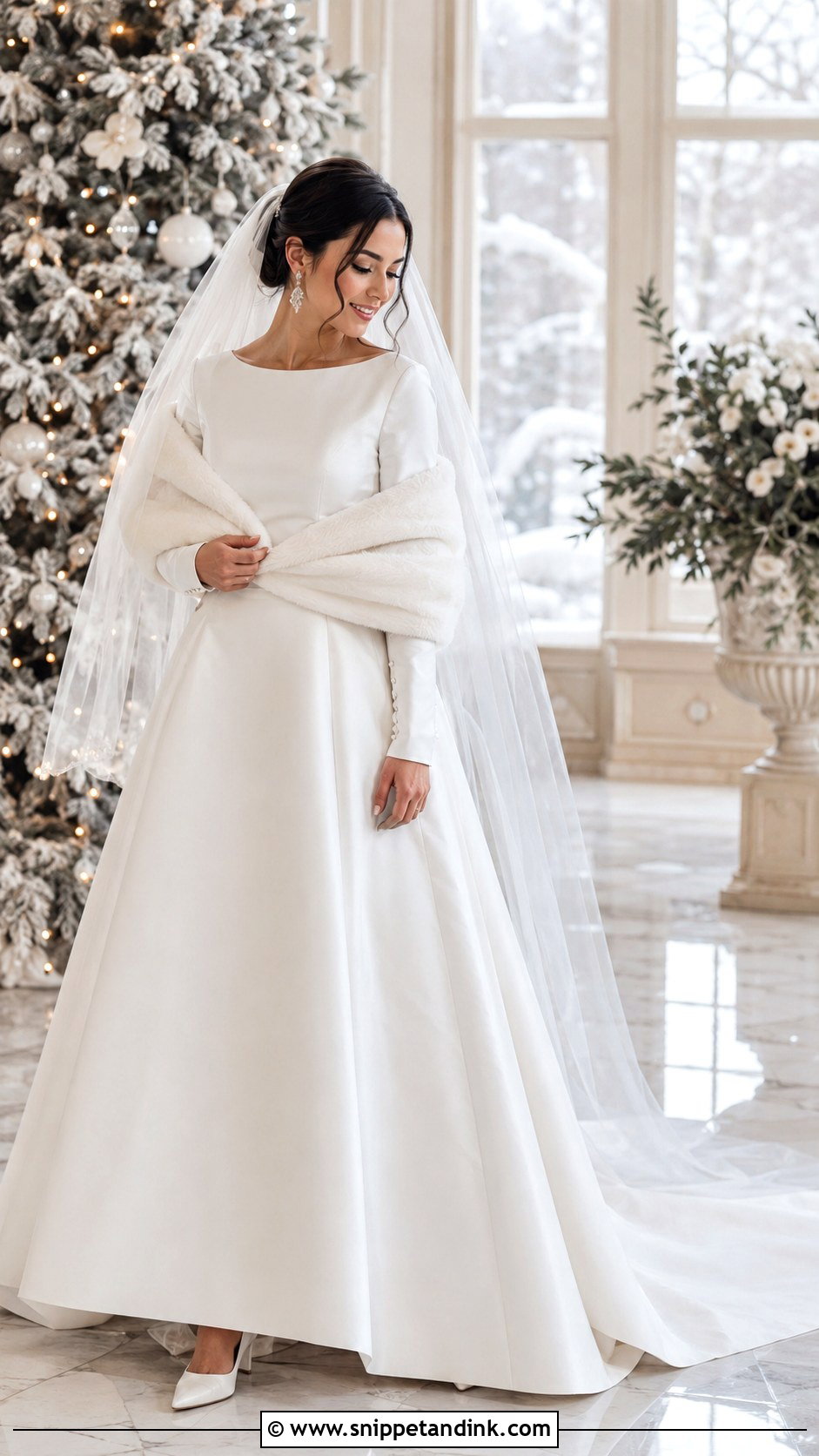
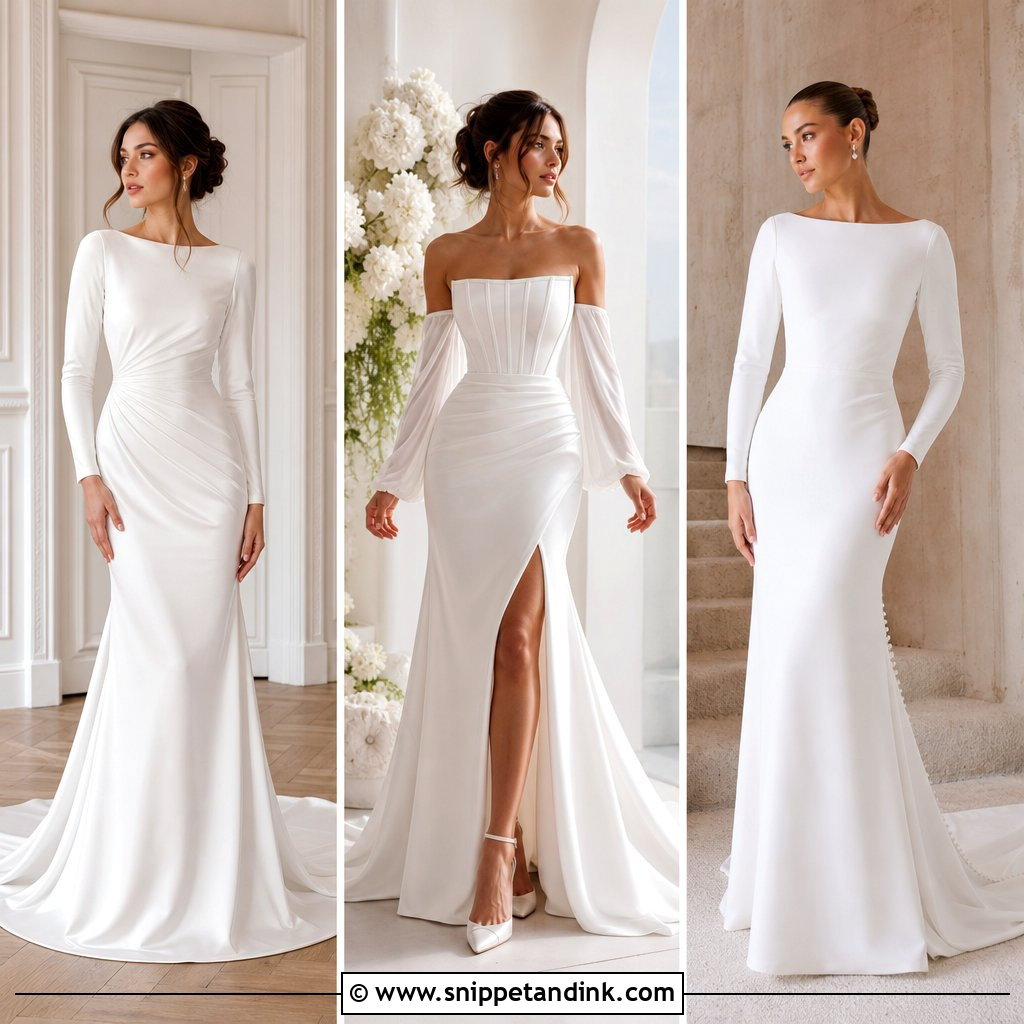
Winter is when long satin sleeves make the most sense, and also when the lining matters most, because a stiff, unlined satin sleeve feels cold and scratchy against bare arms. A clean ball gown or structured A-line with a high bateau, square or folded off-shoulder neckline and covered buttons at the cuffs carries the season well. Closed block heels handle wet paths better than stilettos. Crystal earrings, a cathedral veil and a polished bun finish it, with dark green foliage in the bouquet. For outdoor portraits, a faux-fur wrap works for a few frames; take it off for the rest so the gown is actually seen.
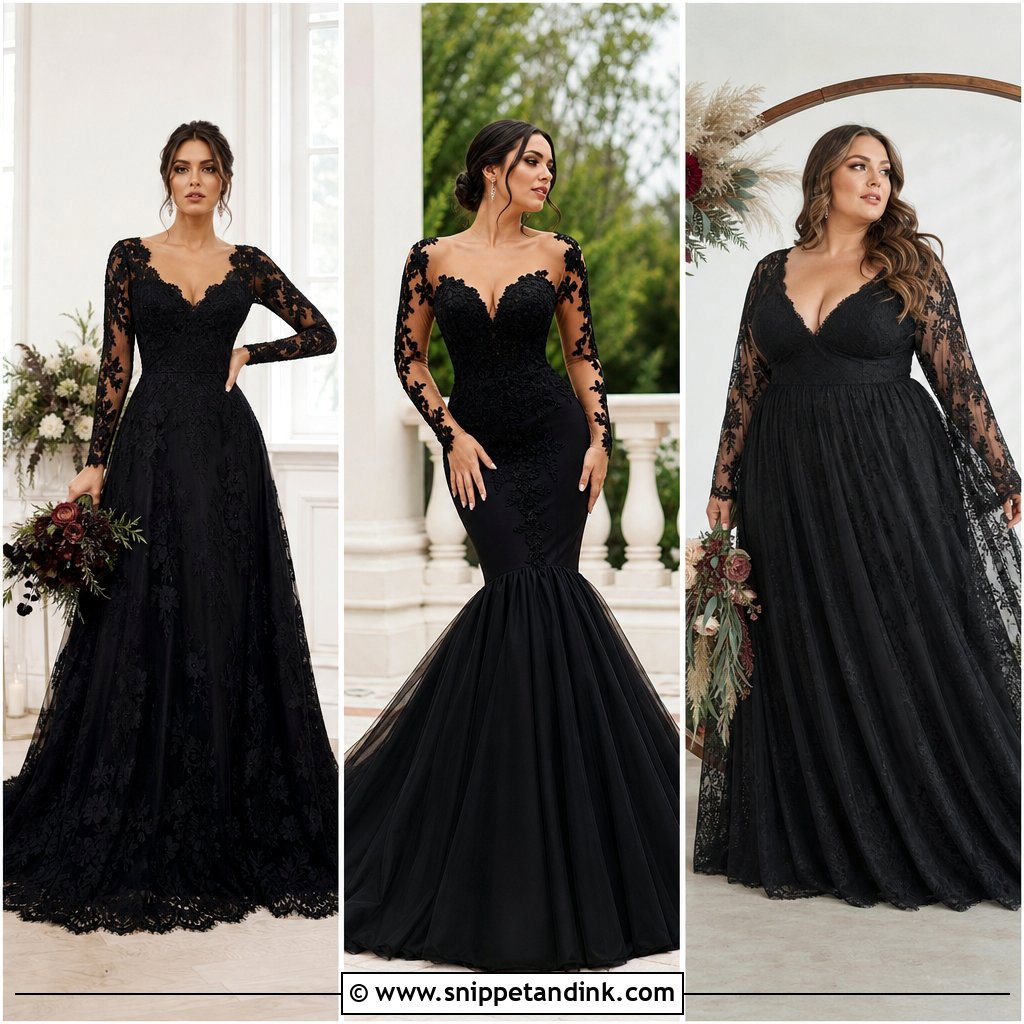
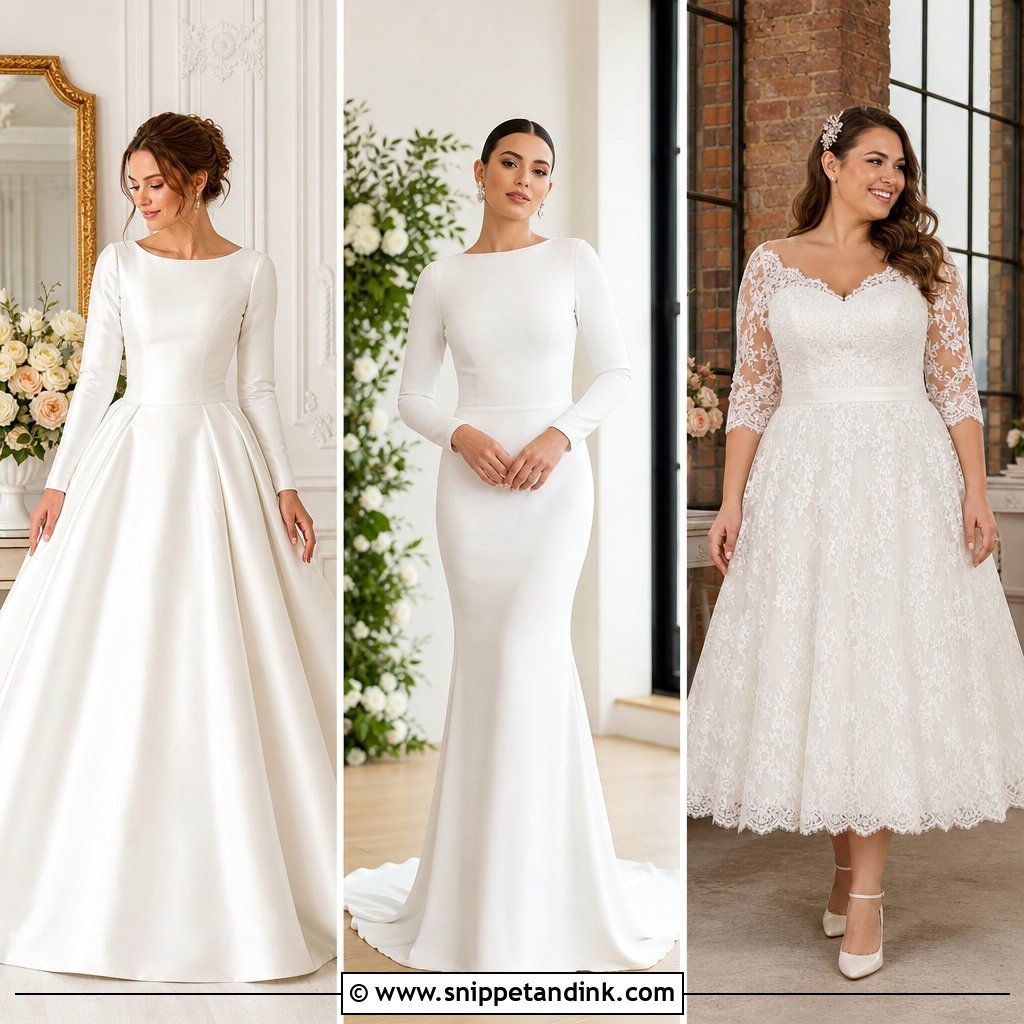
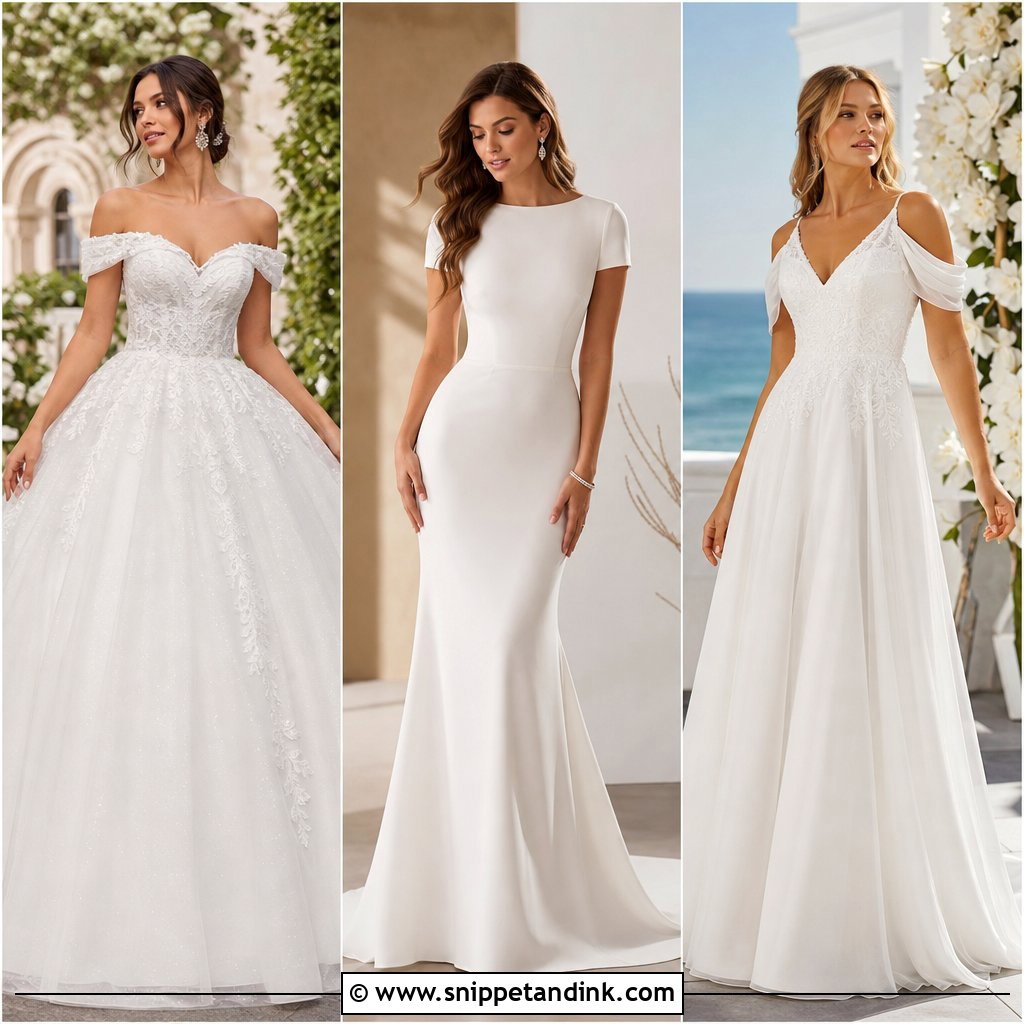
20. Sweetheart Wedding Dress With Draped Sleeves
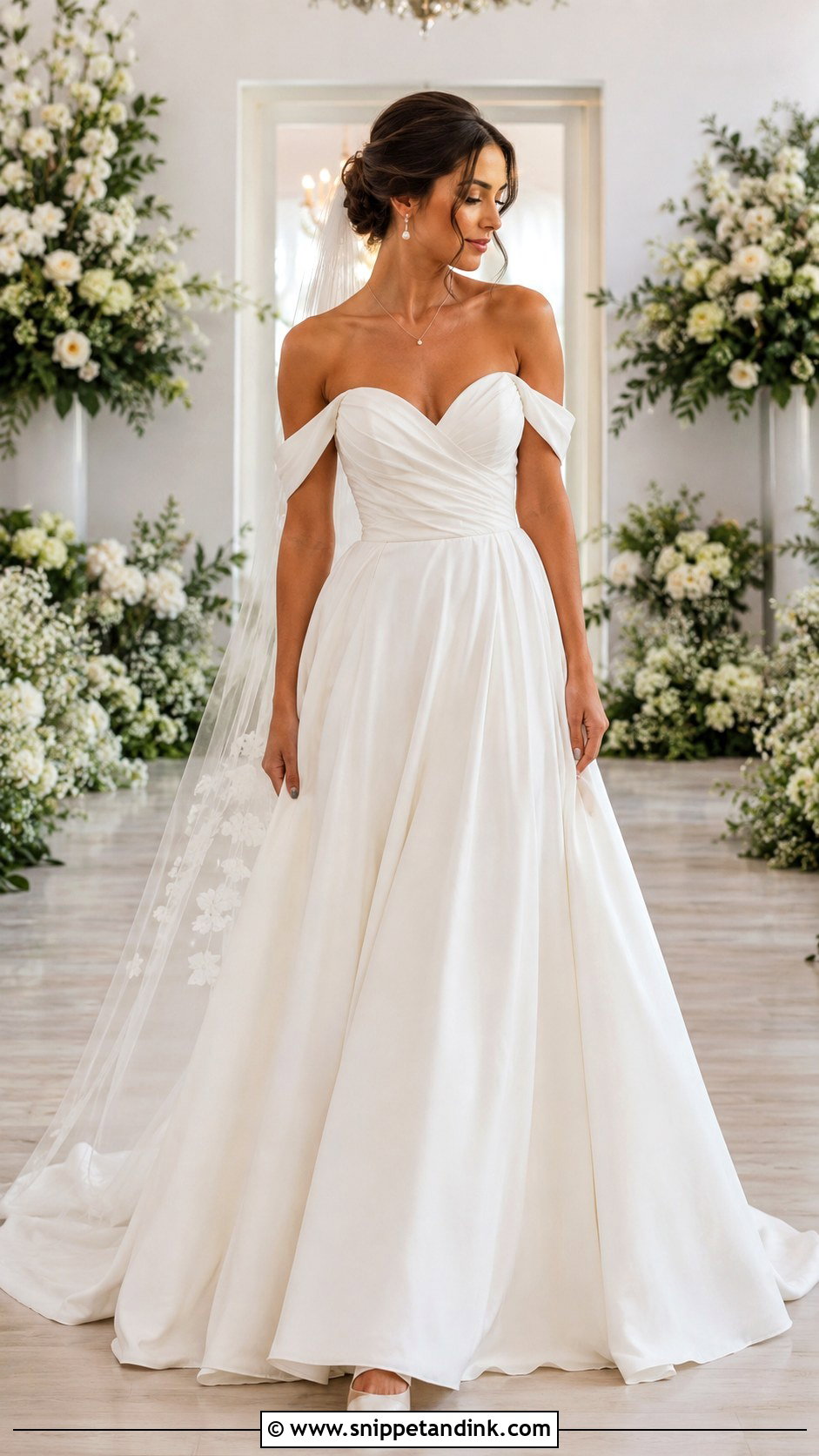
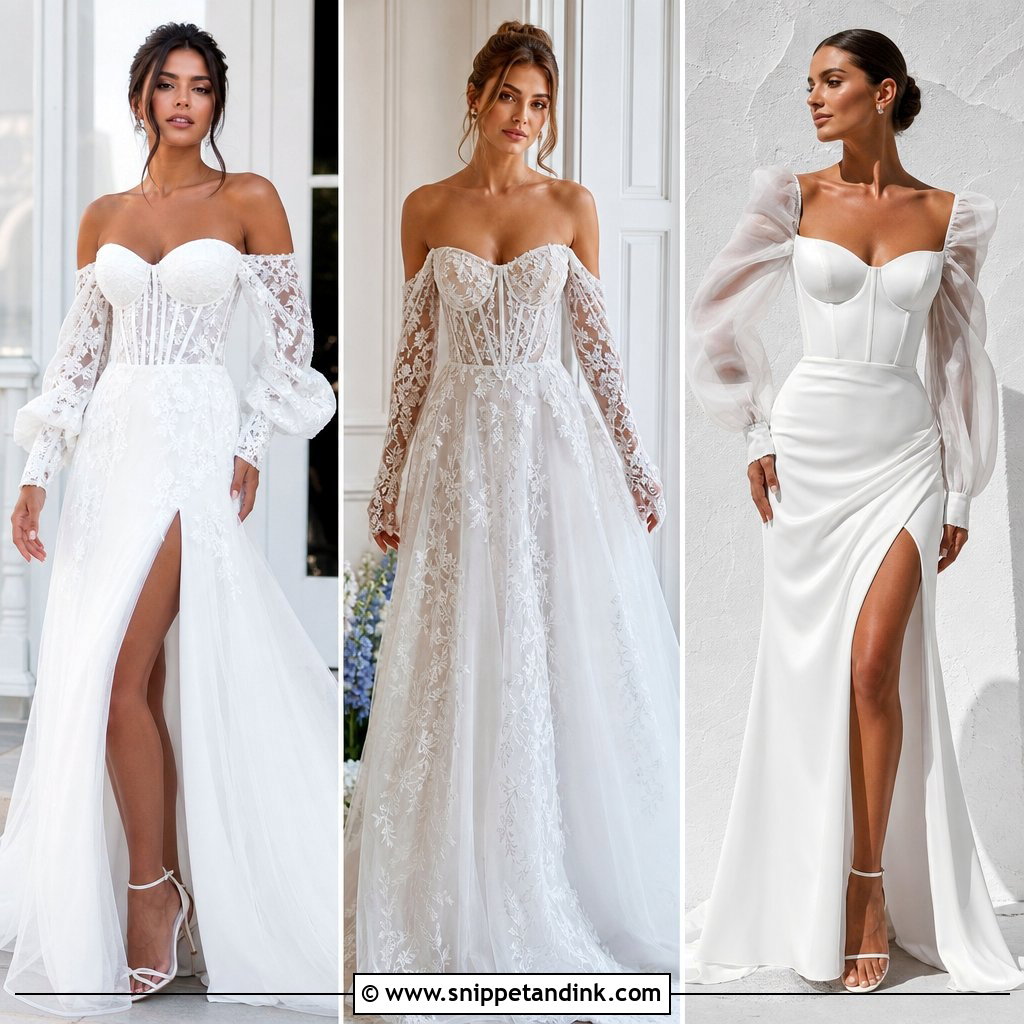
Draped sleeves sit just below the shoulder and leave the arms free, so they’re an easier alternative to fitted long sleeves for brides who hate feeling restricted. They also frame the collarbones nicely with a sweetheart neckline. Satin gives the drape structure, tulle makes it lighter. The test I insist on before final alterations: reach forward as if hugging, then raise both arms. If the drape rides up into the neck, it needs reshaping. A fine necklace, pearl earrings, ivory pumps and a veil set under a low textured bun complete it. Because neckline, bodice, sleeve and skirt are all adjusted separately, it adapts to most figures.
What a Seamstress Can Change on a Sleeve, and What She Can’t
Brides often order a gown expecting the sleeves to be easy to alter. Some changes are straightforward, others are close to rebuilding the dress, and it helps to know which is which before you commit.
Usually simple
Shortening a plain sleeve at the cuff, taking in a sheer sleeve along its underarm seam, and adding a small elastic or clear strap to stop an off-shoulder band from sliding. Removing sleeves entirely is often possible on illusion styles, since the mesh simply unpicks from the bodice.
Slow and costly
Shortening a lace sleeve that ends in a scalloped edge, because the lace has to be cut away and reapplied by hand to keep the scallop. The same goes for buttoned cuffs, beaded sleeves and anything with appliqué crossing the seam. Letting a sleeve out is the hardest of all, because most gowns leave very little seam allowance.
Adding sleeves later
It can be done, usually with matching lace or tulle sourced by the bridal shop, but the colors rarely match perfectly, since ivory varies between mills. If coverage really matters to you, buy a gown designed with sleeves, or order detachable ones at the same time as the dress so they’re cut from the same fabric. Give sleeve work extra time in your alteration schedule; hand lace work is never the quick part of the job.
The Sleeve Is the Part You Feel All Day
Sleeves are the part of a gown you will feel more than any other, through the vows, the photos, dinner and the dance floor. Lace gives texture and a little stretch, satin gives polish but almost none, and chiffon or tulle moves with you. Get the fit right, then build shoes, jewelry and veil around the sleeve rather than piling them on top of it. At each fitting, walk, sit, hug and lift your arms before you judge anything in the mirror. A dress that passes those tests is one you’ll forget you’re wearing, which is the best compliment I can give a gown.
You'll Like These Ideas:



Leave a Reply