
Sleeves have never really left bridal fashion. They just change length and weight from one decade to the next. Long lace is still the version most people picture, but fitted crepe, illusion tulle, satin and cap, bishop, and three-quarter sleeves each give a different amount of coverage and structure. Lace, Mikado, satin, chiffon and crepe all hold a sleeve differently, which affects comfort as much as looks. For every gown below I’ve described the neckline, silhouette, shoes and finishing pieces, plus the fitting point I’d watch on that particular sleeve. Ballrooms, gardens, winter weddings and very small ceremonies are all covered.
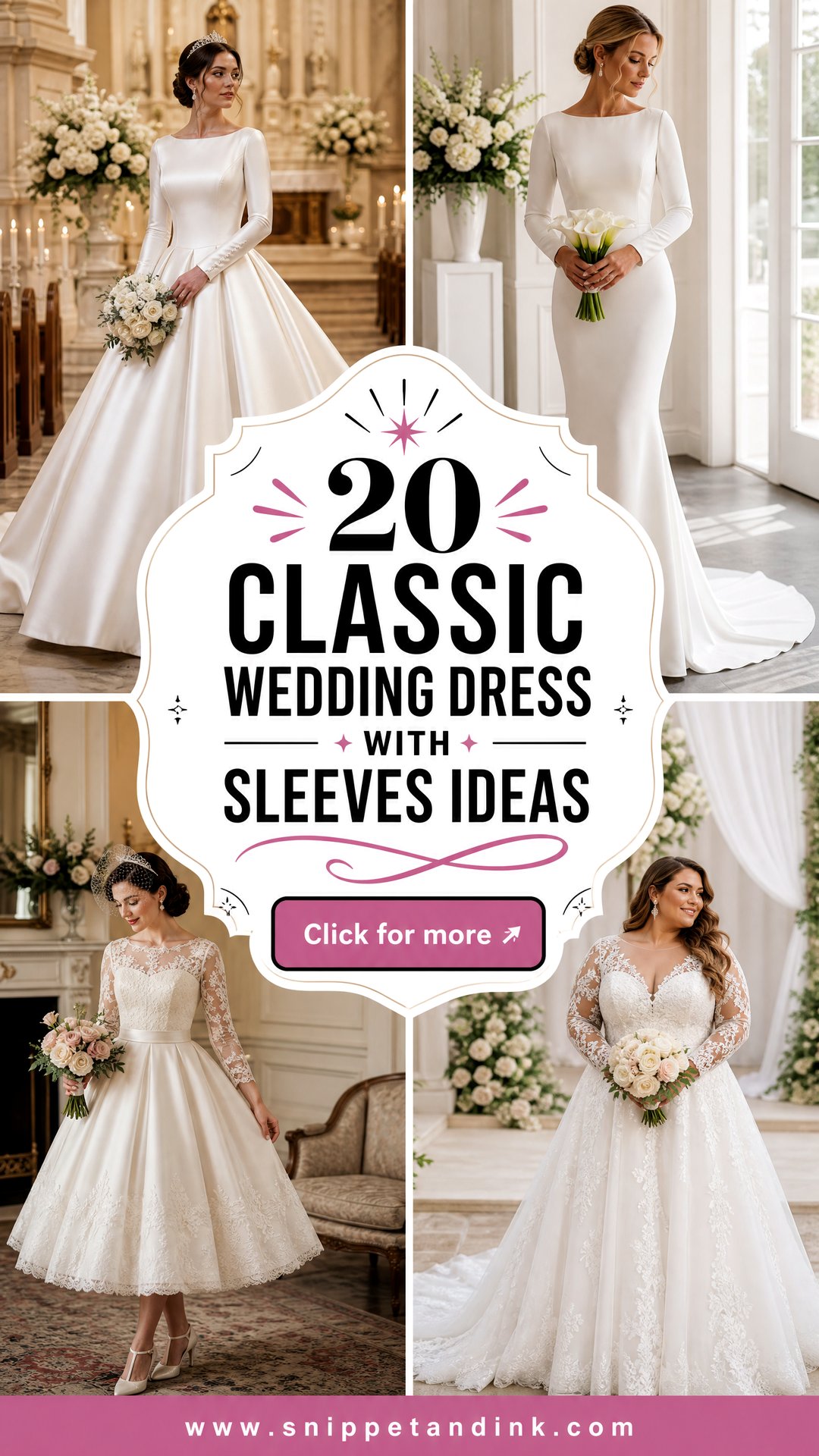
Bishop, Cap or Full Length? Matching Sleeve to Season and Arm
The sleeve length you love in a photo may not be the one you’ll be comfortable in for twelve hours. I sort the options by two questions: how warm will the day be, and how much do you use your arms?
- Cap and flutter sleeves: barely any warmth, full arm movement. Good for summer and outdoor ceremonies. Cap sleeves need a careful fit at the edge or they dig in.
- Three-quarter sleeves: a middle ground that keeps your hands and wrists free for rings, bracelets and eating. Very forgiving in spring and autumn.
- Full-length fitted sleeves: the most formal and the warmest. Best in cooler months or air-conditioned rooms, and they need the most precise fitting at the elbow and wrist.
- Bishop and puff sleeves: plenty of room to move, but the volume shows in every photo. Keep the rest of the gown calm.
- Illusion sleeves: lighter than lace or satin, though the mesh still holds some heat in direct sun.
If your arms are a worry, a sheer sleeve often flatters more than a solid one. It softens the line without adding bulk, and the lace pattern draws the eye away from the arm’s shape.
1. Long Sleeve Lace A-Line Wedding Dress
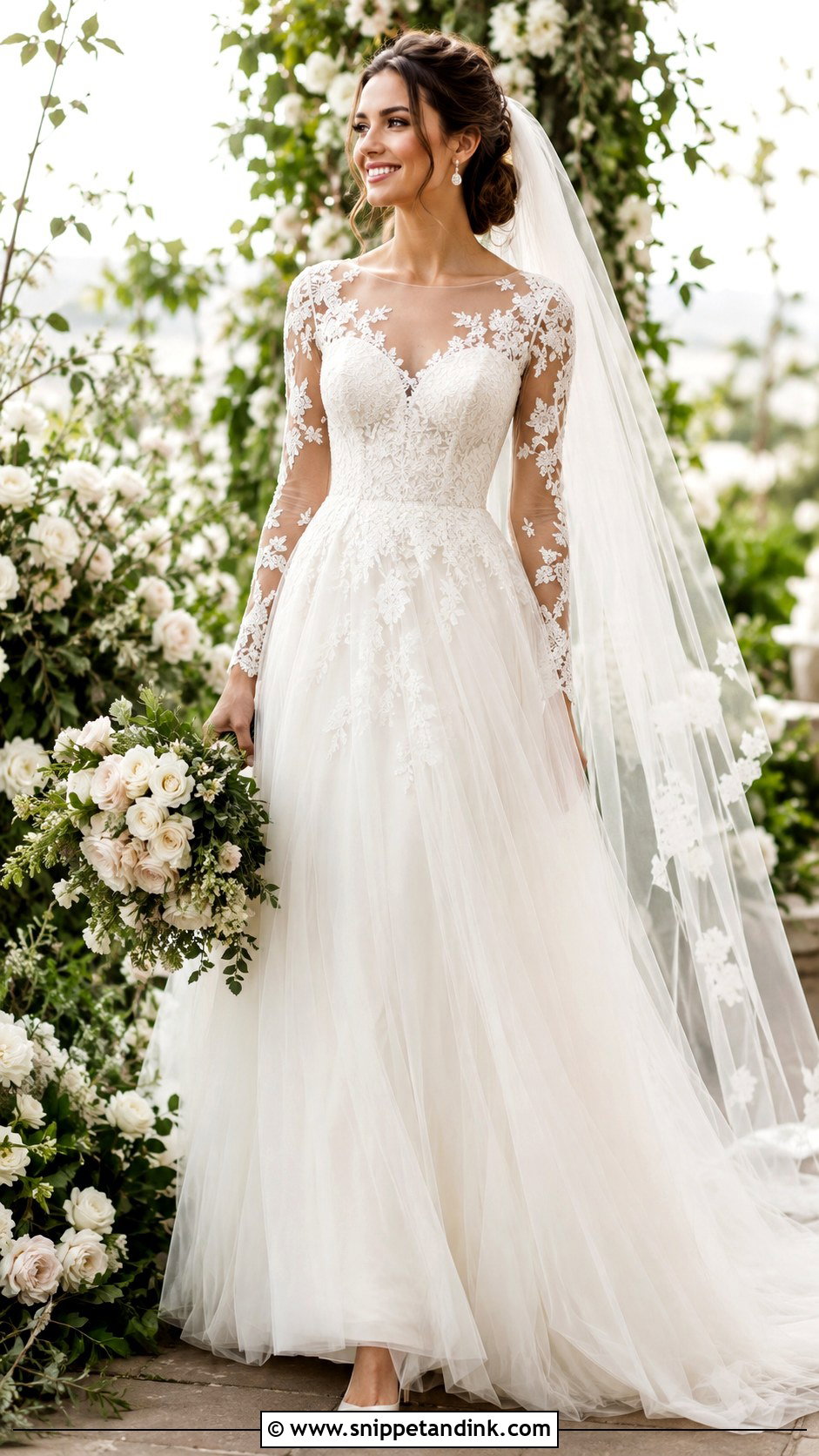
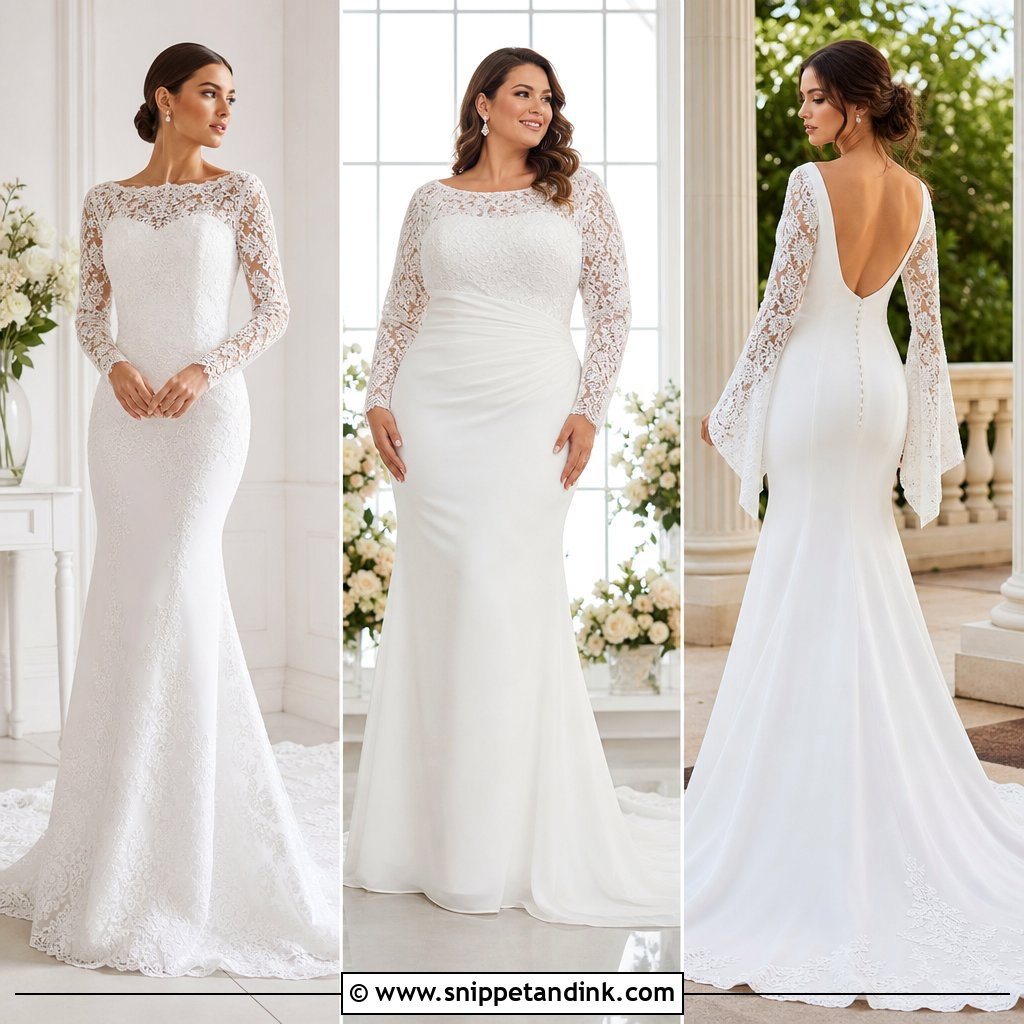
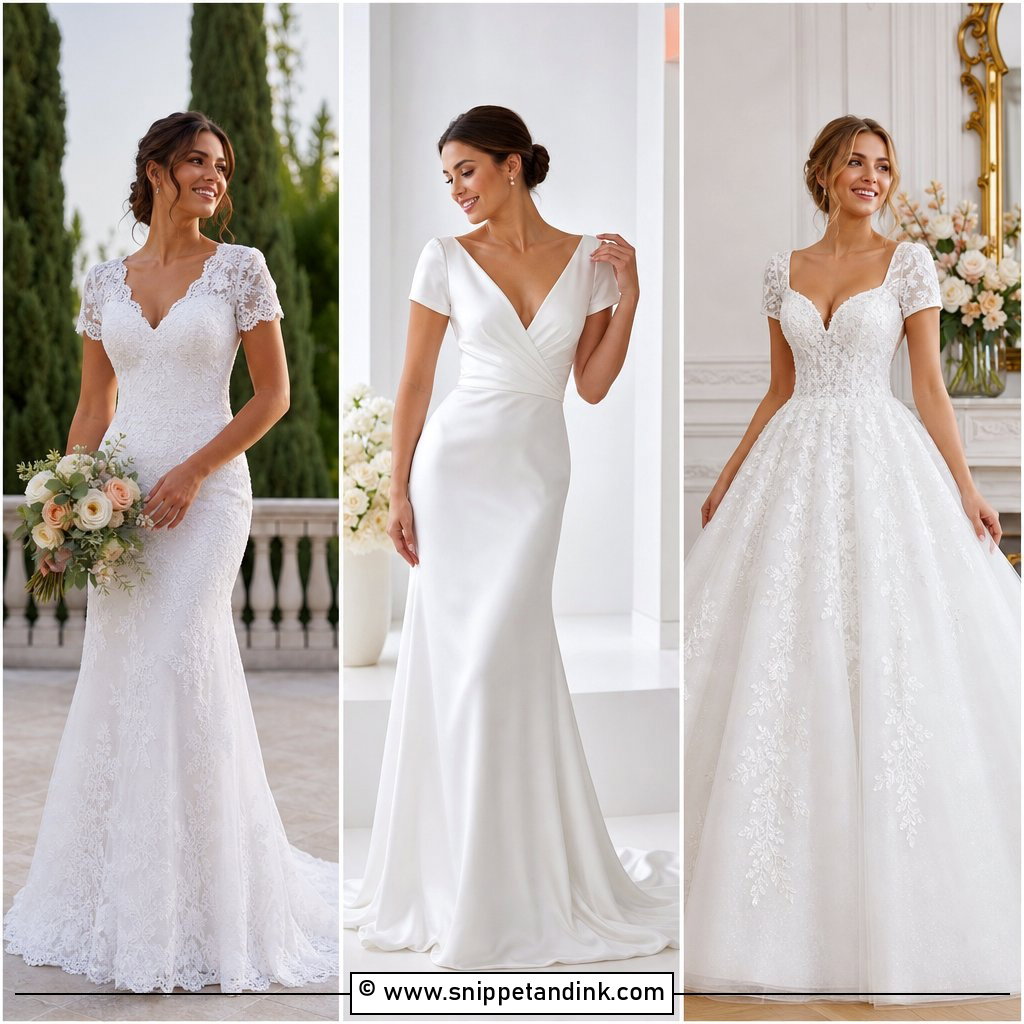
Lace sleeves over an A-line skirt is the gown most people describe when they say traditional bride. The best versions keep the sleeve sheer, with appliqués placed so the arm still reads slim, over a fitted lace bodice that flows into soft tulle or organza. A bateau, scoop or modest V-neck keeps it graceful. Pearl drops, an ivory fingertip veil and pointed satin pumps finish it, with a low chignon so the sleeve detail stays visible. I check one thing early: whether the appliqués on the left and right sleeves mirror each other. When they don’t, it shows in front-facing photos.
2. Satin Ball Gown Wedding Dress With Sleeves
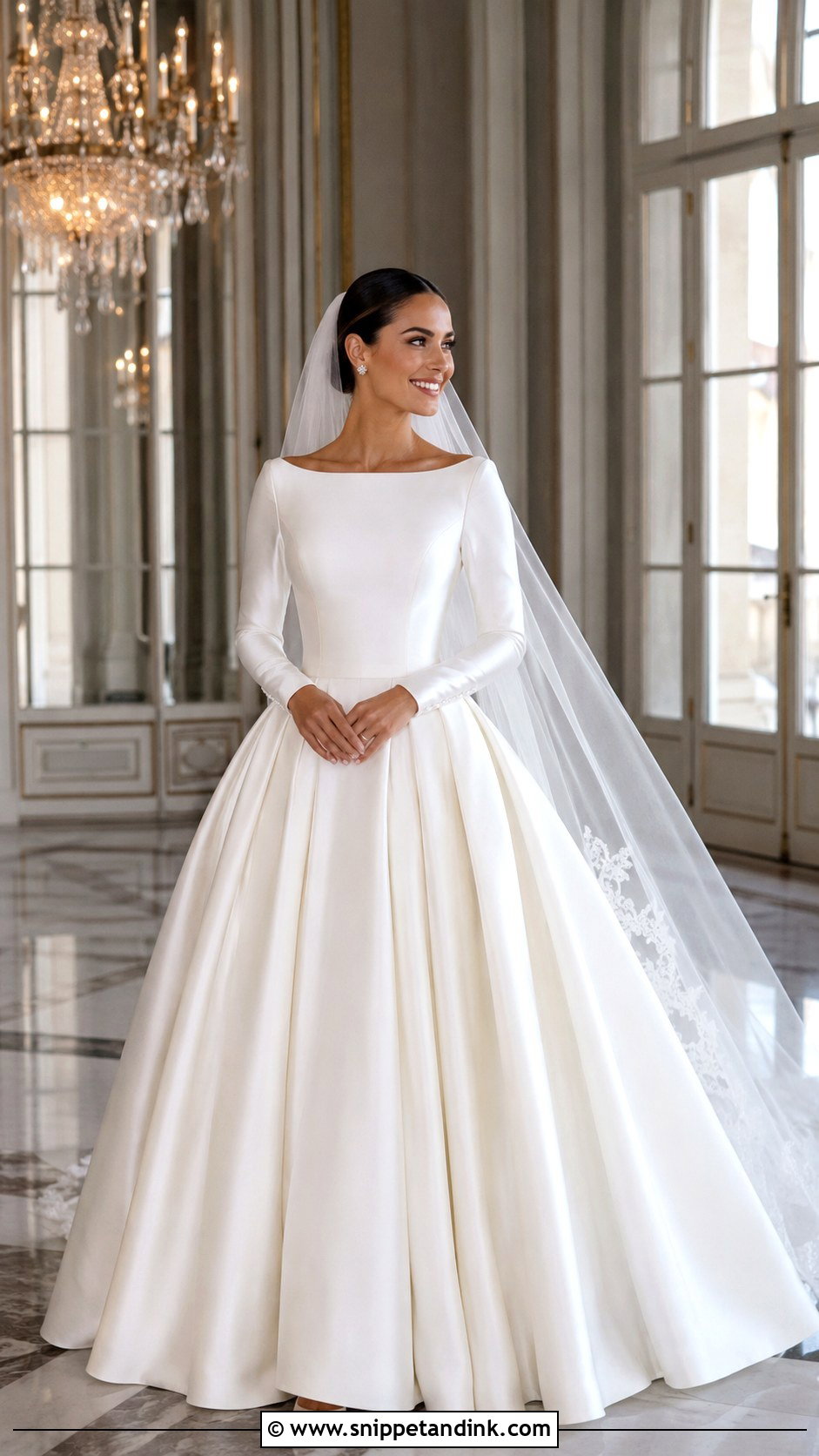
Satin ball gowns with sleeves make an entrance. The fitted bodice, natural waist and full pleated skirt hold their shape in motion, and long satin sleeves fastened with covered wrist buttons look especially finished. A square, bateau or soft curved neckline keeps it from turning severe. Crystal studs, a smooth cathedral veil and closed-toe ivory heels are enough, and the necklace can go if the neckline is strong. Satin sleeves have no stretch, so I want to see a bride bend her elbow and lift a glass before the cuff is set. Formal hotels and historic rooms suit this gown.
3. Crepe Sheath Wedding Dress With Fitted Sleeves
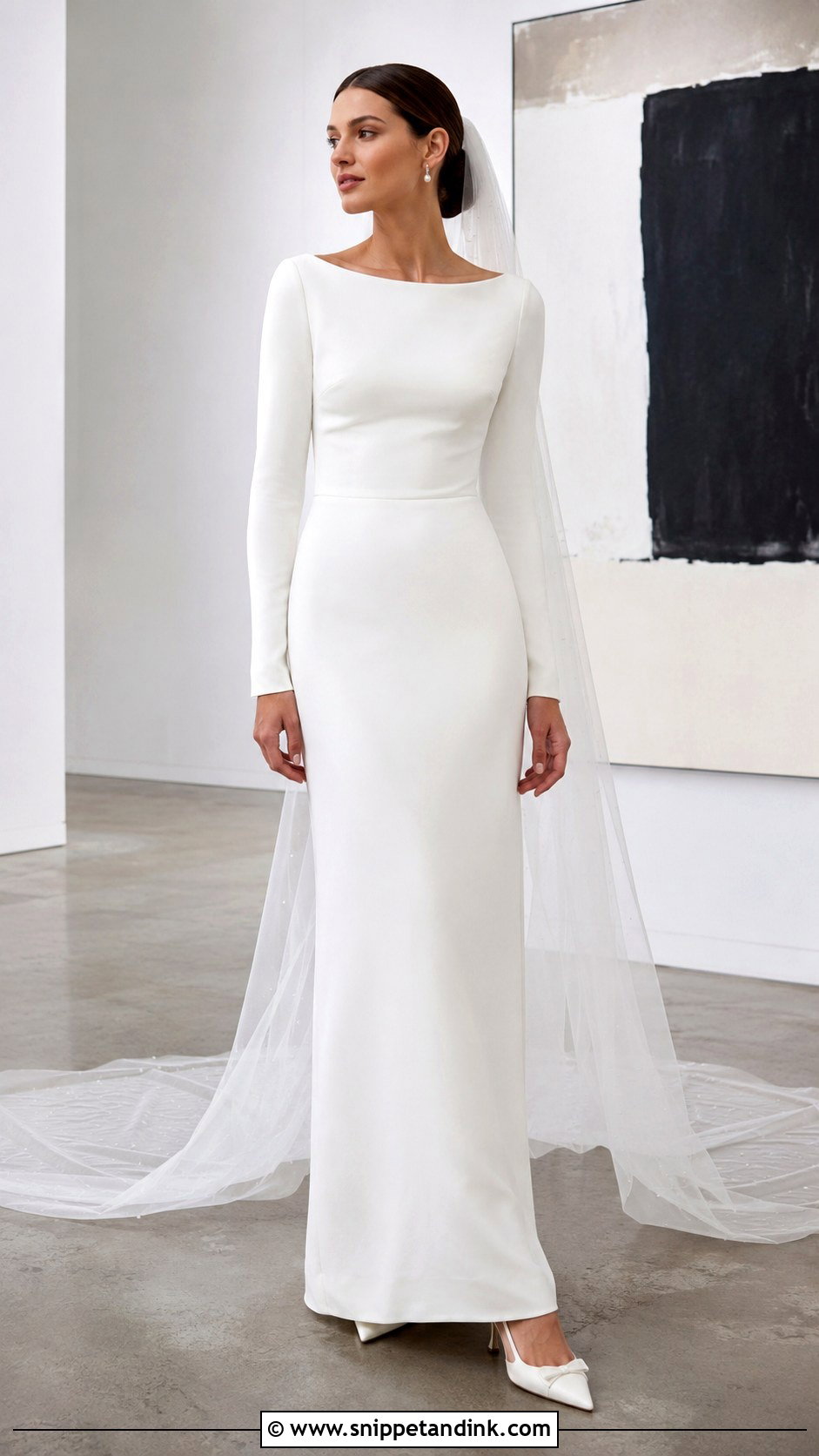
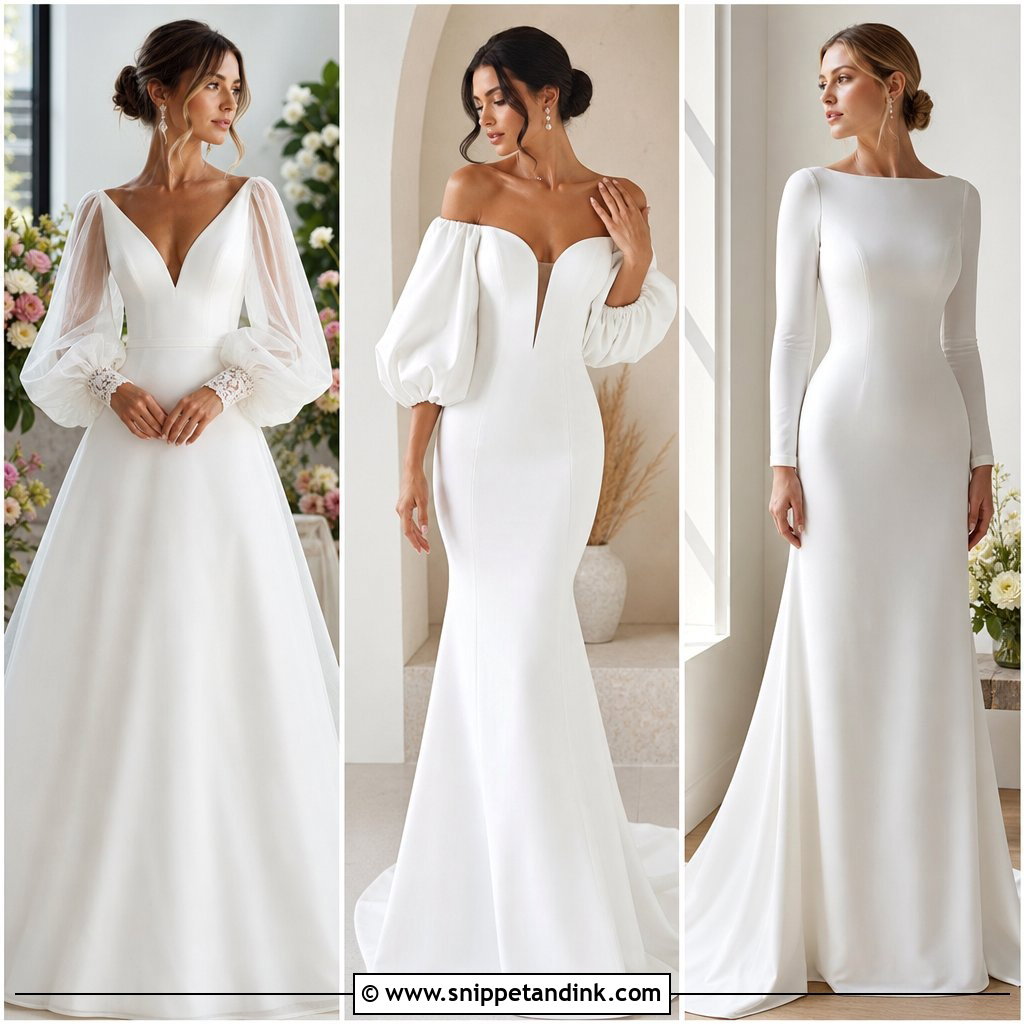
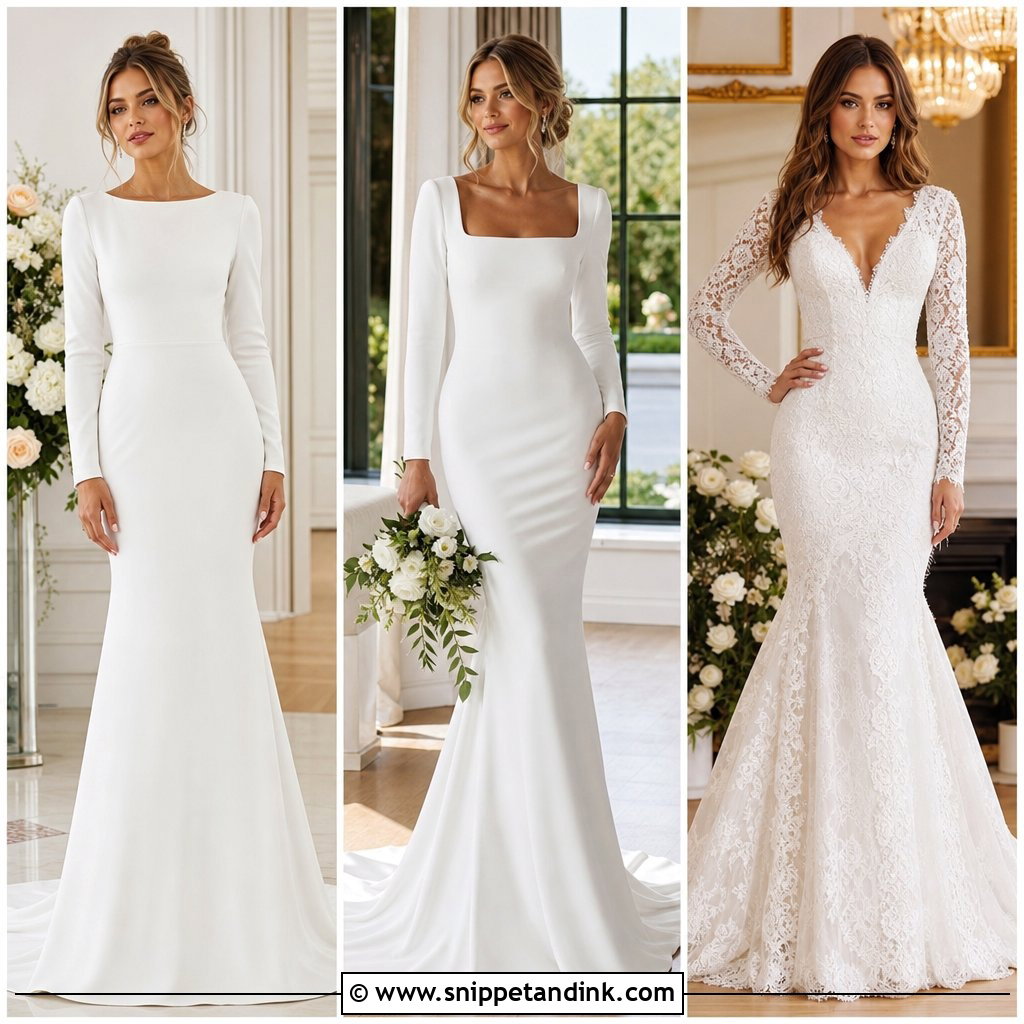
Crepe with fitted sleeves is minimal but not plain. The fabric should skim from shoulder to hem, never cling, and full-length sleeves need to end exactly at the wrist; too long and they bunch, too short and they look borrowed. A bateau neck, a covered back and a row of fabric buttons give quiet detail. Add pearl earrings, a small structured bag for portraits and pointed slingbacks, plus a simple chapel veil to soften the line. I suggest this one most for city weddings, galleries and courthouse ceremonies.
4. Bateau Neck Wedding Dress With Three Quarter Sleeves
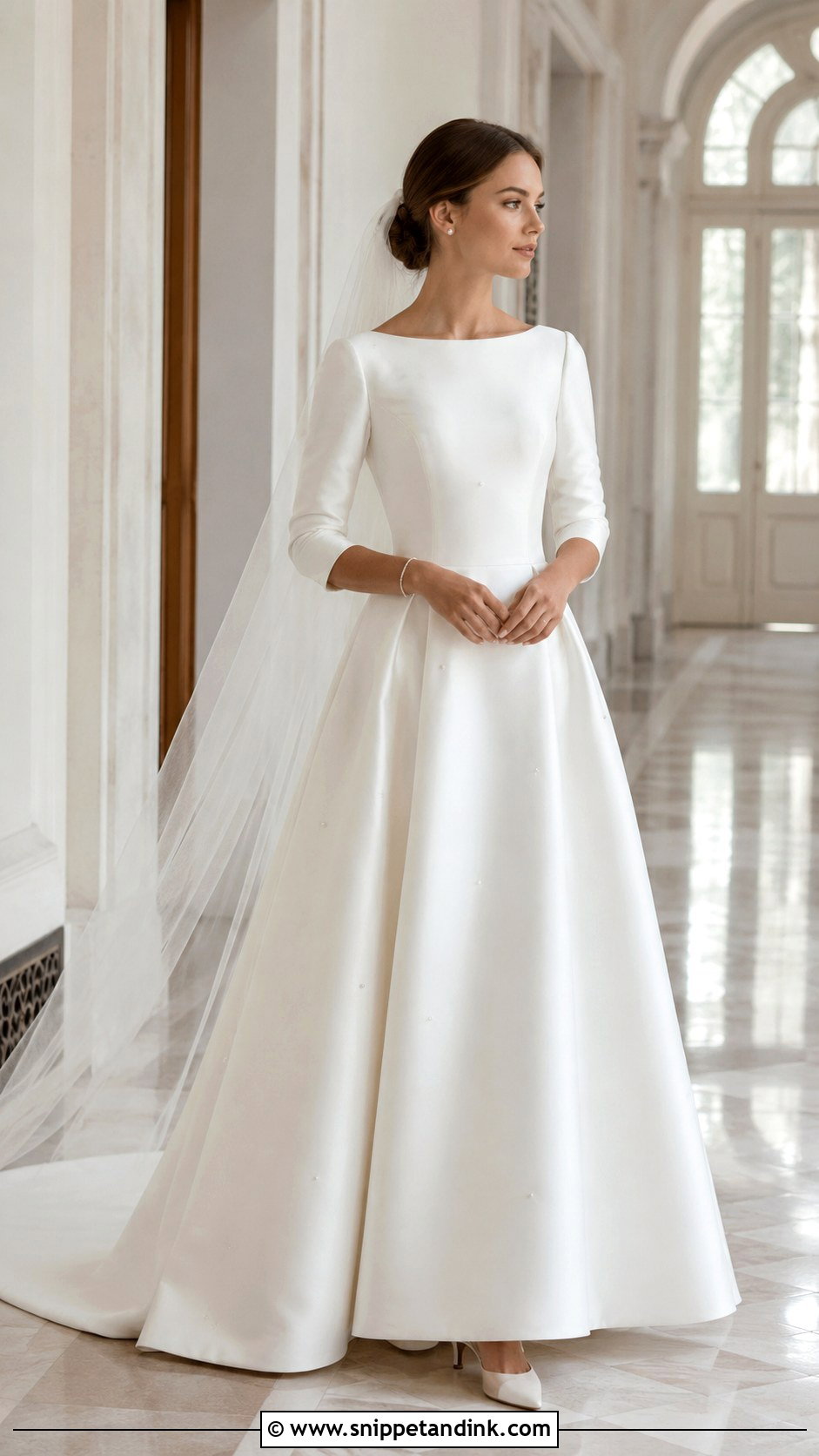
Three-quarter sleeves are the most practical length on this list. They end between elbow and wrist, so your hands stay free, and there’s room for a bracelet or an heirloom watch. Paired with a bateau neck wedding dress that stretches gently across the shoulders, they suit an A-line or softly fitted column. Matte satin or structured crepe keeps the finish clean, with covered buttons down the back. Pearl studs, a low bun, a tulle veil under the hair and pointed kitten heels complete it. It works in nearly any season.
5. High Neck Lace Wedding Dress With Sleeves
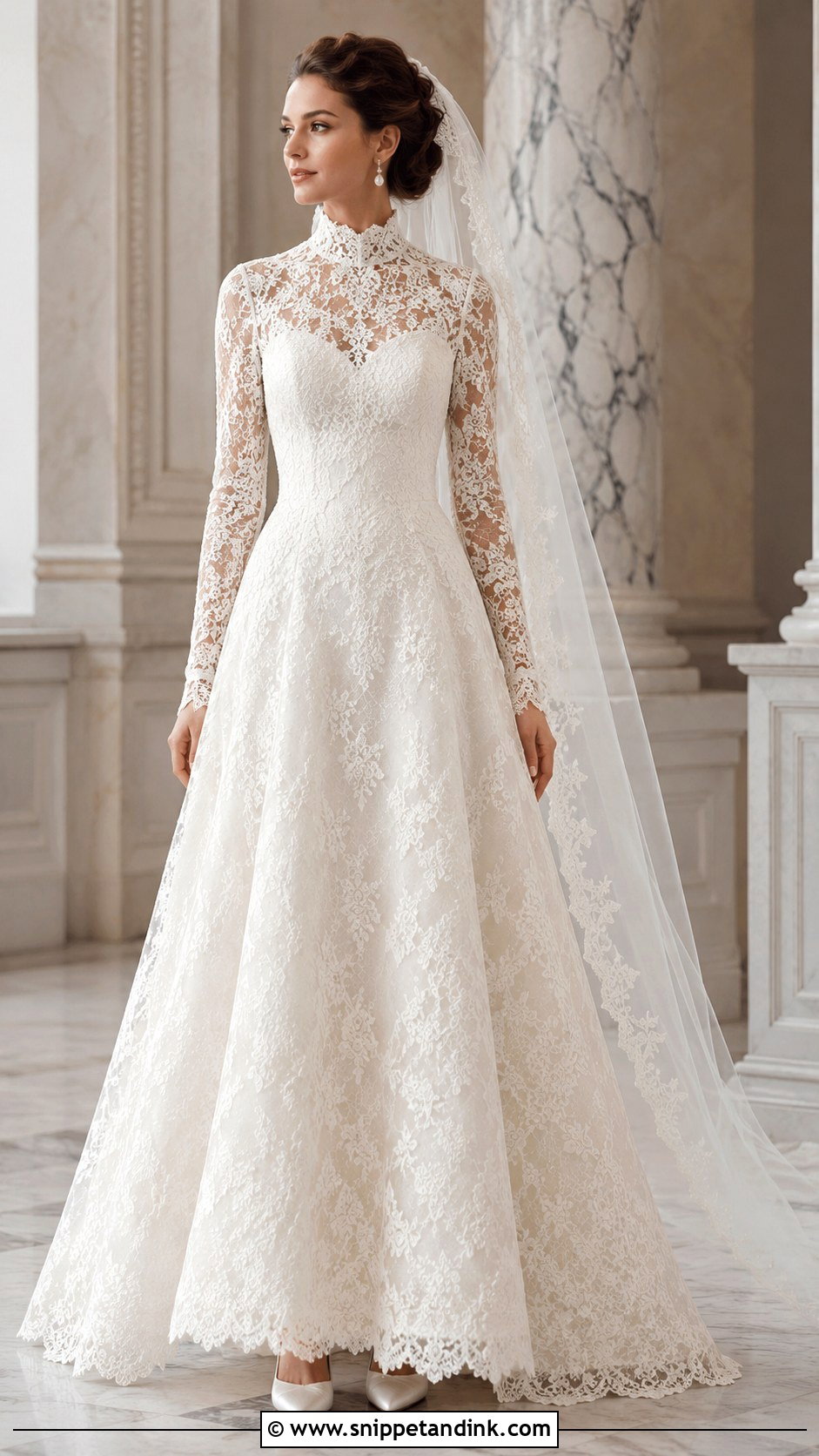
A high lace neck with sleeves covers a lot of the body, so the rest of the gown has to stay light. I like a lightly lined bodice, fitted waist and flowing A-line skirt, with scalloped lace at collar and cuffs and an illusion back to let some air in. No necklace. Small diamond or pearl earrings, a sleek bun, a lace-edged veil and ivory satin pumps finish it. A narrow tonal belt at the natural waist adds definition if you want it. Wear it to a fitting for a full hour before deciding; lace at the throat can itch, and a softer lining under the collar fixes that.
6. Off Shoulder Wedding Dress With Draped Sleeves
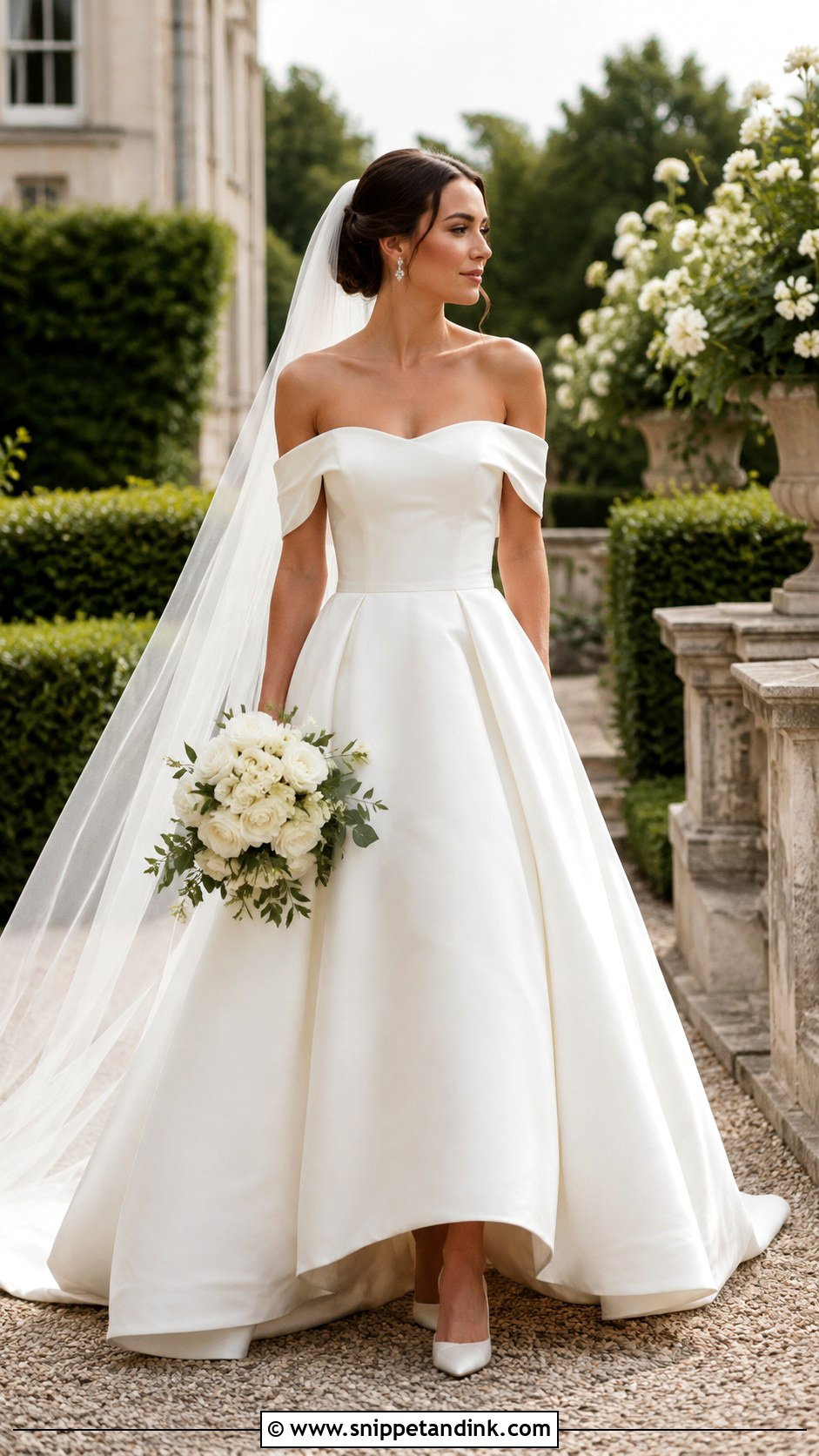
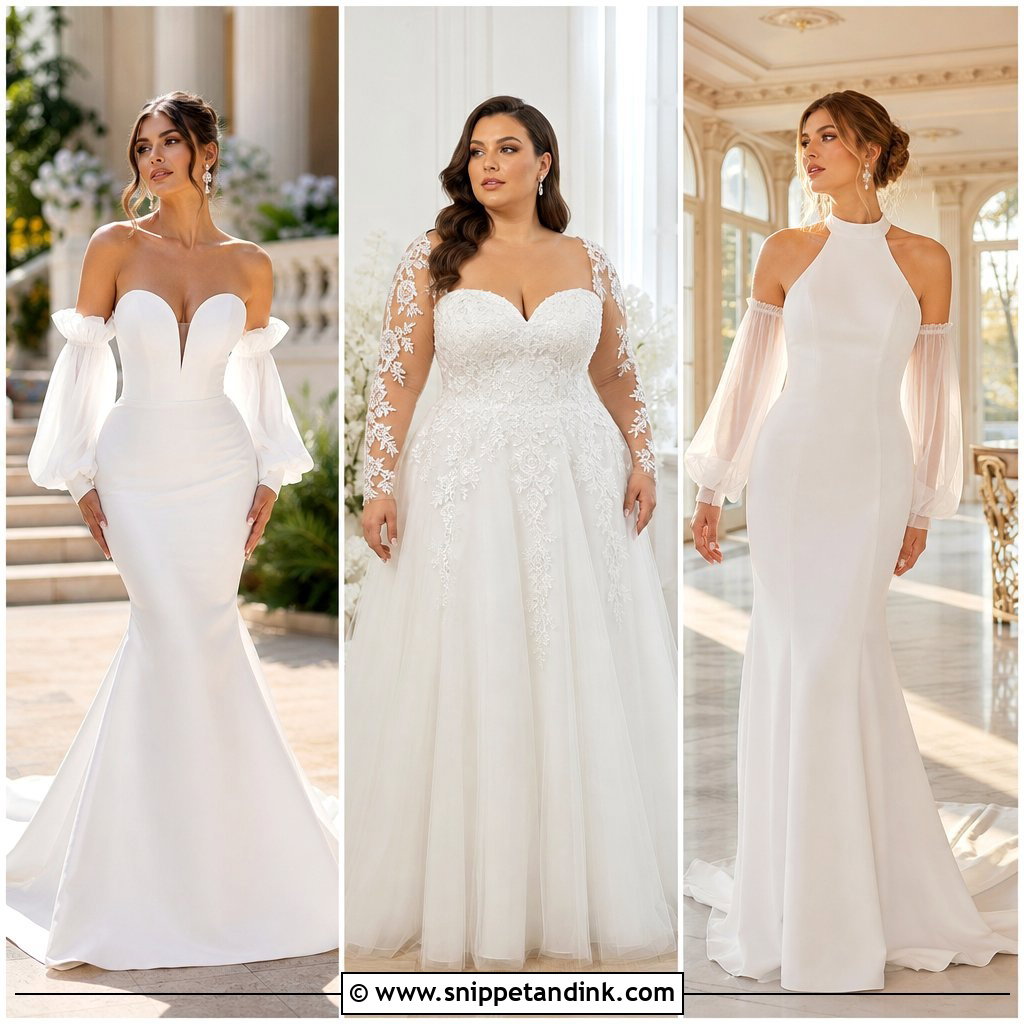
Draped sleeves on an off-shoulder bodice fall in soft curves around the upper arm. The bodice underneath needs to be structured satin or Mikado so it stays up on its own; the sleeves shouldn’t be doing that job. A full A-line is traditional; a fitted mermaid is more sculpted. Keep the drape in proportion, since big swags restrict the arms. A short pendant, crystal earrings, a low twisted updo, pointed satin heels and a chapel veil complete it. Garden estates and formal indoor ceremonies suit the romance of this one.
7. Illusion Sleeve Wedding Dress With Tulle Skirt
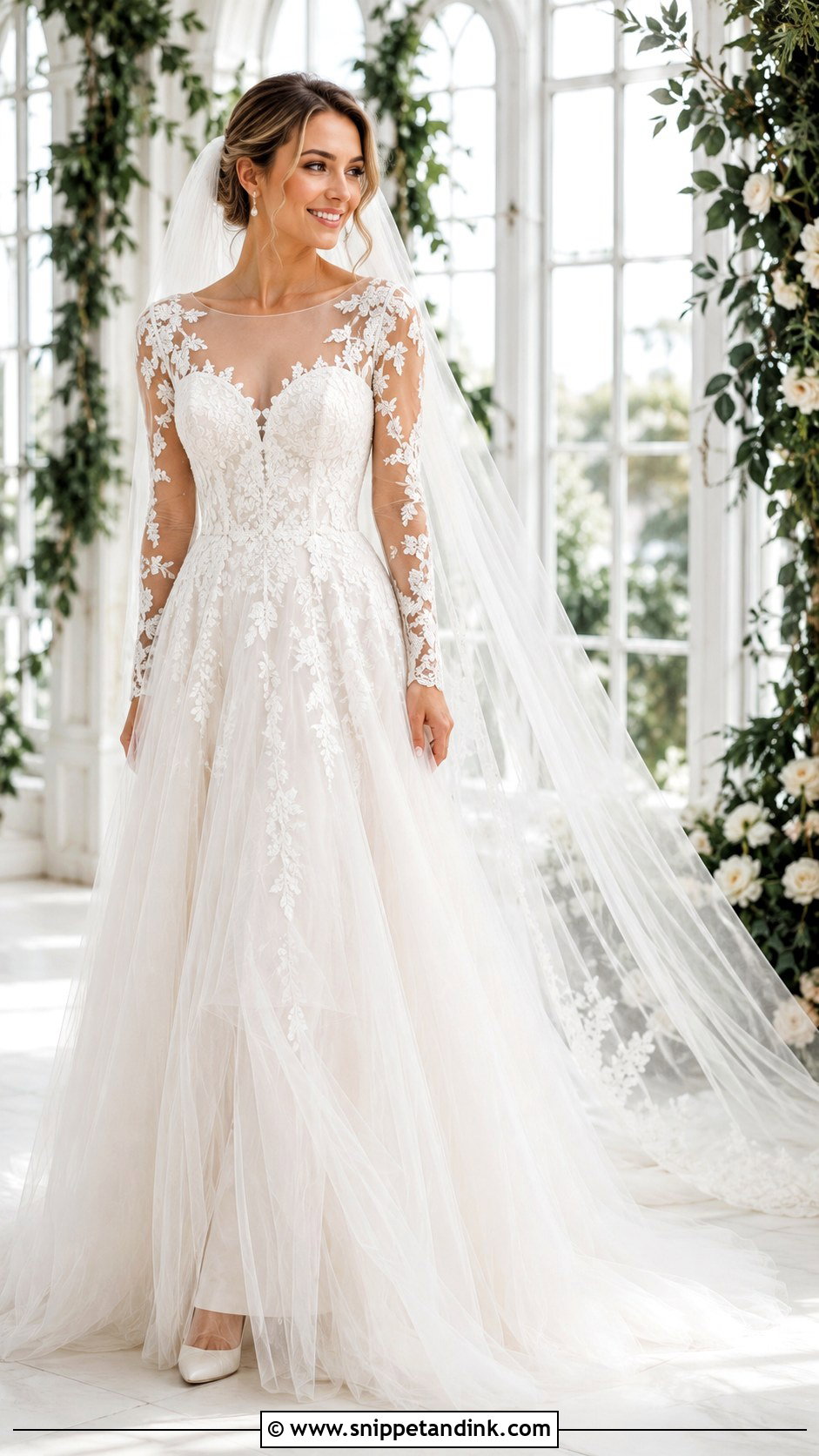
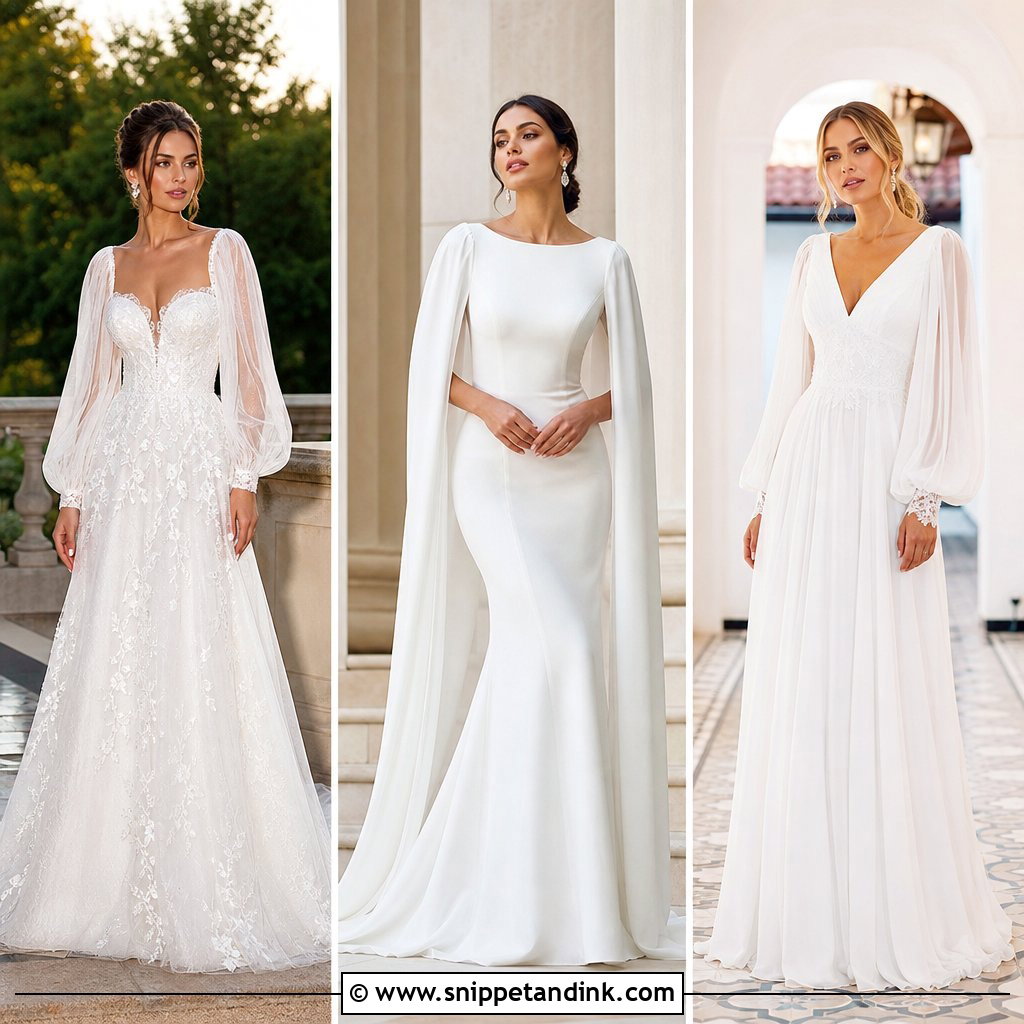
An illusion sleeve wedding dress paired with a tulle skirt feels airy because almost everything on it is sheer. Lace motifs appear to float on the arm, and a lined sweetheart bodice under the illusion neckline gives the support. Several light tulle layers in the skirt are fine; keep sparkle minimal so it stays classic. Pearl drops, a quiet bracelet and closed-toe ivory pumps suit it, with a sheer cathedral veil that blends into the skirt. Loose low buns and pinned waves beat ornate styles here. Tulle snags on rough ground and jewelry clasps, so I ask brides to check their bracelet edges.
8. Mikado Wedding Dress With Puff Sleeves
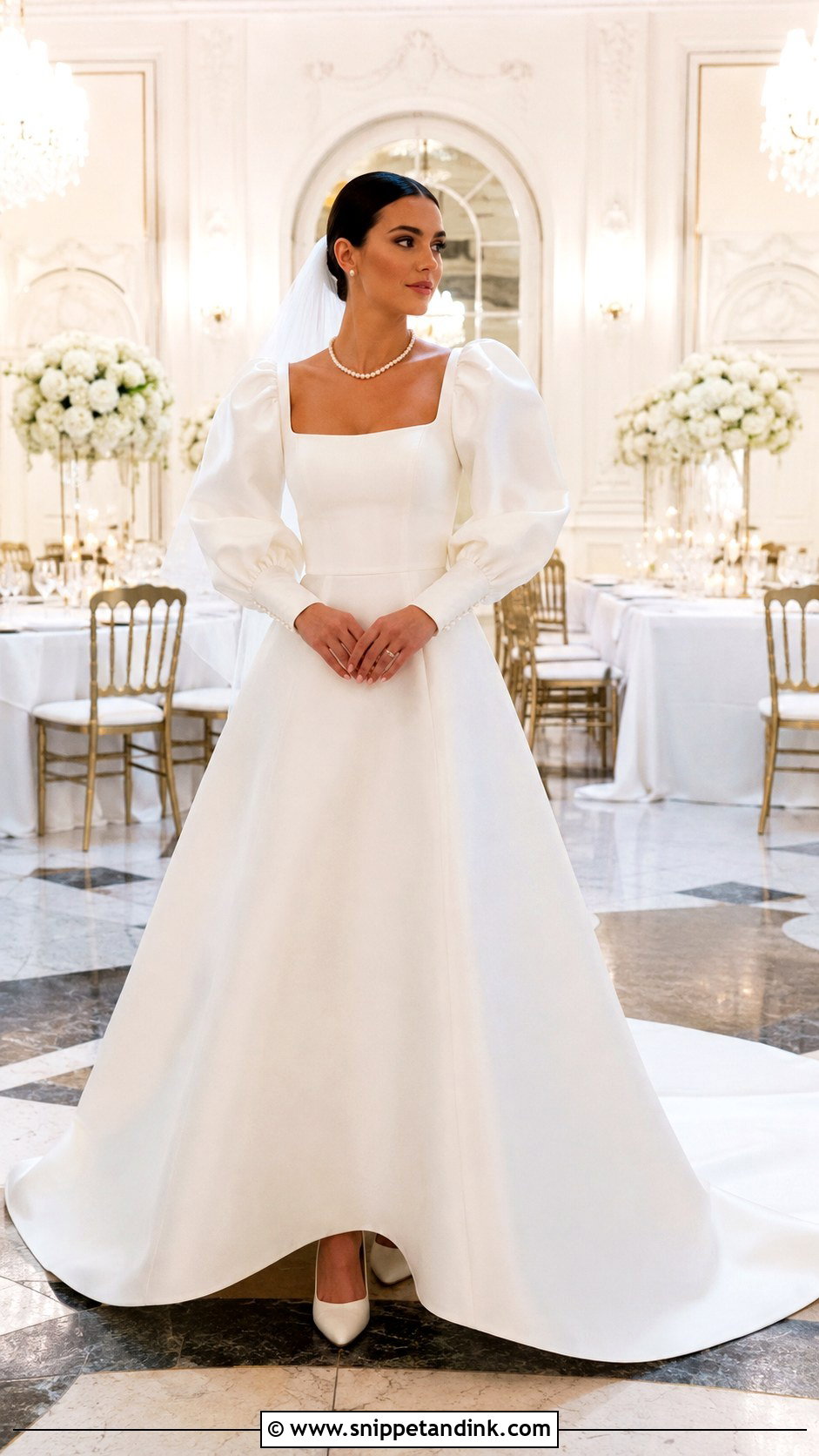
Puff sleeves are the detail most likely to date a dress, so proportion is everything. In Mikado, which holds shape on its own, I like a sleeve that rises only slightly at the shoulder and tapers to the wrist. Over a fitted waist and full A-line or ball gown skirt, a square neckline suits the sculpted shape and leaves space for a fine pearl necklace. Pearl studs, a smooth elbow-length veil and ivory block heels are comfortable choices. Keep the hair sleek, maybe a center-parted bun or ponytail, so the sleeves aren’t fighting volume elsewhere.
9. Vintage Tea Length Wedding Dress With Sleeves
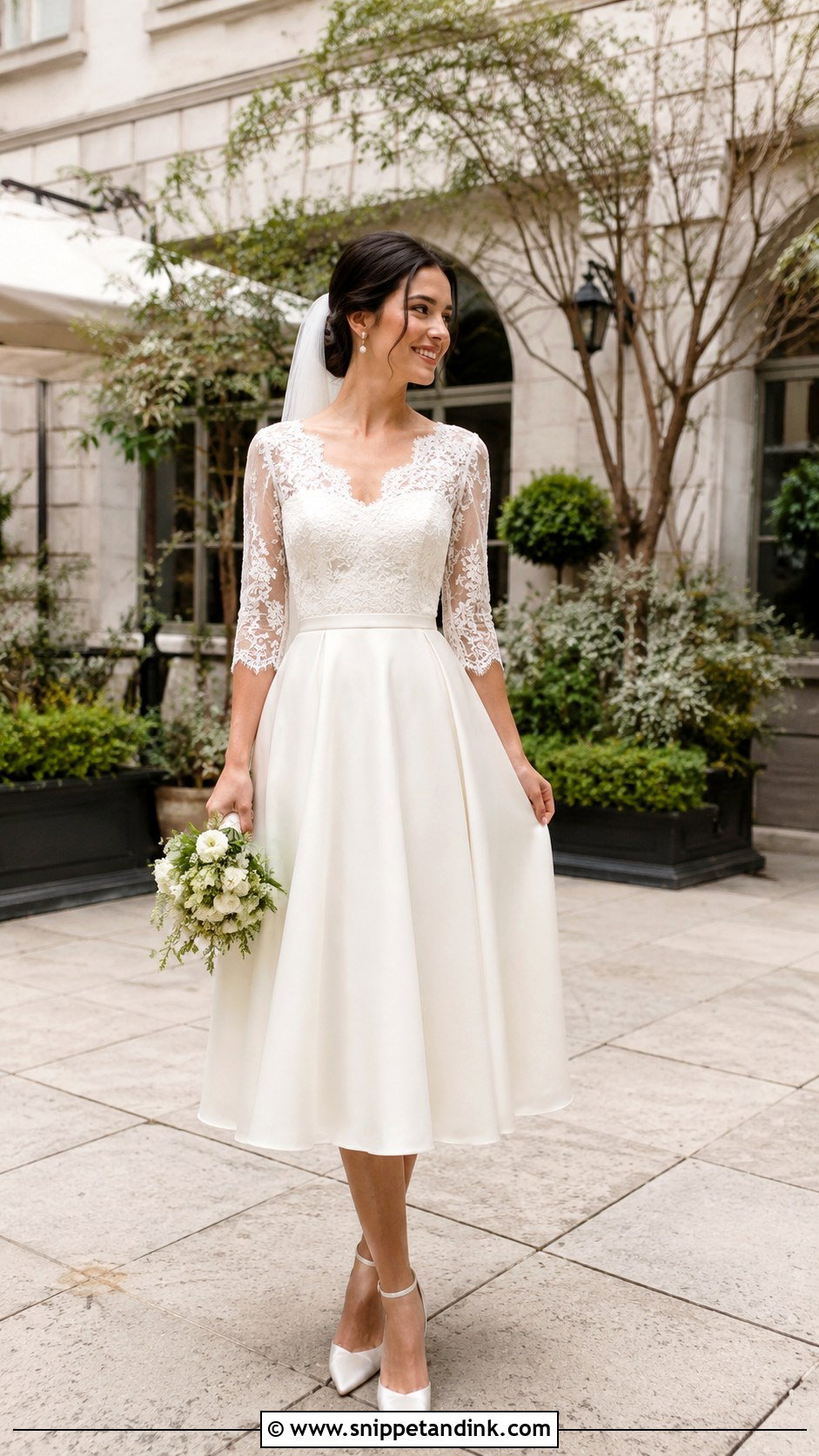
Smaller ceremonies and daytime weddings suit a vintage tea-length dress well. A fitted lace bodice, defined waist and skirt ending between knee and ankle keep it light, and three-quarter sleeves hold the retro note. Since the shoes are on show, choose them with care: ivory pointed pumps, satin slingbacks or low block heels. Pearl earrings, a short veil and a compact bouquet finish it. A waved bob or neat low bun matches the shorter hem without turning it into a costume. It’s a strong fit for courthouses, restaurants and small city weddings.
10. Square Neck Wedding Dress With Bishop Sleeves
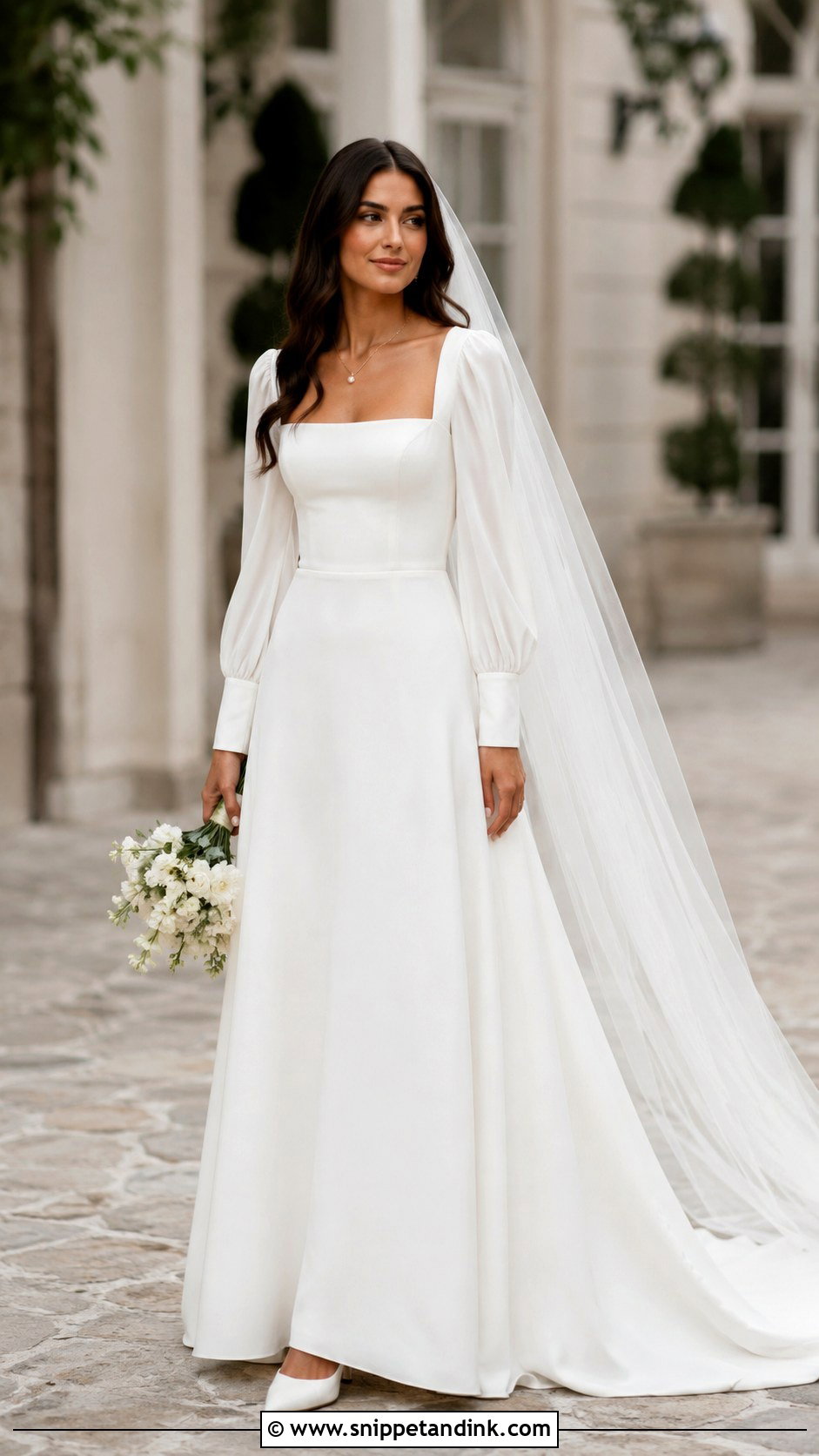
Bishop sleeves are slim at the shoulder, widen down the arm and gather into a cuff. In crepe or chiffon they move with every gesture, which I love for a bride who talks with her hands. The cuff is the part to fit carefully: it should hold at the wrist without pinching, and the gathered volume shouldn’t drag in your dinner plate. A square neckline and A-line skirt keep the balance, with a short pearl strand or small pendant, simple earrings, pointed heels and a light chapel veil. A center-parted bun matches the clean symmetry.
11. V Neck Wedding Dress With Lace Sleeves
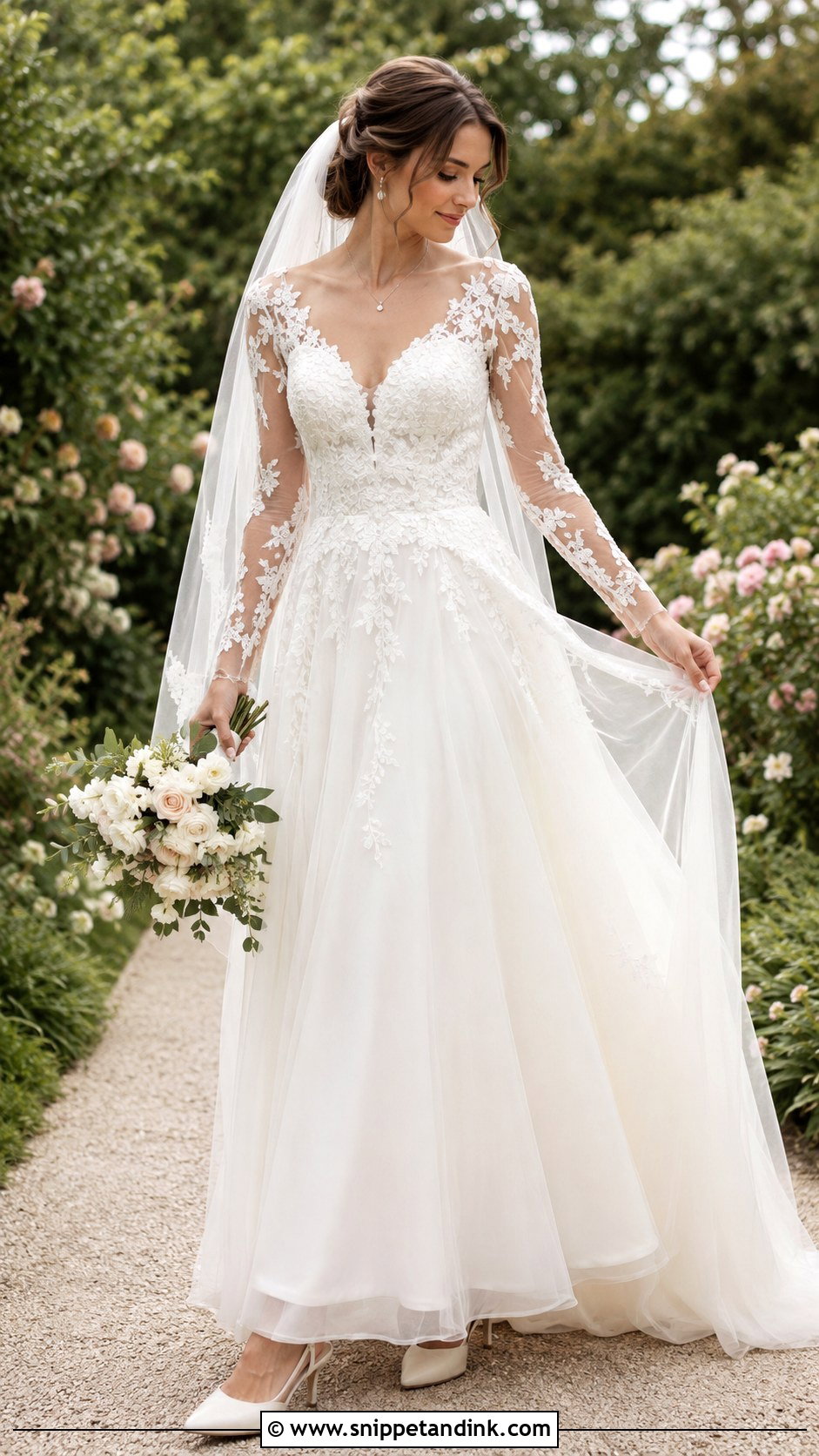
A V-neck adds a vertical line that offsets lace sleeves nicely. Pick a depth that feels secure when you lean, not just when you stand. A fitted lace bodice can flow into an A-line or a gentle fit-and-flare, with sheer long sleeves carrying floral appliqués. A small pendant, pearl earrings and a plain tulle veil let the lace lead. Ivory pumps or slingbacks finish it, and the hair can go into a low bun, soft ponytail or side-swept waves. It sits as comfortably at a formal hall as at a relaxed garden.
12. Modest Wedding Dress With Long Sleeves
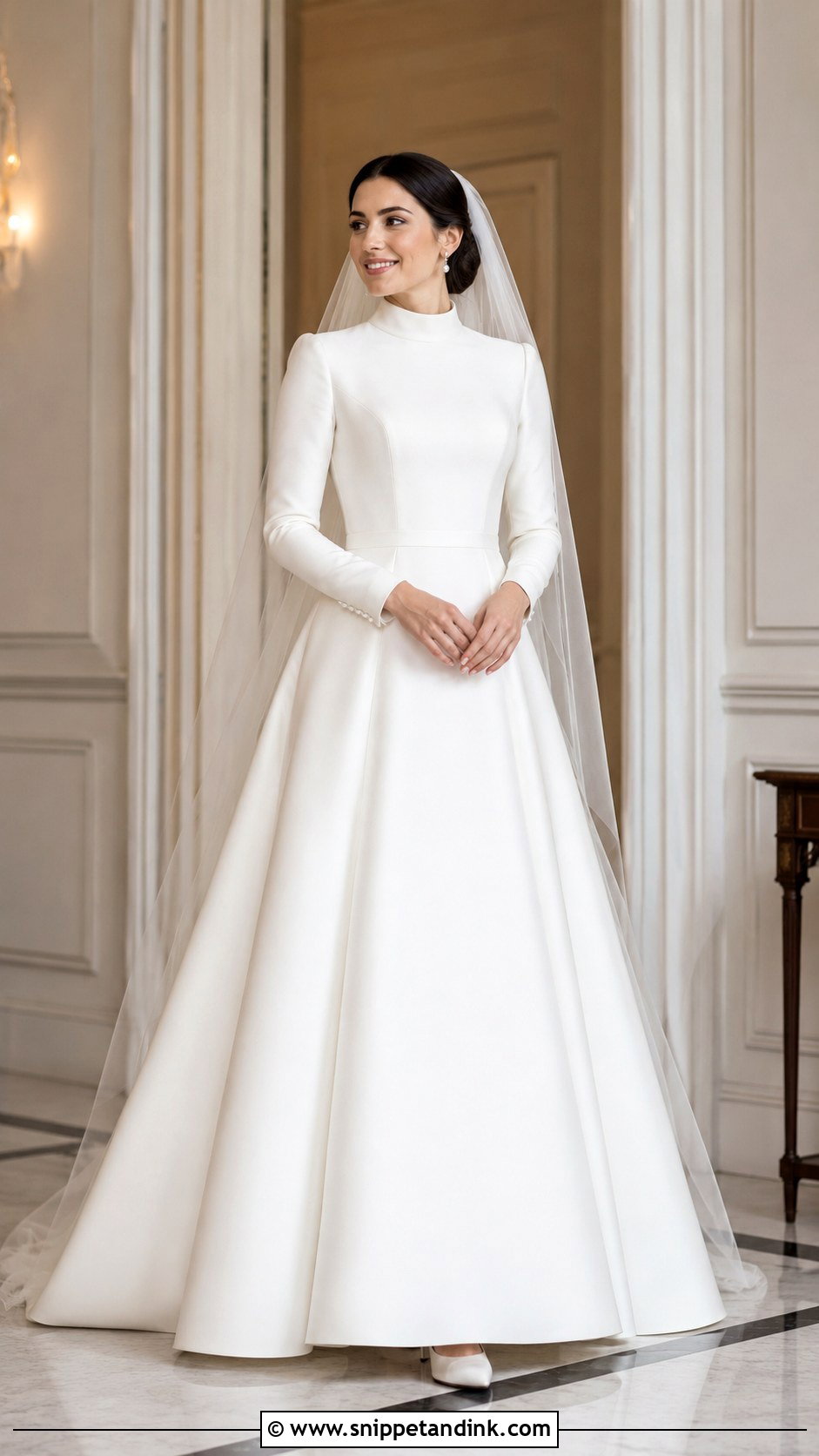
Full coverage doesn’t have to mean heavy. A modest gown with a lined bodice, higher neckline, defined waist and full-length sleeves in matching crepe, satin or lace can feel light and celebratory. An A-line skirt gives the easiest movement. Small details like covered buttons, narrow cuffs or fine lace trim add interest without clutter. Pearl earrings, an elegant veil, closed-toe pumps and a structured bouquet complete it, with neatly pinned hair that keeps fabric from bunching at the shoulders. With so much fabric following the body, the sleeve and bodice seams need careful tailoring so nothing pulls when you move.
13. Mermaid Wedding Dress With Sheer Sleeves
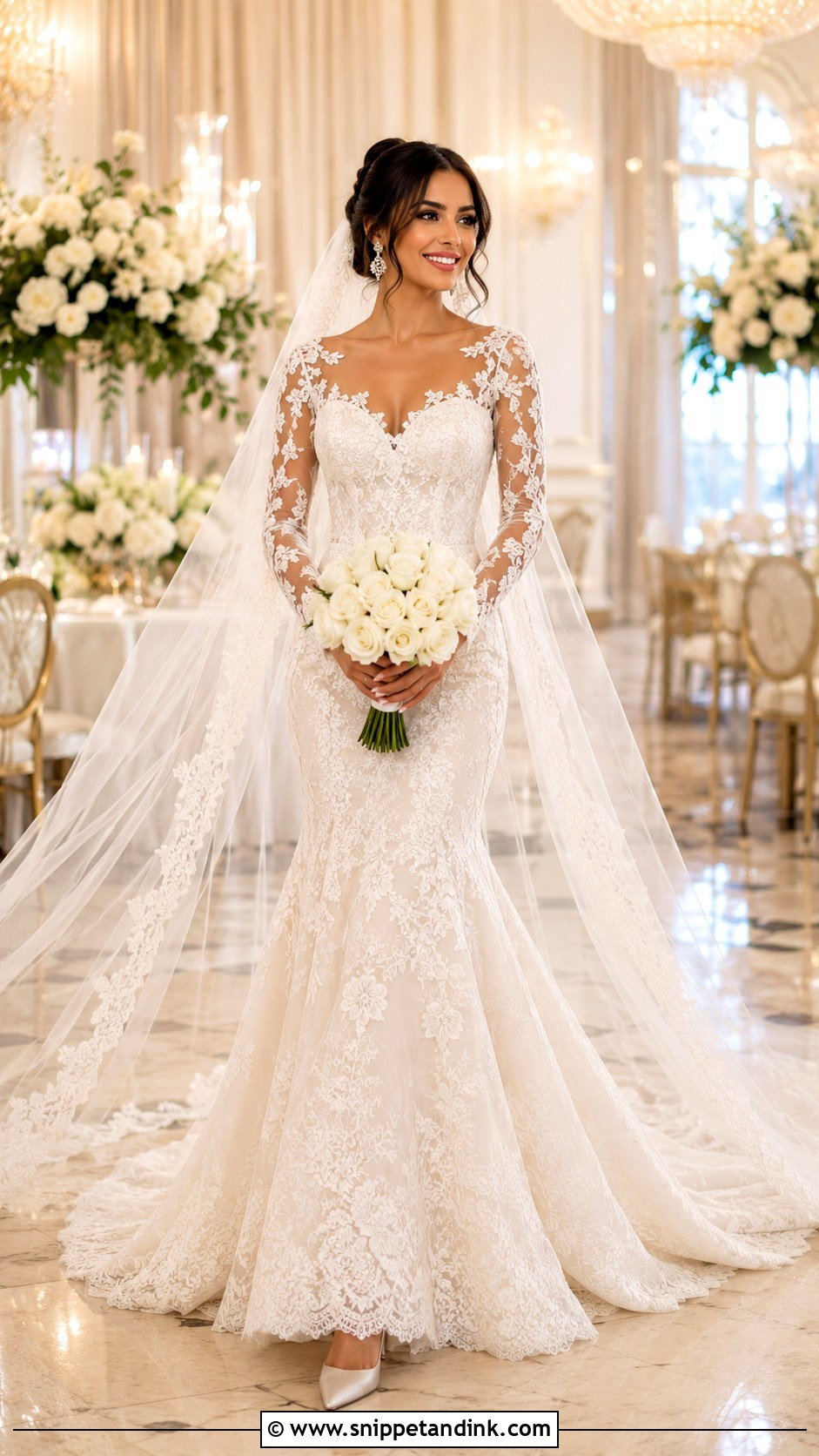
Sheer sleeves keep a mermaid’s top half delicate while the skirt does the drama. The gown should follow the bodice, waist and hips and open near the knee in a controlled flare. I like illusion sleeves whose lace motifs match the appliqués on the bodice and skirt, so the whole dress reads as one. A soft V or illusion bateau neck balances the fit. Crystal studs, a narrow bracelet, pointed satin heels and a plain cathedral veil contrast nicely with the lace, and a side-parted low bun keeps it simple. Walk a few real steps at the fitting; the flare height decides your stride.
14. Chiffon A-Line Wedding Dress With Flutter Sleeves
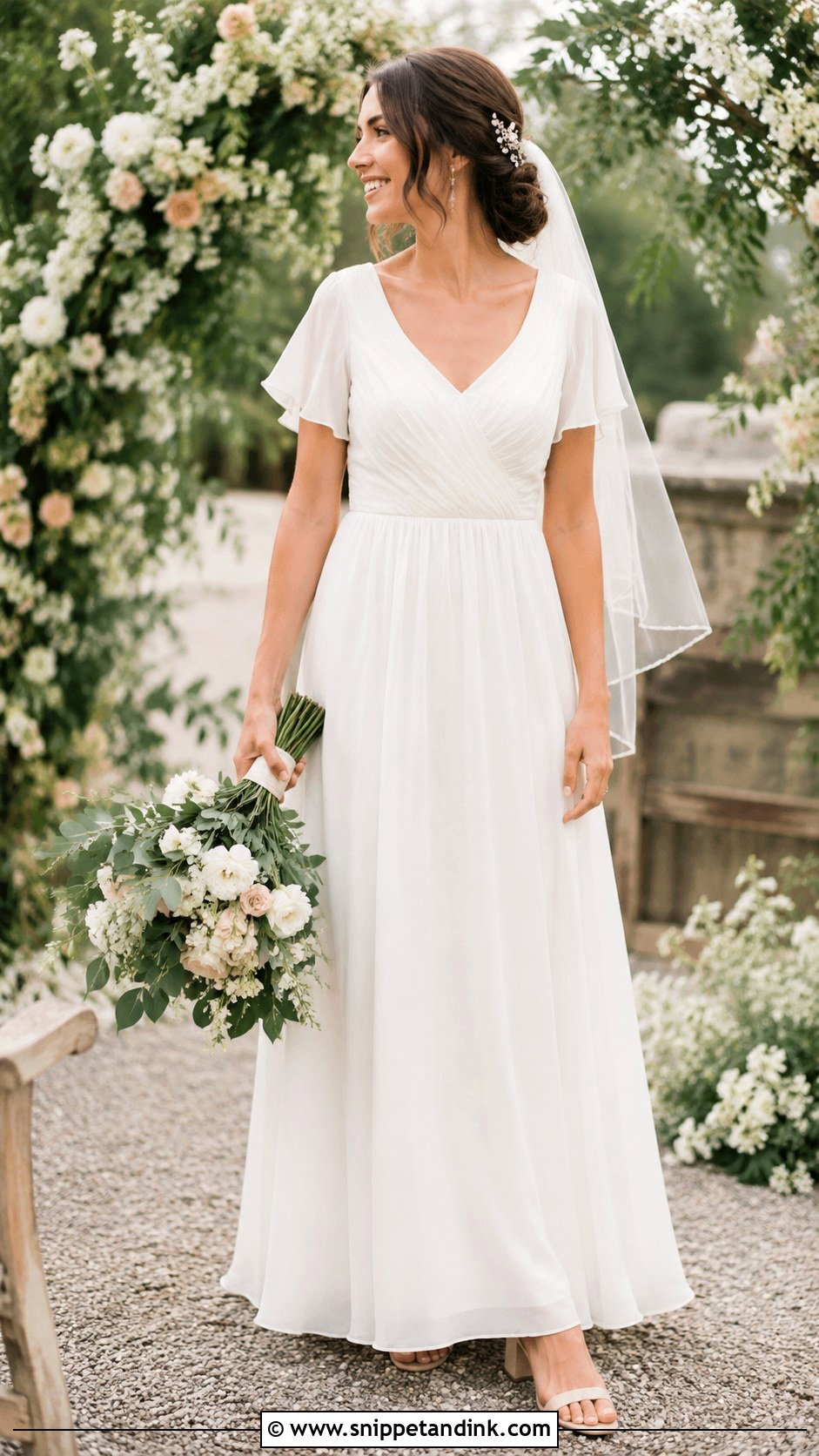
Chiffon flutter sleeves are the coolest option here for an outdoor or warm-weather ceremony. They skim the shoulder and upper arm, cover without trapping heat and move in a breeze. A gathered bodice with good lining, a skirt falling from the waist without extra layers and a V or scoop neckline keep it light. Delicate drops, a simple hair comb and comfortable block-heel sandals suit it, with a fingertip veil and a loose seasonal bouquet. Chiffon frays and snags easily, so the hem should be finished well before it meets grass or sand.

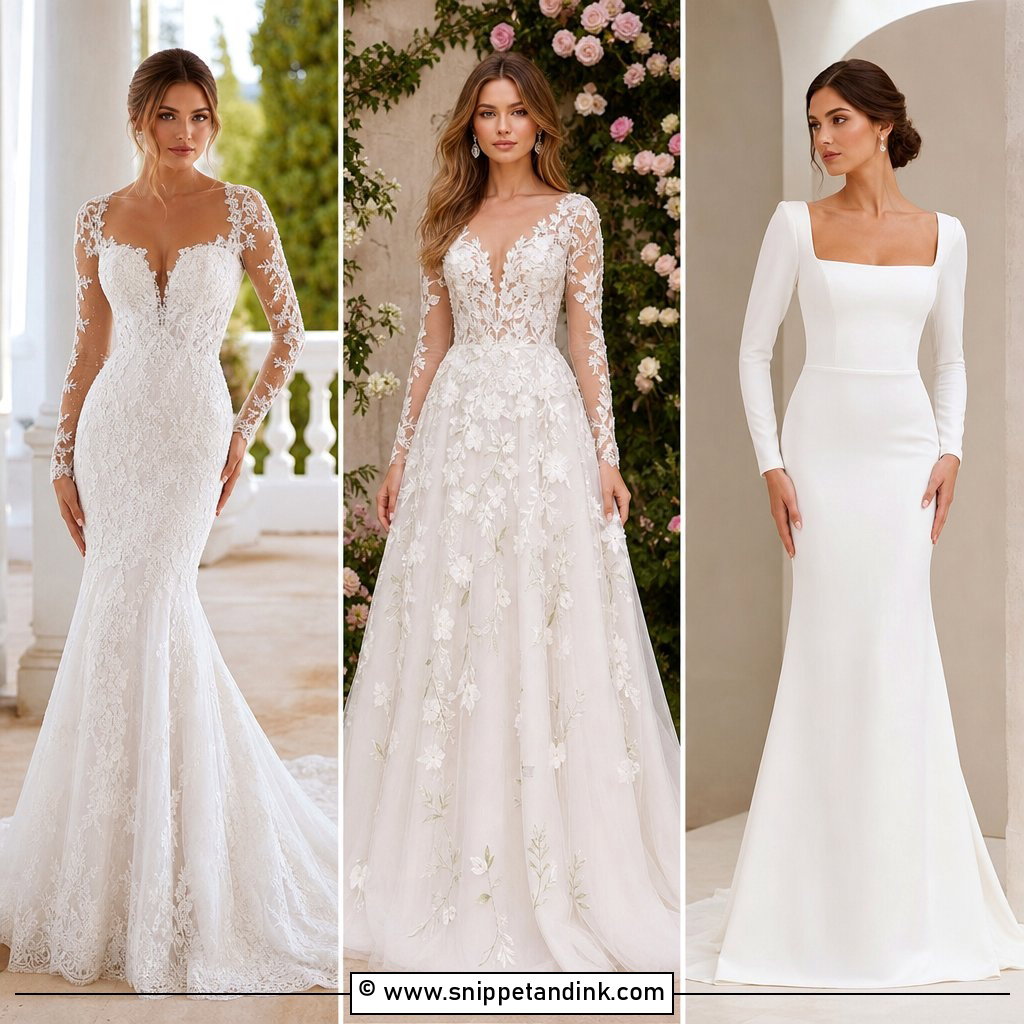
15. Pearl Beaded Wedding Dress With Sleeves
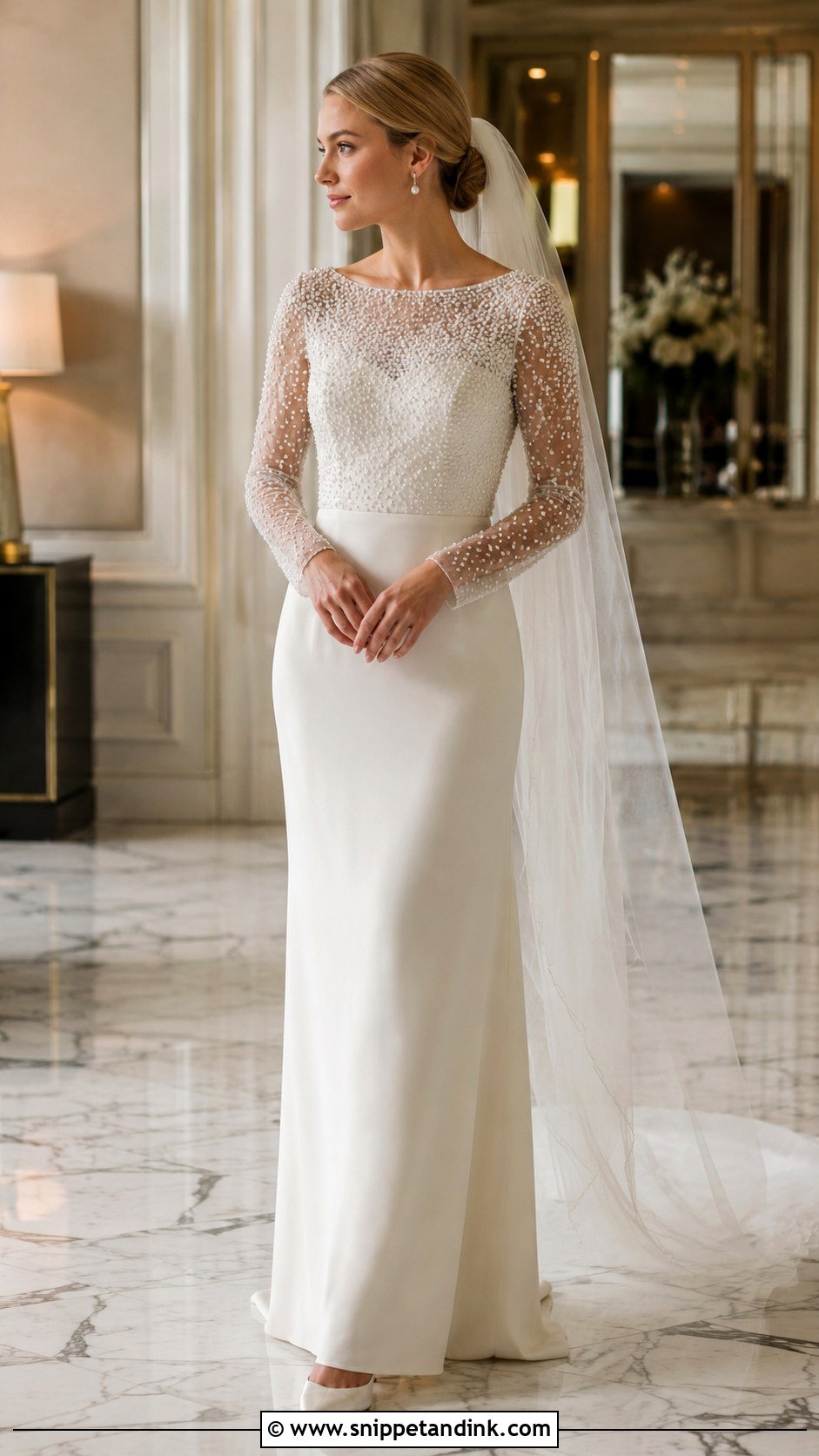
Pearl beading gives a softer glow than crystals. On a simple A-line or column, pearls scattered across sheer tulle sleeves and lightly over the bodice are plenty; a mostly plain skirt stops it tipping into ornate. A bateau or rounded neckline frames the face. Small pearl earrings, satin pumps and a plain veil with a raw edge suit it, with a low chignon or polished bun. Before you buy, turn the sleeve inside out and run your fingers over the lining. Beadwork backing can scratch the inner arm, and secure knots matter more than the number of pearls.
16. Winter Wedding Dress With Long Sleeves
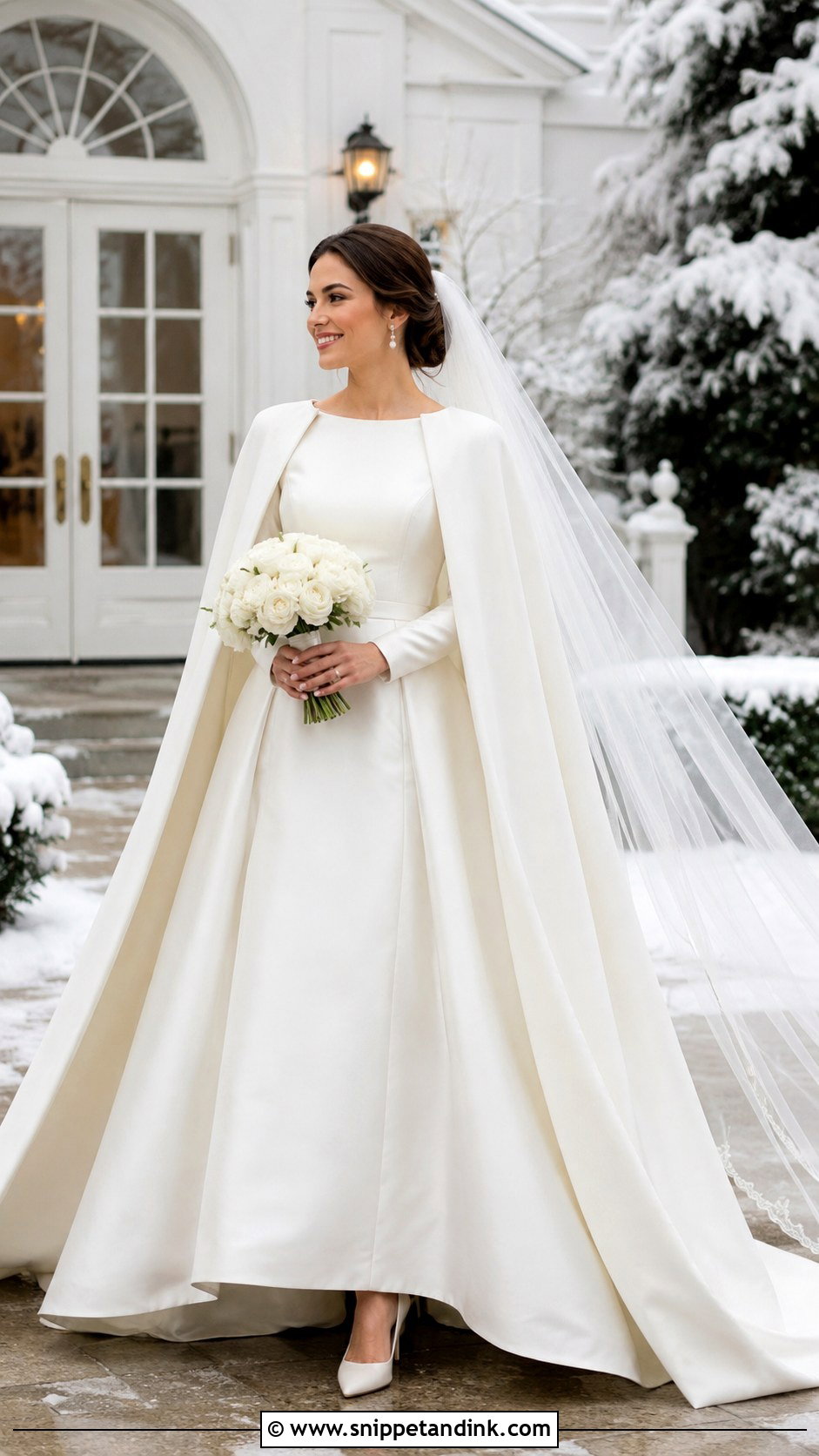
A winter wedding dress has two jobs: look right indoors and keep you warm enough for outdoor portraits. Structured satin, velvet-trimmed crepe or layered lace with a lined bodice and full sleeves all help. I like a ball gown or A-line skirt because there’s room underneath for discreet thermal layers. Closed-toe pumps, pearl earrings and a long veil suit the ceremony. Outside, a tailored white coat, faux-fur wrap or structured cape keeps you warm without hiding the gown’s shape. Keep accessories in ivory or soft white so cold-light photos stay consistent.
17. Simple Satin Wedding Dress With Cap Sleeves
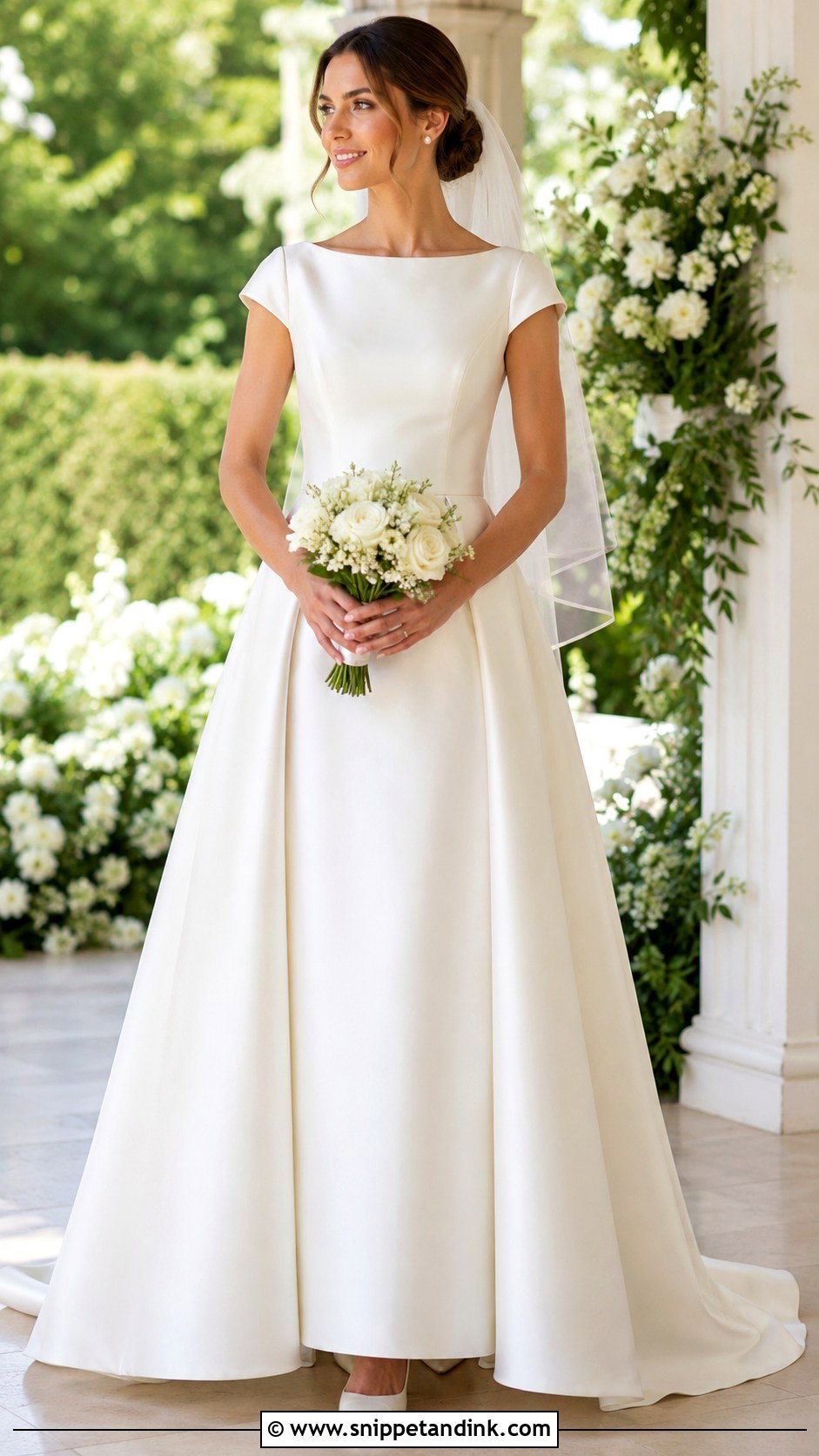
A simple satin dress with cap sleeves gives light shoulder coverage and a clean finish. The fitted bodice, natural waist and softly structured A-line skirt are classic. The fitting detail I watch is the cap’s edge: it should follow the shoulder line and sit flat, not cut across the upper arm. A bateau or shallow V-neck and covered back buttons add quiet decoration. Pearl studs, a fingertip veil, pointed pumps and a compact bouquet suit it, with a smooth low bun. A narrow satin waistband adds definition if you want it. Morning ceremonies and formal halls both suit this dress.
18. Plus Size Wedding Dress With Lace Sleeves
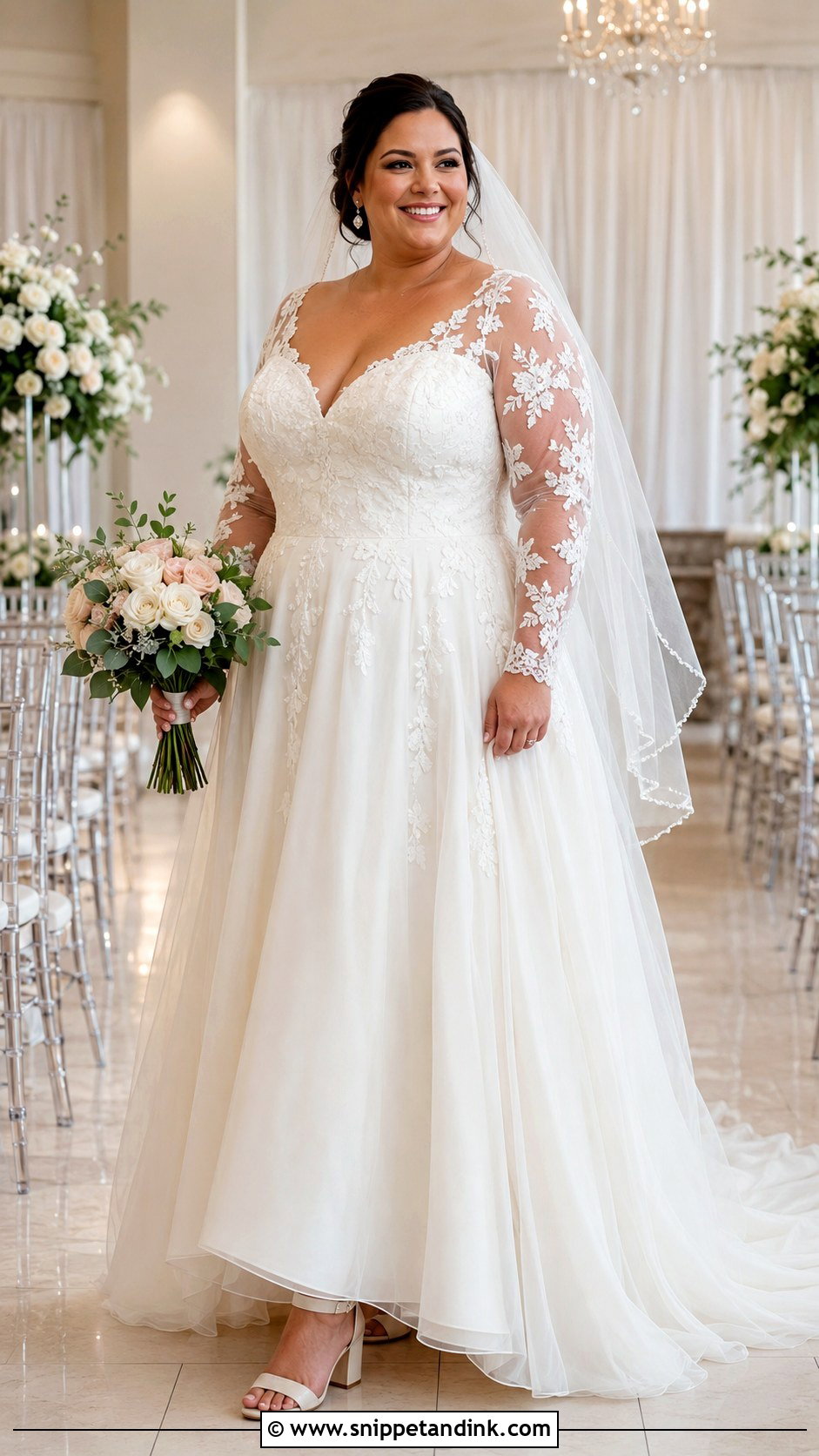
Support comes first in any plus size gown, then movement, then the details that reflect your taste. An A-line with a structured inner bodice, a clearly placed waist and a skirt without bulky layers is a strong start. Lace sleeves can be fully lined for coverage or set over illusion mesh for lightness, and I’d ask for some stretch in the lace so the sleeve doesn’t bind at the bicep when you hug. A V, scoop or bateau neckline gives different amounts of openness. Pearl earrings, cushioned block heels and a veil sized to the skirt complete it. Good alterations refine sleeve width, shoulder placement and bodice support. The aim is a secure, well-tailored fit, not hiding anything.
19. Petite Wedding Dress With Three Quarter Sleeves
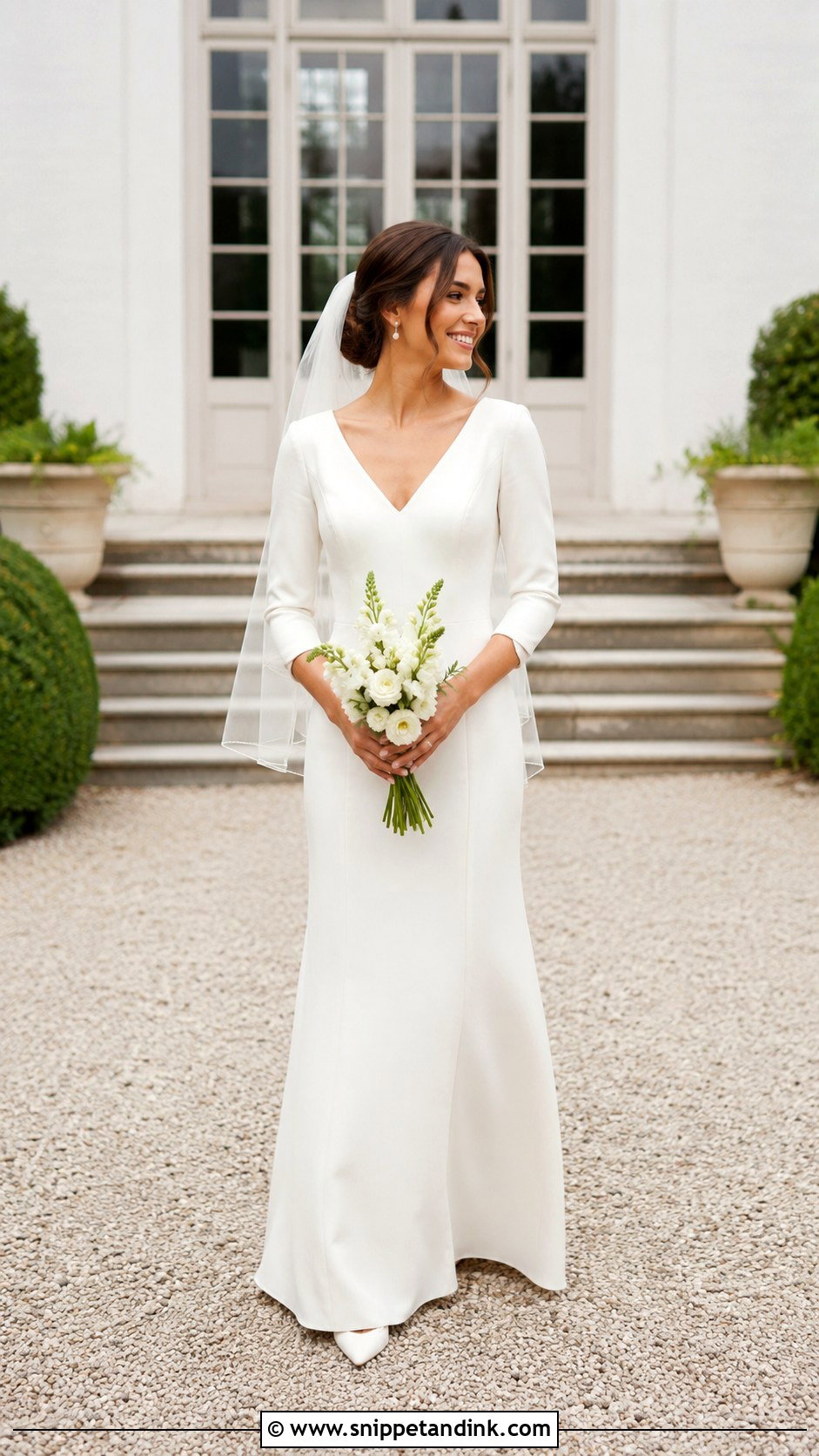
On a petite frame, too much fabric can swallow you, and three-quarter sleeves help by showing some forearm. Look for a raised or natural waist, clean vertical seams and an A-line or narrow column. A modest V-neck or bateau neckline keeps the top open. Ivory pointed heels that match the gown carry the line down. Small pearl earrings, a narrow bouquet and a light fingertip veil finish it. Skip oversized appliqués and heavy skirt layers. I’d also have the sleeves shortened in proportion to your arm, not just at the hem, so the elbow sits where the pattern expects it to.



20. Detachable Sleeve Wedding Dress
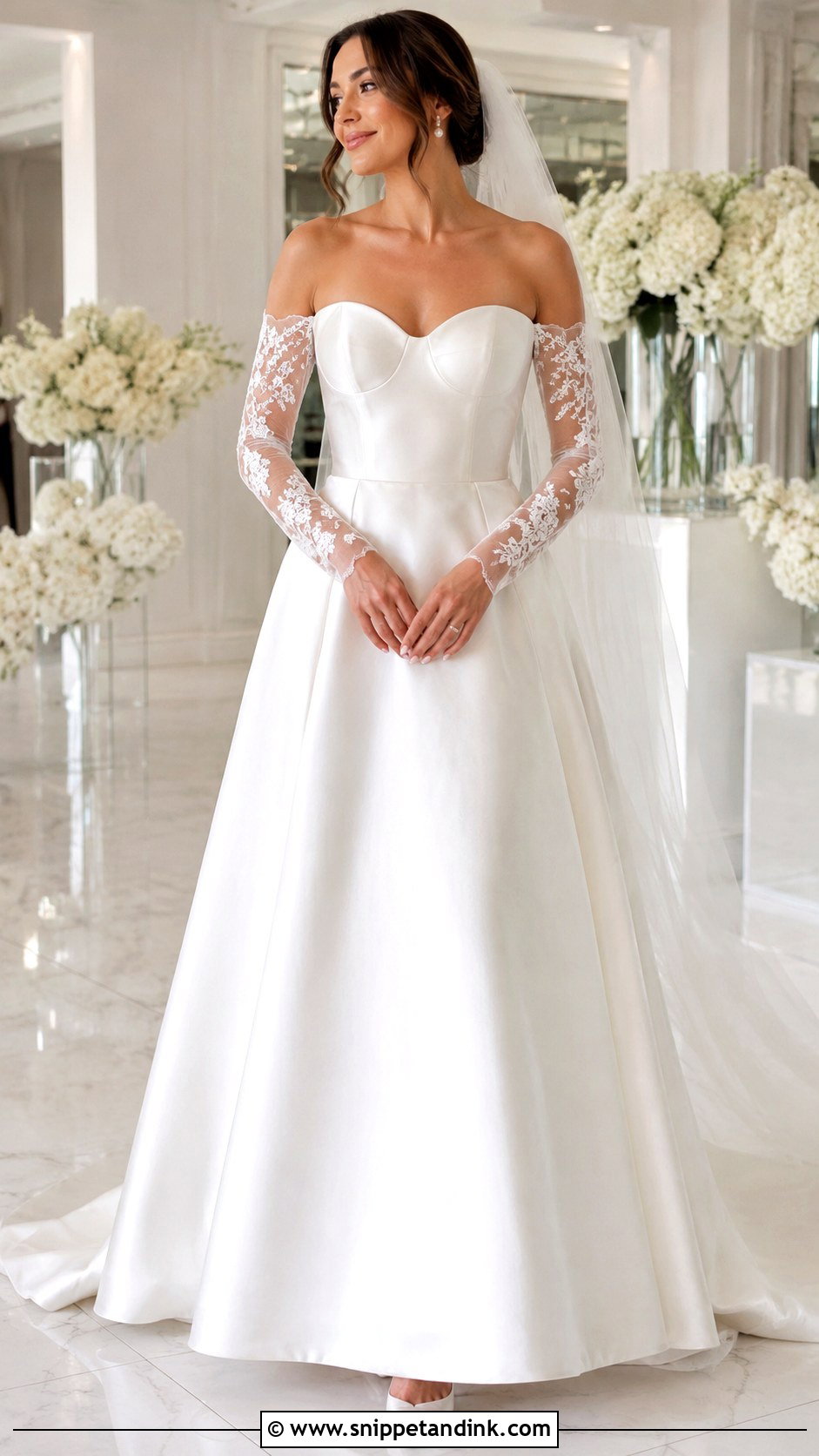
A detachable sleeve wedding dress gives you two looks from one gown. Start with a strapless or sleeveless A-line in satin, crepe or lace, then add fitted illusion sleeves, draped off-shoulder sleeves or light bishop sleeves for the ceremony. The attachment points should hide under appliqués or along the neckline so nothing looks unfinished. Wear a long veil, pearl earrings and classic pumps for the vows. Later, remove the sleeves and switch to statement earrings or a shorter veil. Ask the salon exactly how the sleeves fasten, and practice removing them at a fitting.
Shortening, Adding or Removing Sleeves After You Buy
Sleeves are one of the parts of a gown a good seamstress can change most, though not without limits. It helps to know what’s realistic before you fall for a sample that isn’t quite right.
- Shortening a plain sleeve is usually simple. On lace with a scalloped edge, the scallop has to be cut off and re-stitched higher, which takes more time and costs more.
- Lengthening a sleeve is rarely possible, because there is seldom spare fabric in the seam.
- Narrowing a loose sleeve works well. Letting one out depends on how much seam allowance the maker left, which is often very little.
- Adding sleeves to a strapless gown can be done with matching lace or illusion mesh, but ask the salon whether the designer sells matching fabric. Ivory comes in many shades.
- Removing sleeves usually means rebuilding the neckline or armhole, so treat it as a bigger job than it looks.
Ask for a written quote at the first fitting, and always book that first appointment early enough that a sleeve change won’t rush the rest of your alterations.
Raise Your Arms, Then Decide
In the end it comes down to silhouette, fabric, coverage and how a gown feels when you move. Lace A-lines bring traditional romance, satin ball gowns bring formal structure, crepe sheaths keep things clean, and chiffon stays cool outdoors. Sleeve fit matters as much as how the sleeve looks, so raise your arms, sit and walk at every fitting. Think about the venue, the temperature, your shoes, veil and hair at the same time. The right dress supports your body and still looks like you, and good tailoring turns a sleeved gown into one you can wear comfortably all day.
You'll Like These Ideas:







Leave a Reply