
Sleeves change how a gown looks, how it fits and how it moves, often more than brides expect when they walk into a salon. Knowing the names helps a lot, because “something with a bit of sleeve” can mean anything from delicate cap sleeves and airy flutters to fitted lace, dramatic bishops or a detachable pair. Length is only part of it. Fabric, volume, neckline, how far you can lift your arms and how warm you’ll be all matter as much. A good sleeve belongs to the silhouette rather than looking added on, and it lets you sit, dance and hug. Here are the twenty sleeve types I see most, with what each does well and what I check at a fitting.
Sleeves Sorted by Where the Fullness Sits
Many of these names describe the same idea with the volume moved to a different place on the arm. When I’m helping a bride narrow things down, I group sleeves this way, because where the fullness sits decides which part of you it draws attention to and what it does to your proportions.
- Fullness at the shoulder: puff, Juliet and leg of mutton. These widen the shoulder line, which balances wide hips or a big skirt but can overpower a petite or broad-shouldered frame.
- Fullness at the middle of the arm: balloon and lantern. These look most modern and need a simple bodice.
- Fullness at the wrist: bishop, poet and bell. These keep the shoulders narrow and move a lot when you gesture.
- Loose and hanging: flutter, petal and cape. Light coverage with very little restriction, good for warm weather.
- Close to the arm: long, lace, illusion, cap, short, elbow and three-quarter. The fit and length do the work here, not volume.
If you know you like one group, try two or three sleeves within it side by side. The differences between them are small on paper and very obvious in a mirror.
1. Long Wedding Dress Sleeves
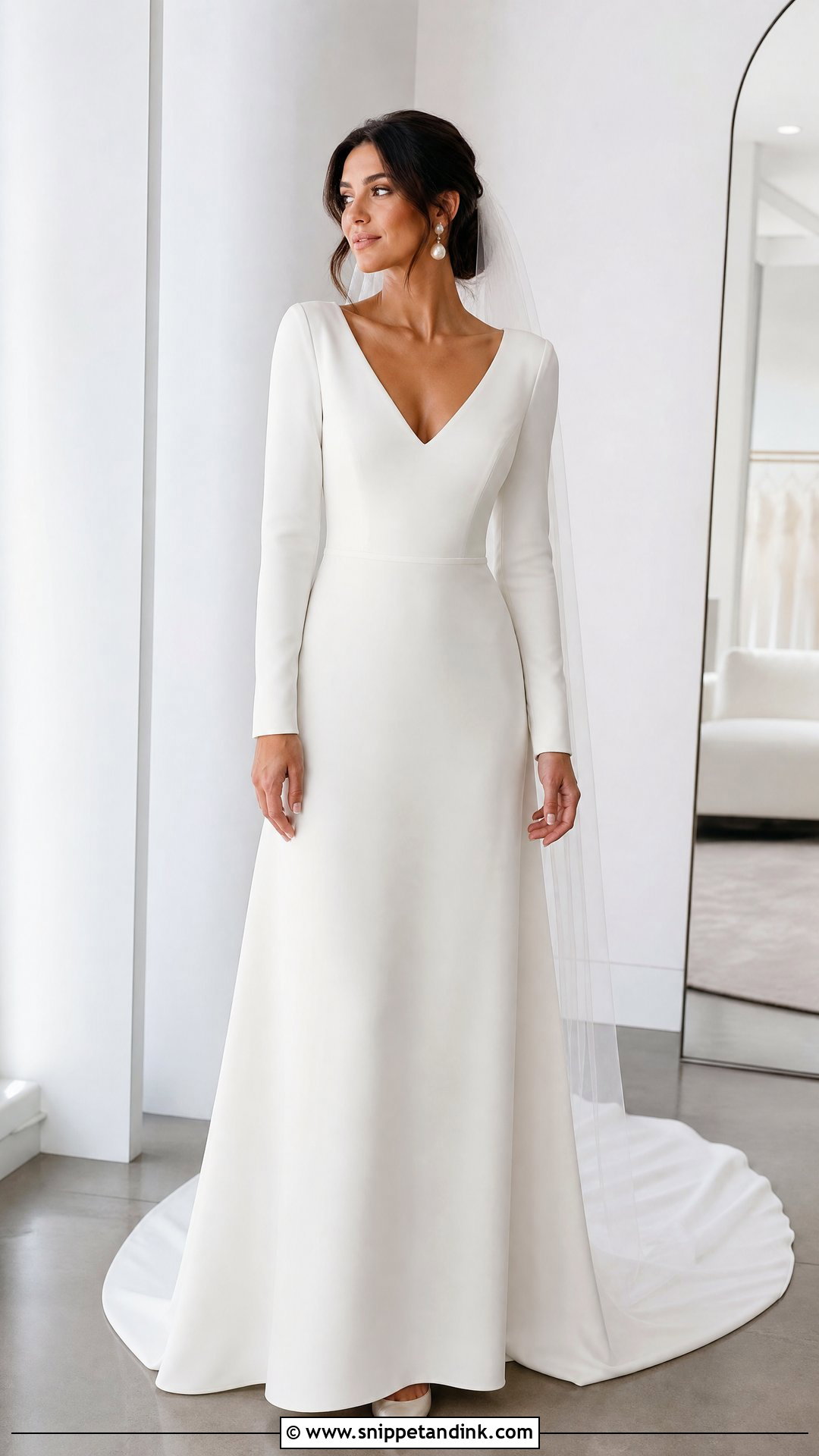
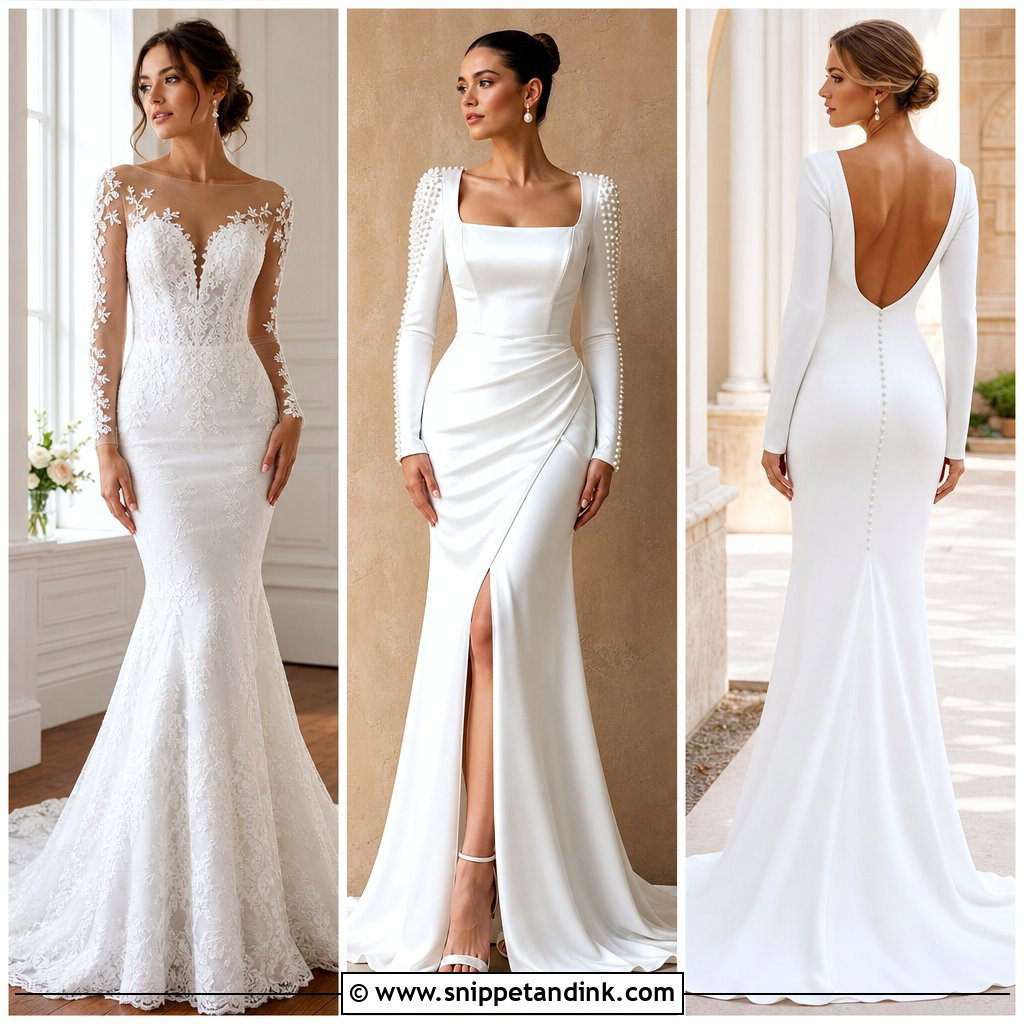
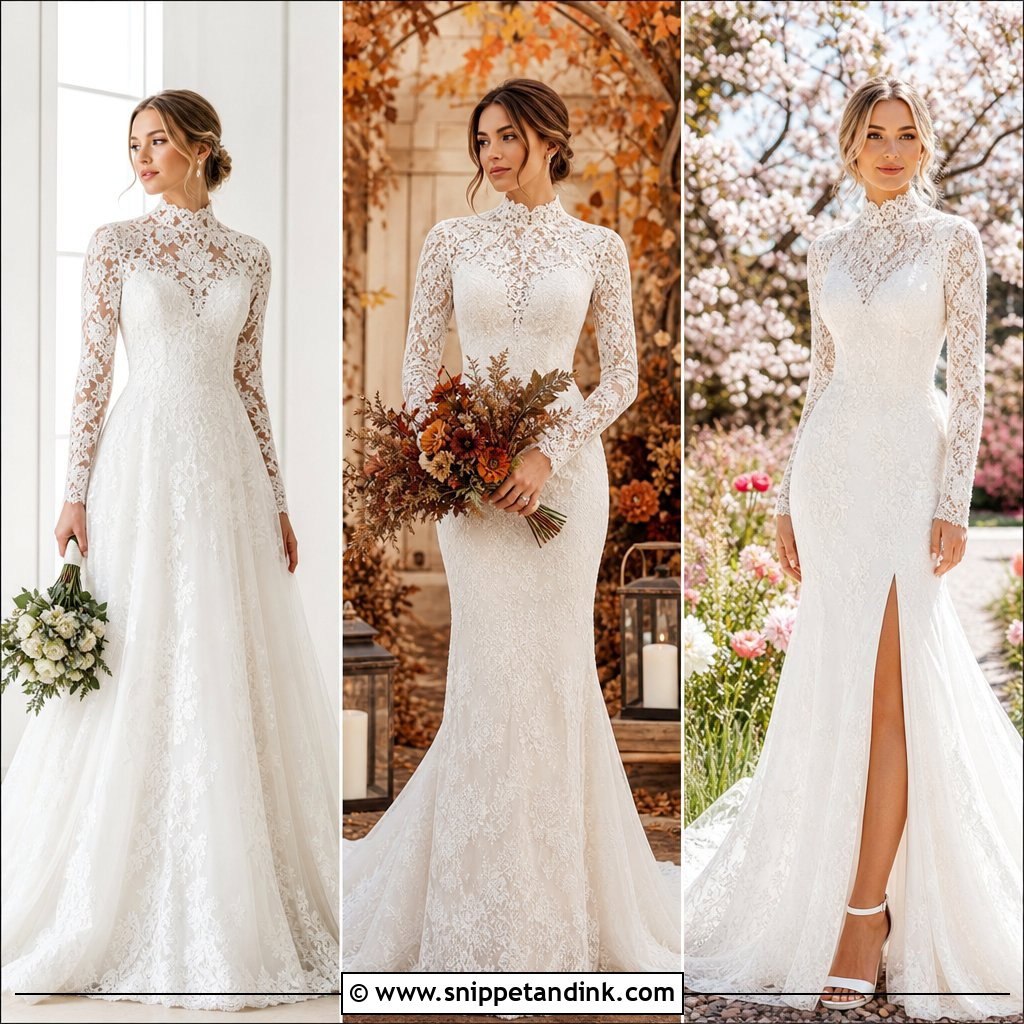
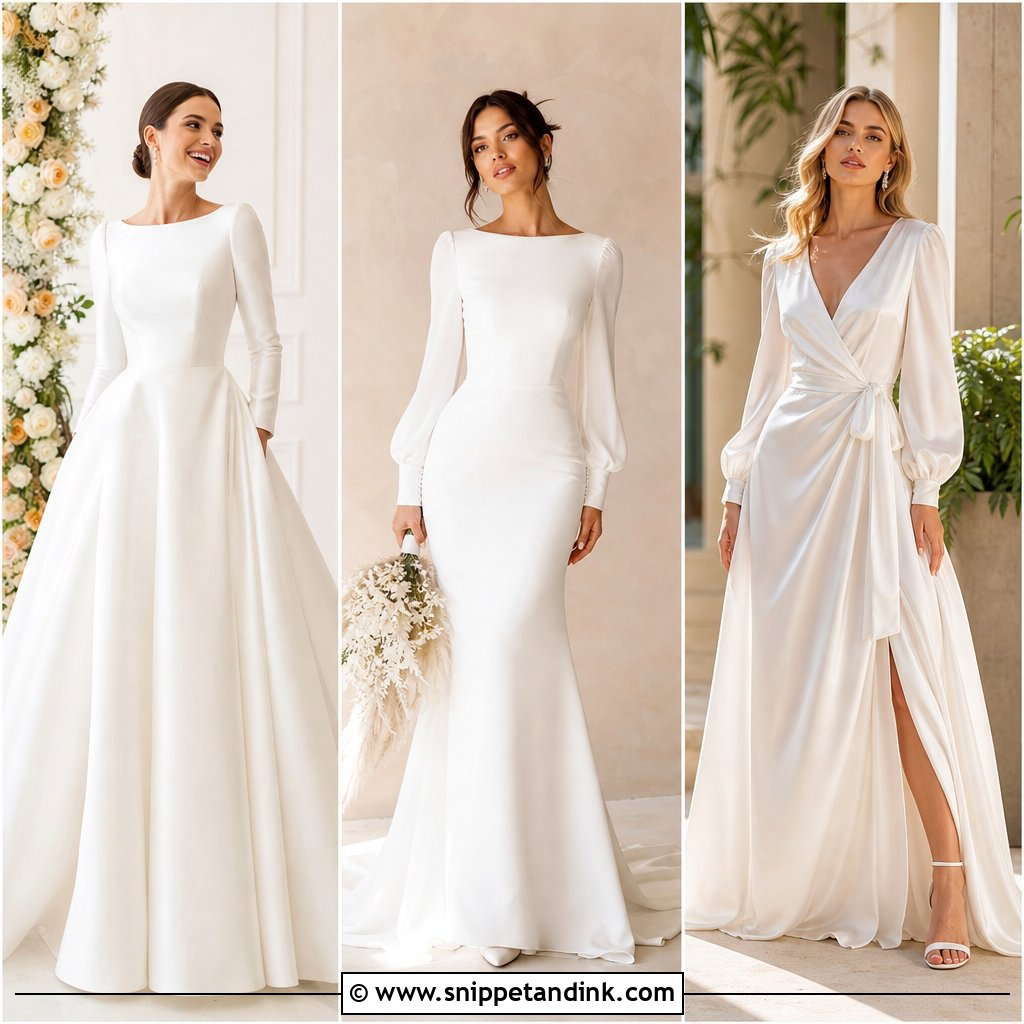
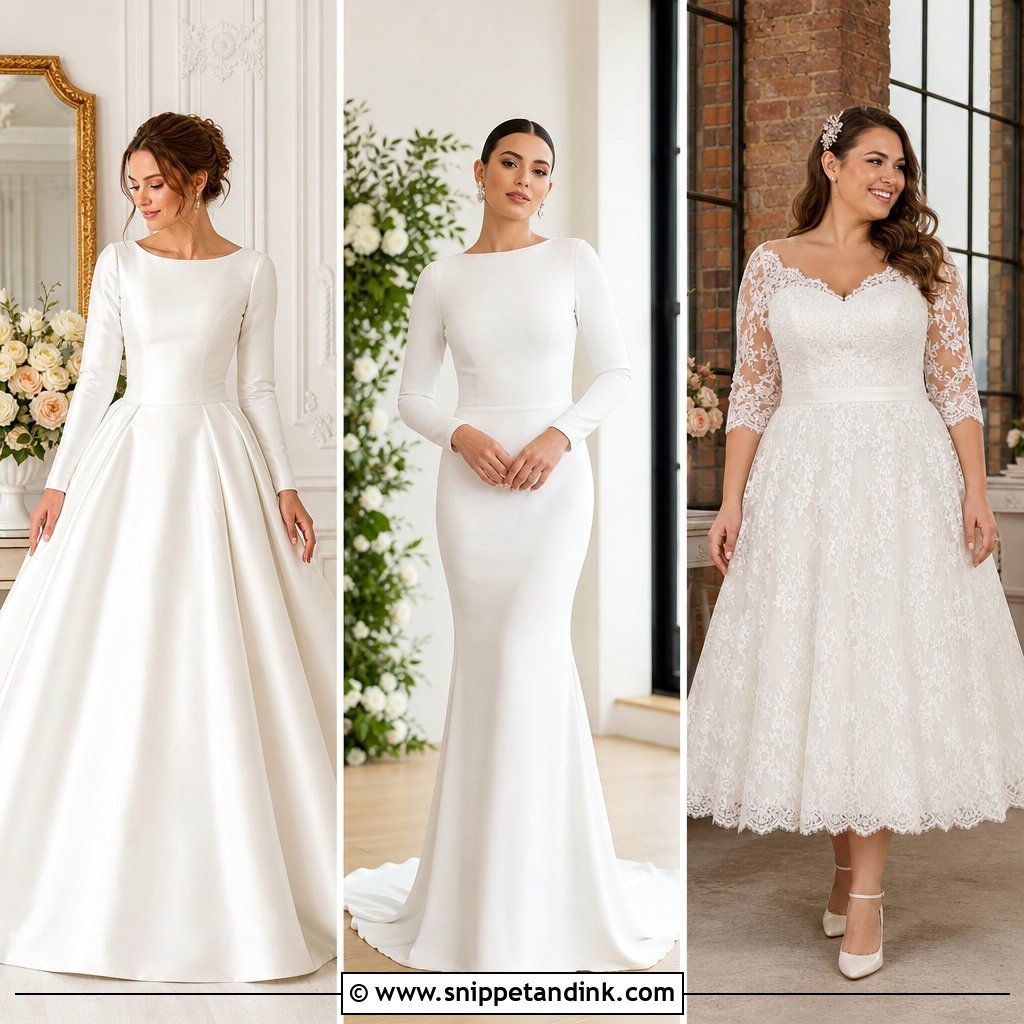
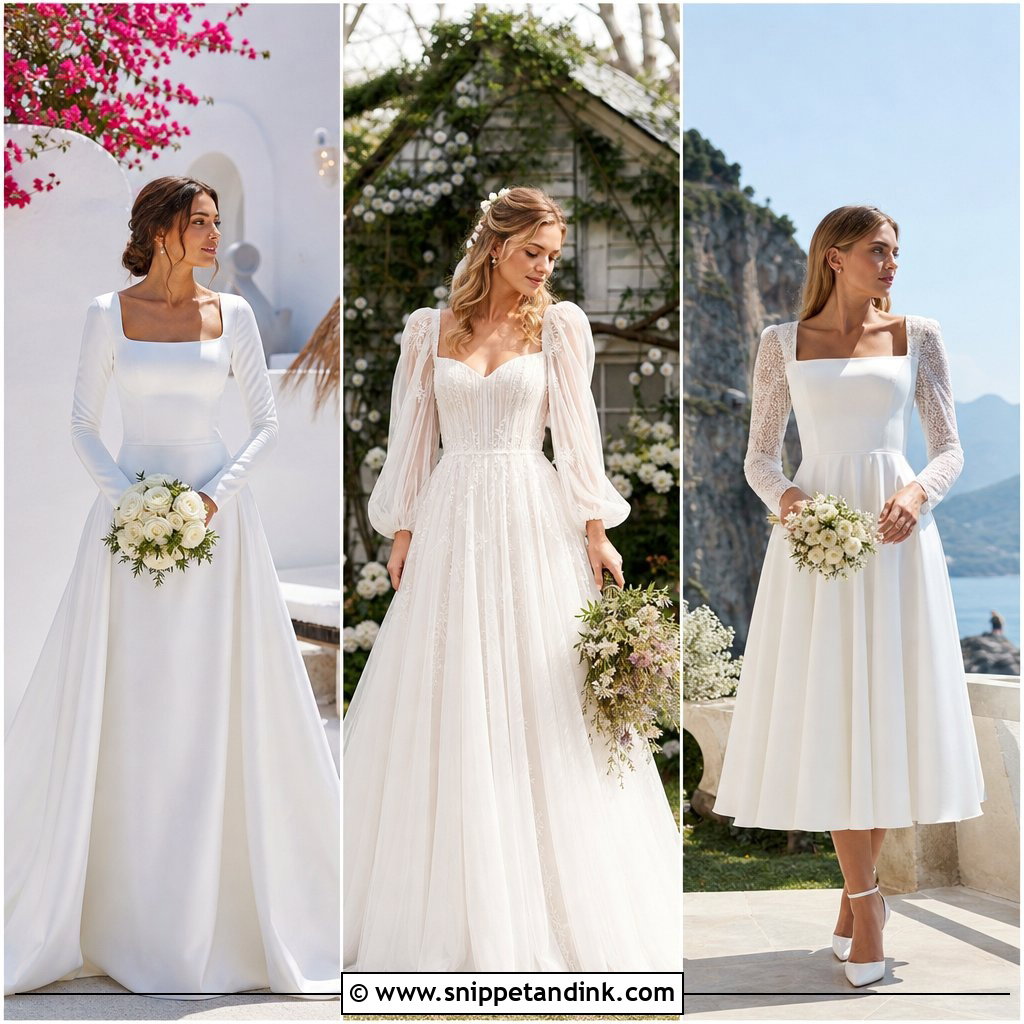
Long sleeves run to the wrist and give the cleanest, most polished line. They can be fitted, a little relaxed or softly structured. Smooth crepe and stretch satin suit minimalist gowns; lace and tulle add decoration. Fitted long sleeves balance a sheath, mermaid or slim A-line especially well. With the arm covered, I like to open up somewhere else, through a V-neck, a square neck or a low back. Non-stretch fabric is the catch: woven satin with no give makes reaching forward hard, so bend your elbow, reach and raise your arms at every fitting.
2. Long Lace Wedding Dress Sleeves
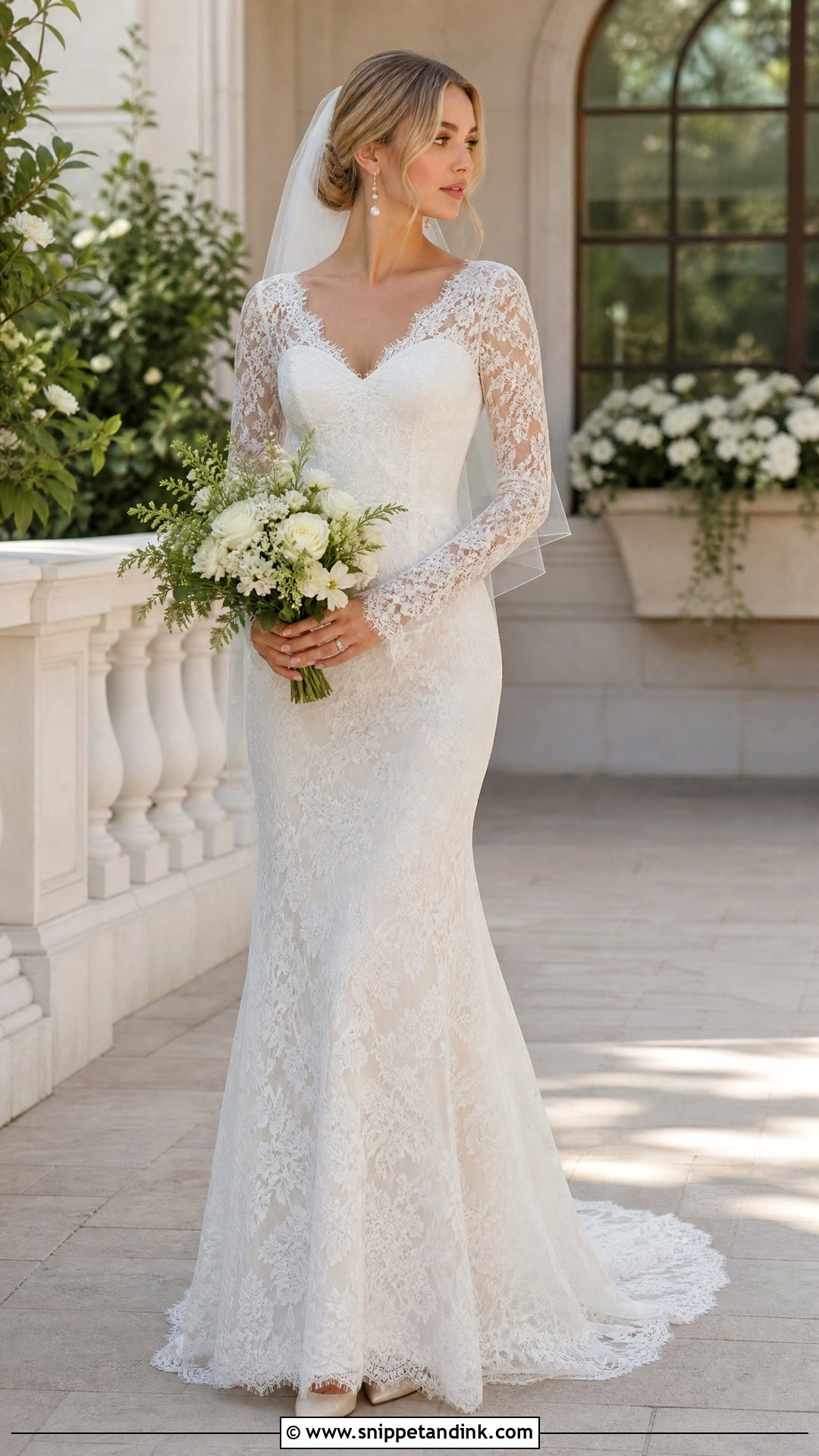
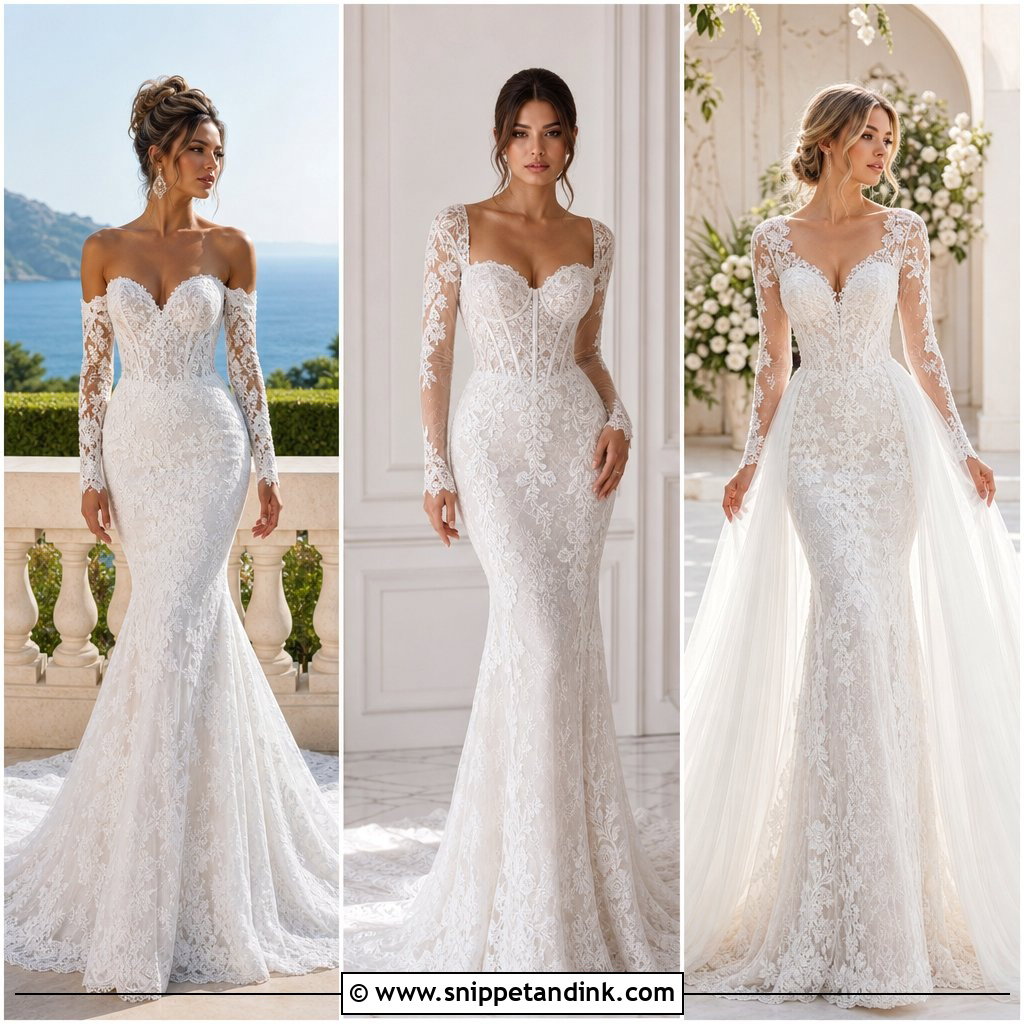
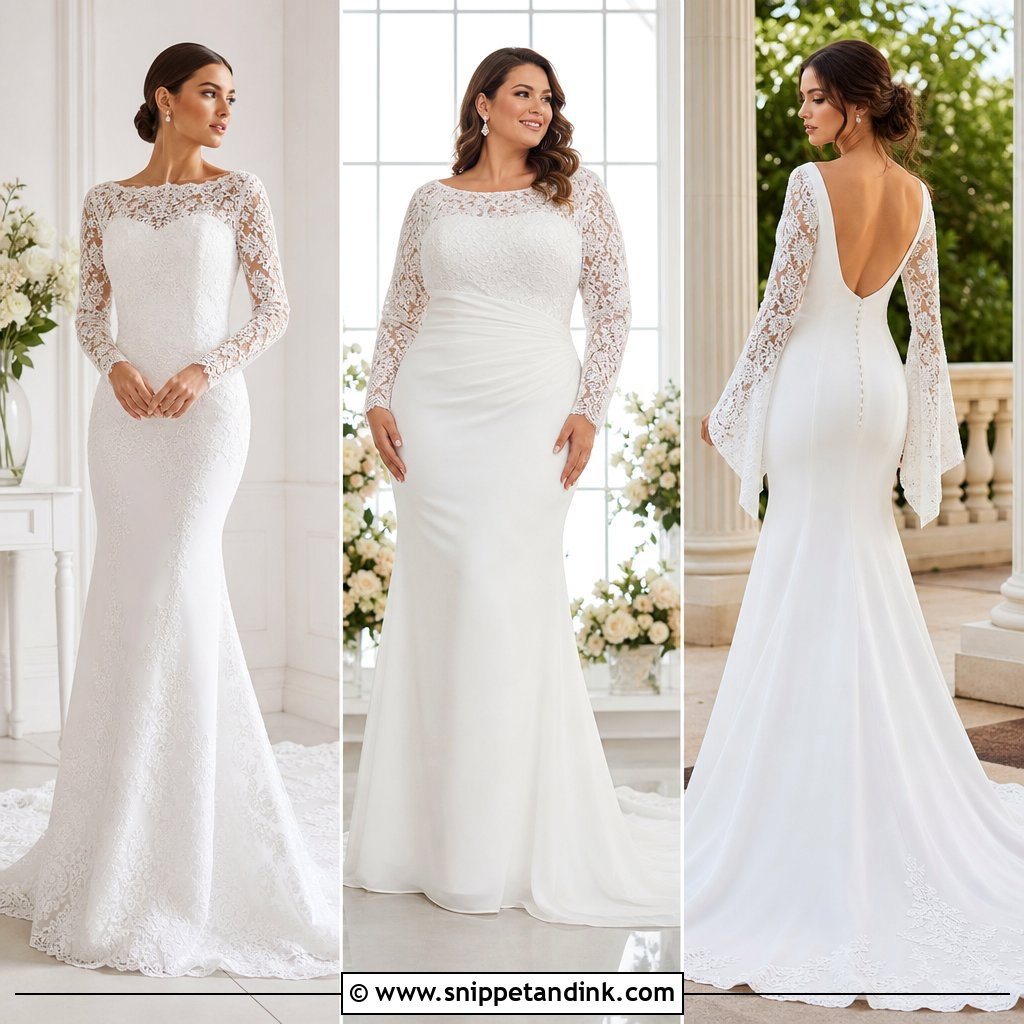
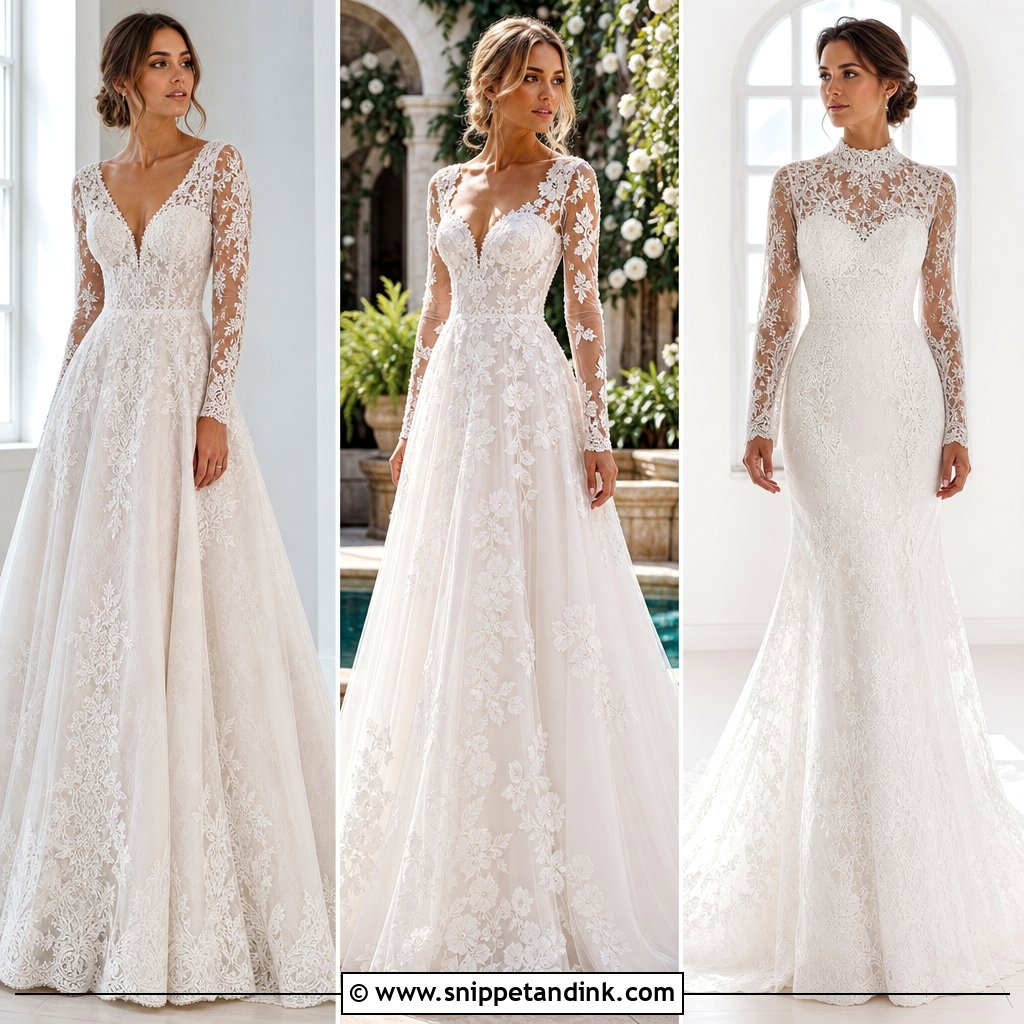
Lace from shoulder to wrist is probably the most familiar bridal sleeve. It might carry floral motifs, a scalloped cuff, beading or appliqués running into the bodice, and it suits ball gowns, fit-and-flare and A-line shapes. Finer lace reads delicate; heavier corded lace gives more structure. The lace pattern should meet cleanly at the shoulder seam without an obvious break. Ask before alterations whether the cuff can be shortened without cutting off the scalloped edge; a good seamstress will remove the scallop, shorten, and sew it back. Simple earrings, a low bun and pointed pumps let the lace lead.
3. Illusion Wedding Dress Sleeves
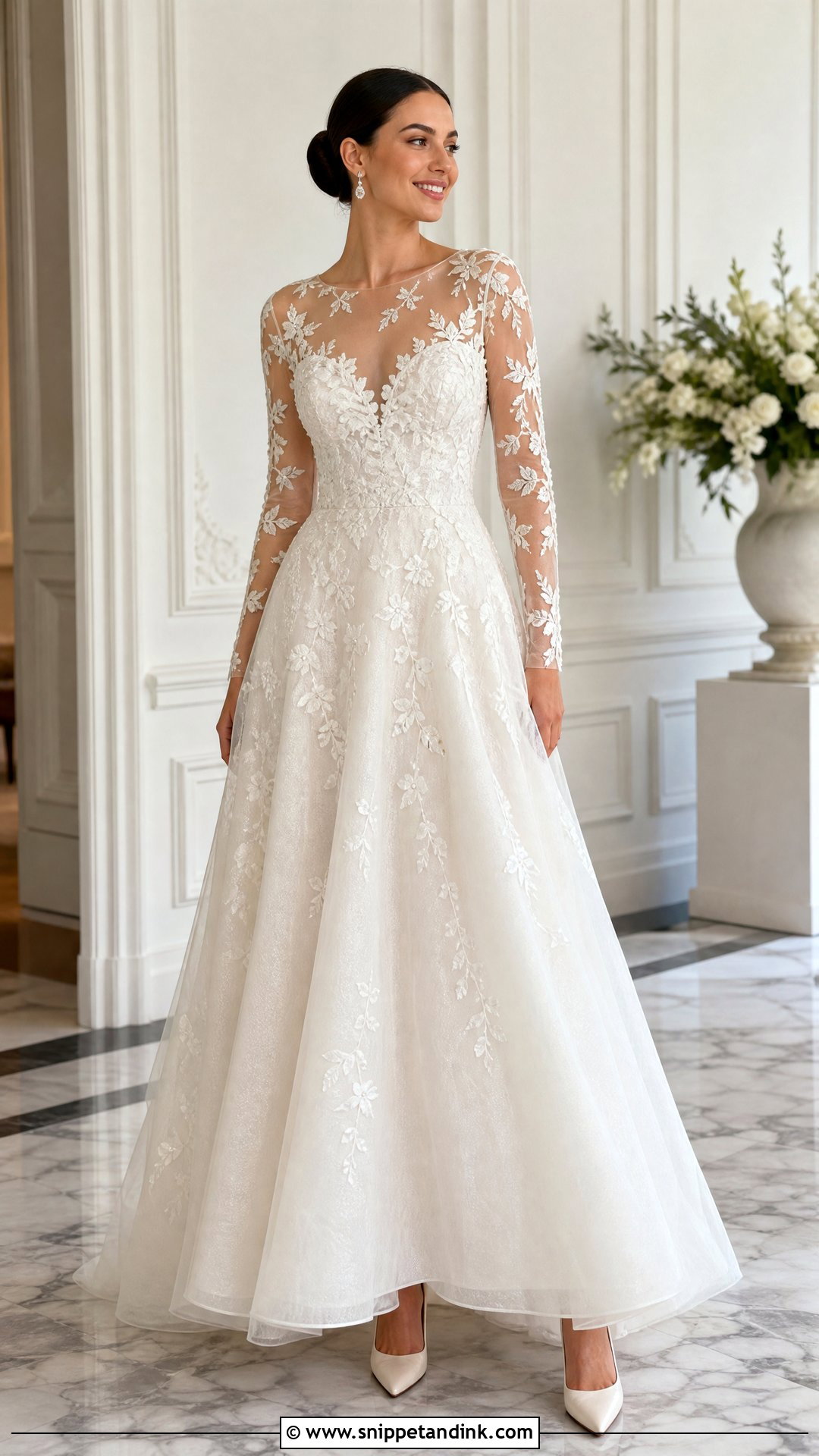
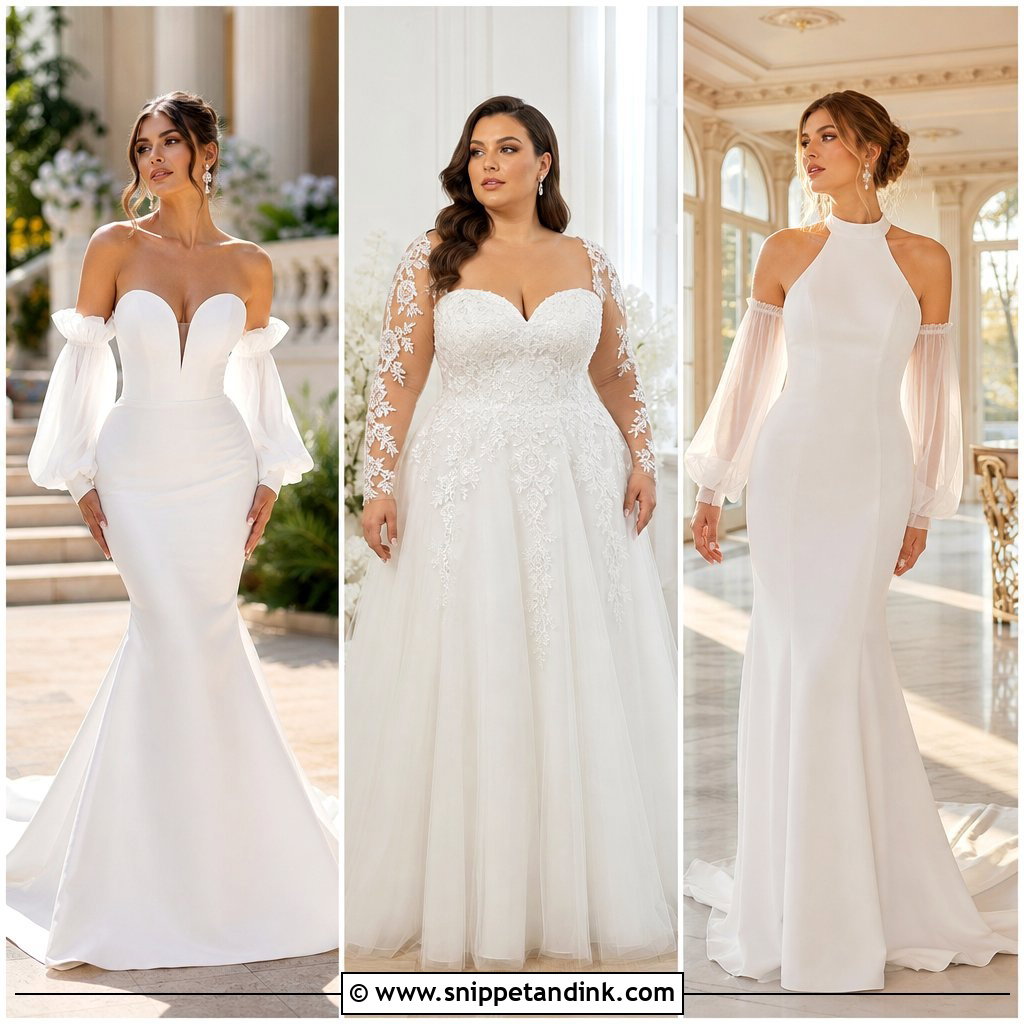
Want coverage without the visual weight? Illusion sleeves are sheer tulle, mesh or net in a shade near your skin, with lace, embroidery, pearls or crystals that seem to float on the arm. They go with romantic A-lines, detailed mermaids and illusion necklines. The mesh should be soft and flexible, never scratchy. Shade matching is the part brides overlook: mesh that’s lighter or darker than your skin leaves a visible line at the shoulder or wrist. Keep shoes and jewellery quiet, since the decoration on the sleeve already gives plenty to look at.
4. Bishop Wedding Dress Sleeves
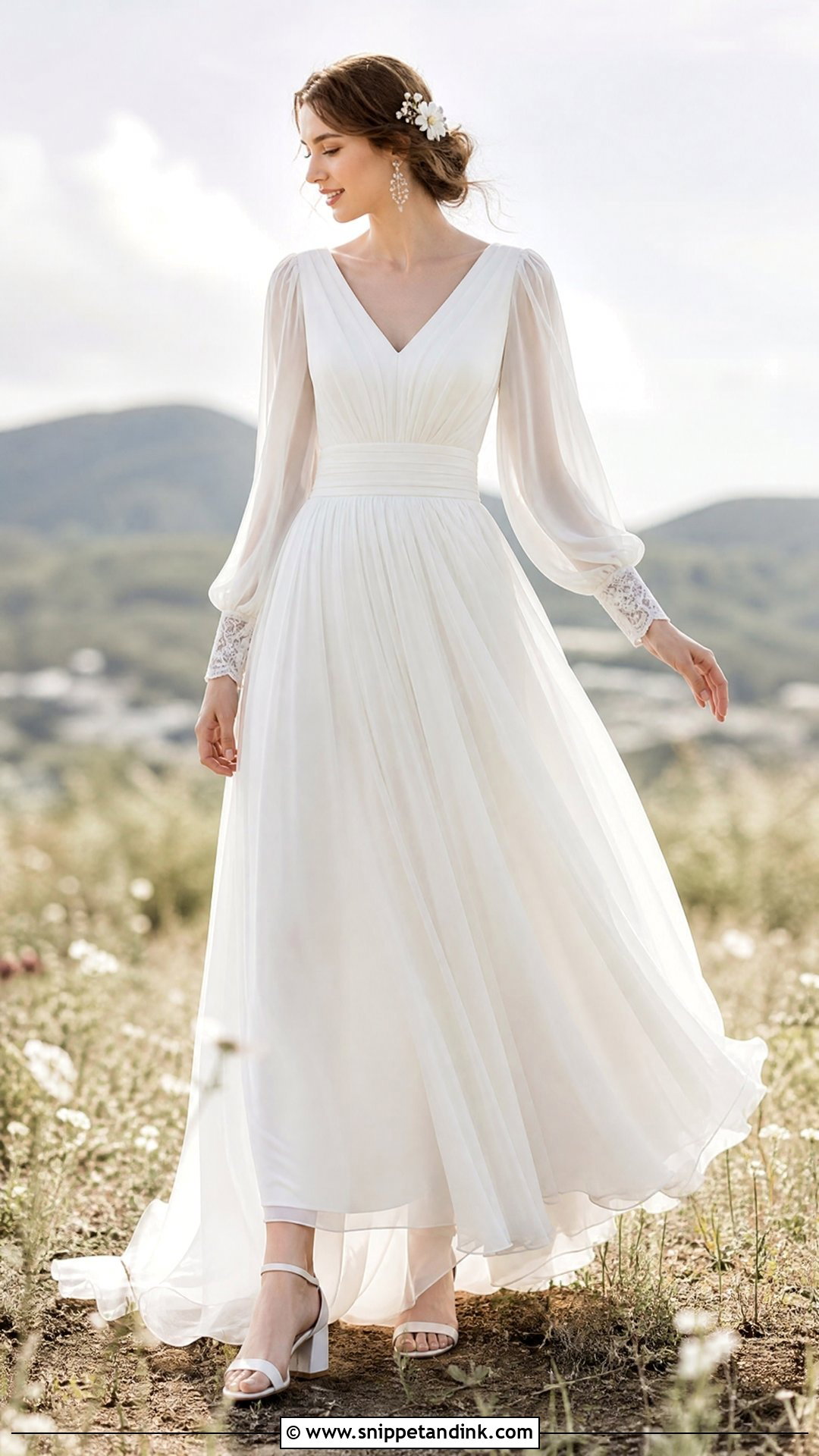
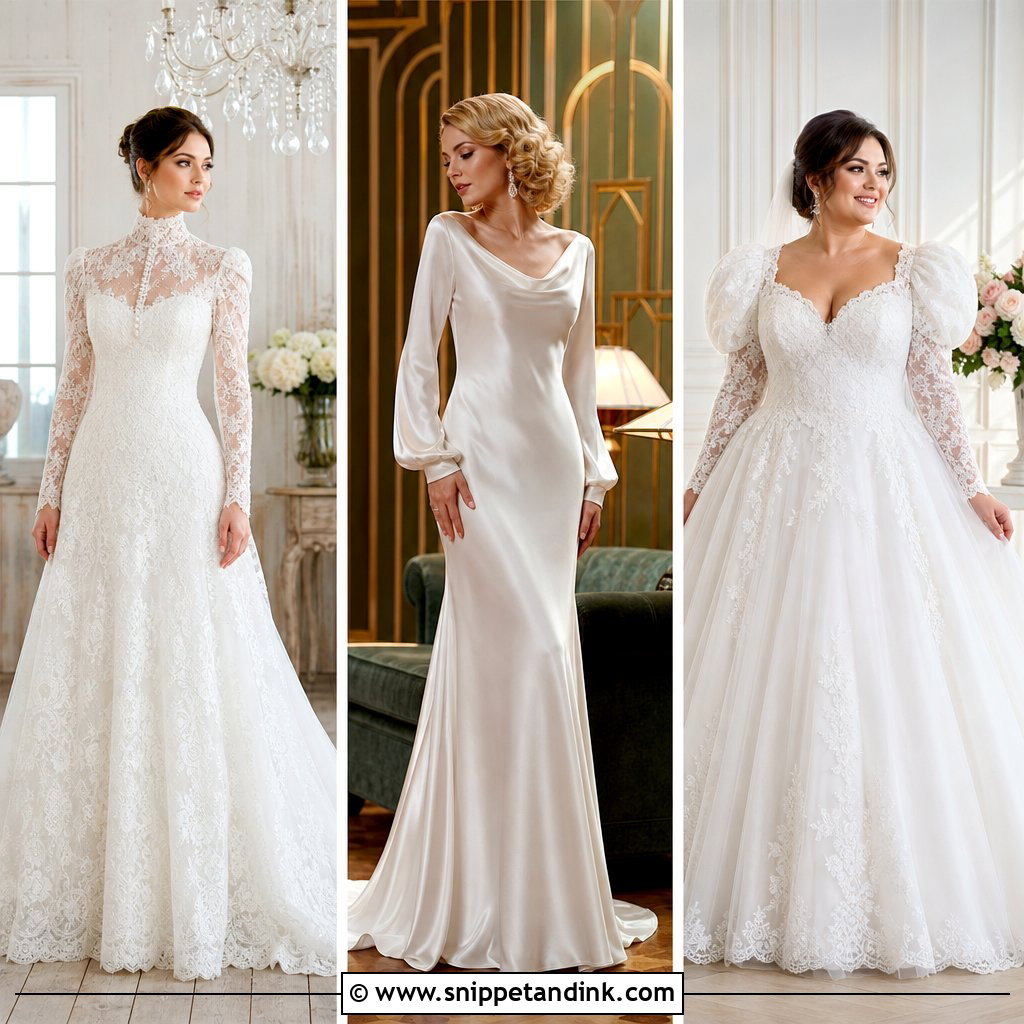
A bishop sleeve is narrow at the shoulder, fuller through the forearm and gathered into a fitted cuff at the wrist. That low fullness swings when you move, and it suits chiffon, organza, lace and light tulle. Boho A-lines, empire waists and soft dresses carry it naturally. Sheer bishops keep the volume light; opaque ones feel more vintage. The cuff is where comfort lives or dies. A row of tiny buttons looks lovely but is slow to undo, and you’ll want to push the sleeves up to eat. With that much volume, I keep the veil and jewellery simple and the heels low.
5. Balloon Wedding Dress Sleeves
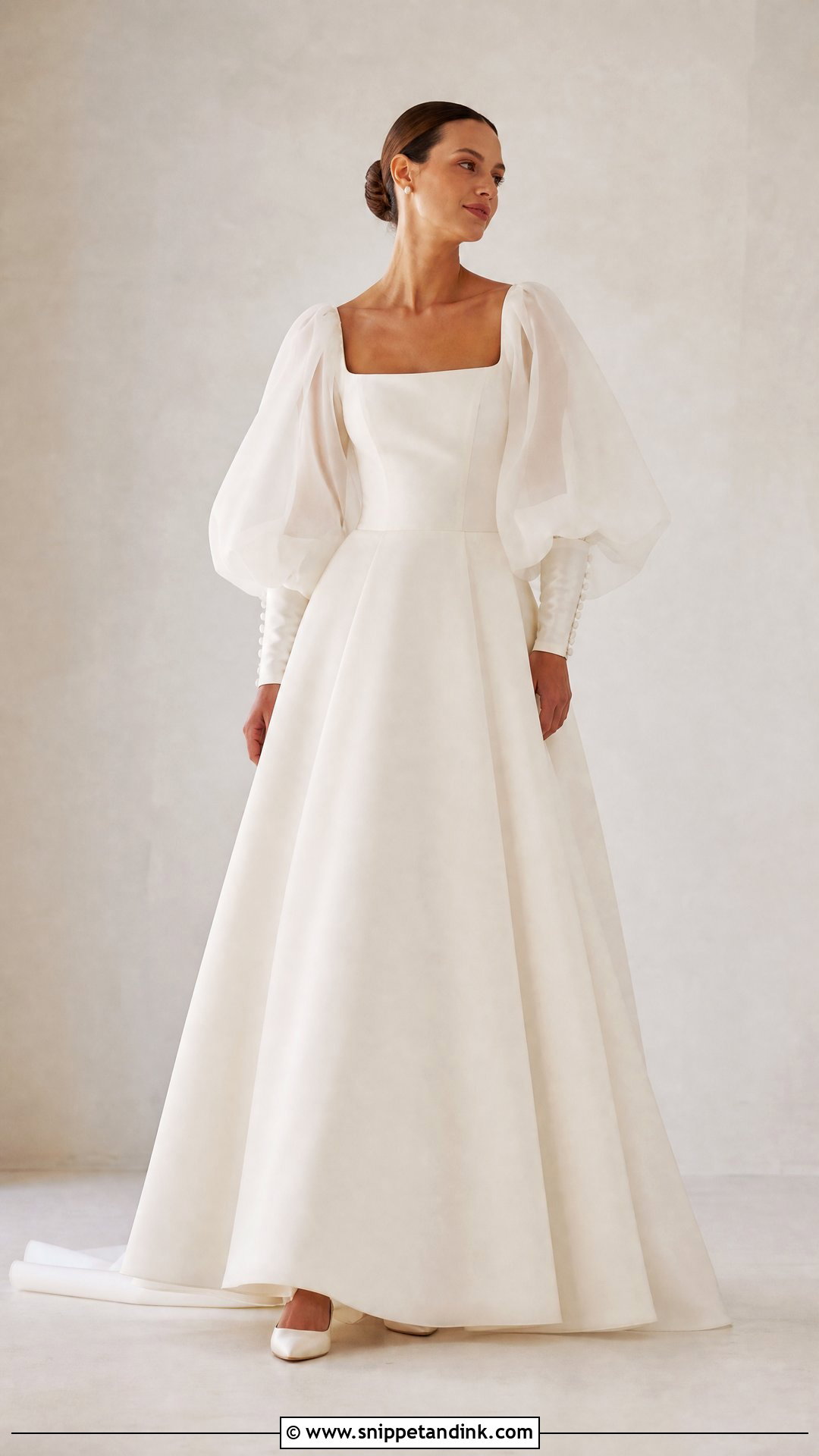
Balloon wedding dress sleeves swell through the middle of the arm and narrow at both the shoulder and cuff. The difference from a puff is that the fullness runs further down the arm, which gives a longer shape. Light organza, tulle and crisp wovens hold the curve without looking heavy. Balloon sleeves need a simple bodice, because they become the main feature; they can sit on or below the shoulder. Keep the skirt plain, the hair clean and the jewellery minimal. I always check them side-on in the mirror, because the volume is easiest to misjudge from the front.
6. Puff Wedding Dress Sleeves
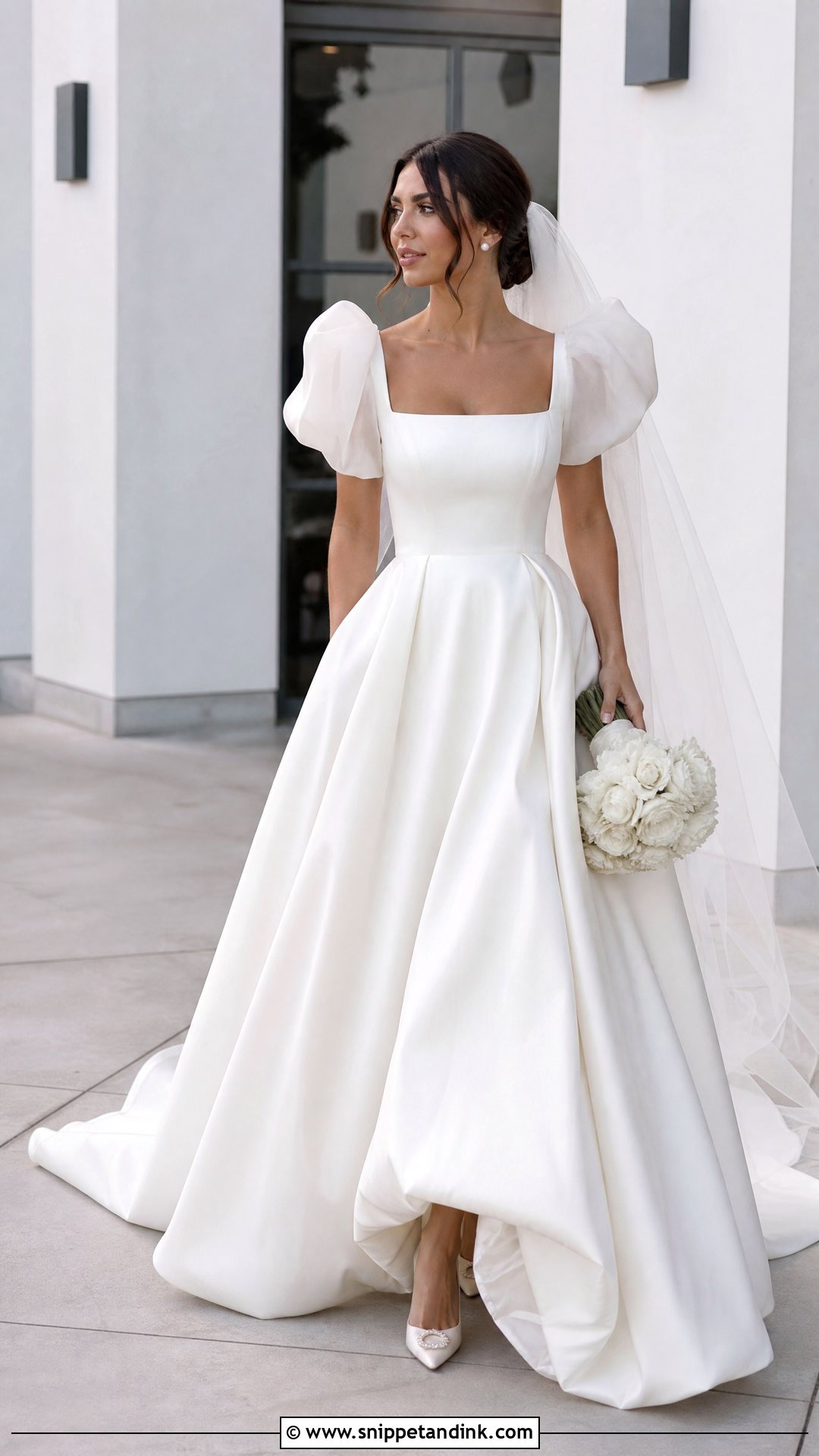
Puff sleeves gather fullness at the shoulder or upper arm, from small and neat to big and theatrical. They work with ball gowns, square necks and modern fitted dresses. Organza gives a crisp, round puff; tulle and chiffon are softer and need internal netting to keep their shape. Detachable puffs can turn a strapless gown into two looks. A puff that sits high on the shoulder can meet your hair and veil, so think about them together: sleek hair and small earrings usually balance it, with simple pumps.
7. Juliet Wedding Dress Sleeves
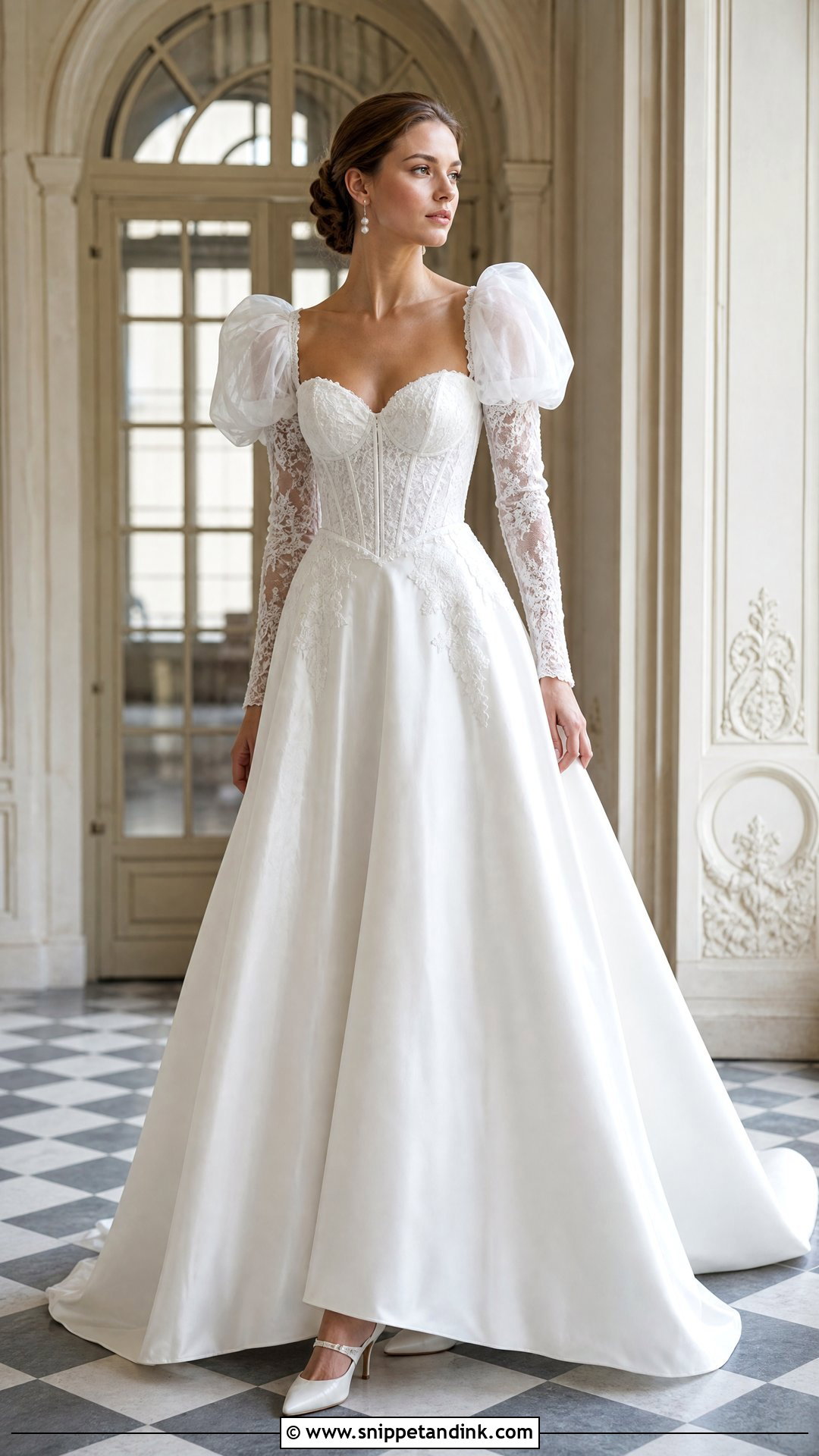
A Juliet sleeve has a round puff at the shoulder and a close-fitting lower arm, borrowed from historical dress. The puff can be organza, satin, lace or tulle, but the lower part needs a smoother fabric with some give, or you won’t be able to bend your arm. It suits square necks, fitted bodices and corset-style gowns. Let the veil fall behind the puff rather than over it. Pearl earrings, a neat updo and pointed shoes suit the mood. The join between puff and fitted sleeve is where tailoring shows; it should be crisp, not lumpy.
8. Leg Of Mutton Wedding Dress Sleeves
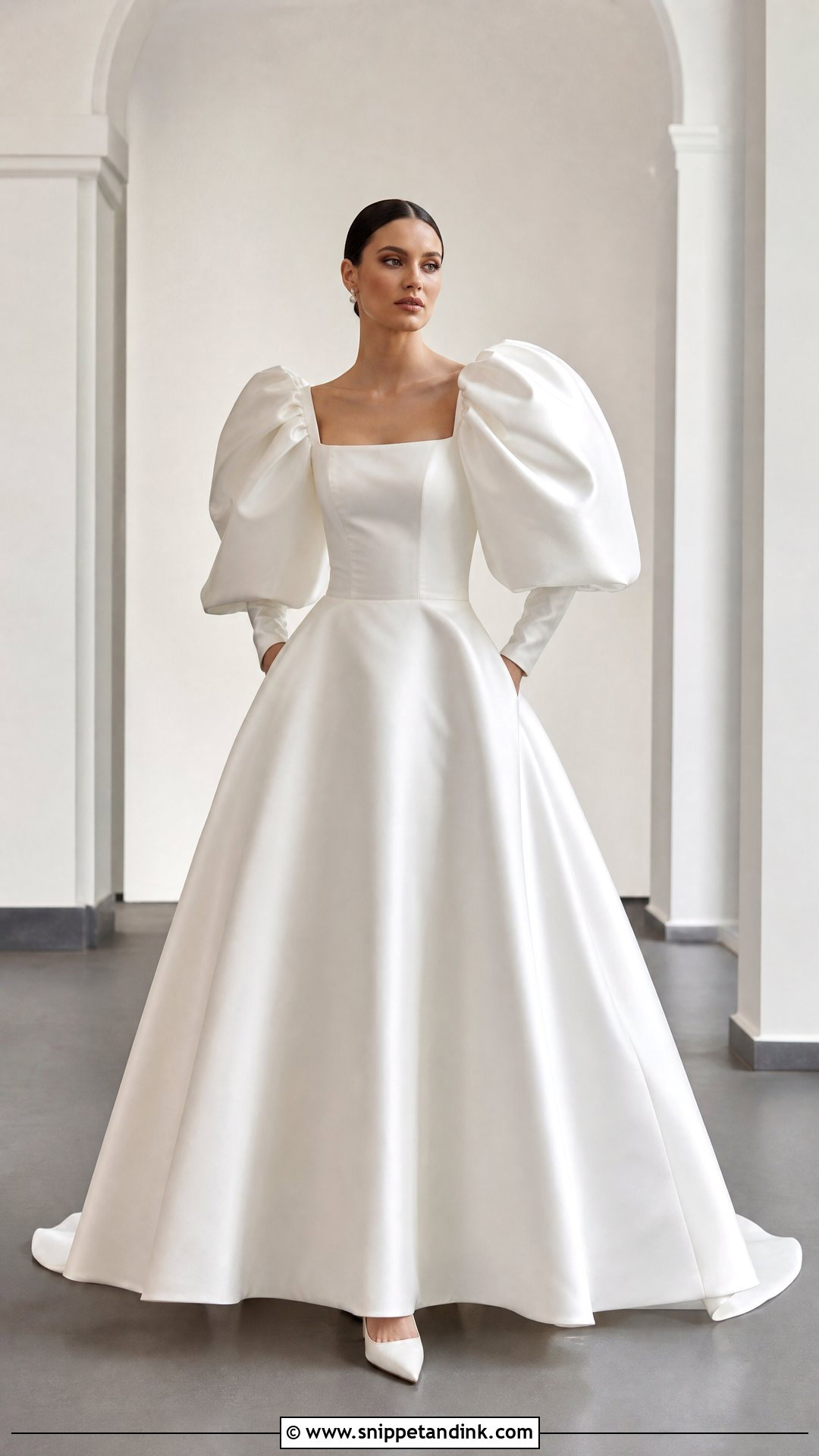
Leg of mutton sleeves are big from shoulder to elbow and then narrow sharply to the wrist. Compared with a Juliet, the full part is longer and more exaggerated, which can make a plain gown look historical or editorial. Taffeta, Mikado, organza and structured satin hold that shape; soft fabrics collapse. Pair them with a slim skirt or a clean ball gown, a plain neckline and sleek hair. Turn sideways and move your arms at the fitting. Very large sleeves can push your shoulders forward if the armhole is cut too low, so posture is the thing I watch.
9. Bell Wedding Dress Sleeves
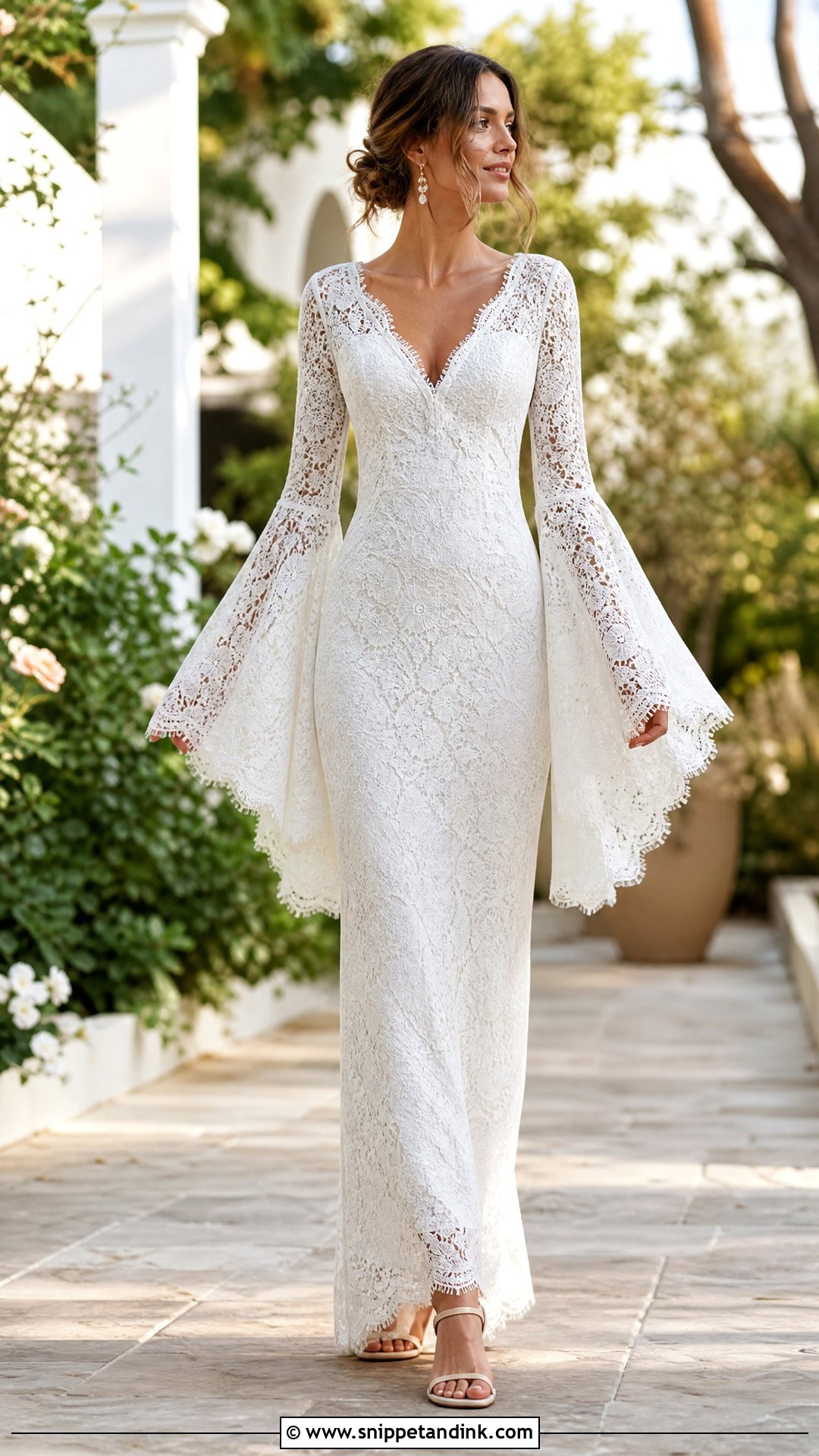
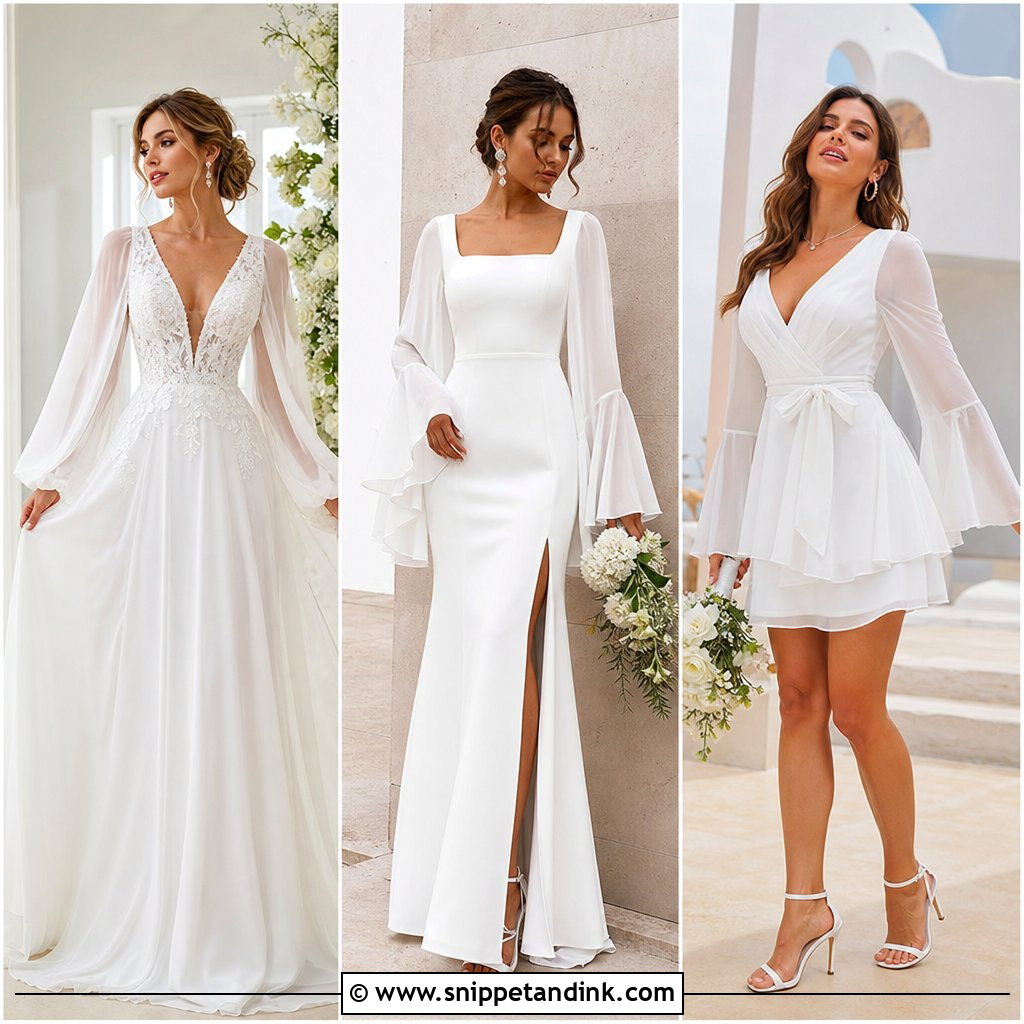
Bell sleeves are snug at the upper arm and flare toward the wrist. The flare can be gentle or wide. In lace they look romantic and vintage; in crepe they look clean and modern. They sit well on boho sheaths, relaxed A-lines and simple V-neck bodices. Very wide or long flares have a practical problem: they drag through food, flowers and candlelight on a reception table. A shorter bell gives the same movement and fewer accidents. A loose updo, drop earrings and block heels or pumps suit it.
10. Flutter Wedding Dress Sleeves
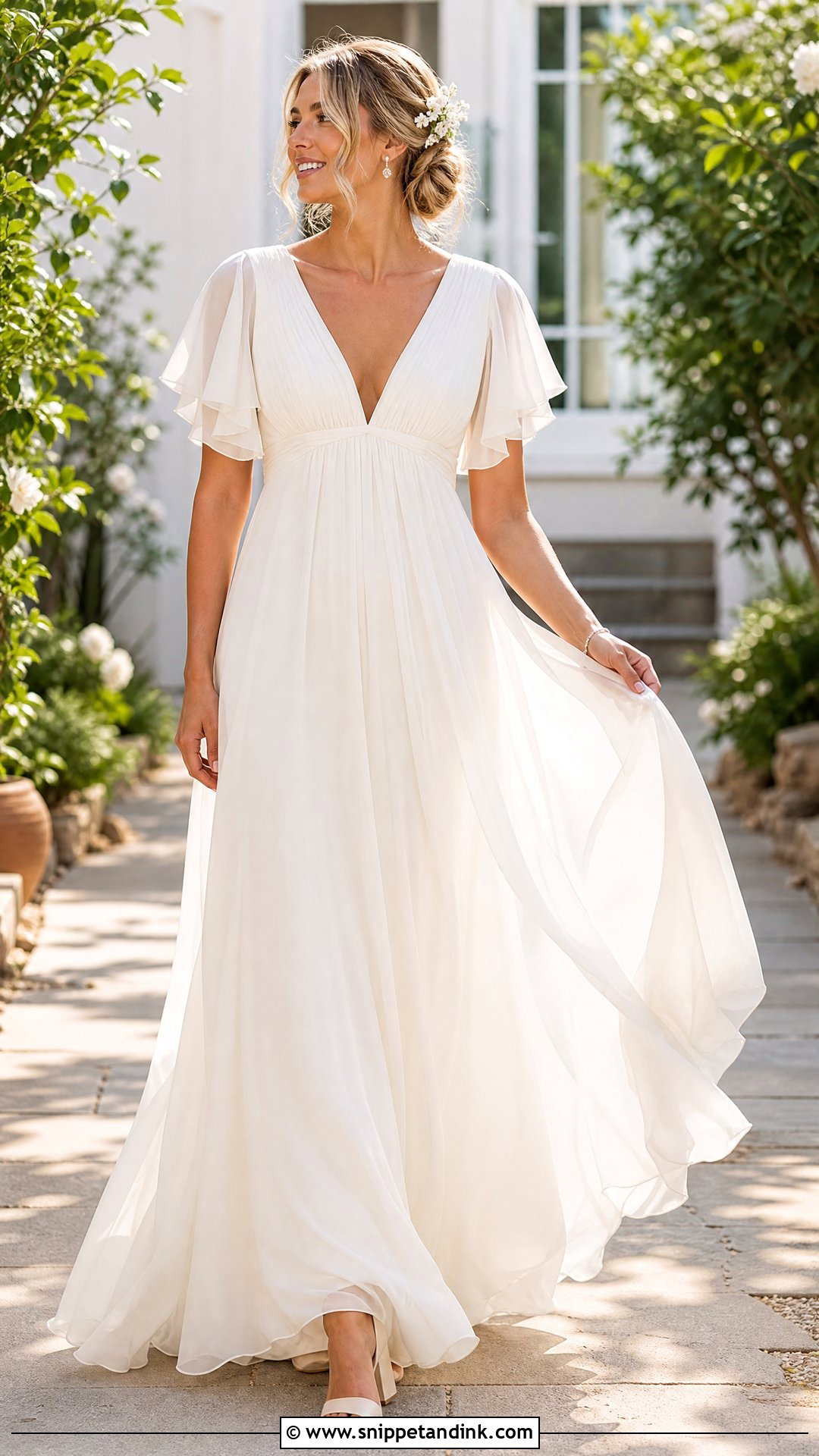
Short and cut wide, flutter wedding dress sleeves let chiffon, tulle or lace float around the upper arm as you walk. They cover the shoulder without the close fit of a cap or short sleeve, and suit empire waists, garden A-lines and relaxed boho shapes. They also soften a structured neckline. Watch the length: a flutter that falls too far can crowd the bust and blur the waist. A floral hair piece, fine bracelet and block heels make a warm-weather outfit that’s easy to wear.
11. Cap Wedding Dress Sleeves
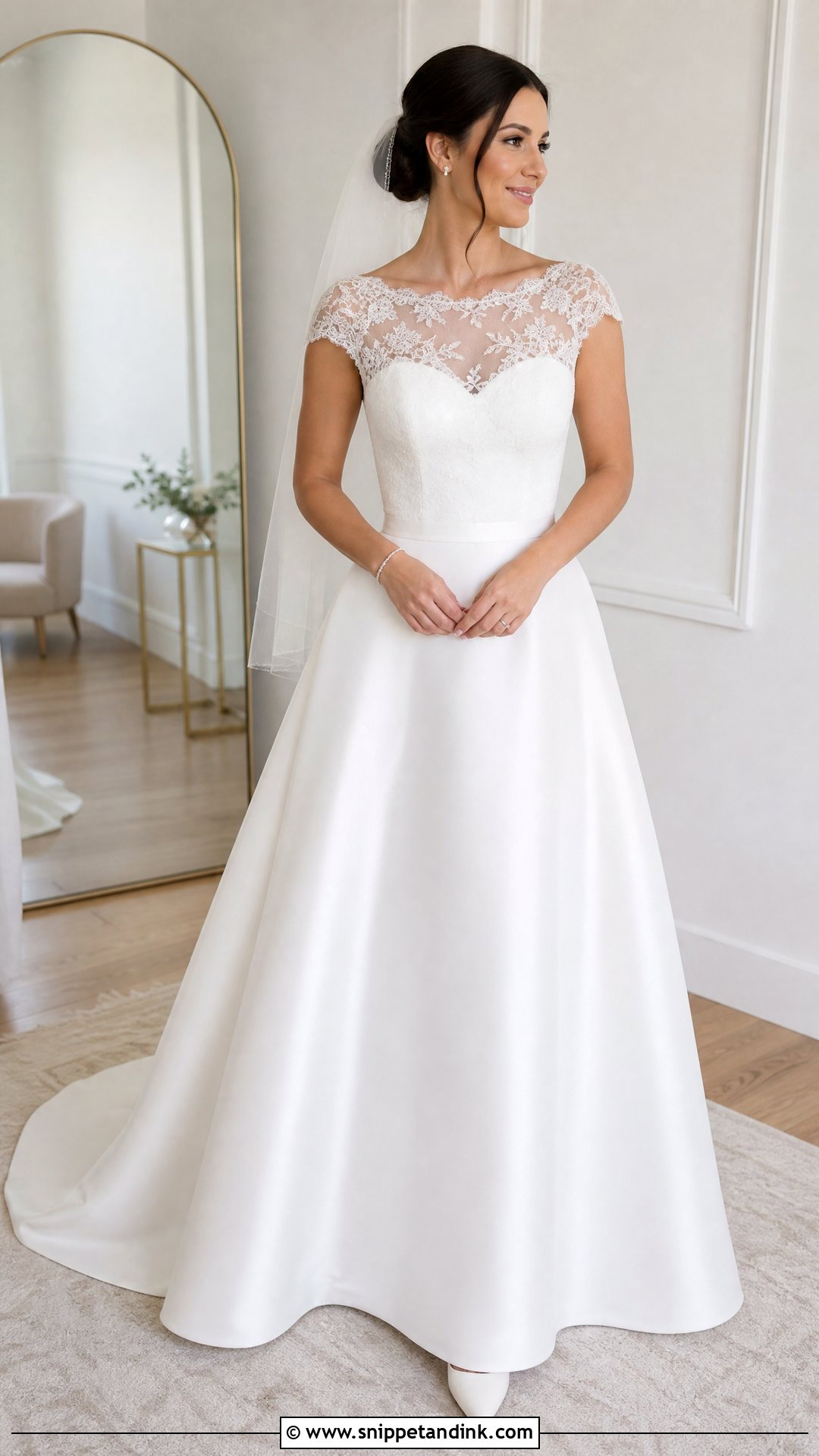
Cap sleeves cover just the top of the shoulder and stop before the underarm. They give a little coverage and keep the lightness of a sleeveless gown. Lace caps blend into an embellished bodice, while satin or crepe ones add structure to a minimal dress. They pair naturally with bateau, scoop, V-neck and illusion necklines. The armhole needs to lie flat without pinching or gaping. If there’s lace edging, stand straight in the mirror and check both caps sit at the same height, since lace stretches unevenly. A neat veil, small earrings and simple pumps finish it.
12. Short Wedding Dress Sleeves
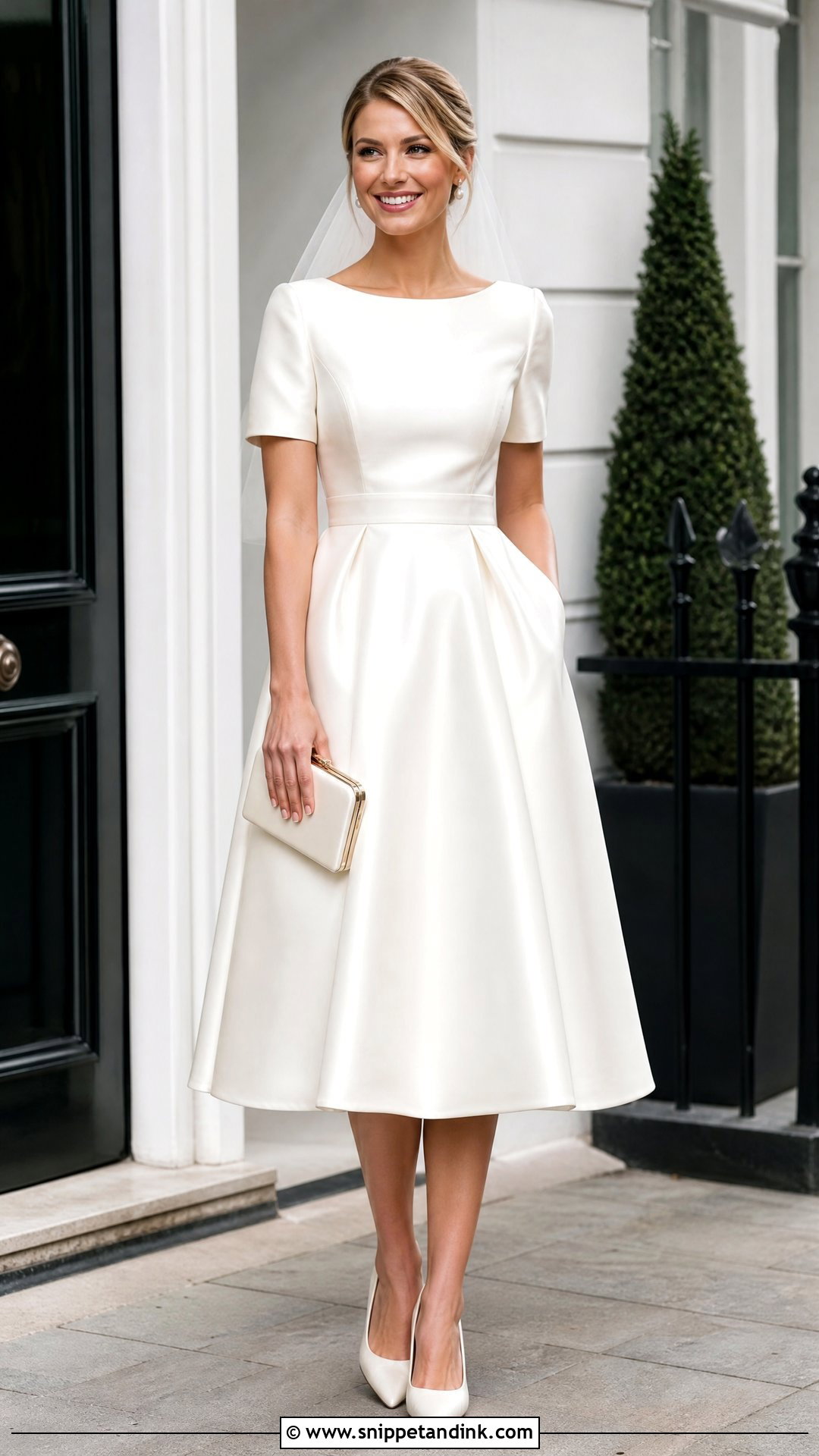
Short sleeves end somewhere between the top of the shoulder and mid upper arm, giving more coverage than a cap. Smooth satin on a tea-length gown feels retro; lace or embroidered tulle suits a traditional floor-length dress. They work with A-line, fit-and-flare and column gowns, but the exact hem position changes the proportion a lot. A narrow sleeve looks tailored; a slightly flared one is softer. Bend and reach at the fitting. A short sleeve that grips the widest part of the arm will leave marks and ride up.
13. Elbow Length Wedding Dress Sleeves
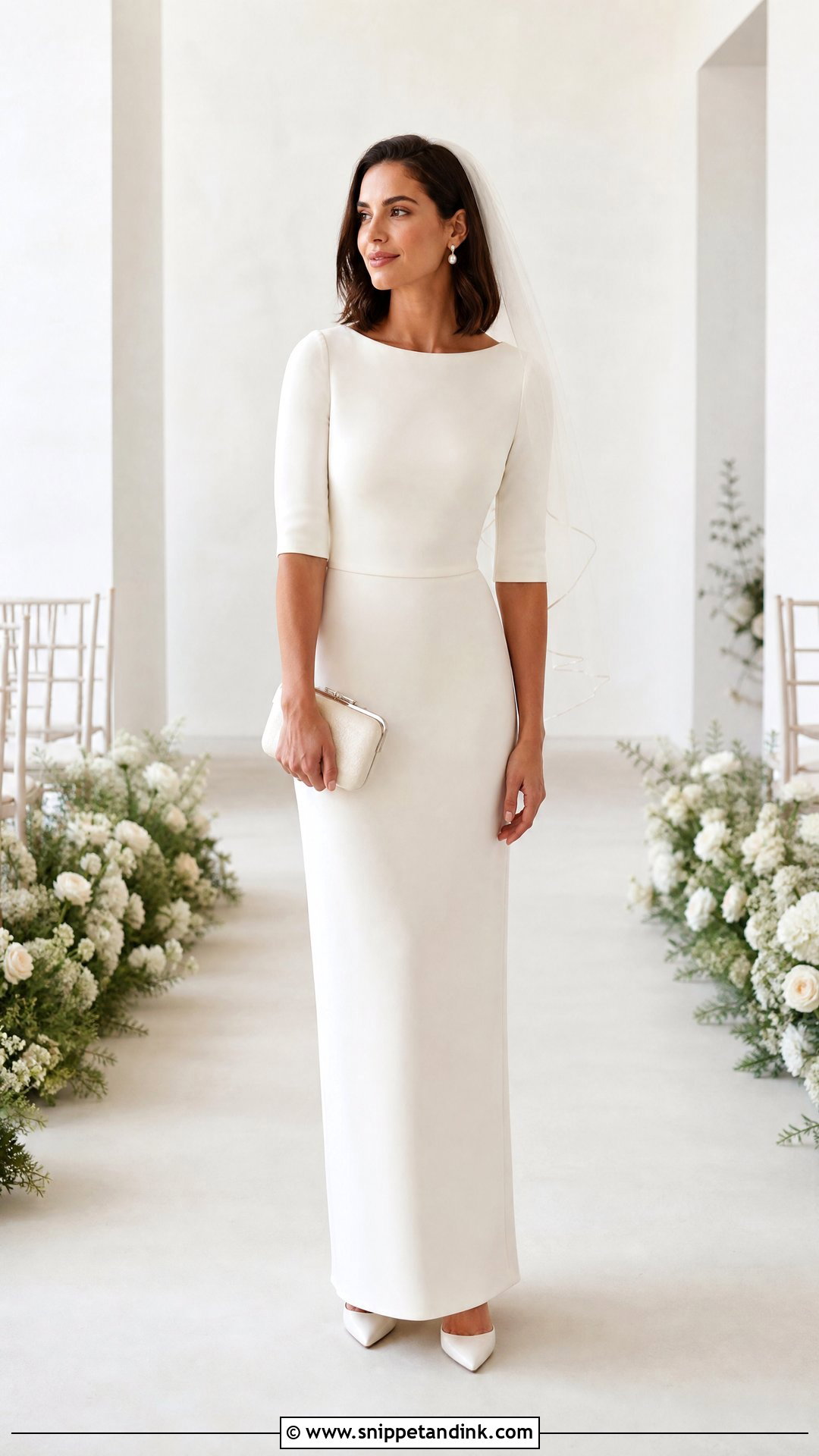
Elbow-length sleeves sit at or just above the elbow. They’re less formal than long sleeves and more covered than short ones, and they work in lace, crepe, satin or embroidered tulle. Tea-length dresses, vintage A-lines and minimal sheaths suit them especially. A fitted elbow sleeve looks tailored; a soft flare adds movement. One thing I check is how the sleeve hem lines up with your waist, because both create horizontal lines and if they land at the same height your torso can look shorter. Skip bracelets or keep them fine, and choose a shoulder-length veil.
14. Three Quarter Wedding Dress Sleeves
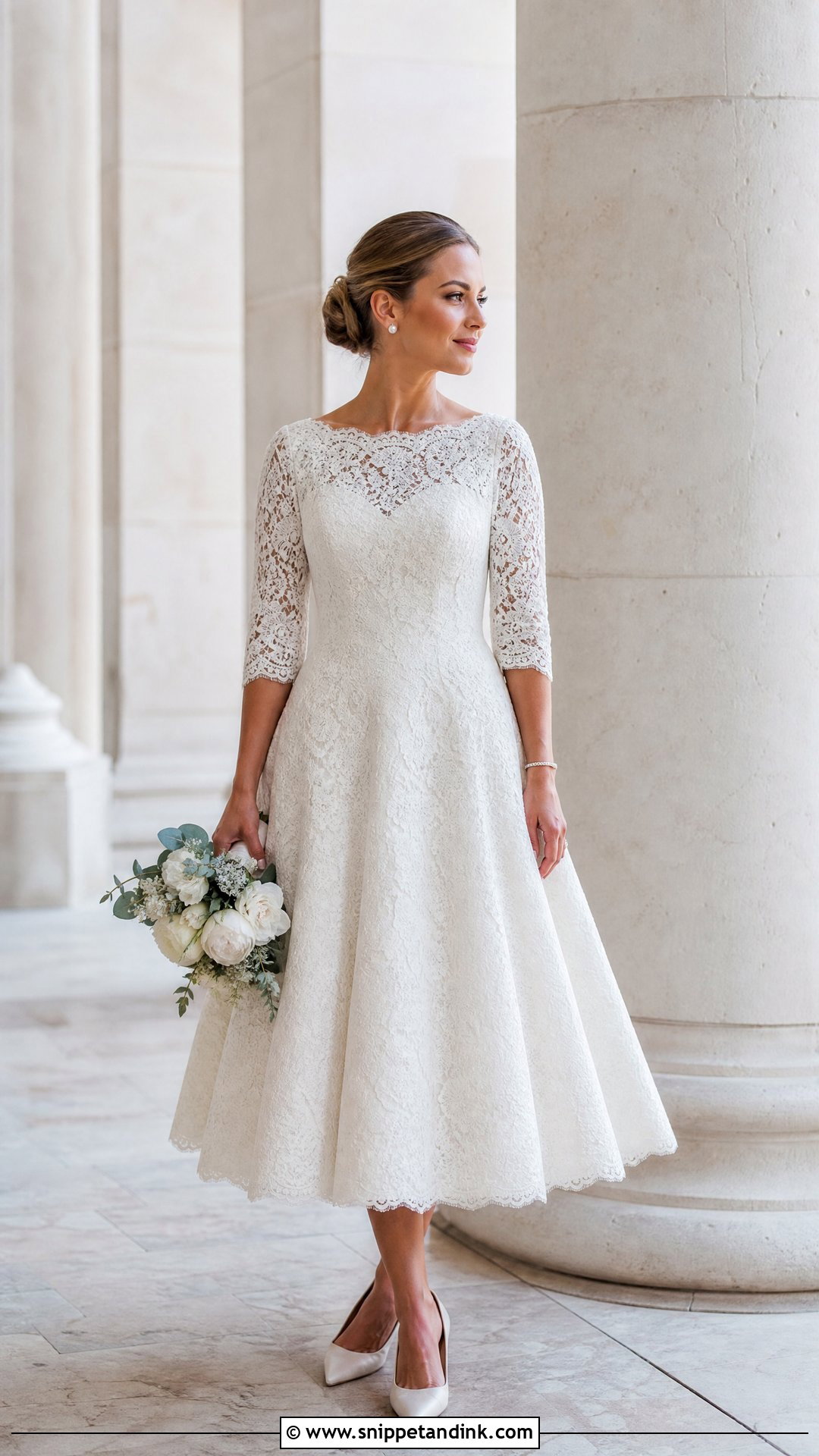
Three-quarter sleeves end between elbow and wrist, leaving the slimmest part of the forearm bare. They cover a lot while keeping your hands free. Lace versions feel traditional, smooth crepe or satin more modern. They sit well on sheaths, tea-length dresses and structured A-lines, and they leave room to show a bracelet with meaning. At alterations, measure both sleeves from the wrist bone, because arms are rarely identical and uneven sleeves are obvious when you hold a bouquet. Pointed heels, pearl studs and a neat updo suit most seasons.

15. Off The Shoulder Wedding Dress Sleeves
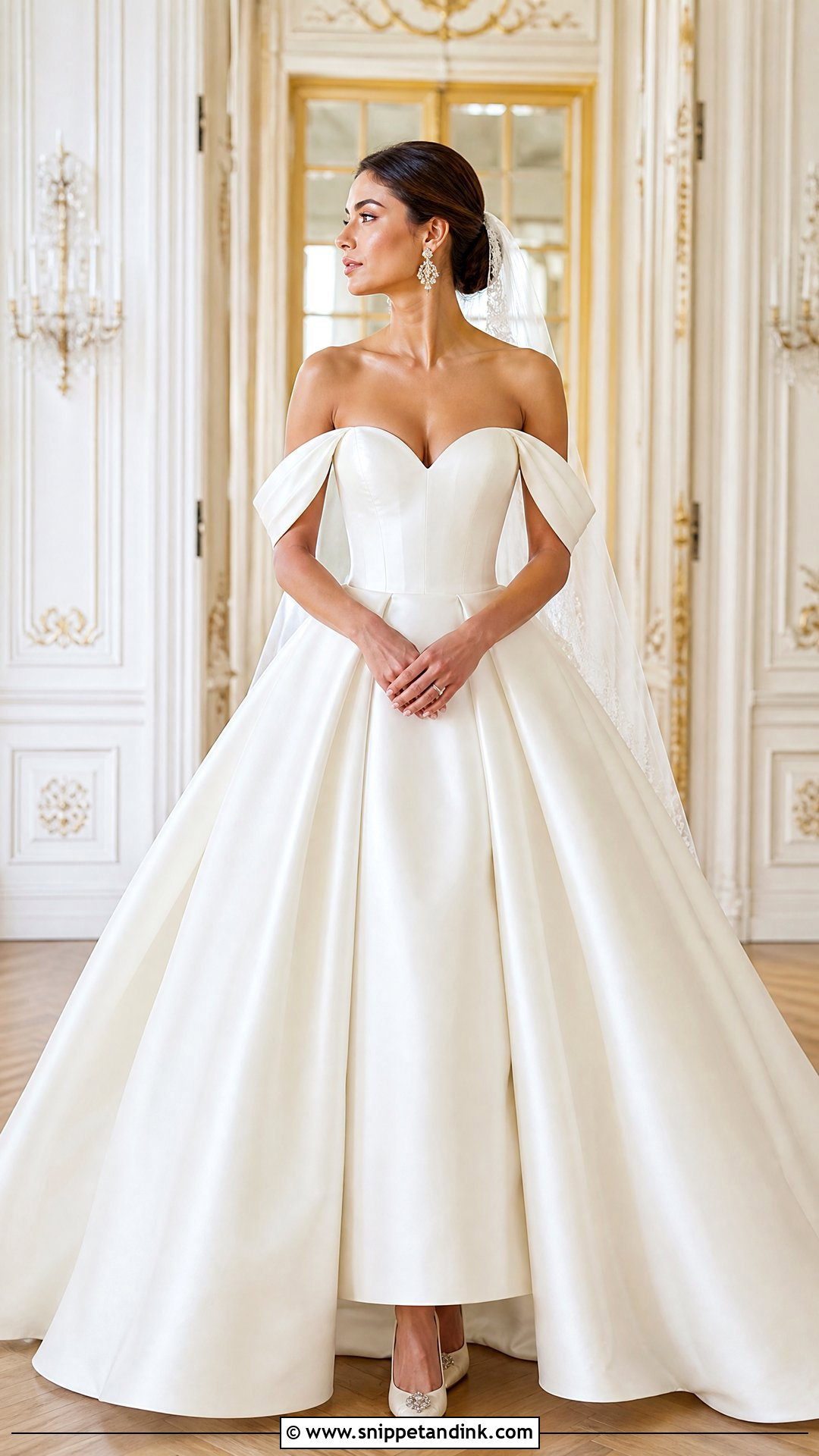
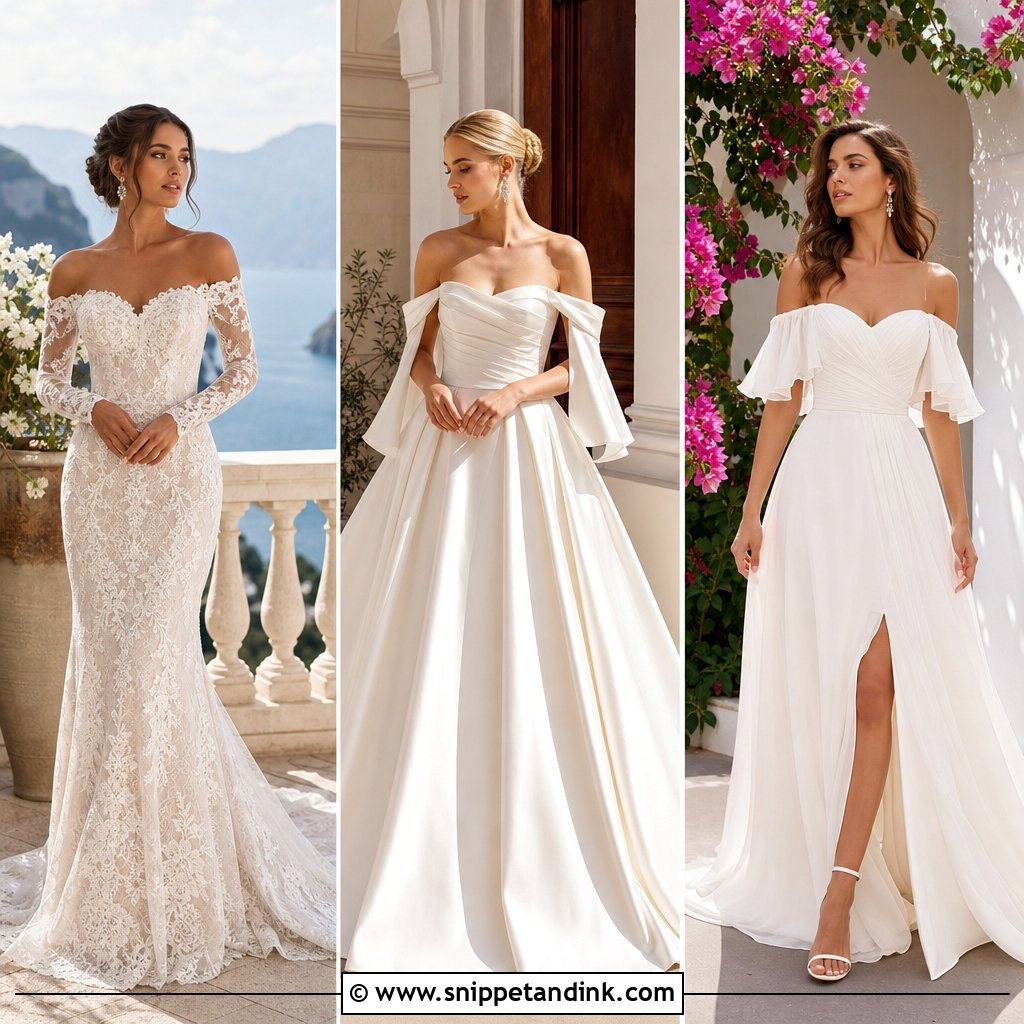
Off-the-shoulder sleeves sit below the shoulder and frame the collarbone. They can be narrow bands, draped fabric, soft lace or fuller detachable sleeves, and they pair with sweetheart and straight necklines on ball gowns, mermaids and fitted A-lines. Because they cross the upper arm, they limit how high you can reach, more or less depending on construction. Try hugging and dancing before final alterations. Hidden elastic or shaped fabric adds security, but the band shouldn’t squeeze. Choose a collarbone necklace or statement earrings, not both, with a low bun and simple veil.
16. Detachable Wedding Dress Sleeves
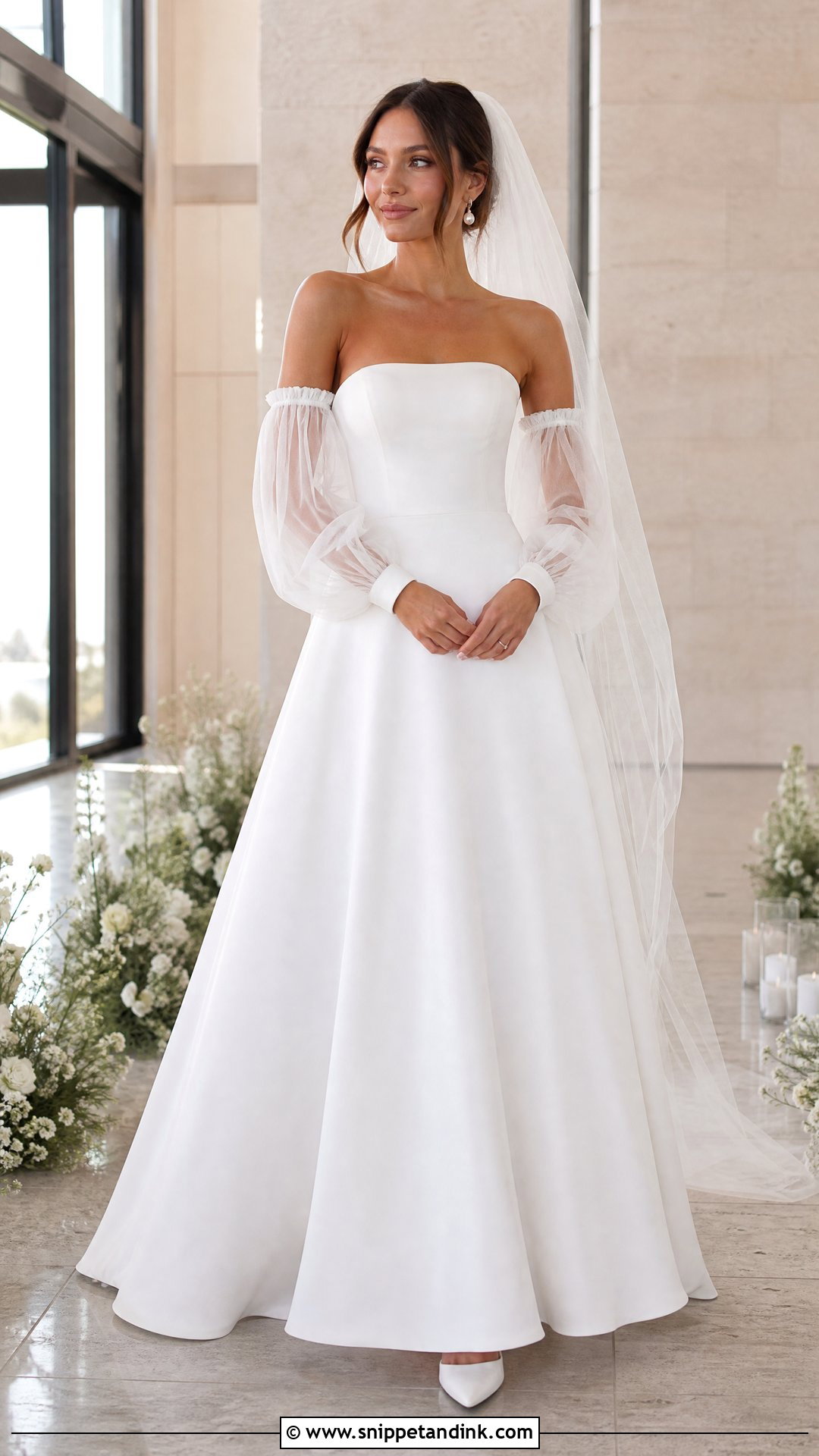
Detachable sleeves give one gown two looks. They fasten with hidden snaps, buttons, loops or elastic, depending on the design, and come as fitted lace, puff, bishop, cap and off-shoulder styles. Wear them for the ceremony and take them off for dancing. The fastenings must stay hidden and secure when you move. Ask someone in the wedding party to practise removing and refitting them, ideally at your last fitting. Keep the shoes, jewellery and hairstyle the same for both versions so the outfit still looks connected.
17. Petal Wedding Dress Sleeves
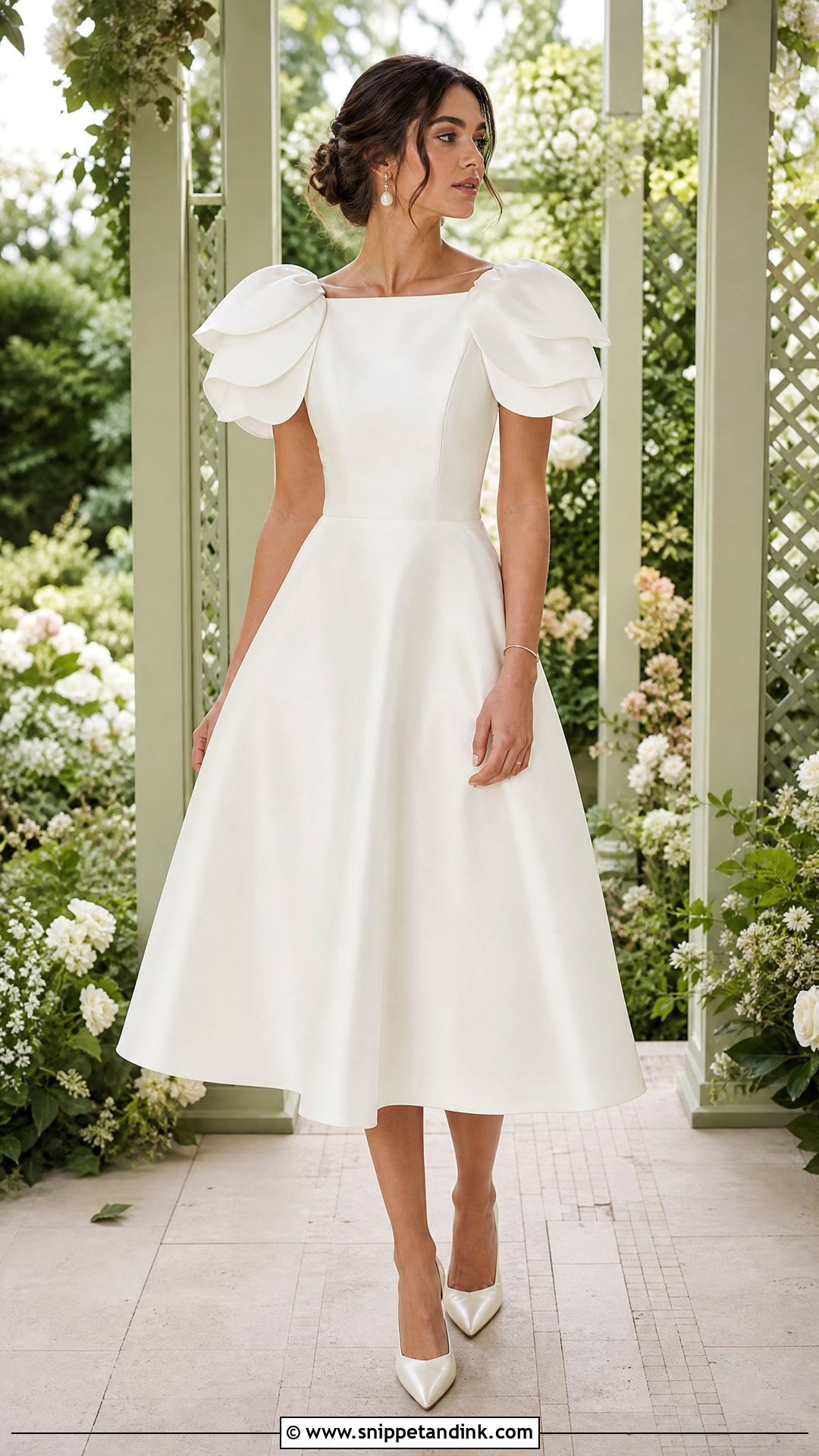
Petal or tulip sleeves are made from overlapping panels that curve like petals over the shoulder. They give light coverage without bulk and come in crepe, satin, chiffon or fine lace. Sheaths, tea-length dresses, empire waists and understated A-lines suit them best. The overlap should stay closed with your arm relaxed and shouldn’t gape wide when you lift it, which is the first thing I test. Pearl earrings, a slim bracelet, pointed pumps and softly gathered hair fit the mood. Avoid a heavily decorated veil that hides the layers.
18. Cape Wedding Dress Sleeves
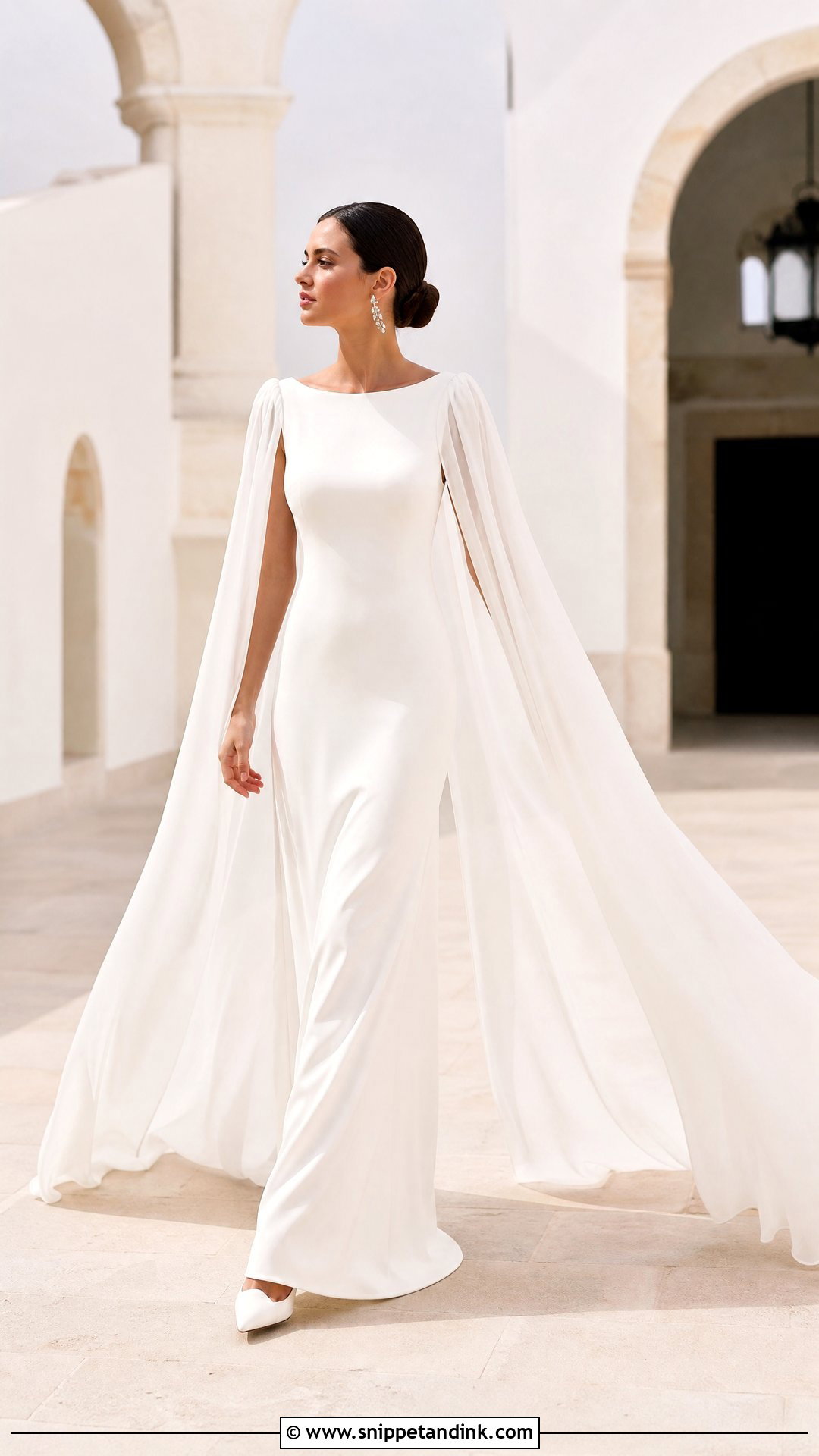
Cape sleeves hang from the shoulder in loose panels instead of wrapping the arm. Some stop near the elbow; others reach the floor like a bridal cape. Chiffon, georgette, tulle and lace give them movement. They add coverage to a sheath, column or A-line without needing a structured armhole, and they move well in walking photos. Keep everything else streamlined: sleek earrings, a low bun, simple heels. Check the length carefully. Floor-length panels can catch under your heel on stairs, and long panels can cover the bouquet.
19. Poet Wedding Dress Sleeves
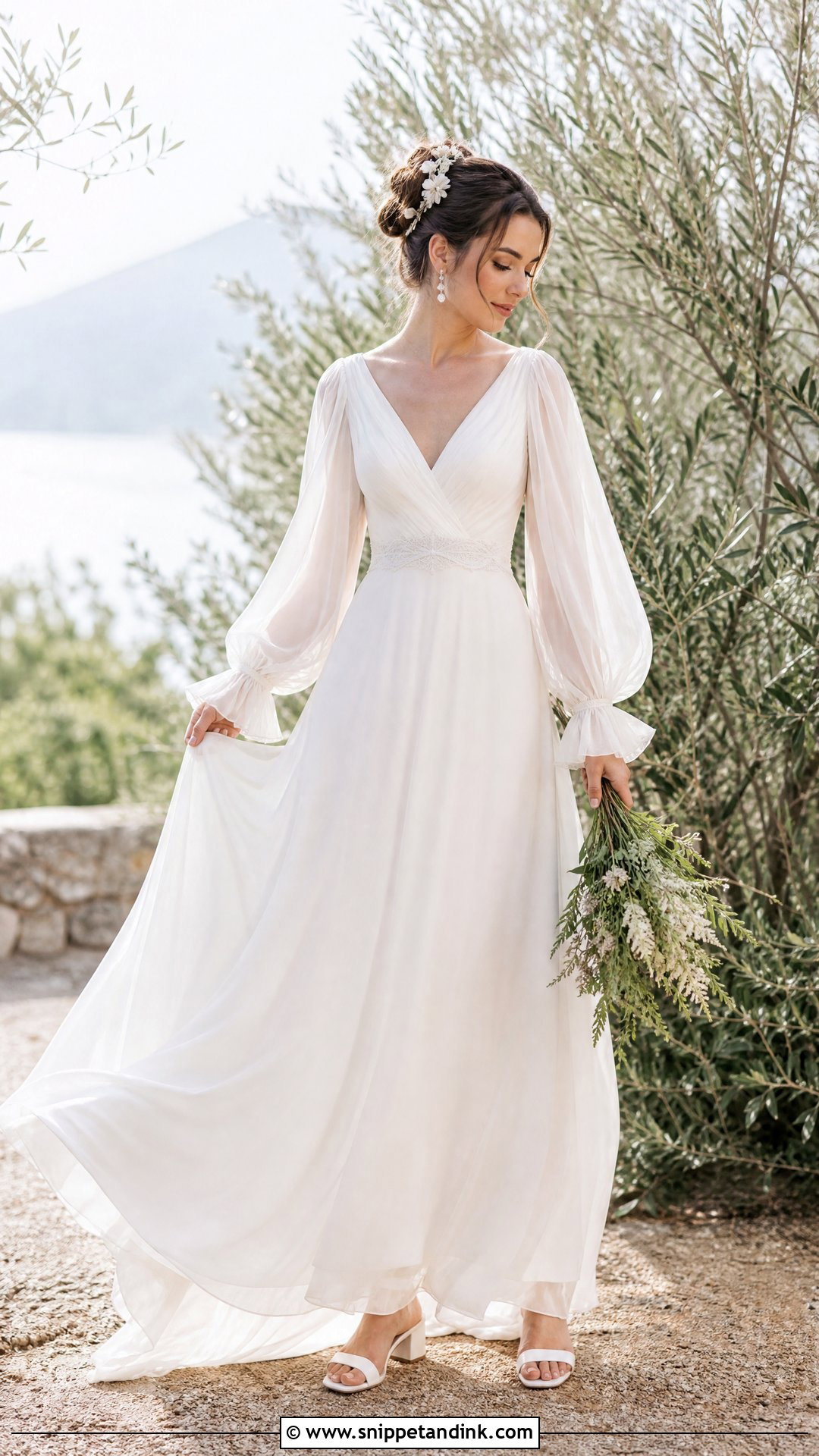
Poet sleeves are loose and flowing, finished with a gathered, elasticated or ruffled cuff. They’re related to bishop sleeves but more relaxed, sometimes with extra draping or a frilled cuff. Sheer chiffon and light lace look airy; soft crepe gives more weight. Boho A-lines, empire waists and open or square necklines suit them. A floral comb, drop earrings and low block heels support the romantic feel. The cuff shouldn’t slide down over your hands. If the sleeves are detailed, keep the veil plain.
20. Lantern Wedding Dress Sleeves
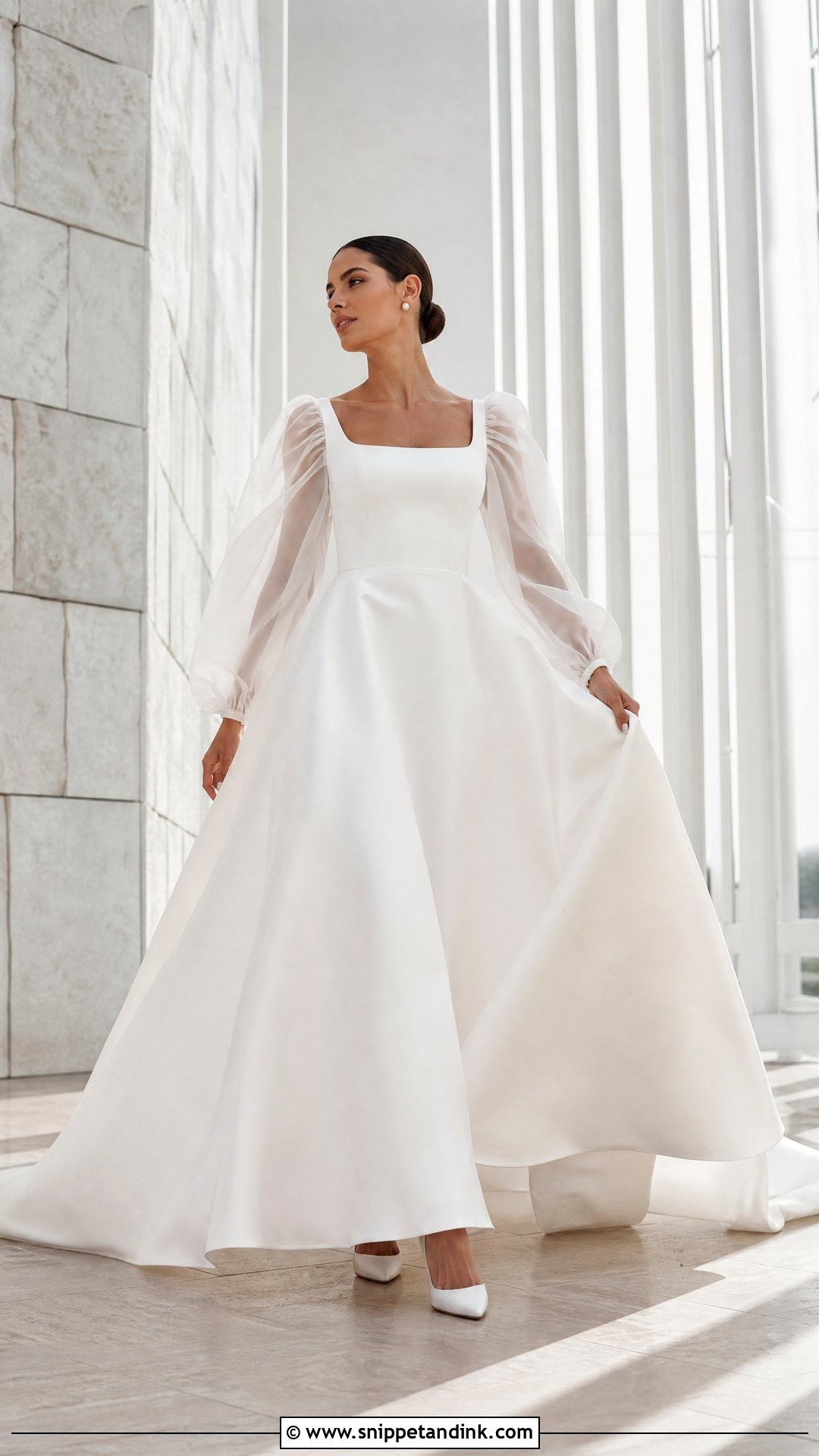
Lantern wedding dress sleeves hold their volume between gathered seams, which gives a round, segmented shape like a paper lantern. The fullness can sit at the upper arm, forearm or along the whole sleeve before a cuff. They’re more structured than bishops and more sectioned than balloons, so they need crisp fabric: organza, Mikado, taffeta or stiff tulle. Simple ball gowns, clean A-lines and minimal columns suit them. Keep the neckline and accessories restrained, with sleek hair, small earrings and pointed heels. Check that the gathered sections look even on both arms and that the elbow still bends.
Can a Seamstress Add Sleeves to a Gown That Has None?
Usually, yes, and it’s one of the most common alterations I see. If you love a strapless or sleeveless gown but want coverage, there are three routes.
Ask the designer first
Many bridal designers offer matching sleeves or a sheer topper as an add-on for their own gowns. Because the lace and fabric come from the same source, the match is closest. Ask when you order, since add-ons are often made at the same time as the dress.
Separate sleeves or a topper
A seamstress can make detachable sleeves or a sheer illusion topper that sits over the bodice. Nothing is cut from the gown, so it’s the safest option, and you can remove it later.
Sleeves sewn into the bodice
This gives the most natural result but is the most involved job. The seamstress needs matching lace, often taken from the hem or the train, or bought separately, and the bodice may need straps or an illusion yoke to hold the sleeves. Allow extra time for this: start the conversation at your first alteration appointment, not the last. Costs vary widely with the amount of lace and handwork, so get a quote before you commit.
Coverage First, Then Volume, Then Fabric
Once you know these sleeve types, it’s much easier to explain what you want and to spot what a gown is doing. Start with how much coverage and movement you’d like, then think about neckline, silhouette, fabric and season. Fitted lace and illusion sleeves give fine detail; puff, balloon and lantern sleeves add volume; flutter, petal and cape sleeves add soft movement. Detachable sleeves give you two looks. Whatever you choose, sit, walk, reach and dance in it before you sign off on alterations, because comfort and sound construction are what carry you through a long day.
You'll Like These Ideas:


Leave a Reply