
Change the sleeve on a wedding dress and you change the whole mood of it. A sleeve can add a little modest coverage, throw volume out at the shoulder, or carry lace and embroidery that would overwhelm the bodice if it sat there instead. The shapes below borrow from Victorian high collars, twenties flutter, fifties caps, seventies bells and the big puffs of the eighties. An original gown from any of those decades brings real history, though I often steer brides toward a new dress cut in the style, because modern sizing, lighter construction and better armholes make a long day far easier. Whichever way you go, the sleeve has to agree with the neckline, the skirt, the venue and the weather, and you have to be able to hug people in it.
Matching a Sleeve Shape to Your Shoulders and Arms
Before you fall for a decade, look at your own frame in a fitted top. Sleeves move visual weight around, and the same sleeve that balances one bride can overwhelm another. These are the pairings I reach for in fittings, though there’s always an exception once a dress is on.
Broad or strong shoulders
Volume at the top, like puff, leg-of-mutton or Juliet, adds width where you already have it. Bell, bishop and cape sleeves move the interest down the arm instead, and a V or deep scoop neckline breaks up the shoulder line.
Narrow or sloping shoulders
This is where a puff or a Juliet sleeve shines. A little lift at the shoulder point squares the frame and makes a full skirt look balanced instead of bottom-heavy.
Arms you’d rather cover
Illusion lace, flutter and cape sleeves cover without clinging. A very tight fitted sleeve on a soft upper arm creates ridges at the armhole, so if you love the fitted look, ask for a lace with a little stretch.
Petite frames
Long, full sleeves can swamp a small frame. Bracelet, three-quarter and cap lengths show a bit of wrist or arm, which keeps the outline lighter.
Then think about the season. Sheer and chiffon sleeves breathe in summer heat; guipure, satin and lined lace are better suited to a cold church or a winter evening.
1. Victorian Vintage Wedding Dress With Long Lace Sleeves
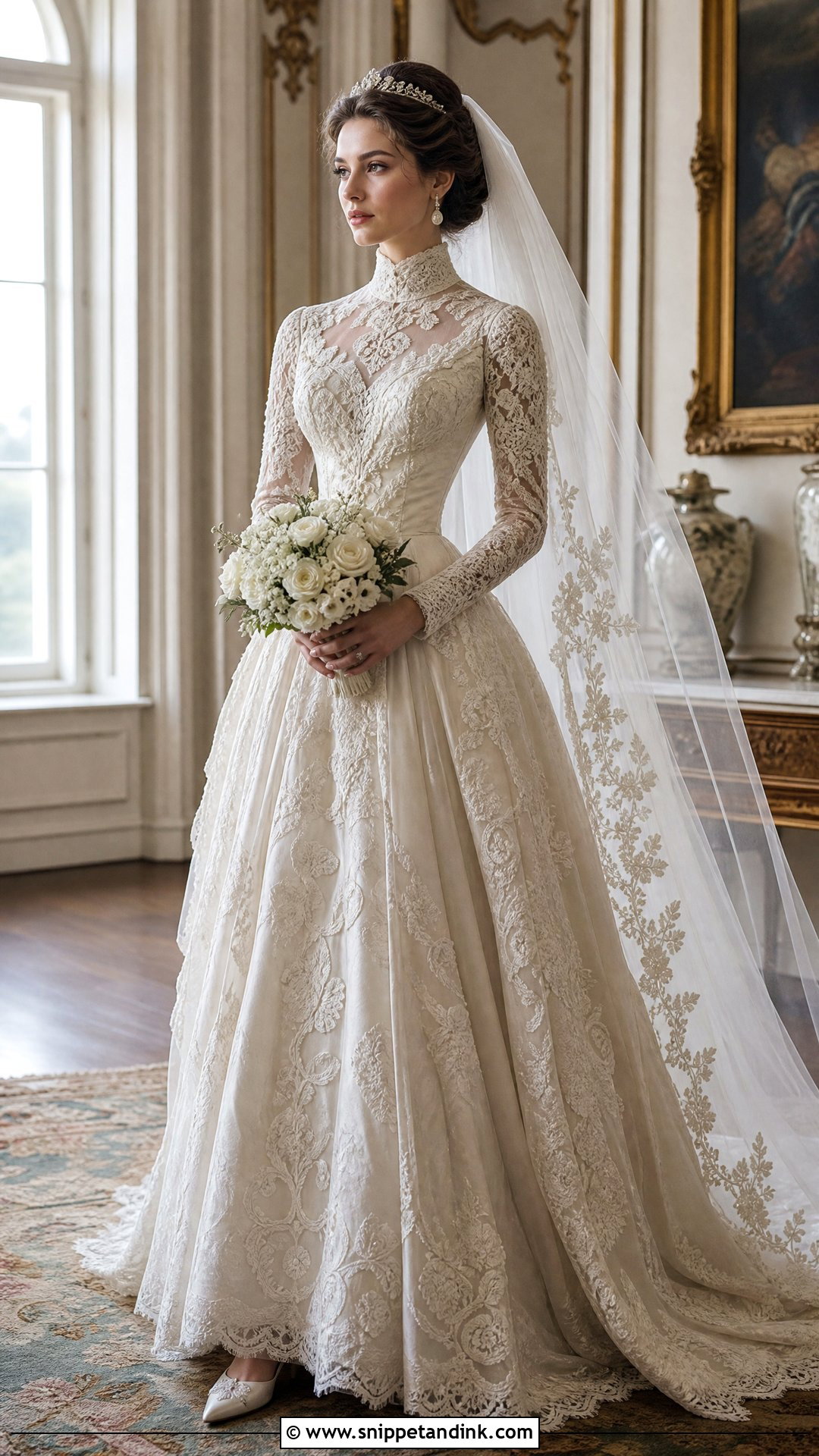
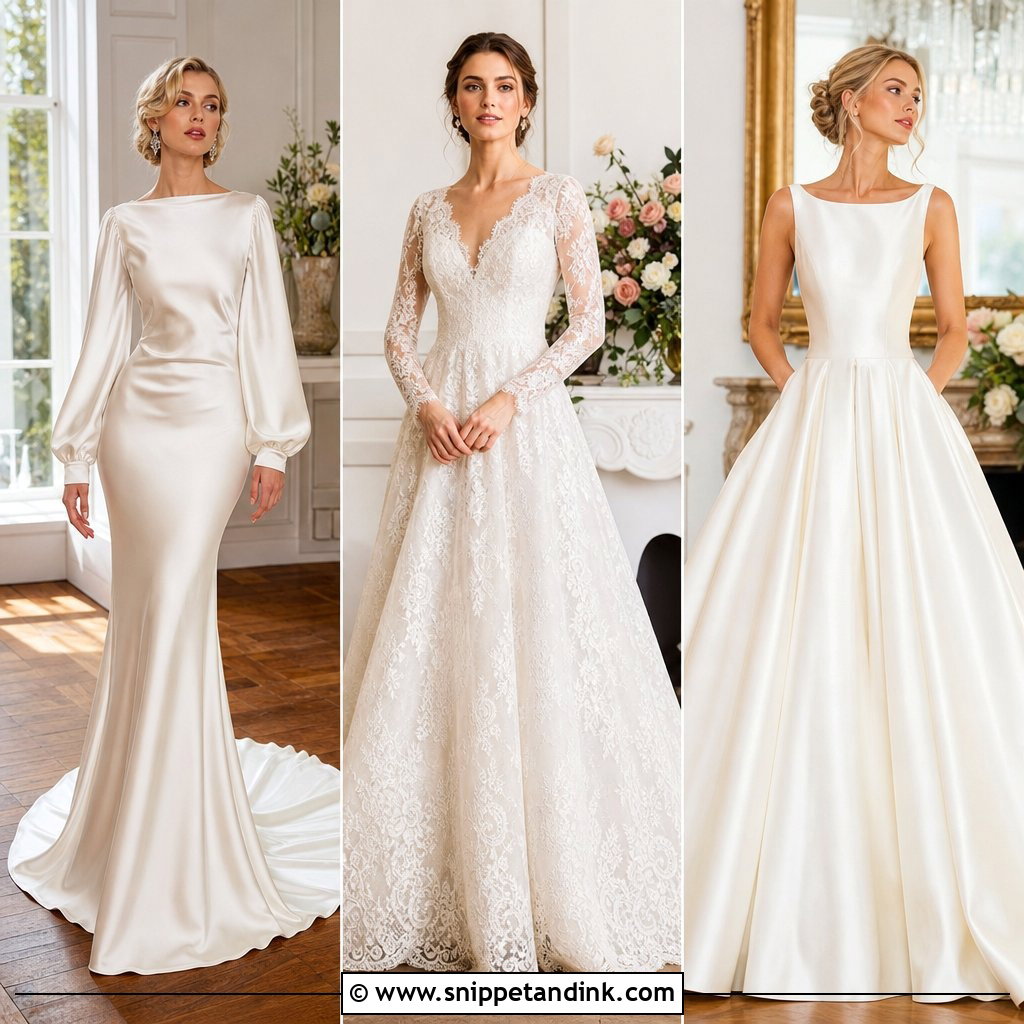
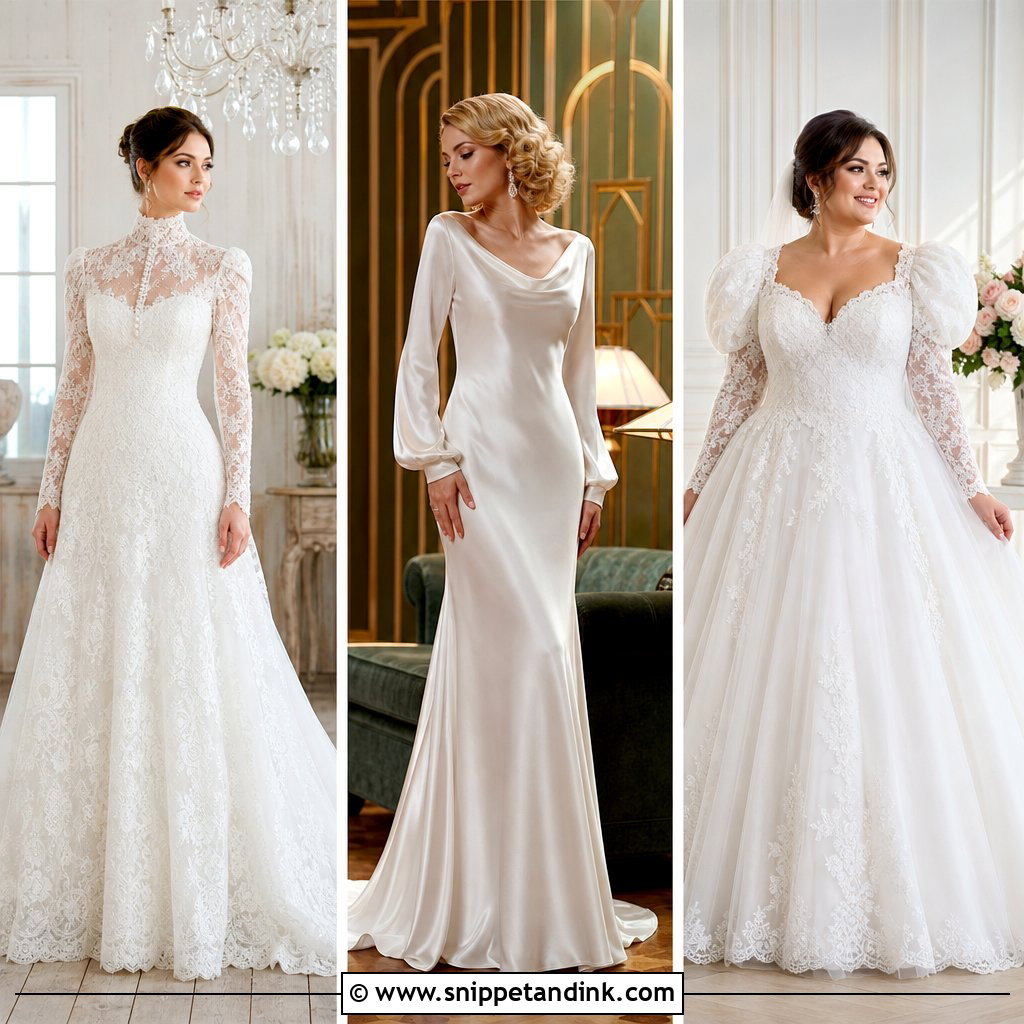
High lace collar, fitted bodice, lace all the way to the wrist: this is the most covered look on the list, and the one where fit at the armhole matters most. Victorian sleeves were cut narrow, and a faithful copy can trap your arms below shoulder height if the armhole is set low. I’d choose an ivory A-line or softly structured ball gown with covered buttons at the cuffs and down the back, a defined waist and a chapel train. Pearl drop earrings, a low braided bun and an embroidered cathedral veil suit it, with pointed ivory heels that stay out of the lace’s way. Historic houses, libraries and grand hotels give it the right backdrop.
2. Edwardian Vintage Wedding Dress With Leg Of Mutton Sleeves
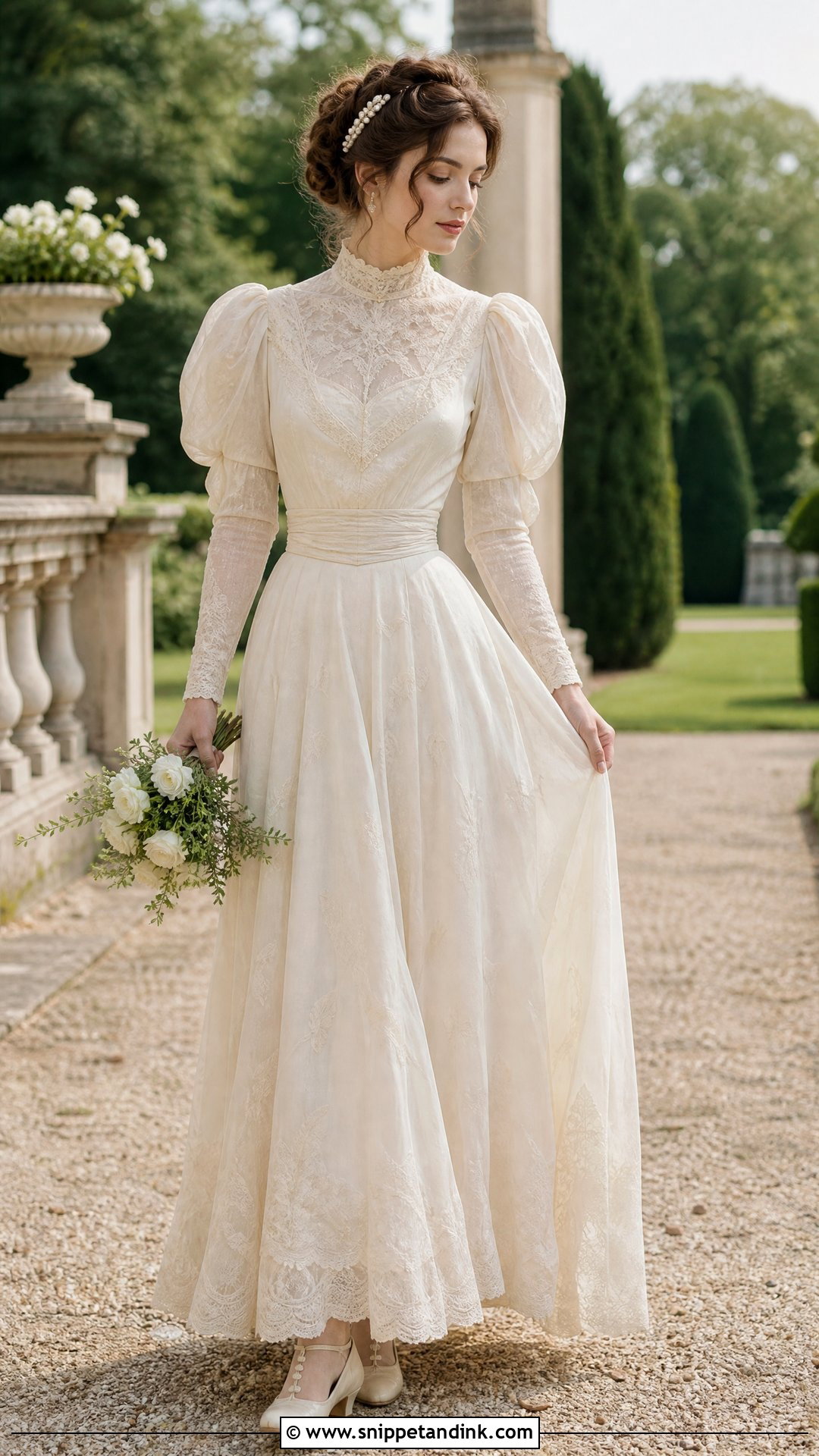
The big puff at the top of an Edwardian sleeve is easy to overdo. Leg-of-mutton sleeves start full at the shoulder and then narrow tightly along the forearm, and the fullness needs a light fabric to stay soft rather than stiff. Organza or a silk blend holds the shape without weight; heavy satin there turns military. Put them on a high-neck ivory gown with a fitted waist, delicate lace panels and a floor-length skirt that moves. A small pearl comb, drop earrings and a loose gathered updo leave the shoulders to do the talking. Buttoned ankle-strap heels are a quiet period touch. Keep the veil plain and sheer, since the sleeves already carry the drama, and I’d avoid this shape entirely on very broad shoulders.
3. 1920s Vintage Wedding Dress With Flutter Sleeves
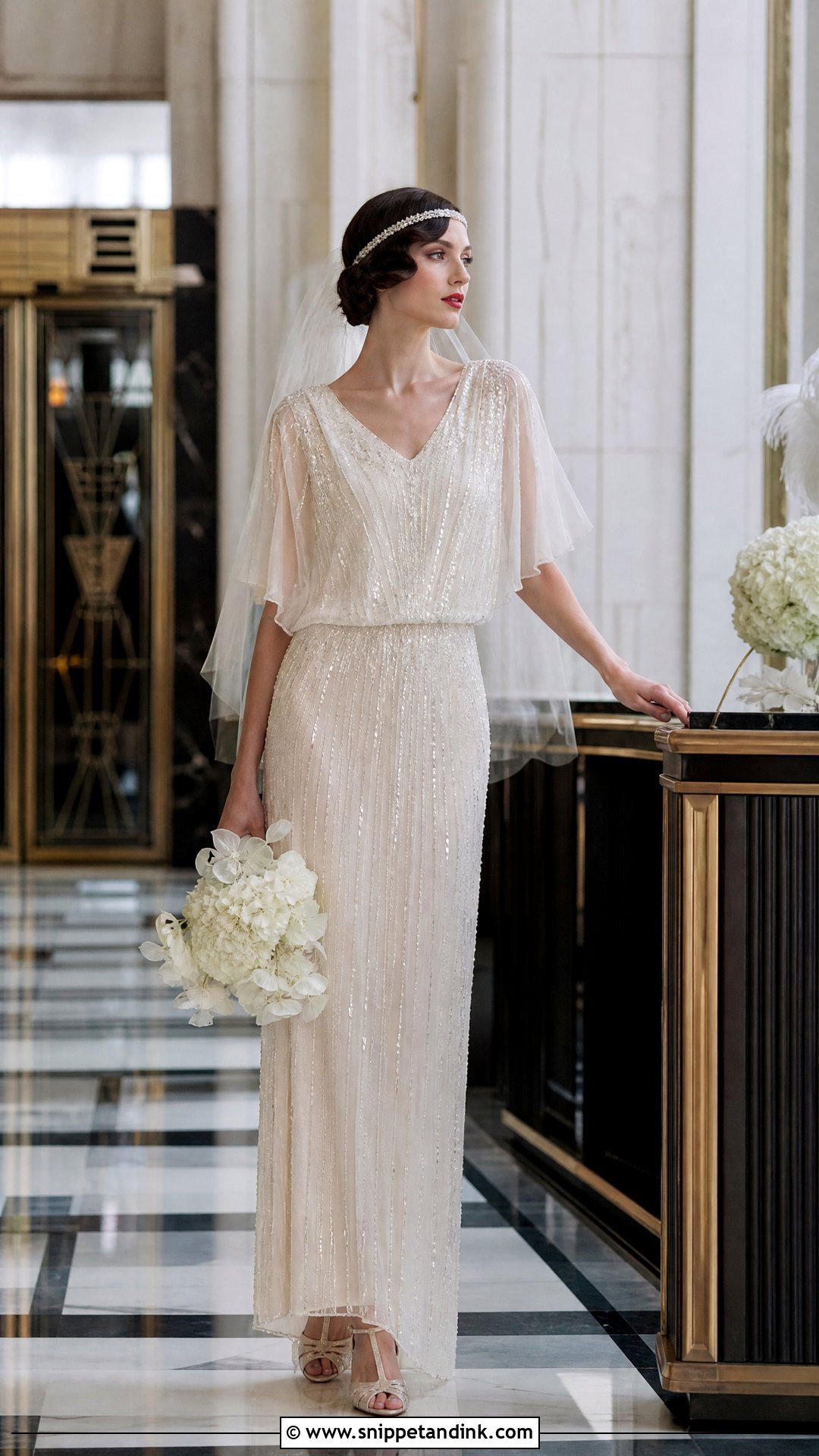
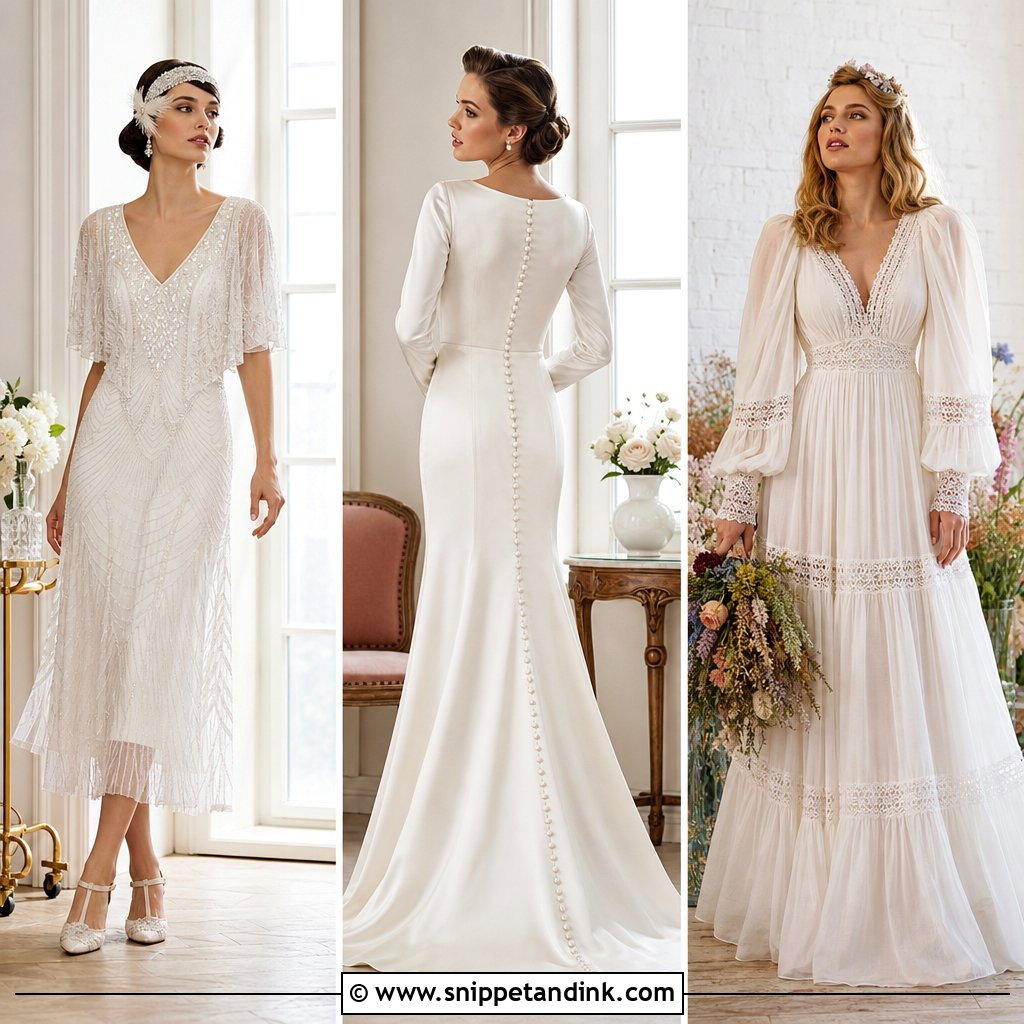
Flutter sleeves are the lightest coverage you can wear, and they move every time you do. A 1920s-inspired wedding dress with flutter sleeves usually pairs a column silhouette and relaxed waist with a V-neck and sheer sleeves that fall loose over the upper arm. Beading or Art Deco embroidery gives period character, but I check the weight: a heavily beaded column pulls down on the shoulders and can stretch a fine silk over hours of wear. T-strap heels, a pearl hairband and a small beaded clutch suit it. A fingertip veil or a jeweled comb for a cleaner line. It’s the sleeve I suggest to brides who hate the feeling of anything tight on their arms.
4. 1930s Vintage Wedding Dress With Fitted Satin Sleeves
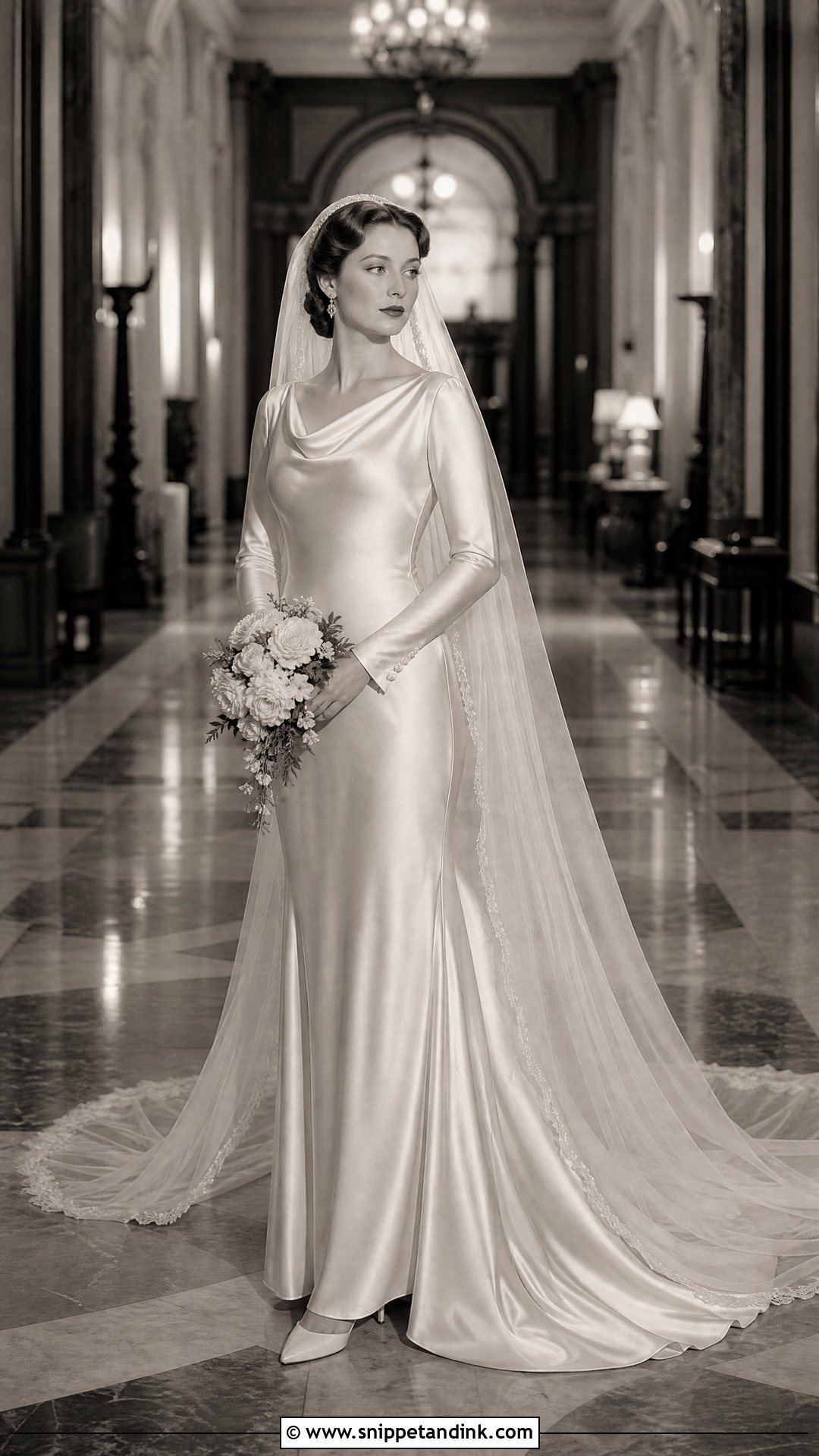
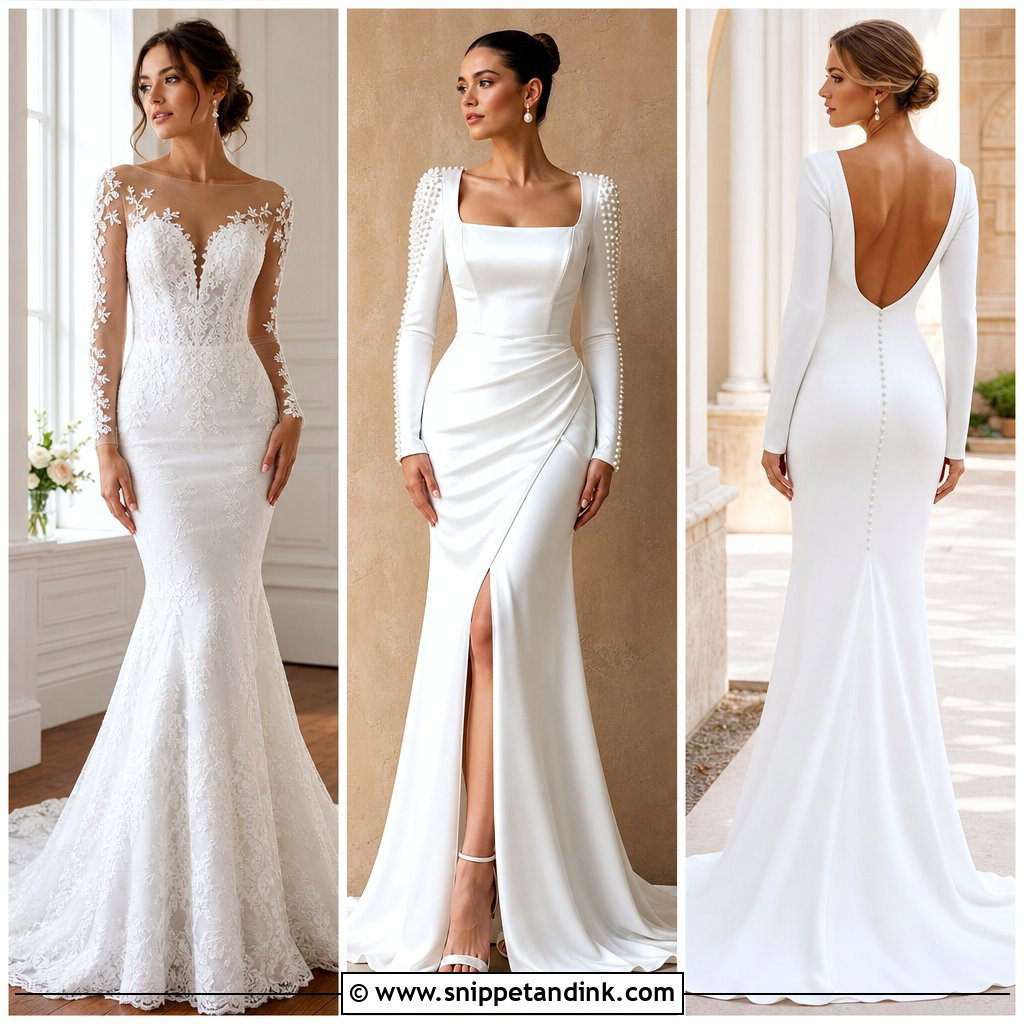
Bias-cut satin is unforgiving, so this 1930s look needs a skilled seamstress. The fabric drapes over every curve because it’s cut on the diagonal, which is what gives that liquid Old Hollywood line, and it’s also why it stretches and shows any ridge underneath. Choose a softly draped neckline, a defined waist and fitted sleeves to the wrist; silk satin moves more, crepe is matte and kinder to wear. A low back or a row of covered buttons keeps the plain front interesting. Sleek waves, crystal earrings, pointed satin pumps and a narrow cathedral veil follow the long lines. Before anything is cut, raise and bend your arms in the toile. A fitted bias sleeve has very little give.
5. 1940s Vintage Wedding Dress With Bracelet Sleeves
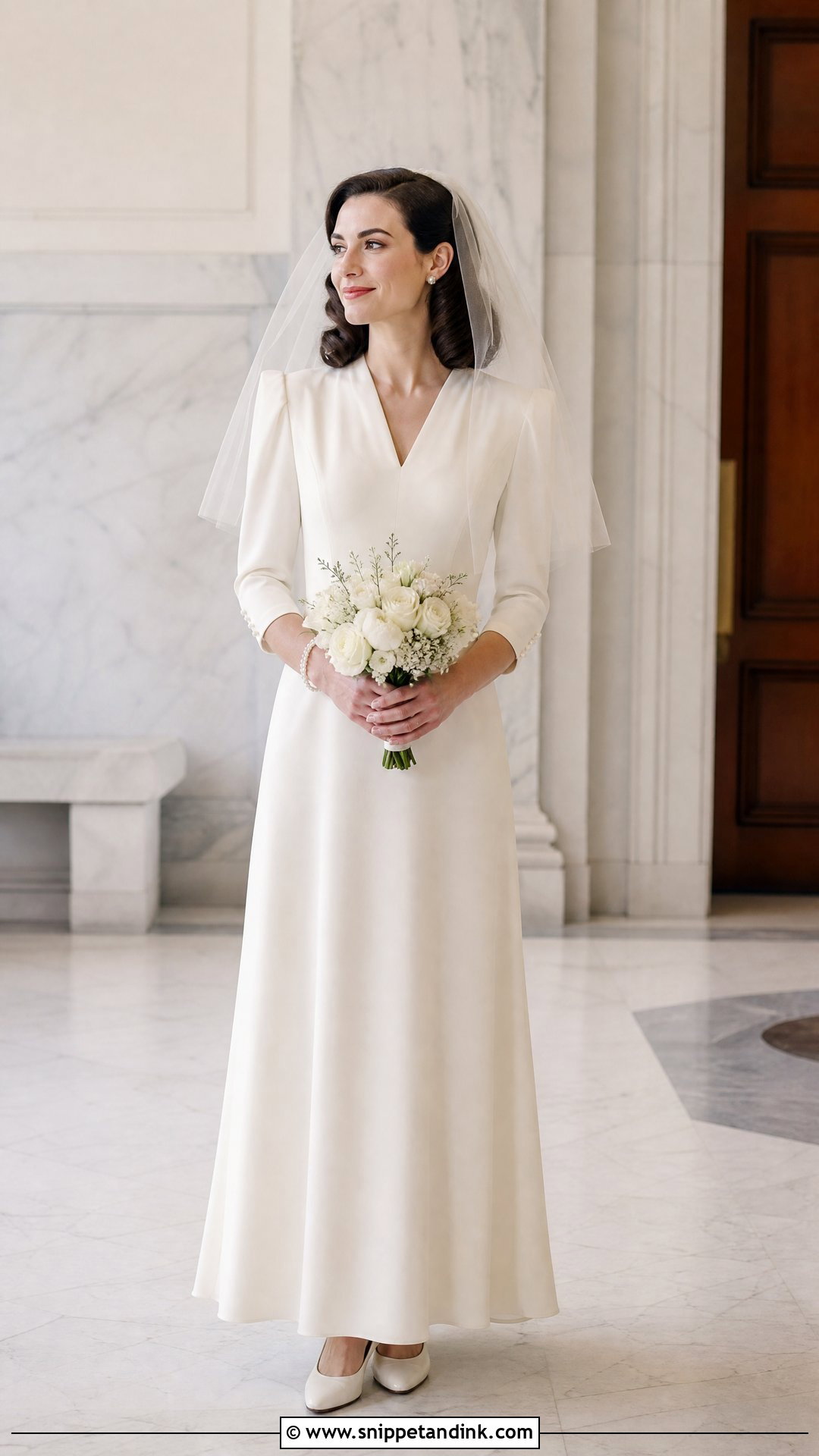
Bracelet sleeves stop just above the wrist, which leaves room for a bracelet or a watch and keeps your hands free for signing, eating and holding a bouquet. That small gap also makes a 1940s outline feel lighter. I’d put them on a tailored crepe or satin gown with a modest V-neck, gently structured shoulders and a slim A-line skirt, adding covered buttons, a softly gathered waist or a short train for period detail without bulk. Classic pumps, pearl earrings, a compact bouquet and a shoulder-length veil keep the proportions clean. Courthouse ceremonies and small celebrations suit it. A bride with shorter arms often looks better in this length than in a full wrist sleeve, which can swallow the hand.
6. 1950s Vintage Wedding Dress With Cap Sleeves
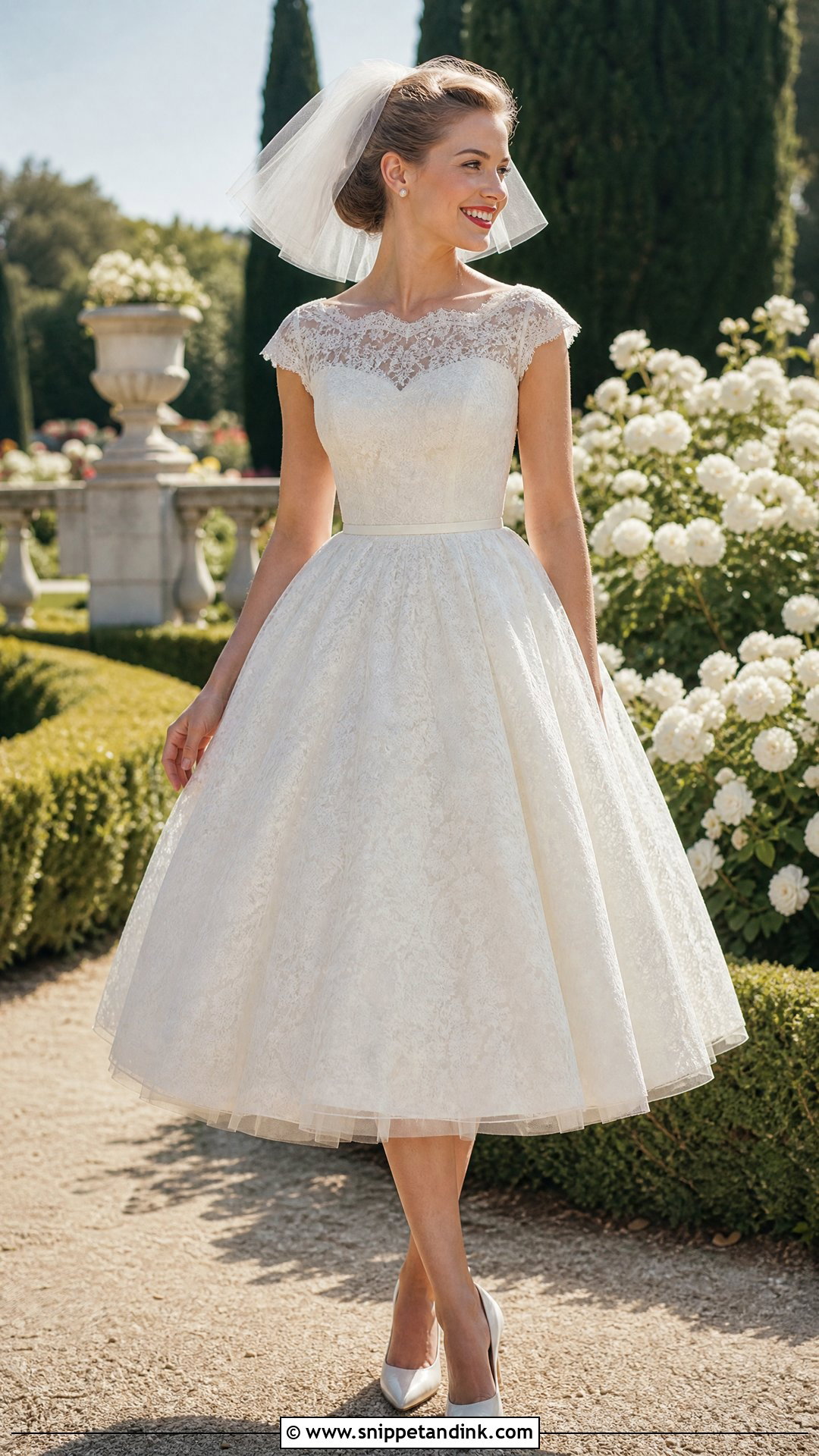
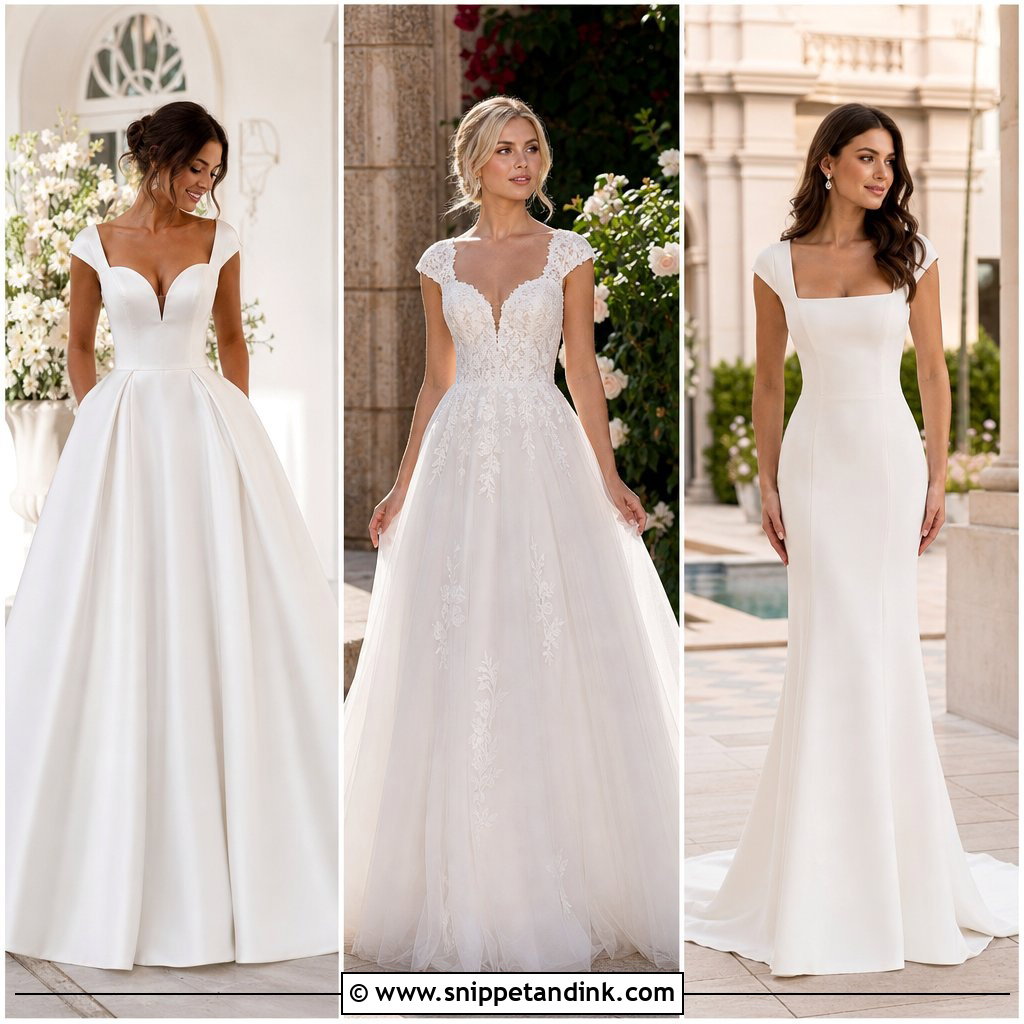
A cap sleeve should rest on the shoulder, not grip the arm. When it’s cut too tight it bites into the top of the arm and creates the very bulge it was meant to hide, so I check it with arms both down and forward. On a 1950s tea-length gown, put it with a fitted lace bodice, a natural waist and a full skirt over a light petticoat, plus a bateau, sweetheart or gentle scoop neckline. Pointed pumps, pearl studs and a short veil above a neat chignon finish it. The same bodice and sleeve also work over a floor-length satin skirt if you’d prefer more formality. Daytime, garden and city weddings all suit it.
7. 1960s Vintage Wedding Dress With Three Quarter Sleeves
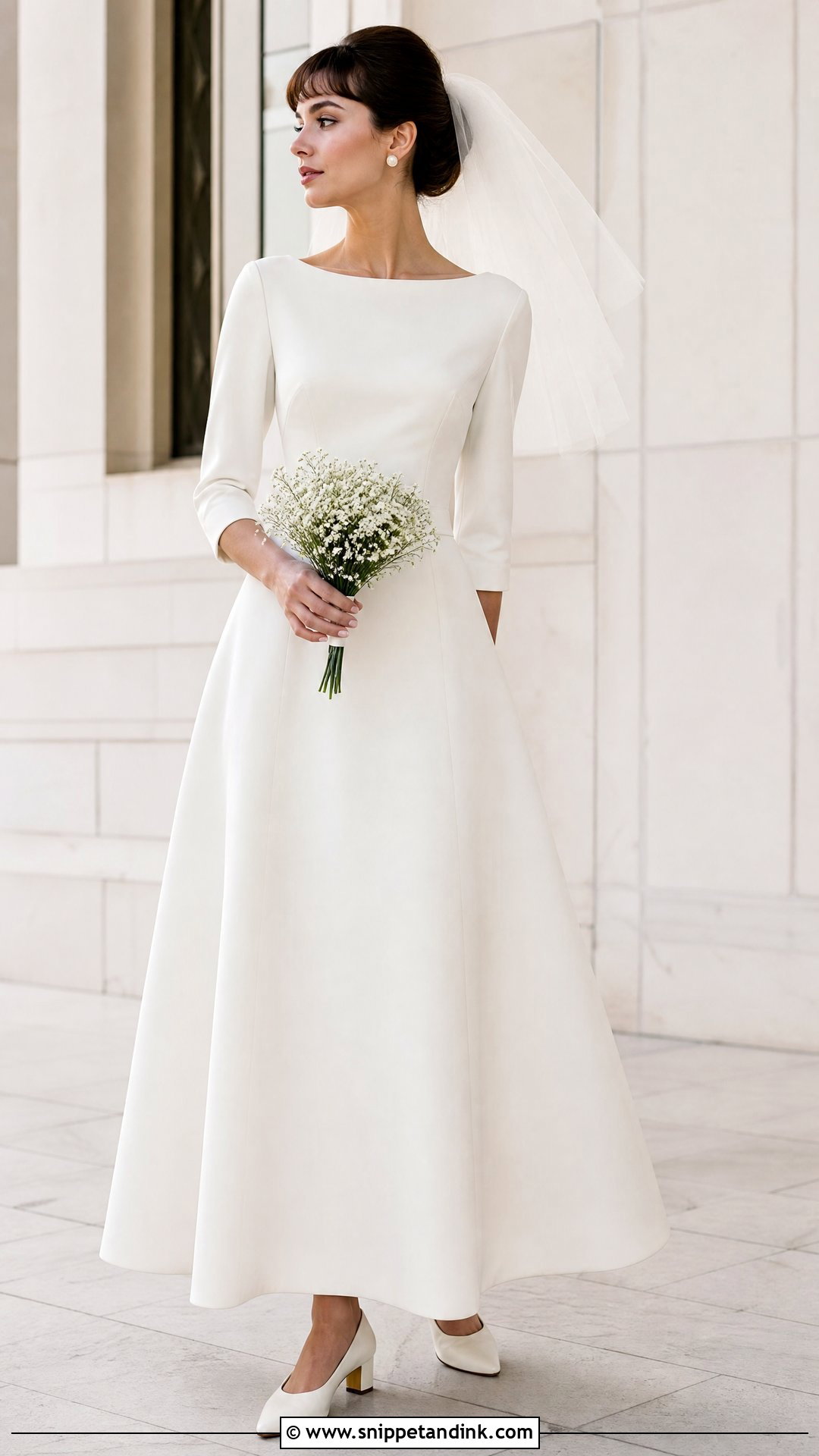
Clean lines make this 1960s look feel almost modern. A plain A-line or column dress with a bateau neckline and three-quarter sleeves ending between elbow and wrist is all it takes, in a fabric with enough body to hold the shape: structured crepe, silk faille or a firm lace. The decoration stays small. A bow at the waist, covered buttons, a trim at the cuff, never all three. Low block heels, pearl earrings and a short tulle veil, with a smooth bun or a soft flip at the ends. The three-quarter length is practical too, since it stays clear of food and keeps the cuffs out of the cake when you cut it.
8. 1970s Vintage Wedding Dress With Bell Sleeves
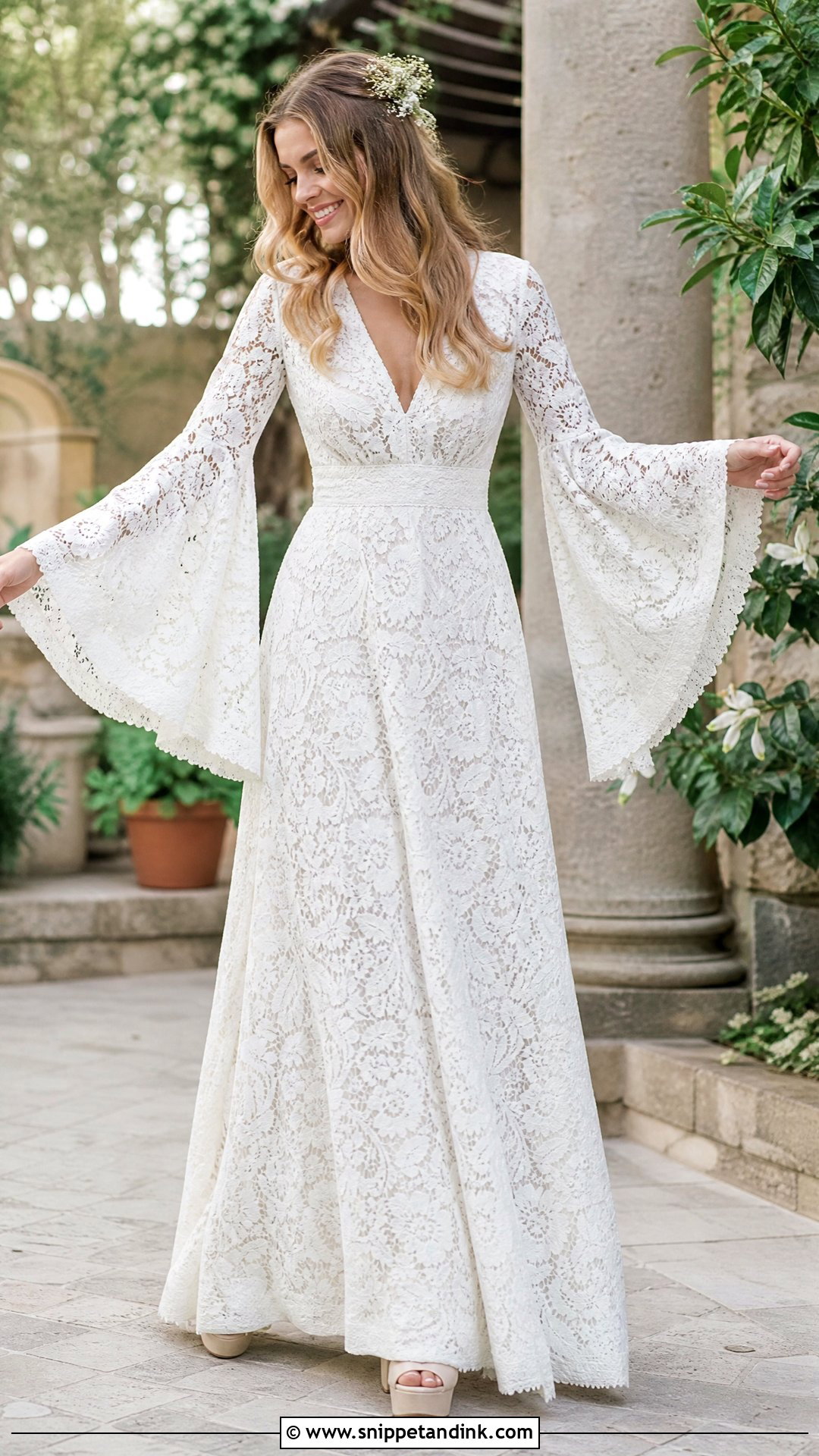
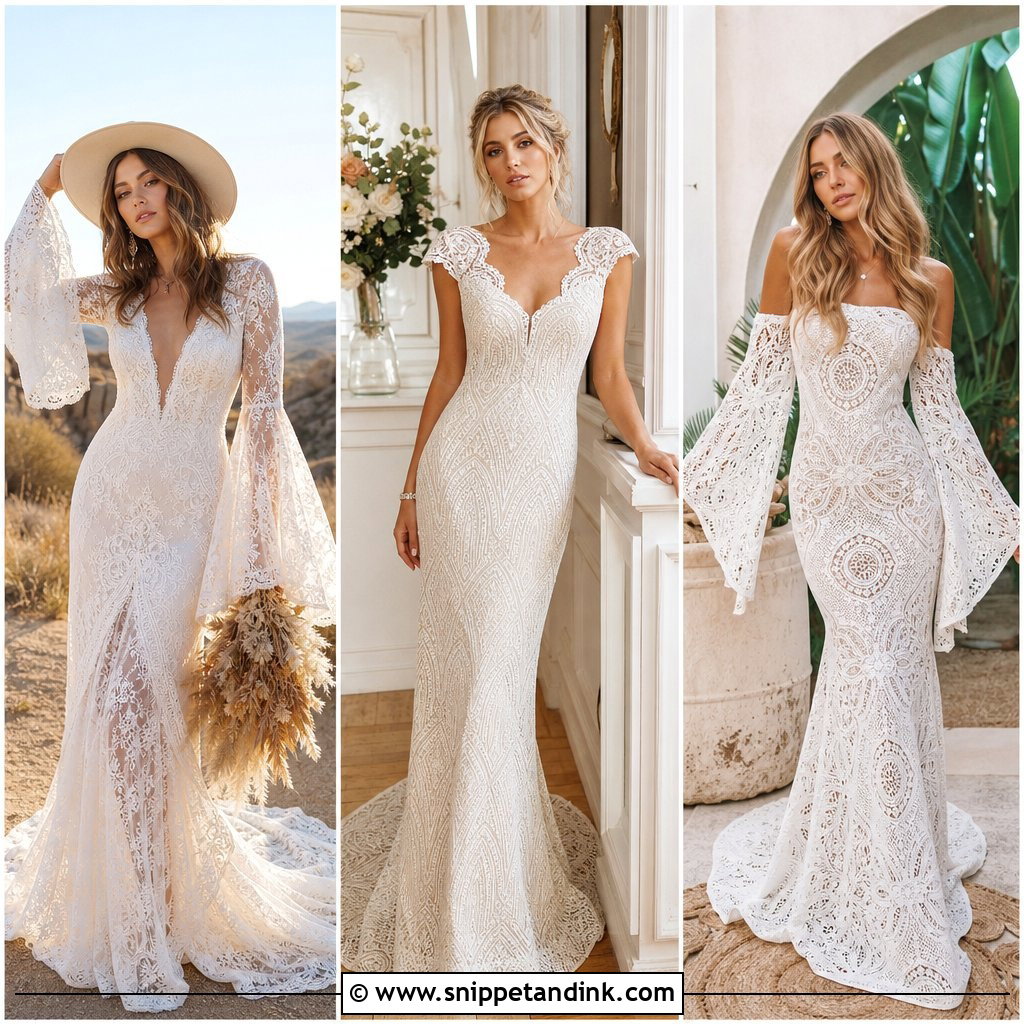
Bell sleeves fit close to the upper arm and flare out from the elbow, which brings an easy seventies drama to a flowing A-line gown in floral lace, chiffon or lightweight crepe. A V-neck and softly defined waist balance the width at the wrists. Ivory platforms or low block heels, loose waves and a simple floral hairpiece fit the mood; a lace-edged veil can work, but an unstructured cape or no veil at all keeps the shape freer. The thing I always warn about is the hem of the bell. It drags through sauces at dinner and hooks on candle holders, chair backs and branches, so I make sure it ends at or above the wrist bone. Outdoor, woodland and desert weddings suit it best.
9. 1980s Vintage Wedding Dress With Puff Sleeves
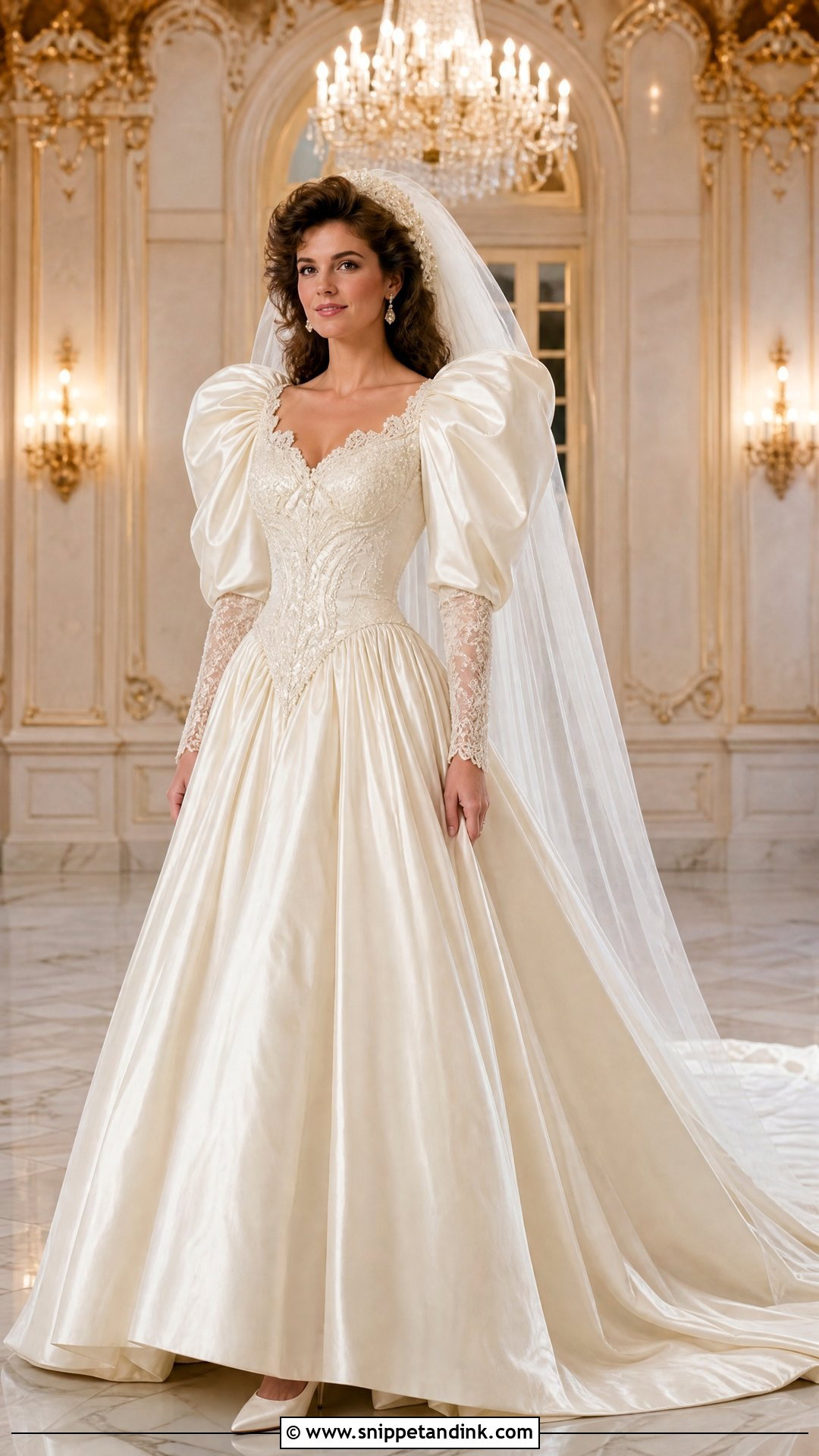
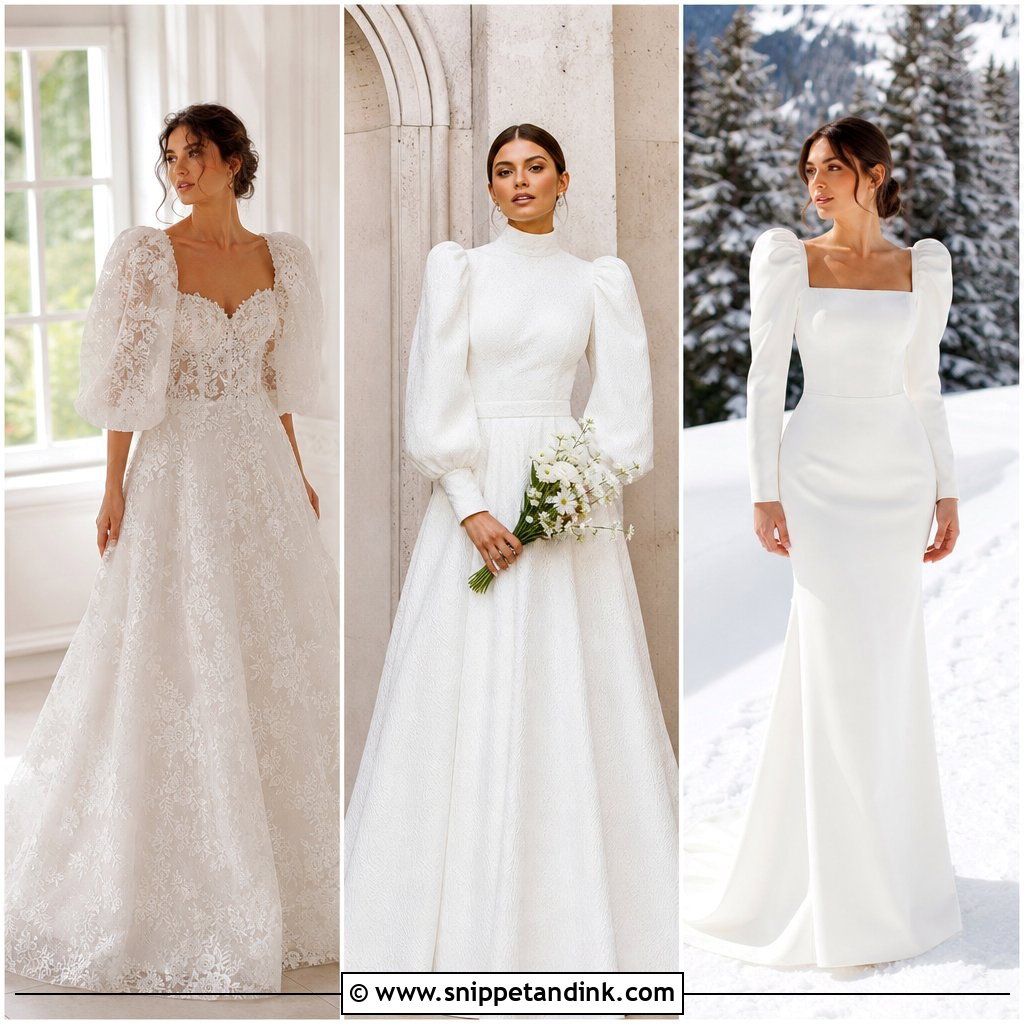
Few details make an entrance like the dramatic puff sleeves of an eighties gown, and few go wrong as quickly. The secret is contrast: pair generous shoulder volume with a fitted basque-waist bodice and a full satin or taffeta skirt so the outline narrows somewhere. Lace appliqués, pearl beading and a long train suit the era. I like the sleeve to narrow below the elbow or finish in a fitted lace cuff, which keeps it from swamping the arm. Classic pumps, pearl drops and a full veil behind a smooth updo, and no big necklace if the bodice is already ornate. Fit at the shoulder seam is critical; if it sits even slightly off the shoulder point the whole puff droops.
10. Juliet Sleeve Vintage Wedding Dress
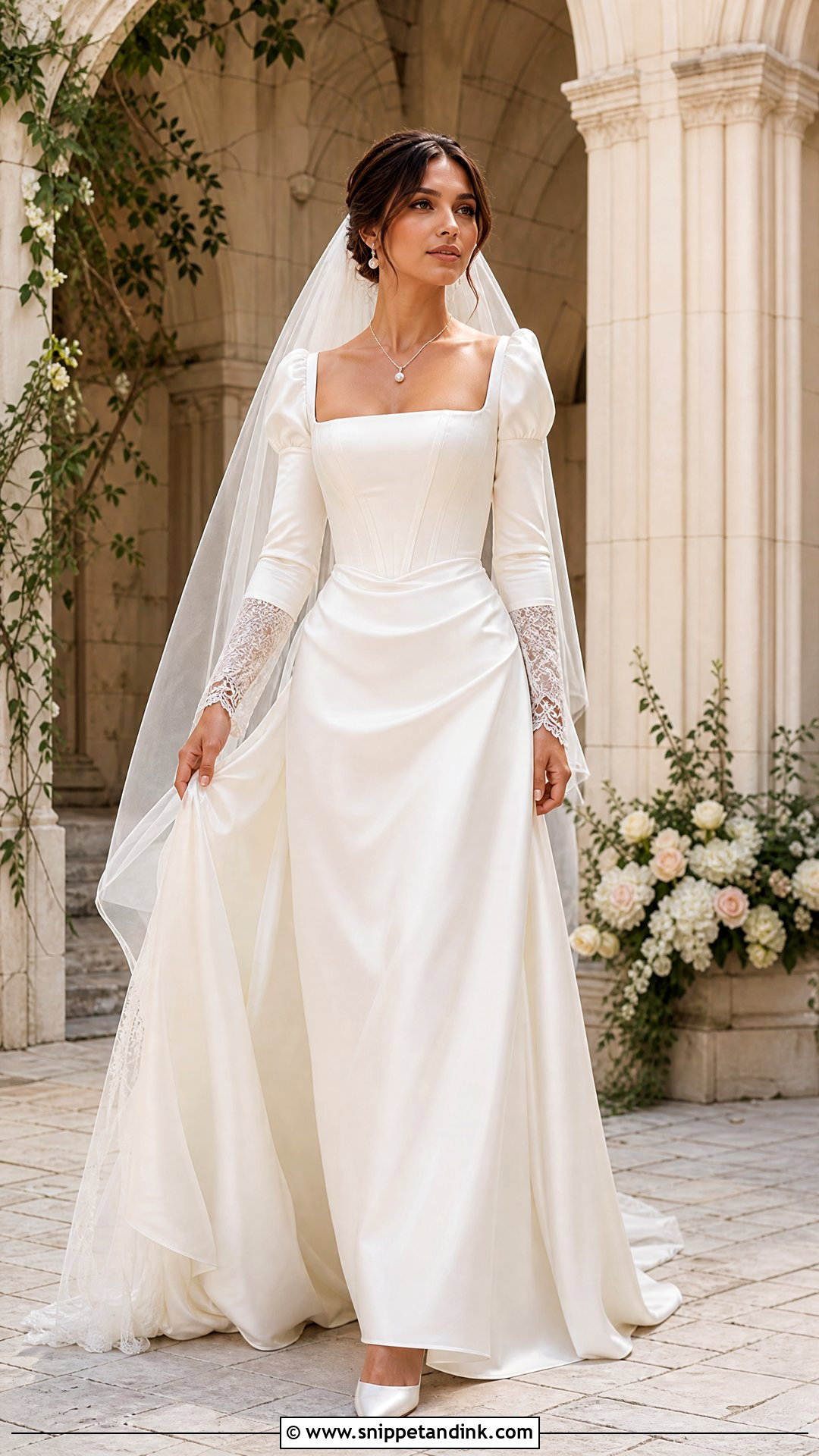
The Juliet sleeve is a small puff at the shoulder that turns into a close-fitting sleeve, a Renaissance shape that suits vintage-inspired gowns. I like it with a square neck, a sculpted bodice, a natural waist and a chiffon or satin skirt that falls freely. Lace cuffs and covered buttons add texture. A pearl pendant, a low twisted bun and an airy chapel veil, with pointed shoes or slim block heels. Test the upper sleeve carefully in fittings: the join between puff and fitted section is where it pulls when you reach forward, and a tight seam there shows as a crease in every photo. It reads storybook without tipping into costume when the rest is kept plain.
11. Bishop Sleeve Vintage Wedding Dress
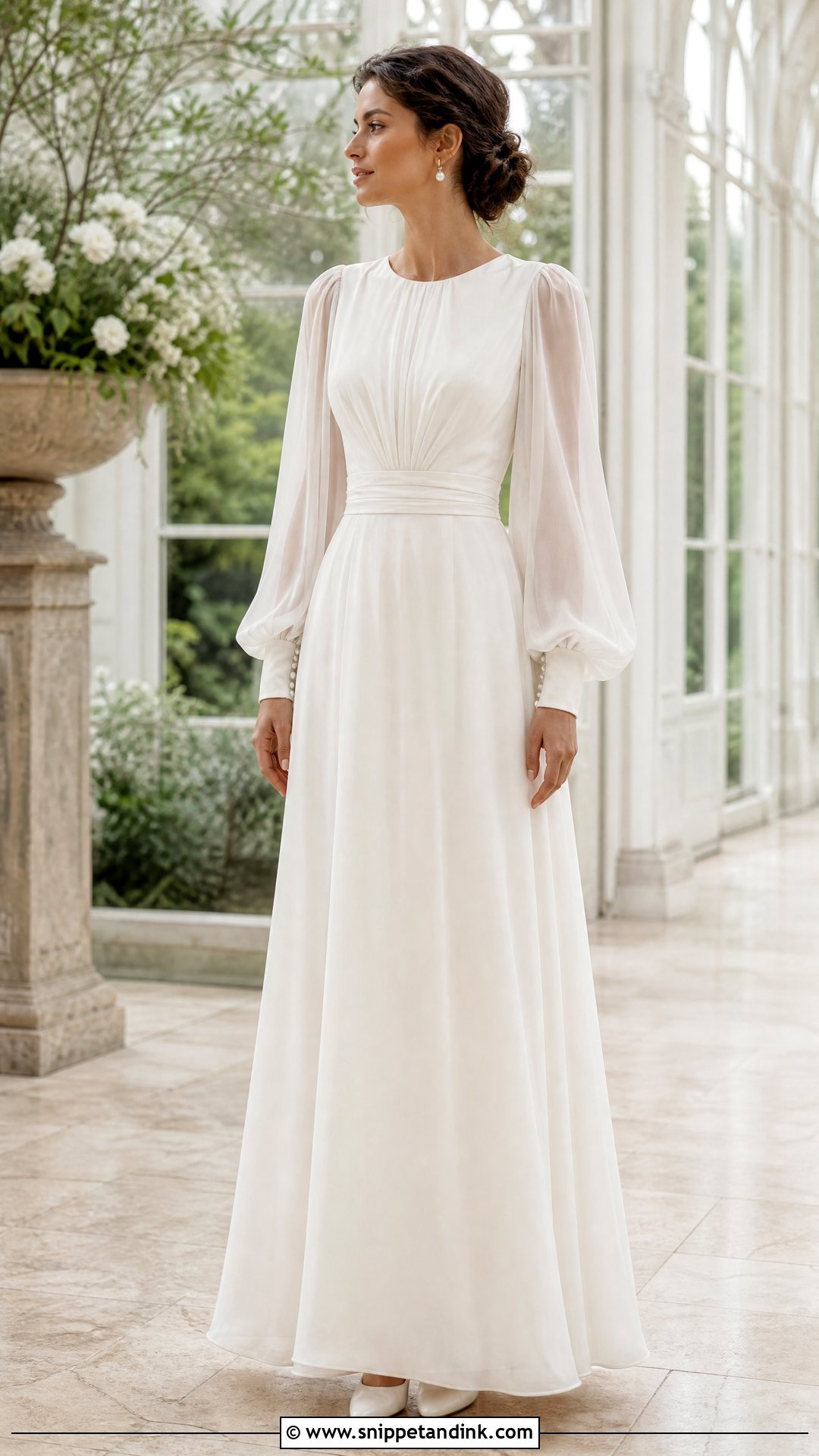
Bishop sleeves are loose and full along the arm, gathered into a firm cuff at the wrist. Sheer ones look airy; lined ones give more coverage and a stronger shape. I’d build the look around an ivory crepe or chiffon A-line gown with a fitted bodice and either a gentle plunge or a high lace neckline, and keep the cuffs narrow and buttoned so the volume stays controlled. Pearl earrings, a textured low bun and closed-toe heels. Have the veil fall behind the sleeves, not over them, or the two soft fabrics blur together. Because there’s so much fabric in each sleeve, lightweight material is much easier to move in. A cooler-season choice.
12. Balloon Sleeve Vintage Wedding Dress
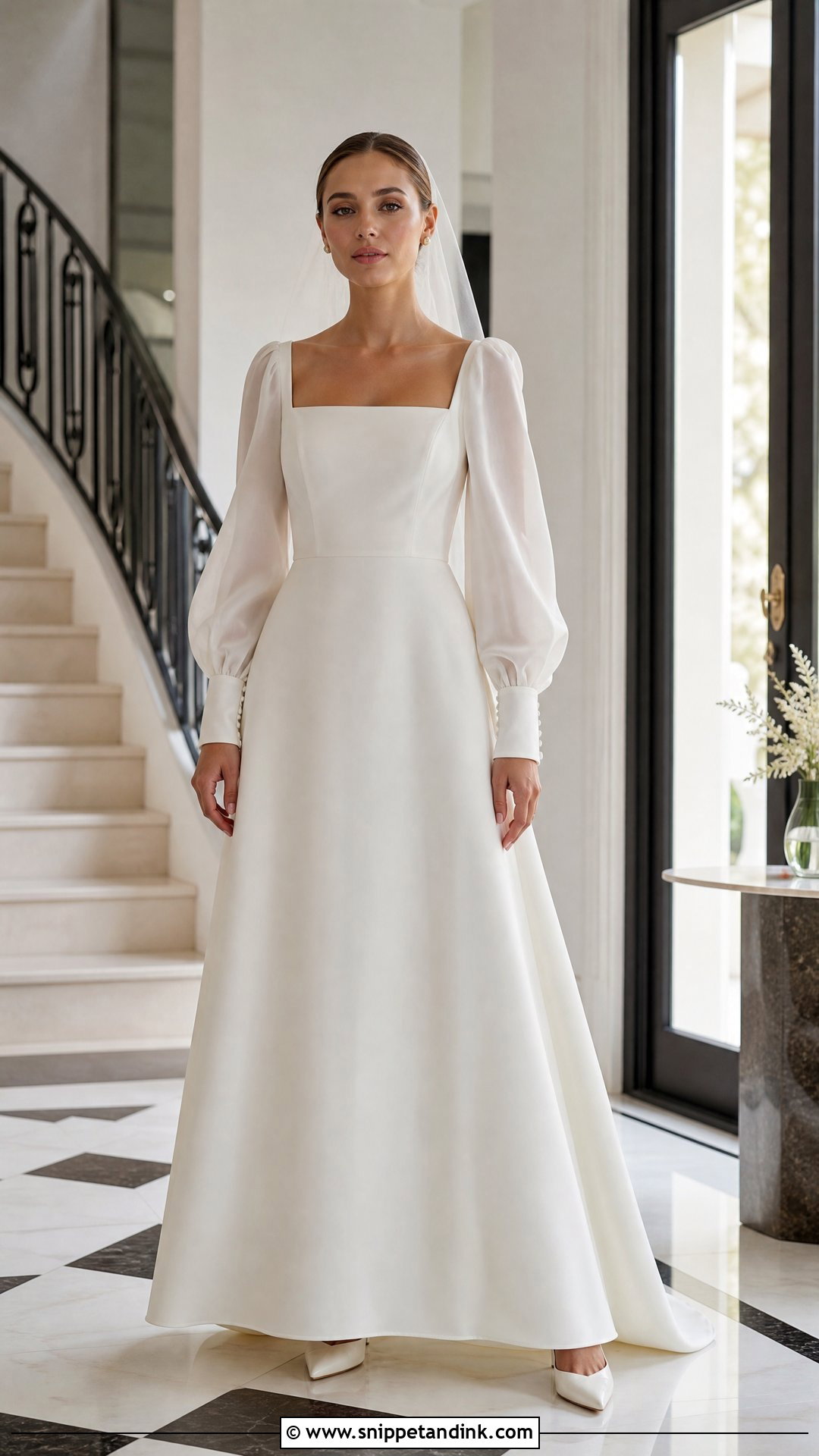
Would you like a dramatic sleeve without stiff structure? Balloon sleeves are rounded through the middle of the arm and narrow at the shoulder and cuff. Organza, tulle and lightweight wovens keep the shape without weight, and they sit best on a square-neck or off-the-shoulder gown with a fitted bodice and a simple A-line skirt. Since the sleeves are the main feature, I keep everything else spare: small earrings, a sleek bun, understated ivory pumps, a narrow veil or a removable tulle bow. Place the cuff carefully. Too loose and the volume slides down over your hands every time you lower your arms.
13. Tulip Sleeve Vintage Wedding Dress
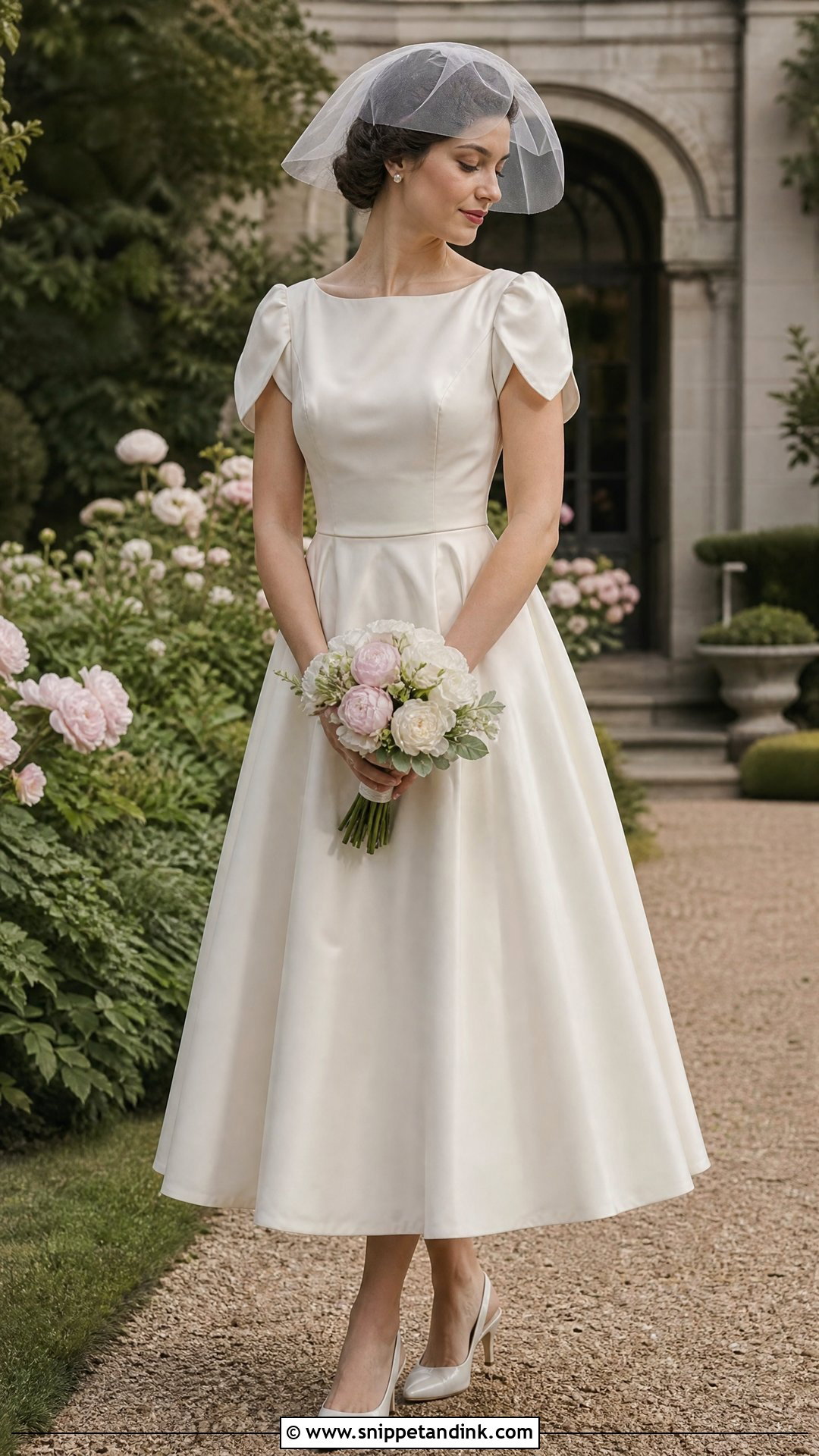
Tulip sleeves are made from overlapping panels that curve over the upper arm, so you get a little shape without any puff. Some people call them petal sleeves. They suit a 1940s or 1950s-inspired A-line with a softly fitted bodice, natural waist and a midi or floor-length skirt. Lace or satin petals can match the gown, and sheer organza makes them lighter. Slingback heels, pearl studs and a small birdcage or fingertip veil finish it. Because the sleeve is quiet, there’s room for one more detail, a floral waist or covered buttons. Watch where the petals overlap: if the overlap sits too far back, the front panel flips open when you lift your arm.
14. Illusion Lace Sleeve Vintage Wedding Dress
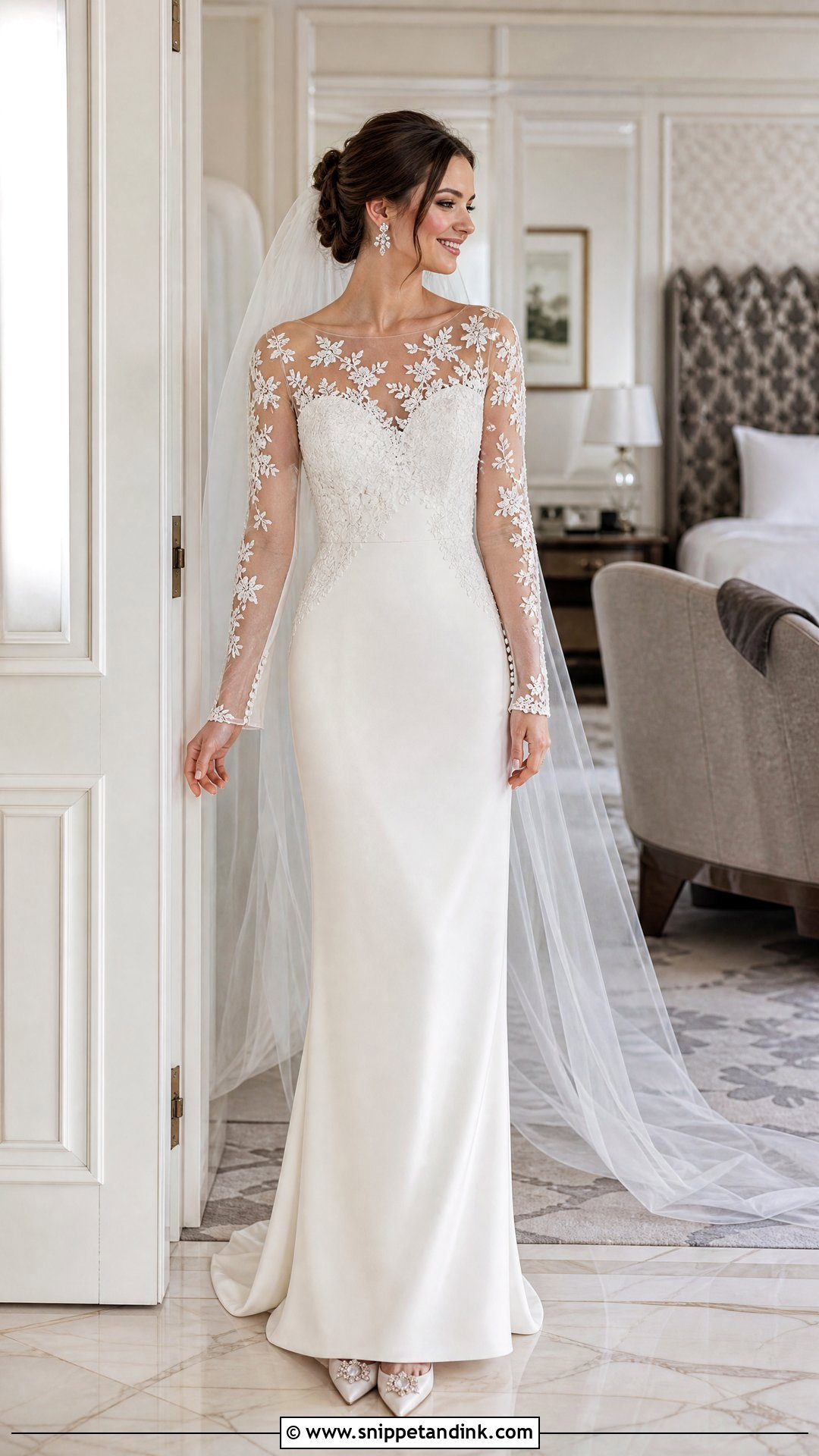
Illusion lace sleeves make the embroidery look as if it’s floating on your skin. A fit-and-flare or A-line gown with sheer tulle sleeves, carefully placed appliqués and a matching illusion neckline is the classic version, with covered buttons at the wrist to keep the sleeves anchored. Balance the lacy top with a clean crepe skirt, or carry the lace through the bodice if you’d like it more romantic. Pointed heels, small crystal earrings and a long sheer veil with minimal edging. Matching the mesh to your skin tone is what I spend the most time on, because the wrong shade looks like a grey or pink film in photos instead of disappearing. It works in most seasons.
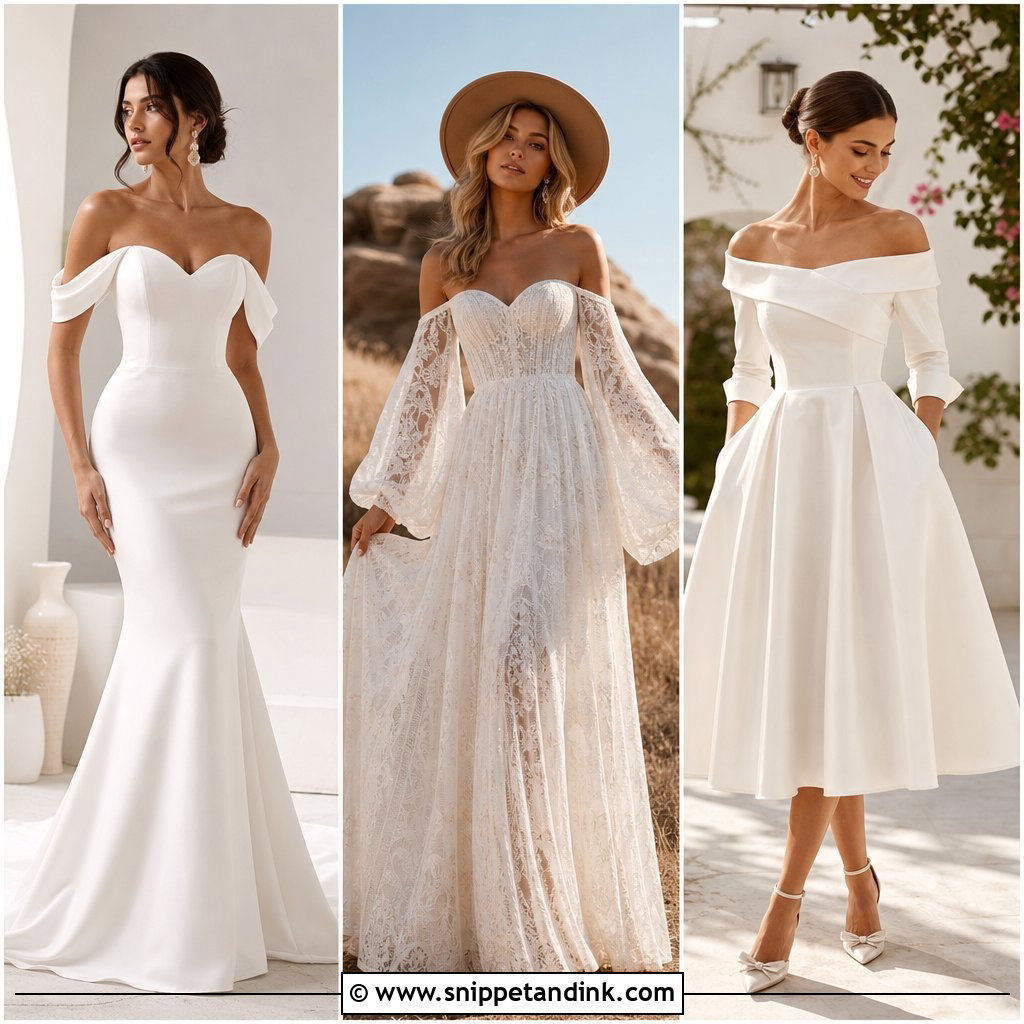
15. Guipure Lace Sleeve Vintage Wedding Dress
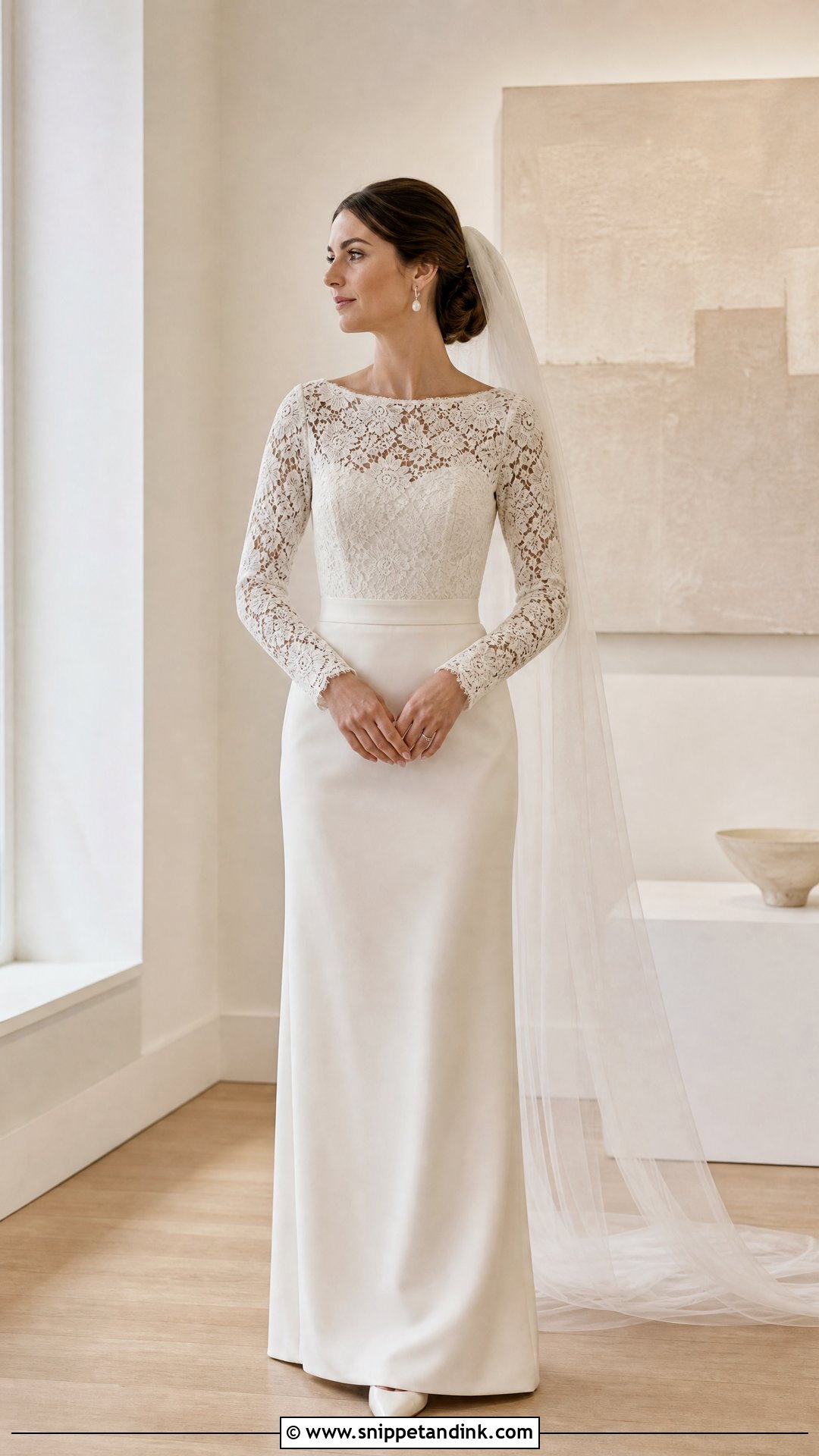
Guipure is lace made of connected motifs without a net background, so it looks bolder and more graphic than fine Chantilly. On a sleeve it’s striking but stiff. Pair fitted guipure sleeves with an ivory sheath or gently flared gown, a bateau neckline and a defined waist, and let the skirt stay smooth so the pattern has the attention. Pearl earrings, a structured low bun and clean pointed pumps; a plain tulle veil keeps the textures from fighting. I always ask for extra room at the elbow and underarm here, since guipure barely stretches and a close fit that feels fine standing can lock your arms when you sit at the table. Formal venues suit it.
16. Off The Shoulder Vintage Wedding Dress With Bardot Sleeves
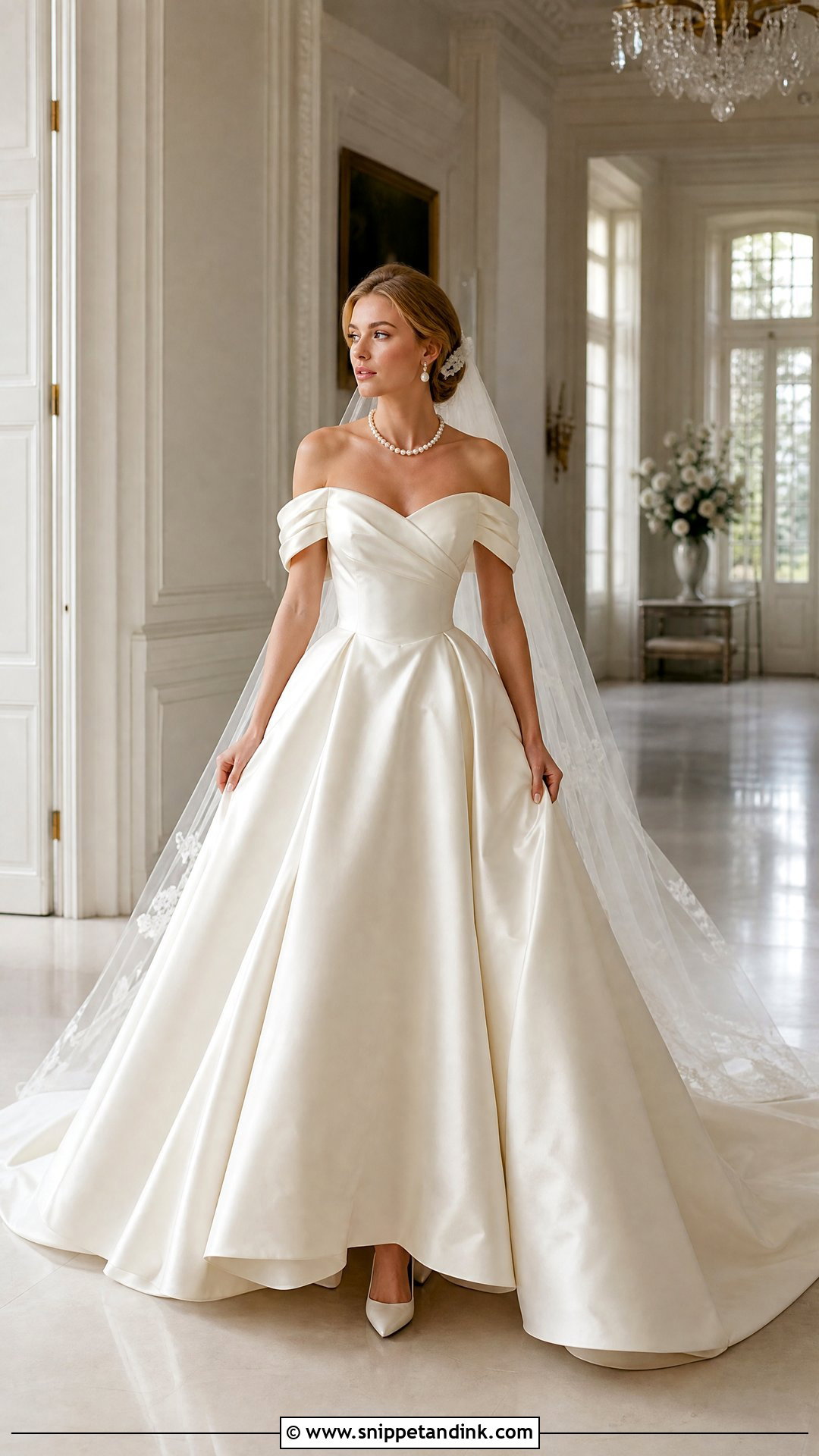
A Bardot sleeve runs in a horizontal line across the neckline and upper arms. Combine it with a fitted satin bodice, a defined waist and a full A-line or ball-gown skirt. Softly draped sleeves look romantic; ruched or structured bands stay put better, and that matters more than you’d think, because a Bardot neckline limits how far you can lift your arms. A collarbone-length pearl necklace, swept-back hair and drop earrings, with a cathedral veil set low at the back so the neckline stays open, and pointed satin heels under the skirt. Ask your tailor to check arm movement and add discreet support if needed. You should be able to walk, greet guests and wave without hitching it up.
17. Detachable Gauntlet Sleeve Vintage Wedding Dress
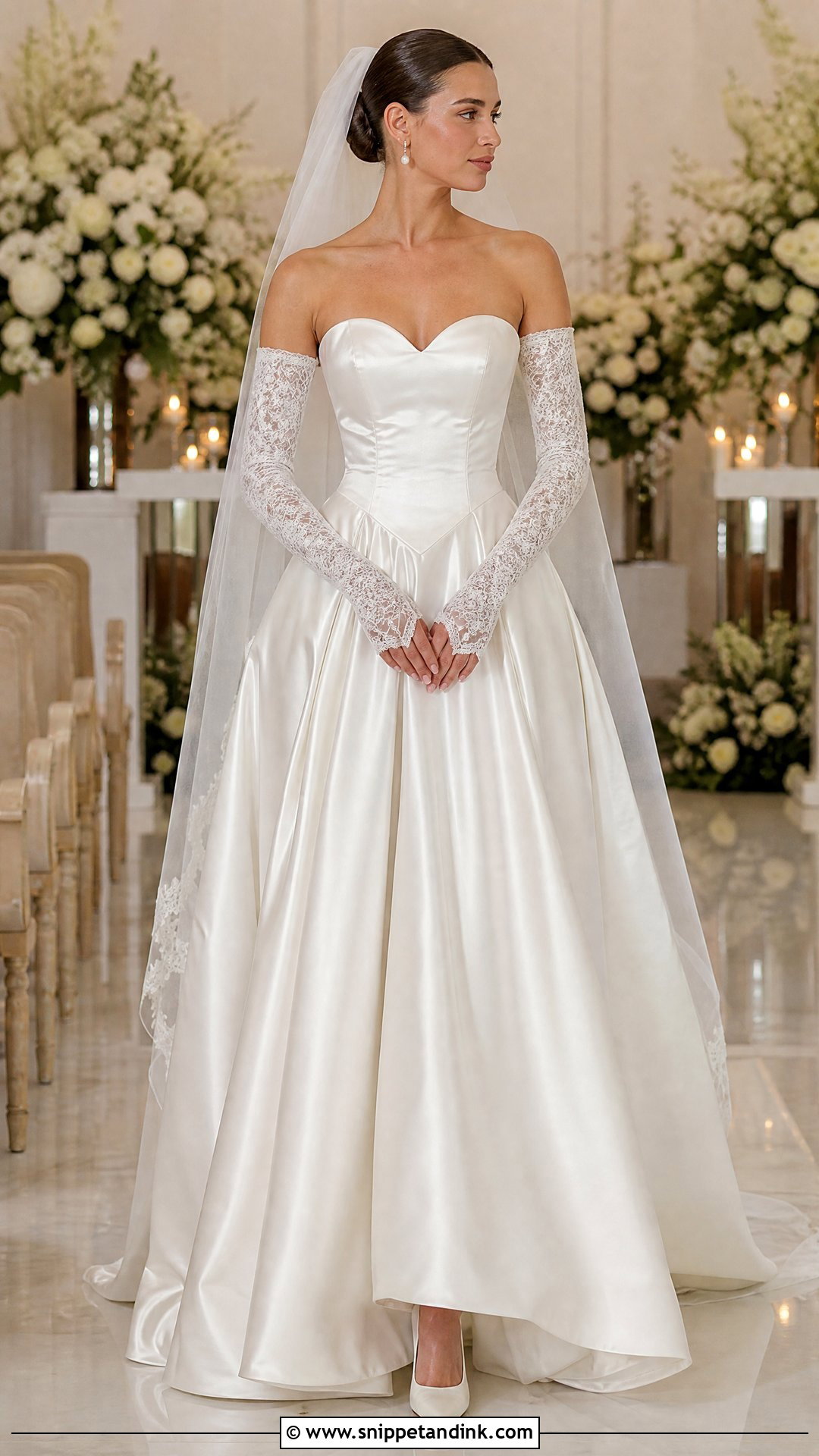
Detachable gauntlet sleeves give you two looks from one vintage-inspired gown. These close sleeves start above the elbow or on the upper arm and run to the wrist, sometimes ending in a fine point over the hand. Wear them on a strapless or cap-sleeve satin gown with a structured bodice and full skirt for the ceremony, with a long veil and pearl earrings, then take them off for a cleaner reception. Pointed pumps and a polished chignon work for both halves of the day. The attachment is what I ask about first: hidden snaps, loops or an elastic band, and whether you can remove them without help. Lace gauntlets are romantic; satin gives a stronger opera-glove feel.
18. Cape Sleeve Vintage Wedding Dress
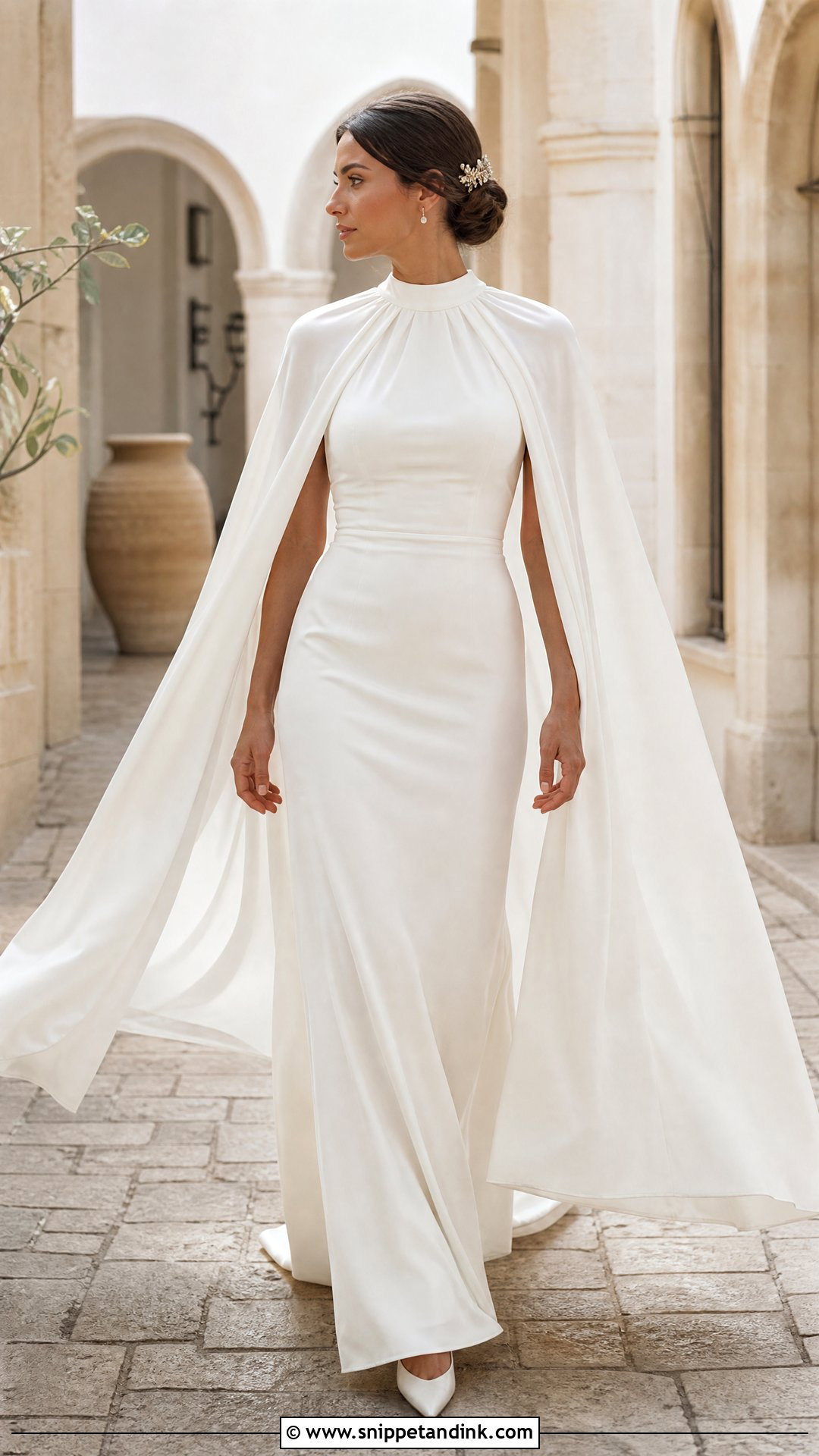
Cape sleeves fall from the shoulders like a light overlay, with no conventional armhole at all, which makes them one of the freest sleeves to move in. A column or A-line gown with a high neckline, clean bodice and chiffon or lace cape sleeves to the elbow or wrist is the shape. They look their best in motion, during walking portraits or a breeze. Small earrings, a low bun and sleek ivory heels are plenty. If the cape runs down the back, I’d trade a veil for a delicate comb; layering both piles up fabric behind you. Still want a veil? Keep it narrow and light. From behind, the cape frames the whole gown.
19. Dolman Sleeve Vintage Wedding Dress
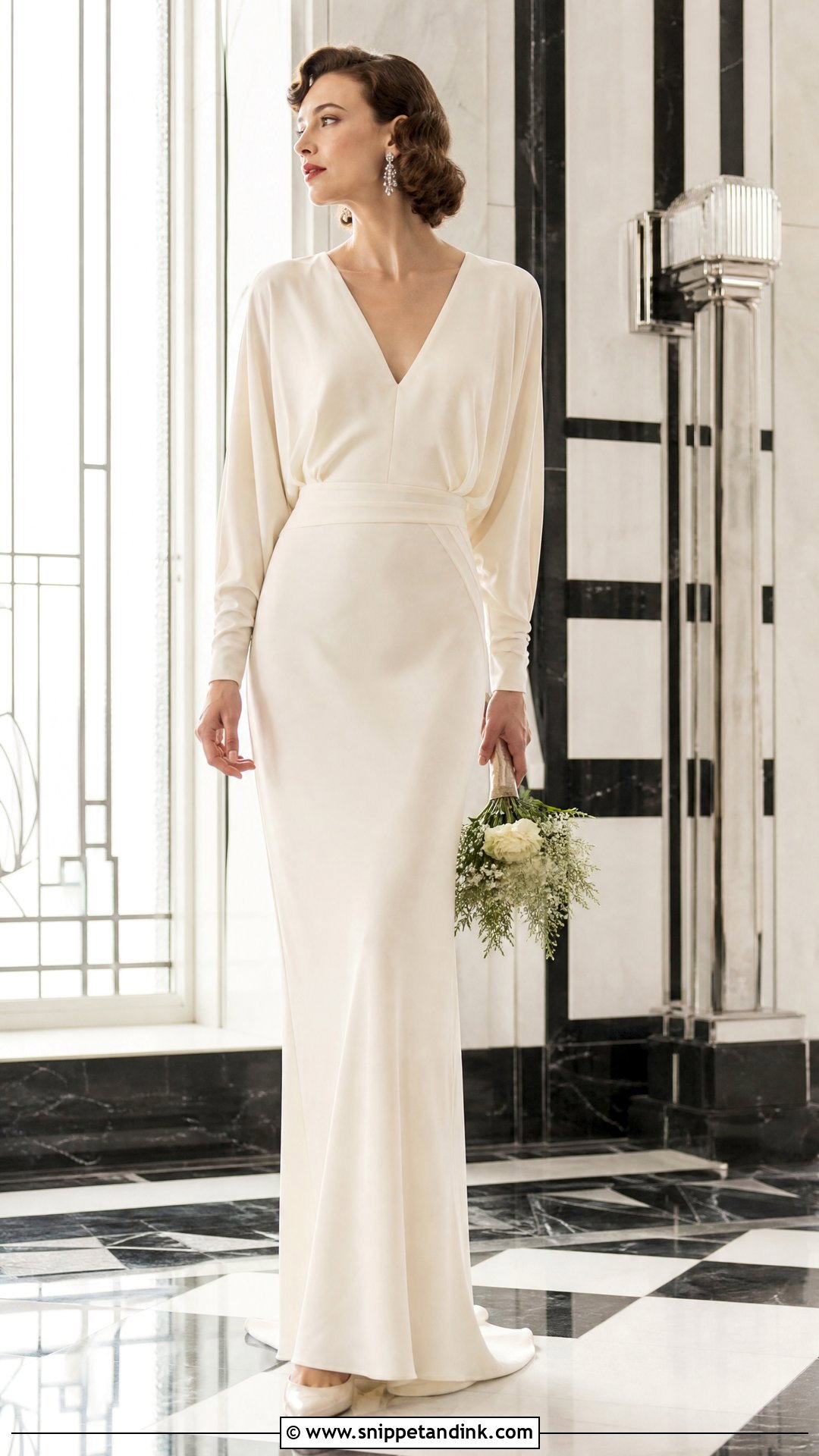
Dolman sleeves start in a wide armhole and narrow toward the wrist, so the fabric drapes softly around the upper body. That softness suits 1930s and 1940s-inspired gowns in fluid fabric, so I’d pick a silk crepe dress with a V-neck, gently defined waist and a slim floor-length line, adding a low back or covered buttons for the rear view. Waved hair, crystal studs and streamlined pumps; skip heavy necklaces, which fight the drape. The fitting check here is the opposite of a fitted sleeve. Look at how the fabric falls with your arms relaxed and lifted, because too much width bunches at the waist when your arms are down. It should skim, not billow.

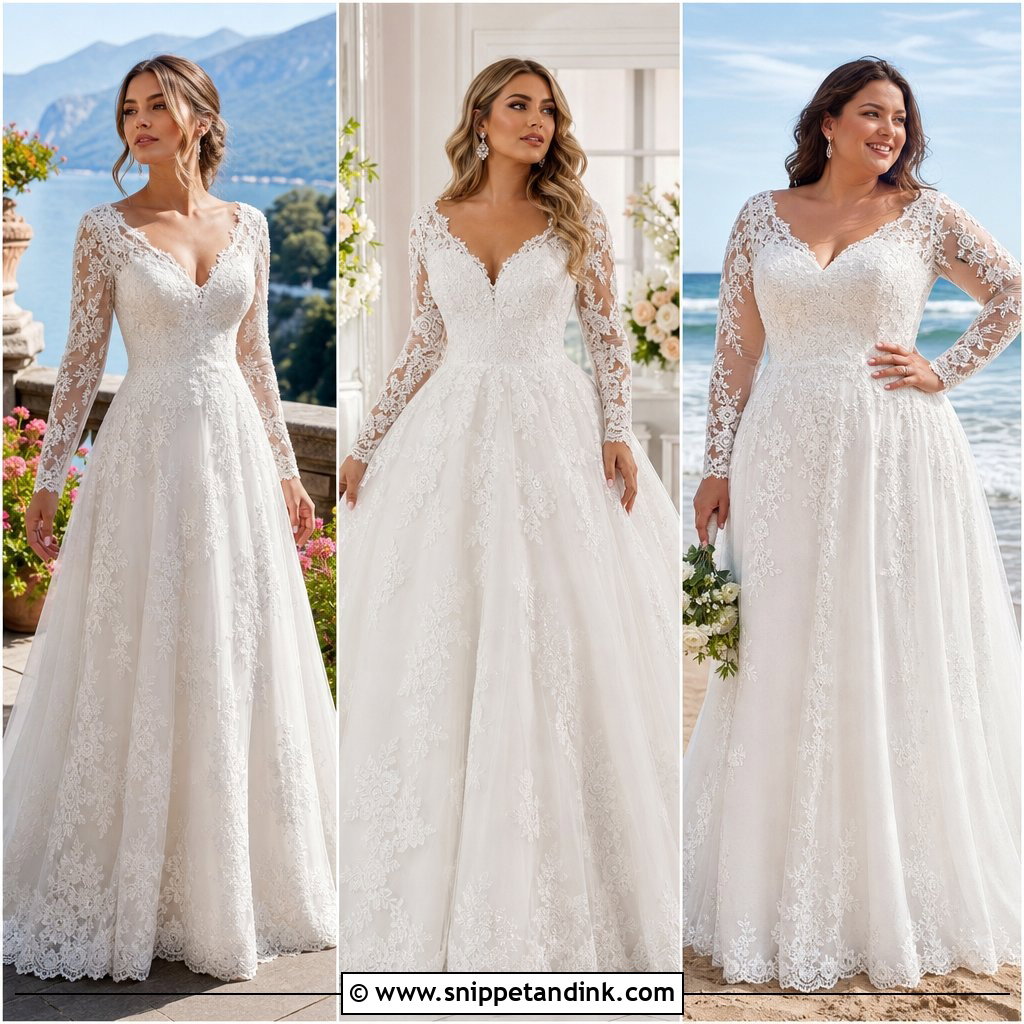
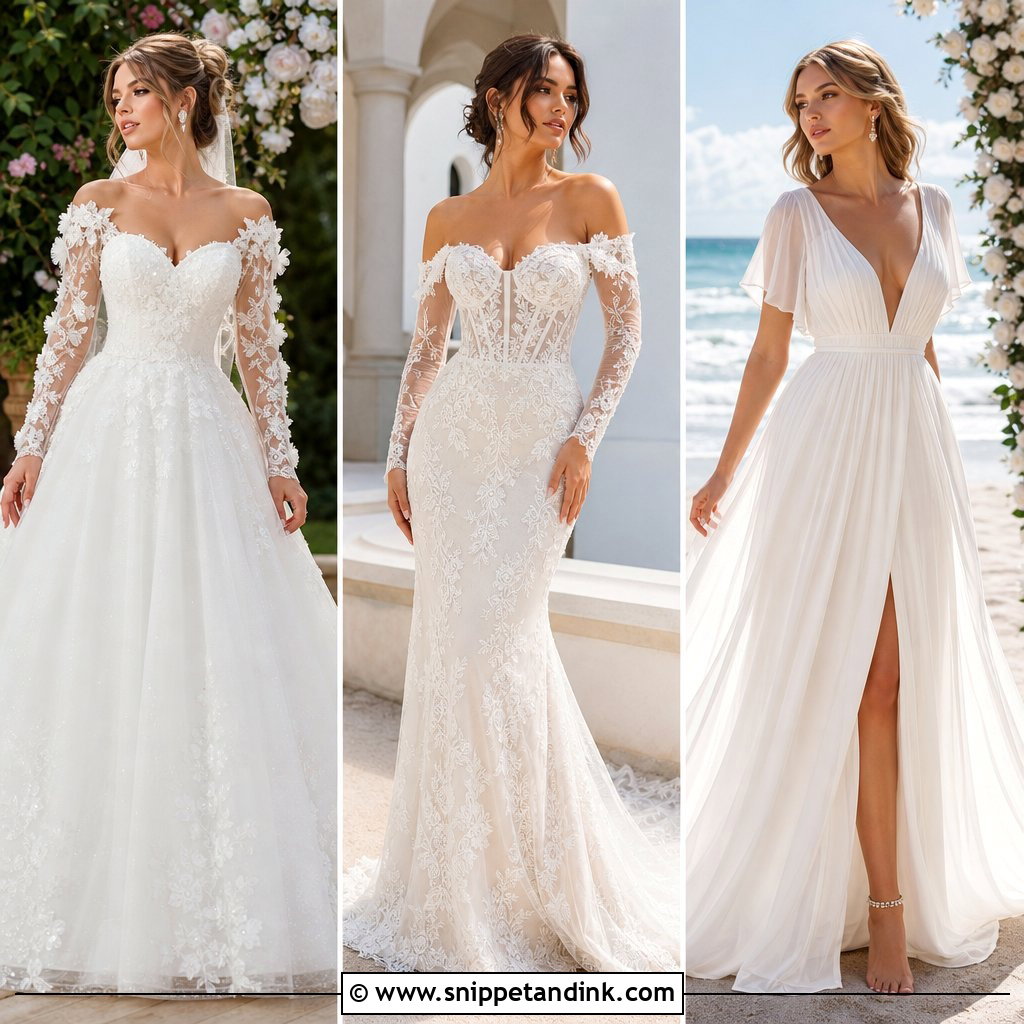

20. Pointed Lace Sleeve Vintage Wedding Dress
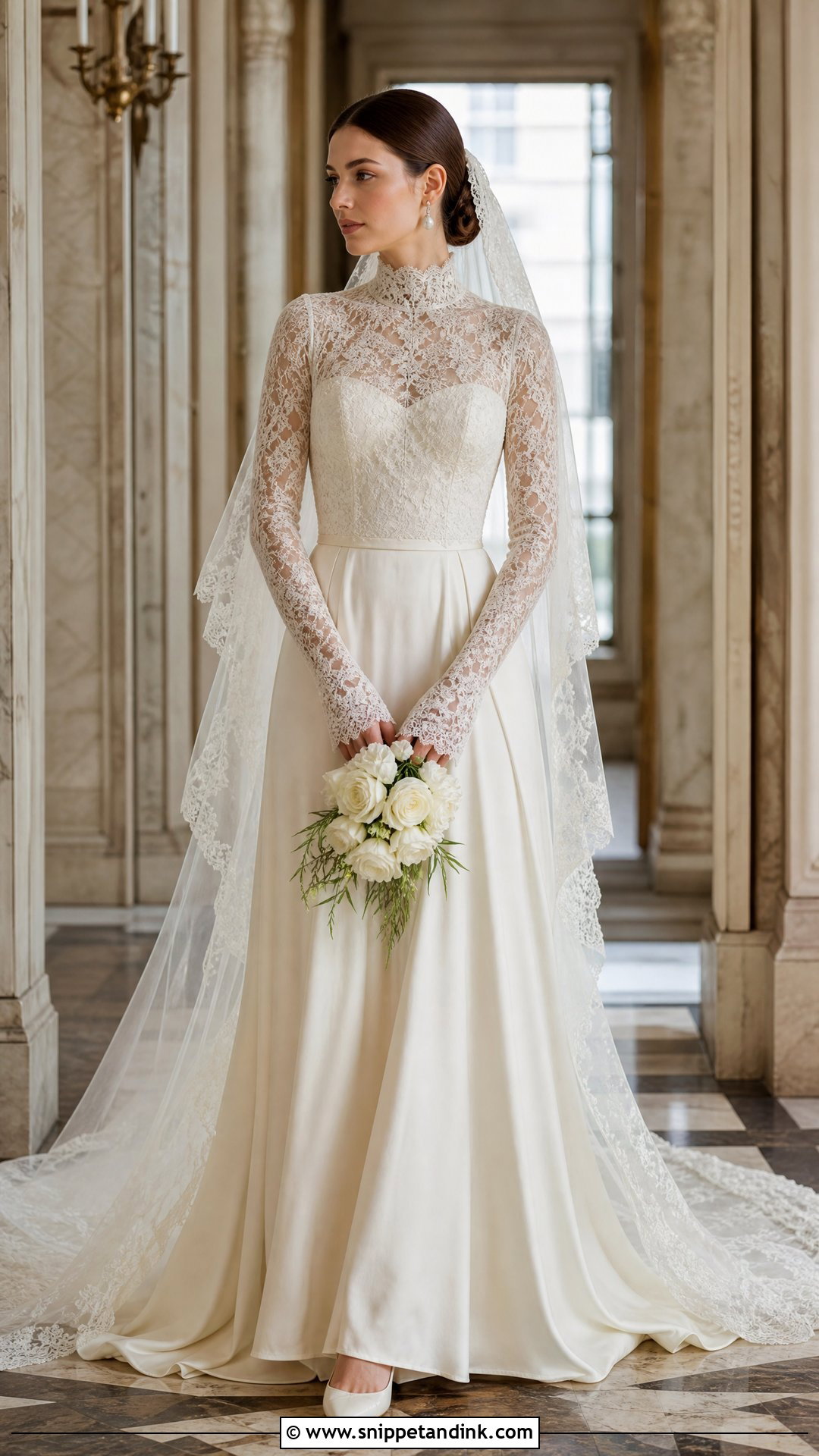
Pointed lace sleeves carry on past the wrist and finish in a point over the back of the hand, usually held in place by a small finger loop. They suit a fitted gown with a high lace neckline, a sculpted bodice and a softly flared skirt. Floral lace is softer; geometric lace looks more antique. A cathedral veil, pearl drops, a neat low bun and ivory pumps with a modest heel. Before the final fitting, practice holding the bouquet, signing your name and moving your fingers. A loop that’s too tight pulls the point sideways, too loose and it slides off. In close-up ring and bouquet shots, that pointed lace is the detail people remember.
The Reach Test I Run Before Any Sleeve Is Signed Off
A sleeve that looks right standing still can be miserable by the speeches. Vintage cuts are especially prone to this because older patterns often set the armhole lower than modern dresses do, which limits how high you can lift your arms. In the final fittings I ask brides to do five things, and you can do them yourself in any dress you’re considering:
- Hug someone taller than you. If the bodice lifts or the sleeve cuts under the arm, the armhole needs work.
- Hold your bouquet at waist height for a full minute. Fitted sleeves bind at the inside of the elbow.
- Sit at a table and reach for a glass. Bell and bishop cuffs show you exactly where they’ll trail.
- Raise both arms as if dancing. Off-shoulder and Bardot lines will tell you whether they stay down.
- Do up and undo the cuff buttons yourself, then ask how fast someone else can. Long rows of covered buttons take longer than people expect.
If a dress fails a test, it isn’t always the end of it. A gusset set under the arm can buy movement in a fitted sleeve, and a seamstress can often raise an armhole or swap a lining for a stretch mesh. Some fixes are hard to make in lace or in a bias-cut sleeve, though, so raise them early instead of at the last fitting.
Cold Church, Hot Garden: Letting the Weather Pick the Fabric
The sleeve shape is about style, but its fabric is about comfort, and the two need to agree with the weather. Lined satin and guipure feel heavy on a humid afternoon and trap heat at the armpit, where sweat marks show on silk. Sheer chiffon or tulle sleeves can leave you shivering in a stone church in winter. For a day that runs from a cool ceremony to a warm reception, I like detachable sleeves or a light cape, because you can adjust as the day goes on. And if you sweat easily, ask about dress shields; they sit hidden inside the armhole and protect delicate fabric.
A Sleeve Should Belong to the Dress, Not Sit On It
The right vintage sleeve looks like part of the dress, not an extra stitched on. Think about how its shape meets the neckline, the waist, the skirt and the fabric, and then test it the way you’ll use it: hugging, eating, dancing, signing. Cap and flutter sleeves are the lightest; bishop, bell, balloon and puff carry the most drama. Fitted lace, bracelet and three-quarter sleeves sit in the tailored middle, and detachable sleeves let you change between ceremony and reception. I’d start with the era you keep coming back to, try two or three sleeves from it on the same bodice, and let your arms decide.
You'll Like These Ideas:





Leave a Reply