
Where a Sleeve Should Start and Stop on a Fuller Arm
Most of what makes a sleeve flattering on a curvy arm happens along two lines: the armhole and the sleeve hem. I look at those before I look at lace or beading, because a pretty sleeve cut in the wrong place still pulls, gapes or adds width.
The armhole decides how you move
A higher, closely cut armhole lets you raise your arms without the whole bodice lifting with them. Shop samples are often cut with a low armhole so they fit more bodies, which is why a sleeve can feel tight across the bicep yet still ride up when you wave. If a gown you love does this, the problem is the pattern, not your arms, and a skilled seamstress can reshape it.
The hem decides where the eye stops
A sleeve that ends at the widest part of the upper arm draws a line straight across it. Ending a little above or below that point, or at the elbow or wrist, reads longer. Short and cap sleeves look kinder cut on a slight curve than as a straight band.
Bring a few facts to your first appointment and you’ll save yourself a lot of trying on:
- Your upper arm measured at its fullest point, once relaxed and once with the elbow bent.
- A question for the consultant: is the sleeve stretch mesh, stretch lace or rigid tulle? Rigid fabric needs noticeably more ease before you can bend comfortably.
- The bra and shapewear you plan to wear, since both shift where the shoulder seam sits.
- A plan to order for your bust and hips first. Sleeves are easier to take in than to let out.
1. Long Lace Sleeve Wedding Dress
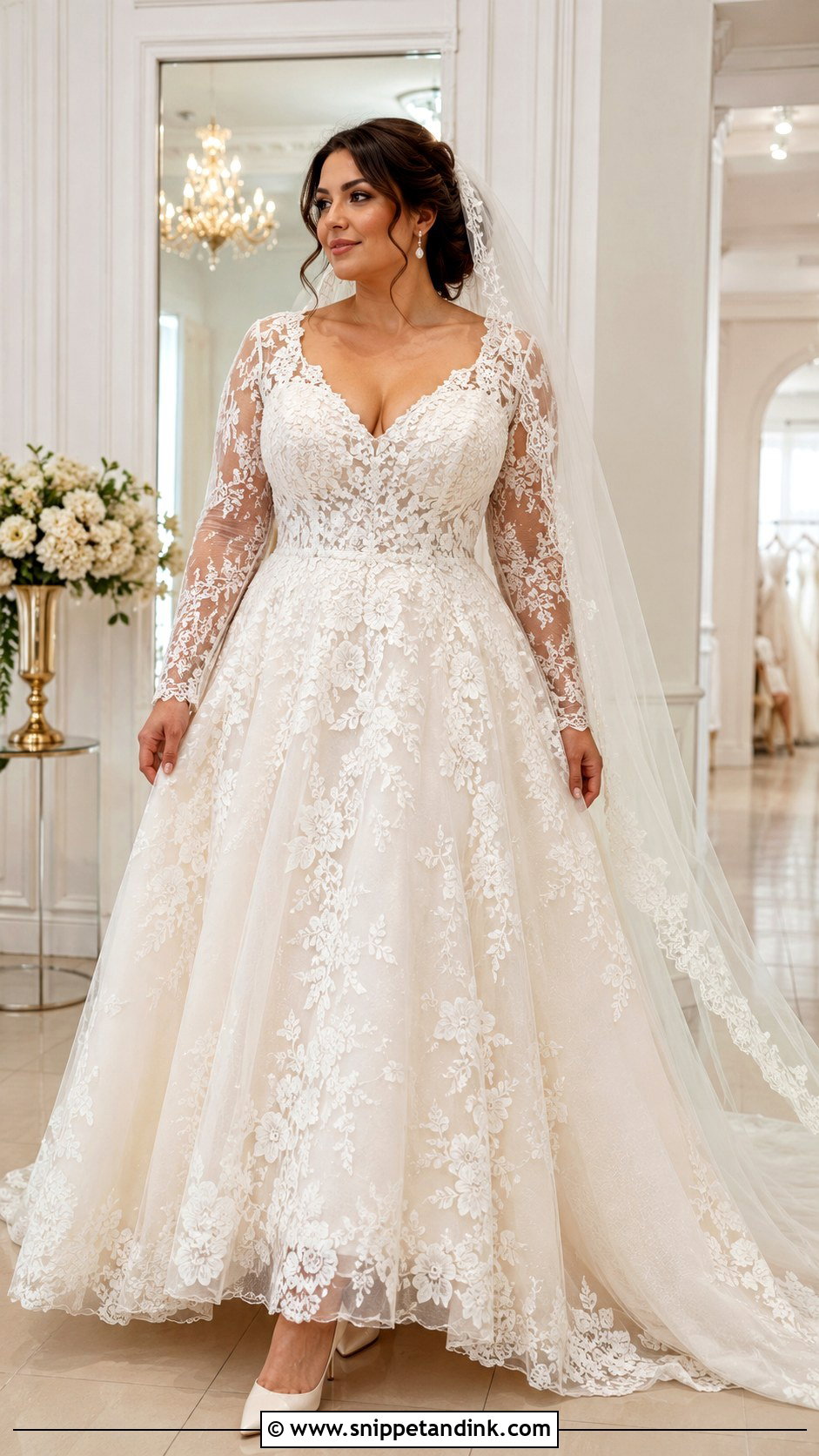
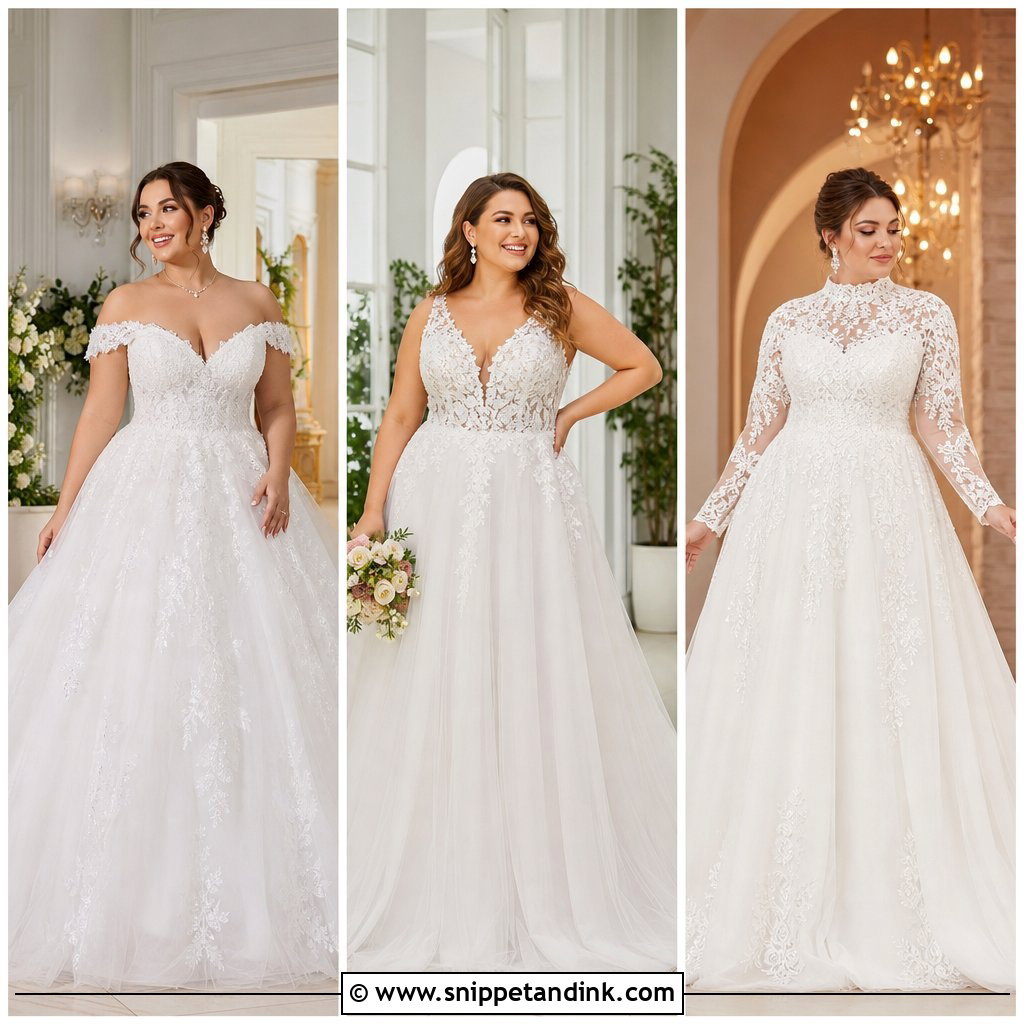
Long lace is the sleeve curvy brides ask me about most, and the backing matters more than the lace pattern. Lace laid over stretch illusion mesh follows a fuller upper arm; the same lace on rigid tulle bites at the bicep the moment you bend. Here it sits on an A-line with a supportive V-neck bodice, a defined natural waist and a soft chapel train, and the floral motifs carry across the shoulders so the sleeve never looks added on. Pointed ivory pumps, pearl drop earrings and a fingertip veil edged in matching lace finish it, with a low chignon keeping the neckline clear. At every fitting I have the bride lift and bend her arms. If the underarm pulls, the armhole needs reshaping before anything else is touched.
2. Illusion Sleeve A-Line Wedding Dress
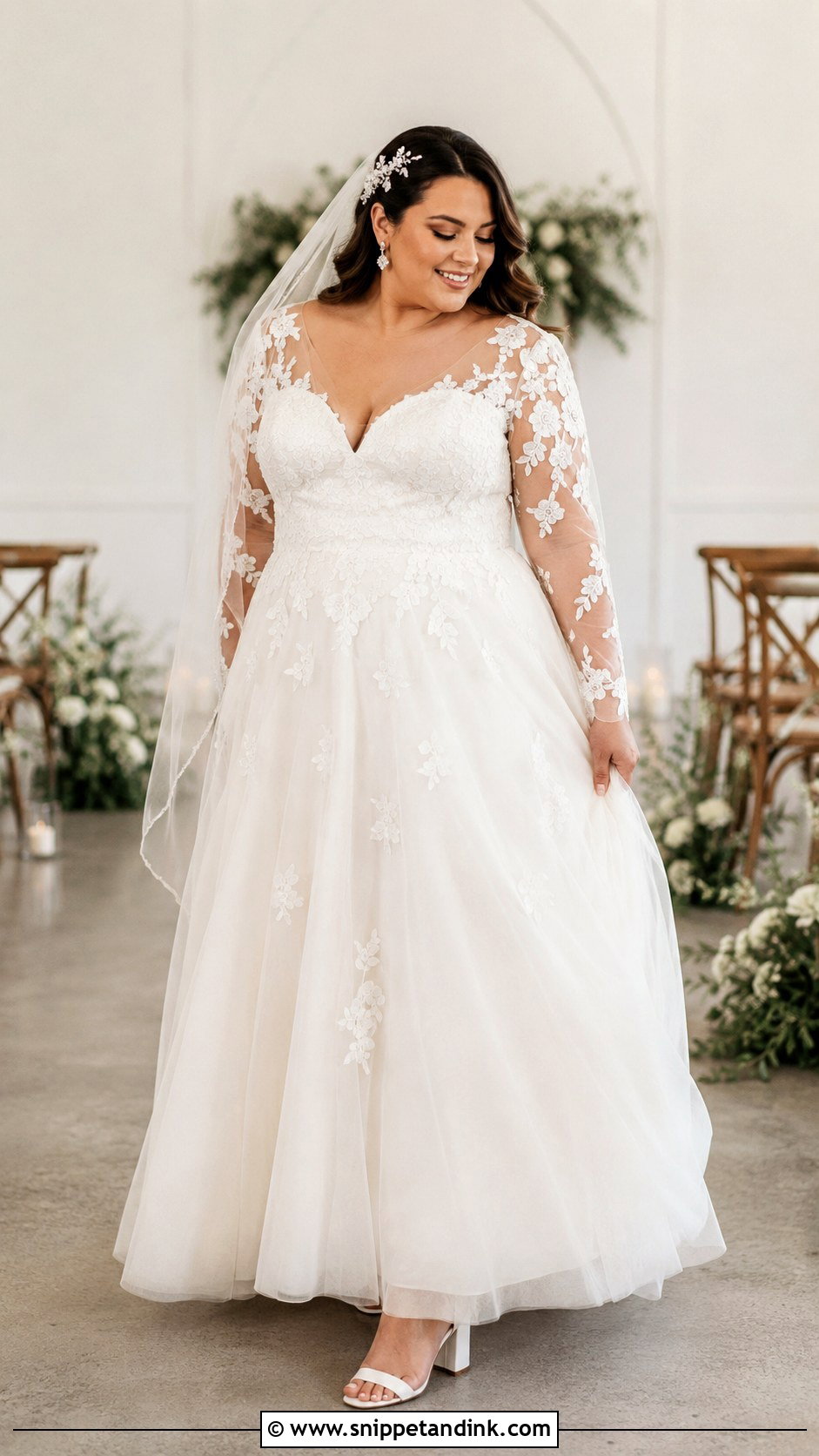
Illusion sleeves give coverage you can barely see. Sheer tulle sleeves scattered with spaced floral appliqués make the lace look as if it’s floating on the skin, set over a sweetheart lining, a structured bodice and a skirt that moves easily through the ceremony and reception. A chapel-length veil, a crystal comb and closed-toe block heels keep the accessories quiet. I match the mesh to skin tone when a bride wants the appliqués to look painted on; a contrasting mesh reads as a sleeve instead. The seams are where these go wrong. Tulle twists along the back of the arm if the sleeve was cut slightly off-grain, so I check from behind, not just in the mirror.
3. Off-the-Shoulder Sleeve Ball Gown
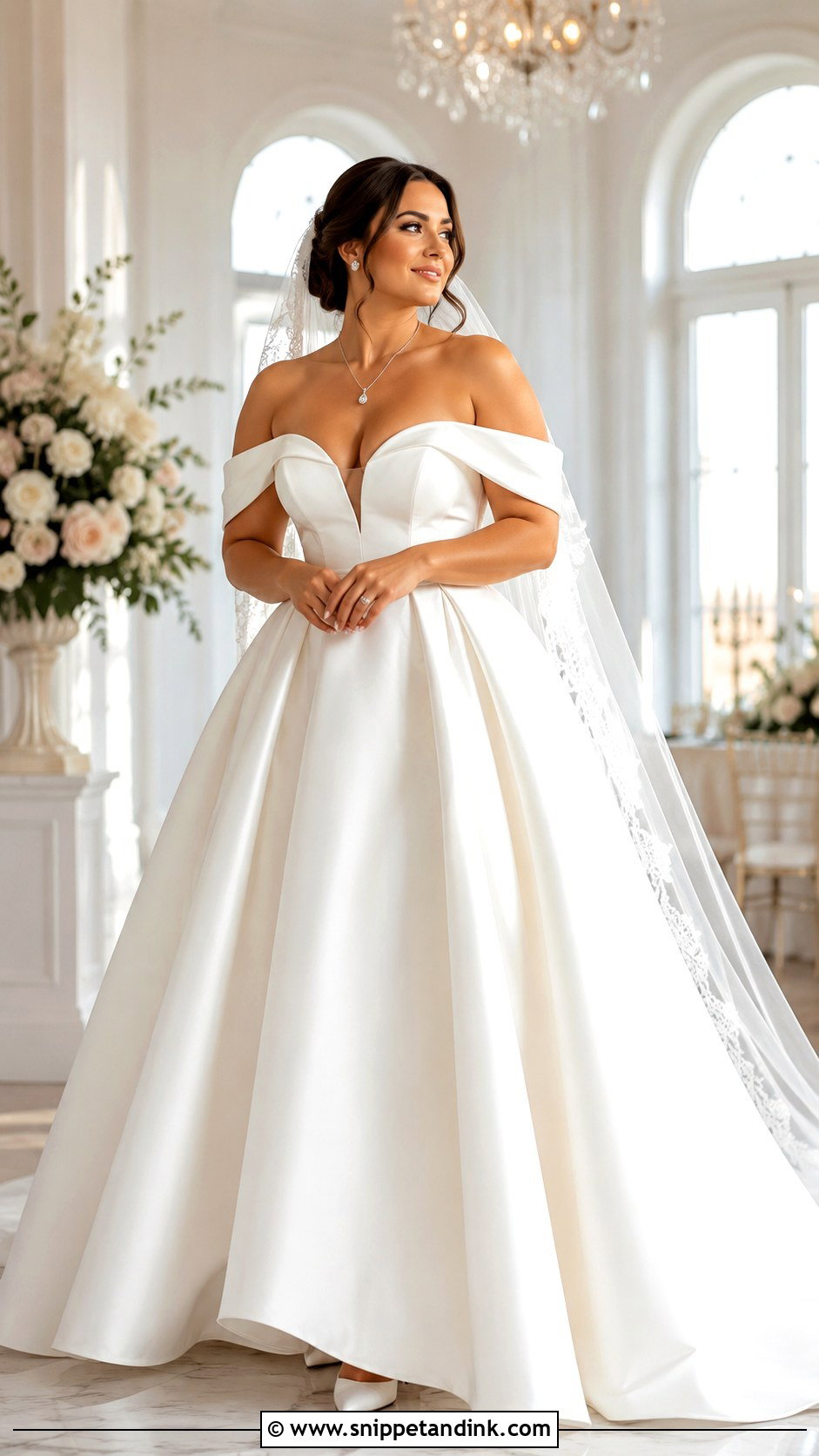
Off-the-shoulder sleeves show the collarbone and widen the shoulder line a touch, which balances a full satin or Mikado skirt on a curvy figure. The draped bands only rest on the upper arm, so the bodice has to do all the holding: I want boning and a waist stay inside, never the sleeves carrying the gown. A simple pendant, sparkling studs, satin pumps and a long cathedral veil are plenty, and skip the necklace if the neckline is heavily beaded. Walk, sit and lift your hands at the fitting. If the bands creep up or pin your arms to your sides, a seamstress can add a discreet elastic or an inner strap.
4. Bishop Sleeve Boho Wedding Dress
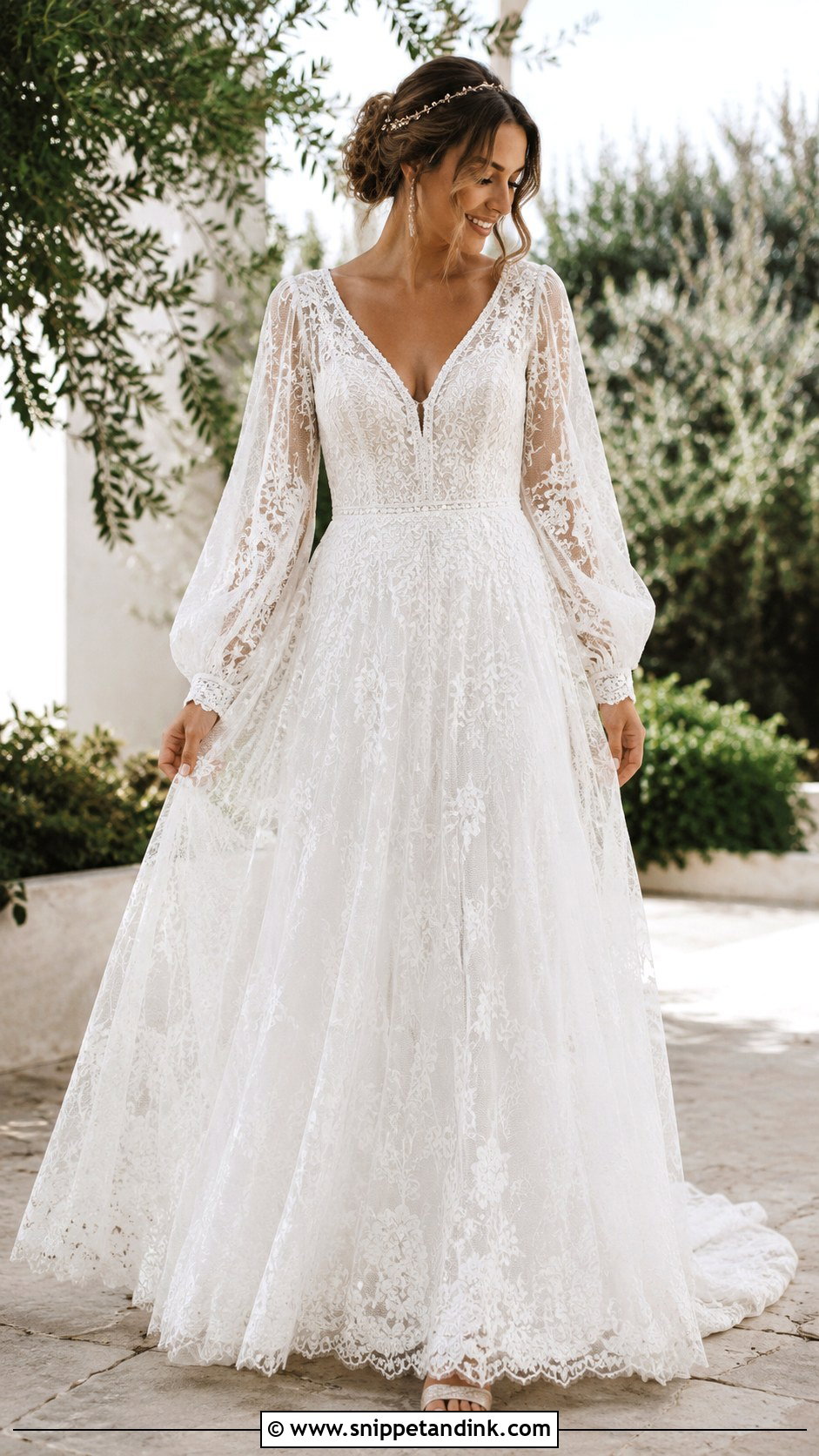
Bishop sleeves suit garden and rustic venues because chiffon or light lace billows below the shoulder and gathers into a narrow cuff. On curvier arms I watch where that fullness starts. Volume that begins right at the shoulder seam adds width exactly where many brides don’t want it, while volume that begins a little lower drops cleanly. Pair it with a defined waist and V-neck bodice, embroidered flats or low block-heel sandals, a vine headpiece and a loose textured updo, plus a chapel veil or a floral comb. Ask for adjustable cuffs. Hands and wrists swell a little on a hot afternoon, and a fixed cuff feels tight by the speeches.
5. Flutter Sleeve Chiffon Wedding Dress
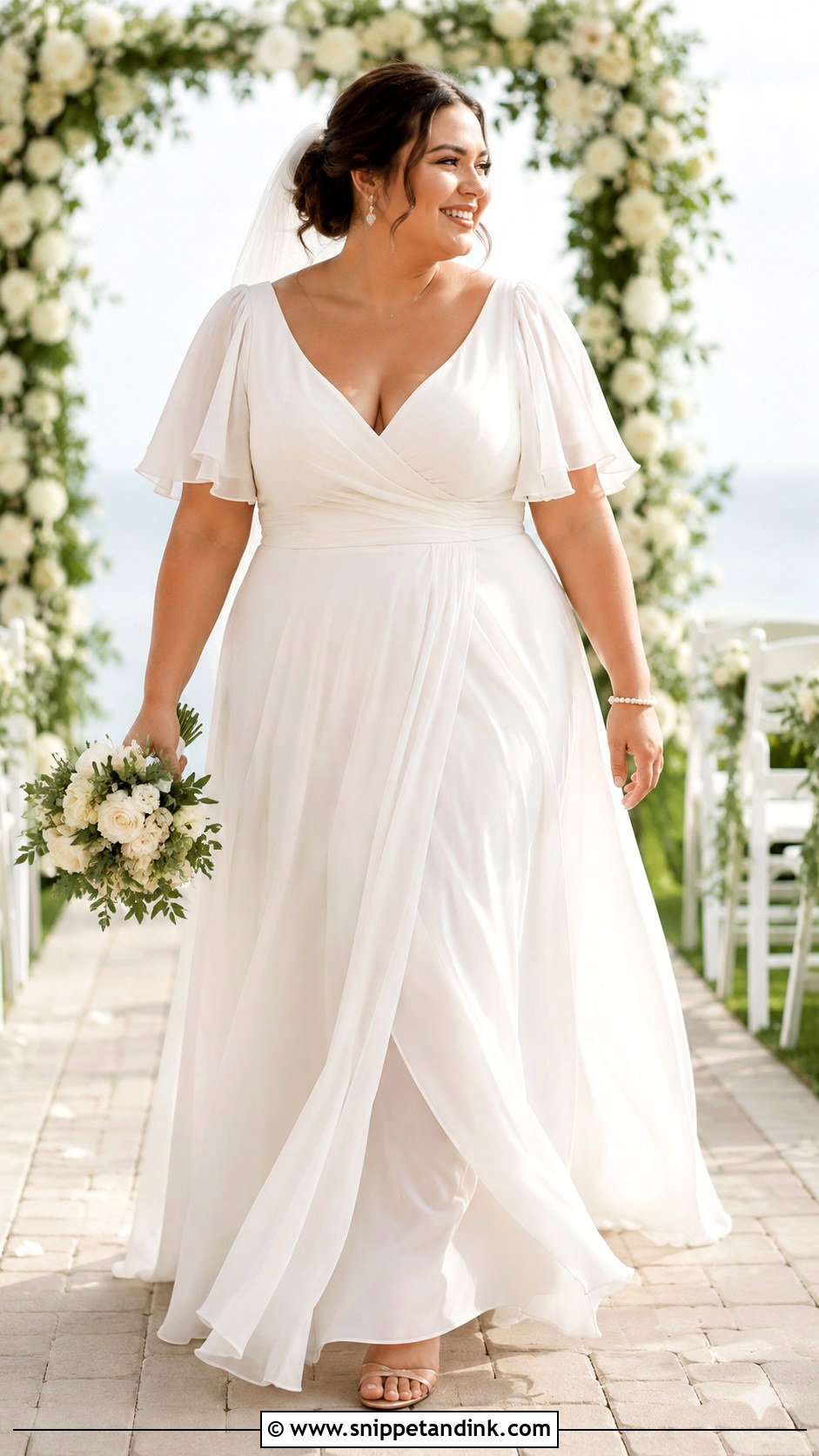
In real heat, a flutter sleeve chiffon wedding dress is the easiest of these to wear. The layered sleeves skim the shoulder and upper arm without gripping, so there’s no band to cut in. An empire or natural waist, a wrap-style bodice and a floor-length A-line skirt keep the shape soft, and low metallic sandals, a pearl bracelet, small drops and a light fingertip veil suit the weight of the fabric. Keep any beading near the neckline, because chiffon dragged down by embellishment loses its float. My one check is under the arm, where flutter layers can bunch against the bodice when your arms hang down.
6. Cap Sleeve Lace Wedding Dress
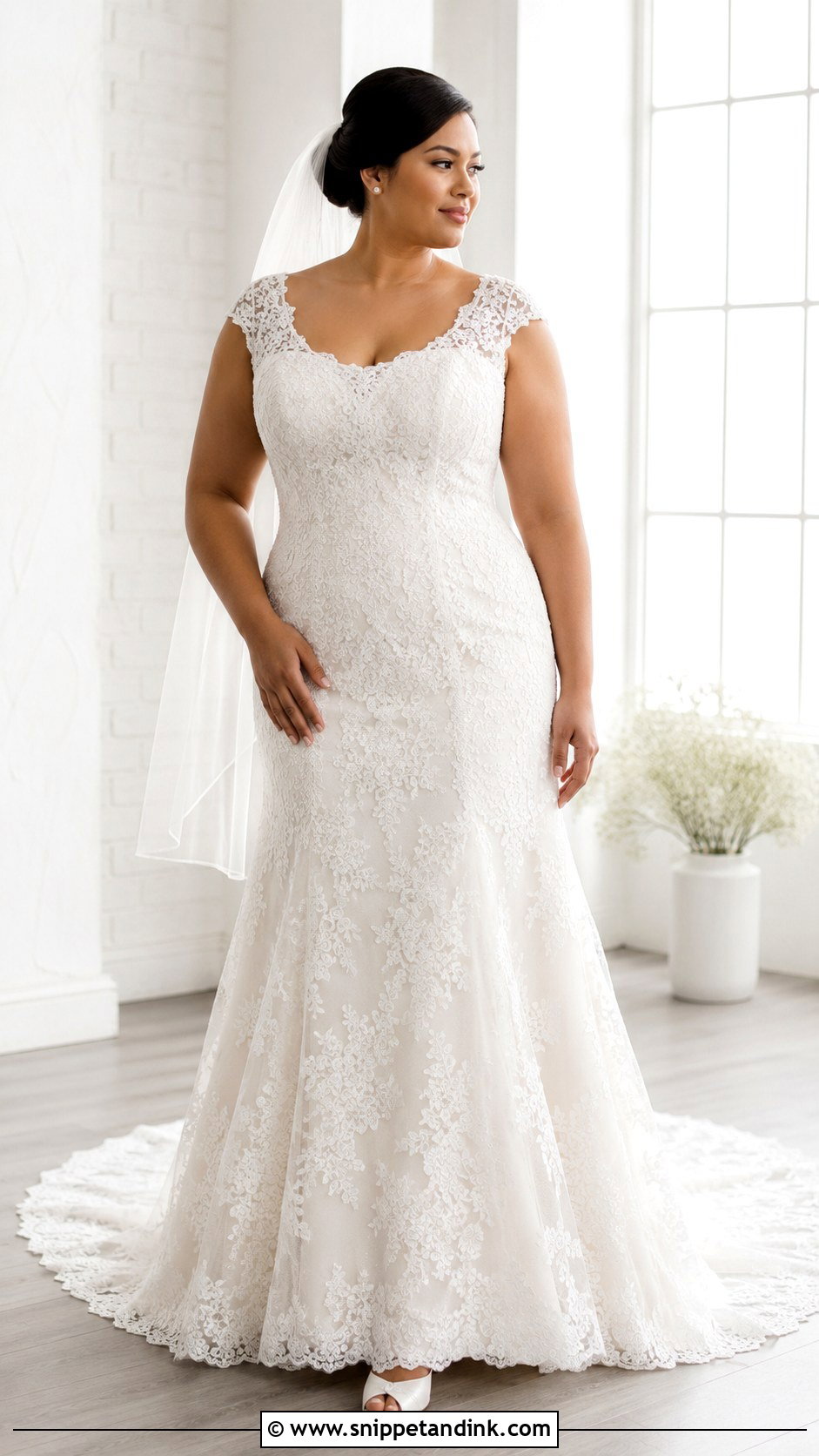
Cap sleeves are short, and on a fuller arm short can be unkind if the edge is cut straight across. I look for a cap with a slight curve that sits flat on the point of the shoulder instead of gripping the arm. This one runs the lace unbroken from bodice to sleeve on a fit-and-flare or modified A-line with a scoop neck, smooth lining and chapel train, finished with ivory slingbacks, pearl studs, a structured bouquet and a simple veil under a polished bun. If the edge flips up when you move, the angle can usually be corrected in alterations. It’s a good route to traditional lace without committing to a full-length sleeve.
7. Three-Quarter Sleeve Tea-Length Wedding Dress
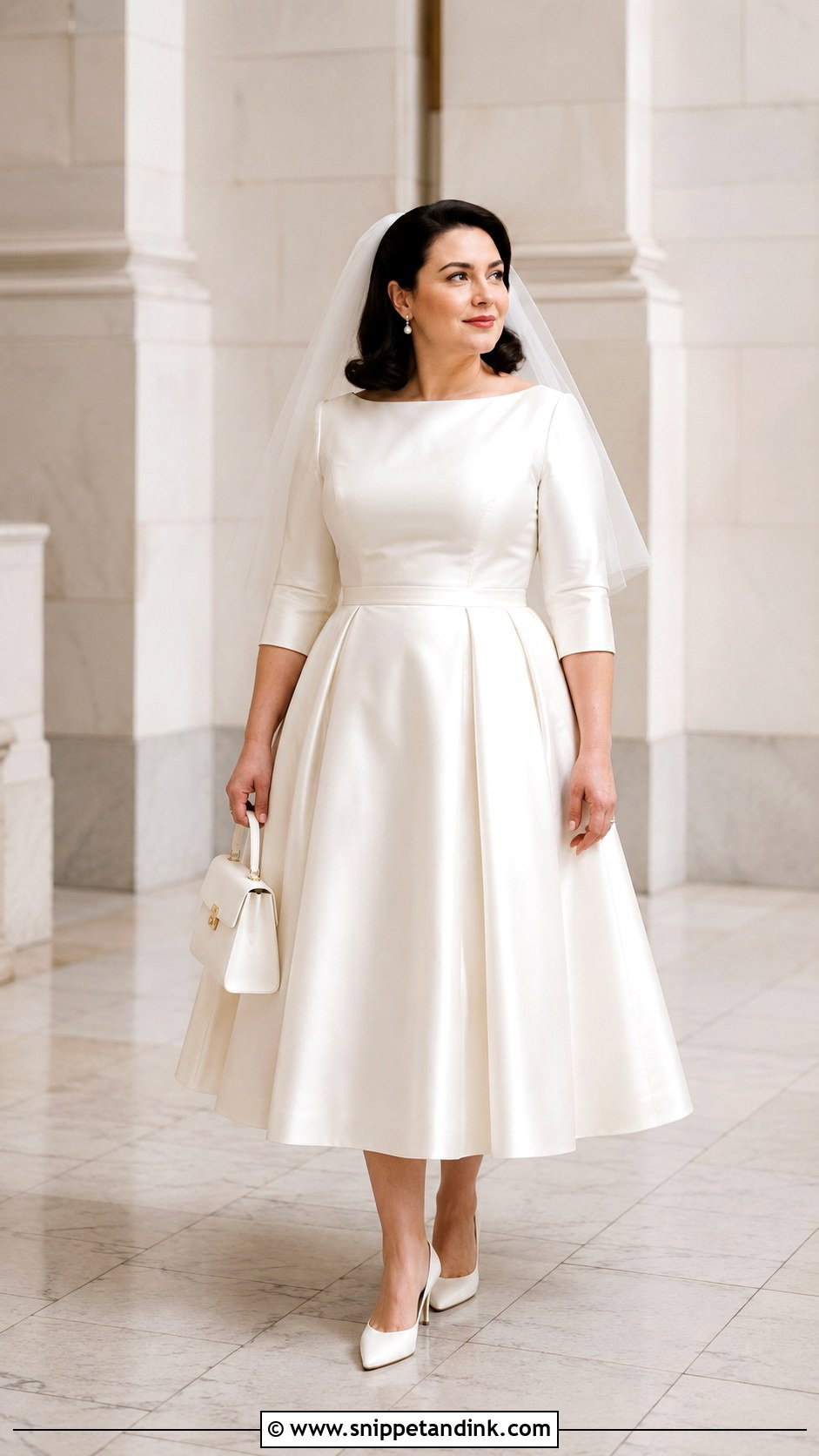
Tea length changes the outfit because your shoes become part of it. This version pairs a fitted satin or lace bodice and defined waist with a skirt ending between knee and ankle, and sleeves stopping below the elbow so there’s room for a bracelet or cuff. Pointed pumps, pearl earrings, a small structured bag and a short veil or comb keep the vintage mood. Buy shoes you can genuinely walk in, since every guest will see them. Bend your elbows at the fitting too: three-quarter sleeves in unlined satin have no give, and a stretch lining solves it. A bateau, scoop or modest V neckline keeps the shorter shape polished.
8. Puff Sleeve Satin Wedding Dress
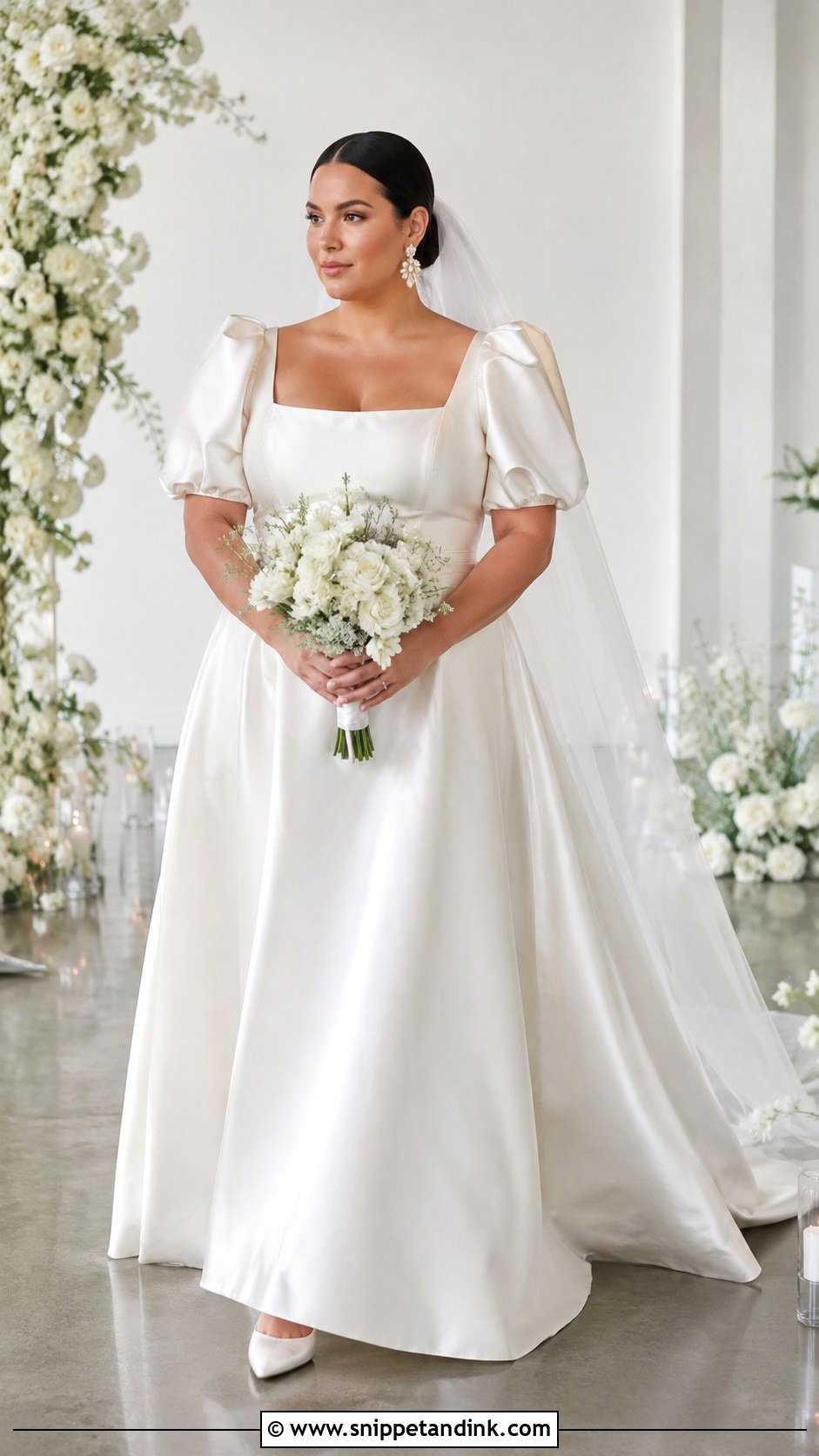
Puff sleeves add volume on purpose, so the rest of the dress has to answer it with a fitted waist, a square neck and a smooth A-line skirt. Medium puffs in a satin that holds its shape wear better than oversized ones, which on a fuller bust can make the shoulders read very wide on camera. Sleek ivory pumps, sculptural earrings, a low bun and a plain cathedral veil, with little or no necklace. The band around the arm is where comfort is won or lost; you should be able to slide a finger under it. I often suggest detachable puffs, so they come off before dancing and the gown underneath still looks finished.
9. Bell Sleeve Boho Wedding Dress
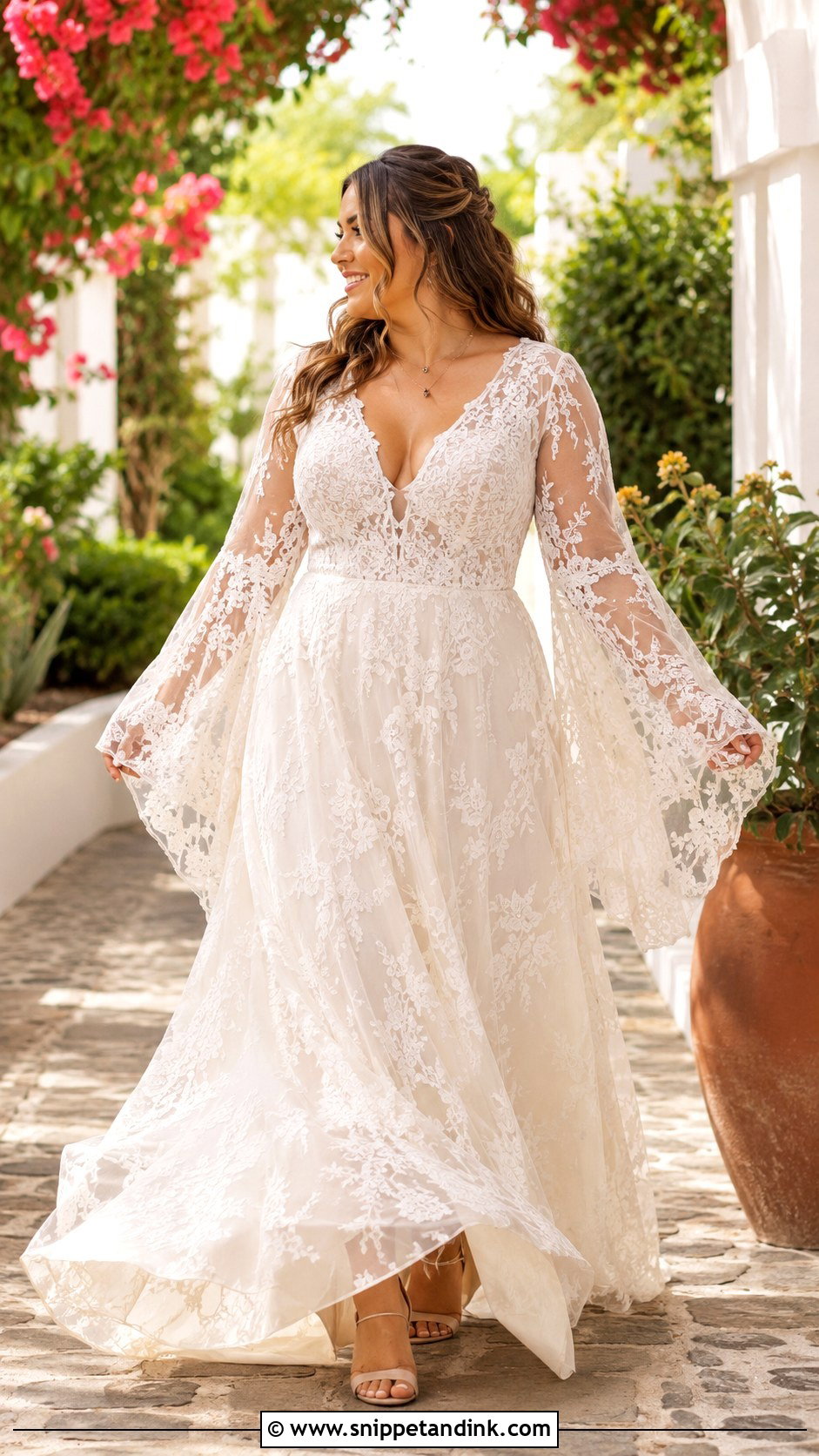
A bell sleeve boho wedding dress moves from aisle to dance floor more than almost any other sleeve. Soft floral lace fits the upper arm and widens below the elbow, paired with a simple V-neck bodice, defined waist and a sheath or gentle A-line skirt. Neutral block-heel sandals, layered necklaces, small hoops and a half-up style suit it, with a plain veil so the lace doesn’t compete. Outdoors, watch the length. Very wide cuffs drag through centrepieces, buffet dishes and wet grass, so I usually suggest a bell that ends at the wrist. You keep the swing and lose the hazard.
10. Detachable Sleeve Mermaid Wedding Dress
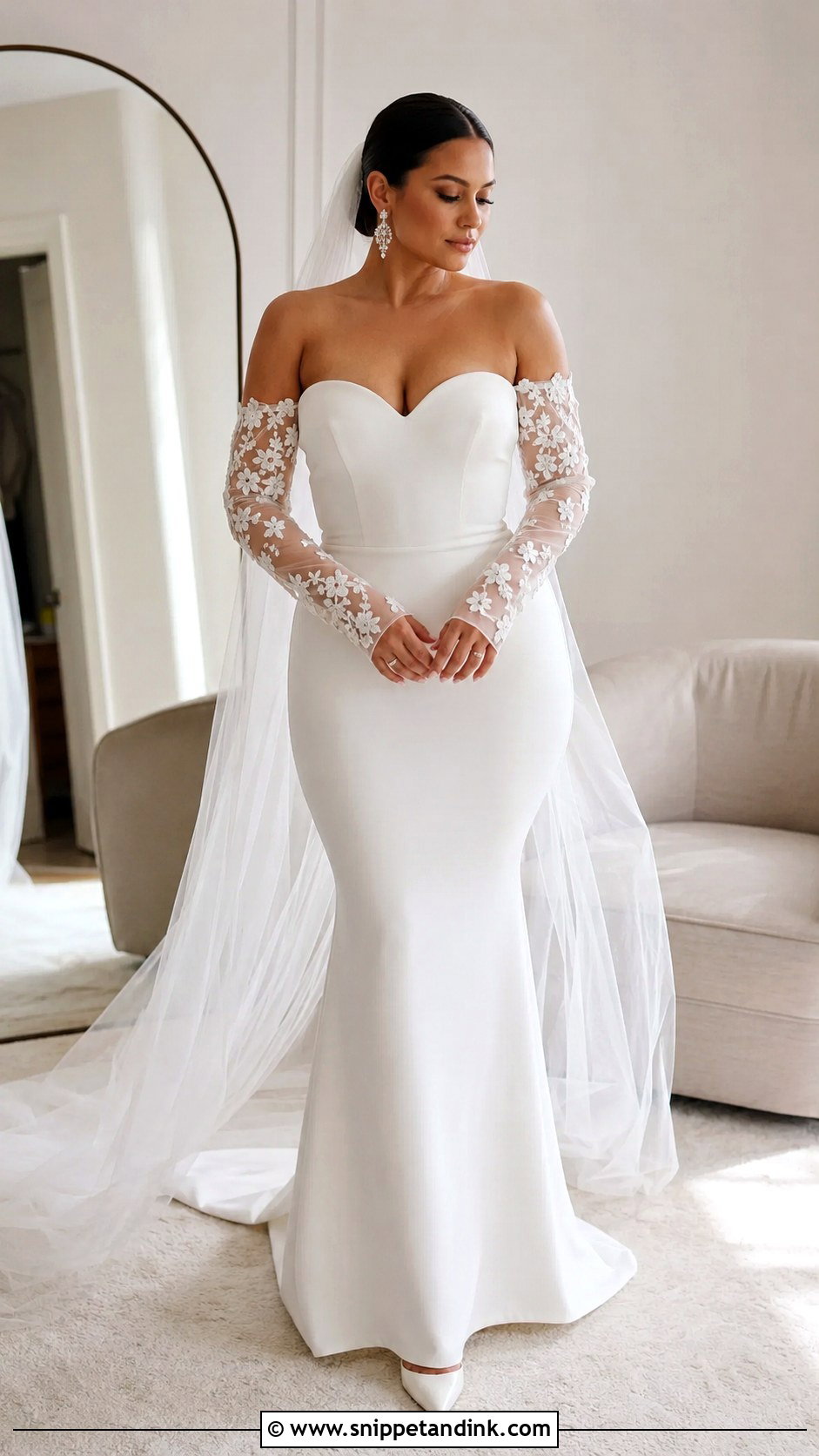
Detachable sleeves give you two looks without a second gown. Start with a supportive sweetheart or square-neck mermaid in stretch crepe, satin or floral lace, add fitted illusion sleeves, draped off-the-shoulder bands or tulle puffs for the ceremony, then take them off for a sleek sleeveless reception. Pointed pumps, crystal drops, a long veil and a sleek updo carry both halves of the day. My advice here is practical: rehearse the change with whoever will help you. Snaps and hidden buttons that feel fine while you stand still can scratch once you dance, and a fiddly removal in a corridor can undo your hair.
11. Short Sleeve Crepe Wedding Dress
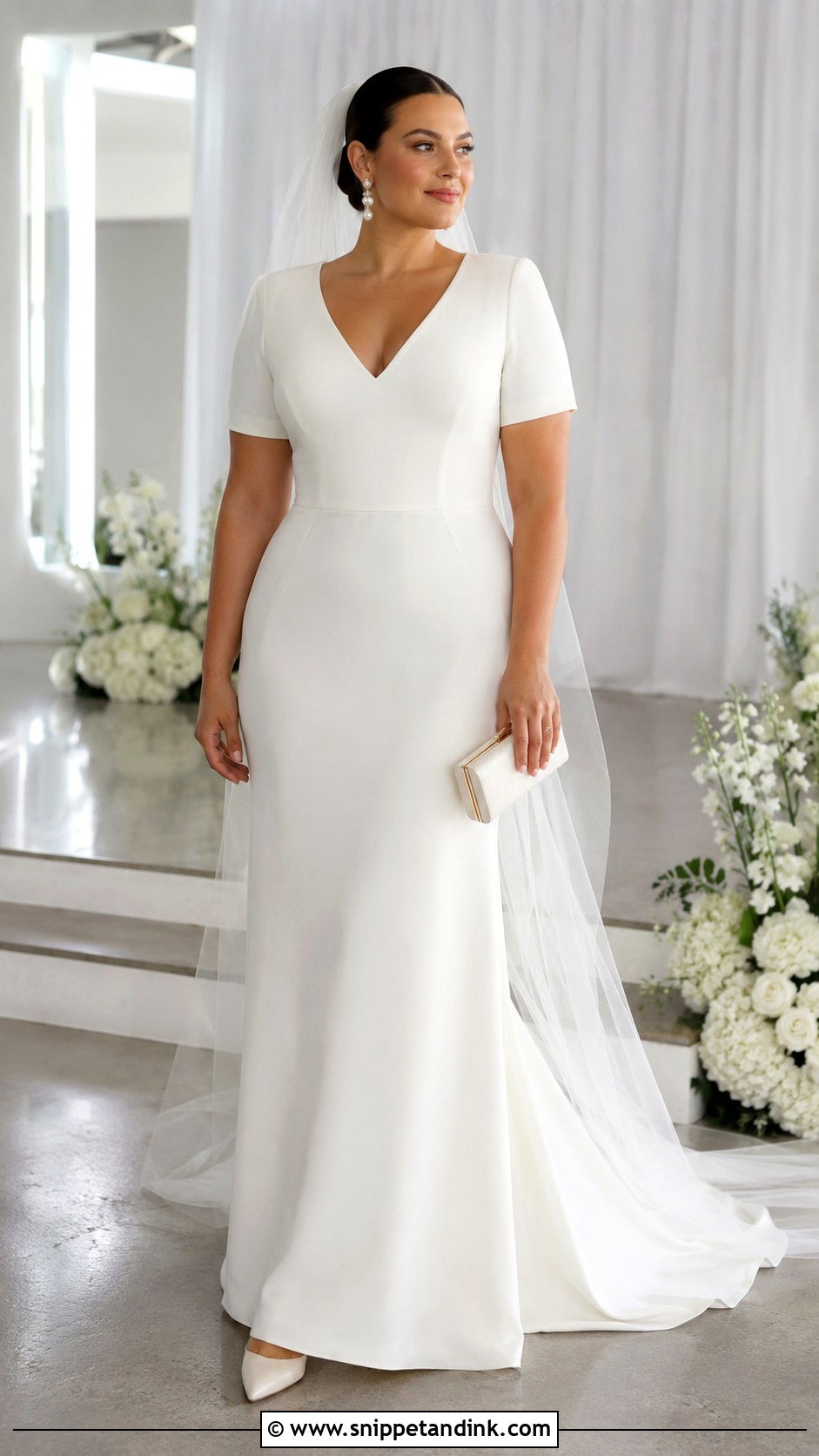
Plain crepe hides nothing, which is exactly why I like it when the tailoring is meant to do all the talking. The sleeve ends around the middle of the upper arm on a fitted or column shape with a V-neck and shaped waist seams, and stretch crepe moves with the body far better than a stiff weave. Pointed ivory heels, a structured clutch, bold pearl earrings and a cathedral veil go with a sleek ponytail or low bun. With no lace to distract the eye, the shoulder seam must sit exactly on the shoulder point and both sleeves must hang evenly. Smooth shapewear matters here as well, since crepe shows every line beneath it.
12. Juliet Sleeve Vintage Wedding Dress
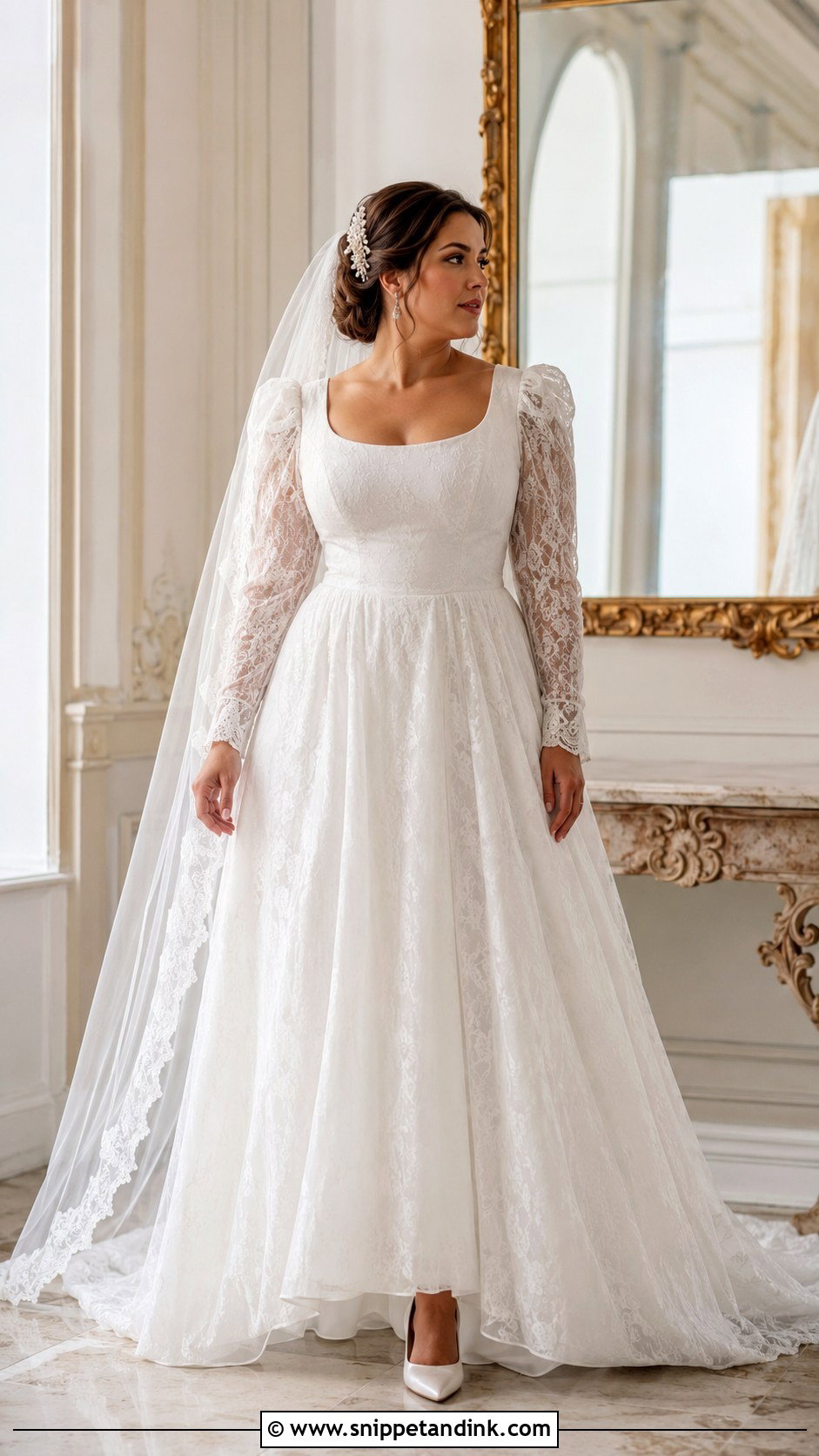
Juliet sleeves puff at the top and then fit closely to the wrist, and the risk is a lumpy join halfway down the arm. Keep the puff controlled and the lower sleeve smooth, on a lace bodice with a soft scoop or bateau neck, a defined waist and a flowing A-line skirt. Low satin pumps, a pearl comb, delicate earrings and a lace-edged fingertip veil suit it, and vintage buttons at the cuffs or back add detail without weight. At alterations I check where the puff stops; if it ends too low, it widens the arm. A stretch lining or a small wrist opening makes them far easier to get into.
13. Balloon Sleeve Tulle Wedding Dress
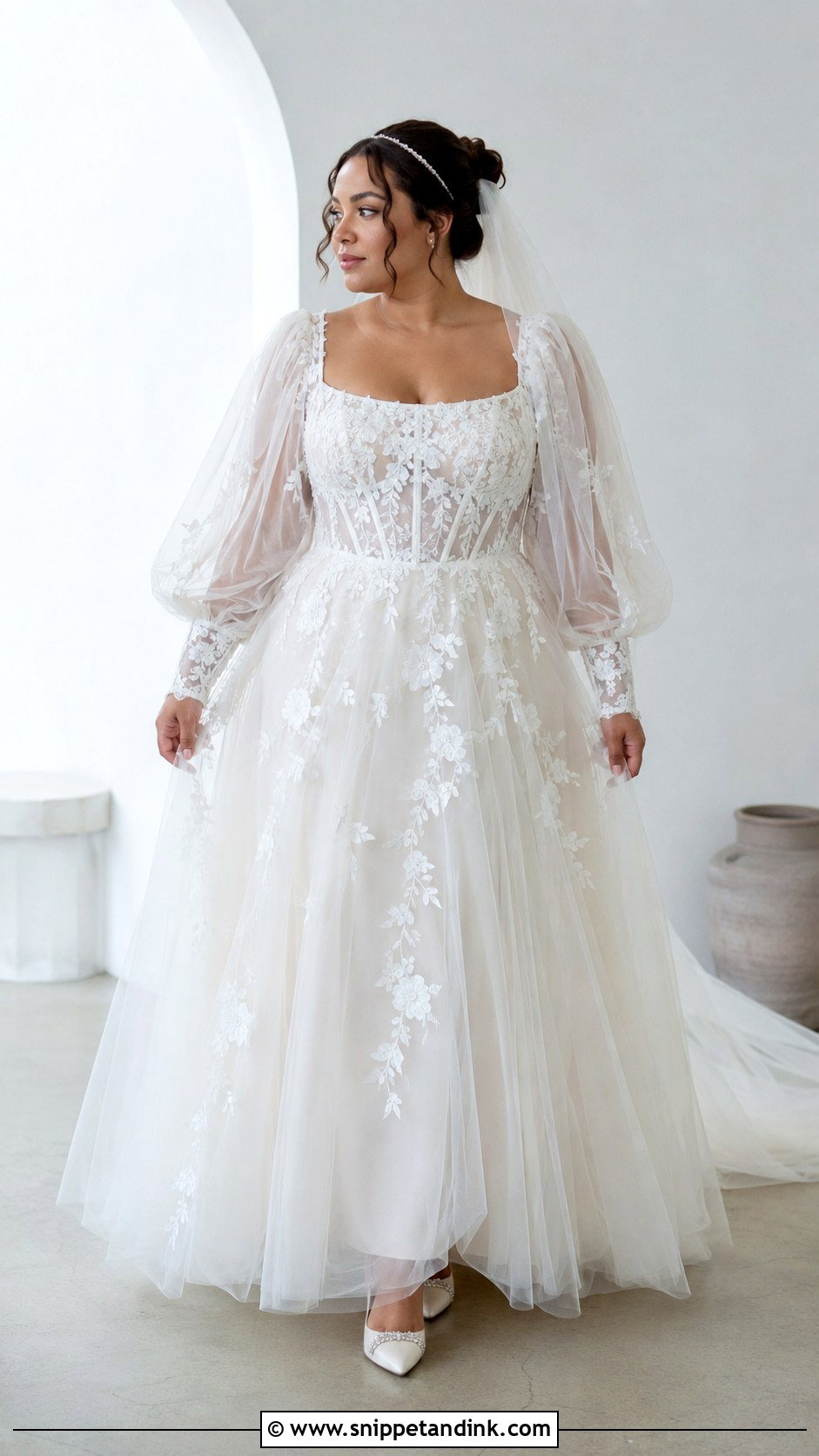
Balloon sleeves are a fashion choice, and sheer tulle is what keeps that volume from looking heavy. These have controlled fullness, fitted cuffs and a few floral appliqués over a corset-style bodice, square neck and layered A-line skirt, with simple pumps, crystal studs, a narrow headband and a plain chapel veil letting the sleeves lead. I check two things. The tulle should be soft rather than stiff netting, which crumples and photographs flat. And there needs to be room under the arm for hugging and dancing, with cuffs that close without pressing into the wrist. Ask whether they detach for the reception.
14. Cold-Shoulder Sleeve Wedding Dress
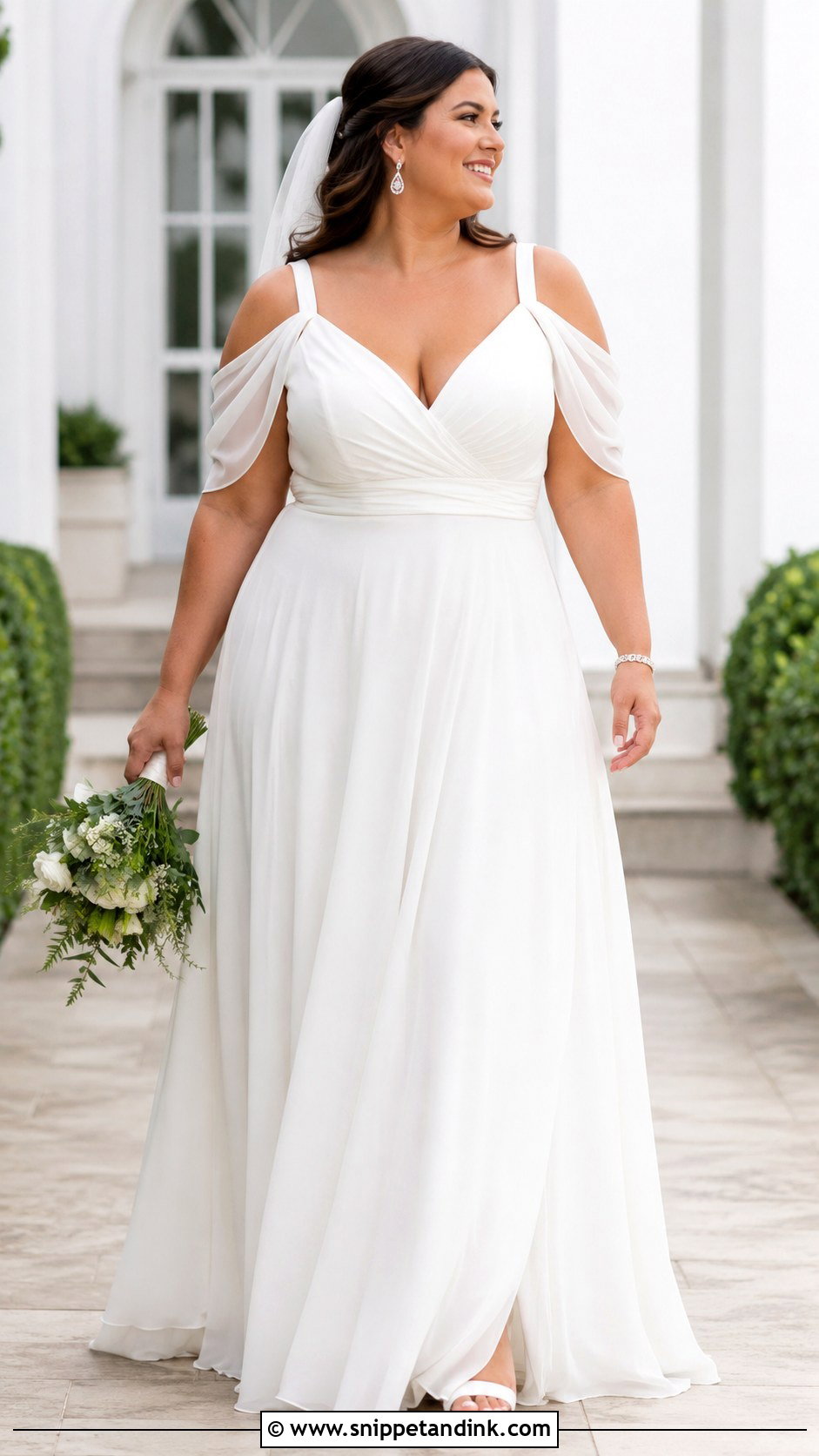
Cold-shoulder sleeves depend completely on their straps. The gown, a flowing A-line or sheath with a supportive V-neck, needs secure straps over the shoulder, with draped chiffon or soft lace panels hanging below the cutout. Low block heels, teardrop earrings, a fine bracelet and a simple veil behind a loose updo keep it relaxed. If the hanging panels weigh more than the straps can carry, they drag the straps outward and the cutouts slide off-centre, so I check symmetry with the arms moving, not resting. It suits a relaxed modern celebration better than a formal ballroom.
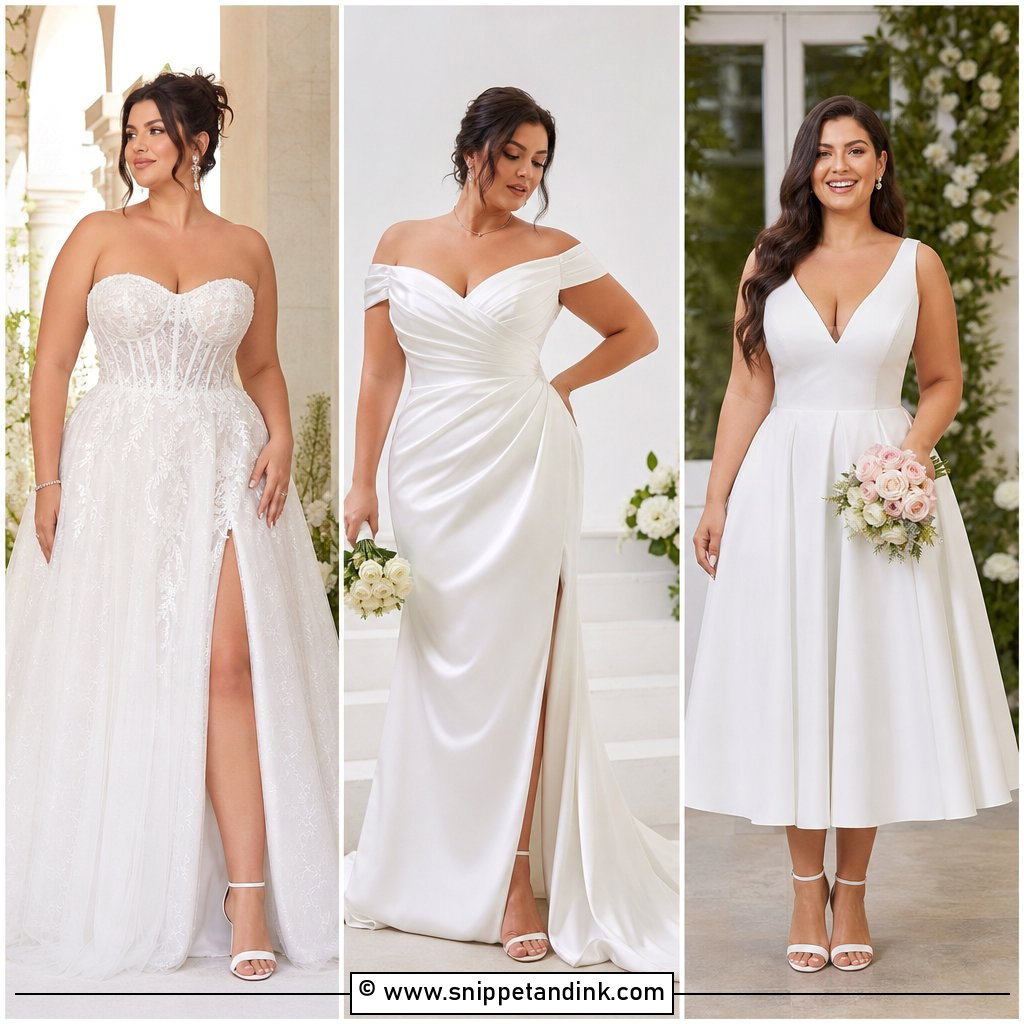
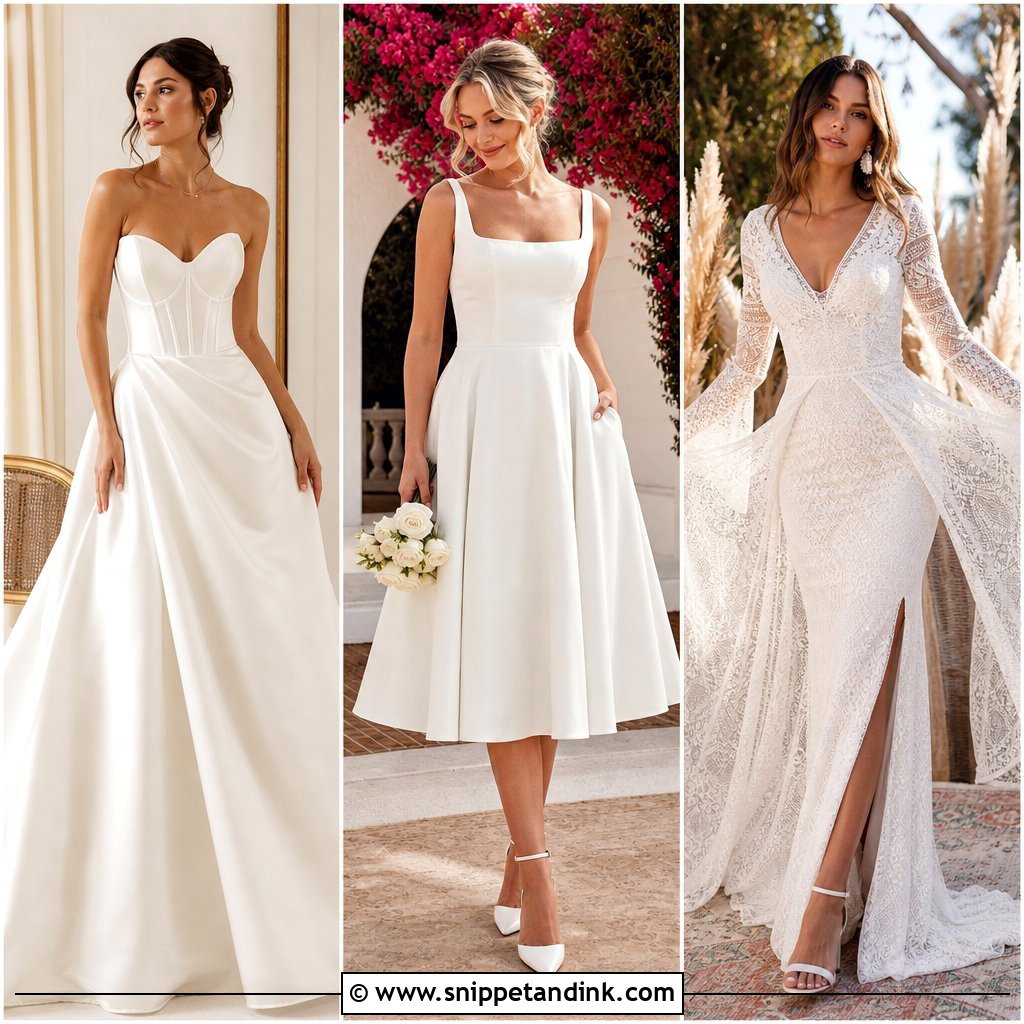
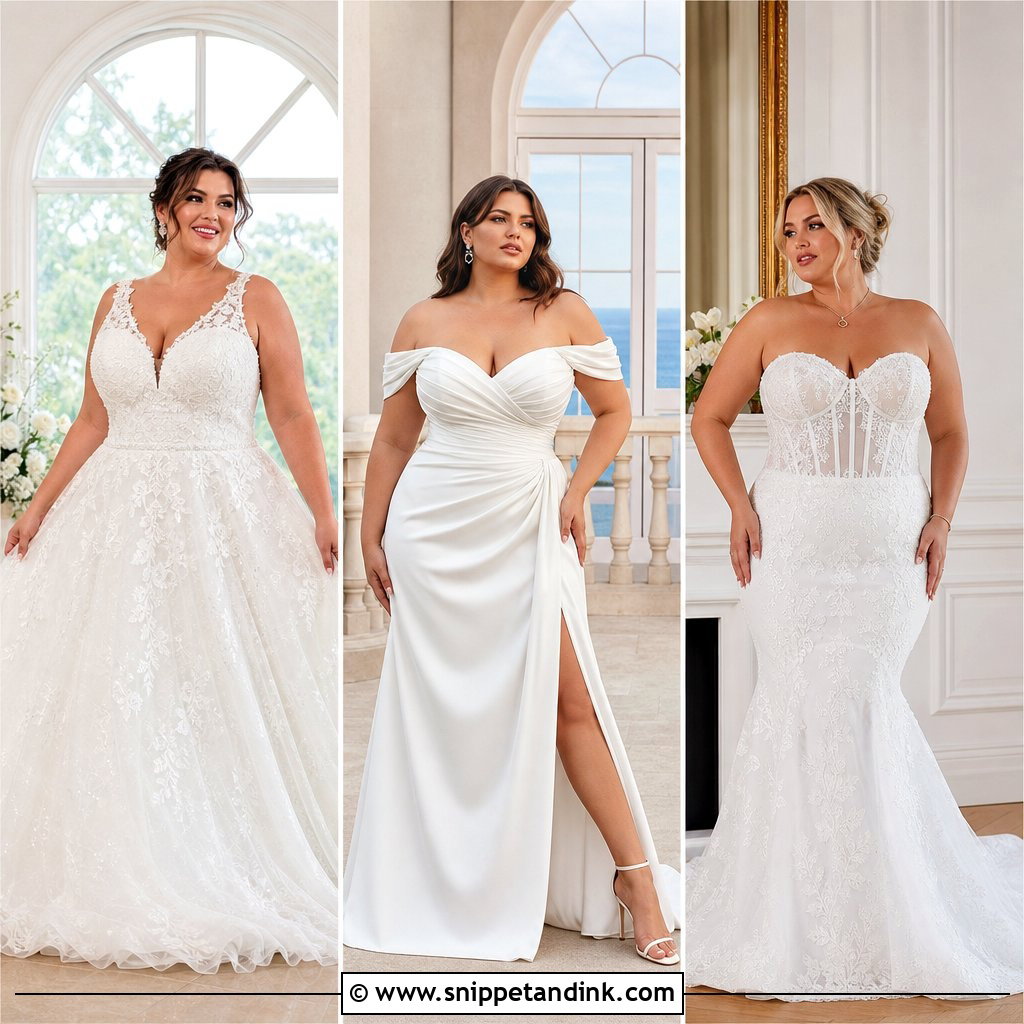
15. Embroidered Sleeve Fit-and-Flare Wedding Dress
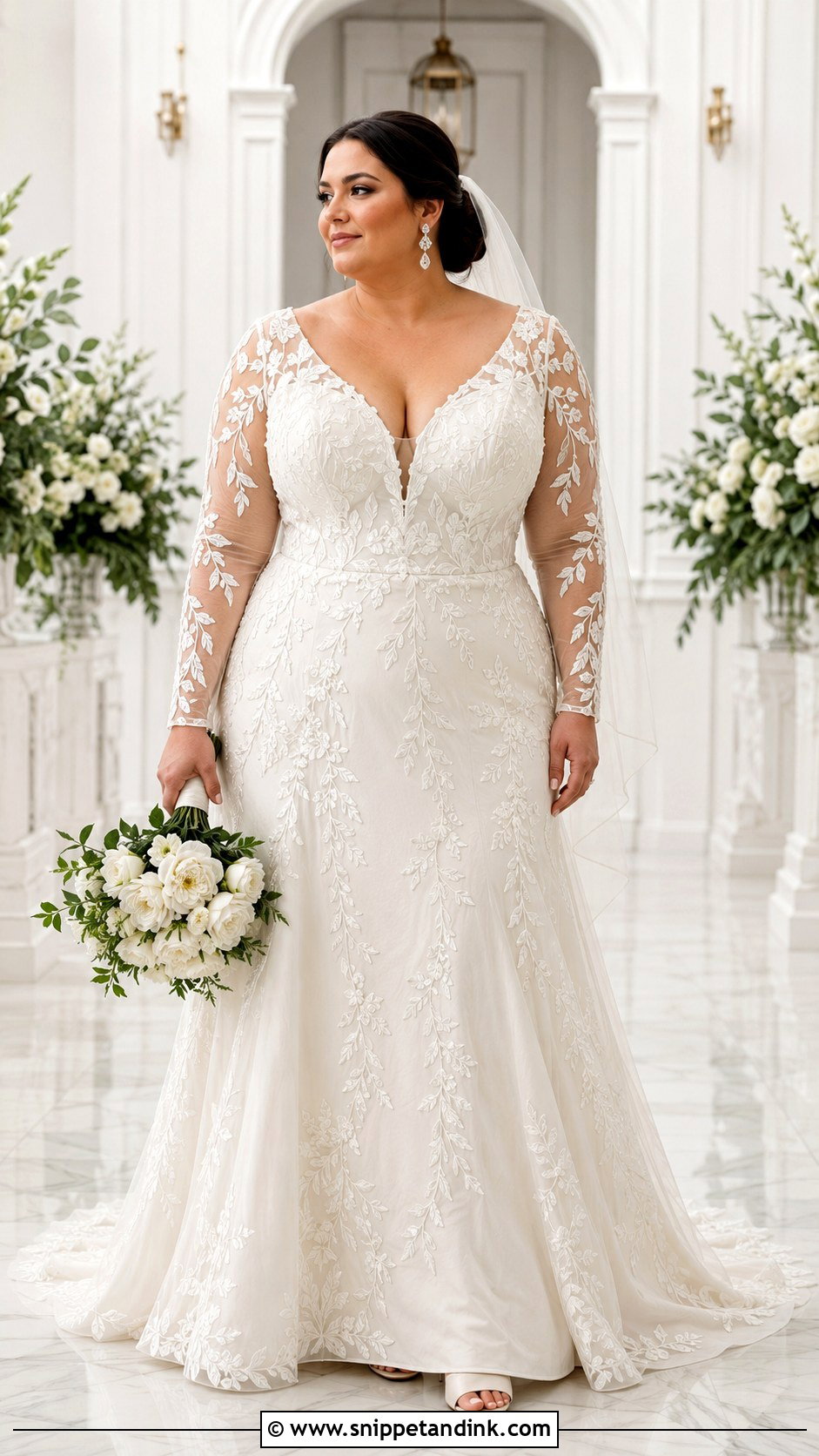
Embroidery on an illusion sleeve can be placed to help a curvy arm. Vines running down the outer arm and thinning toward the wrist draw the eye lengthwise instead of around. This fit-and-flare carries the floral work across the bodice and down the sleeves, with a supportive V-neck, defined waist and stretch-lined skirt, plus simple ivory heels, small crystal earrings, a plain veil and a sleek low bun. Run your fingers along the underarm and inner elbow before you commit. The back of an appliqué is often scratchy, and a seamstress can face those spots with soft lining without losing the sheer look.
16. Beaded Sleeve Ball Gown
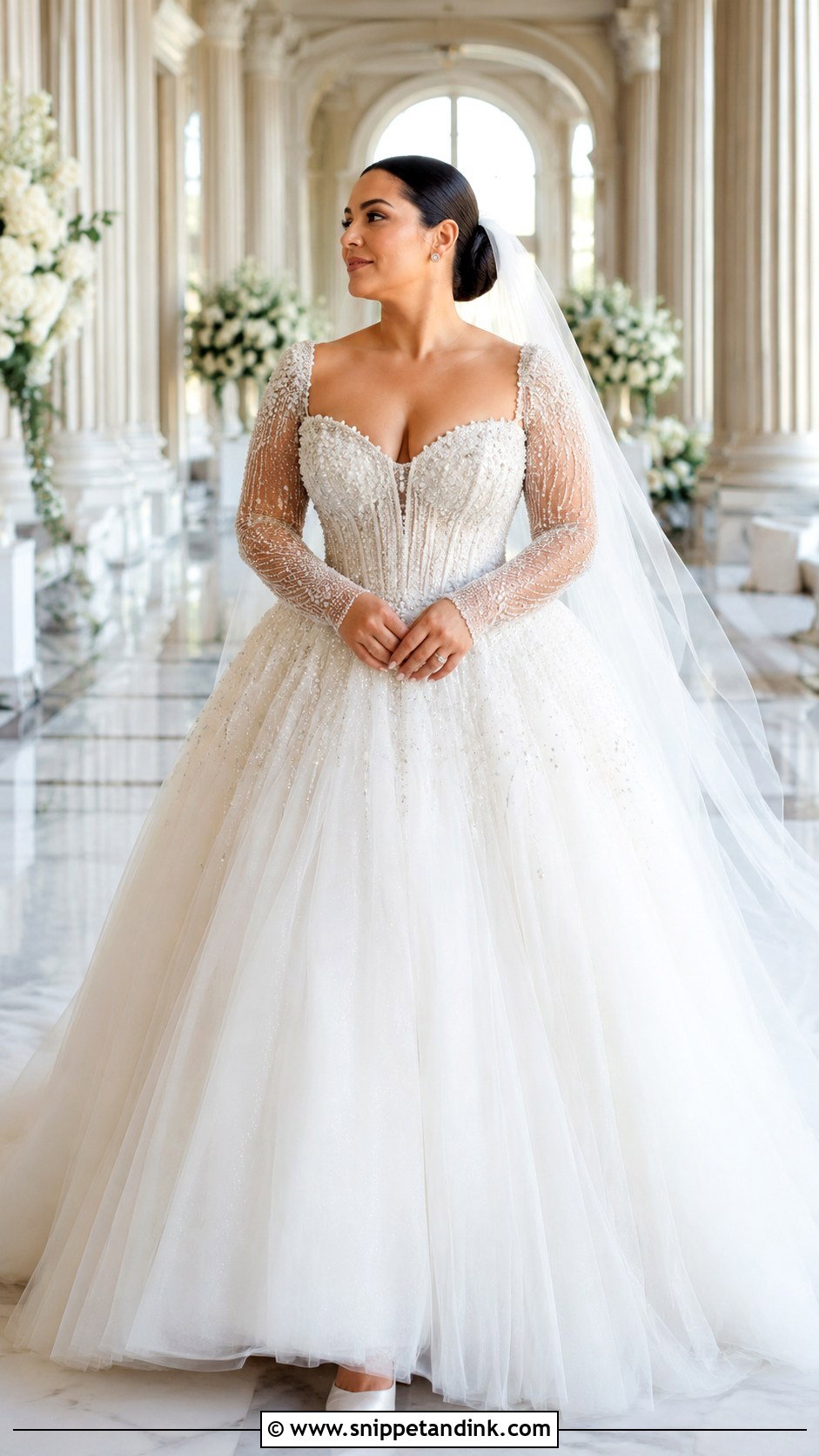
Beaded sleeves are heavy, and the weight changes how they hang. Crystals, pearls or fine beadwork on sheer long sleeves pair here with a supportive bodice and a full tulle or satin skirt, and the beading should lighten toward the wrist so the arm doesn’t feel dragged down. Satin pumps, small studs, a smooth bun and an unembellished cathedral veil are enough; big earrings or a necklace will fight the gown. I check the inside seams by hand, because one bead resting against the skin can rub raw over a long day, and beads catch on the bodice when the arms come down. Allow extra fitting time, as altering beadwork is slow handwork.
17. Petal Sleeve A-Line Wedding Dress
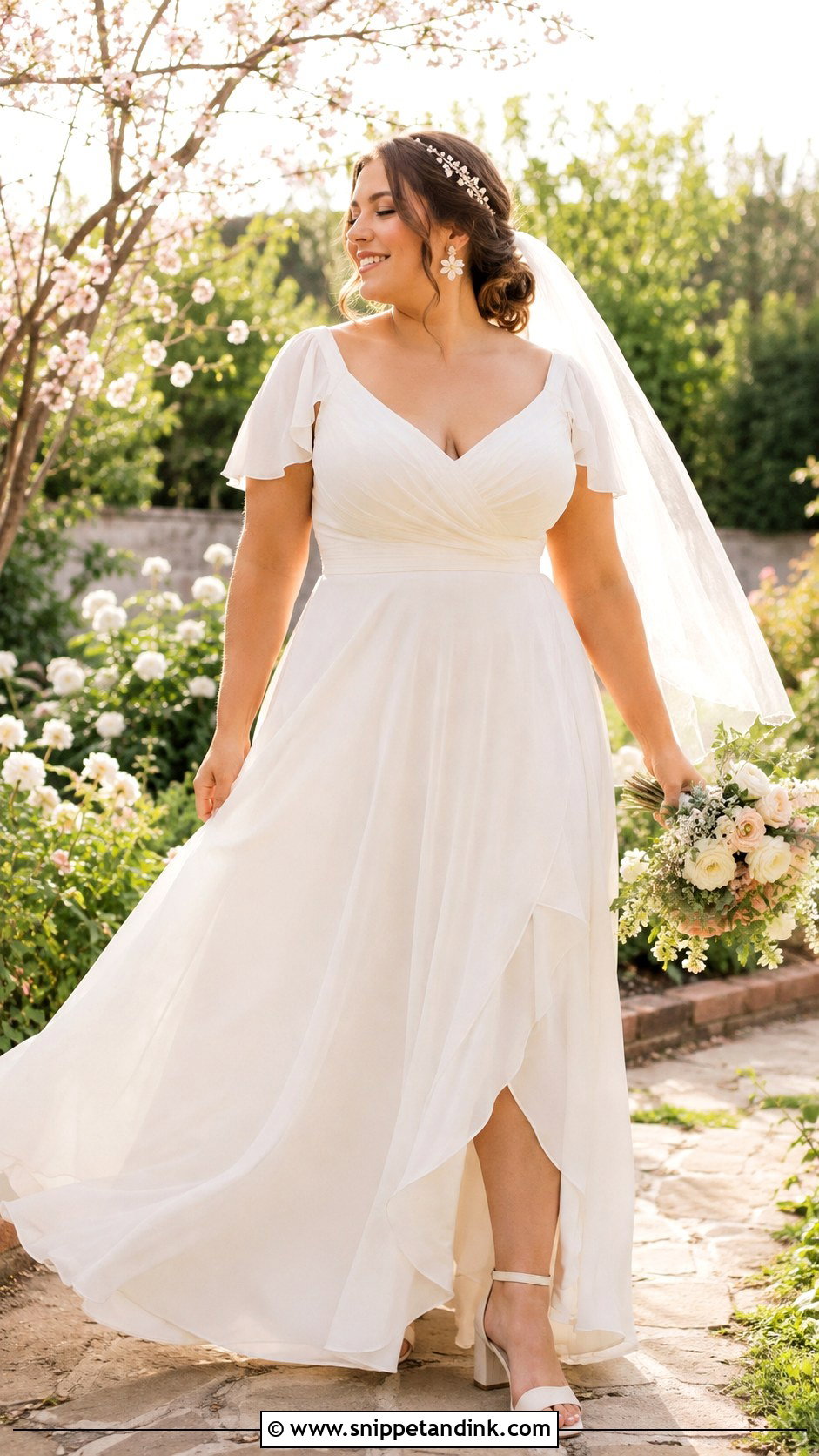
Petal sleeves are the softer answer to a cap sleeve. Overlapping chiffon, organza or lace panels form short sleeves that open slightly as you move, on a curved V-neck, defined waist and flowing skirt. Ivory block heels, floral earrings, a hair vine and a plain fingertip veil suit them, and a simple bouquet keeps the construction visible. Organza edges can be crisp enough to curl under the arm, so I ask whether they can be softened before the last fitting. They’re comfortable through spring and summer ceremonies.
18. Kimono Sleeve Wrap Wedding Dress
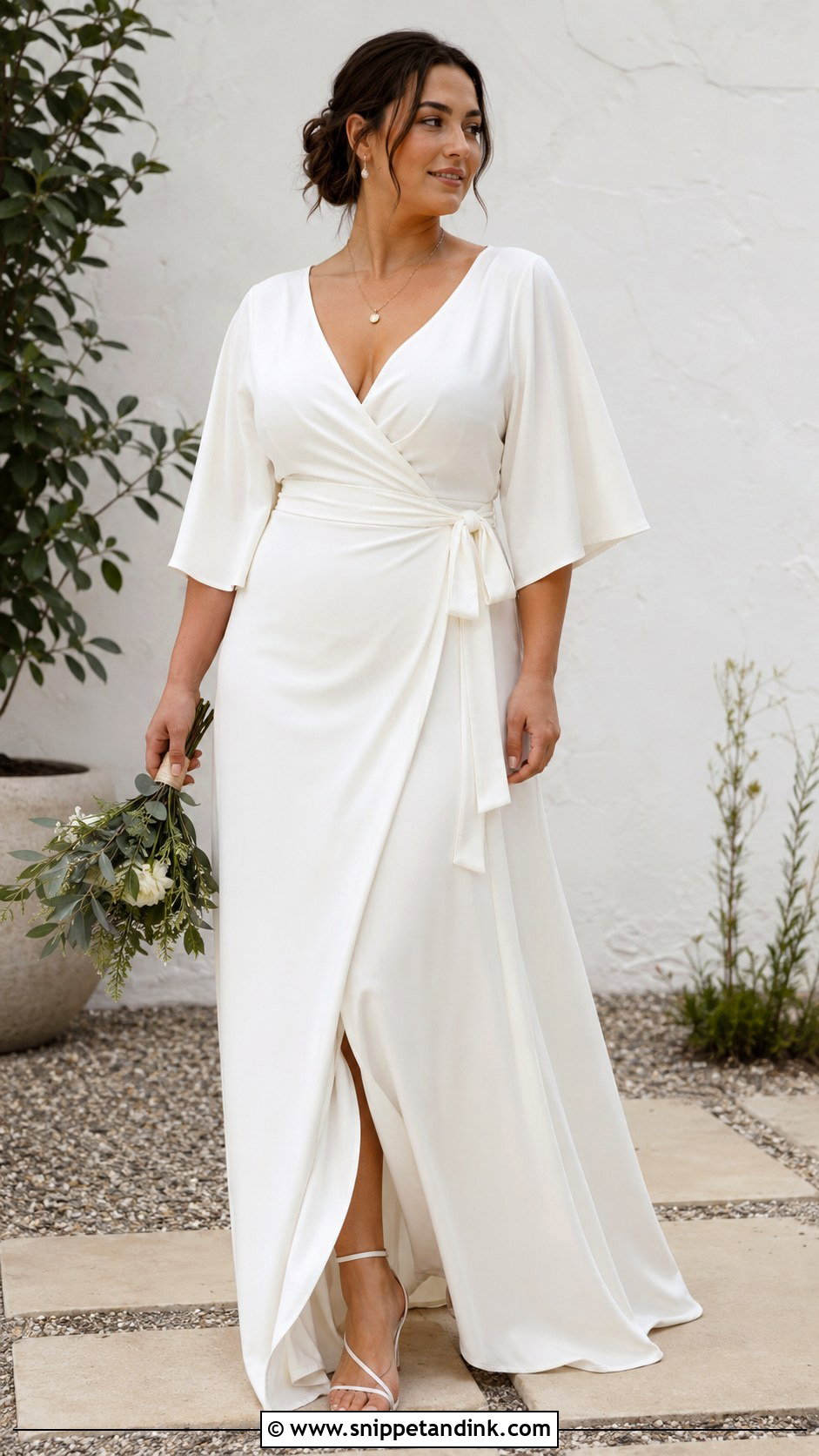
With a kimono sleeve, the risk isn’t the sleeve, it’s the wrap. A wrap-style bodice with a secure inner closure, wide elbow-length sleeves and a soft waist over a flowing crepe or chiffon skirt gives an easy shape. Comfortable heeled sandals, a pendant, drop earrings and a low textured bun go with a light chapel veil, or a decorative comb for a casual outdoor setting. Sit, bend and reach at the fitting. Wraps open under strain, so I’d add hidden snaps or a modesty panel, and I check that the wide sleeve openings don’t reveal the side of the bodice when you lift your arm.
19. Lace Cuff Sleeve Wedding Dress
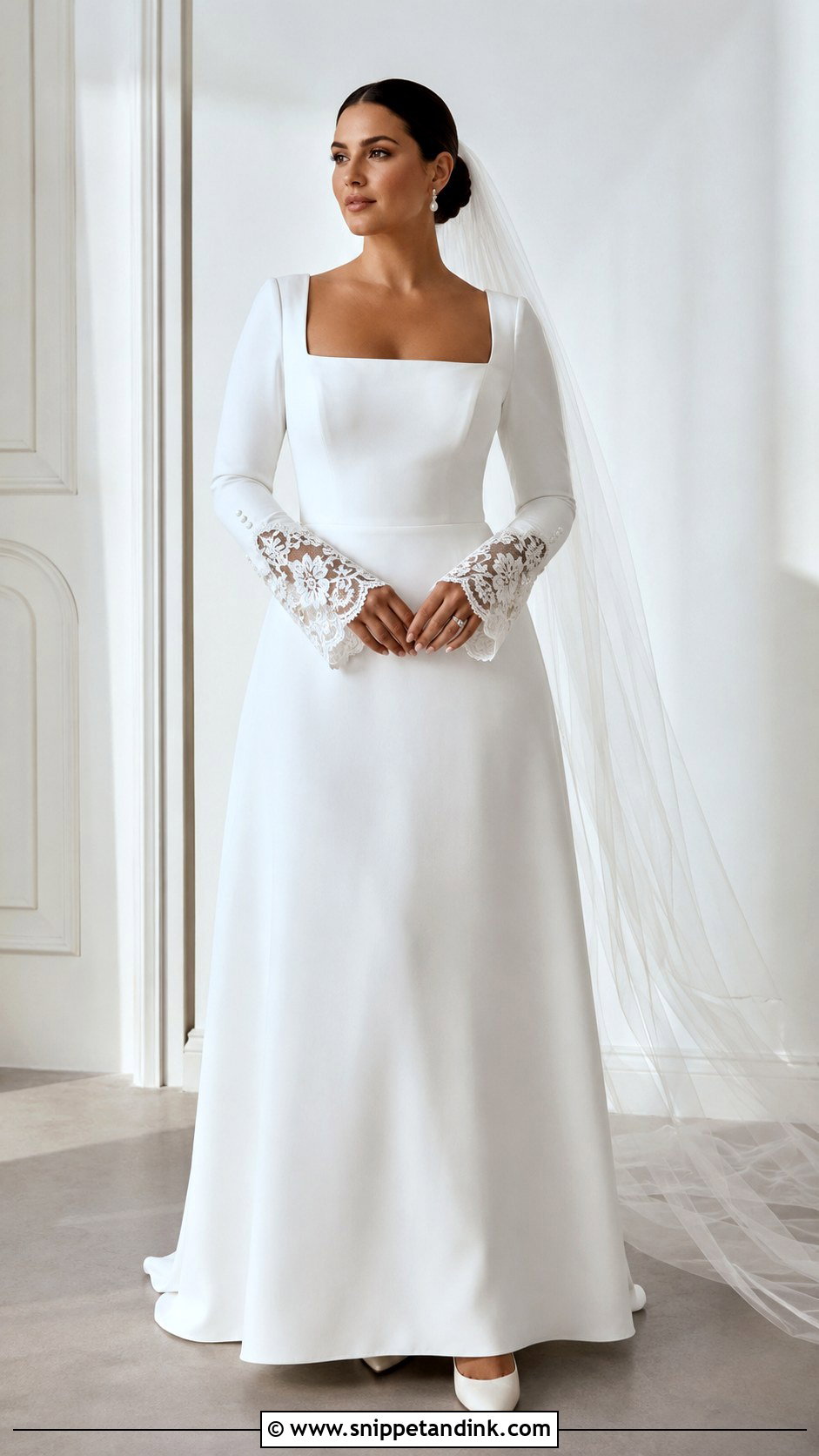
Most of the detail here sits at the wrist, which is where everyone looks during the ring exchange. Fitted crepe or illusion sleeves end in wide floral lace cuffs, pearl buttons, or a scalloped edge, with a square-neck bodice, structured waist and a clean A-line or column skirt. Pointed pumps, pearl drops, a sleek chignon and a plain cathedral veil complete it. Check that your hand slides through the cuff without dragging it. If the buttons are functional, I replace the buttonholes with elastic loops, which are far quicker to fasten, and I’d leave stacked bracelets at home because they snag lace.
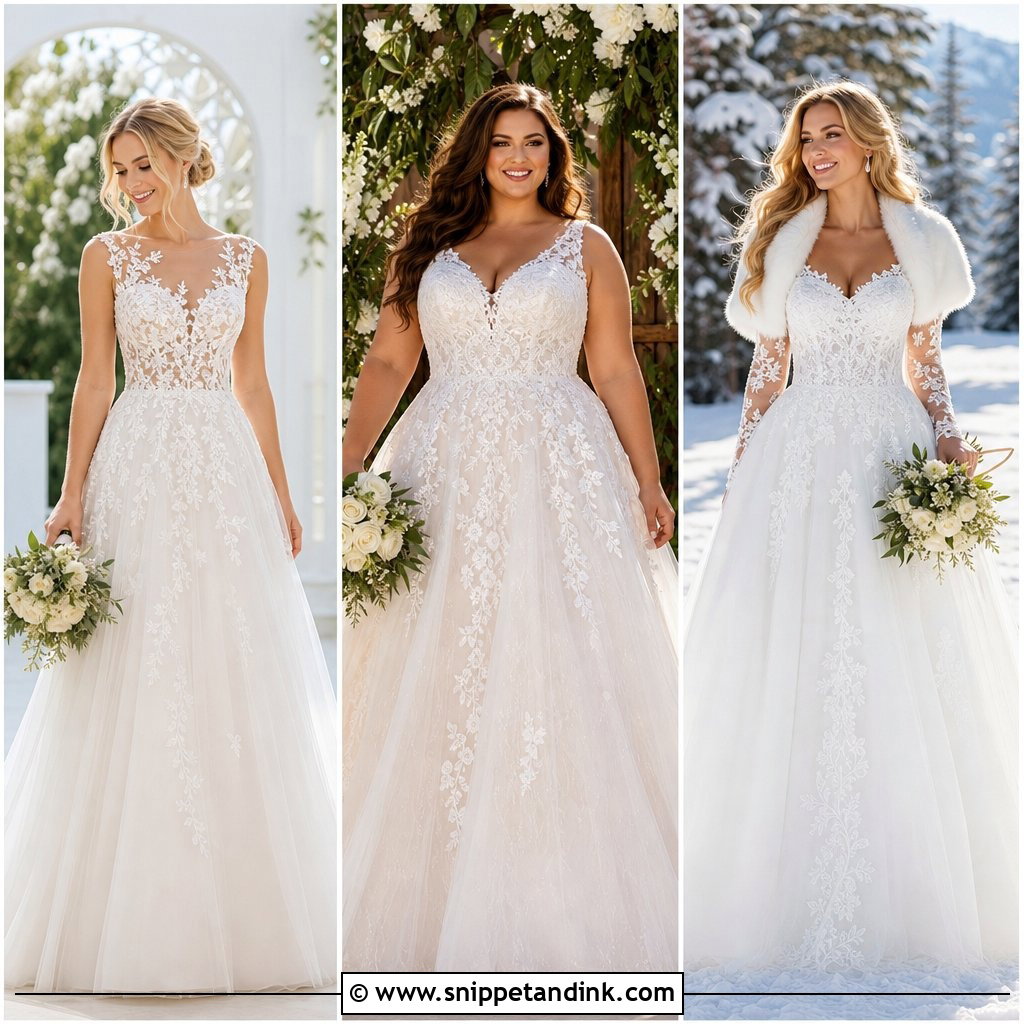



20. Sheer Cape Sleeve Wedding Dress
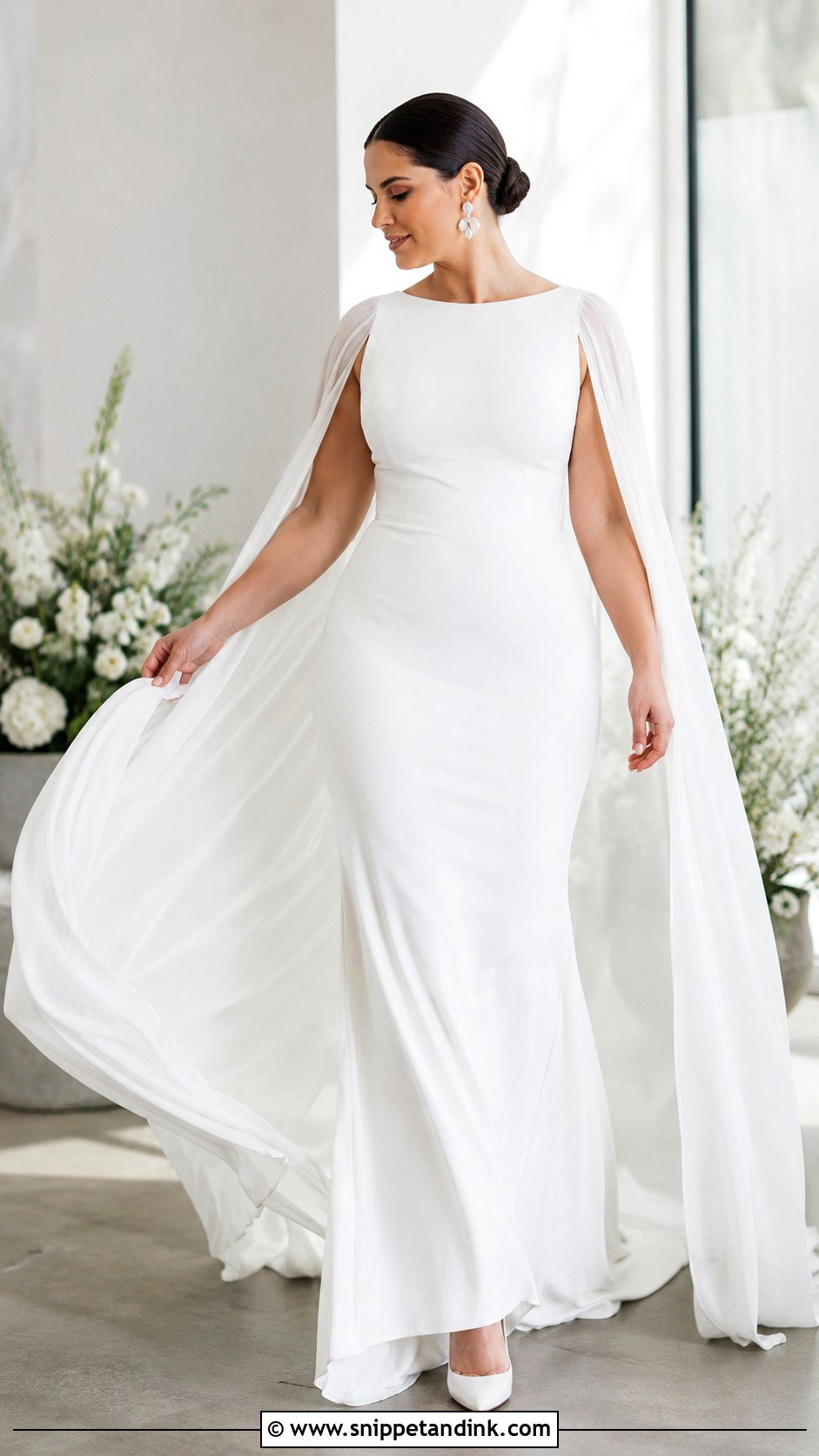
A sheer cape gives coverage while the gown beneath keeps its clean line, which suits curvy brides who love a fitted sleeveless dress but want their arms softly veiled. Light cape panels attach near the shoulders of a fitted crepe, satin or lace dress and can fall to the elbow, the wrist or the floor. Understated pumps, sculptural earrings and a smooth updo go with a short veil or none at all; a long cape plus a cathedral veil is one layer too many. Keep the cape clear of your hands and bouquet. Outdoors, wind catches chiffon and illusion tulle quickly, so I want the shoulder attachments sewn or snapped firmly, never just hooked.
What a Seamstress Can Rework in a Sleeve, and What She Can’t
Sleeves are among the fussiest parts of a gown to alter, so it helps to know the limits before you buy. Taking a sleeve in, shortening it from the wrist, adding elastic to an off-the-shoulder band and reshaping a cap edge are all routine work.
Letting a sleeve out is another matter. Most bridal sleeves are cut with very narrow seam allowances, so if the sleeve is tight around the bicep in the size that fits your body, there may be nothing to release. The usual fix is a small gusset under the arm or a new sleeve cut from matching fabric, and tracking down lace that matches a designer’s pattern can take weeks.
Adding sleeves to a strapless gown
This is common, and it can look original when the sleeves are planned with the bodice: illusion mesh dressed with appliqués cut from the hem or train, or detachable bands that hook into the side seams. I’d raise it before your first fitting rather than at the last one, since lace needs sourcing and each appliqué is placed by hand.
Beaded and embroidered sleeves
These take the longest. Beads along a seam have to be unpicked, the seam altered and the beads stitched back on, which adds both time and cost. If your sleeves carry heavy work, leave room in your schedule for at least one extra fitting and expect the quote to reflect the handwork.
Sleeves You Can Hug and Dance In
Comfort is the test I trust most with sleeves. The ones you can lift, hug and dance in look right in photographs because you aren’t holding your arms stiffly away from your body. Long lace, sheer illusion, flutter, bishop, puff, and detachable designs can all suit a curvy figure once the armhole and the band fit properly. Weigh the gown shape, the venue, the season and the fabric together rather than judging the sleeve alone. At your fittings, sit down, reach up and hug someone, and ask a friend to photograph you from the side and the back. A sleeve should never pinch, twist or feel like it’s hiding you. Start with the sleeve that made you stop scrolling, then judge the whole gown by how free you feel in it.
You'll Like These Ideas:





Leave a Reply