
A Sabyasachi bridal look is built on heritage textiles, hand embroidery and jewelry worn in layers, and that combination is harder to style than a campaign photo suggests. Below are twenty complete outfits for the pheras, the reception, the mehendi and the sangeet: red lehengas, Banarasi and organza saris, velvet, florals and a few pieces made for after dark. When I dress a bride in this kind of work, the first thing I do is take something away. A dense zardozi skirt, a choker, a veil and a nath can each carry a look alone, and stacking all four at full volume is how a bride disappears inside her clothes. Treat each look as a starting point, then edit it down to you.
Zardozi Weight and What It Means for Your Fittings
Photographs never show this: a fully embroidered bridal lehenga can be genuinely heavy, and most of that weight sits on your waist. Metal-wire zardozi, dense sequins and a can-can underneath add up quickly, and velvet adds more. A skirt that feels fine during a five-minute try-on can feel very different by the second hour of rituals, so I judge every outfit by how it is built, not just how it looks.
What I look at in the first fitting
- The waistband: wide, interfaced and sitting on the natural waist, so the weight spreads instead of cutting in.
- The can-can: soft net layers rather than stiff ones. A rigid can-can makes sitting on a low mandap seat awkward.
- The blouse closure: hooks backed by a zip or dori, tested with both arms raised as if for the varmala.
- The veil: a heavily bordered dupatta drags the hair backward, so your hairstylist needs to see it before the day.
Plan at least two fittings after the outfit arrives, and a third if your weight has shifted in between. Embroidered panels are hard to let out because the work often runs right up to the seam, so I’d rather have a blouse cut slightly generous and taken in later. Bring the shoes you’ll actually wear to every fitting. A two-inch heel changes where the hem should fall.
1. Sabyasachi Red Zardozi Bridal Lehenga
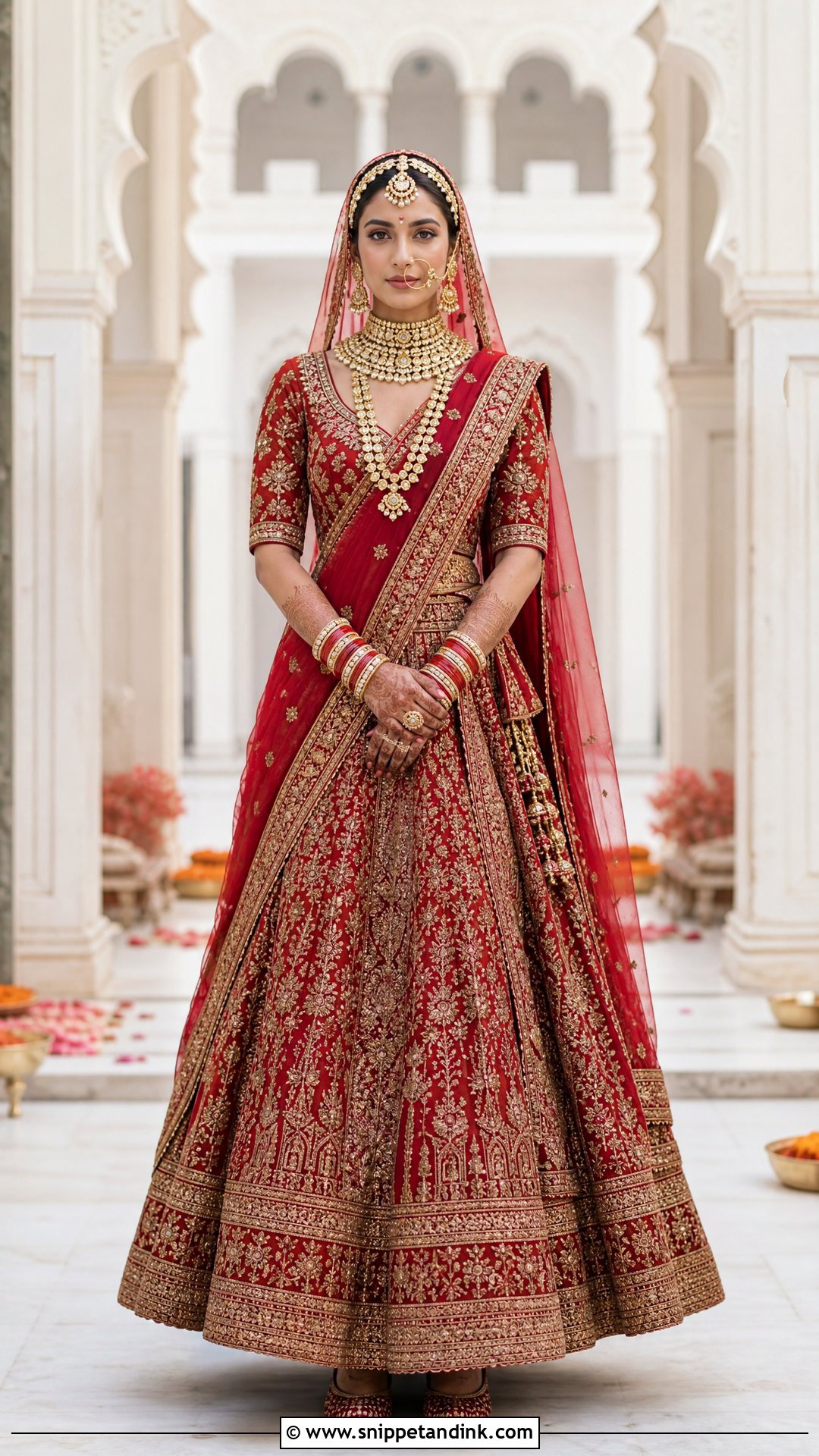
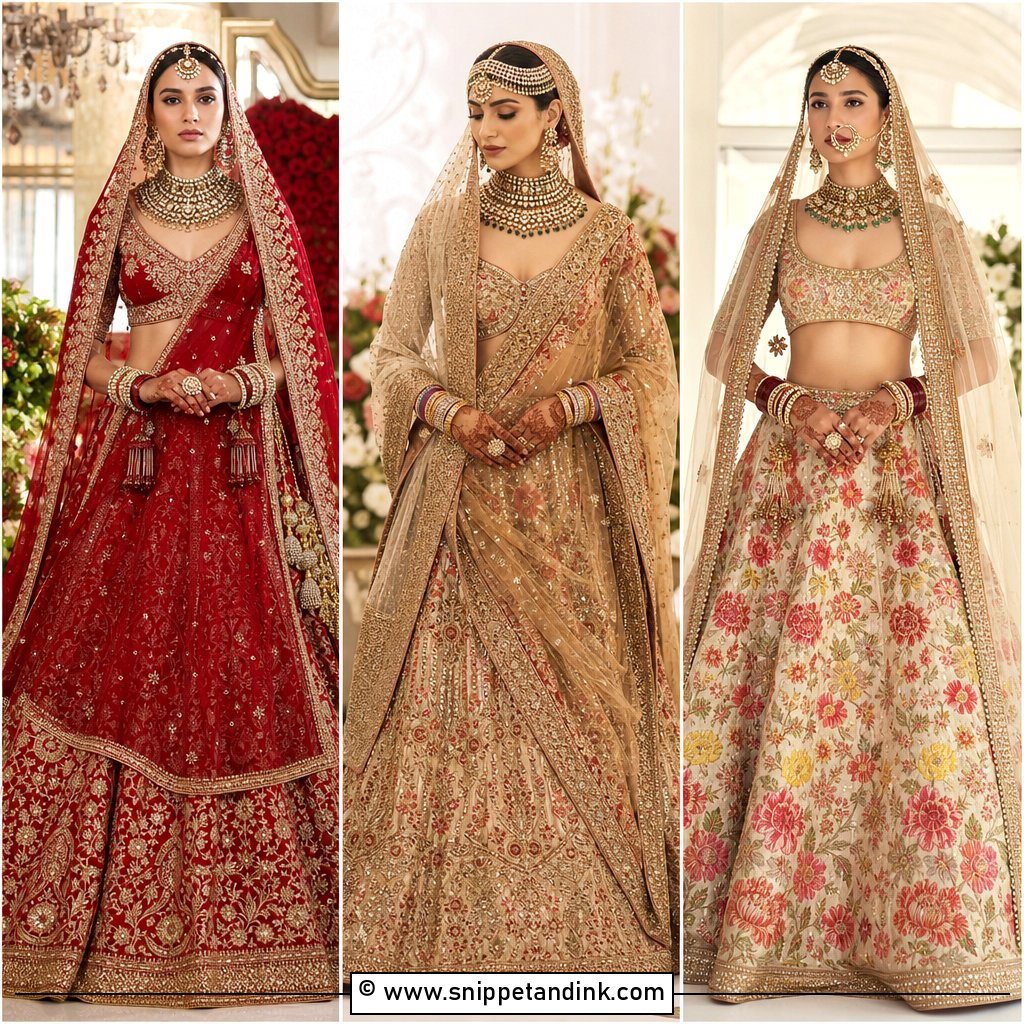
A traditional red lehenga in vermilion or sindoor red, worked in gold zardozi with floral motifs and a defined border, is still the outfit most brides picture for the pheras. Zardozi is coiled metal wire stitched by hand, so a fully worked skirt is heavy, and all of it hangs from your waist for hours. I ask for a wide, padded waistband and a soft can-can, and I fit the elbow-sleeve blouse with the choker on, because the necklace decides where the neckline should sit. Wear the veil over the head and keep a lighter dupatta loose across one shoulder so you can move. Add the long necklace, matha patti, earrings, bangles and embroidered juttis, then a neat low bun with fresh flowers that leaves the veil and jewelry visible. Softly defined eyes, luminous skin, a classic red lip.
2. Sabyasachi Maroon Velvet Bridal Lehenga
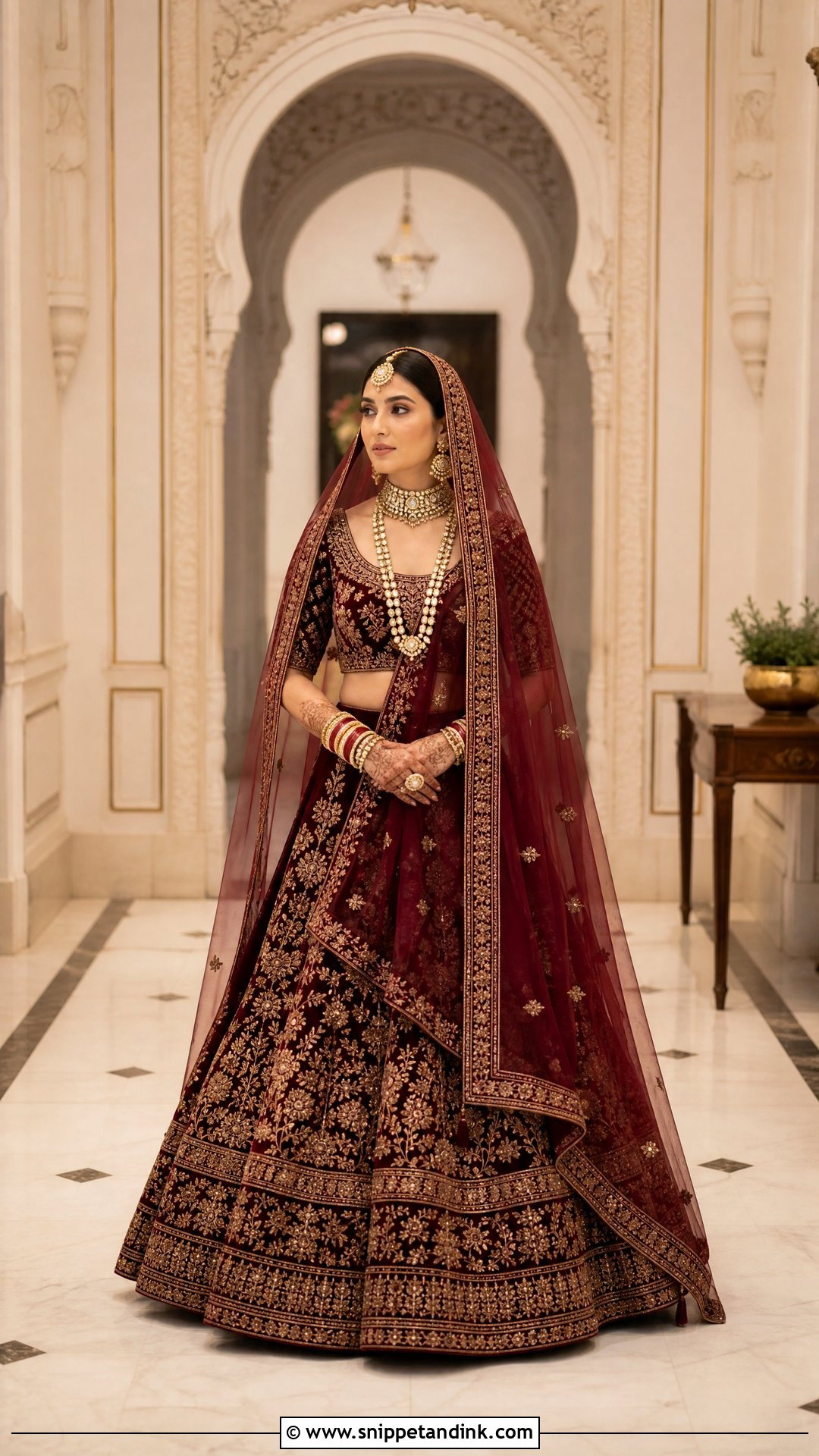
Velvet is the fabric I handle most carefully under evening lights. Its pile swallows light, so maroon reads almost black in a dim hall and glows wherever a spotlight lands. That makes it right for a formal winter wedding or a palace venue, and miserable in a humid summer marquee. Choose a full velvet skirt with antique-gold embroidery, a scattering of sequins and traditional borders, plus a fitted blouse with elbow-length sleeves to carry the weight visually. A sheer maroon veil adds a layer without bulk. Antique-gold jewelry, a structured choker with a long necklace, sits well against the dark pile, and velvet or brocade juttis finish the outfit. Go for a center-parted bun, soft brown eyes and deep berry lips. One warning: velvet marks wherever it is crushed, so the skirt should travel hung, never folded into a suitcase.
3. Sabyasachi Ivory Organza Bridal Saree
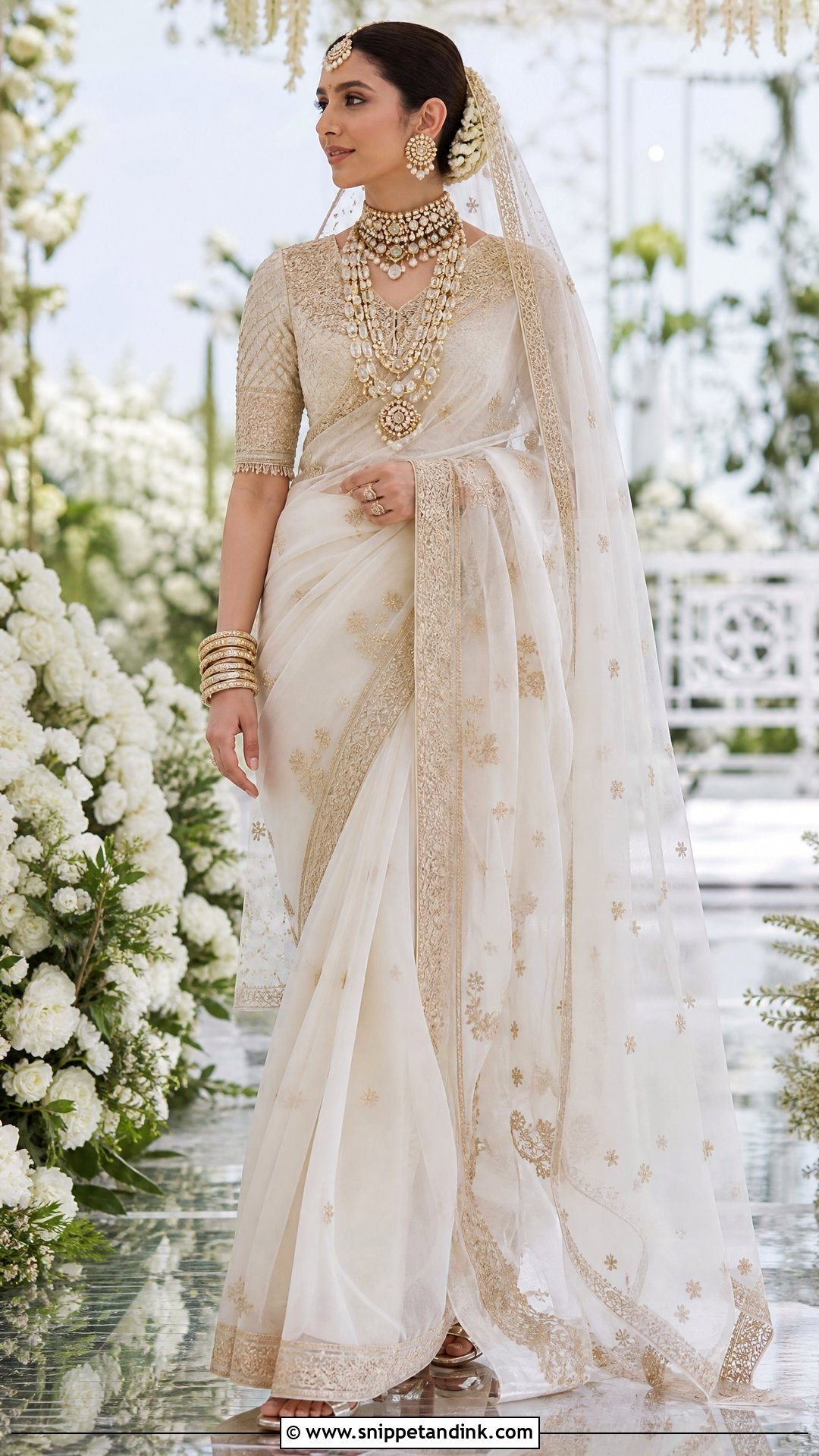
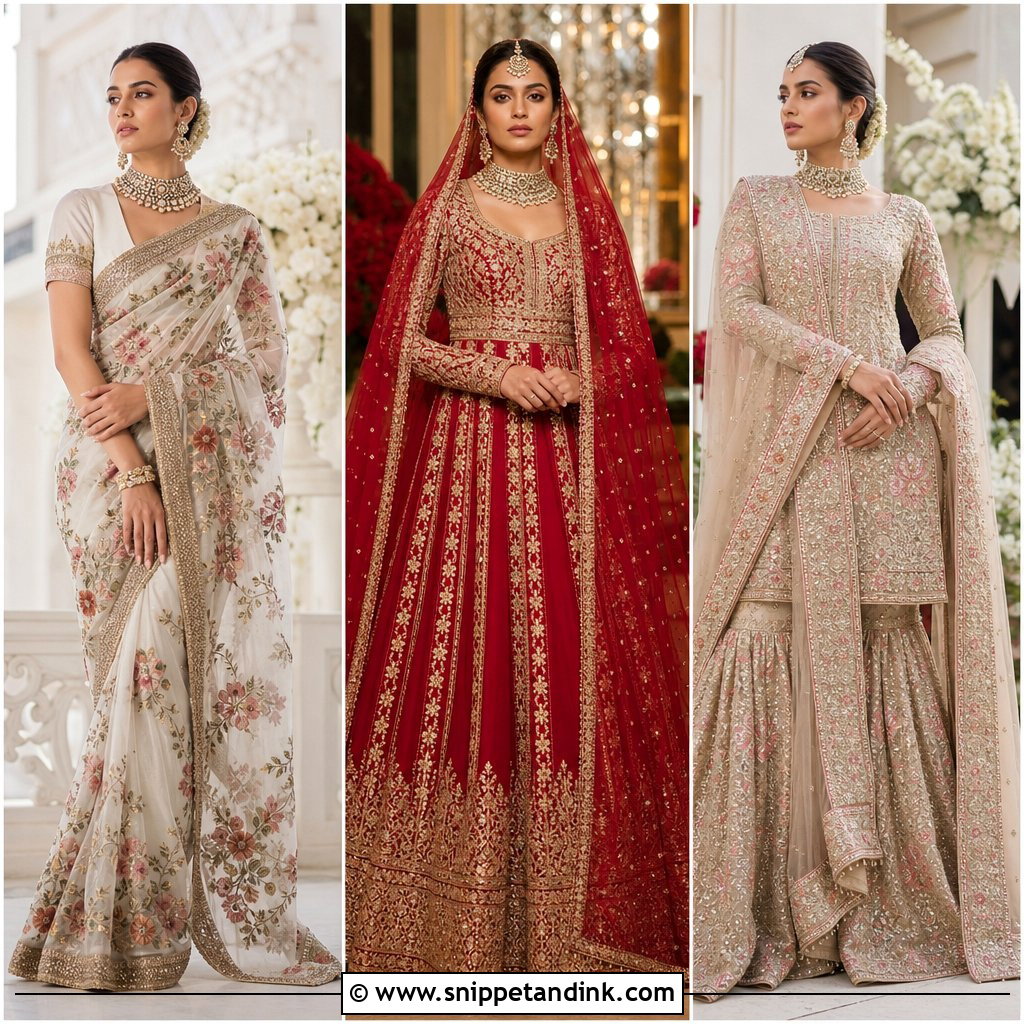
Ivory organza is the saree I suggest for a daytime ceremony in strong light, and the one I warn brides about most. Organza is crisp and slightly sheer, so it holds a pleat well but shows every pin and every uneven fold. Look for fine gold embroidery or a hand-finished border that will register on camera, and pair it with a fitted ivory blouse with elbow sleeves and a square or softly rounded neck. A sheer embroidered veil can sit over the head for the rituals and come off afterward. Layer polki with pearl accents, add a small bindi, and keep metallic sandals hidden under the hem. Fresh roses or white flowers around a low bun, luminous skin, defined lashes and a muted rose lip complete it. I pin organza pleats from the inside with small safety pins set vertically, so nothing glints in photographs.
4. Sabyasachi Blush Pink Floral Bridal Lehenga
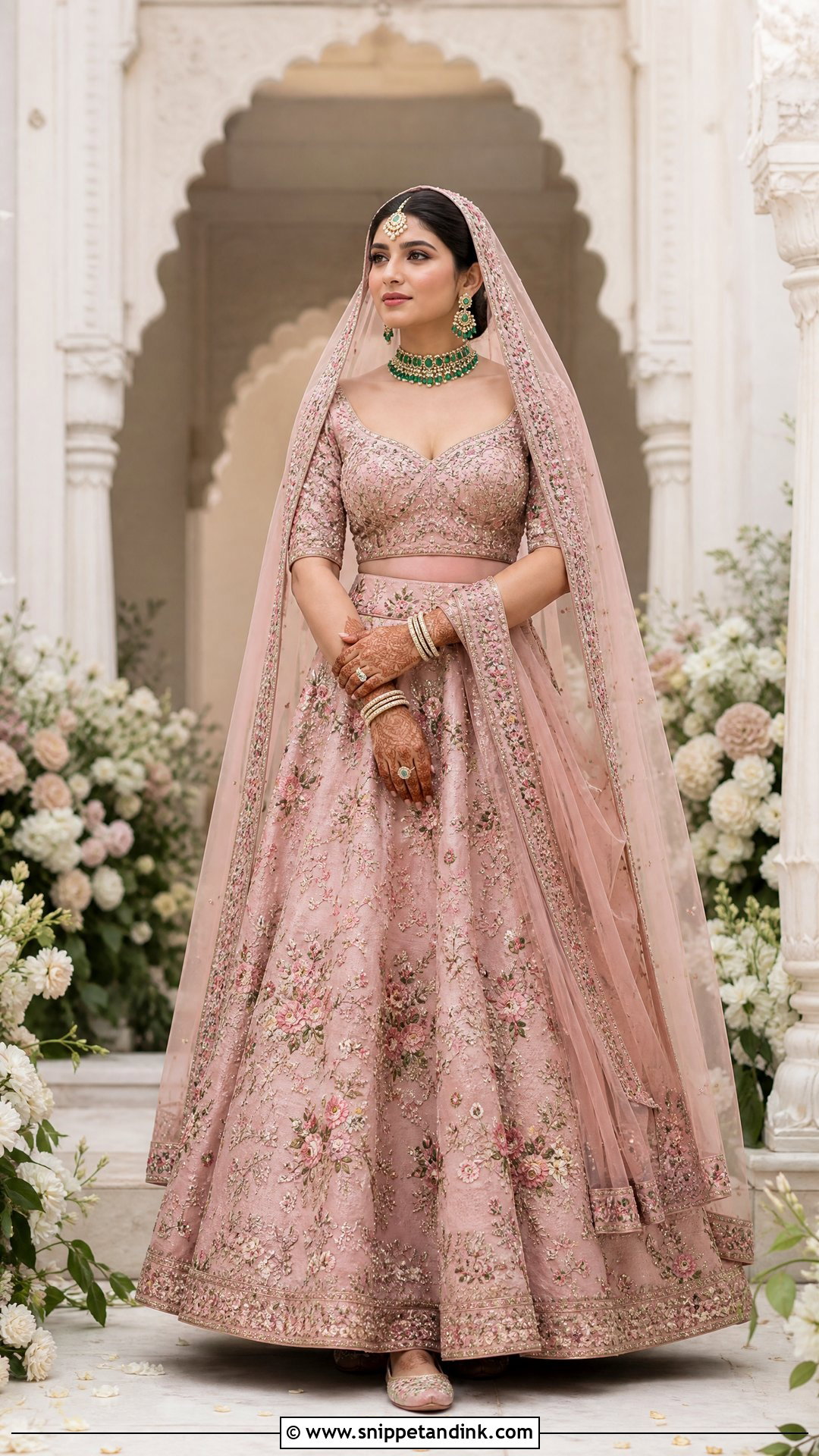
Blush works on brides who find red too loud, but it needs embroidery with real depth or it washes out against fair skin in daylight. Choose a full skirt with muted florals, fine threadwork, sequins and a little gold zardozi, and a sweetheart-neck blouse with elbow-length sleeves. Layer a blush dupatta across the torso and a sheer veil over the head. Emeralds give genuine contrast; pearls and uncut diamonds keep things soft. Pink embroidered juttis, a small structured potli, a loose low bun, natural brows, rosy cheeks and pink-nude lips. I’d hold this palette back from a night ceremony under warm yellow lighting, where blush turns peachy and flat. Garden ceremonies and bright heritage rooms show it at its best.
5. Sabyasachi Red Banarasi Bridal Saree
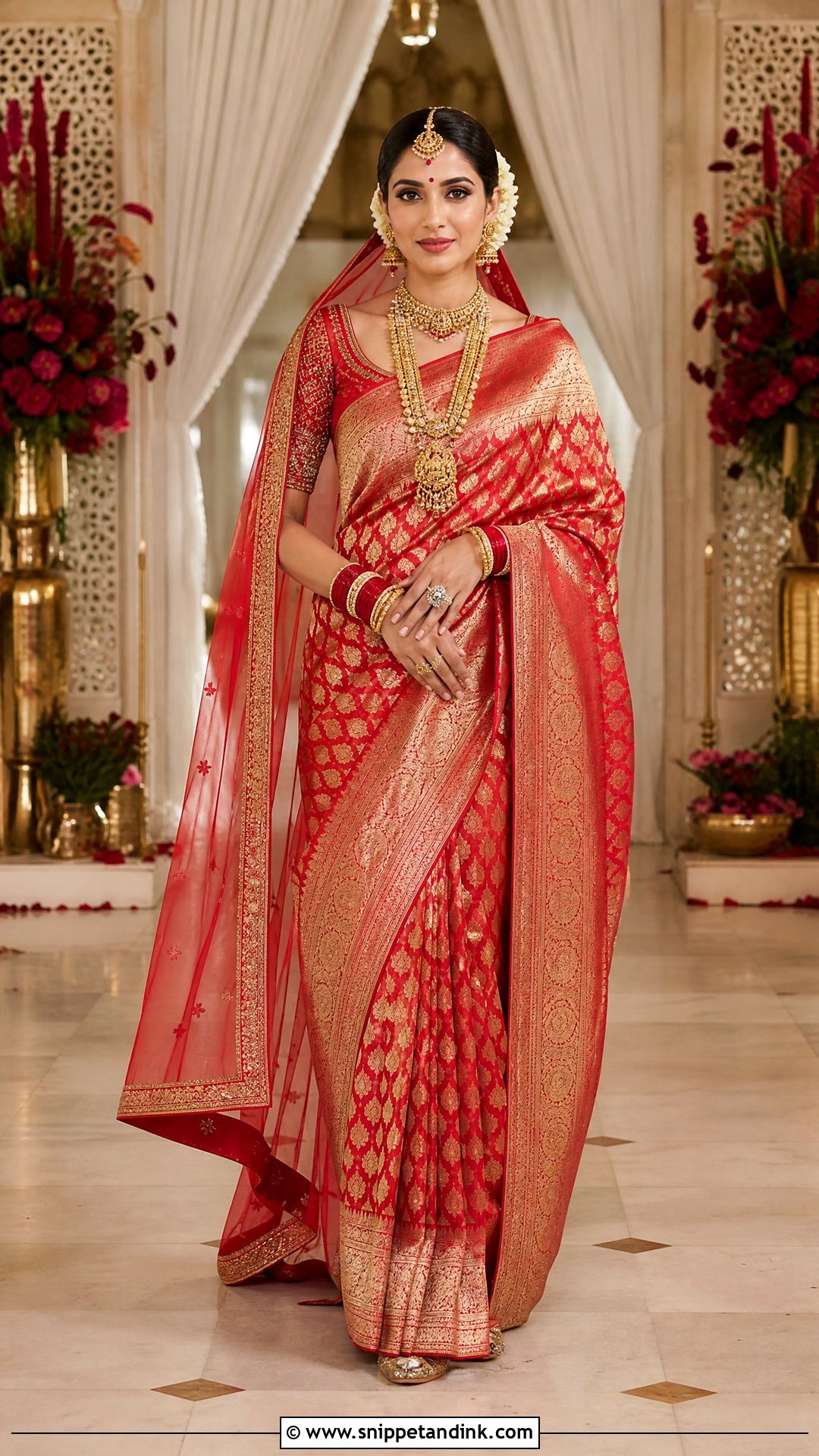
Want the movement of a saree with the impact of bridal red? A Banarasi silk with woven gold motifs gets you there without all-over surface embroidery. Because the pattern is woven into the cloth rather than stitched onto it, the saree drapes more fluidly and sits far lighter on the shoulder. Pair it with a matching blouse featuring a wide neckline, secure sleeves and subtle zardozi at the edges, then a lightweight red veil over the head. Temple jewelry, an antique-gold choker, layered necklaces and traditional bangles carry the heritage feel. Gold sandals or low heels stay under the hem; above it, a polished center-parted bun, fresh flowers, kohl and a bold red lip. Real zari borders can be stiff, so I ask the draper for narrow, even pleats. Wide ones splay open the moment you sit.
6. Sabyasachi Antique Gold Bridal Lehenga
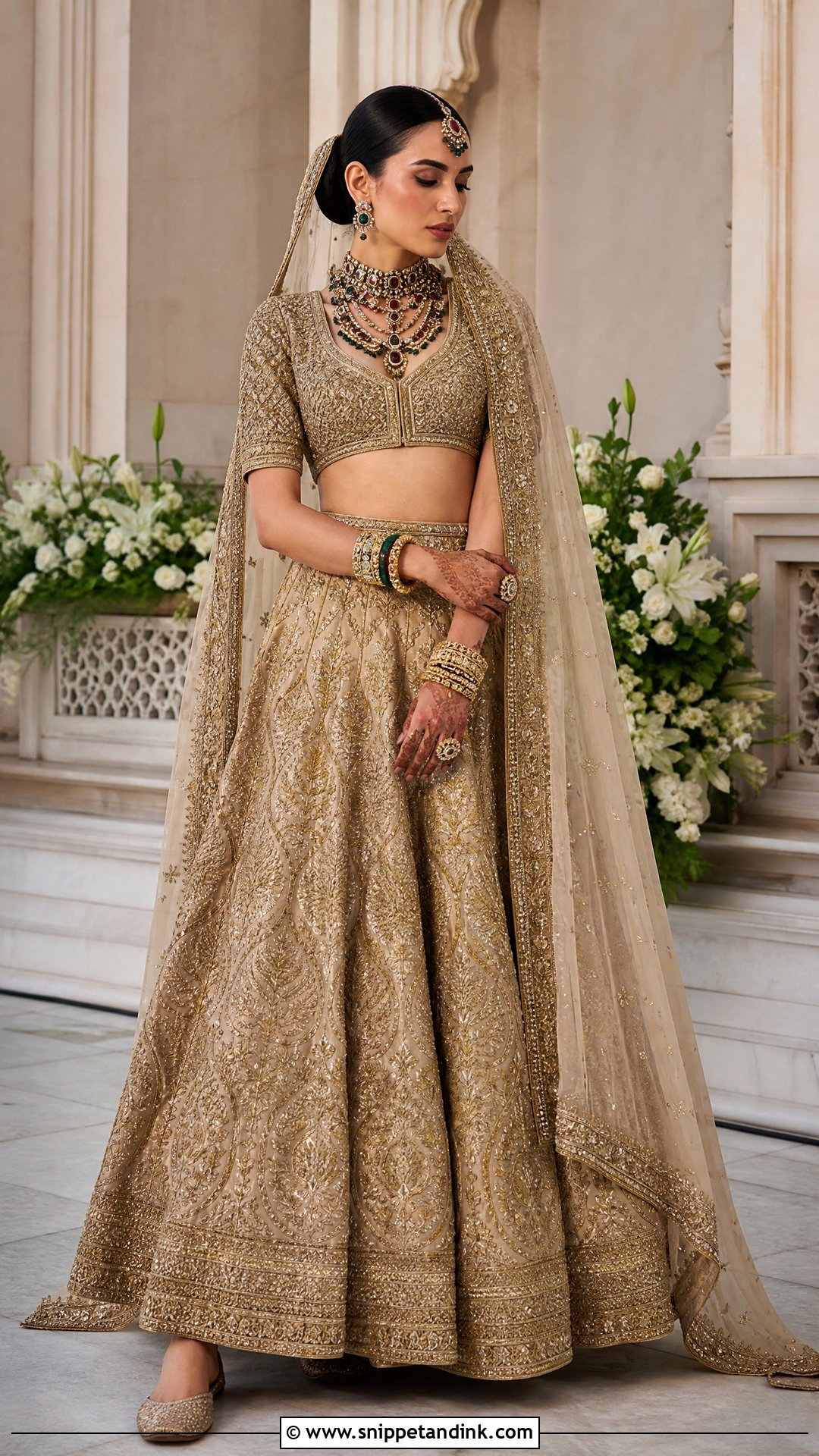
Antique gold moves away from red without giving up any grandeur. The detail that makes it work is tonal embroidery in aged metallic thread, which looks deliberate, where bright new gold can look like costume under flash. Choose a warm gold skirt with sequins and a broad border, and a structured blouse in the same tone with elbow sleeves. A sheer gold dupatta across the shoulder and a pale champagne veil over the head add depth. Here the jewelry has to bring the contrast: emerald, ruby or multicolored heritage pieces, not more gold. Metallic juttis, softly smoky eyes, warm nude lips and a sleek bun finish it. Gold on gold can blend into a warm complexion, so I always see this one on the bride in daylight before she commits to it for an evening ceremony.
7. Sabyasachi Peach Floral Bridal Lehenga
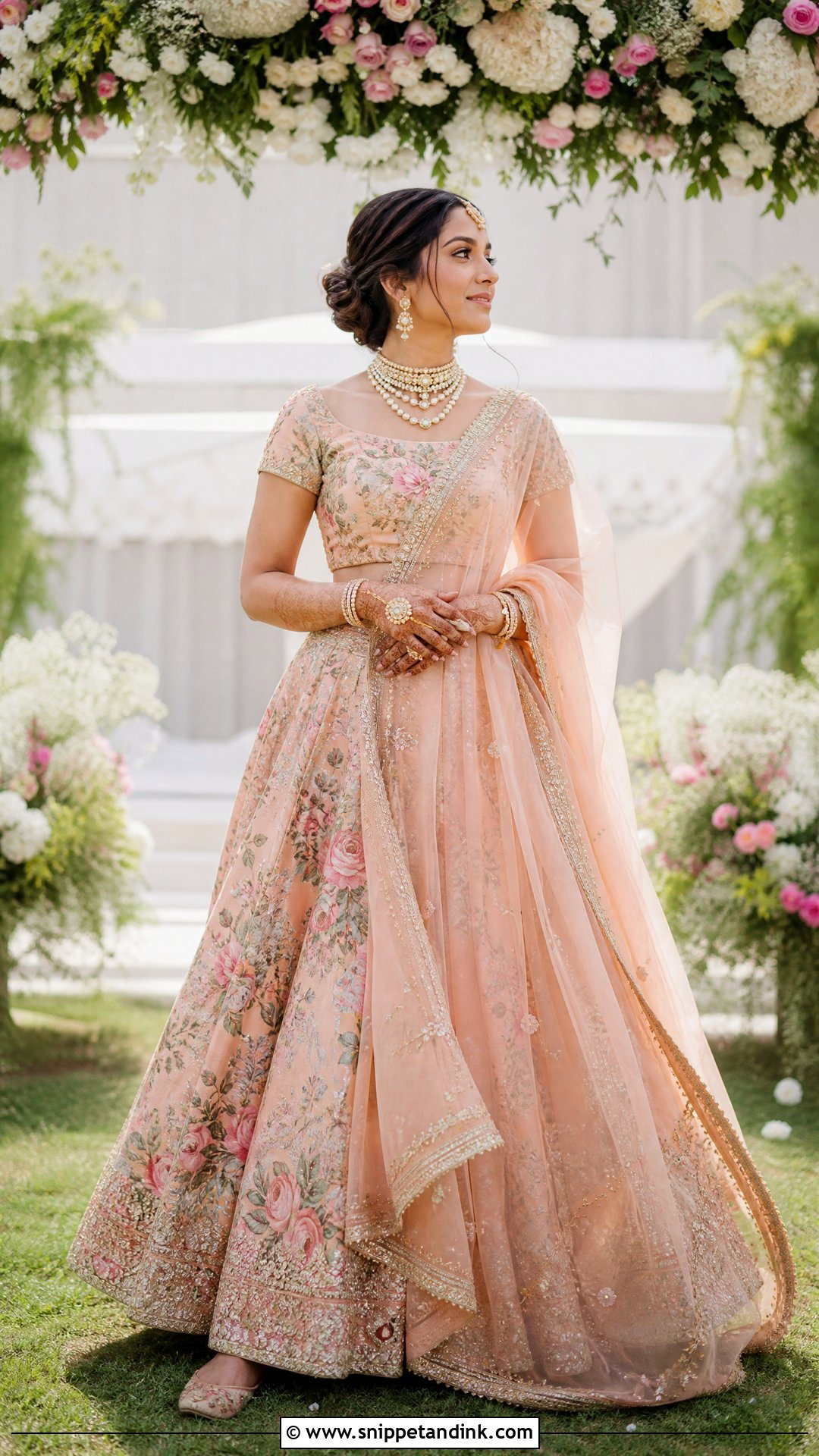
Peach florals belong outdoors. Choose a flowing skirt with botanical prints, fine embroidery or a light scatter of sequins, keeping the sparkle low enough that the print stays in charge. A printed skirt has less body than an embroidered one, so the fitted peach blouse, with a modest neckline and elbow sleeves, has to give the whole outfit its structure. Drape a lightweight organza dupatta over one shoulder and add a delicate veil only if the ceremony calls for one. Pearls, pale stones or a polki choker with green accents all suit it. On grass I put brides in nude embroidered juttis or low block heels; stilettos sink, and then the hem drags through the lawn. Finish with a textured low bun, peach-toned makeup and softly defined eyes.
8. Sabyasachi Emerald Green Velvet Bridal Lehenga
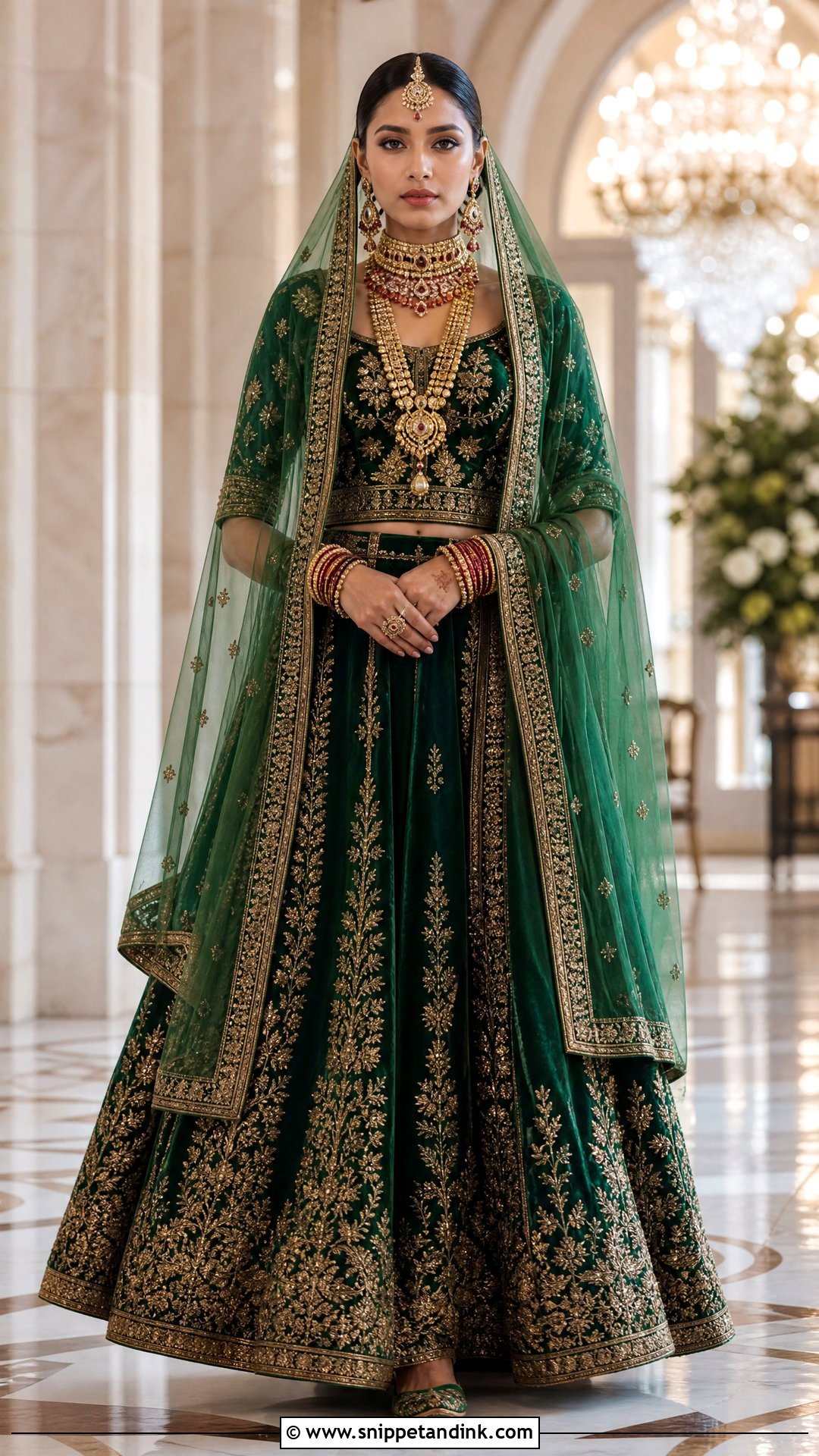
Emerald velvet is for the bride who loves jewel tones and has a winter date. Build it around a velvet lehenga with antique-gold vines, paisleys and a substantial hem border, with a fitted green blouse, elbow sleeves and a softly curved neck. Velvet is heavy and absorbs light, so I drape a sheer green dupatta across the torso to break up that solid block of color, and add a coordinated veil over the head. Layered gold with pearls or rubies gives contrast, and embroidered green juttis close the color story. A sleek middle-parted bun, warm bronze eye makeup and a muted berry lip suit it. Skip it for daytime outdoor pheras in warm weather. You’ll be overheated within the hour.
9. Sabyasachi White And Gold Bridal Saree
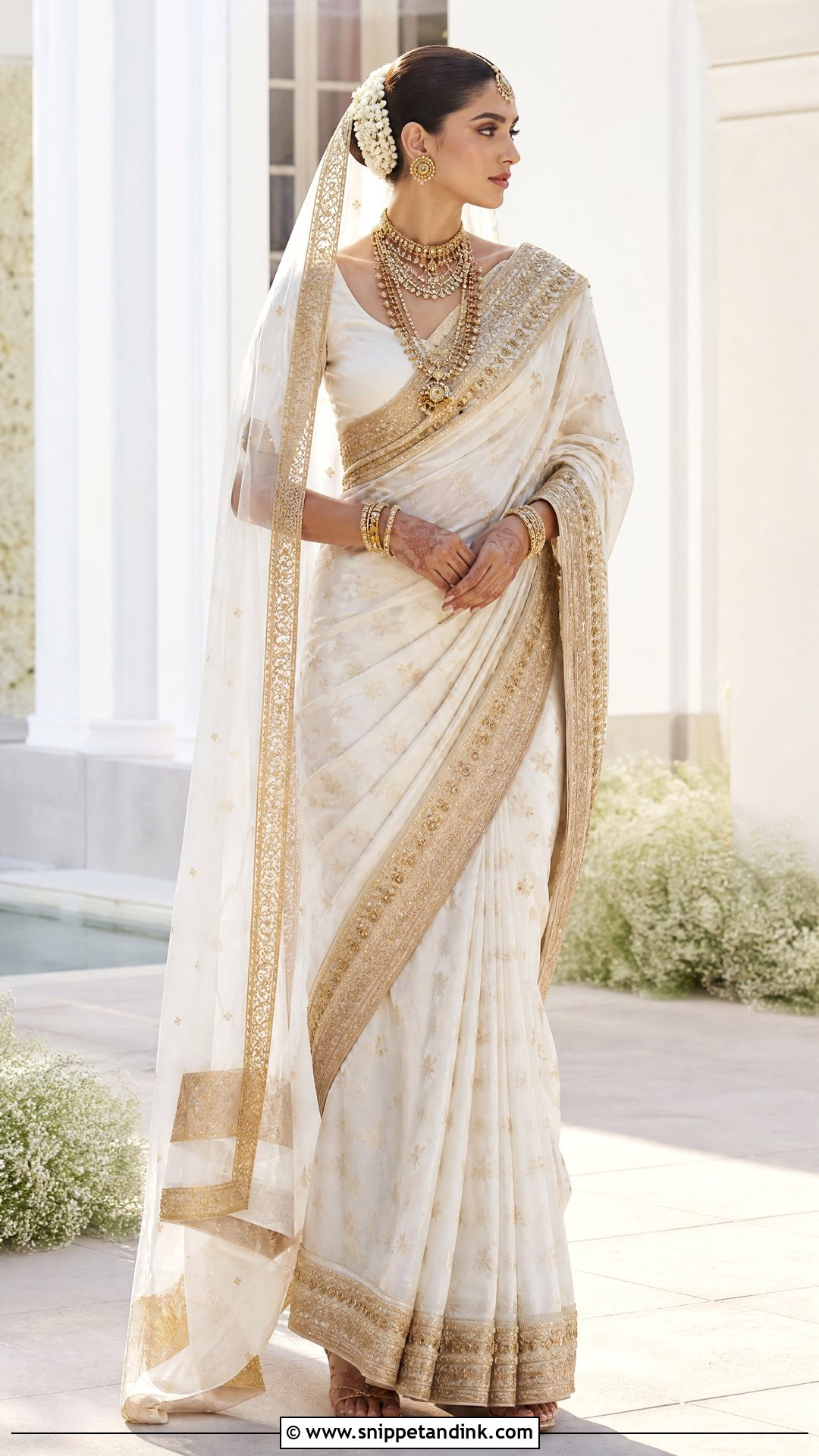
White and gold reads calm, and in some communities it is traditional bridal dress, so I always ask what both families expect before suggesting it. Choose silk, organza or tissue with an ornate gold border and scattered hand embroidery. A gold blouse gives contrast; a white one keeps the whole look in a single tone. Add a lightweight matching veil for the ceremony, placed so the shoulder drape still shows, then a gold choker, long necklace, statement earrings, bangles, a small bindi and gold sandals. A smooth bun ringed with white flowers suits it. Makeup matters more here than with any red outfit, because pale fabric bounces light up onto the face. Defined eyes, a little highlight and a rose or red lip stop the bride from looking washed out in photos.
10. Sabyasachi Crimson Brocade Bridal Lehenga
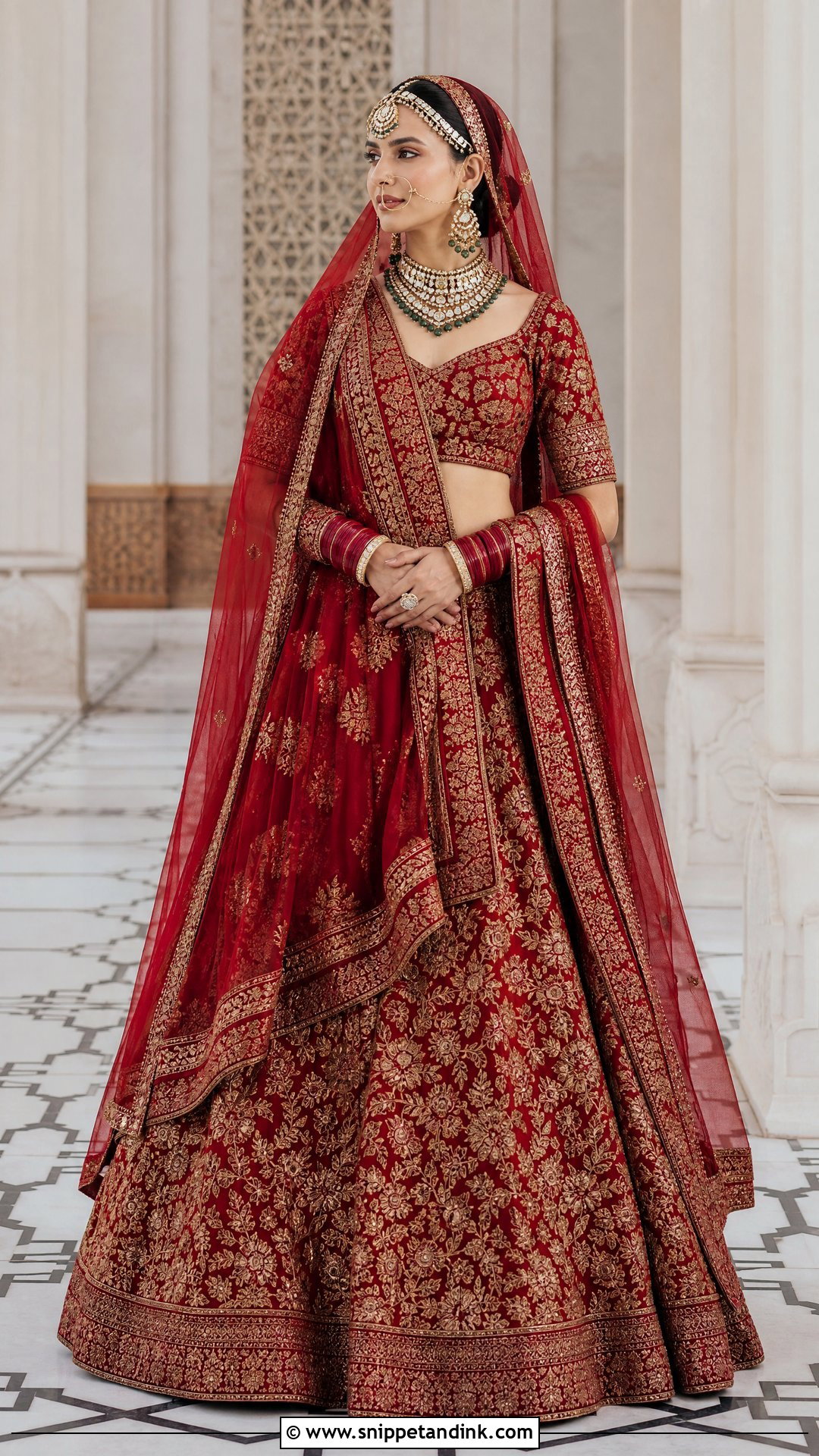
Brocade gets its pattern from the weave, so a crimson brocade skirt has texture even in places with no embroidery at all. Choose woven floral or architectural motifs with handworked borders, and a crimson blouse that repeats one element from the skirt, such as antique-gold edging or small embroidered flowers. Add a sheer red veil with a defined border and a second dupatta draped neatly across the torso. Heritage jewelry with uncut diamonds, pearls and red stones belongs with this fabric. Brocade is stiff and can look boxy at the hip, so I have the skirt panels cut with more flare than a soft silk would need. Cushioned brocade juttis help through long ceremonies. A sculpted low bun, bold brows, kohl and classic red lips hold their own against richly decorated venues.
11. Sabyasachi Multicolor Heritage Bridal Lehenga

A multicolor heritage lehenga is closer to wearing a textile collection than an outfit, and it needs stricter editing than anything else on this list. Look for a deep neutral, red or burgundy base with arranged flowers, birds, paisleys and borders. The blouse should repeat only the two strongest colors from the skirt. A solid veil in red or muted gold frames the detail without adding a competing pattern. Antique gold with colored stones that echo the embroidery, neutral juttis and a simple potli keep the rest quiet. Hair in a center-parted bun with understated flowers; warm brown eyes, natural skin, a muted red lip. When I try a piece like this on a bride, I step back across the room. If my eye can’t settle anywhere, jewelry comes off first.
12. Sabyasachi Dusty Rose Bridal Lehenga
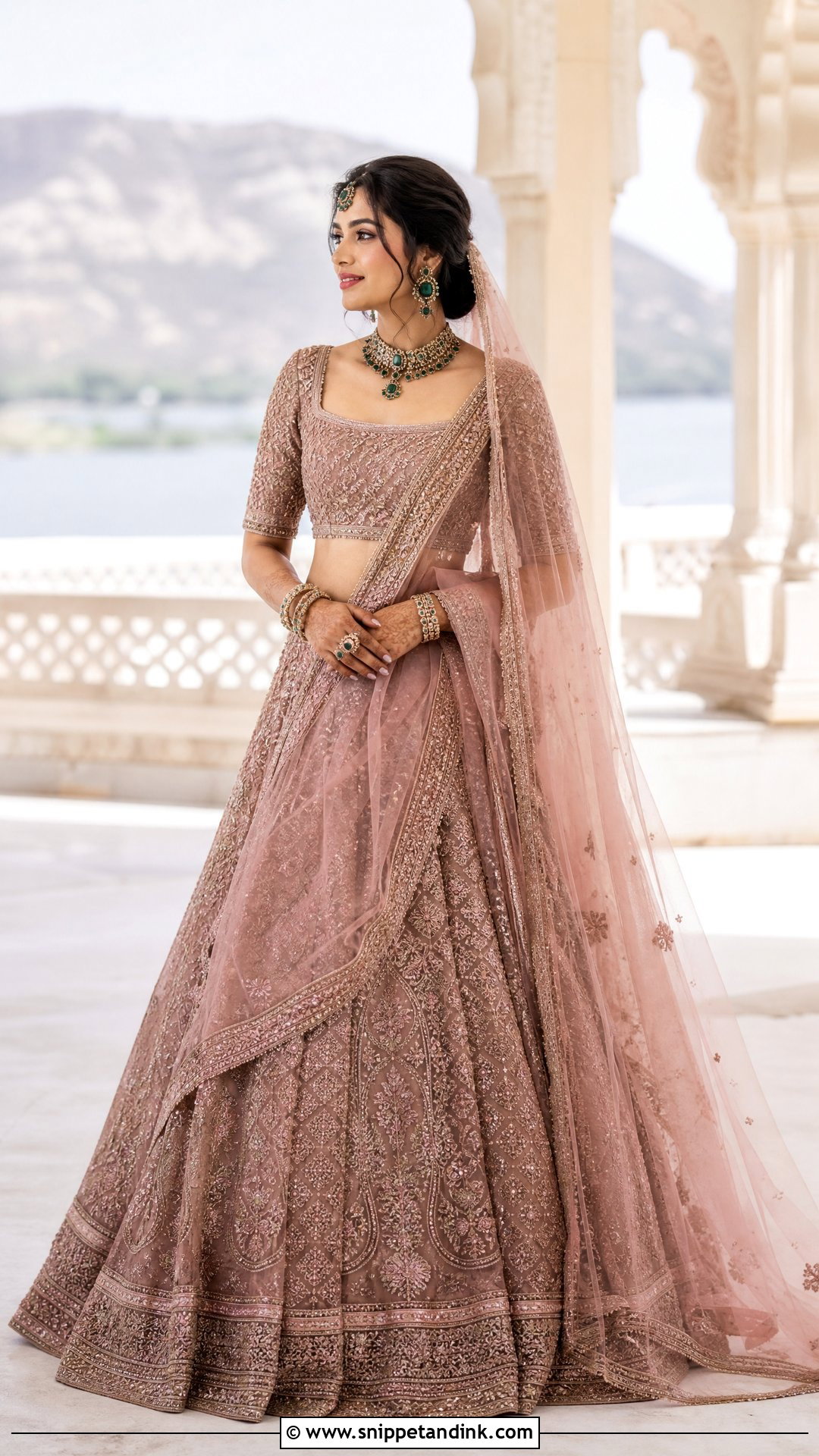
Dusty rose sits between bright pink, which can feel sweet, and beige, which can feel flat. Choose a tonal lehenga with threadwork, sequins, zardozi and a clearly defined hem; on a muted base, the border is what gives the skirt its shape in pictures. A fitted blouse with elbow sleeves and a square or sweetheart neckline sharpens the silhouette. Add a matching dupatta across one shoulder and a lighter veil over the head. Emeralds make a bold contrast, while pearls and diamonds keep it monochrome. Rose-gold juttis or low block heels, a relaxed low bun, softly smoky eyes, pink blush and a deeper rose lip finish it. I check dusty rose against the bride’s skin in natural light first, because on some undertones it leans slightly grey.
13. Sabyasachi Red Bridal Saree With Veil
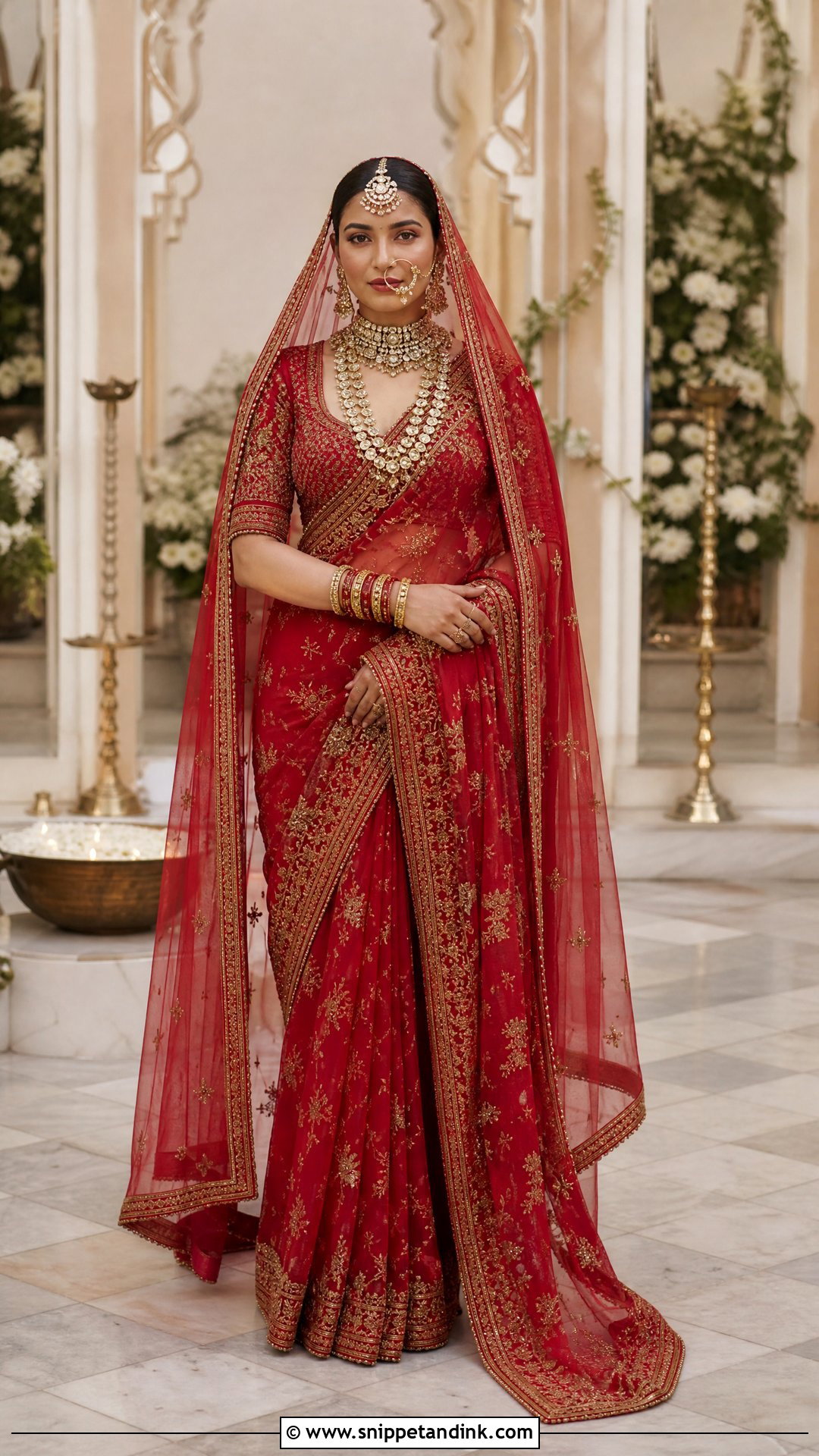
A red saree with a long veil gives one unbroken line from head to hem. Choose rich silk or organza with hand embroidery, gold borders or small florals, and a structured red blouse with enough support for hours of rituals. The veil is the tricky part. I pin it into the bun at two points behind the crown, never into the saree, so if someone steps on the trailing end it tugs the hair rather than ripping out the pleats. Layer a choker with a longer necklace, then statement earrings, a maang tikka, bangles and a nath if you wear one. Red or gold sandals need to be comfortable for long stretches of standing. Classic makeup with defined eyes and red lips. Clean pleats keep the veil, jewelry and drape from crowding each other.
14. Sabyasachi Yellow Floral Mehendi Lehenga
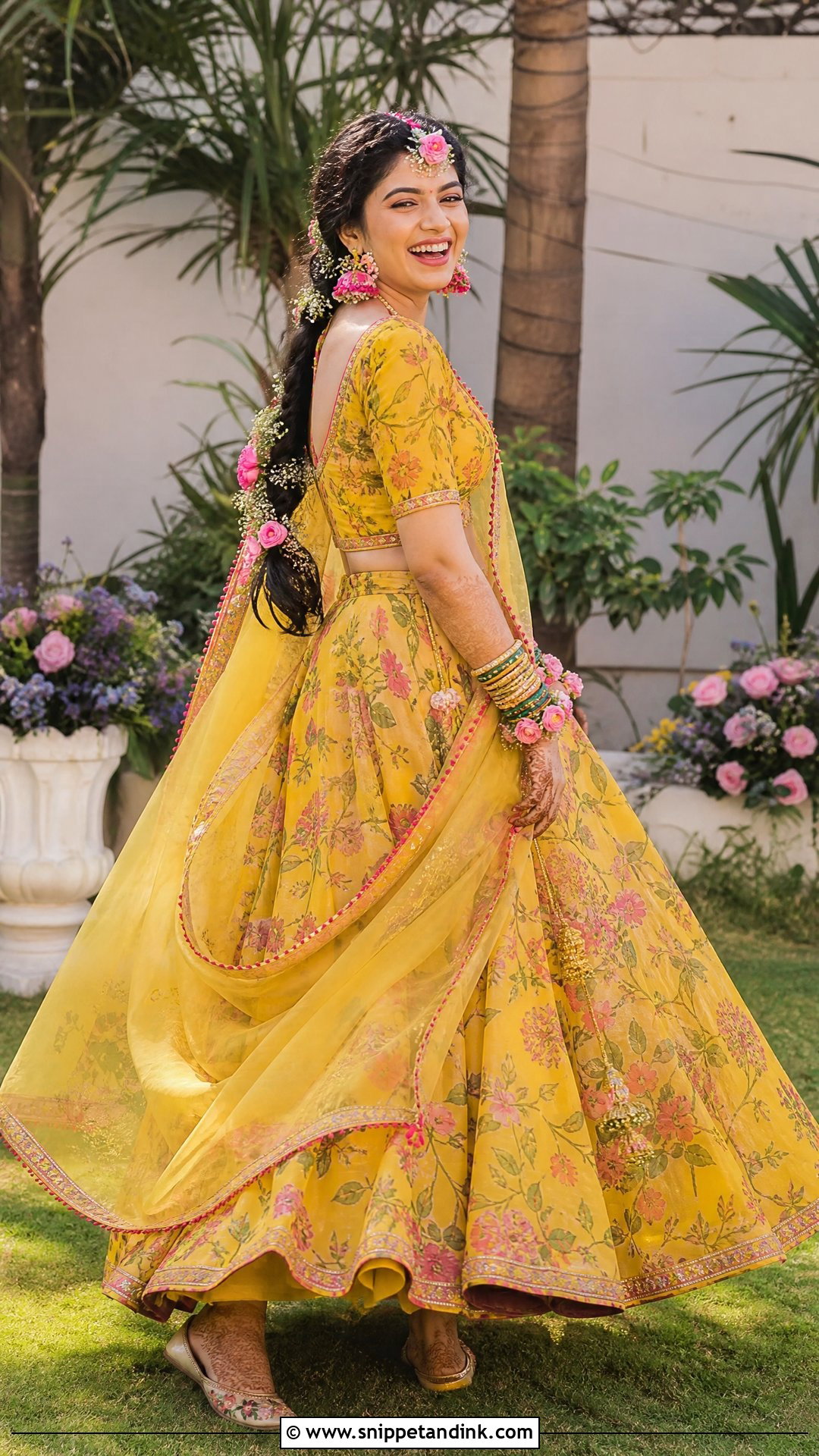
Sunlit yellow sets the mood for a mehendi the moment you walk in. Choose a lightweight lehenga with floral prints and delicate embroidery, and keep the skirt volume modest, since you’ll spend hours on a low seat while your hands and feet are done. A fitted blouse with straps, short sleeves or elbow sleeves, depending on the coverage you like, and a small organza dupatta over one shoulder so your hands stay free. Add floral jewelry, small gold earrings and comfortable juttis. A braid, ponytail or relaxed bun survives the dancing. Fresh makeup with peach blush, waterproof mascara and a soft pink lip. I tell brides to slide the colorful bangles on only once the paste has dried and flaked, since wet henna smudges under them, and to keep a compact potli handy for tissues and a phone.
15. Sabyasachi Green Floral Mehendi Saree
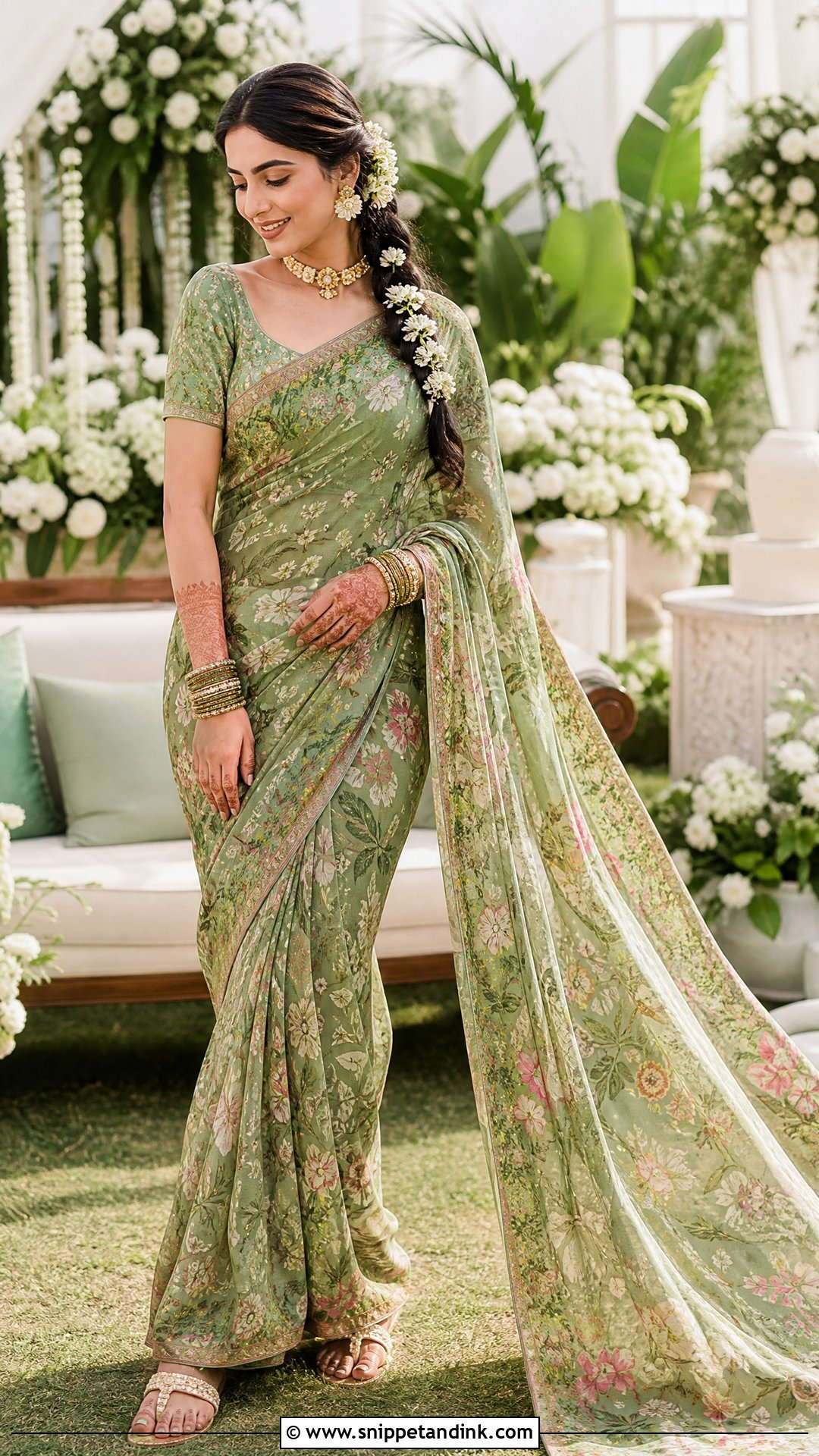
Brides who live in sarees don’t need to switch to a lehenga for the mehendi. A green floral drape in lightweight organza or silk, with small botanical motifs and a decorative border, works well as long as it is pinned like it has to stay put, because it does. Fit the green blouse snugly so you aren’t adjusting it with paste on your fingers, and pin the pallu firmly at the shoulder so it can’t slide onto fresh designs. Before the artist starts, I have someone tuck the loose end of the pallu into the waist as well. Floral earrings, a delicate choker, stacked bangles and flat embellished sandals. A braid threaded with tiny flowers keeps hair off the face, and luminous skin, green or bronze liner and a comfortable lip stain carry you through the evening.
16. Sabyasachi Sequin Reception Saree
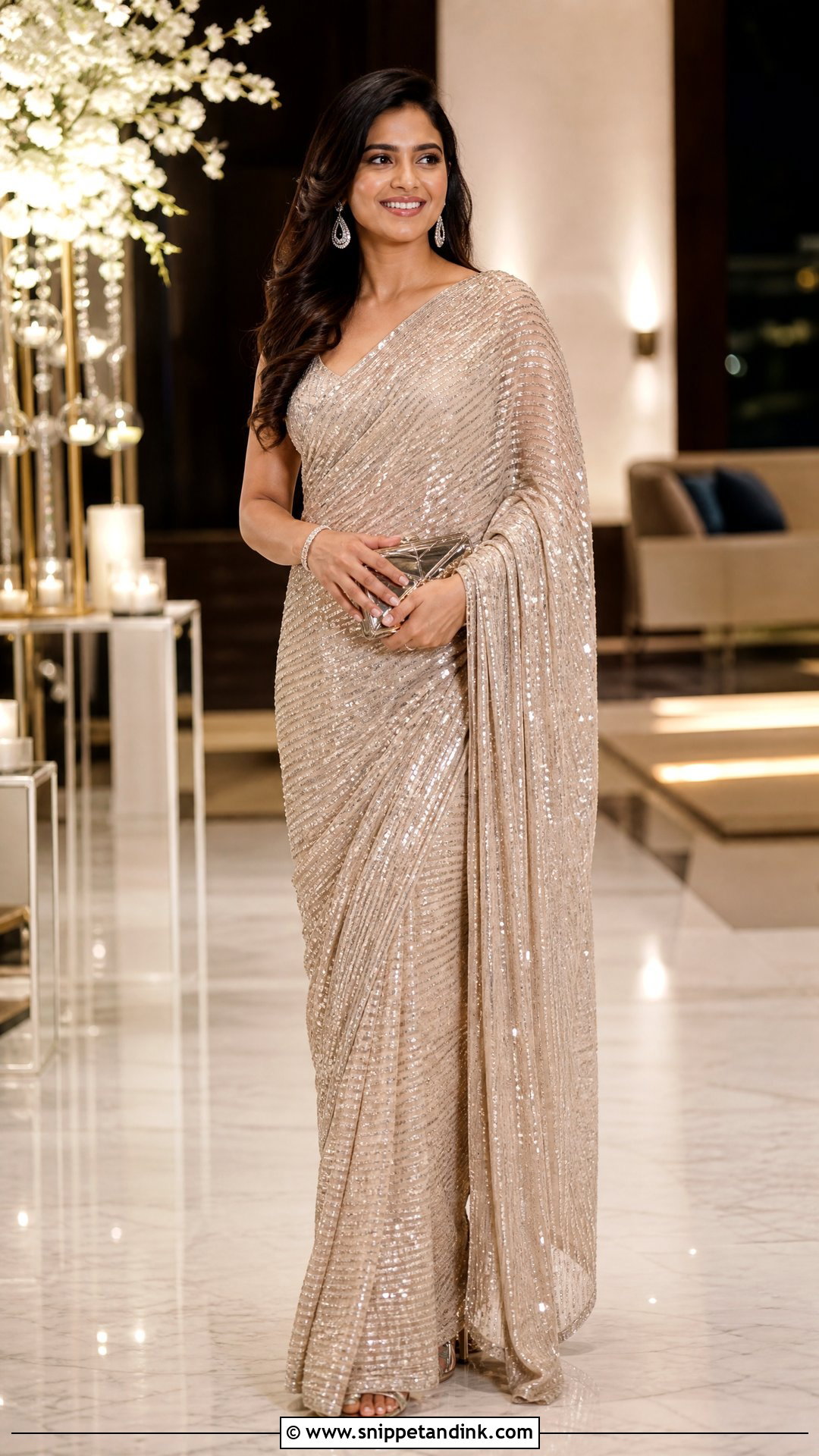
For the reception, a sequin saree gives you shine without hauling out a second heavy lehenga. Choose deep charcoal, champagne, ivory or a jewel tone with fine, evenly spread embellishment, and a fitted blouse with a clean neckline and secure sleeves. Sequins scratch the inner arm over a long evening, so I ask for the sleeves to be lined and the underarm kept plain. Add diamond or crystal jewelry, with only one large piece. A structured clutch and metallic heels complete it. Wear polished waves or a sleek low bun, depending on the neckline. Soft smoky eyes, luminous skin and a neutral lip let the fabric do the shining. Pin carefully at the shoulder and waist; you’ll be hugging guests until midnight.
17. Sabyasachi Embroidered Bridal Sharara
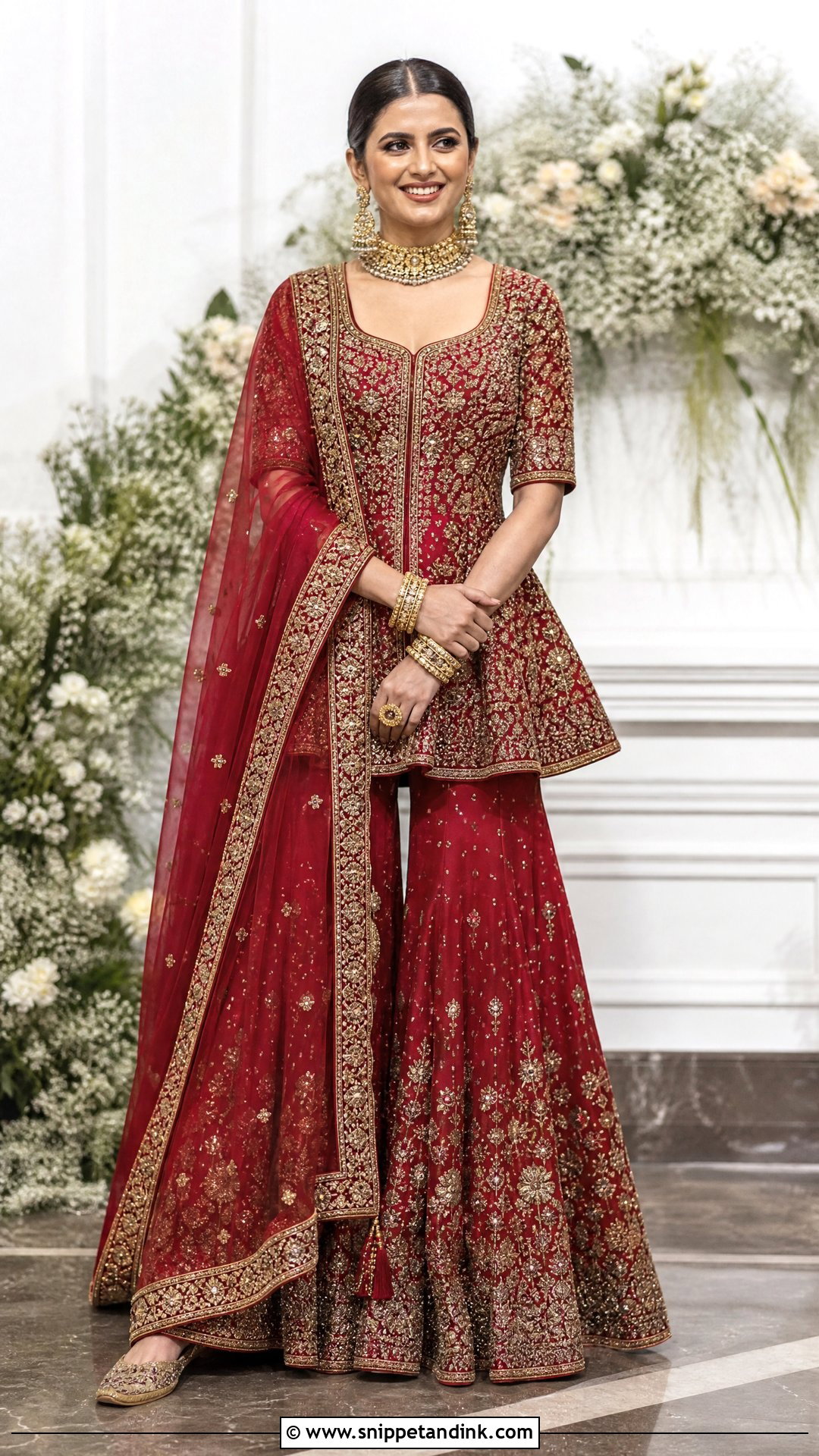
An embroidered sharara is what I suggest when a bride wants to actually dance at her sangeet or welcome party. Wide-legged pants with dense borders, a structured kurti or peplum top and a coordinated dupatta; red, ivory, green or antique gold all look bridal when the craftsmanship is strong. Drape the dupatta over a shoulder, or lightly over the head for a more traditional feel. Add a choker, long earrings, bangles and embroidered juttis, a sleek braid or center-parted bun, defined eyes and a berry or red lip. The hem is the detail I fuss over most. I have it finished with the actual shoes on, sitting just clear of the floor, because the flare of each leg catches a heel when you turn.
18. Sabyasachi Long Jacket Bridal Lehenga
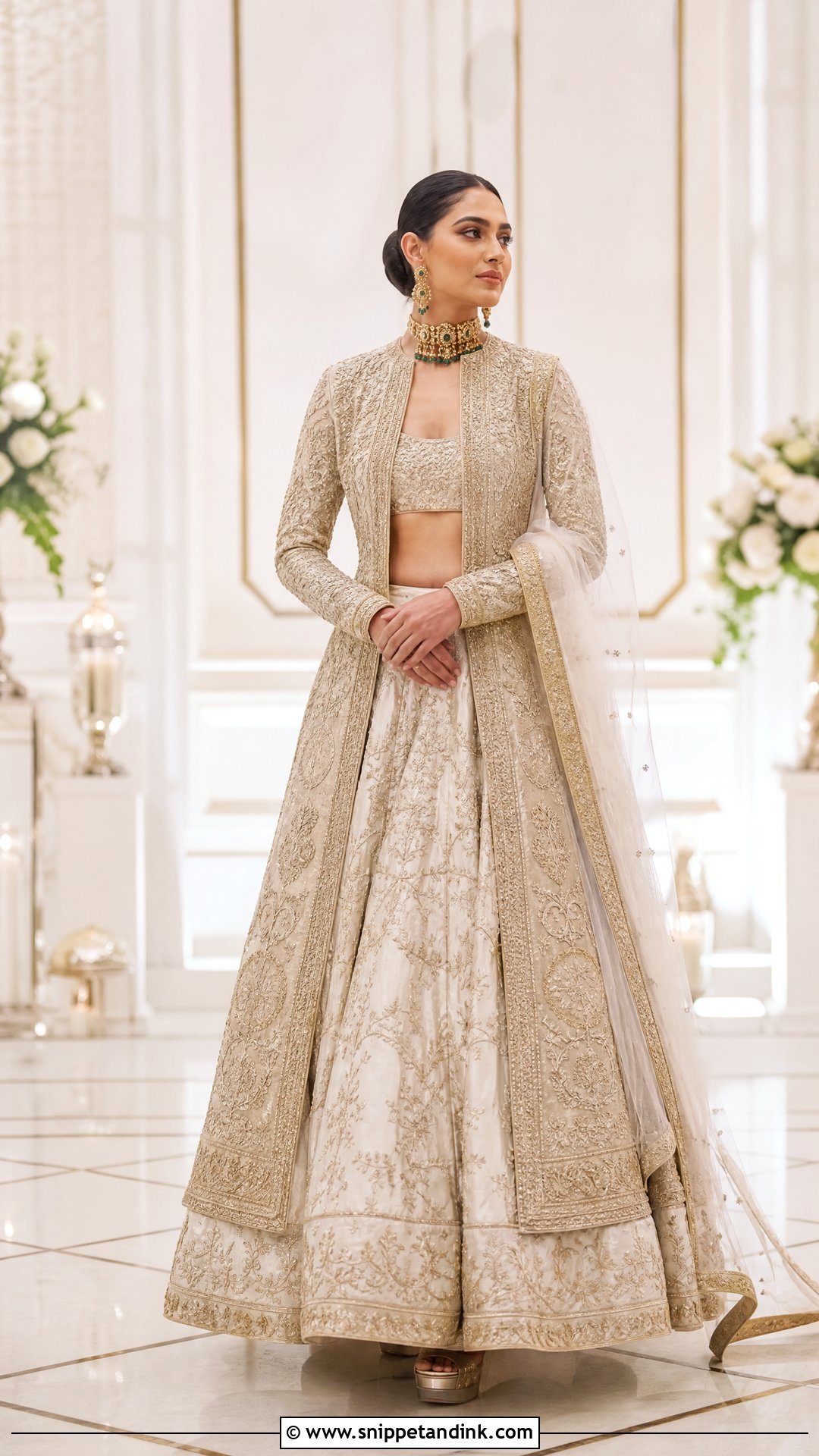
A long embroidered jacket gives a lehenga structure, extra coverage and a longer line through the body. Start with a streamlined skirt in ivory, red, burgundy or muted gold, then layer a knee-length or floor-skimming jacket with zardozi borders and placed motifs over a fitted blouse. The jacket changes how the neck works. Its neckline is already busy, so I use one choker and stud or drop earrings instead of layered necklaces. Keep the dupatta light over one shoulder so it doesn’t fight the jacket. Metallic juttis or platform heels, a smooth bun, softly sculpted makeup and a defined lip complete it. If your torso is on the short side, try both lengths; the knee-length cut often balances better, and it’s warmer for cool-weather receptions.
19. Sabyasachi Purple Bridal Lehenga
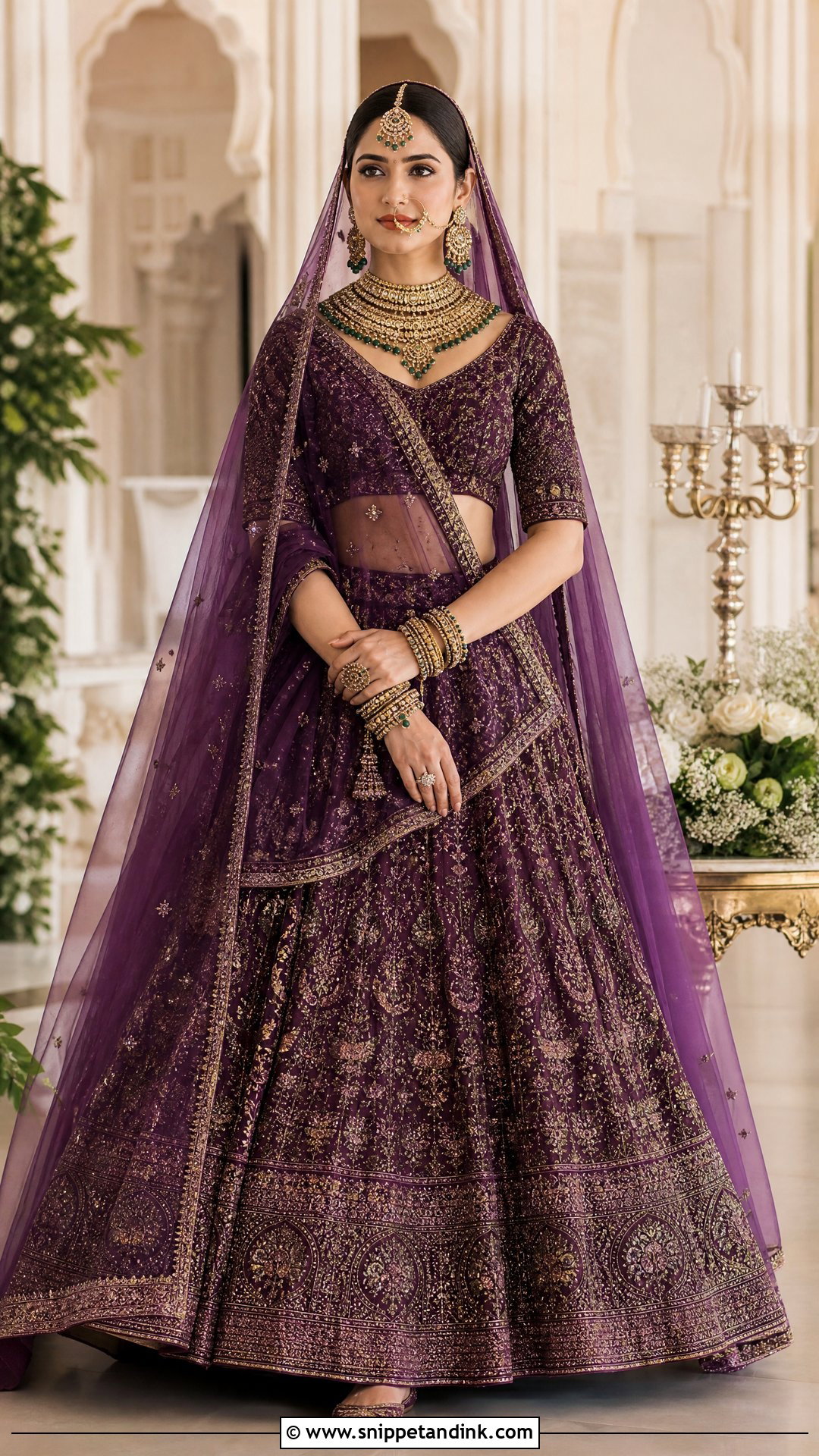
Purple can look as ceremonial as red when traditional embroidery and heritage jewelry stand behind it. Choose plum, aubergine or deep violet with antique-gold zardozi, tonal threadwork and a substantial border, and a fitted blouse with elbow sleeves. A sheer purple veil softens the dark shade near the face, while a second dupatta across the torso adds formality. Gold jewelry with emeralds, pearls or red stones, purple embroidered juttis, a center-parted bun, bronze eyes, berry lips and luminous skin. Dark purple is the color I watch most closely on camera, because under some lighting it photographs nearly navy or brown. Ask your photographer to shoot a few test frames as the evening light changes, before the ceremony starts.
20. Sabyasachi Ivory Floral Bridal Lehenga
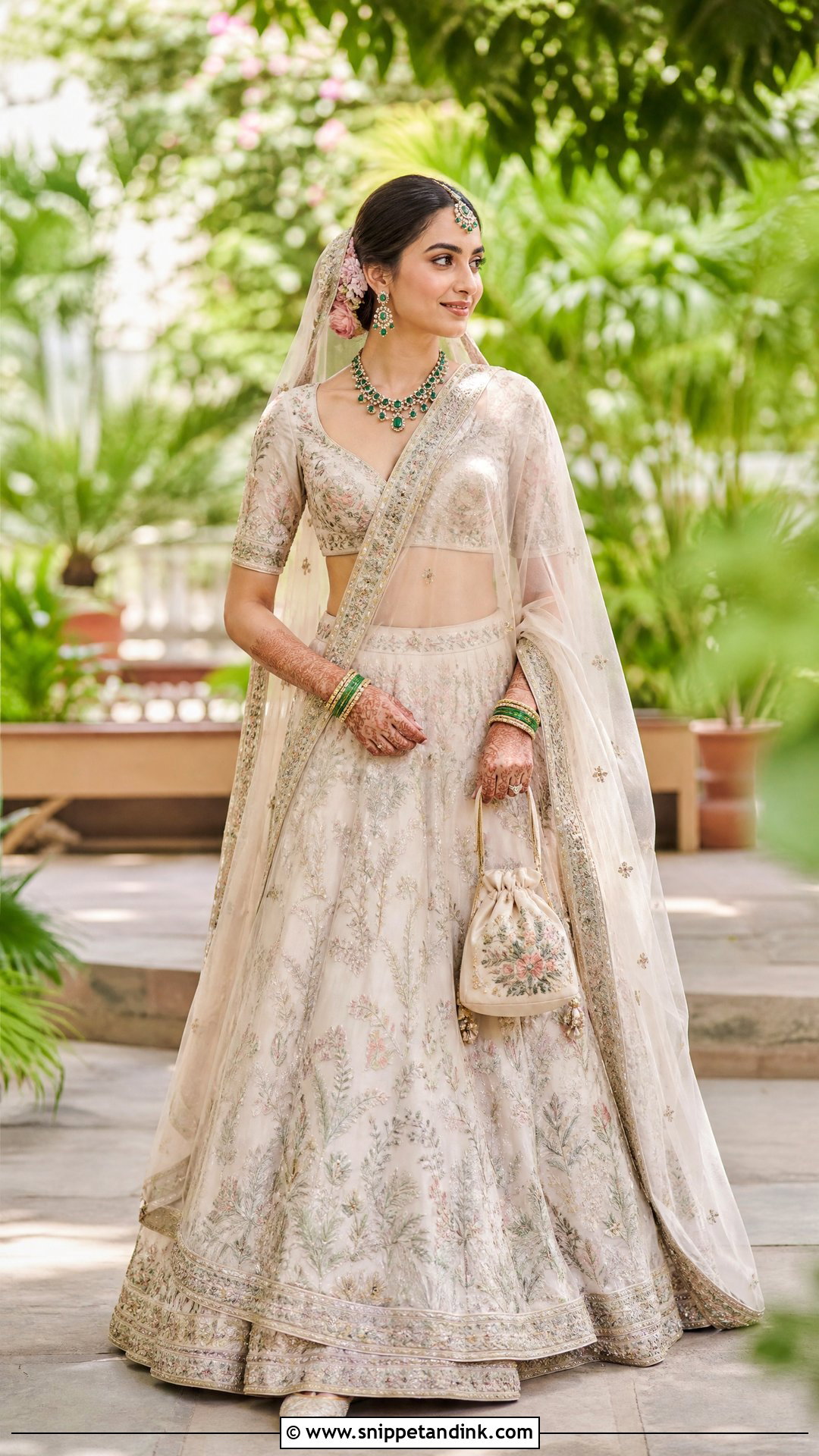
An ivory floral lehenga sets colorful flowers against a pale ground: soft pink, green, peach and muted red, printed or embroidered. Pair it with an ivory blouse that repeats the border or florals, a sheer ivory dupatta across the shoulder, and an embroidered veil over the head for the ceremony. Emeralds give contrast and pearls keep it light. Ivory embroidered juttis, a small floral potli, a relaxed bun with fresh roses, softly defined eyes and a rose lip. Ivory picks up every mark. On the day I keep a small kit close by: a clean white cloth, a stain pen already tested on a scrap of the fabric, and spare safety pins. Daytime and garden weddings give it the light it needs.
Wrap It in Muslin and Keep the Plastic Away
Metal-thread embroidery tarnishes, and plastic garment bags trap moisture. Together they turn gold zardozi dull and leave marks on silk. Once the wedding is over, I’d air the outfit for a day out of direct sun so any perspiration dries, then take it to a dry cleaner who handles hand-embroidered bridal wear rather than a general laundry.
Folding it for the long term
- Fold the skirt with acid-free tissue or clean muslin between the layers so embroidery never rubs against embroidery.
- Wrap it in soft cotton or muslin and store it flat in a box or drawer. A hanger lets the weight stretch the waistband.
- Refold along different lines every few months; permanent creases can split silk and flatten velvet pile.
- Store jewelry separately, since hooks and prongs snag threadwork.
Velvet needs its own treatment. Never press it flat with an iron; a steamer held a little away from the reverse side lifts crushed pile far better. Plenty of brides rewear the blouse or the dupatta at a sibling’s or cousin’s wedding later, and stored this way the work stays bright enough to do it.
The Full Dress Rehearsal Before Your Last Fitting
The right outfit from this list depends on your venue, your family’s traditions and how many hours you’ll be standing in it. Velvet and brocade want cool rooms; organza and floral prints want daylight; sequins belong after dark. Before the last fitting, put on the complete set: blouse, dupatta, veil, jewelry, shoes and a rough version of the hair. Walk, sit cross-legged, raise both arms and climb a step. Anything that pulls, slips or scratches will be worse by the sixth hour. And take one idea from a reference rather than all of them. A borrowed color worn with your own blouse and jewelry choices will feel more like you than a copy ever could.
You'll Like These Ideas:


Leave a Reply