
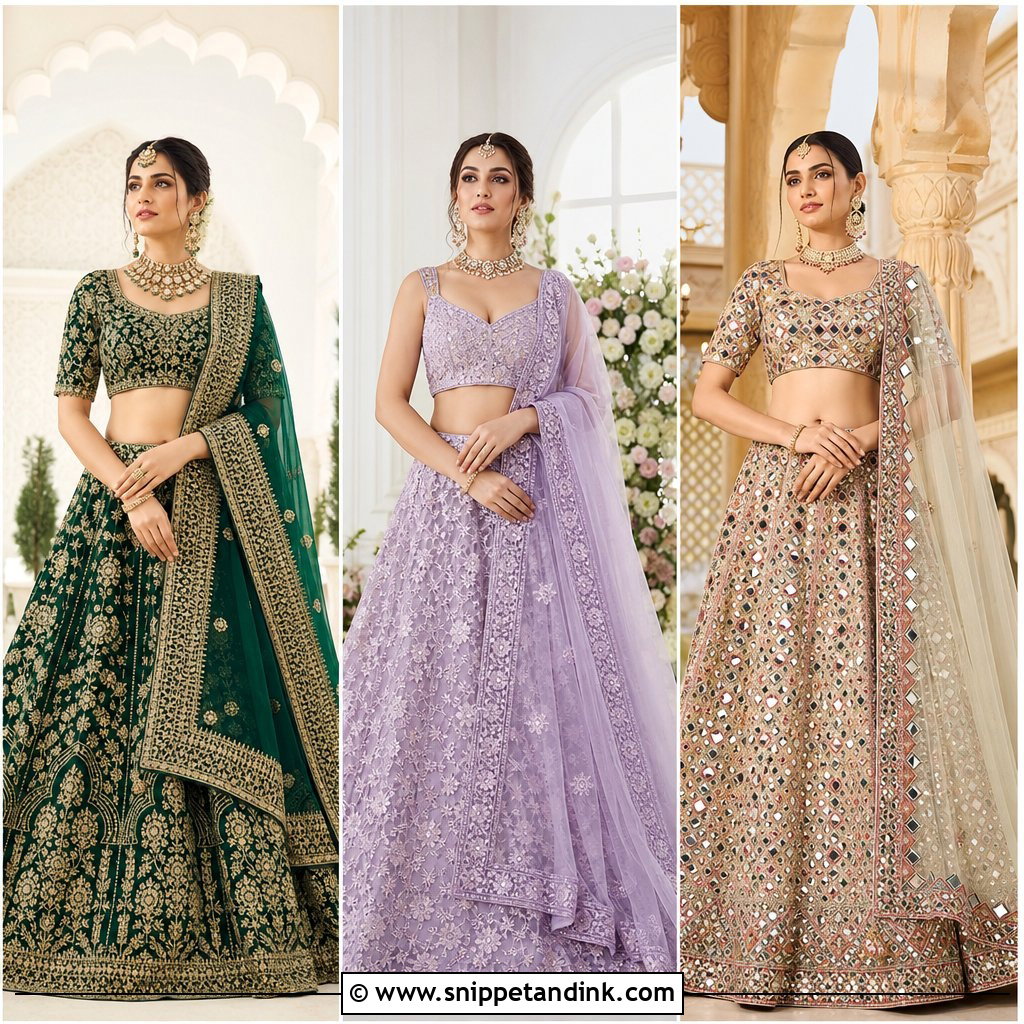
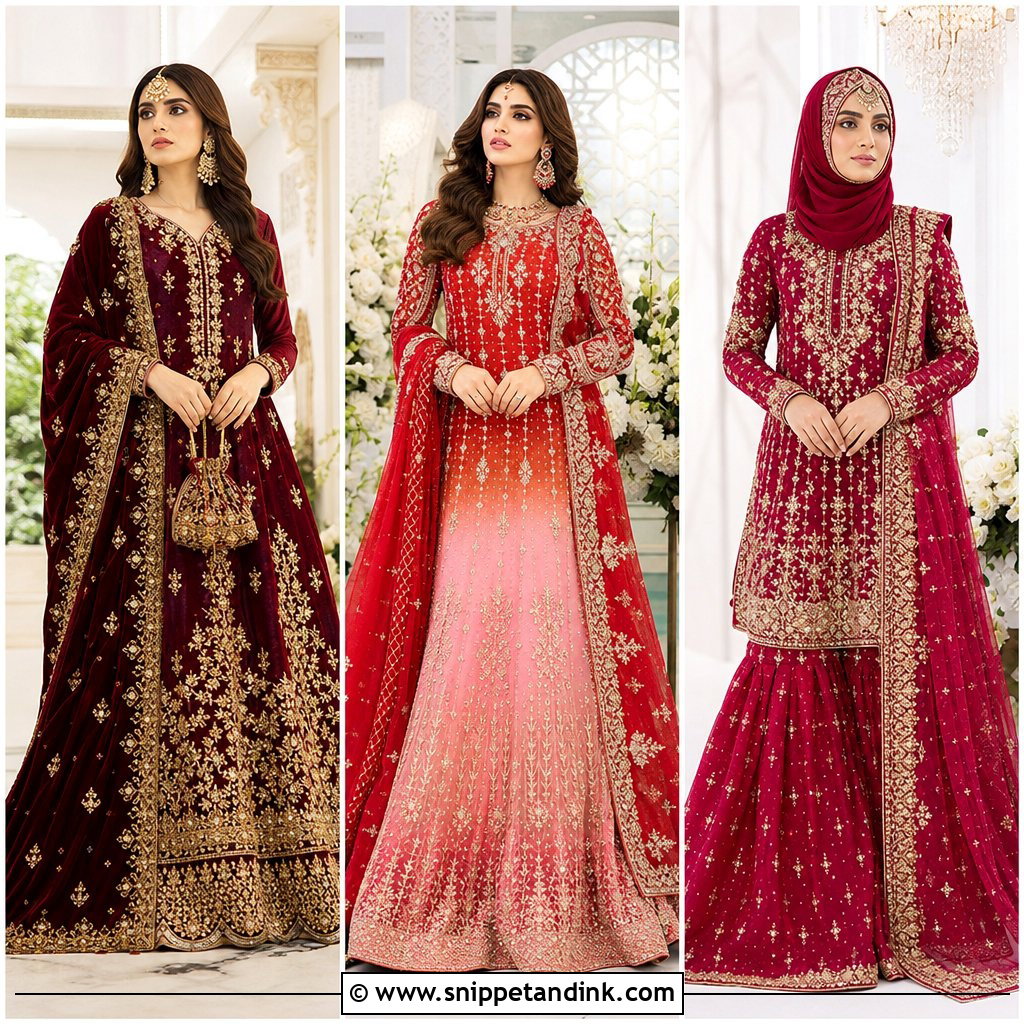
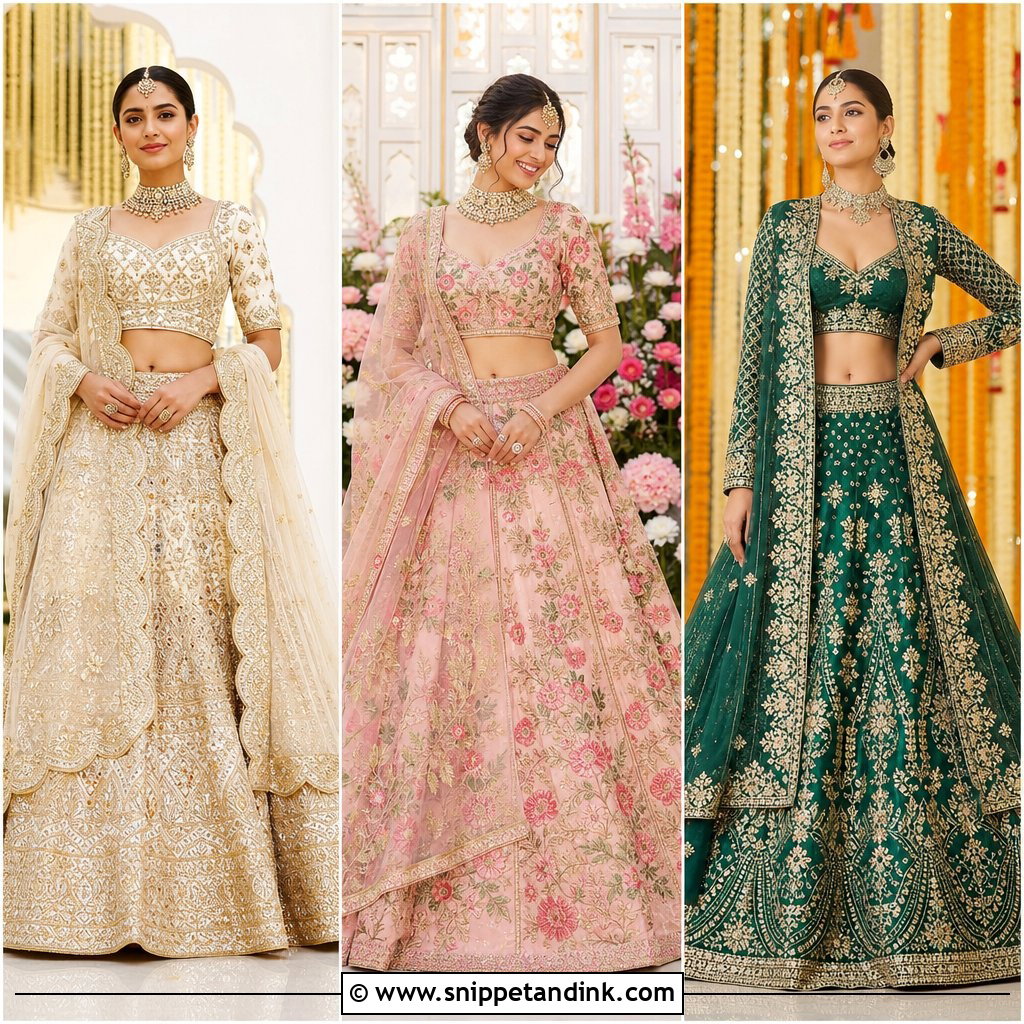
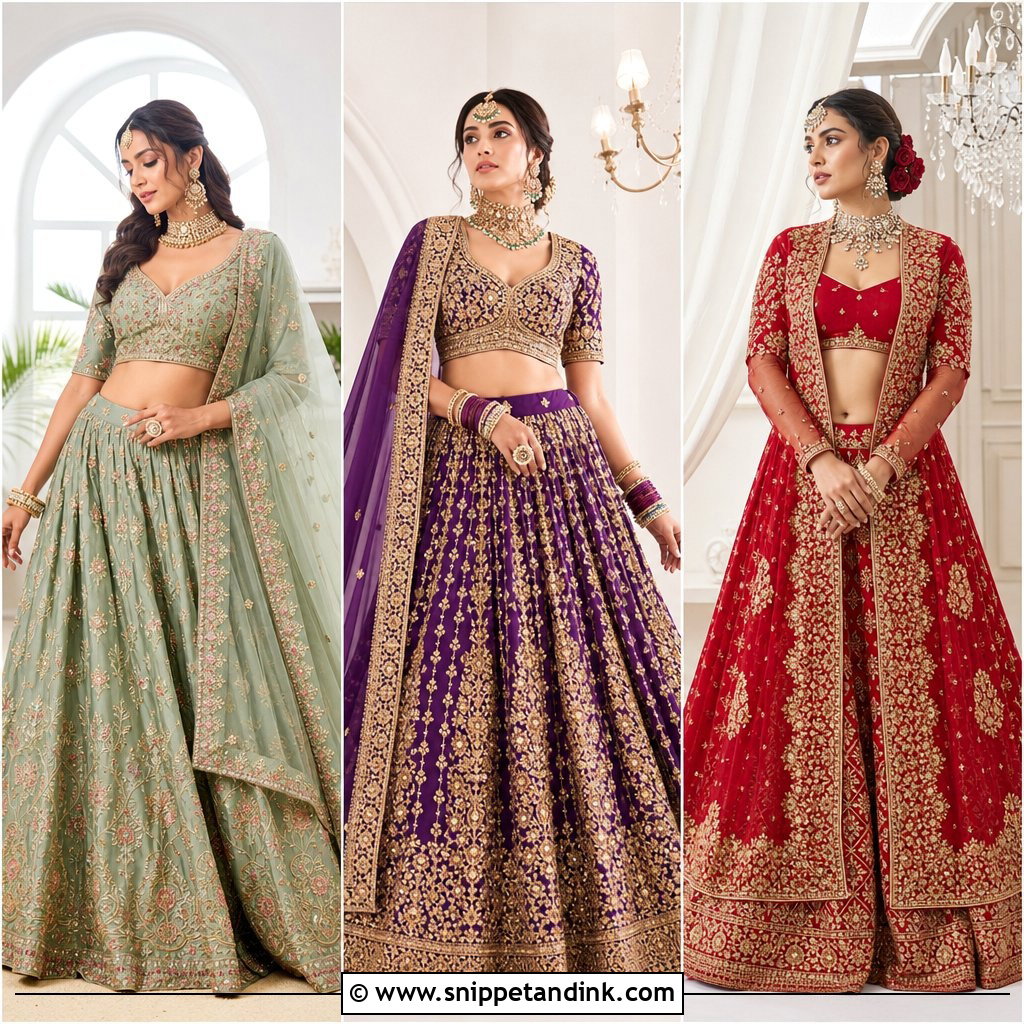
A bridal choli decides more of your outfit than its size suggests. It sits next to your face in every portrait, holds up your jewelry, and is the one piece you’ll feel all day. So I never judge a blouse alone; the neckline, sleeves and fabric have to agree with the lehenga, dupatta, jewelry and shoes. The range is wide, from traditional red zardozi sets to ivory corsets, modest longline cuts, mirror work and personalized embroidery. More brides now ask me for lighter construction and an easier fit while keeping the richness of wedding wear, and that is achievable. Keep your venue, season, preferred coverage and the photographs in mind as you look through the twenty below.
The Measurements Behind a Choli That Stays Put
A bridal choli is closer to tailoring than to buying a dress off a rail. Most fit problems I see come from measurements taken quickly or over the wrong underwear. If you’re having one made, these are the numbers a good tailor should take, and it’s fine to ask for each one.
- Bust, under-bust and waist, taken over the bra you will actually wear, or with no bra if the choli has built-in cups.
- Shoulder to apex: the distance from the shoulder to the bust point, which decides where darts and choli-cut seams land.
- Armhole round and upper arm, so you can lift your arms during rituals without the blouse rising.
- Front and back neck depth, measured with the necklace you plan to wear if it’s a heavy one.
- Blouse length, taken while you sit as well as stand, since a short choli rides up when seated.
Ask for a trial blouse
For an expensive embroidered piece, I’d ask the tailor for a trial blouse in plain cotton first. It costs a little extra time, but every adjustment happens on cheap fabric instead of on hand embroidery that can’t be unpicked cleanly. Build in time for at least two fittings after the embroidered piece is cut, and keep your weight roughly steady in the final weeks if you can.
1. Red Zardozi Bridal Choli With Matching Lehenga
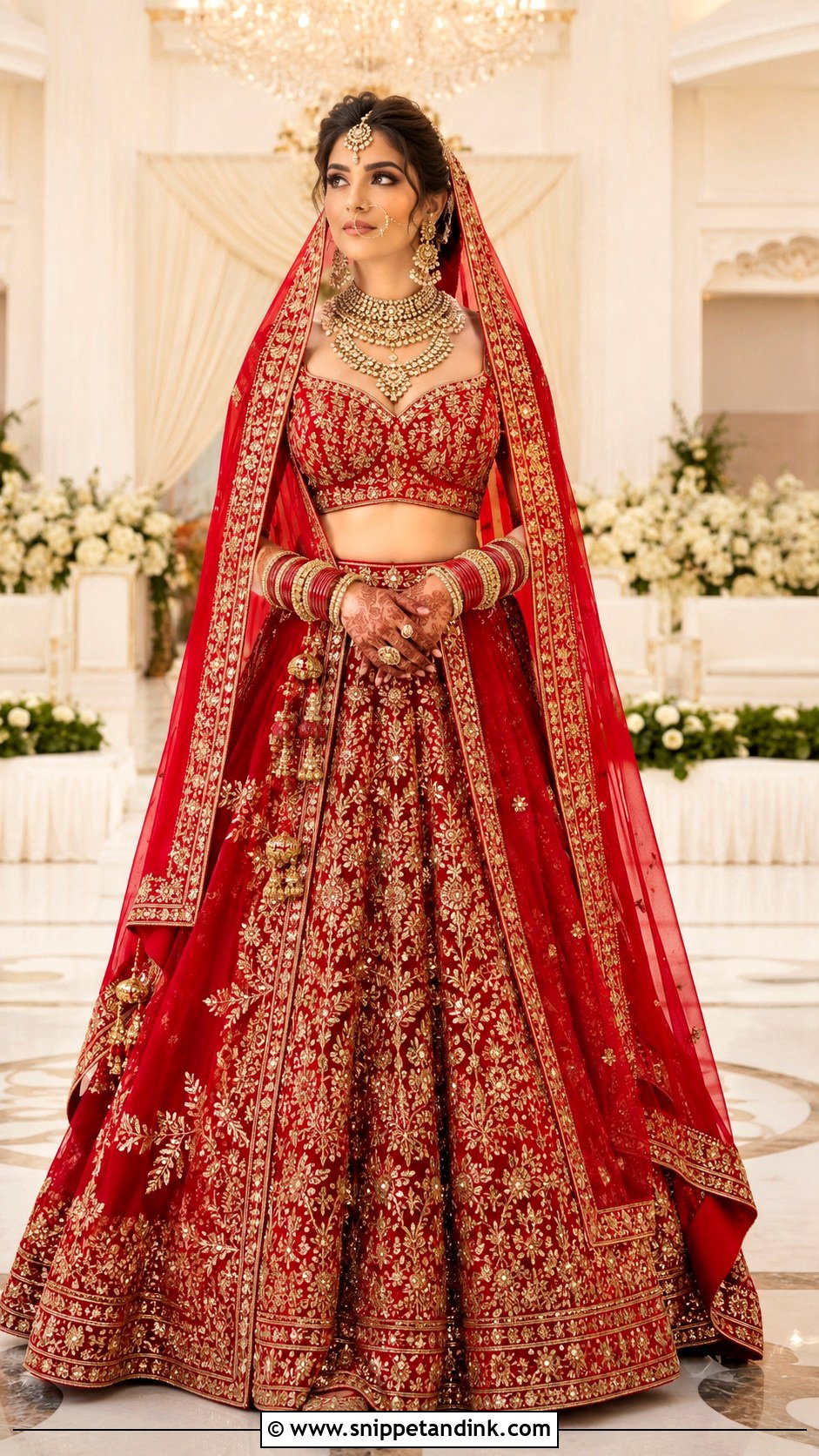
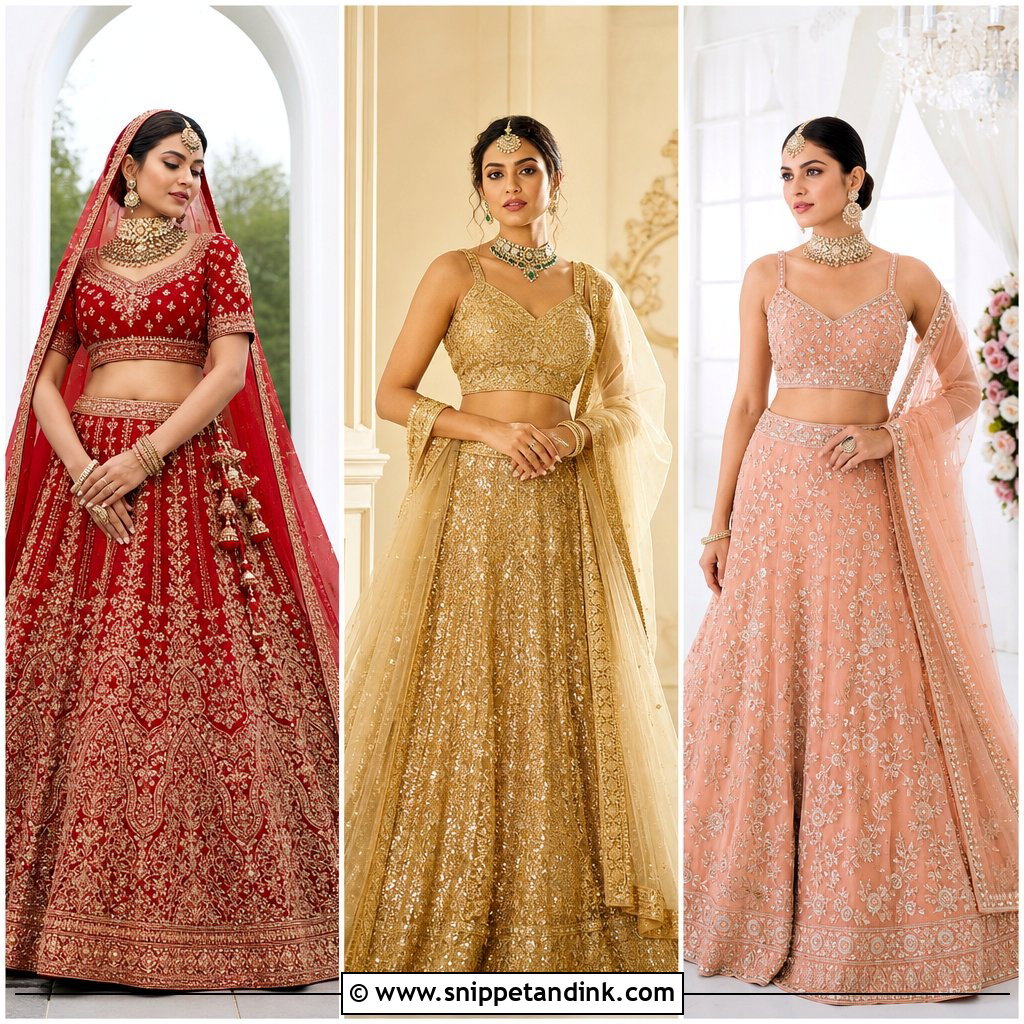
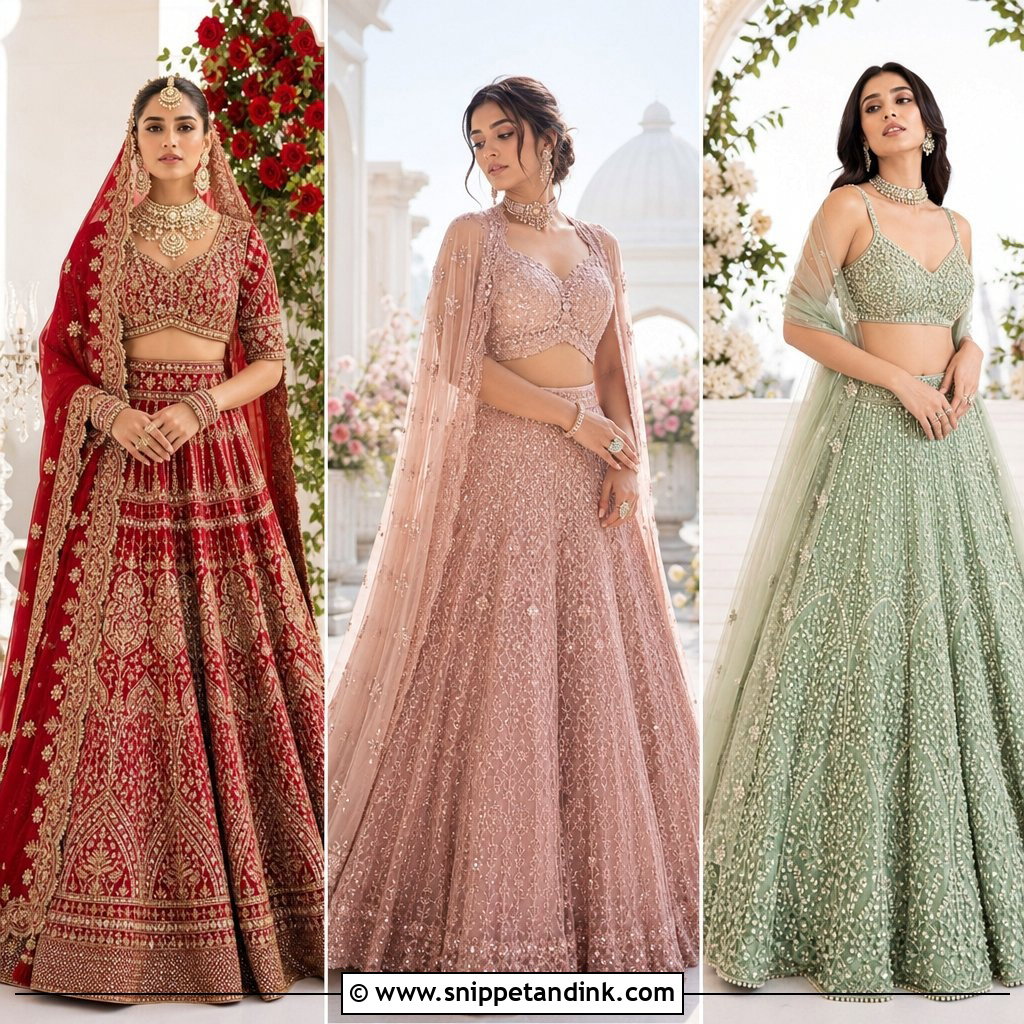
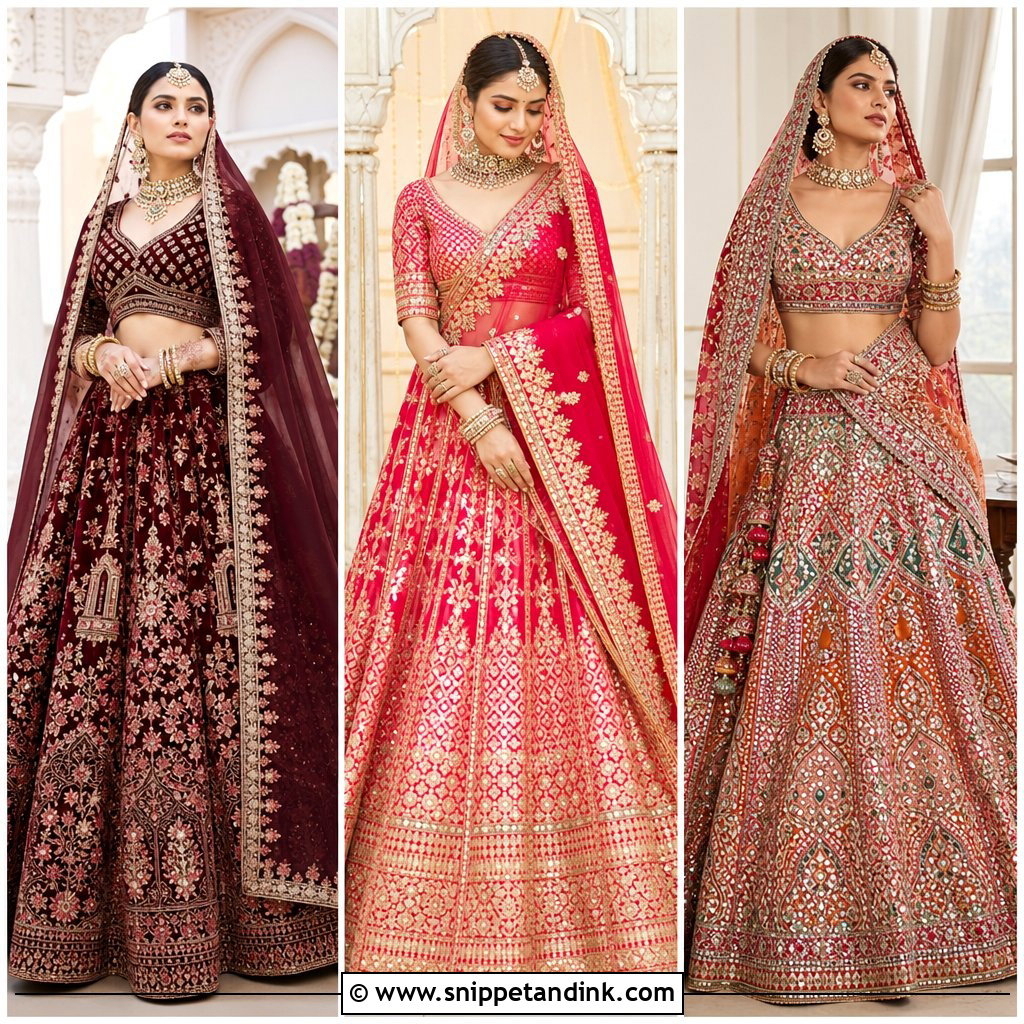
Red zardozi on red is the most traditional option, and it looks most striking when the choli and skirt sit in exactly the same red. Even a slight shift between two dye lots breaks the line at the waist. A fitted silk or velvet choli with a sweetheart or gently curved neck carries dense gold work at the neckline and sleeves, which is where it frames the face. A high-waisted lehenga shortens the gap of skin between the pieces. For the dupattas, a light net one goes over the head and the worked one across the shoulder. Gold jhumkas, a layered necklace and juttis finish it.
2. Maroon Velvet Bridal Choli With Full Sleeves
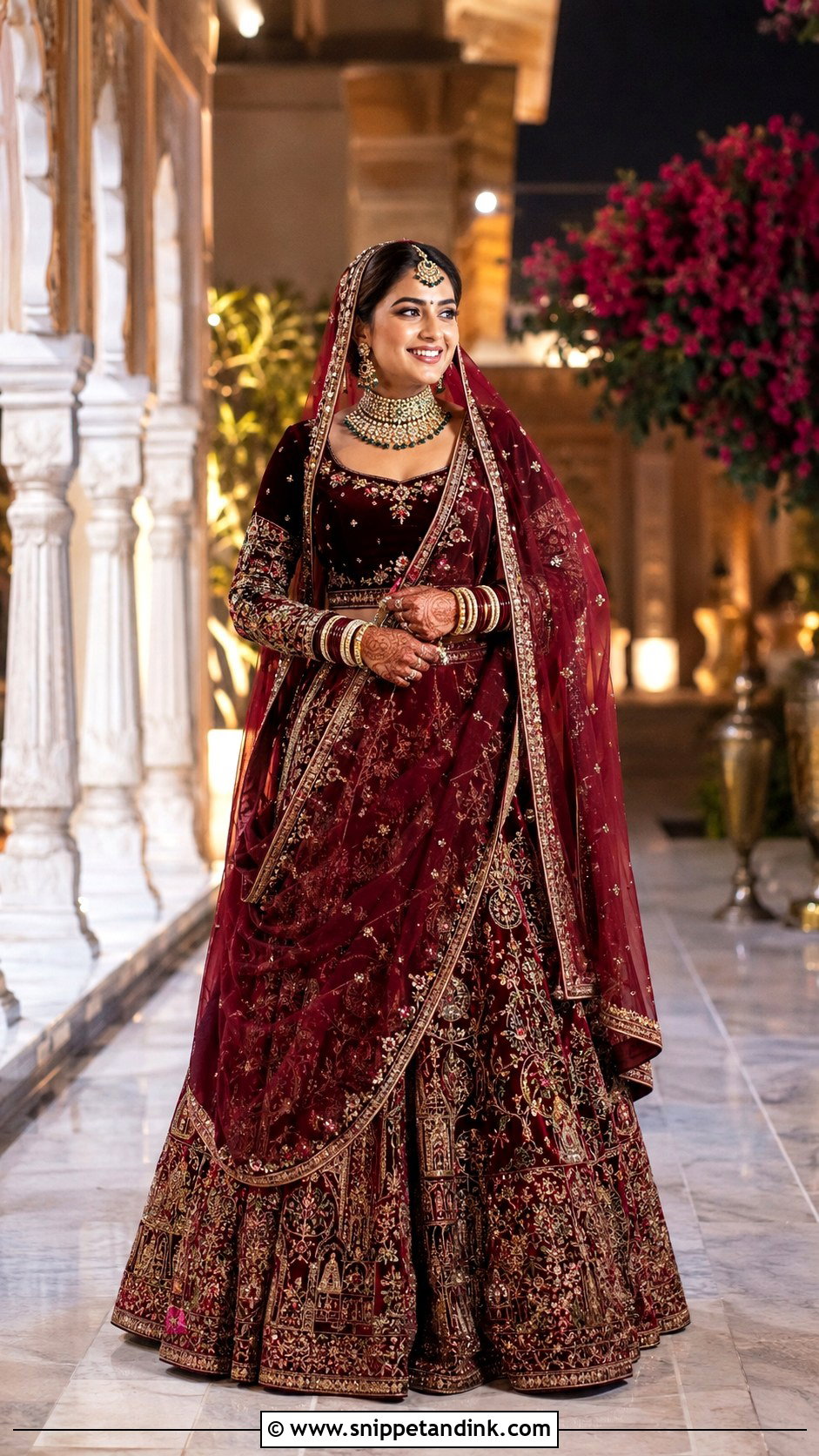
Full velvet sleeves are warm and dramatic, ideal for an evening or winter wedding, and they give zari, sequins and dabka a large surface to work on. Because velvet is heavy and has no give, I keep the neckline open, a soft square or deep scoop, so the whole thing doesn’t feel like armor. The sleeve openings need room too: a tight velvet cuff makes it hard to lift your hands for the rituals. A raw silk lehenga is a lighter partner than matching velvet. A sheer maroon dupatta, a kundan choker and a small maang tikka complete it.
3. Ivory Corset Bridal Choli With Gold Lehenga
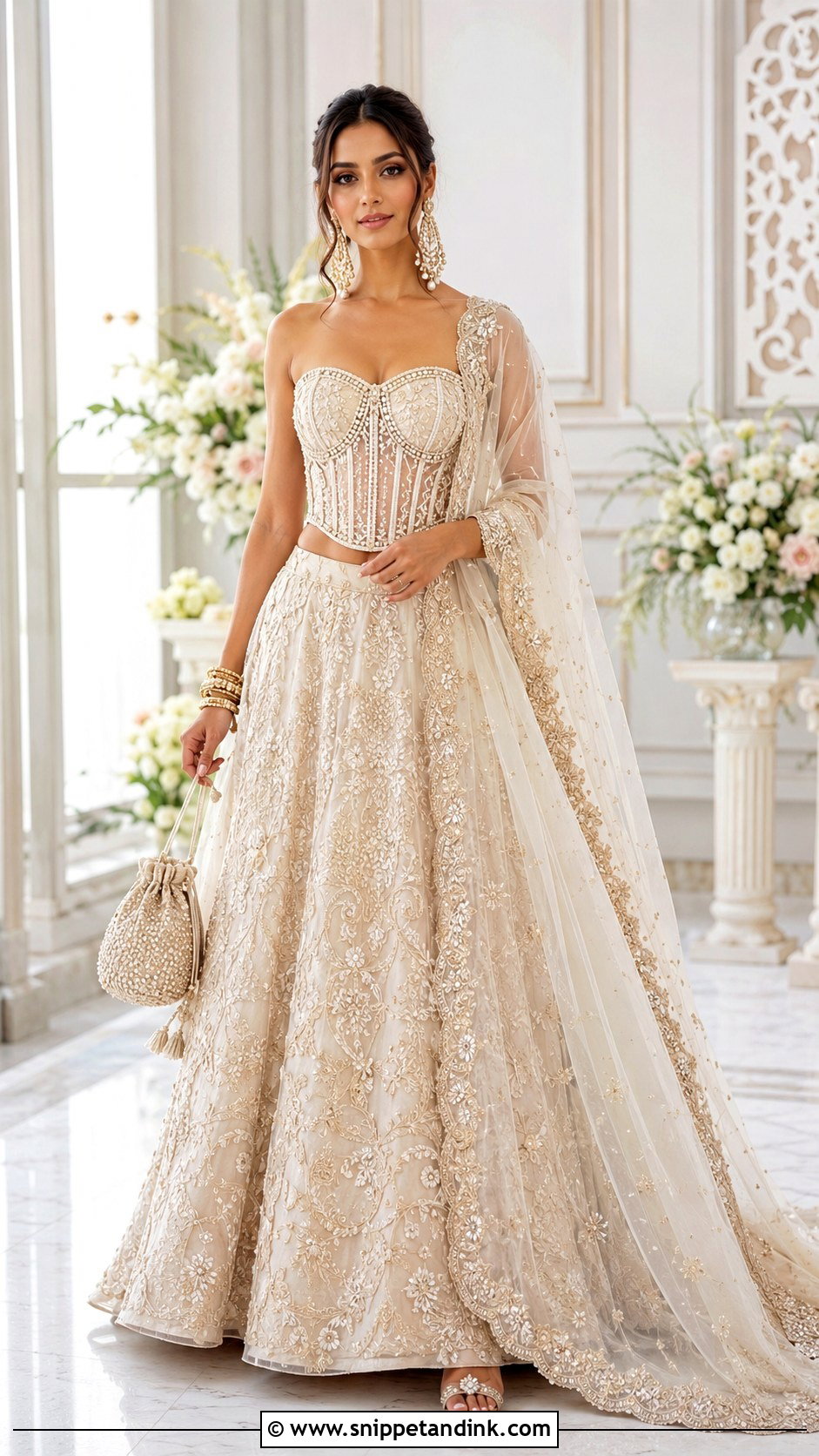
An ivory corset choli brings boning and shape to a traditional outfit. The boned bodice defines the waist, and a curved neckline keeps it soft enough for a ceremony. I prefer tone-on-tone threadwork, small pearls, gold sequins or a few mirrors to very dense embellishment, which stiffens the corset further. Pair it with a voluminous ivory lehenga with spaced gold motifs and a strong border. A sheer scalloped dupatta adds a layer without hiding the corset. Corset blouses sit comfortably with heritage jewelry, but sit down in one before buying; boning that ends too low digs into the hips when seated.
4. Blush Pink Sweetheart Bridal Choli With Floral Lehenga
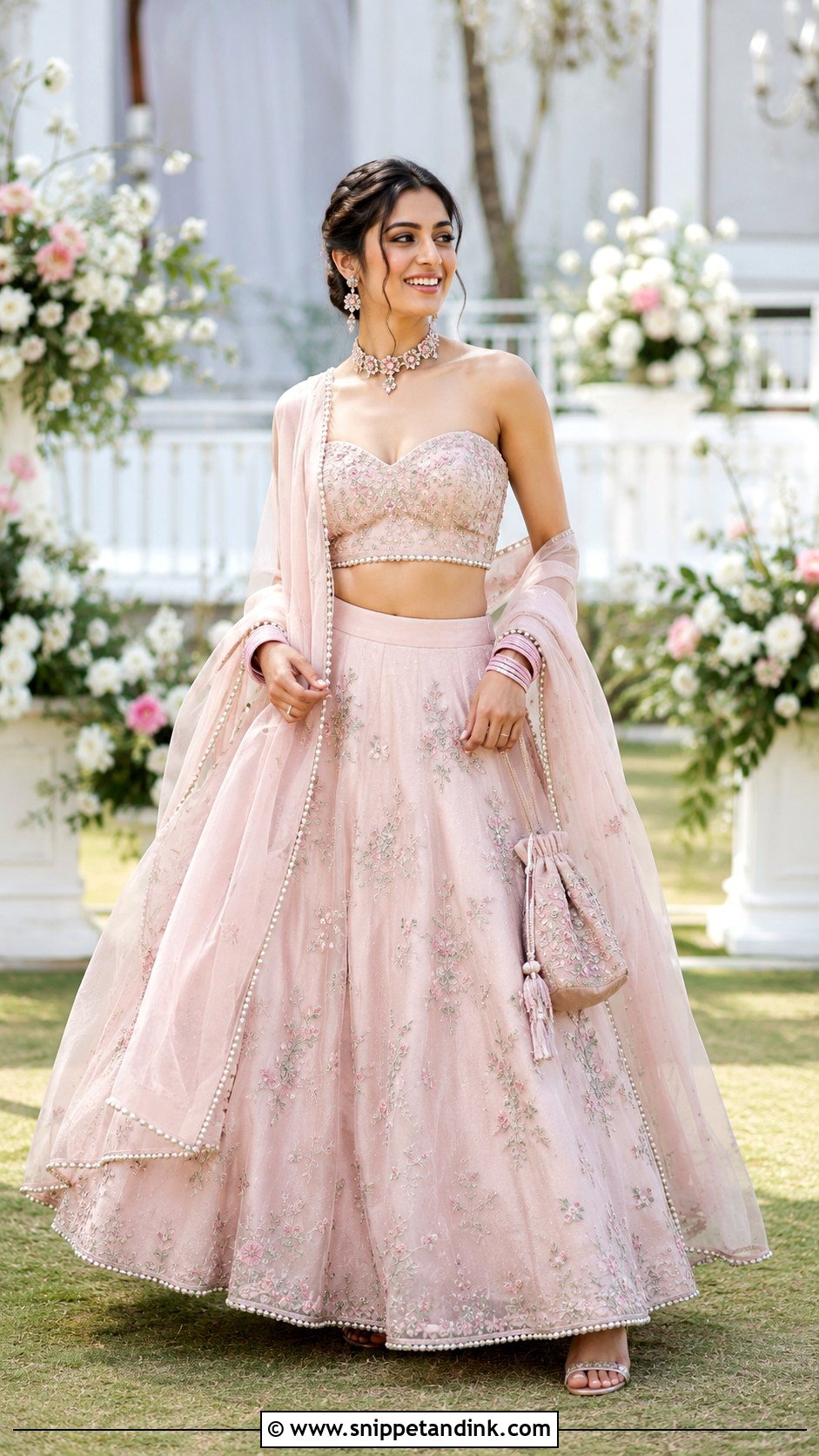
Blush pink is a daytime color, at its best in a garden or under natural light. The sweetheart neckline needs real internal support, built-in cups or light boning, because a soft pastel blouse that slips shows immediately. Resham flowers, pearls and subtle sequins give dimension. Scattered florals on the lehenga look lighter than one heavy continuous pattern. An organza dupatta with a narrow pearl border, rose-gold sandals and a pastel meenakari necklace keep the palette together. Ask for a lehenga waist that’s fitted but not tight, since you’ll eat and sit in it.
5. Emerald Green Bridal Choli With Red Lehenga
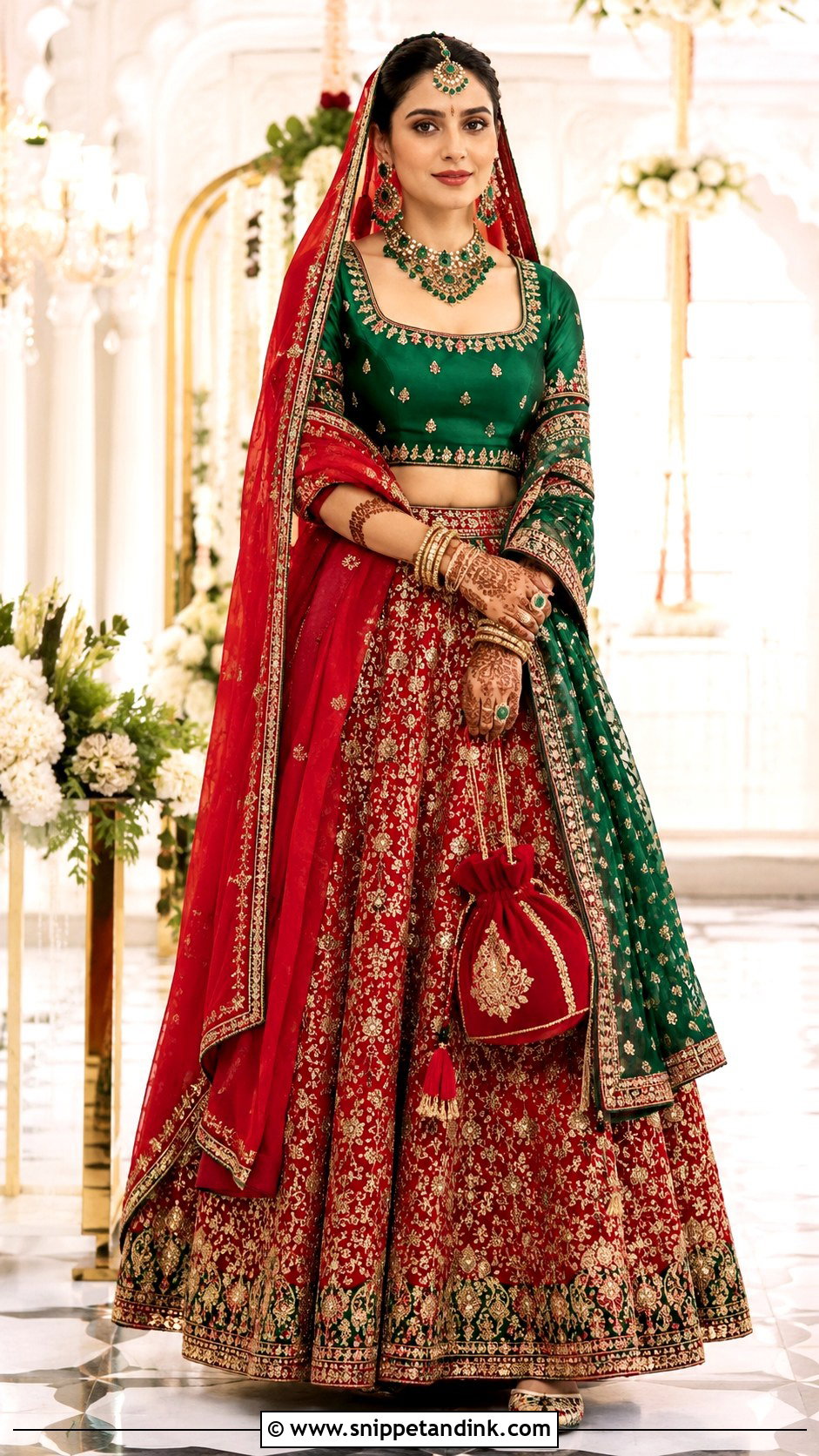
A contrast choli is the simplest way to make a familiar red lehenga feel like yours. An emerald silk choli with a square neck and elbow sleeves works when the red skirt carries green somewhere, in the border or the motifs. Without that link, the two pieces look like they came from different outfits. Keep the blouse shape simple, since the color contrast is already doing the work. A red dupatta over the head and a lighter green one across the shoulder repeat the pairing. Emerald jewelry and a red potli close the loop.
6. Mirror Work Bridal Choli With Multicolor Lehenga
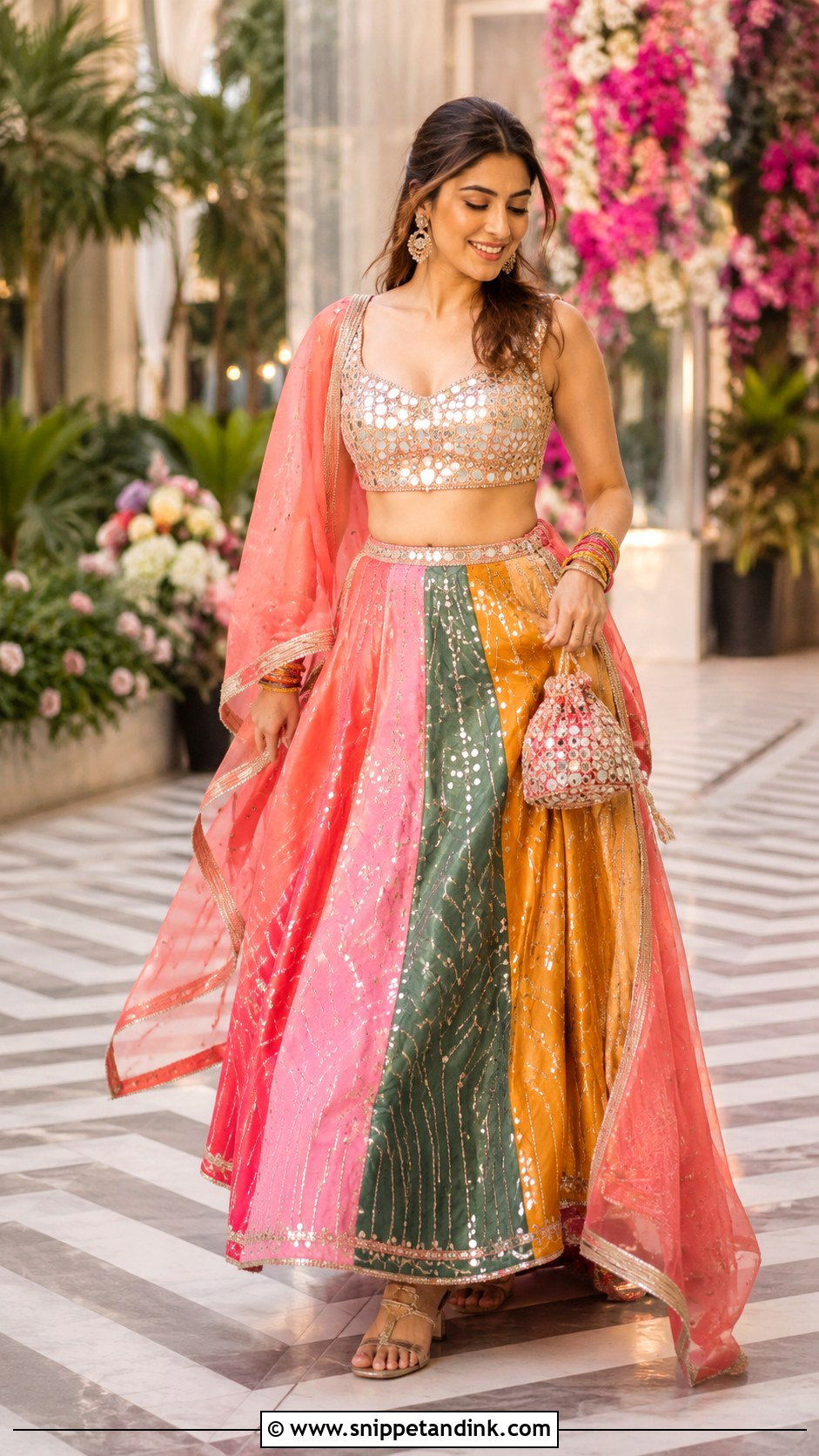
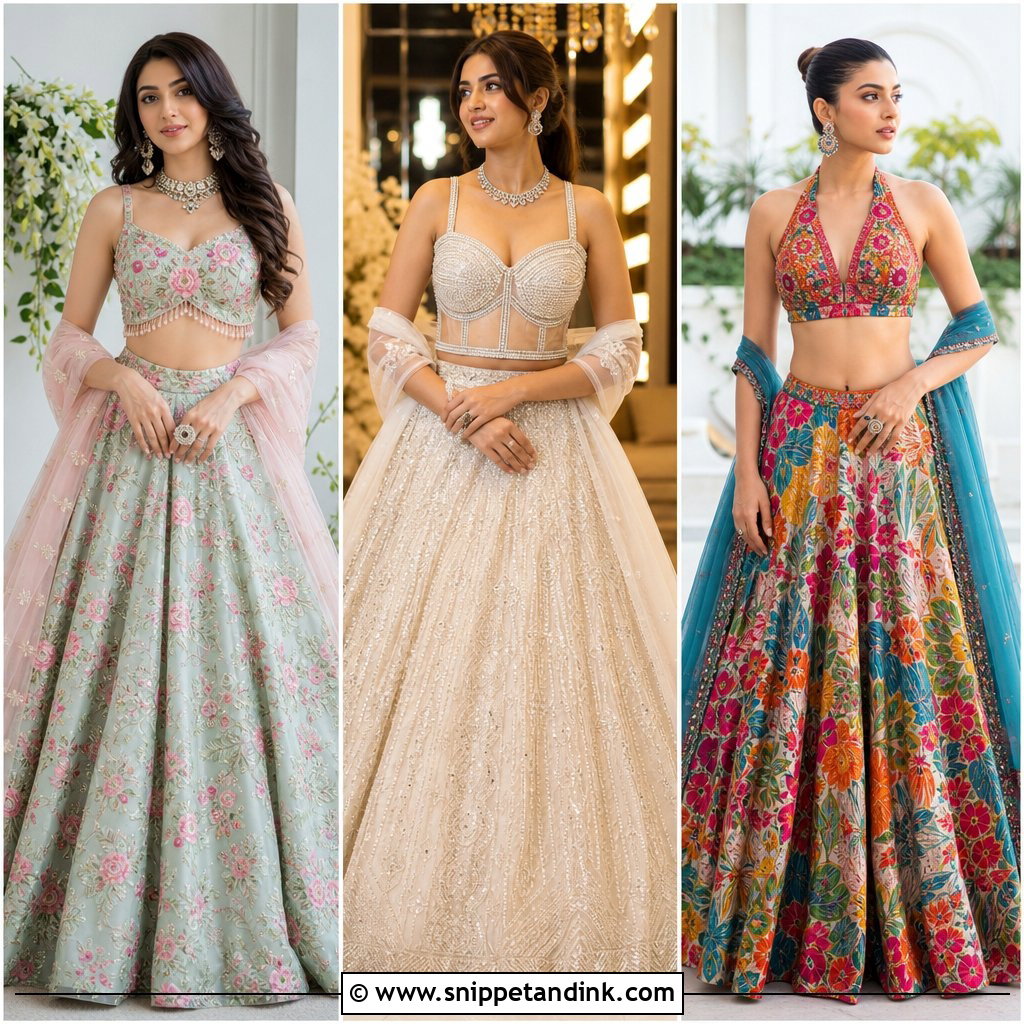
Mirror work belongs to the sangeet or a colorful ceremony where you’ll be moving. A fitted choli with a scoop neck, secure straps and evenly placed mirrors pairs with a paneled lehenga in pink, coral, green, yellow or blue, with the same mirrors repeated on each panel. The blouse needs a smooth lining, since the back of mirror embroidery is lumpy and sits right against your skin. Use a light net or organza dupatta if you’ll dance. Skip a big necklace when the neckline is already full. Mirrors with floral panels and restrained embellishment stay bright without any one element taking over.
7. Pearl Halter Bridal Choli With Satin Lehenga
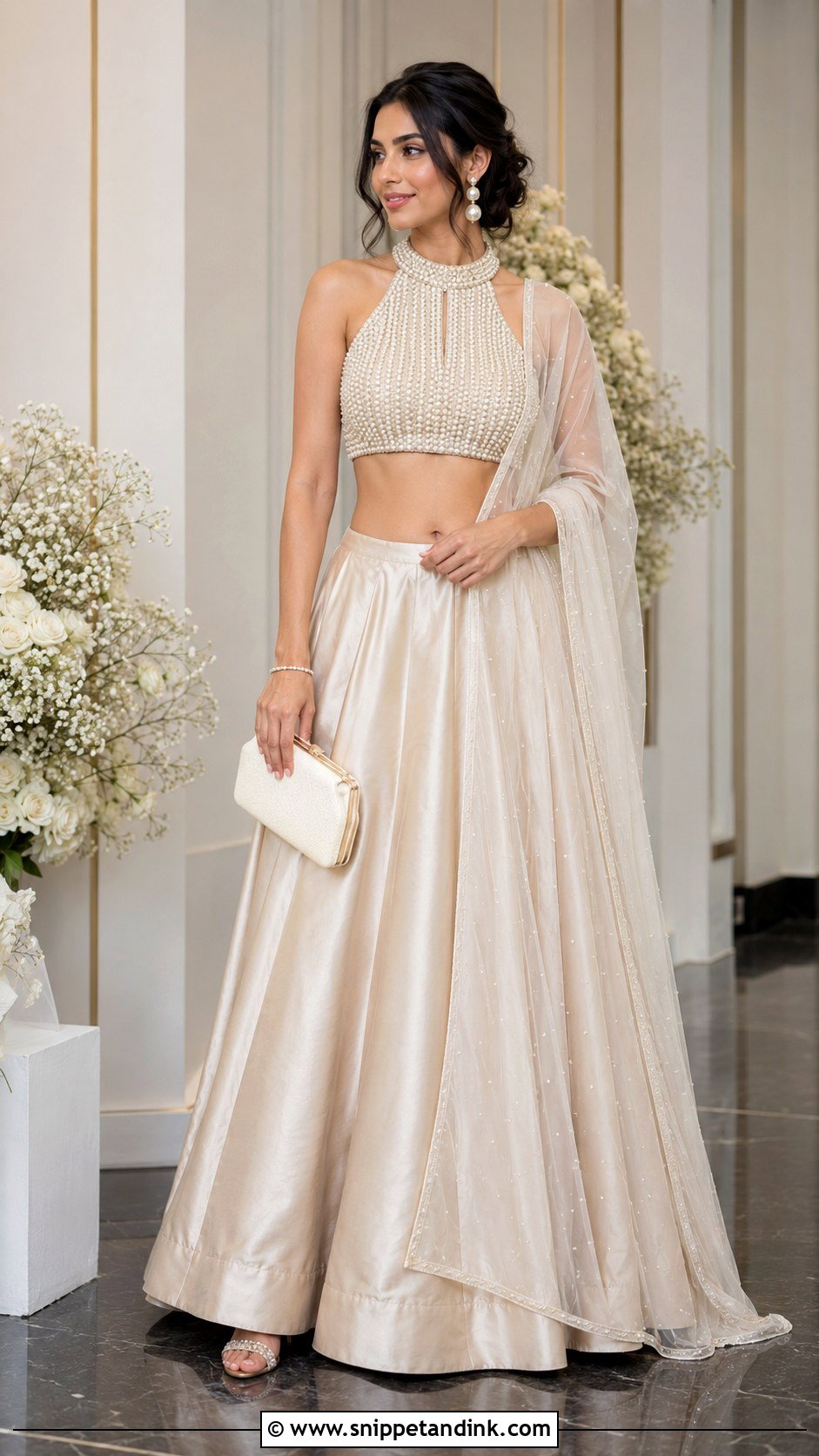
A pearl-covered halter choli suits a bride who likes modern tailoring. The halter needs to be high and supportive with a fitted waist and a neat back closure; a loose halter tips forward under the weight of the pearls. Scattered pearls look softer, structured lines cleaner. A satin lehenga in champagne, ivory or pale pink with minimal hem work keeps it sleek. Wear the dupatta on one shoulder rather than over the neck. No necklace. The armholes on halters are cut deep, so check that the edges are smooth and won’t rub through a long evening.
8. Scalloped Boat Neck Bridal Choli With Silk Lehenga
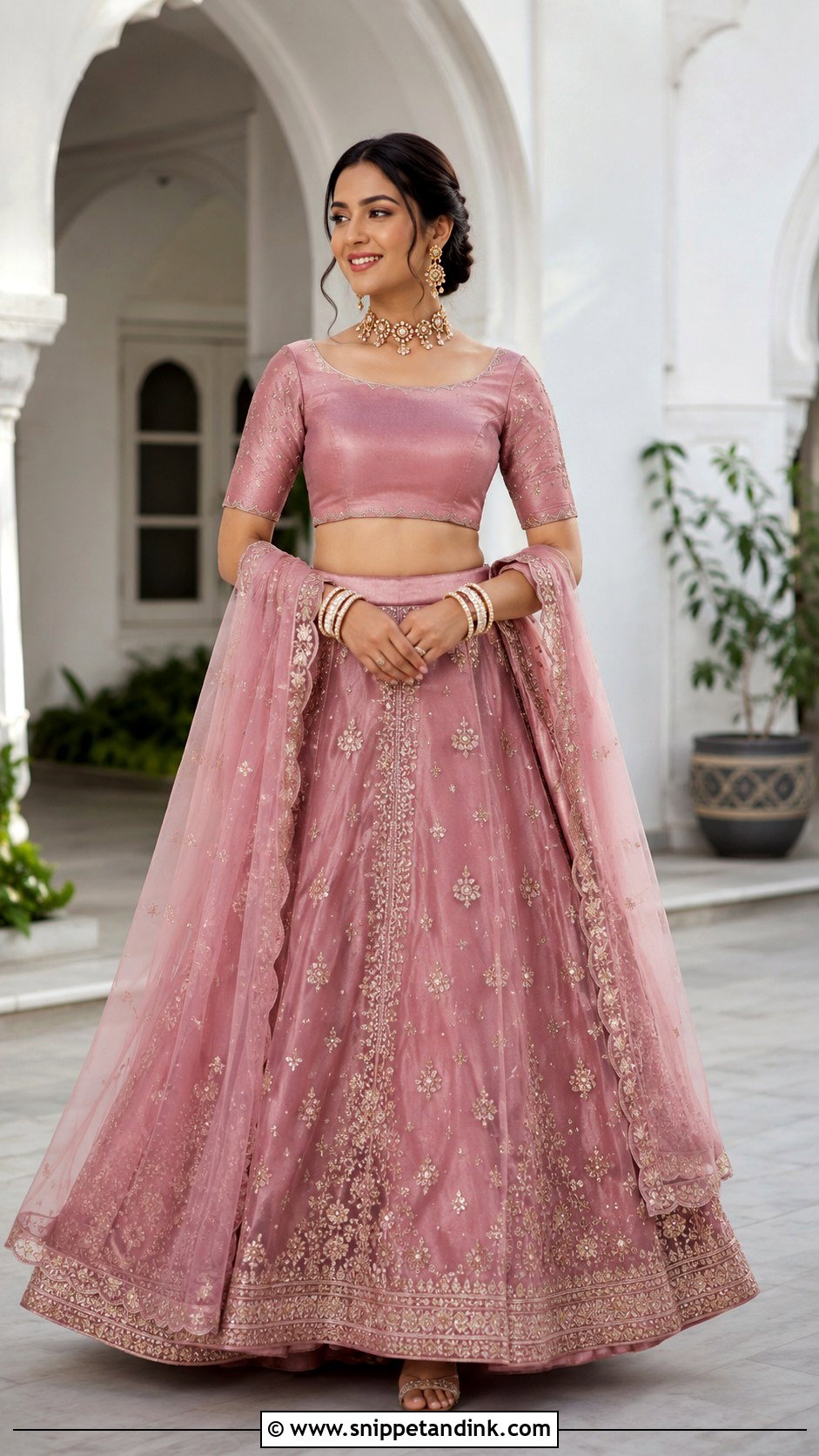
Scalloped edges make a boat neck look softer and more decorative, and the shape gives moderate coverage while showing the collarbones. Raw silk in dusty rose, burnt orange, burgundy or muted gold holds a crisp scallop. Repeat the scallop on the sleeves and lehenga waistband. A coordinated A-line skirt with spaced florals lets the blouse lead. Drape a sheer dupatta low over the arms so the neckline stays visible. Boat necks are the hardest to fit at the shoulder, since they sit wide and can slip off, so I test them seated and with the arms raised before the final stitch.
9. Deep V Neck Bridal Choli With Embroidered Lehenga
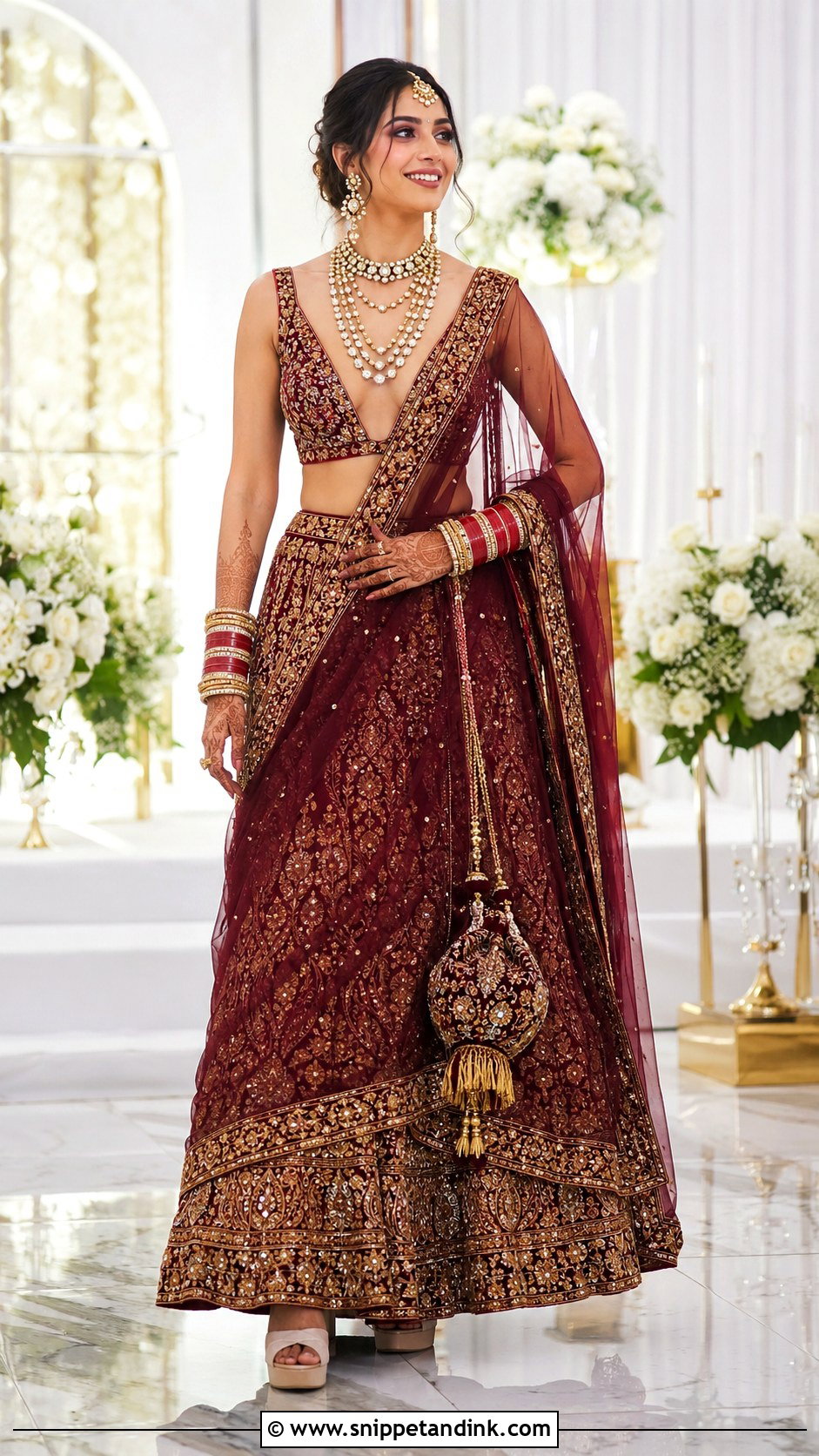
A deep V-neck lengthens the torso and gives layered jewelry a clear runway. It only feels secure with wide straps, internal support and a center panel or mesh that holds the V flat. Pair it with a heavily embroidered red, rust, wine or antique-gold lehenga at the natural waist. A dupatta draped diagonally softens the depth. Stick to a choker and one longer necklace. Have the depth set to your comfort rather than copying the sample. A good V stays flat against the body when you sit and lean, and gapes on nobody.
10. High Neck Bridal Choli With Sheer Sleeves
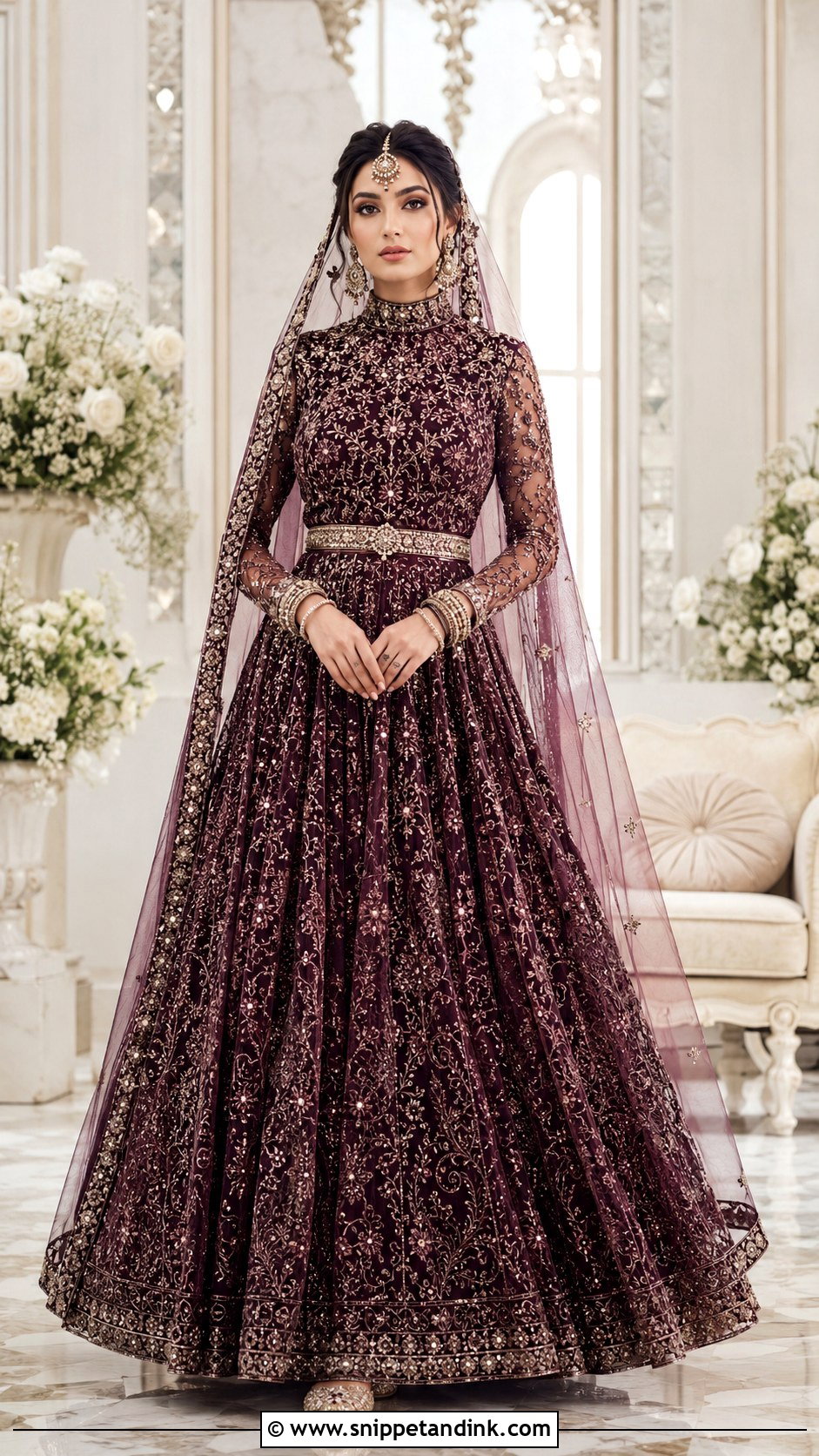
Winter weddings call for coverage that doesn’t look heavy. A high neck with sheer full sleeves solves that: embroidered net on the upper bodice and sleeves, with an opaque silk lining through the main torso. A full circular lehenga in ruby, plum, navy or forest green with motifs repeated from the choli ties them together. With the neck enclosed, swap the necklace for statement earrings, a maang tikka and a waist belt. The collar is the thing to check. It should close smoothly and not press on your throat when you sit and look down, which you’ll do a lot during rituals.
11. Off Shoulder Bridal Choli With Marsala Lehenga
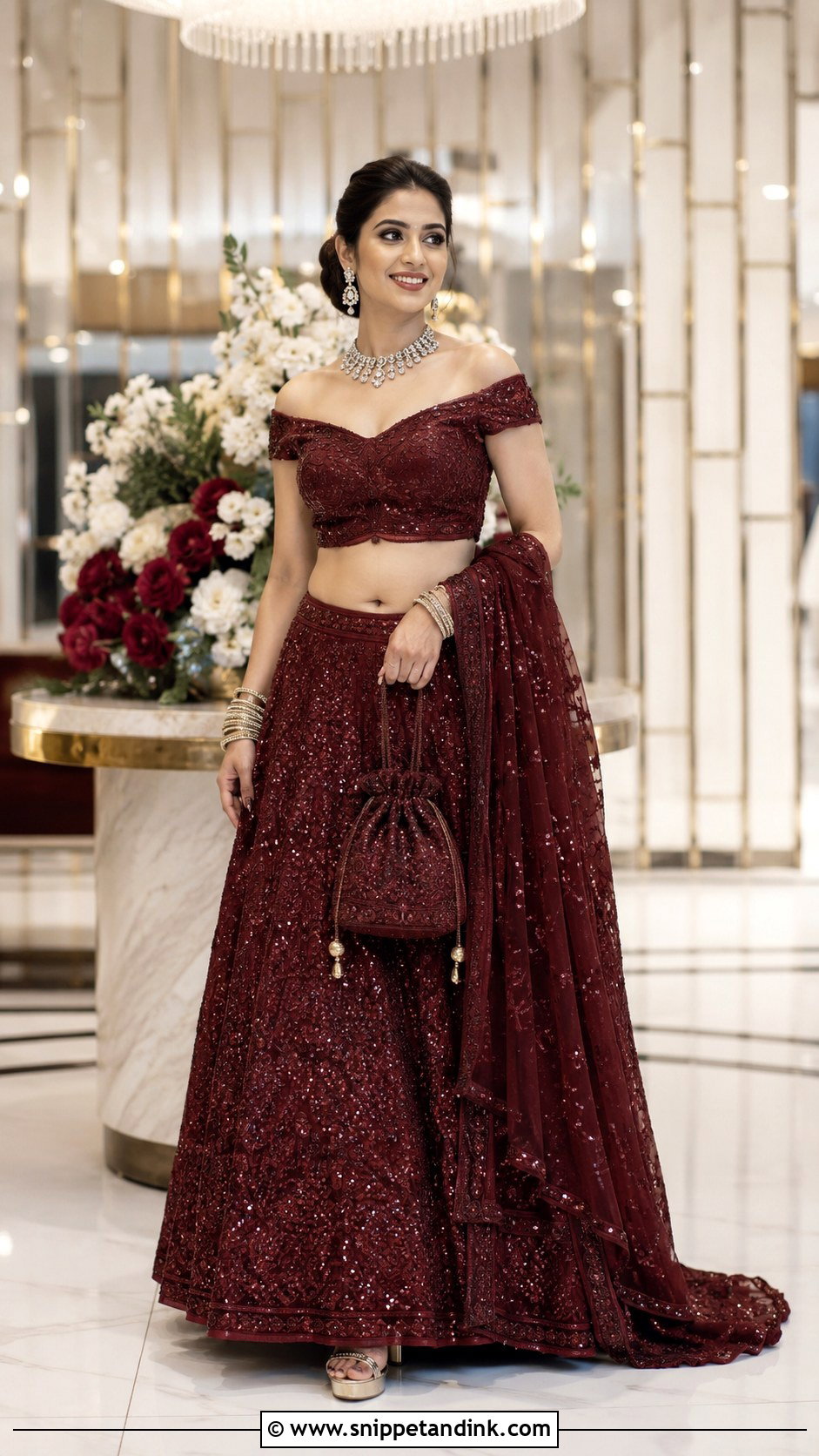
Off-shoulder cholis look sophisticated only when the structure is solid: supportive cups, a little boning and an embroidered foldover neckline that grips. Marsala, deep rose or muted burgundy keeps it bridal. A matching lehenga with tonal sequins and florals completes the base. Carry the dupatta over a forearm or fix it at the back so it doesn’t cut across the shoulder line. In fittings, I ask brides to reach forward and hug, because that’s when off-shoulder bands ride up. Avoid hanging sleeve details that tangle with the dupatta.
12. Peplum Bridal Choli With Flared Lehenga
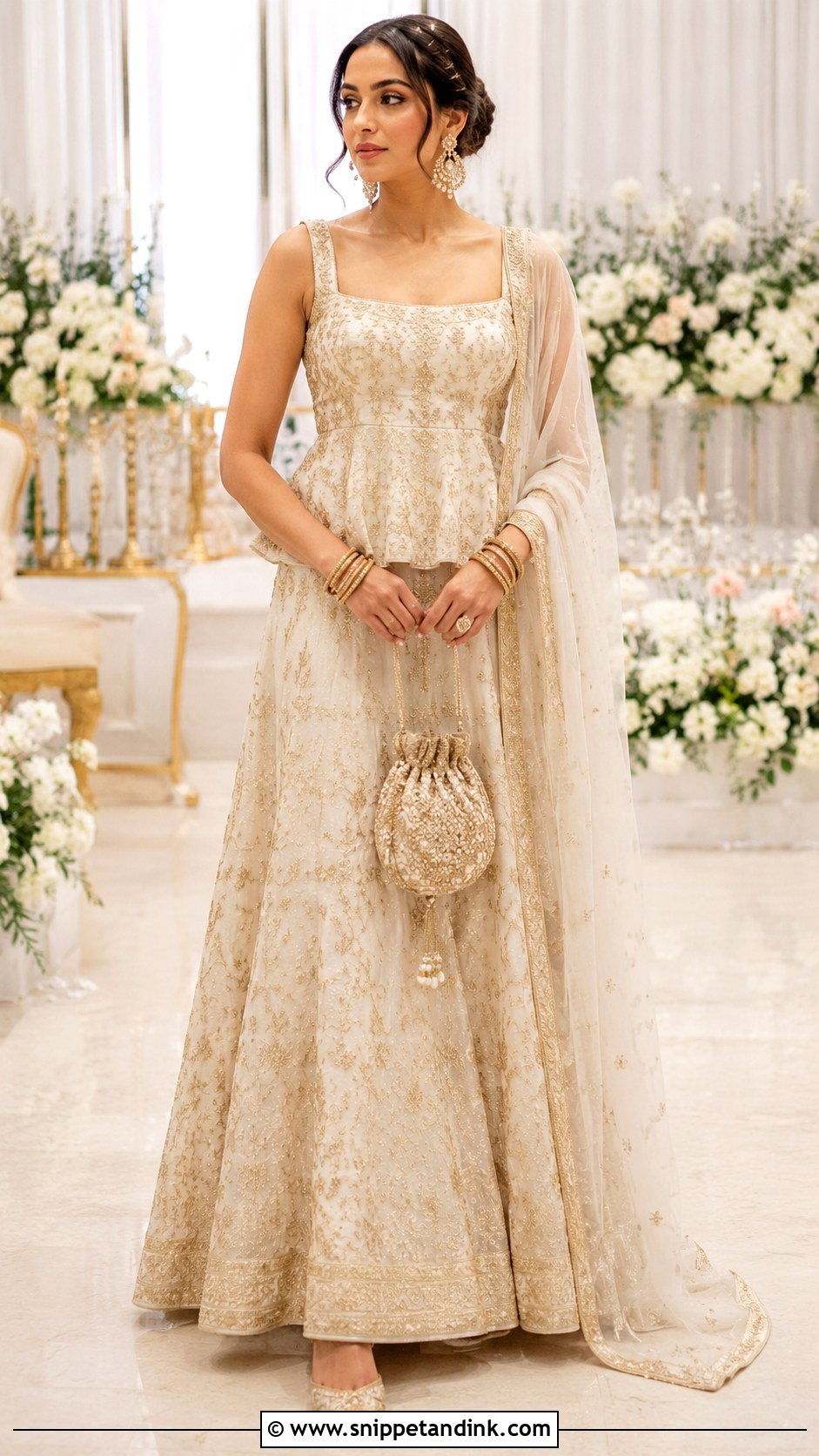
A peplum choli covers the waist while keeping the grandeur of a full lehenga. I want the flare to start at the natural waist and fall gently; a heavily gathered peplum adds bulk exactly where most brides don’t want it. Embroidery at the neckline, cuffs and peplum edge outlines the shape. Match the lehenga color so the two read as one silhouette. Drape the dupatta from one shoulder rather than wrapping it at the waist, which hides the peplum. A shorter peplum lengthens petite brides; a longer one gives more coverage.
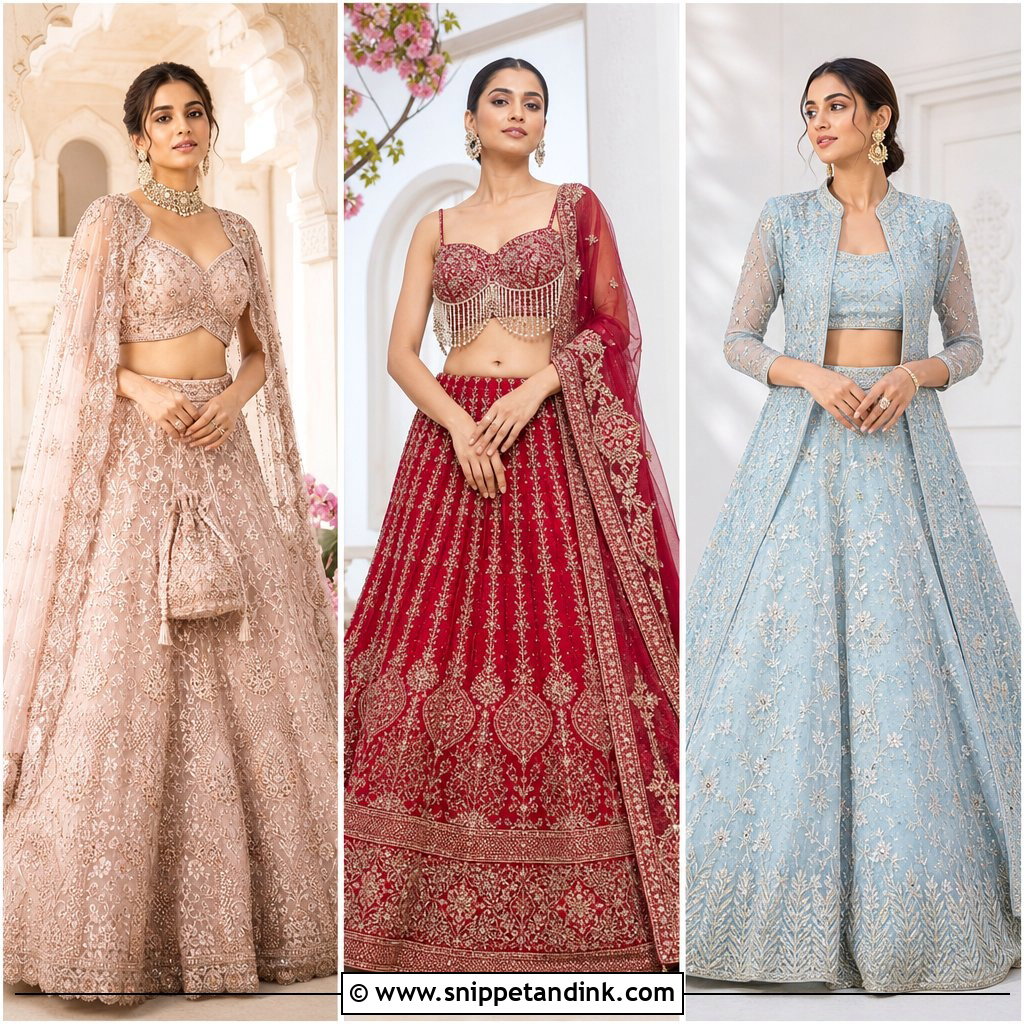
13. Cape Bridal Choli With Paneled Lehenga
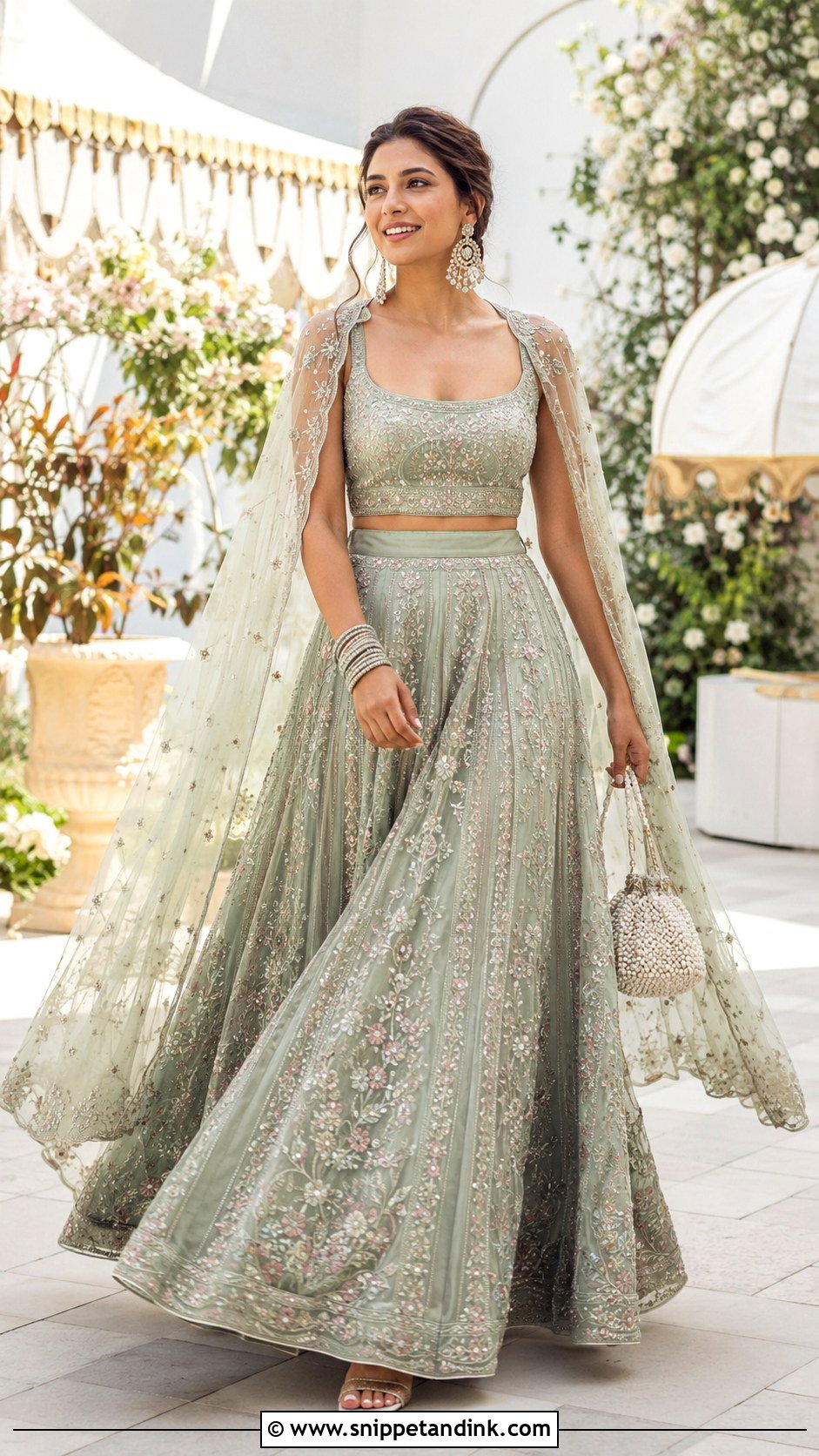
A sheer cape over a fitted sleeveless or short-sleeve choli gives movement and coverage without the usual dupatta arrangement. The cape can fall to the waist or hips. Paneled lehengas in sage, dusty pink, ivory or soft blue suit it, with embroidery kept near the hem so the cape leads. Cape cholis paired with paneled skirts are popular because the statement sits up top while the skirt stays easy to wear. The practical step is anchoring. Have the tailor tack the cape at the shoulder seams or add small hooks, because a loose cape slides back every time you move your arms.
14. Banarasi Silk Bridal Choli With Woven Lehenga
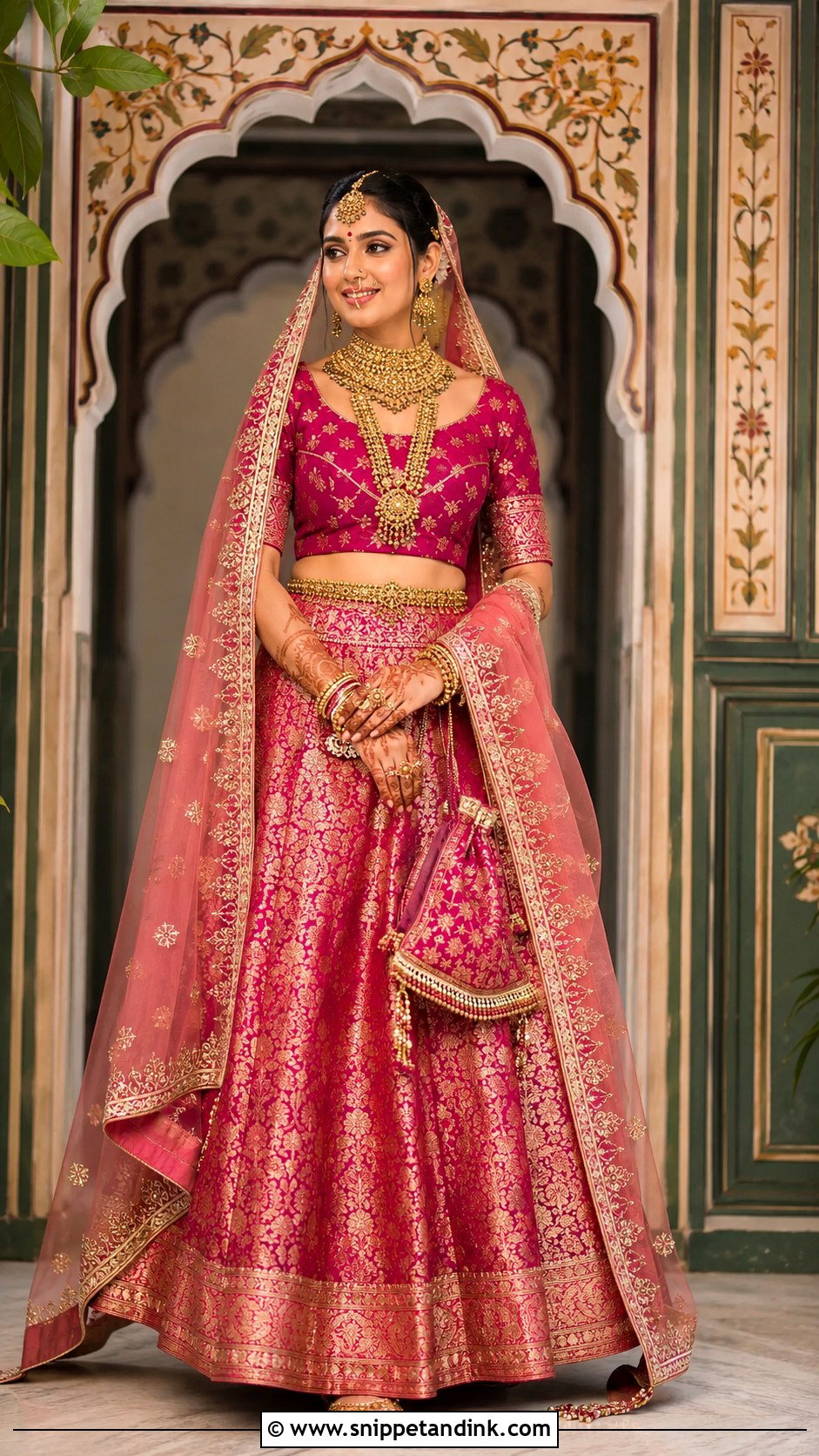
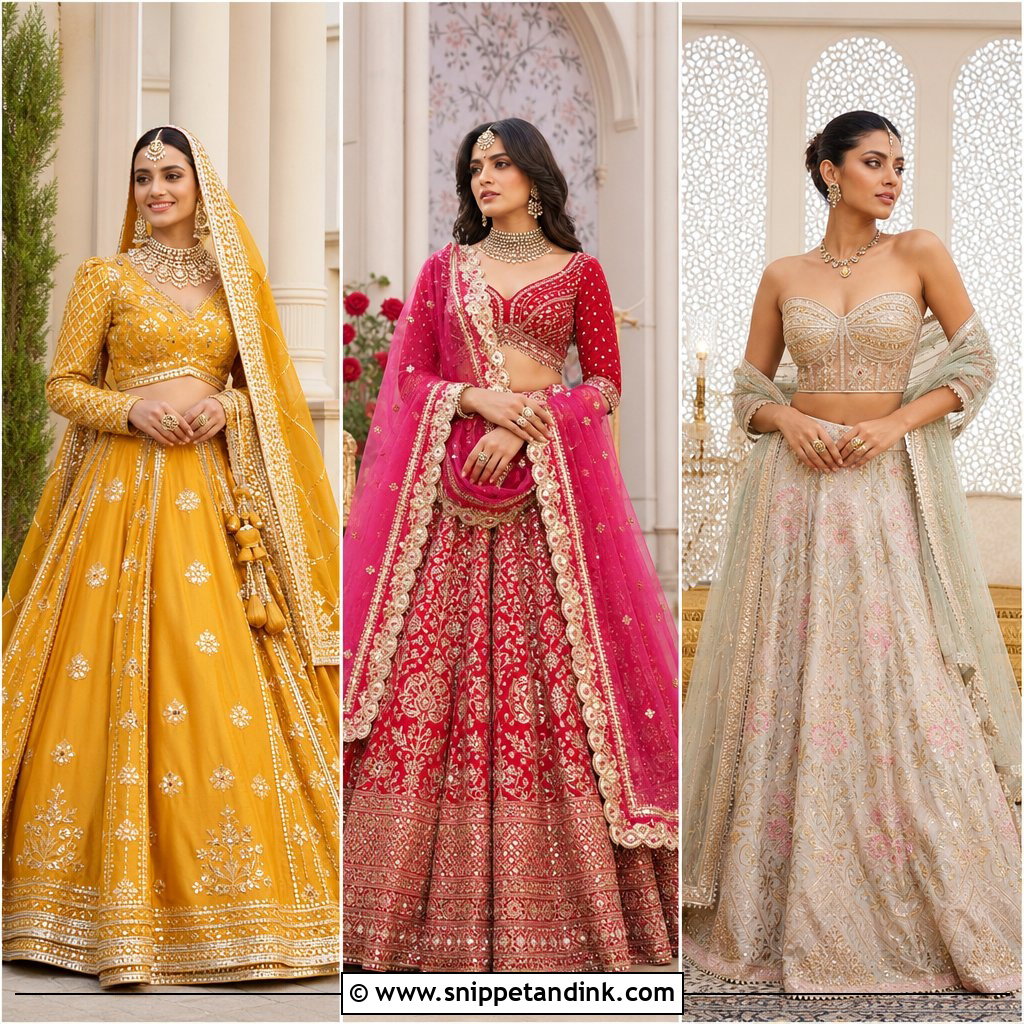
Banarasi silk glows on its own, so it needs less surface work. A fitted choli with elbow-length sleeves and a classic round, square or sweetheart neck pairs with a full Banarasi lehenga woven with gold zari florals or geometrics. Red, magenta, emerald, saffron and royal blue all show off the weave. The tailoring detail I watch is motif placement: a woven butti cut off at the center front or neckline looks careless, so the motifs must be aligned before cutting. Brocade is warm, so ask for a breathable cotton lining. A contrasting organza dupatta lightens it.

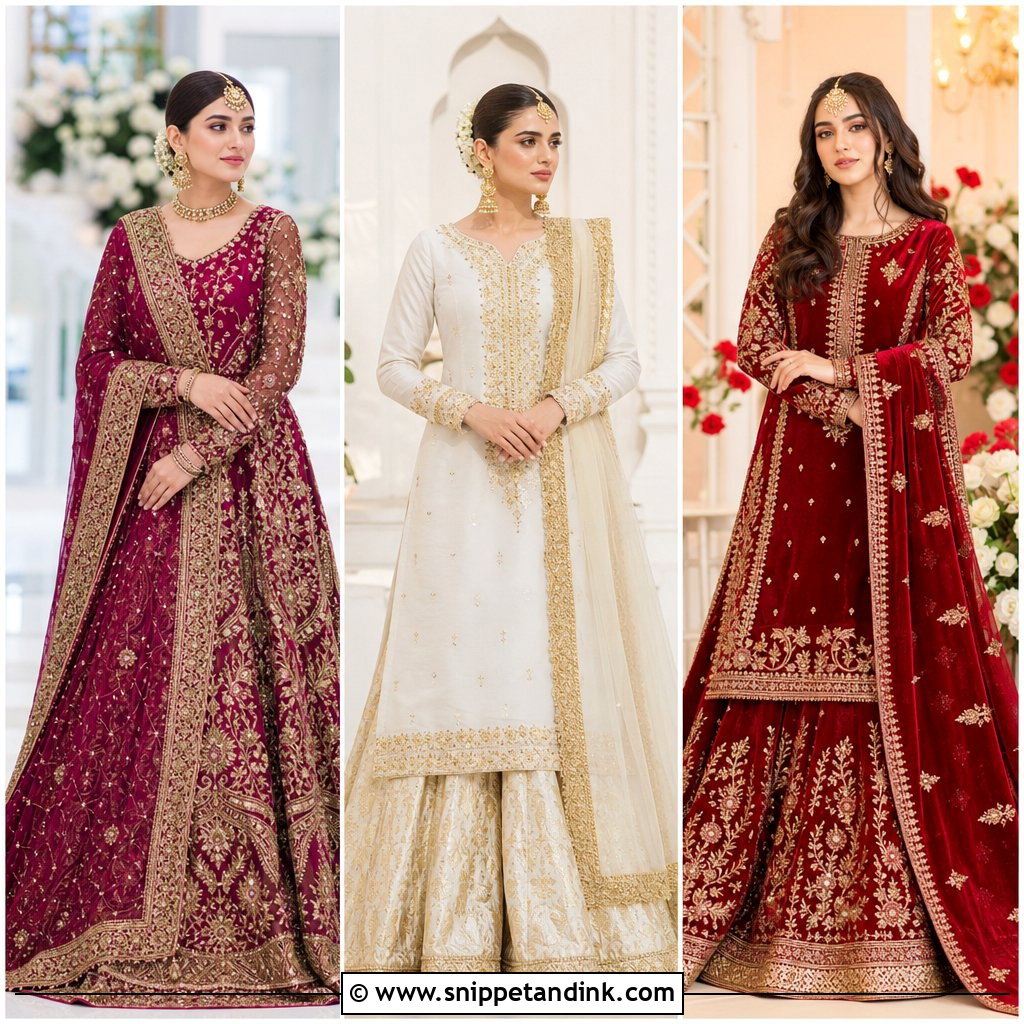

15. Floral Embroidered Bridal Choli With Pastel Lehenga
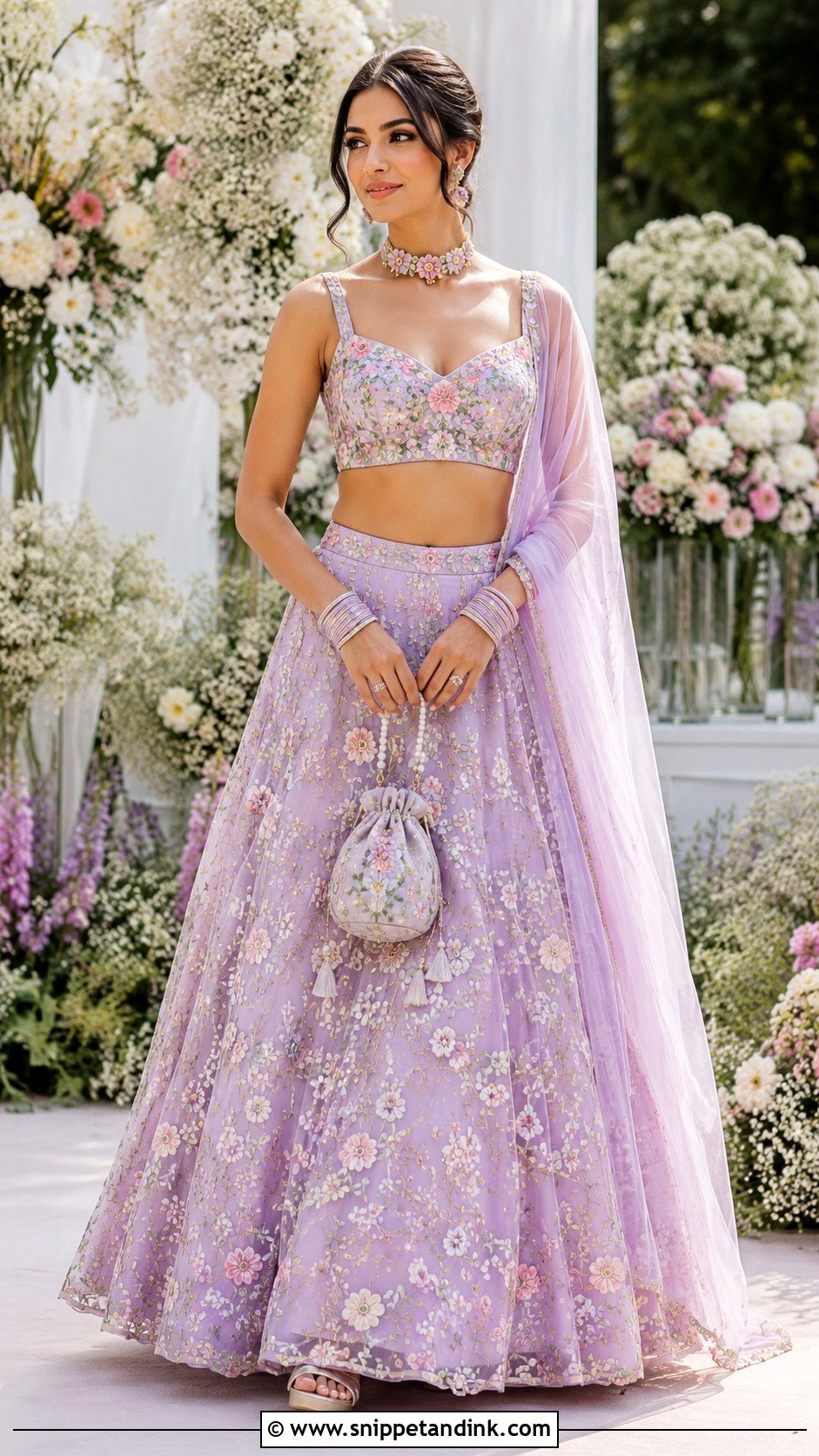
Florals that seem to grow from the choli down into the skirt suit a pastel base: peach, lilac, powder blue, mint or soft ivory. Place multicolor flowers at the choli neckline and waist and larger versions near the hem. I limit the palette to three or four thread colors, because pastel bases show every extra shade. A plain organza dupatta with a narrow border keeps it fresh. Raised petals or a little beadwork give texture that shows in close-ups. Thin sleeves or supportive straps work; pick whichever holds the neckline steady on you.
16. 3D Applique Bridal Choli With Tonal Lehenga
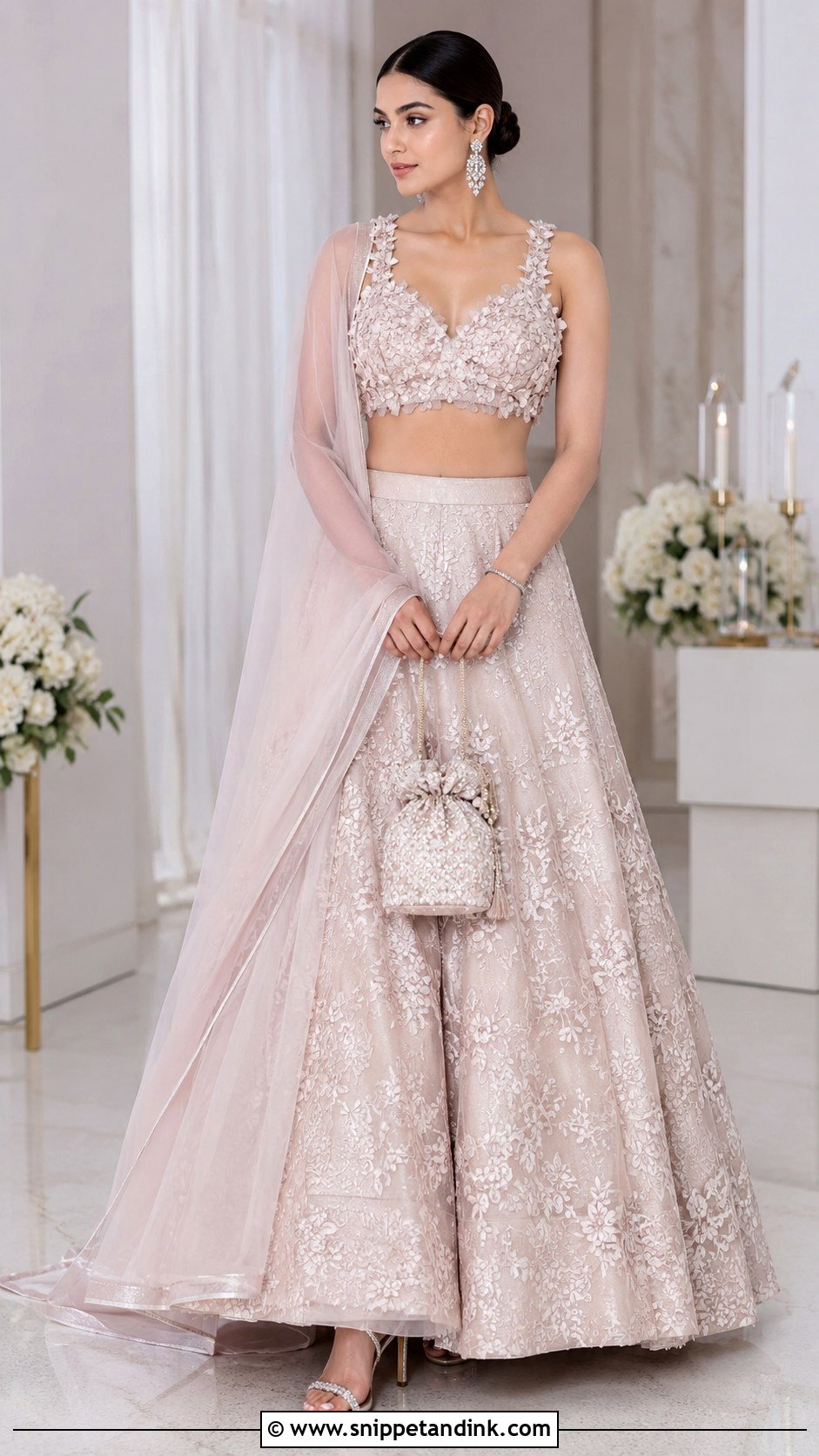
Raised appliqué gives a single-color outfit depth. Place three-dimensional flowers around the choli neckline and shoulders in blush, ivory, soft gold or deep red, and thin them out toward the waist. Keep big flowers away from the underarms and sleeve seams, where they get crushed and restrict movement. A tonal lehenga with flatter embroidery and a few repeated appliqués at the border, plus a plain sheer dupatta, stops it getting busy. Before the wedding, tug each raised piece gently. Loose ones are much easier to fix at the fitting than on the day.
17. Red Choli Cut Bridal Blouse With Lehenga
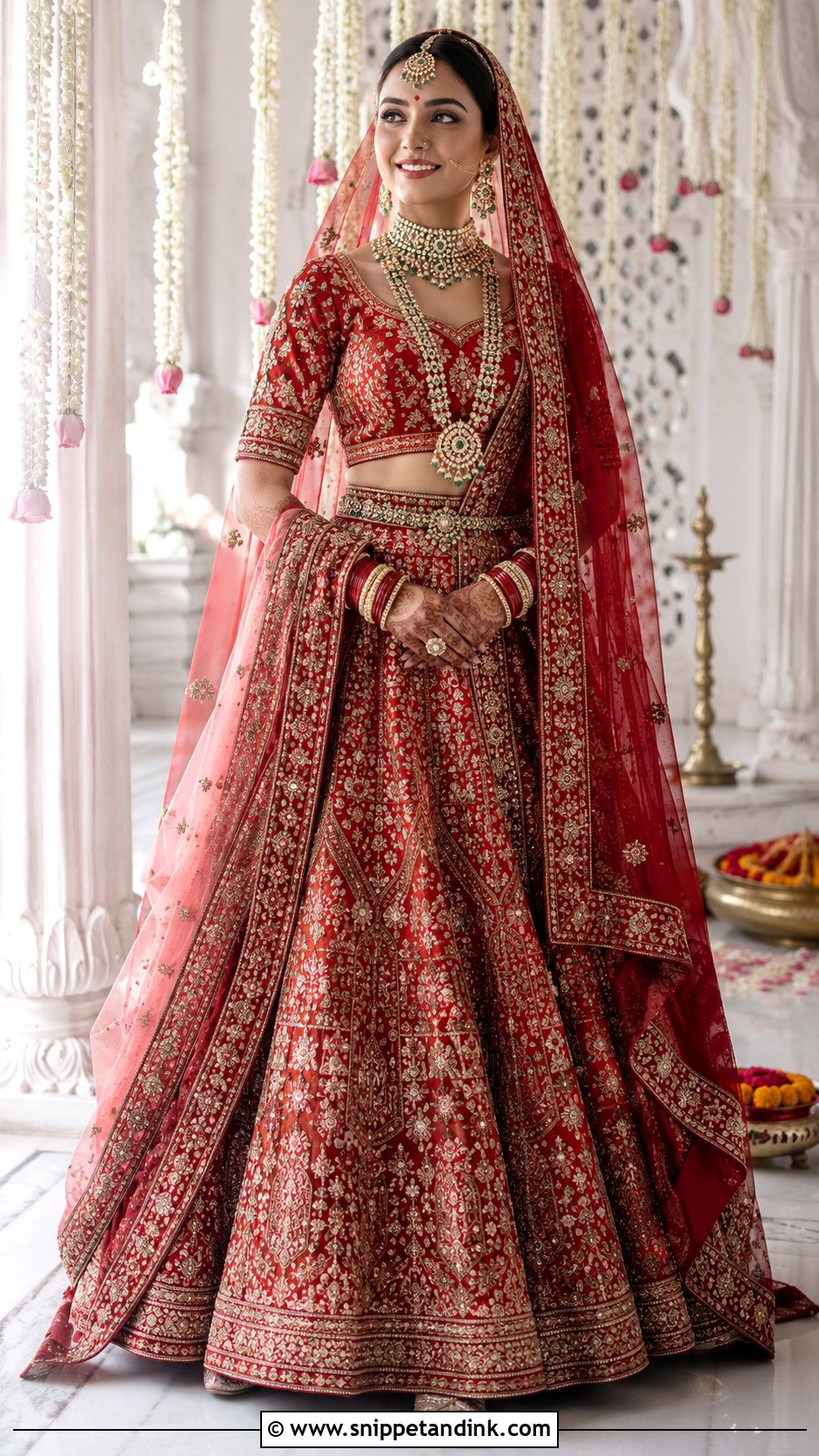
The choli-cut neckline, with its curved seams shaping the bust, gives a red bridal blouse its traditional character and a lot of built-in support. It’s a cut that depends on the tailor’s skill: the seams must land exactly on your bust point, or the shaping sits too high or too low. Gold embroidery should follow those seam lines rather than cover them. A matching red lehenga with a broad border and a double dupatta finish the ceremonial look. Choli-cut blouses have stayed in bridal wear for good reason; a well-cut one needs very little added support.
18. Longline Bridal Choli With Modest Lehenga
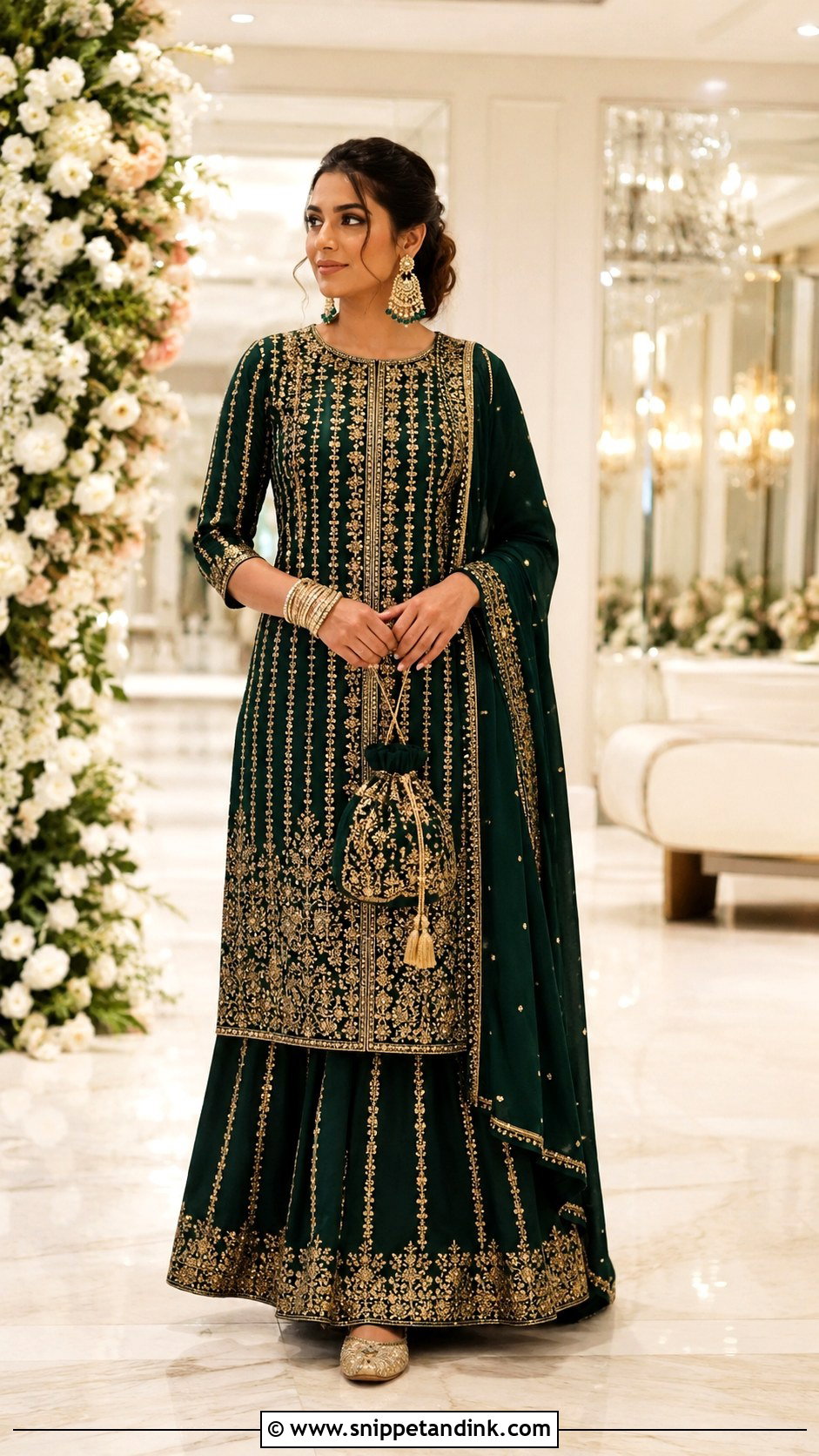
A longline bridal choli ends at the high hip, almost like a short kurta, and suits anyone who wants more torso coverage. Square, round or high necks and full or three-quarter sleeves let you adjust it for the season. The lehenga should start beneath the choli hem so no waistband shows. Place the heavier embroidery vertically to keep the line long; horizontal bands across a long blouse shorten the body. A side slit or opening at the hem is worth asking for, since a fitted longline blouse can ride up when you walk or sit.
19. One Shoulder Bridal Choli With Sequin Lehenga
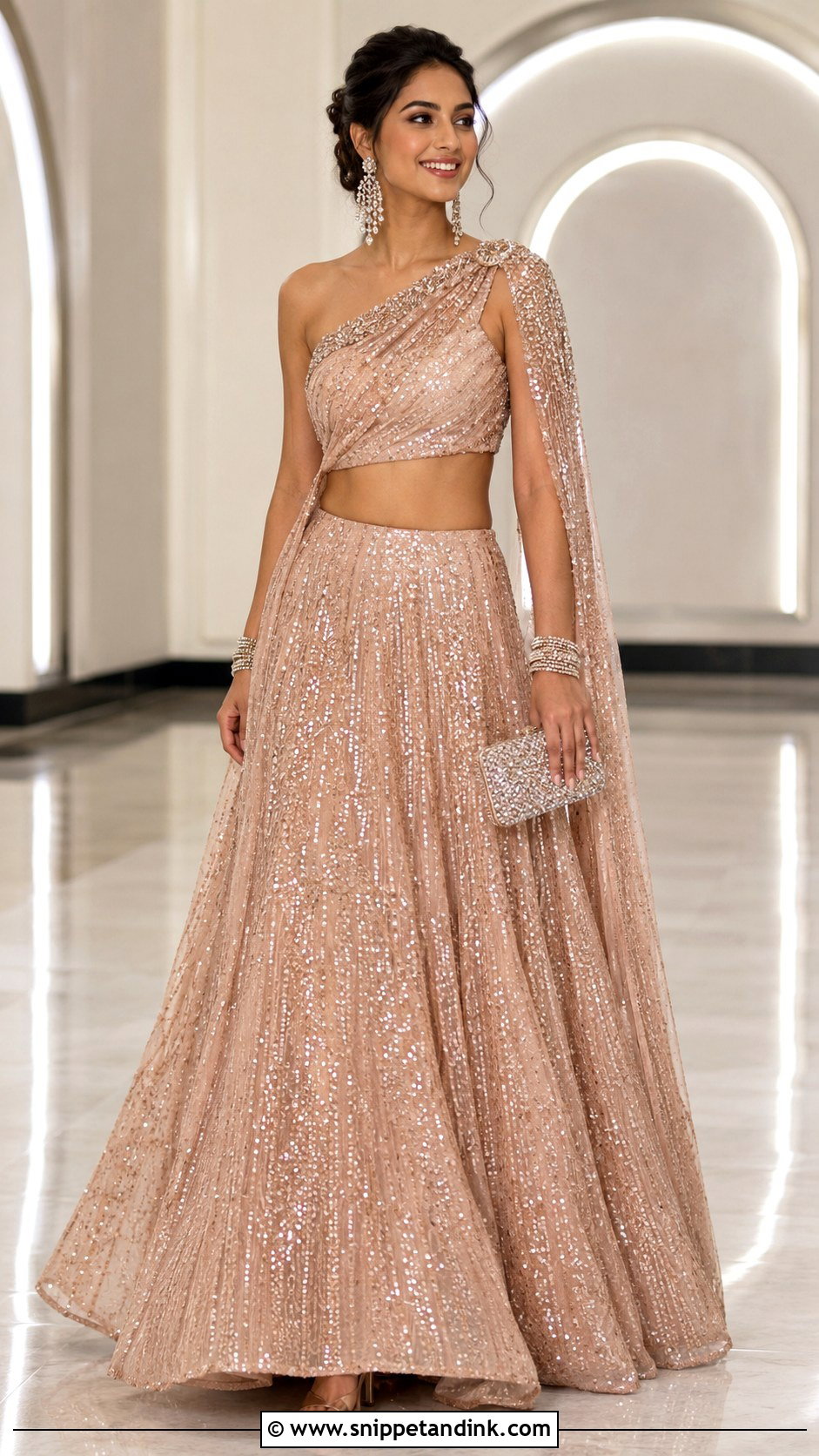
A one-shoulder choli makes a sharp reception or sangeet look. Insist on one wide, structured strap instead of a narrow one, plus internal support around the bodice, so that single shoulder isn’t carrying all the weight. A fluid sequin lehenga in champagne, rose gold, silver, midnight blue or ruby, without too much volume, lets you dance. The dupatta is optional; if you wear one, attach it at the shoulder. Stack bracelets on the bare arm and skip a heavy necklace to keep the diagonal line clean.
20. Personalized Motif Bridal Choli With Custom Lehenga
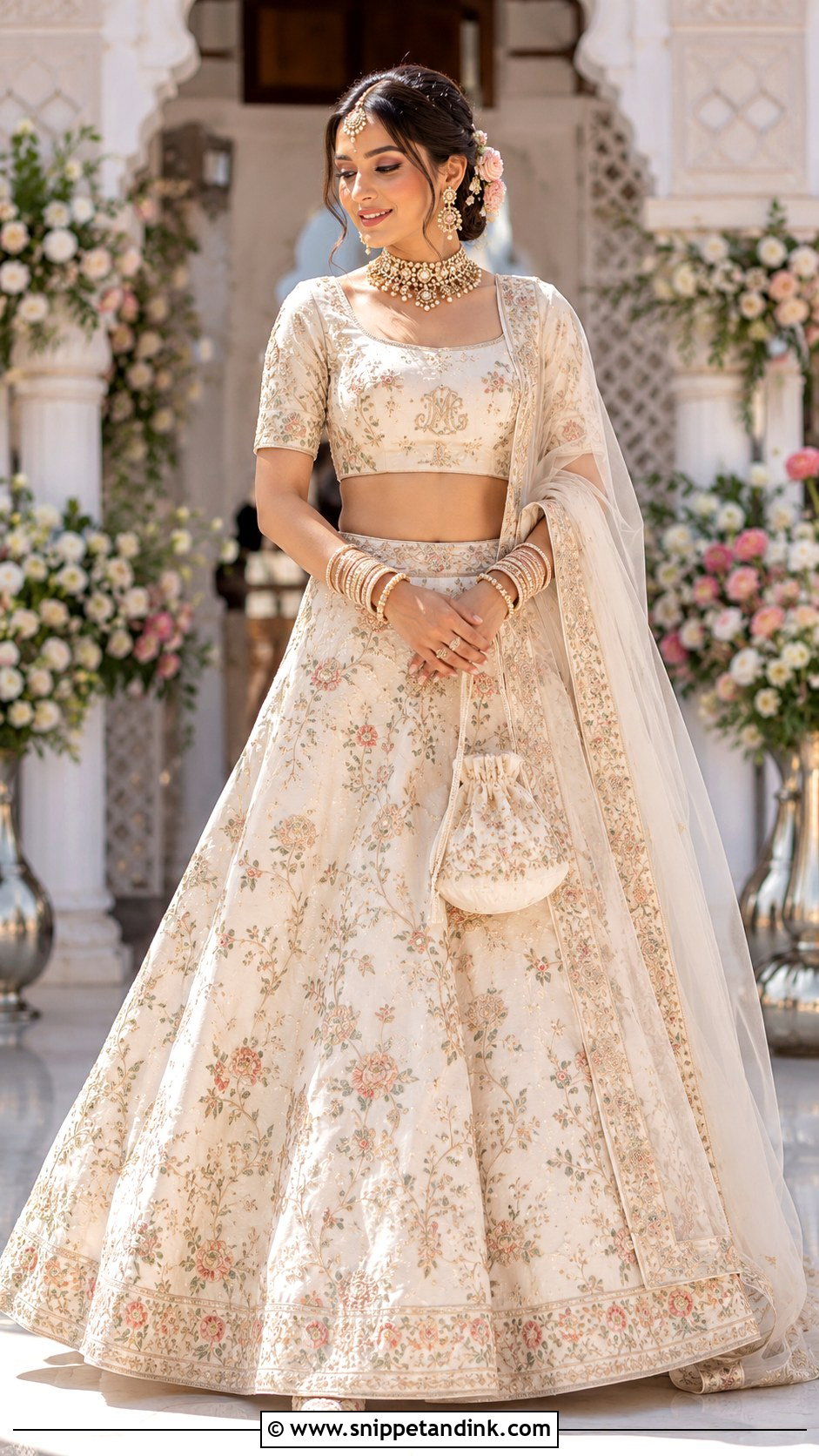
Personal motifs turn a bridal outfit into a keepsake. Initials, wedding symbols, a flower from home, a building that matters to your family or a culturally meaningful pattern can go into the sleeves or back of the choli, with a few repeated on the lehenga so it looks part of the design. Limit it to a handful of planned areas. Too many personal details and none of them reads. Before any stitching starts, ask for a full-scale sketch and a stitched sample on your fabric, so you can check size, color and texture against the real thing.
Your Guests Spend the Ceremony Looking at Your Back
During the pheras and most seated rituals, the people watching see your back far more than your neckline. Photographers know this, and some of the most shared ceremony photos are taken from behind. Yet the back of the choli often gets the least attention at the design stage.
Closures
Hooks down the back are traditional and easy to adjust by a hair if you lose or gain a little before the wedding. A concealed zip is quicker to get into but less forgiving. A dori, the tie with tassels at the end, lets you tighten the fit on the day and makes a pretty detail, though it needs someone to tie it firmly. With a heavy lehenga or a deep back, I like hooks plus a dori for both security and looks.
Back neck and the head dupatta
A deep or keyhole back looks lovely, but if you wear a dupatta over the head for the ceremony it will cover most of it. Decide which matters more for the ceremony photos, then put the embroidery where it will be seen: high on the back under a sheer dupatta, or lower for a reception look without one. Check the back view in a second mirror at every fitting, because that’s where loose hooks and puckered seams hide.
Take Your Jewelry to the Last Fitting
The choli that suits you reflects your taste and still supports you through hours of rituals and dancing. Red zardozi, maroon velvet, Banarasi, pastel florals, corsets, capes and personalized embroidery each make a very different full look. Before committing, test the neckline, sleeve movement, waist fit, lining and dupatta placement together. Wear your actual jewelry at a fitting, because a heavy necklace changes how a neckline sits. Factor in the venue, season, ceremony length and shoes. Then adjust the color, coverage and embellishment until the outfit feels comfortable and unmistakably yours.
You'll Like These Ideas:




Leave a Reply