
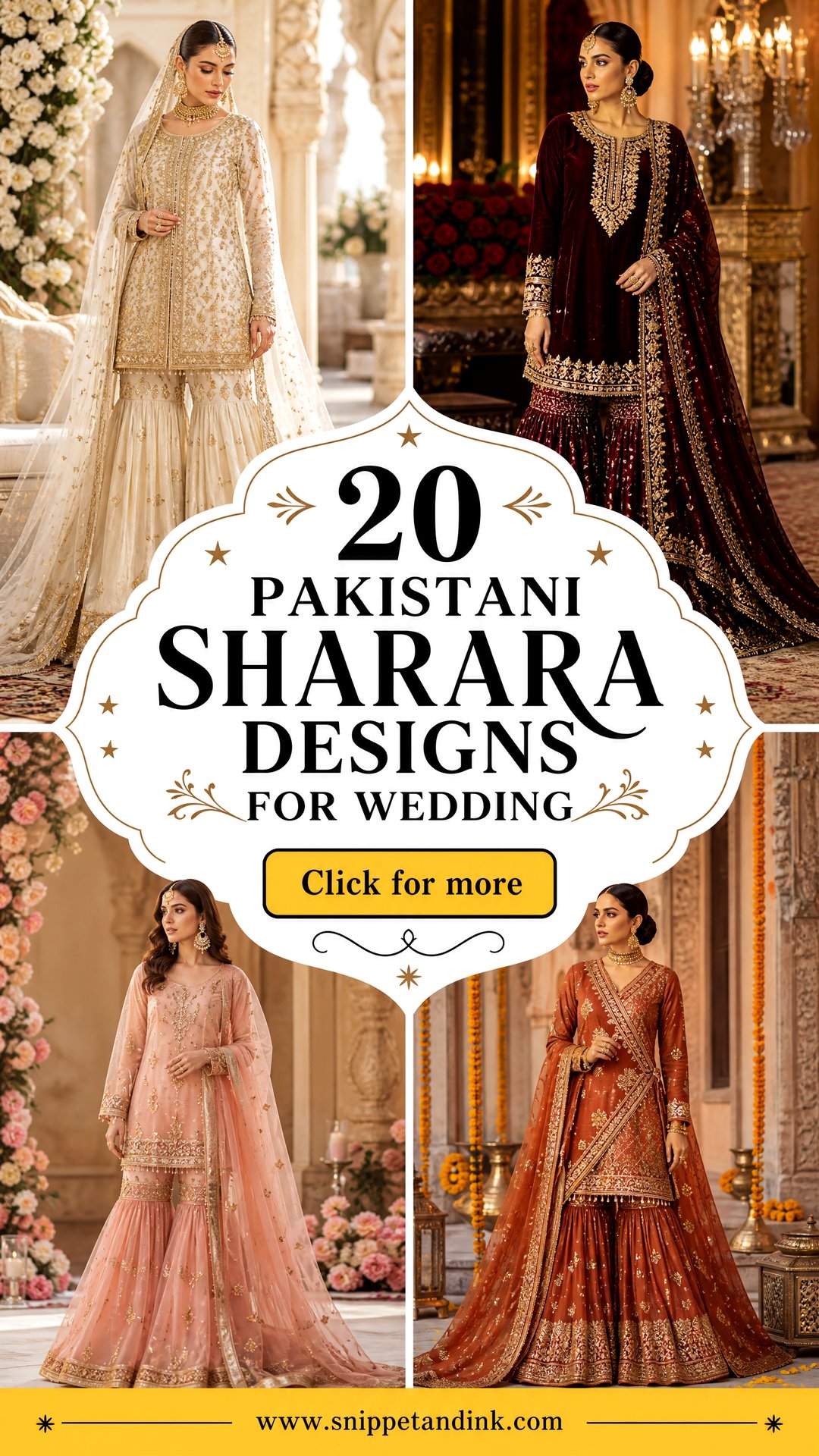
A sharara is wide, flowing trousers cut so they read almost like a skirt, worn with a coordinated shirt and dupatta. It moves well, it is comfortable to sit in, and depending on color and embroidery it can dress a bride, a sister, a bridesmaid or a guest. Reds and jewel tones carry evening functions; ivory, blush and pastels sit better in daylight. What changes a sharara most, in my experience, is not the color but the proportions: how long the shirt is, where the flare begins and where the embroidery is placed. The twenty outfits below are styled with those details in mind, from full bridal looks to lighter guest sets.
Sharara, Gharara or Palazzo? Telling Them Apart
These three get mixed up in shops all the time, and they behave very differently once you are wearing them. Knowing which one you are ordering saves a lot of disappointment at the first fitting.
- Sharara: flares from the waist all the way down, built from many panels, so it moves like a skirt. Easiest of the three to dance in.
- Gharara: fitted from waist to knee, joined at the knee with a decorative band, then flared below. More traditional, but harder to sit cross-legged in.
- Palazzo: wide straight-cut trousers with far less flare. Simpler, lighter and the most casual of the three.
Shirt Length Against Your Height
With a sharara, the shirt hem sets where the eye reads your legs as starting. A short shirt that ends at the hip shows more of the flare and makes most people look taller, which is why I put petite clients in short shirts nearly every time. A knee-length kameez suits taller frames and adds coverage, but it needs side slits or the sharara disappears beneath it.
Decide your shoe height before the trousers are hemmed. A sharara should just touch the top of your shoe; hemmed for flats and then worn with heels, it hangs short and loses its sweep.
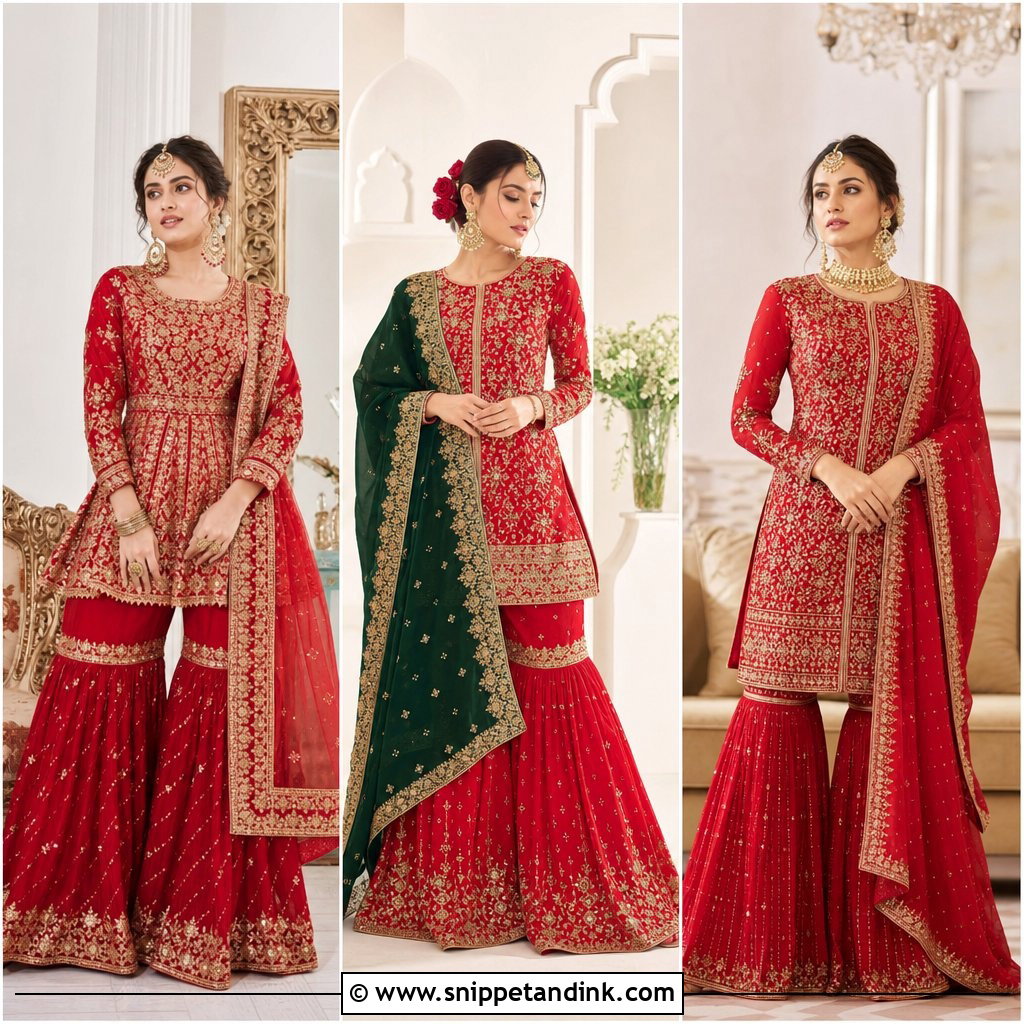
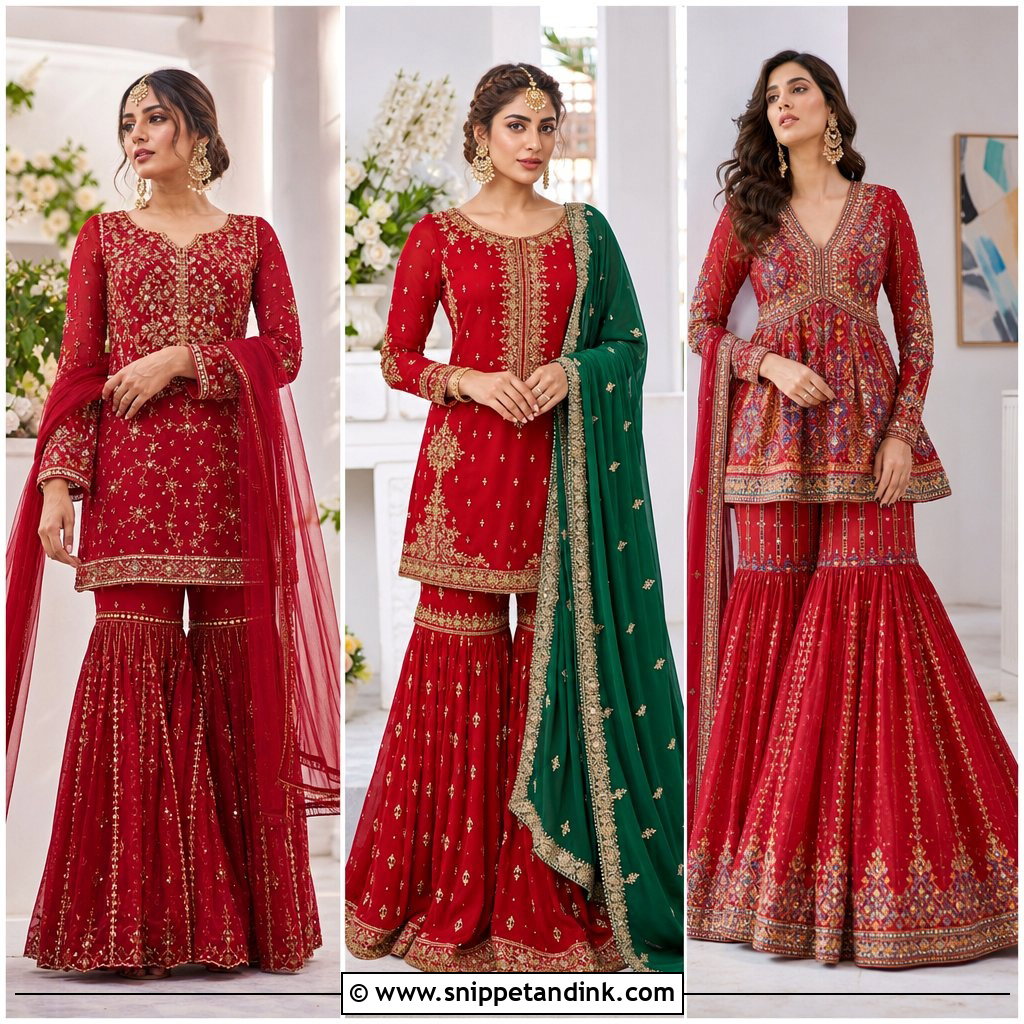
1. Red Bridal Sharara With Short Shirt
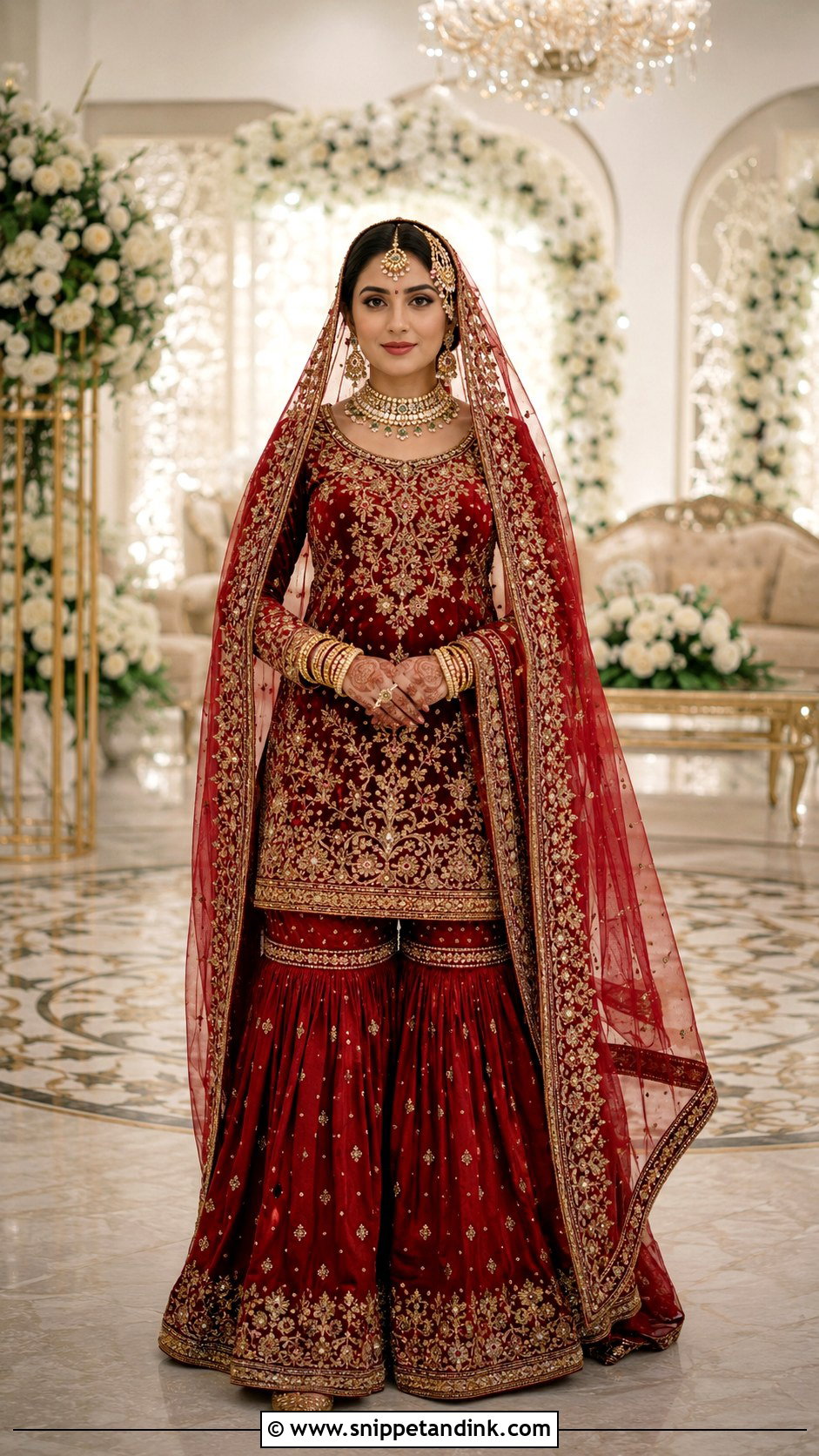
A deep red bridal sharara is the traditional baraat choice for a bride who wants to walk freely rather than wade through a lehenga. The short shirt in raw silk or velvet carries the antique gold zardozi, dabka and resham. The sharara needs a generous flare from the waist and a worked border that shows when you walk. Heavy borders swing; I ask for a slightly lighter hem band than the shirt so the trousers do not drag. A red net dupatta with a broad edge, over the head or one shoulder, plus a kundan choker, matha patti, stacked bangles, gold khussa and a small potli complete it.
2. Ivory Nikkah Sharara With Gold Embroidery
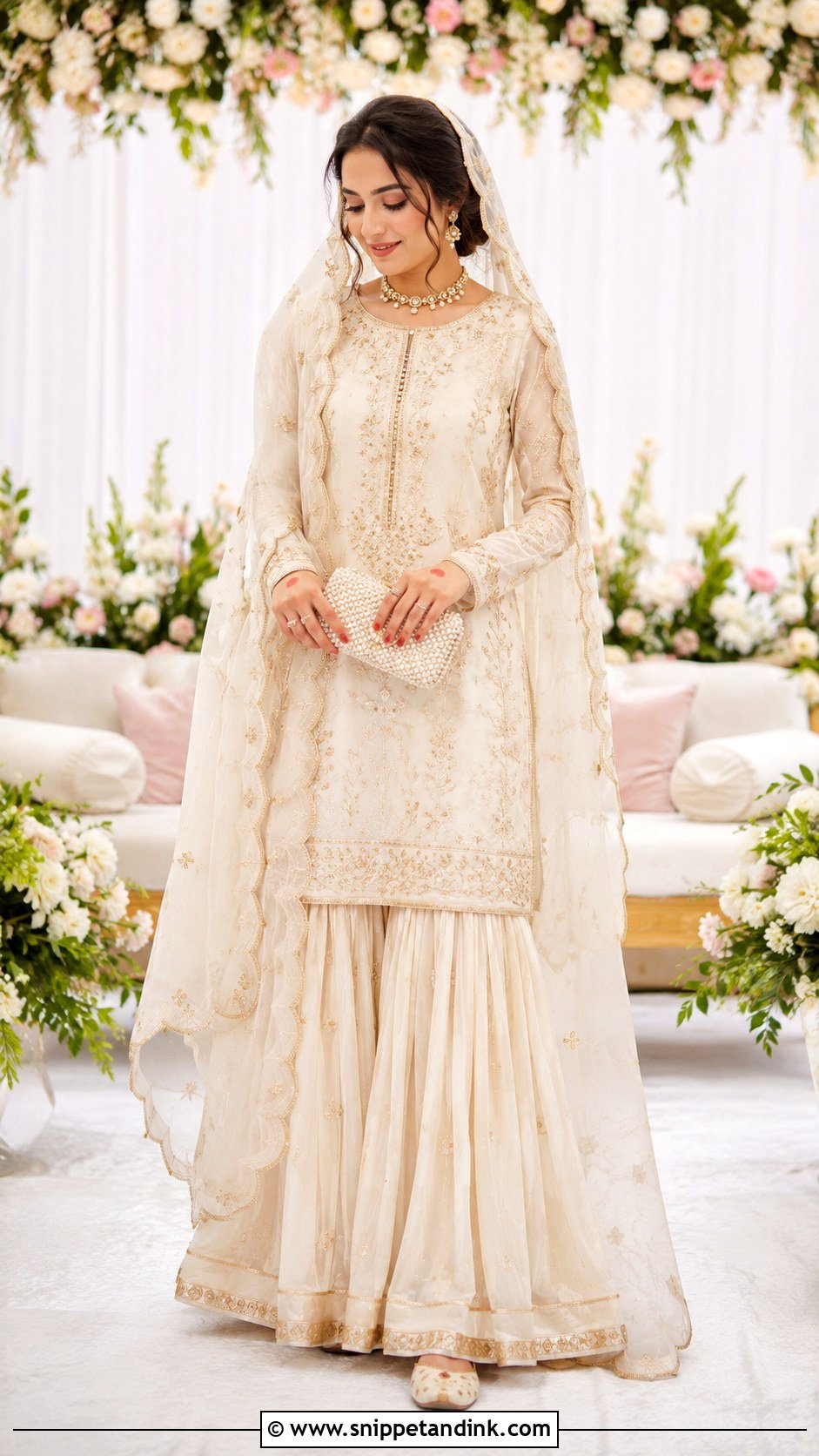
Ivory sets a calm tone for a nikkah. A straight, hip-length shirt over a flowing silk sharara with delicate gold thread, pearls and tiny sequins keeps it refined. Choose a modest neckline, and if you like sleeves, full sheer ones with embroidered cuffs. Silk sharara in ivory shows every mark, so sit on a clean dupatta or shawl if the ceremony is on floor seating. An ivory organza dupatta with scalloped gold edging can cover the head without hiding the shirt. Pearl drops, a light kundan necklace, one ring, ivory khussas and a pearl-handled clutch are plenty. Brides go heavier on the borders; guests keep them light.
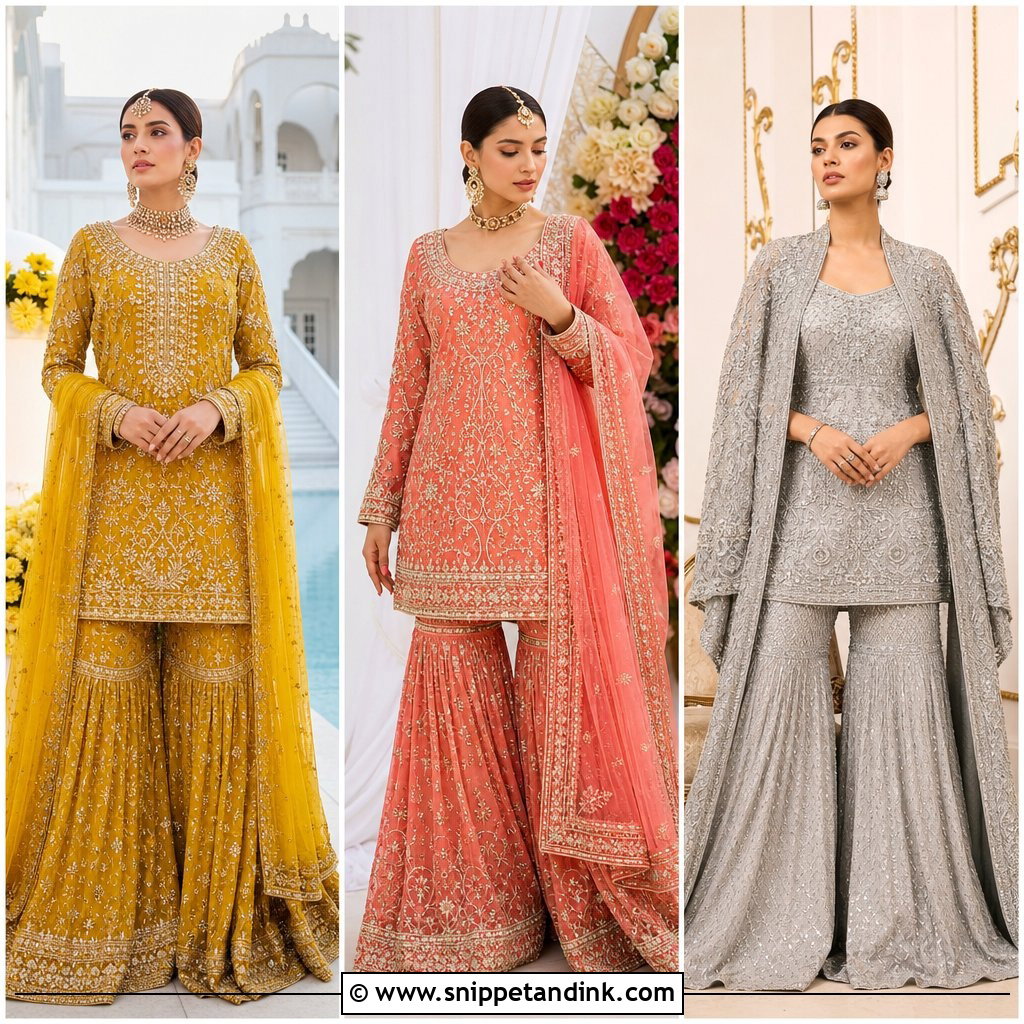
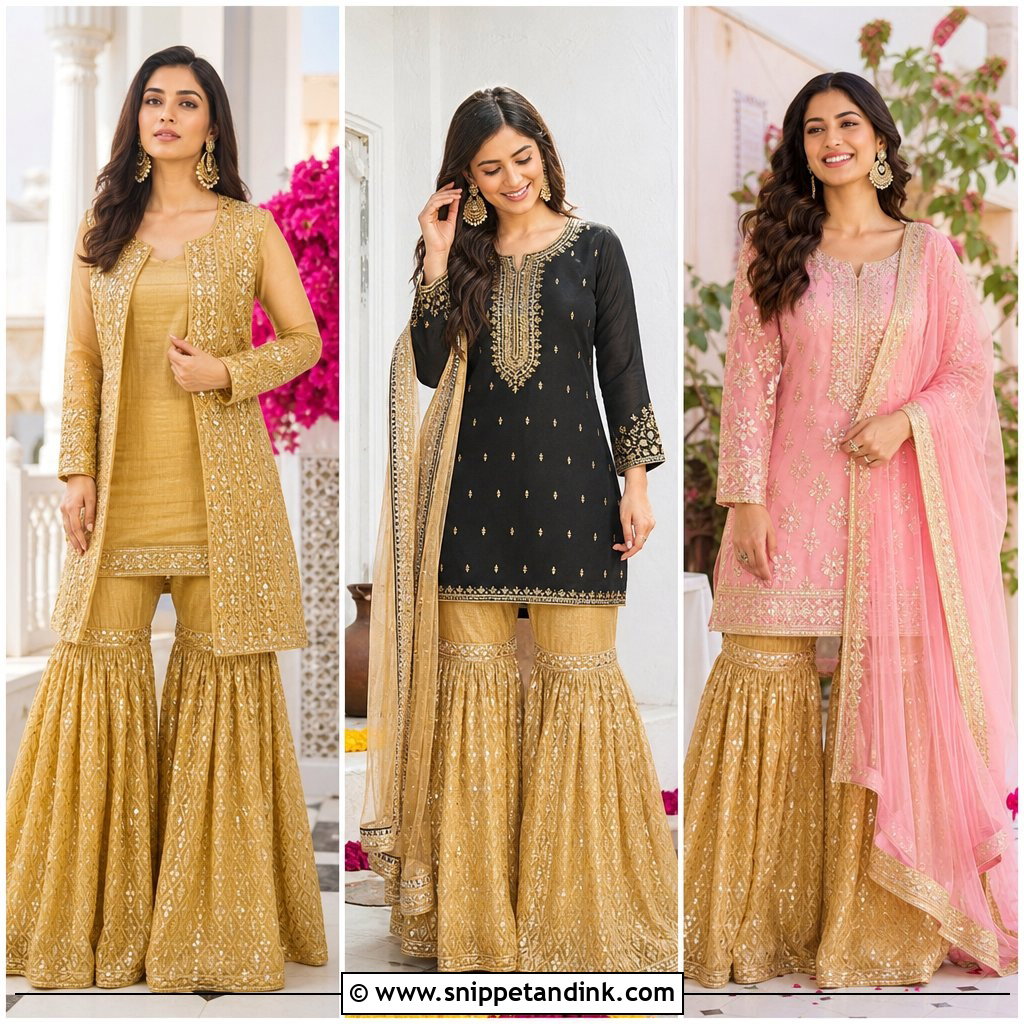
3. Mustard Mehndi Sharara With Mirror Work
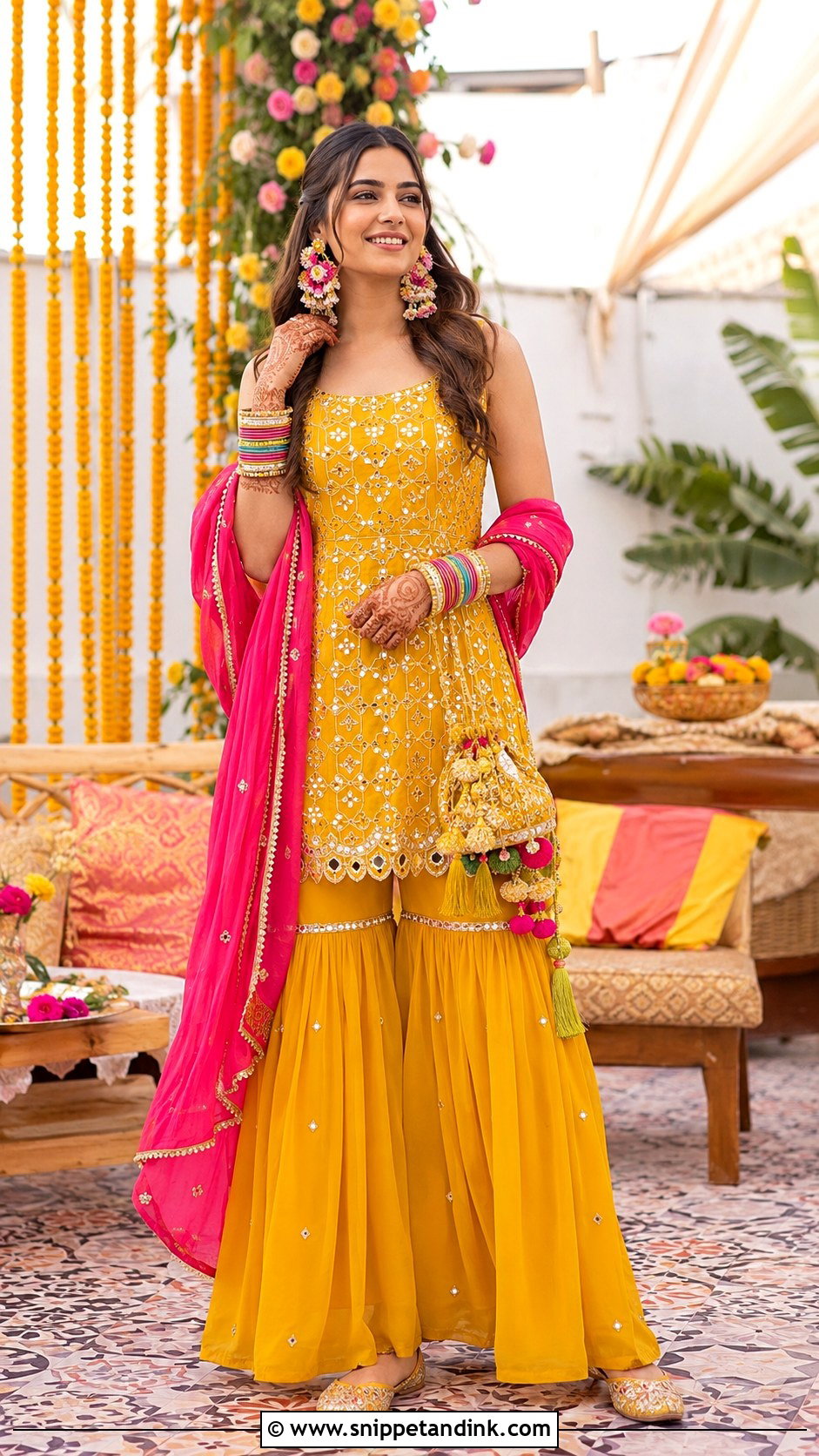
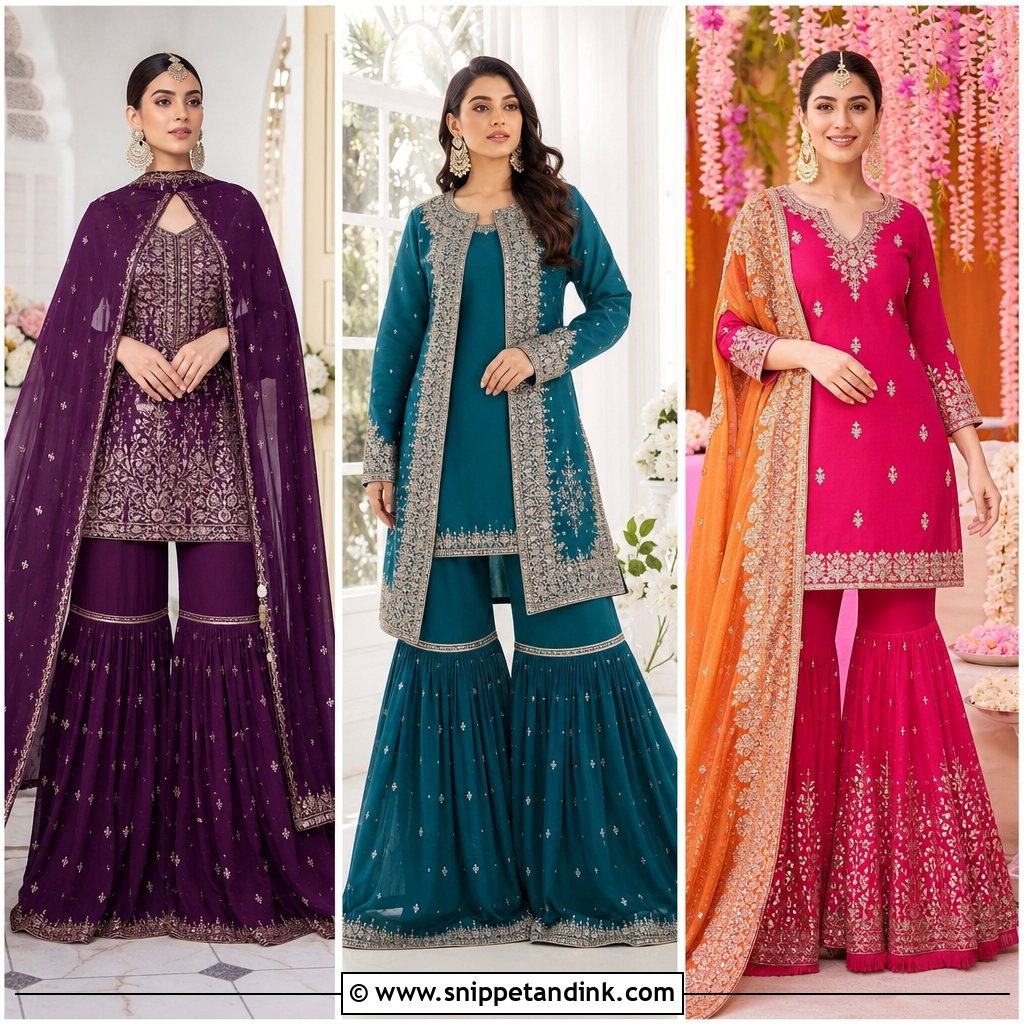
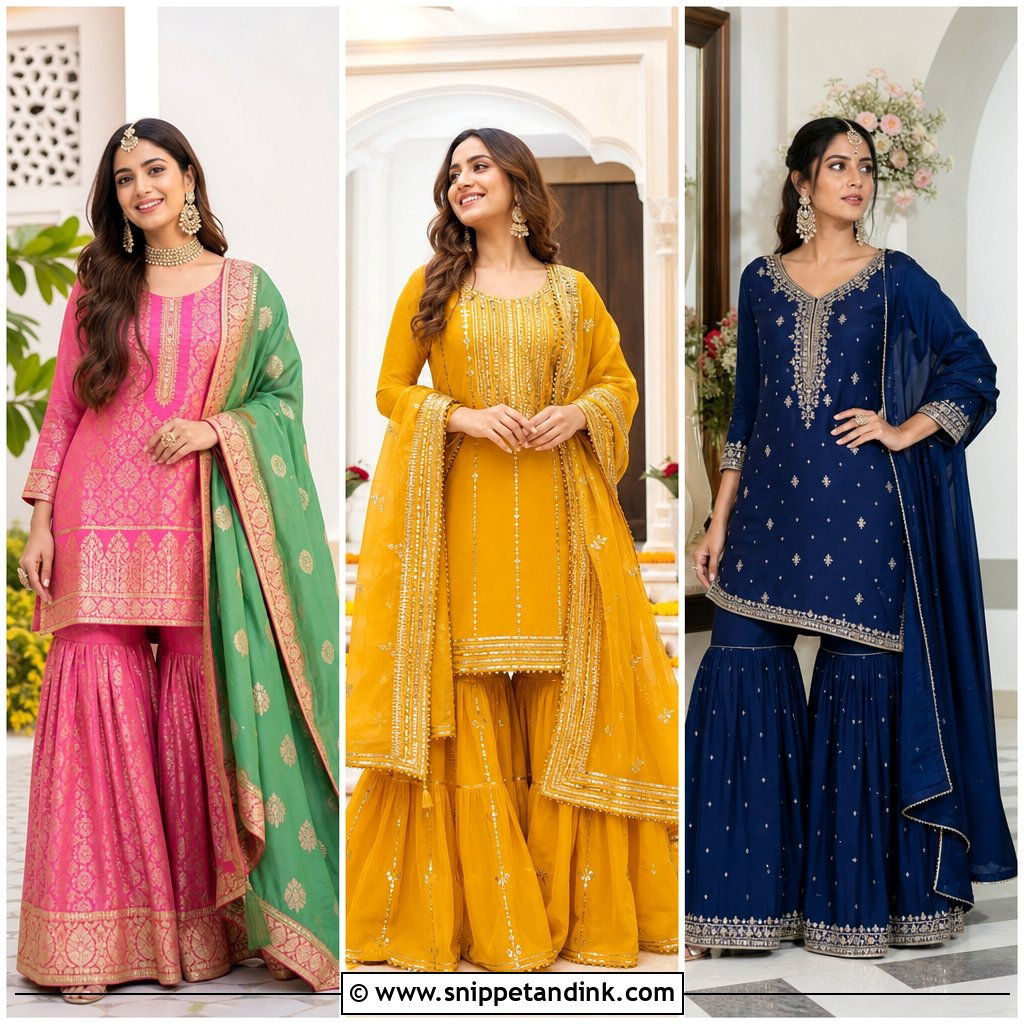
Mustard is the most forgiving color at a mehndi, partly because turmeric and henna marks barely show on it. A short sleeveless or cap-sleeve kurti over a light georgette sharara, with mirrors, gota and multicolored thread, keeps you cool. Georgette has a natural drape, so the sharara swings rather than standing stiffly. A hot pink or green dupatta draped loosely over both arms makes it festive. Floral earrings, colorful bangles, a small maang tikka and flat embellished khussas are right for dancing. It works for brides, sisters, and bridesmaids, and the color combinations can shift for a day or evening function.
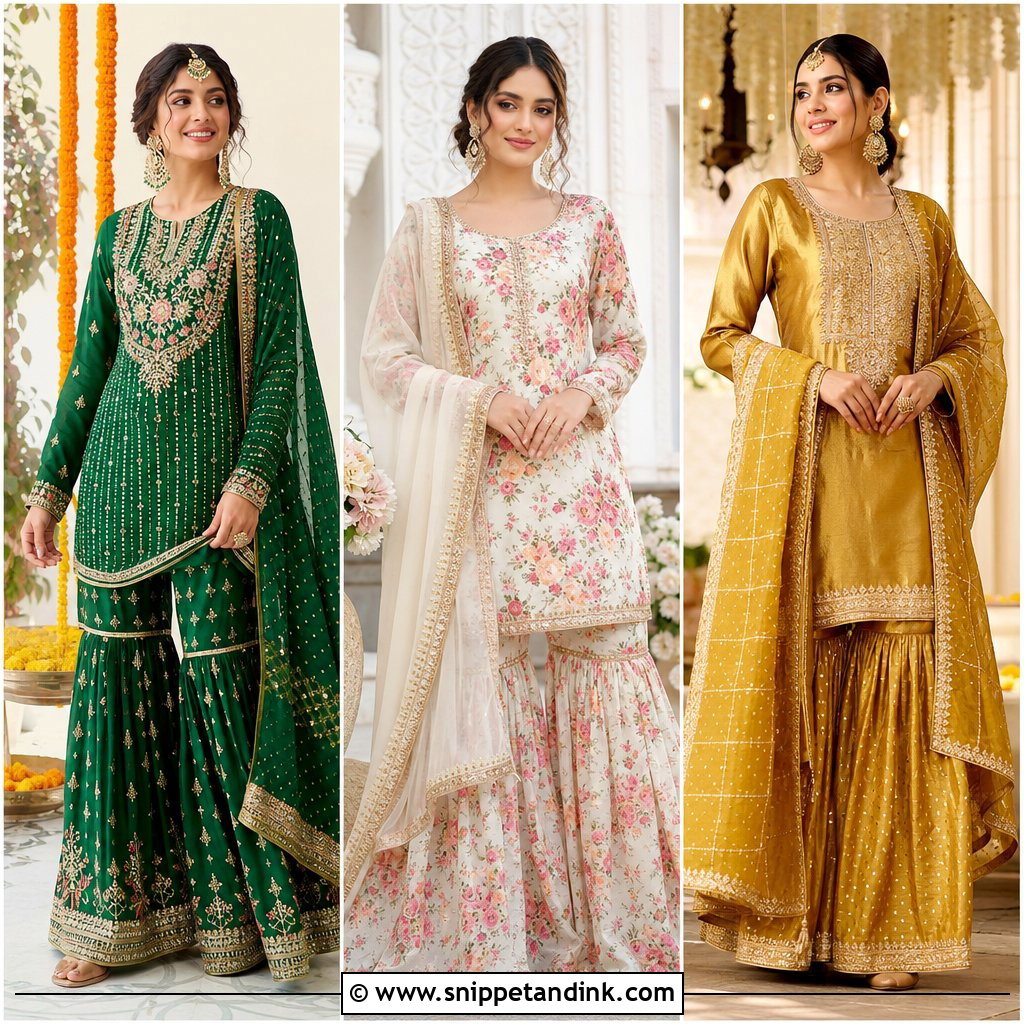
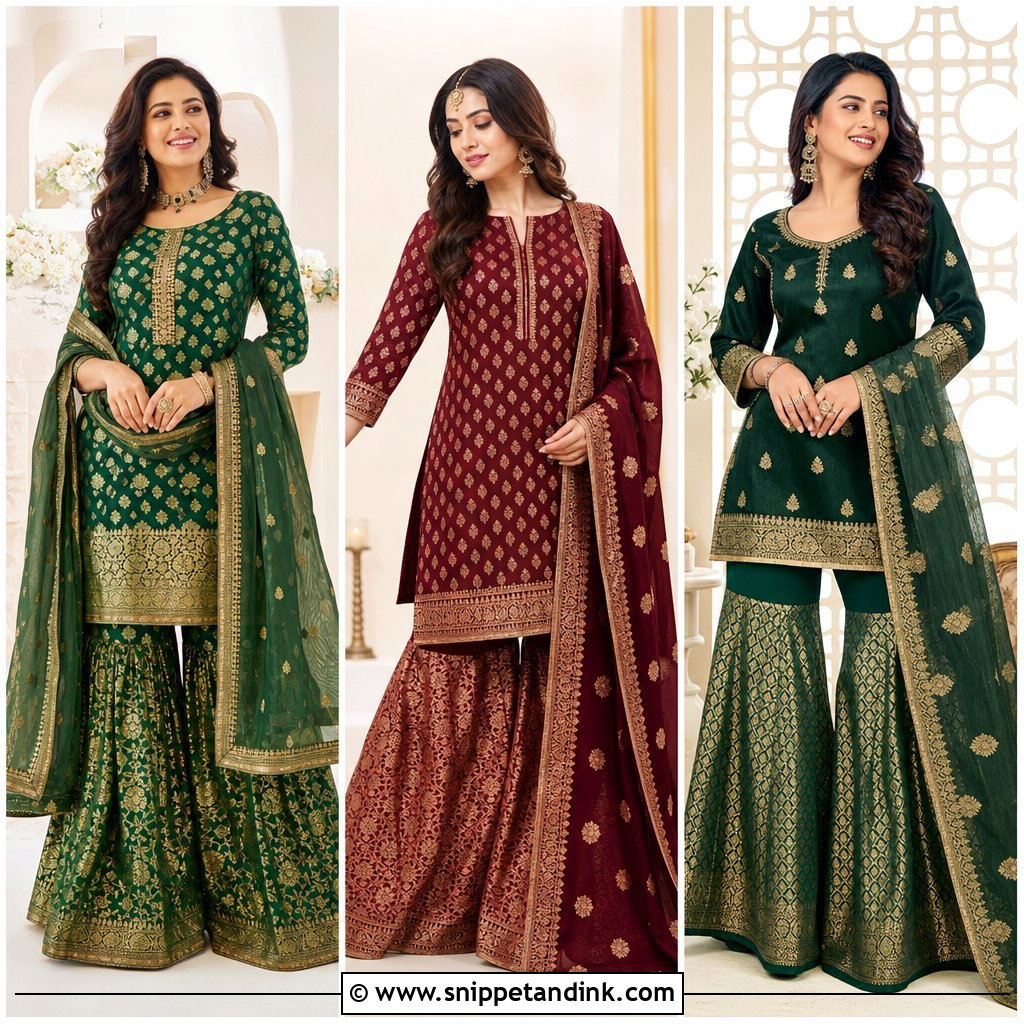
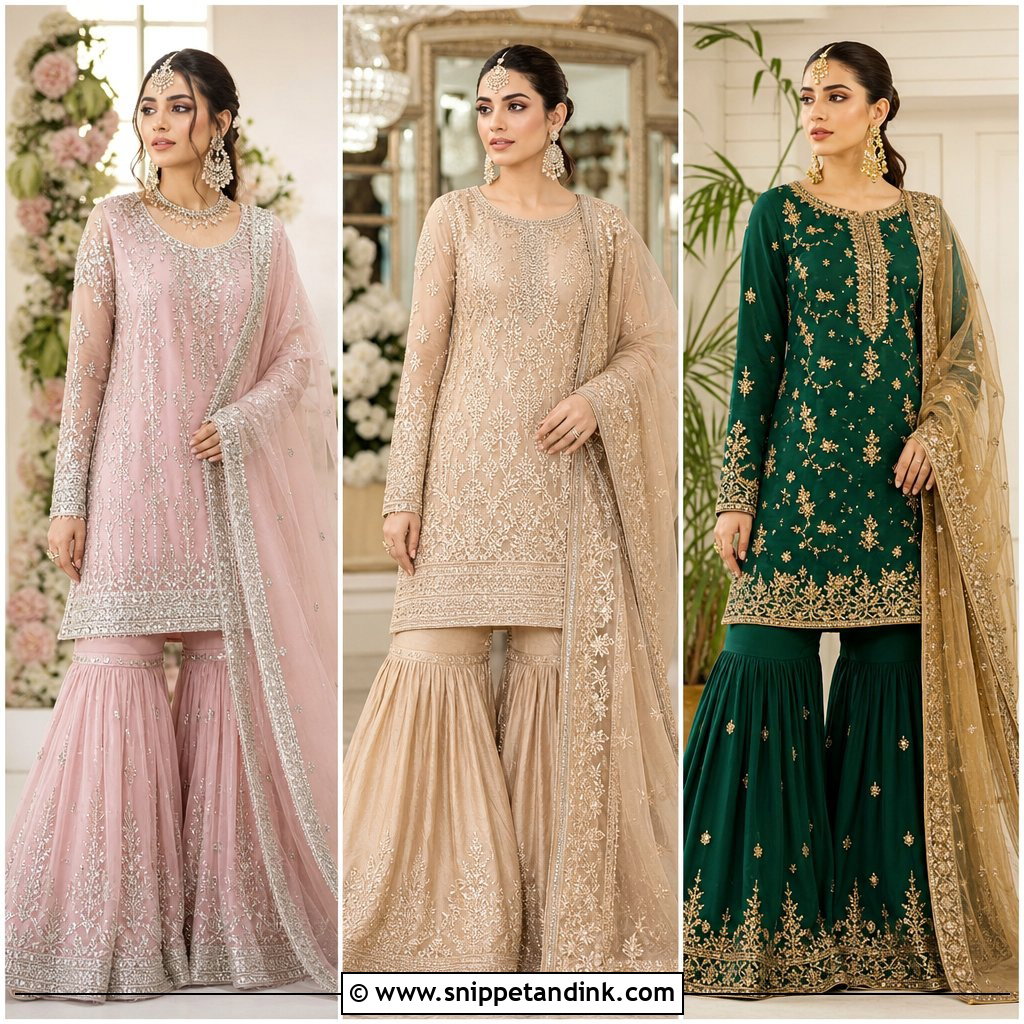
4. Emerald Green Sharara With Long Kameez
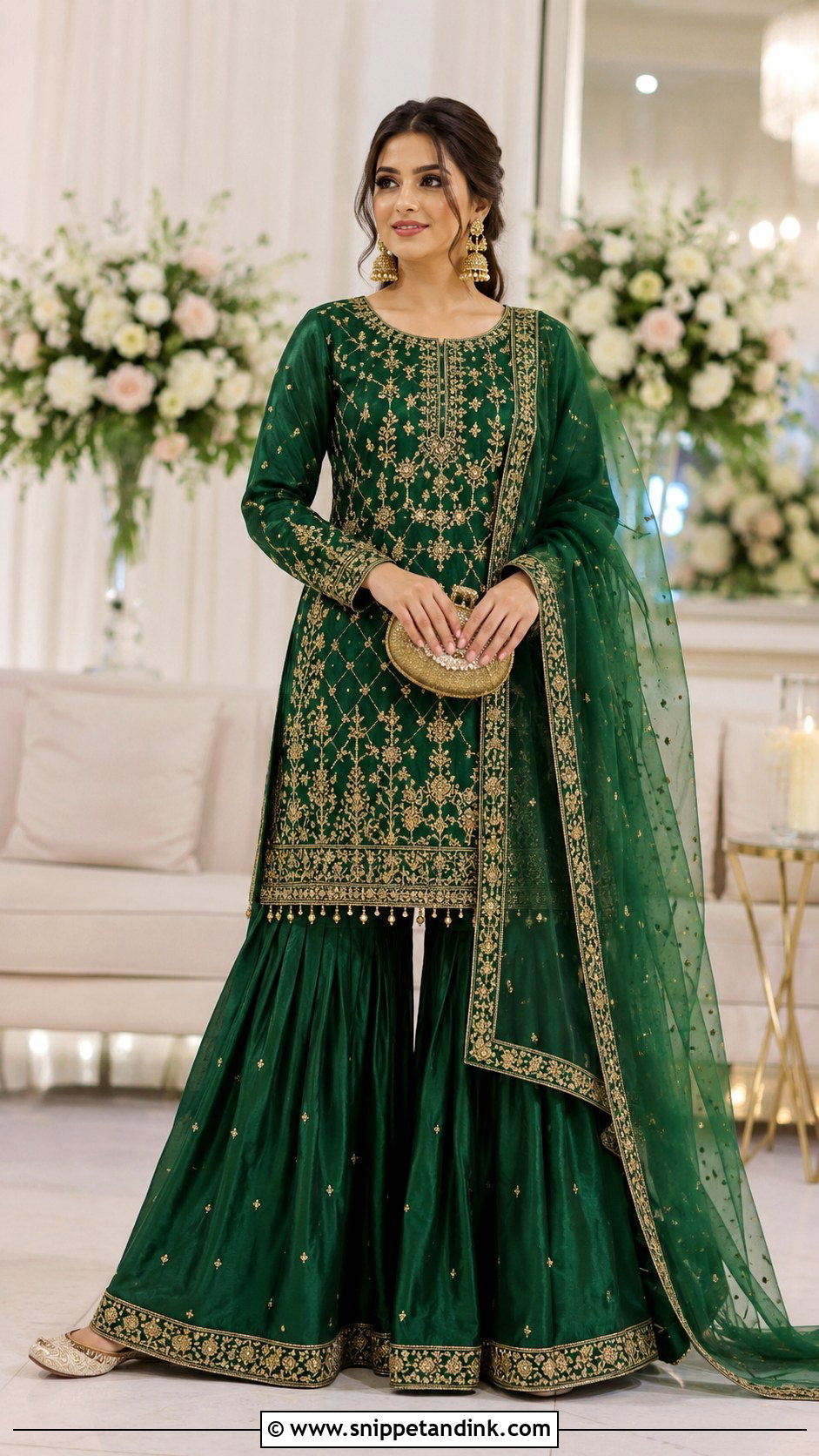
A longer kameez over a full sharara is a more covered, formal shape, and emerald with antique gold is where it shines. Choose a knee-length shirt with side slits deep enough to let the sharara show underneath; shallow slits bunch the trousers and hide the flare. Velvet suits winter, raw silk or chiffon suits warm evenings. Put dense embroidery at the neckline, cuffs, hem and border, not everywhere. A green net dupatta with scattered sequins, gold jhumkas, a statement ring, metallic heels or khussas and a structured gold clutch finish the look for a sister of the bride or a formal guest.
5. Blush Pink Sharara With Peplum Top
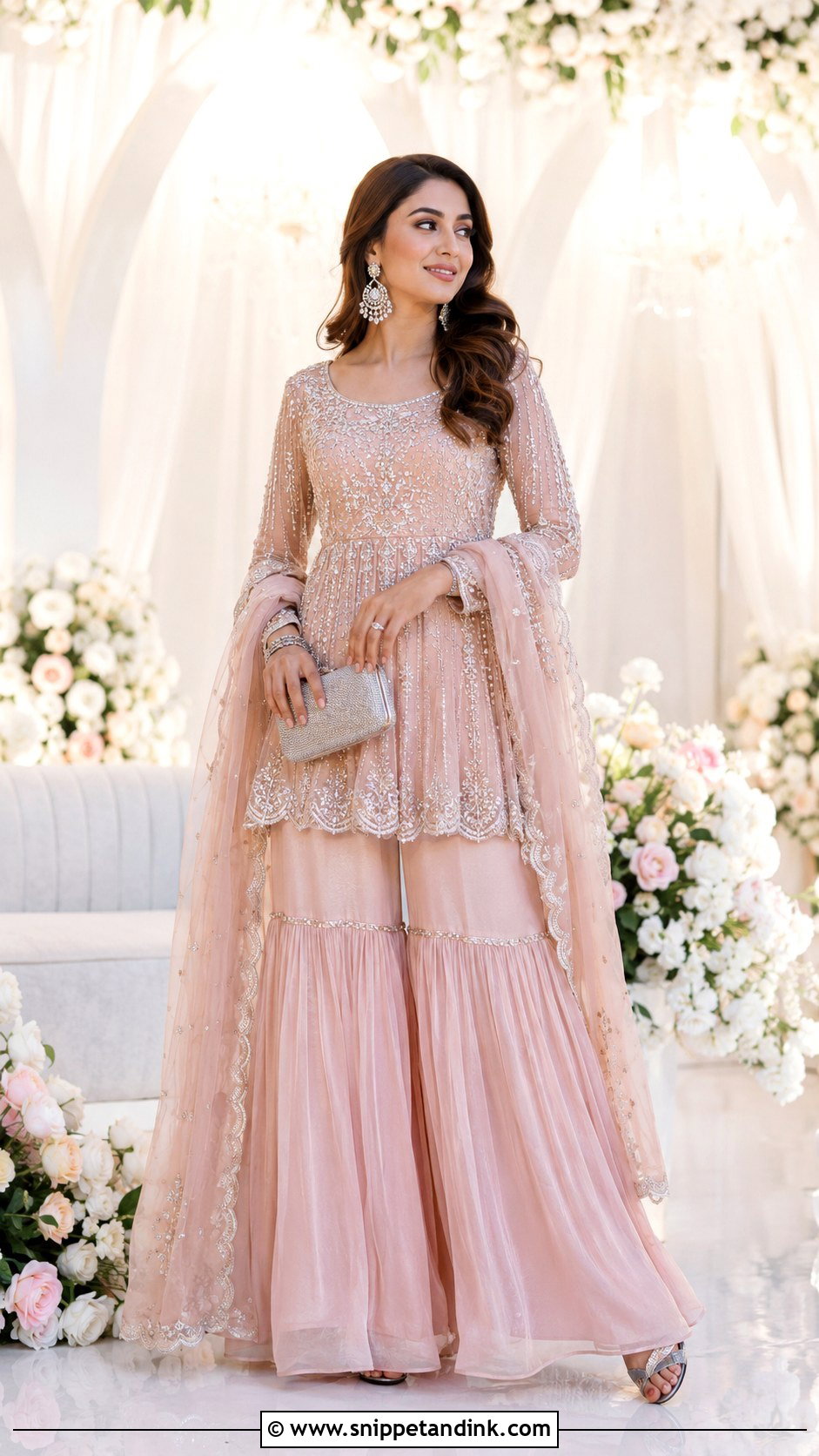
Peplum tops are the modern alternative to the straight shirt, and blush pink suits the softer shape. The peplum should end near the upper hip, which gives the waist definition before the sharara flares. Any lower and the two flares compete. Fine silver work, pearls, sequins and small florals keep it from becoming sugary. Wear an organza dupatta with a narrow border on one shoulder. Crystal earrings, a delicate bracelet and a silver clutch suit the cool details, and embellished flats are kinder than pointed heels for a long walima.
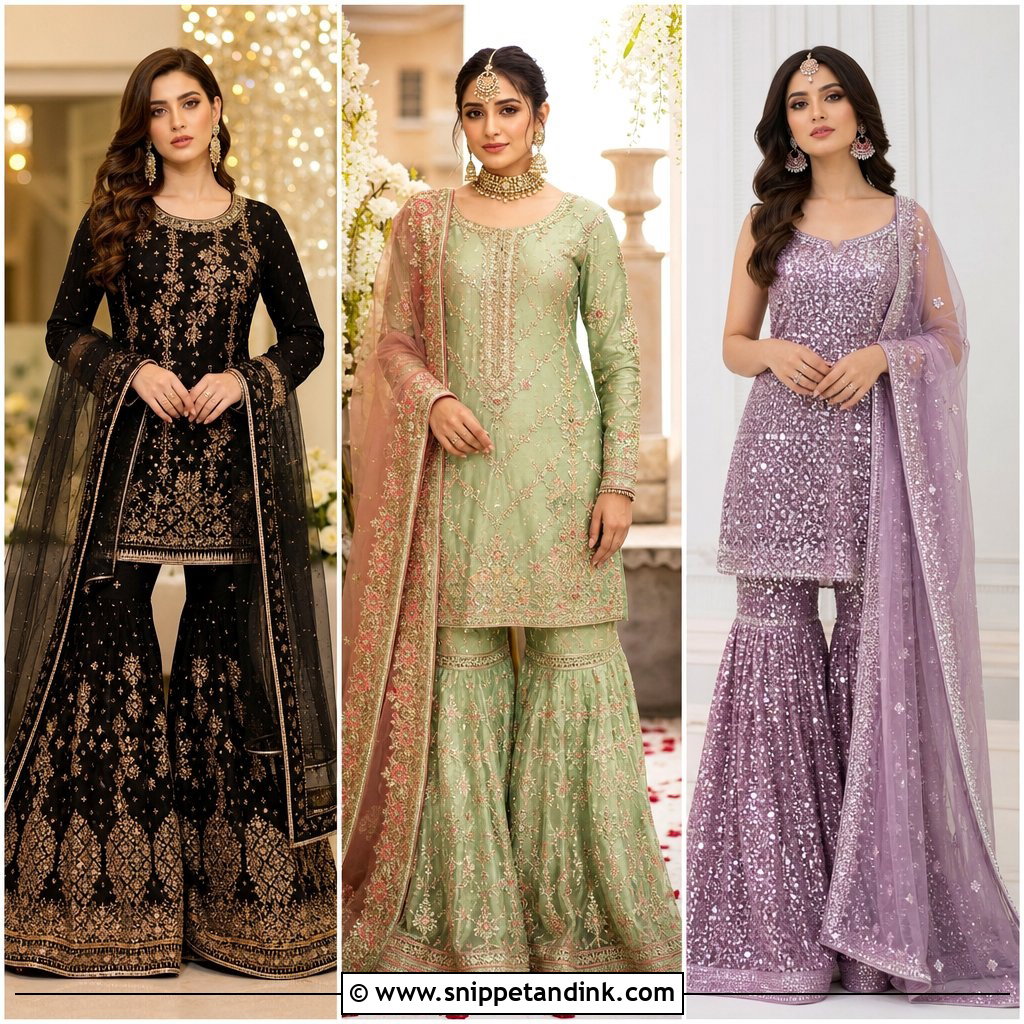
6. Black Sharara With Silver Embellishment
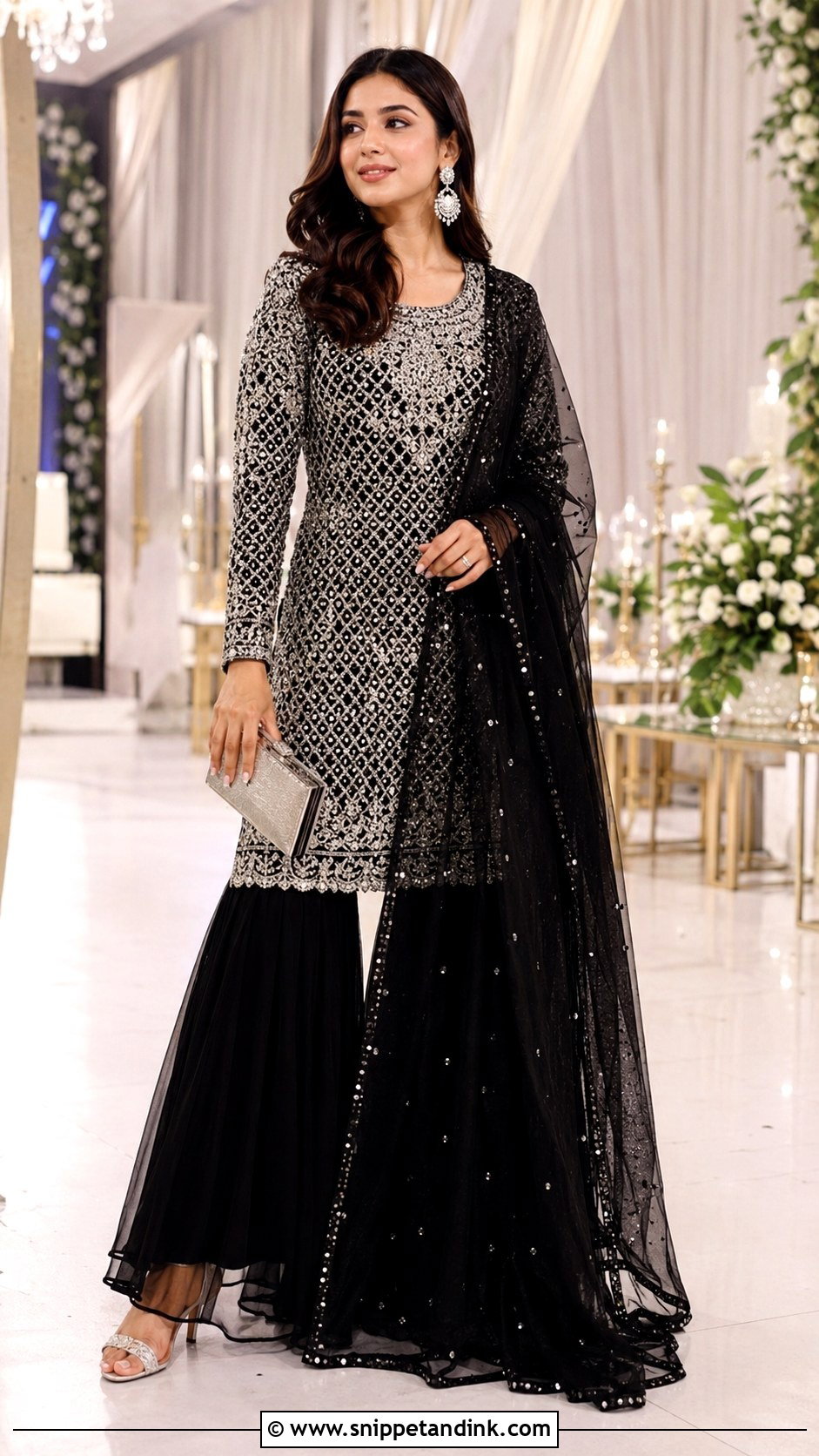
Black with silver is one of the easiest evening combinations to wear well. A fitted short shirt over a fluid chiffon or crepe sharara, with sequined borders and fine vertical embroidery, keeps the line long. Crepe in black hides creases far better than chiffon, which is worth knowing if you are seated for a long dinner. A square neck, full sleeves or a little shoulder structure modernize it. Keep the net dupatta’s border narrow. One pair of crystal drops, a slim bracelet and a metallic clutch beat a pile of jewelry here. Some families still avoid black at weddings, so a quick check is wise.
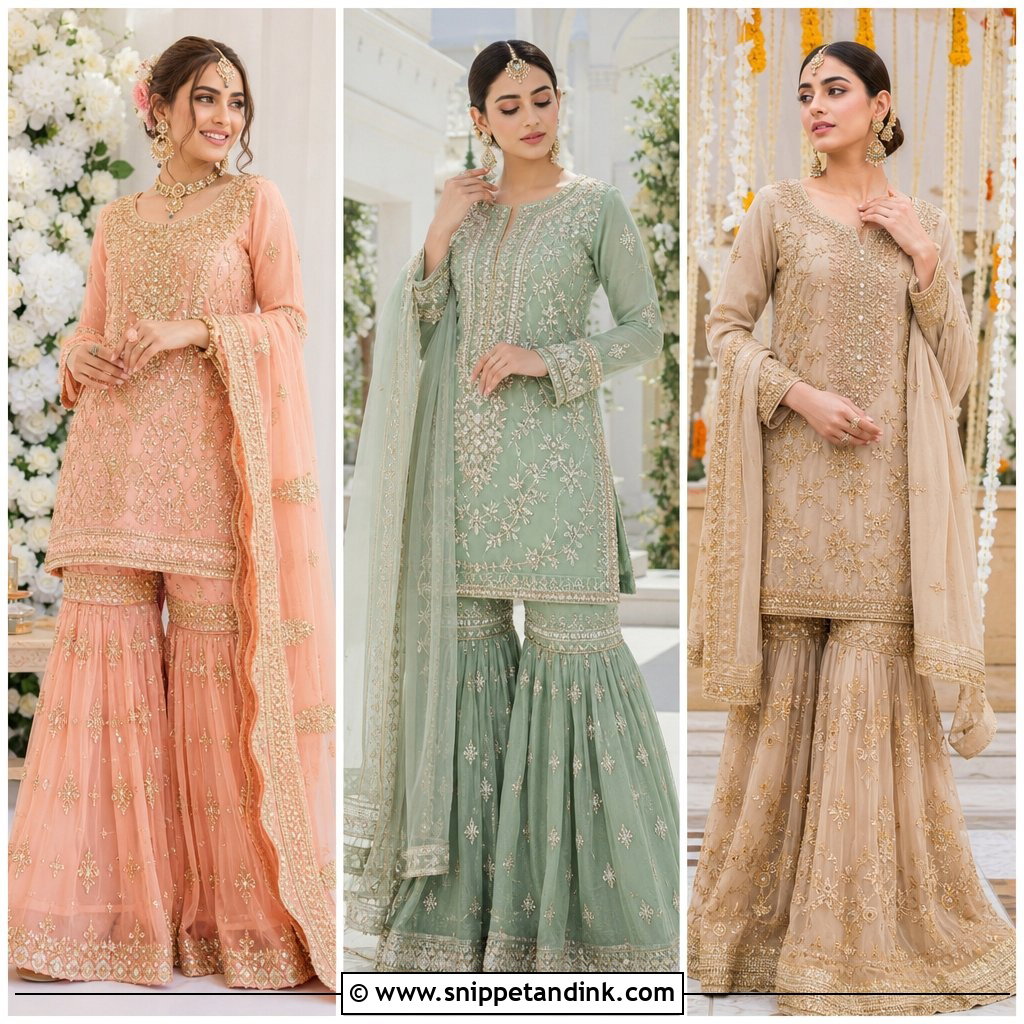
7. Champagne Sharara With Pearl Details
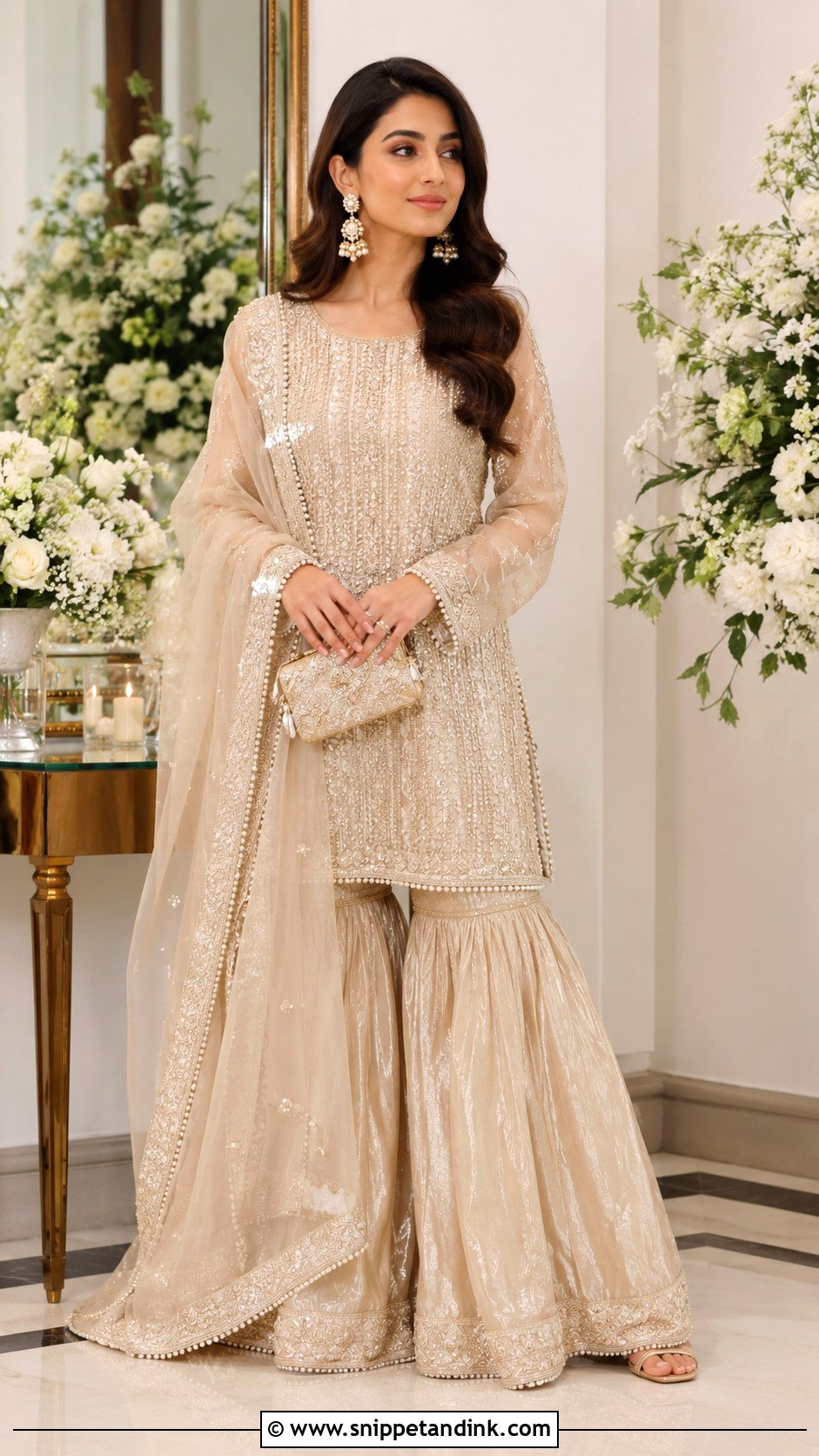
Champagne is luxury that does not shout. A satin or tissue sharara with a softly structured shirt in pearls, crystals and muted gold thread gives it a quiet glow. Tissue is a metallic woven fabric with a crisp hand, and it holds the sharara’s flare almost on its own, though it can scratch the inside of the arms if the shirt sleeves are unlined. A longer shirt gives coverage and a vertical line; a short one is younger. A sheer dupatta with pearl edging, pearl earrings, a small clutch and gold sandals complete it. Heavily worked, it suits a Walima bride; lightly worked, a guest.
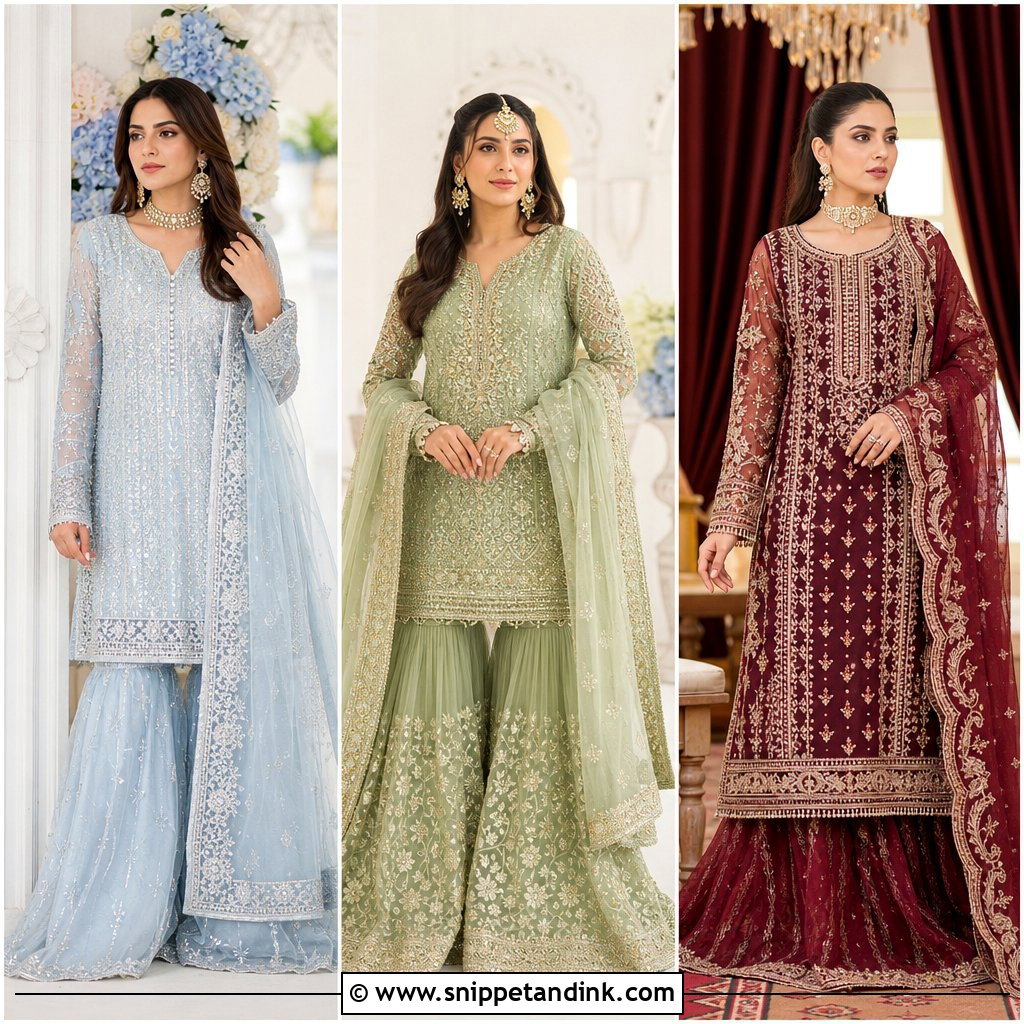
8. Maroon Velvet Sharara With Antique Gold Work
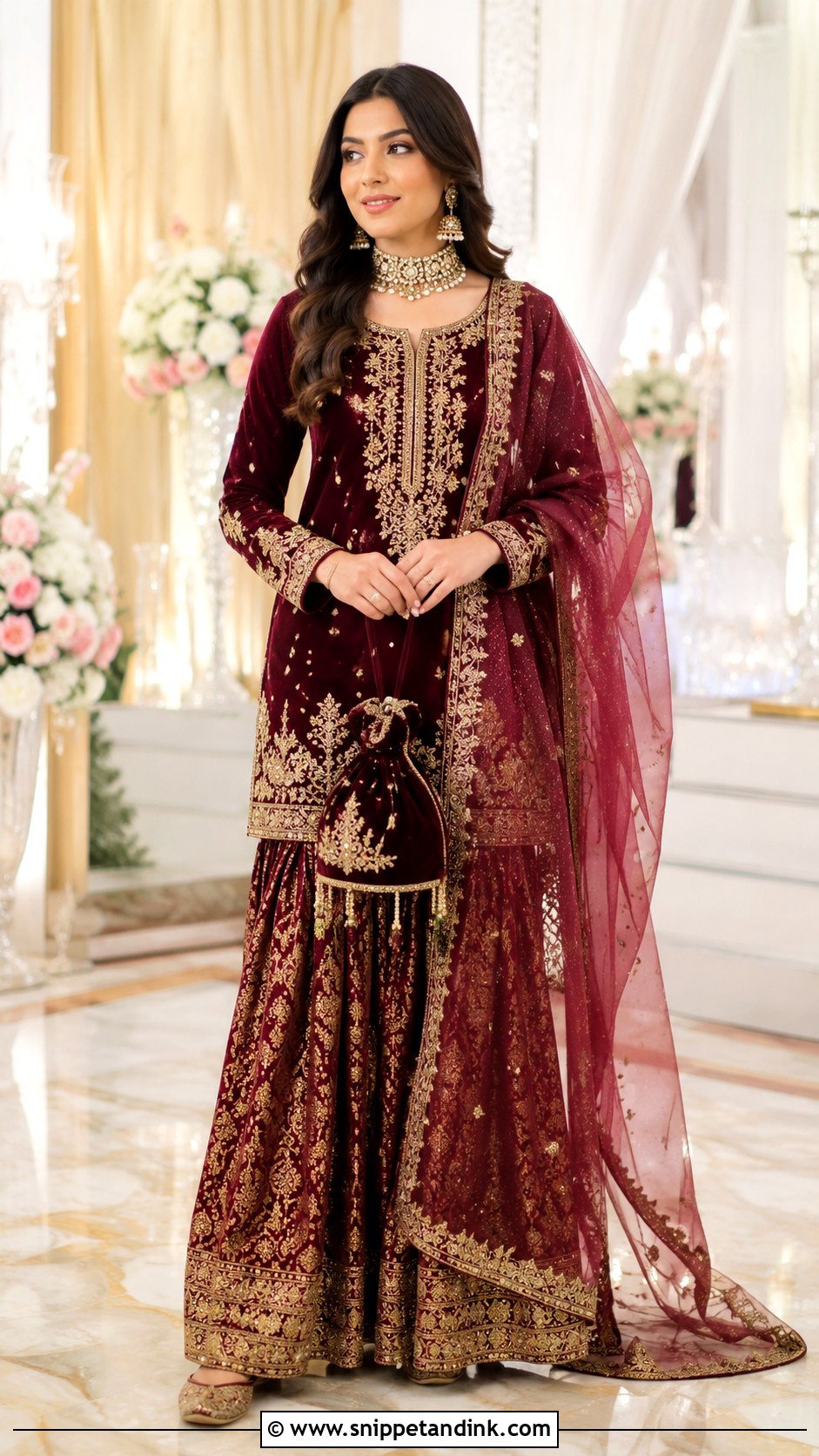
Maroon velvet belongs to winter, and I love it for a December baraat. Keep the velvet to the short shirt, with antique gold dabka, kora and zardozi concentrated at the neckline and hem. Make the sharara itself from raw silk or jamawar; a velvet sharara is heavy, warm and hard to walk in. An organza dupatta in maroon or muted gold stops the outfit from looking bulky. Traditional jhumkas, a kundan choker, a few bangles, closed embroidered khussas and a small velvet potli suit the heritage feel.
9. Peach Sharara With Organza Shirt
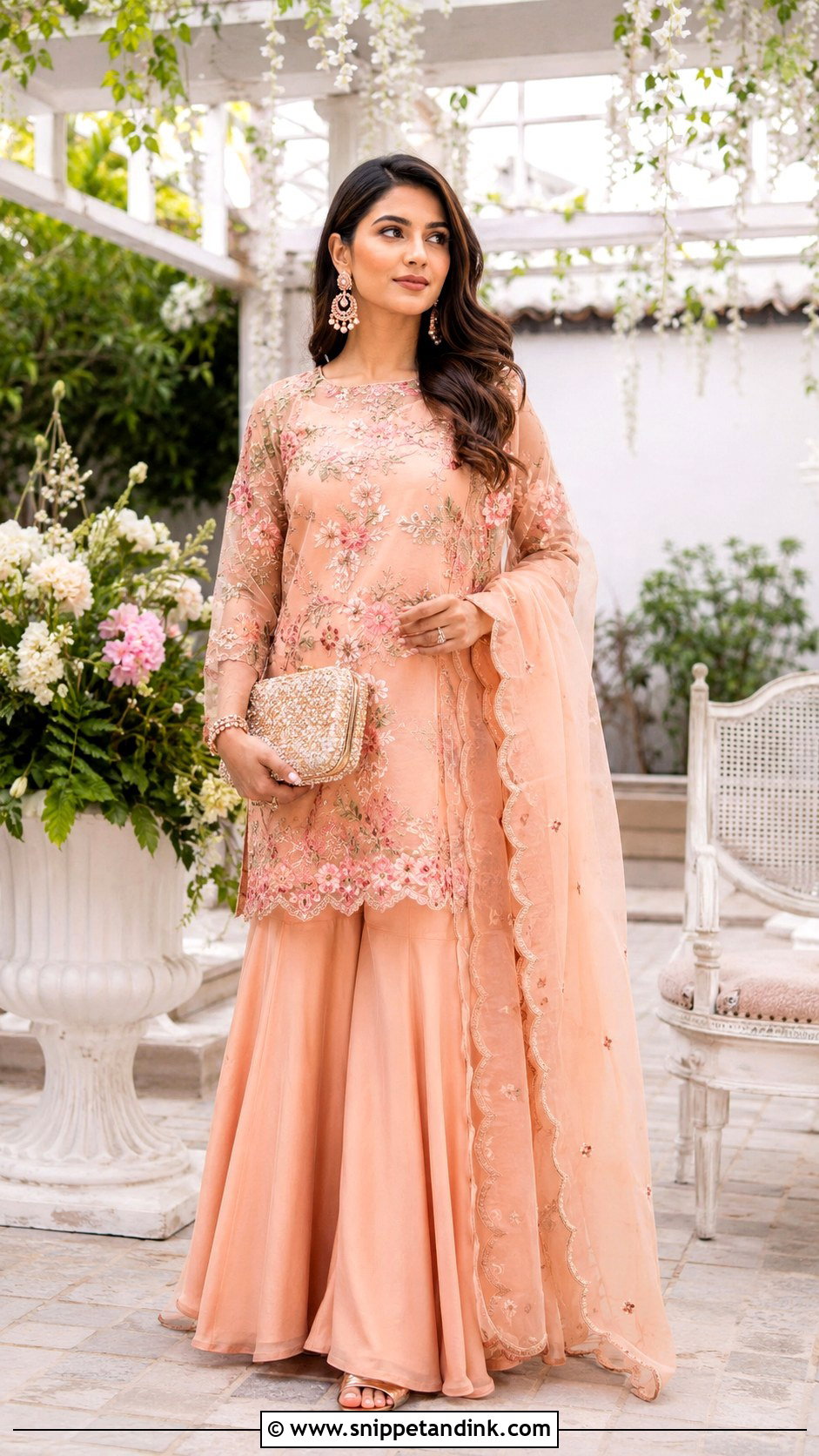
Peach looks fresh in natural daylight, which is where it should be worn. A flowing silk sharara with a sheer organza shirt over a matching lining is the classic pairing. The lining color decides the final shade: a peach lining keeps it warm, while a nude lining makes it paler, so check both before the tailor cuts. Embroidered flowers, tiny pearls and champagne sequins add dimension. Three-quarter or full sleeves balance the shape. A peach organza dupatta with scalloped edges should stay light. Rose-gold earrings, nude sandals and a small beaded clutch complete it.
10. Lilac Sharara With Scalloped Dupatta
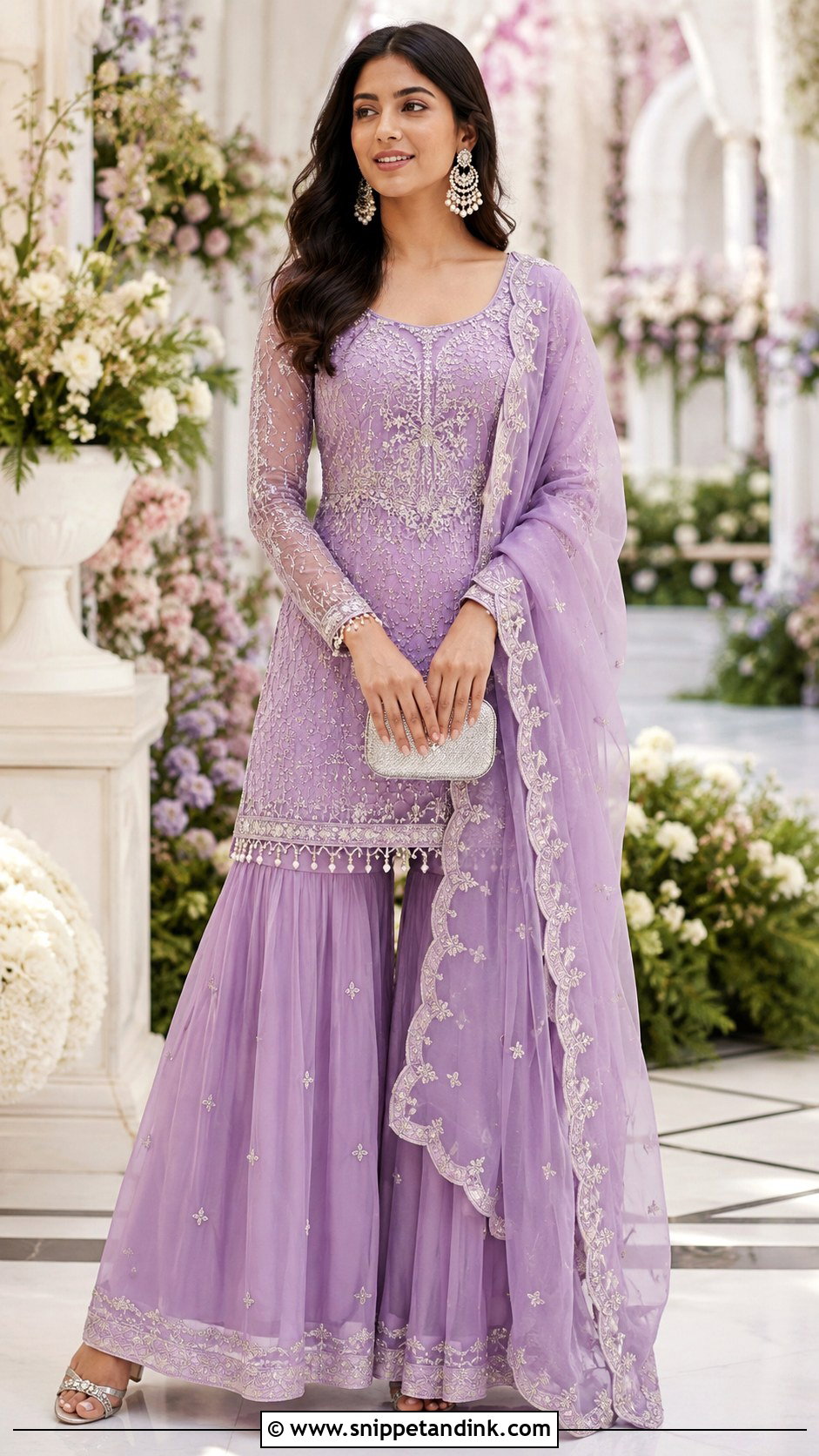
Lilac feels modern, especially with silver or pearls. A fitted knee-length kurta over a full chiffon sharara works best with embroidery kept to the neckline, sleeves and lower borders. The scalloped organza dupatta does a lot of the decorative work, so the rest can stay restrained. Over one shoulder it looks clean; pinned over the head it suits a modest ceremony. Pearl chandbalis, a silver clutch and crystal sandals finish it. For bridesmaids, I keep the lilac identical and vary only necklines or sleeves, which looks coordinated without being uniform.
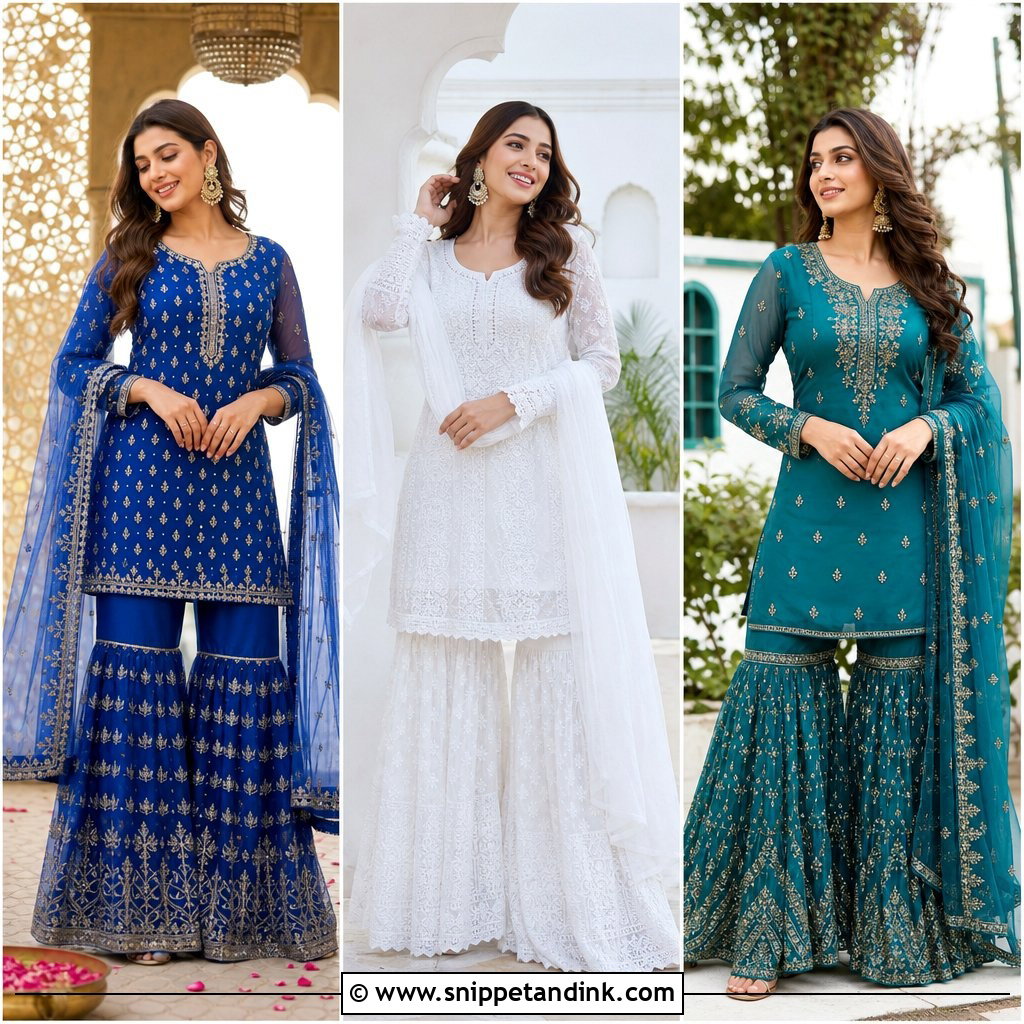
11. Ice Blue Sharara With Crystal Work
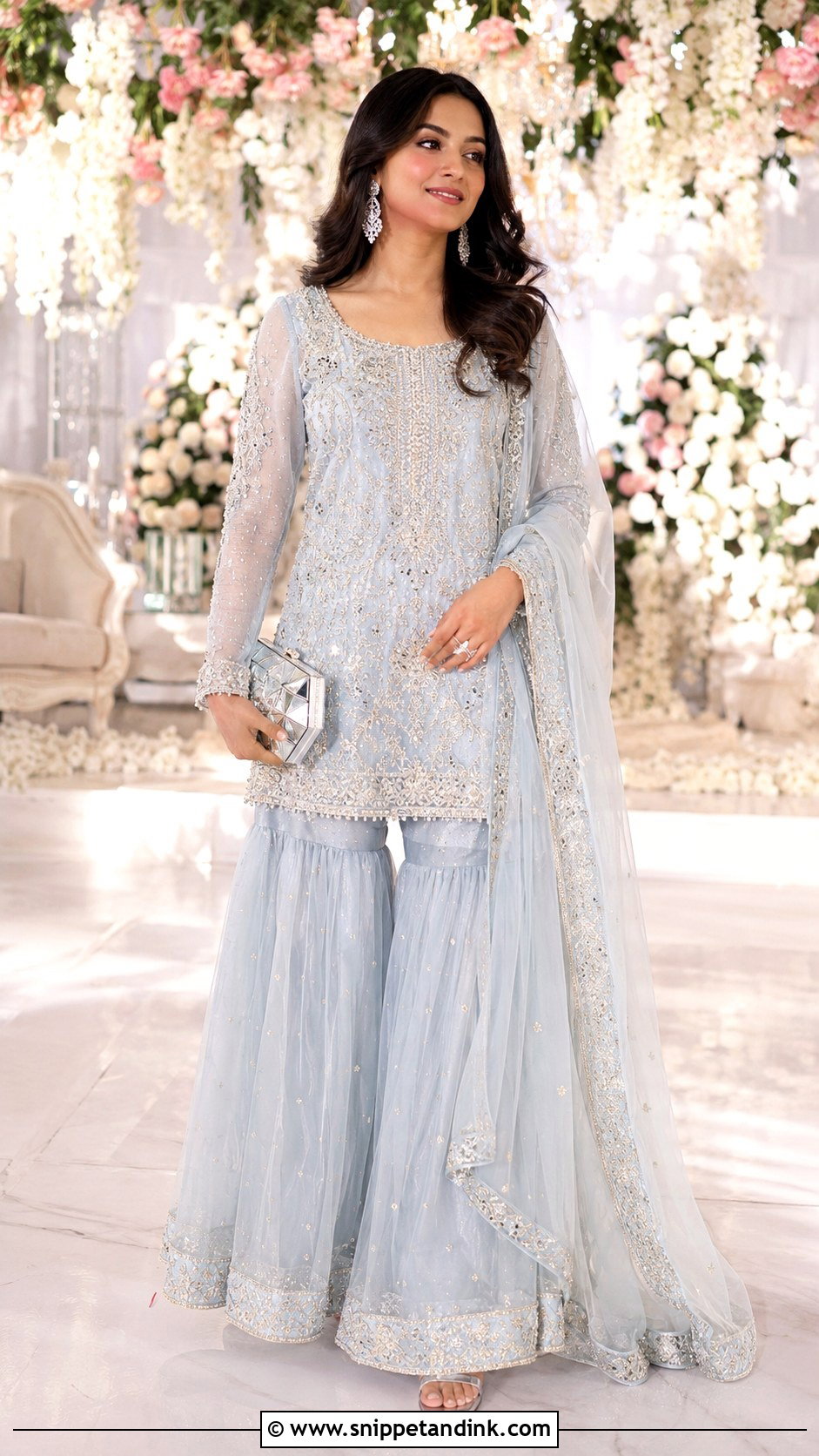
Ice blue reads cool and airy, and it photographs crisply against colorful decor. Pair a short silk shirt with a wide georgette sharara scattered with crystals and finished with an embellished hem. Crystals catch on georgette when the dupatta drags over them, so ask for the hem crystals to be stitched rather than glued. Silver thread at the neckline and cuffs defines the top. A sheer blue dupatta across the arms, crystal earrings, a slim silver bangle, a mirrored clutch and silver block heels keep the palette clean for a walima, engagement or formal day function.
12. Fuchsia Sharara With Gota Work
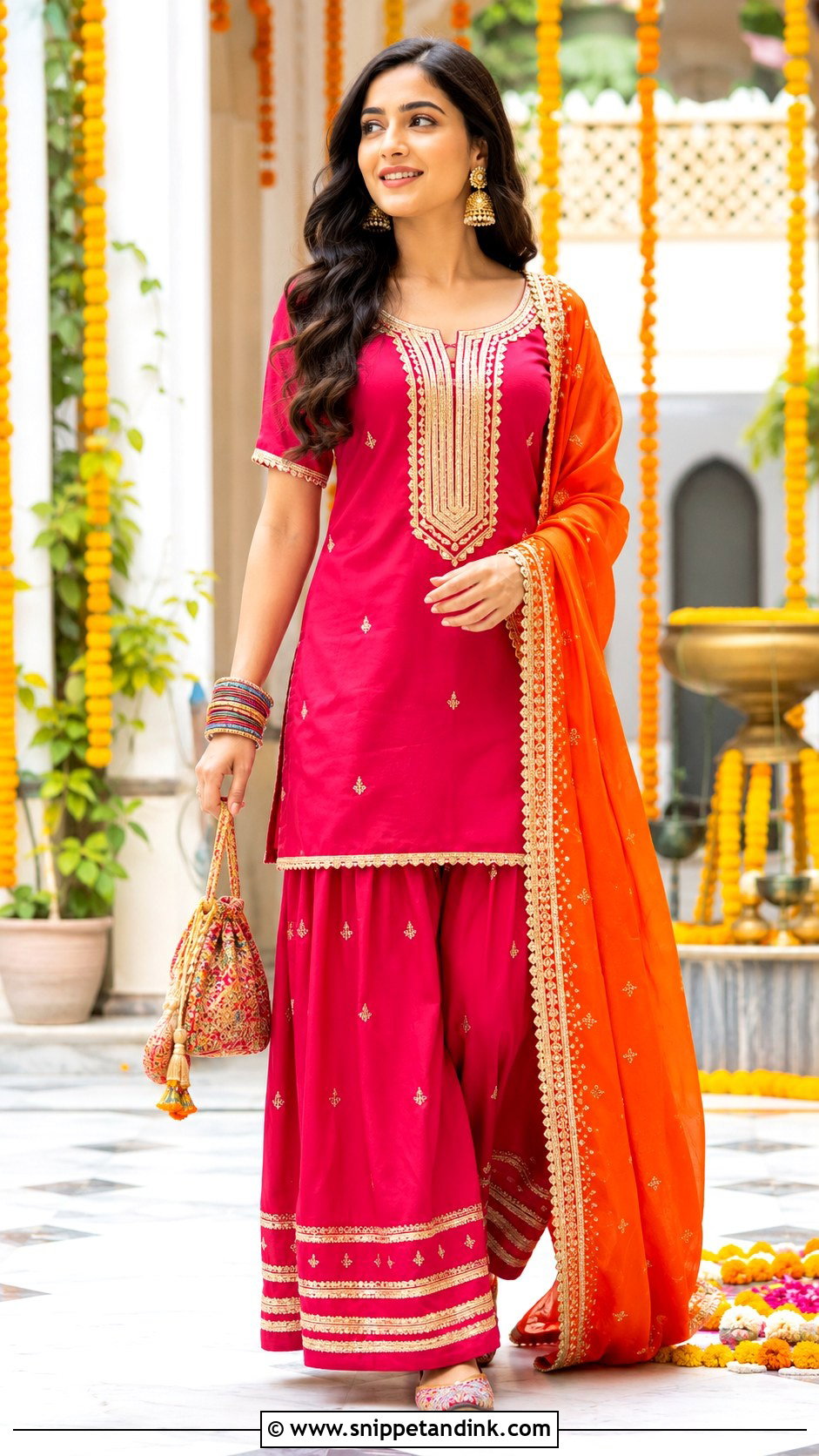
Fuchsia is celebratory before you add a single accessory. A raw silk short kurti with a light sharara edged in gota lines, metallic ribbon and small motifs is right for a mehndi or dholki. Gota is a woven metallic ribbon, which keeps the sharara light compared with heavy embroidery. Contrast the dupatta in orange, lime or mustard for a lively palette, or match it for a streamlined one. Keep the neckline and sleeves plain because the color is already doing the talking. Gold jhumkas, colorful bangles, a tasseled potli and gold khussas complete it for bridesmaids and younger guests.
13. Orange Sharara With Mirror Embroidery
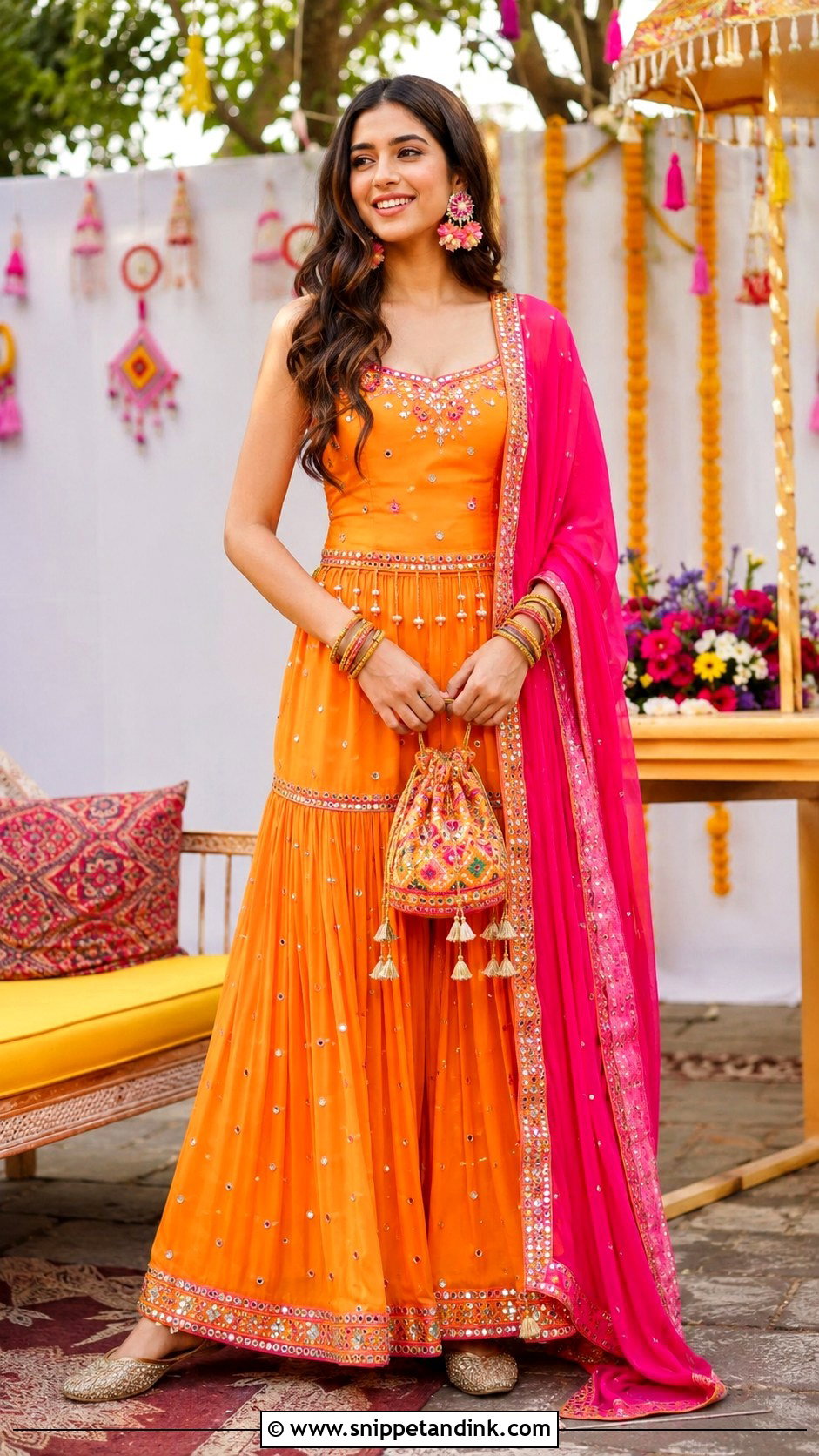
Orange shines outdoors in daylight, and mirror embroidery catches the sun as you move. A fitted short shirt with mirrors, multicolored thread and small gota accents over a chiffon, georgette or soft silk sharara keeps it wearable. Mirror work weighs more than thread, so I keep it to the shirt and border and leave the body of the sharara light. A pink dupatta is the traditional contrast; green is bolder. Floral jewelry or small gold earrings, coordinated bangles, embroidered flats and a tassel potli finish it. A bride can scale it up with a worked dupatta and heavier borders.
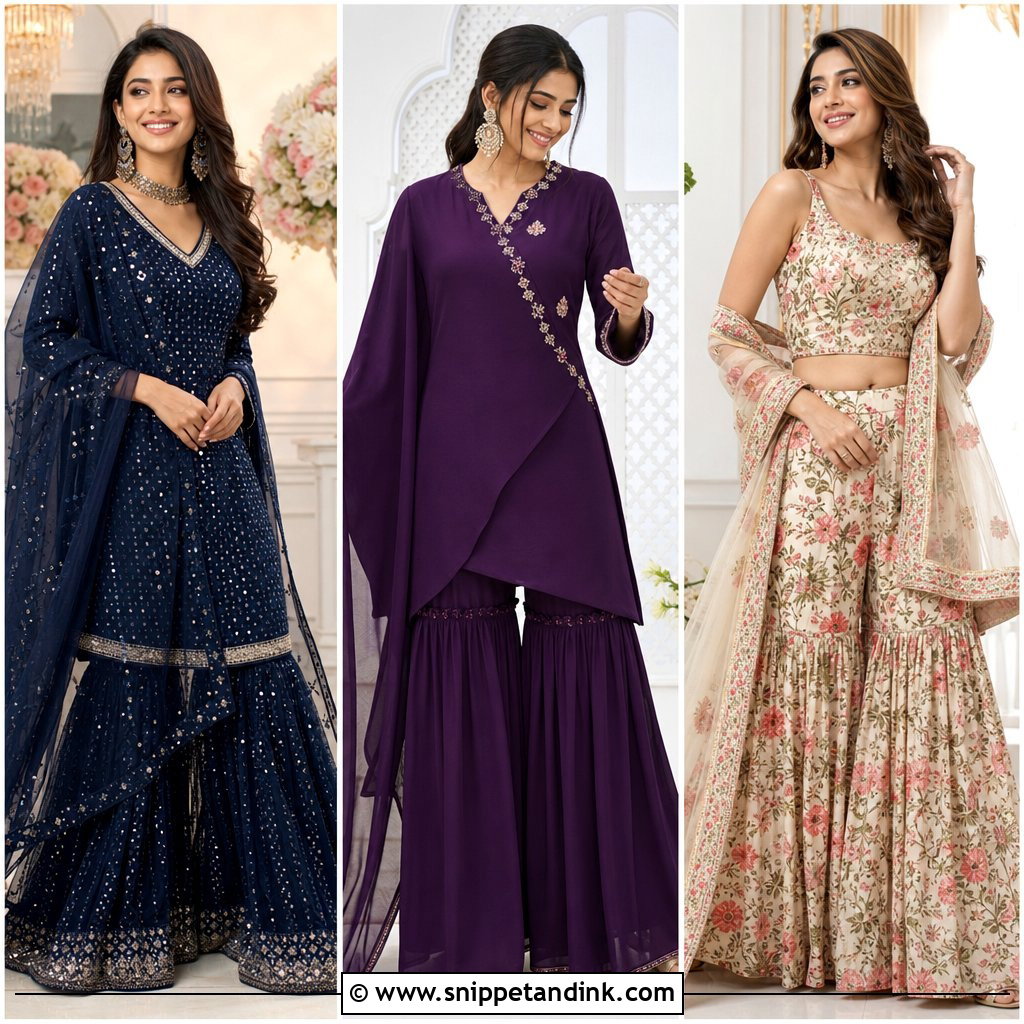
14. Teal Sharara With Angrakha Shirt
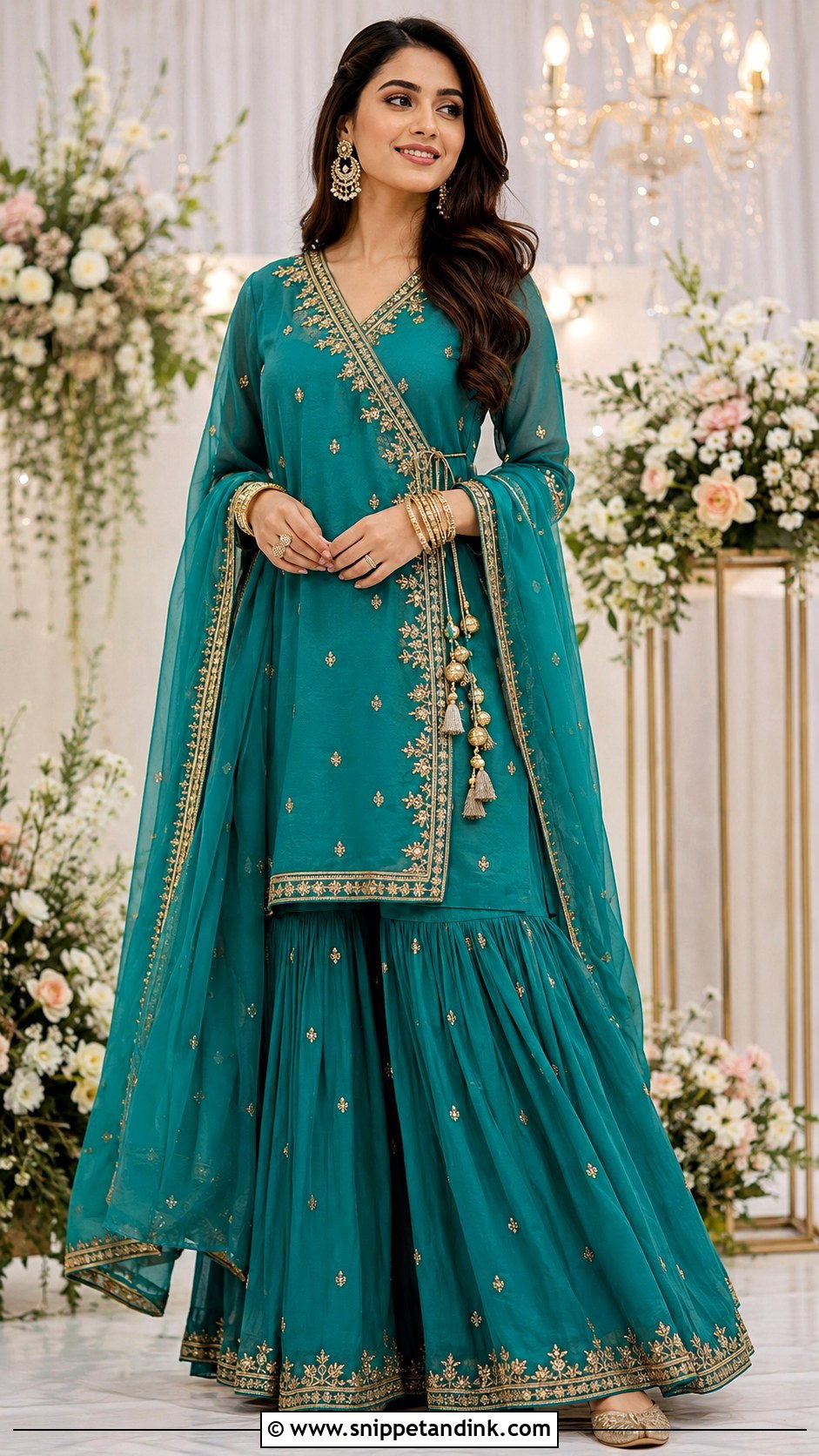
An angrakha shirt wraps diagonally and ties at the side, which gives a teal sharara a defined waist without a fitted seam. The shirt should end around the upper thigh so it frames the sharara rather than hiding it. Gold resham, a few sequins and small tassels can trace the wrap line. The wrap should overlap generously; a shallow overlap opens when you bend to greet older relatives. Drape a matching chiffon dupatta away from the neckline so the angrakha shape stays visible. Antique gold earrings, a slim bangle set and metallic khussas suit an engagement or reception, and the shape flatters most figures.
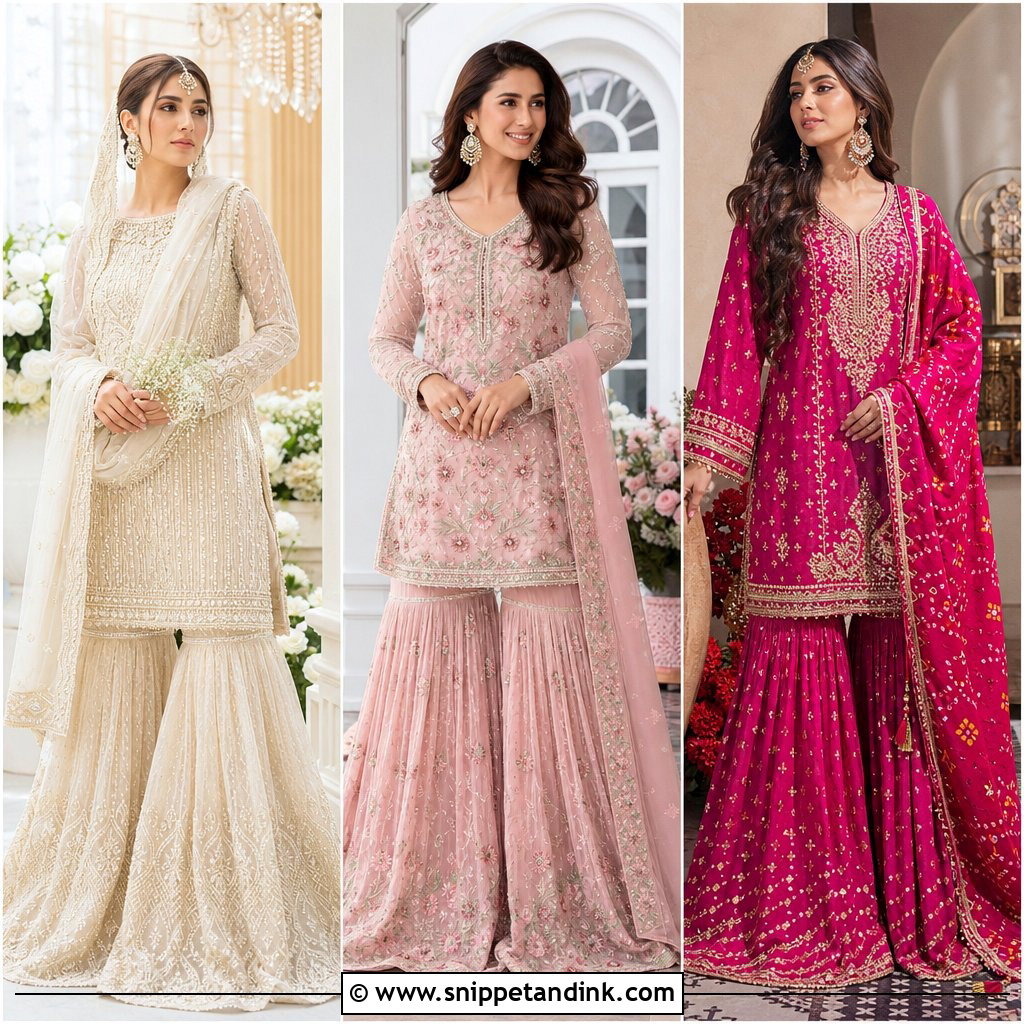
15. Gold Sharara With Embroidered Jacket
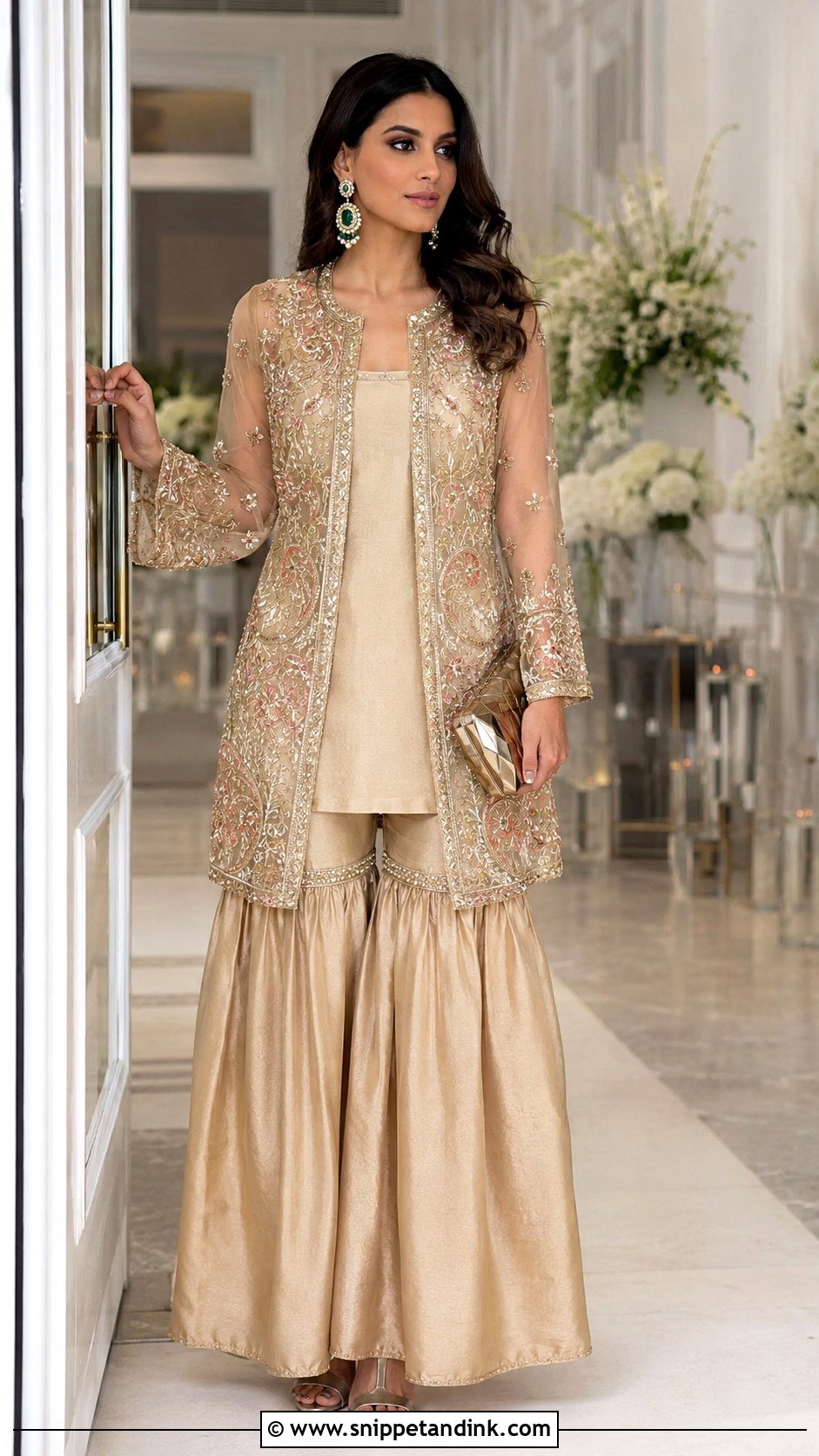
An embroidered jacket over a gold sharara and simple inner top turns the outfit into a layered formal look. Start with a fitted sleeveless blouse or short camisole kurti with the coverage you are comfortable with, then add a knee-length open jacket in net, organza or tissue, worked in gold, crystals and pearls. Keep the sharara plain, or the outfit gets crowded. The jacket does the dupatta’s job, so you can skip it or carry a sheer one over one arm. Gemstone earrings, a structured clutch and neutral metallic heels suit a reception, walima or engagement.
16. White Sharara With Silver Borders
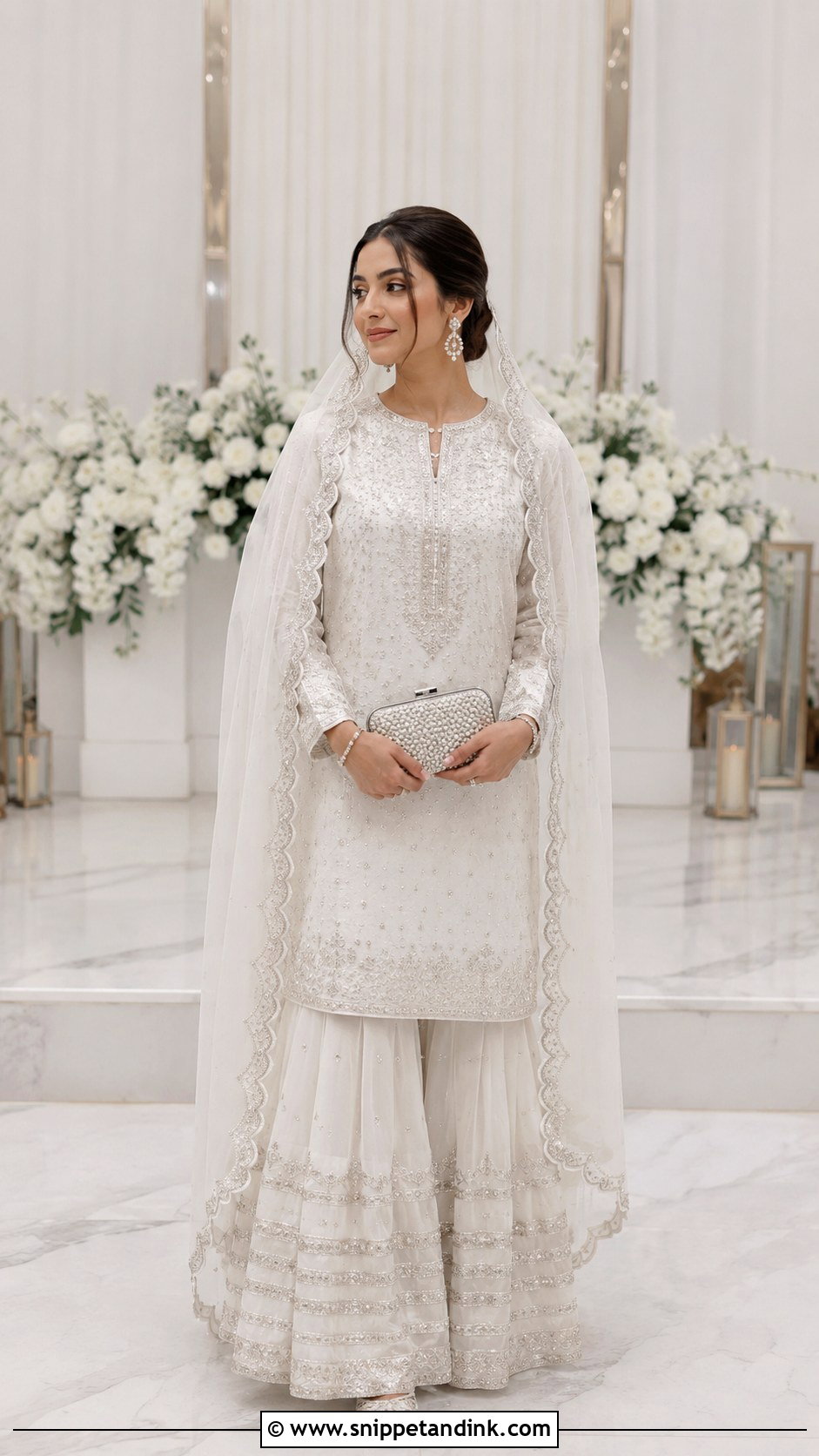
White only looks wedding-ready when there is texture and a little metal to break it up. A straight white kurta with fine silver thread, pearl buttons and embroidered cuffs over a full sharara with several narrow metallic borders is the shape I prefer; one very heavy hem pulls the sharara straight and kills the flare. A white net or organza dupatta with silver scalloping completes the monochrome. Pearl and crystal earrings, a silver clutch and white khussas keep it fresh. A nikkah bride can add a head dupatta and more jewelry; guests should keep it lighter and confirm the bride is not in white.
17. Pistachio Green Sharara With Floral Embroidery
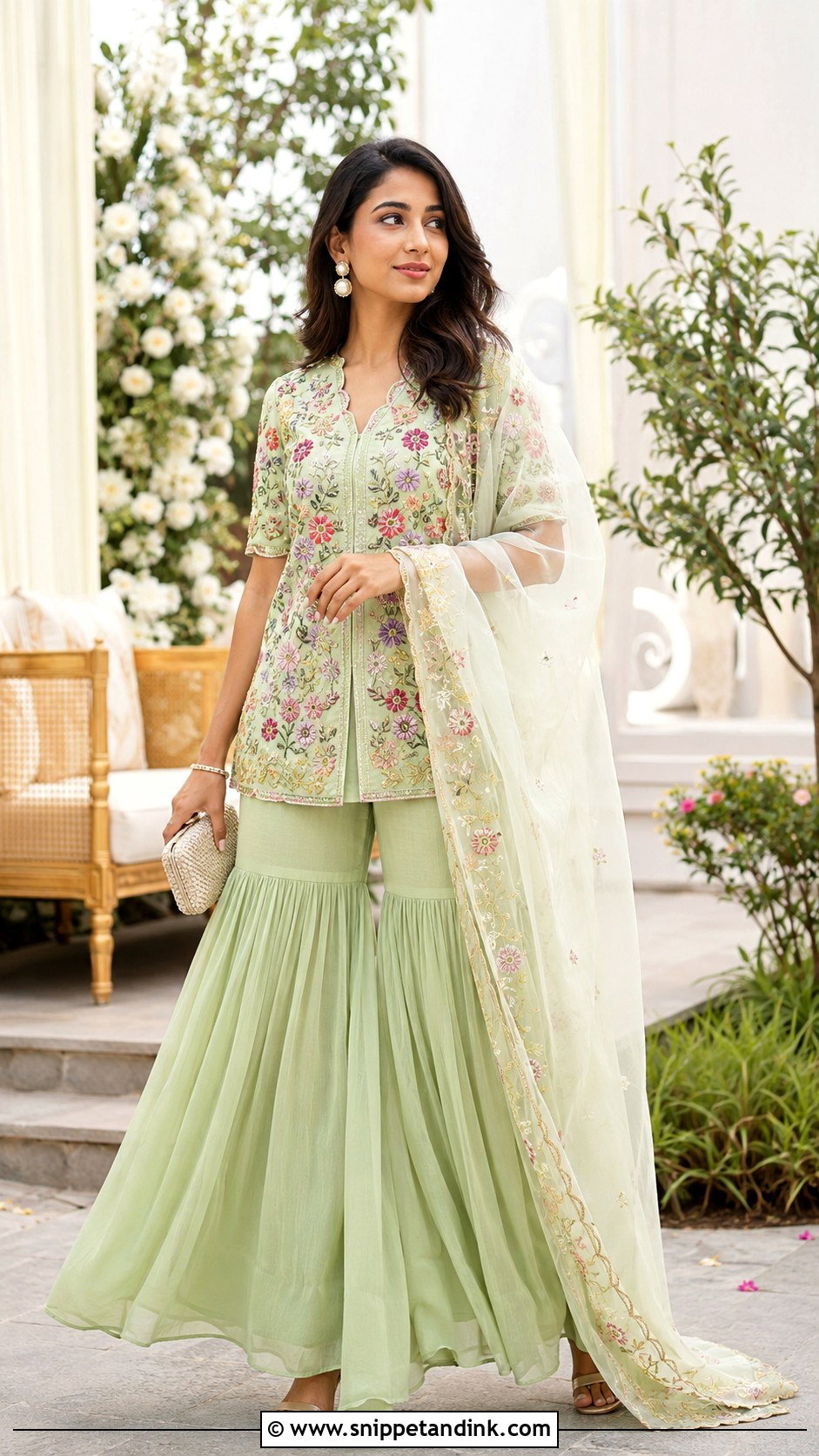
Pistachio is a welcome change from the usual pink and blue pastels. A short silk shirt with delicate florals in ivory, blush, lilac and muted gold, over a georgette sharara repeating those florals at the hem, ties the top and bottom together. Repeating the motif is the detail that makes it look designed rather than assembled. An ivory or green organza dupatta keeps the palette light. Pearl earrings, a small floral ring, nude-gold sandals and a cream clutch are enough. For older guests, longer sleeves, a slightly longer shirt and lighter embroidery keep it graceful.
18. Navy Sharara With Cape Jacket
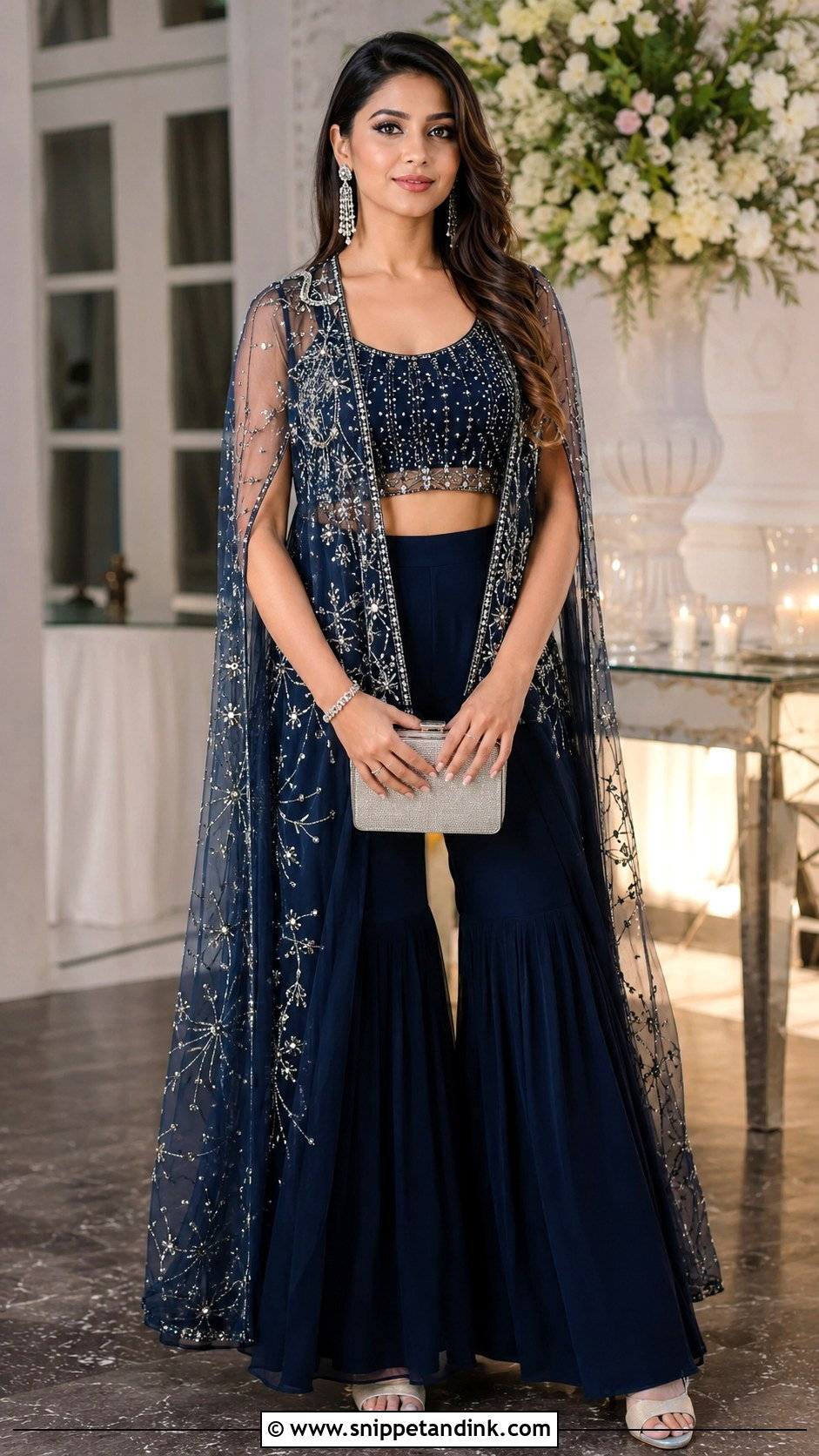
Navy has the depth of a dark formal color without the starkness of black. Pair a plain or lightly worked sharara with a fitted short shirt and a sheer cape jacket that falls to the elbows or the knees. The longer the cape, the more it hides the sharara’s movement, so on shorter frames I keep it at the elbow. Silver sequins, crystals or tonal thread frame the cape edges and shoulders. Use a simple dupatta, or none. Long crystal earrings, a silver box clutch and navy or metallic heels suit a reception, and the cape covers the arms without the weight of an embroidered sleeve.
19. Rust Sharara With Angrakha Kurta
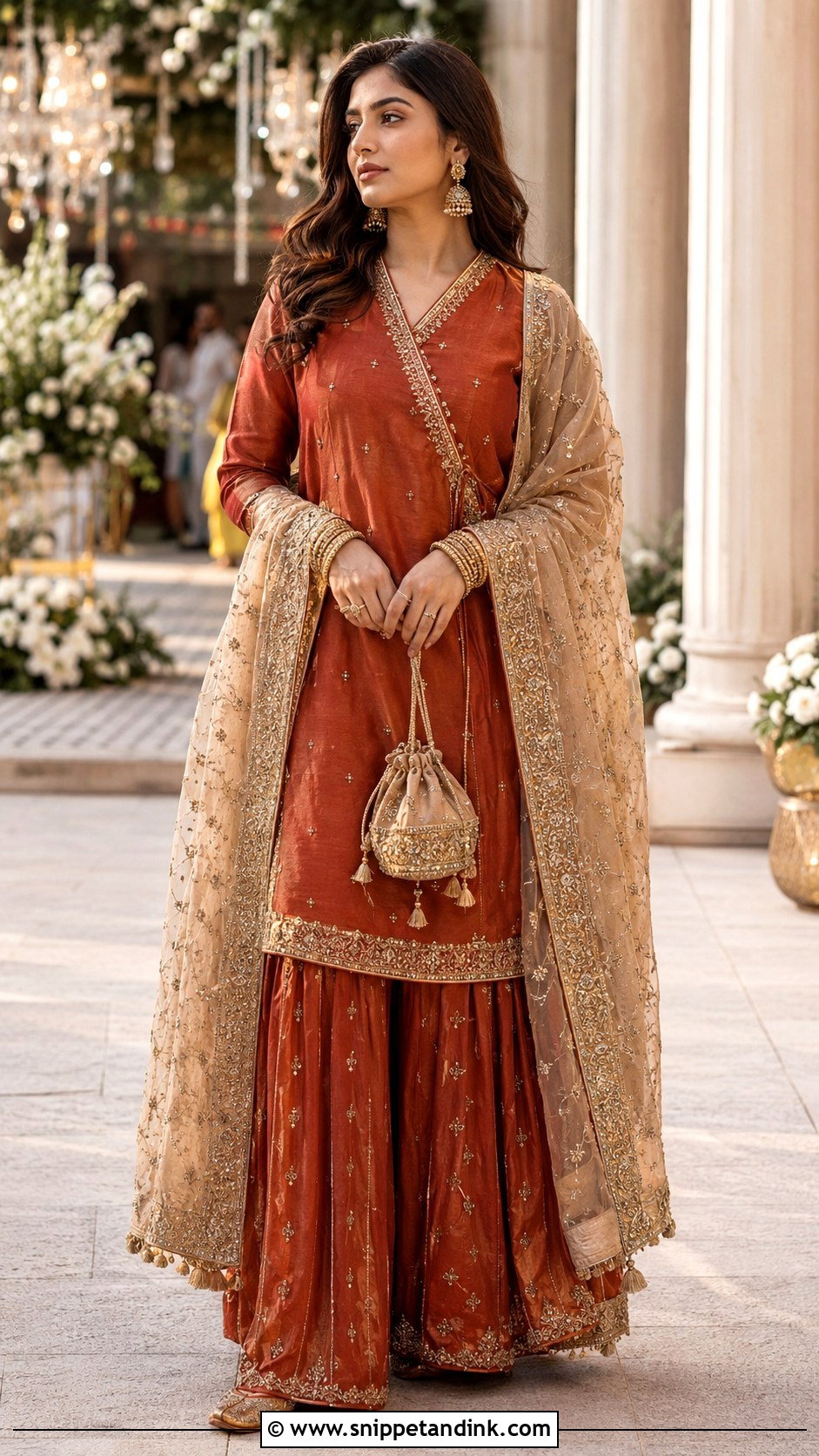
Rust pairs with antique gold as if they were made together, and it suits autumn weddings especially. Choose a mid-length angrakha kurta in raw silk with worked borders and side tassels, over a matching chiffon or silk sharara for a continuous line. Raw silk rustles and creases at the elbows, so a chiffon sharara keeps the lower half calm. A beige, muted peach or deep maroon dupatta with small gold motifs gives contrast. Antique jhumkas, textured bangles, an embroidered potli and gold khussas finish it. Close family can add heavier borders; general guests should keep the kurta simpler.
20. Floral Sharara With Plain Short Kurti
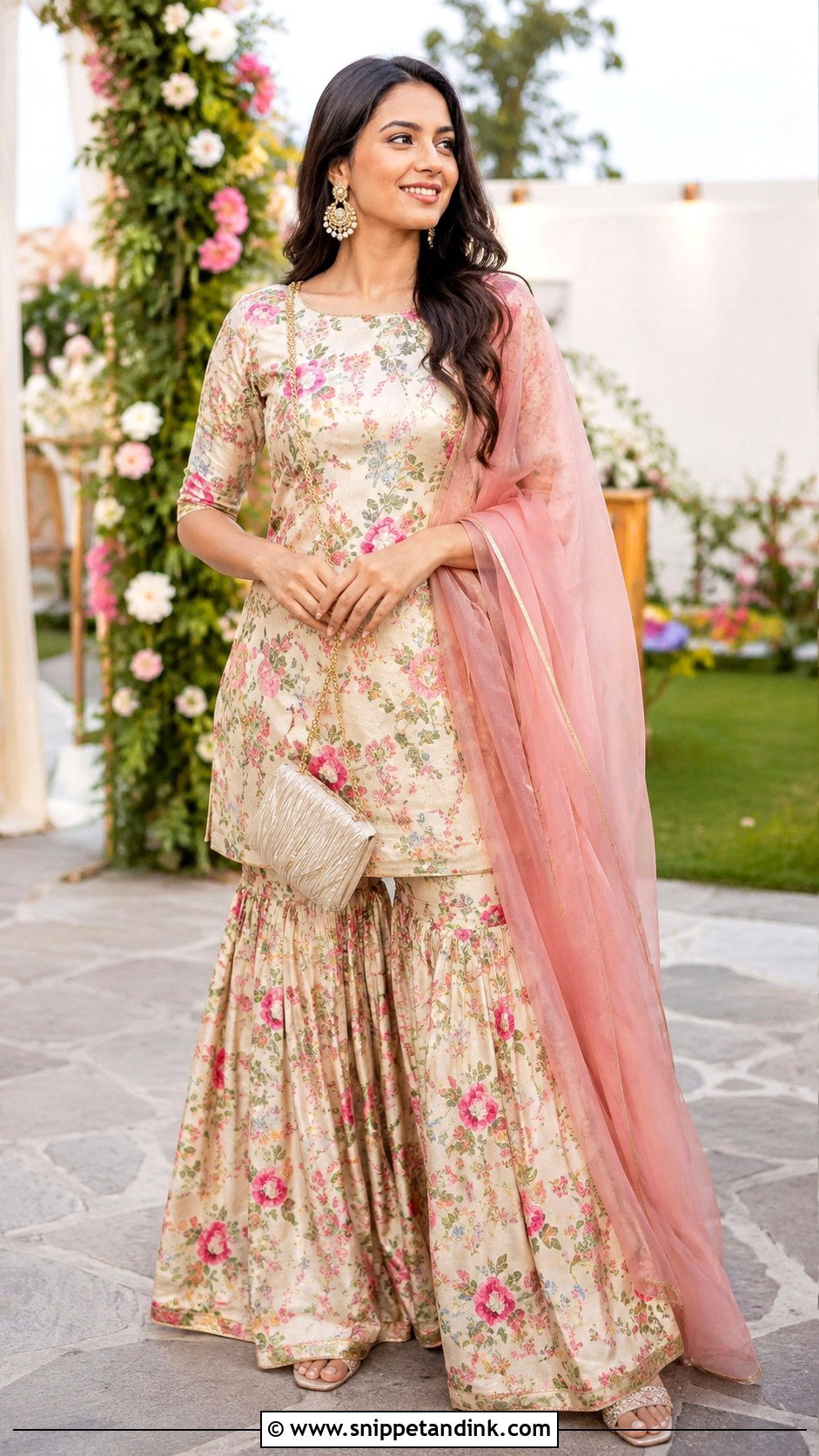
Printed florals take the formality down while keeping the sharara’s movement. Choose a floral sharara in silk, organza or chiffon and a plain short kurti in one color from the print, with embroidery only at the neckline, cuffs and hem. A solid sheer dupatta stops the pattern from taking over. Medium earrings, a delicate bracelet, a small shoulder bag and neutral sandals suit daytime guests, dholkis and casual pre-wedding events. This is the outfit I recommend most to clients who want to wear the pieces again: the sharara, kurti and dupatta all work separately afterward.
Stairs, Car Seats and All That Fabric
A full sharara carries a lot of fabric, and the practical side of wearing one is rarely discussed until the day itself. Here is what I go through with clients during the final fitting.
- On stairs, gather the front of both legs in one hand at about knee height and lift slightly. Lifting from the hem pulls the waistband down.
- Getting into a car, sit first and then swing both legs in together, keeping the dupatta in your lap so it does not get shut in the door.
- On stage or floor seating, sweep the back of the sharara forward as you sit so you are not sitting on the embroidered border, which crushes it.
- Check the waistband. A drawstring is comfortable but slips under a heavy sharara; ask for an elastic panel at the back or a hook closure for the bridal outfit.
After the wedding, hang the sharara folded over a padded bar rather than by its waistband, and keep worked borders wrapped in muslin so the metal threads stay away from moisture.
Where the Embroidery Sits Matters More Than the Color
Red, maroon and gold carry a baraat; ivory, blush, lilac and ice blue soften a nikkah or walima; mustard, orange and fuchsia belong at the mehndi. But the shararas I see go wrong rarely fail on color. They fail because the shirt length fights the flare, or the heaviest work sits where it drags the fabric down. Get those two decisions right first, then pick shoes you can stand in, pin the dupatta properly and keep the jewelry in proportion to your role at the wedding. The outfit will be comfortable for the whole function, which is what lets you enjoy it.
You'll Like These Ideas:


Leave a Reply